


Kevin O'Brien
-
Posts
858 -
Joined
-
Last visited
-
Days Won
41
Content Type
Profiles
Forums
Blogs
Events
News
2026 Kansas City Royals Top Prospects Ranking
Kansas City Royals Videos
Kansas City Royals Free Agent & Trade Rumors, Notes, & Tidbits
Guides & Resources
The Kansas City Royals Players Project
2026 Kansas City Royals Draft Tracker: Picks & Bonuses
Store
Downloads
Gallery
Everything posted by Kevin O'Brien
-
 Game two of the I-70 Series is tonight, as the Royals try to go for the series win. Below is the lineup and percentage odds, according to Fangraphs. Michael McGreevy goes for the Cardinals on the mound. Even though he's a cool Irish name and has a sub-3.00 ERA, his profile is very similar to Matthew Liberatore's, who got shelled in Thursday night's outing. Below is McGreevy's TJ Stuff+ summary from the year. Notice that he rates as below average in many categories. First pitch is at 7:10 p.m. and the broadcast will be on Apple TV, not Royals.TV tonight.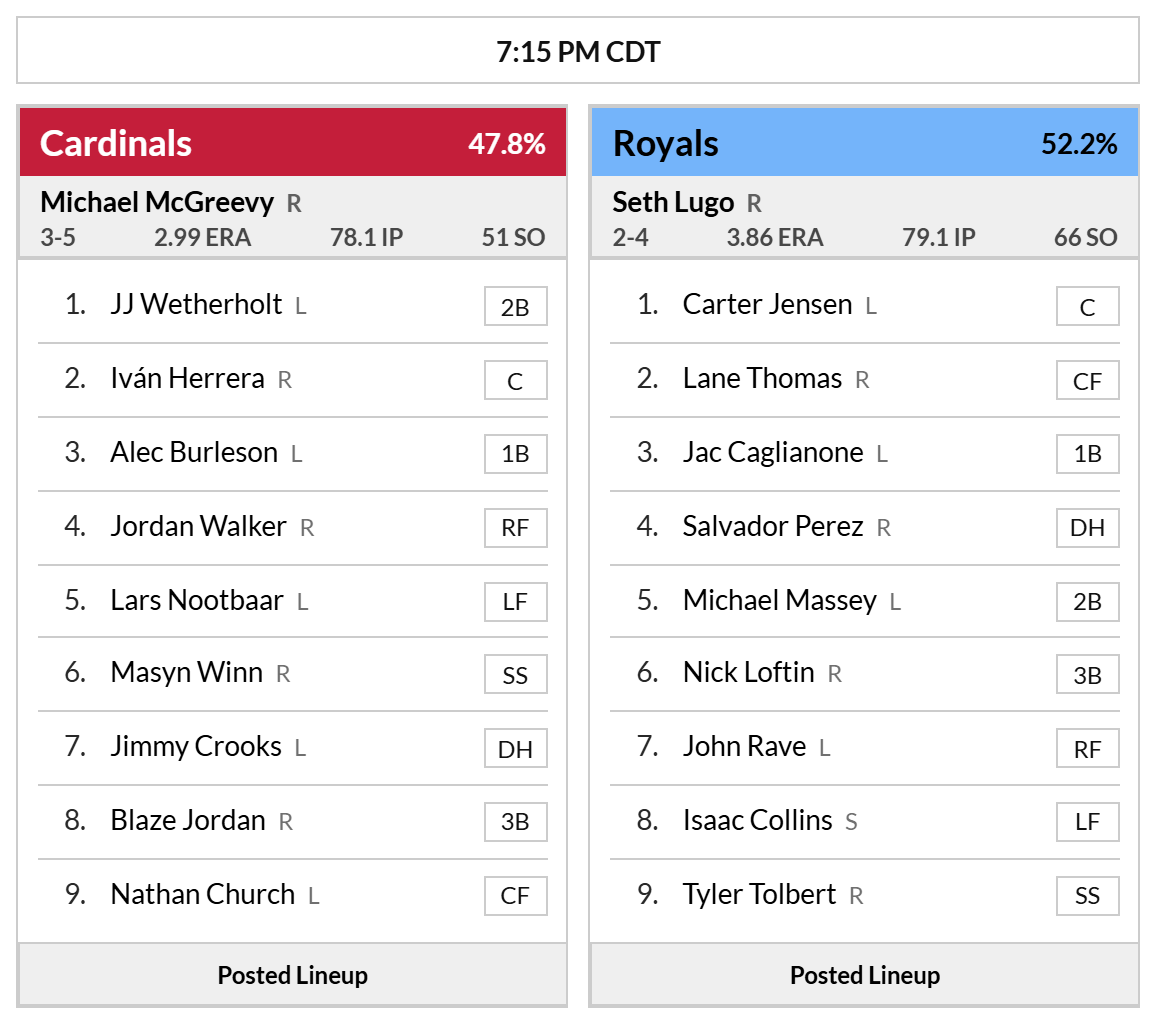
.png.47ed2f7059979e6d702074788bc99b4a.png)
-
I agree. It has been a few days and Lynch just hasn’t looked the same recently. You could argue that some other relievers have looked better than him, with Steven Cruz being one of them and one I’m more open to hanging onto than Lynch because of Cruz’s stuff and velocity. Relievers always tend to have inflated value at trade deadline and I think it’s possible to get a decent prospect package in return for Lynch. Might as well get something now than hold onto him and see him regress hard. Relievers are so volatile and I think the Royals could replace him in ‘27 in some kind of fashion on the cheap.
-
Check out my latest postgame show at KCSN with Joel Penfield as we talk about the Royals' big win over the St. Louis Cardinals and the injury to Bobby Witt Jr. I'll try to post these episodes here and on Bluesky since I know KCSN doesn't have much of a presence there. Please like, comment, and subscribe!
-
Great piece, Yirsandy. I appreciate the data shared, especially with the new swing timing data from Statcast. He definitely has shown improvement in generating more swing and miss as well as improving the stuff profile of his pitch arsenal. It's a story from the Royals pitching coaches that's not getting talked about enough. My concern with Lynch is that maybe this is the peak of what he can do at the MLB level. He won't return to the rotation and while he's been effective, he still hasn't gained trust for the ninth inning. Without being a closer long term, I don't know what his value would be to the Royals, especially with him arb eligible as soon as next year. His price will definitely go up and I'm not sure that's worthwhile on a rebuilding club. I'm not saying the Royals should aggressively shop him, but I hope they keep him available and maybe they can get something similar or greater to what they got for Freddy Fermin last year. Lynch could be a valuable piece on a contender, and the Royals could use the assets, especially in terms of prospects who are close to the big leagues. I wouldn't be surprised if Lynch is pitching in another uniform come August.
-
Josh Rojas and Gavin Cross each homered as the Omaha Storm Chasers took both ends of a doubleheader in St. Paul, 12-4 and 6-2. Ramon Ramirez crushed two home runs and drove in four to lead Quad Cities to a 9-3 win, while David Shields struck out 10 over five innings. Rudy Martin Jr. delivered a walk-off single to lift Northwest Arkansas past Tulsa, 6-5, and Columbia rallied for a 6-4, 10-inning win behind Stone Russell's three RBIs. Royals Transactions Kansas City Royals placed LHP Cole Ragans on the 60-day injured list. Left elbow impingement. Seattle Mariners traded RHP Randy Dobnak to Kansas City Royals for cash. Rojas And Cross Power Omaha In Game One Rout The Omaha Storm Chasers opened their doubleheader in St. Paul with a 12-4 win over the Saints. Leadoff man Rojas went 3-for-4 with a home run, three runs, and four runs batted in. Cross added three hits, a home run, and three runs in a 3-for-3 day with a walk, and Peyton Wilson doubled twice while driving in two. The decisive frame was the sixth, when Omaha plated five runs. Rojas singled home Drew Waters to start the scoring, Wilson doubled in two more, Rojas later scored on a Brett Squires groundout, and Matthew Lugo singled in another to break the game open. Bailey Falter started and worked four innings, allowing two runs on three hits with three walks and four strikeouts. Génesis Cabrera earned the win with a perfect inning, striking out two, and Luke Jackson finished with two innings, two runs, one walk, and four strikeouts. Omaha left three runners on base and went 6-for-13 with runners in scoring position. They improved to 31-39 after the game one victory. Player AB R H RBI BB K Josh Rojas 4 3 3 4 0 1 Peyton Wilson 4 2 2 2 0 1 Brett Squires 4 0 1 1 0 2 Matthew Lugo 4 0 1 2 0 1 Abraham Toro 4 0 0 0 0 1 Drew Waters 4 1 1 0 0 1 Gavin Cross 3 3 3 1 1 0 Luke Maile 2 2 1 0 2 0 Kevin Newman 4 1 1 1 0 1 Player IP H R ER BB K HR Bailey Falter 4 3 2 2 3 4 1 Génesis Cabrera 1 0 0 0 0 2 0 Luke Jackson 2 3 2 2 1 4 1 Squires And Drury Go Deep In Omaha's Nightcap Win The Omaha Storm Chasers completed the sweep with a 6-2 win in the second game. Squires homered and drove in two runs, and Brandon Drury went 2-for-2 with a home run, a walk, and two runs batted in. Lugo collected two hits, including a double. Omaha built its lead with a three-run second inning, when Luca Tresh, Drury, and Rojas all delivered run-scoring singles. The Storm Chasers added a pair in the fifth on Squires' solo homer and a Waters single that brought home Lugo. Henry Williams started and went 3 2/3 innings, allowing four runs on five hits with four walks and five strikeouts. Ben Sears picked up the win with 1 1/3 scoreless innings, Jose Cuas struck out two in a perfect inning, and Eli Morgan worked the ninth for the save. Omaha left five runners on base and went 4-for-12 with runners in scoring position. After sweeping the doubleheader in St. Paul, the Storm Chasers' record is now 32-39. Player AB R H RBI BB K Josh Rojas 4 0 1 1 0 1 Peyton Wilson 4 0 0 0 0 1 Brett Squires 3 1 1 1 1 2 Matthew Lugo 4 2 2 0 0 0 Luca Tresh 4 1 1 1 0 2 Drew Waters 2 1 1 1 1 1 Gavin Cross 3 0 0 0 0 1 Brandon Drury 2 1 2 2 1 0 Elih Marrero 3 0 0 0 0 3 Player IP H R ER BB K HR Henry Williams 3 2/3 5 4 4 4 5 1 Ben Sears 1 1/3 1 0 0 0 2 0 Jose Cuas 1 0 0 0 0 2 0 Eli Morgan 1 2 0 0 0 1 0 Martin Jr. Walks Off The Naturals In Extras The Northwest Arkansas Naturals walked off the Tulsa Drillers, 6-5, in 10 innings. Martin Jr. finished 2-for-5 and delivered the winning single, scoring the zombie runner Spencer Nivens from third. Daniel Vazquez went 2-for-4 with a run batted in, and Omar Hernandez drove in two. The Naturals built their early lead in the fourth, when Vazquez singled home Sam Kulasingam, and Hernandez followed with a two-run single to plate Nivens and Vazquez. After Tulsa pushed the game to extras, Vazquez moved the zombie runner to third with a sacrifice bunt before Martin Jr. ended it. Steven Zobac started and allowed four runs on four hits over three innings, walking one and striking out three. Oscar Rayo followed with three scoreless innings, Tommy Molsky gave up one run across two innings, and Augusto Mendieta earned the win with two scoreless frames and five strikeouts. The Naturals left nine runners on base and went 4-for-13 with runners in scoring position. Northwest Arkansas improved its record to 29-35. Player AB R H RBI BB K Carson Roccaforte 5 0 0 0 0 4 Jack Pineda 4 0 0 0 1 1 Sam Kulasingam 3 1 1 0 2 0 Spencer Nivens 4 2 0 0 1 1 Daniel Vazquez 4 1 2 1 0 1 Rudy Martin Jr. 5 2 2 1 0 1 Colton Becker 2 0 1 1 2 0 Omar Hernandez 4 0 1 2 0 1 Justin Johnson 3 0 0 0 0 2 Player IP H R ER BB K HR Steven Zobac 3 4 4 4 1 3 1 Oscar Rayo 3 0 0 0 1 3 0 Tommy Molsky 2 3 1 1 1 1 0 Augusto Mendieta 2 0 0 0 1 5 0 Ramirez's Two Homers And Shields' 10 Strikeouts Carry Quad Cities The Quad Cities River Bandits rolled to a 9-3 win over the Wisconsin Timber Rattlers. Ramirez was the story, going 2-for-4 with two home runs and four runs batted in. Blake Mitchell drove in two, and Asbel Gonzalez led off with a 2-for-5 effort and a run batted in. The fourth inning blew the game open as Quad Cities scored five. Gonzalez singled home a run, Mitchell followed with a two-run single, and Ramirez capped the rally with a three-run homer. Shields was dominant on the mound, striking out 10 over five innings while allowing three runs on five hits and one walk to earn the win. Max Martin followed with three scoreless innings, and L.P. Langevin closed with a perfect inning and three strikeouts. Quad Cities left seven runners on base and went 3-for-10 with runners in scoring position. They are 30-33 for the season. Player AB R H RBI BB K Asbel Gonzalez 5 1 2 1 0 0 Nolan Sailors 4 1 0 0 1 1 Blake Mitchell 4 1 1 2 1 1 Ramon Ramirez 4 2 2 4 1 0 Derlin Figueroa 3 0 0 0 1 2 Erick Torres 3 0 0 0 1 2 Tyriq Kemp 4 1 1 0 0 0 Connor Rasmussen 3 2 2 1 1 0 Trevor Werner 3 1 2 1 1 1 Player IP H R ER BB K HR David Shields 5 5 3 3 1 10 0 Max Martin 3 1 0 0 0 2 0 L.P. Langevin 1 0 0 0 0 3 0 Russell's Three RBI Lift Columbia In 10-Inning Comeback The Columbia Fireflies came from behind to beat the Hickory Crawdads, 6-4, in 10 innings. Russell led the way, going 2-for-4 with two doubles and three runs batted in. Hyungchan Um homered and drove in a run, and Josh Hammond scored twice. After Um's solo homer accounted for one of two Columbia runs in the fourth, the Fireflies broke a tie in the 10th. Ivan Sosa struck out swinging but reached when the zombie runner JC Vanek scored on a throwing error, and Russell followed with a two-run double to plate Sosa and Hammond. Ryan McDonagh started and allowed two runs on one hit over five innings, walking two and striking out four. Andy Basora and Hunter Alberini combined for three scoreless innings out of the bullpen, and Dash Albus earned the win in the 10th despite allowing two unearned runs while striking out three. Columbia left five runners on base and scored six runs despite going 1-for-10 with runners in scoring position. The victory improved the Fireflies' record to 34-32. Player AB R H RBI BB K Yandel Ricardo 5 0 1 0 0 1 Josh Hammond 4 2 1 0 1 1 Stone Russell 4 0 2 3 0 2 Hyungchan Um 4 1 1 1 1 1 Sean Gamble 4 0 1 0 0 1 Roni Cabrera 4 1 1 0 0 0 JC Vanek 4 1 0 0 0 1 Angel Ramirez 3 0 0 0 0 1 Ivan Sosa 4 1 0 0 0 2 Player IP H R ER BB K HR Ryan McDonagh 5 1 2 2 2 4 0 Andy Basora 1 2/3 1 0 0 2 3 0 Hunter Alberini 1 1/3 1 0 0 0 1 0 Dash Albus 2 2 2 0 0 3 0 Top-20 Prospect Performance Kendry Chourio: DNP David Shields: 5 IP, 5 H, 3 R, 3 ER, 1 BB, 10 K Sean Gamble: 1-for-4, 1 K Blake Mitchell: 1-for-4, 2 RBI, 1 BB, 1 K Josh Hammond: 1-for-4, 1 BB, 1 K Ramon Ramirez: 2-for-4, 2 HR, 4 RBI, 1 BB Drew Beam: DNP Asbel Gonzalez: 2-for-5, 1 RBI Ben Kudrna: DNP Carson Roccaforte: 0-for-5, 4 K Yandel Ricardo: 1-for-5, 1 K Felix Arronde: DNP Blake Wolters: DNP Michael Lombardi: DNP Luinder Avila: DNP Steven Zobac: 3 IP, 4 H, 4 R, 4 ER, 1 BB, 3 K Frank Mozzicato: DNP Daniel Vazquez: 2-for-4, 1 RBI, 1 K Warren Colcano: 0-for-4, 1 K Shane Panzini: DNP View full article
-
 Josh Rojas and Gavin Cross each homered as the Omaha Storm Chasers took both ends of a doubleheader in St. Paul, 12-4 and 6-2. Ramon Ramirez crushed two home runs and drove in four to lead Quad Cities to a 9-3 win, while David Shields struck out 10 over five innings. Rudy Martin Jr. delivered a walk-off single to lift Northwest Arkansas past Tulsa, 6-5, and Columbia rallied for a 6-4, 10-inning win behind Stone Russell's three RBIs. Royals Transactions Kansas City Royals placed LHP Cole Ragans on the 60-day injured list. Left elbow impingement. Seattle Mariners traded RHP Randy Dobnak to Kansas City Royals for cash. Rojas And Cross Power Omaha In Game One Rout The Omaha Storm Chasers opened their doubleheader in St. Paul with a 12-4 win over the Saints. Leadoff man Rojas went 3-for-4 with a home run, three runs, and four runs batted in. Cross added three hits, a home run, and three runs in a 3-for-3 day with a walk, and Peyton Wilson doubled twice while driving in two. The decisive frame was the sixth, when Omaha plated five runs. Rojas singled home Drew Waters to start the scoring, Wilson doubled in two more, Rojas later scored on a Brett Squires groundout, and Matthew Lugo singled in another to break the game open. Bailey Falter started and worked four innings, allowing two runs on three hits with three walks and four strikeouts. Génesis Cabrera earned the win with a perfect inning, striking out two, and Luke Jackson finished with two innings, two runs, one walk, and four strikeouts. Omaha left three runners on base and went 6-for-13 with runners in scoring position. They improved to 31-39 after the game one victory. Player AB R H RBI BB K Josh Rojas 4 3 3 4 0 1 Peyton Wilson 4 2 2 2 0 1 Brett Squires 4 0 1 1 0 2 Matthew Lugo 4 0 1 2 0 1 Abraham Toro 4 0 0 0 0 1 Drew Waters 4 1 1 0 0 1 Gavin Cross 3 3 3 1 1 0 Luke Maile 2 2 1 0 2 0 Kevin Newman 4 1 1 1 0 1 Player IP H R ER BB K HR Bailey Falter 4 3 2 2 3 4 1 Génesis Cabrera 1 0 0 0 0 2 0 Luke Jackson 2 3 2 2 1 4 1 Squires And Drury Go Deep In Omaha's Nightcap Win The Omaha Storm Chasers completed the sweep with a 6-2 win in the second game. Squires homered and drove in two runs, and Brandon Drury went 2-for-2 with a home run, a walk, and two runs batted in. Lugo collected two hits, including a double. Omaha built its lead with a three-run second inning, when Luca Tresh, Drury, and Rojas all delivered run-scoring singles. The Storm Chasers added a pair in the fifth on Squires' solo homer and a Waters single that brought home Lugo. Henry Williams started and went 3 2/3 innings, allowing four runs on five hits with four walks and five strikeouts. Ben Sears picked up the win with 1 1/3 scoreless innings, Jose Cuas struck out two in a perfect inning, and Eli Morgan worked the ninth for the save. Omaha left five runners on base and went 4-for-12 with runners in scoring position. After sweeping the doubleheader in St. Paul, the Storm Chasers' record is now 32-39. Player AB R H RBI BB K Josh Rojas 4 0 1 1 0 1 Peyton Wilson 4 0 0 0 0 1 Brett Squires 3 1 1 1 1 2 Matthew Lugo 4 2 2 0 0 0 Luca Tresh 4 1 1 1 0 2 Drew Waters 2 1 1 1 1 1 Gavin Cross 3 0 0 0 0 1 Brandon Drury 2 1 2 2 1 0 Elih Marrero 3 0 0 0 0 3 Player IP H R ER BB K HR Henry Williams 3 2/3 5 4 4 4 5 1 Ben Sears 1 1/3 1 0 0 0 2 0 Jose Cuas 1 0 0 0 0 2 0 Eli Morgan 1 2 0 0 0 1 0 Martin Jr. Walks Off The Naturals In Extras The Northwest Arkansas Naturals walked off the Tulsa Drillers, 6-5, in 10 innings. Martin Jr. finished 2-for-5 and delivered the winning single, scoring the zombie runner Spencer Nivens from third. Daniel Vazquez went 2-for-4 with a run batted in, and Omar Hernandez drove in two. The Naturals built their early lead in the fourth, when Vazquez singled home Sam Kulasingam, and Hernandez followed with a two-run single to plate Nivens and Vazquez. After Tulsa pushed the game to extras, Vazquez moved the zombie runner to third with a sacrifice bunt before Martin Jr. ended it. Steven Zobac started and allowed four runs on four hits over three innings, walking one and striking out three. Oscar Rayo followed with three scoreless innings, Tommy Molsky gave up one run across two innings, and Augusto Mendieta earned the win with two scoreless frames and five strikeouts. The Naturals left nine runners on base and went 4-for-13 with runners in scoring position. Northwest Arkansas improved its record to 29-35. Player AB R H RBI BB K Carson Roccaforte 5 0 0 0 0 4 Jack Pineda 4 0 0 0 1 1 Sam Kulasingam 3 1 1 0 2 0 Spencer Nivens 4 2 0 0 1 1 Daniel Vazquez 4 1 2 1 0 1 Rudy Martin Jr. 5 2 2 1 0 1 Colton Becker 2 0 1 1 2 0 Omar Hernandez 4 0 1 2 0 1 Justin Johnson 3 0 0 0 0 2 Player IP H R ER BB K HR Steven Zobac 3 4 4 4 1 3 1 Oscar Rayo 3 0 0 0 1 3 0 Tommy Molsky 2 3 1 1 1 1 0 Augusto Mendieta 2 0 0 0 1 5 0 Ramirez's Two Homers And Shields' 10 Strikeouts Carry Quad Cities The Quad Cities River Bandits rolled to a 9-3 win over the Wisconsin Timber Rattlers. Ramirez was the story, going 2-for-4 with two home runs and four runs batted in. Blake Mitchell drove in two, and Asbel Gonzalez led off with a 2-for-5 effort and a run batted in. The fourth inning blew the game open as Quad Cities scored five. Gonzalez singled home a run, Mitchell followed with a two-run single, and Ramirez capped the rally with a three-run homer. Shields was dominant on the mound, striking out 10 over five innings while allowing three runs on five hits and one walk to earn the win. Max Martin followed with three scoreless innings, and L.P. Langevin closed with a perfect inning and three strikeouts. Quad Cities left seven runners on base and went 3-for-10 with runners in scoring position. They are 30-33 for the season. Player AB R H RBI BB K Asbel Gonzalez 5 1 2 1 0 0 Nolan Sailors 4 1 0 0 1 1 Blake Mitchell 4 1 1 2 1 1 Ramon Ramirez 4 2 2 4 1 0 Derlin Figueroa 3 0 0 0 1 2 Erick Torres 3 0 0 0 1 2 Tyriq Kemp 4 1 1 0 0 0 Connor Rasmussen 3 2 2 1 1 0 Trevor Werner 3 1 2 1 1 1 Player IP H R ER BB K HR David Shields 5 5 3 3 1 10 0 Max Martin 3 1 0 0 0 2 0 L.P. Langevin 1 0 0 0 0 3 0 Russell's Three RBI Lift Columbia In 10-Inning Comeback The Columbia Fireflies came from behind to beat the Hickory Crawdads, 6-4, in 10 innings. Russell led the way, going 2-for-4 with two doubles and three runs batted in. Hyungchan Um homered and drove in a run, and Josh Hammond scored twice. After Um's solo homer accounted for one of two Columbia runs in the fourth, the Fireflies broke a tie in the 10th. Ivan Sosa struck out swinging but reached when the zombie runner JC Vanek scored on a throwing error, and Russell followed with a two-run double to plate Sosa and Hammond. Ryan McDonagh started and allowed two runs on one hit over five innings, walking two and striking out four. Andy Basora and Hunter Alberini combined for three scoreless innings out of the bullpen, and Dash Albus earned the win in the 10th despite allowing two unearned runs while striking out three. Columbia left five runners on base and scored six runs despite going 1-for-10 with runners in scoring position. The victory improved the Fireflies' record to 34-32. Player AB R H RBI BB K Yandel Ricardo 5 0 1 0 0 1 Josh Hammond 4 2 1 0 1 1 Stone Russell 4 0 2 3 0 2 Hyungchan Um 4 1 1 1 1 1 Sean Gamble 4 0 1 0 0 1 Roni Cabrera 4 1 1 0 0 0 JC Vanek 4 1 0 0 0 1 Angel Ramirez 3 0 0 0 0 1 Ivan Sosa 4 1 0 0 0 2 Player IP H R ER BB K HR Ryan McDonagh 5 1 2 2 2 4 0 Andy Basora 1 2/3 1 0 0 2 3 0 Hunter Alberini 1 1/3 1 0 0 0 1 0 Dash Albus 2 2 2 0 0 3 0 Top-20 Prospect Performance Kendry Chourio: DNP David Shields: 5 IP, 5 H, 3 R, 3 ER, 1 BB, 10 K Sean Gamble: 1-for-4, 1 K Blake Mitchell: 1-for-4, 2 RBI, 1 BB, 1 K Josh Hammond: 1-for-4, 1 BB, 1 K Ramon Ramirez: 2-for-4, 2 HR, 4 RBI, 1 BB Drew Beam: DNP Asbel Gonzalez: 2-for-5, 1 RBI Ben Kudrna: DNP Carson Roccaforte: 0-for-5, 4 K Yandel Ricardo: 1-for-5, 1 K Felix Arronde: DNP Blake Wolters: DNP Michael Lombardi: DNP Luinder Avila: DNP Steven Zobac: 3 IP, 4 H, 4 R, 4 ER, 1 BB, 3 K Frank Mozzicato: DNP Daniel Vazquez: 2-for-4, 1 RBI, 1 K Warren Colcano: 0-for-4, 1 K Shane Panzini: DNP
 -
Hell yeah and congratulations Salvy! Pretty sick graphic honestly.
-
The Good news: The Royals are up 11-4 in the bottom of the sixth, with the hitting on fire! The bad news: Bobby Witt Jr. tweaked his knee on a defensive play and is out of the game due to right knee discomfort.
-
For those unfamiliar, Matthew Liberatore is a very similar pitcher to Noah Cameron. Relies on a pretty mediocre fastball, and he doesn't generate a ton of whiffs either. Liberatore can be susceptible to hard contact, so it will be important for the Royals' lineup to get to him early. Data courtesy of TJ Stats.
.png.53ab19335260d67e343ebf440de496de.png)
-
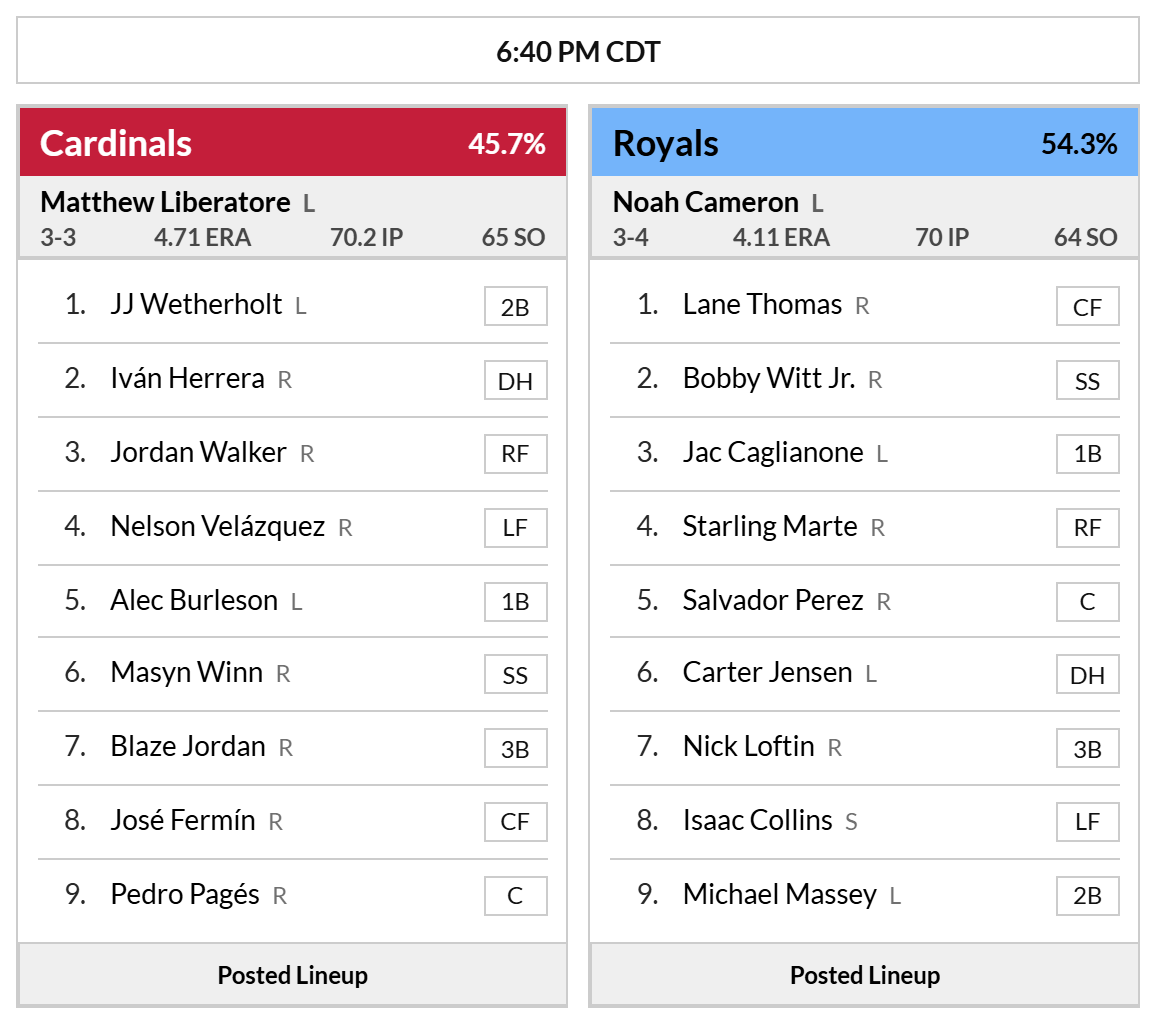
Going to start a place where fans on Royals Keep can share thoughts about the game, Royals baseball, or just shoot the breeze, in general. I will periodically share thoughts, data, and comments during the game here. Tonight begins a three-game series against our I-70 Rival, the St. Louis Cardinals. The Royals have a 54.3% chance to win today, according to Fangraphs. Noah Cameron is on the bump with first pitch at 6:40 p.m.. at Kauffman Stadium. Apparently, fans should be mindful of traffic due to stadium adjustments at the Truman Sports Complex for the World Cup games. Lineups are down below, via Fangraphs. Welcome to the Royals Roadhouse! Go Royals!
-
Josh HammondKendry ChourioDavid ShieldsBlake MitchellSean GambleJustin LamkinRamon RamirezYandel RicardoAustin CharlesCarson RoccaforteMichael LombardiAsbel GonzalezDrew BeamKamden EdgeBen KudrnaFelix ArrondeBlake WoltersCameron MillarSteven ZobacDaniel Vazquez
-
Josh HammondKendry ChourioDavid ShieldsBlake MitchellSean GambleJustin LamkinRamon RamirezYandel RicardoAustin CharlesCarson RoccaforteMichael LombardiAsbel GonzalezDrew BeamKamden EdgeBen KudrnaFelix ArrondeBlake WoltersCameron MillarSteven ZobacDaniel Vazquez
-
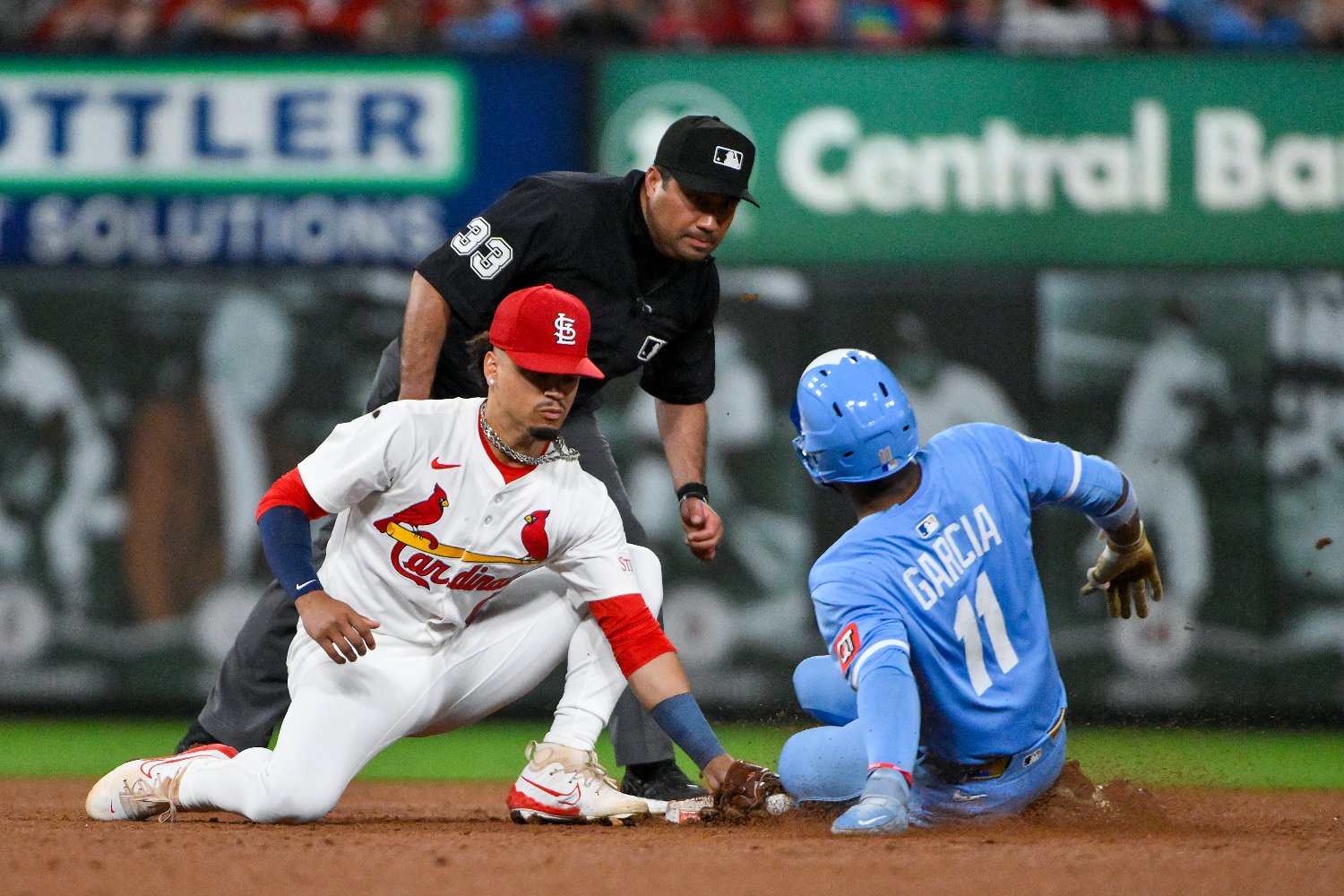
Image courtesy of Jeff Curry-Imagn Images Since the dawn of MLB Interleague play in 1997, the I-70 Series between the Kansas City Royals and St. Louis Cardinals has been one of the more heated Interleague rivalries in baseball. Part of it is due to the 241-mile distance between Kansas City's Kauffman Stadium and St. Louis' Busch Stadium. Part of it is due to the history between the two clubs, especially in the postseason. Regardless, when the Cardinals come to town, it tends to be one of the more heavily attended series of the season at the K. If you ask any Royals fans which team they hate the most, if it isn't the Yankees, it's the Cardinals. That only adds more juice to any series at Kauffman series between the Birdos from Eastern Missouri. Hence, in this article, with the Cardinals coming for a three-game series this weekend (Thursday, Friday, and Sunday), I will highlight five reasons why Royals fans care so much about the I-70 Series, even if the same sentiment is not shared by the "other" baseball team in Missouri. Cardinals Fans Don't Look at the Royals as Their True "Rivals" One of the biggest reasons the I-70 series matters more to Royals faithful than to Cardinals fans is that the Cardinals already have a traditional rival: the Chicago Cubs. The Cubs play in the same division as the Cardinals and hold a 1,293-1,237 advantage over their St. Louis rival. They have also played each other much more in the postseason, with the Cubs holding a 3-1 record in modern postseason history (they beat the Cardinals 3-1 in the 2015 NLDS). When it comes to which shade of blue Cardinals fans dislike, it's the Cubbie blue, not the Royals blue. And Cubs fans share similar disdain for the Cardinals, with even the stadium staff partaking in the hate. Furthermore, the Cardinals and Cubs have much more in common. Wrigley Field and Busch Stadium are in the heart of each team's respective downtowns (unlike Kauffman, which is on the outskirts). The Cubs have been around for 157 years, while the Cardinals have been around for 144 years. The Royals? They've been in Kansas City for 57 years, 100 years less than the Cubs in Chicago. Because of that, there's a sense of arrogance among Cardinals fans when it comes to how they view the Royals and their fanbase. They don't see the Royals as a "rival" baseball club because the Royals are in the American League, and they only see each other six times a year (unlike the Cubs, whom they see 12). The Cardinals Have An Advantage in Wins (But the Gap is Smaller at the K) The Cardinals are not just an older organization than the Royals. They also have the advantage in the head-to-head record as well. St. Louis leads the I-70 Series with an overall record of 86-64. The Cardinals are especially dominant at Busch Stadium against the Royals, as they have a 49-33 record against their Western Missouri neighbor. This season, the Royals lost two of three against the Cardinals at Busch Stadium in mid-May, though Kansas City was competitive in each game (the aggregate score of all three games was 9-8 in favor of the Cardinals). At Kauffman Stadium, the Royals have historically been a much tougher team against their I-70 rival. In 68 games in Kansas City, the Cardinals lead the series 37-31. That is a .544 winning percentage for the Cardinals compared to a .597 winning percentage at Busch Stadium. However, the Royals haven't had much success recently at Kauffman against the Cardinals, despite having overall winning records in the past two years. The Royals have gone 3-4 against the Cardinals at Kauffman in 2024 and 2025, including 1-2 in 2025 (they played only a two-game series at the K in both 2024 and 2025, and split both times). There Are Cultural Differences Between Kansas City and St. Louis In addition to the baseball reasons, the rivalry between the cities themselves only amplifies the bad blood among Royals fans in the I-70 Series. St. Louis is an older city with much more history. St. Louis has been around for 262 years, while Kansas City has only been around for 188 years. Thus, the St. Louis metro seems to have a larger footprint in Missouri than the KC Metro, which has a large footprint in Kansas outside of sports (though that may change with the Chiefs moving to Wyandotte County in Kansas soon). Furthermore, St. Louis feels more Metropolitan, especially when one is visiting downtown. It's easier to walk between sites and use public transportation in St. Louis than in Kansas City, though the growth of the Streetcar in KC is helping. Still, while there are great landmarks to visit in Kansas City, the landmarks in St. Louis feel more accessible, especially if one doesn't have a car. On the other hand, there is an "elite" attitude of St. Louis denizens that drives Kansas City folks crazy. While Kansas City folks are excited to show visitors their city, St. Louis natives seem more apt to ask, "What High School Did You Go To?" (It's a code that can be interpreted in a bunch of ways, both good and bad.) Furthermore, Kansas City takes pride, and rightfully so, in their BBQ culture, while St. Louis lags behind, but thinks it's on the same level. And soccer? Each city thinks it's the soccer capital of the Midwest, and arguably, America. However, based on the World Cup, there is a true winner in that category. I guess St. Louis holds the advantage in "regional" pizza style (there is no KC-style pizza)? Even then, however, the St. Louis pizza delicacy has its fair share of detractors, especially in Kansas City. The "Best Fans in Baseball" Moniker One of the characteristics of Cardinals fans that drives Royals fans insane is their pride in being the "Best Fans in Baseball" (or at least in their own eyes). Part of that is due to the Cardinals and their strong ties to being "Midwest Nice". For those unfamiliar, it's the stereotype that people in the Midwest are "friendlier" than their East and West Coast counterparts. Cardinals fans seem to have embraced that in the baseball sense, and others have taken notice and recognized them, even though the origin of the phrase is up for debate, as discussed in this SB Nation article from 2013. Here's a quote of the early "supposed" origins of the title. That said, the Cardinals being the "Best Fans in Baseball" irritates Royals fans because they share the same characteristics with Cardinals fans, but get little recognition for it. Royals fans are known for being friendly and welcoming to other baseball fans. And they do this despite seeing many losses on the field over the years, unlike the Cardinals, who have had a much better record. It's easy to be gracious when a club wins, but a harder thing to do when one is losing, especially as much as Kansas City in the post-Ewing Kauffman era. (An example of this is Coach K from Duke, who is classy when he wins, but petulant when he loses.) Lastly, Royals fans don't have a Twitter account that's dedicated to retweeting Tweets that contrast the BFIB moniker. Things changed a bit in the Royals' favor after the 2015 World Series win. In 2016, Kansas City earned the title of "Most Liked" fans in baseball, and the Cardinals got the "Least Liked" fans title in a poll by USA Today. Ten years later, however, the Royals have faded a bit in the eyes of the national baseball world, with only one playoff appearance since 2015. The 1985 World Series is Something Royals Fans Can Hold Over Cardinals Fans The Cardinals have more World Series titles as a franchise, with 11 compared to the Royals' 2 (though the Royals have a more recent World Series title than the Cardinals; St. Louis' last World Series title was in 2011). That said, in the one World Series matchup between the two Missouri teams, the Royals won in seven games. That win was the first title for the Royals in franchise history after they fell short in the 1980 World Series against the Phillies. Even though it was a joyous moment for Kansas City, the championship is still met with apprehension among angry Cardinals fans, who refer to umpire Don Denkinger's missed call in Game 6 of the World Series, with the Cardinals leading the series three games to two. A weak groundball hit by Kansas City's Jorge Orta to first baseman Jack Clark caused a close play where pitcher Todd Worrell had to cover first base. Worrell covered in time and received the ball from Clark, but Denkinger, the first-base umpire, ruled Orta safe. If replay had existed, the Royals might not have won that 1985 World Series title. Below is a clip of the infamous call. Even though the Cardinals have 11 titles, fans will wax poetic about how they were "screwed" over by Denkinger, Major League Baseball, and the Royals. That attitude grinds the gears of Royals fans because it dims the franchise's one crowning achievement until 2015. Royals fans could say "Hey, we beat you in 1985" to Cardinals fans, and they would always respond with "Yeah, because of Denkinger!" Thankfully, the 2015 World Series wasn't nearly as controversial, as the Royals beat the Mets in five games. Furthermore, the Cardinals won titles in 2006 and 2011. Thus, the wounds from that Denkinger incident have healed a bit. Still, when they want to, Cardinals fans can be salty about 1985. And when they do, it remains as annoying now as it was over 40 years ago. View full article
-
 Since the dawn of MLB Interleague play in 1997, the I-70 Series between the Kansas City Royals and St. Louis Cardinals has been one of the more heated Interleague rivalries in baseball. Part of it is due to the 241-mile distance between Kansas City's Kauffman Stadium and St. Louis' Busch Stadium. Part of it is due to the history between the two clubs, especially in the postseason. Regardless, when the Cardinals come to town, it tends to be one of the more heavily attended series of the season at the K. If you ask any Royals fans which team they hate the most, if it isn't the Yankees, it's the Cardinals. That only adds more juice to any series at Kauffman series between the Birdos from Eastern Missouri. Hence, in this article, with the Cardinals coming for a three-game series this weekend (Thursday, Friday, and Sunday), I will highlight five reasons why Royals fans care so much about the I-70 Series, even if the same sentiment is not shared by the "other" baseball team in Missouri. Cardinals Fans Don't Look at the Royals as Their True "Rivals" One of the biggest reasons the I-70 series matters more to Royals faithful than to Cardinals fans is that the Cardinals already have a traditional rival: the Chicago Cubs. The Cubs play in the same division as the Cardinals and hold a 1,293-1,237 advantage over their St. Louis rival. They have also played each other much more in the postseason, with the Cubs holding a 3-1 record in modern postseason history (they beat the Cardinals 3-1 in the 2015 NLDS). When it comes to which shade of blue Cardinals fans dislike, it's the Cubbie blue, not the Royals blue. And Cubs fans share similar disdain for the Cardinals, with even the stadium staff partaking in the hate. Furthermore, the Cardinals and Cubs have much more in common. Wrigley Field and Busch Stadium are in the heart of each team's respective downtowns (unlike Kauffman, which is on the outskirts). The Cubs have been around for 157 years, while the Cardinals have been around for 144 years. The Royals? They've been in Kansas City for 57 years, 100 years less than the Cubs in Chicago. Because of that, there's a sense of arrogance among Cardinals fans when it comes to how they view the Royals and their fanbase. They don't see the Royals as a "rival" baseball club because the Royals are in the American League, and they only see each other six times a year (unlike the Cubs, whom they see 12). The Cardinals Have An Advantage in Wins (But the Gap is Smaller at the K) The Cardinals are not just an older organization than the Royals. They also have the advantage in the head-to-head record as well. St. Louis leads the I-70 Series with an overall record of 86-64. The Cardinals are especially dominant at Busch Stadium against the Royals, as they have a 49-33 record against their Western Missouri neighbor. This season, the Royals lost two of three against the Cardinals at Busch Stadium in mid-May, though Kansas City was competitive in each game (the aggregate score of all three games was 9-8 in favor of the Cardinals). At Kauffman Stadium, the Royals have historically been a much tougher team against their I-70 rival. In 68 games in Kansas City, the Cardinals lead the series 37-31. That is a .544 winning percentage for the Cardinals compared to a .597 winning percentage at Busch Stadium. However, the Royals haven't had much success recently at Kauffman against the Cardinals, despite having overall winning records in the past two years. The Royals have gone 3-4 against the Cardinals at Kauffman in 2024 and 2025, including 1-2 in 2025 (they played only a two-game series at the K in both 2024 and 2025, and split both times). There Are Cultural Differences Between Kansas City and St. Louis In addition to the baseball reasons, the rivalry between the cities themselves only amplifies the bad blood among Royals fans in the I-70 Series. St. Louis is an older city with much more history. St. Louis has been around for 262 years, while Kansas City has only been around for 188 years. Thus, the St. Louis metro seems to have a larger footprint in Missouri than the KC Metro, which has a large footprint in Kansas outside of sports (though that may change with the Chiefs moving to Wyandotte County in Kansas soon). Furthermore, St. Louis feels more Metropolitan, especially when one is visiting downtown. It's easier to walk between sites and use public transportation in St. Louis than in Kansas City, though the growth of the Streetcar in KC is helping. Still, while there are great landmarks to visit in Kansas City, the landmarks in St. Louis feel more accessible, especially if one doesn't have a car. On the other hand, there is an "elite" attitude of St. Louis denizens that drives Kansas City folks crazy. While Kansas City folks are excited to show visitors their city, St. Louis natives seem more apt to ask, "What High School Did You Go To?" (It's a code that can be interpreted in a bunch of ways, both good and bad.) Furthermore, Kansas City takes pride, and rightfully so, in their BBQ culture, while St. Louis lags behind, but thinks it's on the same level. And soccer? Each city thinks it's the soccer capital of the Midwest, and arguably, America. However, based on the World Cup, there is a true winner in that category. I guess St. Louis holds the advantage in "regional" pizza style (there is no KC-style pizza)? Even then, however, the St. Louis pizza delicacy has its fair share of detractors, especially in Kansas City. The "Best Fans in Baseball" Moniker One of the characteristics of Cardinals fans that drives Royals fans insane is their pride in being the "Best Fans in Baseball" (or at least in their own eyes). Part of that is due to the Cardinals and their strong ties to being "Midwest Nice". For those unfamiliar, it's the stereotype that people in the Midwest are "friendlier" than their East and West Coast counterparts. Cardinals fans seem to have embraced that in the baseball sense, and others have taken notice and recognized them, even though the origin of the phrase is up for debate, as discussed in this SB Nation article from 2013. Here's a quote of the early "supposed" origins of the title. That said, the Cardinals being the "Best Fans in Baseball" irritates Royals fans because they share the same characteristics with Cardinals fans, but get little recognition for it. Royals fans are known for being friendly and welcoming to other baseball fans. And they do this despite seeing many losses on the field over the years, unlike the Cardinals, who have had a much better record. It's easy to be gracious when a club wins, but a harder thing to do when one is losing, especially as much as Kansas City in the post-Ewing Kauffman era. (An example of this is Coach K from Duke, who is classy when he wins, but petulant when he loses.) Lastly, Royals fans don't have a Twitter account that's dedicated to retweeting Tweets that contrast the BFIB moniker. Things changed a bit in the Royals' favor after the 2015 World Series win. In 2016, Kansas City earned the title of "Most Liked" fans in baseball, and the Cardinals got the "Least Liked" fans title in a poll by USA Today. Ten years later, however, the Royals have faded a bit in the eyes of the national baseball world, with only one playoff appearance since 2015. The 1985 World Series is Something Royals Fans Can Hold Over Cardinals Fans The Cardinals have more World Series titles as a franchise, with 11 compared to the Royals' 2 (though the Royals have a more recent World Series title than the Cardinals; St. Louis' last World Series title was in 2011). That said, in the one World Series matchup between the two Missouri teams, the Royals won in seven games. That win was the first title for the Royals in franchise history after they fell short in the 1980 World Series against the Phillies. Even though it was a joyous moment for Kansas City, the championship is still met with apprehension among angry Cardinals fans, who refer to umpire Don Denkinger's missed call in Game 6 of the World Series, with the Cardinals leading the series three games to two. A weak groundball hit by Kansas City's Jorge Orta to first baseman Jack Clark caused a close play where pitcher Todd Worrell had to cover first base. Worrell covered in time and received the ball from Clark, but Denkinger, the first-base umpire, ruled Orta safe. If replay had existed, the Royals might not have won that 1985 World Series title. Below is a clip of the infamous call. Even though the Cardinals have 11 titles, fans will wax poetic about how they were "screwed" over by Denkinger, Major League Baseball, and the Royals. That attitude grinds the gears of Royals fans because it dims the franchise's one crowning achievement until 2015. Royals fans could say "Hey, we beat you in 1985" to Cardinals fans, and they would always respond with "Yeah, because of Denkinger!" Thankfully, the 2015 World Series wasn't nearly as controversial, as the Royals beat the Mets in five games. Furthermore, the Cardinals won titles in 2006 and 2011. Thus, the wounds from that Denkinger incident have healed a bit. Still, when they want to, Cardinals fans can be salty about 1985. And when they do, it remains as annoying now as it was over 40 years ago.
 -
 Frank Mozzicato earned the win with two scoreless innings of four-strikeout relief as the Northwest Arkansas Naturals beat Tulsa 7-2. Emmanuel Reyes worked six innings of two-run ball with five strikeouts to lift the Quad Cities River Bandits past Wisconsin 3-2, with Tyriq Kemp collecting three hits. For Columbia, Darwin Rodriguez struck out seven over six innings in a 9-5 loss, while Sean Gamble went 2-for-3 with a double and Josi Novas homered. Omaha's game against the St. Paul Saints was postponed due to weather or Ghostbusters-esque conditions. Royals Transactions Kansas City Royals activated RHP Connor Seabold. Kansas City Royals optioned RHP Mitch Spence to Omaha Storm Chasers. Naturals Pile On In The Fourth To Down Tulsa 7-2 The Northwest Arkansas Naturals scored in three different innings to take a 7-2 win over the Tulsa Drillers, whom the Naturals have not beaten this season until tonight (They lost all their games in Tulsa back in May). Jack Pineda led the offense, going 2-for-4 with two RBIs, and Rudy Martin Jr. reached three times with two hits, two runs scored, and two stolen bases. Northwest Arkansas struck first in the first inning when Pineda singled home leadoff man Carson Roccaforte, and Spencer Nivens followed with a sacrifice fly to score Pineda for a 2-0 lead. The decisive frame came in the fourth, when the Naturals plated four runs. Connor Scott singled home Martin, Roccaforte added a sacrifice fly, and Pineda capped the inning with a two-run single that scored Alberto Rodriguez and Justin Johnson to push the lead to 6-2. Rodriguez added an insurance run with a sacrifice fly in the eighth. Felix Arronde, our No. 12 prospect at Royals Keep, started and allowed two runs on two hits with two walks, three strikeouts, and a home run over three innings. He held his own despite facing a Drillers lineup stacked with Top-100 prospects from the Dodgers system. Mozzicato, our No. 17 prospect at Royals Keep, earned the win, striking out four over two scoreless innings while allowing one hit and three walks. Andrew Morones, Caden Monke, and Dennis Colleran Jr. combined for the final four innings. Northwest Arkansas left seven runners on base and went 3-for-10 with runners in scoring position. They are now 28-35. Player AB R H RBI BB K Carson Roccaforte 2 1 0 1 1 1 Jack Pineda 4 1 2 2 1 1 Sam Kulasingam 2 0 1 0 2 0 Spencer Nivens 3 0 0 1 0 0 Omar Hernandez 4 0 0 0 0 0 Rudy Martin Jr. 3 2 2 0 1 1 Connor Scott 4 1 1 1 0 2 Alberto Rodriguez 2 1 0 1 1 2 Justin Johnson 2 1 0 0 2 0 Player IP H R ER BB K HR Felix Arronde 3 2 2 2 2 3 1 Frank Mozzicato 2 1 0 0 3 4 0 Andrew Morones 1 1 0 0 0 1 0 Caden Monke 2 1 0 0 0 2 0 Dennis Colleran Jr. 1 1 0 1 1 1 0 Reyes Goes Six As River Bandits Edge Wisconsin 3-2 The Quad Cities River Bandits manufactured just enough offense to slip past the Wisconsin Timber Rattlers 3-2. The Dutch-born Kemp paced the lineup, going 3-for-3 with a double, an RBI, two stolen bases, and a walk, and Ramon Ramirez added a double, two runs scored, and a stolen base. Quad Cities scored single runs across three innings, breaking through in the second when Kemp singled home Ramirez. In the fifth, Connor Rasmussen doubled to drive in Kemp, and the eventual winning run came in the sixth when Derlin Figueroa laid down a sacrifice bunt that scored Ramirez. Reyes turned in the night's strongest pitching performance, working six innings and allowing two runs on seven hits with one walk, five strikeouts, and a home run to earn the win. The 22-year-old now has a 3.64 ERA and 1.38 WHIP in 12 starts and 59.1 IP. Jordan Woods followed with two scoreless innings, striking out two, and Yimi Presinal struck out two in a scoreless ninth for the save. The River Bandits left nine runners on base and went 3-for-10 with runners in scoring position. With the win over the Rattlers, Quad Cities improved their record to 29-33. Player AB R H RBI BB K Nolan Sailors 3 0 1 0 0 0 Asbel Gonzalez 3 0 0 0 1 1 Blake Mitchell 4 0 1 0 0 1 Ramon Ramirez 3 2 1 0 1 1 Luke Pelzer 4 0 1 0 0 2 Derlin Figueroa 3 0 0 1 0 3 Tyriq Kemp 3 1 3 1 1 0 Connor Rasmussen 3 0 1 1 1 0 Angel Acosta 3 0 0 0 1 1 Player IP H R ER BB K HR Emmanuel Reyes 6 7 2 2 1 5 1 Jordan Woods 2 1 0 0 1 2 0 Yimi Presinal 1 0 0 0 0 2 0 Fireflies Undone By Seventh-Inning Rally In 9-5 Loss At Hickory The Columbia Fireflies could not hold an early lead and fell to the Hickory Crawdads 9-5. Gamble, our No. 3 prospect, led the offense, going 2-for-3 with a double, an RBI, a walk, and a stolen base. Angel Ramirez reached three times with a hit, two walks, two runs scored, and a stolen base. Columbia built a 4-2 advantage in the third inning, getting an RBI groundout from JC Vanek that scored Yandel Ricardo, a Novas solo home run, and a run-scoring single from Gamble. The lead did not last. Hickory plated two in the fifth to tie the game, then broke it open with four runs in the seventh to take command. Rodriguez was strong in his outing, striking out seven over six innings while allowing four runs on six hits and a walk. Jhon Reyes took the loss after retiring just one batter and surrendering four runs on five hits, and Yeri Perez allowed one run over 1 2/3 innings. Ivan Sosa drove in Gamble in the eighth for Columbia's final run. The Fireflies left seven runners on base and went 3-for-11 with runners in scoring position. They are 33-32 this season. Player AB R H RBI BB K Yandel Ricardo 5 1 0 0 0 1 Angel Ramirez 3 2 1 0 2 0 Stone Russell 5 0 1 0 0 2 JC Vanek 4 0 0 0 0 1 Sean Gamble 3 1 2 1 1 1 Roni Cabrera 3 0 0 0 1 1 Ivan Sosa 4 0 1 1 0 1 Gabriel Silva 4 0 0 0 0 3 Josi Novas 3 1 1 1 1 2 Player IP H R ER BB K HR Darwin Rodriguez 6 6 4 4 1 7 0 Jhon Reyes 1/3 5 4 4 0 0 1 Yeri Perez 1 2/3 1 1 1 1 0 0 Top-20 Prospect Performance Kendry Chourio: DNP David Shields: DNP Sean Gamble: 2-for-3, 2B, RBI, BB, K, SB Blake Mitchell: 1-for-4, K Josh Hammond: DNP Ramon Ramirez: 1-for-3, 2B, BB, K, SB Drew Beam: DNP Asbel Gonzalez: 0-for-3, BB, K Ben Kudrna: DNP Carson Roccaforte: 0-for-2, RBI, BB, K Yandel Ricardo: 0-for-5, K Felix Arronde: 3 IP, 2 H, 2 R, 2 ER, 2 BB, 3 K, HR Blake Wolters: DNP Michael Lombardi: DNP Luinder Avila: DNP Steven Zobac: DNP Frank Mozzicato: 2 IP, 1 H, 0 R, 0 ER, 3 BB, 4 K, 0 HR Daniel Vazquez: DNP Warren Colcano: DNP Shane Panzini: DNP
 -
Frank Mozzicato earned the win with two scoreless innings of four-strikeout relief as the Northwest Arkansas Naturals beat Tulsa 7-2. Emmanuel Reyes worked six innings of two-run ball with five strikeouts to lift the Quad Cities River Bandits past Wisconsin 3-2, with Tyriq Kemp collecting three hits. For Columbia, Darwin Rodriguez struck out seven over six innings in a 9-5 loss, while Sean Gamble went 2-for-3 with a double and Josi Novas homered. Omaha's game against the St. Paul Saints was postponed due to weather or Ghostbusters-esque conditions. Royals Transactions Kansas City Royals activated RHP Connor Seabold. Kansas City Royals optioned RHP Mitch Spence to Omaha Storm Chasers. Naturals Pile On In The Fourth To Down Tulsa 7-2 The Northwest Arkansas Naturals scored in three different innings to take a 7-2 win over the Tulsa Drillers, whom the Naturals have not beaten this season until tonight (They lost all their games in Tulsa back in May). Jack Pineda led the offense, going 2-for-4 with two RBIs, and Rudy Martin Jr. reached three times with two hits, two runs scored, and two stolen bases. Northwest Arkansas struck first in the first inning when Pineda singled home leadoff man Carson Roccaforte, and Spencer Nivens followed with a sacrifice fly to score Pineda for a 2-0 lead. The decisive frame came in the fourth, when the Naturals plated four runs. Connor Scott singled home Martin, Roccaforte added a sacrifice fly, and Pineda capped the inning with a two-run single that scored Alberto Rodriguez and Justin Johnson to push the lead to 6-2. Rodriguez added an insurance run with a sacrifice fly in the eighth. Felix Arronde, our No. 12 prospect at Royals Keep, started and allowed two runs on two hits with two walks, three strikeouts, and a home run over three innings. He held his own despite facing a Drillers lineup stacked with Top-100 prospects from the Dodgers system. Mozzicato, our No. 17 prospect at Royals Keep, earned the win, striking out four over two scoreless innings while allowing one hit and three walks. Andrew Morones, Caden Monke, and Dennis Colleran Jr. combined for the final four innings. Northwest Arkansas left seven runners on base and went 3-for-10 with runners in scoring position. They are now 28-35. Player AB R H RBI BB K Carson Roccaforte 2 1 0 1 1 1 Jack Pineda 4 1 2 2 1 1 Sam Kulasingam 2 0 1 0 2 0 Spencer Nivens 3 0 0 1 0 0 Omar Hernandez 4 0 0 0 0 0 Rudy Martin Jr. 3 2 2 0 1 1 Connor Scott 4 1 1 1 0 2 Alberto Rodriguez 2 1 0 1 1 2 Justin Johnson 2 1 0 0 2 0 Player IP H R ER BB K HR Felix Arronde 3 2 2 2 2 3 1 Frank Mozzicato 2 1 0 0 3 4 0 Andrew Morones 1 1 0 0 0 1 0 Caden Monke 2 1 0 0 0 2 0 Dennis Colleran Jr. 1 1 0 1 1 1 0 Reyes Goes Six As River Bandits Edge Wisconsin 3-2 The Quad Cities River Bandits manufactured just enough offense to slip past the Wisconsin Timber Rattlers 3-2. The Dutch-born Kemp paced the lineup, going 3-for-3 with a double, an RBI, two stolen bases, and a walk, and Ramon Ramirez added a double, two runs scored, and a stolen base. Quad Cities scored single runs across three innings, breaking through in the second when Kemp singled home Ramirez. In the fifth, Connor Rasmussen doubled to drive in Kemp, and the eventual winning run came in the sixth when Derlin Figueroa laid down a sacrifice bunt that scored Ramirez. Reyes turned in the night's strongest pitching performance, working six innings and allowing two runs on seven hits with one walk, five strikeouts, and a home run to earn the win. The 22-year-old now has a 3.64 ERA and 1.38 WHIP in 12 starts and 59.1 IP. Jordan Woods followed with two scoreless innings, striking out two, and Yimi Presinal struck out two in a scoreless ninth for the save. The River Bandits left nine runners on base and went 3-for-10 with runners in scoring position. With the win over the Rattlers, Quad Cities improved their record to 29-33. Player AB R H RBI BB K Nolan Sailors 3 0 1 0 0 0 Asbel Gonzalez 3 0 0 0 1 1 Blake Mitchell 4 0 1 0 0 1 Ramon Ramirez 3 2 1 0 1 1 Luke Pelzer 4 0 1 0 0 2 Derlin Figueroa 3 0 0 1 0 3 Tyriq Kemp 3 1 3 1 1 0 Connor Rasmussen 3 0 1 1 1 0 Angel Acosta 3 0 0 0 1 1 Player IP H R ER BB K HR Emmanuel Reyes 6 7 2 2 1 5 1 Jordan Woods 2 1 0 0 1 2 0 Yimi Presinal 1 0 0 0 0 2 0 Fireflies Undone By Seventh-Inning Rally In 9-5 Loss At Hickory The Columbia Fireflies could not hold an early lead and fell to the Hickory Crawdads 9-5. Gamble, our No. 3 prospect, led the offense, going 2-for-3 with a double, an RBI, a walk, and a stolen base. Angel Ramirez reached three times with a hit, two walks, two runs scored, and a stolen base. Columbia built a 4-2 advantage in the third inning, getting an RBI groundout from JC Vanek that scored Yandel Ricardo, a Novas solo home run, and a run-scoring single from Gamble. The lead did not last. Hickory plated two in the fifth to tie the game, then broke it open with four runs in the seventh to take command. Rodriguez was strong in his outing, striking out seven over six innings while allowing four runs on six hits and a walk. Jhon Reyes took the loss after retiring just one batter and surrendering four runs on five hits, and Yeri Perez allowed one run over 1 2/3 innings. Ivan Sosa drove in Gamble in the eighth for Columbia's final run. The Fireflies left seven runners on base and went 3-for-11 with runners in scoring position. They are 33-32 this season. Player AB R H RBI BB K Yandel Ricardo 5 1 0 0 0 1 Angel Ramirez 3 2 1 0 2 0 Stone Russell 5 0 1 0 0 2 JC Vanek 4 0 0 0 0 1 Sean Gamble 3 1 2 1 1 1 Roni Cabrera 3 0 0 0 1 1 Ivan Sosa 4 0 1 1 0 1 Gabriel Silva 4 0 0 0 0 3 Josi Novas 3 1 1 1 1 2 Player IP H R ER BB K HR Darwin Rodriguez 6 6 4 4 1 7 0 Jhon Reyes 1/3 5 4 4 0 0 1 Yeri Perez 1 2/3 1 1 1 1 0 0 Top-20 Prospect Performance Kendry Chourio: DNP David Shields: DNP Sean Gamble: 2-for-3, 2B, RBI, BB, K, SB Blake Mitchell: 1-for-4, K Josh Hammond: DNP Ramon Ramirez: 1-for-3, 2B, BB, K, SB Drew Beam: DNP Asbel Gonzalez: 0-for-3, BB, K Ben Kudrna: DNP Carson Roccaforte: 0-for-2, RBI, BB, K Yandel Ricardo: 0-for-5, K Felix Arronde: 3 IP, 2 H, 2 R, 2 ER, 2 BB, 3 K, HR Blake Wolters: DNP Michael Lombardi: DNP Luinder Avila: DNP Steven Zobac: DNP Frank Mozzicato: 2 IP, 1 H, 0 R, 0 ER, 3 BB, 4 K, 0 HR Daniel Vazquez: DNP Warren Colcano: DNP Shane Panzini: DNP View full article
-
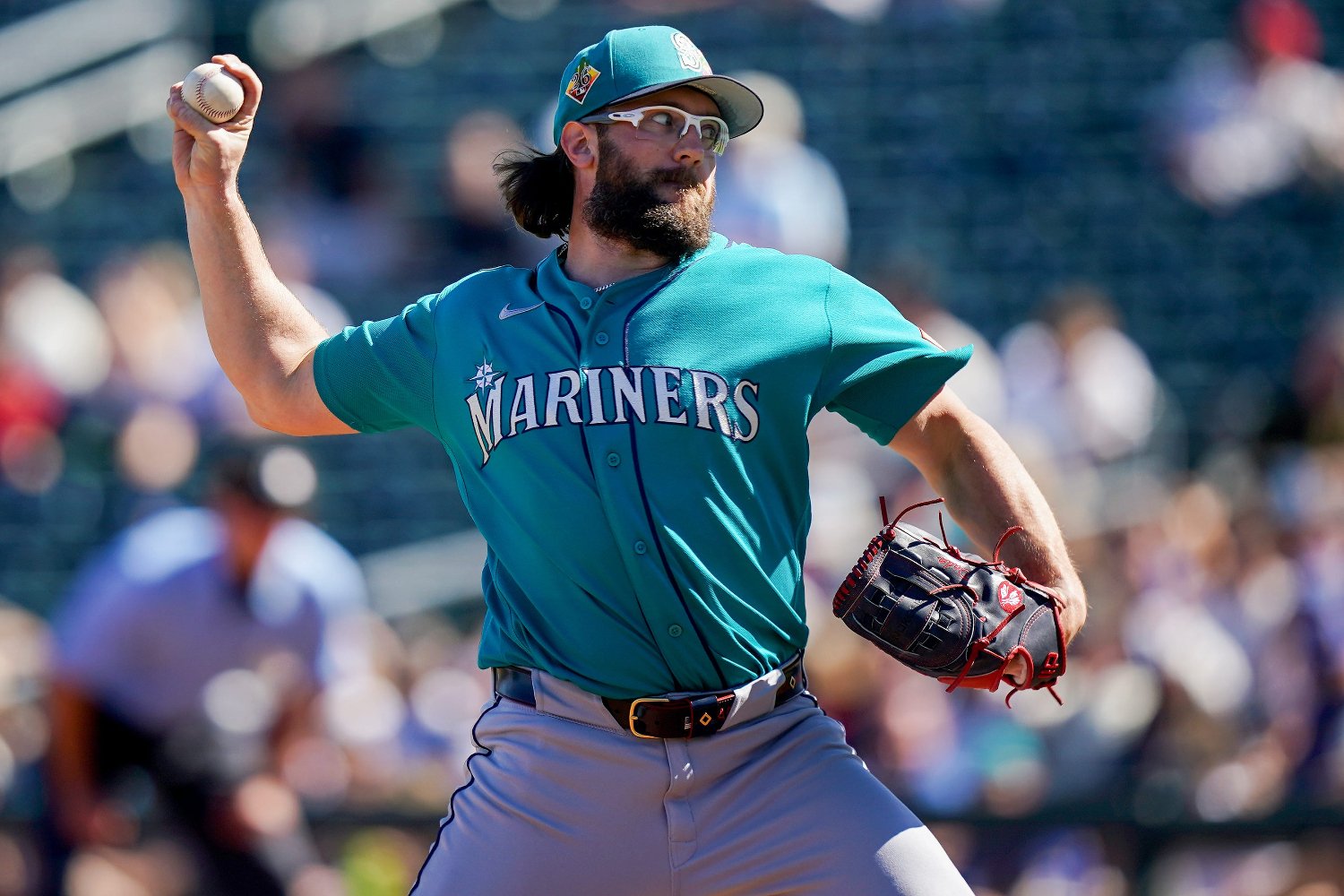
On Wednesday afternoon, the MLB insider Jeff Passan reported that the Royals would be acquiring right-handed pitcher Randy Dobnak from the Seattle Mariners. Dobnak has not pitched with the Mariners and has spent the entirety of the season in Triple-A Tacoma. The 31-year-old pitcher is expected to be added to the 40-man roster. Dobnak should be familiar with Royals fans as he spent most of his career with the Minnesota Twins prior to this season. Last year, he only made one 5.1 IP appearance with the Twins and posted a 1.69 ERA. This year, with the Tacoma Rainiers, the Mariners' Triple-A team, he posted a 4.24 ERA and 1.44 WHIP in 70 IP. He also has a 4.06 FIP and 4.9% K-BB%. While he doesn't generate a ton of whiffs or strikeouts, Donbnak minimizes hard contact and is a groundball machine, as evidenced by his 66.5% groundball rate and .334 xwOBACON. The move has not been made official, and no word has been mentioned about who Dobnak would replace on the 40-man roster. One possibility could be moving Cole Ragans to the 60-Day IL, as he has not been progressing well with his injury since being added to the 15-Day IL, according to recent reports. The Royals come back home to Kauffman Stadium on Thursday to begin a three-game series against the I-70 rival, the St. Louis Cardinals. They will play on Thursday, Friday, and Sunday. There will be no game on Saturday due to the World Cup match between Ecuador and Curacao at Kansas City Stadium (i.e., Arrowhead Stadium). Update (6:53 PM): The Royals announced the deal officially on their social media. In a corresponding move, they added Ragans to the 60-Day IL to make room for Dobnak. Dobnak gives the Royals some much-needed starting pitching depth with Ragans on the 60-Day IL and Kris Bubic's future on the IL still hazy. They recently called up Mitch Spence from Omaha to make a spot start, and he allowed six runs on seven hits and one walk in four innings of work in Monday's loss to the Nationals. Spence was optioned back to Omaha after Monday's appearance. View full rumor
-
 On Wednesday afternoon, the MLB insider Jeff Passan reported that the Royals would be acquiring right-handed pitcher Randy Dobnak from the Seattle Mariners. Dobnak has not pitched with the Mariners and has spent the entirety of the season in Triple-A Tacoma. The 31-year-old pitcher is expected to be added to the 40-man roster. Dobnak should be familiar with Royals fans as he spent most of his career with the Minnesota Twins prior to this season. Last year, he only made one 5.1 IP appearance with the Twins and posted a 1.69 ERA. This year, with the Tacoma Rainiers, the Mariners' Triple-A team, he posted a 4.24 ERA and 1.44 WHIP in 70 IP. He also has a 4.06 FIP and 4.9% K-BB%. While he doesn't generate a ton of whiffs or strikeouts, Donbnak minimizes hard contact and is a groundball machine, as evidenced by his 66.5% groundball rate and .334 xwOBACON. The move has not been made official, and no word has been mentioned about who Dobnak would replace on the 40-man roster. One possibility could be moving Cole Ragans to the 60-Day IL, as he has not been progressing well with his injury since being added to the 15-Day IL, according to recent reports. The Royals come back home to Kauffman Stadium on Thursday to begin a three-game series against the I-70 rival, the St. Louis Cardinals. They will play on Thursday, Friday, and Sunday. There will be no game on Saturday due to the World Cup match between Ecuador and Curacao at Kansas City Stadium (i.e., Arrowhead Stadium). Update (6:53 PM): The Royals announced the deal officially on their social media. In a corresponding move, they added Ragans to the 60-Day IL to make room for Dobnak. Dobnak gives the Royals some much-needed starting pitching depth with Ragans on the 60-Day IL and Kris Bubic's future on the IL still hazy. They recently called up Mitch Spence from Omaha to make a spot start, and he allowed six runs on seven hits and one walk in four innings of work in Monday's loss to the Nationals. Spence was optioned back to Omaha after Monday's appearance.
 -
Hunter Patteson struck out eight over seven innings, but Northwest Arkansas fell 6-5 to Tulsa despite Connor Scott's late two-run homer. Jose Gutierrez worked seven frames as Columbia rolled 7-3, backed by Roni Cabrera's homer and three RBI. Quad Cities fell 11-6 despite Luke Pelzer's three hits and Ramon Ramirez's home run. Omaha managed just two runs in a 21-2 loss at St. Paul, with Abraham Toro homering. Royals Transactions Kansas City Royals placed RHP Carlos Estévez on the 60-day injured list. Left foot contusion. Kansas City Royals traded RHP Denis Samudio and cash to Toronto Blue Jays for RHP Connor Seabold. Kansas City Royals recalled RHP Mitch Spence from Omaha Storm Chasers. Kansas City Royals optioned RHP Eli Morgan to Omaha Storm Chasers. Omaha Buried Early In Lopsided Loss At St. Paul The Omaha Storm Chasers fell 21-2 to the St. Paul Saints, undone by an eight-run first inning before they ever came to bat. Starter Aaron Sanchez recorded just three outs, allowing six hits and eight earned runs with two walks and two strikeouts, and the deficit was insurmountable from there. Ethan Bosacker followed with 2 2/3 innings, surrendering six hits and six earned runs while striking out five. The offense offered little on the Storm Chasers' end. Abraham Toro provided the lone power, homering in the second inning to put Omaha on the board. Outfielder Drew Waters added two hits. Infielder Peyton Wilson singled, walked, and scored Omaha's other run in the third on a Brett Squires single. Omaha left five runners on base and never scored after the third inning. The Storm Chasers went 0-for-3 with runners in scoring position against St. Paul. Position player Toro even took the mound for a scoreless inning to spare the bullpen, which shows how south the evening went for the Storm Chasers. They are now 30-39. Player AB R H RBI BB K Josh Rojas 4 0 0 0 0 1 Peyton Wilson 3 1 1 0 1 1 Brett Squires 4 0 1 0 0 1 Matthew Lugo 4 0 1 0 0 1 Luca Tresh 4 0 0 0 0 3 Abraham Toro 4 1 1 1 0 1 Drew Waters 4 0 2 0 0 0 Gavin Cross 3 0 1 0 0 1 Kevin Newman 3 0 0 0 0 0 Player IP H R ER BB K HR Aaron Sanchez 1 6 8 8 2 2 1 Ethan Bosacker 2 2/3 6 6 6 2 5 1 Anthony Gose 1 1/3 3 1 1 0 2 1 Helcris Olivárez 0 2/3 1 4 4 5 1 0 Génesis Cabrera 1 1/3 2 2 0 0 1 0 Abraham Toro 1 0 0 0 0 0 0 Scott's Late Homer Falls Short As Tulsa Edges Naturals The Northwest Arkansas Naturals fell 6-5 to the Tulsa Drillers, unable to overcome a three-run top of the tenth. Patteson was excellent on the mound, working seven innings and allowing four hits and three earned runs with no walks and eight strikeouts, though two of those hits left the yard. The game was tied 3-3 entering the tenth before Tulsa pushed across three runs against the bullpen to take a 6-3 lead. Northwest Arkansas answered in the bottom of the inning when Scott homered to score zombie runner Colton Becker and cut the deficit to 6-5, but Carson Roccaforte struck out to end it. Scott finished 3-for-4 with two RBI. Roccaforte led off and went 3-for-5 with a double, and his fifth-inning single scored Scott to bring the Naturals even at 2-2, though he was later picked off and caught stealing second. Northwest Arkansas left just three runners on base and went 2-for-7 with runners in scoring position. The loss brings the Naturals' record to 27-35 for the season. Player AB R H RBI BB K Carson Roccaforte 5 1 3 1 0 2 Jack Pineda 4 0 1 0 0 0 Sam Kulasingam 3 0 0 1 0 1 Spencer Nivens 4 0 0 0 0 0 Daniel Vazquez 4 0 1 0 0 2 Colton Becker 4 1 1 0 0 0 Rudy Martin Jr. 4 0 0 0 0 2 Connor Scott 4 2 3 2 0 0 Canyon Brown 3 1 1 0 0 0 Player IP H R ER BB K HR Hunter Patteson 7 4 3 3 0 8 2 Brandon Johnson 1 0 0 0 2 2 0 Zachary Cawyer 2 4 3 2 0 2 0 Pelzer's Three Hits Not Enough As River Bandits Fall To Wisconsin The Quad Cities River Bandits dropped an 11-6 decision to the Wisconsin Timber Rattlers in their return to Modern Woodsmen Park in Davenport, Iowa, despite a productive night at the plate. The offense pushed across two runs in both the fifth and the sixth innings to stay within reach. In the fifth, Tyriq Kemp's groundout scored Pelzer and Angel Acosta's sacrifice fly brought home Kemp. The sixth saw Pelzer triple home Ramirez, then score himself on a wild pitch after Derlin Figueroa walked. The pitching could not hold, however. The staff struggled with command, and Mason Miller was charged with five earned runs across 1 2/3 innings while Kamden Edge allowed four earned runs in one inning, including a home run. Connor Rasmussen drove in a run with a ninth-inning single, but Quad Cities left three on base and could not complete the comeback. The River Bandits are now 28-33 for the season. Player AB R H RBI BB K Nolan Sailors 3 0 0 0 1 2 Asbel Gonzalez 4 0 1 0 0 2 Blake Mitchell 4 0 1 0 0 2 Ramon Ramirez 4 2 2 1 0 1 Luke Pelzer 4 3 3 1 0 0 Derlin Figueroa 2 0 0 0 2 0 Tyriq Kemp 4 1 0 1 0 1 Connor Rasmussen 4 0 2 1 0 1 Angel Acosta 3 0 1 1 0 0 Player IP H R ER BB K HR Cory Ronan 2 1 1 1 4 2 0 Mason Miller 1 2/3 4 5 5 2 2 0 Josh Hansell 1 1/3 1 1 1 3 1 0 Kamden Edge 1 2 4 4 3 0 1 Nick Conte 2 1 0 0 2 2 0 L.P. Langevin 1 1 0 0 1 3 0 Gutierrez Cruises, Eighth-Inning Rally Sends Columbia Past Hickory The Columbia Fireflies beat the Hickory Crawdads 7-3 behind a strong start from Gutierrez, who went seven innings and allowed five hits and three earned runs with no walks and four strikeouts. The game was tied 3-3 entering the eighth before Columbia broke it open with a three-run inning. Josh Hammond and Yandel Ricardo opened the eighth with singles, Stone Russell moved them up with a sacrifice bunt, and Sean Gamble doubled home both runners. JC Vanek followed with a single that scored Gamble for a 6-3 lead. Cabrera fueled the offense all night, finishing 1-for-2 with a fifth-inning home run, two RBI, two runs, and two walks. Hammond reached base three times, going 2-for-3 with a walk and scoring twice. Gamble drove in two, and Vanek had two hits. Henson Leal closed with two scoreless innings out of the bullpen, striking out two. Columbia left five runners on base and went 3-for-7 with runners in scoring position. The Fireflies improved their record to 33-31 with the victory. Player AB R H RBI BB K Henry Ramos 5 0 0 0 0 0 Josi Novas 0 0 0 0 0 0 Josh Hammond 3 2 2 1 1 0 Yandel Ricardo 4 1 1 1 0 0 Stone Russell 3 0 1 0 0 1 Sean Gamble 4 1 1 2 0 0 Hyungchan Um 4 0 1 0 0 1 JC Vanek 4 1 2 1 0 0 Angel Ramirez 4 0 1 0 0 1 Roni Cabrera 2 2 1 2 2 1 Player IP H R ER BB K HR Jose Gutierrez 7 5 3 3 0 4 2 Henson Leal 2 1 0 0 2 2 0 Top-20 Prospect Performance Kendry Chourio: DNP David Shields: DNP Sean Gamble: 1-for-4, 2B, 2 RBI, 1 R Blake Mitchell: 1-for-4, 2 K Josh Hammond: 2-for-3, 1 RBI, 2 R, 1 BB Ramon Ramirez: 2-for-4, HR, 1 RBI, 2 R, 1 K Drew Beam: DNP Asbel Gonzalez: 1-for-4, 2 K Ben Kudrna: DNP Carson Roccaforte: 3-for-5, 3B, 1 RBI, 1 R, 2 K Yandel Ricardo: 1-for-4, 1 RBI, 1 R Felix Arronde: DNP Blake Wolters: DNP Michael Lombardi: DNP Luinder Avila: DNP Steven Zobac: DNP Frank Mozzicato: DNP Daniel Vazquez: 1-for-4, 2B, 2 K Warren Colcano: 0-for-3 Shane Panzini: DNP View full article
-
 Hunter Patteson struck out eight over seven innings, but Northwest Arkansas fell 6-5 to Tulsa despite Connor Scott's late two-run homer. Jose Gutierrez worked seven frames as Columbia rolled 7-3, backed by Roni Cabrera's homer and three RBI. Quad Cities fell 11-6 despite Luke Pelzer's three hits and Ramon Ramirez's home run. Omaha managed just two runs in a 21-2 loss at St. Paul, with Abraham Toro homering. Royals Transactions Kansas City Royals placed RHP Carlos Estévez on the 60-day injured list. Left foot contusion. Kansas City Royals traded RHP Denis Samudio and cash to Toronto Blue Jays for RHP Connor Seabold. Kansas City Royals recalled RHP Mitch Spence from Omaha Storm Chasers. Kansas City Royals optioned RHP Eli Morgan to Omaha Storm Chasers. Omaha Buried Early In Lopsided Loss At St. Paul The Omaha Storm Chasers fell 21-2 to the St. Paul Saints, undone by an eight-run first inning before they ever came to bat. Starter Aaron Sanchez recorded just three outs, allowing six hits and eight earned runs with two walks and two strikeouts, and the deficit was insurmountable from there. Ethan Bosacker followed with 2 2/3 innings, surrendering six hits and six earned runs while striking out five. The offense offered little on the Storm Chasers' end. Abraham Toro provided the lone power, homering in the second inning to put Omaha on the board. Outfielder Drew Waters added two hits. Infielder Peyton Wilson singled, walked, and scored Omaha's other run in the third on a Brett Squires single. Omaha left five runners on base and never scored after the third inning. The Storm Chasers went 0-for-3 with runners in scoring position against St. Paul. Position player Toro even took the mound for a scoreless inning to spare the bullpen, which shows how south the evening went for the Storm Chasers. They are now 30-39. Player AB R H RBI BB K Josh Rojas 4 0 0 0 0 1 Peyton Wilson 3 1 1 0 1 1 Brett Squires 4 0 1 0 0 1 Matthew Lugo 4 0 1 0 0 1 Luca Tresh 4 0 0 0 0 3 Abraham Toro 4 1 1 1 0 1 Drew Waters 4 0 2 0 0 0 Gavin Cross 3 0 1 0 0 1 Kevin Newman 3 0 0 0 0 0 Player IP H R ER BB K HR Aaron Sanchez 1 6 8 8 2 2 1 Ethan Bosacker 2 2/3 6 6 6 2 5 1 Anthony Gose 1 1/3 3 1 1 0 2 1 Helcris Olivárez 0 2/3 1 4 4 5 1 0 Génesis Cabrera 1 1/3 2 2 0 0 1 0 Abraham Toro 1 0 0 0 0 0 0 Scott's Late Homer Falls Short As Tulsa Edges Naturals The Northwest Arkansas Naturals fell 6-5 to the Tulsa Drillers, unable to overcome a three-run top of the tenth. Patteson was excellent on the mound, working seven innings and allowing four hits and three earned runs with no walks and eight strikeouts, though two of those hits left the yard. The game was tied 3-3 entering the tenth before Tulsa pushed across three runs against the bullpen to take a 6-3 lead. Northwest Arkansas answered in the bottom of the inning when Scott homered to score zombie runner Colton Becker and cut the deficit to 6-5, but Carson Roccaforte struck out to end it. Scott finished 3-for-4 with two RBI. Roccaforte led off and went 3-for-5 with a double, and his fifth-inning single scored Scott to bring the Naturals even at 2-2, though he was later picked off and caught stealing second. Northwest Arkansas left just three runners on base and went 2-for-7 with runners in scoring position. The loss brings the Naturals' record to 27-35 for the season. Player AB R H RBI BB K Carson Roccaforte 5 1 3 1 0 2 Jack Pineda 4 0 1 0 0 0 Sam Kulasingam 3 0 0 1 0 1 Spencer Nivens 4 0 0 0 0 0 Daniel Vazquez 4 0 1 0 0 2 Colton Becker 4 1 1 0 0 0 Rudy Martin Jr. 4 0 0 0 0 2 Connor Scott 4 2 3 2 0 0 Canyon Brown 3 1 1 0 0 0 Player IP H R ER BB K HR Hunter Patteson 7 4 3 3 0 8 2 Brandon Johnson 1 0 0 0 2 2 0 Zachary Cawyer 2 4 3 2 0 2 0 Pelzer's Three Hits Not Enough As River Bandits Fall To Wisconsin The Quad Cities River Bandits dropped an 11-6 decision to the Wisconsin Timber Rattlers in their return to Modern Woodsmen Park in Davenport, Iowa, despite a productive night at the plate. The offense pushed across two runs in both the fifth and the sixth innings to stay within reach. In the fifth, Tyriq Kemp's groundout scored Pelzer and Angel Acosta's sacrifice fly brought home Kemp. The sixth saw Pelzer triple home Ramirez, then score himself on a wild pitch after Derlin Figueroa walked. The pitching could not hold, however. The staff struggled with command, and Mason Miller was charged with five earned runs across 1 2/3 innings while Kamden Edge allowed four earned runs in one inning, including a home run. Connor Rasmussen drove in a run with a ninth-inning single, but Quad Cities left three on base and could not complete the comeback. The River Bandits are now 28-33 for the season. Player AB R H RBI BB K Nolan Sailors 3 0 0 0 1 2 Asbel Gonzalez 4 0 1 0 0 2 Blake Mitchell 4 0 1 0 0 2 Ramon Ramirez 4 2 2 1 0 1 Luke Pelzer 4 3 3 1 0 0 Derlin Figueroa 2 0 0 0 2 0 Tyriq Kemp 4 1 0 1 0 1 Connor Rasmussen 4 0 2 1 0 1 Angel Acosta 3 0 1 1 0 0 Player IP H R ER BB K HR Cory Ronan 2 1 1 1 4 2 0 Mason Miller 1 2/3 4 5 5 2 2 0 Josh Hansell 1 1/3 1 1 1 3 1 0 Kamden Edge 1 2 4 4 3 0 1 Nick Conte 2 1 0 0 2 2 0 L.P. Langevin 1 1 0 0 1 3 0 Gutierrez Cruises, Eighth-Inning Rally Sends Columbia Past Hickory The Columbia Fireflies beat the Hickory Crawdads 7-3 behind a strong start from Gutierrez, who went seven innings and allowed five hits and three earned runs with no walks and four strikeouts. The game was tied 3-3 entering the eighth before Columbia broke it open with a three-run inning. Josh Hammond and Yandel Ricardo opened the eighth with singles, Stone Russell moved them up with a sacrifice bunt, and Sean Gamble doubled home both runners. JC Vanek followed with a single that scored Gamble for a 6-3 lead. Cabrera fueled the offense all night, finishing 1-for-2 with a fifth-inning home run, two RBI, two runs, and two walks. Hammond reached base three times, going 2-for-3 with a walk and scoring twice. Gamble drove in two, and Vanek had two hits. Henson Leal closed with two scoreless innings out of the bullpen, striking out two. Columbia left five runners on base and went 3-for-7 with runners in scoring position. The Fireflies improved their record to 33-31 with the victory. Player AB R H RBI BB K Henry Ramos 5 0 0 0 0 0 Josi Novas 0 0 0 0 0 0 Josh Hammond 3 2 2 1 1 0 Yandel Ricardo 4 1 1 1 0 0 Stone Russell 3 0 1 0 0 1 Sean Gamble 4 1 1 2 0 0 Hyungchan Um 4 0 1 0 0 1 JC Vanek 4 1 2 1 0 0 Angel Ramirez 4 0 1 0 0 1 Roni Cabrera 2 2 1 2 2 1 Player IP H R ER BB K HR Jose Gutierrez 7 5 3 3 0 4 2 Henson Leal 2 1 0 0 2 2 0 Top-20 Prospect Performance Kendry Chourio: DNP David Shields: DNP Sean Gamble: 1-for-4, 2B, 2 RBI, 1 R Blake Mitchell: 1-for-4, 2 K Josh Hammond: 2-for-3, 1 RBI, 2 R, 1 BB Ramon Ramirez: 2-for-4, HR, 1 RBI, 2 R, 1 K Drew Beam: DNP Asbel Gonzalez: 1-for-4, 2 K Ben Kudrna: DNP Carson Roccaforte: 3-for-5, 3B, 1 RBI, 1 R, 2 K Yandel Ricardo: 1-for-4, 1 RBI, 1 R Felix Arronde: DNP Blake Wolters: DNP Michael Lombardi: DNP Luinder Avila: DNP Steven Zobac: DNP Frank Mozzicato: DNP Daniel Vazquez: 1-for-4, 2B, 2 K Warren Colcano: 0-for-3 Shane Panzini: DNP
 -
Image courtesy of Jay Biggerstaff-Imagn Images Hopes were high for Maikel Garcia going into 2026. Last year was a dream season of sorts for the Venezuelan infielder. In 160 games and 666 plate appearances, he slashed .286/.351/.449 with an .800 OPS. Garcia also hit 16 home runs, scored 81 runs, collected 74 RBI, and stole 23 bases. He also earned his first Gold Glove award after falling just short in 2024. Those numbers and accolades helped him earn not just an appearance in the All-Star Game, but a new five-year contract extension from the Royals in the offseason. If that wasn't enough, Garcia was an absolute stud for Venezuela in the World Baseball Classic. In 28 plate appearances, he hit .385 with a .970 OPS, a home run, and seven RBI. As a result, he was named the WBC MVP after Venezuela beat the USA in the WBC championship game. Royals fans were expecting Garcia to continue to develop and help carry this Kansas City lineup in 2026 and beyond. Unfortunately, it hasn't quite been the banner year that Garcia and fans expected. In 66 games and 283 plate appearances, the 26-year-old third baseman is slashing .267.325/.380 with a .705 OPS. He has three home runs, 32 runs scored, 30 RBI, and five stolen bases. When looking at his Statcast profile via TJ Stats, he has a slightly subpar TJ Bat+, and many of his Statcast percentiles have been subpar so far this season. While Garcia is still not chasing, whiffing, or striking out very much, his wOBA and xwOBA are below the 40th percentile, as his LA Sweet Spot%, BB%, Pull Air%, and barrel%. The latter is actually under the 20th percentile. It's going to be tough for Garcia to be a 5.6 fWAR player again this season if the Statcast data remains as it is over the remainder of the season. As of Monday, Garcia's fWAR is 1.5, and ZiPS is projecting his fWAR to be 1.9 for the remainder of the year, and The Bat X is projecting a 2.1 mark. Thus, Garcia is projecting a total fWAR of 3.4 to 3.6, depending on the model. That's good, but it's not what he did last year, and he's not trending in the right direction either. After hitting .273 with a .785 OPS and three home runs in 109 plate appearances in April, Garcia hit .261 with a .632 OPS in May and is hitting .265 with a .677 OPS in June. He's hitting for average okay, but the power is non-existent, as he has zero home runs over the past two months and slugging marks of .324 and .353 in May and June, respectively. Therefore, is something bothering Garcia, or is this just a bad stretch for him? Or is Garcia proving that 2025 was an aberration and that his long-term self is closer to that 2024 version (71 TJ Bat+ and .613 OPS)? The Power is the Biggest Difference From Last Year When it comes to most power categories, all the metrics show that Garcia has regressed badly from a season ago. Garcia's ISO is down from .163 in 2025 to .114 this season. His barrel rate is also 5.2%, his LA Sweet-Spot% is 32.9%, and his hard-hit% is 41.3%. A year ago, those rates were 5.6%, 34.5%, and 45.1%. Furthermore, his Tj Stats Statcast profile from 2025 looks much more impressive than his 2026 version. Now, many categories have remained stable. His Whiff%, Z-Contact%, K%, and O-Swing% have either not changed (O-Swing%0, improved a little (Whiff% and Z-Contact%) or only dropped a small amount (K%). However, the walk rate ranking has declined by 32 percent. His average exit velocity ranking has dropped by 21 percent. His xwOBA has dropped by 20 percent. Lastly, his wOBA had dropped by 44 percent, one of the most significant drops. The biggest concerns, especially related to power, may be his drops in hard-hit rate and LA Sweet-Spot%. Those rankings have declined by 18 percent and 10 percent, respectively. Interestingly enough, he's pulling the ball in the air (Pull Air%) more than a year ago. His Pull Air% is 15 percent higher. That said, he has seen a steady decline in pulled balls in May and June after showing some initial progress in March and April. Below is a look at his hits spray chart from March and April, via Savant. Not only did Garcia have three home runs over that time, but he had two more that could've been homers in other parks, and he pulled the ball a lot more down the left field line. Now, let's take a look at that hits spray chart in May and June. Over this sample, he has only one hit that could've been a homer (that triple to right center). The number of pulled balls has vanished, both in terms of the extra base variety and base hits to left field in general. He's still getting hits, especially singles up the middle, but the power is not there, as evidenced by just one other ball that has reached the warning track over the last month-and-a-half. Based on this data, he seems unlikely to match his 16-homer mark from a year ago, or even hit the double-digit homer mark, if this kind of approach continues. Are Injuries Affecting Garcia at the Plate? It's no mystery that Garcia has been less healthy this year than in 2025. On May 30th, Garcia hurt his hamstring rounding second base. While it didn't require an IL stint, he missed nearly a week's worth of games while recovering. The hamstring injury has definitely sapped his baserunning this year, though he was showing issues with his legs prior to the injury. After stealing 37 bases on 39 attempts in 2024 and 23 bases on 32 attempts in 2025, he has five on eight attempts this year. His sprint speed is also slightly down at 27.7 ft/s, a 0.2 ft/s decline. His basestealing runs numbers via Savant have been on a two-year decline, with a combined -2 baserunning runs in 2025 and 2026 after posting a +5 mark in this category in 2024. Still, with the hamstring injury, Garcia hasn't looked quite as natural running until Sunday's game, in which he had three hits and a stolen base, his first since May 3rd. One interesting injury that may be ailing him is his wrist, and that could be affecting his power production. While this wasn't talked about much because he didn't leave the game or go on the IL, Garcia was hit on April 30th against the Athletics by a line drive at 106.5 MPH while playing in the field. The ball missed his glove and hit him in the wirst/thumb area, according to Anne Rogers of MLB.com. As fans can determine, Garcia's power has sapped since April 30th. Even when watching games, he will be grimacing at times if he swings at a pitch in a funky way. It seems like he doesn't have the wrist or hand strength that he did back in April, and his paltry ISO numbers and singles-heavy spray chart illustrate that Garcia is not playing at 100 percent. I argued that the Royals should've put Garcia on the IL to help him fully recover from his hamstring injury a couple of weeks ago, as he sat for nearly seven days. Perhaps an IL stint would not have just helped him with his hamstring injury, but his wrist as well. Garcia at Least Still Producing With His Glove While the offense and baserunning haven't been up to the standard that Garcia or the Royals want, the defense at least has remained stellar at the hot corner. This season, Garcia has a +4 FRV and +5 OAA, with a 72% success rate on plays (70% estimated). He had a +18 OAA and +13 FRV last year, so he's been a little behind his 2025 pace in terms of defensive metrics. However, he's been less healthy than a year ago, and he flashed some solid defense on Monday night against the Nationals in Kansas City's 7-3 loss. Right now, Garcia ranks second among all third basemen in OAA, behind only Jose Ramirez, who has a +6 OAA. That said, Ramirez was placed on the IL due to a hamate bone injury. Like Vinnie Pasquantino, who suffered a similar injury, the Guardians star is expected to miss a lot of time in the field. Garcia could make up ground on Ramirez in the field, even if the offense remains stagnant for the Kansas City third baseman. That is a major reason Garcia can be a 3+ fWAR player despite issues with his bat. His defense is that good and a major strength of this Royals ballclub, especially when paired with Bobby Witt Jr. at shortstop. It has been a frustrating year for Garcia in many ways. Thankfully, the defense has remained elite and should help him continue to receive at-bats high in the batting order due to his overall value to this Royals team. And that remains true even in a lost season in which they are currently 15 games under .500 at 29-44 after Monday's loss in Washington, DC. View full article
-
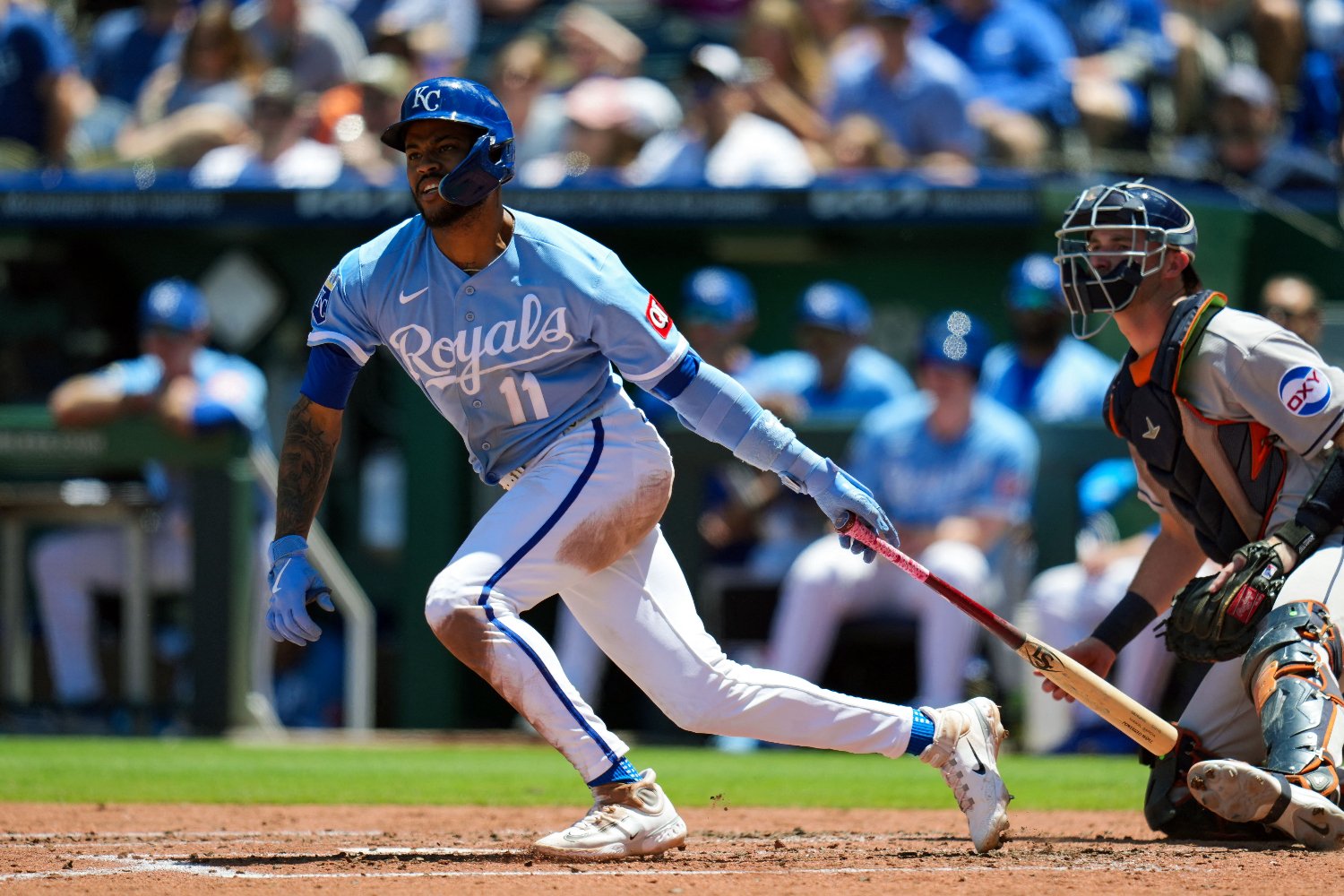 Hopes were high for Maikel Garcia going into 2026. Last year was a dream season of sorts for the Venezuelan infielder. In 160 games and 666 plate appearances, he slashed .286/.351/.449 with an .800 OPS. Garcia also hit 16 home runs, scored 81 runs, collected 74 RBI, and stole 23 bases. He also earned his first Gold Glove award after falling just short in 2024. Those numbers and accolades helped him earn not just an appearance in the All-Star Game, but a new five-year contract extension from the Royals in the offseason. If that wasn't enough, Garcia was an absolute stud for Venezuela in the World Baseball Classic. In 28 plate appearances, he hit .385 with a .970 OPS, a home run, and seven RBI. As a result, he was named the WBC MVP after Venezuela beat the USA in the WBC championship game. Royals fans were expecting Garcia to continue to develop and help carry this Kansas City lineup in 2026 and beyond. Unfortunately, it hasn't quite been the banner year that Garcia and fans expected. In 66 games and 283 plate appearances, the 26-year-old third baseman is slashing .267.325/.380 with a .705 OPS. He has three home runs, 32 runs scored, 30 RBI, and five stolen bases. When looking at his Statcast profile via TJ Stats, he has a slightly subpar TJ Bat+, and many of his Statcast percentiles have been subpar so far this season. While Garcia is still not chasing, whiffing, or striking out very much, his wOBA and xwOBA are below the 40th percentile, as his LA Sweet Spot%, BB%, Pull Air%, and barrel%. The latter is actually under the 20th percentile. It's going to be tough for Garcia to be a 5.6 fWAR player again this season if the Statcast data remains as it is over the remainder of the season. As of Monday, Garcia's fWAR is 1.5, and ZiPS is projecting his fWAR to be 1.9 for the remainder of the year, and The Bat X is projecting a 2.1 mark. Thus, Garcia is projecting a total fWAR of 3.4 to 3.6, depending on the model. That's good, but it's not what he did last year, and he's not trending in the right direction either. After hitting .273 with a .785 OPS and three home runs in 109 plate appearances in April, Garcia hit .261 with a .632 OPS in May and is hitting .265 with a .677 OPS in June. He's hitting for average okay, but the power is non-existent, as he has zero home runs over the past two months and slugging marks of .324 and .353 in May and June, respectively. Therefore, is something bothering Garcia, or is this just a bad stretch for him? Or is Garcia proving that 2025 was an aberration and that his long-term self is closer to that 2024 version (71 TJ Bat+ and .613 OPS)? The Power is the Biggest Difference From Last Year When it comes to most power categories, all the metrics show that Garcia has regressed badly from a season ago. Garcia's ISO is down from .163 in 2025 to .114 this season. His barrel rate is also 5.2%, his LA Sweet-Spot% is 32.9%, and his hard-hit% is 41.3%. A year ago, those rates were 5.6%, 34.5%, and 45.1%. Furthermore, his Tj Stats Statcast profile from 2025 looks much more impressive than his 2026 version. Now, many categories have remained stable. His Whiff%, Z-Contact%, K%, and O-Swing% have either not changed (O-Swing%0, improved a little (Whiff% and Z-Contact%) or only dropped a small amount (K%). However, the walk rate ranking has declined by 32 percent. His average exit velocity ranking has dropped by 21 percent. His xwOBA has dropped by 20 percent. Lastly, his wOBA had dropped by 44 percent, one of the most significant drops. The biggest concerns, especially related to power, may be his drops in hard-hit rate and LA Sweet-Spot%. Those rankings have declined by 18 percent and 10 percent, respectively. Interestingly enough, he's pulling the ball in the air (Pull Air%) more than a year ago. His Pull Air% is 15 percent higher. That said, he has seen a steady decline in pulled balls in May and June after showing some initial progress in March and April. Below is a look at his hits spray chart from March and April, via Savant. Not only did Garcia have three home runs over that time, but he had two more that could've been homers in other parks, and he pulled the ball a lot more down the left field line. Now, let's take a look at that hits spray chart in May and June. Over this sample, he has only one hit that could've been a homer (that triple to right center). The number of pulled balls has vanished, both in terms of the extra base variety and base hits to left field in general. He's still getting hits, especially singles up the middle, but the power is not there, as evidenced by just one other ball that has reached the warning track over the last month-and-a-half. Based on this data, he seems unlikely to match his 16-homer mark from a year ago, or even hit the double-digit homer mark, if this kind of approach continues. Are Injuries Affecting Garcia at the Plate? It's no mystery that Garcia has been less healthy this year than in 2025. On May 30th, Garcia hurt his hamstring rounding second base. While it didn't require an IL stint, he missed nearly a week's worth of games while recovering. The hamstring injury has definitely sapped his baserunning this year, though he was showing issues with his legs prior to the injury. After stealing 37 bases on 39 attempts in 2024 and 23 bases on 32 attempts in 2025, he has five on eight attempts this year. His sprint speed is also slightly down at 27.7 ft/s, a 0.2 ft/s decline. His basestealing runs numbers via Savant have been on a two-year decline, with a combined -2 baserunning runs in 2025 and 2026 after posting a +5 mark in this category in 2024. Still, with the hamstring injury, Garcia hasn't looked quite as natural running until Sunday's game, in which he had three hits and a stolen base, his first since May 3rd. One interesting injury that may be ailing him is his wrist, and that could be affecting his power production. While this wasn't talked about much because he didn't leave the game or go on the IL, Garcia was hit on April 30th against the Athletics by a line drive at 106.5 MPH while playing in the field. The ball missed his glove and hit him in the wirst/thumb area, according to Anne Rogers of MLB.com. As fans can determine, Garcia's power has sapped since April 30th. Even when watching games, he will be grimacing at times if he swings at a pitch in a funky way. It seems like he doesn't have the wrist or hand strength that he did back in April, and his paltry ISO numbers and singles-heavy spray chart illustrate that Garcia is not playing at 100 percent. I argued that the Royals should've put Garcia on the IL to help him fully recover from his hamstring injury a couple of weeks ago, as he sat for nearly seven days. Perhaps an IL stint would not have just helped him with his hamstring injury, but his wrist as well. Garcia at Least Still Producing With His Glove While the offense and baserunning haven't been up to the standard that Garcia or the Royals want, the defense at least has remained stellar at the hot corner. This season, Garcia has a +4 FRV and +5 OAA, with a 72% success rate on plays (70% estimated). He had a +18 OAA and +13 FRV last year, so he's been a little behind his 2025 pace in terms of defensive metrics. However, he's been less healthy than a year ago, and he flashed some solid defense on Monday night against the Nationals in Kansas City's 7-3 loss. Right now, Garcia ranks second among all third basemen in OAA, behind only Jose Ramirez, who has a +6 OAA. That said, Ramirez was placed on the IL due to a hamate bone injury. Like Vinnie Pasquantino, who suffered a similar injury, the Guardians star is expected to miss a lot of time in the field. Garcia could make up ground on Ramirez in the field, even if the offense remains stagnant for the Kansas City third baseman. That is a major reason Garcia can be a 3+ fWAR player despite issues with his bat. His defense is that good and a major strength of this Royals ballclub, especially when paired with Bobby Witt Jr. at shortstop. It has been a frustrating year for Garcia in many ways. Thankfully, the defense has remained elite and should help him continue to receive at-bats high in the batting order due to his overall value to this Royals team. And that remains true even in a lost season in which they are currently 15 games under .500 at 29-44 after Monday's loss in Washington, DC.
 -
 On Monday afternoon, the Royals' Player Development account announced that pitcher Kendry Chourio would be promoted to the High-A Quad Cities River Bandits. Chourio is the No. 1 Royals prospect at Royals Keep and is a Top-100 prospect according to many outlets, including Baseball America and MLB Pipeline. He will join lefty David Shields, our No. 2 Royals prospect, in the River Bandits rotation. In 11 starts and 48 IP with the Columbia Fireflies this year, the 18-year-old Venezuelan-born pitcher posted a 1.88 ERA, a 0.92 WHIP, a 23.4% K%, and 18.6% K-BB%. His 3.56 FIP in Low-A was higher than his ERA, but Chourio possesses elite stuff and showcased strong ability to generate grounders (43.8% GB%) and pop-ups (25% IFFB%). Chourio's fastball sits in the upper 90s, and many believe he could be a starter in the mold of Yordano Ventura at the MLB level. No word has been made on who will replace Chourio in the Columbia rotation or if Shields will be moving up to Northwest Arkansas soon to join fellow lefty Justin Lamkin, who was recently promoted from Quad Cities to Northwest Arkansas. Royals fans can vote on where Chourio, Shields, Lamkin, and other prospects rank in our June prospect rankings in the Tweet below.
 -
On Monday afternoon, the Royals' Player Development account announced that pitcher Kendry Chourio would be promoted to the High-A Quad Cities River Bandits. Chourio is the No. 1 Royals prospect at Royals Keep and is a Top-100 prospect according to many outlets, including Baseball America and MLB Pipeline. He will join lefty David Shields, our No. 2 Royals prospect, in the River Bandits rotation. In 11 starts and 48 IP with the Columbia Fireflies this year, the 18-year-old Venezuelan-born pitcher posted a 1.88 ERA, a 0.92 WHIP, a 23.4% K%, and 18.6% K-BB%. His 3.56 FIP in Low-A was higher than his ERA, but Chourio possesses elite stuff and showcased strong ability to generate grounders (43.8% GB%) and pop-ups (25% IFFB%). Chourio's fastball sits in the upper 90s, and many believe he could be a starter in the mold of Yordano Ventura at the MLB level. No word has been made on who will replace Chourio in the Columbia rotation or if Shields will be moving up to Northwest Arkansas soon to join fellow lefty Justin Lamkin, who was recently promoted from Quad Cities to Northwest Arkansas. Royals fans can vote on where Chourio, Shields, Lamkin, and other prospects rank in our June prospect rankings in the Tweet below. View full rumor
-
Week in a Nutshell The Royals came back to Kauffman this week to face the two Texas teams from the AL West: the Rangers and the Houston Astros. After a solid stretch in Cincinnati and Minnesota, Kansas City was hoping to build on that momentum and put on a good showing back home this week against two winnable opponents. While the Royals won the first and last games of the homestand, they lost four in a row in the middle, including two losses to Texas and two to Houston. However, while another losing homestand was difficult enough, the Royals were also beset by multiple injuries to key players this week, which only makes their slim playoff chances appear even bleaker. Record this Week: 2-4 Run Differential for the Week: -1 Record for the Year: 29-43 Run Differential for the Year: -49 Standing: 5th in the AL Central Game 67: KC 5, TEX 3 Game 68: TEX 6, KC 4 Game 69: TEX 4, KC 2 Game 70: HOU 10, KC 8 Game 71: HOU 8, KC 7 Game 72: KC 4, HOU 0 News and Notes In addition to the losses, the Royals' injuries piled up this week. In addition to many key players going on the IL, Kansas City also called up several players from Omaha to fill their spots. On June 9th, Stephen Kolek was activated off the Family Emergency list, and in a corresponding move, the Royals optioned Josh Rojas back to Omaha. Because Rojas has more than five years of service time, he had to accept an option to Triple-A. He decided to take the assignment back to the Storm Chasers rather than opt for free agency. Also on June 9th, pitcher Kris Bubic began a rehab assignment in Omaha. It was a rough outing for Bubic, as he gave up eight runs on nine hits in 1.2 IP. After the rehab outing, manager Matt Quatraro remarked that Bubic didn't recover well, as he was experiencing shoulder soreness. As a result, Bubic was taken off the rehab assignment and underwent further tests, which have been inconclusive so far. During the Royals' win over the Rangers on Tuesday, Kyle Isbel injured himself while rounding first base on a base hit. Tests revealed that he had a grade 3 tear of a portion of his left plantar fasciitis. As a result, Isbel will miss quite a bit of time, as reported by Jaylon Thompson of the Kansas City Star. In his place, the Royals promoted Kameron Misner, whom the Royals acquired from the Tampa Bay Rays this offseason. Misner has gotten off to a solid start in Kansas City this past week, as he collected six hits in 12 at-bats. On Wednesday, the Royals had a major scare as Seth Lugo was hit by a line drive batted ball by former Mets teammate Brandon Nimmo. Lugo was taken out of the game and placed on the 7-Day Concussion Protocol IL. CT scans were encouraging, but he was experiencing some headaches and worsening symptoms, which explained why he was placed on the IL. The Royals called up Eli Morgan to replace Lugo's spot on the roster. That said, Morgan was optioned back to Omaha on Sunday, and it is reported that Mitch Spence will replace Morgan. Spence, a starter acquired from the Athletics this offseason, is listed as the probable starter for Monday's road game against the Washington Nationals. Lastly, the Royals got another huge injury blow on Saturday, as Vinnie Pasquantino was removed from Saturday night's game after an awkward swing. It was reported that Pasquantino suffered a hamate bone injury. On Sunday, the Royals announced that he had a right hamate bone fracture and would miss approximately 4-6 weeks. John Rave was called up on Sunday to replace Pasquantino on the active roster, but Jac Caglianone is expected to receive a majority of the at-bats at first base. He made the start on Sunday at first base in the Royals' 4-0 win in the series finale against the Astros. Rave hit .196 with a .590 OPS, four home runs, and seven stolen bases in 72 games and 175 plate appearances with the Royals last year. Highlights Even though the Royals lost four games this week, the offense actually held its own. Kansas City's .293 team batting average was the 4th-best mark in baseball over the past week (unsurprisingly, the Rockies and the Athletics were the top two thanks to the hitter-friendly conditions of Las Vegas). They also scored 30 runs and were only outscored by one run. In the Astros series alone, they outscored Houston 19-18 over the three-game series (too bad it's not an aggregate scoring like soccer). The Royals also showed some ability to come back in spots this week, especially over the weekend. They nearly tied the Astros on Friday in their 10-8 loss, despite giving up nine runs in the top of the first. Furthermore, they had a 7-5 lead on Saturday before Jose Altuve tied things up with a two-run home run in the 8th before the rain delay. Individually, Caglianone was the Royals' top offensive performer. He collected 10 hits in 23 at-bats and hit .435 with a 1.239 OPS and two home runs and five RBI. He seemed to be key with runners on base, as he had a lot of moments in this homestand where he drove in runs, something he wasn't doing earlier in the year. The only blemish for Cags was the swing-and-miss this week. The former first-round pick had eight strikeouts, which led all Royals hitters this week. While Caglianone was the Royals' top performer offensively in this homestand, Bobby Witt Jr. wasn't far behind. The Royals shortstop had 9 hits, the second-most this week by a Kansas City hitter. He also hit .360 with an .847 OPS, stole three bases, and only struck out once. Witt particularly had a good game on Sunday, which also happened to be his 26th birthday. Maikel Garcia has been beset by injuries recently, but he started to get back into form in this homestand. He hit .286 with a .747 OPS and had a three-hit performance on Sunday, which included a couple of key RBI base knocks. Misner had a great Royals debut, and he's hitting .500 with a 1.038 OPS. The former Mizzou product also stole a base and had three RBIs. He will likely get a lot of opportunities in centerfield against right-handed starting pitchers with Isbel on the shelf due to his foot injury. Lastly, after a slow start at the leadoff spot, Carter Jensen had a strong week at the K. In 21 at-bats, he hit .286 with a .794 OPS, four doubles, four RBIs, and four runs scored. Manager Matt Quatraro has opted to utilize Jensen as the Royals' leadoff hitter against right-handed starting pitchers, and it seems like he's getting more comfortable in the spot with each start. Jensen also had a clutch double on Saturday night that helped the Royals overcome a 5-4 deficit in the bottom of the sixth inning. On the pitching end, it was another strong week from Stephen Kolek. He posted a 0.73 ERA and 1.22 WHIP in 12.1 IP with seven strikeouts to two walks. Kolek gave up a lot of hits, with 13 hits allowed, but he was able to escape trouble with runners on base. He only allowed two runs total in his two starts and only one earned run to boot. On Sunday, he had another masterful performance at the K, allowing no runs and only five hits in 7.1 innings of work in the victory over Houston. Safe to say, Kolek has emerged as the Royals' most valuable starter since the beginning of May. After a rough start to the season, which included getting optioned to Triple-A Omaha, Steven Cruz emerged as the Royals' most dependable reliever this week. In four outings and 5.0 IP, Cruz didn't allow a run, and he posted a 0.60 WHIP and 1.75 FIP. He also produced a 29.4% K% and a 23.5% K-BB% with a 72.4% strike%. When looking at his TJ Stuff+ summary from this week, not only did Cruz have excellent TJ Stuff+ marks, but he also flooded the strike zone, induced a lot of chases and whiffs, and limited hard contact, as evidenced by his xwOBACON. With the Royals' bullpen so shaky right now, Cruz may start to get more high-leverage opportunities in the future, especially with his ability to generate excellent stuff and a lot of whiffs, which is key in those pressure-packed situations. Another key reliever for the Royals this week was John Schreiber, who may be the Royals' best trade asset at this time. In three outings and 3.1 IP, he posted a 2.70 ERA, a 0.60 WHIP, struck out five batters, and didn't walk a single batter. The TJ Stuff+ wasn't as good as Cruz's, and his xwOBACON was slightly below average. That said, Schreiber was generating strong chase and whiff rates this week, which is encouraging. With many teams looking for bullpen help, Schreiber could be a key asset that could net the Royals some good value in return by the Trade Deadline. Lowlights While Kolek, Cruz, and Schreiber were strong contributors to the Royals pitching staff this week, it wasn't the best homestand for this group, especially the bullpen. The pitching staff gave up 10 home runs, which was the seventh-most by a pitching staff this week. The worst offender in this category was Matt Strahm. Not only did he give up three home runs this week, but he has also given up a home run in his last four outings and in six of his last eight appearances. In three outings and 2.1 IP this week, Strahm posted a 15.43 ERA and 1.71 WHIP. In addition to three home runs allowed, he gave up four earned runs and blew two save opportunities (i.e., he lost the lead for the Royals). While Strahm threw strikes this week and generated a strong chase rate, his whiff rate, xwOBACON, and TJ Stuff+ were all lackluster, as illustrated in his TJ Stuff+ summary below. The worst Royals pitching performance of the week probably belonged to Luinder Avila, who absolutely imploded in his Friday start against the Houston Astros. Avila failed to get out of the first inning, as he only went 0.2 IP. In that small sample, he allowed eight earned runs on five hits and three walks. He didn't record a strikeout, and he allowed two home runs, including a two-run bomb to Yordan Alvarez, who had two in the inning (with his other being a grand slam). In his TJ Stuff+ summary, nothing went right for Avila. He didn't throw strikes. He couldn't generate many chases. He got hit HARD. He did post a solid whiff rate, and his TJ Stuff+ wasn't bad considering the number of pitches he threw in the inning (49). That said, it was an outing to forget for the talented, but inconsistent Venezuelan pitcher. With Bubic and Cole Ragans on the IL and not a lot of reinforcements in Omaha (Ryan Bergert is also on the IL), Avila will continue to get starts. Hopefully, he can put this horrid outing behind him and bounce back in this short road trip against the Nationals (he's projected to start on Wednesday). Noah Cameron had a tough outing this week, as he allowed seven hits and four earned runs in 4.1 IP. Cameron didn't walk any batters, but he only had one strikeout, and he gave up two home runs. Looking at his TJ Stuff+ summary, it just wasn't a good day for Cameron, as his TJ Stuff+, zone rate, chase rate, whiff rate, and xwOBACON were all subpar. Lucas Erceg looked a little better this week, as he had a 3.86 ERA in three outings and 2.1 IP. However, his WHIP was 1.71, and he allowed three walks, hit a batter, and only struck out one. The chase, whiff rate, and xwOBACON were all encouraging this week, but his zone rate numbers were lackluster, and his K% was 8.3%, which resulted in a -16.7% K-BB%, not something Royals fans want to see from a pitcher who's supposed to be in high-leverage spots. On the hitting side, it was another brutal week for Salvador Perez. In 22 at-bats, he hit .182 with a .364 OPS, and he struck out five times while only walking once. All four of his hits were singles, and not only is he not producing in the power category, but he looks off-balance in the box as well. Whether it's nagging injuries or pressure from trying to break the Royals' all-time home run record, Perez just hasn't looked right in the box this year, and his Statcast percentiles only confirm that. Another Royals position player with a tough week was Nick Loftin. The former Baylor product hit .125 with a .597 OPS in eight at-bats. However, his biggest issue was a throwing error on Saturday night that gave the Astros the lead and, eventually, the win. Loftin has been atrocious in the field, especially at second base. He has a -8 OAA at second base, which is one of the worst OAA marks in all of baseball. Loftin is only hitting .221 with a .688 OPS this year in 116 plate appearances. While he can draw a walk (12.1% BB%), he doesn't provide much pop (32.9% hard-hit rate). Thus, his offensive profile is average at best, and his defense is a major liability. The Royals may be more apt to give new acquisition Matthew Lugo a chance in his spot, especially with Lugo absolutely tearing up Triple-A pitching. At 27 years old, Loftin doesn't have a whole lot of time to prove that he can be a long-term option in Kansas City. He may only have a couple of more weeks to prove himself in Kansas City, especially with the Royals 14 games under .500 and clearly building for 2027 at this point in the year. Loftin will be out of Minor League options next year, which makes him a non-tender candidate next offseason. Looking Ahead The Royals have a split week coming up with three games in Washington, D.C., against the Nationals and three games back at home against their I-70 rival, the St. Louis Cardinals. Due to the World Cup game on Saturday at the Truman Sports Complex, the Royals-Cardinals series will be played on Thursday, Friday, and Sunday. Though expectations weren't high in the preseason, the Nationals are 37-35 and in third in the NL East. They have a dynamic offense, as they are first in runs scored, second in stolen bases, fifth in OPS, and seventh in home runs. The offense has been led by James Wood and CJ Abrams, who had wRC+ marks of 162 and 150, respectively. Wood hit his 20th home run of the season on Sunday. The pitching has been a little weaker for the Nationals, as their rotation ranks 24th in starter ERA and their bullpen ranks 26th in reliever ERA. However, the Nationals have a profile similar to that of the Astros, who just took two of three from the Royals at Kauffman Stadium this past weekend. The Cardinals took two of three from the Royals in St. Louis back in Mid-May, though the Royals only lost both games by a combined three runs. St. Louis is a balanced team with a solid offense (12th in OPS; 13th in runs scored), a strong rotation (11th in ERA), and a decent bullpen that has a mediocre ranking in reliever ERA (17th), but has one of the game's more dynamic closers. Riley O'Brien has a 3.86 ERA and 17 saves this year in 30.1 IP. However, he's been shaky in June with a 7.20 ERA, 2.40 WHIP, and -3.7 K-BB% in 5.0 IP. If the game is close, the Royals could perhaps get to the rattled closer at Kauffman. O'Brien has still generated chases and whiffs, but he has gotten hit hard and has struggled to find the strike zone. The Royals' approach has been much better as of late, and they are working pitchers better than a year ago, as evidenced by their 9.2% BB%, which ranks 13th in baseball. Getting to O'Brien, in front of a Kauffman crowd that will be at least half Cardinals fans, could be the momentum boost this Royals team needs. View full article
.png.47ed2f7059979e6d702074788bc99b4a.png)

.png.53ab19335260d67e343ebf440de496de.png)
