


Kevin O'Brien
-
Posts
858 -
Joined
-
Last visited
-
Days Won
41
Content Type
Profiles
Forums
Blogs
Events
News
2026 Kansas City Royals Top Prospects Ranking
Kansas City Royals Videos
Kansas City Royals Free Agent & Trade Rumors, Notes, & Tidbits
Guides & Resources
The Kansas City Royals Players Project
2026 Kansas City Royals Draft Tracker: Picks & Bonuses
Store
Downloads
Gallery
Everything posted by Kevin O'Brien
-

 Columbia exploded for a 16-2 win behind Sean Gamble's four RBIs and Kendry Chourio's five innings, while Henry Ramos drove in five. Northwest Arkansas rallied for a 9-6 win as Carson Roccaforte's ninth-inning grand slam capped a four-RBI day, with Tommy Molsky retiring the side for the win. Omaha could not hold an early eight-run cushion, as Henry Williams struck out seven over six innings before the bullpen faltered in a 9-8 loss to Columbus. Royals Transactions No Roster Moves Storm Chasers Blow Eight-Run Lead In Late Collapse At Columbus Omaha jumped on Columbus immediately and never trailed until the final inning, but a 9-8 loss spoiled a fast start. The Storm Chasers scored four times in the first, as Drew Waters singled home John Rave, Abraham Toro tripled in two runs, and Gavin Cross singled in another. They added three more in the second when Brett Squires launched a three-run homer, his eighth, to make it 7-0. Kameron Misner homered in the fourth, his 13th, for an 8-1 edge. Williams turned in a strong start, allowing three runs on four hits over six innings with one walk and seven strikeouts. It was one of his best outings with the Storm Chasers since being promoted from Northwest Arkansas. Unfortunately, the Storm Chasers' bullpen could not protect the lead. Columbus chipped away across the sixth, seventh, and eighth before plating three in the ninth against Dan Altavilla, who recorded just one out while surrendering three runs and took the loss. Misner finished 2-for-4 with a home run, two runs, and an RBI, and Toro added two hits and two RBIs. Omaha left 15 runners on base while going 4-for-11 with runners in scoring position. Player AB R H RBI BB K John Rave 3 2 0 0 2 1 Kameron Misner 4 2 2 1 0 0 Brett Squires 4 2 1 3 1 2 Luca Tresh 4 0 0 0 1 2 Drew Waters 5 1 2 1 0 2 Abraham Toro 5 1 2 2 0 1 Gavin Cross 3 0 2 1 1 0 Connor Kaiser 4 0 0 0 0 3 Kevin Newman 4 0 0 0 0 2 Player IP H R ER BB K HR Henry Williams 6 4 3 3 1 7 3 Anthony Gose 1 2 1 1 0 1 0 Andrew Pérez 1 1 2 2 2 2 1 Dan Altavilla 1/3 3 3 3 1 0 1 Roccaforte's Ninth-Inning Grand Slam Lifts Naturals Past Midland Northwest Arkansas trailed entering the ninth before erupting for five runs to beat Midland 9-6. The Naturals had pulled even in the fifth, when Alberto Rodriguez singled home Rudy Martin Jr. and Jack Pineda singled in another run, and Martin homered in the seventh, his sixth, to pull within one. The decisive rally came in the ninth: Rodriguez singled in Omar Hernandez to tie it, and Roccaforte followed with a grand slam, his 14th home run, to put the game away. Frank Mozzicato struggled with his command in the start yesterday, allowing three runs on one hit over 4 2/3 innings while walking six and striking out four before the game was suspended due to weather. Once the game started back up again on Sunday, Augusto Mendieta and Dennis Colleran combined to go 3 2/3 IP and allow three runs, with Mendieta allowing two and Colleran allowing one. Mendieta struck out two and Colleran struck out none. Neither walked any batters in their Sunday outings. Molsky closed the game for the Naturals and earned the win with two-thirds of a scoreless inning and a strikeout. Roccaforte finished 2-for-5 with four RBI, and Rodriguez went 3-for-4 with two RBI. Martin Jr. reached base three times, scored three runs, and stole two bases. Northwest Arkansas left four runners on base and went 4-for-10 with runners in scoring position. Unfortunately, the second game was canceled due to the weather and won't be made up. Player AB R H RBI BB K Carson Roccaforte 5 1 2 4 0 2 Jack Pineda 3 0 2 1 1 0 Sam Kulasingam 3 1 0 0 1 2 Spencer Nivens 3 0 0 1 0 2 Daniel Vazquez 4 0 1 0 0 1 Omar Hernandez 4 1 1 0 0 0 Rudy Martin Jr. 3 3 2 1 1 0 Connor Scott 3 0 0 0 0 1 Colton Becker 0 1 0 0 0 0 Alberto Rodriguez 4 2 3 2 0 1 Player IP H R ER BB K HR Frank Mozzicato 4 2/3 1 3 3 6 4 0 Augusto Mendieta 2 1/3 4 2 2 0 2 1 Dennis Colleran Jr. 1 1/3 2 1 1 0 0 0 Tommy Molsky 2/3 0 0 0 0 1 0 Fireflies Pile On 18 Hits In 16-2 Rout Of Fayetteville Columbia jumped ahead early and never let up, scoring in eight of nine innings to bury Fayetteville 16-2. The Fireflies put up three in the first when Gamble launched a three-run homer, his third, and added three more in the second on Ramos' three-run homer, his third. From there, the lead only grew, with a seven-run surge over the seventh and eighth innings, capped by Hyungchan Um's grand slam, his fourth home run, in the eighth. Chourio gave the Fireflies a solid start, allowing two runs on six hits over five innings with one walk and three strikeouts. Ramos finished 3-for-6 with a home run and five RBI, Gamble went 2-for-4 with a double, a homer, and four RBI, and Yandel Ricardo and JC Vanek each added two hits. The bullpen of Yeri Perez, Henson Leal, and Andy Basora combined for four scoreless innings. Columbia left seven runners on base and went 7-for-16 with runners in scoring position. With the win, the Fireflies improved their record to 27-30. Player AB R H RBI BB K Henry Ramos 6 2 3 5 0 0 Josh Hammond 6 1 2 0 0 2 Yandel Ricardo 6 2 3 1 0 1 Jhosmmel Zue 4 2 2 0 0 1 Josi Novas 1 1 1 0 1 0 Sean Gamble 4 3 2 4 2 2 Hyungchan Um 4 1 1 4 1 1 Stone Russell 5 1 1 1 0 1 JC Vanek 5 2 2 0 0 0 Roni Cabrera 5 1 1 0 0 1 Player IP H R ER BB K HR Kendry Chourio 5 6 2 2 1 3 1 Yeri Perez 2 2 0 0 1 3 0 Henson Leal 1 1 0 0 2 2 0 Andy Basora 1 0 0 0 0 2 0 Top-20 Prospect Performance Kendry Chourio: 5 IP, 6 H, 2 R, 2 ER, 1 BB, 3 K David Shields: DNP Sean Gamble: 2-for-4, 2B, HR, 4 RBI, 3 R, 2 BB, 2 K Blake Mitchell: DNP Josh Hammond: 2-for-6, 1 R, 2 K, 1 SB Ramon Ramirez: DNP Drew Beam: DNP Asbel Gonzalez: DNP Ben Kudrna: DNP Carson Roccaforte: 2-for-5, 2B, HR, 4 RBI, 1 R, 2 K Yandel Ricardo: 3-for-6, 1 RBI, 2 R, 1 K, 1 SB Felix Arronde: DNP Blake Wolters: DNP Michael Lombardi: DNP Luinder Avila: DNP Steven Zobac: DNP Frank Mozzicato: 4 2/3 IP, 1 H, 3 R, 3 ER, 6 BB, 4 K Daniel Vazquez: 1-for-4, 1 K Warren Colcano: DNP Shane Panzini: DNP
 -
In USA Today's Bob Nightengale's latest Sunday Notebook, he reported that the Kansas City Royals aren't ready to become sellers on the trade market just yet. Still, they have been receiving some interest from the Sacramento Athletics in Kris Bubic, which could be an intriguing situation with Bubic set to hit free agency next offseason. Here's what Nightengale said about the Royals (and Minnesota Twins) regarding their decision to be sellers or buyers at the Trade Deadline, even though they have a losing record. However, in his bullet-point list of rumors around the league, he noted that the Sacramento Athletics are interested in acquiring Bubic. An All-Star a year ago, the 28-year-old has seen some regression this year. In 50.1 IP, he has a 4.11 ERA, 1.23 WHIP, 3.77 FIP, and 12.1% K-BB%. According to TJ Stuff+ summary data, his zone rate and xwOBACON have been slightly below average this season. However, his TJ Stuff+, chase, and whiff rates have all been above average, which explains the buzz he's getting on the trade market. The A's are currently 30-34, having regressed hard after a strong start to the season. Their rotation has been an Achilles' heel for the club, as they rank 27th in starter ERA and 28th in starter WHIP. In terms of what they have in the rotation currently, rookie J.T. Ginn has been phenomenal (2.74 ERA in 65.2 IP), and Jeffrey Springs has been serviceable (4.37 ERA in 70 IP). They also have a promising arm in Gage Jump, who's seen as a Top-100 prospect by multiple outlets. Other than that, however, the starting pitching staff has been thin, especially with veterans Aaron Civale and Luis Severino on the IL. The Athletics rank 26th in K-BB% with a 10.1% mark, so Bubic would boost this rotation immediately. Furthermore, the former Stanford product grew up in Northern California, so he would likely welcome a move to Sacramento, despite the hitter-friendly home ballpark. MLB Pipeline ranked the A's 18th in its Farm System rankings, and they have intriguing top-100 prospects like Jump, pitcher Jamie Arnold, and shortstop Leo De Vries. While it's unlikely that the A's would want to deal a Top-100 prospect for Bubic, this is an A's team that hasn't made the postseason since 2020, during the shortened COVID season. Bubic has been on the 15-Day IL since May 18th due to left elbow soreness. According to a June 4th report by MLB.com Royals beat writer Anne Rogers, Bubic is on a regular bullpen schedule. No timetable has been released on Bubic's rehab schedule or probable return to the Kansas City rotation. View full rumor
-
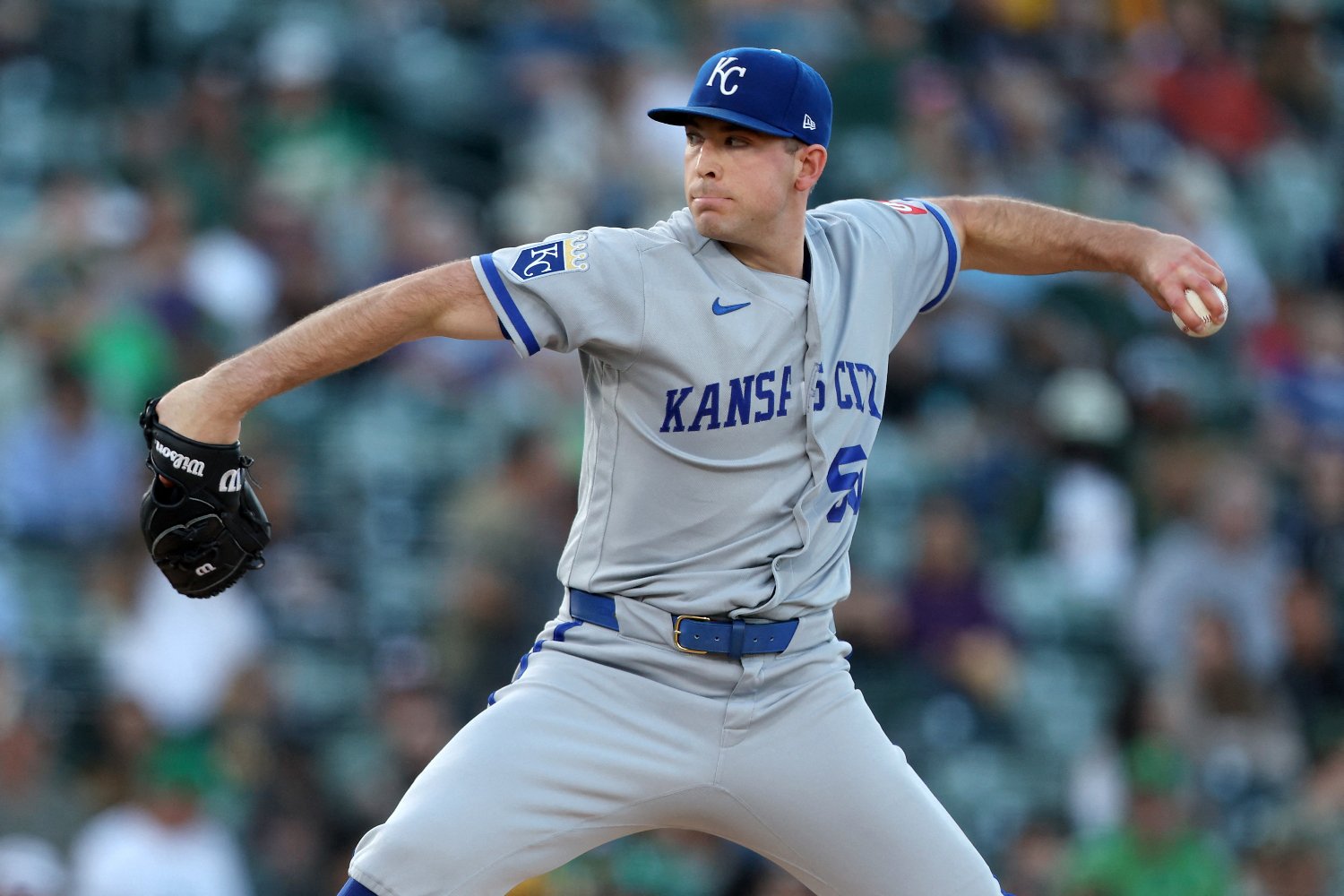 In USA Today's Bob Nightengale's latest Sunday Notebook, he reported that the Kansas City Royals aren't ready to become sellers on the trade market just yet. Still, they have been receiving some interest from the Sacramento Athletics in Kris Bubic, which could be an intriguing situation with Bubic set to hit free agency next offseason. Here's what Nightengale said about the Royals (and Minnesota Twins) regarding their decision to be sellers or buyers at the Trade Deadline, even though they have a losing record. However, in his bullet-point list of rumors around the league, he noted that the Sacramento Athletics are interested in acquiring Bubic. An All-Star a year ago, the 28-year-old has seen some regression this year. In 50.1 IP, he has a 4.11 ERA, 1.23 WHIP, 3.77 FIP, and 12.1% K-BB%. According to TJ Stuff+ summary data, his zone rate and xwOBACON have been slightly below average this season. However, his TJ Stuff+, chase, and whiff rates have all been above average, which explains the buzz he's getting on the trade market. The A's are currently 30-34, having regressed hard after a strong start to the season. Their rotation has been an Achilles' heel for the club, as they rank 27th in starter ERA and 28th in starter WHIP. In terms of what they have in the rotation currently, rookie J.T. Ginn has been phenomenal (2.74 ERA in 65.2 IP), and Jeffrey Springs has been serviceable (4.37 ERA in 70 IP). They also have a promising arm in Gage Jump, who's seen as a Top-100 prospect by multiple outlets. Other than that, however, the starting pitching staff has been thin, especially with veterans Aaron Civale and Luis Severino on the IL. The Athletics rank 26th in K-BB% with a 10.1% mark, so Bubic would boost this rotation immediately. Furthermore, the former Stanford product grew up in Northern California, so he would likely welcome a move to Sacramento, despite the hitter-friendly home ballpark. MLB Pipeline ranked the A's 18th in its Farm System rankings, and they have intriguing top-100 prospects like Jump, pitcher Jamie Arnold, and shortstop Leo De Vries. While it's unlikely that the A's would want to deal a Top-100 prospect for Bubic, this is an A's team that hasn't made the postseason since 2020, during the shortened COVID season. Bubic has been on the 15-Day IL since May 18th due to left elbow soreness. According to a June 4th report by MLB.com Royals beat writer Anne Rogers, Bubic is on a regular bullpen schedule. No timetable has been released on Bubic's rehab schedule or probable return to the Kansas City rotation.
 -
Thanks, Seth! Roccaforte is intriguing for sure. He not only fills up the stat line but also has legit defense. He's won the Frank White award back-to-back years, and that's not an easy feat. As I wrote in the piece, the whiffs and strikeouts are a concern, and he's in a slump right now where those are being amplified. I believe he will rebound, but it's something to watch as he matriculates to AAA and eventually the Majors.
- 2 replies
-
- 1
-

-
- carson roccafarte
- kyle isbel
- (and 1 more)
-
 Columbia overcame an early deficit for a 6-3 victory behind Roni Cabrera and Michael Lombardi, while Frank Mozzicato fired 4 2/3 scoreless innings before Northwest Arkansas was suspended with the Naturals leading 1-0. Omaha dropped a 3-2 decision on a late home run despite Kevin Newman's two hits, and Quad Cities was overwhelmed 13-2 as Erick Torres and Angel Acosta each collected three hits in the loss. Royals Transactions No Roster Moves Newman's Two Hits Not Enough As Omaha Drops 3-2 Decision The Omaha Storm Chasers fell 3-2 to the Columbus Clippers despite a strong relief effort from the bullpen. Newman led the offense with two hits, including a double, and an RBI, and Peyton Wilson added two hits and a run batted in. Drew Waters reached base twice with a hit and a walk and scored a run. Omaha trailed 1-0 entering the fifth, when Newman doubled to right field to score Abraham Toro and tie the game. The Storm Chasers took the lead in the seventh, as Wilson singled to center to bring home Waters for a 2-1 advantage. The lead did not hold. In the bottom of the seventh, Columbus answered with a two-run home run to left center that scored the go-ahead and winning runs. Oscar Rayo turned in the most effective outing on the mound, working 2 1/3 scoreless innings while allowing one hit, walking one, and striking out four. Ben Sears opened the game with two innings, surrendering one run on two hits with one walk and three strikeouts. Eric Cerantola allowed two runs on one hit in the seventh, including the decisive home run. Omaha left five runners on base and went 3-for-7 with runners in scoring position. Player AB R H RBI BB K Peyton Wilson 4 0 2 1 0 1 Matthew Lugo 2 0 0 0 1 1 Kameron Misner 3 0 1 0 0 1 Luca Tresh 3 0 0 0 0 2 Brett Squires 3 0 0 0 0 2 Abraham Toro 3 1 1 0 0 2 Drew Waters 2 1 1 0 1 0 Luke Maile 3 0 1 0 0 2 Kevin Newman 3 0 2 1 0 0 Player IP H R ER BB K HR Ben Sears 2 2 1 1 1 3 0 Oscar Rayo 2 1/3 1 0 0 1 4 0 Luke Jackson 1 2/3 0 0 0 0 1 0 Eric Cerantola 1/3 1 2 2 1 0 1 Mozzicato Tosses Scoreless Innings As Naturals Lead 1-0 In Suspended Game The Northwest Arkansas Naturals led the Midland RockHounds 1-0 when the game was suspended after 4 1/2 innings. It will continue on Sunday afternoon, with Sunday's scheduled game starting 35 minutes after the suspended game is completed. The offense managed just two hits to that point, but it was enough for the lead. Jack Pineda doubled and drew a walk, and Daniel Vazquez added a single. Sam Kulasingam reached base twice on a walk and scored the game's only run. The lone run came in the fourth inning. Kulasingam came around to score on a sacrifice fly to center field off the bat of Spencer Nivens, who picked up the run batted in to put the Naturals ahead 1-0. Mozzicato kept Midland off the board, allowing just one hit over 4 2/3 innings before the stoppage. He walked six and struck out four while working around traffic. The former first-round pick also showed some excellent defense with a diving play made on a failed bunt right before the rain delay hit. Northwest Arkansas left two runners on base and went 0-for-2 with runners in scoring position. The Naturals are hoping to close out the game on Sunday and collect their 25th win of the season. Player AB R H RBI BB K Carson Roccaforte 2 0 0 0 0 1 Jack Pineda 1 0 1 0 1 0 Sam Kulasingam 1 1 0 0 1 1 Spencer Nivens 1 0 0 1 0 1 Daniel Vazquez 2 0 1 0 0 0 Omar Hernandez 2 0 0 0 0 0 Rudy Martin Jr. 1 0 0 0 0 0 Connor Scott 1 0 0 0 0 1 Alberto Rodriguez 1 0 0 0 0 1 Player IP H R ER BB K HR Frank Mozzicato 4 2/3 1 0 0 6 4 0 Torres And Acosta Collect Three Hits Each As River Bandits Fall 13-2 The Quad Cities River Bandits were beaten 13-2 by the South Bend Cubs. Torres and Acosta each tallied three hits to pace the offense, and Derlin Figueroa supplied both Quad Cities runs with a home run. Ramon Ramirez added a hit and scored a run, and Blake Mitchell drew two walks. South Bend built the game open in the fourth inning, plating four runs on a pair of home runs and a two-run shot to push the lead to 8-0. The visitors continued to add on, scoring three more in the seventh and another in the eighth. Quad Cities finally got on the board in the eighth when Figueroa homered to right field to score Ramirez and cut the deficit to 12-2. Blake Wolters struggled in his start, allowing eight runs, all earned, on eight hits over 3 2/3 innings. He walked four, struck out three, and surrendered three home runs. Nick Conte provided the lone bright spot from the staff, retiring all his batters over 2 1/3 scoreless innings. The River Bandits left nine runners on base and went 0-for-10 with runners in scoring position. Quad Cities will be looking to salvage the series on Sunday, hoping to win their 25th game of the year against the division-leading Cubs. Player AB R H RBI BB K Asbel Gonzalez 5 0 1 0 0 2 Blake Mitchell 3 0 0 0 2 1 Ramon Ramirez 4 1 1 0 0 0 Luke Pelzer 3 0 1 0 1 1 Derlin Figueroa 4 1 1 2 0 1 Jose Cerice 4 0 0 0 0 1 Tyriq Kemp 4 0 0 0 0 2 Erick Torres 4 0 3 0 0 1 Angel Acosta 4 0 3 0 0 0 Player IP H R ER BB K HR Blake Wolters 3 2/3 8 8 8 4 3 3 Nick Conte 2 1/3 0 0 0 0 0 0 Ryan Ure 1 1 3 3 2 0 0 Mason Miller 1 1/3 2 2 2 2 0 0 Diego Guzman 0 2/3 1 0 0 0 0 0 Cabrera Drives In Two As Fireflies Rally Past Fayetteville 6-3 The Columbia Fireflies rallied from an early deficit to defeat the Fayetteville Woodpeckers 6-3. Cabrera led the way with two hits and two runs batted in, and Henry Ramos drove in two runs. Yandel Ricardo and Jhosmmel Zue each added two hits, and Zue scored a run. Trailing 3-1 in the sixth inning, Columbia took control. Cabrera singled to right to score JC Vanek and bring the Fireflies within one, and Ramos followed with a single to center that scored Connor Rasmussen and Cabrera, putting Columbia ahead 4-3. The Fireflies tacked on two more in the seventh, as Hyungchan Um walked with the bases loaded to force in Ricardo, and Vanek delivered a sacrifice fly to score Zue for the 6-3 final. The Fireflies also got some solid defense in the win, highlighted by some sensational glovework by 2025 first-round pick Sean Gamble. Lombardi started and allowed three runs, all earned, on three hits over four innings, walking four and striking out five with one home run allowed. The bullpen slammed the door as Dash Albus, Hunter Alberini, Brandon Herbold, and Jhon Reyes combined for five scoreless innings. Columbia left eight runners on base and went 3-for-11 with runners in scoring position. Columbia now has 26 wins for the season and will look to earn win No. 27 on Sunday. Player AB R H RBI BB K Henry Ramos 5 0 1 2 0 2 Josh Hammond 5 0 0 0 0 3 Yandel Ricardo 5 1 2 0 0 1 Jhosmmel Zue 4 1 2 0 1 0 Sean Gamble 4 0 0 0 0 1 Hyungchan Um 3 1 1 1 1 0 JC Vanek 3 1 0 1 0 1 Connor Rasmussen 4 1 1 0 0 0 Roni Cabrera 4 1 2 2 0 0 Player IP H R ER BB K HR Michael Lombardi 4 3 3 3 4 5 1 Dash Albus 1 1/3 1 0 0 0 1 0 Hunter Alberini 2 1 0 0 0 2 0 Brandon Herbold 0 2/3 0 0 0 0 1 0 Jhon Reyes 1 1 0 0 0 2 0 Top-20 Prospect Performance Kendry Chourio: DNP David Shields: DNP Sean Gamble: 0-for-4, 1 K Blake Mitchell: 0-for-3, 2 BB, 1 K Josh Hammond: 0-for-5, 3 K Ramon Ramirez: 1-for-4, R Drew Beam: DNP Asbel Gonzalez: 1-for-5, 2 K Ben Kudrna: DNP Carson Roccaforte: 0-for-2, 1 K Yandel Ricardo: 2-for-5, R, 1 K Felix Arronde: DNP Blake Wolters: 3 2/3 IP, 8 H, 8 R, 8 ER, 4 BB, 3 K, 3 HR Michael Lombardi: 4 IP, 3 H, 3 R, 3 ER, 4 BB, 5 K, 1 HR Luinder Avila: DNP Steven Zobac: DNP Frank Mozzicato: 4 2/3 IP, 1 H, 0 R, 0 ER, 6 BB, 4 K Daniel Vazquez: 1-for-2 Warren Colcano: DNP Shane Panzini: DNP
 -
Columbia overcame an early deficit for a 6-3 victory behind Roni Cabrera and Michael Lombardi, while Frank Mozzicato fired 4 2/3 scoreless innings before Northwest Arkansas was suspended with the Naturals leading 1-0. Omaha dropped a 3-2 decision on a late home run despite Kevin Newman's two hits, and Quad Cities was overwhelmed 13-2 as Erick Torres and Angel Acosta each collected three hits in the loss. Royals Transactions No Roster Moves Newman's Two Hits Not Enough As Omaha Drops 3-2 Decision The Omaha Storm Chasers fell 3-2 to the Columbus Clippers despite a strong relief effort from the bullpen. Newman led the offense with two hits, including a double, and an RBI, and Peyton Wilson added two hits and a run batted in. Drew Waters reached base twice with a hit and a walk and scored a run. Omaha trailed 1-0 entering the fifth, when Newman doubled to right field to score Abraham Toro and tie the game. The Storm Chasers took the lead in the seventh, as Wilson singled to center to bring home Waters for a 2-1 advantage. The lead did not hold. In the bottom of the seventh, Columbus answered with a two-run home run to left center that scored the go-ahead and winning runs. Oscar Rayo turned in the most effective outing on the mound, working 2 1/3 scoreless innings while allowing one hit, walking one, and striking out four. Ben Sears opened the game with two innings, surrendering one run on two hits with one walk and three strikeouts. Eric Cerantola allowed two runs on one hit in the seventh, including the decisive home run. Omaha left five runners on base and went 3-for-7 with runners in scoring position. Player AB R H RBI BB K Peyton Wilson 4 0 2 1 0 1 Matthew Lugo 2 0 0 0 1 1 Kameron Misner 3 0 1 0 0 1 Luca Tresh 3 0 0 0 0 2 Brett Squires 3 0 0 0 0 2 Abraham Toro 3 1 1 0 0 2 Drew Waters 2 1 1 0 1 0 Luke Maile 3 0 1 0 0 2 Kevin Newman 3 0 2 1 0 0 Player IP H R ER BB K HR Ben Sears 2 2 1 1 1 3 0 Oscar Rayo 2 1/3 1 0 0 1 4 0 Luke Jackson 1 2/3 0 0 0 0 1 0 Eric Cerantola 1/3 1 2 2 1 0 1 Mozzicato Tosses Scoreless Innings As Naturals Lead 1-0 In Suspended Game The Northwest Arkansas Naturals led the Midland RockHounds 1-0 when the game was suspended after 4 1/2 innings. It will continue on Sunday afternoon, with Sunday's scheduled game starting 35 minutes after the suspended game is completed. The offense managed just two hits to that point, but it was enough for the lead. Jack Pineda doubled and drew a walk, and Daniel Vazquez added a single. Sam Kulasingam reached base twice on a walk and scored the game's only run. The lone run came in the fourth inning. Kulasingam came around to score on a sacrifice fly to center field off the bat of Spencer Nivens, who picked up the run batted in to put the Naturals ahead 1-0. Mozzicato kept Midland off the board, allowing just one hit over 4 2/3 innings before the stoppage. He walked six and struck out four while working around traffic. The former first-round pick also showed some excellent defense with a diving play made on a failed bunt right before the rain delay hit. Northwest Arkansas left two runners on base and went 0-for-2 with runners in scoring position. The Naturals are hoping to close out the game on Sunday and collect their 25th win of the season. Player AB R H RBI BB K Carson Roccaforte 2 0 0 0 0 1 Jack Pineda 1 0 1 0 1 0 Sam Kulasingam 1 1 0 0 1 1 Spencer Nivens 1 0 0 1 0 1 Daniel Vazquez 2 0 1 0 0 0 Omar Hernandez 2 0 0 0 0 0 Rudy Martin Jr. 1 0 0 0 0 0 Connor Scott 1 0 0 0 0 1 Alberto Rodriguez 1 0 0 0 0 1 Player IP H R ER BB K HR Frank Mozzicato 4 2/3 1 0 0 6 4 0 Torres And Acosta Collect Three Hits Each As River Bandits Fall 13-2 The Quad Cities River Bandits were beaten 13-2 by the South Bend Cubs. Torres and Acosta each tallied three hits to pace the offense, and Derlin Figueroa supplied both Quad Cities runs with a home run. Ramon Ramirez added a hit and scored a run, and Blake Mitchell drew two walks. South Bend built the game open in the fourth inning, plating four runs on a pair of home runs and a two-run shot to push the lead to 8-0. The visitors continued to add on, scoring three more in the seventh and another in the eighth. Quad Cities finally got on the board in the eighth when Figueroa homered to right field to score Ramirez and cut the deficit to 12-2. Blake Wolters struggled in his start, allowing eight runs, all earned, on eight hits over 3 2/3 innings. He walked four, struck out three, and surrendered three home runs. Nick Conte provided the lone bright spot from the staff, retiring all his batters over 2 1/3 scoreless innings. The River Bandits left nine runners on base and went 0-for-10 with runners in scoring position. Quad Cities will be looking to salvage the series on Sunday, hoping to win their 25th game of the year against the division-leading Cubs. Player AB R H RBI BB K Asbel Gonzalez 5 0 1 0 0 2 Blake Mitchell 3 0 0 0 2 1 Ramon Ramirez 4 1 1 0 0 0 Luke Pelzer 3 0 1 0 1 1 Derlin Figueroa 4 1 1 2 0 1 Jose Cerice 4 0 0 0 0 1 Tyriq Kemp 4 0 0 0 0 2 Erick Torres 4 0 3 0 0 1 Angel Acosta 4 0 3 0 0 0 Player IP H R ER BB K HR Blake Wolters 3 2/3 8 8 8 4 3 3 Nick Conte 2 1/3 0 0 0 0 0 0 Ryan Ure 1 1 3 3 2 0 0 Mason Miller 1 1/3 2 2 2 2 0 0 Diego Guzman 0 2/3 1 0 0 0 0 0 Cabrera Drives In Two As Fireflies Rally Past Fayetteville 6-3 The Columbia Fireflies rallied from an early deficit to defeat the Fayetteville Woodpeckers 6-3. Cabrera led the way with two hits and two runs batted in, and Henry Ramos drove in two runs. Yandel Ricardo and Jhosmmel Zue each added two hits, and Zue scored a run. Trailing 3-1 in the sixth inning, Columbia took control. Cabrera singled to right to score JC Vanek and bring the Fireflies within one, and Ramos followed with a single to center that scored Connor Rasmussen and Cabrera, putting Columbia ahead 4-3. The Fireflies tacked on two more in the seventh, as Hyungchan Um walked with the bases loaded to force in Ricardo, and Vanek delivered a sacrifice fly to score Zue for the 6-3 final. The Fireflies also got some solid defense in the win, highlighted by some sensational glovework by 2025 first-round pick Sean Gamble. Lombardi started and allowed three runs, all earned, on three hits over four innings, walking four and striking out five with one home run allowed. The bullpen slammed the door as Dash Albus, Hunter Alberini, Brandon Herbold, and Jhon Reyes combined for five scoreless innings. Columbia left eight runners on base and went 3-for-11 with runners in scoring position. Columbia now has 26 wins for the season and will look to earn win No. 27 on Sunday. Player AB R H RBI BB K Henry Ramos 5 0 1 2 0 2 Josh Hammond 5 0 0 0 0 3 Yandel Ricardo 5 1 2 0 0 1 Jhosmmel Zue 4 1 2 0 1 0 Sean Gamble 4 0 0 0 0 1 Hyungchan Um 3 1 1 1 1 0 JC Vanek 3 1 0 1 0 1 Connor Rasmussen 4 1 1 0 0 0 Roni Cabrera 4 1 2 2 0 0 Player IP H R ER BB K HR Michael Lombardi 4 3 3 3 4 5 1 Dash Albus 1 1/3 1 0 0 0 1 0 Hunter Alberini 2 1 0 0 0 2 0 Brandon Herbold 0 2/3 0 0 0 0 1 0 Jhon Reyes 1 1 0 0 0 2 0 Top-20 Prospect Performance Kendry Chourio: DNP David Shields: DNP Sean Gamble: 0-for-4, 1 K Blake Mitchell: 0-for-3, 2 BB, 1 K Josh Hammond: 0-for-5, 3 K Ramon Ramirez: 1-for-4, R Drew Beam: DNP Asbel Gonzalez: 1-for-5, 2 K Ben Kudrna: DNP Carson Roccaforte: 0-for-2, 1 K Yandel Ricardo: 2-for-5, R, 1 K Felix Arronde: DNP Blake Wolters: 3 2/3 IP, 8 H, 8 R, 8 ER, 4 BB, 3 K, 3 HR Michael Lombardi: 4 IP, 3 H, 3 R, 3 ER, 4 BB, 5 K, 1 HR Luinder Avila: DNP Steven Zobac: DNP Frank Mozzicato: 4 2/3 IP, 1 H, 0 R, 0 ER, 6 BB, 4 K Daniel Vazquez: 1-for-2 Warren Colcano: DNP Shane Panzini: DNP View full article
-
Image courtesy of Denny Medley-Imagn Images On May 30th, the Kansas City Royals experienced an injury scare, as Maikel Garcia pulled his hamstring rounding second base against the Texas Rangers. Tests revealed a grade 1 hamstring strain for Garcia, which was relatively good news. Anything more than that would've resulted in a lengthy IL stint and some recovery time in Omaha. However, a grade 1 strain meant the Royals could choose between keeping him on the roster and easing him back in or placing him on the IL for a quicker 10-Day IL stint. The Royals opted for the former option, and it seemed like Garcia was progressing positively day by day, according to reports from MLB.com Royals beat writer Anne Rogers. Rogers reported that he was not just taking infield and batting practice but was available off the bench to pinch-hit as soon as Thursday's game against Minnesota. Garcia ended up pinch-hitting in the Royals' 8-5 win over the Twins on Thursday evening, drawing a walk in his lone plate appearance. However, while he initially started on the bases, he was pulled after moving to second base on Josh Rojas' two-RBI single. Royals manager Matt Quatraro said they were being cautious, especially with questionable field conditions after a rain delay. Conversely, Garcia didn't exactly look "100 percent" on the basepaths. Unsurprisingly, Garcia didn't start again on Friday in game two of the Royals' four-game series against the Twins in Minneapolis. It was his sixth-straight game out of the starting lineup. After six straight games out of the lineup, one has to wonder if the Royals made the right decision by not adding Garcia to the IL right away. Why the Royals Didn't Add Garcia to the IL It does seem like Kansas City can be hesitant when adding players to the IL, especially key ones. Earlier in the season, the Royals opted not to add Salvador Perez to the IL after he suffered a hip injury. Rather, Kansas City opted to keep Salvy on the active roster, limit him to DH and first-base duties, and call up Elias Diaz to be the third catcher who could split duties with Carter Jensen as Perez recovered. The strategy seemed to work somewhat. Salvy recovered and eventually reached full strength. Diaz only had 23 plate appearances and hit just .227. However, the 35-year-old veteran did hit two home runs and posted an .852 OPS. Thus, Diaz was able to hold things down behind the plate and in the lineup until Perez returned to more regular innings at catcher. It seemed like the Royals were hoping to do something similar with Garcia. Since going on the IL, Nick Loftin has gotten regular starts at third base. Though he's struggled overall defensively this season (-9 OAA), he profiles much better at third base than second base and the outfield. It hasn't been a great year for Loftin offensively so far. He's hitting .214 with a .657 OPS in 103 plate appearances. However, he did hit his first home run of the year on Wednesday in the series finale against the Reds. While Loftin can hold down the hot corner in Garcia's absence, much like Diaz held down the catcher position when Salvy was out, Garcia isn't even getting starts at designated hitter. The hamstring injury is affecting not just his baserunning but his hitting as well, which explains why Garcia has only gotten two pinch-hit at-bats since May 30th (he's 0-for-1 with a walk and an RBI). That makes Garcia's situation not just dissimilar to Salvy's but ultimately, much more frustrating as well. Garcia Would've Been Better Served on the IL Watching Garcia's two pinch-hit appearances in this Twins series has been brutal. Not only did he not make much hard contact, but he just looked like he was still nursing his hamstring injury, whether in the batter's box or running up the first base line. It's been a down season for the WBC MVP, who made his first All-Star team a year ago. In 248 plate appearances this year, Garcia is slashing .267/.327/.382 with a .709 OPS. He has three home runs, 28 runs scored, 22 RBI, and just four stolen bases on seven attempts. After posting a .769 OPS in March and a .785 OPS in April, he only had a .632 OPS in May. Furthermore, while his chase and whiff rate metrics have been solid, the rest of his Statcast profile, especially when it comes to barrel rate, hard-hit rate, and LA Sweet-Spot%, has been middling to mediocre, via TJ Stats. The Royals want to stay competitive, and they are obviously more competitive when they have Garcia than when they have Josh Rojas, Abraham Toro, or Kevin Newman from Omaha. That said, it's obvious that Garcia's not fully healed from his hamstring injury, and they would be better off with a 100 percent Rojas or another Storm Chasers veteran infielder than a 70-75% Garcia (and that's putting it nicely). The Reds were in a similar situation before their series with the Royals, with Elly De La Cruz, who also suffered a hamstring injury in their series against the Atlanta Braves. However, Cincinnati put him on the IL right away, and he should be ready to go in 2-4 weeks. If the Royals had put Garcia on the IL right away, he would already be six games in and be eligible to return by the start of Kansas City's homestand against the Texas Rangers and Houston Astros. He would have had more time to fully rest and recover, and probably in Kansas City, where he would have had more access to medical resources through the team. Instead, manager Matt Quatraro has to go day to day, hoping that Garcia's hamstring will improve sooner rather than later. Unfortunately, Garcia is not looking great, and that doesn't bode well for the Venezuelan infielder's outlook in the Saturday and Sunday games against Minnesota. Right now, the Royals are 25-39, 14 games under .500. Their odds to make the postseason are 5.7%, the lowest of any team in the AL Central division, according to Fangraphs. When it comes to decision-making with this team, GM JJ Picollo and Quatraro need to make decisions in the team's best long-term interest, not short-term ones. That said, it seems the Royals have focused too much on the short term with Garcia, and that's compromising his rest-of-the-season outlook, as trying to gut it out day by day isn't helping his confidence or performance at the plate. It may be too late to rectify this situation with Garcia, as putting him on the IL now would only set him back even further. Conversely, they need to learn from this mistake and place players on the IL right away rather than waiting. In a season like this, it's okay for the Royals to give chances to players in Triple-A and maybe even Double-A. Royals fans saw tonight what Beck Way could do long-term, as he struck out two batters in an inning of work and posted some gaudy chase and whiff rate metrics. The Royals have to give guys chances. And to do so, they need to be cautious and on the safe side with players when they suffer injury, no matter how minor. Hopefully, Picollo and Quatraro learned their lesson with Garcia and will move much more quickly on IL moves in the near future. In a season like this, Garcia won't be the last key Royals player to suffer an injury. View full article
-
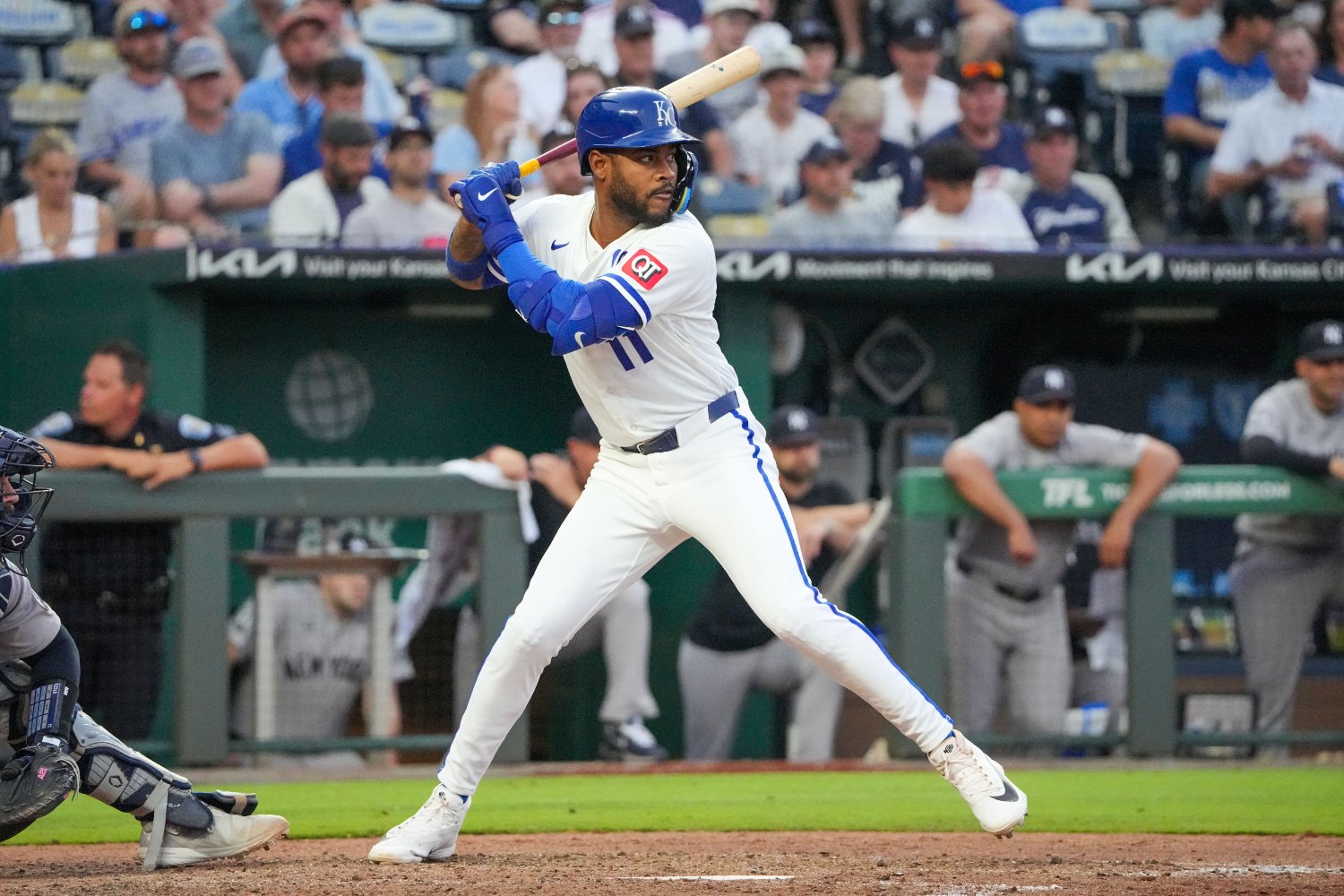 On May 30th, the Kansas City Royals experienced an injury scare, as Maikel Garcia pulled his hamstring rounding second base against the Texas Rangers. Tests revealed a grade 1 hamstring strain for Garcia, which was relatively good news. Anything more than that would've resulted in a lengthy IL stint and some recovery time in Omaha. However, a grade 1 strain meant the Royals could choose between keeping him on the roster and easing him back in or placing him on the IL for a quicker 10-Day IL stint. The Royals opted for the former option, and it seemed like Garcia was progressing positively day by day, according to reports from MLB.com Royals beat writer Anne Rogers. Rogers reported that he was not just taking infield and batting practice but was available off the bench to pinch-hit as soon as Thursday's game against Minnesota. Garcia ended up pinch-hitting in the Royals' 8-5 win over the Twins on Thursday evening, drawing a walk in his lone plate appearance. However, while he initially started on the bases, he was pulled after moving to second base on Josh Rojas' two-RBI single. Royals manager Matt Quatraro said they were being cautious, especially with questionable field conditions after a rain delay. Conversely, Garcia didn't exactly look "100 percent" on the basepaths. Unsurprisingly, Garcia didn't start again on Friday in game two of the Royals' four-game series against the Twins in Minneapolis. It was his sixth-straight game out of the starting lineup. After six straight games out of the lineup, one has to wonder if the Royals made the right decision by not adding Garcia to the IL right away. Why the Royals Didn't Add Garcia to the IL It does seem like Kansas City can be hesitant when adding players to the IL, especially key ones. Earlier in the season, the Royals opted not to add Salvador Perez to the IL after he suffered a hip injury. Rather, Kansas City opted to keep Salvy on the active roster, limit him to DH and first-base duties, and call up Elias Diaz to be the third catcher who could split duties with Carter Jensen as Perez recovered. The strategy seemed to work somewhat. Salvy recovered and eventually reached full strength. Diaz only had 23 plate appearances and hit just .227. However, the 35-year-old veteran did hit two home runs and posted an .852 OPS. Thus, Diaz was able to hold things down behind the plate and in the lineup until Perez returned to more regular innings at catcher. It seemed like the Royals were hoping to do something similar with Garcia. Since going on the IL, Nick Loftin has gotten regular starts at third base. Though he's struggled overall defensively this season (-9 OAA), he profiles much better at third base than second base and the outfield. It hasn't been a great year for Loftin offensively so far. He's hitting .214 with a .657 OPS in 103 plate appearances. However, he did hit his first home run of the year on Wednesday in the series finale against the Reds. While Loftin can hold down the hot corner in Garcia's absence, much like Diaz held down the catcher position when Salvy was out, Garcia isn't even getting starts at designated hitter. The hamstring injury is affecting not just his baserunning but his hitting as well, which explains why Garcia has only gotten two pinch-hit at-bats since May 30th (he's 0-for-1 with a walk and an RBI). That makes Garcia's situation not just dissimilar to Salvy's but ultimately, much more frustrating as well. Garcia Would've Been Better Served on the IL Watching Garcia's two pinch-hit appearances in this Twins series has been brutal. Not only did he not make much hard contact, but he just looked like he was still nursing his hamstring injury, whether in the batter's box or running up the first base line. It's been a down season for the WBC MVP, who made his first All-Star team a year ago. In 248 plate appearances this year, Garcia is slashing .267/.327/.382 with a .709 OPS. He has three home runs, 28 runs scored, 22 RBI, and just four stolen bases on seven attempts. After posting a .769 OPS in March and a .785 OPS in April, he only had a .632 OPS in May. Furthermore, while his chase and whiff rate metrics have been solid, the rest of his Statcast profile, especially when it comes to barrel rate, hard-hit rate, and LA Sweet-Spot%, has been middling to mediocre, via TJ Stats. The Royals want to stay competitive, and they are obviously more competitive when they have Garcia than when they have Josh Rojas, Abraham Toro, or Kevin Newman from Omaha. That said, it's obvious that Garcia's not fully healed from his hamstring injury, and they would be better off with a 100 percent Rojas or another Storm Chasers veteran infielder than a 70-75% Garcia (and that's putting it nicely). The Reds were in a similar situation before their series with the Royals, with Elly De La Cruz, who also suffered a hamstring injury in their series against the Atlanta Braves. However, Cincinnati put him on the IL right away, and he should be ready to go in 2-4 weeks. If the Royals had put Garcia on the IL right away, he would already be six games in and be eligible to return by the start of Kansas City's homestand against the Texas Rangers and Houston Astros. He would have had more time to fully rest and recover, and probably in Kansas City, where he would have had more access to medical resources through the team. Instead, manager Matt Quatraro has to go day to day, hoping that Garcia's hamstring will improve sooner rather than later. Unfortunately, Garcia is not looking great, and that doesn't bode well for the Venezuelan infielder's outlook in the Saturday and Sunday games against Minnesota. Right now, the Royals are 25-39, 14 games under .500. Their odds to make the postseason are 5.7%, the lowest of any team in the AL Central division, according to Fangraphs. When it comes to decision-making with this team, GM JJ Picollo and Quatraro need to make decisions in the team's best long-term interest, not short-term ones. That said, it seems the Royals have focused too much on the short term with Garcia, and that's compromising his rest-of-the-season outlook, as trying to gut it out day by day isn't helping his confidence or performance at the plate. It may be too late to rectify this situation with Garcia, as putting him on the IL now would only set him back even further. Conversely, they need to learn from this mistake and place players on the IL right away rather than waiting. In a season like this, it's okay for the Royals to give chances to players in Triple-A and maybe even Double-A. Royals fans saw tonight what Beck Way could do long-term, as he struck out two batters in an inning of work and posted some gaudy chase and whiff rate metrics. The Royals have to give guys chances. And to do so, they need to be cautious and on the safe side with players when they suffer injury, no matter how minor. Hopefully, Picollo and Quatraro learned their lesson with Garcia and will move much more quickly on IL moves in the near future. In a season like this, Garcia won't be the last key Royals player to suffer an injury.
 -
Luke Pelzer drove in five runs as Quad Cities outslugged South Bend 13-8 in the High-A opener, and the River Bandits split the doubleheader with a 4-3 loss in the nightcap. Omaha cruised to an 11-2 win behind Kameron Misner, Matthew Lugo, and Luke Maile, who each homered. Northwest Arkansas fell 8-4 to Midland, and Columbia dropped a 3-2 decision to Fayetteville despite a ninth-inning rally led by Yandel Ricardo. Royals Transactions Kansas City Royals signed free agent IF Juan Batista to a minor league contract. Kansas City Royals transferred 2B Jonathan India from the 10-day injured list to the 60-day injured list. Left shoulder subluxation. RHP Stephen Kolek's roster status was changed by the Kansas City Royals. Kansas City Royals selected the contract of 3B Josh Rojas from Omaha Storm Chasers. Misner, Lugo, and Maile Power Omaha Past Columbus The Omaha Storm Chasers broke open a close game with a six-run fifth inning and rolled to an 11-2 victory over the Columbus Clippers. The Storm Chasers led 1-0 before the fifth, when Drew Waters walked with the bases loaded to score Misner, Abraham Toro doubled in three runs, and Maile capped the rally with a two-run home run. Misner finished 2-for-5 with a home run, two runs, and two RBI, while Lugo went 2-for-4 with a home run, a double, three runs, and an RBI. Maile added two hits, two runs, and two RBI, and Toro drove in three. Starter Mitch Spence set the tone with three scoreless innings, allowing one hit and no walks while striking out five. Helcris Olivárez followed with two innings, surrendering one run on one hit with three strikeouts and two walks. Omaha added insurance in the eighth on home runs from Misner and Lugo, and Kevin Newman singled home a run in the ninth. The Storm Chasers left eight runners on base but collected 12 hits on the night. Five pitchers combined to hold Columbus to two runs, both on solo home runs. Player AB R H RBI BB K John Rave 5 0 1 0 1 1 Peyton Wilson 4 1 1 0 1 2 Kameron Misner 5 2 2 2 0 1 Matthew Lugo 4 3 2 1 1 0 Brett Squires 4 1 0 0 1 1 Drew Waters 3 1 1 2 1 1 Abraham Toro 4 1 1 3 1 1 Luke Maile 4 2 2 2 0 1 Kevin Newman 4 0 2 1 1 1 Player IP H R ER BB K HR Mitch Spence 3 1 0 0 0 5 0 Helcris Olivárez 2 1 1 1 2 3 0 Dan Altavilla 2 0 0 0 1 2 0 Andrew Pérez 1 1 1 1 1 2 1 Génesis Cabrera 1 0 0 0 1 2 0 Naturals Stumble Late in 8-4 Loss to Midland The Northwest Arkansas Naturals jumped ahead early but could not hold the lead in an 8-4 loss to the Midland RockHounds. Northwest Arkansas scored three runs in the second inning, getting an RBI single from Connor Scott and a two-run single from Alberto Rodriguez to take a 3-1 lead. Midland answered with three runs in the fifth, keyed by a bases-clearing triple, and pulled away with single runs in the seventh and a three-run ninth. Starter Ethan Bosacker turned in a solid outing, allowing one run on four hits over 3 2/3 innings with two strikeouts and two walks. The bullpen could not preserve the deficit, as Zachary Cawyer allowed three runs in one inning and Tommy Molsky gave up three runs in the ninth. Scott led the offense with two hits and an RBI, Rodriguez added two RBIs, and Omar Hernandez reached base twice with a hit and two runs scored. The Naturals managed just six hits and left four runners on base. Daniel Vazquez struck out three times in a hitless afternoon, and Carson Roccaforte went hitless with a walk atop the order. Player AB R H RBI BB K Carson Roccaforte 3 0 0 0 1 2 Colton Becker 4 0 1 0 0 2 Jack Pineda 3 0 1 0 1 0 Spencer Nivens 3 1 0 0 1 1 Daniel Vazquez 4 0 0 0 0 3 Omar Hernandez 3 2 1 0 1 0 Connor Scott 4 1 2 1 0 2 Alberto Rodriguez 4 0 1 2 0 0 Justin Johnson 3 0 0 0 0 1 Player IP H R ER BB K HR Ethan Bosacker 3 2/3 4 1 1 2 2 0 Zachary Cawyer 1 2 3 2 1 1 0 Andrew Morones 3 1 1 1 1 2 0 Tommy Molsky 1 2 3 3 3 1 0 Pelzer Drives In Five as River Bandits Win Slugfest 13-8 Pelzer had the night of the series, going 4-for-4 with three doubles and five RBI to lead the Quad Cities River Bandits past the South Bend Cubs 13-8. The River Bandits scored four times in the first inning, with Blake Mitchell, Luke Pelzer, Derlin Figueroa, and Tyriq Kemp each driving in a run. Quad Cities added five more in the second, sending the lead to 9-0, as Asbel Gonzalez, Pelzer, and Kemp delivered run-scoring hits, and Figueroa walked in a run. South Bend answered with an eight-run third inning, aided by three Quad Cities errors, to climb within 9-8, but the River Bandits responded with four runs in the fifth, three of them on a Pelzer double. Gonzalez finished 3-for-4 with two runs and an RBI, and Mitchell reached base four times with a hit, two walks, and three runs scored. Starter David Shields struggled, allowing eight runs, four earned, on three hits and two walks over 2 2/3 innings with no strikeouts. Max Martin steadied things with 2 1/3 scoreless innings, and Yimi Presinal closed with two scoreless frames, allowing no baserunners. The River Bandits left seven runners on base. Player AB R H RBI BB K Nolan Sailors 4 2 2 0 0 0 Asbel Gonzalez 4 2 3 1 0 0 Blake Mitchell 2 3 1 1 2 1 Ramon Ramirez 2 2 1 0 1 0 Luke Pelzer 4 2 4 5 0 0 Derlin Figueroa 3 1 1 2 1 1 Jose Cerice 4 0 1 1 0 1 Tyriq Kemp 4 0 2 2 0 0 Angel Acosta 4 1 0 0 0 0 Player IP H R ER BB K HR David Shields 2 2/3 3 8 4 2 0 0 Max Martin 2 1/3 2 0 0 2 1 0 Yimi Presinal 2 0 0 0 0 0 0 River Bandits Drop Nightcap 4-3 to South Bend The Quad Cities River Bandits took an early lead but fell 4-3 to the South Bend Cubs in the second game of the doubleheader. Quad Cities scored twice in the second inning, as Erick Torres singled home a run and Acosta added a run on a sacrifice bunt for a 2-0 lead. The River Bandits pushed across another run in the third on a Pelzer fly out to take a 3-2 edge. South Bend tied the game in the second on a two-run home run and a double, then won it with single runs in the fifth. Starter Cory Ronan absorbed the loss, allowing three runs, two earned, on four hits and two walks over 1 2/3 innings with three strikeouts and a home run. Coleman Picard followed with 2 1/3 scoreless innings, allowing one hit and striking out one, and Josh Hansell pitched two innings, giving up one run on three hits. Pelzer and Derlin Figueroa each collected a hit, while Torres drove in a run. The River Bandits managed three hits and left three runners on base and went 1-for-4 with runners in scoring position. This second game was a makeup of their April 5th game in South Bend, and thus, the Cubs were the home team in the nightcap of the doubleheader. Player AB R H RBI BB K Nolan Sailors 3 0 0 0 0 3 Blake Mitchell 2 1 0 0 1 1 Ramon Ramirez 2 0 0 0 1 0 Luke Pelzer 3 1 1 0 0 1 Derlin Figueroa 3 1 1 0 0 0 Jose Cerice 1 0 0 0 0 0 Erick Torres 3 0 1 1 0 1 Angel Acosta 2 0 0 1 0 1 Diego Guzman 2 0 0 0 0 1 Tyriq Kemp 1 0 0 0 0 1 Player IP H R ER BB K HR Cory Ronan 1 2/3 4 3 3 2 3 1 Coleman Picard 2 1/3 1 0 0 0 1 0 Josh Hansell 2 3 1 1 0 1 0 Fireflies Rally Comes Up Short in 3-2 Loss The Columbia Fireflies nearly erased a three-run deficit in the ninth inning but fell 3-2 to the Fayetteville Woodpeckers. Fayetteville scored all of its runs in the third inning on a three-run home run. Columbia was held without a run until the ninth, when Daniel Lopez and Henry Ramos reached, and Stone Russell singled home a run to make it 3-1. Ricardo followed with a run-scoring double to pull within 3-2, but the rally ended there. Starter Darwin Rodriguez delivered a strong outing, allowing three runs, two earned, on five hits and two walks over 5 2/3 innings while striking out nine. Luis Valdez followed with 1 1/3 scoreless innings and a strikeout, and Randy Ramnarace tossed a scoreless ninth despite two walks. Ricardo led the offense with a double and an RBI, and Russell drove in the other run. Columbia managed six hits and left four runners on base, with Sean Gamble, Roni Cabrera, and Gabriel Silva combining for seven strikeouts. Player AB R H RBI BB K Henry Ramos 4 1 1 0 0 0 Sean Gamble 4 0 0 0 0 2 Josh Hammond 4 0 1 0 0 1 Stone Russell 4 0 1 1 0 0 Josi Novas 0 0 0 0 0 0 Yandel Ricardo 4 0 1 1 0 2 Roni Cabrera 4 0 0 0 0 2 Connor Rasmussen 3 0 1 0 0 2 Gabriel Silva 3 0 0 0 0 3 Daniel Lopez 3 1 1 0 0 1 Player IP H R ER BB K HR Darwin Rodriguez 5 2/3 5 3 3 2 9 1 Luis Valdez 1 1/3 0 0 0 0 1 0 Randy Ramnarace 1 0 0 0 2 1 0 Top-20 Prospect Performance Kendry Chourio: DNP David Shields: 2 2/3 IP, 3 H, 8 R, 4 ER, 2 BB, 0 K Sean Gamble: 0-for-4, 2 K Blake Mitchell: 1-for-2, 3 R, RBI, 2 BB, K (Game 1); 0-for-2, R, BB, K (Game 2) Josh Hammond: 1-for-4, K Ramon Ramirez: 1-for-2, 2 R, BB (Game 1); 0-for-2, BB (Game 2) Drew Beam: DNP Asbel Gonzalez: 3-for-4, 2 R, RBI Ben Kudrna: DNP Carson Roccaforte: 0-for-3, BB, 2 K Yandel Ricardo: 1-for-4, 2B, RBI, 2 K Felix Arronde: DNP Blake Wolters: DNP Michael Lombardi: DNP Luinder Avila: DNP Steven Zobac: DNP Frank Mozzicato: DNP Daniel Vazquez: 0-for-4, 3 K Warren Colcano: DNP Shane Panzini: DNP View full article
-
 Luke Pelzer drove in five runs as Quad Cities outslugged South Bend 13-8 in the High-A opener, and the River Bandits split the doubleheader with a 4-3 loss in the nightcap. Omaha cruised to an 11-2 win behind Kameron Misner, Matthew Lugo, and Luke Maile, who each homered. Northwest Arkansas fell 8-4 to Midland, and Columbia dropped a 3-2 decision to Fayetteville despite a ninth-inning rally led by Yandel Ricardo. Royals Transactions Kansas City Royals signed free agent IF Juan Batista to a minor league contract. Kansas City Royals transferred 2B Jonathan India from the 10-day injured list to the 60-day injured list. Left shoulder subluxation. RHP Stephen Kolek's roster status was changed by the Kansas City Royals. Kansas City Royals selected the contract of 3B Josh Rojas from Omaha Storm Chasers. Misner, Lugo, and Maile Power Omaha Past Columbus The Omaha Storm Chasers broke open a close game with a six-run fifth inning and rolled to an 11-2 victory over the Columbus Clippers. The Storm Chasers led 1-0 before the fifth, when Drew Waters walked with the bases loaded to score Misner, Abraham Toro doubled in three runs, and Maile capped the rally with a two-run home run. Misner finished 2-for-5 with a home run, two runs, and two RBI, while Lugo went 2-for-4 with a home run, a double, three runs, and an RBI. Maile added two hits, two runs, and two RBI, and Toro drove in three. Starter Mitch Spence set the tone with three scoreless innings, allowing one hit and no walks while striking out five. Helcris Olivárez followed with two innings, surrendering one run on one hit with three strikeouts and two walks. Omaha added insurance in the eighth on home runs from Misner and Lugo, and Kevin Newman singled home a run in the ninth. The Storm Chasers left eight runners on base but collected 12 hits on the night. Five pitchers combined to hold Columbus to two runs, both on solo home runs. Player AB R H RBI BB K John Rave 5 0 1 0 1 1 Peyton Wilson 4 1 1 0 1 2 Kameron Misner 5 2 2 2 0 1 Matthew Lugo 4 3 2 1 1 0 Brett Squires 4 1 0 0 1 1 Drew Waters 3 1 1 2 1 1 Abraham Toro 4 1 1 3 1 1 Luke Maile 4 2 2 2 0 1 Kevin Newman 4 0 2 1 1 1 Player IP H R ER BB K HR Mitch Spence 3 1 0 0 0 5 0 Helcris Olivárez 2 1 1 1 2 3 0 Dan Altavilla 2 0 0 0 1 2 0 Andrew Pérez 1 1 1 1 1 2 1 Génesis Cabrera 1 0 0 0 1 2 0 Naturals Stumble Late in 8-4 Loss to Midland The Northwest Arkansas Naturals jumped ahead early but could not hold the lead in an 8-4 loss to the Midland RockHounds. Northwest Arkansas scored three runs in the second inning, getting an RBI single from Connor Scott and a two-run single from Alberto Rodriguez to take a 3-1 lead. Midland answered with three runs in the fifth, keyed by a bases-clearing triple, and pulled away with single runs in the seventh and a three-run ninth. Starter Ethan Bosacker turned in a solid outing, allowing one run on four hits over 3 2/3 innings with two strikeouts and two walks. The bullpen could not preserve the deficit, as Zachary Cawyer allowed three runs in one inning and Tommy Molsky gave up three runs in the ninth. Scott led the offense with two hits and an RBI, Rodriguez added two RBIs, and Omar Hernandez reached base twice with a hit and two runs scored. The Naturals managed just six hits and left four runners on base. Daniel Vazquez struck out three times in a hitless afternoon, and Carson Roccaforte went hitless with a walk atop the order. Player AB R H RBI BB K Carson Roccaforte 3 0 0 0 1 2 Colton Becker 4 0 1 0 0 2 Jack Pineda 3 0 1 0 1 0 Spencer Nivens 3 1 0 0 1 1 Daniel Vazquez 4 0 0 0 0 3 Omar Hernandez 3 2 1 0 1 0 Connor Scott 4 1 2 1 0 2 Alberto Rodriguez 4 0 1 2 0 0 Justin Johnson 3 0 0 0 0 1 Player IP H R ER BB K HR Ethan Bosacker 3 2/3 4 1 1 2 2 0 Zachary Cawyer 1 2 3 2 1 1 0 Andrew Morones 3 1 1 1 1 2 0 Tommy Molsky 1 2 3 3 3 1 0 Pelzer Drives In Five as River Bandits Win Slugfest 13-8 Pelzer had the night of the series, going 4-for-4 with three doubles and five RBI to lead the Quad Cities River Bandits past the South Bend Cubs 13-8. The River Bandits scored four times in the first inning, with Blake Mitchell, Luke Pelzer, Derlin Figueroa, and Tyriq Kemp each driving in a run. Quad Cities added five more in the second, sending the lead to 9-0, as Asbel Gonzalez, Pelzer, and Kemp delivered run-scoring hits, and Figueroa walked in a run. South Bend answered with an eight-run third inning, aided by three Quad Cities errors, to climb within 9-8, but the River Bandits responded with four runs in the fifth, three of them on a Pelzer double. Gonzalez finished 3-for-4 with two runs and an RBI, and Mitchell reached base four times with a hit, two walks, and three runs scored. Starter David Shields struggled, allowing eight runs, four earned, on three hits and two walks over 2 2/3 innings with no strikeouts. Max Martin steadied things with 2 1/3 scoreless innings, and Yimi Presinal closed with two scoreless frames, allowing no baserunners. The River Bandits left seven runners on base. Player AB R H RBI BB K Nolan Sailors 4 2 2 0 0 0 Asbel Gonzalez 4 2 3 1 0 0 Blake Mitchell 2 3 1 1 2 1 Ramon Ramirez 2 2 1 0 1 0 Luke Pelzer 4 2 4 5 0 0 Derlin Figueroa 3 1 1 2 1 1 Jose Cerice 4 0 1 1 0 1 Tyriq Kemp 4 0 2 2 0 0 Angel Acosta 4 1 0 0 0 0 Player IP H R ER BB K HR David Shields 2 2/3 3 8 4 2 0 0 Max Martin 2 1/3 2 0 0 2 1 0 Yimi Presinal 2 0 0 0 0 0 0 River Bandits Drop Nightcap 4-3 to South Bend The Quad Cities River Bandits took an early lead but fell 4-3 to the South Bend Cubs in the second game of the doubleheader. Quad Cities scored twice in the second inning, as Erick Torres singled home a run and Acosta added a run on a sacrifice bunt for a 2-0 lead. The River Bandits pushed across another run in the third on a Pelzer fly out to take a 3-2 edge. South Bend tied the game in the second on a two-run home run and a double, then won it with single runs in the fifth. Starter Cory Ronan absorbed the loss, allowing three runs, two earned, on four hits and two walks over 1 2/3 innings with three strikeouts and a home run. Coleman Picard followed with 2 1/3 scoreless innings, allowing one hit and striking out one, and Josh Hansell pitched two innings, giving up one run on three hits. Pelzer and Derlin Figueroa each collected a hit, while Torres drove in a run. The River Bandits managed three hits and left three runners on base and went 1-for-4 with runners in scoring position. This second game was a makeup of their April 5th game in South Bend, and thus, the Cubs were the home team in the nightcap of the doubleheader. Player AB R H RBI BB K Nolan Sailors 3 0 0 0 0 3 Blake Mitchell 2 1 0 0 1 1 Ramon Ramirez 2 0 0 0 1 0 Luke Pelzer 3 1 1 0 0 1 Derlin Figueroa 3 1 1 0 0 0 Jose Cerice 1 0 0 0 0 0 Erick Torres 3 0 1 1 0 1 Angel Acosta 2 0 0 1 0 1 Diego Guzman 2 0 0 0 0 1 Tyriq Kemp 1 0 0 0 0 1 Player IP H R ER BB K HR Cory Ronan 1 2/3 4 3 3 2 3 1 Coleman Picard 2 1/3 1 0 0 0 1 0 Josh Hansell 2 3 1 1 0 1 0 Fireflies Rally Comes Up Short in 3-2 Loss The Columbia Fireflies nearly erased a three-run deficit in the ninth inning but fell 3-2 to the Fayetteville Woodpeckers. Fayetteville scored all of its runs in the third inning on a three-run home run. Columbia was held without a run until the ninth, when Daniel Lopez and Henry Ramos reached, and Stone Russell singled home a run to make it 3-1. Ricardo followed with a run-scoring double to pull within 3-2, but the rally ended there. Starter Darwin Rodriguez delivered a strong outing, allowing three runs, two earned, on five hits and two walks over 5 2/3 innings while striking out nine. Luis Valdez followed with 1 1/3 scoreless innings and a strikeout, and Randy Ramnarace tossed a scoreless ninth despite two walks. Ricardo led the offense with a double and an RBI, and Russell drove in the other run. Columbia managed six hits and left four runners on base, with Sean Gamble, Roni Cabrera, and Gabriel Silva combining for seven strikeouts. Player AB R H RBI BB K Henry Ramos 4 1 1 0 0 0 Sean Gamble 4 0 0 0 0 2 Josh Hammond 4 0 1 0 0 1 Stone Russell 4 0 1 1 0 0 Josi Novas 0 0 0 0 0 0 Yandel Ricardo 4 0 1 1 0 2 Roni Cabrera 4 0 0 0 0 2 Connor Rasmussen 3 0 1 0 0 2 Gabriel Silva 3 0 0 0 0 3 Daniel Lopez 3 1 1 0 0 1 Player IP H R ER BB K HR Darwin Rodriguez 5 2/3 5 3 3 2 9 1 Luis Valdez 1 1/3 0 0 0 0 1 0 Randy Ramnarace 1 0 0 0 2 1 0 Top-20 Prospect Performance Kendry Chourio: DNP David Shields: 2 2/3 IP, 3 H, 8 R, 4 ER, 2 BB, 0 K Sean Gamble: 0-for-4, 2 K Blake Mitchell: 1-for-2, 3 R, RBI, 2 BB, K (Game 1); 0-for-2, R, BB, K (Game 2) Josh Hammond: 1-for-4, K Ramon Ramirez: 1-for-2, 2 R, BB (Game 1); 0-for-2, BB (Game 2) Drew Beam: DNP Asbel Gonzalez: 3-for-4, 2 R, RBI Ben Kudrna: DNP Carson Roccaforte: 0-for-3, BB, 2 K Yandel Ricardo: 1-for-4, 2B, RBI, 2 K Felix Arronde: DNP Blake Wolters: DNP Michael Lombardi: DNP Luinder Avila: DNP Steven Zobac: DNP Frank Mozzicato: DNP Daniel Vazquez: 0-for-4, 3 K Warren Colcano: DNP Shane Panzini: DNP
 -
Image courtesy of Allan Henry-Imagn Images The Royals are 24-38 as of Thursday and may be in "evaluation" mode for the remainder of the 2026 season. That's not exactly what fans envisioned back in Spring Training, but with 6.5% odds to make the postseason, according to Fangraphs, they may not have much of a choice. With next year and beyond as the focus for this team, GM JJ Picollo and manager Matt Quatraro need to identify and promote players with long-term potential for the Royals. One player with that potential is outfielder Carson Roccaforte, who's currently in Double-A Northwest Arkansas. Roccaforte is the No. 10 prospect in our most updated Top 20 rankings at Royals Keep. In 53 games and 245 plate appearances with the Naturals this year, the 24-year-old outfielder is slashing .250/.340/.510 with an .850 OPS. He also has 13 home runs, 40 runs scored, 36 RBI, 10 stolen bases, and a TJ Bat+ of 126. Thus, the numbers have been solid in Double-A, and at the very least, a promotion to Triple-A Omaha should be coming soon for the outfielder prospect. However, does he merit a promotion to the Majors in August and September after the Trade Deadline? If so, what would need to happen, and what would need to improve in his game for him to be a regular at the Major League level? Roccaforte Has the Tools to Be a Successful MLB Outfielder Roccaforte was drafted 66th overall in the Competitive B Round of the 2023 MLB Draft by the University of Louisiana Lafayette. In his final season with the Ragin' Cajuns, he slashed .318/.426/.538 with a .964 OPS in 289 plate appearances. He also hit eight home runs, scored 64 runs, collected 55 RBI, and stole bases. His numbers were much better in 2022 with Lafayette, as he hit 16 home runs, stole 25 bases, and posted a 1.107 OPS in 256 plate appearances. However, Roccaforte finished 2023 strong and had really boosted his draft stock leading up to the July MLB Draft. In addition to solid offensive and defensive tools, the Lafayette product stood out because of his strong discipline at the plate. In his final season with the Ragin' Cajuns, he posted a 0.67 BB/K ratio. Even if Roccaforte didn't hit for a high average, he at the very least would be a player who could consistently post decent to strong OBP marks due to that plate discipline and ability to draw a walk. Roccaforte signed quickly after being drafted and ended up playing in 27 games with the Low-A Columbia Fireflies in 2023. In that 122 plate-appearance sample, he slashed .257/.377/.356 with a .733 OPS and 107 TJ Bat+. While he didn't hit for a high average or a lot of power (0.099 ISO), he did draw a lot of walks, as evidenced by his 15.6% BB%. As expected, the Royals promoted Roccaforte to High-A Quad Cities in 2024. Unfortunately, his first full minor league season didn't go as planned offensively. In 122 games and 535 plate appearances, Roccaforte slashed .208/.293/.342 with a .635 OPS and 87 TJ Bat+. He struck out 26% of the time, hit 10 home runs, scored 59 runs, and collected 62 RBI. What stood out the most from Roccaforte in his first full Minor League season was the baserunning prowess (34 stolen bases) and defense. He ended up winning the Frank White Award that season, which goes to the best defensive player in the Royals' minor league system. Despite the defensive accolades, Roccaforte's prospect status declined heavily, and he was seen as a fringe Top 30 prospect going into 2025. While he maintained his defensive performance (he won the Frank White Award again in 2025), the outfielder also dramatically improved his offensive production. Roccaforte started in High-A ball but was later promoted to Northwest Arkansas. He thrived at both levels of play last season. In 127 games and 551 plate appearances at both levels combined, he slashed .258/.373/.470 with an .843 OPS. He hit 18 home runs, scored 81 runs, collected 74 RBI, and stole 43 bases. He also posted a 135 TJ Bat+ in Quad Cities and 140 TJ Bat+ in Northwest Arkansas. Safe to say, the outfielder was effective in nearly all offensive areas of his game a season ago. The only blemish on Roccaforte's profile from a year ago is his strikeout rate. While he walked 14.9% of the time, he also struck out 29.4% of the time as well. His high number of swing-and-misses is a big reason why he didn't climb higher in many top Royals prospects lists this past offseason, including ours at Royals Keep (he started the year at No. 16). This year, Roccaforte has done more of the same, repeating Northwest Arkansas. In 53 games and 245 plate appearances, he's slashing .250/.340/.510 with an .850 OPS. He has also hit 13 home runs, scored 40 runs, collected 36 RBI, stolen 10 bases, and posted a 126 TJ Bat+. The power has seen a boost, as his .260 ISO would be a career-high in a season. However, his 34.9% K% would also be a career high, and his whiff metrics aren't much better, as illustrated by his Statcast percentiles via TJ Stats. In addition to a K% in the 2nd percentile, he has a 9th-percentile whiff rate and a 13th-percentile Z-Contact%. That said, despite these issues, his O-Swing% (chase) ranks in the 63rd percentile, and his BB% ranks in the 54th percentile. Thus, while the strikeouts and whiffs aren't encouraging, his lack of chase at least makes up for those issues somewhat. Roccaforte may never be a high-average hitter at the MLB level due to these contact issues. However, if he can carry the power, plate discipline, and pull ability to Omaha and, eventually, Kansas City, he could find success despite those obvious drawbacks. His defense and baserunning tools, as well, would help the Royals be more patient with him, much like Kyle Isbel early in his MLB career. Will the Royals Deal Isbel to Clear a Spot for Roccaforte? Speaking of Isbel, the Royals center fielder has a murky future in Kansas City beyond 2026. Next year, Isbel will be 30, and he will also be entering his final season of arbitration. The former UNLV product has demonstrated excellent defense with the Royals, earning a Gold Glove finalist nomination last season. However, the offense hasn't quite been there for a regular player. This season, Isbel is slashing .254/.293/.361 with a .654 OPS in 171 plate appearances. His 73 TJ Bat+ is down not just from last year (77) but from 2024 as well (79). Furthermore, the Statcast percentiles haven't been all that great this season, especially in the exit velocity, barrel, and hard-hit categories. The good thing is that Isbel doesn't whiff a lot and makes a lot of contact. Unfortunately, those are the only Statcast categories he profiled as above average, according to TJ Stats. The Royals may be able to get a decent package for Isbel, who has value as a defensive-first fourth outfielder to many opposing teams. It's possible that Kansas City could receive a return similar to what they received from the San Diego Padres in the Freddy Fermin trade. The defensive-oriented backup catcher was traded for Ryan Bergert and Stephen Kolek at last year's Trade Deadline. Considering Kolek's early success and Bergert's upside, it's safe to say that the deal was a win for the Royals. Trading Isbel could net them a similar return and open a 40-man roster spot for Roccaforte. Roccaforte Needs to Cut Down the Whiffs to Hold Off Rave There aren't many options on the 40-man roster to replace Isbel on the active roster. The only real option who can play center field is John Rave, who made his debut in Kansas City last year and posted a 67 TJ Bat+ in 175 plate appearances. Based on that sample, it's not surprising that Rave has primarily stayed down in Omaha this season. With the Storm Chasers, Rave has been looking effective at the plate. In 243 plate appearances, the 28-year-old outfielder is slashing .269/.385/.477 with an .862 OPS and 113 TJ Bat+. He also has nine home runs, 37 runs scored, 30 RBI, and 14 stolen bases. Like Roccaforte, the former NC State product can draw a walk, but he chases more than Roccaforte and has questionable exit velocity, hard-hit metrics, and launch-angle data. Rave may be on the 40-man roster already, but Roccaforte has the higher ceiling, despite his whiff issues. Thus, if Roccaforte can stabilize those strikeout and whiff rates in Triple-A, that would go a long way for Roccaforte's chances to make the MLB roster late this summer Roccaforte didn't have a tremendous Spring Training sample in Arizona this past spring. He only had 23 plate appearances, and his slash line was .158/.304/.263 with a .567 OPS. However, while the wOBA, xwOBA, and barrel rate percentiles were low, everything else was stellar, based on his TJ Statcast percentiles summary. With a larger sample, Roccaforte's Cactus League metrics would likely have been better than what they were, especially when taking a glance at his summary above. There were a lot of promising trends in Surprise, especially in the areas of whiff% and 9th percentile) and z-contact% (64th percentile). It will be interesting to see what Roccaforte can do to improve his contact tool this season and beyond. He doesn't need to be a sub-20% K% guy by any means. However, if he can keep his K% in the 25-27% range and his walk rate in the 11-13% range? Well, that could be the profile of a successful regular outfielder, especially if he's demonstrating 15-20 HR per year power. Granted, we still have to see what Roccaforte will do in a promotion to Omaha. If he struggles or stagnates in Triple-A, he may not be added to the 40-man roster this offseason, let alone during the 2026 season. However, if Roccaforte transitions this Double-A offensive success to Triple-A? Well, Royals fans may be seeing Roccaforte in center field at Kauffman Stadium in late August or early September this year. View full article
-
Will Carson Roccaforte Get His Shot With the Royals This Season?
Kevin O'Brien posted an article in Minor Leagues
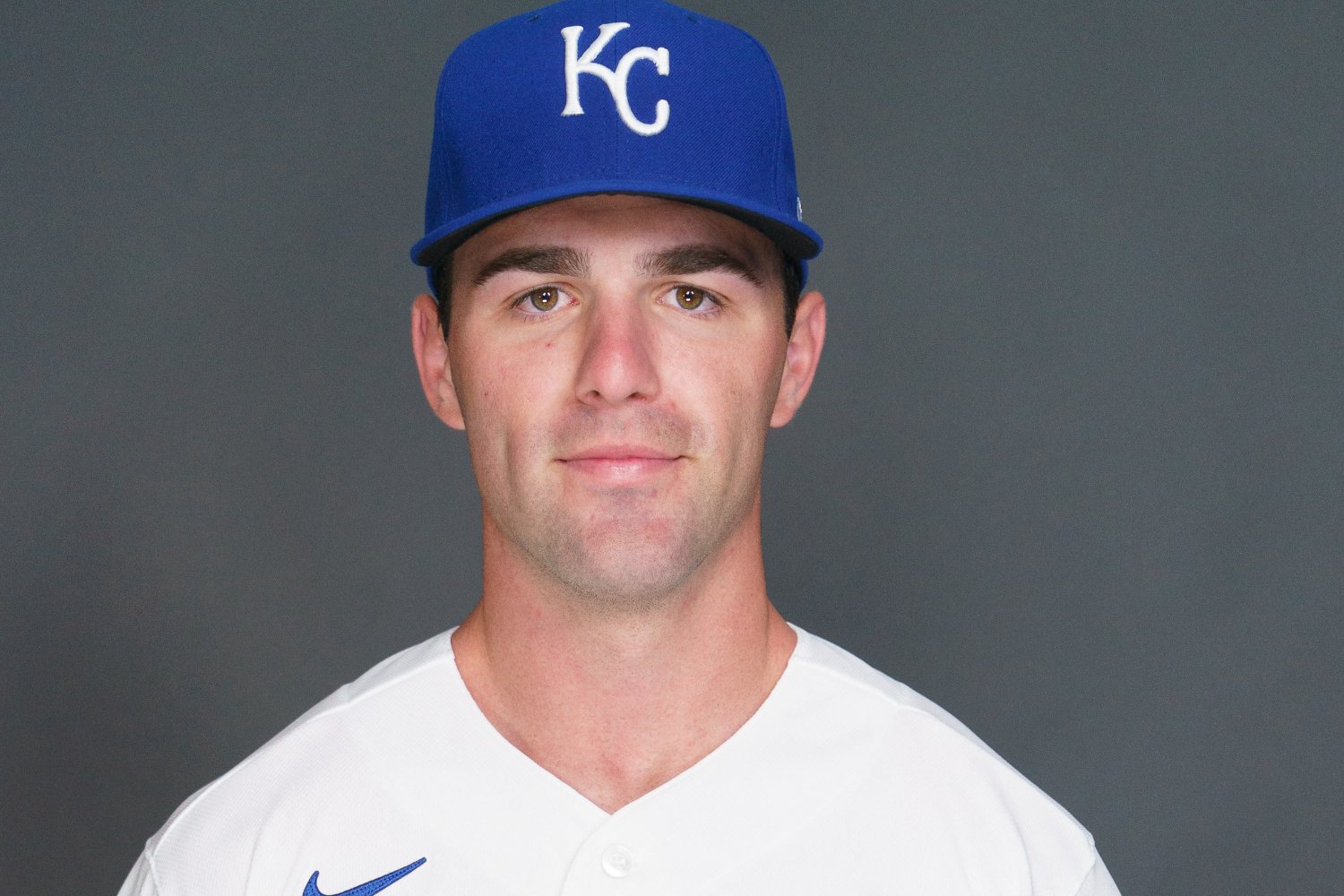 The Royals are 24-38 as of Thursday and may be in "evaluation" mode for the remainder of the 2026 season. That's not exactly what fans envisioned back in Spring Training, but with 6.5% odds to make the postseason, according to Fangraphs, they may not have much of a choice. With next year and beyond as the focus for this team, GM JJ Picollo and manager Matt Quatraro need to identify and promote players with long-term potential for the Royals. One player with that potential is outfielder Carson Roccaforte, who's currently in Double-A Northwest Arkansas. Roccaforte is the No. 10 prospect in our most updated Top 20 rankings at Royals Keep. In 53 games and 245 plate appearances with the Naturals this year, the 24-year-old outfielder is slashing .250/.340/.510 with an .850 OPS. He also has 13 home runs, 40 runs scored, 36 RBI, 10 stolen bases, and a TJ Bat+ of 126. Thus, the numbers have been solid in Double-A, and at the very least, a promotion to Triple-A Omaha should be coming soon for the outfielder prospect. However, does he merit a promotion to the Majors in August and September after the Trade Deadline? If so, what would need to happen, and what would need to improve in his game for him to be a regular at the Major League level? Roccaforte Has the Tools to Be a Successful MLB Outfielder Roccaforte was drafted 66th overall in the Competitive B Round of the 2023 MLB Draft by the University of Louisiana Lafayette. In his final season with the Ragin' Cajuns, he slashed .318/.426/.538 with a .964 OPS in 289 plate appearances. He also hit eight home runs, scored 64 runs, collected 55 RBI, and stole bases. His numbers were much better in 2022 with Lafayette, as he hit 16 home runs, stole 25 bases, and posted a 1.107 OPS in 256 plate appearances. However, Roccaforte finished 2023 strong and had really boosted his draft stock leading up to the July MLB Draft. In addition to solid offensive and defensive tools, the Lafayette product stood out because of his strong discipline at the plate. In his final season with the Ragin' Cajuns, he posted a 0.67 BB/K ratio. Even if Roccaforte didn't hit for a high average, he at the very least would be a player who could consistently post decent to strong OBP marks due to that plate discipline and ability to draw a walk. Roccaforte signed quickly after being drafted and ended up playing in 27 games with the Low-A Columbia Fireflies in 2023. In that 122 plate-appearance sample, he slashed .257/.377/.356 with a .733 OPS and 107 TJ Bat+. While he didn't hit for a high average or a lot of power (0.099 ISO), he did draw a lot of walks, as evidenced by his 15.6% BB%. As expected, the Royals promoted Roccaforte to High-A Quad Cities in 2024. Unfortunately, his first full minor league season didn't go as planned offensively. In 122 games and 535 plate appearances, Roccaforte slashed .208/.293/.342 with a .635 OPS and 87 TJ Bat+. He struck out 26% of the time, hit 10 home runs, scored 59 runs, and collected 62 RBI. What stood out the most from Roccaforte in his first full Minor League season was the baserunning prowess (34 stolen bases) and defense. He ended up winning the Frank White Award that season, which goes to the best defensive player in the Royals' minor league system. Despite the defensive accolades, Roccaforte's prospect status declined heavily, and he was seen as a fringe Top 30 prospect going into 2025. While he maintained his defensive performance (he won the Frank White Award again in 2025), the outfielder also dramatically improved his offensive production. Roccaforte started in High-A ball but was later promoted to Northwest Arkansas. He thrived at both levels of play last season. In 127 games and 551 plate appearances at both levels combined, he slashed .258/.373/.470 with an .843 OPS. He hit 18 home runs, scored 81 runs, collected 74 RBI, and stole 43 bases. He also posted a 135 TJ Bat+ in Quad Cities and 140 TJ Bat+ in Northwest Arkansas. Safe to say, the outfielder was effective in nearly all offensive areas of his game a season ago. The only blemish on Roccaforte's profile from a year ago is his strikeout rate. While he walked 14.9% of the time, he also struck out 29.4% of the time as well. His high number of swing-and-misses is a big reason why he didn't climb higher in many top Royals prospects lists this past offseason, including ours at Royals Keep (he started the year at No. 16). This year, Roccaforte has done more of the same, repeating Northwest Arkansas. In 53 games and 245 plate appearances, he's slashing .250/.340/.510 with an .850 OPS. He has also hit 13 home runs, scored 40 runs, collected 36 RBI, stolen 10 bases, and posted a 126 TJ Bat+. The power has seen a boost, as his .260 ISO would be a career-high in a season. However, his 34.9% K% would also be a career high, and his whiff metrics aren't much better, as illustrated by his Statcast percentiles via TJ Stats. In addition to a K% in the 2nd percentile, he has a 9th-percentile whiff rate and a 13th-percentile Z-Contact%. That said, despite these issues, his O-Swing% (chase) ranks in the 63rd percentile, and his BB% ranks in the 54th percentile. Thus, while the strikeouts and whiffs aren't encouraging, his lack of chase at least makes up for those issues somewhat. Roccaforte may never be a high-average hitter at the MLB level due to these contact issues. However, if he can carry the power, plate discipline, and pull ability to Omaha and, eventually, Kansas City, he could find success despite those obvious drawbacks. His defense and baserunning tools, as well, would help the Royals be more patient with him, much like Kyle Isbel early in his MLB career. Will the Royals Deal Isbel to Clear a Spot for Roccaforte? Speaking of Isbel, the Royals center fielder has a murky future in Kansas City beyond 2026. Next year, Isbel will be 30, and he will also be entering his final season of arbitration. The former UNLV product has demonstrated excellent defense with the Royals, earning a Gold Glove finalist nomination last season. However, the offense hasn't quite been there for a regular player. This season, Isbel is slashing .254/.293/.361 with a .654 OPS in 171 plate appearances. His 73 TJ Bat+ is down not just from last year (77) but from 2024 as well (79). Furthermore, the Statcast percentiles haven't been all that great this season, especially in the exit velocity, barrel, and hard-hit categories. The good thing is that Isbel doesn't whiff a lot and makes a lot of contact. Unfortunately, those are the only Statcast categories he profiled as above average, according to TJ Stats. The Royals may be able to get a decent package for Isbel, who has value as a defensive-first fourth outfielder to many opposing teams. It's possible that Kansas City could receive a return similar to what they received from the San Diego Padres in the Freddy Fermin trade. The defensive-oriented backup catcher was traded for Ryan Bergert and Stephen Kolek at last year's Trade Deadline. Considering Kolek's early success and Bergert's upside, it's safe to say that the deal was a win for the Royals. Trading Isbel could net them a similar return and open a 40-man roster spot for Roccaforte. Roccaforte Needs to Cut Down the Whiffs to Hold Off Rave There aren't many options on the 40-man roster to replace Isbel on the active roster. The only real option who can play center field is John Rave, who made his debut in Kansas City last year and posted a 67 TJ Bat+ in 175 plate appearances. Based on that sample, it's not surprising that Rave has primarily stayed down in Omaha this season. With the Storm Chasers, Rave has been looking effective at the plate. In 243 plate appearances, the 28-year-old outfielder is slashing .269/.385/.477 with an .862 OPS and 113 TJ Bat+. He also has nine home runs, 37 runs scored, 30 RBI, and 14 stolen bases. Like Roccaforte, the former NC State product can draw a walk, but he chases more than Roccaforte and has questionable exit velocity, hard-hit metrics, and launch-angle data. Rave may be on the 40-man roster already, but Roccaforte has the higher ceiling, despite his whiff issues. Thus, if Roccaforte can stabilize those strikeout and whiff rates in Triple-A, that would go a long way for Roccaforte's chances to make the MLB roster late this summer Roccaforte didn't have a tremendous Spring Training sample in Arizona this past spring. He only had 23 plate appearances, and his slash line was .158/.304/.263 with a .567 OPS. However, while the wOBA, xwOBA, and barrel rate percentiles were low, everything else was stellar, based on his TJ Statcast percentiles summary. With a larger sample, Roccaforte's Cactus League metrics would likely have been better than what they were, especially when taking a glance at his summary above. There were a lot of promising trends in Surprise, especially in the areas of whiff% and 9th percentile) and z-contact% (64th percentile). It will be interesting to see what Roccaforte can do to improve his contact tool this season and beyond. He doesn't need to be a sub-20% K% guy by any means. However, if he can keep his K% in the 25-27% range and his walk rate in the 11-13% range? Well, that could be the profile of a successful regular outfielder, especially if he's demonstrating 15-20 HR per year power. Granted, we still have to see what Roccaforte will do in a promotion to Omaha. If he struggles or stagnates in Triple-A, he may not be added to the 40-man roster this offseason, let alone during the 2026 season. However, if Roccaforte transitions this Double-A offensive success to Triple-A? Well, Royals fans may be seeing Roccaforte in center field at Kauffman Stadium in late August or early September this year.
 -
Kameron Misner powered Omaha past Columbus 6-4 with two home runs and three RBIs, while John Rave drove in two more. In Springdale, Daniel Vazquez (2-for-4) and Connor Scott keyed Northwest Arkansas' 4-3 walk-off-style win, with Brandon Johnson tossing two scoreless innings of relief. Emmanuel Reyes spun six strong frames as Quad Cities edged South Bend 4-3. At Low-A, Jose Gutierrez was dominant, allowing one run over six innings with eight strikeouts, lifting Columbia to a 3-2 victory over Fayetteville. Royals Transactions No Roster Moves Misner Goes Deep Twice As Storm Chasers Top Columbus The Omaha Storm Chasers beat the Columbus Clippers 6-4 behind a two-homer night from Misner, who finished 2-for-4 with three RBIs and two runs scored. Rave added two hits and two RBIs, Peyton Wilson collected two hits and stole two bases, and Josh Rojas doubled and scored before getting called up and producing the game-winning hit in the ninth inning for the Royals later that evening in Minnesota. Omaha broke a 1-1 tie in the fifth when Misner homered, his tenth of the year, scoring Rojas. The Storm Chasers then blew the game open in the sixth. Matthew Lugo doubled home Wilson, and Rave followed with a two-run triple that scored Connor Kaiser and Kevin Newman, pushing the lead to 5-1. Misner added an insurance solo homer in the ninth. Ryan Ramsey earned the win, allowing one run on two hits over 5 1/3 innings, walking four and striking out six. Eric Cerantola closed it out with two scoreless innings for the save. The Storm Chasers stranded seven runners and came up clutch in key spots, going 4-for-8 with runners in scoring position. Player AB R H RBI BB K Josh Rojas 3 1 1 0 0 1 Kevin Newman 1 1 0 0 1 0 John Rave 5 0 2 2 0 3 Kameron Misner 4 2 2 3 1 1 Luca Tresh 5 0 0 0 0 2 Drew Waters 4 0 1 0 0 2 Peyton Wilson 4 1 2 0 0 0 Gavin Cross 2 0 0 0 0 2 Matthew Lugo 2 0 1 1 0 1 Abraham Toro 3 0 1 0 1 0 Connor Kaiser 4 1 1 0 0 3 Player IP H R ER BB K HR Ryan Ramsey 5 1/3 2 1 1 4 6 1 Anthony Gose 1 2 1 1 1 1 0 Eli Morgan 2/3 1 2 2 2 0 0 Eric Cerantola 2 0 0 0 2 0 0 Scott's Late RBI Single Lifts Naturals Past Midland The Northwest Arkansas Naturals defeated the Midland RockHounds 4-3, scoring the go-ahead run in the eighth inning. Jorge Alfaro led the offense, going 2-for-4 with a double, a home run, an RBI, and two runs scored. Vazquez also had two hits, including a double and an RBI, while Scott drove in two runs on two hits. The Naturals built an early lead, scoring twice in the second inning when Scott singled home Jack Pineda, and adding another run in the third on a Vazquez double that scored Alfaro. After Midland tied the game at 3-3 in the sixth, Northwest Arkansas answered in the eighth when Scott singled home Vazquez for the winning run. Hunter Patteson started and allowed two runs on four hits over five innings, walking four and striking out three. Johnson earned the win with two scoreless innings of relief, striking out two. The Naturals left nine runners on base and went 3-for-10 with runners in scoring position (the RockHounds went 1-for-8 in RISP situations). Player AB R H RBI BB K Carson Roccaforte 5 0 0 0 0 4 Colton Becker 3 0 1 0 0 0 Sam Kulasingam 3 0 0 0 1 1 Jorge Alfaro 4 2 2 1 0 1 Daniel Vazquez 4 1 2 1 0 1 Jack Pineda 3 1 1 0 0 1 Rudy Martin Jr. 1 0 0 0 3 0 Connor Scott 4 0 2 2 0 1 Canyon Brown 3 0 1 0 1 0 Player IP H R ER BB K HR Hunter Patteson 5 4 2 2 4 3 1 Caden Monke 2 2 1 1 1 2 0 Brandon Johnson 2 0 0 0 0 2 0 Reyes And Late Rally Carry River Bandits Over South Bend The Quad Cities River Bandits rallied to beat the South Bend Cubs 4-3, scoring the go-ahead run in the seventh inning. Derlin Figueroa led the offense, going 2-for-4 with two doubles, an RBI, and a run scored. Trevor Werner added two hits, including a double, and drove in two runs, while Ramon Ramirez reached base three times on two walks and scored twice. The River Bandits jumped ahead in the second inning when Trevor Werner singled home Ramon Ramirez and Derlin Figueroa for a 2-0 lead. South Bend rallied to take a 3-2 lead by the fourth, aided by Quad Cities' errors. The River Bandits tied it in the sixth on a Figueroa double that scored Ramirez, then took the lead for good in the seventh when Luke Pelzer singled home Werner. Reyes turned in a strong start, allowing three runs, only one earned, on five hits over six innings, walking two and striking out five. L.P. Langevin earned the win with two scoreless innings and three strikeouts, and Kamden Edge struck out three in a scoreless inning for the save. The River Bandits stranded five runners and went 3-for-10 with runners in scoring position in their one-run victory over the Cubs, who are 34-18 and lead the West Division. Player AB R H RBI BB K Luke Pelzer 3 0 1 1 1 1 Asbel Gonzalez 4 0 0 0 0 1 Blake Mitchell 4 0 1 0 0 1 Ramon Ramirez 2 2 0 0 2 0 Derlin Figueroa 4 1 2 1 0 0 Erick Torres 3 0 0 0 0 0 Tyriq Kemp 3 0 0 0 0 1 Trevor Werner 3 1 2 2 0 1 Angel Acosta 1 0 0 0 1 0 Player IP H R ER BB K HR Emmanuel Reyes 6 5 3 1 2 5 0 L.P. Langevin 2 0 0 0 0 3 0 Kamden Edge 1 0 0 0 0 3 0 Gutierrez Dominates As Fireflies Hold Off Fayetteville The Columbia Fireflies beat the Fayetteville Woodpeckers 3-2 behind a strong pitching performance from Jose Gutierrez. Roni Cabrera led the offense with two hits and an RBI; Jhosmmel Zue drove in two runs; and Yandel Ricardo reached base three times on a hit and two walks, scored a run, and stole a base. Trailing 1-0, the Fireflies took control in the sixth inning. Zue delivered a two-run single that scored Sean Gamble and Hyungchan Um, and Roni Cabrera followed with an RBI single that brought home Ricardo, giving Columbia a 3-1 lead. Gutierrez was excellent, allowing one run on five hits over six innings, walking one and striking out eight to earn the win and record a Quality Start. Henson Leal closed it out with 1 1/3 scoreless innings and two strikeouts for the save. The Fireflies left seven runners on base and went 2-for-4 with runners in scoring position. Player AB R H RBI BB K Henry Ramos 5 0 1 0 0 2 Sean Gamble 3 1 1 0 0 0 Stone Russell 4 0 1 0 0 0 Hyungchan Um 4 1 1 0 0 0 Yandel Ricardo 2 1 1 0 2 0 Jhosmmel Zue 4 0 1 2 0 1 Roni Cabrera 4 0 2 1 0 1 JC Vanek 3 0 0 0 1 2 Ivan Sosa 4 0 1 0 0 1 Player IP H R ER BB K HR Jose Gutierrez 6 5 1 1 1 8 0 Andy Basora 1 2/3 1 1 1 3 1 0 Henson Leal 1 1/3 0 0 0 0 2 0 Top-20 Prospect Performance Kendry Chourio: DNP David Shields: DNP Sean Gamble: 1-for-3 Blake Mitchell: 1-for-4, 1 K Josh Hammond: DNP Ramon Ramirez: 0-for-2, 2 BB Drew Beam: DNP Asbel Gonzalez: 0-for-4, 1 K Ben Kudrna: DNP Carson Roccaforte: 0-for-5, 4 K Yandel Ricardo: 1-for-2, 1 SB, 2 BB Felix Arronde: DNP Blake Wolters: DNP Michael Lombardi: DNP Luinder Avila: DNP Steven Zobac: DNP Frank Mozzicato: DNP Daniel Vazquez: 2-for-4, 2B, RBI, 1 K Warren Colcano: DNP Shane Panzini: DNP View full article
-
 Kameron Misner powered Omaha past Columbus 6-4 with two home runs and three RBIs, while John Rave drove in two more. In Springdale, Daniel Vazquez (2-for-4) and Connor Scott keyed Northwest Arkansas' 4-3 walk-off-style win, with Brandon Johnson tossing two scoreless innings of relief. Emmanuel Reyes spun six strong frames as Quad Cities edged South Bend 4-3. At Low-A, Jose Gutierrez was dominant, allowing one run over six innings with eight strikeouts, lifting Columbia to a 3-2 victory over Fayetteville. Royals Transactions No Roster Moves Misner Goes Deep Twice As Storm Chasers Top Columbus The Omaha Storm Chasers beat the Columbus Clippers 6-4 behind a two-homer night from Misner, who finished 2-for-4 with three RBIs and two runs scored. Rave added two hits and two RBIs, Peyton Wilson collected two hits and stole two bases, and Josh Rojas doubled and scored before getting called up and producing the game-winning hit in the ninth inning for the Royals later that evening in Minnesota. Omaha broke a 1-1 tie in the fifth when Misner homered, his tenth of the year, scoring Rojas. The Storm Chasers then blew the game open in the sixth. Matthew Lugo doubled home Wilson, and Rave followed with a two-run triple that scored Connor Kaiser and Kevin Newman, pushing the lead to 5-1. Misner added an insurance solo homer in the ninth. Ryan Ramsey earned the win, allowing one run on two hits over 5 1/3 innings, walking four and striking out six. Eric Cerantola closed it out with two scoreless innings for the save. The Storm Chasers stranded seven runners and came up clutch in key spots, going 4-for-8 with runners in scoring position. Player AB R H RBI BB K Josh Rojas 3 1 1 0 0 1 Kevin Newman 1 1 0 0 1 0 John Rave 5 0 2 2 0 3 Kameron Misner 4 2 2 3 1 1 Luca Tresh 5 0 0 0 0 2 Drew Waters 4 0 1 0 0 2 Peyton Wilson 4 1 2 0 0 0 Gavin Cross 2 0 0 0 0 2 Matthew Lugo 2 0 1 1 0 1 Abraham Toro 3 0 1 0 1 0 Connor Kaiser 4 1 1 0 0 3 Player IP H R ER BB K HR Ryan Ramsey 5 1/3 2 1 1 4 6 1 Anthony Gose 1 2 1 1 1 1 0 Eli Morgan 2/3 1 2 2 2 0 0 Eric Cerantola 2 0 0 0 2 0 0 Scott's Late RBI Single Lifts Naturals Past Midland The Northwest Arkansas Naturals defeated the Midland RockHounds 4-3, scoring the go-ahead run in the eighth inning. Jorge Alfaro led the offense, going 2-for-4 with a double, a home run, an RBI, and two runs scored. Vazquez also had two hits, including a double and an RBI, while Scott drove in two runs on two hits. The Naturals built an early lead, scoring twice in the second inning when Scott singled home Jack Pineda, and adding another run in the third on a Vazquez double that scored Alfaro. After Midland tied the game at 3-3 in the sixth, Northwest Arkansas answered in the eighth when Scott singled home Vazquez for the winning run. Hunter Patteson started and allowed two runs on four hits over five innings, walking four and striking out three. Johnson earned the win with two scoreless innings of relief, striking out two. The Naturals left nine runners on base and went 3-for-10 with runners in scoring position (the RockHounds went 1-for-8 in RISP situations). Player AB R H RBI BB K Carson Roccaforte 5 0 0 0 0 4 Colton Becker 3 0 1 0 0 0 Sam Kulasingam 3 0 0 0 1 1 Jorge Alfaro 4 2 2 1 0 1 Daniel Vazquez 4 1 2 1 0 1 Jack Pineda 3 1 1 0 0 1 Rudy Martin Jr. 1 0 0 0 3 0 Connor Scott 4 0 2 2 0 1 Canyon Brown 3 0 1 0 1 0 Player IP H R ER BB K HR Hunter Patteson 5 4 2 2 4 3 1 Caden Monke 2 2 1 1 1 2 0 Brandon Johnson 2 0 0 0 0 2 0 Reyes And Late Rally Carry River Bandits Over South Bend The Quad Cities River Bandits rallied to beat the South Bend Cubs 4-3, scoring the go-ahead run in the seventh inning. Derlin Figueroa led the offense, going 2-for-4 with two doubles, an RBI, and a run scored. Trevor Werner added two hits, including a double, and drove in two runs, while Ramon Ramirez reached base three times on two walks and scored twice. The River Bandits jumped ahead in the second inning when Trevor Werner singled home Ramon Ramirez and Derlin Figueroa for a 2-0 lead. South Bend rallied to take a 3-2 lead by the fourth, aided by Quad Cities' errors. The River Bandits tied it in the sixth on a Figueroa double that scored Ramirez, then took the lead for good in the seventh when Luke Pelzer singled home Werner. Reyes turned in a strong start, allowing three runs, only one earned, on five hits over six innings, walking two and striking out five. L.P. Langevin earned the win with two scoreless innings and three strikeouts, and Kamden Edge struck out three in a scoreless inning for the save. The River Bandits stranded five runners and went 3-for-10 with runners in scoring position in their one-run victory over the Cubs, who are 34-18 and lead the West Division. Player AB R H RBI BB K Luke Pelzer 3 0 1 1 1 1 Asbel Gonzalez 4 0 0 0 0 1 Blake Mitchell 4 0 1 0 0 1 Ramon Ramirez 2 2 0 0 2 0 Derlin Figueroa 4 1 2 1 0 0 Erick Torres 3 0 0 0 0 0 Tyriq Kemp 3 0 0 0 0 1 Trevor Werner 3 1 2 2 0 1 Angel Acosta 1 0 0 0 1 0 Player IP H R ER BB K HR Emmanuel Reyes 6 5 3 1 2 5 0 L.P. Langevin 2 0 0 0 0 3 0 Kamden Edge 1 0 0 0 0 3 0 Gutierrez Dominates As Fireflies Hold Off Fayetteville The Columbia Fireflies beat the Fayetteville Woodpeckers 3-2 behind a strong pitching performance from Jose Gutierrez. Roni Cabrera led the offense with two hits and an RBI; Jhosmmel Zue drove in two runs; and Yandel Ricardo reached base three times on a hit and two walks, scored a run, and stole a base. Trailing 1-0, the Fireflies took control in the sixth inning. Zue delivered a two-run single that scored Sean Gamble and Hyungchan Um, and Roni Cabrera followed with an RBI single that brought home Ricardo, giving Columbia a 3-1 lead. Gutierrez was excellent, allowing one run on five hits over six innings, walking one and striking out eight to earn the win and record a Quality Start. Henson Leal closed it out with 1 1/3 scoreless innings and two strikeouts for the save. The Fireflies left seven runners on base and went 2-for-4 with runners in scoring position. Player AB R H RBI BB K Henry Ramos 5 0 1 0 0 2 Sean Gamble 3 1 1 0 0 0 Stone Russell 4 0 1 0 0 0 Hyungchan Um 4 1 1 0 0 0 Yandel Ricardo 2 1 1 0 2 0 Jhosmmel Zue 4 0 1 2 0 1 Roni Cabrera 4 0 2 1 0 1 JC Vanek 3 0 0 0 1 2 Ivan Sosa 4 0 1 0 0 1 Player IP H R ER BB K HR Jose Gutierrez 6 5 1 1 1 8 0 Andy Basora 1 2/3 1 1 1 3 1 0 Henson Leal 1 1/3 0 0 0 0 2 0 Top-20 Prospect Performance Kendry Chourio: DNP David Shields: DNP Sean Gamble: 1-for-3 Blake Mitchell: 1-for-4, 1 K Josh Hammond: DNP Ramon Ramirez: 0-for-2, 2 BB Drew Beam: DNP Asbel Gonzalez: 0-for-4, 1 K Ben Kudrna: DNP Carson Roccaforte: 0-for-5, 4 K Yandel Ricardo: 1-for-2, 1 SB, 2 BB Felix Arronde: DNP Blake Wolters: DNP Michael Lombardi: DNP Luinder Avila: DNP Steven Zobac: DNP Frank Mozzicato: DNP Daniel Vazquez: 2-for-4, 2B, RBI, 1 K Warren Colcano: DNP Shane Panzini: DNP
 -
Image courtesy of Allan Henry-Imagn Images View full article
-
Image courtesy of USA TODAY Network via Reuters Connect After winning 9-2 on Monday against the Reds, the Royals were hoping to take the series on Tuesday in Cincinnati. They seemed primed to do so, as they were up 3-0 at one point and up 3-1 going into the 8th inning. Unfortunately, as has been the case all season, the Kansas City bullpen failed to get the job done. Matt Strahm allowed a solo home run in the eighth to make it a one-run game. Lucas Erceg gave up a solo home run in the ninth. And in the 10th, after the Royals failed to get a run across in the top of the inning, John Schreiber gave up a jam-shot single to Blake Dunn, whose base hit allowed Spencer Steer to score from second and win the game in extra innings for the Reds. The Royals now have 12 blown saves, which ties them for the third-most in baseball with the Los Angeles Angels (the Nationals and Tigers have more than Kansas City). Their 5.08 bullpen ERA ranks 28th in baseball, and their 1.57 WHIP ranks last. While the offense certainly has been subpar this season (they stranded 12 runners on Tuesday), the bullpen has arguably been a bigger contributor to the Royals' overall woes in 2026. Thus, after another gut-wrenching defeat on Tuesday, what needs to happen to force Matt Quatraro to make some much-needed moves in the bullpen? And what are those moves that need to happen? When diving into the issue, it may be a more complicated problem that goes beyond who Quatraro is utilizing in high-leverage spots, especially in the ninth inning. Erceg and Strahm Not Getting the Job Done The bullpen was initially seen as an area of strength going into Spring Training. The Royals returned Carlos Estevez, who led the league in saves in 2025, only the second Royals pitcher to do so in franchise history (with the other being Dan Quisenberry). They also acquired veteran Strahm from Philadelphia in exchange for Jonathan Bowlan, who struggled to solidify a spot in the Royals' bullpen in 2025. Royals GM JJ Picollo also traded for Nick Mears, who came along with Isaac Collins from Milwaukee in exchange for Angel Zerpa, and picked up Alex Lange, who the Detroit Tigers released in the offseason after struggling with injuries. Lastly, they returned a promising lefty in Daniel Lynch IV and veteran arms like Erceg and Schreiber, who had proved in the past couple of seasons that they could handle high-leverage spots. Unfortunately, the bullpen has fallen apart in myriad ways this season, which explains why the team ranks near the basement in most categories. Estevez has been on the IL since a disastrous sole outing in Atlanta. Mears is also on the IL, and Strahm just recently returned. Lange has had moments, but he hasn't shown the ability to be a trusted reliever in high-leverage spots. Schreiber has been fine, but that's mostly due to a strong May, which made up for a slow start to the season. After barely getting any strikeouts in April, Schreiber has done a much better job of not just generating Ks, but also chases and whiffs, as evidenced by his TJ Stuff+ summary in May. While Schreiber has been fine despite his bumpy start out of the gate, it's been quite the opposite for Erceg and Strahm. Strahm was expected to solidify this bullpen and be the Royals' primary left-handed setup man in the bullpen this season. Unfortunately, he just hasn't been consistent enough this season (when healthy). In 18 games and 17.1 IP, the 34-year-old lefty is sporting a 4.15 ERA and 1.27 WHIP. Both marks are much higher than the 2.74 ERA and 1.07 WHIP he posted in 66 outings and 62.1 IP with the Phillies a season ago. When looking at his TJ Stuff+ summary comparison, the stuff metrics have been lackluster, and the chase, whiff, and xwOBACON are all down from 2025 as well. The only category that has remained stable is zone rate, and even that has seen a 0.3% decline. The four-seamer, despite sporting lower velocity, has been surprisingly effective, thanks to a 0.4-inch increase in iVB. That change has helped him maintain his TJ Stuff+ (103) and generate more whiffs, at 26.5%. That's a 1.9% increase in four-seam whiff rate from the previous season. Unfortunately, the stuff and whiffs are down across the board beyond the four-seamer, and that has resulted in his other pitches getting hit harder, as evidenced by increases in xwOBACON on those non-four-seam offerings. Then again, his four-seamer has gotten hit hard on occasion this year when not located properly, which was the case tonight on the home run he allowed to Steer. Strahm has been disappointing. However, he hasn't been anywhere close to as bad as Erceg, whose ERA rose to 6.45 after he gave up the game-tying home run to pinch-hitter Will Benson in the bottom of the ninth with nobody out. What's interesting about Erceg's outing today was that he didn't COMPLETELY implode as he did against the Rangers. After giving up the game-tying home run, he got out of the inning with two strikeouts (though he did have two walks). On a positive note, his TJ Stuff+ numbers were up, especially on his four-seamer and sinker, which were under 100 in previous outings. Overall, Erceg had a 103 TJ Stuff+ with a 100 TJ Stuff+ on the four-seamer and 104 TJ Stuff+ on the sinker. Unfortunately, the results weren't good, despite the improvement in TJ Stuff+. He had a 37.5% zone rate, 13.3% chase, and .740 xwOBACON. Not only was he getting hit hard, but he just wasn't locating. That was further illustrated in his pitch type chart from today's outing via Baseball Savant. Interestingly enough, the home run he allowed was on a tough pitch: a changeup on the outer edge of the zone. The pitches he threw in the middle? The Reds actually didn't do damage on any of them (Nathaniel Lowe actually struck out on the hanging slider in the middle of the zone). Here's a look at the results of those pitches in his pitch description chart. In some ways, Erceg showed improvement on Tuesday. However, as a closer, Erceg needs to produce results rather than "platitudes". Unfortunately, after blowing his sixth save of the year, the results aren't happening with Erceg, and they likely won't get any better if Strahm is put in the closer's spot. Even if Strahm got the ninth and Erceg had the eighth, the results would still have been the same. Does Daniel Lynch IV Deserve Save Opportunities? When it comes to evaluating relievers, Win Probability data can be a good measure of a reliever's effectiveness in high-leverage spots. WP data isn't always sticky, especially from one season to the next. However, WP data can at least show which Royals have been effective in tough spots and who may be more dependable in those high-leverage spots in the short term. Here's a look at the Royals' bullpen's WP data from this season, as of June 2nd (not including tonight's game). As one can see from the table above, Erceg has the worst Win Probability Added (WPA) of Royals relievers this season. He also has the highest gmLI, which measures the leverage a pitcher has when entering a game. Considering Erceg is the closer, it's not surprising that he has the highest gmLI of any Royals reliever this season. In terms of gmLI, Strahm has the second-highest mark at 1.56, and Mears the third-highest at 1.48. The fourth-best mark belongs to Lynch at 1.43. Unlike Strahm, who has a slightly above-average WPA at 0.26, or Mears, who has a below-average WPA at -0.50, Lynch has the best WPA of Royals relievers, as evidenced by a 1.25 mark. In addition to an excellent WPA, Lynch also has a 0.49 clutch, which measures performance in high-leverage situations. His clutch is 0.22 points higher than the next-best mark, which belongs to Mason Black. Compared to Strahm and Erceg, the former Virginia product's clutch is 0.25 and 0.65 points better, respectively. Thus, does Lynch deserve some opportunities to show what he can do in the ninth? When looking at a couple of factors, Lynch is a tougher closer option for the Royals than his 1.93 ERA suggests. In terms of TJ Stuff+ metrics, the chase, whiff, and xwOBACON numbers have been stellar. However, his zone rate has been subpar, and the TJ Stuff+ doesn't really profile as a closer candidate, as seen in his TJ Stuff+ summary below. Lynch only has three pitches with a TJ Stuff+ of 100 or better, and his overall TJ Stuff+ is 100. That ranks as the eighth-best mark among Royals pitchers this season, and his zone rate ranks 11th, according to TJ Stats leaderboards. That's not necessarily a detriment, especially since the Royals relievers haven't been much better (most of the pitchers ahead of Lynch in terms of TJ Stuff+ are starters). That said, it does imply that Lynch could experience some bumpy outings with the increase in leverage. Speaking of leverage, there's no question that Lynch has been good in tough spots this year. That is evidenced by his team-best WPA and 11 shutdowns (SD), which is tied with Erceg for the most on the pitching staff. That said, Lynch doesn't have much experience in high-leverage spots, as seen in his career WP data below from Fangraphs. As Royals fans can see above, this season is the first year in which Lynch has a gmLI over 1. Thus, Quatraro seems more comfortable putting him in high-leverage spots this year than in previous seasons. However, does that mean Quatraro has full confidence in Lynch in the ninth? That doesn't seem to be the case just yet, as Quatraro avoided utilizing Lynch in the save situation on Tuesday. While the experience isn't there, Lynch has proven that he can at least produce results in tough spots this year, even with question marks in his TJ Stuff+ profile. Let's hope that Quatraro gives Lynch a chance to close sooner rather than later. The Royals Need to Explore What They Have in the Bullpen The reality for this club is that, at 23-38, they need to figure out what they have in the bullpen that can be pieces for the long term or potential trade assets ahead of the Trade Deadline. If a pitcher is not satisfying either of those goals, they need to be optioned or released. The Royals took a step in that direction today before Tuesday's game, as evidenced by optioning Eli Morgan to Omaha and picking up the contract of Beck Way from Triple-A, who came over to the Royals from the Yankees in 2022 in the Andrew Benintendi deal. data:image/gif;base64,R0lGODlhAQABAPABAP///wAAACH5BAEKAAAALAAAAAABAAEAAAICRAEAOw== Way didn't pitch on Tuesday, but he could give the Royals some much-needed upside and ability out of the bullpen. While his ERA was high at 4.50, his FIP was much better at 2.85. Furthermore, he also had a strong K-BB% (24.8%) and GB% (63%), as well as solid TJ Stuff+, whiff, and xwOBACON numbers, as demonstrated in his TJ Stuff+ summary from Omaha this season. Way is an example of a reliever the Royals should give chances to for the remainder of the season. The same is true for Steven Cruz, Eric Cerantola, and Black. Maybe those relievers might be Four-A pitchers at the end of the day. That said, the Royals need to know for sure, and a suddenly "rebuilding" season is the best time to get those answers. Of course, they shouldn't abandon their veterans either. Erceg, Strahm, and Schreiber all need innings not to necessarily impact wins and losses with this Royals club, but to perhaps boost their trade value over the next month. It's unlikely that the Royals will hold onto any of those three relievers by the August 3rd Trade Deadline. Hence, Quatraro still needs to utilize those three in spots to improve their chances of getting a good trade return at the Deadline. The Royals shouldn't be buyers at any point this season. They need to be "sellers," and to do that, they need to understand and explore what they have, especially in the bullpen. That means innings need to go around across the board, even if it means some rough growing pains in the process. It's tough that the 2026 season has turned out this way. At the same time, the Royals have a chance to make the most out of a bad situation if they can "evaluate" and "boost" trade value in the bullpen effectively over the next two months. View full article
-
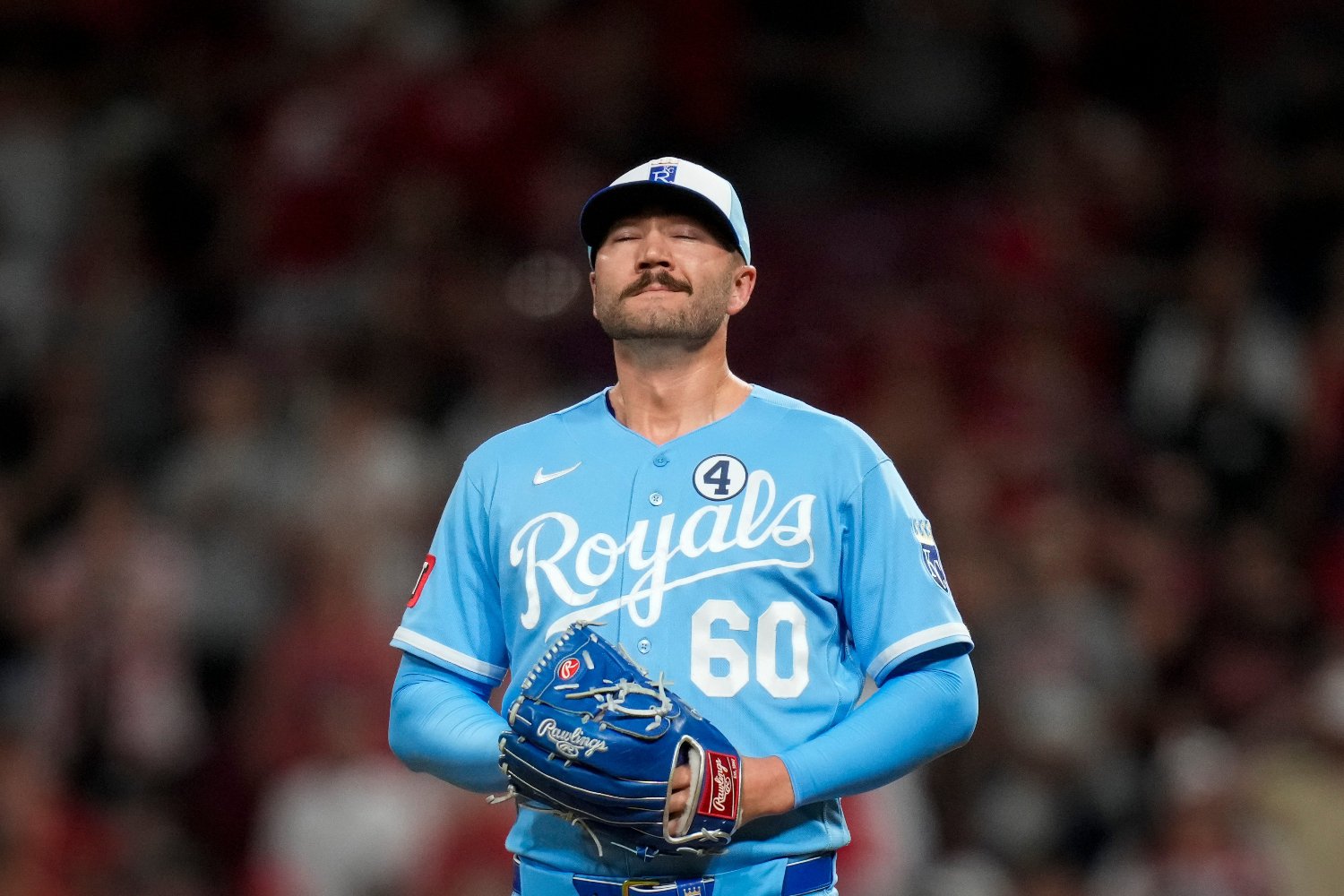 After winning 9-2 on Monday against the Reds, the Royals were hoping to take the series on Tuesday in Cincinnati. They seemed primed to do so, as they were up 3-0 at one point and up 3-1 going into the 8th inning. Unfortunately, as has been the case all season, the Kansas City bullpen failed to get the job done. Matt Strahm allowed a solo home run in the eighth to make it a one-run game. Lucas Erceg gave up a solo home run in the ninth. And in the 10th, after the Royals failed to get a run across in the top of the inning, John Schreiber gave up a jam-shot single to Blake Dunn, whose base hit allowed Spencer Steer to score from second and win the game in extra innings for the Reds. The Royals now have 12 blown saves, which ties them for the third-most in baseball with the Los Angeles Angels (the Nationals and Tigers have more than Kansas City). Their 5.08 bullpen ERA ranks 28th in baseball, and their 1.57 WHIP ranks last. While the offense certainly has been subpar this season (they stranded 12 runners on Tuesday), the bullpen has arguably been a bigger contributor to the Royals' overall woes in 2026. Thus, after another gut-wrenching defeat on Tuesday, what needs to happen to force Matt Quatraro to make some much-needed moves in the bullpen? And what are those moves that need to happen? When diving into the issue, it may be a more complicated problem that goes beyond who Quatraro is utilizing in high-leverage spots, especially in the ninth inning. Erceg and Strahm Not Getting the Job Done The bullpen was initially seen as an area of strength going into Spring Training. The Royals returned Carlos Estevez, who led the league in saves in 2025, only the second Royals pitcher to do so in franchise history (with the other being Dan Quisenberry). They also acquired veteran Strahm from Philadelphia in exchange for Jonathan Bowlan, who struggled to solidify a spot in the Royals' bullpen in 2025. Royals GM JJ Picollo also traded for Nick Mears, who came along with Isaac Collins from Milwaukee in exchange for Angel Zerpa, and picked up Alex Lange, who the Detroit Tigers released in the offseason after struggling with injuries. Lastly, they returned a promising lefty in Daniel Lynch IV and veteran arms like Erceg and Schreiber, who had proved in the past couple of seasons that they could handle high-leverage spots. Unfortunately, the bullpen has fallen apart in myriad ways this season, which explains why the team ranks near the basement in most categories. Estevez has been on the IL since a disastrous sole outing in Atlanta. Mears is also on the IL, and Strahm just recently returned. Lange has had moments, but he hasn't shown the ability to be a trusted reliever in high-leverage spots. Schreiber has been fine, but that's mostly due to a strong May, which made up for a slow start to the season. After barely getting any strikeouts in April, Schreiber has done a much better job of not just generating Ks, but also chases and whiffs, as evidenced by his TJ Stuff+ summary in May. While Schreiber has been fine despite his bumpy start out of the gate, it's been quite the opposite for Erceg and Strahm. Strahm was expected to solidify this bullpen and be the Royals' primary left-handed setup man in the bullpen this season. Unfortunately, he just hasn't been consistent enough this season (when healthy). In 18 games and 17.1 IP, the 34-year-old lefty is sporting a 4.15 ERA and 1.27 WHIP. Both marks are much higher than the 2.74 ERA and 1.07 WHIP he posted in 66 outings and 62.1 IP with the Phillies a season ago. When looking at his TJ Stuff+ summary comparison, the stuff metrics have been lackluster, and the chase, whiff, and xwOBACON are all down from 2025 as well. The only category that has remained stable is zone rate, and even that has seen a 0.3% decline. The four-seamer, despite sporting lower velocity, has been surprisingly effective, thanks to a 0.4-inch increase in iVB. That change has helped him maintain his TJ Stuff+ (103) and generate more whiffs, at 26.5%. That's a 1.9% increase in four-seam whiff rate from the previous season. Unfortunately, the stuff and whiffs are down across the board beyond the four-seamer, and that has resulted in his other pitches getting hit harder, as evidenced by increases in xwOBACON on those non-four-seam offerings. Then again, his four-seamer has gotten hit hard on occasion this year when not located properly, which was the case tonight on the home run he allowed to Steer. Strahm has been disappointing. However, he hasn't been anywhere close to as bad as Erceg, whose ERA rose to 6.45 after he gave up the game-tying home run to pinch-hitter Will Benson in the bottom of the ninth with nobody out. What's interesting about Erceg's outing today was that he didn't COMPLETELY implode as he did against the Rangers. After giving up the game-tying home run, he got out of the inning with two strikeouts (though he did have two walks). On a positive note, his TJ Stuff+ numbers were up, especially on his four-seamer and sinker, which were under 100 in previous outings. Overall, Erceg had a 103 TJ Stuff+ with a 100 TJ Stuff+ on the four-seamer and 104 TJ Stuff+ on the sinker. Unfortunately, the results weren't good, despite the improvement in TJ Stuff+. He had a 37.5% zone rate, 13.3% chase, and .740 xwOBACON. Not only was he getting hit hard, but he just wasn't locating. That was further illustrated in his pitch type chart from today's outing via Baseball Savant. Interestingly enough, the home run he allowed was on a tough pitch: a changeup on the outer edge of the zone. The pitches he threw in the middle? The Reds actually didn't do damage on any of them (Nathaniel Lowe actually struck out on the hanging slider in the middle of the zone). Here's a look at the results of those pitches in his pitch description chart. In some ways, Erceg showed improvement on Tuesday. However, as a closer, Erceg needs to produce results rather than "platitudes". Unfortunately, after blowing his sixth save of the year, the results aren't happening with Erceg, and they likely won't get any better if Strahm is put in the closer's spot. Even if Strahm got the ninth and Erceg had the eighth, the results would still have been the same. Does Daniel Lynch IV Deserve Save Opportunities? When it comes to evaluating relievers, Win Probability data can be a good measure of a reliever's effectiveness in high-leverage spots. WP data isn't always sticky, especially from one season to the next. However, WP data can at least show which Royals have been effective in tough spots and who may be more dependable in those high-leverage spots in the short term. Here's a look at the Royals' bullpen's WP data from this season, as of June 2nd (not including tonight's game). As one can see from the table above, Erceg has the worst Win Probability Added (WPA) of Royals relievers this season. He also has the highest gmLI, which measures the leverage a pitcher has when entering a game. Considering Erceg is the closer, it's not surprising that he has the highest gmLI of any Royals reliever this season. In terms of gmLI, Strahm has the second-highest mark at 1.56, and Mears the third-highest at 1.48. The fourth-best mark belongs to Lynch at 1.43. Unlike Strahm, who has a slightly above-average WPA at 0.26, or Mears, who has a below-average WPA at -0.50, Lynch has the best WPA of Royals relievers, as evidenced by a 1.25 mark. In addition to an excellent WPA, Lynch also has a 0.49 clutch, which measures performance in high-leverage situations. His clutch is 0.22 points higher than the next-best mark, which belongs to Mason Black. Compared to Strahm and Erceg, the former Virginia product's clutch is 0.25 and 0.65 points better, respectively. Thus, does Lynch deserve some opportunities to show what he can do in the ninth? When looking at a couple of factors, Lynch is a tougher closer option for the Royals than his 1.93 ERA suggests. In terms of TJ Stuff+ metrics, the chase, whiff, and xwOBACON numbers have been stellar. However, his zone rate has been subpar, and the TJ Stuff+ doesn't really profile as a closer candidate, as seen in his TJ Stuff+ summary below. Lynch only has three pitches with a TJ Stuff+ of 100 or better, and his overall TJ Stuff+ is 100. That ranks as the eighth-best mark among Royals pitchers this season, and his zone rate ranks 11th, according to TJ Stats leaderboards. That's not necessarily a detriment, especially since the Royals relievers haven't been much better (most of the pitchers ahead of Lynch in terms of TJ Stuff+ are starters). That said, it does imply that Lynch could experience some bumpy outings with the increase in leverage. Speaking of leverage, there's no question that Lynch has been good in tough spots this year. That is evidenced by his team-best WPA and 11 shutdowns (SD), which is tied with Erceg for the most on the pitching staff. That said, Lynch doesn't have much experience in high-leverage spots, as seen in his career WP data below from Fangraphs. As Royals fans can see above, this season is the first year in which Lynch has a gmLI over 1. Thus, Quatraro seems more comfortable putting him in high-leverage spots this year than in previous seasons. However, does that mean Quatraro has full confidence in Lynch in the ninth? That doesn't seem to be the case just yet, as Quatraro avoided utilizing Lynch in the save situation on Tuesday. While the experience isn't there, Lynch has proven that he can at least produce results in tough spots this year, even with question marks in his TJ Stuff+ profile. Let's hope that Quatraro gives Lynch a chance to close sooner rather than later. The Royals Need to Explore What They Have in the Bullpen The reality for this club is that, at 23-38, they need to figure out what they have in the bullpen that can be pieces for the long term or potential trade assets ahead of the Trade Deadline. If a pitcher is not satisfying either of those goals, they need to be optioned or released. The Royals took a step in that direction today before Tuesday's game, as evidenced by optioning Eli Morgan to Omaha and picking up the contract of Beck Way from Triple-A, who came over to the Royals from the Yankees in 2022 in the Andrew Benintendi deal. data:image/gif;base64,R0lGODlhAQABAPABAP///wAAACH5BAEKAAAALAAAAAABAAEAAAICRAEAOw== Way didn't pitch on Tuesday, but he could give the Royals some much-needed upside and ability out of the bullpen. While his ERA was high at 4.50, his FIP was much better at 2.85. Furthermore, he also had a strong K-BB% (24.8%) and GB% (63%), as well as solid TJ Stuff+, whiff, and xwOBACON numbers, as demonstrated in his TJ Stuff+ summary from Omaha this season. Way is an example of a reliever the Royals should give chances to for the remainder of the season. The same is true for Steven Cruz, Eric Cerantola, and Black. Maybe those relievers might be Four-A pitchers at the end of the day. That said, the Royals need to know for sure, and a suddenly "rebuilding" season is the best time to get those answers. Of course, they shouldn't abandon their veterans either. Erceg, Strahm, and Schreiber all need innings not to necessarily impact wins and losses with this Royals club, but to perhaps boost their trade value over the next month. It's unlikely that the Royals will hold onto any of those three relievers by the August 3rd Trade Deadline. Hence, Quatraro still needs to utilize those three in spots to improve their chances of getting a good trade return at the Deadline. The Royals shouldn't be buyers at any point this season. They need to be "sellers," and to do that, they need to understand and explore what they have, especially in the bullpen. That means innings need to go around across the board, even if it means some rough growing pains in the process. It's tough that the 2026 season has turned out this way. At the same time, the Royals have a chance to make the most out of a bad situation if they can "evaluate" and "boost" trade value in the bullpen effectively over the next two months.
 -
Image courtesy of Steven Branscombe-USA TODAY Sports When it comes to identifying the Minor League Pitcher of the Month for May, no pitcher stood out more than left-hander Justin Lamkin. The 71st overall pick in the 2025 MLB Draft out of Texas A&M, the Royals moved slowly with Lamkin after drafting him in the competitive round a season ago. He didn't pitch professionally in 2025, but he built up in the Complex and prepared for the 2026 season, starting in High-A Quad Cities. In six outings and 28.1 IP, Lamkin absolutely dominated Midwest League pitching. He posted a 1.27 ERA, 0.92 WHIP, a 34.9% K%, and 24.8% K-BB% with the River Bandits. In May, with the Quad Cities, he allowed two runs on six hits with no walks while striking out 14 in 10.2 IP. That strong start in May led to his promotion to Double-A Northwest Arkansas. Lamkin had a rough Double-A debut on June 14th, allowing four runs on seven hits and three walks while striking out seven in 5.2 IP. However, he had a much stronger second start on May 20th. He went 6 IP, allowed one hit, one run, no walks, and struck out eight. Overall, the percentiles have been good for Lamkin in his two starts in Double-A, as he is generating a 34.9% K% (92nd percentile), a 35.1% whiff rate (82nd percentile), and a 37.4% CSW% (98th percentile). Here's a complete look at Lamkin's Double-A Season Pitching Percentiles chart via TJ Stats. Thus, it's not just the results where Lamkin is thriving, but he's also producing solid whiff, contact, and called-strike metrics in his time in the Minors this season. Lamkin doesn't have eye-popping stuff, as his four-seamer profiles in the 92-93 MPH range. That said, he has impeccable control and command and attacks batters, which is illustrated not just by his high strikeout numbers but also by his low walk numbers. With the Royals in rebuilding mode this year, and likely going to trade one of their starting pitchers (Michael Wacha or Seth Lugo) at the Trade Deadline, Lamkin could get a shot in the Majors this year if he continues to produce in Double-A Northwest Arkansas. Triple-A Omaha: Eric Cerantola, RHP 7 G, 8 IP, 7 H, 2 ER, 4 BB, 13 K, 2 SV, 2.25 ERA, 1.38 WHIP Cerantola got another promotion to Kansas City, though he was optioned after one rough outing this past week. That included giving up a home run to Texas' Joc Pederson, who had a stellar series against Kansas City this past weekend. In Omaha, however, the 26-year-old righty has been solid. Over the past 30 days, Cerantola posted a 2.25 ERA and 1.38 WHIP with two saves, 13 strikeouts, and just four walks in eight innings of work. Cerantola's slider has been his strongest offering this month. That is illustrated by his 105 TJ Stuff+, 41.1% chase, and 53.8% whiff rate on the pitch this month. Overall, he posted a 37.5% whiff rate and 30.6% chase rate, which offset his low zone rate (41.7%) and mediocre xwOBACON (.390). Cerantola will likely get more chances to prove himself in the Majors, especially with the bullpen being such a mess. To stay longer in Kansas City, he will need to improve his secondaries, as his four-seamer (91 TJ Stuff+) and cutter (81 TJ Stuff+) didn't profile well this month in terms of TJ Stuff+. High-A Quad Cities: L.P. Langevin, RHP 7 G, 10.2 IP, 4 H, 4 R, 10 BB, 17 K, 1.69 ERA, 1.31 WHIP Seen as a sleeper pitching prospect in the Royals system after pitching in the Arizona Fall League this past fall, Langevin has seemingly gotten comfortable on the mound in Quad Cities. He had a strong May, emerging as one of the River Bandits' best relievers. In seven games and 10.2 IP, Langevin posted a 1.69 ERA and 1.31 WHIP. He also struck out 17 batters and generated a 36.2% whiff rate and 30.7% CSW. Control was a bit of an issue, as he had 10 walks and a zone rate of only 43% this past month, which ranked in the 22nd percentile. That said, Langevin has done an amazing job of not just getting whiffs but limiting contact on pitches in the strike zone, as illustrated by his 59% Z-Contact%. That's a sign that his stuff could continue to play as he moves up the Royals system. There's something "old school" about Langevin and his approach, which makes him fun to watch. His approach is similar to that of Greg Holland or Wade Davis in that he knows his fastball is his premium pitch and isn't afraid to throw it, regardless of the hitter's caliber. That mindset and approach are what a reliever needs to be successful, especially in late-inning situations. He doesn't have a diverse pitch mix (he's pretty much a two-pitch guy), but he rears back and lets loose and isn't afraid to attack hitters. While walks are an issue, it seems like he's progressing with each outing at the Minor League level, which should make Royals fans hopeful that he'll sport enough control to still be an effective reliever at the MLB level. Low-A Columbia: Michael Lombardi, RHP 5 G (4 GS), 21 IP, 11 H, 3 R, 11 BB, 33 K, 0.86 ERA, 1.05 WHIP Lombardi was named our Pitcher of the Month in April at Royals Keep, and while he wasn't the overall best pitcher this month in the Minors, it was hard to omit him this month based on his performance. The former Tulane product was a strikeout machine this past month, striking out 33 batters in 21 IP. He also posted a 0.86 ERA and a 1.05 WHIP and had a 23.8% K-BB%. Kendry Chourio may have more upside and a more illustrious prospect profile. However, there may not be a better "swing-and-miss" pitcher in the Fireflies rotation than Lombardi, who was a two-way player at Tulane. The 22-year-old former second-round pick did struggle with the walks a bit this month. He had 11, and the CSW of 28.8% ranked in the 47th percentile, which is lower than one would want to see from an "ace". That said, there were more positives than negatives for Lombardi in May, and he seems primed for a call-up to Quad Cities soon to join former Fireflies teammate Jordan Woods, who was recently promoted to High-A not too long ago. View full article
-
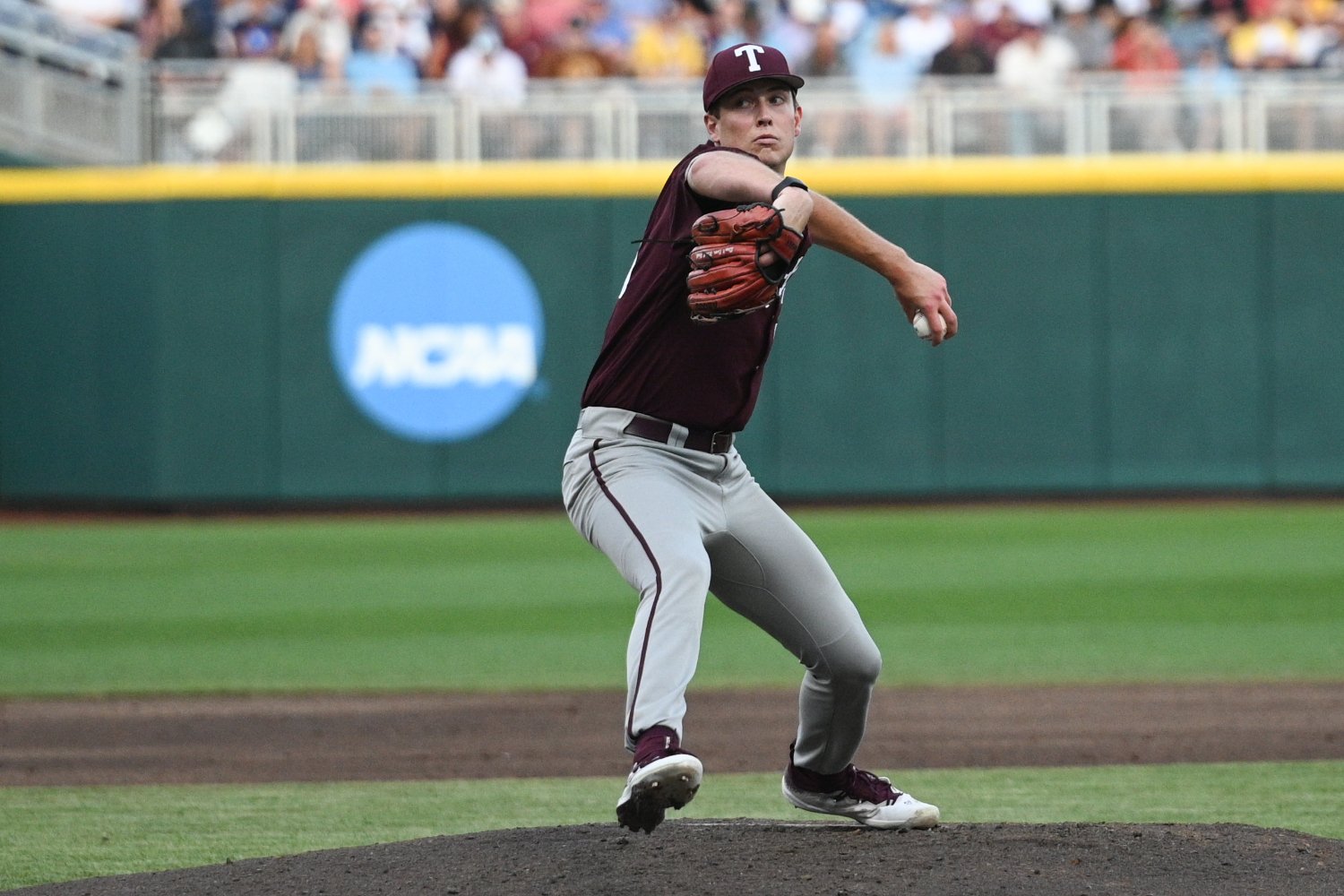 When it comes to identifying the Minor League Pitcher of the Month for May, no pitcher stood out more than left-hander Justin Lamkin. The 71st overall pick in the 2025 MLB Draft out of Texas A&M, the Royals moved slowly with Lamkin after drafting him in the competitive round a season ago. He didn't pitch professionally in 2025, but he built up in the Complex and prepared for the 2026 season, starting in High-A Quad Cities. In six outings and 28.1 IP, Lamkin absolutely dominated Midwest League pitching. He posted a 1.27 ERA, 0.92 WHIP, a 34.9% K%, and 24.8% K-BB% with the River Bandits. In May, with the Quad Cities, he allowed two runs on six hits with no walks while striking out 14 in 10.2 IP. That strong start in May led to his promotion to Double-A Northwest Arkansas. Lamkin had a rough Double-A debut on June 14th, allowing four runs on seven hits and three walks while striking out seven in 5.2 IP. However, he had a much stronger second start on May 20th. He went 6 IP, allowed one hit, one run, no walks, and struck out eight. Overall, the percentiles have been good for Lamkin in his two starts in Double-A, as he is generating a 34.9% K% (92nd percentile), a 35.1% whiff rate (82nd percentile), and a 37.4% CSW% (98th percentile). Here's a complete look at Lamkin's Double-A Season Pitching Percentiles chart via TJ Stats. Thus, it's not just the results where Lamkin is thriving, but he's also producing solid whiff, contact, and called-strike metrics in his time in the Minors this season. Lamkin doesn't have eye-popping stuff, as his four-seamer profiles in the 92-93 MPH range. That said, he has impeccable control and command and attacks batters, which is illustrated not just by his high strikeout numbers but also by his low walk numbers. With the Royals in rebuilding mode this year, and likely going to trade one of their starting pitchers (Michael Wacha or Seth Lugo) at the Trade Deadline, Lamkin could get a shot in the Majors this year if he continues to produce in Double-A Northwest Arkansas. Triple-A Omaha: Eric Cerantola, RHP 7 G, 8 IP, 7 H, 2 ER, 4 BB, 13 K, 2 SV, 2.25 ERA, 1.38 WHIP Cerantola got another promotion to Kansas City, though he was optioned after one rough outing this past week. That included giving up a home run to Texas' Joc Pederson, who had a stellar series against Kansas City this past weekend. In Omaha, however, the 26-year-old righty has been solid. Over the past 30 days, Cerantola posted a 2.25 ERA and 1.38 WHIP with two saves, 13 strikeouts, and just four walks in eight innings of work. Cerantola's slider has been his strongest offering this month. That is illustrated by his 105 TJ Stuff+, 41.1% chase, and 53.8% whiff rate on the pitch this month. Overall, he posted a 37.5% whiff rate and 30.6% chase rate, which offset his low zone rate (41.7%) and mediocre xwOBACON (.390). Cerantola will likely get more chances to prove himself in the Majors, especially with the bullpen being such a mess. To stay longer in Kansas City, he will need to improve his secondaries, as his four-seamer (91 TJ Stuff+) and cutter (81 TJ Stuff+) didn't profile well this month in terms of TJ Stuff+. High-A Quad Cities: L.P. Langevin, RHP 7 G, 10.2 IP, 4 H, 4 R, 10 BB, 17 K, 1.69 ERA, 1.31 WHIP Seen as a sleeper pitching prospect in the Royals system after pitching in the Arizona Fall League this past fall, Langevin has seemingly gotten comfortable on the mound in Quad Cities. He had a strong May, emerging as one of the River Bandits' best relievers. In seven games and 10.2 IP, Langevin posted a 1.69 ERA and 1.31 WHIP. He also struck out 17 batters and generated a 36.2% whiff rate and 30.7% CSW. Control was a bit of an issue, as he had 10 walks and a zone rate of only 43% this past month, which ranked in the 22nd percentile. That said, Langevin has done an amazing job of not just getting whiffs but limiting contact on pitches in the strike zone, as illustrated by his 59% Z-Contact%. That's a sign that his stuff could continue to play as he moves up the Royals system. There's something "old school" about Langevin and his approach, which makes him fun to watch. His approach is similar to that of Greg Holland or Wade Davis in that he knows his fastball is his premium pitch and isn't afraid to throw it, regardless of the hitter's caliber. That mindset and approach are what a reliever needs to be successful, especially in late-inning situations. He doesn't have a diverse pitch mix (he's pretty much a two-pitch guy), but he rears back and lets loose and isn't afraid to attack hitters. While walks are an issue, it seems like he's progressing with each outing at the Minor League level, which should make Royals fans hopeful that he'll sport enough control to still be an effective reliever at the MLB level. Low-A Columbia: Michael Lombardi, RHP 5 G (4 GS), 21 IP, 11 H, 3 R, 11 BB, 33 K, 0.86 ERA, 1.05 WHIP Lombardi was named our Pitcher of the Month in April at Royals Keep, and while he wasn't the overall best pitcher this month in the Minors, it was hard to omit him this month based on his performance. The former Tulane product was a strikeout machine this past month, striking out 33 batters in 21 IP. He also posted a 0.86 ERA and a 1.05 WHIP and had a 23.8% K-BB%. Kendry Chourio may have more upside and a more illustrious prospect profile. However, there may not be a better "swing-and-miss" pitcher in the Fireflies rotation than Lombardi, who was a two-way player at Tulane. The 22-year-old former second-round pick did struggle with the walks a bit this month. He had 11, and the CSW of 28.8% ranked in the 47th percentile, which is lower than one would want to see from an "ace". That said, there were more positives than negatives for Lombardi in May, and he seems primed for a call-up to Quad Cities soon to join former Fireflies teammate Jordan Woods, who was recently promoted to High-A not too long ago.
 -
Image courtesy of Katie Stratman-Imagn Images Going into the 2026 season, many viewed Luinder Avila as more of a bullpen piece than a rotation option for the Royals. To be honest, it made sense at the beginning of Spring Training to see him in that fashion based on what the Kansas City pitching staff looked like at the time. The rotation seemed full, not just with projected starters like Cole Ragans, Seth Lugo, Michael Wacha, Kris Bubic, and Noah Cameron, but also with other arms who saw starts in 2025 like Stephen Kolek, Ryan Bergert, and Bailey Falter. On that end, Avila seemed like an eighth or ninth option in the Royals' rotation at best, especially since he didn't make any starts at the Major League level in 2025. Furthermore, in limited Major League action in September, Avila was solid out of the bullpen. In 14 IP, he posted a 1.29 ERA, 0.93 WHIP, 2.15 FIP, a 28.6% K%, and 17.8% K%. He also produced strong TJ Stuff+ metrics, chase, whiff, and xwOBACON numbers. That is illustrated in his TJ Stuff+ summary from 2025. That said, in Spring Training, JJ Picollo and Matt Quatraro remained steadfast in their belief that Avila had the potential to be an impact arm in the rotation. Furthermore, injuries to starting pitchers Ragans, Bubic, and Bergert thrust Avila into the rotation, even though he had been built up earlier in the year as a reliever. It's been an up-and-down sophomore campaign for Avila at the Major League level, both as a starter and reliever. However, on Monday in the Royals' 9-2 victory over the Reds, the Venezuelan righty demonstrated why Picollo and the Royals organization have so much belief in Avila and his outlook as a starter. Avila Prevails in Impressive, Though Flawed, Victory To be frank, it wasn't a perfect or efficient outing for Avila on Monday. In five innings of work, Avila allowed a run on two hits with four walks and five strikeouts. He threw 86 pitches, an MLB career-high for him. Furthermore, when looking at his pitch type chart from today's game via Savant, many of his pitches were sprayed all over the strike zone. Avila missed down and armside a lot, especially with his changeup, sinker, and four-seamer. He also left a lot of balls in the middle that the Reds didn't do enough with. That is illustrated in his ball/strike pitch chart below, which shows not too many of those balls in the heart of the zone put in play. While the Reds didn't take advantage of those pitches in the heart of the strike zone, credit has to be given to Avila for his stuff and ability to make batters miss or buckle on pitches in that area of the strike zone. Avila wasn't like Falter out there a week ago against the Yankees, throwing hittable pitches with low stuff quality in the middle of the zone. Rather, Avila was demonstrating excellent quality on all his pitches on Monday in Cincinnati, as illustrated in his TJ Stuff+ summary from today's outing. When looking at Avila solely on TJ Stuff+, he was beyond impressive. Overall, the 24-year-old generated a 105 TJ Stuff+ with four pitches with grades of 60 or better. All five of his pitches had grades over 50, and four of his pitches had TJ Stuff+ marks over 100. The only pitch with below-average TJ Stuff+ was his sinker, which had a 96 mark. That said, it was still effective, as illustrated by his .027 xwOBACON and 25% whiff rate. Below is an example of Avila effectively using his sinker to strike out Edwin Arroyo, who was making his MLB debut. It may not rate as well compared to his other offerings, but the sinker has nasty movement and potential. For over-eager hitters, it can lead to poorly connected balls or awkward-looking whiffs, as was the case with Arroyo on Monday. His sinker and four-seamer (107 TJ Stuff+) weren't the only impressive pitches on Monday. His slider, his primary breaking pitch (26.7% usage), was effective, as illustrated by a 40% chase rate and .189 xwOBACON. It didn't generate as many whiffs as he probably wanted, as illustrated by his 30% whiff rate. However, he was able to get swings and misses when needed, as evidenced in this sword strikeout of JJ Bleday, who hit a home run off Avila earlier in the game. Once Avila gets more comfortable with his control and command, he could become even more effective with more nasty strikeouts, similar to the ones that we saw this evening at the Great American Ballpark. Granted, the Venezuelan struggled with efficiency on Monday in the longest outing of his career. Not only did he walk four batters, but he also had a zone rate of 34.9%. That is nearly 10% lower than his 44% zone rate for the season, which rates as below average. It's going to be hard for him to be effective and eat innings unless he improves his control in subsequent starts and appearances. That said, when Avila started trusting his stuff more and finding the zone, he was able to keep reasonable pitch counts in each inning. The most he had in an inning was 20, which was in the fourth. He did this while maintaining his pitch velocity in the later innings, which is not typical for most starting pitchers. Below is a look at his pitch velocity chart from Monday's game, via Savant. If anything, Avila ramped up in the later innings, a sign of the competitiveness and ability that he has in those key spots. Finishing on that kind of positive note should give him some much-needed confidence and momentum that he can carry into his next scheduled outing on the mound. The Stuff is Better This Year From Avila (Which Is Promising) When looking at his TJ Stuff+ Summary this season compared to 2025, the improvement in TJ Stuff+ marks across all his pitches is what sticks out the most with Avila in 2026. Not only is Avila's overall TJ Stuff+ two points better, but he has two 60-grade pitches this year compared to zero in 2025. He has also seen a five-point improvement in four-seamer TJ Stuff+, a three-point improvement on the slider, and two-point improvements on the sinker and changeup. The curveball is the only pitch that has remained the same. Granted, the overall metrics haven't exactly improved along with the stuff. His chase rate is down 1.6%, and his whiff rate is down 5.3%. He has also experienced a 97-point increase in xwOBACON. That said, Avila has thrown more pitches this year, as he has nearly 300 more pitches in 2026 than his total in 2025. Thus, these numbers may simply be a result of initial regression with more pitches, and we're starting to see some positive regression from Avila lately, especially with this most recent start. As he makes more starts and pitches in more games, his control and ability to minimize hard contact will be key developments to watch. When looking at his Statcast percentile summary via TJ Stats this year, Avila's velocity, extension, hard-hit% allowed, and groundball rate are all well above-average marks. Conversely, he's struggled to give up barrels and to consistently find the strike zone, which are not great traits for a starting pitcher. Though there's more blue in this Statcast profile summary than what Royals fans would like, he's trending in the right direction, especially in some key categories like CSW (36th percentile) and whiff rate (34th percentile). If he can build on Monday's win against the Reds, it wouldn't be surprising to see those categories continue to improve over the course of the season. With the Royals unsure about the futures of Ragans and Bubic, they need pitchers to step up not just to eat innings but to provide effective, quality innings as well. Avila did just that on Monday, even though it wasn't pretty or dominant by any stretch of the imagination. That said, Kansas City may not need that from Avila. All they need right now from him are quality outings, even if they aren't officially "quality starts" just yet. Outings where he can go 4-5 innings for now will lead to "official" quality starts down the road, where he can go 6-7 innings and limit the bullpen usage even further. While the Royals won on Monday, they are still 23-37 and 10.5 games behind the first-place Cleveland Guardians in the AL Central division race. They might as well continue to give Avila starts with the hope that he can develop his command and control with each start and become a long-term piece in the rotation that could make Wacha, Bubic, or Lugo expendable at the Trade Deadline. View full article
-
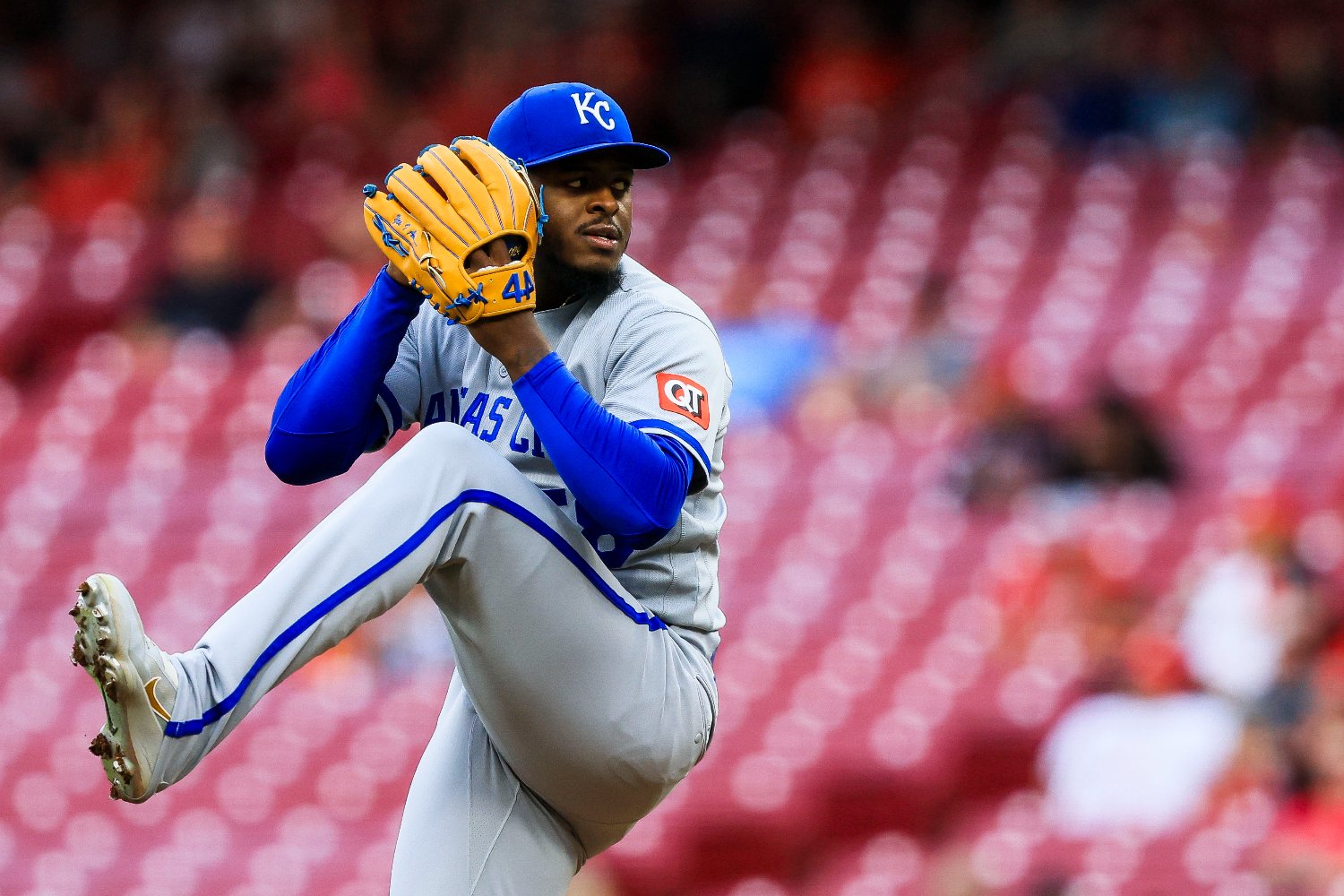 Going into the 2026 season, many viewed Luinder Avila as more of a bullpen piece than a rotation option for the Royals. To be honest, it made sense at the beginning of Spring Training to see him in that fashion based on what the Kansas City pitching staff looked like at the time. The rotation seemed full, not just with projected starters like Cole Ragans, Seth Lugo, Michael Wacha, Kris Bubic, and Noah Cameron, but also with other arms who saw starts in 2025 like Stephen Kolek, Ryan Bergert, and Bailey Falter. On that end, Avila seemed like an eighth or ninth option in the Royals' rotation at best, especially since he didn't make any starts at the Major League level in 2025. Furthermore, in limited Major League action in September, Avila was solid out of the bullpen. In 14 IP, he posted a 1.29 ERA, 0.93 WHIP, 2.15 FIP, a 28.6% K%, and 17.8% K%. He also produced strong TJ Stuff+ metrics, chase, whiff, and xwOBACON numbers. That is illustrated in his TJ Stuff+ summary from 2025. That said, in Spring Training, JJ Picollo and Matt Quatraro remained steadfast in their belief that Avila had the potential to be an impact arm in the rotation. Furthermore, injuries to starting pitchers Ragans, Bubic, and Bergert thrust Avila into the rotation, even though he had been built up earlier in the year as a reliever. It's been an up-and-down sophomore campaign for Avila at the Major League level, both as a starter and reliever. However, on Monday in the Royals' 9-2 victory over the Reds, the Venezuelan righty demonstrated why Picollo and the Royals organization have so much belief in Avila and his outlook as a starter. Avila Prevails in Impressive, Though Flawed, Victory To be frank, it wasn't a perfect or efficient outing for Avila on Monday. In five innings of work, Avila allowed a run on two hits with four walks and five strikeouts. He threw 86 pitches, an MLB career-high for him. Furthermore, when looking at his pitch type chart from today's game via Savant, many of his pitches were sprayed all over the strike zone. Avila missed down and armside a lot, especially with his changeup, sinker, and four-seamer. He also left a lot of balls in the middle that the Reds didn't do enough with. That is illustrated in his ball/strike pitch chart below, which shows not too many of those balls in the heart of the zone put in play. While the Reds didn't take advantage of those pitches in the heart of the strike zone, credit has to be given to Avila for his stuff and ability to make batters miss or buckle on pitches in that area of the strike zone. Avila wasn't like Falter out there a week ago against the Yankees, throwing hittable pitches with low stuff quality in the middle of the zone. Rather, Avila was demonstrating excellent quality on all his pitches on Monday in Cincinnati, as illustrated in his TJ Stuff+ summary from today's outing. When looking at Avila solely on TJ Stuff+, he was beyond impressive. Overall, the 24-year-old generated a 105 TJ Stuff+ with four pitches with grades of 60 or better. All five of his pitches had grades over 50, and four of his pitches had TJ Stuff+ marks over 100. The only pitch with below-average TJ Stuff+ was his sinker, which had a 96 mark. That said, it was still effective, as illustrated by his .027 xwOBACON and 25% whiff rate. Below is an example of Avila effectively using his sinker to strike out Edwin Arroyo, who was making his MLB debut. It may not rate as well compared to his other offerings, but the sinker has nasty movement and potential. For over-eager hitters, it can lead to poorly connected balls or awkward-looking whiffs, as was the case with Arroyo on Monday. His sinker and four-seamer (107 TJ Stuff+) weren't the only impressive pitches on Monday. His slider, his primary breaking pitch (26.7% usage), was effective, as illustrated by a 40% chase rate and .189 xwOBACON. It didn't generate as many whiffs as he probably wanted, as illustrated by his 30% whiff rate. However, he was able to get swings and misses when needed, as evidenced in this sword strikeout of JJ Bleday, who hit a home run off Avila earlier in the game. Once Avila gets more comfortable with his control and command, he could become even more effective with more nasty strikeouts, similar to the ones that we saw this evening at the Great American Ballpark. Granted, the Venezuelan struggled with efficiency on Monday in the longest outing of his career. Not only did he walk four batters, but he also had a zone rate of 34.9%. That is nearly 10% lower than his 44% zone rate for the season, which rates as below average. It's going to be hard for him to be effective and eat innings unless he improves his control in subsequent starts and appearances. That said, when Avila started trusting his stuff more and finding the zone, he was able to keep reasonable pitch counts in each inning. The most he had in an inning was 20, which was in the fourth. He did this while maintaining his pitch velocity in the later innings, which is not typical for most starting pitchers. Below is a look at his pitch velocity chart from Monday's game, via Savant. If anything, Avila ramped up in the later innings, a sign of the competitiveness and ability that he has in those key spots. Finishing on that kind of positive note should give him some much-needed confidence and momentum that he can carry into his next scheduled outing on the mound. The Stuff is Better This Year From Avila (Which Is Promising) When looking at his TJ Stuff+ Summary this season compared to 2025, the improvement in TJ Stuff+ marks across all his pitches is what sticks out the most with Avila in 2026. Not only is Avila's overall TJ Stuff+ two points better, but he has two 60-grade pitches this year compared to zero in 2025. He has also seen a five-point improvement in four-seamer TJ Stuff+, a three-point improvement on the slider, and two-point improvements on the sinker and changeup. The curveball is the only pitch that has remained the same. Granted, the overall metrics haven't exactly improved along with the stuff. His chase rate is down 1.6%, and his whiff rate is down 5.3%. He has also experienced a 97-point increase in xwOBACON. That said, Avila has thrown more pitches this year, as he has nearly 300 more pitches in 2026 than his total in 2025. Thus, these numbers may simply be a result of initial regression with more pitches, and we're starting to see some positive regression from Avila lately, especially with this most recent start. As he makes more starts and pitches in more games, his control and ability to minimize hard contact will be key developments to watch. When looking at his Statcast percentile summary via TJ Stats this year, Avila's velocity, extension, hard-hit% allowed, and groundball rate are all well above-average marks. Conversely, he's struggled to give up barrels and to consistently find the strike zone, which are not great traits for a starting pitcher. Though there's more blue in this Statcast profile summary than what Royals fans would like, he's trending in the right direction, especially in some key categories like CSW (36th percentile) and whiff rate (34th percentile). If he can build on Monday's win against the Reds, it wouldn't be surprising to see those categories continue to improve over the course of the season. With the Royals unsure about the futures of Ragans and Bubic, they need pitchers to step up not just to eat innings but to provide effective, quality innings as well. Avila did just that on Monday, even though it wasn't pretty or dominant by any stretch of the imagination. That said, Kansas City may not need that from Avila. All they need right now from him are quality outings, even if they aren't officially "quality starts" just yet. Outings where he can go 4-5 innings for now will lead to "official" quality starts down the road, where he can go 6-7 innings and limit the bullpen usage even further. While the Royals won on Monday, they are still 23-37 and 10.5 games behind the first-place Cleveland Guardians in the AL Central division race. They might as well continue to give Avila starts with the hope that he can develop his command and control with each start and become a long-term piece in the rotation that could make Wacha, Bubic, or Lugo expendable at the Trade Deadline.
 -
Image courtesy of Andrew Dieb-Imagn Images Week in a Nutshell The Royals' woes continued this week as they went winless against the Yankees at Kauffman Stadium and the Rangers in Arlington. Kansas City had only three games decided by three runs or fewer. Since beating the Detroit Tigers on May 9th, the Royals have lost 16 out of their last 19 games. That has included being swept four times (by the White Sox, Red Sox, Yankees, and Rangers). For May, the Royals went 10-18, which was one win worse than a month ago. The Royals also got some rough injury news, as Maikel Garcia suffered a hamstring injury on Saturday that forced him to miss Sunday's series finale against Texas. The Royals are hoping that it's not a long-term ailment that will require an IL stint. Record this Week: 0-6 Run Differential for the Week: -34 Record for the Year: 22-37 Run Differential for the Year: -59 Standing: 4th in the AL Central Game 54: NYY 4, KC 3 In a national game on ESPN, the Royals got a solid performance from Michael Wacha, who went seven innings and allowed two runs on five hits and two walks while striking out two. Though the Royals faced an early deficit, they came back to eventually tie the game and take the lead on a Bobby Witt Jr. solo home run in the 8th. Unfortunately, Lucas Erceg could not close out the game in the ninth, and the Yankees scored two runs and won 4-3. Game 55: NYY 15, KC 1 After the letdown of Monday's Memorial Day game, Kansas City was absolutely thrashed on Tuesday. Bailey Falter gave up seven runs on nine hits in 2.1 IP. Luinder Avila, Steven Cruz, and Eli Morgan combined to give up six runs in 5.2 IP, and Tyler Tolbert closed it out by giving up two runs in the top of the ninth. The lone run came on a Witt solo home run. Game 56: NYY 7, KC 0 Gerrit Cole made his return to Kauffman Stadium and absolutely dominated, generating 10 strikeouts and allowing no runs in 6.2 IP. Noah Cameron went 5.0 IP and allowed two runs on four hits and one walk while striking out four. Nick Mears struggled, giving up three runs on two hits and one walk in 0.2 IP. Maikel Garcia was the lone Royals player with multiple hits (two). Game 57: TEX 9, KC 1 The Rangers jumped on Stephen Kolek early, tagging him for four runs in the first inning. Kolek eventually gave up six runs in five innings of work. He struck out five, walked one, and allowed six hits. Garcia and Vinnie Pasquantino each had two hits. MacKenzie Gore shut out the Royals in 6.2 IP. Game 58: TEX 7, KC 6 The Royals seemed en route to end their losing streak, especially after Carter Jensen's two-run home run in the 8th inning off reliever Chris Martin. Unfortunately, Lucas Erceg was unable to close out the game, giving up three runs on five hits and failing to record a single out. Seth Lugo produced another quality start, giving up three runs in six innings of work, and Alex Lange, Daniel Lynch IV, and John Schreiber held the game in check until the ninth. Jensen had two hits, and Pasquantino and Isaac Collins also had two-hit performances. Game 59: TEX 6, KC 3 The series finale started very similarly to the series opener, as Wacha spotted the Rangers a four-run lead in the first inning. Wacha struggled in this one, giving up six runs on eight hits and four walks while striking out five. Rangers starter Jack Leiter dominated the Royals, striking out 10 batters in 5.2 IP. The Royals got some runs near the end, thanks to a two-run home run by Michael Massey, his fourth of the season. News and Notes After Falter's disastrous outing, the Royals designated him for assignment and called up Mason Black to replace him in the Kansas City bullpen. No word has been shared yet on whether Falter has been claimed on waivers, will be outrighted to Omaha, or will elect free agency. data:image/gif;base64,R0lGODlhAQABAPABAP///wAAACH5BAEKAAAALAAAAAABAAEAAAICRAEAOw== After the Royals' 7-0 loss in the series finale against the Yankees, Kansas City added Mears to the 15-Day IL due to right shoulder impingement. Eric Cerantola, who had been performing well in Omaha, replaced him on the active roster. data:image/gif;base64,R0lGODlhAQABAPABAP///wAAACH5BAEKAAAALAAAAAABAAEAAAICRAEAOw== Lastly, before the Sunday series finale, Kansas City activated Matt Strahm from the IL. Strahm had been on the IL due to inflammation in his left knee. Strahm replaced Cerantola, who was optioned back to Omaha. data:image/gif;base64,R0lGODlhAQABAPABAP///wAAACH5BAEKAAAALAAAAAABAAEAAAICRAEAOw== The Royals also added some depth to their Omaha bullpen by signing veteran relievers Genesis Cabrera and Dan Altavilla this week, as well as Minor League relievers Juan Cordero and Andruw Solarte. Highlights Unfortunately, there were not many highlights this week for the Royals, both on the hitting and pitching ends. On the offensive end, Witt had a .740 OPS and two home runs in 24 at-bats. However, he hit just .208 and struck out 5 times while walking only once. His home run against the Yankees on Memorial Day was a clutch moment, though it wasn't enough for Kansas City to snap its 2+ year losing streak to the Bronx Bombers. data:image/gif;base64,R0lGODlhAQABAPABAP///wAAACH5BAEKAAAALAAAAAABAAEAAAICRAEAOw== Pasquantino didn't have a home run this week, but he had a solid week at the plate. In 21 at-bats, he hit .286 with a .781 OPS and had four walks to four strikeouts. Garcia hit .316 in 19 at-bats, and his six hits this week were tied with Vinnie's for the most by a Royals player over the past seven days. Michael Massey only had 10 at-bats, but he produced in his limited action this week. He hit .300 with a 1.033 OPS and launched his fourth home run of the season on Sunday. With Jonathan India out for the year and this offense starving for production, an effective Massey would go a long way. On the pitching side, Lugo's quality start carried the Royals starters this week, as he was the only starter with an ERA under 3.50. On the bullpen end, Lange and Schreiber each had scoreless weeks, giving up zero runs in two outings each. While neither pitcher struck out many batters (only one combined), they also walked no batters. That's encouraging to see, especially considering their control issues earlier in the year. Lowlights After going 0-6 this week, there's a lot to talk about when it comes to "lowlights," unfortunately. Kolek and Wacha had rough weeks after being pretty stellar the week before. They posted ERA marks of 7.20 and 6.00 this week, and both took losses against the Rangers. Mears, Erceg, and Falter had the worst ERA marks of the bunch, posting ERAs of 40.50, 45.00, and 27.00 this week. Mears is on the IL, Falter is no longer with the Royals, and Erceg likely will be moving out of the closer's role soon. On the offensive end, it was a rough week for Jac Caglianone. In 21 at-bats, he hit .190 with a .451 OPS and struck out nine times and only walked twice. All four of his hits this week were singles, not exactly what Royals fans want to see from their "power" hitter. Nick Loftin and Kyle Isbel also struggled this week, hitting .154 and .167, respectively. While Isbel had the higher batting average, Loftin's .445 OPS was better than Isbel's .417 mark. Both have regressed dramatically after solid starts to begin the 2026 season, and Loftin's defense, especially at second base, has left a lot to be desired. I explored in a recent post on Royals Keep whether he and Collins should switch defensive positions. Salvador Perez hit a home run this week, but he only hit .143 with a .583 OPS in 21 at-bats. While Garcia hit well, he strained his hamstring on Saturday, which sidelined him on Sunday and for an undisclosed period. Thankfully, it won't require an IL stint for now, according to manager Matt Quatraro. data:image/gif;base64,R0lGODlhAQABAPABAP///wAAACH5BAEKAAAALAAAAAABAAEAAAICRAEAOw== The Royals have two open spots on the 40-man roster. If they decide to move Garcia to the IL, they could replace him with veteran options such as Josh Rojas, Abraham Toro, or Kevin Newman, all of whom are on the Triple-A Omaha roster. Looking Ahead The Royals will turn the page on May and continue their road trip with stops in Cincinnati and Minneapolis this week. The Reds are in last place in the NL Central, but unlike the Royals and Tigers, Cincinnati has a winning record (30-28). They have dynamic players, especially on offense, including Elly De La Cruz and Sal Stewart. Unfortunately for the Reds, De La Cruz was removed on Sunday with a hamstring issue, so his status is in question for the series against Kansas City. data:image/gif;base64,R0lGODlhAQABAPABAP///wAAACH5BAEKAAAALAAAAAABAAEAAAICRAEAOw== Luinder Avila will make the start for the Royals on Monday, with Cameron and Kolek going on Tuesday and Wednesday. The Royals will likely face Chase Burns, Andrew Abbott, and Chris Paddack. Burns has been the Reds' best pitcher, as evidenced by his 1.96 ERA in 64.1 IP this season. After Cincinnati, the Royals will head up to Target Field for a four-game series against the Twins, who are currently in third place in the AL Central, ahead of the Royals and Tigers. The Twins have been up-and-down this year, as they have a 27-33 record. They have lost five in a row, including three straight to the Pirates in Pittsburgh over the weekend. Byron Buxton has been the catalyst for this Twins offense, as evidenced by his 142 wRC+. However, Minnesota has gotten solid production from Kody Clemens (113 wRC+), Trevor Larnach (119 wRC+), and Austin Martin (115 wRC+). On the pitching end, Minnesota is projected to start Marco Raya, Zebby Matthews, Joe Ryan, and Connor Prielipp. Ryan has been solid as usual with a 2.94 ERA this year, and he has a history of success against the Royals. Raya and Prielipp are less proven, and Matthews has been shaky against Kansas City in the past. Target Field has been a tough venue for the Royals over the past couple of years. Despite Kansas City having winning records in 2024 and 2025, they went 2-5 in Minneapolis in 2024 and 2-4 in 2025. View full article
-
Week in Review: A Winless Week and Trending in Wrong Direction
Kevin O'Brien posted an article in Royals
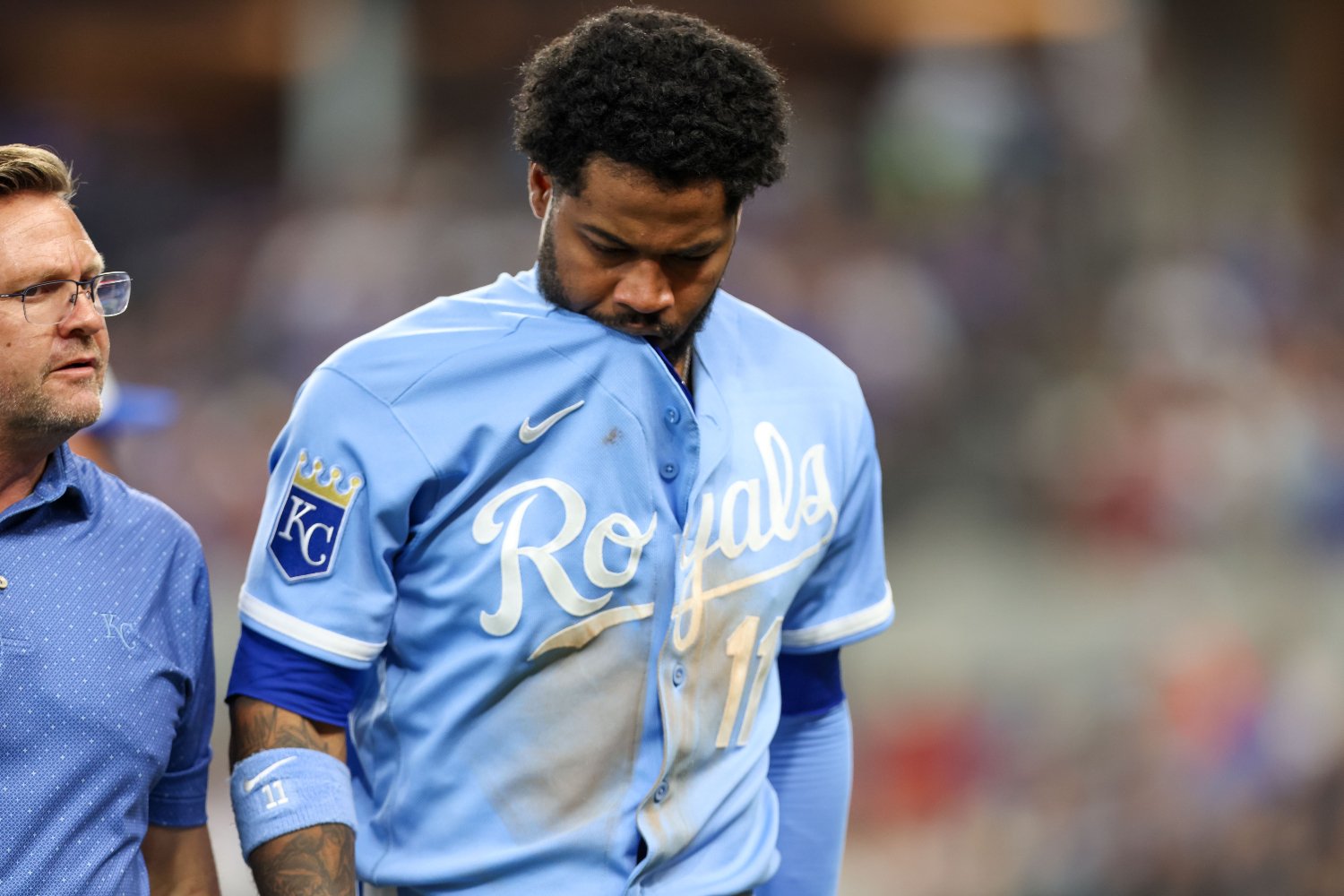 Week in a Nutshell The Royals' woes continued this week as they went winless against the Yankees at Kauffman Stadium and the Rangers in Arlington. Kansas City had only three games decided by three runs or fewer. Since beating the Detroit Tigers on May 9th, the Royals have lost 16 out of their last 19 games. That has included being swept four times (by the White Sox, Red Sox, Yankees, and Rangers). For May, the Royals went 10-18, which was one win worse than a month ago. The Royals also got some rough injury news, as Maikel Garcia suffered a hamstring injury on Saturday that forced him to miss Sunday's series finale against Texas. The Royals are hoping that it's not a long-term ailment that will require an IL stint. Record this Week: 0-6 Run Differential for the Week: -34 Record for the Year: 22-37 Run Differential for the Year: -59 Standing: 4th in the AL Central Game 54: NYY 4, KC 3 In a national game on ESPN, the Royals got a solid performance from Michael Wacha, who went seven innings and allowed two runs on five hits and two walks while striking out two. Though the Royals faced an early deficit, they came back to eventually tie the game and take the lead on a Bobby Witt Jr. solo home run in the 8th. Unfortunately, Lucas Erceg could not close out the game in the ninth, and the Yankees scored two runs and won 4-3. Game 55: NYY 15, KC 1 After the letdown of Monday's Memorial Day game, Kansas City was absolutely thrashed on Tuesday. Bailey Falter gave up seven runs on nine hits in 2.1 IP. Luinder Avila, Steven Cruz, and Eli Morgan combined to give up six runs in 5.2 IP, and Tyler Tolbert closed it out by giving up two runs in the top of the ninth. The lone run came on a Witt solo home run. Game 56: NYY 7, KC 0 Gerrit Cole made his return to Kauffman Stadium and absolutely dominated, generating 10 strikeouts and allowing no runs in 6.2 IP. Noah Cameron went 5.0 IP and allowed two runs on four hits and one walk while striking out four. Nick Mears struggled, giving up three runs on two hits and one walk in 0.2 IP. Maikel Garcia was the lone Royals player with multiple hits (two). Game 57: TEX 9, KC 1 The Rangers jumped on Stephen Kolek early, tagging him for four runs in the first inning. Kolek eventually gave up six runs in five innings of work. He struck out five, walked one, and allowed six hits. Garcia and Vinnie Pasquantino each had two hits. MacKenzie Gore shut out the Royals in 6.2 IP. Game 58: TEX 7, KC 6 The Royals seemed en route to end their losing streak, especially after Carter Jensen's two-run home run in the 8th inning off reliever Chris Martin. Unfortunately, Lucas Erceg was unable to close out the game, giving up three runs on five hits and failing to record a single out. Seth Lugo produced another quality start, giving up three runs in six innings of work, and Alex Lange, Daniel Lynch IV, and John Schreiber held the game in check until the ninth. Jensen had two hits, and Pasquantino and Isaac Collins also had two-hit performances. Game 59: TEX 6, KC 3 The series finale started very similarly to the series opener, as Wacha spotted the Rangers a four-run lead in the first inning. Wacha struggled in this one, giving up six runs on eight hits and four walks while striking out five. Rangers starter Jack Leiter dominated the Royals, striking out 10 batters in 5.2 IP. The Royals got some runs near the end, thanks to a two-run home run by Michael Massey, his fourth of the season. News and Notes After Falter's disastrous outing, the Royals designated him for assignment and called up Mason Black to replace him in the Kansas City bullpen. No word has been shared yet on whether Falter has been claimed on waivers, will be outrighted to Omaha, or will elect free agency. data:image/gif;base64,R0lGODlhAQABAPABAP///wAAACH5BAEKAAAALAAAAAABAAEAAAICRAEAOw== After the Royals' 7-0 loss in the series finale against the Yankees, Kansas City added Mears to the 15-Day IL due to right shoulder impingement. Eric Cerantola, who had been performing well in Omaha, replaced him on the active roster. data:image/gif;base64,R0lGODlhAQABAPABAP///wAAACH5BAEKAAAALAAAAAABAAEAAAICRAEAOw== Lastly, before the Sunday series finale, Kansas City activated Matt Strahm from the IL. Strahm had been on the IL due to inflammation in his left knee. Strahm replaced Cerantola, who was optioned back to Omaha. data:image/gif;base64,R0lGODlhAQABAPABAP///wAAACH5BAEKAAAALAAAAAABAAEAAAICRAEAOw== The Royals also added some depth to their Omaha bullpen by signing veteran relievers Genesis Cabrera and Dan Altavilla this week, as well as Minor League relievers Juan Cordero and Andruw Solarte. Highlights Unfortunately, there were not many highlights this week for the Royals, both on the hitting and pitching ends. On the offensive end, Witt had a .740 OPS and two home runs in 24 at-bats. However, he hit just .208 and struck out 5 times while walking only once. His home run against the Yankees on Memorial Day was a clutch moment, though it wasn't enough for Kansas City to snap its 2+ year losing streak to the Bronx Bombers. data:image/gif;base64,R0lGODlhAQABAPABAP///wAAACH5BAEKAAAALAAAAAABAAEAAAICRAEAOw== Pasquantino didn't have a home run this week, but he had a solid week at the plate. In 21 at-bats, he hit .286 with a .781 OPS and had four walks to four strikeouts. Garcia hit .316 in 19 at-bats, and his six hits this week were tied with Vinnie's for the most by a Royals player over the past seven days. Michael Massey only had 10 at-bats, but he produced in his limited action this week. He hit .300 with a 1.033 OPS and launched his fourth home run of the season on Sunday. With Jonathan India out for the year and this offense starving for production, an effective Massey would go a long way. On the pitching side, Lugo's quality start carried the Royals starters this week, as he was the only starter with an ERA under 3.50. On the bullpen end, Lange and Schreiber each had scoreless weeks, giving up zero runs in two outings each. While neither pitcher struck out many batters (only one combined), they also walked no batters. That's encouraging to see, especially considering their control issues earlier in the year. Lowlights After going 0-6 this week, there's a lot to talk about when it comes to "lowlights," unfortunately. Kolek and Wacha had rough weeks after being pretty stellar the week before. They posted ERA marks of 7.20 and 6.00 this week, and both took losses against the Rangers. Mears, Erceg, and Falter had the worst ERA marks of the bunch, posting ERAs of 40.50, 45.00, and 27.00 this week. Mears is on the IL, Falter is no longer with the Royals, and Erceg likely will be moving out of the closer's role soon. On the offensive end, it was a rough week for Jac Caglianone. In 21 at-bats, he hit .190 with a .451 OPS and struck out nine times and only walked twice. All four of his hits this week were singles, not exactly what Royals fans want to see from their "power" hitter. Nick Loftin and Kyle Isbel also struggled this week, hitting .154 and .167, respectively. While Isbel had the higher batting average, Loftin's .445 OPS was better than Isbel's .417 mark. Both have regressed dramatically after solid starts to begin the 2026 season, and Loftin's defense, especially at second base, has left a lot to be desired. I explored in a recent post on Royals Keep whether he and Collins should switch defensive positions. Salvador Perez hit a home run this week, but he only hit .143 with a .583 OPS in 21 at-bats. While Garcia hit well, he strained his hamstring on Saturday, which sidelined him on Sunday and for an undisclosed period. Thankfully, it won't require an IL stint for now, according to manager Matt Quatraro. data:image/gif;base64,R0lGODlhAQABAPABAP///wAAACH5BAEKAAAALAAAAAABAAEAAAICRAEAOw== The Royals have two open spots on the 40-man roster. If they decide to move Garcia to the IL, they could replace him with veteran options such as Josh Rojas, Abraham Toro, or Kevin Newman, all of whom are on the Triple-A Omaha roster. Looking Ahead The Royals will turn the page on May and continue their road trip with stops in Cincinnati and Minneapolis this week. The Reds are in last place in the NL Central, but unlike the Royals and Tigers, Cincinnati has a winning record (30-28). They have dynamic players, especially on offense, including Elly De La Cruz and Sal Stewart. Unfortunately for the Reds, De La Cruz was removed on Sunday with a hamstring issue, so his status is in question for the series against Kansas City. data:image/gif;base64,R0lGODlhAQABAPABAP///wAAACH5BAEKAAAALAAAAAABAAEAAAICRAEAOw== Luinder Avila will make the start for the Royals on Monday, with Cameron and Kolek going on Tuesday and Wednesday. The Royals will likely face Chase Burns, Andrew Abbott, and Chris Paddack. Burns has been the Reds' best pitcher, as evidenced by his 1.96 ERA in 64.1 IP this season. After Cincinnati, the Royals will head up to Target Field for a four-game series against the Twins, who are currently in third place in the AL Central, ahead of the Royals and Tigers. The Twins have been up-and-down this year, as they have a 27-33 record. They have lost five in a row, including three straight to the Pirates in Pittsburgh over the weekend. Byron Buxton has been the catalyst for this Twins offense, as evidenced by his 142 wRC+. However, Minnesota has gotten solid production from Kody Clemens (113 wRC+), Trevor Larnach (119 wRC+), and Austin Martin (115 wRC+). On the pitching end, Minnesota is projected to start Marco Raya, Zebby Matthews, Joe Ryan, and Connor Prielipp. Ryan has been solid as usual with a 2.94 ERA this year, and he has a history of success against the Royals. Raya and Prielipp are less proven, and Matthews has been shaky against Kansas City in the past. Target Field has been a tough venue for the Royals over the past couple of years. Despite Kansas City having winning records in 2024 and 2025, they went 2-5 in Minneapolis in 2024 and 2-4 in 2025.
 -
John Rave's go-ahead homer powered Omaha to a 6-5 win, while Justin Johnson's grand slam and Spencer Nivens' four hits fueled a Northwest Arkansas comeback that ended just short at 10-9. Daniel Vazquez and Carson Roccaforte each reached multiple times. Blake Wolters struggled across 4 1/3 innings as Quad Cities fell 8-1, with Asbel Gonzalez collecting the lone run-scoring hit. Michael Lombardi struck out seven over three innings for Columbia in a 3-2 loss. Sean Gamble homered in the Fireflies' losing effort. Royals Transactions Kansas City Royals sent LHP Cole Ragans on a rehab assignment to Omaha Storm Chasers. Storm Chasers Edged By Memphis On Late Home Runs The Omaha Storm Chasers fell to the Memphis Redbirds, 6-5, after surrendering the lead over the final two innings. John Rave provided the highlight, going 1-for-4 with a home run, two runs batted in, a walk, and a stolen base. Josh Rojas led the offense with two hits, a run, and an RBI, and Brett Squires added a run-scoring double. Omaha appeared in control after the seventh, when Dustin Dickerson, who reached base three times, came around to score on Rave's two-run shot to left field for a 5-3 lead. Memphis answered in the eighth, scoring twice to tie the game at five, and took the lead for good in the ninth on a solo home run that made it 6-5. The Storm Chasers could not respond in the bottom half. Mitch Spence turned in the longest outing, working 5 2/3 innings and allowing two runs, both earned, on seven hits with one walk and two strikeouts. Omaha's bullpen surrendered four runs over the final 3 1/3 innings. The Storm Chasers stranded seven runners on the night. Player AB R H RBI BB K Josh Rojas 5 1 2 1 0 1 John Rave 4 1 1 2 1 0 Brett Squires 4 0 1 1 1 0 Luca Tresh 3 0 0 1 0 2 Kameron Misner 4 0 1 0 0 2 Peyton Wilson 4 0 0 0 0 1 Gavin Cross 4 1 1 0 0 2 Drew Waters 4 0 1 0 0 2 Dustin Dickerson 1 2 1 0 1 0 Player IP H R ER BB K HR Mitch Spence 5 2/3 7 2 2 1 2 0 Génesis Cabrera 2/3 3 1 1 1 0 0 Luke Jackson 1 2 2 1 0 1 0 Beck Way 2/3 1 0 0 0 2 0 Eric Cerantola 1 1 1 1 0 1 1 Johnson Grand Slam Caps Naturals Comeback Bid In Tulsa The Northwest Arkansas Naturals fell to the Tulsa Drillers, 10-9, despite a furious late charge. Johnson drove in four runs on a 1-for-4 game highlighted by a grand slam, and Spencer Nivens went 3-for-4 with a double and two RBI. Sam Kulasingam added three hits, Roccaforte scored twice atop the lineup, and Rudy Martin Jr. homered. Tulsa built a 9-1 lead through three innings, and the Naturals chipped away before erupting in the eighth. Trailing 10-4 entering the frame, Johnson cleared the bases with his grand slam to left field, and Nivens followed with a run-scoring single that brought Northwest Arkansas within 10-9. The rally stalled there, unfortunately, as the Naturals were unable to come through in the ninth. Frank Mozzicato struggled in his start, retiring three batters while allowing seven runs, all earned, on six hits with three walks and three strikeouts in one inning. Andrew Morones followed with two innings, surrendering two runs, and Caden Monke provided two scoreless frames. Zachary Cawyer and Dennis Colleran allowed a combined run and two hits in three innings of work, allowing Northwest Arkansas to stay in the game despite the early deficit. The Naturals left nine runners on base. Player AB R H RBI BB K Carson Roccaforte 5 2 2 0 0 2 Colton Becker 3 0 1 0 0 0 Sam Kulasingam 5 1 3 0 0 0 Spencer Nivens 4 0 3 2 1 0 Daniel Vazquez 5 0 1 1 0 3 Jack Pineda 5 1 2 0 0 1 Omar Hernandez 3 2 2 0 0 0 Rudy Martin Jr. 3 2 1 2 2 1 Justin Johnson 4 1 1 4 1 0 Player IP H R ER BB K HR Frank Mozzicato 1 6 7 7 3 3 1 Andrew Morones 2 3 2 2 2 4 1 Caden Monke 2 2 0 0 2 2 0 Zachary Cawyer 2 1 1 1 1 1 1 Dennis Colleran Jr. 1 1 0 0 1 1 0 River Bandits Bats Quiet In Loss At Cedar Rapids The Quad Cities River Bandits managed just one run in an 8-1 loss to the Cedar Rapids Kernels. Gonzalez accounted for the lone run-scoring hit, doubling home Nolan Sailors in the third inning to briefly cut the deficit to 3-1. Sailors reached base twice and stole two bases, and Chris Brito added a hit and two walks. The offense otherwise stalled, finishing with three hits while striking out nine times. Cedar Rapids pulled away in the fifth, plating three runs, two of which crossed on bases-loaded walks. Wolters took the loss, allowing five runs, all earned, on three hits with four walks and four strikeouts across 4 1/3 innings. L.P. Langevin recorded two outs and allowed a run, while Mason Miller gave up two runs over two innings. Kamden Edge closed with a scoreless inning. Quad Cities stranded six runners. Player AB R H RBI BB K Nolan Sailors 2 1 0 0 2 1 Asbel Gonzalez 4 0 1 1 0 1 Blake Mitchell 4 0 0 0 0 2 Chris Brito 2 0 1 0 2 1 Derlin Figueroa 4 0 0 0 0 2 Erick Torres 4 0 1 0 0 0 Tyriq Kemp 4 0 0 0 0 0 Trevor Werner 2 0 0 0 1 0 Diego Guzman 3 0 0 0 0 2 Player IP H R ER BB K HR Blake Wolters 4 1/3 3 5 5 4 4 0 L.P. Langevin 2/3 1 1 1 3 2 0 Mason Miller 2 3 2 2 0 2 0 Kamden Edge 1 0 0 0 0 1 0 Lombardi Dazzles But Fireflies Fall Late To Charleston The Columbia Fireflies dropped a 3-2 decision to the Charleston RiverDogs, undone by two ninth-inning runs. Lombardi was excellent in his start, working three innings and allowing one run, unearned, on two hits with four walks and seven strikeouts. Henson Leal followed with three scoreless innings, and Hunter Alberini added 1 1/3 hitless frames. Dutch pitcher Brandon Herbold was given the first shot to save the game, but he walked a batter, and Andy Basora came in to close it out. Unfortunately, Basora was unable to hold the Fireflies' lead, allowing the inherited runner to score and giving up an earned run on two hits in 2/3 IP. It was Basora's third blown save of the year. Gamble provided the highlight at the plate, homering in the sixth to tie the game at one. Gamble finished 1-for-3 with the home run and an RBI, and Josh Hammond reached base and swiped two bases. Columbia took a 2-1 lead in the eighth when Connor Rasmussen singled, advanced to second, and scored on Hammond's groundball force out. That lead held until the ninth, when Charleston pushed across two runs on a pair of singles, the second plating the go-ahead run. The Fireflies struck out 12 times and left five runners on base. Player AB R H RBI BB K Henry Ramos 4 0 1 0 0 2 Sean Gamble 3 1 1 1 0 1 Josh Hammond 4 0 1 0 0 1 Hyungchan Um 4 0 0 0 0 2 Yandel Ricardo 1 0 0 0 0 0 Ivan Sosa 3 0 1 0 0 1 Stone Russell 3 0 1 0 1 0 Jhosmmel Zue 4 0 0 0 0 3 Roni Cabrera 3 0 1 0 0 0 Connor Rasmussen 3 1 1 0 0 2 Player IP H R ER BB K HR Michael Lombardi 3 2 1 0 4 7 0 Henson Leal 3 1 0 0 0 2 0 Hunter Alberini 1 1/3 0 0 0 0 1 0 Brandon Herbold 1 0 1 1 1 0 0 Andy Basora 2/3 2 1 1 0 1 0 Top-20 Prospect Performance Kendry Chourio: DNP David Shields: DNP Sean Gamble: 1-for-3, HR, RBI, K Blake Mitchell: 0-for-4, 2 K Josh Hammond: 1-for-4, 2 SB, K Ramon Ramirez: DNP Drew Beam: DNP Asbel Gonzalez: 1-for-4, 2B, RBI, K Ben Kudrna: DNP Carson Roccaforte: 2-for-5, 2 K Yandel Ricardo: 0-for-1 Felix Arronde: DNP Blake Wolters: 4 1/3 IP, 3 H, 5 R, 5 ER, 4 BB, 4 K Michael Lombardi: 3 IP, 2 H, 1 R, 0 ER, 4 BB, 7 K Luinder Avila: DNP Steven Zobac: DNP Frank Mozzicato: 1 IP, 6 H, 7 R, 7 ER, 3 BB, 3 K Daniel Vazquez: 1-for-5, RBI, 3 K Warren Colcano: DNP Shane Panzini: DNP View full article
-
 John Rave's go-ahead homer powered Omaha to a 6-5 win, while Justin Johnson's grand slam and Spencer Nivens' four hits fueled a Northwest Arkansas comeback that ended just short at 10-9. Daniel Vazquez and Carson Roccaforte each reached multiple times. Blake Wolters struggled across 4 1/3 innings as Quad Cities fell 8-1, with Asbel Gonzalez collecting the lone run-scoring hit. Michael Lombardi struck out seven over three innings for Columbia in a 3-2 loss. Sean Gamble homered in the Fireflies' losing effort. Royals Transactions Kansas City Royals sent LHP Cole Ragans on a rehab assignment to Omaha Storm Chasers. Storm Chasers Edged By Memphis On Late Home Runs The Omaha Storm Chasers fell to the Memphis Redbirds, 6-5, after surrendering the lead over the final two innings. John Rave provided the highlight, going 1-for-4 with a home run, two runs batted in, a walk, and a stolen base. Josh Rojas led the offense with two hits, a run, and an RBI, and Brett Squires added a run-scoring double. Omaha appeared in control after the seventh, when Dustin Dickerson, who reached base three times, came around to score on Rave's two-run shot to left field for a 5-3 lead. Memphis answered in the eighth, scoring twice to tie the game at five, and took the lead for good in the ninth on a solo home run that made it 6-5. The Storm Chasers could not respond in the bottom half. Mitch Spence turned in the longest outing, working 5 2/3 innings and allowing two runs, both earned, on seven hits with one walk and two strikeouts. Omaha's bullpen surrendered four runs over the final 3 1/3 innings. The Storm Chasers stranded seven runners on the night. Player AB R H RBI BB K Josh Rojas 5 1 2 1 0 1 John Rave 4 1 1 2 1 0 Brett Squires 4 0 1 1 1 0 Luca Tresh 3 0 0 1 0 2 Kameron Misner 4 0 1 0 0 2 Peyton Wilson 4 0 0 0 0 1 Gavin Cross 4 1 1 0 0 2 Drew Waters 4 0 1 0 0 2 Dustin Dickerson 1 2 1 0 1 0 Player IP H R ER BB K HR Mitch Spence 5 2/3 7 2 2 1 2 0 Génesis Cabrera 2/3 3 1 1 1 0 0 Luke Jackson 1 2 2 1 0 1 0 Beck Way 2/3 1 0 0 0 2 0 Eric Cerantola 1 1 1 1 0 1 1 Johnson Grand Slam Caps Naturals Comeback Bid In Tulsa The Northwest Arkansas Naturals fell to the Tulsa Drillers, 10-9, despite a furious late charge. Johnson drove in four runs on a 1-for-4 game highlighted by a grand slam, and Spencer Nivens went 3-for-4 with a double and two RBI. Sam Kulasingam added three hits, Roccaforte scored twice atop the lineup, and Rudy Martin Jr. homered. Tulsa built a 9-1 lead through three innings, and the Naturals chipped away before erupting in the eighth. Trailing 10-4 entering the frame, Johnson cleared the bases with his grand slam to left field, and Nivens followed with a run-scoring single that brought Northwest Arkansas within 10-9. The rally stalled there, unfortunately, as the Naturals were unable to come through in the ninth. Frank Mozzicato struggled in his start, retiring three batters while allowing seven runs, all earned, on six hits with three walks and three strikeouts in one inning. Andrew Morones followed with two innings, surrendering two runs, and Caden Monke provided two scoreless frames. Zachary Cawyer and Dennis Colleran allowed a combined run and two hits in three innings of work, allowing Northwest Arkansas to stay in the game despite the early deficit. The Naturals left nine runners on base. Player AB R H RBI BB K Carson Roccaforte 5 2 2 0 0 2 Colton Becker 3 0 1 0 0 0 Sam Kulasingam 5 1 3 0 0 0 Spencer Nivens 4 0 3 2 1 0 Daniel Vazquez 5 0 1 1 0 3 Jack Pineda 5 1 2 0 0 1 Omar Hernandez 3 2 2 0 0 0 Rudy Martin Jr. 3 2 1 2 2 1 Justin Johnson 4 1 1 4 1 0 Player IP H R ER BB K HR Frank Mozzicato 1 6 7 7 3 3 1 Andrew Morones 2 3 2 2 2 4 1 Caden Monke 2 2 0 0 2 2 0 Zachary Cawyer 2 1 1 1 1 1 1 Dennis Colleran Jr. 1 1 0 0 1 1 0 River Bandits Bats Quiet In Loss At Cedar Rapids The Quad Cities River Bandits managed just one run in an 8-1 loss to the Cedar Rapids Kernels. Gonzalez accounted for the lone run-scoring hit, doubling home Nolan Sailors in the third inning to briefly cut the deficit to 3-1. Sailors reached base twice and stole two bases, and Chris Brito added a hit and two walks. The offense otherwise stalled, finishing with three hits while striking out nine times. Cedar Rapids pulled away in the fifth, plating three runs, two of which crossed on bases-loaded walks. Wolters took the loss, allowing five runs, all earned, on three hits with four walks and four strikeouts across 4 1/3 innings. L.P. Langevin recorded two outs and allowed a run, while Mason Miller gave up two runs over two innings. Kamden Edge closed with a scoreless inning. Quad Cities stranded six runners. Player AB R H RBI BB K Nolan Sailors 2 1 0 0 2 1 Asbel Gonzalez 4 0 1 1 0 1 Blake Mitchell 4 0 0 0 0 2 Chris Brito 2 0 1 0 2 1 Derlin Figueroa 4 0 0 0 0 2 Erick Torres 4 0 1 0 0 0 Tyriq Kemp 4 0 0 0 0 0 Trevor Werner 2 0 0 0 1 0 Diego Guzman 3 0 0 0 0 2 Player IP H R ER BB K HR Blake Wolters 4 1/3 3 5 5 4 4 0 L.P. Langevin 2/3 1 1 1 3 2 0 Mason Miller 2 3 2 2 0 2 0 Kamden Edge 1 0 0 0 0 1 0 Lombardi Dazzles But Fireflies Fall Late To Charleston The Columbia Fireflies dropped a 3-2 decision to the Charleston RiverDogs, undone by two ninth-inning runs. Lombardi was excellent in his start, working three innings and allowing one run, unearned, on two hits with four walks and seven strikeouts. Henson Leal followed with three scoreless innings, and Hunter Alberini added 1 1/3 hitless frames. Dutch pitcher Brandon Herbold was given the first shot to save the game, but he walked a batter, and Andy Basora came in to close it out. Unfortunately, Basora was unable to hold the Fireflies' lead, allowing the inherited runner to score and giving up an earned run on two hits in 2/3 IP. It was Basora's third blown save of the year. Gamble provided the highlight at the plate, homering in the sixth to tie the game at one. Gamble finished 1-for-3 with the home run and an RBI, and Josh Hammond reached base and swiped two bases. Columbia took a 2-1 lead in the eighth when Connor Rasmussen singled, advanced to second, and scored on Hammond's groundball force out. That lead held until the ninth, when Charleston pushed across two runs on a pair of singles, the second plating the go-ahead run. The Fireflies struck out 12 times and left five runners on base. Player AB R H RBI BB K Henry Ramos 4 0 1 0 0 2 Sean Gamble 3 1 1 1 0 1 Josh Hammond 4 0 1 0 0 1 Hyungchan Um 4 0 0 0 0 2 Yandel Ricardo 1 0 0 0 0 0 Ivan Sosa 3 0 1 0 0 1 Stone Russell 3 0 1 0 1 0 Jhosmmel Zue 4 0 0 0 0 3 Roni Cabrera 3 0 1 0 0 0 Connor Rasmussen 3 1 1 0 0 2 Player IP H R ER BB K HR Michael Lombardi 3 2 1 0 4 7 0 Henson Leal 3 1 0 0 0 2 0 Hunter Alberini 1 1/3 0 0 0 0 1 0 Brandon Herbold 1 0 1 1 1 0 0 Andy Basora 2/3 2 1 1 0 1 0 Top-20 Prospect Performance Kendry Chourio: DNP David Shields: DNP Sean Gamble: 1-for-3, HR, RBI, K Blake Mitchell: 0-for-4, 2 K Josh Hammond: 1-for-4, 2 SB, K Ramon Ramirez: DNP Drew Beam: DNP Asbel Gonzalez: 1-for-4, 2B, RBI, K Ben Kudrna: DNP Carson Roccaforte: 2-for-5, 2 K Yandel Ricardo: 0-for-1 Felix Arronde: DNP Blake Wolters: 4 1/3 IP, 3 H, 5 R, 5 ER, 4 BB, 4 K Michael Lombardi: 3 IP, 2 H, 1 R, 0 ER, 4 BB, 7 K Luinder Avila: DNP Steven Zobac: DNP Frank Mozzicato: 1 IP, 6 H, 7 R, 7 ER, 3 BB, 3 K Daniel Vazquez: 1-for-5, RBI, 3 K Warren Colcano: DNP Shane Panzini: DNP

