


Kevin O'Brien
-
Posts
858 -
Joined
-
Last visited
-
Days Won
41
Content Type
Profiles
Forums
Blogs
Events
News
2026 Kansas City Royals Top Prospects Ranking
Kansas City Royals Videos
Kansas City Royals Free Agent & Trade Rumors, Notes, & Tidbits
Guides & Resources
The Kansas City Royals Players Project
2026 Kansas City Royals Draft Tracker: Picks & Bonuses
Store
Downloads
Gallery
Everything posted by Kevin O'Brien
-

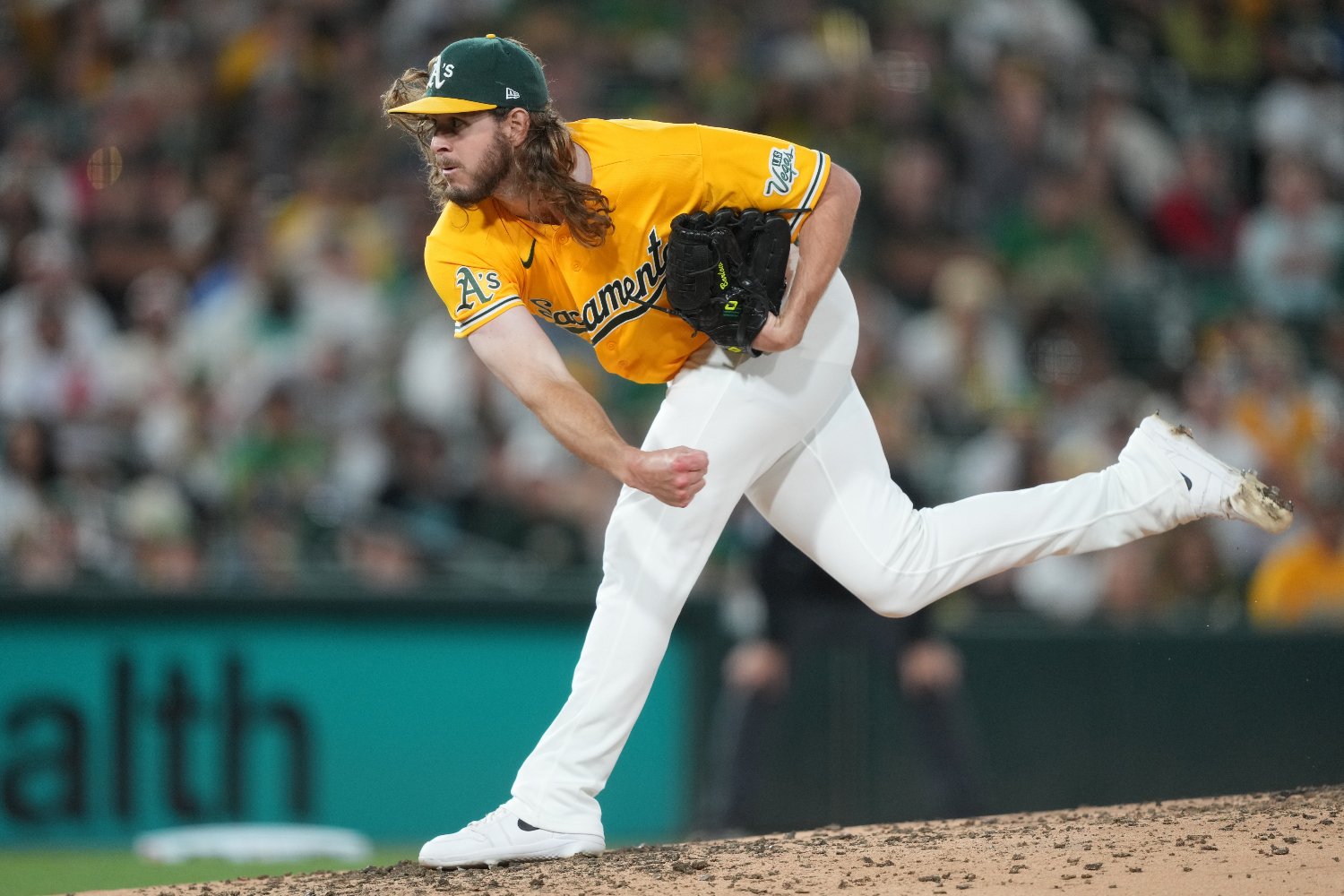 On Thursday afternoon, the Royals announced that they had signed former closer Scott Barlow on a Minor League deal. Barlow pitched with the Royals from 2018 to 2023, serving as the team's closer in his last three years. Over that time frame, the righty saved 53 games with Kansas City. During his 5 1/2 years with the Royals, the former Dodgers draft pick produced a 6.7 bWAR, a 3.39 ERA, a 1.25 WHIP, and a 2.98 K/BB ratio. The Royals traded Barlow to the Padres at the 2023 Trade Deadline for pitching prospects Henry Williams and Jesus Rios (only Williams remains in the organization). After finishing the 2023 season with the Padres (3.07 ERA and 1.19 WHIP in 29.1 IP), he ended up pitching for the Guardians in 2024 (4.25 ERA in 55 IP) and the Reds in 2025 (4.21 ERA in 68.1 IP). This season, Barlow pitched 36 games with the Athletics and struggled in 33.1 IP. He posted a 6.48 ERA in Sacramento, a career-worst mark. As a result, the Athletics designated Barlow for assignment on June 21st and ended up releasing him on June 24th. With a lack of bullpen depth and Kris Bubic recently added to the 60-Day IL, the Royals are looking for Barlow to provide a veteran presence in Triple-A Omaha and perhaps Kansas City, if needed. While the overall numbers aren't great, and the TJ Stuff+ marks are subpar (97 overall TJ Stuff+), he still generates strikes at a high level, as illustrated by his CSW and whiff rates below. The 33-year-old will likely start in Omaha. However, he could move up to Kansas City quickly, especially with the Royals needing fresh arms for a tough series against the Phillies this weekend at Kauffman Stadium, and a looming road trip to Queens (the Mets) and Baltimore (Orioles) before the All-Star Break. Barlow is the second former Royals reliever to return to the organization this year. Jose Cuas made his 2026 Royals debut on Wednesday, allowing one run and striking out three Rays hitters in two innings of work. He also posted a TJ Stuff+ of 100 and a decent xwOBACON of .350, as seen below via his TJ Stuff+ summary. Cuas hadn't pitched in the Majors since 2024, and he last pitched with the Royals in 2023. That season, he posted a 4.54 ERA and 1.61 WHIP in 41.2 IP before being traded to the Chicago Cubs at the Trade Deadline for Nelson Velazquez.
 -
On Thursday afternoon, the Royals announced that they had signed former closer Scott Barlow on a Minor League deal. Barlow pitched with the Royals from 2018 to 2023, serving as the team's closer in his last three years. Over that time frame, the righty saved 53 games with Kansas City. During his 5 1/2 years with the Royals, the former Dodgers draft pick produced a 6.7 bWAR, a 3.39 ERA, a 1.25 WHIP, and a 2.98 K/BB ratio. The Royals traded Barlow to the Padres at the 2023 Trade Deadline for pitching prospects Henry Williams and Jesus Rios (only Williams remains in the organization). After finishing the 2023 season with the Padres (3.07 ERA and 1.19 WHIP in 29.1 IP), he ended up pitching for the Guardians in 2024 (4.25 ERA in 55 IP) and the Reds in 2025 (4.21 ERA in 68.1 IP). This season, Barlow pitched 36 games with the Athletics and struggled in 33.1 IP. He posted a 6.48 ERA in Sacramento, a career-worst mark. As a result, the Athletics designated Barlow for assignment on June 21st and ended up releasing him on June 24th. With a lack of bullpen depth and Kris Bubic recently added to the 60-Day IL, the Royals are looking for Barlow to provide a veteran presence in Triple-A Omaha and perhaps Kansas City, if needed. While the overall numbers aren't great, and the TJ Stuff+ marks are subpar (97 overall TJ Stuff+), he still generates strikes at a high level, as illustrated by his CSW and whiff rates below. The 33-year-old will likely start in Omaha. However, he could move up to Kansas City quickly, especially with the Royals needing fresh arms for a tough series against the Phillies this weekend at Kauffman Stadium, and a looming road trip to Queens (the Mets) and Baltimore (Orioles) before the All-Star Break. Barlow is the second former Royals reliever to return to the organization this year. Jose Cuas made his 2026 Royals debut on Wednesday, allowing one run and striking out three Rays hitters in two innings of work. He also posted a TJ Stuff+ of 100 and a decent xwOBACON of .350, as seen below via his TJ Stuff+ summary. Cuas hadn't pitched in the Majors since 2024, and he last pitched with the Royals in 2023. That season, he posted a 4.54 ERA and 1.61 WHIP in 41.2 IP before being traded to the Chicago Cubs at the Trade Deadline for Nelson Velazquez. View full rumor
-
Abraham Toro and Luca Tresh homered to lift the Omaha Storm Chasers past Indianapolis, 4-2, behind three scoreless innings from Oscar Rayo and a three-strikeout save from Eli Morgan. Hunter Owen struck out nine over five scoreless innings, but Northwest Arkansas fell 5-3. Quad Cities dropped a 9-7 slugfest despite Luke Pelzer's home run. Shane Van Dam steadied Columbia's staff, and Coleman Picard closed out a 7-4 comeback win. Royals Transactions No Roster Moves Toro And Tresh Homers Carry Omaha Past Indianapolis The Omaha Storm Chasers scored three times in the fourth inning to pull away from the visiting Indianapolis Indians in a 4-2 win. Toro led the offense, going 2 for 4 with a solo home run that tied the game in the first, and Tresh added a two-run homer that provided the decisive margin. Brett Squires singled and drove in a run, Matthew Lugo and Kevin Newman each doubled, and Elih Marrero chipped in with a triple. Omaha broke the game open in the fourth. Squires singled to center to bring home Lugo, and two batters later Tresh drove a fly ball to left field for a two-run homer that scored Squires and pushed the lead to 4-1. Starter Ethan Bosacker turned in a steady outing across four innings, allowing one run on two hits with one walk and two strikeouts, with the only damage a solo home run in the first. Rayo followed with three scoreless innings, walking two and striking out two to earn the win. Ben Sears worked a scoreless inning, and Morgan closed it out, striking out three in the ninth while surrendering a solo home run in the save. The four Omaha arms combined for eight strikeouts. The Storm Chasers stranded two baserunners and went 2-for-5 with runners in scoring position. They improved their record to 37-45 after the victory. Player AB R H RBI BB K Peyton Wilson 3 0 0 0 1 0 Abraham Toro 4 1 2 1 0 0 Matthew Lugo 4 1 1 0 0 1 Drew Waters 3 0 0 0 0 0 Brett Squires 3 1 1 1 0 0 Luca Tresh 3 1 1 2 0 1 Gavin Cross 3 0 0 0 0 0 Elih Marrero 3 0 1 0 0 1 Kevin Newman 3 0 1 0 0 0 Player IP H R ER BB K HR Ethan Bosacker 4 2 1 1 1 2 1 Oscar Rayo 3 0 0 0 2 2 0 Ben Sears 1 1 0 0 0 1 0 Eli Morgan 1 1 1 1 0 3 1 Northwest Arkansas Wastes Owen Gem In Eighth-Inning Collapse The Northwest Arkansas Naturals carried a three-run lead into the eighth inning before the Corpus Christi Hooks rallied for a 5-3 win. Owen was outstanding on the mound, working five scoreless innings and allowing just one hit while walking three and striking out nine. Leadoff man Carson Roccaforte, the No. 8 prospect at Royals Keep, and Jack Pineda each finished with two hits, Sam Kulasingam added two hits, a walk, and an RBI, and Connor Scott provided a solo home run. The Naturals jumped ahead in the first. Roccaforte and Pineda reached to open the frame, and Kulasingam lined a single to left to score Roccaforte. Spencer Nivens followed with a single to center that brought home Pineda for a 2-0 lead. Scott extended the advantage in the fourth, driving a fly ball to right field for a solo home run. The Naturals' early lead did not hold, unfortunately. Corpus Christi batted around against the bullpen in the eighth, using a leadoff double, a run-scoring single, a walk, an RBI double, and a sacrifice fly to plate four runs and take a 4-3 lead. Augusto Mendieta was charged with three of those runs and took the loss. The Hooks added an insurance run in the ninth. Northwest Arkansas managed seven hits and stranded five, unable to answer late. They went 2-for-3 with runners in scoring position. The Naturals fell to 30-45 this season. Player AB R H RBI BB K Carson Roccaforte 4 1 1 0 0 0 Jack Pineda 4 1 2 0 0 0 Sam Kulasingam 3 0 2 1 1 1 Jorge Alfaro 4 0 0 0 0 4 Spencer Nivens 4 0 1 1 0 1 Daniel Vazquez 4 0 0 0 0 1 Connor Scott 4 1 1 1 0 1 Canyon Brown 4 0 0 0 0 2 Justin Johnson 2 0 0 0 1 0 Player IP H R ER BB K HR Hunter Owen 5 1 0 0 3 9 0 Brandon Johnson 1 0 0 0 0 0 0 Frank Mozzicato 1 1 1 1 2 2 0 Augusto Mendieta 1 2 3 3 1 2 0 Tommy Molsky 1 1 1 1 1 2 0 River Bandits' Late Lead Slips Away In 9-7 Loss The Quad Cities River Bandits out-hit the Cedar Rapids Kernels 13 to 8 but could not hold a late lead, falling 9-7. Pelzer led the way, going 3 for 4 with a double, a home run, and two RBI. Derlin Figueroa added a double and a home run, Blake Mitchell doubled twice, Jose Cerice doubled and scored twice, Tyriq Kemp tripled, and Angel Acosta collected two hits and two RBI in the loss. Trailing 4-2, Quad Cities surged ahead with a sensational four-run sixth inning. Pelzer and Figueroa hit back-to-back solo home runs to tie the game, Kemp followed with a triple to score Cerice, and Acosta singled home Kemp to make it 6-4. The River Bandits tacked on another run in the seventh when Pelzer singled to bring home Mitchell. Starter David Shields, the No. 2 prospect at Royals Keep, struck out seven over 4 2/3 innings but was charged with four runs on four hits and three walks, including a two-run home run. Unfortunately for the River Bandits, the bullpen could not protect the lead. Cedar Rapids tied the game in the seventh on a two-run homer, then pushed across two runs in the eighth and one in the ninth. Kamden Edge, our No. 19 prospect at Royals Keep, was tagged with the loss. Quad Cities left four on base and went 4-for-9 with runners in scoring position. They are now 33-40 this season. Player AB R H RBI BB K Nolan Sailors 5 0 0 0 0 3 Asbel Gonzalez 5 1 1 0 0 2 Blake Mitchell 4 1 2 0 0 1 Ramon Ramirez 3 0 0 0 1 2 Luke Pelzer 4 1 3 2 0 0 Derlin Figueroa 4 1 2 1 0 2 Jose Cerice 4 2 2 0 0 1 Tyriq Kemp 3 1 1 1 0 2 Angel Acosta 4 0 2 2 0 0 Player IP H R ER BB K HR David Shields 4 2/3 4 4 4 3 7 1 Nick Conte 1 1/3 0 0 0 0 2 0 Kamden Edge 1 1/3 2 4 4 2 3 1 Yimi Presinal 1 2/3 2 1 1 1 0 0 Columbia's Five-Run Third Powers Comeback Win The Columbia Fireflies erased an early three-run deficit with a five-run third inning and held on to beat the visiting Fredericksburg Nationals, 7-4. Henry Ramos drove in three runs on two hits, Roni Cabrera doubled twice and scored twice, and Sean Gamble reached base three times with a hit and two walks. Stone Russell and Hyungchan Um each added a hit and an RBI. Down 3-0, Columbia turned the game around in the third. Russell singled to score Cabrera, and Ramos followed with a single that plated one run before a fielding error allowed two more to come around. Um capped the rally with a run-scoring single, giving the Fireflies a 5-3 lead. Columbia added to it in the fourth when Ramos lined a two-run single, pushing the margin to 7-4. Starter Van Dam scattered six hits over 4 1/3 innings, allowing four runs, two walks, and a home run while striking out six. The bullpen slammed the door. Andy Basora struck out three across 1 2/3 scoreless innings to pick up the win, and Picard finished with three scoreless innings, yielding one hit and striking out four for the rare three-inning save. Columbia drew ten walks and left nine on base but did enough early to secure the victory. They also went 4-for-12 with runners in scoring position. The win brings the Fireflies back to over .500 at 39-38 for the year. Player AB R H RBI BB K Josh Hammond 4 0 0 0 1 0 Sean Gamble 3 2 1 0 2 0 Stone Russell 3 1 1 1 2 1 JC Vanek 2 1 0 0 3 1 Henry Ramos 4 1 2 3 0 0 Hyungchan Um 3 0 1 1 1 1 Angel Ramirez 3 0 0 0 1 0 Connor Rasmussen 4 0 0 0 0 2 Roni Cabrera 2 2 2 0 0 0 Josi Novas 2 0 0 0 0 1 Player IP H R ER BB K HR Shane Van Dam 4 1/3 6 4 4 2 6 1 Andy Basora 1 2/3 0 0 0 1 3 0 Coleman Picard 3 1 0 0 1 4 0 Top-20 Prospect Performance Kendry Chourio: DNP David Shields: 4 2/3 IP, 4 H, 4 R, 4 ER, 3 BB, 7 K, HR Josh Hammond: 0-for-4, BB Blake Mitchell: 2-for-4, 2 2B, K Sean Gamble: 1-for-3, 2 BB Ramon Ramirez: 0-for-3, BB, 2 K Drew Beam: DNP Carson Roccaforte: 1-for-4 Asbel Gonzalez: 1-for-5, 2 K Yandel Ricardo: DNP Michael Lombardi: DNP Ben Kudrna: DNP Justin Lamkin: DNP Felix Arronde: DNP Blake Wolters: DNP Steven Zobac: DNP Austin Charles: DNP Daniel Vazquez: 0-for-4, K Kamden Edge: 1 1/3 IP, 2 H, 4 R, 4 ER, 2 BB, 3 K, HR Warren Calcano: DNP View full article
-
 Abraham Toro and Luca Tresh homered to lift the Omaha Storm Chasers past Indianapolis, 4-2, behind three scoreless innings from Oscar Rayo and a three-strikeout save from Eli Morgan. Hunter Owen struck out nine over five scoreless innings, but Northwest Arkansas fell 5-3. Quad Cities dropped a 9-7 slugfest despite Luke Pelzer's home run. Shane Van Dam steadied Columbia's staff, and Coleman Picard closed out a 7-4 comeback win. Royals Transactions No Roster Moves Toro And Tresh Homers Carry Omaha Past Indianapolis The Omaha Storm Chasers scored three times in the fourth inning to pull away from the visiting Indianapolis Indians in a 4-2 win. Toro led the offense, going 2 for 4 with a solo home run that tied the game in the first, and Tresh added a two-run homer that provided the decisive margin. Brett Squires singled and drove in a run, Matthew Lugo and Kevin Newman each doubled, and Elih Marrero chipped in with a triple. Omaha broke the game open in the fourth. Squires singled to center to bring home Lugo, and two batters later Tresh drove a fly ball to left field for a two-run homer that scored Squires and pushed the lead to 4-1. Starter Ethan Bosacker turned in a steady outing across four innings, allowing one run on two hits with one walk and two strikeouts, with the only damage a solo home run in the first. Rayo followed with three scoreless innings, walking two and striking out two to earn the win. Ben Sears worked a scoreless inning, and Morgan closed it out, striking out three in the ninth while surrendering a solo home run in the save. The four Omaha arms combined for eight strikeouts. The Storm Chasers stranded two baserunners and went 2-for-5 with runners in scoring position. They improved their record to 37-45 after the victory. Player AB R H RBI BB K Peyton Wilson 3 0 0 0 1 0 Abraham Toro 4 1 2 1 0 0 Matthew Lugo 4 1 1 0 0 1 Drew Waters 3 0 0 0 0 0 Brett Squires 3 1 1 1 0 0 Luca Tresh 3 1 1 2 0 1 Gavin Cross 3 0 0 0 0 0 Elih Marrero 3 0 1 0 0 1 Kevin Newman 3 0 1 0 0 0 Player IP H R ER BB K HR Ethan Bosacker 4 2 1 1 1 2 1 Oscar Rayo 3 0 0 0 2 2 0 Ben Sears 1 1 0 0 0 1 0 Eli Morgan 1 1 1 1 0 3 1 Northwest Arkansas Wastes Owen Gem In Eighth-Inning Collapse The Northwest Arkansas Naturals carried a three-run lead into the eighth inning before the Corpus Christi Hooks rallied for a 5-3 win. Owen was outstanding on the mound, working five scoreless innings and allowing just one hit while walking three and striking out nine. Leadoff man Carson Roccaforte, the No. 8 prospect at Royals Keep, and Jack Pineda each finished with two hits, Sam Kulasingam added two hits, a walk, and an RBI, and Connor Scott provided a solo home run. The Naturals jumped ahead in the first. Roccaforte and Pineda reached to open the frame, and Kulasingam lined a single to left to score Roccaforte. Spencer Nivens followed with a single to center that brought home Pineda for a 2-0 lead. Scott extended the advantage in the fourth, driving a fly ball to right field for a solo home run. The Naturals' early lead did not hold, unfortunately. Corpus Christi batted around against the bullpen in the eighth, using a leadoff double, a run-scoring single, a walk, an RBI double, and a sacrifice fly to plate four runs and take a 4-3 lead. Augusto Mendieta was charged with three of those runs and took the loss. The Hooks added an insurance run in the ninth. Northwest Arkansas managed seven hits and stranded five, unable to answer late. They went 2-for-3 with runners in scoring position. The Naturals fell to 30-45 this season. Player AB R H RBI BB K Carson Roccaforte 4 1 1 0 0 0 Jack Pineda 4 1 2 0 0 0 Sam Kulasingam 3 0 2 1 1 1 Jorge Alfaro 4 0 0 0 0 4 Spencer Nivens 4 0 1 1 0 1 Daniel Vazquez 4 0 0 0 0 1 Connor Scott 4 1 1 1 0 1 Canyon Brown 4 0 0 0 0 2 Justin Johnson 2 0 0 0 1 0 Player IP H R ER BB K HR Hunter Owen 5 1 0 0 3 9 0 Brandon Johnson 1 0 0 0 0 0 0 Frank Mozzicato 1 1 1 1 2 2 0 Augusto Mendieta 1 2 3 3 1 2 0 Tommy Molsky 1 1 1 1 1 2 0 River Bandits' Late Lead Slips Away In 9-7 Loss The Quad Cities River Bandits out-hit the Cedar Rapids Kernels 13 to 8 but could not hold a late lead, falling 9-7. Pelzer led the way, going 3 for 4 with a double, a home run, and two RBI. Derlin Figueroa added a double and a home run, Blake Mitchell doubled twice, Jose Cerice doubled and scored twice, Tyriq Kemp tripled, and Angel Acosta collected two hits and two RBI in the loss. Trailing 4-2, Quad Cities surged ahead with a sensational four-run sixth inning. Pelzer and Figueroa hit back-to-back solo home runs to tie the game, Kemp followed with a triple to score Cerice, and Acosta singled home Kemp to make it 6-4. The River Bandits tacked on another run in the seventh when Pelzer singled to bring home Mitchell. Starter David Shields, the No. 2 prospect at Royals Keep, struck out seven over 4 2/3 innings but was charged with four runs on four hits and three walks, including a two-run home run. Unfortunately for the River Bandits, the bullpen could not protect the lead. Cedar Rapids tied the game in the seventh on a two-run homer, then pushed across two runs in the eighth and one in the ninth. Kamden Edge, our No. 19 prospect at Royals Keep, was tagged with the loss. Quad Cities left four on base and went 4-for-9 with runners in scoring position. They are now 33-40 this season. Player AB R H RBI BB K Nolan Sailors 5 0 0 0 0 3 Asbel Gonzalez 5 1 1 0 0 2 Blake Mitchell 4 1 2 0 0 1 Ramon Ramirez 3 0 0 0 1 2 Luke Pelzer 4 1 3 2 0 0 Derlin Figueroa 4 1 2 1 0 2 Jose Cerice 4 2 2 0 0 1 Tyriq Kemp 3 1 1 1 0 2 Angel Acosta 4 0 2 2 0 0 Player IP H R ER BB K HR David Shields 4 2/3 4 4 4 3 7 1 Nick Conte 1 1/3 0 0 0 0 2 0 Kamden Edge 1 1/3 2 4 4 2 3 1 Yimi Presinal 1 2/3 2 1 1 1 0 0 Columbia's Five-Run Third Powers Comeback Win The Columbia Fireflies erased an early three-run deficit with a five-run third inning and held on to beat the visiting Fredericksburg Nationals, 7-4. Henry Ramos drove in three runs on two hits, Roni Cabrera doubled twice and scored twice, and Sean Gamble reached base three times with a hit and two walks. Stone Russell and Hyungchan Um each added a hit and an RBI. Down 3-0, Columbia turned the game around in the third. Russell singled to score Cabrera, and Ramos followed with a single that plated one run before a fielding error allowed two more to come around. Um capped the rally with a run-scoring single, giving the Fireflies a 5-3 lead. Columbia added to it in the fourth when Ramos lined a two-run single, pushing the margin to 7-4. Starter Van Dam scattered six hits over 4 1/3 innings, allowing four runs, two walks, and a home run while striking out six. The bullpen slammed the door. Andy Basora struck out three across 1 2/3 scoreless innings to pick up the win, and Picard finished with three scoreless innings, yielding one hit and striking out four for the rare three-inning save. Columbia drew ten walks and left nine on base but did enough early to secure the victory. They also went 4-for-12 with runners in scoring position. The win brings the Fireflies back to over .500 at 39-38 for the year. Player AB R H RBI BB K Josh Hammond 4 0 0 0 1 0 Sean Gamble 3 2 1 0 2 0 Stone Russell 3 1 1 1 2 1 JC Vanek 2 1 0 0 3 1 Henry Ramos 4 1 2 3 0 0 Hyungchan Um 3 0 1 1 1 1 Angel Ramirez 3 0 0 0 1 0 Connor Rasmussen 4 0 0 0 0 2 Roni Cabrera 2 2 2 0 0 0 Josi Novas 2 0 0 0 0 1 Player IP H R ER BB K HR Shane Van Dam 4 1/3 6 4 4 2 6 1 Andy Basora 1 2/3 0 0 0 1 3 0 Coleman Picard 3 1 0 0 1 4 0 Top-20 Prospect Performance Kendry Chourio: DNP David Shields: 4 2/3 IP, 4 H, 4 R, 4 ER, 3 BB, 7 K, HR Josh Hammond: 0-for-4, BB Blake Mitchell: 2-for-4, 2 2B, K Sean Gamble: 1-for-3, 2 BB Ramon Ramirez: 0-for-3, BB, 2 K Drew Beam: DNP Carson Roccaforte: 1-for-4 Asbel Gonzalez: 1-for-5, 2 K Yandel Ricardo: DNP Michael Lombardi: DNP Ben Kudrna: DNP Justin Lamkin: DNP Felix Arronde: DNP Blake Wolters: DNP Steven Zobac: DNP Austin Charles: DNP Daniel Vazquez: 0-for-4, K Kamden Edge: 1 1/3 IP, 2 H, 4 R, 4 ER, 2 BB, 3 K, HR Warren Calcano: DNP
 -
Image courtesy of Mark J. Rebilas-Imagn Images On Wednesday morning, MLB announced the rosters for the 2026 All-Star Futures Game. Two Royals players were named to the rosters: pitcher Kendry Chourio and catcher Blake Mitchell. Chourio and Mitchell are the No. 1 and No. 4 ranked prospects in the Royals system at Royals Keep. Chourio started the season in Columbia and absolutely dominated as an 18-year-old. In 11 starts and 48 IP, he posted a 1.88 ERA, 0.92 WHIP, a 23.4% K%, and 18.6% K-BB%. He was by far the best starting pitcher not just on the Fireflies roster, but arguably the Carolina League. The strong start with the Fireflies helped him earn a promotion to High-A Quad Cities. Chourio has only two starts with the River Bandits so far. In 10.2 IP, the Venezuelan-born pitcher has a 5.06 ERA, but his WHIP (1.03) and FIP (3.63) are much better marks. Chourio has improved his swing-and-miss in Quad Cities, as he has a 31.1% K% and 26.7% K-BB% with the River Bandits. His 32.5% CSW in High-A is much better than the 25.9% CSW in Low-A this season. Joining Chourio will be Mitchell, who is currently a teammate of Chourio in Quad Cities. The 2023 8th overall pick has recovered well this year after struggling through a hamate bone injury a season ago in Quad Cities. In 68 games and 298 plate appearances, Mitchell is hitting .210 with an .834 OPS and 123 wRC+. He also has 13 home runs, 16 stolen bases, and a BB/K ratio of 0.70. While he doesn't hit for high average, the former prep prospect has an exceptional eye at the plate, as evidenced by his 24.5% BB%. He also sports excellent power for a catcher. That is evident in not just the home runs, but his .215 ISO, which is 113 points higher than his mark a season ago. The 21-year-old catcher has also received high remarks for his defense and game-calling. He has thrown out 13 runners this year on 70 attempts and threw out 18 runners last year on 58 attempts. Mitchell has been the preferred catcher behind the plate in Quad Cities, even though fellow catching prospect Ramon Ramirez is also on the roster. Ramirez is our No. 6 Royals prospect at Royals Keep. With his latest honor and the draft coming up during the All-Star week, it seems likely that the Royals will promote Mitchell to Northwest Arkansas after the All-Star Break. The Futures Game will be at Citizens Bank Ballpark in Philadelphia on Sunday, July 12th at noon. It will be broadcast on NBC/Peacock. View full article
-
Chourio and Mitchell Name to All-Star Futures Game Rosters
Kevin O'Brien posted an article in Minor Leagues
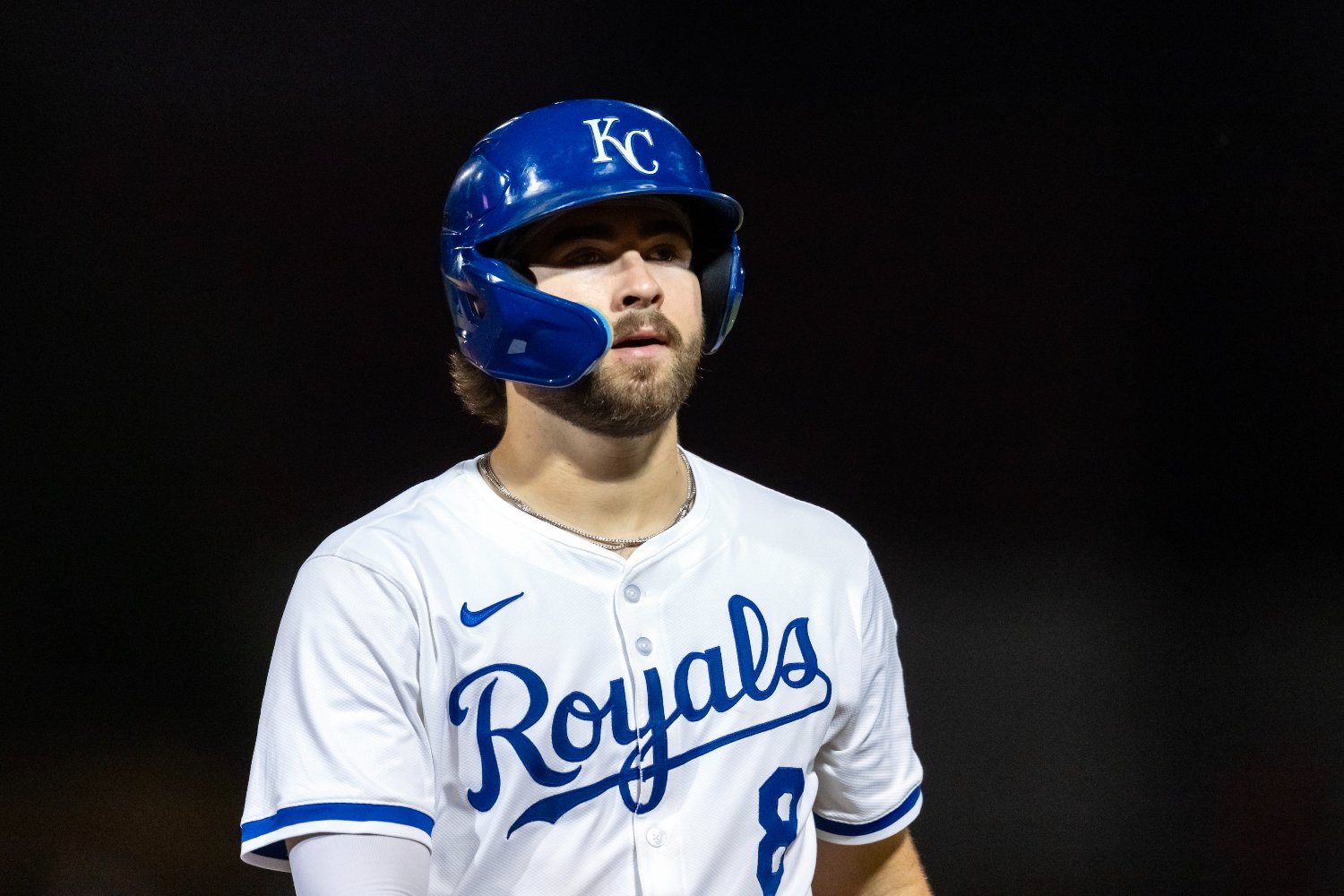 On Wednesday morning, MLB announced the rosters for the 2026 All-Star Futures Game. Two Royals players were named to the rosters: pitcher Kendry Chourio and catcher Blake Mitchell. Chourio and Mitchell are the No. 1 and No. 4 ranked prospects in the Royals system at Royals Keep. Chourio started the season in Columbia and absolutely dominated as an 18-year-old. In 11 starts and 48 IP, he posted a 1.88 ERA, 0.92 WHIP, a 23.4% K%, and 18.6% K-BB%. He was by far the best starting pitcher not just on the Fireflies roster, but arguably the Carolina League. The strong start with the Fireflies helped him earn a promotion to High-A Quad Cities. Chourio has only two starts with the River Bandits so far. In 10.2 IP, the Venezuelan-born pitcher has a 5.06 ERA, but his WHIP (1.03) and FIP (3.63) are much better marks. Chourio has improved his swing-and-miss in Quad Cities, as he has a 31.1% K% and 26.7% K-BB% with the River Bandits. His 32.5% CSW in High-A is much better than the 25.9% CSW in Low-A this season. Joining Chourio will be Mitchell, who is currently a teammate of Chourio in Quad Cities. The 2023 8th overall pick has recovered well this year after struggling through a hamate bone injury a season ago in Quad Cities. In 68 games and 298 plate appearances, Mitchell is hitting .210 with an .834 OPS and 123 wRC+. He also has 13 home runs, 16 stolen bases, and a BB/K ratio of 0.70. While he doesn't hit for high average, the former prep prospect has an exceptional eye at the plate, as evidenced by his 24.5% BB%. He also sports excellent power for a catcher. That is evident in not just the home runs, but his .215 ISO, which is 113 points higher than his mark a season ago. The 21-year-old catcher has also received high remarks for his defense and game-calling. He has thrown out 13 runners this year on 70 attempts and threw out 18 runners last year on 58 attempts. Mitchell has been the preferred catcher behind the plate in Quad Cities, even though fellow catching prospect Ramon Ramirez is also on the roster. Ramirez is our No. 6 Royals prospect at Royals Keep. With his latest honor and the draft coming up during the All-Star week, it seems likely that the Royals will promote Mitchell to Northwest Arkansas after the All-Star Break. The Futures Game will be at Citizens Bank Ballpark in Philadelphia on Sunday, July 12th at noon. It will be broadcast on NBC/Peacock.
 -
Quad Cities powered past Cedar Rapids 8-3 behind an Emmanuel Reyes quality start, with Nolan Sailors and Tyriq Kemp homering. In losses, Daniel Vazquez and Jack Pineda went deep for Northwest Arkansas, and Ryan McDonagh struck out six for Columbia. Omaha rallied to tie before Indianapolis pulled away, as Rudy Martin Jr. collected three hits and Helcris Olivárez fanned three in scoreless relief for the Storm Chasers. Royals Transactions No Roster Moves Storm Chasers Rally To Tie Before Indianapolis Pulls Away The Omaha Storm Chasers climbed back from an early five-run hole but could not hold on, falling 12-5 to the Indianapolis Indians. Omaha built its comeback in the bottom of the second. Trailing 5-0, Gavin Cross and Luca Tresh singled and Luke Maile walked to load the bases with one out. Andrew Velazquez then lined a two-run single, Martin Jr. followed with an RBI single, and Brett Squires added a sacrifice fly to pull the Storm Chasers within 5-4. Omaha tied the game in the fourth when Abraham Toro lifted a sacrifice fly to score Velazquez. The bullpen could not keep it level. Indianapolis pushed across three runs in the fifth and four more in the eighth to take control. Starter Henry Williams struggled over his two innings, allowing five runs, all earned, on two hits with four walks and no strikeouts. Olivárez provided the lone strong relief effort, striking out three over two scoreless innings. Martin led the offense with three hits, a run driven in, and a stolen base. Tresh added two hits, Velazquez finished with two runs scored and two runs batted in, and Squires contributed a triple. Omaha stranded 10 runners on the bases, a total that loomed large in the seven-run defeat. The Storm Chasers went 2-for-8 with runners in scoring position. Their record is now 36-45. Player AB R H RBI BB K Rudy Martin Jr. 5 0 3 1 0 2 Abraham Toro 3 0 0 1 1 0 Brett Squires 3 0 1 1 1 1 Drew Waters 5 0 1 0 0 1 Peyton Wilson 3 0 0 0 2 1 Gavin Cross 5 1 1 0 0 1 Luca Tresh 4 1 2 0 0 1 Luke Maile 3 1 0 0 1 1 Andrew Velazquez 4 2 1 2 0 1 Player IP H R ER BB K HR Henry Williams 2 2 5 5 4 0 0 Helcris Olivárez 2 0 0 0 3 3 0 Andrew Pérez 2 5 3 3 1 1 0 Dan Altavilla 2 3 4 4 2 0 1 Anthony Gose 1 1 0 0 0 2 0 Vazquez And Pineda Homer But Naturals Fall To Corpus Christi The Northwest Arkansas Naturals managed only six hits and dropped an 8-3 decision to the Corpus Christi Hooks. Two of those hits left the yard. Vazquez pulled a solo home run to center in the second inning, and Pineda led off the ninth with a solo shot to left, but the Naturals could not string together enough offense to threaten. Corpus Christi set the tone in the first inning, scoring four runs against starter Steven Zobac. Zobac settled in after that, finishing five innings with four runs, all earned, on three hits, three walks, and three strikeouts. The game turned decisively in the eighth, when the Hooks scored four more runs, most of them charged to Dennis Colleran Jr., who recorded just two outs while allowing four runs. Chase Jessee, Anthony Simonelli, and Zachary Cawyer combined for scoreless relief around that frame, with Simonelli striking out two in his inning. The Naturals scratched out their third run in the eighth when Alberto Rodriguez grounded into a double play that allowed Colton Becker to score. Vazquez reached base twice and drove in a run, while Carson Roccaforte, Sam Kulasingam, Omar Hernandez, and Alberto Rodriguez each singled. Northwest Arkansas left just two runners on base. They also went just 0-for-2 with runners in scoring position. The Naturals are now 30-44 for the season. Player AB R H RBI BB K Carson Roccaforte 4 0 1 0 0 0 Jack Pineda 4 1 1 1 0 0 Sam Kulasingam 4 0 1 0 0 1 Jorge Alfaro 4 0 0 0 0 3 Spencer Nivens 4 0 0 0 0 1 Daniel Vazquez 3 1 1 1 0 0 Colton Becker 2 1 0 0 1 0 Omar Hernandez 3 0 1 0 0 1 Alberto Rodriguez 3 0 1 0 0 1 Player IP H R ER BB K HR Steven Zobac 5 3 4 4 3 3 1 Chase Jessee 1 0 0 0 0 1 0 Anthony Simonelli 1 0 0 0 0 2 0 Dennis Colleran Jr. 2/3 4 4 4 1 0 0 Zachary Cawyer 1 1/3 0 0 0 0 1 0 Kemp And Sailors Go Deep As River Bandits Top Cedar Rapids The Quad Cities River Bandits broke a tie with a four-run sixth inning and cruised to an 8-3 win over the Cedar Rapids Kernels. With the game knotted at 3-3 in the sixth, Kemp launched a two-run homer to left to score Derlin Figueroa, and two batters later Nolan Sailors crushed a two-run shot to left center that plated Angel Acosta, pushing the lead to 5-3. Quad Cities added three more in the eighth, when Jose Cerice scored on a wild pitch, Kemp came home on an Angel Acosta sacrifice fly, and Luke Pelzer singled in Asbel Gonzalez. Reyes turned in a quality start, working six innings and allowing three runs, all earned, on six hits with one walk and five strikeouts. The bullpen finished the job without a blemish, as Mason Miller, Tyson Guerrero, and L.P. Langevin combined for three scoreless innings, and Langevin struck out three in the ninth. Sailors led the way with three hits, including a double and a home run, two runs batted in, and a stolen base. Kemp added two hits and two runs batted in, Pelzer doubled among his two hits and drove in two, and Gonzalez scored twice with two stolen bases. The River Bandits collected 11 hits and left nine runners on base. They also went 3-for-11 with runners in scoring position. Quad Cities' record improved to 33-39 with the victory. Player AB R H RBI BB K Nolan Sailors 5 1 3 2 0 0 Asbel Gonzalez 4 2 1 0 1 2 Blake Mitchell 4 0 0 0 1 3 Luke Pelzer 5 0 2 2 0 2 Trevor Werner 4 0 0 0 1 2 Derlin Figueroa 3 1 0 0 1 3 Jose Cerice 4 1 1 0 0 0 Tyriq Kemp 3 2 2 2 1 0 Angel Acosta 2 1 2 1 1 0 Player IP H R ER BB K HR Emmanuel Reyes 6 6 3 3 1 5 2 Mason Miller 1 0 0 0 0 1 0 Tyson Guerrero 1 1 0 0 1 1 0 L.P. Langevin 1 1 0 0 0 3 0 McDonagh Fans Six But Fireflies Drop Contest To Fredericksburg The Columbia Fireflies could not solve Fredericksburg pitching in a 4-2 loss to the Nationals. Columbia scratched out its first run in the fifth, when Angel Ramirez singled and scored on a Jhosmmel Zue double. The Fireflies pulled within one in the eighth, as Roni Cabrera doubled, moved to third on a Josh Hammond single, and came home on a Sean Gamble bunt single. That was as close as Columbia would get, with Fredericksburg tacking on an insurance run in the ninth. McDonagh gave Columbia a strong outing on the mound, striking out six over 5 1/3 innings while allowing three runs, all earned, on two hits and two walks. Jhon Reyes and Hunter Alberini followed with scoreless relief, and Alberini struck out two in his inning. Hammond led the offense with two hits, while Zue doubled and drove in a run, Cabrera doubled and scored, and Gamble singled in a run on a squeeze bunt. Columbia managed eight hits but stranded five runners on the bases in the two-run loss. They went 2-for-7 with runners in scoring position. The Fireflies are back at .500 with a 38-38 record. Player AB R H RBI BB K Josh Hammond 4 0 2 0 0 1 Sean Gamble 4 0 1 1 0 2 Yandel Ricardo 4 0 0 0 0 1 Stone Russell 4 0 1 0 0 2 Henry Ramos 3 0 1 0 1 1 Hyungchan Um 4 0 0 0 0 1 Angel Ramirez 4 1 1 0 0 2 Jhosmmel Zue 3 0 1 1 0 1 Roni Cabrera 3 1 1 0 0 1 Player IP H R ER BB K HR Ryan McDonagh 5 1/3 2 3 3 2 6 1 Jhon Reyes 1 2/3 0 0 0 1 0 0 Hunter Alberini 1 0 0 0 1 2 0 Henson Leal 1 3 1 1 0 1 1 Top-20 Prospect Performance Kendry Chourio: DNP David Shields: DNP Josh Hammond: 2-for-4, 1 K Blake Mitchell: 0-for-4, 1 BB, 3 K Sean Gamble: 1-for-4, 1 RBI, 2 K Ramon Ramirez: DNP Drew Beam: DNP Carson Roccaforte: 1-for-4 Asbel Gonzalez: 1-for-4, 1 BB, 2 SB, 2 K Yandel Ricardo: 0-for-4, 1 K Michael Lombardi: DNP Ben Kudrna: DNP Justin Lamkin: DNP Felix Arronde: DNP Blake Wolters: DNP Steven Zobac: 5 IP, 3 H, 4 R, 4 ER, 3 BB, 3 K, 1 HR Austin Charles: DNP Daniel Vazquez: 1-for-3, HR, 1 RBI Kamden Edge: DNP Warren Calcano: 0-for-2 View full article
-
 Quad Cities powered past Cedar Rapids 8-3 behind an Emmanuel Reyes quality start, with Nolan Sailors and Tyriq Kemp homering. In losses, Daniel Vazquez and Jack Pineda went deep for Northwest Arkansas, and Ryan McDonagh struck out six for Columbia. Omaha rallied to tie before Indianapolis pulled away, as Rudy Martin Jr. collected three hits and Helcris Olivárez fanned three in scoreless relief for the Storm Chasers. Royals Transactions No Roster Moves Storm Chasers Rally To Tie Before Indianapolis Pulls Away The Omaha Storm Chasers climbed back from an early five-run hole but could not hold on, falling 12-5 to the Indianapolis Indians. Omaha built its comeback in the bottom of the second. Trailing 5-0, Gavin Cross and Luca Tresh singled and Luke Maile walked to load the bases with one out. Andrew Velazquez then lined a two-run single, Martin Jr. followed with an RBI single, and Brett Squires added a sacrifice fly to pull the Storm Chasers within 5-4. Omaha tied the game in the fourth when Abraham Toro lifted a sacrifice fly to score Velazquez. The bullpen could not keep it level. Indianapolis pushed across three runs in the fifth and four more in the eighth to take control. Starter Henry Williams struggled over his two innings, allowing five runs, all earned, on two hits with four walks and no strikeouts. Olivárez provided the lone strong relief effort, striking out three over two scoreless innings. Martin led the offense with three hits, a run driven in, and a stolen base. Tresh added two hits, Velazquez finished with two runs scored and two runs batted in, and Squires contributed a triple. Omaha stranded 10 runners on the bases, a total that loomed large in the seven-run defeat. The Storm Chasers went 2-for-8 with runners in scoring position. Their record is now 36-45. Player AB R H RBI BB K Rudy Martin Jr. 5 0 3 1 0 2 Abraham Toro 3 0 0 1 1 0 Brett Squires 3 0 1 1 1 1 Drew Waters 5 0 1 0 0 1 Peyton Wilson 3 0 0 0 2 1 Gavin Cross 5 1 1 0 0 1 Luca Tresh 4 1 2 0 0 1 Luke Maile 3 1 0 0 1 1 Andrew Velazquez 4 2 1 2 0 1 Player IP H R ER BB K HR Henry Williams 2 2 5 5 4 0 0 Helcris Olivárez 2 0 0 0 3 3 0 Andrew Pérez 2 5 3 3 1 1 0 Dan Altavilla 2 3 4 4 2 0 1 Anthony Gose 1 1 0 0 0 2 0 Vazquez And Pineda Homer But Naturals Fall To Corpus Christi The Northwest Arkansas Naturals managed only six hits and dropped an 8-3 decision to the Corpus Christi Hooks. Two of those hits left the yard. Vazquez pulled a solo home run to center in the second inning, and Pineda led off the ninth with a solo shot to left, but the Naturals could not string together enough offense to threaten. Corpus Christi set the tone in the first inning, scoring four runs against starter Steven Zobac. Zobac settled in after that, finishing five innings with four runs, all earned, on three hits, three walks, and three strikeouts. The game turned decisively in the eighth, when the Hooks scored four more runs, most of them charged to Dennis Colleran Jr., who recorded just two outs while allowing four runs. Chase Jessee, Anthony Simonelli, and Zachary Cawyer combined for scoreless relief around that frame, with Simonelli striking out two in his inning. The Naturals scratched out their third run in the eighth when Alberto Rodriguez grounded into a double play that allowed Colton Becker to score. Vazquez reached base twice and drove in a run, while Carson Roccaforte, Sam Kulasingam, Omar Hernandez, and Alberto Rodriguez each singled. Northwest Arkansas left just two runners on base. They also went just 0-for-2 with runners in scoring position. The Naturals are now 30-44 for the season. Player AB R H RBI BB K Carson Roccaforte 4 0 1 0 0 0 Jack Pineda 4 1 1 1 0 0 Sam Kulasingam 4 0 1 0 0 1 Jorge Alfaro 4 0 0 0 0 3 Spencer Nivens 4 0 0 0 0 1 Daniel Vazquez 3 1 1 1 0 0 Colton Becker 2 1 0 0 1 0 Omar Hernandez 3 0 1 0 0 1 Alberto Rodriguez 3 0 1 0 0 1 Player IP H R ER BB K HR Steven Zobac 5 3 4 4 3 3 1 Chase Jessee 1 0 0 0 0 1 0 Anthony Simonelli 1 0 0 0 0 2 0 Dennis Colleran Jr. 2/3 4 4 4 1 0 0 Zachary Cawyer 1 1/3 0 0 0 0 1 0 Kemp And Sailors Go Deep As River Bandits Top Cedar Rapids The Quad Cities River Bandits broke a tie with a four-run sixth inning and cruised to an 8-3 win over the Cedar Rapids Kernels. With the game knotted at 3-3 in the sixth, Kemp launched a two-run homer to left to score Derlin Figueroa, and two batters later Nolan Sailors crushed a two-run shot to left center that plated Angel Acosta, pushing the lead to 5-3. Quad Cities added three more in the eighth, when Jose Cerice scored on a wild pitch, Kemp came home on an Angel Acosta sacrifice fly, and Luke Pelzer singled in Asbel Gonzalez. Reyes turned in a quality start, working six innings and allowing three runs, all earned, on six hits with one walk and five strikeouts. The bullpen finished the job without a blemish, as Mason Miller, Tyson Guerrero, and L.P. Langevin combined for three scoreless innings, and Langevin struck out three in the ninth. Sailors led the way with three hits, including a double and a home run, two runs batted in, and a stolen base. Kemp added two hits and two runs batted in, Pelzer doubled among his two hits and drove in two, and Gonzalez scored twice with two stolen bases. The River Bandits collected 11 hits and left nine runners on base. They also went 3-for-11 with runners in scoring position. Quad Cities' record improved to 33-39 with the victory. Player AB R H RBI BB K Nolan Sailors 5 1 3 2 0 0 Asbel Gonzalez 4 2 1 0 1 2 Blake Mitchell 4 0 0 0 1 3 Luke Pelzer 5 0 2 2 0 2 Trevor Werner 4 0 0 0 1 2 Derlin Figueroa 3 1 0 0 1 3 Jose Cerice 4 1 1 0 0 0 Tyriq Kemp 3 2 2 2 1 0 Angel Acosta 2 1 2 1 1 0 Player IP H R ER BB K HR Emmanuel Reyes 6 6 3 3 1 5 2 Mason Miller 1 0 0 0 0 1 0 Tyson Guerrero 1 1 0 0 1 1 0 L.P. Langevin 1 1 0 0 0 3 0 McDonagh Fans Six But Fireflies Drop Contest To Fredericksburg The Columbia Fireflies could not solve Fredericksburg pitching in a 4-2 loss to the Nationals. Columbia scratched out its first run in the fifth, when Angel Ramirez singled and scored on a Jhosmmel Zue double. The Fireflies pulled within one in the eighth, as Roni Cabrera doubled, moved to third on a Josh Hammond single, and came home on a Sean Gamble bunt single. That was as close as Columbia would get, with Fredericksburg tacking on an insurance run in the ninth. McDonagh gave Columbia a strong outing on the mound, striking out six over 5 1/3 innings while allowing three runs, all earned, on two hits and two walks. Jhon Reyes and Hunter Alberini followed with scoreless relief, and Alberini struck out two in his inning. Hammond led the offense with two hits, while Zue doubled and drove in a run, Cabrera doubled and scored, and Gamble singled in a run on a squeeze bunt. Columbia managed eight hits but stranded five runners on the bases in the two-run loss. They went 2-for-7 with runners in scoring position. The Fireflies are back at .500 with a 38-38 record. Player AB R H RBI BB K Josh Hammond 4 0 2 0 0 1 Sean Gamble 4 0 1 1 0 2 Yandel Ricardo 4 0 0 0 0 1 Stone Russell 4 0 1 0 0 2 Henry Ramos 3 0 1 0 1 1 Hyungchan Um 4 0 0 0 0 1 Angel Ramirez 4 1 1 0 0 2 Jhosmmel Zue 3 0 1 1 0 1 Roni Cabrera 3 1 1 0 0 1 Player IP H R ER BB K HR Ryan McDonagh 5 1/3 2 3 3 2 6 1 Jhon Reyes 1 2/3 0 0 0 1 0 0 Hunter Alberini 1 0 0 0 1 2 0 Henson Leal 1 3 1 1 0 1 1 Top-20 Prospect Performance Kendry Chourio: DNP David Shields: DNP Josh Hammond: 2-for-4, 1 K Blake Mitchell: 0-for-4, 1 BB, 3 K Sean Gamble: 1-for-4, 1 RBI, 2 K Ramon Ramirez: DNP Drew Beam: DNP Carson Roccaforte: 1-for-4 Asbel Gonzalez: 1-for-4, 1 BB, 2 SB, 2 K Yandel Ricardo: 0-for-4, 1 K Michael Lombardi: DNP Ben Kudrna: DNP Justin Lamkin: DNP Felix Arronde: DNP Blake Wolters: DNP Steven Zobac: 5 IP, 3 H, 4 R, 4 ER, 3 BB, 3 K, 1 HR Austin Charles: DNP Daniel Vazquez: 1-for-3, HR, 1 RBI Kamden Edge: DNP Warren Calcano: 0-for-2
 -
Image courtesy of Patrick Gorski-Imagn Images It was a tough start to the homestand, as the Royals lost 10-4 to the Tampa Bay Rays, who lead the AL East. Even though Kansas City dropped to 35-51, it was a beautiful night at Kauffman Stadium for baseball, especially once the sun set. Not a lot has gone right for the Royals this season. In addition to a regression in performance, they have been plagued by injuries. The latest came tonight, as reliever Connor Seabold had to be removed due to a lat injury. It'll be interesting to see who Kansas City calls up to replace his spot in the bullpen, especially with the 40-man roster lacking dependable (and healthy) arms at this moment. With the Royals 16 games under .500, it's easy for fans to look at what Royals President of Baseball Operations could've done in the offseason to avoid such a disastrous campaign. Could they have been more aggressive in free agency? Should they have pulled the trigger on that rumored Jarren Duran for Cole Ragans deal with the Red Sox? Should they have been more prudent with extensions to Salvador Perez, Vinnie Pasquantino, and Maikel Garcia, who have all regressed in 2026? That said, while those are big questions to ponder, there are little moves that went under the radar this offseason that impacted the roster in negative ways. In this post, I am going to talk about three players the Royals parted ways with this offseason (two by non-tender and one by trade) who have ended up having strong 2026 campaigns with their new clubs. Furthermore, I will discuss why the Royals let them go and what they could've brought to this team had Picollo decided to bring them back. Taylor Clarke, RHP, Arizona Diamondbacks After not pitching in the Majors in 2024 due to injury (he was with the Brewers), Clarke returned to Kansas City in 2025 and had a stellar campaign. In 55.1 IP, he posted a 3.25 ERA, 0.85 WHIP, 3.94 FIP, and 17% K-BB%. Even though he didn't get a whole lot of high-leverage opportunities (he had just five holds and one save), Clarke was one of the more dependable bullpen arms for Kansas City last season. However, even though he was coming off a great season, the Royals opted not to tender Clarke a contract in the offseason. The Diamondbacks, who drafted Clarke in the 2015 MLB Draft, signed him to a one-year, $1.55 million contract shortly after his release by the Royals. So far, the 33-year-old righty has lived up to his one-year deal in Arizona. In 35.1 IP, Clarke has a 2.04 ERA, 0.82 WHIP, 3.76 FIP, and 9% K-BB%. The strikeouts are down this year, as his 14.9% K% is 6.5% lower than his K% with the Royals in 2025. That said, he's done a better job of limiting home runs (6.7% HR/FB%), and he's also produced decent TJ Stuff+ numbers to go along with strong xwOBACON marks, as seen below in his TJ Stuff+ summary. Clarke primarily excels with his slider and changeup, which have TJ Stuff+ marks of 105 and 102, respectively. His slider is his best pitch overall with a 33% chase rate, 37% whiff rate, and .296 xwOBACON. Overall, his chase rate (29%) and xwOBACON (.337) are above-average, but his zone rate (46.5%) and whiff rate (22.6%) leave a little to be desired. Some regression could be coming for Clarke, especially when one looks at his Statcast percentiles. The lack of CSW and Swinging Strikes could eventually be exposed as he gets deeper into the season and hitters adjust to his profile and approach. While Clarke's profile is flawed, which explains why the Royals were okay with letting him go, he's been dependable for the Diamondbacks, even in medium- to high-leverage. He has 11 holds this year, his highest mark in that category since 2023 when he had 12 holds in 58 appearances. Clarke will likely surpass that number barring an epic collapse or injury. Considering the Royals bullpen ranks 29th in reliever ERA and 30th in WHIP, Clarke would be a worthwhile arm to have right now, especially in the late innings. Lucas Erceg and Matt Strahm have struggled, and Carlos Estevez has only pitched in one game due to injury. The Royals closer likely won't be back anytime soon after another setback, according to Anne Rogers. Jonathan Bowlan, RHP, Philadelphia Phillies Speaking of the bullpen, another arm the Royals could've used this year is Bowlan, their second-round pick in the 2018 MLB Draft. In his first full season with Kansas City in 2025, Bowlan posted a 3.86 ERA, 1.22 WHIP, 3.93 FIP, and 16.1% K-BB%. Stuff was never an issue for Bowlan last year, as he posted an overall TJ Stuff+ of 104 and a K% of 25.6%. However, he struggled with the long ball, as evidenced by his 17.6% HR/FB rate. Needing a more proven veteran arm, Picollo traded Bowlan to Philadelphia for Strahm, a former Royals draft pick. Unfortunately, the move has not turned out as planned for Kansas City this season. In 26.2 IP with the Royals, Strahm has a 5.74 ERA, 1.31 WHIP, a 6.85 FIP, and 8.6% K-BB%. After allowing a 6.0% HR/FB rate in 2025 with the Phillies, the 34-year-old lefty has seen that rate balloon to 18.2% with the Royals. As a result, manager Matt Quatraro has moved Strahm out of high-leverage situations for the time being. On the flip side, Bowlan has taken his pitching to the next level in the City of Brotherly Love. In 25.1 IP, he has a 3.55 ERA, 1.14 WHIP, 2.59 FIP, and 22.9% K-BB%. He's decreased his HR/FB% to 8.7%, and his Statcast profile is encouraging, as he ranks near the top percentiles of the league in most categories. The only categories that Bowlan is under the 60th percentile in? Strike% (38th percentile) and zone% (22nd). That's pretty impressive and a sign that Bowlan may have what it takes to be an elite late-innings reliever. After a slow start in March (7.71 ERA) and April (4.76 ERA), he's been particularly good in June with a 1.13 ERA. He also has 14 strikeouts to just two walks in eight innings of work this month. When comparing Bowlan to Strahm this year, it's not just Bowlan's results that are better than Strahm's, but the righty's stuff and velocity metrics blow Strahm's out of the water as well. That can be seen below via their TJ Stuff+ summary comparison. Not only is Bowlan's TJ Stuff+ 10 points higher than Strahm's, but Bowlan doesn't have a single pitcher under the 100 TJ Stuff+ mark. As for Strahm, he has just two, and at 102 each, that's still lower than Bowlan's worst-rated pitches (Bowlan's changeup and curve have a TJ Stuff+ of 103). The Royals are lacking a lot of relievers with big TJ Stuff+ numbers. Steven Cruz fits that bill, as does Beck Way, but after that, it gets pretty light. Bowlan would be a nice fit for the Royals right now due to his power arm, and he probably could have handled medium-leverage situations at the very least (maybe more if he was given the chance). Randal Grichuk, OF, Chicago White Sox The Royals acquired Grichuk at the Trade Deadline last year, and he was a dud in Kansas City. In 43 games and 105 plate appearances with the Royals after coming over from Arizona, Grichuk hit .206 with a .566 OPS and 83 TJ Bat+. As a result of his poor performance at the plate and questionable defense in the outfield, Picollo opted not to bring Grichuk back by declining his $5 million mutual option and paying a $3 million buyout to shed his contract. Initially, Grichuk signed with the Yankees this offseason and didn't do so hot in the Bronx either. In 33 plate appearances with the Yankees, he hit .194 with a .535 OPS. His TJ Bat+ was better at 136, showing he was due for positive regression, but the Yankees released him with a crowded outfield already. The White Sox scooped up Grichuk shortly after he was released, and the move has paid off for the South Siders. In 38 games and 91 plate appearances with the White Sox, the 34-year-old outfielder is hitting .291 with a .981 OPS. He has nine home runs, 13 runs scored, and 21 RBI. Grichuk also sports a 136 TJ Bat+ and some impressive Statcast percentiles, as illustrated below. Grichuk doesn't walk much, as his 4% BB% ranks in the 5th percentile. However, his barrel rate ranks in the 90th percentile, his hard-hit rate ranks in the 84th percentile, his Pull Air% ranks in the 76th percentile, and his LA Sweet-Spot% ranks in the 99th percentile. Essentially, Grichuk is producing consistent quality contact, and that's a reason why his wOBA ranks in the 88th percentile and his xwOBA ranks in the 95th percentile. A key to Grichuk's success this year has been his effectiveness against left-handed pitchers. He is producing a .439 xwOBA and .440 wOBA against lefties compared to a .307 xwOBA and .236 wOBA against righties. In addition to better wOBA numbers, the former Royals outfielder has also excelled in many Statcast categories against lefties this season. The biggest difference is that Grichuk just pulls the ball in the air, hits the ball harder, and launches it more against lefties than righties. Does that make Grichuk an everyday player? No, but it makes him a premium platoon hitter from the right side, which is exactly what the White Sox needed. The Royals also wanted a platoon bat that could be a righty weapon against lefties. Picollo acquired Starling Marte to satisfy the role. Unfortunately, based on the Statcast percentiles, Marte has actually done better against righties than lefties this season. In 80 PA against lefties, Marte has .289 wOBA and .300 xwOBA. That is much worse than his .330 wOBA and .360 xwOBA in 26 PA against righties. Furthermore, Marte's LA-Sweet Spot%, hard-hit%, barrel%, and pull air% all fare better against righties than lefties, much to the Royals' chagrin. The 37-year-old veteran didn't cost the Royals much (just $1 million). However, for an extra $2 million, the Royals could've had a lefty masher in Grichuk who would've played better into the platoon lineups that Quatraro has preferred to utilize in his tenure as manager in Kansas City. View full article
-
Three Ex-Royals Players Who Are Thriving With Their New Teams
Kevin O'Brien posted an article in Royals
 It was a tough start to the homestand, as the Royals lost 10-4 to the Tampa Bay Rays, who lead the AL East. Even though Kansas City dropped to 35-51, it was a beautiful night at Kauffman Stadium for baseball, especially once the sun set. Not a lot has gone right for the Royals this season. In addition to a regression in performance, they have been plagued by injuries. The latest came tonight, as reliever Connor Seabold had to be removed due to a lat injury. It'll be interesting to see who Kansas City calls up to replace his spot in the bullpen, especially with the 40-man roster lacking dependable (and healthy) arms at this moment. With the Royals 16 games under .500, it's easy for fans to look at what Royals President of Baseball Operations could've done in the offseason to avoid such a disastrous campaign. Could they have been more aggressive in free agency? Should they have pulled the trigger on that rumored Jarren Duran for Cole Ragans deal with the Red Sox? Should they have been more prudent with extensions to Salvador Perez, Vinnie Pasquantino, and Maikel Garcia, who have all regressed in 2026? That said, while those are big questions to ponder, there are little moves that went under the radar this offseason that impacted the roster in negative ways. In this post, I am going to talk about three players the Royals parted ways with this offseason (two by non-tender and one by trade) who have ended up having strong 2026 campaigns with their new clubs. Furthermore, I will discuss why the Royals let them go and what they could've brought to this team had Picollo decided to bring them back. Taylor Clarke, RHP, Arizona Diamondbacks After not pitching in the Majors in 2024 due to injury (he was with the Brewers), Clarke returned to Kansas City in 2025 and had a stellar campaign. In 55.1 IP, he posted a 3.25 ERA, 0.85 WHIP, 3.94 FIP, and 17% K-BB%. Even though he didn't get a whole lot of high-leverage opportunities (he had just five holds and one save), Clarke was one of the more dependable bullpen arms for Kansas City last season. However, even though he was coming off a great season, the Royals opted not to tender Clarke a contract in the offseason. The Diamondbacks, who drafted Clarke in the 2015 MLB Draft, signed him to a one-year, $1.55 million contract shortly after his release by the Royals. So far, the 33-year-old righty has lived up to his one-year deal in Arizona. In 35.1 IP, Clarke has a 2.04 ERA, 0.82 WHIP, 3.76 FIP, and 9% K-BB%. The strikeouts are down this year, as his 14.9% K% is 6.5% lower than his K% with the Royals in 2025. That said, he's done a better job of limiting home runs (6.7% HR/FB%), and he's also produced decent TJ Stuff+ numbers to go along with strong xwOBACON marks, as seen below in his TJ Stuff+ summary. Clarke primarily excels with his slider and changeup, which have TJ Stuff+ marks of 105 and 102, respectively. His slider is his best pitch overall with a 33% chase rate, 37% whiff rate, and .296 xwOBACON. Overall, his chase rate (29%) and xwOBACON (.337) are above-average, but his zone rate (46.5%) and whiff rate (22.6%) leave a little to be desired. Some regression could be coming for Clarke, especially when one looks at his Statcast percentiles. The lack of CSW and Swinging Strikes could eventually be exposed as he gets deeper into the season and hitters adjust to his profile and approach. While Clarke's profile is flawed, which explains why the Royals were okay with letting him go, he's been dependable for the Diamondbacks, even in medium- to high-leverage. He has 11 holds this year, his highest mark in that category since 2023 when he had 12 holds in 58 appearances. Clarke will likely surpass that number barring an epic collapse or injury. Considering the Royals bullpen ranks 29th in reliever ERA and 30th in WHIP, Clarke would be a worthwhile arm to have right now, especially in the late innings. Lucas Erceg and Matt Strahm have struggled, and Carlos Estevez has only pitched in one game due to injury. The Royals closer likely won't be back anytime soon after another setback, according to Anne Rogers. Jonathan Bowlan, RHP, Philadelphia Phillies Speaking of the bullpen, another arm the Royals could've used this year is Bowlan, their second-round pick in the 2018 MLB Draft. In his first full season with Kansas City in 2025, Bowlan posted a 3.86 ERA, 1.22 WHIP, 3.93 FIP, and 16.1% K-BB%. Stuff was never an issue for Bowlan last year, as he posted an overall TJ Stuff+ of 104 and a K% of 25.6%. However, he struggled with the long ball, as evidenced by his 17.6% HR/FB rate. Needing a more proven veteran arm, Picollo traded Bowlan to Philadelphia for Strahm, a former Royals draft pick. Unfortunately, the move has not turned out as planned for Kansas City this season. In 26.2 IP with the Royals, Strahm has a 5.74 ERA, 1.31 WHIP, a 6.85 FIP, and 8.6% K-BB%. After allowing a 6.0% HR/FB rate in 2025 with the Phillies, the 34-year-old lefty has seen that rate balloon to 18.2% with the Royals. As a result, manager Matt Quatraro has moved Strahm out of high-leverage situations for the time being. On the flip side, Bowlan has taken his pitching to the next level in the City of Brotherly Love. In 25.1 IP, he has a 3.55 ERA, 1.14 WHIP, 2.59 FIP, and 22.9% K-BB%. He's decreased his HR/FB% to 8.7%, and his Statcast profile is encouraging, as he ranks near the top percentiles of the league in most categories. The only categories that Bowlan is under the 60th percentile in? Strike% (38th percentile) and zone% (22nd). That's pretty impressive and a sign that Bowlan may have what it takes to be an elite late-innings reliever. After a slow start in March (7.71 ERA) and April (4.76 ERA), he's been particularly good in June with a 1.13 ERA. He also has 14 strikeouts to just two walks in eight innings of work this month. When comparing Bowlan to Strahm this year, it's not just Bowlan's results that are better than Strahm's, but the righty's stuff and velocity metrics blow Strahm's out of the water as well. That can be seen below via their TJ Stuff+ summary comparison. Not only is Bowlan's TJ Stuff+ 10 points higher than Strahm's, but Bowlan doesn't have a single pitcher under the 100 TJ Stuff+ mark. As for Strahm, he has just two, and at 102 each, that's still lower than Bowlan's worst-rated pitches (Bowlan's changeup and curve have a TJ Stuff+ of 103). The Royals are lacking a lot of relievers with big TJ Stuff+ numbers. Steven Cruz fits that bill, as does Beck Way, but after that, it gets pretty light. Bowlan would be a nice fit for the Royals right now due to his power arm, and he probably could have handled medium-leverage situations at the very least (maybe more if he was given the chance). Randal Grichuk, OF, Chicago White Sox The Royals acquired Grichuk at the Trade Deadline last year, and he was a dud in Kansas City. In 43 games and 105 plate appearances with the Royals after coming over from Arizona, Grichuk hit .206 with a .566 OPS and 83 TJ Bat+. As a result of his poor performance at the plate and questionable defense in the outfield, Picollo opted not to bring Grichuk back by declining his $5 million mutual option and paying a $3 million buyout to shed his contract. Initially, Grichuk signed with the Yankees this offseason and didn't do so hot in the Bronx either. In 33 plate appearances with the Yankees, he hit .194 with a .535 OPS. His TJ Bat+ was better at 136, showing he was due for positive regression, but the Yankees released him with a crowded outfield already. The White Sox scooped up Grichuk shortly after he was released, and the move has paid off for the South Siders. In 38 games and 91 plate appearances with the White Sox, the 34-year-old outfielder is hitting .291 with a .981 OPS. He has nine home runs, 13 runs scored, and 21 RBI. Grichuk also sports a 136 TJ Bat+ and some impressive Statcast percentiles, as illustrated below. Grichuk doesn't walk much, as his 4% BB% ranks in the 5th percentile. However, his barrel rate ranks in the 90th percentile, his hard-hit rate ranks in the 84th percentile, his Pull Air% ranks in the 76th percentile, and his LA Sweet-Spot% ranks in the 99th percentile. Essentially, Grichuk is producing consistent quality contact, and that's a reason why his wOBA ranks in the 88th percentile and his xwOBA ranks in the 95th percentile. A key to Grichuk's success this year has been his effectiveness against left-handed pitchers. He is producing a .439 xwOBA and .440 wOBA against lefties compared to a .307 xwOBA and .236 wOBA against righties. In addition to better wOBA numbers, the former Royals outfielder has also excelled in many Statcast categories against lefties this season. The biggest difference is that Grichuk just pulls the ball in the air, hits the ball harder, and launches it more against lefties than righties. Does that make Grichuk an everyday player? No, but it makes him a premium platoon hitter from the right side, which is exactly what the White Sox needed. The Royals also wanted a platoon bat that could be a righty weapon against lefties. Picollo acquired Starling Marte to satisfy the role. Unfortunately, based on the Statcast percentiles, Marte has actually done better against righties than lefties this season. In 80 PA against lefties, Marte has .289 wOBA and .300 xwOBA. That is much worse than his .330 wOBA and .360 xwOBA in 26 PA against righties. Furthermore, Marte's LA-Sweet Spot%, hard-hit%, barrel%, and pull air% all fare better against righties than lefties, much to the Royals' chagrin. The 37-year-old veteran didn't cost the Royals much (just $1 million). However, for an extra $2 million, the Royals could've had a lefty masher in Grichuk who would've played better into the platoon lineups that Quatraro has preferred to utilize in his tenure as manager in Kansas City.
 -
Hey, you did your job Philip! The reverse jinx always works!
-
I registered! Can't wait and look forward to your talk! Just got the book as well and can't wait to get started.
-
Thank you! And yeah, it's a catch-22 and something I don't think fans get. There's a human element to all of this and Michael and his family have settled and made KC home. You uproot that, you get a reputation that you're a cutthroat org and you lose some goodwill. It's fine when you're a New York, Boston, or Los Angeles, places that are desirable to live in with a lot of attractions. But in KC, with an aging stadium and balls hot weather in the summer months (Ichrio's quote always rings true in August), players will look elsewhere.
- 4 replies
-
- 1
-

-
- lane thomas
- starling marte
- (and 8 more)
-
Image courtesy of Petre Thomas-Imagn Images The Royals got a huge boost in last year's MLB Draft lottery as they jumped up to the No. 6 selection in this year's MLB Draft. Not only is having a Top-10 pick in any draft a good thing (especially when they had an 82-80 record last season), but it is especially beneficial in a draft where the class is particularly loaded. We are starting to see more outlets release their updated mock drafts, especially with the MLB Draft in Philadelphia taking place on July 11th. Thus, in this post, we are going to look at five candidates who are not just being mocked to the Kansas City Royals at No. 6, but who could make sense for the organization given its needs at this time. Let's take a look at five draft-eligible players who could hear their names called by the Kansas City Royals on July 11th, and what they could offer the Royals in the long term. Eric (EJ) Booth Jr., OF, Oak Grove High School (MS) Booth is widely considered the most sensible pick for the Royals at No. 6. He's a high-upside athlete who makes a lot of sense for a Royals farm system that's lacking premium outfielders. While Carson Roccaforte, Asbel Gonzalez, and Sean Gamble are Top-10 prospects currently, Booth would be the best-rated outfield prospect if drafted by the Royals. In Jamie Cameron's latest mock MLB Draft on Diamondcentric, he predicted Booth getting selected by Kansas City. Here's what he said about the talented outfielder in his write-up: Booth is a five-tool guy who gives All-Star vibes if he develops properly. As a Vanderbilt commit, he has a high profile and can move quickly in the Royals system, even as a prep prospect. The College Baseball Show podcast is high on Booth as a prospect and believes his power and mature approach would matriculate well in 2027, whether it's in the Minor Leagues or SEC. When looking at Booth's tape, he has intriguing speed and a swing that can produce power, especially as he grows into his body. There are a lot of Carl Crawford vibes with Booth, which Royals fans will take, considering the success of Crawford's career in Tampa Bay. thinks As Cameron pointed out in his piece, Booth's swing is a bit funky-looking, and there are concerns that he could experience some contact issues initially, much like this Gamble, the Royals' first selection in the 2025 Draft. However, Booth has a lot more natural power and bat speed than Gamble, which could help him avoid the early struggles Gamble experienced in Low-A Columbia this season. Drew Burress, OF, Georgia Tech Baseball America mocked Burress to the Royals in their latest mock draft. They believe that Kansas City may draft the Georgia Tech outfielder to have someone who could move quickly in the system after their struggles this season. The Royals have seen the success Jac Caglianone has had in the Majors after being drafted in 2024. They may be hoping for something similar with Burress in this draft. However, though the Royals may want a more "ready" prospect in Burress, that shouldn't dismiss his outlook as a prospect. Here's what Cameron said in his write-up about Burress, whom he mocked at No. 5 to Pittsburgh. Burress not only put up premium numbers at Georgia Tech but also had intriguing Statcast metrics. Despite his diminutive size, he regularly produced excellent exit velocity numbers, as pointed out by Joe Doyle of Overslot.com. The great thing about Burress is that he can do it all as a player. He's a great defender, can hit for average and power, and while he doesn't have elite speed, he still stole 10 bases and may be a better baserunner than base stealer. He also did this against elite competition at Georgia Tech, which should help him move quickly as a prospect in the Royals system. Here are some of his highlights from this year, and it's easy to see Burress make an immediate impact if selected. In the 2023 MLB Draft, the Royals famously selected prep catcher Blake Mitchell over college catcher Kyle Teel. Teel, though injured at the beginning of the year, has been absolutely mashing with the White Sox this season (125 wRC+ last year; 118 wRC+ this year). As for Mitchell, he's still in High-A ball. Perhaps the Royals learned that lesson from 2023 (Scouting Director Brian Bridges didn't take over until 2024), and will go with the more polished college product (Burress) over the intriguing but risky prep outfielder (Booth). Gio Rojas, LHP, Stoneman Douglas High School (FL) Prep pitchers are always risky. That said, there's a lot to like with Rojas, who's been rumored as a possible Royals target at No. 6 by outlets like MLB Pipeline. The 6'4, 195-pound lefty from Florida is a Miami commit, and one can see why the Canes recruited him. He's a power lefty with mature command stuff for his age, and his delivery looks like Sean Manaea, a former Royals first-round pick (who was eventually traded to the Athletics in a deal for Ben Zobrist in 2015). Rojas absolutely dominated in the Florida High School State title game, striking out 16 batters in 6.2 IP. Rojas can throw his four-seamer in the upper 90s, with it topping out at 97 MPH. Some believe he could go even higher if he can continue his development. Furthermore, he has solid secondary offerings, especially of the breaking variety, as highlighted by Cameron in his mock draft write-up on Rojas. He had Rojas getting selected at No. 10 by the Rockies. When looking at more tape on Rojas, he has a smooth delivery and works quickly as a pitcher. He carries a lot of confidence on the mound for a prep pitcher and dominated good prep competition in Florida as well as on the travel ball circuit last summer. Rojas is an older high schooler; he will be 19 on draft day, as Cameron noted. That said, he may move quickly in the Royals system, like David Shields, who was also drafted as an older prep prospect in the 2024 MLB Draft (in the second round). Prep pitchers carry a lot of risk, and the Royals have a mixed track record with first-round prep pitcher selections (Frank Mozzicato hasn't exactly turned out well). However, Rojas seems like the exception and could be part of an excellent long-term Royals starting-pitching trio with Shields and Kendry Chourio, our No. 2 and No. 1 prospects at Royals Keep, respectively. Jackson Flora, RHP, UC Santa Barbara The Royals' starting pitching took a hit at the Major League level this year. Cole Ragans is undergoing elbow surgery and will be out for a while. Kris Bubic has struggled with regression and injury (again). Noah Cameron has taken a step back after finishing fourth in the AL Rookie of the Year voting last year. Lastly, Michael Wacha and Seth Lugo have been solid, but they could be gone by the Trade Deadline. Thus, Kansas City may want to select a pitcher that can move way more quickly in the system. If that's the case, then Flora may be the guy, if available at No. 6. Cameron has the UC Santa Barbara product going No. 4 to the San Francisco Giants. However, if UCLA shortstop Roch Cholowsky doesn't go No. 1, he could fall to No. 4 to the Giants, which would push Flora down the draft board. The Royals could then swoop in and select Flora, as they did in 2024 with Caglianone. Here's what Cameron said about Flora on Diamondcentric: The 21-year-old righty has all the characteristics one would want to see from a potential ace. He posted excellent numbers with the Gauchos, with a 1.06 ERA and 133 strikeouts in 102 IP. He has a diverse pitching mix and showcases plenty of velocity and movement on his offerings. Flora is the kind of pitcher who could move quickly in the Royals' farm system and debut as soon as 2027. Below is an example of Flora's performance against the Oregon Ducks, a Power-5 team that hosted an NCAA regional this season. In 5.0 IP against the Ducks, he struck out five, allowed only two hits, three walks, and no runs. What also makes Flora so intriguing is his strong makeup as a pitcher. He's a student of the game, and he would likely thrive in a professional organization with more intensive player development. Below is a clip of him talking about his mechanics with Rob Friedman of Pitching Ninja, and it's obvious how much thought Flora puts into his craft. The Royals have Shields and Chourio coming up the pipeline, but they still may be a year or two away from making their MLB debut. Conversely, Flora is the kind of pitcher they can fast-track, not only because he's a college arm, but also because he's a polished one who should only benefit from professional coaching and player development. If the Royals are looking for their long-term ace to emerge in the next two years, Flora may be their selection at No. 6. Jacob Lombard, SS, Gulliver Prep High School (FL) The Royals have Bobby Witt Jr. signed until 2030. However, if they are not confident that he will stay beyond 2030, they could have a Witt 2.0 in Lombard, a prep shortstop out of Florida. Lombard is the brother of Yankees infield prospect George Lombard and the son of a former outfielder and current Dodgers bench coach (also named George). The younger Lombard is a true five-tool player who, like Witt, could be franchise-changing. The 18-year-old rates well defensively and on the basepaths, and could have 30 HR-30 SB potential, as Cameron pointed out in his Diamondcentric Mock Draft. Cameron predicted Lombard would be drafted seventh overall, which is held by the Baltimore Orioles. If Lombard gets past the Royals at six, the Orioles could make sense for Lombard, especially considering the organization's affinity for prep players with MLB lineage. Royals scouting director Bridges likes prep players with Lombard's profile, mostly because they have that All-Star ceiling, even with the low-floor risk. There are rumors that the Royals have long liked Lombard, even when he was predicted as a possible No. 1 pick a year ago. His star has dimmed a little during a rough summer circuit last year, especially with Team USA. His contact and swing-and-miss were the biggest concerns with scouts (as pointed out in Cameron's write-up). Nonetheless, there's a smoothness in Lombard's frame and athleticism, both at the plate and in the field. Below is a glimpse of him on the showcase circuit, impressing scouts with his natural tools. You know who was also a talented infielder with MLB family ties who had contact concerns? Witt. And as Royals fans know, that No. 2 overall pick from the 2019 MLB Draft has turned out nicely. Of course, Witt is an unfair comparison, but the similarities are there in so many ways. The main difference is that Lombard is in a loaded draft class, while Witt's was a bit weaker. It's possible that Witt could've gone in that 5-7 range if he was in this draft class. The Royals could set themselves up nicely in the long term with two shortstops with superstar potential by selecting Lombard if available at No. 6. Maybe Lombard moves to second base initially, with the idea that he can move to shortstop if Witt opts out of his deal after the 2030 season. That could help the Royals remain competitive in the long term without breaking the bank. For more on the Royals' selections in the MLB Draft, you can also check out Jared Perkins of Just Baseball and The College Baseball Show and me on Royals Pipeline, a Royals prospects-focused podcast on KC Sports Network. Our first-round draft preview can be found below. View full article
-
Five Options That the Royals Could Select at No. 6 in the MLB Draft
Kevin O'Brien posted an article in MLB Draft
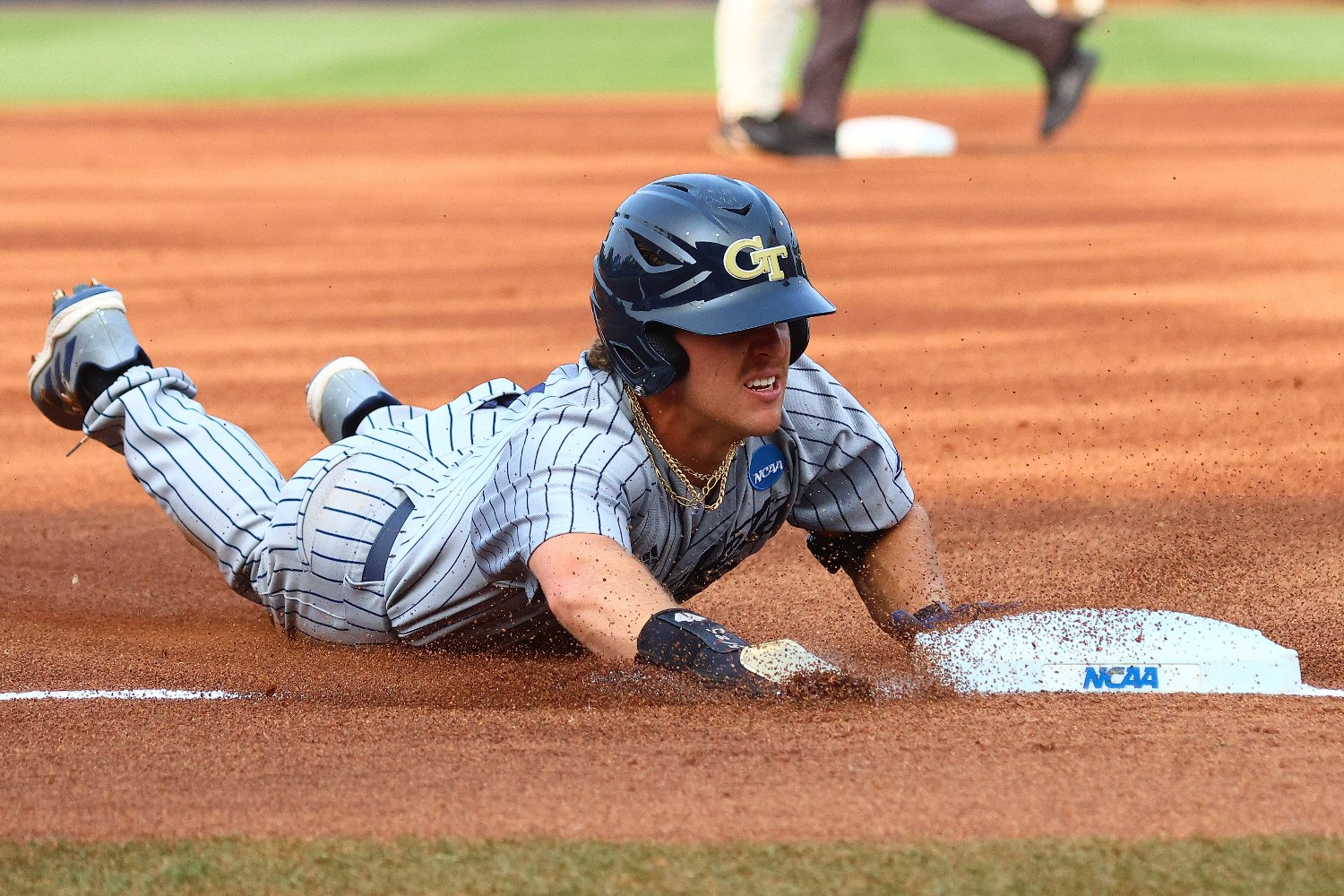 The Royals got a huge boost in last year's MLB Draft lottery as they jumped up to the No. 6 selection in this year's MLB Draft. Not only is having a Top-10 pick in any draft a good thing (especially when they had an 82-80 record last season), but it is especially beneficial in a draft where the class is particularly loaded. We are starting to see more outlets release their updated mock drafts, especially with the MLB Draft in Philadelphia taking place on July 11th. Thus, in this post, we are going to look at five candidates who are not just being mocked to the Kansas City Royals at No. 6, but who could make sense for the organization given its needs at this time. Let's take a look at five draft-eligible players who could hear their names called by the Kansas City Royals on July 11th, and what they could offer the Royals in the long term. Eric (EJ) Booth Jr., OF, Oak Grove High School (MS) Booth is widely considered the most sensible pick for the Royals at No. 6. He's a high-upside athlete who makes a lot of sense for a Royals farm system that's lacking premium outfielders. While Carson Roccaforte, Asbel Gonzalez, and Sean Gamble are Top-10 prospects currently, Booth would be the best-rated outfield prospect if drafted by the Royals. In Jamie Cameron's latest mock MLB Draft on Diamondcentric, he predicted Booth getting selected by Kansas City. Here's what he said about the talented outfielder in his write-up: Booth is a five-tool guy who gives All-Star vibes if he develops properly. As a Vanderbilt commit, he has a high profile and can move quickly in the Royals system, even as a prep prospect. The College Baseball Show podcast is high on Booth as a prospect and believes his power and mature approach would matriculate well in 2027, whether it's in the Minor Leagues or SEC. When looking at Booth's tape, he has intriguing speed and a swing that can produce power, especially as he grows into his body. There are a lot of Carl Crawford vibes with Booth, which Royals fans will take, considering the success of Crawford's career in Tampa Bay. thinks As Cameron pointed out in his piece, Booth's swing is a bit funky-looking, and there are concerns that he could experience some contact issues initially, much like this Gamble, the Royals' first selection in the 2025 Draft. However, Booth has a lot more natural power and bat speed than Gamble, which could help him avoid the early struggles Gamble experienced in Low-A Columbia this season. Drew Burress, OF, Georgia Tech Baseball America mocked Burress to the Royals in their latest mock draft. They believe that Kansas City may draft the Georgia Tech outfielder to have someone who could move quickly in the system after their struggles this season. The Royals have seen the success Jac Caglianone has had in the Majors after being drafted in 2024. They may be hoping for something similar with Burress in this draft. However, though the Royals may want a more "ready" prospect in Burress, that shouldn't dismiss his outlook as a prospect. Here's what Cameron said in his write-up about Burress, whom he mocked at No. 5 to Pittsburgh. Burress not only put up premium numbers at Georgia Tech but also had intriguing Statcast metrics. Despite his diminutive size, he regularly produced excellent exit velocity numbers, as pointed out by Joe Doyle of Overslot.com. The great thing about Burress is that he can do it all as a player. He's a great defender, can hit for average and power, and while he doesn't have elite speed, he still stole 10 bases and may be a better baserunner than base stealer. He also did this against elite competition at Georgia Tech, which should help him move quickly as a prospect in the Royals system. Here are some of his highlights from this year, and it's easy to see Burress make an immediate impact if selected. In the 2023 MLB Draft, the Royals famously selected prep catcher Blake Mitchell over college catcher Kyle Teel. Teel, though injured at the beginning of the year, has been absolutely mashing with the White Sox this season (125 wRC+ last year; 118 wRC+ this year). As for Mitchell, he's still in High-A ball. Perhaps the Royals learned that lesson from 2023 (Scouting Director Brian Bridges didn't take over until 2024), and will go with the more polished college product (Burress) over the intriguing but risky prep outfielder (Booth). Gio Rojas, LHP, Stoneman Douglas High School (FL) Prep pitchers are always risky. That said, there's a lot to like with Rojas, who's been rumored as a possible Royals target at No. 6 by outlets like MLB Pipeline. The 6'4, 195-pound lefty from Florida is a Miami commit, and one can see why the Canes recruited him. He's a power lefty with mature command stuff for his age, and his delivery looks like Sean Manaea, a former Royals first-round pick (who was eventually traded to the Athletics in a deal for Ben Zobrist in 2015). Rojas absolutely dominated in the Florida High School State title game, striking out 16 batters in 6.2 IP. Rojas can throw his four-seamer in the upper 90s, with it topping out at 97 MPH. Some believe he could go even higher if he can continue his development. Furthermore, he has solid secondary offerings, especially of the breaking variety, as highlighted by Cameron in his mock draft write-up on Rojas. He had Rojas getting selected at No. 10 by the Rockies. When looking at more tape on Rojas, he has a smooth delivery and works quickly as a pitcher. He carries a lot of confidence on the mound for a prep pitcher and dominated good prep competition in Florida as well as on the travel ball circuit last summer. Rojas is an older high schooler; he will be 19 on draft day, as Cameron noted. That said, he may move quickly in the Royals system, like David Shields, who was also drafted as an older prep prospect in the 2024 MLB Draft (in the second round). Prep pitchers carry a lot of risk, and the Royals have a mixed track record with first-round prep pitcher selections (Frank Mozzicato hasn't exactly turned out well). However, Rojas seems like the exception and could be part of an excellent long-term Royals starting-pitching trio with Shields and Kendry Chourio, our No. 2 and No. 1 prospects at Royals Keep, respectively. Jackson Flora, RHP, UC Santa Barbara The Royals' starting pitching took a hit at the Major League level this year. Cole Ragans is undergoing elbow surgery and will be out for a while. Kris Bubic has struggled with regression and injury (again). Noah Cameron has taken a step back after finishing fourth in the AL Rookie of the Year voting last year. Lastly, Michael Wacha and Seth Lugo have been solid, but they could be gone by the Trade Deadline. Thus, Kansas City may want to select a pitcher that can move way more quickly in the system. If that's the case, then Flora may be the guy, if available at No. 6. Cameron has the UC Santa Barbara product going No. 4 to the San Francisco Giants. However, if UCLA shortstop Roch Cholowsky doesn't go No. 1, he could fall to No. 4 to the Giants, which would push Flora down the draft board. The Royals could then swoop in and select Flora, as they did in 2024 with Caglianone. Here's what Cameron said about Flora on Diamondcentric: The 21-year-old righty has all the characteristics one would want to see from a potential ace. He posted excellent numbers with the Gauchos, with a 1.06 ERA and 133 strikeouts in 102 IP. He has a diverse pitching mix and showcases plenty of velocity and movement on his offerings. Flora is the kind of pitcher who could move quickly in the Royals' farm system and debut as soon as 2027. Below is an example of Flora's performance against the Oregon Ducks, a Power-5 team that hosted an NCAA regional this season. In 5.0 IP against the Ducks, he struck out five, allowed only two hits, three walks, and no runs. What also makes Flora so intriguing is his strong makeup as a pitcher. He's a student of the game, and he would likely thrive in a professional organization with more intensive player development. Below is a clip of him talking about his mechanics with Rob Friedman of Pitching Ninja, and it's obvious how much thought Flora puts into his craft. The Royals have Shields and Chourio coming up the pipeline, but they still may be a year or two away from making their MLB debut. Conversely, Flora is the kind of pitcher they can fast-track, not only because he's a college arm, but also because he's a polished one who should only benefit from professional coaching and player development. If the Royals are looking for their long-term ace to emerge in the next two years, Flora may be their selection at No. 6. Jacob Lombard, SS, Gulliver Prep High School (FL) The Royals have Bobby Witt Jr. signed until 2030. However, if they are not confident that he will stay beyond 2030, they could have a Witt 2.0 in Lombard, a prep shortstop out of Florida. Lombard is the brother of Yankees infield prospect George Lombard and the son of a former outfielder and current Dodgers bench coach (also named George). The younger Lombard is a true five-tool player who, like Witt, could be franchise-changing. The 18-year-old rates well defensively and on the basepaths, and could have 30 HR-30 SB potential, as Cameron pointed out in his Diamondcentric Mock Draft. Cameron predicted Lombard would be drafted seventh overall, which is held by the Baltimore Orioles. If Lombard gets past the Royals at six, the Orioles could make sense for Lombard, especially considering the organization's affinity for prep players with MLB lineage. Royals scouting director Bridges likes prep players with Lombard's profile, mostly because they have that All-Star ceiling, even with the low-floor risk. There are rumors that the Royals have long liked Lombard, even when he was predicted as a possible No. 1 pick a year ago. His star has dimmed a little during a rough summer circuit last year, especially with Team USA. His contact and swing-and-miss were the biggest concerns with scouts (as pointed out in Cameron's write-up). Nonetheless, there's a smoothness in Lombard's frame and athleticism, both at the plate and in the field. Below is a glimpse of him on the showcase circuit, impressing scouts with his natural tools. You know who was also a talented infielder with MLB family ties who had contact concerns? Witt. And as Royals fans know, that No. 2 overall pick from the 2019 MLB Draft has turned out nicely. Of course, Witt is an unfair comparison, but the similarities are there in so many ways. The main difference is that Lombard is in a loaded draft class, while Witt's was a bit weaker. It's possible that Witt could've gone in that 5-7 range if he was in this draft class. The Royals could set themselves up nicely in the long term with two shortstops with superstar potential by selecting Lombard if available at No. 6. Maybe Lombard moves to second base initially, with the idea that he can move to shortstop if Witt opts out of his deal after the 2030 season. That could help the Royals remain competitive in the long term without breaking the bank. For more on the Royals' selections in the MLB Draft, you can also check out Jared Perkins of Just Baseball and The College Baseball Show and me on Royals Pipeline, a Royals prospects-focused podcast on KC Sports Network. Our first-round draft preview can be found below.
 -
Agreed on the outfield. Kyle Isbel has been that stabilizing force for the OF for a while now and it was nice to see him get some recognition last year (GG nominee). However, with his foot injury, I think his long-term outlook is questionable, and they need to solidify by really improving on the corners defensively to make up for Isbel's regression.
-
Yeah, I missed that and just noticed it this morning (I was traveling and didn't get to this piece until later last night). I get the feeling that they will do whatever they can to just get him MLB innings, whatever the role. While I know he has more value as a starter, he's definitely more valuable healthy, so they need to put him in a role that will keep him on the mound. But I agree. It's been nice to see him actually progressing instead of having a setback like so many Royals pitchers this year who are on the IL.
-
It hasn't been a season to remember for the Kansas City Royals. Even though the AL Central has been one of the weaker divisions in baseball. As of Sunday, the Royals are 35-50, good for last in the division. They are 9.5 games behind in the division and are seven games behind in the AL Wild Card race. According to Fangraphs, their playoff odds are 2.7%. Only the Los Angeles Angels have worse playoff odds at 1.5% (they are actually better with a 36-49 record). Thus, with the Royals likely looking toward next year, it will be important for them to take advantage at the Trade Deadline and bring in assets who could provide long-term value. This Trade Deadline will look more like the 2023 one, where they traded some veterans for prospects and young players, than the ones in 2024 and 2025, when they added to improve their outlook for the remainder of the season. Here are some candidates the Royals President of Baseball Operations, JJ Picollo, could trade at the Deadline this season. Definitely Traded OF Lane Thomas Team Control Through 2026 2026 Stats: 214 PA, 87 wRC+, .660 OPS, 0.3 fWAR The Royals signed Thomas to a one-year, $5.25 million deal this offseason, hoping that he could be a platoon bat with Kyle Isbel at the very least. He's had to take on a bigger role with Isbel on the IL due to plantar fasciitis. Thomas has been solid this month with a 98 wRC+, .318 wOBA, and four home runs in 89 plate appearances. The 30-year-old outfielder has been solid against lefties this year. He has a 95 wRC+ with a .314 wOBA and 0.80 BB/K ratio in 98 plate appearances against left-handed pitchers. That is much better than his 81 wRC+, .293 wOBA, and 0.52 BB/K ratio in 116 plate appearances against right-handed pitchers. There's been a lack of competent right-handed bats available recently, especially in free agency. Thus, he could fit easily on a competing roster, especially in a platoon role. The Royals do not need him, especially with him likely leaving Kansas City in free agency at the conclusion of the season. OF Starling Marte Team Control Through 2026 2026 Stats: 101 PA, 85 wRC+, .664 OPS, 0.1 fWAR The 37-year-old outfielder hasn't been a huge impact player for the Royals this year. He's barely cracked the 100 plate appearance mark, and he's been mostly utilized as a DH against left-handed starting pitchers. The power has gone, as he has only one home run and an ISO of .079, his worst mark in that category since 2023 with the Mets (.076 ISO). While Marte won't be a starter for an MLB club, he is cheap ($1 million deal), and he brings a veteran presence to the clubhouse and lineup. At his age, he doesn't fit in the Royals' long-term plans, so it would be best for Kansas City to trade him, even if he doesn't command a lot in return. RP John Schreiber Team Control Through 2026 2026 Stats: 33 IP, 3.27 ERA, 5.08 FIP, -0.3 fWAR The Royals' bullpen has been a disaster, as they rank 30th in reliever ERA, WHIP, H/9, and HR/9. Schreiber has been the lone positive reliever of this group, with a 3.27 ERA. Unfortunately, his FIP hasn't fared as well, with a lower K/BB ratio (2.17) and a higher HR/9 (1.64) than usual for him. He could be due for regression in the second half, which doesn't help an already bad bullpen. While Schreiber's numbers may not impress another team, he's a dependable reliever who has posted an ERA under 4 every season since 2022. Schreiber is in his last year of team control with the Royals and will be a free agent after this season. The Royals would benefit from trading Schreiber sooner rather than later, especially after a rough outing in the Royals' blowout loss on Friday against the White Sox. SP Kris Bubic Team Control Through 2026 2026 Stats: 50.1 IP, 4.11 ERA, 3.72 FIP, 0.8 fWAR Bubic is currently on the IL, but he made a rehab appearance last week and is expected to make another on Wednesday. He is only pitching one inning at a time in each outing, so it appears that the Royals are easing him in (Update, 6/29: He also threw two innings of one-hit ball on Saturday against Columbus). These early results prove that he may be on the verge of a return to the Majors soon, even if it may result in a transition to the bullpen. That's not necessarily a bad thing, as Bubic thrived in 2024 in the bullpen, posting a 2.67 ERA and 1.95 FIP in 30.1 IP. Due to his injury issues over the past two years and the fact that he will be a free agent after this year, Bubic's trade value has likely deflated. Still, he's an arm with some upside, and a team may acquire him to solidify their bullpen. He could also interest a team that may want to sign him after the season to a team-friendly deal with the hope that he can bounce back and be a starter again in 2027. RP Matt Strahm Team Control Through 2026 2026 Stats: 25.2 IP, 5.96 ERA, 7.00 FIP, -0.9 fWAR Strahm was acquired from Philadelphia with the hope that he would solidify the Royals' bullpen. Unfortunately, that's backfired, with Strahm posting an ERA of nearly 6 and an FIP of 7. He will be a free agent this offseason, and he could thrive in a new change of scenery. He posted a 1.87 ERA in 66 outings in 2024 and a 2.74 ERA in 66 outings in 2025. Thus, a team may be convinced that Strahm could channel that again with a winning ballclub. The Royals are probably kicking themselves for trading away Jonathan Bowlan to Philadelphia to acquire Strahm. The former Royals righty has a 3.70 ERA and 2.70 FIP in 24.1 IP. While Kansas City can't get Bowlan back, they could perhaps acquire another arm with long-term value similar to him by trading Strahm by the Trade Deadline. Probably Traded SP Michael Wacha Team Control Through 2027 (Club option for 2028) 2026 Stats: 108.2 IP, 3.31 ERA, 3.70 FIP, 2.0 fWAR Wacha has been the Royals' best starting pitcher for arguably a second season in a row. He has a 2.0 fWAR already this year, and ZiPS predicts him to accumulate another 1.3 fWAR by the end of the season. While he's not a strikeout artist, he's crafty and can eat innings when he's on, as was the case in Saturday's outing when he threw 7.2 IP of one-run ball. The Royals are in a dilemma with Wacha, as they not only signed him as a free agent before 2024 but also signed him to a 2025 extension. Kansas City trading a free-agent pitcher who wanted to stay in KC isn't a great precedent, especially for a club that has struggled to attract free-agent starting pitchers in the past. Thus, Picollo may be tempted to keep Wacha for at least one more year, to save face with other potential free agents this offseason. SP Seth Lugo Team Control Through 2027 (Vesting option for 2028) 2026 Stats: 90.1 IP, 4.18 ERA, 4.05 FIP, 1.2 fWAR The situation with Lugo is similar to Wacha's. They signed Lugo to an extension before the Trade Deadline rather than trading him away, which most experts thought the Royals should've done. Lugo has been fine this year, with a 4.18 ERA and 1.2 fWAR in 90.1 IP. That's not quite as good as Wacha, but it's solid for a 36-year-old starting pitcher. His 4.05 FIP is also nearly a run better than a year ago (5.09). Thus, Lugo is showing some progress over his mediocre 2025 campaign (0.5 fWAR). The issue with Lugo is that he's WAY more expensive than Wacha, even though their contract situations are similar. Wacha is due $14 million next year and has a $14 million club option for 2028. Lugo is due $21.5 million in 2027 and has a $20 million vesting option for 2028. Thus, the Royals would need to kick in some money in any trade involving Lugo, which may be too much for them, especially if they're already planning on trading Wacha. RP Daniel Lynch IV Team Control Through 2028 2026 Stats: 34 IP, 2.65 ERA, 3.25 FIP, 0.5 fWAR Lynch has had a strong season and has been one of the few bright spots of this Royals bullpen. He's faded a bit in June, with a 4.61 FIP this month after posting a 3.36 FIP in May and a 1.87 FIP in April. That said, he's been one of the Royals' more dependable relievers. Furthermore, his 21.7% K% is 5.8% better than a year ago, and his fWAR is already 0.7 higher than his 2025 mark. The Royals still hold control of Lynch for two more seasons after 2026, so there is no need to rush him, especially with him transitioning to a higher-leverage role this year. Furthermore, he is the third-longest-tenured Royals player behind Salvador Perez and Bubic, so he brings some leadership value to the clubhouse. Nonetheless, if the Royals can get an enticing package for Lynch, they may be forced to part ways with their former 2018 competitive round pick by this year's Trade Deadline. RP Alex Lange Team Control Through 2028 2026 Stats: 36.1 IP, 4.95 ERA, 3.85 FIP, 0.1 fWAR Lange was designated for assignment by the Tigers this offseason and ascended to the role of Royals closer this season. That wasn't the plan when they acquired him, but he's been a nice pickup, making less than $1 million this year. On Sunday, he collected his seventh save of the season, retiring the White Sox in order in the ninth on three groundball outs. Lange has control issues still (1.76 K/BB ratio), but he's done a good job of keeping the ball in the yard (5.6% HR/FB%). He may not be a closer for another organization, but he could boost any bullpen thanks to his strong ability to generate swing-and-miss. Lange has a 27.2% CSW and 12.2% SwStr%. His 44.7% zone rate is also a career-best, showing the progress he's made since coming over from Kansas City. While trading away Lange leaves the Royals in a deeper hole, and it would suck to lose a local kid (he grew up in Lee's Summit), his value has never been higher, and they could use a return of prospects. RP Lucas Erceg Team Control Through 2028 2026 Stats: 31.2 IP, 5.40 ERA, 4.84 FIP, -0.1 fWAR Erceg has been awful this year, even though he produced a scoreless outing on Sunday in the Royals' 5-4 win. His K/BB ratio has gone from 4.50 in 2024, to 2.67 in 2025, to 1.32 this year. His CSW has seen a similar trend, going from 31.3% in 2024, to 26% in 2025, to 23.4% this season. It's been a rough year for Erceg, and he's lost the closer's job, even though he leads the Royals with 12 saves. While the lackluster strikeout, walk, and CSW numbers don't bode well for his trade value, the fastball velocity is still good at 97.3 MPH. That's only 0.5 MPH less than a year ago. Thus, it's not a matter of stuff with Erceg, but command. Another organization could find a way to tap into Erceg's command again. If they do, they will have him for two more years. That long-term value could net the Royals something decent in exchange for Erceg at the Trade Deadline, though Kansas City won't give him away for nothing. Unlikely to Be Traded OF Kyle Isbel Team Control Through 2027 2026 Stats: 183 PA, 79 wRC+, .651 OPS, 0.4 fWAR Isbel would've been a great trade candidate if healthy. However, while he's only on a 10-day IL, it's unlikely he'll be 100 percent by the Trade Deadline. Even with a full more year of team control, teams likely won't be interested in Isbel, especially if his defense, his best tool, is affected by this foot injury. 1B Vinnie Pasquantino Team Control Through 2028 2026 Stats: 291 PA, 81 wRC+, .660 OPS, -0.1 fWAR After hitting 32 home runs and 113 RBI last year, the Royals inked the Pasquatch to a modest two-year extension in the offseason. The move hasn't worked out, as he is down in nearly every category and is currently on the IL with a hamate injury that required surgery. The recovery from hamate injuries isn't good, especially for power hitters like Vinnie. Thus, the interest may not be there, even with Pasquantino still having two more years of team control after this season. Still, Jac Caglianone has emerged as a solid piece for this team's future, which could make Vinnie's future in Kansas City hazier. The Pasquatch could get traded, but it likely won't be until the offseason or the 2027 Trade Deadline. C Salvador Perez Team Control Through 2027 2026 Stats: 327 PA, 52 wRC+, .573 OPS, -1.4 fWAR The Salvy regression has finally come, and boy, did it come fast. After being such a dependable power bat since 2021 (20+ HR each season), he's struggled immensely. He has 10 home runs, but just a .131 ISO, and the rest of his numbers are putrid. The Marlins have shown interest in Perez before, and their catching situation isn't great, so a veteran like Salvy could make sense in an abbreviated role. However, the Royals want Salvy to retire as a Royal, so he's unlikely to be traded either this year or next. View full article
-
Ranking Royals Trade Candidates If They Sell At MLB Trade Deadline
Kevin O'Brien posted an article in Royals
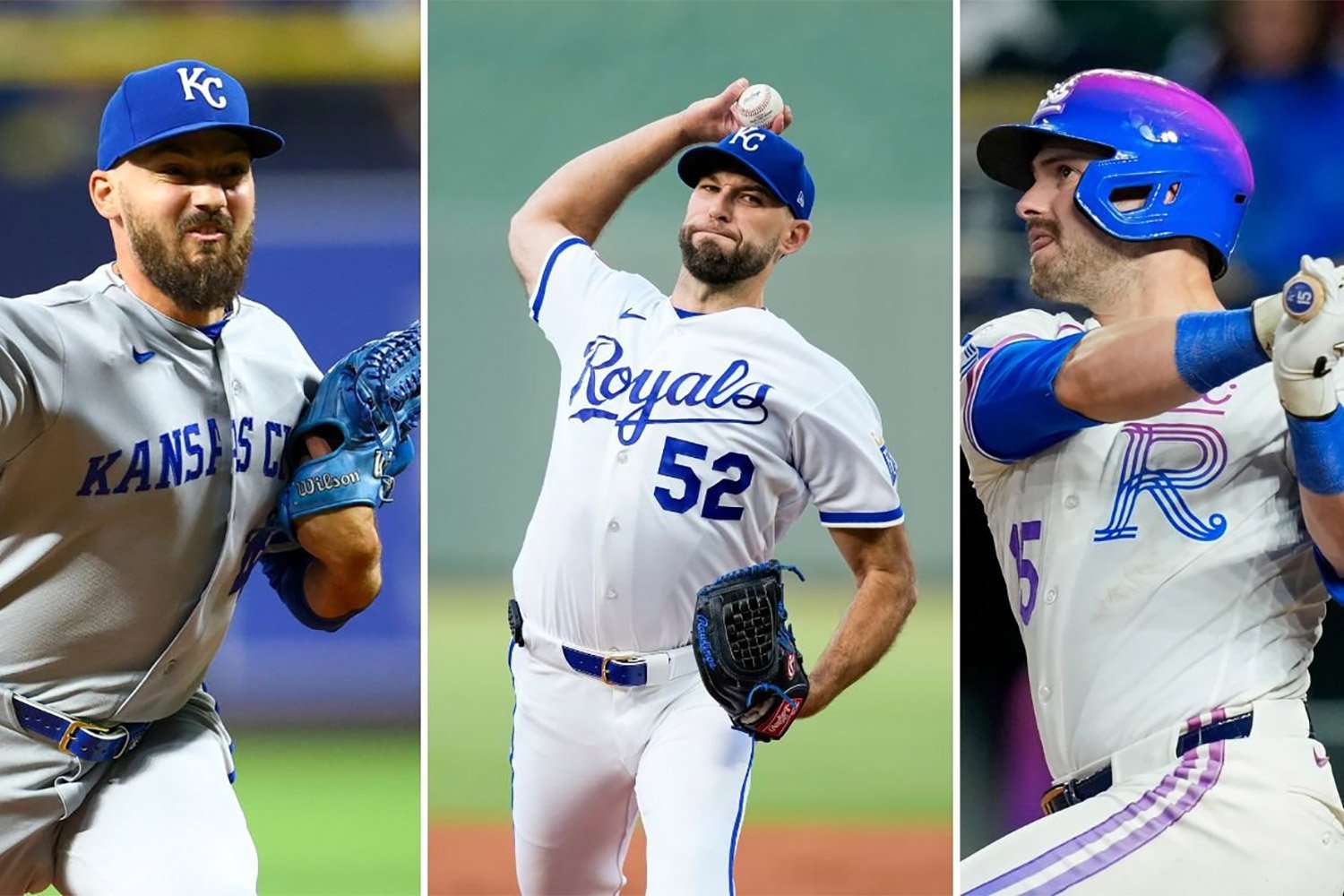 It hasn't been a season to remember for the Kansas City Royals. Even though the AL Central has been one of the weaker divisions in baseball. As of Sunday, the Royals are 35-50, good for last in the division. They are 9.5 games behind in the division and are seven games behind in the AL Wild Card race. According to Fangraphs, their playoff odds are 2.7%. Only the Los Angeles Angels have worse playoff odds at 1.5% (they are actually better with a 36-49 record). Thus, with the Royals likely looking toward next year, it will be important for them to take advantage at the Trade Deadline and bring in assets who could provide long-term value. This Trade Deadline will look more like the 2023 one, where they traded some veterans for prospects and young players, than the ones in 2024 and 2025, when they added to improve their outlook for the remainder of the season. Here are some candidates the Royals President of Baseball Operations, JJ Picollo, could trade at the Deadline this season. Definitely Traded OF Lane Thomas Team Control Through 2026 2026 Stats: 214 PA, 87 wRC+, .660 OPS, 0.3 fWAR The Royals signed Thomas to a one-year, $5.25 million deal this offseason, hoping that he could be a platoon bat with Kyle Isbel at the very least. He's had to take on a bigger role with Isbel on the IL due to plantar fasciitis. Thomas has been solid this month with a 98 wRC+, .318 wOBA, and four home runs in 89 plate appearances. The 30-year-old outfielder has been solid against lefties this year. He has a 95 wRC+ with a .314 wOBA and 0.80 BB/K ratio in 98 plate appearances against left-handed pitchers. That is much better than his 81 wRC+, .293 wOBA, and 0.52 BB/K ratio in 116 plate appearances against right-handed pitchers. There's been a lack of competent right-handed bats available recently, especially in free agency. Thus, he could fit easily on a competing roster, especially in a platoon role. The Royals do not need him, especially with him likely leaving Kansas City in free agency at the conclusion of the season. OF Starling Marte Team Control Through 2026 2026 Stats: 101 PA, 85 wRC+, .664 OPS, 0.1 fWAR The 37-year-old outfielder hasn't been a huge impact player for the Royals this year. He's barely cracked the 100 plate appearance mark, and he's been mostly utilized as a DH against left-handed starting pitchers. The power has gone, as he has only one home run and an ISO of .079, his worst mark in that category since 2023 with the Mets (.076 ISO). While Marte won't be a starter for an MLB club, he is cheap ($1 million deal), and he brings a veteran presence to the clubhouse and lineup. At his age, he doesn't fit in the Royals' long-term plans, so it would be best for Kansas City to trade him, even if he doesn't command a lot in return. RP John Schreiber Team Control Through 2026 2026 Stats: 33 IP, 3.27 ERA, 5.08 FIP, -0.3 fWAR The Royals' bullpen has been a disaster, as they rank 30th in reliever ERA, WHIP, H/9, and HR/9. Schreiber has been the lone positive reliever of this group, with a 3.27 ERA. Unfortunately, his FIP hasn't fared as well, with a lower K/BB ratio (2.17) and a higher HR/9 (1.64) than usual for him. He could be due for regression in the second half, which doesn't help an already bad bullpen. While Schreiber's numbers may not impress another team, he's a dependable reliever who has posted an ERA under 4 every season since 2022. Schreiber is in his last year of team control with the Royals and will be a free agent after this season. The Royals would benefit from trading Schreiber sooner rather than later, especially after a rough outing in the Royals' blowout loss on Friday against the White Sox. SP Kris Bubic Team Control Through 2026 2026 Stats: 50.1 IP, 4.11 ERA, 3.72 FIP, 0.8 fWAR Bubic is currently on the IL, but he made a rehab appearance last week and is expected to make another on Wednesday. He is only pitching one inning at a time in each outing, so it appears that the Royals are easing him in (Update, 6/29: He also threw two innings of one-hit ball on Saturday against Columbus). These early results prove that he may be on the verge of a return to the Majors soon, even if it may result in a transition to the bullpen. That's not necessarily a bad thing, as Bubic thrived in 2024 in the bullpen, posting a 2.67 ERA and 1.95 FIP in 30.1 IP. Due to his injury issues over the past two years and the fact that he will be a free agent after this year, Bubic's trade value has likely deflated. Still, he's an arm with some upside, and a team may acquire him to solidify their bullpen. He could also interest a team that may want to sign him after the season to a team-friendly deal with the hope that he can bounce back and be a starter again in 2027. RP Matt Strahm Team Control Through 2026 2026 Stats: 25.2 IP, 5.96 ERA, 7.00 FIP, -0.9 fWAR Strahm was acquired from Philadelphia with the hope that he would solidify the Royals' bullpen. Unfortunately, that's backfired, with Strahm posting an ERA of nearly 6 and an FIP of 7. He will be a free agent this offseason, and he could thrive in a new change of scenery. He posted a 1.87 ERA in 66 outings in 2024 and a 2.74 ERA in 66 outings in 2025. Thus, a team may be convinced that Strahm could channel that again with a winning ballclub. The Royals are probably kicking themselves for trading away Jonathan Bowlan to Philadelphia to acquire Strahm. The former Royals righty has a 3.70 ERA and 2.70 FIP in 24.1 IP. While Kansas City can't get Bowlan back, they could perhaps acquire another arm with long-term value similar to him by trading Strahm by the Trade Deadline. Probably Traded SP Michael Wacha Team Control Through 2027 (Club option for 2028) 2026 Stats: 108.2 IP, 3.31 ERA, 3.70 FIP, 2.0 fWAR Wacha has been the Royals' best starting pitcher for arguably a second season in a row. He has a 2.0 fWAR already this year, and ZiPS predicts him to accumulate another 1.3 fWAR by the end of the season. While he's not a strikeout artist, he's crafty and can eat innings when he's on, as was the case in Saturday's outing when he threw 7.2 IP of one-run ball. The Royals are in a dilemma with Wacha, as they not only signed him as a free agent before 2024 but also signed him to a 2025 extension. Kansas City trading a free-agent pitcher who wanted to stay in KC isn't a great precedent, especially for a club that has struggled to attract free-agent starting pitchers in the past. Thus, Picollo may be tempted to keep Wacha for at least one more year, to save face with other potential free agents this offseason. SP Seth Lugo Team Control Through 2027 (Vesting option for 2028) 2026 Stats: 90.1 IP, 4.18 ERA, 4.05 FIP, 1.2 fWAR The situation with Lugo is similar to Wacha's. They signed Lugo to an extension before the Trade Deadline rather than trading him away, which most experts thought the Royals should've done. Lugo has been fine this year, with a 4.18 ERA and 1.2 fWAR in 90.1 IP. That's not quite as good as Wacha, but it's solid for a 36-year-old starting pitcher. His 4.05 FIP is also nearly a run better than a year ago (5.09). Thus, Lugo is showing some progress over his mediocre 2025 campaign (0.5 fWAR). The issue with Lugo is that he's WAY more expensive than Wacha, even though their contract situations are similar. Wacha is due $14 million next year and has a $14 million club option for 2028. Lugo is due $21.5 million in 2027 and has a $20 million vesting option for 2028. Thus, the Royals would need to kick in some money in any trade involving Lugo, which may be too much for them, especially if they're already planning on trading Wacha. RP Daniel Lynch IV Team Control Through 2028 2026 Stats: 34 IP, 2.65 ERA, 3.25 FIP, 0.5 fWAR Lynch has had a strong season and has been one of the few bright spots of this Royals bullpen. He's faded a bit in June, with a 4.61 FIP this month after posting a 3.36 FIP in May and a 1.87 FIP in April. That said, he's been one of the Royals' more dependable relievers. Furthermore, his 21.7% K% is 5.8% better than a year ago, and his fWAR is already 0.7 higher than his 2025 mark. The Royals still hold control of Lynch for two more seasons after 2026, so there is no need to rush him, especially with him transitioning to a higher-leverage role this year. Furthermore, he is the third-longest-tenured Royals player behind Salvador Perez and Bubic, so he brings some leadership value to the clubhouse. Nonetheless, if the Royals can get an enticing package for Lynch, they may be forced to part ways with their former 2018 competitive round pick by this year's Trade Deadline. RP Alex Lange Team Control Through 2028 2026 Stats: 36.1 IP, 4.95 ERA, 3.85 FIP, 0.1 fWAR Lange was designated for assignment by the Tigers this offseason and ascended to the role of Royals closer this season. That wasn't the plan when they acquired him, but he's been a nice pickup, making less than $1 million this year. On Sunday, he collected his seventh save of the season, retiring the White Sox in order in the ninth on three groundball outs. Lange has control issues still (1.76 K/BB ratio), but he's done a good job of keeping the ball in the yard (5.6% HR/FB%). He may not be a closer for another organization, but he could boost any bullpen thanks to his strong ability to generate swing-and-miss. Lange has a 27.2% CSW and 12.2% SwStr%. His 44.7% zone rate is also a career-best, showing the progress he's made since coming over from Kansas City. While trading away Lange leaves the Royals in a deeper hole, and it would suck to lose a local kid (he grew up in Lee's Summit), his value has never been higher, and they could use a return of prospects. RP Lucas Erceg Team Control Through 2028 2026 Stats: 31.2 IP, 5.40 ERA, 4.84 FIP, -0.1 fWAR Erceg has been awful this year, even though he produced a scoreless outing on Sunday in the Royals' 5-4 win. His K/BB ratio has gone from 4.50 in 2024, to 2.67 in 2025, to 1.32 this year. His CSW has seen a similar trend, going from 31.3% in 2024, to 26% in 2025, to 23.4% this season. It's been a rough year for Erceg, and he's lost the closer's job, even though he leads the Royals with 12 saves. While the lackluster strikeout, walk, and CSW numbers don't bode well for his trade value, the fastball velocity is still good at 97.3 MPH. That's only 0.5 MPH less than a year ago. Thus, it's not a matter of stuff with Erceg, but command. Another organization could find a way to tap into Erceg's command again. If they do, they will have him for two more years. That long-term value could net the Royals something decent in exchange for Erceg at the Trade Deadline, though Kansas City won't give him away for nothing. Unlikely to Be Traded OF Kyle Isbel Team Control Through 2027 2026 Stats: 183 PA, 79 wRC+, .651 OPS, 0.4 fWAR Isbel would've been a great trade candidate if healthy. However, while he's only on a 10-day IL, it's unlikely he'll be 100 percent by the Trade Deadline. Even with a full more year of team control, teams likely won't be interested in Isbel, especially if his defense, his best tool, is affected by this foot injury. 1B Vinnie Pasquantino Team Control Through 2028 2026 Stats: 291 PA, 81 wRC+, .660 OPS, -0.1 fWAR After hitting 32 home runs and 113 RBI last year, the Royals inked the Pasquatch to a modest two-year extension in the offseason. The move hasn't worked out, as he is down in nearly every category and is currently on the IL with a hamate injury that required surgery. The recovery from hamate injuries isn't good, especially for power hitters like Vinnie. Thus, the interest may not be there, even with Pasquantino still having two more years of team control after this season. Still, Jac Caglianone has emerged as a solid piece for this team's future, which could make Vinnie's future in Kansas City hazier. The Pasquatch could get traded, but it likely won't be until the offseason or the 2027 Trade Deadline. C Salvador Perez Team Control Through 2027 2026 Stats: 327 PA, 52 wRC+, .573 OPS, -1.4 fWAR The Salvy regression has finally come, and boy, did it come fast. After being such a dependable power bat since 2021 (20+ HR each season), he's struggled immensely. He has 10 home runs, but just a .131 ISO, and the rest of his numbers are putrid. The Marlins have shown interest in Perez before, and their catching situation isn't great, so a veteran like Salvy could make sense in an abbreviated role. However, the Royals want Salvy to retire as a Royal, so he's unlikely to be traded either this year or next.
 -
Brett Squires homered and tripled with four RBI, but the Omaha Storm Chasers fell 13-11 in ten innings. The Northwest Arkansas Naturals wasted Felix Arronde's six innings in a 7-6 walkoff loss. Tanner Jones spun five scoreless innings, and Trevor Werner's three-run homer keyed a seven-run ninth as the Quad Cities River Bandits won 7-2. Darwin Rodriguez took the loss as the Columbia Fireflies dropped a 4-1 decision despite nine hits. Royals Transactions Kansas City Royals recalled RHP Eric Cerantola from Omaha Storm Chasers. Kansas City Royals optioned RHP Mitch Spence to Omaha Storm Chasers. Storm Chasers' Early Outburst Wasted In Extra-Inning Loss The Omaha Storm Chasers built an early lead and then watched it disappear in a 13-11, ten-inning loss to the Columbus Clippers. Squires carried the offense, going 3-for-4 with a triple, a home run, a stolen base, two runs, and four RBI. Brandon Drury added a home run, two RBI, and two runs, while Rudy Martin Jr. reached base three times from the leadoff spot. Omaha put up six runs in the second inning to seize control. The affiliate loaded the bases on two walks and a hit by pitch, then pushed across the first run on Kevin Newman's bases-loaded walk that scored Drury. A run came around on a strikeout, Squires followed with a two-run triple, and Abraham Toro and Gavin Cross each delivered an RBI double to cap the rally. The Clippers chipped away over the middle innings, scoring five in the fourth and adding single runs in the sixth, eighth, and ninth. Squires' two-run homer in the ninth tied the game and forced extra innings, but Columbus answered with four runs in the top of the tenth, including a two-run home run that brought home the zombie runner. Omaha managed only two runs in the bottom of the tenth on Drury's two-run homer and fell short. Starter Bailey Falter worked 3 1/3 innings, allowing four runs on two walks with four strikeouts. Génesis Cabrera took the loss after surrendering four runs in the tenth. The Storm Chasers stranded seven runners and went 5-for-15 with runners in scoring position. They are 36-44 this season. Omaha Storm Chasers Hitting Player AB R H RBI BB K Rudy Martin Jr. 6 2 2 0 0 1 Peyton Wilson 6 0 1 1 0 3 Brett Squires 4 2 3 4 1 0 Abraham Toro 4 1 1 1 1 1 Gavin Cross 4 1 1 1 1 0 Brandon Drury 4 2 1 2 1 1 Luca Tresh 4 1 0 0 1 0 Andrew Velazquez 4 1 1 0 0 1 Kevin Newman 2 1 0 1 1 0 Matthew Lugo 2 0 1 0 0 0 Omaha Storm Chasers Pitching Player IP H R ER BB K HR Bailey Falter 3 1/3 6 4 4 2 4 0 Andrew Pérez 2/3 1 2 2 1 0 1 Mason Black 3 2 1 1 1 3 1 Jose Cuas 2/3 1 1 1 1 0 0 Anthony Gose 1 1/3 1 1 1 0 2 1 Génesis Cabrera 1 3 4 3 1 1 1 Naturals Squander Lead In Walk-Off Loss To Springfield The Northwest Arkansas Naturals carried a lead into the late innings but fell 7-6 on a walk-off home run against the Springfield Cardinals. Sam Kulasingam led the way, going 2-for-4 with a home run, a stolen base, two runs, and two RBI. Jack Pineda reached base three times with two hits, a walk, a stolen base, and two RBI, and Connor Scott homered. The decisive frame for the Naturals was a five-run third inning. Scott opened the scoring with a solo home run, Pineda laced a two-run single, Kulasingam followed with an RBI single, and Colton Becker doubled home another run. That outburst, added to a run in the first, gave Northwest Arkansas a 6-3 lead. The advantage did not hold. Springfield trimmed the deficit with a run in the sixth, tied it with two runs in the seventh, and ended it with a leadoff home run in the ninth. Royals Keep's No. 14 prospect Arronde turned in a strong start, working six innings and allowing four runs, three earned, on five hits with one walk and four strikeouts. Oscar Rayo took the loss after allowing the walk-off home run. The Naturals left four runners on base and went 3-for-9 with runners in scoring position. Northwest Arkansas is now 30-43. Northwest Arkansas Naturals Hitting Player AB R H RBI BB K Carson Roccaforte 4 1 1 0 1 1 Jack Pineda 3 1 2 2 1 0 Sam Kulasingam 4 2 2 2 0 0 Jorge Alfaro 4 0 0 0 0 1 Spencer Nivens 4 0 1 0 0 1 Colton Becker 4 0 1 1 0 1 Omar Hernandez 4 0 0 0 0 1 Connor Scott 4 1 1 1 0 1 Alberto Rodriguez 4 1 1 0 0 0 Northwest Arkansas Naturals Pitching Player IP H R ER BB K HR Felix Arronde 6 5 4 3 1 4 1 Frank Mozzicato 1/3 1 2 2 2 0 0 Oscar Rayo 1 2/3 1 1 1 0 1 1 River Bandits Erupt For Seven In Ninth To Stun South Bend The Quad Cities River Bandits broke a scoreless tie dramatically, plating seven runs in the ninth inning to beat the South Bend Cubs 7-2. Werner provided the biggest swing, a three-run home run, and finished 1-for-4 with three RBI. Ramon Ramirez, Royals Keep's No. 6 prospect, went 2-for-4 with a double and two RBI, and Tyriq Kemp added a hit, an RBI, a walk, and a stolen base from the leadoff spot. The ninth inning told the whole story offensively. Ramirez started the rally with a two-run double, Connor Rasmussen brought home a run on a groundout, Werner crushed his three-run homer, and Kemp capped the scoring with an RBI single. The seven-run frame turned a 2-0 deficit into a comfortable win. Starter Jones was dominant, working five scoreless innings and allowing just one hit with one walk and five strikeouts. The Cubs scratched across single runs in the sixth and eighth, but Quad Cities steadied things out of the bullpen. Kamden Edge, Royals Keep's No. 19 prospect, earned the win with two innings of work, allowing one run on one hit with two strikeouts. The River Bandits left four runners on base and went 3-for-9 with runners in scoring position. Quad Cities improved their record to 32-39 after the victory over the Cubs. Quad Cities River Bandits Hitting Player AB R H RBI BB K Tyriq Kemp 4 1 1 1 1 1 Asbel Gonzalez 4 1 0 0 1 0 Blake Mitchell 4 0 0 0 0 2 Ramon Ramirez 4 1 2 2 0 0 Nolan Sailors 3 1 1 0 1 1 Erick Torres 2 1 0 0 2 0 Connor Rasmussen 4 0 0 1 0 2 Trevor Werner 4 1 1 3 0 1 Angel Acosta 4 1 1 0 0 0 Quad Cities River Bandits Pitching Player IP H R ER BB K HR Tanner Jones 5 1 0 0 1 5 0 Aiden Jimenez 1 1 1 1 0 2 1 Max Martin 1 1 0 0 1 1 0 Kamden Edge 2 1 1 1 0 2 0 Fireflies' Bats Stranded In Loss To Kannapolis The Columbia Fireflies collected nine hits but managed only one run in a 4-1 loss to the Kannapolis Cannon Ballers. Roni Cabrera led the offense, going 2-for-3 with an RBI, a walk, and a stolen base. Ivan Sosa also notched two hits, and Stone Russell doubled, but the affiliate repeatedly failed to bring runners home, stranding eight in the contest. Kannapolis built its lead early. The Cannon Ballers scored once in the first and then put up three runs in the third inning, a frame aided by a throwing error. Columbia could not respond until the seventh, when Cabrera singled home Yandel Ricardo, Royals Keep's No. 10 prospect, for the team's lone run. Starter Rodriguez took the loss, working five innings and allowing four runs, three earned, on five hits with one walk and two strikeouts. The bullpen was sharp behind him, as Brandon Herbold, Yeri Pérez, and Andy Basora combined for three scoreless innings of relief. The Fireflies' inability to cash in with runners aboard, eight left on base, proved the difference. Columbia Fireflies Hitting Player AB R H RBI BB K Josh Hammond 4 0 1 0 0 0 Sean Gamble 4 0 1 0 0 1 Stone Russell 4 0 1 0 0 0 Jhosmmel Zue 4 0 1 0 0 0 Yandel Ricardo 4 1 1 0 0 0 Roni Cabrera 3 0 2 1 1 0 Josi Novas 4 0 0 0 0 0 Ivan Sosa 4 0 2 0 0 0 Gabriel Silva 4 0 0 0 0 2 Columbia Fireflies Pitching Player IP H R ER BB K HR Darwin Rodriguez 5 5 4 3 1 2 0 Brandon Herbold 1 1/3 0 0 0 0 1 0 Yeri Pérez 2/3 0 0 0 2 1 0 Andy Basora 1 1 0 0 0 1 0 Top-20 Prospect Performance Kendry Chourio: DNP David Shields: DNP Josh Hammond: 1-for-4 Blake Mitchell: 0-for-4, 2 K Sean Gamble: 1-for-4, K Ramon Ramirez: 2-for-4, 2B, 2 RBI Drew Beam: DNP Carson Roccaforte: 1-for-4, 2B, BB, SB, K Asbel Gonzalez: 0-for-4, BB Yandel Ricardo: 1-for-4 Michael Lombardi: DNP Ben Kudrna: DNP Justin Lamkin: DNP Felix Arronde: 6 IP, 5 H, 4 R, 3 ER, 1 BB, 4 K Blake Wolters: DNP Steven Zobac: DNP Austin Charles: DNP Daniel Vázquez: DNP Kamden Edge: 2 IP, 1 H, 1 R, 1 ER, 0 BB, 2 K Warren Calcano: DNP View full article
-
 Brett Squires homered and tripled with four RBI, but the Omaha Storm Chasers fell 13-11 in ten innings. The Northwest Arkansas Naturals wasted Felix Arronde's six innings in a 7-6 walkoff loss. Tanner Jones spun five scoreless innings, and Trevor Werner's three-run homer keyed a seven-run ninth as the Quad Cities River Bandits won 7-2. Darwin Rodriguez took the loss as the Columbia Fireflies dropped a 4-1 decision despite nine hits. Royals Transactions Kansas City Royals recalled RHP Eric Cerantola from Omaha Storm Chasers. Kansas City Royals optioned RHP Mitch Spence to Omaha Storm Chasers. Storm Chasers' Early Outburst Wasted In Extra-Inning Loss The Omaha Storm Chasers built an early lead and then watched it disappear in a 13-11, ten-inning loss to the Columbus Clippers. Squires carried the offense, going 3-for-4 with a triple, a home run, a stolen base, two runs, and four RBI. Brandon Drury added a home run, two RBI, and two runs, while Rudy Martin Jr. reached base three times from the leadoff spot. Omaha put up six runs in the second inning to seize control. The affiliate loaded the bases on two walks and a hit by pitch, then pushed across the first run on Kevin Newman's bases-loaded walk that scored Drury. A run came around on a strikeout, Squires followed with a two-run triple, and Abraham Toro and Gavin Cross each delivered an RBI double to cap the rally. The Clippers chipped away over the middle innings, scoring five in the fourth and adding single runs in the sixth, eighth, and ninth. Squires' two-run homer in the ninth tied the game and forced extra innings, but Columbus answered with four runs in the top of the tenth, including a two-run home run that brought home the zombie runner. Omaha managed only two runs in the bottom of the tenth on Drury's two-run homer and fell short. Starter Bailey Falter worked 3 1/3 innings, allowing four runs on two walks with four strikeouts. Génesis Cabrera took the loss after surrendering four runs in the tenth. The Storm Chasers stranded seven runners and went 5-for-15 with runners in scoring position. They are 36-44 this season. Omaha Storm Chasers Hitting Player AB R H RBI BB K Rudy Martin Jr. 6 2 2 0 0 1 Peyton Wilson 6 0 1 1 0 3 Brett Squires 4 2 3 4 1 0 Abraham Toro 4 1 1 1 1 1 Gavin Cross 4 1 1 1 1 0 Brandon Drury 4 2 1 2 1 1 Luca Tresh 4 1 0 0 1 0 Andrew Velazquez 4 1 1 0 0 1 Kevin Newman 2 1 0 1 1 0 Matthew Lugo 2 0 1 0 0 0 Omaha Storm Chasers Pitching Player IP H R ER BB K HR Bailey Falter 3 1/3 6 4 4 2 4 0 Andrew Pérez 2/3 1 2 2 1 0 1 Mason Black 3 2 1 1 1 3 1 Jose Cuas 2/3 1 1 1 1 0 0 Anthony Gose 1 1/3 1 1 1 0 2 1 Génesis Cabrera 1 3 4 3 1 1 1 Naturals Squander Lead In Walk-Off Loss To Springfield The Northwest Arkansas Naturals carried a lead into the late innings but fell 7-6 on a walk-off home run against the Springfield Cardinals. Sam Kulasingam led the way, going 2-for-4 with a home run, a stolen base, two runs, and two RBI. Jack Pineda reached base three times with two hits, a walk, a stolen base, and two RBI, and Connor Scott homered. The decisive frame for the Naturals was a five-run third inning. Scott opened the scoring with a solo home run, Pineda laced a two-run single, Kulasingam followed with an RBI single, and Colton Becker doubled home another run. That outburst, added to a run in the first, gave Northwest Arkansas a 6-3 lead. The advantage did not hold. Springfield trimmed the deficit with a run in the sixth, tied it with two runs in the seventh, and ended it with a leadoff home run in the ninth. Royals Keep's No. 14 prospect Arronde turned in a strong start, working six innings and allowing four runs, three earned, on five hits with one walk and four strikeouts. Oscar Rayo took the loss after allowing the walk-off home run. The Naturals left four runners on base and went 3-for-9 with runners in scoring position. Northwest Arkansas is now 30-43. Northwest Arkansas Naturals Hitting Player AB R H RBI BB K Carson Roccaforte 4 1 1 0 1 1 Jack Pineda 3 1 2 2 1 0 Sam Kulasingam 4 2 2 2 0 0 Jorge Alfaro 4 0 0 0 0 1 Spencer Nivens 4 0 1 0 0 1 Colton Becker 4 0 1 1 0 1 Omar Hernandez 4 0 0 0 0 1 Connor Scott 4 1 1 1 0 1 Alberto Rodriguez 4 1 1 0 0 0 Northwest Arkansas Naturals Pitching Player IP H R ER BB K HR Felix Arronde 6 5 4 3 1 4 1 Frank Mozzicato 1/3 1 2 2 2 0 0 Oscar Rayo 1 2/3 1 1 1 0 1 1 River Bandits Erupt For Seven In Ninth To Stun South Bend The Quad Cities River Bandits broke a scoreless tie dramatically, plating seven runs in the ninth inning to beat the South Bend Cubs 7-2. Werner provided the biggest swing, a three-run home run, and finished 1-for-4 with three RBI. Ramon Ramirez, Royals Keep's No. 6 prospect, went 2-for-4 with a double and two RBI, and Tyriq Kemp added a hit, an RBI, a walk, and a stolen base from the leadoff spot. The ninth inning told the whole story offensively. Ramirez started the rally with a two-run double, Connor Rasmussen brought home a run on a groundout, Werner crushed his three-run homer, and Kemp capped the scoring with an RBI single. The seven-run frame turned a 2-0 deficit into a comfortable win. Starter Jones was dominant, working five scoreless innings and allowing just one hit with one walk and five strikeouts. The Cubs scratched across single runs in the sixth and eighth, but Quad Cities steadied things out of the bullpen. Kamden Edge, Royals Keep's No. 19 prospect, earned the win with two innings of work, allowing one run on one hit with two strikeouts. The River Bandits left four runners on base and went 3-for-9 with runners in scoring position. Quad Cities improved their record to 32-39 after the victory over the Cubs. Quad Cities River Bandits Hitting Player AB R H RBI BB K Tyriq Kemp 4 1 1 1 1 1 Asbel Gonzalez 4 1 0 0 1 0 Blake Mitchell 4 0 0 0 0 2 Ramon Ramirez 4 1 2 2 0 0 Nolan Sailors 3 1 1 0 1 1 Erick Torres 2 1 0 0 2 0 Connor Rasmussen 4 0 0 1 0 2 Trevor Werner 4 1 1 3 0 1 Angel Acosta 4 1 1 0 0 0 Quad Cities River Bandits Pitching Player IP H R ER BB K HR Tanner Jones 5 1 0 0 1 5 0 Aiden Jimenez 1 1 1 1 0 2 1 Max Martin 1 1 0 0 1 1 0 Kamden Edge 2 1 1 1 0 2 0 Fireflies' Bats Stranded In Loss To Kannapolis The Columbia Fireflies collected nine hits but managed only one run in a 4-1 loss to the Kannapolis Cannon Ballers. Roni Cabrera led the offense, going 2-for-3 with an RBI, a walk, and a stolen base. Ivan Sosa also notched two hits, and Stone Russell doubled, but the affiliate repeatedly failed to bring runners home, stranding eight in the contest. Kannapolis built its lead early. The Cannon Ballers scored once in the first and then put up three runs in the third inning, a frame aided by a throwing error. Columbia could not respond until the seventh, when Cabrera singled home Yandel Ricardo, Royals Keep's No. 10 prospect, for the team's lone run. Starter Rodriguez took the loss, working five innings and allowing four runs, three earned, on five hits with one walk and two strikeouts. The bullpen was sharp behind him, as Brandon Herbold, Yeri Pérez, and Andy Basora combined for three scoreless innings of relief. The Fireflies' inability to cash in with runners aboard, eight left on base, proved the difference. Columbia Fireflies Hitting Player AB R H RBI BB K Josh Hammond 4 0 1 0 0 0 Sean Gamble 4 0 1 0 0 1 Stone Russell 4 0 1 0 0 0 Jhosmmel Zue 4 0 1 0 0 0 Yandel Ricardo 4 1 1 0 0 0 Roni Cabrera 3 0 2 1 1 0 Josi Novas 4 0 0 0 0 0 Ivan Sosa 4 0 2 0 0 0 Gabriel Silva 4 0 0 0 0 2 Columbia Fireflies Pitching Player IP H R ER BB K HR Darwin Rodriguez 5 5 4 3 1 2 0 Brandon Herbold 1 1/3 0 0 0 0 1 0 Yeri Pérez 2/3 0 0 0 2 1 0 Andy Basora 1 1 0 0 0 1 0 Top-20 Prospect Performance Kendry Chourio: DNP David Shields: DNP Josh Hammond: 1-for-4 Blake Mitchell: 0-for-4, 2 K Sean Gamble: 1-for-4, K Ramon Ramirez: 2-for-4, 2B, 2 RBI Drew Beam: DNP Carson Roccaforte: 1-for-4, 2B, BB, SB, K Asbel Gonzalez: 0-for-4, BB Yandel Ricardo: 1-for-4 Michael Lombardi: DNP Ben Kudrna: DNP Justin Lamkin: DNP Felix Arronde: 6 IP, 5 H, 4 R, 3 ER, 1 BB, 4 K Blake Wolters: DNP Steven Zobac: DNP Austin Charles: DNP Daniel Vázquez: DNP Kamden Edge: 2 IP, 1 H, 1 R, 1 ER, 0 BB, 2 K Warren Calcano: DNP
 -
Three Royals affiliates won on the same night. David Shields fired six one-run innings with seven strikeouts as Quad Cities routed South Bend, 8-1. Randy Dobnak turned in a quality start, and Omaha rallied past Columbus, 6-3, behind Matthew Lugo's two-run homer. Josh Hammond went 4-for-4, and Sean Gamble drove in three as Columbia beat Kannapolis, 7-3, with Coleman Picard closing on 3 1/3 hitless innings. Northwest Arkansas' game against Springfield was rained out. Royals Transactions No Roster Moves Late Rally Carries Storm Chasers Past Columbus The Omaha Storm Chasers scored three runs in the eighth inning to break a tie and beat the Columbus Clippers, 6-3. Dobnak worked 6 1/3 innings, allowing three runs on eight hits with no walks and five strikeouts for a quality start. Omaha grabbed the early lead in the first when Lugo hit a two-run home run that scored Brett Squires for a 2-1 advantage. Columbus answered with two runs in the third to lead 3-2, and Omaha tied it in the fifth on a Peyton Wilson run-scoring single that brought home Gavin Cross. The Storm Chasers took control in the eighth. Drew Waters doubled to drive in Rudy Martin Jr. for a 4-3 lead, and Brandon Drury followed with a two-run single that scored Lugo and Waters to make it 6-3. Eli Morgan earned the win with a scoreless eighth, and Eric Cerantola closed the ninth for his eleventh save, striking out two. Brett Squires led the offense, going 3-for-4 with a double. Lugo finished with two RBIs, two runs, and a walk, while Gavin Cross added two hits. Omaha left six runners on base and went 3-for-7 with runners in scoring position. The Storm Chasers are now 35-42. Player AB R H RBI BB K Abraham Toro 4 0 1 0 0 0 Peyton Wilson 4 0 1 1 0 3 Brett Squires 4 1 3 0 0 1 Rudy Martin Jr. 0 1 0 0 0 0 Andrew Velazquez 0 0 0 0 0 0 Matthew Lugo 2 2 1 2 1 1 Drew Waters 4 1 1 1 0 1 Brandon Drury 4 0 1 2 0 2 Luca Tresh 4 0 0 0 0 1 Gavin Cross 3 1 2 0 1 0 Kevin Newman 3 0 0 0 1 0 Player IP H R ER BB K HR Randy Dobnak 6 1/3 8 3 3 0 5 1 Génesis Cabrera 2/3 1 0 0 0 0 0 Eli Morgan 1 1 0 0 1 2 0 Eric Cerantola 1 0 0 0 1 2 0 David Shields Dominates As Quad Cities Tops South Bend Shields turned in a dominant start as the Quad Cities River Bandits beat the South Bend Cubs, 8-1. Shields worked six innings, allowing one run on three hits with one walk and seven strikeouts for a quality start. Mason Miller followed with two scoreless innings and two strikeouts, and Yimi Presinal finished with a scoreless ninth. Quad Cities built its lead with a three-run second inning. Erick Torres drew a bases-loaded walk that scored Luke Pelzer, Connor Rasmussen grounded into a force out that brought home Derlin Figueroa, and Asbel Gonzalez followed with a run-scoring single that plated Tyriq Kemp for a 3-0 lead. The Bandits added a run in the third on a Torres sacrifice fly double play that scored Ramon Ramirez, and Pelzer drove in Blake Mitchell with a groundout in the seventh. Quad Cities pulled away with three runs in the ninth, two of them on bases-loaded walks to Kemp and Torres. Gonzalez led the offense, going 3-for-5 with a stolen base from the leadoff spot. Pelzer added three hits, a walk, and two runs, and Torres finished with three RBIs and two walks. The River Bandits left ten runners on base and went 4-for-15 with runners in scoring position. Quad Cities improved to 31-37. Player AB R H RBI BB K Asbel Gonzalez 5 1 3 1 0 0 Blake Mitchell 4 2 1 0 1 2 Ramon Ramirez 4 1 0 0 1 2 Luke Pelzer 4 2 3 1 1 0 Derlin Figueroa 5 1 2 0 0 2 Tyriq Kemp 4 1 1 1 1 2 Erick Torres 2 0 1 3 2 0 Connor Rasmussen 4 0 0 2 1 1 Trevor Werner 4 0 0 0 1 2 Player IP H R ER BB K HR David Shields 6 3 1 1 1 7 0 Mason Miller 2 1 0 0 0 2 0 Yimi Presinal 1 0 0 0 0 1 0 Josh Hammond, Sean Gamble Power Columbia Past Kannapolis The Columbia Fireflies pulled away with a three-run sixth inning and beat the Kannapolis Cannon Ballers, 7-3. Shane Van Dam picked up the win, allowing two runs, one earned, on three hits with two walks and two strikeouts over five innings. Picard closed the game with 3 1/3 scoreless and hitless innings, striking out three to earn his first save. Columbia trailed 1-0 after an unearned run in the first before taking the lead in the third. Gamble laced a two-run triple that scored Ivan Sosa and Hammond, and Hyungchan Um followed with a run-scoring groundout that brought home Gamble for a 3-1 advantage. The Fireflies broke the game open in the sixth. Jhosmmel Zue singled home Yandel Ricardo, Ivan Sosa added a run-scoring groundout, and Josh Hammond singled in Angel Ramirez to push the lead to 6-2. Gamble capped the scoring with a run-scoring single in the ninth. Hammond led the offense, going 4-for-4 with a double and a stolen base from the leadoff spot and scoring twice. Gamble finished with three RBIs, and Ricardo added three hits, including two triples. Columbia left seven runners on base and went 7-for-18 with runners in scoring position. The Fireflies improved to 37-35 for the season. Player AB R H RBI BB K Josh Hammond 4 2 4 1 1 0 Sean Gamble 5 1 2 3 0 1 Hyungchan Um 4 0 0 1 1 3 JC Vanek 4 0 0 0 1 3 Yandel Ricardo 4 1 3 0 1 1 Roni Cabrera 3 0 0 0 1 1 Jhosmmel Zue 4 1 2 1 0 1 Angel Ramirez 4 1 0 0 0 1 Ivan Sosa 4 1 0 1 0 1 Player IP H R ER BB K HR Shane Van Dam 5 3 2 1 2 2 0 Yeri Perez 2/3 0 1 1 2 0 0 Coleman Picard 3 1/3 0 0 0 0 3 0 Top-20 Prospect Performance Kendry Chourio: DNP David Shields: 6 IP, 3 H, 1 R, 1 ER, 1 BB, 7 K Josh Hammond: 4-for-4, 2B Blake Mitchell: 1-for-4, 2B, 2 K Sean Gamble: 2-for-5, 3B, K Ramon Ramirez: 0-for-4, 2 K Drew Beam: DNP Carson Roccaforte: DNP Asbel Gonzalez: 3-for-5 Yandel Ricardo: 3-for-4, 2 3B, K Michael Lombardi: DNP Ben Kudrna: DNP Justin Lamkin: DNP Felix Arronde: DNP Blake Wolters: DNP Steven Zobac: DNP Austin Charles: DNP Daniel Vázquez: DNP Kamden Edge: DNP Warren Calcano: 0-for-1, 2 R, 4 BB View full article
-
Royals Minor League Report (6/25): Royals Farm Sweeps The Slate
Kevin O'Brien posted an article in Minor Leagues
 Three Royals affiliates won on the same night. David Shields fired six one-run innings with seven strikeouts as Quad Cities routed South Bend, 8-1. Randy Dobnak turned in a quality start, and Omaha rallied past Columbus, 6-3, behind Matthew Lugo's two-run homer. Josh Hammond went 4-for-4, and Sean Gamble drove in three as Columbia beat Kannapolis, 7-3, with Coleman Picard closing on 3 1/3 hitless innings. Northwest Arkansas' game against Springfield was rained out. Royals Transactions No Roster Moves Late Rally Carries Storm Chasers Past Columbus The Omaha Storm Chasers scored three runs in the eighth inning to break a tie and beat the Columbus Clippers, 6-3. Dobnak worked 6 1/3 innings, allowing three runs on eight hits with no walks and five strikeouts for a quality start. Omaha grabbed the early lead in the first when Lugo hit a two-run home run that scored Brett Squires for a 2-1 advantage. Columbus answered with two runs in the third to lead 3-2, and Omaha tied it in the fifth on a Peyton Wilson run-scoring single that brought home Gavin Cross. The Storm Chasers took control in the eighth. Drew Waters doubled to drive in Rudy Martin Jr. for a 4-3 lead, and Brandon Drury followed with a two-run single that scored Lugo and Waters to make it 6-3. Eli Morgan earned the win with a scoreless eighth, and Eric Cerantola closed the ninth for his eleventh save, striking out two. Brett Squires led the offense, going 3-for-4 with a double. Lugo finished with two RBIs, two runs, and a walk, while Gavin Cross added two hits. Omaha left six runners on base and went 3-for-7 with runners in scoring position. The Storm Chasers are now 35-42. Player AB R H RBI BB K Abraham Toro 4 0 1 0 0 0 Peyton Wilson 4 0 1 1 0 3 Brett Squires 4 1 3 0 0 1 Rudy Martin Jr. 0 1 0 0 0 0 Andrew Velazquez 0 0 0 0 0 0 Matthew Lugo 2 2 1 2 1 1 Drew Waters 4 1 1 1 0 1 Brandon Drury 4 0 1 2 0 2 Luca Tresh 4 0 0 0 0 1 Gavin Cross 3 1 2 0 1 0 Kevin Newman 3 0 0 0 1 0 Player IP H R ER BB K HR Randy Dobnak 6 1/3 8 3 3 0 5 1 Génesis Cabrera 2/3 1 0 0 0 0 0 Eli Morgan 1 1 0 0 1 2 0 Eric Cerantola 1 0 0 0 1 2 0 David Shields Dominates As Quad Cities Tops South Bend Shields turned in a dominant start as the Quad Cities River Bandits beat the South Bend Cubs, 8-1. Shields worked six innings, allowing one run on three hits with one walk and seven strikeouts for a quality start. Mason Miller followed with two scoreless innings and two strikeouts, and Yimi Presinal finished with a scoreless ninth. Quad Cities built its lead with a three-run second inning. Erick Torres drew a bases-loaded walk that scored Luke Pelzer, Connor Rasmussen grounded into a force out that brought home Derlin Figueroa, and Asbel Gonzalez followed with a run-scoring single that plated Tyriq Kemp for a 3-0 lead. The Bandits added a run in the third on a Torres sacrifice fly double play that scored Ramon Ramirez, and Pelzer drove in Blake Mitchell with a groundout in the seventh. Quad Cities pulled away with three runs in the ninth, two of them on bases-loaded walks to Kemp and Torres. Gonzalez led the offense, going 3-for-5 with a stolen base from the leadoff spot. Pelzer added three hits, a walk, and two runs, and Torres finished with three RBIs and two walks. The River Bandits left ten runners on base and went 4-for-15 with runners in scoring position. Quad Cities improved to 31-37. Player AB R H RBI BB K Asbel Gonzalez 5 1 3 1 0 0 Blake Mitchell 4 2 1 0 1 2 Ramon Ramirez 4 1 0 0 1 2 Luke Pelzer 4 2 3 1 1 0 Derlin Figueroa 5 1 2 0 0 2 Tyriq Kemp 4 1 1 1 1 2 Erick Torres 2 0 1 3 2 0 Connor Rasmussen 4 0 0 2 1 1 Trevor Werner 4 0 0 0 1 2 Player IP H R ER BB K HR David Shields 6 3 1 1 1 7 0 Mason Miller 2 1 0 0 0 2 0 Yimi Presinal 1 0 0 0 0 1 0 Josh Hammond, Sean Gamble Power Columbia Past Kannapolis The Columbia Fireflies pulled away with a three-run sixth inning and beat the Kannapolis Cannon Ballers, 7-3. Shane Van Dam picked up the win, allowing two runs, one earned, on three hits with two walks and two strikeouts over five innings. Picard closed the game with 3 1/3 scoreless and hitless innings, striking out three to earn his first save. Columbia trailed 1-0 after an unearned run in the first before taking the lead in the third. Gamble laced a two-run triple that scored Ivan Sosa and Hammond, and Hyungchan Um followed with a run-scoring groundout that brought home Gamble for a 3-1 advantage. The Fireflies broke the game open in the sixth. Jhosmmel Zue singled home Yandel Ricardo, Ivan Sosa added a run-scoring groundout, and Josh Hammond singled in Angel Ramirez to push the lead to 6-2. Gamble capped the scoring with a run-scoring single in the ninth. Hammond led the offense, going 4-for-4 with a double and a stolen base from the leadoff spot and scoring twice. Gamble finished with three RBIs, and Ricardo added three hits, including two triples. Columbia left seven runners on base and went 7-for-18 with runners in scoring position. The Fireflies improved to 37-35 for the season. Player AB R H RBI BB K Josh Hammond 4 2 4 1 1 0 Sean Gamble 5 1 2 3 0 1 Hyungchan Um 4 0 0 1 1 3 JC Vanek 4 0 0 0 1 3 Yandel Ricardo 4 1 3 0 1 1 Roni Cabrera 3 0 0 0 1 1 Jhosmmel Zue 4 1 2 1 0 1 Angel Ramirez 4 1 0 0 0 1 Ivan Sosa 4 1 0 1 0 1 Player IP H R ER BB K HR Shane Van Dam 5 3 2 1 2 2 0 Yeri Perez 2/3 0 1 1 2 0 0 Coleman Picard 3 1/3 0 0 0 0 3 0 Top-20 Prospect Performance Kendry Chourio: DNP David Shields: 6 IP, 3 H, 1 R, 1 ER, 1 BB, 7 K Josh Hammond: 4-for-4, 2B Blake Mitchell: 1-for-4, 2B, 2 K Sean Gamble: 2-for-5, 3B, K Ramon Ramirez: 0-for-4, 2 K Drew Beam: DNP Carson Roccaforte: DNP Asbel Gonzalez: 3-for-5 Yandel Ricardo: 3-for-4, 2 3B, K Michael Lombardi: DNP Ben Kudrna: DNP Justin Lamkin: DNP Felix Arronde: DNP Blake Wolters: DNP Steven Zobac: DNP Austin Charles: DNP Daniel Vázquez: DNP Kamden Edge: DNP Warren Calcano: 0-for-1, 2 R, 4 BB
 -
Lord, Beeter, and Orlando Ribalta are the only relievers with 10 or more appearances since May 1 with ERA marks under four. Mitchell Parker, Paxton Schultz, and Gus Varland all have 10 or more appearances over that same time frame, but they sport ERAs over 6. That is not effective, even for an offensive-first team. The Nationals wouldn't need Schreiber to come in and be their closer. It seems like Beeter can handle that situation just fine (and his 2.69 xERA and 2.58 FIP hint that better days are ahead). That said, Schreiber could be an effective 7th or 8th-inning setup man that could lock down in high-leverage situations. That gives the Nationals bullpen more weapons in the transition to Beeter in the ninth. Who Could the Royals Get From the Nationals? Schreiber is not going to command a great prospect package from Washington. After all, he's a reliever, and he's a free agent next year who likely wouldn't return to D.C. While I don't think Schreiber would command a top prospect, he could help the Royals net a "turnaround" project or two in return. Two names that could be included in a Schreiber deal are outfielder Robert Hassell III and pitcher Andry Lara. Both are post-hype prospects who have failed to do much in the Majors and are currently languishing in Triple-A. Hassell is the more high-profile of the two. He was one of the prized prospects in the Juan Soto trade with the Padres, but he hasn't hit enough to be a relevant player at the Major League level. In 70 games and 206 plate appearances last season, Hassell hit .223 with a 58 wRC+. He was plagued by a 30.1% K% and 3.9% BB% with the Nationals a year ago. In Triple-A this year, he's hitting .224 with a 67 wRC+ in 228 plate appearances. Thus, he's not due for a call-up anytime soon, especially with a 26.3% K%. However, he has shown some intriguing skills in his Statcast profile in Triple-A this season. That makes one wonder if he could thrive in a new change of scenery. Hassell barrels the ball at a decent rate (6.6%), and the average EV and LA Sweet-Spot% ranked in the 60th percentile or above. At 24 years old, he's too young to give up on, but he seems like a superfluous asset for the Nationals right now. Conversely, the Royals could give Hassell a chance in CF as soon as this year, especially with Kyle Isbel out for an extended period of time. The same story is true for Lara on the pitching end. Lara was ranked as the 27th-best prospect in the Nationals system in 2024, according to Fangraphs. He's primarily been utilized as a starter for Triple-A Rochester, with 13 starts (14 appearances) and 64.1 IP. The sample hasn't been great, as he has a 5.60 ERA, but his 5.02 FIP and 4.97 xFIP are more encouraging marks. He also demonstrated solid grades on the splitter and sinker, and they seem to generate soft contact well, based on xwOBACON. Lara made his MLB debut with the Nationals last year and posted an 8.79 ERA in nine outings and 14.1 IP. While his 5.44 FIP was better, he struggled with command, as evidenced by his 12.8% K% and 1.25 K/BB ratio. Thus, he doesn't seem to fit in either the Nationals' rotation or bullpen at this time. Still, he seems like a pitcher who could benefit from a change of scenery and a change in pitch mix. The Royals have successfully tweaked or added pitches to struggling pitchers' repertoires, with varying degrees of success. Lara seems like another candidate. Maybe throw the sinker and splitter more and four-seamer less? Add a changeup or sweeper into the mix? With those changes, it's easy to see Lara see a spike in positive production as a member of the Royals. Would Schreiber be enough for Hassell and Lara? That's hard to tell, but it's a conversation worth having between Toboni and Royals President of Baseball Operations JJ Picollo. View full article
-
John Schreiber Could Make a Lot of Sense for the Nationals
Kevin O'Brien posted an article in Royals
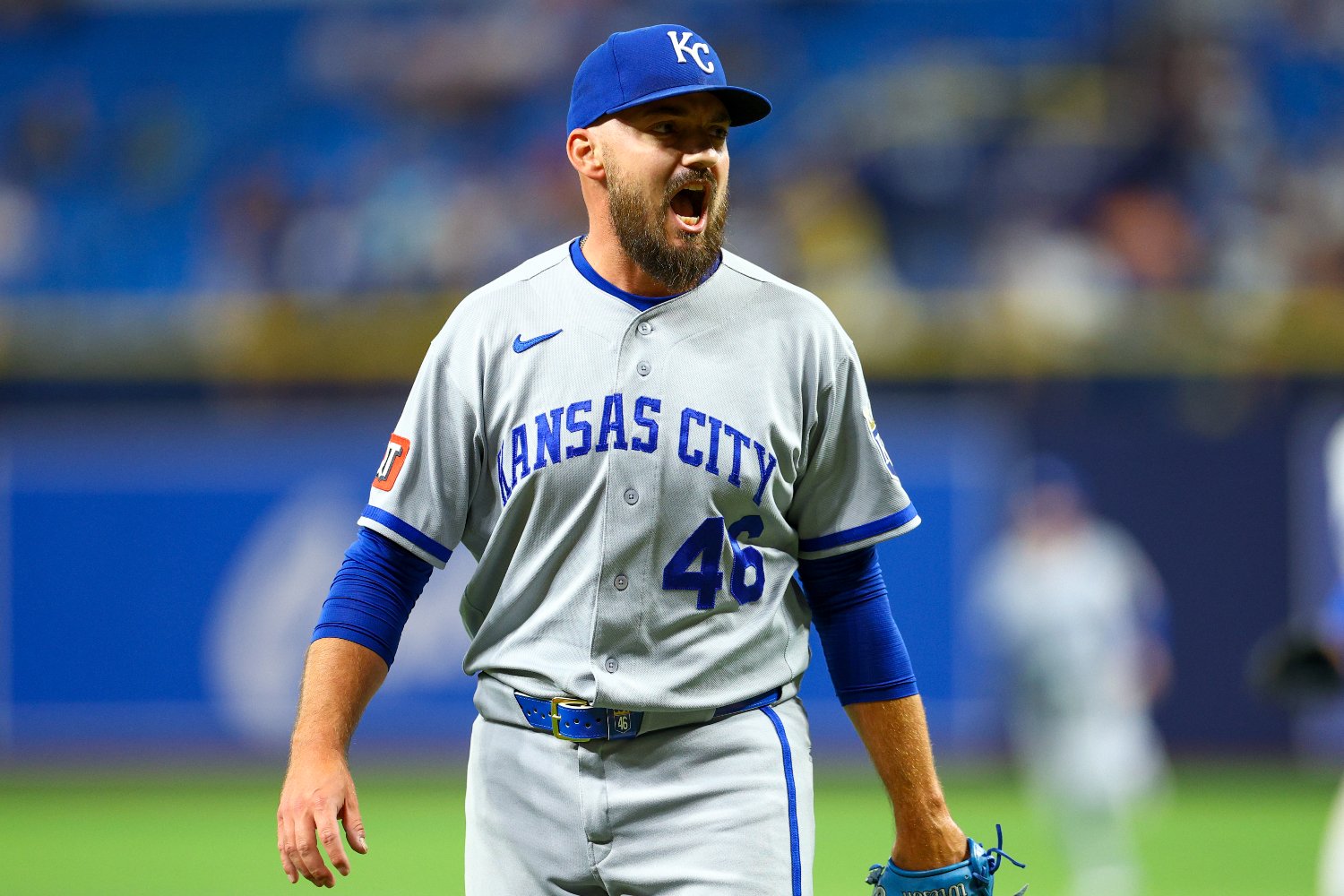 The Washington Nationals have been one of the most surprising teams in baseball in 2026. After letting go of general manager Mike Rizzo, the Nationals have cleaned house and begun anew under new President of Baseball Operations Paul Toboni. They hired Blake Butera as manager, made some key front-office and roster changes, and are now 41-40 as of June 25. Last season, they were 66-96 in Rizzo's last year as head of Nationals baseball operations. Washington has one of the best offenses in the league, which has been key to their surprising success. As of June 25, the Nationals rank 1st in runs scored, 2nd in stolen bases, and 4th in home runs and 4th in runs scored. The hitting has been led primarily by young stars such as outfielder James Wood, shortstop CJ Abrams, corner infielders Curtis Mead and Luis Garcia Jr., and outfielder Daylen Lile. All five players are 26 and under. Unfortunately, the pitching hasn't been great this year, with the bullpen being a particular area of struggle for the Nationals. According to Fangraphs, the Nationals rank last in pitching fWAR with a 0.5 mark. They rank 26th in ERA (4.70), 28th in xERA (4.96), and 29th in FIP (4.81). They have particularly struggled with the long ball as a staff, as their 13.3% HR/FB ranks 29th, better than only the Chicago Cubs (14.8%). The bullpen metrics alone are arguably even worse. The Nationals' bullpen ranks 27th in ERA (4.90), 29th in xERA (4.93), and 28th in FIP (4.93). In terms of bullpen fWAR, Washington ranks last in baseball with a -2.1 mark. They are slightly worse than the Royals, who rank 29th in reliever fWAR at -1.6. While the Royals do not have a ton of bullpen assets to offer, they do have one strong reliever who could make sense for the Nationals' bullpen: John Schreiber. After a slow start, Schreiber has put up one of his best seasons yet as a Kansas City reliever. In 34 games and 31.2 IP, he has a 2.56 ERA and 1.14 WHIP. The 32-year-old veteran hasn't been a strikeout machine by any means (19.2% K%), but he floods the strike zone, induces weak contact, and generates a lot of groundballs, as evidenced by his Statcast percentiles this season via TJ Stats. Now, the Nationals may not be buyers at the Trade Deadline. Toboni is in year one, and he's trying to rebuild the organization, which takes some time. While Washington is over .500, they are in a tough division, as they not only sit in second-to-last place in the NL East, but they only have 4.4% odds to make the postseason, according to Fangraphs. For context, the Royals, who are now 34-48 after today's 13-2 loss to the Rays, have 5.2% odds. Still, Washington has had some positive momentum, and it may be a good time to buy to build fan buy-in, especially after so many years of mediocrity since they last won the World Series in 2019. Without much great bullpen depth, the Nationals could acquire Schreiber to boost their reliever production and make a run for an NL Wild Card spot. Furthermore, the Royals could take advantage of the Nationals' reliever needs and perhaps get some much-needed prospect capital in return. Schreiber Has Been Excellent Since May 1 Schreiber has posted strong numbers this year, with an ERA under three. That's far better than what other key relievers have produced this year for Kansas City, such as Lucas Erceg (5.16) and Matt Strahm (6.20). However, it seems like Schreiber has tapped another level as a reliever since May 1. Since May 1, the former 15th-round pick has been the Royals' best reliever with a 1.35 ERA, 8.6 K/9, and 2.3 BB/9. Schreiber and newcomer Alex Lange have been the top Royals arms out of the bullpen over this nearly two-month sample. Lord, Beeter, and Orlando Ribalta are the only relievers with 10 or more appearances since May 1 with ERA marks under four. Mitchell Parker, Paxton Schultz, and Gus Varland all have 10 or more appearances over that same time frame, but they sport ERAs over 6. That is not effective, even for an offensive-first team. The Nationals wouldn't need Schreiber to come in and be their closer. It seems like Beeter can handle that situation just fine (and his 2.69 xERA and 2.58 FIP hint that better days are ahead). That said, Schreiber could be an effective 7th or 8th-inning setup man that could lock down in high-leverage situations. That gives the Nationals bullpen more weapons in the transition to Beeter in the ninth. Who Could the Royals Get From the Nationals? Schreiber is not going to command a great prospect package from Washington. After all, he's a reliever, and he's a free agent next year who likely wouldn't return to D.C. While I don't think Schreiber would command a top prospect, he could help the Royals net a "turnaround" project or two in return. Two names that could be included in a Schreiber deal are outfielder Robert Hassell III and pitcher Andry Lara. Both are post-hype prospects who have failed to do much in the Majors and are currently languishing in Triple-A. Hassell is the more high-profile of the two. He was one of the prized prospects in the Juan Soto trade with the Padres, but he hasn't hit enough to be a relevant player at the Major League level. In 70 games and 206 plate appearances last season, Hassell hit .223 with a 58 wRC+. He was plagued by a 30.1% K% and 3.9% BB% with the Nationals a year ago. In Triple-A this year, he's hitting .224 with a 67 wRC+ in 228 plate appearances. Thus, he's not due for a call-up anytime soon, especially with a 26.3% K%. However, he has shown some intriguing skills in his Statcast profile in Triple-A this season. That makes one wonder if he could thrive in a new change of scenery. Hassell barrels the ball at a decent rate (6.6%), and the average EV and LA Sweet-Spot% ranked in the 60th percentile or above. At 24 years old, he's too young to give up on, but he seems like a superfluous asset for the Nationals right now. Conversely, the Royals could give Hassell a chance in CF as soon as this year, especially with Kyle Isbel out for an extended period of time. The same story is true for Lara on the pitching end. Lara was ranked as the 27th-best prospect in the Nationals system in 2024, according to Fangraphs. He's primarily been utilized as a starter for Triple-A Rochester, with 13 starts (14 appearances) and 64.1 IP. The sample hasn't been great, as he has a 5.60 ERA, but his 5.02 FIP and 4.97 xFIP are more encouraging marks. He also demonstrated solid grades on the splitter and sinker, and they seem to generate soft contact well, based on xwOBACON. Lara made his MLB debut with the Nationals last year and posted an 8.79 ERA in nine outings and 14.1 IP. While his 5.44 FIP was better, he struggled with command, as evidenced by his 12.8% K% and 1.25 K/BB ratio. Thus, he doesn't seem to fit in either the Nationals' rotation or bullpen at this time. Still, he seems like a pitcher who could benefit from a change of scenery and a change in pitch mix. The Royals have successfully tweaked or added pitches to struggling pitchers' repertoires, with varying degrees of success. Lara seems like another candidate. Maybe throw the sinker and splitter more and four-seamer less? Add a changeup or sweeper into the mix? With those changes, it's easy to see Lara see a spike in positive production as a member of the Royals. Would Schreiber be enough for Hassell and Lara? That's hard to tell, but it's a conversation worth having between Toboni and Royals President of Baseball Operations JJ Picollo.


