


Kevin O'Brien
-
Posts
858 -
Joined
-
Last visited
-
Days Won
41
Content Type
Profiles
Forums
Blogs
Events
News
2026 Kansas City Royals Top Prospects Ranking
Kansas City Royals Videos
Kansas City Royals Free Agent & Trade Rumors, Notes, & Tidbits
Guides & Resources
The Kansas City Royals Players Project
2026 Kansas City Royals Draft Tracker: Picks & Bonuses
Store
Downloads
Gallery
Everything posted by Kevin O'Brien
-
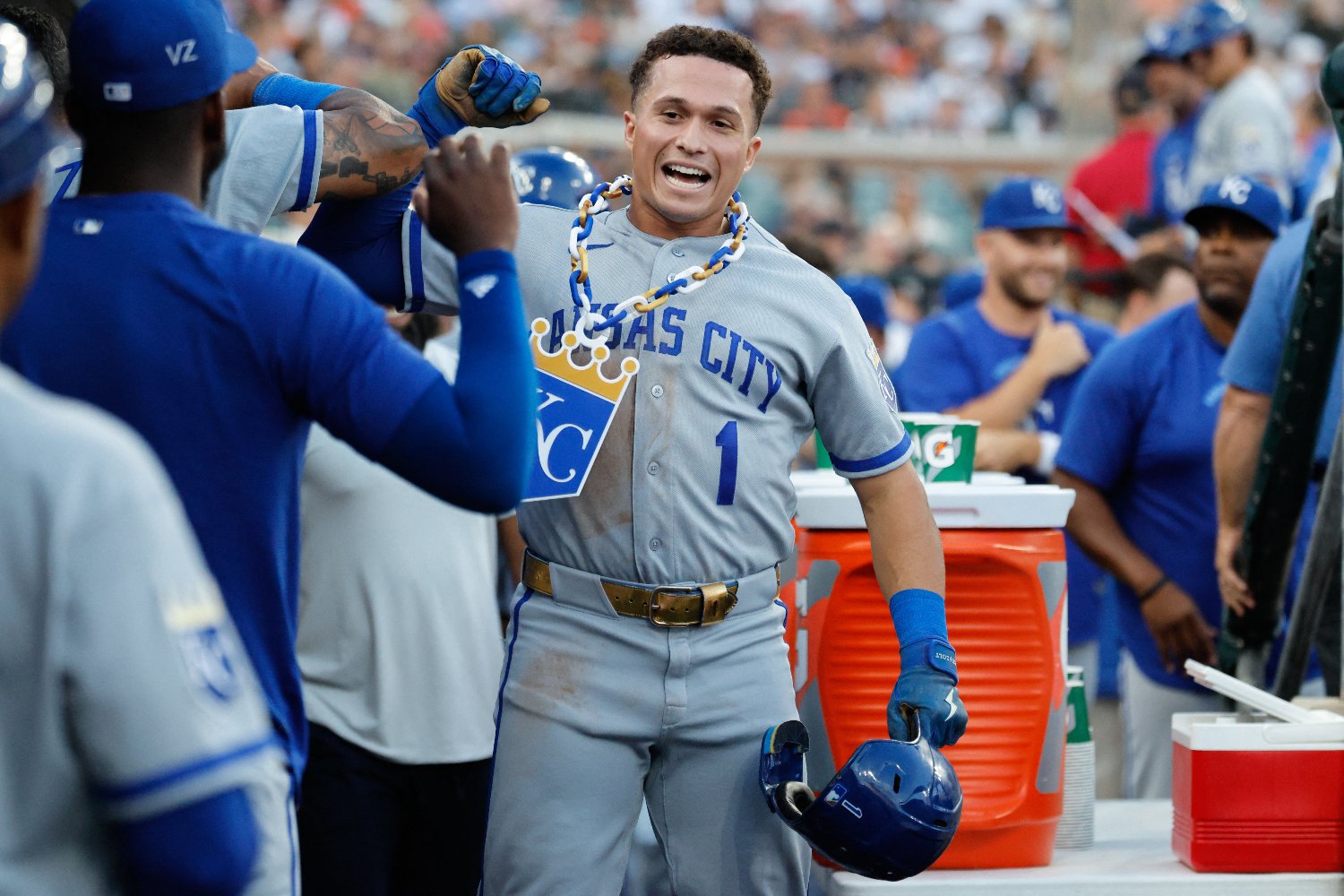 One of the Royals' most productive hitters lately has been Isaac Collins, who was acquired this offseason in the Angel Zerpa trade with Milwaukee (along with reliever Nick Mears). For the season, Collins is hitting .246 with a .324 wOBA and 104 wRC+ in 343 plate appearances with the Royals. After a slow start, the 29-year-old outfielder has posted wRC+ marks of 98 in June and 162 in July after marks of 85 in March/April and 91 in May. While he hasn't been a huge source of power, he's shown a strong ability to generate walks and limit strikeouts, as evidenced by his 0.51 BB/K ratio for the year. The former Creighton product has been primarily locked in since Memorial Day, as Joel Penfield of KC Sports Network noted on Twitter. The nice thing about Collins is that the Royals have him under control for a good while after this season. He isn't arbitration eligible until 2028, and he doesn't become a free agent until 2031. Thus, Collins could be a foundational piece that the Royals can depend on going forward, even if Kansas City decides to upgrade their outfield even further this offseason via trade or free agency. That said, the Royals are 43-62. Bobby Witt Jr. just went on the IL due to a lower-back injury, and Maikel Garcia is still out for an indeterminate amount of time. Thus, the Royals really aren't playing for anything beyond pride and player development, and at nearly 30 years old, one has to wonder if Collins truly is a long-term piece for Kansas City. Lane Thomas and Starling Marte seem to be for-sure trade chips for Kansas City at the Trade Deadline. It makes sense since they are both on one-year deals and likely won't be part of the Royals' plans in 2027 or beyond. That said, what about Collins, who could perhaps get a better trade package than Thomas or Marte due to his long-term flexibility? Let's break down his trade candidacy, some possible fits, and whether the Royals should trade Collins by the August 3rd Deadline. Collins Doesn't Chase, But Has Questionable Batted-Ball Metrics (And Baserunning and Defense) The issue with Collins is that he has some obvious strengths as a hitter, but some glaring concerns that limit his ceiling. Those are evident in his Statcast percentiles summary via TJ Stats. On a positive note? Collins ranks well in O-Swing% (96th percentile), BB% (76th percentile), Z-Contact% (66th percentile), bat speed (66th percentile), and whiff% (62nd percentile). However, his barrel rate ranks in the 29th percentile, and his LA Sweet-Spot% and average EV rank in the 23rd percentile. Thus, it's not a surprise that his wOBA (35th percentile) outpaces his xwOBA (29th percentile), which is a sign that regression could be coming for Collins, especially after a strong July. It would be one thing if Collins were a patient hitter. His walk and whiff rates seem to suggest that. That said, he's actually quite free-swinging. That's illustrated in his 39.9% Swing%, which ranks in the bottom fifth percentile. That makes Collins prone to more strikeouts, and thus, a stunting of his ultimate ceiling. Hence, while Collins has been more-than-serviceable this year, Kansas City may be tempted to add a free-agent outfielder this offseason. Baltimore's Taylor Ward is not hitting for a ton of power this year, but he's dealt with lingering injuries, and if healthy, he could be a 20+ HR candidate. The Royals have been tied to Ward in the past when he was a member of the Angels. So Picollo may be aggressive and go after him now that he's a free agent. Another option could be Seiya Suzuki, who's having another banner year (17 home runs; .827 OPS), but will be a free agent, and the Cubs may not want to give him a long-term deal. The Royals have Jac Caglianone in right field and Kyle Isbel in center field. Those players seem less expendable than Collins, especially with Cags (1.4 fWAR) and Isbel (0.4 fWAR) combining for nearly two fWAR this year. The former Brewers outfielder only has a 0.5 fWAR, despite an above-average wRC+. The primary reason for that is his lackluster defense and baserunning. According to Fangraphs, Collins has been -2.4 BsR (baserunning runs) below average and has been caught five times on stolen base attempts in 11 tries. On the defensive end, he has a -3 OAA and FRV. His defense has been better after a sluggish start, but he's still been below-average overall. Isbel, on the other hand, has been a solid defensive player and baserunner in his Royals career. Cags' range has been questionable, but his arm strength makes him an intriguing right fielder who can limit runs on the basepaths. Collins doesn't share any of those qualities, and while his bat is good, it's not enough to merit playing time over a Ward or Suzuki in 2027. What Teams Could Be Fits for Collins? An interesting fit for Collins could be the Boston Red Sox, who seem to value former Brewers. They acquired Caleb Durbin this offseason, and he's overcome a slow start, producing a 90 wRC+ and 1.5 fWAR. Thus, Boston may want Collins, who can play both corners and draw walks. The Red Sox may be tempted to trade Jarren Duran to the Royals, a player that the Royals have coveted in the past. Duran has a 58 wRC+, has a -0.1 fWAR, and has seemed to rub the Boston media the wrong way, as evidenced by his latest incident with Tyler Milliken, who covers the Red Sox for the Section 10 podcast. data:image/gif;base64,R0lGODlhAQABAPABAP///wAAACH5BAEKAAAALAAAAAABAAEAAAICRAEAOw== Duran could get a fresh start, and he doesn't become a free agent until 2029. Thus, Boston and Kansas City would be trading similar assets. For the Red Sox, they get a more versatile outfielder in Collins who doesn't carry the same number of headaches as Duran. As for the Royals, they get a player with some All-Star upside who may play better in a smaller market and with less "social media noise". The results haven't been good for Duran this year. However, the bat speed, exit velocity, and barrel rates illustrate that he could see a bounce-back, especially if he can take advantage of Kauffman's new hitting dimensions. Another option could be the Phillies, who have struggled to get productive outfield play beyond All-Star Brandon Marsh. Beyond Marsh (115 wRC+), only former White Sox outfielder Derek Hill has a wRC+ over 100 (106). That said, he has only 62 plate appearances, and his K% is 43.5%. Safe to say, he's going to fall back to earth soon, so they need to have another outfielder in the mix if they want to make a run in the postseason. Collins could fit in right field for the Phillies, and the Royals could maybe get a package that could include one of the Phillies' top-five prospects. That includes Andrew Painter, Aidan Miller, Aroon Escobar, and Gage Wood. Painter, the Phillies' No. 1 prospect, has struggled in his brief MLB tenure (7.06 ERA in 65 IP), but the stuff is solid, and he could thrive with less pressure in Kansas City. Even though the Royals would lose Collins, they would get an arm with top-of-the-rotation upside. That would make trading Michael Wacha or Seth Lugo a lot easier at the Trade Deadline or in the offseason. While that seems like a steep price to pay from the Phillies' perspective, Phillies president Dave Dombrowski has proven, not just in Philly, but in Boston and Detroit as well, to be willing to trade prospects for proven veterans at the Deadline. What Will the Royals Do? The Royals probably believe that they have a chance to rebound and be competitive again in 2027. Thus, I think they are looking at preserving a core at the Deadline that can help get them back to 2024 and 2025 levels, when they won 86 and 82 games, respectively. That's why I see the Royals trading Wacha or Lugo, but not both. The Royals can't go into 2027 with Luinder Avila as their Opening Day starter and expect to make the postseason. However, while Collins has been decent and has years of team control, I think Picollo should deal Collins if they get the opportunity, with Boston and Philadelphia as the primary targets. With the Red Sox, the Royals could get a proven MLB vet with team control that has All-Star upside and could be due for a bounce-back in new surroundings. It would be a similar situation to Mike Yastrzemski last year, but in this case, the Royals would have Duran for two more seasons (unlike Yaz, who became a free agent after 2025). With the Phillies, Kansas City could get a flawed but talented pitcher who makes more sense on a developing Royals team than a Phillies team that is flush with veteran starting pitching. Painter could be Cole Ragans 2.0, but with a better health track record. Wood could also be a nice piece if the Phillies aren't willing to part with Painter, especially with Wood pitching well in Double-A Reading. The Royals keeping Collins would be fine, especially since he's done enough to prove that he can be counted on in the lineup for not just 2027, but perhaps 2028 and beyond. That said, Kansas City needs to look at trade scenarios for all their players, and if they get good value on Collins, they need to pounce quickly. The last thing they want is to hold onto a player like Collins too long, and he not only has tanked his trade value, but they're just designating him for assignment and releasing him in 2028 or 2029.
 -
 The Royals affiliates went two and two on Thursday. Gavin Cross hit a go-ahead grand slam in the ninth to lift Omaha to a 12-to-9 win, and Columbia held on for a 2-to-1 victory behind Jose Gutierrez. Northwest Arkansas and Quad Cities each lost in extra innings, the Naturals falling 5-to-4 and the River Bandits dropping a 3-to-2 walk-off despite fourteen strikeouts on the mound. Royals Transactions No transactions were reported for the Kansas City Royals organization on July 23, 2026. Omaha Storm Chasers 12, Salt Lake 9: Cross Slam Caps a Comeback Omaha trailed 9 to 8 heading into the ninth inning and needed one swing to change the game. Gavin Cross provided it, driving a grand slam to right-center field that scored Peyton Wilson, Luca Tresh, and Alejo Lopez for a 12-to-9 lead. Cross finished 2 for 5 with a walk, a stolen base, and five runs batted in. The offense built the win across several innings. Omaha erased an early two-run hole with four runs in the third, capped by Brett Squires' two-run homer. Squires went 2 for 5 with two runs batted in. Kyle Isbel doubled twice, drove in two, and finished 3 for 4 from the leadoff spot. Tresh reached base four times on two hits and two walks, and he scored three times while adding a two-run single in the fifth. John Rave and Drew Waters each collected two hits, and the Storm Chasers piled up sixteen hits and seven walks as a team. The bullpen closed the door after Mason Black allowed six earned runs over four innings. Aaron Bummer struck out four across 1 1/3 scoreless innings, Jose Cuas followed with 1 1/3 hitless innings and two strikeouts to earn the win, and Anthony Gose recorded the final two outs in the ninth for his first save. Omaha pitchers combined for eleven strikeouts on the night. The Storm Chasers left nine runners on base and went 6-for-17 with runners in scoring position. Omaha improved their record to 46-52 with the win. Batter POS AB R H 2B 3B HR RBI BB K SB Kyle Isbel CF 4 1 3 2 0 0 2 0 0 0 Alejo Lopez LF 2 1 1 0 0 0 0 0 0 0 Gavin Cross RF 5 1 2 0 0 1 5 1 1 1 John Rave DH 5 1 2 0 0 0 0 1 1 0 Brett Squires 1B 5 1 2 0 0 1 2 0 2 0 Jack Pineda SS 5 1 1 0 0 0 0 0 0 1 Drew Waters CF 5 1 2 0 0 0 0 0 2 1 Brandon Drury 3B 3 0 0 0 0 0 0 2 1 0 Abraham Toro 2B 4 1 1 0 0 0 0 1 2 0 Peyton Wilson 2B 0 1 0 0 0 0 0 0 0 0 Luca Tresh C 3 3 2 0 0 0 2 2 0 0 Totals 41 12 16 2 0 2 11 7 9 3 Pitcher IP H R ER BB K HR NP Dec Mason Black 4 11 7 6 0 4 2 86 Ethan Bosacker 1 2/3 2 2 2 3 1 0 34 Aaron Bummer 1 1/3 1 0 0 0 4 0 19 Jose Cuas 1 1/3 0 0 0 0 2 0 14 (W, 5-2) Anthony Gose 0 2/3 0 0 0 0 0 0 5 (S, 1) Totals 9 14 9 8 3 11 2 158 Northwest Arkansas Naturals Fall 5 to 4 in Ten Innings Northwest Arkansas rallied in front of the home crowd but could not hold a late lead, falling 5 to 4 in ten innings. The Naturals climbed back from a 3-to-1 deficit with a run in the sixth and two more in the seventh, when Sam Kulasingam laced a two-run double to score Canyon Brown and Carson Roccaforte for a 4-to-3 edge. Kulasingam led the offense, going 2 for 4 with a double, a walk, and two runs batted in. Brown reached base three times on a double, a walk, and a run scored, and he drove in a run with a fifth-inning double. Daniel Vazquez added a run-scoring single in the sixth, and Luke Pelzer collected two hits. Roccaforte doubled and scored as part of a 1-for-5 night atop the order. The Naturals managed eight hits but struck out fifteen times and left runners on base in extras. Hunter Owen turned in a steady start, allowing three earned runs over 5 1/3 innings with three strikeouts. Anthony Simonelli and Frank Mozzicato bridged the middle innings, with Mozzicato striking out two in a scoreless frame for a hold. The bullpen could not protect the lead in the late innings. The tying run scored in the ninth, and the go-ahead run came home in the tenth after the zombie runner was placed at second base, saddling Augusto Mendieta with the loss and a blown save. The Naturals went 3-for-14 with runners in scoring position and stranded 10 runners. Northwest Arkansas is now 40-51 this season. Batter POS AB R H 2B 3B HR RBI BB K SB Carson Roccaforte DH 5 1 1 1 0 0 0 0 3 0 Luke Pelzer CF 5 0 2 0 0 0 0 0 1 0 Sam Kulasingam 3B 4 1 2 1 0 0 2 1 1 0 Spencer Nivens LF 5 0 1 0 0 0 0 0 1 0 Daniel Vazquez SS 4 1 1 0 0 0 1 1 2 0 Colton Becker 3B 1 0 0 0 0 0 0 0 0 0 Justin Johnson 2B 1 0 0 0 0 0 0 1 1 0 Alberto Rodriguez RF 4 0 0 0 0 0 0 1 2 0 Canyon Brown C 3 1 1 1 0 0 1 1 1 0 Stone Russell 1B 4 0 0 0 0 0 0 0 3 0 Totals 36 4 8 3 0 0 4 5 15 0 Pitcher IP H R ER BB K HR NP Dec Hunter Owen 5 1/3 8 3 3 1 3 0 82 Anthony Simonelli 1 2/3 1 0 0 0 0 0 16 Frank Mozzicato 1 0 0 0 1 2 0 18 (H, 3) Augusto Mendieta 2 2 2 1 1 2 1 48 (L, 3-5)(BS, 5) Totals 10 11 5 4 3 7 1 164 Quad Cities River Bandits Drop a 3-to-2 Walk-Off Despite 14 Strikeouts Quad Cities pitching was dominant, but the River Bandits could not push enough runs across and lost 3 to 2 on a walk-off in the tenth inning. The staff struck out fourteen batters and scattered just four hits over the night. Blake Wolters set the tone with five innings of one-run ball, striking out seven on only 57 pitches while allowing a lone solo homer. Aiden Jimenez and Kamden Edge followed with two scoreless innings apiece, and Edge punched out five in his outing. Chris Brito carried the offense, going 3 for 4 with a walk and a stolen base. He gave the River Bandits a fourth-inning lead with a solo home run, his second of the year, and put them back in front in the tenth with a run-scoring single that plated Blake Mitchell, who had started the inning as the zombie runner. Erick Torres reached base three times on two hits and a walk, Asbel Gonzalez added two hits and a stolen base, and Jose Cerice chipped in two hits. The River Bandits collected ten hits and stole three bases, yet stranded runners throughout and struck out eleven times. The tenth turned against them when Yimi Presinal allowed two runs, taking the loss and a blown save as the winning run scored to end it. The River Bandits struggled to cash in runs despite collecting 10 hits as a team. They went 1-for-12 with runners in scoring position and stranded 11 total runners. The loss dropped Quad Cities' record to 45-44. Batter POS AB R H 2B 3B HR RBI BB K SB Erick Torres RF 3 0 2 0 0 0 0 1 1 0 Asbel Gonzalez CF 5 0 2 0 0 0 0 0 2 1 Blake Mitchell C 5 1 0 0 0 0 0 0 3 0 Chris Brito 1B 4 1 3 1 0 1 2 1 1 1 Derlin Figueroa LF 5 0 0 0 0 0 0 0 0 0 Jose Cerice 3B 4 0 2 0 0 0 0 0 0 1 Trevor Werner DH 4 0 1 1 0 0 0 0 2 0 Angel Acosta 2B 3 0 0 0 0 0 0 1 0 0 Diego Guzman SS 4 0 0 0 0 0 0 0 2 0 Totals 37 2 10 2 0 1 2 3 11 3 Pitcher IP H R ER BB K HR NP Dec Blake Wolters 5 1 1 1 2 7 1 57 Aiden Jimenez 2 1 0 0 0 2 0 24 Kamden Edge 2 1 0 0 0 5 0 35 Yimi Presinal 0 1/3 1 2 1 0 0 1 6 (L, 2-2)(BS, 4) Totals 9 1/3 4 3 2 2 14 2 122 Columbia Fireflies Hold On for a 2 to 1 Win Columbia needed only one inning of offense and made it stand, beating Kannapolis 2 to 1. The Fireflies pushed both of their runs across in the bottom of the first, then leaned on their pitching the rest of the way. Yandel Ricardo sparked the lineup, going 2 for 3 with a stolen base from the two-hole. Hyungchan Um also finished 2 for 3 and delivered a run-scoring single in the first to give Columbia the lead. Jhosmmel Zue drove in the first run with a sacrifice fly, and Sean Gamble added a hit and a run scored. Henry Ramos drew a walk and scored the tying run, while Angel Ramirez and Ivan Sosa each singled. The Fireflies totaled seven hits and left only six runners on base. Gutierrez earned the win with a strong start, allowing one earned run over 5 2/3 innings with three strikeouts. Hunter Alberini recorded a hold with 1 1/3 innings of scoreless relief and two strikeouts, and Jhon Reyes closed it out with two scoreless innings and three strikeouts for his fourth save. Columbia pitchers combined for eight strikeouts and did not allow a home run, keeping Kannapolis to a single run and locking down the one-run win. The Fireflies went 2-for-4 with runners in scoring position and stranded two runners in the win. Columbia improved their record to 48-45. Batter POS AB R H 2B 3B HR RBI BB K SB Henry Ramos LF 3 1 0 0 0 0 0 1 0 0 Yandel Ricardo SS 3 0 2 0 0 0 0 0 0 1 Sean Gamble CF 3 1 1 0 0 0 0 0 1 0 Jhosmmel Zue 1B 2 0 0 0 0 0 1 0 1 0 Hyungchan Um C 3 0 2 0 0 0 1 0 0 0 Connor Rasmussen 2B 3 0 0 0 0 0 0 0 0 0 Angel Ramirez RF 3 0 1 0 0 0 0 0 1 0 Josi Novas DH 3 0 0 0 0 0 0 0 1 0 Ivan Sosa 3B 3 0 1 0 0 0 0 0 0 0 Totals 26 2 7 0 0 0 2 1 4 1 Pitcher IP H R ER BB K HR NP Dec Jose Gutierrez 5 2/3 4 1 1 3 3 0 87 (W, 8-3) Hunter Alberini 1 1/3 1 0 0 0 2 0 25 (H, 3) Jhon Reyes 2 1 0 0 0 3 0 28 (S, 4) Totals 9 6 1 1 3 8 0 140 Top-20 Prospect Performance 1. Kendry Chourio, Quad Cities River Bandits: DNP 2. David Shields, Quad Cities River Bandits: DNP 3. Josh Hammond, Columbia Fireflies: DNP 4. Blake Mitchell, Quad Cities River Bandits: 0 for 5, 1 run, 3 strikeouts 5. Sean Gamble, Columbia Fireflies: 1 for 3, 1 run, 1 strikeout 6. Ramon Ramirez: DNP 7. Zion Rose: DNP 8. Asbel Gonzalez, Quad Cities River Bandits: 2 for 5, 1 stolen base, 2 strikeouts 9. Carson Roccaforte, Northwest Arkansas Naturals: 1 for 5, 1 run, 1 double, 3 strikeouts 10. Taylor Rabe: DNP 11. Yandel Ricardo, Columbia Fireflies: 2 for 3, 1 stolen base 12. Justin Lamkin: DNP 13. Drew Beam, Northwest Arkansas Naturals: DNP 14. Michael Lombardi, Columbia Fireflies: DNP 15. Jack Slightom: DNP 16. Felix Arronde, Northwest Arkansas Naturals: DNP 17. Angeibel Gomez, DSL Royals Ventura: 1 for 4 18. Ben Kudrna: DNP 19. Steven Zobac, Northwest Arkansas Naturals: DNP 20. Blake Wolters, Quad Cities River Bandits: 5 IP, 1 hit, 1 run, 1 earned run, 2 walks, 7 strikeouts, 1 home run allowed
 -
The Royals affiliates went two and two on Thursday. Gavin Cross hit a go-ahead grand slam in the ninth to lift Omaha to a 12-to-9 win, and Columbia held on for a 2-to-1 victory behind Jose Gutierrez. Northwest Arkansas and Quad Cities each lost in extra innings, the Naturals falling 5-to-4 and the River Bandits dropping a 3-to-2 walk-off despite fourteen strikeouts on the mound. Royals Transactions No transactions were reported for the Kansas City Royals organization on July 23, 2026. Omaha Storm Chasers 12, Salt Lake 9: Cross Slam Caps a Comeback Omaha trailed 9 to 8 heading into the ninth inning and needed one swing to change the game. Gavin Cross provided it, driving a grand slam to right-center field that scored Peyton Wilson, Luca Tresh, and Alejo Lopez for a 12-to-9 lead. Cross finished 2 for 5 with a walk, a stolen base, and five runs batted in. The offense built the win across several innings. Omaha erased an early two-run hole with four runs in the third, capped by Brett Squires' two-run homer. Squires went 2 for 5 with two runs batted in. Kyle Isbel doubled twice, drove in two, and finished 3 for 4 from the leadoff spot. Tresh reached base four times on two hits and two walks, and he scored three times while adding a two-run single in the fifth. John Rave and Drew Waters each collected two hits, and the Storm Chasers piled up sixteen hits and seven walks as a team. The bullpen closed the door after Mason Black allowed six earned runs over four innings. Aaron Bummer struck out four across 1 1/3 scoreless innings, Jose Cuas followed with 1 1/3 hitless innings and two strikeouts to earn the win, and Anthony Gose recorded the final two outs in the ninth for his first save. Omaha pitchers combined for eleven strikeouts on the night. The Storm Chasers left nine runners on base and went 6-for-17 with runners in scoring position. Omaha improved their record to 46-52 with the win. Batter POS AB R H 2B 3B HR RBI BB K SB Kyle Isbel CF 4 1 3 2 0 0 2 0 0 0 Alejo Lopez LF 2 1 1 0 0 0 0 0 0 0 Gavin Cross RF 5 1 2 0 0 1 5 1 1 1 John Rave DH 5 1 2 0 0 0 0 1 1 0 Brett Squires 1B 5 1 2 0 0 1 2 0 2 0 Jack Pineda SS 5 1 1 0 0 0 0 0 0 1 Drew Waters CF 5 1 2 0 0 0 0 0 2 1 Brandon Drury 3B 3 0 0 0 0 0 0 2 1 0 Abraham Toro 2B 4 1 1 0 0 0 0 1 2 0 Peyton Wilson 2B 0 1 0 0 0 0 0 0 0 0 Luca Tresh C 3 3 2 0 0 0 2 2 0 0 Totals 41 12 16 2 0 2 11 7 9 3 Pitcher IP H R ER BB K HR NP Dec Mason Black 4 11 7 6 0 4 2 86 Ethan Bosacker 1 2/3 2 2 2 3 1 0 34 Aaron Bummer 1 1/3 1 0 0 0 4 0 19 Jose Cuas 1 1/3 0 0 0 0 2 0 14 (W, 5-2) Anthony Gose 0 2/3 0 0 0 0 0 0 5 (S, 1) Totals 9 14 9 8 3 11 2 158 Northwest Arkansas Naturals Fall 5 to 4 in Ten Innings Northwest Arkansas rallied in front of the home crowd but could not hold a late lead, falling 5 to 4 in ten innings. The Naturals climbed back from a 3-to-1 deficit with a run in the sixth and two more in the seventh, when Sam Kulasingam laced a two-run double to score Canyon Brown and Carson Roccaforte for a 4-to-3 edge. Kulasingam led the offense, going 2 for 4 with a double, a walk, and two runs batted in. Brown reached base three times on a double, a walk, and a run scored, and he drove in a run with a fifth-inning double. Daniel Vazquez added a run-scoring single in the sixth, and Luke Pelzer collected two hits. Roccaforte doubled and scored as part of a 1-for-5 night atop the order. The Naturals managed eight hits but struck out fifteen times and left runners on base in extras. Hunter Owen turned in a steady start, allowing three earned runs over 5 1/3 innings with three strikeouts. Anthony Simonelli and Frank Mozzicato bridged the middle innings, with Mozzicato striking out two in a scoreless frame for a hold. The bullpen could not protect the lead in the late innings. The tying run scored in the ninth, and the go-ahead run came home in the tenth after the zombie runner was placed at second base, saddling Augusto Mendieta with the loss and a blown save. The Naturals went 3-for-14 with runners in scoring position and stranded 10 runners. Northwest Arkansas is now 40-51 this season. Batter POS AB R H 2B 3B HR RBI BB K SB Carson Roccaforte DH 5 1 1 1 0 0 0 0 3 0 Luke Pelzer CF 5 0 2 0 0 0 0 0 1 0 Sam Kulasingam 3B 4 1 2 1 0 0 2 1 1 0 Spencer Nivens LF 5 0 1 0 0 0 0 0 1 0 Daniel Vazquez SS 4 1 1 0 0 0 1 1 2 0 Colton Becker 3B 1 0 0 0 0 0 0 0 0 0 Justin Johnson 2B 1 0 0 0 0 0 0 1 1 0 Alberto Rodriguez RF 4 0 0 0 0 0 0 1 2 0 Canyon Brown C 3 1 1 1 0 0 1 1 1 0 Stone Russell 1B 4 0 0 0 0 0 0 0 3 0 Totals 36 4 8 3 0 0 4 5 15 0 Pitcher IP H R ER BB K HR NP Dec Hunter Owen 5 1/3 8 3 3 1 3 0 82 Anthony Simonelli 1 2/3 1 0 0 0 0 0 16 Frank Mozzicato 1 0 0 0 1 2 0 18 (H, 3) Augusto Mendieta 2 2 2 1 1 2 1 48 (L, 3-5)(BS, 5) Totals 10 11 5 4 3 7 1 164 Quad Cities River Bandits Drop a 3-to-2 Walk-Off Despite 14 Strikeouts Quad Cities pitching was dominant, but the River Bandits could not push enough runs across and lost 3 to 2 on a walk-off in the tenth inning. The staff struck out fourteen batters and scattered just four hits over the night. Blake Wolters set the tone with five innings of one-run ball, striking out seven on only 57 pitches while allowing a lone solo homer. Aiden Jimenez and Kamden Edge followed with two scoreless innings apiece, and Edge punched out five in his outing. Chris Brito carried the offense, going 3 for 4 with a walk and a stolen base. He gave the River Bandits a fourth-inning lead with a solo home run, his second of the year, and put them back in front in the tenth with a run-scoring single that plated Blake Mitchell, who had started the inning as the zombie runner. Erick Torres reached base three times on two hits and a walk, Asbel Gonzalez added two hits and a stolen base, and Jose Cerice chipped in two hits. The River Bandits collected ten hits and stole three bases, yet stranded runners throughout and struck out eleven times. The tenth turned against them when Yimi Presinal allowed two runs, taking the loss and a blown save as the winning run scored to end it. The River Bandits struggled to cash in runs despite collecting 10 hits as a team. They went 1-for-12 with runners in scoring position and stranded 11 total runners. The loss dropped Quad Cities' record to 45-44. Batter POS AB R H 2B 3B HR RBI BB K SB Erick Torres RF 3 0 2 0 0 0 0 1 1 0 Asbel Gonzalez CF 5 0 2 0 0 0 0 0 2 1 Blake Mitchell C 5 1 0 0 0 0 0 0 3 0 Chris Brito 1B 4 1 3 1 0 1 2 1 1 1 Derlin Figueroa LF 5 0 0 0 0 0 0 0 0 0 Jose Cerice 3B 4 0 2 0 0 0 0 0 0 1 Trevor Werner DH 4 0 1 1 0 0 0 0 2 0 Angel Acosta 2B 3 0 0 0 0 0 0 1 0 0 Diego Guzman SS 4 0 0 0 0 0 0 0 2 0 Totals 37 2 10 2 0 1 2 3 11 3 Pitcher IP H R ER BB K HR NP Dec Blake Wolters 5 1 1 1 2 7 1 57 Aiden Jimenez 2 1 0 0 0 2 0 24 Kamden Edge 2 1 0 0 0 5 0 35 Yimi Presinal 0 1/3 1 2 1 0 0 1 6 (L, 2-2)(BS, 4) Totals 9 1/3 4 3 2 2 14 2 122 Columbia Fireflies Hold On for a 2 to 1 Win Columbia needed only one inning of offense and made it stand, beating Kannapolis 2 to 1. The Fireflies pushed both of their runs across in the bottom of the first, then leaned on their pitching the rest of the way. Yandel Ricardo sparked the lineup, going 2 for 3 with a stolen base from the two-hole. Hyungchan Um also finished 2 for 3 and delivered a run-scoring single in the first to give Columbia the lead. Jhosmmel Zue drove in the first run with a sacrifice fly, and Sean Gamble added a hit and a run scored. Henry Ramos drew a walk and scored the tying run, while Angel Ramirez and Ivan Sosa each singled. The Fireflies totaled seven hits and left only six runners on base. Gutierrez earned the win with a strong start, allowing one earned run over 5 2/3 innings with three strikeouts. Hunter Alberini recorded a hold with 1 1/3 innings of scoreless relief and two strikeouts, and Jhon Reyes closed it out with two scoreless innings and three strikeouts for his fourth save. Columbia pitchers combined for eight strikeouts and did not allow a home run, keeping Kannapolis to a single run and locking down the one-run win. The Fireflies went 2-for-4 with runners in scoring position and stranded two runners in the win. Columbia improved their record to 48-45. Batter POS AB R H 2B 3B HR RBI BB K SB Henry Ramos LF 3 1 0 0 0 0 0 1 0 0 Yandel Ricardo SS 3 0 2 0 0 0 0 0 0 1 Sean Gamble CF 3 1 1 0 0 0 0 0 1 0 Jhosmmel Zue 1B 2 0 0 0 0 0 1 0 1 0 Hyungchan Um C 3 0 2 0 0 0 1 0 0 0 Connor Rasmussen 2B 3 0 0 0 0 0 0 0 0 0 Angel Ramirez RF 3 0 1 0 0 0 0 0 1 0 Josi Novas DH 3 0 0 0 0 0 0 0 1 0 Ivan Sosa 3B 3 0 1 0 0 0 0 0 0 0 Totals 26 2 7 0 0 0 2 1 4 1 Pitcher IP H R ER BB K HR NP Dec Jose Gutierrez 5 2/3 4 1 1 3 3 0 87 (W, 8-3) Hunter Alberini 1 1/3 1 0 0 0 2 0 25 (H, 3) Jhon Reyes 2 1 0 0 0 3 0 28 (S, 4) Totals 9 6 1 1 3 8 0 140 Top-20 Prospect Performance 1. Kendry Chourio, Quad Cities River Bandits: DNP 2. David Shields, Quad Cities River Bandits: DNP 3. Josh Hammond, Columbia Fireflies: DNP 4. Blake Mitchell, Quad Cities River Bandits: 0 for 5, 1 run, 3 strikeouts 5. Sean Gamble, Columbia Fireflies: 1 for 3, 1 run, 1 strikeout 6. Ramon Ramirez: DNP 7. Zion Rose: DNP 8. Asbel Gonzalez, Quad Cities River Bandits: 2 for 5, 1 stolen base, 2 strikeouts 9. Carson Roccaforte, Northwest Arkansas Naturals: 1 for 5, 1 run, 1 double, 3 strikeouts 10. Taylor Rabe: DNP 11. Yandel Ricardo, Columbia Fireflies: 2 for 3, 1 stolen base 12. Justin Lamkin: DNP 13. Drew Beam, Northwest Arkansas Naturals: DNP 14. Michael Lombardi, Columbia Fireflies: DNP 15. Jack Slightom: DNP 16. Felix Arronde, Northwest Arkansas Naturals: DNP 17. Angeibel Gomez, DSL Royals Ventura: 1 for 4 18. Ben Kudrna: DNP 19. Steven Zobac, Northwest Arkansas Naturals: DNP 20. Blake Wolters, Quad Cities River Bandits: 5 IP, 1 hit, 1 run, 1 earned run, 2 walks, 7 strikeouts, 1 home run allowed View full article
-
David Shields spun five scoreless innings with four strikeouts as the Quad Cities River Bandits beat Wisconsin, and Darwin Rodriguez fired six strong frames for the Columbia Fireflies. Josh Hammond went 5 for 5, and Yandel Ricardo homered and drove in three in Columbia's rout. Matthew Lugo and John Rave supplied the offense as Omaha topped Lehigh Valley. Drew Beam battled six innings, but Northwest Arkansas fell to Midland despite Connor Scott's two-run home run. Royals Transactions Kansas City Royals traded RF Rudy Martin Jr. to the Baltimore Orioles for cash. Storm Chasers Rally Past IronPigs Behind Lugo And Rave, 6-2 The Omaha Storm Chasers rallied from an early deficit to beat the Lehigh Valley IronPigs, 6-2. Kameron Misner opened the scoring with an RBI double in the first, but Lehigh Valley grabbed a 2-1 lead in the third on a two-run single. Omaha answered in the bottom of the fifth when Lugo laced a two-run double to plate Elih Marrero and Rave, putting the Storm Chasers ahead for good at 3-2. From there, Omaha steadily pulled away, adding a run in the sixth on a Brandon Drury fielder's choice, another in the seventh, and a Rave solo home run, his 12th, in the eighth. Lugo finished 2 for 5 with a double, a triple, and two RBI, while Misner also collected two hits with a double and a triple. Rave reached three times, drawing two walks to go with his homer, and Marrero added two hits. Omaha utilized a bullpen-heavy strategy in the victory. Veteran Vince Velasquez turned in the longest and sharpest outing, working three scoreless innings, allowing one hit, and striking out three to earn the win. Starter Stephen Kolek, on a rehab assignment, gave up both runs on six hits over 2 2/3 innings, and Easton McGee, recently acquired from Milwaukee, bridged the middle with two shutout innings and three strikeouts. Anthony Gose closed it out with no runs and a strikeout in the ninth. The Storm Chasers left eight runners on base, one more than Lehigh Valley's seven. They also went 2-for-14 with runners in scoring position. Omaha improved to 42-52 for the season. Player AB R H RBI BB K John Rave 3 2 1 1 2 1 Matthew Lugo 5 1 2 2 0 0 Kameron Misner 4 1 2 1 0 2 Brett Squires 3 0 0 0 1 0 Drew Waters 4 1 1 0 0 1 Peyton Wilson 4 0 1 0 0 2 Brandon Drury 4 0 0 1 0 0 Elih Marrero 4 1 2 0 0 0 Andrew Velazquez 3 0 1 0 0 1 Player IP H R ER BB K HR Stephen Kolek 2 2/3 6 2 2 0 3 0 Ben Sears 1/3 0 0 0 0 1 0 Vince Velasquez 3 1 0 0 0 3 0 Easton McGee 2 1 0 0 1 3 0 Anthony Gose 1 1 0 0 0 1 0 Naturals Fall To RockHounds As Seventh-Inning Rally Sinks Beam, 8-2 The Northwest Arkansas Naturals managed just five hits and dropped an 8-2 decision to the Midland RockHounds. Scott accounted for most of the offense, homering in the second inning for an early 1-0 lead and later doubling home No. 18 prospect Daniel Vazquez in the ninth. Scott finished 2 for 4 with a home run, a double, and two RBI. Midland tied the game in the third and edged ahead in the sixth before breaking things open in the seventh. In that seventh inning, the RockHounds sent a string of hitters to the plate and pushed across five runs, turning a one-run game into a 7-1 lead. Brennan Milone added a solo home run in the ninth to cap the scoring. No. 7 prospect Beam pitched well in a losing effort, working six innings and allowing two runs, both earned, on six hits with two walks and four strikeouts. Unfortunately, the bullpen struggled behind him. Former first-round Draft pick Frank Mozzicato retired just one batter while walking four and being charged with four runs in the seventh, and that wildness allowed Midland to seize control. Zachary Cawyer followed with 1 2/3 innings, and Tyson Guerrero surrendered the ninth-inning homer. No. 8 prospect Carson Roccaforte singled and walked atop the order, and Vazquez collected a hit and scored a run. Northwest Arkansas left seven runners on base and went 0-for-7 with runners in scoring position. The Naturals fall to 37-50. Player AB R H RBI BB K Carson Roccaforte 3 0 1 0 1 0 Jack Pineda 3 0 1 0 1 1 Sam Kulasingam 3 0 0 0 1 2 Spencer Nivens 3 0 0 0 1 0 Daniel Vazquez 4 1 1 0 0 2 Connor Scott 4 1 2 2 0 0 Canyon Brown 4 0 0 0 0 1 Alberto Rodriguez 4 0 0 0 0 2 Justin Johnson 3 0 0 0 1 1 Player IP H R ER BB K HR Drew Beam 6 6 2 2 2 4 0 Frank Mozzicato 1/3 0 4 4 4 1 0 Zachary Cawyer 1 2/3 2 1 1 0 2 0 Tyson Guerrero 1 1 1 1 0 1 1 Shields And River Bandits Blank Timber Rattlers Early In 6-2 Win The Quad Cities River Bandits jumped on Wisconsin early and cruised to a 6-2 win over the Timber Rattlers in a seven-inning contest. Nolan Sailors got things started with a solo home run in the third, his fourth of the year, and Jose Cerice followed with an RBI single as Quad Cities built a 2-0 lead. The River Bandits blew the game open in the fifth, scoring three times on a Luke Pelzer RBI triple and back-to-back sacrifice flies from Derlin Figueroa and Erick Torres. No. 4 prospect Blake Mitchell was a catalyst at the top of the order, reaching base four times on two doubles and two walks while scoring twice. Sailors added a stolen base to his home run, Pelzer tripled and drove in a run, and No. 9 prospect Asbel Gonzalez singled and scored. The lineup struck out just once as a team. On the mound, Shields, the Royals' No. 2 prospect, was dominant. The left-hander spun five scoreless innings, scattering two hits with no walks and four strikeouts to pick up the win. L.P. Langevin handled the final two innings, allowing two runs, one earned, on a home run while striking out four. Quad Cities left seven runners on base, went 1-for-12 with runners in scoring position, and out-hit Wisconsin 7 to 4 while coasting to the victory. The win pushed the River Bandits' record to over .500, as they are now 43-42 for the season. The second game of a scheduled doubleheader was canceled due to deteriorating air quality in Appleton from the Canadian fires. Player AB R H RBI BB K Nolan Sailors 4 1 1 1 0 0 Asbel Gonzalez 4 1 1 0 0 0 Blake Mitchell 2 2 2 0 2 0 Luke Pelzer 4 1 1 1 0 0 Jose Cerice 1 1 1 1 0 0 Derlin Figueroa 3 0 1 1 0 0 Erick Torres 3 0 0 1 0 0 Tyriq Kemp 3 0 0 0 0 1 Angel Acosta 3 0 0 0 0 0 Player IP H R ER BB K HR David Shields 5 2 0 0 0 4 0 L.P. Langevin 2 2 2 1 1 4 1 Hammond and Ricardo Power Fireflies Past RiverDogs, 9-2 The Columbia Fireflies pounded out 14 hits and rolled to a 9-2 victory over the Charleston RiverDogs. Hammond, the Royals' No. 3 prospect, set the tone at the top of the order, going a perfect 5 for 5 with two doubles and two runs scored. Ricardo, the Royals' No. 10 prospect, was the biggest run producer, homering in the fourth to give Columbia a 2-1 lead and finishing 3 for 4 with a home run, three RBI, a walk, and a stolen base. After Charleston scratched across a run in the first, the Fireflies took control with a three-run sixth. No. 6 prospect Sean Gamble delivered an RBI single, and Columbia added two more on bases-loaded walks to Hyungchan Um and Connor Rasmussen, stretching the lead to 5-1. The visitors tacked on two more in the eighth on another pair of walks and put the game away in the ninth when Rasmussen launched a two-run homer. Rasmussen finished 2 for 4 with the home run and three RBI, and Gamble drove in two runs. Left-handed starter Rodriguez was excellent, working six innings and allowing just one run on two hits with two walks and five strikeouts to earn the win. Jhon Reyes, Randy Ramnarace, and Hunter Alberini combined for the final three innings out of the bullpen. Columbia stranded 10 runners and went 4-for-15 with runners in scoring position. Despite those questionable numbers, they had more than enough offense, out-hitting Charleston 14 to 5. The win propelled the Fireflies to over .500, as they now sit at 45-44 for the season. Player AB R H RBI BB K Henry Ramos 5 1 0 0 1 3 Josh Hammond 5 2 5 0 0 0 Yandel Ricardo 4 2 3 3 1 1 Sean Gamble 4 1 1 2 1 3 Jhosmmel Zue 5 0 2 0 0 0 Stone Russell 4 1 0 0 1 2 Hyungchan Um 4 0 0 1 1 1 Connor Rasmussen 4 1 2 3 1 1 Angel Ramirez 5 1 1 0 0 3 Player IP H R ER BB K HR Darwin Rodriguez 6 2 1 1 2 5 0 Jhon Reyes 1 1 1 1 0 0 0 Randy Ramnarace 1 1 0 0 2 3 0 Hunter Alberini 1 1 0 0 1 1 0 Top-20 Prospect Performance Kendry Chourio: DNP David Shields: W, 5 IP, 2 H, 0 R, 0 ER, 0 BB, 4 K for Quad Cities. Josh Hammond: 5 for 5 with two doubles and two runs scored for Columbia. Blake Mitchell: 2 for 2 with two doubles, two walks, and two runs scored for Quad Cities. Sean Gamble: 1 for 4 with two RBI, a walk, and a run scored for Columbia. Ramon Ramirez: DNP Drew Beam: L, 6 IP, 6 H, 2 R, 2 ER, 2 BB, 4 K for Northwest Arkansas. Carson Roccaforte: 1 for 3 with a walk for Northwest Arkansas. Asbel Gonzalez: 1 for 4 with a run scored for Quad Cities. Yandel Ricardo: 3 for 4 with a home run, three RBI, a walk, and a stolen base for Columbia. Michael Lombardi: DNP Ben Kudrna: DNP Justin Lamkin: DNP Felix Arronde: DNP Blake Wolters: DNP Steven Zobac: DNP Austin Charles: DNP Daniel Vazquez: 1 for 4 with a run scored for Northwest Arkansas. Kamden Edge: DNP Warren Calcano: DNP View full article
-
 David Shields spun five scoreless innings with four strikeouts as the Quad Cities River Bandits beat Wisconsin, and Darwin Rodriguez fired six strong frames for the Columbia Fireflies. Josh Hammond went 5 for 5, and Yandel Ricardo homered and drove in three in Columbia's rout. Matthew Lugo and John Rave supplied the offense as Omaha topped Lehigh Valley. Drew Beam battled six innings, but Northwest Arkansas fell to Midland despite Connor Scott's two-run home run. Royals Transactions Kansas City Royals traded RF Rudy Martin Jr. to the Baltimore Orioles for cash. Storm Chasers Rally Past IronPigs Behind Lugo And Rave, 6-2 The Omaha Storm Chasers rallied from an early deficit to beat the Lehigh Valley IronPigs, 6-2. Kameron Misner opened the scoring with an RBI double in the first, but Lehigh Valley grabbed a 2-1 lead in the third on a two-run single. Omaha answered in the bottom of the fifth when Lugo laced a two-run double to plate Elih Marrero and Rave, putting the Storm Chasers ahead for good at 3-2. From there, Omaha steadily pulled away, adding a run in the sixth on a Brandon Drury fielder's choice, another in the seventh, and a Rave solo home run, his 12th, in the eighth. Lugo finished 2 for 5 with a double, a triple, and two RBI, while Misner also collected two hits with a double and a triple. Rave reached three times, drawing two walks to go with his homer, and Marrero added two hits. Omaha utilized a bullpen-heavy strategy in the victory. Veteran Vince Velasquez turned in the longest and sharpest outing, working three scoreless innings, allowing one hit, and striking out three to earn the win. Starter Stephen Kolek, on a rehab assignment, gave up both runs on six hits over 2 2/3 innings, and Easton McGee, recently acquired from Milwaukee, bridged the middle with two shutout innings and three strikeouts. Anthony Gose closed it out with no runs and a strikeout in the ninth. The Storm Chasers left eight runners on base, one more than Lehigh Valley's seven. They also went 2-for-14 with runners in scoring position. Omaha improved to 42-52 for the season. Player AB R H RBI BB K John Rave 3 2 1 1 2 1 Matthew Lugo 5 1 2 2 0 0 Kameron Misner 4 1 2 1 0 2 Brett Squires 3 0 0 0 1 0 Drew Waters 4 1 1 0 0 1 Peyton Wilson 4 0 1 0 0 2 Brandon Drury 4 0 0 1 0 0 Elih Marrero 4 1 2 0 0 0 Andrew Velazquez 3 0 1 0 0 1 Player IP H R ER BB K HR Stephen Kolek 2 2/3 6 2 2 0 3 0 Ben Sears 1/3 0 0 0 0 1 0 Vince Velasquez 3 1 0 0 0 3 0 Easton McGee 2 1 0 0 1 3 0 Anthony Gose 1 1 0 0 0 1 0 Naturals Fall To RockHounds As Seventh-Inning Rally Sinks Beam, 8-2 The Northwest Arkansas Naturals managed just five hits and dropped an 8-2 decision to the Midland RockHounds. Scott accounted for most of the offense, homering in the second inning for an early 1-0 lead and later doubling home No. 18 prospect Daniel Vazquez in the ninth. Scott finished 2 for 4 with a home run, a double, and two RBI. Midland tied the game in the third and edged ahead in the sixth before breaking things open in the seventh. In that seventh inning, the RockHounds sent a string of hitters to the plate and pushed across five runs, turning a one-run game into a 7-1 lead. Brennan Milone added a solo home run in the ninth to cap the scoring. No. 7 prospect Beam pitched well in a losing effort, working six innings and allowing two runs, both earned, on six hits with two walks and four strikeouts. Unfortunately, the bullpen struggled behind him. Former first-round Draft pick Frank Mozzicato retired just one batter while walking four and being charged with four runs in the seventh, and that wildness allowed Midland to seize control. Zachary Cawyer followed with 1 2/3 innings, and Tyson Guerrero surrendered the ninth-inning homer. No. 8 prospect Carson Roccaforte singled and walked atop the order, and Vazquez collected a hit and scored a run. Northwest Arkansas left seven runners on base and went 0-for-7 with runners in scoring position. The Naturals fall to 37-50. Player AB R H RBI BB K Carson Roccaforte 3 0 1 0 1 0 Jack Pineda 3 0 1 0 1 1 Sam Kulasingam 3 0 0 0 1 2 Spencer Nivens 3 0 0 0 1 0 Daniel Vazquez 4 1 1 0 0 2 Connor Scott 4 1 2 2 0 0 Canyon Brown 4 0 0 0 0 1 Alberto Rodriguez 4 0 0 0 0 2 Justin Johnson 3 0 0 0 1 1 Player IP H R ER BB K HR Drew Beam 6 6 2 2 2 4 0 Frank Mozzicato 1/3 0 4 4 4 1 0 Zachary Cawyer 1 2/3 2 1 1 0 2 0 Tyson Guerrero 1 1 1 1 0 1 1 Shields And River Bandits Blank Timber Rattlers Early In 6-2 Win The Quad Cities River Bandits jumped on Wisconsin early and cruised to a 6-2 win over the Timber Rattlers in a seven-inning contest. Nolan Sailors got things started with a solo home run in the third, his fourth of the year, and Jose Cerice followed with an RBI single as Quad Cities built a 2-0 lead. The River Bandits blew the game open in the fifth, scoring three times on a Luke Pelzer RBI triple and back-to-back sacrifice flies from Derlin Figueroa and Erick Torres. No. 4 prospect Blake Mitchell was a catalyst at the top of the order, reaching base four times on two doubles and two walks while scoring twice. Sailors added a stolen base to his home run, Pelzer tripled and drove in a run, and No. 9 prospect Asbel Gonzalez singled and scored. The lineup struck out just once as a team. On the mound, Shields, the Royals' No. 2 prospect, was dominant. The left-hander spun five scoreless innings, scattering two hits with no walks and four strikeouts to pick up the win. L.P. Langevin handled the final two innings, allowing two runs, one earned, on a home run while striking out four. Quad Cities left seven runners on base, went 1-for-12 with runners in scoring position, and out-hit Wisconsin 7 to 4 while coasting to the victory. The win pushed the River Bandits' record to over .500, as they are now 43-42 for the season. The second game of a scheduled doubleheader was canceled due to deteriorating air quality in Appleton from the Canadian fires. Player AB R H RBI BB K Nolan Sailors 4 1 1 1 0 0 Asbel Gonzalez 4 1 1 0 0 0 Blake Mitchell 2 2 2 0 2 0 Luke Pelzer 4 1 1 1 0 0 Jose Cerice 1 1 1 1 0 0 Derlin Figueroa 3 0 1 1 0 0 Erick Torres 3 0 0 1 0 0 Tyriq Kemp 3 0 0 0 0 1 Angel Acosta 3 0 0 0 0 0 Player IP H R ER BB K HR David Shields 5 2 0 0 0 4 0 L.P. Langevin 2 2 2 1 1 4 1 Hammond and Ricardo Power Fireflies Past RiverDogs, 9-2 The Columbia Fireflies pounded out 14 hits and rolled to a 9-2 victory over the Charleston RiverDogs. Hammond, the Royals' No. 3 prospect, set the tone at the top of the order, going a perfect 5 for 5 with two doubles and two runs scored. Ricardo, the Royals' No. 10 prospect, was the biggest run producer, homering in the fourth to give Columbia a 2-1 lead and finishing 3 for 4 with a home run, three RBI, a walk, and a stolen base. After Charleston scratched across a run in the first, the Fireflies took control with a three-run sixth. No. 6 prospect Sean Gamble delivered an RBI single, and Columbia added two more on bases-loaded walks to Hyungchan Um and Connor Rasmussen, stretching the lead to 5-1. The visitors tacked on two more in the eighth on another pair of walks and put the game away in the ninth when Rasmussen launched a two-run homer. Rasmussen finished 2 for 4 with the home run and three RBI, and Gamble drove in two runs. Left-handed starter Rodriguez was excellent, working six innings and allowing just one run on two hits with two walks and five strikeouts to earn the win. Jhon Reyes, Randy Ramnarace, and Hunter Alberini combined for the final three innings out of the bullpen. Columbia stranded 10 runners and went 4-for-15 with runners in scoring position. Despite those questionable numbers, they had more than enough offense, out-hitting Charleston 14 to 5. The win propelled the Fireflies to over .500, as they now sit at 45-44 for the season. Player AB R H RBI BB K Henry Ramos 5 1 0 0 1 3 Josh Hammond 5 2 5 0 0 0 Yandel Ricardo 4 2 3 3 1 1 Sean Gamble 4 1 1 2 1 3 Jhosmmel Zue 5 0 2 0 0 0 Stone Russell 4 1 0 0 1 2 Hyungchan Um 4 0 0 1 1 1 Connor Rasmussen 4 1 2 3 1 1 Angel Ramirez 5 1 1 0 0 3 Player IP H R ER BB K HR Darwin Rodriguez 6 2 1 1 2 5 0 Jhon Reyes 1 1 1 1 0 0 0 Randy Ramnarace 1 1 0 0 2 3 0 Hunter Alberini 1 1 0 0 1 1 0 Top-20 Prospect Performance Kendry Chourio: DNP David Shields: W, 5 IP, 2 H, 0 R, 0 ER, 0 BB, 4 K for Quad Cities. Josh Hammond: 5 for 5 with two doubles and two runs scored for Columbia. Blake Mitchell: 2 for 2 with two doubles, two walks, and two runs scored for Quad Cities. Sean Gamble: 1 for 4 with two RBI, a walk, and a run scored for Columbia. Ramon Ramirez: DNP Drew Beam: L, 6 IP, 6 H, 2 R, 2 ER, 2 BB, 4 K for Northwest Arkansas. Carson Roccaforte: 1 for 3 with a walk for Northwest Arkansas. Asbel Gonzalez: 1 for 4 with a run scored for Quad Cities. Yandel Ricardo: 3 for 4 with a home run, three RBI, a walk, and a stolen base for Columbia. Michael Lombardi: DNP Ben Kudrna: DNP Justin Lamkin: DNP Felix Arronde: DNP Blake Wolters: DNP Steven Zobac: DNP Austin Charles: DNP Daniel Vazquez: 1 for 4 with a run scored for Northwest Arkansas. Kamden Edge: DNP Warren Calcano: DNP
 -
Kendry ChourioDavid ShieldsJosh HammondZion RoseBlake MitchellSean GambleRamon RamirezTyler RabeAngeibel GomezYandel RicardoMichael LombardiJustin LamkinJack SlightomAsbel GonzalezCarson RoccaforteL.P. LangevinDrew BeamBen KudrnaSteven ZobacCameron Millar
-
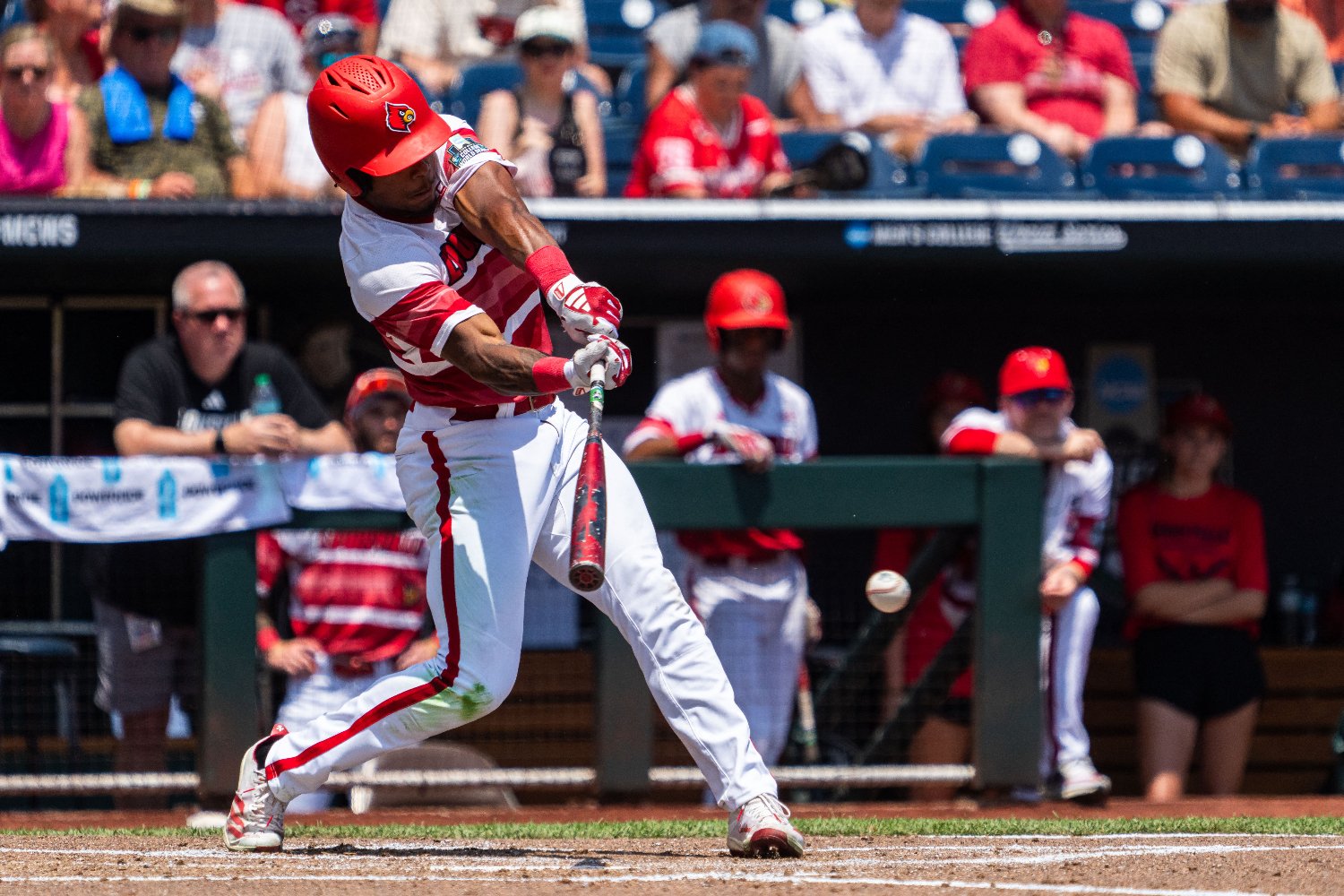 On Saturday before their game against the San Diego Padres, the Kansas City Royals held a press conference to announce the signing of Zion Rose, their first-round selection in the 2026 MLB Draft. According to Anne Rogers, the Royals agreed to a $5,809,574 signing bonus. That was well under the slot amount of $7,746,100 for the sixth overall selection in this year's Draft. data:image/gif;base64,R0lGODlhAQABAPABAP///wAAACH5BAEKAAAALAAAAAABAAEAAAICRAEAOw== Rose was seen as a mid-to-late first-round pick in this past MLB Draft. However, much of that was due to an injury that sidelined him at the beginning of the season. When healthy, was excellent on the field. In 173 plate appearances, Rose hit .417 with a 147 wRC+. He had six home runs, scored 44 runs, collected 47 RBI, and stole 24 bases. He also showed strong contact ability with a meager 8.7% K% and a BB/K ratio of 1.27. Many in the organization feel that Rose could continue to develop as a hitter in the Royals system, and that he was one of the most polished hitters in the Draft after being selected No. 4. That included Brian Bridges, who spoke about Rose on the Royals Pipeline podcast on Friday. data:image/gif;base64,R0lGODlhAQABAPABAP///wAAACH5BAEKAAAALAAAAAABAAEAAAICRAEAOw== With nearly $2 million saved, the Royals will likely use this amount to sign overslot selections like pitchers Taylor Rabe (No. 30 overall), Jack Slightom (No. 59 overall), and Hudson DeVaughan (No. 569 overall), as well as shortstop Camden Johnson (No. 269 overall). Rose is the first signee to be made official by the Royals. We will be keeping a tracker of Royals Draft Picks and how much they sign for at our Draft Tracker on Royals Keep. MLB teams have until July 27th to sign all their Draft picks. Those who go unsigned can return to or attend college, or play in Independent League baseball.
 -
Image courtesy of Dylan Widger-Imagn Images On Saturday before their game against the San Diego Padres, the Kansas City Royals held a press conference to announce the signing of Zion Rose, their first-round selection in the 2026 MLB Draft. According to Anne Rogers, the Royals agreed to a $5,809,574 signing bonus. That was well under the slot amount of $7,746,100 for the sixth overall selection in this year's Draft. data:image/gif;base64,R0lGODlhAQABAPABAP///wAAACH5BAEKAAAALAAAAAABAAEAAAICRAEAOw== Rose was seen as a mid-to-late first-round pick in this past MLB Draft. However, much of that was due to an injury that sidelined him at the beginning of the season. When healthy, was excellent on the field. In 173 plate appearances, Rose hit .417 with a 147 wRC+. He had six home runs, scored 44 runs, collected 47 RBI, and stole 24 bases. He also showed strong contact ability with a meager 8.7% K% and a BB/K ratio of 1.27. Many in the organization feel that Rose could continue to develop as a hitter in the Royals system, and that he was one of the most polished hitters in the Draft after being selected No. 4. That included Brian Bridges, who spoke about Rose on the Royals Pipeline podcast on Friday. data:image/gif;base64,R0lGODlhAQABAPABAP///wAAACH5BAEKAAAALAAAAAABAAEAAAICRAEAOw== With nearly $2 million saved, the Royals will likely use this amount to sign overslot selections like pitchers Taylor Rabe (No. 30 overall), Jack Slightom (No. 59 overall), and Hudson DeVaughan (No. 569 overall), as well as shortstop Camden Johnson (No. 269 overall). Rose is the first signee to be made official by the Royals. We will be keeping a tracker of Royals Draft Picks and how much they sign for at our Draft Tracker on Royals Keep. MLB teams have until July 27th to sign all their Draft picks. Those who go unsigned can return to or attend college, or play in Independent League baseball. View full article
-
Omaha edged Lehigh Valley 2-1 on solo home runs from Kameron Misner and Brett Squires, with Mason Black striking out seven over 5 1/3 innings. Carson Roccaforte homered in the ninth and singled home the winning run as Northwest Arkansas walked off Midland 7-6 in 10 innings. Quad Cities outslugged Wisconsin 13-10 on Luke Pelzer's five RBI, and Columbia edged Charleston 5-4 behind Yandel Ricardo's two RBI and Andy Basora's save. Kansas City Royals Transactions No Roster Moves Squires, Misner Homer As Storm Chasers Edge Lehigh Valley The Omaha Storm Chasers rode two solo home runs to a 2-1 win over the Lehigh Valley IronPigs on Saturday. Misner and Squires each homered, and Black struck out seven over 5 1/3 innings before the bullpen finished with 3 2/3 scoreless innings. Misner, just recently optioned to Omaha before the All-Star Break, opened the scoring with a solo home run to right center in the first inning. Lehigh Valley tied it in the sixth on a Dylan Moore solo homer, but Squires answered in the bottom of the seventh, driving a solo shot to right center that held up as the winning run. Matthew Lugo, Gavin Cross, and Andrew Velazquez had Omaha's other hits, and Velazquez stole a base. Black, who's made the transition back to the rotation in Omaha, started and allowed one run on two hits with no walks and seven strikeouts over 5 1/3 innings. The Storm Chasers relied on a trio of veteran arms to carry them to a victory over the Iron Pigs on Friday. Dan Altavilla worked around two walks in 1 1/3 scoreless innings, and Jose Cuas retired all four batters he faced to earn the win. Justin Topa pitched a perfect ninth for the save. Omaha managed five hits and left four runners on base. They went 0-for-2 with runners in scoring position. The Storm Chasers are now 41-52 this season. Player AB R H RBI BB K John Rave 4 0 0 0 0 1 Matthew Lugo 4 0 1 0 0 2 Kameron Misner 4 1 1 1 0 0 Brett Squires 3 1 1 1 0 0 Abraham Toro 3 0 0 0 0 2 Gavin Cross 3 0 1 0 0 1 Peyton Wilson 2 0 0 0 1 0 Luca Tresh 3 0 0 0 0 1 Andrew Velazquez 3 0 1 0 0 0 Player IP H R ER BB K HR Mason Black 5 1/3 2 1 1 0 7 1 Dan Altavilla 1 1/3 0 0 0 2 0 0 Jose Cuas 1 1/3 0 0 0 0 0 0 Justin Topa 1 0 0 0 0 0 0 Roccaforte Walks It Off As Naturals Edge Midland In 10 The Northwest Arkansas Naturals walked off the Midland RockHounds 7-6 in 10 innings on Saturday. Roccaforte, the Royals' No. 8 prospect, homered in the ninth to tie the game and singled home the winning run in the 10th, finishing 2-for-6 with two RBI. Omar Hernandez and Alberto Rodriguez each added two hits, and Colton Becker reached base three times with three walks and two steals. Northwest Arkansas scored in each of the first two innings, with the first run of the game being driven in by No. 18 prospect Daniel Vazquez. The Naturals pushed the lead to 5-2 in the sixth on a Jorge Alfaro run and a Rodriguez double-play grounder. Midland answered with a four-run seventh to take a 6-5 lead, and the game stayed there into the ninth, when Roccaforte homered to right field to force extra innings. In the 10th, Midland stranded its zombie runner at third without scoring. Northwest Arkansas then won it in the bottom half, as Alfaro was hit by a pitch and Roccaforte lined a single to right that scored zombie runner Becker. Former Kansas City Monarchs pitcher Grant Gambrell started and allowed two runs over five innings with three strikeouts and a home run. Anthony Simonelli was charged with four runs in the seventh without recording an out, but Dennis Colleran Jr. and Brandon Johnson steadied the bullpen, and Augusto Mendieta worked a scoreless 10th to earn the win. The Naturals stranded 11 runners on base and went 4-for-16 with runners in scoring position. Northwest Arkansas improved their record to 37-49 with the victory. Player AB R H RBI BB K Carson Roccaforte 6 1 2 2 0 0 Jack Pineda 4 1 1 0 0 1 Sam Kulasingam 2 0 0 0 3 1 Spencer Nivens 5 0 0 0 0 1 Daniel Vazquez 4 0 1 1 1 0 Colton Becker 2 3 0 0 3 0 Jorge Alfaro 3 1 0 0 1 0 Omar Hernandez 5 1 2 1 0 0 Alberto Rodriguez 5 0 2 1 0 0 Player IP H R ER BB K HR Grant Gambrell 5 3 2 2 2 3 1 Brandon Johnson 1 0 0 0 1 0 0 Anthony Simonelli 0 1 4 4 2 0 0 Tommy Molsky 1 2 0 0 0 0 0 Dennis Colleran Jr. 2 0 0 0 2 2 0 Augusto Mendieta 1 0 0 0 1 1 0 Pelzer Drives In Five As River Bandits Outslug Wisconsin The Quad Cities River Bandits outslugged the Wisconsin Timber Rattlers 13-10 on Saturday. Pelzer drove in five runs on two hits, including a three-run double, No. 9 prospect Asbel Gonzalez scored four times with two hits and two stolen bases, and Jose Cerice homered and drove in three. Trailing 3-1, Quad Cities got a two-run homer from Cerice in the third and then blew the game open with a five-run fourth, sending 10 men to the plate. No. 4 prospect Blake Mitchell, No. 6 prospect Ramon Ramirez, Pelzer, and Erick Torres each drew a bases-loaded walk or reached to force in a run, and Cerice was hit by a pitch that plated another. Wisconsin clawed back to tie it 8-8, but the River Bandits pulled away with a run in the seventh and a decisive four-run rally capped by Pelzer's three-run double. Mitchell added an RBI single in the ninth for insurance. Tanner Jones earned the win with three innings of two-run relief and six strikeouts. Blake Wolters started the game with two innings, struggling with control in his first outing after the All-Star Break. The Royals' No. 15 prospect allowed three runs on four hits and four walks. Aiden Jimenez and No. 20 prospect Kamden Edge each worked two innings as Quad Cities held on despite Wisconsin's 14 hits. The River Bandits left nine runners on base and went 4-for-13 with runners in scoring position. Quad Cities is now back to .500 at 42-42. Player AB R H RBI BB K Asbel Gonzalez 5 4 2 0 0 1 Blake Mitchell 4 2 1 2 2 1 Ramon Ramirez 4 2 0 2 2 3 Luke Pelzer 4 1 2 5 2 1 Jose Cerice 3 1 2 3 0 1 Derlin Figueroa 5 0 1 0 0 2 Erick Torres 4 1 1 1 1 0 Tyriq Kemp 3 1 1 0 2 1 Angel Acosta 4 1 2 0 0 0 Player IP H R ER BB K HR Blake Wolters 2 4 3 3 4 2 0 Aiden Jimenez 2 2 3 3 1 0 1 Tanner Jones 3 5 2 2 2 6 0 Kamden Edge 2 3 2 2 0 1 0 Ricardo, Hammond Lead Fireflies Past Charleston The Columbia Fireflies collected 13 hits and held on to beat the Charleston RiverDogs 5-4 on Saturday. No. 3 prospect Josh Hammond went 3-for-4 with two doubles and two runs, No. 10 prospect Ricardo went 2-for-3 with a triple and two RBI, and Hyungchan Um homered. Columbia struck first in the opening inning when Ricardo singled home Hammond. Charleston briefly went ahead with a two-run first, but the Fireflies retook the lead in the third on a No. 5 prospect Sean Gamble run-scoring single. Um provided the eventual difference in the fourth, launching a solo home run to left center for a 4-3 lead. Ricardo added an insurance run in the seventh, tripling home Roni Cabrera for a 5-3 lead. Charleston pushed a run across in the eighth, but the Fireflies closed it out from there. Hammond and Stone Russell each had two hits to go with Ricardo's and Gamble's pair of base knocks. Jose Gutierrez earned the win with five innings of three-run, two-earned ball and three strikeouts. Henson Leal followed with two scoreless innings and two strikeouts. After Dash Albus allowed a run in the eighth, Basora recorded the final 1 1/3 innings without a hit to earn the save. The Fireflies went 4-for-10 with runners in scoring position and stranded five runners on base. Columbia is back to .500 after the victory, with their record now 44-44. Player AB R H RBI BB K Henry Ramos 5 0 0 0 0 1 Josh Hammond 4 2 3 0 0 1 Yandel Ricardo 3 0 2 2 0 0 Sean Gamble 4 0 2 1 0 0 Jhosmmel Zue 4 0 1 0 0 1 JC Vanek 4 1 1 0 0 0 Stone Russell 4 0 2 0 0 1 Hyungchan Um 3 1 1 1 1 1 Roni Cabrera 3 1 1 0 1 0 Angel Ramirez 0 0 0 0 0 0 Player IP H R ER BB K HR Jose Gutierrez 5 5 3 2 3 3 0 Henson Leal 2 1 0 0 1 2 0 Dash Albus 2/3 2 1 1 0 0 0 Andy Basora 1 1/3 0 0 0 0 0 0 Top-20 Prospect Performance Kendry Chourio: DNP David Shields: DNP Josh Hammond: 3-for-4, 2 2B, 2 R, K Blake Mitchell: 1-for-4, 2 RBI, 2 R, 2 BB, K Sean Gamble: 2-for-4, RBI Ramon Ramirez: 0-for-4, 2 RBI, 2 R, 2 BB, 3 K Drew Beam: DNP Carson Roccaforte: 2-for-6, HR, 2 RBI, R Asbel Gonzalez: 2-for-5, 4 R, 2 SB, K Yandel Ricardo: 2-for-3, 3B, 2 RBI Michael Lombardi: DNP Ben Kudrna: DNP Justin Lamkin: DNP Felix Arronde: DNP Blake Wolters: 2 IP, 4 H, 3 R, 3 ER, 4 BB, 2 K Steven Zobac: DNP Austin Charles: DNP Daniel Vazquez: 1-for-4, RBI, BB Kamden Edge: 2 IP, 3 H, 2 R, 2 ER, 1 K Warren Calcano: 1-for-3, 3 R, 2 BB View full article
-
 Omaha edged Lehigh Valley 2-1 on solo home runs from Kameron Misner and Brett Squires, with Mason Black striking out seven over 5 1/3 innings. Carson Roccaforte homered in the ninth and singled home the winning run as Northwest Arkansas walked off Midland 7-6 in 10 innings. Quad Cities outslugged Wisconsin 13-10 on Luke Pelzer's five RBI, and Columbia edged Charleston 5-4 behind Yandel Ricardo's two RBI and Andy Basora's save. Kansas City Royals Transactions No Roster Moves Squires, Misner Homer As Storm Chasers Edge Lehigh Valley The Omaha Storm Chasers rode two solo home runs to a 2-1 win over the Lehigh Valley IronPigs on Saturday. Misner and Squires each homered, and Black struck out seven over 5 1/3 innings before the bullpen finished with 3 2/3 scoreless innings. Misner, just recently optioned to Omaha before the All-Star Break, opened the scoring with a solo home run to right center in the first inning. Lehigh Valley tied it in the sixth on a Dylan Moore solo homer, but Squires answered in the bottom of the seventh, driving a solo shot to right center that held up as the winning run. Matthew Lugo, Gavin Cross, and Andrew Velazquez had Omaha's other hits, and Velazquez stole a base. Black, who's made the transition back to the rotation in Omaha, started and allowed one run on two hits with no walks and seven strikeouts over 5 1/3 innings. The Storm Chasers relied on a trio of veteran arms to carry them to a victory over the Iron Pigs on Friday. Dan Altavilla worked around two walks in 1 1/3 scoreless innings, and Jose Cuas retired all four batters he faced to earn the win. Justin Topa pitched a perfect ninth for the save. Omaha managed five hits and left four runners on base. They went 0-for-2 with runners in scoring position. The Storm Chasers are now 41-52 this season. Player AB R H RBI BB K John Rave 4 0 0 0 0 1 Matthew Lugo 4 0 1 0 0 2 Kameron Misner 4 1 1 1 0 0 Brett Squires 3 1 1 1 0 0 Abraham Toro 3 0 0 0 0 2 Gavin Cross 3 0 1 0 0 1 Peyton Wilson 2 0 0 0 1 0 Luca Tresh 3 0 0 0 0 1 Andrew Velazquez 3 0 1 0 0 0 Player IP H R ER BB K HR Mason Black 5 1/3 2 1 1 0 7 1 Dan Altavilla 1 1/3 0 0 0 2 0 0 Jose Cuas 1 1/3 0 0 0 0 0 0 Justin Topa 1 0 0 0 0 0 0 Roccaforte Walks It Off As Naturals Edge Midland In 10 The Northwest Arkansas Naturals walked off the Midland RockHounds 7-6 in 10 innings on Saturday. Roccaforte, the Royals' No. 8 prospect, homered in the ninth to tie the game and singled home the winning run in the 10th, finishing 2-for-6 with two RBI. Omar Hernandez and Alberto Rodriguez each added two hits, and Colton Becker reached base three times with three walks and two steals. Northwest Arkansas scored in each of the first two innings, with the first run of the game being driven in by No. 18 prospect Daniel Vazquez. The Naturals pushed the lead to 5-2 in the sixth on a Jorge Alfaro run and a Rodriguez double-play grounder. Midland answered with a four-run seventh to take a 6-5 lead, and the game stayed there into the ninth, when Roccaforte homered to right field to force extra innings. In the 10th, Midland stranded its zombie runner at third without scoring. Northwest Arkansas then won it in the bottom half, as Alfaro was hit by a pitch and Roccaforte lined a single to right that scored zombie runner Becker. Former Kansas City Monarchs pitcher Grant Gambrell started and allowed two runs over five innings with three strikeouts and a home run. Anthony Simonelli was charged with four runs in the seventh without recording an out, but Dennis Colleran Jr. and Brandon Johnson steadied the bullpen, and Augusto Mendieta worked a scoreless 10th to earn the win. The Naturals stranded 11 runners on base and went 4-for-16 with runners in scoring position. Northwest Arkansas improved their record to 37-49 with the victory. Player AB R H RBI BB K Carson Roccaforte 6 1 2 2 0 0 Jack Pineda 4 1 1 0 0 1 Sam Kulasingam 2 0 0 0 3 1 Spencer Nivens 5 0 0 0 0 1 Daniel Vazquez 4 0 1 1 1 0 Colton Becker 2 3 0 0 3 0 Jorge Alfaro 3 1 0 0 1 0 Omar Hernandez 5 1 2 1 0 0 Alberto Rodriguez 5 0 2 1 0 0 Player IP H R ER BB K HR Grant Gambrell 5 3 2 2 2 3 1 Brandon Johnson 1 0 0 0 1 0 0 Anthony Simonelli 0 1 4 4 2 0 0 Tommy Molsky 1 2 0 0 0 0 0 Dennis Colleran Jr. 2 0 0 0 2 2 0 Augusto Mendieta 1 0 0 0 1 1 0 Pelzer Drives In Five As River Bandits Outslug Wisconsin The Quad Cities River Bandits outslugged the Wisconsin Timber Rattlers 13-10 on Saturday. Pelzer drove in five runs on two hits, including a three-run double, No. 9 prospect Asbel Gonzalez scored four times with two hits and two stolen bases, and Jose Cerice homered and drove in three. Trailing 3-1, Quad Cities got a two-run homer from Cerice in the third and then blew the game open with a five-run fourth, sending 10 men to the plate. No. 4 prospect Blake Mitchell, No. 6 prospect Ramon Ramirez, Pelzer, and Erick Torres each drew a bases-loaded walk or reached to force in a run, and Cerice was hit by a pitch that plated another. Wisconsin clawed back to tie it 8-8, but the River Bandits pulled away with a run in the seventh and a decisive four-run rally capped by Pelzer's three-run double. Mitchell added an RBI single in the ninth for insurance. Tanner Jones earned the win with three innings of two-run relief and six strikeouts. Blake Wolters started the game with two innings, struggling with control in his first outing after the All-Star Break. The Royals' No. 15 prospect allowed three runs on four hits and four walks. Aiden Jimenez and No. 20 prospect Kamden Edge each worked two innings as Quad Cities held on despite Wisconsin's 14 hits. The River Bandits left nine runners on base and went 4-for-13 with runners in scoring position. Quad Cities is now back to .500 at 42-42. Player AB R H RBI BB K Asbel Gonzalez 5 4 2 0 0 1 Blake Mitchell 4 2 1 2 2 1 Ramon Ramirez 4 2 0 2 2 3 Luke Pelzer 4 1 2 5 2 1 Jose Cerice 3 1 2 3 0 1 Derlin Figueroa 5 0 1 0 0 2 Erick Torres 4 1 1 1 1 0 Tyriq Kemp 3 1 1 0 2 1 Angel Acosta 4 1 2 0 0 0 Player IP H R ER BB K HR Blake Wolters 2 4 3 3 4 2 0 Aiden Jimenez 2 2 3 3 1 0 1 Tanner Jones 3 5 2 2 2 6 0 Kamden Edge 2 3 2 2 0 1 0 Ricardo, Hammond Lead Fireflies Past Charleston The Columbia Fireflies collected 13 hits and held on to beat the Charleston RiverDogs 5-4 on Saturday. No. 3 prospect Josh Hammond went 3-for-4 with two doubles and two runs, No. 10 prospect Ricardo went 2-for-3 with a triple and two RBI, and Hyungchan Um homered. Columbia struck first in the opening inning when Ricardo singled home Hammond. Charleston briefly went ahead with a two-run first, but the Fireflies retook the lead in the third on a No. 5 prospect Sean Gamble run-scoring single. Um provided the eventual difference in the fourth, launching a solo home run to left center for a 4-3 lead. Ricardo added an insurance run in the seventh, tripling home Roni Cabrera for a 5-3 lead. Charleston pushed a run across in the eighth, but the Fireflies closed it out from there. Hammond and Stone Russell each had two hits to go with Ricardo's and Gamble's pair of base knocks. Jose Gutierrez earned the win with five innings of three-run, two-earned ball and three strikeouts. Henson Leal followed with two scoreless innings and two strikeouts. After Dash Albus allowed a run in the eighth, Basora recorded the final 1 1/3 innings without a hit to earn the save. The Fireflies went 4-for-10 with runners in scoring position and stranded five runners on base. Columbia is back to .500 after the victory, with their record now 44-44. Player AB R H RBI BB K Henry Ramos 5 0 0 0 0 1 Josh Hammond 4 2 3 0 0 1 Yandel Ricardo 3 0 2 2 0 0 Sean Gamble 4 0 2 1 0 0 Jhosmmel Zue 4 0 1 0 0 1 JC Vanek 4 1 1 0 0 0 Stone Russell 4 0 2 0 0 1 Hyungchan Um 3 1 1 1 1 1 Roni Cabrera 3 1 1 0 1 0 Angel Ramirez 0 0 0 0 0 0 Player IP H R ER BB K HR Jose Gutierrez 5 5 3 2 3 3 0 Henson Leal 2 1 0 0 1 2 0 Dash Albus 2/3 2 1 1 0 0 0 Andy Basora 1 1/3 0 0 0 0 0 0 Top-20 Prospect Performance Kendry Chourio: DNP David Shields: DNP Josh Hammond: 3-for-4, 2 2B, 2 R, K Blake Mitchell: 1-for-4, 2 RBI, 2 R, 2 BB, K Sean Gamble: 2-for-4, RBI Ramon Ramirez: 0-for-4, 2 RBI, 2 R, 2 BB, 3 K Drew Beam: DNP Carson Roccaforte: 2-for-6, HR, 2 RBI, R Asbel Gonzalez: 2-for-5, 4 R, 2 SB, K Yandel Ricardo: 2-for-3, 3B, 2 RBI Michael Lombardi: DNP Ben Kudrna: DNP Justin Lamkin: DNP Felix Arronde: DNP Blake Wolters: 2 IP, 4 H, 3 R, 3 ER, 4 BB, 2 K Steven Zobac: DNP Austin Charles: DNP Daniel Vazquez: 1-for-4, RBI, BB Kamden Edge: 2 IP, 3 H, 2 R, 2 ER, 1 K Warren Calcano: 1-for-3, 3 R, 2 BB
 -
Image courtesy of Vincent Carchietta-Imagn Images One of the more disappointing players this year has been relief pitcher Lucas Erceg. When he was acquired at the Trade Deadline from the Athletics in 2024, Erceg looked to be exactly what the Royals needed in the bullpen. In 23 IP and 25 appearances with the Royals in 2024, the former Cal product posted a 2.88 ERA, 0.84 WHIP, 1.88 FIP, and an insane 28.9% K-BB%. From August 1st until the end of the year, Erceg was arguably one of the most dominant relievers in the American League, and his Statcast percentiles that season proved it. Unfortunately, the last two years haven't been as rosy for the right-handed reliever. Erceg seemed to be bothered by a lingering minor back injury. Despite this, he still pitched 61.1 IP and posted a 2.64 ERA and 1.17 WHIP. While those numbers were impressive on the surface, the more advanced metrics weren't as kind. Erceg's FIP was 3.46, and his K-BB% was 12%, down from his overall 22.1% K-BB% with the Athletics and Royals in 2024. The biggest red flag was his decline in K% from 2024 to 2025. After producing a 28.5% K% in 2024 with the A's and Royals, he saw his K% regress to 19.4% in 2025. Furthermore, his whiff rate went from 31% in 2024 to 24.7% in 2025, and his CSW% went from 32.2% in 2024 to 27% in 2025. He also saw lackluster percentile rankings across many categories in 2025, per TJ Stats. It wasn't as if Erceg was bad in 2025. He was still one of the Royals' best relievers, even though he wasn't the primary closer (that role belonged to All-Star Carlos Estevez). That said, he wasn't as elite in 2025 as he was in that brief tenure in Kansas City in 2024, especially in their push to the postseason (and in the playoffs against Baltimore and New York as well). This year has been even worse for Erceg, as he looks like a shell of his 2024 Royals or former Athletics self. In 38 games and 37 IP, he has a 5.11 ERA, 1.62 WHIP, 4.99 FIP, and 3.6% K-BB%. His K% is 16.4%, down 2.9% from a year ago, and his 24.2% CSW is 2.8% down as well. To make matters worse, Erceg has seen a spike in home runs allowed this year. His 13.8% HR/FB% is 5.3% higher than a year ago. One would think that Erceg may be seeing a decline in his velocity or stuff. And while the TJ Stuff+ numbers have seen a regression, his fastball velocity still ranks in the upper percentiles of the league. Unfortunately, most of his other percentile ranks are near the bottom, as illustrated below. Erceg is not a lost cause based on this Statcast profile. He's still limiting barrels and exit velocity on batted balls at a decent clip, and his extension is encouraging as well. Unfortunately, when it comes to generating whiffs (26th percentile) and strikes in general (24th percentile zone rate), he's seen a massive regression, and he's been hard to utilize in high-leverage spots for the Royals, which was far from the case in 2025 and 2024. So what do the Royals do with Erceg, especially at 31 and with his first year of arbitration eligibility this offseason? Instead of just trotting him out in relief and "hoping" he figures it out, the Royals should take a risk and do something bold with Erceg's development: They should transition him to a starting role. Why This Makes Sense for Erceg Now, at 31 years of age, some Royals fans may be asking this: Isn't Erceg too old for this? Well, not really, especially when one looks at his current roster status. Erceg has 2.136 years of service time, according to Fangraphs. That allows him to be still optioned to Triple-A Omaha. Erceg has all three Minor League options remaining, so he can move down to the Minor Leagues to work on this transition, if necessary. Considering the Royals are 21 games under .500, this may be the best opportunity for Erceg to make this move. He's not really helping the bullpen right now anyway. By going down to Omaha (or the Complex League or Double-A Northwest Arkansas, if necessary), he gets to work on stretching out as a starter. In contrast, a reliever or another pitcher in the Minor Leagues (Steven Zobac, perhaps) gets a shot to prove if he can be a part of this Royals pitching staff in 2027 and beyond. Now, Erceg also could make the transition to the rotation more easily than some relievers. Unlike some pitchers, he is not a 2-pitch pitcher like some typical relievers. Erceg sports four pitches in his repertoire, with three of those four posting TJ Stuff+ marks at or above average this season, according to his TJ Stuff+ summary below. His slider (102) and changeup (107) are his best offerings, with his slider (102) being his third-best on a TJ Stuff+ end. His four-seamer doesn't rate well on a TJ Stuff+ end (96), but it has above-average velocity at 97.2 MPH. Furthermore, not only does he have above-average velocity on three of his four offerings, but he also varies his pitches, with three of his offerings (four-seamer, slider, and sinker) being thrown 25% or more (his changeup, while utilized the least, still is thrown 13.9% of the time). That's a strong base for the Royals Pitching Development team to work with. With a four-pitch mix, three decent pitches, he could transition to the rotation and focus more on sharpening the quality and usage over more innings of work. Furthermore, he could add a pitch or two, which would not only diversify his repertoire but also perhaps enhance his other offerings, especially his whiff rate, which is below average at 21.5%. What's interesting about Erceg's history is that he once had five pitches while with the Athletics. He threw a cutter in 2023, and the pitch performed decently, according to TJ Stuff+ summary data. He threw the cutter only 4.5% of the time in 2023, which is minuscule. He also struggled to throw it for strikes, as evidenced by his 21.3% zone rate. Because of those factors, hitters tended to lay off it, only chasing 13.5% of the time. And yet, when they did swing, they were often unsuccessful. His cutter had a 40% whiff rate and a .354 xwOBACON, both above-average marks. As a reliever, it makes sense that he eliminated the pitch in 2024. Relievers should have quality pitches, even if it's fewer. As a starter, however, a more diverse pitch mix is necessary. Erceg bringing back the cutter, and perhaps adding another breaking ball (a sweeper or curve), could help give him the arsenal he needs to succeed in the transition to starting. Furthermore, moving to the rotation could help him find a more even keel on the mound. Erceg is known for his intensity, and he demonstrated that on May 2nd when he accidentally cussed during a postgame interview with Joel Goldberg due to the adrenaline of closing out the game. I wonder if that high adrenaline is having a counterproductive effect on Erceg now, especially as he is struggling this year. Thus, moving to the rotation could perhaps get his composure back and help him focus more on his pitches and mix rather than those highly stressful spots later in games where everything is riding on him for an inning. Being a starter again could not just help him get his career back on track. It could also help him become a better pitcher, especially since he'll be able to work intentionally more on his mix and pitch quality. Those skills would be transferable, even if he moves back to the bullpen if the starting experiment doesn't go right. There Are Success Stories For Erceg to Follow We typically hear success stories of pitchers moving from the rotation to the bullpen to revitalize their careers. Wade Davis is the most well-known one, as he went from a mediocre starter with Tampa Bay and Kansas City to being one of the best closers in the game from 2014 to 2017. However, there have been success stories. The Rays' Griffin Jax, the Mets' Clay Holmes, and even the Royals' own Seth Lugo are examples that Erceg could emulate. Jax was moved to the rotation during the season after a brutal start as the Rays' initial closer. After posting an 8.00 ERA in 9.0 IP as a reliever, he transitioned to the rotation and posted a 2.80 ERA in 61 IP. When looking at his splits from last year and this year, not much has changed in his percentiles, though he has thrived as a starter despite a lackluster zone rate. Despite the inconsistent control, he still generates whiffs, CSW, and GB%. Those are all traits that Erceg has demonstrated in the past (including the lackluster zone rate this year). Holmes is another arm that made the transition from a beleaguered reliever with the Yankees to a dependable starting pitcher with the Mets. As a starter in 2025, he posted a 3.53 ERA and 1.9 fWAR in 165.2 IP. He was actually having a better year this year with a 2.39 ERA in 52.2 IP before going down due to a fibula injury that put him on the 60-Day IL. When looking at his Statcast comparison from 2024, his last season as a reliever, to 2025, his first season as a starter, Holmes actually saw a lot of his percentiles decline. And yet, despite regression in many categories as the load increased, Holmes still managed to be a valuable and dependable starter for the Mets a season ago. Holmes regressed heavily in generating whiffs, CSW, and strikeouts. That said, his ability to generate groundballs and limit barrels continued in Queens. As a result, he had a successful year as a middle-of-the-rotation starter. Erceg has demonstrated the same ability as Holmes to limit barrels and induce a lot of groundballs. Thus, it's feasible to see Erceg develop into a Holmes 2.0 if given the opportunity. Lastly, let's take a look at Lugo, who went from a quality reliever with the Mets in 2022 to a starter with the Padres in 2023. The former AL Cy Young finalist saw a decrease in whiffs and CSW, but an increase in zone rate, strike rate, and groundball rate in the transition. The results for Lugo in 2023? A 3.57 ERA and 2.9 fWAR with the Padres in 26 starts and 146.1 IP. That performance earned him two big paydays from the Royals. Thus, it's not out of the realm of possibility that Erceg could find success as a starter like Jax, Holmes, or Lugo. Erceg shares many of the same profile traits as those three pitchers. Furthermore, like all three of those pitchers, Erceg has nothing to lose with a move from the bullpen to the rotation. It will require some time in the farm system, perhaps for the remainder of the year, depending on how quickly he adapts. That said, there is a path for Erceg to find success in this move. Jax, Holmes, and Lugo did it. Hopefully, the Royals will help Erceg be the next reliever-to-starter success story. View full article
-
Could A Move to Starting Help Turn Around Lucas Erceg's Career?
Kevin O'Brien posted an article in Royals
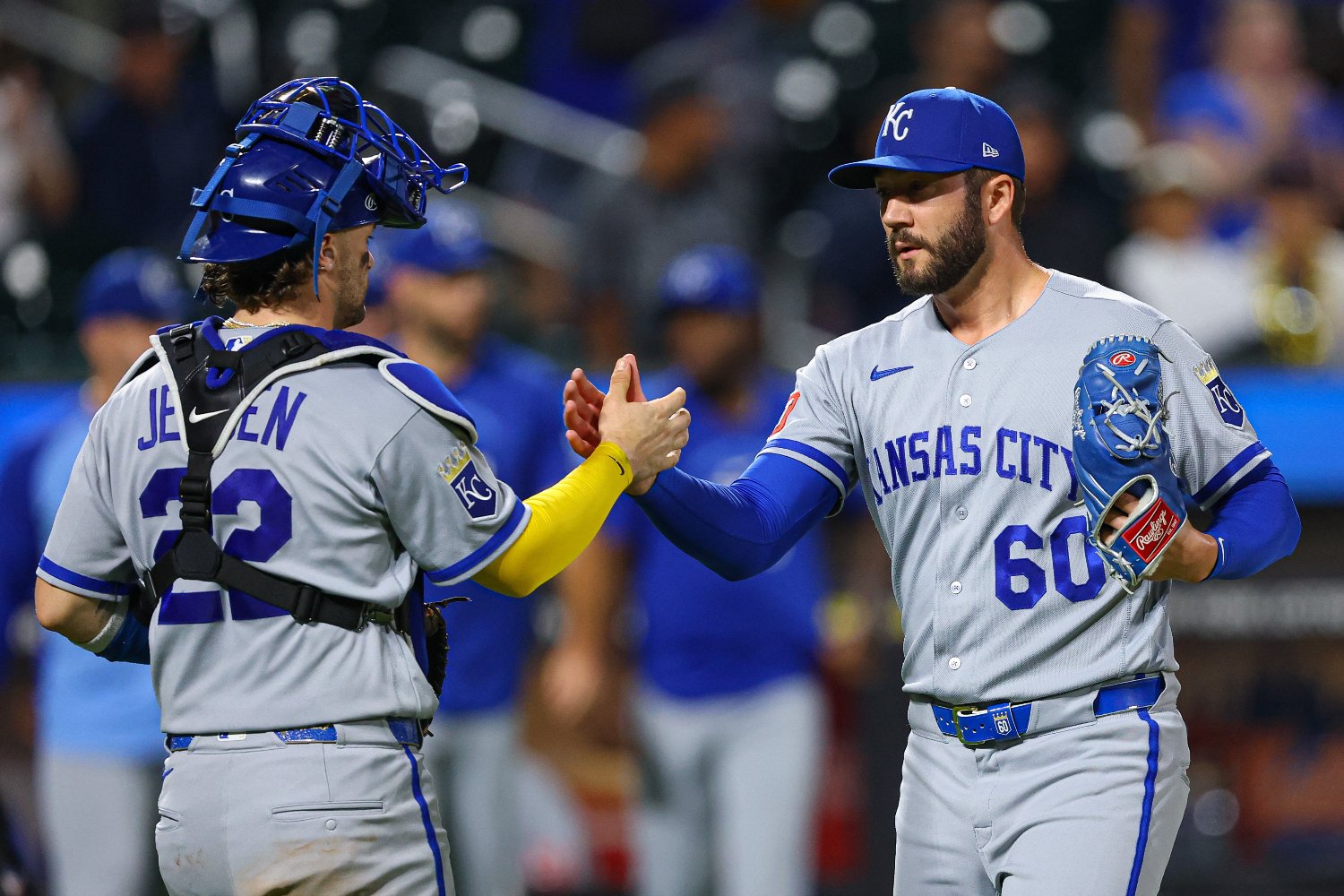 One of the more disappointing players this year has been relief pitcher Lucas Erceg. When he was acquired at the Trade Deadline from the Athletics in 2024, Erceg looked to be exactly what the Royals needed in the bullpen. In 23 IP and 25 appearances with the Royals in 2024, the former Cal product posted a 2.88 ERA, 0.84 WHIP, 1.88 FIP, and an insane 28.9% K-BB%. From August 1st until the end of the year, Erceg was arguably one of the most dominant relievers in the American League, and his Statcast percentiles that season proved it. Unfortunately, the last two years haven't been as rosy for the right-handed reliever. Erceg seemed to be bothered by a lingering minor back injury. Despite this, he still pitched 61.1 IP and posted a 2.64 ERA and 1.17 WHIP. While those numbers were impressive on the surface, the more advanced metrics weren't as kind. Erceg's FIP was 3.46, and his K-BB% was 12%, down from his overall 22.1% K-BB% with the Athletics and Royals in 2024. The biggest red flag was his decline in K% from 2024 to 2025. After producing a 28.5% K% in 2024 with the A's and Royals, he saw his K% regress to 19.4% in 2025. Furthermore, his whiff rate went from 31% in 2024 to 24.7% in 2025, and his CSW% went from 32.2% in 2024 to 27% in 2025. He also saw lackluster percentile rankings across many categories in 2025, per TJ Stats. It wasn't as if Erceg was bad in 2025. He was still one of the Royals' best relievers, even though he wasn't the primary closer (that role belonged to All-Star Carlos Estevez). That said, he wasn't as elite in 2025 as he was in that brief tenure in Kansas City in 2024, especially in their push to the postseason (and in the playoffs against Baltimore and New York as well). This year has been even worse for Erceg, as he looks like a shell of his 2024 Royals or former Athletics self. In 38 games and 37 IP, he has a 5.11 ERA, 1.62 WHIP, 4.99 FIP, and 3.6% K-BB%. His K% is 16.4%, down 2.9% from a year ago, and his 24.2% CSW is 2.8% down as well. To make matters worse, Erceg has seen a spike in home runs allowed this year. His 13.8% HR/FB% is 5.3% higher than a year ago. One would think that Erceg may be seeing a decline in his velocity or stuff. And while the TJ Stuff+ numbers have seen a regression, his fastball velocity still ranks in the upper percentiles of the league. Unfortunately, most of his other percentile ranks are near the bottom, as illustrated below. Erceg is not a lost cause based on this Statcast profile. He's still limiting barrels and exit velocity on batted balls at a decent clip, and his extension is encouraging as well. Unfortunately, when it comes to generating whiffs (26th percentile) and strikes in general (24th percentile zone rate), he's seen a massive regression, and he's been hard to utilize in high-leverage spots for the Royals, which was far from the case in 2025 and 2024. So what do the Royals do with Erceg, especially at 31 and with his first year of arbitration eligibility this offseason? Instead of just trotting him out in relief and "hoping" he figures it out, the Royals should take a risk and do something bold with Erceg's development: They should transition him to a starting role. Why This Makes Sense for Erceg Now, at 31 years of age, some Royals fans may be asking this: Isn't Erceg too old for this? Well, not really, especially when one looks at his current roster status. Erceg has 2.136 years of service time, according to Fangraphs. That allows him to be still optioned to Triple-A Omaha. Erceg has all three Minor League options remaining, so he can move down to the Minor Leagues to work on this transition, if necessary. Considering the Royals are 21 games under .500, this may be the best opportunity for Erceg to make this move. He's not really helping the bullpen right now anyway. By going down to Omaha (or the Complex League or Double-A Northwest Arkansas, if necessary), he gets to work on stretching out as a starter. In contrast, a reliever or another pitcher in the Minor Leagues (Steven Zobac, perhaps) gets a shot to prove if he can be a part of this Royals pitching staff in 2027 and beyond. Now, Erceg also could make the transition to the rotation more easily than some relievers. Unlike some pitchers, he is not a 2-pitch pitcher like some typical relievers. Erceg sports four pitches in his repertoire, with three of those four posting TJ Stuff+ marks at or above average this season, according to his TJ Stuff+ summary below. His slider (102) and changeup (107) are his best offerings, with his slider (102) being his third-best on a TJ Stuff+ end. His four-seamer doesn't rate well on a TJ Stuff+ end (96), but it has above-average velocity at 97.2 MPH. Furthermore, not only does he have above-average velocity on three of his four offerings, but he also varies his pitches, with three of his offerings (four-seamer, slider, and sinker) being thrown 25% or more (his changeup, while utilized the least, still is thrown 13.9% of the time). That's a strong base for the Royals Pitching Development team to work with. With a four-pitch mix, three decent pitches, he could transition to the rotation and focus more on sharpening the quality and usage over more innings of work. Furthermore, he could add a pitch or two, which would not only diversify his repertoire but also perhaps enhance his other offerings, especially his whiff rate, which is below average at 21.5%. What's interesting about Erceg's history is that he once had five pitches while with the Athletics. He threw a cutter in 2023, and the pitch performed decently, according to TJ Stuff+ summary data. He threw the cutter only 4.5% of the time in 2023, which is minuscule. He also struggled to throw it for strikes, as evidenced by his 21.3% zone rate. Because of those factors, hitters tended to lay off it, only chasing 13.5% of the time. And yet, when they did swing, they were often unsuccessful. His cutter had a 40% whiff rate and a .354 xwOBACON, both above-average marks. As a reliever, it makes sense that he eliminated the pitch in 2024. Relievers should have quality pitches, even if it's fewer. As a starter, however, a more diverse pitch mix is necessary. Erceg bringing back the cutter, and perhaps adding another breaking ball (a sweeper or curve), could help give him the arsenal he needs to succeed in the transition to starting. Furthermore, moving to the rotation could help him find a more even keel on the mound. Erceg is known for his intensity, and he demonstrated that on May 2nd when he accidentally cussed during a postgame interview with Joel Goldberg due to the adrenaline of closing out the game. I wonder if that high adrenaline is having a counterproductive effect on Erceg now, especially as he is struggling this year. Thus, moving to the rotation could perhaps get his composure back and help him focus more on his pitches and mix rather than those highly stressful spots later in games where everything is riding on him for an inning. Being a starter again could not just help him get his career back on track. It could also help him become a better pitcher, especially since he'll be able to work intentionally more on his mix and pitch quality. Those skills would be transferable, even if he moves back to the bullpen if the starting experiment doesn't go right. There Are Success Stories For Erceg to Follow We typically hear success stories of pitchers moving from the rotation to the bullpen to revitalize their careers. Wade Davis is the most well-known one, as he went from a mediocre starter with Tampa Bay and Kansas City to being one of the best closers in the game from 2014 to 2017. However, there have been success stories. The Rays' Griffin Jax, the Mets' Clay Holmes, and even the Royals' own Seth Lugo are examples that Erceg could emulate. Jax was moved to the rotation during the season after a brutal start as the Rays' initial closer. After posting an 8.00 ERA in 9.0 IP as a reliever, he transitioned to the rotation and posted a 2.80 ERA in 61 IP. When looking at his splits from last year and this year, not much has changed in his percentiles, though he has thrived as a starter despite a lackluster zone rate. Despite the inconsistent control, he still generates whiffs, CSW, and GB%. Those are all traits that Erceg has demonstrated in the past (including the lackluster zone rate this year). Holmes is another arm that made the transition from a beleaguered reliever with the Yankees to a dependable starting pitcher with the Mets. As a starter in 2025, he posted a 3.53 ERA and 1.9 fWAR in 165.2 IP. He was actually having a better year this year with a 2.39 ERA in 52.2 IP before going down due to a fibula injury that put him on the 60-Day IL. When looking at his Statcast comparison from 2024, his last season as a reliever, to 2025, his first season as a starter, Holmes actually saw a lot of his percentiles decline. And yet, despite regression in many categories as the load increased, Holmes still managed to be a valuable and dependable starter for the Mets a season ago. Holmes regressed heavily in generating whiffs, CSW, and strikeouts. That said, his ability to generate groundballs and limit barrels continued in Queens. As a result, he had a successful year as a middle-of-the-rotation starter. Erceg has demonstrated the same ability as Holmes to limit barrels and induce a lot of groundballs. Thus, it's feasible to see Erceg develop into a Holmes 2.0 if given the opportunity. Lastly, let's take a look at Lugo, who went from a quality reliever with the Mets in 2022 to a starter with the Padres in 2023. The former AL Cy Young finalist saw a decrease in whiffs and CSW, but an increase in zone rate, strike rate, and groundball rate in the transition. The results for Lugo in 2023? A 3.57 ERA and 2.9 fWAR with the Padres in 26 starts and 146.1 IP. That performance earned him two big paydays from the Royals. Thus, it's not out of the realm of possibility that Erceg could find success as a starter like Jax, Holmes, or Lugo. Erceg shares many of the same profile traits as those three pitchers. Furthermore, like all three of those pitchers, Erceg has nothing to lose with a move from the bullpen to the rotation. It will require some time in the farm system, perhaps for the remainder of the year, depending on how quickly he adapts. That said, there is a path for Erceg to find success in this move. Jax, Holmes, and Lugo did it. Hopefully, the Royals will help Erceg be the next reliever-to-starter success story.
-
- 1
-

-
- lucas erceg
- griffin jax
- (and 2 more)
-
Image courtesy of Kyle Ross-Imagn Images With the All-Star Game behind us, the next major event in baseball is the Trade Deadline on Monday, August 3rd. With a 38-59 record and 0.2% odds of making the postseason, the Royals need to take advantage of the trading period, hoping to acquire talent that can impact the organization at both the Major and Minor League levels. The Royals aren't necessarily "flush" with tradeable assets right now. Many of their best assets are hurt (Kyle Isbel, Kris Bubic, and Carlos Estevez), or have lost a tremendous amount of value since last season. However, that doesn't mean the Royals should or will sit on their hands over the next few weeks. In fact, it wouldn't be surprising if the Royals made some of those tough trade decisions, even if it meant losing some popular players. Thus, let's look at three possible trades for Kansas City by the August 3rd Trade Deadline and why those deals could make sense for the respective teams and the Royals. Pitcher Alex Lange to the Chicago Cubs for Infielder James Triantos The Cubs are desperate for relief help. While they rank 16th in bullpen ERA, they are anchored heavily by closer Jacob Webb. After that, it's shaky, especially with so many relievers on the IL (Daniel Palencia, Hunter Harvey, Hoby Milner) or struggling on the mound (Phil Maton and Drew Pomeranz). The North Siders need someone who can produce not just strikeouts, but swing-and-miss ability as well. Lange could be the right fit for this lackluster Cubs bullpen. Northside Baseball brought up Lange as a possibility, saying this about the 30-year-old Royals reliever: There are plenty of issues with Lange's profile. He gives up a lot of hard contact, and his control is spotty, even if it has improved since he took over the closer's job. However, Lange generates whiffs and throws heat. That's a profile that the Cubs want and can work with. (Remember Brad Keller last year?) Lange doesn't have any Minor League options, but he has two years of club control after this season. Furthermore, he's currently pretty cheap, making only $900K. Thus, the Cubs could not just get a strong reliever, but one with plenty of financial flexibility. That is valuable, even for a club as flush as the Cubs. An option the Royals could get back in return is Triantos, a 23-year-old infielder who's stuck in Triple-A. The former 2021 second-round pick is hitting well in Triple-A Iowa with a .311 average and 100 wRC+ in 355 plate appearances. He also has seven home runs and 18 stolen bases. Triantos doesn't offer much power or exit velocity on batted balls, but he doesn't whiff and doesn't strike out, two skills the Royals have really valued in hitters. Triantos is on the Cubs' 40-man roster. That said, he's currently blocked by Alex Bregman and Nico Hoerner, both of whom are on long-term deals. Thus, the 23-year-old infielder could be a fit in Kansas City, especially as a right-handed bat. At the very least, he could platoon with Michael Massey at second base for now, and perhaps get more playing time at other positions if he can hold his own at the plate. Furthermore, Triantos carries plenty of long-term value, especially with no service time on his clock just yet. Outfielder Lane Thomas to Atlanta for Pitchers Drue Hackenberg and Luis Vargas The Braves are at the top of the NL East and have been comfortably so for a while. However, the Phillies and Marlins have been closing in fast, with Philadelphia just two games behind and Miami four games behind at the All-Star Break. Thus, Atlanta needs to beef up their roster, especially on the hitting end. Michael Harris II has been great, but the rest of the outfield is a bit suspect. Mauricio Dubon and Eli White just aren't going to cut it, and while he's hurt, Mike Yastrzemski was inconsistent when he was healthy. Add that to questions regarding Ronald Acuna Jr. and his hamstring, and it makes sense that Atlanta could pursue Thomas to add some much-needed depth in the outfield. Thomas' 102 wRC+ is 20 points higher than White's and just 1 point lower than Dubon's. Furthermore, Thomas can play centerfield against lefties when Harris needs a night off. The former National and Guardian has thrived since getting everyday playing time, and his ability to not chase, launch the ball, and pull the ball in the air consistently should intrigue Atlanta. In exchange, the Royals would receive two talented but flawed pitchers currently in the Braves' farm system. The prize of the bunch would be Hackenberg, a 24-year-old former Virginia Tech pitcher. A second-round pick in the 2023 MLB Draft, Hackenberg has a 4.88 ERA, 1.42 WHIP, 4.17 FIP, and 14.4% K-BB% in five outings and 24 IP with Gwinnett. The stuff and extension haven't been great for Hackenberg, but he's generated a lot of whiffs, a lot of strikes, and a lot of weak contact, according to TJ Stats Statcast percentiles. Considering the injuries to the Royals' pitching staff, Hackenberg could come up right away and get a shot for some starts in August and September. If he does well, he could be a long-term option in the rotation, or at the very least a hybrid starter/reliever with long-term control. Vargas is still in Double-A, but he's the opposite of Hackenberg: the stuff is electric, and he generates strikes and whiffs in bunches. Unfortunately, he also walks hitters in bunches, which explains why he's still in Double-A despite being 24 years old and Rule 5 eligible. Still, the Royals need to take chances with pitchers with this profile and let them see what they can do, even if they don't have the "experience." Hackenberg and Vargas aren't high-caliber pitching prospects by any means. However, they could make an immediate impact on the Royals' pitching staff in both the short and long term, which is what a team wants to get in exchange for a rental like Thomas. Pitchers Michael Wacha and Lucas Erceg for Pitchers Tink Hence and Richard Fitts, 1B/3B Blaze Jordan, and OF Victor Scott II The Royals may not be willing to move Wacha, especially if they're hoping they can win in 2027. To be competitive again next year, they will need starting pitching at the top of the rotation, especially with Cole Ragans missing the start of next year and Seth Lugo and Noah Cameron experiencing regression in 2026. Hence, they may need to keep Wacha, simply because they don't have many dependable options for next year. That said, there have been reports that the Royals could trade Wacha if they were impressed and overwhelmed by a deal. This proposed deal could be the offer that could convince Kansas City to move forward, even if losing an All-Star like Wacha would be tough to stomach initially. In this deal, Kansas City would include reliever Lucas Erceg, who hasn't been good, but has been good in the past and has three years of club control after this year (as well as three Minor League options). However, including Erceg here would be important to maximize the Royals' return from the Cardinals. In exchange for Wacha and Erceg, the Royals would get two intriguing arms in Hence and Fitts, corner infielder Jordan, who's currently on the Major League squad in St. Louis, and outfielder Scott, a former heralded prospect who's struggled and is back in Memphis. Hence has long been a top pitching prospect who's moved slowly in the Cardinals system. He's had numerous injuries that have stunted his progression as a pitcher over the years. Hence started the year in extended Spring Training, and his numbers haven't been good in Memphis this year. In 20 IP, he has a 6.30 ERA, 1.75 WHIP, 6.49 FIP, and 3.1% K-BB%. However, the athleticism and the upside are still there, and a new change of scenery may do wonders for him, even if the Statcast percentiles in Triple-A haven't been encouraging. Some encouraging items: he's still generating whiffs (77th percentile whiff rate) and groundballs (62nd percentile GB%). I think with some more development and recovery, the stuff will come back, and he will be a much more effective pitcher in the Royals organization, even if his upside may be as a reliever at this point in his career. Speaking of injuries, Fitts is out for the remainder of the season. However, when he was healthy, he had a 1.76 ERA and 1.24 WHIP in 15.1 IP. The former Red Sox pitcher posted a 5.00 ERA over 45 IP with Boston last year, but he showed some progress in St. Louis after being reunited with former Red Sox president Chaim Bloom. Because of that connection, I imagine Bloom may be hesitant to give up Fitts. However, St. Louis will have to wait until Fitts' return in 2027, which they may not have the patience for, especially if they want to stay competitive in a tough NL Central division. Kansas City may be more willing to be patient, especially given the upside Fitts presents with his stuff and his Statcast percentiles. On the hitting side, the Royals would receive a couple of players who could make an impact on the lineup immediately. Scott has struggled at the MLB level, but he's a fast player who doesn't chase and could thrive if given more reps in center field, which likely will happen with Isbel's status questionable for the remainder of the year. The exit velocity isn't there, but maybe the Royals could utilize Scott like the Rays utilize Chandler Simpson. Lastly, Kansas City may have a tougher time utilizing Jordan, since the Royals seem set long-term with Maikel Garcia at third and Vinnie Pasquantino at first. Then again, the Royals may look to deal Vinnie this offseason, especially given his injury issues, and Garcia's status for the remainder of the year is also questionable. At the very least, Jordan could give them a much-needed bat with upside, and if he hits, they can figure out the defense later. Jordan's surface-level numbers aren't gaudy (.608 OPS in 83 PA), but he hits the ball hard, doesn't whiff, and doesn't strike out. The Royals need that profile in the lineup, and at 23 years old, there's plenty of long-term upside with Jordan. Jordan and Scott II haven't had the most stellar seasons with St. Louis in 2026. That said, maybe a move across the state down I-70 could rejuvenate their careers. As for Wacha, he gets to return to the organization that drafted him, which he would likely be more than willing to do. That would also reduce ill will between Wacha and the Royals, which could help the Royals in negotiations with potential free-agent pitchers this offseason. View full article
-
Three Impactful Moves That the Royals Could Make at the Trade Deadline
Kevin O'Brien posted an article in Royals
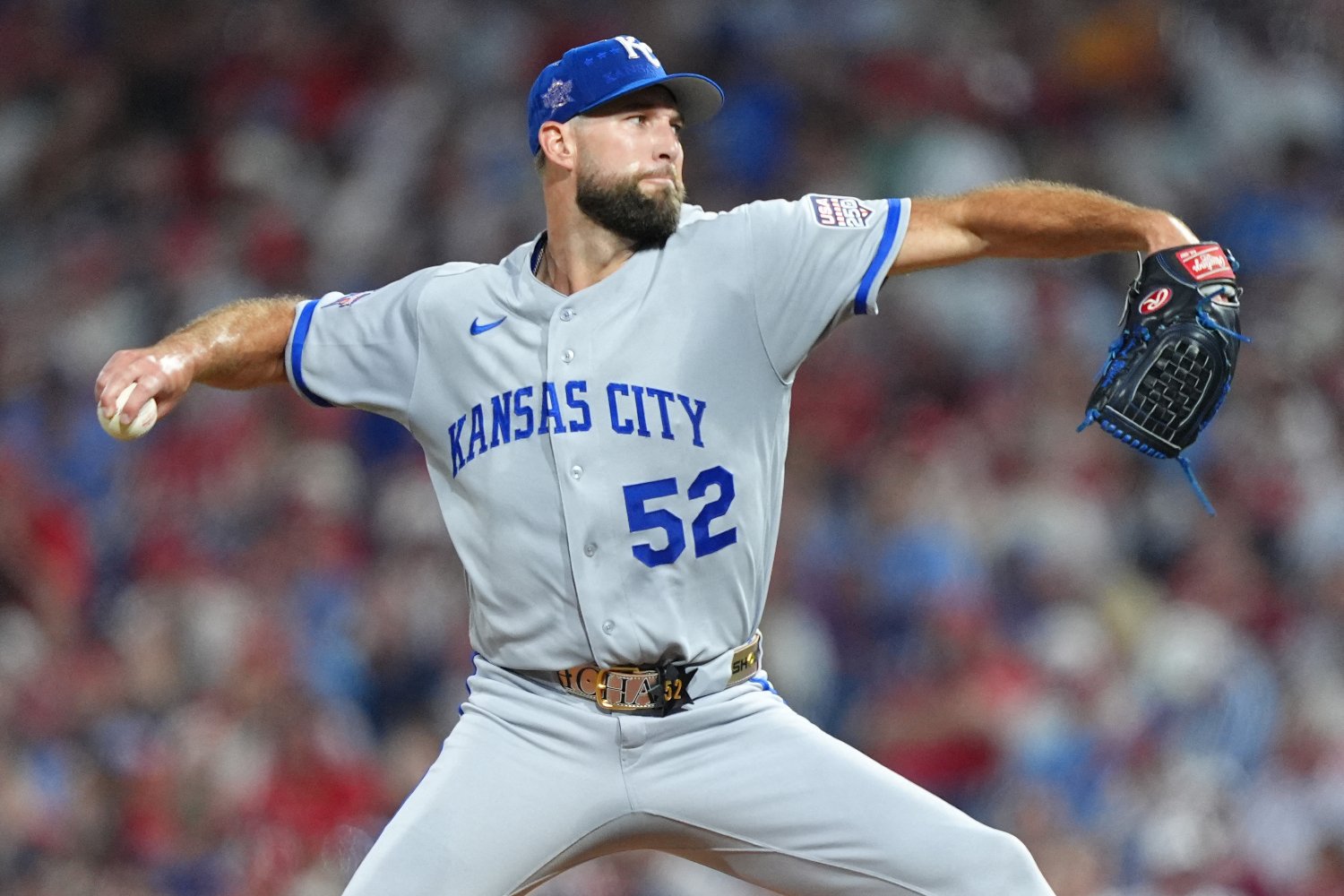 With the All-Star Game behind us, the next major event in baseball is the Trade Deadline on Monday, August 3rd. With a 38-59 record and 0.2% odds of making the postseason, the Royals need to take advantage of the trading period, hoping to acquire talent that can impact the organization at both the Major and Minor League levels. The Royals aren't necessarily "flush" with tradeable assets right now. Many of their best assets are hurt (Kyle Isbel, Kris Bubic, and Carlos Estevez), or have lost a tremendous amount of value since last season. However, that doesn't mean the Royals should or will sit on their hands over the next few weeks. In fact, it wouldn't be surprising if the Royals made some of those tough trade decisions, even if it meant losing some popular players. Thus, let's look at three possible trades for Kansas City by the August 3rd Trade Deadline and why those deals could make sense for the respective teams and the Royals. Pitcher Alex Lange to the Chicago Cubs for Infielder James Triantos The Cubs are desperate for relief help. While they rank 16th in bullpen ERA, they are anchored heavily by closer Jacob Webb. After that, it's shaky, especially with so many relievers on the IL (Daniel Palencia, Hunter Harvey, Hoby Milner) or struggling on the mound (Phil Maton and Drew Pomeranz). The North Siders need someone who can produce not just strikeouts, but swing-and-miss ability as well. Lange could be the right fit for this lackluster Cubs bullpen. Northside Baseball brought up Lange as a possibility, saying this about the 30-year-old Royals reliever: There are plenty of issues with Lange's profile. He gives up a lot of hard contact, and his control is spotty, even if it has improved since he took over the closer's job. However, Lange generates whiffs and throws heat. That's a profile that the Cubs want and can work with. (Remember Brad Keller last year?) Lange doesn't have any Minor League options, but he has two years of club control after this season. Furthermore, he's currently pretty cheap, making only $900K. Thus, the Cubs could not just get a strong reliever, but one with plenty of financial flexibility. That is valuable, even for a club as flush as the Cubs. An option the Royals could get back in return is Triantos, a 23-year-old infielder who's stuck in Triple-A. The former 2021 second-round pick is hitting well in Triple-A Iowa with a .311 average and 100 wRC+ in 355 plate appearances. He also has seven home runs and 18 stolen bases. Triantos doesn't offer much power or exit velocity on batted balls, but he doesn't whiff and doesn't strike out, two skills the Royals have really valued in hitters. Triantos is on the Cubs' 40-man roster. That said, he's currently blocked by Alex Bregman and Nico Hoerner, both of whom are on long-term deals. Thus, the 23-year-old infielder could be a fit in Kansas City, especially as a right-handed bat. At the very least, he could platoon with Michael Massey at second base for now, and perhaps get more playing time at other positions if he can hold his own at the plate. Furthermore, Triantos carries plenty of long-term value, especially with no service time on his clock just yet. Outfielder Lane Thomas to Atlanta for Pitchers Drue Hackenberg and Luis Vargas The Braves are at the top of the NL East and have been comfortably so for a while. However, the Phillies and Marlins have been closing in fast, with Philadelphia just two games behind and Miami four games behind at the All-Star Break. Thus, Atlanta needs to beef up their roster, especially on the hitting end. Michael Harris II has been great, but the rest of the outfield is a bit suspect. Mauricio Dubon and Eli White just aren't going to cut it, and while he's hurt, Mike Yastrzemski was inconsistent when he was healthy. Add that to questions regarding Ronald Acuna Jr. and his hamstring, and it makes sense that Atlanta could pursue Thomas to add some much-needed depth in the outfield. Thomas' 102 wRC+ is 20 points higher than White's and just 1 point lower than Dubon's. Furthermore, Thomas can play centerfield against lefties when Harris needs a night off. The former National and Guardian has thrived since getting everyday playing time, and his ability to not chase, launch the ball, and pull the ball in the air consistently should intrigue Atlanta. In exchange, the Royals would receive two talented but flawed pitchers currently in the Braves' farm system. The prize of the bunch would be Hackenberg, a 24-year-old former Virginia Tech pitcher. A second-round pick in the 2023 MLB Draft, Hackenberg has a 4.88 ERA, 1.42 WHIP, 4.17 FIP, and 14.4% K-BB% in five outings and 24 IP with Gwinnett. The stuff and extension haven't been great for Hackenberg, but he's generated a lot of whiffs, a lot of strikes, and a lot of weak contact, according to TJ Stats Statcast percentiles. Considering the injuries to the Royals' pitching staff, Hackenberg could come up right away and get a shot for some starts in August and September. If he does well, he could be a long-term option in the rotation, or at the very least a hybrid starter/reliever with long-term control. Vargas is still in Double-A, but he's the opposite of Hackenberg: the stuff is electric, and he generates strikes and whiffs in bunches. Unfortunately, he also walks hitters in bunches, which explains why he's still in Double-A despite being 24 years old and Rule 5 eligible. Still, the Royals need to take chances with pitchers with this profile and let them see what they can do, even if they don't have the "experience." Hackenberg and Vargas aren't high-caliber pitching prospects by any means. However, they could make an immediate impact on the Royals' pitching staff in both the short and long term, which is what a team wants to get in exchange for a rental like Thomas. Pitchers Michael Wacha and Lucas Erceg for Pitchers Tink Hence and Richard Fitts, 1B/3B Blaze Jordan, and OF Victor Scott II The Royals may not be willing to move Wacha, especially if they're hoping they can win in 2027. To be competitive again next year, they will need starting pitching at the top of the rotation, especially with Cole Ragans missing the start of next year and Seth Lugo and Noah Cameron experiencing regression in 2026. Hence, they may need to keep Wacha, simply because they don't have many dependable options for next year. That said, there have been reports that the Royals could trade Wacha if they were impressed and overwhelmed by a deal. This proposed deal could be the offer that could convince Kansas City to move forward, even if losing an All-Star like Wacha would be tough to stomach initially. In this deal, Kansas City would include reliever Lucas Erceg, who hasn't been good, but has been good in the past and has three years of club control after this year (as well as three Minor League options). However, including Erceg here would be important to maximize the Royals' return from the Cardinals. In exchange for Wacha and Erceg, the Royals would get two intriguing arms in Hence and Fitts, corner infielder Jordan, who's currently on the Major League squad in St. Louis, and outfielder Scott, a former heralded prospect who's struggled and is back in Memphis. Hence has long been a top pitching prospect who's moved slowly in the Cardinals system. He's had numerous injuries that have stunted his progression as a pitcher over the years. Hence started the year in extended Spring Training, and his numbers haven't been good in Memphis this year. In 20 IP, he has a 6.30 ERA, 1.75 WHIP, 6.49 FIP, and 3.1% K-BB%. However, the athleticism and the upside are still there, and a new change of scenery may do wonders for him, even if the Statcast percentiles in Triple-A haven't been encouraging. Some encouraging items: he's still generating whiffs (77th percentile whiff rate) and groundballs (62nd percentile GB%). I think with some more development and recovery, the stuff will come back, and he will be a much more effective pitcher in the Royals organization, even if his upside may be as a reliever at this point in his career. Speaking of injuries, Fitts is out for the remainder of the season. However, when he was healthy, he had a 1.76 ERA and 1.24 WHIP in 15.1 IP. The former Red Sox pitcher posted a 5.00 ERA over 45 IP with Boston last year, but he showed some progress in St. Louis after being reunited with former Red Sox president Chaim Bloom. Because of that connection, I imagine Bloom may be hesitant to give up Fitts. However, St. Louis will have to wait until Fitts' return in 2027, which they may not have the patience for, especially if they want to stay competitive in a tough NL Central division. Kansas City may be more willing to be patient, especially given the upside Fitts presents with his stuff and his Statcast percentiles. On the hitting side, the Royals would receive a couple of players who could make an impact on the lineup immediately. Scott has struggled at the MLB level, but he's a fast player who doesn't chase and could thrive if given more reps in center field, which likely will happen with Isbel's status questionable for the remainder of the year. The exit velocity isn't there, but maybe the Royals could utilize Scott like the Rays utilize Chandler Simpson. Lastly, Kansas City may have a tougher time utilizing Jordan, since the Royals seem set long-term with Maikel Garcia at third and Vinnie Pasquantino at first. Then again, the Royals may look to deal Vinnie this offseason, especially given his injury issues, and Garcia's status for the remainder of the year is also questionable. At the very least, Jordan could give them a much-needed bat with upside, and if he hits, they can figure out the defense later. Jordan's surface-level numbers aren't gaudy (.608 OPS in 83 PA), but he hits the ball hard, doesn't whiff, and doesn't strike out. The Royals need that profile in the lineup, and at 23 years old, there's plenty of long-term upside with Jordan. Jordan and Scott II haven't had the most stellar seasons with St. Louis in 2026. That said, maybe a move across the state down I-70 could rejuvenate their careers. As for Wacha, he gets to return to the organization that drafted him, which he would likely be more than willing to do. That would also reduce ill will between Wacha and the Royals, which could help the Royals in negotiations with potential free-agent pitchers this offseason.
 -
Awesome piece, Darin. Some fun names on this list. Mark Redman was one I particularly remembered because I was like "Wow, he's an All-Star?" Also fun to see Dye on this list, as he was one of my favorite Royals players when I was younger (though I was biased as a Sacramento native haha).
- 2 replies
-
- 2
-
-
- danny tartabull
- zack greinke
- (and 8 more)
-
 On Tuesday afternoon, the Royals announced that they had acquired right-handed pitcher Easton McGee from the Milwaukee Brewers in exchange for cash considerations. To make room for McGee, the Royals transferred reliever Nick Mears to the 60-Day IL. McGee pitched in 9 outings and 14.2 IP last season with the Brewers, posting a 5.52 ERA and 1.36 WHIP. However, his FIP was much better at 3.24. This year, he's spent most of it in Triple-A Nashville, as he has only appeared in two games for the Brewers. In those two outings, he has a 0.00 ERA and 1.00 WHIP. He showcased an intriguing TJ Stuff+ profile, though he didn't generate many whiffs in his brief Brewers tenure this year. With the Sounds in Triple-A, McGee has a 5.62 ERA, 1.58 WHIP, 4.18 WHIP, and 13.6% K-BB% in 41.2 IP. In Nashville, he has done a good job of flooding the strike zone, with strong percentiles in zone rate and CSW. That is something sorely needed with this Royals bullpen, which ranks 28th in reliever BB/9 this year. In a corresponding move, the Royals moved Mears from the 15-Day IL to the 60-Day IL. Mears had been on the IL since May 29th due to right shoulder impingement. The former Brewers pitcher, acquired this offseason along with Isaac Collins in the Angel Zerpa trade, had a 5.12 ERA and 1.50 WHIP in 21 appearances and 19.1 IP before going on the IL.
 -
On Tuesday afternoon, the Royals announced that they had acquired right-handed pitcher Easton McGee from the Milwaukee Brewers in exchange for cash considerations. To make room for McGee, the Royals transferred reliever Nick Mears to the 60-Day IL. McGee pitched in 9 outings and 14.2 IP last season with the Brewers, posting a 5.52 ERA and 1.36 WHIP. However, his FIP was much better at 3.24. This year, he's spent most of it in Triple-A Nashville, as he has only appeared in two games for the Brewers. In those two outings, he has a 0.00 ERA and 1.00 WHIP. He showcased an intriguing TJ Stuff+ profile, though he didn't generate many whiffs in his brief Brewers tenure this year. With the Sounds in Triple-A, McGee has a 5.62 ERA, 1.58 WHIP, 4.18 WHIP, and 13.6% K-BB% in 41.2 IP. In Nashville, he has done a good job of flooding the strike zone, with strong percentiles in zone rate and CSW. That is something sorely needed with this Royals bullpen, which ranks 28th in reliever BB/9 this year. In a corresponding move, the Royals moved Mears from the 15-Day IL to the 60-Day IL. Mears had been on the IL since May 29th due to right shoulder impingement. The former Brewers pitcher, acquired this offseason along with Isaac Collins in the Angel Zerpa trade, had a 5.12 ERA and 1.50 WHIP in 21 appearances and 19.1 IP before going on the IL. View full rumor
-
Image courtesy of Dylan Widger-Imagn Images The Royals' President of Baseball Operations delivered pretty clear messaging to the media after selecting outfielder Zion Rose sixth overall. He didn't sugarcoat it, especially after a brutal first half that saw the Royals go 38-59, which tied them with the Los Angeles Angels (of Anaheim) for the worst record in baseball at the All-Star Break. data:image/gif;base64,R0lGODlhAQABAPABAP///wAAACH5BAEKAAAALAAAAAABAAEAAAICRAEAOw== The Royals have long employed a strategy of selecting the "best available player" in the first round while still leaving enough money to sign some high-upside overslot players later in the MLB Draft. Picollo and Scouting Director Brian Bridges certainly aimed for that in this Draft, as they selected a mix of college and prep players who likely will command higher-than-expected slot deals from the Royals. This should help boost a system that is pretty thin in Double-A and Triple-A at the moment. Still, the big mark on Picollo and the Royals' scouting department and farm system has been that they haven't "hit" on a majority of their first-round picks. This problem isn't just a Picollo issue; it dates back to former President of Baseball Operations Dayton Moore, who struggled to find success with his first-round selections after the 2015 World Series. Will Rose be the "slam-dunk big leaguer" that the Royals need from this MLB Draft? Furthermore, did they address any glaring needs in their system in this Draft (especially given the assumed savings from the Rose selection)? What to Like From This Royals Draft While the Rose selection was controversial, one can appreciate the Royals highlighting a guy who fit what they needed and going after him instead of waiting until pick 30 and missing out on him completely. Rose had gotten a lot of helium heading into the MLB Draft, and even Baseball America, in its post-Draft discussion, said that Rose going at No. 6 wasn't as surprising as some may have thought, given the rankings. I think things came between Rose and Eric Booth Jr., who was initially reported as the Royals' pick by Joe Doyle of Overslot.com, who spoiled pretty much every first-round draft pick. In many ways, Booth and Rose feel like similar players in terms of their profiles, as they are both athletic guys with great speed and intriguing ceilings. The main difference is that Booth has a higher ceiling for power, while Rose has a better contact tool now (Booth's contact tool may be the weakest part of his game). The Royals liked both players and probably would've been happy with either. That said, they valued Rose's proximity to the Majors and more polished profile more, even if it means they lose out on a player in Booth who may have more long-term upside. I don't think the Royals' poor record this year affected their decision to draft Rose over Booth. That said, there is likely urgency for Picollo to get this Draft right, and Rose carries far less risk than Booth, a prep outfielder. They can't wait for a Booth to develop like Sean Gamble or Blake Mitchell. Some may disagree with that strategy, but considering the Royals have heavily invested in prep guys in two of the past three drafts (Mitchell in 2023 and Gamble in 2025), I don't mind the Royals going with the more MLB-ready prospect now, especially considering the Royals' lack of high-profile outfielders in this system at this moment. Rose is definitely a guy many have warmed up to, even though Jared Perkins, Joel Penfield, and I were shocked when the pick was initially announced. While some have compared this pick to Gavin Cross in 2022, who was expected to be a fast-moving outfielder due to his polished profile from Virginia Tech, I think Rose has much better tools and batted-ball skills than Cross did coming out of college. Rose also definitely feels like an incredible competitor and high-grade human being, as evidenced by this interview with Jared Perkins and the Just Baseball team earlier in the year. data:image/gif;base64,R0lGODlhAQABAPABAP///wAAACH5BAEKAAAALAAAAAABAAEAAAICRAEAOw== Speaking of the Royals needing players who could have an impact at the Major League level sooner rather than later, Kansas City seemed to nab a lot of college pitching in this Draft. Of the 16 pitchers they selected in this Draft, 14 of them were college arms. Here's a list of all those college pitchers selected by the Royals over the past two days: Taylor Rabe, RHP, Ole Miss (No. 30) Maxx Yehl, LHP, West Virginia (No. 91) Ethan McElvain, LHP, Arkansas (No. 151) Justin LeGuernic, LHP, Clemson (No. 180) Dylan Vigue, RHP, Georgia (No. 209) Grant Fontenot , RHP, LSU (No. 299) Lance Hartley, RHP, College of Central Florida (No. 359) Dalton Hill, RHP, Nicholls State (No. 389) Madden Clement, LHP, Virginia Tech (No. 449) Dylan Alonso, RHP, Troy (No. 479) Richie Roman, RHP, Houston (No. 509) Cooper Corkrean, LHP, New Mexico (No. 539) Riley McDonald, RHP, State College of Florida, Manatee-Sarasota (No. 599) There are a couple of Junior College arms on that list (Hartley and McDonald), but for the most part, all these pitchers are polished college guys who could move quickly, especially as relievers. Rabe definitely has upside of any of the pitchers drafted and could be a No. 2-3 starter at the MLB level. Some have compared him to Brady Singer, and it's easy to see that comparison based on their pitching styles, though I like Rabe's repertoire a lot more than Singer's coming out of college. data:image/gif;base64,R0lGODlhAQABAPABAP///wAAACH5BAEKAAAALAAAAAABAAEAAAICRAEAOw== Yehl is another arm with some starter upside, though he may be more of a three- or four-starter type. He came back from Tommy John surgery in 2025 and really anchored a Mountaineers rotation that reached the College World Series. In fact, getting two pitchers who played in the 2026 CWS is an underrated aspect. That experience shows they can pitch against quality competition and big moments. data:image/gif;base64,R0lGODlhAQABAPABAP///wAAACH5BAEKAAAALAAAAAABAAEAAAICRAEAOw== In Day Two, they went college-heavy, opting for arms with lower ceilings, but higher floors that can move quickly. There's a nice mix of Power 5 and Mid-Major guys who not only have a solid outlook, but could sign right away. That is important because it means they will enter the Royals Farm System immediately and have a shot at making an impact in Low-A Columbia or High-A Quad Cities, at the very least. While the college arms are nice, the low-ceiling approach with these arms also opened the opportunity to select some intriguing prep talents. Prep pitchers Jack Slightom and Hudson DeVaughan could be the two best pitchers from this Royals draft after Rabe. Pipeline ranked them 89th and 138th, respectively, in their Top 250 ranking, and it's easy to see why. Both are 6'5 dudes with great frames and solid fastballs that could gain velocity as they mature and grow into their frames. Slightom is a four-pitch pitcher with an electric fastball that sits 94-96 with 98 MPH upside. He dominated Illinois high school hitters and also seemed to do well on the showcase circuit. data:image/gif;base64,R0lGODlhAQABAPABAP///wAAACH5BAEKAAAALAAAAAABAAEAAAICRAEAOw== As for DeVaughan, he's a special pitching prospect with serious top-of-the-rotation upside. He was hitting 98 MPH in high school, and many remarked that he has great feel and command for a prep pitching prospect. The main issue will be prying him away from his commitment to Alabama, so a lot of overslot money will be dedicated to DeVaughan (hopefully). data:image/gif;base64,R0lGODlhAQABAPABAP///wAAACH5BAEKAAAALAAAAAABAAEAAAICRAEAOw== On the hitting side, the Royals made some nice splashes in rounds 4, 9, and 14. In the fourth round, they selected Dominic Battista, a prep bat from the Chicago area. While he's not an imposing player, he's athletic, has budding power, and has tools that could blossom in professional ball. He's a prospect I didn't know much about going into the MLB Draft, but I like him as a high-ceiling, high-risk prep outfielder complement to the safer outfielder in Rose. data:image/gif;base64,R0lGODlhAQABAPABAP///wAAACH5BAEKAAAALAAAAAABAAEAAAICRAEAOw== In the ninth, the Royals went with a college guy, but one with tremendous upside that will be an overslot signee. Camden Johnson was the starting shortstop on an Oklahoma team that won the national championship, and he's an athletic player with four solid tools. He can play multiple positions well, and he feels like an upgraded version of Nick Loftin. That is great to have, and he could be a dude who could compete for a Royals roster spot in the second half of 2028 or on Opening Day in 2029. data:image/gif;base64,R0lGODlhAQABAPABAP///wAAACH5BAEKAAAALAAAAAABAAEAAAICRAEAOw== The Royals definitely had a nice balance of safety and risk in this Draft, and it's easy to see the riskier picks pan out, as they fit this organization's strengths on both the hitting and pitching sides. What Not To Like From This Royals Draft The Royals' Draft this year is definitely deep, benefiting from a strong crop of pitchers, especially college pitchers. However, it did feel like this Draft was colored by the fact that Kansas City is 21 games under .500 so far this year. Even though injuries have certainly taken their toll on the Royals this year, the reality is that this organization has disappointed greatly in 2026. Maybe thinking 85 wins was optimistic, but Kansas City is on pace for 100 losses. That is something that no Royals fan saw coming back in Spring Training, especially after back-to-back winning seasons in 2024 and 2025. It definitely felt like Bridges and Picollo drafted with the understanding that the next couple of years would be crucial. Rose is not a project. Neither is Rabe, Yehl, Johnson, nor the slew of college arms they selected on Day Two. Thus, it feels like the Royals sacrificed some long-term upside in this Draft. While they did get some high-ceiling prep players, it didn't seem as much as it could've been, especially since Bridges has preferred this profile in his past two years running the Royals draft. The Draft is complicated because simply "drafting best available" is not always realistic in the current slot system. Teams have to be judicious with how much they can allocate at each selection. There is a balance between drafting for "upside" and drafting for "practicality". This Draft seemed to lean more toward the latter than the former. Was that the correct strategy? Only time will tell. That said, the good thing is Royals fans will know the answer to that question real soon, perhaps by the end of the 2027 season. Overall Grade On Day One, I gave the Royals a C+. I liked the Rose selection, but was curious whether Rabe, Slightom, Yehl, and Battista were enough to offset the Royals' "reach" on Rose in the first round. Day Two was a much better one. They built some nice pitching depth that has been sorely needed. Many of the 2026 college pitchers selected could be in Double-A by midseason in 2027. Considering their lack of pitching depth in Omaha and Northwest Arkansas, that is a good thing. That said, they made some nice oversloots on Day Two. Johnson is an excellent selection who probably should've been a Day One guy, and I think he could move fast and be a borderline Top-10 Royals prospect by this offseason. DeVaughan will be a tough sign because of that SEC commitment, but if the Royals save money on Rose, it would make sense for them to dedicate a ton of resources to their 19th-rounder. He's that good. He could be a first-round selection in two years. Based on those results, I would give the Royals' Day Two Draft an A-. Put those together, and the Royals have a B grade for this Draft. And B is good. Granted, I think we were hoping for an A Draft, but Jackson Flora and Carson Boleman had to fall to Kansas City to make that happen. They didn't (they went to the Giants instead). Thus, I think this is the best the Royals could have done given the circumstances. I don't think drafting Booth or Drew Burress makes a difference on the grade, with all things considered. Even if the Royals drafted either of those guys, they likely don't draft Johnson or DeVaughan in the process. I'll take that quantity here over quality, especially considering the farm system's needs. View full article
-
 The Royals' President of Baseball Operations delivered pretty clear messaging to the media after selecting outfielder Zion Rose sixth overall. He didn't sugarcoat it, especially after a brutal first half that saw the Royals go 38-59, which tied them with the Los Angeles Angels (of Anaheim) for the worst record in baseball at the All-Star Break. data:image/gif;base64,R0lGODlhAQABAPABAP///wAAACH5BAEKAAAALAAAAAABAAEAAAICRAEAOw== The Royals have long employed a strategy of selecting the "best available player" in the first round while still leaving enough money to sign some high-upside overslot players later in the MLB Draft. Picollo and Scouting Director Brian Bridges certainly aimed for that in this Draft, as they selected a mix of college and prep players who likely will command higher-than-expected slot deals from the Royals. This should help boost a system that is pretty thin in Double-A and Triple-A at the moment. Still, the big mark on Picollo and the Royals' scouting department and farm system has been that they haven't "hit" on a majority of their first-round picks. This problem isn't just a Picollo issue; it dates back to former President of Baseball Operations Dayton Moore, who struggled to find success with his first-round selections after the 2015 World Series. Will Rose be the "slam-dunk big leaguer" that the Royals need from this MLB Draft? Furthermore, did they address any glaring needs in their system in this Draft (especially given the assumed savings from the Rose selection)? What to Like From This Royals Draft While the Rose selection was controversial, one can appreciate the Royals highlighting a guy who fit what they needed and going after him instead of waiting until pick 30 and missing out on him completely. Rose had gotten a lot of helium heading into the MLB Draft, and even Baseball America, in its post-Draft discussion, said that Rose going at No. 6 wasn't as surprising as some may have thought, given the rankings. I think things came between Rose and Eric Booth Jr., who was initially reported as the Royals' pick by Joe Doyle of Overslot.com, who spoiled pretty much every first-round draft pick. In many ways, Booth and Rose feel like similar players in terms of their profiles, as they are both athletic guys with great speed and intriguing ceilings. The main difference is that Booth has a higher ceiling for power, while Rose has a better contact tool now (Booth's contact tool may be the weakest part of his game). The Royals liked both players and probably would've been happy with either. That said, they valued Rose's proximity to the Majors and more polished profile more, even if it means they lose out on a player in Booth who may have more long-term upside. I don't think the Royals' poor record this year affected their decision to draft Rose over Booth. That said, there is likely urgency for Picollo to get this Draft right, and Rose carries far less risk than Booth, a prep outfielder. They can't wait for a Booth to develop like Sean Gamble or Blake Mitchell. Some may disagree with that strategy, but considering the Royals have heavily invested in prep guys in two of the past three drafts (Mitchell in 2023 and Gamble in 2025), I don't mind the Royals going with the more MLB-ready prospect now, especially considering the Royals' lack of high-profile outfielders in this system at this moment. Rose is definitely a guy many have warmed up to, even though Jared Perkins, Joel Penfield, and I were shocked when the pick was initially announced. While some have compared this pick to Gavin Cross in 2022, who was expected to be a fast-moving outfielder due to his polished profile from Virginia Tech, I think Rose has much better tools and batted-ball skills than Cross did coming out of college. Rose also definitely feels like an incredible competitor and high-grade human being, as evidenced by this interview with Jared Perkins and the Just Baseball team earlier in the year. data:image/gif;base64,R0lGODlhAQABAPABAP///wAAACH5BAEKAAAALAAAAAABAAEAAAICRAEAOw== Speaking of the Royals needing players who could have an impact at the Major League level sooner rather than later, Kansas City seemed to nab a lot of college pitching in this Draft. Of the 16 pitchers they selected in this Draft, 14 of them were college arms. Here's a list of all those college pitchers selected by the Royals over the past two days: Taylor Rabe, RHP, Ole Miss (No. 30) Maxx Yehl, LHP, West Virginia (No. 91) Ethan McElvain, LHP, Arkansas (No. 151) Justin LeGuernic, LHP, Clemson (No. 180) Dylan Vigue, RHP, Georgia (No. 209) Grant Fontenot , RHP, LSU (No. 299) Lance Hartley, RHP, College of Central Florida (No. 359) Dalton Hill, RHP, Nicholls State (No. 389) Madden Clement, LHP, Virginia Tech (No. 449) Dylan Alonso, RHP, Troy (No. 479) Richie Roman, RHP, Houston (No. 509) Cooper Corkrean, LHP, New Mexico (No. 539) Riley McDonald, RHP, State College of Florida, Manatee-Sarasota (No. 599) There are a couple of Junior College arms on that list (Hartley and McDonald), but for the most part, all these pitchers are polished college guys who could move quickly, especially as relievers. Rabe definitely has upside of any of the pitchers drafted and could be a No. 2-3 starter at the MLB level. Some have compared him to Brady Singer, and it's easy to see that comparison based on their pitching styles, though I like Rabe's repertoire a lot more than Singer's coming out of college. data:image/gif;base64,R0lGODlhAQABAPABAP///wAAACH5BAEKAAAALAAAAAABAAEAAAICRAEAOw== Yehl is another arm with some starter upside, though he may be more of a three- or four-starter type. He came back from Tommy John surgery in 2025 and really anchored a Mountaineers rotation that reached the College World Series. In fact, getting two pitchers who played in the 2026 CWS is an underrated aspect. That experience shows they can pitch against quality competition and big moments. data:image/gif;base64,R0lGODlhAQABAPABAP///wAAACH5BAEKAAAALAAAAAABAAEAAAICRAEAOw== In Day Two, they went college-heavy, opting for arms with lower ceilings, but higher floors that can move quickly. There's a nice mix of Power 5 and Mid-Major guys who not only have a solid outlook, but could sign right away. That is important because it means they will enter the Royals Farm System immediately and have a shot at making an impact in Low-A Columbia or High-A Quad Cities, at the very least. While the college arms are nice, the low-ceiling approach with these arms also opened the opportunity to select some intriguing prep talents. Prep pitchers Jack Slightom and Hudson DeVaughan could be the two best pitchers from this Royals draft after Rabe. Pipeline ranked them 89th and 138th, respectively, in their Top 250 ranking, and it's easy to see why. Both are 6'5 dudes with great frames and solid fastballs that could gain velocity as they mature and grow into their frames. Slightom is a four-pitch pitcher with an electric fastball that sits 94-96 with 98 MPH upside. He dominated Illinois high school hitters and also seemed to do well on the showcase circuit. data:image/gif;base64,R0lGODlhAQABAPABAP///wAAACH5BAEKAAAALAAAAAABAAEAAAICRAEAOw== As for DeVaughan, he's a special pitching prospect with serious top-of-the-rotation upside. He was hitting 98 MPH in high school, and many remarked that he has great feel and command for a prep pitching prospect. The main issue will be prying him away from his commitment to Alabama, so a lot of overslot money will be dedicated to DeVaughan (hopefully). data:image/gif;base64,R0lGODlhAQABAPABAP///wAAACH5BAEKAAAALAAAAAABAAEAAAICRAEAOw== On the hitting side, the Royals made some nice splashes in rounds 4, 9, and 14. In the fourth round, they selected Dominic Battista, a prep bat from the Chicago area. While he's not an imposing player, he's athletic, has budding power, and has tools that could blossom in professional ball. He's a prospect I didn't know much about going into the MLB Draft, but I like him as a high-ceiling, high-risk prep outfielder complement to the safer outfielder in Rose. data:image/gif;base64,R0lGODlhAQABAPABAP///wAAACH5BAEKAAAALAAAAAABAAEAAAICRAEAOw== In the ninth, the Royals went with a college guy, but one with tremendous upside that will be an overslot signee. Camden Johnson was the starting shortstop on an Oklahoma team that won the national championship, and he's an athletic player with four solid tools. He can play multiple positions well, and he feels like an upgraded version of Nick Loftin. That is great to have, and he could be a dude who could compete for a Royals roster spot in the second half of 2028 or on Opening Day in 2029. data:image/gif;base64,R0lGODlhAQABAPABAP///wAAACH5BAEKAAAALAAAAAABAAEAAAICRAEAOw== The Royals definitely had a nice balance of safety and risk in this Draft, and it's easy to see the riskier picks pan out, as they fit this organization's strengths on both the hitting and pitching sides. What Not To Like From This Royals Draft The Royals' Draft this year is definitely deep, benefiting from a strong crop of pitchers, especially college pitchers. However, it did feel like this Draft was colored by the fact that Kansas City is 21 games under .500 so far this year. Even though injuries have certainly taken their toll on the Royals this year, the reality is that this organization has disappointed greatly in 2026. Maybe thinking 85 wins was optimistic, but Kansas City is on pace for 100 losses. That is something that no Royals fan saw coming back in Spring Training, especially after back-to-back winning seasons in 2024 and 2025. It definitely felt like Bridges and Picollo drafted with the understanding that the next couple of years would be crucial. Rose is not a project. Neither is Rabe, Yehl, Johnson, nor the slew of college arms they selected on Day Two. Thus, it feels like the Royals sacrificed some long-term upside in this Draft. While they did get some high-ceiling prep players, it didn't seem as much as it could've been, especially since Bridges has preferred this profile in his past two years running the Royals draft. The Draft is complicated because simply "drafting best available" is not always realistic in the current slot system. Teams have to be judicious with how much they can allocate at each selection. There is a balance between drafting for "upside" and drafting for "practicality". This Draft seemed to lean more toward the latter than the former. Was that the correct strategy? Only time will tell. That said, the good thing is Royals fans will know the answer to that question real soon, perhaps by the end of the 2027 season. Overall Grade On Day One, I gave the Royals a C+. I liked the Rose selection, but was curious whether Rabe, Slightom, Yehl, and Battista were enough to offset the Royals' "reach" on Rose in the first round. Day Two was a much better one. They built some nice pitching depth that has been sorely needed. Many of the 2026 college pitchers selected could be in Double-A by midseason in 2027. Considering their lack of pitching depth in Omaha and Northwest Arkansas, that is a good thing. That said, they made some nice oversloots on Day Two. Johnson is an excellent selection who probably should've been a Day One guy, and I think he could move fast and be a borderline Top-10 Royals prospect by this offseason. DeVaughan will be a tough sign because of that SEC commitment, but if the Royals save money on Rose, it would make sense for them to dedicate a ton of resources to their 19th-rounder. He's that good. He could be a first-round selection in two years. Based on those results, I would give the Royals' Day Two Draft an A-. Put those together, and the Royals have a B grade for this Draft. And B is good. Granted, I think we were hoping for an A Draft, but Jackson Flora and Carson Boleman had to fall to Kansas City to make that happen. They didn't (they went to the Giants instead). Thus, I think this is the best the Royals could have done given the circumstances. I don't think drafting Booth or Drew Burress makes a difference on the grade, with all things considered. Even if the Royals drafted either of those guys, they likely don't draft Johnson or DeVaughan in the process. I'll take that quantity here over quality, especially considering the farm system's needs.
 -
Great piece and some interesting thoughts. I'm okay with keeping Tolbert as well. I don't think he's going to command a whole lot, and I think he's worth a longer look. That said, he feels similar to Freddy Fermin in that he may get more than expected in a trade. Considering the Royals' lack of trade assets, I think they should go for it if that presents itself. Avila has done much better since moving to the rotation full-time. While his ultimate outlook may be a reliever, I think he's done a fine job and has been one of the more dependable arms as of late. With Wacha and Lugo's futures unknown, holding on to Avila in the rotation for the remainder of the year and into 2027 makes sense. Massey will be an interesting one. History says the injury bug will come, but he's stayed healthy this year for the most part. He's been such an upgrade defensively at second over India, and offensively he's produced similar production to India. I'm not sure what Massey's long-term outlook is, but I agree with you and think he deserves the second base position for now.
-
Omaha beat Louisville 7-2 behind Mitch Spence, who struck out five over 5 2/3 innings, and three hits from Brett Squires. Quad Cities drew eight walks and topped Peoria 8-6, with Erick Torres going 3-for-3 and Tyson Guerrero striking out four in two perfect innings. Ryan McDonagh threw three scoreless innings, but Columbia lost 8-4 to Salem in 10 innings. Carson Roccaforte tripled and scored, but Northwest Arkansas fell 8-5 at Wichita. Kansas City Royals Transactions No Roster Moves Squires, Drury Lead Storm Chasers Past Louisville The Omaha Storm Chasers collected 14 hits and beat the Louisville Bats 7-2 on Saturday. Squires went 3-for-5 with two doubles and scored twice, Brandon Drury doubled, drove in two runs, and walked three times, and Drew Waters went 2-for-4 with a double and an RBI. Omaha took the lead in the second inning when Luca Tresh singled, moved up, and scored on a Waters double. Louisville tied it in the third, but the Storm Chasers answered with three runs in the fourth. Tresh walked and scored on a sacrifice fly by Andrew Velazquez, and Matthew Lugo followed with a two-run double that brought home Drury and Waters for a 4-1 lead. Former first-round pick Gavin Cross added an RBI single in the fifth, and Drury capped the scoring with a two-run double in the ninth that scored Squires and Cross. Spence started and turned in a strong outing, allowing one run on five hits with two walks and five strikeouts over 5 2/3 innings. Oscar Rayo recorded the final out of the sixth. Vince Velasquez, making his Omaha Storm Chasers debut, allowed one run over two innings with two strikeouts, and former Twins reliever Justin Topa worked around two hits and a walk in a scoreless ninth. Omaha drew five walks and left 11 runners on base. They went 6-for-16 with runners in scoring position. They head into the All-Star Break with a 40-52 record. Player AB R H RBI BB K Matthew Lugo 5 0 1 2 0 1 John Rave 5 0 2 0 0 0 Abraham Toro 5 0 2 0 0 1 Brett Squires 5 2 3 0 0 1 Luca Tresh 4 2 1 0 1 2 Gavin Cross 5 1 2 1 0 2 Brandon Drury 2 1 1 2 3 0 Drew Waters 4 1 2 1 0 1 Rudy Martin Jr. 0 0 0 0 1 0 Andrew Velazquez 4 0 0 1 0 1 Player IP H R ER BB K HR Mitch Spence 5 2/3 5 1 1 2 5 0 Oscar Rayo 1/3 0 0 0 0 0 0 Vince Velasquez 2 3 1 1 0 2 0 Justin Topa 1 2 0 0 1 0 0 Naturals Fall Behind Early, Drop 8-5 Decision At Wichita The Northwest Arkansas Naturals lost 8-5 to the Wichita Wind Surge on Saturday despite a three-hit night from Jack Pineda, who went 3-for-5. Roccaforte, the Royals' No. 8 prospect, led off the game with a triple and came around to score on a fielding error by the right fielder. Wichita answered with a run in the first and two in the second, one scoring on a throwing error by catcher Canyon Brown. The Naturals tied it at 3-3 in the third, when Spencer Nivens doubled home Pineda, and Daniel Vazquez, the Royals' No. 18 prospect, brought in Sam Kulasingam with a groundout. The Wind Surge pulled away from there, unfortunately. Two solo home runs in the fourth made it 5-3, and Wichita added two more in the fifth on a sacrifice fly and a steal of home. Northwest Arkansas got two back in the sixth, with Vazquez scoring on an Alberto Rodriguez forceout and Colton Becker scoring on a Brown sacrifice fly, but Wichita answered with a run on a passed ball in the bottom half. Hunter Owen started and allowed five runs, four earned, on seven hits with one walk, four strikeouts, and two home runs over four innings. Anthony Simonelli allowed two runs in an inning of work. Chase Jessee allowed an unearned run with two strikeouts. Frank Mozzicato and Augusto Mendieta each threw a scoreless inning. Northwest Arkansas left eight runners on base and went 1-for-8 with runners in scoring position. They fall to 36-49 after the loss. Player AB R H RBI BB K Carson Roccaforte 5 1 1 0 0 1 Jack Pineda 5 1 3 0 0 1 Sam Kulasingam 4 1 1 0 1 0 Spencer Nivens 5 0 1 1 0 2 Daniel Vazquez 3 1 1 1 1 1 Colton Becker 3 1 0 0 1 2 Omar Hernandez 2 0 1 0 1 1 Alberto Rodriguez 4 0 0 1 0 1 Canyon Brown 3 0 0 1 0 1 Player IP H R ER BB K HR Hunter Owen 4 7 5 4 1 4 2 Anthony Simonelli 1 1 2 2 1 1 0 Chase Jessee 1 1 1 0 1 2 0 Frank Mozzicato 1 0 0 0 1 1 0 Augusto Mendieta 1 0 0 0 0 0 0 Torres Collects Three Hits As River Bandits Outlast Peoria The Quad Cities River Bandits drew eight walks and beat the Peoria Chiefs 8-6 on Saturday. Erick Torres went 3-for-3 with two RBI and scored twice, Nolan Sailors went 2-for-4 with a walk and two RBI, and Diego Guzman walked three times and scored twice. Trailing 1-0 in the second, Quad Cities loaded the bases on a Jose Cerice hit-by-pitch, a Tyriq Kemp walk, and a Torres single. After a flyout, Guzman walked to reload the bases, and Sailors drew a bases-loaded walk to score Kemp. Torres then scored on a wild pitch, and No. 9 prospect Asbel Gonzalez singled home Guzman to give the River Bandits a 3-1 lead. The River Bandits added single runs in the third and fifth, both on plays by Torres: a sacrifice fly and an RBI single that each scored Luke Pelzer. Gonzalez singled home Guzman again in the sixth, and Quad Cities tacked on two in the seventh when Kemp scored on a Guzman groundout, and Torres scored on a Sailors single. David Shields, the Royals' No. 2 prospect, allowed three runs on four hits with two walks and four strikeouts over three innings. Tyson Guerrero retired all six batters he faced, striking out four over two perfect innings. Aiden Jimenez allowed an unearned run over three innings with three strikeouts, and Yimi Presinal allowed two runs in the ninth while striking out three. The River Bandits left 10 runners on base and went 6-for-18 with runners in scoring position. Quad Cities is now 41-42 this season after the victory. Player AB R H RBI BB K Nolan Sailors 4 0 2 2 1 1 Asbel Gonzalez 5 0 2 2 0 2 Ramon Ramirez 4 0 2 0 1 2 Luke Pelzer 3 2 0 0 2 1 Jose Cerice 2 0 0 0 0 1 Tyriq Kemp 4 2 1 0 1 0 Erick Torres 3 2 3 2 0 0 Trevor Werner 4 0 0 0 0 1 Diego Guzman 1 2 0 1 3 0 Player IP H R ER BB K HR David Shields 3 4 3 3 2 4 0 Tyson Guerrero 2 0 0 0 0 4 0 Aiden Jimenez 3 2 1 0 1 3 0 Yimi Presinal 1 3 2 2 0 3 0 Fireflies Lose Late Lead, Fall To Salem In 10 Innings The Columbia Fireflies led 3-0 through six innings but lost 8-4 to the Salem RidgeYaks in 10 innings on Saturday, wasting a 14-hit night. Hyungchan Um went 3-for-5 with a double and an RBI, and JC Vanek went 2-for-5 with a triple. Ivan Sosa opened the scoring with a solo home run in the fifth. Later in the inning, No. 10 Royals prospect Yandel Ricardo scored on a double by Um. Roni Cabrera made it 3-0 with a solo home run in the sixth. Salem got on the board with a solo home run in the seventh, then tied it with two runs in the ninth on an RBI double and an RBI single. The game unraveled in the extra innings for the Fireflies (unlike Saturday's win). Salem's zombie runner scored on a two-run home run, and a three-run home run later in the inning pushed the lead to 8-3. In the bottom half, Columbia's zombie runner, Um, took third on a Vanek groundout and scored on a Jhosmmel Zue single, but the Fireflies could get no closer. They went 3-for-18 with runners in scoring position and left 11 runners on base. McDonagh started and threw three scoreless innings, allowing two hits, two walks, and four strikeouts. Coleman Picard allowed one run on two hits with two walks and five strikeouts over five innings. Brandon Herbold allowed two runs in the ninth. Luis Valdez allowed five runs, four earned, and Randy Ramnarace struck out the only batter he faced. The Fireflies go into the All-Star Break with a 43-44 record. Player AB R H RBI BB K Yandel Ricardo 4 1 1 0 1 0 Stone Russell 5 0 1 0 0 0 Hyungchan Um 5 1 3 1 0 1 JC Vanek 5 0 2 0 0 1 Jhosmmel Zue 5 0 2 1 0 0 Connor Rasmussen 3 0 1 0 2 0 Roni Cabrera 5 1 2 1 0 1 Angel Ramirez 4 0 1 0 1 0 Ivan Sosa 3 1 1 1 0 1 Player IP H R ER BB K HR Ryan McDonagh 3 2 0 0 2 4 0 Coleman Picard 5 2 1 1 2 5 1 Brandon Herbold 2/3 2 2 2 1 1 0 Luis Valdez 1 4 5 4 0 0 2 Randy Ramnarace 1/3 0 0 0 0 1 0 Top-20 Prospect Performance Kendry Chourio: DNP David Shields: 3 IP, 4 H, 3 R, 3 ER, 2 BB, 4 K Josh Hammond: DNP Blake Mitchell: DNP Sean Gamble: DNP Ramon Ramirez: 2-for-4, BB, 2 K Drew Beam: DNP Carson Roccaforte: 1-for-5, 3B, R, K Asbel Gonzalez: 2-for-5, 2 RBI, 2 K Yandel Ricardo: 1-for-4, R, BB Michael Lombardi: DNP Ben Kudrna: DNP Justin Lamkin: DNP Felix Arronde: DNP Blake Wolters: DNP Steven Zobac: DNP Austin Charles: DNP Daniel Vazquez: 1-for-3, R, RBI, BB, K Kamden Edge: DNP Warren Calcano: DNP View full article
-
 Omaha beat Louisville 7-2 behind Mitch Spence, who struck out five over 5 2/3 innings, and three hits from Brett Squires. Quad Cities drew eight walks and topped Peoria 8-6, with Erick Torres going 3-for-3 and Tyson Guerrero striking out four in two perfect innings. Ryan McDonagh threw three scoreless innings, but Columbia lost 8-4 to Salem in 10 innings. Carson Roccaforte tripled and scored, but Northwest Arkansas fell 8-5 at Wichita. Kansas City Royals Transactions No Roster Moves Squires, Drury Lead Storm Chasers Past Louisville The Omaha Storm Chasers collected 14 hits and beat the Louisville Bats 7-2 on Saturday. Squires went 3-for-5 with two doubles and scored twice, Brandon Drury doubled, drove in two runs, and walked three times, and Drew Waters went 2-for-4 with a double and an RBI. Omaha took the lead in the second inning when Luca Tresh singled, moved up, and scored on a Waters double. Louisville tied it in the third, but the Storm Chasers answered with three runs in the fourth. Tresh walked and scored on a sacrifice fly by Andrew Velazquez, and Matthew Lugo followed with a two-run double that brought home Drury and Waters for a 4-1 lead. Former first-round pick Gavin Cross added an RBI single in the fifth, and Drury capped the scoring with a two-run double in the ninth that scored Squires and Cross. Spence started and turned in a strong outing, allowing one run on five hits with two walks and five strikeouts over 5 2/3 innings. Oscar Rayo recorded the final out of the sixth. Vince Velasquez, making his Omaha Storm Chasers debut, allowed one run over two innings with two strikeouts, and former Twins reliever Justin Topa worked around two hits and a walk in a scoreless ninth. Omaha drew five walks and left 11 runners on base. They went 6-for-16 with runners in scoring position. They head into the All-Star Break with a 40-52 record. Player AB R H RBI BB K Matthew Lugo 5 0 1 2 0 1 John Rave 5 0 2 0 0 0 Abraham Toro 5 0 2 0 0 1 Brett Squires 5 2 3 0 0 1 Luca Tresh 4 2 1 0 1 2 Gavin Cross 5 1 2 1 0 2 Brandon Drury 2 1 1 2 3 0 Drew Waters 4 1 2 1 0 1 Rudy Martin Jr. 0 0 0 0 1 0 Andrew Velazquez 4 0 0 1 0 1 Player IP H R ER BB K HR Mitch Spence 5 2/3 5 1 1 2 5 0 Oscar Rayo 1/3 0 0 0 0 0 0 Vince Velasquez 2 3 1 1 0 2 0 Justin Topa 1 2 0 0 1 0 0 Naturals Fall Behind Early, Drop 8-5 Decision At Wichita The Northwest Arkansas Naturals lost 8-5 to the Wichita Wind Surge on Saturday despite a three-hit night from Jack Pineda, who went 3-for-5. Roccaforte, the Royals' No. 8 prospect, led off the game with a triple and came around to score on a fielding error by the right fielder. Wichita answered with a run in the first and two in the second, one scoring on a throwing error by catcher Canyon Brown. The Naturals tied it at 3-3 in the third, when Spencer Nivens doubled home Pineda, and Daniel Vazquez, the Royals' No. 18 prospect, brought in Sam Kulasingam with a groundout. The Wind Surge pulled away from there, unfortunately. Two solo home runs in the fourth made it 5-3, and Wichita added two more in the fifth on a sacrifice fly and a steal of home. Northwest Arkansas got two back in the sixth, with Vazquez scoring on an Alberto Rodriguez forceout and Colton Becker scoring on a Brown sacrifice fly, but Wichita answered with a run on a passed ball in the bottom half. Hunter Owen started and allowed five runs, four earned, on seven hits with one walk, four strikeouts, and two home runs over four innings. Anthony Simonelli allowed two runs in an inning of work. Chase Jessee allowed an unearned run with two strikeouts. Frank Mozzicato and Augusto Mendieta each threw a scoreless inning. Northwest Arkansas left eight runners on base and went 1-for-8 with runners in scoring position. They fall to 36-49 after the loss. Player AB R H RBI BB K Carson Roccaforte 5 1 1 0 0 1 Jack Pineda 5 1 3 0 0 1 Sam Kulasingam 4 1 1 0 1 0 Spencer Nivens 5 0 1 1 0 2 Daniel Vazquez 3 1 1 1 1 1 Colton Becker 3 1 0 0 1 2 Omar Hernandez 2 0 1 0 1 1 Alberto Rodriguez 4 0 0 1 0 1 Canyon Brown 3 0 0 1 0 1 Player IP H R ER BB K HR Hunter Owen 4 7 5 4 1 4 2 Anthony Simonelli 1 1 2 2 1 1 0 Chase Jessee 1 1 1 0 1 2 0 Frank Mozzicato 1 0 0 0 1 1 0 Augusto Mendieta 1 0 0 0 0 0 0 Torres Collects Three Hits As River Bandits Outlast Peoria The Quad Cities River Bandits drew eight walks and beat the Peoria Chiefs 8-6 on Saturday. Erick Torres went 3-for-3 with two RBI and scored twice, Nolan Sailors went 2-for-4 with a walk and two RBI, and Diego Guzman walked three times and scored twice. Trailing 1-0 in the second, Quad Cities loaded the bases on a Jose Cerice hit-by-pitch, a Tyriq Kemp walk, and a Torres single. After a flyout, Guzman walked to reload the bases, and Sailors drew a bases-loaded walk to score Kemp. Torres then scored on a wild pitch, and No. 9 prospect Asbel Gonzalez singled home Guzman to give the River Bandits a 3-1 lead. The River Bandits added single runs in the third and fifth, both on plays by Torres: a sacrifice fly and an RBI single that each scored Luke Pelzer. Gonzalez singled home Guzman again in the sixth, and Quad Cities tacked on two in the seventh when Kemp scored on a Guzman groundout, and Torres scored on a Sailors single. David Shields, the Royals' No. 2 prospect, allowed three runs on four hits with two walks and four strikeouts over three innings. Tyson Guerrero retired all six batters he faced, striking out four over two perfect innings. Aiden Jimenez allowed an unearned run over three innings with three strikeouts, and Yimi Presinal allowed two runs in the ninth while striking out three. The River Bandits left 10 runners on base and went 6-for-18 with runners in scoring position. Quad Cities is now 41-42 this season after the victory. Player AB R H RBI BB K Nolan Sailors 4 0 2 2 1 1 Asbel Gonzalez 5 0 2 2 0 2 Ramon Ramirez 4 0 2 0 1 2 Luke Pelzer 3 2 0 0 2 1 Jose Cerice 2 0 0 0 0 1 Tyriq Kemp 4 2 1 0 1 0 Erick Torres 3 2 3 2 0 0 Trevor Werner 4 0 0 0 0 1 Diego Guzman 1 2 0 1 3 0 Player IP H R ER BB K HR David Shields 3 4 3 3 2 4 0 Tyson Guerrero 2 0 0 0 0 4 0 Aiden Jimenez 3 2 1 0 1 3 0 Yimi Presinal 1 3 2 2 0 3 0 Fireflies Lose Late Lead, Fall To Salem In 10 Innings The Columbia Fireflies led 3-0 through six innings but lost 8-4 to the Salem RidgeYaks in 10 innings on Saturday, wasting a 14-hit night. Hyungchan Um went 3-for-5 with a double and an RBI, and JC Vanek went 2-for-5 with a triple. Ivan Sosa opened the scoring with a solo home run in the fifth. Later in the inning, No. 10 Royals prospect Yandel Ricardo scored on a double by Um. Roni Cabrera made it 3-0 with a solo home run in the sixth. Salem got on the board with a solo home run in the seventh, then tied it with two runs in the ninth on an RBI double and an RBI single. The game unraveled in the extra innings for the Fireflies (unlike Saturday's win). Salem's zombie runner scored on a two-run home run, and a three-run home run later in the inning pushed the lead to 8-3. In the bottom half, Columbia's zombie runner, Um, took third on a Vanek groundout and scored on a Jhosmmel Zue single, but the Fireflies could get no closer. They went 3-for-18 with runners in scoring position and left 11 runners on base. McDonagh started and threw three scoreless innings, allowing two hits, two walks, and four strikeouts. Coleman Picard allowed one run on two hits with two walks and five strikeouts over five innings. Brandon Herbold allowed two runs in the ninth. Luis Valdez allowed five runs, four earned, and Randy Ramnarace struck out the only batter he faced. The Fireflies go into the All-Star Break with a 43-44 record. Player AB R H RBI BB K Yandel Ricardo 4 1 1 0 1 0 Stone Russell 5 0 1 0 0 0 Hyungchan Um 5 1 3 1 0 1 JC Vanek 5 0 2 0 0 1 Jhosmmel Zue 5 0 2 1 0 0 Connor Rasmussen 3 0 1 0 2 0 Roni Cabrera 5 1 2 1 0 1 Angel Ramirez 4 0 1 0 1 0 Ivan Sosa 3 1 1 1 0 1 Player IP H R ER BB K HR Ryan McDonagh 3 2 0 0 2 4 0 Coleman Picard 5 2 1 1 2 5 1 Brandon Herbold 2/3 2 2 2 1 1 0 Luis Valdez 1 4 5 4 0 0 2 Randy Ramnarace 1/3 0 0 0 0 1 0 Top-20 Prospect Performance Kendry Chourio: DNP David Shields: 3 IP, 4 H, 3 R, 3 ER, 2 BB, 4 K Josh Hammond: DNP Blake Mitchell: DNP Sean Gamble: DNP Ramon Ramirez: 2-for-4, BB, 2 K Drew Beam: DNP Carson Roccaforte: 1-for-5, 3B, R, K Asbel Gonzalez: 2-for-5, 2 RBI, 2 K Yandel Ricardo: 1-for-4, R, BB Michael Lombardi: DNP Ben Kudrna: DNP Justin Lamkin: DNP Felix Arronde: DNP Blake Wolters: DNP Steven Zobac: DNP Austin Charles: DNP Daniel Vazquez: 1-for-3, R, RBI, BB, K Kamden Edge: DNP Warren Calcano: DNP
 -
 To lead off Day 2 of the MLB Draft, the Kansas City Royals selected left-handed pitcher Ethan McElvain with the 151st pick. McElvain was the closer for the Arkansas Razorbacks and posted a 1.88 ERA, a 1.02 WHIP, and a 4.23 K/BB ratio in 38.1 IP and 20 appearances. He also collected six saves. McElvain was a transfer from Vanderbilt, where he had an uneven career. In his first year, he posted a 3.24 ERA and 1.40 WHIP in 25 IP. However, in his sophomore year, he posted an 8.89 ERA and 2.16 WHIP in 27.1 IP. Command was a problem for McElvain with the Commodores, as he posted K/BB ratios of 1.93 in 2024 and 1.61 in 2025. His improvement in his K/BB ratio in 2026 shows his maturity and development as a pitcher. The 21-year-old lefty is a power arm with a fastball in the upper 90s and a power cutter. He will likely move quickly through the Royals' farm system and could push for a spot in the Royals' bullpen in 2027 or 2028.
 -
To lead off Day 2 of the MLB Draft, the Kansas City Royals selected left-handed pitcher Ethan McElvain with the 151st pick. McElvain was the closer for the Arkansas Razorbacks and posted a 1.88 ERA, a 1.02 WHIP, and a 4.23 K/BB ratio in 38.1 IP and 20 appearances. He also collected six saves. McElvain was a transfer from Vanderbilt, where he had an uneven career. In his first year, he posted a 3.24 ERA and 1.40 WHIP in 25 IP. However, in his sophomore year, he posted an 8.89 ERA and 2.16 WHIP in 27.1 IP. Command was a problem for McElvain with the Commodores, as he posted K/BB ratios of 1.93 in 2024 and 1.61 in 2025. His improvement in his K/BB ratio in 2026 shows his maturity and development as a pitcher. The 21-year-old lefty is a power arm with a fastball in the upper 90s and a power cutter. He will likely move quickly through the Royals' farm system and could push for a spot in the Royals' bullpen in 2027 or 2028. View full rumor
-
Kansas City Royals 2026 MLB Draft Day 2 Thread
Kevin O'Brien replied to Kevin O'Brien's topic in Royals Minor League Talk
Royals get things started in the 5th round by drafting Ethan McElvain from Arkansas. Was ranked 144th by Pipeline. Power lefty who was closer for Razorbacks after transferring from Vandy. 1.88 ERA, 1.02 WHIP, 4.23 K/BB. Power fastball and a great cutter. Could be a guy who could move quickly and impact the bullpen at some point in 2027 or 2028 at the latest.

