


Kevin O'Brien
-
Posts
858 -
Joined
-
Last visited
-
Days Won
41
Content Type
Profiles
Forums
Blogs
Events
News
2026 Kansas City Royals Top Prospects Ranking
Kansas City Royals Videos
Kansas City Royals Free Agent & Trade Rumors, Notes, & Tidbits
Guides & Resources
The Kansas City Royals Players Project
2026 Kansas City Royals Draft Tracker: Picks & Bonuses
Store
Downloads
Gallery
Everything posted by Kevin O'Brien
-
 Daniel Vazquez drove in five runs, and Spencer Nivens added two hits, as Northwest Arkansas rolled to a 12-4 win. Carson Roccaforte and Peyton Wilson each homered and drove in three in Omaha's 9-6 victory, backed by six strikeouts from Lucas Braun. L.P. Langevin struck out five and Dash Albus worked two scoreless innings as Quad Cities won 3-2 in 12. JC Vanek's go-ahead homer and Andy Basora's save lifted Columbia past Charleston 4-2. Kansas City Royals Transactions No Roster Moves Omaha Erupts For Five Homers In A 9-6 Win At Iowa Omaha collected 15 hits and five home runs in a 9-6 win over the Iowa Cubs. Braun started and worked five innings, allowing one run on three hits with one walk and six strikeouts. The Storm Chasers pushed ahead in the third. Carson Roccaforte led off with a home run, his first with the Storm Chasers. Alejo Lopez singled, moved to second on a Brett Squires groundout, and scored on a Wilson double. Two runs scored, and Omaha led 3-1. The eighth inning decided it. Josh Rojas opened with a home run, Jacob Berry followed with another, and Brandon Drury singled. Elih Marrero walked, and Roccaforte doubled to center to score Drury and Marrero. Four runs scored, and the lead was 8-1. Roccaforte finished 3-for-5 with a double, a home run, and three RBI. Wilson also went 3-for-5 with a double, a home run, and three RBI, including a solo shot in the ninth. Rojas had two hits, including a home run, plus a walk. Berry had two hits, a double, and a home run. Abraham Toro had two hits and a triple. Matt Moore struck out three over 1 2/3 scoreless innings without allowing a hit. Carlos Duran gave up three hits, two runs, and two walks in one inning with three strikeouts. Scott Alexander recorded one out. Easton McGee allowed three hits and three runs, two of them earned, with one walk and two strikeouts over one inning. Omaha left nine runners on base and went 3-for-14 against the rival I-Cubs. The Storm Chasers are now 58-66 this season. Player AB R H RBI BB K Carson Roccaforte 5 1 3 3 0 0 Alejo Lopez 5 1 1 0 0 0 Brett Squires 5 1 1 1 0 1 Abraham Toro 5 1 2 0 0 0 Peyton Wilson 5 1 3 3 0 1 Josh Rojas 4 1 2 1 1 1 Jacob Berry 5 1 2 1 0 0 Brandon Drury 4 1 1 0 1 1 Elih Marrero 4 1 0 0 1 0 Player IP H R ER BB K HR Lucas Braun 5 3 1 1 1 6 0 Matt Moore 1 2/3 0 0 0 1 3 0 Carlos Duran 1 3 2 2 2 3 0 Scott Alexander 0 1/3 1 0 0 0 0 0 Easton McGee 1 3 3 2 1 2 0 Vazquez Drives In Five As Northwest Arkansas Routs Frisco Northwest Arkansas scored 12 runs on 10 hits and eight walks in a 12-4 win over the Frisco RoughRiders. Chase Jessee started and went 3 1/3 innings, allowing two runs on five hits with one walk and three strikeouts. The Naturals scored twice in the first to set the tone against Frisco. Leadoff man Luke Pelzer tripled, Javi Vaz doubled him home, Sam Kulasingam was hit by a pitch, and Nivens walked. Vaz scored on a Vazquez double play grounder for a 2-0 lead. The fifth broke it open for the Naturals. Pelzer singled and stole second, Kulasingam walked, and Nivens singled. Vazquez singled to left to score Pelzer. Colton Becker walked with the bases loaded to score Kulasingam. Nivens scored on a balk, and Connor Scott grounded out to bring in Vazquez. Four runs scored, and the lead was 7-2. Four more followed in the sixth. Canyon Brown and Kulasingam walked, Nivens singled to score Brown, and Vazquez hit a three-run home run to left. Northwest Arkansas led 11-2. Vazquez finished 2-for-4 with a home run, five RBI, and two runs scored. Nivens had two hits, a walk, and an RBI. Pelzer had two hits, a triple, and two runs. Vaz added a double, a walk, and an RBI. Scott had a triple and two RBI. Augusto Mendieta struck out four over 1 2/3 scoreless innings, allowing one hit and one walk. Tyson Guerrero gave up one run on one hit over 1 2/3 innings with two walks and two strikeouts. Zachary Cawyer allowed one run on two hits over 1 1/3 innings with two walks and one strikeout. Dennis Colleran Jr. finished with a scoreless inning, allowing no hits and no walks. Northwest Arkansas left six runners on base and went 5-for-12 with runners in scoring position. The Naturals improved their record to 51-68. Player AB R H RBI BB K Luke Pelzer 5 2 2 0 0 2 Javi Vaz 4 2 1 1 1 0 Sam Kulasingam 2 2 1 0 2 1 Spencer Nivens 4 2 2 1 1 1 Daniel Vazquez 4 2 2 5 0 0 Colton Becker 4 1 1 1 1 1 Connor Scott 3 0 1 2 1 0 Justin Johnson 3 0 0 0 1 1 Canyon Brown 3 1 0 0 1 0 Player IP H R ER BB K HR Chase Jessee 3 1/3 5 2 2 1 3 0 Augusto Mendieta 1 2/3 1 0 0 1 4 0 Tyson Guerrero 1 2/3 1 1 1 2 2 0 Zachary Cawyer 1 1/3 2 1 1 2 1 0 Dennis Colleran Jr. 1 0 0 0 0 0 0 Quad Cities Outlasts Beloit 3-2 In 12 Innings Quad Cities won 3-2 in 12 innings over the Beloit Sky Carp, managing three hits and six walks. Jordan Woods started and went 4 2/3 innings, allowing one run on five hits with two walks and four strikeouts. The River Bandits trailed 1-0 until the seventh. Ramon Ramirez walked, moved to third on a Derlin Figueroa groundout, and scored on a Jose Cerice single to left. One run scored, and the game was tied 1-1. Later in the inning, Nolan Sailors walked, Austin Charles lined out, and Tyriq Kemp walked to load the bases before Asbel Gonzalez was called out on strikes. Thus, the River Bandits were unable to parlay those walks into a big inning. Beloit went back in front in the 10th. Quad Cities answered with its zombie runner, Kemp, who moved to third on an Asbel Gonzalez sacrifice bunt and scored on a Zion Rose sacrifice fly to tie it 2-2. The 12th ended it. Jose Cerice began the inning as the zombie runner at second, advanced to third on a Sailors sacrifice bunt, and scored on a wild pitch. Cerice went 1-for-5 with an RBI and a run. Sailors had a hit and two walks. Blake Mitchell had the other hit. Ramirez, Rose, Gonzalez, and Kemp each drew a walk. Kamden Edge followed Woods with 1 1/3 scoreless innings, allowing no hits and one walk. Ethan McElvain gave up one hit over two scoreless innings. Langevin struck out five over two innings and allowed one unearned run on one hit. Albus worked two scoreless innings with one walk and three strikeouts to earn the win. Quad Cities pitching combined for 14 strikeouts, and the team left nine runners on base while going 1-for-8 with runners in scoring position. With the win, the River Bandits improved to 64-52 this season. Player AB R H RBI BB K Asbel Gonzalez 3 0 0 0 1 2 Zion Rose 3 0 0 1 1 1 Blake Mitchell 5 0 1 0 0 3 Ramon Ramirez 4 1 0 0 1 1 Derlin Figueroa 5 0 0 0 0 2 Jose Cerice 5 1 1 1 0 0 Nolan Sailors 2 0 1 0 2 0 Austin Charles 4 0 0 0 0 1 Tyriq Kemp 3 1 0 0 1 1 Player IP H R ER BB K HR Jordan Woods 4 2/3 5 1 1 2 4 0 Kamden Edge 1 1/3 0 0 0 1 1 0 Ethan McElvain 2 1 0 0 0 1 0 L.P. Langevin 2 1 1 0 0 5 0 Dash Albus 2 0 0 0 1 3 0 Vanek's Eighth-Inning Homer Sends Columbia Past Charleston Columbia beat the Charleston RiverDogs 4-2 on eight hits, two of them home runs. Shane Van Dam started and threw four innings, allowing one run on four hits with two walks and three strikeouts. The Fireflies tied it in the third. Ricson Gonzalez singled, Daniel Lopez walked, and Yandel Ricardo moved both runners up with a sacrifice bunt. Vanek flied out to center, and Gonzalez scored on the sacrifice fly, making it 1-1. Camden Johnson homered to left-center in the seventh for a 2-1 lead. Unfortunately, Charleston tied it in the eighth. Columbia answered immediately in the bottom of the inning. Lopez doubled to left, Yandel Ricardo grounded out, and Vanek homered to right to score Lopez ahead of him. Two runs scored, and Columbia led 4-2 in the 8th. Sean Gamble and Camden Johnson walked before Roni Cabrera lined out to end the inning. Vanek finished 1-for-4 with a home run and three RBI. Johnson went 2-for-3 with a home run, an RBI, a walk, and a run. Lopez had a double, a walk, and a run. Gamble had a double and a walk. Ricardo, Cabrera, and Gonzalez each had a hit. Jhon Reyes followed Van Dam with 2 1/3 scoreless innings, allowing one hit and one walk with two strikeouts. Dalton Hill gave up one run on two hits over 1 2/3 innings with one strikeout and earned the win. Basora finished with a hitless inning and two strikeouts for his seventh save. Columbia left five runners on base and went 1-for-6 with runners in scoring position. The Fireflies got back to .500 with the win, as they are now 60-60 for the season. Player AB R H RBI BB K Yandel Ricardo 3 0 1 0 0 1 JC Vanek 4 1 1 3 0 2 Josh Hammond 4 0 0 0 0 2 Sean Gamble 3 0 1 0 1 0 Camden Johnson 3 1 2 1 1 0 Roni Cabrera 4 0 1 0 0 1 Jhosmmel Zue 3 0 0 0 0 1 Ricson Gonzalez 3 1 1 0 0 1 Daniel Lopez 2 1 1 0 1 0 Player IP H R ER BB K HR Shane Van Dam 4 4 1 1 2 3 0 Jhon Reyes 2 1/3 1 0 0 1 2 0 Dalton Hill 1 2/3 2 1 1 0 1 0 Andy Basora 1 0 0 0 0 2 0 Top-20 Prospect Performance Kendry Chourio: DNP David Shields: DNP Josh Hammond: 0-for-4, 2 K Blake Mitchell: 1-for-5, 3 K Sean Gamble: 1-for-3, 2B, BB Ramon Ramirez: 0-for-4, BB, R, K Zion Rose: 0-for-3, RBI, BB, K Asbel Gonzalez: 0-for-3, BB, 2 K Carson Roccaforte: 3-for-5, 2B, HR, 3 RBI, R Taylor Rabe: DNP Yandel Ricardo: 1-for-3, K Justin Lamkin: DNP Drew Beam: DNP Michael Lombardi: DNP Jack Slightom: DNP Felix Arronde: DNP Angeibel Gomez: DNP Ben Kudrna: DNP Steven Zobac: DNP Blake Wolters: DNP
 -
Daniel Vazquez drove in five runs, and Spencer Nivens added two hits, as Northwest Arkansas rolled to a 12-4 win. Carson Roccaforte and Peyton Wilson each homered and drove in three in Omaha's 9-6 victory, backed by six strikeouts from Lucas Braun. L.P. Langevin struck out five and Dash Albus worked two scoreless innings as Quad Cities won 3-2 in 12. JC Vanek's go-ahead homer and Andy Basora's save lifted Columbia past Charleston 4-2. Kansas City Royals Transactions No Roster Moves Omaha Erupts For Five Homers In A 9-6 Win At Iowa Omaha collected 15 hits and five home runs in a 9-6 win over the Iowa Cubs. Braun started and worked five innings, allowing one run on three hits with one walk and six strikeouts. The Storm Chasers pushed ahead in the third. Carson Roccaforte led off with a home run, his first with the Storm Chasers. Alejo Lopez singled, moved to second on a Brett Squires groundout, and scored on a Wilson double. Two runs scored, and Omaha led 3-1. The eighth inning decided it. Josh Rojas opened with a home run, Jacob Berry followed with another, and Brandon Drury singled. Elih Marrero walked, and Roccaforte doubled to center to score Drury and Marrero. Four runs scored, and the lead was 8-1. Roccaforte finished 3-for-5 with a double, a home run, and three RBI. Wilson also went 3-for-5 with a double, a home run, and three RBI, including a solo shot in the ninth. Rojas had two hits, including a home run, plus a walk. Berry had two hits, a double, and a home run. Abraham Toro had two hits and a triple. Matt Moore struck out three over 1 2/3 scoreless innings without allowing a hit. Carlos Duran gave up three hits, two runs, and two walks in one inning with three strikeouts. Scott Alexander recorded one out. Easton McGee allowed three hits and three runs, two of them earned, with one walk and two strikeouts over one inning. Omaha left nine runners on base and went 3-for-14 against the rival I-Cubs. The Storm Chasers are now 58-66 this season. Player AB R H RBI BB K Carson Roccaforte 5 1 3 3 0 0 Alejo Lopez 5 1 1 0 0 0 Brett Squires 5 1 1 1 0 1 Abraham Toro 5 1 2 0 0 0 Peyton Wilson 5 1 3 3 0 1 Josh Rojas 4 1 2 1 1 1 Jacob Berry 5 1 2 1 0 0 Brandon Drury 4 1 1 0 1 1 Elih Marrero 4 1 0 0 1 0 Player IP H R ER BB K HR Lucas Braun 5 3 1 1 1 6 0 Matt Moore 1 2/3 0 0 0 1 3 0 Carlos Duran 1 3 2 2 2 3 0 Scott Alexander 0 1/3 1 0 0 0 0 0 Easton McGee 1 3 3 2 1 2 0 Vazquez Drives In Five As Northwest Arkansas Routs Frisco Northwest Arkansas scored 12 runs on 10 hits and eight walks in a 12-4 win over the Frisco RoughRiders. Chase Jessee started and went 3 1/3 innings, allowing two runs on five hits with one walk and three strikeouts. The Naturals scored twice in the first to set the tone against Frisco. Leadoff man Luke Pelzer tripled, Javi Vaz doubled him home, Sam Kulasingam was hit by a pitch, and Nivens walked. Vaz scored on a Vazquez double play grounder for a 2-0 lead. The fifth broke it open for the Naturals. Pelzer singled and stole second, Kulasingam walked, and Nivens singled. Vazquez singled to left to score Pelzer. Colton Becker walked with the bases loaded to score Kulasingam. Nivens scored on a balk, and Connor Scott grounded out to bring in Vazquez. Four runs scored, and the lead was 7-2. Four more followed in the sixth. Canyon Brown and Kulasingam walked, Nivens singled to score Brown, and Vazquez hit a three-run home run to left. Northwest Arkansas led 11-2. Vazquez finished 2-for-4 with a home run, five RBI, and two runs scored. Nivens had two hits, a walk, and an RBI. Pelzer had two hits, a triple, and two runs. Vaz added a double, a walk, and an RBI. Scott had a triple and two RBI. Augusto Mendieta struck out four over 1 2/3 scoreless innings, allowing one hit and one walk. Tyson Guerrero gave up one run on one hit over 1 2/3 innings with two walks and two strikeouts. Zachary Cawyer allowed one run on two hits over 1 1/3 innings with two walks and one strikeout. Dennis Colleran Jr. finished with a scoreless inning, allowing no hits and no walks. Northwest Arkansas left six runners on base and went 5-for-12 with runners in scoring position. The Naturals improved their record to 51-68. Player AB R H RBI BB K Luke Pelzer 5 2 2 0 0 2 Javi Vaz 4 2 1 1 1 0 Sam Kulasingam 2 2 1 0 2 1 Spencer Nivens 4 2 2 1 1 1 Daniel Vazquez 4 2 2 5 0 0 Colton Becker 4 1 1 1 1 1 Connor Scott 3 0 1 2 1 0 Justin Johnson 3 0 0 0 1 1 Canyon Brown 3 1 0 0 1 0 Player IP H R ER BB K HR Chase Jessee 3 1/3 5 2 2 1 3 0 Augusto Mendieta 1 2/3 1 0 0 1 4 0 Tyson Guerrero 1 2/3 1 1 1 2 2 0 Zachary Cawyer 1 1/3 2 1 1 2 1 0 Dennis Colleran Jr. 1 0 0 0 0 0 0 Quad Cities Outlasts Beloit 3-2 In 12 Innings Quad Cities won 3-2 in 12 innings over the Beloit Sky Carp, managing three hits and six walks. Jordan Woods started and went 4 2/3 innings, allowing one run on five hits with two walks and four strikeouts. The River Bandits trailed 1-0 until the seventh. Ramon Ramirez walked, moved to third on a Derlin Figueroa groundout, and scored on a Jose Cerice single to left. One run scored, and the game was tied 1-1. Later in the inning, Nolan Sailors walked, Austin Charles lined out, and Tyriq Kemp walked to load the bases before Asbel Gonzalez was called out on strikes. Thus, the River Bandits were unable to parlay those walks into a big inning. Beloit went back in front in the 10th. Quad Cities answered with its zombie runner, Kemp, who moved to third on an Asbel Gonzalez sacrifice bunt and scored on a Zion Rose sacrifice fly to tie it 2-2. The 12th ended it. Jose Cerice began the inning as the zombie runner at second, advanced to third on a Sailors sacrifice bunt, and scored on a wild pitch. Cerice went 1-for-5 with an RBI and a run. Sailors had a hit and two walks. Blake Mitchell had the other hit. Ramirez, Rose, Gonzalez, and Kemp each drew a walk. Kamden Edge followed Woods with 1 1/3 scoreless innings, allowing no hits and one walk. Ethan McElvain gave up one hit over two scoreless innings. Langevin struck out five over two innings and allowed one unearned run on one hit. Albus worked two scoreless innings with one walk and three strikeouts to earn the win. Quad Cities pitching combined for 14 strikeouts, and the team left nine runners on base while going 1-for-8 with runners in scoring position. With the win, the River Bandits improved to 64-52 this season. Player AB R H RBI BB K Asbel Gonzalez 3 0 0 0 1 2 Zion Rose 3 0 0 1 1 1 Blake Mitchell 5 0 1 0 0 3 Ramon Ramirez 4 1 0 0 1 1 Derlin Figueroa 5 0 0 0 0 2 Jose Cerice 5 1 1 1 0 0 Nolan Sailors 2 0 1 0 2 0 Austin Charles 4 0 0 0 0 1 Tyriq Kemp 3 1 0 0 1 1 Player IP H R ER BB K HR Jordan Woods 4 2/3 5 1 1 2 4 0 Kamden Edge 1 1/3 0 0 0 1 1 0 Ethan McElvain 2 1 0 0 0 1 0 L.P. Langevin 2 1 1 0 0 5 0 Dash Albus 2 0 0 0 1 3 0 Vanek's Eighth-Inning Homer Sends Columbia Past Charleston Columbia beat the Charleston RiverDogs 4-2 on eight hits, two of them home runs. Shane Van Dam started and threw four innings, allowing one run on four hits with two walks and three strikeouts. The Fireflies tied it in the third. Ricson Gonzalez singled, Daniel Lopez walked, and Yandel Ricardo moved both runners up with a sacrifice bunt. Vanek flied out to center, and Gonzalez scored on the sacrifice fly, making it 1-1. Camden Johnson homered to left-center in the seventh for a 2-1 lead. Unfortunately, Charleston tied it in the eighth. Columbia answered immediately in the bottom of the inning. Lopez doubled to left, Yandel Ricardo grounded out, and Vanek homered to right to score Lopez ahead of him. Two runs scored, and Columbia led 4-2 in the 8th. Sean Gamble and Camden Johnson walked before Roni Cabrera lined out to end the inning. Vanek finished 1-for-4 with a home run and three RBI. Johnson went 2-for-3 with a home run, an RBI, a walk, and a run. Lopez had a double, a walk, and a run. Gamble had a double and a walk. Ricardo, Cabrera, and Gonzalez each had a hit. Jhon Reyes followed Van Dam with 2 1/3 scoreless innings, allowing one hit and one walk with two strikeouts. Dalton Hill gave up one run on two hits over 1 2/3 innings with one strikeout and earned the win. Basora finished with a hitless inning and two strikeouts for his seventh save. Columbia left five runners on base and went 1-for-6 with runners in scoring position. The Fireflies got back to .500 with the win, as they are now 60-60 for the season. Player AB R H RBI BB K Yandel Ricardo 3 0 1 0 0 1 JC Vanek 4 1 1 3 0 2 Josh Hammond 4 0 0 0 0 2 Sean Gamble 3 0 1 0 1 0 Camden Johnson 3 1 2 1 1 0 Roni Cabrera 4 0 1 0 0 1 Jhosmmel Zue 3 0 0 0 0 1 Ricson Gonzalez 3 1 1 0 0 1 Daniel Lopez 2 1 1 0 1 0 Player IP H R ER BB K HR Shane Van Dam 4 4 1 1 2 3 0 Jhon Reyes 2 1/3 1 0 0 1 2 0 Dalton Hill 1 2/3 2 1 1 0 1 0 Andy Basora 1 0 0 0 0 2 0 Top-20 Prospect Performance Kendry Chourio: DNP David Shields: DNP Josh Hammond: 0-for-4, 2 K Blake Mitchell: 1-for-5, 3 K Sean Gamble: 1-for-3, 2B, BB Ramon Ramirez: 0-for-4, BB, R, K Zion Rose: 0-for-3, RBI, BB, K Asbel Gonzalez: 0-for-3, BB, 2 K Carson Roccaforte: 3-for-5, 2B, HR, 3 RBI, R Taylor Rabe: DNP Yandel Ricardo: 1-for-3, K Justin Lamkin: DNP Drew Beam: DNP Michael Lombardi: DNP Jack Slightom: DNP Felix Arronde: DNP Angeibel Gomez: DNP Ben Kudrna: DNP Steven Zobac: DNP Blake Wolters: DNP View full article
-
Image courtesy of Kiyoshi Mio-Imagn Images The Kansas City Royals have been on a hot streak, winning eight straight games, including all seven at home last week against the Athletics (four games) and Tigers (three games). The Royals' playoff chances remain slim at 57-74, with Fangraphs putting their odds at 0.1%. That said, it's been exciting to see Kansas City play better baseball lately, with the hope that they can transition this momentum to 2027. One area that the Royals need to improve in 2027 is the bullpen, and that's putting it lightly. According to Fangraphs, the Royals rank 29th in bullpen ERA, 30th in WHIP, 28th in BB/9, 28th in K/9, 28th in H/9, and 30th in HR/9. The Royals have shuffled the bullpen to address these issues. Matt Strahm is no longer on this roster. Lucas Erceg is in Triple-A Omaha. The Royals have also promoted many relievers and given them opportunities to prove their mettle at the MLB level. Some have worked out, some have not, but fans can appreciate that Royals President of Baseball Operations JJ Picollo is at least trying to find short-term solutions. Right now, there are a few relievers who can be penciled in for 2027, as long as they stay healthy. Steven Cruz and Nate Pearson have emerged as key late-inning relievers for the Royals, as they have rotated between closing opportunities. Alex Lange will likely be back, especially since he won't be a free agent until 2029. John Schreiber could also be back, especially if he agrees to a cheap, one-year deal. However, the rest of the bullpen? That's up for grabs, which means 4-5 spots could be open next spring. While some Royals fans would like 4-5 new names to fill in those gaps, the reality is that the Royals will need to find some internal solutions to step up and provide production in relief. Let's take a look at five Royals relievers who are getting opportunities right now and could earn at least invites to Spring Training in 2027 if they can finish the 2026 campaign strong. Mason Black, RHP The Royals acquired Black from the Giants last year with the hope that he could find a spot in Kansas City as either a spot starter or long reliever. He got off to a good start with the Royals, with a 3.57 ERA in 17.2 IP before the All-Star Break. Unfortunately, he's faded as of late, as his ERA has been 6.17 in 11.2 IP in the second half. Overall, Black's ERA is up to 4.60, and his WHIP has also risen to 1.70 in 16 appearances and 29.1 IP. While Black has done a good job of flooding the strike zone (61st percentile) and showing strong pitch extensions (64th percentile), his lackluster K%, BB%, CSW%, and GB% don't exactly bode well for future success (and his 6.71 FIP confirms that). The 26-year-old former Lehigh product will be out of Minor League options next year, so the Royals will have to decide on keeping or non-tendering him this offseason. While the Statcast percentile isn't great, Black's arsenal is intriguing, as he sports a seven-pitch mix. Even though he has only one above-average pitch on a TJ Stuff+ end, that sheer arsenal volume gives him an advantage, especially when he's locating effectively. His sweeper, which he throws 21.7% of the time, may be his best pitch, though he could do a better job of generating chases (15.8%) and whiffs (16.7%). It does sport some intriguing spin (2,618 RPM) and horizontal movement, and when it's located properly, it can produce nasty whiffs like this one below in Texas against Ezequiel Duran. NHlLdk9fWGw0TUFRPT1fRHdOV0FGMEdVd2NBWFFBSFVRQUhVQVpSQUZoV1d3VUFWZ1JRVkFBQVVnY0VCd2RR.mp4 It feels unlikely that the Royals will keep Black on the roster for 2027, especially with him being out of Minor League options next year. That said, if he can bounce back after a rough outing on Sunday, he could get back in the bullpen discussion, though he may need to condense or enhance his pitch mix a bit to be more effective, like he was in the first half. Connor Thomas, LHP Thomas only pitched two games with the Atlanta Braves before getting designated for assignment on July 29th. The Athletics claimed the lefty off waivers, but they optioned him to Triple-A, and they ended up designating him for assignment on August 1st. The Royals promptly moved on Thomas, claiming him on waivers on August 4th. In three outings, the 28-year-old lefty has been one of the better performers lately in the Royals bullpen. He hasn't allowed a run, and he's also posting a 0.67 WHIP and 25% K-BB%. In addition to a strong CSW% (35%), he also has limited hard contact (25%), generated groundballs (75% GB%), and produced a lot of whiffs (34.8% whiff%). Thomas is doing this too despite mediocre extension (25th percentile) and TJ Stuff+ (24th percentile). Thomas has a five-pitch mix, with his cutter, sweeper, and four-seamer as his most-used pitches, each at 20% or higher. His overall TJ Stuff+ is 98, as illustrated below in his TJ Stuff+ summary with the Royals. The pitch that sticks out the most from Thomas is his changeup, which he has thrown 17.5% of the time. In addition to being his best pitch on a TJ Stuff+ end, it also generates a lot of chase (66.7%) and whiff (40%). When located down, the offspeed pitch can generate some good swings and misses, like this one against the Athletics' Zack Gelof on August 20th. ZzZ3cVlfWGw0TUFRPT1fVndkV0JsSlJYd2NBQzFNS0F3QUhVbGRRQUZnQlZGSUFWMVJYQTFZRENBZFZCUVFB.mp4 Thomas has three Minor League options, so the Royals may not have to move too fast with him this offseason. Nonetheless, with Daniel Lynch IV moving to the rotation, Thomas has stepped up as the lone lefty reliever in the Royals bullpen. He could solidify that spot in 2027 if he continues this pace. Jose Cuas, RHP Cuas has been an intriguing reliever for the Royals in 2026, which wasn't expected when they picked him up shortly before Spring Training started. The 32-year-old righty was formerly a reliever in the Royals organization in 2022 and 2023 before being traded to the Cubs for outfielder Nelson Velazquez at the Trade Deadline. He posted a 3.58 ERA in 2022 and a 4.54 ERA in 2023 with the Royals, which isn't anything spectacular. He was better with the Cubs in 2023 (3.04 ERA), but he struggled on the North Side in 2024 and landed with the Blue Jays later that year. After posting a 7.71 ERA with both teams, the Blue Jays released him, and he spent most of last season in the Braves and Phillies minor league systems. After posting a 0.73 ERA with Águilas Cibaeñas in the Dominican Winter League, the Royals gave him a Minor League deal, and it was expected that he would be bullpen depth in Omaha. However, in 12 appearances and 13 IP, he has produced a 2.08 ERA, 2.79 FIP, 1.69 WHIP, and 10.2% K-BB%. Cuas is known for his sidearm delivery, his ability to mess with hitters' timing (he does a lot of Luis Tiant impressions on the mound), and his ability to limit barrels (96th percentile) and hard contact (80th percentile hard-hit%). He also has a solid 26.6% whiff rate and 23.7% K%, which offset his mediocre CSW% (18th percentile) and walk rate (12th percentile). While he is a sidearmer, he relies heavily on his four-seamer, which he throws 37.2% of the time. Despite lacking elite velocity or stuff, it's been extremely effective at generating chases and whiffs. Even though it averages 92.1 MPH and has a 100 TJ Stuff+ mark, the four-seamer is producing a 34.4% chase% and 32% whiff%. It is also allowing a .341 xwOBACON, the second-best mark of his five pitches in that category. Cuas does a great job of hammering the four-seamer up in the zone with just enough rise and movement that forces hitters to chase and miss on the pitch, like Brett Callahan below on Sunday. eHl3b1ZfWGw0TUFRPT1fVkFWVkJRVU1YbE1BQ1ZBQVZ3QUhCd1JSQUZsVVVWTUFWRllIVkZjTkJ3SUFVd3RT.mp4 The nice thing about Cuas is that he's cheap and he's expendable, so if he doesn't produce, the Royals could easily let him go. He'll be out of Minor League options next year, so the Royals will have to be confident in his ability to stay in the bullpen long term in 2027. That's hard to say, especially since he has only pitched 12 times this year and has been optioned to Omaha quite a bit. Nonetheless, Cuas is producing, and that merits consideration for 2027, even if his spot is far from guaranteed. Carlos Duran, RHP Duran made his Royals debut last week against the Athletics (one of his former teams), and it was a tale of two outings. In his first appearance, he allowed no runs on one hit and struck out one in an inning of work. He ended up getting his first career win in the outing and was part of the postgame interview with Bobby Witt Jr., who hit a walk-off single to beat the A's. The second outing was much less effective, unfortunately. Duran only recorded one out and allowed two runs on one hit and three walks (he struck out none). The former Dodger, who was traded for Kris Bubic at the Trade Deadline, just couldn't find the strike zone. As a result, he was optioned back to Omaha after the outing. It's a small sample, but his Statcast percentiles raise some concerns and offer some encouragement. Obviously, the command and control are concerns, but he showcased strong fastball velocity (61st percentile) and extension (64th percentile). He also did a good job of generating groundballs (80%) and limiting hard contact in his two outings as well. Thus, when he's throwing the ball in the zone, at least he's not getting whacked. Looking at his four-pitch mix via TJ Stuff+, his slider was his best offering, with an 111 TJ Stuff+. He threw it 22.9%, his third-most used offering behind his four-seamer and sinker. The pitch struggled to find the zone and generate much chase, but it did produce a 50% whiff rate, the best mark of any of his four pitches in that category. The slider is a high-spin offering (2,615 RPM), and when he located it properly, he generated a punchout of the Athletics' Donovan Walton on August 18th. QXc3RDNfWGw0TUFRPT1fQWxCU1VGUUNWZ0lBRFZzQ0JBQUhBd1plQUZnR1ZGa0FCQVJXQlFRQUNBcFZWUVpR.mp4 The interesting part of Duran's profile is that his extension on his secondary pitches (6.3 feet) was far below his four-seamer (6.6) and sinker (6.7) extension. That makes him susceptible not only to inconsistency on his pitches, but perhaps to tipping off batters as well. My guess is the Royals sent him to Triple-A to work on that extension, which will hopefully improve his control and make him more effective when he returns to the Royals once the roster expands in September. Easton McGee, RHP McGee didn't have a great stint with the Royals, which explains why he is back in Omaha. In four outings and 5.1 IP, he produced an 11.81 ERA, 2.63 WHIP, 7.41 FIP, and 10.3% K-BB%. However, the percentiles are much better than what the overall lines suggest. The former Brewers arm produced a lot of chase (38.1% O-Swing%), swinging strikes (13.4%), limited hard contact (30% hard-hit rate), and sported great extension on his pitches (82nd percentile). The problem was the barrels (21st percentile), lackluster CSW (22nd percentile), and that the TJ Stuff+ didn't profile well (7th percentile). In terms of the latter, McGee relies on the four-seamer WAY too much. Not only was it his most-thrown pitch with the Royals, but it also profiled the worst TJ Stuff+ wise of his six offerings. I would love to see what McGee could look like if he cut out the four-seamer, increased the sinker and cutter usage, and maybe threw the changeup more. His sinker had a 96 TJ Stuff+ with the Royals, which is nine points better than his four-seamer. He also had a zone rate of 75% with the offering, much better than the 36.4% zone rate of his four-seamer. Relying on his sinker more could give him fewer whiffs on fastball pitches, but could help his breaking and offspeed offerings in that category. Here's an example of his curveball generating a swinging strikeout of Alex Bregman on August 9th at Kauffman Stadium. b0d3dzNfWGw0TUFRPT1fQkZBRFVGSlJWVlFBQ1ZvR0JRQUhWVkJXQUZsUlYxY0FCUU5XVTFBRkJnTmNBVkVB.mp4 I look at McGee as a pitcher with a similar profile to James McArthur, who didn't have a good four-seamer, but relied on a sinker to generate groundball outs and his breaking offerings to generate whiffs. He used that successfully at the end of 2023 and the start of 2024. While I wouldn't put McGee in as a high-leverage reliever in 2027, I think it isn't out of the question to think that, with some pitch mix adjustments, he could be an effective middle-innings guy who could thrive with the four-seamer out of the equation. View full article
-
Five Royals Relievers Trying to Earn Their Spot on 2027 Roster
Kevin O'Brien posted an article in Royals
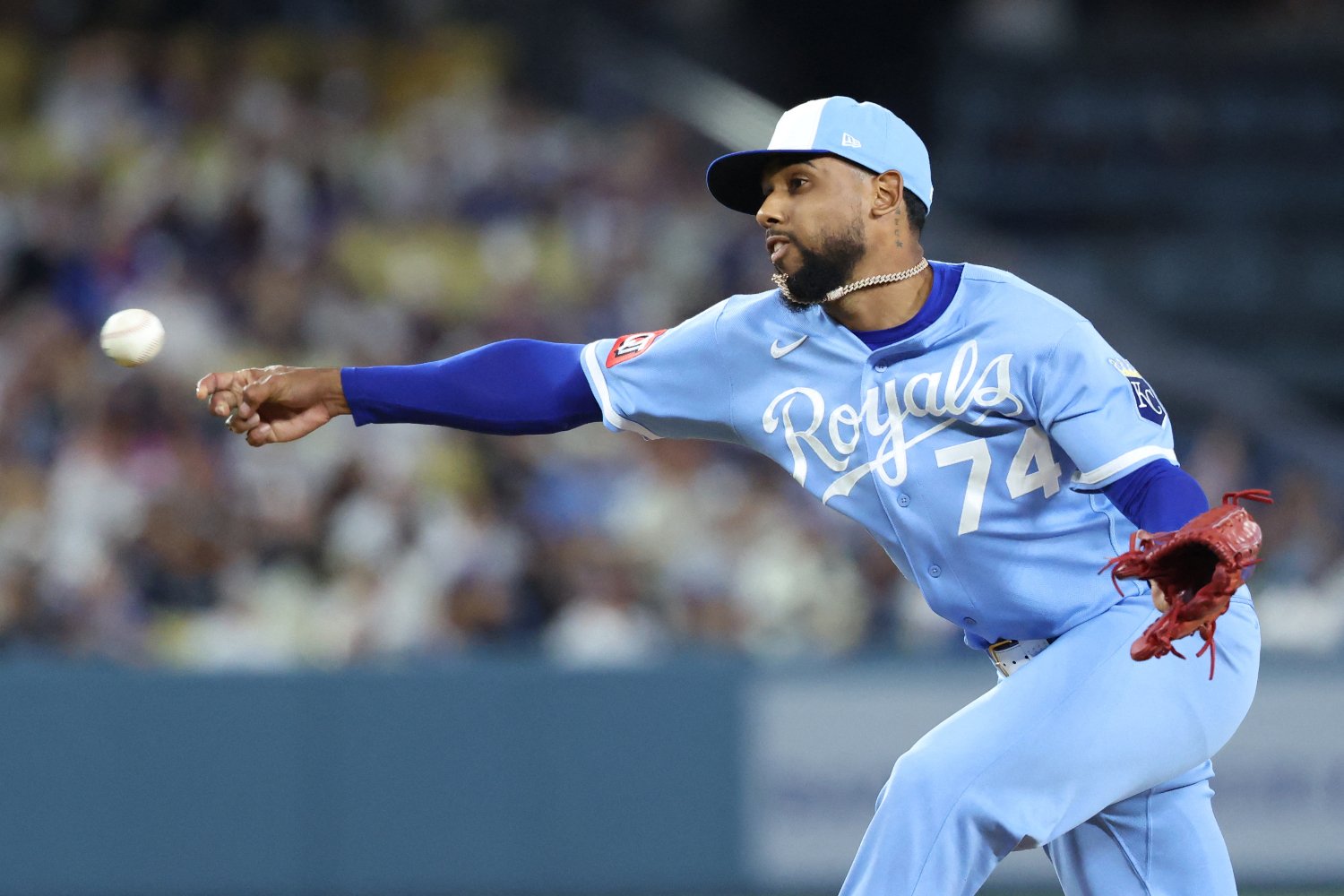 The Kansas City Royals have been on a hot streak, winning eight straight games, including all seven at home last week against the Athletics (four games) and Tigers (three games). The Royals' playoff chances remain slim at 57-74, with Fangraphs putting their odds at 0.1%. That said, it's been exciting to see Kansas City play better baseball lately, with the hope that they can transition this momentum to 2027. One area that the Royals need to improve in 2027 is the bullpen, and that's putting it lightly. According to Fangraphs, the Royals rank 29th in bullpen ERA, 30th in WHIP, 28th in BB/9, 28th in K/9, 28th in H/9, and 30th in HR/9. The Royals have shuffled the bullpen to address these issues. Matt Strahm is no longer on this roster. Lucas Erceg is in Triple-A Omaha. The Royals have also promoted many relievers and given them opportunities to prove their mettle at the MLB level. Some have worked out, some have not, but fans can appreciate that Royals President of Baseball Operations JJ Picollo is at least trying to find short-term solutions. Right now, there are a few relievers who can be penciled in for 2027, as long as they stay healthy. Steven Cruz and Nate Pearson have emerged as key late-inning relievers for the Royals, as they have rotated between closing opportunities. Alex Lange will likely be back, especially since he won't be a free agent until 2029. John Schreiber could also be back, especially if he agrees to a cheap, one-year deal. However, the rest of the bullpen? That's up for grabs, which means 4-5 spots could be open next spring. While some Royals fans would like 4-5 new names to fill in those gaps, the reality is that the Royals will need to find some internal solutions to step up and provide production in relief. Let's take a look at five Royals relievers who are getting opportunities right now and could earn at least invites to Spring Training in 2027 if they can finish the 2026 campaign strong. Mason Black, RHP The Royals acquired Black from the Giants last year with the hope that he could find a spot in Kansas City as either a spot starter or long reliever. He got off to a good start with the Royals, with a 3.57 ERA in 17.2 IP before the All-Star Break. Unfortunately, he's faded as of late, as his ERA has been 6.17 in 11.2 IP in the second half. Overall, Black's ERA is up to 4.60, and his WHIP has also risen to 1.70 in 16 appearances and 29.1 IP. While Black has done a good job of flooding the strike zone (61st percentile) and showing strong pitch extensions (64th percentile), his lackluster K%, BB%, CSW%, and GB% don't exactly bode well for future success (and his 6.71 FIP confirms that). The 26-year-old former Lehigh product will be out of Minor League options next year, so the Royals will have to decide on keeping or non-tendering him this offseason. While the Statcast percentile isn't great, Black's arsenal is intriguing, as he sports a seven-pitch mix. Even though he has only one above-average pitch on a TJ Stuff+ end, that sheer arsenal volume gives him an advantage, especially when he's locating effectively. His sweeper, which he throws 21.7% of the time, may be his best pitch, though he could do a better job of generating chases (15.8%) and whiffs (16.7%). It does sport some intriguing spin (2,618 RPM) and horizontal movement, and when it's located properly, it can produce nasty whiffs like this one below in Texas against Ezequiel Duran. NHlLdk9fWGw0TUFRPT1fRHdOV0FGMEdVd2NBWFFBSFVRQUhVQVpSQUZoV1d3VUFWZ1JRVkFBQVVnY0VCd2RR.mp4 It feels unlikely that the Royals will keep Black on the roster for 2027, especially with him being out of Minor League options next year. That said, if he can bounce back after a rough outing on Sunday, he could get back in the bullpen discussion, though he may need to condense or enhance his pitch mix a bit to be more effective, like he was in the first half. Connor Thomas, LHP Thomas only pitched two games with the Atlanta Braves before getting designated for assignment on July 29th. The Athletics claimed the lefty off waivers, but they optioned him to Triple-A, and they ended up designating him for assignment on August 1st. The Royals promptly moved on Thomas, claiming him on waivers on August 4th. In three outings, the 28-year-old lefty has been one of the better performers lately in the Royals bullpen. He hasn't allowed a run, and he's also posting a 0.67 WHIP and 25% K-BB%. In addition to a strong CSW% (35%), he also has limited hard contact (25%), generated groundballs (75% GB%), and produced a lot of whiffs (34.8% whiff%). Thomas is doing this too despite mediocre extension (25th percentile) and TJ Stuff+ (24th percentile). Thomas has a five-pitch mix, with his cutter, sweeper, and four-seamer as his most-used pitches, each at 20% or higher. His overall TJ Stuff+ is 98, as illustrated below in his TJ Stuff+ summary with the Royals. The pitch that sticks out the most from Thomas is his changeup, which he has thrown 17.5% of the time. In addition to being his best pitch on a TJ Stuff+ end, it also generates a lot of chase (66.7%) and whiff (40%). When located down, the offspeed pitch can generate some good swings and misses, like this one against the Athletics' Zack Gelof on August 20th. ZzZ3cVlfWGw0TUFRPT1fVndkV0JsSlJYd2NBQzFNS0F3QUhVbGRRQUZnQlZGSUFWMVJYQTFZRENBZFZCUVFB.mp4 Thomas has three Minor League options, so the Royals may not have to move too fast with him this offseason. Nonetheless, with Daniel Lynch IV moving to the rotation, Thomas has stepped up as the lone lefty reliever in the Royals bullpen. He could solidify that spot in 2027 if he continues this pace. Jose Cuas, RHP Cuas has been an intriguing reliever for the Royals in 2026, which wasn't expected when they picked him up shortly before Spring Training started. The 32-year-old righty was formerly a reliever in the Royals organization in 2022 and 2023 before being traded to the Cubs for outfielder Nelson Velazquez at the Trade Deadline. He posted a 3.58 ERA in 2022 and a 4.54 ERA in 2023 with the Royals, which isn't anything spectacular. He was better with the Cubs in 2023 (3.04 ERA), but he struggled on the North Side in 2024 and landed with the Blue Jays later that year. After posting a 7.71 ERA with both teams, the Blue Jays released him, and he spent most of last season in the Braves and Phillies minor league systems. After posting a 0.73 ERA with Águilas Cibaeñas in the Dominican Winter League, the Royals gave him a Minor League deal, and it was expected that he would be bullpen depth in Omaha. However, in 12 appearances and 13 IP, he has produced a 2.08 ERA, 2.79 FIP, 1.69 WHIP, and 10.2% K-BB%. Cuas is known for his sidearm delivery, his ability to mess with hitters' timing (he does a lot of Luis Tiant impressions on the mound), and his ability to limit barrels (96th percentile) and hard contact (80th percentile hard-hit%). He also has a solid 26.6% whiff rate and 23.7% K%, which offset his mediocre CSW% (18th percentile) and walk rate (12th percentile). While he is a sidearmer, he relies heavily on his four-seamer, which he throws 37.2% of the time. Despite lacking elite velocity or stuff, it's been extremely effective at generating chases and whiffs. Even though it averages 92.1 MPH and has a 100 TJ Stuff+ mark, the four-seamer is producing a 34.4% chase% and 32% whiff%. It is also allowing a .341 xwOBACON, the second-best mark of his five pitches in that category. Cuas does a great job of hammering the four-seamer up in the zone with just enough rise and movement that forces hitters to chase and miss on the pitch, like Brett Callahan below on Sunday. eHl3b1ZfWGw0TUFRPT1fVkFWVkJRVU1YbE1BQ1ZBQVZ3QUhCd1JSQUZsVVVWTUFWRllIVkZjTkJ3SUFVd3RT.mp4 The nice thing about Cuas is that he's cheap and he's expendable, so if he doesn't produce, the Royals could easily let him go. He'll be out of Minor League options next year, so the Royals will have to be confident in his ability to stay in the bullpen long term in 2027. That's hard to say, especially since he has only pitched 12 times this year and has been optioned to Omaha quite a bit. Nonetheless, Cuas is producing, and that merits consideration for 2027, even if his spot is far from guaranteed. Carlos Duran, RHP Duran made his Royals debut last week against the Athletics (one of his former teams), and it was a tale of two outings. In his first appearance, he allowed no runs on one hit and struck out one in an inning of work. He ended up getting his first career win in the outing and was part of the postgame interview with Bobby Witt Jr., who hit a walk-off single to beat the A's. The second outing was much less effective, unfortunately. Duran only recorded one out and allowed two runs on one hit and three walks (he struck out none). The former Dodger, who was traded for Kris Bubic at the Trade Deadline, just couldn't find the strike zone. As a result, he was optioned back to Omaha after the outing. It's a small sample, but his Statcast percentiles raise some concerns and offer some encouragement. Obviously, the command and control are concerns, but he showcased strong fastball velocity (61st percentile) and extension (64th percentile). He also did a good job of generating groundballs (80%) and limiting hard contact in his two outings as well. Thus, when he's throwing the ball in the zone, at least he's not getting whacked. Looking at his four-pitch mix via TJ Stuff+, his slider was his best offering, with an 111 TJ Stuff+. He threw it 22.9%, his third-most used offering behind his four-seamer and sinker. The pitch struggled to find the zone and generate much chase, but it did produce a 50% whiff rate, the best mark of any of his four pitches in that category. The slider is a high-spin offering (2,615 RPM), and when he located it properly, he generated a punchout of the Athletics' Donovan Walton on August 18th. QXc3RDNfWGw0TUFRPT1fQWxCU1VGUUNWZ0lBRFZzQ0JBQUhBd1plQUZnR1ZGa0FCQVJXQlFRQUNBcFZWUVpR.mp4 The interesting part of Duran's profile is that his extension on his secondary pitches (6.3 feet) was far below his four-seamer (6.6) and sinker (6.7) extension. That makes him susceptible not only to inconsistency on his pitches, but perhaps to tipping off batters as well. My guess is the Royals sent him to Triple-A to work on that extension, which will hopefully improve his control and make him more effective when he returns to the Royals once the roster expands in September. Easton McGee, RHP McGee didn't have a great stint with the Royals, which explains why he is back in Omaha. In four outings and 5.1 IP, he produced an 11.81 ERA, 2.63 WHIP, 7.41 FIP, and 10.3% K-BB%. However, the percentiles are much better than what the overall lines suggest. The former Brewers arm produced a lot of chase (38.1% O-Swing%), swinging strikes (13.4%), limited hard contact (30% hard-hit rate), and sported great extension on his pitches (82nd percentile). The problem was the barrels (21st percentile), lackluster CSW (22nd percentile), and that the TJ Stuff+ didn't profile well (7th percentile). In terms of the latter, McGee relies on the four-seamer WAY too much. Not only was it his most-thrown pitch with the Royals, but it also profiled the worst TJ Stuff+ wise of his six offerings. I would love to see what McGee could look like if he cut out the four-seamer, increased the sinker and cutter usage, and maybe threw the changeup more. His sinker had a 96 TJ Stuff+ with the Royals, which is nine points better than his four-seamer. He also had a zone rate of 75% with the offering, much better than the 36.4% zone rate of his four-seamer. Relying on his sinker more could give him fewer whiffs on fastball pitches, but could help his breaking and offspeed offerings in that category. Here's an example of his curveball generating a swinging strikeout of Alex Bregman on August 9th at Kauffman Stadium. b0d3dzNfWGw0TUFRPT1fQkZBRFVGSlJWVlFBQ1ZvR0JRQUhWVkJXQUZsUlYxY0FCUU5XVTFBRkJnTmNBVkVB.mp4 I look at McGee as a pitcher with a similar profile to James McArthur, who didn't have a good four-seamer, but relied on a sinker to generate groundball outs and his breaking offerings to generate whiffs. He used that successfully at the end of 2023 and the start of 2024. While I wouldn't put McGee in as a high-leverage reliever in 2027, I think it isn't out of the question to think that, with some pitch mix adjustments, he could be an effective middle-innings guy who could thrive with the four-seamer out of the equation.
-
- 1
-

-
- easton mcgee
- carlos duran
- (and 4 more)
-
Image courtesy of Denny Medley-Imagn Images Week in a Nutshell After taking two of three in Anaheim last weekend, the Royals returned to Kauffman Stadium for their final homestand of August. And what a homestand it was. The Royals won every game on this homestand and outscored the A's and Tigers by a combined 23 runs. They extended their winning streak to eight games, the longest win streak of the season and their longest win streak since May of 2025. As a result of this hot stretch, the Royals have suddenly thrust themselves back into the "longshot postseason" picture, though the odds remain heavily stacked against them (0.1% playoff odds, according to Fangraphs). Furthermore, after this week, the Royals clinched season series matchups against the A's (5-2) and Tigers (7-6). Even though Kansas City still remains in last place in the AL Central, they are setting themselves up for a strong September that could not just help them escape the division cellar, but perhaps build some much-needed momentum for 2027. Record this Week: 7-0 Run Differential for the Week: +23 Record for the Year: 58-74 Run Differential for the Year: -91 Standing: 5th in the AL Central One Sentence Game Summaries Game 126: KC 9, ATH 5 The full-strength Royals take it to former Royals prospect Mason Barnett in a four-run victory. Game 127: KC 4, ATH 3 The Royals score three in the ninth and complete a ninth-inning comeback, with Witt's base hit being the winner. Game 128: KC 9, ATH 7 Vinnie has three hits, and Kansas City scores seven runs in the eighth to help the Royals clinch the series against the Athletics. Game 129: KC 6, ATH 2 Garcia hurts his hamstring, but the Royals rally and complete the sweep against the Athletics on Thursday afternoon. Game 130: KC 5, DET 2 Royals fans keep the faith on Faith Night, with Cameron winning his eighth game and Isbel and Jensen going yard in Friday's win. Game 131: KC 3, DET 1 Wacha tames Tigers once again, allowing just one run on three hits while striking out six in seven innings of work. Game 132: KC 11, DET 7 Pitching stumbles a bit, but the Kansas City offense picks them up, scoring 11 runs on 12 hits, including home runs from Loftin and Rave. News and Notes The Royals got much-needed returns from Maikel Garcia and Vinnie Pasquantino, as they were activated off the 10-Day IL on August 17th. To make room on the roster, Kansas City designated veteran outfielder Starling Marte for assignment. Marte failed to produce in his limited stint in Kansas City. In 59 games and 168 plate appearances, the 37-year-old hit .242 with a 71 wRC+ and posted a -0.5 fWAR. No move has been announced officially on Marte, but it's unlikely that he remains in the Royals organization. Garcia returned from the IL and got off to a good start in the Athletics series. In 15 at-bats, he hit .400 with a 1.000 OPS. However, on Thursday, he hurt his hamstring while rounding third on a Salvador Perez single, and he was promptly put on the IL before the Tigers series. The Royals also made some moves with their bullpen this week. Before the Athletics series, the Royals promoted Connor Thomas and optioned Jose Cuas to Omaha. The left-handed Thomas was formerly in the A's organization and was claimed by the Royals on August 4th. In three appearances and three innings of work this week, Thomas allowed no runs, only two hits, one walk, and struck out three. On the flip side, Kansas City also optioned struggling reliever Lucas Erceg to Omaha after struggling on Monday, August 17th against the Athletics. Erceg posted a 6.23 ERA and 1.89 WHIP in 43.1 IP with the Royals this season. In his place, the Royals promoted Carlos Duran, who was acquired at the Trade Deadline from the Dodgers for Kris Bubic. Duran's stint with the Royals was short-lived. On Tuesday, he produced a scoreless inning with one strikeout and earned his first career MLB victory. On Thursday, however, he allowed two runs on two hits and three walks in just 0.1 IP. He was optioned to Omaha following the rough outing, and Cuas returned to Kansas City to pitch in his place. Lastly, with Garcia going on the IL on August 21st, Matthew Lugo was called up from Omaha. Lugo was hitting .271 with a 110 wRC+ in 226 plate appearances with the Storm Chasers. He also hit 11 home runs and drove in 36 runs. The former Angel has yet to make his Royals debut this season. Highlights On the hitting end, Pasquantino had a stellar return to the Royals after missing time due to a hamate injury. In 26 at-bats, the Pasquatch hit .385 with a 1.217 OPS and two home runs. Not only did Pasquantino have 10 hits, four doubles, and five RBI, but he also walked three times and didn't strike out once. He looked totally locked in at the plate, something the Royals have been missing from him this season, especially when he was on the IL. Kyle Isbel also had a homestand to remember, which was nice to see after he missed time on the IL due to plantar fasciitis. Isbel hit .333 with a 1.031 OPS, two home runs, and eight RBI. The Royals center fielder hit home runs on back-to-back nights on Friday and Saturday against the Tigers. The Royals haven't gotten much from Isbel offensively this year, as he was hitting .229 with a .611 OPS before the weekend series against Detroit. His average is now up to .241, and his OPS is up to .658. Having a strong-hitting Isbel at the bottom of the lineup only strengthens the Royals' offense going forward. As usual, Bobby Witt Jr. had another banner week for Kansas City. In 27 at-bats, he hit .370 with a 1.115 OPS and two home runs. He also had five RBI, five walks, three stolen bases, and a game-winning hit. He not only looks healthy again, but is once again making a push for AL MVP consideration. On the pitching end, Wacha had a mediocre outing against the Athletics, giving up four runs on six hits (including three home runs). However, he was masterful on Saturday against the Tigers, limiting Detroit to just one run in seven innings. Wacha didn't have his best stuff, but he capitalized on his defense and worked quickly and efficiently in a game that took two hours and 11 minutes. If the Royals are looking to make any kind of push in September to challenge for a postseason spot, they will need Wacha to produce as he did against the Tigers rather than the Athletics. Noah Cameron only made one start, and it wasn't a quality one, as he only went five innings (most likely to conserve him after he threw 115 pitches in his complete-game shutout on Sunday against the Angels). However, he earned the victory in his Friday-night outing, limiting the Tigers to no runs on two hits and two walks while striking out three. On the bullpen end of things, Steven Cruz and Nate Pearson are proving that they can be key contributors to the 2027 bullpen with each and every outing. This week, Cruz posted a 4.15 ERA and 1.15 WHIP in four appearances and 4.1 IP. He also struck out three batters, only walked one, and earned a save. As for Pearson, he didn't allow a run in four appearances (4.0 IP) and struck out two while walking two. Like Cruz, Pearson earned a save in his only save appearance this week. An underrated story was Craig Kimbrel earning a save on Saturday night against the Tigers, his first save since 2024. Kimbrel struck out three batters this week in three appearances and didn't allow a single run. He's proving to be a nice contributor to the Royals bullpen, even with the club's unlikely playoff chances. Lowlights It's been a nightmare season for Erceg, and Monday was more fuel to the fire. In his lone outing this week, he allowed one run on one hit and two walks and didn't record a single out. I wrote this week that the Royals need to decide what to do with Erceg long term, which could force some tough short-term decisions with the 31-year-old reliever. Erceg wasn't the lone Royals veteran to struggle this week. Seth Lugo had a rough start against the Athletics, and he continues to trend in the wrong direction as the 2026 season comes to a close. Even though the Royals offense picked him up, Lugo gave up five runs on nine hits in six innings of work. Lugo's stuff wasn't there against the Athletics. He not only struggled to generate chases and whiffs against a depleted A's lineup, but also gave up a lot of hard contact, according to his TJ Stuff+ summary. While Lugo has been able to eat innings this year, the quality hasn't been there. His 4.71 ERA this year is 0.56 points higher than a year ago and 1.71 points higher than his AL Cy Young runner-up campaign in 2024. After signing an extension last season after the Trade Deadline (instead of getting traded), Lugo is looking more like a mediocre starter than one that the Royals can depend upon for 2027. On the bullpen end, Mason Black had a forgettable outing today, as he gave up three runs on three hits and a walk in 0.2 IP. His lackluster outing, while relieving a solid Daniel Lynch IV start, allowed the Tigers to tie the game. However, the Royals offense quickly took back the lead in the bottom of the inning. For the week, he posted a 12.27 ERA in two outings and 3.2 IP. Control has been an issue for Black this week, with four walks and only one strikeout. With Lynch building more stamina, the Royals may not need Black to piggyback Lynch starts for much longer. On the hitting end, the Royals did very well, so it was hard to argue with much this week (especially after they went 7-0). That said, Isaac Collins and Tyler Tolbert had down weeks and could see themselves on the outside looking in when it comes to regular playing time. In 15 at-bats, Collins only hit .200 with a .550 OPS. On a positive note, he drew four walks and produced a .350 OBP. However, he hasn't produced much else but singles, and it seems like he's been losing playing time as of late to other outfielder options. As for Tolbert, while his 2026 season has been strong, this week was far from it. In 13 at-bats, he hit .154 with a .467 OPS. Tolbert did steal a base and had two walks to three strikeouts, so at least he's getting on base and doing something on the basepaths. That said, Tolbert is proving that he's more of a platoon player rather than a regular one. Looking Ahead The Royals take an eight-game win streak on the road to North of the Border in Toronto and then to Cleveland. Both teams are in the playoff hunt, even though both are under .500. The Guardians are slightly better at 65-66 compared to Toronto's 64-68. Toronto hasn't been playing its best ball lately, going 5-5 in its last 10 games and posting a -55 run differential for the year. However, they just played the Yankees in the Bronx, and they will face three pitchers with big names but lackluster ERA marks against the Royals: Max Scherzer (7.40 ERA), Shane Bieber (4.53), and Spencer Arrighetti (4.73). The Royals will miss Dylan Cease, who's been their best starting pitcher this year, as evidenced by his 2.37 ERA and 5.0 fWAR. The Guardians will be a much tougher challenge. They have won four in a row (against the Rockies) and are 6-4 in their last 10. They still have a negative run differential, but it's only -9, much better than the Blue Jays. The Royals will face Tanner Bibbee, former Royal Foster Griffin, and Parker Messick, who have all had solid seasons in 2026. For the Royals to have a chance in Cleveland, the pitching will need to suppress a Guardians offense that ranks 30th in OPS and 26th in runs scored. If the Royals pitching can step up, and if the hitting can do just enough, then the Royals have a chance to have a winning road trip to close out August before returning to Kauffman Stadium in September. A winning road trip could set up an intriguing September for Kansas City, especially if two or three of those wins can come against Cleveland (the Royals play the Guardians at home to close out the 2026 season). View full article
-
Week in Review: Are the Royals Back in the Postseason Hunt?
Kevin O'Brien posted an article in Royals
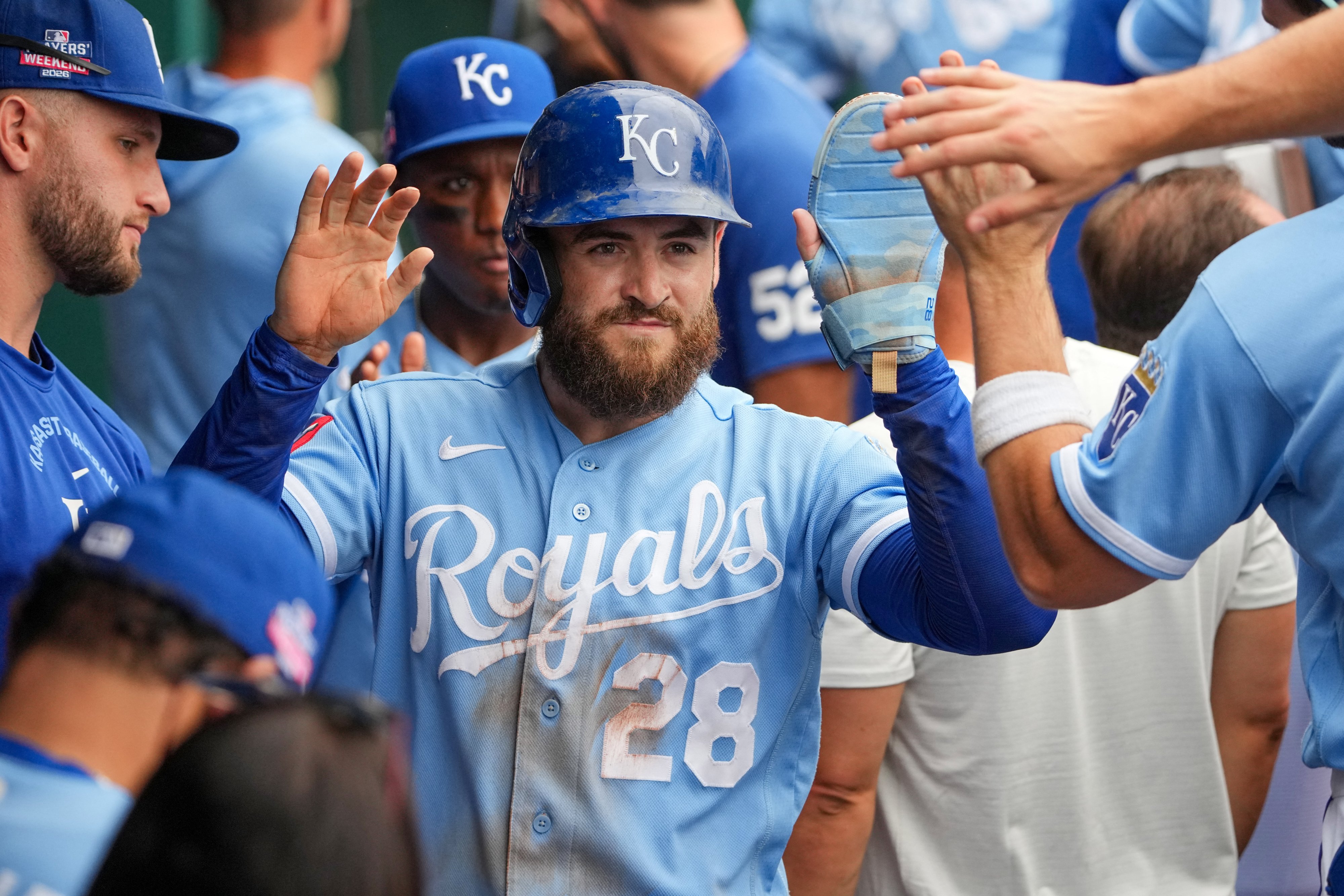 Week in a Nutshell After taking two of three in Anaheim last weekend, the Royals returned to Kauffman Stadium for their final homestand of August. And what a homestand it was. The Royals won every game on this homestand and outscored the A's and Tigers by a combined 23 runs. They extended their winning streak to eight games, the longest win streak of the season and their longest win streak since May of 2025. As a result of this hot stretch, the Royals have suddenly thrust themselves back into the "longshot postseason" picture, though the odds remain heavily stacked against them (0.1% playoff odds, according to Fangraphs). Furthermore, after this week, the Royals clinched season series matchups against the A's (5-2) and Tigers (7-6). Even though Kansas City still remains in last place in the AL Central, they are setting themselves up for a strong September that could not just help them escape the division cellar, but perhaps build some much-needed momentum for 2027. Record this Week: 7-0 Run Differential for the Week: +23 Record for the Year: 58-74 Run Differential for the Year: -91 Standing: 5th in the AL Central One Sentence Game Summaries Game 126: KC 9, ATH 5 The full-strength Royals take it to former Royals prospect Mason Barnett in a four-run victory. Game 127: KC 4, ATH 3 The Royals score three in the ninth and complete a ninth-inning comeback, with Witt's base hit being the winner. Game 128: KC 9, ATH 7 Vinnie has three hits, and Kansas City scores seven runs in the eighth to help the Royals clinch the series against the Athletics. Game 129: KC 6, ATH 2 Garcia hurts his hamstring, but the Royals rally and complete the sweep against the Athletics on Thursday afternoon. Game 130: KC 5, DET 2 Royals fans keep the faith on Faith Night, with Cameron winning his eighth game and Isbel and Jensen going yard in Friday's win. Game 131: KC 3, DET 1 Wacha tames Tigers once again, allowing just one run on three hits while striking out six in seven innings of work. Game 132: KC 11, DET 7 Pitching stumbles a bit, but the Kansas City offense picks them up, scoring 11 runs on 12 hits, including home runs from Loftin and Rave. News and Notes The Royals got much-needed returns from Maikel Garcia and Vinnie Pasquantino, as they were activated off the 10-Day IL on August 17th. To make room on the roster, Kansas City designated veteran outfielder Starling Marte for assignment. Marte failed to produce in his limited stint in Kansas City. In 59 games and 168 plate appearances, the 37-year-old hit .242 with a 71 wRC+ and posted a -0.5 fWAR. No move has been announced officially on Marte, but it's unlikely that he remains in the Royals organization. Garcia returned from the IL and got off to a good start in the Athletics series. In 15 at-bats, he hit .400 with a 1.000 OPS. However, on Thursday, he hurt his hamstring while rounding third on a Salvador Perez single, and he was promptly put on the IL before the Tigers series. The Royals also made some moves with their bullpen this week. Before the Athletics series, the Royals promoted Connor Thomas and optioned Jose Cuas to Omaha. The left-handed Thomas was formerly in the A's organization and was claimed by the Royals on August 4th. In three appearances and three innings of work this week, Thomas allowed no runs, only two hits, one walk, and struck out three. On the flip side, Kansas City also optioned struggling reliever Lucas Erceg to Omaha after struggling on Monday, August 17th against the Athletics. Erceg posted a 6.23 ERA and 1.89 WHIP in 43.1 IP with the Royals this season. In his place, the Royals promoted Carlos Duran, who was acquired at the Trade Deadline from the Dodgers for Kris Bubic. Duran's stint with the Royals was short-lived. On Tuesday, he produced a scoreless inning with one strikeout and earned his first career MLB victory. On Thursday, however, he allowed two runs on two hits and three walks in just 0.1 IP. He was optioned to Omaha following the rough outing, and Cuas returned to Kansas City to pitch in his place. Lastly, with Garcia going on the IL on August 21st, Matthew Lugo was called up from Omaha. Lugo was hitting .271 with a 110 wRC+ in 226 plate appearances with the Storm Chasers. He also hit 11 home runs and drove in 36 runs. The former Angel has yet to make his Royals debut this season. Highlights On the hitting end, Pasquantino had a stellar return to the Royals after missing time due to a hamate injury. In 26 at-bats, the Pasquatch hit .385 with a 1.217 OPS and two home runs. Not only did Pasquantino have 10 hits, four doubles, and five RBI, but he also walked three times and didn't strike out once. He looked totally locked in at the plate, something the Royals have been missing from him this season, especially when he was on the IL. Kyle Isbel also had a homestand to remember, which was nice to see after he missed time on the IL due to plantar fasciitis. Isbel hit .333 with a 1.031 OPS, two home runs, and eight RBI. The Royals center fielder hit home runs on back-to-back nights on Friday and Saturday against the Tigers. The Royals haven't gotten much from Isbel offensively this year, as he was hitting .229 with a .611 OPS before the weekend series against Detroit. His average is now up to .241, and his OPS is up to .658. Having a strong-hitting Isbel at the bottom of the lineup only strengthens the Royals' offense going forward. As usual, Bobby Witt Jr. had another banner week for Kansas City. In 27 at-bats, he hit .370 with a 1.115 OPS and two home runs. He also had five RBI, five walks, three stolen bases, and a game-winning hit. He not only looks healthy again, but is once again making a push for AL MVP consideration. On the pitching end, Wacha had a mediocre outing against the Athletics, giving up four runs on six hits (including three home runs). However, he was masterful on Saturday against the Tigers, limiting Detroit to just one run in seven innings. Wacha didn't have his best stuff, but he capitalized on his defense and worked quickly and efficiently in a game that took two hours and 11 minutes. If the Royals are looking to make any kind of push in September to challenge for a postseason spot, they will need Wacha to produce as he did against the Tigers rather than the Athletics. Noah Cameron only made one start, and it wasn't a quality one, as he only went five innings (most likely to conserve him after he threw 115 pitches in his complete-game shutout on Sunday against the Angels). However, he earned the victory in his Friday-night outing, limiting the Tigers to no runs on two hits and two walks while striking out three. On the bullpen end of things, Steven Cruz and Nate Pearson are proving that they can be key contributors to the 2027 bullpen with each and every outing. This week, Cruz posted a 4.15 ERA and 1.15 WHIP in four appearances and 4.1 IP. He also struck out three batters, only walked one, and earned a save. As for Pearson, he didn't allow a run in four appearances (4.0 IP) and struck out two while walking two. Like Cruz, Pearson earned a save in his only save appearance this week. An underrated story was Craig Kimbrel earning a save on Saturday night against the Tigers, his first save since 2024. Kimbrel struck out three batters this week in three appearances and didn't allow a single run. He's proving to be a nice contributor to the Royals bullpen, even with the club's unlikely playoff chances. Lowlights It's been a nightmare season for Erceg, and Monday was more fuel to the fire. In his lone outing this week, he allowed one run on one hit and two walks and didn't record a single out. I wrote this week that the Royals need to decide what to do with Erceg long term, which could force some tough short-term decisions with the 31-year-old reliever. Erceg wasn't the lone Royals veteran to struggle this week. Seth Lugo had a rough start against the Athletics, and he continues to trend in the wrong direction as the 2026 season comes to a close. Even though the Royals offense picked him up, Lugo gave up five runs on nine hits in six innings of work. Lugo's stuff wasn't there against the Athletics. He not only struggled to generate chases and whiffs against a depleted A's lineup, but also gave up a lot of hard contact, according to his TJ Stuff+ summary. While Lugo has been able to eat innings this year, the quality hasn't been there. His 4.71 ERA this year is 0.56 points higher than a year ago and 1.71 points higher than his AL Cy Young runner-up campaign in 2024. After signing an extension last season after the Trade Deadline (instead of getting traded), Lugo is looking more like a mediocre starter than one that the Royals can depend upon for 2027. On the bullpen end, Mason Black had a forgettable outing today, as he gave up three runs on three hits and a walk in 0.2 IP. His lackluster outing, while relieving a solid Daniel Lynch IV start, allowed the Tigers to tie the game. However, the Royals offense quickly took back the lead in the bottom of the inning. For the week, he posted a 12.27 ERA in two outings and 3.2 IP. Control has been an issue for Black this week, with four walks and only one strikeout. With Lynch building more stamina, the Royals may not need Black to piggyback Lynch starts for much longer. On the hitting end, the Royals did very well, so it was hard to argue with much this week (especially after they went 7-0). That said, Isaac Collins and Tyler Tolbert had down weeks and could see themselves on the outside looking in when it comes to regular playing time. In 15 at-bats, Collins only hit .200 with a .550 OPS. On a positive note, he drew four walks and produced a .350 OBP. However, he hasn't produced much else but singles, and it seems like he's been losing playing time as of late to other outfielder options. As for Tolbert, while his 2026 season has been strong, this week was far from it. In 13 at-bats, he hit .154 with a .467 OPS. Tolbert did steal a base and had two walks to three strikeouts, so at least he's getting on base and doing something on the basepaths. That said, Tolbert is proving that he's more of a platoon player rather than a regular one. Looking Ahead The Royals take an eight-game win streak on the road to North of the Border in Toronto and then to Cleveland. Both teams are in the playoff hunt, even though both are under .500. The Guardians are slightly better at 65-66 compared to Toronto's 64-68. Toronto hasn't been playing its best ball lately, going 5-5 in its last 10 games and posting a -55 run differential for the year. However, they just played the Yankees in the Bronx, and they will face three pitchers with big names but lackluster ERA marks against the Royals: Max Scherzer (7.40 ERA), Shane Bieber (4.53), and Spencer Arrighetti (4.73). The Royals will miss Dylan Cease, who's been their best starting pitcher this year, as evidenced by his 2.37 ERA and 5.0 fWAR. The Guardians will be a much tougher challenge. They have won four in a row (against the Rockies) and are 6-4 in their last 10. They still have a negative run differential, but it's only -9, much better than the Blue Jays. The Royals will face Tanner Bibbee, former Royal Foster Griffin, and Parker Messick, who have all had solid seasons in 2026. For the Royals to have a chance in Cleveland, the pitching will need to suppress a Guardians offense that ranks 30th in OPS and 26th in runs scored. If the Royals pitching can step up, and if the hitting can do just enough, then the Royals have a chance to have a winning road trip to close out August before returning to Kauffman Stadium in September. A winning road trip could set up an intriguing September for Kansas City, especially if two or three of those wins can come against Cleveland (the Royals play the Guardians at home to close out the 2026 season).
-
- 1
-
-
- vinnie pasquantino
- noah cameron
- (and 4 more)
-
 Grant Gambrell struck out nine over five innings and allowed one hit as Northwest Arkansas won 7-2, with Jorge Alfaro homering and Spencer Nivens driving in three. David Shields fanned six over five innings in Quad Cities' 12-3 win, where Ben North, Austin Charles, and Tyriq Kemp all homered. Darwin Rodriguez struck out five, and Jesus Oliveira threw two hitless innings in Columbia's 3-1 loss, and Abraham Toro collected three hits in Omaha's 9-0 defeat. Kansas City Royals Transactions No Roster Moves Toro's Three Hits Wasted As Omaha Is Shut Out Omaha managed just four hits and never scored in a 9-0 loss to Rochester. Toro accounted for three of those hits, going 3-for-4 with singles in the first, fourth, and sixth innings. Peyton Wilson doubled and walked, Alejo Lopez and Carson Roccaforte each drew a walk, and the Storm Chasers struck out 10 times and left seven runners on base. Vince Velasquez worked five innings and gave up three runs on five hits with two walks and six strikeouts. All three runs came in the third, when Rochester put together back-to-back singles for a run and then added a two-run home run. Ben Sears followed with a scoreless inning and a walk. Stellar defense up the middle helped limit damage in his appearance. Luke Little retired two hitters and was charged with three runs on one hit and two walks. The seventh unraveled on a walk, a run-scoring single that advanced on Little's throwing error, another walk, a sacrifice bunt, and a two-run single that pushed the lead to 6-0. Nolan Hoffman recorded the final out with a strikeout, allowing one hit. Lucas Erceg pitched a scoreless inning with three hits allowed, a walk, and two strikeouts. Easton McGee closed the game and gave up three runs on two hits, walking one and striking out two. In the ninth, McGee issued a walk, allowed a single, and then surrendered a three-run home run to former Royals draft pick Cayden Wallace. Omaha committed two errors and never advanced a runner past third base. They went 1-for-7 with runners in scoring position and left seven runners on base. The Storm Chasers are now 57-66. Player AB R H RBI BB K Alejo Lopez 3 0 0 0 1 0 Peyton Wilson 3 0 1 0 1 0 Abraham Toro 4 0 3 0 0 1 Brett Squires 4 0 0 0 0 3 Carson Roccaforte 3 0 0 0 1 2 Josh Rojas 4 0 0 0 0 2 Jacob Berry 4 0 0 0 0 0 Drew Waters 3 0 0 0 0 1 Elih Marrero 3 0 0 0 0 1 Player IP H R ER BB K HR Vince Velasquez 5 5 3 3 2 6 1 Ben Sears 1 0 0 0 1 0 0 Luke Little 2/3 1 3 3 2 0 0 Nolan Hoffman 1/3 1 0 0 0 1 0 Lucas Erceg 1 3 0 0 1 2 0 Easton McGee 1 2 3 3 1 2 1 Gambrell Fans Nine And Alfaro Homers In Naturals Win Northwest Arkansas beat San Antonio 7-2 behind a dominant start and a late burst of offense. Gambrell allowed one hit over five innings, walked nobody, and struck out nine, which was a career high. He did not allow a run. The Naturals scored first in the opening inning. Colton Becker was hit by a pitch, moved to second on a groundout, and scored on a two-out single by Nivens. Northwest Arkansas added a run in the fourth on a wild pitch, and another in the fifth when Canyon Brown singled, Luke Pelzer walked, Becker singled to load the bases, and Sam Kulasingam grounded out to first to bring Brown home. The eighth broke the game open. Daniel Vazquez singled, Omar Hernandez reached on a force out, and Jorge Alfaro drove a two-run home run to left-center for a 5-0 lead. In the ninth, Pelzer walked, Becker singled, and Nivens delivered a two-run single to right. Becker finished 3-for-4 with two runs. Alfaro went 2-for-4 with the home run and two runs batted in. Nivens went 2-for-4 with a walk and three runs batted in. Vazquez added two hits, including a double. The Naturals collected 10 hits, drew five walks, struck out 14 times, and left eight runners on base. Caden Monke, Shane Panzini, and Frank Mozzicato each threw a scoreless inning out of the bullpen, combining for one hit allowed and three strikeouts. Tommy Molsky finished the game and gave up two runs on two hits, including a home run, while striking out three. The Naturals went 3-for-15 with runners in scoring position and stranded eight runners. With the win, Northwest Arkansas improved to 50-68. Player AB R H RBI BB K Luke Pelzer 3 1 0 0 2 0 Colton Becker 4 2 3 0 0 0 Sam Kulasingam 4 1 0 1 1 2 Spencer Nivens 4 0 2 3 1 1 Daniel Vazquez 5 0 2 0 0 3 Omar Hernandez 5 1 0 0 0 3 Jorge Alfaro 4 1 2 2 0 2 Justin Johnson 3 0 0 0 1 1 Canyon Brown 4 1 1 0 0 2 Player IP H R ER BB K HR Grant Gambrell 5 1 0 0 0 9 0 Caden Monke 1 1 0 0 0 0 0 Shane Panzini 1 0 0 0 0 2 0 Frank Mozzicato 1 0 0 0 0 1 0 Tommy Molsky 1 2 2 2 0 3 1 Three Home Runs And A Big Sixth Push Quad Cities Past Dayton Quad Cities scored in six different innings and beat Dayton 12-3. Shields set the tone with five innings of two-run baseball, giving up four hits, walking nobody, and striking out six. Both runs against him came in the third, on a solo home run and, two batters later, a pair of singles followed by a wild pitch. The River Bandits took the lead for good in the fourth on Austin Charles' solo home run, then added a run in the fifth when Tyriq Kemp reached on a force out and scored on Asbel Gonzalez' double. The sixth produced four runs. Chris Brito and Jose Cerice walked, Charles popped out, and Erick Torres grounded into a force out that scored Brito when the throw got away. North walked to load the bases, and Hyungchan Um tripled to left to score Torres and North. Um then scored on a wild pitch during Kemp's walk. North, an undrafted free agent from this year's draft class, homered in the eighth, his fourth of the year and his career. The ninth added four more, starting with Kemp's leadoff home run and continuing with Gonzalez' single, a walk to Brito, Cerice's run-scoring single, a single by Charles, and a Torres groundout that plated another run while a wild pitch brought in a third. North finished 2-for-4 with two runs batted in. Charles went 2-for-5, and Gonzalez went 2-for-5 with a double and a run batted in. Jackson Cleveland threw two scoreless innings on two hits, and Aiden Jimenez followed with two innings, no hits, one unearned run, two walks, and two strikeouts. The River Bandits went 5-for-12 with runners in scoring position and stranded five runners. Quad Cities now sits at 63-52 for the season. Player AB R H RBI BB K Tyriq Kemp 4 2 1 1 1 1 Asbel Gonzalez 5 1 2 1 0 2 Derlin Figueroa 5 0 0 0 0 2 Chris Brito 2 3 0 0 2 0 Jose Cerice 4 1 1 1 1 0 Austin Charles 5 1 2 1 0 0 Erick Torres 5 1 1 1 0 0 Ben North 4 2 2 2 1 2 Hyungchan Um 3 1 1 2 1 1 Player IP H R ER BB K HR David Shields 5 4 2 2 0 6 1 Jackson Cleveland 2 2 0 0 0 0 0 Aiden Jimenez 2 0 1 0 2 2 0 Early Deficit Sticks As Columbia Drops A 3-1 Decision Columbia collected eight hits but scored once in a 3-1 loss to Augusta. The Fireflies fell behind in the first inning, when a throwing error by Josh Hammond put a runner on, a walk followed, and a two-out single brought both runners home. Neither run was earned. Rodriguez worked 4 2/3 innings and gave up three runs, only one earned, on five hits with four walks and five strikeouts. He was helped by some smart defense and "interesting" baserunning by the Green Jackets. The third run scored in the fifth, when Augusta singled, and after a lineout and a strikeout, added a run-scoring single. Columbia answered in the sixth to make the game interesting. JC Vanek singled, Josh Hammond struck out, and Sean Gamble doubled to right to put runners on second and third. Jhosmmel Zue then reached on a fielder's choice that scored Vanek, though Gamble was retired at third. Connor Rasmussen struck out to end the inning. Zue finished 2-for-4 with a double and the run batted in. Tyson Moran went 2-for-3 with a walk. Gamble had a double, Hammond singled, Vanek singled and walked, and Daniel Lopez singled and walked. The Fireflies left eight runners on base and went 0-for-7 with runners in scoring position. The bullpen kept the game close. Michael Braswell III recorded four outs on one hit with a strikeout. Oliveira threw two scoreless innings with no hits allowed, a walk, and three strikeouts. Moises Amezquita finished with a scoreless inning, allowing a walk and striking out one. Columbia's relievers combined for 4 1/3 innings without a run. The Fireflies now sit at 59-60 this season. Player AB R H RBI BB K Henry Ramos 4 0 0 0 0 1 JC Vanek 3 1 1 0 1 0 Josh Hammond 4 0 1 0 0 2 Sean Gamble 4 0 1 0 0 1 Jhosmmel Zue 4 0 2 1 0 0 Connor Rasmussen 4 0 0 0 0 1 Tyson Moran 3 0 2 0 1 0 Jhonayker Ugarte 4 0 0 0 0 0 Daniel Lopez 3 0 1 0 1 1 Player IP H R ER BB K HR Darwin Rodriguez 4 2/3 5 3 1 4 5 0 Michael Braswell III 1 1/3 1 0 0 0 1 0 Jesus Oliveira 2 0 0 0 1 3 0 Moises Amezquita 1 0 0 0 1 1 0 Top-20 Prospect Performance Kendry Chourio: DNP David Shields: 5 IP, 4 H, 2 R, 2 ER, 0 BB, 6 K Josh Hammond: 1-for-4, 2 K Blake Mitchell: DNP Sean Gamble: 1-for-4, 2B, K Ramon Ramirez: DNP Zion Rose: DNP Asbel Gonzalez: 2-for-5, 2B, RBI, 2 K Carson Roccaforte: 0-for-3, BB, 2 K Taylor Rabe: DNP Yandel Ricardo: DNP Justin Lamkin: DNP Drew Beam: DNP Michael Lombardi: DNP Jack Slightom: DNP Felix Arronde: DNP Angeibel Gomez: DNP Ben Kudrna: DNP Steven Zobac: DNP Blake Wolters: DNP
 -
Grant Gambrell struck out nine over five innings and allowed one hit as Northwest Arkansas won 7-2, with Jorge Alfaro homering and Spencer Nivens driving in three. David Shields fanned six over five innings in Quad Cities' 12-3 win, where Ben North, Austin Charles, and Tyriq Kemp all homered. Darwin Rodriguez struck out five, and Jesus Oliveira threw two hitless innings in Columbia's 3-1 loss, and Abraham Toro collected three hits in Omaha's 9-0 defeat. Kansas City Royals Transactions No Roster Moves Toro's Three Hits Wasted As Omaha Is Shut Out Omaha managed just four hits and never scored in a 9-0 loss to Rochester. Toro accounted for three of those hits, going 3-for-4 with singles in the first, fourth, and sixth innings. Peyton Wilson doubled and walked, Alejo Lopez and Carson Roccaforte each drew a walk, and the Storm Chasers struck out 10 times and left seven runners on base. Vince Velasquez worked five innings and gave up three runs on five hits with two walks and six strikeouts. All three runs came in the third, when Rochester put together back-to-back singles for a run and then added a two-run home run. Ben Sears followed with a scoreless inning and a walk. Stellar defense up the middle helped limit damage in his appearance. Luke Little retired two hitters and was charged with three runs on one hit and two walks. The seventh unraveled on a walk, a run-scoring single that advanced on Little's throwing error, another walk, a sacrifice bunt, and a two-run single that pushed the lead to 6-0. Nolan Hoffman recorded the final out with a strikeout, allowing one hit. Lucas Erceg pitched a scoreless inning with three hits allowed, a walk, and two strikeouts. Easton McGee closed the game and gave up three runs on two hits, walking one and striking out two. In the ninth, McGee issued a walk, allowed a single, and then surrendered a three-run home run to former Royals draft pick Cayden Wallace. Omaha committed two errors and never advanced a runner past third base. They went 1-for-7 with runners in scoring position and left seven runners on base. The Storm Chasers are now 57-66. Player AB R H RBI BB K Alejo Lopez 3 0 0 0 1 0 Peyton Wilson 3 0 1 0 1 0 Abraham Toro 4 0 3 0 0 1 Brett Squires 4 0 0 0 0 3 Carson Roccaforte 3 0 0 0 1 2 Josh Rojas 4 0 0 0 0 2 Jacob Berry 4 0 0 0 0 0 Drew Waters 3 0 0 0 0 1 Elih Marrero 3 0 0 0 0 1 Player IP H R ER BB K HR Vince Velasquez 5 5 3 3 2 6 1 Ben Sears 1 0 0 0 1 0 0 Luke Little 2/3 1 3 3 2 0 0 Nolan Hoffman 1/3 1 0 0 0 1 0 Lucas Erceg 1 3 0 0 1 2 0 Easton McGee 1 2 3 3 1 2 1 Gambrell Fans Nine And Alfaro Homers In Naturals Win Northwest Arkansas beat San Antonio 7-2 behind a dominant start and a late burst of offense. Gambrell allowed one hit over five innings, walked nobody, and struck out nine, which was a career high. He did not allow a run. The Naturals scored first in the opening inning. Colton Becker was hit by a pitch, moved to second on a groundout, and scored on a two-out single by Nivens. Northwest Arkansas added a run in the fourth on a wild pitch, and another in the fifth when Canyon Brown singled, Luke Pelzer walked, Becker singled to load the bases, and Sam Kulasingam grounded out to first to bring Brown home. The eighth broke the game open. Daniel Vazquez singled, Omar Hernandez reached on a force out, and Jorge Alfaro drove a two-run home run to left-center for a 5-0 lead. In the ninth, Pelzer walked, Becker singled, and Nivens delivered a two-run single to right. Becker finished 3-for-4 with two runs. Alfaro went 2-for-4 with the home run and two runs batted in. Nivens went 2-for-4 with a walk and three runs batted in. Vazquez added two hits, including a double. The Naturals collected 10 hits, drew five walks, struck out 14 times, and left eight runners on base. Caden Monke, Shane Panzini, and Frank Mozzicato each threw a scoreless inning out of the bullpen, combining for one hit allowed and three strikeouts. Tommy Molsky finished the game and gave up two runs on two hits, including a home run, while striking out three. The Naturals went 3-for-15 with runners in scoring position and stranded eight runners. With the win, Northwest Arkansas improved to 50-68. Player AB R H RBI BB K Luke Pelzer 3 1 0 0 2 0 Colton Becker 4 2 3 0 0 0 Sam Kulasingam 4 1 0 1 1 2 Spencer Nivens 4 0 2 3 1 1 Daniel Vazquez 5 0 2 0 0 3 Omar Hernandez 5 1 0 0 0 3 Jorge Alfaro 4 1 2 2 0 2 Justin Johnson 3 0 0 0 1 1 Canyon Brown 4 1 1 0 0 2 Player IP H R ER BB K HR Grant Gambrell 5 1 0 0 0 9 0 Caden Monke 1 1 0 0 0 0 0 Shane Panzini 1 0 0 0 0 2 0 Frank Mozzicato 1 0 0 0 0 1 0 Tommy Molsky 1 2 2 2 0 3 1 Three Home Runs And A Big Sixth Push Quad Cities Past Dayton Quad Cities scored in six different innings and beat Dayton 12-3. Shields set the tone with five innings of two-run baseball, giving up four hits, walking nobody, and striking out six. Both runs against him came in the third, on a solo home run and, two batters later, a pair of singles followed by a wild pitch. The River Bandits took the lead for good in the fourth on Austin Charles' solo home run, then added a run in the fifth when Tyriq Kemp reached on a force out and scored on Asbel Gonzalez' double. The sixth produced four runs. Chris Brito and Jose Cerice walked, Charles popped out, and Erick Torres grounded into a force out that scored Brito when the throw got away. North walked to load the bases, and Hyungchan Um tripled to left to score Torres and North. Um then scored on a wild pitch during Kemp's walk. North, an undrafted free agent from this year's draft class, homered in the eighth, his fourth of the year and his career. The ninth added four more, starting with Kemp's leadoff home run and continuing with Gonzalez' single, a walk to Brito, Cerice's run-scoring single, a single by Charles, and a Torres groundout that plated another run while a wild pitch brought in a third. North finished 2-for-4 with two runs batted in. Charles went 2-for-5, and Gonzalez went 2-for-5 with a double and a run batted in. Jackson Cleveland threw two scoreless innings on two hits, and Aiden Jimenez followed with two innings, no hits, one unearned run, two walks, and two strikeouts. The River Bandits went 5-for-12 with runners in scoring position and stranded five runners. Quad Cities now sits at 63-52 for the season. Player AB R H RBI BB K Tyriq Kemp 4 2 1 1 1 1 Asbel Gonzalez 5 1 2 1 0 2 Derlin Figueroa 5 0 0 0 0 2 Chris Brito 2 3 0 0 2 0 Jose Cerice 4 1 1 1 1 0 Austin Charles 5 1 2 1 0 0 Erick Torres 5 1 1 1 0 0 Ben North 4 2 2 2 1 2 Hyungchan Um 3 1 1 2 1 1 Player IP H R ER BB K HR David Shields 5 4 2 2 0 6 1 Jackson Cleveland 2 2 0 0 0 0 0 Aiden Jimenez 2 0 1 0 2 2 0 Early Deficit Sticks As Columbia Drops A 3-1 Decision Columbia collected eight hits but scored once in a 3-1 loss to Augusta. The Fireflies fell behind in the first inning, when a throwing error by Josh Hammond put a runner on, a walk followed, and a two-out single brought both runners home. Neither run was earned. Rodriguez worked 4 2/3 innings and gave up three runs, only one earned, on five hits with four walks and five strikeouts. He was helped by some smart defense and "interesting" baserunning by the Green Jackets. The third run scored in the fifth, when Augusta singled, and after a lineout and a strikeout, added a run-scoring single. Columbia answered in the sixth to make the game interesting. JC Vanek singled, Josh Hammond struck out, and Sean Gamble doubled to right to put runners on second and third. Jhosmmel Zue then reached on a fielder's choice that scored Vanek, though Gamble was retired at third. Connor Rasmussen struck out to end the inning. Zue finished 2-for-4 with a double and the run batted in. Tyson Moran went 2-for-3 with a walk. Gamble had a double, Hammond singled, Vanek singled and walked, and Daniel Lopez singled and walked. The Fireflies left eight runners on base and went 0-for-7 with runners in scoring position. The bullpen kept the game close. Michael Braswell III recorded four outs on one hit with a strikeout. Oliveira threw two scoreless innings with no hits allowed, a walk, and three strikeouts. Moises Amezquita finished with a scoreless inning, allowing a walk and striking out one. Columbia's relievers combined for 4 1/3 innings without a run. The Fireflies now sit at 59-60 this season. Player AB R H RBI BB K Henry Ramos 4 0 0 0 0 1 JC Vanek 3 1 1 0 1 0 Josh Hammond 4 0 1 0 0 2 Sean Gamble 4 0 1 0 0 1 Jhosmmel Zue 4 0 2 1 0 0 Connor Rasmussen 4 0 0 0 0 1 Tyson Moran 3 0 2 0 1 0 Jhonayker Ugarte 4 0 0 0 0 0 Daniel Lopez 3 0 1 0 1 1 Player IP H R ER BB K HR Darwin Rodriguez 4 2/3 5 3 1 4 5 0 Michael Braswell III 1 1/3 1 0 0 0 1 0 Jesus Oliveira 2 0 0 0 1 3 0 Moises Amezquita 1 0 0 0 1 1 0 Top-20 Prospect Performance Kendry Chourio: DNP David Shields: 5 IP, 4 H, 2 R, 2 ER, 0 BB, 6 K Josh Hammond: 1-for-4, 2 K Blake Mitchell: DNP Sean Gamble: 1-for-4, 2B, K Ramon Ramirez: DNP Zion Rose: DNP Asbel Gonzalez: 2-for-5, 2B, RBI, 2 K Carson Roccaforte: 0-for-3, BB, 2 K Taylor Rabe: DNP Yandel Ricardo: DNP Justin Lamkin: DNP Drew Beam: DNP Michael Lombardi: DNP Jack Slightom: DNP Felix Arronde: DNP Angeibel Gomez: DNP Ben Kudrna: DNP Steven Zobac: DNP Blake Wolters: DNP View full article
-
Image courtesy of Kiyoshi Mio-Imagn Images The Kansas City Royals may be the hottest team in baseball right now, which is wild to say for a team sitting in last place in their division. On Saturday, they won their seventh straight game, their sixth game on this homestand, and their second in a row against the Tigers. It was definitely a good night for the 23,156 in attendance on Saturday at Kauffman Stadium (unless you were a Detroit fan). With the win, the Royals improved to 57-74 and are just 7.5 games out of an American League playoff spot (which shows how dire the competition is in the AL). The Royals were helped on Saturday by home runs from Kyle Isbel and Salvador Perez, as well as a masterful performance from Michael Wacha (7 IP, 3 H, 1 R, 1 ER, 1 BB, 6 K). However, one of the more endearing stories from the K on Saturday was Craig Kimbrel getting the save, his first with the Royals and first since the 2024 season. According to manager Matt Quatraro in the postgame press conference, the Royals did not have Steven Cruz, Nate Pearson, or John Schreiber available because of their recent workload. All three pitchers have gotten not just saves, but closer opportunities with the Royals this season. Thus, Quatraro opted to go with the veteran, who's currently second on the active saves leader list, behind only Kenley Jansen, who actually was warming up in the Tigers' bullpen on Saturday during Kimbrel's appearance. So how did Kimbrel get his first save in nearly two years against a Tigers team still trying to claw for a spot in the postseason? Let's break down Kimbrel's outing and how he managed to close out Detroit to help Kansas City clinch the weekend series. Kimbrel Didn't Get Whiffs, But the Stuff and Chase Were Solid Looking at Kimbrel's TJ Stuff+ summary from Saturday, it was a bit of a mixed bag. Kimbrel threw 20 pitches on Saturday to earn his 441st career save. There were definitely some positives to glean from his save effort against Detroit. First off, the stuff looked really good on Saturday. Even though his four-seamer velocity was slightly below average at 93.8 MPH, he generated elite spin and iVB on the fastball offering, which he threw 65% of the time against the Tigers. That resulted in a 111 TJ Stuff+ and a 72 grade on the pitch on Saturday. He struggled to locate it (23.1%) and induce whiffs (16.7%), but he also generated a 40% chase with the offering. Kimbrel leaned heavily on his four-seamer, as only seven of his 20 pitches were secondary offerings. His best secondary pitch in terms of TJ Stuff+ was his knuckle curve, which had a 106 TJ Stuff+ and 61 grade. In terms of results? That was his changeup, which generated a 100% chase, 50% whiff, and .160 xwOBACON despite a 94 TJ Stuff+ and 46 grade (his worst marks in both categories). Overall, his TJ Stuff+ was 107, his chase was 56.3%, and his xwOBACON was .160. That made up for a lackluster overall zone rate (20%) and chase rate (16.7%). It's possible that Kimbrel struggled to find the zone because he was so amped up. His pitch chart from Saturday showed that, according to Savant, his four-seamer was missing up often. While Kimbrel didn't live in the zone, he lived on the Edges in Saturday's win. That was good enough, especially with home umpire Manny Gonzalez having a big zone and the Tigers being eager to chase in game two of the series. Retiring Keith and Dingler With Ease While the Royals got an insurance run in the sixth inning due to a wild pitch by Tanner Rainey that scored Jac Caglianone from third, Kansas City was nursing a thin two-run lead. To make matters worse, Kimbrel would be facing the third and fourth hitters in the lineup for Detroit: Colt Keith and Dillon Dingler. Both hitters have combined for 35 home runs this year However, the veteran closer put both hitters away with ease. Kimbrel got behind Keith, who led off the inning. He threw two balls to put Keith in a hitter's count. However, he was able to get a foul ball on the third pitch, and then induced a ground out to first base thanks to a changeup that threw Keith off after he saw nothing but fastballs in the previous three pitches. As Royals fans can see, Kimbrel missed badly with his first two pitches. However, he did a good job of locating the four-seamer up and on the edge and then countered with the changeup low and away on the next pitch. Keith was sitting fastball, and the offspeed pitch forced him to roll over and produce an easy ground out, as seen below. Dingler was an even easier at-bat for Kimbrel. Kimbrel attacked Dingler low with the sinker and the knuckle curve. Not only did Dingler chase, but he fouled off both pitches to get himself into an 0-2 hole. In the pitcher's count, Kimbrel threw a high four-seamer just above the top edge of the strike zone. Gonzalez rang him up for strike three, and surprisingly, Dingler didn't challenge even though the Tigers had two remaining. It is surprising that Dingler didn't challenge. Then again, Gonzalez had a big zone all day, and maybe it was close enough for Dingler that he didn't feel confident in challenging the pitch, even though they had two remaining. Regardless, Detroit's prudence there worked to Kansas City's benefit. A Walk to McKinstry Adds Tension, But Kimbrel Strikes Out Callahan McKinstry has long been a "Royals-Killer" of sorts over the years, and he showed why in the ninth inning against Kimbrel. After getting behind 2-0, Kimbrel battled to get back to 2-2 against the Tigers' No. 5 hitter. However, the veteran closer couldn't punch out or put away McKinstry. The Detroit right fielder not only fouled off a 2-2 fastball up and in, but he also laid off a four-seamer up and one down, generating a walk. Callahan came up as the game-tying run, which only added tension to the Royals fanbase in attendance at Kauffman. Things didn't get better either when Kimbrel balked, putting McKinstry in scoring position. However, despite that balk, Kimbrel settled down and got in the zone to generate the game-ending strikeout on an 0-2 pitch. Kimbrel didn't give Callahan a chance to breathe in this at-bat, as Kimbrel didn't throw a ball to the rookie outfielder. Though Callahan fouled off three Kimbrel pitches, he struck out on a foul tip on a four-seamer high and above the strike zone. It was the kind of four-seamer that Atlanta fans were used to seeing from Kimbrel back when he was one of the league's best closers. While it didn't have the same velocity as it did with the Braves, the movement and location were vintage Kimbrel, much to Royals fans' enjoyment. Will We See More of This From Kimbrel in Kansas City? For Royals fans thinking that Kimbrel will be able to close the save gap between him and Jansen (the Tigers closer has 492 career saves), that kind of thinking may need to stop, even after Kimbrel's Saturday performance. Right now, Kansas City is building for 2027. So Cruz and Pearson will get most of the save opportunities going forward. Both weren't available tonight, so Quatraro had to go with another option. Kimbrel was the best one, especially after Alex Lange pitched in the eighth (he faced Detroit's 9-1-2 hitters and retired them in order). Still, it's likely that Kimbrel may have jumped Schreiber for save opportunities, which makes sense at the surface level. After all, Kimbrel has better stuff than Schreiber and more closing experience. Both are also going to be free agents after this year, so it's not like Schreiber has more long-term value to the Royals than Kimbrel. They both will (likely) be in other organizations in 2027. Even though Kimbrel's tenure in Kansas City will likely be short, he still gives some much-needed depth to a bullpen that's struggled all season. He's not what he once was, but the stuff is still there, and he's a future Hall of Famer to boot. That means something, not only to the clubhouse, but to the Royals fanbase looking for something positive to glean from games down the stretch. Kimbrel will fill in the 9th when Cruz and Pearson aren't available, plain and simple. There's no reason he should be getting save opportunities over those two. They need the experience in high-leverage spots so they can become valuable relievers for Kansas City in 2027 and beyond. However, when they're not available? Well, Royals fans can enjoy the fact that Kimbrel will be adding to his Hall of Fame resume in those sparse opportunities in the ninth. View full article
-
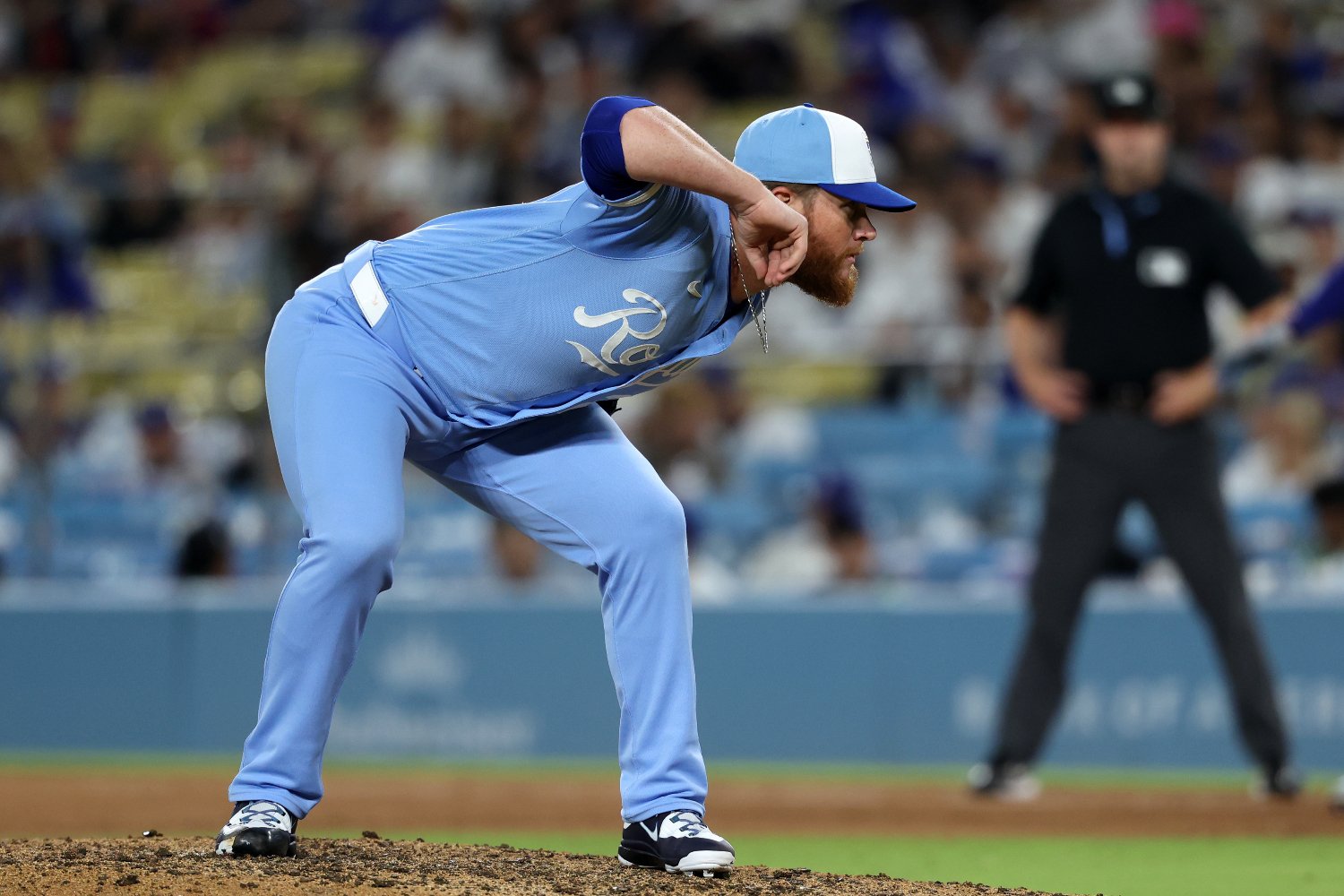 The Kansas City Royals may be the hottest team in baseball right now, which is wild to say for a team sitting in last place in their division. On Saturday, they won their seventh straight game, their sixth game on this homestand, and their second in a row against the Tigers. It was definitely a good night for the 23,156 in attendance on Saturday at Kauffman Stadium (unless you were a Detroit fan). With the win, the Royals improved to 57-74 and are just 7.5 games out of an American League playoff spot (which shows how dire the competition is in the AL). The Royals were helped on Saturday by home runs from Kyle Isbel and Salvador Perez, as well as a masterful performance from Michael Wacha (7 IP, 3 H, 1 R, 1 ER, 1 BB, 6 K). However, one of the more endearing stories from the K on Saturday was Craig Kimbrel getting the save, his first with the Royals and first since the 2024 season. According to manager Matt Quatraro in the postgame press conference, the Royals did not have Steven Cruz, Nate Pearson, or John Schreiber available because of their recent workload. All three pitchers have gotten not just saves, but closer opportunities with the Royals this season. Thus, Quatraro opted to go with the veteran, who's currently second on the active saves leader list, behind only Kenley Jansen, who actually was warming up in the Tigers' bullpen on Saturday during Kimbrel's appearance. So how did Kimbrel get his first save in nearly two years against a Tigers team still trying to claw for a spot in the postseason? Let's break down Kimbrel's outing and how he managed to close out Detroit to help Kansas City clinch the weekend series. Kimbrel Didn't Get Whiffs, But the Stuff and Chase Were Solid Looking at Kimbrel's TJ Stuff+ summary from Saturday, it was a bit of a mixed bag. Kimbrel threw 20 pitches on Saturday to earn his 441st career save. There were definitely some positives to glean from his save effort against Detroit. First off, the stuff looked really good on Saturday. Even though his four-seamer velocity was slightly below average at 93.8 MPH, he generated elite spin and iVB on the fastball offering, which he threw 65% of the time against the Tigers. That resulted in a 111 TJ Stuff+ and a 72 grade on the pitch on Saturday. He struggled to locate it (23.1%) and induce whiffs (16.7%), but he also generated a 40% chase with the offering. Kimbrel leaned heavily on his four-seamer, as only seven of his 20 pitches were secondary offerings. His best secondary pitch in terms of TJ Stuff+ was his knuckle curve, which had a 106 TJ Stuff+ and 61 grade. In terms of results? That was his changeup, which generated a 100% chase, 50% whiff, and .160 xwOBACON despite a 94 TJ Stuff+ and 46 grade (his worst marks in both categories). Overall, his TJ Stuff+ was 107, his chase was 56.3%, and his xwOBACON was .160. That made up for a lackluster overall zone rate (20%) and chase rate (16.7%). It's possible that Kimbrel struggled to find the zone because he was so amped up. His pitch chart from Saturday showed that, according to Savant, his four-seamer was missing up often. While Kimbrel didn't live in the zone, he lived on the Edges in Saturday's win. That was good enough, especially with home umpire Manny Gonzalez having a big zone and the Tigers being eager to chase in game two of the series. Retiring Keith and Dingler With Ease While the Royals got an insurance run in the sixth inning due to a wild pitch by Tanner Rainey that scored Jac Caglianone from third, Kansas City was nursing a thin two-run lead. To make matters worse, Kimbrel would be facing the third and fourth hitters in the lineup for Detroit: Colt Keith and Dillon Dingler. Both hitters have combined for 35 home runs this year However, the veteran closer put both hitters away with ease. Kimbrel got behind Keith, who led off the inning. He threw two balls to put Keith in a hitter's count. However, he was able to get a foul ball on the third pitch, and then induced a ground out to first base thanks to a changeup that threw Keith off after he saw nothing but fastballs in the previous three pitches. As Royals fans can see, Kimbrel missed badly with his first two pitches. However, he did a good job of locating the four-seamer up and on the edge and then countered with the changeup low and away on the next pitch. Keith was sitting fastball, and the offspeed pitch forced him to roll over and produce an easy ground out, as seen below. Dingler was an even easier at-bat for Kimbrel. Kimbrel attacked Dingler low with the sinker and the knuckle curve. Not only did Dingler chase, but he fouled off both pitches to get himself into an 0-2 hole. In the pitcher's count, Kimbrel threw a high four-seamer just above the top edge of the strike zone. Gonzalez rang him up for strike three, and surprisingly, Dingler didn't challenge even though the Tigers had two remaining. It is surprising that Dingler didn't challenge. Then again, Gonzalez had a big zone all day, and maybe it was close enough for Dingler that he didn't feel confident in challenging the pitch, even though they had two remaining. Regardless, Detroit's prudence there worked to Kansas City's benefit. A Walk to McKinstry Adds Tension, But Kimbrel Strikes Out Callahan McKinstry has long been a "Royals-Killer" of sorts over the years, and he showed why in the ninth inning against Kimbrel. After getting behind 2-0, Kimbrel battled to get back to 2-2 against the Tigers' No. 5 hitter. However, the veteran closer couldn't punch out or put away McKinstry. The Detroit right fielder not only fouled off a 2-2 fastball up and in, but he also laid off a four-seamer up and one down, generating a walk. Callahan came up as the game-tying run, which only added tension to the Royals fanbase in attendance at Kauffman. Things didn't get better either when Kimbrel balked, putting McKinstry in scoring position. However, despite that balk, Kimbrel settled down and got in the zone to generate the game-ending strikeout on an 0-2 pitch. Kimbrel didn't give Callahan a chance to breathe in this at-bat, as Kimbrel didn't throw a ball to the rookie outfielder. Though Callahan fouled off three Kimbrel pitches, he struck out on a foul tip on a four-seamer high and above the strike zone. It was the kind of four-seamer that Atlanta fans were used to seeing from Kimbrel back when he was one of the league's best closers. While it didn't have the same velocity as it did with the Braves, the movement and location were vintage Kimbrel, much to Royals fans' enjoyment. Will We See More of This From Kimbrel in Kansas City? For Royals fans thinking that Kimbrel will be able to close the save gap between him and Jansen (the Tigers closer has 492 career saves), that kind of thinking may need to stop, even after Kimbrel's Saturday performance. Right now, Kansas City is building for 2027. So Cruz and Pearson will get most of the save opportunities going forward. Both weren't available tonight, so Quatraro had to go with another option. Kimbrel was the best one, especially after Alex Lange pitched in the eighth (he faced Detroit's 9-1-2 hitters and retired them in order). Still, it's likely that Kimbrel may have jumped Schreiber for save opportunities, which makes sense at the surface level. After all, Kimbrel has better stuff than Schreiber and more closing experience. Both are also going to be free agents after this year, so it's not like Schreiber has more long-term value to the Royals than Kimbrel. They both will (likely) be in other organizations in 2027. Even though Kimbrel's tenure in Kansas City will likely be short, he still gives some much-needed depth to a bullpen that's struggled all season. He's not what he once was, but the stuff is still there, and he's a future Hall of Famer to boot. That means something, not only to the clubhouse, but to the Royals fanbase looking for something positive to glean from games down the stretch. Kimbrel will fill in the 9th when Cruz and Pearson aren't available, plain and simple. There's no reason he should be getting save opportunities over those two. They need the experience in high-leverage spots so they can become valuable relievers for Kansas City in 2027 and beyond. However, when they're not available? Well, Royals fans can enjoy the fact that Kimbrel will be adding to his Hall of Fame resume in those sparse opportunities in the ninth.
 -
Hunter Owen struck out eight over 6 1/3 scoreless innings in Northwest Arkansas' 8-1 win, and Kamden Edge threw two hitless innings as Quad Cities beat Dayton 10-3 behind Stone Russell's four RBI and Blake Mitchell's home run. Brett Squires' three-run homer sent Omaha past Rochester 4-3 after Ryan Ramsey's six strikeouts. Gabriel Silva homered twice, including the go-ahead two-run shot, and Andy Basora threw three scoreless innings in Columbia's 5-4 comeback win over Augusta. Kansas City Royals Transactions Kansas City Royals placed 3B Maikel Garcia on the 10-day injured list. Left hamstring strain. Kansas City Royals sent RHP Beck Way on a rehab assignment to Omaha Storm Chasers. Kansas City Royals recalled RHP Jose Cuas from Omaha Storm Chasers. Kansas City Royals optioned RHP Carlos Duran to Omaha Storm Chasers. Kansas City Royals recalled LF Matthew Lugo from Omaha Storm Chasers. Brett Squires' Three-Run Homer Turns The Eighth In Omaha's 4-3 Win Omaha trailed for seven innings, then scored four times over two innings to beat Rochester 4-3. Ramsey worked five innings and gave up seven hits and two runs, walking two and striking out six. Rochester scored in the first on a run-scoring single that a fielding error in left field extended, and added a solo home run in the third. Ben Sears, Way, and Lucas Erceg each followed with a scoreless inning, and Erceg took the win. Anthony Gose finished for his first save, allowing one hit, a solo home run, with two walks and two strikeouts. The Storm Chasers had nothing going until the seventh, when Jacob Berry hit his seventh home run of the season to right field to make it 2-1. A big eighth inning by the Storm Chasers offense decided this one. Alejo Lopez led off with a line-drive single to left, Carson Roccaforte moved him to second with a sacrifice bunt, and Abraham Toro was hit by a pitch. Squires then drove his 21st home run to right-center, a three-run shot that put Omaha in front 4-2. Peyton Wilson and Berry both struck out to end the inning. Lopez finished 2-for-4, and Squires drove in three of Omaha's four runs. The Storm Chasers collected only five hits and two walks, left five men on base, went 1-for-4 with runners in scoring position, and got both of their extra-base hits on home runs. Omaha is now 57-64 this season. Player AB R H RBI BB K Alejo Lopez 4 1 2 0 0 0 Carson Roccaforte 3 0 0 0 0 1 Abraham Toro 2 1 0 0 0 1 Brett Squires 4 1 1 3 0 1 Peyton Wilson 4 0 1 0 0 1 Jacob Berry 3 1 1 1 0 1 Brandon Drury 3 0 0 0 0 1 Drew Waters 2 0 0 0 1 0 Elih Marrero 2 0 0 0 1 0 Player IP H R ER BB K HR Ryan Ramsey 5 7 2 2 2 6 1 Ben Sears 1 1 0 0 0 2 0 Beck Way 1 0 0 0 0 1 0 Lucas Erceg 1 0 0 0 1 0 0 Anthony Gose 1 1 1 1 2 2 1 Owen And A Four-Run Fourth Carry Northwest Arkansas Past San Antonio Northwest Arkansas scored in three separate innings, held San Antonio without a run until the last of the ninth, and won 8-1. Owen turned in a quality start, going 6 1/3 innings without allowing a run on three hits, walking two and striking out eight. Anthony Simonelli followed with 1 2/3 innings, allowing no hits and one walk with a strikeout. Augusto Mendieta finished and gave up two hits and a run with two strikeouts. The Naturals were in front before their starter recorded an out in the first inning. Luke Pelzer opened with a line-drive single, Javi Vaz walked, and Sam Kulasingam and Spencer Nivens hit back-to-back sacrifice flies to center for a 2-0 lead. The fourth broke it open. Nivens tripled to left, Connor Scott singled home the run, Canyon Brown doubled in Scott, Angel Acosta singled in Brown, and Pelzer singled in Acosta for a 6-0 margin, with four runs crossing in the inning. Northwest Arkansas added two more in the ninth. Kulasingam tripled, Daniel Vazquez singled him in, and Brown singled in Vazquez. Brown finished 3-for-5 with a double and two RBI, Acosta went 2-for-5, Pelzer went 2-for-4 with a walk, and Kulasingam went 2-for-4 with a triple. The Naturals piled up 13 hits and four walks, went 5-for-13 with runners in scoring position, and left 10 men on base. Northwest Arkansas is now 48-68 this season. Player AB R H RBI BB K Luke Pelzer 4 1 2 1 1 0 Javi Vaz 3 1 0 0 2 1 Sam Kulasingam 4 1 2 1 0 1 Spencer Nivens 3 1 1 1 1 1 Daniel Vazquez 5 1 1 1 0 2 Connor Scott 5 1 1 1 0 4 Canyon Brown 5 1 3 2 0 1 Alberto Rodriguez 3 0 1 0 0 1 Angel Acosta 5 1 2 1 0 0 Player IP H R ER BB K HR Hunter Owen 6 1/3 3 0 0 2 8 0 Anthony Simonelli 1 2/3 0 0 0 1 1 0 Augusto Mendieta 1 2 1 1 0 2 0 Russell Drives In Four As Quad Cities Rolls Past Dayton Quad Cities put up 14 hits, hit three home runs, and beat Dayton 10-3. Emmanuel Reyes started and gave up three hits and three runs over four innings, walking three and striking out five, with two of the hits leaving the yard. Edge answered with two hitless innings, one walk, and two strikeouts to earn the win. Ethan McElvain went 1 2/3 innings without a hit, though he walked three and struck out two. Yimi Presinal finished with 1 1/3 hitless innings, one walk, and four strikeouts. The River Bandits struck first in the second. Derlin Figueroa walked, Jose Cerice was hit by a pitch, and Ben North doubled home Figueroa. Russell then singled in two more for a 3-0 lead. Erick Torres pulled his third home run of the season in the fourth, and the seventh put the game away. North singled, Russell hit his first home run to left-center for two runs, Asbel Gonzalez singled, Mitchell walked, Chris Brito singled, and Cerice singled in two more to make it 7-3, a four-run inning. Mitchell added a two-run home run in the ninth, his 21st of the year, after a Zion Rose single. Russell finished 3-for-4 with four RBI, North went 2-for-3 with a double and a walk, Gonzalez went 2-for-4 with a double, Rose went 2-for-4 with a walk, and Brito went 2-for-5 with a double. Quad Cities left six men on base, went 4-for-10 with runners in scoring position, and played errorless defense. The River Bandits improved to 61-52 after the win on Friday. Player AB R H RBI BB K Asbel Gonzalez 4 1 2 0 0 0 Zion Rose 4 1 2 0 1 0 Blake Mitchell 4 2 1 2 1 2 Chris Brito 5 0 2 0 0 1 Derlin Figueroa 4 1 0 0 1 2 Jose Cerice 3 1 1 2 0 1 Erick Torres 5 1 1 1 0 0 Ben North 3 2 2 1 1 0 Stone Russell 4 1 3 4 0 1 Player IP H R ER BB K HR Emmanuel Reyes 4 3 3 3 3 5 2 Kamden Edge 2 0 0 0 1 2 0 Ethan McElvain 1 2/3 0 0 0 3 2 0 Yimi Presinal 1 1/3 0 0 0 1 4 0 Silva's Two Home Runs Push Columbia Past Augusta Silva had two hits and a walk and homered twice, and the second one turned a one-run deficit into a 5-4 Columbia win over Augusta. Coleman Picard started and worked five innings, giving up three hits and one run on a solo home run, with three walks and four strikeouts. Dalton Hill followed and was charged with three runs, two earned, on one hit and two walks with a strikeout, and he came away with the win. Basora closed out three scoreless innings on two hits and a walk with four strikeouts for his sixth save. The Fireflies answered a third-inning home run with two of their own runs in the bottom half. Silva hit his second home run of the season to left-center to tie it, Daniel Lopez singled, and Lopez later stole home on a double steal that ended with Josh Hammond caught stealing third. Columbia added one in the fourth on Roni Cabrera's double and Connor Rasmussen's run-scoring single, which a throwing error extended. Augusta scored three in the sixth on a run-scoring single and a force out on which a throwing error let two more runs score, taking a 4-3 lead. Columbia answered right away. Jhonayker Ugarte singled, and Silva drove his third home run of the year to left field for the lead. Silva finished 2-for-2 with a walk and three RBI, Cabrera went 1-for-3 with a double and a walk, and Hammond drew two walks. Columbia had eight hits, five walks, went 1-for-6 with runners in scoring position, and left five men on base. With the win, the Fireflies improved to over .500, their record now 59-58 this season. Player AB R H RBI BB K Yandel Ricardo 4 0 0 0 0 1 Josh Hammond 2 0 0 0 2 0 Sean Gamble 4 0 1 0 0 2 Roni Cabrera 3 1 1 0 1 2 Connor Rasmussen 4 0 1 0 0 1 Jhosmmel Zue 3 0 1 0 1 0 Jhonayker Ugarte 3 1 1 0 0 2 Gabriel Silva 2 2 2 3 1 0 Daniel Lopez 3 1 1 0 0 0 Player IP H R ER BB K HR Coleman Picard 5 3 1 1 3 4 1 Dalton Hill 1 1 3 2 2 1 0 Andy Basora 3 2 0 0 1 4 0 Top-20 Prospect Performance Kendry Chourio: DNP David Shields: DNP Josh Hammond: 0-for-2, 2 BB, SB Blake Mitchell: 1-for-4, HR, 2 RBI, BB, 2 K Sean Gamble: 1-for-4, 2 K Ramon Ramirez: DNP Zion Rose: 2-for-4, BB Asbel Gonzalez: 2-for-4, 2B, 2 SB Carson Roccaforte: 0-for-3, K Taylor Rabe: DNP Yandel Ricardo: 0-for-4, K Justin Lamkin: DNP Drew Beam: DNP Michael Lombardi: DNP Jack Slightom: DNP Felix Arronde: DNP Angeibel Gomez: 1-for-4, 2 R, RBI, BB, K Ben Kudrna: DNP Steven Zobac: DNP Blake Wolters: DNP View full article
-
 Hunter Owen struck out eight over 6 1/3 scoreless innings in Northwest Arkansas' 8-1 win, and Kamden Edge threw two hitless innings as Quad Cities beat Dayton 10-3 behind Stone Russell's four RBI and Blake Mitchell's home run. Brett Squires' three-run homer sent Omaha past Rochester 4-3 after Ryan Ramsey's six strikeouts. Gabriel Silva homered twice, including the go-ahead two-run shot, and Andy Basora threw three scoreless innings in Columbia's 5-4 comeback win over Augusta. Kansas City Royals Transactions Kansas City Royals placed 3B Maikel Garcia on the 10-day injured list. Left hamstring strain. Kansas City Royals sent RHP Beck Way on a rehab assignment to Omaha Storm Chasers. Kansas City Royals recalled RHP Jose Cuas from Omaha Storm Chasers. Kansas City Royals optioned RHP Carlos Duran to Omaha Storm Chasers. Kansas City Royals recalled LF Matthew Lugo from Omaha Storm Chasers. Brett Squires' Three-Run Homer Turns The Eighth In Omaha's 4-3 Win Omaha trailed for seven innings, then scored four times over two innings to beat Rochester 4-3. Ramsey worked five innings and gave up seven hits and two runs, walking two and striking out six. Rochester scored in the first on a run-scoring single that a fielding error in left field extended, and added a solo home run in the third. Ben Sears, Way, and Lucas Erceg each followed with a scoreless inning, and Erceg took the win. Anthony Gose finished for his first save, allowing one hit, a solo home run, with two walks and two strikeouts. The Storm Chasers had nothing going until the seventh, when Jacob Berry hit his seventh home run of the season to right field to make it 2-1. A big eighth inning by the Storm Chasers offense decided this one. Alejo Lopez led off with a line-drive single to left, Carson Roccaforte moved him to second with a sacrifice bunt, and Abraham Toro was hit by a pitch. Squires then drove his 21st home run to right-center, a three-run shot that put Omaha in front 4-2. Peyton Wilson and Berry both struck out to end the inning. Lopez finished 2-for-4, and Squires drove in three of Omaha's four runs. The Storm Chasers collected only five hits and two walks, left five men on base, went 1-for-4 with runners in scoring position, and got both of their extra-base hits on home runs. Omaha is now 57-64 this season. Player AB R H RBI BB K Alejo Lopez 4 1 2 0 0 0 Carson Roccaforte 3 0 0 0 0 1 Abraham Toro 2 1 0 0 0 1 Brett Squires 4 1 1 3 0 1 Peyton Wilson 4 0 1 0 0 1 Jacob Berry 3 1 1 1 0 1 Brandon Drury 3 0 0 0 0 1 Drew Waters 2 0 0 0 1 0 Elih Marrero 2 0 0 0 1 0 Player IP H R ER BB K HR Ryan Ramsey 5 7 2 2 2 6 1 Ben Sears 1 1 0 0 0 2 0 Beck Way 1 0 0 0 0 1 0 Lucas Erceg 1 0 0 0 1 0 0 Anthony Gose 1 1 1 1 2 2 1 Owen And A Four-Run Fourth Carry Northwest Arkansas Past San Antonio Northwest Arkansas scored in three separate innings, held San Antonio without a run until the last of the ninth, and won 8-1. Owen turned in a quality start, going 6 1/3 innings without allowing a run on three hits, walking two and striking out eight. Anthony Simonelli followed with 1 2/3 innings, allowing no hits and one walk with a strikeout. Augusto Mendieta finished and gave up two hits and a run with two strikeouts. The Naturals were in front before their starter recorded an out in the first inning. Luke Pelzer opened with a line-drive single, Javi Vaz walked, and Sam Kulasingam and Spencer Nivens hit back-to-back sacrifice flies to center for a 2-0 lead. The fourth broke it open. Nivens tripled to left, Connor Scott singled home the run, Canyon Brown doubled in Scott, Angel Acosta singled in Brown, and Pelzer singled in Acosta for a 6-0 margin, with four runs crossing in the inning. Northwest Arkansas added two more in the ninth. Kulasingam tripled, Daniel Vazquez singled him in, and Brown singled in Vazquez. Brown finished 3-for-5 with a double and two RBI, Acosta went 2-for-5, Pelzer went 2-for-4 with a walk, and Kulasingam went 2-for-4 with a triple. The Naturals piled up 13 hits and four walks, went 5-for-13 with runners in scoring position, and left 10 men on base. Northwest Arkansas is now 48-68 this season. Player AB R H RBI BB K Luke Pelzer 4 1 2 1 1 0 Javi Vaz 3 1 0 0 2 1 Sam Kulasingam 4 1 2 1 0 1 Spencer Nivens 3 1 1 1 1 1 Daniel Vazquez 5 1 1 1 0 2 Connor Scott 5 1 1 1 0 4 Canyon Brown 5 1 3 2 0 1 Alberto Rodriguez 3 0 1 0 0 1 Angel Acosta 5 1 2 1 0 0 Player IP H R ER BB K HR Hunter Owen 6 1/3 3 0 0 2 8 0 Anthony Simonelli 1 2/3 0 0 0 1 1 0 Augusto Mendieta 1 2 1 1 0 2 0 Russell Drives In Four As Quad Cities Rolls Past Dayton Quad Cities put up 14 hits, hit three home runs, and beat Dayton 10-3. Emmanuel Reyes started and gave up three hits and three runs over four innings, walking three and striking out five, with two of the hits leaving the yard. Edge answered with two hitless innings, one walk, and two strikeouts to earn the win. Ethan McElvain went 1 2/3 innings without a hit, though he walked three and struck out two. Yimi Presinal finished with 1 1/3 hitless innings, one walk, and four strikeouts. The River Bandits struck first in the second. Derlin Figueroa walked, Jose Cerice was hit by a pitch, and Ben North doubled home Figueroa. Russell then singled in two more for a 3-0 lead. Erick Torres pulled his third home run of the season in the fourth, and the seventh put the game away. North singled, Russell hit his first home run to left-center for two runs, Asbel Gonzalez singled, Mitchell walked, Chris Brito singled, and Cerice singled in two more to make it 7-3, a four-run inning. Mitchell added a two-run home run in the ninth, his 21st of the year, after a Zion Rose single. Russell finished 3-for-4 with four RBI, North went 2-for-3 with a double and a walk, Gonzalez went 2-for-4 with a double, Rose went 2-for-4 with a walk, and Brito went 2-for-5 with a double. Quad Cities left six men on base, went 4-for-10 with runners in scoring position, and played errorless defense. The River Bandits improved to 61-52 after the win on Friday. Player AB R H RBI BB K Asbel Gonzalez 4 1 2 0 0 0 Zion Rose 4 1 2 0 1 0 Blake Mitchell 4 2 1 2 1 2 Chris Brito 5 0 2 0 0 1 Derlin Figueroa 4 1 0 0 1 2 Jose Cerice 3 1 1 2 0 1 Erick Torres 5 1 1 1 0 0 Ben North 3 2 2 1 1 0 Stone Russell 4 1 3 4 0 1 Player IP H R ER BB K HR Emmanuel Reyes 4 3 3 3 3 5 2 Kamden Edge 2 0 0 0 1 2 0 Ethan McElvain 1 2/3 0 0 0 3 2 0 Yimi Presinal 1 1/3 0 0 0 1 4 0 Silva's Two Home Runs Push Columbia Past Augusta Silva had two hits and a walk and homered twice, and the second one turned a one-run deficit into a 5-4 Columbia win over Augusta. Coleman Picard started and worked five innings, giving up three hits and one run on a solo home run, with three walks and four strikeouts. Dalton Hill followed and was charged with three runs, two earned, on one hit and two walks with a strikeout, and he came away with the win. Basora closed out three scoreless innings on two hits and a walk with four strikeouts for his sixth save. The Fireflies answered a third-inning home run with two of their own runs in the bottom half. Silva hit his second home run of the season to left-center to tie it, Daniel Lopez singled, and Lopez later stole home on a double steal that ended with Josh Hammond caught stealing third. Columbia added one in the fourth on Roni Cabrera's double and Connor Rasmussen's run-scoring single, which a throwing error extended. Augusta scored three in the sixth on a run-scoring single and a force out on which a throwing error let two more runs score, taking a 4-3 lead. Columbia answered right away. Jhonayker Ugarte singled, and Silva drove his third home run of the year to left field for the lead. Silva finished 2-for-2 with a walk and three RBI, Cabrera went 1-for-3 with a double and a walk, and Hammond drew two walks. Columbia had eight hits, five walks, went 1-for-6 with runners in scoring position, and left five men on base. With the win, the Fireflies improved to over .500, their record now 59-58 this season. Player AB R H RBI BB K Yandel Ricardo 4 0 0 0 0 1 Josh Hammond 2 0 0 0 2 0 Sean Gamble 4 0 1 0 0 2 Roni Cabrera 3 1 1 0 1 2 Connor Rasmussen 4 0 1 0 0 1 Jhosmmel Zue 3 0 1 0 1 0 Jhonayker Ugarte 3 1 1 0 0 2 Gabriel Silva 2 2 2 3 1 0 Daniel Lopez 3 1 1 0 0 0 Player IP H R ER BB K HR Coleman Picard 5 3 1 1 3 4 1 Dalton Hill 1 1 3 2 2 1 0 Andy Basora 3 2 0 0 1 4 0 Top-20 Prospect Performance Kendry Chourio: DNP David Shields: DNP Josh Hammond: 0-for-2, 2 BB, SB Blake Mitchell: 1-for-4, HR, 2 RBI, BB, 2 K Sean Gamble: 1-for-4, 2 K Ramon Ramirez: DNP Zion Rose: 2-for-4, BB Asbel Gonzalez: 2-for-4, 2B, 2 SB Carson Roccaforte: 0-for-3, K Taylor Rabe: DNP Yandel Ricardo: 0-for-4, K Justin Lamkin: DNP Drew Beam: DNP Michael Lombardi: DNP Jack Slightom: DNP Felix Arronde: DNP Angeibel Gomez: 1-for-4, 2 R, RBI, BB, K Ben Kudrna: DNP Steven Zobac: DNP Blake Wolters: DNP
 -
The Royals have lost 6.0 fWAR due to injury. That's more fWAR lost due to injury than the Reds, Rockies, Marlins, and Rays, but less than the Athletics, Mariners, Twins, and Brewers. According to Szymborski, only the Guardians have remained healthier than the Royals among AL Central teams. To be honest, the data is a bit surprising since the major narrative this year, especially around the Trade Deadline, is that injuries were the main contributor to this poor season. While injuries have been impactful, the data suggest those claims may be a bit overblown (at least on an fWAR end). Does that mean that the Royals shouldn't reload to try to turn things around in 2027? No, they have a good offensive core still, and this past sweep of the A's has demonstrated what the Royals can do when they're healthy and clicking (especially at Kauffman Stadium). That said, this team can't just blame injuries for a poor 2026 season. While injuries played a role, the data suggests other factors may have contributed to their disappointing campaign this year. This means the Royals' President of Baseball Operations, JJ Picollo, needs to address those issues this offseason, not just lean on the "well, everyone will get healthy" card for 2027. If he opts for the latter, the Royals may be due for another disastrous performance next season. And if that happens, Picollo and manager Matt Quatraro won't be around for long. View full article
-
Have Injuries Really Affected the Kansas City Royals in 2026?
Kevin O'Brien posted an article in Royals
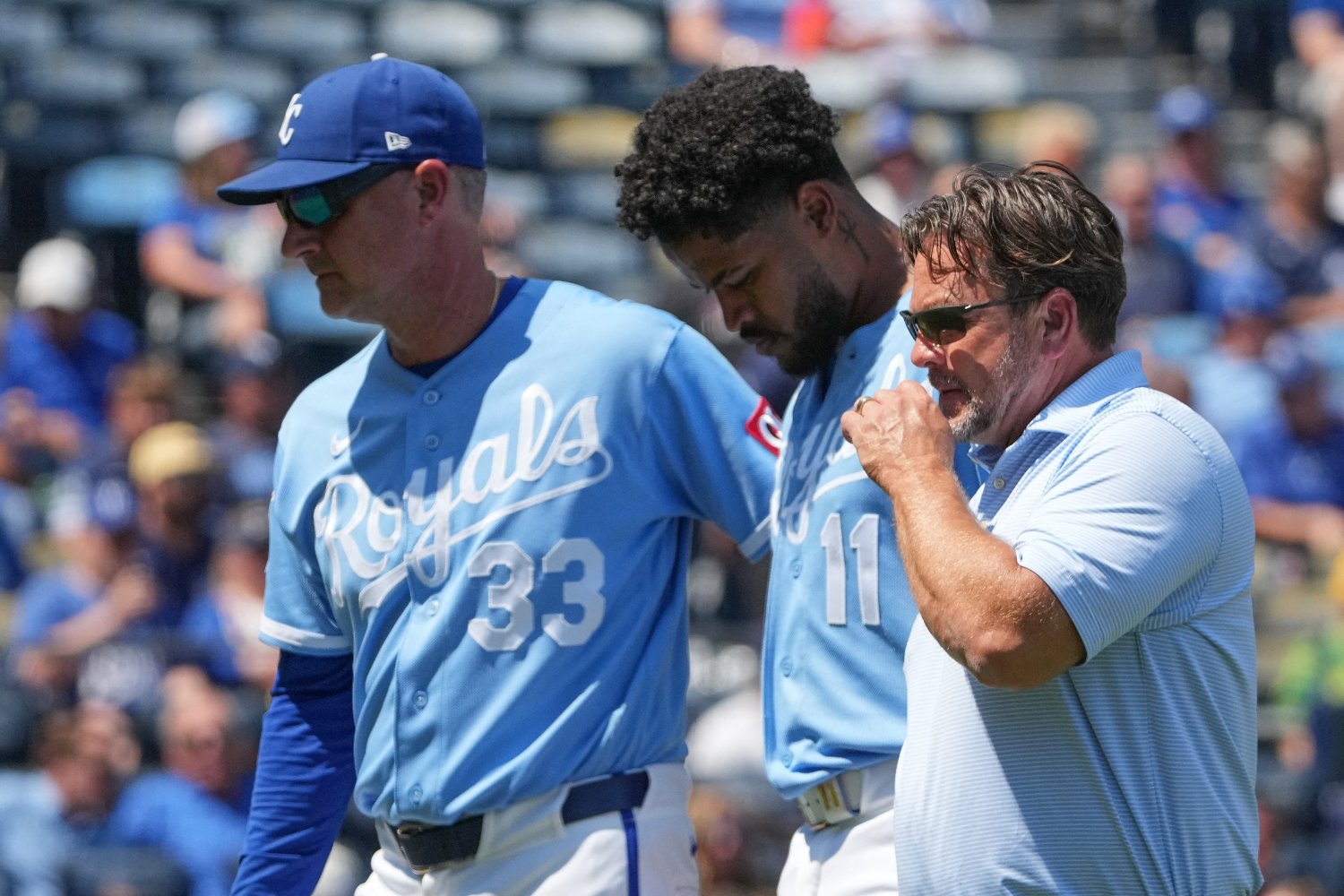 On August 18th, Dan Szymborski, the creator of ZiPS, penned an article on Fangraphs about which teams have been affected the most by injuries and IL stints this season. Lucas Shaefer broke down the piece and the data Szymborski presents on Diamondcentric today. Now, it's easy to say that injuries have affected the Royals and their performance in 2026. After being predicted to win between 82 and 86 games, the Royals are currently 55-74 and are now predicted to win 70 games this year, according to Fangraphs. While regression in performance from key players has had the biggest impact, prolonged IL stints with many players, especially on the pitching end, have limited Kansas City's ceiling this season. So what have been the key injuries this year for the Royals, and how have they led to Kansas City underperforming in 2026? Furthermore, what does the data say about the Royals' injury woes, and how does it compare to the rest of the league? Let's break down those two questions and what it could mean for 2027. Pitching Has Been Hit the Hardest By Injury The Royals have had particularly brutal injuries on both the hitting and pitching sides this season. However, pitching seems to have taken the biggest hit. Three particular injuries were major blows to the pitching staff: Opening Day starter Cole Ragans, former All-Star Kris Bubic, and All-Star closer Carlos Estevez. Ragans was predicted to be the Royals' best overall pitcher in 2026, based on ZiPS projections. ZiPS' 50th percentile projected Ragans to pitch 118 innings and produce a 3.10 FIP and 2.2 fWAR. Unfortunately, due to an elbow injury that eventually led to surgery, he was limited to only 35.1 IP. In that sample, he produced a 4.84 ERA, 6.17 FIP, and -0.3 fWAR. Looking at his Statcast percentiles via TJ Stats, Ragan still produced some intriguing stuff and velocity, and generated strikeouts, swings, and misses. Unfortunately, he struggled in nearly every other category, especially when it came to control and batted-ball profile. While Ragans was expected to lead this Royals pitching staff, Bubic was supposed to be the No. 2 arm in the rotation, according to ZiPS projections. In 106 IP, ZiPS projected a 3.48 FIP and 1.9 fWAR for Bubic. Unlike Ragans, the numbers were at least decent for Bubic, though he only made nine starts and pitched 50.1 innings. In that sample, he produced a 4.11 ERA, 3.70 FIP, and 0.8 fWAR. If Bubic had stayed healthy, it's possible that he could've been the Royals' best starting pitcher this year (only Noah Cameron has a better FIP at 3.58), as well as an All-Star. The whiff ability and extension remained strong for Bubic, according to his Statcast percentiles. However, the zone, walk, and hard-hit rates weren't as impressive as seasons past. Bubic has been sidelined since June 27th, and his outlook for the remainder of the year is questionable. However, that didn't stop the Dodgers from trading for him in exchange for reliever Carlos Duran (who had a rough one today against the Athletics). The last major pitcher to be injured this year was Estevez, who only made one appearance this year and has been on the IL since. ZiPS predictions were modest for Estevez: 3.97 FIP and 0.4 fWAR in 57 IP. For context, Lucas Erceg (0.5 fWAR), Jonathan Bowlan (0.6 fWAR), and Angel Zerpa (0.6 fWAR) were projected to have better seasons than Estevez. Still, while regression was expected for the Royals closer, fans didn't expect him to be this affected by injury. In one awful appearance in Atlanta, Estevez produced a 162.00 ERA, 60.09 FIP, and -0.3 fWAR. Estevez's Statcast percentiles were just as bad, even in a tiny sample. Maybe Estevez doesn't lead the league in saves again in 2026. However, he would've given the Royals more bullpen stability if he were healthy. The Royals currently rank 29th in reliever ERA and 30th in reliever WHIP. Here are some other pitching injuries this year and their preseason ZiPS projections from December. James McArthur: 0.3 fWAR (0 IP) Alec Marsh: 0.3 fWAR (0 IP) Ryan Bergert: 0.8 fWAR (0 MLB IP) Stephen Kolek: 1.3 fWAR (54 IP) Nick Mears: 0.3 fWAR (19.1 IP) The Royals also lost Luinder Avila recently to Tommy John after he produced a 0.3 fWAR in 70 IP. He was projected for a 0.6 fWAR, and he will be out for most, if not all, of 2027 due to recovery from Tommy John surgery. Position Player Injuries Have Been Impactful As Well The Royals haven't had the kind of long-term injuries that have affected their position player group this season. Maikel Garcia, Vinnie Pasquantino, Bobby Witt Jr., and even Salvador Perez have dealt with lingering injuries and missed time on the IL. However, they haven't had the kind of IL time as the pitching staff. The regular player most affected may be Garcia, who suffered a hamstring injury Thursday while rounding third base and will likely be on the IL for an extended period. ZiPS projected a 3.0 fWAR for Garcia in 634 PA, the second-best fWAR mark on the team (behind only Witt's 3.7). Unfortunately, he's just produced a 1.5 fWAR in 308 plate appearances. He currently ranks fifth among Royals position players in fWAR, and he may have been in the Top-3 if he had stayed healthy this season. Garcia has dealt with a lingering hand injury all season, which initially landed him on the IL on June 23rd. In addition to missed games, the hand injury has also sapped Garcia's power and barrel ability, as illustrated in his 2025 and 2026 Statcast comparison summary via TJ Stats. After signing an extension this offseason, the Royals need Garcia to get healthy this offseason and get back to that 2025 form that helped him earn a Gold Glove and an appearance in the All-Star Game. Pasquantino has also been affected by injury, as IL stints have limited him to 82 games and 384 plate appearances with the Royals this season. ZiPS predicted a 1.8 fWAR in 613 plate appearances this year. However, in his limited sample, he's generated a .307 wOBA and 0.4 fWAR. The big Statcast difference for Pasquantino is that his barrel and hard-hit rates have declined from a year ago, which has affected his overall wOBA line. That said, a lot of his other percentiles, especially in relation to contact ability and plate discipline, have either remained the same or gotten slightly better. Vinnie has come back and has looked locked in at the plate, which is encouraging to see, even against a poor team like the Athletics. Like Garcia, the Royals need a healthy and effective Pasquantino next year if they want to get back into playoff contention in the American League. The only other major injury to a position player was Jonathan India, who was lost to the season due to shoulder surgery after just 58 plate appearances. In that sample, India posted a 0.0 fWAR and .290 wOBA. ZiPS predicted a bounce-back for India after a poor 2025 season (-0.3 fWAR). In 555 plate appearances, ZiPS projected India to post a .314 wOBA and 1.6 fWAR. Thankfully, India's absence hasn't been felt too much, thanks to the emergence of Michael Massey. The 28-year-old second baseman has a .322 wOBA and 1.8 fWAR, the latter being the third-best fWAR among Royals position players (only Witt and Jac Caglianone have produced higher fWAR marks). Where Do the Royals Rank Compared to Other Teams? When looking at Szymborski's article, the Royals rank closer to the bottom of the league rather than the top when it comes to fWAR lost by injury. According to the data on Fangraphs, the Royals rank only 20th in fWAR lost due to injury. The Royals have lost 6.0 fWAR due to injury. That's more fWAR lost due to injury than the Reds, Rockies, Marlins, and Rays, but less than the Athletics, Mariners, Twins, and Brewers. According to Szymborski, only the Guardians have remained healthier than the Royals among AL Central teams. To be honest, the data is a bit surprising since the major narrative this year, especially around the Trade Deadline, is that injuries were the main contributor to this poor season. While injuries have been impactful, the data suggest those claims may be a bit overblown (at least on an fWAR end). Does that mean that the Royals shouldn't reload to try to turn things around in 2027? No, they have a good offensive core still, and this past sweep of the A's has demonstrated what the Royals can do when they're healthy and clicking (especially at Kauffman Stadium). That said, this team can't just blame injuries for a poor 2026 season. While injuries played a role, the data suggests other factors may have contributed to their disappointing campaign this year. This means the Royals' President of Baseball Operations, JJ Picollo, needs to address those issues this offseason, not just lean on the "well, everyone will get healthy" card for 2027. If he opts for the latter, the Royals may be due for another disastrous performance next season. And if that happens, Picollo and manager Matt Quatraro won't be around for long.
-
- 1
-
-
- maikel garcia
- cole ragans
- (and 4 more)
-
Image courtesy of Jay Biggerstaff-Imagn Images On Tuesday, before their 4-3 walk-off win against the Athletics, the Kansas City Royals optioned reliever Lucas Erceg to Omaha and promoted newly acquired pitcher Carlos Duran. Monday night's outing against the Athletics seemed to be the final straw for the struggling 31-year-old righty. Against his former team, Erceg failed to record an out and gave up a run on a hit and two walks. He threw only 14 pitches and posted a strike rate of just 42.9%. In addition to a disastrous line, his TJ Stuff+ was mediocre, and his zone, chase, whiff, and xwOBA metrics weren't good either, as illustrated below in his TJ Stuff+ summary from Monday's outing. Not only was Erceg's overall TJ Stuff+ subpar (98), but he also rated particularly poorly in chase rate (12.5%), whiff rate (0.0%), and xwOBACON (.514). Producing this in a five-run game at the time against one of the worst teams in baseball is not an encouraging development, and the Royals were left with no choice but to option Erceg, who's struggled immensely this year. After his latest performance, Erceg has a 6.23 ERA and 1.89 WHIP in 43.1 IP. For context, he had a 2.64 ERA and 1.17 WHIP in 61.1 IP in 2025 and produced a 3.36 ERA and 1.05 WHIP in 61.2 IP in 2024. When looking at his Statcast percentiles from this season and his breakout campaign in 2024, it's wild to see how far Erceg has regressed in so many key categories, including wOBA, xwOBA, CSW%, and K rate, just to name a few. Erceg will be entering his first year of arbitration this offseason, and even after this year, he will have two Minor League options remaining. Thus, the Royals have a few options they could pursue with the right-handed reliever, who is looking to put his 2026 season behind him. Let's look at those three options, why they make sense for the Royals, and the possible drawbacks of each path for Erceg in 2027. Non-Tender Erceg One option the Royals could take with Erceg is to non-tender him this offseason, as he will enter his first season of arbitration eligibility. They non-tendered Taylor Clarke last offseason (who has been better this year than Erceg) and, considering the volatility with relievers, the Royals may just decide to free up Erceg's roster spot and bring in a fresh arm in his place, whether from inside or outside the organization. This option feels unlikely, but shouldn't be ruled out entirely. Roster spots are valuable on any MLB team, and Kansas City should be getting some arms back in 2027. Nick Mears and Tony Gonsolin could be intriguing bullpen options in 2027 if fully healthy. Ryan Bergert should be coming back, as well as Ben Kudrna. Both could transition to the bullpen after getting surgery this season in an effort to limit their innings. Alec Marsh and James McArthur could finally come back after missing the past two seasons (though that feels unlikely). The Royals could also aggressively promote arms like Kendry Chourio and L.P. Langevin, who primarily pitched in High-A Quad Cities this year (TINSTAPP). Even if the Royals go outside the organization, acquiring a league-average reliever on a minimum deal would be a heck of a lot more valuable than what we saw from Erceg in 2026. Still, this move feels unlikely, especially based on pitching coach Brian Sweeney's comments after Erceg's demotion to Omaha in a recent article by MLB.com Royals beat writer Anne Rogers. Erceg doesn't have much value, and this year was absolutely brutal. That said, he likely won't command much in arbitration this offseason. The Royals could bring him back on a deal between $900K and $1.1 million at most. That's essentially what a cheap league-average free-agent reliever would cost. Maybe the former Cal product is done after this season. However, for around $1 million, it's in the Royals' best interest to give him another shot and see if he can turn it around in 2027 and get back to his 2024-2025 form. Change His Pitching Stance (To Help His Four-Seamer) One thing I have noticed with Erceg over the years is that his pitching stance has changed slightly. Whether it's intentional or not, he's moved from a more closed stretch to a more open one, and the results have regressed, especially with that change. Here's an example of Erceg generating a whiff on his four-seamer back in 2024 against the Yankees' Aaron Judge in the postseason. b0dOT1hfV0ZRVkV3dEdEUT09X0ExSUZBRlJWVVFNQVdnY0RYZ0FBQUFFRUFBTUVWMWtBVTF4VUJsQUZBZ0ZUQ0FCVA==.mp4 Now let's take a look at his 2025 pitching stance, when he generated a looking strikeout against the Angels' Zach Neto. N3lSYmpfWGw0TUFRPT1fQUFsWlhGeFFCVkVBQ3dNQkJ3QUhWdzlYQUZrTVVsTUFWRk1NQVZKV0Fnc0FDQVVD.mp4 In 2024, his back knee is bent, his left leg is straighter, and his left shoulder is directed more toward the middle of the plate. In 2025, his back leg is straighter at first, his left foot has less pressure on the mound, and his right shoulder points more off the plate. Now, let's take a look at 2026, which is a strikeout at Kauffman Stadium against the Cardinals' Jordan Walker. NHlLSzhfWGw0TUFRPT1fRDFSVFV3QUdWd29BRFFFSEFnQUhVQTVSQUFNQlVWZ0FWRk1EVXdVQ0ExVldBd2RV.mp4 2026 looks like a hybrid of 2024 and 2025. The back leg is a little more bent, and he's putting more weight on his left foot. He also keeps his hands closer to his body, especially compared to 2025 (when they seem further away). However, the shoulder seems more open than what we saw in 2024. Erceg generated a whiff in the video above against the Cardinals. However, the four-seamer whiff rate has plummeted in 2026 after staying stable in 2024 and 2025. Thus, the Storm Chasers coaching staff may be able to help Erceg adjust his pitching stance and return him to his 2024 form (or somewhere between 2024 and 2025). The four-seamer was so key for Erceg in 2024, as evidenced in his TJ Stuff+ summary from that season with the A's and Royals. Not only was his four-seamer his most utilized pitch in 2024 (30.8% usage), but it also had a 104 TJ Stuff+, a 25.2% chase rate, and a 28.6% whiff rate. Let's take a look at his TJ Stuff+ summary in 2026, with particular attention being paid to his four-seam fastball TJ Stuff+ metrics. His four-seamer is his most-thrown pitch this year with a 29.6% usage. However, the velocity is down (97.1 MPH), as is his TJ Stuff+ (95), chase rate (23.7%), and whiff rate (18.4%). For Erceg to get back into form, he needs to tap into his four-seamer again, since it was such an effective pitch for him two seasons ago when he was locked in as the Royals' closer. Perhaps working on his pitching stance and ironing out his mechanics in Omaha can help him regain that fastball effectiveness in 2027. Move Erceg to a Starting Role I wrote about this back in July on Royals Keep, but I think that this demotion to Omaha could be a prime opportunity for Erceg to perhaps try things out as a starter again. One reason it could work is that Erceg already has a fairly diverse pitch mix: a four-seamer, slider, sinker, changeup, and cutter. He's throwing the latter for the first time since 2023. Adding a sweeper or curve could help solidify Erceg's mix, but he has the right foundation, arsenal-wise, to make the move to the rotation. It's not like he's a two-pitch pitcher who can't throw other offerings like some relievers. Another reason a move to the rotation could work is that it could help Erceg change his mental approach on the mound. After a May 2nd save, Erceg, super amped up, let it fly in a postgame interview with Royals TV's Joel Goldberg. I get that having high intensity makes sense for a closer, and it works for many of them. Grant Balfour was a madman during his days in Oakland, and even Royals relievers like Kelvin Herrera were known for their intense approaches. That said, I think the overly intense approach backfired on Erceg, especially when things started going south. The struggles affected his confidence, and he just couldn't pitch in any spot this year, let alone high-leverage ones. Going to starting could help him not just be more relaxed, but maintain a more consistent mental approach on the mound that's been missing for him at the Major League level as a reliever. Maybe it worked early on, but it's not working now, and having to conserve himself over 4-6 innings of work may be the switch he needs to flip to becoming an effective pitcher again. We have seen other teams find success with former relievers moving into starting roles. Clay Holmes found success with the Mets last year. Griffen Jax went from a failed Rays closer to a solid Rays starter (until he got injured). Lastly, Seth Lugo is the epitome of moving from the bullpen to the rotation to excellent results. He finished second in the AL Cy Young race after pitching in the Mets bullpen two seasons prior. It's not like there are a lot of great starting pitching prospects coming up from Northwest Arkansas. Drew Beam and Felix Arronde, two ranked prospects on our list, might need to repeat Double-A. Thus, Erceg wouldn't be blocking anyone of note in Omaha if he moves to the rotation. With two Minor League options remaining after this year, the Royals might as well roll the dice and see what Erceg could do in a change of role. If it doesn't work out, they can always move him back to the bullpen, after all. View full article
-
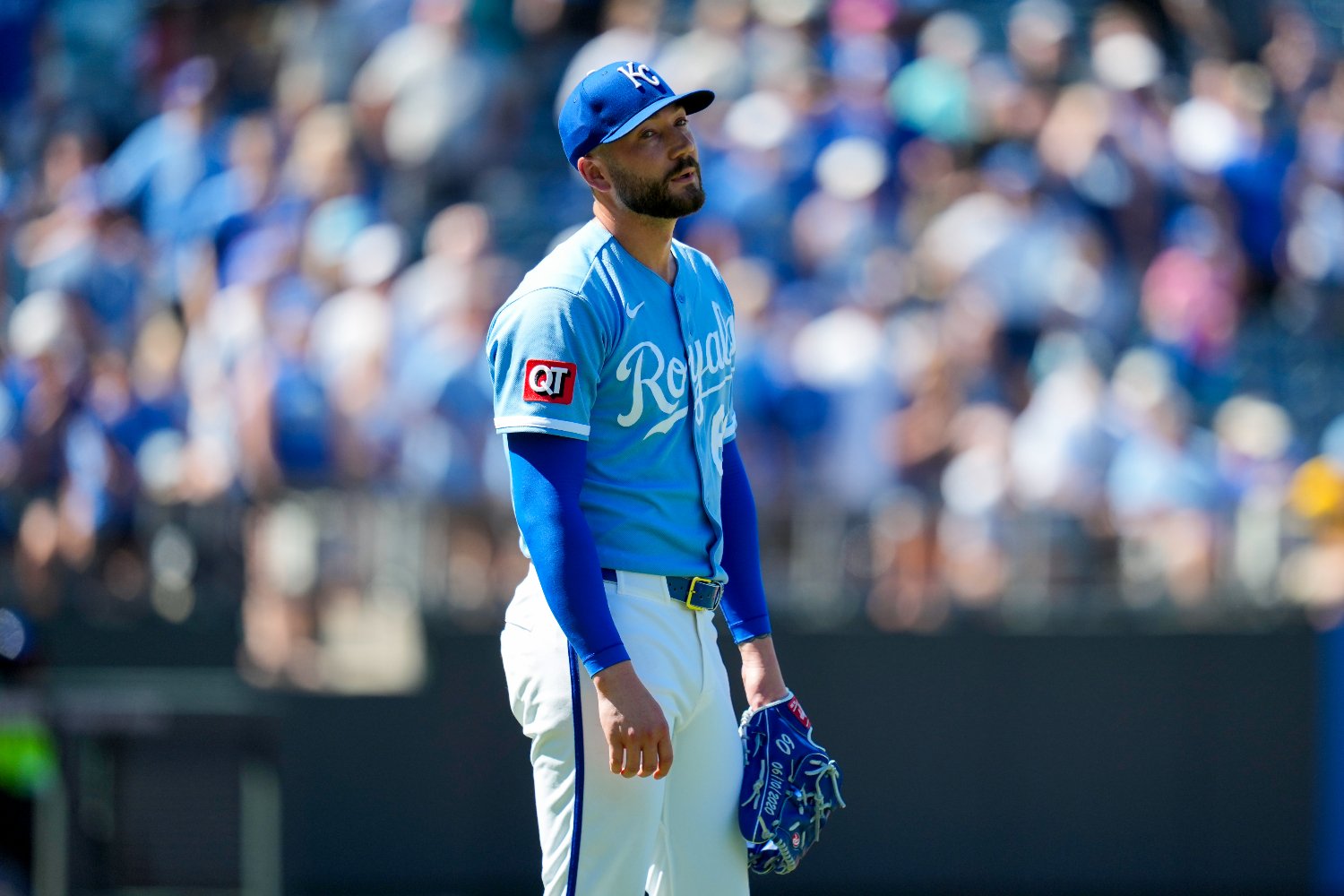 On Tuesday, before their 4-3 walk-off win against the Athletics, the Kansas City Royals optioned reliever Lucas Erceg to Omaha and promoted newly acquired pitcher Carlos Duran. Monday night's outing against the Athletics seemed to be the final straw for the struggling 31-year-old righty. Against his former team, Erceg failed to record an out and gave up a run on a hit and two walks. He threw only 14 pitches and posted a strike rate of just 42.9%. In addition to a disastrous line, his TJ Stuff+ was mediocre, and his zone, chase, whiff, and xwOBA metrics weren't good either, as illustrated below in his TJ Stuff+ summary from Monday's outing. Not only was Erceg's overall TJ Stuff+ subpar (98), but he also rated particularly poorly in chase rate (12.5%), whiff rate (0.0%), and xwOBACON (.514). Producing this in a five-run game at the time against one of the worst teams in baseball is not an encouraging development, and the Royals were left with no choice but to option Erceg, who's struggled immensely this year. After his latest performance, Erceg has a 6.23 ERA and 1.89 WHIP in 43.1 IP. For context, he had a 2.64 ERA and 1.17 WHIP in 61.1 IP in 2025 and produced a 3.36 ERA and 1.05 WHIP in 61.2 IP in 2024. When looking at his Statcast percentiles from this season and his breakout campaign in 2024, it's wild to see how far Erceg has regressed in so many key categories, including wOBA, xwOBA, CSW%, and K rate, just to name a few. Erceg will be entering his first year of arbitration this offseason, and even after this year, he will have two Minor League options remaining. Thus, the Royals have a few options they could pursue with the right-handed reliever, who is looking to put his 2026 season behind him. Let's look at those three options, why they make sense for the Royals, and the possible drawbacks of each path for Erceg in 2027. Non-Tender Erceg One option the Royals could take with Erceg is to non-tender him this offseason, as he will enter his first season of arbitration eligibility. They non-tendered Taylor Clarke last offseason (who has been better this year than Erceg) and, considering the volatility with relievers, the Royals may just decide to free up Erceg's roster spot and bring in a fresh arm in his place, whether from inside or outside the organization. This option feels unlikely, but shouldn't be ruled out entirely. Roster spots are valuable on any MLB team, and Kansas City should be getting some arms back in 2027. Nick Mears and Tony Gonsolin could be intriguing bullpen options in 2027 if fully healthy. Ryan Bergert should be coming back, as well as Ben Kudrna. Both could transition to the bullpen after getting surgery this season in an effort to limit their innings. Alec Marsh and James McArthur could finally come back after missing the past two seasons (though that feels unlikely). The Royals could also aggressively promote arms like Kendry Chourio and L.P. Langevin, who primarily pitched in High-A Quad Cities this year (TINSTAPP). Even if the Royals go outside the organization, acquiring a league-average reliever on a minimum deal would be a heck of a lot more valuable than what we saw from Erceg in 2026. Still, this move feels unlikely, especially based on pitching coach Brian Sweeney's comments after Erceg's demotion to Omaha in a recent article by MLB.com Royals beat writer Anne Rogers. Erceg doesn't have much value, and this year was absolutely brutal. That said, he likely won't command much in arbitration this offseason. The Royals could bring him back on a deal between $900K and $1.1 million at most. That's essentially what a cheap league-average free-agent reliever would cost. Maybe the former Cal product is done after this season. However, for around $1 million, it's in the Royals' best interest to give him another shot and see if he can turn it around in 2027 and get back to his 2024-2025 form. Change His Pitching Stance (To Help His Four-Seamer) One thing I have noticed with Erceg over the years is that his pitching stance has changed slightly. Whether it's intentional or not, he's moved from a more closed stretch to a more open one, and the results have regressed, especially with that change. Here's an example of Erceg generating a whiff on his four-seamer back in 2024 against the Yankees' Aaron Judge in the postseason. b0dOT1hfV0ZRVkV3dEdEUT09X0ExSUZBRlJWVVFNQVdnY0RYZ0FBQUFFRUFBTUVWMWtBVTF4VUJsQUZBZ0ZUQ0FCVA==.mp4 Now let's take a look at his 2025 pitching stance, when he generated a looking strikeout against the Angels' Zach Neto. N3lSYmpfWGw0TUFRPT1fQUFsWlhGeFFCVkVBQ3dNQkJ3QUhWdzlYQUZrTVVsTUFWRk1NQVZKV0Fnc0FDQVVD.mp4 In 2024, his back knee is bent, his left leg is straighter, and his left shoulder is directed more toward the middle of the plate. In 2025, his back leg is straighter at first, his left foot has less pressure on the mound, and his right shoulder points more off the plate. Now, let's take a look at 2026, which is a strikeout at Kauffman Stadium against the Cardinals' Jordan Walker. NHlLSzhfWGw0TUFRPT1fRDFSVFV3QUdWd29BRFFFSEFnQUhVQTVSQUFNQlVWZ0FWRk1EVXdVQ0ExVldBd2RV.mp4 2026 looks like a hybrid of 2024 and 2025. The back leg is a little more bent, and he's putting more weight on his left foot. He also keeps his hands closer to his body, especially compared to 2025 (when they seem further away). However, the shoulder seems more open than what we saw in 2024. Erceg generated a whiff in the video above against the Cardinals. However, the four-seamer whiff rate has plummeted in 2026 after staying stable in 2024 and 2025. Thus, the Storm Chasers coaching staff may be able to help Erceg adjust his pitching stance and return him to his 2024 form (or somewhere between 2024 and 2025). The four-seamer was so key for Erceg in 2024, as evidenced in his TJ Stuff+ summary from that season with the A's and Royals. Not only was his four-seamer his most utilized pitch in 2024 (30.8% usage), but it also had a 104 TJ Stuff+, a 25.2% chase rate, and a 28.6% whiff rate. Let's take a look at his TJ Stuff+ summary in 2026, with particular attention being paid to his four-seam fastball TJ Stuff+ metrics. His four-seamer is his most-thrown pitch this year with a 29.6% usage. However, the velocity is down (97.1 MPH), as is his TJ Stuff+ (95), chase rate (23.7%), and whiff rate (18.4%). For Erceg to get back into form, he needs to tap into his four-seamer again, since it was such an effective pitch for him two seasons ago when he was locked in as the Royals' closer. Perhaps working on his pitching stance and ironing out his mechanics in Omaha can help him regain that fastball effectiveness in 2027. Move Erceg to a Starting Role I wrote about this back in July on Royals Keep, but I think that this demotion to Omaha could be a prime opportunity for Erceg to perhaps try things out as a starter again. One reason it could work is that Erceg already has a fairly diverse pitch mix: a four-seamer, slider, sinker, changeup, and cutter. He's throwing the latter for the first time since 2023. Adding a sweeper or curve could help solidify Erceg's mix, but he has the right foundation, arsenal-wise, to make the move to the rotation. It's not like he's a two-pitch pitcher who can't throw other offerings like some relievers. Another reason a move to the rotation could work is that it could help Erceg change his mental approach on the mound. After a May 2nd save, Erceg, super amped up, let it fly in a postgame interview with Royals TV's Joel Goldberg. I get that having high intensity makes sense for a closer, and it works for many of them. Grant Balfour was a madman during his days in Oakland, and even Royals relievers like Kelvin Herrera were known for their intense approaches. That said, I think the overly intense approach backfired on Erceg, especially when things started going south. The struggles affected his confidence, and he just couldn't pitch in any spot this year, let alone high-leverage ones. Going to starting could help him not just be more relaxed, but maintain a more consistent mental approach on the mound that's been missing for him at the Major League level as a reliever. Maybe it worked early on, but it's not working now, and having to conserve himself over 4-6 innings of work may be the switch he needs to flip to becoming an effective pitcher again. We have seen other teams find success with former relievers moving into starting roles. Clay Holmes found success with the Mets last year. Griffen Jax went from a failed Rays closer to a solid Rays starter (until he got injured). Lastly, Seth Lugo is the epitome of moving from the bullpen to the rotation to excellent results. He finished second in the AL Cy Young race after pitching in the Mets bullpen two seasons prior. It's not like there are a lot of great starting pitching prospects coming up from Northwest Arkansas. Drew Beam and Felix Arronde, two ranked prospects on our list, might need to repeat Double-A. Thus, Erceg wouldn't be blocking anyone of note in Omaha if he moves to the rotation. With two Minor League options remaining after this year, the Royals might as well roll the dice and see what Erceg could do in a change of role. If it doesn't work out, they can always move him back to the bullpen, after all.
 -
 The Quad Cities River Bandits took the only win of the night behind Jordan Woods, who allowed one hit over four innings with six strikeouts, and Nolan Sailors, whose grand slam capped a 7-2 victory. Grant Gambrell gave Northwest Arkansas five scoreless innings before a 6-5 loss. Vince Velasquez allowed three home runs in Omaha's 8-7 defeat. Moises Amezquita threw three scoreless innings for Columbia, which lost both ends of a doubleheader at Segra Park. Kansas City Royals Transactions Kansas City Royals optioned RHP Lucas Erceg to Omaha Storm Chasers. Kansas City Royals recalled RHP Carlos Duran from Omaha Storm Chasers. Omaha Rallies In The Ninth But Falls 8-7 To Rochester The Omaha Storm Chasers collected 14 hits and four doubles at Werner Park, but five Rochester home runs carried the Red Wings to an 8-7 win. Velasquez started for Omaha and worked 5 2/3 innings, allowing six hits and four runs, all earned, with one walk and five strikeouts. Three of the hits he allowed were home runs. Luke Little recorded one out, walked three, and struck out one. Easton McGee allowed two runs on two hits over one inning. Matt Moore was charged with three hits and two runs while recording a single out, and he took the loss. Ben Sears finished with 1 2/3 scoreless innings, allowing no hits with one walk and two strikeouts. Omaha broke through with four runs in the third. Abraham Toro doubled home two runs, Jack Pineda doubled in another, and Matthew Lugo added a sacrifice fly. Carson Roccaforte and Drew Waters delivered run-scoring singles in the fifth to build a 6-3 lead. Toro finished 3-for-5 with a double, two runs, and two RBI. Brett Squires went 3-for-5 with a double and an RBI. Pineda added two hits, a double, two runs, and an RBI. Luca Tresh had two hits and a run, and Peyton Wilson doubled. Roccaforte drew two walks to go with his run-scoring single. Trailing 8-6 in the ninth, Pineda and Squires singled to pull Omaha within a run, and Lugo followed with a single of his own. Roccaforte grounded out to end it, leaving the tying run in scoring position. Omaha struck out 10 times, drew two walks, left seven runners on base, and went 6-for-12 with runners in scoring position. The Storm Chasers are now 56-62. Player AB R H RBI BB K Abraham Toro 5 2 3 2 0 1 Jack Pineda 5 2 2 1 0 1 Brett Squires 5 1 3 1 0 2 Alejo Lopez 0 0 0 0 0 0 Matthew Lugo 4 0 1 1 0 2 Carson Roccaforte 3 0 1 1 2 1 Drew Waters 4 0 1 1 0 1 Brandon Drury 4 0 0 0 0 1 Luca Tresh 4 1 2 0 0 1 Peyton Wilson 3 1 1 0 0 0 Player IP H R ER BB K HR Vince Velasquez 5 2/3 6 4 4 1 5 3 Luke Little 0 1/3 0 0 0 3 1 0 Easton McGee 1 2 2 2 0 0 1 Matt Moore 0 1/3 3 2 2 1 1 1 Ben Sears 1 2/3 0 0 0 1 2 0 Justin Johnson's Three-Run Homer Is Not Enough In Naturals' Ninth-Inning Loss Gambrell gave the Northwest Arkansas Naturals five scoreless innings at Nelson Wolff Stadium, but San Antonio scored four times in the ninth for a 6-5 win. The Naturals starter allowed four hits and one walk with three strikeouts. Beck Way followed and gave up four hits and two runs while recording two outs. Anthony Simonelli struck out two over 1 1/3 scoreless innings. Augusto Mendieta was charged with four earned runs on three hits and a walk over 1 2/3 innings, and he took the loss. Zachary Cawyer allowed two hits without recording an out. Northwest Arkansas also got some help from some stellar defense, especially in the infield. The Naturals built their lead in the second. Colton Becker singled home Daniel Vazquez, and Johnson followed with a three-run home run, his 10th of the season, for a 4-0 advantage. Spencer Nivens singled in Johnson in the seventh to make it 5-2. Johnson finished 2-for-4 with two runs and three RBI. Vazquez went 2-for-3 with a walk and a run. Omar Hernandez added two hits and a run. Becker was 1-for-3 with a run and an RBI. Luke Pelzer had a hit and two walks from the leadoff spot. Nivens went 1-for-5 with an RBI, and Jorge Alfaro struck out three times in four at-bats. San Antonio opened the ninth with a double and a single, and after two strikeouts, a walk and three straight singles produced four runs. A throwing error by right fielder Sam Kulasingam allowed a runner to take second base during the rally. Northwest Arkansas finished with nine hits, four walks, and 10 strikeouts, left seven runners on base, and went 3-for-10 with runners in scoring position. The loss drops the Naturals to 47-66 this season. Player AB R H RBI BB K Luke Pelzer 3 0 1 0 2 0 Javi Vaz 5 0 0 0 0 0 Spencer Nivens 5 0 1 1 0 1 Jorge Alfaro 4 0 0 0 0 3 Sam Kulasingam 3 0 0 0 1 0 Daniel Vazquez 3 1 2 0 1 1 Omar Hernandez 4 1 2 0 0 2 Colton Becker 3 1 1 1 0 2 Justin Johnson 4 2 2 3 0 1 Player IP H R ER BB K HR Grant Gambrell 5 4 0 0 1 3 0 Beck Way 0 2/3 4 2 2 0 2 0 Anthony Simonelli 1 1/3 0 0 0 1 2 0 Augusto Mendieta 1 2/3 3 4 4 1 3 0 Zachary Cawyer 0 2 0 0 0 0 0 Sailors' Grand Slam And 16 Strikeouts Lift Quad Cities Past Dayton Quad Cities pitching struck out 16 Dayton batters, and Sailors' grand slam broke the game open in a 7-2 win at Day Air Ballpark. Woods started and allowed one hit over four innings, walking one and striking out six. Jackson Cleveland struck out four over two innings and gave up two runs on two hits, one of them a home run. Ethan McElvain turned in a scoreless inning and earned the win. Nick Conte and Yimi Presinal each added a scoreless inning, combining for five strikeouts and two walks. The staff allowed three hits in all. The River Bandits scored first when Asbel Gonzalez came home on a Zion Rose ground out. Derlin Figueroa homered for the 26th time this season, and Stone Russell added a sacrifice fly for a 3-0 lead. After Dayton pulled within a run, Quad Cities answered with four runs in the seventh, all of them on Sailors' grand slam, his sixth home run of the year. Sailors finished 2-for-4 with a run and four RBI. Figueroa went 1-for-4 with a walk, two runs, and an RBI. Gonzalez had a hit, a walk, and two runs from the leadoff spot. Rose drove in a run and walked, and Tyriq Kemp and Russell each singled. Quad Cities managed only six hits, but the club drew four walks and took advantage of three Dayton errors. Blake Mitchell struck out five times in five at-bats. The River Bandits struck out 16 times themselves, left seven runners on base, and went just 1-for-9 with runners in scoring position. With the win, they improved to 59-51 this season. Player AB R H RBI BB K Asbel Gonzalez 4 2 1 0 1 2 Zion Rose 4 1 0 1 1 2 Blake Mitchell 5 0 0 0 0 5 Derlin Figueroa 4 2 1 1 1 1 Jose Cerice 3 1 0 0 0 1 Nolan Sailors 4 1 2 4 0 2 Austin Charles 4 0 0 0 0 2 Tyriq Kemp 3 0 1 0 1 0 Stone Russell 3 0 1 1 0 1 Player IP H R ER BB K HR Jordan Woods 4 1 0 0 1 6 0 Jackson Cleveland 2 2 2 2 0 4 1 Ethan McElvain 1 0 0 0 0 1 0 Nick Conte 1 0 0 0 1 2 0 Yimi Presinal 1 0 0 0 1 3 0 Columbia's Three-Run Second Slips Away In Extra-Inning Opener The Columbia Fireflies led early in the doubleheader opener at Segra Park, but Augusta scored twice in the eighth for a 5-3 win. Shane Van Dam started and allowed seven hits and two earned runs over 4 1/3 innings, walking one and striking out five. Andy Basora struck out four over 1 1/3 innings and was charged with an unearned run. Dalton Hill allowed one hit over 1 1/3 scoreless innings. Jhon Reyes worked one inning, walked two, and allowed two runs, one of them earned, taking the loss. Columbia answered a first-inning run with three of its own in the second. Sean Gamble came home on an error, and Ricson Gonzalez singled in Connor Rasmussen and Tyson Moran for a 3-1 lead. That was the extent of the Columbia offense. The Fireflies finished with three hits, two walks, and nine strikeouts. Gonzalez went 1-for-3 with two RBI. Gamble was 1-for-4 with a run, and Moran was 1-for-3 with a run. Rasmussen walked and scored. Yandel Ricardo struck out three times in four at-bats, and Josh Hammond was hitless in four at-bats. Augusta tied the game in the sixth on a wild pitch and pushed across two runs in the eighth, the first of them by the zombie runner on a double-play ground ball. Henry Ramos walked in the eighth, but Columbia did not score. The Fireflies left five runners on base, went 2-for-9 with runners in scoring position, and were charged with one error. Player AB R H RBI BB K Henry Ramos 3 0 0 0 1 0 Yandel Ricardo 4 0 0 0 0 3 Josh Hammond 4 0 0 0 0 0 Sean Gamble 4 1 1 0 0 1 Roni Cabrera 3 0 0 0 0 1 Connor Rasmussen 2 1 0 0 1 1 Tyson Moran 3 1 1 0 0 1 Jhonayker Ugarte 3 0 0 1 0 2 Ricson Gonzalez 3 0 1 2 0 0 Daniel Lopez 0 0 0 0 0 0 Player IP H R ER BB K HR Shane Van Dam 4 1/3 7 2 2 1 5 1 Andy Basora 1 1/3 2 1 0 0 4 0 Dalton Hill 1 1/3 1 0 0 0 1 0 Jhon Reyes 1 0 2 1 2 1 0 Fireflies Shut Out In Doubleheader Nightcap Despite Amezquita's Three Scoreless Columbia managed four hits in the doubleheader nightcap and was shut out 3-0 by Augusta at Segra Park. Michael Braswell III started and allowed four hits and three earned runs over three innings, walking one and striking out three, and he took the loss. Moises Amezquita followed with three scoreless innings, allowing one hit and two walks with three strikeouts. Augusta scored once in the first on a sacrifice fly, then added two more in the third on a triple and another sacrifice fly. Sean Gamble made the catch in center field on both of those fly balls. The Fireflies never advanced a runner past second base. Ricardo led the offense with two hits in three at-bats, singling in the first and again in the fourth. Gamble singled behind him in the fourth, and Camden Johnson doubled in the seventh. Henry Ramos drew the only walk. Columbia struck out 12 times in a game shortened to seven innings, and the lineup was retired in order in three of the seven innings it batted. Ricardo had struck out three times in the opener, and Gamble finished the doubleheader with two hits in seven at-bats. Augusta did not need to bat in the seventh. Columbia left four runners on base and closed the day with seven hits across the two games. The Fireflies' record fell to 56-58 after being swept on Tuesday. Player AB R H RBI BB K Henry Ramos 2 0 0 0 1 2 Yandel Ricardo 3 0 2 0 0 0 Josh Hammond 3 0 0 0 0 1 Sean Gamble 3 0 1 0 0 0 Camden Johnson 3 0 1 0 0 1 Jhosmmel Zue 3 0 0 0 0 2 Connor Rasmussen 3 0 0 0 0 2 Gabriel Silva 2 0 0 0 0 2 Daniel Lopez 2 0 0 0 0 2 Player IP H R ER BB K HR Michael Braswell III 3 4 3 3 1 3 0 Moises Amezquita 3 1 0 0 2 3 0 Top 20 Prospect Performance Kendry Chourio: DNP David Shields: DNP Josh Hammond: Game 1: 0-for-4. Game 2: 0-for-3, K Blake Mitchell: 0-for-5, 5 K Sean Gamble: Game 1: 1-for-4, R, K. Game 2: 1-for-3 Ramon Ramirez: DNP Zion Rose: 0-for-4, R, RBI, BB, 2 K Asbel Gonzalez: 1-for-4, 2 R, BB, 2 K Carson Roccaforte: 1-for-3, RBI, 2 BB, K Taylor Rabe: DNP Yandel Ricardo: Game 1: 0-for-4, 3 K. Game 2: 2-for-3 Justin Lamkin: DNP Drew Beam: DNP Michael Lombardi: DNP Jack Slightom: DNP Felix Arronde: DNP Angeibel Gomez: 1-for-2, R, RBI, BB Ben Kudrna: DNP Steven Zobac: DNP Blake Wolters: DNP
 -
The Quad Cities River Bandits took the only win of the night behind Jordan Woods, who allowed one hit over four innings with six strikeouts, and Nolan Sailors, whose grand slam capped a 7-2 victory. Grant Gambrell gave Northwest Arkansas five scoreless innings before a 6-5 loss. Vince Velasquez allowed three home runs in Omaha's 8-7 defeat. Moises Amezquita threw three scoreless innings for Columbia, which lost both ends of a doubleheader at Segra Park. Kansas City Royals Transactions Kansas City Royals optioned RHP Lucas Erceg to Omaha Storm Chasers. Kansas City Royals recalled RHP Carlos Duran from Omaha Storm Chasers. Omaha Rallies In The Ninth But Falls 8-7 To Rochester The Omaha Storm Chasers collected 14 hits and four doubles at Werner Park, but five Rochester home runs carried the Red Wings to an 8-7 win. Velasquez started for Omaha and worked 5 2/3 innings, allowing six hits and four runs, all earned, with one walk and five strikeouts. Three of the hits he allowed were home runs. Luke Little recorded one out, walked three, and struck out one. Easton McGee allowed two runs on two hits over one inning. Matt Moore was charged with three hits and two runs while recording a single out, and he took the loss. Ben Sears finished with 1 2/3 scoreless innings, allowing no hits with one walk and two strikeouts. Omaha broke through with four runs in the third. Abraham Toro doubled home two runs, Jack Pineda doubled in another, and Matthew Lugo added a sacrifice fly. Carson Roccaforte and Drew Waters delivered run-scoring singles in the fifth to build a 6-3 lead. Toro finished 3-for-5 with a double, two runs, and two RBI. Brett Squires went 3-for-5 with a double and an RBI. Pineda added two hits, a double, two runs, and an RBI. Luca Tresh had two hits and a run, and Peyton Wilson doubled. Roccaforte drew two walks to go with his run-scoring single. Trailing 8-6 in the ninth, Pineda and Squires singled to pull Omaha within a run, and Lugo followed with a single of his own. Roccaforte grounded out to end it, leaving the tying run in scoring position. Omaha struck out 10 times, drew two walks, left seven runners on base, and went 6-for-12 with runners in scoring position. The Storm Chasers are now 56-62. Player AB R H RBI BB K Abraham Toro 5 2 3 2 0 1 Jack Pineda 5 2 2 1 0 1 Brett Squires 5 1 3 1 0 2 Alejo Lopez 0 0 0 0 0 0 Matthew Lugo 4 0 1 1 0 2 Carson Roccaforte 3 0 1 1 2 1 Drew Waters 4 0 1 1 0 1 Brandon Drury 4 0 0 0 0 1 Luca Tresh 4 1 2 0 0 1 Peyton Wilson 3 1 1 0 0 0 Player IP H R ER BB K HR Vince Velasquez 5 2/3 6 4 4 1 5 3 Luke Little 0 1/3 0 0 0 3 1 0 Easton McGee 1 2 2 2 0 0 1 Matt Moore 0 1/3 3 2 2 1 1 1 Ben Sears 1 2/3 0 0 0 1 2 0 Justin Johnson's Three-Run Homer Is Not Enough In Naturals' Ninth-Inning Loss Gambrell gave the Northwest Arkansas Naturals five scoreless innings at Nelson Wolff Stadium, but San Antonio scored four times in the ninth for a 6-5 win. The Naturals starter allowed four hits and one walk with three strikeouts. Beck Way followed and gave up four hits and two runs while recording two outs. Anthony Simonelli struck out two over 1 1/3 scoreless innings. Augusto Mendieta was charged with four earned runs on three hits and a walk over 1 2/3 innings, and he took the loss. Zachary Cawyer allowed two hits without recording an out. Northwest Arkansas also got some help from some stellar defense, especially in the infield. The Naturals built their lead in the second. Colton Becker singled home Daniel Vazquez, and Johnson followed with a three-run home run, his 10th of the season, for a 4-0 advantage. Spencer Nivens singled in Johnson in the seventh to make it 5-2. Johnson finished 2-for-4 with two runs and three RBI. Vazquez went 2-for-3 with a walk and a run. Omar Hernandez added two hits and a run. Becker was 1-for-3 with a run and an RBI. Luke Pelzer had a hit and two walks from the leadoff spot. Nivens went 1-for-5 with an RBI, and Jorge Alfaro struck out three times in four at-bats. San Antonio opened the ninth with a double and a single, and after two strikeouts, a walk and three straight singles produced four runs. A throwing error by right fielder Sam Kulasingam allowed a runner to take second base during the rally. Northwest Arkansas finished with nine hits, four walks, and 10 strikeouts, left seven runners on base, and went 3-for-10 with runners in scoring position. The loss drops the Naturals to 47-66 this season. Player AB R H RBI BB K Luke Pelzer 3 0 1 0 2 0 Javi Vaz 5 0 0 0 0 0 Spencer Nivens 5 0 1 1 0 1 Jorge Alfaro 4 0 0 0 0 3 Sam Kulasingam 3 0 0 0 1 0 Daniel Vazquez 3 1 2 0 1 1 Omar Hernandez 4 1 2 0 0 2 Colton Becker 3 1 1 1 0 2 Justin Johnson 4 2 2 3 0 1 Player IP H R ER BB K HR Grant Gambrell 5 4 0 0 1 3 0 Beck Way 0 2/3 4 2 2 0 2 0 Anthony Simonelli 1 1/3 0 0 0 1 2 0 Augusto Mendieta 1 2/3 3 4 4 1 3 0 Zachary Cawyer 0 2 0 0 0 0 0 Sailors' Grand Slam And 16 Strikeouts Lift Quad Cities Past Dayton Quad Cities pitching struck out 16 Dayton batters, and Sailors' grand slam broke the game open in a 7-2 win at Day Air Ballpark. Woods started and allowed one hit over four innings, walking one and striking out six. Jackson Cleveland struck out four over two innings and gave up two runs on two hits, one of them a home run. Ethan McElvain turned in a scoreless inning and earned the win. Nick Conte and Yimi Presinal each added a scoreless inning, combining for five strikeouts and two walks. The staff allowed three hits in all. The River Bandits scored first when Asbel Gonzalez came home on a Zion Rose ground out. Derlin Figueroa homered for the 26th time this season, and Stone Russell added a sacrifice fly for a 3-0 lead. After Dayton pulled within a run, Quad Cities answered with four runs in the seventh, all of them on Sailors' grand slam, his sixth home run of the year. Sailors finished 2-for-4 with a run and four RBI. Figueroa went 1-for-4 with a walk, two runs, and an RBI. Gonzalez had a hit, a walk, and two runs from the leadoff spot. Rose drove in a run and walked, and Tyriq Kemp and Russell each singled. Quad Cities managed only six hits, but the club drew four walks and took advantage of three Dayton errors. Blake Mitchell struck out five times in five at-bats. The River Bandits struck out 16 times themselves, left seven runners on base, and went just 1-for-9 with runners in scoring position. With the win, they improved to 59-51 this season. Player AB R H RBI BB K Asbel Gonzalez 4 2 1 0 1 2 Zion Rose 4 1 0 1 1 2 Blake Mitchell 5 0 0 0 0 5 Derlin Figueroa 4 2 1 1 1 1 Jose Cerice 3 1 0 0 0 1 Nolan Sailors 4 1 2 4 0 2 Austin Charles 4 0 0 0 0 2 Tyriq Kemp 3 0 1 0 1 0 Stone Russell 3 0 1 1 0 1 Player IP H R ER BB K HR Jordan Woods 4 1 0 0 1 6 0 Jackson Cleveland 2 2 2 2 0 4 1 Ethan McElvain 1 0 0 0 0 1 0 Nick Conte 1 0 0 0 1 2 0 Yimi Presinal 1 0 0 0 1 3 0 Columbia's Three-Run Second Slips Away In Extra-Inning Opener The Columbia Fireflies led early in the doubleheader opener at Segra Park, but Augusta scored twice in the eighth for a 5-3 win. Shane Van Dam started and allowed seven hits and two earned runs over 4 1/3 innings, walking one and striking out five. Andy Basora struck out four over 1 1/3 innings and was charged with an unearned run. Dalton Hill allowed one hit over 1 1/3 scoreless innings. Jhon Reyes worked one inning, walked two, and allowed two runs, one of them earned, taking the loss. Columbia answered a first-inning run with three of its own in the second. Sean Gamble came home on an error, and Ricson Gonzalez singled in Connor Rasmussen and Tyson Moran for a 3-1 lead. That was the extent of the Columbia offense. The Fireflies finished with three hits, two walks, and nine strikeouts. Gonzalez went 1-for-3 with two RBI. Gamble was 1-for-4 with a run, and Moran was 1-for-3 with a run. Rasmussen walked and scored. Yandel Ricardo struck out three times in four at-bats, and Josh Hammond was hitless in four at-bats. Augusta tied the game in the sixth on a wild pitch and pushed across two runs in the eighth, the first of them by the zombie runner on a double-play ground ball. Henry Ramos walked in the eighth, but Columbia did not score. The Fireflies left five runners on base, went 2-for-9 with runners in scoring position, and were charged with one error. Player AB R H RBI BB K Henry Ramos 3 0 0 0 1 0 Yandel Ricardo 4 0 0 0 0 3 Josh Hammond 4 0 0 0 0 0 Sean Gamble 4 1 1 0 0 1 Roni Cabrera 3 0 0 0 0 1 Connor Rasmussen 2 1 0 0 1 1 Tyson Moran 3 1 1 0 0 1 Jhonayker Ugarte 3 0 0 1 0 2 Ricson Gonzalez 3 0 1 2 0 0 Daniel Lopez 0 0 0 0 0 0 Player IP H R ER BB K HR Shane Van Dam 4 1/3 7 2 2 1 5 1 Andy Basora 1 1/3 2 1 0 0 4 0 Dalton Hill 1 1/3 1 0 0 0 1 0 Jhon Reyes 1 0 2 1 2 1 0 Fireflies Shut Out In Doubleheader Nightcap Despite Amezquita's Three Scoreless Columbia managed four hits in the doubleheader nightcap and was shut out 3-0 by Augusta at Segra Park. Michael Braswell III started and allowed four hits and three earned runs over three innings, walking one and striking out three, and he took the loss. Moises Amezquita followed with three scoreless innings, allowing one hit and two walks with three strikeouts. Augusta scored once in the first on a sacrifice fly, then added two more in the third on a triple and another sacrifice fly. Sean Gamble made the catch in center field on both of those fly balls. The Fireflies never advanced a runner past second base. Ricardo led the offense with two hits in three at-bats, singling in the first and again in the fourth. Gamble singled behind him in the fourth, and Camden Johnson doubled in the seventh. Henry Ramos drew the only walk. Columbia struck out 12 times in a game shortened to seven innings, and the lineup was retired in order in three of the seven innings it batted. Ricardo had struck out three times in the opener, and Gamble finished the doubleheader with two hits in seven at-bats. Augusta did not need to bat in the seventh. Columbia left four runners on base and closed the day with seven hits across the two games. The Fireflies' record fell to 56-58 after being swept on Tuesday. Player AB R H RBI BB K Henry Ramos 2 0 0 0 1 2 Yandel Ricardo 3 0 2 0 0 0 Josh Hammond 3 0 0 0 0 1 Sean Gamble 3 0 1 0 0 0 Camden Johnson 3 0 1 0 0 1 Jhosmmel Zue 3 0 0 0 0 2 Connor Rasmussen 3 0 0 0 0 2 Gabriel Silva 2 0 0 0 0 2 Daniel Lopez 2 0 0 0 0 2 Player IP H R ER BB K HR Michael Braswell III 3 4 3 3 1 3 0 Moises Amezquita 3 1 0 0 2 3 0 Top 20 Prospect Performance Kendry Chourio: DNP David Shields: DNP Josh Hammond: Game 1: 0-for-4. Game 2: 0-for-3, K Blake Mitchell: 0-for-5, 5 K Sean Gamble: Game 1: 1-for-4, R, K. Game 2: 1-for-3 Ramon Ramirez: DNP Zion Rose: 0-for-4, R, RBI, BB, 2 K Asbel Gonzalez: 1-for-4, 2 R, BB, 2 K Carson Roccaforte: 1-for-3, RBI, 2 BB, K Taylor Rabe: DNP Yandel Ricardo: Game 1: 0-for-4, 3 K. Game 2: 2-for-3 Justin Lamkin: DNP Drew Beam: DNP Michael Lombardi: DNP Jack Slightom: DNP Felix Arronde: DNP Angeibel Gomez: 1-for-2, R, RBI, BB Ben Kudrna: DNP Steven Zobac: DNP Blake Wolters: DNP View full article
-
Image courtesy of William Navarro-Imagn Images On Sunday, the Royals won the rubber game of the Angels series 3-0. However, the biggest story of the game was Noah Cameron throwing a one-hit shutout, the first complete-game shutout of his career. It was another stellar start for Cameron, who bounced back from a mediocre outing against the Dodgers on August 10th (5.2 IP, 4 ER, 6 H, 2 BB, 2 K). Since a seven-run performance against the Padres at home on July 19th, Cameron has gone seven or more innings in four of his last five starts. He has not allowed runs in three of those outings: July 24th against Detroit, July 30th against Minnesota, and Sunday against the Angels. In addition to allowing only one hit (a bloop single by Vaughn Grissom with an exit velocity of 65.8 MPH), the lefty out of St. Joseph, Missouri struck out eight and only allowed one walk. He also produced a 37% whiff rate, a 32% CSW, and was in strong command of his stuff all afternoon long in Anaheim. So what clicked for Cameron in his immaculate outing? Let's take a look at his pitch breakdown and how he set up his success on Sunday against the Angels with that pitch mix. Cameron Leaned Heavily on His Slider and Changeup When looking at his TJ Stuff+ summary via TJ Stats, Cameron utilized his slider (21.7% usage) and changeup (20.9% usage) the most of his six-pitch mix on Sunday. He threw the offspeed and breaking offerings 49 times, for a 43% usage rate. Overall, Cameron did an excellent job limiting hard contact, as shown by his .173 xwOBA on balls in play. That said, he not only induced a .238 xwOBACON on his slider and .045 xwOBACON on his changeup, but also 46.2% and 53.3% whiff rates on his slider and changeup, respectively. Those two whiff rates were the best marks of the six pitches he threw on Sunday. With the slider, the 27-year-old lefty did an excellent job of locating the pitch glove-side and low, as illustrated in his slider pitch description chart via Baseball Savant. Cameron did a good job of avoiding the middle with his slider, and even when it found the zone, he was able to generate batted-ball outs. Furthermore, most of his whiffs came at the edge or below the strike zone. Two of his whiffs were on pitches that were in or touched the zone, and three were on sliders thrown out of the zone. Those whiffs showed Cameron had Angels hitters guessing badly, and he made them pay with that slider, even when it wasn't particularly close to the strike zone (his 33.3% chase rate rated as above average). While his slider was good, Cameron's changeup was even better, as illustrated by the pitch's pitch description chart. Cameron generated eight whiffs on the changeup, with three of those whiffs coming inside the strike zone and five coming on changeups outside of the zone. Cameron really pounded hitters armside with the offspeed pitch, and as a result, he was extremely successful, not just generating whiffs, but a profound amount of chase as well (50% chase%). Interestingly enough, his four-seamer was his second-worst-rated pitch on a TJ Stuff+ end on Sunday with a 90 TJ Stuff+. However, it generated a 44.4% whiff rate, the third-best whiff rate of his six pitches. That was surprising to see, especially considering the pitch's lackluster TJ Stuff+ mark, velocity (93.1 MPH), and extension (6.2 feet). Cameron's four-seamer pitch description chart was peppered with light purple, orange, and green dots along the edges of the strike zone, representing whiffs, called strikes, and foul balls. The strong four-seamer command, lower usage of the four-seamer (16.5%), and the pairing with the changeup, especially in the armside area of the strike zone, seemed to drive success for Cameron on Sunday. Changeup Key to Success? Since moving to calling his own pitches after his July 19th start, Cameron has leaned heavily on the changeup. When looking at his pitch mix rolling chart via Savant, he has seen a tremendous spike over the last month in his changeup usage compared to his other offerings. In 37.2 IP, it's been not just his most-thrown offering (21.7% usage), but most successful in terms of generating whiffs and weak contact, as illustrated below in his TJ Stuff+ summary since July 20th. His changeup has the best pitching grade of his six offerings at 57, and in addition to a stellar whiff rate (45.3% whiff%), it has also produced a .265 xwOBA since July 20th. That's a solid mark for his most-thrown offering. When breaking down the splits and heatmap of his changeup, it's been an even stronger offering against righties than lefties since he began calling his own pitches. Against righties, the changeup is producing a 30.3% CSW%, a 44.6% whiff%, a 31.6% O-Swing%, and a .168 xwOBACON. He's producing similar metrics against lefties in terms of CSW (38.5%), whiff% (50%), and O-Swing% (50%), but it got hit much harder (.785 xwOBACON). Below is an example of Cameron's changeup making Minnesota's Alex Jackson chase badly on a two-strike count. ZzZ3QVFfVjBZQUhRPT1fQkFCWkFsUUVCUXNBRHdaVFZnQUhDQUVIQUFCWFYxQUFCQWRRQ0FKV1ZRVUdBQUZY.mp4 The movement on the changeup dives a little more toward righties, which is different than most changeups and plays well off his four-seamer better. Below is an example of his four-seamer located down against the Dodgers' Miguel Rojas on August 10th. Notice how it has similar movement to the changeup, but is 12 MPH faster than Cameron's primary offspeed pitch. cU93V2tfVjBZQUhRPT1fQTFBSFZsUU1BRllBQ1ZBQVVBQUhBZ05lQUZoUlVnSUFVUUFCVmdWUkF3RlFDVk5W.mp4 Most pitchers will lead with the four-seamer and then use the changeup as a change of pace. Cameron seems to be opting for the opposite: setting the tone with the changeup and then utilizing his four-seamer as his change-of-pace pitch. Michael Wacha has used this strategy successfully before, particularly in 2024, his first season in Kansas City, when he posted a 3.35 ERA in 164.1 IP. Here's a look at his pitch mix breakdown that season via TJ Stats. Will Cameron's pitch-mix strategy lead to long-term success, like Wacha's? That is to be determined. Wacha has over 12 years of MLB service time under his belt, after all. Nonetheless, what Cameron is doing is intriguing and is working, with Sunday's shutout in Anaheim being the pinnacle of this newfound approach. For a Royals team building for 2027, those two qualities are more than enough. View full article
-
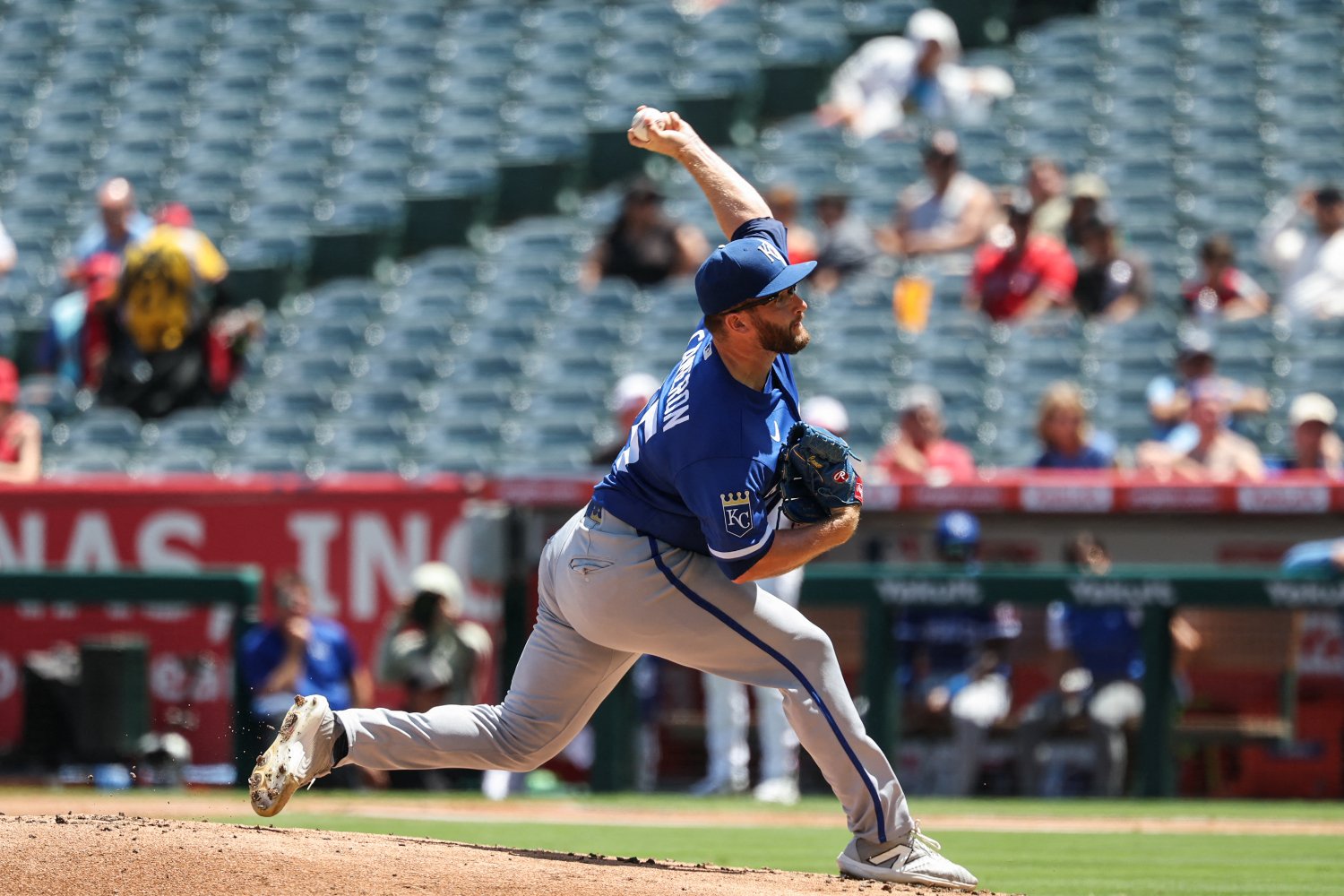 On Sunday, the Royals won the rubber game of the Angels series 3-0. However, the biggest story of the game was Noah Cameron throwing a one-hit shutout, the first complete-game shutout of his career. It was another stellar start for Cameron, who bounced back from a mediocre outing against the Dodgers on August 10th (5.2 IP, 4 ER, 6 H, 2 BB, 2 K). Since a seven-run performance against the Padres at home on July 19th, Cameron has gone seven or more innings in four of his last five starts. He has not allowed runs in three of those outings: July 24th against Detroit, July 30th against Minnesota, and Sunday against the Angels. In addition to allowing only one hit (a bloop single by Vaughn Grissom with an exit velocity of 65.8 MPH), the lefty out of St. Joseph, Missouri struck out eight and only allowed one walk. He also produced a 37% whiff rate, a 32% CSW, and was in strong command of his stuff all afternoon long in Anaheim. So what clicked for Cameron in his immaculate outing? Let's take a look at his pitch breakdown and how he set up his success on Sunday against the Angels with that pitch mix. Cameron Leaned Heavily on His Slider and Changeup When looking at his TJ Stuff+ summary via TJ Stats, Cameron utilized his slider (21.7% usage) and changeup (20.9% usage) the most of his six-pitch mix on Sunday. He threw the offspeed and breaking offerings 49 times, for a 43% usage rate. Overall, Cameron did an excellent job limiting hard contact, as shown by his .173 xwOBA on balls in play. That said, he not only induced a .238 xwOBACON on his slider and .045 xwOBACON on his changeup, but also 46.2% and 53.3% whiff rates on his slider and changeup, respectively. Those two whiff rates were the best marks of the six pitches he threw on Sunday. With the slider, the 27-year-old lefty did an excellent job of locating the pitch glove-side and low, as illustrated in his slider pitch description chart via Baseball Savant. Cameron did a good job of avoiding the middle with his slider, and even when it found the zone, he was able to generate batted-ball outs. Furthermore, most of his whiffs came at the edge or below the strike zone. Two of his whiffs were on pitches that were in or touched the zone, and three were on sliders thrown out of the zone. Those whiffs showed Cameron had Angels hitters guessing badly, and he made them pay with that slider, even when it wasn't particularly close to the strike zone (his 33.3% chase rate rated as above average). While his slider was good, Cameron's changeup was even better, as illustrated by the pitch's pitch description chart. Cameron generated eight whiffs on the changeup, with three of those whiffs coming inside the strike zone and five coming on changeups outside of the zone. Cameron really pounded hitters armside with the offspeed pitch, and as a result, he was extremely successful, not just generating whiffs, but a profound amount of chase as well (50% chase%). Interestingly enough, his four-seamer was his second-worst-rated pitch on a TJ Stuff+ end on Sunday with a 90 TJ Stuff+. However, it generated a 44.4% whiff rate, the third-best whiff rate of his six pitches. That was surprising to see, especially considering the pitch's lackluster TJ Stuff+ mark, velocity (93.1 MPH), and extension (6.2 feet). Cameron's four-seamer pitch description chart was peppered with light purple, orange, and green dots along the edges of the strike zone, representing whiffs, called strikes, and foul balls. The strong four-seamer command, lower usage of the four-seamer (16.5%), and the pairing with the changeup, especially in the armside area of the strike zone, seemed to drive success for Cameron on Sunday. Changeup Key to Success? Since moving to calling his own pitches after his July 19th start, Cameron has leaned heavily on the changeup. When looking at his pitch mix rolling chart via Savant, he has seen a tremendous spike over the last month in his changeup usage compared to his other offerings. In 37.2 IP, it's been not just his most-thrown offering (21.7% usage), but most successful in terms of generating whiffs and weak contact, as illustrated below in his TJ Stuff+ summary since July 20th. His changeup has the best pitching grade of his six offerings at 57, and in addition to a stellar whiff rate (45.3% whiff%), it has also produced a .265 xwOBA since July 20th. That's a solid mark for his most-thrown offering. When breaking down the splits and heatmap of his changeup, it's been an even stronger offering against righties than lefties since he began calling his own pitches. Against righties, the changeup is producing a 30.3% CSW%, a 44.6% whiff%, a 31.6% O-Swing%, and a .168 xwOBACON. He's producing similar metrics against lefties in terms of CSW (38.5%), whiff% (50%), and O-Swing% (50%), but it got hit much harder (.785 xwOBACON). Below is an example of Cameron's changeup making Minnesota's Alex Jackson chase badly on a two-strike count. ZzZ3QVFfVjBZQUhRPT1fQkFCWkFsUUVCUXNBRHdaVFZnQUhDQUVIQUFCWFYxQUFCQWRRQ0FKV1ZRVUdBQUZY.mp4 The movement on the changeup dives a little more toward righties, which is different than most changeups and plays well off his four-seamer better. Below is an example of his four-seamer located down against the Dodgers' Miguel Rojas on August 10th. Notice how it has similar movement to the changeup, but is 12 MPH faster than Cameron's primary offspeed pitch. cU93V2tfVjBZQUhRPT1fQTFBSFZsUU1BRllBQ1ZBQVVBQUhBZ05lQUZoUlVnSUFVUUFCVmdWUkF3RlFDVk5W.mp4 Most pitchers will lead with the four-seamer and then use the changeup as a change of pace. Cameron seems to be opting for the opposite: setting the tone with the changeup and then utilizing his four-seamer as his change-of-pace pitch. Michael Wacha has used this strategy successfully before, particularly in 2024, his first season in Kansas City, when he posted a 3.35 ERA in 164.1 IP. Here's a look at his pitch mix breakdown that season via TJ Stats. Will Cameron's pitch-mix strategy lead to long-term success, like Wacha's? That is to be determined. Wacha has over 12 years of MLB service time under his belt, after all. Nonetheless, what Cameron is doing is intriguing and is working, with Sunday's shutout in Anaheim being the pinnacle of this newfound approach. For a Royals team building for 2027, those two qualities are more than enough.
 -
 Derlin Figueroa's walk-off three-run homer finished a doubleheader sweep for Quad Cities, where Emmanuel Reyes struck out seven, and Rob Hensey allowed no hits over four innings. Justin Johnson's grand slam carried Northwest Arkansas past Springfield behind Drew Beam. Darwin Rodriguez turned in a quality start for Columbia, but the Fireflies lost their lead late. Nolan Sailors also homered, and Jorge Alfaro went 2-for-4 with a home run for the Naturals. Omaha was postponed. Kansas City Royals Transactions Kansas City Royals sent RHP Eli Morgan outright to Omaha Storm Chasers. Justin Johnson's Grand Slam Lifts Naturals Past Springfield Northwest Arkansas trailed 3-1 through three innings in Springfield, then took the lead with one swing. Jorge Alfaro opened the fourth with a single, Sam Kulasingam followed with a single, and Daniel Vazquez loaded the bases with a bunt single. After a strikeout, Justin Johnson hit a grand slam to left-center for a 5-3 lead, his ninth home run of the season. The Naturals added an insurance run in the fifth when Javi Vaz walked, Carson Roccaforte singled, and Kulasingam lifted a sacrifice fly. Johnson finished 1-for-3 with four RBI and a walk. Alfaro went 2-for-4 with two runs and a solo home run, his 12th. Kulasingam was 1-for-3 with an RBI, and Vaz drew two walks. Northwest Arkansas collected seven hits, struck out 12 times, and left four runners on base, but four of those hits came in the fourth. Drew Beam gave the Naturals five innings, allowing seven hits and four runs, three earned, with no walks and two strikeouts, and he earned the win. Caden Monke followed with a hitless inning and two strikeouts. Tyson Guerrero struck out two in a hitless inning. Tommy Molsky allowed a run on a hit and a walk with a strikeout. Dennis Colleran Jr. worked around a hit and a walk with a strikeout for his fourth save, closing out a 6-5 win. Northwest Arkansas committed the only error of the game, and one of the four runs charged to Beam was unearned. The Naturals went 2-for-5 with runners in scoring position and left four runners on base. They are now 47-65. Player AB R H RBI BB K Luke Pelzer 5 0 0 0 0 2 Javi Vaz 2 1 0 0 2 0 Carson Roccaforte 4 0 1 0 0 1 Jorge Alfaro 4 2 2 1 0 2 Sam Kulasingam 3 1 1 1 0 1 Daniel Vazquez 3 1 1 0 1 2 Canyon Brown 4 0 0 0 0 2 Justin Johnson 3 1 1 4 1 1 Alberto Rodriguez 4 0 1 0 0 1 Totals 32 6 7 6 4 12 Player IP H R ER BB K HR Drew Beam 5 7 4 3 0 2 0 Caden Monke 1 1 0 0 0 2 0 Tyson Guerrero 1 0 0 0 0 2 0 Tommy Molsky 1 1 1 1 1 1 0 Dennis Colleran Jr. 1 1 0 0 1 1 0 Totals 9 10 5 4 2 8 0 Zion Rose Forces In The Winner As River Bandits Edge Fort Wayne Quad Cities managed four hits against Fort Wayne and still found a way to win, 4-3, because the River Bandits kept taking free passes. With the game tied 3-3 and two outs, Ben North walked, Hyungchan Um walked, and Sailors walked to load the bases in the seventh. Rose then drew a walk to force in North, and the River Bandits protected the lead the rest of the way. The early runs came in pieces. Sailors struck out swinging in the first but reached on a wild pitch, and Rose brought him home with a sacrifice fly. Tyriq Kemp singled in the second and scored on North's single. Quad Cities pushed across another run in the third to lead 3-2 before Fort Wayne tied it in the fifth. The River Bandits drew eight walks, stole six bases, and left six runners on base. Rose finished 1-for-2 with two RBI and a walk. North was 1-for-3 with an RBI, a walk, and two stolen bases. Kemp went 1-for-3 with a walk and a stolen base, Derlin Figueroa was 1-for-3 with a walk, and Um walked twice. Kendry Chourio started and gave Quad Cities three innings, allowing four hits and two runs with a walk and two strikeouts. Hensey followed with four innings without a hit, walking three and striking out three, and he earned the win. The only run charged to Hensey was unearned after he committed both of the River Bandits' errors. Aiden Jimenez closed with two innings, one hit, no walks, and two strikeouts for his third save. Player AB R H RBI BB K Nolan Sailors 3 1 0 0 1 1 Zion Rose 2 0 1 2 1 0 Derlin Figueroa 3 0 1 0 1 0 Jose Cerice 3 1 0 0 0 0 Tyriq Kemp 3 1 1 0 1 0 Erick Torres 4 0 0 0 0 0 Ben North 3 1 1 1 1 1 Hyungchan Um 1 0 0 0 2 0 Stone Russell 2 0 0 0 1 2 Totals 24 4 4 3 8 4 Player IP H R ER BB K HR Kendry Chourio 3 4 2 2 1 2 0 Rob Hensey 4 0 1 0 3 3 0 Aiden Jimenez 2 1 0 0 0 2 0 Totals 9 5 3 2 4 7 0 Figueroa's Walk-Off Homer Completes River Bandits Comeback After getting suspended on Saturday, Quad Cities did not score in Sunday's continuation until its final six outs, and then the River Bandits scored five. Trailing 2-0 in the seventh, Angel Acosta singled with two outs, and Sailors followed with a two-run home run, his fifth of the season, to tie the game. The seven-inning game moved to the eighth, where Blake Mitchell opened as the zombie runner at second base. Chris Brito walked, and Figueroa drove a line drive to right-center for a three-run home run, his 25th, ending it 5-2. Figueroa finished 2-for-3 with a double, the home run, three RBI, and a walk. Sailors was 1-for-4 with two RBI. Acosta went 1-for-1 with two walks and a run. Mitchell was 0-for-3 with a hit by pitch and scored the run that started the winning rally. Quad Cities totaled four hits, struck out 12 times, and left seven runners on base, and the River Bandits committed both errors in the game. Reyes started and gave Quad Cities five innings, allowing four hits and two runs with no walks and seven strikeouts. Both runs against him came on a run-scoring single and a sacrifice fly. Dash Albus followed with two hitless innings, no walks, and three strikeouts. Kamden Edge allowed a hit in an inning of work, stranded the automatic runner, and earned the win to move to 5-1. Player AB R H RBI BB K Nolan Sailors 4 1 1 2 0 2 Asbel Gonzalez 2 0 0 0 1 1 Blake Mitchell 3 1 0 0 0 2 Chris Brito 3 1 0 0 1 2 Derlin Figueroa 3 1 2 3 1 1 Erick Torres 3 0 0 0 0 2 Tyriq Kemp 3 0 0 0 0 1 Stone Russell 3 0 0 0 0 1 Angel Acosta 1 1 1 0 2 0 Totals 25 5 4 5 5 12 Player IP H R ER BB K HR Emmanuel Reyes 5 4 2 2 0 7 0 Dash Albus 2 0 0 0 0 3 0 Kamden Edge 1 1 0 0 0 0 0 Totals 8 5 2 2 0 10 0 Fireflies Draw 13 Walks, Then Watch A Lead Disappear At Wilson Columbia turned four hits into six runs and still lost 9-6 at Wilson. The Fireflies broke through in the second on four straight walks, the last of them to Tyson Moran, which forced in the first run. Jhonayker Ugarte grounded into a double play that brought home a second run, Daniel Lopez walked, and Henry Ramos singled to bring in two more for a 4-2 lead. Columbia loaded the bases with three more walks in the third and added a run on a ground ball. Ramos homered in the sixth for a 6-3 lead. Ramos finished 2-for-4 with the home run, two RBI, and a walk. Lopez was 2-for-3 with a double and a walk. Sean Gamble went 0-for-3 with two walks, two stolen bases, and two runs. Roni Cabrera walked three times, and Jhosmmel Zue also walked three times. Columbia drew 13 walks, struck out four times, and left eight runners on base, and the Fireflies did not commit an error. Rodriguez gave Columbia six innings, allowing seven hits and three runs with two walks and five strikeouts, a quality start. Adrian Belen then allowed three runs on two hits, including a home run, with a walk and a strikeout, and blew the save as Wilson tied it 6-6. Justin LeGuernic recorded one out and allowed three runs on two hits and two walks, taking the loss. Yeri Perez got the last two outs of the inning, walking one. The loss dropped the Fireflies to .500 at 56-56. Player AB R H RBI BB K Henry Ramos 4 1 2 2 1 0 Camden Johnson 3 0 0 0 2 2 Josh Hammond 5 0 0 0 0 0 Sean Gamble 3 2 0 0 2 1 Roni Cabrera 2 1 0 0 3 0 Jhosmmel Zue 1 1 0 0 3 0 Tyson Moran 3 0 0 1 1 1 Jhonayker Ugarte 4 0 0 0 0 0 Daniel Lopez 3 1 2 0 1 0 Totals 28 6 4 3 13 4 Player IP H R ER BB K HR Darwin Rodriguez 6 7 3 3 2 5 2 Adrian Belen 1 2 3 3 1 1 1 Justin LeGuernic 1/3 2 3 3 2 0 0 Yeri Perez 2/3 0 0 0 1 0 0 Totals 8 11 9 9 6 6 3 Top-20 Prospect Performance Kendry Chourio: 3 IP, 4 H, 2 R, 2 ER, 1 BB, 2 K David Shields: DNP Josh Hammond: 0-for-5 Blake Mitchell: 0-for-3, HBP, 2 K Sean Gamble: 0-for-3, 2 BB, 2 SB, K Ramon Ramirez: DNP Zion Rose: 1-for-2, 2 RBI, BB Asbel Gonzalez: 0-for-2, BB, HBP, K Carson Roccaforte: 1-for-4, K Taylor Rabe: DNP Yandel Ricardo: DNP Justin Lamkin: DNP Drew Beam: 5 IP, 7 H, 4 R, 3 ER, 0 BB, 2 K Michael Lombardi: DNP Jack Slightom: DNP Felix Arronde: DNP Angeibel Gomez: DNP Ben Kudrna: DNP Steven Zobac: DNP Blake Wolters: DNP
 -
Derlin Figueroa's walk-off three-run homer finished a doubleheader sweep for Quad Cities, where Emmanuel Reyes struck out seven, and Rob Hensey allowed no hits over four innings. Justin Johnson's grand slam carried Northwest Arkansas past Springfield behind Drew Beam. Darwin Rodriguez turned in a quality start for Columbia, but the Fireflies lost their lead late. Nolan Sailors also homered, and Jorge Alfaro went 2-for-4 with a home run for the Naturals. Omaha was postponed. Kansas City Royals Transactions Kansas City Royals sent RHP Eli Morgan outright to Omaha Storm Chasers. Justin Johnson's Grand Slam Lifts Naturals Past Springfield Northwest Arkansas trailed 3-1 through three innings in Springfield, then took the lead with one swing. Jorge Alfaro opened the fourth with a single, Sam Kulasingam followed with a single, and Daniel Vazquez loaded the bases with a bunt single. After a strikeout, Justin Johnson hit a grand slam to left-center for a 5-3 lead, his ninth home run of the season. The Naturals added an insurance run in the fifth when Javi Vaz walked, Carson Roccaforte singled, and Kulasingam lifted a sacrifice fly. Johnson finished 1-for-3 with four RBI and a walk. Alfaro went 2-for-4 with two runs and a solo home run, his 12th. Kulasingam was 1-for-3 with an RBI, and Vaz drew two walks. Northwest Arkansas collected seven hits, struck out 12 times, and left four runners on base, but four of those hits came in the fourth. Drew Beam gave the Naturals five innings, allowing seven hits and four runs, three earned, with no walks and two strikeouts, and he earned the win. Caden Monke followed with a hitless inning and two strikeouts. Tyson Guerrero struck out two in a hitless inning. Tommy Molsky allowed a run on a hit and a walk with a strikeout. Dennis Colleran Jr. worked around a hit and a walk with a strikeout for his fourth save, closing out a 6-5 win. Northwest Arkansas committed the only error of the game, and one of the four runs charged to Beam was unearned. The Naturals went 2-for-5 with runners in scoring position and left four runners on base. They are now 47-65. Player AB R H RBI BB K Luke Pelzer 5 0 0 0 0 2 Javi Vaz 2 1 0 0 2 0 Carson Roccaforte 4 0 1 0 0 1 Jorge Alfaro 4 2 2 1 0 2 Sam Kulasingam 3 1 1 1 0 1 Daniel Vazquez 3 1 1 0 1 2 Canyon Brown 4 0 0 0 0 2 Justin Johnson 3 1 1 4 1 1 Alberto Rodriguez 4 0 1 0 0 1 Totals 32 6 7 6 4 12 Player IP H R ER BB K HR Drew Beam 5 7 4 3 0 2 0 Caden Monke 1 1 0 0 0 2 0 Tyson Guerrero 1 0 0 0 0 2 0 Tommy Molsky 1 1 1 1 1 1 0 Dennis Colleran Jr. 1 1 0 0 1 1 0 Totals 9 10 5 4 2 8 0 Zion Rose Forces In The Winner As River Bandits Edge Fort Wayne Quad Cities managed four hits against Fort Wayne and still found a way to win, 4-3, because the River Bandits kept taking free passes. With the game tied 3-3 and two outs, Ben North walked, Hyungchan Um walked, and Sailors walked to load the bases in the seventh. Rose then drew a walk to force in North, and the River Bandits protected the lead the rest of the way. The early runs came in pieces. Sailors struck out swinging in the first but reached on a wild pitch, and Rose brought him home with a sacrifice fly. Tyriq Kemp singled in the second and scored on North's single. Quad Cities pushed across another run in the third to lead 3-2 before Fort Wayne tied it in the fifth. The River Bandits drew eight walks, stole six bases, and left six runners on base. Rose finished 1-for-2 with two RBI and a walk. North was 1-for-3 with an RBI, a walk, and two stolen bases. Kemp went 1-for-3 with a walk and a stolen base, Derlin Figueroa was 1-for-3 with a walk, and Um walked twice. Kendry Chourio started and gave Quad Cities three innings, allowing four hits and two runs with a walk and two strikeouts. Hensey followed with four innings without a hit, walking three and striking out three, and he earned the win. The only run charged to Hensey was unearned after he committed both of the River Bandits' errors. Aiden Jimenez closed with two innings, one hit, no walks, and two strikeouts for his third save. Player AB R H RBI BB K Nolan Sailors 3 1 0 0 1 1 Zion Rose 2 0 1 2 1 0 Derlin Figueroa 3 0 1 0 1 0 Jose Cerice 3 1 0 0 0 0 Tyriq Kemp 3 1 1 0 1 0 Erick Torres 4 0 0 0 0 0 Ben North 3 1 1 1 1 1 Hyungchan Um 1 0 0 0 2 0 Stone Russell 2 0 0 0 1 2 Totals 24 4 4 3 8 4 Player IP H R ER BB K HR Kendry Chourio 3 4 2 2 1 2 0 Rob Hensey 4 0 1 0 3 3 0 Aiden Jimenez 2 1 0 0 0 2 0 Totals 9 5 3 2 4 7 0 Figueroa's Walk-Off Homer Completes River Bandits Comeback After getting suspended on Saturday, Quad Cities did not score in Sunday's continuation until its final six outs, and then the River Bandits scored five. Trailing 2-0 in the seventh, Angel Acosta singled with two outs, and Sailors followed with a two-run home run, his fifth of the season, to tie the game. The seven-inning game moved to the eighth, where Blake Mitchell opened as the zombie runner at second base. Chris Brito walked, and Figueroa drove a line drive to right-center for a three-run home run, his 25th, ending it 5-2. Figueroa finished 2-for-3 with a double, the home run, three RBI, and a walk. Sailors was 1-for-4 with two RBI. Acosta went 1-for-1 with two walks and a run. Mitchell was 0-for-3 with a hit by pitch and scored the run that started the winning rally. Quad Cities totaled four hits, struck out 12 times, and left seven runners on base, and the River Bandits committed both errors in the game. Reyes started and gave Quad Cities five innings, allowing four hits and two runs with no walks and seven strikeouts. Both runs against him came on a run-scoring single and a sacrifice fly. Dash Albus followed with two hitless innings, no walks, and three strikeouts. Kamden Edge allowed a hit in an inning of work, stranded the automatic runner, and earned the win to move to 5-1. Player AB R H RBI BB K Nolan Sailors 4 1 1 2 0 2 Asbel Gonzalez 2 0 0 0 1 1 Blake Mitchell 3 1 0 0 0 2 Chris Brito 3 1 0 0 1 2 Derlin Figueroa 3 1 2 3 1 1 Erick Torres 3 0 0 0 0 2 Tyriq Kemp 3 0 0 0 0 1 Stone Russell 3 0 0 0 0 1 Angel Acosta 1 1 1 0 2 0 Totals 25 5 4 5 5 12 Player IP H R ER BB K HR Emmanuel Reyes 5 4 2 2 0 7 0 Dash Albus 2 0 0 0 0 3 0 Kamden Edge 1 1 0 0 0 0 0 Totals 8 5 2 2 0 10 0 Fireflies Draw 13 Walks, Then Watch A Lead Disappear At Wilson Columbia turned four hits into six runs and still lost 9-6 at Wilson. The Fireflies broke through in the second on four straight walks, the last of them to Tyson Moran, which forced in the first run. Jhonayker Ugarte grounded into a double play that brought home a second run, Daniel Lopez walked, and Henry Ramos singled to bring in two more for a 4-2 lead. Columbia loaded the bases with three more walks in the third and added a run on a ground ball. Ramos homered in the sixth for a 6-3 lead. Ramos finished 2-for-4 with the home run, two RBI, and a walk. Lopez was 2-for-3 with a double and a walk. Sean Gamble went 0-for-3 with two walks, two stolen bases, and two runs. Roni Cabrera walked three times, and Jhosmmel Zue also walked three times. Columbia drew 13 walks, struck out four times, and left eight runners on base, and the Fireflies did not commit an error. Rodriguez gave Columbia six innings, allowing seven hits and three runs with two walks and five strikeouts, a quality start. Adrian Belen then allowed three runs on two hits, including a home run, with a walk and a strikeout, and blew the save as Wilson tied it 6-6. Justin LeGuernic recorded one out and allowed three runs on two hits and two walks, taking the loss. Yeri Perez got the last two outs of the inning, walking one. The loss dropped the Fireflies to .500 at 56-56. Player AB R H RBI BB K Henry Ramos 4 1 2 2 1 0 Camden Johnson 3 0 0 0 2 2 Josh Hammond 5 0 0 0 0 0 Sean Gamble 3 2 0 0 2 1 Roni Cabrera 2 1 0 0 3 0 Jhosmmel Zue 1 1 0 0 3 0 Tyson Moran 3 0 0 1 1 1 Jhonayker Ugarte 4 0 0 0 0 0 Daniel Lopez 3 1 2 0 1 0 Totals 28 6 4 3 13 4 Player IP H R ER BB K HR Darwin Rodriguez 6 7 3 3 2 5 2 Adrian Belen 1 2 3 3 1 1 1 Justin LeGuernic 1/3 2 3 3 2 0 0 Yeri Perez 2/3 0 0 0 1 0 0 Totals 8 11 9 9 6 6 3 Top-20 Prospect Performance Kendry Chourio: 3 IP, 4 H, 2 R, 2 ER, 1 BB, 2 K David Shields: DNP Josh Hammond: 0-for-5 Blake Mitchell: 0-for-3, HBP, 2 K Sean Gamble: 0-for-3, 2 BB, 2 SB, K Ramon Ramirez: DNP Zion Rose: 1-for-2, 2 RBI, BB Asbel Gonzalez: 0-for-2, BB, HBP, K Carson Roccaforte: 1-for-4, K Taylor Rabe: DNP Yandel Ricardo: DNP Justin Lamkin: DNP Drew Beam: 5 IP, 7 H, 4 R, 3 ER, 0 BB, 2 K Michael Lombardi: DNP Jack Slightom: DNP Felix Arronde: DNP Angeibel Gomez: DNP Ben Kudrna: DNP Steven Zobac: DNP Blake Wolters: DNP View full article
-
Image courtesy of Peter Aiken-Imagn Images With a bullpen that ranks 29th in bullpen ERA and 30th in bullpen WHIP, the Kansas City Royals have been trying to find answers via various trades and free-agent pickups. One of the most intriguing ones has been righty Nate Pearson, who was acquired on July 22nd for right-handed pitching prospect Max Martin after Pearson was designated for assignment by the Astros on July 19th. Pearson posted respectable numbers in 16 appearances with the Astros this season. In 20 IP, he posted a 3.60 ERA, 1.40 WHIP, and 4.08 FIP. That said, he struggled to strike out batters (19% K%) and also walked more batters than desired (14.3% BB% and 4.8% K-BB%). When looking at his TJ Stats Statcast percentiles summary, Pearson struggled to generate strikes and CSW, despite elite extension and TJ Stuff+ metrics. Pearson ranked in the 86th percentile in extension, 87th percentile in TJ Stuff+, and 92nd percentile in fastball velocity while a member of the Astros. The 29-year-old did a good job of limiting hard hits in Houston, as evidenced by his 31.5% hard-hit rate (89th percentile) and 84.8 MPH average EV (90th percentile). That said, he struggled to find the strike zone consistently (20th percentile zone rate) and generated CSW (26th percentile). With the Astros competing for a playoff spot and upgrading their bullpen at the Trade Deadline, Pearson ended up being the odd man out in Houston. However, the move proved to be an opportunity for the Royals, who traded for the former first-round pick. Since coming over to Kansas City, Pearson hasn't allowed an earned run in eight appearances and 7.2 IP, and his WHIP is 0.65, and his FIP is 2.17. In addition, his K% is up to 28.6%, and he is posting a 21.4% K-BB% with the Royals. The results are better for Pearson with the Royals, and he's maintaining the extension, velocity, and TJ Stuff+ metrics that made him such an intriguing reliever with the Astros, Cubs, and Blue Jays. Here's a look at his Statcast percentiles with the Royals since July 26th, via TJ Stats. Interestingly, Pearson has seen a flip in his hard-hit% and average EV since coming to Kansas City, as they rank in the 4th and 12th percentiles, respectively. However, his zone rate ranks in the 83rd percentile, his CSW ranks in the 58th percentile, and his GB% ranks in the 73rd percentile. Those are all significant upgrades from what he was producing in Houston earlier this season. So what has been the difference for Pearson with the Royals? And can Pearson keep producing like this, not just for the remainder of 2026, but 2027 as well? Let's take a look at the developments that the Royals have seen with Pearson since coming over to Kansas City less than a month ago. Using the Sinker More in Kansas City (Despite Questionable TJ Stuff+) When looking at his pitch mix comparison between his time in Houston and now in Kansas City, there haven't been a ton of differences, as illustrated in his TJ Stuff+ summary comparison below. That said, there are two key changes that have stuck out: he's increased his sinker usage significantly, and his slider has improved significantly with the Royals. Interestingly, the sinker rates well via TJ Stuff+. It has a 92 mark, which is actually five points worse than his mark with the Astros. However, the pitch has been a better zone rate pitch with the Royals (60%) than with the Astros (51.5%), and while it doesn't generate much whiff (14.3% with the Royals; 7.7% with the Astros), it has been a good pitch when it comes to generating weak contact. He allowed a .108 xwOBACON on the sinker in Houston, and that has remained the same in Kansas City, as he has a .199 xwOBACON. With the Astros, he only threw the sinker 9.5% of the time. With the Royals? That sinker usage is up to 20.2%. With a higher usage, he's generating more chase as well, despite it rating worse on a TJ Stuff+ end. The difference with the sinker is that Pearson has made the pitch more horizontal than vertical. With the Astros, Pearson's sinker had 12.4 inches of iVB and 14.8 inches of HB with a spin rate of 2,235 RPM. With the Royals, that iVB is 11.1, the HV is 12.8, and its spin is 2,136 RPM. It's also an offering that has less spin and general movement, and it's located lower in the zone than it was in Houston. Below is a clip compilation of his sinker from an outing in Houston and Kansas City. As Royals fans can see above, Pearson located the sinker higher and more on the edges in Houston. It also clearly had more vertical rise. With Kansas City, the pitch is located more around the knees and in the middle and fades way more toward the hitter than it did in the Astros clip. Throwing a pitch with bad TJ Stuff+ doesn't seem like a recipe for success. However, it seems like throwing the sinker more has led to a more "aggressive" mindset for Pearson, which has helped him throw more strikes and limit walks in Kansas City. More strikes and fewer walks will lead to fewer runs allowed and more strikeouts. Both outcomes are happening for Pearson with the Royals in his short sample so far. Fewer Breaking Balls Being Thrown in Kansas City An interesting trend for Pearson with the Royals is that he's throwing fewer breaking offerings. Those pitches are his slider and his curveball. With the Astros, Pearson's slider and his curve were his second- and third-most-thrown pitches, respectively. He threw the slider 36.1% of the time and the curve 11.6% of the time in Houston. With the Royals, that slider usage has declined to 22.2%, and his curveball usage has fallen to 8.1%. Those are decreases of 13.9% and 3.5%, respectively. What's interesting about the decline in usage is that the pitches haven't gotten worse for Pearson in Kansas City, at least on a TJ Stuff+ end. Pearson's slider has a 115 TJ Stuff+, and his curve has a 105 TJ Stuff+. The curve has declined by one point in the move to KC, but his slider TJ Stuff+ has been three points better with the Royals. Thus, he's doing a lot of the same things theoretically with those breaking pitches since moving to Kansas City. A difference for Pearson and his breaking pitches is that while he's throwing both pitches less, he's throwing them for more strikes. His slider zone% has gone from 45.6% to 54.5%, and his curveball zone% has risen from 27.5% to 37.5%. He's generating fewer whiffs with both pitches in Kansas City (16.7% slider whiff% and 50% curve whiff%), but by throwing the pitch in the zone more, he's keeping hitters honest. They can't lay off those pitches as much as they could in Houston. Here's an example of Pearson's slider generating a swinging strike out of the zone by the Dodgers' Alex Call in an August 11th outing. VndQT3ZfVjBZQUhRPT1fQlZVRFZGRU5CMVlBWGdFSEFnQUhWRlZlQUZnQlVGUUFCRkFGVlFjQUJGSmRCRlJl.mp4 Not only is the pitch on the edge, but if Pearson has been throwing the pitch for strikes, Call has to respect it and try to make contact on it. That wasn't happening in Houston, and it's likely that without the slider zone% change, Pearson wouldn't have gotten Call to chase in a two-strike count. Pearson did something similar with the curve against Pete Crow-Armstrong on August 8th. Crow-Armstrong had to respect the curve because it has been thrown more for strikes, and on an 0-2 count, he chases on a curve down and out of the zone, and Pearson is able to acquire the save. YVlkZEFfWGw0TUFRPT1fQWdJQVZWMVdWd1VBQ2xVRUFnQUhBbFZUQUZrQlZGRUFVUUVEQWxZRVVnZFNCRmRX.mp4 Pearson's breaking offerings still have flaws. He has a .441 xwOBACON with the slider in Kansas City, which is much higher than .377 xwOBACON on his slider in Houston. Still, his more aggressive approach with his breaking pitches has been key to his early success with the Royals. Can Pearson Stay Healthy and Consistent? Pearson has long been a heralded pitching prospect, especially during his tenure in Toronto. He was often listed as the Blue Jays' top prospect, and many scouts thought Pearson could be a prototypical ace when he was drafted 28th overall in the 2017 MLB Draft. Unfortunately, he has struggled to stay healthy, leading to mediocre numbers and long stretches of missed games. After pitching a career-high 66.2 IP with the Blue Jays and Cubs in 2024, he only pitched 14.2 innings with the Cubs in 2025. Pearson underwent an offseason arthroscopic elbow cleanup procedure that kept him out until May 20th, and he just never looked the same last season. He posted a 9.20 ERA and was designated for assignment, then released on September 20th. Pearson hasn't had any major surgeries. However, he seems to get dinged with a lot of minor ones, which have seemed to stunt him from building momentum on the mound. Since debuting in 2020 with Toronto, he has gotten mono (2022), had an adductor strain (2021), and had earlier elbow issues during his rookie season. As a result, Pearson has a career 4.78 ERA and 4.80 FIP in 184.1 IP. Thus, it will be important for Pearson not just to stay healthy, but to continue building positive momentum with each and every relief outing. He has gotten off to a nice start in Kansas City, and he's getting opportunities, especially in high-leverage spots in the 8th and 9th innings. Thus, this is the best spot for Pearson to turn around his career after being more of a middle-innings, mop-up guy in Houston. Then again, consistency hasn't always been Pearson's strong suit. That was on display on Saturday as he gave up a hit, a walk, and a run in a 1-0 loss to the Angels on Saturday night. While the stuff was solid from Pearson as usual, he struggled to throw strikes, as evidenced by his 35% zone rate. Pearson wasn't hit hard on Saturday in the loss (.300 xwOBACON). Unfortunately, he didn't throw enough strikes and wasn't generating the kind of chase (23.1% chase%) or whiffs (11.1% whiff%) to make up for the lack of control. The outing bumped his ERA up to 2.83 and his FIP to 3.57 for the season in 28.2 IP (it was also the first earned run he's allowed as a Royals pitcher). His pitch chart from Saturday's outing also illustrated that while Pearson was hitting the edges with his four-seamer, he was struggling to locate with his other offerings. That was just enough for the Angels to squeak out a victory against a Royals offense that couldn't solve Reid Detmers (11 strikeouts in 8.0 IP) or closer Ben Joyce (two strikeouts). There's no doubt the stuff, velocity, and potential are there for Pearson to be successful. Even though he's nearly 30, he's still a relatively fresh pitcher without a lot of mileage on his arm. Furthermore, he has the kind of velocity and extension that this bullpen needs. His profile is similar to other big arms in the Royals organization like Steven Cruz and Luinder Avila. According to TJ Stats leaderboards, Pearson's 6.8 extension is the best mark of any Royal currently on the Royals 40-man roster, and his TJ Stuff+ of 107 is second-best, behind only Craig Kimbrel (who has yet to pitch for Kansas City). The tools are there for Pearson to succeed, and perhaps Kansas City and its smaller market are the kind of scenery changes that Pearson needs to turn his career around. Will he be a closer or a future setup man for the Royals in 2027? That's undetermined, especially with the Royals likely spending some money in free agency on the bullpen this upcoming offseason. Nonetheless, Pearson is making his early case that he needs to be considered as part of the Royals' bullpen plans beyond 2026. View full article
-
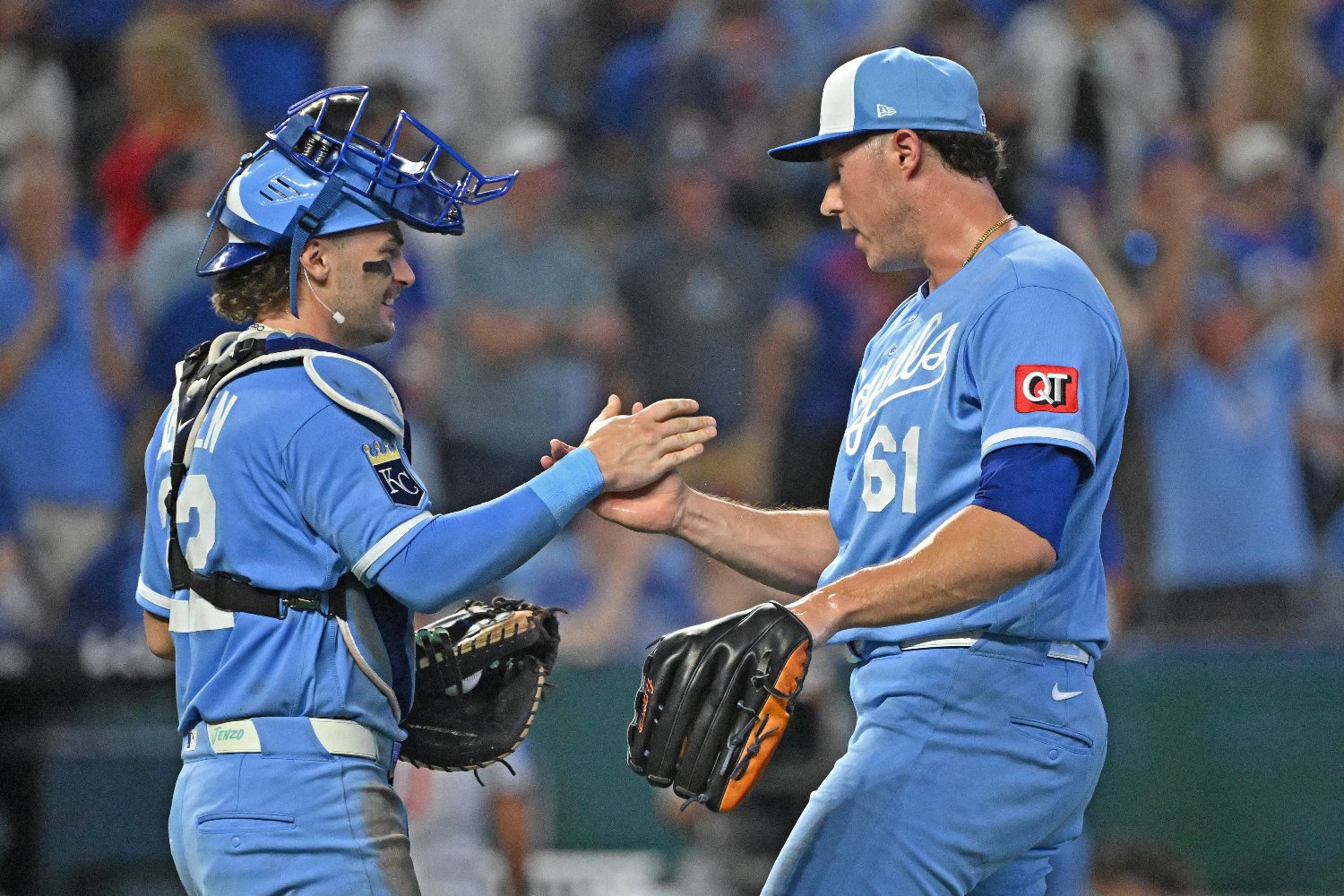 With a bullpen that ranks 29th in bullpen ERA and 30th in bullpen WHIP, the Kansas City Royals have been trying to find answers via various trades and free-agent pickups. One of the most intriguing ones has been righty Nate Pearson, who was acquired on July 22nd for right-handed pitching prospect Max Martin after Pearson was designated for assignment by the Astros on July 19th. Pearson posted respectable numbers in 16 appearances with the Astros this season. In 20 IP, he posted a 3.60 ERA, 1.40 WHIP, and 4.08 FIP. That said, he struggled to strike out batters (19% K%) and also walked more batters than desired (14.3% BB% and 4.8% K-BB%). When looking at his TJ Stats Statcast percentiles summary, Pearson struggled to generate strikes and CSW, despite elite extension and TJ Stuff+ metrics. Pearson ranked in the 86th percentile in extension, 87th percentile in TJ Stuff+, and 92nd percentile in fastball velocity while a member of the Astros. The 29-year-old did a good job of limiting hard hits in Houston, as evidenced by his 31.5% hard-hit rate (89th percentile) and 84.8 MPH average EV (90th percentile). That said, he struggled to find the strike zone consistently (20th percentile zone rate) and generated CSW (26th percentile). With the Astros competing for a playoff spot and upgrading their bullpen at the Trade Deadline, Pearson ended up being the odd man out in Houston. However, the move proved to be an opportunity for the Royals, who traded for the former first-round pick. Since coming over to Kansas City, Pearson hasn't allowed an earned run in eight appearances and 7.2 IP, and his WHIP is 0.65, and his FIP is 2.17. In addition, his K% is up to 28.6%, and he is posting a 21.4% K-BB% with the Royals. The results are better for Pearson with the Royals, and he's maintaining the extension, velocity, and TJ Stuff+ metrics that made him such an intriguing reliever with the Astros, Cubs, and Blue Jays. Here's a look at his Statcast percentiles with the Royals since July 26th, via TJ Stats. Interestingly, Pearson has seen a flip in his hard-hit% and average EV since coming to Kansas City, as they rank in the 4th and 12th percentiles, respectively. However, his zone rate ranks in the 83rd percentile, his CSW ranks in the 58th percentile, and his GB% ranks in the 73rd percentile. Those are all significant upgrades from what he was producing in Houston earlier this season. So what has been the difference for Pearson with the Royals? And can Pearson keep producing like this, not just for the remainder of 2026, but 2027 as well? Let's take a look at the developments that the Royals have seen with Pearson since coming over to Kansas City less than a month ago. Using the Sinker More in Kansas City (Despite Questionable TJ Stuff+) When looking at his pitch mix comparison between his time in Houston and now in Kansas City, there haven't been a ton of differences, as illustrated in his TJ Stuff+ summary comparison below. That said, there are two key changes that have stuck out: he's increased his sinker usage significantly, and his slider has improved significantly with the Royals. Interestingly, the sinker rates well via TJ Stuff+. It has a 92 mark, which is actually five points worse than his mark with the Astros. However, the pitch has been a better zone rate pitch with the Royals (60%) than with the Astros (51.5%), and while it doesn't generate much whiff (14.3% with the Royals; 7.7% with the Astros), it has been a good pitch when it comes to generating weak contact. He allowed a .108 xwOBACON on the sinker in Houston, and that has remained the same in Kansas City, as he has a .199 xwOBACON. With the Astros, he only threw the sinker 9.5% of the time. With the Royals? That sinker usage is up to 20.2%. With a higher usage, he's generating more chase as well, despite it rating worse on a TJ Stuff+ end. The difference with the sinker is that Pearson has made the pitch more horizontal than vertical. With the Astros, Pearson's sinker had 12.4 inches of iVB and 14.8 inches of HB with a spin rate of 2,235 RPM. With the Royals, that iVB is 11.1, the HV is 12.8, and its spin is 2,136 RPM. It's also an offering that has less spin and general movement, and it's located lower in the zone than it was in Houston. Below is a clip compilation of his sinker from an outing in Houston and Kansas City. As Royals fans can see above, Pearson located the sinker higher and more on the edges in Houston. It also clearly had more vertical rise. With Kansas City, the pitch is located more around the knees and in the middle and fades way more toward the hitter than it did in the Astros clip. Throwing a pitch with bad TJ Stuff+ doesn't seem like a recipe for success. However, it seems like throwing the sinker more has led to a more "aggressive" mindset for Pearson, which has helped him throw more strikes and limit walks in Kansas City. More strikes and fewer walks will lead to fewer runs allowed and more strikeouts. Both outcomes are happening for Pearson with the Royals in his short sample so far. Fewer Breaking Balls Being Thrown in Kansas City An interesting trend for Pearson with the Royals is that he's throwing fewer breaking offerings. Those pitches are his slider and his curveball. With the Astros, Pearson's slider and his curve were his second- and third-most-thrown pitches, respectively. He threw the slider 36.1% of the time and the curve 11.6% of the time in Houston. With the Royals, that slider usage has declined to 22.2%, and his curveball usage has fallen to 8.1%. Those are decreases of 13.9% and 3.5%, respectively. What's interesting about the decline in usage is that the pitches haven't gotten worse for Pearson in Kansas City, at least on a TJ Stuff+ end. Pearson's slider has a 115 TJ Stuff+, and his curve has a 105 TJ Stuff+. The curve has declined by one point in the move to KC, but his slider TJ Stuff+ has been three points better with the Royals. Thus, he's doing a lot of the same things theoretically with those breaking pitches since moving to Kansas City. A difference for Pearson and his breaking pitches is that while he's throwing both pitches less, he's throwing them for more strikes. His slider zone% has gone from 45.6% to 54.5%, and his curveball zone% has risen from 27.5% to 37.5%. He's generating fewer whiffs with both pitches in Kansas City (16.7% slider whiff% and 50% curve whiff%), but by throwing the pitch in the zone more, he's keeping hitters honest. They can't lay off those pitches as much as they could in Houston. Here's an example of Pearson's slider generating a swinging strike out of the zone by the Dodgers' Alex Call in an August 11th outing. VndQT3ZfVjBZQUhRPT1fQlZVRFZGRU5CMVlBWGdFSEFnQUhWRlZlQUZnQlVGUUFCRkFGVlFjQUJGSmRCRlJl.mp4 Not only is the pitch on the edge, but if Pearson has been throwing the pitch for strikes, Call has to respect it and try to make contact on it. That wasn't happening in Houston, and it's likely that without the slider zone% change, Pearson wouldn't have gotten Call to chase in a two-strike count. Pearson did something similar with the curve against Pete Crow-Armstrong on August 8th. Crow-Armstrong had to respect the curve because it has been thrown more for strikes, and on an 0-2 count, he chases on a curve down and out of the zone, and Pearson is able to acquire the save. YVlkZEFfWGw0TUFRPT1fQWdJQVZWMVdWd1VBQ2xVRUFnQUhBbFZUQUZrQlZGRUFVUUVEQWxZRVVnZFNCRmRX.mp4 Pearson's breaking offerings still have flaws. He has a .441 xwOBACON with the slider in Kansas City, which is much higher than .377 xwOBACON on his slider in Houston. Still, his more aggressive approach with his breaking pitches has been key to his early success with the Royals. Can Pearson Stay Healthy and Consistent? Pearson has long been a heralded pitching prospect, especially during his tenure in Toronto. He was often listed as the Blue Jays' top prospect, and many scouts thought Pearson could be a prototypical ace when he was drafted 28th overall in the 2017 MLB Draft. Unfortunately, he has struggled to stay healthy, leading to mediocre numbers and long stretches of missed games. After pitching a career-high 66.2 IP with the Blue Jays and Cubs in 2024, he only pitched 14.2 innings with the Cubs in 2025. Pearson underwent an offseason arthroscopic elbow cleanup procedure that kept him out until May 20th, and he just never looked the same last season. He posted a 9.20 ERA and was designated for assignment, then released on September 20th. Pearson hasn't had any major surgeries. However, he seems to get dinged with a lot of minor ones, which have seemed to stunt him from building momentum on the mound. Since debuting in 2020 with Toronto, he has gotten mono (2022), had an adductor strain (2021), and had earlier elbow issues during his rookie season. As a result, Pearson has a career 4.78 ERA and 4.80 FIP in 184.1 IP. Thus, it will be important for Pearson not just to stay healthy, but to continue building positive momentum with each and every relief outing. He has gotten off to a nice start in Kansas City, and he's getting opportunities, especially in high-leverage spots in the 8th and 9th innings. Thus, this is the best spot for Pearson to turn around his career after being more of a middle-innings, mop-up guy in Houston. Then again, consistency hasn't always been Pearson's strong suit. That was on display on Saturday as he gave up a hit, a walk, and a run in a 1-0 loss to the Angels on Saturday night. While the stuff was solid from Pearson as usual, he struggled to throw strikes, as evidenced by his 35% zone rate. Pearson wasn't hit hard on Saturday in the loss (.300 xwOBACON). Unfortunately, he didn't throw enough strikes and wasn't generating the kind of chase (23.1% chase%) or whiffs (11.1% whiff%) to make up for the lack of control. The outing bumped his ERA up to 2.83 and his FIP to 3.57 for the season in 28.2 IP (it was also the first earned run he's allowed as a Royals pitcher). His pitch chart from Saturday's outing also illustrated that while Pearson was hitting the edges with his four-seamer, he was struggling to locate with his other offerings. That was just enough for the Angels to squeak out a victory against a Royals offense that couldn't solve Reid Detmers (11 strikeouts in 8.0 IP) or closer Ben Joyce (two strikeouts). There's no doubt the stuff, velocity, and potential are there for Pearson to be successful. Even though he's nearly 30, he's still a relatively fresh pitcher without a lot of mileage on his arm. Furthermore, he has the kind of velocity and extension that this bullpen needs. His profile is similar to other big arms in the Royals organization like Steven Cruz and Luinder Avila. According to TJ Stats leaderboards, Pearson's 6.8 extension is the best mark of any Royal currently on the Royals 40-man roster, and his TJ Stuff+ of 107 is second-best, behind only Craig Kimbrel (who has yet to pitch for Kansas City). The tools are there for Pearson to succeed, and perhaps Kansas City and its smaller market are the kind of scenery changes that Pearson needs to turn his career around. Will he be a closer or a future setup man for the Royals in 2027? That's undetermined, especially with the Royals likely spending some money in free agency on the bullpen this upcoming offseason. Nonetheless, Pearson is making his early case that he needs to be considered as part of the Royals' bullpen plans beyond 2026.
 -
 Quad Cities beat Fort Wayne 5-4 when Zion Rose singled home Asbel Gonzalez, after Yimi Presinal struck out four over two innings and Aiden Jimenez closed it out. Michael Braswell III threw three innings without a run, but Columbia fell 5-4 in 11. Felix Arronde gave Northwest Arkansas 5 1/3 innings in a 9-8 loss, and Maikel Garcia, Luke Pelzer, and Carson Roccaforte each had three hits. Omaha lost 6-2 behind two hits from Matthew Lugo. Kansas City Royals Transactions No Roster Moves Storm Chasers Held To Seven Hits In 6-2 Loss At Columbus Omaha dropped a 6-2 decision in Columbus, managing seven hits and one walk against eight strikeouts. Columbus scored twice in the first inning after two walks and a two-run single that Drew Waters misplayed in center field for an error, and the Storm Chasers spent the rest of the night chasing. Henry Williams took the loss after allowing five hits and four runs, three earned, over 4 2/3 innings. He walked four and struck out six. Easton McGee followed with 1 1/3 innings, allowing two hits and striking out two without giving up a run. Anthony Gose worked an inning without allowing a hit and struck out two. Nolan Hoffman gave up two runs on two hits and two walks in his inning. The Storm Chasers were helped early on by some solid defense, including a diving catch by Jacob Berry in the fourth. Omaha did not score until the sixth, when Alejo Lopez came home on Vinnie Pasquantino's ground ball double play. Matthew Lugo added the other run with a single that scored Peyton Wilson in the ninth. Lugo finished 2-for-4 with a triple and an RBI, the only Storm Chaser with more than one hit. Waters, Pasquantino, Brett Squires, Brandon Drury, and Lopez each had one hit. Squires drew the team's only walk. Jacob Berry struck out four times in four at-bats, and Jack Pineda and Elih Marrero were both held without a hit. Omaha left five runners on base and did not have an extra-base hit other than Lugo's triple. The Storm Chasers left five on base and went 1-for-7 with runners in scoring position. They are now 56-60 this season. Player AB R H RBI BB K Drew Waters, CF 4 0 1 0 0 1 Jack Pineda, SS 3 0 0 0 0 0 Vinnie Pasquantino, 1B 4 0 1 0 0 0 Peyton Wilson, PR 0 1 0 0 0 0 Brett Squires, LF 3 0 1 0 1 1 Jacob Berry, RF 4 0 0 0 0 4 Matthew Lugo, DH 4 0 2 1 0 1 Elih Marrero, C 4 0 0 0 0 1 Brandon Drury, 3B 3 0 1 0 0 0 Alejo Lopez, 2B 3 1 1 0 0 0 Totals 32 2 7 1 1 8 Player IP H R ER BB K HR Henry Williams 4 2/3 5 4 3 4 6 1 Easton McGee 1 1/3 2 0 0 0 2 0 Anthony Gose 1 0 0 0 0 2 0 Nolan Hoffman 1 2 2 2 2 1 0 Totals 8 9 6 5 6 11 1 Naturals Lose 9-8 After Springfield Answers An 8-1 Lead Northwest Arkansas carried an 8-1 lead into the bottom of the sixth inning in Springfield and lost 9-8, giving up eight runs over the final three innings. Arronde allowed eight hits and four runs, three earned, over 5 1/3 innings. He walked one and struck out three before leaving in the middle of the sixth with the lead. Brandon Johnson recorded two outs and allowed two runs on two hits, both of them home runs. Augusto Mendieta gave up three runs on three hits over two innings and was charged with the loss and a blown save. The Naturals staff allowed four home runs in all. The offense did its work in the middle innings, scoring five times in the fifth and twice in the sixth. Garcia, on a rehab stint, went 3-for-5 with a double and scored three runs out of the leadoff spot. Pelzer went 3-for-5 with a double, a triple, and three RBI. Roccaforte also had three hits in five at-bats, including a double, and drove in two. Northwest Arkansas finished with 12 hits, two walks, and 10 strikeouts, and did not hit a home run. Daniel Vazquez, Connor Scott, and Justin Johnson each singled. Spencer Nivens and Johnson drew the two walks. Roccaforte singled with one out in the ninth, but the Naturals did not score, and they left six men on base and went 3-for-11 with runners in scoring position. The Naturals dropped to 45-65 after the loss. Player AB R H RBI BB K Maikel Garcia, 3B 5 3 3 0 0 1 Luke Pelzer, LF 5 2 3 3 0 0 Carson Roccaforte, CF 5 1 3 2 0 0 Spencer Nivens, RF 4 1 0 0 1 3 Daniel Vazquez, SS 5 0 1 0 0 0 Javi Vaz, DH 3 0 0 0 0 1 Omar Hernandez, C 4 0 0 0 0 2 Connor Scott, 1B 4 0 1 0 0 1 Justin Johnson, 2B 3 1 1 0 1 2 Totals 38 8 12 5 2 10 Player IP H R ER BB K HR Felix Arronde 5 1/3 8 4 3 1 3 1 Brandon Johnson 2/3 2 2 2 0 1 2 Augusto Mendieta 2 3 3 3 0 2 1 Totals 8 13 9 8 1 6 4 River Bandits Walk Off Fort Wayne 5-4 On Zion Rose Single Quad Cities won 5-4 in the ninth inning, finishing off Fort Wayne with a walk-off single from Rose. Gonzalez started the rally with a walk, moved up on a wild pitch, and came home on Rose's line drive to right field. Blake Wolters started and lasted one inning, giving up three runs on one hit and three walks with two strikeouts. All three runs came on one swing, a three-run home run in the first. Mason Miller then threw three innings, allowing three hits and one run with three strikeouts. Jackson Cleveland and Ethan McElvain each worked an inning without allowing a run. Yimi Presinal struck out four over two innings and gave up one hit and two walks. Aiden Jimenez worked the final inning without allowing a hit and picked up the win. Derlin Figueroa answered the early deficit with a two-run home run, his 24th, and finished 2-for-4 with two runs scored. Nolan Sailors singled in a run in the fourth, and Stone Russell tied the game in the eighth with a single that scored Jose Cerice. Russell went 2-for-4 with an RBI, and Rose went 2-for-5. The River Bandits drew five walks, two of them by Angel Acosta, and struck out eight times. Blake Mitchell walked and scored a run. Gonzalez walked, and he was the last of five Quad Cities runners to cross the plate. The River Bandits finished with eight hits, left nine runners on base, and went 4-for-11 with runners in scoring position. Quad Cities has the best record of any of the Royals' full-season affiliates at 55-51. Player AB R H RBI BB K Asbel Gonzalez, CF 4 1 0 0 1 1 Zion Rose, LF 5 0 2 1 0 1 Blake Mitchell, C 3 1 0 0 1 2 Derlin Figueroa, RF 4 2 2 2 0 1 Jose Cerice, 3B 3 1 1 0 1 1 Nolan Sailors, DH 2 0 1 1 0 1 Tyriq Kemp, SS 4 0 0 0 0 1 Stone Russell, 1B 4 0 2 1 0 0 Angel Acosta, 2B 2 0 0 0 2 0 Totals 31 5 8 5 5 8 Player IP H R ER BB K HR Blake Wolters 1 1 3 3 3 2 1 Mason Miller 3 3 1 1 0 3 1 Jackson Cleveland 1 1 0 0 0 0 0 Ethan McElvain 1 1 0 0 0 1 0 Yimi Presinal 2 1 0 0 2 4 0 Aiden Jimenez 1 0 0 0 0 0 0 Totals 9 7 4 4 5 10 2 Fireflies Tie It In The Eighth, Fall 5-4 In 11 Innings At Wilson Columbia tied the game with a three-run home run in the eighth inning and lost 5-4 in 11 innings at Wilson, which ended the game with a bases-loaded walk. Coleman Picard allowed six hits and three runs over five innings, walking two and striking out two. Jhon Reyes gave up three hits and a run over two innings. Braswell III was the best of the group, throwing three innings and allowing one hit and one walk while striking out one, and he did not give up a run. Randy Ramnarace recorded one out and walked three, and the last of those walks brought in the winning run. Wilson scored twice in the first and added runs in the third and sixth. JC Vanek provided the tying blow with his 12th home run, a three-run shot that scored Josh Hammond and Sean Gamble. Vanek finished 1-for-4 with three RBI and a walk. Gamble had the best day at the plate, going 2-for-3 with a double and a walk. Jhosmmel Zue was 2-for-5, and Yandel Ricardo had a single and two walks. Henry Ramos had a hit and scored a run. The Fireflies drew seven walks and had chances in extra innings but could not convert. Hammond, the zombie runner in the 10th, moved to third on Gamble's sacrifice bunt and was stranded there. The zombie runner in the 11th was retired at third base on a fielder's choice. Columbia left 10 runners on base and went just 2-for-11 with runners in scoring position. The loss dropped Columbia to .500, as they are now 55-55. Player AB R H RBI BB K Henry Ramos, LF 5 1 1 0 0 2 Yandel Ricardo, 2B 3 0 1 0 2 0 Josh Hammond, SS 4 1 0 1 1 0 Sean Gamble, CF 3 1 2 0 1 0 JC Vanek, 1B 4 1 1 3 1 2 Jhosmmel Zue, C 5 0 2 0 0 1 Roni Cabrera, PR 0 0 0 0 0 0 Ricson Gonzalez, C 0 0 0 0 0 0 Connor Rasmussen, DH 3 0 0 0 2 0 Jhonayker Ugarte, 3B 5 0 0 0 0 1 Daniel Lopez, RF 5 0 0 0 0 1 Totals 37 4 7 4 7 7 Player IP H R ER BB K HR Coleman Picard 5 6 3 3 2 2 1 Jhon Reyes 2 3 1 1 1 1 0 Michael Braswell III 3 1 0 0 1 1 0 Randy Ramnarace 1/3 0 1 0 3 0 0 Totals 10 1/3 10 5 4 7 4 1 Top-20 Prospect Performance Kendry Chourio: DNP David Shields: DNP Josh Hammond: 0-for-4, BB, RBI Blake Mitchell: 0-for-3, BB, 2 K Sean Gamble: 2-for-3, 2B, BB Ramon Ramirez: DNP Zion Rose: 2-for-5, RBI, K Asbel Gonzalez: 0-for-4, BB, K Carson Roccaforte: 3-for-5, 2B, 2 RBI Taylor Rabe: DNP Yandel Ricardo: 1-for-3, 2 BB Justin Lamkin: DNP Drew Beam: DNP Michael Lombardi: DNP Jack Slightom: DNP Felix Arronde: 5 1/3 IP, 8 H, 4 R, 3 ER, 1 BB, 3 K Angeibel Gomez: 1-for-2, HR, R, RBI Ben Kudrna: DNP Steven Zobac: DNP Blake Wolters: 1 IP, 1 H, 3 R, 3 ER, 3 BB, 2 K

