


Kevin O'Brien
-
Posts
858 -
Joined
-
Last visited
-
Days Won
41
Content Type
Profiles
Forums
Blogs
Events
News
2026 Kansas City Royals Top Prospects Ranking
Kansas City Royals Videos
Kansas City Royals Free Agent & Trade Rumors, Notes, & Tidbits
Guides & Resources
The Kansas City Royals Players Project
2026 Kansas City Royals Draft Tracker: Picks & Bonuses
Store
Downloads
Gallery
Everything posted by Kevin O'Brien
-
Image courtesy of Denny Medley-Imagn Images When the Royals acquired Seth Lugo in free agency prior to the 2024 season, it seemed like they struck big with the veteran righty who had only gotten back to starting in 2023 with the San Diego Padres. In 33 starts and 206.2 IP, Lugo posted a 3.00 ERA, 1.09 WHIP, 3.25 FIP, 3.77 K/BB ratio, and 4.7 fWAR. Those numbers not only earned him the Bruce Rice Pitcher of the Year award (which goes to Kansas City's best pitcher in a season), but they also helped him finish second in the AL Cy Young race (he was runner-up to Detroit's Tarik Skubal). Even though he was on the older end, the former 2011 Mets draft pick showed that he could be a top-of-the-rotation arm in his first season in Kansas City. Thus, there were high hopes that Lugo could have another strong campaign in 2025 and help the Royals return to the postseason. Unfortunately, things didn't go as planned for Lugo last season. In his second season, Lugo was dogged by injuries and inconsistency on the mound. He landed on the IL twice, with his first stint in May due to a right finger spin and his second due to a lower back strain. As a result, he made six fewer starts and only pitched 145.1 innings, 61.1 fewer than a year ago. While injury affected his inning total in 2025, he was also less effective in his starts, which also contributed to fewer innings on the mound. Lugo posted a 4.15 ERA, 1.29 WHIP, 5.09 FIP, 2.27 K/BB ratio, and 0.5 fWAR last season, all significant declines from the numbers he produced in his Royals debut in 2024. When looking deeper into his metrics, especially from a TJ Stats summary comparison, he also saw regression in his stuff (as measured by TJ Stuff+), chase rate, whiff rate, and xwOBACON. It's one thing to show a decline in one or two of those areas from one year to the next, as regression is always to be expected from a pitcher who outperformed expectations one season. That said, it's one thing to miss bats, not get chases, or give up hard hits. To allow all three things, however? That's a bit tougher to stomach, especially for a pitcher slotted at the top of the rotation. Interestingly enough, despite trade rumors throughout the season, the Royals opted to give Lugo an extension right before the Trade Deadline. Lugo's two-year, $46 million extension will keep him through 2027. The extension was a controversial choice for the Royals, especially with his age and his lackluster 2025 campaign. At the same time, the new contract may take a weight off of Lugo and allow him to come to Spring Training in Arizona fully focused on pitching and not on acquiring a "new" deal. Thus, what does Lugo need to do so he can be closer to the pitcher he was in 2024 rather than the one last season? Let's take a look at three things that could be worth paying attention to from Lugo, especially at the beginning of the upcoming year. Generating More Chase Lugo found more of the strike zone in 2025. His zone rate rose from 50.4% in 2024 to 51.2% a season ago. However, it seemed like throwing more strikes was a bit counterintuitive, as he generated much less chase. After posting a 27.9% chase rate in 2024, which was around league average, it fell to 23.8% last year, which was rated as below average. That seemed to affect his whiff rate (20.7%) and xwOBACON (.427), both of which were below average. Below is a look at his TJ Stats summary from a season ago, and it's interesting to see how all of his 10 offerings fared, especially in terms of chase. Of his 10 pitches, only two sported above-average chase rates: his curveball (32.6%) and his slow curve (24.1%). Interestingly, his slow curve had the best pitching grade at 74, and his curveball ranked second at 64. Thus, it makes sense that those pitches forced hitters to swing at pitches outside the zone, as they were of high quality. That is further demonstrated in the pitch clip compilation of the curve and slow curve below, which are from outings against the Twins and Yankees, respectively. Unfortunately, while the curve and slow curve were effective chase-inducing offerings, he failed to do much with the other eight pitches. His slurve had a grade of 53, which is above-average. That said, it generated below-average chase with a 25.7% mark. His other breaking offerings, his sweeper and slider, also sported below-average chase marks with rates of 22.6% and 19.2%, respectively. In terms of offspeed pitches, his splitter and changeup were better, with chase rates of 27.3% and 26.1%. Still, they were below the league average in chase rate, and his changeup chase rate was 3.7% worse than in 2024. As for fastball pitches (four-seamer, sinker, cutter), none of them had a chase rate above 23.4% (which was his cutter). Then again, his sinker and four-seamer had grades of 43 and 42, respectively, and his cutter had a 45 grade. Thus, they aren't exactly high-octane offerings, which makes them less prone to generating swings outside of the strike zone. For Lugo to generate more overall chase in 2026, he'll need to be more effective with his breaking and offspeed offerings. The dips in chase in those offerings seemed to have a broader effect on other important strike and batted-ball categories in 2025, as seen in the table below via Savant. By making adjustments to his breaking and offspeed pitches, he'll see positive effects in other areas like xwOBA, whiff rate, and put-away rate. It's likely the fastball metrics will remain stable, as they did from 2024 to 2025 (and it'll always be tough for him to generate high chase rates due to their lackluster velocity). However, he can't be mediocre again with his breaking and offspeed pitches, and focusing on improving his chase of those pitch types will be the key to turning things around. Limiting the Long Ball In addition to generating more chase in 2024, Lugo also did a better job of limiting home runs. Two seasons ago, he allowed a 0.70 HR/9 and 7.4% HR/FB rate, both stellar marks. Unfortunately, those marks rose to 1.67 and 15.4% in 2025. When trying to understand why those numbers spiked so much, it's important to look at the pitch types he gave home runs on a year ago, where they were thrown in the zone, and where in the ballpark they were hit. So let's look at the pitch type zone chart on home runs given up by Lugo in 2025. Hitters launched home runs off Lugo on breaking balls and offspeed pitches that were hung, and four-seamers and sinkers that didn't get vertical enough. Notice the number of waist-level pitches in that zone chart. Those are balls that will be easily launched out of any ballpark. That is further illustrated in the clip compilation below, which shows home runs from Detroit's Andy Ibanez and Pittsburgh's Oneil Cruz on waist-level mistakes from Lugo. Lugo Home Runs-2025 - Made with Clipchamp.mp4 Now, let's look at Lugo's home run spray chart from 2025 to get a sense of where home runs off Lugo were hit a season ago. 21 of Lugo's 27 home runs allowed were by left-handed hitters. Those struggles against lefties were evident in the spray chart above, as many of Lugo's home runs allowed were over the right- and right-center-field walls. That showed that lefties were teeing off on Lugo's mistakes, a sign that he was either tipping against lefties or they were able to pick him up better due to a slight change in mechanics. Lugo had a slightly higher arm angle in 2024 (33 degrees) than in 2025 (32 degrees), but it will be interesting to see if there was something else that was the cause of Lugo's homer struggles against lefties. To compare, let's take a look at Lugo's home run spray chart from 2024, via Savant. Notice in the spray chart above that the number of home runs to right and right-center-field were far fewer. The splits data confirm that Lugo gave up only seven home runs to lefties in 2024, compared to nine to righties. Even then, home runs that were allowed to righties weren't heavily pulled, as most of the home runs allowed by Lugo two seasons ago were in the gaps. That means that while hitters were crushing those balls, they weren't timing Lugo as effectively (pulled balls signal effective timing). Here is a look at the pitch type zone chart of Lugo's home runs in 2024. Most of the home runs Lugo allowed in 2024 were on sliders and sweepers, as six of his home runs allowed were on those two pitches. He also only gave up one home run on a changeup and only two on the curveball. To compare, he gave up four home runs on changeups in 2025 and three on curveballs. For Lugo to improve his overall line in 2026, he will need to be more effective at limiting the long ball, especially against lefties. Additionally, hanging his curve and changeup less will also be essential. If he doesn't, he could be due for a season closer to 2025 than 2024, not a good sign for a pitcher making $23 million per year. Inducing More Groundballs A key to Lugo's career has been his ability to generate a high percentage of groundballs. He has a career groundball rate (GB%) of 43.5%, and in his first season with the Royals, he had a 44.2% GB%. Furthermore, his GB% was 45.2% in 2023 with the Padres and 45.6% in 2022 with the Mets. That ability to generate a solid number of groundballs is essential to keep the ball in the yard and allow his plus middle-infield defense behind him to make plays and outs. However, Lugo took a step back in this area in 2025. His GB% dipped to 39%, a career low. He also gave up a barrel rate of 11.1% and a hard-hit rate of 45.2%, both career-highs. So not only was Lugo not keeping the ball on the ground, but he was also giving up a lot of hard, productive contact. When looking at his rolling chart of the launch angle of batted balls allowed by Lugo in 2024, he did a good job of producing below-average launch angle rates for most of the season (especially in the middle of the year). There were spikes of high launch angles allowed on batted balls, but they never persisted for too long, as seen below. Now, let's take a look at the same chart type from this past season. In 2025, Lugo's rolling launch angle chart was the inverse of the 2024 chart. He spent most of the year giving up high launch-angle batted balls and spent less time in that below-average zone (which is where pitchers want to be). This isn't surprising, of course, considering the high barrel and hard-hit rates allowed from 2025. Again, launch angle allowed can be tied to pitch command, and it was obvious that Lugo's command wasn't nearly as sharp in 2025 as it was in 2024. As his issues with chase and home runs allowed Lugo to see more groundballs in 2026, changes in his pitch quality may be needed. He throws a diverse number of pitches, which makes him hard to scout from a hitter's perspective. That said, the focus for Lugo may be on throwing BETTER pitches rather than MORE (which was his strategy last year). The key to inducing more groundballs may lie in the effectiveness of his offspeed pitches, especially when thrown low in the zone. In the wOBA zone chart below from 2024, Royals fans can see how effective Lugo was with his changeup and splitter offerings. In the lower zones, the highest wOBA Lugo gave up, beyond the .428 mark in the lower glove-side waste zone, was .220. That shows that hitters struggled to hone in on offspeed pitches when Lugo commanded them effectively (which is low in the zone). Now, let's take a look at that zone wOBA chart from last year, via Savant. The big difference is the lower armside area of the strike zone (zone 7 technically). After giving up a .224 wOBA in that zone in 2024, it rose to .394 in 2025. He was also hit much harder with offspeed pitches thrown in zone 4 (armside middle zone), as he went from a .194 wOBA in 2024 to a .631 mark in 2025. For Lugo to get back to his groundball-inducing ways again in 2026, he will need to focus on commanding his changeup and splitter better. Additionally, improving the offspeed quality and spin (1,650 RPM on offspeed pitches in 2025 compared to 1,730 RPM in 2024) that made him so effective at limiting productive contact would also be a step in the right direction toward a bounce-back for him in year three in Kansas City. View full article
-
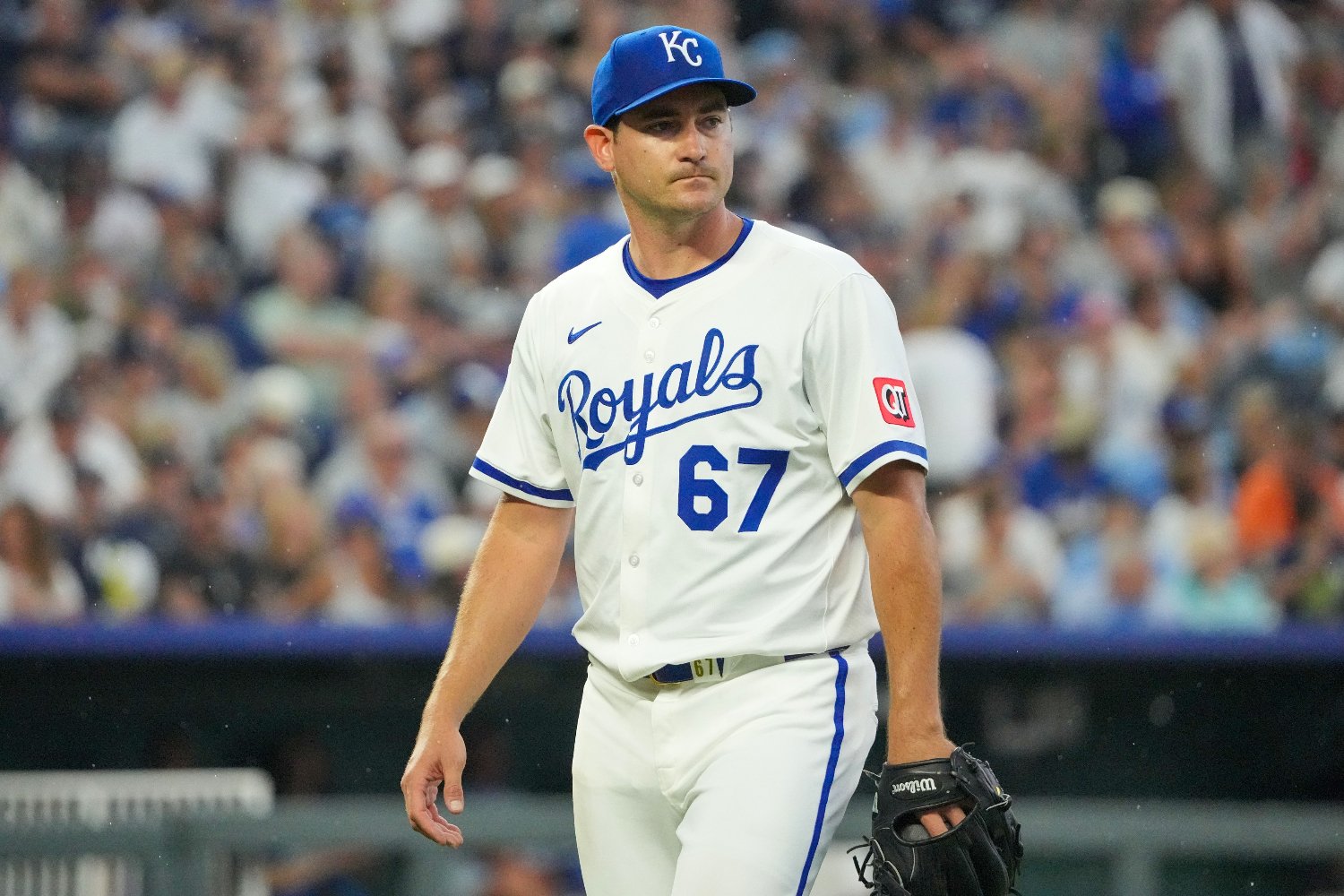 When the Royals acquired Seth Lugo in free agency prior to the 2024 season, it seemed like they struck big with the veteran righty who had only gotten back to starting in 2023 with the San Diego Padres. In 33 starts and 206.2 IP, Lugo posted a 3.00 ERA, 1.09 WHIP, 3.25 FIP, 3.77 K/BB ratio, and 4.7 fWAR. Those numbers not only earned him the Bruce Rice Pitcher of the Year award (which goes to Kansas City's best pitcher in a season), but they also helped him finish second in the AL Cy Young race (he was runner-up to Detroit's Tarik Skubal). Even though he was on the older end, the former 2011 Mets draft pick showed that he could be a top-of-the-rotation arm in his first season in Kansas City. Thus, there were high hopes that Lugo could have another strong campaign in 2025 and help the Royals return to the postseason. Unfortunately, things didn't go as planned for Lugo last season. In his second season, Lugo was dogged by injuries and inconsistency on the mound. He landed on the IL twice, with his first stint in May due to a right finger spin and his second due to a lower back strain. As a result, he made six fewer starts and only pitched 145.1 innings, 61.1 fewer than a year ago. While injury affected his inning total in 2025, he was also less effective in his starts, which also contributed to fewer innings on the mound. Lugo posted a 4.15 ERA, 1.29 WHIP, 5.09 FIP, 2.27 K/BB ratio, and 0.5 fWAR last season, all significant declines from the numbers he produced in his Royals debut in 2024. When looking deeper into his metrics, especially from a TJ Stats summary comparison, he also saw regression in his stuff (as measured by TJ Stuff+), chase rate, whiff rate, and xwOBACON. It's one thing to show a decline in one or two of those areas from one year to the next, as regression is always to be expected from a pitcher who outperformed expectations one season. That said, it's one thing to miss bats, not get chases, or give up hard hits. To allow all three things, however? That's a bit tougher to stomach, especially for a pitcher slotted at the top of the rotation. Interestingly enough, despite trade rumors throughout the season, the Royals opted to give Lugo an extension right before the Trade Deadline. Lugo's two-year, $46 million extension will keep him through 2027. The extension was a controversial choice for the Royals, especially with his age and his lackluster 2025 campaign. At the same time, the new contract may take a weight off of Lugo and allow him to come to Spring Training in Arizona fully focused on pitching and not on acquiring a "new" deal. Thus, what does Lugo need to do so he can be closer to the pitcher he was in 2024 rather than the one last season? Let's take a look at three things that could be worth paying attention to from Lugo, especially at the beginning of the upcoming year. Generating More Chase Lugo found more of the strike zone in 2025. His zone rate rose from 50.4% in 2024 to 51.2% a season ago. However, it seemed like throwing more strikes was a bit counterintuitive, as he generated much less chase. After posting a 27.9% chase rate in 2024, which was around league average, it fell to 23.8% last year, which was rated as below average. That seemed to affect his whiff rate (20.7%) and xwOBACON (.427), both of which were below average. Below is a look at his TJ Stats summary from a season ago, and it's interesting to see how all of his 10 offerings fared, especially in terms of chase. Of his 10 pitches, only two sported above-average chase rates: his curveball (32.6%) and his slow curve (24.1%). Interestingly, his slow curve had the best pitching grade at 74, and his curveball ranked second at 64. Thus, it makes sense that those pitches forced hitters to swing at pitches outside the zone, as they were of high quality. That is further demonstrated in the pitch clip compilation of the curve and slow curve below, which are from outings against the Twins and Yankees, respectively. Unfortunately, while the curve and slow curve were effective chase-inducing offerings, he failed to do much with the other eight pitches. His slurve had a grade of 53, which is above-average. That said, it generated below-average chase with a 25.7% mark. His other breaking offerings, his sweeper and slider, also sported below-average chase marks with rates of 22.6% and 19.2%, respectively. In terms of offspeed pitches, his splitter and changeup were better, with chase rates of 27.3% and 26.1%. Still, they were below the league average in chase rate, and his changeup chase rate was 3.7% worse than in 2024. As for fastball pitches (four-seamer, sinker, cutter), none of them had a chase rate above 23.4% (which was his cutter). Then again, his sinker and four-seamer had grades of 43 and 42, respectively, and his cutter had a 45 grade. Thus, they aren't exactly high-octane offerings, which makes them less prone to generating swings outside of the strike zone. For Lugo to generate more overall chase in 2026, he'll need to be more effective with his breaking and offspeed offerings. The dips in chase in those offerings seemed to have a broader effect on other important strike and batted-ball categories in 2025, as seen in the table below via Savant. By making adjustments to his breaking and offspeed pitches, he'll see positive effects in other areas like xwOBA, whiff rate, and put-away rate. It's likely the fastball metrics will remain stable, as they did from 2024 to 2025 (and it'll always be tough for him to generate high chase rates due to their lackluster velocity). However, he can't be mediocre again with his breaking and offspeed pitches, and focusing on improving his chase of those pitch types will be the key to turning things around. Limiting the Long Ball In addition to generating more chase in 2024, Lugo also did a better job of limiting home runs. Two seasons ago, he allowed a 0.70 HR/9 and 7.4% HR/FB rate, both stellar marks. Unfortunately, those marks rose to 1.67 and 15.4% in 2025. When trying to understand why those numbers spiked so much, it's important to look at the pitch types he gave home runs on a year ago, where they were thrown in the zone, and where in the ballpark they were hit. So let's look at the pitch type zone chart on home runs given up by Lugo in 2025. Hitters launched home runs off Lugo on breaking balls and offspeed pitches that were hung, and four-seamers and sinkers that didn't get vertical enough. Notice the number of waist-level pitches in that zone chart. Those are balls that will be easily launched out of any ballpark. That is further illustrated in the clip compilation below, which shows home runs from Detroit's Andy Ibanez and Pittsburgh's Oneil Cruz on waist-level mistakes from Lugo. Lugo Home Runs-2025 - Made with Clipchamp.mp4 Now, let's look at Lugo's home run spray chart from 2025 to get a sense of where home runs off Lugo were hit a season ago. 21 of Lugo's 27 home runs allowed were by left-handed hitters. Those struggles against lefties were evident in the spray chart above, as many of Lugo's home runs allowed were over the right- and right-center-field walls. That showed that lefties were teeing off on Lugo's mistakes, a sign that he was either tipping against lefties or they were able to pick him up better due to a slight change in mechanics. Lugo had a slightly higher arm angle in 2024 (33 degrees) than in 2025 (32 degrees), but it will be interesting to see if there was something else that was the cause of Lugo's homer struggles against lefties. To compare, let's take a look at Lugo's home run spray chart from 2024, via Savant. Notice in the spray chart above that the number of home runs to right and right-center-field were far fewer. The splits data confirm that Lugo gave up only seven home runs to lefties in 2024, compared to nine to righties. Even then, home runs that were allowed to righties weren't heavily pulled, as most of the home runs allowed by Lugo two seasons ago were in the gaps. That means that while hitters were crushing those balls, they weren't timing Lugo as effectively (pulled balls signal effective timing). Here is a look at the pitch type zone chart of Lugo's home runs in 2024. Most of the home runs Lugo allowed in 2024 were on sliders and sweepers, as six of his home runs allowed were on those two pitches. He also only gave up one home run on a changeup and only two on the curveball. To compare, he gave up four home runs on changeups in 2025 and three on curveballs. For Lugo to improve his overall line in 2026, he will need to be more effective at limiting the long ball, especially against lefties. Additionally, hanging his curve and changeup less will also be essential. If he doesn't, he could be due for a season closer to 2025 than 2024, not a good sign for a pitcher making $23 million per year. Inducing More Groundballs A key to Lugo's career has been his ability to generate a high percentage of groundballs. He has a career groundball rate (GB%) of 43.5%, and in his first season with the Royals, he had a 44.2% GB%. Furthermore, his GB% was 45.2% in 2023 with the Padres and 45.6% in 2022 with the Mets. That ability to generate a solid number of groundballs is essential to keep the ball in the yard and allow his plus middle-infield defense behind him to make plays and outs. However, Lugo took a step back in this area in 2025. His GB% dipped to 39%, a career low. He also gave up a barrel rate of 11.1% and a hard-hit rate of 45.2%, both career-highs. So not only was Lugo not keeping the ball on the ground, but he was also giving up a lot of hard, productive contact. When looking at his rolling chart of the launch angle of batted balls allowed by Lugo in 2024, he did a good job of producing below-average launch angle rates for most of the season (especially in the middle of the year). There were spikes of high launch angles allowed on batted balls, but they never persisted for too long, as seen below. Now, let's take a look at the same chart type from this past season. In 2025, Lugo's rolling launch angle chart was the inverse of the 2024 chart. He spent most of the year giving up high launch-angle batted balls and spent less time in that below-average zone (which is where pitchers want to be). This isn't surprising, of course, considering the high barrel and hard-hit rates allowed from 2025. Again, launch angle allowed can be tied to pitch command, and it was obvious that Lugo's command wasn't nearly as sharp in 2025 as it was in 2024. As his issues with chase and home runs allowed Lugo to see more groundballs in 2026, changes in his pitch quality may be needed. He throws a diverse number of pitches, which makes him hard to scout from a hitter's perspective. That said, the focus for Lugo may be on throwing BETTER pitches rather than MORE (which was his strategy last year). The key to inducing more groundballs may lie in the effectiveness of his offspeed pitches, especially when thrown low in the zone. In the wOBA zone chart below from 2024, Royals fans can see how effective Lugo was with his changeup and splitter offerings. In the lower zones, the highest wOBA Lugo gave up, beyond the .428 mark in the lower glove-side waste zone, was .220. That shows that hitters struggled to hone in on offspeed pitches when Lugo commanded them effectively (which is low in the zone). Now, let's take a look at that zone wOBA chart from last year, via Savant. The big difference is the lower armside area of the strike zone (zone 7 technically). After giving up a .224 wOBA in that zone in 2024, it rose to .394 in 2025. He was also hit much harder with offspeed pitches thrown in zone 4 (armside middle zone), as he went from a .194 wOBA in 2024 to a .631 mark in 2025. For Lugo to get back to his groundball-inducing ways again in 2026, he will need to focus on commanding his changeup and splitter better. Additionally, improving the offspeed quality and spin (1,650 RPM on offspeed pitches in 2025 compared to 1,730 RPM in 2024) that made him so effective at limiting productive contact would also be a step in the right direction toward a bounce-back for him in year three in Kansas City.
 -
 Image courtesy of Kevin Sousa-Imagn Images We are nearing the end of January, which means that we're nearing the end of the offseason. There are 19 days until Royals pitchers and catchers report to Surprise, Arizona. Thus, Royals GM JJ Picollo is finalizing the roster, ensuring that Kansas City is best equipped in preparation for the upcoming 2026 campaign. Right now, it seems like the Royals' roster is near completion, and it's unlikely that any major moves will occur this offseason. Ken Rosenthal reported that it was unlikely to land Boston's Jarren Duran or St. Louis' Brendan Donovan, who were both rumored as trade targets for the Royals earlier this offseason. Thus, if the Royals do add another player to the roster, it will likely be a low-cost player, whether through free agency or trade. That said, Kansas City could benefit from adding another bat to this roster, just to give them some depth off the bench. According to Roster Resource, the Royals are projected to have a starting outfield of Isaac Collins (LF), Kyle Isbel (CF), and Jac Caglianone (RF) with Lane Thomas, Nick Loftin, Michael Massey, and Tyler Tolbert coming off the bench. That's not a bad group, but Kansas City could benefit from having another veteran or two to solidify the lineup. Thankfully, there are still targets available, including those with familiarity with the Royals' roster, clubhouse, and manager Matt Quatraro. That experience with the organization could mean a smoother transition, and thus, more production in 2026. In this post, I will look at four players who have suited up for the Royals in the past couple of years who could make sense for Kansas City on short-term, low-cost deals for the upcoming season. (Statcast season summary cards courtesy of TJ Stats.) Adam Frazier, UT (Last Played With Royals: 2025) Statistically, Frazier didn't have a great 2024 with the Royals, as he posted a 65 wRC+ and -0.5 fWAR in 294 plate appearances. Nonetheless, he brought some intangibles to the clubhouse, as the Royals experienced a 30-win turnaround from 2023 to 2024. Was Frazier responsible for the majority of that? Of course not, but he definitely brought professionalism and experience that the Royals lacked the previous season. The Pirates jumped on him last offseason, signing him to a one-year deal. However, Frazier didn't have the same impact in Pittsburgh as the Pirates went 71-91. As a result, the then-33-year-old utility player was traded to Kansas City at the All-Star Break for Cam Devanney. Frazier's return to Kansas City was a huge boost to the Royals' lineup. He posted a 98 wRC+ and 0.6 fWAR in 197 plate appearances, and the Royals went 35-30 in the second half (after going 47-50 prior to the All-Star Break). Overall, Frazier posted an 89 wRC+ and 0.7 fWAR in 459 plate appearances with Pittsburgh and Kansas City last year. Hence, he showed that he still has something left in the tank, especially for a team with playoff aspirations. It's been surprising to see Frazier go this long without being picked up by another MLB team, especially since teams are always looking for guys who can positively affect a clubhouse (which Frazier has done for multiple clubs in the past). However, that could work in the Royals' favor, as it could encourage him to agree to a cheap $1 million deal or perhaps a Minor League one with the opportunity to earn a roster spot in Spring Training. Frazier would displace someone like Loftin, who is younger, has more upside, but a less proven track record at the Major League level. Tommy Pham, OF (Last Played With Royals: 2024) Speaking of players who played with the Pirates last year, Pham is another outfield option who remains unsigned. The 37-year-old was expected to be a trade target at the Trade Deadline last year, but he ended up staying put in Pittsburgh. It was the first time Pham had spent an entire season with a single team since 2021 (with San Diego). Pham held his own with the Pirates, especially at the plate. In 449 plate appearances, he hit 10 home runs, collected 52 RBI, and posted a 94 wRC+. He also posted a 0.53 BB/K ratio and had a .318 xwOBA, a sign that he could've been even better in a more hitter-friendly home ballpark. The main issue with Pham last year was his defense, as he sported a -3 OAA and -4 FRV in the outfield. The former Cardinals draft pick has long been a prickly personality, which explains why he's been on so many teams. Even this offseason, he's gone on a bit of a crusade against "advanced metrics", coining his own "metric" called PhamGraphs, which he believes is a better measure of player success (if that sounds weird, it's because it totally is). Pham has "eccentric" viewpoints, to put it nicely, whether it's on statistics, competing, or fantasy football. Putting that all aside, though, he does sport a skill that the Royals have valued this offseason from hitters: he doesn't chase. According to Statcast percentiles, his O-Swing% ranked in the 94th percentile, and his whiff rate and Z-Contact rate ranked in the 61st and 60th percentiles, respectively. In addition to a good eye at the plate, he hit the ball hard last year as well, as evidenced by a 74th percentile hard-hit rate and 85th percentile average exit velocity. The Royals interestingly didn't bring back Pham last year, even though he was a key player for them down the stretch and in the postseason in 2024. He may not be the easiest teammate to understand. That said, if the Royals are looking for a platoon bat (121 career wRC+ against lefties) who can play all three positions in the outfield, Pham fits the bill perfectly. Randal Grichuk, OF (Last Played With Royals: 2025) The Royals targeted Grichuk last offseason, but he ended up signing a one-year deal to return to Arizona. However, the Diamondbacks played themselves out of playoff contention, and the Royals were able to acquire him in exchange for reliever Andrew Hoffmann around the Trade Deadline. Unfortunately, Grichuk failed to secure a roster spot with the Kansas City Royals. In 43 games and 105 plate appearances, Grichuk posted a 56 wRC+ and -0.4 fWAR. He struggled defensively in Kauffman's spacious dimensions, and he didn't hit nearly enough to earn regular playing time with the Royals. The Royals held a mutual option for 2026 with Grichuk, but they opted out, paying the $3 million buyout. The 34-year-old outfielder remains unsigned, and it seems unlikely that Grichuk will get more than a Minor League deal from a team this offseason, due to his career splits (118 wRC+ against lefties; 93 wRC+ against righties) and limited defensive ability. That said, his metrics show that he was much better than his overall stats demonstrated last year. Despite an 82 wRC+ in 2025 with Arizona and Kansas City, he ranked in the 91st percentile in average exit velocity, 86th percentile in hard-hit rate, and 73rd percentile in barrel rate. As a result, his .348 xwOBA was 59 points higher than his actual wOBA in 2025. Thus, Grichuk could see some positive regression in 2026, especially with Kauffman Stadium's new park dimensions. When looking at his spray chart from last year, modified to Target Field, which would be similar to the new Kauffman dimensions, Grichuk would've picked up a few more home runs a season ago. I am not sure if Grichuk would be willing to come back, especially after declining the mutual option and having inconsistent playing time down the stretch. That said, he may be convinced to return to Kansas City if he were guaranteed more playing time, even if it is in a strictly platoon role. MJ Melendez, OF (Last Played With the Royals: 2025) I saved this one for last, as I know some Royals fans would be outraged with the idea. After all, Melendez was awful at the MLB level last year with a -14 wRC+ and -0.6 fWAR in only 65 plate appearances. That's a concentrated level of bad. Furthermore, his Royals tenure wasn't all that great overall, as illustrated by a career -1.1 fWAR and an 88 wRC+ in 1,652 plate appearances. However, Melendez could be an interesting fit as a Minor League asset who could be trade bait later in the season. First off, the hard-hit metrics have always been there for Melendez. He has a career 91.7 MPH average exit velocity, 10.1% career barrel rate, and 46.2% career hard-hit rate. Those are pretty elite marks, even for a hitter with as much plate discipline (0.38 career BB/K ratio) and contact issues (71.6% career contact rate) as Melendez. He also did much better once he went back to his old swing in Omaha, as illustrated by his TJ Stats Statcast summary with the Storm Chasers a season ago. Second, I think Melendez could respond more effectively to the new hitting instruction within the organization. Gone is Drew Saylor, and in his place is a two-headed effort with Nic Jackson taking control of Upper Minors hitting development and Abrahan Nunez in charge of the Lower Minors portion. Thus, the Royals could allow Melendez to make adjustments and focus solely on recouping much of the value he lost in the past season. He won't play at all in the Majors with the Royals, nor should he at this point in his career. However, if he can get hot and show some progress in contact ability, he could net the Royals a mid or lower level prospect mid-season, especially for a team that may be desperate for offensive production in the outfield. It seems unlikely that Melendez will get another chance with another organization, even on a Minor League deal. However, the Royals could take a chance on their former second-round pick in 2026. He would give them the guaranteed production they need in Omaha (I would rather have him in the outfield than Drew Waters) while being a lottery pick who could generate some low-level trade value they may not get from other Triple-A outfielders. View full article
 -
Back to Kansas City? Four Free Agents Whose Return Could Make Sense
Kevin O'Brien posted an article in Royals
 We are nearing the end of January, which means that we're nearing the end of the offseason. There are 19 days until Royals pitchers and catchers report to Surprise, Arizona. Thus, Royals GM JJ Picollo is finalizing the roster, ensuring that Kansas City is best equipped in preparation for the upcoming 2026 campaign. Right now, it seems like the Royals' roster is near completion, and it's unlikely that any major moves will occur this offseason. Ken Rosenthal reported that it was unlikely to land Boston's Jarren Duran or St. Louis' Brendan Donovan, who were both rumored as trade targets for the Royals earlier this offseason. Thus, if the Royals do add another player to the roster, it will likely be a low-cost player, whether through free agency or trade. That said, Kansas City could benefit from adding another bat to this roster, just to give them some depth off the bench. According to Roster Resource, the Royals are projected to have a starting outfield of Isaac Collins (LF), Kyle Isbel (CF), and Jac Caglianone (RF) with Lane Thomas, Nick Loftin, Michael Massey, and Tyler Tolbert coming off the bench. That's not a bad group, but Kansas City could benefit from having another veteran or two to solidify the lineup. Thankfully, there are still targets available, including those with familiarity with the Royals' roster, clubhouse, and manager Matt Quatraro. That experience with the organization could mean a smoother transition, and thus, more production in 2026. In this post, I will look at four players who have suited up for the Royals in the past couple of years who could make sense for Kansas City on short-term, low-cost deals for the upcoming season. (Statcast season summary cards courtesy of TJ Stats.) Adam Frazier, UT (Last Played With Royals: 2025) Statistically, Frazier didn't have a great 2024 with the Royals, as he posted a 65 wRC+ and -0.5 fWAR in 294 plate appearances. Nonetheless, he brought some intangibles to the clubhouse, as the Royals experienced a 30-win turnaround from 2023 to 2024. Was Frazier responsible for the majority of that? Of course not, but he definitely brought professionalism and experience that the Royals lacked the previous season. The Pirates jumped on him last offseason, signing him to a one-year deal. However, Frazier didn't have the same impact in Pittsburgh as the Pirates went 71-91. As a result, the then-33-year-old utility player was traded to Kansas City at the All-Star Break for Cam Devanney. Frazier's return to Kansas City was a huge boost to the Royals' lineup. He posted a 98 wRC+ and 0.6 fWAR in 197 plate appearances, and the Royals went 35-30 in the second half (after going 47-50 prior to the All-Star Break). Overall, Frazier posted an 89 wRC+ and 0.7 fWAR in 459 plate appearances with Pittsburgh and Kansas City last year. Hence, he showed that he still has something left in the tank, especially for a team with playoff aspirations. It's been surprising to see Frazier go this long without being picked up by another MLB team, especially since teams are always looking for guys who can positively affect a clubhouse (which Frazier has done for multiple clubs in the past). However, that could work in the Royals' favor, as it could encourage him to agree to a cheap $1 million deal or perhaps a Minor League one with the opportunity to earn a roster spot in Spring Training. Frazier would displace someone like Loftin, who is younger, has more upside, but a less proven track record at the Major League level. Tommy Pham, OF (Last Played With Royals: 2024) Speaking of players who played with the Pirates last year, Pham is another outfield option who remains unsigned. The 37-year-old was expected to be a trade target at the Trade Deadline last year, but he ended up staying put in Pittsburgh. It was the first time Pham had spent an entire season with a single team since 2021 (with San Diego). Pham held his own with the Pirates, especially at the plate. In 449 plate appearances, he hit 10 home runs, collected 52 RBI, and posted a 94 wRC+. He also posted a 0.53 BB/K ratio and had a .318 xwOBA, a sign that he could've been even better in a more hitter-friendly home ballpark. The main issue with Pham last year was his defense, as he sported a -3 OAA and -4 FRV in the outfield. The former Cardinals draft pick has long been a prickly personality, which explains why he's been on so many teams. Even this offseason, he's gone on a bit of a crusade against "advanced metrics", coining his own "metric" called PhamGraphs, which he believes is a better measure of player success (if that sounds weird, it's because it totally is). Pham has "eccentric" viewpoints, to put it nicely, whether it's on statistics, competing, or fantasy football. Putting that all aside, though, he does sport a skill that the Royals have valued this offseason from hitters: he doesn't chase. According to Statcast percentiles, his O-Swing% ranked in the 94th percentile, and his whiff rate and Z-Contact rate ranked in the 61st and 60th percentiles, respectively. In addition to a good eye at the plate, he hit the ball hard last year as well, as evidenced by a 74th percentile hard-hit rate and 85th percentile average exit velocity. The Royals interestingly didn't bring back Pham last year, even though he was a key player for them down the stretch and in the postseason in 2024. He may not be the easiest teammate to understand. That said, if the Royals are looking for a platoon bat (121 career wRC+ against lefties) who can play all three positions in the outfield, Pham fits the bill perfectly. Randal Grichuk, OF (Last Played With Royals: 2025) The Royals targeted Grichuk last offseason, but he ended up signing a one-year deal to return to Arizona. However, the Diamondbacks played themselves out of playoff contention, and the Royals were able to acquire him in exchange for reliever Andrew Hoffmann around the Trade Deadline. Unfortunately, Grichuk failed to secure a roster spot with the Kansas City Royals. In 43 games and 105 plate appearances, Grichuk posted a 56 wRC+ and -0.4 fWAR. He struggled defensively in Kauffman's spacious dimensions, and he didn't hit nearly enough to earn regular playing time with the Royals. The Royals held a mutual option for 2026 with Grichuk, but they opted out, paying the $3 million buyout. The 34-year-old outfielder remains unsigned, and it seems unlikely that Grichuk will get more than a Minor League deal from a team this offseason, due to his career splits (118 wRC+ against lefties; 93 wRC+ against righties) and limited defensive ability. That said, his metrics show that he was much better than his overall stats demonstrated last year. Despite an 82 wRC+ in 2025 with Arizona and Kansas City, he ranked in the 91st percentile in average exit velocity, 86th percentile in hard-hit rate, and 73rd percentile in barrel rate. As a result, his .348 xwOBA was 59 points higher than his actual wOBA in 2025. Thus, Grichuk could see some positive regression in 2026, especially with Kauffman Stadium's new park dimensions. When looking at his spray chart from last year, modified to Target Field, which would be similar to the new Kauffman dimensions, Grichuk would've picked up a few more home runs a season ago. I am not sure if Grichuk would be willing to come back, especially after declining the mutual option and having inconsistent playing time down the stretch. That said, he may be convinced to return to Kansas City if he were guaranteed more playing time, even if it is in a strictly platoon role. MJ Melendez, OF (Last Played With the Royals: 2025) I saved this one for last, as I know some Royals fans would be outraged with the idea. After all, Melendez was awful at the MLB level last year with a -14 wRC+ and -0.6 fWAR in only 65 plate appearances. That's a concentrated level of bad. Furthermore, his Royals tenure wasn't all that great overall, as illustrated by a career -1.1 fWAR and an 88 wRC+ in 1,652 plate appearances. However, Melendez could be an interesting fit as a Minor League asset who could be trade bait later in the season. First off, the hard-hit metrics have always been there for Melendez. He has a career 91.7 MPH average exit velocity, 10.1% career barrel rate, and 46.2% career hard-hit rate. Those are pretty elite marks, even for a hitter with as much plate discipline (0.38 career BB/K ratio) and contact issues (71.6% career contact rate) as Melendez. He also did much better once he went back to his old swing in Omaha, as illustrated by his TJ Stats Statcast summary with the Storm Chasers a season ago. Second, I think Melendez could respond more effectively to the new hitting instruction within the organization. Gone is Drew Saylor, and in his place is a two-headed effort with Nic Jackson taking control of Upper Minors hitting development and Abrahan Nunez in charge of the Lower Minors portion. Thus, the Royals could allow Melendez to make adjustments and focus solely on recouping much of the value he lost in the past season. He won't play at all in the Majors with the Royals, nor should he at this point in his career. However, if he can get hot and show some progress in contact ability, he could net the Royals a mid or lower level prospect mid-season, especially for a team that may be desperate for offensive production in the outfield. It seems unlikely that Melendez will get another chance with another organization, even on a Minor League deal. However, the Royals could take a chance on their former second-round pick in 2026. He would give them the guaranteed production they need in Omaha (I would rather have him in the outfield than Drew Waters) while being a lottery pick who could generate some low-level trade value they may not get from other Triple-A outfielders.
 -
Can Michael Massey Return to Form in 2026?
Kevin O'Brien replied to Kevin O'Brien's topic in Kansas City Royals Talk
I don't think it's out of the question for him to play 3B in a pinch. I don't think it would be very much though, as I figure Garcia would be an everyday guy there. However, if Garcia gets hurt and Massey is hitting, I wouldn't be surprised to see Massey fill in there. -
Carlos Beltran Elected To The Baseball Hall Of Fame
Kevin O'Brien replied to Matthew Lenz's topic in Kansas City Royals Talk
I would love to see Beltran inducted as a Royal. Unfortunately, I think he will likely be inducted as a Met. -
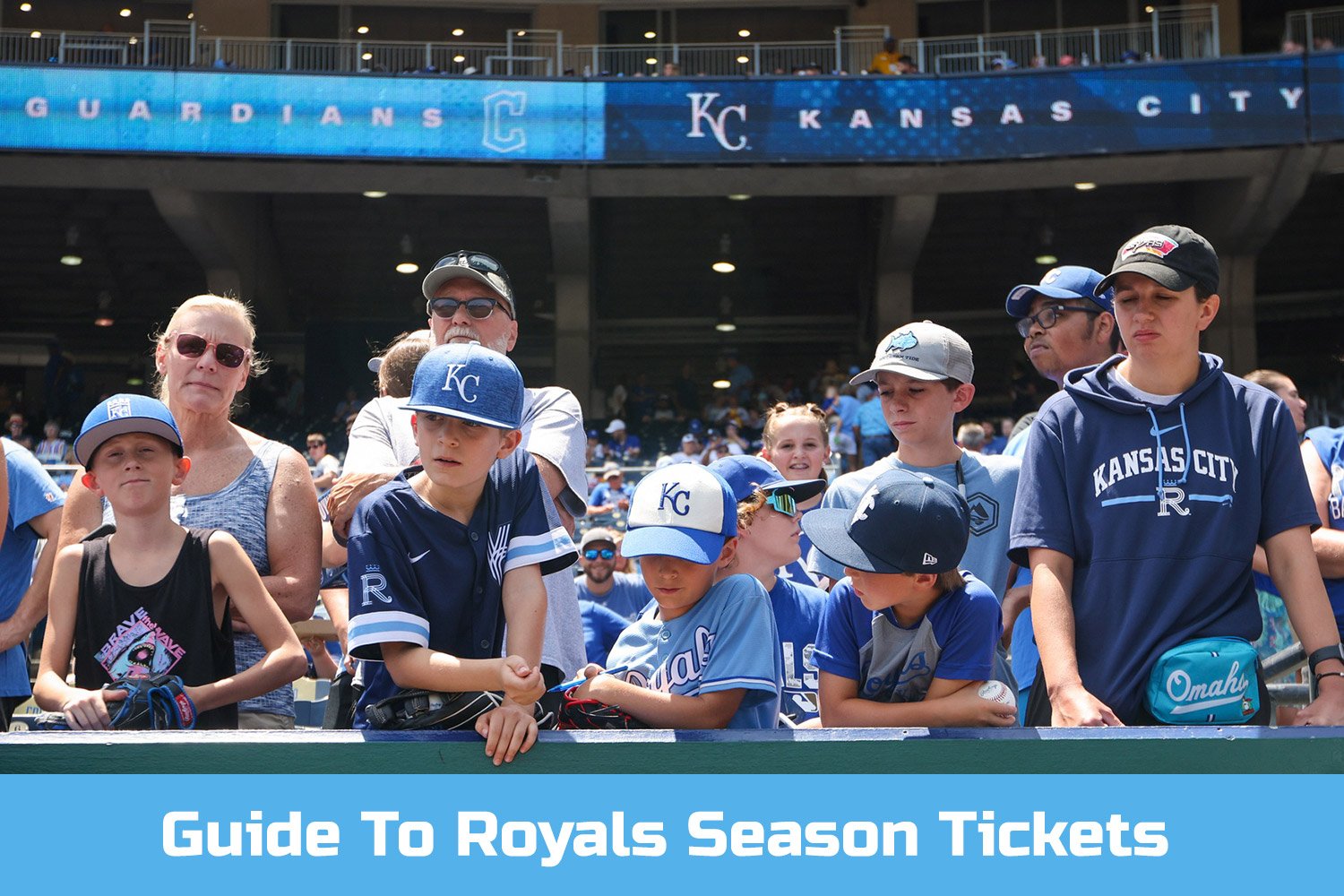 In addition to reporting on and analyzing the Royals players and team, I am a Royals season ticket member. My wife and I have had season tickets since 2022, but we originally had a ticket plan in the short-lived "Keep" section in 2021 (those seats were in the left field's second level, right by the Miller Lite party section). Thus, we will be entering our sixth season with a "ticket package" for the Royals. I go to about 20-30 games per year, depending on how the summer works out work-wise (despite the popular perception, I DO have to work in the summer as an educator). Thus, I have composed this "The Ultimate Guide to Royals Season Tickets & Ticket Packages" to give some perspective on what it's like to be an STM or have a Royals ticket package. After back-to-back winning seasons in 2024 and 2025, Royals fans may want to not just watch multiple games this season at the K, but also get a package that's a bit more manageable/predictable for the wallet. If the Royals continue to show this upward progression competitively, ticket prices on the secondary market will only increase. Thus, in this "Ultimate Guide," I will explore the available ticket packages for Royals fans and what makes sense for them this season, based on their particular situations. What's the Difference Between Having a Ticket Package and Being a Season Ticket Member? The Royals offer both "mini plans" and the ability to be a Season Ticket Member, or an "STM" for short. Even though both options allow fans to get discounted tickets to multiple games, STM offers many benefits beyond just tickets. Below is a screenshot from their Royals STM Benefits page showing what fans would receive as STMs. As fans can see, it's an extensive list of extras. The benefits I have primarily used are the 15% discount on additional single-game purchases, the discounted parking passes, the live ticket exchange program, the unused season ticket redemption program, and the complimentary MLB.TV subscription (even though the Royals are blacked out, I still watch plenty of MLB games, and the Royals' affiliates are also on MLB.TV). Discounted parking is my favorite feature, since reserved parking costs $21 with fees, while general parking costs $16. Usually, those cost $31 and $21 with fees. The live ticket exchange program is nice when you know you'll miss a game in advance. Oftentimes, there isn't a price change as long as the game isn't an "upgrade" one (i.e., you're not trading Marlins tickets for Yankees ones). Some fees are applied when you make an online transaction, but if you email or call your STM representative, they will usually waive them. The unused ticket exchange works similarly, but is done after a fan misses a game. The only issue is that the games one can choose are predetermined, and I have often found that they conflict with the games on my current ticket package. Nonetheless, it's great that fans can still make up a game they missed later in the year, even if they didn't make that exchange ahead of time. The team store and concessions discounts are nice, though fans can't use their discount on alcohol, which is probably a good thing (though public drunkenness at Royals games isn't nearly as bad as at Chiefs games). Lastly, another added benefit is that STMs get a certain number of promo coupons they can use to get a giveaway from a previous night, perhaps (if they have leftovers). Some aren't available (the Patrick Mahomes bobblehead being one). However, I have always exhausted my promo coupons during the season, which can be utilized at the STM guest services by the team store at Kauffman Stadium. STMs can also buy a guaranteed promo pack to secure all promos (mailed in) for themselves without waiting in line. Speaking of lines, the STM entrance is also a nice way to avoid traffic on gameday, especially for those waiting close to the first pitch to get into the stadium. What Are the Royals Ticket Mini Packs? For Royals fans who aren't willing (or able) to make that STM commitment, there are mini-pack ticket packages that let fans get multiple Kauffman Stadium tickets in a season at a discounted price. These make more sense for fans buying tickets for themselves, not for anyone else. Unfortunately, they do not come with any STM benefits. That said, if you are an STM, you can use your benefits with these packages (which may be good if you're looking to purchase additional games or seats). Currently, only two mini-packs are available, though a third, the Fountain Pass, will be available once games begin in March. Below are my thoughts on each package. Royals Opening Day Plus 3 Pack It's a pretty basic package. This is probably better for casual fans who want to ensure they get seats on Opening Day and will likely go to a few more games during the season. The added benefit is that you save a bit on those three games (compared to buying them individually on the Royals site). Royals Pick 10 Pack This is a solid package for those who want to attend more games but aren't ready to commit to an STM package. You save 15% on the tickets, avoid fees, and get to choose whatever games you want (including high-end games like the Cardinals, Yankees, and Dodgers). The price tends to be pretty reasonable, with upper decks in the $150-175 range for all 10, depending on the games selected. How much is the Royals Fountain Pass? The Royals had a Christmas special on Fountain Passes for $249.99 for the whole season, but that promotion has passed. Typically, the Fountain Pass is available for purchase each month for $79.99, and it is renewed each month until you cancel. I have had the Fountain Pass for a few months and canceled it toward the end of the season, once school starts (when I can go to fewer games). As the description says, the Fountain Pass only guarantees entrance, not a seat. However, one can access the limited open seating sections in social areas such as Rivals Sports Bar and Craft and Draft. Furthermore, a bunch of seats are typically available in the upper decks. So, as long as fans don't mind the nosebleeds, one can get a seat without much fuss from the ushers. The only time that strategy wouldn't work would be on those "prime" game nights, when the stadium may be packed. If using the Fountain Pass for a Cardinals or Yankees game, you may need to expect to be standing for most of the game. The Fountain Pass can be a nice supplement with an STM membership, especially for those who like to go to games on a whim and get discounted parking. The Different Kinds of Royals Season Ticket Membership There are two types of STM Membership: the traditional and the flex. Let's look at the pros and cons of each. Traditional Membership There are three types of traditional membership: 81 games (full season), 41 games (half season), and 20 games (partial season). Opening Day is included with full- and half-season memberships, but it's an additional cost with a partial-season membership. Your Royals STM representative can help ensure Opening Day becomes a regular part of your package. With traditional packages, fans get a set schedule of games for their respective seats. With full-season tickets, that's all of them, so there's no real issue here. However, for the half and partial plans, the Royals offer different options, so you can choose the package that works with your schedule. The only issue is that longer-tenured STMs get priority, so if you switch packages (especially for half and partial), you may not get your seat/section of choice. That's why I haven't changed my games package as a partial season ticket holder. The traditional packages are suitable for those who may revolve their summer plans around Kansas City Royals baseball, which my wife and I do. We find out the games, get those on our calendars, and plan other trips around that (to the best of our ability). It doesn't work 100% of the time, but at least we can utilize the live ticket exchange or unused ticket program for missed games. The main issue with this package is the lack of flexibility to add tickets or seats to existing games. So, a traditional package may be complex for large families, especially if family members are unsure about their Royals-attending schedule. I would suggest that the full-season package may be nice for multiple families who may want to "split" games rather than buy numerous partial-season packages. I wouldn't suggest purchasing a full-season package and reselling it with the expectation of making a significant profit. First, MLB tickets aren't as profitable as they once were, even when the teams are good. Furthermore, reselling a large amount can prevent one from getting postseason priority (since you may be flagged as a "vendor," which can open up other financial and tax issues if you're not prepared for it). The Flex Membership This is becoming more popular, especially among families with multiple members who want to attend games but aren't willing to commit to a set number. With the "Fans Choice" pack, fans can purchase three different "levels" of membership: $2,500, $5,000, $10,000, and $20,000 (they will also release a $1,000 version soon, but that isn't available for now). After you purchase your "amount," you can utilize it however you wish. You can get Opening Day tickets in section 412 for you and your spouse with the package. You can also purchase five seats in section 112 with your spouse and kids for a May game against the White Sox. There is unlimited ticket flexibility here as long as you don't exhaust your membership "funds." That said, fans can "add" to their funds if necessary, which is probably why they have added the "$1,000" membership model. A family that my wife and I are friends with did this package last year and has been a huge fan of it. They have grown adult kids, and before, they would get a traditional package, and their kids would buy a 10-pack. With this package, they have more flexibility with games and can use the STM benefits together (which wasn't the case before). The "Fan's Choice" has fewer STM benefits than the traditional package (seen on the page I linked). That said, the flexibility is convenient, especially for those with busy summers outside of Royals baseball. Which Royals Season Ticket Package is for You? Getting a ticket package, especially a Royals season ticket, is a unique practice. Even though the cost benefits fans who attend multiple games in a season, it requires a financial and time commitment. The last thing anyone would want is to purchase an STM package and not use it to its full capacity. You're essentially flushing money down the toilet at that point. I suggest purchasing what you can afford, and that fits your schedule. A Pick-10 pack could be a nice entry to seeing more regular-season Royals games without making the STM commitment. If the Pick-10 was enjoyable and you wanted more, perhaps upgrading to an STM package the following season may be the right call. Furthermore, also know what kind of Royals fan you are before purchasing. Do you like going to the Royals games because they win? Or do you actually like the sport of baseball and enjoy the experience, regardless of the result? And are you willing to make the commute and carve out all the time necessary to not just watch a game but get to the stadium and leave, which can be unpredictable traffic-wise, depending on the opponent and day of the week? If it's the former, maybe being an STM isn't for you, especially with how fickle Royals baseball seasons can be. While Royals fans have higher expectations, the division should be similar to last season, which was tough besides the White Sox. If it's the latter, then I would say jump on board. There won't be a better investment you'll make as a baseball fan, especially since the experience at Kauffman, regardless of the day or the opponent, can't be beaten.
 -
Image courtesy of Jay Biggerstaff-Imagn Images The Kansas City Royals know that a better lineup will be key to an improvement in 2026. After all, they ranked 26th in runs scored and home runs, 22nd in OBP, and 20th in OPS last season, which helps explain why they went 82-80 last year and missed the postseason. Those rankings have to be better in 2026 if they want to return to the playoffs after a one-year hiatus. So far, JJ Picollo has made efforts to improve the lineup this offseason. He signed former Guardians outfielder Lane Thomas on a one-year, $5.2 million deal and acquired outfielder Isaac Collins in a trade with Milwaukee. They also signed utility players Josh Rojas, Kevin Newman, and Abraham Toro, hoping one of them could be a wild card and have a surprising 2026 campaign in their new surroundings in Kansas City. However, it's looking like the Royals' ability to make a big deal may be starting to dwindle. That is especially true in the wake of big free-agent moves such as Kyle Tucker's signing with the Dodgers and Bo Bichette's with the Mets. Ken Rosenthal reported as such in his latest article on The Athletic. Here's what Rosenthal said in that article about the Royals' outlook for the remainder of the offseason, especially relating to Boston's Jarren Duran and St. Louis' Brendan Donovan, whom they have both been tied to this winter. Hence, for the Royals to win 83 or more games this season (which will be needed to make the postseason), they will need continued production from their core hitters (Bobby Witt Jr., Vinnie Pasquantino, Maikel Garcia, and Salvador Perez) as well as some breakouts from their complementary ones. One of those complementary ones could be Michael Massey, who is coming off a rough 2025 season. Massey's role is a bit unclear for 2026, especially with Jonathan India returning on a one-year, $8 million deal. India is expected to be the Royals' regular second baseman this season, and there is hope that his batted-ball luck and batted-ball approach could improve in 2026, which could lead to better offensive production (as Philip Ruo talked in an article here, Royals Keep). However, for the Royals' offense to truly improve, a solid campaign from Massey, even as a utility player, will be necessary. Thus, let's take a look at what Massey did in 2025, what his outlook could be for this upcoming season, and how he could be best utilized by manager Matt Quatraro this season and possibly beyond. Solid Contact Ability, But Lackluster Power Metrics from Massey Massey seemed to be trending in the right direction in 2023 and 2024, when he started getting regular playing time with the Royals. In his first full season in Kansas City in 2023, Massey hit 15 home runs, collected 55 RBI, and stole six bases in 461 plate appearances. Granted, he only posted a 74 wRC+, .283 wOBA, and accumulated a 0.5 fWAR, which were all disappointing marks. That said, he also had a .318 xwOBA, thus illustrating that Massey was capable of seeing positive regression in the future. Positive regression did occur in 2024, even though Massey struggled with injuries and played in only 100 games (29 fewer than in 2023). His wRC+ improved to 104, his wOBA to .317, and fWAR to 1.5 in 2024. Massey was the starting second baseman for the Royals in the postseason and came up with some key hits in the playoffs, including the ALDS against the Yankees. Unfortunately, things fell back to earth for Massey in 2025. In 77 games and 277 plate appearances, he posted a 57 wRC+, .254 wOBA, and -0.4 fWAR. On a positive note, he provided some solid defense at both second base and left field, as evidenced by his +2 FRV and +1 FRV, respectively. That said, his defense was not enough to make up for his porous production at the plate. A big issue for Massey was not his contact ability. He only struck out 15.5% of the time last year, a career low. However, he had a too free-swinging approach. His walk rate was only 3.2% (a career-low), and his O-Swing% was 35.4%, 7.3% higher than the league average. Massey also struggled in terms of exit velocity, barrel rate, and hard-hit rate, as illustrated by his TJ Stats summary below. As Royals fans could see above, Massey ranked in the 15th percentile in average EV, 11th percentile in Max EV, 9th percentile in Barrel%, and 13th percentile in Hard-Hit%. Those aren't encouraging trends, even with the fences at Kauffman Stadium being moved in slightly for 2026. Conversely, a positive trend for Massey in batted-ball metrics was that he still launched the ball well. That is especially illustrated by his 58th percentile LA Sweet-Spot%. He also pulled the ball effectively with a 91st percentile Pull% and 69th percentile Pull Air%. His spray chart shows that his pull-heavy approach proved successful, especially when it came to extra-base hits, when he launched the ball effectively. He also demonstrated a positive trend in xwOBA over the course of the 2025 season. After hitting a low point around the 190th plate-appearance mark of the season, he turned it around at the 200th plate-appearance mark and ended up being an above-average hitter in terms of xwOBA by the conclusion of his season. Therefore, even though the overall numbers weren't great for Massey, he showed encouraging signs in 2025 that should make Royals fans hopeful he could have a season in 2026 closer to 2024 in production. What Do the Projections Say for Massey? When it comes to projections for Massey in 2026, I compiled in Datawrapper a collection of the following projections: Fangraphs' Depth Charts (FGDC) Steamer The BAT X OOPSY I included the following categories as well: Plate Appearances (PA) Home Runs (HR) Runs Scored (R) Runs Batted In (RBI) Weighted On-Base Average (wOBA) Weighted Runs Created Plus (wRC+) Here are the 2026 projections for Massey, as illustrated in the table below. Depth Charts (FGDC) and Steamer were the most optimistic about Massey's production in 2026. Not only did they project the best wOBA (.301), but also the best wRC+ (89). FGDC and OOPSY projected the most at-bats and the same number of home runs (nine), but FGDC was slightly more optimistic, as illustrated by FGDC predicting a better wOBA and wRC+. Massey's The Bat X projections were the most intriguing. They projected the worst wRC+ and wOBA, and by a decent margin (his wOBA was 10 points lower than his FGDC mark; his BAT X wRC+ was also seven points lower than his FGDC wRC+). Those aren't good, obviously. However, the BAT X also projected the most home runs (10) and RBI (40) of the four projection systems. Hence, while the BAT X doesn't predict a great overall performance, they project his home run and run production could still be impactful in 2026. The key difference with the BAT X is that it incorporates batted-ball and Statcast data into its projections. When looking at Massey's Ideal Angle% trend from last year, he proved to be above-average in this area for most of the year, which could help him launch home runs effectively in 2026. Granted, none of the projections expect Massey to be a regular contributor for the Royals in this upcoming season. However, if Massey can showcase some of the power potential early, especially in the new Kauffman surroundings, he could earn himself more playing time over the course of the season. Final Thoughts on Massey's 2026 Outlook When looking at the Royals hitters' BAT X projections for 2026, Massey ranks 11th in terms of Fantasy Points production (FPTS). While this isn't a fantasy baseball article, FPTS can offer a glimpse of a player's overall production, especially compared to his peers. As seen in the table below via Datawrapper, Massey ranks toward the bottom of this group of Royals hitters when it comes to expected FPTS production. Massey doesn't strike out, and he launches the ball well. However, the exit velocity and batted-ball metrics remain red flags, and his lackluster bat speed doesn't help his outlook either. When looking at his bat speed trend from last year via Savant, Massey was a below-average hitter, with his average bat speed being 70.1 MPH last season. That bat speed was 0.8 MPH decline from 2024 and a 0.7 MPH decline from 2023. Thus, it will be interesting to see how his bat speed fares in 2026, especially if he is healthier than he was a season ago. A positive regression to his 2024 and 2025 bat speed could mean a double-digit HR season could be coming in 2026. No change or a negative regression? Massey may be seeing more time in Omaha than in Kansas City. Massey will be 28 years old in March, so there isn't much time for the former Illinois product to "prove" himself. We saw two Royals players enter 2025 needing solid seasons to justify their roster spots: Garcia and MJ Melendez. Garcia played himself to an All-Star appearance and a multi-year extension this offseason. As for Melendez, he spent most of the season with the Storm Chasers, and he was eventually non-tendered. I believe Massey offers much more upside and a history of better production than Melendez did at the MLB level. Massey has a career 1.5 fWAR in 358 games, while Melendez has a -1.1 career fWAR in 435 career games. Thus, Massey is in a better spot than Melendez was a year ago. Nonetheless, this is a game of production, and Massey needs to produce at the plate in 2026 if he wants to have a long-term future with the Royals (or MLB team in general). View full article
-
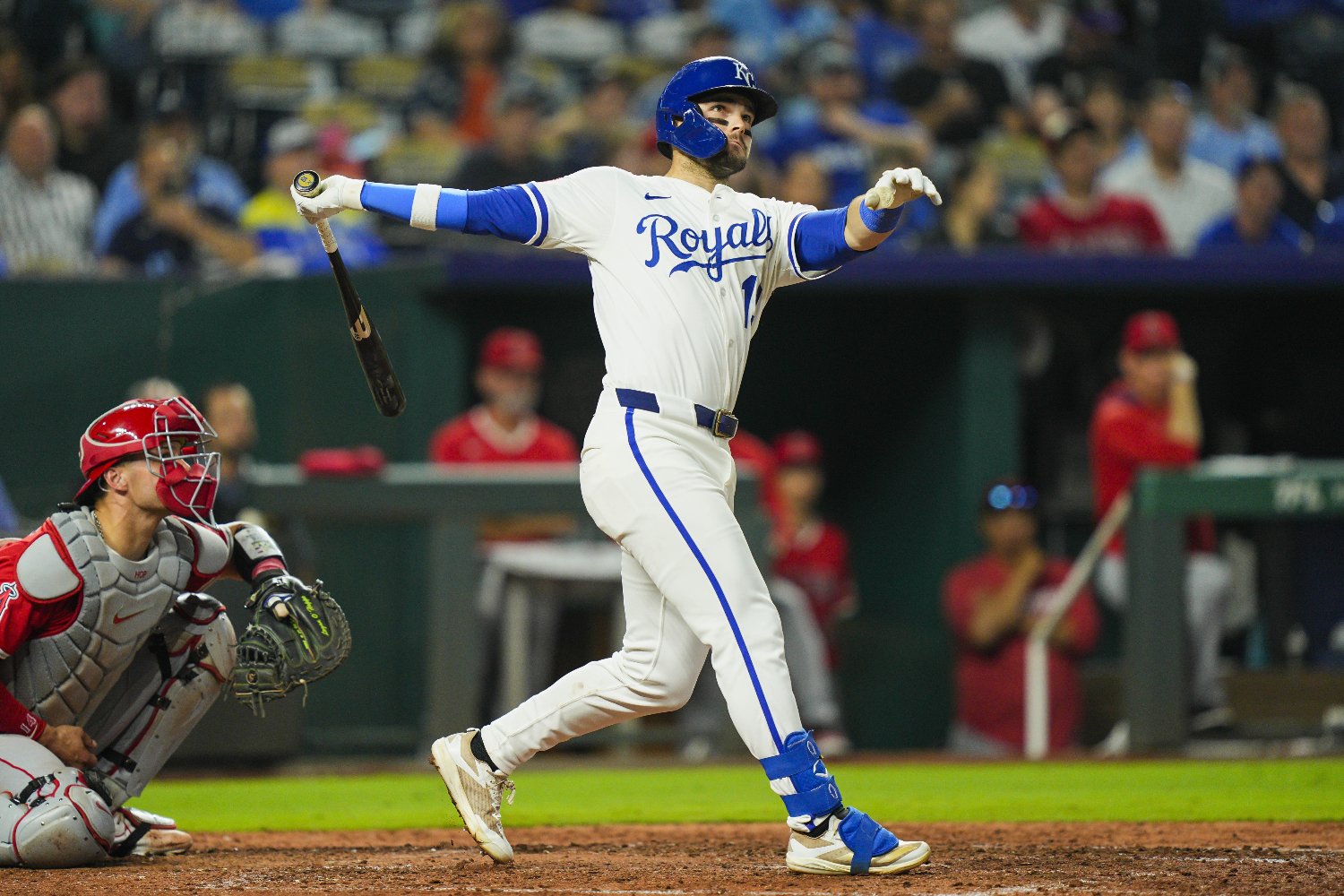 The Kansas City Royals know that a better lineup will be key to an improvement in 2026. After all, they ranked 26th in runs scored and home runs, 22nd in OBP, and 20th in OPS last season, which helps explain why they went 82-80 last year and missed the postseason. Those rankings have to be better in 2026 if they want to return to the playoffs after a one-year hiatus. So far, JJ Picollo has made efforts to improve the lineup this offseason. He signed former Guardians outfielder Lane Thomas on a one-year, $5.2 million deal and acquired outfielder Isaac Collins in a trade with Milwaukee. They also signed utility players Josh Rojas, Kevin Newman, and Abraham Toro, hoping one of them could be a wild card and have a surprising 2026 campaign in their new surroundings in Kansas City. However, it's looking like the Royals' ability to make a big deal may be starting to dwindle. That is especially true in the wake of big free-agent moves such as Kyle Tucker's signing with the Dodgers and Bo Bichette's with the Mets. Ken Rosenthal reported as such in his latest article on The Athletic. Here's what Rosenthal said in that article about the Royals' outlook for the remainder of the offseason, especially relating to Boston's Jarren Duran and St. Louis' Brendan Donovan, whom they have both been tied to this winter. Hence, for the Royals to win 83 or more games this season (which will be needed to make the postseason), they will need continued production from their core hitters (Bobby Witt Jr., Vinnie Pasquantino, Maikel Garcia, and Salvador Perez) as well as some breakouts from their complementary ones. One of those complementary ones could be Michael Massey, who is coming off a rough 2025 season. Massey's role is a bit unclear for 2026, especially with Jonathan India returning on a one-year, $8 million deal. India is expected to be the Royals' regular second baseman this season, and there is hope that his batted-ball luck and batted-ball approach could improve in 2026, which could lead to better offensive production (as Philip Ruo talked in an article here, Royals Keep). However, for the Royals' offense to truly improve, a solid campaign from Massey, even as a utility player, will be necessary. Thus, let's take a look at what Massey did in 2025, what his outlook could be for this upcoming season, and how he could be best utilized by manager Matt Quatraro this season and possibly beyond. Solid Contact Ability, But Lackluster Power Metrics from Massey Massey seemed to be trending in the right direction in 2023 and 2024, when he started getting regular playing time with the Royals. In his first full season in Kansas City in 2023, Massey hit 15 home runs, collected 55 RBI, and stole six bases in 461 plate appearances. Granted, he only posted a 74 wRC+, .283 wOBA, and accumulated a 0.5 fWAR, which were all disappointing marks. That said, he also had a .318 xwOBA, thus illustrating that Massey was capable of seeing positive regression in the future. Positive regression did occur in 2024, even though Massey struggled with injuries and played in only 100 games (29 fewer than in 2023). His wRC+ improved to 104, his wOBA to .317, and fWAR to 1.5 in 2024. Massey was the starting second baseman for the Royals in the postseason and came up with some key hits in the playoffs, including the ALDS against the Yankees. Unfortunately, things fell back to earth for Massey in 2025. In 77 games and 277 plate appearances, he posted a 57 wRC+, .254 wOBA, and -0.4 fWAR. On a positive note, he provided some solid defense at both second base and left field, as evidenced by his +2 FRV and +1 FRV, respectively. That said, his defense was not enough to make up for his porous production at the plate. A big issue for Massey was not his contact ability. He only struck out 15.5% of the time last year, a career low. However, he had a too free-swinging approach. His walk rate was only 3.2% (a career-low), and his O-Swing% was 35.4%, 7.3% higher than the league average. Massey also struggled in terms of exit velocity, barrel rate, and hard-hit rate, as illustrated by his TJ Stats summary below. As Royals fans could see above, Massey ranked in the 15th percentile in average EV, 11th percentile in Max EV, 9th percentile in Barrel%, and 13th percentile in Hard-Hit%. Those aren't encouraging trends, even with the fences at Kauffman Stadium being moved in slightly for 2026. Conversely, a positive trend for Massey in batted-ball metrics was that he still launched the ball well. That is especially illustrated by his 58th percentile LA Sweet-Spot%. He also pulled the ball effectively with a 91st percentile Pull% and 69th percentile Pull Air%. His spray chart shows that his pull-heavy approach proved successful, especially when it came to extra-base hits, when he launched the ball effectively. He also demonstrated a positive trend in xwOBA over the course of the 2025 season. After hitting a low point around the 190th plate-appearance mark of the season, he turned it around at the 200th plate-appearance mark and ended up being an above-average hitter in terms of xwOBA by the conclusion of his season. Therefore, even though the overall numbers weren't great for Massey, he showed encouraging signs in 2025 that should make Royals fans hopeful he could have a season in 2026 closer to 2024 in production. What Do the Projections Say for Massey? When it comes to projections for Massey in 2026, I compiled in Datawrapper a collection of the following projections: Fangraphs' Depth Charts (FGDC) Steamer The BAT X OOPSY I included the following categories as well: Plate Appearances (PA) Home Runs (HR) Runs Scored (R) Runs Batted In (RBI) Weighted On-Base Average (wOBA) Weighted Runs Created Plus (wRC+) Here are the 2026 projections for Massey, as illustrated in the table below. Depth Charts (FGDC) and Steamer were the most optimistic about Massey's production in 2026. Not only did they project the best wOBA (.301), but also the best wRC+ (89). FGDC and OOPSY projected the most at-bats and the same number of home runs (nine), but FGDC was slightly more optimistic, as illustrated by FGDC predicting a better wOBA and wRC+. Massey's The Bat X projections were the most intriguing. They projected the worst wRC+ and wOBA, and by a decent margin (his wOBA was 10 points lower than his FGDC mark; his BAT X wRC+ was also seven points lower than his FGDC wRC+). Those aren't good, obviously. However, the BAT X also projected the most home runs (10) and RBI (40) of the four projection systems. Hence, while the BAT X doesn't predict a great overall performance, they project his home run and run production could still be impactful in 2026. The key difference with the BAT X is that it incorporates batted-ball and Statcast data into its projections. When looking at Massey's Ideal Angle% trend from last year, he proved to be above-average in this area for most of the year, which could help him launch home runs effectively in 2026. Granted, none of the projections expect Massey to be a regular contributor for the Royals in this upcoming season. However, if Massey can showcase some of the power potential early, especially in the new Kauffman surroundings, he could earn himself more playing time over the course of the season. Final Thoughts on Massey's 2026 Outlook When looking at the Royals hitters' BAT X projections for 2026, Massey ranks 11th in terms of Fantasy Points production (FPTS). While this isn't a fantasy baseball article, FPTS can offer a glimpse of a player's overall production, especially compared to his peers. As seen in the table below via Datawrapper, Massey ranks toward the bottom of this group of Royals hitters when it comes to expected FPTS production. Massey doesn't strike out, and he launches the ball well. However, the exit velocity and batted-ball metrics remain red flags, and his lackluster bat speed doesn't help his outlook either. When looking at his bat speed trend from last year via Savant, Massey was a below-average hitter, with his average bat speed being 70.1 MPH last season. That bat speed was 0.8 MPH decline from 2024 and a 0.7 MPH decline from 2023. Thus, it will be interesting to see how his bat speed fares in 2026, especially if he is healthier than he was a season ago. A positive regression to his 2024 and 2025 bat speed could mean a double-digit HR season could be coming in 2026. No change or a negative regression? Massey may be seeing more time in Omaha than in Kansas City. Massey will be 28 years old in March, so there isn't much time for the former Illinois product to "prove" himself. We saw two Royals players enter 2025 needing solid seasons to justify their roster spots: Garcia and MJ Melendez. Garcia played himself to an All-Star appearance and a multi-year extension this offseason. As for Melendez, he spent most of the season with the Storm Chasers, and he was eventually non-tendered. I believe Massey offers much more upside and a history of better production than Melendez did at the MLB level. Massey has a career 1.5 fWAR in 358 games, while Melendez has a -1.1 career fWAR in 435 career games. Thus, Massey is in a better spot than Melendez was a year ago. Nonetheless, this is a game of production, and Massey needs to produce at the plate in 2026 if he wants to have a long-term future with the Royals (or MLB team in general).
 -
 On Thursday, January 15th, the MLB International Signing period opened, and the Royals announced 19 signings for their 2026 class on social media. All of the Royals' signings this year came from Latin America, with the country breakdown as follows: Nine from the Dominican Republic Seven from Venezuela One from Colombia One from Panama One from Cuba The Royals have always had a strong ability to find talent from Venezuela, thanks to their ties with Salvador Perez, a legend in that country. However, it seems like the Royals have made strong inroads in the Dominican Republic since Daniel Guerrero took over as Director of International Scouting in 2023. In addition to nine signings hailing from the Dominican Republic, the top recently signed shortstop prospects, Yandel Ricardo, Warren Calcano, and Ramcell Medina, are all Dominican as well. The Royals Player Development account (Raising Royals) also covered the Royals' International Signing Day class, highlighting the celebration at the Royals' academy in the Dominican Republic (where the two Dominican Summer League teams play and train). Raising Royals also provided a short video introduction to all 19 players on social media, with scouting videos of those players coming in the coming days. Three prospects particularly stand out from the Royals' 2026 International class: Venezuelan outfielder Angeibel Gomez, Cuban infielder Jaider Suarez, and Venezuelan catcher Adrian Lunar. Gomez, Suarez, and Lunar were ranked 4th, 22nd, and 43rd in this year's international class, according to MLB Pipeline. Let's take a look at those three prospects and their scouting reports from MLB Pipeline. Angeibel Gomez, OF, VEN From MLB Pipeline: Jaider Suarez, IF, CUB From MLB Pipeline: Adrian Lunar, C, VEN From MLB Pipeline: RH7Prospects/prospectos (@rh7__prospectos) • Instagram reel WWW.INSTAGRAM.COM 10 likes, 0 comments - rh7__prospectos on December 18, 2025: "Adrian Lunar catcher 2026 KC Royals #elite #mlb #milb". What to Take Away from the Class? First off, International Signing Day can be an overhyped event. The players who sign are extremely young and have a long road of development ahead of them, and the odds are often stacked against them. For every Perez, Maikel Garcia, or Yordano Ventura success story, there's an Erick Pena, Wilmin Candelario, or Yefri Del Rosario example who fails to live up to the hype. It is interesting to see the Royals focus more on "quality" signings rather than "quantity", which was the strategy under former GM Dayton Moore. For context, in 2022, the Royals signed 28 international players. However, none of them reached the $1 million signing bonus threshold. Conversely, Gomez signed for $2.9 million, Suarez signed for $1.7 million, and Lunar signed for $1 million. Hence, while the number of signings is lower than in years past, it appears the Royals are willing to shell out more for the top available international talent on the market, something they weren't always prone to do (especially before Guerrero came over). Even though expectations are high for the three, as well as the 16 other Royals signings to a lesser degree, it will be a long time before any of these players are ready for the MLB level. So Royals fans should keep their expectations tempered with this group. It likely won't be until 2027 or 2028 that we hear their names again or see them playing in affiliated ball (even the high-profile ones). Still, it's exciting to see the new talent coming into the Royals organization, who will play and develop over the next year or two at the Royals facility in the Dominican Republic, especially in the Dominican Summer League (the Royals have two teams that compete in the league).
 -
Image courtesy of Michael Chow / USA TODAY NETWORK On Thursday, January 15th, the MLB International Signing period opened, and the Royals announced 19 signings for their 2026 class on social media. All of the Royals' signings this year came from Latin America, with the country breakdown as follows: Nine from the Dominican Republic Seven from Venezuela One from Colombia One from Panama One from Cuba The Royals have always had a strong ability to find talent from Venezuela, thanks to their ties with Salvador Perez, a legend in that country. However, it seems like the Royals have made strong inroads in the Dominican Republic since Daniel Guerrero took over as Director of International Scouting in 2023. In addition to nine signings hailing from the Dominican Republic, the top recently signed shortstop prospects, Yandel Ricardo, Warren Calcano, and Ramcell Medina, are all Dominican as well. The Royals Player Development account (Raising Royals) also covered the Royals' International Signing Day class, highlighting the celebration at the Royals' academy in the Dominican Republic (where the two Dominican Summer League teams play and train). Raising Royals also provided a short video introduction to all 19 players on social media, with scouting videos of those players coming in the coming days. Three prospects particularly stand out from the Royals' 2026 International class: Venezuelan outfielder Angeibel Gomez, Cuban infielder Jaider Suarez, and Venezuelan catcher Adrian Lunar. Gomez, Suarez, and Lunar were ranked 4th, 22nd, and 43rd in this year's international class, according to MLB Pipeline. Let's take a look at those three prospects and their scouting reports from MLB Pipeline. Angeibel Gomez, OF, VEN From MLB Pipeline: Jaider Suarez, IF, CUB From MLB Pipeline: Adrian Lunar, C, VEN From MLB Pipeline: RH7Prospects/prospectos (@rh7__prospectos) • Instagram reel WWW.INSTAGRAM.COM 10 likes, 0 comments - rh7__prospectos on December 18, 2025: "Adrian Lunar catcher 2026 KC Royals #elite #mlb #milb". What to Take Away from the Class? First off, International Signing Day can be an overhyped event. The players who sign are extremely young and have a long road of development ahead of them, and the odds are often stacked against them. For every Perez, Maikel Garcia, or Yordano Ventura success story, there's an Erick Pena, Wilmin Candelario, or Yefri Del Rosario example who fails to live up to the hype. It is interesting to see the Royals focus more on "quality" signings rather than "quantity", which was the strategy under former GM Dayton Moore. For context, in 2022, the Royals signed 28 international players. However, none of them reached the $1 million signing bonus threshold. Conversely, Gomez signed for $2.9 million, Suarez signed for $1.7 million, and Lunar signed for $1 million. Hence, while the number of signings is lower than in years past, it appears the Royals are willing to shell out more for the top available international talent on the market, something they weren't always prone to do (especially before Guerrero came over). Even though expectations are high for the three, as well as the 16 other Royals signings to a lesser degree, it will be a long time before any of these players are ready for the MLB level. So Royals fans should keep their expectations tempered with this group. It likely won't be until 2027 or 2028 that we hear their names again or see them playing in affiliated ball (even the high-profile ones). Still, it's exciting to see the new talent coming into the Royals organization, who will play and develop over the next year or two at the Royals facility in the Dominican Republic, especially in the Dominican Summer League (the Royals have two teams that compete in the league). View full article
-
Image courtesy of Katie Stratman-Imagn Images The Cubs have made some big splashes this offseason that have gotten the attention of baseball fans everywhere, including Royals ones. First, they acquired pitcher Edward Cabrera from the Marlins in exchange for their No. 1 prospect (Owen Caissie), No. 11 prospect (Cristian Hernandez), and an 18-year-old infielder who played in the Complex League last year (Edgardo De Leon). Then, Cubs President of Baseball Operations Jed Hoyer signed third baseman Alex Bregman last weekend to a five-year, $175 million deal. The deal is one of the biggest in franchise history and include no-opt outs over the duration of the contract, a significant commitment to a player who will be 32 during the 2026 season. The Bregman deal was unexpected (he seemed more tied to the Red Sox and even the Diamondbacks earlier in the offseason), and it has also put their infield in flux. With the arrival of Bregman, incumbent third baseman Matt Shaw has been moved off the starting position for now (according to Roster Resource). However, the Cubs have a decision to make about second baseman Nico Hoerner, who will be a free agent after 2026 and could be tough to retain long-term. Already, it's been reported that many clubs have inquired about Hoerner, including the San Francisco Giants and the New York Yankees. That said, trading Hoerner would be a tough move for a Cubs team that's looking to not just return to the postseason, but topple the Milwaukee Brewers in the NL Central division. Hoerner is one of the top defensive second basemen in the game, has an excellent plate approach (109 wRC+; 0.80 BB/K ratio), and accumulated a 4.8 fWAR last year and has a career 20 fWAR in 704 games, according to Fangraphs. At 28 years old, the Cubs should be looking to extend Hoerner, not trade him away. Unfortunately, that makes Shaw the odd man out, unless they are content using him as a super-utility player. While that's not a bad strategy for 2026, Chicago could leverage Shaw's situation and former top prospect value in a trade that could net the Cubs some present and long-term assets. The Royals are one of those teams that could be the ideal trade partners with the Cubs, especially with the holes they have right now in the lineup and infield for 2026 and beyond. Why Shaw Would Make Sense for Kansas City Matt Trueblood of North Side Baseball published an article on Wednesday on how the Royals are a trade suitor with whom Chicago could work on a possible Shaw deal. According to Trueblood, the Cubs and Royals would make sense as trade partners given their mutual interest in each other's players, including Shaw (the Royals were rumored to be interested in drafting him at No. 8 in the 2023 MLB Draft, but they selected prep catcher Blake Mitchell instead). Here's a snippet from Trueblood's piece that illustrates why the Royals would be interested in Shaw for 2026 and beyond. In addition to India, the Royals also trotted Michael Massey out at second base in 2025 to lackluster results. Massey posted a 57 wRC+ and -0.4 fWAR in 277 plate appearances last season. India was only a shade better than his 27-year-old counterpart last year. The former Red posted an 89 wRC+ and -0.3 fWAR, with most of his value weighed down by mediocre baserunning (-2.6 BsR) and poor defense (-11.8 Def). Shaw was inconsistent as a rookie, but he still would be a considerable upgrade over Massey and India in 2026. The 24-year-old Maryland product hit 13 home runs, stole 17 bases, scored 57 runs, posted a 93 wRC+, and accumulated a 1.5 fWAR in 437 plate appearances. The exit-velocity and batted-ball metrics were questionable from Shaw last year, but he showed some promise in his plate discipline metrics, as illustrated in his TJ Stats summary profile below. Now, Shaw isn't as elite in plate discipline, especially compared to India. The former Florida Gator had an exit velocity and hard-hit profile similar to show, but India ranked in the upper percentiles in O-Swing%, K%, Z-Contact%, and Whiff%, as demonstrated in his own TJ Stats summary. In terms of pure hitting profile, India is a little better than Shaw. However, India is also 4 years older, will be a free agent after 2026, and lags significantly behind Shaw in defensive value (India posted a -6 OAA, while Shaw posted a -1 OAA last season). Thus, the Royals would benefit from having Shaw as the regular second baseman, with Massey as a backup who could give Shaw a spell (and see some time in the outfield, since Massey is a much better defensive outfielder than India). Shaw also should transition well offensively to Kauffman Stadium, especially with the modified dimensions. Even with the old dimensions, the Cubs infielder would have had 12 xHR at the K last season, which is only one fewer than his total 2025 mark. His spray chart also shows a pull-heavy approach that would lead to many extra base hits, especially at home in Kansas City. Lastly, the Royals would have a controllable, affordable asset in Shaw who could help them with salary stability over the next couple of seasons. Shaw is not arbitration-eligible until 2028, and he won't be a free agent until 2032. That kind of long-term control is valuable, especially for a small-market team like the Royals, which has to be judicious with its spending each offseason. What Would the Royals Give Up for Shaw? According to Trueblood, the Cubs could be interested in both long-term and short-term assets. In terms of the former, the Cubs could benefit by beefing up their farm system a bit, especially after the lower levels, after the Cabrera trade. Trueblood points out recent draft picks Sean Gamble and Josh Hammond as possible options, especially since it was reported that the Cubs were interested in selecting them in last year's draft. It's hard to imagine the Royals parting with either of those two prospects, especially after just drafting them. Still, as prep prospects, they carry a bit of risk, especially compared to most college players who have lower ceilings but higher floors. If it means that Kansas City could get a young, budding player like Shaw (at a position where there's not a lot of great organizational depth), then the Royals could be convinced to let go of one of those promising recently drafted teenagers. Another prospect who could be traded is Mitchell, our No. 2 in the system. He had a rough 2025 (due to a hand injury) but had a strong Arizona Fall League campaign and could be the Cubs' catcher of the future if the chips fall right. Trueblood also mentions that some pieces that could affect the Cubs' MLB roster could also be desired. That includes Nick Loftin, a utility player who seems a bit blocked or out of favor with the Royals, and Kris Bubic, who has long been liked by the Cubs' coaching staff, according to the article. Loftin should be an easy one to deal away from the Royals' perspective, especially since he has failed to gain hold of the "utility" position the past couple of seasons. While he remains unsigned, it wouldn't be surprising to see Kansas City bring back Adam Frazier on a one-year deal for 2026. That would only guarantee Loftin another long stint in Omaha. With the Cubs, he could at least get an opportunity to prove that he belongs on an MLB roster. As for Bubic, a couple of months ago, he may have made sense for the Cubs. However, their rotation is looking deep after the acquisition of Cabrera. Roster Resource projects Shota Imanaga and Jameson Taillon to be the No. 4 and 5 starters in the rotation, and talented but inconsistent pitchers Ben Brown and Jordan Wicks are slated to begin the season in Triple-A Iowa. That said, Imanaga regressed a bit last year (4.86 FIP) and could be due for more based on how his 2025 ended (4.70 ERA in the second half). Taillon pitched under 129.1 IP, nearly 36 fewer innings than his mark in 2024. Taillon also had a mediocre FIP at 4.65, which could make him another regression candidate in 2026. Bubic has struggled to accumulate innings, but he's been effective when healthy. Thus, the Cubs could perhaps slow-play him into the rotation, initially in a hybrid role. If Imanaga or Taillon struggle or go down, the Stanford lefty can fill in and be productive. His TJ Stats Statcast summary profile showed that he not only has excellent stuff, but a strong ability to generate strikeouts and whiffs and limit hard contact. The only issue with Bubic is that he'll be a free agent after 2026. Thus, if the Royals want to get Shaw, they may need to include a top prospect like Gamble, Hammond, or Mitchell. Should JJ Picollo not be willing to do that, it may be Bubic, Loftin, and another asset, whether a mid-level prospect or player (India would be the ideal, but his $8 million deal may be too much for the Cubs to take on). Is a Shaw to Kansas City Deal Realistic? Shaw certainly would be an intriguing player, especially with his home run and stolen base upside. With another year of at-bats, it's easy to see Shaw develop into a 20-20 HR-SB player. That said, projections are a bit torn on his outlook for the upcoming season. Below are the ones from Steamer, the BAT X, and OOPSY. Steamer: .161 ISO, .317 wOBA, 105 wRC+ The BAT X: .127 ISO, .290 wOBA, 86 wRC+ OOPSY: .167 ISO, .318 wOBA, 105 wRC+ Steamer and OOPSY are optimistic about Shaw's outlook for 2026. The BAT X is not, and by a considerable margin, as illustrated by the 19-point difference in wOBA. While Shaw is talented, he may not be a sure thing in the upcoming season by any stretch. While India's ceiling isn't as high as Shaw's, at least the Royals know what to relatively expect (unless India continues his freefall for a second-straight season, like Hunter Renfroe from 2023 to 2024). Furthermore, the likely ask from the Cubs for a player of Shaw's pedigree probably would be just too high for Kansas City. The Royals want to get better from now until Opening Day. While Shaw would help them do so, especially at the keystone, it would require the Royals to part ways with not only Bubic (not that big a deal) and a talented prospect. The latter is a much bigger concern, especially since Picollo and Scouting Director Brian Bridges have worked hard to build up the system since the 2024 MLB Draft. Trading from their top prospect capital now would be foolish, especially since Shaw still has some development to do. Trading a prospect for a player like Jarren Duran or Brendan Donovan is one thing, especially since they're so established. Shaw isn't anywhere close to that level just yet. Nonetheless, while Shaw's move to Kansas City may not be realistic, it's an interesting proposal, and Shaw's stock will certainly be worth watching. He could be a buy-low candidate at the Trade Deadline if he's still with the Cubs and not getting much playing time behind Bregman and Hoerner. If India is not getting the job done by then, the Royals could pounce and be more willing to deal from their prospect capital midseason for Shaw. View full article
-
 The Cubs have made some big splashes this offseason that have gotten the attention of baseball fans everywhere, including Royals ones. First, they acquired pitcher Edward Cabrera from the Marlins in exchange for their No. 1 prospect (Owen Caissie), No. 11 prospect (Cristian Hernandez), and an 18-year-old infielder who played in the Complex League last year (Edgardo De Leon). Then, Cubs President of Baseball Operations Jed Hoyer signed third baseman Alex Bregman last weekend to a five-year, $175 million deal. The deal is one of the biggest in franchise history and include no-opt outs over the duration of the contract, a significant commitment to a player who will be 32 during the 2026 season. The Bregman deal was unexpected (he seemed more tied to the Red Sox and even the Diamondbacks earlier in the offseason), and it has also put their infield in flux. With the arrival of Bregman, incumbent third baseman Matt Shaw has been moved off the starting position for now (according to Roster Resource). However, the Cubs have a decision to make about second baseman Nico Hoerner, who will be a free agent after 2026 and could be tough to retain long-term. Already, it's been reported that many clubs have inquired about Hoerner, including the San Francisco Giants and the New York Yankees. That said, trading Hoerner would be a tough move for a Cubs team that's looking to not just return to the postseason, but topple the Milwaukee Brewers in the NL Central division. Hoerner is one of the top defensive second basemen in the game, has an excellent plate approach (109 wRC+; 0.80 BB/K ratio), and accumulated a 4.8 fWAR last year and has a career 20 fWAR in 704 games, according to Fangraphs. At 28 years old, the Cubs should be looking to extend Hoerner, not trade him away. Unfortunately, that makes Shaw the odd man out, unless they are content using him as a super-utility player. While that's not a bad strategy for 2026, Chicago could leverage Shaw's situation and former top prospect value in a trade that could net the Cubs some present and long-term assets. The Royals are one of those teams that could be the ideal trade partners with the Cubs, especially with the holes they have right now in the lineup and infield for 2026 and beyond. Why Shaw Would Make Sense for Kansas City Matt Trueblood of North Side Baseball published an article on Wednesday on how the Royals are a trade suitor with whom Chicago could work on a possible Shaw deal. According to Trueblood, the Cubs and Royals would make sense as trade partners given their mutual interest in each other's players, including Shaw (the Royals were rumored to be interested in drafting him at No. 8 in the 2023 MLB Draft, but they selected prep catcher Blake Mitchell instead). Here's a snippet from Trueblood's piece that illustrates why the Royals would be interested in Shaw for 2026 and beyond. In addition to India, the Royals also trotted Michael Massey out at second base in 2025 to lackluster results. Massey posted a 57 wRC+ and -0.4 fWAR in 277 plate appearances last season. India was only a shade better than his 27-year-old counterpart last year. The former Red posted an 89 wRC+ and -0.3 fWAR, with most of his value weighed down by mediocre baserunning (-2.6 BsR) and poor defense (-11.8 Def). Shaw was inconsistent as a rookie, but he still would be a considerable upgrade over Massey and India in 2026. The 24-year-old Maryland product hit 13 home runs, stole 17 bases, scored 57 runs, posted a 93 wRC+, and accumulated a 1.5 fWAR in 437 plate appearances. The exit-velocity and batted-ball metrics were questionable from Shaw last year, but he showed some promise in his plate discipline metrics, as illustrated in his TJ Stats summary profile below. Now, Shaw isn't as elite in plate discipline, especially compared to India. The former Florida Gator had an exit velocity and hard-hit profile similar to show, but India ranked in the upper percentiles in O-Swing%, K%, Z-Contact%, and Whiff%, as demonstrated in his own TJ Stats summary. In terms of pure hitting profile, India is a little better than Shaw. However, India is also 4 years older, will be a free agent after 2026, and lags significantly behind Shaw in defensive value (India posted a -6 OAA, while Shaw posted a -1 OAA last season). Thus, the Royals would benefit from having Shaw as the regular second baseman, with Massey as a backup who could give Shaw a spell (and see some time in the outfield, since Massey is a much better defensive outfielder than India). Shaw also should transition well offensively to Kauffman Stadium, especially with the modified dimensions. Even with the old dimensions, the Cubs infielder would have had 12 xHR at the K last season, which is only one fewer than his total 2025 mark. His spray chart also shows a pull-heavy approach that would lead to many extra base hits, especially at home in Kansas City. Lastly, the Royals would have a controllable, affordable asset in Shaw who could help them with salary stability over the next couple of seasons. Shaw is not arbitration-eligible until 2028, and he won't be a free agent until 2032. That kind of long-term control is valuable, especially for a small-market team like the Royals, which has to be judicious with its spending each offseason. What Would the Royals Give Up for Shaw? According to Trueblood, the Cubs could be interested in both long-term and short-term assets. In terms of the former, the Cubs could benefit by beefing up their farm system a bit, especially after the lower levels, after the Cabrera trade. Trueblood points out recent draft picks Sean Gamble and Josh Hammond as possible options, especially since it was reported that the Cubs were interested in selecting them in last year's draft. It's hard to imagine the Royals parting with either of those two prospects, especially after just drafting them. Still, as prep prospects, they carry a bit of risk, especially compared to most college players who have lower ceilings but higher floors. If it means that Kansas City could get a young, budding player like Shaw (at a position where there's not a lot of great organizational depth), then the Royals could be convinced to let go of one of those promising recently drafted teenagers. Another prospect who could be traded is Mitchell, our No. 2 in the system. He had a rough 2025 (due to a hand injury) but had a strong Arizona Fall League campaign and could be the Cubs' catcher of the future if the chips fall right. Trueblood also mentions that some pieces that could affect the Cubs' MLB roster could also be desired. That includes Nick Loftin, a utility player who seems a bit blocked or out of favor with the Royals, and Kris Bubic, who has long been liked by the Cubs' coaching staff, according to the article. Loftin should be an easy one to deal away from the Royals' perspective, especially since he has failed to gain hold of the "utility" position the past couple of seasons. While he remains unsigned, it wouldn't be surprising to see Kansas City bring back Adam Frazier on a one-year deal for 2026. That would only guarantee Loftin another long stint in Omaha. With the Cubs, he could at least get an opportunity to prove that he belongs on an MLB roster. As for Bubic, a couple of months ago, he may have made sense for the Cubs. However, their rotation is looking deep after the acquisition of Cabrera. Roster Resource projects Shota Imanaga and Jameson Taillon to be the No. 4 and 5 starters in the rotation, and talented but inconsistent pitchers Ben Brown and Jordan Wicks are slated to begin the season in Triple-A Iowa. That said, Imanaga regressed a bit last year (4.86 FIP) and could be due for more based on how his 2025 ended (4.70 ERA in the second half). Taillon pitched under 129.1 IP, nearly 36 fewer innings than his mark in 2024. Taillon also had a mediocre FIP at 4.65, which could make him another regression candidate in 2026. Bubic has struggled to accumulate innings, but he's been effective when healthy. Thus, the Cubs could perhaps slow-play him into the rotation, initially in a hybrid role. If Imanaga or Taillon struggle or go down, the Stanford lefty can fill in and be productive. His TJ Stats Statcast summary profile showed that he not only has excellent stuff, but a strong ability to generate strikeouts and whiffs and limit hard contact. The only issue with Bubic is that he'll be a free agent after 2026. Thus, if the Royals want to get Shaw, they may need to include a top prospect like Gamble, Hammond, or Mitchell. Should JJ Picollo not be willing to do that, it may be Bubic, Loftin, and another asset, whether a mid-level prospect or player (India would be the ideal, but his $8 million deal may be too much for the Cubs to take on). Is a Shaw to Kansas City Deal Realistic? Shaw certainly would be an intriguing player, especially with his home run and stolen base upside. With another year of at-bats, it's easy to see Shaw develop into a 20-20 HR-SB player. That said, projections are a bit torn on his outlook for the upcoming season. Below are the ones from Steamer, the BAT X, and OOPSY. Steamer: .161 ISO, .317 wOBA, 105 wRC+ The BAT X: .127 ISO, .290 wOBA, 86 wRC+ OOPSY: .167 ISO, .318 wOBA, 105 wRC+ Steamer and OOPSY are optimistic about Shaw's outlook for 2026. The BAT X is not, and by a considerable margin, as illustrated by the 19-point difference in wOBA. While Shaw is talented, he may not be a sure thing in the upcoming season by any stretch. While India's ceiling isn't as high as Shaw's, at least the Royals know what to relatively expect (unless India continues his freefall for a second-straight season, like Hunter Renfroe from 2023 to 2024). Furthermore, the likely ask from the Cubs for a player of Shaw's pedigree probably would be just too high for Kansas City. The Royals want to get better from now until Opening Day. While Shaw would help them do so, especially at the keystone, it would require the Royals to part ways with not only Bubic (not that big a deal) and a talented prospect. The latter is a much bigger concern, especially since Picollo and Scouting Director Brian Bridges have worked hard to build up the system since the 2024 MLB Draft. Trading from their top prospect capital now would be foolish, especially since Shaw still has some development to do. Trading a prospect for a player like Jarren Duran or Brendan Donovan is one thing, especially since they're so established. Shaw isn't anywhere close to that level just yet. Nonetheless, while Shaw's move to Kansas City may not be realistic, it's an interesting proposal, and Shaw's stock will certainly be worth watching. He could be a buy-low candidate at the Trade Deadline if he's still with the Cubs and not getting much playing time behind Bregman and Hoerner. If India is not getting the job done by then, the Royals could pounce and be more willing to deal from their prospect capital midseason for Shaw.
 -
Image courtesy of Denny Medley-Imagn Images On Tuesday morning, reports circulated that the Royals would be moving the fences in at Kauffman Stadium to generate more home runs and, thus, more offense. Jeff Passan was the first to break news on the report. Later in the morning, the Kansas City Royals confirmed the report and held a press conference in the afternoon featuring GM JJ Picollo and Vice President of Research and Development Dr. Daniel Mack. A replay of the press conference is available on the Kansas City Royals' YouTube channel, embedded below. The Royals' decision is a bit of a surprise, especially since owner John Sherman has said the Royals will move out of Kauffman Stadium when its lease expires in 2031. Furthermore, Kauffman actually profiles as a hitter's park based on Statcast Park Factors. The 101 Park Factor over the past three years is the sixth-highest in baseball, according to Baseball Savant. That said, Kauffman has been a dead zone for home runs, especially recently. The 85 Home Run factor is tied for the third-lowest mark in baseball from 2023 to 2025 (they are tied with Cleveland's Progressive Field). Only Pittsburgh's PNC Park (76) and San Francisco's Oracle Park (82) have a lower HR factor than Kauffman Stadium. However, the Royals' home park is quite spacious, which has led to higher Double (113) and Triple (183) factors, both Top-5 marks in the league. That explains the high overall Park Factor since 2023. Hence, let's see the exact changes to Kauffman, which hitters will benefit the most, and what drawbacks could come with the new dimensions? Creating a More Neutral (Not "Hitter Friendly") Ballpark is the Goal Anne Rogers, the Royals beat writer for MLB.com, went into the changes to the dimensions in her latest article. She talked about the walls being moved in and lowered in height, as illustrated in the segment below. As illustrated in her piece, the Royals will have better opportunities to hit home runs, which have dogged Royals hitters for years. The Royals actually made similar changes to Kauffman's dimensions in the 90s, moving the fences in by 10 feet. However, in 2004, the Kansas City Royals ownership decided to move it back to its original dimensions, where it's been Death Valley for home runs since. Before 2019, no Royals hitter had hit more than 40 home runs in a single season (two have hit that 40+ mark: Jorge Soler and Salvador Perez, who both hit 48 in 2019 and 2021). In addition to encouraging more runs, the new dimensions will also add additional seating. Based on the changes, Kauffman will gain 230 additional seats, providing an economic benefit to ownership. In Picollo and Mack's press conference, they both remarked that the park will remain spacious, with outfield defense prioritized. Picollo mentioned that Kyle Isbel and his glove would still be immensely valuable in center field, thus showing that the Royals won't be changing their identity anytime soon. The Royals GM said the goal of this change was not to create an "offensive" ballpark, but to make it more neutral for Royals hitters. Mack mentioned that a lot of time and research went into confirming these changes and determining whether they would be in the Royals' best interests. That included research not just into the effect of the walls, both in terms of height and distance, but also how the weather would impact the new dimensions of Kauffman. Much like Picollo echoed, Mack confirmed that they wanted to change the dimensions to make things fairer for hitters, not to punish pitchers. The Royals understand that deeper dimensions have been beneficial to pitchers, especially those who can induce weak or moderately hit fly balls. They didn't want the Royals' pitchers to lose that advantage or ability due to these new ballpark changes. Mack's "not having to play a specific way" comment is interesting. The Royals led the league in Infield Fly Ball percentage last year with an 11.9% mark. Interestingly, the data doesn't show that the Royals as a team hit more "pop-ups" at Kauffman Stadium compared to on the road. Here are their home/road splits for IFFB% and HR/FB%. Home: 9.4% IFFB% (16th); 8.0% HR/FB% (29th) Away: 14.2% IFFB% (1st); 9.5% HR/FB% (29th) The Royals had a 4.8% higher IFFB% on the road than at home and sported a 1.5% lower HR/FB rate at Kauffman. That big spike in IFFB% could signify that the Royals were trying to hit more flyballs and thus, home runs, away from the K, but that approach was counterintuitive. The Royals are hoping that focusing on the same approach at home and away will narrow the gap in home/away IFFB%, leading not only to better HR/FB% production but also to more runs overall (they ranked 26th in runs scored last year). Which Hitters Will Benefit the Most? As expected with these dimension changes, Royals fans and the fantasy baseball community came out in full force with their theories of which Royals hitters will benefit the most in 2026. Eric Cross of Rotoballer pointed out the core four Kansas City hitters: Bobby Witt Jr., Maikel Garcia, Vinnie Pasquantino, and Salvador Perez. In his tweet, he shared their spray charts and implied that they could be due for some positive regression in home runs with the ballpark changes. When looking at the spray chart last year and fitting into next year's dimensions, things look optimistic for the Royals' four primary hitters. It's easy to see that Witt, Pasquantino, Perez, and Garcia could get an extra five to seven home runs with a similar spray chart next season, at a minimum. Thus, it isn't out of the question to think that Garcia could hit 20+ HRs, Witt collect 30+ HRs, and Perez and Pasquantino touch the 40-HR mark. That kind of 20 to 30-HR increase from their four most important hitters will have a tremendous boost on the Royals' offense, which not only struggled with home runs last year (they ranked 26th) but run consistency. Furthermore, the new dimensions could also channel the power of budding hitters like Jac Caglianone. Caglianone struggled as a rookie last season. The former Florida Gator and 2024 Royals first-round pick posted a 46 wRC+ and hit seven home runs in 232 plate appearances. However, when looking at his spray chart modified to Target Field (which mirrors the new Kauffman Stadium changes), he would have hit double-digit home runs, which would have helped his overall production a season ago. A home park that is friendlier to Caglianone could help him build confidence and be that much-needed 20+ HR hitter that the Royals need in the middle of the lineup. After all, his .318 xwOBA was much better than his .239 actual wOBA, which means that there is potential for positive regression for Caglianone in 2026, even without the changes to Kauffman Stadium. However, with the new ballpark dimensions, the soon-to-be 23-year-old outfielder could surpass his 18-HR Steamer projection by a considerable margin. It's one thing for Witt, Perez, Pasquantino, and Garcia to see a boost in their home run numbers. They have proven to be productive hitters in the past, even if the home runs haven't been consistent. That said, seeing a breakout from Caglianone or someone else due to the new dimensions is a benefit more than worth the price of the ballpark changes. How Will This Affect the Pitching Staff? The Royals' pitching staff was an interesting one in terms of their batted-ball profile. They allowed the sixth-lowest HR/FB% in baseball with a 10.7% mark, and they ranked 17th in FB% allowed with a 38.3% mark. A key to their success was their ability to induce infield fly balls, as they ranked 9th with a 10.5% IFFB%. When looking at the Royals pitchers individually, the table below shows their batted-ball profiles, organized by IFFB%. When it comes to which pitchers to worry about with the new dimensions, the ones with high FB% and IFFB% rates are worth watching. Carlos Estevez (15.5% IFFB%), Michael Wacha (14%), Cole Ragans (12.3%), and Kris Bubic (12.3%) are the ones most likely to be affected by the fences being moved in. Their flyballs could be home runs with the new dimensions. For context, let's look at the spray chart for Estevez, with it modified to Target Field dimensions (much like Caglianone). Estevez not only had the highest IFFB% of returning pitchers, but also the highest flyball percentage at 51.6%. And yet, his HR/FB rate was only 5.2%, the fourth-lowest of Royals pitchers with 10 or more IP last year. With the new dimensions, he could be due for a sharp regression. That explains why Kansas City has been aggressive in terms of adding relievers who can generate chase, whiffs, and strikeouts like Alex Lange, Nick Mears, and Matt Strahm. Pitchers who induce higher groundball rates could be more protected from the new ballpark dimensions in 2026 and beyond. That includes Stephen Kolek (53.5%), Lucas Erceg (52.8%), Luinder Avila (50%), and even Bubic (47.2%). I think those three pitchers could be due for strong seasons, especially Erceg, who plateaued a bit in 2025 after a sensational 2024 debut with the Royals. Thus, Royals fans should feel more confident in pitchers with this groundball-inducing profile, as well as those who can generate whiffs and strikeouts. Having those three qualities will be more important than ever with the new dimensions, even if the K will still be slightly pitcher-friendly. If the Royals acquire any more relievers this offseason, it shouldn't be surprising if they profile well in those three areas mentioned above. View full article
-
What Do the New Park Dimensions for Kauffman Stadium Mean for the Royals?
Kevin O'Brien posted an article in Royals
 On Tuesday morning, reports circulated that the Royals would be moving the fences in at Kauffman Stadium to generate more home runs and, thus, more offense. Jeff Passan was the first to break news on the report. Later in the morning, the Kansas City Royals confirmed the report and held a press conference in the afternoon featuring GM JJ Picollo and Vice President of Research and Development Dr. Daniel Mack. A replay of the press conference is available on the Kansas City Royals' YouTube channel, embedded below. The Royals' decision is a bit of a surprise, especially since owner John Sherman has said the Royals will move out of Kauffman Stadium when its lease expires in 2031. Furthermore, Kauffman actually profiles as a hitter's park based on Statcast Park Factors. The 101 Park Factor over the past three years is the sixth-highest in baseball, according to Baseball Savant. That said, Kauffman has been a dead zone for home runs, especially recently. The 85 Home Run factor is tied for the third-lowest mark in baseball from 2023 to 2025 (they are tied with Cleveland's Progressive Field). Only Pittsburgh's PNC Park (76) and San Francisco's Oracle Park (82) have a lower HR factor than Kauffman Stadium. However, the Royals' home park is quite spacious, which has led to higher Double (113) and Triple (183) factors, both Top-5 marks in the league. That explains the high overall Park Factor since 2023. Hence, let's see the exact changes to Kauffman, which hitters will benefit the most, and what drawbacks could come with the new dimensions? Creating a More Neutral (Not "Hitter Friendly") Ballpark is the Goal Anne Rogers, the Royals beat writer for MLB.com, went into the changes to the dimensions in her latest article. She talked about the walls being moved in and lowered in height, as illustrated in the segment below. As illustrated in her piece, the Royals will have better opportunities to hit home runs, which have dogged Royals hitters for years. The Royals actually made similar changes to Kauffman's dimensions in the 90s, moving the fences in by 10 feet. However, in 2004, the Kansas City Royals ownership decided to move it back to its original dimensions, where it's been Death Valley for home runs since. Before 2019, no Royals hitter had hit more than 40 home runs in a single season (two have hit that 40+ mark: Jorge Soler and Salvador Perez, who both hit 48 in 2019 and 2021). In addition to encouraging more runs, the new dimensions will also add additional seating. Based on the changes, Kauffman will gain 230 additional seats, providing an economic benefit to ownership. In Picollo and Mack's press conference, they both remarked that the park will remain spacious, with outfield defense prioritized. Picollo mentioned that Kyle Isbel and his glove would still be immensely valuable in center field, thus showing that the Royals won't be changing their identity anytime soon. The Royals GM said the goal of this change was not to create an "offensive" ballpark, but to make it more neutral for Royals hitters. Mack mentioned that a lot of time and research went into confirming these changes and determining whether they would be in the Royals' best interests. That included research not just into the effect of the walls, both in terms of height and distance, but also how the weather would impact the new dimensions of Kauffman. Much like Picollo echoed, Mack confirmed that they wanted to change the dimensions to make things fairer for hitters, not to punish pitchers. The Royals understand that deeper dimensions have been beneficial to pitchers, especially those who can induce weak or moderately hit fly balls. They didn't want the Royals' pitchers to lose that advantage or ability due to these new ballpark changes. Mack's "not having to play a specific way" comment is interesting. The Royals led the league in Infield Fly Ball percentage last year with an 11.9% mark. Interestingly, the data doesn't show that the Royals as a team hit more "pop-ups" at Kauffman Stadium compared to on the road. Here are their home/road splits for IFFB% and HR/FB%. Home: 9.4% IFFB% (16th); 8.0% HR/FB% (29th) Away: 14.2% IFFB% (1st); 9.5% HR/FB% (29th) The Royals had a 4.8% higher IFFB% on the road than at home and sported a 1.5% lower HR/FB rate at Kauffman. That big spike in IFFB% could signify that the Royals were trying to hit more flyballs and thus, home runs, away from the K, but that approach was counterintuitive. The Royals are hoping that focusing on the same approach at home and away will narrow the gap in home/away IFFB%, leading not only to better HR/FB% production but also to more runs overall (they ranked 26th in runs scored last year). Which Hitters Will Benefit the Most? As expected with these dimension changes, Royals fans and the fantasy baseball community came out in full force with their theories of which Royals hitters will benefit the most in 2026. Eric Cross of Rotoballer pointed out the core four Kansas City hitters: Bobby Witt Jr., Maikel Garcia, Vinnie Pasquantino, and Salvador Perez. In his tweet, he shared their spray charts and implied that they could be due for some positive regression in home runs with the ballpark changes. When looking at the spray chart last year and fitting into next year's dimensions, things look optimistic for the Royals' four primary hitters. It's easy to see that Witt, Pasquantino, Perez, and Garcia could get an extra five to seven home runs with a similar spray chart next season, at a minimum. Thus, it isn't out of the question to think that Garcia could hit 20+ HRs, Witt collect 30+ HRs, and Perez and Pasquantino touch the 40-HR mark. That kind of 20 to 30-HR increase from their four most important hitters will have a tremendous boost on the Royals' offense, which not only struggled with home runs last year (they ranked 26th) but run consistency. Furthermore, the new dimensions could also channel the power of budding hitters like Jac Caglianone. Caglianone struggled as a rookie last season. The former Florida Gator and 2024 Royals first-round pick posted a 46 wRC+ and hit seven home runs in 232 plate appearances. However, when looking at his spray chart modified to Target Field (which mirrors the new Kauffman Stadium changes), he would have hit double-digit home runs, which would have helped his overall production a season ago. A home park that is friendlier to Caglianone could help him build confidence and be that much-needed 20+ HR hitter that the Royals need in the middle of the lineup. After all, his .318 xwOBA was much better than his .239 actual wOBA, which means that there is potential for positive regression for Caglianone in 2026, even without the changes to Kauffman Stadium. However, with the new ballpark dimensions, the soon-to-be 23-year-old outfielder could surpass his 18-HR Steamer projection by a considerable margin. It's one thing for Witt, Perez, Pasquantino, and Garcia to see a boost in their home run numbers. They have proven to be productive hitters in the past, even if the home runs haven't been consistent. That said, seeing a breakout from Caglianone or someone else due to the new dimensions is a benefit more than worth the price of the ballpark changes. How Will This Affect the Pitching Staff? The Royals' pitching staff was an interesting one in terms of their batted-ball profile. They allowed the sixth-lowest HR/FB% in baseball with a 10.7% mark, and they ranked 17th in FB% allowed with a 38.3% mark. A key to their success was their ability to induce infield fly balls, as they ranked 9th with a 10.5% IFFB%. When looking at the Royals pitchers individually, the table below shows their batted-ball profiles, organized by IFFB%. When it comes to which pitchers to worry about with the new dimensions, the ones with high FB% and IFFB% rates are worth watching. Carlos Estevez (15.5% IFFB%), Michael Wacha (14%), Cole Ragans (12.3%), and Kris Bubic (12.3%) are the ones most likely to be affected by the fences being moved in. Their flyballs could be home runs with the new dimensions. For context, let's look at the spray chart for Estevez, with it modified to Target Field dimensions (much like Caglianone). Estevez not only had the highest IFFB% of returning pitchers, but also the highest flyball percentage at 51.6%. And yet, his HR/FB rate was only 5.2%, the fourth-lowest of Royals pitchers with 10 or more IP last year. With the new dimensions, he could be due for a sharp regression. That explains why Kansas City has been aggressive in terms of adding relievers who can generate chase, whiffs, and strikeouts like Alex Lange, Nick Mears, and Matt Strahm. Pitchers who induce higher groundball rates could be more protected from the new ballpark dimensions in 2026 and beyond. That includes Stephen Kolek (53.5%), Lucas Erceg (52.8%), Luinder Avila (50%), and even Bubic (47.2%). I think those three pitchers could be due for strong seasons, especially Erceg, who plateaued a bit in 2025 after a sensational 2024 debut with the Royals. Thus, Royals fans should feel more confident in pitchers with this groundball-inducing profile, as well as those who can generate whiffs and strikeouts. Having those three qualities will be more important than ever with the new dimensions, even if the K will still be slightly pitcher-friendly. If the Royals acquire any more relievers this offseason, it shouldn't be surprising if they profile well in those three areas mentioned above.
 -
Yeah, I'm having a hard time gauging Bubic's value. I think he could and should be part of a Duran deal, but I don't trust the Red Sox are savvy enough to get a deal done, given how their offseason has gone. Furthermore, I also think they may push for a bigger-name free agent to save face, even if Bubic would be the better option. I think the combo of Morejon and Laureano is a nice return for a player who likely will be a free agent. Yes, both those guys will be free agents as well, but I think the Royals have shown they're willing to bring guys back and pay them accordingly to keep them around. Morejon is one I think could be a key part of the bullpen for years to come. Good catch. I mean to say Robert Suarez (who's now with the Braves) and made that adjustment in the piece.
-
Image courtesy of Stephen Brashear-Imagn Images The Kansas City Royals and San Diego Padres have a strong history of exchanging players, especially over the past few years. In 2020, the Royals received outfielder Edward Olivares and pitcher Ronald Bolanos from the Padres for reliever Trevor Rosenthal, and also acquired outfielder Franchy Cordero in exchange for Tim Hill. In 2023, Kansas City traded away Scott Barlow for pitching prospects Henry Williams and Jesus Rios. Last season, the Padres acquired Freddy Fermin in exchange for Ryan Bergert and Stephen Kolek. Safe to say, Royals GM JJ Picollo and Padres GM AJ Preller are quite familiar with one another's phone numbers. Kansas City and San Diego, both of which entered Major League Baseball at the same time in 1969 (along with the Seattle Pilots and Montreal Expos, now the Brewers and Nationals, respectively), have roster needs this offseason. The Royals need to improve their lineup, outfield, and bullpen. The Padres need another starter to round out the rotation. Both teams seem willing to trade what they have to accomplish those goals, with Randy Holt writing about it from the Padres' perspective at Padres Mission. The Padres have not been afraid to spend money under Preller. However, their high payroll, rebuilding farm system, and commitment to many long-term deals on the current roster may deter them from seriously pursuing a high-end starter in free agency or trade this offseason, as Holt points out. Right now, Michael King and Nick Pivetta are the only projected arms in the rotation San Diego can trust. Joe Musgrove has been dependable in the past, but he missed all of 2025 due to Tommy John surgery. He will likely go through some growing pains after not pitching since 2024. The last two projected starters in the rotation, Randy Vasquez and JP Sears, each threw over 130 innings last season. That said, they combined for a 1.3 fWAR, and they posted FIPs of 4.85 and 5.21, respectively. Thus, it's questionable that they will be able to last a whole season in the Padres' rotation, especially if San Diego wants to compete in a tough NL West division with the Dodgers, Giants, and Diamondbacks. The Royals, on the other hand, are flush with starting pitching and have been willing to part with this surplus to address their outfield and reliever needs this offseason. Therefore, let's take a look at a couple of assets Kansas City could part with, what it could receive from San Diego, and some deals that could make sense for both sides. Bubic and Falter Could Make Sense for San Diego Kris Bubic has been one of the Royals' hottest names when it comes to trade rumors. Unfortunately, it seems like those rumors may have bled into contract negotiations this offseason. In his final season of arbitration, the Royals and Bubic failed to come to an agreement at last week's deadline, as they remain $1 million apart in their filings. Unless that gap is filled soon (i.e., concessions are made), it's likely that Bubic and the Royals will head to a hearing. With Bubic a tradeable asset and a free agent next offseason, he may not be motivated to reach an agreement and could likely take his chances in a hearing, even if it results in some lost goodwill between the two sides. Thus, Kansas City may be inclined to trade the former Stanford product sooner rather than later, especially if negotiations continue to move slowly. The Padres may be interested in Bubic, who was an All-Star last year and posted 3.3 fWAR and a 2.55 ERA over 116.1 IP. For context, his ERA was better than King's (3.44) and Pivetta's (2.87), and while Pivetta accumulated a 3.7 fWAR, he also pitched 65.1 more innings than Bubic. Over the same inning sample, Bubic likely would have surpassed Pivetta and finished 2025 as the better pitcher fWAR-wise. Even though his second half was cut short due to injury, Bubic posted the kind of stuff and strike data that would make him a welcome asset in the Padres' rotation for the upcoming season. That is illustrated in his 2025 TJ Stats summary below. Bubic posted a 103 overall TJ Stuff+, with four of his pitches sporting TJ Stuff+ marks over 100. He also had a zone rate of 51.9%, a chase rate of 32.4%, a whiff rate of 28.8%, and a xwOBACON of .344. All those marks are rated as above average for an MLB starting pitcher. There's no question that Bubic solves an immediate need for San Diego in 2026. However, would the Padres be okay with him coming to Kansas City on a one-year deal? The Padres would obviously try to negotiate an extension with him at some point, but there are no guarantees in that department, especially with how valued starting pitchers are now across the league. If the Padres are looking for a cheaper option with more long-term control, they could opt for Bailey Falter, who agreed to a $3.6 million deal this offseason to avoid arbitration. Falter obviously looks a lot worse than Bubic does in the metrics. In 125.1 IP with the Pirates and Royals last year, he posted a 4.45 ERA, 4.94 FIP, and 0.5 fWAR. He was particularly bad with the Royals after coming over at the Trade Deadline. In 12 IP, he allowed an 11.25 ERA and 5.22 FIP. Falter was demoted to the bullpen, eventually landed on the IL, and was sparingly used down the stretch. The 28-year-old lefty doesn't have as great stuff as Bubic. That said, it's serviceable enough, and he could possess more upside than Sears, the only other lefty option in the Padres' rotation. Here's a look at what Falter did last year via TJ Stats. Falter's four-seamer (101 TJ Stuff+) and sinker (99 TJ Stuff+) were intriguing pitches, with both sporting above-average grades (57). Falter also does a good job of flooding the strike zone (53.7% zone rate) and generating good extension on his pitches (7.2). With the right adjustments, he could be a solid option for the end of the Padres rotation. Furthermore, he would be under team control not just for 2026, but also for 2027 and 2028. Could Morejon and/or Laureano Come to Kansas City? The Padres seem most willing to deal a reliever from their deep bullpen, which lost Robert Suarez in free agency to the Atlanta Braves. The most likely candidate to be traded away could be lefty setup man Adrian Morejon, who had a career season in 2025. In 75 appearances and 73.2 IP, the Padres' primary lefty posted a 2.08 ERA, 2.28 FIP, and 2.2 fWAR. He also collected 13 wins and three saves. Morejon showcased an excellent command last year, posting an 18.5% K-BB%, a 0.1% improvement from 2024. However, his K rate was 24.5%, a 1.6% regression from 2024, and his 10.4% SwStr% was 1.8% lower than his mark from 2024, as well. The Cuban-born lefty was above-average in nearly every category in his TJ Stats summary last year, except whiff rate, where he rated slightly below-average. Morejon would compete for innings in the ninth on most teams. However, with Mason Miller and Jeremiah Estrada in the bullpen, both better strikeout pitchers, he is a third option at best. That could make him an expendable asset in San Diego, especially since he will be a free agent after this season. While the Padres prefer to trade relievers to upgrade their rotation, they may be open to trading Ramon Laureano, especially if it means they can get the starter they want. Like Morejon, Laureano will be a free agent after this season, and it seems unlikely that he will be part of the Padres' long-term plans. The 31-year-old outfielder was acquired from the Orioles last season, and in 488 plate appearances with Baltimore and San Diego, he hit 24 home runs, hit .281, posted a .364 wOBA, 138 wRC+, and accumulated a 3.0 fWAR. While he has a bit of a free-swinging approach, the exit velocity, barrel, and hard-hit skills displayed by Laureano last season were solid, as seen below in his TJ Stats Statcast summary profile. Laureano could be a regular corner outfielder who could rotate between left field and right field seamlessly, which would allow Isaac Collins to be more flexible (possibly getting innings in center field), and/or Jac Caglianone to see more time at designated hitter. Laureano also has familiarity with the AL Central, as he played 72 games for the Guardians between 2023 and 2024. Thus, his experience in the division and his batted-ball profile should help him transition to Kauffman Stadium. What a Royals-Padres Deal Could Look Like Using Baseball Trade Values' Trade Simulator, I created a deal involving the two players I mentioned from each team. However, to make the trade work, I had to add another piece from each team. I decided to include second baseman Will Wagner from the Padres and Michael Massey from the Royals. Both are 27 years old, known more for defense than their bats, and would serve as utility players for their respective teams. I thought about including Jonathan India instead of Massey, but the values didn't work on BTV, and I had a feeling that the Padres wouldn't be willing to absorb his $8 million (Massey's $1.57 million deal is more tolerable). With the inclusion of Wagner and Massey, the deal between the Padres and Royals is, even value-wise, a win-win for both sides. The Royals get a much-needed outfielder with pop, a lefty reliever who can lock things down in the late innings with Carlos Estevez, Lucas Erceg, and Matt Strahm, and a utility infielder who can fill in at second base when India needs a day off. As for the Padres, they get their much-needed starter with No. 2 upside, a long-term No. 4-5 starter in Falter, and a second base/left field option who could hit 10-15 HRs a year and provide solid defense at the keystone, if healthy. The last positive aspect of this deal is that it would cover all the bases for both teams this offseason in terms of need. They would only need to fill out the roster with Minor League deals before Spring Training. They wouldn't need to spend major money in free agency, whatsoever. The Padres and Royals have a history of helping one another improve through trades. Let's hope that they have another one up their sleeves in the coming weeks, with this possible trade proposal as a blueprint. View full article
-
 The Kansas City Royals and San Diego Padres have a strong history of exchanging players, especially over the past few years. In 2020, the Royals received outfielder Edward Olivares and pitcher Ronald Bolanos from the Padres for reliever Trevor Rosenthal, and also acquired outfielder Franchy Cordero in exchange for Tim Hill. In 2023, Kansas City traded away Scott Barlow for pitching prospects Henry Williams and Jesus Rios. Last season, the Padres acquired Freddy Fermin in exchange for Ryan Bergert and Stephen Kolek. Safe to say, Royals GM JJ Picollo and Padres GM AJ Preller are quite familiar with one another's phone numbers. Kansas City and San Diego, both of which entered Major League Baseball at the same time in 1969 (along with the Seattle Pilots and Montreal Expos, now the Brewers and Nationals, respectively), have roster needs this offseason. The Royals need to improve their lineup, outfield, and bullpen. The Padres need another starter to round out the rotation. Both teams seem willing to trade what they have to accomplish those goals, with Randy Holt writing about it from the Padres' perspective at Padres Mission. The Padres have not been afraid to spend money under Preller. However, their high payroll, rebuilding farm system, and commitment to many long-term deals on the current roster may deter them from seriously pursuing a high-end starter in free agency or trade this offseason, as Holt points out. Right now, Michael King and Nick Pivetta are the only projected arms in the rotation San Diego can trust. Joe Musgrove has been dependable in the past, but he missed all of 2025 due to Tommy John surgery. He will likely go through some growing pains after not pitching since 2024. The last two projected starters in the rotation, Randy Vasquez and JP Sears, each threw over 130 innings last season. That said, they combined for a 1.3 fWAR, and they posted FIPs of 4.85 and 5.21, respectively. Thus, it's questionable that they will be able to last a whole season in the Padres' rotation, especially if San Diego wants to compete in a tough NL West division with the Dodgers, Giants, and Diamondbacks. The Royals, on the other hand, are flush with starting pitching and have been willing to part with this surplus to address their outfield and reliever needs this offseason. Therefore, let's take a look at a couple of assets Kansas City could part with, what it could receive from San Diego, and some deals that could make sense for both sides. Bubic and Falter Could Make Sense for San Diego Kris Bubic has been one of the Royals' hottest names when it comes to trade rumors. Unfortunately, it seems like those rumors may have bled into contract negotiations this offseason. In his final season of arbitration, the Royals and Bubic failed to come to an agreement at last week's deadline, as they remain $1 million apart in their filings. Unless that gap is filled soon (i.e., concessions are made), it's likely that Bubic and the Royals will head to a hearing. With Bubic a tradeable asset and a free agent next offseason, he may not be motivated to reach an agreement and could likely take his chances in a hearing, even if it results in some lost goodwill between the two sides. Thus, Kansas City may be inclined to trade the former Stanford product sooner rather than later, especially if negotiations continue to move slowly. The Padres may be interested in Bubic, who was an All-Star last year and posted 3.3 fWAR and a 2.55 ERA over 116.1 IP. For context, his ERA was better than King's (3.44) and Pivetta's (2.87), and while Pivetta accumulated a 3.7 fWAR, he also pitched 65.1 more innings than Bubic. Over the same inning sample, Bubic likely would have surpassed Pivetta and finished 2025 as the better pitcher fWAR-wise. Even though his second half was cut short due to injury, Bubic posted the kind of stuff and strike data that would make him a welcome asset in the Padres' rotation for the upcoming season. That is illustrated in his 2025 TJ Stats summary below. Bubic posted a 103 overall TJ Stuff+, with four of his pitches sporting TJ Stuff+ marks over 100. He also had a zone rate of 51.9%, a chase rate of 32.4%, a whiff rate of 28.8%, and a xwOBACON of .344. All those marks are rated as above average for an MLB starting pitcher. There's no question that Bubic solves an immediate need for San Diego in 2026. However, would the Padres be okay with him coming to Kansas City on a one-year deal? The Padres would obviously try to negotiate an extension with him at some point, but there are no guarantees in that department, especially with how valued starting pitchers are now across the league. If the Padres are looking for a cheaper option with more long-term control, they could opt for Bailey Falter, who agreed to a $3.6 million deal this offseason to avoid arbitration. Falter obviously looks a lot worse than Bubic does in the metrics. In 125.1 IP with the Pirates and Royals last year, he posted a 4.45 ERA, 4.94 FIP, and 0.5 fWAR. He was particularly bad with the Royals after coming over at the Trade Deadline. In 12 IP, he allowed an 11.25 ERA and 5.22 FIP. Falter was demoted to the bullpen, eventually landed on the IL, and was sparingly used down the stretch. The 28-year-old lefty doesn't have as great stuff as Bubic. That said, it's serviceable enough, and he could possess more upside than Sears, the only other lefty option in the Padres' rotation. Here's a look at what Falter did last year via TJ Stats. Falter's four-seamer (101 TJ Stuff+) and sinker (99 TJ Stuff+) were intriguing pitches, with both sporting above-average grades (57). Falter also does a good job of flooding the strike zone (53.7% zone rate) and generating good extension on his pitches (7.2). With the right adjustments, he could be a solid option for the end of the Padres rotation. Furthermore, he would be under team control not just for 2026, but also for 2027 and 2028. Could Morejon and/or Laureano Come to Kansas City? The Padres seem most willing to deal a reliever from their deep bullpen, which lost Robert Suarez in free agency to the Atlanta Braves. The most likely candidate to be traded away could be lefty setup man Adrian Morejon, who had a career season in 2025. In 75 appearances and 73.2 IP, the Padres' primary lefty posted a 2.08 ERA, 2.28 FIP, and 2.2 fWAR. He also collected 13 wins and three saves. Morejon showcased an excellent command last year, posting an 18.5% K-BB%, a 0.1% improvement from 2024. However, his K rate was 24.5%, a 1.6% regression from 2024, and his 10.4% SwStr% was 1.8% lower than his mark from 2024, as well. The Cuban-born lefty was above-average in nearly every category in his TJ Stats summary last year, except whiff rate, where he rated slightly below-average. Morejon would compete for innings in the ninth on most teams. However, with Mason Miller and Jeremiah Estrada in the bullpen, both better strikeout pitchers, he is a third option at best. That could make him an expendable asset in San Diego, especially since he will be a free agent after this season. While the Padres prefer to trade relievers to upgrade their rotation, they may be open to trading Ramon Laureano, especially if it means they can get the starter they want. Like Morejon, Laureano will be a free agent after this season, and it seems unlikely that he will be part of the Padres' long-term plans. The 31-year-old outfielder was acquired from the Orioles last season, and in 488 plate appearances with Baltimore and San Diego, he hit 24 home runs, hit .281, posted a .364 wOBA, 138 wRC+, and accumulated a 3.0 fWAR. While he has a bit of a free-swinging approach, the exit velocity, barrel, and hard-hit skills displayed by Laureano last season were solid, as seen below in his TJ Stats Statcast summary profile. Laureano could be a regular corner outfielder who could rotate between left field and right field seamlessly, which would allow Isaac Collins to be more flexible (possibly getting innings in center field), and/or Jac Caglianone to see more time at designated hitter. Laureano also has familiarity with the AL Central, as he played 72 games for the Guardians between 2023 and 2024. Thus, his experience in the division and his batted-ball profile should help him transition to Kauffman Stadium. What a Royals-Padres Deal Could Look Like Using Baseball Trade Values' Trade Simulator, I created a deal involving the two players I mentioned from each team. However, to make the trade work, I had to add another piece from each team. I decided to include second baseman Will Wagner from the Padres and Michael Massey from the Royals. Both are 27 years old, known more for defense than their bats, and would serve as utility players for their respective teams. I thought about including Jonathan India instead of Massey, but the values didn't work on BTV, and I had a feeling that the Padres wouldn't be willing to absorb his $8 million (Massey's $1.57 million deal is more tolerable). With the inclusion of Wagner and Massey, the deal between the Padres and Royals is, even value-wise, a win-win for both sides. The Royals get a much-needed outfielder with pop, a lefty reliever who can lock things down in the late innings with Carlos Estevez, Lucas Erceg, and Matt Strahm, and a utility infielder who can fill in at second base when India needs a day off. As for the Padres, they get their much-needed starter with No. 2 upside, a long-term No. 4-5 starter in Falter, and a second base/left field option who could hit 10-15 HRs a year and provide solid defense at the keystone, if healthy. The last positive aspect of this deal is that it would cover all the bases for both teams this offseason in terms of need. They would only need to fill out the roster with Minor League deals before Spring Training. They wouldn't need to spend major money in free agency, whatsoever. The Padres and Royals have a history of helping one another improve through trades. Let's hope that they have another one up their sleeves in the coming weeks, with this possible trade proposal as a blueprint.
- 2 comments
-
- 1
-

-
- michael massey
- will wagner
- (and 4 more)
-
Should the Royals Pursue Outfielder Starling Marte?
Kevin O'Brien replied to Kevin O'Brien's topic in Kansas City Royals Talk
Yeah, I know he isn't the player he once was, but they don't need him to be. As you said, I think his role would be fine as a platoon guy who can give them an OPS over .700 and 70-90 productive games. I don't think he cares about being an everyday player, but about being on a winning team. He certainly does that and makes more sense than a lefty option like Frazier. I like Frazier and the clubhouse vibes he gives, but he doesn't bring anything to the table that a Marte-Massey-Loftin trio couldn't already. -
Thanks for putting this together. It's good to see the moves other teams in the division have made and what their plans are for 2026. Detroit and Minnesota are interesting ones. Cleveland will likely stay pat for the most part, sans a MiLB deal here or there. However, Detroit has some work to do if it wants to take advantage of the Skubal window while it can. They could use another OF piece, especially if Malloy isn't coming back. Minnesota is an interesting dilemma, too. The ownership is obviously cheap, but they have some good talent there on the pitching and hitting end. They got to stay healthy, but it's not a question of seeing them surge to a hot start if all the chips fall right. But as you said, will they add to this current group or sell more pieces as they did last Deadline? Kinda hard to tell right now.
- 1 reply
-
- 1
-
-
Image courtesy of Dale Zanine-Imagn Images The Chicago Cubs made big waves in the baseball world (during the Chicago Bears' comeback, nonetheless), signing free-agent third baseman Alex Bregman on a five-year, $175 million deal. The Bregman deal could spark a slew of free-agent moves, especially with pitchers and catchers less than a month away from reporting to their Spring Training sites. The Royals have certainly gotten better this offseason with various free-agent signings (Lane Thomas and Alex Lange) and trades (Isaac Collins, Nick Mears, and Matt Strahm). However, for them to truly feel better about improving on their 82-80 record a season ago, they likely will need to make another move or two, especially in regard to their outfield. One free agent option that could make some sense is Starling Marte, who previously played for the New York Mets. Marte is an older player at 37. However, he has a career 35.9 fWAR in 1,530 games, and he was a Kansas City trade target a season ago. Now, Royals fans certainly have loftier expectations when it comes to a possible free-agent or trade acquisition at this time. There's still hope the Royals could acquire Boston's Jarren Duran, St. Louis' Brendan Donovan, or perhaps New York's Jasson Dominguez via trade (or Bo Bichette, though his market has heated up with Philadelphia emerging as the favorite to acquire him). However, if the window for those options passes, could Marte fit the Royals' needs in the outfield in 2026? Let's take a look at what Marte would bring to Kansas City, and what it would take for the Royals to sign him. Marte Brings Veteran Approach to Lineup After putting up a 5.2 fWAR in 2022 with Miami and Oakland, and a 3.5 fWAR in his first season with the Mets in 2023, it's been a tough stretch for Marte in terms of production. The Dominican-born outfielder hasn't hit the century mark in games played in a season since 2022, and his combined fWAR over the past three years is 1.0 in 278 games. He also had nine home runs, seven stolen bases, scored 37 runs, and collected 34 RBI with the Mets a year ago. Last season with the Mets, he played in 98 games and posted a .326 wOBA and 112 wRC+ across 329 plate appearances. However, he had only a 0.7 fWAR, primarily because he was 7.5 runs below average according to Fangraphs' Def. Conversely, his DRS (+2) and FRV (+1) are much better, though he only played 65 innings in the outfield this past season. Thus, he could see a higher fWAR in 2026 if he can be healthy enough to play more innings in the field. When it comes to his batted-ball skills and plate discipline, his walk rate of 6.7% is relatively low, as is his 0.32 BB/K ratio. He also saw a decline in average exit velocity, from 89.8 MPH in 2024 to 87.6 MPH in 2025. The same was true with his hard-hit rate, which went from 42.9% in 2024 to 40.4% in 2025. That said, his hard-hit rate was 4.4% higher than the Royals outfielders' average hard-hit rate last season (they ranked 27th in hard-hit rate last year, via Fangraphs). Marte's Statcast summary via TJ Stats isn't eye-popping by any means. He was typically average or slightly below average across many batted-ball and plate discipline categories in 2025. That said, the Royals desperately need some consistency in the lineup, especially from an outfielder who may split time in the corner outfielder positions with Jac Caglianone and/or Isaac Collins. If the Royals acquire Marte, it wouldn't be as an everyday outfielder. Rather, it would be as someone who can rotate in and out of the lineup, depending on the matchup. Surprisingly, Marte has reverse splits over his career, with a 116 wRC+ against righties and 112 wRC+ against lefties, according to Fangraphs. He doesn't need to solely hit against lefties to be productive over the course of a 162-game season, which is a plus in his favor. The Concerns With Marte When he's been on the field, Marte has been serviceable, if not slightly more. Unfortunately, his health has been an issue, especially over the past two seasons. Last year, knee issues put him on the IL, limiting him to just 98 games and 65 innings in the field. Most of his at-bats came at DH last season (he appeared 77 times at designated hitter last year), but his profile isn't exactly "ideal" for that position. His .140 ISO was 16 points lower than the league average in that category. Then again, manager Matt Quatraro likes to be creative with the designated hitter spot, so Marte could find a lot of at-bats in that spot if he makes his way to Kansas City. That said, the Royals also want to keep that spot open for Salvador Perez, whose bat is key to the Royals' lineup. While Perez is Kansas City's primary catcher, he's been able to remain productive in the later years of his career due to his ability to get at-bats at DH and innings at first base when he needs a break from behind the plate. Thus, those injury concerns could prevent the Royals from pursuing Marte seriously, or at least initially. After all, the Royals were hurt significantly by injury last season, especially in terms of pitching. Taking a flier on a guy who hasn't proven to be durable over the past three seasons would be a significant risk by JJ Picollo and the Royals front office, especially with other options available on the free agent market at this time. Should the Royals Pursue Marte? If the Royals do offer a contract to Marte, it probably needs to come late in the offseason and/or for a deal barely above a Minor League deal. It's likely that with his hitting effectiveness last year, Marte will still get an MLB deal. That said, Spotrac currently lists his market value at around $7.78 million. It seems unlikely that he will get a contract in that range, unless a team becomes really desperate this offseason. There are pluses that Marte would bring to the Royals roster next season. He brings a decent hitting profile, a veteran approach, and can play the corner outfield positions as necessary. He has also been part of successful teams that have value that can't always be measured by individual advanced metrics. Adam Frazier brought this impact to the Royals in 2024 and 2025, his intangibles affecting a clubhouse that was 56-106 in 2023, prior to his arrival. That said, would Marte bring that same value in 2026 that Frazier would? And if that's what the Royals want, why not just bring back Frazier, who has more defensive value and versatility than Marte? The only difference is that Frazier is a left-handed bat, which they don't really need right now, while Marte hits right-handed. The 37-year-old former Met is an intriguing idea for sure, especially on a one-year deal, with the hope that he could be due for a breakout if he can stay healthy. Unfortunately, at Marte's age, players tend not to trend in the right direction injury-wise, especially when they barely play the field in the previous season. My guess is that Picollo knows that, which is why we're not hearing more about Marte this year compared to last offseason, when it seemed like a deal for Marte involving Hunter Harvey was close to fruition. The Royals have plenty of time this offseason to make the splash they need to boost their postseason chances even further. However, if it's the beginning of March, the Royals outfield remains as is, and Marte is available? Well, let's just say it wouldn't be the worst idea in the world, especially on a $5-6 million flier for one season. View full article
-
 The Chicago Cubs made big waves in the baseball world (during the Chicago Bears' comeback, nonetheless), signing free-agent third baseman Alex Bregman on a five-year, $175 million deal. The Bregman deal could spark a slew of free-agent moves, especially with pitchers and catchers less than a month away from reporting to their Spring Training sites. The Royals have certainly gotten better this offseason with various free-agent signings (Lane Thomas and Alex Lange) and trades (Isaac Collins, Nick Mears, and Matt Strahm). However, for them to truly feel better about improving on their 82-80 record a season ago, they likely will need to make another move or two, especially in regard to their outfield. One free agent option that could make some sense is Starling Marte, who previously played for the New York Mets. Marte is an older player at 37. However, he has a career 35.9 fWAR in 1,530 games, and he was a Kansas City trade target a season ago. Now, Royals fans certainly have loftier expectations when it comes to a possible free-agent or trade acquisition at this time. There's still hope the Royals could acquire Boston's Jarren Duran, St. Louis' Brendan Donovan, or perhaps New York's Jasson Dominguez via trade (or Bo Bichette, though his market has heated up with Philadelphia emerging as the favorite to acquire him). However, if the window for those options passes, could Marte fit the Royals' needs in the outfield in 2026? Let's take a look at what Marte would bring to Kansas City, and what it would take for the Royals to sign him. Marte Brings Veteran Approach to Lineup After putting up a 5.2 fWAR in 2022 with Miami and Oakland, and a 3.5 fWAR in his first season with the Mets in 2023, it's been a tough stretch for Marte in terms of production. The Dominican-born outfielder hasn't hit the century mark in games played in a season since 2022, and his combined fWAR over the past three years is 1.0 in 278 games. He also had nine home runs, seven stolen bases, scored 37 runs, and collected 34 RBI with the Mets a year ago. Last season with the Mets, he played in 98 games and posted a .326 wOBA and 112 wRC+ across 329 plate appearances. However, he had only a 0.7 fWAR, primarily because he was 7.5 runs below average according to Fangraphs' Def. Conversely, his DRS (+2) and FRV (+1) are much better, though he only played 65 innings in the outfield this past season. Thus, he could see a higher fWAR in 2026 if he can be healthy enough to play more innings in the field. When it comes to his batted-ball skills and plate discipline, his walk rate of 6.7% is relatively low, as is his 0.32 BB/K ratio. He also saw a decline in average exit velocity, from 89.8 MPH in 2024 to 87.6 MPH in 2025. The same was true with his hard-hit rate, which went from 42.9% in 2024 to 40.4% in 2025. That said, his hard-hit rate was 4.4% higher than the Royals outfielders' average hard-hit rate last season (they ranked 27th in hard-hit rate last year, via Fangraphs). Marte's Statcast summary via TJ Stats isn't eye-popping by any means. He was typically average or slightly below average across many batted-ball and plate discipline categories in 2025. That said, the Royals desperately need some consistency in the lineup, especially from an outfielder who may split time in the corner outfielder positions with Jac Caglianone and/or Isaac Collins. If the Royals acquire Marte, it wouldn't be as an everyday outfielder. Rather, it would be as someone who can rotate in and out of the lineup, depending on the matchup. Surprisingly, Marte has reverse splits over his career, with a 116 wRC+ against righties and 112 wRC+ against lefties, according to Fangraphs. He doesn't need to solely hit against lefties to be productive over the course of a 162-game season, which is a plus in his favor. The Concerns With Marte When he's been on the field, Marte has been serviceable, if not slightly more. Unfortunately, his health has been an issue, especially over the past two seasons. Last year, knee issues put him on the IL, limiting him to just 98 games and 65 innings in the field. Most of his at-bats came at DH last season (he appeared 77 times at designated hitter last year), but his profile isn't exactly "ideal" for that position. His .140 ISO was 16 points lower than the league average in that category. Then again, manager Matt Quatraro likes to be creative with the designated hitter spot, so Marte could find a lot of at-bats in that spot if he makes his way to Kansas City. That said, the Royals also want to keep that spot open for Salvador Perez, whose bat is key to the Royals' lineup. While Perez is Kansas City's primary catcher, he's been able to remain productive in the later years of his career due to his ability to get at-bats at DH and innings at first base when he needs a break from behind the plate. Thus, those injury concerns could prevent the Royals from pursuing Marte seriously, or at least initially. After all, the Royals were hurt significantly by injury last season, especially in terms of pitching. Taking a flier on a guy who hasn't proven to be durable over the past three seasons would be a significant risk by JJ Picollo and the Royals front office, especially with other options available on the free agent market at this time. Should the Royals Pursue Marte? If the Royals do offer a contract to Marte, it probably needs to come late in the offseason and/or for a deal barely above a Minor League deal. It's likely that with his hitting effectiveness last year, Marte will still get an MLB deal. That said, Spotrac currently lists his market value at around $7.78 million. It seems unlikely that he will get a contract in that range, unless a team becomes really desperate this offseason. There are pluses that Marte would bring to the Royals roster next season. He brings a decent hitting profile, a veteran approach, and can play the corner outfield positions as necessary. He has also been part of successful teams that have value that can't always be measured by individual advanced metrics. Adam Frazier brought this impact to the Royals in 2024 and 2025, his intangibles affecting a clubhouse that was 56-106 in 2023, prior to his arrival. That said, would Marte bring that same value in 2026 that Frazier would? And if that's what the Royals want, why not just bring back Frazier, who has more defensive value and versatility than Marte? The only difference is that Frazier is a left-handed bat, which they don't really need right now, while Marte hits right-handed. The 37-year-old former Met is an intriguing idea for sure, especially on a one-year deal, with the hope that he could be due for a breakout if he can stay healthy. Unfortunately, at Marte's age, players tend not to trend in the right direction injury-wise, especially when they barely play the field in the previous season. My guess is that Picollo knows that, which is why we're not hearing more about Marte this year compared to last offseason, when it seemed like a deal for Marte involving Hunter Harvey was close to fruition. The Royals have plenty of time this offseason to make the splash they need to boost their postseason chances even further. However, if it's the beginning of March, the Royals outfield remains as is, and Marte is available? Well, let's just say it wouldn't be the worst idea in the world, especially on a $5-6 million flier for one season.
 -
I think something does get done before the hearing. As you said, it's not a tremendous amount, and I think they can figure out something. Vinnie definitely feels more likely than Bubic, who seems to be on his way out this offseason. Even if they figure something out, Bubic may not be around for much longer.
-
Heart over Height: The Tim Collins Story
Kevin O'Brien replied to Matt Crossland's topic in Kansas City Royals Talk
I saw this! Timely for this piece to come out. Hoping Collins can get one last shot to prove himself (maybe in KC organization). -
Thanks so much. I agree. Jones for Bubic is one I don't necessarily see because, as you said, the Royals probably want MLB-ready talent right now and don't know if Jones fits that mold. But the talent is intriguing; he has long-term control, and if you can make some modifications, he has big-time power that could give the Royals' lineup some security in the middle. I don't think he's a Gold Glove fielder, but I think he profiles better than Jac, which could push Cags to 1B, especially if Vinnie isn't seen as a long-term option in KC.

