


Kevin O'Brien
-
Posts
858 -
Joined
-
Last visited
-
Days Won
41
Content Type
Profiles
Forums
Blogs
Events
News
2026 Kansas City Royals Top Prospects Ranking
Kansas City Royals Videos
Kansas City Royals Free Agent & Trade Rumors, Notes, & Tidbits
Guides & Resources
The Kansas City Royals Players Project
2026 Kansas City Royals Draft Tracker: Picks & Bonuses
Store
Downloads
Gallery
Everything posted by Kevin O'Brien
-
On Saturday, Boston Globe reporter Alex Speier reported that the Royals may be open to trading Cole Ragans for a package involving a Major League outfielder, with Jarren Duran being floated as the centerpiece of such a trade. Here's a snippet from Speier's piece that discusses trade interest between the Red Sox and Royals and what a possible Ragans trade could look like, courtesy of Red Sox Stats on Twitter. We have talked about Duran as a trade possibility for the Royals before on Royals Keep. He would certainly boost a Kansas City outfield that rated as the worst in baseball in both fWAR (-1.4) and wRC+ (70). Duran had 3.9 fWAR and 111 wRC+ in 696 plate appearances, which led all Red Sox outfielders. However, this is the first time the mention of Ragans has been floated in trade rumors this offseason (Kris Bubic and Noah Cameron have been mentioned as trade candidates). Ragans was hurt last season, making only 13 starts and pitching 61.2 innings for Kansas City. He also posted a 4.67 ERA, his worst mark since joining the Royals in 2023 at the Trade Deadline. However, the 27-year-old lefty still had a 38.1% K rate and a 30.4% K-BB%, the latter the third-best rate among pitchers with 60 or more innings. As a result, Ragans has been identified as a bounce-back candidate for 2026 by many experts, especially if he can return to his 2024 form, which saw him post a 3.14 ERA and 4.9 fWAR in 186.1 IP. The Royals signed Ragans to a three-year, $13.25 million extension last offseason. While the deal gives him and the Royals some salary stability from 2025 to 2027, he will still have one more year of arbitration in 2028 before becoming a free agent in 2029. If Ragans rebounds to his 2024 self, he could be due for a big payday when he becomes a free agent, which may be difficult for the Royals after committing money to Michael Wacha and Seth Lugo over the past calendar year. The Red Sox recently acquired Sonny Gray from the Cardinals, which lessens the need for an immediate trade to improve the rotation. However, Boston still needs help at the bottom of the rotation, especially if it wants to compete in a division with the Yankees and Blue Jays. Roster Resource projects Kutter Crawford and Patrick Sandoval to be in the rotation for 2026, and neither pitched for the Red Sox last year due to injuries. Photo Credit: © Jayne Kamin-Oncea-Imagn Images View full rumor
-
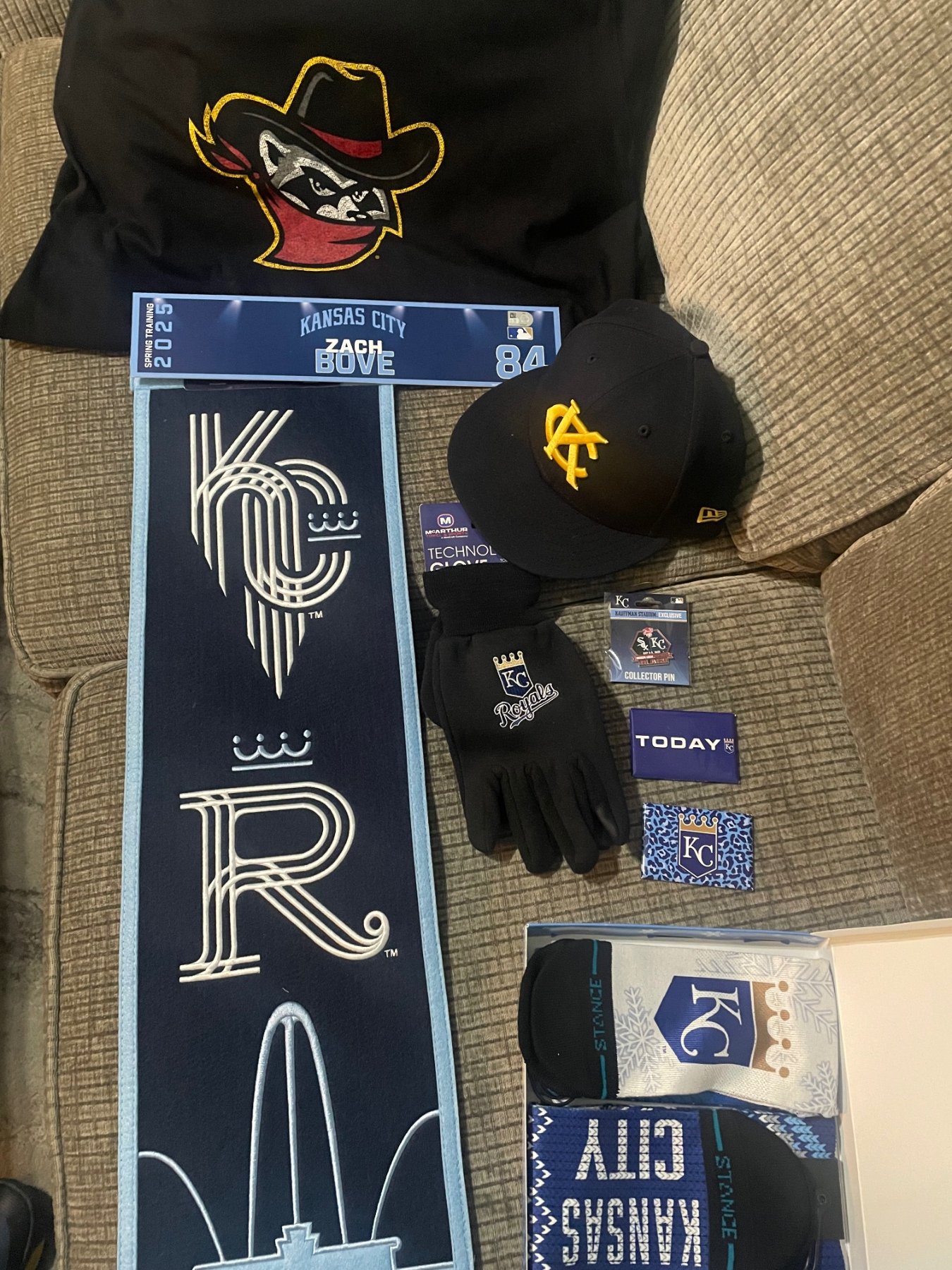
35% off everything in team store (except jerseys), 40% off City Connect, and 50% off select items. This haul all came out under $100 Sale is through the weekend for those in KC.
-
 Yeah I agree on Pham. He wasn't all that impressive in Kansas City, and defensively, he's a mixed bag. Refsnyder is just a way better option if you want to do the platoon thing with Cags. I wouldn't be surprised if they would explore Garcia and/or Cags in another position like LF, especially if they're willing to commit the money to Garcia. It's not like there's a ton of options right now in LF.
 -
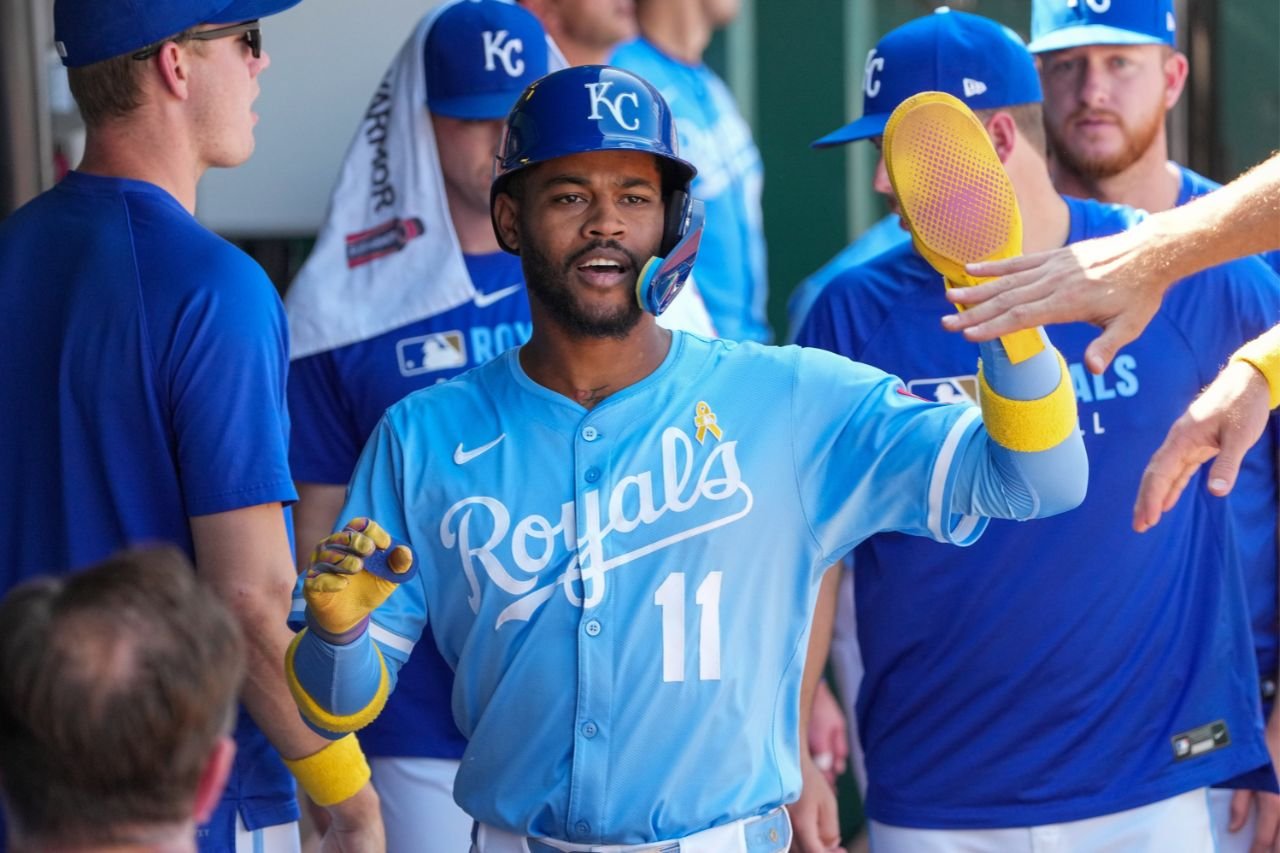 On Tuesday afternoon, the MLB Pre-Arbitration Bonus Pool recipients were released. For those unfamiliar with the Pre-Arbitration Bonus Pool, it can be defined as follows: A more thorough breakdown of the Pre-Arbitration Bonus Pool, who is eligible, and how it is awarded can be found here. While it is not as celebrated as the MLB awards or as hyped as free agency or trade season in the offseason, the pool highlights pre-arbitration players coming off excellent campaigns. This season, four Royals players received bonuses from the pool, including two pitchers and two position players. Let's examine how much those players made and what they did in 2025 to earn those respective bonus amounts. Maikel Garcia, 3B: $773,819 Garcia received the 13th-highest amount this season, just ahead of players like Boston's Roman Anthony ($725,317) and Baltimore's Gunnar Henderson ($641,218). After a down season in 2024 in which he posted a 71 wRC+ and 1.2 fWAR in 626 plate appearances, he posted a 121 wRC+ and 5.8 fWAR in 666 plate appearances this season. The 25-year-old third baseman didn't just post great stats, but earned some honors and hardware this season as well. He made his first All-Star team, was a Silver Slugger finalist, and garnered his first Gold Glove after posting stellar metrics at the hot corner this year. Garcia didn't earn any All-MLB honors, but his high fWAR and various honors contributed to his high pre-arbitration bonus amount. The Venezuelan will enter his first year of arbitration eligibility this offseason, and he could be a candidate for a long-term extension. MLB Trade Rumors projects Garcia to command around $4.8 million in arbitration this offseason. Noah Cameron, LHP: $638,351 The rookie lefty had the second-highest bonus amount for a Royals player and had the 17th-highest overall. That isn't surprising, especially considering the season Cameron had on the mound for a rotation that dealt with a lot of pitching injuries this season. In 24 starts and 138.1 IP, Cameron sported a 9-7 record and posted a 2.99 ERA, 1.10 WHIP, and 1.8 fWAR. His fWAR mark actually lagged behind Michael Wacha (3.6), Kris Bubic (3.3), and even Cole Ragans (2.1). That said, his durability and strong showing helped him earn Royals Pitcher of the Year honors from the organization and finish fourth in AL Rookie of the Year voting, behind Nick Kurtz (winner), Jacob Wilson, and Anthony. The fWAR may not have been as impressive as Garcia's. Still, his strong showing in the AL Rookie of the Year voting, along with excellent surface-level numbers for a rookie starting pitcher, likely contributed to his high bonus. Cameron has an opportunity to continue to collect from the pool for the next few years if he continues to develop as a pitcher, as he is not arbitration-eligible until 2029. Stephen Kolek, RHP: $251,660 A Trade Deadline acquisition from San Diego, Kolek thrived in his role with the Royals down the stretch. In five starts and 33 IP with Kansas City, he posted a 1.91 ERA, 0.76 WHIP, and 0.9 fWAR. This was despite initially pitching in Triple-A Omaha when he was originally acquired from the Padres. His finish was so impressive that he earned September Pitcher of the Month honors from the Royals. While those numbers with the Royals were impressive, Kolek had a solid overall season, pitching with the Padres before switching organizations. Overall, Kolek made 19 appearances, nine starts, pitched 112.2 innings, and posted an ERA of 3.51, a WHIP of 1.14, and fWAR of 0.9. That's not bad for a pitcher who had only pitched 46.2 innings in 2024 with San Diego as a rookie (he posted a 5.21 ERA and 1.52 WHIP last season). Kolek's bonus amount put him just behind the White Sox's Shane Smith ($255,276) but ahead of other pitchers such as the Dodgers' Emmet Sheehan ($248,866) and Milwaukee's Aaron Ashby ($228,384). The 28-year-old Texas A&M product is still pre-arbitration eligible this offseason and next and will be arbitration-eligible in 2028, according to Spotrac. Vinnie Pasquantino, 1B: $245,479 Pasquantino finally stayed healthy in 2025 and had the best season of his short career. The 27-year-old first baseman played 160 games and had 682 plate appearances in 2025. Over that sample, he slashed .264/.323/.475 and led the Royals in home runs with 32 and RBI with 113. He also posted a 116 wRC+ and 1.5 fWAR. On the hitting end, it was an unforgettable season for the Pasquatch. He overcame a slow start to the season, as he posted a 49 wRC+ in 124 plate appearances in March/April, according to Fangraphs splits. After that brutal first month of play, he didn't have a wRC+ below triple digits, and he was particularly productive after the All-Star Break, posting a 125 wRC+ in the second half. Pasquantino didn't earn any All-Star or All-MLB honors last season (and it wasn't particularly close). Furthermore, his defense left a bit to be desired. He was seven outs below average and four runs below average defensively, according to Statcast's defensive metrics. His OAA ranked in the bottom sixth percentile, and it was also a nine-out difference from his mark in 2024. Still, aside from defense, the Royals should feel good about what Pasquantino did last year as an on-field and locker-room leader for the club. He also did enough to get some money from the pre-arbitration bonus pool, as his amount was larger than Detroit's Colt Keith ($224,454), Toronto's Nathan Lukes ($222,545), and Pittsburgh's Oneil Cruz ($221,795). Like Garcia, Pasquantino enters his first year of arbitration eligibility and could be an extension candidate as well this offseason. MLB Trade Rumors estimates him to command $5.4 million in arbitration this offseason.
 -
Image courtesy of © Denny Medley-Imagn Images On Tuesday afternoon, the MLB Pre-Arbitration Bonus Pool recipients were released. For those unfamiliar with the Pre-Arbitration Bonus Pool, it can be defined as follows: A more thorough breakdown of the Pre-Arbitration Bonus Pool, who is eligible, and how it is awarded can be found here. While it is not as celebrated as the MLB awards or as hyped as free agency or trade season in the offseason, the pool highlights pre-arbitration players coming off excellent campaigns. This season, four Royals players received bonuses from the pool, including two pitchers and two position players. Let's examine how much those players made and what they did in 2025 to earn those respective bonus amounts. Maikel Garcia, 3B: $773,819 Garcia received the 13th-highest amount this season, just ahead of players like Boston's Roman Anthony ($725,317) and Baltimore's Gunnar Henderson ($641,218). After a down season in 2024 in which he posted a 71 wRC+ and 1.2 fWAR in 626 plate appearances, he posted a 121 wRC+ and 5.8 fWAR in 666 plate appearances this season. The 25-year-old third baseman didn't just post great stats, but earned some honors and hardware this season as well. He made his first All-Star team, was a Silver Slugger finalist, and garnered his first Gold Glove after posting stellar metrics at the hot corner this year. Garcia didn't earn any All-MLB honors, but his high fWAR and various honors contributed to his high pre-arbitration bonus amount. The Venezuelan will enter his first year of arbitration eligibility this offseason, and he could be a candidate for a long-term extension. MLB Trade Rumors projects Garcia to command around $4.8 million in arbitration this offseason. Noah Cameron, LHP: $638,351 The rookie lefty had the second-highest bonus amount for a Royals player and had the 17th-highest overall. That isn't surprising, especially considering the season Cameron had on the mound for a rotation that dealt with a lot of pitching injuries this season. In 24 starts and 138.1 IP, Cameron sported a 9-7 record and posted a 2.99 ERA, 1.10 WHIP, and 1.8 fWAR. His fWAR mark actually lagged behind Michael Wacha (3.6), Kris Bubic (3.3), and even Cole Ragans (2.1). That said, his durability and strong showing helped him earn Royals Pitcher of the Year honors from the organization and finish fourth in AL Rookie of the Year voting, behind Nick Kurtz (winner), Jacob Wilson, and Anthony. The fWAR may not have been as impressive as Garcia's. Still, his strong showing in the AL Rookie of the Year voting, along with excellent surface-level numbers for a rookie starting pitcher, likely contributed to his high bonus. Cameron has an opportunity to continue to collect from the pool for the next few years if he continues to develop as a pitcher, as he is not arbitration-eligible until 2029. Stephen Kolek, RHP: $251,660 A Trade Deadline acquisition from San Diego, Kolek thrived in his role with the Royals down the stretch. In five starts and 33 IP with Kansas City, he posted a 1.91 ERA, 0.76 WHIP, and 0.9 fWAR. This was despite initially pitching in Triple-A Omaha when he was originally acquired from the Padres. His finish was so impressive that he earned September Pitcher of the Month honors from the Royals. While those numbers with the Royals were impressive, Kolek had a solid overall season, pitching with the Padres before switching organizations. Overall, Kolek made 19 appearances, nine starts, pitched 112.2 innings, and posted an ERA of 3.51, a WHIP of 1.14, and fWAR of 0.9. That's not bad for a pitcher who had only pitched 46.2 innings in 2024 with San Diego as a rookie (he posted a 5.21 ERA and 1.52 WHIP last season). Kolek's bonus amount put him just behind the White Sox's Shane Smith ($255,276) but ahead of other pitchers such as the Dodgers' Emmet Sheehan ($248,866) and Milwaukee's Aaron Ashby ($228,384). The 28-year-old Texas A&M product is still pre-arbitration eligible this offseason and next and will be arbitration-eligible in 2028, according to Spotrac. Vinnie Pasquantino, 1B: $245,479 Pasquantino finally stayed healthy in 2025 and had the best season of his short career. The 27-year-old first baseman played 160 games and had 682 plate appearances in 2025. Over that sample, he slashed .264/.323/.475 and led the Royals in home runs with 32 and RBI with 113. He also posted a 116 wRC+ and 1.5 fWAR. On the hitting end, it was an unforgettable season for the Pasquatch. He overcame a slow start to the season, as he posted a 49 wRC+ in 124 plate appearances in March/April, according to Fangraphs splits. After that brutal first month of play, he didn't have a wRC+ below triple digits, and he was particularly productive after the All-Star Break, posting a 125 wRC+ in the second half. Pasquantino didn't earn any All-Star or All-MLB honors last season (and it wasn't particularly close). Furthermore, his defense left a bit to be desired. He was seven outs below average and four runs below average defensively, according to Statcast's defensive metrics. His OAA ranked in the bottom sixth percentile, and it was also a nine-out difference from his mark in 2024. Still, aside from defense, the Royals should feel good about what Pasquantino did last year as an on-field and locker-room leader for the club. He also did enough to get some money from the pre-arbitration bonus pool, as his amount was larger than Detroit's Colt Keith ($224,454), Toronto's Nathan Lukes ($222,545), and Pittsburgh's Oneil Cruz ($221,795). Like Garcia, Pasquantino enters his first year of arbitration eligibility and could be an extension candidate as well this offseason. MLB Trade Rumors estimates him to command $5.4 million in arbitration this offseason. View full article
-
For those who follow hockey or play fantasy hockey, I also write about it at Goalie Streamer, which is on Substack. You can follow and subscribe to receive updates. https://www.goaliestreamer.com/
-
Solid piece, Philip. I would rank my wish list of this group as follows: 1. Refsnyder: Seems to be most comfortable and familiar with platooning and shouldn't be too expensive. 2. Hays: Think the Royals had interest before, and he's a guy who could move around the corners if he gets hot. Plus, as you said, he would probably agree to a one-year deal. 3. Morel: Huge strikeout issues, but interesting power. Not an everyday guy, but think he and Jac can make up a dynamic RF. 4. Yaz: Obviously not a platoon, but I think Yaz did enough to prove he could be an everyday player if re-signed. However, believe he will command some attention this offseason and be out of our price range. No on Pham (was fine, but underwhelming in KC and Royals not bringing him back was interesting), Garcia (will be too expensive likely), Slater (more defense than offense, which isn't bad, but doesn't solve our hitting problems), and Adell (he likely will command a decent return after his breakout year).
-
On Monday, the Kansas City Royals announced that they hired Mike McFerran as assistant pitching coach. McFerran replaces Zach Bove, who left earlier this month for the head pitching coach role with the Chicago White Sox. McFerran is only 32 years old but has a diverse coaching history, with much of his time spent at his alma mater, Skidmore College in Saratoga Springs, New York, Wake Forest University, and the Sacramento Athletics. With Wake Forest, he served as an associate head coach and pitching lab coordinator, helping develop first-round draft picks such as Ryan Cusick and Rhett Lowder. After a successful tenure with the Demon Deacons, he moved on to the Athletics organization, where he primarily worked with Minor League pitchers for the past two seasons. The Royals' new assistant pitching coach had a pretty interesting interview on "And That's The Game" from Pro Batter Sports last year, when he was a member of the Athletics organization. In the podcast, he discussed his unique coaching background and his overall coaching philosophy. When it came to replacing Bove, the Royals were looking for someone who shared Bove's ability to work closely with pitchers, especially in game strategy and pitch design, according to MLB.com Royals beat writer Anne Rogers. With his extensive background in pitch mechanics and incorporating science, data, and technology to develop athletes, especially pitchers, it seems like Kansas City found that fit with McFerran. Here's a snippet from Rogers' piece that provides background on McFerran's coaching history, especially during his tenure at Wake Forest. With the McFerran hiring, the Royals' coaching staff should be complete for the upcoming season. In addition to Bove, the Royals needed to replace assistant hitting coaches Keoni DeRenne and Joe Dillon. They found those replacements in Connor Dawson of the Brewers and Marcus Thames of the White Sox. Photo Credit: © William Purnell-Imagn Images View full rumor
-
 On Monday, the Kansas City Royals announced that they hired Mike McFerran as assistant pitching coach. McFerran replaces Zach Bove, who left earlier this month for the head pitching coach role with the Chicago White Sox. McFerran is only 32 years old but has a diverse coaching history, with much of his time spent at his alma mater, Skidmore College in Saratoga Springs, New York, Wake Forest University, and the Sacramento Athletics. With Wake Forest, he served as an associate head coach and pitching lab coordinator, helping develop first-round draft picks such as Ryan Cusick and Rhett Lowder. After a successful tenure with the Demon Deacons, he moved on to the Athletics organization, where he primarily worked with Minor League pitchers for the past two seasons. The Royals' new assistant pitching coach had a pretty interesting interview on "And That's The Game" from Pro Batter Sports last year, when he was a member of the Athletics organization. In the podcast, he discussed his unique coaching background and his overall coaching philosophy. When it came to replacing Bove, the Royals were looking for someone who shared Bove's ability to work closely with pitchers, especially in game strategy and pitch design, according to MLB.com Royals beat writer Anne Rogers. With his extensive background in pitch mechanics and incorporating science, data, and technology to develop athletes, especially pitchers, it seems like Kansas City found that fit with McFerran. Here's a snippet from Rogers' piece that provides background on McFerran's coaching history, especially during his tenure at Wake Forest. With the McFerran hiring, the Royals' coaching staff should be complete for the upcoming season. In addition to Bove, the Royals needed to replace assistant hitting coaches Keoni DeRenne and Joe Dillon. They found those replacements in Connor Dawson of the Brewers and Marcus Thames of the White Sox. Photo Credit: © William Purnell-Imagn Images
 -
Image courtesy of © Denny Medley-Imagn Images We've finally arrived at part four in our series, which explores our top-five prospects in the Royals farm system. As stated before, the Kansas City Royals may not receive much respect from prospect experts for their system. For example, Bleacher Report, in their updated system rankings in September, ranked the Royals as the 23rd-best system in baseball. However, under scouting director Brian Bridges, the Royals have done a much better job in terms of amateur scouting and drafting since he joined the organization in 2024. That has resulted in much better Royals prospects, especially at the top of the system. In part four of Royal Keep's Top-20 Prospects rankings, we look at a pitcher just recently added to the 40-man roster, two teenage pitchers who did well in Low-A ball in 2025, a former first-round pick who had a solid fall in Arizona, and a local KC-area catcher who made his debut in September and could be a centerpiece for this franchise for years to come. 5th: Ben Kurdna, RHP (Highest Level: Triple-A) The Royals added Kudrna to the 40-man roster last week (along with fellow right-hander Steven Zobac) to protect him from the Rule 5 Draft in December. A former Blue Valley Southwest High School product and 2021 second-round pick, the right-hander has shown growth the past couple of seasons in ways that Frank Mozzicato, who was drafted ahead of Kudrna in 2021, hasn't. Kudrna has done a much better job of striking out batters each season in the Minor Leagues. After only generating a 19.2% K rate in 2023 in High-A Quad Cities, he has shown improvement over the past two seasons. In 2024, in 115.1 IP between High-A and Double-A, he produced a 24.2% K rate. In 2025, in 105.1 IP, he posted a 22.9% K rate between Double-A and Triple-A, but sported a 24% K rate in 94 IP in Northwest Arkansas. In addition to strikeouts, the 22-year-old has also demonstrated solid CSW (called-strike plus whiff) rates as well as strong groundball rates over the past two years. In 2024, he posted a 30% CSW and a 45.6% GB% across High-A and Double-A. In 2025 with the Naturals, he induced a 45.4% GB% and 27.5% CSW, both solid marks for a starting pitcher. Unfortunately, Kudrna hit a bit of a wall in his first exposure to Triple-A at the end of last season. In four games (three starts) and 11.1 IP, he posted a 14.29 ERA, 2.74 WHIP, and 9.94 FIP. He struggled immensely with his command while pitching for the Storm Chasers. His K rate didn't just drop by 8.1%; his walk rate also jumped to 27% (resulting in a K-BB% of -11.1%). Furthermore, the stuff didn't profile well on a TJ Stuff+ end as well. He only sported a TJ Stuff+ mark of 94, and only one of his six offerings had a TJ Stuff+ mark in the triple digits. His other metrics, such as zone rate (35.5%) and chase rate (20.6%), didn't profile well either. That said, he did generate a decent 29.5% whiff rate, and his GB% of 45.7% was actually 0.2% higher than his GB% in Northwest Arkansas. Hence, there were some positive signs for Kudrna in his brief exposure to Triple-A, even though the overall metrics weren't great. With a fresh start and a complete Spring Training in big league camp, Kudrna could make a push to join the rotation midseason, especially if he can continue to generate whiffs and strong groundball rates in 2026. 4th: Kendry Chourio, RHP (Highest Level: Low-A) Arguably the biggest riser in the Royals' farm system last year, Chourio advanced to three different levels of play in 2025 as a 17-year-old: DSL, Complex, and Low-A. At each level, the Venezuelan teenager dominated on the mound. In five appearances and 17.2 IP in the DSL, he posted a 2.04 ERA, 0.74 WHIP, 32.8% K rate, and 31.3% K-BB%. In the Arizona Complex League, his dominance continued. In three starts and 11 IP, he posted a 2.45 ERA, 1.09 WHIP, and 35.4% K and K-BB%. As a result of those solid, complex performances, he earned a promotion to Low-A Columbia, despite being younger than most high school seniors. Low-A ball was a bit more of a reality check for Chourio. In six starts and 22.2 IP, he posted a 5.16 ERA. However, his WHIP remained solid at 1.06, and his 25% K rate and 20.8% K-BB% were also solid marks, especially for a pitcher of his age. His 3.66 FIP and 3.26 xFIP demonstrated that he was better in Columbia than his high ERA suggested. Chourio showcases a plus four-seamer that can touch 97 MPH and an equally plus changeup that plays well off his fastball. His breaking offering needs work, but he still has plenty of time to develop it as he gets more Minor League innings. Some scouts and insiders have remarked that Chourio shares many comps with Yordano Ventura, the most decorated and successful international pitching prospect developed by the Royals. Granted, that's high praise, and a bit unfair to Chourio, who just turned 18 in October. However, the tools, pitch command, and the physical projection (he's six-foot, 160 pounds) are impressive so far with the young Venezuelan. If he continues to develop, he could be the Royals' top pitching prospect by midseason, and perhaps their top prospect by the conclusion of 2026, if everything falls into place. 3rd: David Shields, LHP (Highest Level: Low-A) In addition to Chourio, the Fireflies had another teenage phenom in Shields, a second-round pick in the 2024 MLB Draft. After a warm-up start in the Complex League, the Pittsburgh prep prospect made 18 starts in Columbia. In 71.2 IP with the Fireflies, he was flat-out dominant. He posted a 2.01 ERA, 1.02 WHIP, a 28.3% K rate, a 23.1% K-BB%, and 2.57 FIP. These stellar numbers helped him earn Carolina League Pitcher of the Year honors. Shields showcased an easy delivery, strong stuff, and excellent command in his tenure with the Fireflies. Here's what MLB Pipeline said about Shields and his pitch repertoire in their latest scouting report: The Pennsylvania native doesn't have as electric a velocity as Chourio, but the extension and command have helped him produce more polished results in his Low-A debut. There's also a mature approach by Shields on the mound that may remind some Royals fans of Kris Bubic. However, Shields has more velocity and overall upside than the Royals lefty who made the All-Star Game this past season (primarily because Shields was drafted out of high school, unlike Bubic, who was drafted out of college). He will likely matriculate to High-A Quad Cities in 2026. He could make a move to Northwest Arkansas by midseason if he dominates Midwest League hitters like he did Carolina League hitters. The swing-and-miss stuff (31.8% CSW) and the strong ability to keep the ball on the ground (46.7% GB%) demonstrate that he can find multiple ways to get batters out, which should help him as he progresses up the Royals farm system. 2nd: Blake Mitchell, C (Highest Level: High-A) Mitchell has bounced back and forth between the top and second spot in Royals prospect rankings the past couple of seasons. In 2024, he held the title of top Royals prospect, especially after hitting 18 home runs, stealing 25 bases, and posting a 137 wRC+ in 466 plate appearances with the Fireflies. However, the Royals drafted Jac Caglianone sixth overall in the 2024 MLB Draft, and the Florida slugger immediately ascended to the top spot in the Royals system. It was also a tough season for Mitchell in 2025, in myriad ways. First off, in Spring Training, he broke a hamate bone in his hand, which forced him to start the year on the IL. When Mitchell returned to action, he struggled to get in rhythm in High-A Quad Cities, especially at the plate. In 49 games and 216 plate appearances, he only hit .207 and had two home runs. Furthermore, his ISO was only .089, a far cry from the .201 mark he posted in Low-A Columbia in 2024. Mitchell did show some positive signs offensively. His eye at the plate has been lauded, and he did post a 20.8% BB% and 0.63 BB/K ratio with the River Bandits last year. That said, his approach was sometimes a bit too passive, as evidenced by his 41.2% swing rate and 49.5% first-strike percentage last season. On a positive note, it seemed like Mitchell finally was fully healthy in Arizona this fall. As a result, he produced a solid AFL campaign in terms of results and underlying batted-ball metrics with the Surprise Saguaros, who won the AFL Championship. In 82 plate appearances, Mitchell slashed .233/.439/.317 with a .756 OPS. While he only hit one home run, he showed excellent exit velocity metrics. His 90th EV ranked in the 71st percentile, his barrel rate ranked in the 72nd percentile, his average EV ranked in the 82nd percentile, and his max EV ranked in the 98th percentile. Furthermore, Mitchell was much more aggressive, ranking in the 86th percentile in Z-Swing%. However, he still showed his highly touted plate discipline, as evidenced by his 89th percentile O-Swing% and 95th percentile BB%. In addition to solid metrics, the AFL was good for Mitchell to build some confidence, especially in big moments. The 21-year-old catcher had a walk-off single in the AFL semifinals that helped punch the Saguaros' ticket in the AFL Championship. Even though there's a lot of catching depth in the Royals system, Mitchell is impressive defensively, showing excellent athleticism and arm strength behind the plate. He threw out 31% of baserunners last year, a 16% improvement from his mark in 2024. He also stole nine bags the previous year and 25 in 2024. Thus, he has the athleticism to be a multi-tool threat at the MLB level, even as a catcher. While 2025 wasn't a season to remember for Mitchell, he's still 21 years old, and he is trending in the right direction after a productive AFL stint. He should be one to watch in 2026 as an impact prospect in this system, as long as he stays healthy. While he may start in High-A, he could move quickly and be in Northwest Arkansas before Royals fans know it. 1st: Carter Jensen, C (Highest Level: MLB) Jensen won't be a prospect for much longer, especially after accumulating 69 plate appearances with the Royals as a September call-up. That said, he had an incredible season in 2025, helping him shoot up the board on most Top-100 lists. In 111 games and 492 plate appearances between Double-A and Triple-A, Jensen hit .290 with 20 home runs, 72 runs scored, 76 RBI, and 10 stolen bases. He also posted a 0.49 BB/K ratio, an .878 OPS, and 136 wRC+ with the Naturals and Storm Chasers, combined. Those stellar numbers helped him earn the George Brett Hitter of the Year Award, which goes to the top Royals position prospect in the system. While his Minor League numbers were incredible, they paled in comparison to what he did in his 20-game sample with the Royals as a 21-year-old. In his MLB debut, he slashed .300/.391/.550 with three home runs, 12 runs scored, and 13 RBI. Jensen also posted a .941 OPS, a 159 wRC+, and hit one of the longest home runs in Kansas City Royals history in Sacramento. Now, Royals fans have seen solid September call-ups only to be fooled the following season. That said, Jensen's Statcast percentiles show a player who's mature beyond his years, not just in plate discipline but also in power and batted-ball ability. Those levels of red, even in a small sample, aren't prevalent at the MLB level. In fact, Jensen's underlying metrics with the Royals in September caught the attention not only of Royals fans but also of national prospect experts. Here's what Thomas Nestico of TJ Stats said about Jensen, his No. 7 overall prospect in baseball, in Jensen's latest scouting report. There's a lot to like about Jensen and what he can bring to this organization in 2026. Not just as a prospect, either, but as a regular contributor to the Royals lineup. The emergence of Jensen is a big reason Kansas City was able to deal backup catcher Freddy Fermin at the Deadline, even though he was productive in that role over the past two seasons. Even when Jensen isn't behind the plate, he should be getting regular time at designated hitter, especially against right-handed starting pitchers. While Salvador Perez signed a two-year extension, manager Matt Quatraro will likely help preserve Perez's bat and stamina by giving Jensen more innings behind the plate. That catching playing-time split should not just help the Royals in the short term (maximizing Perez's offensive production), but also help ease Jensen into being Kansas City's catcher of the future after Perez finally retires. View full article
-
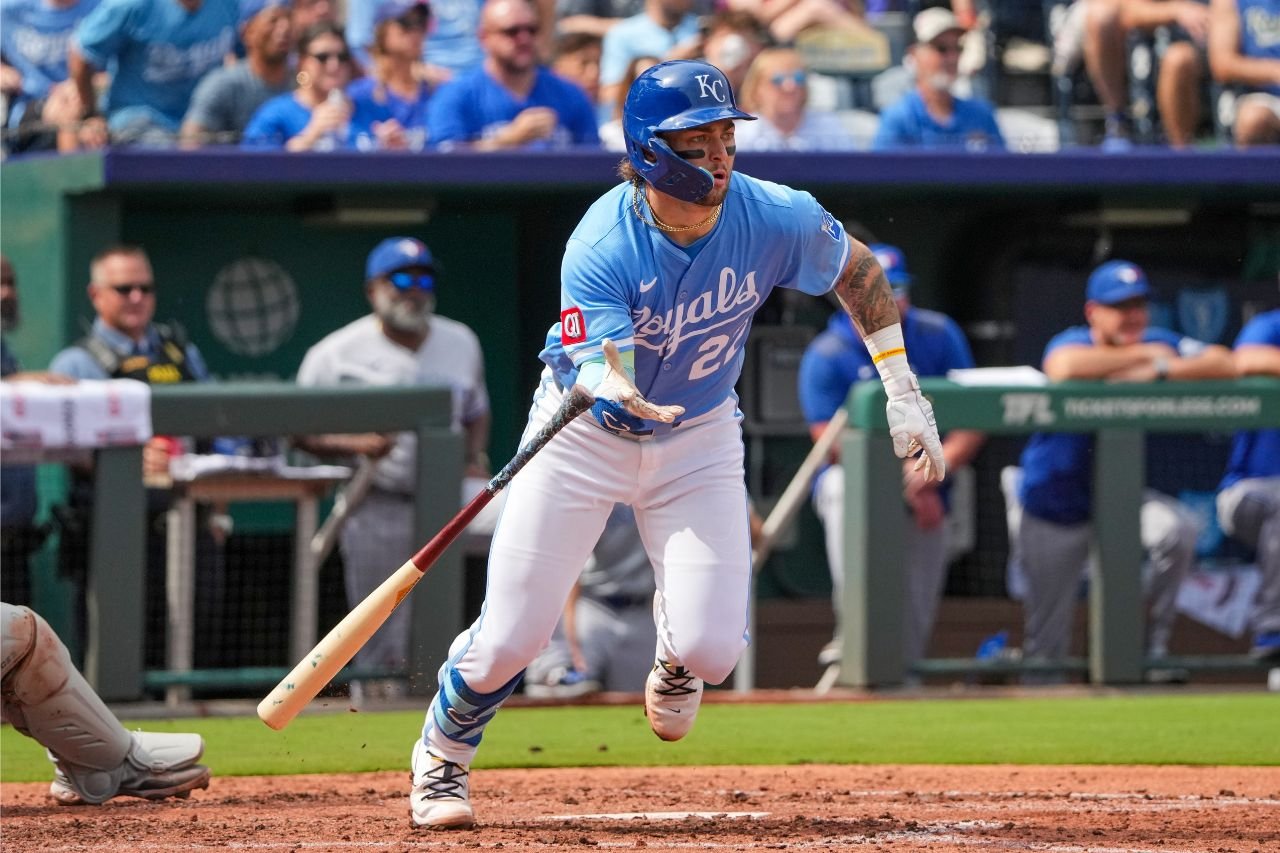 We've finally arrived at part four in our series, which explores our top-five prospects in the Royals farm system. As stated before, the Kansas City Royals may not receive much respect from prospect experts for their system. For example, Bleacher Report, in their updated system rankings in September, ranked the Royals as the 23rd-best system in baseball. However, under scouting director Brian Bridges, the Royals have done a much better job in terms of amateur scouting and drafting since he joined the organization in 2024. That has resulted in much better Royals prospects, especially at the top of the system. In part four of Royal Keep's Top-20 Prospects rankings, we look at a pitcher just recently added to the 40-man roster, two teenage pitchers who did well in Low-A ball in 2025, a former first-round pick who had a solid fall in Arizona, and a local KC-area catcher who made his debut in September and could be a centerpiece for this franchise for years to come. 5th: Ben Kurdna, RHP (Highest Level: Triple-A) The Royals added Kudrna to the 40-man roster last week (along with fellow right-hander Steven Zobac) to protect him from the Rule 5 Draft in December. A former Blue Valley Southwest High School product and 2021 second-round pick, the right-hander has shown growth the past couple of seasons in ways that Frank Mozzicato, who was drafted ahead of Kudrna in 2021, hasn't. Kudrna has done a much better job of striking out batters each season in the Minor Leagues. After only generating a 19.2% K rate in 2023 in High-A Quad Cities, he has shown improvement over the past two seasons. In 2024, in 115.1 IP between High-A and Double-A, he produced a 24.2% K rate. In 2025, in 105.1 IP, he posted a 22.9% K rate between Double-A and Triple-A, but sported a 24% K rate in 94 IP in Northwest Arkansas. In addition to strikeouts, the 22-year-old has also demonstrated solid CSW (called-strike plus whiff) rates as well as strong groundball rates over the past two years. In 2024, he posted a 30% CSW and a 45.6% GB% across High-A and Double-A. In 2025 with the Naturals, he induced a 45.4% GB% and 27.5% CSW, both solid marks for a starting pitcher. Unfortunately, Kudrna hit a bit of a wall in his first exposure to Triple-A at the end of last season. In four games (three starts) and 11.1 IP, he posted a 14.29 ERA, 2.74 WHIP, and 9.94 FIP. He struggled immensely with his command while pitching for the Storm Chasers. His K rate didn't just drop by 8.1%; his walk rate also jumped to 27% (resulting in a K-BB% of -11.1%). Furthermore, the stuff didn't profile well on a TJ Stuff+ end as well. He only sported a TJ Stuff+ mark of 94, and only one of his six offerings had a TJ Stuff+ mark in the triple digits. His other metrics, such as zone rate (35.5%) and chase rate (20.6%), didn't profile well either. That said, he did generate a decent 29.5% whiff rate, and his GB% of 45.7% was actually 0.2% higher than his GB% in Northwest Arkansas. Hence, there were some positive signs for Kudrna in his brief exposure to Triple-A, even though the overall metrics weren't great. With a fresh start and a complete Spring Training in big league camp, Kudrna could make a push to join the rotation midseason, especially if he can continue to generate whiffs and strong groundball rates in 2026. 4th: Kendry Chourio, RHP (Highest Level: Low-A) Arguably the biggest riser in the Royals' farm system last year, Chourio advanced to three different levels of play in 2025 as a 17-year-old: DSL, Complex, and Low-A. At each level, the Venezuelan teenager dominated on the mound. In five appearances and 17.2 IP in the DSL, he posted a 2.04 ERA, 0.74 WHIP, 32.8% K rate, and 31.3% K-BB%. In the Arizona Complex League, his dominance continued. In three starts and 11 IP, he posted a 2.45 ERA, 1.09 WHIP, and 35.4% K and K-BB%. As a result of those solid, complex performances, he earned a promotion to Low-A Columbia, despite being younger than most high school seniors. Low-A ball was a bit more of a reality check for Chourio. In six starts and 22.2 IP, he posted a 5.16 ERA. However, his WHIP remained solid at 1.06, and his 25% K rate and 20.8% K-BB% were also solid marks, especially for a pitcher of his age. His 3.66 FIP and 3.26 xFIP demonstrated that he was better in Columbia than his high ERA suggested. Chourio showcases a plus four-seamer that can touch 97 MPH and an equally plus changeup that plays well off his fastball. His breaking offering needs work, but he still has plenty of time to develop it as he gets more Minor League innings. Some scouts and insiders have remarked that Chourio shares many comps with Yordano Ventura, the most decorated and successful international pitching prospect developed by the Royals. Granted, that's high praise, and a bit unfair to Chourio, who just turned 18 in October. However, the tools, pitch command, and the physical projection (he's six-foot, 160 pounds) are impressive so far with the young Venezuelan. If he continues to develop, he could be the Royals' top pitching prospect by midseason, and perhaps their top prospect by the conclusion of 2026, if everything falls into place. 3rd: David Shields, LHP (Highest Level: Low-A) In addition to Chourio, the Fireflies had another teenage phenom in Shields, a second-round pick in the 2024 MLB Draft. After a warm-up start in the Complex League, the Pittsburgh prep prospect made 18 starts in Columbia. In 71.2 IP with the Fireflies, he was flat-out dominant. He posted a 2.01 ERA, 1.02 WHIP, a 28.3% K rate, a 23.1% K-BB%, and 2.57 FIP. These stellar numbers helped him earn Carolina League Pitcher of the Year honors. Shields showcased an easy delivery, strong stuff, and excellent command in his tenure with the Fireflies. Here's what MLB Pipeline said about Shields and his pitch repertoire in their latest scouting report: The Pennsylvania native doesn't have as electric a velocity as Chourio, but the extension and command have helped him produce more polished results in his Low-A debut. There's also a mature approach by Shields on the mound that may remind some Royals fans of Kris Bubic. However, Shields has more velocity and overall upside than the Royals lefty who made the All-Star Game this past season (primarily because Shields was drafted out of high school, unlike Bubic, who was drafted out of college). He will likely matriculate to High-A Quad Cities in 2026. He could make a move to Northwest Arkansas by midseason if he dominates Midwest League hitters like he did Carolina League hitters. The swing-and-miss stuff (31.8% CSW) and the strong ability to keep the ball on the ground (46.7% GB%) demonstrate that he can find multiple ways to get batters out, which should help him as he progresses up the Royals farm system. 2nd: Blake Mitchell, C (Highest Level: High-A) Mitchell has bounced back and forth between the top and second spot in Royals prospect rankings the past couple of seasons. In 2024, he held the title of top Royals prospect, especially after hitting 18 home runs, stealing 25 bases, and posting a 137 wRC+ in 466 plate appearances with the Fireflies. However, the Royals drafted Jac Caglianone sixth overall in the 2024 MLB Draft, and the Florida slugger immediately ascended to the top spot in the Royals system. It was also a tough season for Mitchell in 2025, in myriad ways. First off, in Spring Training, he broke a hamate bone in his hand, which forced him to start the year on the IL. When Mitchell returned to action, he struggled to get in rhythm in High-A Quad Cities, especially at the plate. In 49 games and 216 plate appearances, he only hit .207 and had two home runs. Furthermore, his ISO was only .089, a far cry from the .201 mark he posted in Low-A Columbia in 2024. Mitchell did show some positive signs offensively. His eye at the plate has been lauded, and he did post a 20.8% BB% and 0.63 BB/K ratio with the River Bandits last year. That said, his approach was sometimes a bit too passive, as evidenced by his 41.2% swing rate and 49.5% first-strike percentage last season. On a positive note, it seemed like Mitchell finally was fully healthy in Arizona this fall. As a result, he produced a solid AFL campaign in terms of results and underlying batted-ball metrics with the Surprise Saguaros, who won the AFL Championship. In 82 plate appearances, Mitchell slashed .233/.439/.317 with a .756 OPS. While he only hit one home run, he showed excellent exit velocity metrics. His 90th EV ranked in the 71st percentile, his barrel rate ranked in the 72nd percentile, his average EV ranked in the 82nd percentile, and his max EV ranked in the 98th percentile. Furthermore, Mitchell was much more aggressive, ranking in the 86th percentile in Z-Swing%. However, he still showed his highly touted plate discipline, as evidenced by his 89th percentile O-Swing% and 95th percentile BB%. In addition to solid metrics, the AFL was good for Mitchell to build some confidence, especially in big moments. The 21-year-old catcher had a walk-off single in the AFL semifinals that helped punch the Saguaros' ticket in the AFL Championship. Even though there's a lot of catching depth in the Royals system, Mitchell is impressive defensively, showing excellent athleticism and arm strength behind the plate. He threw out 31% of baserunners last year, a 16% improvement from his mark in 2024. He also stole nine bags the previous year and 25 in 2024. Thus, he has the athleticism to be a multi-tool threat at the MLB level, even as a catcher. While 2025 wasn't a season to remember for Mitchell, he's still 21 years old, and he is trending in the right direction after a productive AFL stint. He should be one to watch in 2026 as an impact prospect in this system, as long as he stays healthy. While he may start in High-A, he could move quickly and be in Northwest Arkansas before Royals fans know it. 1st: Carter Jensen, C (Highest Level: MLB) Jensen won't be a prospect for much longer, especially after accumulating 69 plate appearances with the Royals as a September call-up. That said, he had an incredible season in 2025, helping him shoot up the board on most Top-100 lists. In 111 games and 492 plate appearances between Double-A and Triple-A, Jensen hit .290 with 20 home runs, 72 runs scored, 76 RBI, and 10 stolen bases. He also posted a 0.49 BB/K ratio, an .878 OPS, and 136 wRC+ with the Naturals and Storm Chasers, combined. Those stellar numbers helped him earn the George Brett Hitter of the Year Award, which goes to the top Royals position prospect in the system. While his Minor League numbers were incredible, they paled in comparison to what he did in his 20-game sample with the Royals as a 21-year-old. In his MLB debut, he slashed .300/.391/.550 with three home runs, 12 runs scored, and 13 RBI. Jensen also posted a .941 OPS, a 159 wRC+, and hit one of the longest home runs in Kansas City Royals history in Sacramento. Now, Royals fans have seen solid September call-ups only to be fooled the following season. That said, Jensen's Statcast percentiles show a player who's mature beyond his years, not just in plate discipline but also in power and batted-ball ability. Those levels of red, even in a small sample, aren't prevalent at the MLB level. In fact, Jensen's underlying metrics with the Royals in September caught the attention not only of Royals fans but also of national prospect experts. Here's what Thomas Nestico of TJ Stats said about Jensen, his No. 7 overall prospect in baseball, in Jensen's latest scouting report. There's a lot to like about Jensen and what he can bring to this organization in 2026. Not just as a prospect, either, but as a regular contributor to the Royals lineup. The emergence of Jensen is a big reason Kansas City was able to deal backup catcher Freddy Fermin at the Deadline, even though he was productive in that role over the past two seasons. Even when Jensen isn't behind the plate, he should be getting regular time at designated hitter, especially against right-handed starting pitchers. While Salvador Perez signed a two-year extension, manager Matt Quatraro will likely help preserve Perez's bat and stamina by giving Jensen more innings behind the plate. That catching playing-time split should not just help the Royals in the short term (maximizing Perez's offensive production), but also help ease Jensen into being Kansas City's catcher of the future after Perez finally retires.
 -
Image courtesy of © Jay Biggerstaff-Imagn Images On Friday, the Royals announced two official non-tenders: reliever Taylor Clarke and outfielder MJ Melendez. The move puts their current 40-man roster at 38. The Clarke move was a bit surprising, especially since he wasn't expected to command much in arbitration, and he is coming off a solid past season with the Royals. After spending two seasons in Kansas City in 2022 (4.04 ERA) and 2023 (5.95 ERA), he returned to the Royals and thrived in a middle-innings reliever role. In 51 appearances and 55.1 IP, he posted a 3.25 ERA, 0.85 WHIP, and 17% K-BB%. However, his FIP was 3.97, and while he indeed sported excellent stuff metrics with the Royals last year (104 overall TJ Stuff+), he struggled to generate whiffs, and his xwOBACON was higher than one would want. With the acquisition of Alex Lange this week, it seemed like the Royals felt Clarke's role was expendable. His lack of Minor League options also gave him less flexibility in Spring Training. However, the bigger transaction of the day was the release of Melendez, a 2017 second-round pick and former top prospect who advanced through the Royals' farm system with Bobby Witt Jr. Melendez Showed Early Promise With the Royals Drafted and initially developed as a catcher, Melendez showed excellent power as a prospect in the Royals system, especially after the pandemic. Initially, he had a brutal campaign in High-A ball in 2019, hitting .163 with a .571 OPS and 39.4% K rate in 419 plate appearances. To make matters worse, he only hit nine home runs that season. While the park factors of Wilmington didn't help, the lack of power was disappointing, especially since that was his calling card when drafted out of high school. The Royals changed up their hitting development after the 2019 season, bringing on Alec Zumwalt and Drew Saylor as hitting coordinators. Melendez was a success story of the new team, absolutely thriving in 2021. Across Double-A and Triple-A ball, he led the Minor Leagues in home runs with 41, he lowered his K% to 21.7%, and improved his OPS to 1.011. He was also named Offensive Player of the Year that season by Minor League Baseball. As a result, Melendez became a Top-100 prospect in baseball heading into 2022, ranking 42nd by Baseball America, 51st by MLB Pipeline, and 32nd by Baseball Prospectus. When Melendez made his debut in 2022, the Royals were looking for a spark in what would be manager Mike Matheny's last season. He provided exactly that, spending time as the Royals' leadoff hitter that season. In 537 plate appearances, he hit 18 home runs, collected 62 RBI, scored 57 runs, and posted an OPS of .706 and a wRC+ of 97. Unfortunately, poor defense behind the plate and in the outfield (where he rarely played before he arrived in Kansas City) resulted in a -0.6 fWAR, a microcosm of what was to come in the next three years with the Royals. Power Potential, But Inconsistent Results in Kansas City Over the next two seasons, Melendez was a regular outfielder for the Royals, moving away from catcher completely. Here's a look at what he did in 2023 and 2024: 2023: .235/.316/.398, 10.3% BB%, 28.2% K%, 16 HR, 56 RBI, 93 wRC+, 0.4 fWAR in 602 PA. 2024: .206/.273/.400, 7.8% BB%, 25.1% K%, 17 HR, 44 RBI, 86 wRC+, -0.2 fWAR in 451 PA. The home run power was certainly there, and even in his down season in 2024, he posted a .194 ISO, a career-high. Unfortunately, strikeout and contact issues (career 71.6% contact rate, 79.1% Z-Contact%) deflated his batting average and his overall performance, as illustrated by sub-100 wRC+ marks. In 2025, Melendez worked with Witt's hitting coach and tried to revamp his entire swing. The change was the big story in Royals camp in Surprise, Arizona, that Spring Training. Unfortunately, the change did more harm than good. In 23 games and 65 plate appearances, Melendez slahed .083/.154/.167 with 4.6% BB%, 35.4% K%, -14 wRC+, and -0.6 fWAR. To make matters worse, many of the endearing qualities he had as a hitter, such as max exit velocity and barrel rate, plummeted dramatically last season, as illustrated in his TJ Stats metrics. Based on this slow start, the Royals optioned Melendez to Triple-A, and he pretty much spent the entire season down in Omaha. The numbers were much better with the Storm Chasers. In 107 games and 480 plate appearances, he hit 20 home runs, scored 70 runs, collected 64 RBI, stole 20 bases, and hit .261 with an .813 OPS. Unfortunately, many of the same contact problems he had with the Royals persisted in Omaha, which explains why he didn't receive much of an opportunity with Kansas City after being sent down (he was only called up once at the end of July, and he only played in seven games before going back down). There were some incentives to keep Melendez for at least another season in Kansas City. He still holds a Minor League option for next season. Additionally, he'll be 27 in 2026 and is widely liked by players in the organization, especially young homegrown players like Witt, Vinnie Pasquantino, and Michael Massey. However, it seems his expected arbitration price tag, estimated at around $2.2 million, was a bit too high for a guy who wasn't guaranteed any playing time at the Major League level next season. What is Melendez's Outlook in 2026 and Beyond? Melendez will likely get picked up by a team this offseason, though it probably will be a Minor League deal with an invite to team camp. He has a history of hitting the ball hard, and a more advantageous home run park could help him boost his offensive production. For his career, he has a 91.7 average exit velocity, a 10.1% barrel rate, and a 46.2% hard-hit rate. Those are batted-ball numbers that would intrigue any team. The big question from now on will be whether Melendez can hone his discipline at the plate, which deteriorated with each season at the MLB level. After posting a 0.50 BB/K ratio in his rookie season in 2022, it fell to 0.36 in 2023, 0.31 in 2024, and 0.13 in 2025. A significant contributor to that was an increasing O-Swinig% during those last three seasons. After posting just a 24.4% O-Swing% in 2022, it was 27.4% in 2023, 29.9% in 2024, and 31.6% in 2025. Thus, it's not a surprise that his swing-and-miss rates remained well above-average (and not in a good way) in the past three seasons, as illustrated in his rolling swing-and-miss chart via Savant. Melendez has the opportunity to pull a Ryan O'Hearn (another homegrown player who showed initial promise but disappointed in Kansas City) and turn things around in new surroundings. The talent is undoubtedly there, and this wasn't an easy decision for Royals GM JJ Picollo, especially considering Melendez was such a high draft pick. That said, it was evident that Melendez's tenure in Kansas City was done, and he needed a fresh start. View full article
-
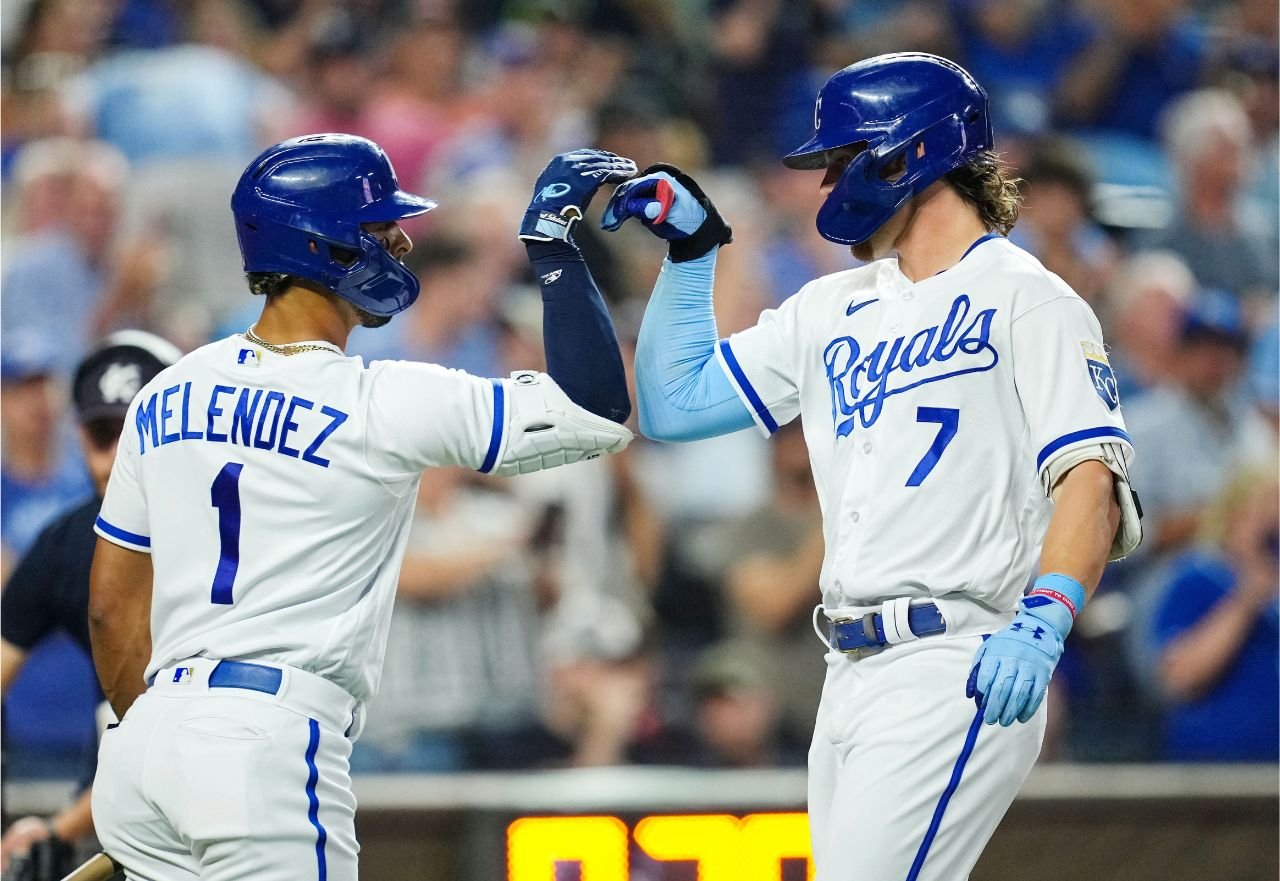 On Friday, the Royals announced two official non-tenders: reliever Taylor Clarke and outfielder MJ Melendez. The move puts their current 40-man roster at 38. The Clarke move was a bit surprising, especially since he wasn't expected to command much in arbitration, and he is coming off a solid past season with the Royals. After spending two seasons in Kansas City in 2022 (4.04 ERA) and 2023 (5.95 ERA), he returned to the Royals and thrived in a middle-innings reliever role. In 51 appearances and 55.1 IP, he posted a 3.25 ERA, 0.85 WHIP, and 17% K-BB%. However, his FIP was 3.97, and while he indeed sported excellent stuff metrics with the Royals last year (104 overall TJ Stuff+), he struggled to generate whiffs, and his xwOBACON was higher than one would want. With the acquisition of Alex Lange this week, it seemed like the Royals felt Clarke's role was expendable. His lack of Minor League options also gave him less flexibility in Spring Training. However, the bigger transaction of the day was the release of Melendez, a 2017 second-round pick and former top prospect who advanced through the Royals' farm system with Bobby Witt Jr. Melendez Showed Early Promise With the Royals Drafted and initially developed as a catcher, Melendez showed excellent power as a prospect in the Royals system, especially after the pandemic. Initially, he had a brutal campaign in High-A ball in 2019, hitting .163 with a .571 OPS and 39.4% K rate in 419 plate appearances. To make matters worse, he only hit nine home runs that season. While the park factors of Wilmington didn't help, the lack of power was disappointing, especially since that was his calling card when drafted out of high school. The Royals changed up their hitting development after the 2019 season, bringing on Alec Zumwalt and Drew Saylor as hitting coordinators. Melendez was a success story of the new team, absolutely thriving in 2021. Across Double-A and Triple-A ball, he led the Minor Leagues in home runs with 41, he lowered his K% to 21.7%, and improved his OPS to 1.011. He was also named Offensive Player of the Year that season by Minor League Baseball. As a result, Melendez became a Top-100 prospect in baseball heading into 2022, ranking 42nd by Baseball America, 51st by MLB Pipeline, and 32nd by Baseball Prospectus. When Melendez made his debut in 2022, the Royals were looking for a spark in what would be manager Mike Matheny's last season. He provided exactly that, spending time as the Royals' leadoff hitter that season. In 537 plate appearances, he hit 18 home runs, collected 62 RBI, scored 57 runs, and posted an OPS of .706 and a wRC+ of 97. Unfortunately, poor defense behind the plate and in the outfield (where he rarely played before he arrived in Kansas City) resulted in a -0.6 fWAR, a microcosm of what was to come in the next three years with the Royals. Power Potential, But Inconsistent Results in Kansas City Over the next two seasons, Melendez was a regular outfielder for the Royals, moving away from catcher completely. Here's a look at what he did in 2023 and 2024: 2023: .235/.316/.398, 10.3% BB%, 28.2% K%, 16 HR, 56 RBI, 93 wRC+, 0.4 fWAR in 602 PA. 2024: .206/.273/.400, 7.8% BB%, 25.1% K%, 17 HR, 44 RBI, 86 wRC+, -0.2 fWAR in 451 PA. The home run power was certainly there, and even in his down season in 2024, he posted a .194 ISO, a career-high. Unfortunately, strikeout and contact issues (career 71.6% contact rate, 79.1% Z-Contact%) deflated his batting average and his overall performance, as illustrated by sub-100 wRC+ marks. In 2025, Melendez worked with Witt's hitting coach and tried to revamp his entire swing. The change was the big story in Royals camp in Surprise, Arizona, that Spring Training. Unfortunately, the change did more harm than good. In 23 games and 65 plate appearances, Melendez slahed .083/.154/.167 with 4.6% BB%, 35.4% K%, -14 wRC+, and -0.6 fWAR. To make matters worse, many of the endearing qualities he had as a hitter, such as max exit velocity and barrel rate, plummeted dramatically last season, as illustrated in his TJ Stats metrics. Based on this slow start, the Royals optioned Melendez to Triple-A, and he pretty much spent the entire season down in Omaha. The numbers were much better with the Storm Chasers. In 107 games and 480 plate appearances, he hit 20 home runs, scored 70 runs, collected 64 RBI, stole 20 bases, and hit .261 with an .813 OPS. Unfortunately, many of the same contact problems he had with the Royals persisted in Omaha, which explains why he didn't receive much of an opportunity with Kansas City after being sent down (he was only called up once at the end of July, and he only played in seven games before going back down). There were some incentives to keep Melendez for at least another season in Kansas City. He still holds a Minor League option for next season. Additionally, he'll be 27 in 2026 and is widely liked by players in the organization, especially young homegrown players like Witt, Vinnie Pasquantino, and Michael Massey. However, it seems his expected arbitration price tag, estimated at around $2.2 million, was a bit too high for a guy who wasn't guaranteed any playing time at the Major League level next season. What is Melendez's Outlook in 2026 and Beyond? Melendez will likely get picked up by a team this offseason, though it probably will be a Minor League deal with an invite to team camp. He has a history of hitting the ball hard, and a more advantageous home run park could help him boost his offensive production. For his career, he has a 91.7 average exit velocity, a 10.1% barrel rate, and a 46.2% hard-hit rate. Those are batted-ball numbers that would intrigue any team. The big question from now on will be whether Melendez can hone his discipline at the plate, which deteriorated with each season at the MLB level. After posting a 0.50 BB/K ratio in his rookie season in 2022, it fell to 0.36 in 2023, 0.31 in 2024, and 0.13 in 2025. A significant contributor to that was an increasing O-Swinig% during those last three seasons. After posting just a 24.4% O-Swing% in 2022, it was 27.4% in 2023, 29.9% in 2024, and 31.6% in 2025. Thus, it's not a surprise that his swing-and-miss rates remained well above-average (and not in a good way) in the past three seasons, as illustrated in his rolling swing-and-miss chart via Savant. Melendez has the opportunity to pull a Ryan O'Hearn (another homegrown player who showed initial promise but disappointed in Kansas City) and turn things around in new surroundings. The talent is undoubtedly there, and this wasn't an easy decision for Royals GM JJ Picollo, especially considering Melendez was such a high draft pick. That said, it was evident that Melendez's tenure in Kansas City was done, and he needed a fresh start.
 -
Royals Avoid Arbitration With Jonathan India
Kevin O'Brien posted a topic in Kansas City Royals Talk
On Friday afternoon, right before the MLB Non-Tender deadline, the Royals announced that they had avoided arbitration with second baseman Jonathan India, agreeing to a one-year deal. On Twitter, Ken Rosenthal reported that the deal was worth $8 million, according to sources. India came over to the Royals last offseason from the Reds in exchange for starting pitcher Brady Singer, a 2018 first-round draft pick (both players played college baseball at the University of Florida). Last year, the 28-year-old second baseman was in the final season of a two-year, $8.8 million deal he signed with the Reds before the 2023 season. However, he still had one more year of club control after the 2025 season. It was a disappointing season for India, who posted an 89 wRC+, .301 wOBA, and a -0.3 fWAR, all career lows, according to Fangraphs. He also struggled with nagging injuries, saw his power stats decline (only nine home runs, also a career low), and failed to fit in defensively. He rotated between third base, second base, and left field early in the year but struggled and eventually settled back into his natural position of second base. Unfortunately, he posted a -9 FRV and -14 OAA, both career-worst marks, according to Statcast data. On a positive note, he still showed strong plate discipline with a 9.5% walk rate and 0.51 BB/K ratio. The latter mark was the sixth-best ratio of Royals hitters with 50 or more plate appearances last year. His Statcast plate discipline percentiles also looked strong, as illustrated in his TJ Stats Statcast summary. It is possible that the Royals could still trade India before Spring Training. They likely will return Michael Massey, who has primarily played second base the past two seasons, though he struggled with inconsistency and injuries last season. Nick Loftin is also an internal option, but he only has a career 72 wRC+ and 0.2 fWAR in 143 career games at the MLB level. If he is not traded, the Royals hope India can bounce back to the 2024 version that posted a 109 wRC+ and a 2.9 fWAR in 637 plate appearances in his final season in Cincinnati. Photo Credit: © Jay Biggerstaff-Imagn Images View full rumor -
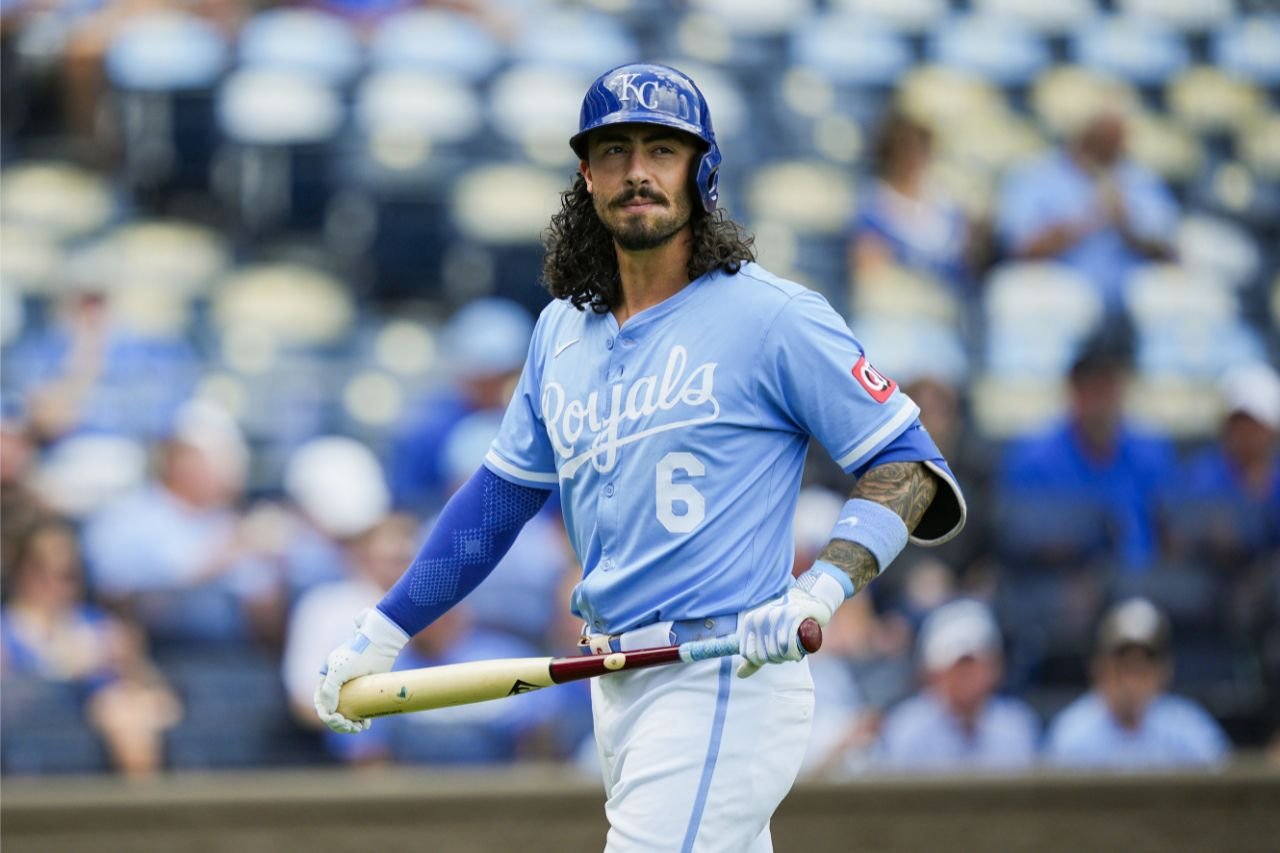 On Friday afternoon, right before the MLB Non-Tender deadline, the Royals announced that they had avoided arbitration with second baseman Jonathan India, agreeing to a one-year deal. On Twitter, Ken Rosenthal reported that the deal was worth $8 million, according to sources. India came over to the Royals last offseason from the Reds in exchange for starting pitcher Brady Singer, a 2018 first-round draft pick (both players played college baseball at the University of Florida). Last year, the 28-year-old second baseman was in the final season of a two-year, $8.8 million deal he signed with the Reds before the 2023 season. However, he still had one more year of club control after the 2025 season. It was a disappointing season for India, who posted an 89 wRC+, .301 wOBA, and a -0.3 fWAR, all career lows, according to Fangraphs. He also struggled with nagging injuries, saw his power stats decline (only nine home runs, also a career low), and failed to fit in defensively. He rotated between third base, second base, and left field early in the year but struggled and eventually settled back into his natural position of second base. Unfortunately, he posted a -9 FRV and -14 OAA, both career-worst marks, according to Statcast data. On a positive note, he still showed strong plate discipline with a 9.5% walk rate and 0.51 BB/K ratio. The latter mark was the sixth-best ratio of Royals hitters with 50 or more plate appearances last year. His Statcast plate discipline percentiles also looked strong, as illustrated in his TJ Stats Statcast summary. It is possible that the Royals could still trade India before Spring Training. They likely will return Michael Massey, who has primarily played second base the past two seasons, though he struggled with inconsistency and injuries last season. Nick Loftin is also an internal option, but he only has a career 72 wRC+ and 0.2 fWAR in 143 career games at the MLB level. If he is not traded, the Royals hope India can bounce back to the 2024 version that posted a 109 wRC+ and a 2.9 fWAR in 637 plate appearances in his final season in Cincinnati. Photo Credit: © Jay Biggerstaff-Imagn Images
 -
But here's more about Sherman talking payroll and he's been pretty noncomittal about a set amount, though it doesn't seem like they're planning on "cutting" at all, based from his talk. https://www.mlbtraderumors.com/2025/10/owner-john-sherman-discusses-royals-payroll.html
-
Sherman has said in an interview that he's willing to go up, but he hasn't put a hard amount on it. They spent $138 million last year and that was roughly a $12 million increase from the previous year. My guess is that it will be similar, though may not be less than 12 if they don't find the right player.
-
Ramirez is a tough case because he's still young and he was hit by some nagging injuries. The athleticism isn't as good as Mitchell or Jensen, but the profile is very similar to Miami's Agustin Ramirez, which isn't a bad comp to have.
-
Royals Avoid Arbitration With James McArthur
Kevin O'Brien posted a topic in Kansas City Royals Talk
One of the Royals' 13 arbitration-eligible cases this offseason became clearer on Thursday. The Royals announced on social media that they had reached an agreement with reliever James McArthur, and Anne Rogers followed up by confirming that the deal would be for $810,000, about $10,000 higher than his projected amount on MLB Trade Rumors. As Rogers mentioned, McArthur didn't pitch all of last season due to elbow surgery and subsequent recovery, which turned out to be longer than expected. However, the fact that he began a throwing program by the end of last season suggests he will likely be ready for Spring Training this season, barring any setbacks. After a brutal MLB debut in 2023 (he gave up seven runs on six hits and a walk in an inning of work against the Guardians on June 28th), he ended up posting a respectable 4.63 ERA and 0.94 WHIP in 18 appearances and 23.1 IP. He came alive at the end of the season and took on the Royals' closer role in 2023, saving four games. He also posted a 25.6% K rate, a 23.3% K-BB%, and a 2.78 FIP in 2023, indicating he was better than his ERA suggested. McArthur was the Royals' closer for a period of time in 2024 after Will Smith struggled out of the gate in the role. He ended up saving 18 games in 57 appearances. However, his K rate dropped to 19.8%, his K-BB% fell to 14.2%, and his HR/9 rose to 1.27 (it was 0.77 in 2023). As a result, his ERA was 4.92, and he eventually ceded the closer role to Lucas Erceg after the Trade Deadline. Like in 2023, the 28-year-old former Phillies draft pick posted a better FIP (4.17) than ERA. While strikeouts were inconsistent, he has a career CSW of 31.9% and his TJ Stats metrics were solid in 2024, despite the rough patches and high ERA. McArthur posted a 104 overall TJ Stuff+ with his sinker (65) and curveball (70) rating as elite pitches. He also had a slightly above-average zone rate (50.2%), and solid chase (30.1%) and whiff (28.3%) rates. Thus, there's reason to believe that if fully healthy and in a lower-leverage role, McArthur could thrive in 2026 as a middle-innings reliever for the Royals. Photo Credit: © David Richard-Imagn Images View full rumor -
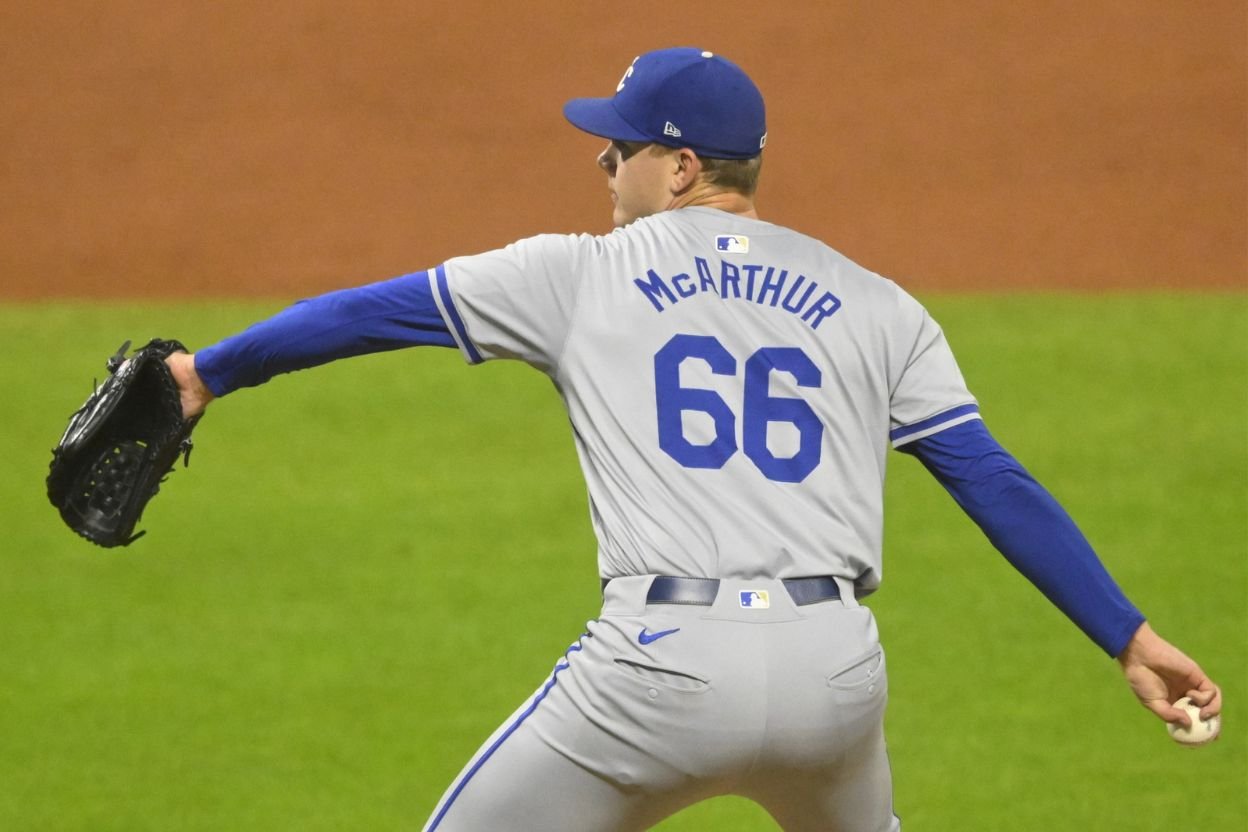 One of the Royals' 13 arbitration-eligible cases this offseason became clearer on Thursday. The Royals announced on social media that they had reached an agreement with reliever James McArthur, and Anne Rogers followed up by confirming that the deal would be for $810,000, about $10,000 higher than his projected amount on MLB Trade Rumors. As Rogers mentioned, McArthur didn't pitch all of last season due to elbow surgery and subsequent recovery, which turned out to be longer than expected. However, the fact that he began a throwing program by the end of last season suggests he will likely be ready for Spring Training this season, barring any setbacks. After a brutal MLB debut in 2023 (he gave up seven runs on six hits and a walk in an inning of work against the Guardians on June 28th), he ended up posting a respectable 4.63 ERA and 0.94 WHIP in 18 appearances and 23.1 IP. He came alive at the end of the season and took on the Royals' closer role in 2023, saving four games. He also posted a 25.6% K rate, a 23.3% K-BB%, and a 2.78 FIP in 2023, indicating he was better than his ERA suggested. McArthur was the Royals' closer for a period of time in 2024 after Will Smith struggled out of the gate in the role. He ended up saving 18 games in 57 appearances. However, his K rate dropped to 19.8%, his K-BB% fell to 14.2%, and his HR/9 rose to 1.27 (it was 0.77 in 2023). As a result, his ERA was 4.92, and he eventually ceded the closer role to Lucas Erceg after the Trade Deadline. Like in 2023, the 28-year-old former Phillies draft pick posted a better FIP (4.17) than ERA. While strikeouts were inconsistent, he has a career CSW of 31.9% and his TJ Stats metrics were solid in 2024, despite the rough patches and high ERA. McArthur posted a 104 overall TJ Stuff+ with his sinker (65) and curveball (70) rating as elite pitches. He also had a slightly above-average zone rate (50.2%), and solid chase (30.1%) and whiff (28.3%) rates. Thus, there's reason to believe that if fully healthy and in a lower-leverage role, McArthur could thrive in 2026 as a middle-innings reliever for the Royals. Photo Credit: © David Richard-Imagn Images
 -
The Royals were active on Thursday evening, the night before the non-tender deadline. Their significant move was signing free-agent reliever Alex Lange to a one-year deal, first reported by Royals beat writer Anne Rogers of MLB.com. The Royals made the signing official later in the evening. Lange only made one appearance for the Tigers in 2025, as he spent most of the year on the IL recovering from lat surgery in June of 2024. Due to that injury, he only pitched one inning in 2025 and 18.2 innings in 2024 with Detroit. However, in 2023, he not only appeared in 67 games and pitched 66 innings, but also posted a 3.68 ERA and 1.33 WHIP, and recorded 26 saves as the Tigers' closer. Control has long been an issue for Lange at the Major League level. He has a career walk rate of 13.5%. Even during his 2023 season, he posted a walk rate of 15.6% and a K-BB% of 11.8%. In his injury-plagued 2024 campaign, he allowed a walk rate of 18.9% and a K-BB% of 4.4%. Despite those issues, the Lee's Summit West High School alum remains an intriguing project for the Royals and pitching coach Brian Sweeney. He sports a career K rate of 27.2% and a career CSW% of 31.7%, according to Fangraphs. Furthermore, while he pitched primarily in Triple-A in 2025, he posted some intriguing metrics, according to his TJ Stats summary. Lange posted an overall TJ Stuff+ of 102, and all four of his offerings sported grades of 50 or over, with his sinker and knuckle curve sporting 60 and 56 grades, respectively. While his ability to find the zone was inconsistent (42.3% zone rate), he still generated a 42.2% whiff rate and a .266 xwOBACON in 23.1 IP with the Triple-A Toledo Mud Hens. Lange's addition fills out the Royals' 40-man roster, which was at 39, after the additions of pitchers Ben Kudrna and Steven Zobac. However, some roster spots could be cleared by tomorrow's 3 p.m. non-tender deadline. Photo Credit: © Junfu Han / USA TODAY NETWORK View full rumor
-
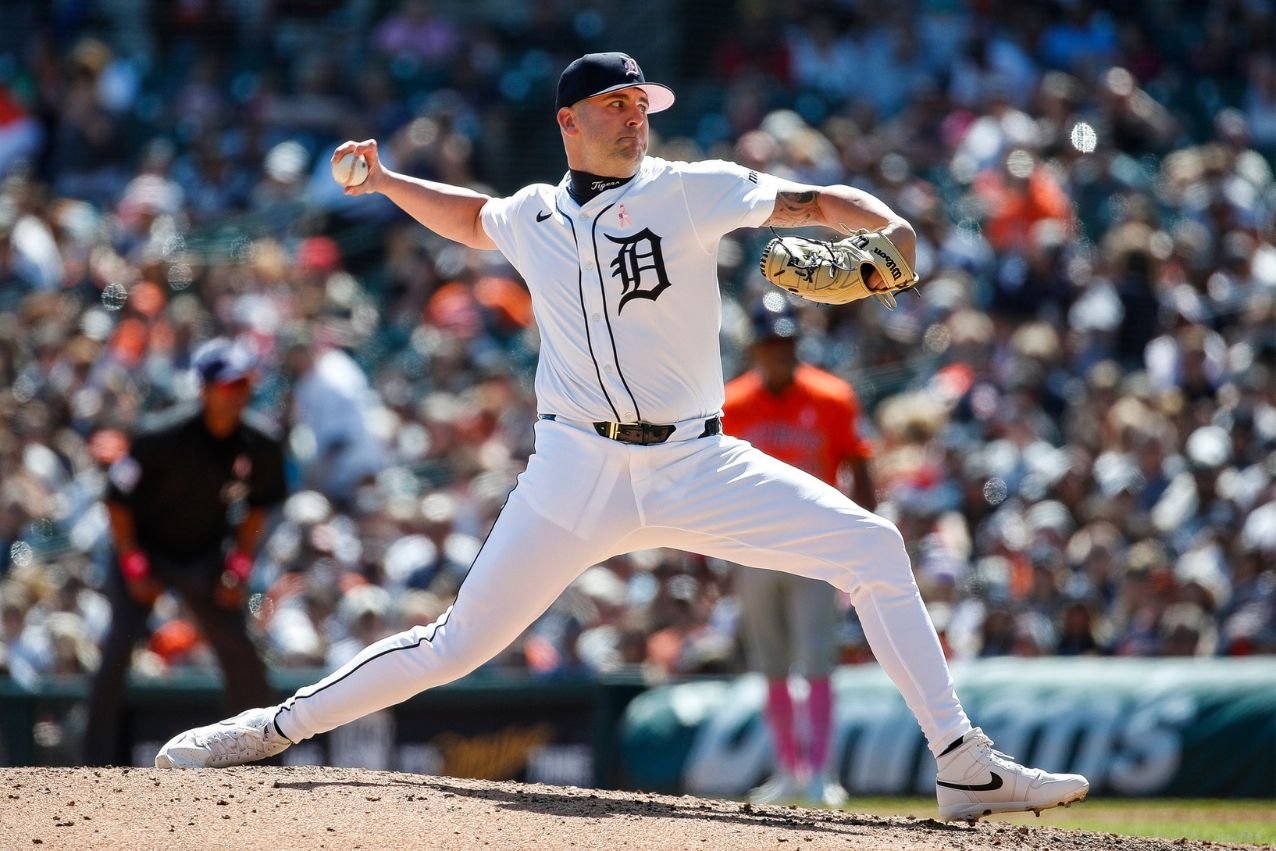 The Royals were active on Thursday evening, the night before the non-tender deadline. Their significant move was signing free-agent reliever Alex Lange to a one-year deal, first reported by Royals beat writer Anne Rogers of MLB.com. The Royals made the signing official later in the evening. Lange only made one appearance for the Tigers in 2025, as he spent most of the year on the IL recovering from lat surgery in June of 2024. Due to that injury, he only pitched one inning in 2025 and 18.2 innings in 2024 with Detroit. However, in 2023, he not only appeared in 67 games and pitched 66 innings, but also posted a 3.68 ERA and 1.33 WHIP, and recorded 26 saves as the Tigers' closer. Control has long been an issue for Lange at the Major League level. He has a career walk rate of 13.5%. Even during his 2023 season, he posted a walk rate of 15.6% and a K-BB% of 11.8%. In his injury-plagued 2024 campaign, he allowed a walk rate of 18.9% and a K-BB% of 4.4%. Despite those issues, the Lee's Summit West High School alum remains an intriguing project for the Royals and pitching coach Brian Sweeney. He sports a career K rate of 27.2% and a career CSW% of 31.7%, according to Fangraphs. Furthermore, while he pitched primarily in Triple-A in 2025, he posted some intriguing metrics, according to his TJ Stats summary. Lange posted an overall TJ Stuff+ of 102, and all four of his offerings sported grades of 50 or over, with his sinker and knuckle curve sporting 60 and 56 grades, respectively. While his ability to find the zone was inconsistent (42.3% zone rate), he still generated a 42.2% whiff rate and a .266 xwOBACON in 23.1 IP with the Triple-A Toledo Mud Hens. Lange's addition fills out the Royals' 40-man roster, which was at 39, after the additions of pitchers Ben Kudrna and Steven Zobac. However, some roster spots could be cleared by tomorrow's 3 p.m. non-tender deadline. Photo Credit: © Junfu Han / USA TODAY NETWORK
 -
Image courtesy of © Lily Smith/The Register / USA TODAY NETWORK On Monday, I looked at the 11th through 15th-best prospects in the Kansas City Royals system. The list focused on a couple of international shortstops (including one who made progress in the AFL this past fall), a pitcher who made his MLB debut, a pitcher eligible for the Rule 5 Draft who wasn't added to the 40-man roster, and one who was, but is coming off an injury-plagued 2025 campaign. In part three of Royals Keep's Top 20 Prospect rankings, I will look at the 6th through 10th-best prospects in the Royals system. That includes a couple of recently drafted position players out of high school, a couple of international position players who primarily played in Low-A Columbia in 2025, and a polished pitcher drafted out of Tennessee in 2024 who pitched well in High-A Quad Cities. 10th: Asbel Gonzalez, OF (Highest Level: Low-A) The 19-year-old Venezuelan outfielder played in 115 games in his first full Minor League season in Columbia. After a hot start, he wore down a bit at the end of the year, slashing .239/.365/.289 with a .654 OPS. He also showed little power, with only one home run and an ISO of .051. However, he scored 82 runs and collected 78 RBI with the Fireflies last season. When he was fresh and locked in, Gonzalez demonstrated a high-contact, disciplined approach, as illustrated by his 0.63 BB/K ratio. Furthermore, he showed in Columbia that he could spray the ball all over the field, with his speed allowing him to stretch extra bases on hits. While the bat wasn't anything too special, Gonzalez flashed one elite tool in Low-A ball, which explains why he ranked No. 10: his speed. Gonzalez set a Fireflies franchise record with 78 stolen bases last season. Not only was that the highest in Columbia history, but it was also the highest stolen base total for a Royals prospect since 1988. As a result, Gonzalez was named Willie Wilson Baserunner of the Year by the Royals, which goes to the best baserunner in the Kansas City farm system. He was caught 26 times last season, which is higher than what the Royals would like to see for a prospect with his speed tool. That said, as a teenager, the grind of the Carolina League slate seemed to get to him. In 68 games and 303 plate appearances from Opening Day until June 30th, he hit .270, stole 55 bases, and was caught 16 times, for a 29% caught-stealing rate. From July 1st to the end of the season, he hit .192, stole 23 bases, and was caught 10 times, for a 43% caught-stealing rate. Gonzalez was promoted to Double-A to help them in their stretch run of the season, but his fatigue seemed to be on full display, as he hit .167 in eight plate appearances. At 6'2, 170 pounds, Gonzalez has an athletic frame that could help him hit for more power as he fills out. Even if the power never fully comes, his plate discipline, contact ability, and Major League-ready speed should help him get to the big leagues, as a bench outfielder at the very least. 9th: Drew Beam, RHP (Highest Level: High-A) Beam was a third-round pick out of the University of Tennessee who signed an overslot deal worth $1,097,500 in the 2024 MLB Draft. The right-handed pitcher didn't pitch at all professionally after getting drafted due to the Volunteers' run in the College World Series. However, he indeed thrived in his first taste of professional experience. In 26 games and 131.2 IP with the Quad Cities River Bandits, Beam posted a 3.83 ERA, 1.19 WHIP, and K-BB% of 14.9%. The 22-year-old was not a high-strikeout pitcher with the River Bandits. However, he showcased excellent control (5.6% walk rate) and kept the ball in the yard (0.55 HR/9). As a result, he posted a 3.35 FIP, which was much better than his ERA last season. Beam showed a better strikeout ability at the beginning of the season, which was evident in some of his early starts with Quad Cities in April and May. From High-A Opening Day until June 29th, Beam posted a 2.95 ERA, 1.10 WHIP, 21.4% K rate, and 16.2% K-BB% in 15 starts. From June 30th to the end of the season? He posted a 5.04 ERA, 1.32 WHIP, 19.3% K rate, and 13.2% K-BB%. Much like Gonzalez, Beam seemed to hit a wall in the second half in his first full exposure to professional competition. Despite this, the former Volunteer may be one of the best pitchers in the Royals' lower minors right now. He sports a solid four-pitch mix that includes a four-seamer, curveball, cutter, and changeup. Like many Royals pitchers in the system, he doesn't have an elite pitch. Still, the combination of his diverse repertoire and strong command makes him an effective and efficient pitcher with middle-of-the-rotation upside at the Major League level. Noah Cameron hit a similar wall in 2023 in his first full professional season. Thus, it wouldn't be a surprise to see Beam, much like Cameron in 2024, rebound from that experience, do much better in 2026, and put himself in a position to make the Opening Day rotation in 2027. His profile and approach feel very similar to a right-handed Cameron (but with more fastball upside). 8th: Ramon Ramirez, C (Highest Level: Low-A) Going into the 2025 season, one could argue that Ramirez was every bit as elite a catching prospect as Carter Jensen and Blake Mitchell. After Jensen's sensational season, that comparison has faded a bit today, but that shouldn't diminish the upside the 20-year-old Venezuelan catcher possesses. In 70 games and 307 plate appearances with the Fireflies, Ramirez slashed .244/.339/.442 with a .781 OPS. Unlike Mitchell, who struck out in bunches in Low-A and High-A ball over the past two years, Ramirez only struck out 21.7% of the time and posted a BB/K ratio of 0.55. He also showcased excellent pop in the Carolina League with a 13.9% HR/FB rate. Injuries limited him somewhat, which explains why he had only 307 plate appearances last season with the Fireflies. When healthy, however, he showed a solid approach at the plate and solid skills behind it. Ramirez doesn't have the defensive upside or athleticism of Jensen or Mitchell. However, he has a polished receiving tool that could at least make him a serviceable backup at the Major League level. His arm strength is also above-average and could profile similarly at the Major League level to other Royals catchers from Venezuela like Freddy Fermin and Salvador Perez (though he could stand to improve his 19% caught-stealing rate last year). The key for Ramirez in the future will be his bat, which is mature for his age. In 170 plate appearances in the Complex League in 2024, he posted a 0.62 BB/K ratio and hit 2.65 with seven home runs in 203 plate appearances in Arizona. He hits too many groundballs for a player with his power and batted-ball ability (40% GB rate last year), but he can truly crush balls when he elevates them properly. How Ramirez meshes with the new hitting development team will be interesting to watch, especially as he matriculates to High-A Quad Cities in 2026. 7th: Josh Hammond, 3B (Highest Level: High School) Hammond was the 28th overall pick in the 2025 MLB draft and the Royals' second selection in that particular draft. However, many scouts believed that Hammond was the Royals' top overall selection last season, given his upside and potential. The son of a college coach, Hammond was a two-way player who showed excellent bat speed and batted-ball ability, not just a prep player, but in pre-draft workouts. Here's what MLB Pipeline said about Hammond in their own scouting report, pointing out not just his power, but his mature decision-making at the plate for a teenager. Hammond did get some time in the instructional league and seemed to hold his own, according to reports. While no public stats are shared about his time there, he did showcase his power, as evidenced in this clip below from the Royals Player Development account. There's definitely a maturity in the way he carries himself at the plate, even in that limited sample clip. However, he will be much more challenged in Low-A Columbia, where he likely will play in his first full-season experience. How he handles not just professional pitching, but the grind of "bus league" ball could determine his long-term outlook, as the physical tools are there for Hammond to be successful at the plate and on the field (his arm is a plus tool due to his pitching background). The Royals tend to move more slowly with prospects drafted out of high school, and there's no reason to think that they won't do that with Hammond. However, a strong start in Columbia could make the Royals more aggressive about promoting to High-A later in 2026. 6th: Sean Gamble, OF/2B (Highest Level: High School) Gamble was the Royals' first selection in the 2025 MLB Draft, going 23rd overall, five picks before Hammond. The prep prospect was drafted out of IMG Academy, but he grew up in Iowa with an affinity for the Royals. The 19-year-old doesn't have the raw power or batted-ball upside of Hammond just yet. However, Gamble profiles as a better athlete who not only has blazing speed on the basepaths and gap-to-gap power, but is capable of playing multiple positions in the outfield and infield. Looking at his scouting report on MLB Pipeline, it seems the Royals' scouting department valued Gamble's versatility and his ability to grow into his athletic frame as he progressed in the farm system. It was tough to discern between Gamble and Hammond as to who is the better prospect in the Royals' system (especially since both have no professional experience). Hammond definitely seems to have more polish now, especially offensively, and it wouldn't be surprising to see Hammond come out of the gate better in Low-A Columbia than his fellow draft classmate. However, Gamble has more upside and versatility, with the ability to be an accurate multi-position weapon, which fits what is needed in the modern MLB game. That gives Gamble the edge over Hammond as a prospect, for now. View full article
-
Kansas City Royals 2026 Top Prospect Ranking: #6-10
Kevin O'Brien posted an article in Minor Leagues
 On Monday, I looked at the 11th through 15th-best prospects in the Kansas City Royals system. The list focused on a couple of international shortstops (including one who made progress in the AFL this past fall), a pitcher who made his MLB debut, a pitcher eligible for the Rule 5 Draft who wasn't added to the 40-man roster, and one who was, but is coming off an injury-plagued 2025 campaign. In part three of Royals Keep's Top 20 Prospect rankings, I will look at the 6th through 10th-best prospects in the Royals system. That includes a couple of recently drafted position players out of high school, a couple of international position players who primarily played in Low-A Columbia in 2025, and a polished pitcher drafted out of Tennessee in 2024 who pitched well in High-A Quad Cities. 10th: Asbel Gonzalez, OF (Highest Level: Low-A) The 19-year-old Venezuelan outfielder played in 115 games in his first full Minor League season in Columbia. After a hot start, he wore down a bit at the end of the year, slashing .239/.365/.289 with a .654 OPS. He also showed little power, with only one home run and an ISO of .051. However, he scored 82 runs and collected 78 RBI with the Fireflies last season. When he was fresh and locked in, Gonzalez demonstrated a high-contact, disciplined approach, as illustrated by his 0.63 BB/K ratio. Furthermore, he showed in Columbia that he could spray the ball all over the field, with his speed allowing him to stretch extra bases on hits. While the bat wasn't anything too special, Gonzalez flashed one elite tool in Low-A ball, which explains why he ranked No. 10: his speed. Gonzalez set a Fireflies franchise record with 78 stolen bases last season. Not only was that the highest in Columbia history, but it was also the highest stolen base total for a Royals prospect since 1988. As a result, Gonzalez was named Willie Wilson Baserunner of the Year by the Royals, which goes to the best baserunner in the Kansas City farm system. He was caught 26 times last season, which is higher than what the Royals would like to see for a prospect with his speed tool. That said, as a teenager, the grind of the Carolina League slate seemed to get to him. In 68 games and 303 plate appearances from Opening Day until June 30th, he hit .270, stole 55 bases, and was caught 16 times, for a 29% caught-stealing rate. From July 1st to the end of the season, he hit .192, stole 23 bases, and was caught 10 times, for a 43% caught-stealing rate. Gonzalez was promoted to Double-A to help them in their stretch run of the season, but his fatigue seemed to be on full display, as he hit .167 in eight plate appearances. At 6'2, 170 pounds, Gonzalez has an athletic frame that could help him hit for more power as he fills out. Even if the power never fully comes, his plate discipline, contact ability, and Major League-ready speed should help him get to the big leagues, as a bench outfielder at the very least. 9th: Drew Beam, RHP (Highest Level: High-A) Beam was a third-round pick out of the University of Tennessee who signed an overslot deal worth $1,097,500 in the 2024 MLB Draft. The right-handed pitcher didn't pitch at all professionally after getting drafted due to the Volunteers' run in the College World Series. However, he indeed thrived in his first taste of professional experience. In 26 games and 131.2 IP with the Quad Cities River Bandits, Beam posted a 3.83 ERA, 1.19 WHIP, and K-BB% of 14.9%. The 22-year-old was not a high-strikeout pitcher with the River Bandits. However, he showcased excellent control (5.6% walk rate) and kept the ball in the yard (0.55 HR/9). As a result, he posted a 3.35 FIP, which was much better than his ERA last season. Beam showed a better strikeout ability at the beginning of the season, which was evident in some of his early starts with Quad Cities in April and May. From High-A Opening Day until June 29th, Beam posted a 2.95 ERA, 1.10 WHIP, 21.4% K rate, and 16.2% K-BB% in 15 starts. From June 30th to the end of the season? He posted a 5.04 ERA, 1.32 WHIP, 19.3% K rate, and 13.2% K-BB%. Much like Gonzalez, Beam seemed to hit a wall in the second half in his first full exposure to professional competition. Despite this, the former Volunteer may be one of the best pitchers in the Royals' lower minors right now. He sports a solid four-pitch mix that includes a four-seamer, curveball, cutter, and changeup. Like many Royals pitchers in the system, he doesn't have an elite pitch. Still, the combination of his diverse repertoire and strong command makes him an effective and efficient pitcher with middle-of-the-rotation upside at the Major League level. Noah Cameron hit a similar wall in 2023 in his first full professional season. Thus, it wouldn't be a surprise to see Beam, much like Cameron in 2024, rebound from that experience, do much better in 2026, and put himself in a position to make the Opening Day rotation in 2027. His profile and approach feel very similar to a right-handed Cameron (but with more fastball upside). 8th: Ramon Ramirez, C (Highest Level: Low-A) Going into the 2025 season, one could argue that Ramirez was every bit as elite a catching prospect as Carter Jensen and Blake Mitchell. After Jensen's sensational season, that comparison has faded a bit today, but that shouldn't diminish the upside the 20-year-old Venezuelan catcher possesses. In 70 games and 307 plate appearances with the Fireflies, Ramirez slashed .244/.339/.442 with a .781 OPS. Unlike Mitchell, who struck out in bunches in Low-A and High-A ball over the past two years, Ramirez only struck out 21.7% of the time and posted a BB/K ratio of 0.55. He also showcased excellent pop in the Carolina League with a 13.9% HR/FB rate. Injuries limited him somewhat, which explains why he had only 307 plate appearances last season with the Fireflies. When healthy, however, he showed a solid approach at the plate and solid skills behind it. Ramirez doesn't have the defensive upside or athleticism of Jensen or Mitchell. However, he has a polished receiving tool that could at least make him a serviceable backup at the Major League level. His arm strength is also above-average and could profile similarly at the Major League level to other Royals catchers from Venezuela like Freddy Fermin and Salvador Perez (though he could stand to improve his 19% caught-stealing rate last year). The key for Ramirez in the future will be his bat, which is mature for his age. In 170 plate appearances in the Complex League in 2024, he posted a 0.62 BB/K ratio and hit 2.65 with seven home runs in 203 plate appearances in Arizona. He hits too many groundballs for a player with his power and batted-ball ability (40% GB rate last year), but he can truly crush balls when he elevates them properly. How Ramirez meshes with the new hitting development team will be interesting to watch, especially as he matriculates to High-A Quad Cities in 2026. 7th: Josh Hammond, 3B (Highest Level: High School) Hammond was the 28th overall pick in the 2025 MLB draft and the Royals' second selection in that particular draft. However, many scouts believed that Hammond was the Royals' top overall selection last season, given his upside and potential. The son of a college coach, Hammond was a two-way player who showed excellent bat speed and batted-ball ability, not just a prep player, but in pre-draft workouts. Here's what MLB Pipeline said about Hammond in their own scouting report, pointing out not just his power, but his mature decision-making at the plate for a teenager. Hammond did get some time in the instructional league and seemed to hold his own, according to reports. While no public stats are shared about his time there, he did showcase his power, as evidenced in this clip below from the Royals Player Development account. There's definitely a maturity in the way he carries himself at the plate, even in that limited sample clip. However, he will be much more challenged in Low-A Columbia, where he likely will play in his first full-season experience. How he handles not just professional pitching, but the grind of "bus league" ball could determine his long-term outlook, as the physical tools are there for Hammond to be successful at the plate and on the field (his arm is a plus tool due to his pitching background). The Royals tend to move more slowly with prospects drafted out of high school, and there's no reason to think that they won't do that with Hammond. However, a strong start in Columbia could make the Royals more aggressive about promoting to High-A later in 2026. 6th: Sean Gamble, OF/2B (Highest Level: High School) Gamble was the Royals' first selection in the 2025 MLB Draft, going 23rd overall, five picks before Hammond. The prep prospect was drafted out of IMG Academy, but he grew up in Iowa with an affinity for the Royals. The 19-year-old doesn't have the raw power or batted-ball upside of Hammond just yet. However, Gamble profiles as a better athlete who not only has blazing speed on the basepaths and gap-to-gap power, but is capable of playing multiple positions in the outfield and infield. Looking at his scouting report on MLB Pipeline, it seems the Royals' scouting department valued Gamble's versatility and his ability to grow into his athletic frame as he progressed in the farm system. It was tough to discern between Gamble and Hammond as to who is the better prospect in the Royals' system (especially since both have no professional experience). Hammond definitely seems to have more polish now, especially offensively, and it wouldn't be surprising to see Hammond come out of the gate better in Low-A Columbia than his fellow draft classmate. However, Gamble has more upside and versatility, with the ability to be an accurate multi-position weapon, which fits what is needed in the modern MLB game. That gives Gamble the edge over Hammond as a prospect, for now.
 -
I always felt he was a Top 20 guy mostly because I think injuries have set him back. However, I was thinking more 18-20 before the AFL. He definitely impressed a lot in the AFL, and I think he could be a Maikel Garcia type who could blossom even more as he gets older. Hopefully, he's not selected in the Rule 5 (which I don't think he will).
- 2 replies
-
- 1
-

-
- luinder avila
- yandel ricardo
- (and 3 more)

