


Kevin O'Brien
-
Posts
858 -
Joined
-
Last visited
-
Days Won
41
Content Type
Profiles
Forums
Blogs
Events
News
2026 Kansas City Royals Top Prospects Ranking
Kansas City Royals Videos
Kansas City Royals Free Agent & Trade Rumors, Notes, & Tidbits
Guides & Resources
The Kansas City Royals Players Project
2026 Kansas City Royals Draft Tracker: Picks & Bonuses
Store
Downloads
Gallery
Everything posted by Kevin O'Brien
-
 Yep. Plus Robert has a club option for 2027 so the Royals have flexibility there to part ways with him if it goes badly or perhaps flip him to someone if he bounces back. You wouldn't get that kind of flexibility with a three-year deal with Bader, which seems to be most likely option right now.
 -
Yeah, I agree. The market isn't there and guys like Bader are going to be more expensive than they're worth. We also saw the boost Andrew Vaughn had when he moved from CHI to MKE. The fact that we have a guy in Dawson who came from that coaching staff makes me think Robert could experience a similar kind of bounceback, especially since he's in winning environment.
-
I agree with both of your points. I don't think Robert should be the highlight of the offseason by any means. And I don't think he needs to be, because if you can offload India and Falter's salaries, it's essentially paying $8-10 million for a free agent. As Picollo said, they need two outfielders, so this would be the trade option, which would then perhaps allow for a bigger splash in free agency (or a bigger trade, since they're not giving up any prospect capital). It would be an interesting one for White Sox for sure. However, I get the feeling that they're selling much lower than before. I think you can probably substitute Tolbert for maybe a higher-rated prospect in the 20-30 range, maybe 15. However, I think they realized that the ship on getting a top prospect for Robert has sailed and they want to get something while they still can (while also getting his salary off books).
-
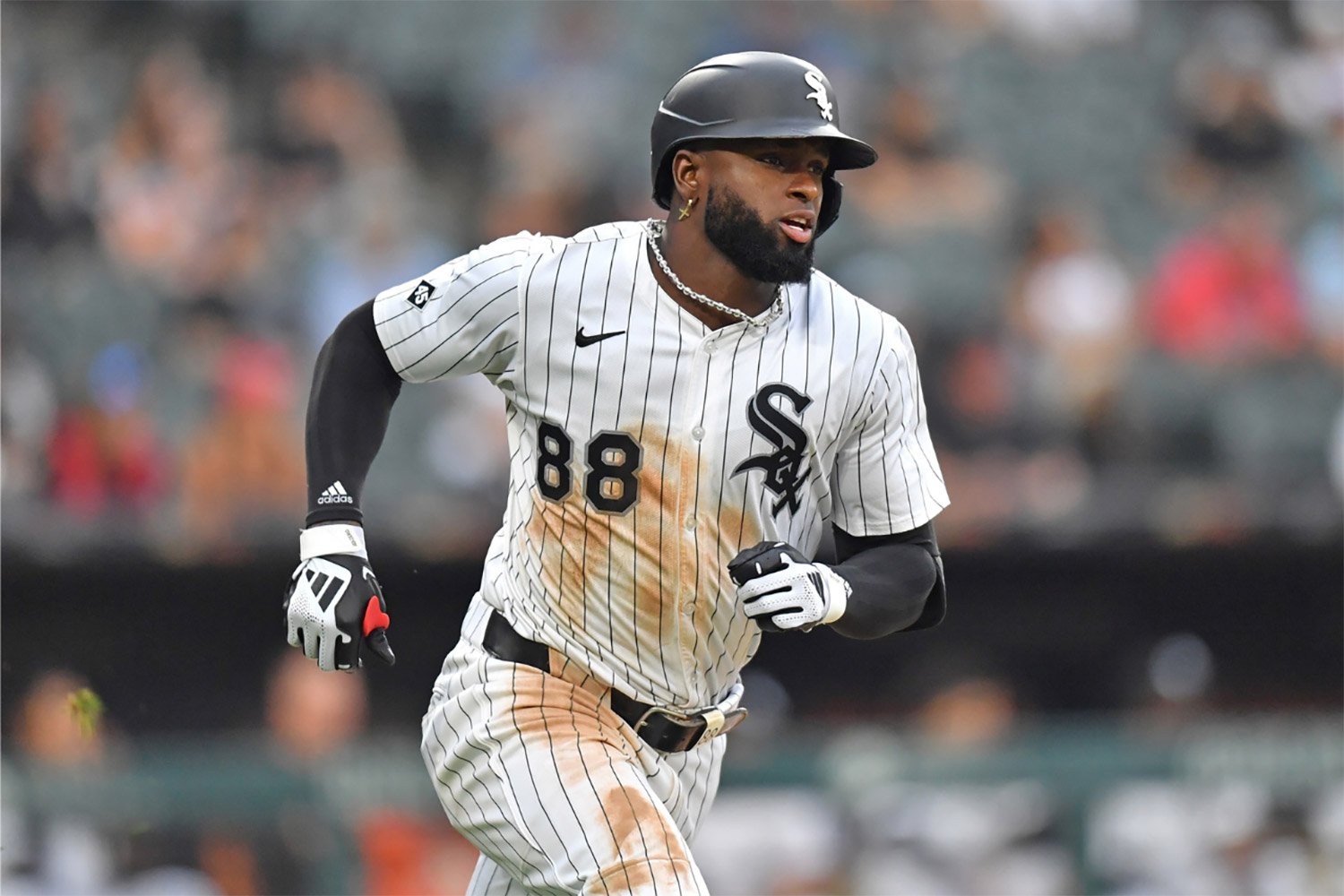 The MLB Winter Meetings began on Monday, and the hot stove was heating up, with plenty of rumors swirling about the Royals and the transactions they may make this week. According to Ken Rosenthal, the Royals are interested in acquiring two outfielders this offseason: one through free agency and one through a trade. When it comes to a possible trade candidate, one name that has been floated is Luis Robert Jr. of the Chicago White Sox. While the White Sox are in the Central Division with the Royals, it appears that GM Chris Getz is adamant about getting something of value for Robert on the trade market, even if it's a fraction of what it was a few seasons ago. Bradford Doolittle of ESPN predicted Robert going to the Royals in a recent ESPN Winter Meetings preview piece. Here's what Doolittle said about the possible fit for Robert in Kansas City. Robert would come with his fair share of baggage. Over his career, the Cuban outfielder has played more than 110 games in a season only once, in 2023, when he posted a 4.9 fWAR. Last year, in addition to playing 110 games and accumulating 431 plate appearances, he slashed .223/.297/.364 with a .661 OPS, 84 wRC+, and 1.3 fWAR. He also hit 14 home runs and stole 33 bases with the White Sox in 2025. While that's not an awful line (he has a positive fWAR at least), it certainly isn't the ideal profile of a player who will be making $20 million next season. Robert Has the Power Profile to Fit in Kansas City (And New Staff Could Help) There's no question that Robert's surface-level metrics are pretty disappointing, which is why many Royals fans are averse to GM JJ Picollo acquiring the White Sox outfielder. However, when diving deeper into his profile, he checks a lot of boxes for the Royals in terms of satisfying their outfield needs this offseason. While he only had 14 home runs and a .141 ISO last season, his exit velocity, barrel, and launch angle metrics were a lot more palatable. That is evident in his TJ Stats summary below. Robert's Max EV ranked in the 90th percentile, his 90th EV ranked in the 64th percentile, his barrel rate ranked in the 61st percentile, and his LA Sweet-Spot percentage ranked in the 65th percentile. Additionally, he also pulled the ball well, with a 67th percentile pull rate and 59th percentile Pull Air percentage. That ability to pull the ball is key, as it can lead to many home runs at Kauffman Stadium (the gaps are what kill most hitters). Granted, there may be a home run decline or plateau in Robert's move to the K, and that is evident: Of his 103 career home runs, only 89 would've gone out at Kauffman, according to Statcast data. However, he could still find a lot of extra-base hit production based on his hits spray chart from last year, modified for Kauffman Stadium dimensions. Right now, the Royals outfield depth looks thin, and not just in the corners, but even in center field. While Kyle Isbel is a phenomenal defensive outfielder (he was a Gold Glove finalist last year), his hitting has left a bit to be desired, especially against left-handed pitchers. Isbel had a 56 wRC+ against lefties last year, and he has a 64 wRC+ mark against southpaws over his career. Having someone like Robert, who can play center, could keep the Royals competitive against left-handed starting pitchers. When looking beyond Isbel, Robert's Statcast profile looks pretty impressive compared to other Royals outfielders currently on the 40-man roster who are projected to be on the Opening Day roster as of today, according to Roster Resource. As Royals fans can see from above, Robert tops the other three Royals outfielders in not just wOBA, but xwOBA as well. He also compares well with Jac Caglianone in terms of batted-ball and barrel skills, which is encouraging, especially considering Caglianone was so well-known for those two skills as a prospect. While Robert still needs work, the upside of bringing Robert in is that the Royals have a new hitting coach staff who not only could help him, but are also familiar with him. Obviously, Alec Zumwalt knows Robert quite well after playing against him for so many seasons. That said, the new assistant hitting coach, Marcus Thames, also worked closely with Robert in Chicago. That familiarity could help, especially since Thames will be able to do more work individually with Robert in Kansas City than he could in Chicago, when he had to run the entire team hitting program. That kind of attention could be the boost Robert needs to help him turn his career around after two subpar seasons by his standards (1.9 fWAR combined over the past two seasons). Robert Brings a Solid Defensive and Baserunning Profile While the Royals had a Gold Glove-caliber outfielder in Isbel, the rest of the outfield was pretty mediocre in 2025, based on Fielding Run Value. The Royals ranked 16th in the league in FRV with a -1 mark, a six-run drop from their 2024 mark, when they ranked 8th in outfield FRV. Thus, it's important for the Royals not just to find a solid-hitting outfielder but one that can hold his own defensively in Kauffman's spacious dimensions. Robert fits that mold perfectly. Last season, the 28-year-old produced a +7 FRV and +7 OAA. Based on Statcast OAA box plot data chart, Robert showed an ability to cover all kinds of ground in center field. Robert could easily play one of the corner outfield spots against right-handed starting pitchers (most likely left field) and play center field when the Royals face left-handed starting pitchers. That's the kind of defensive versatility and value Kansas City has been missing the past couple of seasons, especially from outfielders who hit in the middle of the lineup (which Robert would). Another positive of Robert's profile is that he is a solid baserunner, which fits in manager Matt Quatraro's aggressive philosophy. In 2024, the Royals ranked fifth in baserunning runs above average with a +9 mark, according to Statcast. Last season, they ranked 24th in baseball with a -4 mark. That's a 13-run difference and honestly, a key contributor to why they won four fewer games in 2025. As for Robert, he produced +2 runs on the basepaths last year, with three of those runs coming on stolen bases. That led all White Sox players with 10 or more opportunities, according to Statcast. Furthermore, Robert's 33 stolen bases would've ranked second among Royals players last season. Thus, the White Sox centerfielder would boost the Royals not just at the plate, but in the field and on the basepaths in 2026. A Trade That Could Work for the White Sox and Royals There's no question that Robert presents a financial challenge for the Royals with his $20 million salary for 2026. However, the Royals could trade a couple of bad contracts to the White Sox in exchange for taking Robert off their books. The Royals tendered deals to pitcher Bailey Falter and second baseman Jonathan India this offseason, with India agreeing to an $8 million contract on November 22nd. Falter is still in the negotiation process. The White Sox already have a second baseman of the future in Chase Meidroth. However, they may be open to having India around as insurance and to provide some veteran leadership on the club. India could be a good mentor for Meidroth, and India could take on designated hitter duties for a White Sox lineup that ranked 28th in OPS and 27th in runs scored. As for Falter, he is out of Minor League options and may be a better fit for the White Sox rotation, who have bigger question marks in the No. 4 and 5 spots. New White Sox pitching coach Zach Bove has familiarity with Falter, and thus, could get the most out of the lefty. Furthermore, Falter could end up being a nice trade piece at the Trade Deadline if he bounces back. To balance out the trade, based on Baseball Trade Value surplus value, reliever Brandon Eisert would be thrown into the deal along with Robert. Eisert posted a 4.54 FIP last year in 69.2 IP and could be a nice middle-innings arm for the Royals, who could thrive under the Royals' pitching coach team. Here's the trade in its entirety, via BTV. Their model validated this deal as a fair trade for both sides. This deal could be a win-win for both Kansas City and Chicago. The White Sox get a couple of possible Trade Deadline flip pieces, and the Royals get a lineup-changing outfielder and a reliever who could add some depth to the bullpen (who also has Minor League options). Of course, Robert has to stay healthy to make this deal a valuable one for the Royals in 2026. However, if he does, then Kansas City may get an All-Star-caliber player for next season, which will help them in their quest to return to the postseason.
 -
As Royals fans can see from above, Robert tops the other three Royals outfielders in not just wOBA, but xwOBA as well. He also compares well with Jac Caglianone in terms of batted-ball and barrel skills, which is encouraging, especially considering Caglianone was so well-known for those two skills as a prospect. While Robert still needs work, the upside of bringing Robert in is that the Royals have a new hitting coach staff who not only could help him, but are also familiar with him. Obviously, Alec Zumwalt knows Robert quite well after playing against him for so many seasons. That said, the new assistant hitting coach, Marcus Thames, also worked closely with Robert in Chicago. That familiarity could help, especially since Thames will be able to do more work individually with Robert in Kansas City than he could in Chicago, when he had to run the entire team hitting program. That kind of attention could be the boost Robert needs to help him turn his career around after two subpar seasons by his standards (1.9 fWAR combined over the past two seasons). Robert Brings a Solid Defensive and Baserunning Profile While the Royals had a Gold Glove-caliber outfielder in Isbel, the rest of the outfield was pretty mediocre in 2025, based on Fielding Run Value. The Royals ranked 16th in the league in FRV with a -1 mark, a six-run drop from their 2024 mark, when they ranked 8th in outfield FRV. Thus, it's important for the Royals not just to find a solid-hitting outfielder but one that can hold his own defensively in Kauffman's spacious dimensions. Robert fits that mold perfectly. Last season, the 28-year-old produced a +7 FRV and +7 OAA. Based on Statcast OAA box plot data chart, Robert showed an ability to cover all kinds of ground in center field. Robert could easily play one of the corner outfield spots against right-handed starting pitchers (most likely left field) and play center field when the Royals face left-handed starting pitchers. That's the kind of defensive versatility and value Kansas City has been missing the past couple of seasons, especially from outfielders who hit in the middle of the lineup (which Robert would). Another positive of Robert's profile is that he is a solid baserunner, which fits in manager Matt Quatraro's aggressive philosophy. In 2024, the Royals ranked fifth in baserunning runs above average with a +9 mark, according to Statcast. Last season, they ranked 24th in baseball with a -4 mark. That's a 13-run difference and honestly, a key contributor to why they won four fewer games in 2025. As for Robert, he produced +2 runs on the basepaths last year, with three of those runs coming on stolen bases. That led all White Sox players with 10 or more opportunities, according to Statcast. Furthermore, Robert's 33 stolen bases would've ranked second among Royals players last season. Thus, the White Sox centerfielder would boost the Royals not just at the plate, but in the field and on the basepaths in 2026. A Trade That Could Work for the White Sox and Royals There's no question that Robert presents a financial challenge for the Royals with his $20 million salary for 2026. However, the Royals could trade a couple of bad contracts to the White Sox in exchange for taking Robert off their books. The Royals tendered deals to pitcher Bailey Falter and second baseman Jonathan India this offseason, with India agreeing to an $8 million contract on November 22nd. Falter is still in the negotiation process. The White Sox already have a second baseman of the future in Chase Meidroth. However, they may be open to having India around as insurance and to provide some veteran leadership on the club. India could be a good mentor for Meidroth, and India could take on designated hitter duties for a White Sox lineup that ranked 28th in OPS and 27th in runs scored. As for Falter, he is out of Minor League options and may be a better fit for the White Sox rotation, who have bigger question marks in the No. 4 and 5 spots. New White Sox pitching coach Zach Bove has familiarity with Falter, and thus, could get the most out of the lefty. Furthermore, Falter could end up being a nice trade piece at the Trade Deadline if he bounces back. To balance out the trade, based on Baseball Trade Value surplus value, reliever Brandon Eisert would be thrown into the deal along with Robert. Eisert posted a 4.54 FIP last year in 69.2 IP and could be a nice middle-innings arm for the Royals, who could thrive under the Royals' pitching coach team. Here's the trade in its entirety, via BTV. Their model validated this deal as a fair trade for both sides. This deal could be a win-win for both Kansas City and Chicago. The White Sox get a couple of possible Trade Deadline flip pieces, and the Royals get a lineup-changing outfielder and a reliever who could add some depth to the bullpen (who also has Minor League options). Of course, Robert has to stay healthy to make this deal a valuable one for the Royals in 2026. However, if he does, then Kansas City may get an All-Star-caliber player for next season, which will help them in their quest to return to the postseason. View full article
-
On Monday evening, Brian McTaggart, a Houston Astros beat writer for MLB.com, wrote that the Kansas City Royals and Cincinnati Reds are two teams that have been talking with the Astros during the Winter Meetings about acquiring outfielder Jake Meyers. Meyers is coming off one of the best seasons of his career in 2025, making him a candidate for a more extended role with another team next season. In 104 games and 381 plate appearances, the University of Nebraska product hit .292 with a 107 wRC+. He also hit three home runs, stole 16 bases, and accumulated a fWAR of 2.3, a career-high. Meyers doesn't offer a whole lot of power, and his batted-ball metrics are a bit questionable. However, he shows strong plate discipline (0.46 BB/K ratio) and strong contact ability, as seen below in his TJ Stats summary from last season. Though he hits right-handed, Meyers actually had reverse splits last season. Against lefties, he posted a 0.27 BB/K ratio and 93 wRC+ in 71 plate appearances. Against righties, he posted a 0.50 BB/K ratio and 111 wRC+. Over his career, however, he has a 110 wRC+ against lefties and an 85 wRC+ against righties, so 2025 may have been an aberration. If acquired, the 29-year-old outfielder would likely split time in centerfield with Kyle Isbel, who has a career 64 wRC+ against left-handed pitchers. However, Isbel has cemented his place as the Royals' primary center fielder over the past three seasons due to his excellent defense. He posted a +12 OAA and +10 FRV last season, which earned him a nod as a Gold Glove finalist. Meyers offers the same defensive upside. Last year, he posted a +9 OAA and +8 FRV. He also posted OAA and FRV of +13 and +11, respectively, in 2024. Thus, the defense in centerfield wouldn't miss a beat with Meyers. McTaggart mentioned that the Astros are looking to acquire young starting pitching this offseason. Kris Bubic appears to be an early target for Houston, and could be part of a deal involving Meyers. While Bubic is coming off an injury and is a free agent after 2026, the Astros may need to throw something else in a trade package with Meyers to solidify a deal with Kansas City. Bubic made his first All-Star team last year and posted a 2.55 ERA, 2.89 FIP, and 3.3 fWAR in 116.1 IP before his season ended due to a shoulder injury. A straight-up trade of Meyers for Bubic may be light on the Royals' end, so it will be interesting to see what talks develop between Houston and Kansas City over the coming days in Orlando. Photo Credit: © Ken Blaze-Imagn Images View full rumor
-
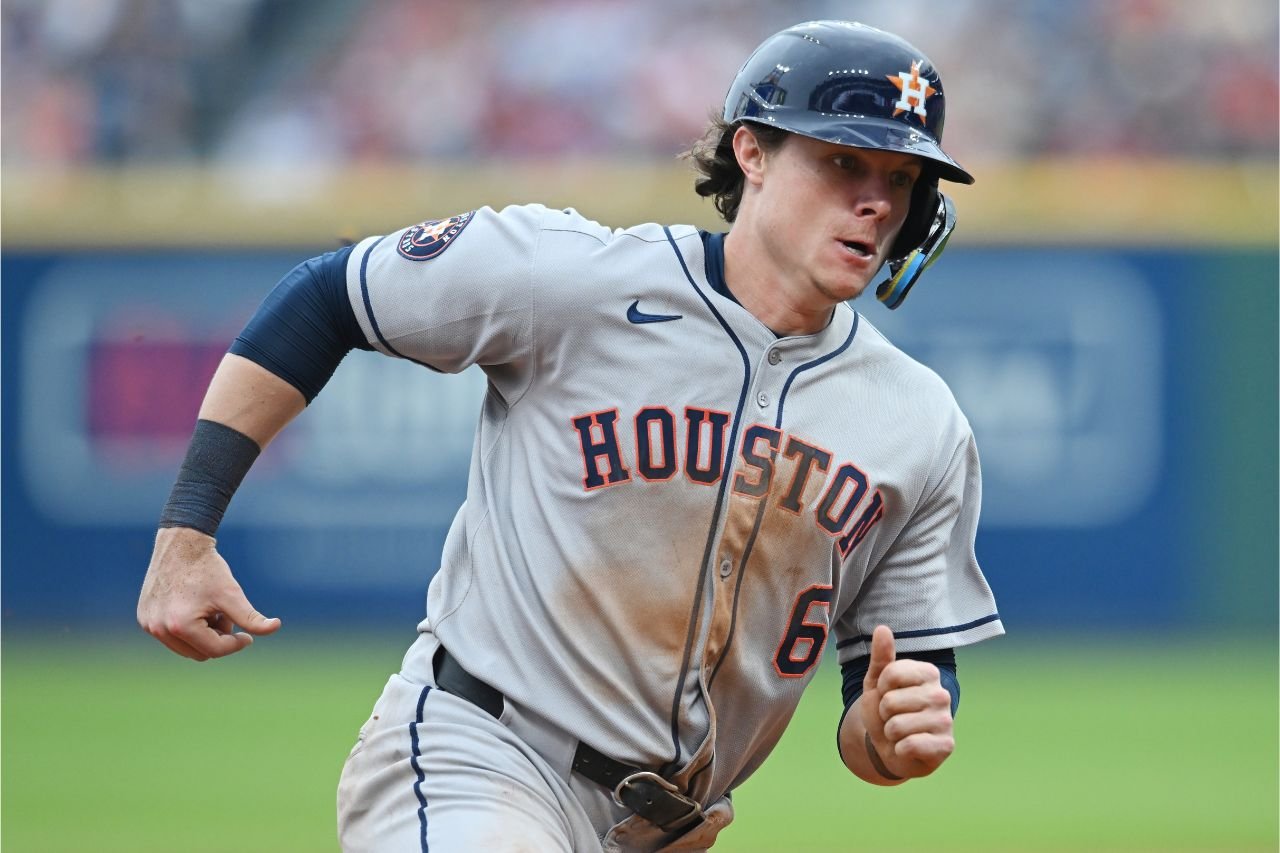 On Monday evening, Brian McTaggart, a Houston Astros beat writer for MLB.com, wrote that the Kansas City Royals and Cincinnati Reds are two teams that have been talking with the Astros during the Winter Meetings about acquiring outfielder Jake Meyers. Meyers is coming off one of the best seasons of his career in 2025, making him a candidate for a more extended role with another team next season. In 104 games and 381 plate appearances, the University of Nebraska product hit .292 with a 107 wRC+. He also hit three home runs, stole 16 bases, and accumulated a fWAR of 2.3, a career-high. Meyers doesn't offer a whole lot of power, and his batted-ball metrics are a bit questionable. However, he shows strong plate discipline (0.46 BB/K ratio) and strong contact ability, as seen below in his TJ Stats summary from last season. Though he hits right-handed, Meyers actually had reverse splits last season. Against lefties, he posted a 0.27 BB/K ratio and 93 wRC+ in 71 plate appearances. Against righties, he posted a 0.50 BB/K ratio and 111 wRC+. Over his career, however, he has a 110 wRC+ against lefties and an 85 wRC+ against righties, so 2025 may have been an aberration. If acquired, the 29-year-old outfielder would likely split time in centerfield with Kyle Isbel, who has a career 64 wRC+ against left-handed pitchers. However, Isbel has cemented his place as the Royals' primary center fielder over the past three seasons due to his excellent defense. He posted a +12 OAA and +10 FRV last season, which earned him a nod as a Gold Glove finalist. Meyers offers the same defensive upside. Last year, he posted a +9 OAA and +8 FRV. He also posted OAA and FRV of +13 and +11, respectively, in 2024. Thus, the defense in centerfield wouldn't miss a beat with Meyers. McTaggart mentioned that the Astros are looking to acquire young starting pitching this offseason. Kris Bubic appears to be an early target for Houston, and could be part of a deal involving Meyers. While Bubic is coming off an injury and is a free agent after 2026, the Astros may need to throw something else in a trade package with Meyers to solidify a deal with Kansas City. Bubic made his first All-Star team last year and posted a 2.55 ERA, 2.89 FIP, and 3.3 fWAR in 116.1 IP before his season ended due to a shoulder injury. A straight-up trade of Meyers for Bubic may be light on the Royals' end, so it will be interesting to see what talks develop between Houston and Kansas City over the coming days in Orlando. Photo Credit: © Ken Blaze-Imagn Images
 -
Five Royals Who Could Get Selected in the Rule 5 Draft
Kevin O'Brien posted an article in Minor Leagues
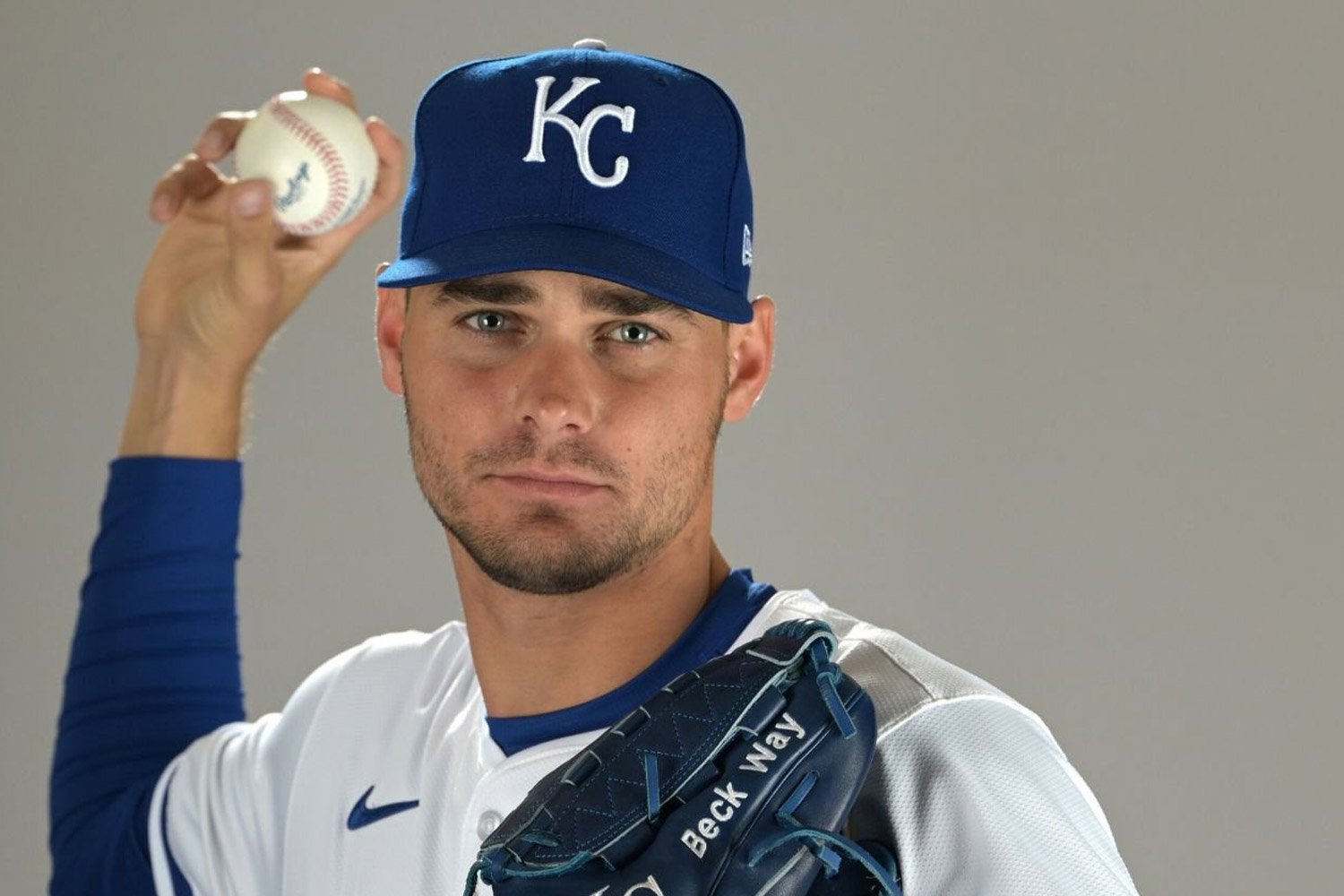 One of the highlights of the MLB Winter Meetings is the Rule 5 Draft, which typically concludes the annual event. The Rule 5 Draft is a way for teams not only to get better inexpensively, but also for prospects blocked or overlooked in their system to get an opportunity with another organization. Here is a full definition of the Rule 5 Draft, according to the MLB.com website: Some famous Rule 5 selections include pitcher Johan Santana, infielder Dan Uggla, and outfielders Josh Hamilton and Shane Victorino. Brad Keller is an example of a selection who recently found success with the Royals, as the Royals selected him in the 2017 Rule 5 Draft. The Royals have two spots open on the 40-man roster. Thus, it's possible that they could add someone in the Rule 5 Draft on Wednesday. However, in this post, we are going to look at players in the Royals system who are eligible and could get selected by other teams in the Rule 5 Draft. Typically, rebuilding teams use the Rule 5 Draft to add talent. Let's look at five Royals candidates who may be selected, including three pitchers and two position players. Felix Arronde, RHP (Highest Level Played: High-A) Arronde may be the Royals' most high-profile prospect available in the Rule 5 Draft. He's rated as our No. 12 prospect in the Royals system and is ranked No. 13 by MLB Pipeline. Arronde pitched primarily in High-A Quad Cities last year, posting a 2.80 ERA and 1.08 WHIP in 26 appearances (24 starts) and 128.2 IP. The 22-year-old righty has moved slowly in the Royals' system, but provides an intriguing profile that could have some upside as an end-of-the-rotation arm or middle-innings reliever. Arronde didn't strike out a ton of batters in 2025, as he only sported a 19.5% K rate. However, he demonstrates solid control and command. Last season, he posted a 2.40 BB/K ratio, an 11.4 K-BB%, and a 26.5% CSW (highlighted by a 12.1% swinging-strike rate), according to Fangraphs. Furthermore, the Dominican native has an intriguing three-pitch mix with a changeup that rates as a plus pitch, according to MLB Pipeline. When the changeup is clicking, he can pile up strikeouts in bunches, as illustrated at times last season with the River Bandits. Arronde has the size (6'3) and the pitching ability to be a fringe MLB reliever right now, which a rebuilding club may need. The only question with Arronde is that he hasn't faced much high-level competition, which could dampen his outlook in Wednesday's draft. Still, for a team willing to be patient, Arronde is an arm who could offer significant long-term upside, as long as that club is willing to allow some growing pains throughout the 2026 season. Javi Vaz, 2B/OF (Highest Level Played: Double-A) A former Vanderbilt product and 15th-round pick in the 2022 MLB Draft, Vaz was getting some dark-horse prospect buzz going into 2025, especially after getting an invite to Spring Training last March. In 2024, in 523 plate appearances with Double-A Northwest Arkansas, he slashed .263/.375/.379 with a .754 OPS and 117 wRC+. He also hit eight home runs, scored 80 runs, and stole 16 bases with the Naturals. Vaz started the year again with Northwest Arkansas, and the expectation was that he would eventually matriculate to Triple-A Omaha at some point. However, that promotion never happened, as Vaz stagnated at the plate with the Naturals last season. As a 24-year-old, the utility player slashed .256/.360/.326 with a .685 OPS and 99 wRC+. The power, which wasn't plentiful to begin with, dropped dramatically last season. He hit only three home runs, and his ISO fell from .115 in 2024 to .070 in 2025. Hence, the Royals opted not to add him to the 40-man roster this offseason, making him eligible to be selected in the Rule 5 Draft. Even though he hasn't played Triple-A ball, Vaz is more than capable of playing in the Majors as a utility guy off the bench. Despite a lack of power, his plate discipline has long been his best tool. He's sported a BB/K ratio over one the past three seasons, including a 1.26 mark in 2025. He also has a high-contact approach, which could be valued by a team that is looking for someone to put the ball in play. When looking at his AA metrics from TJ Stats, he had a Z-Contact% of 91.4% and an O-Swing% of 22.9%, both stellar marks. He also saw his wOBA increase dramatically at the end of the season after a slow start, as shown in his rolling wOBA chart in the TJ Stats profile below. There isn't a ton of long-term upside with selecting Vaz, but he could be a nice bench piece for a club that can provide immediate value in multiple areas in 2026. Chandler Champlain, RHP (Highest Level Played: Triple-A) Drafted by the Yankees initially, Champlain is a prime example of why Triple-A pitching metrics should be taken with a grain of salt. In 29 appearances (25 starts) and 119.1 IP, the former USC product posted a 7.84 ERA, 1.77 WHIP, and 5.46 FIP with the Storm Chasers. When looking at those numbers, it wouldn't make sense for a team to spend a Rule 5 pick on the 26-year-old righty. However, when delving deeper into his profile, one can see why a team might take a flier on Champlain, despite his awful stat line a year ago. First off, Champlain probably isn't a starter, and the Storm Chasers began transitioning him to the bullpen at the end of last season. In his last four appearances of the year, all in relief, he posted a 19.4% K rate, 13.9% K-BB%, and a 1.50 WHIP. His ERA was high at 5.63, but his FIP was a lot more palatable at 2.50. Hence, in a more limited role, the 2021 ninth-round selection could thrive, even at the Major League level. He doesn't walk batters, and he also does a good job of inducing groundballs, as illustrated by his 41.5% groundball rate. In terms of stuff, Champlain's fastball pitches, particularly his four-seamer and sinker, are not great. However, his breaking pitches rate much better, so it's not like Champlain is working with a completely bare cupboard, arsenal-wise. His slider had a 101 TJ Stuff+ rating, and his sweeper had a 100 rating. His curveball and changeup also sported TJ Stuff+ marks of 99 and 98, respectively. Thus, he has four pitches that rate either slightly above or slightly below average, which gives him potential, especially in a move to the bullpen, where his stuff may play out better. He also has demonstrated solid strike-throwing ability with those pitches, as illustrated by his overall 50.8% zone rate. A team may select Champlain in the Rule 5 and tweak his mix (maybe throw the four-seamer less) and some of the grips on his pitches to help them increase velocity and movement, which in turn could help improve the TJ Stuff+ marks on those offerings overall. He's been seen as a Top-20 prospect in the Royals system before, so that former pedigree could convince a club to take a flier on him on Wednesday, with the hope that their pitching development team can mold him quickly in Spring Training. Luca Tresh, C (Highest Level Played: Triple-A) Tresh may be the victim of a Royals system that is incredibly deep at the catching position. Not only is Salvador Perez firmly entrenched in Kansas City (and for at least two more seasons after signing an extension this offseason), but top prospect Carter Jensen had a sensational rookie debut last September, and Blake Mitchell and Ramon Ramirez remain Top-10 prospects in the Royals system as well. That said, the 2021 17th-round pick had a great year in Triple-A Omaha and could be seen as a potential backup for a rebuilding team in 2026. Last season with the Storm Chasers, Tresh slashed .259/.321/.473 with a .794 OPS and 103 wRC+ in 271 plate appearances. He also hit 10 home runs and collected 37 RBI. This was despite spending time splitting catching duties with Jensen, who primarily played in Omaha in 2025. When looking at his Statcast profile via TJ Stats, the former NC State product demonstrated an ability to barrel and pull balls in the air, as well as to swing aggressively at pitches in the strike zone. The primary concerns with his Statcast profile are that he didn't hit the ball consistently hard (37th percentile hard-hit rate) despite barrels, and that he chases (21st percentile O-Swing%) while walking little (16th percentile BB%). However, for a backup catcher, where most of the value comes from behind the plate, this kind of profile is more than welcome. Tresh isn't as athletic as Jensen or even Mitchell, and while he calls a solid game, he doesn't possess the arm strength of other catching prospects in the Royals system. He threw out 12 runners on 96 attempts last year, a 13% rate. That's okay, but it's nothing special, which probably explains why the Royals opted not to protect Tresh in the Rule 5 Draft, especially with Jensen likely going to be the backup in 2026. Nonetheless, a team willing to select Tresh could get an immediate backup catcher who could grow into a starting role, much like former Royals-produced catcher Freddy Fermin, who is the primary catcher now in San Diego. Beck Way, RHP (Highest Level Played: Triple-A) Like Champlain, the stats were rough for Way in Omaha last year, his first go-around in Triple-A. In 23 appearances and 38 IP with the Storm Chasers, Way posted a 6.87 ERA, 1.79 WHIP, and 7.23 FIP. The former fourth-round pick struggled with control and command in Triple-A, as illustrated by his 0.92 K/BB ratio, -1.1% K-BB%, and 25.4% CSW. However, he was much better earlier in the year in Double-A Northwest Arkansas. In 23 appearances and 36.1 IP with the Naturals, he posted a 4.95 ERA, 1.40 WHIP, and 4.55 FIP. He also produced a 1.94 BB/K ratio, 9.2% K-BB%, and a 28.8% CSW. While those aren't great metrics, they are certainly better than what he produced in Omaha. What makes Way an enticing Rule 5 option for teams is that while the control was erratic, the stuff certainly wasn't. That is illustrated in his TJ Stats metrics from his time in Omaha, shown below. Way sported three pitches with TJ Stuff+ marks over 100 (cutter, sweeper, and changeup), and all four of his offerings sported grades of 55 or higher. His best offering was his sweeper, which not only had a 118 TJ Stuff+ and 69 grade, but also generated a 41.4% whiff rate. Thus, the strikeout ability is there, and he has some prospect buzz after pitching in the Arizona Fall League a couple of years ago. While Way doesn't have the prospect pedigree of Arronde or even Champlain, I believe Way may be the most likely pitcher selected on Wednesday, due to the encouraging stuff numbers. The Royals acquired him because his high-velocity arm certainly can be a weapon in the bullpen at the MLB level. However, he just hasn't shown the control to be a viable option in the big leagues yet, especially on a team with playoff aspirations. However, on a rebuilding team? Way may receive more patience, which could help him thrive not just in 2026, but perhaps long-term as a late-innings, high-leverage reliever (he had 12 saves in Double-A Northwest Arkansas in 2024).
 -
Image courtesy of © Jayne Kamin-Oncea-Imagn Images One of the highlights of the MLB Winter Meetings is the Rule 5 Draft, which typically concludes the annual event. The Rule 5 Draft is a way for teams not only to get better inexpensively, but also for prospects blocked or overlooked in their system to get an opportunity with another organization. Here is a full definition of the Rule 5 Draft, according to the MLB.com website: Some famous Rule 5 selections include pitcher Johan Santana, infielder Dan Uggla, and outfielders Josh Hamilton and Shane Victorino. Brad Keller is an example of a selection who recently found success with the Royals, as the Royals selected him in the 2017 Rule 5 Draft. The Royals have two spots open on the 40-man roster. Thus, it's possible that they could add someone in the Rule 5 Draft on Wednesday. However, in this post, we are going to look at players in the Royals system who are eligible and could get selected by other teams in the Rule 5 Draft. Typically, rebuilding teams use the Rule 5 Draft to add talent. Let's look at five Royals candidates who may be selected, including three pitchers and two position players. Felix Arronde, RHP (Highest Level Played: High-A) Arronde may be the Royals' most high-profile prospect available in the Rule 5 Draft. He's rated as our No. 12 prospect in the Royals system and is ranked No. 13 by MLB Pipeline. Arronde pitched primarily in High-A Quad Cities last year, posting a 2.80 ERA and 1.08 WHIP in 26 appearances (24 starts) and 128.2 IP. The 22-year-old righty has moved slowly in the Royals' system, but provides an intriguing profile that could have some upside as an end-of-the-rotation arm or middle-innings reliever. Arronde didn't strike out a ton of batters in 2025, as he only sported a 19.5% K rate. However, he demonstrates solid control and command. Last season, he posted a 2.40 BB/K ratio, an 11.4 K-BB%, and a 26.5% CSW (highlighted by a 12.1% swinging-strike rate), according to Fangraphs. Furthermore, the Dominican native has an intriguing three-pitch mix with a changeup that rates as a plus pitch, according to MLB Pipeline. When the changeup is clicking, he can pile up strikeouts in bunches, as illustrated at times last season with the River Bandits. Arronde has the size (6'3) and the pitching ability to be a fringe MLB reliever right now, which a rebuilding club may need. The only question with Arronde is that he hasn't faced much high-level competition, which could dampen his outlook in Wednesday's draft. Still, for a team willing to be patient, Arronde is an arm who could offer significant long-term upside, as long as that club is willing to allow some growing pains throughout the 2026 season. Javi Vaz, 2B/OF (Highest Level Played: Double-A) A former Vanderbilt product and 15th-round pick in the 2022 MLB Draft, Vaz was getting some dark-horse prospect buzz going into 2025, especially after getting an invite to Spring Training last March. In 2024, in 523 plate appearances with Double-A Northwest Arkansas, he slashed .263/.375/.379 with a .754 OPS and 117 wRC+. He also hit eight home runs, scored 80 runs, and stole 16 bases with the Naturals. Vaz started the year again with Northwest Arkansas, and the expectation was that he would eventually matriculate to Triple-A Omaha at some point. However, that promotion never happened, as Vaz stagnated at the plate with the Naturals last season. As a 24-year-old, the utility player slashed .256/.360/.326 with a .685 OPS and 99 wRC+. The power, which wasn't plentiful to begin with, dropped dramatically last season. He hit only three home runs, and his ISO fell from .115 in 2024 to .070 in 2025. Hence, the Royals opted not to add him to the 40-man roster this offseason, making him eligible to be selected in the Rule 5 Draft. Even though he hasn't played Triple-A ball, Vaz is more than capable of playing in the Majors as a utility guy off the bench. Despite a lack of power, his plate discipline has long been his best tool. He's sported a BB/K ratio over one the past three seasons, including a 1.26 mark in 2025. He also has a high-contact approach, which could be valued by a team that is looking for someone to put the ball in play. When looking at his AA metrics from TJ Stats, he had a Z-Contact% of 91.4% and an O-Swing% of 22.9%, both stellar marks. He also saw his wOBA increase dramatically at the end of the season after a slow start, as shown in his rolling wOBA chart in the TJ Stats profile below. There isn't a ton of long-term upside with selecting Vaz, but he could be a nice bench piece for a club that can provide immediate value in multiple areas in 2026. Chandler Champlain, RHP (Highest Level Played: Triple-A) Drafted by the Yankees initially, Champlain is a prime example of why Triple-A pitching metrics should be taken with a grain of salt. In 29 appearances (25 starts) and 119.1 IP, the former USC product posted a 7.84 ERA, 1.77 WHIP, and 5.46 FIP with the Storm Chasers. When looking at those numbers, it wouldn't make sense for a team to spend a Rule 5 pick on the 26-year-old righty. However, when delving deeper into his profile, one can see why a team might take a flier on Champlain, despite his awful stat line a year ago. First off, Champlain probably isn't a starter, and the Storm Chasers began transitioning him to the bullpen at the end of last season. In his last four appearances of the year, all in relief, he posted a 19.4% K rate, 13.9% K-BB%, and a 1.50 WHIP. His ERA was high at 5.63, but his FIP was a lot more palatable at 2.50. Hence, in a more limited role, the 2021 ninth-round selection could thrive, even at the Major League level. He doesn't walk batters, and he also does a good job of inducing groundballs, as illustrated by his 41.5% groundball rate. In terms of stuff, Champlain's fastball pitches, particularly his four-seamer and sinker, are not great. However, his breaking pitches rate much better, so it's not like Champlain is working with a completely bare cupboard, arsenal-wise. His slider had a 101 TJ Stuff+ rating, and his sweeper had a 100 rating. His curveball and changeup also sported TJ Stuff+ marks of 99 and 98, respectively. Thus, he has four pitches that rate either slightly above or slightly below average, which gives him potential, especially in a move to the bullpen, where his stuff may play out better. He also has demonstrated solid strike-throwing ability with those pitches, as illustrated by his overall 50.8% zone rate. A team may select Champlain in the Rule 5 and tweak his mix (maybe throw the four-seamer less) and some of the grips on his pitches to help them increase velocity and movement, which in turn could help improve the TJ Stuff+ marks on those offerings overall. He's been seen as a Top-20 prospect in the Royals system before, so that former pedigree could convince a club to take a flier on him on Wednesday, with the hope that their pitching development team can mold him quickly in Spring Training. Luca Tresh, C (Highest Level Played: Triple-A) Tresh may be the victim of a Royals system that is incredibly deep at the catching position. Not only is Salvador Perez firmly entrenched in Kansas City (and for at least two more seasons after signing an extension this offseason), but top prospect Carter Jensen had a sensational rookie debut last September, and Blake Mitchell and Ramon Ramirez remain Top-10 prospects in the Royals system as well. That said, the 2021 17th-round pick had a great year in Triple-A Omaha and could be seen as a potential backup for a rebuilding team in 2026. Last season with the Storm Chasers, Tresh slashed .259/.321/.473 with a .794 OPS and 103 wRC+ in 271 plate appearances. He also hit 10 home runs and collected 37 RBI. This was despite spending time splitting catching duties with Jensen, who primarily played in Omaha in 2025. When looking at his Statcast profile via TJ Stats, the former NC State product demonstrated an ability to barrel and pull balls in the air, as well as to swing aggressively at pitches in the strike zone. The primary concerns with his Statcast profile are that he didn't hit the ball consistently hard (37th percentile hard-hit rate) despite barrels, and that he chases (21st percentile O-Swing%) while walking little (16th percentile BB%). However, for a backup catcher, where most of the value comes from behind the plate, this kind of profile is more than welcome. Tresh isn't as athletic as Jensen or even Mitchell, and while he calls a solid game, he doesn't possess the arm strength of other catching prospects in the Royals system. He threw out 12 runners on 96 attempts last year, a 13% rate. That's okay, but it's nothing special, which probably explains why the Royals opted not to protect Tresh in the Rule 5 Draft, especially with Jensen likely going to be the backup in 2026. Nonetheless, a team willing to select Tresh could get an immediate backup catcher who could grow into a starting role, much like former Royals-produced catcher Freddy Fermin, who is the primary catcher now in San Diego. Beck Way, RHP (Highest Level Played: Triple-A) Like Champlain, the stats were rough for Way in Omaha last year, his first go-around in Triple-A. In 23 appearances and 38 IP with the Storm Chasers, Way posted a 6.87 ERA, 1.79 WHIP, and 7.23 FIP. The former fourth-round pick struggled with control and command in Triple-A, as illustrated by his 0.92 K/BB ratio, -1.1% K-BB%, and 25.4% CSW. However, he was much better earlier in the year in Double-A Northwest Arkansas. In 23 appearances and 36.1 IP with the Naturals, he posted a 4.95 ERA, 1.40 WHIP, and 4.55 FIP. He also produced a 1.94 BB/K ratio, 9.2% K-BB%, and a 28.8% CSW. While those aren't great metrics, they are certainly better than what he produced in Omaha. What makes Way an enticing Rule 5 option for teams is that while the control was erratic, the stuff certainly wasn't. That is illustrated in his TJ Stats metrics from his time in Omaha, shown below. Way sported three pitches with TJ Stuff+ marks over 100 (cutter, sweeper, and changeup), and all four of his offerings sported grades of 55 or higher. His best offering was his sweeper, which not only had a 118 TJ Stuff+ and 69 grade, but also generated a 41.4% whiff rate. Thus, the strikeout ability is there, and he has some prospect buzz after pitching in the Arizona Fall League a couple of years ago. While Way doesn't have the prospect pedigree of Arronde or even Champlain, I believe Way may be the most likely pitcher selected on Wednesday, due to the encouraging stuff numbers. The Royals acquired him because his high-velocity arm certainly can be a weapon in the bullpen at the MLB level. However, he just hasn't shown the control to be a viable option in the big leagues yet, especially on a team with playoff aspirations. However, on a rebuilding team? Way may receive more patience, which could help him thrive not just in 2026, but perhaps long-term as a late-innings, high-leverage reliever (he had 12 saves in Double-A Northwest Arkansas in 2024). View full article
-
On Sunday morning, Jaylon Thompson, Royals beat writer for the Kansas City Star, mentioned that the Royals are reportedly interested in reuniting with outfielder Mike Yastrzemski and utility player Adam Frazier. Both players were acquired in trades last season, with Frazier being acquired at the All-Star Break and Yastrzemski at the Trade Deadline. Here's what Thompson said about Yastrzemski and Frazier coming back in his piece, essentially a Royals Winter Meetings Preview on the KC Star. Frazier played with the Royals in 2024 and was a key member of a squad that made it to the ALDS. While he only posted a 65 wRC+ and -0.5 fWAR in 294 plate appearances, he seemed to be a leader in the clubhouse and helped mentor many of the young hitters on the Royals roster. He was much better in his return to Kansas City in 2025, as evidenced by a 98 wRC+ and 0.6 fWAR in 197 plate appearances. Yastrzemski would be the more impactful acquisition of the pair. As mentioned in Thompson's piece, he hit nine home runs in 50 games, and he also posted a 127 wRC+ and 1.3 fWAR in 186 plate appearances. The former San Francisco Giant can also play all three outfield positions and brings a disciplined approach to the plate. He posted a 1.14 BB/K ratio in his tenure with the Royals last season. Yastrzemski will likely be looking for a multi-year deal, which may be tough for Kansas City to offer, considering Yastrzemski will be 36 years old in August. He is also limited in terms of splits, as he has a career .211 average and a 79 wRC+ against left-handed pitchers. In addition to Frazier and Yastrzemski, Thompson mentioned outfielders Austin Hays and Harrison Bader as free-agent options, and Luis Robert Jr. as a trade option the Royals could pursue this week in Orlando during the meetings. It was not reported whether the Royals have spoken with those players or if they are just seen as possible fits given Kansas City's offensive needs for 2026. Photo Credit: © David Richard-Imagn Images View full rumor
-
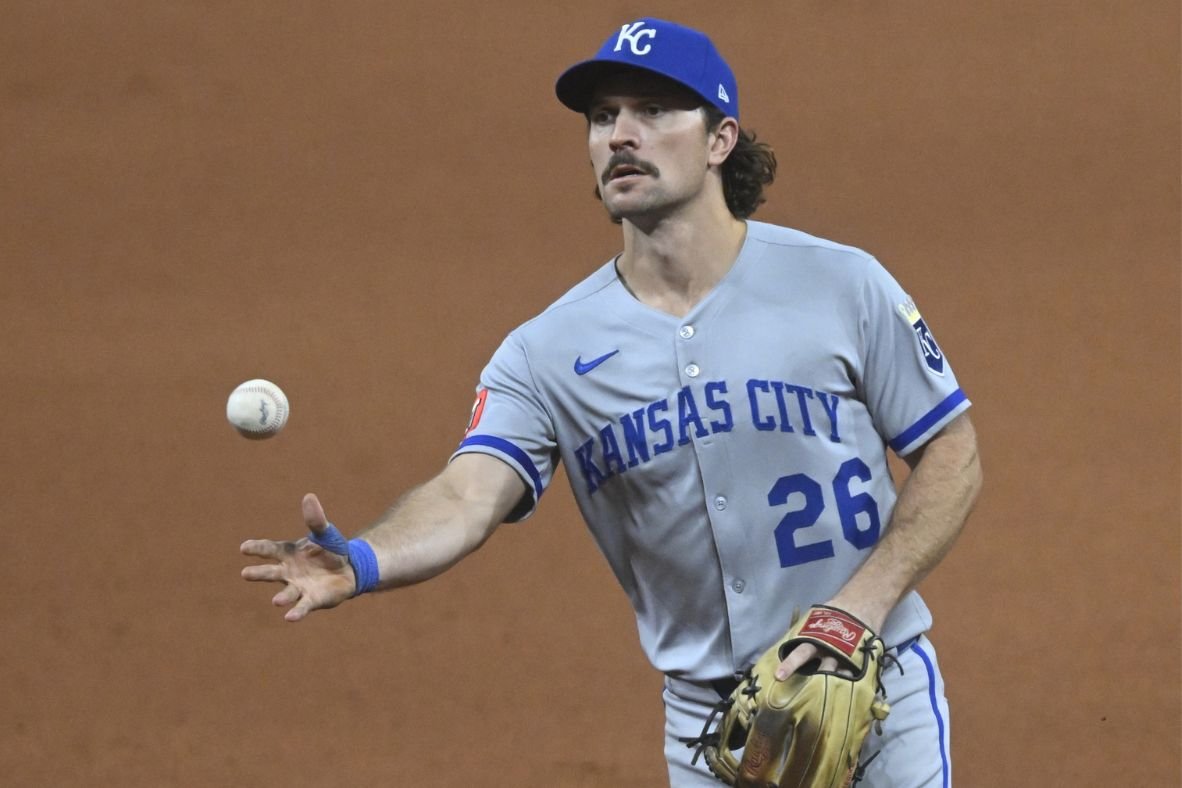 On Sunday morning, Jaylon Thompson, Royals beat writer for the Kansas City Star, mentioned that the Royals are reportedly interested in reuniting with outfielder Mike Yastrzemski and utility player Adam Frazier. Both players were acquired in trades last season, with Frazier being acquired at the All-Star Break and Yastrzemski at the Trade Deadline. Here's what Thompson said about Yastrzemski and Frazier coming back in his piece, essentially a Royals Winter Meetings Preview on the KC Star. Frazier played with the Royals in 2024 and was a key member of a squad that made it to the ALDS. While he only posted a 65 wRC+ and -0.5 fWAR in 294 plate appearances, he seemed to be a leader in the clubhouse and helped mentor many of the young hitters on the Royals roster. He was much better in his return to Kansas City in 2025, as evidenced by a 98 wRC+ and 0.6 fWAR in 197 plate appearances. Yastrzemski would be the more impactful acquisition of the pair. As mentioned in Thompson's piece, he hit nine home runs in 50 games, and he also posted a 127 wRC+ and 1.3 fWAR in 186 plate appearances. The former San Francisco Giant can also play all three outfield positions and brings a disciplined approach to the plate. He posted a 1.14 BB/K ratio in his tenure with the Royals last season. Yastrzemski will likely be looking for a multi-year deal, which may be tough for Kansas City to offer, considering Yastrzemski will be 36 years old in August. He is also limited in terms of splits, as he has a career .211 average and a 79 wRC+ against left-handed pitchers. In addition to Frazier and Yastrzemski, Thompson mentioned outfielders Austin Hays and Harrison Bader as free-agent options, and Luis Robert Jr. as a trade option the Royals could pursue this week in Orlando during the meetings. It was not reported whether the Royals have spoken with those players or if they are just seen as possible fits given Kansas City's offensive needs for 2026. Photo Credit: © David Richard-Imagn Images
 -
Great piece, Kerry, I would be curious about this fit, for as you said, his ability to limit barrels and hard contact cannot be ignored. I know the Royals have valued control and command guys over the past couple of years when it comes to relief acquisitions and they have had some hits (Schreiber, Clarke 2.0, Long 1.0) and some misses (Long 2.0, Smith, Stratton). I am open to Rogers joining the bullpen as long as we get some high velocity arms as well, since K/9 was such an issue for this bullpen a season ago.
-
I love seeing the positive buzz from Jensen after the Royals system has been dumped on the past few years. The Royals have not made some great decisions in the draft (especially pre-Bridges). Still, I think the system does a good job of scouting and developing players to matriculate to the MLB level better than a lot of orgs that get more prospect love from publications.
-
Agreed. Read through that and that shows the work that pitching development and the R&D staff are doing in Milwaukee to maximize the pitching talent they have in their org. The Royals have definitely utilized Milwaukee as a blue print for this since JJ took over. Nice for them to get someone in Dawson who has direct experience with the org and bring that to KC.
- 1 reply
-
- 1
-

-
 The Kansas City Royals need help in the outfield in 2026. Thankfully, Royals GM JJ Picollo has made that a priority, and it wouldn't be surprising if Kansas City made some noise at the Winter Meetings next week to pursue that much-needed addition in the outfield. Many big names have been listed as options for the Royals, which is an encouraging sign. It shows that owner John Sherman isn't averse to increasing payroll to make a deal, and that the Royals aren't afraid to make a trade that could carry some risk (such as trading away ace Cole Ragans). To compete with teams like the Dodgers, Yankees, and Blue Jays, small-market clubs like Kansas City need to make those kinds of moves to make a splash, especially in the postseason. That said, this is a different Royals team from the Dayton Moore era. The Royals are more data-inclined than ever before. That is evident in their manager, Matt Quatraro, who came over from the Rays, and in their coaching staff, which hired highly analytical coaches this offseason, such as Connor Dawson from Milwaukee and Mike McFerran from the Athletics. Both are known for their data-focused coaching approach with their respective clubs. Thus, to be a long-term winner like Cleveland, Milwaukee, and Tampa Bay, Kansas City needs to find the right fits that can help Quatraro utilize the entire 26-man roster over a full season. That usually means finding the right platoon options who can give key guys rest while still keeping the club competitive day to day. Utilizing the entire roster has been a priority not just for Quatraro but also for Picollo when assembling the roster each offseason. That philosophy is a key reason why Rob Refsnyder would be the perfect fit for the 2026 Royals. Refsnyder Hit the Ball Hard and Didn't Chase Last Year Last season with the Red Sox, he didn't get a ton of at-bats, but he made them count in a significant way. In 70 games and 209 plate appearances, Refsnyder slashed .269/.354/.484 with an .838 OPS. He also hit eight home runs, scored 29 runs, collected 30 RBI, and stole three bases. When looking at his advanced metrics via Fangraphs, his ISO was .214, his wRC+ was 128, and his fWAR was 1.0. All those numbers are impressive for a player with only 70 games. An intriguing aspect about Refnsynder's profile is that he hits the ball hard. His exit velocity, barrel, and hard-hit rate percentiles all ranked in the upper part of the league, as illustrated in his TJ Stats summary profile. Refnsyder's average EV ranked in the 88th percentile, his barrel rate ranked in the 80th percentile, and his hard-hit rate ranked in the 94th percentile. What also makes Refsnyder intriguing is his strong plate discipline, as he avoids chasing many pitches out of the strike zone. His O-Swing percentage ranked in the 95th percentile, and his walk rate ranked in the 81st percentile last season. According to Fangraphs, Royals outfielders ranked 15th in O-Swing% (28.6%) and 25th in walk rate (7.2%). Thus, Refsnyder would provide a significant boost to the Royals' lineup in those categories at the plate in 2026. Refsnyder is a Platoon Monster Kansas City struggled to get much from right-handed-hitting outfielders in 2025. They ranked 28th in wRC+ (59) and fWAR (-1.6), according to Fangraphs. Individually, the group of right-handed-hitting outfielders who played last year isn't an impressive list, as seen in the table below. They need more help in this area next season, as not a single right-handed-hitting Royals outfielder posted a wRC+ in the triple digits. Thankfully, Refsnyder is the ideal solution to that problem, especially with his history against left-handed pitching. Last season, against lefties, the 34-year-old former Arizona Wildcat slashed .302/.399/.560 with a .959 OPS against lefties. He also posted a 0.59 BB/K ratio, a .259 ISO, and 159 wRC+, according to Fangraphs metrics. Over his career, he has a slash line of .281/.383/.443 with an .826 OPS, a 0.64 BB/K ratio, a .162 ISO, and a 129 wRC+. Refsnyder has a proven track record against left-handed starting pitching, sustained over 375 games and 764 plate appearances. Unfortunately, the history against right-handed starting pitching is porous. In 349 games and 759 plate appearances against righties, he has a slash of .229/.301/.332 with a .633 OPS, 0.32 BB/K ratio, .103 ISO, and 76 wRC+. Hence, if the Royals acquire Refsnyder, he would specifically have a role as a platoon specialist against lefties and little else. While that sounds limiting, that kind of weapon can be beneficial, especially over the course of a 162-game season. Refsnyder Could Be a Nice Complement to Caglianone in Right Field It is easy to be pessimistic about Jac Caglianone and his outlook after a rough rookie campaign. In 62 games and 232 plate appearances, he slashed .157/.237/.295 with a .532 OPS and 46 wRC+. He also hit seven home runs, scored 19 runs, collected 18 RBI, and accumulated an fWAR of -1.6. However, while the overall numbers weren't impressive, his batted-ball ability, especially in his exit velocity and barrel metrics, was much more encouraging, as illustrated in his TJ Stats summary profile. Caglianone ranked in the 96th percentile in 90th EV, 81st percentile in Max EV, and 67th percentile in barrel rate. He also ranked in the 78th percentile in pull rate, indicating he can get around the ball on time. Unfortunately, a lackluster LA Sweet-Spot percentage (2nd percentile) led to a less-than-stellar Pull Air% (25th percentile). When things clicked, however, Caglianone could produce bombs like this one in September of last season in Philadelphia against Phillies ace Aaron Nola. Steamer projections have just released their 2026 version, and they are optimistic about Caglianone's outlook for the upcoming season. They project Cagalianone to sport the third-best wRC+ of Royals hitters next season with a 109 mark. Steamer also projects Caglianone to hit 18 home runs, collect 56 RBI, and post a .195 ISO in 419 plate appearances. Hence, Caglianone could take the next step as a hitter and overall star in 2026. Acquiring someone like Refsnyder to give him an occasional break against lefties could be the solution they need. They hold onto Caglianone's long-term value, while acquiring a bat in Refsnyder who could boost their lineup in specific situations next season. That is the kind of decision that good small-market teams make. It is also a solution that could help the Royals return to the postseason in an AL Central division that remains wide open, especially with Cleveland and Detroit having hazy offseasons thus far.
 -
They need more help in this area next season, as not a single right-handed-hitting Royals outfielder posted a wRC+ in the triple digits. Thankfully, Refsnyder is the ideal solution to that problem, especially with his history against left-handed pitching. Last season, against lefties, the 34-year-old former Arizona Wildcat slashed .302/.399/.560 with a .959 OPS against lefties. He also posted a 0.59 BB/K ratio, a .259 ISO, and 159 wRC+, according to Fangraphs metrics. Over his career, he has a slash line of .281/.383/.443 with an .826 OPS, a 0.64 BB/K ratio, a .162 ISO, and a 129 wRC+. Refsnyder has a proven track record against left-handed starting pitching, sustained over 375 games and 764 plate appearances. Unfortunately, the history against right-handed starting pitching is porous. In 349 games and 759 plate appearances against righties, he has a slash of .229/.301/.332 with a .633 OPS, 0.32 BB/K ratio, .103 ISO, and 76 wRC+. Hence, if the Royals acquire Refsnyder, he would specifically have a role as a platoon specialist against lefties and little else. While that sounds limiting, that kind of weapon can be beneficial, especially over the course of a 162-game season. Refsnyder Could Be a Nice Complement to Caglianone in Right Field It is easy to be pessimistic about Jac Caglianone and his outlook after a rough rookie campaign. In 62 games and 232 plate appearances, he slashed .157/.237/.295 with a .532 OPS and 46 wRC+. He also hit seven home runs, scored 19 runs, collected 18 RBI, and accumulated an fWAR of -1.6. However, while the overall numbers weren't impressive, his batted-ball ability, especially in his exit velocity and barrel metrics, was much more encouraging, as illustrated in his TJ Stats summary profile. Caglianone ranked in the 96th percentile in 90th EV, 81st percentile in Max EV, and 67th percentile in barrel rate. He also ranked in the 78th percentile in pull rate, indicating he can get around the ball on time. Unfortunately, a lackluster LA Sweet-Spot percentage (2nd percentile) led to a less-than-stellar Pull Air% (25th percentile). When things clicked, however, Caglianone could produce bombs like this one in September of last season in Philadelphia against Phillies ace Aaron Nola. Steamer projections have just released their 2026 version, and they are optimistic about Caglianone's outlook for the upcoming season. They project Cagalianone to sport the third-best wRC+ of Royals hitters next season with a 109 mark. Steamer also projects Caglianone to hit 18 home runs, collect 56 RBI, and post a .195 ISO in 419 plate appearances. Hence, Caglianone could take the next step as a hitter and overall star in 2026. Acquiring someone like Refsnyder to give him an occasional break against lefties could be the solution they need. They hold onto Caglianone's long-term value, while acquiring a bat in Refsnyder who could boost their lineup in specific situations next season. That is the kind of decision that good small-market teams make. It is also a solution that could help the Royals return to the postseason in an AL Central division that remains wide open, especially with Cleveland and Detroit having hazy offseasons thus far. View full article
-
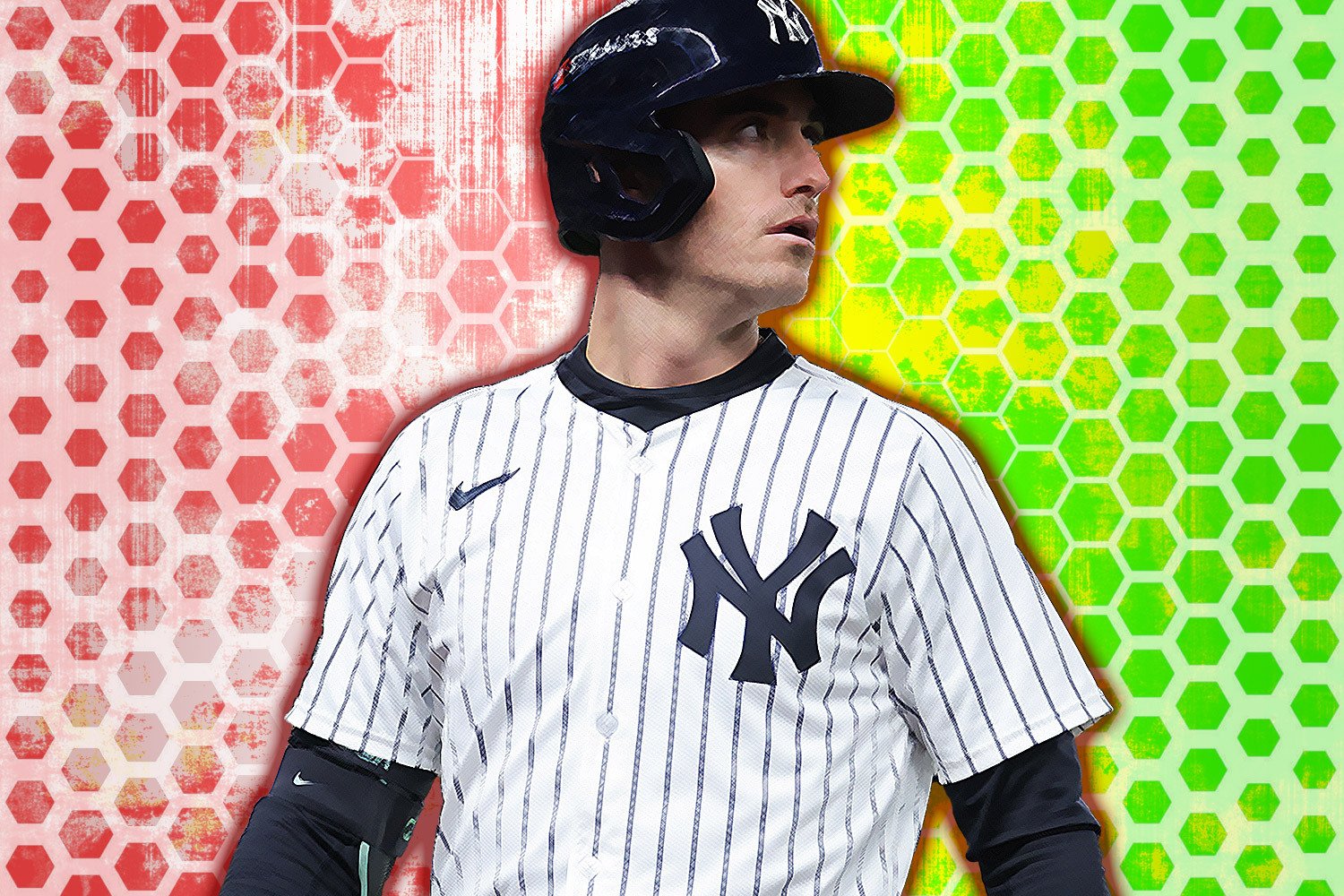 Getting a productive outfield bat seems to be priority number one for JJ Picollo and the Kansas City Royals front office. After all, they ranked last in outfield fWAR, according to Fangraphs, and he's been open to the media about possibly trading from their starting pitching depth to get the outfielder they need to improve the lineup in 2026. While the Royals are open to a trade to acquire an outfielder, the free agent market has a lot of outfield possibilities. One candidate who could improve the Royals' outfield and lineup is Cody Bellinger, who's ranked No. 8 in DiamondCentric's Top-50 Free Agents list. Here's what Matt Trueblood of DiamondCentric said about Bellinger in his write-up. After posting a 108 wRC+ and 2.1 fWAR in 569 plate appearances in 2024, his final season with the Cubs, Bellinger had a resurgence with the Yankees last season. He posted a 125 wRC+ and 4.9 fWAR in 656 plate appearances and also hit 29 home runs and collected 98 RBI, 11 and 20 more than his totals in 2024 in those categories, respectively. Hence, it is not surprising that Bellinger is projected to earn a multi-year deal in the $25+ million AAV range this offseason and is already attracting interest from many teams, including the Phillies and even the Angels. If the Royals were to pursue Bellinger, it would require a significant long-term commitment from owner John Sherman. While Kansas City is a small-market team, it has not been averse to big deals in the past. That is evidenced by their mega extension to Bobby Witt Jr. before the 2024 season and their multi-year deals with Michael Wacha and Seth Lugo in the past calendar year. However, while Bellinger at the surface level could provide a boost to the Royals' lineup in the short and long term, the underlying metrics hint at a hitter who could struggle in his transition to Kauffman Stadium, especially as an outfielder who will be 31 next July. Why Bellinger is Enticing for the Royals Bellinger checks a lot of boxes for the Royals at first glance, especially when looking at his surface-level and plate discipline metrics. Last season with the Yankees, the 30-year-old outfielder slashed .272/.334/.480 with an .813 OPS. In addition to hitting 29 home runs, scoring 89 runs, and collecting 98 RBI, he also showed decent speed on the basepaths with 13 stolen bases. He also had 20 stolen bases in 2023 and 14 in 2022, which displays that Bellinger can be a 20-20 HR-SB threat for any team that acquires him. While the results were strong last season, his plate discipline may have been even more impressive. With the Yankees, he posted a 13.7% K rate, the lowest of his career. Furthermore, he also generated an 8.7% walk rate, his highest mark in that category since 2021, when he was still a member of the Dodgers. Thus, he produced a 0.63 BB/K ratio, his best mark in that category since 2020 (when it was 0.71) and the third-best ratio of his career (he had a 0.88 ratio in 2019). Over the last three years, he has seen significant improvement in his BB/K ratio, going from 0.25 in 2022 to 0.46 in 2023 and 0.51 in 2024. Lastly, he ranked in the upper percentiles in whiff percentage and pulled the ball effectively with the Yankees. His overall pull percentage ranked in the 80th percentile, and Pull Air percentage ranked in the 90th percentile. Those two factors led to his home run success in the Bronx. Those are both clear in his Statcast summary profile via TJ Stats. The Royals' outfielders ranked 17th in BB/K ratio last season with a 0.35 mark, according to Fangraphs. That said, only one Royals outfielder posted a better ratio than Bellinger: Mike Yastrzemski, who sported a 1.14 BB/K ratio. The next closest Royals to Bellinger were Cavan Biggio and Nick Loftin, who both posted 0.52 ratios. Therefore, Bellinger could provide a disciplined, high-contact approach sorely needed in the middle of the Kansas City lineup next season. The Issue with Bellinger The main problem with Bellinger is two-fold: his pop is questionable, and his bat speed isn't encouraging. In terms of the former, it doesn't seem likely that Bellinger's profile would fare well in Kauffman Stadium's spacious dimensions. According to Statcast's xHR by Park measurement, only 22 of his 29 home runs would've been gone at the K last season. Over his career, only 158 of Bellinger's 235 home runs would be out at Kaffuman. The only park with lower xHR was Oracle Park in San Francisco (138). Visually, Royals fans can see that many of Bellinger's home runs would've fallen short. Below is a spray chart of his 2025 hits, applied to Kauffman's dimensions. Next, below is a clip of a home run Bellinger hit against the Cubs at Yankee Stadium. It would've only cleared out of four other stadiums in baseball. Unsurprisingly, Kauffman Stadium was not one of them. The batted-ball percentiles and bat speed don't paint a pretty picture for Bellinger's outlook in Kansas City either. Even though he nearly hit 30 home runs, he seemed to outperform his exit velocity, barrel, and hard-hit metrics. His average exit velocity ranked in the 28th percentile, his barrel rate ranked in the 35th percentile, and his hard-hit rate ranked in the 28th percentile. His hard-hit percentage rolling chart also showcased him regressing heavily in the second half after a bit of a spike in the beginning of June. Bellinger was able to launch the ball well last season, as illustrated by his 38.6% LA Sweet-Spot percentage, which ranked in the 77th percentile. He is also able to square up the ball well, as his squared-up rate ranked in the 72nd percentile last year, according to Statcast. While those metrics are promising, his bat speed is the inverse. Last year, his bat speed averaged 70.1 MPH, which ranked in the 20th percentile according to Statcast. For context, that bat speed would be the seventh-worst mark of Royals hitters with 100 or more swings last season, as illustrated in the table below. In addition to the slow average swing velocity, his 6.5% hard-swing rate is the fifth-worst mark as well. He also would've sported the second-longest swing of this group at 7.8 feet. Long swings tend to lead to a lot of whiffs (notice Salvador Perez has the longest swing of this sample, and he had a 19.5% K rate last season). Thus, any regression in Bellinger's plate discipline could lead to a lot more swings and misses, and thus, strikeouts. That isn't exactly the profile the Royals would want from a hitter expected to be a long-term mainstay at the three-to-five spots in the batting order. Bellinger Isn't Worth the Cost There's no question that any available hitter the Royals are targeting this offseason will have warts in their profile. That said, as one of my friends and Inside the Crown writer David Lesky noted in a chat, "it's one thing to get a guy with warts, it's another thing to get that kind of guy who's going to take up 15-20% of your team's payroll for several years." Matthew of DiamondCentric estimated Bellinger would command an AAV of about $22 million in his next deal. Spotrac is putting his market value at $30,449,698. That is essentially Witt money, and even then, Witt doesn't hit the $30 million AAV mark in his contract until 2028, according to Roster Resource. Bellinger is a good player, but he's not a Witt-esque one. He's a good complementary piece, but not one that can carry a team long-term, especially on a massive contract. If he were, the Dodgers, Cubs, and Yankees wouldn't have let him go. A bad contract on an aging "fringe" star with questionable skills can be debilitating to a franchise. Just ask the Colorado Rockies, who learned the hard way with Kris Bryant, or the Angels with Anthony Rendon. Let's hope the Royals don't make that same mistake with Bellinger.
 -
Why the Royals Shouldn't Sign Cody Bellinger
Kevin O'Brien posted a topic in Kansas City Royals Talk
Getting a productive outfield bat seems to be priority number one for JJ Picollo and the Kansas City Royals front office. After all, they ranked last in outfield fWAR, according to Fangraphs, and he's been open to the media about possibly trading from their starting pitching depth to get the outfielder they need to improve the lineup in 2026. While the Royals are open to a trade to acquire an outfielder, the free agent market has a lot of outfield possibilities. One candidate who could improve the Royals' outfield and lineup is Cody Bellinger, who's ranked No. 8 in DiamondCentric's Top-50 Free Agents list. Here's what Matt Trueblood of DiamondCentric said about Bellinger in his write-up. After posting a 108 wRC+ and 2.1 fWAR in 569 plate appearances in 2024, his final season with the Cubs, Bellinger had a resurgence with the Yankees last season. He posted a 125 wRC+ and 4.9 fWAR in 656 plate appearances and also hit 29 home runs and collected 98 RBI, 11 and 20 more than his totals in 2024 in those categories, respectively. Hence, it is not surprising that Bellinger is projected to earn a multi-year deal in the $25+ million AAV range this offseason and is already attracting interest from many teams, including the Phillies and even the Angels. If the Royals were to pursue Bellinger, it would require a significant long-term commitment from owner John Sherman. While Kansas City is a small-market team, it has not been averse to big deals in the past. That is evidenced by their mega extension to Bobby Witt Jr. before the 2024 season and their multi-year deals with Michael Wacha and Seth Lugo in the past calendar year. However, while Bellinger at the surface level could provide a boost to the Royals' lineup in the short and long term, the underlying metrics hint at a hitter who could struggle in his transition to Kauffman Stadium, especially as an outfielder who will be 31 next July. Why Bellinger is Enticing for the Royals Bellinger checks a lot of boxes for the Royals at first glance, especially when looking at his surface-level and plate discipline metrics. Last season with the Yankees, the 30-year-old outfielder slashed .272/.334/.480 with an .813 OPS. In addition to hitting 29 home runs, scoring 89 runs, and collecting 98 RBI, he also showed decent speed on the basepaths with 13 stolen bases. He also had 20 stolen bases in 2023 and 14 in 2022, which displays that Bellinger can be a 20-20 HR-SB threat for any team that acquires him. While the results were strong last season, his plate discipline may have been even more impressive. With the Yankees, he posted a 13.7% K rate, the lowest of his career. Furthermore, he also generated an 8.7% walk rate, his highest mark in that category since 2021, when he was still a member of the Dodgers. Thus, he produced a 0.63 BB/K ratio, his best mark in that category since 2020 (when it was 0.71) and the third-best ratio of his career (he had a 0.88 ratio in 2019). Over the last three years, he has seen significant improvement in his BB/K ratio, going from 0.25 in 2022 to 0.46 in 2023 and 0.51 in 2024. Lastly, he ranked in the upper percentiles in whiff percentage and pulled the ball effectively with the Yankees. His overall pull percentage ranked in the 80th percentile, and Pull Air percentage ranked in the 90th percentile. Those two factors led to his home run success in the Bronx. Those are both clear in his Statcast summary profile via TJ Stats. The Royals' outfielders ranked 17th in BB/K ratio last season with a 0.35 mark, according to Fangraphs. That said, only one Royals outfielder posted a better ratio than Bellinger: Mike Yastrzemski, who sported a 1.14 BB/K ratio. The next closest Royals to Bellinger were Cavan Biggio and Nick Loftin, who both posted 0.52 ratios. Therefore, Bellinger could provide a disciplined, high-contact approach sorely needed in the middle of the Kansas City lineup next season. The Issue with Bellinger The main problem with Bellinger is two-fold: his pop is questionable, and his bat speed isn't encouraging. In terms of the former, it doesn't seem likely that Bellinger's profile would fare well in Kauffman Stadium's spacious dimensions. According to Statcast's xHR by Park measurement, only 22 of his 29 home runs would've been gone at the K last season. Over his career, only 158 of Bellinger's 235 home runs would be out at Kaffuman. The only park with lower xHR was Oracle Park in San Francisco (138). Visually, Royals fans can see that many of Bellinger's home runs would've fallen short. Below is a spray chart of his 2025 hits, applied to Kauffman's dimensions. Next, below is a clip of a home run Bellinger hit against the Cubs at Yankee Stadium. It would've only cleared out of four other stadiums in baseball. Unsurprisingly, Kauffman Stadium was not one of them. The batted-ball percentiles and bat speed don't paint a pretty picture for Bellinger's outlook in Kansas City either. Even though he nearly hit 30 home runs, he seemed to outperform his exit velocity, barrel, and hard-hit metrics. His average exit velocity ranked in the 28th percentile, his barrel rate ranked in the 35th percentile, and his hard-hit rate ranked in the 28th percentile. His hard-hit percentage rolling chart also showcased him regressing heavily in the second half after a bit of a spike in the beginning of June. Bellinger was able to launch the ball well last season, as illustrated by his 38.6% LA Sweet-Spot percentage, which ranked in the 77th percentile. He is also able to square up the ball well, as his squared-up rate ranked in the 72nd percentile last year, according to Statcast. While those metrics are promising, his bat speed is the inverse. Last year, his bat speed averaged 70.1 MPH, which ranked in the 20th percentile according to Statcast. For context, that bat speed would be the seventh-worst mark of Royals hitters with 100 or more swings last season, as illustrated in the table below. In addition to the slow average swing velocity, his 6.5% hard-swing rate is the fifth-worst mark as well. He also would've sported the second-longest swing of this group at 7.8 feet. Long swings tend to lead to a lot of whiffs (notice Salvador Perez has the longest swing of this sample, and he had a 19.5% K rate last season). Thus, any regression in Bellinger's plate discipline could lead to a lot more swings and misses, and thus, strikeouts. That isn't exactly the profile the Royals would want from a hitter expected to be a long-term mainstay at the three-to-five spots in the batting order. Bellinger Isn't Worth the Cost There's no question that any available hitter the Royals are targeting this offseason will have warts in their profile. That said, as one of my friends and Inside the Crown writer David Lesky noted in a chat, "it's one thing to get a guy with warts, it's another thing to get that kind of guy who's going to take up 15-20% of your team's payroll for several years." Matthew of DiamondCentric estimated Bellinger would command an AAV of about $22 million in his next deal. Spotrac is putting his market value at $30,449,698. That is essentially Witt money, and even then, Witt doesn't hit the $30 million AAV mark in his contract until 2028, according to Roster Resource. Bellinger is a good player, but he's not a Witt-esque one. He's a good complementary piece, but not one that can carry a team long-term, especially on a massive contract. If he were, the Dodgers, Cubs, and Yankees wouldn't have let him go. A bad contract on an aging "fringe" star with questionable skills can be debilitating to a franchise. Just ask the Colorado Rockies, who learned the hard way with Kris Bryant, or the Angels with Anthony Rendon. Let's hope the Royals don't make that same mistake with Bellinger. View full article -
Image courtesy of © Peter Aiken-Imagn Images Last weekend, rumors spread from the Boston Globe that the Royals may be interested in trading away Cole Ragans to the Red Sox for the right package. Royals GM JJ Picollo didn't mention Ragans specifically in his interview with Alex Speier of the Globe. Still, he did hint that they would be open to trading an established pitcher away for a lineup-changing outfielder. With big salary amounts owed to Michael Wacha and Seth Lugo, and injury concerns with Kris Bubic, Ragans may be the Royals' best starting pitching trade asset. The former Rangers first-round pick finished fourth in the AL Cy Young race in 2024 after posting a 3.14 ERA and 1.14 WHIP in 32 starts and 186.1 IP. Last year was a bit of a down year, as he struggled with injuries, posting a 4.67 ERA and 1.18 WHIP in 61.2 IP. However, his xERA was 2.67, which ranked in the Top 4% of the league. Furthermore, he posted a 38.1% K rate and a 30.4% K-BB%, and showcased stellar stuff and strike metrics in his TJ Stats summary. Without a doubt, in terms of stuff, skills, and strikeout ability, Ragans is the most valuable starting pitcher in the Royals' rotation. Additionally, he's cost-controlled, having agreed to a three-year extension last offseason worth $13.25 million total. The deal includes next year and 2027, giving him one year of arbitration eligibility before he hits free agency in 2029, according to Spotrac. Any team that acquires Ragans would not just gain a Cy Young-caliber pitcher but also one with financial predictability, unlike Bubic, who will be a free agent after next season. Thus, the Royals should be expecting a significant trade package in return for Ragans. While the Royals need an outfielder, a one-for-one swap for most outfielders would be a massive overpay by Kansas City. For a small-market franchise with regular playoff aspirations, such a deal could be debilitating to the progress Picollo has made since taking over for Dayton Moore after the 2023 season. What should the Royals be looking for in a deal? Well, let's look at Ragans' value, the Royals' needs, and a couple of theoretical moves that could make sense for Kansas City. What's Ragans' Value on the Trade Market? When looking at Ragans' value, I think two things could be utilized for us as baseball fans: statistics and Baseball Trade Value's "surplus" measurement. In terms of statistics, there's no question that Ragans has become the "ace" of the Royals' rotation, not easy to do given a rotation that includes veterans such as Wacha and Lugo. Since coming over from Texas in 2023 in the Aroldis Chapman trade, Ragans has made 57 starts and pitched 319.2 innings with the Royals. In that sample, he has a 3.32 ERA, a 1.14 WHIP, a 2.79 FIP, an 11.5 K/9, and a 3.60 K/BB ratio. When looking at starting pitchers since July 17th, 2023, Ragans ranks 11th in fWAR (9.2), despite sporting the lowest IP total (314.2 IP) of any starter in the Top-15. Thus, Ragans has certainly put up the metrics to become one of the most valued starting pitching assets on the trade market, beyond Detroit's Tarik Skubal, who's a back-to-back AL Cy Young winner. When it comes to his value on Baseball Trade Values, it's essential to know what is factored into that value, not just for Ragans, but for all Major League players. According to BTV, it is necessary first to calculate the "field value," which includes the following factors: WAR Projections Inflation Years of Control Injury Risk Roster Risk The next factor is salary, which is needed to calculate "surplus" value, defined by BTV as follows: Thus, based on those factors, where does Ragans rank in comparison to other Royals players? According to BTV, Ragans sports the second-highest surplus value with a 79.4 mark. The only one higher is Bobby Witt Jr. with a 200.7 mark. Therefore, the 27-year-old lefty is one of the Royals' most prized assets, in addition to their most prized pitcher on the 40-man roster. What Are the Royals' Needs? The Royals need hitting and help in the outfield, plain and simple. Even in the interview with the Globe, Picollo pointed out that they need to upgrade the corner outfield in 2026, and the Royals would be willing to trade away pitching to accomplish that goal this offseason. However, another area of need for the Royals is to deepen the farm system, especially with the recent graduation of Jac Caglianone and the soon-to-be graduate Carter Jensen. The Royals' system has come a long way under Picollo and new scouting director Brian Bridges. However, for the Royals to be a consistent small-market playoff contender, like Tampa Bay, Cleveland, and Milwaukee, they need to ensure that their farm system isn't left bare at any point. That was a significant reason Moore struggled to keep his job, despite leading the Royals to two pennants and a World Series title during his tenure. The Royals should explore deals not just to acquire an MLB-ready outfielder, but some prospect talent as well, in any possible trade, especially considering the surplus value Ragans holds. Proposed Trade #1: Cole Ragans to Boston for OF Jarren Duran, SP Kyson Witherspoon, and OF Jhostynxon Garcia Duran has been a target for the Royals for a while, as rumors swirled that Kansas City tried to acquire him at the deadline before settling on Mike Yastrzemski (which didn't turn out too badly). Duran proved to be quite valuable for the Red Sox last season, posting a 3.9 fWAR with a 111 wRC+, 16 home runs, and 24 stolen bases in 696 plate appearances. Over the past three years, Duran has accumulated 13.2 fWAR for the Red Sox, which leads all Red Sox players in that time frame, according to Fangraphs. That said, according to BTV, Duran's surplus value is 49.5, significantly lower than Ragans'. A one-for-one trade would not be worth it for Kansas City, based on BTV's model. Therefore, the Red Sox would need to throw in some prospect capital to make the trade a fair one for the Royals. Two prospects that could make sense are Witherspoon and Garcia, a starting pitcher and outfielder, respectively, in the Red Sox farm system. Witherspoon was the Red Sox's top draft pick in the 2025 MLB Draft out of Oklahoma. In his final season with the Sooners, he posted a 2.65 ERA, 1.01 WHIP, 31.8% K rate, and 25.9% K-BB% in 16 starts and 95 IP. Thus, it's no surprise that the Red Sox were willing to give him a $5 million signing bonus at pick No. 15 (which was slightly below slot). Witherspoon did not pitch professionally after being drafted, but he could be an excellent project for the Royals' pitching development team and move quickly through the Royals' farm system in 2026. His BTV surplus value is 17.7. Garcia, known as "The Password" by Red Sox fans due to his hard-to-pronounce first name, is also an intriguing prospect that could give the Royals some depth on the 40-man, which lacks MLB-ready outfielders. The 22-year-old outfielder was mediocre in his initial MLB exposure (82 wRC+ and 55.6% K rate in nine PA), but a glut of outfielders in Boston blocked him. In 489 plate appearances in Triple-A Worcester, he slashed .267/.340/.470 with a 116 wRC+, 21 HR, 75 RBI, and seven stolen bases. When looking at his TJ Stats summary from Triple-A, Garcia showcased excellent barrel rates and solid exit velocity on batted balls. However, like many Royals hitters in their system, he struggled with plate discipline, whiffs, and strikeouts. Adding Duran, Witherspoon, and Garcia together yields a total surplus value of 75, making it a fair trade by BTV's standards, as shown below. Now, I'm not sure if the Red Sox would give up a recently drafted starting pitcher with considerable upside and a flawed but still talented outfielder who is just 23, along with Duran. That said, if the Royals are willing to trade their second-most valuable asset in their organization, they need to make sure they get a considerably fair return in the process. If they can't, they should continue to hold onto Ragans and look for other options. Proposed Trade #2: Ragans to San Diego for OF Fernando Tatis Jr. Remember how I talked about how the Royals should look to kill two birds with one stone by getting an established outfielder and prospects in return for Ragans? Well, this trade blows that idea out of the water. That said, if the Royals can only get a one-for-one deal with Ragans, they might as well shoot high and acquire Tatis in an agreement that BTV's model accepted. Surprisingly, Tatis may be more available than some baseball fans would like to think. His BTV surplus value is 83.3, slightly higher than Ragans'. However, he also commands a super long-term deal, one of many that San Diego has on their payroll (Manny Machado and Xander Bogaerts being the others). He also only posted an .807 OPS, down from his .833 mark in 2024. Thus, the Padres may view a possible Ragans-Tatis trade as an avenue to improve their starting pitching (they lack depth after No. 1 starter Nick Pivetta, especially after Dylan Cease signed with the Blue Jays this offseason) while shedding some short-term payroll. Still, he posted a 6.1 fWAR in 2025, and his Statcast percentiles showed that Tatis is one of the most naturally talented hitters in the league. Now, the Royals would like to trade Ragans for Tatis in an instant. However, it may be a tougher deal to stomach for Padres GM AJ Preller, especially since Tatis is the face of the Padres franchise. While Ragans would immediately improve the San Diego rotation, fans would likely revolt in response to losing a player who has been so key to the Padres' turnaround after years of mediocrity and inconsistency. Nonetheless, it's an avenue to explore, as a 1-for-1 trade of Ragans for Tatis would at least check a lot of boxes for both teams in terms of on-field production and needs. View full article
-
What Would It Take For Kansas City to Trade Away Cole Ragans?
Kevin O'Brien posted an article in Royals
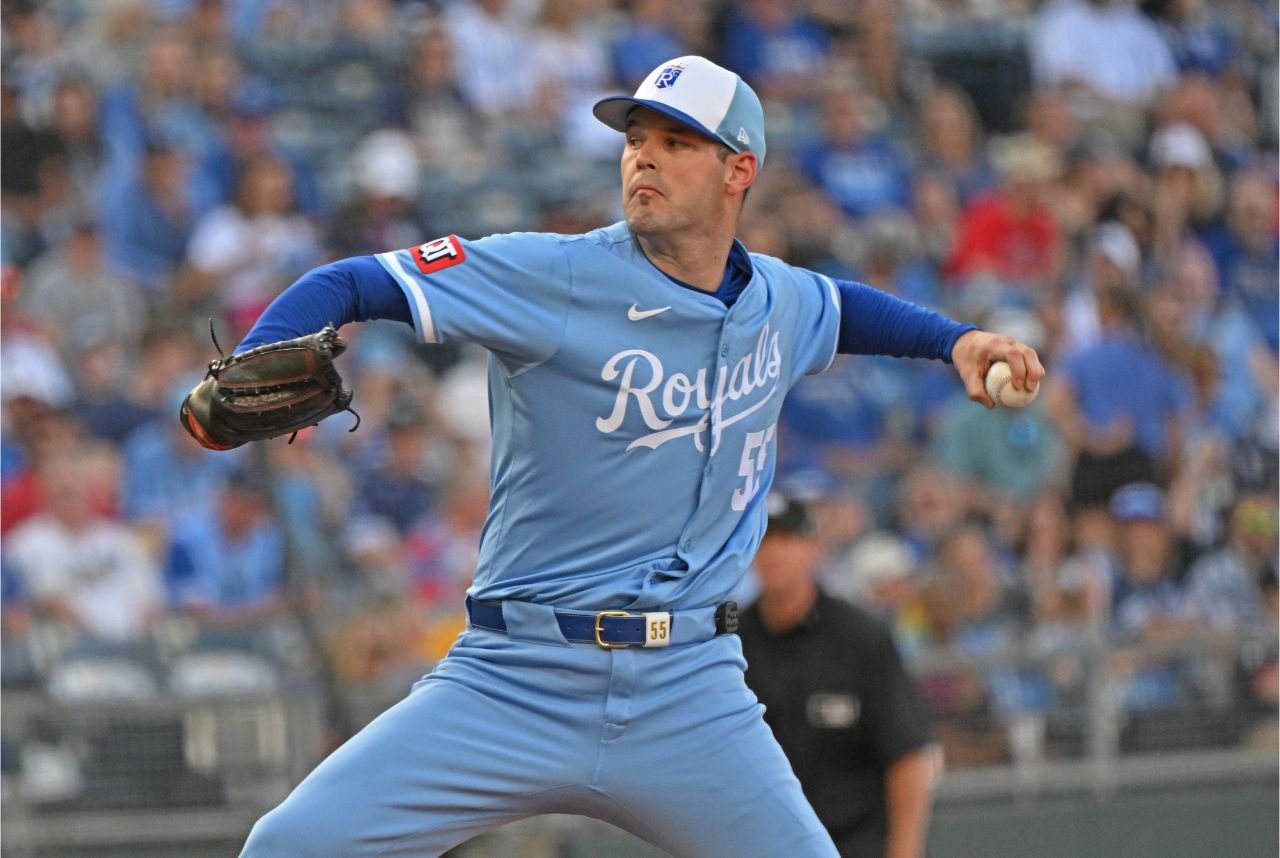 Last weekend, rumors spread from the Boston Globe that the Royals may be interested in trading away Cole Ragans to the Red Sox for the right package. Royals GM JJ Picollo didn't mention Ragans specifically in his interview with Alex Speier of the Globe. Still, he did hint that they would be open to trading an established pitcher away for a lineup-changing outfielder. With big salary amounts owed to Michael Wacha and Seth Lugo, and injury concerns with Kris Bubic, Ragans may be the Royals' best starting pitching trade asset. The former Rangers first-round pick finished fourth in the AL Cy Young race in 2024 after posting a 3.14 ERA and 1.14 WHIP in 32 starts and 186.1 IP. Last year was a bit of a down year, as he struggled with injuries, posting a 4.67 ERA and 1.18 WHIP in 61.2 IP. However, his xERA was 2.67, which ranked in the Top 4% of the league. Furthermore, he posted a 38.1% K rate and a 30.4% K-BB%, and showcased stellar stuff and strike metrics in his TJ Stats summary. Without a doubt, in terms of stuff, skills, and strikeout ability, Ragans is the most valuable starting pitcher in the Royals' rotation. Additionally, he's cost-controlled, having agreed to a three-year extension last offseason worth $13.25 million total. The deal includes next year and 2027, giving him one year of arbitration eligibility before he hits free agency in 2029, according to Spotrac. Any team that acquires Ragans would not just gain a Cy Young-caliber pitcher but also one with financial predictability, unlike Bubic, who will be a free agent after next season. Thus, the Royals should be expecting a significant trade package in return for Ragans. While the Royals need an outfielder, a one-for-one swap for most outfielders would be a massive overpay by Kansas City. For a small-market franchise with regular playoff aspirations, such a deal could be debilitating to the progress Picollo has made since taking over for Dayton Moore after the 2023 season. What should the Royals be looking for in a deal? Well, let's look at Ragans' value, the Royals' needs, and a couple of theoretical moves that could make sense for Kansas City. What's Ragans' Value on the Trade Market? When looking at Ragans' value, I think two things could be utilized for us as baseball fans: statistics and Baseball Trade Value's "surplus" measurement. In terms of statistics, there's no question that Ragans has become the "ace" of the Royals' rotation, not easy to do given a rotation that includes veterans such as Wacha and Lugo. Since coming over from Texas in 2023 in the Aroldis Chapman trade, Ragans has made 57 starts and pitched 319.2 innings with the Royals. In that sample, he has a 3.32 ERA, a 1.14 WHIP, a 2.79 FIP, an 11.5 K/9, and a 3.60 K/BB ratio. When looking at starting pitchers since July 17th, 2023, Ragans ranks 11th in fWAR (9.2), despite sporting the lowest IP total (314.2 IP) of any starter in the Top-15. Thus, Ragans has certainly put up the metrics to become one of the most valued starting pitching assets on the trade market, beyond Detroit's Tarik Skubal, who's a back-to-back AL Cy Young winner. When it comes to his value on Baseball Trade Values, it's essential to know what is factored into that value, not just for Ragans, but for all Major League players. According to BTV, it is necessary first to calculate the "field value," which includes the following factors: WAR Projections Inflation Years of Control Injury Risk Roster Risk The next factor is salary, which is needed to calculate "surplus" value, defined by BTV as follows: Thus, based on those factors, where does Ragans rank in comparison to other Royals players? According to BTV, Ragans sports the second-highest surplus value with a 79.4 mark. The only one higher is Bobby Witt Jr. with a 200.7 mark. Therefore, the 27-year-old lefty is one of the Royals' most prized assets, in addition to their most prized pitcher on the 40-man roster. What Are the Royals' Needs? The Royals need hitting and help in the outfield, plain and simple. Even in the interview with the Globe, Picollo pointed out that they need to upgrade the corner outfield in 2026, and the Royals would be willing to trade away pitching to accomplish that goal this offseason. However, another area of need for the Royals is to deepen the farm system, especially with the recent graduation of Jac Caglianone and the soon-to-be graduate Carter Jensen. The Royals' system has come a long way under Picollo and new scouting director Brian Bridges. However, for the Royals to be a consistent small-market playoff contender, like Tampa Bay, Cleveland, and Milwaukee, they need to ensure that their farm system isn't left bare at any point. That was a significant reason Moore struggled to keep his job, despite leading the Royals to two pennants and a World Series title during his tenure. The Royals should explore deals not just to acquire an MLB-ready outfielder, but some prospect talent as well, in any possible trade, especially considering the surplus value Ragans holds. Proposed Trade #1: Cole Ragans to Boston for OF Jarren Duran, SP Kyson Witherspoon, and OF Jhostynxon Garcia Duran has been a target for the Royals for a while, as rumors swirled that Kansas City tried to acquire him at the deadline before settling on Mike Yastrzemski (which didn't turn out too badly). Duran proved to be quite valuable for the Red Sox last season, posting a 3.9 fWAR with a 111 wRC+, 16 home runs, and 24 stolen bases in 696 plate appearances. Over the past three years, Duran has accumulated 13.2 fWAR for the Red Sox, which leads all Red Sox players in that time frame, according to Fangraphs. That said, according to BTV, Duran's surplus value is 49.5, significantly lower than Ragans'. A one-for-one trade would not be worth it for Kansas City, based on BTV's model. Therefore, the Red Sox would need to throw in some prospect capital to make the trade a fair one for the Royals. Two prospects that could make sense are Witherspoon and Garcia, a starting pitcher and outfielder, respectively, in the Red Sox farm system. Witherspoon was the Red Sox's top draft pick in the 2025 MLB Draft out of Oklahoma. In his final season with the Sooners, he posted a 2.65 ERA, 1.01 WHIP, 31.8% K rate, and 25.9% K-BB% in 16 starts and 95 IP. Thus, it's no surprise that the Red Sox were willing to give him a $5 million signing bonus at pick No. 15 (which was slightly below slot). Witherspoon did not pitch professionally after being drafted, but he could be an excellent project for the Royals' pitching development team and move quickly through the Royals' farm system in 2026. His BTV surplus value is 17.7. Garcia, known as "The Password" by Red Sox fans due to his hard-to-pronounce first name, is also an intriguing prospect that could give the Royals some depth on the 40-man, which lacks MLB-ready outfielders. The 22-year-old outfielder was mediocre in his initial MLB exposure (82 wRC+ and 55.6% K rate in nine PA), but a glut of outfielders in Boston blocked him. In 489 plate appearances in Triple-A Worcester, he slashed .267/.340/.470 with a 116 wRC+, 21 HR, 75 RBI, and seven stolen bases. When looking at his TJ Stats summary from Triple-A, Garcia showcased excellent barrel rates and solid exit velocity on batted balls. However, like many Royals hitters in their system, he struggled with plate discipline, whiffs, and strikeouts. Adding Duran, Witherspoon, and Garcia together yields a total surplus value of 75, making it a fair trade by BTV's standards, as shown below. Now, I'm not sure if the Red Sox would give up a recently drafted starting pitcher with considerable upside and a flawed but still talented outfielder who is just 23, along with Duran. That said, if the Royals are willing to trade their second-most valuable asset in their organization, they need to make sure they get a considerably fair return in the process. If they can't, they should continue to hold onto Ragans and look for other options. Proposed Trade #2: Ragans to San Diego for OF Fernando Tatis Jr. Remember how I talked about how the Royals should look to kill two birds with one stone by getting an established outfielder and prospects in return for Ragans? Well, this trade blows that idea out of the water. That said, if the Royals can only get a one-for-one deal with Ragans, they might as well shoot high and acquire Tatis in an agreement that BTV's model accepted. Surprisingly, Tatis may be more available than some baseball fans would like to think. His BTV surplus value is 83.3, slightly higher than Ragans'. However, he also commands a super long-term deal, one of many that San Diego has on their payroll (Manny Machado and Xander Bogaerts being the others). He also only posted an .807 OPS, down from his .833 mark in 2024. Thus, the Padres may view a possible Ragans-Tatis trade as an avenue to improve their starting pitching (they lack depth after No. 1 starter Nick Pivetta, especially after Dylan Cease signed with the Blue Jays this offseason) while shedding some short-term payroll. Still, he posted a 6.1 fWAR in 2025, and his Statcast percentiles showed that Tatis is one of the most naturally talented hitters in the league. Now, the Royals would like to trade Ragans for Tatis in an instant. However, it may be a tougher deal to stomach for Padres GM AJ Preller, especially since Tatis is the face of the Padres franchise. While Ragans would immediately improve the San Diego rotation, fans would likely revolt in response to losing a player who has been so key to the Padres' turnaround after years of mediocrity and inconsistency. Nonetheless, it's an avenue to explore, as a 1-for-1 trade of Ragans for Tatis would at least check a lot of boxes for both teams in terms of on-field production and needs.
 -
On Tuesday afternoon, MLB announced the order of the two Competitive Balance rounds of the 2026 MLB Draft, as highlighted by Sam Dykstra of MLB Pipeline on Bluesky. For those unaware, the Competitive Balance rounds in the MLB Draft can be described as follows, according to MLB.com's Joe Trezza: The Royals rank 28th in MLB franchise value, ahead of only the Tampa Bay Rays and Miami Marlins, according to Forbes. Thus, Kansas City not only tends to receive draft picks in the Competitive Balance round, but it also tends to receive an excellent draft position in those rounds. Here's a layout of the two rounds, according to Trezza. The Royals draft behind only the Guardians, who rank 25th in Forbes' franchise valuations. Competitive Balance round picks are the only draft picks that are allowed to be traded by MLB teams. In 2022, the Royals utilized their CB pick in a deal with Atlanta that netted them outfielder Drew Waters, pitcher Andrew Hoffmann, and infielder CJ Alexander. In 2024, they acquired reliever Hunter Harvey from the Nationals in a trade package that included their CB pick and third-base prospect Cayden Wallace. While the Competitive Balance rounds are set, the whole draft order will not be set until December 9th, when the MLB Draft Lottery takes place, during the Winter Meetings. The Royals have 0.84% odds to win the top pick in the 2026 MLB Draft, according to Trezza. The 2026 MLB Draft is set to take place July 12th-13th in Philadelphia, home of the All-Star game next season. View full rumor
-
 On Tuesday afternoon, MLB announced the order of the two Competitive Balance rounds of the 2026 MLB Draft, as highlighted by Sam Dykstra of MLB Pipeline on Bluesky. For those unaware, the Competitive Balance rounds in the MLB Draft can be described as follows, according to MLB.com's Joe Trezza: The Royals rank 28th in MLB franchise value, ahead of only the Tampa Bay Rays and Miami Marlins, according to Forbes. Thus, Kansas City not only tends to receive draft picks in the Competitive Balance round, but it also tends to receive an excellent draft position in those rounds. Here's a layout of the two rounds, according to Trezza. The Royals draft behind only the Guardians, who rank 25th in Forbes' franchise valuations. Competitive Balance round picks are the only draft picks that are allowed to be traded by MLB teams. In 2022, the Royals utilized their CB pick in a deal with Atlanta that netted them outfielder Drew Waters, pitcher Andrew Hoffmann, and infielder CJ Alexander. In 2024, they acquired reliever Hunter Harvey from the Nationals in a trade package that included their CB pick and third-base prospect Cayden Wallace. While the Competitive Balance rounds are set, the whole draft order will not be set until December 9th, when the MLB Draft Lottery takes place, during the Winter Meetings. The Royals have 0.84% odds to win the top pick in the 2026 MLB Draft, according to Trezza. The 2026 MLB Draft is set to take place July 12th-13th in Philadelphia, home of the All-Star game next season.
 -
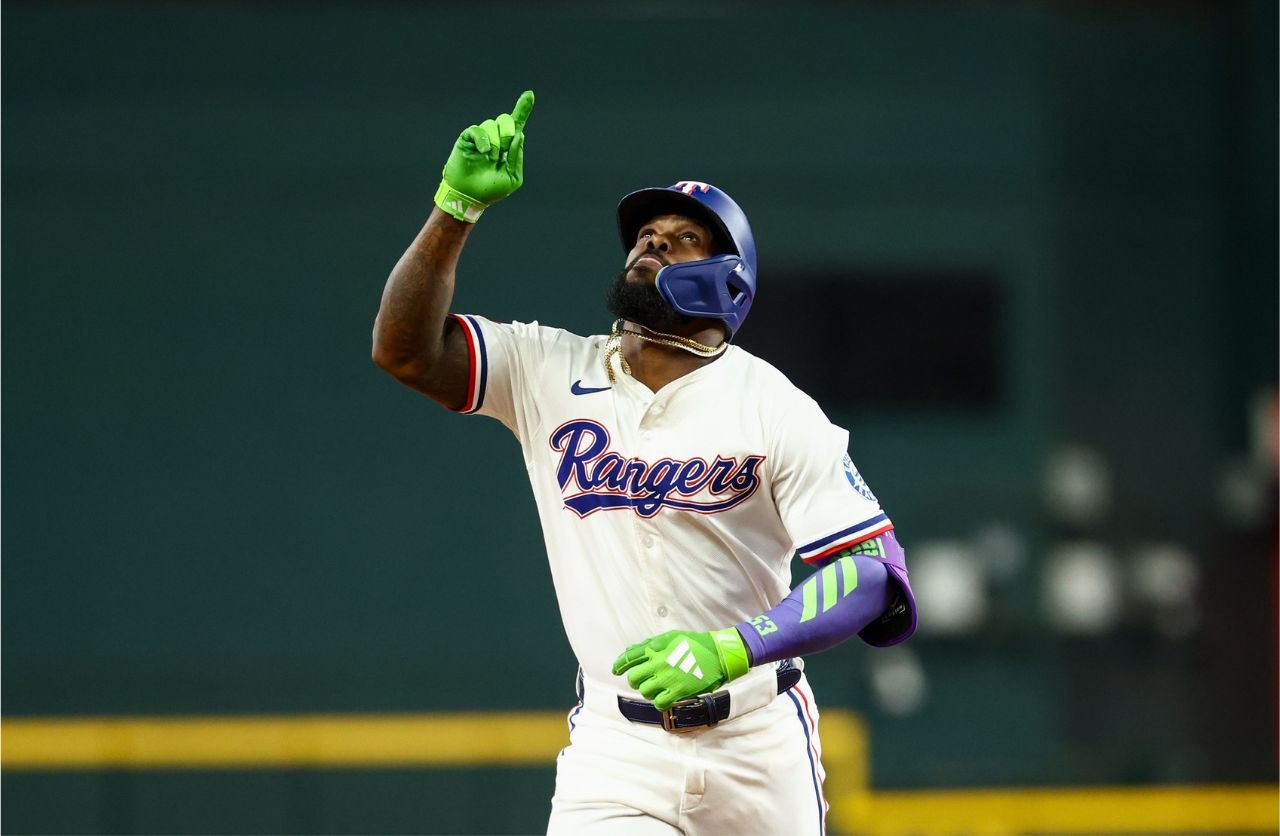 The Kansas City Royals need help in the outfield if they want to return to the postseason in 2026. According to Fangraphs, the Royals outfield ranked last in wRC+ (73) and fWAR (-1.1). The trade deadline acquisition of Mike Yastrzemski helped boost them in the last two months of play, as the former San Francisco Giant helped them rank eighth in fWAR (8.7) and 11th in wRC+ (107). However, Yastrzemski is a free agent, and it seems likely that many teams will compete to sign him this offseason, which could boost his price for 2026 and beyond. The Royals desperately need someone who can provide pop in the lineup, as well as hold his own defensively at either corner outfield position. According to Roster Resource, John Rave and Jac Caglianone are projected to be the 2026 Opening Day left and right fielders, respectively. While both could see some improvement in 2026 after inconsistent 2025 rookie campaigns, it will be difficult for Kansas City to return to the postseason if those two are regular outfielders. An option for the Royals that wouldn't require a trade is Adolis Garcia, formerly of the Texas Rangers. In a cost-cutting move, Texas non-tendered the former ALCS MVP and two-time All-Star at the non-tender deadline. Garcia is far from a perfect option for the Royals in 2026. After an All-Star campaign in 2023 in which he hit 39 home runs, posted a 128 wRC+, and accumulated a 4.9 fWAR, the 32-year-old outfielder has accumulated a 0.6 fWAR over the past two seasons combined. He also saw his home run total drop from 25 in 2024 to 19 in 2025 and his wRC+ go from 94 in 2024 to 83 in 2025. Thus, it makes sense that the Rangers would non-tender him, especially with him entering his final season of arbitration eligibility and looking to command a figure in the $12.5 million range, according to Spotrac. Acquiring Garcia wouldn't be a cheap option for this Royals front office. In addition, there's no guarantee he would be a long-term one, as he could leave in free agency after 2026 if Kansas City doesn't offer him a long-term deal. However, for a team starving for pop and offense from the outfield, the Cuban-born outfielder and former Cardinals prospect checks a lot of boxes for the Royals next season. Garcia Still Presents A Solid Batted-Ball Profile It was definitely a down season for Garcia across the board in most of his surface-level numbers, which could make Royals fans hesitant about acquiring him. In 547 plate appearances, he slashed .227/.271/.394 with a .665 OPS. In addition to only hitting 19 home runs (six fewer than his total in 2024), he also posted a .286 wOBA and .168 ISO. All those marks were career-worst numbers for Garcia in a full season (he only played in 24 games combined in 2019 and 2020 with the Cardinals and Rangers, respectively). However, his Statcast metrics paint a slightly different story. While the results weren't there, Garcia still hit the ball hard in 2025, posting positive metrics in exit velocity, barrel, and hard-hit rate categories, according to TJ Stats. Garcia ranked in the 90th percentile in average EV, 75th percentile in barrel% and Hard-Hit%, 74th percentile in Max EV, and 63rd percentile in 90th EV. Those are batted-ball metrics that are sustainable, even in a more cavernous home ballpark like Kauffman Stadium. In fact, it seemed like that dropoff for Garcia wouldn't be too bad in the move to Kansas City, as illustrated in his 2025 spray chart, adjusted to Kauffman Stadium dimensions. Now, there are some concerning trends in his Statcast summary profile, especially regarding plate discipline. His O-Swing% (chase) ranked in the 10th percentile, his Z-Contact% ranked in the 9th percentile, his walk rate ranked in the 11th percentile, his whiff rate ranked in the 15th percentile, and his strikeout rate ranked in the 28th percentile. Thus, he sported a free-swinging approach, which contributed to overall struggles in his last season in Texas. It is interesting, though, to see how those plate discipline percentiles fared in 2024, which was a slightly better season for Garcia (25 home runs; 94 wRC+). Let's take a look below, via TJ Stats. The plate discipline metrics were actually slightly worse overall, with whiff and Z-Contact rates even lower than his 2025 marks. Conversely, his exit velocity and batted-ball percentile rankings were better, which explains why he saw more power production in 2024 despite hitting for a lower batting average (.224). Thus, Garcia is who he is as a hitter, which is a power hitter with swing-and-miss issues. Now, as a centerpiece of a team's offense, which he was seen to be in Texas? That's obviously not going to work. However, as a complementary middle-of-the-order bat? Garcia's offensive profile may be more tolerable for GM JJ Picollo and manager Matt Quatraro. How Does Garcia Compare to Other Royals Outfielders Last Season? When evaluating Garcia compared to other Royals outfielders from last season, it seemed logical to focus on four primary metrics: average EV, barrel rate, hard-hit rate, and xwOBA. Those are metrics that can indicate a hitter's power skills, as well as give a better idea of their outlook for the upcoming season offensively. Here's a table with those metrics, organized by xwOBA, including all Royals corner outfielders with at least 50 plate appearances, as well as Garcia. For Yastrzemski, Randal Grichuk, and Adam Frazier, I included their full-season numbers, not just their Royals-specific metrics. When looking at xwOBA, Grichuk and Yastrzemski led the Royals' corner outfielders in that category, both with .327 marks. Caglianone finished third with a .318 mark. In fourth? That would be Garcia with a .304 mark, just three points ahead of Rave. In other categories on the table, Garcia was more impressive. He was second in average EV and hard-hit rate and third in barrel rate. Thus, from a power perspective, the former Rangers outfielder offers more insurance, especially since he had four-straight seasons of 25+ home runs from 2021 to 2024. Another interesting aspect of Garcia's profile is that he was solid defensively in 2025, especially compared to other Royals corner outfielders. As seen in the table below, he outperformed many Royals outfielders defensively last season, especially in the Defensive Runs Saved (DRS) category. Garcia's 16 DRS was 11 runs better than Yasstrzemski, the Royals' second-best defensive outfielder in that category a season ago. The former Ranger lagged behind Rave in Outs Above Average (OAA) and Fielding Run Value (FRV), as Rave led the Royals with three in each category. That said, he still finished ahead of all other Royals in OAA and FRV beyond Rave. Thus, the Royals would not just be getting a player with some power upside, but also one who would be a clear defensive upgrade over other options the Royals trotted out in the corner outfield spots a season ago. What's the Challenge With Signing Garcia? The issue with acquiring Garcia is that he won't come to Kansas City easily or cheaply. After the move, many other team sites theorized on social media about how Garcia would fit their rosters for the upcoming season. Thus, like Yastrzemski, the Royals may need to overpay to get a player of Garcia's caliber for 2026. However, at 32 years old, is Garcia worth such a firm financial commitment, even if he wouldn't cost the Royals any prospect capital? That is a tricky question to answer for now. It does seem like the Royals value their prospects more than before, especially as they're rebuilding the Minor League talent pool under scouting director Brian Bridges, who took over after the 2023 MLB Draft. And yet, it seems like Picollo isn't averse to trading from an area of strength, as illustrated by the recent Cole Ragans rumors that emerged over the weekend. Furthermore, the Royals do not want to sign a free agent, only to see them fall flat in their move to Kansas City. That was the case with Hunter Renfroe, who was seen as an "affordable" upgrade that didn't cost them any prospect capital, but ended up posting a -0.8 fWAR in 155 games with the Royals. The Royals can't "swing-and-miss" with their outfield upgrade like Renfroe or even Jonathan India last season, who failed to gain traction as a utility player in Kansas City. For the Royals to get back to the playoffs, they need to find someone who will give the production they desperately need in the outfield while not being a complete drain defensively, especially with Caglianone still working on things in the outfield (as Cags would most likely be the third outfielder). Is Garcia the answer? He checks a lot of boxes. That said, he'll be 33 next year, doesn't have much team control, and could cost a lot to acquire. Are those risks Picollo is willing to take? I guess Royals fans will have to wait and see.
 -
Garcia's 16 DRS was 11 runs better than Yasstrzemski, the Royals' second-best defensive outfielder in that category a season ago. The former Ranger lagged behind Rave in Outs Above Average (OAA) and Fielding Run Value (FRV), as Rave led the Royals with three in each category. That said, he still finished ahead of all other Royals in OAA and FRV beyond Rave. Thus, the Royals would not just be getting a player with some power upside, but also one who would be a clear defensive upgrade over other options the Royals trotted out in the corner outfield spots a season ago. What's the Challenge With Signing Garcia? The issue with acquiring Garcia is that he won't come to Kansas City easily or cheaply. After the move, many other team sites theorized on social media about how Garcia would fit their rosters for the upcoming season. Thus, like Yastrzemski, the Royals may need to overpay to get a player of Garcia's caliber for 2026. However, at 32 years old, is Garcia worth such a firm financial commitment, even if he wouldn't cost the Royals any prospect capital? That is a tricky question to answer for now. It does seem like the Royals value their prospects more than before, especially as they're rebuilding the Minor League talent pool under scouting director Brian Bridges, who took over after the 2023 MLB Draft. And yet, it seems like Picollo isn't averse to trading from an area of strength, as illustrated by the recent Cole Ragans rumors that emerged over the weekend. Furthermore, the Royals do not want to sign a free agent, only to see them fall flat in their move to Kansas City. That was the case with Hunter Renfroe, who was seen as an "affordable" upgrade that didn't cost them any prospect capital, but ended up posting a -0.8 fWAR in 155 games with the Royals. The Royals can't "swing-and-miss" with their outfield upgrade like Renfroe or even Jonathan India last season, who failed to gain traction as a utility player in Kansas City. For the Royals to get back to the playoffs, they need to find someone who will give the production they desperately need in the outfield while not being a complete drain defensively, especially with Caglianone still working on things in the outfield (as Cags would most likely be the third outfielder). Is Garcia the answer? He checks a lot of boxes. That said, he'll be 33 next year, doesn't have much team control, and could cost a lot to acquire. Are those risks Picollo is willing to take? I guess Royals fans will have to wait and see. View full article
-
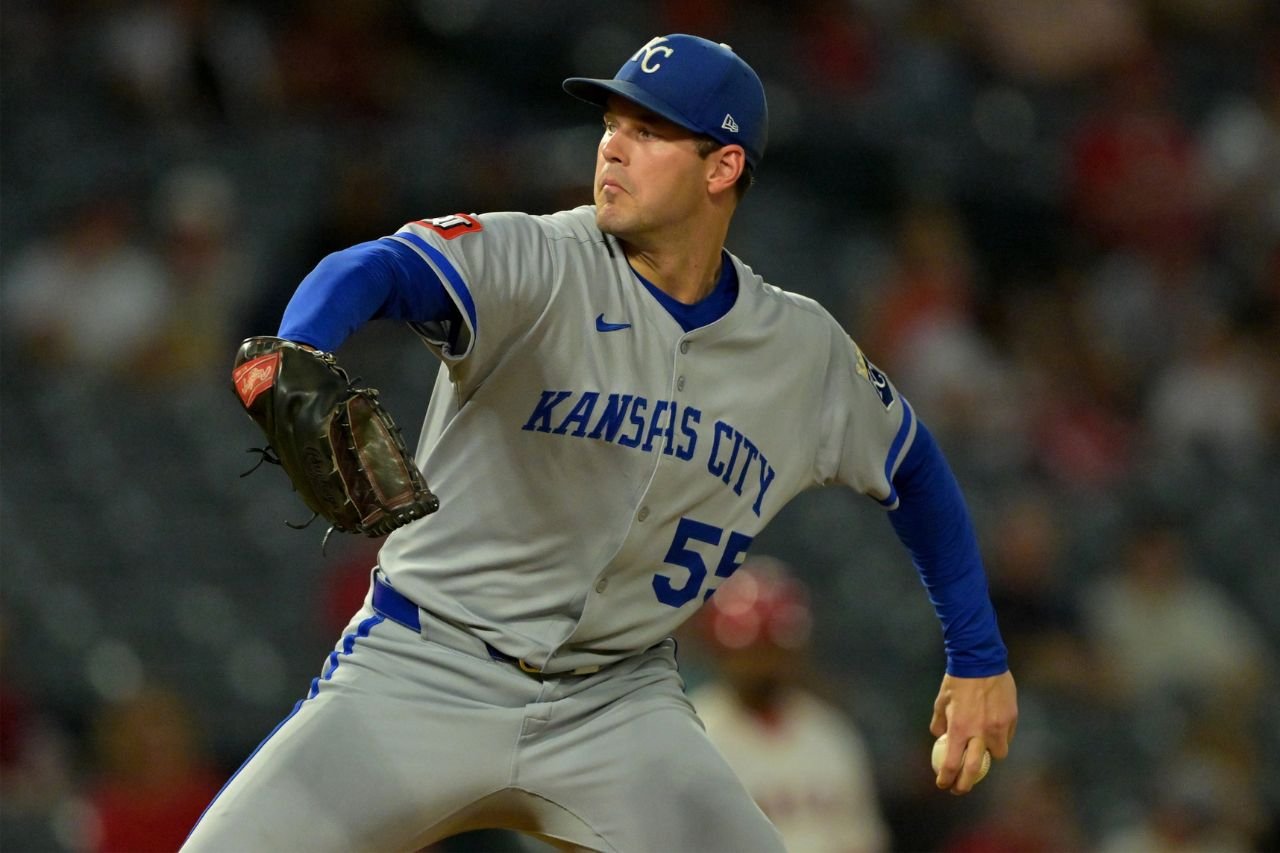 On Saturday, Boston Globe reporter Alex Speier reported that the Royals may be open to trading Cole Ragans for a package involving a Major League outfielder, with Jarren Duran being floated as the centerpiece of such a trade. Here's a snippet from Speier's piece that discusses trade interest between the Red Sox and Royals and what a possible Ragans trade could look like, courtesy of Red Sox Stats on Twitter. We have talked about Duran as a trade possibility for the Royals before on Royals Keep. He would certainly boost a Kansas City outfield that rated as the worst in baseball in both fWAR (-1.4) and wRC+ (70). Duran had 3.9 fWAR and 111 wRC+ in 696 plate appearances, which led all Red Sox outfielders. However, this is the first time the mention of Ragans has been floated in trade rumors this offseason (Kris Bubic and Noah Cameron have been mentioned as trade candidates). Ragans was hurt last season, making only 13 starts and pitching 61.2 innings for Kansas City. He also posted a 4.67 ERA, his worst mark since joining the Royals in 2023 at the Trade Deadline. However, the 27-year-old lefty still had a 38.1% K rate and a 30.4% K-BB%, the latter the third-best rate among pitchers with 60 or more innings. As a result, Ragans has been identified as a bounce-back candidate for 2026 by many experts, especially if he can return to his 2024 form, which saw him post a 3.14 ERA and 4.9 fWAR in 186.1 IP. The Royals signed Ragans to a three-year, $13.25 million extension last offseason. While the deal gives him and the Royals some salary stability from 2025 to 2027, he will still have one more year of arbitration in 2028 before becoming a free agent in 2029. If Ragans rebounds to his 2024 self, he could be due for a big payday when he becomes a free agent, which may be difficult for the Royals after committing money to Michael Wacha and Seth Lugo over the past calendar year. The Red Sox recently acquired Sonny Gray from the Cardinals, which lessens the need for an immediate trade to improve the rotation. However, Boston still needs help at the bottom of the rotation, especially if it wants to compete in a division with the Yankees and Blue Jays. Roster Resource projects Kutter Crawford and Patrick Sandoval to be in the rotation for 2026, and neither pitched for the Red Sox last year due to injuries. Photo Credit: © Jayne Kamin-Oncea-Imagn Images

