


Kevin O'Brien
-
Posts
858 -
Joined
-
Last visited
-
Days Won
41
Content Type
Profiles
Forums
Blogs
Events
News
2026 Kansas City Royals Top Prospects Ranking
Kansas City Royals Videos
Kansas City Royals Free Agent & Trade Rumors, Notes, & Tidbits
Guides & Resources
The Kansas City Royals Players Project
2026 Kansas City Royals Draft Tracker: Picks & Bonuses
Store
Downloads
Gallery
Everything posted by Kevin O'Brien
-
 Image courtesy of Gregory Fisher-Imagn Images It is evident that the New York Yankees desperately need starting pitching for the upcoming 2026 season. Unfortunately, the opportunity to get a "big time" starter seems to be dwindling for the Yankees this offseason. First, Dylan Cease signed a massive free-agent deal with the Toronto Blue Jays, which took a possible target off the market early in the offseason. Furthermore, Edward Cabrera was recently traded from the Miami Marlins to the Chicago Cubs. Thus, there aren't a lot of suitors remaining, though it does appear that the Yankees may make a push for Milwaukee Brewers ace Freddy Peralta (although they won't be the lone suitors). That said, if the Yankees can't acquire Peralta or another big-name pitcher via a trade, then Kansas City could make sense for them as a trade partner. The Royals are flush with starting pitching, and the Yankees have some bats that could round out and boost the Kansas City lineup in both the short and long term. Hence, let's take a look at three trade proposals that could make sense for both sides. Note: I used Baseball Trade Values' Trade Simulator to determine values for possible trades between both teams, and TJ Stats for stuff metrics and summary graphics. Noah Cameron and John Rave for Jasson Dominguez and Camilo Doval I don't think the Royals will trade Cameron because he has tons of years of control (six) and he's a local product who hails from St. Joseph, Missouri. I think Royals fans would have a tremendous outcry if they traded a local kid who earned Royals Pitcher of the Year honors and posted a 2.99 ERA in 138.1 IP last year. However, if the Royals were to trade Cameron, it would need to be a deal where it "felt" like the Yankees overpaid for the St. Joe product. This suggested deal does just that. The 22-year-old outfielder seemed untouchable a season ago, but he may be more on the block this season, especially if the Yankees are able to bring back Cody Bellinger. Dominguez had an underwhelming season last year, posting a 106 wRC+ and 0.9 fWAR, with his defense lagging significantly behind his bat (-10 OAA). However, the former New York top prospect hits the ball hard, and with the right tweaks, he could provide the punch they may need in left field or designated hitter. A smaller-market environment could do wonders for Dominguez, as he could turn things around with the Royals, much like Melky Cabrera did when he came over to Kansas City in 2011 after spending most of his career in New York previously. In addition to Dominguez, the Royals would also acquire Doval, who used to close out games for the San Francisco Giants. The 28-year-old righty posted a 3.58 ERA and 3.47 FIP in 65.1 IP last year, which aren't exactly "eye-popping" numbers. That said, he posted an overall TJ Stuff+ of 105, a 29.8% chase rate, and a 28.4% whiff rate. Those are the kind of numbers the Royals are looking for from possible relief targets. The Royals would simply need Doval to be a middle-innings, medium-leverage reliever, not a setup man or closer (or at least not right away). Doval's presence should add even more depth to an already strong bullpen that already got stronger this offseason with the additions of Alex Lange, Matt Strahm, and Nick Mears. Getting a high-upside outfielder and a solid reliever would help lessen the blow of losing Cameron. As for Rave, he would help round out the deal, giving the Yankees a depth outfielder whose left-handed swing could profile decently in the hitter-friendly Yankee Stadium. Kris Bubic for Spencer Jones BTV seems to believe that a Bubic-Jones swap would be equal value, which intrigues me about this possibility. On one hand, I get why this could never happen, especially since Jones is three years younger and has many more years of team control than Bubic, who will be a free agent after this offseason. That said, what if Bubic and the Yankees were willing to commit to a contract extension after he was traded to New York? Tyler Glasnow did this when he was traded from Tampa Bay to the Dodgers. That scenario might make the Yankees more willing to part ways with Jones in a deal. The Royals certainly would get a high-upside bat in Jones, much like they would with Dominguez. However, Jones had no MLB experience (unlike Dominguez), and the 25-year-old outfielder is a polarizing prospect due to his wonky Statcast profile from Triple-A, as illustrated in the TJ Stats summary below. Jones thrives in average EV (100th percentile), barrel rate (99th percentile), hard-hit rate (98th percentile), and LA Sweet-Spot% (94th percentile). Conversely, he's extremely poor when it comes to contact and plate discipline. He ranks in the 6th percentile in O-Swing%, and 1st percentile in Z-Contact%, whiff%, and K%. Jones could be a 30+ HR at the MLB level. That said, he also could be a hitter who barely hits over the Mendoza line (i.e., a .200 batting average) in his career as well. With another free-swinging power outfielder on the roster in Jac Caglianone, would the Royals want a guy like Jones, who may not have a set spot in this 2026 lineup? That may be hard to believe, especially since the organization is focused on acquiring hitters with strong plate discipline profiles (which Jones DOES NOT have). Still, Jones is an intriguing, high-upside prospect who may be worth the risk for the Royals, especially if it only costs Bubic, who has struggled to stay healthy in Kansas City and is likely gone after 2026. Stephen Kolek for Oswaldo Cabrera and Paul Blackburn Kolek had a really good Royals debut after he came over from San Diego at the Trade Deadline. In five starts, he posted a 1.91 ERA and 2.71 FIP in 33.1 IP. That performance helped him earn Royals Pitcher of the Month honors in September. However, with the Royals' rotation loaded as is, it's possible that Kolek may not make the Opening Day roster. Meanwhile, Ryan Yarbrough is projected to be the Yankees' No. 5 starter on Opening Day, according to Roster Resource. Safe to say, not only does Kolek provide more value immediately than Yarbrough, but the 28-year-old righty also holds more long-term value and club control (four years). A trade that could make sense for the Royals to acquire utility player Cabrera and reliever Blackburn in exchange for Kolek. Cabrera isn't a high-profile player, as he has a career 82 wRC+ and has accumulated 1.5 fWAR in 302 career games with the Yankees. However, he can play multiple positions in the field, giving him the utility value that manager Matt Quatraro likes to utilize off the bench. Cabrera also demonstrates a pretty solid contact and discipline profile at the plate, even if there isn't a lot of pop (as illustrated in his TJ Stats Summary below). Cabrera could make sense if the Royals part ways with Michael Massey this offseason, who could be traded for a much-needed left-handed reliever (I suggested Tampa Bay's Garrett Cleavinger as an option in my last post). He would essentially fit into that Massey role, with even more positional versatility. He's also a native Venezuelan who likely would mesh with fellow countrymen Salvador Perez and Maikel Garcia. As for Blackburn, his numbers at the surface level don't look good. In 39 IP with the Mets and Yankees last year, he posted a 6.23 ERA and 1.50 FIP. However, his FIP was much better at 4.39, and he limited free passes on the basepaths with a 6.9% BB% and 12.6% K-BB%. He also showed a strong ability to induce chase last year, as well as minimize productive contact, which can be seen in his TJ Stats Summary below. The stuff overall is meh with a 98 TJ Stuff+. That said, he seems to have a great cutter (105 TJ Stuff+) as well as an above-average sweeper (103) and curveball (102). Blackburn seems like the kind of pitcher who could thrive under pitching coach Brian Sweeney and find a place as a sneaky effective middle-innings reliever in the mold of Taylor Clarke a season ago. Cabrera and Blackburn aren't as sexy a trade package as the other two in terms of return. However, they address some immediate needs and provide a good floor, even though the ceilings aren't as high as those in Dominguez's or Jones's. View full article
 -
Three Royals-Yankees Trade Proposals That Could Make Sense
Kevin O'Brien posted an article in Royals
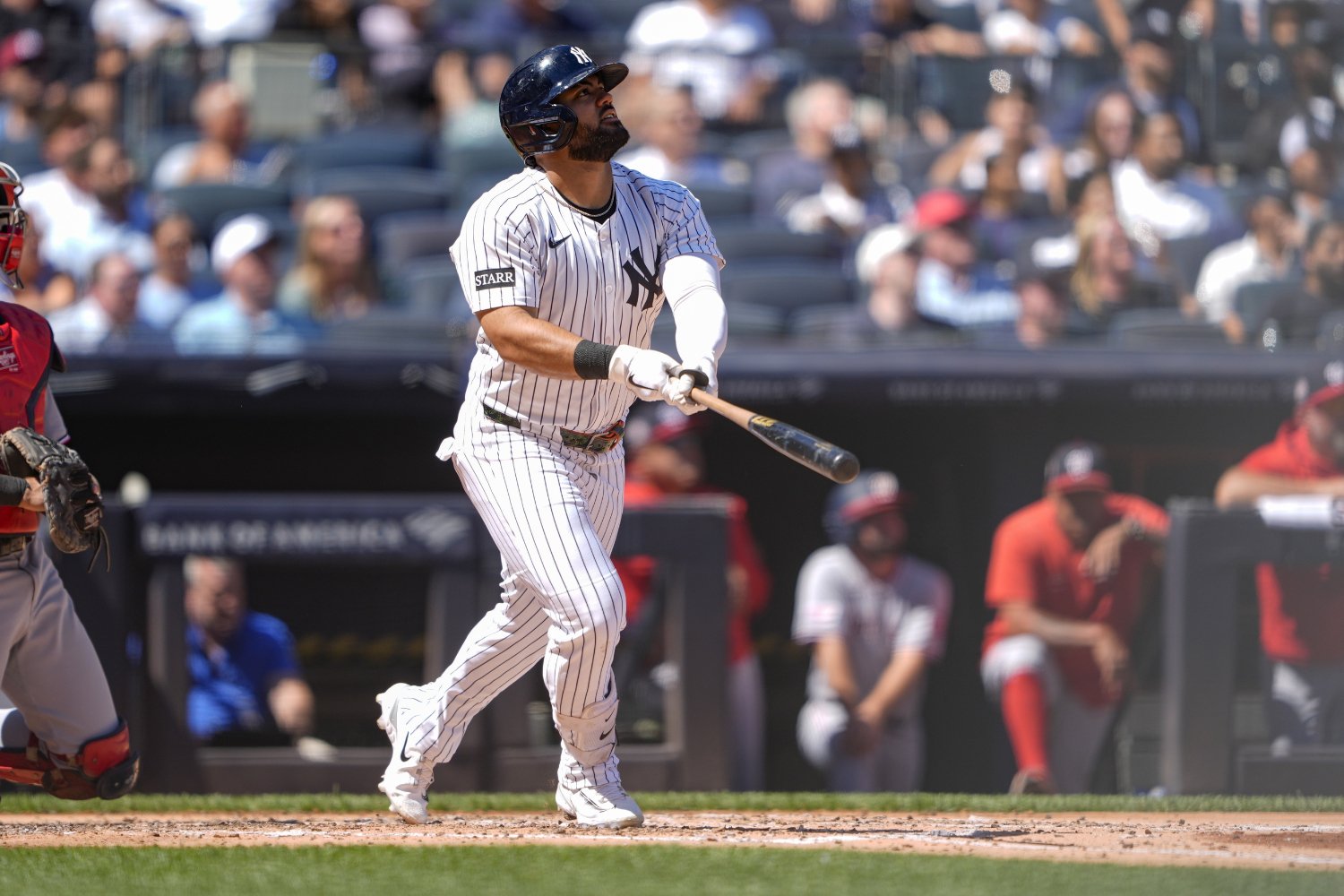 It is evident that the New York Yankees desperately need starting pitching for the upcoming 2026 season. Unfortunately, the opportunity to get a "big time" starter seems to be dwindling for the Yankees this offseason. First, Dylan Cease signed a massive free-agent deal with the Toronto Blue Jays, which took a possible target off the market early in the offseason. Furthermore, Edward Cabrera was recently traded from the Miami Marlins to the Chicago Cubs. Thus, there aren't a lot of suitors remaining, though it does appear that the Yankees may make a push for Milwaukee Brewers ace Freddy Peralta (although they won't be the lone suitors). That said, if the Yankees can't acquire Peralta or another big-name pitcher via a trade, then Kansas City could make sense for them as a trade partner. The Royals are flush with starting pitching, and the Yankees have some bats that could round out and boost the Kansas City lineup in both the short and long term. Hence, let's take a look at three trade proposals that could make sense for both sides. Note: I used Baseball Trade Values' Trade Simulator to determine values for possible trades between both teams, and TJ Stats for stuff metrics and summary graphics. Noah Cameron and John Rave for Jasson Dominguez and Camilo Doval I don't think the Royals will trade Cameron because he has tons of years of control (six) and he's a local product who hails from St. Joseph, Missouri. I think Royals fans would have a tremendous outcry if they traded a local kid who earned Royals Pitcher of the Year honors and posted a 2.99 ERA in 138.1 IP last year. However, if the Royals were to trade Cameron, it would need to be a deal where it "felt" like the Yankees overpaid for the St. Joe product. This suggested deal does just that. The 22-year-old outfielder seemed untouchable a season ago, but he may be more on the block this season, especially if the Yankees are able to bring back Cody Bellinger. Dominguez had an underwhelming season last year, posting a 106 wRC+ and 0.9 fWAR, with his defense lagging significantly behind his bat (-10 OAA). However, the former New York top prospect hits the ball hard, and with the right tweaks, he could provide the punch they may need in left field or designated hitter. A smaller-market environment could do wonders for Dominguez, as he could turn things around with the Royals, much like Melky Cabrera did when he came over to Kansas City in 2011 after spending most of his career in New York previously. In addition to Dominguez, the Royals would also acquire Doval, who used to close out games for the San Francisco Giants. The 28-year-old righty posted a 3.58 ERA and 3.47 FIP in 65.1 IP last year, which aren't exactly "eye-popping" numbers. That said, he posted an overall TJ Stuff+ of 105, a 29.8% chase rate, and a 28.4% whiff rate. Those are the kind of numbers the Royals are looking for from possible relief targets. The Royals would simply need Doval to be a middle-innings, medium-leverage reliever, not a setup man or closer (or at least not right away). Doval's presence should add even more depth to an already strong bullpen that already got stronger this offseason with the additions of Alex Lange, Matt Strahm, and Nick Mears. Getting a high-upside outfielder and a solid reliever would help lessen the blow of losing Cameron. As for Rave, he would help round out the deal, giving the Yankees a depth outfielder whose left-handed swing could profile decently in the hitter-friendly Yankee Stadium. Kris Bubic for Spencer Jones BTV seems to believe that a Bubic-Jones swap would be equal value, which intrigues me about this possibility. On one hand, I get why this could never happen, especially since Jones is three years younger and has many more years of team control than Bubic, who will be a free agent after this offseason. That said, what if Bubic and the Yankees were willing to commit to a contract extension after he was traded to New York? Tyler Glasnow did this when he was traded from Tampa Bay to the Dodgers. That scenario might make the Yankees more willing to part ways with Jones in a deal. The Royals certainly would get a high-upside bat in Jones, much like they would with Dominguez. However, Jones had no MLB experience (unlike Dominguez), and the 25-year-old outfielder is a polarizing prospect due to his wonky Statcast profile from Triple-A, as illustrated in the TJ Stats summary below. Jones thrives in average EV (100th percentile), barrel rate (99th percentile), hard-hit rate (98th percentile), and LA Sweet-Spot% (94th percentile). Conversely, he's extremely poor when it comes to contact and plate discipline. He ranks in the 6th percentile in O-Swing%, and 1st percentile in Z-Contact%, whiff%, and K%. Jones could be a 30+ HR at the MLB level. That said, he also could be a hitter who barely hits over the Mendoza line (i.e., a .200 batting average) in his career as well. With another free-swinging power outfielder on the roster in Jac Caglianone, would the Royals want a guy like Jones, who may not have a set spot in this 2026 lineup? That may be hard to believe, especially since the organization is focused on acquiring hitters with strong plate discipline profiles (which Jones DOES NOT have). Still, Jones is an intriguing, high-upside prospect who may be worth the risk for the Royals, especially if it only costs Bubic, who has struggled to stay healthy in Kansas City and is likely gone after 2026. Stephen Kolek for Oswaldo Cabrera and Paul Blackburn Kolek had a really good Royals debut after he came over from San Diego at the Trade Deadline. In five starts, he posted a 1.91 ERA and 2.71 FIP in 33.1 IP. That performance helped him earn Royals Pitcher of the Month honors in September. However, with the Royals' rotation loaded as is, it's possible that Kolek may not make the Opening Day roster. Meanwhile, Ryan Yarbrough is projected to be the Yankees' No. 5 starter on Opening Day, according to Roster Resource. Safe to say, not only does Kolek provide more value immediately than Yarbrough, but the 28-year-old righty also holds more long-term value and club control (four years). A trade that could make sense for the Royals to acquire utility player Cabrera and reliever Blackburn in exchange for Kolek. Cabrera isn't a high-profile player, as he has a career 82 wRC+ and has accumulated 1.5 fWAR in 302 career games with the Yankees. However, he can play multiple positions in the field, giving him the utility value that manager Matt Quatraro likes to utilize off the bench. Cabrera also demonstrates a pretty solid contact and discipline profile at the plate, even if there isn't a lot of pop (as illustrated in his TJ Stats Summary below). Cabrera could make sense if the Royals part ways with Michael Massey this offseason, who could be traded for a much-needed left-handed reliever (I suggested Tampa Bay's Garrett Cleavinger as an option in my last post). He would essentially fit into that Massey role, with even more positional versatility. He's also a native Venezuelan who likely would mesh with fellow countrymen Salvador Perez and Maikel Garcia. As for Blackburn, his numbers at the surface level don't look good. In 39 IP with the Mets and Yankees last year, he posted a 6.23 ERA and 1.50 FIP. However, his FIP was much better at 4.39, and he limited free passes on the basepaths with a 6.9% BB% and 12.6% K-BB%. He also showed a strong ability to induce chase last year, as well as minimize productive contact, which can be seen in his TJ Stats Summary below. The stuff overall is meh with a 98 TJ Stuff+. That said, he seems to have a great cutter (105 TJ Stuff+) as well as an above-average sweeper (103) and curveball (102). Blackburn seems like the kind of pitcher who could thrive under pitching coach Brian Sweeney and find a place as a sneaky effective middle-innings reliever in the mold of Taylor Clarke a season ago. Cabrera and Blackburn aren't as sexy a trade package as the other two in terms of return. However, they address some immediate needs and provide a good floor, even though the ceilings aren't as high as those in Dominguez's or Jones's.
 -
The Royals' future with FanDuel Sports Network is in doubt for the 2026 season. On Thursday, Evan Drellich of The Athletic reported that Kansas City and eight other teams (Braves, Tigers, Reds, Angels, Marlins, Brewers, Rays, and Cardinals) terminated their agreements with Main Street Sports Group, the parent company of FanDuel Sports Network. Main Street Sports Group had been in a questionable financial position for a while, as many teams reported missing scheduled payments. The parent company of the Fanduel Sports Network hoped that a deal with DAZN, a London-based sports streaming network, would solve its financial issues. Unfortunately, Main Street and DAZN were reportedly unable to reach an agreement, according to Tom Friend of The Sports Business Journal. Here's what Friend said in his article regarding the DAZN and Main Street negotiations. Friend reported that Fubo may be in negotiations to acquire Main Street, but it's hard to tell how far along and legitimate those talks are. According to the SBJ report, some sources have denied Fubo's involvement with Main Street, and Fubo spokespeople have denied comment. A deal for Main Street is needed for Fanduel Sports Network to remain operational after the conclusion of the NBA and NHL seasons. However, without such a deal, it's likely that Main Street would declare bankruptcy. Thus, it makes sense that the Royals and eight other clubs would decide to terminate their deal now to figure out a broadcasting plan by Spring Training. Clubs can renegotiate with Main Street if the media company's situation changes. That said, if nothing comes to fruition on Main Street's end, then it's possible that the nine teams could give their broadcast rights to Major League Baseball. Currently, MLB owns and distributes the broadcast rights for the Padres, Rockies, Guardians, Twins, Diamondbacks, and Mariners. Local fans of those teams can watch their club via a team-specific MLB.TV subscription. Whether the Royals will do that or go with another broadcasting option is yet to be determined. Photo Credit: Denny Medley-Imagn Images View full rumor
-
 The Royals' future with FanDuel Sports Network is in doubt for the 2026 season. On Thursday, Evan Drellich of The Athletic reported that Kansas City and eight other teams (Braves, Tigers, Reds, Angels, Marlins, Brewers, Rays, and Cardinals) terminated their agreements with Main Street Sports Group, the parent company of FanDuel Sports Network. Main Street Sports Group had been in a questionable financial position for a while, as many teams reported missing scheduled payments. The parent company of the Fanduel Sports Network hoped that a deal with DAZN, a London-based sports streaming network, would solve its financial issues. Unfortunately, Main Street and DAZN were reportedly unable to reach an agreement, according to Tom Friend of The Sports Business Journal. Here's what Friend said in his article regarding the DAZN and Main Street negotiations. Friend reported that Fubo may be in negotiations to acquire Main Street, but it's hard to tell how far along and legitimate those talks are. According to the SBJ report, some sources have denied Fubo's involvement with Main Street, and Fubo spokespeople have denied comment. A deal for Main Street is needed for Fanduel Sports Network to remain operational after the conclusion of the NBA and NHL seasons. However, without such a deal, it's likely that Main Street would declare bankruptcy. Thus, it makes sense that the Royals and eight other clubs would decide to terminate their deal now to figure out a broadcasting plan by Spring Training. Clubs can renegotiate with Main Street if the media company's situation changes. That said, if nothing comes to fruition on Main Street's end, then it's possible that the nine teams could give their broadcast rights to Major League Baseball. Currently, MLB owns and distributes the broadcast rights for the Padres, Rockies, Guardians, Twins, Diamondbacks, and Mariners. Local fans of those teams can watch their club via a team-specific MLB.TV subscription. Whether the Royals will do that or go with another broadcasting option is yet to be determined. Photo Credit: Denny Medley-Imagn Images
 -
Image courtesy of Dennis Lee-Imagn Images On Thursday, the Kansas City Royals announced on social media that they had come to an agreement with six of their remaining arbitration-eligible players. According to Roster Resource payroll data, the following Royals players agreed to the listed salary amounts for the 2026 season. All agreed to one-year deals. Kyle Isbel: $2.7 million. Bailey Falter: $3.6 million. John Schreiber: $3.715 million. Nick Mears: $1.9 million Michael Massey: $1.57 million. Daniel Lynch IV: $1.025 million. The inclusion of these six puts the Royals' estimated payroll at $150 million for the 2026 season. That is $12 million higher than their final 2025 payroll. That said, it's likely that the payroll amount will get even higher, especially with pitcher Kris Bubic and first baseman Vinnie Pasquantino remaining without an agreement. Unless an announcement is made soon, it is likely that both players will head to arbitration. Maddie Landis of TalkSox and DiamondCentric wrote a pretty comprehensive review today of what arbitration means and how the process unfolds in Major League Baseball. Here is a key bit from Landis' article that outlines the next steps Bubic and Pasquantino will take with the Royals if no agreement is announced. MLB Trade Rumors made arbitration predictions in the offseason, expecting Bubic to command $6 million and Pasquantino to get $5.4 million. Both had solid seasons, but certainly had some issues that could explain why the Royals have balked at the players' initial asking prices. Bubic posted a 2.55 ERA, accumulated a 3.3 fWAR, and made his first All-Star team in 2025. However, he only pitched 116.1 IP and missed most of the second half due to a shoulder issue. Bubic will also be a free agent after the upcoming season, and he's been mentioned in numerous trade talks, suggesting he may not be in Kansas City's long-term plans. As for Pasquantino, he led the Royals with 32 home runs and 113 RBI. Conversely, he posted only 1.5 fWAR last year due to lackluster baserunning and defense at first base. For context, Isbel's fWAR was only 0.4 lower than Pasquantino's, and he's making half of Pasquantino's estimated amount. The last time the Royals had an arbitration hearing with a player was in 2023, when they prevailed against Brady Singer. The former Florida Gator had a letdown year after the hearing, going from a 3.23 ERA and 3.0 fWAR in 153.1 IP in 2022 (pre-hearing) to a 5.52 ERA and 1.9 fWAR in 159.2 IP in 2023 (post-hearing). Hopefully, a deal can be reached soon with Bubic and Pasquantino to avoid hearings, which can often be messy and affect long-term relationships with players. View full article
-
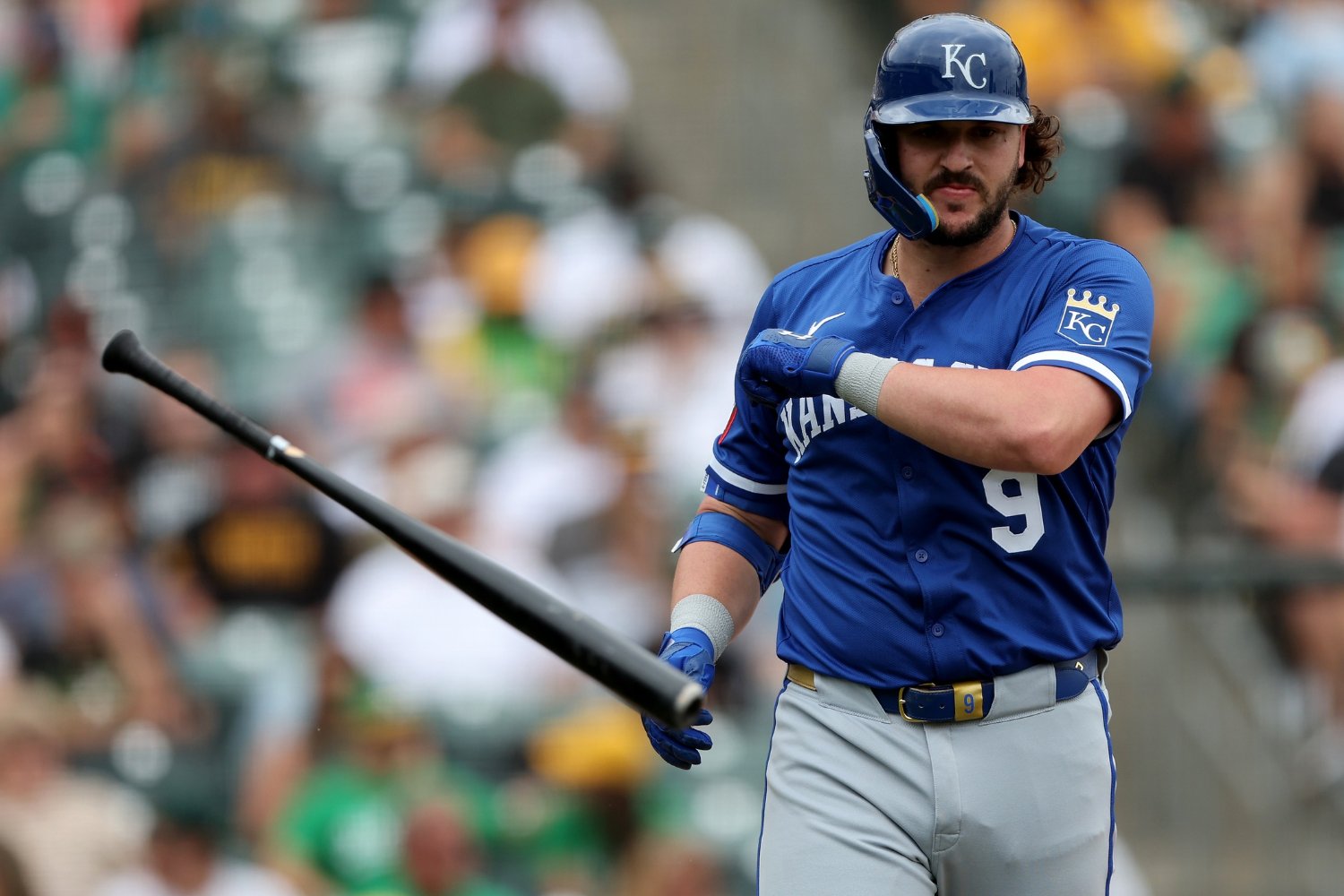 On Thursday, the Kansas City Royals announced on social media that they had come to an agreement with six of their remaining arbitration-eligible players. According to Roster Resource payroll data, the following Royals players agreed to the listed salary amounts for the 2026 season. All agreed to one-year deals. Kyle Isbel: $2.7 million. Bailey Falter: $3.6 million. John Schreiber: $3.715 million. Nick Mears: $1.9 million Michael Massey: $1.57 million. Daniel Lynch IV: $1.025 million. The inclusion of these six puts the Royals' estimated payroll at $150 million for the 2026 season. That is $12 million higher than their final 2025 payroll. That said, it's likely that the payroll amount will get even higher, especially with pitcher Kris Bubic and first baseman Vinnie Pasquantino remaining without an agreement. Unless an announcement is made soon, it is likely that both players will head to arbitration. Maddie Landis of TalkSox and DiamondCentric wrote a pretty comprehensive review today of what arbitration means and how the process unfolds in Major League Baseball. Here is a key bit from Landis' article that outlines the next steps Bubic and Pasquantino will take with the Royals if no agreement is announced. MLB Trade Rumors made arbitration predictions in the offseason, expecting Bubic to command $6 million and Pasquantino to get $5.4 million. Both had solid seasons, but certainly had some issues that could explain why the Royals have balked at the players' initial asking prices. Bubic posted a 2.55 ERA, accumulated a 3.3 fWAR, and made his first All-Star team in 2025. However, he only pitched 116.1 IP and missed most of the second half due to a shoulder issue. Bubic will also be a free agent after the upcoming season, and he's been mentioned in numerous trade talks, suggesting he may not be in Kansas City's long-term plans. As for Pasquantino, he led the Royals with 32 home runs and 113 RBI. Conversely, he posted only 1.5 fWAR last year due to lackluster baserunning and defense at first base. For context, Isbel's fWAR was only 0.4 lower than Pasquantino's, and he's making half of Pasquantino's estimated amount. The last time the Royals had an arbitration hearing with a player was in 2023, when they prevailed against Brady Singer. The former Florida Gator had a letdown year after the hearing, going from a 3.23 ERA and 3.0 fWAR in 153.1 IP in 2022 (pre-hearing) to a 5.52 ERA and 1.9 fWAR in 159.2 IP in 2023 (post-hearing). Hopefully, a deal can be reached soon with Bubic and Pasquantino to avoid hearings, which can often be messy and affect long-term relationships with players.
 -
Image courtesy of Matt Marton-Imagn Images The Kansas City Royals have been aggressively adding to their bullpen this offseason. First, they picked up former Detroit Tiger (and KC Metro area product) Alex Lange. Then, they acquired Nick Mears from the Brewers (along with outfielder Isaac Collins) in a deal for Angel Zerpa. Lastly, Kansas City solidified its late-inning reliever depth by acquiring Matt Strahm from Philadelphia for Jonathan Bowlan. However, it seems like the Royals aren't done adding to the bullpen just yet, as MLB.com Royals beat writer Anne Rogers reported in her latest article. According to Rogers, the Royals are still in the hunt for left-handed bullpen help and are willing to address that need through the trade market. Here's what Rogers said in her article about what they are looking for specifically in regard to bullpen help this offseason. Right now, the only left-handed reliever with Minor League options is Daniel Lynch IV, who has one remaining. Bailey Falter, who moved to the bullpen after struggling in a couple of the starts with the Royals after coming over from Pittsburgh at last year's Trade Deadline, doesn't have one. Thus, the former Pirates lefty would need to stay with the Royals roster all season to avoid being designated for assignment. Thus, with left-handed relievers a priority this offseason, who are some trade targets that could make sense for Kansas City to pursue in the coming weeks? And what would it take from the Royals' end to acquire that much-needed bullpen help? Let's look at three candidates that could be acquired by the Royals and why they would make sense for the Royals in 2026 and possibly beyond. (All graphics and data courtesy of TJ Stats.) Garrett Cleavinger, Tampa Bay Rays The Rays have a bit of a logjam in their closer situation for the upcoming season. With the departure of Pete Fairbanks, the main spot in the ninth inning seems to be up for grabs. The Rays have Edwin Uceta, Griffin Jax, and Cleavinger as possible options in the ninth, and they all bring their fair share of positives and negatives to the role. Cleavinger is an interesting candidate because he posted solid numbers last season. In 61.1 IP, he posted a 2.35 ERA, 33.7% K rate, and 26.3% K-BB%. However, his FIP was high at 3.59, primarily due to an 18.8% HR/FB rate allowed last season. While the move back to Tropicana Field should help suppress that rate a bit, the 31-year-old reliever also saw his hard-hit rate increase from 33.8% in 2024 to 41.2% in 2025, and his average exit velocity allowed go up by 1.9 MPH as well. Hence, he may not be trusted in the ninth as much as Uceta or Jax. The Rays have always been willing to trade relievers to address other needs, and Cleavinger could be an avenue for them to accomplish that goal. Right now, Tampa Bay's situation at second base looks bleak after they traded away Brandon Lowe to Pittsburgh, as Richie Palacios and Ryan Vilade are the only options for now. Could the Royals acquire Cleavinger for Michael Massey, who could provide pop and strong defense at the keystone for the Rays, if healthy? Massey is a much better defender than Palacios, as Massey has a +6 FRV at second base in his career, while Palacios has a -1 FRV. Additionally, while Palacios has a career 100 wRC+, 19 points better than Massey, the Royals' second baseman has a 1.8 fWAR, which is 0.4 better than Palacios'. Thus, Tampa Bay may be interested in a second baseman who could be a "Lowe-Lite," and under team control until 2029. Cleavinger doesn't have any Minor League options, which limits his current roster flexibility. That said, his stuff was stellar last year, as he sported a 102 overall TJ Stuff+ and also sported a chase rate of 31.2% and whiff rate of 35.9%. He likely would be a solid option in the middle innings who could step into high-leverage situations when Strahm is unavailable. Dylan Dodd, Atlanta Braves The Braves have been aggressive in adding to the bullpen this offseason after missing out on the postseason a year ago. They acquired Padres closer Ranger Suarez and Yankees setup man Ian Hamilton to give support to projected closer Raisel Iglesias, who saved 29 games a year ago. They also have strong lefties in Dylan Lee and Aaron Bummer who can pitch in high-leverage situations. Thus, an odd man out in the Braves bullpen is Dodd, who posted a 3.60 ERA and 0.94 WHIP in 35 IP a season ago. Roster Resource projects that the 27-year-old lefty won't make the Opening Day roster, as he still has a Minor League option remaining. If he were traded to Kansas City, he likely would replace either Lynch or Falter's spot on the roster. Dodd doesn't have great stuff, based on TJ Stats metrics (94 TJ Stuff+ overall). However, he's effective at generating chase (33.5%) and whiffs (30.3%), two areas the Royals are trying to improve in 2026. The Braves could trade Dodd for Nick Loftin, who doesn't seem to have an opportunity for much playing time right now. Loftin is a utility player who could play multiple positions in Atlanta and would strike out a lot less (14.4% K%) than other bench options like Vidal Brujan (22.1% K%) and Eli White (25.8% K%). A trade of Loftin for Dodd would be a win-win for both the Royals and Braves, as well as the two players, who should get more of an opportunity in a fresh new location. Jordan Wicks, Chicago Cubs The Cubs have been buyers when it comes to pitching this offseason. They added free agent relievers Hunter Harvey (a former Royal), Phil Maton, Jacob Webb, and Hoby Milner to boost the bullpen. Furthermore, Chicago acquired Edward Cabrera from the Marlins in a trade on Wednesday, which should solidify the Cubs' rotation for 2026. However, all the additions have bumped the 26-year-old Wicks from the MLB mix, as he is projected to begin the year in Triple-A Iowa, according to Roster Resource. Wicks hasn't been great at the MLB level, posting a 5.21 ERA and 4.79 FIP across 26 games and 95 IP. However, he made the move to the bullpen last year and seemed much better in the role. While his ERA and WHIP were high at 6.28 and 1.74, respectively, his FIP was much better at 3.34. He showed impeccable control with a 54.4% zone rate and 17.9% K-BB%. He also put up the latter despite a 19.4% K%. Another positive about Wicks' profile is that he generates a ton of chase, as he sported a 40.4% chase rate a year ago. The stuff is average at 100, but his slider and sweeper are his best pitches with 105 TJ Stuff+ marks. That works a lot better in relief than as a starter. He is also a local product, having attended Kansas State. The Royals have seemed motivated to get local guys this offseason, as illustrated by the Lange and Kameron Misner (Mizzou) moves. The Cubs could use some help off the bench, and someone like Massey or Tyler Tolbert could fit the bill in exchange for Wicks, especially if Kevin Alcantara's strikeout issues don't improve (33.3% K% in 12 PA with the Cubs last year). Tolbert struck out less than 20% last year (19.3% to be specific), and he can play multiple positions in the infield and outfield. Furthermore, he could be a nice baserunning option off the bench for the Cubs, which is something the Cubs prioritize, as they ranked 3rd in stolen bases a season ago. View full article
-
Three Reliever Trade Targets That Make Sense for the Royals
Kevin O'Brien posted an article in Royals
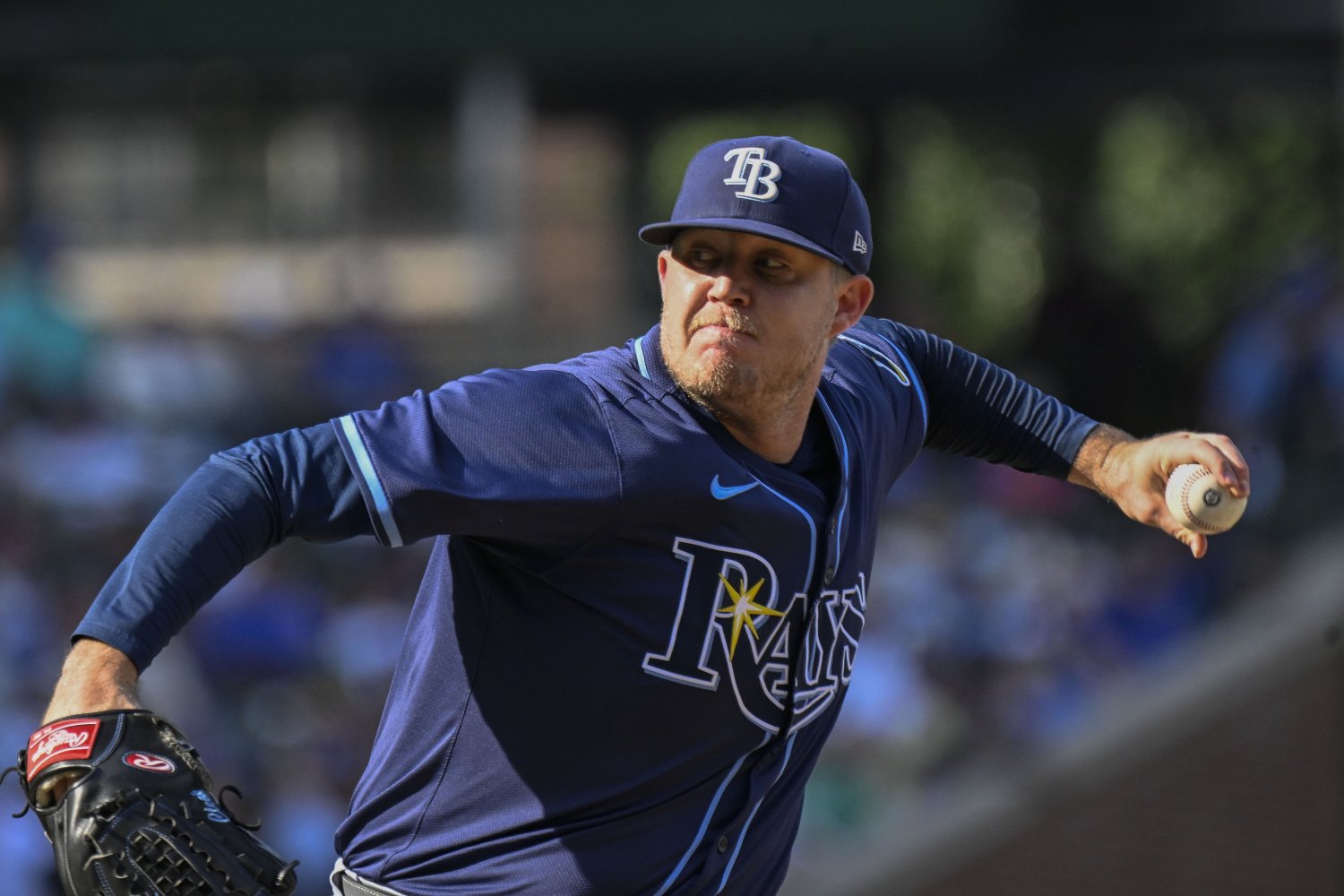 The Kansas City Royals have been aggressively adding to their bullpen this offseason. First, they picked up former Detroit Tiger (and KC Metro area product) Alex Lange. Then, they acquired Nick Mears from the Brewers (along with outfielder Isaac Collins) in a deal for Angel Zerpa. Lastly, Kansas City solidified its late-inning reliever depth by acquiring Matt Strahm from Philadelphia for Jonathan Bowlan. However, it seems like the Royals aren't done adding to the bullpen just yet, as MLB.com Royals beat writer Anne Rogers reported in her latest article. According to Rogers, the Royals are still in the hunt for left-handed bullpen help and are willing to address that need through the trade market. Here's what Rogers said in her article about what they are looking for specifically in regard to bullpen help this offseason. Right now, the only left-handed reliever with Minor League options is Daniel Lynch IV, who has one remaining. Bailey Falter, who moved to the bullpen after struggling in a couple of the starts with the Royals after coming over from Pittsburgh at last year's Trade Deadline, doesn't have one. Thus, the former Pirates lefty would need to stay with the Royals roster all season to avoid being designated for assignment. Thus, with left-handed relievers a priority this offseason, who are some trade targets that could make sense for Kansas City to pursue in the coming weeks? And what would it take from the Royals' end to acquire that much-needed bullpen help? Let's look at three candidates that could be acquired by the Royals and why they would make sense for the Royals in 2026 and possibly beyond. (All graphics and data courtesy of TJ Stats.) Garrett Cleavinger, Tampa Bay Rays The Rays have a bit of a logjam in their closer situation for the upcoming season. With the departure of Pete Fairbanks, the main spot in the ninth inning seems to be up for grabs. The Rays have Edwin Uceta, Griffin Jax, and Cleavinger as possible options in the ninth, and they all bring their fair share of positives and negatives to the role. Cleavinger is an interesting candidate because he posted solid numbers last season. In 61.1 IP, he posted a 2.35 ERA, 33.7% K rate, and 26.3% K-BB%. However, his FIP was high at 3.59, primarily due to an 18.8% HR/FB rate allowed last season. While the move back to Tropicana Field should help suppress that rate a bit, the 31-year-old reliever also saw his hard-hit rate increase from 33.8% in 2024 to 41.2% in 2025, and his average exit velocity allowed go up by 1.9 MPH as well. Hence, he may not be trusted in the ninth as much as Uceta or Jax. The Rays have always been willing to trade relievers to address other needs, and Cleavinger could be an avenue for them to accomplish that goal. Right now, Tampa Bay's situation at second base looks bleak after they traded away Brandon Lowe to Pittsburgh, as Richie Palacios and Ryan Vilade are the only options for now. Could the Royals acquire Cleavinger for Michael Massey, who could provide pop and strong defense at the keystone for the Rays, if healthy? Massey is a much better defender than Palacios, as Massey has a +6 FRV at second base in his career, while Palacios has a -1 FRV. Additionally, while Palacios has a career 100 wRC+, 19 points better than Massey, the Royals' second baseman has a 1.8 fWAR, which is 0.4 better than Palacios'. Thus, Tampa Bay may be interested in a second baseman who could be a "Lowe-Lite," and under team control until 2029. Cleavinger doesn't have any Minor League options, which limits his current roster flexibility. That said, his stuff was stellar last year, as he sported a 102 overall TJ Stuff+ and also sported a chase rate of 31.2% and whiff rate of 35.9%. He likely would be a solid option in the middle innings who could step into high-leverage situations when Strahm is unavailable. Dylan Dodd, Atlanta Braves The Braves have been aggressive in adding to the bullpen this offseason after missing out on the postseason a year ago. They acquired Padres closer Ranger Suarez and Yankees setup man Ian Hamilton to give support to projected closer Raisel Iglesias, who saved 29 games a year ago. They also have strong lefties in Dylan Lee and Aaron Bummer who can pitch in high-leverage situations. Thus, an odd man out in the Braves bullpen is Dodd, who posted a 3.60 ERA and 0.94 WHIP in 35 IP a season ago. Roster Resource projects that the 27-year-old lefty won't make the Opening Day roster, as he still has a Minor League option remaining. If he were traded to Kansas City, he likely would replace either Lynch or Falter's spot on the roster. Dodd doesn't have great stuff, based on TJ Stats metrics (94 TJ Stuff+ overall). However, he's effective at generating chase (33.5%) and whiffs (30.3%), two areas the Royals are trying to improve in 2026. The Braves could trade Dodd for Nick Loftin, who doesn't seem to have an opportunity for much playing time right now. Loftin is a utility player who could play multiple positions in Atlanta and would strike out a lot less (14.4% K%) than other bench options like Vidal Brujan (22.1% K%) and Eli White (25.8% K%). A trade of Loftin for Dodd would be a win-win for both the Royals and Braves, as well as the two players, who should get more of an opportunity in a fresh new location. Jordan Wicks, Chicago Cubs The Cubs have been buyers when it comes to pitching this offseason. They added free agent relievers Hunter Harvey (a former Royal), Phil Maton, Jacob Webb, and Hoby Milner to boost the bullpen. Furthermore, Chicago acquired Edward Cabrera from the Marlins in a trade on Wednesday, which should solidify the Cubs' rotation for 2026. However, all the additions have bumped the 26-year-old Wicks from the MLB mix, as he is projected to begin the year in Triple-A Iowa, according to Roster Resource. Wicks hasn't been great at the MLB level, posting a 5.21 ERA and 4.79 FIP across 26 games and 95 IP. However, he made the move to the bullpen last year and seemed much better in the role. While his ERA and WHIP were high at 6.28 and 1.74, respectively, his FIP was much better at 3.34. He showed impeccable control with a 54.4% zone rate and 17.9% K-BB%. He also put up the latter despite a 19.4% K%. Another positive about Wicks' profile is that he generates a ton of chase, as he sported a 40.4% chase rate a year ago. The stuff is average at 100, but his slider and sweeper are his best pitches with 105 TJ Stuff+ marks. That works a lot better in relief than as a starter. He is also a local product, having attended Kansas State. The Royals have seemed motivated to get local guys this offseason, as illustrated by the Lange and Kameron Misner (Mizzou) moves. The Cubs could use some help off the bench, and someone like Massey or Tyler Tolbert could fit the bill in exchange for Wicks, especially if Kevin Alcantara's strikeout issues don't improve (33.3% K% in 12 PA with the Cubs last year). Tolbert struck out less than 20% last year (19.3% to be specific), and he can play multiple positions in the infield and outfield. Furthermore, he could be a nice baserunning option off the bench for the Cubs, which is something the Cubs prioritize, as they ranked 3rd in stolen bases a season ago.
 -
I like Zobac as a bounceback for the Royals this year. He hurt his knee early in the year and don't think he ever really recovered from that. Now that he's fully healthy, I think he could surprise and be a factor in the rotation or bullpen at some point in 2026.
-
Image courtesy of Bill Streicher-Imagn Images Opening Day is 77 days away. That feels close (typically anything under 100 days does), which means that Royals fans are thinking about what the roster will look like when they travel to Atlanta for their Opening Series. The Royals have certainly made their fair share of moves this offseason in an effort to get better and improve upon their 82-80 record from a season ago. They upgraded the outfield via free agency and trades and also got better by adding a high-leverage lefty reliever who can shut things down in the late innings. That said, it doesn't feel like Kansas City is quite done, and it wouldn't be surprising to see them make another big move or two before pitchers and catchers report in mid-February. While the club will continue to change over the next month, maybe two, let's take a look at what the Royals' Opening Day roster would look like if their opener against the Braves were tomorrow. Pitchers Starting Rotation Cole Ragans Michael Wacha Kris Bubic Seth Lugo Noah Cameron Ragans was mentioned in trade rumors early in the offseason, but it seems like the Royals are committed to him at least in 2025. Even though he posted a 4.67 ERA, he still posted a 2.1 fWAR and had a 14.30 K/9 in 61.2 IP. He should continue to be the "ace" of this rotation if healthy. Wacha and Lugo are the veterans of the staff, having signed extensions in the past calendar year. Wacha was solid again for the Royals, posting a 3.86 ERA and 3.6 fWAR in 172.2 IP, which led all Royals starters last year. He should continue to be the No. 2 starter in the rotation in 2026. As for Lugo, he took a step back after his Cy Young runner-up campaign in 2024. He posted a 4.15 ERA and 0.5 fWAR in 145.1 IP. However, he could be due for a bounce-back in 2026 if fully healthy. Bubic is a question mark for this rotation as his name has been frequently mentioned in trade talks this winter. He will be a free agent after 2026, and it doesn't seem likely that the Royals will sign him to an extension like Wacha, Lugo, or even Ragans. Thus, it's expected that Bubic won't be on this roster in our next rendition of these Opening Day roster projections. The last spot in the rotation will likely go to Cameron, who earned Royals Pitcher of the Year honors after posting a 2.99 ERA and 1.8 fWAR in 138.1 IP. However, there could be some competition for that fifth spot if Cameron struggles in Spring Training or if Bubic is traded away. Trade-Deadline acquisitions Ryan Bergert posted a 3.66 ERA in 76.1 IP with the Padres and Royals last year, and Stephen Kolek also sported a 3.51 ERA in 112.2 IP with San Diego and Kansas City. They could be in play for a rotation spot in 2026 if something opens up this offseason. Relievers Carlos Estevez Lucas Erceg Matt Strahm John Schreiber Nick Mears Alex Lange Daniel Lynch IV Bailey Falter After saving 42 games and posting a 2.45 ERA in 66 IP with the Royals last year, Estevez is pretty much guaranteed the closer role again in 2026. Erceg should also be solidified as the Royals' primary setup man, especially after posting a 2.64 ERA in 61.1 IP. That said, both could do a better job of generating strikeouts in 2026 as both sported K/9 marks under eight last year. That isn't an issue with Strahm, who posted a 10.11 K/9 and 2.74 ERA in 62.1 IP. He should be the Royals' primary left-handed high-leverage reliever and could see closing opportunities when Estevez or Erceg aren't available. Now that Strahm is on board, that should put Schreiber in fewer high-leverage opportunities, which may suit him better. Mears and Langre are new middle-innings options who should provide some chase and velocity that was missing from the bullpen last season. Lynch IV and Falter should round out the bullpen as long-relief/spot starter options. Lynch has pitched some middle-innings relief before, so he could see more action than Falter, who's primarily been a starter in his career. Falter is out of Minor League options, but the Royals opted to tender him a contract, which makes it seem like they are going to give him a serious shot to show that he can rebound in 2026 after a poor showing with the Royals in 2025 (11.25 ERA in 12 IP). If Falter continues to struggle in Spring Training, the Royals have a plethora of options on the 40-man roster who could replace him. The Royals said they still plan on developing Luinder Avila as a starter, which likely means he begins the year in Omaha again. However, he posted a 1.29 ERA in 14 IP with the Royals as a reliever last year, and he could thrive in that role again in 2026. Mason Black is an option from the Giants who could thrive in a hybrid role, though his stuff could use some refinement. Steven Cruz gave the Royals some quality innings with a 3.74 ERA in 45.2 IP. However, he needs to show he can generate more strikeouts with his velocity. Lastly, James McArthur, who closed games for the Royals in 2023 and 2024, should return to the mound in 2026. Since he has a Minor League option, the Royals will likely take it slow with him and let him develop a bit in Omaha. Position Players Catchers Salvador Perez Carter Jensen Perez and Jensen are two no-brainers for this roster on Opening Day (barring injury). The Royals captain signed a two-year extension and is coming off a 30-HR season. Jensen had a sensational rookie debut, posting a 159 wRC+ in 69 plate appearances. The top Royals prospect in the system still has some work to do behind the plate, but he should help give Perez some days off. That should keep the 35-year-old Royals legend's bat fresher over a full 162-game season, as he can play first base and designated hitter when Jensen is behind the dish. Jorge Alfaro was recently signed to a Minor League deal on Monday, and he could be an emergency option for the Royals, like Aaron Nola two seasons ago and Luke Maile last year. However, he likely will begin the year in Omaha. First Base Vinnie Pasquantino The "Pasquatch" led the Royals in home runs (32) and RBI (113). His 116 wRC+ was also the third-best mark of any Royals player with 100 or more plate appearances last season. Pasquantino still has some work to do defensively, which explains his 1.5 fWAR last year despite his gaudy offensive numbers. That said, he has proven that he can handle regular 1B duties for the Royals, with the ability to DH when Salvy needs to play in that spot. Second Base Jonathan India Michael Massey Nick Loftin Second base was a weak spot for the Royals last year. Newcomer India struggled in his debut season in Kansas City, posting an 89 wRC+ and -0.3 fWAR in 567 plate appearances. Massey wasn't much better, as he struggled in an injury-plagued campaign. He had a 57 wRC+ and -0.4 fWAR in 277 plate appearances. India provides more offensive upside, and he should be due for some positive regression after a nightmarish 2025. Conversely, Massey is a better defensive player and can play left field if needed (unlike India, who struggled in his short stints at third and left last season). I listed Loftin here at second base, though he is more of a utility player with the ability to play third, left field, and first base. Loftin has a disciplined plate approach, as he put up a 0.52 BB/K ratio last year and a 0.79 BB/K ratio in 2024. Unfortunately, he's pretty punchless with the bat, only sporting a 73 wRC+. It wouldn't be surprising to see Adam Frazier replace Loftin's spot on the roster if the Royals decide to bring back the veteran this offseason. Shortstop Bobby Witt Jr. The two-time All-Star, Gold-Glove winner, and Silver Slugger should be the Opening Day shortstop in Kansas City unless he gets hurt in Spring Training. Fans should expect another big season from Witt, with the hope that he can capture his first AL MVP award in 2026 after finishing second in 2024 and fourth in 2025. Third Base Maikel Garcia After not starting on Opening Day in 2025 (which was primarily due to a Pasquantino injury that required Cavan Biggio to play first base), Garcia ended up being the best Royals player not named Witt. The 25-year-old Venezuelan hit a career-high 16 home runs, posted a 121 wRC+, and accumulated a 5.6 fWAR in 666 plate appearances and earned his first All-Star appearance and Gold Glove last season. The Royals rewarded him with a multi-year extension this offseason, thus keeping him and Witt in Kansas City until at least 2030. Outfielders Isaac Collins Kyle Isbel Jac Caglianone Lane Thomas Tyler Tolbert The starting outfield would likely consist of Collins in left field, Isbel in center field, and Caglianone in right field if Opening Day were tomorrow. Collins posted a 122 wRC+ last year with the Brewers, and his disciplined plate approach would be welcomed in the middle of the lineup. Isbel is mostly out there for defense, but he proved serviceable in the nine-hole last year. Lastly, Caglianone struggled in his rookie year, posting a 46 wRC+ and -1.6 fWAR in 232 plate appearances. That said, the projections remain pretty optimistic about Caglianone's 2026 outlook, and his exit velocity and barrel metrics last year were solid despite his struggles. Thomas most likely would start as a fourth outfielder, but he could move into a starting role if he can partially channel his 2023 self. It is unlikely that he will hit 28 home runs, steal 20 bases, post a 109 wRC+, and accumulate 2.6 fWAR with the Royals as he did with the Nationals that season. However, he has some proven history at the plate that Isbel doesn't. If Thomas is healthy and recovered, he could be the Royals' starting centerfielder by mid-season. Tolbert likely will serve as the Royals' "speed weapon" off the bench in 2026, which makes sense considering he stole 21 bases in only 57 plate appearances. He hit .280 and can play multiple positions in the infield and outfield, making him a flexible weapon who can be subbed in key spots in the late innings. Dairon Blanco, who injured his Achilles last year and never looked the same after it, could serve in that "speed weapon" role if Tolbert struggles. Blanco stole 31 bases in 88 games in 2024. Some outfield options who could sneak their way on the Opening Day roster include John Rave and Kameron Misner. Rave made his MLB debut last season and showed spurts of effectiveness at times, but he only posted a 65 wRC+ in 175 plate appearances last year. He has some defensive versatility, able to play all three outfield positions effectively. That could make him a bench option if Tolbert or Blanco aren't effective. As for Misner, he's hit 46 home runs in Triple-A the past three seasons, but he failed to put that together with the Rays. In 232 career plate appearances, he has a 62 wRC+ and 0.1 fWAR. He struggles with strikeouts, as evidenced by his 34.1% career K rate at the MLB level. Still, he could be a sleeper option if the Royals' hitting coaches can help tap into his potential this spring. View full article
-
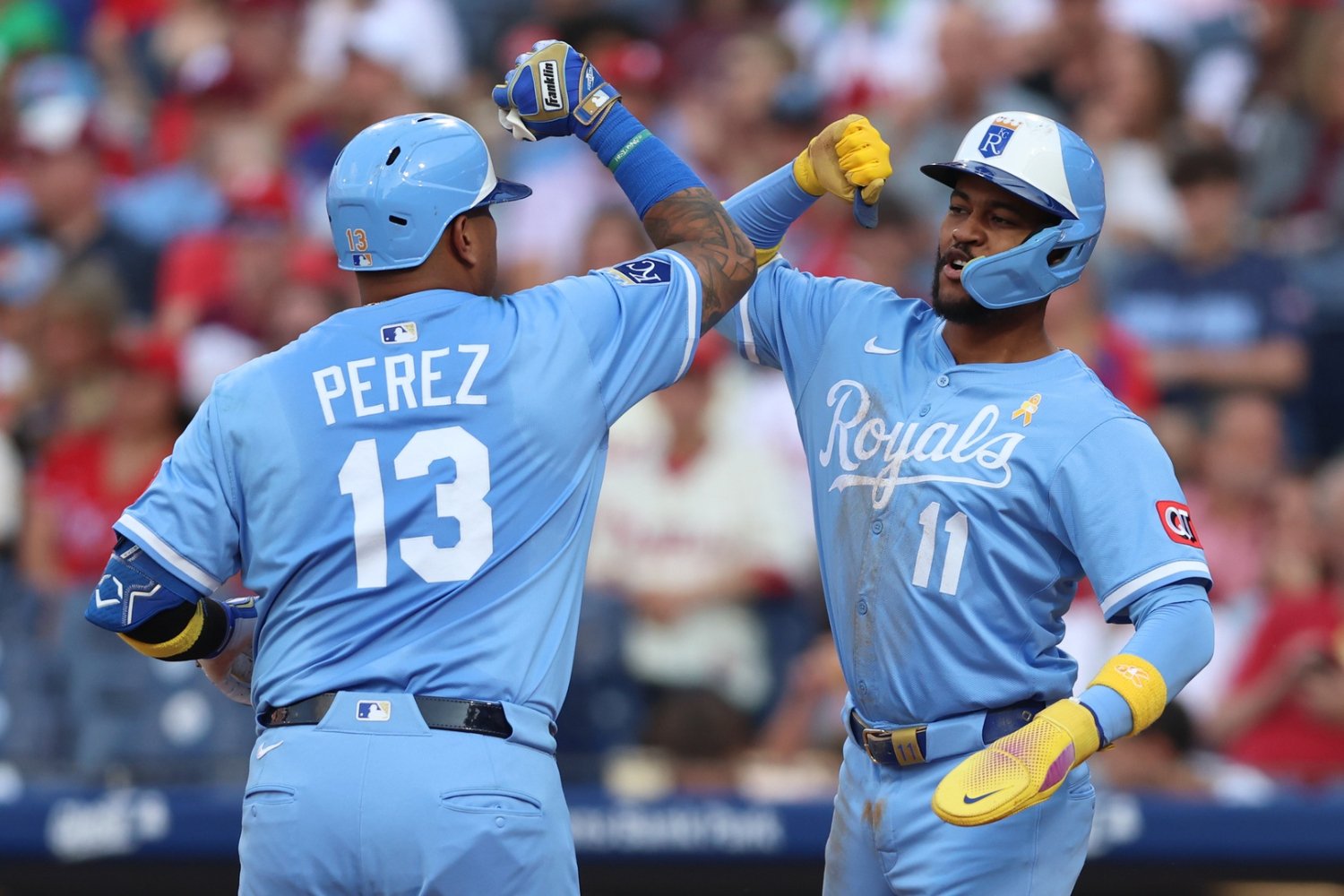 Opening Day is 77 days away. That feels close (typically anything under 100 days does), which means that Royals fans are thinking about what the roster will look like when they travel to Atlanta for their Opening Series. The Royals have certainly made their fair share of moves this offseason in an effort to get better and improve upon their 82-80 record from a season ago. They upgraded the outfield via free agency and trades and also got better by adding a high-leverage lefty reliever who can shut things down in the late innings. That said, it doesn't feel like Kansas City is quite done, and it wouldn't be surprising to see them make another big move or two before pitchers and catchers report in mid-February. While the club will continue to change over the next month, maybe two, let's take a look at what the Royals' Opening Day roster would look like if their opener against the Braves were tomorrow. Pitchers Starting Rotation Cole Ragans Michael Wacha Kris Bubic Seth Lugo Noah Cameron Ragans was mentioned in trade rumors early in the offseason, but it seems like the Royals are committed to him at least in 2025. Even though he posted a 4.67 ERA, he still posted a 2.1 fWAR and had a 14.30 K/9 in 61.2 IP. He should continue to be the "ace" of this rotation if healthy. Wacha and Lugo are the veterans of the staff, having signed extensions in the past calendar year. Wacha was solid again for the Royals, posting a 3.86 ERA and 3.6 fWAR in 172.2 IP, which led all Royals starters last year. He should continue to be the No. 2 starter in the rotation in 2026. As for Lugo, he took a step back after his Cy Young runner-up campaign in 2024. He posted a 4.15 ERA and 0.5 fWAR in 145.1 IP. However, he could be due for a bounce-back in 2026 if fully healthy. Bubic is a question mark for this rotation as his name has been frequently mentioned in trade talks this winter. He will be a free agent after 2026, and it doesn't seem likely that the Royals will sign him to an extension like Wacha, Lugo, or even Ragans. Thus, it's expected that Bubic won't be on this roster in our next rendition of these Opening Day roster projections. The last spot in the rotation will likely go to Cameron, who earned Royals Pitcher of the Year honors after posting a 2.99 ERA and 1.8 fWAR in 138.1 IP. However, there could be some competition for that fifth spot if Cameron struggles in Spring Training or if Bubic is traded away. Trade-Deadline acquisitions Ryan Bergert posted a 3.66 ERA in 76.1 IP with the Padres and Royals last year, and Stephen Kolek also sported a 3.51 ERA in 112.2 IP with San Diego and Kansas City. They could be in play for a rotation spot in 2026 if something opens up this offseason. Relievers Carlos Estevez Lucas Erceg Matt Strahm John Schreiber Nick Mears Alex Lange Daniel Lynch IV Bailey Falter After saving 42 games and posting a 2.45 ERA in 66 IP with the Royals last year, Estevez is pretty much guaranteed the closer role again in 2026. Erceg should also be solidified as the Royals' primary setup man, especially after posting a 2.64 ERA in 61.1 IP. That said, both could do a better job of generating strikeouts in 2026 as both sported K/9 marks under eight last year. That isn't an issue with Strahm, who posted a 10.11 K/9 and 2.74 ERA in 62.1 IP. He should be the Royals' primary left-handed high-leverage reliever and could see closing opportunities when Estevez or Erceg aren't available. Now that Strahm is on board, that should put Schreiber in fewer high-leverage opportunities, which may suit him better. Mears and Langre are new middle-innings options who should provide some chase and velocity that was missing from the bullpen last season. Lynch IV and Falter should round out the bullpen as long-relief/spot starter options. Lynch has pitched some middle-innings relief before, so he could see more action than Falter, who's primarily been a starter in his career. Falter is out of Minor League options, but the Royals opted to tender him a contract, which makes it seem like they are going to give him a serious shot to show that he can rebound in 2026 after a poor showing with the Royals in 2025 (11.25 ERA in 12 IP). If Falter continues to struggle in Spring Training, the Royals have a plethora of options on the 40-man roster who could replace him. The Royals said they still plan on developing Luinder Avila as a starter, which likely means he begins the year in Omaha again. However, he posted a 1.29 ERA in 14 IP with the Royals as a reliever last year, and he could thrive in that role again in 2026. Mason Black is an option from the Giants who could thrive in a hybrid role, though his stuff could use some refinement. Steven Cruz gave the Royals some quality innings with a 3.74 ERA in 45.2 IP. However, he needs to show he can generate more strikeouts with his velocity. Lastly, James McArthur, who closed games for the Royals in 2023 and 2024, should return to the mound in 2026. Since he has a Minor League option, the Royals will likely take it slow with him and let him develop a bit in Omaha. Position Players Catchers Salvador Perez Carter Jensen Perez and Jensen are two no-brainers for this roster on Opening Day (barring injury). The Royals captain signed a two-year extension and is coming off a 30-HR season. Jensen had a sensational rookie debut, posting a 159 wRC+ in 69 plate appearances. The top Royals prospect in the system still has some work to do behind the plate, but he should help give Perez some days off. That should keep the 35-year-old Royals legend's bat fresher over a full 162-game season, as he can play first base and designated hitter when Jensen is behind the dish. Jorge Alfaro was recently signed to a Minor League deal on Monday, and he could be an emergency option for the Royals, like Aaron Nola two seasons ago and Luke Maile last year. However, he likely will begin the year in Omaha. First Base Vinnie Pasquantino The "Pasquatch" led the Royals in home runs (32) and RBI (113). His 116 wRC+ was also the third-best mark of any Royals player with 100 or more plate appearances last season. Pasquantino still has some work to do defensively, which explains his 1.5 fWAR last year despite his gaudy offensive numbers. That said, he has proven that he can handle regular 1B duties for the Royals, with the ability to DH when Salvy needs to play in that spot. Second Base Jonathan India Michael Massey Nick Loftin Second base was a weak spot for the Royals last year. Newcomer India struggled in his debut season in Kansas City, posting an 89 wRC+ and -0.3 fWAR in 567 plate appearances. Massey wasn't much better, as he struggled in an injury-plagued campaign. He had a 57 wRC+ and -0.4 fWAR in 277 plate appearances. India provides more offensive upside, and he should be due for some positive regression after a nightmarish 2025. Conversely, Massey is a better defensive player and can play left field if needed (unlike India, who struggled in his short stints at third and left last season). I listed Loftin here at second base, though he is more of a utility player with the ability to play third, left field, and first base. Loftin has a disciplined plate approach, as he put up a 0.52 BB/K ratio last year and a 0.79 BB/K ratio in 2024. Unfortunately, he's pretty punchless with the bat, only sporting a 73 wRC+. It wouldn't be surprising to see Adam Frazier replace Loftin's spot on the roster if the Royals decide to bring back the veteran this offseason. Shortstop Bobby Witt Jr. The two-time All-Star, Gold-Glove winner, and Silver Slugger should be the Opening Day shortstop in Kansas City unless he gets hurt in Spring Training. Fans should expect another big season from Witt, with the hope that he can capture his first AL MVP award in 2026 after finishing second in 2024 and fourth in 2025. Third Base Maikel Garcia After not starting on Opening Day in 2025 (which was primarily due to a Pasquantino injury that required Cavan Biggio to play first base), Garcia ended up being the best Royals player not named Witt. The 25-year-old Venezuelan hit a career-high 16 home runs, posted a 121 wRC+, and accumulated a 5.6 fWAR in 666 plate appearances and earned his first All-Star appearance and Gold Glove last season. The Royals rewarded him with a multi-year extension this offseason, thus keeping him and Witt in Kansas City until at least 2030. Outfielders Isaac Collins Kyle Isbel Jac Caglianone Lane Thomas Tyler Tolbert The starting outfield would likely consist of Collins in left field, Isbel in center field, and Caglianone in right field if Opening Day were tomorrow. Collins posted a 122 wRC+ last year with the Brewers, and his disciplined plate approach would be welcomed in the middle of the lineup. Isbel is mostly out there for defense, but he proved serviceable in the nine-hole last year. Lastly, Caglianone struggled in his rookie year, posting a 46 wRC+ and -1.6 fWAR in 232 plate appearances. That said, the projections remain pretty optimistic about Caglianone's 2026 outlook, and his exit velocity and barrel metrics last year were solid despite his struggles. Thomas most likely would start as a fourth outfielder, but he could move into a starting role if he can partially channel his 2023 self. It is unlikely that he will hit 28 home runs, steal 20 bases, post a 109 wRC+, and accumulate 2.6 fWAR with the Royals as he did with the Nationals that season. However, he has some proven history at the plate that Isbel doesn't. If Thomas is healthy and recovered, he could be the Royals' starting centerfielder by mid-season. Tolbert likely will serve as the Royals' "speed weapon" off the bench in 2026, which makes sense considering he stole 21 bases in only 57 plate appearances. He hit .280 and can play multiple positions in the infield and outfield, making him a flexible weapon who can be subbed in key spots in the late innings. Dairon Blanco, who injured his Achilles last year and never looked the same after it, could serve in that "speed weapon" role if Tolbert struggles. Blanco stole 31 bases in 88 games in 2024. Some outfield options who could sneak their way on the Opening Day roster include John Rave and Kameron Misner. Rave made his MLB debut last season and showed spurts of effectiveness at times, but he only posted a 65 wRC+ in 175 plate appearances last year. He has some defensive versatility, able to play all three outfield positions effectively. That could make him a bench option if Tolbert or Blanco aren't effective. As for Misner, he's hit 46 home runs in Triple-A the past three seasons, but he failed to put that together with the Rays. In 232 career plate appearances, he has a 62 wRC+ and 0.1 fWAR. He struggles with strikeouts, as evidenced by his 34.1% career K rate at the MLB level. Still, he could be a sleeper option if the Royals' hitting coaches can help tap into his potential this spring.
 -
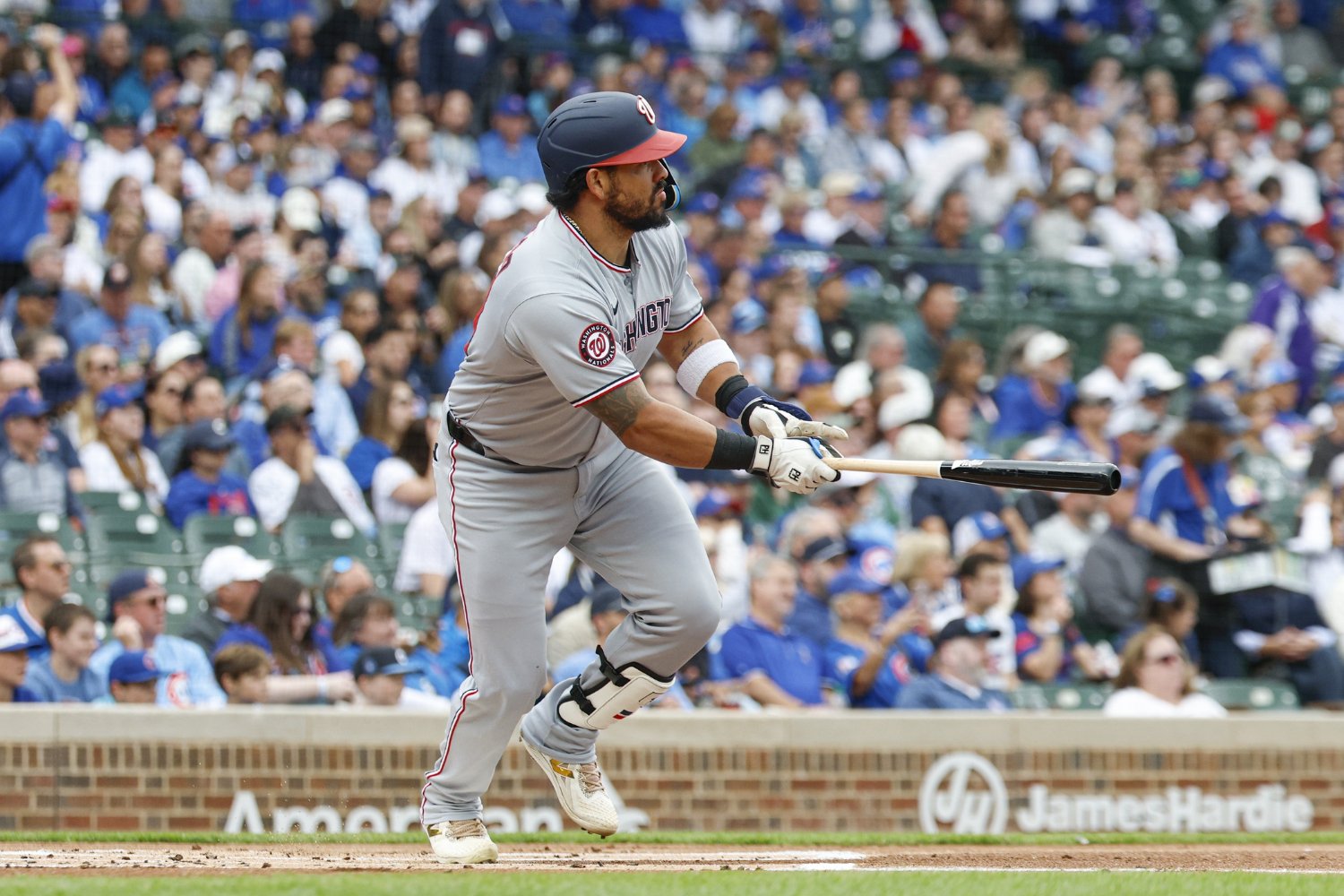 On Monday, Aram Leighton of Just Baseball reported that the Royals agreed to a Minor League deal with catching veteran Jorge Alfaro. The 32-year-old catcher started in the Phillies organization, but has played with the Marlins, Padres, Rockies, Red Sox, and Nationals. In 14 games in D.C. last season, he posted a 54 wRC+ and -0.3 fWAR in 39 plate appearances. According to his Statcast summary via TJ Stats, Alfaro showed some ability to launch the ball and hit the ball with some above-average exit velocity. That said, the rest of his metrics were paltry, especially in the plate discipline areas. Alfaro hasn't been exceptional defensively over his career. He has a -19 DRS, -2.1 FRM, and -17 FRV in 3,481 career innings behind the plate. Thus, even if Alfaro makes the Majors, it is likely that he wouldn't be a long-term option for the Royals. Though it isn't official, the Royals will likely invite Alfaro to Spring Training for catching depth. He will also likely begin the year in Omaha, serving as an emergency catcher who can be promoted and serve as a backup catcher if anything happens to Salvador Perez or top prospect Carter Jensen. Luke Maile served in this role last year and posted a 99 wRC+ and 0.3 fWAR. Like Alfaro, he was inconsistent with his plate discipline, but Maile was more patient at the plate (86th percentile walk rate) and showed more upside with his batted-ball metrics with the Royals a season ago. Maile is still a free agent, so it's possible that the Royals could still bring him back on a Minor League deal. Regardless, the Royals likely want some depth in Omaha, since top catching prospects Blake Mitchell and Ramon Ramirez are still a couple of years away from debuting in the show (at the earliest). Photo Credit: Kamil Krzaczynski-Imagn Images
 -
On Monday, Aram Leighton of Just Baseball reported that the Royals agreed to a Minor League deal with catching veteran Jorge Alfaro. The 32-year-old catcher started in the Phillies organization, but has played with the Marlins, Padres, Rockies, Red Sox, and Nationals. In 14 games in D.C. last season, he posted a 54 wRC+ and -0.3 fWAR in 39 plate appearances. According to his Statcast summary via TJ Stats, Alfaro showed some ability to launch the ball and hit the ball with some above-average exit velocity. That said, the rest of his metrics were paltry, especially in the plate discipline areas. Alfaro hasn't been exceptional defensively over his career. He has a -19 DRS, -2.1 FRM, and -17 FRV in 3,481 career innings behind the plate. Thus, even if Alfaro makes the Majors, it is likely that he wouldn't be a long-term option for the Royals. Though it isn't official, the Royals will likely invite Alfaro to Spring Training for catching depth. He will also likely begin the year in Omaha, serving as an emergency catcher who can be promoted and serve as a backup catcher if anything happens to Salvador Perez or top prospect Carter Jensen. Luke Maile served in this role last year and posted a 99 wRC+ and 0.3 fWAR. Like Alfaro, he was inconsistent with his plate discipline, but Maile was more patient at the plate (86th percentile walk rate) and showed more upside with his batted-ball metrics with the Royals a season ago. Maile is still a free agent, so it's possible that the Royals could still bring him back on a Minor League deal. Regardless, the Royals likely want some depth in Omaha, since top catching prospects Blake Mitchell and Ramon Ramirez are still a couple of years away from debuting in the show (at the earliest). Photo Credit: Kamil Krzaczynski-Imagn Images View full rumor
-
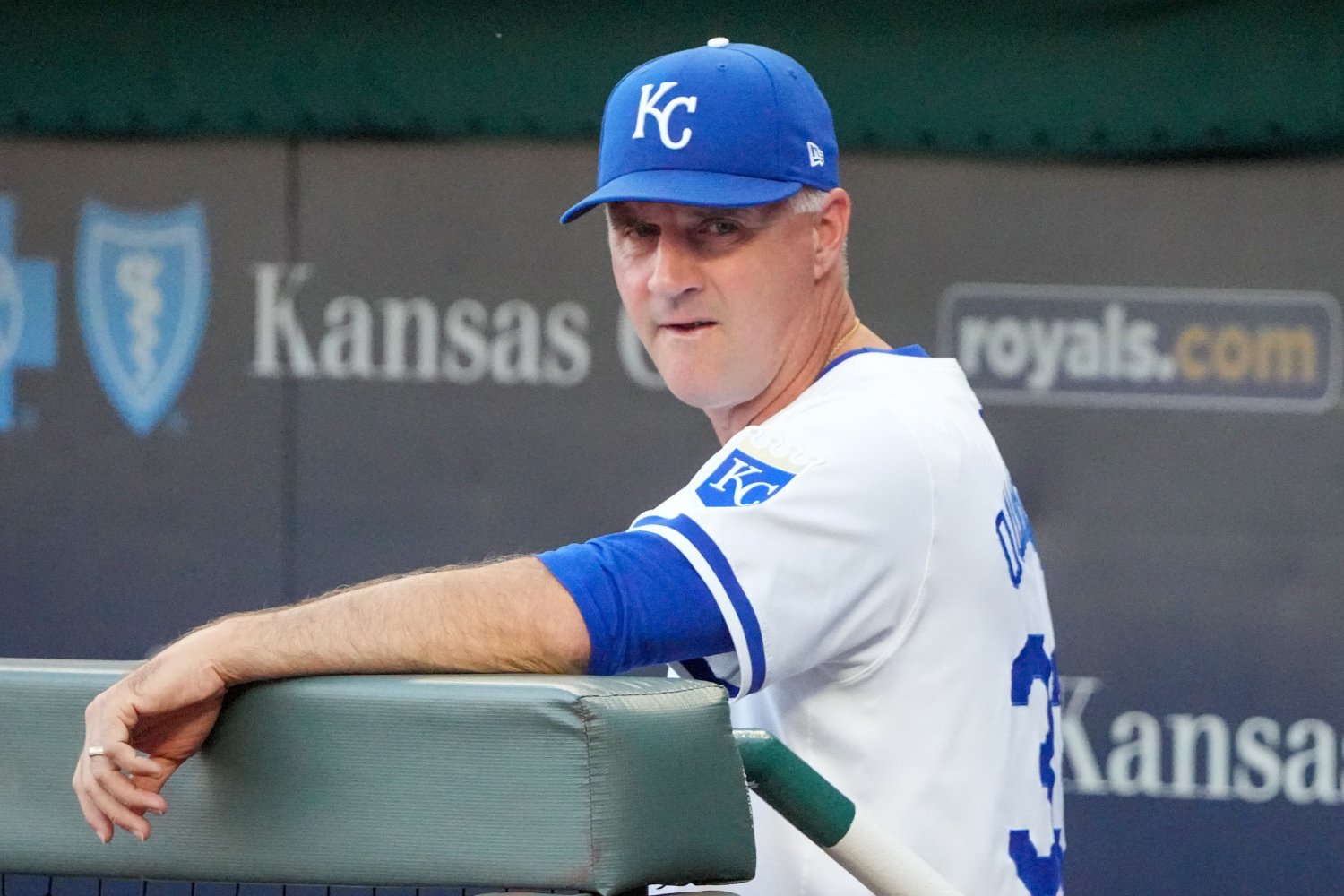 On Sunday, the Royals on social media announced that they had agreed to a three-year extension with manager Matt Quatraro. Quatraro was entering the final year of his current deal this season, and his extension will not kick in until 2027. His newest deal is guaranteed until 2029, with the Royals holding a club option for 2030. The Royals hired Quatraro to replace previous manager Mike Matheny after the 2022 season. After a rough 56-106 debut season, the former Tampa Bay Rays bench coach has had strong success as Kansas City's skipper. Over the past two years, his teams have finished 86-76 and 82-80, respectively. It is the first time the Royals have had back-to-back winning seasons since 2014 and 2015 under manager Ned Yost, who led the Royals to two AL Pennants and a World Series title. In his first managerial job at the Major League level, Quatraro holds an overall record of 224-262. He led the Royals to the postseason in 2024, sweeping the Baltimore Orioles in two games in the AL Wild Card round before falling to the Yankees in four games in the ALDS. He was named a runner-up for the AL Manager of the Year award in 2024, losing to Cleveland Guardians manager Stephen Vogt that season. In addition to Quatraro, the Royals will return bench coach Paul Hoover, lead hitting coach Alec Zumwalt, and pitching coach Brian Sweeney, who have all held those positions since Quatraro took over as manager (Zumwalt was promoted to hitting coach in 2022 under Matheny after they fired previous hitting coach Terry Bradshaw). New coaches on the staff for 2026 include assistant hitting coaches Connor Dawson and Marcus Thames, who come from the Brewers and White Sox, respectively, and assistant pitching coach Mike McFerran, who comes from the Athletics. Former assistant hitting coaches Keoni DeRenne and Joe Dillon were not retained, and former assistant pitching coach Zach Bove took the lead pitching coach position with the White Sox this offseason.
 -
Image courtesy of Denny Medley-Imagn Images On Sunday, the Royals on social media announced that they had agreed to a three-year extension with manager Matt Quatraro. Quatraro was entering the final year of his current deal this season, and his extension will not kick in until 2027. His newest deal is guaranteed until 2029, with the Royals holding a club option for 2030. The Royals hired Quatraro to replace previous manager Mike Matheny after the 2022 season. After a rough 56-106 debut season, the former Tampa Bay Rays bench coach has had strong success as Kansas City's skipper. Over the past two years, his teams have finished 86-76 and 82-80, respectively. It is the first time the Royals have had back-to-back winning seasons since 2014 and 2015 under manager Ned Yost, who led the Royals to two AL Pennants and a World Series title. In his first managerial job at the Major League level, Quatraro holds an overall record of 224-262. He led the Royals to the postseason in 2024, sweeping the Baltimore Orioles in two games in the AL Wild Card round before falling to the Yankees in four games in the ALDS. He was named a runner-up for the AL Manager of the Year award in 2024, losing to Cleveland Guardians manager Stephen Vogt that season. In addition to Quatraro, the Royals will return bench coach Paul Hoover, lead hitting coach Alec Zumwalt, and pitching coach Brian Sweeney, who have all held those positions since Quatraro took over as manager (Zumwalt was promoted to hitting coach in 2022 under Matheny after they fired previous hitting coach Terry Bradshaw). New coaches on the staff for 2026 include assistant hitting coaches Connor Dawson and Marcus Thames, who come from the Brewers and White Sox, respectively, and assistant pitching coach Mike McFerran, who comes from the Athletics. Former assistant hitting coaches Keoni DeRenne and Joe Dillon were not retained, and former assistant pitching coach Zach Bove took the lead pitching coach position with the White Sox this offseason. View full article
-
On January 1st, Derek Carty's The BAT X projections went live on Fangraphs, much to the fanfare of fantasy baseball players and fans everywhere. For those unfamiliar with The BAT X, Carty defines his projection system in an article on The Athletic from May 19th, 2025. Here is a summary of The BAT X in his words: The incorporation of Statcast data is a significant departure from the original BAT projection system, making The BAT X a bit more accurate and comprehensive. While the BAT projections are still live and available on Fangraphs, it is more commonplace for baseball fans and fantasy baseball managers to rely more on Carty's latest projection system. I have already broken down hitters, starting pitchers, and relief pitchers in my latest series on Royals projections via Steamer, which typically is one of the first projections to drop in the offseason. Thus, I am not going to do the same with the BAT X, especially since only hitter projections are available on Fangraphs right now. That said, as with any set of projections, there are some intriguing data points regarding certain players' outlooks for the upcoming season. So, in this post, I am going to focus on four hitters and my takeaways from their BAT X projections for 2026. Below is a table of all Royals hitters that the BAT X profiles in its projections, with a sortable data table available at this link. I have organized hitters by Fantasy Points (FPTS), mainly because BAT X is better suited to fantasy baseball purposes given its offensive focus. Even for non-fantasy baseball people, organizing by FPTS gives readers an idea of who the most productive hitters will be for the Royals in 2026, based on BAT X. Let's take a look at those four hitters and what Royals fans should be expecting for 2026, based on this latest projection set. Expectations More Modest For Caglianone In my Steamer projections post, Jac Caglianone seemed like the most significant rebound candidate for the Royals in 2026. After hitting seven home runs and posting a 46 wRC+ in 232 plate appearances in 2025, Steamer projected Caglianone to hit 16 home runs and post a 110 wRC+ in 418 plate appearances. That is a remarkable improvement and would make him one of the Royals' best hitters. The BAT X is a little more cautious in their projection of Caglianone. In 514 projected plate appearances, they still project the former Florida product to hit 16 home runs and collect 61 RBI. However, they also project an 85 wRC+, a 25-point difference from his Steamer projection. What's interesting about Caglianone's difference in projection is that there isn't much difference in their projected plate discipline metrics. Steamer is projecting a 0.36 BB/K ratio while the BAT X is projecting a 0.32 mark. Obviously, Steamer is higher, but the difference is negligible. The most significant difference is in BABIP, as BAT X is projecting a BABIP of .272 while Steamer is projecting a .286. That not only affects wRC+, but also batting average (.227 to Steamer's .255) and OPS (.678 to .769). The BAT X does account for launch angle, and Caglianone's LA Sweet-Spot% of 29.7% ranked in the bottom percentile of the league. His radial chart below also shows that, while the rookie outfielder hit the ball hard most of the time, he hit it too often on the ground, resulting in more outs than base hits. Thus, the BAT X believes that Caglianone will not make enough gains just yet in launch angle to improve his BABIP and, therefore, overall production. However, the Royals and Caglianone have been aware of these MLB struggles with launch angle, and his 14.1-degree average launch angle in Triple-A was 10 degrees higher than his average in the Majors (4.1 degrees). If Caglianone can see more launch on batted balls in 2026, especially early on, he could outperform his BAT X projection and put up something closer to his Steamer outlook. Could There Be A Battle Between Isbel and Rave in Center Field? Two players who also stuck out in interesting ways were outfielders Kyle Isbel and John Rave. Now, Isbel is a strong defensive player, and his +10 FRV ranked third among all Royals fielders last year with 25 or more innings. However, Rave wasn't that much worse, as he put up a +3 FRV in only 432 innings, 600 fewer innings than Isbel. It's possible that Rave could've matched Isbel over a similar sample of innings. Now, the reason I bring this up is that the difference between Isbel and Rave's BAT X projections is minuscule, with Rave holding a slight advantage, as seen below. Isbel: 480 PA, 7 HR, 51 R, 37 RBI, 11 SB, 67 wRC+, 370.1 FPTS Rave: 144 PA, 3 HR, 15 R, 12 RBI, 3 SB, 68 wRC+, 121 FPTS Obviously, Isbel has better counting numbers, but he also has 336 more plate appearances than Rave. Conversely, the 28-year-old outfielder has a slightly higher wRC+. Thus, like the defensive metrics, it's possible that there would be less of a gap between Isbel and Rave offensively with more Rave plate appearances. When looking at the Statcast metrics of both players, they look pretty similar from a year ago. Here's a glimpse at Isbel's via TJ Stats. Now, let's take a look at Rave's. Isbel makes more contact, but chases a lot more and doesn't pull the ball as much. On the flip side, Rave whiffs more, but chases less and pulls the ball more. Considering the new Royals' hitting staff's philosophy seems to be to minimize chasing, Rave may fit the Royals' lineup better than Isbel in 2026, solely on offensive profile. Now, I'm not saying that the Royals should bury Isbel on the bench. Instead, it wouldn't hurt JJ Picollo to explore the trade market to see what kind of value Isbel may have. Players with similar defensive-first profiles like Michael A. Taylor have been widely sought, so it's possible that trading Isbel away could help upgrade their farm system or give them some depth in the corner outfield position, where more power is needed. Again, I doubt the Royals do this, especially given Isbel's defensive value and his standing in the clubhouse (he's one of the longest-tenured Royals on the roster). Still, if Rave has a hot Spring Training, a trade involving Isbel may be something to keep an eye on before Opening Day. Expect an MVP-Caliber Season From Witt It was a "down season" for Bobby Witt Jr., which is crazy to say after he posted an 8.0 fWAR season in 2025. However, he posted a 10.5 fWAR season in 2024, and his 130 wRC+ last year was 39 points lower than his mark during his AL MVP-runner-up campaign. Fair or not, Witt's incredible 2024 season will always be the standard for him every season. The good thing is that on the offensive end, the BAT X expects some bounce-back from Witt. In 665 plate appearances, Witt is projected to hit 30 home runs, score 106 runs, collect 96 RBI, steal 37 bases, and post a 135 wRC+. All those marks are better than his Steamer projections, including wRC+ (Steamer projects a 133 mark). The BAT X also projects a .230 ISO, a 25-point increase from his 2025 ISO and 11 points above his Steamer-projected ISO. That kind of power projection is good to see, especially since that seemed to be an area where Witt regressed a season ago. A reason for the optimistic BAT X projections for Witt is that the Statcast profile still was stellar from the Royals' franchise star last year. Here's a look at his Stacast Summary profile via TJ Stats, and notice the amount of red, especially in the exit velocity, barrel, and hard-hit categories. The only blemish with Witt's profile is that he chases a reasonable amount (30th percentile O-Swing%), and he could do a better job of pulling the ball (14th percentile). Conversely, he did pull the ball in the air 13.7% of the time, which did put him in the 43rd percentile. It's still not up to superstar standards, but it's a step in the right direction and suggests some improvement could be on the way in 2026. For the Royals to make the postseason in 2026, Witt needs to be closer to his 2024 self offensively while still maintaining his 2025 defense (which netted him a second-straight Gold Glove award). If the Pull Air% continues to improve, I think it's not out of the question that the player expected to produce 1,009.2 FPTS by BAT X could be even better in 2026. The BAT X is projecting a good baseline for him in this upcoming season. With the proper adjustments to his pitch recognition and ability to pull the ball (which I think Connor Dawson and Marcus Thames can help him out with), he could push for another AL MVP run against the Yankees' Aaron Judge. That, in turn, could make the Royals not only playoff-bound but possible contenders, especially with a deeper roster in 2026 than in 2024. View full article
-
Three Takeaways From The BAT X Projections of Royals Hitters for 2026
Kevin O'Brien posted an article in Royals
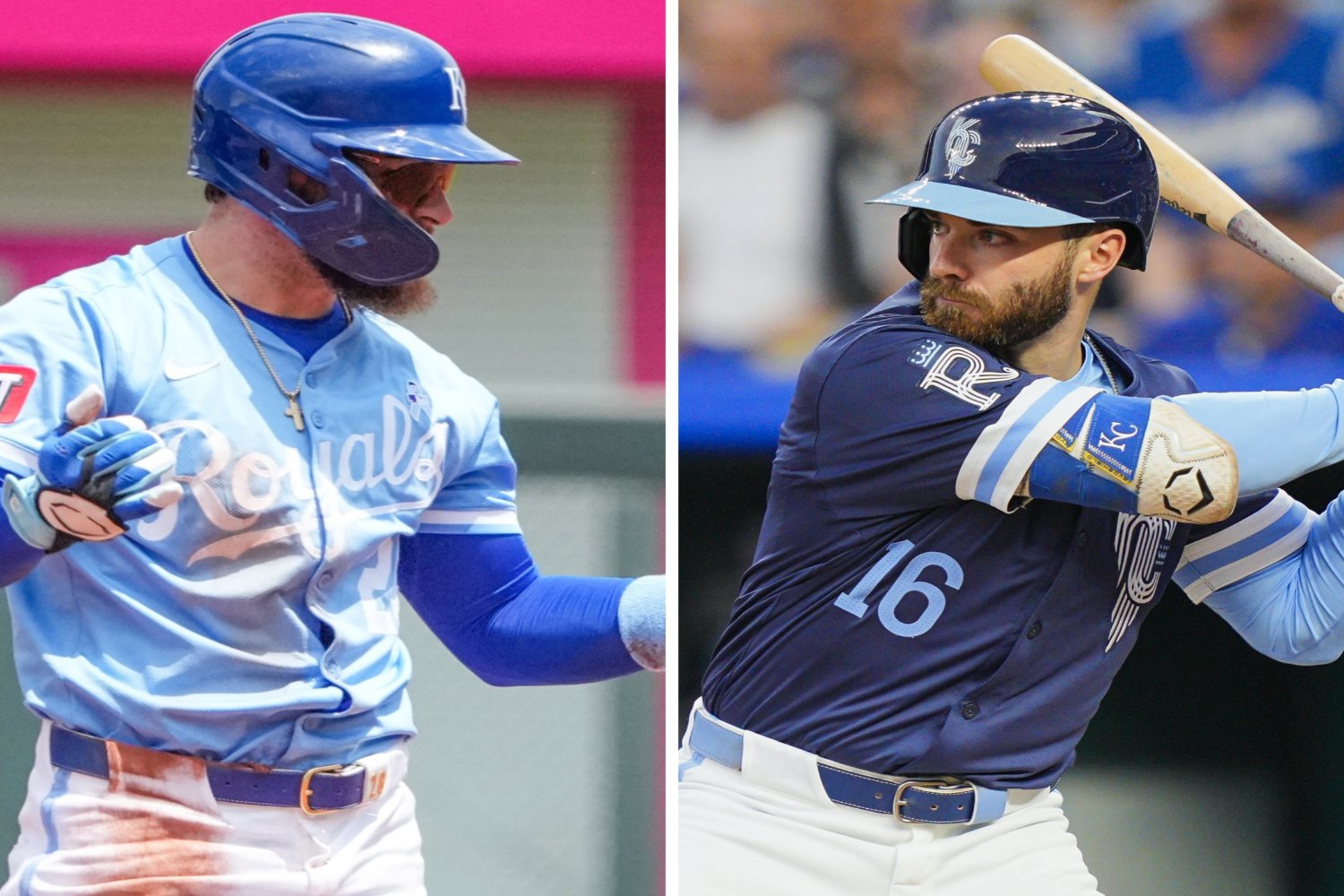 On January 1st, Derek Carty's The BAT X projections went live on Fangraphs, much to the fanfare of fantasy baseball players and fans everywhere. For those unfamiliar with The BAT X, Carty defines his projection system in an article on The Athletic from May 19th, 2025. Here is a summary of The BAT X in his words: The incorporation of Statcast data is a significant departure from the original BAT projection system, making The BAT X a bit more accurate and comprehensive. While the BAT projections are still live and available on Fangraphs, it is more commonplace for baseball fans and fantasy baseball managers to rely more on Carty's latest projection system. I have already broken down hitters, starting pitchers, and relief pitchers in my latest series on Royals projections via Steamer, which typically is one of the first projections to drop in the offseason. Thus, I am not going to do the same with the BAT X, especially since only hitter projections are available on Fangraphs right now. That said, as with any set of projections, there are some intriguing data points regarding certain players' outlooks for the upcoming season. So, in this post, I am going to focus on four hitters and my takeaways from their BAT X projections for 2026. Below is a table of all Royals hitters that the BAT X profiles in its projections, with a sortable data table available at this link. I have organized hitters by Fantasy Points (FPTS), mainly because BAT X is better suited to fantasy baseball purposes given its offensive focus. Even for non-fantasy baseball people, organizing by FPTS gives readers an idea of who the most productive hitters will be for the Royals in 2026, based on BAT X. Let's take a look at those four hitters and what Royals fans should be expecting for 2026, based on this latest projection set. Expectations More Modest For Caglianone In my Steamer projections post, Jac Caglianone seemed like the most significant rebound candidate for the Royals in 2026. After hitting seven home runs and posting a 46 wRC+ in 232 plate appearances in 2025, Steamer projected Caglianone to hit 16 home runs and post a 110 wRC+ in 418 plate appearances. That is a remarkable improvement and would make him one of the Royals' best hitters. The BAT X is a little more cautious in their projection of Caglianone. In 514 projected plate appearances, they still project the former Florida product to hit 16 home runs and collect 61 RBI. However, they also project an 85 wRC+, a 25-point difference from his Steamer projection. What's interesting about Caglianone's difference in projection is that there isn't much difference in their projected plate discipline metrics. Steamer is projecting a 0.36 BB/K ratio while the BAT X is projecting a 0.32 mark. Obviously, Steamer is higher, but the difference is negligible. The most significant difference is in BABIP, as BAT X is projecting a BABIP of .272 while Steamer is projecting a .286. That not only affects wRC+, but also batting average (.227 to Steamer's .255) and OPS (.678 to .769). The BAT X does account for launch angle, and Caglianone's LA Sweet-Spot% of 29.7% ranked in the bottom percentile of the league. His radial chart below also shows that, while the rookie outfielder hit the ball hard most of the time, he hit it too often on the ground, resulting in more outs than base hits. Thus, the BAT X believes that Caglianone will not make enough gains just yet in launch angle to improve his BABIP and, therefore, overall production. However, the Royals and Caglianone have been aware of these MLB struggles with launch angle, and his 14.1-degree average launch angle in Triple-A was 10 degrees higher than his average in the Majors (4.1 degrees). If Caglianone can see more launch on batted balls in 2026, especially early on, he could outperform his BAT X projection and put up something closer to his Steamer outlook. Could There Be A Battle Between Isbel and Rave in Center Field? Two players who also stuck out in interesting ways were outfielders Kyle Isbel and John Rave. Now, Isbel is a strong defensive player, and his +10 FRV ranked third among all Royals fielders last year with 25 or more innings. However, Rave wasn't that much worse, as he put up a +3 FRV in only 432 innings, 600 fewer innings than Isbel. It's possible that Rave could've matched Isbel over a similar sample of innings. Now, the reason I bring this up is that the difference between Isbel and Rave's BAT X projections is minuscule, with Rave holding a slight advantage, as seen below. Isbel: 480 PA, 7 HR, 51 R, 37 RBI, 11 SB, 67 wRC+, 370.1 FPTS Rave: 144 PA, 3 HR, 15 R, 12 RBI, 3 SB, 68 wRC+, 121 FPTS Obviously, Isbel has better counting numbers, but he also has 336 more plate appearances than Rave. Conversely, the 28-year-old outfielder has a slightly higher wRC+. Thus, like the defensive metrics, it's possible that there would be less of a gap between Isbel and Rave offensively with more Rave plate appearances. When looking at the Statcast metrics of both players, they look pretty similar from a year ago. Here's a glimpse at Isbel's via TJ Stats. Now, let's take a look at Rave's. Isbel makes more contact, but chases a lot more and doesn't pull the ball as much. On the flip side, Rave whiffs more, but chases less and pulls the ball more. Considering the new Royals' hitting staff's philosophy seems to be to minimize chasing, Rave may fit the Royals' lineup better than Isbel in 2026, solely on offensive profile. Now, I'm not saying that the Royals should bury Isbel on the bench. Instead, it wouldn't hurt JJ Picollo to explore the trade market to see what kind of value Isbel may have. Players with similar defensive-first profiles like Michael A. Taylor have been widely sought, so it's possible that trading Isbel away could help upgrade their farm system or give them some depth in the corner outfield position, where more power is needed. Again, I doubt the Royals do this, especially given Isbel's defensive value and his standing in the clubhouse (he's one of the longest-tenured Royals on the roster). Still, if Rave has a hot Spring Training, a trade involving Isbel may be something to keep an eye on before Opening Day. Expect an MVP-Caliber Season From Witt It was a "down season" for Bobby Witt Jr., which is crazy to say after he posted an 8.0 fWAR season in 2025. However, he posted a 10.5 fWAR season in 2024, and his 130 wRC+ last year was 39 points lower than his mark during his AL MVP-runner-up campaign. Fair or not, Witt's incredible 2024 season will always be the standard for him every season. The good thing is that on the offensive end, the BAT X expects some bounce-back from Witt. In 665 plate appearances, Witt is projected to hit 30 home runs, score 106 runs, collect 96 RBI, steal 37 bases, and post a 135 wRC+. All those marks are better than his Steamer projections, including wRC+ (Steamer projects a 133 mark). The BAT X also projects a .230 ISO, a 25-point increase from his 2025 ISO and 11 points above his Steamer-projected ISO. That kind of power projection is good to see, especially since that seemed to be an area where Witt regressed a season ago. A reason for the optimistic BAT X projections for Witt is that the Statcast profile still was stellar from the Royals' franchise star last year. Here's a look at his Stacast Summary profile via TJ Stats, and notice the amount of red, especially in the exit velocity, barrel, and hard-hit categories. The only blemish with Witt's profile is that he chases a reasonable amount (30th percentile O-Swing%), and he could do a better job of pulling the ball (14th percentile). Conversely, he did pull the ball in the air 13.7% of the time, which did put him in the 43rd percentile. It's still not up to superstar standards, but it's a step in the right direction and suggests some improvement could be on the way in 2026. For the Royals to make the postseason in 2026, Witt needs to be closer to his 2024 self offensively while still maintaining his 2025 defense (which netted him a second-straight Gold Glove award). If the Pull Air% continues to improve, I think it's not out of the question that the player expected to produce 1,009.2 FPTS by BAT X could be even better in 2026. The BAT X is projecting a good baseline for him in this upcoming season. With the proper adjustments to his pitch recognition and ability to pull the ball (which I think Connor Dawson and Marcus Thames can help him out with), he could push for another AL MVP run against the Yankees' Aaron Judge. That, in turn, could make the Royals not only playoff-bound but possible contenders, especially with a deeper roster in 2026 than in 2024.
 -
Five Cheap Free Agent Targets for the Royals
Kevin O'Brien posted a topic in Kansas City Royals Talk
Image courtesy of John E. Sokolowski-Imagn Images Even though Spring Training is still far away, there is a different vibe with the offseason when January comes. The beginning of the baseball season feels closer, as Jayson Stark remarked on Bluesky today. Even though seven weeks is a long time, the "hot stove" seems to change a bit after January 1st. Players holding out for bigger deals are more willing to settle for more modest deals, including Minor League ones with invites to Spring Training. In January and early February, it is common to see more of those Minor League deals, especially for players who were on Major League contracts a season ago. The Royals have addressed many needs this offseason: they acquired Alex Lange, Nick Mears, and Matt Strahm to boost the bullpen and Isaac Collins and Lane Thomas to improve the outfield. They also seem to be in the hunt for a bigger move, having been tied to rumors involving Boston's Jarren Duran and St. Louis' Brendan Donovan. That said, even if they aren't able to get those bigger targets via a trade, I do think the Royals will solidify their Spring Training roster a bit with some Minor League deals of players with some big-name appeal, as is the case with every team every spring. In this post, I will highlight five targets who could come to Kansas City on Minor League deals and be candidates to make the Opening Day roster with a solid Spring Training (or provide depth in Omaha if they do not, as Harold Castro did a season ago). Dylan Carlson, OF A former top prospect in the Cardinals system, Carlson has been rumored to be a Royals trade or free agent target in previous seasons. However, nothing ever came to fruition, as he played for the Rays and Orioles since leaving St. Louis. It hasn't been a stellar career for Carlson, who has a career fWAR of 2.8 in 567 games. He earned 2.4 fWAR in 2021 with the Cardinals, his first full year at the Major League level. That season, he hit 18 home runs and posted a 111 wRC+. Unfortunately, due to injury and inconsistency, he's failed to replicate that campaign, whether in St. Louis or elsewhere. Carlson has his flaws: his Max EV ranked in the seventh percentile, and his hard-hit rate ranked in the 13th percentile. Thus, he doesn't have the immense "power" that scouts raved about when he was a prospect. However, he's extremely patient at the plate and even in a subpar season with the Orioles last year (74 wRC+; -0.4 fWAR in 241 plate appearances), his O-Swing% ranked in the 95th percentile at 19.2%. Thomas and Collins sport a similar O-Swing% profile, and it seems like the new hitting coaching team under Alec Zumwalt is prioritizing hitters who do not chase. Carlson also pulls the ball decently with a 60th percentile Pull%. Hence, one has to wonder if being back in Missouri and with lower expectations could help Carlson tap into his other categories and get back to where he was before he left the Cardinals. If healthy and re-focused, he could be a fourth outfielder who could play all three positions at the Major League level. Jose Leclerc, RP Leclerc was a key reliever of the Rangers' 2023 World Series team (2.68 ERA in 57 appearances that season), but his career has been on the downswing since then. In 2024, his final season with the Rangers, he posted a 4.32 ERA in 64 appearances. He became a free agent after 2024 and signed with the Athletics for 2025. Unfortunately, injuries limited him to 9 appearances and 10 innings pitched. In that sample, he struggled, posting a 6.00 ERA, 7.36 FIP, and 6.5% K-BB%. For context, his K-BB% was 19.8% in 2024 and 16.7% in 2023, so that decline was surprising. Even though the sample wasn't great, Leclerc still generated a decent chase at 29% and a strong whiff rate at 30.9%. His four-seamer and cutter also graded well last year with 105 TJ Stuff+ marks. Even his overall TJ Stuff+ of 100 wasn't bad, and his stuff could play even better with some pitch modification or repertoire consolidation (he may need to eliminate the sinker, at the very least). New Royals assistant pitching coach Mike McFerran was in the Athletics organization last year, so he should have some familiarity with Leclerc and could help him tap into his pre-2025 skills. Austin Slater, OF Slater is an interesting target as he was decent with the White Sox, despite dealing with a meniscus injury early in the season last year. In 135 plate appearances with the South Siders, he posted a 100 wRC+, five home runs, and a 0.3 fWAR. The White Sox traded him to the Yankees, and he didn't do much with the Bronx Bombers, posting a -41 wRC+ in 25 plate appearances. The intriguing aspect of Slater's profile is that he sports good pop and batted-ball ability. His average EV ranked in the 82nd percentile, his barrel rate ranked in the 91st percentile, his hard-hit rate ranked in the 79th percentile, and his LA Sweet-Spot% ranked in the 96th percentile. He also pulled the ball well at 41.8%, which ranked in the 72nd percentile (though his Pull Air% left a bit to be desired at 11.2%). The primary issue with Slater is that he's a bit of a free swinger. His whiff rate ranked in the 31st percentile, and his O-Swing% ranked in the 46th percentile. That said, an aggressive approach isn't necessarily a bad thing for a fourth outfielder who can get hot for small periods of time. Slater can also play multiple positions in the outfield and is a switch-hitter, thus giving him added versatility off the bench in pinch-hit situations. He's the perfect 26th-man type that could replace a player like Nick Loftin or Tyler Tolbert, who both still have Minor League options. Jose Urquidy, SP/RP Urquidy shouldn't even be on this list, as the Arizona Diamondbacks initially had a deal in place with the Mexican right-hander back in mid-December. However, it seems the deal fell through right after Christmas, with no explanation for why things changed. There are likely concerns about Urquidy's health and durability. Since 2023, he has only pitched 65.1 innings at the Major League level, and he missed all of 2024 due to recovery from Tommy John surgery. After bringing back Merrill Kelly and signing Michael Soroka, the Diamondbacks probably didn't feel like the risk with Urquidy was worth it. In terms of a Major League deal, the Royals should avoid Urquidy. However, for a Minor League one, he becomes more intriguing. Even in his small two-inning sample last year, the stuff looked great: three pitches with grades over 50, a 102 overall TJ Stuff+, a 51.8% zone rate, a 29.6% chase rate, and 41.7% whiff rate. If he can transition that to a larger sample, Urquidy could contend for Comeback Player of the Year honors. Acquiring Urquidy could give the Royals some flexibility to trade away one of their current pitching assets, like Kris Bubic, Noah Cameron, Ryan Bergert, and Stephen Kolek. Even if Urquidy moves to the bullpen, he could be a nice trade candidate at the Deadline who could help them net some reinforcements, whether on the pitching, hitting, or prospect ends. The 30-year-old still has some upside remaining, even if the health history isn't great. Thus, he could be a nice project for Brian Sweeney and McFerran for 2026, if they can acquire him this offseason on a Minor League deal. Garrett Hampson, UTL I figured a deal for Adam Frazier would've been done by now, especially since he rejuvenated the squad in the second half after coming over in a trade with Pittsburgh. Frazier is definitely a "vibes" guy who has had a positive impact on the Royals clubhouse in his 1.5 years in Kansas City. That said, no deal has been announced, which suggests Frazier is exploring options with other clubs and seeking a bigger deal. Anything beyond a one-year, $1.5 million deal feels like too much for the 34-year-old utility player. If the Royals can't get Frazier, they could bring back another old friend: Hampson, who played for the Diamondbacks, Cardinals, and Reds last year. Now, Hampson was flat-out bad last year. With those three teams, he posted a 26 wRC+ and -0.2 fWAR in 62 games. However, he was serviceable as a utility guy off the bench with the Royals in 2024. In 113 games with Kansas City, he posted a 60 wRC+ and 0.5 fWAR. What Hampson does well is that he doesn't chase at the plate, and he is solid defensively. Last year, he still ranked in the 81st percentile in O-Swing%, 66th percentile in Whiff%, and 90th percentile in BB%. He also posted a +3 OAA last year and sported a +8 OAA with the Royals in 2024. The latter ranked in the 93rd percentile, according to Savant. What makes Hampson so strong defensively is that he is not just adept at making outs, but he can also play multiple positions. With the Royals, he played every position but catcher (he even pitched for an inning in a blowout). There's no reason to think that he couldn't do that again with the Royals in 2026, which would give manager Matt Quatraro a valuable late-inning defensive substitution off the bench. It wouldn't be a popular pick, as Hampson had his share of detractors among Royals fans due to his propensity to make awful-looking errors or baserunning blunders (though he stole seven bases with the Royals and posted a +1 baserunning run mark, according to Savant). That said, for a Minor League deal, it could benefit the Royals to kick the tires on Hampson in Spring Training to see if he can channel his 2024 self once again. View full article -
 Even though Spring Training is still far away, there is a different vibe with the offseason when January comes. The beginning of the baseball season feels closer, as Jayson Stark remarked on Bluesky today. Even though seven weeks is a long time, the "hot stove" seems to change a bit after January 1st. Players holding out for bigger deals are more willing to settle for more modest deals, including Minor League ones with invites to Spring Training. In January and early February, it is common to see more of those Minor League deals, especially for players who were on Major League contracts a season ago. The Royals have addressed many needs this offseason: they acquired Alex Lange, Nick Mears, and Matt Strahm to boost the bullpen and Isaac Collins and Lane Thomas to improve the outfield. They also seem to be in the hunt for a bigger move, having been tied to rumors involving Boston's Jarren Duran and St. Louis' Brendan Donovan. That said, even if they aren't able to get those bigger targets via a trade, I do think the Royals will solidify their Spring Training roster a bit with some Minor League deals of players with some big-name appeal, as is the case with every team every spring. In this post, I will highlight five targets who could come to Kansas City on Minor League deals and be candidates to make the Opening Day roster with a solid Spring Training (or provide depth in Omaha if they do not, as Harold Castro did a season ago). Dylan Carlson, OF A former top prospect in the Cardinals system, Carlson has been rumored to be a Royals trade or free agent target in previous seasons. However, nothing ever came to fruition, as he played for the Rays and Orioles since leaving St. Louis. It hasn't been a stellar career for Carlson, who has a career fWAR of 2.8 in 567 games. He earned 2.4 fWAR in 2021 with the Cardinals, his first full year at the Major League level. That season, he hit 18 home runs and posted a 111 wRC+. Unfortunately, due to injury and inconsistency, he's failed to replicate that campaign, whether in St. Louis or elsewhere. Carlson has his flaws: his Max EV ranked in the seventh percentile, and his hard-hit rate ranked in the 13th percentile. Thus, he doesn't have the immense "power" that scouts raved about when he was a prospect. However, he's extremely patient at the plate and even in a subpar season with the Orioles last year (74 wRC+; -0.4 fWAR in 241 plate appearances), his O-Swing% ranked in the 95th percentile at 19.2%. Thomas and Collins sport a similar O-Swing% profile, and it seems like the new hitting coaching team under Alec Zumwalt is prioritizing hitters who do not chase. Carlson also pulls the ball decently with a 60th percentile Pull%. Hence, one has to wonder if being back in Missouri and with lower expectations could help Carlson tap into his other categories and get back to where he was before he left the Cardinals. If healthy and re-focused, he could be a fourth outfielder who could play all three positions at the Major League level. Jose Leclerc, RP Leclerc was a key reliever of the Rangers' 2023 World Series team (2.68 ERA in 57 appearances that season), but his career has been on the downswing since then. In 2024, his final season with the Rangers, he posted a 4.32 ERA in 64 appearances. He became a free agent after 2024 and signed with the Athletics for 2025. Unfortunately, injuries limited him to 9 appearances and 10 innings pitched. In that sample, he struggled, posting a 6.00 ERA, 7.36 FIP, and 6.5% K-BB%. For context, his K-BB% was 19.8% in 2024 and 16.7% in 2023, so that decline was surprising. Even though the sample wasn't great, Leclerc still generated a decent chase at 29% and a strong whiff rate at 30.9%. His four-seamer and cutter also graded well last year with 105 TJ Stuff+ marks. Even his overall TJ Stuff+ of 100 wasn't bad, and his stuff could play even better with some pitch modification or repertoire consolidation (he may need to eliminate the sinker, at the very least). New Royals assistant pitching coach Mike McFerran was in the Athletics organization last year, so he should have some familiarity with Leclerc and could help him tap into his pre-2025 skills. Austin Slater, OF Slater is an interesting target as he was decent with the White Sox, despite dealing with a meniscus injury early in the season last year. In 135 plate appearances with the South Siders, he posted a 100 wRC+, five home runs, and a 0.3 fWAR. The White Sox traded him to the Yankees, and he didn't do much with the Bronx Bombers, posting a -41 wRC+ in 25 plate appearances. The intriguing aspect of Slater's profile is that he sports good pop and batted-ball ability. His average EV ranked in the 82nd percentile, his barrel rate ranked in the 91st percentile, his hard-hit rate ranked in the 79th percentile, and his LA Sweet-Spot% ranked in the 96th percentile. He also pulled the ball well at 41.8%, which ranked in the 72nd percentile (though his Pull Air% left a bit to be desired at 11.2%). The primary issue with Slater is that he's a bit of a free swinger. His whiff rate ranked in the 31st percentile, and his O-Swing% ranked in the 46th percentile. That said, an aggressive approach isn't necessarily a bad thing for a fourth outfielder who can get hot for small periods of time. Slater can also play multiple positions in the outfield and is a switch-hitter, thus giving him added versatility off the bench in pinch-hit situations. He's the perfect 26th-man type that could replace a player like Nick Loftin or Tyler Tolbert, who both still have Minor League options. Jose Urquidy, SP/RP Urquidy shouldn't even be on this list, as the Arizona Diamondbacks initially had a deal in place with the Mexican right-hander back in mid-December. However, it seems the deal fell through right after Christmas, with no explanation for why things changed. There are likely concerns about Urquidy's health and durability. Since 2023, he has only pitched 65.1 innings at the Major League level, and he missed all of 2024 due to recovery from Tommy John surgery. After bringing back Merrill Kelly and signing Michael Soroka, the Diamondbacks probably didn't feel like the risk with Urquidy was worth it. In terms of a Major League deal, the Royals should avoid Urquidy. However, for a Minor League one, he becomes more intriguing. Even in his small two-inning sample last year, the stuff looked great: three pitches with grades over 50, a 102 overall TJ Stuff+, a 51.8% zone rate, a 29.6% chase rate, and 41.7% whiff rate. If he can transition that to a larger sample, Urquidy could contend for Comeback Player of the Year honors. Acquiring Urquidy could give the Royals some flexibility to trade away one of their current pitching assets, like Kris Bubic, Noah Cameron, Ryan Bergert, and Stephen Kolek. Even if Urquidy moves to the bullpen, he could be a nice trade candidate at the Deadline who could help them net some reinforcements, whether on the pitching, hitting, or prospect ends. The 30-year-old still has some upside remaining, even if the health history isn't great. Thus, he could be a nice project for Brian Sweeney and McFerran for 2026, if they can acquire him this offseason on a Minor League deal. Garrett Hampson, UTL I figured a deal for Adam Frazier would've been done by now, especially since he rejuvenated the squad in the second half after coming over in a trade with Pittsburgh. Frazier is definitely a "vibes" guy who has had a positive impact on the Royals clubhouse in his 1.5 years in Kansas City. That said, no deal has been announced, which suggests Frazier is exploring options with other clubs and seeking a bigger deal. Anything beyond a one-year, $1.5 million deal feels like too much for the 34-year-old utility player. If the Royals can't get Frazier, they could bring back another old friend: Hampson, who played for the Diamondbacks, Cardinals, and Reds last year. Now, Hampson was flat-out bad last year. With those three teams, he posted a 26 wRC+ and -0.2 fWAR in 62 games. However, he was serviceable as a utility guy off the bench with the Royals in 2024. In 113 games with Kansas City, he posted a 60 wRC+ and 0.5 fWAR. What Hampson does well is that he doesn't chase at the plate, and he is solid defensively. Last year, he still ranked in the 81st percentile in O-Swing%, 66th percentile in Whiff%, and 90th percentile in BB%. He also posted a +3 OAA last year and sported a +8 OAA with the Royals in 2024. The latter ranked in the 93rd percentile, according to Savant. What makes Hampson so strong defensively is that he is not just adept at making outs, but he can also play multiple positions. With the Royals, he played every position but catcher (he even pitched for an inning in a blowout). There's no reason to think that he couldn't do that again with the Royals in 2026, which would give manager Matt Quatraro a valuable late-inning defensive substitution off the bench. It wouldn't be a popular pick, as Hampson had his share of detractors among Royals fans due to his propensity to make awful-looking errors or baserunning blunders (though he stole seven bases with the Royals and posted a +1 baserunning run mark, according to Savant). That said, for a Minor League deal, it could benefit the Royals to kick the tires on Hampson in Spring Training to see if he can channel his 2024 self once again.
 -
Kansas City Remains Interested in Austin Hays
Kevin O'Brien replied to Kevin O'Brien's topic in Kansas City Royals Talk
Yeah at this point I think they’re banking on India turning it around with the hope that focusing on one position will help him get back to where he was two seasons ago. I personally like Massey more too but he just isn’t dependable with the bat and health. I think if they get Hays, you’re right, it’s tough to see Massey having any kind of role with this team in ‘26 until India is either traded away or released -
 2025 is officially behind us. This past season was a slight success for the Royals, given this organization's recent history. Since their 2015 World Series, they have only returned to the playoffs once. While they missed the postseason last year, they finished 82-80, only their second winning season since 2015 and the first time they have had back-to-back winning seasons since 2014-2015. That said, after winning the Wild Card round against Baltimore and reaching the ALDS in 2024, not making the playoffs was a disappointment and serves as motivation for this squad in the upcoming season. So, to make the playoffs, what do the Royals need to do? What are some "resolutions" they should have for the new year to help them return to the postseason? In this post, I will look at three resolutions the Royals should adopt to help them bounce back after a four-win regression last season. Improve the Baserunning In 2024, baserunning was a strength of this Royals ballclub. They stole 134 bases, and according to Baseball Savant's Baserunning Run Value metric, they accumulated nine baserunning runs, ranking 5th in baseball. Baserunning Runs Value accounts for runs created by not just stolen bases, but extra bases taken as well. The Royals had plus-five runs in terms of extra bases taken and plus-four runs in stolen bases. Thus, they were effective not just at stealing bags but also at getting extra bases on base hits. It was a different story in 2025. Last year, the Royals ranked 24th with a minus-four baserunning runs mark. They had zero runs created on extra bases and had minus-four runs on stolen bases, the latter being an eight-run decline from the previous season. A big issue for the Royals was that they didn't just steal fewer bases (111), but that they were caught 42 times. That was the fifth-highest mark in baseball, and it was eleven higher than their caught-stealing mark in 2024. Kansas City has talented baserunners on its roster. Bobby Witt Jr. has accumulated 13 baserunning runs over the past two years, Maikel Garcia has accumulated seven, Dairon Blanco has accumulated five, and Kyle Isbel has accumulated three. However, efficiency was a problem for the Royals in 2025, and they need to improve in that area if they want to exceed their 82-win total in 2026. Outs on the bases can't happen as frequently as they did a year ago. Generate More Chase As a Pitching Staff The Royals' pitching staff has seen a renaissance over the past two years under pitching coach Brian Sweeney. Over the past two seasons, Kansas City ranks 4th in ERA at 3.74 and has accumulated the second-most fWAR at 37.5. That has been a key reason the Royals have won 86 games in 2024 and 82 in 2025, after winning only 56 in 2023. If there's one Achilles heel of this pitching staff, however, it's that they do not generate a lot of chase. Last year, the Royals' pitching staff posted a 30.5% O-Swing%, ranking 26th in baseball. Over the past two years, their 30.5% O-Swing% ranks 27th. Only the White Sox, Guardians, and Rockies have lower marks in that category. Generating chase is essential because it can lead to more whiffs and, hence, strikeouts. Over the past two seasons, the Royals rank 25th in SwStr% at 10.5% and 22nd in baseball with a 22.7% K%. If the Royals pitchers can induce more chase, that can help them not only get more whiffs and strikeouts, but more wins as a result. Royals GM JJ Picollo has undoubtedly made an effort to improve in that area with some of his recent moves. Here's a look at three new pitchers the Royals have acquired, and their O-Swing% over the past two seasons. Nick Mears: 36.4% Matt Strahm: 35.7% Alex Lange: 28.5% Lange is the only one who lags behind the Royals' 30.5% O-Swing% from 2024 to 2025. That said, Lange's 12.3% SwStr% is the same as Strahm's and only 0.6% behind Mears'. So Lange still gets whiffs even with the lackluster O-Swing%. The Royals' pitching staff is deep, but it wouldn't be surprising to see Picollo make one last move to solidify things, whether it's rotation or bullpen depth. If they do acquire someone, expect them to be strong at generating chase. Improve Hitter Plate Discipline If generating more chase as a pitching staff is a priority for the Royals this offseason, then limiting chase appears to be a priority for the hitters. Over the past two years, the Royals' 32.8% O-Swing% ranks seventh-highest in baseball. On a positive note, the Royals' 9.8% SwStr% is fifth-lowest in baseball over that period, and their 18.8% K% is second-lowest. Unfortunately, while the Royals are good at making contact, they have not transitioned that approach into offensive success. The Royals' 95 wRC+ over the past two years ranks 21st, and their .153 ISO ranks 19th. Witt (150 wRC+), Vinnie Pasquantino (113 wRC+), and Salvador Perez (106 wRC+) have posted above-average wRC+ marks over the past two seasons, and Garcia (96 wRC+) has a mark above the Royals' 2024-2025 team wRC+ mark. Other than that, Kansas City has been lackluster offensively, and its questionable swing selection and plate discipline are to blame. Like the pitching staff, Picollo has done his legwork already to improve in this area. Gone are assistant hitting coaches Keoni DeRenne and Joe Dillon, and in their places are Connor Dawson and Marcus Thames, who come from the Brewers and White Sox, respectively. Both coaches preach better decision-making at the plate and have shown the ability to coax it from hitters in their previous organizations. They also have acquired outfielders in Lane Thomas and Isaac Collins, who have shown stretches of solid plate discipline at the MLB level. Over their careers, Thomas has a 24.8% O-Swing%, and Collins has a 17.9% O-Swing%. Kansas City seems determined to add at least one more bat before Spring Training, with Jarren Duran of the Red Sox and Brendan Donovan of the Cardinals being the most mentioned targets. Duran has a more free-swinging approach, as illustrated by his 32.9% O-Swing% over the past two years. However, Donovan fits the "disciplined" mold with a 27.2% O-Swing%. Thus, it wouldn't be surprising to see Donovan emerge more as a favorite target for Kansas City, primarily if they're focused on improving their lineup's plate discipline in 2026. Even if they do not acquire Donovan or Duran, Royals fans should expect Picollo to target a free-agent hitter or two, even on a Minor League deal, who sports a low O-Swing%, even if they may lag in some other areas.
 -
Image courtesy of Bill Streicher-Imagn Images 2025 is officially behind us. This past season was a slight success for the Royals, given this organization's recent history. Since their 2015 World Series, they have only returned to the playoffs once. While they missed the postseason last year, they finished 82-80, only their second winning season since 2015 and the first time they have had back-to-back winning seasons since 2014-2015. That said, after winning the Wild Card round against Baltimore and reaching the ALDS in 2024, not making the playoffs was a disappointment and serves as motivation for this squad in the upcoming season. So, to make the playoffs, what do the Royals need to do? What are some "resolutions" they should have for the new year to help them return to the postseason? In this post, I will look at three resolutions the Royals should adopt to help them bounce back after a four-win regression last season. Improve the Baserunning In 2024, baserunning was a strength of this Royals ballclub. They stole 134 bases, and according to Baseball Savant's Baserunning Run Value metric, they accumulated nine baserunning runs, ranking 5th in baseball. Baserunning Runs Value accounts for runs created by not just stolen bases, but extra bases taken as well. The Royals had plus-five runs in terms of extra bases taken and plus-four runs in stolen bases. Thus, they were effective not just at stealing bags but also at getting extra bases on base hits. It was a different story in 2025. Last year, the Royals ranked 24th with a minus-four baserunning runs mark. They had zero runs created on extra bases and had minus-four runs on stolen bases, the latter being an eight-run decline from the previous season. A big issue for the Royals was that they didn't just steal fewer bases (111), but that they were caught 42 times. That was the fifth-highest mark in baseball, and it was eleven higher than their caught-stealing mark in 2024. Kansas City has talented baserunners on its roster. Bobby Witt Jr. has accumulated 13 baserunning runs over the past two years, Maikel Garcia has accumulated seven, Dairon Blanco has accumulated five, and Kyle Isbel has accumulated three. However, efficiency was a problem for the Royals in 2025, and they need to improve in that area if they want to exceed their 82-win total in 2026. Outs on the bases can't happen as frequently as they did a year ago. Generate More Chase As a Pitching Staff The Royals' pitching staff has seen a renaissance over the past two years under pitching coach Brian Sweeney. Over the past two seasons, Kansas City ranks 4th in ERA at 3.74 and has accumulated the second-most fWAR at 37.5. That has been a key reason the Royals have won 86 games in 2024 and 82 in 2025, after winning only 56 in 2023. If there's one Achilles heel of this pitching staff, however, it's that they do not generate a lot of chase. Last year, the Royals' pitching staff posted a 30.5% O-Swing%, ranking 26th in baseball. Over the past two years, their 30.5% O-Swing% ranks 27th. Only the White Sox, Guardians, and Rockies have lower marks in that category. Generating chase is essential because it can lead to more whiffs and, hence, strikeouts. Over the past two seasons, the Royals rank 25th in SwStr% at 10.5% and 22nd in baseball with a 22.7% K%. If the Royals pitchers can induce more chase, that can help them not only get more whiffs and strikeouts, but more wins as a result. Royals GM JJ Picollo has undoubtedly made an effort to improve in that area with some of his recent moves. Here's a look at three new pitchers the Royals have acquired, and their O-Swing% over the past two seasons. Nick Mears: 36.4% Matt Strahm: 35.7% Alex Lange: 28.5% Lange is the only one who lags behind the Royals' 30.5% O-Swing% from 2024 to 2025. That said, Lange's 12.3% SwStr% is the same as Strahm's and only 0.6% behind Mears'. So Lange still gets whiffs even with the lackluster O-Swing%. The Royals' pitching staff is deep, but it wouldn't be surprising to see Picollo make one last move to solidify things, whether it's rotation or bullpen depth. If they do acquire someone, expect them to be strong at generating chase. Improve Hitter Plate Discipline If generating more chase as a pitching staff is a priority for the Royals this offseason, then limiting chase appears to be a priority for the hitters. Over the past two years, the Royals' 32.8% O-Swing% ranks seventh-highest in baseball. On a positive note, the Royals' 9.8% SwStr% is fifth-lowest in baseball over that period, and their 18.8% K% is second-lowest. Unfortunately, while the Royals are good at making contact, they have not transitioned that approach into offensive success. The Royals' 95 wRC+ over the past two years ranks 21st, and their .153 ISO ranks 19th. Witt (150 wRC+), Vinnie Pasquantino (113 wRC+), and Salvador Perez (106 wRC+) have posted above-average wRC+ marks over the past two seasons, and Garcia (96 wRC+) has a mark above the Royals' 2024-2025 team wRC+ mark. Other than that, Kansas City has been lackluster offensively, and its questionable swing selection and plate discipline are to blame. Like the pitching staff, Picollo has done his legwork already to improve in this area. Gone are assistant hitting coaches Keoni DeRenne and Joe Dillon, and in their places are Connor Dawson and Marcus Thames, who come from the Brewers and White Sox, respectively. Both coaches preach better decision-making at the plate and have shown the ability to coax it from hitters in their previous organizations. They also have acquired outfielders in Lane Thomas and Isaac Collins, who have shown stretches of solid plate discipline at the MLB level. Over their careers, Thomas has a 24.8% O-Swing%, and Collins has a 17.9% O-Swing%. Kansas City seems determined to add at least one more bat before Spring Training, with Jarren Duran of the Red Sox and Brendan Donovan of the Cardinals being the most mentioned targets. Duran has a more free-swinging approach, as illustrated by his 32.9% O-Swing% over the past two years. However, Donovan fits the "disciplined" mold with a 27.2% O-Swing%. Thus, it wouldn't be surprising to see Donovan emerge more as a favorite target for Kansas City, primarily if they're focused on improving their lineup's plate discipline in 2026. Even if they do not acquire Donovan or Duran, Royals fans should expect Picollo to target a free-agent hitter or two, even on a Minor League deal, who sports a low O-Swing%, even if they may lag in some other areas. View full article
-
Image courtesy of Dennis Lee-Imagn Images Pitching is definitely an art form where success lies in millimeters. A pitch can have incredible velocity, but if it's too straight or located in the wrong area, it can be hit hard and often. Thus, a pitcher is not just an athlete but an artist who must balance his repertoire and pitch quality to be effective in both the short- and long-term. Since the arrival of manager Matt Quatraro and pitching coach Brian Sweeney, the Royals' pitching staff has experienced a renaissance, especially since 2024. Over the past two years, Kansas City has ranked 4th in pitching ERA (3.74), 6th in FIP (3.88), and 2nd in pitching fWAR (37.5). What used to be a weakness, especially when Cal Eldred was the pitching coach, has become a strength of the team and organization. That said, when looking at Royals pitchers individually, especially from the past year, which pitches stuck out the most? Which pitchers sported the best offerings, both in terms of stuff and results? In this post, I am going to look at the five best pitches thrown by Kansas City pitchers in 2025 and offer a breakdown of why those particular pitches stuck out so much in a positive fashion last year. Let's take a look at those five pitchers and their excellent offerings last year. All metrics and graphics are courtesy of TJ Stats. Steven Cruz, Four-Seam Fastball 50% usage, 98.2 MPH average velocity, 15 iVB, 9.8 HB, 108.4 TJ Stuff+ Cruz emerged as a sneaky middle-innings reliever for the Royals last year, getting some high-leverage work in spot situations. A key to his success was his four-seamer, a high-velocity offering (98.2 MPH) that also sported a 108.4 TJ Stuff+, the best mark of any fastball pitch thrown by a Royals pitcher last year. The four-seamer was an interesting pitch quality-wise, as it sported movement atypical for a four-seam fastball. The iVB on the pitch was a bit supbar at 15, but the 9.8 HB on the pitch made it a more tailing offering. In many ways, the pitch seemed to be a cross between a four-seamer and a sinker, which Cruz primarily threw before last season. When located effectively, Cruz's uncanny four-seamer could generate some impressive whiffs, mainly when located up in the zone. The 26-year-old righty threw the pitch equally against lefties and righties a season ago, with a 49.1% usage against left-handed hitters and a 50.9% usage against righties. The pitch was thrown more up and away against lefties and more up and in the middle against righties. Against lefties, he generated more whiffs, as his 32.3% whiff rate against lefties was nearly 10% higher than his whiff rate against righties. However, he was more effective at throwing strikes with the four-seamer against righties, as illustrated by his 31.5% CSW (compared to a 28.4% CSW against lefties). Command was an issue at times for Cruz, and he didn't generate as many strikeouts as one would think for a reliever with such impressive stuff, as illustrated by a 20.1% K%. That said, when located properly, his four-seamer was a weapon out of the bullpen and should be key for a Royals bullpen that needs velocity in the middle innings. Carlos Estevez, Slider 30.9% usage, 87.3 MPH average velocity, 3.0 iVB, -5.4 HB, 107.3 TJ Stuff+ Estevez is known for his high-velocity four-seamer, but his slider may have been his best weapon overall in 2025. The slider is not much of a horizontal offering, sporting only a -5.4 HB. However, it sported a 107.3 TJ Stuff+, the third-best slider thrown last year in terms of TJ Stuff+. When paired with his four-seamer, it could buckle opposing hitters, get them to whiff, or induce weak contact in key spots. That kind of breaking offering is key for a closer to have in high-leverage situations. The Royals' closer primarily utilized the slider against righties with a 43.3% usage, which was 22.2% higher than his slider usage against lefties. Estevez didn't necessarily worry about command with the pitch, as he threw it in the middle against both righties and lefties. The slider generated more O-Swing% against righties (24.1%) than lefties, though it produced more whiffs (28.3% whiff rate) and strikes (34.4% CSW) against lefties than righties (14.4% whiff rate; 24% CSW). In both clips above, Estevez doesn't generate whiffs, but effectively buckles up Daylen Lile of the Nationals and Vladimir Guerrero Jr. of the Blue Jays, who are obviously sitting on a fastball. To be able to throw that kind of pitch against hitters early in the count to get ahead was key to Estevez's effectiveness in 2025, helping him lead the MLB in saves. Seth Lugo, Curveball 18.2% usage, 78.9 MPH average velocity, -13.8 iVB, -14.4 HB, 106.3 TJ Stuff+ Lugo is the definition of a pitching "savant". The 36-year-old righty threw 10 different pitches last year, with seven of them having a usage of five percent or above. That made Lugo one of the toughest at-bats in baseball, despite not possessing an elite fastball. The best offering Lugo threw last year was his curveball, which ranked second in usage at 18.2%. The curve was thrown 24.6% of the time against lefties, while only 9.1% of the time against righties. However, he was equally as effective against both sides of the plate with the breaker, as illustrated by his 32.2% CSW against lefties and 33.7% CSW against righties. He also generated an O-Swing% of 33% against lefties and a 30.8% O-Swing% against righties, which showed it could be an effective "chase" pitch for Lugo when he needed it. That was certainly the case in his strikeout of Wyatt Langford of the Rangers, who chased the curve on a 1-2 count. Against lefties, he tended to paint the armside edge with the offering, while against righties, he threw it more up and in the middle of the plate. He tended to throw the slider, slurve, and slow curve more against righties, so the curve against righties was more of a "change of pace" offering, which is why the command was not as precise. Lugo's curve sported a TJ Stuff+ of 106.3, his best TJ Stuff+ offering. He did give up some hard contact with the curve against lefties last year, with a .462 xwOBACON allowed. Improving the command on his primary breaking pitch could help him see some positive regression in 2026 after posting a 4.15 ERA a season ago. Kris Bubic, Four-Seamer 38.1% usage, 92.1 MPH average velocity, 18,2 iVB, 4.3 HB, 104.6 TJ Stuff+ Bubic's four-seamer is a prime example of why iVB and extension can help improve a fastball with mediocre velocity. With a 92.1 MPH average velocity, the lefty's four-seamer should be a widely crushed offering. And yet, Bubic can get 6.9 extension and 18.2 iVB on the pitch. That helps the four-seamer play up and seem faster than it is on the radar gun. His 106.4 TJ Stuff+ with the pitch further illustrates that, and his four-seamer TJ Stuff+ rated better than Estevez's, which had a 95.9 MPH average velocity last year. As a result, Bubic generated a 33.3% whiff rate with the four-seamer against lefties and a 26.4% against righties. He threw the four-seamer more against righties, with a 42.1% usage against a 24.8% usage against lefties. While the four-seamer was a better swing-and-miss offering against lefties, the CSW metrics were pretty similar against hitters on both sides of the plate (35% CSW against lefties; 31.7% CSW against righties). He was more effective at minimizing productive contact against righties with the four-seamer, as his .367 xwOBACON was 119 points lower than his mark against lefties. When it came to command, the Stanford product was pretty consistent against both lefties and righties, locating the pitch up and away in the strike zone. That made the pitch pretty ideal for generating whiffs, as illustrated in the clip compilation below. Bubic is a trade candidate this winter due to his free agency after 2026. While he doesn't have the prestige of other available top arms on the trade market, his sneakily effective four-seamer could make him a top-of-the-rotation arm for the right team (should JJ Picollo trade him away, of course). Cole Ragans, Slider 13.8% usage, 84.7 MPH average velocity, -2.5 iVB, -1.8 HB, 107.1 TJ Stuff+ Much like Estevez's slider, Ragans' breaking offering is an example of nuance. It doesn't sport much vertical or horizontal break. However, it's a nice change of pace, catching hitters off guard when they're sitting on four-seamers or even his changeup, which are both thrown more often (49.5% and 19.2%, respectively). With a TJ Stuff+ of 107.1, it is an offering that is usually slept on by hitters, even though it shouldn't. Ragans threw the slider more against lefties with a 32.1% usage (he only had a 7.6% usage against righties). Still, it was a compelling pitch against both sides of the plate in terms of CSW (34.1% against lefties; 32.8% against righties) and whiff% (45.2% against lefties and 41.2% against righties). He was better at minimizing hard contact with the slider against lefties, as his .291 xwOBACON was 277 points lower than his mark against righties. What was interesting about Ragans' slider was that he located it in the same spot against both lefties and righties: down and in, glove-side. One would think that would make it easy to hone in on for hitters, especially right-handed ones. However, since he threw it less than eight percent of the time, hitters weren't able to do that often, especially since his knuckle curve was his preferred breaking pitch against righties (114 pitches against righties compared to 24 against lefties). When located in Ragans' preferred spot, he could get the swing and miss that he wanted, especially when ahead in the count, as illustrated below. The slider wasn't necessarily a punch-out pitch, but rather an offering that kept hitters from sitting on his four-seamer. With a 10.6 MPH difference between his average four-seamer and average slider, it was common for hitters to swing over Ragans' slider, much like St. Louis' Victor Scott II and Seattle's Victor Robles did in the clip compilation above. View full article
-
 Pitching is definitely an art form where success lies in millimeters. A pitch can have incredible velocity, but if it's too straight or located in the wrong area, it can be hit hard and often. Thus, a pitcher is not just an athlete but an artist who must balance his repertoire and pitch quality to be effective in both the short- and long-term. Since the arrival of manager Matt Quatraro and pitching coach Brian Sweeney, the Royals' pitching staff has experienced a renaissance, especially since 2024. Over the past two years, Kansas City has ranked 4th in pitching ERA (3.74), 6th in FIP (3.88), and 2nd in pitching fWAR (37.5). What used to be a weakness, especially when Cal Eldred was the pitching coach, has become a strength of the team and organization. That said, when looking at Royals pitchers individually, especially from the past year, which pitches stuck out the most? Which pitchers sported the best offerings, both in terms of stuff and results? In this post, I am going to look at the five best pitches thrown by Kansas City pitchers in 2025 and offer a breakdown of why those particular pitches stuck out so much in a positive fashion last year. Let's take a look at those five pitchers and their excellent offerings last year. All metrics and graphics are courtesy of TJ Stats. Steven Cruz, Four-Seam Fastball 50% usage, 98.2 MPH average velocity, 15 iVB, 9.8 HB, 108.4 TJ Stuff+ Cruz emerged as a sneaky middle-innings reliever for the Royals last year, getting some high-leverage work in spot situations. A key to his success was his four-seamer, a high-velocity offering (98.2 MPH) that also sported a 108.4 TJ Stuff+, the best mark of any fastball pitch thrown by a Royals pitcher last year. The four-seamer was an interesting pitch quality-wise, as it sported movement atypical for a four-seam fastball. The iVB on the pitch was a bit supbar at 15, but the 9.8 HB on the pitch made it a more tailing offering. In many ways, the pitch seemed to be a cross between a four-seamer and a sinker, which Cruz primarily threw before last season. When located effectively, Cruz's uncanny four-seamer could generate some impressive whiffs, mainly when located up in the zone. The 26-year-old righty threw the pitch equally against lefties and righties a season ago, with a 49.1% usage against left-handed hitters and a 50.9% usage against righties. The pitch was thrown more up and away against lefties and more up and in the middle against righties. Against lefties, he generated more whiffs, as his 32.3% whiff rate against lefties was nearly 10% higher than his whiff rate against righties. However, he was more effective at throwing strikes with the four-seamer against righties, as illustrated by his 31.5% CSW (compared to a 28.4% CSW against lefties). Command was an issue at times for Cruz, and he didn't generate as many strikeouts as one would think for a reliever with such impressive stuff, as illustrated by a 20.1% K%. That said, when located properly, his four-seamer was a weapon out of the bullpen and should be key for a Royals bullpen that needs velocity in the middle innings. Carlos Estevez, Slider 30.9% usage, 87.3 MPH average velocity, 3.0 iVB, -5.4 HB, 107.3 TJ Stuff+ Estevez is known for his high-velocity four-seamer, but his slider may have been his best weapon overall in 2025. The slider is not much of a horizontal offering, sporting only a -5.4 HB. However, it sported a 107.3 TJ Stuff+, the third-best slider thrown last year in terms of TJ Stuff+. When paired with his four-seamer, it could buckle opposing hitters, get them to whiff, or induce weak contact in key spots. That kind of breaking offering is key for a closer to have in high-leverage situations. The Royals' closer primarily utilized the slider against righties with a 43.3% usage, which was 22.2% higher than his slider usage against lefties. Estevez didn't necessarily worry about command with the pitch, as he threw it in the middle against both righties and lefties. The slider generated more O-Swing% against righties (24.1%) than lefties, though it produced more whiffs (28.3% whiff rate) and strikes (34.4% CSW) against lefties than righties (14.4% whiff rate; 24% CSW). In both clips above, Estevez doesn't generate whiffs, but effectively buckles up Daylen Lile of the Nationals and Vladimir Guerrero Jr. of the Blue Jays, who are obviously sitting on a fastball. To be able to throw that kind of pitch against hitters early in the count to get ahead was key to Estevez's effectiveness in 2025, helping him lead the MLB in saves. Seth Lugo, Curveball 18.2% usage, 78.9 MPH average velocity, -13.8 iVB, -14.4 HB, 106.3 TJ Stuff+ Lugo is the definition of a pitching "savant". The 36-year-old righty threw 10 different pitches last year, with seven of them having a usage of five percent or above. That made Lugo one of the toughest at-bats in baseball, despite not possessing an elite fastball. The best offering Lugo threw last year was his curveball, which ranked second in usage at 18.2%. The curve was thrown 24.6% of the time against lefties, while only 9.1% of the time against righties. However, he was equally as effective against both sides of the plate with the breaker, as illustrated by his 32.2% CSW against lefties and 33.7% CSW against righties. He also generated an O-Swing% of 33% against lefties and a 30.8% O-Swing% against righties, which showed it could be an effective "chase" pitch for Lugo when he needed it. That was certainly the case in his strikeout of Wyatt Langford of the Rangers, who chased the curve on a 1-2 count. Against lefties, he tended to paint the armside edge with the offering, while against righties, he threw it more up and in the middle of the plate. He tended to throw the slider, slurve, and slow curve more against righties, so the curve against righties was more of a "change of pace" offering, which is why the command was not as precise. Lugo's curve sported a TJ Stuff+ of 106.3, his best TJ Stuff+ offering. He did give up some hard contact with the curve against lefties last year, with a .462 xwOBACON allowed. Improving the command on his primary breaking pitch could help him see some positive regression in 2026 after posting a 4.15 ERA a season ago. Kris Bubic, Four-Seamer 38.1% usage, 92.1 MPH average velocity, 18,2 iVB, 4.3 HB, 104.6 TJ Stuff+ Bubic's four-seamer is a prime example of why iVB and extension can help improve a fastball with mediocre velocity. With a 92.1 MPH average velocity, the lefty's four-seamer should be a widely crushed offering. And yet, Bubic can get 6.9 extension and 18.2 iVB on the pitch. That helps the four-seamer play up and seem faster than it is on the radar gun. His 106.4 TJ Stuff+ with the pitch further illustrates that, and his four-seamer TJ Stuff+ rated better than Estevez's, which had a 95.9 MPH average velocity last year. As a result, Bubic generated a 33.3% whiff rate with the four-seamer against lefties and a 26.4% against righties. He threw the four-seamer more against righties, with a 42.1% usage against a 24.8% usage against lefties. While the four-seamer was a better swing-and-miss offering against lefties, the CSW metrics were pretty similar against hitters on both sides of the plate (35% CSW against lefties; 31.7% CSW against righties). He was more effective at minimizing productive contact against righties with the four-seamer, as his .367 xwOBACON was 119 points lower than his mark against lefties. When it came to command, the Stanford product was pretty consistent against both lefties and righties, locating the pitch up and away in the strike zone. That made the pitch pretty ideal for generating whiffs, as illustrated in the clip compilation below. Bubic is a trade candidate this winter due to his free agency after 2026. While he doesn't have the prestige of other available top arms on the trade market, his sneakily effective four-seamer could make him a top-of-the-rotation arm for the right team (should JJ Picollo trade him away, of course). Cole Ragans, Slider 13.8% usage, 84.7 MPH average velocity, -2.5 iVB, -1.8 HB, 107.1 TJ Stuff+ Much like Estevez's slider, Ragans' breaking offering is an example of nuance. It doesn't sport much vertical or horizontal break. However, it's a nice change of pace, catching hitters off guard when they're sitting on four-seamers or even his changeup, which are both thrown more often (49.5% and 19.2%, respectively). With a TJ Stuff+ of 107.1, it is an offering that is usually slept on by hitters, even though it shouldn't. Ragans threw the slider more against lefties with a 32.1% usage (he only had a 7.6% usage against righties). Still, it was a compelling pitch against both sides of the plate in terms of CSW (34.1% against lefties; 32.8% against righties) and whiff% (45.2% against lefties and 41.2% against righties). He was better at minimizing hard contact with the slider against lefties, as his .291 xwOBACON was 277 points lower than his mark against righties. What was interesting about Ragans' slider was that he located it in the same spot against both lefties and righties: down and in, glove-side. One would think that would make it easy to hone in on for hitters, especially right-handed ones. However, since he threw it less than eight percent of the time, hitters weren't able to do that often, especially since his knuckle curve was his preferred breaking pitch against righties (114 pitches against righties compared to 24 against lefties). When located in Ragans' preferred spot, he could get the swing and miss that he wanted, especially when ahead in the count, as illustrated below. The slider wasn't necessarily a punch-out pitch, but rather an offering that kept hitters from sitting on his four-seamer. With a 10.6 MPH difference between his average four-seamer and average slider, it was common for hitters to swing over Ragans' slider, much like St. Louis' Victor Scott II and Seattle's Victor Robles did in the clip compilation above.
 -
Image courtesy of Denny Medley-Imagn Images In part one of this Royals Steamer Projections series, I examined the hitters and their outlooks for 2026. In part two, I looked at starting two pitchers, including two with optimistic projections and two who could be due for regression. In the final part of this series, I will deep dive into the Steamer projections of five Royals relief pitchers. Much like the starting pitchers piece, I will look at three starting pitchers with positive outlooks for the upcoming season and two who may be due for regression, based on their Steamer projections. As with any projection system, these aren't "scripture" but rather baselines for measuring future performance. Even though just five will be profiled, below is a look at all the 2026 Steamer projections of Royals relievers. A link to the interactive table is available here. Thus, let's take a look at the five Royals relievers who fans should pay attention to closely in 2026. (Statcast summaries courtesy of TJ Stats.) Matt Strahm, LHP In 66 projected IP: 3.66 ERA, 1 SV, 17 HLD, 26.2% K%, 18.7% K-BB%, 1.18 WHIP, 31.2% GB%, 3.66 FIP, 0.7 fWAR The Royals' biggest pitching acquisition of the offseason has been Strahm, a 34-year-old veteran who last pitched with the Phillies. In Philadelphia last year, the 2012 Royals draft pick (21st-round pick) posted a 2.74 ERA, 2.99 FIP, 27.3% K%, and 1.5 fWAR in 66 appearances and 62.1 IP. One of the goals for the Royals this offseason was to find a left-handed pitcher who could thrive in high-leverage situations. Based on his Win Probability data from last year, Strahm fits the bill perfectly. The lefty had 30 shutdowns a season ago, a WPA of 2.30, a 1.50 GM/LI (leverage index when entering a game), and 0.90 clutch factor. For context, his shutdown number led all Phillies pitchers, as did his clutch factor. His WPA was the fourth-highest mark of Philadelphia pitchers, behind starters Christopher Sanchez, Zack Wheeler, and Ranger Suarez. And his GM/LI was behind only closer Jhoan Duran and right-handed setup man Orion Kerkering. When it comes to his outlook next year, Steamer projects Strahm to be the Royals' best reliever. His 0.7 fWAR is the best projection of any Royals reliever, and his 26.2% K rate and 18.7% K-BB% are also the best projected marks in those categories. The GB% is a bit low at 31.2%, but Strahm has still found a way to be successful by minimizing hard contact. According to Statcast, his average EV and barrel rate allowed ranked in the 98th and 95th percentiles, respectively, as seen in the TJ Stats summary below. There are some concerns with Strahm: his fastball velocity ranked in the 24th percentile, and he may not have room to increase it given his age and extension (22nd percentile). However, Strahm has proven to be a dependable and effective arm in late-inning situations, which only should strengthen a Royals bullpen that ranked seventh in reliever ERA last season. Lucas Erceg, RHP In 62 projected IP: 3.57 ERA, 2 SV, 13 HLD, 23.9% K%, 15.2% K-BB%, 1.28 WHIP, 46.5% GB%, 3.59 FIP, 0.6 fWAR Expectations were high for Erceg after he closed games down for the Royals down the stretch in 2024 and in the postseason. Many Royals fans were initially surprised that JJ Picollo acquired closer Carlos Estevez last offseason, but it proved to be the right decision. Not just because Estevez was effective, but because Erceg also had a season of regression. In 2024, the former Athletics reliever posted a 2.88 ERA, 1.17 FIP, and 1.4 fWAR in 25 IP with the Royals. He also had 11 saves, including some big ones in the postseason in the AL Wild Card against Baltimore and ALDS against the Yankees. However, in 2025, in 61.1 IP last year, his ERA remained solid at 2.64, but his FIP was 3.49, and his fWAR was 0.9. A big reason for the fWAR and FIP regression was due to the decline in strikeouts. After posting a 32% K rate with the Royals in 2024, his K rate regressed to 19.3% last year. It wasn't exactly a "healthy" season for Erceg, as he dealt with lingering back issues all year (which included an IL stint). Erceg didn't have as sharp a command in Kansas City last year as he did in his Royals debut in 2024. That was evidenced by his 26% CSW, which was a 7% regression from a season ago. He also saw some regression on his fastball quality, as it sported a TJ Stuff+ mark under 100, as illustrated in his TJ Stats summary below. Steamer projects a bounce back for Ereceg, especially in his strikeout rate. He is projected to post a 23.9% K rate, a 4.6% improvement from a year ago. He is also projected to post a 15.2% K-BB%, a 3.2% improvement from 2025, while maintaining a solid GB% at 46.5%. Hence, Erceg is expected to post the second-best fWAR of Royals relievers with a 0.6 mark, and the best FIP at 3.59. Estevez may be locked in as the Royals' closer in 2026, but fans shouldn't sleep on Erceg to challenge him for save opportunities in 2026. Carlos Estevez, RHP In 65 projected IP: 4.29 ERA, 31 SV, 2 HLD, 21.7% K%, 13% K-BB%, 1.33 WHIP, 32.7% GB%, 4.30 FIP, 0.2 fWAR Estevez had one of the best seasons for a closer in Royals history, which is saying something considering the history of excellent closers in the Kansas City organization. In 67 appearances and 66 IP, the 33-year-old closer saved 42 games, posted an ERA of 2.45, a FIP of 3.67, and fWAR of 1.1. He made the All-Star team and led the Major Leagues in saves, the first time a Royals closer has done that since Dan Quisenberry. That said, a deeper look into his metrics illustrates that Estevez may have a hard time repeating in 2026 what he did in 2025. In 2025, Estevez posted a K rate of 20.1% and K-BB% of 11.9%. That's 3.5% and 6% decline from his marks in those categories a season ago. Furthermore, his CSW regressed from 28.6% in 2024 to 24.3% in 2025, a 4.3% decline. Lastly, his Statcast percentiles looked pretty questionable overall last year, not indicative of a top flight closer. Steamer seems to agree that Estevez may be due for some regression in 2026. They project his ERA will be 4.29, a 0.84 point increase, and his FIP to be 4.30, a 0.67 point increase. They do project bumps in K rate, with a 1.2% increase, and K-BB%, with a 1.1% increase. However, Steamer projects an expected bump in BABIP from .234 last year to .290 this year, which will contribute to the increases in ERA and FIP. Estevez will still be a good closer in 2026, and his 31 projected saves demosntrate that. That said, he likely won't be the All-Star closer that he was a season ago. Alex Lange, RHP In 52 projected IP: 3.93 ERA, 0 SV, 7 HLD, 24.1% K%, 12.5% K-BB%, 1.41 WHIP, 46.8% GB%, 3.95 FIP, 0.2 fWAR Lange was one of the Royals' earliest moves, and it has gone under the radar after that Strahm acquisition. However, the former Tigers closer may be one of the sneakiest moves Picollo has made this offseason. Injuries and inconsistency have limited the KC Metro product, as he has only pitched in 19.2 IP at the Major League level in the past two seasons. He did primarily pitch in Triple-A Toledo as he recovered from a right lat injury suffered in 2024. In that sample, the metrics weren't impressive at the surface level (4.62 ERA, 3.88 FIP in 25.1 IP), but his TJ Stats Statcast summary from Triple-A was the inverse, as seen below. That's a lot of red in that profile, which is a good thing. Lange ranked in the 100th percentile in Whiff%, 99th percentile in K% and barrel rate, 97th percentile in CSW, and 94th percentile in GB%. If Lange is able to transition those skills to the MLB level in 2026, he could end up being one of the Royals' most valuable relievers by the conclusion of next season. Steamer seems to believe that he can make that transition. In 52 innings, they projected him to put up a 3.93 ERA, a 3.95 FIP, a 24.1% K rate, and 12.5% K-BB%. What's also nice about Lange's profile is that he can generate a lot of groundballs, and Steamer projects that he will produce a 46.8% GB% next year. Only James McArthur (47.1%) and Luinder Avila (47%) are expected to sport better marks in that category. Control is, and has always been an issue with Lange, as evidenced by his 13.5% careeer BB%. Conversely, he generates a lot of chase, with a 33.4% career O-Swing%. The Royals' 30.5% O-Swing% ranked 26th last year, so Lange's profile will be welcomed, even if there may be some walk risk. John Schreiber, RHP In 64 projected IP: 4.03 ERA, 1 SV, 14 HLD, 21.4% K%, 12.6% K-BB%, 1.34 WHIP, 42% GB%, 4.07 FIP, 0.3 fWAR Schreiber has been one of the more utilized Royals relievers in the past two years, especially in high-leverage situations. His 1.51 GM/LI is tied for the fourth-highest mark of Kansas City relievers from 2024-2025. His 53 shutdowns also leads all Royals relievers from the past two seasons, and his 1.99 WPA is tied for the third-best mark over that period as well (behind only Erceg and Estevez). Unfortunately, he started to show some blemishes in his profile in 2025 after a sensational 2024. His ERA went from 3.66 in 2024 to 3.80 in 2025, his FIP rose from 3.03 in 2024 to 4.17 in 2025, and his fWAR went from 1.3 in 2024 to 0.3 in 2025. A big reason for this regression was a sharp increase in HR/FB rate, as his 13% mark was 11% higher than in 2024. Schreiber also saw a decrease in GB%, seeing it go from 51.3% in 2024 to 39% in 2025. HIs TJ Stats summary also showed some percentile concerns, especially in O-Swing% and barrel rate. Steamer seems to project that the regression will continue for Schreiber in 2026. They project his ERA will be 4.03 and his FIP will be 4.07. They also project a 21.4% K%, a two percent decrease from a season ago. With the arrival of Lange, Strahm, and Nick Mears, it's possible that Schreiber will be more of a medium-leverage arm instead of the high-leverage one from the past couple of seasons. And that change in role could make Schreiber a tradeable asset this winter, especially for a team that may be starved for help in the bullpen in 2026. The 31-year-old reliever could net the Royals a nice return, whether it's in terms of hitting help or prospect capital. View full article
