


Andres Chavez
-
Posts
20 -
Joined
-
Last visited
-
Days Won
1
Andres Chavez's Achievements


-
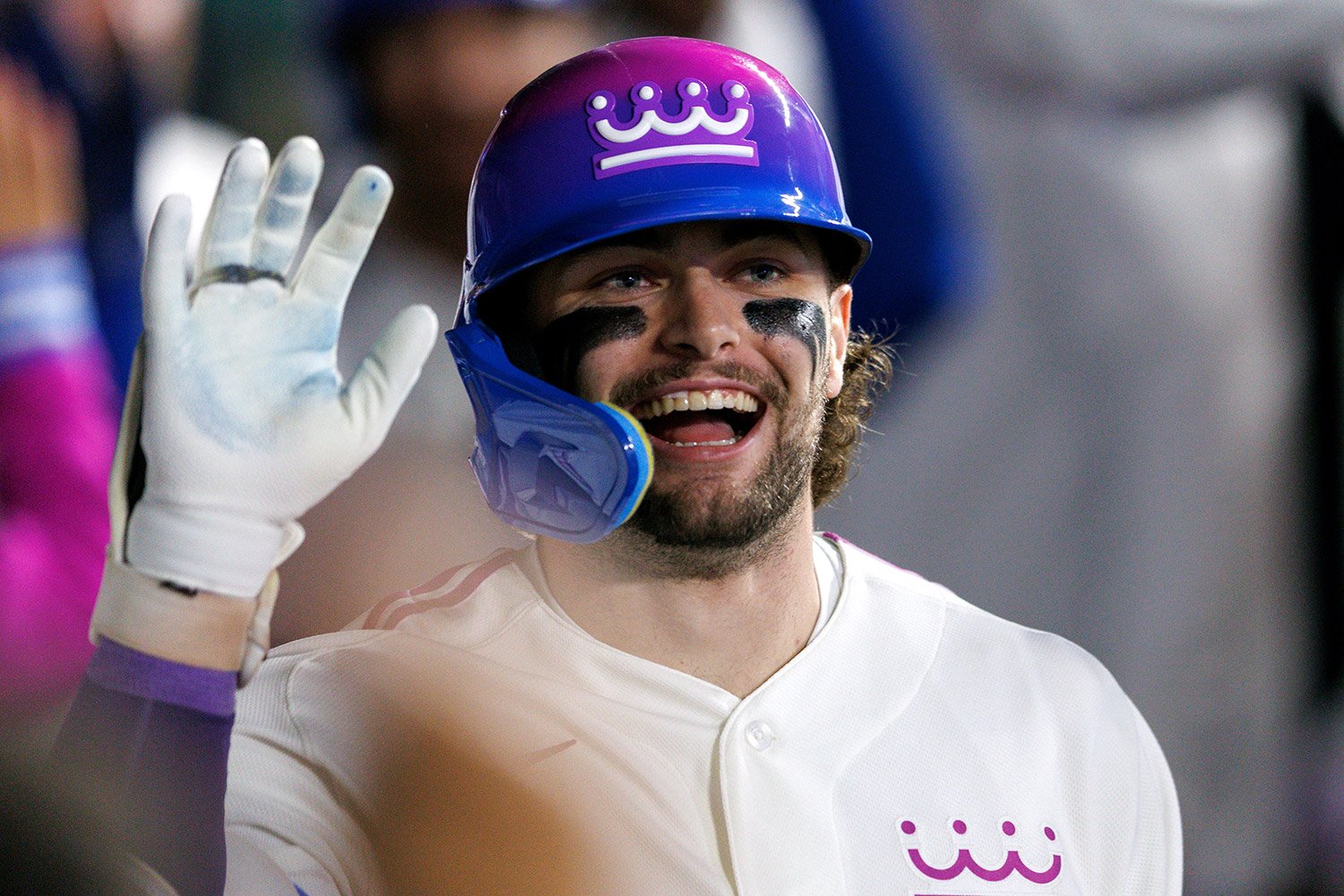 The 2026 season was a rough one for the Kansas City Royals. After making the playoffs in 2024 and finishing with an 82-80 record last year, they wrapped up the present campaign with a highly disappointing 69-93 record. The Royals finished 16 games behind the division winners, the Cleveland Guardians. It wasn’t all bad, though. At least, these three things went right for the 2026 Royals: Bobby Witt Jr. Kept Playing At An MVP Level Yordan Alvarez, Junior Caminero, Cam Schlittler, and Pete Alonso are getting most of the headlines in the AL MVP talks. They are all excellent players, so they definitely deserve the praise. However, Bobby Witt Jr.’s contributions seem to be undervalued these days. People take him for granted, and that’s certainly not fair. Witt’s 7.0 fWAR led all those players and the entire American League, finishing second in MLB behind Pete Crow-Armstrong. He offers game-changing impact in all three facets: hitting, fielding, and baserunning. Some might think that his final offensive output, a .281/.359/.441 line with 33 doubles, a triple, 18 round-trippers, 94 runs scored, 45 stolen bases, and a 119 wRC+, was a bit underwhelming, at least compared to previous seasons. That’s when you realize the incredibly lofty standards Witt has set for himself. One of these years, Witt will get the AL MVP Award he already deserves. Carter Jensen Proved He Can Be A Foundational Piece Recently named in MLB Pipeline’s All-Rookie first team, Jensen showed the world that he could be a dominant hitter over the course of a full season. He had posted some impressive numbers in a brief 20-game cameo in 2025, with a .300/.391/.550 line and a 152 wRC+ in 69 trips to the plate. Well, he hit a solid .239/.323/.467 with 27 home runs, 80 runs, 81 RBI, a 116 wRC+, and 3.7 fWAR while splitting time behind the plate and at the DH spot. Oh, he also contributed 35 doubles and two triples, and ranked 15th in the majors with 64 extra-base hits. Not bad for a catcher, huh? Remember, Jensen is still just 23 years old and has a bright future ahead of him. He is already a well-above-average slugger and can get even better, so the Royals have a solid player to build around. Jac Caglianone Started To Scratch His Ceiling After the first two months of the 2026 season, Jac Caglianone was holding his own. He was doing just enough to justify getting relevant playing time, but still nothing special or worthy of his stature and former top prospect status. Then June happened, and something clicked. Caglianone posted a 184 wRC+ that month, with nine home runs and a .309 batting average. It was the start of a special run that also included a 207 wRC+ in August and a 153 mark in the second half overall, slashing a robust .337/.373/.549 with a .922 OPS. Cags is now a league-average hitter against lefties (99 wRC+) and a beast against righties, as his 142 wRC+ indicates. He finished a year full of growing and learning with a .289/.340/.494 line, 23 home runs, and a 129 wRC+.
 -
3 Things That Went Right For The 2026 Royals
Andres Chavez posted a topic in Kansas City Royals Talk
Image courtesy of William Purnell-Imagn Images The 2026 season was a rough one for the Kansas City Royals. After making the playoffs in 2024 and finishing with an 82-80 record last year, they wrapped up the present campaign with a highly disappointing 69-93 record. The Royals finished 16 games behind the division winners, the Cleveland Guardians. It wasn’t all bad, though. At least, these three things went right for the 2026 Royals: Bobby Witt Jr. Kept Playing At An MVP Level Yordan Alvarez, Junior Caminero, Cam Schlittler, and Pete Alonso are getting most of the headlines in the AL MVP talks. They are all excellent players, so they definitely deserve the praise. However, Bobby Witt Jr.’s contributions seem to be undervalued these days. People take him for granted, and that’s certainly not fair. Witt’s 7.0 fWAR led all those players and the entire American League, finishing second in MLB behind Pete Crow-Armstrong. He offers game-changing impact in all three facets: hitting, fielding, and baserunning. Some might think that his final offensive output, a .281/.359/.441 line with 33 doubles, a triple, 18 round-trippers, 94 runs scored, 45 stolen bases, and a 119 wRC+, was a bit underwhelming, at least compared to previous seasons. That’s when you realize the incredibly lofty standards Witt has set for himself. One of these years, Witt will get the AL MVP Award he already deserves. Carter Jensen Proved He Can Be A Foundational Piece Recently named in MLB Pipeline’s All-Rookie first team, Jensen showed the world that he could be a dominant hitter over the course of a full season. He had posted some impressive numbers in a brief 20-game cameo in 2025, with a .300/.391/.550 line and a 152 wRC+ in 69 trips to the plate. Well, he hit a solid .239/.323/.467 with 27 home runs, 80 runs, 81 RBI, a 116 wRC+, and 3.7 fWAR while splitting time behind the plate and at the DH spot. Oh, he also contributed 35 doubles and two triples, and ranked 15th in the majors with 64 extra-base hits. Not bad for a catcher, huh? Remember, Jensen is still just 23 years old and has a bright future ahead of him. He is already a well-above-average slugger and can get even better, so the Royals have a solid player to build around. Jac Caglianone Started To Scratch His Ceiling After the first two months of the 2026 season, Jac Caglianone was holding his own. He was doing just enough to justify getting relevant playing time, but still nothing special or worthy of his stature and former top prospect status. Then June happened, and something clicked. Caglianone posted a 184 wRC+ that month, with nine home runs and a .309 batting average. It was the start of a special run that also included a 207 wRC+ in August and a 153 mark in the second half overall, slashing a robust .337/.373/.549 with a .922 OPS. Cags is now a league-average hitter against lefties (99 wRC+) and a beast against righties, as his 142 wRC+ indicates. He finished a year full of growing and learning with a .289/.340/.494 line, 23 home runs, and a 129 wRC+. View full article -
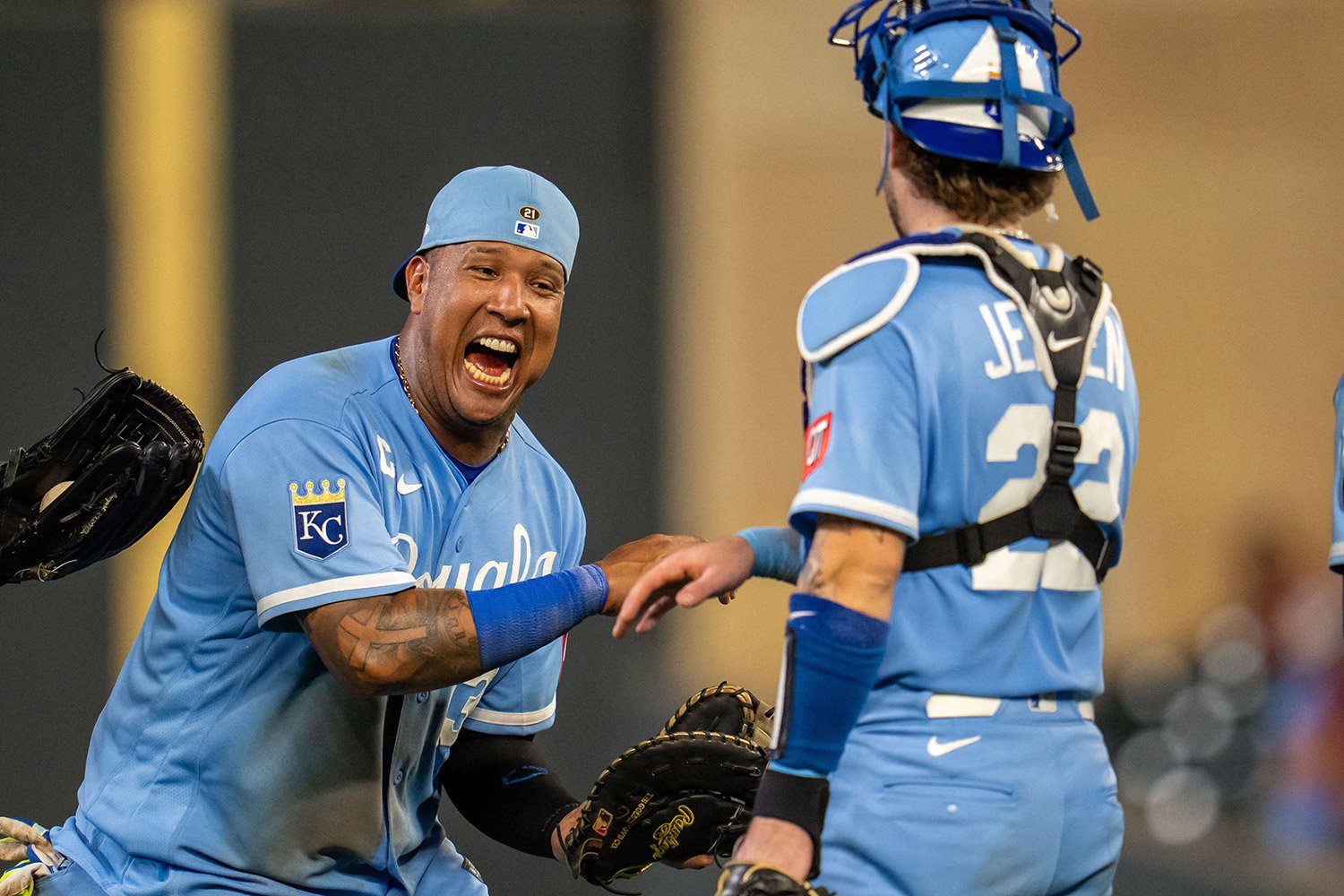 The 2026 trade deadline is around the corner, and the Kansas City Royals are expected to be one of a few sellers offloading pieces. That should put them in an advantageous position, as the majority of squads in the league have enough incentives to be buyers. One Royals player who won’t be playing for another team, however, is catcher/designated hitter Salvador Perez. The veteran, according to The New York Post and MLB Network’s Jon Heyman, “doesn’t want to leave the Royals and has veto power over trades.” Sounds like Pérez, who was signed as an amateur free agent in 2006 and has been a major leaguer since 2011, will retire as a Royal, which would make him one of the rare one-club players in modern baseball. Heyman did say that “about a half-dozen teams seek a catcher but they can probably look elsewhere” when discussing Pérez on X. The 36-year-old former World Series champion is having a down season, hitting a disappointing .208/.259/.365 with 15 home runs and a 67 wRC+. He has played 45 games at the designated hitter spot, 39 at catcher, and 16 at first base, grading out as a mediocre defender everywhere. Pérez has been an offensive and defensive liability this year, but is coming off a 2025 season in which he hit 30 homers and drove in 100 runs. He appears to have hit rock bottom in the 2026 campaign, though, sporting the second-worst fWAR in baseball at -1.2 as of Tuesday.
 -
Image courtesy of IMAGN IMAGES via Reuters Connect The 2026 trade deadline is around the corner, and the Kansas City Royals are expected to be one of a few sellers offloading pieces. That should put them in an advantageous position, as the majority of squads in the league have enough incentives to be buyers. One Royals player who won’t be playing for another team, however, is catcher/designated hitter Salvador Perez. The veteran, according to The New York Post and MLB Network’s Jon Heyman, “doesn’t want to leave the Royals and has veto power over trades.” Sounds like Pérez, who was signed as an amateur free agent in 2006 and has been a major leaguer since 2011, will retire as a Royal, which would make him one of the rare one-club players in modern baseball. Heyman did say that “about a half-dozen teams seek a catcher but they can probably look elsewhere” when discussing Pérez on X. The 36-year-old former World Series champion is having a down season, hitting a disappointing .208/.259/.365 with 15 home runs and a 67 wRC+. He has played 45 games at the designated hitter spot, 39 at catcher, and 16 at first base, grading out as a mediocre defender everywhere. Pérez has been an offensive and defensive liability this year, but is coming off a 2025 season in which he hit 30 homers and drove in 100 runs. He appears to have hit rock bottom in the 2026 campaign, though, sporting the second-worst fWAR in baseball at -1.2 as of Tuesday. View full article
-
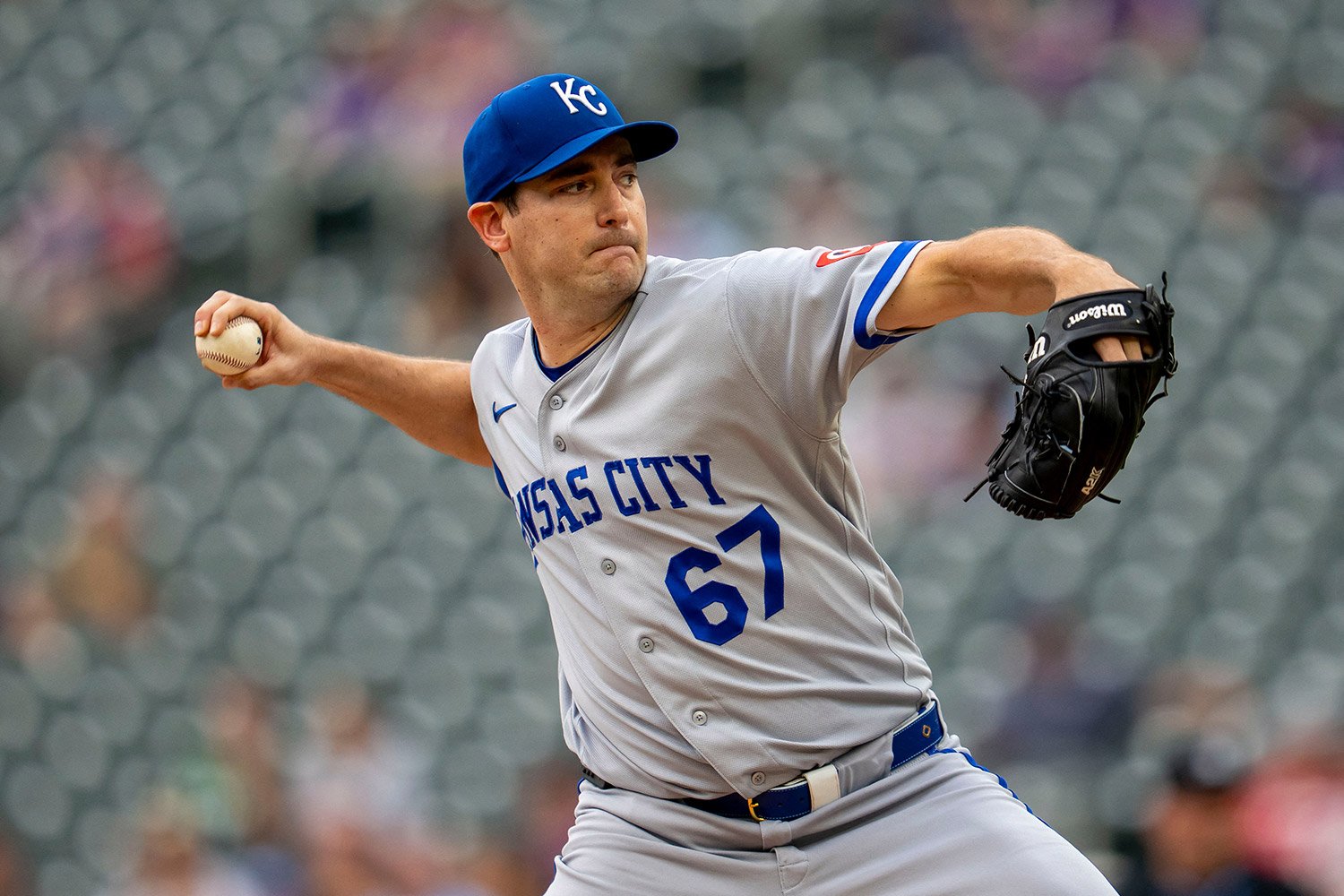 The 45-62 Kansas City Royals have been quite bad this season. Only the Athletics and the Los Angeles Angels have been worse in the American League, so considering that they were over .500 in each of the last two years, it’s certainly a disappointing reality for Kansas City and its fans. Naturally, it makes sense for Kansas City to trade some of their veterans and players close to becoming free agents in exchange for prospects or young, MLB-ready players. If the Royals play their cards right, they could set themselves up to return to contention in a year or two. One of those pending decisions is whether to trade or keep starting pitcher Seth Lugo. The answer is quite simple: the right-hander has been a fantastic Royal for two and a half seasons now, but with the long-term health of the organization in mind, a deal is in everybody’s best interests. Lugo Still Has Some Innings In The Tank Lugo, despite being 36, is still capable of uncorking those beautiful two-seamers that catch just enough of the zone to get the called strike, or the slow curveballs that drive hitters crazy. He is also still capable of helping a contender as a solid mid-rotation or backend starter, depending on where he lands. It will all depend on many factors, though. Lugo is sporting a 4.36 ERA and a 4.27 FIP in 117 2/3 innings this year. He may not have the upside of his 2024 version, when he led the team to the postseason with 206.2 innings of a 3.00 ERA, but he has a rubber arm and rarely misses starts. He won’t be the ace in a postseason-caliber staff, but with starting pitching so scarce and so few selling teams, the Royals could get something meaningful in return. Two factors complicate matters, though: one is his age. Lugo is no spring chicken, but that doesn’t mean he can’t be useful and reliable. The other, and perhaps the more complex one, is his contract. Lugo’s contract is not a long financial burden for potential acquiring squads, but he is not cheap. He makes $23 million per year in both 2026 and 2027, with a $20 million club option that becomes guaranteed with 335 innings combined in 2026 and 2027 or 190 frames in 2027. If the team doesn’t bring him back in 2028, Lugo gets a $3 million buyout. Lugo, therefore, is attached to some significant cash, which would lessen the quality of the prospects that the Royals will be getting for him, or force them to eat some money to get better players. That last option seems unlikely. The underlying metrics tell us that Lugo has benefitted from some luck this year. His Statcast profile is full of blue, and his fastball velocity is right in line with last year’s 91.5 mph. The problem is that the number was 92.2 mph in 2024 and 93.3 mph in 2023, so it’s clearly in decline. That probably explains why he put up ERAs in the 4.00s in 2025 and 2026. Another worrisome development is how quickly his strikeout rate is declining. Ever since it peaked at 33.1 percent in 2019, it has been in a steady fall: 2020: 29.4 percent 2021: 28.2 percent 2022: 25.4 percent 2023: 23.2 percent 2024: 21.7 percent 2025: 20.5 percent 2026: 18.8 percent Given the league-wide hunger for starters, the Royals could get something for Lugo. However, they have been reluctant to budge on their high asking price, and the player has a full no-trade clause, too, further complicating matters. Since Lugo virtually has full control of whether he stays or goes, it could be tricky for the Royals, a hypothetical acquiring team, and the pitcher to be on the same page. With that being said, there will be plenty of suitors for Lugo, and you can argue that the organization should be more open to dealing him. Which teams could be looking for a starter like Lugo? Potential Fits For Seth Lugo In Trade Chicago Cubs: The Cubs almost have an entire rotation of injured starters: Justin Steele, Ben Brown, Cade Horton, and Edward Cabrera. They are casting a wide net when it comes to pitching help, and Lugo could be a fit. Philadelphia Phillies: Christopher Sanchez, Jesus Luzardo, and Zack Wheeler are all magnificent, but Aaron Nola has been awful this year, and Philadelphia needs a reliable back-of-the-rotation stabilizer. Chicago White Sox: The White Sox have gotten the most out of their players this season, but if they want to hold off the Cleveland Guardians in the AL Central, they will need starting pitching help. They have been connected to Reid Detmers, but Lugo would make sense if the Royals eat some of the money owed to him. Milwaukee Brewers: Lugo, to be fair, has the look of a Brewers type of pitcher: a steady veteran with lots of pitching know-how. Perhaps Milwaukee, one of the savviest organizations in the league, could alter his mechanics or optimize his pitch mix to help him offset the declining velocity.
 -
Image courtesy of IMAGN IMAGES via Reuters Connect The 45-62 Kansas City Royals have been quite bad this season. Only the Athletics and the Los Angeles Angels have been worse in the American League, so considering that they were over .500 in each of the last two years, it’s certainly a disappointing reality for Kansas City and its fans. Naturally, it makes sense for Kansas City to trade some of their veterans and players close to becoming free agents in exchange for prospects or young, MLB-ready players. If the Royals play their cards right, they could set themselves up to return to contention in a year or two. One of those pending decisions is whether to trade or keep starting pitcher Seth Lugo. The answer is quite simple: the right-hander has been a fantastic Royal for two and a half seasons now, but with the long-term health of the organization in mind, a deal is in everybody’s best interests. Lugo Still Has Some Innings In The Tank Lugo, despite being 36, is still capable of uncorking those beautiful two-seamers that catch just enough of the zone to get the called strike, or the slow curveballs that drive hitters crazy. He is also still capable of helping a contender as a solid mid-rotation or backend starter, depending on where he lands. It will all depend on many factors, though. Lugo is sporting a 4.36 ERA and a 4.27 FIP in 117 2/3 innings this year. He may not have the upside of his 2024 version, when he led the team to the postseason with 206.2 innings of a 3.00 ERA, but he has a rubber arm and rarely misses starts. He won’t be the ace in a postseason-caliber staff, but with starting pitching so scarce and so few selling teams, the Royals could get something meaningful in return. Two factors complicate matters, though: one is his age. Lugo is no spring chicken, but that doesn’t mean he can’t be useful and reliable. The other, and perhaps the more complex one, is his contract. Lugo’s contract is not a long financial burden for potential acquiring squads, but he is not cheap. He makes $23 million per year in both 2026 and 2027, with a $20 million club option that becomes guaranteed with 335 innings combined in 2026 and 2027 or 190 frames in 2027. If the team doesn’t bring him back in 2028, Lugo gets a $3 million buyout. Lugo, therefore, is attached to some significant cash, which would lessen the quality of the prospects that the Royals will be getting for him, or force them to eat some money to get better players. That last option seems unlikely. The underlying metrics tell us that Lugo has benefitted from some luck this year. His Statcast profile is full of blue, and his fastball velocity is right in line with last year’s 91.5 mph. The problem is that the number was 92.2 mph in 2024 and 93.3 mph in 2023, so it’s clearly in decline. That probably explains why he put up ERAs in the 4.00s in 2025 and 2026. Another worrisome development is how quickly his strikeout rate is declining. Ever since it peaked at 33.1 percent in 2019, it has been in a steady fall: 2020: 29.4 percent 2021: 28.2 percent 2022: 25.4 percent 2023: 23.2 percent 2024: 21.7 percent 2025: 20.5 percent 2026: 18.8 percent Given the league-wide hunger for starters, the Royals could get something for Lugo. However, they have been reluctant to budge on their high asking price, and the player has a full no-trade clause, too, further complicating matters. Since Lugo virtually has full control of whether he stays or goes, it could be tricky for the Royals, a hypothetical acquiring team, and the pitcher to be on the same page. With that being said, there will be plenty of suitors for Lugo, and you can argue that the organization should be more open to dealing him. Which teams could be looking for a starter like Lugo? Potential Fits For Seth Lugo In Trade Chicago Cubs: The Cubs almost have an entire rotation of injured starters: Justin Steele, Ben Brown, Cade Horton, and Edward Cabrera. They are casting a wide net when it comes to pitching help, and Lugo could be a fit. Philadelphia Phillies: Christopher Sanchez, Jesus Luzardo, and Zack Wheeler are all magnificent, but Aaron Nola has been awful this year, and Philadelphia needs a reliable back-of-the-rotation stabilizer. Chicago White Sox: The White Sox have gotten the most out of their players this season, but if they want to hold off the Cleveland Guardians in the AL Central, they will need starting pitching help. They have been connected to Reid Detmers, but Lugo would make sense if the Royals eat some of the money owed to him. Milwaukee Brewers: Lugo, to be fair, has the look of a Brewers type of pitcher: a steady veteran with lots of pitching know-how. Perhaps Milwaukee, one of the savviest organizations in the league, could alter his mechanics or optimize his pitch mix to help him offset the declining velocity. View full article
-
Image courtesy of © Brad Mills-Imagn Images When the Kansas City Royals drafted Jac Caglianone with the sixth overall pick in 2024, they knew they had a future star worth the wait. Yes, he has some strikeout issues, and that was true back then, but his power potential was off the charts. Boy, are they enjoying the latter now. After a rough MLB showing last year and a rather quiet first couple of months in 2026, Caglianone is breaking out and starting to realize his vast power potential right before our eyes. The lefty slugger is slashing a robust .277/.349/.498 with 14 home runs, a 132 wRC+, and 1.8 fWAR in 74 games and 281 plate appearances before Wednesday’s games. Here is his performance in each month: March/April: .250/.333/.398, .731 OPS, 103 wRC+ May: .222/.271/.367, .638 OPS+, 72 wRC+ June: .373/.453/.773, 1.227 OPS, 232 wRC+ He was merely league-average in the first month and an offensive liability in May. The Royals, however, were patient with him throughout his struggles and are now reaping the benefits with a historic June. Caglianone has nine home runs in June alone, and six of them have come in his last seven games. Over that span, he is slugging .900, and that number is still impressive, .810 over his last 15 games. Is Caglianone ready to enter the upper echelon of MLB sluggers at this point? There will be some bumps in the road, particularly in the strikeout and batting average departments, but the short answer to that question is yes. His .387 expected wOBA (xwOBA) ranks in the 95th percentile of MLB hitters. His rolling xwOBA over his last 100 plate appearances is even more impressive. Hint: it's flirting with .500: Caglianone hits the ball so hard and so frequently that only five percent of the hitters in the league have a better xwOBA than him, despite his 13th percentile 29.2% strikeout rate. Basically, the slugger has some issues making consistent contact, but when he does, incredible things happen, hence his 98th percentile xwOBAcon (expected wOBA on contact). You know you are dealing with a unique physical specimen when, in addition to the jaw-dropping batted ball data, he is in the 90th percentile in Arm Value and leads the league in Arm Strength, at 98.3 mph. Some talent evaluators had Caglianone as one of the most impressive offensive talents in the 2024 MLB Draft, even ahead of first overall pick Travis Bazzana. The two exciting rookies have been impressive, but the Royals are obviously happy with the former Florida Gator. It took a while, but Caglianone is now a unique offensive specimen who has no issues hitting lefties (125 wRC+) and righties (135 wRC+). He can be deployed as a middle-of-the-order masher no matter the pitcher’s hand, the day, the team, or any other circumstances. Just look at these two missiles against Shane McClanahan on Tuesday: It’s scary to think that Caglianone is just starting to scratch his ceiling. Royals fans sure are in for a lot of fun in the upcoming seasons, watching their homegrown sluggers hit tape-measure home runs for the remaining part of the decade at the very least. View full article
-
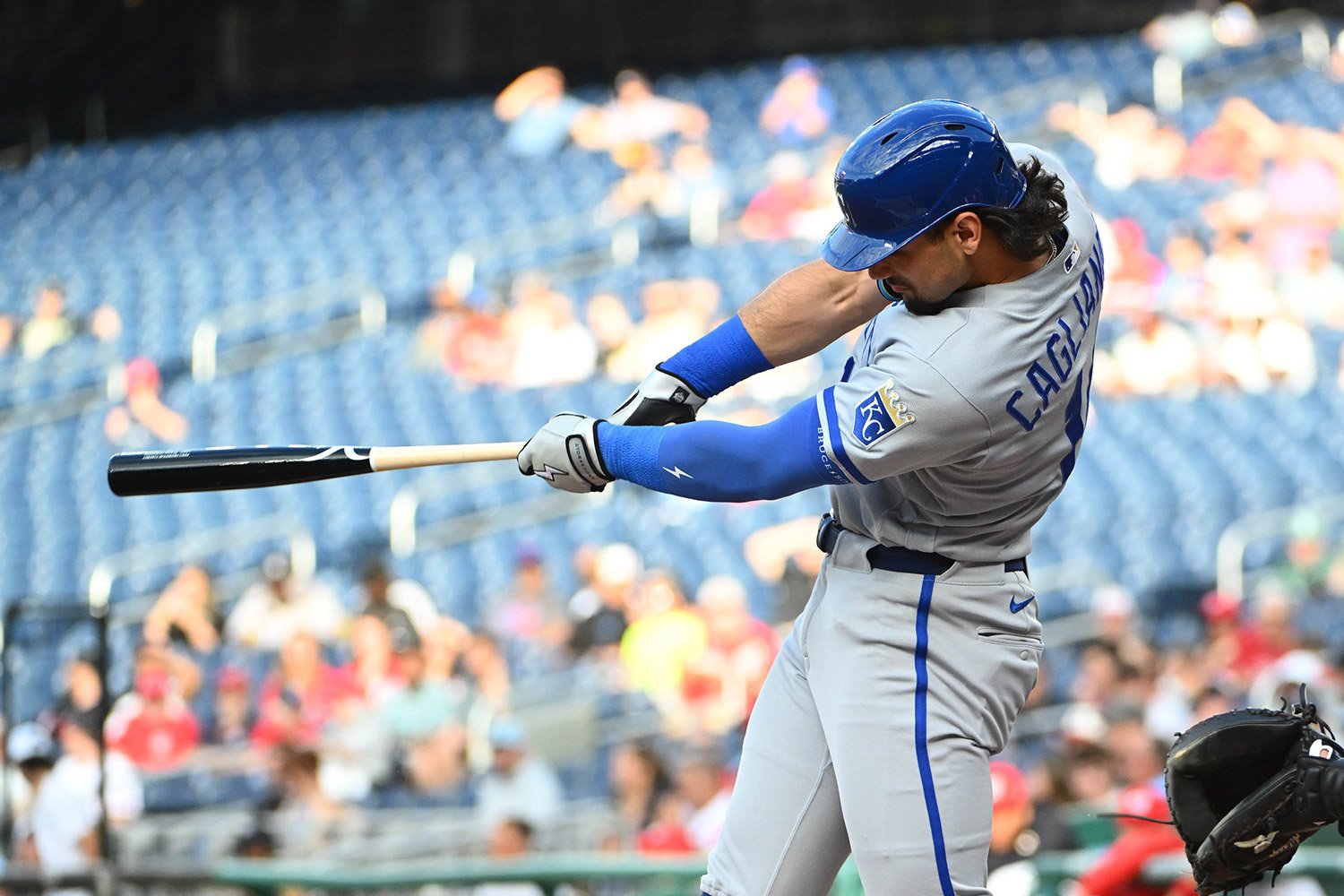 When the Kansas City Royals drafted Jac Caglianone with the sixth overall pick in 2024, they knew they had a future star worth the wait. Yes, he has some strikeout issues, and that was true back then, but his power potential was off the charts. Boy, are they enjoying the latter now. After a rough MLB showing last year and a rather quiet first couple of months in 2026, Caglianone is breaking out and starting to realize his vast power potential right before our eyes. The lefty slugger is slashing a robust .277/.349/.498 with 14 home runs, a 132 wRC+, and 1.8 fWAR in 74 games and 281 plate appearances before Wednesday’s games. Here is his performance in each month: March/April: .250/.333/.398, .731 OPS, 103 wRC+ May: .222/.271/.367, .638 OPS+, 72 wRC+ June: .373/.453/.773, 1.227 OPS, 232 wRC+ He was merely league-average in the first month and an offensive liability in May. The Royals, however, were patient with him throughout his struggles and are now reaping the benefits with a historic June. Caglianone has nine home runs in June alone, and six of them have come in his last seven games. Over that span, he is slugging .900, and that number is still impressive, .810 over his last 15 games. Is Caglianone ready to enter the upper echelon of MLB sluggers at this point? There will be some bumps in the road, particularly in the strikeout and batting average departments, but the short answer to that question is yes. His .387 expected wOBA (xwOBA) ranks in the 95th percentile of MLB hitters. His rolling xwOBA over his last 100 plate appearances is even more impressive. Hint: it's flirting with .500: Caglianone hits the ball so hard and so frequently that only five percent of the hitters in the league have a better xwOBA than him, despite his 13th percentile 29.2% strikeout rate. Basically, the slugger has some issues making consistent contact, but when he does, incredible things happen, hence his 98th percentile xwOBAcon (expected wOBA on contact). You know you are dealing with a unique physical specimen when, in addition to the jaw-dropping batted ball data, he is in the 90th percentile in Arm Value and leads the league in Arm Strength, at 98.3 mph. Some talent evaluators had Caglianone as one of the most impressive offensive talents in the 2024 MLB Draft, even ahead of first overall pick Travis Bazzana. The two exciting rookies have been impressive, but the Royals are obviously happy with the former Florida Gator. It took a while, but Caglianone is now a unique offensive specimen who has no issues hitting lefties (125 wRC+) and righties (135 wRC+). He can be deployed as a middle-of-the-order masher no matter the pitcher’s hand, the day, the team, or any other circumstances. Just look at these two missiles against Shane McClanahan on Tuesday: It’s scary to think that Caglianone is just starting to scratch his ceiling. Royals fans sure are in for a lot of fun in the upcoming seasons, watching their homegrown sluggers hit tape-measure home runs for the remaining part of the decade at the very least.
 -
Image courtesy of © Jay Biggerstaff-Imagn Images After beating the Cleveland Guardians for the second consecutive day on Tuesday, the Royals woke up on Wednesday with a 17-19 record, with an ongoing five-game winning streak and just half a game behind the top spot in the AL Central. The Royals swept the Mariners in Seattle over the weekend and have taken the first two games of their series vs. Cleveland, a direct divisional foe, at home. Talk about a hot streak and a considerable improvement: this team was 12-19 on April 30. The AL Central might not be the best division, with no team at .500 as of Wednesday afternoon, but it sure is the most fun these days: all five squads are separated by just a game and a half. (Not So) Pleasant Surprises The Guardians and the Detroit Tigers are ahead with an 18-19 record before Wednesday’s games. Jose Ramirez, with a 103 wRC+, hasn’t been his usual dominant self, but Cleveland is enjoying breakout seasons from rookies Chase DeLauter and Parker Messick, utilityman Daniel Schneemann, infielder Brayan Rocchio, and outfielder Angel Martinez. Additionally, star prospect Travis Bazzana is already up. The Guardians are dangerous, and even with some regression from the aforementioned players, it’s also wise to expect a bounce-back by Ramirez. The Tigers have top Rookie of the Year candidate Kevin McGonigle already leading the team in fWAR with 1.5. Most of their regulars are performing above the league average offensively, most notably Riley Greene (139 wRC+) and Spencer Torkelson (six homers, 112 wRC+), but they lost Tarik Skubal for at least a few months, and that hurts their chances. They are still a solid ballclub, though. Then, tied with the Royals, you have the surprising Chicago White Sox. Led by Munetaka Murakami’s 14 home runs and multiple young players performing well on offense and defense, the South Siders certainly don’t look like the team that finished with a 60-102 record. Their -10 run differential is not that bad considering pre-season expectations, and it’s actually better than Kansas City’s -11. The Twins are last with a 16-20 record, just a game and a half behind the leaders. They have won the last two and boast a +3 run differential, second-best in the division behind Detroit’s +10. Can The Royals Compete All Year? Before the start of the season, the overall consensus was that the Tigers, Guardians, and Royals would be the main contenders for the AL Central crown. Perhaps it’s time to open the mind for new possibilities and potential scenarios, though. All five teams are definitely flawed, but they also have talented rosters and room to grow. The Royals, in particular, can definitely count on Vinnie Pasquantino (72 wRC+) returning to form at some point, and even though he is getting up there in age, Salvador Perez (58 wRC+) should also improve. The same can be said about ace Cole Ragans, should health be on his side. Will that be enough to compete for a spot in the postseason? We won’t know the answer to that question until September, but it sure will be fascinating to find out if the overachievers in the division can keep up and actually compete for October. View full article
-
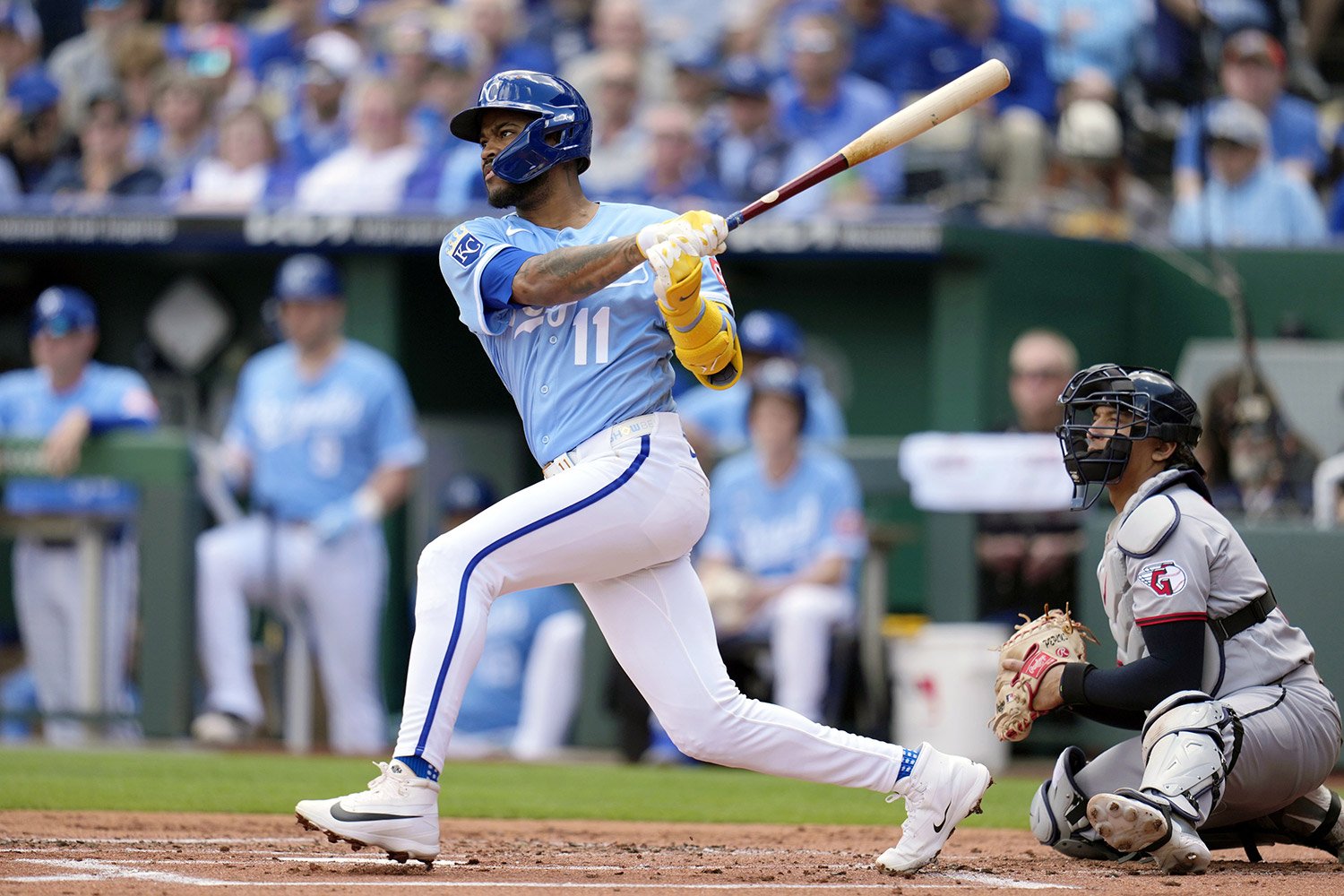 After beating the Cleveland Guardians for the second consecutive day on Tuesday, the Royals woke up on Wednesday with a 17-19 record, with an ongoing five-game winning streak and just half a game behind the top spot in the AL Central. The Royals swept the Mariners in Seattle over the weekend and have taken the first two games of their series vs. Cleveland, a direct divisional foe, at home. Talk about a hot streak and a considerable improvement: this team was 12-19 on April 30. The AL Central might not be the best division, with no team at .500 as of Wednesday afternoon, but it sure is the most fun these days: all five squads are separated by just a game and a half. (Not So) Pleasant Surprises The Guardians and the Detroit Tigers are ahead with an 18-19 record before Wednesday’s games. Jose Ramirez, with a 103 wRC+, hasn’t been his usual dominant self, but Cleveland is enjoying breakout seasons from rookies Chase DeLauter and Parker Messick, utilityman Daniel Schneemann, infielder Brayan Rocchio, and outfielder Angel Martinez. Additionally, star prospect Travis Bazzana is already up. The Guardians are dangerous, and even with some regression from the aforementioned players, it’s also wise to expect a bounce-back by Ramirez. The Tigers have top Rookie of the Year candidate Kevin McGonigle already leading the team in fWAR with 1.5. Most of their regulars are performing above the league average offensively, most notably Riley Greene (139 wRC+) and Spencer Torkelson (six homers, 112 wRC+), but they lost Tarik Skubal for at least a few months, and that hurts their chances. They are still a solid ballclub, though. Then, tied with the Royals, you have the surprising Chicago White Sox. Led by Munetaka Murakami’s 14 home runs and multiple young players performing well on offense and defense, the South Siders certainly don’t look like the team that finished with a 60-102 record. Their -10 run differential is not that bad considering pre-season expectations, and it’s actually better than Kansas City’s -11. The Twins are last with a 16-20 record, just a game and a half behind the leaders. They have won the last two and boast a +3 run differential, second-best in the division behind Detroit’s +10. Can The Royals Compete All Year? Before the start of the season, the overall consensus was that the Tigers, Guardians, and Royals would be the main contenders for the AL Central crown. Perhaps it’s time to open the mind for new possibilities and potential scenarios, though. All five teams are definitely flawed, but they also have talented rosters and room to grow. The Royals, in particular, can definitely count on Vinnie Pasquantino (72 wRC+) returning to form at some point, and even though he is getting up there in age, Salvador Perez (58 wRC+) should also improve. The same can be said about ace Cole Ragans, should health be on his side. Will that be enough to compete for a spot in the postseason? We won’t know the answer to that question until September, but it sure will be fascinating to find out if the overachievers in the division can keep up and actually compete for October.
 -
Image courtesy of © Jay Biggerstaff-Imagn Images Last year, the Kansas City Royals had the sixth-best ERA in MLB at 3.73. The pitching staff was among the best in the league, and that was the expectation again for the 2026 campaign. Unfortunately, that hasn’t been the case in the first month. Before Thursday’s games, the Royals had the seventh-worst ERA in the circuit at 4.51, a rather disappointing development and one of the reasons behind their 12-19 start. Despite the mediocre collective output to this point, it’s not hard to identify the best hurler on the team in the first month. Lugo Has Quietly Performed At A Very High Level Seth Lugo doesn’t just lead the Royals in ERA at 2.63, but he is tied for seventh in the entire league with 1.2 fWAR. That’s higher than some high-profile names, such as Joe Ryan, Tyler Glasnow, Jesus Luzardo, Jacob deGrom, Logan Gilbert, Yoshinobu Yamamoto, and many others. Lugo hasn’t gotten lucky at all. His 2.69 Fielding Independent Pitching (FIP) not only certifies his dominance but also proves that he doesn’t just rely on his defense. He may not miss many bats as his 19th percentile whiff rate indicates, but he has become quite the contact manager, ranking in the 76th percentile in hard-hit rate with a solid 33.6 percent. It’s fair to say the Lugo signing in the winter of 2023 has been a resounding success for Kansas City. He posted a 3.00 ERA in 2024, helping the team return to the postseason, a 4.15 mark last year, and is shining again in 2026 at 36 years old. Lugo boasts one of the most varied repertoires you will see, using up to nine different pitches to keep his opponents off balance. And more often than not, he manages to achieve his goal. Other Contenders You could argue that Lugo has been getting a bit lucky this year so far, since his .290 wOBA is considerably lower than his .328 xwOBA, but it’s not a crazy gap, either. He is still a very serviceable starter and has unquestionably been the Royals’ pitcher of the month. Other contenders for this unofficial recognition are reliever Daniel Lynch, who boasts a brilliant 0.79 ERA in 11.1 frames, with a 31 percent strikeout rate, or fellow starter Michael Wacha, the owner of a 3.13 ERA. They both would be worthy selections, but Lugo has contributed more innings with similar run-prevention results. In what has been a highly frustrating season for Kansas City, Lugo’s competitiveness and effectiveness have been ever-present. At an age in which many major leaguers, particularly pitchers, start to decline, he has been a steady force and seems to be aging like wine. View full article
-
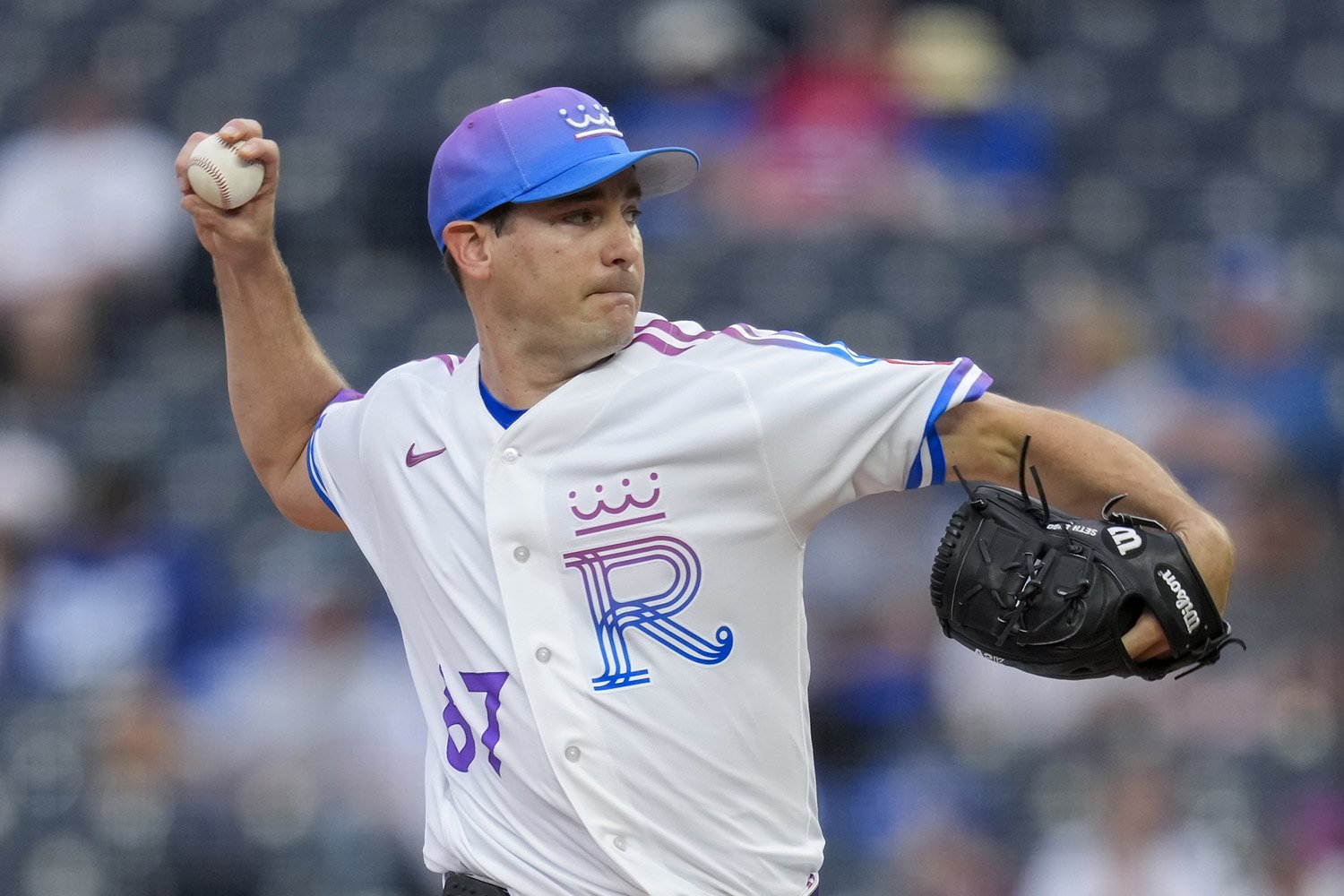 Last year, the Kansas City Royals had the sixth-best ERA in MLB at 3.73. The pitching staff was among the best in the league, and that was the expectation again for the 2026 campaign. Unfortunately, that hasn’t been the case in the first month. Before Thursday’s games, the Royals had the seventh-worst ERA in the circuit at 4.51, a rather disappointing development and one of the reasons behind their 12-19 start. Despite the mediocre collective output to this point, it’s not hard to identify the best hurler on the team in the first month. Lugo Has Quietly Performed At A Very High Level Seth Lugo doesn’t just lead the Royals in ERA at 2.63, but he is tied for seventh in the entire league with 1.2 fWAR. That’s higher than some high-profile names, such as Joe Ryan, Tyler Glasnow, Jesus Luzardo, Jacob deGrom, Logan Gilbert, Yoshinobu Yamamoto, and many others. Lugo hasn’t gotten lucky at all. His 2.69 Fielding Independent Pitching (FIP) not only certifies his dominance but also proves that he doesn’t just rely on his defense. He may not miss many bats as his 19th percentile whiff rate indicates, but he has become quite the contact manager, ranking in the 76th percentile in hard-hit rate with a solid 33.6 percent. It’s fair to say the Lugo signing in the winter of 2023 has been a resounding success for Kansas City. He posted a 3.00 ERA in 2024, helping the team return to the postseason, a 4.15 mark last year, and is shining again in 2026 at 36 years old. Lugo boasts one of the most varied repertoires you will see, using up to nine different pitches to keep his opponents off balance. And more often than not, he manages to achieve his goal. Other Contenders You could argue that Lugo has been getting a bit lucky this year so far, since his .290 wOBA is considerably lower than his .328 xwOBA, but it’s not a crazy gap, either. He is still a very serviceable starter and has unquestionably been the Royals’ pitcher of the month. Other contenders for this unofficial recognition are reliever Daniel Lynch, who boasts a brilliant 0.79 ERA in 11.1 frames, with a 31 percent strikeout rate, or fellow starter Michael Wacha, the owner of a 3.13 ERA. They both would be worthy selections, but Lugo has contributed more innings with similar run-prevention results. In what has been a highly frustrating season for Kansas City, Lugo’s competitiveness and effectiveness have been ever-present. At an age in which many major leaguers, particularly pitchers, start to decline, he has been a steady force and seems to be aging like wine.
 -
Image courtesy of © Kamil Krzaczynski-Imagn Images The Kansas City Royals are no longer a rebuilding curiosity. They are a legitimate team on the rise, powered by a deep collection of young talent, a rotation that doesn’t get enough national credit, and a true franchise cornerstone in Bobby Witt Jr. Most positions feel settled or at least promising. Center field, however, remains the loose floorboard in an otherwise sturdy house. Kyle Isbel handled the bulk of the work there in 2025, and if defense were the only requirement, the job would already be filled. His glove is elite. The problem is that his bat has become the offensive equivalent of bringing a butter knife to a sword fight. That reality likely explains why the Royals signed Lane Thomas to a one-year, $5.25 million deal, giving manager Matt Quatraro a legitimate alternative. So who should be the Royals’ center fielder: Isbel or Thomas? The glove that changes games Isbel’s defensive value is not subtle. In 1,032 innings in center field last year, he posted +9 Defensive Runs Saved and +12 Outs Above Average, ranking fourth and third among American League center fielders in those categories. That’s not just good; that’s game-altering. Balls that look destined for the gap die quietly in his glove, and pitchers get outs they probably already chalked up as hits. The offensive side, though, keeps dragging the conversation back to square one. Isbel finished last season with a 79 wRC+, his fourth straight year under 83, and his career mark sits at 78. For context, league average is 100, and Isbel hasn’t sniffed it at any point in his big-league career. What makes it more frustrating is the contrast with his minor league track record. He was a .808 OPS hitter on the farm, but through 496 MLB games, that number has cratered to .653. His Statcast page is flooded with blue, the kind that signals weak contact and limited offensive upside: At almost 29 years old, the data suggests this is simply who he is. If he were even a league-average hitter, the Royals wouldn’t be debating this. He isn’t, but his glove still gives him a way to impact games. The upside gamble Thomas brings a very different profile. When healthy and locked in, he looks like the kind of player who can tilt a lineup. He has already proven he can clear 20 home runs, blasting 28 for Washington in 2023, and he showed his legs are just as dangerous by stealing 32 bases in 2024. That combination of power and speed is something Kansas City simply doesn’t get from Isbel. Last season, though, was a nightmare. A bone bruise in his right wrist was only the beginning. Plantar fasciitis followed, limiting him to just 39 games and a brutal 48 wRC+ with Cleveland. Thomas eventually underwent surgery in late September, but he is expected to be healthy enough to compete for the center field job this spring. Defense is where the gap widens. Thomas doesn’t come close to Isbel with the glove. Even accounting for small samples, the numbers are rough. He posted -1 DRS and -2 OAA last year, and if you go back to the last season where he logged significant innings in the outfield, 2024, the picture gets uglier: -13 DRS and -6 OAA across 1,065 ⅔ innings. Those struggles weren’t limited to center field either; the corners didn’t treat him kindly, either. A matchup-based answer This doesn’t have to be an either-or decision. Isbel hits left-handed and owns an 82 career wRC+ against right-handed pitching, compared to a miserable 64 against lefties. Thomas, on the other hand, offers an 84 wRC+ versus right-handers and a 135 mark when facing southpaws. Against right-handed pitching, the two are essentially the same hitter by wRC+. That makes Isbel the logical choice, because his defense actively helps the pitching staff. When a left-hander is on the mound, Thomas should get the nod. In those situations, he turns center field into a lineup advantage instead of a dead spot, giving the Royals a well-above-average bat at a premium defensive position without sacrificing much. View full article
-
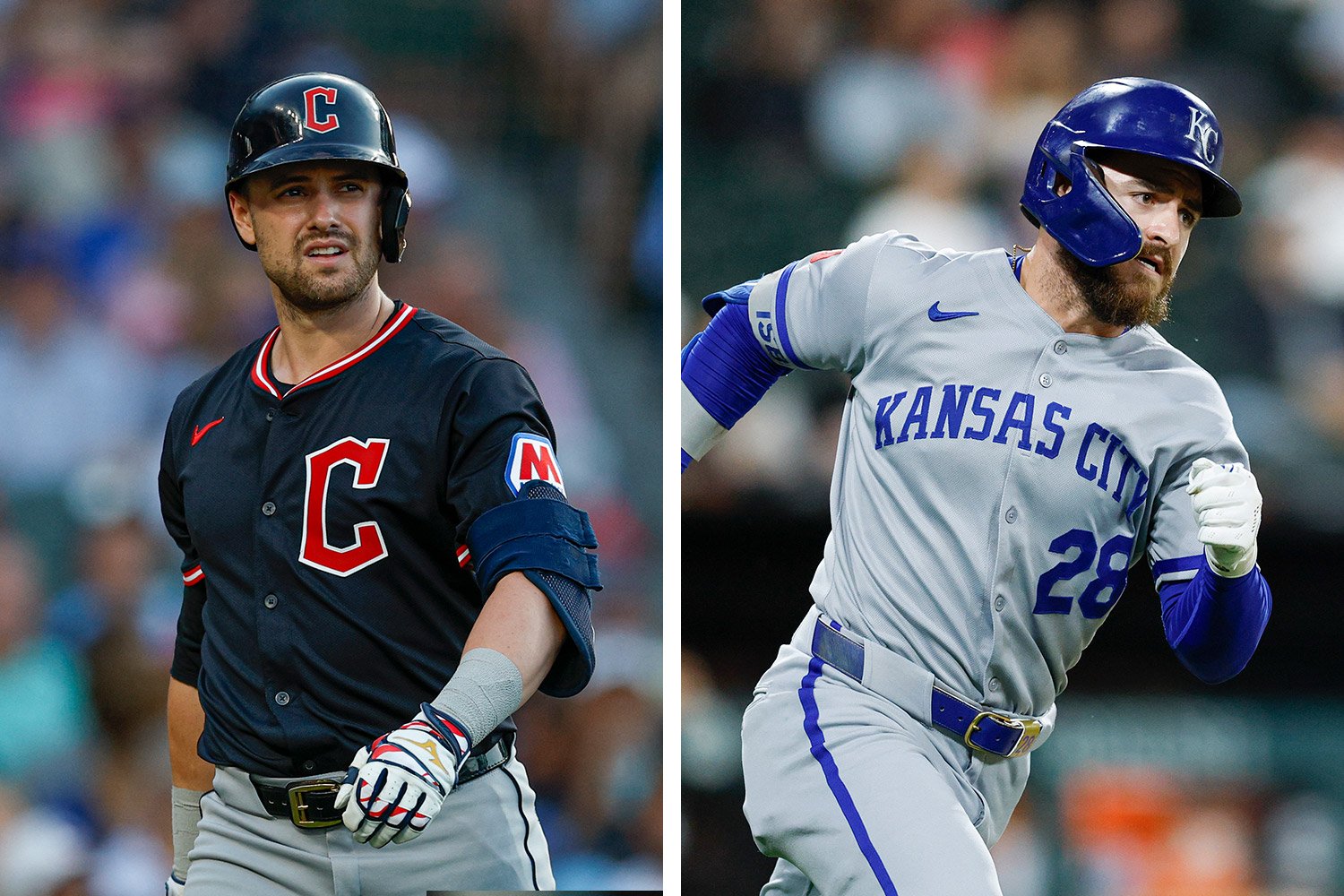 The Kansas City Royals are no longer a rebuilding curiosity. They are a legitimate team on the rise, powered by a deep collection of young talent, a rotation that doesn’t get enough national credit, and a true franchise cornerstone in Bobby Witt Jr. Most positions feel settled or at least promising. Center field, however, remains the loose floorboard in an otherwise sturdy house. Kyle Isbel handled the bulk of the work there in 2025, and if defense were the only requirement, the job would already be filled. His glove is elite. The problem is that his bat has become the offensive equivalent of bringing a butter knife to a sword fight. That reality likely explains why the Royals signed Lane Thomas to a one-year, $5.25 million deal, giving manager Matt Quatraro a legitimate alternative. So who should be the Royals’ center fielder: Isbel or Thomas? The glove that changes games Isbel’s defensive value is not subtle. In 1,032 innings in center field last year, he posted +9 Defensive Runs Saved and +12 Outs Above Average, ranking fourth and third among American League center fielders in those categories. That’s not just good; that’s game-altering. Balls that look destined for the gap die quietly in his glove, and pitchers get outs they probably already chalked up as hits. The offensive side, though, keeps dragging the conversation back to square one. Isbel finished last season with a 79 wRC+, his fourth straight year under 83, and his career mark sits at 78. For context, league average is 100, and Isbel hasn’t sniffed it at any point in his big-league career. What makes it more frustrating is the contrast with his minor league track record. He was a .808 OPS hitter on the farm, but through 496 MLB games, that number has cratered to .653. His Statcast page is flooded with blue, the kind that signals weak contact and limited offensive upside: At almost 29 years old, the data suggests this is simply who he is. If he were even a league-average hitter, the Royals wouldn’t be debating this. He isn’t, but his glove still gives him a way to impact games. The upside gamble Thomas brings a very different profile. When healthy and locked in, he looks like the kind of player who can tilt a lineup. He has already proven he can clear 20 home runs, blasting 28 for Washington in 2023, and he showed his legs are just as dangerous by stealing 32 bases in 2024. That combination of power and speed is something Kansas City simply doesn’t get from Isbel. Last season, though, was a nightmare. A bone bruise in his right wrist was only the beginning. Plantar fasciitis followed, limiting him to just 39 games and a brutal 48 wRC+ with Cleveland. Thomas eventually underwent surgery in late September, but he is expected to be healthy enough to compete for the center field job this spring. Defense is where the gap widens. Thomas doesn’t come close to Isbel with the glove. Even accounting for small samples, the numbers are rough. He posted -1 DRS and -2 OAA last year, and if you go back to the last season where he logged significant innings in the outfield, 2024, the picture gets uglier: -13 DRS and -6 OAA across 1,065 ⅔ innings. Those struggles weren’t limited to center field either; the corners didn’t treat him kindly, either. A matchup-based answer This doesn’t have to be an either-or decision. Isbel hits left-handed and owns an 82 career wRC+ against right-handed pitching, compared to a miserable 64 against lefties. Thomas, on the other hand, offers an 84 wRC+ versus right-handers and a 135 mark when facing southpaws. Against right-handed pitching, the two are essentially the same hitter by wRC+. That makes Isbel the logical choice, because his defense actively helps the pitching staff. When a left-hander is on the mound, Thomas should get the nod. In those situations, he turns center field into a lineup advantage instead of a dead spot, giving the Royals a well-above-average bat at a premium defensive position without sacrificing much.
 -
Image courtesy of © Jay Biggerstaff-Imagn Images Spring training is still a dot on the calendar, but that hasn’t stopped optimism from bubbling up in Kansas City. The Royals head into 2026 with something they haven’t always had in recent years: stability. A frontline rotation, a true franchise star, and a wave of young talent ready to help. That’s usually when the fun predictions start. Here are five bold ones that could shape the Royals’ season. Jac Caglianone hits 35 home runs If the Royals are going anywhere in 2026, it likely means at least one young bat takes a real leap forward, and Caglianone is built for that role. The sixth overall pick in the 2024 draft already showed last season that his power translates across levels. He hit 27 home runs split between Double-A, Triple-A, and the majors, with seven coming in MLB action. The surface results in Kansas City weren’t pretty, as he posted a 46 wRC+, but that number hides more than it reveals. His elite 77.4 mph bat speed and a 12 percent barrel rate give him a power foundation most hitters simply don’t possess. The swing is already loud. The adjustment now is about approach. Even a modest improvement in plate discipline and count leverage could turn more balls into souvenirs. Thirty-five homers sounds aggressive, but with that kind of bat speed and track record, it’s less prediction and more projection. Royals finish top five in rotation ERA This one feels bold only because expectations have quietly risen. Kansas City finished seventh in baseball last season with a 3.80 rotation ERA, and there’s a path to climbing higher. Cole Ragans being fully healthy after a rotator cuff strain last year is the swing factor. Michael Wacha and Seth Lugo remain steady, predictable veterans. Kris Bubic is expected to be ready for Spring Training, and Noah Cameron now enters the year with a full season of MLB experience. Bailey Falter provides depth, even with Alec Marsh likely sidelined for most of the year. Pitching depth is fragile, and this prediction depends heavily on health. But if the Royals avoid prolonged absences, this rotation has both the floor and ceiling to sit comfortably inside the top five. Carter Jensen wins AL Rookie of the Year Catchers aren’t supposed to hit like this, especially not this early. Jensen posted a 118 wRC+ in Double-A last year, an impressive number for any catcher, then somehow got better after the promotion. In Triple-A, he ran a 166 wRC+ and finished his minor league stint with 20 home runs across 111 games between the two levels. When he reached the majors, the bat didn’t cool off. In 69 plate appearances, Jensen produced a 159 wRC+, along with three home runs and six doubles. The underlying metrics were just as eye-catching: a .447 xwOBA, a 20.8 percent barrel rate, and a 58.3 percent hard-hit rate. The sample size was small, but it was loud. If Jensen earns regular playing time and sustains even part of that offensive output, he won’t just be the Royals’ catcher of the future — he’ll be a serious Rookie of the Year contender. Royals reach the American League Championship Series This prediction stacks several things together, but none feel unreasonable on their own. If Bobby Witt Jr. stays healthy, the rotation holds together, and players like Caglianone and Jensen provide real impact, Kansas City doesn’t need to dominate the regular season to be dangerous. The first objective is simply getting into the postseason. Once there, October tends to reward teams that can shorten games and lean on starting pitching. If the Royals can win their first playoff series, they’ll look far less like a feel-good story and more like a legitimate problem. David Shields gets a surprise late-season call-up This might be the boldest prediction of the bunch, mostly because of how aggressive the timeline would be. Shields has only reached Single-A so far, but the performance already stands out. Despite inconsistent fastball velocity caused by a hamstring injury early in 2025, the left-hander posted a 2.01 ERA over 71 2/3 innings, striking out 81 batters while walking just 15. His control, command, and feel for breaking balls give him a high floor, and improved health could unlock more velocity as the year progresses. He’s unlikely to be ready as a starter in 2026, but bullpen roles have a way of accelerating promotions. If Shields reaches Double-A by summer and strings together a few strong outings, Kansas City may view him as a late-season bullpen option. Sometimes the most impactful call-ups are the ones no one was tracking in March. View full article

