


Matt Crossland
-
Posts
22 -
Joined
-
Last visited
-
Days Won
2
Matt Crossland's Achievements


-
Image courtesy of IMAGN IMAGES via Reuters Connect There is no denying that the Royals bullpen is on pace to be the worst in franchise history, but that’s to say that there haven't been any bright spots. One in particular has been Daniel Lynch IV, who has had a breakout year coming out of the pen. His season has resulted in him becoming a very interesting trade piece for the Royals as the deadline draws closer. A Breakout Year For Daniel Lynch IV Lynch, a first-round Royals draft pick (34th overall) in 2018, has certainly made his mark as the Royals' best arm to come out of the pen. His 1.2 bWAR and 2.09 ERA (backed by a 3.11 FIP) are the best out of any Royals relief pitcher. He’s also one of the best pitchers in baseball when it comes to pitching against lefties, as they are hitting just .147 against him, good for tenth best in all of MLB. A 19.8 K% and 7.0 BB% also help as well. With all that in mind, he is certainly going to be a sought-after pitcher if the Royals were to shop him this deadline. Here are a few options the Royals could go with. Lynch IV to the Yankees for Elmer Rodriguez The Royals are looking for young, controllable talent while the Yankees are looking to bolster their bullpen, so this trade would suit both teams nicely. Lynch would fit in nicely in a stout Yankees pen while Rodriguez will get some much-needed playing time in the Royals rotation if the team were to move on from Lugo and/or Wacha. Rodriguez is in his rookie season, which gives the Royals flexibility just in case he doesn’t pan out in Kansas City. He has scuffled in his first 17 big-league innings, but was ranked in the back half of top prospects by MLB, Baseball America, and Baseball Prospectus prior to the 2026 season. Lynch IV to the Phillies for Gabriel Rincones Jr. Another team that needs improvements in their bullpen is the Phillies, whose team ERA of 4.29 could benefit from Lynch’s services. The Phillies are desperate for a lefty, and Lynch fits the bill perfectly. The Royals could ask for a young outfielder in Rincones, who is also in his rookie season, and some cash would be able to get it. Rodriguez, who has struggled in only a handful of plate appearances this season, posted a .799 OPS in Triple-A Lehigh Valley in 2025. Lynch IV and Blake Mitchell to the Red Sox for Tyler Uberstine and Mikey Romero The likelihood of this trade happening is very slim, but it really helps both teams. The Red Sox are the hottest team in baseball and need someone like Lynch to strengthen their pen, but a potential franchise catcher in Blake Mitchell would also help as well. Uberstine and Romero, who are both under team control for the foreseeable future, would fit right in Omaha and potentially get some much-needed playing time in the bigs with a team desperate for young talent. This swap would be a massive transfer of assets from both teams, but would fill needs all around. The Red Sox, after trading Kyle Teel to the White Sox a little over a year ago, have virtually no catching depth in the majors or upper minors, and Mitchell would give them long-term security behind the dish. View full article
-
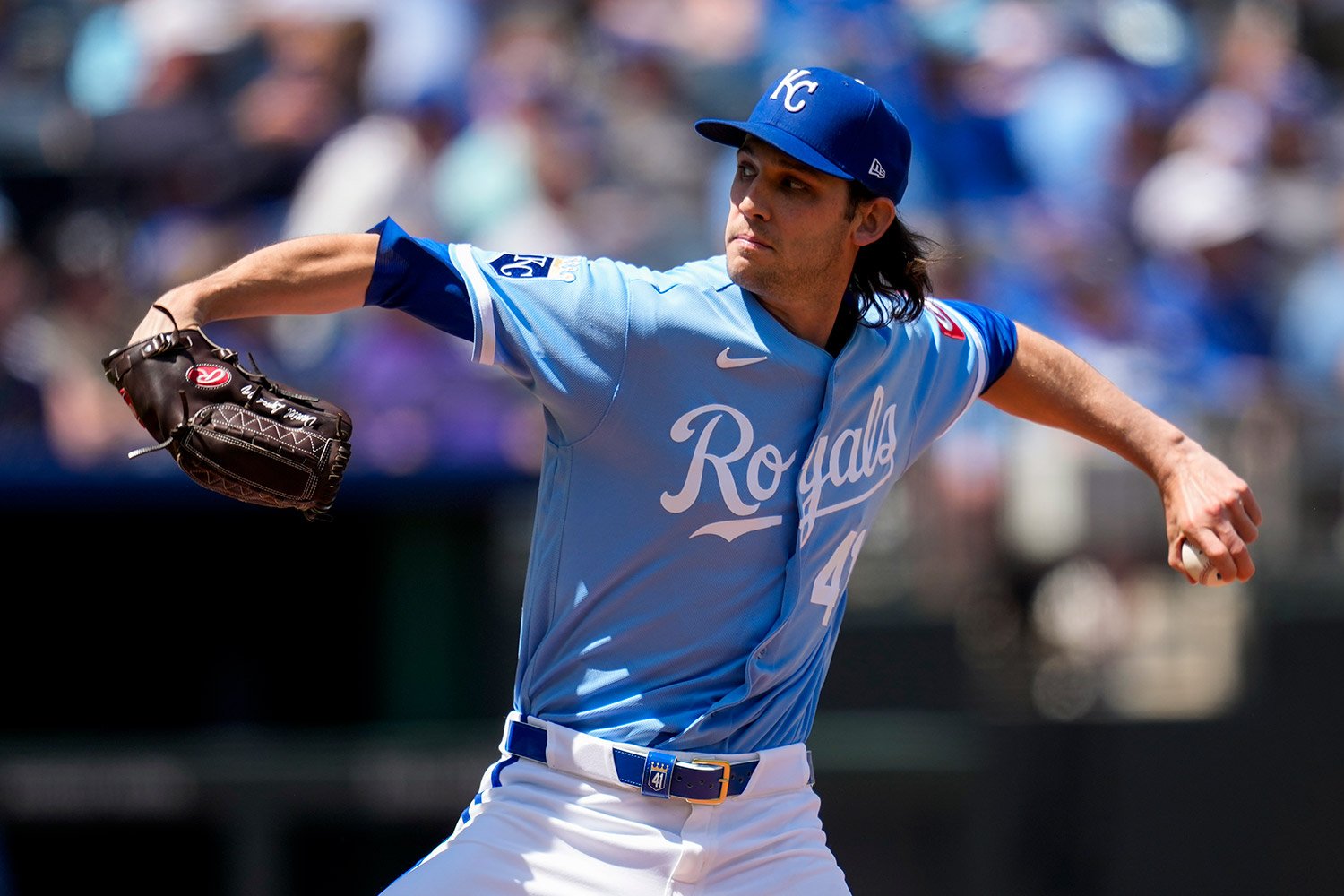 There is no denying that the Royals bullpen is on pace to be the worst in franchise history, but that’s to say that there haven't been any bright spots. One in particular has been Daniel Lynch IV, who has had a breakout year coming out of the pen. His season has resulted in him becoming a very interesting trade piece for the Royals as the deadline draws closer. A Breakout Year For Daniel Lynch IV Lynch, a first-round Royals draft pick (34th overall) in 2018, has certainly made his mark as the Royals' best arm to come out of the pen. His 1.2 bWAR and 2.09 ERA (backed by a 3.11 FIP) are the best out of any Royals relief pitcher. He’s also one of the best pitchers in baseball when it comes to pitching against lefties, as they are hitting just .147 against him, good for tenth best in all of MLB. A 19.8 K% and 7.0 BB% also help as well. With all that in mind, he is certainly going to be a sought-after pitcher if the Royals were to shop him this deadline. Here are a few options the Royals could go with. Lynch IV to the Yankees for Elmer Rodriguez The Royals are looking for young, controllable talent while the Yankees are looking to bolster their bullpen, so this trade would suit both teams nicely. Lynch would fit in nicely in a stout Yankees pen while Rodriguez will get some much-needed playing time in the Royals rotation if the team were to move on from Lugo and/or Wacha. Rodriguez is in his rookie season, which gives the Royals flexibility just in case he doesn’t pan out in Kansas City. He has scuffled in his first 17 big-league innings, but was ranked in the back half of top prospects by MLB, Baseball America, and Baseball Prospectus prior to the 2026 season. Lynch IV to the Phillies for Gabriel Rincones Jr. Another team that needs improvements in their bullpen is the Phillies, whose team ERA of 4.29 could benefit from Lynch’s services. The Phillies are desperate for a lefty, and Lynch fits the bill perfectly. The Royals could ask for a young outfielder in Rincones, who is also in his rookie season, and some cash would be able to get it. Rodriguez, who has struggled in only a handful of plate appearances this season, posted a .799 OPS in Triple-A Lehigh Valley in 2025. Lynch IV and Blake Mitchell to the Red Sox for Tyler Uberstine and Mikey Romero The likelihood of this trade happening is very slim, but it really helps both teams. The Red Sox are the hottest team in baseball and need someone like Lynch to strengthen their pen, but a potential franchise catcher in Blake Mitchell would also help as well. Uberstine and Romero, who are both under team control for the foreseeable future, would fit right in Omaha and potentially get some much-needed playing time in the bigs with a team desperate for young talent. This swap would be a massive transfer of assets from both teams, but would fill needs all around. The Red Sox, after trading Kyle Teel to the White Sox a little over a year ago, have virtually no catching depth in the majors or upper minors, and Mitchell would give them long-term security behind the dish.
 -
Image courtesy of © Denny Medley-Imagn Images Everyone knows the tragic tale of Icarus, the boy who flew too close to the sun just to fall down and meet a grisly fate. The Royals have seen a story like that happen in real life with Gil Meche, a pitcher whose stubbornness to get a complete game eventually cost him down the road. But the story of how he got to June 16, 2009, is just as interesting as the man himself. Gilbert Albert Meche was born in Lafayette, Louisiana, on September 8th, 1978. Meche was a star pitcher at Acadiana High School and eventually found a place in the U.S. Junior Olympic Baseball Team in 1995, where they would win gold at the World Junior Baseball Championship. That same year, Meche would earn most valuable pitcher honors at the National Amateur All-Star Tournament when he was just 16 years old. Unfortunately for him, he would suffer a viral infection, causing him to miss almost all of his senior year season. He would still be named to the All-America Second Team and announce his intention to play college ball at LSU. However, when he was surprisingly drafted 22nd overall by the Seattle Mariners in 1996, he would end up foregoing college and signing professionally. After a solid three-year stint in the minors, Meche would make his big league debut on July 6, 1999, just two months before his 21st birthday. Meche would become the second-youngest player to ever debut for the Mariners behind Ken Griffey Jr. He pitched 5 2/3 innings and gave up two earned runs on four hits, striking out five. He wouldn’t get a first win until July 19th against the Diamondbacks when he pitched seven innings and only gave up three earned runs. He would finish his first season with a record of 8-4 and an ERA of 4.73 in 15 starts. The next year would not be kind to Meche as he lost his first five starts to begin 2000. He would bounce back and even pitch a rain-shortened shutout, tossing just 5 scoreless innings against the Royals. However, his season would be cut short due to having a dead arm, and he was put on the disabled list in July. He would make a few rehab appearances but would not pitch in the majors the rest of the season. Meche would pitch for the Mariners until 2006, putting up solid numbers for them as he went 43-36 with a 4.75 ERA. He would become a free agent at the end of the 2006 season, and with a big-time demand for pitching, Meche was going to get paid big time. He received interest from the Cubs and the Blue Jays, but ended up surprising everyone and signed with the Royals for five years and $55 million. The contract would tie the largest in club history, and Meche would wear the number 55 in honor of that contract. Meche would start off his Royals career strongly, amassing a record of 5-6 with a 3.28 ERA before being named an All-Star in 2007. He finished the year with a 9-13 record and posted career bests in ERA (3.67), innings pitched (216), and a league-leading 34 starts. Meche would have another great year the following season, finishing 2008 with a 14-11 record and a 3.98 ERA. But then 2009 would be the year when the wheels started to fall off. Meche would start off the year solidly, though, with a record of 3-5 with an ERA of 3.70, but then came June 16th. In a memorable game against the Diamondbacks, Meche pitched a complete game shutout, only giving up four hits and striking out six. At the time, it was seen as Meche’s masterpiece, but there was only one stat that stuck out like a sore thumb: his pitch count. Meche threw 132 pitches, which is too many pitches to throw for a shutout, and it would eventually take a toll on him. Manager Trey Hillman again gave Meche too long a leash in his next two starts as he threw 121 and 114 pitches in back-to-back starts. He would finish 2009 with a record of 6–10 and an ERA of 5.09 while giving up almost 8 earned runs per game over his last nine starts. He would not be the same pitcher after that. 2010 would be another forgettable year for Meche as he would not be given the Opening Day nod, which went to Zack Greinke, the Cy Young Award winner the year prior. Meche started the year 0-4 with a 6.66 ERA before being placed on the disabled list with right shoulder bursitis, which marked his second stint on the DL for the season. After five rehab appearances, he would return to the Royals as a reliever and put up admirable numbers, pitching 11 innings to an ERA of 2.08. However, it would be the last time Meche would pitch in the majors, as he would make the surprising decision to retire rather than play out the final year of his contract, where he was guaranteed $12 million. Meche believed that he wasn’t the pitcher that he once was and that he was not deserving of the money. It’s hard to know what kind of pitcher Meche would've become if he hadn’t thrown so many pitches in 2009. Would he have won a Cy Young? Probably not. But he would've been a staple in the Royals' rotation for years to come, and that is the real tragedy of it all. In the many what-ifs Royals fans have been through, Meche certainly represents one of the most interesting stories in Royals lore. View full article
-
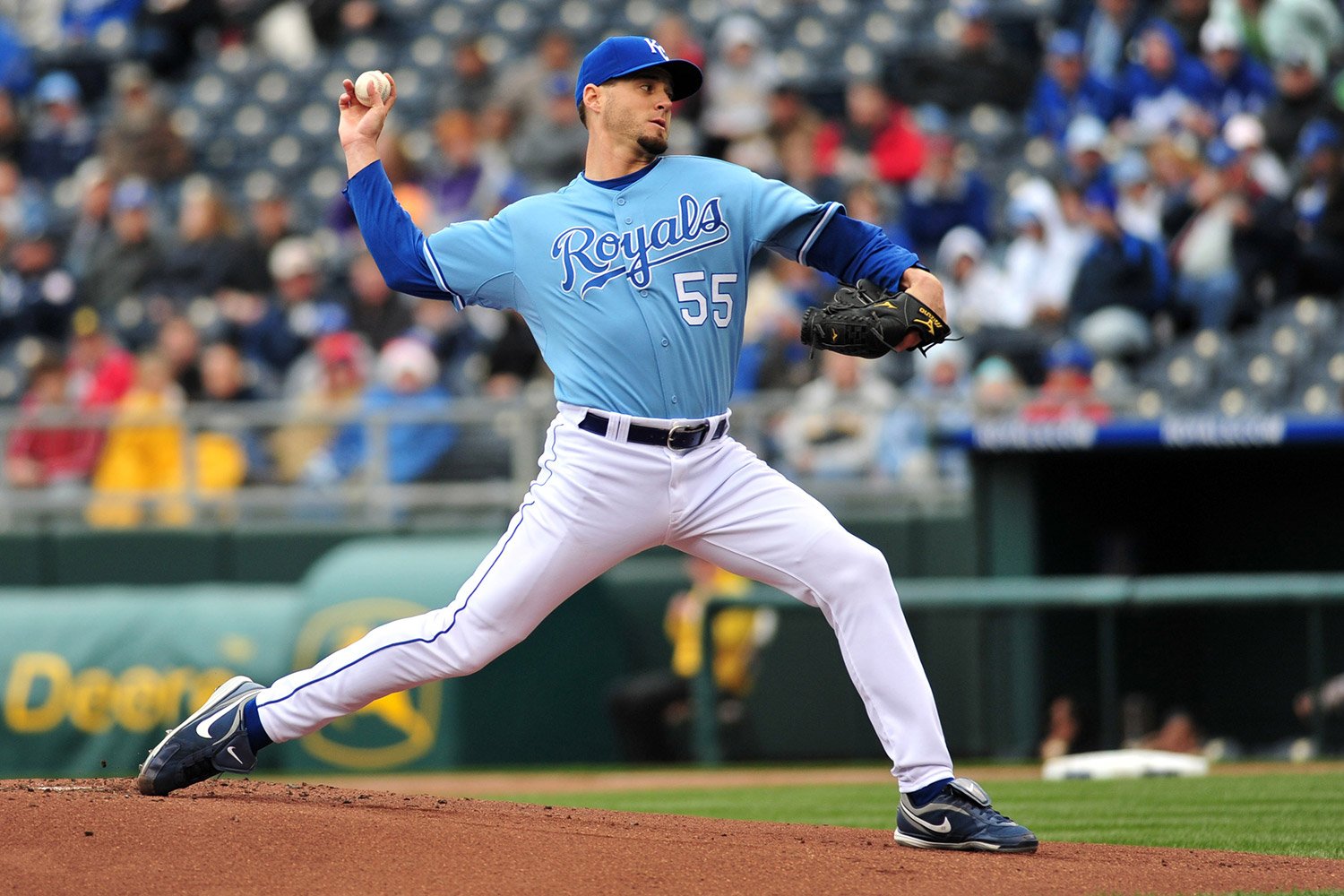 Everyone knows the tragic tale of Icarus, the boy who flew too close to the sun just to fall down and meet a grisly fate. The Royals have seen a story like that happen in real life with Gil Meche, a pitcher whose stubbornness to get a complete game eventually cost him down the road. But the story of how he got to June 16, 2009, is just as interesting as the man himself. Gilbert Albert Meche was born in Lafayette, Louisiana, on September 8th, 1978. Meche was a star pitcher at Acadiana High School and eventually found a place in the U.S. Junior Olympic Baseball Team in 1995, where they would win gold at the World Junior Baseball Championship. That same year, Meche would earn most valuable pitcher honors at the National Amateur All-Star Tournament when he was just 16 years old. Unfortunately for him, he would suffer a viral infection, causing him to miss almost all of his senior year season. He would still be named to the All-America Second Team and announce his intention to play college ball at LSU. However, when he was surprisingly drafted 22nd overall by the Seattle Mariners in 1996, he would end up foregoing college and signing professionally. After a solid three-year stint in the minors, Meche would make his big league debut on July 6, 1999, just two months before his 21st birthday. Meche would become the second-youngest player to ever debut for the Mariners behind Ken Griffey Jr. He pitched 5 2/3 innings and gave up two earned runs on four hits, striking out five. He wouldn’t get a first win until July 19th against the Diamondbacks when he pitched seven innings and only gave up three earned runs. He would finish his first season with a record of 8-4 and an ERA of 4.73 in 15 starts. The next year would not be kind to Meche as he lost his first five starts to begin 2000. He would bounce back and even pitch a rain-shortened shutout, tossing just 5 scoreless innings against the Royals. However, his season would be cut short due to having a dead arm, and he was put on the disabled list in July. He would make a few rehab appearances but would not pitch in the majors the rest of the season. Meche would pitch for the Mariners until 2006, putting up solid numbers for them as he went 43-36 with a 4.75 ERA. He would become a free agent at the end of the 2006 season, and with a big-time demand for pitching, Meche was going to get paid big time. He received interest from the Cubs and the Blue Jays, but ended up surprising everyone and signed with the Royals for five years and $55 million. The contract would tie the largest in club history, and Meche would wear the number 55 in honor of that contract. Meche would start off his Royals career strongly, amassing a record of 5-6 with a 3.28 ERA before being named an All-Star in 2007. He finished the year with a 9-13 record and posted career bests in ERA (3.67), innings pitched (216), and a league-leading 34 starts. Meche would have another great year the following season, finishing 2008 with a 14-11 record and a 3.98 ERA. But then 2009 would be the year when the wheels started to fall off. Meche would start off the year solidly, though, with a record of 3-5 with an ERA of 3.70, but then came June 16th. In a memorable game against the Diamondbacks, Meche pitched a complete game shutout, only giving up four hits and striking out six. At the time, it was seen as Meche’s masterpiece, but there was only one stat that stuck out like a sore thumb: his pitch count. Meche threw 132 pitches, which is too many pitches to throw for a shutout, and it would eventually take a toll on him. Manager Trey Hillman again gave Meche too long a leash in his next two starts as he threw 121 and 114 pitches in back-to-back starts. He would finish 2009 with a record of 6–10 and an ERA of 5.09 while giving up almost 8 earned runs per game over his last nine starts. He would not be the same pitcher after that. 2010 would be another forgettable year for Meche as he would not be given the Opening Day nod, which went to Zack Greinke, the Cy Young Award winner the year prior. Meche started the year 0-4 with a 6.66 ERA before being placed on the disabled list with right shoulder bursitis, which marked his second stint on the DL for the season. After five rehab appearances, he would return to the Royals as a reliever and put up admirable numbers, pitching 11 innings to an ERA of 2.08. However, it would be the last time Meche would pitch in the majors, as he would make the surprising decision to retire rather than play out the final year of his contract, where he was guaranteed $12 million. Meche believed that he wasn’t the pitcher that he once was and that he was not deserving of the money. It’s hard to know what kind of pitcher Meche would've become if he hadn’t thrown so many pitches in 2009. Would he have won a Cy Young? Probably not. But he would've been a staple in the Royals' rotation for years to come, and that is the real tragedy of it all. In the many what-ifs Royals fans have been through, Meche certainly represents one of the most interesting stories in Royals lore.
 -
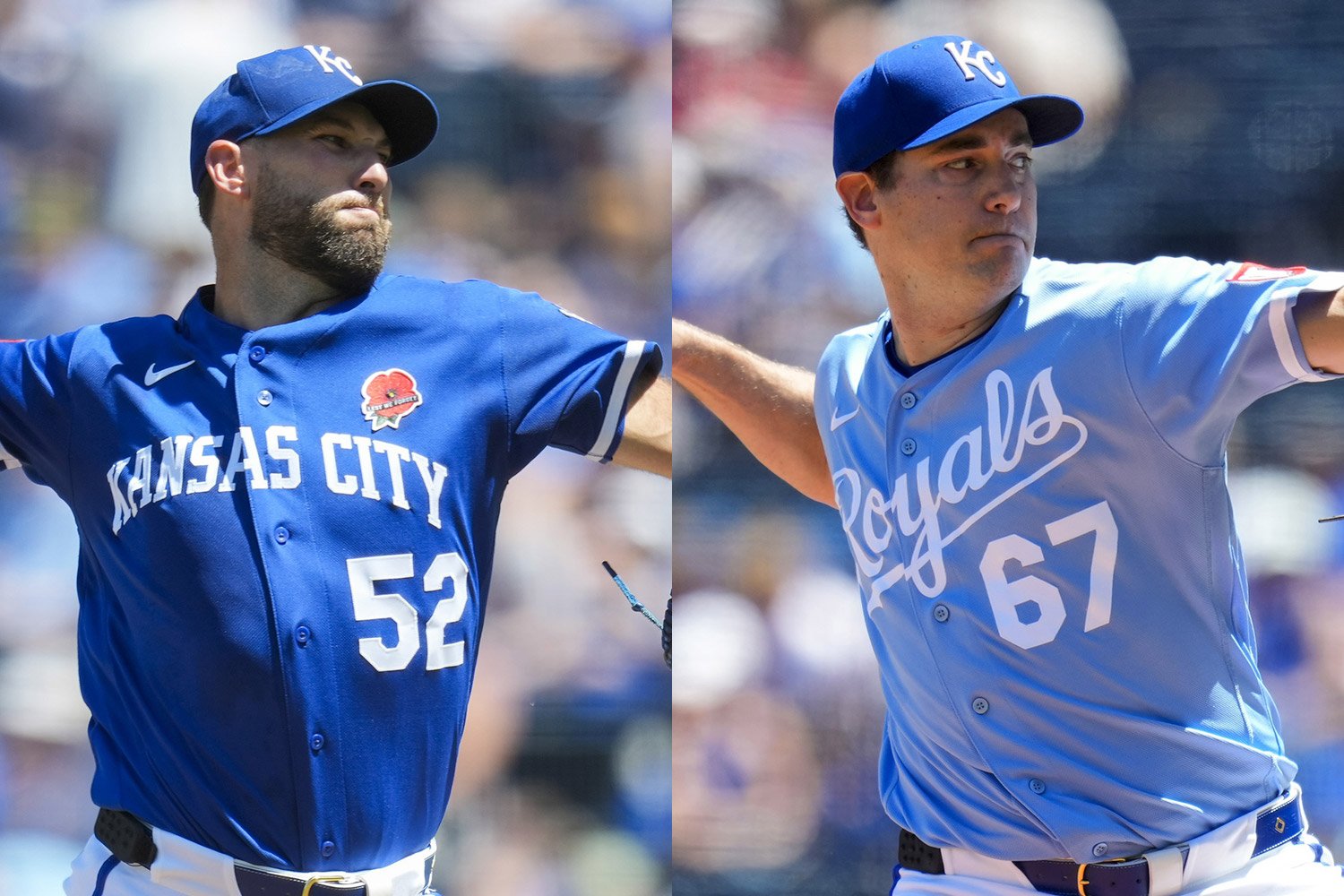 To say that the start of the Royals' season has been bad would be an understatement; it has been an unmitigated disaster so far. Nothing seems to be going right for the Royals this season, and it would be easy to assume that the Royals will be sellers at the trade deadline of the season were to continue in this direction. The deadline is still three months away, but with the way the season is going, it looks like the Royals will not be anywhere near the playoff hunt. But what moves could the Royals make? Here are some realistic and far-fetched ideas. Realistic Royals Trade Scenarios Michael Wacha to the Chicago Cubs for Jacob Webb and Pedro Ramirez Wacha is having a fantastic season so far, so if that were to continue, teams will definitely be looking at his services. A team in need of starting pitching is the Cubs, whose team ERA of 4.05 could definitely be improved once Wacha joins the team. The Royals are in need of reliable bullpen arms and a second baseman, so Webb and Ramirez will do the trick. Seth Lugo and Ramcell Medina to the Padres for Kale Fountain Another team in need of pitching is the Padres, who are in need of some depth in the starting rotation. A reunion with Lugo could do the trick, as he could fill in as a 4 or 5 starter right away, and Medina could also be developed into a middle infielder of the future. Fountain is an interesting prospect whose power and arm could fit in nicely in the lineup for a future Royals team. Far-Fetched Royals Trade Scenarios Bobby Witt Jr. to the Dodgers for Tommy Edman, Emmitt Sheehan, Mike Sirota, Zyhir Hope Now the chances of this trade even happening are slim to none. The Royals would not willingly move on from their superstar shortstop that easily unless the Dodgers gave them an offer the team just could not refuse. This could be one of those offers. Mookie Betts is getting older and might have to transition to another position, so BWJ would fit right in in this already loaded lineup. But the price for Witt’s services will be steep, so the Dodgers would have to give up a ton just to get him. I could see JJ bargaining his way to getting Edman, Sheehan, and two of the Dodgers top prospects in Sirota and Hope. Vinnie Pasquantino to the Guardians for Steven Kwan With the way Vinnie has been producing at the plate and with Brett Squires mashing in the minors, the Royals may want to move him in exchange for one of the more underrated players in baseball, Steven Kwan. Both players are struggling to produce, so a change of scenery for both of them could be beneficial. But again, the chances of this trade even happening are extremely low.
 -
Image courtesy of © Jay Biggerstaff-Imagn Images To say that the start of the Royals' season has been bad would be an understatement; it has been an unmitigated disaster so far. Nothing seems to be going right for the Royals this season, and it would be easy to assume that the Royals will be sellers at the trade deadline of the season were to continue in this direction. The deadline is still three months away, but with the way the season is going, it looks like the Royals will not be anywhere near the playoff hunt. But what moves could the Royals make? Here are some realistic and far-fetched ideas. Realistic Royals Trade Scenarios Michael Wacha to the Chicago Cubs for Jacob Webb and Pedro Ramirez Wacha is having a fantastic season so far, so if that were to continue, teams will definitely be looking at his services. A team in need of starting pitching is the Cubs, whose team ERA of 4.05 could definitely be improved once Wacha joins the team. The Royals are in need of reliable bullpen arms and a second baseman, so Webb and Ramirez will do the trick. Seth Lugo and Ramcell Medina to the Padres for Kale Fountain Another team in need of pitching is the Padres, who are in need of some depth in the starting rotation. A reunion with Lugo could do the trick, as he could fill in as a 4 or 5 starter right away, and Medina could also be developed into a middle infielder of the future. Fountain is an interesting prospect whose power and arm could fit in nicely in the lineup for a future Royals team. Far-Fetched Royals Trade Scenarios Bobby Witt Jr. to the Dodgers for Tommy Edman, Emmitt Sheehan, Mike Sirota, Zyhir Hope Now the chances of this trade even happening are slim to none. The Royals would not willingly move on from their superstar shortstop that easily unless the Dodgers gave them an offer the team just could not refuse. This could be one of those offers. Mookie Betts is getting older and might have to transition to another position, so BWJ would fit right in in this already loaded lineup. But the price for Witt’s services will be steep, so the Dodgers would have to give up a ton just to get him. I could see JJ bargaining his way to getting Edman, Sheehan, and two of the Dodgers top prospects in Sirota and Hope. Vinnie Pasquantino to the Guardians for Steven Kwan With the way Vinnie has been producing at the plate and with Brett Squires mashing in the minors, the Royals may want to move him in exchange for one of the more underrated players in baseball, Steven Kwan. Both players are struggling to produce, so a change of scenery for both of them could be beneficial. But again, the chances of this trade even happening are extremely low. View full article
-
Image courtesy of © Kamil Krzaczynski-Imagn Images The quote “distance makes the heart grow fonder” is about how separation from a loved one can make the love for them greater. With how the Royals are playing on the road, that quote could not be more true. To put it bluntly, the Royals are the worst team in baseball when it comes to playing on the road. They’ve gone a measly 7-17 while away from the K, which is the worst road record in all of MLB. They’re also on the longest losing streak of any team in the majors, losing all six of their road games so far. But the question is, why are the Royals losing so much on the road, and is there any way to fix it? Bad Against Righties, But Inexplicably Only On The Road Let’s start off with the offense, which has been the main problem for the Royals away from home. Looking at the stats while at the K, the Royals are hitting .265/.349/.436, which are not bad numbers, especially at home. But those numbers take an absolute nosedive when the Royals play anywhere else. The Royals have a league-worst batting average of .213 to go along with a .286 OBP and .336 slugging. Those numbers are abysmal, especially for a team with one of MLB’s biggest stars in Bobby Witt Jr. in the lineup. It gets even worse when you dive deeper. Against right-handed pitchers, the Royals are hitting a league-worst .211, which is the exact opposite of what the team is hitting at home, as they are hitting .279 at home against righties, which is a league-best. The Royals' offense has struggled with scoring runs throughout the season, and that struggle could not be more apparent in their recent road games. On the road so far, the Royals have a league-worst batting average of .174 with runners in scoring position and are hitting .100 with the bases loaded. Those numbers are ridiculously low, and it shows that the Royals’ hitters are anti-clutch in moments like this. The Pitching Fares Better, But Just Barely Pitching, on the other hand, is not as bad as the hitting, but it is certainly not helping the Royals win ballgames. The team has an ERA of 4.63 on the road, which isn’t terrible, but compared to their home ERA of 3.84, it certainly could be better. The pitching staff is also allowing a triple slash of .263/.347/.448, which is not enough to help a struggling offense. What makes this situation worse is that the Royals have relied on their pitching to get them through rough patches like this, but now that the pitching is struggling, the Royals don’t really have that to lean on. With Cole Ragans and Ryan Bergert both out, the Royals' pitching depth certainly hasn’t panned out the way that they had hoped. The only starting pitchers who have had success this season are Michael Wacha and Stephen Kolek, but that success won’t last. The bullpen has seen success from Daniel Lynch IV, Lucas Erceg, and Eli Morgan, but everyone else hasn’t really stepped up like they did last season. So where do the Royals go from here? There are a few options that the Royals could go with. The first, and the one that seems the most likely, is to keep things where they are and just trust that the players you have now will improve over the course of the season. This plan has a better chance of not working than working, but the roster is what it is, and the fans will have to put up with it for the foreseeable future. Another option is to make some moves at the deadline. JJ Piccolo can use some of the pitching depth he has at his disposal and trade it for a reliable bat who excels in driving in runs or more bullpen arms. The third, and most drastic option, is to blow it all up and trade players who could give you the most value (Wacha, Ragans, Witt, Kyle Isbel, etc.) This option would make more sense if the woes for the Royals were to continue, but we’re still in May, so the chances of this happening are slim to none. However, there is a lot of value you could get by making big trades like this. Hopefully, the Royals won’t get to that point and that this team will improve as the season goes on, but only time will tell. View full article
-
A Dive Into The Numbers Of The Royals' Baffling Road Woes
Matt Crossland posted an article in Royals
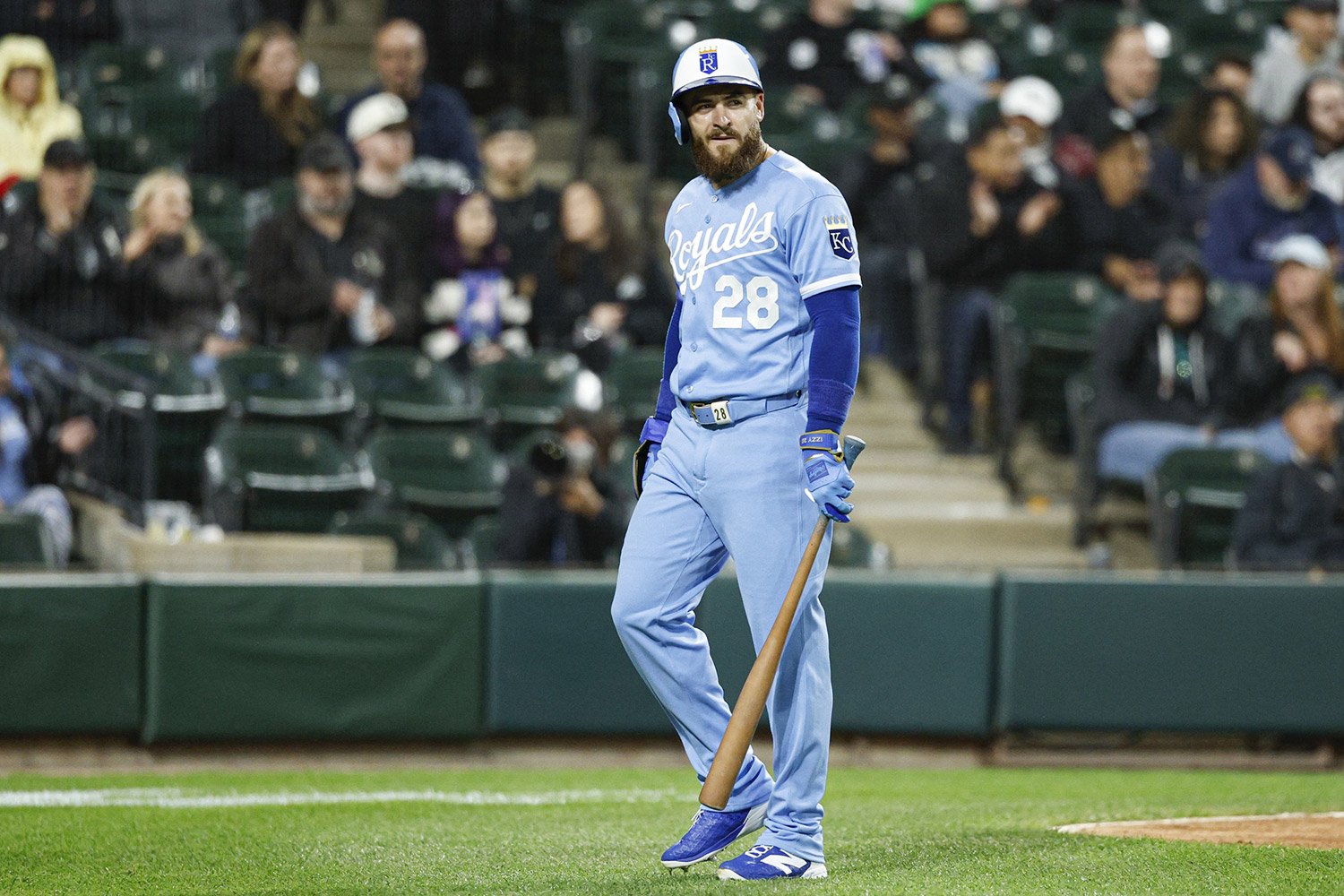 The quote “distance makes the heart grow fonder” is about how separation from a loved one can make the love for them greater. With how the Royals are playing on the road, that quote could not be more true. To put it bluntly, the Royals are the worst team in baseball when it comes to playing on the road. They’ve gone a measly 7-17 while away from the K, which is the worst road record in all of MLB. They’re also on the longest losing streak of any team in the majors, losing all six of their road games so far. But the question is, why are the Royals losing so much on the road, and is there any way to fix it? Bad Against Righties, But Inexplicably Only On The Road Let’s start off with the offense, which has been the main problem for the Royals away from home. Looking at the stats while at the K, the Royals are hitting .265/.349/.436, which are not bad numbers, especially at home. But those numbers take an absolute nosedive when the Royals play anywhere else. The Royals have a league-worst batting average of .213 to go along with a .286 OBP and .336 slugging. Those numbers are abysmal, especially for a team with one of MLB’s biggest stars in Bobby Witt Jr. in the lineup. It gets even worse when you dive deeper. Against right-handed pitchers, the Royals are hitting a league-worst .211, which is the exact opposite of what the team is hitting at home, as they are hitting .279 at home against righties, which is a league-best. The Royals' offense has struggled with scoring runs throughout the season, and that struggle could not be more apparent in their recent road games. On the road so far, the Royals have a league-worst batting average of .174 with runners in scoring position and are hitting .100 with the bases loaded. Those numbers are ridiculously low, and it shows that the Royals’ hitters are anti-clutch in moments like this. The Pitching Fares Better, But Just Barely Pitching, on the other hand, is not as bad as the hitting, but it is certainly not helping the Royals win ballgames. The team has an ERA of 4.63 on the road, which isn’t terrible, but compared to their home ERA of 3.84, it certainly could be better. The pitching staff is also allowing a triple slash of .263/.347/.448, which is not enough to help a struggling offense. What makes this situation worse is that the Royals have relied on their pitching to get them through rough patches like this, but now that the pitching is struggling, the Royals don’t really have that to lean on. With Cole Ragans and Ryan Bergert both out, the Royals' pitching depth certainly hasn’t panned out the way that they had hoped. The only starting pitchers who have had success this season are Michael Wacha and Stephen Kolek, but that success won’t last. The bullpen has seen success from Daniel Lynch IV, Lucas Erceg, and Eli Morgan, but everyone else hasn’t really stepped up like they did last season. So where do the Royals go from here? There are a few options that the Royals could go with. The first, and the one that seems the most likely, is to keep things where they are and just trust that the players you have now will improve over the course of the season. This plan has a better chance of not working than working, but the roster is what it is, and the fans will have to put up with it for the foreseeable future. Another option is to make some moves at the deadline. JJ Piccolo can use some of the pitching depth he has at his disposal and trade it for a reliable bat who excels in driving in runs or more bullpen arms. The third, and most drastic option, is to blow it all up and trade players who could give you the most value (Wacha, Ragans, Witt, Kyle Isbel, etc.) This option would make more sense if the woes for the Royals were to continue, but we’re still in May, so the chances of this happening are slim to none. However, there is a lot of value you could get by making big trades like this. Hopefully, the Royals won’t get to that point and that this team will improve as the season goes on, but only time will tell.
 -
Image courtesy of © Peter Aiken-Imagn Images The month of April was certainly one to forget for the Royals. The team finished the month with a 12-19 record, good for last place in the AL Central. While lackluster pitching didn’t help, it was the offense that caused most of the struggles. However, that all has mostly changed when the calendar flipped to May. The Royals so far have gone 7-3 to open the month and are now only two games back in the weak American League Central division. Much of the recent success has come from the offense stepping up. But can the Royals sustain this level throughout the rest of the season? Let’s find out. At first glance, the Royals had a pretty mediocre month, boasting a team batting average of .247 and an on-base percentage of .331. However, a deeper look into the numbers shows that the Royals’ real struggle on offense was scoring runs, especially in high-leverage situations. The Royals thrived in low-leverage situations in April, with the team leading all of MLB in batting average (.303), OBP (.386), and OPS (.869). On the other hand, the Royals had a batting average of .231 with runners in scoring position and .219 in high leverage situations, meaning that the Royals were not producing hits when it really mattered. They also were not patient when it mattered, as the team produced a 7.3% walk rate and a 23.6% K rate. How have things changed? To put it simply, the Royals are finally driving in runs when it matters most. While their batting average of .242 is worse than last month, the Royals now have a batting average of .331 with runners in scoring position. In terms of leverage, the team has almost flipped their averages: the Royals have a batting average of .154 in low-leverage situations compared to their high-leverage batting average of .294. The team has also shown patience as their walk rate has dropped to 8.6%, but they are still striking out at a 22% clip. So, can the offense continue to produce when it matters? The answer to the question remains to be seen. While it is promising to see the Royals hitting better when it matters, there is still a long season ahead. It is not guaranteed that the team will hit this well throughout the year, but hopefully the Royals will learn from April and continue to build upon their recent success in May and beyond. View full article
-
The Royals Offense Has Been Better In May, But Is It A Real Improvement?
Matt Crossland posted an article in Royals
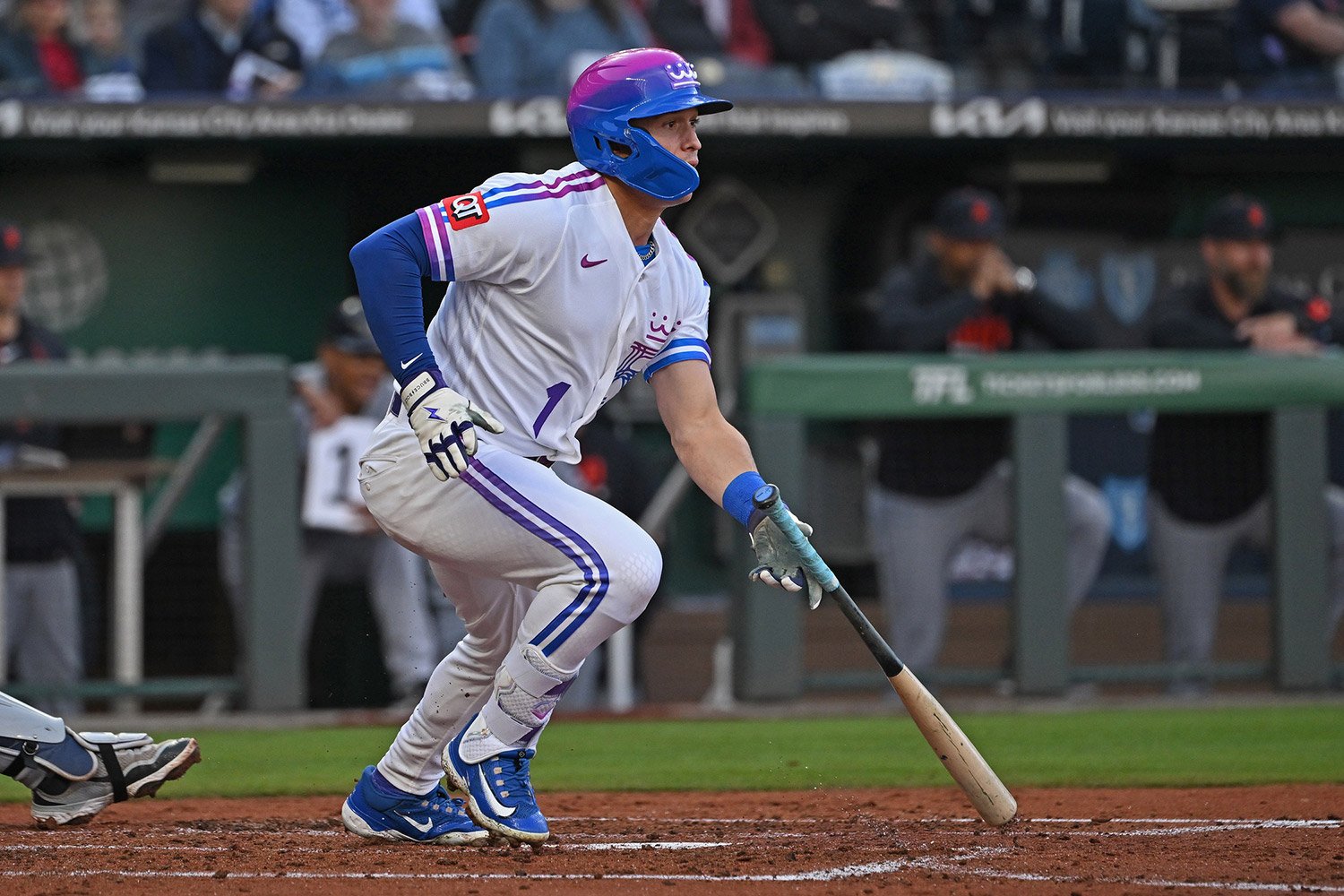 The month of April was certainly one to forget for the Royals. The team finished the month with a 12-19 record, good for last place in the AL Central. While lackluster pitching didn’t help, it was the offense that caused most of the struggles. However, that all has mostly changed when the calendar flipped to May. The Royals so far have gone 7-3 to open the month and are now only two games back in the weak American League Central division. Much of the recent success has come from the offense stepping up. But can the Royals sustain this level throughout the rest of the season? Let’s find out. At first glance, the Royals had a pretty mediocre month, boasting a team batting average of .247 and an on-base percentage of .331. However, a deeper look into the numbers shows that the Royals’ real struggle on offense was scoring runs, especially in high-leverage situations. The Royals thrived in low-leverage situations in April, with the team leading all of MLB in batting average (.303), OBP (.386), and OPS (.869). On the other hand, the Royals had a batting average of .231 with runners in scoring position and .219 in high leverage situations, meaning that the Royals were not producing hits when it really mattered. They also were not patient when it mattered, as the team produced a 7.3% walk rate and a 23.6% K rate. How have things changed? To put it simply, the Royals are finally driving in runs when it matters most. While their batting average of .242 is worse than last month, the Royals now have a batting average of .331 with runners in scoring position. In terms of leverage, the team has almost flipped their averages: the Royals have a batting average of .154 in low-leverage situations compared to their high-leverage batting average of .294. The team has also shown patience as their walk rate has dropped to 8.6%, but they are still striking out at a 22% clip. So, can the offense continue to produce when it matters? The answer to the question remains to be seen. While it is promising to see the Royals hitting better when it matters, there is still a long season ahead. It is not guaranteed that the team will hit this well throughout the year, but hopefully the Royals will learn from April and continue to build upon their recent success in May and beyond.
 -
Image courtesy of © Peter G. Aiken-Imagn Images With the World Baseball Classic coming up, it’s nice to look back on how far the tournament has come since its inception in 2006. If you look at the rosters from that year’s tournament, there are several players who were or would end up playing for the Royals. Guys like Matt Stairs, Bruce Chen, and Benji Gil would all end up playing for the Royals at some point. However, there is one player who really stands out among the rest. This future Royals player would be labeled the next Ichiro and have one of the most storied careers in recent Japanese baseball history; he’s also a one-time Royals player. This player is Nori Aoki, and his journey to the Royals was a rather interesting one. Norichika Aoki was born on January 5th, 1982, in Hyuka, Miyazaki, Japan. He started playing baseball at an early age and later attended Miyazaki Prefectural Hyuga High School. He was a pitcher all throughout high school, but converted to outfield when he attended Waseda University in 2000. Aoki was just one of several talented players who led Waseda to four straight Tokyo Big6 titles, Japan’s version of the NCAA. Aoki played alongside future pros like Takashi Toritani, Shintaro Yoshida, and Tsuyoshi Wada. Throughout his college career, Aoki had a batting average of .332 without hitting a single home run while also being selected for the Best Nine Award three times. He would be drafted in the fourth round of the Nippon Professional Baseball draft by the Yakult Swallows. Aoki would only play 10 games in 2004, but 2005 would kickstart his illustrious career in NPB. He would finish the year with the Most Valuable Rookie award and the Central League Batting Title. He hit .344, stole 41 bases, and collected 202 hits, becoming just the second player in NPB history to record 200 hits in a season. He would build off that success the next year, participating in that year’s World Baseball Classic, and be named All-Star Game MVP in his home ballpark. He would finish the year with 192 hits, eight short of his goal, but would increase his on-base percentage by nine points. He expressed interest in going to the MLB via the posting system, but the Swallows were not interested in selling him. The next five seasons would cement Aoki’s name as one of the best contact hitters in NPB history. He would rack up 887 hits and had a batting average under .300 once in that timespan. He would become the fastest player in NPB history to collect 500 hits, doing so in 373 games. He won the batting title two more times in 2007 and 2010, and was given an All-Star, Best Nine, and Golden Glove every year during this time period. After the 2011 season, he was posted by the Swallows and signed a two-year deal with the Brewers. He would put up solid numbers during his time in Milwaukee, posting a bWAR of 3.2, a batting average of .288, and finishing fifth in NL Rookie of the Year voting in 2012. He would be the everyday right fielder, where he would start hot but steadily decline throughout the year, finishing with a batting average of .286. He would then be flipped to Kansas City on December 5th, 2013, and would begin a memorable tenure with the Royals. Aoki would be the leadoff hitter for a majority of the season and finished the year with a triple slash of .285/.349/.360. He would hit exactly one home run during his time in Kansas City, and it was a grand slam against the Diamondbacks on August 6th. It would be the only grand slam he would hit while in MLB. Aoki would also set a Royals record for most hits in a three-game series with 11 against the White Sox, surpassing Willie Wilson and George Brett’s record of 10 hits. He would also be known for getting hit in the private parts while attempting to make a catch against the Blue Jays. Aoki would make an impact with the Royals in the postseason as he would score the Royals’ first run in the Wild Card game against the A’s and would also hit a sacrifice fly that would tie the game in the ninth inning. He would be the starting right fielder throughout the playoffs, but he only hit .195. He would become a free agent after the season ended and signed with the Giants. Aoki would continue to play in MLB until 2017, when he decided to return to Japan to sign a three-year deal with the Swallows. He would record his 4,000th career at-bat and qualified to become NPB’s lifetime batting champion with a career batting average of .328. He would retire in 2024 and is now the general manager for the Swallows. While his time with the Royals was just one year, he certainly made his impact felt during that one season. Who knows how the Royals would’ve finished if it weren’t for his services? We’ll never know, but one thing is for certain: Aoki is one of the best contact hitters Japanese baseball has ever seen. While he may not have had that same impact in Major League Baseball, he was still able to carve out a stellar career. It’s unfortunate that his time in Royals blue was short-lived, but he’ll certainly be remembered for decades to come. View full article
-
"The Next Ichiro": How Nori Aoki Became A Royals Fan Favorite
Matt Crossland posted an article in History
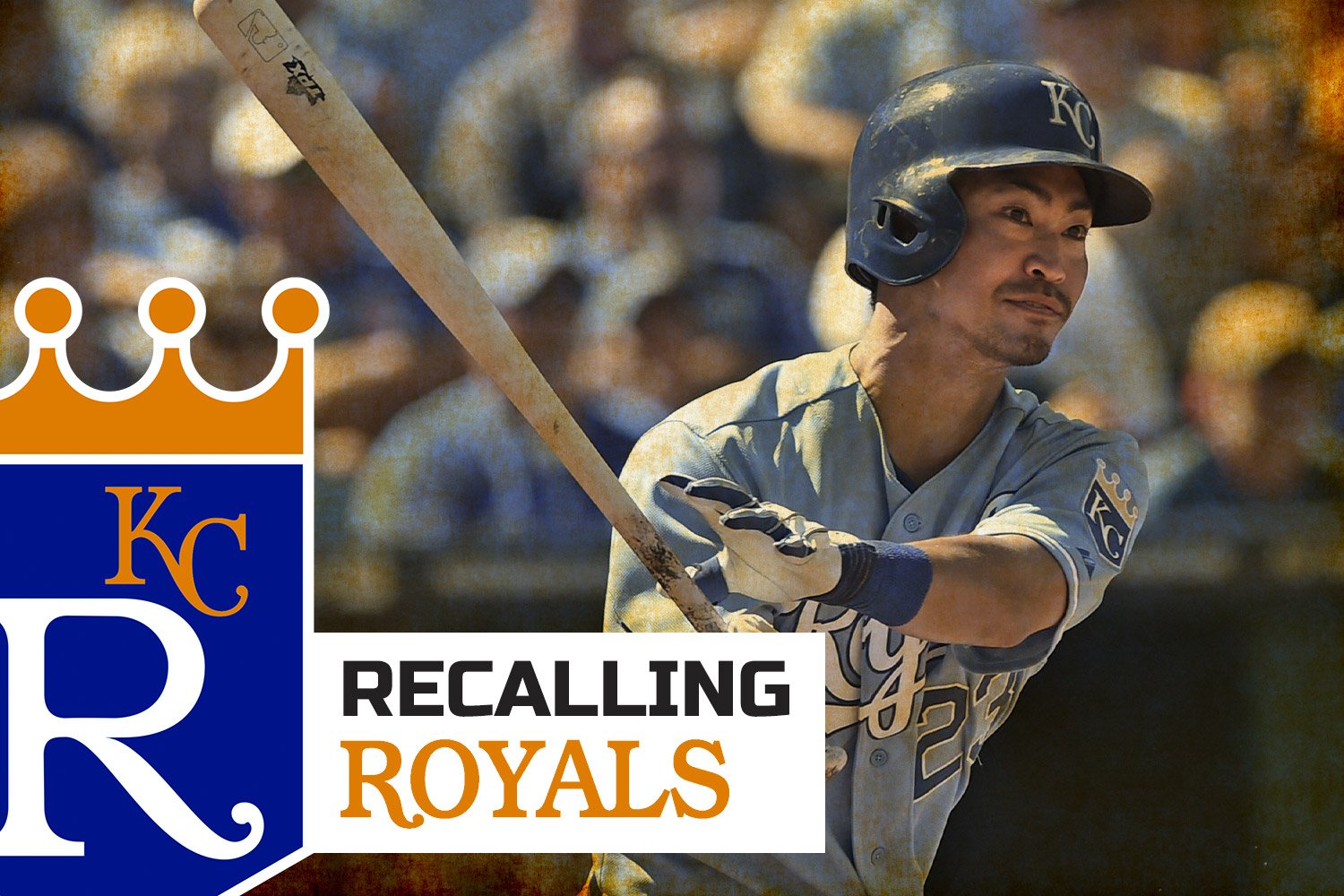 With the World Baseball Classic coming up, it’s nice to look back on how far the tournament has come since its inception in 2006. If you look at the rosters from that year’s tournament, there are several players who were or would end up playing for the Royals. Guys like Matt Stairs, Bruce Chen, and Benji Gil would all end up playing for the Royals at some point. However, there is one player who really stands out among the rest. This future Royals player would be labeled the next Ichiro and have one of the most storied careers in recent Japanese baseball history; he’s also a one-time Royals player. This player is Nori Aoki, and his journey to the Royals was a rather interesting one. Norichika Aoki was born on January 5th, 1982, in Hyuka, Miyazaki, Japan. He started playing baseball at an early age and later attended Miyazaki Prefectural Hyuga High School. He was a pitcher all throughout high school, but converted to outfield when he attended Waseda University in 2000. Aoki was just one of several talented players who led Waseda to four straight Tokyo Big6 titles, Japan’s version of the NCAA. Aoki played alongside future pros like Takashi Toritani, Shintaro Yoshida, and Tsuyoshi Wada. Throughout his college career, Aoki had a batting average of .332 without hitting a single home run while also being selected for the Best Nine Award three times. He would be drafted in the fourth round of the Nippon Professional Baseball draft by the Yakult Swallows. Aoki would only play 10 games in 2004, but 2005 would kickstart his illustrious career in NPB. He would finish the year with the Most Valuable Rookie award and the Central League Batting Title. He hit .344, stole 41 bases, and collected 202 hits, becoming just the second player in NPB history to record 200 hits in a season. He would build off that success the next year, participating in that year’s World Baseball Classic, and be named All-Star Game MVP in his home ballpark. He would finish the year with 192 hits, eight short of his goal, but would increase his on-base percentage by nine points. He expressed interest in going to the MLB via the posting system, but the Swallows were not interested in selling him. The next five seasons would cement Aoki’s name as one of the best contact hitters in NPB history. He would rack up 887 hits and had a batting average under .300 once in that timespan. He would become the fastest player in NPB history to collect 500 hits, doing so in 373 games. He won the batting title two more times in 2007 and 2010, and was given an All-Star, Best Nine, and Golden Glove every year during this time period. After the 2011 season, he was posted by the Swallows and signed a two-year deal with the Brewers. He would put up solid numbers during his time in Milwaukee, posting a bWAR of 3.2, a batting average of .288, and finishing fifth in NL Rookie of the Year voting in 2012. He would be the everyday right fielder, where he would start hot but steadily decline throughout the year, finishing with a batting average of .286. He would then be flipped to Kansas City on December 5th, 2013, and would begin a memorable tenure with the Royals. Aoki would be the leadoff hitter for a majority of the season and finished the year with a triple slash of .285/.349/.360. He would hit exactly one home run during his time in Kansas City, and it was a grand slam against the Diamondbacks on August 6th. It would be the only grand slam he would hit while in MLB. Aoki would also set a Royals record for most hits in a three-game series with 11 against the White Sox, surpassing Willie Wilson and George Brett’s record of 10 hits. He would also be known for getting hit in the private parts while attempting to make a catch against the Blue Jays. Aoki would make an impact with the Royals in the postseason as he would score the Royals’ first run in the Wild Card game against the A’s and would also hit a sacrifice fly that would tie the game in the ninth inning. He would be the starting right fielder throughout the playoffs, but he only hit .195. He would become a free agent after the season ended and signed with the Giants. Aoki would continue to play in MLB until 2017, when he decided to return to Japan to sign a three-year deal with the Swallows. He would record his 4,000th career at-bat and qualified to become NPB’s lifetime batting champion with a career batting average of .328. He would retire in 2024 and is now the general manager for the Swallows. While his time with the Royals was just one year, he certainly made his impact felt during that one season. Who knows how the Royals would’ve finished if it weren’t for his services? We’ll never know, but one thing is for certain: Aoki is one of the best contact hitters Japanese baseball has ever seen. While he may not have had that same impact in Major League Baseball, he was still able to carve out a stellar career. It’s unfortunate that his time in Royals blue was short-lived, but he’ll certainly be remembered for decades to come.
 -
Baseball truly is a global game, with 265 players from outside the United States at the start of last season. However, the country of Brazil has only produced eight big league players, with lackluster degrees of success. The most successful of the bunch is former All-Star catcher Yan Gomes, who put up very good numbers during his 13-year career. However, we’re here to talk about the second best. That player is Paulo Orlando. Paulo Roberto Orlando was born in São Paulo, Brazil, on November 1st, 1985. Paulo didn’t discover baseball until he was 12, when his mother’s physician told him to try it. Baseball is an obscure sport in Brazil, played mostly by Japanese Brazilians, and Paulo was one of the very few players who weren’t of Japanese descent. Orlando only played baseball on the weekends, as there are very few baseball fields in Brazil; he played other sports like track and soccer. He quit track at 20 and decided to pursue baseball full-time, moving to the Dominican Republic and eventually to Venezuela. There, he was quickly discovered by a Cuban scout for the White Sox and signed to the organization shortly after. What separated Orlando from the rest was his speed, despite his running form looking a bit off. He was named the fastest base runner in the White Sox system during the 2006 and 2007 seasons, as well as the best defensive outfielder in 2007. But then something happened to Orlando that altered the course of his career. On August 9, 2008, Orlando was traded to the Royals for pitcher Horacio Ramirez. Orlando would make an immediate impact in Single-A, leading the league in triples that season. Two years later, now with the Northwest Arkansas Naturals, he hit .305 with 13 homers, 64 RBI, and 25 steals to earn Texas League All-Star honors. In 2011, he became just the third Brazilian-born player, and the first non-pitcher, to make it to Triple-A when he was promoted to Omaha. He would spend time between Double-A and Triple-A over the next three seasons until finally breaking through to the big leagues in 2015 after he played 1,017 minor league games. Orlando would make the Opening Day roster and made his debut on April 9, becoming the third Brazilian-born player in MLB history. His first big league hit was a triple off John Danks, which was the first hit by a born-and-raised Brazilian player. Three days later, he would hit two more triples, becoming the first player in MLB history to record three triples for his first three hits. He would hit five triples in his first seven games, creating a new record for the fewest games to hit five triples to open a career. Orlando would only play 86 games in 2015 before being optioned to Omaha to make room for Ben Zobrist, but he made an impact during those games. He would rejoin the Royals for the playoffs, where he would become not only the first Brazilian-born player to win a World Series but also the latest person to win a World Series on their birthday. 2016 would be a breakout year for Orlando as he spent the season as the starting right fielder. He would play 105 games, putting up a .302 batting average with 5 home runs, 43 RBIs, and a bWAR of 2.0. The success wouldn’t last long as injuries and inconsistencies would plague his 2017 season as he hit .198 in only 39 games. He would play only 25 games in 2018 before getting demoted to Omaha. He would not play in the bigs again. Orlando would elect free agency and sign a minor league deal with the Dodgers. He hit .211 with two home runs, seven RBIs, and one stolen base in 24 games for the Oklahoma City Dodgers. He was flipped to the White Sox and played only 69 games with the Charlotte Knights before being released. He would then play a couple of seasons in the Mexican League for the Tecolotes de los Dos Laredos and El Águila de Veracruz before returning to Kansas City to play for the Monarchs. He would help lead the team to the 2021 American Association championship, but would return to the Mexican League in 2022. He would get injured during spring training and has not played in the Mexican League since. He would play one more time for his country in the 2023 Pan-American Games, where he led Brazil to a silver medal. He will now serve as the baserunning coach for the Brazilian national baseball team in the upcoming World Baseball Classic. Paulo had a short yet memorable Royals tenure, forever marking his name in Royals lore. Sure, he won’t be a Royals Hall of Famer, but his impact with the Royals will forever be remembered. The country of Brazil has not produced a lot of successful players, but Orlando certainly produced some of the most memorable moments in recent Royals history. View full article
-
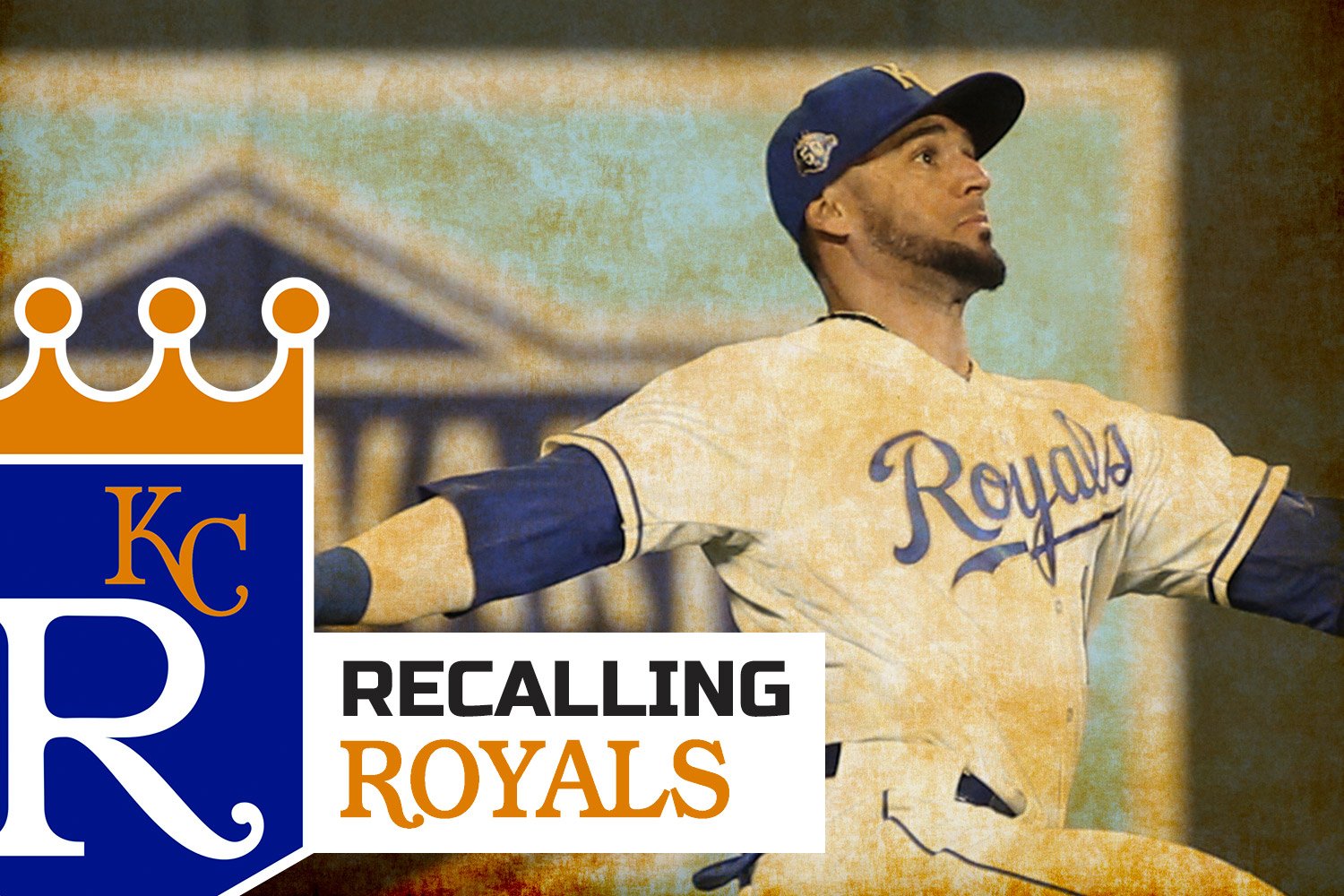 Baseball truly is a global game, with 265 players from outside the United States at the start of last season. However, the country of Brazil has only produced eight big league players, with lackluster degrees of success. The most successful of the bunch is former All-Star catcher Yan Gomes, who put up very good numbers during his 13-year career. However, we’re here to talk about the second best. That player is Paulo Orlando. Paulo Roberto Orlando was born in São Paulo, Brazil, on November 1st, 1985. Paulo didn’t discover baseball until he was 12, when his mother’s physician told him to try it. Baseball is an obscure sport in Brazil, played mostly by Japanese Brazilians, and Paulo was one of the very few players who weren’t of Japanese descent. Orlando only played baseball on the weekends, as there are very few baseball fields in Brazil; he played other sports like track and soccer. He quit track at 20 and decided to pursue baseball full-time, moving to the Dominican Republic and eventually to Venezuela. There, he was quickly discovered by a Cuban scout for the White Sox and signed to the organization shortly after. What separated Orlando from the rest was his speed, despite his running form looking a bit off. He was named the fastest base runner in the White Sox system during the 2006 and 2007 seasons, as well as the best defensive outfielder in 2007. But then something happened to Orlando that altered the course of his career. On August 9, 2008, Orlando was traded to the Royals for pitcher Horacio Ramirez. Orlando would make an immediate impact in Single-A, leading the league in triples that season. Two years later, now with the Northwest Arkansas Naturals, he hit .305 with 13 homers, 64 RBI, and 25 steals to earn Texas League All-Star honors. In 2011, he became just the third Brazilian-born player, and the first non-pitcher, to make it to Triple-A when he was promoted to Omaha. He would spend time between Double-A and Triple-A over the next three seasons until finally breaking through to the big leagues in 2015 after he played 1,017 minor league games. Orlando would make the Opening Day roster and made his debut on April 9, becoming the third Brazilian-born player in MLB history. His first big league hit was a triple off John Danks, which was the first hit by a born-and-raised Brazilian player. Three days later, he would hit two more triples, becoming the first player in MLB history to record three triples for his first three hits. He would hit five triples in his first seven games, creating a new record for the fewest games to hit five triples to open a career. Orlando would only play 86 games in 2015 before being optioned to Omaha to make room for Ben Zobrist, but he made an impact during those games. He would rejoin the Royals for the playoffs, where he would become not only the first Brazilian-born player to win a World Series but also the latest person to win a World Series on their birthday. 2016 would be a breakout year for Orlando as he spent the season as the starting right fielder. He would play 105 games, putting up a .302 batting average with 5 home runs, 43 RBIs, and a bWAR of 2.0. The success wouldn’t last long as injuries and inconsistencies would plague his 2017 season as he hit .198 in only 39 games. He would play only 25 games in 2018 before getting demoted to Omaha. He would not play in the bigs again. Orlando would elect free agency and sign a minor league deal with the Dodgers. He hit .211 with two home runs, seven RBIs, and one stolen base in 24 games for the Oklahoma City Dodgers. He was flipped to the White Sox and played only 69 games with the Charlotte Knights before being released. He would then play a couple of seasons in the Mexican League for the Tecolotes de los Dos Laredos and El Águila de Veracruz before returning to Kansas City to play for the Monarchs. He would help lead the team to the 2021 American Association championship, but would return to the Mexican League in 2022. He would get injured during spring training and has not played in the Mexican League since. He would play one more time for his country in the 2023 Pan-American Games, where he led Brazil to a silver medal. He will now serve as the baserunning coach for the Brazilian national baseball team in the upcoming World Baseball Classic. Paulo had a short yet memorable Royals tenure, forever marking his name in Royals lore. Sure, he won’t be a Royals Hall of Famer, but his impact with the Royals will forever be remembered. The country of Brazil has not produced a lot of successful players, but Orlando certainly produced some of the most memorable moments in recent Royals history.
 -
Image courtesy of © Joe Camporeale-Imagn Images Becoming a professional pitcher is very difficult. Not only do you have to work ridiculously hard to even have a chance at the bigs, but you also must go through at least five or six different levels of professional baseball to have a shot at a major league roster. That’s why only 10% of drafted players make it to The Show, with undrafted players having even less of a chance. Impressing scouts could be the difference between your shot at the MLB and sitting on your couch working a real job. There are very few players who may not look the part but will have the talent and the work ethic to make it; Tim Collins is one of those players. When you first look at Tim Collins, all 5’7" and 175 pounds of him, you would never think that he would be a former MLB pitcher, but he was a solid one at that. Collins was born on August 21st, 1989, in Worcester, Massachusetts. He would attend Worcester Technical High School and compile an overall record of 91-5. He would also throw a no-hitter in the district championship game, which was just the second no-hitter in the school's history. Despite his talent, Collins was overlooked by scouts because of his height; however, that would all change. Former Blue Jays general manager JP Ricciardi flew out to Worcester to watch an American Legion game where Keith Landers, a 6’7" left-hander with tremendous upside at the time, was set to start. However, Landers didn’t pitch that day; Collins did. After four innings of work, Collins struck out every batter he faced. This impressed Ricciardi so much that he signed Collins to a contract after he finished high school. Collins would go undrafted and never go to college, and yet he still found himself fighting for his shot at the bigs. Collins' first appearance for the Gulf Coast Blue Jays drew laughter from the opposing team. He would strike out the first batter he saw and get through a clean inning, so he got the last laugh. From 2007 to 2009, when he pitched in Single-A and Double-A, Collins pitched 151 2/3 innings and had a 2.37 ERA, 221 strikeouts on just 69 walks. After 2009, Collins was named Toronto’s Postseason Minor League Player of the Year, and he was recognized by Baseball America as having one of the best curveballs in all baseball. 2010 proved to be a pivotal year for Collins in multiple ways. Collins would start off the year in Double-A with the New Hampshire Fisher Cats, where he had a solid 2.51 ERA in 43 innings pitched. However, he would be traded to the Atlanta Braves, where he would pitch in their Double-A system for a short while. Twenty-one days later, Collins, along with Jesse Chavez and Gregor Blanco, would be traded to the Royals for Kyle Farnsworth and Rick Ankiel. Collins would end the year pitching in Triple-A for the Omaha Stormchasers. Less than a year later, Collins would make it onto the Royals’ opening day roster. Collins would make his debut on March 11th, 2011, against the Los Angeles Angels. He would pitch one inning without giving up a run and struck out Torii Hunter for his first career punchout. Three days later, he earned his first win by pitching three scoreless innings against the Angels in extra innings, striking out five in the process. He would finish 2011 with a solid 3.63 ERA with 60 strikeouts in 67 innings pitched. 2012 would be another fruitful year for Collins as he would pitch to a 3.36 ERA with 93 strikeouts, the most in a single season by a left-handed reliever in Royals history. The next two years would be much of the same for Collins as he went 3-9 with an ERA of 3.63. However, he would miss all of 2014 and 2015 due to Tommy John surgery, meaning he wasn’t able to pitch during the Royals’ World Series run. Collins would elect free agency in 2016, ending his run with the Royals. Collins wouldn’t have the same success as he did with the Royals, as he would bounce around multiple teams on minor league contracts. He would get another chance in the bigs with the Nationals in 2018, which was unsuccessful, as his ERA would balloon to 4.37, and he would only pitch 22 2/3 innings before being sent back down to Triple-A. He would sign with the Cubs in 2019, have mild success, but it was short-lived. He would play with the Reds and Rockies before opting out of the Covid-shortened 2020 season; he has not pitched in MLB since. He’s now the pitching coach for the Jersey Shore BlueClaws, the Philadelphia Phillies’ single-A affiliate. Tim Collins’ success story is one of hard work and a little bit of luck. If he didn’t pitch on that fateful day, he probably wouldn’t have pitched in the bigs at all. But sometimes life works in mysterious ways, and Collins was able to get the chance that so many young baseball players dream of. Will he get into the Hall of Fame? No. But he has something that not many baseball players can say. Despite his small frame and lack of velocity, he made it to the big leagues. No matter what people say, they can never take that away from him. View full article

