


Philip Ruo
-
Posts
95 -
Joined
-
Last visited
-
Days Won
32
Content Type
Profiles
Forums
Blogs
Events
News
2026 Kansas City Royals Top Prospects Ranking
Kansas City Royals Videos
Kansas City Royals Free Agent & Trade Rumors, Notes, & Tidbits
Guides & Resources
The Kansas City Royals Players Project
2026 Kansas City Royals Draft Tracker: Picks & Bonuses
Store
Downloads
Gallery
Everything posted by Philip Ruo
-
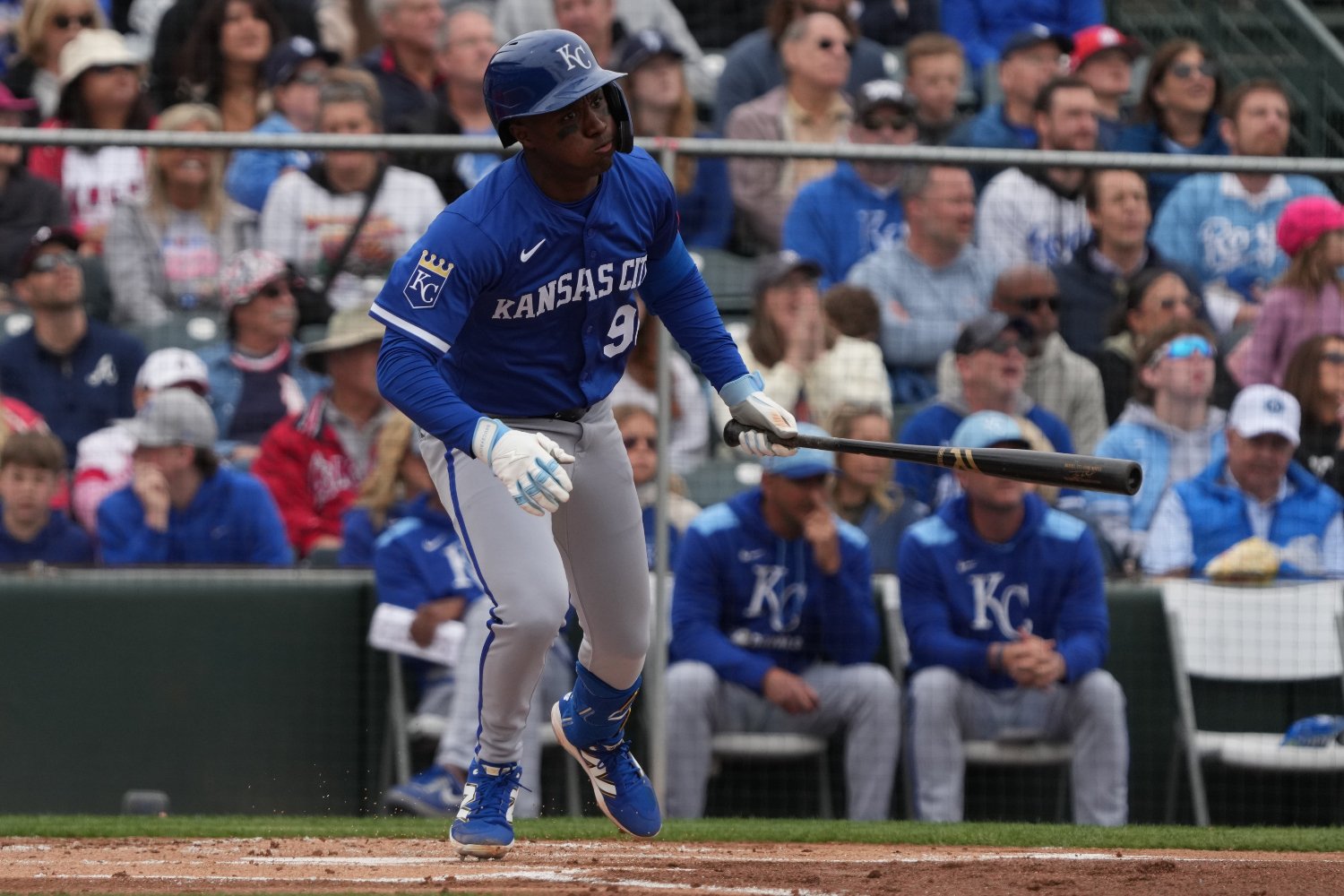
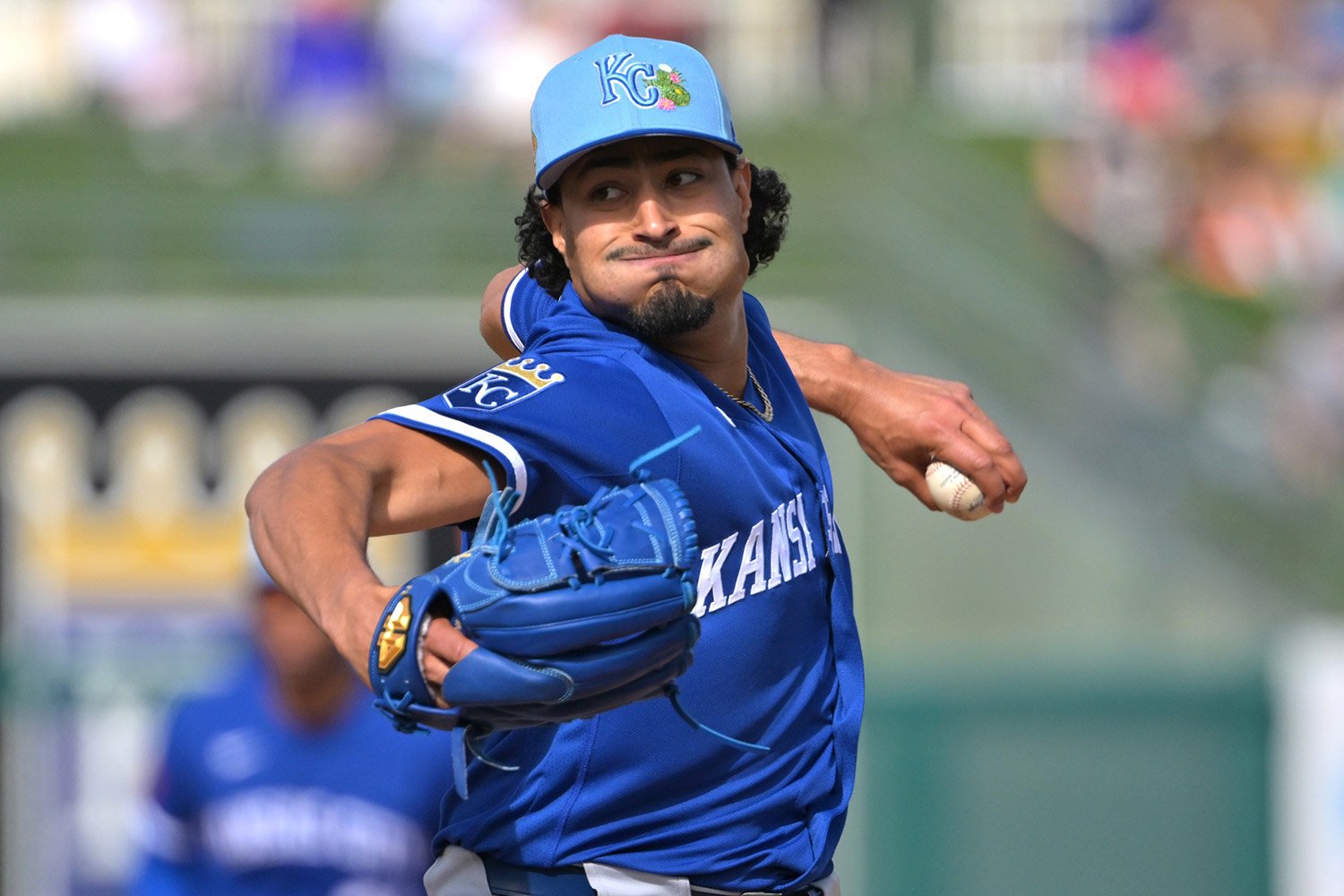 The Royals played their first spring training game on Friday. Which players have started off hot, and which players have looked a bit rusty? Don't read too much into spring training performances. Sample sizes are small, competition levels vary, and players may be working on specific adjustments that don't necessarily translate to traditional stats. This is only meant to inform and summarize what has happened in the past few games. However, underlying metrics and early performances are still worth monitoring to see how they progress throughout spring training. Who's Hot? 🔥 Salvador Perez: Perez was not messing around in his first plate appearance of spring when he hit a solo home run with an exit velocity of 108.8 mph. In his third plate appearance, he belted a double with an exit velocity of 106.6 mph. Both hits were classified as hard hits and barrels. On Saturday, he did not record a hit in two plate appearances, but he did produce a 104.2 mph groundout. With a 75% hard hit rate and 50% barrel rate through his first two spring games, Perez is clearly seeing the ball well. Team Venezuela will also be excited that their starting catcher and captain is off to a hot start with the World Baseball Classic getting ready to start. Stephen Kolek: Kolek was the starter in the Royals’ spring training opener against the Rangers, where he pitched the first two innings. While he did give up a run and struggled to get batters to whiff and chase pitches, the Stuff+ grades on his pitches were above average for four of the six pitches in his arsenal. His Changeup stood out, earning a grade of 113. Kolek’s fastball averaged 95.6 mph, which is a noticeable increase from his average of 94.0 mph last season. That velocity could be worth keeping an eye on to see whether he can maintain it throughout the season. If he can, is there a place for him in this year’s rotation? Helcris Olivárez: Olivárez has only allowed one baserunner in his two appearances this spring, who was hit by a pitch. In two innings pitched, he has only allowed two hard hits. While he has not yet recorded a strikeout, four of his outs were by inducing ground balls, which will be key for success at Kauffman Stadium after the fences were brought in this offseason. His Stuff+ is sitting at 101, helped by his fastball at 103, which averages 96.6 mph. His chase rate has started high at 50%, if he can convert that chase into more swing-and-misses to get more strikeouts, he could be a valuable asset to this Royals bullpen. Who's Cold? 🧊 Ben Kurdna: Kudrna was scheduled to pitch the fifth and sixth innings during Saturday’s game against the Padres. The Royals’ No. 6 prospect struggled in his outing and was unable to complete the 6th inning, allowing four earned runs on six hits and two walks in 1 2⁄3 innings. He failed to record a strikeout before being taken out with two outs in the sixth inning. Padres hitters had a 60% hard hit rate against Kudrna, so even some of his outs were off hard contact. Kudrna also struggled to generate swing and misses, with a 6.7% whiff rate across 37 pitches. Kudrna will look to bounce back in his next outing this spring. Vinnie Pasquantino: Pasquantino has yet to record a hit in his two appearances this spring. He has just one walk in five plate appearances with a pair of strikeouts. Of his two batted balls, he did have a 98.1 mph lineout that was caught. Perhaps he was a little unlucky since that lineout had an expected batting average of .740. There is still plenty of time for Pasquantino to hit his stride this spring. He will look to get as many at-bats as possible to prepare to compete with Italy in the World Baseball Classic. Aaron Sanchez: Sanchez was hit hard in his first outing of spring. While only allowing one run, he failed to record a strikeout and allowed four baserunners (two hits and two walks) in two innings pitched. Of the eight batted balls Sanchez faced, seven were classified as hard hits, including a 111.6 mph RBI double from William Contreras. If Sanchez hopes to reestablish himself as a viable MLB option, he will need to limit his hard-hit rate. Sanchez struggled to find the strike zone with a zone rate of 45.5%, and he struggled to get batters to chase those balls out of the zone. His Stuff+ was 94 for the day. A full breakdown can be seen below.
-
- 1
-

-
- salvador perez
- vinnie pasquantino
- (and 4 more)
-
 The Royals announced last week their broadcast schedule for Spring Training games in the Cactus League, outlining how fans can enjoy the Royals as they prepare for the 2026 MLB season. The Royals begin playing games this Friday, February 20 at 2:00 p.m. CT against the Texas Rangers at their shared stadium in Surprise, Arizona. Only three of their games will not be broadcast in any format this Spring. All three of those games fall on days where two games are played. Three games will be televised on Royals.tv, the new home for Kansas City’s regular season games: March 5 vs. the Texas Rangers - 7:05 p.m. CT March 13 vs. the Arizona Diamondbacks - 8:05 p.m. CT March 17 vs. the Los Angeles Dodgers - 8:05 p.m. CT You can find our guide on how to watch Royals.tv here. 29 games will be available for audio streaming on royals.com. 22 of those games will be available on a radio broadcast; 16 games on 96.5 The Fan (including the three Royals.tv broadcasts), and six on The Bet 1660. The remaining seven games will air exclusively at royals.com. See the post from the Royals above for the breakdown of which games will be available on which stations. All games are listed on Central Time.
 -
The Royals announced last week their broadcast schedule for Spring Training games in the Cactus League, outlining how fans can enjoy the Royals as they prepare for the 2026 MLB season. The Royals begin playing games this Friday, February 20 at 2:00 p.m. CT against the Texas Rangers at their shared stadium in Surprise, Arizona. Only three of their games will not be broadcast in any format this Spring. All three of those games fall on days where two games are played. Three games will be televised on Royals.tv, the new home for Kansas City’s regular season games: March 5 vs. the Texas Rangers - 7:05 p.m. CT March 13 vs. the Arizona Diamondbacks - 8:05 p.m. CT March 17 vs. the Los Angeles Dodgers - 8:05 p.m. CT You can find our guide on how to watch Royals.tv here. 29 games will be available for audio streaming on royals.com. 22 of those games will be available on a radio broadcast; 16 games on 96.5 The Fan (including the three Royals.tv broadcasts), and six on The Bet 1660. The remaining seven games will air exclusively at royals.com. See the post from the Royals above for the breakdown of which games will be available on which stations. All games are listed on Central Time. View full rumor
-
Image courtesy of © Denny Medley-Imagn Images / © Jovanny Hernandez / Milwaukee Journal Sentinel / USA TODAY NETWORK via Imagn Images / © Jayne Kamin-Oncea-Imagn Images Last season, the Royals traded for Jonathan India with the plan of him being the leadoff man to hit ahead of Bobby Witt Jr. India held that role until early August due to his regression in on-base ability. Mike Yastrzemski and Maikel Garcia became the main leadoff hitters against right and left-handed pitchers, respectively, after India lost the job. Adam Frazier and Carter Jensen also got a few spot starts at leadoff. With Yastrzemski no longer an option, who should the Royals rely on to set the tone at the top of the order? A modern leadoff hitter is not necessarily the fastest player on the roster. A leadoff hitter should be able to excel at getting on base so that the middle of the order can get them home while also avoiding empty plate appearances by recording excess strikeouts. A leadoff hitter must also have the ability to excel on the basepaths and increase the chance of scoring by advancing extra bases and avoiding unnecessary outs. There are a few players who could leadoff for the Royals in 2026. India will likely get another opportunity to win the job in spring training, since that was the reason they traded for him a year ago. Garcia could continue with the job that he had at the end of last season. New acquisition Isaac Collins had one start in the leadoff spot and saw a lot of time batting second last season in Milwaukee. Though not projected to be a starter, Lane Thomas has experience in the leadoff spot and could challenge for a larger role with the Royals if he can have a bounce-back season. Jensen could be another candidate since he got a couple of starts last season, but since his sample size at the major league level is only 69 plate appearances, it will be hard to compare his metrics with the other options. Ideally, the leadoff man is an everyday player, which makes Jensen less likely to be a candidate as Salvador Perez’s backup. If he can continue his hot start in the major leagues, he might force himself into contention. Why not Bobby Witt Jr.? Witt is undoubtedly the best player in the Royals lineup and grades better than each of these players in almost every metric. Moving Witt to the top of the order will impede his ability to drive in runs and provide extra run-creating value. As the second batter in the order, his on-base ability will still lead to runs being driven in the middle of the order. As the second hitter, he could do the job of driving in runs and setting the table for the rest of the lineup. Let’s break down each of the candidates’ profiles to see how they stack up as leadoff candidates. Getting On Base Good leadoff hitters excel at getting on base, whether that be from walks or hits. A good way to measure this is Weighted On Base Average (wOBA). wOBA assigns weights to each on-base method based on their offensive value, rather than batting average or on-base percentage, which weighs each hit equally. Below is a chart with last season’s wOBA for each player in addition to their career average and 2026 projections according to THE BAT X model from Frangraphs. Last season, Garcia and Collins led with wOBAs just over .340, while Thomas and India underperformed their career averages. Projections see Collins as a regression candidate with his 2026 wOBA taking a hit and dropping to .309. This could be due to his expected wOBA being over 20 points below his production last year. Projections appear to be bullish on India making a comeback in 2026, similar to his production in Cincinnati. Hard Contact Hard contact is often more predictive of sustainable output than traditional metrics. Generally, it is more likely that a hard-hit ball will fall for a hit than a soft-hit ball. Hard contact is commonly measured by hard hit rate and barrel rate. Below are tables comparing each of the players’ hard contact Statcast metrics. Projections are not available for Statcast metrics. Garcia has the best career hard hit rate of 45.5%, but he pairs that with the lowest average barrel rate of the group despite his better performance in 2025. Of the four players, Thomas’s career averages present the highest combination of hard hits and barrels at 39.2% and 7.8%, respectively. Thomas’s regression and injury history, however, could be enough evidence to think those career numbers are less likely to return in 2026. If India is able to return to barreling the ball more than 7% of the time, that could bode well for its chances to lead off in 2026. Plate Discipline Avoiding strikeouts is ideal for a leadoff hitter. Striking out removes the opportunity to get on base. It is also key to not chase the ball out of the zone or whiff on strike in the zone. A player who doesn’t chase or whiff balls will also tend to increase the pitch counts for starting pitchers and get them out of the game sooner than later. High walk rates also show signs of good plate discipline and an increase in on-base percentage. These metrics are a little all over the place, but what stands out is that Thomas is lowest in this category with the worst whiff, strikeout, and chase rates of this group, and not a particularly good walk rate. Collins stands out with the best walk and chase rates, and Garcia stands out with the best strikeout and whiff rates. India is more steady across the board as it is not the worst in any of these metrics compared to the other players. Baserunning and Speed Modern leadoff hitters are not necessarily the speedsters that they once were required to be, but it certainly does help. Being fast can be the difference between scoring from first on a ball hit in the gap or staying on third and still needing to be driven in. Steals can also help by getting into scoring position after a single and increasing the odds of being driven in. While speed makes taking extra bases and stealing bases easier, that does not necessarily make a player a better baserunner. Being able to read a pitcher’s delivery on a steal and knowing when to advance an extra base based on the fielders’ decisions can increase the baserunning acumen of any player, regardless of speed. These skills are essential for increasing the odds for the middle of the order to drive in more runs. Baserunning value is measured in totalling extra runs via extra bases taken and runs via stolen bases. Below are the percentiles each player falls in for baserunning value and sprint speed in 2025. Player Baserunning Value Sprint Speed India 18th percentile 71st percentile Garcia 48th percentile 63rd percentile Collins 68th percentile 58th percentile Thomas DNQ 94th percentile All of these players are above average, with Thomas being the fastest in the 94th percentile of players in sprint speed. However, due to his limited playing time, he did not have enough of a body of work to qualify for the ranking. Over his career, his baserunning value has been close to average or slightly above average. Collins provided the highest baserunning value despite being the slower player in the group. If he can maintain his on-base abilities, his baserunning ability could be valuable to the Royals' offense. India did not have good output in baserunning last season despite being the second-fastest player here. He was caught stealing in all three of his attempts last season despite totaling double-digit steals in three of his four seasons in Cincinnati. Verdict Each player brings different strengths to the leadoff spot. India excels at plate discipline and at barreling the ball. Garcia excels in on-base ability and a high hard hit rate. Collins provides strong baserunning and plate discipline. Thomas provides speed and power potential. There is no clear-cut favorite for the everyday leadoff man. It will be important to see how these players perform in spring training to determine whether any can show production beyond their current skill sets to win the leadoff spot. View full article
-
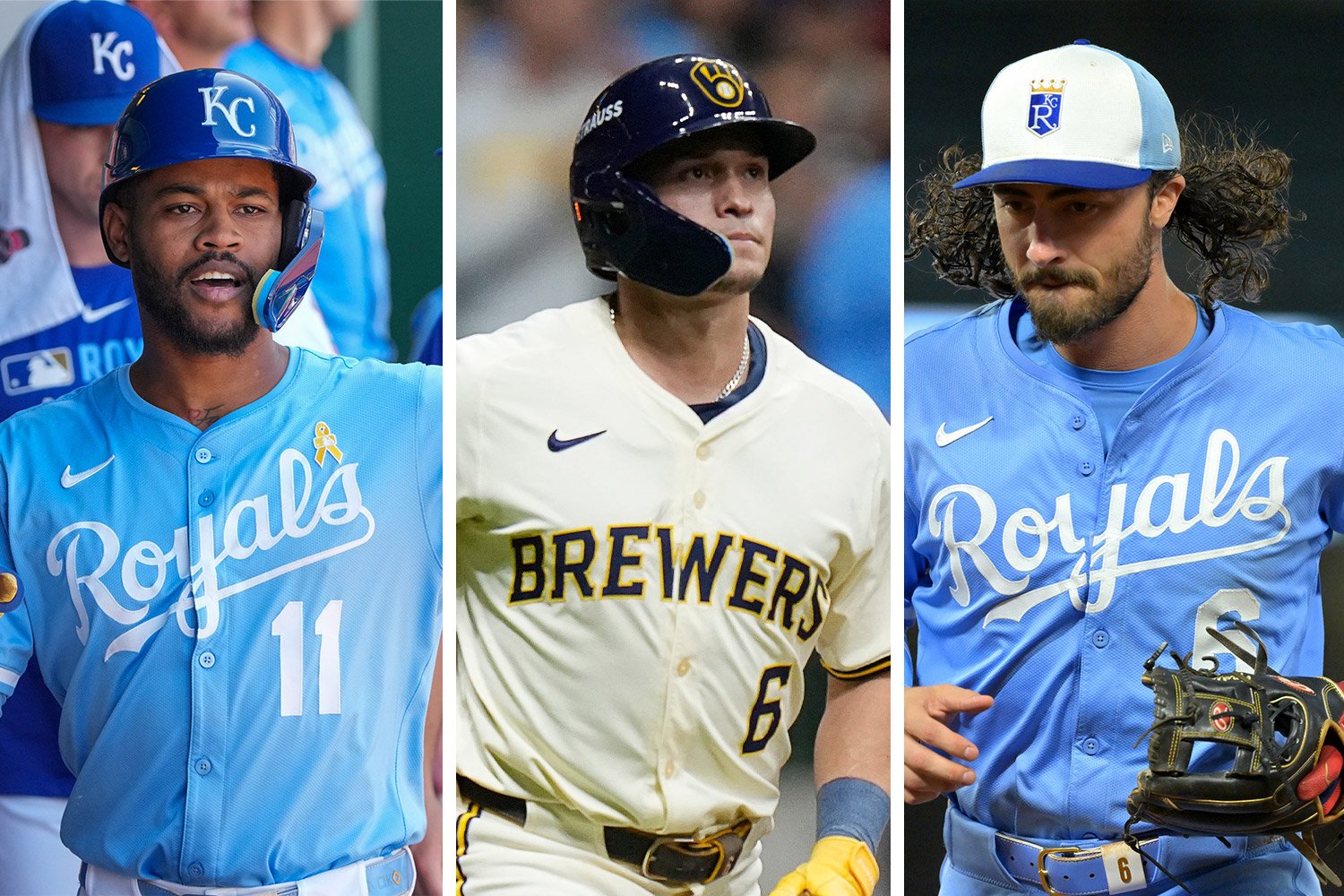 Last season, the Royals traded for Jonathan India with the plan of him being the leadoff man to hit ahead of Bobby Witt Jr. India held that role until early August due to his regression in on-base ability. Mike Yastrzemski and Maikel Garcia became the main leadoff hitters against right and left-handed pitchers, respectively, after India lost the job. Adam Frazier and Carter Jensen also got a few spot starts at leadoff. With Yastrzemski no longer an option, who should the Royals rely on to set the tone at the top of the order? A modern leadoff hitter is not necessarily the fastest player on the roster. A leadoff hitter should be able to excel at getting on base so that the middle of the order can get them home while also avoiding empty plate appearances by recording excess strikeouts. A leadoff hitter must also have the ability to excel on the basepaths and increase the chance of scoring by advancing extra bases and avoiding unnecessary outs. There are a few players who could leadoff for the Royals in 2026. India will likely get another opportunity to win the job in spring training, since that was the reason they traded for him a year ago. Garcia could continue with the job that he had at the end of last season. New acquisition Isaac Collins had one start in the leadoff spot and saw a lot of time batting second last season in Milwaukee. Though not projected to be a starter, Lane Thomas has experience in the leadoff spot and could challenge for a larger role with the Royals if he can have a bounce-back season. Jensen could be another candidate since he got a couple of starts last season, but since his sample size at the major league level is only 69 plate appearances, it will be hard to compare his metrics with the other options. Ideally, the leadoff man is an everyday player, which makes Jensen less likely to be a candidate as Salvador Perez’s backup. If he can continue his hot start in the major leagues, he might force himself into contention. Why not Bobby Witt Jr.? Witt is undoubtedly the best player in the Royals lineup and grades better than each of these players in almost every metric. Moving Witt to the top of the order will impede his ability to drive in runs and provide extra run-creating value. As the second batter in the order, his on-base ability will still lead to runs being driven in the middle of the order. As the second hitter, he could do the job of driving in runs and setting the table for the rest of the lineup. Let’s break down each of the candidates’ profiles to see how they stack up as leadoff candidates. Getting On Base Good leadoff hitters excel at getting on base, whether that be from walks or hits. A good way to measure this is Weighted On Base Average (wOBA). wOBA assigns weights to each on-base method based on their offensive value, rather than batting average or on-base percentage, which weighs each hit equally. Below is a chart with last season’s wOBA for each player in addition to their career average and 2026 projections according to THE BAT X model from Frangraphs. Last season, Garcia and Collins led with wOBAs just over .340, while Thomas and India underperformed their career averages. Projections see Collins as a regression candidate with his 2026 wOBA taking a hit and dropping to .309. This could be due to his expected wOBA being over 20 points below his production last year. Projections appear to be bullish on India making a comeback in 2026, similar to his production in Cincinnati. Hard Contact Hard contact is often more predictive of sustainable output than traditional metrics. Generally, it is more likely that a hard-hit ball will fall for a hit than a soft-hit ball. Hard contact is commonly measured by hard hit rate and barrel rate. Below are tables comparing each of the players’ hard contact Statcast metrics. Projections are not available for Statcast metrics. Garcia has the best career hard hit rate of 45.5%, but he pairs that with the lowest average barrel rate of the group despite his better performance in 2025. Of the four players, Thomas’s career averages present the highest combination of hard hits and barrels at 39.2% and 7.8%, respectively. Thomas’s regression and injury history, however, could be enough evidence to think those career numbers are less likely to return in 2026. If India is able to return to barreling the ball more than 7% of the time, that could bode well for its chances to lead off in 2026. Plate Discipline Avoiding strikeouts is ideal for a leadoff hitter. Striking out removes the opportunity to get on base. It is also key to not chase the ball out of the zone or whiff on strike in the zone. A player who doesn’t chase or whiff balls will also tend to increase the pitch counts for starting pitchers and get them out of the game sooner than later. High walk rates also show signs of good plate discipline and an increase in on-base percentage. These metrics are a little all over the place, but what stands out is that Thomas is lowest in this category with the worst whiff, strikeout, and chase rates of this group, and not a particularly good walk rate. Collins stands out with the best walk and chase rates, and Garcia stands out with the best strikeout and whiff rates. India is more steady across the board as it is not the worst in any of these metrics compared to the other players. Baserunning and Speed Modern leadoff hitters are not necessarily the speedsters that they once were required to be, but it certainly does help. Being fast can be the difference between scoring from first on a ball hit in the gap or staying on third and still needing to be driven in. Steals can also help by getting into scoring position after a single and increasing the odds of being driven in. While speed makes taking extra bases and stealing bases easier, that does not necessarily make a player a better baserunner. Being able to read a pitcher’s delivery on a steal and knowing when to advance an extra base based on the fielders’ decisions can increase the baserunning acumen of any player, regardless of speed. These skills are essential for increasing the odds for the middle of the order to drive in more runs. Baserunning value is measured in totalling extra runs via extra bases taken and runs via stolen bases. Below are the percentiles each player falls in for baserunning value and sprint speed in 2025. Player Baserunning Value Sprint Speed India 18th percentile 71st percentile Garcia 48th percentile 63rd percentile Collins 68th percentile 58th percentile Thomas DNQ 94th percentile All of these players are above average, with Thomas being the fastest in the 94th percentile of players in sprint speed. However, due to his limited playing time, he did not have enough of a body of work to qualify for the ranking. Over his career, his baserunning value has been close to average or slightly above average. Collins provided the highest baserunning value despite being the slower player in the group. If he can maintain his on-base abilities, his baserunning ability could be valuable to the Royals' offense. India did not have good output in baserunning last season despite being the second-fastest player here. He was caught stealing in all three of his attempts last season despite totaling double-digit steals in three of his four seasons in Cincinnati. Verdict Each player brings different strengths to the leadoff spot. India excels at plate discipline and at barreling the ball. Garcia excels in on-base ability and a high hard hit rate. Collins provides strong baserunning and plate discipline. Thomas provides speed and power potential. There is no clear-cut favorite for the everyday leadoff man. It will be important to see how these players perform in spring training to determine whether any can show production beyond their current skill sets to win the leadoff spot.
-
- 1
-
-
- jonathan india
- maikel garcia
- (and 3 more)
-
Five Royals Storylines To Watch In Spring Training
Philip Ruo replied to Philip Ruo's topic in Kansas City Royals Talk
That was my mistake. His reference page has him batting left handed despite throwing right handed and I must have looked at the wrong one at quick glance. I should have spent more time double checking, so I truly apologize and will do better. I do believe the point stands that bringing in the lefty Matt Strahm adds pressure to the lefties in bullpen contention. Interestingly, Strahm is listed as batting right handed and throwing left handed, the opposite of Erceg! -
Have the Royals Done Enough to Compete in 2026?
Philip Ruo replied to Philip Ruo's topic in Kansas City Royals Talk
Marte is another good option in this class of players for sure. Him being right handed is a plus. -
Could Nick Castellanos Find His Way to Kansas City?
Philip Ruo replied to Kevin O'Brien's topic in Kansas City Royals Talk
Which team that's ready to compete will be willing to promise him more ABs? I don't hate the idea of bringing him in to face lefties and playing DH. He could offer veteran experience for the Royals young core, but I do find it unlikely that he bounces back at his age. It couldn't hurt to bring him into camp if he's willing and move on if it doesn't work out. -
Image courtesy of © Jay Biggerstaff-Imagn Images Royals players reported to spring training in Surprise, Arizona, on February 11. Most of the main roster spots are well defined, but the Royals have many decisions to make in the margins of the roster. Here are five storylines to watch as the Royals shape their roster for the 2026 season. Sorting Out the Opening Day Bullpen Top performers from 2025, Carlos Estevez, Lucas Erceg, and John Schreiber, along with recent trade acquisitions Matt Strahm and Nick Mears, are all likely locks to make the Opening Day roster. Alex Lange, Daniel Lynch IV, Eric Cerantola, and Steven Cruz are fighting for the final three bullpen spots along with non-roster invites Jose Cuas, Hector Neris, Helcris Olivarez, and Eli Morgan. Bailey Falter may also be in the mix despite being viewed as a starter because he has no more minor league options remaining. Beyond who makes the roster, bullpen roles are yet to be fully defined. Last year’s American League saves leader, Estevez, is locked into the closer role, but will Erceg or Strahm emerge as the primary setup guy or a middle-relief “fireman” role? With Strahm being a lefty*, does Lynch face additional pressure to make an impression at spring training for the sake of bullpen balance. *Update on February 16th: Original post had Erceg listed as a lefty. This was a typo and corrected. Balance at Catcher and Carter Jensen’s Progression After having a productive stint with the Royals at the end of last season, Jensen is projected to be Salvador Perez’s backup in the 2025 season. Manager Matt Quatraro will aim to strike the right balance of playing time for Jensen and Perez heading into 2026 to maximize offensive production and defensive stability. Jensen slashed .300/.391/.550 with a 161 OPS+ in his 69 plate appearances last season. While his production will likely not be sustainable at the major-league level, Jensen has proven that his bat can be a legitimate asset to the Royals’ offense. Perez, meanwhile, has also shown that his bat is still productive entering his age-36 season, and his home run total could go up since the Royals have decided to move in the left and right field fences this offseason. Perez will miss time in spring training to play for Venezuela in the World Baseball Classic, which will leave Jensen as the main catcher in his absence. This should give Jensen the opportunity to work more closely with the pitching staff and allow pitchers to become more comfortable with their new battery mate. Filling Out the Outfield The Royals added Isaac Collins and Lane Thomas this offseason to help with outfield production. As things currently stand, it would seem that Collins will be the starter in left field with Kyle Isbel in center and Jac Caglianone in right. However, Thomas is not necessarily a lock for the 4th outfield spot. His last two seasons have had struggles at the plate, and he missed a lot of time in 2025 on the injured list. In fact, the Royals have another five outfielders on their 40-man roster. Dairon Blanco, Nick Loftin, Kameron Misner, John Rave, and Drew Waters are all going to be challenging for a spot on the Opening Day roster. Jonathan India, Michael Massey, and Tyler Tolbert also spent time in the outfield last season but are not listed as primarily outfielders. Thomas, Rave, Tolbert, and Misner are all capable of filling in for Isbel in center field, while Tolbert can also serve as a utility man in the infield and a pinch runner. Tolbert stole 21 bases in 23 attempts in 2025 and can provide an impact on the bases in late innings. Among 40-man players, Waters is the only outfielder who is out of minor league options, which could come into play when deciding if he makes the final roster. Given the Royals' struggles in the outfield last season, including the presumed locks Isbel and Caglianone, any outfielder who has a hot spring could force his way onto the Opening Day roster. Managing a Surplus in the Rotation The Royals have a strong starting pitching rotation. Cole Ragans, Michael Wacha, and Seth Lugo are the locks at the top of the rotation, mostly because of their experience at the major-league level, and because the Royals are less likely to trade away any of them. The fourth and fifth spots are not necessarily up for grabs since both Noah Cameron and Kris Bubic had strong seasons in 2025. The Royals also have Stephen Kolek and Ryan Bergert on the roster, who performed well after being traded to the Royals at last year’s trade deadline. Luinder Avila (No. 13 prospect) is also viewed as a starter, and he could also factor into the conversation in Spring and into the season. Bubic, Cameron, and Lugo all finished the season on the injured list, raising questions as to how ready they will be to pitch this spring. Considering Lugo is set to pitch for Puerto Rico, he is more likely to be ready to pitch. The Royals have expressed a willingness to trade a starting pitcher in order to add a bat to the lineup, but have not yet done so. As free agents start coming off the board, teams may become more desperate to acquire an arm for their rotations, and there is no shortage of teams looking to add starting pitchers. Will the Royals finally find a trading partner? Finding the Answer at Second Base and Utility Infield Barring injury, Bobby Witt Jr., Maikel Garcia, and Vinnie Pasquantino will start almost all the games in the season. The starting spot at second base is less clear. Jonathan India, Michael Massey, Nick Loftin, and Tyler Tolbert will all be vying for the second base and bench utility spots. They also face tough competition from non-roster invites Brandon Drury, Connor Kaiser, Kevin Newman, Josh Rojas, Abraham Toro, Daniel Vazquez, and Peyton Wilson. With the large number of infielders invited to camp, the Royals are signaling that they are willing to be creative in finding a solution at second base. The Royals probably hope that India wins the starting job after tendering him an $8 million contract despite speculation that he could be a non-tender candidate this offseason. Whether his contract affects the Royals' patience with his production remains to be seen. Each of the non-roster invites also had their fair share of struggles last season. Will any of them be able to push for a spot on the roster? Massey, Loftin, and Tolbert can provide more flexibility with the ability to play in the outfield, which would give them an edge for a utility role. View full article
-
 Royals players reported to spring training in Surprise, Arizona, on February 11. Most of the main roster spots are well defined, but the Royals have many decisions to make in the margins of the roster. Here are five storylines to watch as the Royals shape their roster for the 2026 season. Sorting Out the Opening Day Bullpen Top performers from 2025, Carlos Estevez, Lucas Erceg, and John Schreiber, along with recent trade acquisitions Matt Strahm and Nick Mears, are all likely locks to make the Opening Day roster. Alex Lange, Daniel Lynch IV, Eric Cerantola, and Steven Cruz are fighting for the final three bullpen spots along with non-roster invites Jose Cuas, Hector Neris, Helcris Olivarez, and Eli Morgan. Bailey Falter may also be in the mix despite being viewed as a starter because he has no more minor league options remaining. Beyond who makes the roster, bullpen roles are yet to be fully defined. Last year’s American League saves leader, Estevez, is locked into the closer role, but will Erceg or Strahm emerge as the primary setup guy or a middle-relief “fireman” role? With Strahm being a lefty*, does Lynch face additional pressure to make an impression at spring training for the sake of bullpen balance. *Update on February 16th: Original post had Erceg listed as a lefty. This was a typo and corrected. Balance at Catcher and Carter Jensen’s Progression After having a productive stint with the Royals at the end of last season, Jensen is projected to be Salvador Perez’s backup in the 2025 season. Manager Matt Quatraro will aim to strike the right balance of playing time for Jensen and Perez heading into 2026 to maximize offensive production and defensive stability. Jensen slashed .300/.391/.550 with a 161 OPS+ in his 69 plate appearances last season. While his production will likely not be sustainable at the major-league level, Jensen has proven that his bat can be a legitimate asset to the Royals’ offense. Perez, meanwhile, has also shown that his bat is still productive entering his age-36 season, and his home run total could go up since the Royals have decided to move in the left and right field fences this offseason. Perez will miss time in spring training to play for Venezuela in the World Baseball Classic, which will leave Jensen as the main catcher in his absence. This should give Jensen the opportunity to work more closely with the pitching staff and allow pitchers to become more comfortable with their new battery mate. Filling Out the Outfield The Royals added Isaac Collins and Lane Thomas this offseason to help with outfield production. As things currently stand, it would seem that Collins will be the starter in left field with Kyle Isbel in center and Jac Caglianone in right. However, Thomas is not necessarily a lock for the 4th outfield spot. His last two seasons have had struggles at the plate, and he missed a lot of time in 2025 on the injured list. In fact, the Royals have another five outfielders on their 40-man roster. Dairon Blanco, Nick Loftin, Kameron Misner, John Rave, and Drew Waters are all going to be challenging for a spot on the Opening Day roster. Jonathan India, Michael Massey, and Tyler Tolbert also spent time in the outfield last season but are not listed as primarily outfielders. Thomas, Rave, Tolbert, and Misner are all capable of filling in for Isbel in center field, while Tolbert can also serve as a utility man in the infield and a pinch runner. Tolbert stole 21 bases in 23 attempts in 2025 and can provide an impact on the bases in late innings. Among 40-man players, Waters is the only outfielder who is out of minor league options, which could come into play when deciding if he makes the final roster. Given the Royals' struggles in the outfield last season, including the presumed locks Isbel and Caglianone, any outfielder who has a hot spring could force his way onto the Opening Day roster. Managing a Surplus in the Rotation The Royals have a strong starting pitching rotation. Cole Ragans, Michael Wacha, and Seth Lugo are the locks at the top of the rotation, mostly because of their experience at the major-league level, and because the Royals are less likely to trade away any of them. The fourth and fifth spots are not necessarily up for grabs since both Noah Cameron and Kris Bubic had strong seasons in 2025. The Royals also have Stephen Kolek and Ryan Bergert on the roster, who performed well after being traded to the Royals at last year’s trade deadline. Luinder Avila (No. 13 prospect) is also viewed as a starter, and he could also factor into the conversation in Spring and into the season. Bubic, Cameron, and Lugo all finished the season on the injured list, raising questions as to how ready they will be to pitch this spring. Considering Lugo is set to pitch for Puerto Rico, he is more likely to be ready to pitch. The Royals have expressed a willingness to trade a starting pitcher in order to add a bat to the lineup, but have not yet done so. As free agents start coming off the board, teams may become more desperate to acquire an arm for their rotations, and there is no shortage of teams looking to add starting pitchers. Will the Royals finally find a trading partner? Finding the Answer at Second Base and Utility Infield Barring injury, Bobby Witt Jr., Maikel Garcia, and Vinnie Pasquantino will start almost all the games in the season. The starting spot at second base is less clear. Jonathan India, Michael Massey, Nick Loftin, and Tyler Tolbert will all be vying for the second base and bench utility spots. They also face tough competition from non-roster invites Brandon Drury, Connor Kaiser, Kevin Newman, Josh Rojas, Abraham Toro, Daniel Vazquez, and Peyton Wilson. With the large number of infielders invited to camp, the Royals are signaling that they are willing to be creative in finding a solution at second base. The Royals probably hope that India wins the starting job after tendering him an $8 million contract despite speculation that he could be a non-tender candidate this offseason. Whether his contract affects the Royals' patience with his production remains to be seen. Each of the non-roster invites also had their fair share of struggles last season. Will any of them be able to push for a spot on the roster? Massey, Loftin, and Tolbert can provide more flexibility with the ability to play in the outfield, which would give them an edge for a utility role.
- 3 comments
-
- 2
-
-
- carter jensen
- salvador perez
- (and 1 more)
-
Have the Royals Done Enough to Compete in 2026?
Philip Ruo posted a topic in Kansas City Royals Talk
Image courtesy of © Brett Davis-Imagn Images The American League Central has been relatively quiet this offseason. Have the Royals done enough to make a push for the playoffs? The Tigers are the presumed favorite to win the division, but have the Royals done enough to be a lock for second place? Barring any pushes from a non-roster invite, the only additions the Royals made at the major-league level have come in the outfield and bullpen. How much should we anticipate these additions' impact on the team’s performance? Last week, Fangraphs published a breakdown of the ZiPs projections for 2026, which had the Royals tied with the Tigers at the top of the AL Central with 83 wins each, though the Tigers had a slightly higher chance to make the postseason. Since that article was published, the Tigers signed Framber Valdez to a three-year contract with the highest average annual value for a left-handed pitcher in MLB history. Now, as of writing this post, ZiPS has adjusted its projections, dropping the Royals to 81 wins and boosting the Tigers to 86.7 wins and a significantly higher chance to win the division at 59.3%. Looking at the rest of the AL Central, the Guardians’ biggest move has been to extend superstar Jose Ramirez, but their lineup and rotation remain largely unchanged. The Twins made relatively modest additions in Josh Bell, Victor Caratini, and Taylor Rogers, while the White Sox have been very active this offseason with the additions of Munetaka Murakami, Austin Hays, and Seranthony Dominguez. Though the White Sox still have considerable room for improvement after finishing last season 60-102. With those adjustments to the projections, the Royals now have the seventh-best odds to make the postseason in the American League. If the Royals need to battle for a wildcard spot, they will have a tough battle, particularly with the AL East teams, which currently have four teams with better projections than the Royals. How have the offseason moves impacted the Royals’ outlook? In 2025, the Royals’ offense produced 15.0 fWAR, ranking 22nd best in MLB. For 2026, Fangraphs projects the Royals to have 22.2 fWAR on offense, which would still rank only 20th. On the pitching side, the Royals finished 2025 with 17.5 fWAR (ninth best in MLB) and are projected to post 16.7 fWAR (11th best) in 2026. Combined, those projections have the Royals with the 15th most fWAR league-wide. This fWAR projection perfectly mirrors their current projected total of 81 wins and a 50% winning percentage. While the projections aren’t 100% accurate, they do provide useful insight into league-wide expectations. Given that the offense represented the clearest area for improvement, it’s worth looking into how the Royals’ offensive additions have impacted their outlook for 2026. The most significant addition to the offense in the offseason, Isaac Collins, is projected to regress in his second big-league season. Last year, Collins slashed .263/.368/.411 with a 122 wRC+ and 2.6 fWAR. The most optimistic projections have him slashing .245/.345/.384 with a 104 wRC+ and 1.1 fWAR. Collins does not offer much upside for power, but he gets on base and shows strong plate discipline. His walk-rate ranks in the 90th percentile, and his chase rate grades in the 98th percentile. Even with his projected regression, an fWAR of 1.1 would place him tied for 5th-best fWAR in the Royals' 2025 offense. However, with the departure of Mike Yastrzemski, Collins’ arrival likely only replaces the production from Yastrzemski rather than improving on it. The only free agent signing that is projected to make an impact at the major-league level is Lane Thomas. After a disappointing 2025 campaign that was plagued by injuries, Fangraphs projections have him bouncing back to around 0.5 to 0.9 fWAR. The Royals will certainly be banking on Thomas returning to his 2022-2024 production, where he was good for at least 1.4 fWAR each year and close to or above average in wRC+. Even at positions with stability, the projections are underwhelming. With Vinnie Pasquantino at first base and the tandem of Salvador Perez and Carter Jensen at catcher, the Royals are projected to rank 21st and 18th in fWAR at first base and catcher, respectively. The rankings in the outfield and at second base are even less encouraging. The Royals rank 23rd, 29th, and 23rd on projected fWAR in left, center, and right fields, respectively. They also rank 28th at projected fWAR at second base. The Royals have clearly indicated that they anticipate growth from Jac Caglianone and in right field, in addition to a bounce-back season from India at second. If these players are unable to meaningfully improve, there will be increased pressure on high performers Bobby Witt Jr. and Maikel Garcia to carry the offensive burden for yet another season. The Royals have not completely ignored second base this season after tendering India a contract worth $8 million in his last season before free agency. The Royals have signed a variety of middle infielders to minor league deals with invitations to spring training, signaling an openness to competition at second base. Veterans Abraham Toro, Peyton Wilson, Josh Rojas, Brandon Drury, Kevin Newman, and Connor Kaiser all will have the ability to challenge for this spot on the major league roster or even assume India’s starting role. Even if one or more of them show signs of a resurgence in Spring Training, the Royals’ outlook at second base will still be one of the lowest in the league. Are there any players still available who could make an impact? While the Tigers have addressed one of their needs in adding a strong partner, Tarik Skubal, at the top of their rotation, the Royals have largely bet on improvements from their current roster to raise their ceiling on offense. The Royals will likely need to make another addition on offense if they are serious about competing in 2026. With Spring Training starting, the available players who can make an impact are dwindling, but below are a couple of options. Veteran outfielder Jesse Winker could be a potential option. His 2025 season was impacted by an oblique strain, but in 2024, he was in the 79th percentile in batting run value. His chase and walk rates were both in the 95th percentile, which is in line with trends seen in the acquisitions of Collins and Thomas. His speed and defense have declined over the years, but the Royals don’t currently have an everyday designated hitter. If he can return to full fitness, Winker could potentially make an impact on this offense. The Royals could pursue him in a low-risk move with a minor-league contract with an invitation to the major league camp. Another option is veteran outfielder Mike Tauchman, who similarly has a low chase rate and strong on-base skills. While he does offer the power potential that Winker could, Tauchman’s ability to get on base is still well above average as he enters his age-35 season. In only 93 games played last season, he accumulated 1.4 fWAR and was still able to provide league-average defense in right field with 0 Outs Above Average. Like Winker, he could be another low-risk option with a minor-league contract with an invitation to the major league camp. As the rest of the league’s rosters continue to shape out, there could be more opportunities to find upgrades in the trade market. With many teams still looking to find improvements to their starting rotation, the Royals should still be exploring trades that will improve their lineup. While there is still time in Kansas City to make these types of moves, time is certainly running out. If they are unable to find meaningful improvements to the offense, there will continue to be uncertainty around the Royals' chances to make a push for the playoffs. Another season on the outside, looking in, could be a costly missed opportunity to compete during Bobby Witt Jr.’s prime years. View full article -
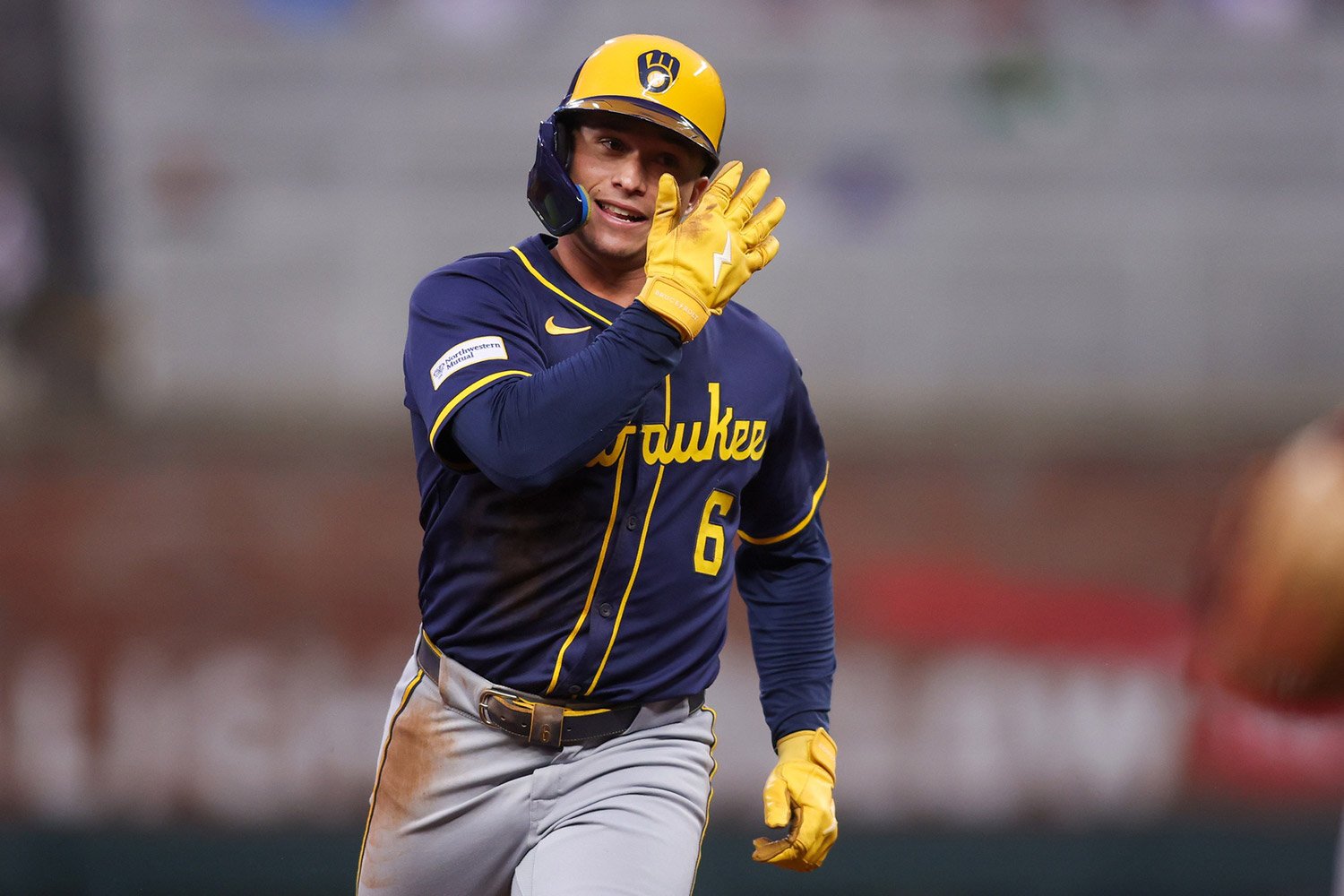 The American League Central has been relatively quiet this offseason. Have the Royals done enough to make a push for the playoffs? The Tigers are the presumed favorite to win the division, but have the Royals done enough to be a lock for second place? Barring any pushes from a non-roster invite, the only additions the Royals made at the major-league level have come in the outfield and bullpen. How much should we anticipate these additions' impact on the team’s performance? Last week, Fangraphs published a breakdown of the ZiPs projections for 2026, which had the Royals tied with the Tigers at the top of the AL Central with 83 wins each, though the Tigers had a slightly higher chance to make the postseason. Since that article was published, the Tigers signed Framber Valdez to a three-year contract with the highest average annual value for a left-handed pitcher in MLB history. Now, as of writing this post, ZiPS has adjusted its projections, dropping the Royals to 81 wins and boosting the Tigers to 86.7 wins and a significantly higher chance to win the division at 59.3%. Looking at the rest of the AL Central, the Guardians’ biggest move has been to extend superstar Jose Ramirez, but their lineup and rotation remain largely unchanged. The Twins made relatively modest additions in Josh Bell, Victor Caratini, and Taylor Rogers, while the White Sox have been very active this offseason with the additions of Munetaka Murakami, Austin Hays, and Seranthony Dominguez. Though the White Sox still have considerable room for improvement after finishing last season 60-102. With those adjustments to the projections, the Royals now have the seventh-best odds to make the postseason in the American League. If the Royals need to battle for a wildcard spot, they will have a tough battle, particularly with the AL East teams, which currently have four teams with better projections than the Royals. How have the offseason moves impacted the Royals’ outlook? In 2025, the Royals’ offense produced 15.0 fWAR, ranking 22nd best in MLB. For 2026, Fangraphs projects the Royals to have 22.2 fWAR on offense, which would still rank only 20th. On the pitching side, the Royals finished 2025 with 17.5 fWAR (ninth best in MLB) and are projected to post 16.7 fWAR (11th best) in 2026. Combined, those projections have the Royals with the 15th most fWAR league-wide. This fWAR projection perfectly mirrors their current projected total of 81 wins and a 50% winning percentage. While the projections aren’t 100% accurate, they do provide useful insight into league-wide expectations. Given that the offense represented the clearest area for improvement, it’s worth looking into how the Royals’ offensive additions have impacted their outlook for 2026. The most significant addition to the offense in the offseason, Isaac Collins, is projected to regress in his second big-league season. Last year, Collins slashed .263/.368/.411 with a 122 wRC+ and 2.6 fWAR. The most optimistic projections have him slashing .245/.345/.384 with a 104 wRC+ and 1.1 fWAR. Collins does not offer much upside for power, but he gets on base and shows strong plate discipline. His walk-rate ranks in the 90th percentile, and his chase rate grades in the 98th percentile. Even with his projected regression, an fWAR of 1.1 would place him tied for 5th-best fWAR in the Royals' 2025 offense. However, with the departure of Mike Yastrzemski, Collins’ arrival likely only replaces the production from Yastrzemski rather than improving on it. The only free agent signing that is projected to make an impact at the major-league level is Lane Thomas. After a disappointing 2025 campaign that was plagued by injuries, Fangraphs projections have him bouncing back to around 0.5 to 0.9 fWAR. The Royals will certainly be banking on Thomas returning to his 2022-2024 production, where he was good for at least 1.4 fWAR each year and close to or above average in wRC+. Even at positions with stability, the projections are underwhelming. With Vinnie Pasquantino at first base and the tandem of Salvador Perez and Carter Jensen at catcher, the Royals are projected to rank 21st and 18th in fWAR at first base and catcher, respectively. The rankings in the outfield and at second base are even less encouraging. The Royals rank 23rd, 29th, and 23rd on projected fWAR in left, center, and right fields, respectively. They also rank 28th at projected fWAR at second base. The Royals have clearly indicated that they anticipate growth from Jac Caglianone and in right field, in addition to a bounce-back season from India at second. If these players are unable to meaningfully improve, there will be increased pressure on high performers Bobby Witt Jr. and Maikel Garcia to carry the offensive burden for yet another season. The Royals have not completely ignored second base this season after tendering India a contract worth $8 million in his last season before free agency. The Royals have signed a variety of middle infielders to minor league deals with invitations to spring training, signaling an openness to competition at second base. Veterans Abraham Toro, Peyton Wilson, Josh Rojas, Brandon Drury, Kevin Newman, and Connor Kaiser all will have the ability to challenge for this spot on the major league roster or even assume India’s starting role. Even if one or more of them show signs of a resurgence in Spring Training, the Royals’ outlook at second base will still be one of the lowest in the league. Are there any players still available who could make an impact? While the Tigers have addressed one of their needs in adding a strong partner, Tarik Skubal, at the top of their rotation, the Royals have largely bet on improvements from their current roster to raise their ceiling on offense. The Royals will likely need to make another addition on offense if they are serious about competing in 2026. With Spring Training starting, the available players who can make an impact are dwindling, but below are a couple of options. Veteran outfielder Jesse Winker could be a potential option. His 2025 season was impacted by an oblique strain, but in 2024, he was in the 79th percentile in batting run value. His chase and walk rates were both in the 95th percentile, which is in line with trends seen in the acquisitions of Collins and Thomas. His speed and defense have declined over the years, but the Royals don’t currently have an everyday designated hitter. If he can return to full fitness, Winker could potentially make an impact on this offense. The Royals could pursue him in a low-risk move with a minor-league contract with an invitation to the major league camp. Another option is veteran outfielder Mike Tauchman, who similarly has a low chase rate and strong on-base skills. While he does offer the power potential that Winker could, Tauchman’s ability to get on base is still well above average as he enters his age-35 season. In only 93 games played last season, he accumulated 1.4 fWAR and was still able to provide league-average defense in right field with 0 Outs Above Average. Like Winker, he could be another low-risk option with a minor-league contract with an invitation to the major league camp. As the rest of the league’s rosters continue to shape out, there could be more opportunities to find upgrades in the trade market. With many teams still looking to find improvements to their starting rotation, the Royals should still be exploring trades that will improve their lineup. While there is still time in Kansas City to make these types of moves, time is certainly running out. If they are unable to find meaningful improvements to the offense, there will continue to be uncertainty around the Royals' chances to make a push for the playoffs. Another season on the outside, looking in, could be a costly missed opportunity to compete during Bobby Witt Jr.’s prime years.
- 2 comments
-
- 1
-
-
- isaac collins
- lane thomas
- (and 2 more)
-
 Starting in 2026, the Kansas City Royals television options are changing. The Royals announced they will not be signing with FanDuel Sports Kansas City for another year and announced on February 2 that they are launching Royals.TV is the new broadcast home for the team. The writing was on the wall for this change when nine teams, including the Royals, terminated their deals with Main Street Sports Group last month, citing solvency issues and an inability to reach a deal with DAZN. There were also reports of Main Street Sports Group likely having to file for Chapter 7 bankruptcy and liquidate its business soon, according to the Sports Business Journal. How does Royals.TV work? There will be options to access the Royals broadcast through both cable and streaming options. The Royals have provided an FAQ at https://www.mlb.com/royals/schedule/programming. Important Details On Royals.TV Royals.TV will be available on select cable and satellite providers. The specific list of providers has not yet been announced, but popular providers such as DirecTV and Spectrum have carried the broadcasts of other teams that have used MLB to produce and distribute them. Some cable TV providers may require you to upgrade your existing cable package to a sports tier to gain access to this channel. Popular cable streamers like YouTube TV, Sling, and Hulu + Live TV have historically not provided access to local broadcasts. For in-market streaming, you can access Royals.TV through the MLB app, much like the direct-to-consumer option that FanDuel provided in 2025. This service will cost $99.99 per year or $19.99 per month. For out-of-market viewing, you can purchase the traditional MLB.tv package for streaming or the Extra Innings package for TV. You can follow this link and enter your zip code to see if you live in the Royals' home territory. Keep in mind that when the Royals play a team that is in your local home territory, that game will be blacked out. Royals Over-the-Air Broadcasts in 2026 In 2025, the Royals broadcast 10 games over the air on KCTV (Ch. 5), and have already committed to showing the Royals’ 2026 opening day game on KCTV. There will also be a handful of games broadcast over the air this season on KCTV and possibly KSMO (Ch. 62). Nationally Televised Royals Games Royals On Linear TV ESPN - 30 games throughout the season, games on Memorial Day, second-half opener, and MLB Little League Classic will be broadcast exclusively on ESPN FOX - Baseball Night in America on Saturday Nights and the MLB All-Star Game NBC - Sunday Night Baseball and Sunday Leadoff on NBCSN Royals On Streaming Services AppleTV - Friday Night Baseball Netflix - One game on Opening Night, Field of Dreams Games, and Home Run Derby Peacock - Simulcast of all NBC and NBCSN games and select Sunday Night Baseball and Sunday Leadoff games will only be available on Peacock ESPN Direct-to-Consumer and Fox One - Simulcast of games on ESPN and Fox, respectively
 -
Image courtesy of © Jay Biggerstaff-Imagn Images Kris Bubic’s tenure in Kansas City has been complicated. Bubic made his debut in the pandemic-shortened season in 2020, where he started 10 games and posted a 4.32 ERA. His performance was respectable for a rookie, but not necessarily indicative of becoming the centerpiece of a rotation. In his 2021 season, Bubic posted similar stats with a 4.43 ERA in 130 innings. In that season, he showed signs of being effective in a hybrid role. In the nine appearances where he did not start, Bubic was used following an opener as a starter/long reliever hybrid pitcher. Out of the bullpen, he gave up nine earned runs in 26 1/3 innings, good for a 3.08 ERA, which was noticeably better than his 4.77 ERA as a starter. A bigger indicator of his performance as a starter versus a reliever would be his OPS against. As a starter, batters hit for an .823 OPS against him, but batters only hit for an OPS of .598 when he came out of the bullpen. In 2022, Bubic struggled as a full-time starter, posting a 5.58 ERA in 129 innings. He averaged fewer than five innings per start and struggled once he got through the lineup a third time. Batters hit for an OPS of .989 in their third plate appearance against Bubic in 2022. In 2023, had a decent start to the season with a 3.94 ERA in three starts and was showing signs of improvement, but he missed the rest of the 2023 season to undergo Tommy John surgery. After his rehab, Bubic joined the team in July of 2024 and made 27 relief appearances, never pitching more than two innings in an outing. He graded at above the 90th percentile in his key statcast metrics, reflected in his TJStats summary below. In 2025, Bubic won a spot on the starting rotation with some small regression in his metrics (TJStats summary below for his 2025 season), which is to be expected when moving from the bullpen to the rotation. In his 20 starts last season, he had a career-best 2.55 ERA over 116 1/3 innings. He also earned a career-best 3.1 fWAR and earned his first All-Star Game appearance. However, at the end of July, he suffered a rotator cuff strain that shut him down for the season despite not needing surgery. After suffering his second major injury, what does 2026 look like for Bubic? The Royals may have an opportunity to use Bubic in a creative way in 2026, and maybe 2021 could serve as the blueprint. This approach could be a way to preserve Bubic’s health and take advantage of the Royals’ strength in rotation depth, particularly if Bubic is still not fully recovered at the start of the season. While last season Bubic improved in his ability to go deeper into games, averaging 5.8 innings per start, scaling back his workload could be beneficial. One option would be to pair Bubic with Ryan Bergert, who averaged fewer than five innings per start, or Stephen Kolek as another hybrid starter. Pairing either of them with Bubic would also mean that the Royals would be pairing a right-handed pitcher with Bubic as a lefty. This could prove useful if the Royals face a team that is platoon-heavy. This plan would also allow the Royals to keep one of Bergert or Kolek on the major league roster following their strong performances in Kansas City after being acquired from San Diego at the 2025 trade deadline. Bergert, in particular, saw much less success against batters once the opposing lineup got to their third plate appearance. Batters jumped from having a .587 OPS in their first plate appearance to a .841 OPS by their third plate appearance. Pairing him with another starter and limiting his exposure could help mitigate that weakness. In addition to the benefit of Bubic not needing to overextend and hopefully allowing him the opportunity to pitch for a full season, pairing two starters would allow the bullpen a planned day of rest. There is a chance both pitchers could struggle and not last a combined nine innings, but that risk may be worth taking if it helps the Royals keep their rotation healthy. The tradeoff, however, would be carrying one less reliever in the bullpen, making bullpen management critical. There is precedent for this approach. The Milwaukee Brewers experimented with a version of this idea in 2025, with DL Hall and Quinn Priester piggybacking for a single start on three occasions, all of which resulted in a Brewers victory. In each of those games, Hall, who is normally a long reliever, would start and pitch three innings, then Priester, normally a starter, would pitch five or six innings of relief. Despite its success when used, this strategy was used sparingly by the Brewers. While this concept may sound good in theory, would it work in practice? Bubic is coming off a career year despite it being shortened by injury. He is also entering his last season of arbitration before free agency. It is also important to mention that Bubic and the Royals still have not agreed to a salary for the 2026 season and are headed to an arbitration hearing. It has been well reported that players often leave arbitration hearings feeling hurt. It is tough to hear your employer tell the arbitrator how bad they are, then go and play that season as if that never happened. For Bubic, being asked to transition to a hybrid role after an arbitration hearing, during his walk year, could be difficult... Being constrained to a hybrid role would hurt his value in the free-agent market and potentially limit his ability to earn a larger contract. There is certainly a scenario where Bubic does not accept a limited role. This offseason, the only free agent relievers who signed for more than $10 million per year are closers, and the only starting pitchers who are earning below that mark are pitchers who have recently struggled or are at the end of their careers. In order to maximize his earnings, Bubic would ideally want to remain a starter. All of this could be moot because the Royals could choose to trade Bubic before the season starts. The Royals have been open about their willingness to trade from their pitching depth to acquire an impact bat for their lineup. As free agents slowly come off the market, teams may be more willing to trade for a pitcher like Bubic. Given that Bubic is soon to be a free agent, the Royals might want to trade him now before losing him for nothing. If the Royals end up keeping Kris Bubic for the 2026 season, it would be wise for them to prioritize his health so that he can pitch for the entire season. His experience in the bullpen could make him a logical candidate to come in for long relief and work in tandem with someone like Bergert or Kolek. However, both the Royals and Bubic should be careful not to drop Bubic’s value in the case of him looking for a payday in the offseason or the Royals needing to find a trade partner at the deadline. View full article
-
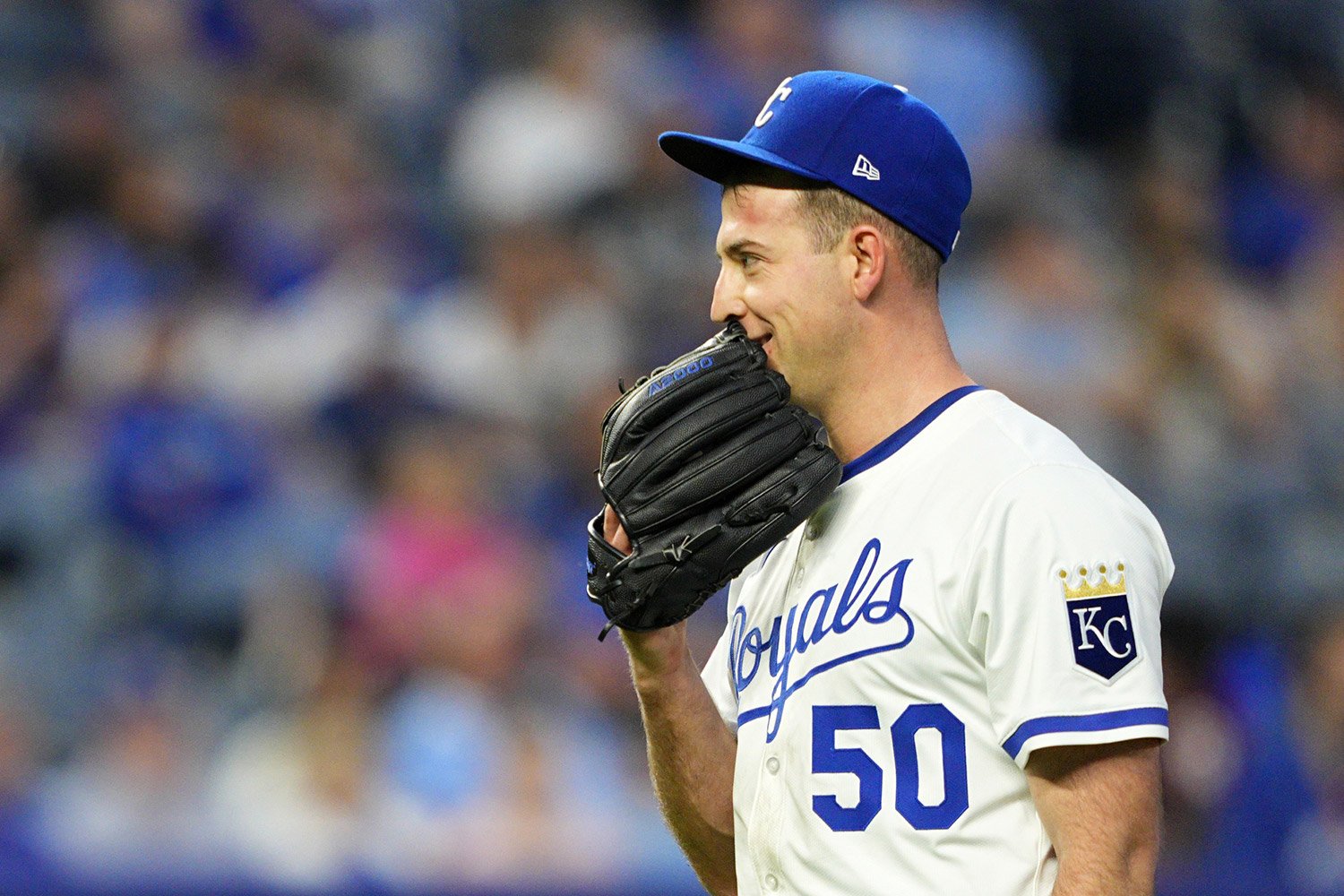 Kris Bubic’s tenure in Kansas City has been complicated. Bubic made his debut in the pandemic-shortened season in 2020, where he started 10 games and posted a 4.32 ERA. His performance was respectable for a rookie, but not necessarily indicative of becoming the centerpiece of a rotation. In his 2021 season, Bubic posted similar stats with a 4.43 ERA in 130 innings. In that season, he showed signs of being effective in a hybrid role. In the nine appearances where he did not start, Bubic was used following an opener as a starter/long reliever hybrid pitcher. Out of the bullpen, he gave up nine earned runs in 26 1/3 innings, good for a 3.08 ERA, which was noticeably better than his 4.77 ERA as a starter. A bigger indicator of his performance as a starter versus a reliever would be his OPS against. As a starter, batters hit for an .823 OPS against him, but batters only hit for an OPS of .598 when he came out of the bullpen. In 2022, Bubic struggled as a full-time starter, posting a 5.58 ERA in 129 innings. He averaged fewer than five innings per start and struggled once he got through the lineup a third time. Batters hit for an OPS of .989 in their third plate appearance against Bubic in 2022. In 2023, had a decent start to the season with a 3.94 ERA in three starts and was showing signs of improvement, but he missed the rest of the 2023 season to undergo Tommy John surgery. After his rehab, Bubic joined the team in July of 2024 and made 27 relief appearances, never pitching more than two innings in an outing. He graded at above the 90th percentile in his key statcast metrics, reflected in his TJStats summary below. In 2025, Bubic won a spot on the starting rotation with some small regression in his metrics (TJStats summary below for his 2025 season), which is to be expected when moving from the bullpen to the rotation. In his 20 starts last season, he had a career-best 2.55 ERA over 116 1/3 innings. He also earned a career-best 3.1 fWAR and earned his first All-Star Game appearance. However, at the end of July, he suffered a rotator cuff strain that shut him down for the season despite not needing surgery. After suffering his second major injury, what does 2026 look like for Bubic? The Royals may have an opportunity to use Bubic in a creative way in 2026, and maybe 2021 could serve as the blueprint. This approach could be a way to preserve Bubic’s health and take advantage of the Royals’ strength in rotation depth, particularly if Bubic is still not fully recovered at the start of the season. While last season Bubic improved in his ability to go deeper into games, averaging 5.8 innings per start, scaling back his workload could be beneficial. One option would be to pair Bubic with Ryan Bergert, who averaged fewer than five innings per start, or Stephen Kolek as another hybrid starter. Pairing either of them with Bubic would also mean that the Royals would be pairing a right-handed pitcher with Bubic as a lefty. This could prove useful if the Royals face a team that is platoon-heavy. This plan would also allow the Royals to keep one of Bergert or Kolek on the major league roster following their strong performances in Kansas City after being acquired from San Diego at the 2025 trade deadline. Bergert, in particular, saw much less success against batters once the opposing lineup got to their third plate appearance. Batters jumped from having a .587 OPS in their first plate appearance to a .841 OPS by their third plate appearance. Pairing him with another starter and limiting his exposure could help mitigate that weakness. In addition to the benefit of Bubic not needing to overextend and hopefully allowing him the opportunity to pitch for a full season, pairing two starters would allow the bullpen a planned day of rest. There is a chance both pitchers could struggle and not last a combined nine innings, but that risk may be worth taking if it helps the Royals keep their rotation healthy. The tradeoff, however, would be carrying one less reliever in the bullpen, making bullpen management critical. There is precedent for this approach. The Milwaukee Brewers experimented with a version of this idea in 2025, with DL Hall and Quinn Priester piggybacking for a single start on three occasions, all of which resulted in a Brewers victory. In each of those games, Hall, who is normally a long reliever, would start and pitch three innings, then Priester, normally a starter, would pitch five or six innings of relief. Despite its success when used, this strategy was used sparingly by the Brewers. While this concept may sound good in theory, would it work in practice? Bubic is coming off a career year despite it being shortened by injury. He is also entering his last season of arbitration before free agency. It is also important to mention that Bubic and the Royals still have not agreed to a salary for the 2026 season and are headed to an arbitration hearing. It has been well reported that players often leave arbitration hearings feeling hurt. It is tough to hear your employer tell the arbitrator how bad they are, then go and play that season as if that never happened. For Bubic, being asked to transition to a hybrid role after an arbitration hearing, during his walk year, could be difficult... Being constrained to a hybrid role would hurt his value in the free-agent market and potentially limit his ability to earn a larger contract. There is certainly a scenario where Bubic does not accept a limited role. This offseason, the only free agent relievers who signed for more than $10 million per year are closers, and the only starting pitchers who are earning below that mark are pitchers who have recently struggled or are at the end of their careers. In order to maximize his earnings, Bubic would ideally want to remain a starter. All of this could be moot because the Royals could choose to trade Bubic before the season starts. The Royals have been open about their willingness to trade from their pitching depth to acquire an impact bat for their lineup. As free agents slowly come off the market, teams may be more willing to trade for a pitcher like Bubic. Given that Bubic is soon to be a free agent, the Royals might want to trade him now before losing him for nothing. If the Royals end up keeping Kris Bubic for the 2026 season, it would be wise for them to prioritize his health so that he can pitch for the entire season. His experience in the bullpen could make him a logical candidate to come in for long relief and work in tandem with someone like Bergert or Kolek. However, both the Royals and Bubic should be careful not to drop Bubic’s value in the case of him looking for a payday in the offseason or the Royals needing to find a trade partner at the deadline.
 -
Image courtesy of © Mark J. Rebilas-Imagn Images On Tuesday, the Royals announced that 25 players not currently on the 40-man roster will be attending major league spring training in Surprise, Arizona. This group of players will typically include free agents who recently signed minor league contracts with the club, along with top prospects in the minor leagues. Last year, free agents Cavan Biggio and Taylor Clarke were in this group, who would eventually spend time on the active roster. Here is an overview of the players invited and who might break into the team. Royals Pitchers RHP Héctor Neris Neris was signed to a minor league deal on Monday. Neris spent time in 2025 with the Braves, Angels, and Astros. For those three teams, he pitched 26 2/3 innings with a 6.75 ERA, good for a -0.8 bWAR. Earlier in his career, Neris was trusted in high-leverage positions, being either the closer or main setup man for the Phillies, Cubs, and Astros. Entering his age-37 season, he is now more often used as a middle reliever. FanGraphs projects him to have around 0.1 WAR. One concern is his declining groundball rate, which dropped to a career-low of 26.1%. With the fences moving in at Kauffman Stadium next year, that could make him more susceptible to giving up home runs. His FIP being lower than his ERA last season could indicate that he was unlucky last season, and his experience in high-leverage positions could help him earn one of the last spots in the bullpen going into 2026. RHP Jose Cuas Cuas was signed to a Minor League deal in December. Cuas pitched in Kansas City in 2022 and 2023 and has since spent time with the Cubs, Blue Jays, Phillies, and Braves. Last season, Cuas struggled at the Phillies’ Triple-A affiliate with a 13.5 ERA in 7 appearances. He also appeared in 18 games for the Braves' Double-A affiliate, posting a 3.63 ERA across 22.1 innings. This winter, Cuas also pitched in the Dominican Winter League, allowing only one earned run in 12.1 innings pitched. While he may face an uphill battle to make the Royals’ roster, his winter performance could earn him a longer look to make the team. RHP Aaron Sanchez Sanchez was signed to a minor league deal this Tuesday. In 2017 with the Toronto Blue Jays, he finished 7th in NL Cy Young voting and won the ERA title. Sanchez has battled injuries and has not made an MLB appearance since 2022. He did make 8 starts in the Dominican Summer League with only a 1.55 ERA across 46 1/3 innings, which caught the Royals’ attention. He will face tough competition for a spot in the Royals’ deep rotation. While it is unlikely that Sanchez will make the Opening Day roster, he could potentially attract trade interest from other teams or provide depth if the Royals end up trading one of their starters (assuming he is willing to accept spending time in Triple-A). LHP Helcris Olivarez Olivarez has recently spent time in the Giants organization, and the Royals signed him to a minor-league deal this offseason. Last season, he threw for 37 innings with a 3.65 ERA across the Giants' Double-A and Triple-A affiliates. He is more likely to start the season with the Omaha Stormchasers, but with the Royals still looking to add a left-handed reliever, Olivarez could eventually get a chance to make an impact in the major league bullpen. Former Draft Picks Right-handers A.J. Causey, Dennis Colleran, Shane Panzin, i and left-hander Chazz Martinez, Frank Mozzicato (No. 20 Prospect), and Hunter Patteson will also have the chance to make an impression at the big league camp this spring. Royals Catchers Jorge Alfaro The Royals signed Alfaro to a minor-league deal earlier this month. Last season, he played in 14 games for the Washington Nationals, slashing .256/.256/.308 with a 60 OPS+ and -0.3 bWAR. With Salvador Perez and Carter Jensen as locks to make the roster, it is very unlikely that Alfaro will be on the opening day roster. However, he could be in a good position to bring a veteran presence to Omaha and be called up in case either Perez or Jensen gets injured this season, much like Luke Maile last season. Elih Marrero Marrero has spent time in the Rangers and Red Sox systems and has yet to break through to the major league level. Entering his age-29 season, he will likely be battling with Jorge Alfaro to earn a spot in Triple-A next season. Blake Mitchell Currently the Royals’ No. 2 prospect, Mitchell has only progressed as far as High-A in the minor league system. While there is a lot of excitement around him, it is unlikely that he will make an impact at the major-league level in 2026. This camp invitation will provide Mitchell with experience to help his career progression. Other Catchers Other prospects and former draft picks Canyon Brown, Omar Hernandez, Ramon Ramirez (No. 8 prospect), and Luca Tresh have also been invited to the major-league camp. Royals Infielders All four infielders with non-roster invites are middle infielders. After Jonathan India, Michael Massey, and Nick Loftin all struggled in 2025, the Royals have brought these players in to challenge for the infield depth roster spot. Each of these players had their own struggles in 2025, so it will be interesting to see if any of them can make a meaningful impression in spring training. Kevin Newman Last month, Newman was signed to a Minor League deal. Newman struggled last season with the Angels, slashing .202/.209/.272 with a 33 OPS+. He is only one year removed from a 2.2 bWAR season where he batted .278/.311/.375 with an 80 OPS+. Despite last year's struggles, Newman was a plus defender, grading in the 83rd percentile in fielding run value. He is also able to hit for good contact, grading above average in whiff rate and strikeout rates. If he could return to that 2024 form, he could prove to be an option at second base in 2026. Josh Rojas Earlier this month, Rojas was signed to a Minor League Deal. Similar to Newman, Rojas struggled greatly in 2025 with the White Sox after having a good year in 2024 with the Mariners. Even in his struggles, Rojas has maintained a good chase rate of 19.6% and a walk rate near-average at 9%. If he can pair his plate discipline with better batted ball production, he could be an asset for the Royals in 2026. However, entering his age-32 season, he is at an age where it is rare for a player to develop those skills. Abraham Toro Toro was signed to a Minor League deal in December. Last year, Toro was acquired by the Red Sox to play first base, despite mostly playing second and third base in his career, when Triston Casas was lost to a season-ending knee injury. Toro went on to have little success in Boston, slashing .239/.289/.371 with an 83 OPS+. Toro is a contact hitter, grading in at least the 74th percentile in whiff rate, zone contact rate, and strikeout rate. However, his contact is rarely for power, and he rarely walks. Connor Kaiser In November, the Royals signed the Blue Valley West graduate to a Minor League deal. Kaiser has yet to make a meaningful impact at the major-league level with either the Rockies or the Diamondbacks, with a career slash line of .091/.130/.136 in 23 career plate appearances. He is unlikely to make the major league roster, and this will likely be one of his last opportunities to make an impression. Daniel Vazquez The Royals’ No. 14 prospect, Vazquez has also been invited to the big league camp. Despite having a good run of games in the Arizona Fall League, slashing .329/.459/.468, he is unlikely to break into the major league roster this spring. Peyton Wilson Rounding out the infielders is Peyton Wilson. He was the Royals’ second-round pick in the 2021 draft and spent time in Double-A and Triple-A last season. Wilson had great success in Double-A with an OPS of 1.195 in 19 games. However, he was unable to extend that success in Trip-le-A, slashing .223/.309/.309 in 84 games. His inclusion in camp should provide valuable experience as he continues his development. Royals Outfielders Last year, the Royals’ outfielders struggled on offense. To address those issues, the Royals added Isaac Collins, Lane Thomas, and Kameron Misner in the offseason. With nine outfielders currently on the 40-man roster, it is unlikely that either of these players will break into the big-league roster in spring training, but both could be called upon if the outfield struggles continue into 2025. Gavin Cross Cross is a former Royals top prospect and 1st round draft pick from 2022. Injuries have impacted his career, and his stock has dropped so far that he went unselected in the Rule 5 Draft this offseason. Cross is a bounce-back candidate after seeing moderate success the past two seasons in Double-A, slashing .250/.314/.420 and stealing 53 bases. Carson Roccaforte Roccaforte is the Royals’ No.16 prospect. Last season, he broke into the Double-A team and showed signs of power, slashing .290/.387/.475. He continued to show power in his 18 games in the Arizona Fall League, slashing .279/.393/.485. He will be someone to watch for the future. View full article
-
A Breakdown of the 25 Non-Roster Invites to Royals Spring Training
Philip Ruo posted an article in Royals
 On Tuesday, the Royals announced that 25 players not currently on the 40-man roster will be attending major league spring training in Surprise, Arizona. This group of players will typically include free agents who recently signed minor league contracts with the club, along with top prospects in the minor leagues. Last year, free agents Cavan Biggio and Taylor Clarke were in this group, who would eventually spend time on the active roster. Here is an overview of the players invited and who might break into the team. Royals Pitchers RHP Héctor Neris Neris was signed to a minor league deal on Monday. Neris spent time in 2025 with the Braves, Angels, and Astros. For those three teams, he pitched 26 2/3 innings with a 6.75 ERA, good for a -0.8 bWAR. Earlier in his career, Neris was trusted in high-leverage positions, being either the closer or main setup man for the Phillies, Cubs, and Astros. Entering his age-37 season, he is now more often used as a middle reliever. FanGraphs projects him to have around 0.1 WAR. One concern is his declining groundball rate, which dropped to a career-low of 26.1%. With the fences moving in at Kauffman Stadium next year, that could make him more susceptible to giving up home runs. His FIP being lower than his ERA last season could indicate that he was unlucky last season, and his experience in high-leverage positions could help him earn one of the last spots in the bullpen going into 2026. RHP Jose Cuas Cuas was signed to a Minor League deal in December. Cuas pitched in Kansas City in 2022 and 2023 and has since spent time with the Cubs, Blue Jays, Phillies, and Braves. Last season, Cuas struggled at the Phillies’ Triple-A affiliate with a 13.5 ERA in 7 appearances. He also appeared in 18 games for the Braves' Double-A affiliate, posting a 3.63 ERA across 22.1 innings. This winter, Cuas also pitched in the Dominican Winter League, allowing only one earned run in 12.1 innings pitched. While he may face an uphill battle to make the Royals’ roster, his winter performance could earn him a longer look to make the team. RHP Aaron Sanchez Sanchez was signed to a minor league deal this Tuesday. In 2017 with the Toronto Blue Jays, he finished 7th in NL Cy Young voting and won the ERA title. Sanchez has battled injuries and has not made an MLB appearance since 2022. He did make 8 starts in the Dominican Summer League with only a 1.55 ERA across 46 1/3 innings, which caught the Royals’ attention. He will face tough competition for a spot in the Royals’ deep rotation. While it is unlikely that Sanchez will make the Opening Day roster, he could potentially attract trade interest from other teams or provide depth if the Royals end up trading one of their starters (assuming he is willing to accept spending time in Triple-A). LHP Helcris Olivarez Olivarez has recently spent time in the Giants organization, and the Royals signed him to a minor-league deal this offseason. Last season, he threw for 37 innings with a 3.65 ERA across the Giants' Double-A and Triple-A affiliates. He is more likely to start the season with the Omaha Stormchasers, but with the Royals still looking to add a left-handed reliever, Olivarez could eventually get a chance to make an impact in the major league bullpen. Former Draft Picks Right-handers A.J. Causey, Dennis Colleran, Shane Panzin, i and left-hander Chazz Martinez, Frank Mozzicato (No. 20 Prospect), and Hunter Patteson will also have the chance to make an impression at the big league camp this spring. Royals Catchers Jorge Alfaro The Royals signed Alfaro to a minor-league deal earlier this month. Last season, he played in 14 games for the Washington Nationals, slashing .256/.256/.308 with a 60 OPS+ and -0.3 bWAR. With Salvador Perez and Carter Jensen as locks to make the roster, it is very unlikely that Alfaro will be on the opening day roster. However, he could be in a good position to bring a veteran presence to Omaha and be called up in case either Perez or Jensen gets injured this season, much like Luke Maile last season. Elih Marrero Marrero has spent time in the Rangers and Red Sox systems and has yet to break through to the major league level. Entering his age-29 season, he will likely be battling with Jorge Alfaro to earn a spot in Triple-A next season. Blake Mitchell Currently the Royals’ No. 2 prospect, Mitchell has only progressed as far as High-A in the minor league system. While there is a lot of excitement around him, it is unlikely that he will make an impact at the major-league level in 2026. This camp invitation will provide Mitchell with experience to help his career progression. Other Catchers Other prospects and former draft picks Canyon Brown, Omar Hernandez, Ramon Ramirez (No. 8 prospect), and Luca Tresh have also been invited to the major-league camp. Royals Infielders All four infielders with non-roster invites are middle infielders. After Jonathan India, Michael Massey, and Nick Loftin all struggled in 2025, the Royals have brought these players in to challenge for the infield depth roster spot. Each of these players had their own struggles in 2025, so it will be interesting to see if any of them can make a meaningful impression in spring training. Kevin Newman Last month, Newman was signed to a Minor League deal. Newman struggled last season with the Angels, slashing .202/.209/.272 with a 33 OPS+. He is only one year removed from a 2.2 bWAR season where he batted .278/.311/.375 with an 80 OPS+. Despite last year's struggles, Newman was a plus defender, grading in the 83rd percentile in fielding run value. He is also able to hit for good contact, grading above average in whiff rate and strikeout rates. If he could return to that 2024 form, he could prove to be an option at second base in 2026. Josh Rojas Earlier this month, Rojas was signed to a Minor League Deal. Similar to Newman, Rojas struggled greatly in 2025 with the White Sox after having a good year in 2024 with the Mariners. Even in his struggles, Rojas has maintained a good chase rate of 19.6% and a walk rate near-average at 9%. If he can pair his plate discipline with better batted ball production, he could be an asset for the Royals in 2026. However, entering his age-32 season, he is at an age where it is rare for a player to develop those skills. Abraham Toro Toro was signed to a Minor League deal in December. Last year, Toro was acquired by the Red Sox to play first base, despite mostly playing second and third base in his career, when Triston Casas was lost to a season-ending knee injury. Toro went on to have little success in Boston, slashing .239/.289/.371 with an 83 OPS+. Toro is a contact hitter, grading in at least the 74th percentile in whiff rate, zone contact rate, and strikeout rate. However, his contact is rarely for power, and he rarely walks. Connor Kaiser In November, the Royals signed the Blue Valley West graduate to a Minor League deal. Kaiser has yet to make a meaningful impact at the major-league level with either the Rockies or the Diamondbacks, with a career slash line of .091/.130/.136 in 23 career plate appearances. He is unlikely to make the major league roster, and this will likely be one of his last opportunities to make an impression. Daniel Vazquez The Royals’ No. 14 prospect, Vazquez has also been invited to the big league camp. Despite having a good run of games in the Arizona Fall League, slashing .329/.459/.468, he is unlikely to break into the major league roster this spring. Peyton Wilson Rounding out the infielders is Peyton Wilson. He was the Royals’ second-round pick in the 2021 draft and spent time in Double-A and Triple-A last season. Wilson had great success in Double-A with an OPS of 1.195 in 19 games. However, he was unable to extend that success in Trip-le-A, slashing .223/.309/.309 in 84 games. His inclusion in camp should provide valuable experience as he continues his development. Royals Outfielders Last year, the Royals’ outfielders struggled on offense. To address those issues, the Royals added Isaac Collins, Lane Thomas, and Kameron Misner in the offseason. With nine outfielders currently on the 40-man roster, it is unlikely that either of these players will break into the big-league roster in spring training, but both could be called upon if the outfield struggles continue into 2025. Gavin Cross Cross is a former Royals top prospect and 1st round draft pick from 2022. Injuries have impacted his career, and his stock has dropped so far that he went unselected in the Rule 5 Draft this offseason. Cross is a bounce-back candidate after seeing moderate success the past two seasons in Double-A, slashing .250/.314/.420 and stealing 53 bases. Carson Roccaforte Roccaforte is the Royals’ No.16 prospect. Last season, he broke into the Double-A team and showed signs of power, slashing .290/.387/.475. He continued to show power in his 18 games in the Arizona Fall League, slashing .279/.393/.485. He will be someone to watch for the future.
-
- 1
-
-
- hector neris
- jose cuas
- (and 8 more)
-
Image courtesy of © Charles LeClaire-Imagn Images On December 14, the Royals traded for outfielder Isaac Collins, along with relief pitcher Nick Mears, from the Milwaukee Brewers in exchange for relief pitcher Angel Zerpa. His acquisition was aimed at improving the Royals’ lackluster outfield production. Unless the Royals add another bat to the mix, which is seeming less likely according to Ken Rosenthal of The Athletic, Collins is slated to be the starting left fielder in Kansas City. What can the Royals expect from Collins offensively? Below is a percentile summary of Isaac Collins, courtesy of TJStats. Last season, Collins graded close to league average in expected weighted on-base average (xwOBA) and expected batting average (xBA) while being below average in key slugging metrics such as expected slugging percentage (xSLG) and barrel percentage. None of these metrics looks particularly eye-catching, but if the Royals were able to have a league-average hitter in the outfield, they would have had an easier time generating runs on offense. Despite his league-average expected metrics, Collins overachieved in 2025 with all of those key offensive metrics finishing above expectation. This is reflected in Collins’s wRC+ of 122 last season. But this may also explain his bearish 2026 projections on FanGraphs, which all predict a regression in wRC+ toward league average. As discussed in an article earlier this week, Collins is not particularly skilled against left-handed pitchers with a near-league-average wRC+ of 106. If he can keep this up, he will still improve the Royals’ outfield offensive production. A deeper look into Collins’s pitch-tracking data shows that he does his most damage against breaking balls, with 6 of his 9 home runs last year coming off them. Despite his increase in power against breaking balls, he is particularly more likely to swing and miss against breaking balls from left-handed pitchers, with his whiff rate at 38% compared to his season average (and better than league average) whiff rate of 22.5%. If Collins can increase his batted ball rates against breaking balls from lefties, that could go a long way in improving his overall production. While Collins is not an exceptional power hitter, he makes up for it with plate discipline. His chase rate was in the 98th percentile in 2025, along with being in the 90th percentile in walks. As mentioned earlier, his whiff rate is better than average at the 63rd percentile, and his strikeout rate is right at league average. His on-base ability and plate discipline will be much valued for getting through the lineup more quickly, forcing longer at-bats versus pitchers, and getting to the bullpen earlier in games. Another aspect of Collins that stands out in his Statcast data is that last season He was noticeably above league average in pulling fly balls into the air. With Kauffman Stadium announcing that it will be shortening the fences to left and right fields by 10 feet, this could have a positive impact on Collins' power output in Kauffman. Below are his spray charts against left-handed pitching (left) and right-handed pitching (right). And his fly ball success rate is much better (particularly against lefties) when pulling the ball. With closer walls, Collins could see a slight uptick in his home run production at Kauffman. Overall, it will be interesting to see how Collins’s second season in the major leagues will pan out. While there are signs that his production may have been lucky last season, there are signs that he can still provide positive value for this Royals offense moving into 2026. View full article
-
 On December 14, the Royals traded for outfielder Isaac Collins, along with relief pitcher Nick Mears, from the Milwaukee Brewers in exchange for relief pitcher Angel Zerpa. His acquisition was aimed at improving the Royals’ lackluster outfield production. Unless the Royals add another bat to the mix, which is seeming less likely according to Ken Rosenthal of The Athletic, Collins is slated to be the starting left fielder in Kansas City. What can the Royals expect from Collins offensively? Below is a percentile summary of Isaac Collins, courtesy of TJStats. Last season, Collins graded close to league average in expected weighted on-base average (xwOBA) and expected batting average (xBA) while being below average in key slugging metrics such as expected slugging percentage (xSLG) and barrel percentage. None of these metrics looks particularly eye-catching, but if the Royals were able to have a league-average hitter in the outfield, they would have had an easier time generating runs on offense. Despite his league-average expected metrics, Collins overachieved in 2025 with all of those key offensive metrics finishing above expectation. This is reflected in Collins’s wRC+ of 122 last season. But this may also explain his bearish 2026 projections on FanGraphs, which all predict a regression in wRC+ toward league average. As discussed in an article earlier this week, Collins is not particularly skilled against left-handed pitchers with a near-league-average wRC+ of 106. If he can keep this up, he will still improve the Royals’ outfield offensive production. A deeper look into Collins’s pitch-tracking data shows that he does his most damage against breaking balls, with 6 of his 9 home runs last year coming off them. Despite his increase in power against breaking balls, he is particularly more likely to swing and miss against breaking balls from left-handed pitchers, with his whiff rate at 38% compared to his season average (and better than league average) whiff rate of 22.5%. If Collins can increase his batted ball rates against breaking balls from lefties, that could go a long way in improving his overall production. While Collins is not an exceptional power hitter, he makes up for it with plate discipline. His chase rate was in the 98th percentile in 2025, along with being in the 90th percentile in walks. As mentioned earlier, his whiff rate is better than average at the 63rd percentile, and his strikeout rate is right at league average. His on-base ability and plate discipline will be much valued for getting through the lineup more quickly, forcing longer at-bats versus pitchers, and getting to the bullpen earlier in games. Another aspect of Collins that stands out in his Statcast data is that last season He was noticeably above league average in pulling fly balls into the air. With Kauffman Stadium announcing that it will be shortening the fences to left and right fields by 10 feet, this could have a positive impact on Collins' power output in Kauffman. Below are his spray charts against left-handed pitching (left) and right-handed pitching (right). And his fly ball success rate is much better (particularly against lefties) when pulling the ball. With closer walls, Collins could see a slight uptick in his home run production at Kauffman. Overall, it will be interesting to see how Collins’s second season in the major leagues will pan out. While there are signs that his production may have been lucky last season, there are signs that he can still provide positive value for this Royals offense moving into 2026.
 -
Image courtesy of © Brett Davis-Imagn Images / © Kamil Krzaczynski-Imagn Images The Royals had well-documented struggles on offense last season, particularly against left-handed pitching. The Royals posted a wRC+ of 80 against lefties in 2025, which ranked 25th in MLB and the worst in the American League. The Royals finished the season with only four players above average in wRC+ against left-handed pitchers. The Royals will need to greatly improve in this area if they want to improve to the next level and compete in October. The Royals have not been quiet this offseason and have been targeting offensive reinforcements, especially in the outfield. Will any of the additions so far be able to move the needle in improving the lineup’s ability against left-handed pitching? Lane Thomas As a right-handed hitter, on the surface, Thomas would appear to be a good addition to boost hitting against lefties. However, Lane Thomas was snakebitten by injuries last season and appeared in only 39 games, posting a .160/.246/.272 slash line with a 48 wRC+ and -0.5 fWAR. His wRC+ was only 58 against left-handed pitchers last season. That said, in his previous 3 seasons (each with at least 130 games played), he posted wRC+ marks of 107, 154, and 145 against lefties. If he can return to his pre-2025 form, Thomas could be a boon for this Royals lineup. FanGraphs projections have him performing closer to his previous form, but it remains uncertain whether he can truly be relied upon. Isaac Collins In his rookie season, Collins had a breakout year that earned him 4th place in NL Rookie of the Year voting. Despite being a switch-hitter, his splits against left-handed pitching were not as good as against right-handed pitching. Against lefties, he still produced a respectable 106 wRC+. If he can repeat that performance, the Royals will be content with his addition, especially if his metrics against right-handed pitchers are even better. With only one full year of experience, it is yet to be seen how reliable Collins can be long-term. It is also worth noting that Collins slumped in the last month of the 2025 season and was only used as a pinch-hitter in the postseason. The Royals will need Collins to be much more consistent going into his sophomore season. Kameron Misner While not expected to make the final roster, Misner occupies a spot on the 40-man roster after being traded from the Tampa Bay Rays. He has only 232 career plate appearances in Major League Baseball, and as a left-handed hitter, he is naturally less proficient against left-handed pitching. In his 42 plate appearances against left-handed pitchers, he only posted a 30 wRC+. While this doesn’t mean that Misner will not provide an impact for the Royals, it is less likely that he will provide a direct improvement against left-handed pitching in the immediate future. Kevin Newman Newman signed a minor league deal with an invitation to spring training for the Royals. Over his career, Newman’s production against left-handed pitching has been inconsistent. He has not posted a wRC+ over 100 against left-handed pitching since 2023, and his mark against righties hasn’t been above 85 since 2019. Unless he provides enough evidence in spring training that he can rekindle his old form, it will be unlikely that Newman will be able to improve the Royals' lineup. Josh Rojas Rojas also has an invite to spring training after signing a minor league contract with the Royals. While his overall track record was good before an abysmal season with the White Sox in 2025, as a left-handed hitter, he is unlikely to provide a boost against lefties if he makes the major league roster. Future Additions? While the Royals' current additions do not necessarily instill confidence against left-handed pitching, are there any other players whom the Royals could look to add to improve their outlook? Luis Rengifo Rengifo is a versatile right-handed hitter who can play multiple positions, including third base, second base, and corner outfield. While his 2025 season was underwhelming with a zero fWAR, he posted a wRC+ of at least 153 against left-handed pitching from 2022 through 2024. Rengifo also underperformed his expected metrics in batting average, slugging percentage, and weighted on-base average, which could indicate that he was unlucky last season. The addition of Rengifo could provide some cover for Jonathan India if he is unable to bounce back. Austin Hays Mentioned in a previous post, Hays would make sense as a platoon partner for Jac Caglianone, and he could still be a valuable addition to the Royals. Hays suffered four different injuries last season, so his addition would be a risky one for the Royals. However, when healthy, Hays has found great success against left-handed pitching, with a wRC+ of at least 104 in his last five seasons and at least 155 in his last two. Ramon Laureano Laureano was recently mentioned in an article by Kevin O’Brien as a possible trade candidate. To reinforce the idea of the Royals adding him to the roster, his performance against left-handed pitching has been excellent with a wRC+ of 139 in each of his last two seasons. He would be a good fit for the Royals if they could find a trade that works for both teams. View full article
-
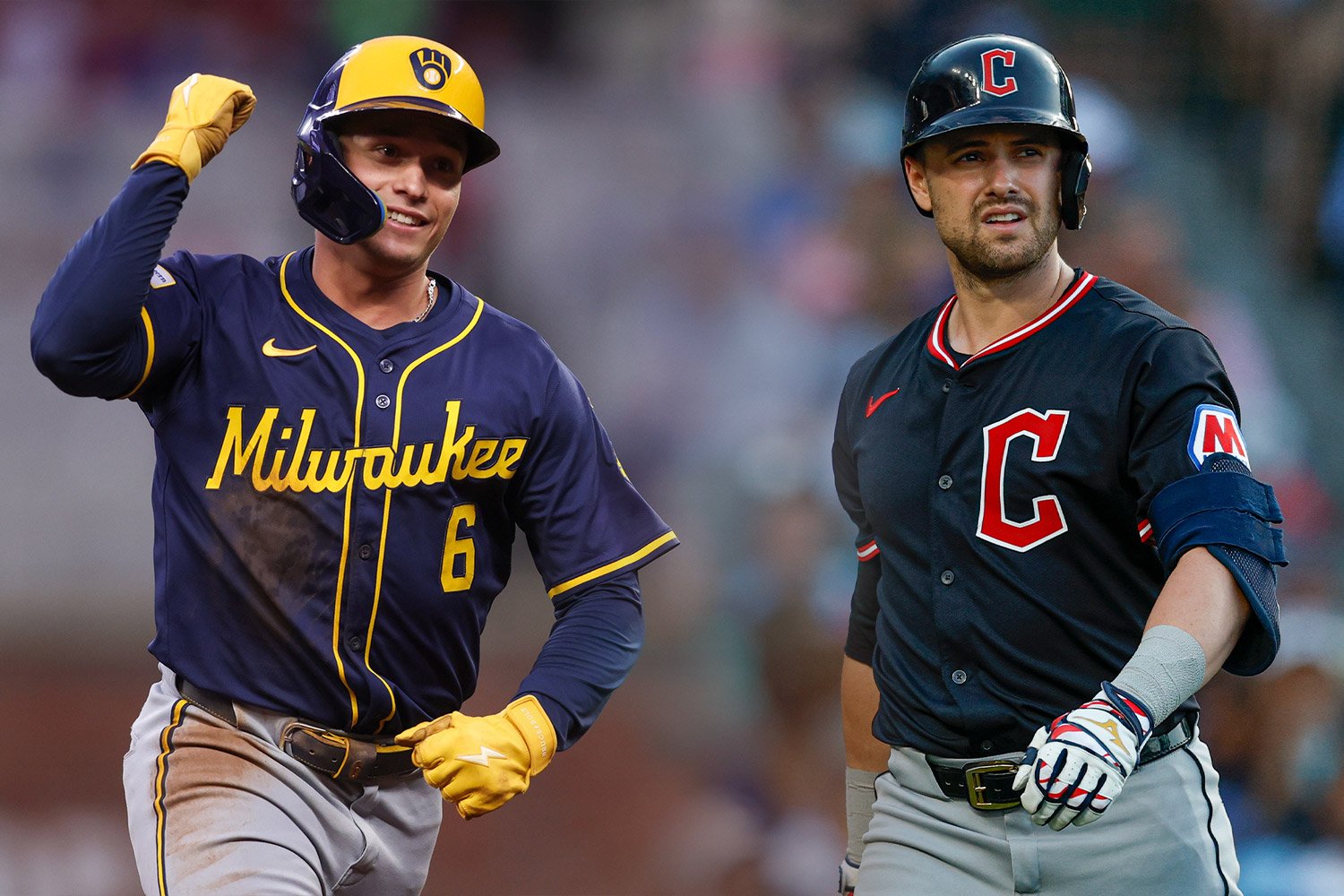 The Royals had well-documented struggles on offense last season, particularly against left-handed pitching. The Royals posted a wRC+ of 80 against lefties in 2025, which ranked 25th in MLB and the worst in the American League. The Royals finished the season with only four players above average in wRC+ against left-handed pitchers. The Royals will need to greatly improve in this area if they want to improve to the next level and compete in October. The Royals have not been quiet this offseason and have been targeting offensive reinforcements, especially in the outfield. Will any of the additions so far be able to move the needle in improving the lineup’s ability against left-handed pitching? Lane Thomas As a right-handed hitter, on the surface, Thomas would appear to be a good addition to boost hitting against lefties. However, Lane Thomas was snakebitten by injuries last season and appeared in only 39 games, posting a .160/.246/.272 slash line with a 48 wRC+ and -0.5 fWAR. His wRC+ was only 58 against left-handed pitchers last season. That said, in his previous 3 seasons (each with at least 130 games played), he posted wRC+ marks of 107, 154, and 145 against lefties. If he can return to his pre-2025 form, Thomas could be a boon for this Royals lineup. FanGraphs projections have him performing closer to his previous form, but it remains uncertain whether he can truly be relied upon. Isaac Collins In his rookie season, Collins had a breakout year that earned him 4th place in NL Rookie of the Year voting. Despite being a switch-hitter, his splits against left-handed pitching were not as good as against right-handed pitching. Against lefties, he still produced a respectable 106 wRC+. If he can repeat that performance, the Royals will be content with his addition, especially if his metrics against right-handed pitchers are even better. With only one full year of experience, it is yet to be seen how reliable Collins can be long-term. It is also worth noting that Collins slumped in the last month of the 2025 season and was only used as a pinch-hitter in the postseason. The Royals will need Collins to be much more consistent going into his sophomore season. Kameron Misner While not expected to make the final roster, Misner occupies a spot on the 40-man roster after being traded from the Tampa Bay Rays. He has only 232 career plate appearances in Major League Baseball, and as a left-handed hitter, he is naturally less proficient against left-handed pitching. In his 42 plate appearances against left-handed pitchers, he only posted a 30 wRC+. While this doesn’t mean that Misner will not provide an impact for the Royals, it is less likely that he will provide a direct improvement against left-handed pitching in the immediate future. Kevin Newman Newman signed a minor league deal with an invitation to spring training for the Royals. Over his career, Newman’s production against left-handed pitching has been inconsistent. He has not posted a wRC+ over 100 against left-handed pitching since 2023, and his mark against righties hasn’t been above 85 since 2019. Unless he provides enough evidence in spring training that he can rekindle his old form, it will be unlikely that Newman will be able to improve the Royals' lineup. Josh Rojas Rojas also has an invite to spring training after signing a minor league contract with the Royals. While his overall track record was good before an abysmal season with the White Sox in 2025, as a left-handed hitter, he is unlikely to provide a boost against lefties if he makes the major league roster. Future Additions? While the Royals' current additions do not necessarily instill confidence against left-handed pitching, are there any other players whom the Royals could look to add to improve their outlook? Luis Rengifo Rengifo is a versatile right-handed hitter who can play multiple positions, including third base, second base, and corner outfield. While his 2025 season was underwhelming with a zero fWAR, he posted a wRC+ of at least 153 against left-handed pitching from 2022 through 2024. Rengifo also underperformed his expected metrics in batting average, slugging percentage, and weighted on-base average, which could indicate that he was unlucky last season. The addition of Rengifo could provide some cover for Jonathan India if he is unable to bounce back. Austin Hays Mentioned in a previous post, Hays would make sense as a platoon partner for Jac Caglianone, and he could still be a valuable addition to the Royals. Hays suffered four different injuries last season, so his addition would be a risky one for the Royals. However, when healthy, Hays has found great success against left-handed pitching, with a wRC+ of at least 104 in his last five seasons and at least 155 in his last two. Ramon Laureano Laureano was recently mentioned in an article by Kevin O’Brien as a possible trade candidate. To reinforce the idea of the Royals adding him to the roster, his performance against left-handed pitching has been excellent with a wRC+ of 139 in each of his last two seasons. He would be a good fit for the Royals if they could find a trade that works for both teams.
-
- 2
-
-
- lane thomas
- isaac collins
- (and 6 more)
-
Image courtesy of © Junfu Han / USA TODAY NETWORK via Imagn Images The Royals have been active this offseason, addressing needs in the trade and free agent markets. The Royals have also secured their manager for the long term by signing Matt Quatraro to a three-year contract extension. The Royals have boosted their bullpen by adding Alex Lange as a free agent and acquiring Matt Strahm and Nick Mears in trades. The outfield has also gotten needed help with the signing of free agent Lane Thomas and the trade for Isaac Collins. After these additions, the Royals are still in the market for a left-handed reliever and an impact bat for the lineup. The Royals have also had notable departures. Angel Zerpa and Jonathan Bowlan left via trade. Key players departed in free agency, including Hunter Harvey, Adam Frazier, Mike Yastrzemski, Luke Maile, Michael Lorenzen, Randal Grichuk, Sam Long, Kyle Wright, MJ Melendez, and Taylor Clarke. Other teams in the Royals’ division have also been active this offseason. Let’s take a look at the rest of the AL Central to see where their rosters stand at this point in the offseason. Chicago White Sox The White Sox have been very active, and their offseason is headlined by the surprising signing of Munetaka Murakami from Japan. Murakami initially had many teams interested in signing him, but interest cooled when they looked at his swing-and-miss rates in Japan. Additions Purchased 3B/1B Munetaka Murakami to a two-year deal. 2025: Played in Japan (Yakult Swallows) Signed LHP Sean Newcomb to a one-year contract. 2025 WAR: 1.6 Signed LHP Anthony Kay to a two-year contract. 2025: Played in Japan (Yokohama Bay Stars) Traded for LHP Chris Murphy (Boston). 2025 WAR: 0.5 Traded for OF Everson Pereira (Tampa). 2025 WAR: -0.3 Traded for OF Tristan Peters (Tampa). 2025 WAR: -0.4 Traded for IF/OF Tanner Murray. 2025: Minors Selected RHP Alexander Alberto in the Rule 5 Draft (Tampa Bay). 2025: Minors Selected RHP Jedixson Paez in the Rule 5 Draft (Boston). 2025: Minors Subtractions RHP Steven Wilson (traded to Tampa Bay). 2025 WAR: 1.2 LHP Fraser Ellard (retired). 2025 WAR: 0.0 RHP Yoendrys Gomez (traded to Tampa Bay). 2025 WAR: 0.0 LHP Tyler Alexander (free agent to Texas). 2025 WAR: -0.5 Still Out There OF Mike Tauchman. 2025 WAR: 1.9 LHP Martin Perez. 2025 WAR: 1.2 OF Michael A. Taylor. 2025 WAR: 0.1 RHP Miguel Castro. 2025 WAR: -0.1 LHP Cam Booser. 2025 WAR: -0.5 While the White Sox are still in a rebuild, they may look to trade Luis Robert Jr. and maybe even Murakami if he has a strong start in Chicago. Cleveland Guardians The Guardians have had a pretty quiet offseason, with the only notable movements being in their bullpen. They will also look to fill the void in the pitching staff following the indictments of Emmanuel Clase and Luis Ortiz for charges linked to illegal sports betting. Additions Signed RHP Shawn Armstrong to a one-year contract. 2025 WAR: 1.5 Signed RHP Connor Brogdon to a one-year contract. 2025 WAR: -0.2 Signed C Austin Hedges to a one-year contract. 2025 WAR: -0.5 Signed RHP Colin Holderman to a one-year contract. 2025 WAR: -0.8 Selected RHP Peyton Pallette in the Rule 5 Draft (White Sox). 2025: Minors Subtractions RHP Zak Kent (free agent to St. Louis). 2025 WAR: 0.1 LHP Matt Krook (free agent to the Athletics). 2025 WAR: 0.0 OF/1B Jhonkensy Noel (signed off waivers to Baltimore). 2025 WAR: -1.4 LHP Sam Hentges (free agent to San Francisco). 2025: Injured RHP Emmanuel Clase (indicted on sports betting charges). 2025 WAR: 0.7 RHP Luis Ortiz (indicted on sports betting charges). 2025 WAR: 0.6 Still Out There LHP Kolby Allard. 2025 WAR: 1.3 RHP Nic Enright. 2025 WAR: 1.0 RHP Ben Lively. 2025 WAR: 0.9 OF Will Brennan. 2025 WAR: -0.2 IF Will Wilson. 2025 WAR: -0.6 While the Guardians have had recent success making the playoffs, they might need additions to become true postseason contenders. Detroit Tigers Most notably, the Tigers retained Gleyber Torres with their qualifying offer and signed Kenley Jansen to boost the back of the bullpen. Right now, the Tigers look to be running it back with most of last year’s team returning. Additions Re-signed 2B Gleyber Torres to a one-year qualifying offer. 2025 WAR: 2.9 Signed P Kenley Jansen to a one-year contract. 2025 WAR: 2.4 Re-signed RHP Kyle Finnegan to a two-year contract. 2025 WAR: 1.0 Claimed RHP Dugan Darnell off waivers (Pittsburgh). 2025 WAR: 0.3 Claimed RHP Jack Little off waivers (Pittsburgh). 2025 WAR: 0.0 Signed RHP Drew Anderson to a one-year contract. 2025: Played in Korea (SSG Landers) Traded for LHP Johan Simon (Toronto). 2025: Minors Subtractions RHP Chase Lee (free agent to Toronto). 2025 WAR: 0.2 RHP Randy Dobnak (free agent to Seattle). 2025 WAR: 0.1 RHP Alex Lange (free agent to Kansas City). 2025 WAR: 0.0 OF Justyn-Henry Malloy (traded to Tampa Bay). 2025 WAR: -0.2 Still Out There IF Andy Ibáñez. 2025 WAR: 0.6 RHP Chris Paddack. 2025 WAR: 0.3 RHP Jose Urquidy. 2025 WAR: -0.1 RHP Paul Sewald. 2025 WAR: -0.1 RHP Rafael Montero. 2025 WAR: -0.2 RHP Tommy Kahnle. 2025 WAR: -0.2 The big question remaining is what to do about two-time reigning Cy Young winner Tarik Skubal. Reports indicate that the Tigers and Skubal have the largest arbitration gap in MLB history. If Skubal wins his arbitration hearing, are the Tigers more likely to trade him, and if they win, are they more likely to be aggressive and try to win in what is likely to be Skubal’s last year in Detroit? Minnesota Twins The Twins have been rather quiet this offseason, with small additions and no major departures. Additions Traded for RHP Eric Orze (Tampa Bay). 2025 WAR: 0.6 Traded for C Alex Jackson (Baltimore). 2025 WAR: 0.6 Signed 1B/DH Josh Bell to a one-year contract. 2025 WAR: 0.4 Traded for UT Eric Wagaman (Miami). 2025 WAR: -0.4 Subtractions RHP Cody Laweryson (waivers to the Angels). 2025 WAR: 0.3 OF DaShawn Keirsey Jr. (free agent to Atlanta). 2025 WAR: -1.2 Still Out There C Christian Vazquez. 2025 WAR: 0.6 RHP Michael Tonkin. 2025 WAR: 0.2 LHP Anthony Misiewicz. 2025 WAR: -0.1 RHP Thomas Hatch. 2025 WAR: -0.2 OF Carson McCusker. 2025 WAR: -0.6 LHP Genesis Cabrera. 2025 WAR: -0.8 While there were a lot of departures at the trade deadline last year, the Twins have been reluctant to let go of key players Joe Ryan, Pablo Lopez, and Byron Buxton. Maybe there are other additions on the horizon if they do intend to keep their stars and compete in 2026? While the perennial division-contending Guardians and Tigers don't have the same glaring weaknesses as the Royals do, Kansas City may have been the most aggressive team in the AL Central in actively upgrading its roster in 2026. The Royals still probably need one more impact bat to improve their offense. The front office has signaled a willingness to use their rotation depth to make a move to strengthen the offense, but until they do, they will not be considered true contenders in the division or even for an AL Wild Card spot. View full article
-
A Look at the Offseason for the Rest of the American League Central
Philip Ruo posted an article in Royals
 The Royals have been active this offseason, addressing needs in the trade and free agent markets. The Royals have also secured their manager for the long term by signing Matt Quatraro to a three-year contract extension. The Royals have boosted their bullpen by adding Alex Lange as a free agent and acquiring Matt Strahm and Nick Mears in trades. The outfield has also gotten needed help with the signing of free agent Lane Thomas and the trade for Isaac Collins. After these additions, the Royals are still in the market for a left-handed reliever and an impact bat for the lineup. The Royals have also had notable departures. Angel Zerpa and Jonathan Bowlan left via trade. Key players departed in free agency, including Hunter Harvey, Adam Frazier, Mike Yastrzemski, Luke Maile, Michael Lorenzen, Randal Grichuk, Sam Long, Kyle Wright, MJ Melendez, and Taylor Clarke. Other teams in the Royals’ division have also been active this offseason. Let’s take a look at the rest of the AL Central to see where their rosters stand at this point in the offseason. Chicago White Sox The White Sox have been very active, and their offseason is headlined by the surprising signing of Munetaka Murakami from Japan. Murakami initially had many teams interested in signing him, but interest cooled when they looked at his swing-and-miss rates in Japan. Additions Purchased 3B/1B Munetaka Murakami to a two-year deal. 2025: Played in Japan (Yakult Swallows) Signed LHP Sean Newcomb to a one-year contract. 2025 WAR: 1.6 Signed LHP Anthony Kay to a two-year contract. 2025: Played in Japan (Yokohama Bay Stars) Traded for LHP Chris Murphy (Boston). 2025 WAR: 0.5 Traded for OF Everson Pereira (Tampa). 2025 WAR: -0.3 Traded for OF Tristan Peters (Tampa). 2025 WAR: -0.4 Traded for IF/OF Tanner Murray. 2025: Minors Selected RHP Alexander Alberto in the Rule 5 Draft (Tampa Bay). 2025: Minors Selected RHP Jedixson Paez in the Rule 5 Draft (Boston). 2025: Minors Subtractions RHP Steven Wilson (traded to Tampa Bay). 2025 WAR: 1.2 LHP Fraser Ellard (retired). 2025 WAR: 0.0 RHP Yoendrys Gomez (traded to Tampa Bay). 2025 WAR: 0.0 LHP Tyler Alexander (free agent to Texas). 2025 WAR: -0.5 Still Out There OF Mike Tauchman. 2025 WAR: 1.9 LHP Martin Perez. 2025 WAR: 1.2 OF Michael A. Taylor. 2025 WAR: 0.1 RHP Miguel Castro. 2025 WAR: -0.1 LHP Cam Booser. 2025 WAR: -0.5 While the White Sox are still in a rebuild, they may look to trade Luis Robert Jr. and maybe even Murakami if he has a strong start in Chicago. Cleveland Guardians The Guardians have had a pretty quiet offseason, with the only notable movements being in their bullpen. They will also look to fill the void in the pitching staff following the indictments of Emmanuel Clase and Luis Ortiz for charges linked to illegal sports betting. Additions Signed RHP Shawn Armstrong to a one-year contract. 2025 WAR: 1.5 Signed RHP Connor Brogdon to a one-year contract. 2025 WAR: -0.2 Signed C Austin Hedges to a one-year contract. 2025 WAR: -0.5 Signed RHP Colin Holderman to a one-year contract. 2025 WAR: -0.8 Selected RHP Peyton Pallette in the Rule 5 Draft (White Sox). 2025: Minors Subtractions RHP Zak Kent (free agent to St. Louis). 2025 WAR: 0.1 LHP Matt Krook (free agent to the Athletics). 2025 WAR: 0.0 OF/1B Jhonkensy Noel (signed off waivers to Baltimore). 2025 WAR: -1.4 LHP Sam Hentges (free agent to San Francisco). 2025: Injured RHP Emmanuel Clase (indicted on sports betting charges). 2025 WAR: 0.7 RHP Luis Ortiz (indicted on sports betting charges). 2025 WAR: 0.6 Still Out There LHP Kolby Allard. 2025 WAR: 1.3 RHP Nic Enright. 2025 WAR: 1.0 RHP Ben Lively. 2025 WAR: 0.9 OF Will Brennan. 2025 WAR: -0.2 IF Will Wilson. 2025 WAR: -0.6 While the Guardians have had recent success making the playoffs, they might need additions to become true postseason contenders. Detroit Tigers Most notably, the Tigers retained Gleyber Torres with their qualifying offer and signed Kenley Jansen to boost the back of the bullpen. Right now, the Tigers look to be running it back with most of last year’s team returning. Additions Re-signed 2B Gleyber Torres to a one-year qualifying offer. 2025 WAR: 2.9 Signed P Kenley Jansen to a one-year contract. 2025 WAR: 2.4 Re-signed RHP Kyle Finnegan to a two-year contract. 2025 WAR: 1.0 Claimed RHP Dugan Darnell off waivers (Pittsburgh). 2025 WAR: 0.3 Claimed RHP Jack Little off waivers (Pittsburgh). 2025 WAR: 0.0 Signed RHP Drew Anderson to a one-year contract. 2025: Played in Korea (SSG Landers) Traded for LHP Johan Simon (Toronto). 2025: Minors Subtractions RHP Chase Lee (free agent to Toronto). 2025 WAR: 0.2 RHP Randy Dobnak (free agent to Seattle). 2025 WAR: 0.1 RHP Alex Lange (free agent to Kansas City). 2025 WAR: 0.0 OF Justyn-Henry Malloy (traded to Tampa Bay). 2025 WAR: -0.2 Still Out There IF Andy Ibáñez. 2025 WAR: 0.6 RHP Chris Paddack. 2025 WAR: 0.3 RHP Jose Urquidy. 2025 WAR: -0.1 RHP Paul Sewald. 2025 WAR: -0.1 RHP Rafael Montero. 2025 WAR: -0.2 RHP Tommy Kahnle. 2025 WAR: -0.2 The big question remaining is what to do about two-time reigning Cy Young winner Tarik Skubal. Reports indicate that the Tigers and Skubal have the largest arbitration gap in MLB history. If Skubal wins his arbitration hearing, are the Tigers more likely to trade him, and if they win, are they more likely to be aggressive and try to win in what is likely to be Skubal’s last year in Detroit? Minnesota Twins The Twins have been rather quiet this offseason, with small additions and no major departures. Additions Traded for RHP Eric Orze (Tampa Bay). 2025 WAR: 0.6 Traded for C Alex Jackson (Baltimore). 2025 WAR: 0.6 Signed 1B/DH Josh Bell to a one-year contract. 2025 WAR: 0.4 Traded for UT Eric Wagaman (Miami). 2025 WAR: -0.4 Subtractions RHP Cody Laweryson (waivers to the Angels). 2025 WAR: 0.3 OF DaShawn Keirsey Jr. (free agent to Atlanta). 2025 WAR: -1.2 Still Out There C Christian Vazquez. 2025 WAR: 0.6 RHP Michael Tonkin. 2025 WAR: 0.2 LHP Anthony Misiewicz. 2025 WAR: -0.1 RHP Thomas Hatch. 2025 WAR: -0.2 OF Carson McCusker. 2025 WAR: -0.6 LHP Genesis Cabrera. 2025 WAR: -0.8 While there were a lot of departures at the trade deadline last year, the Twins have been reluctant to let go of key players Joe Ryan, Pablo Lopez, and Byron Buxton. Maybe there are other additions on the horizon if they do intend to keep their stars and compete in 2026? While the perennial division-contending Guardians and Tigers don't have the same glaring weaknesses as the Royals do, Kansas City may have been the most aggressive team in the AL Central in actively upgrading its roster in 2026. The Royals still probably need one more impact bat to improve their offense. The front office has signaled a willingness to use their rotation depth to make a move to strengthen the offense, but until they do, they will not be considered true contenders in the division or even for an AL Wild Card spot.
 -
Image courtesy of © Sergio Estrada-Imagn Images In 2025, Jonathan India entered the season as the Royals’ primary leadoff hitter to set the table for Bobby Witt Jr. at the top of the lineup. By the end of the season, India found himself near the bottom of the order after continued offensive struggles. When Kansas City traded for India last offseason, he was coming off his strongest season since winning NL Rookie of the Year in 2021. In 2024, he slashed .248/.357/.392 with a 105 OPS+. In 2025, however, his production sharply regressed, and India posted career lows across the board, finishing with a .233/.323/.346 slash line with an 89 OPS+. At the beginning of the offseason, there were rumors that India could be a non-tender candidate entering his last year of arbitration. The Royals and India did eventually agree on an $8 million deal for 2026, keeping India in Kansas City for one last season before he hits free agency. Statcast data can provide insight on what may have caused India’s decline. Despite continuing to have excellent plate-discipline, ranking in the top 3% in chase rate, his walk rate dropped from 12.6% in 2024 to 9.5% in 2025. That drop significantly reduced his on-base value. A more concerning decline was in India's batted ball quality. In 2025, we were in the launch-angle sweet spot, with barrel rates dropping from the 92nd to the 29th percentile and from the 49th to the 22nd percentile, respectively. These changes had a major impact on his power production and slugging percentage. Another notable shift is that India’s pull rate increased in 2025 compared to his previous two seasons in Cincinnati. In 2025, he pulled the ball on 48% of his batted balls compared to 41.5% and 41.2% of the time in 2023 and 2024, respectively. This could be the result of no longer playing in the hitter-friendly Great American Ball Park (GABP), one of the most hitter-friendly environments in baseball. The change in India’s pull rate can be seen in the hit spray charts from the last three seasons. Cincinnati’s ballpark features a shorter and lower right field wall than left field, giving right-handed hitters like India an incentive to drive the ball to the opposite field for power production. Kauffman Stadium, however, has a symmetrical outfield wall and one of the most spacious outfields in baseball, and suppresses home runs. Statcast data provides details on how the ballparks impact offensive production. GABP ranks 4th among the most hitter-friendly ballparks. It has the highest park factor for home runs, and it consistently ranks high in boosting offensive metrics like OBP and wOBA. Kauffman Stadium, by contrast, ranks close to average in overall park factor and is the 4th worst ballpark when it comes to home runs. Statcast’s expected home run by park metric, which accounts for wall distance, height, and environmental factors, provides additional context to the difference in these parks. By this metric, India would have 97 career home runs if all of his batted balls were hit at GABP, compared to just 48 home runs if they were all hit at Kauffman. Is there optimism for India going into 2026? Various projections on FanGraphs predict a rebound season for India, forecasting anywhere between 1.3 and 1.7 fWAR, placing him at slightly above league-average production. These projections could stem partly from the fact that India’s batting average, slugging percentage, and weighted on-base average were all lower than their expected counterparts. Despite the fact that the expected numbers are still below average, they do suggest that India ran into poor luck in 2025. BA SLG wOBA Actual .233 .346 .301 Expected .241 .373 .315 India’s other key metrics, such as hard hit rate, exit velocity, and bat speed, stayed relatively consistent in 2025 compared to previous years. Additionally, along with India’s still excellent plate discipline, his strikeout rate has declined in each season in MLB. With key additions in the outfield such as Lane Thomas and Isaac Collins, India will likely no longer be asked to play out of position in left field, which could provide stability in his day-to-day approach. The addition of Marcus Thames to the hitting staff could provide a change of approach for India. A refined approach that could help India recapture his production and on-base value that could help him return to the top of the order. Unless there is another significant addition to the Royals’ roster, all signs point to Jonathan India being the main baseman in Kansas City. If he does continue to struggle, Michael Massey or even Isaac Collins could spend time platooning with India at second base. However, a salary of $8 million is a lot of money to dedicate to a part-time player on the Royals’ payroll. View full article
-
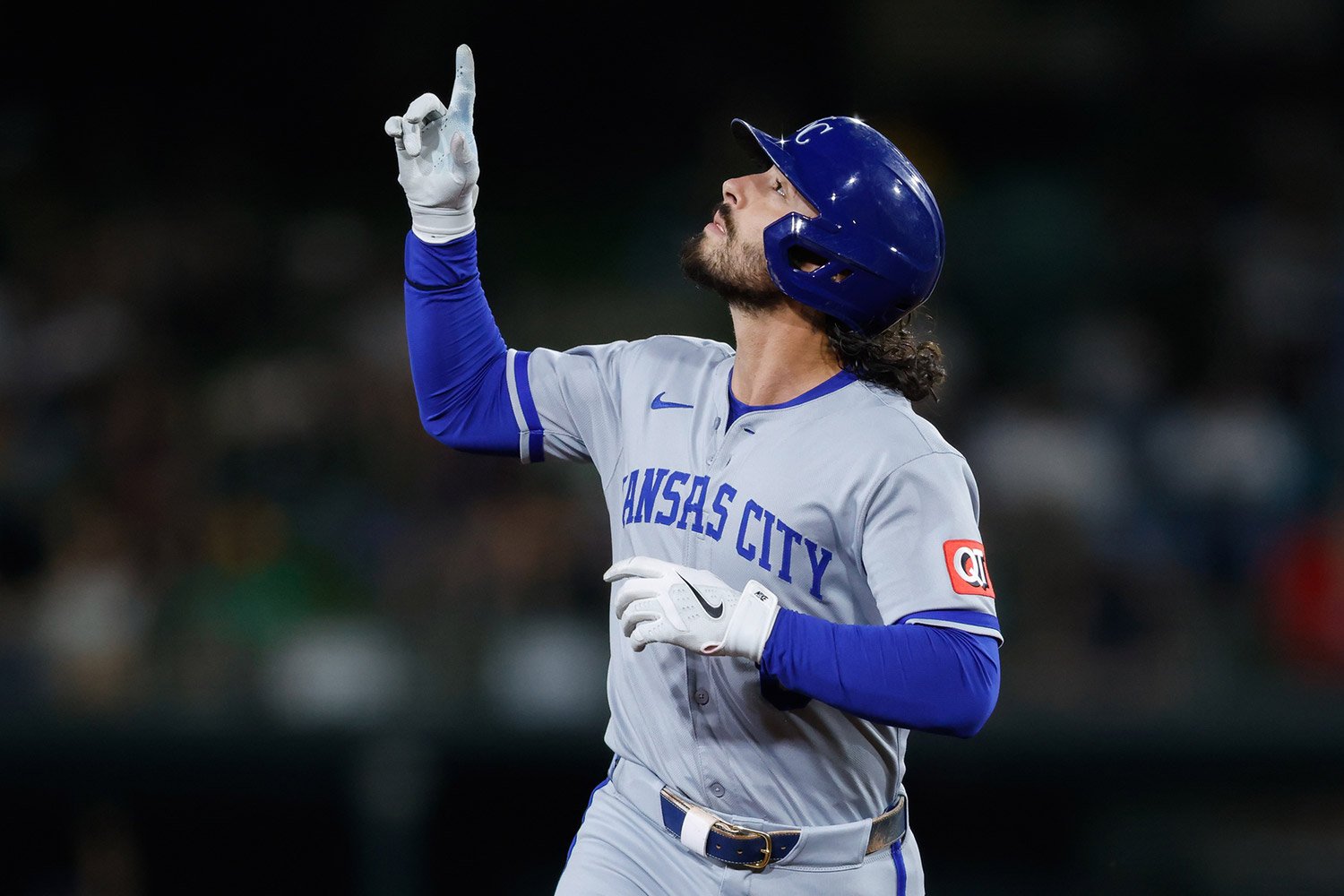 In 2025, Jonathan India entered the season as the Royals’ primary leadoff hitter to set the table for Bobby Witt Jr. at the top of the lineup. By the end of the season, India found himself near the bottom of the order after continued offensive struggles. When Kansas City traded for India last offseason, he was coming off his strongest season since winning NL Rookie of the Year in 2021. In 2024, he slashed .248/.357/.392 with a 105 OPS+. In 2025, however, his production sharply regressed, and India posted career lows across the board, finishing with a .233/.323/.346 slash line with an 89 OPS+. At the beginning of the offseason, there were rumors that India could be a non-tender candidate entering his last year of arbitration. The Royals and India did eventually agree on an $8 million deal for 2026, keeping India in Kansas City for one last season before he hits free agency. Statcast data can provide insight on what may have caused India’s decline. Despite continuing to have excellent plate-discipline, ranking in the top 3% in chase rate, his walk rate dropped from 12.6% in 2024 to 9.5% in 2025. That drop significantly reduced his on-base value. A more concerning decline was in India's batted ball quality. In 2025, we were in the launch-angle sweet spot, with barrel rates dropping from the 92nd to the 29th percentile and from the 49th to the 22nd percentile, respectively. These changes had a major impact on his power production and slugging percentage. Another notable shift is that India’s pull rate increased in 2025 compared to his previous two seasons in Cincinnati. In 2025, he pulled the ball on 48% of his batted balls compared to 41.5% and 41.2% of the time in 2023 and 2024, respectively. This could be the result of no longer playing in the hitter-friendly Great American Ball Park (GABP), one of the most hitter-friendly environments in baseball. The change in India’s pull rate can be seen in the hit spray charts from the last three seasons. Cincinnati’s ballpark features a shorter and lower right field wall than left field, giving right-handed hitters like India an incentive to drive the ball to the opposite field for power production. Kauffman Stadium, however, has a symmetrical outfield wall and one of the most spacious outfields in baseball, and suppresses home runs. Statcast data provides details on how the ballparks impact offensive production. GABP ranks 4th among the most hitter-friendly ballparks. It has the highest park factor for home runs, and it consistently ranks high in boosting offensive metrics like OBP and wOBA. Kauffman Stadium, by contrast, ranks close to average in overall park factor and is the 4th worst ballpark when it comes to home runs. Statcast’s expected home run by park metric, which accounts for wall distance, height, and environmental factors, provides additional context to the difference in these parks. By this metric, India would have 97 career home runs if all of his batted balls were hit at GABP, compared to just 48 home runs if they were all hit at Kauffman. Is there optimism for India going into 2026? Various projections on FanGraphs predict a rebound season for India, forecasting anywhere between 1.3 and 1.7 fWAR, placing him at slightly above league-average production. These projections could stem partly from the fact that India’s batting average, slugging percentage, and weighted on-base average were all lower than their expected counterparts. Despite the fact that the expected numbers are still below average, they do suggest that India ran into poor luck in 2025. BA SLG wOBA Actual .233 .346 .301 Expected .241 .373 .315 India’s other key metrics, such as hard hit rate, exit velocity, and bat speed, stayed relatively consistent in 2025 compared to previous years. Additionally, along with India’s still excellent plate discipline, his strikeout rate has declined in each season in MLB. With key additions in the outfield such as Lane Thomas and Isaac Collins, India will likely no longer be asked to play out of position in left field, which could provide stability in his day-to-day approach. The addition of Marcus Thames to the hitting staff could provide a change of approach for India. A refined approach that could help India recapture his production and on-base value that could help him return to the top of the order. Unless there is another significant addition to the Royals’ roster, all signs point to Jonathan India being the main baseman in Kansas City. If he does continue to struggle, Michael Massey or even Isaac Collins could spend time platooning with India at second base. However, a salary of $8 million is a lot of money to dedicate to a part-time player on the Royals’ payroll.

