


Philip Ruo
-
Posts
119 -
Joined
-
Last visited
-
Days Won
38
Content Type
Profiles
Forums
Blogs
Events
News
2026 Kansas City Royals Top Prospects Ranking
Kansas City Royals Videos
Kansas City Royals Free Agent & Trade Rumors, Notes, & Tidbits
Guides & Resources
The Kansas City Royals Players Project
2026 Kansas City Royals Draft Tracker: Picks & Bonuses
Store
Downloads
Gallery
Everything posted by Philip Ruo
-
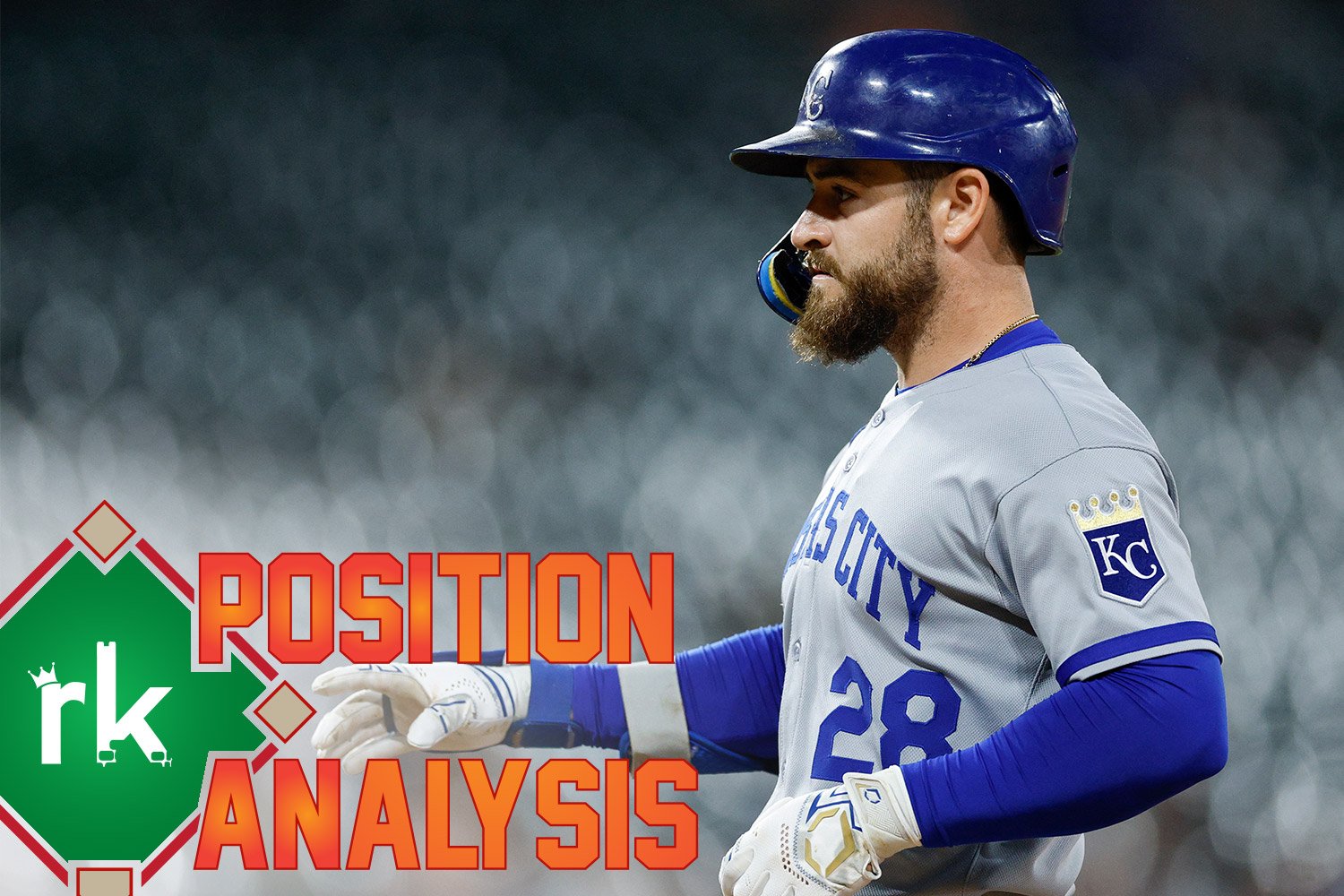
Image courtesy of © Mady Mertens-Imagn Images How has the outfield addition fared in his first season in Kansas City so far? Isaac Collins’s start to 2026 has looked very different from his 2025 performance. So far in 2026, Collins has a slash line of .171/.310/.286 with an 83 wRC+, a decline from his 2025 marks of .263/.368/.323 with a 122 wRC+. In 2025, Collins graded in the 62nd percentile in batting run value and is currently in the 53rd percentile for 2026. However, the route to getting that value has been different this year compared to last season. Collins already has three barrels in 21 batted balls, only a couple of weeks into 2026. In 2025, Collins only barreled the ball 14 times all season. Does this suggest that Collins is finding his power swing in Kansas City? Despite the increase in barrel rate, Collins has seen declines in hard-hit rate, launch angle sweet-spot rate, and average exit velocity. These trends suggest his overall power profile may not be improving as much as the barrel rate alone indicates. It is important to call out that the Royals likely did not acquire Collins for his power hitting. They got him for his plate discipline and his on-base ability. In 2025, Collins boasted an xwOBA of .322 and showed elite plate discipline with a chase rate of 18.4% (98th percentile) and a walk rate of 12.9% (90th percentile). He also graded above average in whiff and strikeout rates. However, in 2026, Collins has been less consistent at the plate. While his walk rate has increased slightly to 14.3%, his chase rate has also risen to 19.6%. More concerning, his whiff and strikeout rates have jumped significantly from 22.5% and 21.1% to 30.9% and 33.3%, respectively. These changes have negatively impacted his on-base profile, reflected in a drop to a .259 xwOBA. In light of his start, what do his other metrics show about the outlook for the rest of the season? One notable trend is that Collins’s results have slightly outperformed his expected metrics. Metric Actual Expected wOBA .288 .259 AVG .143 .171 SLG .286 .253 If Collins is hitting below average in many categories, then why is his batting run value in the 53rd percentile? According to Baseball Savant, “Every pitch is assigned a run value based on its outcome (ball, strike, home run, etc.). The sum of all of a player's contributions across a season… measures his overall batting or pitching run value. A positive value represents runs created for hitters, and runs prevented for pitchers.” These run values are grouped into pitch locations: heart, shadow, chase, and waste. Collins so far has a positive batting run value in the chase and waste zones, meaning that his plate discipline has positively contributed to the Royals' run production, and it has offset his negative value in the heart and shadow zones. Zone Run Value Heart -1 Shadow -2 Chase 2 Waste 1 It is worth noting that only the elite hitters register positive values in the heart and shadow zones; only three batters had positive run values in both zones in 2025. Another positive sign is that Collins has increased his bat speed from 72.7 mph in 2025 to 73.6 mph in 2026. While bat speed itself is not necessarily indicative of positive production, increased bat speed can contribute to faster exit velocity and more power potential. Collins has also been pulling the ball in the air more often in 2026. His pull air rate has increased to 19.1% in 2026. Pulling the ball in the air greatly increases the chances of home runs, especially when paired with a high barrel rate. If Collins can continue his increase in barrel and pull air rates, his home run and power potential will increase in 2026. Conclusion Isaac Collins’s profile is still the same in 2026 as it was in 2025. He still has the ability to draw walks and avoid chasing balls out of the zone, but his contact and strikeout rates have trended in the wrong direction to start the season. His hard contact has been “feast or famine” with a decrease in hard hit rate and average exit velocity despite barreling the ball at a much larger rate. While his metrics show that he has over-achieving expectations, Collins has shown decent signs of overall run value at the plate. There are signs of growth in power potential, but also clear areas of concern in contact ability. There is still plenty of time for Collins to fully hit his stride in 2026. With a losing record so far, the Royals will need his on-base skills to improve sooner rather than later. View full article
-
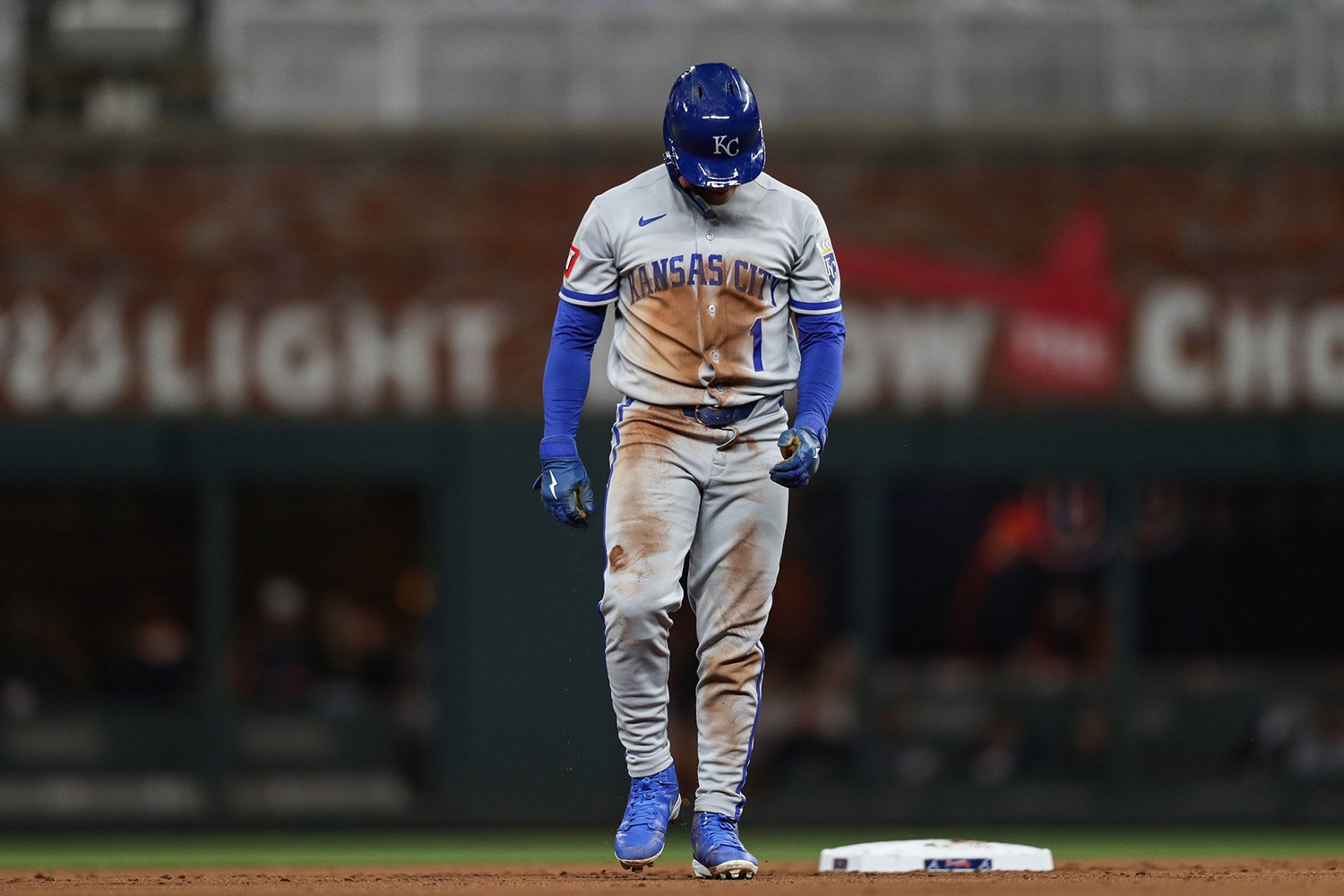 How has the outfield addition fared in his first season in Kansas City so far? Isaac Collins’s start to 2026 has looked very different from his 2025 performance. So far in 2026, Collins has a slash line of .171/.310/.286 with an 83 wRC+, a decline from his 2025 marks of .263/.368/.323 with a 122 wRC+. In 2025, Collins graded in the 62nd percentile in batting run value and is currently in the 53rd percentile for 2026. However, the route to getting that value has been different this year compared to last season. Collins already has three barrels in 21 batted balls, only a couple of weeks into 2026. In 2025, Collins only barreled the ball 14 times all season. Does this suggest that Collins is finding his power swing in Kansas City? Despite the increase in barrel rate, Collins has seen declines in hard-hit rate, launch angle sweet-spot rate, and average exit velocity. These trends suggest his overall power profile may not be improving as much as the barrel rate alone indicates. It is important to call out that the Royals likely did not acquire Collins for his power hitting. They got him for his plate discipline and his on-base ability. In 2025, Collins boasted an xwOBA of .322 and showed elite plate discipline with a chase rate of 18.4% (98th percentile) and a walk rate of 12.9% (90th percentile). He also graded above average in whiff and strikeout rates. However, in 2026, Collins has been less consistent at the plate. While his walk rate has increased slightly to 14.3%, his chase rate has also risen to 19.6%. More concerning, his whiff and strikeout rates have jumped significantly from 22.5% and 21.1% to 30.9% and 33.3%, respectively. These changes have negatively impacted his on-base profile, reflected in a drop to a .259 xwOBA. In light of his start, what do his other metrics show about the outlook for the rest of the season? One notable trend is that Collins’s results have slightly outperformed his expected metrics. Metric Actual Expected wOBA .288 .259 AVG .143 .171 SLG .286 .253 If Collins is hitting below average in many categories, then why is his batting run value in the 53rd percentile? According to Baseball Savant, “Every pitch is assigned a run value based on its outcome (ball, strike, home run, etc.). The sum of all of a player's contributions across a season… measures his overall batting or pitching run value. A positive value represents runs created for hitters, and runs prevented for pitchers.” These run values are grouped into pitch locations: heart, shadow, chase, and waste. Collins so far has a positive batting run value in the chase and waste zones, meaning that his plate discipline has positively contributed to the Royals' run production, and it has offset his negative value in the heart and shadow zones. Zone Run Value Heart -1 Shadow -2 Chase 2 Waste 1 It is worth noting that only the elite hitters register positive values in the heart and shadow zones; only three batters had positive run values in both zones in 2025. Another positive sign is that Collins has increased his bat speed from 72.7 mph in 2025 to 73.6 mph in 2026. While bat speed itself is not necessarily indicative of positive production, increased bat speed can contribute to faster exit velocity and more power potential. Collins has also been pulling the ball in the air more often in 2026. His pull air rate has increased to 19.1% in 2026. Pulling the ball in the air greatly increases the chances of home runs, especially when paired with a high barrel rate. If Collins can continue his increase in barrel and pull air rates, his home run and power potential will increase in 2026. Conclusion Isaac Collins’s profile is still the same in 2026 as it was in 2025. He still has the ability to draw walks and avoid chasing balls out of the zone, but his contact and strikeout rates have trended in the wrong direction to start the season. His hard contact has been “feast or famine” with a decrease in hard hit rate and average exit velocity despite barreling the ball at a much larger rate. While his metrics show that he has over-achieving expectations, Collins has shown decent signs of overall run value at the plate. There are signs of growth in power potential, but also clear areas of concern in contact ability. There is still plenty of time for Collins to fully hit his stride in 2026. With a losing record so far, the Royals will need his on-base skills to improve sooner rather than later.
 -
Image courtesy of © Jay Biggerstaff-Imagn Images / © Mady Mertens-Imagn Images After the first five games of the season, each starter in the Royals' rotation has one start. What are the key takeaways from the first time through the rotation? Cole Ragans Ragans struggled on Opening Day in Atlanta, allowing four runs on six hits and four walks in only four innings of work. Ragans struggled to find the strike zone, particularly with his fastball, slider, and knuckle curve. He was, however, able to generate chases and whiffs, particularly with his slider, which had a 46.2% chase rate and 36.4% whiff rate. His slider was his standout pitch, with a TJ Stuff+ of 106, compared to an overall mark of 101. Ragans was susceptible to big mistakes, allowing seven hard-hit balls, three of which resulted in home runs. For continued success in 2026, Ragans will need to limit the hard hit and power potential of his opponents. Most notably, Ragans appeared to lose his footing while throwing a fastball early in the game, and his fastball delivery was noticeably different later in his outing. It will be important to see if this persists in his next start. Michael Wacha Wacha impressed in his outing on Saturday, throwing six shutout innings with seven strikeouts, three hits, and one walk. He generated 17 whiffs and was able to get the Braves to chase the ball out of the zone at a 50% rate. He also limited the Braves to only four hard hits in his six innings. While the bullpen was not able to hold on to the Royals' 2-0 lead, Wacha did an excellent job in putting the Royals in a position to win the game. Wacha proved that after a poor spring training, he is still capable of impressing on the mound when it matters. While his TJ Stuff+ did not overly impress at only 96 overall, Wacha will continue to yield positive results on the mound if he can continue to limit his opponents to a .212 xwOBA and suppress hard contact. Seth Lugo Lugo followed Wacha’s performance with another shutout effort across 6⅓ innings, allowing five hits and no walks. His effort led to the Royals’ first win of 2026. On Sunday, Lugo looked more like his form of 2024 when he finished second in AL Cy Young voting. Lugo featured nine different pitches that found the zone at an excellent 61% rate. While Lugo was unable to get batters to whiff like Wacha and Ragans, he was able to get the Braves to chase his rare pitches out of the zone at a 33.3% rate. Lugo did allow eight hard-hit balls and an xwOBA of .394, so limiting hard contact will be key to sustaining success throughout 2026. Kris Bubic Bubic got the nod to start the Royals’ home opener on Monday and reminded Royals fans that he is still capable of pitching at his 2025 All-Star level after finishing last season on the injured list. Bubic allowed one run on Monday against the Twins in his six innings. He limited baserunners effectively, allowing only two hits and three walks in his 75-pitch outing. His lone earned run came on a home run by Matt Wallner in the second inning. Bubic showed excellent stuff with a 101 TJ Stuff+, with all of his pitches except for his sinker grading at least 103. Bubic also excelled at generating whiffs with 12 during his outing. Like Lugo, Bubic was susceptible to allowing hard-hit balls, with eight in his 15 batted balls allowed, which drove up his xwOBA compared to his wOBA allowed. Bubic demonstrated that he has the stuff to continue his success from 2025. If he can continue to generate whiffs and limit hard contact, he will be well-positioned to succeed in 2026. Noah Cameron Cameron continued the stretch of strong outings from Royals starters with an effective performance in the rain against the Twins on Wednesday night. He threw five innings, allowing one run on four hits and one walk. Despite the results, Cameron struggled to find the zone (41%) and did not generate many whiffs. When he did locate pitches in the zone, they were often over the middle, allowing Twins hitters to make solid contact. He allowed nine hard-hit balls on 14 balls in play. Cameron will need to reduce hard contact, especially if he is unable to consistently generate swings and misses. Cameron displayed decent underlying stuff with his cutter and changeup grading at 100 and 101 TJ Stuff+, respectively. Since Cameron’s fastball only averages 91.2 mph, he relies on the success of his offspeed pitches for sustained success. Conclusion Overall, the Royals' starters saw success in the first turn through the rotation in 2026. They combined for six earned runs across 27 ⅓ innings, good for a 1.96 ERA. While it is unlikely that the rotation can maintain that level of success for the whole season, they have certainly shown Royals fans that they can give the team a platform to succeed and stay competitive in 2026. View full article
-
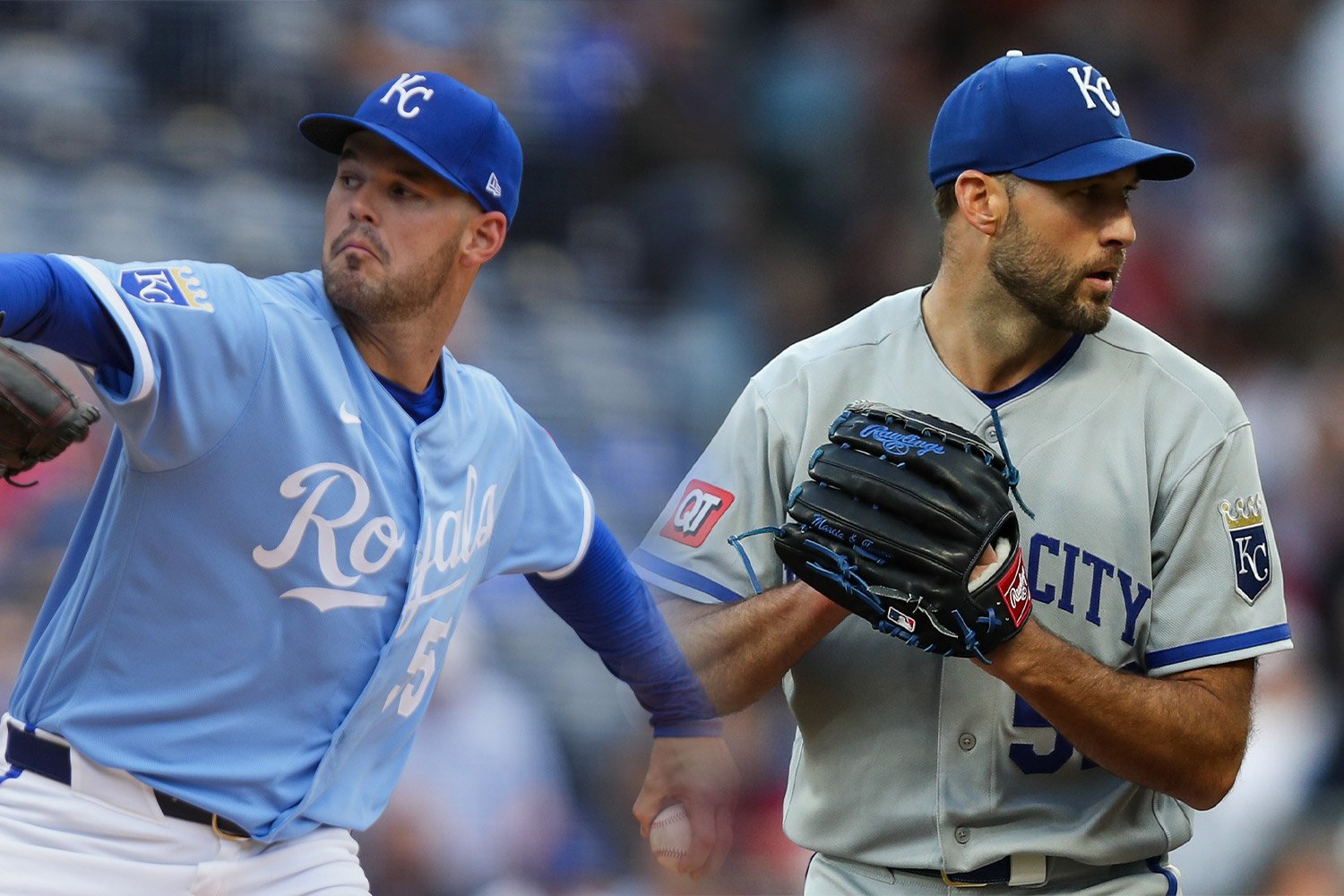 After the first five games of the season, each starter in the Royals' rotation has one start. What are the key takeaways from the first time through the rotation? Cole Ragans Ragans struggled on Opening Day in Atlanta, allowing four runs on six hits and four walks in only four innings of work. Ragans struggled to find the strike zone, particularly with his fastball, slider, and knuckle curve. He was, however, able to generate chases and whiffs, particularly with his slider, which had a 46.2% chase rate and 36.4% whiff rate. His slider was his standout pitch, with a TJ Stuff+ of 106, compared to an overall mark of 101. Ragans was susceptible to big mistakes, allowing seven hard-hit balls, three of which resulted in home runs. For continued success in 2026, Ragans will need to limit the hard hit and power potential of his opponents. Most notably, Ragans appeared to lose his footing while throwing a fastball early in the game, and his fastball delivery was noticeably different later in his outing. It will be important to see if this persists in his next start. Michael Wacha Wacha impressed in his outing on Saturday, throwing six shutout innings with seven strikeouts, three hits, and one walk. He generated 17 whiffs and was able to get the Braves to chase the ball out of the zone at a 50% rate. He also limited the Braves to only four hard hits in his six innings. While the bullpen was not able to hold on to the Royals' 2-0 lead, Wacha did an excellent job in putting the Royals in a position to win the game. Wacha proved that after a poor spring training, he is still capable of impressing on the mound when it matters. While his TJ Stuff+ did not overly impress at only 96 overall, Wacha will continue to yield positive results on the mound if he can continue to limit his opponents to a .212 xwOBA and suppress hard contact. Seth Lugo Lugo followed Wacha’s performance with another shutout effort across 6⅓ innings, allowing five hits and no walks. His effort led to the Royals’ first win of 2026. On Sunday, Lugo looked more like his form of 2024 when he finished second in AL Cy Young voting. Lugo featured nine different pitches that found the zone at an excellent 61% rate. While Lugo was unable to get batters to whiff like Wacha and Ragans, he was able to get the Braves to chase his rare pitches out of the zone at a 33.3% rate. Lugo did allow eight hard-hit balls and an xwOBA of .394, so limiting hard contact will be key to sustaining success throughout 2026. Kris Bubic Bubic got the nod to start the Royals’ home opener on Monday and reminded Royals fans that he is still capable of pitching at his 2025 All-Star level after finishing last season on the injured list. Bubic allowed one run on Monday against the Twins in his six innings. He limited baserunners effectively, allowing only two hits and three walks in his 75-pitch outing. His lone earned run came on a home run by Matt Wallner in the second inning. Bubic showed excellent stuff with a 101 TJ Stuff+, with all of his pitches except for his sinker grading at least 103. Bubic also excelled at generating whiffs with 12 during his outing. Like Lugo, Bubic was susceptible to allowing hard-hit balls, with eight in his 15 batted balls allowed, which drove up his xwOBA compared to his wOBA allowed. Bubic demonstrated that he has the stuff to continue his success from 2025. If he can continue to generate whiffs and limit hard contact, he will be well-positioned to succeed in 2026. Noah Cameron Cameron continued the stretch of strong outings from Royals starters with an effective performance in the rain against the Twins on Wednesday night. He threw five innings, allowing one run on four hits and one walk. Despite the results, Cameron struggled to find the zone (41%) and did not generate many whiffs. When he did locate pitches in the zone, they were often over the middle, allowing Twins hitters to make solid contact. He allowed nine hard-hit balls on 14 balls in play. Cameron will need to reduce hard contact, especially if he is unable to consistently generate swings and misses. Cameron displayed decent underlying stuff with his cutter and changeup grading at 100 and 101 TJ Stuff+, respectively. Since Cameron’s fastball only averages 91.2 mph, he relies on the success of his offspeed pitches for sustained success. Conclusion Overall, the Royals' starters saw success in the first turn through the rotation in 2026. They combined for six earned runs across 27 ⅓ innings, good for a 1.96 ERA. While it is unlikely that the rotation can maintain that level of success for the whole season, they have certainly shown Royals fans that they can give the team a platform to succeed and stay competitive in 2026.
-
- 2
-

-
- cole ragans
- michael wacha
- (and 4 more)
-
Image courtesy of © William Purnell-Imagn Images Major League Baseball is implementing the new Automated Ball-Strike (ABS) Challenge System starting in the 2026 season. The Statcast data from Baseball Savant provides a number of visualizations for the results of these challenges. Royals Team Performance Using ABS Overall, the Royals saw moderate success in challenges this spring. They were much more aggressive on the batting side than catching, ranking eighth highest challenge rate for batters (5.5%) and the seventh lowest for catchers (1.8%). The Royals were on the aggressive side of teams this spring, with their first challenge coming on average between the third and fourth innings in the 27 spring games in which they issued a challenge. The Royals were also the team to run out of challenges the second-earliest, losing their second challenge between the 4th and 5th innings in the 10 games in which they ran out of challenges. When it comes to overall success rate, the Royals were more successful on the catching side despite their lower volume. The Royals saw 62% of challenges overturned when challenging as catchers and only 34% of challenges overturned as batters. Their success rate was above league-average (60%) for catchers, while their batter success rate fell below the league average (46%). Baseball Savant also measures success rate against expected challenges, which accounts for “pitch location, number of remaining challenges, runners on, and ball/strike/out situation”. As a batting team, the Royals recorded 2.7 fewer overturns than expected. Defensively, however, they performed much better, finishing with 5.9 more overturns than expected as catchers. Individual Royals Performances Royals Batters For individuals, the sample size is rather small, with Lane Thomas and Isaac Collins accounting for most of the challenges, each with four, so these results should be taken with caution. Nick Loftin and Jac Caglianone were the best batters when it came to challenges relative to expectation. Loftin won both of his challenges, resulting in 2.0 overturns above expected. Caglianone went 3-for-3 in his challenges with 1.7 overturns above expected. Notably, Caglianone was also able to reverse a strikeout and gain a walk in his challenges. John Rave and Isaac Collins were the worst performers in challenges. Collins lost all four of his challenges, which resulted in 2.9 fewer overturns than expected. He challenged at the highest rate of all Royals at 17.4%, and his aggressiveness may reflect the struggles he had at the plate this spring. Rave lost both of his challenges, resulting in 2.1 overturns fewer than expected. Rave also fell victim to the most challenges by the opposing team, with opposing catchers going 3-for-3 against him and producing 2.2 more overturns than expected. Royals Catchers Royals catchers overall performed well, with five of the seven challenging catchers outperforming expectations when challenging. Elías Díaz was the standout performer with 2.1 overturns more than expected, winning three of his four challenges. Salvador Perez was the only catcher with more than one challenge to finish below expectation, with 0.2 overturns fewer than expected, winning three of his six challenges. For catchers, it is worth looking at how batters performed against them to see if they are able to “fool” batters and induce poor challenges. Carter Jensen was the catcher most challenged, with 12 challenges against him. The batters won seven of those challenges, with 0.2 more overturns than expected. Notably, batters were able to flip four strikeouts and add one walk with challenges while Jensen was catching. Perez also saw hitters earn 1.0 overturns more than expected in their two challenges against him. Blake Mitchell and Luca Tresh were the most effective performers when facing challenges. Mitchell and Tresh each induced 0.2 fewer overturns than expected in their four and three challenges, respectively. Takeaways While the Royals' batters challenge more often than catchers relative to league averages this spring, their success rates indicate that they would be better suited to favor challenges from their catchers moving forward. As the 2026 season progresses, teams will continue to find their ideal strategies in challenging. For the Royals, it will be important to hone in their strategy and balance in challenging as key overturned calls could meaningfully impact close games. With the Royals projected to be on the fringe of AL playoff contention, marginal advantages in ABS challenges could be decisive to their success in 2026. View full article
-
How Have The Royals Fared Using The New ABS Challenge System?
Philip Ruo posted an article in Royals
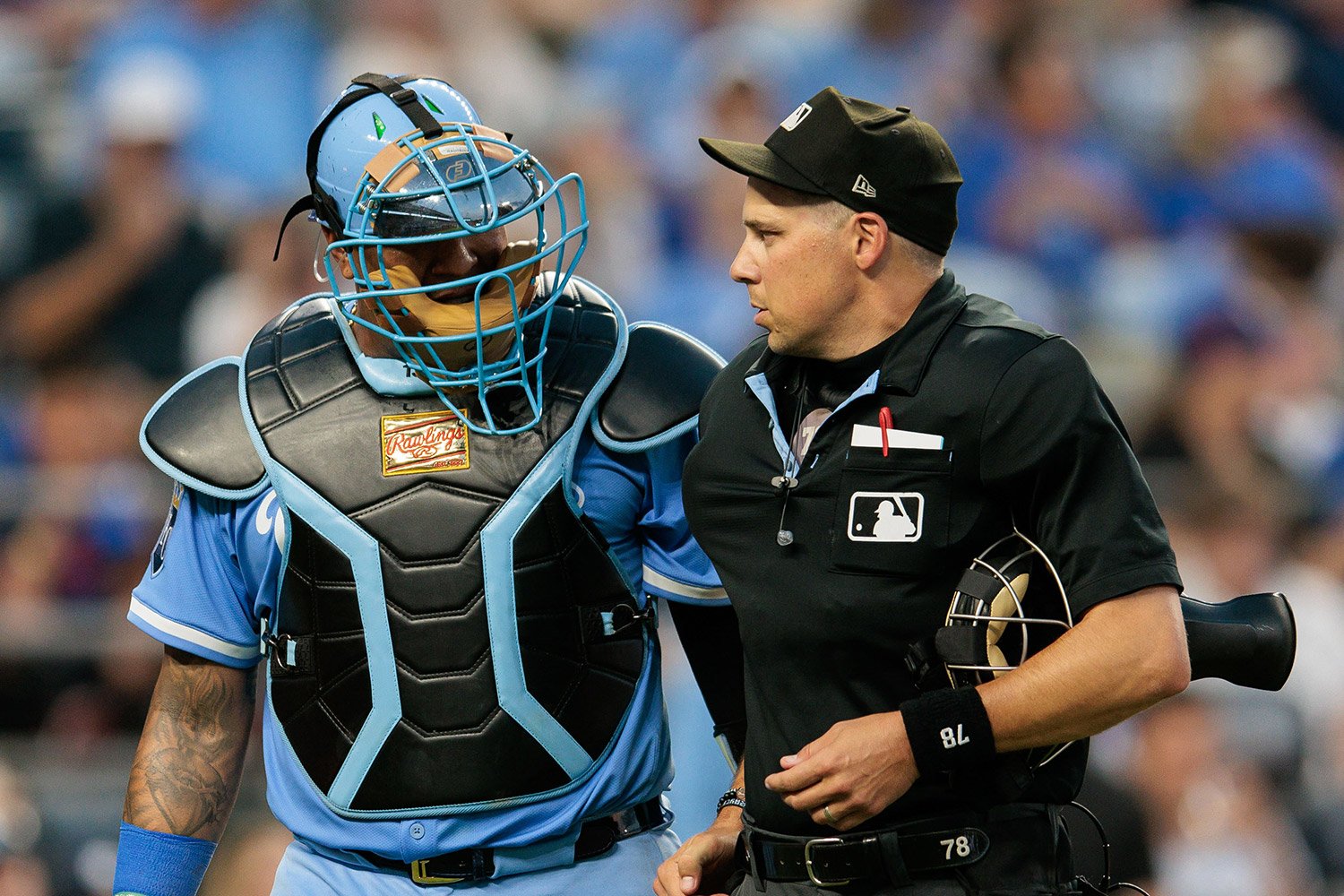 Major League Baseball is implementing the new Automated Ball-Strike (ABS) Challenge System starting in the 2026 season. The Statcast data from Baseball Savant provides a number of visualizations for the results of these challenges. Royals Team Performance Using ABS Overall, the Royals saw moderate success in challenges this spring. They were much more aggressive on the batting side than catching, ranking eighth highest challenge rate for batters (5.5%) and the seventh lowest for catchers (1.8%). The Royals were on the aggressive side of teams this spring, with their first challenge coming on average between the third and fourth innings in the 27 spring games in which they issued a challenge. The Royals were also the team to run out of challenges the second-earliest, losing their second challenge between the 4th and 5th innings in the 10 games in which they ran out of challenges. When it comes to overall success rate, the Royals were more successful on the catching side despite their lower volume. The Royals saw 62% of challenges overturned when challenging as catchers and only 34% of challenges overturned as batters. Their success rate was above league-average (60%) for catchers, while their batter success rate fell below the league average (46%). Baseball Savant also measures success rate against expected challenges, which accounts for “pitch location, number of remaining challenges, runners on, and ball/strike/out situation”. As a batting team, the Royals recorded 2.7 fewer overturns than expected. Defensively, however, they performed much better, finishing with 5.9 more overturns than expected as catchers. Individual Royals Performances Royals Batters For individuals, the sample size is rather small, with Lane Thomas and Isaac Collins accounting for most of the challenges, each with four, so these results should be taken with caution. Nick Loftin and Jac Caglianone were the best batters when it came to challenges relative to expectation. Loftin won both of his challenges, resulting in 2.0 overturns above expected. Caglianone went 3-for-3 in his challenges with 1.7 overturns above expected. Notably, Caglianone was also able to reverse a strikeout and gain a walk in his challenges. John Rave and Isaac Collins were the worst performers in challenges. Collins lost all four of his challenges, which resulted in 2.9 fewer overturns than expected. He challenged at the highest rate of all Royals at 17.4%, and his aggressiveness may reflect the struggles he had at the plate this spring. Rave lost both of his challenges, resulting in 2.1 overturns fewer than expected. Rave also fell victim to the most challenges by the opposing team, with opposing catchers going 3-for-3 against him and producing 2.2 more overturns than expected. Royals Catchers Royals catchers overall performed well, with five of the seven challenging catchers outperforming expectations when challenging. Elías Díaz was the standout performer with 2.1 overturns more than expected, winning three of his four challenges. Salvador Perez was the only catcher with more than one challenge to finish below expectation, with 0.2 overturns fewer than expected, winning three of his six challenges. For catchers, it is worth looking at how batters performed against them to see if they are able to “fool” batters and induce poor challenges. Carter Jensen was the catcher most challenged, with 12 challenges against him. The batters won seven of those challenges, with 0.2 more overturns than expected. Notably, batters were able to flip four strikeouts and add one walk with challenges while Jensen was catching. Perez also saw hitters earn 1.0 overturns more than expected in their two challenges against him. Blake Mitchell and Luca Tresh were the most effective performers when facing challenges. Mitchell and Tresh each induced 0.2 fewer overturns than expected in their four and three challenges, respectively. Takeaways While the Royals' batters challenge more often than catchers relative to league averages this spring, their success rates indicate that they would be better suited to favor challenges from their catchers moving forward. As the 2026 season progresses, teams will continue to find their ideal strategies in challenging. For the Royals, it will be important to hone in their strategy and balance in challenging as key overturned calls could meaningfully impact close games. With the Royals projected to be on the fringe of AL playoff contention, marginal advantages in ABS challenges could be decisive to their success in 2026.
-
- 1
-
-
- jac caglianone
- isaac collins
- (and 2 more)
-
Garcia carried that production into the World Baseball Classic. Representing his home country, Garcia led Venezuela to win its first-ever WBC championship in 2026. In seven games, Garcia slashed .385/.393/.577, earning tournament MVP honors. Following his contributions to the Venezuelan national team, the Royals will hope he can carry the momentum into the 2026 regular season. Garcia excels at getting on base, posting a wOBA of .345 last season. His plate discipline was borderline elite with chase, whiff, strikeout, and walk rates all grading in the 91st percentile or better. While he does not swing at a very high rate, he excels at getting contact when he does swing, with a zone contact rate of 90.5% (90th percentile). Near the end of 2025, Garcia began spending more time in the leadoff spot and has been hitting there often during his spring training games. After the Royals had struggled to find a consistent threat in the leadoff spot in 2025, Garcia looks to be the leading contender to fill that role and combine with Bobby Witt Jr. at the top of the order. With his on-base abilities combined with his elite plate discipline, Garcia and Witt could become one of the most dangerous one-two punches in the league. The Bad If Garcia can repeat his production from 2025 and remain healthy, the Royals will not have too much to worry about at third base. With the 7th best projection from Fangraphs going into 2026, there’s reason to remain optimistic. If there was an area where Garcia could improve, it is his power profile. barrel rate, max exit velocity, and pull-air percentage are all below league average, which limits his power potential. This is a minor nitpick, and if Garcia can maintain his production in other areas, it will not be a concern. While the backups would offer a sizable drop-off in production, there are a few players whom the Royals could turn to if needed. Nick Loftin will be the primary backup at third base. While his production during spring training has been good, slashing .282/.364/.513 with a 131 wRC+, projections are not as high on him going into 2026. Projections range his wRC+ between 75 and 98, and his projected fWAR ranges from 0.0 to 0.8. The other depth option, Tyler Tolbert, has even lower projections. There have been a couple of standout non-roster invitees in Kevin Newman and Josh Rojas, but they are both looking to bounce back from disappointing 2025 seasons of their own. The Royals will certainly hope that they do not need to rely on either for meaningful innings in 2026, if they even make the final roster. The Bottom Line Maikel Garcia looks like he could be a star in the making following his 2025 and WBC performances and is now a foundational piece for the Royals. If he can remain healthy in 2026, Garcia looks to be poised to continue his stellar form. The Royals do have MLB experience to back up Garcia, should the need occur, but they will offer a noticeable decline in production if called upon. Previous Installments: Second Base Position Analysis Catcher Position Analysis First Base Position Analysis Corner Outfield Position Analysis Center Field Position Analysis View full article
-
 With the emergence of Maikel Garcia as an everyday starter at third base in 2025, Garcia has locked down the position for 2026, barring injury. If Garcia needs a day off, there are a few options in the Royals system to give him a break. Royals Centerfielders At A Glance Starter: Maikel Garcia Backups: Nick Loftin Depth: Tyler Tolbert Prospects: Peyton Wilson, Colton Becker, Sam Ruta, Austin Charles Non-Roster Invites: Josh Rojas, Brandon Drury, Kevin Newman Royals fWAR Ranking Last Year: 2nd out of 30 Royals fWAR Projection This Year: 7th out of 30 The Good Garcia is coming off a career year in which he posted 5.6 fWAR and slashed .286/.351/.449 with a 121 wRC+. In 2025, Garcia earned his first career All-Star selection, won a Gold Glove at third base, and finished 14th in AL MVP voting. Following his stellar season, the Royals rewarded him with a five-year contract extension that will keep him in Kansas City until 2030 with an option for 2031. Garcia carried that production into the World Baseball Classic. Representing his home country, Garcia led Venezuela to win its first-ever WBC championship in 2026. In seven games, Garcia slashed .385/.393/.577, earning tournament MVP honors. Following his contributions to the Venezuelan national team, the Royals will hope he can carry the momentum into the 2026 regular season. Garcia excels at getting on base, posting a wOBA of .345 last season. His plate discipline was borderline elite with chase, whiff, strikeout, and walk rates all grading in the 91st percentile or better. While he does not swing at a very high rate, he excels at getting contact when he does swing, with a zone contact rate of 90.5% (90th percentile). Near the end of 2025, Garcia began spending more time in the leadoff spot and has been hitting there often during his spring training games. After the Royals had struggled to find a consistent threat in the leadoff spot in 2025, Garcia looks to be the leading contender to fill that role and combine with Bobby Witt Jr. at the top of the order. With his on-base abilities combined with his elite plate discipline, Garcia and Witt could become one of the most dangerous one-two punches in the league. The Bad If Garcia can repeat his production from 2025 and remain healthy, the Royals will not have too much to worry about at third base. With the 7th best projection from Fangraphs going into 2026, there’s reason to remain optimistic. If there was an area where Garcia could improve, it is his power profile. barrel rate, max exit velocity, and pull-air percentage are all below league average, which limits his power potential. This is a minor nitpick, and if Garcia can maintain his production in other areas, it will not be a concern. While the backups would offer a sizable drop-off in production, there are a few players whom the Royals could turn to if needed. Nick Loftin will be the primary backup at third base. While his production during spring training has been good, slashing .282/.364/.513 with a 131 wRC+, projections are not as high on him going into 2026. Projections range his wRC+ between 75 and 98, and his projected fWAR ranges from 0.0 to 0.8. The other depth option, Tyler Tolbert, has even lower projections. There have been a couple of standout non-roster invitees in Kevin Newman and Josh Rojas, but they are both looking to bounce back from disappointing 2025 seasons of their own. The Royals will certainly hope that they do not need to rely on either for meaningful innings in 2026, if they even make the final roster. The Bottom Line Maikel Garcia looks like he could be a star in the making following his 2025 and WBC performances and is now a foundational piece for the Royals. If he can remain healthy in 2026, Garcia looks to be poised to continue his stellar form. The Royals do have MLB experience to back up Garcia, should the need occur, but they will offer a noticeable decline in production if called upon. Previous Installments: Second Base Position Analysis Catcher Position Analysis First Base Position Analysis Corner Outfield Position Analysis Center Field Position Analysis
-
- 1
-
-
- maikel garcia
- nick loftin
- (and 2 more)
-
Image courtesy of © Matt Marton-Imagn Images Opening Day is less than a week away! The Royals players just have a couple more exhibition games before they start to matter. Some players have hit their groove, and others are still waiting for that spark to get them started with real games just around the corner. Which players stood out in the final weekend of spring training? As a reminder, don't read too much into spring training performances. Sample sizes are still small, competition levels vary, and players may be working on specific adjustments that don't necessarily translate to traditional stats. This post is only meant to inform and summarize what has happened in the past few games. Who’s Hot? 🔥 Starling Marte Marte was recently brought in by the Royals to improve their offensive outlook in 2026, and so far, he is showing his value. On Saturday, he went 1-for-2, bringing his spring slash line to .294/.400/.353 with a 114 wRC+. While he has not shown great power yet this spring, his on-base ability has stood out. Marte’s plate discipline has been on display with a 13.9% chase rate (98th percentile), 21.4% whiff rate (72nd percentile), and a 15% walk rate (92nd percentile). This combination of plate discipline and on-base ability will be a welcome addition to a Royals lineup that struggled to create runs from the DH and corner outfield positions. Marte has not yet shown an ability to hit for power this spring, with a double as his lone extra-base hit. Marte is sitting at the 9th percentile in hard-hit rate and 24th percentile in average exit velocity this spring. Considering he had a late start to spring, the Royals will hope that he can exhibit more power once he is fully up to speed for the season. Kyle Isbel Isbel had a solid weekend, going 2-for-4 with a walk across Friday and Saturday’s games. He has also been hitting the ball hard, with three of his four batted balls registering exit velocities over 95 mph. After this weekend, Isbel has improved his spring slash line to .303/.410/.394 with a 125 wRC+. While he has not shown much power, Isbel has excelled at hitting the ball hard, posting a 64.3% hard-hit rate (96th percentile) this spring. In 2025, he struggled in this area, with a hard-hit rate of just 38.2%. Despite still showing limited barrel and pull-air rates, this jump in hard contact could point to increased offensive upside. Given his track record, the Royals will not expect Isbel to maintain this level throughout the 2026 season. However, if Isbel can carry some of this improvement into this season, he can greatly raise the floor of the Royals' offense. Salvador Perez On Saturday, Perez went 1-for-3 with a two-RBI home run, his second of spring. Perez has had a relatively quiet spring overall, but this home run brings his spring training slash line up to .235/.316/.647, good for a 142 wRC+ in 19 plate appearances. More notably, Perez has limited his strikeouts. He has only gone down on strikes twice so far in his small sample size, making his strikeout rate 10.5% this spring, close to half his rate from the 2025 season. While Perez is still working to fully hit his stride, he has definitely shown his power ability with an OPS of .963. After spending time captaining Team Venezuela to its World Baseball Classic victory last week, he will look to continue that success into the 2026 season. While many people are looking to see Carter Jensen supplant Perez as the Royals' primary catcher, if he can maintain his power into 2026, Perez can prove he still belongs as the starter this season. Who’s Not? 🧊 Carter Jensen Jensen had a hot start to his spring but has since cooled down. On Saturday, he went 0-for-3, bringing his spring slash line to .231/..286/.462 with a 93 OPS+. He is still hitting the ball hard, with an average exit velocity of 93.3 mph and a max exit velocity of 111.4 mph. If he can optimize his launch angle more consistently and barrel the ball, Jensen will continue to have power potential. Ryan Bergert Bergert threw four innings on Friday, allowing four earned runs on five hits and two walks. He struggled to find the one on Friday with a zone rate of only 38.3%. While his fastball generated above-average chase and whiff rates, his slider and sinker were susceptible to allowing contact. The silver lining to Bergert’s performance is that his fastball, sweeper, and slider all graded highly with Stuff+ of at least 105. This outing brings his spring ERA to 7.24 across 13 ⅔ innings pitched. Bergert has allowed six home runs and an average exit velocity of 92.6 mph on contact, both signs of too much hittable damage when batters connect. This appearance came after the Royals had officially optioned Bergert to Triple-A Omaha. Bergert is likely to be one of the first starters called upon if the Royals need another arm in the rotation. Isaac Collins Collins will be hoping to move past this spring as he is still looking to hit his stride with the Royals. After another hitless performance on Friday, Collins’ spring batting average dropped to .087 in 26 plate appearances. He did manage to draw his third walk of spring. When he is able to make contact, he has been hitting the ball hard this spring with an above-average exit velocity of 91.6 mph. However, he has not been able to avoid striking out with 10 strikeouts so far this spring. Collins has featured in multiple editions of “Spring Temperature Check”, so his lack of production has been well documented. He is likely still recovering from both his offseason knee injections and a back issue that kept him sidelined for a few days this spring. Time is running out to get meaningful reps in before the season starts. While it’s not time to panic quite yet, the Royals will certainly be monitoring his health and performance closely as the season gets underway on Thursday. View full article
-
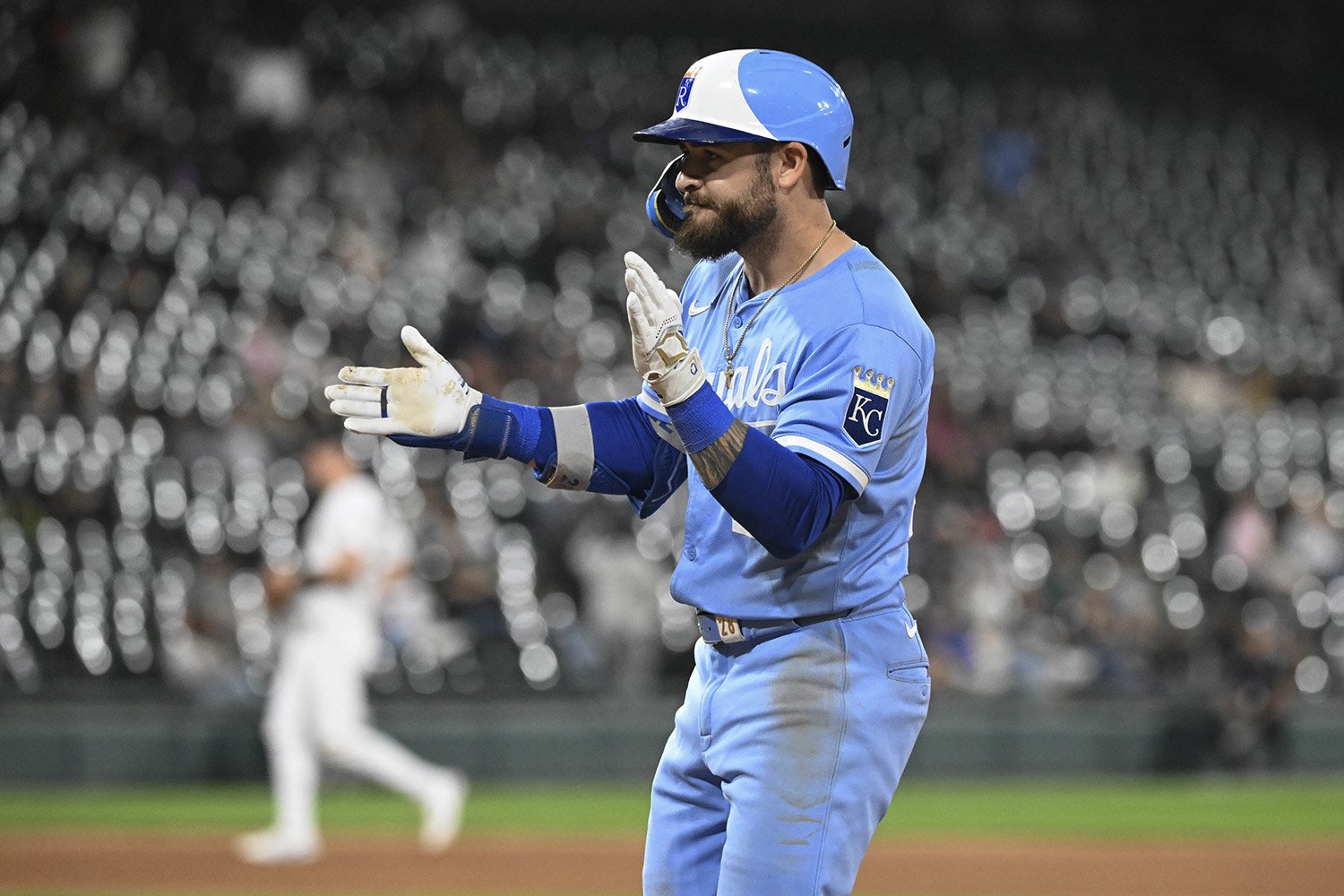 Opening Day is less than a week away! The Royals players just have a couple more exhibition games before they start to matter. Some players have hit their groove, and others are still waiting for that spark to get them started with real games just around the corner. Which players stood out in the final weekend of spring training? As a reminder, don't read too much into spring training performances. Sample sizes are still small, competition levels vary, and players may be working on specific adjustments that don't necessarily translate to traditional stats. This post is only meant to inform and summarize what has happened in the past few games. Who’s Hot? 🔥 Starling Marte Marte was recently brought in by the Royals to improve their offensive outlook in 2026, and so far, he is showing his value. On Saturday, he went 1-for-2, bringing his spring slash line to .294/.400/.353 with a 114 wRC+. While he has not shown great power yet this spring, his on-base ability has stood out. Marte’s plate discipline has been on display with a 13.9% chase rate (98th percentile), 21.4% whiff rate (72nd percentile), and a 15% walk rate (92nd percentile). This combination of plate discipline and on-base ability will be a welcome addition to a Royals lineup that struggled to create runs from the DH and corner outfield positions. Marte has not yet shown an ability to hit for power this spring, with a double as his lone extra-base hit. Marte is sitting at the 9th percentile in hard-hit rate and 24th percentile in average exit velocity this spring. Considering he had a late start to spring, the Royals will hope that he can exhibit more power once he is fully up to speed for the season. Kyle Isbel Isbel had a solid weekend, going 2-for-4 with a walk across Friday and Saturday’s games. He has also been hitting the ball hard, with three of his four batted balls registering exit velocities over 95 mph. After this weekend, Isbel has improved his spring slash line to .303/.410/.394 with a 125 wRC+. While he has not shown much power, Isbel has excelled at hitting the ball hard, posting a 64.3% hard-hit rate (96th percentile) this spring. In 2025, he struggled in this area, with a hard-hit rate of just 38.2%. Despite still showing limited barrel and pull-air rates, this jump in hard contact could point to increased offensive upside. Given his track record, the Royals will not expect Isbel to maintain this level throughout the 2026 season. However, if Isbel can carry some of this improvement into this season, he can greatly raise the floor of the Royals' offense. Salvador Perez On Saturday, Perez went 1-for-3 with a two-RBI home run, his second of spring. Perez has had a relatively quiet spring overall, but this home run brings his spring training slash line up to .235/.316/.647, good for a 142 wRC+ in 19 plate appearances. More notably, Perez has limited his strikeouts. He has only gone down on strikes twice so far in his small sample size, making his strikeout rate 10.5% this spring, close to half his rate from the 2025 season. While Perez is still working to fully hit his stride, he has definitely shown his power ability with an OPS of .963. After spending time captaining Team Venezuela to its World Baseball Classic victory last week, he will look to continue that success into the 2026 season. While many people are looking to see Carter Jensen supplant Perez as the Royals' primary catcher, if he can maintain his power into 2026, Perez can prove he still belongs as the starter this season. Who’s Not? 🧊 Carter Jensen Jensen had a hot start to his spring but has since cooled down. On Saturday, he went 0-for-3, bringing his spring slash line to .231/..286/.462 with a 93 OPS+. He is still hitting the ball hard, with an average exit velocity of 93.3 mph and a max exit velocity of 111.4 mph. If he can optimize his launch angle more consistently and barrel the ball, Jensen will continue to have power potential. Ryan Bergert Bergert threw four innings on Friday, allowing four earned runs on five hits and two walks. He struggled to find the one on Friday with a zone rate of only 38.3%. While his fastball generated above-average chase and whiff rates, his slider and sinker were susceptible to allowing contact. The silver lining to Bergert’s performance is that his fastball, sweeper, and slider all graded highly with Stuff+ of at least 105. This outing brings his spring ERA to 7.24 across 13 ⅔ innings pitched. Bergert has allowed six home runs and an average exit velocity of 92.6 mph on contact, both signs of too much hittable damage when batters connect. This appearance came after the Royals had officially optioned Bergert to Triple-A Omaha. Bergert is likely to be one of the first starters called upon if the Royals need another arm in the rotation. Isaac Collins Collins will be hoping to move past this spring as he is still looking to hit his stride with the Royals. After another hitless performance on Friday, Collins’ spring batting average dropped to .087 in 26 plate appearances. He did manage to draw his third walk of spring. When he is able to make contact, he has been hitting the ball hard this spring with an above-average exit velocity of 91.6 mph. However, he has not been able to avoid striking out with 10 strikeouts so far this spring. Collins has featured in multiple editions of “Spring Temperature Check”, so his lack of production has been well documented. He is likely still recovering from both his offseason knee injections and a back issue that kept him sidelined for a few days this spring. Time is running out to get meaningful reps in before the season starts. While it’s not time to panic quite yet, the Royals will certainly be monitoring his health and performance closely as the season gets underway on Thursday.
-
- 1
-
-
- starling marte
- kyle isbel
- (and 4 more)
-
Image courtesy of © Kamil Krzaczynski-Imagn Images While the corner outfield had a lot of variance in the day-to-day starting lineup, center field was a position of relative stability. Kyle Isbel started 118 games in center field last season. When Isbel was not in the lineup, the Royals did not have a viable option to replace him, to the point that they even experimented with playing Maikel Garcia in center. Going into 2026, the Royals signed Lane Thomas to a one-year contract. The addition of Thomas gives the Royals a proven Major League depth option and the flexibility to platoon him with Isbel against left-handed pitching. Royals Second Basemen At a Glance Starter: Kyle Isbel Backups: Lane Thomas Depth: Tyler Tolbert, John Rave, Drew Waters Prospects: Gavin Cross, Carson Roccaforte Royals fWAR Ranking Last Year: 24th out of 30 Royals fWAR Projection This Year: 30th out of 30 The Good Kyle Isbel is an excellent defender. According to Statcast data via Baseball Savant, Isbel grades in the 93rd percentile in fielding run value. In 2025, he was worth 12 Outs Above Average (OAA) based on his range. The Royals know what they are getting with Isbel in the field, and they are willing to live with offensive deficiencies (we’ll get to that later) if he can continue to provide exceptional defense. Lane Thomas can help pick up the slack for Isbel’s lack of offensive production, particularly against left-handed pitching. From the 2021 through the 2024 seasons, Thomas provided above-average production against lefties, posting a wRC+ of at least 107. That will be a welcome improvement compared to the 56 wRC+ that Isbel had against lefties in 2025. Historically, Thomas has been graded close to average fielding run value with above-average arm value, arm strength, and spring speed. There shouldn’t be too big a defensive dropoff when Thomas starts against lefties. The Bad Isbel has not been good on offense, even against right-handed pitching. He has not posted an above-average wRC+ against righties since his rookie season in 2021. In 2025, Isbel graded in the 9th percentile in batting run value, along with 1st percentile marks in xwOBA, xSLG, and launch angle sweet spot. While Isbel is above average in whiff and strikeout rates, he rarely walks, doing so at just 5.6%. Ideally, Thomas would mitigate Isbel’s deficiencies, but Thomas dealt with multiple injury setbacks that limited him to just 39 games in 2025. He is only a couple of years removed from a season where he slashed .268/.315/.468, but Thomas will need to prove that he can both return to that level of production and stay healthy for a long stretch of the season. If the Royals only ask him to contribute on the short side of the centerfield platoon, that could help keep Thomas fresh and reduce the risk of additional time on the injured list in 2026. After Isbel and Thomas, there are prospects who have not yet been able to make a meaningful impact at the major-league level. Tyler Tolbert, John Rave, Kameron Misner, and Drew Waters all have struggled to impress in their limited time in the big leagues. Waters is also out of minor-league options and is more likely to be designated for assignment rather than make the Opening Day roster. While there is still time for any of them to grow into contributors in MLB, the Royals will hope that their services won’t be necessary in 2026. The Bottom Line The fWAR projection for Royals center fielders is concerning, and a majority of that production is expected to come from Kyle Isbel’s exceptional defense. While Lane Thomas is a major-league proven option, his injury history casts doubt on whether he can be a reliable option in 2026 for a full season. If Thomas can stay healthy, his offensive production could be a boon for the Royals in 2026 as a complement to Isbel’s strong defense. If his health remains an issue, however, the Royals may once again look to their minor-league depth for answers in center field. Previous Installments: Second Base Position Analysis Catcher Position Analysis First Base Position Analysis Corner Outfield Position Analysis View full article
-
 While the corner outfield had a lot of variance in the day-to-day starting lineup, center field was a position of relative stability. Kyle Isbel started 118 games in center field last season. When Isbel was not in the lineup, the Royals did not have a viable option to replace him, to the point that they even experimented with playing Maikel Garcia in center. Going into 2026, the Royals signed Lane Thomas to a one-year contract. The addition of Thomas gives the Royals a proven Major League depth option and the flexibility to platoon him with Isbel against left-handed pitching. Royals Second Basemen At a Glance Starter: Kyle Isbel Backups: Lane Thomas Depth: Tyler Tolbert, John Rave, Drew Waters Prospects: Gavin Cross, Carson Roccaforte Royals fWAR Ranking Last Year: 24th out of 30 Royals fWAR Projection This Year: 30th out of 30 The Good Kyle Isbel is an excellent defender. According to Statcast data via Baseball Savant, Isbel grades in the 93rd percentile in fielding run value. In 2025, he was worth 12 Outs Above Average (OAA) based on his range. The Royals know what they are getting with Isbel in the field, and they are willing to live with offensive deficiencies (we’ll get to that later) if he can continue to provide exceptional defense. Lane Thomas can help pick up the slack for Isbel’s lack of offensive production, particularly against left-handed pitching. From the 2021 through the 2024 seasons, Thomas provided above-average production against lefties, posting a wRC+ of at least 107. That will be a welcome improvement compared to the 56 wRC+ that Isbel had against lefties in 2025. Historically, Thomas has been graded close to average fielding run value with above-average arm value, arm strength, and spring speed. There shouldn’t be too big a defensive dropoff when Thomas starts against lefties. The Bad Isbel has not been good on offense, even against right-handed pitching. He has not posted an above-average wRC+ against righties since his rookie season in 2021. In 2025, Isbel graded in the 9th percentile in batting run value, along with 1st percentile marks in xwOBA, xSLG, and launch angle sweet spot. While Isbel is above average in whiff and strikeout rates, he rarely walks, doing so at just 5.6%. Ideally, Thomas would mitigate Isbel’s deficiencies, but Thomas dealt with multiple injury setbacks that limited him to just 39 games in 2025. He is only a couple of years removed from a season where he slashed .268/.315/.468, but Thomas will need to prove that he can both return to that level of production and stay healthy for a long stretch of the season. If the Royals only ask him to contribute on the short side of the centerfield platoon, that could help keep Thomas fresh and reduce the risk of additional time on the injured list in 2026. After Isbel and Thomas, there are prospects who have not yet been able to make a meaningful impact at the major-league level. Tyler Tolbert, John Rave, Kameron Misner, and Drew Waters all have struggled to impress in their limited time in the big leagues. Waters is also out of minor-league options and is more likely to be designated for assignment rather than make the Opening Day roster. While there is still time for any of them to grow into contributors in MLB, the Royals will hope that their services won’t be necessary in 2026. The Bottom Line The fWAR projection for Royals center fielders is concerning, and a majority of that production is expected to come from Kyle Isbel’s exceptional defense. While Lane Thomas is a major-league proven option, his injury history casts doubt on whether he can be a reliable option in 2026 for a full season. If Thomas can stay healthy, his offensive production could be a boon for the Royals in 2026 as a complement to Isbel’s strong defense. If his health remains an issue, however, the Royals may once again look to their minor-league depth for answers in center field. Previous Installments: Second Base Position Analysis Catcher Position Analysis First Base Position Analysis Corner Outfield Position Analysis
 -
Image courtesy of © Jay Biggerstaff-Imagn Images Last year, the Royals fielded 16 different players in left and right field. After Mike Yastrzemski’s arrival in July, he solidified a spot in right field, but he has since left for free agency, joining the Atlanta Braves. Despite his struggles at the plate, Jac Caglianone hopes to make right field his own in 2026. With prospects like John Rave, Drew Waters, and Tyler Tolbert unable to make a meaningful impact, the Royals decided to look elsewhere to round out the outfield by trading for Isaac Collins and signing Lane Thomas as a free agent. The Royals also brought in veteran outfielder Starling Marte to provide additional depth. Royals Corner Outfielders At A Glance Starters: Jac Caglianone, Isaac Collins Backups: Lane Thomas, Starling Marte, Nick Loftin, Michael Massey Depth: Tyler Tolbert, John Rave, Kameron Misner, Drew Waters Prospects: Gavin Cross, Carson Roccaforte Royals fWAR Ranking Last Year: 30th out of 30 in LF, 30th out of 30 in RF Royals fWAR Projection This Year: 23rd out of 30 in LF, 20th out of 30 in RF The Good Most importantly, the Royals made changes to address their biggest weakness this offseason. Lane Thomas and Starling Marte have proven track records of MLB success, and Isaac Collins is coming off an excellent season where he finished fourth in NL Rookie of the Year voting. Jac Caglianone has looked good in spring training with a slash line of .400/.550/.733 in 20 plate appearances. Caglianone has also impressed with Team Italy in the World Baseball Classic, slashing .364/.563/.727 in 16 plate appearances. Most notably, Caglianone has shown improved plate discipline, walking more often than striking out in his combined appearances in spring training and the WBC with nine walks against six strikeouts. Caglianone is also hitting the ball hard this spring. He represents the 100th percentile in both 90th percentile exit velocity and max exit velocity. While it may be easy to get excited about his strong spring training, it is important to remember that Caglianone had a strong spring last year with an OPS of 1.776. While the circumstances of his call-up in 2024 were not ideal, being rushed up to replace underperforming players, Caglianone was not able to translate his good spring into MLB success last season. Another positive going into 2025 is flexibility. The Royals have a lot of flexibility in platoon options and positioning. Thomas and Marte can provide relief against left-handed pitching when needed for Caglianone and Collins (who has struggled against left-handed pitching despite being a switch-hitter). Thomas can also be a platoon bat for Kyle Isbel in center field. Marte Will also factor in at designated hitter. Michael Massey and Nick Loftin are primarily infielders, but more can be options in the outfield if needed. Ideally, with their current depth, Loftin and Massey won’t be needed in the outfield as often as they were last season. The Bad There are question marks surrounding all three outfield additions when it comes to health and availability. Collins had a delayed start to spring training after receiving injections this offseason to address tendonitis in both of his knees. On March 13th, there was also a report that Collins was dealing with minor back tightness, which has caused the Royals to be more cautious with his playing time. As the likely starting left fielder, it will be important for Collins to stay healthy and not have to test the Royals’ outfield depth and flexibility right when the season starts. Thomas has also suffered injury issues in 2025, playing only in 39 games. He is only a couple of years removed from a season where he slashed .268/.315/.468, but Thomas will need to prove that he can both return to that level of production and stay healthy for a long stretch of the season. Marte has not dealt with significant injuries recently, but he is entering his age-37 season and is past the point in his career where he can be counted on as an everyday contributor. Marte has not eclipsed 500 plate appearances since 2022, but when he does play, he has proven to still provide an above-average bat, posting a wRC+ of 112 last season. After the top four anticipated contributors, there are a lot of players who have not yet been able to make a meaningful impact at the major-league level. Tyler Tolbert, John Rave, Kameron Misner, and Drew Waters all have struggled to impress in their limited time in the big leagues. While there is still time for any of them to grow into contributors in MLB, the Royals will hope that their services won’t be necessary in 2026. The Bottom Line The Royals were the worst team in MLB when it came to production from the corner outfield positions in 2025, and they made an effort to improve their outlook for 2026. The Royals are also assuming a lot of risk in relying on Caglianone to take the next step in his development, and that Thomas and Collins perform despite their injury concerns. If everything goes right, the Royals will be applauded for their shrewd business in the offseason to target sensible improvements to raise their floor. If injuries or regression hit, however, the Royals might be looking at a repeat of the woes from 2025. Previous Installments: Second Base Position Analysis Catcher Position Analysis First Base Position Analysis View full article
-
 Last year, the Royals fielded 16 different players in left and right field. After Mike Yastrzemski’s arrival in July, he solidified a spot in right field, but he has since left for free agency, joining the Atlanta Braves. Despite his struggles at the plate, Jac Caglianone hopes to make right field his own in 2026. With prospects like John Rave, Drew Waters, and Tyler Tolbert unable to make a meaningful impact, the Royals decided to look elsewhere to round out the outfield by trading for Isaac Collins and signing Lane Thomas as a free agent. The Royals also brought in veteran outfielder Starling Marte to provide additional depth. Royals Corner Outfielders At A Glance Starters: Jac Caglianone, Isaac Collins Backups: Lane Thomas, Starling Marte, Nick Loftin, Michael Massey Depth: Tyler Tolbert, John Rave, Kameron Misner, Drew Waters Prospects: Gavin Cross, Carson Roccaforte Royals fWAR Ranking Last Year: 30th out of 30 in LF, 30th out of 30 in RF Royals fWAR Projection This Year: 23rd out of 30 in LF, 20th out of 30 in RF The Good Most importantly, the Royals made changes to address their biggest weakness this offseason. Lane Thomas and Starling Marte have proven track records of MLB success, and Isaac Collins is coming off an excellent season where he finished fourth in NL Rookie of the Year voting. Jac Caglianone has looked good in spring training with a slash line of .400/.550/.733 in 20 plate appearances. Caglianone has also impressed with Team Italy in the World Baseball Classic, slashing .364/.563/.727 in 16 plate appearances. Most notably, Caglianone has shown improved plate discipline, walking more often than striking out in his combined appearances in spring training and the WBC with nine walks against six strikeouts. Caglianone is also hitting the ball hard this spring. He represents the 100th percentile in both 90th percentile exit velocity and max exit velocity. While it may be easy to get excited about his strong spring training, it is important to remember that Caglianone had a strong spring last year with an OPS of 1.776. While the circumstances of his call-up in 2024 were not ideal, being rushed up to replace underperforming players, Caglianone was not able to translate his good spring into MLB success last season. Another positive going into 2025 is flexibility. The Royals have a lot of flexibility in platoon options and positioning. Thomas and Marte can provide relief against left-handed pitching when needed for Caglianone and Collins (who has struggled against left-handed pitching despite being a switch-hitter). Thomas can also be a platoon bat for Kyle Isbel in center field. Marte Will also factor in at designated hitter. Michael Massey and Nick Loftin are primarily infielders, but more can be options in the outfield if needed. Ideally, with their current depth, Loftin and Massey won’t be needed in the outfield as often as they were last season. The Bad There are question marks surrounding all three outfield additions when it comes to health and availability. Collins had a delayed start to spring training after receiving injections this offseason to address tendonitis in both of his knees. On March 13th, there was also a report that Collins was dealing with minor back tightness, which has caused the Royals to be more cautious with his playing time. As the likely starting left fielder, it will be important for Collins to stay healthy and not have to test the Royals’ outfield depth and flexibility right when the season starts. Thomas has also suffered injury issues in 2025, playing only in 39 games. He is only a couple of years removed from a season where he slashed .268/.315/.468, but Thomas will need to prove that he can both return to that level of production and stay healthy for a long stretch of the season. Marte has not dealt with significant injuries recently, but he is entering his age-37 season and is past the point in his career where he can be counted on as an everyday contributor. Marte has not eclipsed 500 plate appearances since 2022, but when he does play, he has proven to still provide an above-average bat, posting a wRC+ of 112 last season. After the top four anticipated contributors, there are a lot of players who have not yet been able to make a meaningful impact at the major-league level. Tyler Tolbert, John Rave, Kameron Misner, and Drew Waters all have struggled to impress in their limited time in the big leagues. While there is still time for any of them to grow into contributors in MLB, the Royals will hope that their services won’t be necessary in 2026. The Bottom Line The Royals were the worst team in MLB when it came to production from the corner outfield positions in 2025, and they made an effort to improve their outlook for 2026. The Royals are also assuming a lot of risk in relying on Caglianone to take the next step in his development, and that Thomas and Collins perform despite their injury concerns. If everything goes right, the Royals will be applauded for their shrewd business in the offseason to target sensible improvements to raise their floor. If injuries or regression hit, however, the Royals might be looking at a repeat of the woes from 2025. Previous Installments: Second Base Position Analysis Catcher Position Analysis First Base Position Analysis
-
- 1
-
-
- jac caglianone
- isaac collins
- (and 2 more)
-
Image courtesy of © Mark J. Rebilas-Imagn Images The Royals have less than two weeks left until Opening Day in Atlanta. As the number of players in big league camp begins to thin, many players are still fighting for their spots on the roster. With time running out to make an impression, which players are making the most of their opportunities? As a reminder, don't read too much into spring training performances. Sample sizes are small, competition levels vary, and players may be working on specific adjustments that don't necessarily translate to traditional stats. This post is only meant to inform and summarize what has happened in the past few games. Who’s Hot? 🔥 Carter Jensen Jensen continued his strong spring training with another impressive performance on Friday. Jensen went 2-4 with a home run and two RBIs. He had a quieter day on Sunday, going 0-3, but was able to score after earning a walk in the seventh inning. Following this weekend, his spring slashline is .267/.313/.567. His underlying Statcast metrics have been encouraging this spring. He is hitting the ball hard with an average exit velocity of 95.4 mph (93rd percentile) and a hard hit rate of 59.1% (84th percentile). Jensen has taken advantage of spending extra time behind the plate while Salvador Perez is spending time with Team Venezuela in the World Baseball Classic. While there are still some aspects of his game this spring that could use improvement, only walking twice in his 32 plate appearances, the Royals will be happy with how their projected backup catcher is hitting the ball. Nick Mears Mears had another strong outing on Saturday, recording outs against all four batters he faced, including two strikeouts. Mears generated high chase and whiff rates on Saturday, and his slider was his standout pitch, grading above average with a 105 Stuff+. Mears’ outing on Saturday was an improvement on his spring so far, where he had allowed four earned runs in his first five innings pitched. If he can continue to show improved command this spring, he will surely be a lock for a spot in the bullpen in 2026. Kyle Isbel After a rough start to his spring training, Isbel had a couple of good games at the plate this weekend. On Friday, he went 1-3 with a walk, and he followed it up by going 2-2 with a double and a run scored on Sunday. After Sunday, his spring slash line improved to .231/.355/.269. With a pair of hard-hit balls this weekend, his hard-hit rate is sitting at 57.9% this spring. As a defense-first centerfielder, the Royals will not be asking Isbel to carry this offense in 2026. If he can provide hard contact and get on base similar to this weekend, then he could be a boost at the end of the lineup that the Royals were missing last season. Who’s Not? 🧊 Ryan Bergert Bergert allowed five earned runs in 3 ⅔ innings on Saturday against the Athletics. The A’s were hitting the ball hard against Bergert with four home runs, nine hard-hit balls, and an average exit velocity of 98.1 mph. Despite allowing such hard contact, Bergert was able to induce high chase and whiff rates of 46.2% and 42.1%, respectively. Bergert induced 16 whiffs and four strikeouts in his 20 plate appearances. Bergert’s overall Stuff+ was 101, with his slider and sweeper standing out in particular. The key to Bergert’s success going into the 2026 season will be to limit the hard contact with his above-average ability to induce swings and misses and swings outside of the zone. Helcris Olivárez Olivárez has been featured as a hot player for the Royals this spring, but he struggled greatly in his appearance against the Diamondbacks. Olivárez faced six hitters and was only able to get one out before being relieved in the ninth inning. Olivárez could not find the zone with a low zone rate of 20.8%, leading to three walks and one hit batter. While Olivárez was unable to find strikes, hitters against him stayed disciplined and refused to chase pitches out of the zone. The silver lining is that when hitters were able to make contact, they did not make hard contact. Despite his lack of control, his sinker and curveball graded above average with Stuff+ of 105 and 103, respectively. He also throws hard with his fastball, and averaging 97.4 mph (94th percentile for all pitchers this spring with at least 25 PAs), and his sinker averages 98.0 mph. The key for Olivárez to make the Royals’ roster this year will be his ability to find the strike zone and limit walks. Peyton Wilson On Saturday, Wilson did not have his best day at the plate, going 0-3 with three strikeouts. He also made a substitute appearance on Friday, going 0-2 with a walk and a strikeout. While Wilson hit a home run in his one plate appearance on Sunday, the non-roster invitee has not had the best spring with a .174 batting average and .256 wOBA. While he has struggled to find hits this spring, Wilson has had good plate discipline with six walks in his 30 plate appearances. Wilson has not been able to repeat his hot spring training from 2025, where he saw more success and power with a .263 batting average and a .432 wOBA in 22 plate appearances. If Wilson can return to hitting the ball hard (58.3% hard hit rate in 2025 compared to 31.3% this spring) and limit his strikeouts, he should be able to bounce back. View full article
-
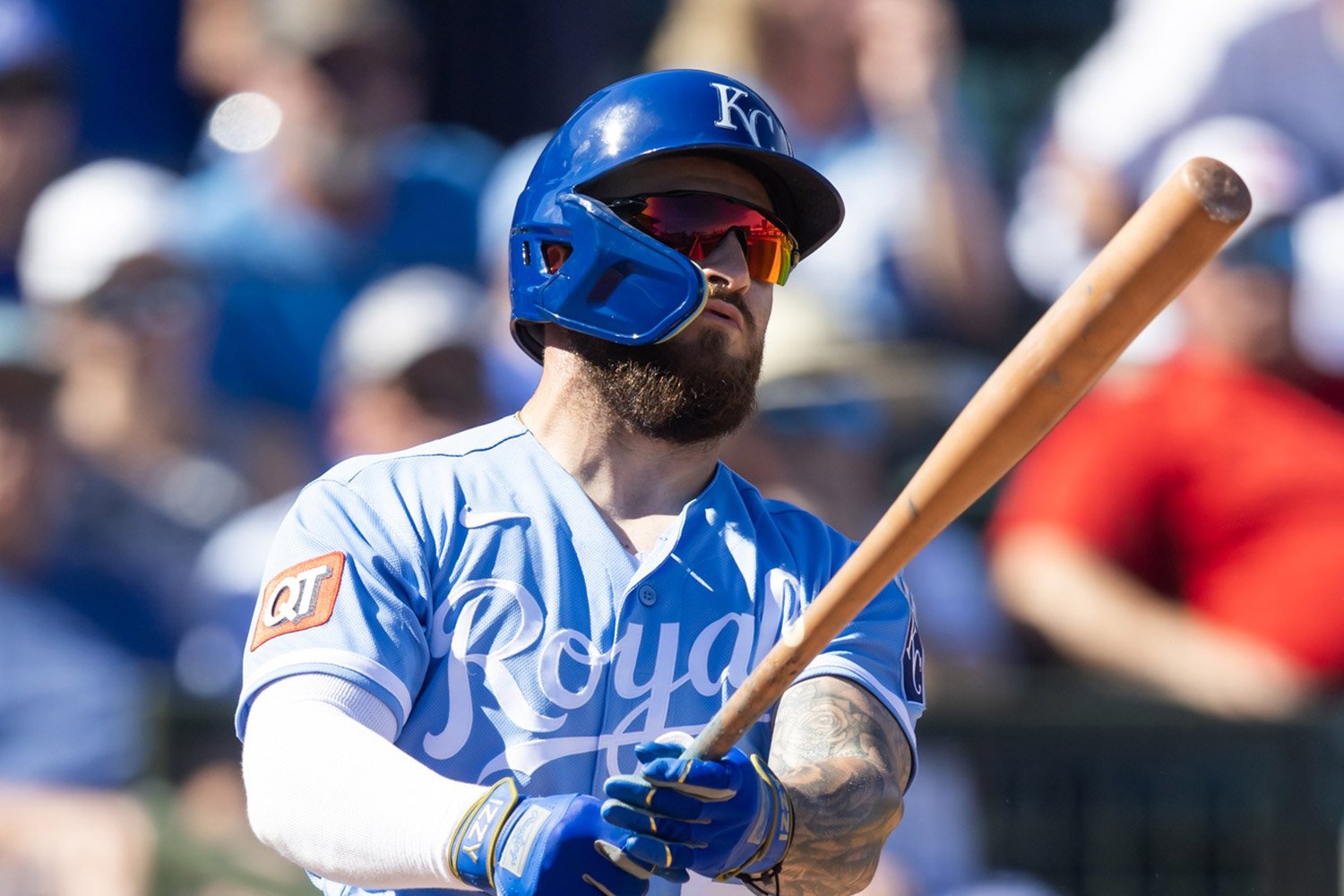 The Royals have less than two weeks left until Opening Day in Atlanta. As the number of players in big league camp begins to thin, many players are still fighting for their spots on the roster. With time running out to make an impression, which players are making the most of their opportunities? As a reminder, don't read too much into spring training performances. Sample sizes are small, competition levels vary, and players may be working on specific adjustments that don't necessarily translate to traditional stats. This post is only meant to inform and summarize what has happened in the past few games. Who’s Hot? 🔥 Carter Jensen Jensen continued his strong spring training with another impressive performance on Friday. Jensen went 2-4 with a home run and two RBIs. He had a quieter day on Sunday, going 0-3, but was able to score after earning a walk in the seventh inning. Following this weekend, his spring slashline is .267/.313/.567. His underlying Statcast metrics have been encouraging this spring. He is hitting the ball hard with an average exit velocity of 95.4 mph (93rd percentile) and a hard hit rate of 59.1% (84th percentile). Jensen has taken advantage of spending extra time behind the plate while Salvador Perez is spending time with Team Venezuela in the World Baseball Classic. While there are still some aspects of his game this spring that could use improvement, only walking twice in his 32 plate appearances, the Royals will be happy with how their projected backup catcher is hitting the ball. Nick Mears Mears had another strong outing on Saturday, recording outs against all four batters he faced, including two strikeouts. Mears generated high chase and whiff rates on Saturday, and his slider was his standout pitch, grading above average with a 105 Stuff+. Mears’ outing on Saturday was an improvement on his spring so far, where he had allowed four earned runs in his first five innings pitched. If he can continue to show improved command this spring, he will surely be a lock for a spot in the bullpen in 2026. Kyle Isbel After a rough start to his spring training, Isbel had a couple of good games at the plate this weekend. On Friday, he went 1-3 with a walk, and he followed it up by going 2-2 with a double and a run scored on Sunday. After Sunday, his spring slash line improved to .231/.355/.269. With a pair of hard-hit balls this weekend, his hard-hit rate is sitting at 57.9% this spring. As a defense-first centerfielder, the Royals will not be asking Isbel to carry this offense in 2026. If he can provide hard contact and get on base similar to this weekend, then he could be a boost at the end of the lineup that the Royals were missing last season. Who’s Not? 🧊 Ryan Bergert Bergert allowed five earned runs in 3 ⅔ innings on Saturday against the Athletics. The A’s were hitting the ball hard against Bergert with four home runs, nine hard-hit balls, and an average exit velocity of 98.1 mph. Despite allowing such hard contact, Bergert was able to induce high chase and whiff rates of 46.2% and 42.1%, respectively. Bergert induced 16 whiffs and four strikeouts in his 20 plate appearances. Bergert’s overall Stuff+ was 101, with his slider and sweeper standing out in particular. The key to Bergert’s success going into the 2026 season will be to limit the hard contact with his above-average ability to induce swings and misses and swings outside of the zone. Helcris Olivárez Olivárez has been featured as a hot player for the Royals this spring, but he struggled greatly in his appearance against the Diamondbacks. Olivárez faced six hitters and was only able to get one out before being relieved in the ninth inning. Olivárez could not find the zone with a low zone rate of 20.8%, leading to three walks and one hit batter. While Olivárez was unable to find strikes, hitters against him stayed disciplined and refused to chase pitches out of the zone. The silver lining is that when hitters were able to make contact, they did not make hard contact. Despite his lack of control, his sinker and curveball graded above average with Stuff+ of 105 and 103, respectively. He also throws hard with his fastball, and averaging 97.4 mph (94th percentile for all pitchers this spring with at least 25 PAs), and his sinker averages 98.0 mph. The key for Olivárez to make the Royals’ roster this year will be his ability to find the strike zone and limit walks. Peyton Wilson On Saturday, Wilson did not have his best day at the plate, going 0-3 with three strikeouts. He also made a substitute appearance on Friday, going 0-2 with a walk and a strikeout. While Wilson hit a home run in his one plate appearance on Sunday, the non-roster invitee has not had the best spring with a .174 batting average and .256 wOBA. While he has struggled to find hits this spring, Wilson has had good plate discipline with six walks in his 30 plate appearances. Wilson has not been able to repeat his hot spring training from 2025, where he saw more success and power with a .263 batting average and a .432 wOBA in 22 plate appearances. If Wilson can return to hitting the ball hard (58.3% hard hit rate in 2025 compared to 31.3% this spring) and limit his strikeouts, he should be able to bounce back.
-
- 1
-
-
- carter jensen
- nick mears
- (and 4 more)
-
Image courtesy of © Jay Biggerstaff-Imagn Images Coming out of the third weekend of spring training, players have had ample time to acclimate to the rhythms of baseball. Meanwhile, many Royals regulars have gone off with their national teams to compete in the World Baseball Classic. This has allowed the depth players and non-roster invitees more opportunities to make a push for the Opening Day roster. Which players have taken their opportunity in stride, and who has come up short in their appearances? As a reminder, don't read too much into spring training performances. Sample sizes are small, competition levels vary, and players may be working on specific adjustments that don't necessarily translate to traditional stats. This post is only meant to inform and summarize what has happened in the past few games. Who’s Hot? 🔥 Daniel Lynch IV Lynch had a productive outing on Friday, pitching one inning with one strikeout and no hard-hit balls. In the game, he induced three swings and misses and a chase rate of 77.8%. He only threw two of his 11 pitches in the zone, but the extremely high chase rate suggests hitters were expanding the zone aggressively. Lynch has now pitched four innings this spring and has only allowed one run on a solo homer. Despite having a zone rate of only 48%, he has not yet allowed a walk this spring. While Lynch’s fastball velocity has been good this spring, averaging 95.5 mph, its Stuff+ has been below average at 96. His changeup and slider have been his best pitches this spring, with Stuff+ of 106 and 105, respectively. As Lynch continues to ramp up this spring, it will be worth keeping an eye out to see if his fastball’s effectiveness improves. Nick Mears Mears also stood out in his appearance on Friday, striking out two hitters and not allowing a baserunner in his inning against the Dodgers, who were off to a hot start, scoring six runs in the four innings before Mears entered the game. Mears threw his fastball, slider, and changeup to great effect, all grading with Stuff+ of at least 107. He induced a whiff rate of 60% and a chase rate of 33.3%. When a batter made contact, it resulted in an easy groundball. Friday was Mears’ best outing of spring so far, where he has not allowed a baserunner. He has been able to limit hard contact so far this spring, not yet allowing a hitter to barrel the ball, and his 74.4% ground-ball rate ranks in the 95th percentile among pitchers this spring. Until Friday, Mears struggled to get hitters to chase the ball out of the zone, so he will be looking to continue this growth as the regular season approaches. Nick Loftin Loftin saw time this weekend on Friday and Sunday. The Royals struggled against the Dodgers on Friday, only getting three hits as a team, but Loftin stood out among Royals hitters with a walk and his two other plate appearances being hard-hit outs, one of which was a 108 mph groundout. Loftin may have been a bit unlucky not to get a hit with his two batted balls, having an expected batting average of .440. On Sunday, Loftin was not struggling with luck, getting two hits, including a home run, and three RBI. He also walked and scored a run while batting leadoff. Loftin has seen good results this spring with an above-average wOBA of 0.473. He has also had good plate discipline with above-average chase, whiff, strikeout, and walk rates. While he has not necessarily hit the ball hard this spring, he has been able to find ways to reach base this spring. If he continues this level of production, he can certainly make his case for winning one of the utility bench spots on the opening day roster. Who’s Not? 🧊 Noah Cameron Cameron struggled in his outing Sunday against the White Sox, allowing two runs on three hits and a walk. While he did strike out three batters and induce eight swings and misses, when batters were able to make contact, they did damage. Cameron allowed a 67% hard-hit rate with an average exit velocity of 99.3 mph on Sunday. Cameron now has an ERA of 5.87 this spring in 7 ⅔ innings pitched. He is struggling to strike out batters with a rate of 14.7% and is below average in both chase and whiff rates this spring at 21.8% and 23.8%, respectively. Cameron has also not been able to limit hard contact, with a 44% hard hit rate and an average exit velocity of 92.7 mph. His Stuff+ has been well below average at 94 this spring, with all of his pitches grading at below average except for his slider, which has a score of 100. As the presumed fifth starter of this rotation, there is still time for Cameron to hit his stride before the regular season starts. If he is unable to find his form and other pitchers like Ryan Bergert continue to pitch well, then there may need to be a discussion on who will be at the end of this rotation for the start of the 2026 season. Héctor Neris Neris struggled in his outing against the Dodgers, allowing four hits, one walk, and three earned runs and zero strikeouts in his lone inning on Friday. Until Friday, he had not allowed a single run, but there were early signs since he had allowed five baserunners and not struck out a single batter in his three innings before this appearance. Neris is struggling to induce swing and misses at only 6.1% and is unable to get hitters to chase balls out of the zone with a rate of 22.9%. Overall, his Stuff+ this spring is sitting at 95, with all five of his pitches grading at below average. As a non-roster invitee, Neris faces an uphill battle if he wants to make a push for one of the open bullpen spots on the Royals’ roster. Isaac Collins Collins appeared in games on Friday and Sunday, going a total of 0-6 with a walk and four strikeouts. He has not had a good spring so far, slashing .067/.125/.133. Despite his struggles at the plate, Collins is starting to hit the ball harder this spring. When he does, he makes contact with an average exit velocity of 91.5 mph and a max velocity of 110.6 mph. There is still plenty of time for Collins to hit his stride this spring, especially since he is recovering from offseason injections to treat tendinitis in his knees. With the signing of Starling Marte last week, the Royals will feel that they have a capable replacement at the plate if Collins’s recovery takes longer than expected. View full article
-
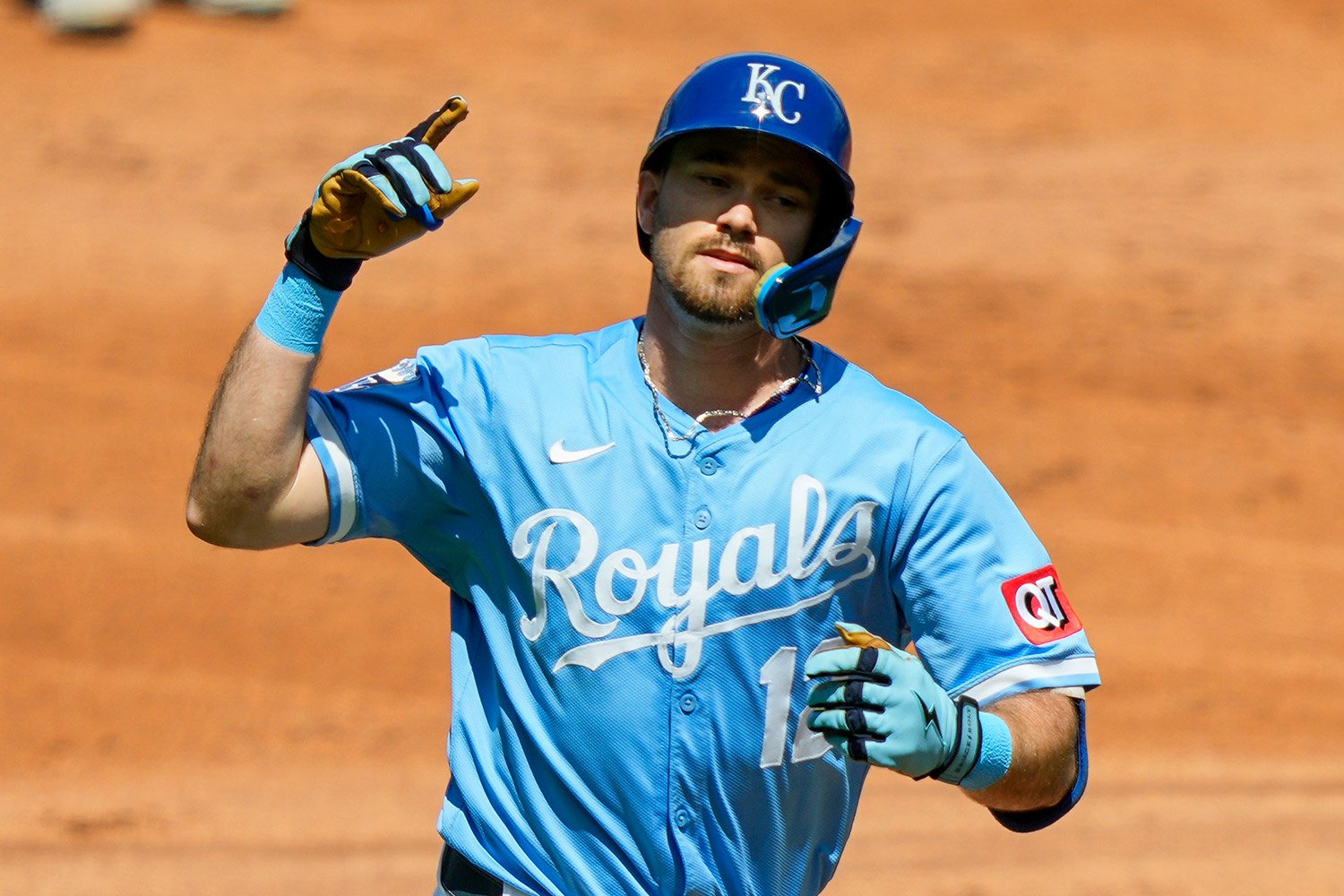 Coming out of the third weekend of spring training, players have had ample time to acclimate to the rhythms of baseball. Meanwhile, many Royals regulars have gone off with their national teams to compete in the World Baseball Classic. This has allowed the depth players and non-roster invitees more opportunities to make a push for the Opening Day roster. Which players have taken their opportunity in stride, and who has come up short in their appearances? As a reminder, don't read too much into spring training performances. Sample sizes are small, competition levels vary, and players may be working on specific adjustments that don't necessarily translate to traditional stats. This post is only meant to inform and summarize what has happened in the past few games. Who’s Hot? 🔥 Daniel Lynch IV Lynch had a productive outing on Friday, pitching one inning with one strikeout and no hard-hit balls. In the game, he induced three swings and misses and a chase rate of 77.8%. He only threw two of his 11 pitches in the zone, but the extremely high chase rate suggests hitters were expanding the zone aggressively. Lynch has now pitched four innings this spring and has only allowed one run on a solo homer. Despite having a zone rate of only 48%, he has not yet allowed a walk this spring. While Lynch’s fastball velocity has been good this spring, averaging 95.5 mph, its Stuff+ has been below average at 96. His changeup and slider have been his best pitches this spring, with Stuff+ of 106 and 105, respectively. As Lynch continues to ramp up this spring, it will be worth keeping an eye out to see if his fastball’s effectiveness improves. Nick Mears Mears also stood out in his appearance on Friday, striking out two hitters and not allowing a baserunner in his inning against the Dodgers, who were off to a hot start, scoring six runs in the four innings before Mears entered the game. Mears threw his fastball, slider, and changeup to great effect, all grading with Stuff+ of at least 107. He induced a whiff rate of 60% and a chase rate of 33.3%. When a batter made contact, it resulted in an easy groundball. Friday was Mears’ best outing of spring so far, where he has not allowed a baserunner. He has been able to limit hard contact so far this spring, not yet allowing a hitter to barrel the ball, and his 74.4% ground-ball rate ranks in the 95th percentile among pitchers this spring. Until Friday, Mears struggled to get hitters to chase the ball out of the zone, so he will be looking to continue this growth as the regular season approaches. Nick Loftin Loftin saw time this weekend on Friday and Sunday. The Royals struggled against the Dodgers on Friday, only getting three hits as a team, but Loftin stood out among Royals hitters with a walk and his two other plate appearances being hard-hit outs, one of which was a 108 mph groundout. Loftin may have been a bit unlucky not to get a hit with his two batted balls, having an expected batting average of .440. On Sunday, Loftin was not struggling with luck, getting two hits, including a home run, and three RBI. He also walked and scored a run while batting leadoff. Loftin has seen good results this spring with an above-average wOBA of 0.473. He has also had good plate discipline with above-average chase, whiff, strikeout, and walk rates. While he has not necessarily hit the ball hard this spring, he has been able to find ways to reach base this spring. If he continues this level of production, he can certainly make his case for winning one of the utility bench spots on the opening day roster. Who’s Not? 🧊 Noah Cameron Cameron struggled in his outing Sunday against the White Sox, allowing two runs on three hits and a walk. While he did strike out three batters and induce eight swings and misses, when batters were able to make contact, they did damage. Cameron allowed a 67% hard-hit rate with an average exit velocity of 99.3 mph on Sunday. Cameron now has an ERA of 5.87 this spring in 7 ⅔ innings pitched. He is struggling to strike out batters with a rate of 14.7% and is below average in both chase and whiff rates this spring at 21.8% and 23.8%, respectively. Cameron has also not been able to limit hard contact, with a 44% hard hit rate and an average exit velocity of 92.7 mph. His Stuff+ has been well below average at 94 this spring, with all of his pitches grading at below average except for his slider, which has a score of 100. As the presumed fifth starter of this rotation, there is still time for Cameron to hit his stride before the regular season starts. If he is unable to find his form and other pitchers like Ryan Bergert continue to pitch well, then there may need to be a discussion on who will be at the end of this rotation for the start of the 2026 season. Héctor Neris Neris struggled in his outing against the Dodgers, allowing four hits, one walk, and three earned runs and zero strikeouts in his lone inning on Friday. Until Friday, he had not allowed a single run, but there were early signs since he had allowed five baserunners and not struck out a single batter in his three innings before this appearance. Neris is struggling to induce swing and misses at only 6.1% and is unable to get hitters to chase balls out of the zone with a rate of 22.9%. Overall, his Stuff+ this spring is sitting at 95, with all five of his pitches grading at below average. As a non-roster invitee, Neris faces an uphill battle if he wants to make a push for one of the open bullpen spots on the Royals’ roster. Isaac Collins Collins appeared in games on Friday and Sunday, going a total of 0-6 with a walk and four strikeouts. He has not had a good spring so far, slashing .067/.125/.133. Despite his struggles at the plate, Collins is starting to hit the ball harder this spring. When he does, he makes contact with an average exit velocity of 91.5 mph and a max velocity of 110.6 mph. There is still plenty of time for Collins to hit his stride this spring, especially since he is recovering from offseason injections to treat tendinitis in his knees. With the signing of Starling Marte last week, the Royals will feel that they have a capable replacement at the plate if Collins’s recovery takes longer than expected.
-
- 1
-
-
- daniel lynch iv
- nick mears
- (and 4 more)
-
What's the likelihood a NRI like Josh Rojas successfully makes the push for a spot on Opening Day? He has some experience in the outfield, and it's hard to ignore his spring training output so far.
-
On Monday, the Royals officially announced that they signed Starling Marte to a one-year contract worth $1 million guaranteed with active roster bonuses and performance bonuses that can increase to $3 million. Marte has had an excellent career. In his 14 years in MLB, he has accrued 35.9 fWAR, two Gold Glove awards, and two All-Star team selections. He has a career slash line of .285/.342/.440 with a 115 wRC+. Even at his age, Marte proved that he can still be an offensive asset, especially to this Royals outfield that totaled a league-worst 70 wRC+ in 2025. Last year, in his age-36 season, Marte slashed .270/.335/.410 with a 112 wRC+. Marte’s Statcast metrics from last season don’t necessarily jump off the page like they used to early in his career, and a lot of his metrics grade slightly below league-average. That said, he still offers an above-league-average 90th-percentile exit velocity, showing he is capable of hitting for some power but less consistently. He also offers an above-average zone swing rate and strikeout rate. The only metric that he was poor in last season was his pull rate at 31.7%, and the overall average exit velocity of 85.9 mph. If you look back to 2024, he was well above average in xwOBA (.342), expected batting average (.285), and hard hit rate (42.9%). However, it would be unreasonable to assume that he will meaningfully progress at his age. In the outfield, Marte has a career reputation for providing good defense. He won two Gold Gloves when he was the Pirates’ everyday centerfielder in 2015 and 2016. Ten years later, he finds himself playing in one of the corner outfield positions, most often in right field. In 2025, he transitioned to mainly a designated hitter, only playing 65 total innings in the outfield. Marte has not registered a positive outs above average (OAA) since 2021. For reference, Marte registered -8 OAA in 2024, and other Royals outfielders Kyle Isbel and Isaac Collins posted +4 and +12 OAA, respectively. While Marte’s arm strength is still good, providing slightly positive run value, his range in the outfield is not what it used to be. His sprint speed has decreased consistently over the past several years. After consistently grading around the 90th percentile, his sprint speed fell to the 27th percentile last season. All that being said, where does Marte fit in the Royals outfield? After the signing of Marte, the Royals now have five outfielders on the MLB roster: Marte, Jac Caglianone, Collins, Isbel, and Lane Thomas. Before the signing, the projected setup includes Collins in left, Isbel in center, and Caglianone in right with Thomas platooning with Isbel or Caglianone against left-handed pitching. How much does Marte impact this plan? The short answer is that if everything goes right, Marte won’t need to feature in the starting lineup too often. The expectation is that he will offer the Royals added roster flexibility to start in place of the starters when needed and to provide rest to keep players fresh throughout the season. The main area that Marte will be used against is left-handed pitching. The Royals greatly struggled against lefties in 2025. Despite the additions of right-handed Thomas and switch-hitting Collins, the outlook against lefties in 2026 was still not promising. Against lefties, Marte has posted a wRC+ above 100 in four of the last five seasons. Marte could offer relief for Collins or Caglianone in the corner outfield spots against lefties to help with the lineup’s overall production. If Marte does find himself in an everyday role, it will come mostly at the designated hitter position, since that was his main position last season. Considering that the Royals didn’t have an everyday DH last season, Marte could naturally slot in that role. Last year, the Royals had 20 different players lined up as the designated hitter, with Salvador Perez being the most common DH with 38 appearances. Manager Matt Quatraro frequently used the DH spot to rest players like Perez and Vinnie Pasquantino without having to take their bats out of the lineup. However, in 2025, the carousel of Royals players did not perform at the DH position, collectively posting a wRC+ of 69. Even league-average production from Marte could offer much-needed stability at that position, which lacked consistent run production. While Marte is right-handed, he is very capable against right-handed pitching. In 2025, he posted a 115 wRC+ against righties, better than his 109 wRC+ against lefties. He should have no problem slotting into the primary designated hitter role in Kansas City, rather than a platoon spot, if asked to do so. If Carter Jensen can continue his hot form from last September (159 wRC+ in 69 PAs) and this spring (1.334 OPS in 12 PAs) into the 2026 season, he will command a majority of the designated hitter at-bats while Perez is still the starting catcher. Marte can serve as a capable “fail-safe” if Jensen struggles to acclimate to a full season in the majors. At his age, Marte is probably not expecting to be a full-time starter for this Royals team. He has not started more than 100 games in the last three seasons, nor more than 120 since 2019. It would be reasonable to expect him to share designated hitter duties with Jensen, Perez, and Pasquantino whenever they aren’t playing catcher or first base. He will also spend limited innings in the outfield to relieve Collins or Caglianone when needed, but ideally that role will fall primarily to Lane Thomas. Overall, Starling Marte does not drastically change the Royals’ outlook for 2026, but it does offer a clear improvement that raises this team's floor. While not offering eye-popping power numbers, he offers above-average run production at the DH position and added flexibility in depth for this re-tooled Kansas City outfield, especially against left-handed pitching. His veteran presence will be a welcome complement to the young outfielders like Caglianone and Collins as they grow into everyday roles with the Royals. With a very sensible salary of $1 million guaranteed, signing Marte is definitely a risk worth taking. View full article
-
 On Monday, the Royals officially announced that they signed Starling Marte to a one-year contract worth $1 million guaranteed with active roster bonuses and performance bonuses that can increase to $3 million. Marte has had an excellent career. In his 14 years in MLB, he has accrued 35.9 fWAR, two Gold Glove awards, and two All-Star team selections. He has a career slash line of .285/.342/.440 with a 115 wRC+. Even at his age, Marte proved that he can still be an offensive asset, especially to this Royals outfield that totaled a league-worst 70 wRC+ in 2025. Last year, in his age-36 season, Marte slashed .270/.335/.410 with a 112 wRC+. Marte’s Statcast metrics from last season don’t necessarily jump off the page like they used to early in his career, and a lot of his metrics grade slightly below league-average. That said, he still offers an above-league-average 90th-percentile exit velocity, showing he is capable of hitting for some power but less consistently. He also offers an above-average zone swing rate and strikeout rate. The only metric that he was poor in last season was his pull rate at 31.7%, and the overall average exit velocity of 85.9 mph. If you look back to 2024, he was well above average in xwOBA (.342), expected batting average (.285), and hard hit rate (42.9%). However, it would be unreasonable to assume that he will meaningfully progress at his age. In the outfield, Marte has a career reputation for providing good defense. He won two Gold Gloves when he was the Pirates’ everyday centerfielder in 2015 and 2016. Ten years later, he finds himself playing in one of the corner outfield positions, most often in right field. In 2025, he transitioned to mainly a designated hitter, only playing 65 total innings in the outfield. Marte has not registered a positive outs above average (OAA) since 2021. For reference, Marte registered -8 OAA in 2024, and other Royals outfielders Kyle Isbel and Isaac Collins posted +4 and +12 OAA, respectively. While Marte’s arm strength is still good, providing slightly positive run value, his range in the outfield is not what it used to be. His sprint speed has decreased consistently over the past several years. After consistently grading around the 90th percentile, his sprint speed fell to the 27th percentile last season. All that being said, where does Marte fit in the Royals outfield? After the signing of Marte, the Royals now have five outfielders on the MLB roster: Marte, Jac Caglianone, Collins, Isbel, and Lane Thomas. Before the signing, the projected setup includes Collins in left, Isbel in center, and Caglianone in right with Thomas platooning with Isbel or Caglianone against left-handed pitching. How much does Marte impact this plan? The short answer is that if everything goes right, Marte won’t need to feature in the starting lineup too often. The expectation is that he will offer the Royals added roster flexibility to start in place of the starters when needed and to provide rest to keep players fresh throughout the season. The main area that Marte will be used against is left-handed pitching. The Royals greatly struggled against lefties in 2025. Despite the additions of right-handed Thomas and switch-hitting Collins, the outlook against lefties in 2026 was still not promising. Against lefties, Marte has posted a wRC+ above 100 in four of the last five seasons. Marte could offer relief for Collins or Caglianone in the corner outfield spots against lefties to help with the lineup’s overall production. If Marte does find himself in an everyday role, it will come mostly at the designated hitter position, since that was his main position last season. Considering that the Royals didn’t have an everyday DH last season, Marte could naturally slot in that role. Last year, the Royals had 20 different players lined up as the designated hitter, with Salvador Perez being the most common DH with 38 appearances. Manager Matt Quatraro frequently used the DH spot to rest players like Perez and Vinnie Pasquantino without having to take their bats out of the lineup. However, in 2025, the carousel of Royals players did not perform at the DH position, collectively posting a wRC+ of 69. Even league-average production from Marte could offer much-needed stability at that position, which lacked consistent run production. While Marte is right-handed, he is very capable against right-handed pitching. In 2025, he posted a 115 wRC+ against righties, better than his 109 wRC+ against lefties. He should have no problem slotting into the primary designated hitter role in Kansas City, rather than a platoon spot, if asked to do so. If Carter Jensen can continue his hot form from last September (159 wRC+ in 69 PAs) and this spring (1.334 OPS in 12 PAs) into the 2026 season, he will command a majority of the designated hitter at-bats while Perez is still the starting catcher. Marte can serve as a capable “fail-safe” if Jensen struggles to acclimate to a full season in the majors. At his age, Marte is probably not expecting to be a full-time starter for this Royals team. He has not started more than 100 games in the last three seasons, nor more than 120 since 2019. It would be reasonable to expect him to share designated hitter duties with Jensen, Perez, and Pasquantino whenever they aren’t playing catcher or first base. He will also spend limited innings in the outfield to relieve Collins or Caglianone when needed, but ideally that role will fall primarily to Lane Thomas. Overall, Starling Marte does not drastically change the Royals’ outlook for 2026, but it does offer a clear improvement that raises this team's floor. While not offering eye-popping power numbers, he offers above-average run production at the DH position and added flexibility in depth for this re-tooled Kansas City outfield, especially against left-handed pitching. His veteran presence will be a welcome complement to the young outfielders like Caglianone and Collins as they grow into everyday roles with the Royals. With a very sensible salary of $1 million guaranteed, signing Marte is definitely a risk worth taking.
 -
Image courtesy of © Jayne Kamin-Oncea-Imagn Images Spring training is now in full swing, and almost every player has had an opportunity to get at-bats or innings pitched. Which players have stood out with good or bad performances over the past few games? As a reminder, don't read too much into spring training performances. Sample sizes are small, competition levels vary, and players may be working on specific adjustments that don't necessarily translate to traditional stats. This post is only meant to inform and summarize what has happened in the past few games. Who’s Hot? 🔥 First of all, check out a post from yesterday to see which three non-roster invitee hitters are making their case in Royals camp with hot starts this spring. Jac Caglianone Caglianone has started hot this spring with a .400 average and a 1.283 OPS. He is starting to show signs of increased plate discipline with three walks in his four plate appearances on Saturday against the Rockies. With below average walk and chase rates last season, already having five walks is a good sign for Caglianone’s plate discipline heading into the 2026 season. He is also seeing the ball well and hitting it hard when he makes contact. Caglianone has five hard-hit balls in his last two games, including a 120.2 mph double on Friday against the Diamondbacks. For perspective, only two balls were hit harder in all of MLB last season. If Caglianone can sustain his excellent batted ball skills with an improvement in plate discipline, then he is showing the traits of a true middle-of-the-order bat. Michael Massey Massey is also off to a hot start with a Spring batting average so far of .538 and an OPS of 1.446. He has successfully reached base five times in his last two appearances while only striking out once. His average exit velocity in those two games was 92.26 mph, which is up from his average exit velocity of 87.5 mph last season. Massey is positioning himself for a larger share of playing time at second base over Jonathan India, who is so far not off to a great start this spring. If he can return to his 2024 form, which was cut short by injury, he will make manager Matt Quatraro face a tough decision about who to give the majority of the innings at second base. Cole Ragans Ragans made his first appearance of spring on Saturday against the Rockies, pitching two innings with three strikeouts while only allowing one hit and one hit batter. The Rockies hitters also struggled to make contact with Ragans, inducing 11 whiffs in his two innings. He allowed some hard hits when the batters were able to make contact with three hard hits in his four batted balls. His fastball averaged 97.0 mph and topped off at 98 mph, which is definitely a positive sign following his injuries last season. His pitch mix appeared balanced, with both his slider and changeup also grading well with Stuff+ over 100. His only pitch that did not grade well was his knuckle curve, which he only threw twice and allowed his lone single on. With this level of performance, Ragans showed that he should be the ace of this rotation if he can stay healthy. Who’s Not? 🧊 Carlos Estevez Estevez showed worrying signs in his second appearance this spring. He allowed two hits, one of which was a home run, and two earned runs in one inning against the Athletics on Friday. Including his first appearance on Tuesday, he has allowed four earned runs on four hits (three home runs) and eight hard-hit balls. Opposing batters are squaring up the ball at an alarming rate against Estevez. Estevez has also yet to throw a pitch faster than 89 mph, which is a very worrying sign from the player whom everyone had locked in as the closer at the end of the Royals’ bullpen. Statcast data shows that Estevez has not yet thrown a fastball this spring, but reports indicate that his fastball is registering as a changeup due to its lower velocity so far. In previous seasons, his fastball has needed time to ramp up, but these are still worrying measurements. The Royals will certainly hope that this is a case of ramping up rather than regression. If his fastball velocity does not increase, then the Royals will have reason to worry. Isaac Collins Collins got his first hit, a double, on Sunday against the Brewers, ending an 0-8 spell with four strikeouts. His batted balls have also not been particularly hard-hit, with an average exit velocity of 87.26 mph, a slight drop-off from his 88.8 mph average in 2025. There is still plenty of time for Collins to hit his stride this spring. Being slated to be the starting left fielder after being traded this offseason, there will be pressure to produce, since the position was a major weakness for the Royals last season. Collins’ start this spring was delayed since he received injections in both knees this offseason to address patella tendinitis that he was dealing with at the end of last year. While there is plenty of time this spring for Collins to hit his stride, his fitness will be something to keep an eye on moving forward. Salvador Perez Perez was featured a week ago as a player who had a strong start to spring, but he has since gone quiet this spring. Perez appeared on both Friday and Saturday and hit a combined 0-4 with a walk. He also failed to register a batted ball of at least 95 mph in his four at-bats. Perez will soon head off to the World Baseball Classic to captain Team Venezuela. The Royals will hope that his meaningful at-bats at the WBC will help him regain his form and return to the Royals at full form. View full article
-
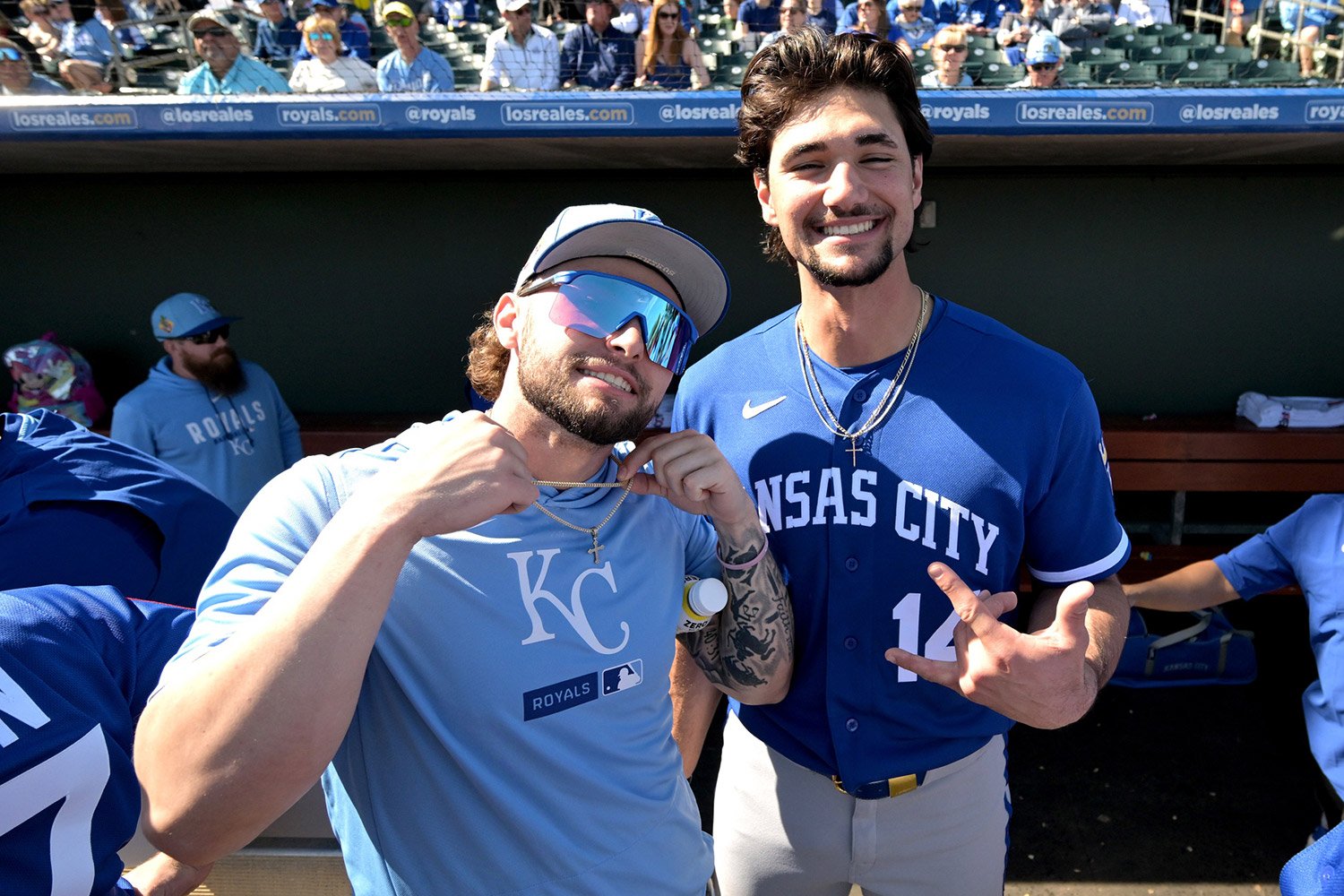 Spring training is now in full swing, and almost every player has had an opportunity to get at-bats or innings pitched. Which players have stood out with good or bad performances over the past few games? As a reminder, don't read too much into spring training performances. Sample sizes are small, competition levels vary, and players may be working on specific adjustments that don't necessarily translate to traditional stats. This post is only meant to inform and summarize what has happened in the past few games. Who’s Hot? 🔥 First of all, check out a post from yesterday to see which three non-roster invitee hitters are making their case in Royals camp with hot starts this spring. Jac Caglianone Caglianone has started hot this spring with a .400 average and a 1.283 OPS. He is starting to show signs of increased plate discipline with three walks in his four plate appearances on Saturday against the Rockies. With below average walk and chase rates last season, already having five walks is a good sign for Caglianone’s plate discipline heading into the 2026 season. He is also seeing the ball well and hitting it hard when he makes contact. Caglianone has five hard-hit balls in his last two games, including a 120.2 mph double on Friday against the Diamondbacks. For perspective, only two balls were hit harder in all of MLB last season. If Caglianone can sustain his excellent batted ball skills with an improvement in plate discipline, then he is showing the traits of a true middle-of-the-order bat. Michael Massey Massey is also off to a hot start with a Spring batting average so far of .538 and an OPS of 1.446. He has successfully reached base five times in his last two appearances while only striking out once. His average exit velocity in those two games was 92.26 mph, which is up from his average exit velocity of 87.5 mph last season. Massey is positioning himself for a larger share of playing time at second base over Jonathan India, who is so far not off to a great start this spring. If he can return to his 2024 form, which was cut short by injury, he will make manager Matt Quatraro face a tough decision about who to give the majority of the innings at second base. Cole Ragans Ragans made his first appearance of spring on Saturday against the Rockies, pitching two innings with three strikeouts while only allowing one hit and one hit batter. The Rockies hitters also struggled to make contact with Ragans, inducing 11 whiffs in his two innings. He allowed some hard hits when the batters were able to make contact with three hard hits in his four batted balls. His fastball averaged 97.0 mph and topped off at 98 mph, which is definitely a positive sign following his injuries last season. His pitch mix appeared balanced, with both his slider and changeup also grading well with Stuff+ over 100. His only pitch that did not grade well was his knuckle curve, which he only threw twice and allowed his lone single on. With this level of performance, Ragans showed that he should be the ace of this rotation if he can stay healthy. Who’s Not? 🧊 Carlos Estevez Estevez showed worrying signs in his second appearance this spring. He allowed two hits, one of which was a home run, and two earned runs in one inning against the Athletics on Friday. Including his first appearance on Tuesday, he has allowed four earned runs on four hits (three home runs) and eight hard-hit balls. Opposing batters are squaring up the ball at an alarming rate against Estevez. Estevez has also yet to throw a pitch faster than 89 mph, which is a very worrying sign from the player whom everyone had locked in as the closer at the end of the Royals’ bullpen. Statcast data shows that Estevez has not yet thrown a fastball this spring, but reports indicate that his fastball is registering as a changeup due to its lower velocity so far. In previous seasons, his fastball has needed time to ramp up, but these are still worrying measurements. The Royals will certainly hope that this is a case of ramping up rather than regression. If his fastball velocity does not increase, then the Royals will have reason to worry. Isaac Collins Collins got his first hit, a double, on Sunday against the Brewers, ending an 0-8 spell with four strikeouts. His batted balls have also not been particularly hard-hit, with an average exit velocity of 87.26 mph, a slight drop-off from his 88.8 mph average in 2025. There is still plenty of time for Collins to hit his stride this spring. Being slated to be the starting left fielder after being traded this offseason, there will be pressure to produce, since the position was a major weakness for the Royals last season. Collins’ start this spring was delayed since he received injections in both knees this offseason to address patella tendinitis that he was dealing with at the end of last year. While there is plenty of time this spring for Collins to hit his stride, his fitness will be something to keep an eye on moving forward. Salvador Perez Perez was featured a week ago as a player who had a strong start to spring, but he has since gone quiet this spring. Perez appeared on both Friday and Saturday and hit a combined 0-4 with a walk. He also failed to register a batted ball of at least 95 mph in his four at-bats. Perez will soon head off to the World Baseball Classic to captain Team Venezuela. The Royals will hope that his meaningful at-bats at the WBC will help him regain his form and return to the Royals at full form.
-
- 1
-
-
- jac caglianone
- michael massey
- (and 4 more)
-
The Royals played their first spring training game on Friday. Which players have started off hot, and which players have looked a bit rusty? Don't read too much into spring training performances. Sample sizes are small, competition levels vary, and players may be working on specific adjustments that don't necessarily translate to traditional stats. This is only meant to inform and summarize what has happened in the past few games. However, underlying metrics and early performances are still worth monitoring to see how they progress throughout spring training. Who's Hot? 🔥 Salvador Perez: Perez was not messing around in his first plate appearance of spring when he hit a solo home run with an exit velocity of 108.8 mph. In his third plate appearance, he belted a double with an exit velocity of 106.6 mph. Both hits were classified as hard hits and barrels. On Saturday, he did not record a hit in two plate appearances, but he did produce a 104.2 mph groundout. With a 75% hard hit rate and 50% barrel rate through his first two spring games, Perez is clearly seeing the ball well. Team Venezuela will also be excited that their starting catcher and captain is off to a hot start with the World Baseball Classic getting ready to start. Stephen Kolek: Kolek was the starter in the Royals’ spring training opener against the Rangers, where he pitched the first two innings. While he did give up a run and struggled to get batters to whiff and chase pitches, the Stuff+ grades on his pitches were above average for four of the six pitches in his arsenal. His Changeup stood out, earning a grade of 113. Kolek’s fastball averaged 95.6 mph, which is a noticeable increase from his average of 94.0 mph last season. That velocity could be worth keeping an eye on to see whether he can maintain it throughout the season. If he can, is there a place for him in this year’s rotation? Helcris Olivárez: Olivárez has only allowed one baserunner in his two appearances this spring, who was hit by a pitch. In two innings pitched, he has only allowed two hard hits. While he has not yet recorded a strikeout, four of his outs were by inducing ground balls, which will be key for success at Kauffman Stadium after the fences were brought in this offseason. His Stuff+ is sitting at 101, helped by his fastball at 103, which averages 96.6 mph. His chase rate has started high at 50%, if he can convert that chase into more swing-and-misses to get more strikeouts, he could be a valuable asset to this Royals bullpen. Who's Cold? 🧊 Ben Kurdna: Kudrna was scheduled to pitch the fifth and sixth innings during Saturday’s game against the Padres. The Royals’ No. 6 prospect struggled in his outing and was unable to complete the 6th inning, allowing four earned runs on six hits and two walks in 1 2⁄3 innings. He failed to record a strikeout before being taken out with two outs in the sixth inning. Padres hitters had a 60% hard hit rate against Kudrna, so even some of his outs were off hard contact. Kudrna also struggled to generate swing and misses, with a 6.7% whiff rate across 37 pitches. Kudrna will look to bounce back in his next outing this spring. Vinnie Pasquantino: Pasquantino has yet to record a hit in his two appearances this spring. He has just one walk in five plate appearances with a pair of strikeouts. Of his two batted balls, he did have a 98.1 mph lineout that was caught. Perhaps he was a little unlucky since that lineout had an expected batting average of .740. There is still plenty of time for Pasquantino to hit his stride this spring. He will look to get as many at-bats as possible to prepare to compete with Italy in the World Baseball Classic. Aaron Sanchez: Sanchez was hit hard in his first outing of spring. While only allowing one run, he failed to record a strikeout and allowed four baserunners (two hits and two walks) in two innings pitched. Of the eight batted balls Sanchez faced, seven were classified as hard hits, including a 111.6 mph RBI double from William Contreras. If Sanchez hopes to reestablish himself as a viable MLB option, he will need to limit his hard-hit rate. Sanchez struggled to find the strike zone with a zone rate of 45.5%, and he struggled to get batters to chase those balls out of the zone. His Stuff+ was 94 for the day. A full breakdown can be seen below. View full article
-
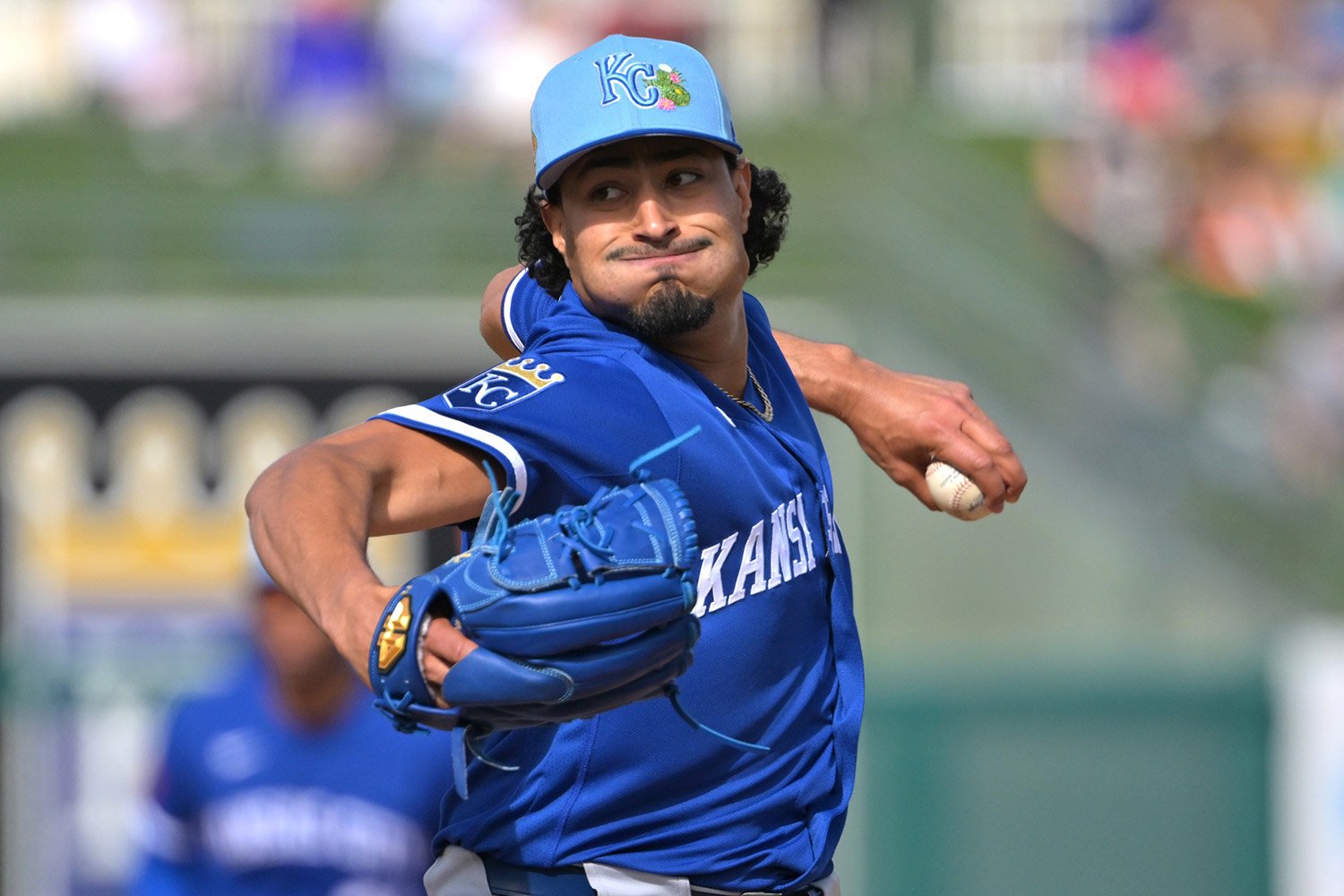 The Royals played their first spring training game on Friday. Which players have started off hot, and which players have looked a bit rusty? Don't read too much into spring training performances. Sample sizes are small, competition levels vary, and players may be working on specific adjustments that don't necessarily translate to traditional stats. This is only meant to inform and summarize what has happened in the past few games. However, underlying metrics and early performances are still worth monitoring to see how they progress throughout spring training. Who's Hot? 🔥 Salvador Perez: Perez was not messing around in his first plate appearance of spring when he hit a solo home run with an exit velocity of 108.8 mph. In his third plate appearance, he belted a double with an exit velocity of 106.6 mph. Both hits were classified as hard hits and barrels. On Saturday, he did not record a hit in two plate appearances, but he did produce a 104.2 mph groundout. With a 75% hard hit rate and 50% barrel rate through his first two spring games, Perez is clearly seeing the ball well. Team Venezuela will also be excited that their starting catcher and captain is off to a hot start with the World Baseball Classic getting ready to start. Stephen Kolek: Kolek was the starter in the Royals’ spring training opener against the Rangers, where he pitched the first two innings. While he did give up a run and struggled to get batters to whiff and chase pitches, the Stuff+ grades on his pitches were above average for four of the six pitches in his arsenal. His Changeup stood out, earning a grade of 113. Kolek’s fastball averaged 95.6 mph, which is a noticeable increase from his average of 94.0 mph last season. That velocity could be worth keeping an eye on to see whether he can maintain it throughout the season. If he can, is there a place for him in this year’s rotation? Helcris Olivárez: Olivárez has only allowed one baserunner in his two appearances this spring, who was hit by a pitch. In two innings pitched, he has only allowed two hard hits. While he has not yet recorded a strikeout, four of his outs were by inducing ground balls, which will be key for success at Kauffman Stadium after the fences were brought in this offseason. His Stuff+ is sitting at 101, helped by his fastball at 103, which averages 96.6 mph. His chase rate has started high at 50%, if he can convert that chase into more swing-and-misses to get more strikeouts, he could be a valuable asset to this Royals bullpen. Who's Cold? 🧊 Ben Kurdna: Kudrna was scheduled to pitch the fifth and sixth innings during Saturday’s game against the Padres. The Royals’ No. 6 prospect struggled in his outing and was unable to complete the 6th inning, allowing four earned runs on six hits and two walks in 1 2⁄3 innings. He failed to record a strikeout before being taken out with two outs in the sixth inning. Padres hitters had a 60% hard hit rate against Kudrna, so even some of his outs were off hard contact. Kudrna also struggled to generate swing and misses, with a 6.7% whiff rate across 37 pitches. Kudrna will look to bounce back in his next outing this spring. Vinnie Pasquantino: Pasquantino has yet to record a hit in his two appearances this spring. He has just one walk in five plate appearances with a pair of strikeouts. Of his two batted balls, he did have a 98.1 mph lineout that was caught. Perhaps he was a little unlucky since that lineout had an expected batting average of .740. There is still plenty of time for Pasquantino to hit his stride this spring. He will look to get as many at-bats as possible to prepare to compete with Italy in the World Baseball Classic. Aaron Sanchez: Sanchez was hit hard in his first outing of spring. While only allowing one run, he failed to record a strikeout and allowed four baserunners (two hits and two walks) in two innings pitched. Of the eight batted balls Sanchez faced, seven were classified as hard hits, including a 111.6 mph RBI double from William Contreras. If Sanchez hopes to reestablish himself as a viable MLB option, he will need to limit his hard-hit rate. Sanchez struggled to find the strike zone with a zone rate of 45.5%, and he struggled to get batters to chase those balls out of the zone. His Stuff+ was 94 for the day. A full breakdown can be seen below.
-
- 1
-
-
- salvador perez
- vinnie pasquantino
- (and 4 more)

