Philip Ruo
-
Posts
119 -
Joined
-
Last visited
-
Days Won
38
Content Type
Profiles
Forums
Blogs
Events
News
2026 Kansas City Royals Top Prospects Ranking
Kansas City Royals Videos
Kansas City Royals Free Agent & Trade Rumors, Notes, & Tidbits
Guides & Resources
The Kansas City Royals Players Project
2026 Kansas City Royals Draft Tracker: Picks & Bonuses
Store
Downloads
Gallery
Everything posted by Philip Ruo
-
Kansas City Royals 2026 MLB Draft Day 1 Thread
Philip Ruo replied to Kevin O'Brien's topic in Royals Minor League Talk
I expect a position player first. Would be nice if they could help the they could help the roster sooner than later... As long as he's not rushed like Cags was last season. -
Image courtesy of © Jay Biggerstaff-Imagn Images Since becoming the Royals' general manager in 2021, JJ Picollo has overseen four drafts. While every draft is shaped by the talent available, several consistent trends have emerged that may offer insight into how Kansas City will approach the upcoming 2026 MLB Draft. Position Players Come First In each of his four drafts, Piccolo has selected a position player in the first round. 2022: Gavin Cross - OF 2023: Blake Mitchell - C 2024: Jac Caglianone - 1B/P 2025: Sean Gamble - OF 2025: Josh Hammond - SS (Prospect promotion incentive pick) While Caglianone was a two-way player in college, nearly every scouting report projected him as a full-time hitter in professional baseball. The Royals have consistently invested in premium offensive talent at the top of the draft. With the exception of Cross, these players currently occupy a spot in the top five of the RoyalsKeep prospects rankings, with Caglianone already an everyday starter in the Royals’ big-league lineup. Pitcher-Heavy Following Round 1 Picollo has consistently favored pitchers in the early rounds after round 1. In the five picks following the first round, 80% of the selections have been for a pitcher. When looking at rounds 2-10, 68% of the picks have been for pitchers. In 2024, the Royals selected seven straight pitchers after taking Caglianone in the first round, highlighted by the current No. 2 prospect, David Shields. The lone exception came in 2022, when Kansas City selected third baseman Cayden Wallace with the second pick before selecting pitchers in the following rounds. The strategy has already produced several of the organization's top pitching prospects. While none of these pitchers have yet broken into the majors, six of these early-round pitchers are currently in the top 20 prospects. #2 David Shields | 2024 Round 2 #7 Drew Beam | 2024 Round 3 #11 Michael Lombardi | 2025 Round 2 #13 Justin Lamkin | 2025 Competitive balance round B #15 Blake Wolters | 2023 Round 2 #16 Steven Zobac | 2022 Round 4 Conscious of Slot Money Picollo has shown a willingness to sign players above the pick’s slot value, especially when it comes to signing prep players. Five of the six highest draft above-slot bonuses have been to high school players. Three of those went to early-round pitchers, with a couple of late-round players securing larger-than-expected bonuses. The high-bonus high schoolers are usually funded through early-to mid-round college players going under-slot. Notably, the Royals have signed more players under-slot (32) than they have over-slot (21) to help in redistributing the pool money. However, not all early-round high school grads commanded an over-slot bonus. When the Royals drafted Blake Mitchell with their first pick in 2023, they signed him for just over $1 million under slot to spread their pool money throughout the rest of the draft class. This was the only time in four years where Picollo spent significantly under the slot value for a top pick, the closest being Carson Roccaforte (2nd round competitive balance, $259k under slot) also in 2023 and Nolan Sailors (4th round, $435K under slot) in 2025. High-Impact Prep Players The Royals have not been hesitant in selecting high school players early in rounds. Almost half (7 of 15) players selected within the first three rounds have gone towards high-impact high school players. Picollo, in general, is not afraid to select high school players. 19 (23%) of selections have been given to high school players. However, if you exclude the first three rounds, the earliest selected high school player was in the 13th round. These selections are typically developmental bets with higher ceilings but longer timelines than the available college players at that stage of the draft. Five of these late-round picks ultimately did not sign with the Royals and opted to play college baseball. Overall Position Distribution Positionally, the Royals have favored pitchers with 51 (61%) of their 83 selections. 13 picks have been dedicated to outfields, 9 to shortstops, 5 to catchers, 3 first basemen (including Caglianone, who notably converted to the outfield), 2 third basemen, and 0 second basemen. This mirrors the trend of selecting a bat first, followed by a run of pitchers in early rounds. The Royals also are unwilling to commit draft capital towards too many low-upside positions like first and third base. What This Means for 2026 While every draft is different depending on the players available for selection, Piccolo has left a general outline for how the Royals approach the draft. Expect the Royals to likely select an offensive player with the 6th overall pick, followed by a run of pitchers. The DiamondCentric mock draft has OF Drew Burress slotted as the sixth pick. Keep an eye out for high school players in the early and late rounds, with college players dominating the middle of the draft. View full article
-
 Since becoming the Royals' general manager in 2021, JJ Picollo has overseen four drafts. While every draft is shaped by the talent available, several consistent trends have emerged that may offer insight into how Kansas City will approach the upcoming 2026 MLB Draft. Position Players Come First In each of his four drafts, Piccolo has selected a position player in the first round. 2022: Gavin Cross - OF 2023: Blake Mitchell - C 2024: Jac Caglianone - 1B/P 2025: Sean Gamble - OF 2025: Josh Hammond - SS (Prospect promotion incentive pick) While Caglianone was a two-way player in college, nearly every scouting report projected him as a full-time hitter in professional baseball. The Royals have consistently invested in premium offensive talent at the top of the draft. With the exception of Cross, these players currently occupy a spot in the top five of the RoyalsKeep prospects rankings, with Caglianone already an everyday starter in the Royals’ big-league lineup. Pitcher-Heavy Following Round 1 Picollo has consistently favored pitchers in the early rounds after round 1. In the five picks following the first round, 80% of the selections have been for a pitcher. When looking at rounds 2-10, 68% of the picks have been for pitchers. In 2024, the Royals selected seven straight pitchers after taking Caglianone in the first round, highlighted by the current No. 2 prospect, David Shields. The lone exception came in 2022, when Kansas City selected third baseman Cayden Wallace with the second pick before selecting pitchers in the following rounds. The strategy has already produced several of the organization's top pitching prospects. While none of these pitchers have yet broken into the majors, six of these early-round pitchers are currently in the top 20 prospects. #2 David Shields | 2024 Round 2 #7 Drew Beam | 2024 Round 3 #11 Michael Lombardi | 2025 Round 2 #13 Justin Lamkin | 2025 Competitive balance round B #15 Blake Wolters | 2023 Round 2 #16 Steven Zobac | 2022 Round 4 Conscious of Slot Money Picollo has shown a willingness to sign players above the pick’s slot value, especially when it comes to signing prep players. Five of the six highest draft above-slot bonuses have been to high school players. Three of those went to early-round pitchers, with a couple of late-round players securing larger-than-expected bonuses. The high-bonus high schoolers are usually funded through early-to mid-round college players going under-slot. Notably, the Royals have signed more players under-slot (32) than they have over-slot (21) to help in redistributing the pool money. However, not all early-round high school grads commanded an over-slot bonus. When the Royals drafted Blake Mitchell with their first pick in 2023, they signed him for just over $1 million under slot to spread their pool money throughout the rest of the draft class. This was the only time in four years where Picollo spent significantly under the slot value for a top pick, the closest being Carson Roccaforte (2nd round competitive balance, $259k under slot) also in 2023 and Nolan Sailors (4th round, $435K under slot) in 2025. High-Impact Prep Players The Royals have not been hesitant in selecting high school players early in rounds. Almost half (7 of 15) players selected within the first three rounds have gone towards high-impact high school players. Picollo, in general, is not afraid to select high school players. 19 (23%) of selections have been given to high school players. However, if you exclude the first three rounds, the earliest selected high school player was in the 13th round. These selections are typically developmental bets with higher ceilings but longer timelines than the available college players at that stage of the draft. Five of these late-round picks ultimately did not sign with the Royals and opted to play college baseball. Overall Position Distribution Positionally, the Royals have favored pitchers with 51 (61%) of their 83 selections. 13 picks have been dedicated to outfields, 9 to shortstops, 5 to catchers, 3 first basemen (including Caglianone, who notably converted to the outfield), 2 third basemen, and 0 second basemen. This mirrors the trend of selecting a bat first, followed by a run of pitchers in early rounds. The Royals also are unwilling to commit draft capital towards too many low-upside positions like first and third base. What This Means for 2026 While every draft is different depending on the players available for selection, Piccolo has left a general outline for how the Royals approach the draft. Expect the Royals to likely select an offensive player with the 6th overall pick, followed by a run of pitchers. The DiamondCentric mock draft has OF Drew Burress slotted as the sixth pick. Keep an eye out for high school players in the early and late rounds, with college players dominating the middle of the draft.
-
- 2
-

-
- gavin cross
- jac caglianone
- (and 2 more)
-
Relievers Wade Davis and Kelvin Herrera were also selected to the All-Star team, and Mike Moustakas won the vote for the final roster spot. How deserving was each Royal in battling for their All-Star spot? Below is an initial look at key stats to see how the top vote getters compared to each other. This is not a perfect method to determine who is more “deserving” since the All-Star Game was never intended to reward only the statistically best players. Fan voting has always been as much about popularity as production. All stats used will be from the start of 2015 through July 5, the day voting results were announced. Catcher Salvador Perez ultimately won the vote at catcher, his third all-star selection at the time. Perez was battling with Russell Martin and Stephen Vogt. According to Fangraphs, Perez was the least productive of the three. Among AL catchers with at least 100 plate appearances, Perez ranked 11th in fWAR, 9th in wOBA, and 8th in wRC+. Martin and Vogt were top two in each of those metrics. wRC+ wOBA fWAR Salvador Perez 92 .307 0.6 Russell Martin 124 .354 2.9 Stephen Vogt 140 .373 2.1 First Base Eric Hosmer lost out to Miguel Cabrera, who was fresh off two consecutive AL MVPs, and was clearly more deserving, not to say Hosmer wasn’t having a good year at the time. wRC+ wOBA fWAR Eric Hosmer 115 .342 1.3 Miguel Cabrera 179 .434 3.6 Second Base Omar Infante was not having a good season in 2015 despite his second-place finish in votes. He ultimately became the poster child while ballot stuffing was a problem in 2015. He was the worst performer among qualified AL second basemen. Winner Jose Altuve was a much better option from the young and upcoming Astros, with Jason Kipnis also having a strong season. The Royals notably traded for Ben Zobrist later that season to replace Infante at second base. wRC+ wOBA fWAR Omar Infante 42 .236 -0.8 Jose Altuve 109 .325 1.6 Jason Kipnis 153 .397 4.0 Third Base Moustakas was having a strong season in 2015 and was deserving of his selection to the All-Star reserves, but Josh Donaldson, the eventual AL MVP, had a stronger case for votes. wRC+ wOBA fWAR Mike Moustakas 118 .346 1.8 Josh Donaldson 139 .376 3.8 Shortstop Escobar ultimately held on to the starting spot, and the decision between him and Jose Iglesias was close based on fWAR. wRC+ wOBA fWAR Alcides Excobar 82 .293 1.3 Jose Iglesias 110 .334 1.3 Outfield Mike Trout joined Cain and Gordon as the voted starters. Trout and Cain would both finish the season in the top three of MVP voting. Gordon was also having a strong season, though other players may have had a stronger case for selection. Alex Rios, on the other hand, was not having a good season in Kansas City; he ranked third-worst among all outfielders in fWAR at the time with -0.7. wRC+ wOBA fWAR Mike Trout 163 .404 4.5 Lorenzo Cain 125 .355 3.0 Alex Gordon 122 .352 1.9 Jose Bautista 150 .391 2.6 Yoenis Cespedes 114 .340 2.2 Alex Rios 34 .224 -0.7 Designated Hitter Kendrys Morales was brought in to replace long-time Royal Billy Butler and was a key bat in the middle of the order in 2015. While he ultimately lost out to Nelson Cruz in the All-Star voting, his performance in 2015 earned him a Silver Slugger as DH. wRC+ wOBA fWAR Kendrys Morales 116 .343 0.5 Nelson Cruz 153 .389 2.3 Despite MLB’s attempts to prevent ballot stuffing for All-Star voting, fans will still find a way to show their enthusiasm for their favorite team, even when some of the players are less deserving. While the All-Star Game is a meaningless exhibition that has always been a popularity contest, All-Star appearances can have an impact on player bonuses, impact on arbitration and free agent contracts, and possibly future Hall of Fame voting. Ultimately, the starters for the All-Star game are a representation of the league as a whole, and fans will want to make sure players are deserving of that honor. View full article
-
 This season, the Toronto Blue Jays fans have taken over the American League All-Star voting. After the first round of votes, Blue Jays players occupy a spot in each position’s phase 2 vote, with second baseman Ernie Clement earning an automatic spot in the starting lineup for receiving the most phase 1 votes in the American League. This is not the first time MLB has seen fans of one team stuff the ballot box for their favorite team. In 2015, Royals fans voted early and often to get their players on the All-Star roster. While Toronto and Kansas City have different media market sizes (Toronto's nationwide fan base gives it one of the largest voting pools), the teams' profiles are quite similar. Much like this year’s Blue Jays, the 2015 Royals were coming off a close seven-game World Series loss while trying to overcome lengthy playoff droughts; 30 years for the Royals at the time and 33 years for the Blue Jays. One key difference is that the Royals were 14 games above .500 and leading their division at the end of June 2015, and finished the season with the best record in the AL. Conversely, the Blue Jays are finishing June six games below .500 and outside of the playoff picture. In 2015, the All-Star voting was simpler. Whichever player got the most votes at their position was the starter in the All-Star game. No phases and unlimited votes per person. The excessive ballot stuffing by Royals fans ultimately led MLB to change the voting process to include two phases to help prevent one team from dominating the outcome. Below are the AL vote results in phase 2 as of 12:30 pm on June 30, including the number of days left to vote. While only one Blue Jay is leading in the final phase of voting, all positions are represented with a Blue Jays player in phase two. Relievers Wade Davis and Kelvin Herrera were also selected to the All-Star team, and Mike Moustakas won the vote for the final roster spot. How deserving was each Royal in battling for their All-Star spot? Below is an initial look at key stats to see how the top vote getters compared to each other. This is not a perfect method to determine who is more “deserving” since the All-Star Game was never intended to reward only the statistically best players. Fan voting has always been as much about popularity as production. All stats used will be from the start of 2015 through July 5, the day voting results were announced. Catcher Salvador Perez ultimately won the vote at catcher, his third all-star selection at the time. Perez was battling with Russell Martin and Stephen Vogt. According to Fangraphs, Perez was the least productive of the three. Among AL catchers with at least 100 plate appearances, Perez ranked 11th in fWAR, 9th in wOBA, and 8th in wRC+. Martin and Vogt were top two in each of those metrics. wRC+ wOBA fWAR Salvador Perez 92 .307 0.6 Russell Martin 124 .354 2.9 Stephen Vogt 140 .373 2.1 First Base Eric Hosmer lost out to Miguel Cabrera, who was fresh off two consecutive AL MVPs, and was clearly more deserving, not to say Hosmer wasn’t having a good year at the time. wRC+ wOBA fWAR Eric Hosmer 115 .342 1.3 Miguel Cabrera 179 .434 3.6 Second Base Omar Infante was not having a good season in 2015 despite his second-place finish in votes. He ultimately became the poster child while ballot stuffing was a problem in 2015. He was the worst performer among qualified AL second basemen. Winner Jose Altuve was a much better option from the young and upcoming Astros, with Jason Kipnis also having a strong season. The Royals notably traded for Ben Zobrist later that season to replace Infante at second base. wRC+ wOBA fWAR Omar Infante 42 .236 -0.8 Jose Altuve 109 .325 1.6 Jason Kipnis 153 .397 4.0 Third Base Moustakas was having a strong season in 2015 and was deserving of his selection to the All-Star reserves, but Josh Donaldson, the eventual AL MVP, had a stronger case for votes. wRC+ wOBA fWAR Mike Moustakas 118 .346 1.8 Josh Donaldson 139 .376 3.8 Shortstop Escobar ultimately held on to the starting spot, and the decision between him and Jose Iglesias was close based on fWAR. wRC+ wOBA fWAR Alcides Excobar 82 .293 1.3 Jose Iglesias 110 .334 1.3 Outfield Mike Trout joined Cain and Gordon as the voted starters. Trout and Cain would both finish the season in the top three of MVP voting. Gordon was also having a strong season, though other players may have had a stronger case for selection. Alex Rios, on the other hand, was not having a good season in Kansas City; he ranked third-worst among all outfielders in fWAR at the time with -0.7. wRC+ wOBA fWAR Mike Trout 163 .404 4.5 Lorenzo Cain 125 .355 3.0 Alex Gordon 122 .352 1.9 Jose Bautista 150 .391 2.6 Yoenis Cespedes 114 .340 2.2 Alex Rios 34 .224 -0.7 Designated Hitter Kendrys Morales was brought in to replace long-time Royal Billy Butler and was a key bat in the middle of the order in 2015. While he ultimately lost out to Nelson Cruz in the All-Star voting, his performance in 2015 earned him a Silver Slugger as DH. wRC+ wOBA fWAR Kendrys Morales 116 .343 0.5 Nelson Cruz 153 .389 2.3 Despite MLB’s attempts to prevent ballot stuffing for All-Star voting, fans will still find a way to show their enthusiasm for their favorite team, even when some of the players are less deserving. While the All-Star Game is a meaningless exhibition that has always been a popularity contest, All-Star appearances can have an impact on player bonuses, impact on arbitration and free agent contracts, and possibly future Hall of Fame voting. Ultimately, the starters for the All-Star game are a representation of the league as a whole, and fans will want to make sure players are deserving of that honor.
-
- 1
-
-
- salvador perez
- eric hosmer
- (and 6 more)
-
I'll be waiting for an acknowledgement if he wins rookie of the year because of it!
-
Image courtesy of © Nathan Ray Seebeck-Imagn Images Pitching has not been the Royals’ strength in the month of June. Through June 27, the Royals have surrendered 5.72 runs per game this month. This brings their season average to 5.04 runs allowed per game, fifth-worst in MLB. The Royals have also been susceptible to blowouts, with four games allowing 10 or more runs in June. The Royals have also had their fair share of misfortune when it comes to pitchers this month. Cole Ragans was transferred to the 60-day IL and is scheduled for another elbow surgery. Stephen Kolek has missed time due to a family emergency and paternity leave after providing a spark for the rotation in May. Kris Bubic is still rehabbing after his elbow soreness landed him on the IL in May. Seth Lugo missed a week due to a concussion caused by a comeback line drive that hit him in the head. However, while the team may be struggling to find its footing on the mound, one player has stood out as the best performer for the Royals this month: Michael Wacha. With former All-Star starters like Ragans, Bubic, and Lugo all missing time, Wacha has become the ace for the 2026 Royals. His 2.8 bWAR this season, fourth highest in the American League, has already matched his mark from last season with half the season still remaining. He is also leading the AL in starts and innings pitched, which has been particularly important as the pitching staff has thinned from injuries. Wacha leads all Royals pitchers with 0.8 fWAR in June with a 3.51 ERA and 3.20 FIP. Wacha also leads in innings pitched, logging 33 ⅓ innings across his five starts. With an average of 6.67 innings per start in June, Wacha’s stamina has provided additional rest for the Royals’ bullpen, which has repeatedly been forced to absorb extra innings in June. Wacha excelled in limiting hitters to soft contact with a 31.3% hard-hit rate and 1.8% barrel rate. His walk rate also ranked in the 93rd percentile in June at 2.9%. In his age-34 season, Wacha has shown few signs of slowing down. According to Statcast data, his fastball is the most effective it’s ever been, ranking in the 89th percentile in pitching run value, and his off-speed pitches are grading in the 92nd percentile. Despite Wacha’s strong performance in June, his five starts, three of which were quality starts, have only resulted in one Royals victory. Among qualified pitchers, Wacha has the fifth-least run support with only 3.15 runs per game. His lack of run support was on full display on June 27, when he pitched into the eighth inning, allowing only one run, only for the Royals to be walked off by the White Sox in the bottom of the ninth with a 2-1 loss. Honorable Mention: Noah Cameron While Wacha has been the leader in the rotation in June, Cameron has provided much-needed depth in the back end of the rotation. He trails only Wacha among Royals pitchers in fWAR for June with 0.6 and leads all Royals starters in xERA and xFIP at 3.48 and 3.76, respectively. In June, he pitched 27 ⅓ innings across five starts, earning him two wins and two quality starts. Cameron prevented runners from getting on base with a 1.17 WHIP in June, which brought his season mark down to 1.33. Cameron had struggled to find his footing to start the season. Despite allowing more runs on average this season compared to his rookie year, he is displaying positive signs of improvement in his sophomore season. His strikeout rate has gone up from 20.5% to 21.5%, and his walk rate has improved from 7.7% to 6.3%. Cameron might be held back by his low average fastball velocity of 92.3 mph, but his arsenal is boosted by his changeup and slider, both grade out at 102 on TJStats' Stuff+ metric.. He can be inconsistent with his performance, but being available at a time when the rotation is stretched thin is valuable to this Royals team. Honorable Mention #2: Alex Lange Lange was thrown into the closer role on June 3 after Lucas Erceg struggled in May to solidify the back of the bullpen. Since taking on the role, Lange has earned seven saves and no blown saves in 11 ⅓ innings pitched. While his innings are rarely clean with his 1.68 WHIP during June, his ability to close out games with a lead has prevented further damage to the Royals’ record in June. View full article
-
 Pitching has not been the Royals’ strength in the month of June. Through June 27, the Royals have surrendered 5.72 runs per game this month. This brings their season average to 5.04 runs allowed per game, fifth-worst in MLB. The Royals have also been susceptible to blowouts, with four games allowing 10 or more runs in June. The Royals have also had their fair share of misfortune when it comes to pitchers this month. Cole Ragans was transferred to the 60-day IL and is scheduled for another elbow surgery. Stephen Kolek has missed time due to a family emergency and paternity leave after providing a spark for the rotation in May. Kris Bubic is still rehabbing after his elbow soreness landed him on the IL in May. Seth Lugo missed a week due to a concussion caused by a comeback line drive that hit him in the head. However, while the team may be struggling to find its footing on the mound, one player has stood out as the best performer for the Royals this month: Michael Wacha. With former All-Star starters like Ragans, Bubic, and Lugo all missing time, Wacha has become the ace for the 2026 Royals. His 2.8 bWAR this season, fourth highest in the American League, has already matched his mark from last season with half the season still remaining. He is also leading the AL in starts and innings pitched, which has been particularly important as the pitching staff has thinned from injuries. Wacha leads all Royals pitchers with 0.8 fWAR in June with a 3.51 ERA and 3.20 FIP. Wacha also leads in innings pitched, logging 33 ⅓ innings across his five starts. With an average of 6.67 innings per start in June, Wacha’s stamina has provided additional rest for the Royals’ bullpen, which has repeatedly been forced to absorb extra innings in June. Wacha excelled in limiting hitters to soft contact with a 31.3% hard-hit rate and 1.8% barrel rate. His walk rate also ranked in the 93rd percentile in June at 2.9%. In his age-34 season, Wacha has shown few signs of slowing down. According to Statcast data, his fastball is the most effective it’s ever been, ranking in the 89th percentile in pitching run value, and his off-speed pitches are grading in the 92nd percentile. Despite Wacha’s strong performance in June, his five starts, three of which were quality starts, have only resulted in one Royals victory. Among qualified pitchers, Wacha has the fifth-least run support with only 3.15 runs per game. His lack of run support was on full display on June 27, when he pitched into the eighth inning, allowing only one run, only for the Royals to be walked off by the White Sox in the bottom of the ninth with a 2-1 loss. Honorable Mention: Noah Cameron While Wacha has been the leader in the rotation in June, Cameron has provided much-needed depth in the back end of the rotation. He trails only Wacha among Royals pitchers in fWAR for June with 0.6 and leads all Royals starters in xERA and xFIP at 3.48 and 3.76, respectively. In June, he pitched 27 ⅓ innings across five starts, earning him two wins and two quality starts. Cameron prevented runners from getting on base with a 1.17 WHIP in June, which brought his season mark down to 1.33. Cameron had struggled to find his footing to start the season. Despite allowing more runs on average this season compared to his rookie year, he is displaying positive signs of improvement in his sophomore season. His strikeout rate has gone up from 20.5% to 21.5%, and his walk rate has improved from 7.7% to 6.3%. Cameron might be held back by his low average fastball velocity of 92.3 mph, but his arsenal is boosted by his changeup and slider, both grade out at 102 on TJStats' Stuff+ metric.. He can be inconsistent with his performance, but being available at a time when the rotation is stretched thin is valuable to this Royals team. Honorable Mention #2: Alex Lange Lange was thrown into the closer role on June 3 after Lucas Erceg struggled in May to solidify the back of the bullpen. Since taking on the role, Lange has earned seven saves and no blown saves in 11 ⅓ innings pitched. While his innings are rarely clean with his 1.68 WHIP during June, his ability to close out games with a lead has prevented further damage to the Royals’ record in June.
-
- 2
-
-
- michael wacha
- dc analysis
- (and 2 more)
-
Naturally, his streak started around when I wrote that they should consider moving him away from the leadoff spot.
-
Massey also brings some experience as a leadoff hitter. He has 80 career plate appearances from the leadoff spot, though he hasn’t featured in that spot since 2024. His career slash line leading off is .233/.288/.411, which is slightly better than his career averages. Massey is far from the perfect leadoff hitter. His current on-base percentage of .283 is less ideal. His baserunning does not stand out in particular. His sprint speed is below average in the 37th percentile. He has only one stolen base attempt this season and has been thrown out more often than he advances when trying to take the extra base on the basepaths. If Massey can‘t improve his baserunning, he could be a frustrating fixture on the bases with stars like Bobby Witt Jr. at the plate. While his wOBA is on the upswing, Massey’s pure on-base ability does not necessarily impress, and a lack of walks could become an issue at the top of the order. While his OBP of .283 against righties is an improvement on Jensen’s mark of .281, Massey has a team-low walk rate of 3.4%. If Quatraro values walks and plate discipline from his leadoff hitter, it might be worthwhile to explore Isaac Collins and his 14% walk rate. Why not stick to Garcia as the leadoff hitter? Against right-handed pitching, Garcia's 76 wRC+ has not been as productive as Massey's 95 wRC+. Garcia’s production could be better used in the middle of the order, protecting Witt in the order. With the regression from Salvador Perez, Garcia provides a rare right-handed bat that can produce in the heart of the order every day. While Massey does not represent the prototypical leadoff hitter, he represents an improvement in form compared to Jensen, who is slumping. Until Jensen shows signs of breaking out of his slump, Massey appears to be the strongest candidate to lead off against right-handed pitching. View full article
-
The Case For Michael Massey To Lead Off Against Right-Handed Pitchers
Philip Ruo posted an article in Royals
 Over the past few weeks, the manager Matt Quatraro has been shuffling around his lineup. Maikel Garcia has not led off for the Royals since May 27, partially to place him in the heart of the batting order, and partially due to a hamstring injury. Since May 27, Quatraro has favored Carter Jensen to lead off against right-handed pitchers and Lane Thomas against left-handed pitchers. However, Jensen has been slumping lately, and it could be time to shake up the order yet again. As the Royals sit near the bottom of the AL Wild Card standings, every lineup decision can make a huge impact on the season and stay in the win column. Jensen has seen a drop in weighted on-base average (wOBA) since late April. His current expected wOBA (xwOBA) is sitting at .267 (6th percentile), but his last 100 plate appearances show that his current form is even worse than that at .224. For reference, the median xwOBA among qualified hitters in MLB is .322. After a strong start, Jensen’s overall run creation is below league average with an 80 wRC+. Massey also brings some experience as a leadoff hitter. He has 80 career plate appearances from the leadoff spot, though he hasn’t featured in that spot since 2024. His career slash line leading off is .233/.288/.411, which is slightly better than his career averages. Massey is far from the perfect leadoff hitter. His current on-base percentage of .283 is less ideal. His baserunning does not stand out in particular. His sprint speed is below average in the 37th percentile. He has only one stolen base attempt this season and has been thrown out more often than he advances when trying to take the extra base on the basepaths. If Massey can‘t improve his baserunning, he could be a frustrating fixture on the bases with stars like Bobby Witt Jr. at the plate. While his wOBA is on the upswing, Massey’s pure on-base ability does not necessarily impress, and a lack of walks could become an issue at the top of the order. While his OBP of .283 against righties is an improvement on Jensen’s mark of .281, Massey has a team-low walk rate of 3.4%. If Quatraro values walks and plate discipline from his leadoff hitter, it might be worthwhile to explore Isaac Collins and his 14% walk rate. Why not stick to Garcia as the leadoff hitter? Against right-handed pitching, Garcia's 76 wRC+ has not been as productive as Massey's 95 wRC+. Garcia’s production could be better used in the middle of the order, protecting Witt in the order. With the regression from Salvador Perez, Garcia provides a rare right-handed bat that can produce in the heart of the order every day. While Massey does not represent the prototypical leadoff hitter, he represents an improvement in form compared to Jensen, who is slumping. Until Jensen shows signs of breaking out of his slump, Massey appears to be the strongest candidate to lead off against right-handed pitching.
 -
Image courtesy of © Jeff Curry-Imagn Images Salvador Perez has not gotten off to the best start of the season. After 61 games played, his slash line sits at .204/.254/.345 with a 61 wRC+, all metrics dropping from 2025 to 2026. His wRC+ marks also represent the lowest among all Royals hitters and 15 points below the next-worst hitter this season, Starling Marte. Among qualified hitters in MLB, Perez also has the 5th-lowest wRC+ and wOBA at 61 and .264, respectively. While Perez remains one of the most important figures in franchise history, his offensive regression and Carter Jensen's emergence have created a difficult question for the Royals. Is it time to reduce Perez's role in the lineup? Perez has seen a steep drop-off in most of the main Statcast metrics. His expected batting average and wOBA have both dropped to around the 20th percentile range after both being above the 80th percentile last season. His barrel and hard-hit rate have also taken a dip, along with average exit velocity. Even though he is still pulling the ball in the air at a high rate of 18.4%, it is a noticeable drop from his mark of over 26% in the past two seasons. His opposite field fly ball rate has jumped to 25.8%. This could be explained by his drop in bat speed from 72.9 mph last season to 71.4 mph this season. Failing to pull the ball in the air greatly decreases his power potential and makes it difficult to take advantage of the shorter fences in Kauffman Stadium’s left field. Given Perez's regression, the Royals need to accelerate the transition plan behind the plate. Perez has already begun to play fewer games at catcher and more games at designated hitter. He has already lined up as the DH in 28 games of the Royals’ 65 games this season. He is well on pace to break his 2025 mark, where Perez appeared as the DH in 38 games. Perez hasn’t seen as much regression behind the plate compared to his hitting. Last season, his blocking was well below average, where he saw -15 blocks above average. This season, he has been performing at expected levels and not allowing any excess passed balls or wild pitches. His pop time is well within his career average at 1.97, and he ranks 45th among the 71 catchers with at least 5 stolen base attempts against them. Perez’s framing is below average this season, but his framing has never been particularly good. The replacement at catcher may already be taking place. Jensen has started more games as catcher than Perez this season. While his numbers are not staggering on offense this season, he has been better than Perez at the plate. Jensen is currently slashing .211/.286/.381 with an 81 wRC+. That wRC+ represents the 8th-best among Royals hitters. Jensen is also one shy of the Royals' leader in home runs with 8. Defensively, Jensen has been more than serviceable behind the plate. His pop time of 1.91 ranks 20th among catchers with at least 5 stolen base attempts, and he has caught three more runners than expected. One area Jensen can improve on is his blocking. So far, he already has eight blocks below average. While Jensen has not yet established himself as the impact hitter in the Royals' lineup, he has outperformed Perez offensively and provided competent defense behind the plate. With Jensen earning more opportunities behind the plate, the Royals must decide how to best deploy Perez moving forward. Perez has the third most plate appearances among Royals hitters, and most of those plate appearances have come from the cleanup spot in the batting order. That is a lot of plate appearances in an important position for the worst hitter (according to wRC+) on the roster. On May 30, Perez was moved down to 5th in the order, but that was a temporary adjustment. One solution to giving Perez more time off would be to play him mostly against left-handed pitchers. Perez has a 123 wRC+ against lefties, 5th-best on the team. Compare that to Jensen, who struggles against lefties since he’s a left-handed hitter. When facing right-handed pitching, Perez has a 41 wRC+, more than 20 points lower than the next-worst hitter against righties, Lane Thomas. A sensible solution would be to transition Perez into the short side of a platoon with Jensen, primarily starting against left-handed pitching. What other options do the Royals have at designated hitter? Nick Loftin and Marte are players that the Royals have been mostly using as platoon options against left-handed pitchers. Their production against right-handed pitchers so far this season, though in smaller samples, has proven to be better than what Perez can offer. It would be worthwhile to give them more opportunities for regular at-bats. The baseball case for reducing Perez's role is straightforward. The human side of the decision is much more complicated. Perez is the captain and leader in the Royals clubhouse. Benching Perez could have unintended consequences in the locker room that are hard to predict, especially without being able to see his impact first-hand. Perez is likely also looking to compile as many stats as possible for his legacy. He is only five home runs away from tying George Brett for the franchise lead in home runs. Perez is also 40 hits away from 1,800 hits. While these milestones are still achievable with a smaller role in the lineup, they become much more difficult. Perez has also already pushed back to being rested earlier this season when manager Matt Quatraro said that he was giving Perez a “mental breather” in April. Perez took to social media to say that “I don’t need a mental breather” in reaction to his manager’s comments. While that incident is now well behind everyone involved, it proves that any potential communication about fewer at-bats for Perez will need to be handled better. View full article
-
 Salvador Perez has not gotten off to the best start of the season. After 61 games played, his slash line sits at .204/.254/.345 with a 61 wRC+, all metrics dropping from 2025 to 2026. His wRC+ marks also represent the lowest among all Royals hitters and 15 points below the next-worst hitter this season, Starling Marte. Among qualified hitters in MLB, Perez also has the 5th-lowest wRC+ and wOBA at 61 and .264, respectively. While Perez remains one of the most important figures in franchise history, his offensive regression and Carter Jensen's emergence have created a difficult question for the Royals. Is it time to reduce Perez's role in the lineup? Perez has seen a steep drop-off in most of the main Statcast metrics. His expected batting average and wOBA have both dropped to around the 20th percentile range after both being above the 80th percentile last season. His barrel and hard-hit rate have also taken a dip, along with average exit velocity. Even though he is still pulling the ball in the air at a high rate of 18.4%, it is a noticeable drop from his mark of over 26% in the past two seasons. His opposite field fly ball rate has jumped to 25.8%. This could be explained by his drop in bat speed from 72.9 mph last season to 71.4 mph this season. Failing to pull the ball in the air greatly decreases his power potential and makes it difficult to take advantage of the shorter fences in Kauffman Stadium’s left field. Given Perez's regression, the Royals need to accelerate the transition plan behind the plate. Perez has already begun to play fewer games at catcher and more games at designated hitter. He has already lined up as the DH in 28 games of the Royals’ 65 games this season. He is well on pace to break his 2025 mark, where Perez appeared as the DH in 38 games. Perez hasn’t seen as much regression behind the plate compared to his hitting. Last season, his blocking was well below average, where he saw -15 blocks above average. This season, he has been performing at expected levels and not allowing any excess passed balls or wild pitches. His pop time is well within his career average at 1.97, and he ranks 45th among the 71 catchers with at least 5 stolen base attempts against them. Perez’s framing is below average this season, but his framing has never been particularly good. The replacement at catcher may already be taking place. Jensen has started more games as catcher than Perez this season. While his numbers are not staggering on offense this season, he has been better than Perez at the plate. Jensen is currently slashing .211/.286/.381 with an 81 wRC+. That wRC+ represents the 8th-best among Royals hitters. Jensen is also one shy of the Royals' leader in home runs with 8. Defensively, Jensen has been more than serviceable behind the plate. His pop time of 1.91 ranks 20th among catchers with at least 5 stolen base attempts, and he has caught three more runners than expected. One area Jensen can improve on is his blocking. So far, he already has eight blocks below average. While Jensen has not yet established himself as the impact hitter in the Royals' lineup, he has outperformed Perez offensively and provided competent defense behind the plate. With Jensen earning more opportunities behind the plate, the Royals must decide how to best deploy Perez moving forward. Perez has the third most plate appearances among Royals hitters, and most of those plate appearances have come from the cleanup spot in the batting order. That is a lot of plate appearances in an important position for the worst hitter (according to wRC+) on the roster. On May 30, Perez was moved down to 5th in the order, but that was a temporary adjustment. One solution to giving Perez more time off would be to play him mostly against left-handed pitchers. Perez has a 123 wRC+ against lefties, 5th-best on the team. Compare that to Jensen, who struggles against lefties since he’s a left-handed hitter. When facing right-handed pitching, Perez has a 41 wRC+, more than 20 points lower than the next-worst hitter against righties, Lane Thomas. A sensible solution would be to transition Perez into the short side of a platoon with Jensen, primarily starting against left-handed pitching. What other options do the Royals have at designated hitter? Nick Loftin and Marte are players that the Royals have been mostly using as platoon options against left-handed pitchers. Their production against right-handed pitchers so far this season, though in smaller samples, has proven to be better than what Perez can offer. It would be worthwhile to give them more opportunities for regular at-bats. The baseball case for reducing Perez's role is straightforward. The human side of the decision is much more complicated. Perez is the captain and leader in the Royals clubhouse. Benching Perez could have unintended consequences in the locker room that are hard to predict, especially without being able to see his impact first-hand. Perez is likely also looking to compile as many stats as possible for his legacy. He is only five home runs away from tying George Brett for the franchise lead in home runs. Perez is also 40 hits away from 1,800 hits. While these milestones are still achievable with a smaller role in the lineup, they become much more difficult. Perez has also already pushed back to being rested earlier this season when manager Matt Quatraro said that he was giving Perez a “mental breather” in April. Perez took to social media to say that “I don’t need a mental breather” in reaction to his manager’s comments. While that incident is now well behind everyone involved, it proves that any potential communication about fewer at-bats for Perez will need to be handled better.
 -
Initial approval was high to start the season, with approval peaking at just over 73% on April 6 & 7. On April 6, the Royals were 4-4. As the Royals entered their first rough stretch of the season, approval started to drop, and it hasn’t gone above 50% since April 18. After a few weeks of hovering around 50%, approval dropped again during the Royals' second rough stretch in May. As of May 27, the cumulative approval rating for the season sits at just 37%. The rapid decline in approval suggests fan frustration extends beyond a simple losing streak. Expectations for this roster were significantly higher entering 2026. According to the “MLB Hope-O-Meter” reported by Stephen Nesbitt of The Athletic on March 30, 94.5% of Royals fans were optimistic for the 2026 season, the fifth-highest mark across all 30 fan bases. The Case for Picollo As mentioned, Picollo has already shown that he can build a team in Kansas City that can challenge for playoff spots. The winning seasons of the past two years are examples of that. There have been some impactful signings, particularly in the rotation and back end of the bullpen. Player Acquisition Method bWAR Michael Wacha Free Agent (twice) 8.1 Cole Ragans Trade 7.5 Seth Lugo Free Agent 7.7 Lucas Erceg Trade 2.0 Wacha, Ragans, and Lugo (when healthy) can be one of the best tops of the rotation in baseball. Combined with the additions of Stephen Kolek and Ryan Bergert and the resurgence of Kris Bubic and Noah Cameron, this rotation had the potential to be exceptionally deep and strong from top to bottom. When looking at total bWAR accumulated by player acquisitions since Picollo became president of operations, additions to the rotation have carried the productivity, while the offensive additions have lagged behind. Last season’s addition of Carlos Estevez (more on him later) gave the Royals a strong back of the bullpen combination with Erceg. These are solid building blocks for any Major-League pitching staff. Another aspect that Picollo has excelled in is locking down the team’s homegrown talent and rewarding strong performers with contract extensions. He has ensured that the left side of the infield is patrolled by Bobby Witt Jr. and Maikel Garcia for the foreseeable future, while Salvador Perez and Lugo have also been awarded extensions for their performance and leadership. However, Perez’s extension has not gotten off to a great start in 2026. The Case Against Picollo Many acquisitions to strengthen the lineup and middle relief have fallen flat. Below are the worst performers according to Baseball Reference. Player Acquisition Method bWAR Hunter Renfroe Free Agent -1.4 Bailey Falter Trade -1.3 Chris Stratton Free Agent -1.2 Jordan Lyles Free Agent -0.9 These further struggles have been highlighted by the fact that the acquisitions leading up to 2026 have only accumulated 0.2 bWAR this season. That figure looks even worse when the standout acquisition, third catcher Elias Diaz with 0.5 bWAR, was designated for assignment on May 22. The Royals entered 2026 expecting to contend, but their offseason additions have produced little impact through the season’s first two months. While the team’s prospects like Jac Caglianone and Carter Jensen have taken the next step in becoming consistent contributors at the major-league level, their progress has been offset by the struggles of newcomers Isaac Collins, Lane Thomas, and Starling Marte, none of whom have performed above replacement-level this season. While Picollo was accurate in diagnosing the needs for the offense, the moves are currently not paying off. When you add in the poor starts from veterans like Vinnie Pasquantino and Salvador Perez, the lineup construction looks to be a disaster. Picollo’s acquisitions have been focused on improving the margins of the roster rather than targeting an impact bat to be the focal point of the lineup. This could be due to betting on the players like Caglianone or Jensen becoming that player, or the constraints from a small-market ownership group. Either way, it hasn’t worked in 2026. Complicating Factors Each season comes with roadblocks and challenges, and the Royals have faced a series of complications that have compounded. What started as a deep rotation with eight different starters with Major League experience has turned into a bit of a liability. Bergert has been shut down for the season to undergo Tommy John surgery. Falter spent time on the injured list and was designated for assignment on May 27 after five appearances in 2026. Ragans and Kris Bubic are currently on the injured list as well. The Royals are left with only four healthy starters, to the point where they have to consider bullpen games. There were many rumors that the depth in rotation was available to be able to trade for a boost to the lineup. While in hindsight, not trading away a starter looks to be the correct move, it was still a missed opportunity to improve their lineup by taking advantage of this surplus. Bullpen instability has been an issue this season. The health and velocity concerns of Estevez have rippled throughout the bullpen. It has forced Erceg, who has also regressed this season, into the closer role and left the Royals with no clear setup man. None of the offseason additions have been able to cement their role in this bullpen, and the team is exiting May with more questions than answers. The Royals are entering a pivotal point of the season. If they are unable to turn the season around, they will need to start looking at options to trade away players to increase their chances in 2027 and beyond. Ownership should be looking at these transactions closely to see if Picollo is the right man to take on the challenge of bringing the Royals back to winning baseball. View full article
-
Should Royals General Manager J.J. Picollo Be On The Hot Seat?
Philip Ruo posted an article in Royals
 J.J. Picollo has been the Royals’ general manager since September 2021 and the president of baseball operations since September 2022. In that time, the Royals have managed to clinch their first playoff berth since winning the 2015 World Series and followed that performance with another winning season in 2025. However, 2026 has not panned out as expected, where the Royals have dug themselves a hole that will be tough to dig out of after the first two months of the season. Picollo deserves credit for bringing the Royals back to the playoffs in 2024 and building a strong rotation. However, he has failed to build a lineup that is a consistent threat in creating runs and doing damage against opposing pitchers, which has raised legitimate concerns about whether he is capable of building a sustainable contender. A poll here at Royals Keep shows that readers and fans are approving less of Picollo and the front office as the season has gone on. Is it time to make a change, or are the fans overreacting to the slow start? Initial approval was high to start the season, with approval peaking at just over 73% on April 6 & 7. On April 6, the Royals were 4-4. As the Royals entered their first rough stretch of the season, approval started to drop, and it hasn’t gone above 50% since April 18. After a few weeks of hovering around 50%, approval dropped again during the Royals' second rough stretch in May. As of May 27, the cumulative approval rating for the season sits at just 37%. The rapid decline in approval suggests fan frustration extends beyond a simple losing streak. Expectations for this roster were significantly higher entering 2026. According to the “MLB Hope-O-Meter” reported by Stephen Nesbitt of The Athletic on March 30, 94.5% of Royals fans were optimistic for the 2026 season, the fifth-highest mark across all 30 fan bases. The Case for Picollo As mentioned, Picollo has already shown that he can build a team in Kansas City that can challenge for playoff spots. The winning seasons of the past two years are examples of that. There have been some impactful signings, particularly in the rotation and back end of the bullpen. Player Acquisition Method bWAR Michael Wacha Free Agent (twice) 8.1 Cole Ragans Trade 7.5 Seth Lugo Free Agent 7.7 Lucas Erceg Trade 2.0 Wacha, Ragans, and Lugo (when healthy) can be one of the best tops of the rotation in baseball. Combined with the additions of Stephen Kolek and Ryan Bergert and the resurgence of Kris Bubic and Noah Cameron, this rotation had the potential to be exceptionally deep and strong from top to bottom. When looking at total bWAR accumulated by player acquisitions since Picollo became president of operations, additions to the rotation have carried the productivity, while the offensive additions have lagged behind. Last season’s addition of Carlos Estevez (more on him later) gave the Royals a strong back of the bullpen combination with Erceg. These are solid building blocks for any Major-League pitching staff. Another aspect that Picollo has excelled in is locking down the team’s homegrown talent and rewarding strong performers with contract extensions. He has ensured that the left side of the infield is patrolled by Bobby Witt Jr. and Maikel Garcia for the foreseeable future, while Salvador Perez and Lugo have also been awarded extensions for their performance and leadership. However, Perez’s extension has not gotten off to a great start in 2026. The Case Against Picollo Many acquisitions to strengthen the lineup and middle relief have fallen flat. Below are the worst performers according to Baseball Reference. Player Acquisition Method bWAR Hunter Renfroe Free Agent -1.4 Bailey Falter Trade -1.3 Chris Stratton Free Agent -1.2 Jordan Lyles Free Agent -0.9 These further struggles have been highlighted by the fact that the acquisitions leading up to 2026 have only accumulated 0.2 bWAR this season. That figure looks even worse when the standout acquisition, third catcher Elias Diaz with 0.5 bWAR, was designated for assignment on May 22. The Royals entered 2026 expecting to contend, but their offseason additions have produced little impact through the season’s first two months. While the team’s prospects like Jac Caglianone and Carter Jensen have taken the next step in becoming consistent contributors at the major-league level, their progress has been offset by the struggles of newcomers Isaac Collins, Lane Thomas, and Starling Marte, none of whom have performed above replacement-level this season. While Picollo was accurate in diagnosing the needs for the offense, the moves are currently not paying off. When you add in the poor starts from veterans like Vinnie Pasquantino and Salvador Perez, the lineup construction looks to be a disaster. Picollo’s acquisitions have been focused on improving the margins of the roster rather than targeting an impact bat to be the focal point of the lineup. This could be due to betting on the players like Caglianone or Jensen becoming that player, or the constraints from a small-market ownership group. Either way, it hasn’t worked in 2026. Complicating Factors Each season comes with roadblocks and challenges, and the Royals have faced a series of complications that have compounded. What started as a deep rotation with eight different starters with Major League experience has turned into a bit of a liability. Bergert has been shut down for the season to undergo Tommy John surgery. Falter spent time on the injured list and was designated for assignment on May 27 after five appearances in 2026. Ragans and Kris Bubic are currently on the injured list as well. The Royals are left with only four healthy starters, to the point where they have to consider bullpen games. There were many rumors that the depth in rotation was available to be able to trade for a boost to the lineup. While in hindsight, not trading away a starter looks to be the correct move, it was still a missed opportunity to improve their lineup by taking advantage of this surplus. Bullpen instability has been an issue this season. The health and velocity concerns of Estevez have rippled throughout the bullpen. It has forced Erceg, who has also regressed this season, into the closer role and left the Royals with no clear setup man. None of the offseason additions have been able to cement their role in this bullpen, and the team is exiting May with more questions than answers. The Royals are entering a pivotal point of the season. If they are unable to turn the season around, they will need to start looking at options to trade away players to increase their chances in 2027 and beyond. Ownership should be looking at these transactions closely to see if Picollo is the right man to take on the challenge of bringing the Royals back to winning baseball.
 -
Entering 2026, the Royals had aspirations of making the playoffs and pushing for the division title. After 53 games, roughly a third of the way through the season, the Royals sit nine games below .500 and nine games back in the AL Central. While the Royals’ situation is not great, there is still hope, as they are only four games back in the Wild Card race. Now could be the time to make a change to turn the season around. While many players have struggled to reach their expectations this season, there are a few metrics that could highlight the Royals' struggles could be rooted in hitting philosophy rather than poor individual performance. When looking at hitting performance in high-leverage situations, the Royals currently rank last with a wRC+ of 60. With runners in scoring position, the Royals also rank last with a wRC+ of 80. Since teams do not necessarily need power to drive in runs with runners in scoring position, it is also worth looking at runs per plate appearance in those situations, where the Royals rank 22nd. This offseason, the Royals also specifically targeted players with good plate discipline. Acquisitions Isaac Collins and Lane Thomas, in particular, graded well above-average in chase and walk rates. Those additions have helped the Royals improve their overall walk rate to 9.2% in 2026 from 7.2% in 2025, but that mark is still only the 17th-best in MLB this year. However, the Royals rank 12th in strikeout rate at 21.5%, which is notably up from last year’s mark of 18.2%. Another change that the Royals made this offseason was bringing in the fences by 10 feet in left and right fields. Have the Royals taken advantage of the shorter fences? The Royals this season rank 18th in home runs per plate appearance at home, which is up from ranking 27th last season. This is a notable improvement, which perhaps adds some perspective to the team’s lack of run creation. The Royals are still struggling to generate runs despite hitting more home runs at home. Right now, Bobby Witt Jr. is at his absolute peak and is having an MVP-level season. He currently leads MLB in both bWAR and fWAR. However, if you combine all Royals hitters, they equal Witt’s bWAR mark of 3.4. The Royals need to take better advantage of Witt during his prime, and a change in hitting philosophy could help spark that improvement. While it is difficult to place all of the blame on Zumwalt, it is definitely tough to see former Royals prospects like Ryan O’Hearn and Brent Rooker become all-star caliber players after struggling to make an imprint at the major league level in Kansas City. It is easy to come to the conclusion that the Royals are to blame for these players’ initial struggles in MLB. Ultimately, it is easier to fire a coach than replace multiple struggling players in the lineup, and a change in philosophy and perspective could be what this lineup needs to find its footing and turn the season around. With the Royals' offense remaining stagnant year-over-year, the Royals continue to risk wasting another precious year of Witt’s prime if they don't make a change soon. View full article
-
 After a shaky season at the plate in 2025, the Royals have not made substantial progress offensively in 2026. Right now, the Royals sit at a wRC+ of 93, which is tied with the San Francisco Giants for 23rd in MLB. Alec Zumwalt has been the Royals’ Major League hitting coach and Senior Director of Hitting Performance since May 2022. Since 2021, the Royals’ team wRC+ has not been above league average, and excluding the playoff season in 2024, that mark has not risen above 93. The Royals also currently rank 26th in runs scored, and their runs per game average is down 3% from 2025, with the team averaging only 3.91 runs per game. Entering 2026, the Royals had aspirations of making the playoffs and pushing for the division title. After 53 games, roughly a third of the way through the season, the Royals sit nine games below .500 and nine games back in the AL Central. While the Royals’ situation is not great, there is still hope, as they are only four games back in the Wild Card race. Now could be the time to make a change to turn the season around. While many players have struggled to reach their expectations this season, there are a few metrics that could highlight the Royals' struggles could be rooted in hitting philosophy rather than poor individual performance. When looking at hitting performance in high-leverage situations, the Royals currently rank last with a wRC+ of 60. With runners in scoring position, the Royals also rank last with a wRC+ of 80. Since teams do not necessarily need power to drive in runs with runners in scoring position, it is also worth looking at runs per plate appearance in those situations, where the Royals rank 22nd. This offseason, the Royals also specifically targeted players with good plate discipline. Acquisitions Isaac Collins and Lane Thomas, in particular, graded well above-average in chase and walk rates. Those additions have helped the Royals improve their overall walk rate to 9.2% in 2026 from 7.2% in 2025, but that mark is still only the 17th-best in MLB this year. However, the Royals rank 12th in strikeout rate at 21.5%, which is notably up from last year’s mark of 18.2%. Another change that the Royals made this offseason was bringing in the fences by 10 feet in left and right fields. Have the Royals taken advantage of the shorter fences? The Royals this season rank 18th in home runs per plate appearance at home, which is up from ranking 27th last season. This is a notable improvement, which perhaps adds some perspective to the team’s lack of run creation. The Royals are still struggling to generate runs despite hitting more home runs at home. Right now, Bobby Witt Jr. is at his absolute peak and is having an MVP-level season. He currently leads MLB in both bWAR and fWAR. However, if you combine all Royals hitters, they equal Witt’s bWAR mark of 3.4. The Royals need to take better advantage of Witt during his prime, and a change in hitting philosophy could help spark that improvement. While it is difficult to place all of the blame on Zumwalt, it is definitely tough to see former Royals prospects like Ryan O’Hearn and Brent Rooker become all-star caliber players after struggling to make an imprint at the major league level in Kansas City. It is easy to come to the conclusion that the Royals are to blame for these players’ initial struggles in MLB. Ultimately, it is easier to fire a coach than replace multiple struggling players in the lineup, and a change in philosophy and perspective could be what this lineup needs to find its footing and turn the season around. With the Royals' offense remaining stagnant year-over-year, the Royals continue to risk wasting another precious year of Witt’s prime if they don't make a change soon.
 -
On April 19th, the Royals called up veteran catcher Elías to help bolster the production against lefties. This move allows Salvador Perez to shift to first base and adds another right-handed bat to the lineup. Díaz has started strong, going 3-for-6 with a walk and two doubles in his first two starts against left-handed pitching. Ideally, this platoon option serves as a short-term solution while Pasquantino works through his struggles. If Díaz continues to produce, he could provide valuable roster flexibility. Nick Loftin has also been a welcome addition to the lineup after Jonathan India was placed on the injured list on April 20. In his 10 plate appearances against lefties so far this season, his 136 wRC+ is outpacing India’s 67. Going forward, how should the Royals proceed? Quatraro has certainly signaled that he will continue to platoon his lineup. As long as the left-handed hitters continue to struggle offensively, he might feel like there are few alternatives. However, he will need to balance short-term optimization with long-term development and lineup consistency. After a sweep of the Angels last weekend, the offense might finally be starting to turn a corner. Even at 11–17, the Royals sit just three games out of a Wild Card spot and 3.5 games back in the division. The season is far from over, but if this surge is temporary, the Royals may need to explore additional, potentially external, solutions to remain in the playoff picture. View full article
-
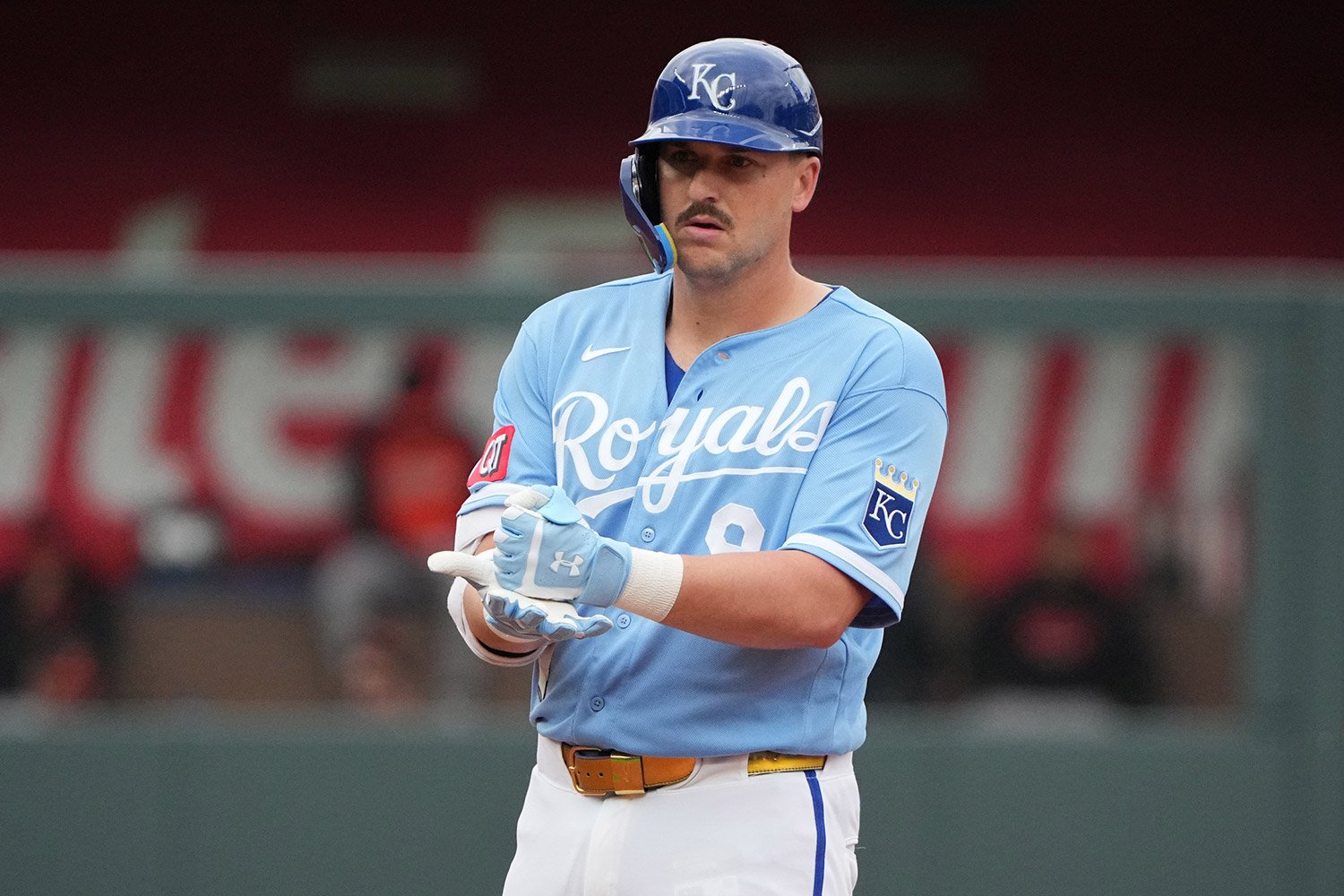 On Friday, Royals manager Matt Quatraro submitted an extreme platoon lineup that included resting regulars Vinnie Pasquantino, Jac Caglianone, and Kyle Isbel against left-hander Yusei Kikuchi. While Pasquantino is off to a slow start this season, Caglianone has been around league average, and Isbel boasts the team’s second-highest wRC+ at 125. However, all three have had significant trouble hitting against left-handed pitching. Given that the Royals held the worst record in the American League entering that game, Quatraro turned to a platoon approach in an effort to spark a turnaround. When examining their splits against lefties, all three players exhibit significant drops in wRC+. Even Carter Jensen and Michael Massey (who probably wouldn’t have started at second base if Maikel Garcia or Jonathan India were fully healthy) both see significant drops in wRC+ when facing lefties. With the exception of Pasquantino, all of these players have performed well against right-handed pitchers. Against lefties, only Jensen is producing near league average, with the median wRC+ for left-handed hitters facing left-handed pitching sitting at 85. Massey stands out in particular, posting an extremely poor -33 wRC+ against lefties despite his success against right-handers. Given this level of production, it makes sense that Quatraro would lean toward a more right-handed lineup. Unfortunately, the Royals as a team have struggled against left-handed pitching regardless of who is batting. Following Saturday’s games, the Royals ranked fifth-worst in baseball against left-handed pitching with a 69 wRC+. If you look at just right-handed hitters, their rank is 17th overall with a 95 wRC+. This lack of run production has impacted the standings, with the Royals winning only two of their eight games against left-handed starters, the Friday and Sunday matchups against the Angels this weekend. Considering the Royals had not defeated a left-handed starter prior to this weekend, Quatraro’s extreme platoon usage is understandable. However, a less aggressive version of the platoon was deployed in Sunday’s lineup against left-hander Reid Detmers with Pasquantino keeping his place at first base. Extreme platoons come with drawbacks. Some players thrive on the consistency of everyday playing time. Pasquantino, for example, appeared in 160 games last season and is not accustomed to frequent rest. Then there’s Caglianone, who is in his first full major-league season, and gaining experience against left-handed pitching will be critical to his long-term development. There is also the question of keeping your best players in the lineup. Pasquantino and Caglianone are foundational pieces of the roster, and ideally, they would be producing across a full 162-game season. Giving them rest definitely signals that struggling players are not fully guaranteed to start every day, even if they represent the foundation of the lineup. In the offseason, the Royals’ front office attempted to address this issue, particularly in the outfield. The Royals specifically targeted an everyday outfielder and someone who could platoon in right field. Isaac Collins, a switch-hitter, was brought in to be the everyday left fielder, and Starling Marte and Lane Thomas were signed to provide right-handed depth behind Isbel and Caglianone. How have those players fared so far against lefties? Of the acquired players, only Thomas is providing above-average run creation against left-handed pitching. Collins, despite being a switch hitter, has had more success in his career batting from the left-handed side of the plate. Marte, meanwhile, has done better against right-handed pitching (though only nine PAs against righties). If Marte’s performance against lefties continues to lag, the Royals might consider starting Caglianone full-time if he continues to outpace his platoon partner in wRC+. Caglianone also showed his potential against left-handed pitching with a game-tying home run against Drew Pomeranz in the ninth inning. On April 19th, the Royals called up veteran catcher Elías to help bolster the production against lefties. This move allows Salvador Perez to shift to first base and adds another right-handed bat to the lineup. Díaz has started strong, going 3-for-6 with a walk and two doubles in his first two starts against left-handed pitching. Ideally, this platoon option serves as a short-term solution while Pasquantino works through his struggles. If Díaz continues to produce, he could provide valuable roster flexibility. Nick Loftin has also been a welcome addition to the lineup after Jonathan India was placed on the injured list on April 20. In his 10 plate appearances against lefties so far this season, his 136 wRC+ is outpacing India’s 67. Going forward, how should the Royals proceed? Quatraro has certainly signaled that he will continue to platoon his lineup. As long as the left-handed hitters continue to struggle offensively, he might feel like there are few alternatives. However, he will need to balance short-term optimization with long-term development and lineup consistency. After a sweep of the Angels last weekend, the offense might finally be starting to turn a corner. Even at 11–17, the Royals sit just three games out of a Wild Card spot and 3.5 games back in the division. The season is far from over, but if this surge is temporary, the Royals may need to explore additional, potentially external, solutions to remain in the playoff picture.
 -
Image courtesy of © Rick Osentoski-Imagn Images Going into Tuesday’s game against the Orioles, the Royals were on an eight-game losing streak and held the worst record in baseball at 7-16. While they were able to snap the skid, they returned to the loss column in Wednesday’s series finale against Baltimore. With the Royals now sitting at 8–17 and last in the American League, which players are helping push the team forward, and which are still searching for answers? Who's Hot? 🔥 Bobby Witt Jr. Witt, unsurprisingly, leads the Royals hitters in bWAR so far with 1.3. Despite the team’s struggles at the plate, Witt had a solid week with a slash line of .304/.370/.391. You could argue that Witt is still waiting to hit his stride in 2026. His marks for batting average, slugging percentage, and wOBA are significantly under their expected values, showing signs that he has been “unlucky” to start the season. He leads the team in walks, OBP, and steals, but scored the fewest runs among all Royals qualified hitters. Vinnie Pasquantino and Salvador Perez have so far failed to drive in Witt when he is able to get on base, limiting his impact on the basepaths. Once they each can get out of their early-season slumps, Witt will be on base and ready to score. Seth Lugo Lugo leads the team in bWAR overall at 1.4. On Monday, he delivered a dominant outing, seven scoreless innings on one hit and four walks. Unfortunately, the offense provided minimal support, and the Royals ultimately lost to the Orioles in 12 innings. Lugo once again has a deep pitching arsenal with nine different pitches thrown this season (and he hasn’t yet thrown his splitter). His curveball and slider have particularly stood out with Stuff+ of 104 and 103, respectively, according to TJStats. In 2026, Lugo is preventing hitters from pulling the ball in the air with a rate of only 11.5%. In addition to his lowered hard-hit rate compared to last season. Together, these trends point to strong run prevention and limited power allowed. Lugo is slated to make his next start on Sunday against the Angels, where he will look to continue his excellent early-season form. Carter Jensen Jensen had a solid week at the plate with a slash line of .467/.619/.933. Going into Wednesday’s game, Jensen led all qualified Royals hitters with a 133 wRC+, and he added more production, going 2 for 3 with another home run. Jensen is continuing to build on the level of production he displayed in his last-season call-up in 2025. While there is still room to improve his game, namely his contact and strikeout rates, he is providing a spark in the Royals lineup that is otherwise missing. With Perez continuing to struggle offensively, Jensen might find more time behind the plate rather than just hitting in the DH spot. Who's Not? 🧊 Alex Lange Lange had a couple of tough outings this past week, allowing the winning run to score in his first two appearances. While he has not been brought on to protect leads, he was called upon twice in tied games and was unable to keep the Royals in a position to win. On Friday, he was tasked with facing the middle of the Yankees’ order in a tied game. While he was able to retire the first two hitters of the inning, he allowed a single and a home run before getting out of the inning, putting the Royals down two runs going into the 8th inning. On Monday, he entered the 11th inning in a tied game with the automatic runner on second. Lange struggled to get the Orioles hitters out, allowing two singles and a walk before giving up a home run, which effectively ended the game. While it is difficult to enter a game in those circumstances, if Lange had limited the damage to only one run, he could have preserved the chance for the Royals to make a comeback. Lange has been particularly susceptible to hard contact this season. Opponents are averaging 93.8 mph exit velocity against him, with a 20.8% barrel rate (1st percentile) and a 58.3% hard-hit rate (2nd percentile). Lange excels at striking batters out and inducing whiffs; however, when batters have been making contact against Lange, they often do damage. Lange rebounded with an improved performance against the Orioles on Wednesday with a clean inning and no baserunners allowed. Noah Cameron Cameron struggled on Saturday, allowing seven runs (five earned) over four innings of work. He allowed seven hits, three of which were home runs, two walks, and posted a 59% hard-hit rate. Cameron was able to get out of the first two innings unscathed before the floodgates opened up in the third inning. He has now suffered back-to-back outings allowing five earned runs after only allowing one earned run in each of his first two starts of the season. A concerning trend is now emerging of Cameron being susceptible to hard hits and many fly balls. In 2025, Cameron excelled at inducing soft contact ground balls. In 2026, while his overall contact rate is similar, the quality of contact has worsened significantly, with more barrels and fewer ground balls. If Cameron wants to repeat his success from his rookie season, he will need to limit the hard contact, and he will get a chance to bounce back at his next start on Friday against the Angels. Isaac Collins Collins continues to struggle offensively, going 2 for 18 in the past week. Collins was given the day on Wednesday off in favor of Lane Thomas despite right-handed Chris Bassitt starting for Baltimore. He suffered a right knee contusion that he had sustained the previous week in Detroit. Even though he has played four games since the injury, this could have been a scheduled day off for maintenance. There has been much reported on Collins’s tough start in Kansas City. He has displayed uneven offensive metrics and a defensive regression in left field. There is still time for Collins to bounce back, but with many of the Royals' hitters also struggling for consistency, a resurgence from Collins could go a long way in helping the Royals turn the corner. View full article
-
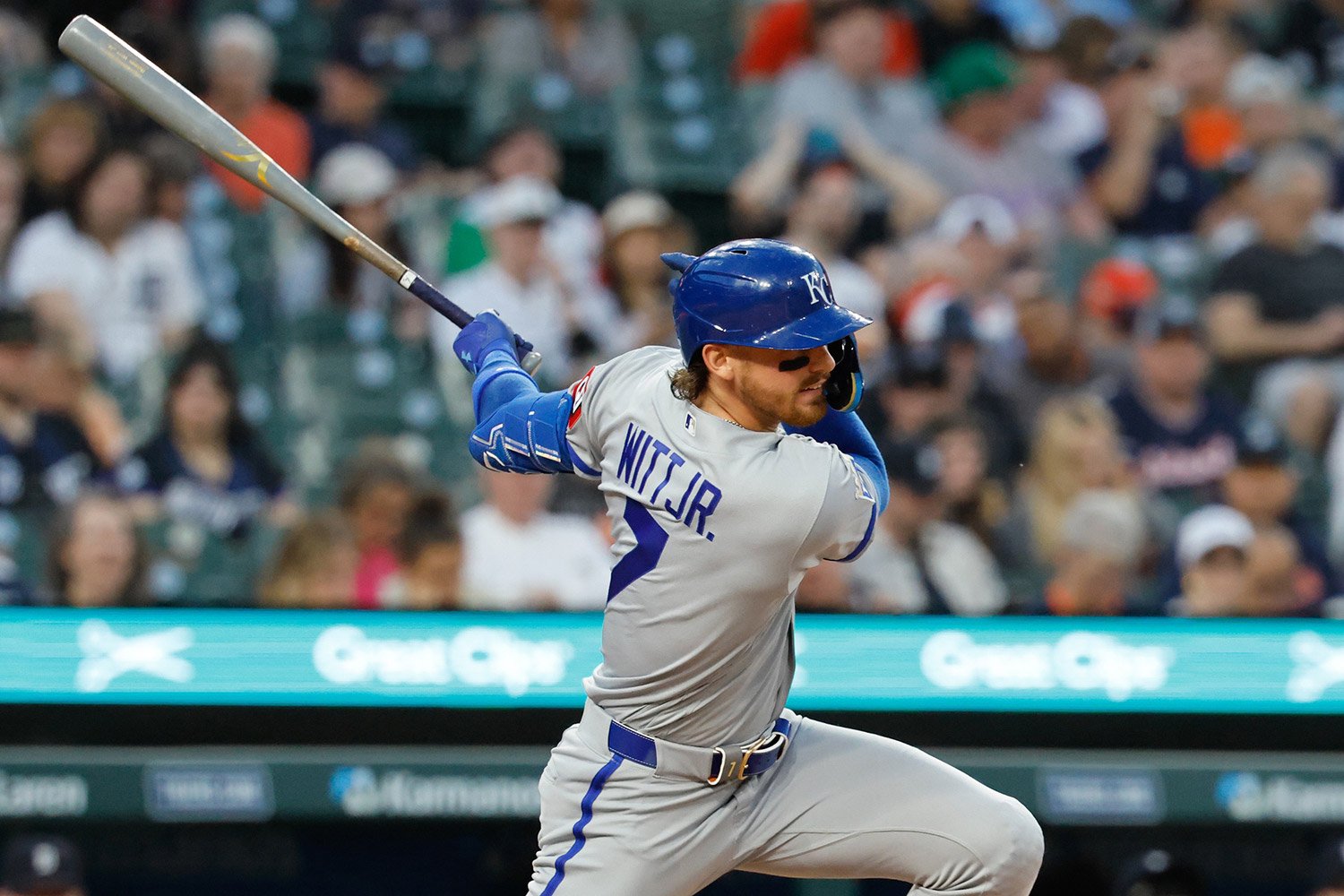 Going into Tuesday’s game against the Orioles, the Royals were on an eight-game losing streak and held the worst record in baseball at 7-16. While they were able to snap the skid, they returned to the loss column in Wednesday’s series finale against Baltimore. With the Royals now sitting at 8–17 and last in the American League, which players are helping push the team forward, and which are still searching for answers? Who's Hot? 🔥 Bobby Witt Jr. Witt, unsurprisingly, leads the Royals hitters in bWAR so far with 1.3. Despite the team’s struggles at the plate, Witt had a solid week with a slash line of .304/.370/.391. You could argue that Witt is still waiting to hit his stride in 2026. His marks for batting average, slugging percentage, and wOBA are significantly under their expected values, showing signs that he has been “unlucky” to start the season. He leads the team in walks, OBP, and steals, but scored the fewest runs among all Royals qualified hitters. Vinnie Pasquantino and Salvador Perez have so far failed to drive in Witt when he is able to get on base, limiting his impact on the basepaths. Once they each can get out of their early-season slumps, Witt will be on base and ready to score. Seth Lugo Lugo leads the team in bWAR overall at 1.4. On Monday, he delivered a dominant outing, seven scoreless innings on one hit and four walks. Unfortunately, the offense provided minimal support, and the Royals ultimately lost to the Orioles in 12 innings. Lugo once again has a deep pitching arsenal with nine different pitches thrown this season (and he hasn’t yet thrown his splitter). His curveball and slider have particularly stood out with Stuff+ of 104 and 103, respectively, according to TJStats. In 2026, Lugo is preventing hitters from pulling the ball in the air with a rate of only 11.5%. In addition to his lowered hard-hit rate compared to last season. Together, these trends point to strong run prevention and limited power allowed. Lugo is slated to make his next start on Sunday against the Angels, where he will look to continue his excellent early-season form. Carter Jensen Jensen had a solid week at the plate with a slash line of .467/.619/.933. Going into Wednesday’s game, Jensen led all qualified Royals hitters with a 133 wRC+, and he added more production, going 2 for 3 with another home run. Jensen is continuing to build on the level of production he displayed in his last-season call-up in 2025. While there is still room to improve his game, namely his contact and strikeout rates, he is providing a spark in the Royals lineup that is otherwise missing. With Perez continuing to struggle offensively, Jensen might find more time behind the plate rather than just hitting in the DH spot. Who's Not? 🧊 Alex Lange Lange had a couple of tough outings this past week, allowing the winning run to score in his first two appearances. While he has not been brought on to protect leads, he was called upon twice in tied games and was unable to keep the Royals in a position to win. On Friday, he was tasked with facing the middle of the Yankees’ order in a tied game. While he was able to retire the first two hitters of the inning, he allowed a single and a home run before getting out of the inning, putting the Royals down two runs going into the 8th inning. On Monday, he entered the 11th inning in a tied game with the automatic runner on second. Lange struggled to get the Orioles hitters out, allowing two singles and a walk before giving up a home run, which effectively ended the game. While it is difficult to enter a game in those circumstances, if Lange had limited the damage to only one run, he could have preserved the chance for the Royals to make a comeback. Lange has been particularly susceptible to hard contact this season. Opponents are averaging 93.8 mph exit velocity against him, with a 20.8% barrel rate (1st percentile) and a 58.3% hard-hit rate (2nd percentile). Lange excels at striking batters out and inducing whiffs; however, when batters have been making contact against Lange, they often do damage. Lange rebounded with an improved performance against the Orioles on Wednesday with a clean inning and no baserunners allowed. Noah Cameron Cameron struggled on Saturday, allowing seven runs (five earned) over four innings of work. He allowed seven hits, three of which were home runs, two walks, and posted a 59% hard-hit rate. Cameron was able to get out of the first two innings unscathed before the floodgates opened up in the third inning. He has now suffered back-to-back outings allowing five earned runs after only allowing one earned run in each of his first two starts of the season. A concerning trend is now emerging of Cameron being susceptible to hard hits and many fly balls. In 2025, Cameron excelled at inducing soft contact ground balls. In 2026, while his overall contact rate is similar, the quality of contact has worsened significantly, with more barrels and fewer ground balls. If Cameron wants to repeat his success from his rookie season, he will need to limit the hard contact, and he will get a chance to bounce back at his next start on Friday against the Angels. Isaac Collins Collins continues to struggle offensively, going 2 for 18 in the past week. Collins was given the day on Wednesday off in favor of Lane Thomas despite right-handed Chris Bassitt starting for Baltimore. He suffered a right knee contusion that he had sustained the previous week in Detroit. Even though he has played four games since the injury, this could have been a scheduled day off for maintenance. There has been much reported on Collins’s tough start in Kansas City. He has displayed uneven offensive metrics and a defensive regression in left field. There is still time for Collins to bounce back, but with many of the Royals' hitters also struggling for consistency, a resurgence from Collins could go a long way in helping the Royals turn the corner.
- 1 comment
-
- 2
-
-
- bobby witt jr
- seth lugo
- (and 4 more)
-
Image courtesy of © Jay Biggerstaff-Imagn Images It is now halfway through April in the MLB season. Teams have started to fully take shape, and trends are beginning to emerge. The Royals are still looking to find their stride, particularly on offense, with a 7-11 record before game action on Thursday. Let’s take a look at who has been hot and who is still looking to find their stride in the early stages of the 2026 season. Who's Hot? 🔥 Michael Wacha Wacha has had an excellent start to his 2026 campaign, and his last start on Saturday was no exception. Wacha pitched for eight innings, striking out seven batters while only allowing five baserunners. After that start, his season ERA is down to 0.43 with a WHIP of 0.714 in 21 innings pitched. In his three starts this season, Wacha has excelled in getting hitters to whiff at and chase the ball out of the strike zone. So far, his chase rate is up from 28.2% to 34.3% this season, and his whiff rate is up from 21.3% to 29.5%. Wacha’s changeup has been his best pitch so far, with a Stuff+ of 131 according to Fangraphs. His changeup has been especially helpful against left-handed batters, where he throws it just as often as his fastball. This has helped him hold lefties to a slash line of only .128/.212/.21,3 which are currently better than his marks against right-handed batters. Wacha will look to continue his strong form against the Yankees on Friday. Kris Bubic Bubic has also seen success on the mound to start the season. On Friday, Bubic threw seven innings with 11 strikeouts while only allowing three baserunners. After that performance, Bubic’s season ERA is now 2.50 across 18 innings with a WHIP of 0.833. Bubic’s Stuff+, according to TJStats, has been excellent with a 102 overall Stuff+ and only his sinker grading below average. Like Wacha, Bubic has also seen an increase in chase and whiff rates to start the season. His chase rate is sitting at 32.4%, and his whiff rate is at 37.6%, in the 98th percentile of all pitchers this season. His slider has stood out so far, forcing batters to whiff 63.6% of the time. Bubic is also set to appear against the Yankees this Thursday, where he will look to set the tone in quieting the often loud bats of the Bronx Bombers. Jac Caglianone Caglianone had a strong week, going 5-for-15 with a slash line of .333/.389/.600. He also showed some skill in the field with an outfield assist, throwing out Zach McKinstry at the plate on Wednesday. Caglianone is showing strong improvements at the plate compared to his rookie season. Last season, he was relatively unlucky for his batted-ball profile, and the numbers are starting to reflect his expected marks from 2025. He is excelling at hitting the ball hard with an average exit velocity of 93.1 mph, a barrel rate of 12.9%, and a hard-hit rate over 50%. If Caglianone can make consistent contact, he will continue to grow into being a threat in the Royals' lineup. He has also made great strides in his defensive ability. Last season, Caglianone was worth a -7 fielding run value, and so far, he is posting a positive number in 2026. Both his range and arm value are now grading well above average. Adding this improvement to his strides in batting, Caglianone is becoming a well-rounded player. Who's Not? 🧊 Vinnie Pasquantino Speaking of not being able to drive in Witt, Pasquantino has not had the ideal start to his 2026 season. Pasquantino finally recorded a hit, a triple, on Wednesday to end a 0-for-20 spell. His season slash line is down to .152/.234/.197. After finishing second in total bases for the Royals in 2025 (behind only Witt), Pasquantino has only two extra-base hits this season. Pasquantino has also seen a noticeable dip in his bat speed of above three mph, and his exit velocity has suffered in the process. These are definitely concerning signs for his power potential to do damage in the heart of the Royals’ batting order. Going into the season, Pasquantino was presumed to be the default hitter to be the source of power to drive in Witt and Maikel Garcia when they reach base, and so far, Pasquantino has failed to do so. Until Pasquantino is able to find his groove at the plate, the Royals' offense will likely continue to flounder. Nick Mears Mears has had a week to forget. In his two appearances this week, he has two blown saves, resulting in two losses this week (only one of which was changed to him). The “blown save” designation is a bit misleading. While he did not come in his games in a traditional save opportunity, Mears was on the mound when the team lost its lead. On Sunday, Mears was brought in during the 6th inning after Noah Cameron had loaded the bases with one out and a one-run lead. Mears was able to get out of the inning without allowing too much damage, but he did allow one walk, which brought home the tying run. On Tuesday, Mears was tasked with pitching the eighth inning with a 1-0 lead. He allowed two critical doubles. One was to Gelyber Torres, who eventually scored on a wild pitch, and the other was to Dillon Dingler, who drove in the eventual winning run. Mears had otherwise had a decent start to the season before this week, where he had not yet allowed any runs to score, including inherited runners. The Royals will look for Mears to bounce back from these performances if they want to continue to turn to him in high-leverage situations, especially with Carlos Estevez still on the injured list. Salvador Perez Perez has struggled at the plate this past week, going 3 for 22 with seven strikeouts. His season slash line is now down to .149/.208/.269. His batting run value ranks in the 4th percentile among qualified hitters this season. Perez is still the captain of this team, but in his current form, the Royals may start to consider if it is time to move him down in the lineup. View full article
-
Royals Temperature Check: Starting Pitching Success & Struggling Bats
Philip Ruo posted an article in Royals
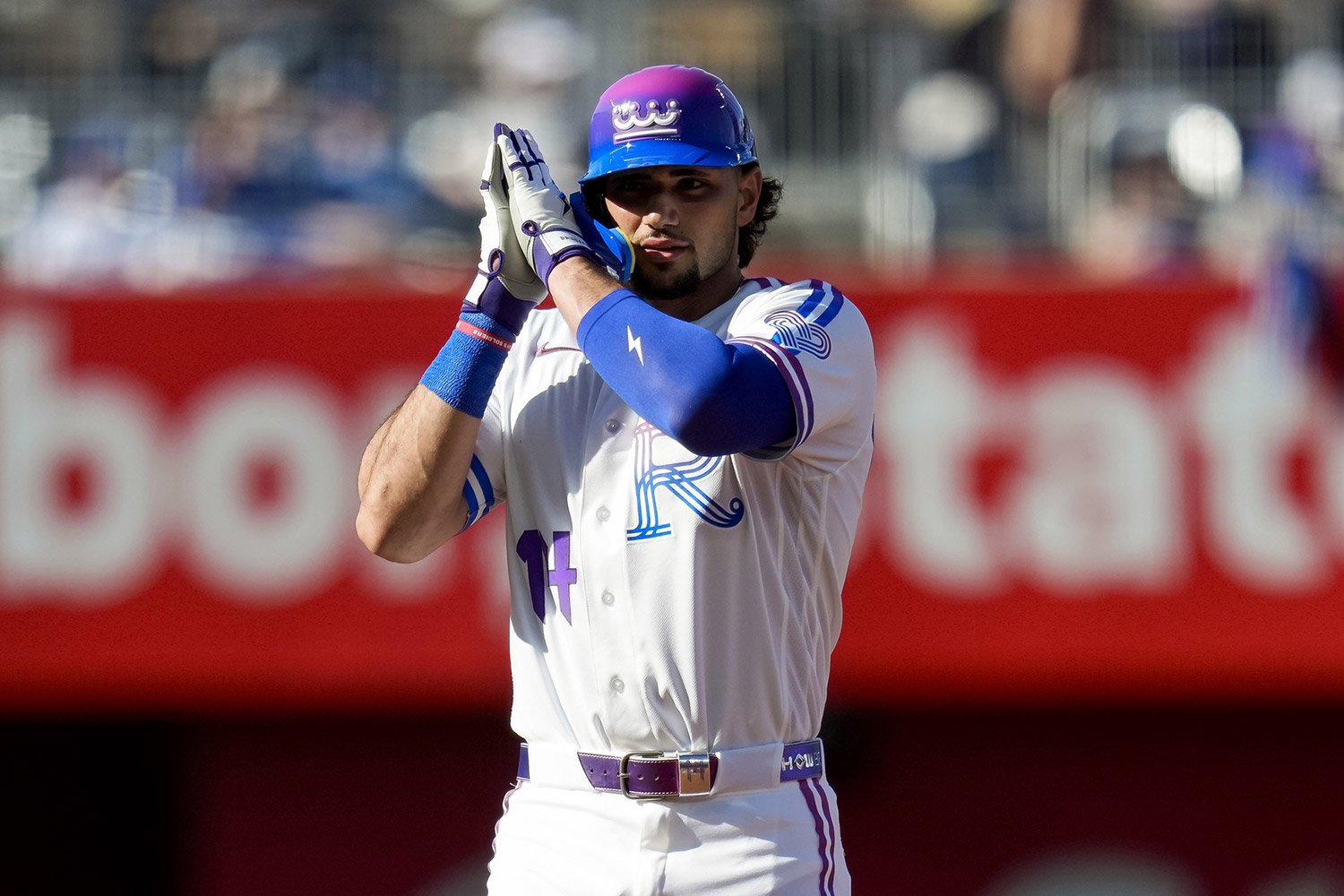 It is now halfway through April in the MLB season. Teams have started to fully take shape, and trends are beginning to emerge. The Royals are still looking to find their stride, particularly on offense, with a 7-11 record before game action on Thursday. Let’s take a look at who has been hot and who is still looking to find their stride in the early stages of the 2026 season. Who's Hot? 🔥 Michael Wacha Wacha has had an excellent start to his 2026 campaign, and his last start on Saturday was no exception. Wacha pitched for eight innings, striking out seven batters while only allowing five baserunners. After that start, his season ERA is down to 0.43 with a WHIP of 0.714 in 21 innings pitched. In his three starts this season, Wacha has excelled in getting hitters to whiff at and chase the ball out of the strike zone. So far, his chase rate is up from 28.2% to 34.3% this season, and his whiff rate is up from 21.3% to 29.5%. Wacha’s changeup has been his best pitch so far, with a Stuff+ of 131 according to Fangraphs. His changeup has been especially helpful against left-handed batters, where he throws it just as often as his fastball. This has helped him hold lefties to a slash line of only .128/.212/.21,3 which are currently better than his marks against right-handed batters. Wacha will look to continue his strong form against the Yankees on Friday. Kris Bubic Bubic has also seen success on the mound to start the season. On Friday, Bubic threw seven innings with 11 strikeouts while only allowing three baserunners. After that performance, Bubic’s season ERA is now 2.50 across 18 innings with a WHIP of 0.833. Bubic’s Stuff+, according to TJStats, has been excellent with a 102 overall Stuff+ and only his sinker grading below average. Like Wacha, Bubic has also seen an increase in chase and whiff rates to start the season. His chase rate is sitting at 32.4%, and his whiff rate is at 37.6%, in the 98th percentile of all pitchers this season. His slider has stood out so far, forcing batters to whiff 63.6% of the time. Bubic is also set to appear against the Yankees this Thursday, where he will look to set the tone in quieting the often loud bats of the Bronx Bombers. Jac Caglianone Caglianone had a strong week, going 5-for-15 with a slash line of .333/.389/.600. He also showed some skill in the field with an outfield assist, throwing out Zach McKinstry at the plate on Wednesday. Caglianone is showing strong improvements at the plate compared to his rookie season. Last season, he was relatively unlucky for his batted-ball profile, and the numbers are starting to reflect his expected marks from 2025. He is excelling at hitting the ball hard with an average exit velocity of 93.1 mph, a barrel rate of 12.9%, and a hard-hit rate over 50%. If Caglianone can make consistent contact, he will continue to grow into being a threat in the Royals' lineup. He has also made great strides in his defensive ability. Last season, Caglianone was worth a -7 fielding run value, and so far, he is posting a positive number in 2026. Both his range and arm value are now grading well above average. Adding this improvement to his strides in batting, Caglianone is becoming a well-rounded player. Who's Not? 🧊 Vinnie Pasquantino Speaking of not being able to drive in Witt, Pasquantino has not had the ideal start to his 2026 season. Pasquantino finally recorded a hit, a triple, on Wednesday to end a 0-for-20 spell. His season slash line is down to .152/.234/.197. After finishing second in total bases for the Royals in 2025 (behind only Witt), Pasquantino has only two extra-base hits this season. Pasquantino has also seen a noticeable dip in his bat speed of above three mph, and his exit velocity has suffered in the process. These are definitely concerning signs for his power potential to do damage in the heart of the Royals’ batting order. Going into the season, Pasquantino was presumed to be the default hitter to be the source of power to drive in Witt and Maikel Garcia when they reach base, and so far, Pasquantino has failed to do so. Until Pasquantino is able to find his groove at the plate, the Royals' offense will likely continue to flounder. Nick Mears Mears has had a week to forget. In his two appearances this week, he has two blown saves, resulting in two losses this week (only one of which was changed to him). The “blown save” designation is a bit misleading. While he did not come in his games in a traditional save opportunity, Mears was on the mound when the team lost its lead. On Sunday, Mears was brought in during the 6th inning after Noah Cameron had loaded the bases with one out and a one-run lead. Mears was able to get out of the inning without allowing too much damage, but he did allow one walk, which brought home the tying run. On Tuesday, Mears was tasked with pitching the eighth inning with a 1-0 lead. He allowed two critical doubles. One was to Gelyber Torres, who eventually scored on a wild pitch, and the other was to Dillon Dingler, who drove in the eventual winning run. Mears had otherwise had a decent start to the season before this week, where he had not yet allowed any runs to score, including inherited runners. The Royals will look for Mears to bounce back from these performances if they want to continue to turn to him in high-leverage situations, especially with Carlos Estevez still on the injured list. Salvador Perez Perez has struggled at the plate this past week, going 3 for 22 with seven strikeouts. His season slash line is now down to .149/.208/.269. His batting run value ranks in the 4th percentile among qualified hitters this season. Perez is still the captain of this team, but in his current form, the Royals may start to consider if it is time to move him down in the lineup.
-
- 1
-
-
- michael wacha
- kris bubic
- (and 4 more)
-
Image courtesy of © David Dermer-Imagn Images Last season, Isaac Collins was an average fielder with 0 fielding run value (FRV) and grading in the 56th percentile. This season, Collins already sits at -3 FRV and is at the bottom of the rankings. What has changed? Below is a chart showing Collins’s percentile ranks in key defensive metrics: range, sprint speed, arm strength (not yet qualified in 2026), and arm value. While Collins’s sprint speed has actually increased since last year, rising from 27.7 to 28.3 feet per second, his range has dropped significantly. Last season, Collins was worth +4 outs above average (OAA). This season, however, he is already at -3 OAA. This decline in range is the primary driver of his drop in FRV. When breaking down his range, Collins has had a particularly difficult time when he has to move laterally towards the third-base side, where all of his negative OAA has come from. In his nine attempts moving that direction laterally, he has seen a success rate of only 44% compared to an estimated rate of 77%. Collins did have back/left side tightness that delayed his start to spring training, which may be contributing to these lateral movement issues. What’s Driving the Decline? In terms of positioning, Collins has not been used out of the ordinary. According to Statcast, all 30 of Collins’s fielding attempts have been classified as “straight up” rather than being positioned toward the gap or foul line. However, his positioning has been shallower in left field with the Royals compared to his time in Milwaukee. The view below highlights his average position with the Royals in red, and his previous two years with the Royals in green. Collins had an average depth of 289 feet in 2026 with the Royals, compared to an average depth of 306 feet last season with the Brewers. Even after moving in the fences, Kauffman Stadium has a deeper left-center field (379 ft) than American Family Field in Milwaukee (371 ft). Despite him playing shallower, he is performing as expected in four attempts, going back with a success rate of 75% versus an estimated success rate of 74%. If his positioning is not noticeably contributing to his value, where else could the problem be? Jump and Route Efficiency In 2026, Isaac Collins ranks 33rd out of 46 qualified outfielders in overall jump. His initial reaction is good, ranking third with 3.5 feet covered above average in the first 1.5 seconds. His burst is closer to average, with 0.3 feet covered above MLB average in the 1.5-second burst after the initial reaction. The issue lies with his routes. Collins ranks last in route with 4.8 fewer feet covered against the direct, optimal path, over a foot worse than the second-worst outfielder. Even though his reaction and burst times are good, his inefficient routes to the ball make him below average for overall outfield jump, with 0.9 fewer feet covered than average. Considering that he is starting on average 17 feet closer to the infield for his positioning, he may need time to adjust his routes to fit his new starting position. Though his inefficient routes are not new for Collins. In 2025, he ranked 92nd out of 93 qualified outfielders in route efficiency. While his 2025 mark was not great, he was only 2.1 feet less than average last season, much less severe than his current mark. His reaction and burst distances were also slightly better in 2025 to help offset his poor route efficiency. His reaction was 4 feet above average, and his burst was 1.4 feet above average. Lack of Conversions on Difficult Plays Finally, Collins has yet to record a “2+ Star” out (balls with a catch probability of 90% or lower) in 2026 in nine attempts. In 2025, Collins was able to record outs on 51.9% of difficult catches to add meaningful value in Milwaukee’s outfield. While Collins is able to catch the more probable opportunities, he has yet to make an impact in Kansas City in stopping the more difficult fly balls. Potential Health Concerns It is also worth noting that Collins fought a variety of injuries this offseason. He received “platelet-rich plasma injections in both of his knees” in the offseason to address tendinitis in his knees. Add that to his tightness from spring training, Collins has a variety of potentially nagging issues that could impact his fielding, despite his increased sprint speed so far. While there has not been a recent report addressing any health concerns, it is worth considering if these injuries have carried into the regular season. Conclusion There is a lot of time left in the season for Collins to turn the corner for his fielding run value. Getting more reps will help him continue to gain familiarity with the spacious Kauffman Stadium outfield. If he can improve his range, particularly in his route efficiency and lateral movement, his defensive value will improve, and Royals pitchers will be grateful. View full article
-
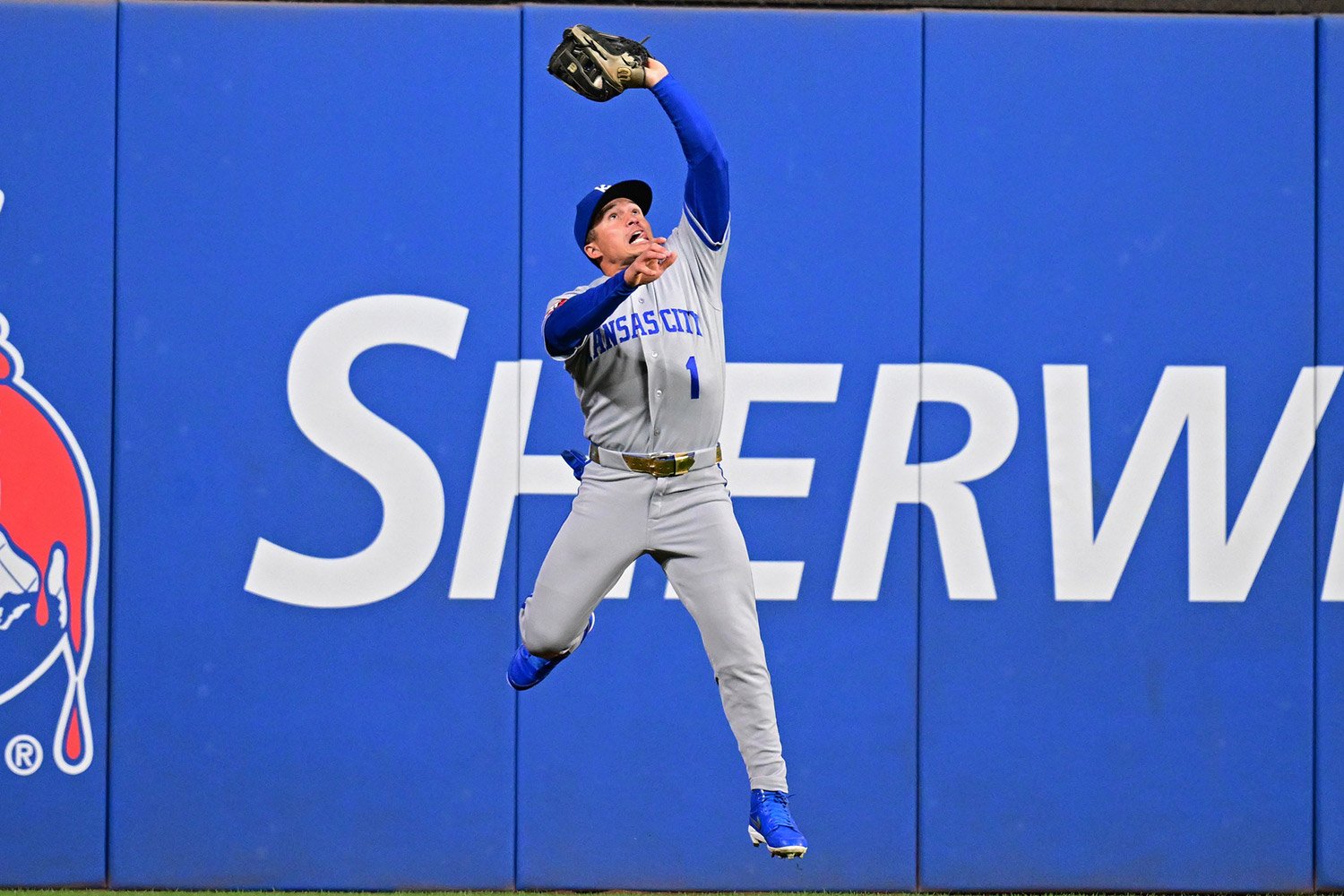 Last season, Isaac Collins was an average fielder with 0 fielding run value (FRV) and grading in the 56th percentile. This season, Collins already sits at -3 FRV and is at the bottom of the rankings. What has changed? Below is a chart showing Collins’s percentile ranks in key defensive metrics: range, sprint speed, arm strength (not yet qualified in 2026), and arm value. While Collins’s sprint speed has actually increased since last year, rising from 27.7 to 28.3 feet per second, his range has dropped significantly. Last season, Collins was worth +4 outs above average (OAA). This season, however, he is already at -3 OAA. This decline in range is the primary driver of his drop in FRV. When breaking down his range, Collins has had a particularly difficult time when he has to move laterally towards the third-base side, where all of his negative OAA has come from. In his nine attempts moving that direction laterally, he has seen a success rate of only 44% compared to an estimated rate of 77%. Collins did have back/left side tightness that delayed his start to spring training, which may be contributing to these lateral movement issues. What’s Driving the Decline? In terms of positioning, Collins has not been used out of the ordinary. According to Statcast, all 30 of Collins’s fielding attempts have been classified as “straight up” rather than being positioned toward the gap or foul line. However, his positioning has been shallower in left field with the Royals compared to his time in Milwaukee. The view below highlights his average position with the Royals in red, and his previous two years with the Royals in green. Collins had an average depth of 289 feet in 2026 with the Royals, compared to an average depth of 306 feet last season with the Brewers. Even after moving in the fences, Kauffman Stadium has a deeper left-center field (379 ft) than American Family Field in Milwaukee (371 ft). Despite him playing shallower, he is performing as expected in four attempts, going back with a success rate of 75% versus an estimated success rate of 74%. If his positioning is not noticeably contributing to his value, where else could the problem be? Jump and Route Efficiency In 2026, Isaac Collins ranks 33rd out of 46 qualified outfielders in overall jump. His initial reaction is good, ranking third with 3.5 feet covered above average in the first 1.5 seconds. His burst is closer to average, with 0.3 feet covered above MLB average in the 1.5-second burst after the initial reaction. The issue lies with his routes. Collins ranks last in route with 4.8 fewer feet covered against the direct, optimal path, over a foot worse than the second-worst outfielder. Even though his reaction and burst times are good, his inefficient routes to the ball make him below average for overall outfield jump, with 0.9 fewer feet covered than average. Considering that he is starting on average 17 feet closer to the infield for his positioning, he may need time to adjust his routes to fit his new starting position. Though his inefficient routes are not new for Collins. In 2025, he ranked 92nd out of 93 qualified outfielders in route efficiency. While his 2025 mark was not great, he was only 2.1 feet less than average last season, much less severe than his current mark. His reaction and burst distances were also slightly better in 2025 to help offset his poor route efficiency. His reaction was 4 feet above average, and his burst was 1.4 feet above average. Lack of Conversions on Difficult Plays Finally, Collins has yet to record a “2+ Star” out (balls with a catch probability of 90% or lower) in 2026 in nine attempts. In 2025, Collins was able to record outs on 51.9% of difficult catches to add meaningful value in Milwaukee’s outfield. While Collins is able to catch the more probable opportunities, he has yet to make an impact in Kansas City in stopping the more difficult fly balls. Potential Health Concerns It is also worth noting that Collins fought a variety of injuries this offseason. He received “platelet-rich plasma injections in both of his knees” in the offseason to address tendinitis in his knees. Add that to his tightness from spring training, Collins has a variety of potentially nagging issues that could impact his fielding, despite his increased sprint speed so far. While there has not been a recent report addressing any health concerns, it is worth considering if these injuries have carried into the regular season. Conclusion There is a lot of time left in the season for Collins to turn the corner for his fielding run value. Getting more reps will help him continue to gain familiarity with the spacious Kauffman Stadium outfield. If he can improve his range, particularly in his route efficiency and lateral movement, his defensive value will improve, and Royals pitchers will be grateful.