


Philip Ruo
-
Posts
132 -
Joined
-
Last visited
-
Days Won
45
Content Type
Profiles
Forums
Blogs
Events
News
2026 Kansas City Royals Top Prospects Ranking
Kansas City Royals Videos
Kansas City Royals Free Agent & Trade Rumors, Notes, & Tidbits
Guides & Resources
The Kansas City Royals Players Project
2026 Kansas City Royals Draft Tracker: Picks & Bonuses
Store
Downloads
Gallery
Everything posted by Philip Ruo
-
Image courtesy of Bob DeChiara-Imagn Images SP Randy Dobnak, RHP Age on Opening Day 2027: 32 Service Time: 3.148 2024 Salary: $2,250,000 2025 Salary: $3,000,000 2026 Salary: $845,000 2027 MLB Trade Rumor Estimate: $2,300,000 Dobnak Background Dobnak’s route to Kansas City made a few different stops. He was signed by the Twins as an undrafted free agent in 2017 and made his major-league debut in 2019, with mixed success. He finished 2019 with a 1.59 ERA over 28 ⅓ innings in nine appearances (five starts). He made 10 starts in the shortened 2020 season, with a 4.05 ERA across 46 ⅔ innings. His early performances earned him a pre-arbitration contract extension worth $9.25 million over five years with additional club options for 2026, 2027, and 2028, which he signed before the 2021 season. Unfortunately, Dobnak’s struggles began after signing his extension. In 2021, he made 14 appearances with a 7.82 ERA across 50 ⅔ innings. He was optioned to the minors and did not see major-league action again until 2024. In 2022, he missed most of the season with a right middle finger strain, and he spent all of 2023 in Triple-A, where he threw 126 innings with a 5.13 ERA. In 2024, he was designated for assignment but stayed in the Twins organization. After minimal opportunities to pitch in the majors, he was packaged in a trade to the Tigers in 2025 but never appeared in a major-league game for Detroit. Dobnak's 2026 Season 15 G (13 GS), 74 ⅓ IP, 78 H, 26 BB, 49 K, 3.51 ERA, 1.399 WHIP In the offseason, the Mariners signed Dobnak to a minor-league contract with a spring training invite. After not making the MLB roster, he threw 70 innings in Triple-A Tacoma with a 5.01 ERA. In June, he triggered his upward mobility clause that required Seattle to offer him to the other 29 teams if they did not add Dobnak to the 40-man roster. With the Royals’ rotation left decimated by injuries, they were able to acquire Dobnak in exchange for cash considerations. Dobnak started strong after joining the Royals. He limited runs to two or fewer in each of his first six starts, and his ERA remained at or below 2.00 through his first 10 appearances. His September was a month to forget with an ERA of 7.15 in his final five starts of the season. Despite the poor finish to the season, Dobnak was able to provide valuable innings for a rotation that was dismantled by injuries. Dobnak excelled in limiting hitters to a 3.7% barrel rate and inducing ground balls at a 51.2% rate. While this is a good recipe for limiting home runs and extra-base hits, Dobnak struggled with striking out batters, and batters were too easily able to make contact off him. One of Dobnak's biggest weaknesses was his inability to miss bats. Hitters made contact on 91% of their swings at pitches in the strike zone (league worst), leaving him heavily reliant on his defense to record outs. His 4.22 FIP, more than a run higher than his ERA, suggests his results could be difficult to sustain. In his final five starts of the season, his barrel rate jumped to 5.3%, and his ground-ball rate dropped to below 45%. His chase rate also dropped from a league-average 30.4% to 26.9%. Hitters being more disciplined in their approach against Dobnak, combined with hitting more fly balls harder, was reflected in a jump in hitter wOBA from .296 in his first 10 appearances to .371 in his final five appearances. While a small sample, the regression in his underlying metrics is concerning. Royals Depth at his Position (Starting Pitcher) 40-man roster: Michael Wacha, Seth Lugo, Noah Cameron, Luinder Avila (injured), Ryan Bergert (inj), Stephen Kolek (inj), Ben Kudrna (inj), Cole Ragans (inj), Steven Zobac, Mason Black, Mitch Spence Arbitration Eligible: Alec Marsh 2027 Club Option: Tony Gonsolin Triple-A: Lucas Braun, Henry Williams, Hunter Owen, John Means, Ethan Bosacker, Ryan Ramsey, Hunter Patteson Double-A: David Shields, Justin Lamkin, Felix Arronde, Drew Beam, Frank Mozzicato, Tanner Jones, Coleman Picard, Emmanuel Reyes Why the Royals Should Offer Him Arbitration The Royals simply do not have enough starters healthy to start next season. Ragans’s UCL repair surgery had a 10-12 month recovery timeline, which would have him ready in May at the earliest. Bergert, Avila, and Kolek had Tommy John surgery each. With a recovery of at least 12 months, Bergert has a chance to be ready for the start of the season, but Avila and Kolek would be slated to return no earlier than August. Even with the Royals looking to add to the rotation for 2027, getting rid of Dobnak would be letting go of crucial pitching depth. Dobnak has shown that he is capable of being a contributing part of a major-league rotation. If the Royals can find a way to recapture Dobnak’s first 10 appearances from this season, he could be a threat at the bottom of the rotation. At a projected salary of $2,300,000, the Royals would not have to invest much in seeing how Dobnak can perform for a full season in Kansas City. At the very least, Dobnak can help bridge the gap to other starters returning to the rotation and be an insurance policy for if any recoveries are longer than expected. Dobnak also has two minor-league options remaining, so he still has some roster flexibility to provide depth if other pitchers join the organization or outperform him in spring training. Why the Royals Should Non-Tender Him If any of the following is true, Dobnak could be a non-tender candidate: The Royals intend on signing/trading for at least two new arms to immediately plug into the rotation. He is blocking a path to the 40-man roster for a prospect or Rule 5 Draft candidate. The Royals believe that his performance from September is more predictive of how Dobnak will perform in 2027. While there is no way to reliably project the first two points, the last point is a legitimate conversation to have. As mentioned before, Dobnak’s end of the season was not great while allowing 18 earned runs in 22 ⅔ innings. Even though his August ERA was 2.81 over the same number of starts, his 1.558 WHIP was higher than his September mark of 1.456. This could indicate that Dobnak’s early success was in spite of his inability to keep runners off the basepaths and raises concerns about his ability to reliably sustain success at the major-league level. Prediction: The Royals Keep Dobnak There are just too many unknowns for the rotation entering 2027, and the Royals cannot afford to lose more arms before adding any. With a relatively inexpensive projected salary and roster flexibility in his two minor-league options, there is very little downside in keeping him in contention for a rotation spot while other pitchers return from the IL. There are legitimate concerns about his ability to remain productive in the majors. Until more pitchers are added to the roster, there is not a pitcher in the organization who has yet made a case to start ahead of him in the rotation in 2027. What do you think the Royals should do with Dobnak? Leave a comment and start the discussion. View full article
-
 SP Randy Dobnak, RHP Age on Opening Day 2027: 32 Service Time: 3.148 2024 Salary: $2,250,000 2025 Salary: $3,000,000 2026 Salary: $845,000 2027 MLB Trade Rumor Estimate: $2,300,000 Dobnak Background Dobnak’s route to Kansas City made a few different stops. He was signed by the Twins as an undrafted free agent in 2017 and made his major-league debut in 2019, with mixed success. He finished 2019 with a 1.59 ERA over 28 ⅓ innings in nine appearances (five starts). He made 10 starts in the shortened 2020 season, with a 4.05 ERA across 46 ⅔ innings. His early performances earned him a pre-arbitration contract extension worth $9.25 million over five years with additional club options for 2026, 2027, and 2028, which he signed before the 2021 season. Unfortunately, Dobnak’s struggles began after signing his extension. In 2021, he made 14 appearances with a 7.82 ERA across 50 ⅔ innings. He was optioned to the minors and did not see major-league action again until 2024. In 2022, he missed most of the season with a right middle finger strain, and he spent all of 2023 in Triple-A, where he threw 126 innings with a 5.13 ERA. In 2024, he was designated for assignment but stayed in the Twins organization. After minimal opportunities to pitch in the majors, he was packaged in a trade to the Tigers in 2025 but never appeared in a major-league game for Detroit. Dobnak's 2026 Season 15 G (13 GS), 74 ⅓ IP, 78 H, 26 BB, 49 K, 3.51 ERA, 1.399 WHIP In the offseason, the Mariners signed Dobnak to a minor-league contract with a spring training invite. After not making the MLB roster, he threw 70 innings in Triple-A Tacoma with a 5.01 ERA. In June, he triggered his upward mobility clause that required Seattle to offer him to the other 29 teams if they did not add Dobnak to the 40-man roster. With the Royals’ rotation left decimated by injuries, they were able to acquire Dobnak in exchange for cash considerations. Dobnak started strong after joining the Royals. He limited runs to two or fewer in each of his first six starts, and his ERA remained at or below 2.00 through his first 10 appearances. His September was a month to forget with an ERA of 7.15 in his final five starts of the season. Despite the poor finish to the season, Dobnak was able to provide valuable innings for a rotation that was dismantled by injuries. Dobnak excelled in limiting hitters to a 3.7% barrel rate and inducing ground balls at a 51.2% rate. While this is a good recipe for limiting home runs and extra-base hits, Dobnak struggled with striking out batters, and batters were too easily able to make contact off him. One of Dobnak's biggest weaknesses was his inability to miss bats. Hitters made contact on 91% of their swings at pitches in the strike zone (league worst), leaving him heavily reliant on his defense to record outs. His 4.22 FIP, more than a run higher than his ERA, suggests his results could be difficult to sustain. In his final five starts of the season, his barrel rate jumped to 5.3%, and his ground-ball rate dropped to below 45%. His chase rate also dropped from a league-average 30.4% to 26.9%. Hitters being more disciplined in their approach against Dobnak, combined with hitting more fly balls harder, was reflected in a jump in hitter wOBA from .296 in his first 10 appearances to .371 in his final five appearances. While a small sample, the regression in his underlying metrics is concerning. Royals Depth at his Position (Starting Pitcher) 40-man roster: Michael Wacha, Seth Lugo, Noah Cameron, Luinder Avila (injured), Ryan Bergert (inj), Stephen Kolek (inj), Ben Kudrna (inj), Cole Ragans (inj), Steven Zobac, Mason Black, Mitch Spence Arbitration Eligible: Alec Marsh 2027 Club Option: Tony Gonsolin Triple-A: Lucas Braun, Henry Williams, Hunter Owen, John Means, Ethan Bosacker, Ryan Ramsey, Hunter Patteson Double-A: David Shields, Justin Lamkin, Felix Arronde, Drew Beam, Frank Mozzicato, Tanner Jones, Coleman Picard, Emmanuel Reyes Why the Royals Should Offer Him Arbitration The Royals simply do not have enough starters healthy to start next season. Ragans’s UCL repair surgery had a 10-12 month recovery timeline, which would have him ready in May at the earliest. Bergert, Avila, and Kolek had Tommy John surgery each. With a recovery of at least 12 months, Bergert has a chance to be ready for the start of the season, but Avila and Kolek would be slated to return no earlier than August. Even with the Royals looking to add to the rotation for 2027, getting rid of Dobnak would be letting go of crucial pitching depth. Dobnak has shown that he is capable of being a contributing part of a major-league rotation. If the Royals can find a way to recapture Dobnak’s first 10 appearances from this season, he could be a threat at the bottom of the rotation. At a projected salary of $2,300,000, the Royals would not have to invest much in seeing how Dobnak can perform for a full season in Kansas City. At the very least, Dobnak can help bridge the gap to other starters returning to the rotation and be an insurance policy for if any recoveries are longer than expected. Dobnak also has two minor-league options remaining, so he still has some roster flexibility to provide depth if other pitchers join the organization or outperform him in spring training. Why the Royals Should Non-Tender Him If any of the following is true, Dobnak could be a non-tender candidate: The Royals intend on signing/trading for at least two new arms to immediately plug into the rotation. He is blocking a path to the 40-man roster for a prospect or Rule 5 Draft candidate. The Royals believe that his performance from September is more predictive of how Dobnak will perform in 2027. While there is no way to reliably project the first two points, the last point is a legitimate conversation to have. As mentioned before, Dobnak’s end of the season was not great while allowing 18 earned runs in 22 ⅔ innings. Even though his August ERA was 2.81 over the same number of starts, his 1.558 WHIP was higher than his September mark of 1.456. This could indicate that Dobnak’s early success was in spite of his inability to keep runners off the basepaths and raises concerns about his ability to reliably sustain success at the major-league level. Prediction: The Royals Keep Dobnak There are just too many unknowns for the rotation entering 2027, and the Royals cannot afford to lose more arms before adding any. With a relatively inexpensive projected salary and roster flexibility in his two minor-league options, there is very little downside in keeping him in contention for a rotation spot while other pitchers return from the IL. There are legitimate concerns about his ability to remain productive in the majors. Until more pitchers are added to the roster, there is not a pitcher in the organization who has yet made a case to start ahead of him in the rotation in 2027. What do you think the Royals should do with Dobnak? Leave a comment and start the discussion.
 -
Image courtesy of Denny Medley-Imagn Images / Paul Rutherford-Imagn Images With the 2026 season behind us, it’s time to review each player's performance. This is the third part of this series; find previous entries here: Outfielders & DH Infielders The Royals entered spring training in 2026 with eight pitchers who had major-league experience and were capable of starting in the rotation. By the end of the season, only three of those pitchers remained on the active roster, and they had to transition Daniel Lynch IV from the bullpen to the rotation (he will be covered in the bullpen edition). The Royals turned to 13 different pitchers to make starts in the 2026 season. Today, we'll focus on the nine pitchers who were primarily starters, ordered by innings pitched. The four other pitchers who started at least a game for the Royals will be covered in the bullpen edition. Michael Wacha: A Wacha threw for a career-high 200 2/3 innings in 2026, and he was one of only three pitchers to eclipse the 200 innings mark this season. He led all Royals starters with a 3.32 ERA and earned his second All-Star appearance, his first since 2015. In a season with so many injuries in the rotation in addition to a struggling bullpen, Wacha offered stability and consistency as the workhorse of the pitching staff. Noah Cameron: A- Cameron had an excellent follow-up to his rookie season, where he finished fourth in AL Rookie-of-the-Year voting. Cameron led all Royals pitchers with 2.8 fWAR and had a solid 4.11 ERA across 177 1/3 innings. Cameron was held back by a slow start to the season, but he was able to turn a corner in late July when he started to call his own pitches and changed his pitch mix. He did not finish the season as strong, surrendering at least four earned runs in three of his starts in September. Cameron has proven that he can be a key piece in the Royals rotation, but he needs to prove that he can maintain that consistency over a full season. Seth Lugo: C+ Lugo threw 172 1/3 innings, and his 5.17 ERA was the highest among all qualified pitchers in the majors this season. His ERA has jumped up at least one run in each of the past two seasons after finishing second in AL Cy Young voting in 2024. Lugo is in danger of trending in the wrong direction, but he still provides value by eating innings for the thin rotation. Randy Dobnak: B After triggering his upward mobility clause with the Seattle Mariners, Dobnak was traded to the Royals on June 17 for cash considerations. He started hot with the Royals, not allowing more than two runs in each of his first six appearances with the club, and his ERA stayed at 2.00 or below through his first 10 appearances. The wheels fell off in September, when he posted a 7.15 ERA across his five starts to close out the season. Dobnak also struggled to go deep into games, averaging just under five innings pitched per appearance. Had Dobnak not fallen off at the end of the season, the grade here would have been higher, but his ability to come in midseason and make starts for a rotation that lost multiple arms to season-ending injuries was extremely valuable. Luinder Avila: C- Avila had a rocky first start of the season that temporarily moved him back to bullpen duties. He saw a return to the rotation in June after multiple pitchers landed on the IL. He finished the season with a 5.53 ERA across 70 innings pitched. When you look at his splits, he had a 6.27 ERA in 51 2/3 innings as a starter and a 3.44 ERA in 18 1/3 innings as a reliever. His season ended early after undergoing Tommy John surgery in early August. Stephen Kolek: C Kolek started the season in Omaha after a successful short stint with the Royals in 2025. He returned to the major-league rotation in May to fill in for injured starters. He finished with a 4.50 ERA across 54 innings in 10 starts and unfortunately also ended his season with Tommy John surgery. Kolek showed his upside with a few different shutout performances, including a complete game shutout against the Mariners on May 23, but also showed the opposite with multiple outings allowing at least four runs. Kris Bubic: B- Bubic has had a career filled with injury woes, and 2026 was no exception. Bubic had a 4.11 ERA across 50 1/3 innings in nine starts with the Royals. However, unlike other Royals starters, his injury was not season-ending. Bubic was traded to the Dodgers before the trade deadline in exchange for pitching prospect Carlos Durán. Bubic gets bonus points for providing the Royals with trade value before reaching free agency, allowing the team to turn his limited season into a pitching prospect rather than losing him for nothing. Cole Ragans: D Ragans has not been able to stay healthy after his 2024 season, when he finished fourth in AL Cy Young voting. In 2026, he managed to make eight starts with a 4.84 ERA across 35 1/3 innings. In early July, Ragans underwent surgery to repair his left UCL and faces another lengthy recovery. Bailey Falter: F Falter made two starts among his five appearances with the Royals in 2026. In his 9 2/3 innings, he had an ERA of 13.97. Falter was designated for assignment on May 27 and was packaged with Lane Thomas in a trade to the Braves. Before his DFA, Falter voiced his frustration with his lack of a defined role in the pitching staff and being asked to start on short notice. That, however, will not impact his grade since his performance on the mound speaks for itself. What do you think about my grades? Who would you grade differently? Share your thoughts in the comments, and make sure to catch the other Royals' grades. View full article
-
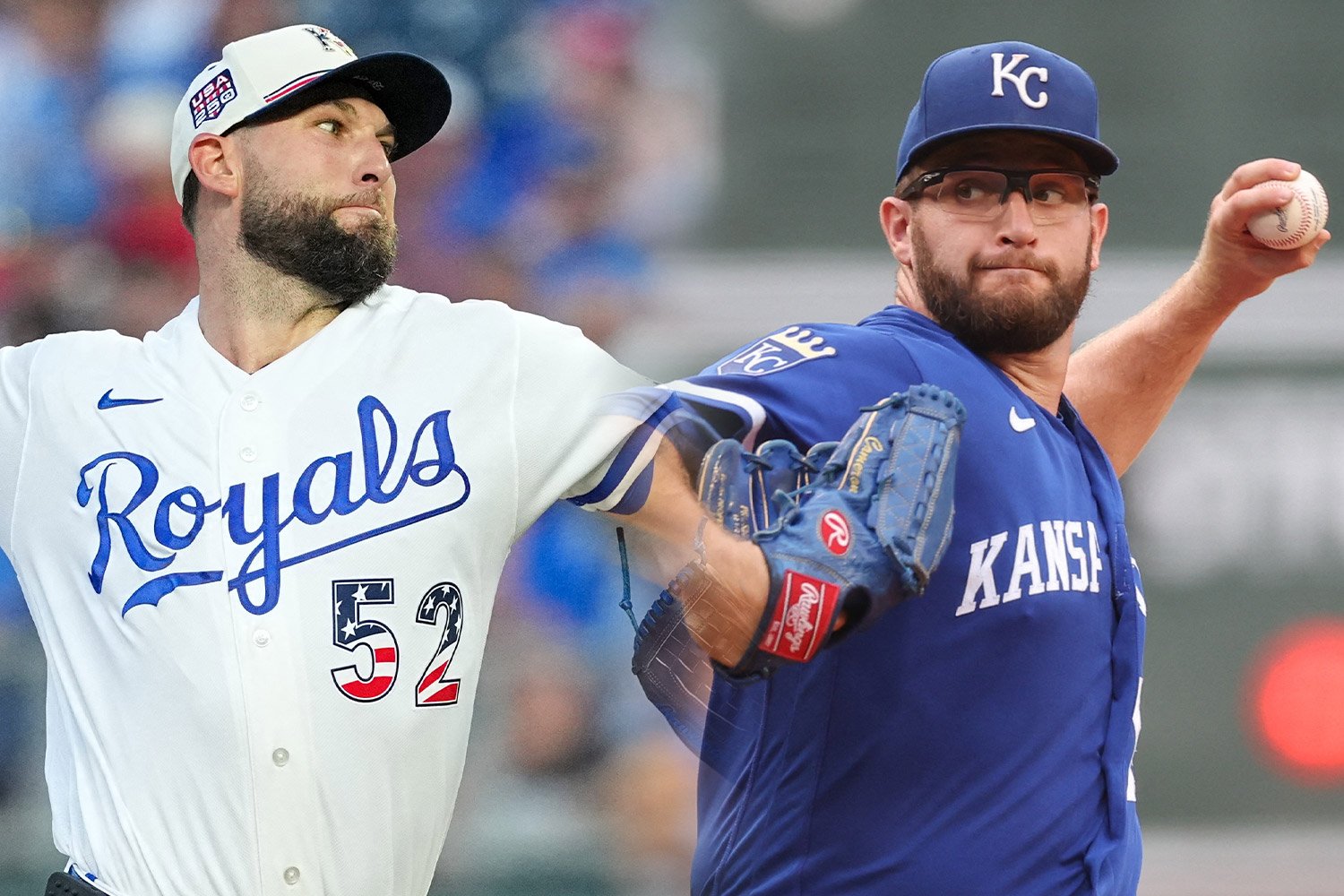 With the 2026 season behind us, it’s time to review each player's performance. This is the third part of this series; find previous entries here: Outfielders & DH Infielders The Royals entered spring training in 2026 with eight pitchers who had major-league experience and were capable of starting in the rotation. By the end of the season, only three of those pitchers remained on the active roster, and they had to transition Daniel Lynch IV from the bullpen to the rotation (he will be covered in the bullpen edition). The Royals turned to 13 different pitchers to make starts in the 2026 season. Today, we'll focus on the nine pitchers who were primarily starters, ordered by innings pitched. The four other pitchers who started at least a game for the Royals will be covered in the bullpen edition. Michael Wacha: A Wacha threw for a career-high 200 2/3 innings in 2026, and he was one of only three pitchers to eclipse the 200 innings mark this season. He led all Royals starters with a 3.32 ERA and earned his second All-Star appearance, his first since 2015. In a season with so many injuries in the rotation in addition to a struggling bullpen, Wacha offered stability and consistency as the workhorse of the pitching staff. Noah Cameron: A- Cameron had an excellent follow-up to his rookie season, where he finished fourth in AL Rookie-of-the-Year voting. Cameron led all Royals pitchers with 2.8 fWAR and had a solid 4.11 ERA across 177 1/3 innings. Cameron was held back by a slow start to the season, but he was able to turn a corner in late July when he started to call his own pitches and changed his pitch mix. He did not finish the season as strong, surrendering at least four earned runs in three of his starts in September. Cameron has proven that he can be a key piece in the Royals rotation, but he needs to prove that he can maintain that consistency over a full season. Seth Lugo: C+ Lugo threw 172 1/3 innings, and his 5.17 ERA was the highest among all qualified pitchers in the majors this season. His ERA has jumped up at least one run in each of the past two seasons after finishing second in AL Cy Young voting in 2024. Lugo is in danger of trending in the wrong direction, but he still provides value by eating innings for the thin rotation. Randy Dobnak: B After triggering his upward mobility clause with the Seattle Mariners, Dobnak was traded to the Royals on June 17 for cash considerations. He started hot with the Royals, not allowing more than two runs in each of his first six appearances with the club, and his ERA stayed at 2.00 or below through his first 10 appearances. The wheels fell off in September, when he posted a 7.15 ERA across his five starts to close out the season. Dobnak also struggled to go deep into games, averaging just under five innings pitched per appearance. Had Dobnak not fallen off at the end of the season, the grade here would have been higher, but his ability to come in midseason and make starts for a rotation that lost multiple arms to season-ending injuries was extremely valuable. Luinder Avila: C- Avila had a rocky first start of the season that temporarily moved him back to bullpen duties. He saw a return to the rotation in June after multiple pitchers landed on the IL. He finished the season with a 5.53 ERA across 70 innings pitched. When you look at his splits, he had a 6.27 ERA in 51 2/3 innings as a starter and a 3.44 ERA in 18 1/3 innings as a reliever. His season ended early after undergoing Tommy John surgery in early August. Stephen Kolek: C Kolek started the season in Omaha after a successful short stint with the Royals in 2025. He returned to the major-league rotation in May to fill in for injured starters. He finished with a 4.50 ERA across 54 innings in 10 starts and unfortunately also ended his season with Tommy John surgery. Kolek showed his upside with a few different shutout performances, including a complete game shutout against the Mariners on May 23, but also showed the opposite with multiple outings allowing at least four runs. Kris Bubic: B- Bubic has had a career filled with injury woes, and 2026 was no exception. Bubic had a 4.11 ERA across 50 1/3 innings in nine starts with the Royals. However, unlike other Royals starters, his injury was not season-ending. Bubic was traded to the Dodgers before the trade deadline in exchange for pitching prospect Carlos Durán. Bubic gets bonus points for providing the Royals with trade value before reaching free agency, allowing the team to turn his limited season into a pitching prospect rather than losing him for nothing. Cole Ragans: D Ragans has not been able to stay healthy after his 2024 season, when he finished fourth in AL Cy Young voting. In 2026, he managed to make eight starts with a 4.84 ERA across 35 1/3 innings. In early July, Ragans underwent surgery to repair his left UCL and faces another lengthy recovery. Bailey Falter: F Falter made two starts among his five appearances with the Royals in 2026. In his 9 2/3 innings, he had an ERA of 13.97. Falter was designated for assignment on May 27 and was packaged with Lane Thomas in a trade to the Braves. Before his DFA, Falter voiced his frustration with his lack of a defined role in the pitching staff and being asked to start on short notice. That, however, will not impact his grade since his performance on the mound speaks for itself. What do you think about my grades? Who would you grade differently? Share your thoughts in the comments, and make sure to catch the other Royals' grades.
-
- 3
-

-
- michael wacha
- noah cameron
- (and 8 more)
-
Image courtesy of Charles LeClaire-Imagn Images / William Purnell-Imagn Images With the 2026 season behind us, it’s time to review each player's performance. This series will also look at infielders, starting pitchers, and relief pitchers. The Royals fielded 11 different players in the outfield, eight of whom will be reviewed here as primary outfielders, and the other three will be graded with the infielders. Eleven outfielders is a noticeable decrease from the 17(!) outfielders that the Royals trotted out in 2025. With this year’s group much more consistent than the previous year, did the consistency translate to good grades? Below you will find the eight primary outfielders and one primary designated hitter listed in order of most to least plate appearances with a few lines to explain their grades. Salvador Perez: D Perez has officially ceded the catching role to Carter Jensen with 44 appearances behind the plate. Only four qualified hitters had a lower wRC+ than Perez’s mark of 77, and only Bobby Witt Jr. had more plate appearances than Perez. His slash line of .229/.274/.383 all became new career lows. A team that had playoff aspirations in 2026 needs more production from the DH position. The only thing saving his grade was that he became the franchise leader in home runs by hitting home run #318 in July. Jac Caglianone: A Caglianone had an excellent bounce-back after a rookie season that did not live up to expectations. He led all Royals in batting average (.289), slugging percentage (.494), weighted on-base average (.360), and wRC+ (129). Caglianone proved that he can be a middle-of-the-order threat in a major-league lineup. The next step in his progression is to become more consistent and avoid months like May and July where he had an OPS of .638 and .614, respectively. While Caglianone is not expected to be an elite fielder, there can be more improvement in his fielding, though that is admittedly nitpicking. Isaac Collins: C While the trade for Collins was graded a B-, his performance this season is graded on a different rubric. The Royals needed every left fielder, but Collins left a lot to be desired at the plate. His 83 wRC+ ranked second-to-last among qualified left fielders, and his .320 OBP is a significant drop from his .368 mark in 2025 with the Brewers. General manager J.J. Picollo mentioned that the team will look for offensive upgrades in the outfield, which would imply Collins’s role with the 2027 Royals may be in jeopardy. Lane Thomas: A Thomas was brought in to be a platoon option for Kyle Isbel but was forced into a bigger role when Isbel landed on the injured list. Without the stability that Thomas offered, the Royals’ center field situation would likely have been much worse. His slash line of .232/.326/.393 with a 101 wRC+ helped make him an attractive trade piece, and he was ultimately sent to the Atlanta Braves. The Royals received a couple of minor-league pitchers in return. This was probably the best-case scenario for a one-year rental player on a team out of the playoff picture. Kyle Isbel: D+ Isbel missed a large chunk of the season with plantar fasciitis. When healthy, his production at the plate was poor. He slashed .224/.268/.323 with a 61 wRC+. While his defense is still solidly above league-average, he saw regression in his fielding run value and, most notably, his arm strength. Since 2022, his arm strength has decreased each year and reached 81.2 mph, which places him in the 27th percentile. With his defense trending in the wrong direction, the Royals would prefer more output from the plate. Unless he can prove to be a bigger threat at the plate, Isbel may also be displaced by potential outfield acquisitions this coming offseason. Starling Marte: F Marte was signed to offer a platoon option for Caglianone in right field against left-handed starters. However, by only a couple of months into the season, Caglianone was outpacing Marte’s lefty splits. He slashed a career low of .242/.298/.314 across 168 plate appearances. With no defined role in the offense, Marte was released on August 15th. John Rave: B- Rave saw limited opportunities at the major-league level with only 161 plate appearances. He slashed .232/.314/.430 with a 105 wRC+ and 1.0 fWAR, which is a noticeable improvement from his rookie season in 2025, and finished the season with hits in eight of his last nine appearances. It is difficult to grade a player with limited opportunities, but his production in Triple-A Omaha makes it difficult not to give him opportunities in the majors. Kameron Misner: D Misner showed promising signs with strong performances in Omaha, slashing .286/.378/.563 with a 137 wRC+. However, he was not able to continue that level of production in the majors, where he slashed .220/.256/.244 with a 37 wRC+. Unlike Rave, his Triple-A performance did not translate well to Kansas City, and he was designated for assignment in July. Matthew Lugo: Incomplete Lugo only had 15 plate appearances in 2026 and reached base three times. It is nearly impossible to grade a player with such a low sample size, but if he had hit the ground running when called upon, the Royals would have found a way to give him more opportunities late in the season. What do you think about my grades? Who would you grade differently? Share your thoughts in the comments, and check back soon to read about more Royals grades. View full article
-
Grading Every 2026 Royals Player: Outfielders & Designated Hitters
Philip Ruo posted an article in Royals
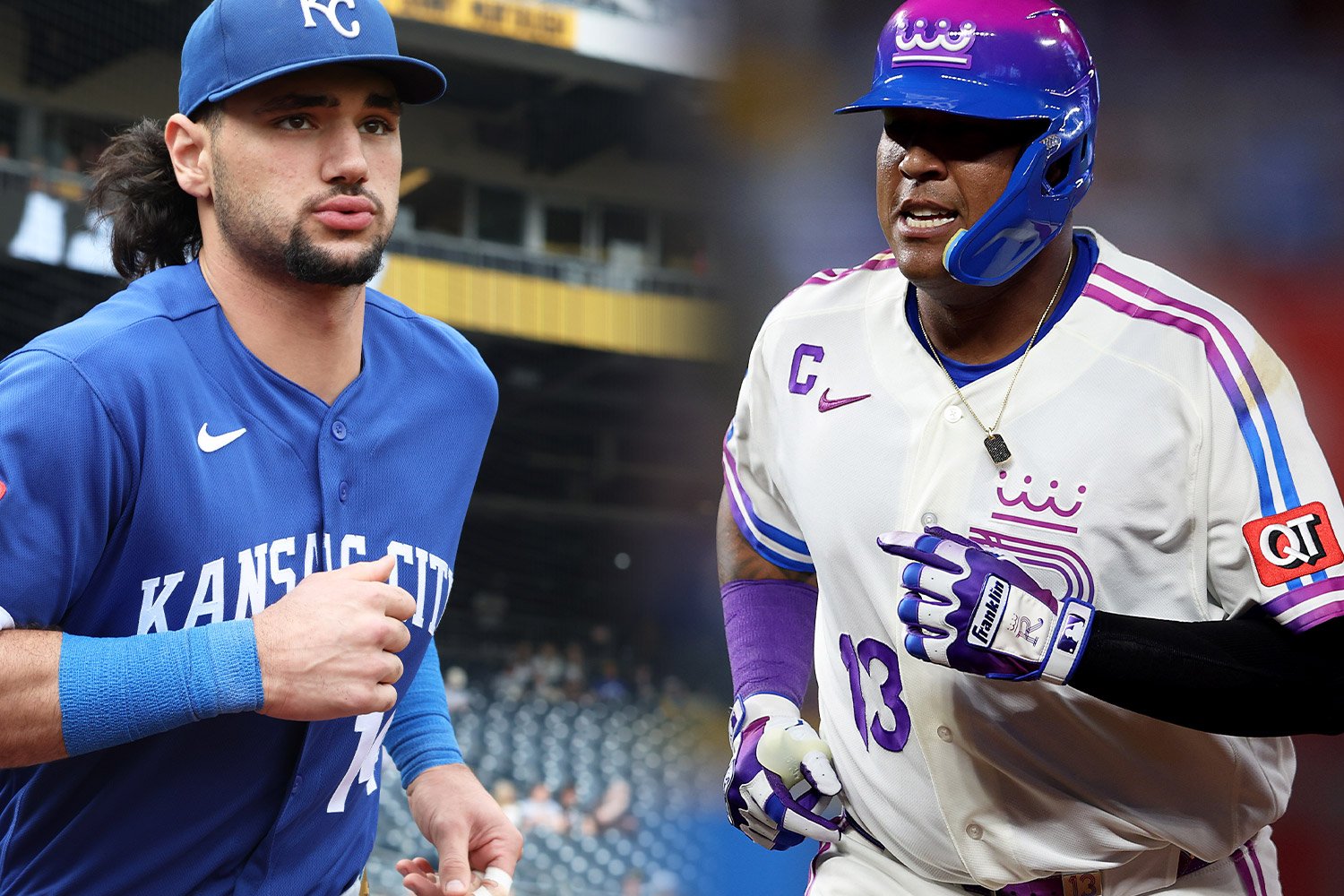 With the 2026 season behind us, it’s time to review each player's performance. This series will also look at infielders, starting pitchers, and relief pitchers. The Royals fielded 11 different players in the outfield, eight of whom will be reviewed here as primary outfielders, and the other three will be graded with the infielders. Eleven outfielders is a noticeable decrease from the 17(!) outfielders that the Royals trotted out in 2025. With this year’s group much more consistent than the previous year, did the consistency translate to good grades? Below you will find the eight primary outfielders and one primary designated hitter listed in order of most to least plate appearances with a few lines to explain their grades. Salvador Perez: D Perez has officially ceded the catching role to Carter Jensen with 44 appearances behind the plate. Only four qualified hitters had a lower wRC+ than Perez’s mark of 77, and only Bobby Witt Jr. had more plate appearances than Perez. His slash line of .229/.274/.383 all became new career lows. A team that had playoff aspirations in 2026 needs more production from the DH position. The only thing saving his grade was that he became the franchise leader in home runs by hitting home run #318 in July. Jac Caglianone: A Caglianone had an excellent bounce-back after a rookie season that did not live up to expectations. He led all Royals in batting average (.289), slugging percentage (.494), weighted on-base average (.360), and wRC+ (129). Caglianone proved that he can be a middle-of-the-order threat in a major-league lineup. The next step in his progression is to become more consistent and avoid months like May and July where he had an OPS of .638 and .614, respectively. While Caglianone is not expected to be an elite fielder, there can be more improvement in his fielding, though that is admittedly nitpicking. Isaac Collins: C While the trade for Collins was graded a B-, his performance this season is graded on a different rubric. The Royals needed every left fielder, but Collins left a lot to be desired at the plate. His 83 wRC+ ranked second-to-last among qualified left fielders, and his .320 OBP is a significant drop from his .368 mark in 2025 with the Brewers. General manager J.J. Picollo mentioned that the team will look for offensive upgrades in the outfield, which would imply Collins’s role with the 2027 Royals may be in jeopardy. Lane Thomas: A Thomas was brought in to be a platoon option for Kyle Isbel but was forced into a bigger role when Isbel landed on the injured list. Without the stability that Thomas offered, the Royals’ center field situation would likely have been much worse. His slash line of .232/.326/.393 with a 101 wRC+ helped make him an attractive trade piece, and he was ultimately sent to the Atlanta Braves. The Royals received a couple of minor-league pitchers in return. This was probably the best-case scenario for a one-year rental player on a team out of the playoff picture. Kyle Isbel: D+ Isbel missed a large chunk of the season with plantar fasciitis. When healthy, his production at the plate was poor. He slashed .224/.268/.323 with a 61 wRC+. While his defense is still solidly above league-average, he saw regression in his fielding run value and, most notably, his arm strength. Since 2022, his arm strength has decreased each year and reached 81.2 mph, which places him in the 27th percentile. With his defense trending in the wrong direction, the Royals would prefer more output from the plate. Unless he can prove to be a bigger threat at the plate, Isbel may also be displaced by potential outfield acquisitions this coming offseason. Starling Marte: F Marte was signed to offer a platoon option for Caglianone in right field against left-handed starters. However, by only a couple of months into the season, Caglianone was outpacing Marte’s lefty splits. He slashed a career low of .242/.298/.314 across 168 plate appearances. With no defined role in the offense, Marte was released on August 15th. John Rave: B- Rave saw limited opportunities at the major-league level with only 161 plate appearances. He slashed .232/.314/.430 with a 105 wRC+ and 1.0 fWAR, which is a noticeable improvement from his rookie season in 2025, and finished the season with hits in eight of his last nine appearances. It is difficult to grade a player with limited opportunities, but his production in Triple-A Omaha makes it difficult not to give him opportunities in the majors. Kameron Misner: D Misner showed promising signs with strong performances in Omaha, slashing .286/.378/.563 with a 137 wRC+. However, he was not able to continue that level of production in the majors, where he slashed .220/.256/.244 with a 37 wRC+. Unlike Rave, his Triple-A performance did not translate well to Kansas City, and he was designated for assignment in July. Matthew Lugo: Incomplete Lugo only had 15 plate appearances in 2026 and reached base three times. It is nearly impossible to grade a player with such a low sample size, but if he had hit the ground running when called upon, the Royals would have found a way to give him more opportunities late in the season. What do you think about my grades? Who would you grade differently? Share your thoughts in the comments, and check back soon to read about more Royals grades.
-
- 2
-
-
- salvador perez
- jac caglianone
- (and 8 more)
-
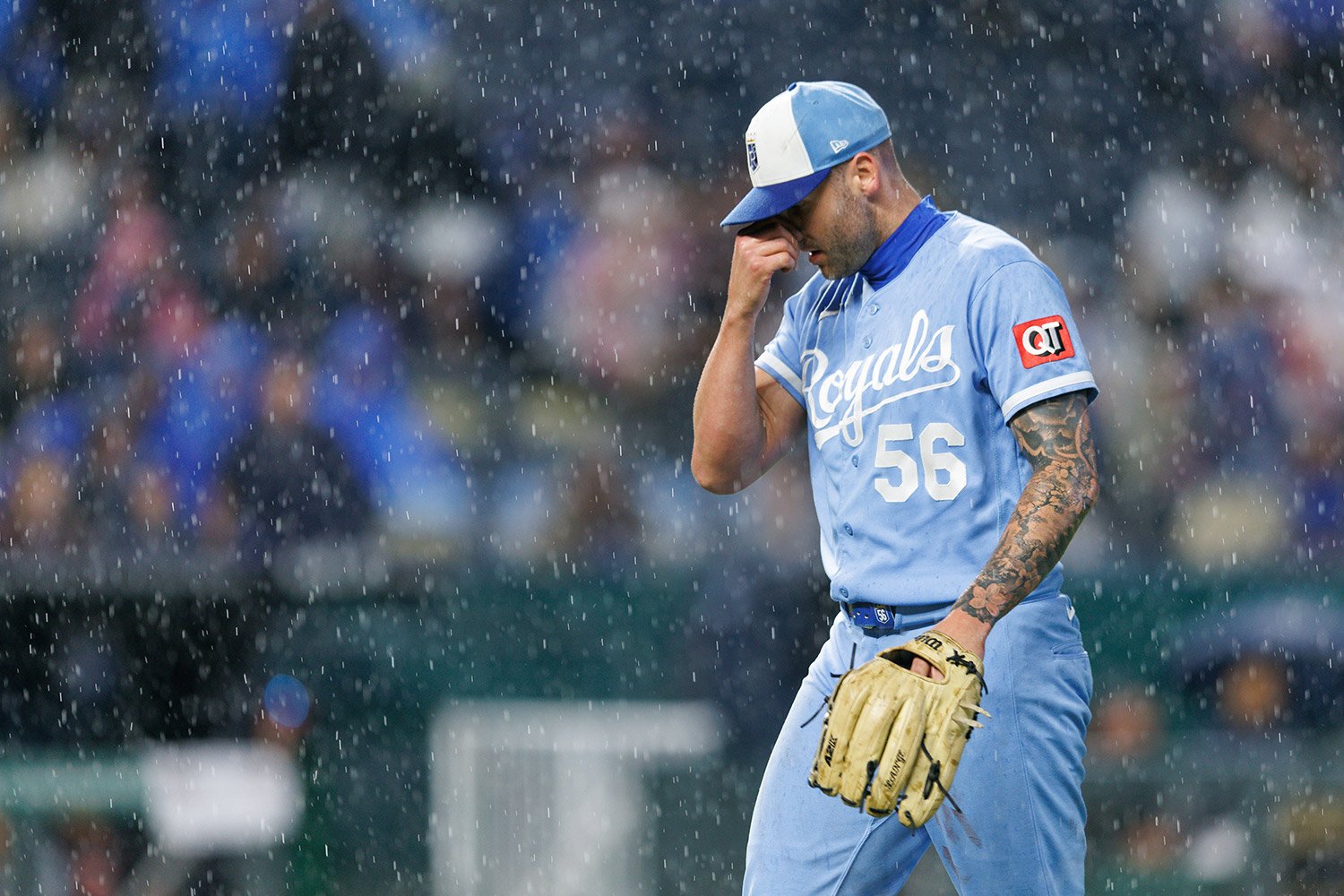 The Royals’ pitching acquisitions focused on adding bullpen arms. Of the seven pitchers the Royals acquired last offseason who spent time on the major-league roster, only one made a start. Which of these relievers were able to make a positive impact for the Royals in 2026? These grades are based on a mixture of the decision at the time it was made combined with how the season eventually panned out. The pitchers are ordered from most to least innings pitched. Alex Lange Lange was signed to a one-year contract worth $1,925,000. Lange was coming off a season in which he only pitched one inning for the Tigers and after recovering from a lat injury that kept him sidelined for nearly 15 months. Since joining the Royals, Lange has posted a 6.18 ERA over 59 ⅔ innings and -0.8 fWAR. Lange’s season wasn’t a struggle for the whole season. In May, he had a stretch of nine appearances without giving up a run. During that time, he assumed closing responsibilities after Lucas Erceg struggled and lost his job as the closer. Lange, however, would also eventually lose the closer role. Lange has been particularly susceptible to allowing hard contact and struggled in finding the strike zone. With high walk rates this season and allowing an opposing wOBA of .367, Lange was susceptible to allowing big innings. He allowed at least two earned runs in nine of his 58 appearances. Lange was able to stay healthy following his recovery last year and leads all Royals pitchers in appearances. At least the Royals weren't paying anywhere near the top of the reliever market for his level of production. Grade: D+ Matt Strahm Strahm was acquired in a trade that sent Jonathan Bowlan to the Phillies. He was coming off three consecutive seasons with at least 1.6 fWAR and had experience pitching in high-leverage situations. Strahm was penciled in to join Carlos Estevez and Erceg as the anchors of the bullpen. Unfortunately, nothing went right for Strahm in 2026. Strahm threw 35 ⅔ innings with a 7.32 ERA and -1.3 fWAR. His ERA mark is a career high, along with his 7.14 FIP. He saw his strikeout rate plummet from 27.3% last season to 18.6%, and his fastball velocity decreased from 92.3 mph to 91.3 mph. His season can be encapsulated by the moment he gave up a walk-off grand slam on an 0-2 count against the Twins on July 30th. Strahm had the opportunity to seal the game in a save opportunity, but was unable to make the pitch. Strahm was designated for assignment a week later and was officially released on August 8th after clearing waivers. Strahm did not join another team for the remainder of the season. To make matters worse, Bowlan has performed well for the Phillies. Out of the bullpen, he has a 3.36 ERA with a 0.8 fWAR over 56 ⅓ innings in 59 appearances. It’s one thing for a trade to not pan out, but for the player who was sent away to find success at his new club is just adding insult to injury. Grade: F Mason Black Black was acquired in a trade from the Giants in exchange for Logan Martin. Black spent most of the season going back and forth between Kansas City and Omaha, and has thrown for 31 ⅓ innings with a 4.13 ERA and -0.5 fWAR. While his performance has not been as catastrophic as Strahm’s this season, his key Statcast metrics have been below average across the board. Most projections for Black going into the season were modest, with predictions placing him at near or slightly above replacement level, but he was unfortunately unable to meet that expectation. Next season, he will be entering his age-27 season and will be under team control through the 2031 season. Should the Royals retain him, there will still be time for Black to improve and grow into a role on the major-league roster. However, until he can prove otherwise, the Royals would be wise to examine other solutions for next year’s bullpen. Grade: C- Jose Cuas Cuas threw for 23 ⅓ innings out of the bullpen with a 2.31 ERA, 2.89 FIP and 0.4 fWAR. His fWAR ranks 3rd-highest among Royals relievers. Cuas was signed to a minor league contract in the offseason and, like Black, spent much of the season in Kansas City and Omaha. He was mostly used as a middle-relief option and had moderate success. He did not see many opportunities in high-leverage situations, but he earned five holds and only one blown lead when called upon in close games. Considering he was signed to a minor league deal and outperformed many of the relievers this season, this signing should be considered a success. Grade: A- Eli Morgan Morgan also joined the Royals on a minor league contract and spent a lot of his season going between the majors and Triple-A. Morgan threw for 19 ⅓ innings with a 5.12 ERA and -0.3 fWAR. While not able to find his footing in the major-league bullpen, Morgan certainly earned his opportunities with strong performances in Omaha. He threw for 25 ⅔ innings with a 1.40 ERA for the Stormchasers. Morgan was designated for assignment on August 13 and signed for the Yankees after clearing waivers and electing free agency. He has not made a major-league appearance for New York yet, but his performance in Omaha at least demonstrated enough to earn another opportunity with the Yankees. While Morgan’s time in Kansas City certainly could not be classified as a success, he was available as an option for a bullpen that was unable to find answers all season. Grade: C Nick Mears Mears was packaged with Isaac Collins in a trade that sent Angel Zerpa to the Brewers. The Collins side of the deal was graded a B-, so how did Mears fare for his part of the trade? Unfortunately, Mears had less success in Kansas City than Isaac Collins. Mears threw for 19 ⅓ innings with a 5.12 ERA and 0.0 fWAR. His appearances were often in the sixth or seventh innings and would run hot and cold. He also was unable to strand inherited runners, allowing at least one run to score in all three appearances when he entered with runners on base. Mears’s season ended prematurely in late May, when he ultimately found himself on the 60-day injured list with season-ending shoulder surgery. The Royals still have one year left of control, so he could potentially rebound next season. Grade: C Mitch Spence Spence was acquired from the Athletics in exchange for A.J. Causey. Spence is the offseason acquisition to make a start in this year’s regular season. He made two relief appearances along with his lone start to total 9 ⅓ innings with a 21.21 ERA. With such a small sample, the ERA should be taken with a grain of salt. His 74 innings in Triple-A have not been earth-shattering with a 5.35 ERA and 4.96 FIP, but his four remaining years of team control could allow him more opportunities to impress in Kansas City if the Royals decide to keep him around. Grade: D+ The Royals had targeted the bullpen as an area for improvement last offseason, and unfortunately, the majority of those additions have not panned out (yet). The 2026 Royals bullpen combined for a 5.05 ERA (ranked 30th) and -2.9 fWAR (29th). J.J. Picollo and the front office will have plenty of work to do if they want to turn the bullpen into a strength heading into 2027.
-
- 3
-
-
- alex lange
- matt strahm
- (and 6 more)
-
Strahm was designated for assignment a week later and was officially released on August 8th after clearing waivers. Strahm did not join another team for the remainder of the season. To make matters worse, Bowlan has performed well for the Phillies. Out of the bullpen, he has a 3.36 ERA with a 0.8 fWAR over 56 ⅓ innings in 59 appearances. It’s one thing for a trade to not pan out, but for the player who was sent away to find success at his new club is just adding insult to injury. Grade: F Mason Black Black was acquired in a trade from the Giants in exchange for Logan Martin. Black spent most of the season going back and forth between Kansas City and Omaha, and has thrown for 31 ⅓ innings with a 4.13 ERA and -0.5 fWAR. While his performance has not been as catastrophic as Strahm’s this season, his key Statcast metrics have been below average across the board. Most projections for Black going into the season were modest, with predictions placing him at near or slightly above replacement level, but he was unfortunately unable to meet that expectation. Next season, he will be entering his age-27 season and will be under team control through the 2031 season. Should the Royals retain him, there will still be time for Black to improve and grow into a role on the major-league roster. However, until he can prove otherwise, the Royals would be wise to examine other solutions for next year’s bullpen. Grade: C- Jose Cuas Cuas threw for 23 ⅓ innings out of the bullpen with a 2.31 ERA, 2.89 FIP and 0.4 fWAR. His fWAR ranks 3rd-highest among Royals relievers. Cuas was signed to a minor league contract in the offseason and, like Black, spent much of the season in Kansas City and Omaha. He was mostly used as a middle-relief option and had moderate success. He did not see many opportunities in high-leverage situations, but he earned five holds and only one blown lead when called upon in close games. Considering he was signed to a minor league deal and outperformed many of the relievers this season, this signing should be considered a success. Grade: A- Eli Morgan Morgan also joined the Royals on a minor league contract and spent a lot of his season going between the majors and Triple-A. Morgan threw for 19 ⅓ innings with a 5.12 ERA and -0.3 fWAR. While not able to find his footing in the major-league bullpen, Morgan certainly earned his opportunities with strong performances in Omaha. He threw for 25 ⅔ innings with a 1.40 ERA for the Stormchasers. Morgan was designated for assignment on August 13 and signed for the Yankees after clearing waivers and electing free agency. He has not made a major-league appearance for New York yet, but his performance in Omaha at least demonstrated enough to earn another opportunity with the Yankees. While Morgan’s time in Kansas City certainly could not be classified as a success, he was available as an option for a bullpen that was unable to find answers all season. Grade: C Nick Mears Mears was packaged with Isaac Collins in a trade that sent Angel Zerpa to the Brewers. The Collins side of the deal was graded a B-, so how did Mears fare for his part of the trade? Unfortunately, Mears had less success in Kansas City than Isaac Collins. Mears threw for 19 ⅓ innings with a 5.12 ERA and 0.0 fWAR. His appearances were often in the sixth or seventh innings and would run hot and cold. He also was unable to strand inherited runners, allowing at least one run to score in all three appearances when he entered with runners on base. Mears’s season ended prematurely in late May, when he ultimately found himself on the 60-day injured list with season-ending shoulder surgery. The Royals still have one year left of control, so he could potentially rebound next season. Grade: C Mitch Spence Spence was acquired from the Athletics in exchange for A.J. Causey. Spence is the offseason acquisition to make a start in this year’s regular season. He made two relief appearances along with his lone start to total 9 ⅓ innings with a 21.21 ERA. With such a small sample, the ERA should be taken with a grain of salt. His 74 innings in Triple-A have not been earth-shattering with a 5.35 ERA and 4.96 FIP, but his four remaining years of team control could allow him more opportunities to impress in Kansas City if the Royals decide to keep him around. Grade: D+ The Royals had targeted the bullpen as an area for improvement last offseason, and unfortunately, the majority of those additions have not panned out (yet). The 2026 Royals bullpen combined for a 5.05 ERA (ranked 30th) and -2.9 fWAR (29th). J.J. Picollo and the front office will have plenty of work to do if they want to turn the bullpen into a strength heading into 2027. View full article
-
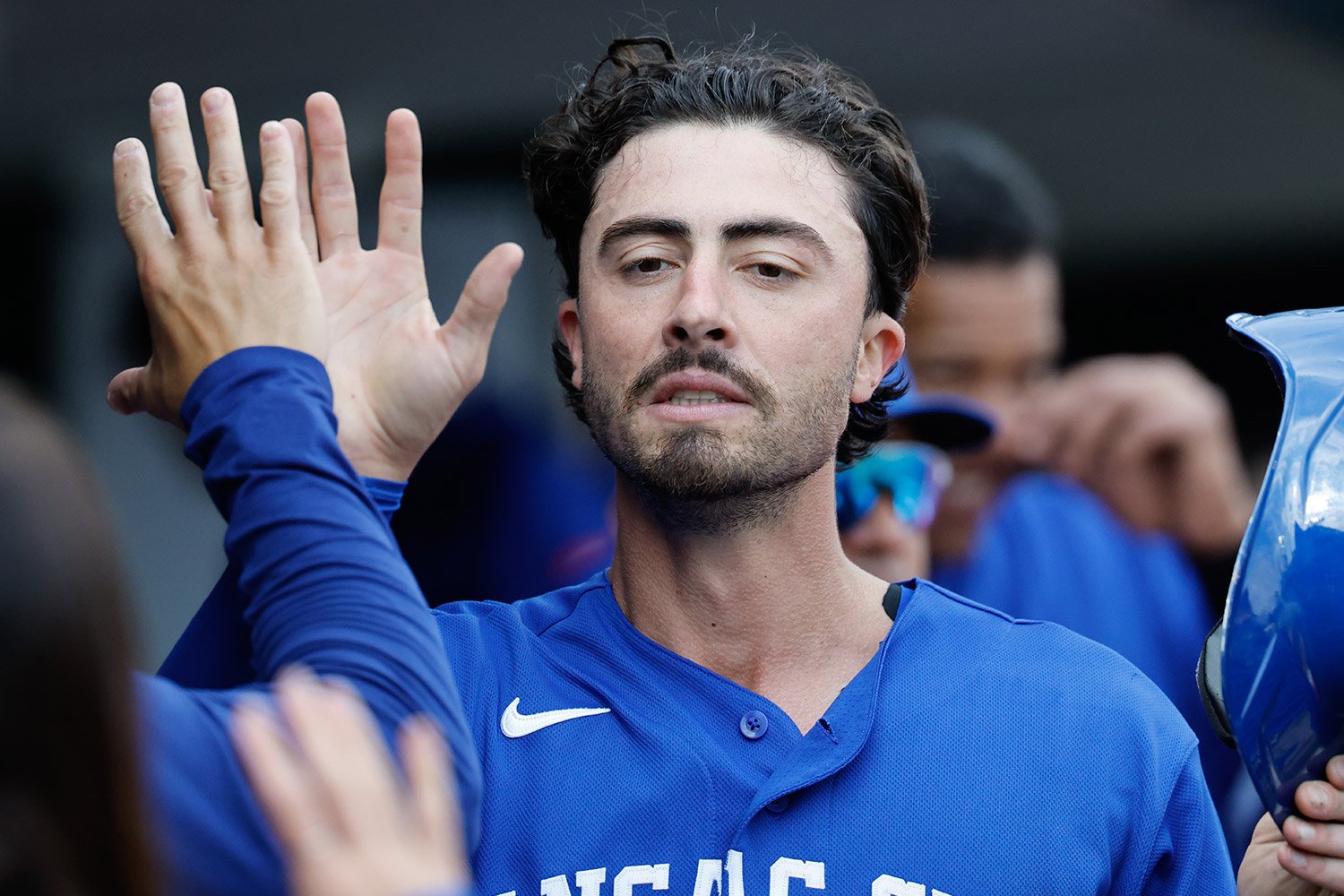 The 2025 Royals had clear issues in the lineup that needed to be addressed. Their main goals were to find an everyday left fielder, right-handed outfield options to platoon with Kyle Isbel and Jac Caglianone, and solidify second base. How did J.J. Picollo, with the benefit of hindsight, fare in addressing these needs? These grades are based on a mixture of the decision at the time it was made combined with how the season eventually panned out. Trading For Isaac Collins Collins was acquired from the Brewers along with Nick Mears in exchange for Angel Zerpa. Left field was a position of difficulty for the Royals in 2025. All 13 players who played in left combined for a 75 wRC+ and -0.7 fWAR, which ranked 29th and 28th, respectively, in the majors in 2025. Collins was brought in to solidify that position. In one respect, Collins succeeded in solidifying left field. Collins accounted for 78% of the plate appearances from Royals left fielders in 2026. He also provided a noticeable improvement in offensive production with a slash line of .214/.321/.324 with an 84 wRC+ and 0.2 fWAR. However, his wRC+ and fWAR rank second-to-last and last among qualified primary left fielders. Collins was brought in for his on-base skills and plate discipline, but he saw a noticeable decline in his xwOBA from .322 in 2025 to .294 in 2026, which places him in the 15th percentile in the majors. Collins still has four years of team control remaining, so his story in Kansas City is far from over. However, in order for the Royals to push for an improved 2027, they might consider moving on from Collins or relegating him to the bench as a fourth outfielder. Grade: B- Signing Lane Thomas Thomas was signed to a one-year deal, worth $5.25 million. He was signed for a relatively low salary after an injury-plagued 2025, in which he played only 39 games. He was signed to be a right-handed platoon bat, but ultimately saw more playing time in center field as Isbel spent an extended period on the IL. Thomas slashed .232/.326/.393 with a 102 wRC+ and 0.8 fWAR. All of those marks represent an improvement over Isbel, at least offensively. With the Royals being sellers at the trade deadline, Thomas’s versatility and offensive improvement made him a natural trade candidate. Thomas was sent to the Braves with Bailey Falter in exchange for a couple of minor-league starting pitchers in Lucas Braun and Carter Holton. While neither pitcher made the Royals Keep top prospects list, Braun is ranked the 16th-best prospect in the Royals’ system according to MLB.com and 27th according to FanGraphs. Holton is ranked 28th according to FanGraphs. Ultimately, Thomas offered improved offensive output in center field and was able to net the Royals a couple of prospects in a trade before he was set to re-enter free agency. Time will tell if either prospect is able to make an impression for the Royals in the future, but not all impending free agents are able to be traded. Grade: A Signing Starling Marte Marte was also brought in on a cheap one-year contract worth $1 million. His main role was to be a platoon option for Caglianone in right field and provide an additional option at designated hitter. Marte’s time in Kansas City was not a success. He slashed .242/.298/.314 with a 71 wRC+ and -0.5 fWAR. Despite being brought in to be a right-handed platoon bat, his wRC+ only improved to 79, worse than his platoon partner Caglianone, who has posted a 92 wRC+ against lefties. Marte’s regression ultimately opened the door for Caglianone to start against lefties and take on his role as an everyday player. Unlike Thomas, Marte’s performance was not good enough to entice possible trade partners at the deadline. He was released on August 19th and has remained a free agent since then. While his time in Kansas City was not successful, the low contract prevents this from tanking his grade. Grade: D Retaining Jonathan India Not a new signing, but there was a decision to be made for India's future in Kansas City. India was brought in the previous year to be the Royals’ leadoff man. After an underwhelming 2025 season where he slashed .233/.323/.346 with an 89 wRC+ and -0.2 fWAR, he was a non-tender candidate. Letting India go would have allowed the Royals extra salary budget to spread across improving the team while keeping Michael Massey, Nick Loftin, and Tyler Tolbert on the 40-man roster to play second base. The Royals decided to pay India, and they agreed to an $8 million contract in his last year before hitting free agency. The contract did not go well for the Royals since, after only 17 games played and 58 plate appearances, his season ended to undergo labral repair on his left shoulder. While the injury itself should not be held against the Royals, it highlights the downside of committing $8 million to a player who already had legitimate questions surrounding his ability to contribute. The questionable decision resulted in a disastrous outcome. Grade: F Minor-League Deals Josh Rojas Rojas was signed to a minor league contract in the offseason. Rojas was looking for a bounce-back season after slashing .180/.252/.259 with a 43 wRC+ last season with the White Sox. Rojas was never meant to be an everyday player for the Royals, but he offered major-league experience and was available to be called up when Maikel Garcia hit the injured list. His slash line of .238/.278/.337 with a 68 wRC+ was not flashy, but certainly an improvement from last season. Grade: C Elias Diaz Diaz was signed as the third catcher on a minor league contract. The former All-Star catcher offered insurance in case Jensen had a slow start to his first full season in the majors. With a slash line of .227/.261/.591 with a 127 wRC+, Diaz made the most of his small sample of 23 plate appearances in Kansas City before being released in June. Grade: C Kameron Misner Misner was acquired in a trade for a player to be named later (Matthew Hoskins). Misner showed promising signs in Triple-A Omaha, slashing .286/.378/.563 with a 137 wRC+ that earned him a call-up to the majors on June 10. He failed to carry that strong start to Kansas City, where he slashed .220/.256/.244 with a 37 wRC+ before being designated for assignment on July 22. A few days later, he was traded to the Phillies for cash considerations. Misner was a low-risk player for whom they gave up very little and were ultimately able to get some (albeit small) return when he left. Grade: D Overall, the Royals offense improved in 2026. The team as a whole went from a 93 wRC+ to a 97 wRC+. However, with the exception of Collins, all offseason acquisitions are either already out of the organization or set to hit free agency. Most of the improvements in offense can be attributed to the emergence of Caglianone and Carter Jensen. To take the next step offensively in 2027, the Royals will need to add more production to this lineup that still has room for improvement.
-
- 2
-
-
- isaac collins
- lane thomas
- (and 5 more)
-
Image courtesy of Rick Osentoski-Imagn Images The 2025 Royals had clear issues in the lineup that needed to be addressed. Their main goals were to find an everyday left fielder, right-handed outfield options to platoon with Kyle Isbel and Jac Caglianone, and solidify second base. How did J.J. Picollo, with the benefit of hindsight, fare in addressing these needs? These grades are based on a mixture of the decision at the time it was made combined with how the season eventually panned out. Trading For Isaac Collins Collins was acquired from the Brewers along with Nick Mears in exchange for Angel Zerpa. Left field was a position of difficulty for the Royals in 2025. All 13 players who played in left combined for a 75 wRC+ and -0.7 fWAR, which ranked 29th and 28th, respectively, in the majors in 2025. Collins was brought in to solidify that position. In one respect, Collins succeeded in solidifying left field. Collins accounted for 78% of the plate appearances from Royals left fielders in 2026. He also provided a noticeable improvement in offensive production with a slash line of .214/.321/.324 with an 84 wRC+ and 0.2 fWAR. However, his wRC+ and fWAR rank second-to-last and last among qualified primary left fielders. Collins was brought in for his on-base skills and plate discipline, but he saw a noticeable decline in his xwOBA from .322 in 2025 to .294 in 2026, which places him in the 15th percentile in the majors. Collins still has four years of team control remaining, so his story in Kansas City is far from over. However, in order for the Royals to push for an improved 2027, they might consider moving on from Collins or relegating him to the bench as a fourth outfielder. Grade: B- Signing Lane Thomas Thomas was signed to a one-year deal, worth $5.25 million. He was signed for a relatively low salary after an injury-plagued 2025, in which he played only 39 games. He was signed to be a right-handed platoon bat, but ultimately saw more playing time in center field as Isbel spent an extended period on the IL. Thomas slashed .232/.326/.393 with a 102 wRC+ and 0.8 fWAR. All of those marks represent an improvement over Isbel, at least offensively. With the Royals being sellers at the trade deadline, Thomas’s versatility and offensive improvement made him a natural trade candidate. Thomas was sent to the Braves with Bailey Falter in exchange for a couple of minor-league starting pitchers in Lucas Braun and Carter Holton. While neither pitcher made the Royals Keep top prospects list, Braun is ranked the 16th-best prospect in the Royals’ system according to MLB.com and 27th according to FanGraphs. Holton is ranked 28th according to FanGraphs. Ultimately, Thomas offered improved offensive output in center field and was able to net the Royals a couple of prospects in a trade before he was set to re-enter free agency. Time will tell if either prospect is able to make an impression for the Royals in the future, but not all impending free agents are able to be traded. Grade: A Signing Starling Marte Marte was also brought in on a cheap one-year contract worth $1 million. His main role was to be a platoon option for Caglianone in right field and provide an additional option at designated hitter. Marte’s time in Kansas City was not a success. He slashed .242/.298/.314 with a 71 wRC+ and -0.5 fWAR. Despite being brought in to be a right-handed platoon bat, his wRC+ only improved to 79, worse than his platoon partner Caglianone, who has posted a 92 wRC+ against lefties. Marte’s regression ultimately opened the door for Caglianone to start against lefties and take on his role as an everyday player. Unlike Thomas, Marte’s performance was not good enough to entice possible trade partners at the deadline. He was released on August 19th and has remained a free agent since then. While his time in Kansas City was not successful, the low contract prevents this from tanking his grade. Grade: D Retaining Jonathan India Not a new signing, but there was a decision to be made for India's future in Kansas City. India was brought in the previous year to be the Royals’ leadoff man. After an underwhelming 2025 season where he slashed .233/.323/.346 with an 89 wRC+ and -0.2 fWAR, he was a non-tender candidate. Letting India go would have allowed the Royals extra salary budget to spread across improving the team while keeping Michael Massey, Nick Loftin, and Tyler Tolbert on the 40-man roster to play second base. The Royals decided to pay India, and they agreed to an $8 million contract in his last year before hitting free agency. The contract did not go well for the Royals since, after only 17 games played and 58 plate appearances, his season ended to undergo labral repair on his left shoulder. While the injury itself should not be held against the Royals, it highlights the downside of committing $8 million to a player who already had legitimate questions surrounding his ability to contribute. The questionable decision resulted in a disastrous outcome. Grade: F Minor-League Deals Josh Rojas Rojas was signed to a minor league contract in the offseason. Rojas was looking for a bounce-back season after slashing .180/.252/.259 with a 43 wRC+ last season with the White Sox. Rojas was never meant to be an everyday player for the Royals, but he offered major-league experience and was available to be called up when Maikel Garcia hit the injured list. His slash line of .238/.278/.337 with a 68 wRC+ was not flashy, but certainly an improvement from last season. Grade: C Elias Diaz Diaz was signed as the third catcher on a minor league contract. The former All-Star catcher offered insurance in case Jensen had a slow start to his first full season in the majors. With a slash line of .227/.261/.591 with a 127 wRC+, Diaz made the most of his small sample of 23 plate appearances in Kansas City before being released in June. Grade: C Kameron Misner Misner was acquired in a trade for a player to be named later (Matthew Hoskins). Misner showed promising signs in Triple-A Omaha, slashing .286/.378/.563 with a 137 wRC+ that earned him a call-up to the majors on June 10. He failed to carry that strong start to Kansas City, where he slashed .220/.256/.244 with a 37 wRC+ before being designated for assignment on July 22. A few days later, he was traded to the Phillies for cash considerations. Misner was a low-risk player for whom they gave up very little and were ultimately able to get some (albeit small) return when he left. Grade: D Overall, the Royals offense improved in 2026. The team as a whole went from a 93 wRC+ to a 97 wRC+. However, with the exception of Collins, all offseason acquisitions are either already out of the organization or set to hit free agency. Most of the improvements in offense can be attributed to the emergence of Caglianone and Carter Jensen. To take the next step offensively in 2027, the Royals will need to add more production to this lineup that still has room for improvement. View full article
-
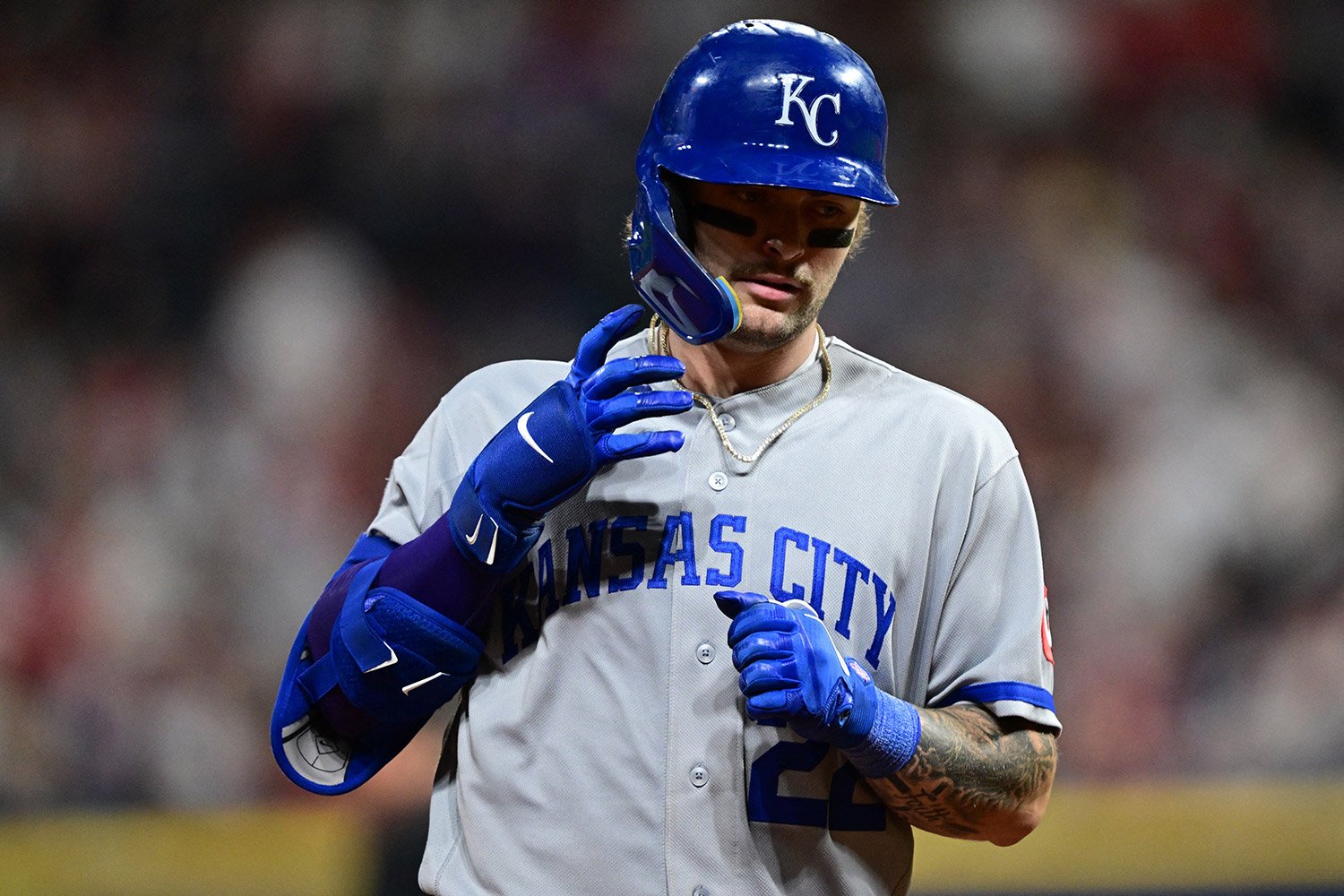 According to MLB.com , the Royals have the 19th-ranked farm system in MLB. While there is plenty of young talent in the system, most of the top-end talent is many years away from contributing at the major-league level. Of the top 11 prospects listed in the Royals Keep prospect rankings, only one of those players has progressed further than High-A Quad Cities. With very few of these prospects expected to make a push for the major-league roster in 2027, how should the Royals’ current mix of prospects impact their off-season strategy? In recent seasons, the Royals have been able to account for a top prospect to help plug a hole in the lineup. This season, Carter Jensen was the Opening Day starter at designated hitter and eventually became the everyday catcher by midseason. In 2022, Bobby Witt Jr. was the Opening Day third baseman before becoming the everyday shortstop later that year. As of now, no player appears ready to make the jump to becoming an everyday contributor. This raises a question about when the Royals’ “window” to compete is. J.J. Picollo and the Royals front office certainly think the Royals need to lean more towards win-now rather than rebuild since they decided not to trade away Wacha and Lugo. This was seen as a potential missed opportunity for the Royals to retool in a down season. However, without any top prospects waiting for their chance to be called up, losing both veteran pitchers would have left the Royals rotation very thin and potentially without a new wave of pitching talent ready to replace them. Season-ending injuries from Cole Ragans, Stephen Kolek, Luinder Avila, and Ryan Bergert already forced the Royals to call upon Daniel Lynch IV to move from the bullpen to the rotation to finish the season. These pitchers are also set to rejoin after their individual rehab schedules and return timelines. However, it would be reckless for the Royals to enter 2027 assuming that the returns of these pitchers will be enough to stabilize a rotation for a team that intends to compete for the postseason. Witt and Maikel Garcia are secured through at least 2030 via pre-arbitration extensions. Other key lineup fixtures, Jensen and Jac Caglianone, remain under team control through 2031. With the core of this lineup intact for at least the next four seasons, the Royals have a relatively clear window in which to build a competitive team. With many of their top prospects set to arrive in the majors closer to 2029, it may have made sense to retool and position themselves to make a push in a couple of years. MLB.com currently projects these top 10 prospects to reach the majors on the following timeline. .royals-prospect-table-wrapper{width:100%;overflow-x:auto;-webkit-overflow-scrolling:touch;margin:20px 0}.royals-prospect-table{width:100%;min-width:500px;border-collapse:collapse;font-family:Arial, Helvetica, sans-serif;font-size:15px;line-height:1.4;color:#333333;background-color:#ffffff}.royals-prospect-table th{background-color:#004687;color:#ffffff;font-weight:700;text-align:left;padding:11px 12px;border-bottom:4px solid #C09C5B}.royals-prospect-table td{padding:10px 12px;border-bottom:1px solid #d9e5ef}.royals-prospect-table tbody tr:nth-child(even){background-color:#f2f7fb}.royals-prospect-table tbody tr:hover{background-color:#e3f0fa}.royals-prospect-table td:last-child,.royals-prospect-table th:last-child{text-align:center;font-weight:700}.royals-prospect-table .near-mlb{color:#004687}.royals-prospect-table .eta-2027{color:#004687;font-weight:700}@media (max-width: 600px) {.royals-prospect-table{font-size:14px;min-width:450px}.royals-prospect-table th,.royals-prospect-table td{padding:9px 10px}} Player Position Current Level MLB ETA Kendry Chourio RHP A+ 2029 David Shields LHP A+ 2029 Josh Hammond SS A 2029 Blake Mitchell C A+ 2027 Sean Gamble OF/2B A 2029 Ramon Ramirez C A+ 2028 Zion Rose OF A+ 2029 Asbel Gonzalez CF A+ 2029 Carson Roccaforte OF AAA 2027 Taylor Rabe RHP Rookie 2029 These timelines are by no means set in stone, but the fact that so many of these top prospects are likely multiple years away from arriving shows that there will not likely be a roster boost from the farm system next season. There is also a big difference between a player arriving in the majors and being able to be an impact player. If the Royals do intend to compete as they are currently signaling, there is suddenly a lot of pressure on the front office to get free-agent signings and trades right to improve this team from (currently) last place in the division to playoff contention. One notable exception from this list is Roccaforte, who is currently in triple-A and is projected to make the MLB roster at some point in 2027. He was recently called up from double-A Northwest Arkansas on August 18. In 91 plate appearances since joining Omaha, he is slashing .286/.371/.558 with five home runs. While his strong start to triple-A has been noticed since his promotion, there is still a lot to improve on; his 32.5% strikeout rate, for example. One highly ranked prospect reaching triple-A doesn't suddenly change the Royals’ 2027 outlook. The Royals still lack a cohort of prospects that are able to fill or compete for multiple holes on the roster. Lugo and Wacha are both set to hit free agency after next season, pending decisions on their respective conditional club option and club option for 2028. This certainly puts extra pressure on the performance of next season. If 2027 turns out as this season has, the Royals will need to search for more solutions in the rotation with nothing to show for it other than possible regret that they were unable to get a decent return for either pitcher in a trade. The Royals’ decisions at the 2026 trade deadline indicate the team intends to make a push in 2027. Now it is up to Picollo to back up that decision with moves in the offseason to dramatically improve this roster. With the current set of prospects at least two years away, it will be sensible to build with 2028 and beyond in mind to become a more sustainable contender for when the top prospects begin to arrive. That is not an easy undertaking at all, especially for a small-market team that often has a payroll in the bottom half of the majors.
 -
Image courtesy of David Dermer-Imagn Images According to MLB.com , the Royals have the 19th-ranked farm system in MLB. While there is plenty of young talent in the system, most of the top-end talent is many years away from contributing at the major-league level. Of the top 11 prospects listed in the Royals Keep prospect rankings, only one of those players has progressed further than High-A Quad Cities. With very few of these prospects expected to make a push for the major-league roster in 2027, how should the Royals’ current mix of prospects impact their off-season strategy? In recent seasons, the Royals have been able to account for a top prospect to help plug a hole in the lineup. This season, Carter Jensen was the Opening Day starter at designated hitter and eventually became the everyday catcher by midseason. In 2022, Bobby Witt Jr. was the Opening Day third baseman before becoming the everyday shortstop later that year. As of now, no player appears ready to make the jump to becoming an everyday contributor. This raises a question about when the Royals’ “window” to compete is. J.J. Picollo and the Royals front office certainly think the Royals need to lean more towards win-now rather than rebuild since they decided not to trade away Wacha and Lugo. This was seen as a potential missed opportunity for the Royals to retool in a down season. However, without any top prospects waiting for their chance to be called up, losing both veteran pitchers would have left the Royals rotation very thin and potentially without a new wave of pitching talent ready to replace them. Season-ending injuries from Cole Ragans, Stephen Kolek, Luinder Avila, and Ryan Bergert already forced the Royals to call upon Daniel Lynch IV to move from the bullpen to the rotation to finish the season. These pitchers are also set to rejoin after their individual rehab schedules and return timelines. However, it would be reckless for the Royals to enter 2027 assuming that the returns of these pitchers will be enough to stabilize a rotation for a team that intends to compete for the postseason. Witt and Maikel Garcia are secured through at least 2030 via pre-arbitration extensions. Other key lineup fixtures, Jensen and Jac Caglianone, remain under team control through 2031. With the core of this lineup intact for at least the next four seasons, the Royals have a relatively clear window in which to build a competitive team. With many of their top prospects set to arrive in the majors closer to 2029, it may have made sense to retool and position themselves to make a push in a couple of years. MLB.com currently projects these top 10 prospects to reach the majors on the following timeline. .royals-prospect-table-wrapper{width:100%;overflow-x:auto;-webkit-overflow-scrolling:touch;margin:20px 0}.royals-prospect-table{width:100%;min-width:500px;border-collapse:collapse;font-family:Arial, Helvetica, sans-serif;font-size:15px;line-height:1.4;color:#333333;background-color:#ffffff}.royals-prospect-table th{background-color:#004687;color:#ffffff;font-weight:700;text-align:left;padding:11px 12px;border-bottom:4px solid #C09C5B}.royals-prospect-table td{padding:10px 12px;border-bottom:1px solid #d9e5ef}.royals-prospect-table tbody tr:nth-child(even){background-color:#f2f7fb}.royals-prospect-table tbody tr:hover{background-color:#e3f0fa}.royals-prospect-table td:last-child,.royals-prospect-table th:last-child{text-align:center;font-weight:700}.royals-prospect-table .near-mlb{color:#004687}.royals-prospect-table .eta-2027{color:#004687;font-weight:700}@media (max-width: 600px) {.royals-prospect-table{font-size:14px;min-width:450px}.royals-prospect-table th,.royals-prospect-table td{padding:9px 10px}} Player Position Current Level MLB ETA Kendry Chourio RHP A+ 2029 David Shields LHP A+ 2029 Josh Hammond SS A 2029 Blake Mitchell C A+ 2027 Sean Gamble OF/2B A 2029 Ramon Ramirez C A+ 2028 Zion Rose OF A+ 2029 Asbel Gonzalez CF A+ 2029 Carson Roccaforte OF AAA 2027 Taylor Rabe RHP Rookie 2029 These timelines are by no means set in stone, but the fact that so many of these top prospects are likely multiple years away from arriving shows that there will not likely be a roster boost from the farm system next season. There is also a big difference between a player arriving in the majors and being able to be an impact player. If the Royals do intend to compete as they are currently signaling, there is suddenly a lot of pressure on the front office to get free-agent signings and trades right to improve this team from (currently) last place in the division to playoff contention. One notable exception from this list is Roccaforte, who is currently in triple-A and is projected to make the MLB roster at some point in 2027. He was recently called up from double-A Northwest Arkansas on August 18. In 91 plate appearances since joining Omaha, he is slashing .286/.371/.558 with five home runs. While his strong start to triple-A has been noticed since his promotion, there is still a lot to improve on; his 32.5% strikeout rate, for example. One highly ranked prospect reaching triple-A doesn't suddenly change the Royals’ 2027 outlook. The Royals still lack a cohort of prospects that are able to fill or compete for multiple holes on the roster. Lugo and Wacha are both set to hit free agency after next season, pending decisions on their respective conditional club option and club option for 2028. This certainly puts extra pressure on the performance of next season. If 2027 turns out as this season has, the Royals will need to search for more solutions in the rotation with nothing to show for it other than possible regret that they were unable to get a decent return for either pitcher in a trade. The Royals’ decisions at the 2026 trade deadline indicate the team intends to make a push in 2027. Now it is up to Picollo to back up that decision with moves in the offseason to dramatically improve this roster. With the current set of prospects at least two years away, it will be sensible to build with 2028 and beyond in mind to become a more sustainable contender for when the top prospects begin to arrive. That is not an easy undertaking at all, especially for a small-market team that often has a payroll in the bottom half of the majors. View full article
-
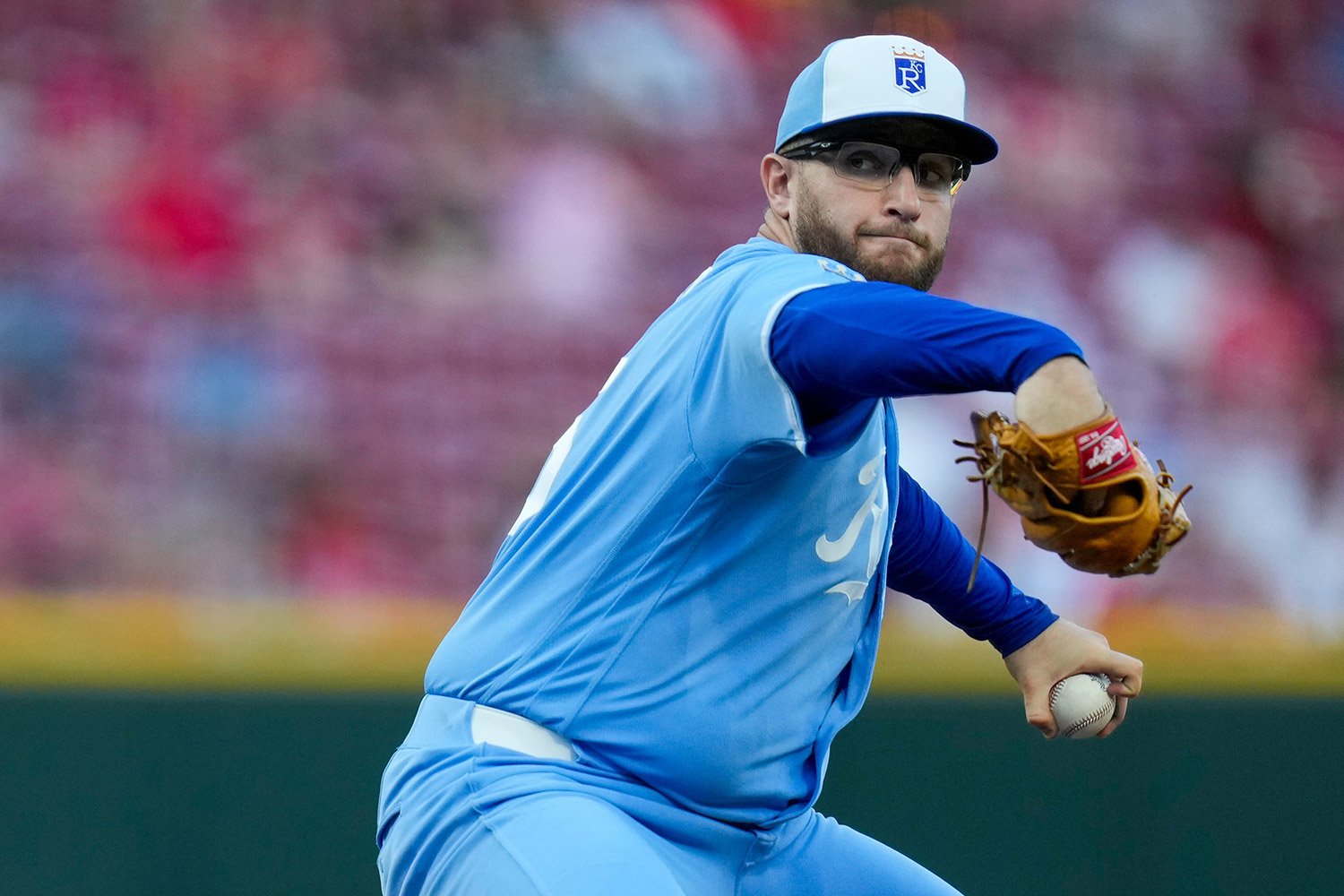 August was a month that the Royals saw improvement across the board. It was the first month of the season where the Royals had a winning record (16-11) and a positive run differential (+13). The month was filled with strong pitching performances, but no player stood out as much as Noah Cameron. Royals Pitcher Of The Month - Noah Cameron Noah Cameron finished the month with a 1.87 ERA over 33 ⅔ innings. He led all Royals starters in innings, ERA, FIP (2.93), and fWAR (1.0) during August. His ERA also ranks 13th among all pitchers in the majors for the month. Cameron’s month can be highlighted by his performance on August 8th when he pitched his first career complete game shutout while striking out eight batters and allowing only two baserunners. Cameron’s excellent pitching form began just after the All-Star break when he began calling his own pitches. Cameron shifted his pitch distribution from favoring his four-seam fastball to a more even distribution of pitches where his slider became more involved in the arsenal. Since his shift in approach, Cameron has seen a complete reversal in performance. His strikeout and walk percentages have improved; he is generating more whiffs and chases outside of the zone, and batters are getting softer contact and more ground balls. The continued improvement has given Cameron a much better outlook after a shaky start to his second season in the majors. A strong finish to the season could position him to be a key fixture in next season’s rotation. Honorable Mention: Nate Pearson Nate Pearson was traded to the Royals from the Astros on July 22 after being designated for assignment a few days prior. Since coming to Kansas City, he has been the Royals’ best reliever. In 15 appearances, Pearson has thrown 14 ⅔ innings with a 0.61 ERA and 0.3 fWAR, earning two saves in the process. He has been one of the few pitchers the Royals have been able to rely upon in key late-inning situations. Pearson still has some improvements that he can make. He struggles to make batters chase the ball and whiff. If he can continue his growth in Kansas City, he should be able to find a spot in the 2027 bullpen.
 -
Cameron’s excellent pitching form began just after the All-Star break when he began calling his own pitches. Cameron shifted his pitch distribution from favoring his four-seam fastball to a more even distribution of pitches where his slider became more involved in the arsenal. Since his shift in approach, Cameron has seen a complete reversal in performance. His strikeout and walk percentages have improved; he is generating more whiffs and chases outside of the zone, and batters are getting softer contact and more ground balls. The continued improvement has given Cameron a much better outlook after a shaky start to his second season in the majors. A strong finish to the season could position him to be a key fixture in next season’s rotation. Honorable Mention: Nate Pearson Nate Pearson was traded to the Royals from the Astros on July 22 after being designated for assignment a few days prior. Since coming to Kansas City, he has been the Royals’ best reliever. In 15 appearances, Pearson has thrown 14 ⅔ innings with a 0.61 ERA and 0.3 fWAR, earning two saves in the process. He has been one of the few pitchers the Royals have been able to rely upon in key late-inning situations. Pearson still has some improvements that he can make. He struggles to make batters chase the ball and whiff. If he can continue his growth in Kansas City, he should be able to find a spot in the 2027 bullpen. View full article
-
It’s Time For The Royals To Consider A Jac Caglianone Extension
Philip Ruo posted an article in Royals
 Jac Caglianone is in the midst of his breakout season for the Royals. 2025 was not the start that the Royals imagined when they called up the 2024 first-round draft pick. In his rookie campaign, he slashed .157/.237/.295 with a 47 wRC+ and a -1.6 fWAR. This season, he is much improved to a slash line of .276/.328/.491 with a 124 wRC+ and 2.2 fWAR. Since June 1st, he has taken his performance to the next level, where the 23-year-old ranks 10th among all qualified hitters with a 149 wRC+ and a slash line of .305/.347/.566. Yirsandy Rodríguez posted an excellent breakdown analyzing Caglianone’s performances from 2026, the first half of 2026, and the second half of 2026. Considering his new level of production, The Royals may now have enough information to believe that Caglianone will continue to be a threat in the middle of the lineup for years to come.. The Royals have been aggressive lately in signing their young stars to contract extensions. There are currently three recent examples of how the Royals could construct an extension. Cole Ragans | 3 years - $13,250,000 Before the 2025 season, the Royals rewarded Ragans with a contract extension following his first full season in Kansas City, where he finished fourth in American League Cy Young voting with a 3.14 ERA over 186 ⅓ innings. This type of extension is rather short compared to most contract extensions. With only three years of guaranteed money, Ragans will still be eligible for one year of arbitration before becoming a free agent in 2029. This type of extension is seen as more of a compromise, where Ragans is rewarded with near-top-of-the-market guaranteed salaries for those three years but is unable to earn a higher payout in arbitration if he were to continue his Cy Young trajectory. Unless the Royals expect Caglianone to command high arbitration numbers with top finishes in MVP voting, this path is less likely. Vinnie Pasquantino signed a similar extension this past offseason, avoiding his first two years of arbitration with a guaranteed contract and would still be eligible for his final year of arbitration before hitting free agency in 2029. This extension was perhaps a slightly different case, since it was signed during a period when Pasquantino and the Royals could not agree on a contract and were headed to arbitration. Maikel Garcia | 5 years - $57,500,000 The Royals inked Garcia to this extension this past offseason after his breakout season. In 2025 Garcia slashed .286/.351/.449 with a 121 wRC+ and 5.7 fWAR. He also earned his first All-Star selection, won the Gold Glove at third base, and finished 14th in AL MVP voting. Garcia’s contract extension is more of the prototypical extension where the team “buys out” the player's first year of free agency in exchange for the increase in guaranteed money well above the expected value for a player going through arbitration. Garcia will also hit free agency at an age where he could still earn a good contract after this one expires. Garcia would become a free agent going into his age-31 season (or age-32 season if the Royals pick up his club option for 2031). Every pre-arbitration contract extension signed this season has followed a similar model, in which the player would finish their contract at or before 30 years old. Bobby Witt Jr. | 11 years - $288,777,777 Witt signed his extension after his second season in the majors. There are only a few players who have signed pre-arbitration deals that would take the player through their early 30s. Those players are Fernando Tatis Jr., Julio Rodriguez, and a player from the Rays who should remain nameless. The only players who command this type of extension are players who have already proven they can compete at an MVP-caliber level. Rodriguez signed his deal after winning Rookie of the Year, and Tatis signed after finishing fourth in NL MVP voting at 21 years old. Witt was also coming off a season where he finished seventh in MVP voting. The players also play premium defensive positions. Witt and Tatis (at the time) play shortstop, and Rodriguez plays center field. With Caglianone not yet being able to display the same caliber of production at less important positions, it is unlikely that he will command this type of extension if he gets one. What does this all mean going forward? The Royals should strongly consider locking down Caglianone long-term. With Garcia and Witt entering their prime years, adding Caglianone to that mix could solidify the heart of the Kansas City lineup for many years to come. Pasquantino’s future also could play a role in extension talks. If he does not factor into the Royals’ plans, Caglianone could shift back to his more-natural position at first base. First basemen are typically in lower demand because it is a less valuable position. Caglianone will want to be paid like an outfielder, but the Royals could prefer to value him as a first baseman. If the Royals do intend to secure Caglianone long-term, a deal would likely fall into a deal similar to Garcia’s with a few more years since Caglianone is earlier in his career. A seven-year contract would take away two years of free agency, end after his age-30 season, and also remove two seasons where he would be making the league-minimum salary. A structure that makes sense could be similar to Tyler Soderstrom’s contract, which was for seven years and $86 million with a $27 million club option for the eighth season. Soderstrom has seen a similar path as Caglianone; both were drafted out of high school and struggled in their first season in the majors. Soderstrom was also at the same age when he signed his extension, entering his age-24 season. With Soderstrom playing first base, his valuation could work as a baseline for Caglianone’s expected average annual value. Other Complicating Factors The Royals could choose to remain conservative with any extension talks. Witt has opt-outs that begin following the 2030 season, and if the Royals do not pick up the club option for Garcia, his contract also ends in 2031. With Caglianone not set to become a free agent in 2032, the Royals could look at the next four seasons as their window to compete and not be as interested in securing Caglianone for the years to follow. The impending lockout is also a wrinkle to consider. With the CBA expiring in December this year, the landscape for contracts in the coming seasons remains uncertain. The Royals may intend to hold off on extensions until there is more clarity for future payroll structures. The Royals and Caglianone have the potential to secure the heart of the lineup for years to come and secure the core of the franchise. Will the Royals be ambitious enough to make the deal, or will the uncertain future result in hesitancy to commit to increasing payroll? Right now could be the perfect time to sign an extension since it is still to be determined how valuable Caglianone will be in the future. As a small market team, continued improvements from Caglianone could take him out of their price range. With the team rarely willing to compete for top free agents, the Royals should secure their best players before they’re gone
 -
Image courtesy of Denny Medley-Imagn Images Jac Caglianone is in the midst of his breakout season for the Royals. 2025 was not the start that the Royals imagined when they called up the 2024 first-round draft pick. In his rookie campaign, he slashed .157/.237/.295 with a 47 wRC+ and a -1.6 fWAR. This season, he is much improved to a slash line of .276/.328/.491 with a 124 wRC+ and 2.2 fWAR. Since June 1st, he has taken his performance to the next level, where the 23-year-old ranks 10th among all qualified hitters with a 149 wRC+ and a slash line of .305/.347/.566. Yirsandy Rodríguez posted an excellent breakdown analyzing Caglianone’s performances from 2026, the first half of 2026, and the second half of 2026. Considering his new level of production, The Royals may now have enough information to believe that Caglianone will continue to be a threat in the middle of the lineup for years to come.. The Royals have been aggressive lately in signing their young stars to contract extensions. There are currently three recent examples of how the Royals could construct an extension. Cole Ragans | 3 years - $13,250,000 Before the 2025 season, the Royals rewarded Ragans with a contract extension following his first full season in Kansas City, where he finished fourth in American League Cy Young voting with a 3.14 ERA over 186 ⅓ innings. This type of extension is rather short compared to most contract extensions. With only three years of guaranteed money, Ragans will still be eligible for one year of arbitration before becoming a free agent in 2029. This type of extension is seen as more of a compromise, where Ragans is rewarded with near-top-of-the-market guaranteed salaries for those three years but is unable to earn a higher payout in arbitration if he were to continue his Cy Young trajectory. Unless the Royals expect Caglianone to command high arbitration numbers with top finishes in MVP voting, this path is less likely. Vinnie Pasquantino signed a similar extension this past offseason, avoiding his first two years of arbitration with a guaranteed contract and would still be eligible for his final year of arbitration before hitting free agency in 2029. This extension was perhaps a slightly different case, since it was signed during a period when Pasquantino and the Royals could not agree on a contract and were headed to arbitration. Maikel Garcia | 5 years - $57,500,000 The Royals inked Garcia to this extension this past offseason after his breakout season. In 2025 Garcia slashed .286/.351/.449 with a 121 wRC+ and 5.7 fWAR. He also earned his first All-Star selection, won the Gold Glove at third base, and finished 14th in AL MVP voting. Garcia’s contract extension is more of the prototypical extension where the team “buys out” the player's first year of free agency in exchange for the increase in guaranteed money well above the expected value for a player going through arbitration. Garcia will also hit free agency at an age where he could still earn a good contract after this one expires. Garcia would become a free agent going into his age-31 season (or age-32 season if the Royals pick up his club option for 2031). Every pre-arbitration contract extension signed this season has followed a similar model, in which the player would finish their contract at or before 30 years old. Bobby Witt Jr. | 11 years - $288,777,777 Witt signed his extension after his second season in the majors. There are only a few players who have signed pre-arbitration deals that would take the player through their early 30s. Those players are Fernando Tatis Jr., Julio Rodriguez, and a player from the Rays who should remain nameless. The only players who command this type of extension are players who have already proven they can compete at an MVP-caliber level. Rodriguez signed his deal after winning Rookie of the Year, and Tatis signed after finishing fourth in NL MVP voting at 21 years old. Witt was also coming off a season where he finished seventh in MVP voting. The players also play premium defensive positions. Witt and Tatis (at the time) play shortstop, and Rodriguez plays center field. With Caglianone not yet being able to display the same caliber of production at less important positions, it is unlikely that he will command this type of extension if he gets one. What does this all mean going forward? The Royals should strongly consider locking down Caglianone long-term. With Garcia and Witt entering their prime years, adding Caglianone to that mix could solidify the heart of the Kansas City lineup for many years to come. Pasquantino’s future also could play a role in extension talks. If he does not factor into the Royals’ plans, Caglianone could shift back to his more-natural position at first base. First basemen are typically in lower demand because it is a less valuable position. Caglianone will want to be paid like an outfielder, but the Royals could prefer to value him as a first baseman. If the Royals do intend to secure Caglianone long-term, a deal would likely fall into a deal similar to Garcia’s with a few more years since Caglianone is earlier in his career. A seven-year contract would take away two years of free agency, end after his age-30 season, and also remove two seasons where he would be making the league-minimum salary. A structure that makes sense could be similar to Tyler Soderstrom’s contract, which was for seven years and $86 million with a $27 million club option for the eighth season. Soderstrom has seen a similar path as Caglianone; both were drafted out of high school and struggled in their first season in the majors. Soderstrom was also at the same age when he signed his extension, entering his age-24 season. With Soderstrom playing first base, his valuation could work as a baseline for Caglianone’s expected average annual value. Other Complicating Factors The Royals could choose to remain conservative with any extension talks. Witt has opt-outs that begin following the 2030 season, and if the Royals do not pick up the club option for Garcia, his contract also ends in 2031. With Caglianone not set to become a free agent in 2032, the Royals could look at the next four seasons as their window to compete and not be as interested in securing Caglianone for the years to follow. The impending lockout is also a wrinkle to consider. With the CBA expiring in December this year, the landscape for contracts in the coming seasons remains uncertain. The Royals may intend to hold off on extensions until there is more clarity for future payroll structures. The Royals and Caglianone have the potential to secure the heart of the lineup for years to come and secure the core of the franchise. Will the Royals be ambitious enough to make the deal, or will the uncertain future result in hesitancy to commit to increasing payroll? Right now could be the perfect time to sign an extension since it is still to be determined how valuable Caglianone will be in the future. As a small market team, continued improvements from Caglianone could take him out of their price range. With the team rarely willing to compete for top free agents, the Royals should secure their best players before they’re gone View full article
-
What Happened To Carter Jensen’s Power Decline?
Philip Ruo replied to Yirsandy Rodríguez's topic in Kansas City Royals Talk
Naturally, he hits a leadoff home run tonight! -
Going Oppo: Why the Royals Can't Compete In 2027
Philip Ruo replied to Philip Ruo's topic in Kansas City Royals Talk
And if he is under contract for next season, I don't think my argument changes significantly. Either way, the Royals need more depth in the rotation. -
Going Oppo: Why the Royals Can't Compete In 2027
Philip Ruo replied to Philip Ruo's topic in Kansas City Royals Talk
I thought so too, but since I could not find any confirmation that he was, I operated under the assumption that he was not. -
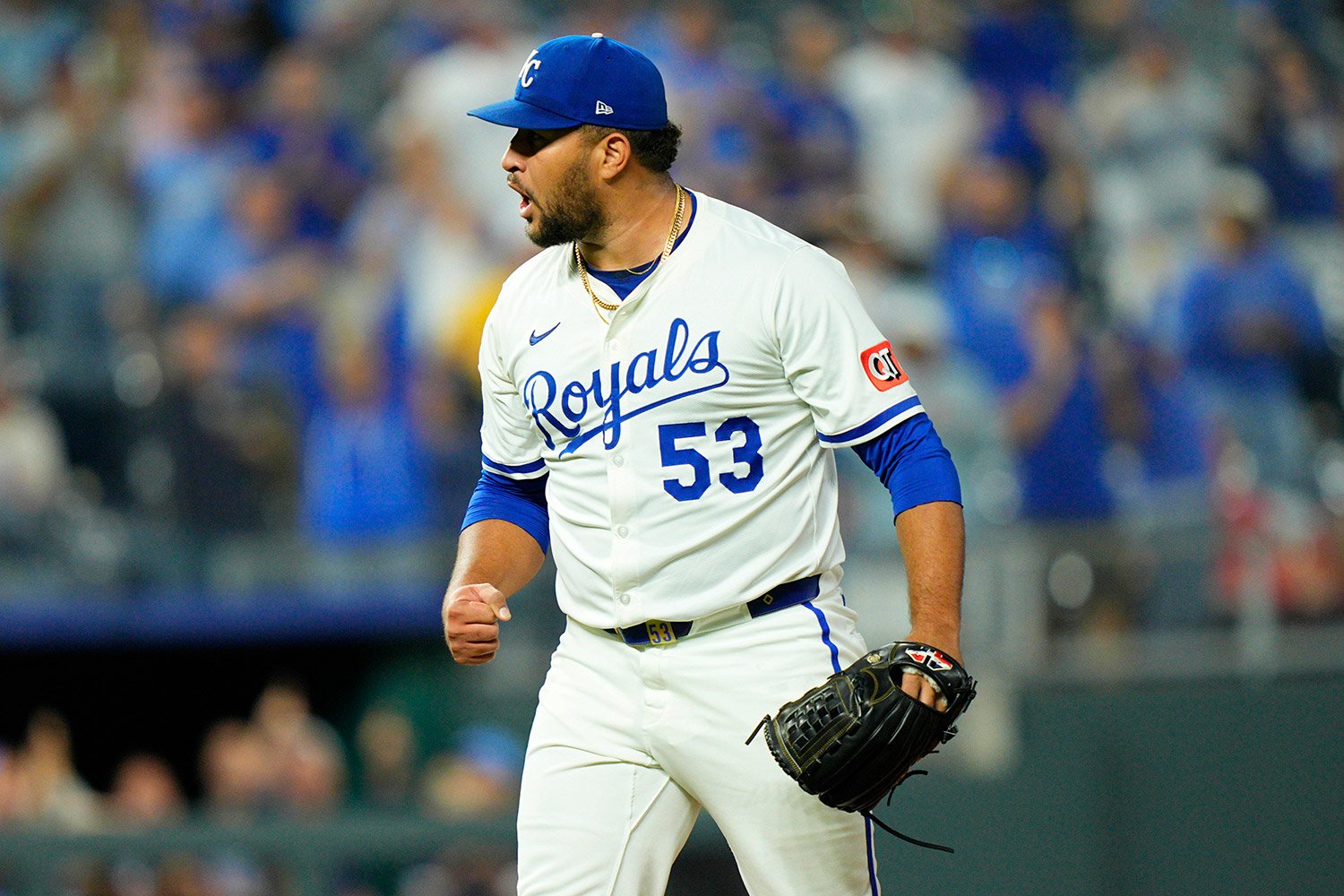 The Royals took a calculated risk at the trade deadline by not letting go of pitchers like Michael Wacha, Seth Lugo, and Daniel Lynch IV. The Royals front office believes that the Royals are able to compete for the playoffs in 2027. This belief makes sense on the surface since many Royals contributors are still under club control for next season. However, the deeper you look at the roster, the more 2027 starts to look less like a team one offseason away from contention and more like a team that has too many problems that need to be solved. This is one of two articles. To read the opposing viewpoint, click here. Unsettled Rotation The Royals entered last offseason with a surplus of major-league options to the point where they were open to trading away starters to bolster the lineup. With the summer coming to a close in 2027, only three of the starters from that group remain on the active roster: Michael Wacha, Seth Lugo, and Noah Cameron. To account for injuries and departures, the Royals have turned to Randy Dobnak and Lynch to fill the remaining rotation spots. Player Injury Last Played Estimated Return Cole Ragans UCL Repair 5/6/2026 Mid-2027 Kris Bubic Elbow Soreness 5/14/2026 Traded to Dodgers/Free Agent Stephen Kolek Tommy John Surgery 7/2/2026 Late 2027 Luinder Avila Tommy John Surgery 8/1/2026 Late 2027 Bailey Falter n/a - DFA 5/26/2026 Traded to Braves Ryan Bergert Tommy John Surgery Spring Training Early 2027 With the exception of maybe Bergert, none of these pitchers (those who are still in the organization) can be counted on for a high volume of innings next season, and the Royals will need to add a minimum of two major-league proven starters to have a chance at competing. While the front office could expect a return from Bergert and Ragans to help this team next season if their rehabs stay on schedule, the Royals would be asking a lot of those pitchers to make immediate impacts following their recoveries. While Dobnak has been a surprise spark to the rotation since joining in July. In his first five starts with the Royals, Dobnak has a 2.05 ERA over 26 ⅓ innings. However, his 3.57 FIP and 4.74 xERA indicate he is headed for a regression, and his spot with the Royals is not guaranteed after this season since he is set to be a free agent. Could the Royals decide to hold onto Dobnak after his successful start? Until this season, he had not thrown more than 10 major-league innings since 2021. Choosing to rely on him long term would carry its own risks. For Lynch, he has only pitched a total of four innings in his two starts since joining the rotation. In those short appearances, he has allowed six earned runs with two home runs. Lynch had previously been a starter for the Royals but has not started the majority of his appearances since 2023. He had been the Royals’ best reliever this season and will almost certainly need to return to the bullpen to regain his impact. The prospect options do not look like they will be able to provide an immediate impact either. Avila was called up this season and suffered a long-term injury. No. 18 prospect Ben Kudrna was projected to possibly make his major-league debut this season before he was sidelined for all of 2026 after undergoing surgery to repair a stress fracture in his elbow. Mitch Spence struggled in limited time this season. One intriguing option could be Lucas Braun, who was acquired from the Braves in exchange for Falter and Lane Thomas near this year’s trade deadline. Though in a season in which the Royals intend to contend for the postseason, relying on a prospect with only 14 starts in triple-A is usually not a recipe for success. Injury Issues Have Plagued The Lineup Unsurprisingly, Bobby Witt Jr. is the most consistent bat in the Royals’ lineup this season, with Jac Caglianone proving that he can be a threat in the middle of the order. After those two, there is a drop-off in production from Royals hitters this season. Of Royals players with at least 100 plate appearances, only Witt, Caglianone, Tyler Tolbert, and Lane Thomas have a wRC+ over 100 (league-average). Thomas was traded to the Braves, and Tolbert is only just above that qualifier with 104 PAs and had a streak of 12 straight PAs with a hit, which perhaps has skewed his stats. Previous offensive standouts Maikel Garcia and Vinnie Pasquantino are currently on the injured list and have spent extended stretches out of the lineup. Garcia was one of the standout performers last season for the Royals, and he was rewarded with a contract extension that runs through the 2030 season. He also had a strong World Baseball Classic with champions Venezuela and won the tournament MVP. Can Garcia return to his 2025 form after fully recovering from his injury? Pasquantino entered 2026 after finishing his only fully healthy season, where he hit 32 home runs and 113 RBIs with a 116 wRC+. In his limited time in 2026, he has a wRC+ of 84 with a lower wOBA of .295. First base is a position that is expected to provide power in the lineup. Pasquantino has not been able to provide that this season despite also having a strong performance in the WBC with Italy. He is another player that the Royals will need to return to his previous form in order to compete in 2027. The Bullpen Will Need A Full Reset What could go wrong in the bullpen has gone wrong for the Royals in 2026. The Royals' bullpen ranks among the bottom two in many key metrics, including fWAR, ERA, and FIP. Many standout performers from previous seasons saw severe regression. Carlos Estévez was the MLB saves leader in 2025 but saw an almost 5 mph drop in his pitch velocity. He has only appeared in one game this season and has been on the IL since. The Royals will certainly not be picking up his club option for 2027. Lucas Erceg assumed the closer job in Estévez’s absence, a job he would eventually lose after his ERA ballooned to 6 after having an ERA under 3 in each of his previous seasons in Kansas City. Erceg still has three years of control but will need to regain his command to make a meaningful impact in the bullpen moving forward. Other offseason acquisitions with years of control include Nick Mears and Alex Lange. Lange took over the closer role after Erceg and had a stretch of successful save opportunities. His ERA now sits above 6.00, and he no longer occupies the closer role. Mears has one more year of control, but hasn’t pitched since May with a shoulder impingement, with no current timetable for return. Left in the bullpen are Steven Cruz, Jose Cuas, Nate Pearson, Mason Black, Craig Kimbrel, and Lynch. Lynch, Cuas, and Pearson are the only relievers with positive fWAR, and with the exception of Kimbrel, who is definitely past his prime, none of these pitchers have extensive experience in high-leverage or save opportunities. The Royals will need to add proven bullpen arms to anchor the bullpen if they truly want to compete in 2027. The Outfield Isn't Settled Other than from Caglianone, the Royals must get more production from their outfield. The outfield has improved compared to 2026, when they ranked last in fWAR and wRC+, but the improvement has only moved the Royals to 17th in wRC+ and 24th in fWAR. A lot of that production was carried by Lane Thomas, who has since been traded to Atlanta. Isaac Collins has been a steady performer in left field, but he only has a league-average wRC+. His plate discipline is strong with low chase and whiff rates, but that is offset by his lack of power with an xSLG in the bottom 5% in MLB. Kyle Isbel has returned from injury to play center field, but he needs a platoon partner to face left-handed pitchers. Tolbert can be the player to split time in center, but he hasn’t proven to be a consistent threat to do damage in the lineup. For a lineup that has been over-reliant on Witt and Caglianone for power, at least one of Isbel, Tolbert, or Collins would need to step up to that role, but none of them have yet demonstrated the ability to do so. The Royals will need to add a player of that profile in the offseason. Other outfield options include John Rave and potential callup, former 1st-round draft pick, Gavin Cross. Rave has not been able to cement himself in the Royals lineup with streaky performances. Cross’s minor-league career has been full of ups and downs with a high strikeout rate. He could make an impact if given the promotion to the majors, but neither he nor Rave should truly be counted on for regular playing time next season at this time. Other Lingering Questions What role does Perez have in 2027? He has one more year left on his contract, but Father Time has caught up with him in 2026. He is having a career-worst season with a 68 wRC+ and -1.3 fWAR. Carter Jensen has assumed the starting catching duties, and Perez will need to take on a lesser role. If the Royals decide to make him the primary designated hitter, his bat will need to improve. Is Michael Massey the starting second baseman? Massey is having one of his better years with a 96 wRC+ and 1.4 fWAR. He has been able to remain relatively healthy. Can he continue to remain healthy and secure the second base position? To sum all of the above, on offense the Royals need Pasquantino and Garcia to regain their health and return to previous levels of production, add at least one outfielder who can ideally hit for power, and answer how to handle Perez and the DH position. For pitching, they need to add two MLB-proven starters and multiple relievers, one of which being the everyday closer. For a small-market franchise that does not have a history of making big moves in free agency, the laundry list of needs has gotten too long. The Royals are yet to prove that they are willing to make the moves necessary to take their roster to the next level. With an impending lockout after the CBA expires in December, free agency and offseason moves will have an added level of difficulty and anxiety to navigate.
- 6 comments
-
- 2
-
-
- randy dobnak
- ryan bergert
- (and 8 more)
-
Image courtesy of Jay Biggerstaff-Imagn Images The Royals took a calculated risk at the trade deadline by not letting go of pitchers like Michael Wacha, Seth Lugo, and Daniel Lynch IV. The Royals front office believes that the Royals are able to compete for the playoffs in 2027. This belief makes sense on the surface since many Royals contributors are still under club control for next season. However, the deeper you look at the roster, the more 2027 starts to look less like a team one offseason away from contention and more like a team that has too many problems that need to be solved. This is one of two articles. To read the opposing viewpoint, click here. Unsettled Rotation The Royals entered last offseason with a surplus of major-league options to the point where they were open to trading away starters to bolster the lineup. With the summer coming to a close in 2027, only three of the starters from that group remain on the active roster: Michael Wacha, Seth Lugo, and Noah Cameron. To account for injuries and departures, the Royals have turned to Randy Dobnak and Lynch to fill the remaining rotation spots. Player Injury Last Played Estimated Return Cole Ragans UCL Repair 5/6/2026 Mid-2027 Kris Bubic Elbow Soreness 5/14/2026 Traded to Dodgers/Free Agent Stephen Kolek Tommy John Surgery 7/2/2026 Late 2027 Luinder Avila Tommy John Surgery 8/1/2026 Late 2027 Bailey Falter n/a - DFA 5/26/2026 Traded to Braves Ryan Bergert Tommy John Surgery Spring Training Early 2027 With the exception of maybe Bergert, none of these pitchers (those who are still in the organization) can be counted on for a high volume of innings next season, and the Royals will need to add a minimum of two major-league proven starters to have a chance at competing. While the front office could expect a return from Bergert and Ragans to help this team next season if their rehabs stay on schedule, the Royals would be asking a lot of those pitchers to make immediate impacts following their recoveries. While Dobnak has been a surprise spark to the rotation since joining in July. In his first five starts with the Royals, Dobnak has a 2.05 ERA over 26 ⅓ innings. However, his 3.57 FIP and 4.74 xERA indicate he is headed for a regression, and his spot with the Royals is not guaranteed after this season since he is set to be a free agent. Could the Royals decide to hold onto Dobnak after his successful start? Until this season, he had not thrown more than 10 major-league innings since 2021. Choosing to rely on him long term would carry its own risks. For Lynch, he has only pitched a total of four innings in his two starts since joining the rotation. In those short appearances, he has allowed six earned runs with two home runs. Lynch had previously been a starter for the Royals but has not started the majority of his appearances since 2023. He had been the Royals’ best reliever this season and will almost certainly need to return to the bullpen to regain his impact. The prospect options do not look like they will be able to provide an immediate impact either. Avila was called up this season and suffered a long-term injury. No. 18 prospect Ben Kudrna was projected to possibly make his major-league debut this season before he was sidelined for all of 2026 after undergoing surgery to repair a stress fracture in his elbow. Mitch Spence struggled in limited time this season. One intriguing option could be Lucas Braun, who was acquired from the Braves in exchange for Falter and Lane Thomas near this year’s trade deadline. Though in a season in which the Royals intend to contend for the postseason, relying on a prospect with only 14 starts in triple-A is usually not a recipe for success. Injury Issues Have Plagued The Lineup Unsurprisingly, Bobby Witt Jr. is the most consistent bat in the Royals’ lineup this season, with Jac Caglianone proving that he can be a threat in the middle of the order. After those two, there is a drop-off in production from Royals hitters this season. Of Royals players with at least 100 plate appearances, only Witt, Caglianone, Tyler Tolbert, and Lane Thomas have a wRC+ over 100 (league-average). Thomas was traded to the Braves, and Tolbert is only just above that qualifier with 104 PAs and had a streak of 12 straight PAs with a hit, which perhaps has skewed his stats. Previous offensive standouts Maikel Garcia and Vinnie Pasquantino are currently on the injured list and have spent extended stretches out of the lineup. Garcia was one of the standout performers last season for the Royals, and he was rewarded with a contract extension that runs through the 2030 season. He also had a strong World Baseball Classic with champions Venezuela and won the tournament MVP. Can Garcia return to his 2025 form after fully recovering from his injury? Pasquantino entered 2026 after finishing his only fully healthy season, where he hit 32 home runs and 113 RBIs with a 116 wRC+. In his limited time in 2026, he has a wRC+ of 84 with a lower wOBA of .295. First base is a position that is expected to provide power in the lineup. Pasquantino has not been able to provide that this season despite also having a strong performance in the WBC with Italy. He is another player that the Royals will need to return to his previous form in order to compete in 2027. The Bullpen Will Need A Full Reset What could go wrong in the bullpen has gone wrong for the Royals in 2026. The Royals' bullpen ranks among the bottom two in many key metrics, including fWAR, ERA, and FIP. Many standout performers from previous seasons saw severe regression. Carlos Estévez was the MLB saves leader in 2025 but saw an almost 5 mph drop in his pitch velocity. He has only appeared in one game this season and has been on the IL since. The Royals will certainly not be picking up his club option for 2027. Lucas Erceg assumed the closer job in Estévez’s absence, a job he would eventually lose after his ERA ballooned to 6 after having an ERA under 3 in each of his previous seasons in Kansas City. Erceg still has three years of control but will need to regain his command to make a meaningful impact in the bullpen moving forward. Other offseason acquisitions with years of control include Nick Mears and Alex Lange. Lange took over the closer role after Erceg and had a stretch of successful save opportunities. His ERA now sits above 6.00, and he no longer occupies the closer role. Mears has one more year of control, but hasn’t pitched since May with a shoulder impingement, with no current timetable for return. Left in the bullpen are Steven Cruz, Jose Cuas, Nate Pearson, Mason Black, Craig Kimbrel, and Lynch. Lynch, Cuas, and Pearson are the only relievers with positive fWAR, and with the exception of Kimbrel, who is definitely past his prime, none of these pitchers have extensive experience in high-leverage or save opportunities. The Royals will need to add proven bullpen arms to anchor the bullpen if they truly want to compete in 2027. The Outfield Isn't Settled Other than from Caglianone, the Royals must get more production from their outfield. The outfield has improved compared to 2026, when they ranked last in fWAR and wRC+, but the improvement has only moved the Royals to 17th in wRC+ and 24th in fWAR. A lot of that production was carried by Lane Thomas, who has since been traded to Atlanta. Isaac Collins has been a steady performer in left field, but he only has a league-average wRC+. His plate discipline is strong with low chase and whiff rates, but that is offset by his lack of power with an xSLG in the bottom 5% in MLB. Kyle Isbel has returned from injury to play center field, but he needs a platoon partner to face left-handed pitchers. Tolbert can be the player to split time in center, but he hasn’t proven to be a consistent threat to do damage in the lineup. For a lineup that has been over-reliant on Witt and Caglianone for power, at least one of Isbel, Tolbert, or Collins would need to step up to that role, but none of them have yet demonstrated the ability to do so. The Royals will need to add a player of that profile in the offseason. Other outfield options include John Rave and potential callup, former 1st-round draft pick, Gavin Cross. Rave has not been able to cement himself in the Royals lineup with streaky performances. Cross’s minor-league career has been full of ups and downs with a high strikeout rate. He could make an impact if given the promotion to the majors, but neither he nor Rave should truly be counted on for regular playing time next season at this time. Other Lingering Questions What role does Perez have in 2027? He has one more year left on his contract, but Father Time has caught up with him in 2026. He is having a career-worst season with a 68 wRC+ and -1.3 fWAR. Carter Jensen has assumed the starting catching duties, and Perez will need to take on a lesser role. If the Royals decide to make him the primary designated hitter, his bat will need to improve. Is Michael Massey the starting second baseman? Massey is having one of his better years with a 96 wRC+ and 1.4 fWAR. He has been able to remain relatively healthy. Can he continue to remain healthy and secure the second base position? To sum all of the above, on offense the Royals need Pasquantino and Garcia to regain their health and return to previous levels of production, add at least one outfielder who can ideally hit for power, and answer how to handle Perez and the DH position. For pitching, they need to add two MLB-proven starters and multiple relievers, one of which being the everyday closer. For a small-market franchise that does not have a history of making big moves in free agency, the laundry list of needs has gotten too long. The Royals are yet to prove that they are willing to make the moves necessary to take their roster to the next level. With an impending lockout after the CBA expires in December, free agency and offseason moves will have an added level of difficulty and anxiety to navigate. View full article
-
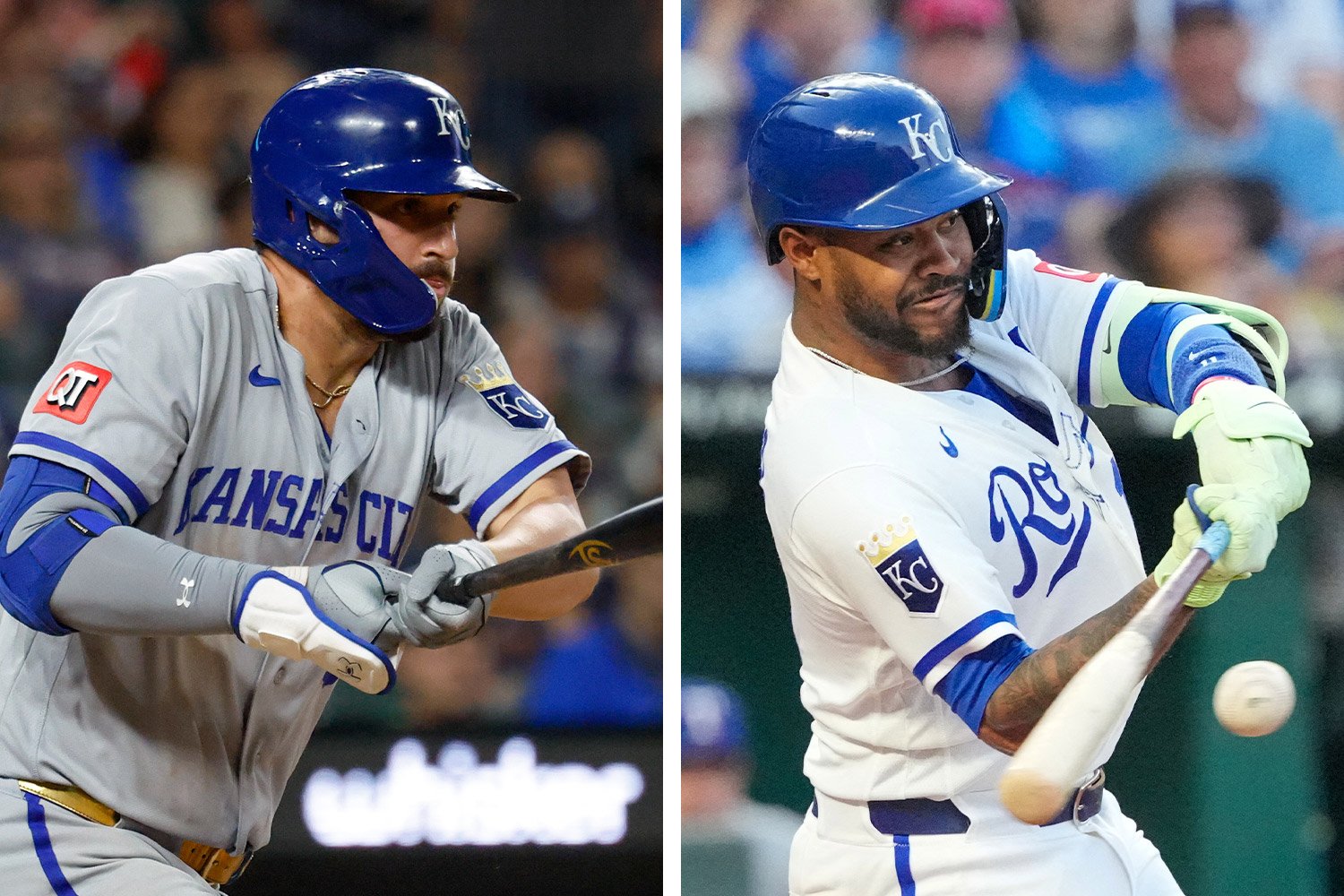 The Royals have reinstated both Vinnie Pasquantino and Maikel Garcia from the injured list after their respective rehab assignments. The Royals have also called up left-handed reliever Connor Thomas to the major league roster. To make room on the active roster, the Royals optioned infielder Josh Rojas and right-handed reliever Jose Cuas to triple-A and designated veteran outfielder Starling Marte for assignment. Pasquantino has been out of the lineup since July 28 with a wrist injury. Garcia had been sidelined for a longer time with a muscle strain, not appearing since June 22. Thomas was claimed off waivers from the Athletics on August 4 and made three appearances in Omaha before his callup to the Royals. In those three appearances, Thomas threw 2 ⅔ innings with a 6.75 ERA. Garcia’s return makes Rojas a surplus in the infield. Pasquantino’s return will allow Jac Caglianone to shift back to right field, making less room for Marte. Marte’s season in Kansas City has been underwhelming with a slash line of .242/.298/.314 with a 71 wRC+ and -0.5 fWAR. Marte’s DFA leaves one spot open on the 40-man roster. Cuas’s recent stint on the major-league roster was strong with no earned runs in 4 ⅔ innings pitched over five appearances. The Royals return home for a seven-game home stand after a West Coast road trip. Both Pasquantino and Garcia return to the starting lineup to face the Athletics tonight at Kauffman Stadium.
-
- 1
-
-
- vinnie pasquantino
- maikel garcia
- (and 1 more)
-
The Royals have reinstated both Vinnie Pasquantino and Maikel Garcia from the injured list after their respective rehab assignments. The Royals have also called up left-handed reliever Connor Thomas to the major league roster. To make room on the active roster, the Royals optioned infielder Josh Rojas and right-handed reliever Jose Cuas to triple-A and designated veteran outfielder Starling Marte for assignment. Pasquantino has been out of the lineup since July 28 with a wrist injury. Garcia had been sidelined for a longer time with a muscle strain, not appearing since June 22. Thomas was claimed off waivers from the Athletics on August 4 and made three appearances in Omaha before his callup to the Royals. In those three appearances, Thomas threw 2 ⅔ innings with a 6.75 ERA. Garcia’s return makes Rojas a surplus in the infield. Pasquantino’s return will allow Jac Caglianone to shift back to right field, making less room for Marte. Marte’s season in Kansas City has been underwhelming with a slash line of .242/.298/.314 with a 71 wRC+ and -0.5 fWAR. Marte’s DFA leaves one spot open on the 40-man roster. Cuas’s recent stint on the major-league roster was strong with no earned runs in 4 ⅔ innings pitched over five appearances. The Royals return home for a seven-game home stand after a West Coast road trip. Both Pasquantino and Garcia return to the starting lineup to face the Athletics tonight at Kauffman Stadium. View full rumor
-
 On Thursday, the Phillies and Twins played in Dyersville, Iowa continuing MLB's Field of Dreams Game series. The day after MLB's return to the cornfields of Iowa, Major League Baseball announced that the Royals will play the Boston Red Sox in next year's edition. The Royals will be listed as the home team, and the game will take place on Thursday, August 12 with NBC Sports providing coverage. Both teams will get a day off on the 13th before resuming the three-game series at Kauffman Stadium on August 14-15. This will be the fourth edition of the Field of Dreams Game. The series took a break following 2022 in order to renovate and expand the complex in Dyersville next to the original film site before resuming the series in 2026. Teams participating in the Field of Dreams Game have traditionally worn throwback uniforms. While the Royals have not changed their look drastically in their history, expect a look reminiscent from the early years of the franchise. The Royals are the first true expansion franchise to participate in the series, although the Twins previously wore the original uniforms from their first season in Minnesota after relocating from Washington.
 -
On Thursday, the Phillies and Twins played in Dyersville, Iowa continuing MLB's Field of Dreams Game series. The day after MLB's return to the cornfields of Iowa, Major League Baseball announced that the Royals will play the Boston Red Sox in next year's edition. The Royals will be listed as the home team, and the game will take place on Thursday, August 12 with NBC Sports providing coverage. Both teams will get a day off on the 13th before resuming the three-game series at Kauffman Stadium on August 14-15. This will be the fourth edition of the Field of Dreams Game. The series took a break following 2022 in order to renovate and expand the complex in Dyersville next to the original film site before resuming the series in 2026. Teams participating in the Field of Dreams Game have traditionally worn throwback uniforms. While the Royals have not changed their look drastically in their history, expect a look reminiscent from the early years of the franchise. The Royals are the first true expansion franchise to participate in the series, although the Twins previously wore the original uniforms from their first season in Minnesota after relocating from Washington. View full rumor


