


Kevin O'Brien
-
Posts
858 -
Joined
-
Last visited
-
Days Won
41
Content Type
Profiles
Forums
Blogs
Events
News
2026 Kansas City Royals Top Prospects Ranking
Kansas City Royals Videos
Kansas City Royals Free Agent & Trade Rumors, Notes, & Tidbits
Guides & Resources
The Kansas City Royals Players Project
2026 Kansas City Royals Draft Tracker: Picks & Bonuses
Store
Downloads
Gallery
Everything posted by Kevin O'Brien
-
 Brett Squires drove a home run and double for Omaha in a 5-3 win at St. Paul, supported by Ryan Ramsey's five strong innings on the mound. Spencer Nivens crushed two home runs as Northwest Arkansas split a pair with Amarillo, while Frank Mozzicato struck out eight in his start. Ramon Ramirez homered for Quad Cities in a loss. In Augusta, Yandel Ricardo drove in four runs, and Darwin Rodriguez worked five innings for Columbia. Royals Transactions No Roster Moves Storm Chasers Ride Squires And Rojas Power To 5-3 Win At St. Paul Squires powered Omaha with two extra-base hits and two runs scored, helping the Storm Chasers down the host St. Paul Saints, 5-3. The former Oklahoma product finished 2-for-4 with a double in the second inning and a solo home run, his fifth of the season, in the sixth. Gavin Cross had three hits, including a double and an RBI, and Josh Rojas led off with a solo home run, his sixth, in the third inning. John Rave added a pair of hits, including an RBI single, and Abraham Toro drove in a run. After St. Paul jumped ahead in the first, Omaha answered in the top of the second. Luca Tresh drew a one-out walk, and Squires followed with a double. Abraham Toro then singled to plate Tresh, and Gavin Cross lined a single to right to bring home Squires, putting Omaha up 2-1. Rojas extended the lead with his solo shot in the third. Ramsey worked five innings, allowing one run on four hits with three walks, six strikeouts, and one home run to pick up his third win. Anthony Gose tossed a scoreless sixth with a walk and no strikeouts. Ben Sears gave up two runs in the eighth on a two-run home run before Beck Way closed the door with 1 1/3 hitless innings and two strikeouts to earn his first save. Omaha left six runners on base. Player AB R H RBI BB K Josh Rojas (3B) 5 1 1 1 0 1 Drew Waters (RF) 4 0 0 0 1 2 John Rave (CF) 4 0 2 1 0 1 Luca Tresh (C) 3 1 1 0 1 1 Brett Squires (1B) 4 2 2 1 0 0 Abraham Toro (DH) 4 0 1 1 0 0 Gavin Cross (LF) 4 0 3 1 0 0 Connor Kaiser (SS) 4 0 0 0 0 1 Dustin Dickerson (2B) 4 1 1 0 0 2 Player IP H R ER BB K HR Ryan Ramsey 5 4 1 1 3 6 1 Anthony Gose 1 0 0 0 1 0 0 Ben Sears 1 2/3 2 2 2 0 1 1 Beck Way 1 1/3 0 0 0 0 2 0 Naturals' Bullpen Crumbles In 17-5 Loss At Amarillo Jorge Alfaro's three-hit night was not enough as the Northwest Arkansas Naturals fell to the Amarillo Sod Poodles, 17-5, in a lopsided road defeat. Alfaro, hitting cleanup, went 3-for-5 with two doubles, an RBI, and a run scored. Omar Hernandez added three hits of his own, including a double and a run scored, while Connor Scott went 2-for-4 with two RBIs. Daniel Vazquez chipped in with a double and a walk, and Justin Johnson and Sam Kulasingam each tacked on RBI singles in the ninth. The decisive frame came in the bottom of the second. Hunter Owen had given Northwest Arkansas a 1-0 lead to defend after Connor Scott's RBI single in the top of the inning, but Amarillo posted four runs against the right-hander, taking a 4-1 lead they would never relinquish. The Sod Poodles tacked on five more runs in the sixth and seven in the seventh against the Naturals' bullpen. Hunter Owen took the loss after working three innings, allowing four runs on three hits with two walks and no strikeouts. Caden Monke surrendered one run in two innings of relief. Chase Jessee allowed five runs while recording only two outs, and Andrew Morones gave up seven runs on seven hits in his one inning, including three home runs. Brandon Johnson finished with a scoreless 1 1/3 innings. Northwest Arkansas stranded eight runners and committed one error. Player AB R H RBI BB K Carson Roccaforte (CF) 5 0 1 0 0 3 Spencer Nivens (LF) 4 1 0 0 1 2 Sam Kulasingam (RF) 5 0 1 1 0 0 Jorge Alfaro (DH) 5 1 3 1 0 2 Daniel Vazquez (SS) 3 1 1 0 1 2 Connor Scott (1B) 4 0 2 2 0 1 Colton Becker (3B) 2 1 0 0 2 2 Omar Hernandez (C) 4 1 3 0 0 0 Justin Johnson (2B) 4 0 1 1 0 1 Player IP H R ER BB K HR Hunter Owen 3 3 4 4 2 0 0 Caden Monke 2 2 1 1 3 0 0 Chase Jessee 2/3 5 5 5 1 0 1 Andrew Morones 1 7 7 7 0 1 3 Brandon Johnson 1 1/3 0 0 0 0 0 0 Nivens Hits Two Homers To Lift Naturals Past Amarillo, 8-6 Spencer Nivens crushed two home runs and drove in four to lead the Northwest Arkansas Naturals past the Amarillo Sod Poodles, 8-6. Nivens went 2-for-4 with a three-run home run, his third of the season, and a two-run shot, his fourth, for four total RBIs. Vazquez and Jack Pineda each had two hits, with Pineda adding a solo home run in the second inning and a stolen base. Roccaforte led off and scored twice, and Canyon Brown and Johnson each delivered an RBI hit. The Naturals broke the game open in the top of the fifth. With Pineda on after his single, Brown lined an RBI single to center, and Johnson followed with a double. After Roccaforte reached on a fielder's choice, Nivens launched a three-run home run to left center to give Northwest Arkansas a 5-0 lead. After Amarillo answered with three in the bottom half and later tied the score at 6-6, Spencer Nivens belted his second home run, a two-run shot, in the seventh to put the Naturals ahead for good. Mozzicato took the start and worked 4 1/3 innings, giving up three runs on four hits with three walks, eight strikeouts, and a home run. Augusto Mendieta surrendered three runs in one inning of work. Oscar Rayo closed it out with 1 2/3 scoreless innings of one-hit relief, no walks, and no strikeouts to earn his second win. Northwest Arkansas left only three runners on base. Player AB R H RBI BB K Carson Roccaforte (CF) 3 2 1 0 0 1 Spencer Nivens (LF) 4 2 2 4 0 0 Sam Kulasingam (RF) 4 0 0 0 0 0 Daniel Vazquez (SS) 4 1 2 0 0 1 Connor Scott (1B) 4 0 1 1 0 2 Jack Pineda (3B) 3 2 2 1 0 0 Omar Hernandez (DH) 3 0 0 0 0 2 Canyon Brown (C) 3 0 1 1 0 0 Justin Johnson (2B) 3 1 1 0 0 0 Player IP H R ER BB K HR Frank Mozzicato 4 1/3 4 3 3 3 8 1 Augusto Mendieta 1 4 3 3 2 1 1 Oscar Rayo 1 2/3 1 0 0 0 0 0 River Bandits Fall To Beloit, 8-2, Despite Ramirez's Home Run The Quad Cities River Bandits managed just two runs at home, falling to the Beloit Sky Carp, 8-2. Catcher Ramirez supplied both runs with a two-run home run, his seventh of the season, that scored Asbel Gonzalez. Gonzalez had a productive night otherwise, going 2-for-4 from the second spot in the lineup. Tyriq Kemp drew two walks, while Nolan Sailors, Jose Cerice, and Connor Rasmussen each chipped in with a hit. The game tilted away from Quad Cities early. Beloit struck for three runs in the second inning against starter Blake Wolters and tacked on two more in the fourth inning before Ramirez's home run cut into the lead in the bottom of the same frame. The Sky Carp added a run in the fifth and two more in the sixth to push the score out of reach. Wolters took the loss after working 3 2/3 innings, allowing five runs, all earned, on three hits with four walks, four strikeouts, and one home run. Cory Ronan got the Bandits through the rest of the fourth without further damage. Mason Miller followed and surrendered three runs over 2 2/3 innings. L.P. Langevin tossed 1 1/3 scoreless innings with a walk and a strikeout, and Yimi Presinal closed with one scoreless inning of one-hit work, one strikeout, and no walks. Quad Cities stranded seven runners. Player AB R H RBI BB K Nolan Sailors (RF) 4 0 1 0 0 2 Asbel Gonzalez (CF) 4 1 2 0 0 1 Ramon Ramirez (C) 2 1 1 2 2 0 Luke Pelzer (DH) 4 0 0 0 0 3 Jose Cerice (3B) 4 0 1 0 0 0 Erick Torres (LF) 4 0 0 0 0 1 Tyriq Kemp (SS) 2 0 0 0 2 1 Trevor Werner (1B) 4 0 0 0 0 2 Diego Guzman (2B) 4 0 0 0 0 2 Player IP H R ER BB K HR Blake Wolters 3 2/3 3 5 5 4 4 1 Cory Ronan 1/3 2 0 0 0 1 0 Mason Miller 2 2/3 5 3 3 1 4 1 L.P. Langevin 1 1/3 0 0 0 1 1 0 Yimi Presinal 1 1 0 0 0 1 0 Fireflies Drop A Pitcher's Duel To Augusta, 2-1 The Columbia Fireflies came up just short in a tight battle, dropping the game 2-1 to the Augusta GreenJackets on the road. Sean Gamble led the offense with a 2-for-3 effort that included a double, and Brooks Bryan went 2-for-3 with the lone Columbia RBI. Connor Rasmussen also added a double, and Daniel Lopez collected a single along with a stolen base. The Fireflies were limited to six hits in total. Columbia broke through in the fourth inning. With one out, Gamble singled and moved into scoring position before Bryan singled him home to tie the game at 1-1. The Fireflies could not extend their lead, however, and Augusta pushed across the deciding run in the bottom of the sixth on a single that came across with the help of a Columbia error in center field. Michael Lombardi opened with four innings of work, allowing one run on four hits with one walk and five strikeouts. Henson Leal followed with two innings of relief and absorbed the loss, giving up one unearned run on three hits with no walks and two strikeouts. Columbia stranded just three runners and committed three errors on the night, leaving little margin for error in a game decided by a single play in the late innings. Player AB R H RBI BB K Henry Ramos (LF) 3 0 0 0 0 2 Sean Gamble (CF) 3 1 2 0 0 0 Brooks Bryan (C) 3 0 2 1 0 0 Stone Russell (1B) 3 0 0 0 0 1 Yandel Ricardo (SS) 3 0 0 0 0 1 Daniel Lopez (RF) 3 0 1 0 0 0 Connor Rasmussen (2B) 3 0 1 0 0 0 Josi Novas (DH) 2 0 0 0 0 0 Ivan Sosa (3B) 2 0 0 0 0 2 Player IP H R ER BB K HR Michael Lombardi 4 4 1 1 1 5 0 Henson Leal 2 3 1 0 0 2 0 Ricardo Drives In Four As Fireflies Top Augusta, 8-5 Yandel Ricardo drove in four runs, and Josh Hammond scored three times to lift the Columbia Fireflies to an 8-5 win over the Augusta GreenJackets on the road. Ricardo went 2-for-2 with a double, a home run, four RBIs, and a walk. Hammond added a triple, an RBI, three runs scored, two stolen bases, and a walk. Jhosmmel Zue chipped in with a 2-for-4 line, an RBI single, and a stolen base, and Sean Gamble reached three times via hit, walk, and stolen base. Columbia jumped ahead in the first inning. Ramos reached on an error, and Gamble singled. A Hammond ground ball forced Gamble at second, but Ramos came around to score on a throwing error. After Hyungchan Um walked, Ricardo lined a two-RBI double to put Columbia up 3-0. The Fireflies tacked on two in the fifth on Hammond's RBI triple and a Ricardo sacrifice bunt that scored Hammond. They added three more in the seventh when Ricardo launched a two-run home run, his third, and Jhosmmel Zue singled home Stone Russell. Rodriguez worked five innings to earn the win, allowing one unearned run on six hits with one walk and four strikeouts. Yeri Perez gave up two runs in one inning of relief, including a home run, with no walks and one strikeout. Randy Ramnarace was charged with two earned runs while failing to record an out, walking three, and surrendering one hit. Max Martin then recorded the final three outs with two strikeouts to earn his first save. Columbia left seven on base and committed three errors. Player AB R H RBI BB K Henry Ramos (LF) 3 1 0 0 0 1 Sean Gamble (CF) 3 1 1 0 1 0 Josh Hammond (3B) 3 3 1 1 1 0 Hyungchan Um (DH) 2 1 0 0 2 2 Yandel Ricardo (SS) 2 1 2 4 1 0 Stone Russell (2B) 2 1 1 0 1 1 JC Vanek (1B) 3 0 0 0 1 0 Jhosmmel Zue (C) 4 0 2 1 0 1 Roni Cabrera (RF) 3 0 0 0 1 2 Player IP H R ER BB K HR Darwin Rodriguez 5 6 1 0 1 4 0 Yeri Perez 1 1 2 0 0 1 1 Randy Ramnarace 0 1 2 2 3 0 0 Max Martin 1 1 0 0 0 2 0 Top-20 Prospect Performance Kendry Chourio: DNP David Shields: DNP Sean Gamble: 3-for-6, 2B, BB, SB, 2 R Blake Mitchell: DNP Josh Hammond: 1-for-3, 3B, RBI, BB, 2 SB, 3 R Ramon Ramirez: 1-for-2, HR, 2 RBI, 2 BB, R Drew Beam: DNP Asbel Gonzalez: 2-for-4, R, K Ben Kudrna: DNP Carson Roccaforte: 2-for-8, 2 R, 4 K Yandel Ricardo: 2-for-5, 2B, HR, 4 RBI, BB, R, K Felix Arronde: DNP Blake Wolters: L, 3 2/3 IP, 3 H, 5 R, 5 ER, 4 BB, 4 K, HR Michael Lombardi: 4 IP, 4 H, R, ER, BB, 5 K Luinder Avila: DNP Steven Zobac: DNP Frank Mozzicato: 4 1/3 IP, 4 H, 3 R, 3 ER, 3 BB, 8 K, HR Daniel Vazquez: 3-for-7, 2B, BB, SB, 2 R, 3 K Warren Colcano: DNP Shane Panzini: DNP
 -
After an eight-pitch first inning, Kolek threw more than 14 pitches in an inning only once, which was 18 in the fifth inning. Even though he gave up four hits and a walk, the 29-year-old was able to navigate through innings with runners on base thanks to stellar defense by the Royals. They turned two double plays in the game, including a key 3-2-5 in the 2nd that prevented Luke Raley from scoring at third with less than two outs. When looking at Kolek's TJ Stuff+ summary from this outing, it didn't have the "look" of a traditional shutout. The former Texas A&M product didn't generate a ton of chase or whiff in this outing, as illustrated by his overall 24% CSW. Additionally, he had only a 46.3% zone rate, which is slightly below the league average. And yet, despite these issues and a mediocre TJ Stuff+ profile, he limited hard contact (via xwOBACON), which proved to be the most important trait today. Kolek generated a .227 overall xwOBACON with his four-seamer (.143) and sinker (.165), his two most-thrown pitches on Saturday, both sporting xwOBACON marks under .200. He had an overall TJ Stuff+ of 96 on Saturday, with only his slider sporting a TJ Stuff+ over 100. That seemed to affect his ability to generate chase (25.9%) and whiff (14%), but did not prevent him from achieving efficient results. The former Dodgers 11th-round pick was fearless in the zone, as illustrated in his pitch type chart below. However, as seen in his corresponding pitch description chart, Seattle hitters were unable to consistently square up on Kolek's pitches, even if they primarily sat in hittable areas of the strike zone. A big key for Kolek was that he was able to generate contact that just wasn't barreled by Mariners hitters on Saturday. Even though his velocity wasn't elite, Seattle seemed to struggle with timing. As a result, a lot of balls were hit in the air and to right-center, especially. That helped Kolek produce many flyball outs, as seen in the spray chart below from today's game via Savant. Only one ball was hit with authority, which was a double by Raley (who had three hits of the Mariners' four hits against Kolek). Everything else? Well, the Mariners ended up hitting a lot of groundballs and flyballs to the right side of the field. Furthermore, not many of those balls were hit all that hard. That is illustrated in his radial chart below via Savant. Much has been made of Seth Lugo and his pitch efficiency in his 2+ seasons in Kansas City. However, on Saturday, Kolek showed that he may be the Royals' most efficient pitcher in the rotation, and his shutout, the first for Kansas City in six seasons, illustrated that. Kolek Has Thrived In Kansas City (And His Fastball Improvement Has Been Key) When the Royals acquired Kolek and fellow Padres pitcher Ryan Bergert from San Diego in exchange for catcher Freddy Fermin at last year's trade deadline, the Royals knew they were getting a pitcher with some big-league success. Kolek pitched 79.2 innings with the Padres in 2025 before getting traded over to Kansas City. In 14 starts, he posted a 4.21 ERA, 1.31 WHIP, and 4.28 FIP. He also generated a 16.7% K%, 7.7% BB%, and 8.9% K-BB% with San Diego. Even though he started in Triple-A Omaha, when Kolek made his Royals debut, he proved to be even more effective down the stretch in 2025. In five starts and 33 IP, he posted a 1.91 ERA, 0.76 WHIP, and 2.71 FIP. His K% remained stable at 16.8%, but his BB% dropped to 4%, thus increasing his K-BB% to 12.8%. As a result, in 112.2 IP, he posted a 3.51 ERA, 1.14 WHIP, 3.83 FIP, and 10% K-BB%. He did this with slightly subpar TJ Stuff+ (96), as well as mediocre chase (26.3%) and whiff (17.7%) rates. However, his ability to fill the strike zone and generate weak contact on his key pitches proved to be key to success, especially with a diverse seven-pitch mix. This season, his second in Kansas City, he has kept the same formula, albeit with more efficiency. Kolek has gotten rid of the curveball and improved his overall TJ Stuff+ and ability to limit hard-contact, while maintaining solid zone rates. That has resulted in his posting a 2.77 ERA and 0.85 WHIP over 26 IP with the Royals this season. The four-seamer has seemed to be key to his success this year. The TJ Stuff+ difference isn't all that great, but it is better in 2026 (91) than it was in 2025 (90). However, the biggest improvement in the pitch is that he's throwing it in the strike zone more (60.9% to 52.5% in 2025) and generating more chases (33.3% to 17.1% in 2025). It has become more of a vertical offering in 2026, as the iVB went from 12.9 last year to 13.3 this year, and his HB on the pitch went from 8.2 to 6.7. It is also generating more spin, as its 2,243 RPM is higher than the four-seamer's 2,176 RPM in 2025. Below is a clip compilation of Kolek's four-seamer with the Padres back in May of 2025 and his four-seamer this year against the Cardinals. Both produce whiffs up in the zone, but there is much better velocity and vertical movement on the 2026 four-seamer than the 2025 version. Even though it's not an elite pitch based on TJ Stuff+, the four-seamer has shown enough improvement and effectiveness to be not just a solid offering but also to set up the other five pitches in his repertoire. The growth of Kolek's four-seamer is another success story for this pitching-coaching team, especially for assistant pitching coach Mike McFerrin, who primarily works with pitchers to improve the shape of their pitches. What Will Kolek's Outlook for the Remainder of 2026 Be? Kolek was called up to replace Cole Ragans, who landed on the IL due to left elbow impingement. That said, Ragans made a rehab start on Saturday against St. Paul, and he looked good overall, with solid TJ Stuff+ and chase numbers, in addition to three strikeouts and just three hits and one run allowed in 4.1 IP. Based on this rehab outing, it's likely that Ragans will return to the rotation soon. However, even if Ragans returns, Kolek will not lose his place in the rotation. With Kris Bubic also on the IL, Kolek will have more time as a starter, but when Bubic is ready to come off the IL as well, the Royals will have a dilemma on their hands. First off, even when Bubic returns, Kolek needs to remain in Kansas City. He has proven that he is a valuable member of this pitching staff, regardless of role. That said, he has proven that he may deserve a regular spot in the rotation, even with Ragans and Bubic healthy (as Jack Johnson of Locked On Royals stated on Twitter). Noah Cameron has looked better recently and produced a quality start in his last outing on Friday against Seattle. Unfortunately, he didn't get any run support and, as a result, got the no-decision. Still, his TJ Stuff+ summary from Friday's game looked solid and demonstrated that Cameron may be on the upswing after a slow start. Thus, the Royals may be forced to move Bubic back to the bullpen, a role he hasn't had since 2024. While Bubic has been serviceable as a starter this year, he hasn't been as dominant as he was in 2025, when he made his first All-Star team. His ERA is 4.11, his WHIP is 1.23, and his FIP is 3.77 in 50.1 IP. That said, while those are solid numbers, the zone, chase, and xwOBACON have been average to slightly below this year, as illustrated in his TJ Stuff+ summary below. Would the Royals be better off moving Bubic to the bullpen? That would allow him to not just stabilize the bullpen a bit (it's unlikely Carlos Estevez returns to 2025 form or at all), but allow his stuff to play up more. Furthermore, that would also preserve his health, which is something he's struggled with in the past (he had Tommy John surgery in 2023). Then again, that may be too bold a move, especially with Ragans' own checkered injury history. If Ragans goes down, they will need Bubic in the rotation again. Regardless, the decision isn't IF Kolek will be in Kansas City. It will be whether he is in the rotation or the bullpen after Ragans and Bubic return from the IL. That's a good place for the Royals to be, especially considering how hard their pitching depth has been hit early in the year. View full article
-
Stephen Kolek Has Provided a Much-Needed Spark to the Royals' Rotation
Kevin O'Brien posted an article in Royals
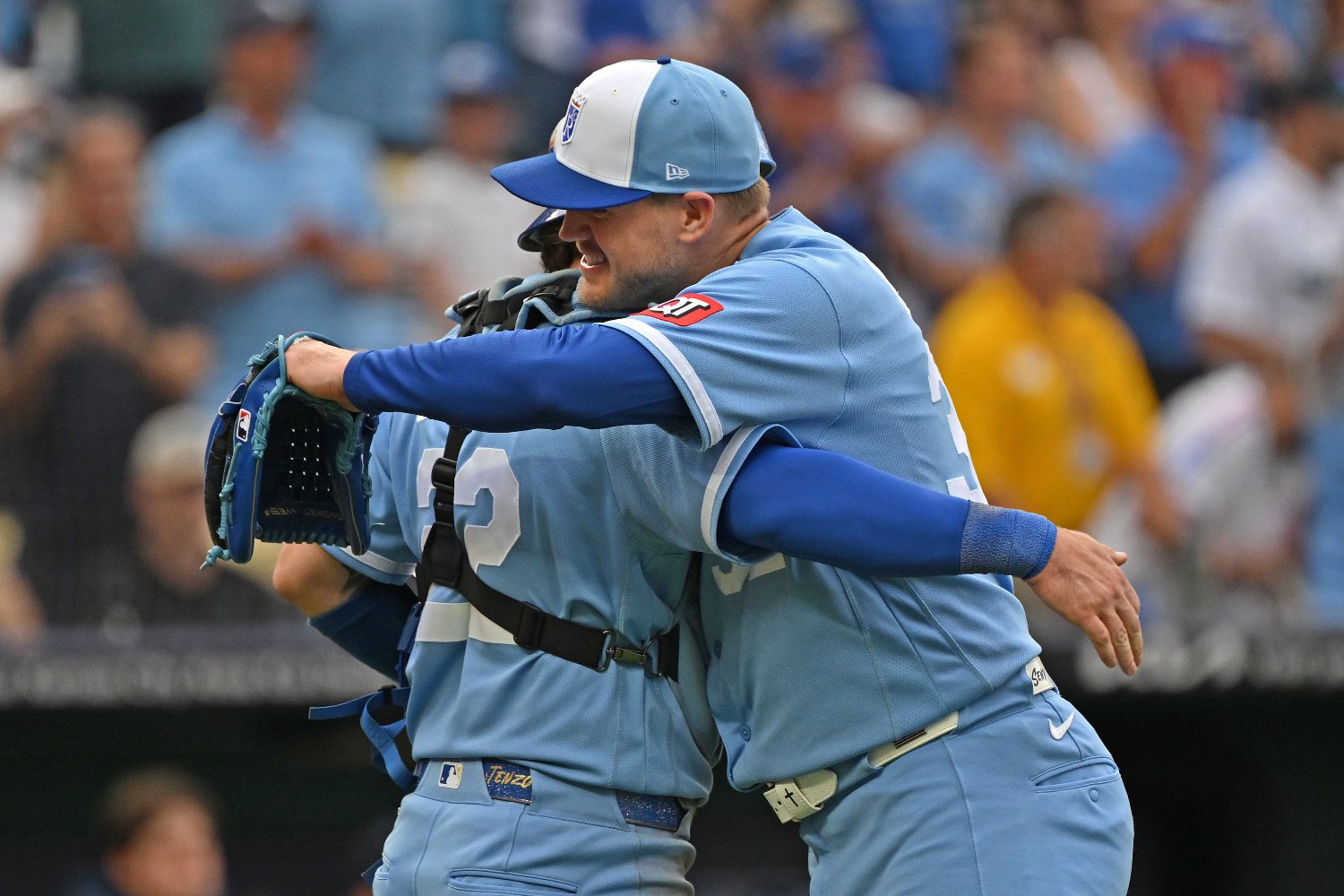 After losing four in a row and 10 out of their last 11 games, the Kansas City Royals were looking for a spark on Saturday afternoon at Kauffman Stadium. Nearly 26,000 fans were in attendance, primarily to celebrate "Star Wars Day at the K". That massive attendance helped create an environment far from the sparse, lifeless crowds of the Red Sox series earlier in the week. Furthermore, the Kansas City branch of the "Tarps Off" crew was in full force in the 427-429 sections of the K, which helped bring energy to the stadium in the later innings. Below is a progression of how it grew over the course of the game (from my vantage point in section 418). However, the main spark on Saturday in the Royals' 5-0 victory over the Seattle Mariners? It was starting pitcher Stephen Kolek, who not only pitched a four-hit shutout but also accomplished the first Royals shutout since Brad Keller did it back in 2020. (That's right, it's been six years since a Kansas City pitcher produced a complete game shutout.) The Royals now sit at 21-31 and will look to take the series from the Mariners in the Sunday finale. A victory over the Mariners tomorrow would not only improve their record to 5-1 against them, but it would also build some much-needed momentum for the three-game series against the New York Yankees, which begins on Memorial Day. Let's take a look at not only Kolek's masterful performance on Saturday at the K, but what he's done since joining the Royals last year. Furthermore, I will also dive into his outlook with this club for the remainder of the 2026 season, as they look to get back into playoff contention. Kolek Works Efficiently in Shutout Win What's most remarkable about Kolek's performance against Seattle on Saturday was that it wasn't an outing with a ton of strikeouts. He only struck out two batters, both coming in the 8th and 9th innings, respectively. That said, Kolek's ability to work efficiently and quickly through at-bats, especially in the early innings, helped keep his pitch count reasonable for a shot at the shutout. In his stellar outing, Kolek threw 108 pitches and didn't throw more than 18 pitches in an inning. Furthermore, he maintained a consistent velocity throughout each inning, which helped him remain effective against a dangerous Mariners lineup. Below is his pitch count and velocity by inning, via Baseball Savant. After an eight-pitch first inning, Kolek threw more than 14 pitches in an inning only once, which was 18 in the fifth inning. Even though he gave up four hits and a walk, the 29-year-old was able to navigate through innings with runners on base thanks to stellar defense by the Royals. They turned two double plays in the game, including a key 3-2-5 in the 2nd that prevented Luke Raley from scoring at third with less than two outs. When looking at Kolek's TJ Stuff+ summary from this outing, it didn't have the "look" of a traditional shutout. The former Texas A&M product didn't generate a ton of chase or whiff in this outing, as illustrated by his overall 24% CSW. Additionally, he had only a 46.3% zone rate, which is slightly below the league average. And yet, despite these issues and a mediocre TJ Stuff+ profile, he limited hard contact (via xwOBACON), which proved to be the most important trait today. Kolek generated a .227 overall xwOBACON with his four-seamer (.143) and sinker (.165), his two most-thrown pitches on Saturday, both sporting xwOBACON marks under .200. He had an overall TJ Stuff+ of 96 on Saturday, with only his slider sporting a TJ Stuff+ over 100. That seemed to affect his ability to generate chase (25.9%) and whiff (14%), but did not prevent him from achieving efficient results. The former Dodgers 11th-round pick was fearless in the zone, as illustrated in his pitch type chart below. However, as seen in his corresponding pitch description chart, Seattle hitters were unable to consistently square up on Kolek's pitches, even if they primarily sat in hittable areas of the strike zone. A big key for Kolek was that he was able to generate contact that just wasn't barreled by Mariners hitters on Saturday. Even though his velocity wasn't elite, Seattle seemed to struggle with timing. As a result, a lot of balls were hit in the air and to right-center, especially. That helped Kolek produce many flyball outs, as seen in the spray chart below from today's game via Savant. Only one ball was hit with authority, which was a double by Raley (who had three hits of the Mariners' four hits against Kolek). Everything else? Well, the Mariners ended up hitting a lot of groundballs and flyballs to the right side of the field. Furthermore, not many of those balls were hit all that hard. That is illustrated in his radial chart below via Savant. Much has been made of Seth Lugo and his pitch efficiency in his 2+ seasons in Kansas City. However, on Saturday, Kolek showed that he may be the Royals' most efficient pitcher in the rotation, and his shutout, the first for Kansas City in six seasons, illustrated that. Kolek Has Thrived In Kansas City (And His Fastball Improvement Has Been Key) When the Royals acquired Kolek and fellow Padres pitcher Ryan Bergert from San Diego in exchange for catcher Freddy Fermin at last year's trade deadline, the Royals knew they were getting a pitcher with some big-league success. Kolek pitched 79.2 innings with the Padres in 2025 before getting traded over to Kansas City. In 14 starts, he posted a 4.21 ERA, 1.31 WHIP, and 4.28 FIP. He also generated a 16.7% K%, 7.7% BB%, and 8.9% K-BB% with San Diego. Even though he started in Triple-A Omaha, when Kolek made his Royals debut, he proved to be even more effective down the stretch in 2025. In five starts and 33 IP, he posted a 1.91 ERA, 0.76 WHIP, and 2.71 FIP. His K% remained stable at 16.8%, but his BB% dropped to 4%, thus increasing his K-BB% to 12.8%. As a result, in 112.2 IP, he posted a 3.51 ERA, 1.14 WHIP, 3.83 FIP, and 10% K-BB%. He did this with slightly subpar TJ Stuff+ (96), as well as mediocre chase (26.3%) and whiff (17.7%) rates. However, his ability to fill the strike zone and generate weak contact on his key pitches proved to be key to success, especially with a diverse seven-pitch mix. This season, his second in Kansas City, he has kept the same formula, albeit with more efficiency. Kolek has gotten rid of the curveball and improved his overall TJ Stuff+ and ability to limit hard-contact, while maintaining solid zone rates. That has resulted in his posting a 2.77 ERA and 0.85 WHIP over 26 IP with the Royals this season. The four-seamer has seemed to be key to his success this year. The TJ Stuff+ difference isn't all that great, but it is better in 2026 (91) than it was in 2025 (90). However, the biggest improvement in the pitch is that he's throwing it in the strike zone more (60.9% to 52.5% in 2025) and generating more chases (33.3% to 17.1% in 2025). It has become more of a vertical offering in 2026, as the iVB went from 12.9 last year to 13.3 this year, and his HB on the pitch went from 8.2 to 6.7. It is also generating more spin, as its 2,243 RPM is higher than the four-seamer's 2,176 RPM in 2025. Below is a clip compilation of Kolek's four-seamer with the Padres back in May of 2025 and his four-seamer this year against the Cardinals. Both produce whiffs up in the zone, but there is much better velocity and vertical movement on the 2026 four-seamer than the 2025 version. Even though it's not an elite pitch based on TJ Stuff+, the four-seamer has shown enough improvement and effectiveness to be not just a solid offering but also to set up the other five pitches in his repertoire. The growth of Kolek's four-seamer is another success story for this pitching-coaching team, especially for assistant pitching coach Mike McFerrin, who primarily works with pitchers to improve the shape of their pitches. What Will Kolek's Outlook for the Remainder of 2026 Be? Kolek was called up to replace Cole Ragans, who landed on the IL due to left elbow impingement. That said, Ragans made a rehab start on Saturday against St. Paul, and he looked good overall, with solid TJ Stuff+ and chase numbers, in addition to three strikeouts and just three hits and one run allowed in 4.1 IP. Based on this rehab outing, it's likely that Ragans will return to the rotation soon. However, even if Ragans returns, Kolek will not lose his place in the rotation. With Kris Bubic also on the IL, Kolek will have more time as a starter, but when Bubic is ready to come off the IL as well, the Royals will have a dilemma on their hands. First off, even when Bubic returns, Kolek needs to remain in Kansas City. He has proven that he is a valuable member of this pitching staff, regardless of role. That said, he has proven that he may deserve a regular spot in the rotation, even with Ragans and Bubic healthy (as Jack Johnson of Locked On Royals stated on Twitter). Noah Cameron has looked better recently and produced a quality start in his last outing on Friday against Seattle. Unfortunately, he didn't get any run support and, as a result, got the no-decision. Still, his TJ Stuff+ summary from Friday's game looked solid and demonstrated that Cameron may be on the upswing after a slow start. Thus, the Royals may be forced to move Bubic back to the bullpen, a role he hasn't had since 2024. While Bubic has been serviceable as a starter this year, he hasn't been as dominant as he was in 2025, when he made his first All-Star team. His ERA is 4.11, his WHIP is 1.23, and his FIP is 3.77 in 50.1 IP. That said, while those are solid numbers, the zone, chase, and xwOBACON have been average to slightly below this year, as illustrated in his TJ Stuff+ summary below. Would the Royals be better off moving Bubic to the bullpen? That would allow him to not just stabilize the bullpen a bit (it's unlikely Carlos Estevez returns to 2025 form or at all), but allow his stuff to play up more. Furthermore, that would also preserve his health, which is something he's struggled with in the past (he had Tommy John surgery in 2023). Then again, that may be too bold a move, especially with Ragans' own checkered injury history. If Ragans goes down, they will need Bubic in the rotation again. Regardless, the decision isn't IF Kolek will be in Kansas City. It will be whether he is in the rotation or the bullpen after Ragans and Bubic return from the IL. That's a good place for the Royals to be, especially considering how hard their pitching depth has been hit early in the year.
 -
The Omaha Storm Chasers rallied past St. Paul 7-6, with Dustin Dickerson driving in four runs and Luca Tresh adding three RBIs and a home run. David Shields was nearly untouchable for Quad Cities, blanking Beloit over six innings with five strikeouts in a 5-2 win. Sean Gamble and Josh Hammond paced Columbia's 6-4 win at Augusta, while Jordan Woods struck out eight in five innings. The Naturals trailed Amarillo 4-2 when rain suspended play. Royals Transactions Kansas City Royals designated C Elias Díaz for assignment. Kansas City Royals signed free agent RHP Luke Jackson to a minor league contract. Kansas City Royals recalled 2B Tyler Tolbert from Omaha Storm Chasers. Dickerson, Tresh Combine For Seven RBIs In Storm Chasers' 7-6 Win The Omaha Storm Chasers held off a late charge to beat the St. Paul Saints 7-6 on the road, powered by big nights from Dickerson and Tresh. Dickerson finished 2-for-4 with a double, a home run, and four RBIs. Tresh went 3-for-4 with a home run and three RBIs. Cole Ragans, on rehab from Kansas City, allowed one run on three hits across 4 1/3 innings, walking one and striking out three. Omaha grabbed the lead in the top of the second. Brett Squires singled, Abraham Toro walked, and Dickerson followed with a two-run double to right field that made it 2-1. Tresh stretched the lead to 4-1 in the top of the sixth with a two-run home run to center that scored Drew Waters. The bullpen could not hold the cushion. Henry Williams entered in the sixth and gave up a solo home run, three consecutive walks, and a two-run single as the Saints tied the game at four, then surrendered another solo home run in the seventh that put Omaha behind 5-4. Williams finished with five hits and four earned runs allowed across 2 1/3 innings. Kameron Misner walked to open the eighth, and with two outs, Tresh singled to left to score Misner and tie the game at five. In the top of the ninth, Gavin Cross singled and Dickerson followed with his first home run of the season, a two-run shot to left field that gave Omaha a 7-5 lead. Eric Cerantola walked two in the bottom of the ninth and yielded a run on a groundout, but closed out the win with a strikeout. The Storm Chasers stranded five and committed no errors. Player AB R H RBI BB K Josh Rojas, 3B 5 0 1 0 0 0 John Rave, DH 3 0 0 0 2 0 Kameron Misner, RF 4 1 0 0 1 3 Drew Waters, CF 4 1 1 0 0 1 Brett Squires, 1B 3 1 1 0 0 1 Luca Tresh, C 4 1 3 3 0 0 Gavin Cross, LF 4 1 1 0 0 0 Abraham Toro, 2B 3 1 0 0 1 3 Dustin Dickerson, SS 4 1 2 4 0 0 Player IP H R ER BB K HR Cole Ragans 4 1/3 3 1 1 1 3 1 Andrew Pérez 2/3 0 0 0 0 0 0 Henry Williams 2 1/3 5 4 4 4 2 2 Luke Jackson 2/3 0 0 0 0 0 0 Eric Cerantola 1 0 1 1 2 2 0 Rain Suspends Naturals' Comeback Bid Trailing Sod Poodles 4-2 The Northwest Arkansas Naturals trailed the Amarillo Sod Poodles 4-2 when rain suspended play before the bottom of the fourth inning. Connor Scott went 2-for-2 with two RBIs to lead the offense. Daniel Vazquez, Jorge Alfaro, and Omar Hernandez each added a double. Leadoff hitter Carson Roccaforte singled in the first. Hunter Owen started and allowed four earned runs on three hits across three innings, walking two and recording no strikeouts. All four runs came in a single inning. Northwest Arkansas opened the scoring in the top of the second. Vazquez doubled to center with one out, then Scott lined an RBI single to left to score him before being thrown out trying to advance. Amarillo answered in the bottom of the inning, stringing together four hits and a sacrifice fly against Owen to plate four runs and grab a 4-1 lead. The Naturals cut the gap to 4-2 in the top of the fourth. Alfaro doubled to center with one out and later scored on another Scott single to left. Rain halted play before Amarillo could bat in the bottom half, leaving the visiting Naturals trailing by two with five and a half innings still scheduled to be played. Northwest Arkansas finished the partial game with seven hits, three doubles, no errors, and two runners left on base. Player AB R H RBI BB K Carson Roccaforte, CF 2 0 1 0 0 0 Spencer Nivens, LF 2 0 0 0 0 1 Sam Kulasingam, RF 2 0 0 0 0 0 Jorge Alfaro, DH 2 1 1 0 0 1 Daniel Vazquez, SS 2 1 1 0 0 1 Connor Scott, 1B 2 0 2 2 0 0 Colton Becker, 3B 2 0 0 0 0 2 Omar Hernandez, C 1 0 1 0 0 0 Justin Johnson, 2B 1 0 0 0 0 1 Player IP H R ER BB K HR Hunter Owen 3 3 4 4 2 0 0 Shields, Pelzer Power River Bandits Past Sky Carp 5-2 The Quad Cities River Bandits leaned on a Quality Start from Shields and a power surge from cleanup hitter Luke Pelzer to beat the Beloit Sky Carp 5-2 at home. Shields turned in six innings of one-hit shutout ball, walking one and striking out five. Pelzer finished 2-for-4 with a home run, three RBIs, and a stolen base. Ramon Ramirez went 1-for-4 with an RBI double and two RBIs. Quad Cities jumped ahead in the bottom of the first. Leadoff hitter Nolan Sailors drew a walk, and after two outs, Pelzer drove a two-run home run to left center to make it 2-0. Shields then carried that lead deep into the game, allowing only one base hit through six innings. Beloit chipped back in the seventh, scoring once off reliever Josh Hansell. The visitors tied it in the eighth when Hansell walked a batter, then Kamden Edge entered and gave up a single and an RBI groundout that brought the inherited runner home. Hansell was charged with two earned runs and two walks across 1 1/3 innings, though he also struck out three. The River Bandits answered immediately in the bottom of the eighth. Angel Acosta walked to open the inning and moved to second on a Sailors groundout. Blake Mitchell walked, and a passed ball pushed Acosta to third. Ramirez then drilled a two-run double to left to score Acosta and Mitchell, and Pelzer followed with an RBI single to center that brought Ramirez home for a 5-2 lead. Edge worked the final 1 2/3 innings on two hits without allowing a run to close out the win. The River Bandits stranded four. Player AB R H RBI BB K Nolan Sailors, CF 2 1 0 0 2 1 Blake Mitchell, C 3 1 0 0 1 1 Ramon Ramirez, DH 4 1 1 2 0 1 Luke Pelzer, LF 4 1 2 3 0 1 Jose Cerice, 1B 3 0 0 0 0 0 Derlin Figueroa, 3B 4 0 0 0 0 1 Erick Torres, RF 2 0 0 0 1 1 Tyriq Kemp, SS 3 0 0 0 0 2 Angel Acosta, 2B 1 1 0 0 2 0 Player IP H R ER BB K HR David Shields 6 1 0 0 1 5 0 Josh Hansell 1 1/3 2 2 2 2 3 0 Kamden Edge 1 2/3 2 0 0 0 1 0 Four-Run Seventh Pushes Fireflies Past GreenJackets 6-4 The Columbia Fireflies broke open a 1-1 game with a four-run seventh inning and held on for a 6-4 road win over the Augusta GreenJackets. Hammond and Gamble each delivered two-RBI doubles in the rally. Hammond finished 2-for-5 with two doubles and two RBIs. Gamble went 2-for-4 with a double, two RBIs, and a walk. Woods worked five innings of one-run, eight-strikeout relief, allowing three hits and two walks. Kendry Chourio opened the game with two scoreless innings on one hit, three strikeouts, and no walks. Columbia got on the board first in the top of the fourth. Hammond doubled to left, moved to third on a Brooks Bryan single, and scored when Hyungchan Um lined an RBI single to center. Augusta answered in the bottom of the fifth, scoring once on a pair of singles and a walk to tie the game at one, with the run charged to Woods. The Fireflies blew it open in the seventh. With one out, JC Vanek walked. Connor Rasmussen struck out, but Roni Cabrera kept the inning alive with a double to left to put runners at second and third. Henry Ramos walked to load the bases. Gamble then doubled to right to score Vanek and Cabrera, and Hammond followed with another double to center that brought home Ramos and Gamble for a 5-1 lead. Ramos added an RBI single in the ninth that scored Rasmussen. The bottom of the ninth turned tense. Andy Basora walked the bases loaded with no one out and was lifted for Jhon Reyes. A wild pitch let one run score, and a two-run double cut the lead to 6-4, but Reyes retired the next three Augusta hitters to lock in the win. Columbia stranded six and committed no errors. Player AB R H RBI BB K Henry Ramos, LF 4 1 1 1 1 1 Sean Gamble, CF 4 1 2 2 1 2 Josh Hammond, SS 5 1 2 2 0 2 Brooks Bryan, DH 3 0 1 0 1 1 Hyungchan Um, C 4 0 1 1 0 2 Stone Russell, 3B 4 0 0 0 0 1 JC Vanek, 1B 2 1 0 0 1 1 Connor Rasmussen, 2B 3 1 0 0 1 1 Roni Cabrera, RF 4 1 1 0 0 0 Player IP H R ER BB K HR Kendry Chourio 2 1 0 0 0 3 0 Jordan Woods 5 3 1 1 2 8 0 Andy Basora 1 0 3 3 3 2 0 Jhon Reyes 1 1 0 0 0 1 0 Top-20 Prospect Performance Kendry Chourio: 2 IP, 1 H, 0 R, 0 BB, 3 K David Shields: 6 IP, 1 H, 0 R, 1 BB, 5 K Sean Gamble: 2-for-4, 2B, 2 RBI, BB, 2 K Blake Mitchell: 0-for-3, BB, K Josh Hammond: 2-for-5, 2 2B, 2 RBI, 2 K Ramon Ramirez: 1-for-4, 2B, 2 RBI, K Drew Beam: DNP Asbel Gonzalez: DNP Ben Kudrna: DNP Carson Roccaforte: 1-for-2 Yandel Ricardo: DNP Felix Arronde: DNP Blake Wolters: DNP Michael Lombardi: DNP Luinder Avila: DNP Steven Zobac: DNP Frank Mozzicato: DNP Daniel Vazquez: 1-for-2, 2B, K Warren Colcano: DNP Shane Panzini: DNP View full article
-
 The Omaha Storm Chasers rallied past St. Paul 7-6, with Dustin Dickerson driving in four runs and Luca Tresh adding three RBIs and a home run. David Shields was nearly untouchable for Quad Cities, blanking Beloit over six innings with five strikeouts in a 5-2 win. Sean Gamble and Josh Hammond paced Columbia's 6-4 win at Augusta, while Jordan Woods struck out eight in five innings. The Naturals trailed Amarillo 4-2 when rain suspended play. Royals Transactions Kansas City Royals designated C Elias Díaz for assignment. Kansas City Royals signed free agent RHP Luke Jackson to a minor league contract. Kansas City Royals recalled 2B Tyler Tolbert from Omaha Storm Chasers. Dickerson, Tresh Combine For Seven RBIs In Storm Chasers' 7-6 Win The Omaha Storm Chasers held off a late charge to beat the St. Paul Saints 7-6 on the road, powered by big nights from Dickerson and Tresh. Dickerson finished 2-for-4 with a double, a home run, and four RBIs. Tresh went 3-for-4 with a home run and three RBIs. Cole Ragans, on rehab from Kansas City, allowed one run on three hits across 4 1/3 innings, walking one and striking out three. Omaha grabbed the lead in the top of the second. Brett Squires singled, Abraham Toro walked, and Dickerson followed with a two-run double to right field that made it 2-1. Tresh stretched the lead to 4-1 in the top of the sixth with a two-run home run to center that scored Drew Waters. The bullpen could not hold the cushion. Henry Williams entered in the sixth and gave up a solo home run, three consecutive walks, and a two-run single as the Saints tied the game at four, then surrendered another solo home run in the seventh that put Omaha behind 5-4. Williams finished with five hits and four earned runs allowed across 2 1/3 innings. Kameron Misner walked to open the eighth, and with two outs, Tresh singled to left to score Misner and tie the game at five. In the top of the ninth, Gavin Cross singled and Dickerson followed with his first home run of the season, a two-run shot to left field that gave Omaha a 7-5 lead. Eric Cerantola walked two in the bottom of the ninth and yielded a run on a groundout, but closed out the win with a strikeout. The Storm Chasers stranded five and committed no errors. Player AB R H RBI BB K Josh Rojas, 3B 5 0 1 0 0 0 John Rave, DH 3 0 0 0 2 0 Kameron Misner, RF 4 1 0 0 1 3 Drew Waters, CF 4 1 1 0 0 1 Brett Squires, 1B 3 1 1 0 0 1 Luca Tresh, C 4 1 3 3 0 0 Gavin Cross, LF 4 1 1 0 0 0 Abraham Toro, 2B 3 1 0 0 1 3 Dustin Dickerson, SS 4 1 2 4 0 0 Player IP H R ER BB K HR Cole Ragans 4 1/3 3 1 1 1 3 1 Andrew Pérez 2/3 0 0 0 0 0 0 Henry Williams 2 1/3 5 4 4 4 2 2 Luke Jackson 2/3 0 0 0 0 0 0 Eric Cerantola 1 0 1 1 2 2 0 Rain Suspends Naturals' Comeback Bid Trailing Sod Poodles 4-2 The Northwest Arkansas Naturals trailed the Amarillo Sod Poodles 4-2 when rain suspended play before the bottom of the fourth inning. Connor Scott went 2-for-2 with two RBIs to lead the offense. Daniel Vazquez, Jorge Alfaro, and Omar Hernandez each added a double. Leadoff hitter Carson Roccaforte singled in the first. Hunter Owen started and allowed four earned runs on three hits across three innings, walking two and recording no strikeouts. All four runs came in a single inning. Northwest Arkansas opened the scoring in the top of the second. Vazquez doubled to center with one out, then Scott lined an RBI single to left to score him before being thrown out trying to advance. Amarillo answered in the bottom of the inning, stringing together four hits and a sacrifice fly against Owen to plate four runs and grab a 4-1 lead. The Naturals cut the gap to 4-2 in the top of the fourth. Alfaro doubled to center with one out and later scored on another Scott single to left. Rain halted play before Amarillo could bat in the bottom half, leaving the visiting Naturals trailing by two with five and a half innings still scheduled to be played. Northwest Arkansas finished the partial game with seven hits, three doubles, no errors, and two runners left on base. Player AB R H RBI BB K Carson Roccaforte, CF 2 0 1 0 0 0 Spencer Nivens, LF 2 0 0 0 0 1 Sam Kulasingam, RF 2 0 0 0 0 0 Jorge Alfaro, DH 2 1 1 0 0 1 Daniel Vazquez, SS 2 1 1 0 0 1 Connor Scott, 1B 2 0 2 2 0 0 Colton Becker, 3B 2 0 0 0 0 2 Omar Hernandez, C 1 0 1 0 0 0 Justin Johnson, 2B 1 0 0 0 0 1 Player IP H R ER BB K HR Hunter Owen 3 3 4 4 2 0 0 Shields, Pelzer Power River Bandits Past Sky Carp 5-2 The Quad Cities River Bandits leaned on a Quality Start from Shields and a power surge from cleanup hitter Luke Pelzer to beat the Beloit Sky Carp 5-2 at home. Shields turned in six innings of one-hit shutout ball, walking one and striking out five. Pelzer finished 2-for-4 with a home run, three RBIs, and a stolen base. Ramon Ramirez went 1-for-4 with an RBI double and two RBIs. Quad Cities jumped ahead in the bottom of the first. Leadoff hitter Nolan Sailors drew a walk, and after two outs, Pelzer drove a two-run home run to left center to make it 2-0. Shields then carried that lead deep into the game, allowing only one base hit through six innings. Beloit chipped back in the seventh, scoring once off reliever Josh Hansell. The visitors tied it in the eighth when Hansell walked a batter, then Kamden Edge entered and gave up a single and an RBI groundout that brought the inherited runner home. Hansell was charged with two earned runs and two walks across 1 1/3 innings, though he also struck out three. The River Bandits answered immediately in the bottom of the eighth. Angel Acosta walked to open the inning and moved to second on a Sailors groundout. Blake Mitchell walked, and a passed ball pushed Acosta to third. Ramirez then drilled a two-run double to left to score Acosta and Mitchell, and Pelzer followed with an RBI single to center that brought Ramirez home for a 5-2 lead. Edge worked the final 1 2/3 innings on two hits without allowing a run to close out the win. The River Bandits stranded four. Player AB R H RBI BB K Nolan Sailors, CF 2 1 0 0 2 1 Blake Mitchell, C 3 1 0 0 1 1 Ramon Ramirez, DH 4 1 1 2 0 1 Luke Pelzer, LF 4 1 2 3 0 1 Jose Cerice, 1B 3 0 0 0 0 0 Derlin Figueroa, 3B 4 0 0 0 0 1 Erick Torres, RF 2 0 0 0 1 1 Tyriq Kemp, SS 3 0 0 0 0 2 Angel Acosta, 2B 1 1 0 0 2 0 Player IP H R ER BB K HR David Shields 6 1 0 0 1 5 0 Josh Hansell 1 1/3 2 2 2 2 3 0 Kamden Edge 1 2/3 2 0 0 0 1 0 Four-Run Seventh Pushes Fireflies Past GreenJackets 6-4 The Columbia Fireflies broke open a 1-1 game with a four-run seventh inning and held on for a 6-4 road win over the Augusta GreenJackets. Hammond and Gamble each delivered two-RBI doubles in the rally. Hammond finished 2-for-5 with two doubles and two RBIs. Gamble went 2-for-4 with a double, two RBIs, and a walk. Woods worked five innings of one-run, eight-strikeout relief, allowing three hits and two walks. Kendry Chourio opened the game with two scoreless innings on one hit, three strikeouts, and no walks. Columbia got on the board first in the top of the fourth. Hammond doubled to left, moved to third on a Brooks Bryan single, and scored when Hyungchan Um lined an RBI single to center. Augusta answered in the bottom of the fifth, scoring once on a pair of singles and a walk to tie the game at one, with the run charged to Woods. The Fireflies blew it open in the seventh. With one out, JC Vanek walked. Connor Rasmussen struck out, but Roni Cabrera kept the inning alive with a double to left to put runners at second and third. Henry Ramos walked to load the bases. Gamble then doubled to right to score Vanek and Cabrera, and Hammond followed with another double to center that brought home Ramos and Gamble for a 5-1 lead. Ramos added an RBI single in the ninth that scored Rasmussen. The bottom of the ninth turned tense. Andy Basora walked the bases loaded with no one out and was lifted for Jhon Reyes. A wild pitch let one run score, and a two-run double cut the lead to 6-4, but Reyes retired the next three Augusta hitters to lock in the win. Columbia stranded six and committed no errors. Player AB R H RBI BB K Henry Ramos, LF 4 1 1 1 1 1 Sean Gamble, CF 4 1 2 2 1 2 Josh Hammond, SS 5 1 2 2 0 2 Brooks Bryan, DH 3 0 1 0 1 1 Hyungchan Um, C 4 0 1 1 0 2 Stone Russell, 3B 4 0 0 0 0 1 JC Vanek, 1B 2 1 0 0 1 1 Connor Rasmussen, 2B 3 1 0 0 1 1 Roni Cabrera, RF 4 1 1 0 0 0 Player IP H R ER BB K HR Kendry Chourio 2 1 0 0 0 3 0 Jordan Woods 5 3 1 1 2 8 0 Andy Basora 1 0 3 3 3 2 0 Jhon Reyes 1 1 0 0 0 1 0 Top-20 Prospect Performance Kendry Chourio: 2 IP, 1 H, 0 R, 0 BB, 3 K David Shields: 6 IP, 1 H, 0 R, 1 BB, 5 K Sean Gamble: 2-for-4, 2B, 2 RBI, BB, 2 K Blake Mitchell: 0-for-3, BB, K Josh Hammond: 2-for-5, 2 2B, 2 RBI, 2 K Ramon Ramirez: 1-for-4, 2B, 2 RBI, K Drew Beam: DNP Asbel Gonzalez: DNP Ben Kudrna: DNP Carson Roccaforte: 1-for-2 Yandel Ricardo: DNP Felix Arronde: DNP Blake Wolters: DNP Michael Lombardi: DNP Luinder Avila: DNP Steven Zobac: DNP Frank Mozzicato: DNP Daniel Vazquez: 1-for-2, 2B, K Warren Colcano: DNP Shane Panzini: DNP
 -
Across the Royals' system, the affiliates dropped three games. Gavin Cross tripled in two runs, and Brett Squires doubled in two as Omaha fell 9-5 to St. Paul. Justin Johnson collected three doubles in Northwest Arkansas's 8-5 loss to Amarillo. Nick Conte struck out two over two hitless innings of relief for Quad Cities, though the Bandits dropped a 5-4 decision. Kendry Chourio fanned three across two scoreless frames before rain suspended Columbia's game. Royals Transactions No Roster Moves Cross Triples, Squires Doubles As Storm Chasers Fall To Saints Omaha jumped on St. Paul in the top of the first inning, scoring three runs to set the tone. Josh Rojas, John Rave, and Kameron Misner each drew walks to load the bases. After Drew Waters lined out, Squires laced a two-RBI double to right field, plating Rojas and Rave. Abraham Toro followed with a groundout that scored Misner from third for the third run. The lead did not hold. St. Paul answered with two runs in the bottom half off starter Aaron Sanchez, who allowed three hits and two runs (one earned) over his one inning of work while striking out two. Ethan Bosacker followed and worked three innings, surrendering six hits and three earned runs while striking out three. Omaha grabbed the lead back briefly in the third when Gavin Cross tripled to center, scoring Waters and Toro, but the Saints again answered in the bottom half. The decisive blow came in the bottom of the seventh, when Anthony Gose served up a two-run home run that pushed St. Paul ahead 9-5. Cross finished 2-for-4 with the triple, two RBI, and was the offensive standout. Squires also drove in two with his double. Misner added a double and a walk. Mason Black took the loss in 1 2/3 innings of relief, allowing two earned runs. The Storm Chasers stranded four runners and were held to four hits as a team. Player AB R H RBI BB K Josh Rojas 3 1 0 0 1 0 John Rave 3 1 0 0 1 0 Kameron Misner 3 1 1 0 1 1 Drew Waters 3 1 0 0 1 1 Brett Squires 4 0 1 2 0 3 Abraham Toro 3 1 0 1 1 1 Gavin Cross 4 0 2 2 0 0 Connor Kaiser 4 0 0 0 0 3 Luke Maile 4 0 0 0 0 2 Player IP H R ER BB K HR Aaron Sanchez 1 3 2 1 0 2 0 Ethan Bosacker 3 6 3 3 0 3 0 Mason Black 1 2/3 3 2 2 0 2 0 Andrew Pérez 0 0 0 0 2 0 0 Anthony Gose 1 1/3 2 2 2 0 0 1 Beck Way 1 2 0 0 0 1 0 Johnson Doubles Three Times, But Naturals Drop Game To Sod Poodles Northwest Arkansas could not contain Amarillo's bats, falling 8-5 despite a three-hit night from Johnson. The Naturals opened the scoring in the top of the second when Daniel Vazquez walked, and Spencer Nivens drove a two-run home run to left center to put NW Arkansas ahead 2-1. The lead did not last. Amarillo countered with two runs in the bottom of the third, then broke the game open in the fifth with back-to-back home runs that turned a 3-2 deficit into a 6-2 hole. Hunter Patteson took the loss in five innings, allowing eight hits, six earned runs, and two home runs while striking out five and walking none. The Naturals chipped back in the sixth, when Sam Kulasingam led off with a solo home run, Vazquez later singled, and Jack Pineda singled to bring home Vazquez from third. In the seventh, Johnson doubled, advanced to third on a Carson Roccaforte groundout, Colton Becker walked, and Kulasingam delivered an RBI single to plate Johnson and cut the deficit to 8-5. That was as close as NW Arkansas would get. Johnson finished 3-for-3 with three doubles and was hit by a pitch in the ninth. Kulasingam went 2-for-5 with the home run and drove in two. Nivens added two RBI with his home run. Vazquez walked, singled, and scored twice. Roccaforte added a hit and a walk from the leadoff spot. Zachary Cawyer allowed two runs in his lone inning of relief, while Andrew Morones and Tommy Molsky combined for two scoreless frames. The Naturals stranded eight runners on base. Player AB R H RBI BB K Carson Roccaforte 4 0 1 0 1 0 Colton Becker 3 0 0 0 1 0 Sam Kulasingam 5 1 2 2 0 1 Jorge Alfaro 5 0 0 0 0 3 Daniel Vazquez 3 2 1 0 1 1 Spencer Nivens 4 1 2 2 0 0 Jack Pineda 4 0 1 1 0 0 Canyon Brown 4 0 0 0 0 1 Justin Johnson 3 1 3 0 0 0 Player IP H R ER BB K HR Hunter Patteson 5 8 6 6 0 5 2 Zachary Cawyer 1 2 2 2 0 2 1 Andrew Morones 1 0 0 0 0 0 0 Tommy Molsky 1 0 0 0 1 0 0 Ramirez's late double not enough as River Bandits Lose To Sky Carp Quad Cities battled back twice but could not overcome an early deficit in a 5-4 loss to Beloit. The Sky Carp scored a single run in the top of the first off Emmanuel Reyes, and he later surrendered the decisive blow in the fifth. The Bandits answered in the bottom of the fourth. Nolan Sailors singled, Asbel Gonzalez walked, and after a pair of strikeouts, Luke Pelzer tripled to center, plating both runners to give Quad Cities a 2-1 lead. The fifth inning swung the game back. Reyes walked two batters with two outs, and Connor Caskenette pulled a three-run home run to right-center to put Beloit ahead 4-2. Reyes ultimately took the loss after 5 1/3 innings, surrendering eight hits, five earned runs, three walks, and one home run while striking out three. Quad Cities mounted one more push in the bottom of the eighth. Sailors singled and Gonzalez walked to begin the frame, and after a Blake Mitchell strikeout, Ramon Ramirez doubled to left to bring both runners home and trim the deficit to 5-4. The Bandits stranded the tying run on third when Pelzer flew out and Jose Cerice grounded out to end the inning. Sailors finished 2-for-4 with two runs and a stolen base. Gonzalez did not record a hit but walked twice, scored twice, and stole two bases. Pelzer and Ramirez each drove in two runs. Coleman Picard threw 1 2/3 innings of one-hit relief out of the bullpen, and Nick Conte added two hitless innings with two strikeouts. The Bandits stranded seven runners. Player AB R H RBI BB K Nolan Sailors 4 2 2 0 1 1 Asbel Gonzalez 3 2 0 0 2 2 Blake Mitchell 4 0 0 0 0 3 Ramon Ramirez 4 0 1 2 0 3 Luke Pelzer 3 0 1 2 1 1 Jose Cerice 3 0 0 0 1 1 Derlin Figueroa 3 0 1 0 1 2 Angel Acosta 3 0 0 0 0 1 Diego Guzman 3 0 0 0 0 1 Tyriq Kemp 1 0 0 0 0 1 Player IP H R ER BB K HR Emmanuel Reyes 5 1/3 8 5 5 3 3 1 Coleman Picard 1 2/3 1 0 0 1 2 0 Nick Conte 2 0 0 0 2 2 0 Chourio Strong Before Fireflies Game Suspended By Rain The Columbia Fireflies and Augusta GreenJackets played to a scoreless tie through two innings before rain forced a delay in the top of the third, with the game ultimately suspended. Each team had a single hit through the abbreviated action. Kendry Chourio drew the starting assignment for Columbia and was sharp in his two innings of work, allowing one hit while striking out three and walking none. He worked around a one-out triple in the bottom of the first by retiring the next two hitters, then put together a clean second inning that included two more strikeouts. Offensively, Sean Gamble singled to left field with one out in the top of the first for the only Columbia hit through the abbreviated action. Josh Hammond followed with a pop-out, and Brooks Bryan struck out swinging to end the threat. In the second, Hyungchan Um and Stone Russell both struck out, JC Vanek was hit by a pitch, and Connor Rasmussen grounded out to leave the runner stranded. Columbia left two runners on base. The game was halted before any decisions were rendered or relief pitchers used. Chourio's three strikeouts and zero walks against just one hit allowed marked another effective short outing in his young season. Player AB R H RBI BB K Henry Ramos 1 0 0 0 0 0 Sean Gamble 1 0 1 0 0 0 Josh Hammond 1 0 0 0 0 0 Brooks Bryan 1 0 0 0 0 1 Hyungchan Um 1 0 0 0 0 1 Stone Russell 1 0 0 0 0 1 JC Vanek 0 0 0 0 0 0 Connor Rasmussen 1 0 0 0 0 0 Roni Cabrera 0 0 0 0 0 0 Player IP H R ER BB K HR Kendry Chourio 2 1 0 0 0 3 0 Top-20 Prospect Performance Kendry Chourio: 2 IP, 1 H, 0 R, 0 BB, 3 K David Shields: DNP Sean Gamble: 1-for-1 Blake Mitchell: 0-for-4, 3 K Josh Hammond: 0-for-1 Ramon Ramirez: 1-for-4, 2B, 2 RBI, 3 K Drew Beam: DNP Asbel Gonzalez: 0-for-3, 2 R, 2 BB, 2 SB, 2 K Ben Kudrna: DNP Carson Roccaforte: 1-for-4, BB Yandel Ricardo: DNP Felix Arronde: DNP Blake Wolters: DNP Michael Lombardi: DNP Luinder Avila: DNP Steven Zobac: DNP Frank Mozzicato: DNP Daniel Vazquez: 1-for-3, 2 R, BB, K Warren Colcano: DNP Shane Panzini: DNP View full article
-
 Across the Royals' system, the affiliates dropped three games. Gavin Cross tripled in two runs, and Brett Squires doubled in two as Omaha fell 9-5 to St. Paul. Justin Johnson collected three doubles in Northwest Arkansas's 8-5 loss to Amarillo. Nick Conte struck out two over two hitless innings of relief for Quad Cities, though the Bandits dropped a 5-4 decision. Kendry Chourio fanned three across two scoreless frames before rain suspended Columbia's game. Royals Transactions No Roster Moves Cross Triples, Squires Doubles As Storm Chasers Fall To Saints Omaha jumped on St. Paul in the top of the first inning, scoring three runs to set the tone. Josh Rojas, John Rave, and Kameron Misner each drew walks to load the bases. After Drew Waters lined out, Squires laced a two-RBI double to right field, plating Rojas and Rave. Abraham Toro followed with a groundout that scored Misner from third for the third run. The lead did not hold. St. Paul answered with two runs in the bottom half off starter Aaron Sanchez, who allowed three hits and two runs (one earned) over his one inning of work while striking out two. Ethan Bosacker followed and worked three innings, surrendering six hits and three earned runs while striking out three. Omaha grabbed the lead back briefly in the third when Gavin Cross tripled to center, scoring Waters and Toro, but the Saints again answered in the bottom half. The decisive blow came in the bottom of the seventh, when Anthony Gose served up a two-run home run that pushed St. Paul ahead 9-5. Cross finished 2-for-4 with the triple, two RBI, and was the offensive standout. Squires also drove in two with his double. Misner added a double and a walk. Mason Black took the loss in 1 2/3 innings of relief, allowing two earned runs. The Storm Chasers stranded four runners and were held to four hits as a team. Player AB R H RBI BB K Josh Rojas 3 1 0 0 1 0 John Rave 3 1 0 0 1 0 Kameron Misner 3 1 1 0 1 1 Drew Waters 3 1 0 0 1 1 Brett Squires 4 0 1 2 0 3 Abraham Toro 3 1 0 1 1 1 Gavin Cross 4 0 2 2 0 0 Connor Kaiser 4 0 0 0 0 3 Luke Maile 4 0 0 0 0 2 Player IP H R ER BB K HR Aaron Sanchez 1 3 2 1 0 2 0 Ethan Bosacker 3 6 3 3 0 3 0 Mason Black 1 2/3 3 2 2 0 2 0 Andrew Pérez 0 0 0 0 2 0 0 Anthony Gose 1 1/3 2 2 2 0 0 1 Beck Way 1 2 0 0 0 1 0 Johnson Doubles Three Times, But Naturals Drop Game To Sod Poodles Northwest Arkansas could not contain Amarillo's bats, falling 8-5 despite a three-hit night from Johnson. The Naturals opened the scoring in the top of the second when Daniel Vazquez walked, and Spencer Nivens drove a two-run home run to left center to put NW Arkansas ahead 2-1. The lead did not last. Amarillo countered with two runs in the bottom of the third, then broke the game open in the fifth with back-to-back home runs that turned a 3-2 deficit into a 6-2 hole. Hunter Patteson took the loss in five innings, allowing eight hits, six earned runs, and two home runs while striking out five and walking none. The Naturals chipped back in the sixth, when Sam Kulasingam led off with a solo home run, Vazquez later singled, and Jack Pineda singled to bring home Vazquez from third. In the seventh, Johnson doubled, advanced to third on a Carson Roccaforte groundout, Colton Becker walked, and Kulasingam delivered an RBI single to plate Johnson and cut the deficit to 8-5. That was as close as NW Arkansas would get. Johnson finished 3-for-3 with three doubles and was hit by a pitch in the ninth. Kulasingam went 2-for-5 with the home run and drove in two. Nivens added two RBI with his home run. Vazquez walked, singled, and scored twice. Roccaforte added a hit and a walk from the leadoff spot. Zachary Cawyer allowed two runs in his lone inning of relief, while Andrew Morones and Tommy Molsky combined for two scoreless frames. The Naturals stranded eight runners on base. Player AB R H RBI BB K Carson Roccaforte 4 0 1 0 1 0 Colton Becker 3 0 0 0 1 0 Sam Kulasingam 5 1 2 2 0 1 Jorge Alfaro 5 0 0 0 0 3 Daniel Vazquez 3 2 1 0 1 1 Spencer Nivens 4 1 2 2 0 0 Jack Pineda 4 0 1 1 0 0 Canyon Brown 4 0 0 0 0 1 Justin Johnson 3 1 3 0 0 0 Player IP H R ER BB K HR Hunter Patteson 5 8 6 6 0 5 2 Zachary Cawyer 1 2 2 2 0 2 1 Andrew Morones 1 0 0 0 0 0 0 Tommy Molsky 1 0 0 0 1 0 0 Ramirez's late double not enough as River Bandits Lose To Sky Carp Quad Cities battled back twice but could not overcome an early deficit in a 5-4 loss to Beloit. The Sky Carp scored a single run in the top of the first off Emmanuel Reyes, and he later surrendered the decisive blow in the fifth. The Bandits answered in the bottom of the fourth. Nolan Sailors singled, Asbel Gonzalez walked, and after a pair of strikeouts, Luke Pelzer tripled to center, plating both runners to give Quad Cities a 2-1 lead. The fifth inning swung the game back. Reyes walked two batters with two outs, and Connor Caskenette pulled a three-run home run to right-center to put Beloit ahead 4-2. Reyes ultimately took the loss after 5 1/3 innings, surrendering eight hits, five earned runs, three walks, and one home run while striking out three. Quad Cities mounted one more push in the bottom of the eighth. Sailors singled and Gonzalez walked to begin the frame, and after a Blake Mitchell strikeout, Ramon Ramirez doubled to left to bring both runners home and trim the deficit to 5-4. The Bandits stranded the tying run on third when Pelzer flew out and Jose Cerice grounded out to end the inning. Sailors finished 2-for-4 with two runs and a stolen base. Gonzalez did not record a hit but walked twice, scored twice, and stole two bases. Pelzer and Ramirez each drove in two runs. Coleman Picard threw 1 2/3 innings of one-hit relief out of the bullpen, and Nick Conte added two hitless innings with two strikeouts. The Bandits stranded seven runners. Player AB R H RBI BB K Nolan Sailors 4 2 2 0 1 1 Asbel Gonzalez 3 2 0 0 2 2 Blake Mitchell 4 0 0 0 0 3 Ramon Ramirez 4 0 1 2 0 3 Luke Pelzer 3 0 1 2 1 1 Jose Cerice 3 0 0 0 1 1 Derlin Figueroa 3 0 1 0 1 2 Angel Acosta 3 0 0 0 0 1 Diego Guzman 3 0 0 0 0 1 Tyriq Kemp 1 0 0 0 0 1 Player IP H R ER BB K HR Emmanuel Reyes 5 1/3 8 5 5 3 3 1 Coleman Picard 1 2/3 1 0 0 1 2 0 Nick Conte 2 0 0 0 2 2 0 Chourio Strong Before Fireflies Game Suspended By Rain The Columbia Fireflies and Augusta GreenJackets played to a scoreless tie through two innings before rain forced a delay in the top of the third, with the game ultimately suspended. Each team had a single hit through the abbreviated action. Kendry Chourio drew the starting assignment for Columbia and was sharp in his two innings of work, allowing one hit while striking out three and walking none. He worked around a one-out triple in the bottom of the first by retiring the next two hitters, then put together a clean second inning that included two more strikeouts. Offensively, Sean Gamble singled to left field with one out in the top of the first for the only Columbia hit through the abbreviated action. Josh Hammond followed with a pop-out, and Brooks Bryan struck out swinging to end the threat. In the second, Hyungchan Um and Stone Russell both struck out, JC Vanek was hit by a pitch, and Connor Rasmussen grounded out to leave the runner stranded. Columbia left two runners on base. The game was halted before any decisions were rendered or relief pitchers used. Chourio's three strikeouts and zero walks against just one hit allowed marked another effective short outing in his young season. Player AB R H RBI BB K Henry Ramos 1 0 0 0 0 0 Sean Gamble 1 0 1 0 0 0 Josh Hammond 1 0 0 0 0 0 Brooks Bryan 1 0 0 0 0 1 Hyungchan Um 1 0 0 0 0 1 Stone Russell 1 0 0 0 0 1 JC Vanek 0 0 0 0 0 0 Connor Rasmussen 1 0 0 0 0 0 Roni Cabrera 0 0 0 0 0 0 Player IP H R ER BB K HR Kendry Chourio 2 1 0 0 0 3 0 Top-20 Prospect Performance Kendry Chourio: 2 IP, 1 H, 0 R, 0 BB, 3 K David Shields: DNP Sean Gamble: 1-for-1 Blake Mitchell: 0-for-4, 3 K Josh Hammond: 0-for-1 Ramon Ramirez: 1-for-4, 2B, 2 RBI, 3 K Drew Beam: DNP Asbel Gonzalez: 0-for-3, 2 R, 2 BB, 2 SB, 2 K Ben Kudrna: DNP Carson Roccaforte: 1-for-4, BB Yandel Ricardo: DNP Felix Arronde: DNP Blake Wolters: DNP Michael Lombardi: DNP Luinder Avila: DNP Steven Zobac: DNP Frank Mozzicato: DNP Daniel Vazquez: 1-for-3, 2 R, BB, K Warren Colcano: DNP Shane Panzini: DNP
 -
 On Friday, Raising Royals, the Royals' Professional Development account, announced that they had signed MLB veteran relievers Luke Jackson and Genesis Cabrera to Minor League deals. Both pitchers are expected to report to Triple-A Omaha. Jackson and Cabrera are older players, at 34 and 29, respectively. They should add some much-needed depth to the Storm Chasers bullpen, which has struggled outside of Eric Cerantola, Beck Way, Jose Cuas, and Andrew Perez. Furthermore, Jackson and Cabrera are bullpen arms that could fill in at the MLB level should injury befall someone in the Royals bullpen. The 34-year-old Jackson comes over from the Mets organization, as he pitched in 7.2 innings total between Triple-A and Low-A ball. The righty was semi-productive with the Texas Rangers a year ago, posting a 4.11 ERA in 35.1 IP. However, his FIP was much higher at 5.01, and his K% and K-BB% were paltry at 15.8% and 3.3%, respectively. In 4.2 IP with the Syracuse Mets, Jackson posted an 11.57 ERA, 1.93 WHIP, and 6.74 FIP. He also had a -22.7% K-BB%. On a positive note, his TJ Stuff+ profile was pretty solid, so he could rebound a bit if he can hone his command a bit in Omaha. Jackson had a 106 TJ Stuff+ overall with three pitchers (changeup, slider, and four-seamer) with TJ Stuff+ marks of 100 or higher. He also limited hard contact, with a .300 xwOBACON overall. However, his whiff rate (19.4%), chase rate (23.6%), and zone rate (40.2%) were all paltry, illustrating his issues with command in Syracuse. As for Cabrera, he was last in the Phillies organization, pitching for the Triple-A Leigh Valley Iron Pigs this season. In 15 appearances and 17.1 IP with the Iron Pigs, he posted a 10.38 ERA and 1.79 WHIP. However, his FIP was much better at 4.54, and he showed a strong ability to maximize strikeouts and minimize walks. He had a 26.8% K% and 15.9% K-BB%, both solid marks for a reliever. What hurt him the most in Triple-A was the long ball, as he allowed a HR/FB% of 17.6%. When it comes to TJ Stuff+, he hasn't been as impressive as Jackson. That said, he showed a much better ability to generate swing-and-miss in Triple-A this year than the right-handed reliever. Cabrera had a 99 overall TJ Stuff+ with only two pitches hitting the 100 mark (his sinker and changeup). That said, he did generate a 29.9% chase and 32.6% whiff rate, both above-average marks. His xwOBACON was a bit average overall at .373, but he did a good job of minimizing hard contact on his sinker and curveball, as illustrated by his .304 and .260 xwOBACON marks, respectively. The big key for Cabrera will be finding the strike zone, as he only had a 44.1% zone rate with the Iron Pigs this season. Both have Minor League contracts, so they will need to be added to the 40-man roster to get a call-up to the Major Leagues this season.
 -
On Friday, Raising Royals, the Royals' Professional Development account, announced that they had signed MLB veteran relievers Luke Jackson and Genesis Cabrera to Minor League deals. Both pitchers are expected to report to Triple-A Omaha. Jackson and Cabrera are older players, at 34 and 29, respectively. They should add some much-needed depth to the Storm Chasers bullpen, which has struggled outside of Eric Cerantola, Beck Way, Jose Cuas, and Andrew Perez. Furthermore, Jackson and Cabrera are bullpen arms that could fill in at the MLB level should injury befall someone in the Royals bullpen. The 34-year-old Jackson comes over from the Mets organization, as he pitched in 7.2 innings total between Triple-A and Low-A ball. The righty was semi-productive with the Texas Rangers a year ago, posting a 4.11 ERA in 35.1 IP. However, his FIP was much higher at 5.01, and his K% and K-BB% were paltry at 15.8% and 3.3%, respectively. In 4.2 IP with the Syracuse Mets, Jackson posted an 11.57 ERA, 1.93 WHIP, and 6.74 FIP. He also had a -22.7% K-BB%. On a positive note, his TJ Stuff+ profile was pretty solid, so he could rebound a bit if he can hone his command a bit in Omaha. Jackson had a 106 TJ Stuff+ overall with three pitchers (changeup, slider, and four-seamer) with TJ Stuff+ marks of 100 or higher. He also limited hard contact, with a .300 xwOBACON overall. However, his whiff rate (19.4%), chase rate (23.6%), and zone rate (40.2%) were all paltry, illustrating his issues with command in Syracuse. As for Cabrera, he was last in the Phillies organization, pitching for the Triple-A Leigh Valley Iron Pigs this season. In 15 appearances and 17.1 IP with the Iron Pigs, he posted a 10.38 ERA and 1.79 WHIP. However, his FIP was much better at 4.54, and he showed a strong ability to maximize strikeouts and minimize walks. He had a 26.8% K% and 15.9% K-BB%, both solid marks for a reliever. What hurt him the most in Triple-A was the long ball, as he allowed a HR/FB% of 17.6%. When it comes to TJ Stuff+, he hasn't been as impressive as Jackson. That said, he showed a much better ability to generate swing-and-miss in Triple-A this year than the right-handed reliever. Cabrera had a 99 overall TJ Stuff+ with only two pitches hitting the 100 mark (his sinker and changeup). That said, he did generate a 29.9% chase and 32.6% whiff rate, both above-average marks. His xwOBACON was a bit average overall at .373, but he did a good job of minimizing hard contact on his sinker and curveball, as illustrated by his .304 and .260 xwOBACON marks, respectively. The big key for Cabrera will be finding the strike zone, as he only had a 44.1% zone rate with the Iron Pigs this season. Both have Minor League contracts, so they will need to be added to the 40-man roster to get a call-up to the Major Leagues this season. View full rumor
-
Image courtesy of USA TODAY Network via Reuters Connect One of the more intriguing stories in the Royals' farm system is corner infielder Brett Squires. Squires initially began the season in Double-A Northwest Arkansas. However, he recently received a call-up to Triple-A Omaha, and he's continued to be on fire at the plate. With the Naturals, the former University of Oklahoma product slashed .294/.388/.538 with a .926 OPS in 139 plate appearances. He also hit six home runs, scored 22 runs, collected 29 RBI, and stole nine bases on 10 attempts. He also had a .244 ISO and sported a TJ Bat+ of 141, according to TJ Stats. Below is also a look at his Statcast percentiles from Double-A, which are a bit more limited due to a lack of publicly available pitch-tracking data. As Royals fans can see above, it wasn't a "perfect" profile by any means. Squires whiffed 35.3%, which ranked in the 19th percentile, and he had an O-Swing% of 32.3%, which ranked in the 26th percentile. Thus, he chased and whiffed more than fans would like to see. Still, despite those two traits, he had a walk rate of 12.9%, which ranked in the 61st percentile. So his aggressive approach didn't seem to affect his production in Northwest Arkansas. His performance has been even better in Triple-A Omaha. In eight games and 31 plate appearances, Squires is slashing .333/.355/.867 with 1.222 OPS. He already has four home runs, five runs scored, 11 RBI, and a TJ Bat+ of 189. Additionally, his Statcast percentiles, which are more complete in Triple-A, are pretty eye-popping, especially with more categories available due to pitching tracking in Triple-A. Squires ranks in the 99th percentile in barrel rate (22.7%), hard-hit rate (63.6%), xwOBA (.486), wOBA (.505), and TJ Bat+ (189). He also ranks in the 100th percentile in average EV (96.9) and 97th percentile in 90th% EV (108.7). Safe to say, the batted-ball quality from Squires has been impressive, and he certainly is making his case in Triple-A that he deserves a call-up to the Major Leagues at some point in 2026. And for those who needed to "see" what Squires can do, live or on video, here's an example of Squires' smooth swing doing major damage against Triple-A pitching. Then again, there are some of the same issues in Triple-A that we saw in Double-A. He has a 27.7% whiff rate, a 76.2% Z-Contact%, and he hasn't drawn a walk yet. On Thursday, he went 0-for-4 with 2 strikeouts against the St. Paul Saints. Thus, things can get problematic for him when he's not putting the ball in play. Thus, let's determine whether Squires is a sleeper who could have an impact at the Major League level or if he's just a Four-A player who is feasting on mediocre pitching and favorable hitting environments. Squires Has Always Demonstrated This Batted-Ball Ability The one reason fans should be optimistic about Squires' Major League outlook is that he has consistently shown the ability to hit the ball hard. That's a Minor League skill that often translates well to the Big Leagues. Not only has Squires demonstrated excellent exit velocity, hard-hit, and barrel ability with the Storm Chasers, but he also showcased similar skills in his stint in the Cactus League in Spring Training. In 21 plate appearances in Arizona, Squries slashed .263/.286/.842 with a 1.128 OPS. The 26-year-old also had three home runs, four runs scored, and eight RBI. While he was a non-roster invitee and didn't seem to have much of a shot to make the MLB Opening Day roster, he demonstrated skills that could blossom in the Major Leagues. That is further illustrated in his Statcast percentiles from Spring Training, courtesy of TJ Stats. Here's an example of Squires absolutely mashing a ball against the Rockies in a Spring Training game on February 28th. Thus, even though we are just seeing the Statcast data publicly for the first time in Triple-A, this isn't the first time that Squires has demonstrated an ability to hit the ball effectively. His strong Spring Training stats show that there is some legitimate power potential in his profile, though it carries some strikeout and swing-and-miss risk. Is He Too Similar to CJ Alexander? One former prospect Squires profiles similarly to is Alexander, who was also a corner infielder in the Royals system back in 2024. Alexander was acquired from Atlanta in 2022 in a trade that also netted Drew Waters and Andrew Hoffman in exchange for the 35th overall pick in the 2022 MLB Draft (which eventually became pitcher JR Ritchie). In 2024 with the Storm Chasers, Alexander slashed .303/.352/.554 with a .906 OPS in 350 plate appearances. He hit 16 home runs, scored 56 runs, and collected 54 RBI. That included some big-time bombs like this one that went 437 feet in Rochester that season. Additionally, Alexander also sported a TJ Bat+ of 131 in 82 games, and had a Statcast profile with the Storm Chasers that was similar in composition to what Squires is doing this year with Omaha. Alexander did everything that one wanted to see from a slugger in Triple-A: he hit the ball hard, launched and pulled the ball well, and even though he didn't walk, he didn't strike out a whole lot either (60th percentile K%). Unfortunately, the former Braves draft pick hit a wall when he got called up to the Majors in 2024. In eight plate appearances, he only had one hit and struck out three times. He posted a .250 OPS, and that Statcast percentiles were meager, to put it kindly. While it wasn't a big sample, it was obvious that Alexander looked overwhelmed at the MLB level. Thus, he was not only optioned back to Omaha after only eight plate appearances, but he was also eventually designated for assignment and picked up on waivers by the Athletics. As was the case with the Royals, Alexander put up big numbers with the A's, posting a 131 wRC+ in 2024 and a 96 wRC+ in 2025. He also received a promotion in 2025 with the Athletics, but much like his time in Kansas City, the sample was small (17 PA), and the results were meager, as illustrated by his .352 OPS and lackluster Statcast percentiles. Right now, Alexander is in the Astros organization playing for Triple-A Sugar Land Space Cowboys. Much like 2024 and 2025, he's mashing in Triple-A, slashing .263/.357/.506 with 10 home runs, an .863 OPS, and 115 TJ Bat+. That said, he remains in Triple-A, even though the Astros are 20-31. Perhaps Houston is the place where Alexander puts it together at the MLB level. However, he is the epitome of a Four-A player. Will Squires Follow A Similar Path to Alexander? Right now, it's easy to see the comparisons between Alexander and Squires. Alexander was a 20th-round pick while Squire went undrafted. Neither is really known for their defense or their speed on the basepaths. They also have never been highly-rated prospects in their career, as Squires has never made the Royals' Top-30 on MLB Pipeline since debuting in 2023. Lastly, they have swing-and-miss issues that could prevent them from finding MLB opportunities and success. Still, I am not sure if Squires is Alexander 2.0 just yet. Squires is still 26, and Alexander didn't debut until he was 27. Thus, age is more on Squires' side, though that gap is closing quickly for the former Sooner. If he doesn't debut this year, he'll be the same age as Alexander when he made his MLB debut in 2024. The big question with Squires is where he will fit if promoted. He primarily plays third and first base, and those positions are set with Maikel Garcia and Vinnie Pasquantino as the regular players, respectively. Thus, for Squires to debut, an injury would have to beset one of those guys, and even then, a call-up is not guaranteed for Squires. Regardless of positional fit, the Royals need hitters who can mash, especially with the club ranking 27th in baseball in runs scored. If Squires continues to mash in Omaha, he'll make some noise for a call-up sooner rather than later. If the Royals continue to sit near the basement at the end of June, Kansas City may have no choice but to call up Squires and give him a chance to prove himself in the big leagues. View full article
-
Brett Squires: Late-Blooming Sleeper or Four-A Player?
Kevin O'Brien posted an article in Minor Leagues
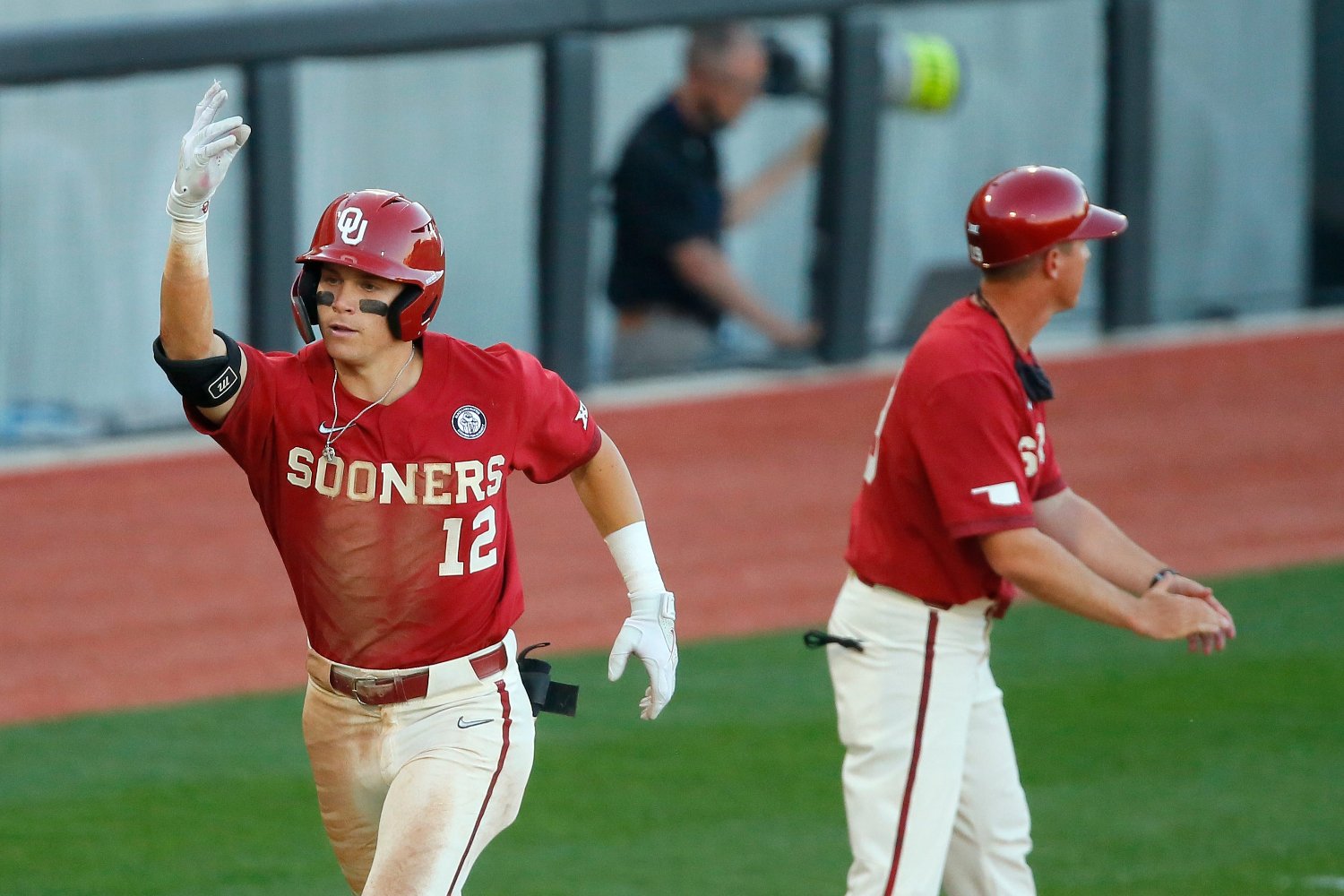 One of the more intriguing stories in the Royals' farm system is corner infielder Brett Squires. Squires initially began the season in Double-A Northwest Arkansas. However, he recently received a call-up to Triple-A Omaha, and he's continued to be on fire at the plate. With the Naturals, the former University of Oklahoma product slashed .294/.388/.538 with a .926 OPS in 139 plate appearances. He also hit six home runs, scored 22 runs, collected 29 RBI, and stole nine bases on 10 attempts. He also had a .244 ISO and sported a TJ Bat+ of 141, according to TJ Stats. Below is also a look at his Statcast percentiles from Double-A, which are a bit more limited due to a lack of publicly available pitch-tracking data. As Royals fans can see above, it wasn't a "perfect" profile by any means. Squires whiffed 35.3%, which ranked in the 19th percentile, and he had an O-Swing% of 32.3%, which ranked in the 26th percentile. Thus, he chased and whiffed more than fans would like to see. Still, despite those two traits, he had a walk rate of 12.9%, which ranked in the 61st percentile. So his aggressive approach didn't seem to affect his production in Northwest Arkansas. His performance has been even better in Triple-A Omaha. In eight games and 31 plate appearances, Squires is slashing .333/.355/.867 with 1.222 OPS. He already has four home runs, five runs scored, 11 RBI, and a TJ Bat+ of 189. Additionally, his Statcast percentiles, which are more complete in Triple-A, are pretty eye-popping, especially with more categories available due to pitching tracking in Triple-A. Squires ranks in the 99th percentile in barrel rate (22.7%), hard-hit rate (63.6%), xwOBA (.486), wOBA (.505), and TJ Bat+ (189). He also ranks in the 100th percentile in average EV (96.9) and 97th percentile in 90th% EV (108.7). Safe to say, the batted-ball quality from Squires has been impressive, and he certainly is making his case in Triple-A that he deserves a call-up to the Major Leagues at some point in 2026. And for those who needed to "see" what Squires can do, live or on video, here's an example of Squires' smooth swing doing major damage against Triple-A pitching. Then again, there are some of the same issues in Triple-A that we saw in Double-A. He has a 27.7% whiff rate, a 76.2% Z-Contact%, and he hasn't drawn a walk yet. On Thursday, he went 0-for-4 with 2 strikeouts against the St. Paul Saints. Thus, things can get problematic for him when he's not putting the ball in play. Thus, let's determine whether Squires is a sleeper who could have an impact at the Major League level or if he's just a Four-A player who is feasting on mediocre pitching and favorable hitting environments. Squires Has Always Demonstrated This Batted-Ball Ability The one reason fans should be optimistic about Squires' Major League outlook is that he has consistently shown the ability to hit the ball hard. That's a Minor League skill that often translates well to the Big Leagues. Not only has Squires demonstrated excellent exit velocity, hard-hit, and barrel ability with the Storm Chasers, but he also showcased similar skills in his stint in the Cactus League in Spring Training. In 21 plate appearances in Arizona, Squries slashed .263/.286/.842 with a 1.128 OPS. The 26-year-old also had three home runs, four runs scored, and eight RBI. While he was a non-roster invitee and didn't seem to have much of a shot to make the MLB Opening Day roster, he demonstrated skills that could blossom in the Major Leagues. That is further illustrated in his Statcast percentiles from Spring Training, courtesy of TJ Stats. Here's an example of Squires absolutely mashing a ball against the Rockies in a Spring Training game on February 28th. Thus, even though we are just seeing the Statcast data publicly for the first time in Triple-A, this isn't the first time that Squires has demonstrated an ability to hit the ball effectively. His strong Spring Training stats show that there is some legitimate power potential in his profile, though it carries some strikeout and swing-and-miss risk. Is He Too Similar to CJ Alexander? One former prospect Squires profiles similarly to is Alexander, who was also a corner infielder in the Royals system back in 2024. Alexander was acquired from Atlanta in 2022 in a trade that also netted Drew Waters and Andrew Hoffman in exchange for the 35th overall pick in the 2022 MLB Draft (which eventually became pitcher JR Ritchie). In 2024 with the Storm Chasers, Alexander slashed .303/.352/.554 with a .906 OPS in 350 plate appearances. He hit 16 home runs, scored 56 runs, and collected 54 RBI. That included some big-time bombs like this one that went 437 feet in Rochester that season. Additionally, Alexander also sported a TJ Bat+ of 131 in 82 games, and had a Statcast profile with the Storm Chasers that was similar in composition to what Squires is doing this year with Omaha. Alexander did everything that one wanted to see from a slugger in Triple-A: he hit the ball hard, launched and pulled the ball well, and even though he didn't walk, he didn't strike out a whole lot either (60th percentile K%). Unfortunately, the former Braves draft pick hit a wall when he got called up to the Majors in 2024. In eight plate appearances, he only had one hit and struck out three times. He posted a .250 OPS, and that Statcast percentiles were meager, to put it kindly. While it wasn't a big sample, it was obvious that Alexander looked overwhelmed at the MLB level. Thus, he was not only optioned back to Omaha after only eight plate appearances, but he was also eventually designated for assignment and picked up on waivers by the Athletics. As was the case with the Royals, Alexander put up big numbers with the A's, posting a 131 wRC+ in 2024 and a 96 wRC+ in 2025. He also received a promotion in 2025 with the Athletics, but much like his time in Kansas City, the sample was small (17 PA), and the results were meager, as illustrated by his .352 OPS and lackluster Statcast percentiles. Right now, Alexander is in the Astros organization playing for Triple-A Sugar Land Space Cowboys. Much like 2024 and 2025, he's mashing in Triple-A, slashing .263/.357/.506 with 10 home runs, an .863 OPS, and 115 TJ Bat+. That said, he remains in Triple-A, even though the Astros are 20-31. Perhaps Houston is the place where Alexander puts it together at the MLB level. However, he is the epitome of a Four-A player. Will Squires Follow A Similar Path to Alexander? Right now, it's easy to see the comparisons between Alexander and Squires. Alexander was a 20th-round pick while Squire went undrafted. Neither is really known for their defense or their speed on the basepaths. They also have never been highly-rated prospects in their career, as Squires has never made the Royals' Top-30 on MLB Pipeline since debuting in 2023. Lastly, they have swing-and-miss issues that could prevent them from finding MLB opportunities and success. Still, I am not sure if Squires is Alexander 2.0 just yet. Squires is still 26, and Alexander didn't debut until he was 27. Thus, age is more on Squires' side, though that gap is closing quickly for the former Sooner. If he doesn't debut this year, he'll be the same age as Alexander when he made his MLB debut in 2024. The big question with Squires is where he will fit if promoted. He primarily plays third and first base, and those positions are set with Maikel Garcia and Vinnie Pasquantino as the regular players, respectively. Thus, for Squires to debut, an injury would have to beset one of those guys, and even then, a call-up is not guaranteed for Squires. Regardless of positional fit, the Royals need hitters who can mash, especially with the club ranking 27th in baseball in runs scored. If Squires continues to mash in Omaha, he'll make some noise for a call-up sooner rather than later. If the Royals continue to sit near the basement at the end of June, Kansas City may have no choice but to call up Squires and give him a chance to prove himself in the big leagues.
 -
 The Storm Chasers cruised behind Drew Waters' three-hit, three-run game and Mitch Spence's four steady innings, romping past St. Paul 11-3. Drew Beam delivered six strong frames for Northwest Arkansas, supported by home runs from Jorge Alfaro and Justin Johnson, in a 6-4 win. Quad Cities dropped a 13-4 blowout despite Yimi Presinal's two scoreless innings and Derlin Figueroa's three-run homer. Columbia stranded nine runners and fell 5-4 to Augusta despite a Henry Ramos triple. Royals Transactions No Roster Moves Storm Chasers Pile Up 16 Hits In 11-3 Romp At St. Paul The Omaha Storm Chasers banged out 16 hits, grabbed the lead in the fifth, and pulled away with a three-run seventh in an 11-3 win at St. Paul. Waters paced the offense from the cleanup spot with three hits, three runs scored, an RBI, and a stolen base. Leadoff man Josh Rojas reached base five times with three hits, a double, a walk, two runs, and an RBI. John Rave matched with three hits, a double, a walk, two runs, and an RBI. Luca Tresh added three hits and two RBI. Abraham Toro drove in three on a two-run double in the ninth, and a sixth-inning sacrifice fly, and Gavin Cross supplied his first home run of the season. Mitch Spence worked four innings, allowing two runs on three hits with one walk, four strikeouts, and one home run surrendered. Ben Sears picked up the win across two innings of one-run ball with one walk and four strikeouts. Jose Cuas tossed two scoreless innings, and Eric Cerantola closed with three strikeouts in the ninth. Cross opened the fifth with his solo homer to make it 3-2, and two outs later, Dustin Dickerson singled and Rojas doubled him home for a 4-2 edge. The seventh padded the lead further. Rojas scored on a wild pitch during Kameron Misner's strikeout, then Waters and Tresh delivered back-to-back RBI singles. Toro's two-run double in the top of the ninth provided the final margin. Player AB R H RBI BB K Josh Rojas (2B) 4 2 3 1 1 0 John Rave (LF) 4 2 3 1 1 0 Kameron Misner (DH) 5 0 1 1 0 3 Drew Waters (CF) 5 3 3 1 0 2 Brett Squires (1B) 4 1 0 0 1 2 Luca Tresh (C) 5 1 3 2 0 0 Gavin Cross (RF) 5 1 1 1 0 0 Abraham Toro (3B) 4 0 1 3 0 2 Dustin Dickerson (SS) 5 1 1 0 0 2 Player IP H R ER BB K HR Mitch Spence 4 3 2 2 1 4 1 Ben Sears (W) 2 1 1 1 1 4 1 Jose Cuas 2 0 0 0 1 1 0 Eric Cerantola 1 2 0 0 0 3 0 Drew Beam And A Three-Run Sixth Lift Naturals Past Sod Poodles Northwest Arkansas erased an early 2-0 deficit with home runs from Johnson and cleanup hitter Alfaro, holding on for a 6-4 win at Amarillo. Leadoff man Carson Roccaforte sparked the lineup with three hits, including a triple. Alfaro went 1-for-4 with a two-run homer and two RBI, while Justin Johnson added a two-run home run and two RBI of his own. Omar Hernandez had two hits, scored twice, and stole a base. Daniel Vazquez added a double, and Connor Scott chipped in an RBI single. Drew Beam turned in a quality start, working six innings and allowing three runs on five hits with one walk, three strikeouts, and one home run allowed. Brandon Johnson gave up a run in an inning of relief. Dennis Colleran Jr. tossed a scoreless inning, and Oscar Rayo struck out three in a scoreless ninth for the save. After falling behind on a two-run homer in the first, the Naturals scratched a run back in the third when Hernandez scored from third on a balk. The bats fully arrived in the fifth, when Justin Johnson's two-run homer scored Hernandez to put NWA ahead 3-2. Three more came in the sixth: Alfaro's two-run shot scored Spencer Nivens, then Vazquez doubled, and Scott followed with an RBI single to make it 6-2. Player AB R H RBI BB K Carson Roccaforte (CF) 4 0 3 0 0 1 Sam Kulasingam (2B) 4 0 0 0 0 0 Spencer Nivens (LF) 4 1 1 0 0 2 Jorge Alfaro (1B) 4 1 1 2 0 1 Daniel Vazquez (SS) 4 1 1 0 0 0 Connor Scott (RF) 4 0 1 1 0 1 Omar Hernandez (C) 4 2 2 0 0 1 Canyon Brown (DH) 3 0 0 0 1 2 Justin Johnson (3B) 3 1 1 2 0 0 Player IP H R ER BB K HR Drew Beam (W) 6 5 3 3 1 3 1 Brandon Johnson 1 2 1 1 0 1 0 Dennis Colleran Jr. 1 2 0 0 0 1 0 Oscar Rayo (S) 1 1 0 0 0 3 0 10-Run Sixth Sinks River Bandits In 13-4 Loss A clean Quad Cities deficit turned into a rout when the bullpen surrendered 10 runs in the top of the sixth, sending the River Bandits to a 13-4 loss to Beloit. Figueroa provided the offensive highlight with a three-run home run in the eighth, finishing 1-for-4 with three RBI and a stolen base. Angel Acosta led the way with three hits. Erick Torres added a single and two stolen bases. Cleanup hitter Ramon Ramirez singled and scored. Blake Mitchell drew a walk and scored a run, but struck out four times. The Bandits stranded six runners. Starter Aiden Jimenez worked five innings, allowing three runs on six hits with two walks, five strikeouts, and one home run, and was tagged with the loss. Ryan Ure recorded one out in the sixth while giving up five runs on a hit and three walks. Hunter Alberini followed and was charged with five more runs on four hits with two walks and two strikeouts across two-thirds of an inning. Presinal then steadied things with two scoreless, hitless innings and four strikeouts. Diego Guzman closed with a scoreless ninth. The sixth featured a steady drumbeat of damage: a single, a triple, another single, a multi-run hit, more singles, and a double turned a 3-0 game into 13-0. Quad Cities got on the board in the seventh when Acosta singled and came around to score on Asbel Gonzalez's groundout. Figueroa's three-run homer in the eighth, scoring Mitchell and Ramirez, accounted for the remaining offense. Player AB R H RBI BB K Luke Pelzer (LF) 3 0 0 0 1 2 Asbel Gonzalez (CF) 5 0 0 0 0 2 Blake Mitchell (C) 4 1 0 0 1 4 Ramon Ramirez (DH) 4 1 1 0 0 0 Derlin Figueroa (3B) 4 1 1 3 0 1 Erick Torres (RF) 4 0 1 0 0 1 Tyriq Kemp (SS) 3 0 1 0 1 1 Trevor Werner (1B) 4 0 0 0 0 2 Angel Acosta (2B) 4 1 3 0 0 1 Player IP H R ER BB K HR Aiden Jimenez (L) 5 6 3 3 2 5 1 Ryan Ure 1/3 1 5 5 3 0 0 Hunter Alberini 2/3 4 5 5 2 2 0 Yimi Presinal 2 0 0 0 0 4 0 Diego Guzman 1 0 0 0 1 0 0 Fireflies Strand Nine, Fall 5-4 At Augusta A relentless inability to cash in cost the Columbia Fireflies, who stranded nine runners in a 5-4 loss to the Augusta GreenJackets. Cleanup hitter Hyungchan Um went 3-for-4 with a walk and an RBI. Leadoff man Henry Ramos drove in two runs on a triple and a groundout, finishing 1-for-5 with a run scored. Sean Gamble singled, scored, and drove in a run. Daniel Lopez doubled, stole a base, and scored twice. Josh Hammond and Um combined for four of the team's seven hits. Denis Samudio worked four innings, allowing three runs on four hits with one walk, six strikeouts, and one home run, taking the loss. Dash Albus surrendered the decisive blow in the fifth on a two-run home run, finishing with two runs on two hits and a walk in his inning of work. Max Martin tossed two scoreless innings with a strikeout, and Henson Leal closed the eighth with a scoreless frame and two strikeouts. Columbia chased Augusta all night after falling behind 2-0 in the first. They cut it to 2-1 in the third on Ramos' RBI groundout that scored Lopez. The sixth produced one more when Um singled home Gamble to make it 5-2. The seventh accounted for the last two: Ramos tripled to drive in Lopez, then Gamble's groundout brought Ramos around to make it 5-4. From there, every threat ended without another run crossing the plate. Player AB R H RBI BB K Henry Ramos (LF) 5 1 1 2 0 2 Sean Gamble (CF) 5 1 1 1 0 1 Josh Hammond (SS) 5 0 1 0 0 1 Hyungchan Um (C) 4 0 3 1 1 1 Yandel Ricardo (2B) 3 0 0 0 0 0 Stone Russell (3B) 4 0 0 0 0 2 JC Vanek (1B) 4 0 0 0 0 1 Roni Cabrera (DH) 2 0 0 0 1 1 Daniel Lopez (RF) 3 2 1 0 0 2 Player IP H R ER BB K HR Denis Samudio (L) 4 4 3 3 1 6 1 Dash Albus 1 2 2 2 1 0 1 Max Martin 2 1 0 0 0 1 0 Henson Leal 1 1 0 0 0 2 0 Top-20 Prospect Performance Kendry Chourio: DNP David Shields: DNP Sean Gamble: 1-for-5, R, RBI, K Blake Mitchell: 0-for-4, R, BB, 4 K Josh Hammond: 1-for-5, K Ramon Ramirez: 1-for-4, R Drew Beam: 6 IP, 5 H, 3 R, 3 ER, 1 BB, 3 K, HR Asbel Gonzalez: 0-for-5, 2 K Ben Kudrna: DNP Carson Roccaforte: 3-for-4, 3B, K Yandel Ricardo: 0-for-3 Felix Arronde: DNP Blake Wolters: DNP Michael Lombardi: DNP Luinder Avila: DNP Steven Zobac: DNP Frank Mozzicato: DNP Daniel Vazquez: 1-for-4, R, 2B Warren Colcano: DNP Shane Panzini: DNP
 -
The Storm Chasers cruised behind Drew Waters' three-hit, three-run game and Mitch Spence's four steady innings, romping past St. Paul 11-3. Drew Beam delivered six strong frames for Northwest Arkansas, supported by home runs from Jorge Alfaro and Justin Johnson, in a 6-4 win. Quad Cities dropped a 13-4 blowout despite Yimi Presinal's two scoreless innings and Derlin Figueroa's three-run homer. Columbia stranded nine runners and fell 5-4 to Augusta despite a Henry Ramos triple. Royals Transactions No Roster Moves Storm Chasers Pile Up 16 Hits In 11-3 Romp At St. Paul The Omaha Storm Chasers banged out 16 hits, grabbed the lead in the fifth, and pulled away with a three-run seventh in an 11-3 win at St. Paul. Waters paced the offense from the cleanup spot with three hits, three runs scored, an RBI, and a stolen base. Leadoff man Josh Rojas reached base five times with three hits, a double, a walk, two runs, and an RBI. John Rave matched with three hits, a double, a walk, two runs, and an RBI. Luca Tresh added three hits and two RBI. Abraham Toro drove in three on a two-run double in the ninth, and a sixth-inning sacrifice fly, and Gavin Cross supplied his first home run of the season. Mitch Spence worked four innings, allowing two runs on three hits with one walk, four strikeouts, and one home run surrendered. Ben Sears picked up the win across two innings of one-run ball with one walk and four strikeouts. Jose Cuas tossed two scoreless innings, and Eric Cerantola closed with three strikeouts in the ninth. Cross opened the fifth with his solo homer to make it 3-2, and two outs later, Dustin Dickerson singled and Rojas doubled him home for a 4-2 edge. The seventh padded the lead further. Rojas scored on a wild pitch during Kameron Misner's strikeout, then Waters and Tresh delivered back-to-back RBI singles. Toro's two-run double in the top of the ninth provided the final margin. Player AB R H RBI BB K Josh Rojas (2B) 4 2 3 1 1 0 John Rave (LF) 4 2 3 1 1 0 Kameron Misner (DH) 5 0 1 1 0 3 Drew Waters (CF) 5 3 3 1 0 2 Brett Squires (1B) 4 1 0 0 1 2 Luca Tresh (C) 5 1 3 2 0 0 Gavin Cross (RF) 5 1 1 1 0 0 Abraham Toro (3B) 4 0 1 3 0 2 Dustin Dickerson (SS) 5 1 1 0 0 2 Player IP H R ER BB K HR Mitch Spence 4 3 2 2 1 4 1 Ben Sears (W) 2 1 1 1 1 4 1 Jose Cuas 2 0 0 0 1 1 0 Eric Cerantola 1 2 0 0 0 3 0 Drew Beam And A Three-Run Sixth Lift Naturals Past Sod Poodles Northwest Arkansas erased an early 2-0 deficit with home runs from Johnson and cleanup hitter Alfaro, holding on for a 6-4 win at Amarillo. Leadoff man Carson Roccaforte sparked the lineup with three hits, including a triple. Alfaro went 1-for-4 with a two-run homer and two RBI, while Justin Johnson added a two-run home run and two RBI of his own. Omar Hernandez had two hits, scored twice, and stole a base. Daniel Vazquez added a double, and Connor Scott chipped in an RBI single. Drew Beam turned in a quality start, working six innings and allowing three runs on five hits with one walk, three strikeouts, and one home run allowed. Brandon Johnson gave up a run in an inning of relief. Dennis Colleran Jr. tossed a scoreless inning, and Oscar Rayo struck out three in a scoreless ninth for the save. After falling behind on a two-run homer in the first, the Naturals scratched a run back in the third when Hernandez scored from third on a balk. The bats fully arrived in the fifth, when Justin Johnson's two-run homer scored Hernandez to put NWA ahead 3-2. Three more came in the sixth: Alfaro's two-run shot scored Spencer Nivens, then Vazquez doubled, and Scott followed with an RBI single to make it 6-2. Player AB R H RBI BB K Carson Roccaforte (CF) 4 0 3 0 0 1 Sam Kulasingam (2B) 4 0 0 0 0 0 Spencer Nivens (LF) 4 1 1 0 0 2 Jorge Alfaro (1B) 4 1 1 2 0 1 Daniel Vazquez (SS) 4 1 1 0 0 0 Connor Scott (RF) 4 0 1 1 0 1 Omar Hernandez (C) 4 2 2 0 0 1 Canyon Brown (DH) 3 0 0 0 1 2 Justin Johnson (3B) 3 1 1 2 0 0 Player IP H R ER BB K HR Drew Beam (W) 6 5 3 3 1 3 1 Brandon Johnson 1 2 1 1 0 1 0 Dennis Colleran Jr. 1 2 0 0 0 1 0 Oscar Rayo (S) 1 1 0 0 0 3 0 10-Run Sixth Sinks River Bandits In 13-4 Loss A clean Quad Cities deficit turned into a rout when the bullpen surrendered 10 runs in the top of the sixth, sending the River Bandits to a 13-4 loss to Beloit. Figueroa provided the offensive highlight with a three-run home run in the eighth, finishing 1-for-4 with three RBI and a stolen base. Angel Acosta led the way with three hits. Erick Torres added a single and two stolen bases. Cleanup hitter Ramon Ramirez singled and scored. Blake Mitchell drew a walk and scored a run, but struck out four times. The Bandits stranded six runners. Starter Aiden Jimenez worked five innings, allowing three runs on six hits with two walks, five strikeouts, and one home run, and was tagged with the loss. Ryan Ure recorded one out in the sixth while giving up five runs on a hit and three walks. Hunter Alberini followed and was charged with five more runs on four hits with two walks and two strikeouts across two-thirds of an inning. Presinal then steadied things with two scoreless, hitless innings and four strikeouts. Diego Guzman closed with a scoreless ninth. The sixth featured a steady drumbeat of damage: a single, a triple, another single, a multi-run hit, more singles, and a double turned a 3-0 game into 13-0. Quad Cities got on the board in the seventh when Acosta singled and came around to score on Asbel Gonzalez's groundout. Figueroa's three-run homer in the eighth, scoring Mitchell and Ramirez, accounted for the remaining offense. Player AB R H RBI BB K Luke Pelzer (LF) 3 0 0 0 1 2 Asbel Gonzalez (CF) 5 0 0 0 0 2 Blake Mitchell (C) 4 1 0 0 1 4 Ramon Ramirez (DH) 4 1 1 0 0 0 Derlin Figueroa (3B) 4 1 1 3 0 1 Erick Torres (RF) 4 0 1 0 0 1 Tyriq Kemp (SS) 3 0 1 0 1 1 Trevor Werner (1B) 4 0 0 0 0 2 Angel Acosta (2B) 4 1 3 0 0 1 Player IP H R ER BB K HR Aiden Jimenez (L) 5 6 3 3 2 5 1 Ryan Ure 1/3 1 5 5 3 0 0 Hunter Alberini 2/3 4 5 5 2 2 0 Yimi Presinal 2 0 0 0 0 4 0 Diego Guzman 1 0 0 0 1 0 0 Fireflies Strand Nine, Fall 5-4 At Augusta A relentless inability to cash in cost the Columbia Fireflies, who stranded nine runners in a 5-4 loss to the Augusta GreenJackets. Cleanup hitter Hyungchan Um went 3-for-4 with a walk and an RBI. Leadoff man Henry Ramos drove in two runs on a triple and a groundout, finishing 1-for-5 with a run scored. Sean Gamble singled, scored, and drove in a run. Daniel Lopez doubled, stole a base, and scored twice. Josh Hammond and Um combined for four of the team's seven hits. Denis Samudio worked four innings, allowing three runs on four hits with one walk, six strikeouts, and one home run, taking the loss. Dash Albus surrendered the decisive blow in the fifth on a two-run home run, finishing with two runs on two hits and a walk in his inning of work. Max Martin tossed two scoreless innings with a strikeout, and Henson Leal closed the eighth with a scoreless frame and two strikeouts. Columbia chased Augusta all night after falling behind 2-0 in the first. They cut it to 2-1 in the third on Ramos' RBI groundout that scored Lopez. The sixth produced one more when Um singled home Gamble to make it 5-2. The seventh accounted for the last two: Ramos tripled to drive in Lopez, then Gamble's groundout brought Ramos around to make it 5-4. From there, every threat ended without another run crossing the plate. Player AB R H RBI BB K Henry Ramos (LF) 5 1 1 2 0 2 Sean Gamble (CF) 5 1 1 1 0 1 Josh Hammond (SS) 5 0 1 0 0 1 Hyungchan Um (C) 4 0 3 1 1 1 Yandel Ricardo (2B) 3 0 0 0 0 0 Stone Russell (3B) 4 0 0 0 0 2 JC Vanek (1B) 4 0 0 0 0 1 Roni Cabrera (DH) 2 0 0 0 1 1 Daniel Lopez (RF) 3 2 1 0 0 2 Player IP H R ER BB K HR Denis Samudio (L) 4 4 3 3 1 6 1 Dash Albus 1 2 2 2 1 0 1 Max Martin 2 1 0 0 0 1 0 Henson Leal 1 1 0 0 0 2 0 Top-20 Prospect Performance Kendry Chourio: DNP David Shields: DNP Sean Gamble: 1-for-5, R, RBI, K Blake Mitchell: 0-for-4, R, BB, 4 K Josh Hammond: 1-for-5, K Ramon Ramirez: 1-for-4, R Drew Beam: 6 IP, 5 H, 3 R, 3 ER, 1 BB, 3 K, HR Asbel Gonzalez: 0-for-5, 2 K Ben Kudrna: DNP Carson Roccaforte: 3-for-4, 3B, K Yandel Ricardo: 0-for-3 Felix Arronde: DNP Blake Wolters: DNP Michael Lombardi: DNP Luinder Avila: DNP Steven Zobac: DNP Frank Mozzicato: DNP Daniel Vazquez: 1-for-4, R, 2B Warren Colcano: DNP Shane Panzini: DNP View full article
-
As Royals fans can see, Cags has been the third-worst Royals hitter in RISP situations with a -21 wRC+ mark. The only hitters who have been worse are Starling Marte (-57 wRC+) and Tyler Tolbert (-100 wRC+). Tolbert only had 1 plate appearance in a RISP situation and is currently in Triple-A. For those who want metrics other than wRC+, here's how Cags breaks them down into some more "easily understood" categories. 36.7% K% (2nd worst) 3.3% BB% (5th worst) .138 average (3rd worst) .167 OBP (3rd worst) .138 SLG (3rd worst) It's bad enough that he's striking out a ton in RISP situations. However, the fact that he's not making any productive or hard-hit contact either is also concerning, especially for a hitter that many Royals fans want in the No. 3 or 4 spot in the batting order. It's also interesting to see how Cags has done not just in situations where the bases are empty, but even with runners on base. Here's a breakdown of his numbers in those categories. Bases Empty: .271/.354/.506, .860 OPS, 138 wRC+. Men on Base: .211/.250/..316, .566 OPS, 54 wRC+. As we can see, it's not just RISP situations where Cags has struggled. He also has underperformed in situations with runners on base in general. There is an 84-point difference between his wRC+ with the bases empty and with men on base. That's far too great a difference, especially for a hitter who is expected to cash in with runners on base regularly. I want Cags to succeed. Hopefully, he can make these adjustments, especially with runners on base and in scoring position. That said, Cags has to SHOW that he can produce in these run-generating situations. So far, he hasn't, which explains why Quatraro has batted him lower in the order so far this season. The former 2024 1st-round pick is in control of his own destiny, especially as Quatraro gives him more opportunities in the lineup, against both lefty and righty starting pitchers. View full article
-
Three Things Jac Caglianone Has to Do to Play More Regularly
Kevin O'Brien posted an article in Royals
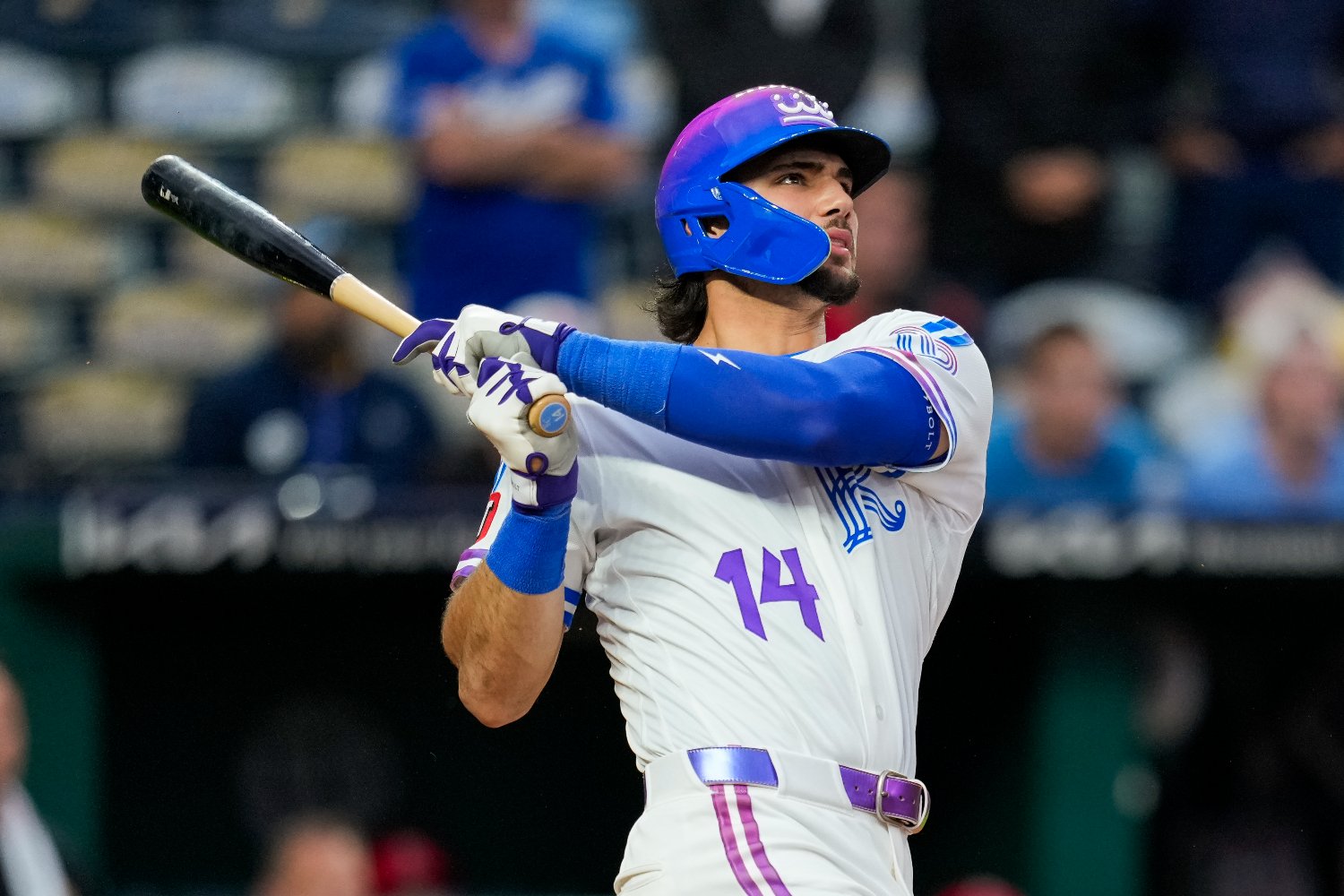 Many frustrated Royals fans have been advocating for more at-bats from Jac Caglianone, especially against left-handed pitchers. This season, Cags has only received 36 plate appearances against lefties, compared to 120 against right-handed pitchers. It makes sense when looking at the data. Against lefties, Caglianone is hitting .171 with a .508 OPS. Against righties? He's hitting .271 with an .817 OPS. Thus, it makes sense that manager Matt Quatraro would want to put Cags in situations where he can succeed the most. That said, this Royals lineup is searching for answers to their "run-generating" issues. Going into Wednesday's game, they rank 27th in the league in runs scored and were limited to two runs combined in their first two games against the Red Sox this week (they have scored three on Wednesday night so far). With his batted-ball profile and tremendous power, Caglianone could help with the Royals' "runs" woes, especially if he can move up in the batting order and replace Vinnie Pasquantino (.604 OPS) or Salvador Perez (.591 OPS) in the three or four spot. Cags' Statcast profile, especially in those exit velocity, barrel, hard-hit, and launch angle categories, may be the most impressive of any Royals hitter on the team not named Bobby Witt Jr. However, Quatraro shouldn't simply give Cags that spot and the trust to hit against lefties and righties. The former Florida product needs to earn it, because the Royals right now don't need "upside", they need production. This isn't a rebuilding team (yet). This is one with playoff hopes and aspirations in a division that's been incredibly mediocre. For Cags to play more and justify a regular spot in the batting order, here are three things that need to happen with him going forward this season. Improve His Swing Decisions Against Lefties When looking at Cags' differences in performance against lefties and righties, TJ Stats' Statcast percentiles splits chart is a great tool for seeing how hitters perform against each in a single graphic. Here's a look at Caglianone Statcast percentiles splits via TJ Stats. As Royals fans can see above, there are a lot of categories where Jac lags against lefties. The biggest differences are in Z-Swing%, O-Swing%, and Strike%. Against lefties, Cags ranks in the 7th percentile in Z-Swing% (swings on pitches in the strike zone), 11th percentile in O-Swing% (swings outside the strike zone), and 94th percentile in Strike% (percentage of pitches he's seen that are strikes). Conversely, against righties, he ranks in the 60th percentile in Z-Swing%, 57th percentile in O-Swing%, and 19th percentile in Strike% (lower is good in this case). So what do these metrics mean? Against lefties, Cags is swinging more, chasing less, and facing more challenges from pitchers. Unfortunately, he's being challenged because the production isn't there against lefties (1st percentile xwOBA), and he tends to chase. His chase issues are also prevalent against breaking pitches. Below is his pitch result zone chart against breaking balls from left-handed pitchers. Safe to say, he's tended to chase on a lot of those pitches this year, especially those out of the strike zone. He's had four hits on those pitches (two singles and two doubles), but he also has six strikeouts. Here's an example of him striking out badly on a sweeper from the White Sox's Anthony Kay on April 9th. ZzZ3bDRfWGw0TUFRPT1fQlZSUUFBWUNCQVVBQ0ZZQ0FnQUhCUTVlQUZrQVZWQUFWRmRSQVZjSEFWWlNWVlJl.mp4 Not only does Cags need to do a better job of picking up and laying off those breaking balls out of the zone better, but he needs to be a little more aggressive on pitches in the zone, especially early in the count. Pitchers are challenging him early because they know he will not swing early against lefties. That's why his Strike% is so high, putting him behind in counts. Increasing that Z-Strike%, especially early in the count, could help his production and encourage left-handed pitchers to be more prudent with him in terms of how they attack him. Cags Needs to Launch the Ball Better Against Lefties Another big difference in Cags' Statcast splits is that he launches the ball much worse against lefties than righties. Against righties, he has a 40.5% LA Sweet-Spot%, which ranks in the 86th percentile. Here's a look at his radial chart against righties, which shows a lot of batted balls elevated productively, especially base hits. Against lefties, however, the results have been much different. His LA Sweet-Spot% is 31.8% against lefties, which ranks in the 18th percentile. Furthermore, here's a look at his radial chart against left-hander pitchers this year, via Savant. Caglianone has a couple of doubles and a home run, but for the most part, the ball is being hit on the ground (albeit hard). That is not a recipe for success, which explains why his barrel rate is 4.5% against lefties despite an average exit velocity of 92.2 MPH on batted balls against lefties. That isn't much worse than his 94.8 MPH average exit velocity against righties, which ranks in the 98th percentile. Launch angle can be a challenging thing for a hitter to correct. Yes, it can be tied to mechanical issues with the swing. However, for the most part, it's often heavily tied to swing decisions and pitch recognition. Cags' bat speed is 73 MPH against lefties, which is 2.3 MPH slower than his bat speed against righties. Is Cags too hesitant in his swing decisions against lefties? Is he not picking up the ball well and reacting too late, which explains the bat speed decline? If Cags and the Royals' hitting coaches can figure out the issues, then perhaps Cags can increase his bat speed against lefties. If that happens, then it is likely that we will see the barrels and, more importantly, the launch angle on batted balls against lefties improve. A launch angle sweet-spot% against left-handed pitchers that is closer to his rate against right-handed pitchers will help Cags be more productive against lefties and make him worthy of being an everyday bat in the Royals lineup this season. Improve With Runners in Scoring Position I shared this in my post on Wednesday morning, but the Royals have not been good with runners in scoring position this year. Below is a table that shows how Royals hitters have fared this year in RISP situations, via Fangraphs. As Royals fans can see, Cags has been the third-worst Royals hitter in RISP situations with a -21 wRC+ mark. The only hitters who have been worse are Starling Marte (-57 wRC+) and Tyler Tolbert (-100 wRC+). Tolbert only had 1 plate appearance in a RISP situation and is currently in Triple-A. For those who want metrics other than wRC+, here's how Cags breaks them down into some more "easily understood" categories. 36.7% K% (2nd worst) 3.3% BB% (5th worst) .138 average (3rd worst) .167 OBP (3rd worst) .138 SLG (3rd worst) It's bad enough that he's striking out a ton in RISP situations. However, the fact that he's not making any productive or hard-hit contact either is also concerning, especially for a hitter that many Royals fans want in the No. 3 or 4 spot in the batting order. It's also interesting to see how Cags has done not just in situations where the bases are empty, but even with runners on base. Here's a breakdown of his numbers in those categories. Bases Empty: .271/.354/.506, .860 OPS, 138 wRC+. Men on Base: .211/.250/..316, .566 OPS, 54 wRC+. As we can see, it's not just RISP situations where Cags has struggled. He also has underperformed in situations with runners on base in general. There is an 84-point difference between his wRC+ with the bases empty and with men on base. That's far too great a difference, especially for a hitter who is expected to cash in with runners on base regularly. I want Cags to succeed. Hopefully, he can make these adjustments, especially with runners on base and in scoring position. That said, Cags has to SHOW that he can produce in these run-generating situations. So far, he hasn't, which explains why Quatraro has batted him lower in the order so far this season. The former 2024 1st-round pick is in control of his own destiny, especially as Quatraro gives him more opportunities in the lineup, against both lefty and righty starting pitchers.
 -
Justin Lamkin spun six innings with eight strikeouts as the Northwest Arkansas Naturals beat Amarillo 8-1, fueled by Carson Roccaforte's two home runs. Ramon Ramirez drove in four to power Quad Cities' 7-5 comeback over Beloit, with Josh Hansell striking out five in two scoreless innings. Shane Panzini surrendered four runs as the Omaha Storm Chasers fell 14-4 at St. Paul, and JC Vanek's two homers were not enough in Columbia's 5-4 walkoff loss at Augusta. Royals Transactions No Roster Moves Eight-Run Sixth Sinks Storm Chasers in St. Paul The Omaha Storm Chasers fell 14-4 to the St. Paul Saints, undone by a disastrous bottom of the sixth. Starter Panzini took the loss, going 4 1/3 innings and allowing four earned runs on five hits, including three home runs, with two walks and one strikeout. Reliever Mason Black was tagged for seven earned runs on five hits and three walks in 1 1/3 innings, fanning two. Helcris Olivárez allowed three runs in one inning of work, while Anthony Gose closed with 1 1/3 scoreless innings and three strikeouts. Josh Rojas, who entered at designated hitter, went 2-for-3 with a three-run home run, his fifth of the year, in the seventh to plate Connor Kaiser and leadoff man John Rave. Brett Squires drove in Omaha's other run with an RBI single in the fifth that scored Dustin Dickerson. Kameron Misner doubled and stole a base, and Luca Tresh added a single. The Saints opened the bottom of the sixth with a leadoff double, then drew two walks to load the bases. An RBI single, a two-run double, a wild pitch, and an RBI groundout pushed the lead to 9-1. After another walk and a strikeout, a double set up a three-run home run that capped the eight-run inning at 12-1. The Storm Chasers struck out 11 times and left seven on base. Player AB R H RBI BB K John Rave 4 1 0 0 1 3 Tyler Tolbert 1 0 0 0 1 1 Josh Rojas 3 1 2 3 0 0 Brett Squires 3 0 1 1 0 1 Drew Waters 3 0 0 0 1 1 Kameron Misner 4 0 1 0 0 0 Luca Tresh 4 0 1 0 0 3 Abraham Toro 3 0 0 0 1 1 Connor Kaiser 4 1 0 0 0 0 Dustin Dickerson 3 1 0 0 1 1 Player IP H R ER BB K HR Shane Panzini (L, 1-3) 4 1/3 5 4 4 2 1 3 Mason Black 1 1/3 5 7 7 3 2 0 Helcris Olivárez 1 3 3 3 3 2 1 Anthony Gose 1 1/3 1 0 0 0 3 0 Roccaforte's Two-Homer Day Powers Naturals Past Sod Poodles The Northwest Arkansas Naturals rolled to an 8-1 win over the Amarillo Sod Poodles behind Lamkin's quality start and a two-home-run day from Roccaforte. Lamkin tossed six innings, allowing one earned run on one hit while striking out eight without issuing a walk for the win. Dennis Colleran Jr., Caden Monke, and Augusto Mendieta each followed with a scoreless inning, combining for five strikeouts and no walks. Roccaforte led off the game with his 11th home run of the season and added his 12th to open the eighth, finishing 2-for-5 with two runs, two RBI, and two strikeouts. Canyon Brown went 2-for-4 with a leadoff home run in the ninth, his second of the year, plus a double and two RBI. Sam Kulasingam picked up three hits, including a double. Daniel Vazquez doubled in a run, and Spencer Nivens reached twice with a double and a walk. The Naturals extended the lead to 4-0 in the second. Colton Becker singled home Vazquez, Connor Scott doubled in Nivens, and Brown's double brought home Scott. Three more runs crossed in the eighth: Roccaforte's solo shot opened the frame, Vazquez doubled home Kulasingam, and Jorge Alfaro scored on a wild pitch during Becker's at-bat. Player AB R H RBI BB K Carson Roccaforte 5 2 2 2 0 2 Rudy Martin Jr. 3 0 1 0 0 0 Justin Johnson 1 0 0 0 1 1 Sam Kulasingam 5 1 3 0 0 0 Jorge Alfaro 4 1 1 0 0 2 Daniel Vazquez 4 1 2 1 0 0 Spencer Nivens 3 1 2 0 1 0 Colton Becker 4 0 1 1 0 1 Connor Scott 3 1 1 1 1 1 Canyon Brown 4 1 2 2 0 0 Player IP H R ER BB K HR Justin Lamkin (W, 1-1) 6 1 1 1 0 8 1 Dennis Colleran Jr. (H, 3) 1 1 0 0 0 0 0 Caden Monke 1 1 0 0 0 2 0 Augusto Mendieta 1 1 0 0 0 3 0 Ramirez Drives In Four as River Bandits Rally Past Sky Carp The Quad Cities River Bandits overcame a 4-0 deficit to beat the Beloit Sky Carp 7-5, led by cleanup man Ramirez's 4-for-4 night with four RBI. Starter Tanner Jones allowed four earned runs on seven hits and three walks in five innings, striking out four and surrendering two home runs. Hansell followed with two scoreless innings, allowing one hit and striking out five for the win. L.P. Langevin worked a scoreless eighth with three strikeouts, and Kamden Edge gave up a solo home run in the ninth for the save. Ramirez doubled home three runs in the sixth and singled in another in the seventh. Angel Acosta went 3-for-4 with two runs scored and an RBI single, while Asbel Gonzalez reached on a walk, scored once, and Blake Mitchell drew two walks and scored. Leadoff man Nolan Sailors also reached twice on walks. The River Bandits trailed 4-0 entering the sixth. Acosta singled, Sailors walked, and after a strikeout, Mitchell drew a walk to load the bases. Ramirez followed with a bases-clearing double, scoring Acosta, Sailors, and Mitchell to cut the deficit to 4-3. Quad Cities took the lead in the seventh. Tyriq Kemp walked, Erick Torres singled, and Acosta singled home Kemp to tie it. Gonzalez walked, then a wild pitch scored Torres before Mitchell drew a walk. Ramirez singled home Acosta, and Gonzalez scored on a fielding error to push the lead to 7-4. Player AB R H RBI BB K Nolan Sailors 3 1 0 0 2 1 Asbel Gonzalez 4 1 0 0 1 2 Blake Mitchell 2 1 0 0 2 1 Ramon Ramirez 4 0 4 4 0 0 Derlin Figueroa 4 0 0 0 0 2 Jose Cerice 4 0 0 0 0 0 Tyriq Kemp 3 1 0 0 1 1 Erick Torres 4 1 1 0 0 1 Angel Acosta 4 2 3 1 0 1 Player IP H R ER BB K HR Tanner Jones 5 7 4 4 3 4 2 Josh Hansell (W, 1-4) 2 1 0 0 1 5 0 L.P. Langevin (H, 2) 1 0 0 0 0 3 0 Kamden Edge (S, 2) 1 1 1 1 0 1 1 Vanek's Two Homers Not Enough as Fireflies Fall on Walkoff in Augusta The Columbia Fireflies fell 5-4 to the Augusta GreenJackets on a ninth-inning walkoff single, despite two home runs from Vanek. Starter Jose Gutierrez allowed four earned runs on six hits in five innings, striking out four and walking two while surrendering three home runs. Shane Van Dam followed with 3 1/3 innings of relief, allowing one earned run on two hits with four strikeouts and two walks, and took the loss. Andy Basora yielded the walkoff hit without recording an out. Vanek launched a solo home run, his fifth of the season, to open the fifth inning and added another, his sixth, with two outs in the ninth to tie the game at 4-4. Leadoff hitter Henry Ramos got the scoring started with a solo home run in the first, his second of the year. Josh Hammond went 2-for-4 with a run scored, Brooks Bryan reached three times on a hit and two walks, and Yandel Ricardo and Jhosmmel Zue added one hit apiece. Augusta took control in the bottom of the fifth. Back-to-back solo home runs erased Columbia's 2-0 lead and put the GreenJackets ahead, and after a single and a flyout, a two-run home run made it 4-2. Columbia answered in the sixth when Stone Russell's groundout scored Hammond, who had singled and worked his way around to third earlier in the frame. After Vanek's tying homer in the ninth, the GreenJackets put a runner on against Van Dam, and a single off Basora scored the winning run. Player AB R H RBI BB K Henry Ramos 4 1 1 1 0 0 Sean Gamble 4 0 0 0 0 0 Josh Hammond 4 1 2 0 0 0 Brooks Bryan 2 0 1 0 2 0 Yandel Ricardo 4 0 1 0 0 2 Stone Russell 4 0 0 1 0 1 JC Vanek 4 2 2 2 0 0 Jhosmmel Zue 4 0 1 0 0 1 Roni Cabrera 2 0 0 0 0 1 Player IP H R ER BB K HR Jose Gutierrez 5 6 4 4 2 4 3 Shane Van Dam (L, 1-3) 3 1/3 2 1 1 2 4 0 Andy Basora 0 1 0 0 0 0 0 Top-20 Prospect Performance Kendry Chourio: DNP David Shields: DNP Sean Gamble: 0-for-4 Blake Mitchell: 0-for-2, 2 BB, R, K Josh Hammond: 2-for-4, R Ramon Ramirez: 4-for-4, 2B, 4 RBI Drew Beam: DNP Asbel Gonzalez: 0-for-4, R, BB, 2 K Ben Kudrna: DNP Carson Roccaforte: 2-for-5, 2 HR, 2 R, 2 RBI, 2 K Yandel Ricardo: 1-for-4, 2 K Felix Arronde: DNP Blake Wolters: DNP Michael Lombardi: DNP Luinder Avila: DNP Steven Zobac: DNP Frank Mozzicato: DNP Daniel Vazquez: 2-for-4, 2B, R, RBI Warren Colcano: DNP Shane Panzini: 4 1/3 IP, 5 H, 4 ER, 2 BB, K, 3 HR, L View full article
-
 Justin Lamkin spun six innings with eight strikeouts as the Northwest Arkansas Naturals beat Amarillo 8-1, fueled by Carson Roccaforte's two home runs. Ramon Ramirez drove in four to power Quad Cities' 7-5 comeback over Beloit, with Josh Hansell striking out five in two scoreless innings. Shane Panzini surrendered four runs as the Omaha Storm Chasers fell 14-4 at St. Paul, and JC Vanek's two homers were not enough in Columbia's 5-4 walkoff loss at Augusta. Royals Transactions No Roster Moves Eight-Run Sixth Sinks Storm Chasers in St. Paul The Omaha Storm Chasers fell 14-4 to the St. Paul Saints, undone by a disastrous bottom of the sixth. Starter Panzini took the loss, going 4 1/3 innings and allowing four earned runs on five hits, including three home runs, with two walks and one strikeout. Reliever Mason Black was tagged for seven earned runs on five hits and three walks in 1 1/3 innings, fanning two. Helcris Olivárez allowed three runs in one inning of work, while Anthony Gose closed with 1 1/3 scoreless innings and three strikeouts. Josh Rojas, who entered at designated hitter, went 2-for-3 with a three-run home run, his fifth of the year, in the seventh to plate Connor Kaiser and leadoff man John Rave. Brett Squires drove in Omaha's other run with an RBI single in the fifth that scored Dustin Dickerson. Kameron Misner doubled and stole a base, and Luca Tresh added a single. The Saints opened the bottom of the sixth with a leadoff double, then drew two walks to load the bases. An RBI single, a two-run double, a wild pitch, and an RBI groundout pushed the lead to 9-1. After another walk and a strikeout, a double set up a three-run home run that capped the eight-run inning at 12-1. The Storm Chasers struck out 11 times and left seven on base. Player AB R H RBI BB K John Rave 4 1 0 0 1 3 Tyler Tolbert 1 0 0 0 1 1 Josh Rojas 3 1 2 3 0 0 Brett Squires 3 0 1 1 0 1 Drew Waters 3 0 0 0 1 1 Kameron Misner 4 0 1 0 0 0 Luca Tresh 4 0 1 0 0 3 Abraham Toro 3 0 0 0 1 1 Connor Kaiser 4 1 0 0 0 0 Dustin Dickerson 3 1 0 0 1 1 Player IP H R ER BB K HR Shane Panzini (L, 1-3) 4 1/3 5 4 4 2 1 3 Mason Black 1 1/3 5 7 7 3 2 0 Helcris Olivárez 1 3 3 3 3 2 1 Anthony Gose 1 1/3 1 0 0 0 3 0 Roccaforte's Two-Homer Day Powers Naturals Past Sod Poodles The Northwest Arkansas Naturals rolled to an 8-1 win over the Amarillo Sod Poodles behind Lamkin's quality start and a two-home-run day from Roccaforte. Lamkin tossed six innings, allowing one earned run on one hit while striking out eight without issuing a walk for the win. Dennis Colleran Jr., Caden Monke, and Augusto Mendieta each followed with a scoreless inning, combining for five strikeouts and no walks. Roccaforte led off the game with his 11th home run of the season and added his 12th to open the eighth, finishing 2-for-5 with two runs, two RBI, and two strikeouts. Canyon Brown went 2-for-4 with a leadoff home run in the ninth, his second of the year, plus a double and two RBI. Sam Kulasingam picked up three hits, including a double. Daniel Vazquez doubled in a run, and Spencer Nivens reached twice with a double and a walk. The Naturals extended the lead to 4-0 in the second. Colton Becker singled home Vazquez, Connor Scott doubled in Nivens, and Brown's double brought home Scott. Three more runs crossed in the eighth: Roccaforte's solo shot opened the frame, Vazquez doubled home Kulasingam, and Jorge Alfaro scored on a wild pitch during Becker's at-bat. Player AB R H RBI BB K Carson Roccaforte 5 2 2 2 0 2 Rudy Martin Jr. 3 0 1 0 0 0 Justin Johnson 1 0 0 0 1 1 Sam Kulasingam 5 1 3 0 0 0 Jorge Alfaro 4 1 1 0 0 2 Daniel Vazquez 4 1 2 1 0 0 Spencer Nivens 3 1 2 0 1 0 Colton Becker 4 0 1 1 0 1 Connor Scott 3 1 1 1 1 1 Canyon Brown 4 1 2 2 0 0 Player IP H R ER BB K HR Justin Lamkin (W, 1-1) 6 1 1 1 0 8 1 Dennis Colleran Jr. (H, 3) 1 1 0 0 0 0 0 Caden Monke 1 1 0 0 0 2 0 Augusto Mendieta 1 1 0 0 0 3 0 Ramirez Drives In Four as River Bandits Rally Past Sky Carp The Quad Cities River Bandits overcame a 4-0 deficit to beat the Beloit Sky Carp 7-5, led by cleanup man Ramirez's 4-for-4 night with four RBI. Starter Tanner Jones allowed four earned runs on seven hits and three walks in five innings, striking out four and surrendering two home runs. Hansell followed with two scoreless innings, allowing one hit and striking out five for the win. L.P. Langevin worked a scoreless eighth with three strikeouts, and Kamden Edge gave up a solo home run in the ninth for the save. Ramirez doubled home three runs in the sixth and singled in another in the seventh. Angel Acosta went 3-for-4 with two runs scored and an RBI single, while Asbel Gonzalez reached on a walk, scored once, and Blake Mitchell drew two walks and scored. Leadoff man Nolan Sailors also reached twice on walks. The River Bandits trailed 4-0 entering the sixth. Acosta singled, Sailors walked, and after a strikeout, Mitchell drew a walk to load the bases. Ramirez followed with a bases-clearing double, scoring Acosta, Sailors, and Mitchell to cut the deficit to 4-3. Quad Cities took the lead in the seventh. Tyriq Kemp walked, Erick Torres singled, and Acosta singled home Kemp to tie it. Gonzalez walked, then a wild pitch scored Torres before Mitchell drew a walk. Ramirez singled home Acosta, and Gonzalez scored on a fielding error to push the lead to 7-4. Player AB R H RBI BB K Nolan Sailors 3 1 0 0 2 1 Asbel Gonzalez 4 1 0 0 1 2 Blake Mitchell 2 1 0 0 2 1 Ramon Ramirez 4 0 4 4 0 0 Derlin Figueroa 4 0 0 0 0 2 Jose Cerice 4 0 0 0 0 0 Tyriq Kemp 3 1 0 0 1 1 Erick Torres 4 1 1 0 0 1 Angel Acosta 4 2 3 1 0 1 Player IP H R ER BB K HR Tanner Jones 5 7 4 4 3 4 2 Josh Hansell (W, 1-4) 2 1 0 0 1 5 0 L.P. Langevin (H, 2) 1 0 0 0 0 3 0 Kamden Edge (S, 2) 1 1 1 1 0 1 1 Vanek's Two Homers Not Enough as Fireflies Fall on Walkoff in Augusta The Columbia Fireflies fell 5-4 to the Augusta GreenJackets on a ninth-inning walkoff single, despite two home runs from Vanek. Starter Jose Gutierrez allowed four earned runs on six hits in five innings, striking out four and walking two while surrendering three home runs. Shane Van Dam followed with 3 1/3 innings of relief, allowing one earned run on two hits with four strikeouts and two walks, and took the loss. Andy Basora yielded the walkoff hit without recording an out. Vanek launched a solo home run, his fifth of the season, to open the fifth inning and added another, his sixth, with two outs in the ninth to tie the game at 4-4. Leadoff hitter Henry Ramos got the scoring started with a solo home run in the first, his second of the year. Josh Hammond went 2-for-4 with a run scored, Brooks Bryan reached three times on a hit and two walks, and Yandel Ricardo and Jhosmmel Zue added one hit apiece. Augusta took control in the bottom of the fifth. Back-to-back solo home runs erased Columbia's 2-0 lead and put the GreenJackets ahead, and after a single and a flyout, a two-run home run made it 4-2. Columbia answered in the sixth when Stone Russell's groundout scored Hammond, who had singled and worked his way around to third earlier in the frame. After Vanek's tying homer in the ninth, the GreenJackets put a runner on against Van Dam, and a single off Basora scored the winning run. Player AB R H RBI BB K Henry Ramos 4 1 1 1 0 0 Sean Gamble 4 0 0 0 0 0 Josh Hammond 4 1 2 0 0 0 Brooks Bryan 2 0 1 0 2 0 Yandel Ricardo 4 0 1 0 0 2 Stone Russell 4 0 0 1 0 1 JC Vanek 4 2 2 2 0 0 Jhosmmel Zue 4 0 1 0 0 1 Roni Cabrera 2 0 0 0 0 1 Player IP H R ER BB K HR Jose Gutierrez 5 6 4 4 2 4 3 Shane Van Dam (L, 1-3) 3 1/3 2 1 1 2 4 0 Andy Basora 0 1 0 0 0 0 0 Top-20 Prospect Performance Kendry Chourio: DNP David Shields: DNP Sean Gamble: 0-for-4 Blake Mitchell: 0-for-2, 2 BB, R, K Josh Hammond: 2-for-4, R Ramon Ramirez: 4-for-4, 2B, 4 RBI Drew Beam: DNP Asbel Gonzalez: 0-for-4, R, BB, 2 K Ben Kudrna: DNP Carson Roccaforte: 2-for-5, 2 HR, 2 R, 2 RBI, 2 K Yandel Ricardo: 1-for-4, 2 K Felix Arronde: DNP Blake Wolters: DNP Michael Lombardi: DNP Luinder Avila: DNP Steven Zobac: DNP Frank Mozzicato: DNP Daniel Vazquez: 2-for-4, 2B, R, RBI Warren Colcano: DNP Shane Panzini: 4 1/3 IP, 5 H, 4 ER, 2 BB, K, 3 HR, L
 -
Nick Loftin, Jonathan India, Witt, and Kyle Isbel have been elite with runners in scoring position this year. All four have wRC+ marks of 145 or higher in RISP situations. Unfortunately, India is out for the remainder of the season due to a shoulder injury. When it comes to Royals hitters who have struggled in RISP situations, some names are tough to stomach. Vinnie Pasquantino and Salvy were expected to carry this Royals offense in the No. 3 and 4 spots, respectively. They have RISP wRC+ marks of 27 and 24. Caglianone, whom Royals fans are advocating for on social media to get more at-bats, is the third-worst hitter in RISP situations this year with a -21 wRC+. Only Marte (-57) and Tyler Tolbert have been worse, and Tolbert only has one PA in RISP situations. On Tuesday, the Royals were 2-for-7 in RISP situations and left six runners on base. They also made crucial outs on the basepaths, with Thomas getting picked off while trying to steal third in the sixth and Garcia getting thrown out at second while trying to extend a single in the fifth. Thus, Tuesday's loss to the Red Sox only amplified the Royals' struggles with runners in scoring position, further deflating a Kauffman Stadium crowd of 14,047, especially on a chilly May evening. Inconsistency With the Pitching Staff The Royals were in a tough spot on Tuesday, having to use a "bullpen" game after an elbow injury sidelined initial starter Kris Bubic. For eight innings of work, the Kansas City bullpen held its own, allowing three runs over that span. Opener Bailey Falter struggled with command, walking three and allowing two runs on four hits in two innings of work. However, despite those issues, the TJ Stuff+ still looked encouraging, and he surprisingly did a good job of generating whiff (26.7%) and not letting the hard contact get too out of control either. That can be seen in his TJ Stuff+ summary below. However, the main star pitcher for the Royals in this bullpen contest was Lunider Avila, who went three innings in the Royals' loss. Avila threw 51 pitches and allowed no runs on one hit and one walk while striking out three. He generated a 60.8% strike rate and a TJ Stuff+ of 105. The Venezuelan-born pitcher looked in control and confident on the mound, which wasn't always the case when he initially made his 2026 debut. However, not only is Avila producing solid metrics (as seen below in his TJ Stuff+ summary), he's showing a profile of a dependable reliever in the Royals bullpen. Lastly, John Schreiber had another solid outing, striking out two, allowing one hit, and walking no one in an inning of work. The veteran righty was pretty efficient against his old team, throwing a strike rate of 72.2% on just 18 pitches. Schreiber generated a lot of chase (50%) and whiff (30%), which helped him keep the Red Sox hitters at bay. Unfortunately, while the Royals' bullpen showed some flashes of positives, it all came crashing down in one inning. That trend has also been far too common for Kansas City this year, especially with a bullpen that ranks 19th in ERA, 26th in WHIP, and 28th in BB/9. This struggling reliever happened to be Eli Morgan, who was just recently promoted from Triple-A after Kris Bubic was added to the 15-Day IL. Morgan threw 26 pitches in an inning of work and was tagged for four runs on seven hits. The biggest hit came from Jarren Duran, the Red Sox leadoff hitter, who hit a three-run home run with two outs that essentially put the game away for Boston. Again, one bad pitch, this time from Morgan, leads to a brutal inning that puts a game out of reach. It's been a far too common trend with not just this bullpen but the pitching staff in general, which explains why the Royals are 20-29 after another home loss to the Red Sox. The Royals rank 20th in team ERA, 25th in xERA, and 27th in BB%, according to Fangraphs. While the Royals' offense is not scoring enough runs in clutch situations, the Royals' pitching staff is bleeding runs slowly, but surely. Pitching was once an area of strength for the Royals under Quatraro. According to Fangraphs, they ranked 4th in ERA and 6th in FIP from 2024 to 2025. While their xERA ranked 17th, the rest of the metrics were good enough to help the Royals win 86 and 82 games in 2024 and 2025, respectively. Unfortunately for the Royals, that kind of pitching consistency isn't happening from the pitching staff this year, both from the rotation and the bullpen. On Tuesday, Royals fans saw that firsthand, as some promising outings in the beginning led the way to a brutal performance from Morgan that caused Royals fans to leave the stadium in droves before the Red Sox finished batting in the ninth. Are Fans Fed Up With This Club? It wasn't a pretty crowd at the K on Tuesday, May 19th. Some fans booed Quatraro in the pregame introductions. Fans booed loudly after the Royals left runners on base at second and third with one out. The fans booed after Duran's big three-run home run. Lastly, the fans booed after the Royals went quietly in the ninth by striking out three times. That included a backward K by Caglianone, who had three backward Ks in four at-bats on Tuesday. Fans questioned why Quatraro wasn't playing Caglianone against lefties. Well, Tuesday was a prime example of why, especially when one looks at his ball/strike zone chart from the game. Safe to say, Caglianone was completely overwhelmed by the Red Sox's left-handed pitchers on Tuesday. There's still a lot of baseball left in the season, but the vibes aren't good with this team and fanbase. On social media, 90+% of the content is negative. It's nothing but widespread fan vitriol of this team. Many blame Quatraro. Some blame Alec Zumwalt (still). Some are beginning to blame JJ Picollo. Lastly, the players are getting heat, especially Vinnie and Salvy, who have been long-time fan favorites among this loyal fanbase. Losing brings out the worst in fans, and tonight was no exception. There was a tense energy at Kauffman Stadium that seemed to affect everyone, players included. They didn't look as locked in or as sharp as previous games, and the blunders on the basepaths and lack of hitting seemed to confirm that the Royals players were being affected by the "negative" energy in the ballpark. That said, one cannot blame Royals fans. They are feeling the hole that the Royals are digging themselves into, and with each loss, their postseason hopes dim a little bit more. According to Fangraphs, the Royals' chances of making the postseason sit at 18.6%, and their chances of winning the division sit at 9.3%. Only the White Sox, who have a significantly better record than the Royals at 24-23, have worse odds in the division (12.1% to make postseason; 6.2% to win the division). However, if the White Sox continue winning, it's only a matter of time before the South Siders are ahead of Kansas City in those categories. That's a shame, especially considering the positive hype with this team after the World Baseball Classic. This was supposed to be the season that the young Royals stepped up and made a name for themselves in the division. Instead, the Royals need a significant spark, both on the pitching and hitting ends, to turn this season around. That spark certainly didn't happen on Tuesday, and fans exiting Kauffman Stadium, including myself, are wondering if that spark will come anytime soon or at all in 2026. Thankfully, there are still 113 games to go this season. View full article
-
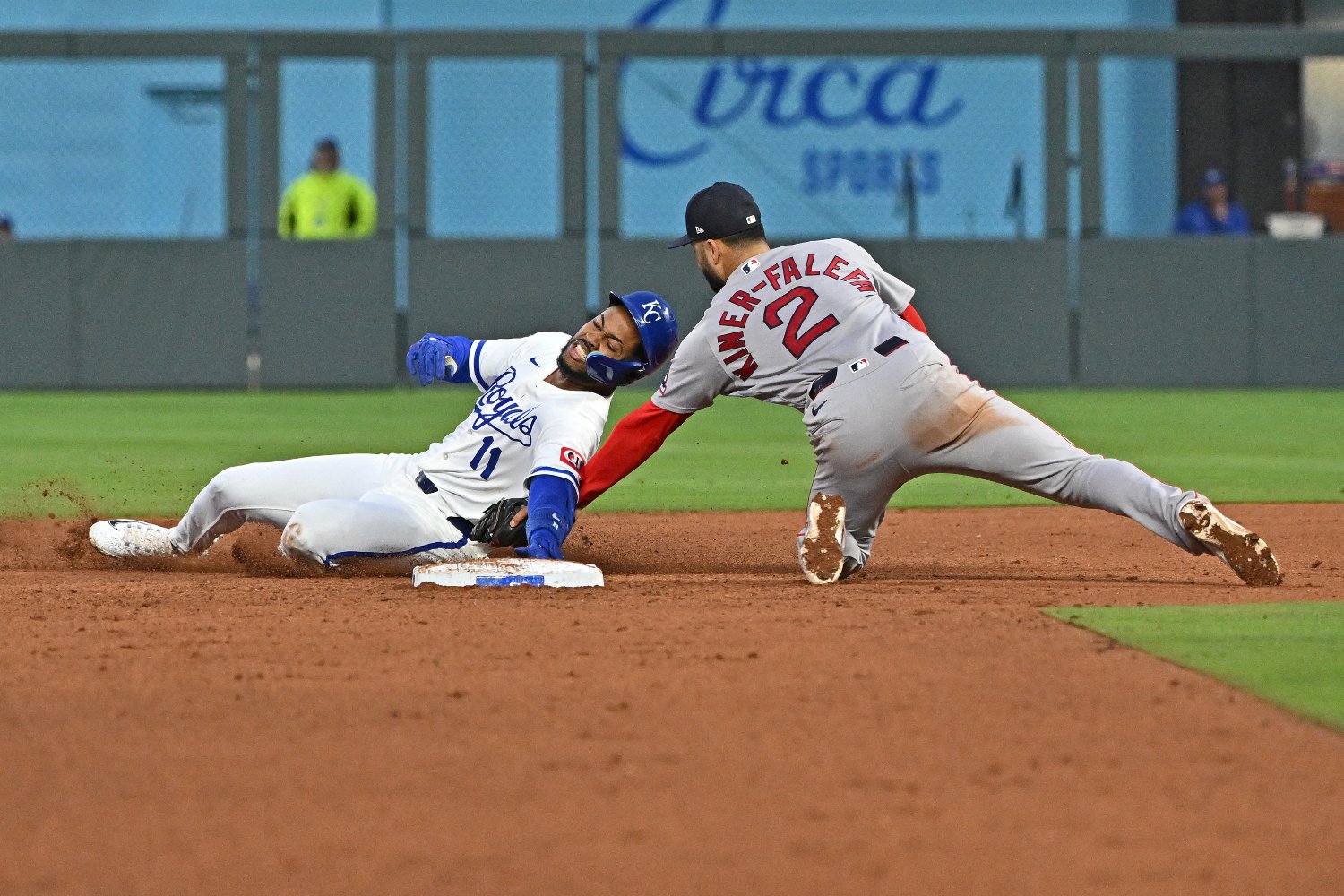 I was able to attend my eighth game of the year at Kauffman Stadium on Tuesday evening. The game started out promising, even with "opener" Bailey Falter allowing a run in the top half of the first inning. The Royals tied the game 1-1 in the bottom of the first, thanks to a double down the right field line that scored Bobby Witt Jr and got Salvador Perez into scoring position at third base with one out. Unfortunately, the Royals weren't able to cash in with less than two outs. Jac Caglianone grounded out to first base in a close play that was challenged (the call stood as an out), and Starling Marte grounded out to third to end the inning and the possible rally. The first inning was not just a microcosm of the Royals' 7-1 loss to the Boston Red Sox, but the 2026 season in general. With their second straight loss to the Red Sox, Kansas City has not won a series since the Tigers series at home from May 8th to the 10th. This month, which started promising with a sweep of the Mariners in Seattle, has been a disappointing one through May 19th. They are 8-10, which is a better pace than the 10-17 April they experienced. However, it's not exactly the "turnaround" this club was hoping for after a brutal first full month of play. So what is going on with this Royals team? Why is this team nine games under .500 and sitting in the cellar of the AL Central, a division that's pretty weak to begin with? (Only the AL West is worse.) There are plenty of reasons, which I will break down in this post. That said, the season is starting to get a little clearer for the Royals after nearly 50 games. Unfortunately, it's not trending in a positive direction, especially compared to the preseason expectations. Scoring Runs Remains the Problem for the Royals During the postgame press conference, a reporter asked manager Matt Quatraro whether the Royals were around league average in most offensive categories...except runs scored. Quatraro agreed and also pointed out that they were performing well in many underlying categories, like hard-hit rate. However, the sentiment remained the same among everyone in the room, Quatraro included: the Royals aren't doing a good job of bringing runners home. According to Fangraphs, the Royals rank 25th in baseball in runs scored. When looking at their performance with runners in scoring position, the data is even bleaker. In RISP situations this year, the Royals have the second-worst wRC+ in baseball with an 81 wRC+. The only team worse? The Boston Red Sox, with a 79 wRC+. Considering the Red Sox scored seven runs today, it wouldn't be surprising to see them past the Royals on May 20th on Fangraphs, when all that data updates overnight. Many factors contribute to the Royals' struggles in RISP situations this season. They rank 17th in BB%, at 11.5%. That is not great, but it's not terrible. They also rank 17th in K% at 21.2%. Thus, they're around the same mark as their walks. The biggest areas where the RISP metrics start to look bad are in the areas of batting average and ISO. They rank 25th in batting average with a .229 mark and 29th in isolated power with a .104 mark. It's hard to score runs when hits aren't falling, and the batted balls are not going for power. When looking at the Royals' hitters individually, here's how they break down in RISP situations this year, as of May 19th. Nick Loftin, Jonathan India, Witt, and Kyle Isbel have been elite with runners in scoring position this year. All four have wRC+ marks of 145 or higher in RISP situations. Unfortunately, India is out for the remainder of the season due to a shoulder injury. When it comes to Royals hitters who have struggled in RISP situations, some names are tough to stomach. Vinnie Pasquantino and Salvy were expected to carry this Royals offense in the No. 3 and 4 spots, respectively. They have RISP wRC+ marks of 27 and 24. Caglianone, whom Royals fans are advocating for on social media to get more at-bats, is the third-worst hitter in RISP situations this year with a -21 wRC+. Only Marte (-57) and Tyler Tolbert have been worse, and Tolbert only has one PA in RISP situations. On Tuesday, the Royals were 2-for-7 in RISP situations and left six runners on base. They also made crucial outs on the basepaths, with Thomas getting picked off while trying to steal third in the sixth and Garcia getting thrown out at second while trying to extend a single in the fifth. Thus, Tuesday's loss to the Red Sox only amplified the Royals' struggles with runners in scoring position, further deflating a Kauffman Stadium crowd of 14,047, especially on a chilly May evening. Inconsistency With the Pitching Staff The Royals were in a tough spot on Tuesday, having to use a "bullpen" game after an elbow injury sidelined initial starter Kris Bubic. For eight innings of work, the Kansas City bullpen held its own, allowing three runs over that span. Opener Bailey Falter struggled with command, walking three and allowing two runs on four hits in two innings of work. However, despite those issues, the TJ Stuff+ still looked encouraging, and he surprisingly did a good job of generating whiff (26.7%) and not letting the hard contact get too out of control either. That can be seen in his TJ Stuff+ summary below. However, the main star pitcher for the Royals in this bullpen contest was Lunider Avila, who went three innings in the Royals' loss. Avila threw 51 pitches and allowed no runs on one hit and one walk while striking out three. He generated a 60.8% strike rate and a TJ Stuff+ of 105. The Venezuelan-born pitcher looked in control and confident on the mound, which wasn't always the case when he initially made his 2026 debut. However, not only is Avila producing solid metrics (as seen below in his TJ Stuff+ summary), he's showing a profile of a dependable reliever in the Royals bullpen. Lastly, John Schreiber had another solid outing, striking out two, allowing one hit, and walking no one in an inning of work. The veteran righty was pretty efficient against his old team, throwing a strike rate of 72.2% on just 18 pitches. Schreiber generated a lot of chase (50%) and whiff (30%), which helped him keep the Red Sox hitters at bay. Unfortunately, while the Royals' bullpen showed some flashes of positives, it all came crashing down in one inning. That trend has also been far too common for Kansas City this year, especially with a bullpen that ranks 19th in ERA, 26th in WHIP, and 28th in BB/9. This struggling reliever happened to be Eli Morgan, who was just recently promoted from Triple-A after Kris Bubic was added to the 15-Day IL. Morgan threw 26 pitches in an inning of work and was tagged for four runs on seven hits. The biggest hit came from Jarren Duran, the Red Sox leadoff hitter, who hit a three-run home run with two outs that essentially put the game away for Boston. Again, one bad pitch, this time from Morgan, leads to a brutal inning that puts a game out of reach. It's been a far too common trend with not just this bullpen but the pitching staff in general, which explains why the Royals are 20-29 after another home loss to the Red Sox. The Royals rank 20th in team ERA, 25th in xERA, and 27th in BB%, according to Fangraphs. While the Royals' offense is not scoring enough runs in clutch situations, the Royals' pitching staff is bleeding runs slowly, but surely. Pitching was once an area of strength for the Royals under Quatraro. According to Fangraphs, they ranked 4th in ERA and 6th in FIP from 2024 to 2025. While their xERA ranked 17th, the rest of the metrics were good enough to help the Royals win 86 and 82 games in 2024 and 2025, respectively. Unfortunately for the Royals, that kind of pitching consistency isn't happening from the pitching staff this year, both from the rotation and the bullpen. On Tuesday, Royals fans saw that firsthand, as some promising outings in the beginning led the way to a brutal performance from Morgan that caused Royals fans to leave the stadium in droves before the Red Sox finished batting in the ninth. Are Fans Fed Up With This Club? It wasn't a pretty crowd at the K on Tuesday, May 19th. Some fans booed Quatraro in the pregame introductions. Fans booed loudly after the Royals left runners on base at second and third with one out. The fans booed after Duran's big three-run home run. Lastly, the fans booed after the Royals went quietly in the ninth by striking out three times. That included a backward K by Caglianone, who had three backward Ks in four at-bats on Tuesday. Fans questioned why Quatraro wasn't playing Caglianone against lefties. Well, Tuesday was a prime example of why, especially when one looks at his ball/strike zone chart from the game. Safe to say, Caglianone was completely overwhelmed by the Red Sox's left-handed pitchers on Tuesday. There's still a lot of baseball left in the season, but the vibes aren't good with this team and fanbase. On social media, 90+% of the content is negative. It's nothing but widespread fan vitriol of this team. Many blame Quatraro. Some blame Alec Zumwalt (still). Some are beginning to blame JJ Picollo. Lastly, the players are getting heat, especially Vinnie and Salvy, who have been long-time fan favorites among this loyal fanbase. Losing brings out the worst in fans, and tonight was no exception. There was a tense energy at Kauffman Stadium that seemed to affect everyone, players included. They didn't look as locked in or as sharp as previous games, and the blunders on the basepaths and lack of hitting seemed to confirm that the Royals players were being affected by the "negative" energy in the ballpark. That said, one cannot blame Royals fans. They are feeling the hole that the Royals are digging themselves into, and with each loss, their postseason hopes dim a little bit more. According to Fangraphs, the Royals' chances of making the postseason sit at 18.6%, and their chances of winning the division sit at 9.3%. Only the White Sox, who have a significantly better record than the Royals at 24-23, have worse odds in the division (12.1% to make postseason; 6.2% to win the division). However, if the White Sox continue winning, it's only a matter of time before the South Siders are ahead of Kansas City in those categories. That's a shame, especially considering the positive hype with this team after the World Baseball Classic. This was supposed to be the season that the young Royals stepped up and made a name for themselves in the division. Instead, the Royals need a significant spark, both on the pitching and hitting ends, to turn this season around. That spark certainly didn't happen on Tuesday, and fans exiting Kauffman Stadium, including myself, are wondering if that spark will come anytime soon or at all in 2026. Thankfully, there are still 113 games to go this season.
 -
In terms of Perez, Marte would make sense as a guy who can be in the DH spot and give Salvy a night off against righties with Jensen behind the plate. Salvy is struggling this year with a .201 average and .590 OPS in 192 plate appearances. Conversely, Salvy's splits against lefties have been way better than against righties. He is hitting .227 with a .709 OPS against lefties. Against righties? He's only hitting .197 with a .556 OPS. The Statcast splits share a similar story, as shown below. I think it's perfectly reasonable for Marte to replace Perez at DH once a week, at the very least, maybe two, depending on the pitching matchups that particular week. That preserves Salvy's stamina and gives Marte more opportunities for at-bats against righties. Another option would be to replace Collins once a week with Marte in left field. Marte may be a riskier defensive option (though Collins' -3 OAA this year is pretty brutal), but Collins has been a mixed bag against righties this year. The .244 average and .740 OPS against righties are great, especially compared to his .178 average and .512 OPS against lefties. However, the Statcast percentiles show that Collins is a little more strikeout-prone against righties than lefties. His whiff rate against lefties is five percent lower, and his Z-Contact% is 6.7% higher as well. He also has a 50% hard-hit rate against lefties compared to 40.7% hard-hit rate against righties, as well as a 91.1 MPH average EV against lefties, which is 2.5 MPH higher. I'm not saying Marte should completely replace Collins. However, once a week seems sufficient, especially since Collins can be very hot and cold at times at the plate. He is hitting .130 with a .174 slugging percentage in his last 24 at-bats. The former Brewers outfielder could use a day off, with Marte taking his place in the lineup and in left field. It's not a major change, which is what the Royals need, especially with Vinnie and Salvy not looking dramatically better at the plate lately. Kansas City needs an impact hitter, and that likely will have to come through the trade market. That said, the Royals need all the positive production they can get on their active roster, especially since it's too early to make a trade. Quatraro might as well roll the dice and see what else Marte has left in the tank, especially against right-handed starting pitchers. View full article
-
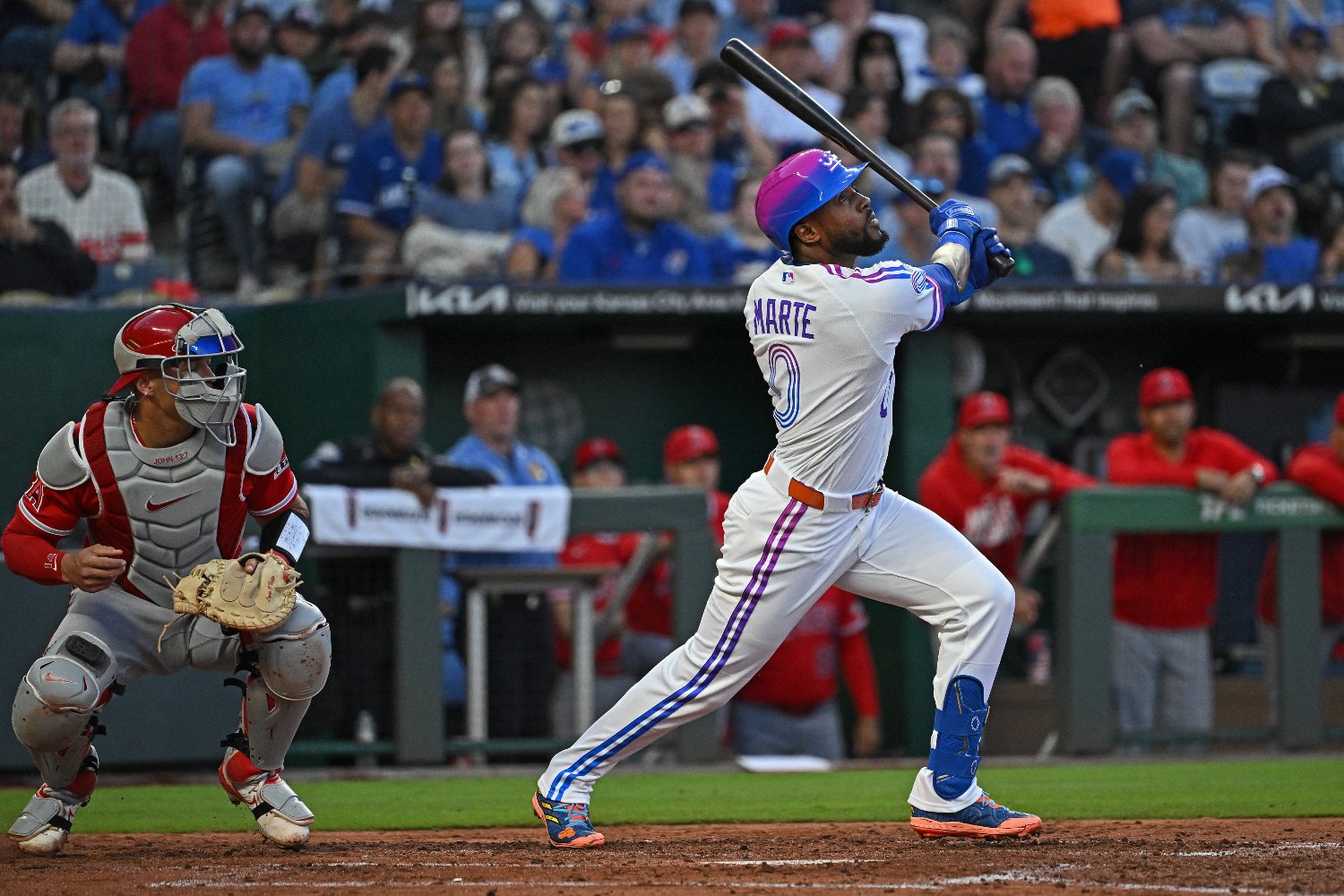 The Kansas City Royals' offense has been a frustrating dilemma this year. On one end, the Royals rank decently in some categories. According to Fangraphs, they rank 15th in batting average, 15th in OPS, and 18th in OBP. Those are serviceable numbers, especially given where they were as an offense at the beginning of the season. Conversely, Kansas City ranks 23rd in runs scored, 19th in ISO, and 19th in wRC+. Thus, it's no surprise that the Royals are 20-27 heading into Monday's home game against the Boston Red Sox (Update: they lost 3-1 and are now 20-28). They just have not gotten enough consistent production to be a winning ballclub at this time. Many different solutions have been proposed by Royals fans: Vinnie Pasquantino and Salvador Perez hitting lower in the order, more at-bats for Jac Caglianone, and Maikel Garcia out of the leadoff spot are a few that make a lot of sense. However, one intriguing idea that hasn't been thrown out too much is giving more at-bats to veteran outfielder Starling Marte. The Royals signed Marte late in Spring Training, and he's primarily been utilized as a bench player by manager Matt Quatraro. Marte has only played in 18 games and accumulated 48 plate appearances this season. That said, when he has played, the 37-year-old outfielder has been productive. He's slashing .302/.354/.372 with a .726 OPS and 104 wRC+ this season. He hasn't hit a home run, and his ISO and BB/K ratio are paltry at .070 and 0.23, respectively. However, he has shown the ability to make effective, hard contact this year, as reflected in his Statcast percentiles via TJ Stats. Could Marte provide the Royals the spark they need with more regular at-bats? Or is Marte's stat line just a product of a hot start that is due for regression soon? Marte Hitting Better Against Righties Than Lefties This Year (But Has That Been Typical?) With only 48 plate appearances this year, Marte doesn't have a huge sample size to work with. However, it's been interesting to see his splits this year, as they contrast with how Quatraro has utilized him. Of his 48 plate appearances, 34 of them have come against lefties. He typically has been the right fielder against left-handed starting pitchers, with Caglianone getting the day off in right field against southpaws. However, while Marte is hitting .300 against lefties, his OPS is only .686. Conversely, his OPS against righties is .819 (albeit in just 14 plate appearances). When looking at his Statcast percentile splits via TJ Stats, he also seems to be hitting the ball harder and with more exit velocity against lefties than righties as well. Against righties, Marte chases less (20.8% O-Swing% against righties; 37.3% O-Swing% against lefties), launches the ball better (44.4% LA Sweet-Spot% against righties; 33.3% LA Sweet-Spot% against lefties), has a better hard-hit rate (55.6% hard-hit rate against righties; 23.8% hard-hit rate against lefties), and barrels the ball more as well (22.2% barrel rate against righties; 4.8% against lefties). Thus, Marte may not exactly be the platoon "bat" that Quatraro thinks that he is, based on the various levels of splits data. What's also interesting about Marte is that he was better against lefties last year, and we're seeing an inverse of what he did against pitchers splits-wise with the Mets. That is evident in his Statcast splits percentiles from 2025 via TJ Stats. Against lefties, Marte had a better hard-hit rate (50.5% to 32.8%), a better pull air% (14.4% to 9.5%), and a better xwOBA (.324 to .301). That said, it wasn't like the difference between Marte's performance against righties and lefties was dramatic (like Vinnie Pasquantino this year, for example). Marte's wOBA was .321 against lefties and .329 against righties, and his barrel rate was 6.8% against lefties and 8.0% against righties. Thus, I am not sure Marte should be seen as simply a hitter who should only hit against lefties, like a Lane Thomas, for example. Here's a look at Thomas' Statcast splits this season with the Royals, and the difference in his performance against lefties and righties is quite dramatic. Thus, based on the data, one could argue that Marte deserves more at-bats this season. For him to do that, he needs to get more plate appearances against righties and shouldn't be seen as just a left-handed pitcher's only option, whether that's in the starting lineup or off the bench in key pinch-hitting spots. Marte Showing Positive Bat Speed and Exit Velocity Trends This Year There's no question that at 37 years old, the Dominican-born native is showing some declining skills. According to Baseball Savant, Marte ranks in the 8th percentile for sprint speed. That said, bat speed, which can decline with age, has actually been pretty decent. Marte is averaging 72.5 MPH on his swings, which ranks in the 60th percentile and is only 0.1 MPH lower than a season ago. His fast-swing rate, which measures swings of 75 MPH or higher, is down over 10 percent from a year ago. It was 33.2% in 2025 with the Mets, and it's 23.1% this year with the Royals. However, he's been showing a positive trend in bat speed over the course of the 2026 season, despite a tough stretch, as shown below in his bat-speed rolling chart. He saw a decline from his 35th competitive swing to roughly his 50th competitive swing. After his 50th swing, he's seen that bat speed increase, and he's been above the MLB average in bat speed since the 57th-58th competitive swing. In addition to better bat speed as he has gained more at-bats, the same could be said of his exit velocity on batted balls, which has spiked as well after some initial valleys at the beginning of the season. Marte started the year well with his first 14 batted balls being above-average in terms of exit velocity. However, that exit velocity declined dramatically from the 14th batted-ball mark to the 22nd batted-ball mark. He's turned things around since that 22nd batted-ball mark and has now been back above league average in terms of exit velocity. That's a sign that he's not only swinging the bat faster, but squaring up and making better contact as well, with more plate appearances. As a result, his xwOBA rolling trend, which is a better indicator for future success than wOBA, is moving up in the right direction, showing that he could only be more productive with more games played. Here's a look at Marte's xwOBA rolling chart this year, via Savant. Granted, Marte didn't do well in his lone pinch-hit at-bat on Monday night in the Royals' 3-1 loss, as he struck out against Red Sox closer Aroldis Chapman. That lowered his batting average to .295 and his OPS to .711. Still, despite that strikeout, his xwOBA chart is trending in the right direction and has sat well above the league average since his 35th plate appearance this year. Who Does Marte Take At-Bats Away From? If Marte is going to receive more at-bats, who sits as a result? I would argue that Salvador Perez and Isaac Collins should be the main ones affected by an increase in Marte's at-bats. The latter makes the most sense when looking at how Royals outfielders have performed this year so far. In terms of Perez, Marte would make sense as a guy who can be in the DH spot and give Salvy a night off against righties with Jensen behind the plate. Salvy is struggling this year with a .201 average and .590 OPS in 192 plate appearances. Conversely, Salvy's splits against lefties have been way better than against righties. He is hitting .227 with a .709 OPS against lefties. Against righties? He's only hitting .197 with a .556 OPS. The Statcast splits share a similar story, as shown below. I think it's perfectly reasonable for Marte to replace Perez at DH once a week, at the very least, maybe two, depending on the pitching matchups that particular week. That preserves Salvy's stamina and gives Marte more opportunities for at-bats against righties. Another option would be to replace Collins once a week with Marte in left field. Marte may be a riskier defensive option (though Collins' -3 OAA this year is pretty brutal), but Collins has been a mixed bag against righties this year. The .244 average and .740 OPS against righties are great, especially compared to his .178 average and .512 OPS against lefties. However, the Statcast percentiles show that Collins is a little more strikeout-prone against righties than lefties. His whiff rate against lefties is five percent lower, and his Z-Contact% is 6.7% higher as well. He also has a 50% hard-hit rate against lefties compared to 40.7% hard-hit rate against righties, as well as a 91.1 MPH average EV against lefties, which is 2.5 MPH higher. I'm not saying Marte should completely replace Collins. However, once a week seems sufficient, especially since Collins can be very hot and cold at times at the plate. He is hitting .130 with a .174 slugging percentage in his last 24 at-bats. The former Brewers outfielder could use a day off, with Marte taking his place in the lineup and in left field. It's not a major change, which is what the Royals need, especially with Vinnie and Salvy not looking dramatically better at the plate lately. Kansas City needs an impact hitter, and that likely will have to come through the trade market. That said, the Royals need all the positive production they can get on their active roster, especially since it's too early to make a trade. Quatraro might as well roll the dice and see what else Marte has left in the tank, especially against right-handed starting pitchers.
 -
Image courtesy of Jeff Curry-Imagn Images Week in a Nutshell The Royals' woes on the road continued this week in their travels to Chicago and St. Louis. Kansas City went 1-5 on this Midwest road trip, bringing their road record to 7-17 (they are 13-10 at home). Their seven road wins are tied with the Tigers and Marlins for the fewest road wins in baseball, and only the Tigers have a worse road record (7-19) than the Royals. It wasn't necessarily one thing that hurt the Royals on this recent road trip, which has been the story of this frustrating season through 47 games. Against the White Sox, it was the pitching that let the team down, as they gave up 18 runs in their three losses (the Royals scored 12 runs). Against the Cardinals, it was the offense, as the pitching staff allowed only 9 runs, but the offense scored only 8. On a positive note, it felt like the Royals were in all these games, despite going 1-5. Hopefully, the positive momentum from winning the series finale in St. Louis can carry over into their upcoming nine-game homestand. Record this Week: 1-5 Run Differential for the Week: -7 Record for the Year: 20-27 Run Differential for the Year: -21 Standing: Tied for 4th in the AL Central Game 42: CHW 6, KC 5 Early solo home runs by Bobby Witt Jr. and Salvador Perez in the first inning set the tone, but a five-run fifth took away all that momentum (Stephen Kolek was cruising until that fifth inning). The Royals tied it up in the sixth thanks to RBI base hits by Nick Loftin and Maikel Garcia. Unfortunately, a pinch-hit Derek Hill home run in the bottom of the eighth ended up being the nail in the coffin for Kansas City in game one. Game 43: CHW 6, KC 5 The White Sox got off to an early lead in this one, leading 3-0 after three. However, a two RBI single by Vinnie Pasquantino tied the ball game in the 5th. Despite getting a fresh game in the fifth, Seth Lugo couldn't keep it tied, as a two-run double by Jarred Kelenic gave them a two-run lead, which was padded on by a run in the sixth. A two-run home run by Witt in the ninth made it close, but Kansas City couldn't complete the comeback. Game 44: CHW 6, KC 2 It was a Randal Grichuk revenge game as the former Royals outfielder had two hits, including a home run and four RBI. Starter Kris Bubic, who was sensational against the White Sox at Kauffman, struggled at The Rate, as he gave up five runs on five hits and three walks while striking out four in just four innings of work. Despite getting seven hits, just one less than the White Sox, they were 0-for-5 in RISP situations and stranded eight. Game 45: STL 5, KC 4 (11) It was a back-and-forth slugfest between the two Missouri-based ballclubs. Kansas City and St. Louis traded leads at different points in the game and actually answered one another in the 10th inning with one run each in their frame. Witt and Carter Jensen both had two hits each, while Isaac Collins had two RBI, despite not getting a hit. The Royals also got a quality start from Michael Wacha. Unfortunately, after coming up empty in the top of the 11th, the Cardinals ended the game in the bottom of the 11th, as pinch-hitter Yohel Pozo had a game-winning single that drove in Nathan Church with two outs. Game 46: STL 4, KC 2 The Royals got a much-needed bounce-back game from Noah Cameron on Saturday. The St. Joseph, Missouri, product delivered a quality start, allowing three runs on five hits and no walks while striking out four over six innings. Unfortunately, Cameron didn't get much run support, as Cardinals starter Kyle Leahy held the Royals offense to one run on five hits and three walks while striking out two in six innings of work. Jac Caglianone had a nice day with two hits and a mammoth 428-foot home run in the top of the ninth. Game 47: KC 2, STL 0 Kolek proved to be the "stopper" for the Royals on Sunday in St. Louis, as he added another quality start to his Kansas City resume. In 6.1 IP, the 29-year-old righty allowed no runs, four hits, one walk, and struck out three. Daniel Lynch IV and Lucas Erceg shut the door on the Cardinals in the final two innings, as they received the hold and save, respectively. The offense had nine hits, but went 0-for-6 in RISP situations and stranded eight. Salvy launched his seventh home run of the season. News and Notes The Royals only made one move this week, but it was a big one that affected their bullpen. Matt Strahm pitched on Friday, going 0.2 IP and allowing no runs, one hit, one walk, and striking out one. However, he was visited by manager Matt Quatraro in the middle of the inning, as they noticed him wincing. On Saturday, the Royals confirmed that he had injured his right knee and would be placed on the 15-Day IL due to right knee inflammation. Bailey Falter was recalled from Omaha as a result, where he had been on a rehab outing after suffering a minor elbow injury earlier in the year. Highlights Witt continued his solid pace this season on this road trip. In 23 at-bats, he hit .304 with a 1.016 OPS. That included two home runs, four RBI, three runs scored, and a stolen base. He also walked four times and struck out four times, showing excellent plate discipline and pitch recognition on this road trip. While the rest of the Royals' lineup has been inconsistent, Witt has been a rock for this Kansas City offense. The AL MVP candidate also showed some incredible baseball IQ on Saturday by deking St. Louis' Ivan Herrera on a passed ball that kept Herrera at third base (he should've scored). Perez and Jensen also had nice road trips, which is good as they were less-than-stellar in the previous homestand. In 23 at-bats this week, Salvy hit .292 with an .850 OPS. That also included two home runs, three RBI, and three runs scored. He also walked once and struck out four times. Perez got a lot of heat for still being in the cleanup spot despite his struggles this year. However, he helped silence the critics a bit with a big homer on Sunday. As for Jensen, he had been struggling going into this road trip, but he seemed to turn it around away from Kauffman Stadium this week. In 16 at-bats, he hit .375 with a .944 OPS, and he walked twice while striking out four times. He didn't hit a homer and had two RBI and two runs scored, which isn't a massive amount. However, he looked a lot more comfortable and locked in at the plate, something that wasn't really the case in the last homestand. Kyle Isbel has struggled on the road this year, but he had an encouraging road trip this week. In 20 at-bats, he hit .300 with an .833 OPS. That included two doubles and a triple. He struck out five times and walked only once. However, he has a .641 OPS on the road (compared to an .864 OPS at home). Thus, to see him hit well away from the K this week should be a good sign for him going forward. Isbel also flashed his signature leather, with an amazing catch in game one in the bottom of the ninth that sent the game to extra innings. On the pitching end, Lynch was absolutely nails on this road trip. In three outings and 3.2 IP, he didn't allow a single run, gave up only three hits, walked one, and struck out five batters. He's becoming the Royals' most important reliever beyond Lucas Erceg, and that role should only grow with Strahm on the IL. The Royals also got quality starts from Cameron and Kolek in St. Louis, which shouldn't be dismissed, as they were coming off rough outings in their previous starts. In his one outing this week, Cameron not only produced a quality start but also generated some solid TJ Stuff+, impressive whiff and chase rates, and induced a lot of weak contact in six innings of work. As for Kolek, he had a brutal outing against the White Sox, though that was primarily due to a nightmarish fifth inning where he gave up home runs to Drew Romo and Chase Meidroth. He was much more settled against St. Louis, throwing only 82 pitches in 6.1 IP. With six pitches, Kolek looked very Lugo-esque on Sunday. He didn't generate a ton of whiff, but he lived on the edges, generated a good amount of chase and strikes, and kept the ball on the ground. As a result, he earned another quality start for the Royals and helped get them a much-needed win. Luinder Avila also had a good week, allowing no runs on no hits in two outings and 3.1 IP. He walked three, but he also struck out four. Avila may also be pushing for more high-leverage opportunities soon, especially with Strahm's return questionable. Lowlights It was not a great road trip for the "Michaels": Maikel Garcia hit .143 with a .379 OPS in 28 at-bats, while Michael Massey hit .143 with a .286 OPS in 14 at-bats. Both hitters have struggled on the road this year. Garcia has a 57 wRC+ away from Kauffman Stadium, while Massey has a -36 mark. Unfortunately, that trend didn't change much this week. Collins has had his issues away from the K as well. His 28 wRC+ on the road is the second-worst mark among Royals hitters with five or more plate appearances this season. This week was more of the same, as he hit .158 with a .531 OPS in 19 at-bats. On a positive note, he at least walked three times and struck out just three times. Lane Thomas didn't get a whole lot of action this week, as he only received nine at-bats. Unfortunately, he struggled in his limited opportunities this week, hitting .111 with a .419 OPS. While he walked three times, he struck out five times, which was tied with Isbel for the most this week (Isbel had 11 more at-bats). On the pitching end, Bubic and Isbel had forgettable outings this week in Chicago. Not only did Bubic go four innings of work, but he also struggled with command and didn't generate a whole lot of chases or whiffs. He also was hit around hard, as illustrated below via his TJ Stuff+ summary from his Thursday outing against the White Sox. Lugo's outing felt very similar to Bubic's. The 36-year-old veteran struggled with efficiency and command, producing just a 59.8% strike% in five innings of work and 92 pitches. His zone, whiff, and chase rates were subpar, and he allowed not only a lot of hits (eight) but also hard contact, as evidenced by his xwOBACON below. Lugo and Bubic are allowed to have bad outings. On one end, Lugo has been solid on the road this season. He has a 3.00 ERA and 1.93 FIP in 24 IP away from Kauffman Stadium. Thus, this outing against the White Sox may have just been a blip on the radar. As for Bubic, he's been a much worse pitcher on the road this year. In 20.2 IP on the road, he has an 8.8% K-BB%, 5.23 ERA, and 3.68 FIP. In 29.2 IP at the K? He has a 14.7% K-BB%, 3.34 ERA, and 3.74 FIP. Thus, Bubic may be looking forward to this upcoming nine-game homestand, and hopefully, he can build some positive momentum during this stretch to carry over into his next road trip. The bullpen was fine for the most part in this series, with only John Schreiber (6.75 ERA) and Strahm (5.40 ERA) sporting ERA marks over five this week. Strahm is on the IL, so he won't be a factor for at least this upcoming homestand, maybe longer depending on how his knee heals. As for Schreiber, he's been better recently, but he's still struggling to generate chase and whiffs, collect strikes consistently, and limit hard contact. Unless something dramatic happens, Schreiber may be pitching himself out of Kansas City sooner rather than later. Looking Ahead The Royals have a nine-game homestand, with the first two series against the Boston Red Sox and Seattle Mariners, two playoff teams from a year ago that have gotten off to disappointing starts this year as well. The Red Sox are 19-27 with a -20 run differential and are 11.5 games behind the division-leading Tampa Bay Rays. Boston has struggled on offense, as many of its key players have gotten off to brutal starts. Three of the 10 worst-qualified players in OPS happen to be Red Sox players, as TJ Stats shared on Twitter. The Royals will face the Mariners a second time, after sweeping them in Seattle during the first weekend in May. Unlike the Red Sox, the Mariners have a positive run differential at +11. That makes them a tougher opponent than their 22-25 record suggests, and the Royals can't afford to overlook them because they took three in Seattle. One of their hottest hitters has been Randy Arozarena, who is slashing .440/.500/.640 in his last 25 at-bats. After the weekend series against the Mariners, the Royals begin a three-game slate against the rival New York Yankees starting on Memorial Day. The Yankees swept the Royals back in April in the Bronx, and Kansas City is 0-11 against the Yankees since beating them in Game 2 of the 2024 ALDS in Yankee Stadium. The Royals will have to do a lot to avoid going 0-14 against the Yankees since that Game 2 ALDS victory. New York is one of the best teams in the league with a 28-19 record and +68 run differential, the third-best run differential in baseball (only the Atlanta Braves and Dodgers have better marks at +98 and +94, respectively). View full article
-
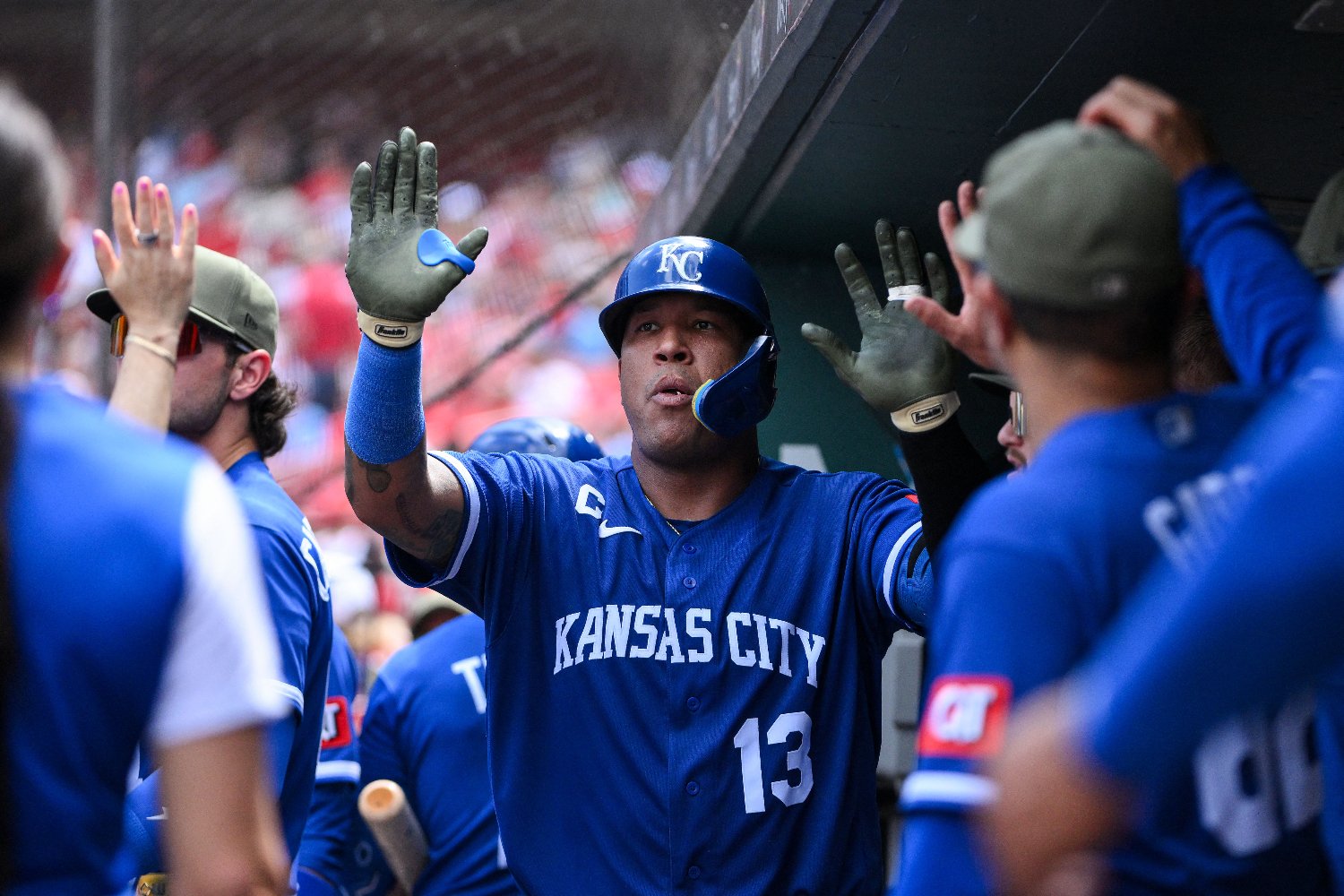 Week in a Nutshell The Royals' woes on the road continued this week in their travels to Chicago and St. Louis. Kansas City went 1-5 on this Midwest road trip, bringing their road record to 7-17 (they are 13-10 at home). Their seven road wins are tied with the Tigers and Marlins for the fewest road wins in baseball, and only the Tigers have a worse road record (7-19) than the Royals. It wasn't necessarily one thing that hurt the Royals on this recent road trip, which has been the story of this frustrating season through 47 games. Against the White Sox, it was the pitching that let the team down, as they gave up 18 runs in their three losses (the Royals scored 12 runs). Against the Cardinals, it was the offense, as the pitching staff allowed only 9 runs, but the offense scored only 8. On a positive note, it felt like the Royals were in all these games, despite going 1-5. Hopefully, the positive momentum from winning the series finale in St. Louis can carry over into their upcoming nine-game homestand. Record this Week: 1-5 Run Differential for the Week: -7 Record for the Year: 20-27 Run Differential for the Year: -21 Standing: Tied for 4th in the AL Central Game 42: CHW 6, KC 5 Early solo home runs by Bobby Witt Jr. and Salvador Perez in the first inning set the tone, but a five-run fifth took away all that momentum (Stephen Kolek was cruising until that fifth inning). The Royals tied it up in the sixth thanks to RBI base hits by Nick Loftin and Maikel Garcia. Unfortunately, a pinch-hit Derek Hill home run in the bottom of the eighth ended up being the nail in the coffin for Kansas City in game one. Game 43: CHW 6, KC 5 The White Sox got off to an early lead in this one, leading 3-0 after three. However, a two RBI single by Vinnie Pasquantino tied the ball game in the 5th. Despite getting a fresh game in the fifth, Seth Lugo couldn't keep it tied, as a two-run double by Jarred Kelenic gave them a two-run lead, which was padded on by a run in the sixth. A two-run home run by Witt in the ninth made it close, but Kansas City couldn't complete the comeback. Game 44: CHW 6, KC 2 It was a Randal Grichuk revenge game as the former Royals outfielder had two hits, including a home run and four RBI. Starter Kris Bubic, who was sensational against the White Sox at Kauffman, struggled at The Rate, as he gave up five runs on five hits and three walks while striking out four in just four innings of work. Despite getting seven hits, just one less than the White Sox, they were 0-for-5 in RISP situations and stranded eight. Game 45: STL 5, KC 4 (11) It was a back-and-forth slugfest between the two Missouri-based ballclubs. Kansas City and St. Louis traded leads at different points in the game and actually answered one another in the 10th inning with one run each in their frame. Witt and Carter Jensen both had two hits each, while Isaac Collins had two RBI, despite not getting a hit. The Royals also got a quality start from Michael Wacha. Unfortunately, after coming up empty in the top of the 11th, the Cardinals ended the game in the bottom of the 11th, as pinch-hitter Yohel Pozo had a game-winning single that drove in Nathan Church with two outs. Game 46: STL 4, KC 2 The Royals got a much-needed bounce-back game from Noah Cameron on Saturday. The St. Joseph, Missouri, product delivered a quality start, allowing three runs on five hits and no walks while striking out four over six innings. Unfortunately, Cameron didn't get much run support, as Cardinals starter Kyle Leahy held the Royals offense to one run on five hits and three walks while striking out two in six innings of work. Jac Caglianone had a nice day with two hits and a mammoth 428-foot home run in the top of the ninth. Game 47: KC 2, STL 0 Kolek proved to be the "stopper" for the Royals on Sunday in St. Louis, as he added another quality start to his Kansas City resume. In 6.1 IP, the 29-year-old righty allowed no runs, four hits, one walk, and struck out three. Daniel Lynch IV and Lucas Erceg shut the door on the Cardinals in the final two innings, as they received the hold and save, respectively. The offense had nine hits, but went 0-for-6 in RISP situations and stranded eight. Salvy launched his seventh home run of the season. News and Notes The Royals only made one move this week, but it was a big one that affected their bullpen. Matt Strahm pitched on Friday, going 0.2 IP and allowing no runs, one hit, one walk, and striking out one. However, he was visited by manager Matt Quatraro in the middle of the inning, as they noticed him wincing. On Saturday, the Royals confirmed that he had injured his right knee and would be placed on the 15-Day IL due to right knee inflammation. Bailey Falter was recalled from Omaha as a result, where he had been on a rehab outing after suffering a minor elbow injury earlier in the year. Highlights Witt continued his solid pace this season on this road trip. In 23 at-bats, he hit .304 with a 1.016 OPS. That included two home runs, four RBI, three runs scored, and a stolen base. He also walked four times and struck out four times, showing excellent plate discipline and pitch recognition on this road trip. While the rest of the Royals' lineup has been inconsistent, Witt has been a rock for this Kansas City offense. The AL MVP candidate also showed some incredible baseball IQ on Saturday by deking St. Louis' Ivan Herrera on a passed ball that kept Herrera at third base (he should've scored). Perez and Jensen also had nice road trips, which is good as they were less-than-stellar in the previous homestand. In 23 at-bats this week, Salvy hit .292 with an .850 OPS. That also included two home runs, three RBI, and three runs scored. He also walked once and struck out four times. Perez got a lot of heat for still being in the cleanup spot despite his struggles this year. However, he helped silence the critics a bit with a big homer on Sunday. As for Jensen, he had been struggling going into this road trip, but he seemed to turn it around away from Kauffman Stadium this week. In 16 at-bats, he hit .375 with a .944 OPS, and he walked twice while striking out four times. He didn't hit a homer and had two RBI and two runs scored, which isn't a massive amount. However, he looked a lot more comfortable and locked in at the plate, something that wasn't really the case in the last homestand. Kyle Isbel has struggled on the road this year, but he had an encouraging road trip this week. In 20 at-bats, he hit .300 with an .833 OPS. That included two doubles and a triple. He struck out five times and walked only once. However, he has a .641 OPS on the road (compared to an .864 OPS at home). Thus, to see him hit well away from the K this week should be a good sign for him going forward. Isbel also flashed his signature leather, with an amazing catch in game one in the bottom of the ninth that sent the game to extra innings. On the pitching end, Lynch was absolutely nails on this road trip. In three outings and 3.2 IP, he didn't allow a single run, gave up only three hits, walked one, and struck out five batters. He's becoming the Royals' most important reliever beyond Lucas Erceg, and that role should only grow with Strahm on the IL. The Royals also got quality starts from Cameron and Kolek in St. Louis, which shouldn't be dismissed, as they were coming off rough outings in their previous starts. In his one outing this week, Cameron not only produced a quality start but also generated some solid TJ Stuff+, impressive whiff and chase rates, and induced a lot of weak contact in six innings of work. As for Kolek, he had a brutal outing against the White Sox, though that was primarily due to a nightmarish fifth inning where he gave up home runs to Drew Romo and Chase Meidroth. He was much more settled against St. Louis, throwing only 82 pitches in 6.1 IP. With six pitches, Kolek looked very Lugo-esque on Sunday. He didn't generate a ton of whiff, but he lived on the edges, generated a good amount of chase and strikes, and kept the ball on the ground. As a result, he earned another quality start for the Royals and helped get them a much-needed win. Luinder Avila also had a good week, allowing no runs on no hits in two outings and 3.1 IP. He walked three, but he also struck out four. Avila may also be pushing for more high-leverage opportunities soon, especially with Strahm's return questionable. Lowlights It was not a great road trip for the "Michaels": Maikel Garcia hit .143 with a .379 OPS in 28 at-bats, while Michael Massey hit .143 with a .286 OPS in 14 at-bats. Both hitters have struggled on the road this year. Garcia has a 57 wRC+ away from Kauffman Stadium, while Massey has a -36 mark. Unfortunately, that trend didn't change much this week. Collins has had his issues away from the K as well. His 28 wRC+ on the road is the second-worst mark among Royals hitters with five or more plate appearances this season. This week was more of the same, as he hit .158 with a .531 OPS in 19 at-bats. On a positive note, he at least walked three times and struck out just three times. Lane Thomas didn't get a whole lot of action this week, as he only received nine at-bats. Unfortunately, he struggled in his limited opportunities this week, hitting .111 with a .419 OPS. While he walked three times, he struck out five times, which was tied with Isbel for the most this week (Isbel had 11 more at-bats). On the pitching end, Bubic and Isbel had forgettable outings this week in Chicago. Not only did Bubic go four innings of work, but he also struggled with command and didn't generate a whole lot of chases or whiffs. He also was hit around hard, as illustrated below via his TJ Stuff+ summary from his Thursday outing against the White Sox. Lugo's outing felt very similar to Bubic's. The 36-year-old veteran struggled with efficiency and command, producing just a 59.8% strike% in five innings of work and 92 pitches. His zone, whiff, and chase rates were subpar, and he allowed not only a lot of hits (eight) but also hard contact, as evidenced by his xwOBACON below. Lugo and Bubic are allowed to have bad outings. On one end, Lugo has been solid on the road this season. He has a 3.00 ERA and 1.93 FIP in 24 IP away from Kauffman Stadium. Thus, this outing against the White Sox may have just been a blip on the radar. As for Bubic, he's been a much worse pitcher on the road this year. In 20.2 IP on the road, he has an 8.8% K-BB%, 5.23 ERA, and 3.68 FIP. In 29.2 IP at the K? He has a 14.7% K-BB%, 3.34 ERA, and 3.74 FIP. Thus, Bubic may be looking forward to this upcoming nine-game homestand, and hopefully, he can build some positive momentum during this stretch to carry over into his next road trip. The bullpen was fine for the most part in this series, with only John Schreiber (6.75 ERA) and Strahm (5.40 ERA) sporting ERA marks over five this week. Strahm is on the IL, so he won't be a factor for at least this upcoming homestand, maybe longer depending on how his knee heals. As for Schreiber, he's been better recently, but he's still struggling to generate chase and whiffs, collect strikes consistently, and limit hard contact. Unless something dramatic happens, Schreiber may be pitching himself out of Kansas City sooner rather than later. Looking Ahead The Royals have a nine-game homestand, with the first two series against the Boston Red Sox and Seattle Mariners, two playoff teams from a year ago that have gotten off to disappointing starts this year as well. The Red Sox are 19-27 with a -20 run differential and are 11.5 games behind the division-leading Tampa Bay Rays. Boston has struggled on offense, as many of its key players have gotten off to brutal starts. Three of the 10 worst-qualified players in OPS happen to be Red Sox players, as TJ Stats shared on Twitter. The Royals will face the Mariners a second time, after sweeping them in Seattle during the first weekend in May. Unlike the Red Sox, the Mariners have a positive run differential at +11. That makes them a tougher opponent than their 22-25 record suggests, and the Royals can't afford to overlook them because they took three in Seattle. One of their hottest hitters has been Randy Arozarena, who is slashing .440/.500/.640 in his last 25 at-bats. After the weekend series against the Mariners, the Royals begin a three-game slate against the rival New York Yankees starting on Memorial Day. The Yankees swept the Royals back in April in the Bronx, and Kansas City is 0-11 against the Yankees since beating them in Game 2 of the 2024 ALDS in Yankee Stadium. The Royals will have to do a lot to avoid going 0-14 against the Yankees since that Game 2 ALDS victory. New York is one of the best teams in the league with a 28-19 record and +68 run differential, the third-best run differential in baseball (only the Atlanta Braves and Dodgers have better marks at +98 and +94, respectively).
 -
The Omaha Storm Chasers earned the lone Royals system win Saturday, holding off Toledo 6-3 behind Brett Squires' 3-for-4 night with a home run and three RBI. Ben Sears earned the win with 2 2/3 hitless innings, and Hunter Owen logged seven strikeouts over five frames in Northwest Arkansas' 9-5 loss. Frank Mozzicato gave up seven runs and David Shields six, while Hiro Wyatt took the loss in Columbia's 10-0 defeat at Hickory. Royals Transactions No Transactions Squires Powers Storm Chasers Past Mud Hens The Omaha Storm Chasers held off the Toledo Mud Hens, 6-3, behind a big day from Squires. The first baseman finished 3-for-4 with two doubles, a home run, two runs scored, and three RBI as the cleanup hitter. Omaha jumped on Toledo in the home half of the first. Tyler Tolbert worked a leadoff walk and came around to score on a Luca Tresh RBI double. Tresh then came home when Squires followed with an RBI double of his own, giving the Storm Chasers a 2-1 lead after one. The third inning provided the decisive blow. Tolbert again drew a walk, John Rave singled, and Kameron Misner walked to load the bases. A Tresh grounder turned into a run-scoring double play that brought Tolbert in, and Squires followed by lifting a two-run home run to center field that scored Rave. Gavin Cross added an insurance run in the sixth with an RBI double that scored Squires. Starter Henry Williams labored through 3 1/3 innings, allowing three runs on six hits with three walks and three strikeouts. He surrendered two home runs and was charged with all of Toledo's damage. Ben Sears collected the win in relief, working 2 2/3 hitless innings with four strikeouts and no walks to improve to 2-0. Beck Way, Eli Morgan, and Jose Cuas combined to bridge the game to Mason Black, who closed it out with a clean ninth for his third save. Player AB R H RBI BB K Tyler Tolbert 2 2 0 0 2 1 John Rave 4 1 1 0 0 1 Kameron Misner 3 0 0 0 1 0 Luca Tresh 4 1 1 1 0 1 Brett Squires 4 2 3 3 0 1 Abraham Toro 3 0 0 0 0 1 Gavin Cross 3 0 1 1 0 0 Dustin Dickerson 3 0 1 0 0 1 Josh Rojas 3 0 0 0 0 1 Player IP H R ER BB K HR Henry Williams 3 1/3 6 3 3 3 3 2 Ben Sears 2 2/3 1 0 0 0 4 0 Beck Way 1 0 0 0 1 0 0 Eli Morgan 2/3 1 0 0 1 1 0 Jose Cuas 1/3 0 0 0 0 0 0 Mason Black 1 0 0 0 0 0 0 Mozzicato Tagged Early In Naturals' Loss To Travelers The Northwest Arkansas Naturals fell to the Arkansas Travelers, 9-5, on a day when Mozzicato struggled to keep the ball in the yard. The left-hander was charged with seven runs on six hits over three innings, walking three and striking out three, and surrendered two home runs in a four-run first. Sam Kulasingam led the offense, finishing 2-for-5 with two RBI and two runs scored. He answered the early deficit with a solo home run in the first, then added an RBI single in the fifth. Spencer Nivens reached safely all four times he came to the plate, going 3-for-3 with a double, a walk, and two RBI. His two-run double in the fifth, which also scored Kulasingam and Jorge Alfaro, pulled the Naturals within three. Colton Becker chipped in a 2-for-4 line with an RBI single in the second that scored Daniel Vazquez. Vazquez added a walk, a stolen base, and a run scored, and Rudy Martin Jr. also swiped a bag in his 1-for-5 night. Mozzicato exited after three innings and was tagged with the loss to fall to 0-2. Brandon Johnson allowed a two-run home run in his lone inning of work. Owen provided the staff's lone bright spot, working five innings of one-run baseball with seven strikeouts, no walks, and a home run allowed. Cleanup hitter Alfaro went 1-for-4 with a run scored, while Carson Roccaforte went 0-for-5 with three strikeouts. Player AB R H RBI BB K Carson Roccaforte 5 0 0 0 0 3 Rudy Martin Jr. 5 1 1 0 0 1 Sam Kulasingam 5 2 2 2 0 0 Jorge Alfaro 4 1 1 0 0 0 Daniel Vazquez 3 1 0 0 1 0 Spencer Nivens 3 0 3 2 1 0 Colton Becker 4 0 2 1 0 0 Connor Scott 3 0 0 0 0 2 Canyon Brown 3 0 0 0 0 1 Player IP H R ER BB K HR Frank Mozzicato 3 6 7 7 3 3 2 Brandon Johnson 1 1 1 1 0 1 1 Hunter Owen 5 6 1 1 0 7 1 Shields Struggles As River Bandits Fall To Lugnuts The Quad Cities River Bandits dropped an 8-2 decision to the Lansing Lugnuts, with Shields taking the loss. The left-hander allowed six runs on six hits over three innings, walking two and striking out one. He surrendered a solo home run in the second and was tagged for five more in the third on four straight hits, including a two-run double, before exiting after 65 pitches. Shields fell to 3-3. The damage piled up quickly in the third, when four consecutive one-out hits put five on the board. Quad Cities was held off the scoreboard through four innings before breaking through in the fifth, when Tyriq Kemp lined an RBI double to left that scored Derlin Figueroa. Lansing answered in the bottom half with a two-run home run off Mason Miller, who allowed two runs on two hits over 2 1/3 innings while walking three. Trevor Werner provided the final tally for the visitors in the eighth, lifting a solo home run to right. Figueroa reached three times in his 2-for-3 night, also drawing a walk and scoring a run. Asbel Gonzalez added a 2-for-4 effort with a stolen base. Top prospect Blake Mitchell went 1-for-4 with two strikeouts, and Ramon Ramirez was held hitless in four trips. Yimi Presinal contributed an inning of hitless relief, and Kamden Edge struck out one over 1 2/3 scoreless frames to finish the game. Player AB R H RBI BB K Nolan Sailors 4 0 0 0 0 1 Asbel Gonzalez 4 0 2 0 0 1 Blake Mitchell 4 0 1 0 0 2 Ramon Ramirez 4 0 0 0 0 2 Derlin Figueroa 3 1 2 0 1 1 Austin Charles 3 0 1 0 0 0 Angel Acosta 1 0 0 0 0 1 Erick Torres 3 0 0 0 0 0 Tyriq Kemp 3 0 1 1 0 0 Trevor Werner 3 1 1 1 0 1 Player IP H R ER BB K HR David Shields 3 6 6 6 2 1 1 Yimi Presinal 1 0 0 0 1 0 0 Mason Miller 2 1/3 2 2 2 3 1 1 Kamden Edge 1 2/3 1 0 0 0 1 0 Fireflies Shut Out By Crawdads The Columbia Fireflies were blanked by the Hickory Crawdads, 10-0, mustering five hits but never crossing the plate. Brooks Bryan and Stone Russell each finished with two hits, and Connor Rasmussen added a single. The lineup combined to leave five runners on base. Hickory broke through in the second against Wyatt. The Crawdads loaded the bases on a single, a walk, and a hit by pitch, then plated runs on a bases-loaded walk, a hit by pitch, and a two-RBI double, putting four on the board in the frame. Wyatt was charged with the loss after three innings, allowing four runs on two hits with three walks and one strikeout to fall to 1-2. The fifth inning unraveled similarly. Yeri Perez allowed a bases-loaded hit by pitch and a two-RBI single before Andy Basora entered with the bases loaded. Basora walked in a run and gave up a two-run single, completing a six-run inning. Perez was tagged with six runs in 1 2/3 innings. Basora settled in to finish his 2 1/3 innings without allowing a run, striking out two and walking three. Randy Ramnarace tossed a scoreless frame, and Max Martin closed the game with a clean ninth. Top prospects Sean Gamble, Josh Hammond, and Yandel Ricardo combined to go 0-for-12, with Gamble striking out twice. Bryan's double in the eighth accounted for Columbia's lone extra-base hit. Player AB R H RBI BB K Henry Ramos 3 0 0 0 0 0 Josi Novas 1 0 0 0 0 1 Yandel Ricardo 4 0 0 0 0 0 Josh Hammond 4 0 0 0 0 1 Brooks Bryan 3 0 2 0 1 0 Sean Gamble 4 0 0 0 0 2 Stone Russell 3 0 2 0 0 0 Daniel Lopez 3 0 0 0 0 1 Jhosmmel Zue 3 0 0 0 0 2 Connor Rasmussen 3 0 1 0 0 1 Player IP H R ER BB K HR Hiro Wyatt 3 2 4 4 3 1 0 Yeri Perez 1 2/3 2 6 6 3 0 0 Andy Basora 2 1/3 1 0 0 3 2 0 Randy Ramnarace 1 0 0 0 1 0 0 Max Martin 1 0 0 0 0 0 0 Top-20 Prospect Performance Kendry Chourio: DNP David Shields: three IP, 6 H, 6 R, 6 ER, 2 BB, 1 K, 1 HR Sean Gamble: 0-for-4, 2 K Blake Mitchell: 1-for-4, 2 K Josh Hammond: 0-for-4, 1 K Ramon Ramirez: 0-for-4, 2 K Drew Beam: DNP Asbel Gonzalez: 2-for-4, SB, 1 K Ben Kudrna: DNP Carson Roccaforte: 0-for-5, 3 K Yandel Ricardo: 0-for-4 Felix Arronde: DNP Blake Wolters: DNP Michael Lombardi: DNP Luinder Avila: DNP Steven Zobac: DNP Frank Mozzicato: three IP, 6 H, 7 R, 7 ER, 3 BB, 3 K, 2 HR Daniel Vazquez: 0-for-3, BB, R, SB Warren Colcano: DNP Shane Panzini: DNP View full article
-
 The Omaha Storm Chasers earned the lone Royals system win Saturday, holding off Toledo 6-3 behind Brett Squires' 3-for-4 night with a home run and three RBI. Ben Sears earned the win with 2 2/3 hitless innings, and Hunter Owen logged seven strikeouts over five frames in Northwest Arkansas' 9-5 loss. Frank Mozzicato gave up seven runs and David Shields six, while Hiro Wyatt took the loss in Columbia's 10-0 defeat at Hickory. Royals Transactions No Transactions Squires Powers Storm Chasers Past Mud Hens The Omaha Storm Chasers held off the Toledo Mud Hens, 6-3, behind a big day from Squires. The first baseman finished 3-for-4 with two doubles, a home run, two runs scored, and three RBI as the cleanup hitter. Omaha jumped on Toledo in the home half of the first. Tyler Tolbert worked a leadoff walk and came around to score on a Luca Tresh RBI double. Tresh then came home when Squires followed with an RBI double of his own, giving the Storm Chasers a 2-1 lead after one. The third inning provided the decisive blow. Tolbert again drew a walk, John Rave singled, and Kameron Misner walked to load the bases. A Tresh grounder turned into a run-scoring double play that brought Tolbert in, and Squires followed by lifting a two-run home run to center field that scored Rave. Gavin Cross added an insurance run in the sixth with an RBI double that scored Squires. Starter Henry Williams labored through 3 1/3 innings, allowing three runs on six hits with three walks and three strikeouts. He surrendered two home runs and was charged with all of Toledo's damage. Ben Sears collected the win in relief, working 2 2/3 hitless innings with four strikeouts and no walks to improve to 2-0. Beck Way, Eli Morgan, and Jose Cuas combined to bridge the game to Mason Black, who closed it out with a clean ninth for his third save. Player AB R H RBI BB K Tyler Tolbert 2 2 0 0 2 1 John Rave 4 1 1 0 0 1 Kameron Misner 3 0 0 0 1 0 Luca Tresh 4 1 1 1 0 1 Brett Squires 4 2 3 3 0 1 Abraham Toro 3 0 0 0 0 1 Gavin Cross 3 0 1 1 0 0 Dustin Dickerson 3 0 1 0 0 1 Josh Rojas 3 0 0 0 0 1 Player IP H R ER BB K HR Henry Williams 3 1/3 6 3 3 3 3 2 Ben Sears 2 2/3 1 0 0 0 4 0 Beck Way 1 0 0 0 1 0 0 Eli Morgan 2/3 1 0 0 1 1 0 Jose Cuas 1/3 0 0 0 0 0 0 Mason Black 1 0 0 0 0 0 0 Mozzicato Tagged Early In Naturals' Loss To Travelers The Northwest Arkansas Naturals fell to the Arkansas Travelers, 9-5, on a day when Mozzicato struggled to keep the ball in the yard. The left-hander was charged with seven runs on six hits over three innings, walking three and striking out three, and surrendered two home runs in a four-run first. Sam Kulasingam led the offense, finishing 2-for-5 with two RBI and two runs scored. He answered the early deficit with a solo home run in the first, then added an RBI single in the fifth. Spencer Nivens reached safely all four times he came to the plate, going 3-for-3 with a double, a walk, and two RBI. His two-run double in the fifth, which also scored Kulasingam and Jorge Alfaro, pulled the Naturals within three. Colton Becker chipped in a 2-for-4 line with an RBI single in the second that scored Daniel Vazquez. Vazquez added a walk, a stolen base, and a run scored, and Rudy Martin Jr. also swiped a bag in his 1-for-5 night. Mozzicato exited after three innings and was tagged with the loss to fall to 0-2. Brandon Johnson allowed a two-run home run in his lone inning of work. Owen provided the staff's lone bright spot, working five innings of one-run baseball with seven strikeouts, no walks, and a home run allowed. Cleanup hitter Alfaro went 1-for-4 with a run scored, while Carson Roccaforte went 0-for-5 with three strikeouts. Player AB R H RBI BB K Carson Roccaforte 5 0 0 0 0 3 Rudy Martin Jr. 5 1 1 0 0 1 Sam Kulasingam 5 2 2 2 0 0 Jorge Alfaro 4 1 1 0 0 0 Daniel Vazquez 3 1 0 0 1 0 Spencer Nivens 3 0 3 2 1 0 Colton Becker 4 0 2 1 0 0 Connor Scott 3 0 0 0 0 2 Canyon Brown 3 0 0 0 0 1 Player IP H R ER BB K HR Frank Mozzicato 3 6 7 7 3 3 2 Brandon Johnson 1 1 1 1 0 1 1 Hunter Owen 5 6 1 1 0 7 1 Shields Struggles As River Bandits Fall To Lugnuts The Quad Cities River Bandits dropped an 8-2 decision to the Lansing Lugnuts, with Shields taking the loss. The left-hander allowed six runs on six hits over three innings, walking two and striking out one. He surrendered a solo home run in the second and was tagged for five more in the third on four straight hits, including a two-run double, before exiting after 65 pitches. Shields fell to 3-3. The damage piled up quickly in the third, when four consecutive one-out hits put five on the board. Quad Cities was held off the scoreboard through four innings before breaking through in the fifth, when Tyriq Kemp lined an RBI double to left that scored Derlin Figueroa. Lansing answered in the bottom half with a two-run home run off Mason Miller, who allowed two runs on two hits over 2 1/3 innings while walking three. Trevor Werner provided the final tally for the visitors in the eighth, lifting a solo home run to right. Figueroa reached three times in his 2-for-3 night, also drawing a walk and scoring a run. Asbel Gonzalez added a 2-for-4 effort with a stolen base. Top prospect Blake Mitchell went 1-for-4 with two strikeouts, and Ramon Ramirez was held hitless in four trips. Yimi Presinal contributed an inning of hitless relief, and Kamden Edge struck out one over 1 2/3 scoreless frames to finish the game. Player AB R H RBI BB K Nolan Sailors 4 0 0 0 0 1 Asbel Gonzalez 4 0 2 0 0 1 Blake Mitchell 4 0 1 0 0 2 Ramon Ramirez 4 0 0 0 0 2 Derlin Figueroa 3 1 2 0 1 1 Austin Charles 3 0 1 0 0 0 Angel Acosta 1 0 0 0 0 1 Erick Torres 3 0 0 0 0 0 Tyriq Kemp 3 0 1 1 0 0 Trevor Werner 3 1 1 1 0 1 Player IP H R ER BB K HR David Shields 3 6 6 6 2 1 1 Yimi Presinal 1 0 0 0 1 0 0 Mason Miller 2 1/3 2 2 2 3 1 1 Kamden Edge 1 2/3 1 0 0 0 1 0 Fireflies Shut Out By Crawdads The Columbia Fireflies were blanked by the Hickory Crawdads, 10-0, mustering five hits but never crossing the plate. Brooks Bryan and Stone Russell each finished with two hits, and Connor Rasmussen added a single. The lineup combined to leave five runners on base. Hickory broke through in the second against Wyatt. The Crawdads loaded the bases on a single, a walk, and a hit by pitch, then plated runs on a bases-loaded walk, a hit by pitch, and a two-RBI double, putting four on the board in the frame. Wyatt was charged with the loss after three innings, allowing four runs on two hits with three walks and one strikeout to fall to 1-2. The fifth inning unraveled similarly. Yeri Perez allowed a bases-loaded hit by pitch and a two-RBI single before Andy Basora entered with the bases loaded. Basora walked in a run and gave up a two-run single, completing a six-run inning. Perez was tagged with six runs in 1 2/3 innings. Basora settled in to finish his 2 1/3 innings without allowing a run, striking out two and walking three. Randy Ramnarace tossed a scoreless frame, and Max Martin closed the game with a clean ninth. Top prospects Sean Gamble, Josh Hammond, and Yandel Ricardo combined to go 0-for-12, with Gamble striking out twice. Bryan's double in the eighth accounted for Columbia's lone extra-base hit. Player AB R H RBI BB K Henry Ramos 3 0 0 0 0 0 Josi Novas 1 0 0 0 0 1 Yandel Ricardo 4 0 0 0 0 0 Josh Hammond 4 0 0 0 0 1 Brooks Bryan 3 0 2 0 1 0 Sean Gamble 4 0 0 0 0 2 Stone Russell 3 0 2 0 0 0 Daniel Lopez 3 0 0 0 0 1 Jhosmmel Zue 3 0 0 0 0 2 Connor Rasmussen 3 0 1 0 0 1 Player IP H R ER BB K HR Hiro Wyatt 3 2 4 4 3 1 0 Yeri Perez 1 2/3 2 6 6 3 0 0 Andy Basora 2 1/3 1 0 0 3 2 0 Randy Ramnarace 1 0 0 0 1 0 0 Max Martin 1 0 0 0 0 0 0 Top-20 Prospect Performance Kendry Chourio: DNP David Shields: three IP, 6 H, 6 R, 6 ER, 2 BB, 1 K, 1 HR Sean Gamble: 0-for-4, 2 K Blake Mitchell: 1-for-4, 2 K Josh Hammond: 0-for-4, 1 K Ramon Ramirez: 0-for-4, 2 K Drew Beam: DNP Asbel Gonzalez: 2-for-4, SB, 1 K Ben Kudrna: DNP Carson Roccaforte: 0-for-5, 3 K Yandel Ricardo: 0-for-4 Felix Arronde: DNP Blake Wolters: DNP Michael Lombardi: DNP Luinder Avila: DNP Steven Zobac: DNP Frank Mozzicato: three IP, 6 H, 7 R, 7 ER, 3 BB, 3 K, 2 HR Daniel Vazquez: 0-for-3, BB, R, SB Warren Colcano: DNP Shane Panzini: DNP
