


Kevin O'Brien
-
Posts
858 -
Joined
-
Last visited
-
Days Won
41
Content Type
Profiles
Forums
Blogs
Events
News
2026 Kansas City Royals Top Prospects Ranking
Kansas City Royals Videos
Kansas City Royals Free Agent & Trade Rumors, Notes, & Tidbits
Guides & Resources
The Kansas City Royals Players Project
2026 Kansas City Royals Draft Tracker: Picks & Bonuses
Store
Downloads
Gallery
Everything posted by Kevin O'Brien
-
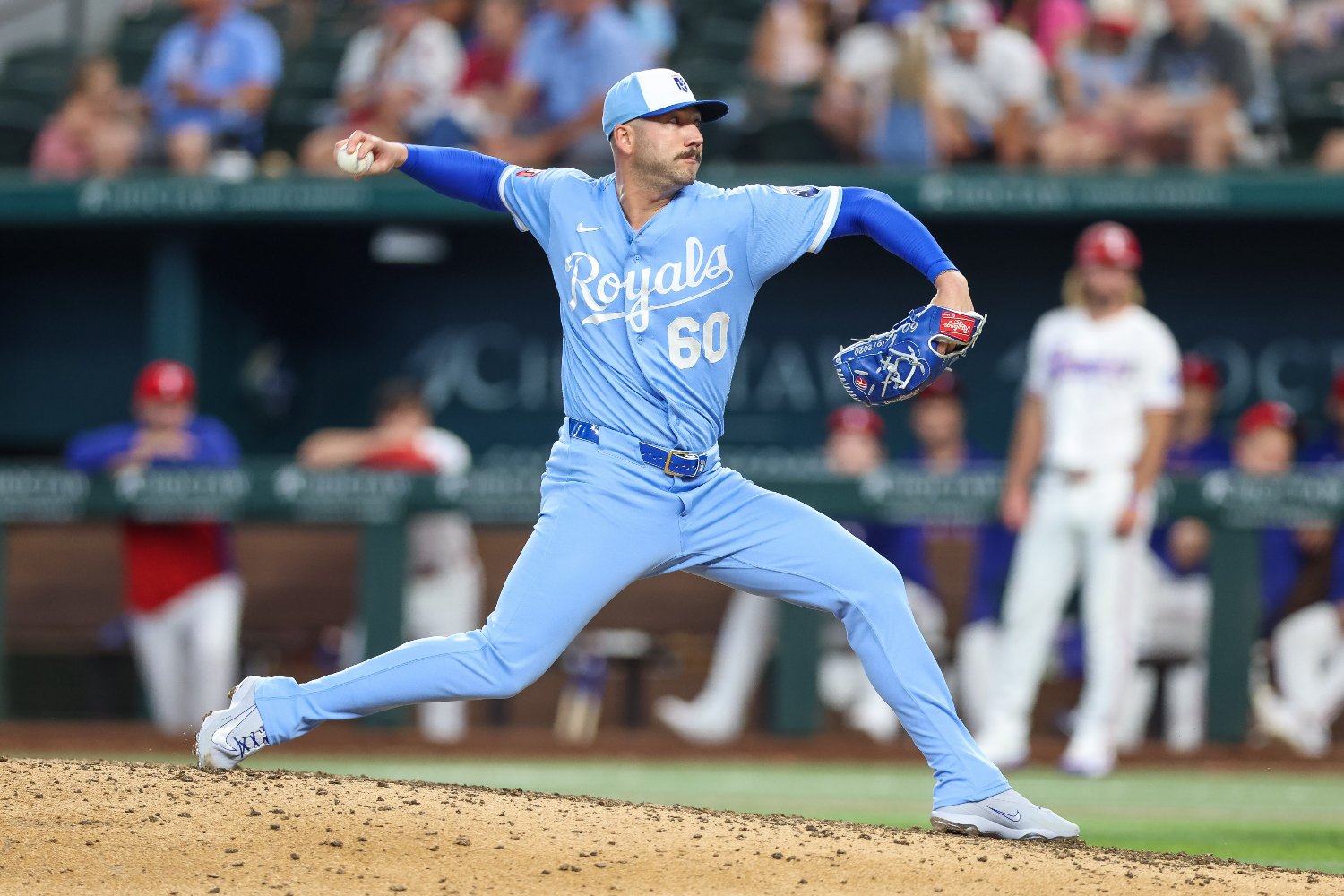 The Royals' nightmare stretch and season continued on Saturday afternoon in Arlington. Despite leading 6-4 in the bottom of the ninth, Royals closer Lucas Erceg gave up three runs on five hits to blow the game to Texas. Ezequiel Duran had the game-winning single that scored Brandon Nimmo from third base with no outs. After closing out the game against the Cardinals on May 17th, Erceg has given up eight runs on 13 hits in three appearances. His ERA has risen from 3.26 to 6.33 over that three-game span, and his WHIP has risen from 1.45 to 1.92. Overall, it's been a challenging season for Erceg, as he has not just struggled to generate whiffs and strikeouts, but has also posted a career-worst wOBA, as illustrated in his TJ Stats percentiles below. The percentiles aren't pretty in many categories. According to TJ Stats, Erceg ranks in the 27th percentile in K%, 19th percentile in O-Swing% and Whiff%, 15th percentile in Strike%, 13th percentile in BB%, 8th percentile in wOBA, and 2nd percentile in CSW. He has done a good job of maintaining strong numbers in average EV on batted balls (77th percentile), GB% (79th percentile), and fastball velocity (87th percentile). Unfortunately, those positives have been overshadowed by the negative categories. For comparison, here's what Erceg's TJ Statcast summary looked like back in 2024, when he helped lead the Royals to the ALDS after coming over from Oakland at the Trade Deadline. As Royals fans can see, Erceg had only two categories below the 50th percentile in 2024 (swing% and zone%). He had all the characteristics of an elite reliever in 2024. While things regressed a little in 2025, he was still much better in many categories last season, especially in wOBA, O-Swing%, and BB%, as illustrated below. So what has happened to Erceg in 2026? Why has he declined so dramatically since 2024 and become so unproductive in the late innings this season? A lot can be tied to his regression in TJ Stuff+ and to the command of his pitch arsenal, especially with two key pitches. Erceg's TJ Stuff+ Has Declined Heavily Overall Since 2024 When it comes to a pitcher declining in production from one season to the next, a drop in velocity is often highlighted as the primary culprit. That was the case with Carlos Estevez, who went from throwing in the upper 90's to under 90 this season. Unfortunately, that's not the case with Erceg. His velocity, on all of his pitch types, has remained pretty similar to previous seasons, as illustrated by his pitch velocity chart by season below, via Baseball Savant. Yes, there's a small decline in velocity this year, but it's not enough to be alarming. For context, here's a look at Estevez's average pitch velocity chart over his career. That's a pretty sharp decline for Estevez and a sign that something was seriously wrong (as a result, he's on the IL, and it's unlikely that he will return this season). As for Erceg, the decline in velocity is evident, but it's not excessive or a massive outlier from previous seasons. That said, there's more to a pitch's effectiveness than just velocity. Movement, spin rate, and release point are key, and the quality of those characteristics of a pitch can often be measured with various pitch-tracking tools, including TJ Stuff+, created by Thomas Nestico, the founder of TJ Stats. For those unfamiliar, TJ Stuff+ can be defined as follows, per TJ Stats' website. When it comes to TJ Stuff+, Erceg has seen a massive regression in his pitches compared to 2024, as illustrated in his TJ Stuff+ summary below, which shows the differences in certain categories from two seasons ago. Here is a breakdown of the declines on all of the pitches in his arsenal from 2024. Four-Seamer: Seven-point decline. Slider: Four-point decline. Sinker: 10-point decline. Changeup: one-point decline. Overall: Six-point decline. The decline in overall TJ Stuff+ has led to regression in many important categories. His chase rate is down by six percent, and his whiff rate is down by 10.6%. The change in zone and xwOBACON has been minimal, with differences of -0.1% and +0.006%, respectively. For a more complete breakdown of the difference from 2024 to 2026, here is a complete comparison of his TJ Stuff+ summaries from 2024 to 2026, which also includes the difference in pitch break from 2024 to 2026. There doesn't seem to be a whole lot of difference in his pitch break chart. The arm angle has a one-degree difference, but the pitches break this year move similarly to how they did in 2024. That said, we do see the TJ Stuff+ and grades from 2026 sport major differences from 2024. In 2024, Erceg had an overall TJ Stuff+ of 106, two pitches with grades over 70, and no pitches with grades under 54. This year? He has a 100 overall TJ Stuff+, no pitches with grades of 70 or over, and only two pitches with grades over 50 (sinker and changeup). In terms of vertical and horizontal movement, the four-seamer has less iVB (induced vertical break) this year, and the sinker has MORE iVB. The slider also has more HB (horizontal break) than two years ago, and the spin is down on all four of his pitches. Those movement changes, combined with subtle regression in velocity, have seemed to make the TJ Stuff+ on Erceg's pitches more mediocre this year. That lackluster TJ Stuff+ has resulted in chase and whiff rates under 30% this year, a big drop from the 30+% marks he had in those categories two seasons ago. The Sinker and Slider Are the Main Concerns What made Erceg so effective as a reliever was that he had two premium pitches: the sinker and slider. In 2024, the sinker had a 72 grade (109 TJ Stuff+), a 30.6% chase rate, a 21% whiff rate, and a .211 xwOBACON. The slider had a 54 grade (105 TJ Stuff+), a 34% chase, 37.5% whiff, and .283 xwOBACON. When sequenced together and located effectively, the pitch combo could be absolutely nasty. Below is a compilation of clips of Erceg generating whiffs with the sinker and slider back in 2024 against the Yankees' Juan Soto and the Reds' Stuart Fairchild. Erceg SI SL-2024.mp4 To break down Erceg's sinker and slider further, let's utilize his pitch heatmap summary data from those two pitches via TJ Stats. That could give us an idea not just of where those pitches were located, but also of the metrics derived from that heatmap data. Here's a look at the sinker heatmap data. Erceg was pretty consistent with his location of the sinker, keeping it arms side and down against both lefties and righties. It was more of a weapon against righties, as evidenced by his 39.8% usage against righties compared to a 3.6% usage against lefties. However, it was equally effective against both sides of the plate. Against lefties, he had a 35.3% CSW and .217 xwOBACON. Against righties, it had a 28.1% CSW and .210 xwOBACON. When he wasn't generating called strikes or whiffs, he was limiting hard contact, which is what one wants to see from a sinker. Now, let's take a look at the slider heatmap data. Erceg distributed the slider more evenly against hitters. It had 24.3% usage against lefties and 31.6% against righties. Against righties, he focused more on locating the pitch low and away, while against lefties, he was more willing to be spread out in his location. The pitch was a great CSW pitch against both sides of the plate, with a 34.5% mark against lefties and 34% mark against righties. However, against lefties, it produced better chase (40.3% O-Swing to 29.1% O-Swing against righties) and xwOBACON (.128 against lefties; .372 against righties). Now, let's take a glance at the sinker heatmap data this season for Erceg. The biggest difference with the sinker is that he's throwing it WAY more in the heart of the plate against both lefties and righties. In 2024, the heart% was 35.3% against lefties and 27.6% against righties. This year? Those percentages are 42.4% against lefties and 37.9% against righties. That's a difference of 7.1% and 10.3%, respectively. While it's important to throw strikes with the pitch, Erceg is leaving the sinker too much in the middle of the zone. And what happens when a pitcher leaves it in the middle of the zone too much? It gets hit. The xwOBACON is .272 against lefties this year, which is higher than the .217 mark in 2024. Against righties, the xwOBACON is good, but his 15.4% whiff rate is down from 21.7% a season ago. The sinker is profiling better than his four-seamer, but it's not quite the elite pitch that it was back in 2024. The same is true with the slider, as illustrated by the heatmap data via TJ Stats. The slider heatmap location has been much different this season compared to 2024. The heatmap is totally different on the left side: he is throwing fewer pitches in the heart% zone, but the lower pitch location has led to fewer whiffs and chases. Because Erceg's slider was so diverse in terms of location to lefties, it had a 34.5% CSW, 37.5% whiff, and 40.3% O-Swing% in 2024. This year? He has a 12.5% CSW on the slider, 17.6% whiff rate, and 19.4% O-Swing%. Those are significant differences and make the pitch far less effective against lefty hitters. Below is an example of a 0-2 pitch this season against Milwaukee's Christian Yelich that Yelich spits on because it misses the zone so badly. Because lefties are keen that it's not going to be in the middle of the zone, they tend not to respect the slider, even in pitcher-friendly counts. QXc3ZEtfWGw0TUFRPT1fVjFCWEJWQlZBQUlBVzFNQ1V3QUhCQU5TQUZnR0FnSUFWQUVFQmxFTlVGWmRCRkZU.mp4 Now let's take a look at 2024, where Erceg can get Andres Gimenez swinging on a two-strike slider. It's located more on the edges of the strike zone, and it's a harder, sharper offering. That makes it a lot tougher for hitters to lay off, especially in two-strike counts. cThMMHZfWGw0TUFRPT1fRGdKU1ZnWUdVMU1BQ0Z0V1V3QUFBd1pXQUZnTldsRUFCVkFEQndCUUFsWlJBZ2RV.mp4 Erceg, struggling with that sinker-slider command, with the latter particularly against lefties, has been a big reason he's not generating CSW or chase in 2026 and has led to his lackluster numbers overall this season. What To Do With Erceg Going Forward? Right now, I wouldn't be surprised if Erceg hits the IL with an injury. We have seen a trend where relievers with bad stretches end up going on the IL with some kind of issue or ailment. It happened with Estevez, Matt Strahm, and Nick Mears. Considering how poorly Erceg has pitched recently, it wouldn't surprise me if the same fate befalls him. At the same time, Erceg's issues are command-related, not stuff-related. The stuff is fine, though I would like to see his slider be a sharper, harder offering than the loopy one it has become this year. He could work on that in lower-leverage work, whether at the Major League level or in Omaha on a rehab stint. Regardless, Erceg probably needs to be out of the closer's role for some time while he regains command. Granted, that puts the Royals in a tough dilemma. Yes, Daniel Lynch IV has been good this year, but can he handle high-leverage outings consistently? This is the first year he's really been in those situations. And the options are thin after Lynch. While some are questioning Matt Quatraro for bringing in Erceg, his other options were to push John Schreiber to another inning (not a good idea), or call on Steven Cruz, Eric Cerantola, or Eli Morgan. Safe to say, the results would've probably been similar to Erceg with those other pitchers. Which leads to a bigger question: why have the Royals struggled to build bullpens under JJ Picollo? Granted, some of it has been injury luck, but the Royals have had a mediocre-to-bad bullpen under Picollo in 2.5 of his 4 seasons as President of Baseball Operations. While some organizations like the Cleveland Guardians and Seattle Mariners have become bullpen factories, the Royals have been the opposite. The Ercge and 2026 bullpen situations emphasize that some changes are needed. Whether it's making changes in coaching, talent acquisition, or player development, the Royals have to do something. They can't continue this trend of poor performance in relief. If it does, for another season or two, the Royals may be looking at a new regime up top. Let's hope that Erceg's struggles can be a catalyst for change from Picollo and the Royals' front office.
 -
Image courtesy of Andrew Dieb-Imagn Images The Royals' nightmare stretch and season continued on Saturday afternoon in Arlington. Despite leading 6-4 in the bottom of the ninth, Royals closer Lucas Erceg gave up three runs on five hits to blow the game to Texas. Ezequiel Duran had the game-winning single that scored Brandon Nimmo from third base with no outs. After closing out the game against the Cardinals on May 17th, Erceg has given up eight runs on 13 hits in three appearances. His ERA has risen from 3.26 to 6.33 over that three-game span, and his WHIP has risen from 1.45 to 1.92. Overall, it's been a challenging season for Erceg, as he has not just struggled to generate whiffs and strikeouts, but has also posted a career-worst wOBA, as illustrated in his TJ Stats percentiles below. The percentiles aren't pretty in many categories. According to TJ Stats, Erceg ranks in the 27th percentile in K%, 19th percentile in O-Swing% and Whiff%, 15th percentile in Strike%, 13th percentile in BB%, 8th percentile in wOBA, and 2nd percentile in CSW. He has done a good job of maintaining strong numbers in average EV on batted balls (77th percentile), GB% (79th percentile), and fastball velocity (87th percentile). Unfortunately, those positives have been overshadowed by the negative categories. For comparison, here's what Erceg's TJ Statcast summary looked like back in 2024, when he helped lead the Royals to the ALDS after coming over from Oakland at the Trade Deadline. As Royals fans can see, Erceg had only two categories below the 50th percentile in 2024 (swing% and zone%). He had all the characteristics of an elite reliever in 2024. While things regressed a little in 2025, he was still much better in many categories last season, especially in wOBA, O-Swing%, and BB%, as illustrated below. So what has happened to Erceg in 2026? Why has he declined so dramatically since 2024 and become so unproductive in the late innings this season? A lot can be tied to his regression in TJ Stuff+ and to the command of his pitch arsenal, especially with two key pitches. Erceg's TJ Stuff+ Has Declined Heavily Overall Since 2024 When it comes to a pitcher declining in production from one season to the next, a drop in velocity is often highlighted as the primary culprit. That was the case with Carlos Estevez, who went from throwing in the upper 90's to under 90 this season. Unfortunately, that's not the case with Erceg. His velocity, on all of his pitch types, has remained pretty similar to previous seasons, as illustrated by his pitch velocity chart by season below, via Baseball Savant. Yes, there's a small decline in velocity this year, but it's not enough to be alarming. For context, here's a look at Estevez's average pitch velocity chart over his career. That's a pretty sharp decline for Estevez and a sign that something was seriously wrong (as a result, he's on the IL, and it's unlikely that he will return this season). As for Erceg, the decline in velocity is evident, but it's not excessive or a massive outlier from previous seasons. That said, there's more to a pitch's effectiveness than just velocity. Movement, spin rate, and release point are key, and the quality of those characteristics of a pitch can often be measured with various pitch-tracking tools, including TJ Stuff+, created by Thomas Nestico, the founder of TJ Stats. For those unfamiliar, TJ Stuff+ can be defined as follows, per TJ Stats' website. When it comes to TJ Stuff+, Erceg has seen a massive regression in his pitches compared to 2024, as illustrated in his TJ Stuff+ summary below, which shows the differences in certain categories from two seasons ago. Here is a breakdown of the declines on all of the pitches in his arsenal from 2024. Four-Seamer: Seven-point decline. Slider: Four-point decline. Sinker: 10-point decline. Changeup: one-point decline. Overall: Six-point decline. The decline in overall TJ Stuff+ has led to regression in many important categories. His chase rate is down by six percent, and his whiff rate is down by 10.6%. The change in zone and xwOBACON has been minimal, with differences of -0.1% and +0.006%, respectively. For a more complete breakdown of the difference from 2024 to 2026, here is a complete comparison of his TJ Stuff+ summaries from 2024 to 2026, which also includes the difference in pitch break from 2024 to 2026. There doesn't seem to be a whole lot of difference in his pitch break chart. The arm angle has a one-degree difference, but the pitches break this year move similarly to how they did in 2024. That said, we do see the TJ Stuff+ and grades from 2026 sport major differences from 2024. In 2024, Erceg had an overall TJ Stuff+ of 106, two pitches with grades over 70, and no pitches with grades under 54. This year? He has a 100 overall TJ Stuff+, no pitches with grades of 70 or over, and only two pitches with grades over 50 (sinker and changeup). In terms of vertical and horizontal movement, the four-seamer has less iVB (induced vertical break) this year, and the sinker has MORE iVB. The slider also has more HB (horizontal break) than two years ago, and the spin is down on all four of his pitches. Those movement changes, combined with subtle regression in velocity, have seemed to make the TJ Stuff+ on Erceg's pitches more mediocre this year. That lackluster TJ Stuff+ has resulted in chase and whiff rates under 30% this year, a big drop from the 30+% marks he had in those categories two seasons ago. The Sinker and Slider Are the Main Concerns What made Erceg so effective as a reliever was that he had two premium pitches: the sinker and slider. In 2024, the sinker had a 72 grade (109 TJ Stuff+), a 30.6% chase rate, a 21% whiff rate, and a .211 xwOBACON. The slider had a 54 grade (105 TJ Stuff+), a 34% chase, 37.5% whiff, and .283 xwOBACON. When sequenced together and located effectively, the pitch combo could be absolutely nasty. Below is a compilation of clips of Erceg generating whiffs with the sinker and slider back in 2024 against the Yankees' Juan Soto and the Reds' Stuart Fairchild. Erceg SI SL-2024.mp4 To break down Erceg's sinker and slider further, let's utilize his pitch heatmap summary data from those two pitches via TJ Stats. That could give us an idea not just of where those pitches were located, but also of the metrics derived from that heatmap data. Here's a look at the sinker heatmap data. Erceg was pretty consistent with his location of the sinker, keeping it arms side and down against both lefties and righties. It was more of a weapon against righties, as evidenced by his 39.8% usage against righties compared to a 3.6% usage against lefties. However, it was equally effective against both sides of the plate. Against lefties, he had a 35.3% CSW and .217 xwOBACON. Against righties, it had a 28.1% CSW and .210 xwOBACON. When he wasn't generating called strikes or whiffs, he was limiting hard contact, which is what one wants to see from a sinker. Now, let's take a look at the slider heatmap data. Erceg distributed the slider more evenly against hitters. It had 24.3% usage against lefties and 31.6% against righties. Against righties, he focused more on locating the pitch low and away, while against lefties, he was more willing to be spread out in his location. The pitch was a great CSW pitch against both sides of the plate, with a 34.5% mark against lefties and 34% mark against righties. However, against lefties, it produced better chase (40.3% O-Swing to 29.1% O-Swing against righties) and xwOBACON (.128 against lefties; .372 against righties). Now, let's take a glance at the sinker heatmap data this season for Erceg. The biggest difference with the sinker is that he's throwing it WAY more in the heart of the plate against both lefties and righties. In 2024, the heart% was 35.3% against lefties and 27.6% against righties. This year? Those percentages are 42.4% against lefties and 37.9% against righties. That's a difference of 7.1% and 10.3%, respectively. While it's important to throw strikes with the pitch, Erceg is leaving the sinker too much in the middle of the zone. And what happens when a pitcher leaves it in the middle of the zone too much? It gets hit. The xwOBACON is .272 against lefties this year, which is higher than the .217 mark in 2024. Against righties, the xwOBACON is good, but his 15.4% whiff rate is down from 21.7% a season ago. The sinker is profiling better than his four-seamer, but it's not quite the elite pitch that it was back in 2024. The same is true with the slider, as illustrated by the heatmap data via TJ Stats. The slider heatmap location has been much different this season compared to 2024. The heatmap is totally different on the left side: he is throwing fewer pitches in the heart% zone, but the lower pitch location has led to fewer whiffs and chases. Because Erceg's slider was so diverse in terms of location to lefties, it had a 34.5% CSW, 37.5% whiff, and 40.3% O-Swing% in 2024. This year? He has a 12.5% CSW on the slider, 17.6% whiff rate, and 19.4% O-Swing%. Those are significant differences and make the pitch far less effective against lefty hitters. Below is an example of a 0-2 pitch this season against Milwaukee's Christian Yelich that Yelich spits on because it misses the zone so badly. Because lefties are keen that it's not going to be in the middle of the zone, they tend not to respect the slider, even in pitcher-friendly counts. QXc3ZEtfWGw0TUFRPT1fVjFCWEJWQlZBQUlBVzFNQ1V3QUhCQU5TQUZnR0FnSUFWQUVFQmxFTlVGWmRCRkZU.mp4 Now let's take a look at 2024, where Erceg can get Andres Gimenez swinging on a two-strike slider. It's located more on the edges of the strike zone, and it's a harder, sharper offering. That makes it a lot tougher for hitters to lay off, especially in two-strike counts. cThMMHZfWGw0TUFRPT1fRGdKU1ZnWUdVMU1BQ0Z0V1V3QUFBd1pXQUZnTldsRUFCVkFEQndCUUFsWlJBZ2RV.mp4 Erceg, struggling with that sinker-slider command, with the latter particularly against lefties, has been a big reason he's not generating CSW or chase in 2026 and has led to his lackluster numbers overall this season. What To Do With Erceg Going Forward? Right now, I wouldn't be surprised if Erceg hits the IL with an injury. We have seen a trend where relievers with bad stretches end up going on the IL with some kind of issue or ailment. It happened with Estevez, Matt Strahm, and Nick Mears. Considering how poorly Erceg has pitched recently, it wouldn't surprise me if the same fate befalls him. At the same time, Erceg's issues are command-related, not stuff-related. The stuff is fine, though I would like to see his slider be a sharper, harder offering than the loopy one it has become this year. He could work on that in lower-leverage work, whether at the Major League level or in Omaha on a rehab stint. Regardless, Erceg probably needs to be out of the closer's role for some time while he regains command. Granted, that puts the Royals in a tough dilemma. Yes, Daniel Lynch IV has been good this year, but can he handle high-leverage outings consistently? This is the first year he's really been in those situations. And the options are thin after Lynch. While some are questioning Matt Quatraro for bringing in Erceg, his other options were to push John Schreiber to another inning (not a good idea), or call on Steven Cruz, Eric Cerantola, or Eli Morgan. Safe to say, the results would've probably been similar to Erceg with those other pitchers. Which leads to a bigger question: why have the Royals struggled to build bullpens under JJ Picollo? Granted, some of it has been injury luck, but the Royals have had a mediocre-to-bad bullpen under Picollo in 2.5 of his 4 seasons as President of Baseball Operations. While some organizations like the Cleveland Guardians and Seattle Mariners have become bullpen factories, the Royals have been the opposite. The Ercge and 2026 bullpen situations emphasize that some changes are needed. Whether it's making changes in coaching, talent acquisition, or player development, the Royals have to do something. They can't continue this trend of poor performance in relief. If it does, for another season or two, the Royals may be looking at a new regime up top. Let's hope that Erceg's struggles can be a catalyst for change from Picollo and the Royals' front office. View full article
-
 David Shields struck out five over five innings for Quad Cities, while Northwest Arkansas's Omar Hernandez homered and drove in four, and Carson Roccaforte doubled in a run. Columbia's Yandel Ricardo collected two hits, two RBIs, and two steals, Josh Hammond singled in a run, and Ramon Ramirez doubled for High-A. Hunter Owen punched out six in relief at Double-A, and Darwin Rodriguez fanned three across four-plus frames for Single-A in losing efforts across the system. Royals Transactions Kansas City Royals placed RHP Nick Mears on the 15-day injured list retroactive to May 28, 2026. Right shoulder impingement. Kansas City Royals signed RHP Dan Altavilla. Kansas City Royals recalled RHP Eric Cerantola from Omaha Storm Chasers. Storm Chasers Silenced In 13-1 Loss To Memphis Omaha managed just five hits and one run against Memphis, striking out 15 times as a team and leaving 10 runners on base. Abraham Toro and Kevin Newman each collected two hits, and Toro drove in the lone run. The damage began early. In the second inning, the Redbirds scored three runs, capped by a three-run home run that put Omaha in a hole. Memphis added single runs in the third and fourth before breaking the game open in the sixth, when a double, two singles, and another single produced four runs to make it 10-1. Toro's run-scoring force out in the fifth, which plated Connor Kaiser, accounted for the only Storm Chasers tally. On the mound, starter Chase Jessee allowed three runs in two innings of work. He also had three walks and three strikeouts. The relief work behind him was inconsistent. Andrew Pérez allowed five hits and three runs over 1 2/3 innings, while Dan Altavilla had a solid 2026 Storm Chasers debut, allowing no runs, one hit, one walk, while striking out two in 1 1/3 innings. Ben Sears surrendered six hits and four runs while recording just one out, while Jose Cuas produced 1 2/3 scoreless innings, allowing no hits while walking one and striking out one. Anthony Gose tossed a scoreless eighth, and position player Abraham Toro was pressed into mound duty late. Toro allowed three runs in his inning of work. Player AB R H RBI BB K John Rave 3 0 0 0 2 3 Abraham Toro 5 0 2 1 0 2 Kameron Misner 4 0 1 0 0 3 Drew Waters 4 0 0 0 0 2 Brett Squires 0 0 0 0 0 0 Dustin Dickerson 4 0 0 0 0 3 Gavin Cross 3 0 0 0 0 1 Luke Maile 3 0 0 0 1 1 Connor Kaiser 3 1 0 0 1 0 Kevin Newman 4 0 2 0 0 0 Player IP H R ER BB K HR Chase Jessee 2 3 3 3 3 3 1 Andrew Pérez 1 2/3 5 3 3 1 0 0 Dan Altavilla 1 1/3 1 0 0 1 1 0 Jose Cuas 1 2/3 0 0 0 1 1 0 Ben Sears 1/3 6 4 4 0 0 0 Anthony Gose 1 0 0 0 1 0 0 Abraham Toro 1 4 3 3 0 0 0 Naturals Undone By Eighth-Inning Collapse In Tulsa Northwest Arkansas led 4-3 entering the eighth inning before Tulsa erupted for seven runs to pull away in an 11-7 loss. Hernandez powered the offense with a three-run home run and four RBIs, Carson Roccaforte and Alberto Rodriguez each doubled, and Sam Kulasingam reached three times with two stolen bases and scored twice. The Naturals had built their lead steadily, scoring in the second on a run-scoring double play, the fourth on Hernandez's sacrifice fly, the fifth on Roccaforte's RBI double, and the seventh on Rodriguez's run-scoring double. Hernandez's three-run shot in the eighth pushed the lead to 7-4, but the bullpen could not hold it. Tommy Molsky retired just two batters while allowing four hits, four runs, and a home run, taking the loss and blowing the save as the Drillers' seven-run eighth, which ended on a grand slam, flipped the game. Owen turned in the longest outing, working 4 2/3 innings and allowing five hits and four runs while walking four and striking out six. Brandon Johnson followed with 2 2/3 innings, surrendering two hits and three runs with a walk and a strikeout. The Naturals went down in order in the ninth to seal the defeat. Player AB R H RBI BB K Carson Roccaforte 5 0 1 1 0 1 Colton Becker 5 0 0 0 0 4 Sam Kulasingam 3 2 1 0 1 0 Spencer Nivens 2 1 0 0 2 1 Jack Pineda 2 1 1 0 1 0 Omar Hernandez 3 1 1 4 0 1 Connor Scott 2 1 0 0 1 1 Canyon Brown 4 1 1 0 0 2 Alberto Rodriguez 4 0 1 1 0 1 Player IP H R ER BB K HR Hunter Owen 4 2/3 5 4 4 4 6 0 Brandon Johnson 2 2/3 2 3 3 2 1 0 Tommy Molsky 2/3 4 4 4 2 1 1 Shields Solid But River Bandits Fall Short In Cedar Rapids Quad Cities jumped ahead early but could not hold the lead in a 3-2 loss to Cedar Rapids. The River Bandits scored both of their runs in the first inning, when Blake Mitchell grounded out to bring home Nolan Sailors, and Ramirez doubled in Asbel Gonzalez. The offense went quiet from there, managing just three hits on the day. Gonzalez singled, stole a base, and scored, while Ramirez's double was the lone extra-base hit. Shields turned in a strong start, working five innings and allowing six hits and three runs, only two earned, while walking three and striking out five. He took the loss as the Kernels chipped away, scoring twice in the third on a double and a triple and adding the go-ahead run in the fourth on a sacrifice fly. Nick Conte had two scoreless innings of relief, allowing one hit and striking out two, while Josh Hansell closed the game out for the River Bandits staff with a scoreless inning. The River Bandits left only one runner on base over the final innings and stranded the tying run as Cedar Rapids held on. Player AB R H RBI BB K Nolan Sailors 3 1 0 0 1 1 Asbel Gonzalez 4 1 1 0 0 1 Blake Mitchell 4 0 0 1 0 3 Ramon Ramirez 3 0 1 1 0 2 Derlin Figueroa 2 0 0 0 1 0 Jose Cerice 3 0 0 0 0 0 Tyriq Kemp 3 0 0 0 0 2 Erick Torres 3 0 1 0 0 1 Angel Acosta 2 0 0 0 0 0 Player IP H R ER BB K HR David Shields 5 6 3 2 3 5 0 Nick Conte 2 1 0 0 0 2 0 Josh Hansell 1 0 0 0 0 0 0 Fireflies Fast Start Fades In 8-4 Loss To Charleston Columbia scored four runs in the first inning but was shut out the rest of the way in an 8-4 loss to Charleston. The Fireflies erupted early, as Hammond singled in Henry Ramos, Ricardo followed with a two-run single, and Jhosmmel Zue doubled home another run to build a 4-2 lead. Ricardo led the offense with two hits, two RBIs, and two stolen bases. Hammond added a hit and a run driven in, and Stone Russell and Zue each doubled. The lead did not last. Charleston pulled within one in the third, then took control with a four-run seventh inning that turned a 4-3 deficit into a 7-4 advantage, the rally fueled by a triple and a two-run single. Jhon Reyes struggled in relief, recording four outs while allowing three hits, four runs, and three walks to take the loss and blow the save. Rodriguez gave the most length, working 4 2/3 innings and allowing six hits and three runs while walking three and striking out three. Yeri Perez allowed a run over 1 2/3 innings, and Dash Albus struck out two over 1 1/3 scoreless innings. The RiverDogs added an insurance run in the ninth as Columbia stranded the leadoff hitter and could not answer. Player AB R H RBI BB K Henry Ramos 3 1 1 0 0 2 Sean Gamble 4 0 1 0 0 1 Josh Hammond 4 1 1 1 0 1 Stone Russell 4 1 1 0 0 0 Yandel Ricardo 4 1 2 2 0 0 Jhosmmel Zue 4 0 1 1 0 2 JC Vanek 3 0 0 0 0 2 Roni Cabrera 3 0 0 0 0 3 Connor Rasmussen 3 0 0 0 0 0 Player IP H R ER BB K HR Jhon Reyes 1 1/3 3 4 4 3 0 0 Darwin Rodriguez 4 2/3 6 3 3 3 3 0 Yeri Perez 1 2/3 1 1 1 2 1 0 Dash Albus 1 1/3 0 0 0 1 2 0 Top-20 Prospect Performance Kendry Chourio: DNP David Shields: five innings, 6 H, 3 R, 2 ER, 3 BB, 5 K Sean Gamble: 1-for-4, 1 K Blake Mitchell: 0-for-4, RBI, 3 K Josh Hammond: 1-for-4, RBI, 1 K Ramon Ramirez: 1-for-3, 2B, RBI, 2 K Drew Beam: DNP Asbel Gonzalez: 1-for-4, SB, 1 K Ben Kudrna: DNP Carson Roccaforte: 1-for-5, 2B, RBI, 1 K Yandel Ricardo: 2-for-4, 2 RBI, 2 SB Felix Arronde: DNP Blake Wolters: DNP Michael Lombardi: DNP Luinder Avila: DNP Steven Zobac: DNP Frank Mozzicato: DNP Daniel Vazquez: DNP Warren Colcano: DNP Shane Panzini: DNP View full article
 -
 David Shields struck out five over five innings for Quad Cities, while Northwest Arkansas's Omar Hernandez homered and drove in four, and Carson Roccaforte doubled in a run. Columbia's Yandel Ricardo collected two hits, two RBIs, and two steals, Josh Hammond singled in a run, and Ramon Ramirez doubled for High-A. Hunter Owen punched out six in relief at Double-A, and Darwin Rodriguez fanned three across four-plus frames for Single-A in losing efforts across the system. Royals Transactions Kansas City Royals placed RHP Nick Mears on the 15-day injured list retroactive to May 28, 2026. Right shoulder impingement. Kansas City Royals signed RHP Dan Altavilla. Kansas City Royals recalled RHP Eric Cerantola from Omaha Storm Chasers. Storm Chasers Silenced In 13-1 Loss To Memphis Omaha managed just five hits and one run against Memphis, striking out 15 times as a team and leaving 10 runners on base. Abraham Toro and Kevin Newman each collected two hits, and Toro drove in the lone run. The damage began early. In the second inning, the Redbirds scored three runs, capped by a three-run home run that put Omaha in a hole. Memphis added single runs in the third and fourth before breaking the game open in the sixth, when a double, two singles, and another single produced four runs to make it 10-1. Toro's run-scoring force out in the fifth, which plated Connor Kaiser, accounted for the only Storm Chasers tally. On the mound, starter Chase Jessee allowed three runs in two innings of work. He also had three walks and three strikeouts. The relief work behind him was inconsistent. Andrew Pérez allowed five hits and three runs over 1 2/3 innings, while Dan Altavilla had a solid 2026 Storm Chasers debut, allowing no runs, one hit, one walk, while striking out two in 1 1/3 innings. Ben Sears surrendered six hits and four runs while recording just one out, while Jose Cuas produced 1 2/3 scoreless innings, allowing no hits while walking one and striking out one. Anthony Gose tossed a scoreless eighth, and position player Abraham Toro was pressed into mound duty late. Toro allowed three runs in his inning of work. Player AB R H RBI BB K John Rave 3 0 0 0 2 3 Abraham Toro 5 0 2 1 0 2 Kameron Misner 4 0 1 0 0 3 Drew Waters 4 0 0 0 0 2 Brett Squires 0 0 0 0 0 0 Dustin Dickerson 4 0 0 0 0 3 Gavin Cross 3 0 0 0 0 1 Luke Maile 3 0 0 0 1 1 Connor Kaiser 3 1 0 0 1 0 Kevin Newman 4 0 2 0 0 0 Player IP H R ER BB K HR Chase Jessee 2 3 3 3 3 3 1 Andrew Pérez 1 2/3 5 3 3 1 0 0 Dan Altavilla 1 1/3 1 0 0 1 1 0 Jose Cuas 1 2/3 0 0 0 1 1 0 Ben Sears 1/3 6 4 4 0 0 0 Anthony Gose 1 0 0 0 1 0 0 Abraham Toro 1 4 3 3 0 0 0 Naturals Undone By Eighth-Inning Collapse In Tulsa Northwest Arkansas led 4-3 entering the eighth inning before Tulsa erupted for seven runs to pull away in an 11-7 loss. Hernandez powered the offense with a three-run home run and four RBIs, Carson Roccaforte and Alberto Rodriguez each doubled, and Sam Kulasingam reached three times with two stolen bases and scored twice. The Naturals had built their lead steadily, scoring in the second on a run-scoring double play, the fourth on Hernandez's sacrifice fly, the fifth on Roccaforte's RBI double, and the seventh on Rodriguez's run-scoring double. Hernandez's three-run shot in the eighth pushed the lead to 7-4, but the bullpen could not hold it. Tommy Molsky retired just two batters while allowing four hits, four runs, and a home run, taking the loss and blowing the save as the Drillers' seven-run eighth, which ended on a grand slam, flipped the game. Owen turned in the longest outing, working 4 2/3 innings and allowing five hits and four runs while walking four and striking out six. Brandon Johnson followed with 2 2/3 innings, surrendering two hits and three runs with a walk and a strikeout. The Naturals went down in order in the ninth to seal the defeat. Player AB R H RBI BB K Carson Roccaforte 5 0 1 1 0 1 Colton Becker 5 0 0 0 0 4 Sam Kulasingam 3 2 1 0 1 0 Spencer Nivens 2 1 0 0 2 1 Jack Pineda 2 1 1 0 1 0 Omar Hernandez 3 1 1 4 0 1 Connor Scott 2 1 0 0 1 1 Canyon Brown 4 1 1 0 0 2 Alberto Rodriguez 4 0 1 1 0 1 Player IP H R ER BB K HR Hunter Owen 4 2/3 5 4 4 4 6 0 Brandon Johnson 2 2/3 2 3 3 2 1 0 Tommy Molsky 2/3 4 4 4 2 1 1 Shields Solid But River Bandits Fall Short In Cedar Rapids Quad Cities jumped ahead early but could not hold the lead in a 3-2 loss to Cedar Rapids. The River Bandits scored both of their runs in the first inning, when Blake Mitchell grounded out to bring home Nolan Sailors, and Ramirez doubled in Asbel Gonzalez. The offense went quiet from there, managing just three hits on the day. Gonzalez singled, stole a base, and scored, while Ramirez's double was the lone extra-base hit. Shields turned in a strong start, working five innings and allowing six hits and three runs, only two earned, while walking three and striking out five. He took the loss as the Kernels chipped away, scoring twice in the third on a double and a triple and adding the go-ahead run in the fourth on a sacrifice fly. Nick Conte had two scoreless innings of relief, allowing one hit and striking out two, while Josh Hansell closed the game out for the River Bandits staff with a scoreless inning. The River Bandits left only one runner on base over the final innings and stranded the tying run as Cedar Rapids held on. Player AB R H RBI BB K Nolan Sailors 3 1 0 0 1 1 Asbel Gonzalez 4 1 1 0 0 1 Blake Mitchell 4 0 0 1 0 3 Ramon Ramirez 3 0 1 1 0 2 Derlin Figueroa 2 0 0 0 1 0 Jose Cerice 3 0 0 0 0 0 Tyriq Kemp 3 0 0 0 0 2 Erick Torres 3 0 1 0 0 1 Angel Acosta 2 0 0 0 0 0 Player IP H R ER BB K HR David Shields 5 6 3 2 3 5 0 Nick Conte 2 1 0 0 0 2 0 Josh Hansell 1 0 0 0 0 0 0 Fireflies Fast Start Fades In 8-4 Loss To Charleston Columbia scored four runs in the first inning but was shut out the rest of the way in an 8-4 loss to Charleston. The Fireflies erupted early, as Hammond singled in Henry Ramos, Ricardo followed with a two-run single, and Jhosmmel Zue doubled home another run to build a 4-2 lead. Ricardo led the offense with two hits, two RBIs, and two stolen bases. Hammond added a hit and a run driven in, and Stone Russell and Zue each doubled. The lead did not last. Charleston pulled within one in the third, then took control with a four-run seventh inning that turned a 4-3 deficit into a 7-4 advantage, the rally fueled by a triple and a two-run single. Jhon Reyes struggled in relief, recording four outs while allowing three hits, four runs, and three walks to take the loss and blow the save. Rodriguez gave the most length, working 4 2/3 innings and allowing six hits and three runs while walking three and striking out three. Yeri Perez allowed a run over 1 2/3 innings, and Dash Albus struck out two over 1 1/3 scoreless innings. The RiverDogs added an insurance run in the ninth as Columbia stranded the leadoff hitter and could not answer. Player AB R H RBI BB K Henry Ramos 3 1 1 0 0 2 Sean Gamble 4 0 1 0 0 1 Josh Hammond 4 1 1 1 0 1 Stone Russell 4 1 1 0 0 0 Yandel Ricardo 4 1 2 2 0 0 Jhosmmel Zue 4 0 1 1 0 2 JC Vanek 3 0 0 0 0 2 Roni Cabrera 3 0 0 0 0 3 Connor Rasmussen 3 0 0 0 0 0 Player IP H R ER BB K HR Jhon Reyes 1 1/3 3 4 4 3 0 0 Darwin Rodriguez 4 2/3 6 3 3 3 3 0 Yeri Perez 1 2/3 1 1 1 2 1 0 Dash Albus 1 1/3 0 0 0 1 2 0 Top-20 Prospect Performance Kendry Chourio: DNP David Shields: five innings, 6 H, 3 R, 2 ER, 3 BB, 5 K Sean Gamble: 1-for-4, 1 K Blake Mitchell: 0-for-4, RBI, 3 K Josh Hammond: 1-for-4, RBI, 1 K Ramon Ramirez: 1-for-3, 2B, RBI, 2 K Drew Beam: DNP Asbel Gonzalez: 1-for-4, SB, 1 K Ben Kudrna: DNP Carson Roccaforte: 1-for-5, 2B, RBI, 1 K Yandel Ricardo: 2-for-4, 2 RBI, 2 SB Felix Arronde: DNP Blake Wolters: DNP Michael Lombardi: DNP Luinder Avila: DNP Steven Zobac: DNP Frank Mozzicato: DNP Daniel Vazquez: DNP Warren Colcano: DNP Shane Panzini: DNP
 -
Image courtesy of Peter Aiken-Imagn Images View full article
-
Image courtesy of Peter Aiken-Imagn Images View full article
-
As the table above shows, Collins and Loftin are tied for the worst Def at -5.5. Loftin profiles a little bit worse in DRS (-5 to Collins' -2) and FRV (-5 to Collins' -4). That said, they have been poor defenders for the Royals this season, and no other Royals player, especially in the outfield, has been close (even Lane Thomas is 3.4 runs better than Collins and Loftin defensively). Therefore, the pair has been a defensive drain on the Royals, even though they theoretically can succeed with the glove in some capacity. Both Collins and Loftin are relatively young and are athletic players. Furthermore, they have a better defensive history in years past. That said, something needs to change with them because they are becoming nearly unplayable defensively for manager Matt Quatraro, who prioritizes defense in both the infield and outfield. Their Offense Isn't Making Up for Poor Defense It would be one thing if Collins and Loftin were mashing at the plate. Unfortunately, that hasn't been the case so far in 2026. In 49 games and 180 plate appearances, Collins is slashing .212/.328/.311 with a .639 OPS. He has three home runs and a 12.8% BB%, but his K% is high at 26.7%, and his wRC+ is mediocre at 85. There's no question that Collins shows a patient approach and doesn't chase much. However, as illustrated by his TJ Statcast summary below, he struggles to make consistent contact and generate positive batted-ball production. Collins has ideal bat speed, as evidenced by his 73.4 MPH mark, which ranks in the 68th percentile. There's also some potential with his barrel rate (55th percentile) and LA Sweet-Spot% (57th percentile). That said, his whiff (37th percentile) and strikeout (25th percentile) issues have weighed down his overall production this year, as illustrated by his 85 TJ Bat+, .292 wOBA, and .307 xwOBA. It's been a similar story for Loftin, albeit in fewer plate appearances. In 76 plate appearances this season, the former Baylor product is slashing .206/.316/.317 with a .633 OPS. Like Collins, Loftin's walk rate is solid at 10.5%. Unlike Collins, however, the former 2020 Royals draft pick has a low K% at 11.8%. That said, Loftin's paltry BABIP (.232) and inability to hit the ball hard or launch it have held him back offensively this year at the Major League level. Here's a look at his TJ Statcast summary via TJ Stats. While his plate discipline metrics are impressive, the rest of his percentiles are underwhelming, to put it kindly. Ranking in the 99th percentile in whiff%, 99th percentile in O-Swing%, 94th percentile in K%, and 92nd percentile in Z-Contact% are all positive attributes and should be a foundation for offensive success. Conversely, a 28th percentile hard-hit rate, 20th percentile LA Sweet-Spot%, 14th percentile bat speed, and 6th percentile 90th EV are a recipe for the opposite. Thus, it's not a surprise that Loftin fares pretty unimpressively in his overall metrics, including TJ Bat+ (83), wOBA (.290), and xwOBA (.293). However, much like Collins, a spark or adjustment for Loftin could not only get him back in the lineup regularly but also positively impact this struggling Kansas City offense, which ranks 28th in runs scored. Moving to Omaha to Switch Positions? Both players have Minor League options remaining, with Collins having three and Loftin having one. Thus, with the Royals 13 games under .500, it would make sense to option Collins and Loftin back to Omaha and maybe give some other guys on the 40-man roster a chance, including Kameron Misner or John Rave (or they could call up Brett Squires if they wanted to be really bold). That said, Collins and Loftin shouldn't be optioned to improve their hitting. They can hit, and they have the tools to be successful. Both need to make some swing decision adjustments and, honestly, find some better batted-ball luck. The two will gain confidence in Omaha, but ultimately, those changes have to be made against MLB pitching. Instead, they should go to Omaha to work on playing different positions in the field. It's obvious that Collins and Loftin don't fit in the outfield and the infield, respectively. Collins has the athleticism and speed, but his instincts are poor, and that has contributed to his poor defensive metrics. The 28-year-old looks like an infielder trying to play the outfield, which makes sense since he initially started as an infield prospect when he was drafted out of Creighton by the Rockies in 2019. The Royals may be better off moving Collins to second base and letting him get reps there in Omaha. Right now, there is a rotating mix at second base with Josh Rojas, Colton Becker, Connor Kaiser, Kevin Newman, Peyton Wilson, and Dustin Dickerson. Collins wouldn't be blocking any second-base prospect of note. Furthermore, a move to second base for Collins would not just better utilize his skills, but it could also give them a better long-term option at the keystone. Michael Massey has been solid defensively, with a 1.8 Def rating that ranks fourth-best among Royals players. However, Massey has been mediocre offensively, as evidenced by a .644 OPS and 69 TJ Bat+. Here's a look at his Statcast percentiles, which mirror Collins and Loftin pretty closely in many areas. The Royals would probably be better off with Massey as a utility player who could play all over the field and Collins as the regular second baseman. However, for Collins to do that effectively, he needs more reps and development again at second base, and that needs to happen in a lower-pressure environment in Omaha for a month or two. A similar defensive move needs to be true for Loftin as well. Based on his OAA directional data, Loftin simply doesn't have the range to be successful at second base (he particularly struggles on plays up the middle, which we saw in his error on Friday night in Arlington). However, he may be better utilized as a corner outfielder who can play left and right field. His OAA in LF is -1, and his success rate difference is -25%, according to Savant. That isn't good, but he suffered some poor reads early in the season in the outfield. Moving him back to the outfield full-time and giving him daily reps could help him make the most of his tools and skill set. Going from the infield to the outfield benefited Alex Gordon, who became a Royals Hall of Famer. It's not out of the question to think that Loftin could be a similar outfielder to Thomas, who specializes against lefties, but has the potential to have a big season when the ball is falling (i.e., a better BABIP). While Thomas is off to an inconsistent start in Kansas City, the former National and Guardian has produced a TJ Bat+ of 95-111 every season from 2021 to 2024. Royals fans would take that kind of production from Loftin, especially if he can improve the defense. Right now, Collins and Loftin have combined to produce a -0.8 fWAR in 2026. That's untenable, especially for a small-market franchise where every move counts. The Royals shouldn't give up on Collins and Loftin just yet, but they need some kind of major shift to help turn and put them in the right direction in terms of trajectory, both for the remainder of 2026 and beyond. Going to Omaha for a couple of months, having them switch positions, and then returning to Kansas City after the All-Star break seems to make the most sense for both the pair and the Royals. View full article
-
The Royals Should Take a Different Approach With Collins and Loftin
Kevin O'Brien posted an article in Royals
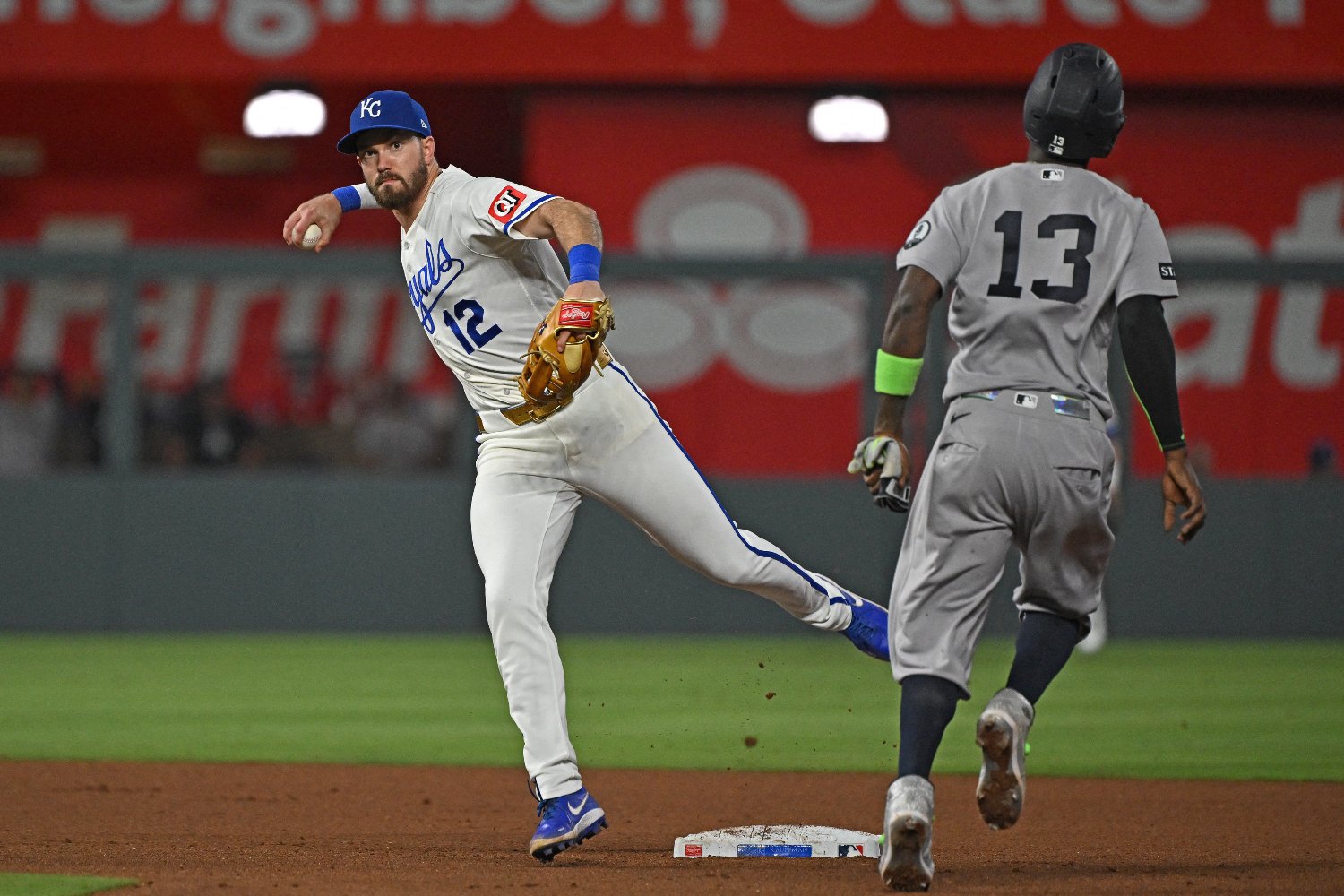 The Kansas City Royals lost their fourth-straight game on Friday, this time to the Texas Rangers at Globe Life Field in Arlington. The Rangers beat the Royals 9-1 in a game that was never close. Kansas City starter Stephen Kolek gave up four runs in the first inning and six runs overall in five innings of work. On the flip side, MacKenzie Gore shut out the Royals in 6.1 IP, despite only striking out three batters. At 22-35, the Royals are a team searching for answers. They went 10-17 last month and are now 10-16 in May with two games remaining (they went 2-2 in March). According to Fangraphs, their playoff odds sit at 9.1%, putting them behind other AL Central teams like the Tigers (15.6%) and White Sox (16.4%). At this point in the season, Kansas City needs to experiment with different strategies to help turn the ship around, or at the very least, build some positive momentum and hope for 2027 and beyond. That could be a coach firing. That could be the release of a veteran player who's not performing. However, one bold strategy the Royals could pursue is to option Isaac Collins and Nick Loftin and move them to different defensive positions. Both Are Struggling Defensively At Their Positions When looking at the metrics, Collins and Loftin have fared quite poorly at their respective defensive positions in 2026. Outs Above Average is Baseball Savant's primary metric that calculates defensive range and success rate. The official definition of OAA can be found below, via Savant's website. In the table below, I have organized and ranked all Royals players with 10 or more field attempts based on OAA. However, the table also includes data such as directional OAA, success rate (plays a player made in the field), estimated success rate (plays that a player SHOULD make in the field), and success rate difference. I have highlighted Collins and Loftin to show fans how they compare to other Royals players defensively in OAA. As the table above shows, Collins and Loftin are tied for the worst Def at -5.5. Loftin profiles a little bit worse in DRS (-5 to Collins' -2) and FRV (-5 to Collins' -4). That said, they have been poor defenders for the Royals this season, and no other Royals player, especially in the outfield, has been close (even Lane Thomas is 3.4 runs better than Collins and Loftin defensively). Therefore, the pair has been a defensive drain on the Royals, even though they theoretically can succeed with the glove in some capacity. Both Collins and Loftin are relatively young and are athletic players. Furthermore, they have a better defensive history in years past. That said, something needs to change with them because they are becoming nearly unplayable defensively for manager Matt Quatraro, who prioritizes defense in both the infield and outfield. Their Offense Isn't Making Up for Poor Defense It would be one thing if Collins and Loftin were mashing at the plate. Unfortunately, that hasn't been the case so far in 2026. In 49 games and 180 plate appearances, Collins is slashing .212/.328/.311 with a .639 OPS. He has three home runs and a 12.8% BB%, but his K% is high at 26.7%, and his wRC+ is mediocre at 85. There's no question that Collins shows a patient approach and doesn't chase much. However, as illustrated by his TJ Statcast summary below, he struggles to make consistent contact and generate positive batted-ball production. Collins has ideal bat speed, as evidenced by his 73.4 MPH mark, which ranks in the 68th percentile. There's also some potential with his barrel rate (55th percentile) and LA Sweet-Spot% (57th percentile). That said, his whiff (37th percentile) and strikeout (25th percentile) issues have weighed down his overall production this year, as illustrated by his 85 TJ Bat+, .292 wOBA, and .307 xwOBA. It's been a similar story for Loftin, albeit in fewer plate appearances. In 76 plate appearances this season, the former Baylor product is slashing .206/.316/.317 with a .633 OPS. Like Collins, Loftin's walk rate is solid at 10.5%. Unlike Collins, however, the former 2020 Royals draft pick has a low K% at 11.8%. That said, Loftin's paltry BABIP (.232) and inability to hit the ball hard or launch it have held him back offensively this year at the Major League level. Here's a look at his TJ Statcast summary via TJ Stats. While his plate discipline metrics are impressive, the rest of his percentiles are underwhelming, to put it kindly. Ranking in the 99th percentile in whiff%, 99th percentile in O-Swing%, 94th percentile in K%, and 92nd percentile in Z-Contact% are all positive attributes and should be a foundation for offensive success. Conversely, a 28th percentile hard-hit rate, 20th percentile LA Sweet-Spot%, 14th percentile bat speed, and 6th percentile 90th EV are a recipe for the opposite. Thus, it's not a surprise that Loftin fares pretty unimpressively in his overall metrics, including TJ Bat+ (83), wOBA (.290), and xwOBA (.293). However, much like Collins, a spark or adjustment for Loftin could not only get him back in the lineup regularly but also positively impact this struggling Kansas City offense, which ranks 28th in runs scored. Moving to Omaha to Switch Positions? Both players have Minor League options remaining, with Collins having three and Loftin having one. Thus, with the Royals 13 games under .500, it would make sense to option Collins and Loftin back to Omaha and maybe give some other guys on the 40-man roster a chance, including Kameron Misner or John Rave (or they could call up Brett Squires if they wanted to be really bold). That said, Collins and Loftin shouldn't be optioned to improve their hitting. They can hit, and they have the tools to be successful. Both need to make some swing decision adjustments and, honestly, find some better batted-ball luck. The two will gain confidence in Omaha, but ultimately, those changes have to be made against MLB pitching. Instead, they should go to Omaha to work on playing different positions in the field. It's obvious that Collins and Loftin don't fit in the outfield and the infield, respectively. Collins has the athleticism and speed, but his instincts are poor, and that has contributed to his poor defensive metrics. The 28-year-old looks like an infielder trying to play the outfield, which makes sense since he initially started as an infield prospect when he was drafted out of Creighton by the Rockies in 2019. The Royals may be better off moving Collins to second base and letting him get reps there in Omaha. Right now, there is a rotating mix at second base with Josh Rojas, Colton Becker, Connor Kaiser, Kevin Newman, Peyton Wilson, and Dustin Dickerson. Collins wouldn't be blocking any second-base prospect of note. Furthermore, a move to second base for Collins would not just better utilize his skills, but it could also give them a better long-term option at the keystone. Michael Massey has been solid defensively, with a 1.8 Def rating that ranks fourth-best among Royals players. However, Massey has been mediocre offensively, as evidenced by a .644 OPS and 69 TJ Bat+. Here's a look at his Statcast percentiles, which mirror Collins and Loftin pretty closely in many areas. The Royals would probably be better off with Massey as a utility player who could play all over the field and Collins as the regular second baseman. However, for Collins to do that effectively, he needs more reps and development again at second base, and that needs to happen in a lower-pressure environment in Omaha for a month or two. A similar defensive move needs to be true for Loftin as well. Based on his OAA directional data, Loftin simply doesn't have the range to be successful at second base (he particularly struggles on plays up the middle, which we saw in his error on Friday night in Arlington). However, he may be better utilized as a corner outfielder who can play left and right field. His OAA in LF is -1, and his success rate difference is -25%, according to Savant. That isn't good, but he suffered some poor reads early in the season in the outfield. Moving him back to the outfield full-time and giving him daily reps could help him make the most of his tools and skill set. Going from the infield to the outfield benefited Alex Gordon, who became a Royals Hall of Famer. It's not out of the question to think that Loftin could be a similar outfielder to Thomas, who specializes against lefties, but has the potential to have a big season when the ball is falling (i.e., a better BABIP). While Thomas is off to an inconsistent start in Kansas City, the former National and Guardian has produced a TJ Bat+ of 95-111 every season from 2021 to 2024. Royals fans would take that kind of production from Loftin, especially if he can improve the defense. Right now, Collins and Loftin have combined to produce a -0.8 fWAR in 2026. That's untenable, especially for a small-market franchise where every move counts. The Royals shouldn't give up on Collins and Loftin just yet, but they need some kind of major shift to help turn and put them in the right direction in terms of trajectory, both for the remainder of 2026 and beyond. Going to Omaha for a couple of months, having them switch positions, and then returning to Kansas City after the All-Star break seems to make the most sense for both the pair and the Royals.
 -
Blake Mitchell drove in seven runs on two homers to lead Quad Cities to an 11-6 win, with Nolan Sailors adding three hits. Omaha walked off Memphis 7-6 in 10 innings behind John Rave's homer and four RBIs, while Columbia edged Charleston 4-3 behind three scoreless innings from Randy Ramnarace. Northwest Arkansas dropped both ends of a doubleheader, getting a strong start from Ethan Bosacker and a two-run homer from Colton Becker. Royals Transactions Kansas City Royals signed free agent RHP Juan Cordero to a minor league contract. Rave Drives In Four as Omaha Walks Off Memphis in the 10th The Omaha Storm Chasers beat the Memphis Redbirds 7-6 on a walk-off in 10 innings. Rave had a big game in the leadoff spot, going 3-for-4 with a home run, a walk, two runs, and three RBIs. Drew Waters and Brett Squires each added two hits, and Kameron Misner drove in two runs. Ryan Ramsey turned in a strong start, allowing two runs on five hits across 6 1/3 innings, with two walks and six strikeouts. Omaha led 3-0 entering the seventh inning, but Memphis pushed across two runs to make it 3-2. Omaha answered in the bottom of the seventh, as Josh Rojas singled home Waters and Rave singled home Rojas to build a 5-2 cushion. The bullpen could not hold it, as Memphis tied the game at 5-5 in the eighth. Memphis took a 6-5 lead in the top of the 10th. In the bottom of the inning, Kevin Newman singled the zombie runner, Rojas, to third, and Rave singled him home to tie it at 6-6. With two outs, Luca Tresh lifted a sacrifice fly to score Gavin Cross for the walk-off win. Player AB R H RBI BB K John Rave 4 2 3 3 1 1 Peyton Wilson 5 1 2 0 0 0 Kameron Misner 3 0 1 2 2 0 Luca Tresh 4 0 0 1 0 2 Brett Squires 4 0 2 0 0 0 Drew Waters 4 1 2 0 0 0 Luke Maile 4 0 0 0 0 2 Josh Rojas 4 2 1 1 0 1 Kevin Newman 4 0 1 0 0 0 Gavin Cross 0 1 0 0 0 0 Player IP H R ER BB K HR Ryan Ramsey 6 1/3 5 2 2 2 6 0 Génesis Cabrera 1 1/3 1 1 1 1 4 0 Luke Jackson 1 1/3 2 2 2 1 1 0 Helcris Olivárez 1 1 1 0 1 0 0 Becker Homers but Naturals Drop Opener 4-3 to Tulsa The Northwest Arkansas Naturals fell 4-3 to the Tulsa Drillers in the first game of a doubleheader. Becker led the offense, going 2-for-4 with a two-run home run and two RBIs. Spencer Nivens drove in a run, and Carson Roccaforte reached base twice with a hit and a walk from the leadoff spot. Hunter Patteson absorbed the bulk of the work, allowing three runs on seven hits over 4 2/3 innings, with two walks and four strikeouts, and he gave up three home runs. Northwest Arkansas scored first in the top of the first when Nivens lifted a sacrifice fly to bring home Roccaforte. Tulsa took control with three solo home runs across the second, third, and fourth innings to lead 3-1. The Naturals climbed back in the fifth, when Becker's two-run home run tied the game at 3-3, scoring Alberto Rodriguez ahead of him. The deciding run came in the bottom of the seventh, when Tulsa doubled home a run to break the tie and win 4-3. Player AB R H RBI BB K Carson Roccaforte 3 1 1 0 1 2 Colton Becker 4 1 2 2 0 0 Sam Kulasingam 3 0 0 0 0 0 Spencer Nivens 2 0 1 1 0 0 Daniel Vazquez 3 0 1 0 0 1 Jack Pineda 2 0 0 0 0 1 Justin Johnson 1 0 1 0 0 0 Omar Hernandez 3 0 0 0 0 0 Connor Scott 3 0 0 0 0 1 Alberto Rodriguez 2 1 1 0 1 1 Player IP H R ER BB K HR Hunter Patteson 4 2/3 7 3 3 2 4 3 Augusto Mendieta 2 3 1 1 1 2 0 Bosacker Solid in the Nightcap, but Naturals Are Shut Out 2-0 The Northwest Arkansas Naturals managed just two hits in a 2-0 loss to the Tulsa Drillers in the second game of the doubleheader. Nivens had the only multi-base threat for the offense with a single, and Vazquez was held hitless. The lineup struck out 11 times and stranded two runners. Bosacker turned in a strong outing, allowing one run on six hits over five innings, with no walks and two strikeouts. Tulsa scratched out the only runs it would need on sacrifice flies. In the third inning, the Drillers brought home a run on a sacrifice fly to take a 1-0 lead. They added an insurance run in the sixth on another sacrifice fly to make it 2-0. Northwest Arkansas never solved Tulsa's pitching, going down in order over the final innings to complete the doubleheader sweep. Player AB R H RBI BB K Carson Roccaforte 3 0 0 0 0 2 Rudy Martin Jr. 3 0 0 0 0 1 Sam Kulasingam 3 0 0 0 0 1 Jorge Alfaro 3 0 0 0 0 2 Daniel Vazquez 3 0 0 0 0 1 Spencer Nivens 2 0 1 0 0 0 Jack Pineda 2 0 0 0 0 0 Canyon Brown 2 0 0 0 0 1 Justin Johnson 1 0 0 0 0 0 Player IP H R ER BB K HR Ethan Bosacker 5 6 1 1 0 2 0 Zachary Cawyer 1 1 1 1 1 0 0 Mitchell Drives In Seven as River Bandits Roll Past Cedar Rapids The Quad Cities River Bandits beat the Cedar Rapids Kernels 11-6 behind a huge night from Mitchell, who went 2-for-4 with two home runs and seven RBIs. Leadoff man Sailors had three hits, including a double and two triples, scored three runs, and drove in one. Jose Cerice added three hits, and Angel Acosta contributed two hits, two doubles, and two runs. Quad Cities jumped ahead in the first when Mitchell hit a three-run home run, scoring Sailors and Asbel Gonzalez. The game broke open in the sixth inning, when the River Bandits scored six runs. Cerice singled home Derlin Figueroa on a play that included a throwing error, Acosta doubled home Tyriq Kemp, and Mitchell capped the outburst with a three-run home run that scored Acosta and Sailors to push the lead to 10-3. Jordan Woods pitched four innings and allowed three runs on seven hits, with two walks and one strikeout. Max Martin earned the win with 1 1/3 hitless innings, striking out three. Player AB R H RBI BB K Nolan Sailors 4 3 3 1 1 0 Asbel Gonzalez 3 1 0 0 1 1 Blake Mitchell 4 2 2 7 0 2 Ramon Ramirez 5 0 1 0 0 2 Derlin Figueroa 5 1 1 0 0 2 Jose Cerice 5 1 3 0 0 0 Tyriq Kemp 4 1 1 0 1 1 Erick Torres 5 0 1 0 0 0 Angel Acosta 3 2 2 1 1 0 Player IP H R ER BB K HR Jordan Woods 4 7 3 3 2 1 0 Coleman Picard 2 3 2 2 1 2 0 Ryan Ure 0 2/3 1 1 1 2 1 0 Max Martin 1 1/3 0 0 0 1 3 0 Yimi Presinal 1 0 0 0 1 1 0 Fireflies Rally From Three Down to Edge Charleston 4-3 The Columbia Fireflies erased an early three-run deficit to beat the Charleston RiverDogs 4-3. Henry Ramos and Stone Russell each had two hits and an RBI from the top of the order, Connor Rasmussen went 2-for-3 with a triple, a run, and an RBI, and Roni Cabrera reached base three times with a double and a triple. Charleston jumped ahead 3-0 over the first two innings, but the Columbia bullpen slammed the door. Ramnarace followed starter Denis Samudio with three scoreless innings, allowing no hits with three walks and a strikeout, and Hunter Alberini added two scoreless innings to earn the win. Samudio allowed three runs on five hits over three innings, with three walks and two strikeouts. The Fireflies chipped away with one run in the third on Rasmussen's single, one in the fifth on Ramos's single, and tied it in the sixth when Hyungchan Um singled home Russell. The winning run came in the seventh, when Russell singled home Sean Gamble for a 4-3 lead, and Andy Basora closed it out for the save. Player AB R H RBI BB K Henry Ramos 4 0 2 1 0 0 Sean Gamble 2 1 0 0 1 0 Josh Hammond 4 0 1 0 0 1 Stone Russell 4 1 2 1 0 0 Yandel Ricardo 1 0 0 0 2 1 Hyungchan Um 4 0 1 1 0 2 Roni Cabrera 3 1 2 0 1 1 Gabriel Silva 4 0 0 0 0 3 Connor Rasmussen 3 1 2 1 0 0 Player IP H R ER BB K HR Denis Samudio 3 5 3 3 3 2 0 Randy Ramnarace 3 0 0 0 3 1 0 Hunter Alberini 2 0 0 0 1 0 0 Andy Basora 1 1 0 0 0 0 0 Top-20 Prospect Performance Kendry Chourio: DNP David Shields: DNP Sean Gamble: 0-for-2, BB Blake Mitchell: 2-for-4, 2 HR, 7 RBI, 2 K Josh Hammond: 1-for-4, K Ramon Ramirez: 1-for-5, 2 K Drew Beam: DNP Asbel Gonzalez: 0-for-3, BB, K Ben Kudrna: DNP Carson Roccaforte: 1-for-6, BB, 4 K Yandel Ricardo: 0-for-1, 2 BB, K Felix Arronde: DNP Blake Wolters: DNP Michael Lombardi: DNP Luinder Avila: DNP Steven Zobac: DNP Frank Mozzicato: DNP Daniel Vazquez: 1-for-6, 2 K Warren Colcano: DNP Shane Panzini: DNP View full article
-
 Blake Mitchell drove in seven runs on two homers to lead Quad Cities to an 11-6 win, with Nolan Sailors adding three hits. Omaha walked off Memphis 7-6 in 10 innings behind John Rave's homer and four RBIs, while Columbia edged Charleston 4-3 behind three scoreless innings from Randy Ramnarace. Northwest Arkansas dropped both ends of a doubleheader, getting a strong start from Ethan Bosacker and a two-run homer from Colton Becker. Royals Transactions Kansas City Royals signed free agent RHP Juan Cordero to a minor league contract. Rave Drives In Four as Omaha Walks Off Memphis in the 10th The Omaha Storm Chasers beat the Memphis Redbirds 7-6 on a walk-off in 10 innings. Rave had a big game in the leadoff spot, going 3-for-4 with a home run, a walk, two runs, and three RBIs. Drew Waters and Brett Squires each added two hits, and Kameron Misner drove in two runs. Ryan Ramsey turned in a strong start, allowing two runs on five hits across 6 1/3 innings, with two walks and six strikeouts. Omaha led 3-0 entering the seventh inning, but Memphis pushed across two runs to make it 3-2. Omaha answered in the bottom of the seventh, as Josh Rojas singled home Waters and Rave singled home Rojas to build a 5-2 cushion. The bullpen could not hold it, as Memphis tied the game at 5-5 in the eighth. Memphis took a 6-5 lead in the top of the 10th. In the bottom of the inning, Kevin Newman singled the zombie runner, Rojas, to third, and Rave singled him home to tie it at 6-6. With two outs, Luca Tresh lifted a sacrifice fly to score Gavin Cross for the walk-off win. Player AB R H RBI BB K John Rave 4 2 3 3 1 1 Peyton Wilson 5 1 2 0 0 0 Kameron Misner 3 0 1 2 2 0 Luca Tresh 4 0 0 1 0 2 Brett Squires 4 0 2 0 0 0 Drew Waters 4 1 2 0 0 0 Luke Maile 4 0 0 0 0 2 Josh Rojas 4 2 1 1 0 1 Kevin Newman 4 0 1 0 0 0 Gavin Cross 0 1 0 0 0 0 Player IP H R ER BB K HR Ryan Ramsey 6 1/3 5 2 2 2 6 0 Génesis Cabrera 1 1/3 1 1 1 1 4 0 Luke Jackson 1 1/3 2 2 2 1 1 0 Helcris Olivárez 1 1 1 0 1 0 0 Becker Homers but Naturals Drop Opener 4-3 to Tulsa The Northwest Arkansas Naturals fell 4-3 to the Tulsa Drillers in the first game of a doubleheader. Becker led the offense, going 2-for-4 with a two-run home run and two RBIs. Spencer Nivens drove in a run, and Carson Roccaforte reached base twice with a hit and a walk from the leadoff spot. Hunter Patteson absorbed the bulk of the work, allowing three runs on seven hits over 4 2/3 innings, with two walks and four strikeouts, and he gave up three home runs. Northwest Arkansas scored first in the top of the first when Nivens lifted a sacrifice fly to bring home Roccaforte. Tulsa took control with three solo home runs across the second, third, and fourth innings to lead 3-1. The Naturals climbed back in the fifth, when Becker's two-run home run tied the game at 3-3, scoring Alberto Rodriguez ahead of him. The deciding run came in the bottom of the seventh, when Tulsa doubled home a run to break the tie and win 4-3. Player AB R H RBI BB K Carson Roccaforte 3 1 1 0 1 2 Colton Becker 4 1 2 2 0 0 Sam Kulasingam 3 0 0 0 0 0 Spencer Nivens 2 0 1 1 0 0 Daniel Vazquez 3 0 1 0 0 1 Jack Pineda 2 0 0 0 0 1 Justin Johnson 1 0 1 0 0 0 Omar Hernandez 3 0 0 0 0 0 Connor Scott 3 0 0 0 0 1 Alberto Rodriguez 2 1 1 0 1 1 Player IP H R ER BB K HR Hunter Patteson 4 2/3 7 3 3 2 4 3 Augusto Mendieta 2 3 1 1 1 2 0 Bosacker Solid in the Nightcap, but Naturals Are Shut Out 2-0 The Northwest Arkansas Naturals managed just two hits in a 2-0 loss to the Tulsa Drillers in the second game of the doubleheader. Nivens had the only multi-base threat for the offense with a single, and Vazquez was held hitless. The lineup struck out 11 times and stranded two runners. Bosacker turned in a strong outing, allowing one run on six hits over five innings, with no walks and two strikeouts. Tulsa scratched out the only runs it would need on sacrifice flies. In the third inning, the Drillers brought home a run on a sacrifice fly to take a 1-0 lead. They added an insurance run in the sixth on another sacrifice fly to make it 2-0. Northwest Arkansas never solved Tulsa's pitching, going down in order over the final innings to complete the doubleheader sweep. Player AB R H RBI BB K Carson Roccaforte 3 0 0 0 0 2 Rudy Martin Jr. 3 0 0 0 0 1 Sam Kulasingam 3 0 0 0 0 1 Jorge Alfaro 3 0 0 0 0 2 Daniel Vazquez 3 0 0 0 0 1 Spencer Nivens 2 0 1 0 0 0 Jack Pineda 2 0 0 0 0 0 Canyon Brown 2 0 0 0 0 1 Justin Johnson 1 0 0 0 0 0 Player IP H R ER BB K HR Ethan Bosacker 5 6 1 1 0 2 0 Zachary Cawyer 1 1 1 1 1 0 0 Mitchell Drives In Seven as River Bandits Roll Past Cedar Rapids The Quad Cities River Bandits beat the Cedar Rapids Kernels 11-6 behind a huge night from Mitchell, who went 2-for-4 with two home runs and seven RBIs. Leadoff man Sailors had three hits, including a double and two triples, scored three runs, and drove in one. Jose Cerice added three hits, and Angel Acosta contributed two hits, two doubles, and two runs. Quad Cities jumped ahead in the first when Mitchell hit a three-run home run, scoring Sailors and Asbel Gonzalez. The game broke open in the sixth inning, when the River Bandits scored six runs. Cerice singled home Derlin Figueroa on a play that included a throwing error, Acosta doubled home Tyriq Kemp, and Mitchell capped the outburst with a three-run home run that scored Acosta and Sailors to push the lead to 10-3. Jordan Woods pitched four innings and allowed three runs on seven hits, with two walks and one strikeout. Max Martin earned the win with 1 1/3 hitless innings, striking out three. Player AB R H RBI BB K Nolan Sailors 4 3 3 1 1 0 Asbel Gonzalez 3 1 0 0 1 1 Blake Mitchell 4 2 2 7 0 2 Ramon Ramirez 5 0 1 0 0 2 Derlin Figueroa 5 1 1 0 0 2 Jose Cerice 5 1 3 0 0 0 Tyriq Kemp 4 1 1 0 1 1 Erick Torres 5 0 1 0 0 0 Angel Acosta 3 2 2 1 1 0 Player IP H R ER BB K HR Jordan Woods 4 7 3 3 2 1 0 Coleman Picard 2 3 2 2 1 2 0 Ryan Ure 0 2/3 1 1 1 2 1 0 Max Martin 1 1/3 0 0 0 1 3 0 Yimi Presinal 1 0 0 0 1 1 0 Fireflies Rally From Three Down to Edge Charleston 4-3 The Columbia Fireflies erased an early three-run deficit to beat the Charleston RiverDogs 4-3. Henry Ramos and Stone Russell each had two hits and an RBI from the top of the order, Connor Rasmussen went 2-for-3 with a triple, a run, and an RBI, and Roni Cabrera reached base three times with a double and a triple. Charleston jumped ahead 3-0 over the first two innings, but the Columbia bullpen slammed the door. Ramnarace followed starter Denis Samudio with three scoreless innings, allowing no hits with three walks and a strikeout, and Hunter Alberini added two scoreless innings to earn the win. Samudio allowed three runs on five hits over three innings, with three walks and two strikeouts. The Fireflies chipped away with one run in the third on Rasmussen's single, one in the fifth on Ramos's single, and tied it in the sixth when Hyungchan Um singled home Russell. The winning run came in the seventh, when Russell singled home Sean Gamble for a 4-3 lead, and Andy Basora closed it out for the save. Player AB R H RBI BB K Henry Ramos 4 0 2 1 0 0 Sean Gamble 2 1 0 0 1 0 Josh Hammond 4 0 1 0 0 1 Stone Russell 4 1 2 1 0 0 Yandel Ricardo 1 0 0 0 2 1 Hyungchan Um 4 0 1 1 0 2 Roni Cabrera 3 1 2 0 1 1 Gabriel Silva 4 0 0 0 0 3 Connor Rasmussen 3 1 2 1 0 0 Player IP H R ER BB K HR Denis Samudio 3 5 3 3 3 2 0 Randy Ramnarace 3 0 0 0 3 1 0 Hunter Alberini 2 0 0 0 1 0 0 Andy Basora 1 1 0 0 0 0 0 Top-20 Prospect Performance Kendry Chourio: DNP David Shields: DNP Sean Gamble: 0-for-2, BB Blake Mitchell: 2-for-4, 2 HR, 7 RBI, 2 K Josh Hammond: 1-for-4, K Ramon Ramirez: 1-for-5, 2 K Drew Beam: DNP Asbel Gonzalez: 0-for-3, BB, K Ben Kudrna: DNP Carson Roccaforte: 1-for-6, BB, 4 K Yandel Ricardo: 0-for-1, 2 BB, K Felix Arronde: DNP Blake Wolters: DNP Michael Lombardi: DNP Luinder Avila: DNP Steven Zobac: DNP Frank Mozzicato: DNP Daniel Vazquez: 1-for-6, 2 K Warren Colcano: DNP Shane Panzini: DNP
 -
Image courtesy of Mark J. Rebilas-Imagn Images The Royals are off to a brutal start at 22-34, good for fourth in the AL Central (somehow, the Detroit Tigers are 0.5 games worse). However, the Surprise Royals, who play in the Arizona Complex League, have been doing well in the rookie league. Going into Thursday, the Surprise Royals are 14-4, leading the ACL West division by four games. The Royals have been among the best teams in scoring runs and run differential. Not only have they scored 114 runs this year, but they also have a run differential of +20. The Complex games aren't available on MLB.TV, unlike the Royals' affiliated MiLB teams (Columbia, Quad Cities, Northwest Arkansas, and Omaha). However, they can be found for free on the Surprise Royals' YouTube stream, though the camera angle and production values are low. Many Royals fans may be unfamiliar with some of the prospects in the Complex League, especially since many are either recent draft picks or players coming up from the Dominican Summer League. Thus, let's take a look at five position prospects in Surprise who are sticking out and should be worth paying attention to by Royals fans, especially since they may be due for call-ups to Low-A Columbia sooner rather than later. Tyson Moran, INF Moran was a 13th-round pick out of Canada in last year's draft. He was a North Dakota State commit, but the Royals convinced him to sign with a $247,500 bonus. Moran played for the Great Lake Canadiens development team in 2025, and he posted the following numbers, according to Canadian Baseball Network. The Canadian infielder is a bit older, at 20, so he may be a bit older for the typical ACL prospect. However, he's been absolutely mashing with the Royals so far in Surprise. In 15 games and 65 plate appearances, Moran leads Surprise with three home runs. He's also slashing .296/.338/.537 with an .875 OPS. The first baseman doesn't walk a lot (6.2%), but he doesn't strike out much either, as evidenced by his 13.8% K% and 0.44 BB/K ratio. His all fields batted-ball ability and line-drive approach (28% line drive rate) make him an intriguing corner infielder who could develop into his power tool, especially as he gets older and puts on muscle. Already, he has had a penchant for the big moment. Moran's first professional home run was a walk-off two-run bomb against the ACL Mariners. He could stand to walk a bit more, as his OBP is only .338. That said, Moran's batted-ball ability and power tool should help him earn a promotion to Columbia soon. Jhonayker Ugarte, 3B/SS Ugarte was a pretty heralded international prospect, as he signed out of Venezuela in the 2024 signing period for $1.3 million. He had a stellar DSL campaign in 2024, slashing .299/.423/.395 with an .818 OPS in 183 plate appearances. He also hit a home run, scored 30 runs, collected 20 RBI, and stole 11 bases. Unfortunately, things didn't go as smoothly for him in the Complex League as an 18-year-old. In 214 plate appearances, he slashed .216/.338/.284 with a .622 OPS. He walked a lot (14.5%), and he showed some intriguing power (two home runs), but he struggled with strikeouts (30.8% K%). Thus, it made sense for the Royals to have him repeat in the Complex League in 2026. So far, the move has paid off, and he may be due for a call-up to Columbia in the near future. In 64 plate appearances, he is slashing .265/.406/.408 with an .814 OPS. His K% has plummeted to 14.1%, and his walk rate is up to 15.6%, giving him a BB/K ratio of 1.11. Even though he hasn't hit a home run yet this year, he has shown some gap-to-gap power, as illustrated by his .143 ISO. Instagram WWW.INSTAGRAM.COM Create an account or log in to Instagram - Share what you're into with the people who get you. At 6'2, 180 pounds, Ugarte is a physical infielder who is capable of playing shortstop or third base, though he probably profiles better long-term at the hot corner. He's been better at launching the ball this year, as illustrated by lowering his infield fly ball rate from 36.4% last year in the Complex League to 6.7% this season. That should bode well for an easier transition to Columbia, likely in the second half of this year. Corey Cousin, OF An 18th-round pick in the 2024 out of high school in Louisiana, Cousin signed for $347,500. The Royals moved slowly with him last year, as he didn't play at all in any official Complex League games. However, he has finally seen action in the Complex League this year, and the results have been impressive. In 61 plate appearances, Cousin is slashing .298/.443/.511 with a .953 OPS. He also has a home run, 15 runs scored, eight RBI, and five stolen bases. He is striking out a bit too much at 27.9%. However, he makes up for it with a 21.3% K% and 0.76 BB/K ratio. Cousin's power tool may be most impressive, as he is currently sporting a .213 ISO. The Royals have many "raw" athletic outfielders in Surprise, including Noah Barber, Angel Ramirez, and Lewis German. That said, Cousin may be the most polished of the bunch, both at the plate (his OPS is the best of that bunch) and defensively (he's been Surprise's primary centerfielder). I think Cousin may not make his Columbia debut until next year, but if he lowers the strikeout rate, he could find himself with the Fireflies in the second half. Darison Garcia, 2B/SS A 2024 signee, the Dominican-born infielder has gone under the radar on most Royals Top Prospects lists. That said, he was on the Spring Breakout roster in Spring Training and had a couple of hits in the showcase. Thus, he became a bit of a dark horse prospect heading into the 2026 season. This is a repeat of the Complex League for Garcia, who played 49 games there last year. He was decent, as he slashed .243/.389/.308 with a .696 OPS in 216 plate appearances. He didn't hit any home runs, but he scored 33 runs, stole 18 bases, and posted a 0.85 BB/K ratio. The metrics this year, over 62 plate appearances, have been even better. He's slashing .277/.452/.404 with an .856 OPS, and he has a home run, 15 runs scored, and 14 stolen bases. At 5'11, 165 pounds, he doesn't have an impressive stature, but much like Maikel Garcia, he has a lot more pop in his profile than expected. Garcia profiles as a much better athlete than the older Garcia, and the younger Garcia may be better as a true utility player than the Gold-Glove-winning third baseman. At 19 years of age, and with a 126 wRC+ right now in Surprise, I think the Royals will call up Garcia to Columbia once a spot in the infield becomes available. Ramcell Medina, SS One of the Royals' top signees during the 2025 international signing period, Medina has a tall (6'1) and lanky (155-pound) profile that could profile as a regular shortstop at the MLB level. He had an encouraging professional debut in the DSL last year, shortly after signing. As a result, he got on the radar of many prospect experts, including Baseball America. In 186 plate appearances in the DSL, Medina slashed .260/.398/.404 with an .802 OPS as a 17-year-old. He also hit two home runs, scored 35 runs, collected 25 RBI, and stole seven bases. The Dominican-born shortstop also showed a mature plate approach, as illustrated by his 1.19 BB/K ratio. The results so far in the Complex League have been slow for Medina, unfortunately. In 61 plate appearances, he's slashing .240/.361/.280 with a .641 OPS. The BB/K ratio is still strong at 0.62, but the power just isn't there, as evidenced by his .040 ISO. An issue is that he's just hitting way too many balls on the ground (59.5% GB%) and popping them up too frequently (37.5% IFFB%). If he can launch more fly balls as he did a year ago in the DSL (43.4% FB%), then he could start to see a positive regression in his results. Medina doesn't have the impressive numbers as the other four position players. However, his tools still play impressively, including the plate discipline. He deserves more patience, even if that means that his Columbia debut won't come until 2027 at the soonest. View full article
-
Five Hitters Sticking Out in the Arizona Complex League
Kevin O'Brien posted an article in Minor Leagues
 The Royals are off to a brutal start at 22-34, good for fourth in the AL Central (somehow, the Detroit Tigers are 0.5 games worse). However, the Surprise Royals, who play in the Arizona Complex League, have been doing well in the rookie league. Going into Thursday, the Surprise Royals are 14-4, leading the ACL West division by four games. The Royals have been among the best teams in scoring runs and run differential. Not only have they scored 114 runs this year, but they also have a run differential of +20. The Complex games aren't available on MLB.TV, unlike the Royals' affiliated MiLB teams (Columbia, Quad Cities, Northwest Arkansas, and Omaha). However, they can be found for free on the Surprise Royals' YouTube stream, though the camera angle and production values are low. Many Royals fans may be unfamiliar with some of the prospects in the Complex League, especially since many are either recent draft picks or players coming up from the Dominican Summer League. Thus, let's take a look at five position prospects in Surprise who are sticking out and should be worth paying attention to by Royals fans, especially since they may be due for call-ups to Low-A Columbia sooner rather than later. Tyson Moran, INF Moran was a 13th-round pick out of Canada in last year's draft. He was a North Dakota State commit, but the Royals convinced him to sign with a $247,500 bonus. Moran played for the Great Lake Canadiens development team in 2025, and he posted the following numbers, according to Canadian Baseball Network. The Canadian infielder is a bit older, at 20, so he may be a bit older for the typical ACL prospect. However, he's been absolutely mashing with the Royals so far in Surprise. In 15 games and 65 plate appearances, Moran leads Surprise with three home runs. He's also slashing .296/.338/.537 with an .875 OPS. The first baseman doesn't walk a lot (6.2%), but he doesn't strike out much either, as evidenced by his 13.8% K% and 0.44 BB/K ratio. His all fields batted-ball ability and line-drive approach (28% line drive rate) make him an intriguing corner infielder who could develop into his power tool, especially as he gets older and puts on muscle. Already, he has had a penchant for the big moment. Moran's first professional home run was a walk-off two-run bomb against the ACL Mariners. He could stand to walk a bit more, as his OBP is only .338. That said, Moran's batted-ball ability and power tool should help him earn a promotion to Columbia soon. Jhonayker Ugarte, 3B/SS Ugarte was a pretty heralded international prospect, as he signed out of Venezuela in the 2024 signing period for $1.3 million. He had a stellar DSL campaign in 2024, slashing .299/.423/.395 with an .818 OPS in 183 plate appearances. He also hit a home run, scored 30 runs, collected 20 RBI, and stole 11 bases. Unfortunately, things didn't go as smoothly for him in the Complex League as an 18-year-old. In 214 plate appearances, he slashed .216/.338/.284 with a .622 OPS. He walked a lot (14.5%), and he showed some intriguing power (two home runs), but he struggled with strikeouts (30.8% K%). Thus, it made sense for the Royals to have him repeat in the Complex League in 2026. So far, the move has paid off, and he may be due for a call-up to Columbia in the near future. In 64 plate appearances, he is slashing .265/.406/.408 with an .814 OPS. His K% has plummeted to 14.1%, and his walk rate is up to 15.6%, giving him a BB/K ratio of 1.11. Even though he hasn't hit a home run yet this year, he has shown some gap-to-gap power, as illustrated by his .143 ISO. Instagram WWW.INSTAGRAM.COM Create an account or log in to Instagram - Share what you're into with the people who get you. At 6'2, 180 pounds, Ugarte is a physical infielder who is capable of playing shortstop or third base, though he probably profiles better long-term at the hot corner. He's been better at launching the ball this year, as illustrated by lowering his infield fly ball rate from 36.4% last year in the Complex League to 6.7% this season. That should bode well for an easier transition to Columbia, likely in the second half of this year. Corey Cousin, OF An 18th-round pick in the 2024 out of high school in Louisiana, Cousin signed for $347,500. The Royals moved slowly with him last year, as he didn't play at all in any official Complex League games. However, he has finally seen action in the Complex League this year, and the results have been impressive. In 61 plate appearances, Cousin is slashing .298/.443/.511 with a .953 OPS. He also has a home run, 15 runs scored, eight RBI, and five stolen bases. He is striking out a bit too much at 27.9%. However, he makes up for it with a 21.3% K% and 0.76 BB/K ratio. Cousin's power tool may be most impressive, as he is currently sporting a .213 ISO. The Royals have many "raw" athletic outfielders in Surprise, including Noah Barber, Angel Ramirez, and Lewis German. That said, Cousin may be the most polished of the bunch, both at the plate (his OPS is the best of that bunch) and defensively (he's been Surprise's primary centerfielder). I think Cousin may not make his Columbia debut until next year, but if he lowers the strikeout rate, he could find himself with the Fireflies in the second half. Darison Garcia, 2B/SS A 2024 signee, the Dominican-born infielder has gone under the radar on most Royals Top Prospects lists. That said, he was on the Spring Breakout roster in Spring Training and had a couple of hits in the showcase. Thus, he became a bit of a dark horse prospect heading into the 2026 season. This is a repeat of the Complex League for Garcia, who played 49 games there last year. He was decent, as he slashed .243/.389/.308 with a .696 OPS in 216 plate appearances. He didn't hit any home runs, but he scored 33 runs, stole 18 bases, and posted a 0.85 BB/K ratio. The metrics this year, over 62 plate appearances, have been even better. He's slashing .277/.452/.404 with an .856 OPS, and he has a home run, 15 runs scored, and 14 stolen bases. At 5'11, 165 pounds, he doesn't have an impressive stature, but much like Maikel Garcia, he has a lot more pop in his profile than expected. Garcia profiles as a much better athlete than the older Garcia, and the younger Garcia may be better as a true utility player than the Gold-Glove-winning third baseman. At 19 years of age, and with a 126 wRC+ right now in Surprise, I think the Royals will call up Garcia to Columbia once a spot in the infield becomes available. Ramcell Medina, SS One of the Royals' top signees during the 2025 international signing period, Medina has a tall (6'1) and lanky (155-pound) profile that could profile as a regular shortstop at the MLB level. He had an encouraging professional debut in the DSL last year, shortly after signing. As a result, he got on the radar of many prospect experts, including Baseball America. In 186 plate appearances in the DSL, Medina slashed .260/.398/.404 with an .802 OPS as a 17-year-old. He also hit two home runs, scored 35 runs, collected 25 RBI, and stole seven bases. The Dominican-born shortstop also showed a mature plate approach, as illustrated by his 1.19 BB/K ratio. The results so far in the Complex League have been slow for Medina, unfortunately. In 61 plate appearances, he's slashing .240/.361/.280 with a .641 OPS. The BB/K ratio is still strong at 0.62, but the power just isn't there, as evidenced by his .040 ISO. An issue is that he's just hitting way too many balls on the ground (59.5% GB%) and popping them up too frequently (37.5% IFFB%). If he can launch more fly balls as he did a year ago in the DSL (43.4% FB%), then he could start to see a positive regression in his results. Medina doesn't have the impressive numbers as the other four position players. However, his tools still play impressively, including the plate discipline. He deserves more patience, even if that means that his Columbia debut won't come until 2027 at the soonest.
 -
Ramon Ramirez drove in three runs and scored three more in Quad Cities' 12-1 rout, while Emmanuel Reyes spun five innings of one-run ball with five strikeouts. In Columbia's nightcap win, Jhosmmel Zue homered and drove in four. Henry Williams allowed three earned runs over five innings for Omaha in a 5-4 extra-innings loss, and Drew Beam gave up four runs in 3 2/3 innings as Northwest Arkansas fell 6-1. Royals Transactions Kansas City Royals signed free agent RHP Yolber Mendez to a minor league contract. Kansas City Royals signed free agent RHP Andruw Solarte to a minor league contract. Kansas City Royals designated LHP Bailey Falter for assignment. Kansas City Royals recalled RHP Mason Black from Omaha Storm Chasers. Tresh Homer Not Enough As Storm Chasers Fall In Extras The Omaha Storm Chasers dropped a 5-4 decision to the Memphis Redbirds in ten innings. Luca Tresh led the offense, going 1-for-4 with a home run, a walk, and two runs batted in. Abraham Toro added a double and a run batted in, while Kameron Misner drove in a run on a sacrifice fly. Omaha managed just six hits and left ten runners on base. Memphis broke a scoreless tie in the third when Misner's sacrifice fly scored Connor Kaiser. The visitors answered with two home runs in the fourth, and Toro's double scored Gavin Cross to make it 2-2. Memphis pushed across two more in the fifth, but Tresh tied the game at four with a two-run homer that also scored Misner. The game stayed tied until the tenth, when the zombie runner came around to score on a sacrifice fly, handing Memphis the lead for good. Williams carried the bulk of the work, allowing five hits and four runs, three earned, over five innings with three walks and three strikeouts. Oscar Rayo followed with three scoreless innings, walking three and striking out two. Rayo was just called up to Triple-A today to replace Black in the Omaha bullpen (The Royals recalled Black from the Storm Chasers on Wednesday). Anthony Gose took the loss after allowing an unearned run in the tenth. A former MLB reliever who was once a top position-player prospect, Gose, signed during the season, is sporting a 5.14 ERA and 1.57 WHIP with 15 strikeouts in 14 IP. Player AB R H RBI BB K Josh Rojas 4 0 0 0 1 2 Peyton Wilson 5 0 1 0 0 2 Kameron Misner 4 1 1 1 0 3 Luca Tresh 4 1 1 2 1 2 Brett Squires 4 0 0 0 0 3 Drew Waters 3 0 1 0 1 1 Gavin Cross 4 1 1 0 0 2 Abraham Toro 4 0 1 1 0 0 Connor Kaiser 3 1 0 0 1 2 Player IP H R ER BB K HR Andrew Pérez 1 1 0 0 0 1 0 Henry Williams 5 5 4 3 3 3 2 Oscar Rayo 3 0 0 0 3 2 0 Anthony Gose 1 0 1 0 1 2 0 Vazquez Drives In Lone Run As Naturals Drop Road Tilt The Northwest Arkansas Naturals managed only three hits in a 6-1 loss to the Tulsa Drillers. Daniel Vazquez accounted for the lone run, going 1-for-2 with a walk and a run batted in. Colton Becker had the only other notable day at the plate, singling and scoring the team's only run. The Naturals struck out ten times and stranded five runners. Tulsa opened the scoring in the third with a pair of runs and added two more in the fourth to build a 4-0 lead. Northwest Arkansas got on the board in the sixth when Vazquez singled home Becker, but that was as close as the visitors would come. Tulsa tacked on two more in the bottom of the sixth to restore the cushion. Beam struggled with command, allowing seven hits and four earned runs over 3 2/3 innings with three walks and four strikeouts before exiting with the loss. Caden Monke provided a lift out of the bullpen, throwing 1 1/3 scoreless innings with two strikeouts, while Dennis Colleran Jr. surrendered two runs in the final inning. Player AB R H RBI BB K Carson Roccaforte 3 0 0 0 0 3 Colton Becker 3 1 1 0 0 2 Sam Kulasingam 1 0 0 0 1 0 Jorge Alfaro 3 0 1 0 0 2 Daniel Vazquez 2 0 1 1 1 0 Spencer Nivens 3 0 0 0 0 1 Omar Hernandez 2 0 0 0 1 1 Canyon Brown 3 0 0 0 0 1 Justin Johnson 3 0 0 0 0 0 Player IP H R ER BB K HR Drew Beam 3 2/3 7 4 4 3 4 0 Caden Monke 1 1/3 0 0 0 1 2 0 Dennis Colleran Jr. 1 2 2 2 1 2 1 Ramirez And Reyes Power River Bandits To Lopsided Win The Quad Cities River Bandits cruised to a 12-1 victory over the Cedar Rapids Kernels. Ramirez led the way, going 2-for-5 with two doubles, three runs batted in, and three runs scored. Asbel Gonzalez collected two hits and scored twice out of the leadoff spot, Nolan Sailors added two hits and two runs batted in, and Blake Mitchell reached base four times while scoring three runs. Quad Cities drew thirteen walks and stranded eleven runners. The River Bandits seized control immediately, scoring four times in the first inning entirely on bases-loaded walks and a wild pitch. They piled on two more in the second, capped by Ramirez's run-scoring double and a Sailors single. Ramirez struck again in the fourth with another run-scoring double, and the lead only grew from there. Reyes was sharp in his five innings of work, allowing three hits and one run with two walks and five strikeouts to earn the win. The 22-year-old righty now has a 2.91 ERA and 1.27 WHIP in nine starts and 43.1 IP this season. Cory Ronan opened with two scoreless innings and three strikeouts, and Mason Miller closed with two scoreless frames. Player AB R H RBI BB K Erick Torres 4 1 1 0 2 1 Asbel Gonzalez 6 2 2 0 0 1 Blake Mitchell 2 3 1 0 3 0 Ramon Ramirez 5 3 2 3 0 1 Nolan Sailors 5 1 2 1 1 2 Jose Cerice 3 2 1 1 2 1 Tyriq Kemp 3 0 0 1 2 0 Trevor Werner 3 0 0 0 2 0 Diego Guzman 4 0 1 1 1 1 Player IP H R ER BB K HR Cory Ronan 2 0 0 0 0 3 0 Emmanuel Reyes 5 3 1 1 2 5 1 Mason Miller 2 1 0 0 2 2 0 Van Dam Shines, But Fireflies Shut Out In Opener The Columbia Fireflies were blanked 3-0 by the Charleston RiverDogs in the first game of a doubleheader. Columbia mustered just four hits, with Sean Gamble, Josh Hammond, Yandel Ricardo, and JC Vanek each collecting a single. Ricardo's hit went for a double. The Fireflies left four runners on base and never advanced a runner across the plate. The game remained scoreless into the sixth, when Charleston pushed across all three of its runs. A run-scoring triple opened the scoring before a two-run home run made it 3-0. That proved to be enough offense for the RiverDogs. Shane Van Dam was excellent in defeat, working four scoreless innings on three hits with two walks and five strikeouts. The former NC State product and ninth-round draft pick in the 2025 MLB Draft now has a 4.70 ERA and 1.40 WHIP in nine outings (five starts) and 30.2 IP. Henson Leal took the loss after allowing three runs in 1 1/3 innings, and Dash Albus closed the door with 1 2/3 scoreless innings and two strikeouts. Player AB R H RBI BB K Henry Ramos 3 0 0 0 0 0 Sean Gamble 3 0 1 0 0 1 Josh Hammond 3 0 1 0 0 0 Hyungchan Um 3 0 0 0 0 1 Yandel Ricardo 3 0 1 0 0 1 JC Vanek 3 0 1 0 0 1 Jhosmmel Zue 3 0 0 0 0 0 Daniel Lopez 2 0 0 0 0 0 Roni Cabrera 0 0 0 0 0 0 Ivan Sosa 2 0 0 0 0 0 Player IP H R ER BB K HR Shane Van Dam 4 3 0 0 2 5 0 Henson Leal 1 1/3 3 3 3 1 2 1 Dash Albus 1 2/3 1 0 0 0 2 0 Zue's Four RBI Lift Fireflies In Nightcap Slugfest The Columbia Fireflies salvaged a split with a 9-6 win over the Charleston RiverDogs in the second game. Zue paced the attack, going 2-for-3 with a home run and four runs batted in. Ricardo, batting leadoff, homered and drove in two, Hammond added two hits and a run batted in, and Sean Gamble scored twice. Columbia pounded out eight hits. The Fireflies jumped on Charleston early. Zue's three-run home run capped a three-run first inning. The Fireflies blew the game open with five runs in the second. In that frame, Ricardo launched a two-run homer, Hammond singled home a run, and Zue delivered a two-run single to push the lead to 8-0. Zue is hitting .289 with a .681 OPS this season, while Ricardo is hitting .250 with a .752 OPS, a sign that he has overcome his slow start. Hammond continues to be one of Columbia's most consistent offensive producers. The 28th overall pick in the 2025 MLB Draft is hitting .288 with an .832 OPS this season. Charleston chipped away with two runs in the third and single runs in the fourth, sixth, and seventh, but the early cushion held up. Dutch-born pitcher Brandon Herbold opened with a scoreless inning and earned the win. Jose Gutierrez absorbed the bulk of the innings, allowing eight hits and three runs over four innings with three strikeouts, and Yeri Perez allowed an unearned run in the seventh. Player AB R H RBI BB K Yandel Ricardo 4 1 2 2 0 0 Sean Gamble 2 2 0 0 2 0 Josh Hammond 3 2 2 1 1 1 Stone Russell 2 2 1 0 1 0 Jhosmmel Zue 3 1 2 4 0 0 Roni Cabrera 2 0 0 0 1 1 Connor Rasmussen 2 1 1 0 1 0 Josi Novas 1 0 0 0 0 1 Henry Ramos 2 0 0 0 0 0 Ivan Sosa 3 0 0 0 0 2 Player IP H R ER BB K HR Brandon Herbold 1 0 0 0 3 1 0 Luis Valdez 2/3 2 2 2 3 0 0 Jose Gutierrez 4 8 3 3 1 3 0 Yeri Perez 1 1/3 1 1 0 0 1 0 Top-20 Prospect Performance Kendry Chourio: DNP David Shields: DNP Sean Gamble: G1 1-for-3, K, SB; G2 0-for-2, 2 BB Blake Mitchell: 1-for-2, 3 BB, SB Josh Hammond: G1 1-for-3; G2 2-for-3, 2B, RBI, K Ramon Ramirez: 2-for-5, 2 2B, 3 RBI, K, SB Drew Beam: 3 2/3 IP, 7 H, 4 R, 4 ER, 3 BB, 4 K Asbel Gonzalez: 2-for-6, K, SB Ben Kudrna: DNP Carson Roccaforte: 0-for-3, 3 K Yandel Ricardo: G1 1-for-3, 2B, K; G2 2-for-4, HR, 2 RBI Felix Arronde: DNP Blake Wolters: DNP Michael Lombardi: DNP Luinder Avila: DNP Steven Zobac: DNP Frank Mozzicato: DNP Daniel Vazquez: 1-for-2, RBI, BB Warren Colcano: DNP Shane Panzini: DNP View full article
-
 Ramon Ramirez drove in three runs and scored three more in Quad Cities' 12-1 rout, while Emmanuel Reyes spun five innings of one-run ball with five strikeouts. In Columbia's nightcap win, Jhosmmel Zue homered and drove in four. Henry Williams allowed three earned runs over five innings for Omaha in a 5-4 extra-innings loss, and Drew Beam gave up four runs in 3 2/3 innings as Northwest Arkansas fell 6-1. Royals Transactions Kansas City Royals signed free agent RHP Yolber Mendez to a minor league contract. Kansas City Royals signed free agent RHP Andruw Solarte to a minor league contract. Kansas City Royals designated LHP Bailey Falter for assignment. Kansas City Royals recalled RHP Mason Black from Omaha Storm Chasers. Tresh Homer Not Enough As Storm Chasers Fall In Extras The Omaha Storm Chasers dropped a 5-4 decision to the Memphis Redbirds in ten innings. Luca Tresh led the offense, going 1-for-4 with a home run, a walk, and two runs batted in. Abraham Toro added a double and a run batted in, while Kameron Misner drove in a run on a sacrifice fly. Omaha managed just six hits and left ten runners on base. Memphis broke a scoreless tie in the third when Misner's sacrifice fly scored Connor Kaiser. The visitors answered with two home runs in the fourth, and Toro's double scored Gavin Cross to make it 2-2. Memphis pushed across two more in the fifth, but Tresh tied the game at four with a two-run homer that also scored Misner. The game stayed tied until the tenth, when the zombie runner came around to score on a sacrifice fly, handing Memphis the lead for good. Williams carried the bulk of the work, allowing five hits and four runs, three earned, over five innings with three walks and three strikeouts. Oscar Rayo followed with three scoreless innings, walking three and striking out two. Rayo was just called up to Triple-A today to replace Black in the Omaha bullpen (The Royals recalled Black from the Storm Chasers on Wednesday). Anthony Gose took the loss after allowing an unearned run in the tenth. A former MLB reliever who was once a top position-player prospect, Gose, signed during the season, is sporting a 5.14 ERA and 1.57 WHIP with 15 strikeouts in 14 IP. Player AB R H RBI BB K Josh Rojas 4 0 0 0 1 2 Peyton Wilson 5 0 1 0 0 2 Kameron Misner 4 1 1 1 0 3 Luca Tresh 4 1 1 2 1 2 Brett Squires 4 0 0 0 0 3 Drew Waters 3 0 1 0 1 1 Gavin Cross 4 1 1 0 0 2 Abraham Toro 4 0 1 1 0 0 Connor Kaiser 3 1 0 0 1 2 Player IP H R ER BB K HR Andrew Pérez 1 1 0 0 0 1 0 Henry Williams 5 5 4 3 3 3 2 Oscar Rayo 3 0 0 0 3 2 0 Anthony Gose 1 0 1 0 1 2 0 Vazquez Drives In Lone Run As Naturals Drop Road Tilt The Northwest Arkansas Naturals managed only three hits in a 6-1 loss to the Tulsa Drillers. Daniel Vazquez accounted for the lone run, going 1-for-2 with a walk and a run batted in. Colton Becker had the only other notable day at the plate, singling and scoring the team's only run. The Naturals struck out ten times and stranded five runners. Tulsa opened the scoring in the third with a pair of runs and added two more in the fourth to build a 4-0 lead. Northwest Arkansas got on the board in the sixth when Vazquez singled home Becker, but that was as close as the visitors would come. Tulsa tacked on two more in the bottom of the sixth to restore the cushion. Beam struggled with command, allowing seven hits and four earned runs over 3 2/3 innings with three walks and four strikeouts before exiting with the loss. Caden Monke provided a lift out of the bullpen, throwing 1 1/3 scoreless innings with two strikeouts, while Dennis Colleran Jr. surrendered two runs in the final inning. Player AB R H RBI BB K Carson Roccaforte 3 0 0 0 0 3 Colton Becker 3 1 1 0 0 2 Sam Kulasingam 1 0 0 0 1 0 Jorge Alfaro 3 0 1 0 0 2 Daniel Vazquez 2 0 1 1 1 0 Spencer Nivens 3 0 0 0 0 1 Omar Hernandez 2 0 0 0 1 1 Canyon Brown 3 0 0 0 0 1 Justin Johnson 3 0 0 0 0 0 Player IP H R ER BB K HR Drew Beam 3 2/3 7 4 4 3 4 0 Caden Monke 1 1/3 0 0 0 1 2 0 Dennis Colleran Jr. 1 2 2 2 1 2 1 Ramirez And Reyes Power River Bandits To Lopsided Win The Quad Cities River Bandits cruised to a 12-1 victory over the Cedar Rapids Kernels. Ramirez led the way, going 2-for-5 with two doubles, three runs batted in, and three runs scored. Asbel Gonzalez collected two hits and scored twice out of the leadoff spot, Nolan Sailors added two hits and two runs batted in, and Blake Mitchell reached base four times while scoring three runs. Quad Cities drew thirteen walks and stranded eleven runners. The River Bandits seized control immediately, scoring four times in the first inning entirely on bases-loaded walks and a wild pitch. They piled on two more in the second, capped by Ramirez's run-scoring double and a Sailors single. Ramirez struck again in the fourth with another run-scoring double, and the lead only grew from there. Reyes was sharp in his five innings of work, allowing three hits and one run with two walks and five strikeouts to earn the win. The 22-year-old righty now has a 2.91 ERA and 1.27 WHIP in nine starts and 43.1 IP this season. Cory Ronan opened with two scoreless innings and three strikeouts, and Mason Miller closed with two scoreless frames. Player AB R H RBI BB K Erick Torres 4 1 1 0 2 1 Asbel Gonzalez 6 2 2 0 0 1 Blake Mitchell 2 3 1 0 3 0 Ramon Ramirez 5 3 2 3 0 1 Nolan Sailors 5 1 2 1 1 2 Jose Cerice 3 2 1 1 2 1 Tyriq Kemp 3 0 0 1 2 0 Trevor Werner 3 0 0 0 2 0 Diego Guzman 4 0 1 1 1 1 Player IP H R ER BB K HR Cory Ronan 2 0 0 0 0 3 0 Emmanuel Reyes 5 3 1 1 2 5 1 Mason Miller 2 1 0 0 2 2 0 Van Dam Shines, But Fireflies Shut Out In Opener The Columbia Fireflies were blanked 3-0 by the Charleston RiverDogs in the first game of a doubleheader. Columbia mustered just four hits, with Sean Gamble, Josh Hammond, Yandel Ricardo, and JC Vanek each collecting a single. Ricardo's hit went for a double. The Fireflies left four runners on base and never advanced a runner across the plate. The game remained scoreless into the sixth, when Charleston pushed across all three of its runs. A run-scoring triple opened the scoring before a two-run home run made it 3-0. That proved to be enough offense for the RiverDogs. Shane Van Dam was excellent in defeat, working four scoreless innings on three hits with two walks and five strikeouts. The former NC State product and ninth-round draft pick in the 2025 MLB Draft now has a 4.70 ERA and 1.40 WHIP in nine outings (five starts) and 30.2 IP. Henson Leal took the loss after allowing three runs in 1 1/3 innings, and Dash Albus closed the door with 1 2/3 scoreless innings and two strikeouts. Player AB R H RBI BB K Henry Ramos 3 0 0 0 0 0 Sean Gamble 3 0 1 0 0 1 Josh Hammond 3 0 1 0 0 0 Hyungchan Um 3 0 0 0 0 1 Yandel Ricardo 3 0 1 0 0 1 JC Vanek 3 0 1 0 0 1 Jhosmmel Zue 3 0 0 0 0 0 Daniel Lopez 2 0 0 0 0 0 Roni Cabrera 0 0 0 0 0 0 Ivan Sosa 2 0 0 0 0 0 Player IP H R ER BB K HR Shane Van Dam 4 3 0 0 2 5 0 Henson Leal 1 1/3 3 3 3 1 2 1 Dash Albus 1 2/3 1 0 0 0 2 0 Zue's Four RBI Lift Fireflies In Nightcap Slugfest The Columbia Fireflies salvaged a split with a 9-6 win over the Charleston RiverDogs in the second game. Zue paced the attack, going 2-for-3 with a home run and four runs batted in. Ricardo, batting leadoff, homered and drove in two, Hammond added two hits and a run batted in, and Sean Gamble scored twice. Columbia pounded out eight hits. The Fireflies jumped on Charleston early. Zue's three-run home run capped a three-run first inning. The Fireflies blew the game open with five runs in the second. In that frame, Ricardo launched a two-run homer, Hammond singled home a run, and Zue delivered a two-run single to push the lead to 8-0. Zue is hitting .289 with a .681 OPS this season, while Ricardo is hitting .250 with a .752 OPS, a sign that he has overcome his slow start. Hammond continues to be one of Columbia's most consistent offensive producers. The 28th overall pick in the 2025 MLB Draft is hitting .288 with an .832 OPS this season. Charleston chipped away with two runs in the third and single runs in the fourth, sixth, and seventh, but the early cushion held up. Dutch-born pitcher Brandon Herbold opened with a scoreless inning and earned the win. Jose Gutierrez absorbed the bulk of the innings, allowing eight hits and three runs over four innings with three strikeouts, and Yeri Perez allowed an unearned run in the seventh. Player AB R H RBI BB K Yandel Ricardo 4 1 2 2 0 0 Sean Gamble 2 2 0 0 2 0 Josh Hammond 3 2 2 1 1 1 Stone Russell 2 2 1 0 1 0 Jhosmmel Zue 3 1 2 4 0 0 Roni Cabrera 2 0 0 0 1 1 Connor Rasmussen 2 1 1 0 1 0 Josi Novas 1 0 0 0 0 1 Henry Ramos 2 0 0 0 0 0 Ivan Sosa 3 0 0 0 0 2 Player IP H R ER BB K HR Brandon Herbold 1 0 0 0 3 1 0 Luis Valdez 2/3 2 2 2 3 0 0 Jose Gutierrez 4 8 3 3 1 3 0 Yeri Perez 1 1/3 1 1 0 0 1 0 Top-20 Prospect Performance Kendry Chourio: DNP David Shields: DNP Sean Gamble: G1 1-for-3, K, SB; G2 0-for-2, 2 BB Blake Mitchell: 1-for-2, 3 BB, SB Josh Hammond: G1 1-for-3; G2 2-for-3, 2B, RBI, K Ramon Ramirez: 2-for-5, 2 2B, 3 RBI, K, SB Drew Beam: 3 2/3 IP, 7 H, 4 R, 4 ER, 3 BB, 4 K Asbel Gonzalez: 2-for-6, K, SB Ben Kudrna: DNP Carson Roccaforte: 0-for-3, 3 K Yandel Ricardo: G1 1-for-3, 2B, K; G2 2-for-4, HR, 2 RBI Felix Arronde: DNP Blake Wolters: DNP Michael Lombardi: DNP Luinder Avila: DNP Steven Zobac: DNP Frank Mozzicato: DNP Daniel Vazquez: 1-for-2, RBI, BB Warren Colcano: DNP Shane Panzini: DNP
 -
The Royals' bullpen has gotten excellent production this month from John Schreiber (0.93 ERA), Daniel Lynch IV (2.38 ERA), and Alex Lange (2.53 ERA). Luinder Avila (3.14 ERA) and Steven Cruz (3.86 ERA) have been serviceable, as was Matt Strahm (3.18 ERA) before he landed on the IL. So the bullpen hasn't been bereft of talent or production in May. Conversely, some relievers have taken major steps back, and it's hurt the bullpen as a whole. Erceg has an ERA over 6.00 this month as well as a 1.78 WHIP. Nick Mears has been even worse with an 8.64 ERA and 2.04 WHIP in 8.1 IP. Mears struggled on Wednesday, allowing three runs on two hits and two walks in 0.2 IP. Furthermore, when looking at his TJ Stuff+ summary, while Mears showcased decent stuff, his inability to generate whiffs and chases ultimately hurt him, especially against a good Yankees lineup. Lastly, Bailey Falter (14.21 ERA) and Eli Morgan (18.00 ERA) have become unusable in any spots. Falter was designated for assignment on Wednesday after his latest brutal outing on Tuesday against the Yankees. Morgan could find himself back in Omaha soon and may be designated for assignment as well, especially if they need to clear a roster spot for another reliever. When looking at these May bullpen metrics, it's obvious that Quatraro and the Royals need to shake up the bullpen usage. Right now, they should be investing in their young arms with upside, which includes Lynch, Avila, Cruz, and Lange. Schreiber has emerged as a key piece this month,, and he deserves to keep his spot, but Erceg probably needs to be utilized less like a traditional closer and more like the "fireman" he was utilized a year ago when Carlos Estevez closed things out in the ninth. Even with Erceg out of the closer's spot, the Royals need to adopt a different philosophy for building a bullpen. Other than a year ago, the Royals' weakness has always been the bullpen under Quatraro and Picollo. A big reason for that seems to be that they trust "experience" over "stuff". That strategy blew up on them with free-agent relievers like Chris Stratton and Will Smith. It's blowing up a bit, not just with Estevez and Strahm on the IL, but with Erceg as well, who looks like a shell of his 2024 self. At this point, the Royals need to invest in a younger bullpen and scour other teams for younger arms they can help develop into success. They need to focus on one type and see if they can mold it into their system, much like Seattle and Tampa Bay are well known for doing. Brian Sweeney and Mike McFerrin are well-regarded pitching coaches. However, their philosophy is not "gelling" with this bullpen group. The Royals may need to make some tough decisions to make this strategy a reality. They may need to trade Schreiber to see if they can get a package of younger pitchers with upside. They may need to part ways with Mears and possibly Erceg. They may need to trust Avila, Cruz, Lynch, and Lange in high-leverage spots, even though that group has been inconsistent. That said, they need to mix things up with the bullpen, much like the lineup. Right now, the bullpen isn't getting it done with the current mixture. Giving the younger, higher-velocity arms more of a chance could not just help their chances this year, but build a better foundation for years to come. The Yankees exposed this bullpen badly over the past three games. Picollo and Quatraro need to learn from it and make the adjustments necessary to turn this group around. View full article
-
Three Takeaways from the Yankees' Series (And Season) Sweep of the Royals
Kevin O'Brien posted an article in Royals
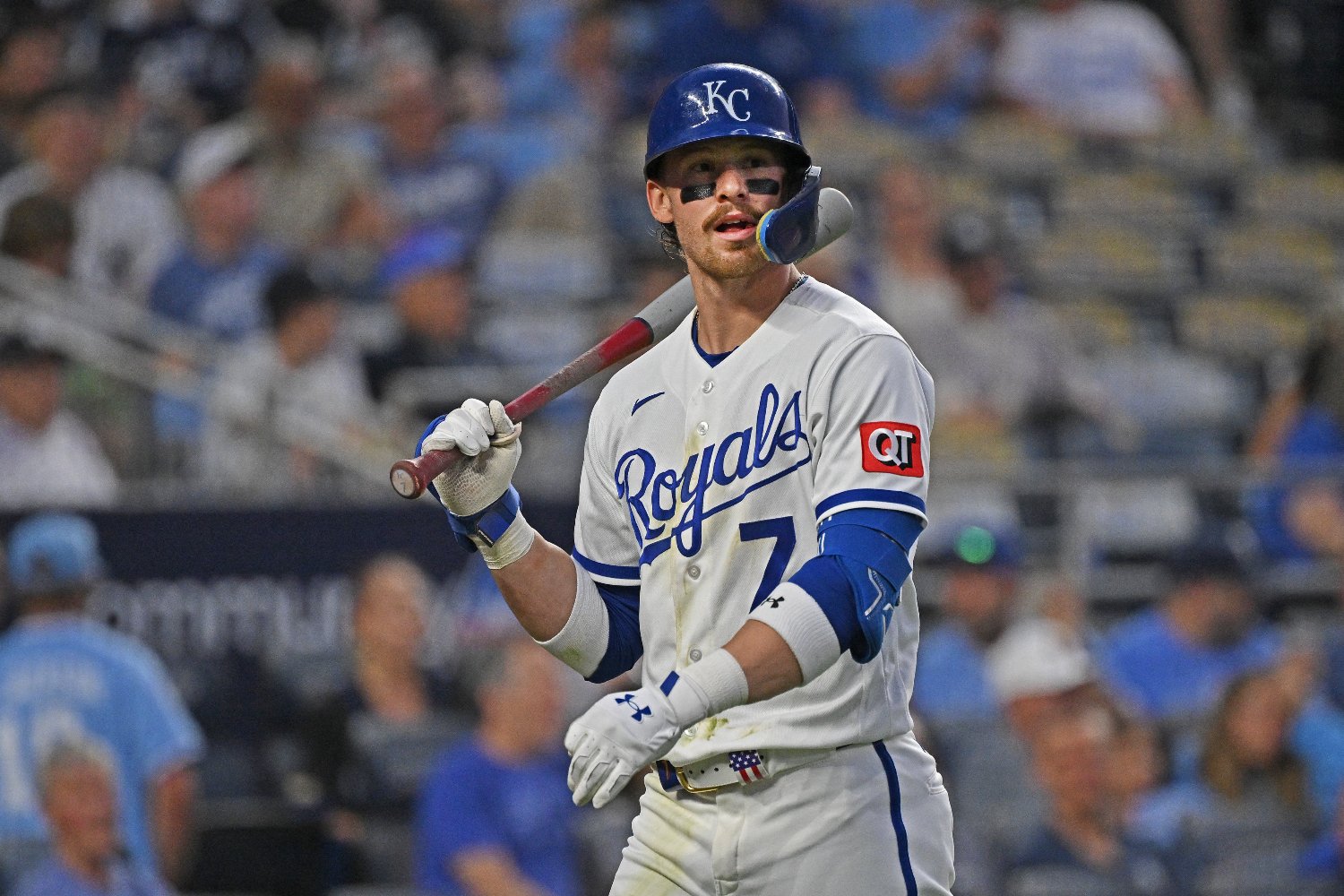 On Wednesday, the Royals lost 7-0 to Gerrit Cole and the New York Yankees at Kauffman Stadium. The win for the Bronx Bombers clinched not only a series sweep, but a season sweep, as the Yankees won all three games at Yankee Stadium back in April. Since beating the Yankees in Game 2 of the 2024 ALDS, the Royals have not won a game against them since. To make matters worse, not only did the Royals go winless against the Yankees (again), but they were outscored by 40 runs in the series, as pointed out by Joel Goldberg of Royals TV on Twitter. Kansas City now sits at 22-34 as they head into the off day on Thursday. On Friday, they begin a nine-game homestand, which starts this weekend in Arlington against the Texas Rangers. For the Royals to keep any semblance of being a playoff team, they will need to start this series against the Rangers on a positive note. The Rangers are 25-30 and are 4-6 in their last 10 games. However, this Royals team is 7-17 on the road, so their work will be cut out for them. The Royals have a much-needed day off tomorrow. That said, what did Royals fans learn from this brutal series against the Yankees and their performance overall against a team that's been widely hated by the Kansas City faithful since the 1970's? Let's take a look at three takeaways with this club after this latest lackluster series against the Yankees. The Royals Have A Mental Block Against the Yankees Baseball is a mental game at the end of the day. And sometimes, teams can struggle mentally against an opponent. That mental block for the Royals against the Yankees was on full display in this latest three-game home series. On Monday, it seemed like the Royals were on their way to overcoming the "mental block". Michael Wacha was masterful, producing another quality start. In 7 IP, he allowed only two runs on five hits and two walks while striking out two. Despite some early struggles (he gave up a home run to Cody Bellinger in the second inning), he got the Yankees out of their approach and ended up producing a vintage Wacha start, as illustrated below via his TJ Stuff+ summary. Furthermore, in addition to a quality Wacha performance on the mound, the Royals got a huge moment from Bobby Witt Jr., who hit the go-ahead home run for the Royals in the bottom of the eighth inning off Yankees reliever Jake Bird. That moment should've been the dagger the Royals needed to overcome the New York demons that have haunted them for over two seasons. Doing it on national TV on ESPN, on Memorial Day, would only make it sweeter. And yet, the Royals couldn't close it out. Lucas Erceg gave up two runs in the top of the ninth, and Kansas City came up punchless in the bottom of the inning. The gutting loss on Memorial Day carried over into losses on Tuesday and Wednesday. Over the final two games of the series, the Yankees outscored the Royals 22-1. The mental block against the Yankees team was on full display on Wednesday in the series finale. Yes, Gerrit Cole is an elite pitcher. However, he was making just his second start of the year, his second MLB start since Tommy John surgery back in March of 2025. And yet, despite those factors, Cole made absolute mincemeat of the Royals' lineup, striking out 10 batters in 6.2 IP. Cole not only generated strikeouts, but he also produced whiffs, chases, and flooded the zone while showcasing excellent stuff on his pitches. That is evident in his TJ Stuff+ summary from tonight's outing. Cole was good, and that shouldn't be taken away from a pitcher who's a likely Hall of Famer. At the same time, this Royals lineup looked shellshocked and overwhelmed by the former Cy Young winner. That was especially true with the Royals' young hitters, especially Carter Jensen and Jac Caglianone. The pair combined for three strikeouts against Cole. Royals fans knew the Yankees were a better team entering this series. They knew the Yankees had a history of success against Kansas City. Unfortunately, Royals fans also learned that the Yankees simply own this club, mentally and on the field. 14 straight losses in less than three years demonstrate that advantage. To make matters worse, the Royals will have to wait another full year to show they can overcome the mental advantage the Boys in Blue have over them. The Royals' Offense Needs a Shakeup In May, the Royals rank 26th in OPS at .647. Only the Rockies (.644), Angels (.634), Tigers (.615), and Padres (.598) have been worse. Furthermore, they rank 22nd in batting average, 26th in OBP, and 25th in slugging. Thus, it isn't surprising that the Royals rank 26th this season in OPS so far this year (.683) and 28th in runs scored (211). Surprisingly, despite their poor record (10-17), the Royals actually posted a higher OPS in April, ranking 10th at .730. Thus, Kansas City should consider itself lucky to have 10 wins in May despite its poor offense this month. When looking at Royals hitters individually this month, this is how they have fared, via MLB.com stats. The Royals' bullpen has gotten excellent production this month from John Schreiber (0.93 ERA), Daniel Lynch IV (2.38 ERA), and Alex Lange (2.53 ERA). Luinder Avila (3.14 ERA) and Steven Cruz (3.86 ERA) have been serviceable, as was Matt Strahm (3.18 ERA) before he landed on the IL. So the bullpen hasn't been bereft of talent or production in May. Conversely, some relievers have taken major steps back, and it's hurt the bullpen as a whole. Erceg has an ERA over 6.00 this month as well as a 1.78 WHIP. Nick Mears has been even worse with an 8.64 ERA and 2.04 WHIP in 8.1 IP. Mears struggled on Wednesday, allowing three runs on two hits and two walks in 0.2 IP. Furthermore, when looking at his TJ Stuff+ summary, while Mears showcased decent stuff, his inability to generate whiffs and chases ultimately hurt him, especially against a good Yankees lineup. Lastly, Bailey Falter (14.21 ERA) and Eli Morgan (18.00 ERA) have become unusable in any spots. Falter was designated for assignment on Wednesday after his latest brutal outing on Tuesday against the Yankees. Morgan could find himself back in Omaha soon and may be designated for assignment as well, especially if they need to clear a roster spot for another reliever. When looking at these May bullpen metrics, it's obvious that Quatraro and the Royals need to shake up the bullpen usage. Right now, they should be investing in their young arms with upside, which includes Lynch, Avila, Cruz, and Lange. Schreiber has emerged as a key piece this month,, and he deserves to keep his spot, but Erceg probably needs to be utilized less like a traditional closer and more like the "fireman" he was utilized a year ago when Carlos Estevez closed things out in the ninth. Even with Erceg out of the closer's spot, the Royals need to adopt a different philosophy for building a bullpen. Other than a year ago, the Royals' weakness has always been the bullpen under Quatraro and Picollo. A big reason for that seems to be that they trust "experience" over "stuff". That strategy blew up on them with free-agent relievers like Chris Stratton and Will Smith. It's blowing up a bit, not just with Estevez and Strahm on the IL, but with Erceg as well, who looks like a shell of his 2024 self. At this point, the Royals need to invest in a younger bullpen and scour other teams for younger arms they can help develop into success. They need to focus on one type and see if they can mold it into their system, much like Seattle and Tampa Bay are well known for doing. Brian Sweeney and Mike McFerrin are well-regarded pitching coaches. However, their philosophy is not "gelling" with this bullpen group. The Royals may need to make some tough decisions to make this strategy a reality. They may need to trade Schreiber to see if they can get a package of younger pitchers with upside. They may need to part ways with Mears and possibly Erceg. They may need to trust Avila, Cruz, Lynch, and Lange in high-leverage spots, even though that group has been inconsistent. That said, they need to mix things up with the bullpen, much like the lineup. Right now, the bullpen isn't getting it done with the current mixture. Giving the younger, higher-velocity arms more of a chance could not just help their chances this year, but build a better foundation for years to come. The Yankees exposed this bullpen badly over the past three games. Picollo and Quatraro need to learn from it and make the adjustments necessary to turn this group around.
 -
.jpg.36da316d34cbe0f253bff2e5a647bd54.jpg) On Wednesday morning, the Kansas City Royals announced that they had designated left-handed pitcher Bailey Falter for assignment and had recalled right-handed pitcher Mason Black from Omaha. Falter had come over to the Royals at the Trade Deadline from Pittsburgh last season in exchange for lefty reliever Evan Sisk. In 2024, Falter posted a 4.43 ERA in 142.1 IP, and in 2025 with the Pirates, he posted a 3.73 ERA in 113.1 IP. However, he struggled in his move to Kansas City last year, posting an 11.25 ERA in four outings (two starts) and 12 IP before landing on the IL for the remainder of the year. The struggles Falter experienced with the Royals in 2025 carried over into this season. In five outings (two starts) and 9.2 IP, the 29-year-old posted a 13.97 ERA, 3.10 WHIP, and 9.10 WHIP. He also landed on the IL early in the year due to some elbow issues and looked better in his rehab outing in Omaha. Unfortunately, the results from Omaha didn't follow Falter to Kansas City. As discussed in a post this morning, Falter showed an interesting TJ Stuff+ profile and extension on his pitches, but struggled to generate whiffs and CSWs this season at the Major League level. Falter will likely declare for free agency if he clears waivers. It doesn't seem like he was happy with his role, flipping between starter and reliever, as evidenced by this quote from the Kansas City Star's Pete Grathoff. Mason Black will replace Falter on the Royals' pitching staff. Black has made four appearances with the Royals this year. In that 4.2 IP sample, he has not allowed a run, has a 1.93 WHIP, 2.24 FIP, and 13.6% K-BB%. His profile is very similar to Falter's, albeit from the right, as seen below in his TJ Statcast Percentiles summary. In 13 outings and 20.2 IP with Omaha this year, Black has a 6.53 ERA, 1.55 WHIP, and 4.3% K-BB%, which isn't impressive. However, his FIP is much better at 3.49, and he's done a much better job in Triple-A of throwing strikes (67% strike rate) and limiting the long ball (0.0% HR/FB rate).
On Wednesday morning, the Kansas City Royals announced that they had designated left-handed pitcher Bailey Falter for assignment and had recalled right-handed pitcher Mason Black from Omaha. Falter had come over to the Royals at the Trade Deadline from Pittsburgh last season in exchange for lefty reliever Evan Sisk. In 2024, Falter posted a 4.43 ERA in 142.1 IP, and in 2025 with the Pirates, he posted a 3.73 ERA in 113.1 IP. However, he struggled in his move to Kansas City last year, posting an 11.25 ERA in four outings (two starts) and 12 IP before landing on the IL for the remainder of the year. The struggles Falter experienced with the Royals in 2025 carried over into this season. In five outings (two starts) and 9.2 IP, the 29-year-old posted a 13.97 ERA, 3.10 WHIP, and 9.10 WHIP. He also landed on the IL early in the year due to some elbow issues and looked better in his rehab outing in Omaha. Unfortunately, the results from Omaha didn't follow Falter to Kansas City. As discussed in a post this morning, Falter showed an interesting TJ Stuff+ profile and extension on his pitches, but struggled to generate whiffs and CSWs this season at the Major League level. Falter will likely declare for free agency if he clears waivers. It doesn't seem like he was happy with his role, flipping between starter and reliever, as evidenced by this quote from the Kansas City Star's Pete Grathoff. Mason Black will replace Falter on the Royals' pitching staff. Black has made four appearances with the Royals this year. In that 4.2 IP sample, he has not allowed a run, has a 1.93 WHIP, 2.24 FIP, and 13.6% K-BB%. His profile is very similar to Falter's, albeit from the right, as seen below in his TJ Statcast Percentiles summary. In 13 outings and 20.2 IP with Omaha this year, Black has a 6.53 ERA, 1.55 WHIP, and 4.3% K-BB%, which isn't impressive. However, his FIP is much better at 3.49, and he's done a much better job in Triple-A of throwing strikes (67% strike rate) and limiting the long ball (0.0% HR/FB rate). -
On Wednesday morning, the Kansas City Royals announced that they had designated left-handed pitcher Bailey Falter for assignment and had recalled right-handed pitcher Mason Black from Omaha. Falter had come over to the Royals at the Trade Deadline from Pittsburgh last season in exchange for lefty reliever Evan Sisk. In 2024, Falter posted a 4.43 ERA in 142.1 IP, and in 2025 with the Pirates, he posted a 3.73 ERA in 113.1 IP. However, he struggled in his move to Kansas City last year, posting an 11.25 ERA in four outings (two starts) and 12 IP before landing on the IL for the remainder of the year. The struggles Falter experienced with the Royals in 2025 carried over into this season. In five outings (two starts) and 9.2 IP, the 29-year-old posted a 13.97 ERA, 3.10 WHIP, and 9.10 WHIP. He also landed on the IL early in the year due to some elbow issues and looked better in his rehab outing in Omaha. Unfortunately, the results from Omaha didn't follow Falter to Kansas City. As discussed in a post this morning, Falter showed an interesting TJ Stuff+ profile and extension on his pitches, but struggled to generate whiffs and CSWs this season at the Major League level. Falter will likely declare for free agency if he clears waivers. It doesn't seem like he was happy with his role, flipping between starter and reliever, as evidenced by this quote from the Kansas City Star's Pete Grathoff. Mason Black will replace Falter on the Royals' pitching staff. Black has made four appearances with the Royals this year. In that 4.2 IP sample, he has not allowed a run, has a 1.93 WHIP, 2.24 FIP, and 13.6% K-BB%. His profile is very similar to Falter's, albeit from the right, as seen below in his TJ Statcast Percentiles summary. In 13 outings and 20.2 IP with Omaha this year, Black has a 6.53 ERA, 1.55 WHIP, and 4.3% K-BB%, which isn't impressive. However, his FIP is much better at 3.49, and he's done a much better job in Triple-A of throwing strikes (67% strike rate) and limiting the long ball (0.0% HR/FB rate). View full rumor
-
Image courtesy of Peter Aiken-Imagn Images On Tuesday, the New York Yankees absolutely thrashed the Kansas City Royals at Kauffman Stadium. The Yankees not only scored 15 runs, but also collected 24 hits in a 14-run win over the Boys in Blue. Safe to say, it was one of the worst losses of the season, especially at Kauffman Stadium. The Royals had a bullpen game on Tuesday against the Yankees, and unfortunately, the strategy blew up in Kansas City's face early. Bailey Falter opened the game for the Royals, and the Yankees got after him early. They scored four runs against him in the top of the first, and in 2.1 IP, he allowed seven runs on nine hits. He didn't allow a walk, but he didn't strike out anyone either, and he gave up three home runs. Two of those home runs came in the first inning, including one from Cody Bellinger, who hit his second home run of the series. When looking at his TJ Stuff+ summary from Tuesday's game, not much went right for Falter, though his TJ Stuff+ actually wasn't as bad as the results illustrated. He struggled to generate whiffs, and the Yankees hit him hard in his 2.1 innings of work. However, the TJ Stuff+ and chase were actually pretty decent, especially for his standards. Falter posted an overall TJ Stuff+ of 100 with his four-seamer being his best pitch in terms of TJ Stuff+. Not only did it have a 106 mark, but it also sported a 64 grade, a 55.6% zone rate, and a 25% chase rate, all of which are average to above-average marks. However, he didn't generate a single whiff with the pitch, and his .639 xwOBACON was the second-worst mark in that category of the four pitches he threw on Tuesday. Ironically, his splitter, which was his second-best pitch in terms of TJ Stuff+ (103), had the worst xwOBACON at .901. Tuesday was another frustrating outing for Falter, who just hasn't put it together in his time in Kansas City. In 9.2 IP this year, he has a 13.97 ERA with a 3.10 WHIP, which includes 24 hits allowed in less than 10 innings of work this season. Last year, after he came over from Pittsburgh at the Trade Deadline, he had an 11.25 ERA and 2.25 WHIP with 20 hits allowed in 12 IP with the Royals. Therefore, even though the TJ Stuff+ hints at a better pitcher than his results show, it may be time for the Royals to part ways with Falter. Command Remains a Problem for Falter (Especially on Fastball) When it comes to what Falter has done in terms of Statcast percentiles, he's actually limited barrels and hard contact, but has struggled to generate whiffs and strikes in general. Here's a look at Statcast summary this season after Tuesday's game, via TJ Stats. Falter actually does a good job of limiting that "productive" contact. He has limited barrels and hard hits, and kept the average exit velocity manageable. Furthermore, his Z-Contact% allowed is actually pretty good (80.5%), considering his struggles with whiffs and CSW. Unfortunately, it's hard to ignore those "strike-generating" categories. His whiff rate ranks in the 39th percentile, his CSW ranks in the 15th percentile, and his O-Swing% ranks in the third percentile. That's not a recipe for success, especially for a pitcher with a subpar fastball (21st percentile fastball velocity). An issue for Falter that has limited his ability to throw strikes this year is subpar command. Even though his extension and TJ Stuff+ metrics are encouraging, he leaves pitches in hittable areas of the strike zone far too much. That was on prime display on Tuesday against the Yankees. Here's his pitch type chart against the Bronx Bombers in his latest outing on May 26th. Frankly, that's not a good-looking chart, simply because he's leaving way too many pitches in the middle-middle areas of the strike zone. The Yankees teed off on Falter's pitches as well, as evidenced by his pitch-description chart, which shows the results. As Royals fans can see above, there are a lot of "In Play, No Out" and "In Play, Runs" dots in that pitch chart above. All on pitches thrown in the middle-middle areas of the strike zone. In fact, below is an example of Falter hanging a curveball right in the middle of the strike zone to Amed Rosario, and the journeyman utility player launches it like he's Aaron Judge. While the curveball was an example of a command "mistake" of Falter in this outing, the fastball command has been a problem this year. That's disappointing considering that his four-seamer has been his best pitch on a TJ Stuff+ end this season, as illustrated in his TJ Stuff+ summary below. Falter relies heavily on the four-seamer, as illustrated by his 61.5% usage rate on the pitch. It makes sense, since it sports a 102 TJ Stuff+, 57 grade, and .303 xwOBACON. Unfortunately, it's been a poor-performing pitch in terms of zone rate, chase rate, and whiff rate. Here's a heatmap breakdown of Falter's four-seamer below. Notice how often the pitch sits in the strike zone and how few whiffs it generates. With a four-seamer, it's more ideal for a pitcher to locate it in the upper edges of the strike zone. Unfortunately, that's just not where Falter's pitch sits against lefties or righties. Against lefties, it tends to be in the lower middle of the strike zone. As a result, it has a 27.3% CSW, which is good, but all those strikes are called, not whiffs. His whiff rate with the four-seamer against lefties is zero. Against righties, he elevates it a little more, but it still sits more in the middle of the zone (though more inside to righties). The whiff rate is a little better at 14.3%, but the CSW is lower at 23.5%. Thus, it's not a great tradeoff for Falter, and his .383 xwOBACON against righties and .436 xwOBACON against lefties with the four-seamer illustrates that it's just not an effective offering overall. To be successful, Falter needs to be a pitcher who can command the four-seamer effectively. That isn't happening, and it doesn't seem like it's going to turn around anytime soon either. What's the Next Move? The Royals don't have a lot of options right now on the 40-man roster to straight-up replace Falter. Cole Ragans and Kris Bubic are still on the IL, and their return timetable is unknown. Furthermore, the pitching options for guys who can go multiple innings in Omaha are thin, with Mitch Spence having the most MLB experience. If the Royals are looking for another option who can go multiple innings and is a lefty, Ryan Ramsey could be an option. The 25-year-old former 13th-round pick doesn't have great stuff, and his ERA and FIP are high. However, he generates groundballs well and could be crafty in a reliever role, much like Sam Long, who made the transition from spot starter to reliever. The best option to replace Falter may be Beck Way, who needs to be added to the 40-man roster to make his Royals debut. Way was acquired from the Yankees in 2022 in the Andrew Benintendi trade, along with Chandler Champlain and T.J. Sikkema. Only Way remains in the Royals organization, but rightfully so, as Way has demonstrated a strong ability to generate whiffs and strikeouts in Omaha, something that evaded him a year ago. In 29.1 IP, Way has a 3.68 ERA, 1.16 WHIP, 2.91 FIP, 32.8% K%, and 24.6% K-BB%. He also demonstrates excellent TJ Stuff+, whiff, and xwOBACON metrics, according to TJ Stats. Now 11 games under .500 and June about to be here next week, the Royals need to start thinking long-term with their roster, especially the bullpen. Kansas City's bullpen ranks 24th in ERA, 26th in WHIP, and 27th in BB/9. Thus, they need to find pitchers who can not just help those meager stat lines, but also provide upside beyond this season as well. Way certainly can do that, and since he's Rule 5 eligible, he likely will be swooped up in the December draft if he's not added to the Royals' 40-man roster soon. At this point, the Royals don't have anything to lose by replacing Falter with Way on the 40-man roster. View full article
-
Baily Falter's Tenure With the Royals May Be Coming to an End
Kevin O'Brien posted an article in Royals
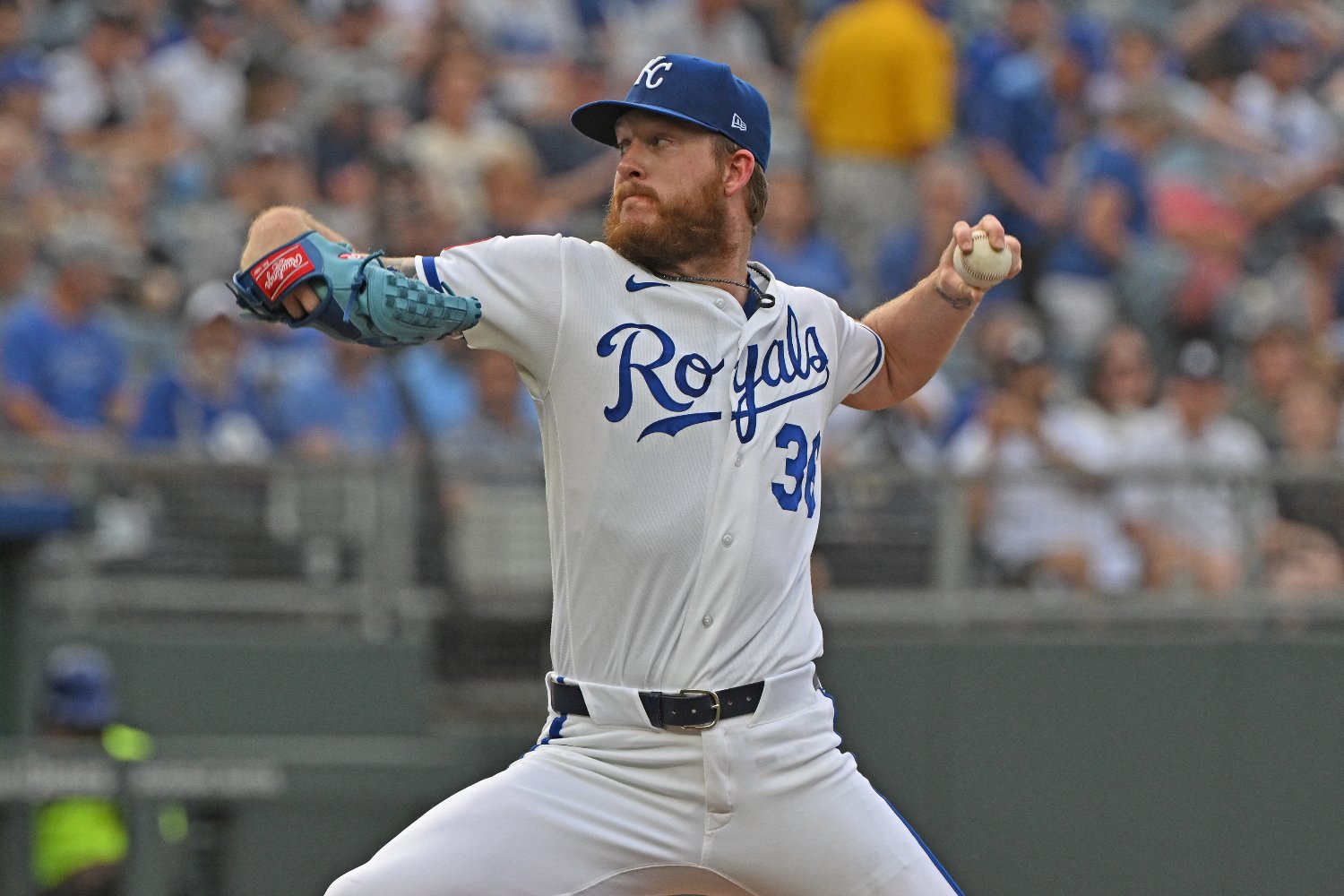 On Tuesday, the New York Yankees absolutely thrashed the Kansas City Royals at Kauffman Stadium. The Yankees not only scored 15 runs, but also collected 24 hits in a 14-run win over the Boys in Blue. Safe to say, it was one of the worst losses of the season, especially at Kauffman Stadium. The Royals had a bullpen game on Tuesday against the Yankees, and unfortunately, the strategy blew up in Kansas City's face early. Bailey Falter opened the game for the Royals, and the Yankees got after him early. They scored four runs against him in the top of the first, and in 2.1 IP, he allowed seven runs on nine hits. He didn't allow a walk, but he didn't strike out anyone either, and he gave up three home runs. Two of those home runs came in the first inning, including one from Cody Bellinger, who hit his second home run of the series. When looking at his TJ Stuff+ summary from Tuesday's game, not much went right for Falter, though his TJ Stuff+ actually wasn't as bad as the results illustrated. He struggled to generate whiffs, and the Yankees hit him hard in his 2.1 innings of work. However, the TJ Stuff+ and chase were actually pretty decent, especially for his standards. Falter posted an overall TJ Stuff+ of 100 with his four-seamer being his best pitch in terms of TJ Stuff+. Not only did it have a 106 mark, but it also sported a 64 grade, a 55.6% zone rate, and a 25% chase rate, all of which are average to above-average marks. However, he didn't generate a single whiff with the pitch, and his .639 xwOBACON was the second-worst mark in that category of the four pitches he threw on Tuesday. Ironically, his splitter, which was his second-best pitch in terms of TJ Stuff+ (103), had the worst xwOBACON at .901. Tuesday was another frustrating outing for Falter, who just hasn't put it together in his time in Kansas City. In 9.2 IP this year, he has a 13.97 ERA with a 3.10 WHIP, which includes 24 hits allowed in less than 10 innings of work this season. Last year, after he came over from Pittsburgh at the Trade Deadline, he had an 11.25 ERA and 2.25 WHIP with 20 hits allowed in 12 IP with the Royals. Therefore, even though the TJ Stuff+ hints at a better pitcher than his results show, it may be time for the Royals to part ways with Falter. Command Remains a Problem for Falter (Especially on Fastball) When it comes to what Falter has done in terms of Statcast percentiles, he's actually limited barrels and hard contact, but has struggled to generate whiffs and strikes in general. Here's a look at Statcast summary this season after Tuesday's game, via TJ Stats. Falter actually does a good job of limiting that "productive" contact. He has limited barrels and hard hits, and kept the average exit velocity manageable. Furthermore, his Z-Contact% allowed is actually pretty good (80.5%), considering his struggles with whiffs and CSW. Unfortunately, it's hard to ignore those "strike-generating" categories. His whiff rate ranks in the 39th percentile, his CSW ranks in the 15th percentile, and his O-Swing% ranks in the third percentile. That's not a recipe for success, especially for a pitcher with a subpar fastball (21st percentile fastball velocity). An issue for Falter that has limited his ability to throw strikes this year is subpar command. Even though his extension and TJ Stuff+ metrics are encouraging, he leaves pitches in hittable areas of the strike zone far too much. That was on prime display on Tuesday against the Yankees. Here's his pitch type chart against the Bronx Bombers in his latest outing on May 26th. Frankly, that's not a good-looking chart, simply because he's leaving way too many pitches in the middle-middle areas of the strike zone. The Yankees teed off on Falter's pitches as well, as evidenced by his pitch-description chart, which shows the results. As Royals fans can see above, there are a lot of "In Play, No Out" and "In Play, Runs" dots in that pitch chart above. All on pitches thrown in the middle-middle areas of the strike zone. In fact, below is an example of Falter hanging a curveball right in the middle of the strike zone to Amed Rosario, and the journeyman utility player launches it like he's Aaron Judge. While the curveball was an example of a command "mistake" of Falter in this outing, the fastball command has been a problem this year. That's disappointing considering that his four-seamer has been his best pitch on a TJ Stuff+ end this season, as illustrated in his TJ Stuff+ summary below. Falter relies heavily on the four-seamer, as illustrated by his 61.5% usage rate on the pitch. It makes sense, since it sports a 102 TJ Stuff+, 57 grade, and .303 xwOBACON. Unfortunately, it's been a poor-performing pitch in terms of zone rate, chase rate, and whiff rate. Here's a heatmap breakdown of Falter's four-seamer below. Notice how often the pitch sits in the strike zone and how few whiffs it generates. With a four-seamer, it's more ideal for a pitcher to locate it in the upper edges of the strike zone. Unfortunately, that's just not where Falter's pitch sits against lefties or righties. Against lefties, it tends to be in the lower middle of the strike zone. As a result, it has a 27.3% CSW, which is good, but all those strikes are called, not whiffs. His whiff rate with the four-seamer against lefties is zero. Against righties, he elevates it a little more, but it still sits more in the middle of the zone (though more inside to righties). The whiff rate is a little better at 14.3%, but the CSW is lower at 23.5%. Thus, it's not a great tradeoff for Falter, and his .383 xwOBACON against righties and .436 xwOBACON against lefties with the four-seamer illustrates that it's just not an effective offering overall. To be successful, Falter needs to be a pitcher who can command the four-seamer effectively. That isn't happening, and it doesn't seem like it's going to turn around anytime soon either. What's the Next Move? The Royals don't have a lot of options right now on the 40-man roster to straight-up replace Falter. Cole Ragans and Kris Bubic are still on the IL, and their return timetable is unknown. Furthermore, the pitching options for guys who can go multiple innings in Omaha are thin, with Mitch Spence having the most MLB experience. If the Royals are looking for another option who can go multiple innings and is a lefty, Ryan Ramsey could be an option. The 25-year-old former 13th-round pick doesn't have great stuff, and his ERA and FIP are high. However, he generates groundballs well and could be crafty in a reliever role, much like Sam Long, who made the transition from spot starter to reliever. The best option to replace Falter may be Beck Way, who needs to be added to the 40-man roster to make his Royals debut. Way was acquired from the Yankees in 2022 in the Andrew Benintendi trade, along with Chandler Champlain and T.J. Sikkema. Only Way remains in the Royals organization, but rightfully so, as Way has demonstrated a strong ability to generate whiffs and strikeouts in Omaha, something that evaded him a year ago. In 29.1 IP, Way has a 3.68 ERA, 1.16 WHIP, 2.91 FIP, 32.8% K%, and 24.6% K-BB%. He also demonstrates excellent TJ Stuff+, whiff, and xwOBACON metrics, according to TJ Stats. Now 11 games under .500 and June about to be here next week, the Royals need to start thinking long-term with their roster, especially the bullpen. Kansas City's bullpen ranks 24th in ERA, 26th in WHIP, and 27th in BB/9. Thus, they need to find pitchers who can not just help those meager stat lines, but also provide upside beyond this season as well. Way certainly can do that, and since he's Rule 5 eligible, he likely will be swooped up in the December draft if he's not added to the Royals' 40-man roster soon. At this point, the Royals don't have anything to lose by replacing Falter with Way on the 40-man roster.
 -
 On Monday, before their series-opening game against the Yankees on Monday, manager Matt Quatraro shared some deflating news regarding pitcher Cole Ragans, who's been on the IL since May 7th due to a left elbow impingement. Anne Rogers reported that he didn't bounce back from his rehab outing in Omaha and that he would need to be shut down for 2-3 days before being re-evaluated. It seemed like this elbow issue flared up after he pitched, not during his outing in Triple-A. Joel Penfield of KC Sports Network shared video of Quatraro's comments in the dugout during the pregame presser. It's been a challenging year for Ragans, who's struggled with injuries and inconsistency for a second straight season. He has a 4.84 ERA and 1.42 WHIP in eight starts and 35.1 IP. His K rate is solid at 29.8%, but his walk rate is 15.2%, nearly double his rate from a season ago (7.8% BB%). When looking at his TJ Stuff+ summary from this year, Ragans is still generating whiffs at a solid rate (31.7%), and his TJ Stuff+ data is solid overall (104). However, he has struggled to find the strike zone and generate chase, and has allowed a lot of hard contact, as seen in the summary below. Ragans had an encouraging outing on Sunday for Omaha, as he went 4.1 IP and allowed only three hits, one run, and one walk while striking out three (he also had 10 whiffs). The TJ Stuff+ metrics also looked solid in his outing as well, especially in the TJ Stuff+, chase, and xwOBACON areas. Ragans will likely need more time on the IL as he sorts through this latest setback. The Royals are planning to have another bullpen game on Tuesday, with Bailey Falter as the opener. That said, if they need someone to start in Ragans' spot, they could opt for Mitch Spence, who's on the 40-man roster and currently pitching in Triple-A Omaha. Spence has only made one outing with the Royals this year, and it was a rough one where he allowed six runs on four hits and five walks while striking out three against the Yankees in the Bronx. That said, he's been more serviceable in Omaha, as evidenced by his 4.80 ERA, 1.17 WHIP, and 3.88 FIP in 30 IP. He has also demonstrated solid TJ Stuff+ metrics with the Storm Chasers, as shown in his summary below. Whether the Royals will opt for Spence or another bullpen game next week will depend on Ragans' status, which hopefully will become clearer by the end of this week.
 -
On Monday, before their series-opening game against the Yankees on Monday, manager Matt Quatraro shared some deflating news regarding pitcher Cole Ragans, who's been on the IL since May 7th due to a left elbow impingement. Anne Rogers reported that he didn't bounce back from his rehab outing in Omaha and that he would need to be shut down for 2-3 days before being re-evaluated. It seemed like this elbow issue flared up after he pitched, not during his outing in Triple-A. Joel Penfield of KC Sports Network shared video of Quatraro's comments in the dugout during the pregame presser. It's been a challenging year for Ragans, who's struggled with injuries and inconsistency for a second straight season. He has a 4.84 ERA and 1.42 WHIP in eight starts and 35.1 IP. His K rate is solid at 29.8%, but his walk rate is 15.2%, nearly double his rate from a season ago (7.8% BB%). When looking at his TJ Stuff+ summary from this year, Ragans is still generating whiffs at a solid rate (31.7%), and his TJ Stuff+ data is solid overall (104). However, he has struggled to find the strike zone and generate chase, and has allowed a lot of hard contact, as seen in the summary below. Ragans had an encouraging outing on Sunday for Omaha, as he went 4.1 IP and allowed only three hits, one run, and one walk while striking out three (he also had 10 whiffs). The TJ Stuff+ metrics also looked solid in his outing as well, especially in the TJ Stuff+, chase, and xwOBACON areas. Ragans will likely need more time on the IL as he sorts through this latest setback. The Royals are planning to have another bullpen game on Tuesday, with Bailey Falter as the opener. That said, if they need someone to start in Ragans' spot, they could opt for Mitch Spence, who's on the 40-man roster and currently pitching in Triple-A Omaha. Spence has only made one outing with the Royals this year, and it was a rough one where he allowed six runs on four hits and five walks while striking out three against the Yankees in the Bronx. That said, he's been more serviceable in Omaha, as evidenced by his 4.80 ERA, 1.17 WHIP, and 3.88 FIP in 30 IP. He has also demonstrated solid TJ Stuff+ metrics with the Storm Chasers, as shown in his summary below. Whether the Royals will opt for Spence or another bullpen game next week will depend on Ragans' status, which hopefully will become clearer by the end of this week. View full rumor
-
Image courtesy of Peter Aiken-Imagn Images Week in a Nutshell After a 1-8 road trip in the previous week, the Royals got off to a slow start in this week's homestand. At the beginning of the week, Kansas City was swept by the Boston Red Sox, who sit in last place in the AL East (and ironically, got swept by the Minnesota Twins at Fenway Park over the weekend). It was a deflating series that seemed to fuel the frustration of Royals fans already dissatisfied with this start to the 2026 season. Thankfully, things got better in the weekend series against the Seattle Mariners. Even though the Royals lost game one of the series, they won two and got three quality starts from their starting pitchers. By winning two in a row, Kansas City has built some much-needed momentum for their final series in the homestand against the hated New York Yankees. Record this Week: 2-4 Run Differential for the Week: -4 Record for the Year: 22-31 Run Differential for the Year: -25 Standing: 4th in the AL Central Game 48: BOS 3, KC 1 Seth Lugo produced another quality start, as he went six innings and allowed two runs on five hits and two walks with five strikeouts. However, a two-run home run by Willson Contreras was just enough, as Red Sox starter Sonny Gray allowed only one run and struck out nine in six innings of work. Game 49: BOS 7, KC 1 Bailey Falter opened a bullpen game for the Royals and gave up two runs on four hits and three walks in two innings of work (he did strike out two). Luinder Avila held the Red Sox in check over three innings, as he allowed no runs, only one hit, and one walk while striking out three. Unfortunately, the Royals' offense could not muster anything, going 2-for-7 with runners in scoring position. Eli Morgan struggled in his outing, highlighted by a three-run home run allowed to Jarren Duran in the top of the 9th that effectively put the game away. Game 50: BOS 4, KC 3 Home runs by Salvador Perez and Elias Diaz gave the Royals three runs, and they held a lead going into the seventh, thanks to a quality start from Michael Wacha (6 IP, 6 H, 2 R, 1 ER, 2 BB, 8 K). However, Steven Cruz gave up a two-run home run to Duran to lose the lead, and the Royals were unable to come back, giving the Red Sox the sweep. Game 51: SEA 2, KC 0 The Royals got another quality start, this time from Noah Cameron, who went six innings and allowed no runs, four hits, and two walks while striking out eight. However, a two-run homer by Mitch Garver off Royals reliever Nick Mears proved to be the difference, as Kansas City only collected four hits and was 0-for-3 with runners in scoring position. Game 52: KC 5, SEA 0 Kansas City snapped its four-game losing streak, thanks to a gem from Stephen Kolek. He pitched a complete-game shutout, the first Royals pitcher to do so since Brad Keller in 2020 (Kolek was also the first Royals pitcher to throw a shutout in front of fans since Glenn Sparkman in 2019). The Royals collected nine hits and were 3-for-10 with runners in scoring position. Michael Massey and Bobby Witt Jr. had multi-hit performances. Game 53: KC 8, SEA 6 For the first time this season, the Royals won a rubber game in a series, beating the Mariners on Sunday to clinch the series. The Kansas City offense came through in big spots, going 4-for-11 with runners in scoring position and collecting 11 hits total in the game. Salvador Perez was the main standout, as he had three hits and three RBI in the Royals' two-run win. Lugo had another quality start (6.2 IP, 6 H, 3 ER, 2 BB, 3 K), and John Schreiber and Daniel Lynch IV held things down in the seventh and eighth. Lucas Erceg, who hadn't pitched in a week, struggled in his outing, giving up three runs on four hits in a non-save situation in the ninth. News and Notes The Royals made a couple of moves, including ones at the Major and Minor League levels. At the Major League level, Kansas City recalled Tyler Tolbert, who was optioned to Omaha earlier in the season after making the Opening Day roster. The utility player gives the Royals some speed off the bench and defensive versatility. Tolbert hit .260 with a .365 OBP in 73 plate appearances with the Storm Chasers and also had eight stolen bases on eight attempts. As a result, Diaz was designated for assignment. The 35-year-old catcher was called up to give Salvy a rest, as he was dealing with hip problems that were preventing him from playing behind the plate. However, Perez has been getting starts recently, thus making Diaz superfluous on the Royals' active roster. Diaz hit .227 with two home runs in 22 plate appearances with the Royals. In terms of Minor League moves, the Royals signed relievers Luke Jackson and Genesis Cabrera to Minor League deals. Jackson and Cabrera are both Major League veterans who were recently released by their respective clubs (the Mets and Phillies, respectively). The pair may just be Triple-A depth for now, but if the Royals' bullpen is dramatically affected by injury, Jackson and Cabrera are two relievers who can be recalled and give the pitching staff professional innings. Highlights The rotation actually had a pretty solid week, even though the Royals lost four of six games. The Royals' starting pitching staff produced five quality starts this week, with two from Lugo and Wacha, and Cameron and Kolek each having one as well. Over the past seven days, the Royals' pitching staff produced a 3.50 ERA, which ranked 13th in baseball, according to MLB.com. Lugo was the only starter who went two starts this week, and he produced a 3.65 ERA and 1.22 WHIP in 12.1 IP this week. While he didn't produce a lot of strikeouts, he was competitive and efficient in both outings, including on Sunday, as he earned the win over the Mariners. It was a classic effort from Lugo, as he didn't generate a ton of whiff or chase, and his xwOBACON was higher than one would like. However, he flooded the strike zone and kept Mariners hitters off-balance with his vast pitch arsenal. Though he had only one start this week, Kolek was the Royals' pitching MVP with the complete game shutout. The 29-year-old starter has been nails with the Royals since joining the club at the Trade Deadline last year. In four starts, he has a 2.77 ERA in 26 IP. Kolek was masterful in terms of efficiency and limiting hard contact against the Mariners on Saturday. That helped him earn the first Royals shutout in six years, even though he only generated two strikeouts and not a lot of whiffs. In terms of the bullpen, John Schreiber had the most impressive week for Kansas City. In three outings and innings of work this week, he allowed no runs, three hits, no walks, and struck out five. After struggling with his stuff earlier in the season, he's been locked in recently, generating a ton of chase and whiff over the past week, as seen below via his TJ Stuff+ summary. The only issue with Schreiber was that his zone rate was a bit inconsistent, and hitters made loud contact against him. His strikeouts remain low this year, as he only has 11 in 19.1 IP. However, his TJ Stuff+ was 100 this week, and that better stuff correlated with a 32% whiff and 41.7% K% in his three outings. Schreiber produced a hold in Sunday's outing against Seattle. The hitting had an off week, even though they were back home, where they have traditionally mashed this year. The Royals produced a .588 OPS this week, which ranked 26th in baseball. They primarily struggled with the long ball, as they had only two home runs this year, ranking 29th. Only the Colorado Rockies hit fewer this week (they had one). In terms of individual performances, Salvy stood out the most with six hits, which was the second-most of any Royals hitter this week. The Royals captain slashed .286/.375/.429 with an .804 OPS in 21 at-bats. His line this week also included a home run, four RBI, two runs scored, and two walks to only one strikeout. Another Royals hitter that had an encouraging week was Michael Massey, who's been the regular second baseman against right-handed starting pitchers with Jonathan India out for the remainder of the year. In 13 at-bats, Massey had four hits and slashed .308/.357/.385 with a .742 OPS. He also had one walk, two strikeouts, and scored a run. Lowlights The lineup had a week to forget, struggling to get on base and produce much against the Red Sox and in the first game against the Mariners. In six games, the lineup generated a .275 OBP, which ranked 26th in baseball this week. They also only drew 13 walks, which was tied for the worst mark in baseball this week. That said, the Royals were facing a Mariners starting pitching staff this weekend that has the lowest BB/9 in baseball. Hence, kudos to Kansas City for being aggressive and swinging rather than passive. Many Royals hitters had weird lines this week, and not necessarily in a good way. Garcia led the Royals in hits with seven in 26 plate appearances, good for an average of .269. He also had a key two-out, two-RBI single in the 8th that eventually was the difference in the Royals' win on Sunday. However, Garcia didn't draw a walk, only had one extra-base hit, and posted an OPS of .577 this week. He's in the midst of a difficult May, as he is hitting .250 with a .615 OPS in 100 plate appearances. His slugging is 140 points down from April, and he hasn't hit a single home run this month after hitting three in April. His launch angle sweet-spot percentage has been steadily declining since May 12th, as evidenced by his rolling sweet-spot% chart in Savant. Another key hitter who struggled this week was Witt. The Royals franchise star hit .240 with a .560 OPS in 25 plate appearances. While he hit two doubles, he also struck out six times and didn't draw a single walk. It seemed like Witt was pressing at the plate, trying too hard to create offense, and it often had a counterintuitive effect this week. The Royals also got subpar performances from the bottom of their lineup this week. That included Isaac Collins (.498 OPS) and Kyle Isbel (.331 OPS). Vinnie Pasquantino and Carter Jensen also struggled, with .508 and .576 OPS marks this week. That said, while none of the four had great weeks overall, all four had some key moments on Saturday and Sunday in the Royals' two wins against Seattle. In terms of pitching, Erceg had a brutal outing in his lone appearance this week. While he was gifted a large lead on Sunday, he nearly blew it, giving up three runs on four hits. The Mariners had the game-winning run at the plate with two outs. Thankfully, Erceg was able to get Luke Raley to ground out to end the game (though manager Dan Wilson had the gall to challenge the play, even though he was clearly out). While it was only one outing, the Royals need a focused, locked-in Erceg going forward, especially with Carlos Estevez unlikely to return in a meaningful way this season. Erceg looked rusty on Sunday after not pitching for a week. His TJ Stuff+ summary seemed to illustrate that as well, especially for his four-seamer and sinker, which had subpar TJ Stuff+ marks. Erceg's sinker had a 92 TJ Stuff+, his four-seamer had a 94 TJ Stuff+, and he had an overall TJ Stuff+ of 96. That correlated with a poor whiff% (16.7%) and xwOBACON (.421). Hopefully, if he sees action in the Yankees, his four-seamer and sinker TJ Stuff+ metrics will bounce back. Another pitcher who had a rough week was Steven Cruz, who posted a 10.80 ERA and 1.80 WHIP in two outings and 1.2 IP. The stuff isn't a question for Cruz, but the command is. That was illustrated in the two-run home run he gave up to Duran in the series finale against Boston. With his stuff, it would be nice for Cruz to see more high-leverage spots, especially with Estevez on the shelf. Despite elite TJ Stuff+ numbers, his lackluster zone, chase, and xwOBACON metrics make him a difficult option to use in key spots. Unfortunately, it looks like Cruz may be closer to another Carlos Hernandez (who failed to stick in Kansas City despite eye-popping stuff) than to another Estevez. Looking Ahead The Royals finish a nine-game homestand this week with a three-game series at Kauffman Stadium against the Yankees. Kansas City hasn't won a game against the Bronx Bombers since game two of the 2024 ALDS. They lost all six games to them last year and were swept in the Bronx in mid-April. Kansas City is hoping it can end this losing streak, even with all the bandwagon Yankees fans from Kansas, Missouri, Nebraska, and Iowa descending on Kauffman Stadium starting on Memorial Day. The Yankees won't be an easy challenge, especially since they are 31-22 and have a +67 run differential. That said, they are 4-6 in their last 10 games and easily could have been 3-7 if not for a walkoff two-run home run by Aaron Judge on Sunday afternoon against first-place Tampa Bay. In addition to facing sluggers like Judge, the Royals will face a tough trio of Yankees pitchers at the K this week. Will Warren, Cam Schlitter, and Gerrit Cole are expected to toe the rubber for the Yankees in this series. Warren and Schlitter dominated the Royals back in the Bronx, and Cole has a good history against Kansas City as well. After the Yankees series, the Royals hit the road for Arlington for a three-game series against the Texas Rangers. Like the Yankees, Texas is 4-6 in its last 10, but they sit 24-28 for the year and has lost three in a row. On a positive note, they have a +6 run differential and have some formidable bats in the lineup, such as Brandon Nimmo, Josh Jung, and Ezequiel Duran, who all have fWAR marks over one. (Corey Seager and Wyatt Langford are currently on the IL and both are unlikely to return next week.) The Rangers' rotation is solid, ranking 15th in the starter ERA, 10th in WHIP, and 2nd in K/9. As of now, MacKenzie Gore (4.78 ERA), Kumar Rocker (3.60 ERA), and Jack Leiter (4.61 ERA) are projected to pitch against the Royals next weekend, according to Roster Resource. Texas also had a formidable bullpen that ranks 3rd in reliever ERA and 7th in WHIP. Closer Jacob Latz and setup men Jakob Junis (a former Royal) and Tyler Alexander all have ERA marks under two. View full article
-
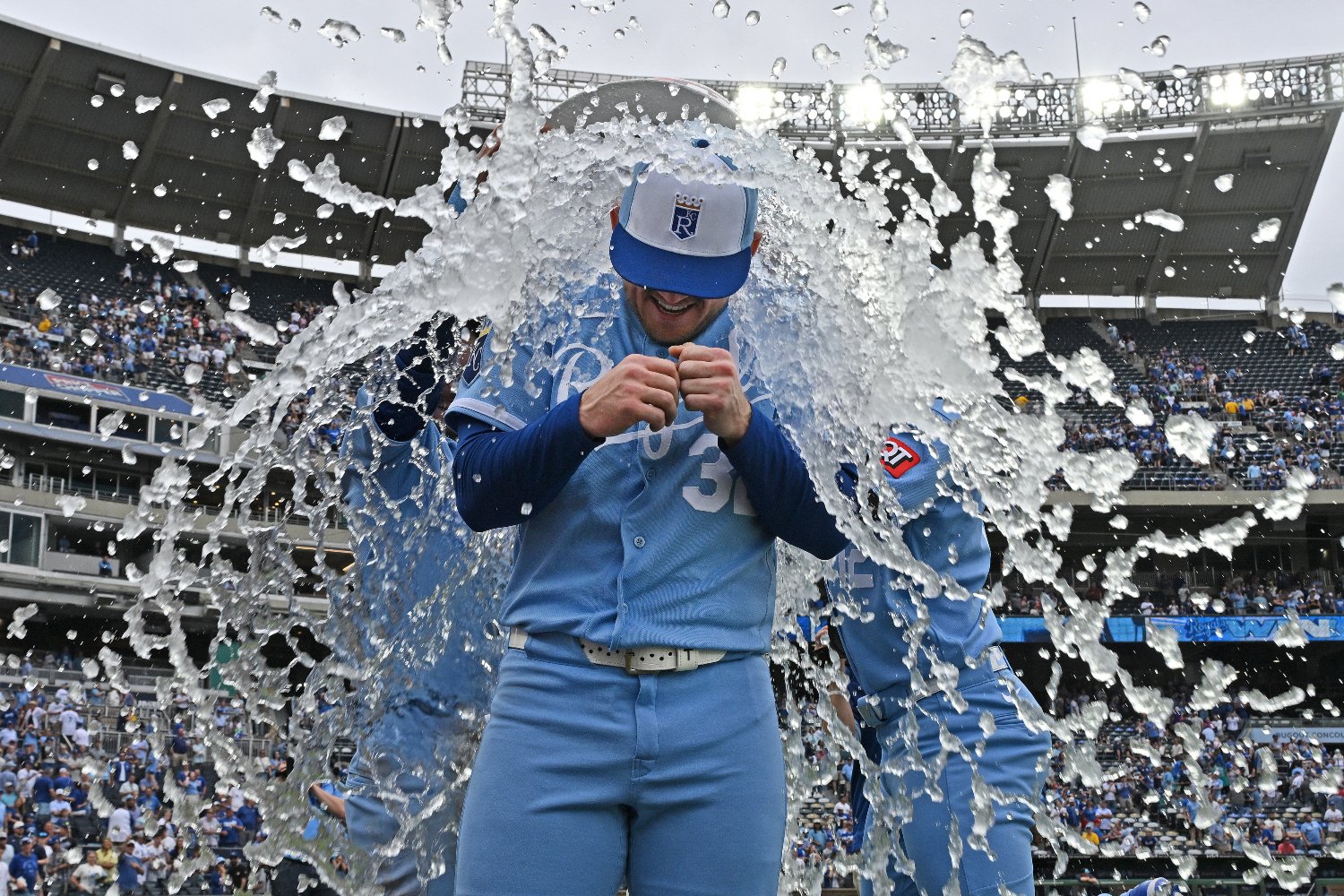 Week in a Nutshell After a 1-8 road trip in the previous week, the Royals got off to a slow start in this week's homestand. At the beginning of the week, Kansas City was swept by the Boston Red Sox, who sit in last place in the AL East (and ironically, got swept by the Minnesota Twins at Fenway Park over the weekend). It was a deflating series that seemed to fuel the frustration of Royals fans already dissatisfied with this start to the 2026 season. Thankfully, things got better in the weekend series against the Seattle Mariners. Even though the Royals lost game one of the series, they won two and got three quality starts from their starting pitchers. By winning two in a row, Kansas City has built some much-needed momentum for their final series in the homestand against the hated New York Yankees. Record this Week: 2-4 Run Differential for the Week: -4 Record for the Year: 22-31 Run Differential for the Year: -25 Standing: 4th in the AL Central Game 48: BOS 3, KC 1 Seth Lugo produced another quality start, as he went six innings and allowed two runs on five hits and two walks with five strikeouts. However, a two-run home run by Willson Contreras was just enough, as Red Sox starter Sonny Gray allowed only one run and struck out nine in six innings of work. Game 49: BOS 7, KC 1 Bailey Falter opened a bullpen game for the Royals and gave up two runs on four hits and three walks in two innings of work (he did strike out two). Luinder Avila held the Red Sox in check over three innings, as he allowed no runs, only one hit, and one walk while striking out three. Unfortunately, the Royals' offense could not muster anything, going 2-for-7 with runners in scoring position. Eli Morgan struggled in his outing, highlighted by a three-run home run allowed to Jarren Duran in the top of the 9th that effectively put the game away. Game 50: BOS 4, KC 3 Home runs by Salvador Perez and Elias Diaz gave the Royals three runs, and they held a lead going into the seventh, thanks to a quality start from Michael Wacha (6 IP, 6 H, 2 R, 1 ER, 2 BB, 8 K). However, Steven Cruz gave up a two-run home run to Duran to lose the lead, and the Royals were unable to come back, giving the Red Sox the sweep. Game 51: SEA 2, KC 0 The Royals got another quality start, this time from Noah Cameron, who went six innings and allowed no runs, four hits, and two walks while striking out eight. However, a two-run homer by Mitch Garver off Royals reliever Nick Mears proved to be the difference, as Kansas City only collected four hits and was 0-for-3 with runners in scoring position. Game 52: KC 5, SEA 0 Kansas City snapped its four-game losing streak, thanks to a gem from Stephen Kolek. He pitched a complete-game shutout, the first Royals pitcher to do so since Brad Keller in 2020 (Kolek was also the first Royals pitcher to throw a shutout in front of fans since Glenn Sparkman in 2019). The Royals collected nine hits and were 3-for-10 with runners in scoring position. Michael Massey and Bobby Witt Jr. had multi-hit performances. Game 53: KC 8, SEA 6 For the first time this season, the Royals won a rubber game in a series, beating the Mariners on Sunday to clinch the series. The Kansas City offense came through in big spots, going 4-for-11 with runners in scoring position and collecting 11 hits total in the game. Salvador Perez was the main standout, as he had three hits and three RBI in the Royals' two-run win. Lugo had another quality start (6.2 IP, 6 H, 3 ER, 2 BB, 3 K), and John Schreiber and Daniel Lynch IV held things down in the seventh and eighth. Lucas Erceg, who hadn't pitched in a week, struggled in his outing, giving up three runs on four hits in a non-save situation in the ninth. News and Notes The Royals made a couple of moves, including ones at the Major and Minor League levels. At the Major League level, Kansas City recalled Tyler Tolbert, who was optioned to Omaha earlier in the season after making the Opening Day roster. The utility player gives the Royals some speed off the bench and defensive versatility. Tolbert hit .260 with a .365 OBP in 73 plate appearances with the Storm Chasers and also had eight stolen bases on eight attempts. As a result, Diaz was designated for assignment. The 35-year-old catcher was called up to give Salvy a rest, as he was dealing with hip problems that were preventing him from playing behind the plate. However, Perez has been getting starts recently, thus making Diaz superfluous on the Royals' active roster. Diaz hit .227 with two home runs in 22 plate appearances with the Royals. In terms of Minor League moves, the Royals signed relievers Luke Jackson and Genesis Cabrera to Minor League deals. Jackson and Cabrera are both Major League veterans who were recently released by their respective clubs (the Mets and Phillies, respectively). The pair may just be Triple-A depth for now, but if the Royals' bullpen is dramatically affected by injury, Jackson and Cabrera are two relievers who can be recalled and give the pitching staff professional innings. Highlights The rotation actually had a pretty solid week, even though the Royals lost four of six games. The Royals' starting pitching staff produced five quality starts this week, with two from Lugo and Wacha, and Cameron and Kolek each having one as well. Over the past seven days, the Royals' pitching staff produced a 3.50 ERA, which ranked 13th in baseball, according to MLB.com. Lugo was the only starter who went two starts this week, and he produced a 3.65 ERA and 1.22 WHIP in 12.1 IP this week. While he didn't produce a lot of strikeouts, he was competitive and efficient in both outings, including on Sunday, as he earned the win over the Mariners. It was a classic effort from Lugo, as he didn't generate a ton of whiff or chase, and his xwOBACON was higher than one would like. However, he flooded the strike zone and kept Mariners hitters off-balance with his vast pitch arsenal. Though he had only one start this week, Kolek was the Royals' pitching MVP with the complete game shutout. The 29-year-old starter has been nails with the Royals since joining the club at the Trade Deadline last year. In four starts, he has a 2.77 ERA in 26 IP. Kolek was masterful in terms of efficiency and limiting hard contact against the Mariners on Saturday. That helped him earn the first Royals shutout in six years, even though he only generated two strikeouts and not a lot of whiffs. In terms of the bullpen, John Schreiber had the most impressive week for Kansas City. In three outings and innings of work this week, he allowed no runs, three hits, no walks, and struck out five. After struggling with his stuff earlier in the season, he's been locked in recently, generating a ton of chase and whiff over the past week, as seen below via his TJ Stuff+ summary. The only issue with Schreiber was that his zone rate was a bit inconsistent, and hitters made loud contact against him. His strikeouts remain low this year, as he only has 11 in 19.1 IP. However, his TJ Stuff+ was 100 this week, and that better stuff correlated with a 32% whiff and 41.7% K% in his three outings. Schreiber produced a hold in Sunday's outing against Seattle. The hitting had an off week, even though they were back home, where they have traditionally mashed this year. The Royals produced a .588 OPS this week, which ranked 26th in baseball. They primarily struggled with the long ball, as they had only two home runs this year, ranking 29th. Only the Colorado Rockies hit fewer this week (they had one). In terms of individual performances, Salvy stood out the most with six hits, which was the second-most of any Royals hitter this week. The Royals captain slashed .286/.375/.429 with an .804 OPS in 21 at-bats. His line this week also included a home run, four RBI, two runs scored, and two walks to only one strikeout. Another Royals hitter that had an encouraging week was Michael Massey, who's been the regular second baseman against right-handed starting pitchers with Jonathan India out for the remainder of the year. In 13 at-bats, Massey had four hits and slashed .308/.357/.385 with a .742 OPS. He also had one walk, two strikeouts, and scored a run. Lowlights The lineup had a week to forget, struggling to get on base and produce much against the Red Sox and in the first game against the Mariners. In six games, the lineup generated a .275 OBP, which ranked 26th in baseball this week. They also only drew 13 walks, which was tied for the worst mark in baseball this week. That said, the Royals were facing a Mariners starting pitching staff this weekend that has the lowest BB/9 in baseball. Hence, kudos to Kansas City for being aggressive and swinging rather than passive. Many Royals hitters had weird lines this week, and not necessarily in a good way. Garcia led the Royals in hits with seven in 26 plate appearances, good for an average of .269. He also had a key two-out, two-RBI single in the 8th that eventually was the difference in the Royals' win on Sunday. However, Garcia didn't draw a walk, only had one extra-base hit, and posted an OPS of .577 this week. He's in the midst of a difficult May, as he is hitting .250 with a .615 OPS in 100 plate appearances. His slugging is 140 points down from April, and he hasn't hit a single home run this month after hitting three in April. His launch angle sweet-spot percentage has been steadily declining since May 12th, as evidenced by his rolling sweet-spot% chart in Savant. Another key hitter who struggled this week was Witt. The Royals franchise star hit .240 with a .560 OPS in 25 plate appearances. While he hit two doubles, he also struck out six times and didn't draw a single walk. It seemed like Witt was pressing at the plate, trying too hard to create offense, and it often had a counterintuitive effect this week. The Royals also got subpar performances from the bottom of their lineup this week. That included Isaac Collins (.498 OPS) and Kyle Isbel (.331 OPS). Vinnie Pasquantino and Carter Jensen also struggled, with .508 and .576 OPS marks this week. That said, while none of the four had great weeks overall, all four had some key moments on Saturday and Sunday in the Royals' two wins against Seattle. In terms of pitching, Erceg had a brutal outing in his lone appearance this week. While he was gifted a large lead on Sunday, he nearly blew it, giving up three runs on four hits. The Mariners had the game-winning run at the plate with two outs. Thankfully, Erceg was able to get Luke Raley to ground out to end the game (though manager Dan Wilson had the gall to challenge the play, even though he was clearly out). While it was only one outing, the Royals need a focused, locked-in Erceg going forward, especially with Carlos Estevez unlikely to return in a meaningful way this season. Erceg looked rusty on Sunday after not pitching for a week. His TJ Stuff+ summary seemed to illustrate that as well, especially for his four-seamer and sinker, which had subpar TJ Stuff+ marks. Erceg's sinker had a 92 TJ Stuff+, his four-seamer had a 94 TJ Stuff+, and he had an overall TJ Stuff+ of 96. That correlated with a poor whiff% (16.7%) and xwOBACON (.421). Hopefully, if he sees action in the Yankees, his four-seamer and sinker TJ Stuff+ metrics will bounce back. Another pitcher who had a rough week was Steven Cruz, who posted a 10.80 ERA and 1.80 WHIP in two outings and 1.2 IP. The stuff isn't a question for Cruz, but the command is. That was illustrated in the two-run home run he gave up to Duran in the series finale against Boston. With his stuff, it would be nice for Cruz to see more high-leverage spots, especially with Estevez on the shelf. Despite elite TJ Stuff+ numbers, his lackluster zone, chase, and xwOBACON metrics make him a difficult option to use in key spots. Unfortunately, it looks like Cruz may be closer to another Carlos Hernandez (who failed to stick in Kansas City despite eye-popping stuff) than to another Estevez. Looking Ahead The Royals finish a nine-game homestand this week with a three-game series at Kauffman Stadium against the Yankees. Kansas City hasn't won a game against the Bronx Bombers since game two of the 2024 ALDS. They lost all six games to them last year and were swept in the Bronx in mid-April. Kansas City is hoping it can end this losing streak, even with all the bandwagon Yankees fans from Kansas, Missouri, Nebraska, and Iowa descending on Kauffman Stadium starting on Memorial Day. The Yankees won't be an easy challenge, especially since they are 31-22 and have a +67 run differential. That said, they are 4-6 in their last 10 games and easily could have been 3-7 if not for a walkoff two-run home run by Aaron Judge on Sunday afternoon against first-place Tampa Bay. In addition to facing sluggers like Judge, the Royals will face a tough trio of Yankees pitchers at the K this week. Will Warren, Cam Schlitter, and Gerrit Cole are expected to toe the rubber for the Yankees in this series. Warren and Schlitter dominated the Royals back in the Bronx, and Cole has a good history against Kansas City as well. After the Yankees series, the Royals hit the road for Arlington for a three-game series against the Texas Rangers. Like the Yankees, Texas is 4-6 in its last 10, but they sit 24-28 for the year and has lost three in a row. On a positive note, they have a +6 run differential and have some formidable bats in the lineup, such as Brandon Nimmo, Josh Jung, and Ezequiel Duran, who all have fWAR marks over one. (Corey Seager and Wyatt Langford are currently on the IL and both are unlikely to return next week.) The Rangers' rotation is solid, ranking 15th in the starter ERA, 10th in WHIP, and 2nd in K/9. As of now, MacKenzie Gore (4.78 ERA), Kumar Rocker (3.60 ERA), and Jack Leiter (4.61 ERA) are projected to pitch against the Royals next weekend, according to Roster Resource. Texas also had a formidable bullpen that ranks 3rd in reliever ERA and 7th in WHIP. Closer Jacob Latz and setup men Jakob Junis (a former Royal) and Tyler Alexander all have ERA marks under two.
 -
Brett Squires drove a home run and double for Omaha in a 5-3 win at St. Paul, supported by Ryan Ramsey's five strong innings on the mound. Spencer Nivens crushed two home runs as Northwest Arkansas split a pair with Amarillo, while Frank Mozzicato struck out eight in his start. Ramon Ramirez homered for Quad Cities in a loss. In Augusta, Yandel Ricardo drove in four runs, and Darwin Rodriguez worked five innings for Columbia. Royals Transactions No Roster Moves Storm Chasers Ride Squires And Rojas Power To 5-3 Win At St. Paul Squires powered Omaha with two extra-base hits and two runs scored, helping the Storm Chasers down the host St. Paul Saints, 5-3. The former Oklahoma product finished 2-for-4 with a double in the second inning and a solo home run, his fifth of the season, in the sixth. Gavin Cross had three hits, including a double and an RBI, and Josh Rojas led off with a solo home run, his sixth, in the third inning. John Rave added a pair of hits, including an RBI single, and Abraham Toro drove in a run. After St. Paul jumped ahead in the first, Omaha answered in the top of the second. Luca Tresh drew a one-out walk, and Squires followed with a double. Abraham Toro then singled to plate Tresh, and Gavin Cross lined a single to right to bring home Squires, putting Omaha up 2-1. Rojas extended the lead with his solo shot in the third. Ramsey worked five innings, allowing one run on four hits with three walks, six strikeouts, and one home run to pick up his third win. Anthony Gose tossed a scoreless sixth with a walk and no strikeouts. Ben Sears gave up two runs in the eighth on a two-run home run before Beck Way closed the door with 1 1/3 hitless innings and two strikeouts to earn his first save. Omaha left six runners on base. Player AB R H RBI BB K Josh Rojas (3B) 5 1 1 1 0 1 Drew Waters (RF) 4 0 0 0 1 2 John Rave (CF) 4 0 2 1 0 1 Luca Tresh (C) 3 1 1 0 1 1 Brett Squires (1B) 4 2 2 1 0 0 Abraham Toro (DH) 4 0 1 1 0 0 Gavin Cross (LF) 4 0 3 1 0 0 Connor Kaiser (SS) 4 0 0 0 0 1 Dustin Dickerson (2B) 4 1 1 0 0 2 Player IP H R ER BB K HR Ryan Ramsey 5 4 1 1 3 6 1 Anthony Gose 1 0 0 0 1 0 0 Ben Sears 1 2/3 2 2 2 0 1 1 Beck Way 1 1/3 0 0 0 0 2 0 Naturals' Bullpen Crumbles In 17-5 Loss At Amarillo Jorge Alfaro's three-hit night was not enough as the Northwest Arkansas Naturals fell to the Amarillo Sod Poodles, 17-5, in a lopsided road defeat. Alfaro, hitting cleanup, went 3-for-5 with two doubles, an RBI, and a run scored. Omar Hernandez added three hits of his own, including a double and a run scored, while Connor Scott went 2-for-4 with two RBIs. Daniel Vazquez chipped in with a double and a walk, and Justin Johnson and Sam Kulasingam each tacked on RBI singles in the ninth. The decisive frame came in the bottom of the second. Hunter Owen had given Northwest Arkansas a 1-0 lead to defend after Connor Scott's RBI single in the top of the inning, but Amarillo posted four runs against the right-hander, taking a 4-1 lead they would never relinquish. The Sod Poodles tacked on five more runs in the sixth and seven in the seventh against the Naturals' bullpen. Hunter Owen took the loss after working three innings, allowing four runs on three hits with two walks and no strikeouts. Caden Monke surrendered one run in two innings of relief. Chase Jessee allowed five runs while recording only two outs, and Andrew Morones gave up seven runs on seven hits in his one inning, including three home runs. Brandon Johnson finished with a scoreless 1 1/3 innings. Northwest Arkansas stranded eight runners and committed one error. Player AB R H RBI BB K Carson Roccaforte (CF) 5 0 1 0 0 3 Spencer Nivens (LF) 4 1 0 0 1 2 Sam Kulasingam (RF) 5 0 1 1 0 0 Jorge Alfaro (DH) 5 1 3 1 0 2 Daniel Vazquez (SS) 3 1 1 0 1 2 Connor Scott (1B) 4 0 2 2 0 1 Colton Becker (3B) 2 1 0 0 2 2 Omar Hernandez (C) 4 1 3 0 0 0 Justin Johnson (2B) 4 0 1 1 0 1 Player IP H R ER BB K HR Hunter Owen 3 3 4 4 2 0 0 Caden Monke 2 2 1 1 3 0 0 Chase Jessee 2/3 5 5 5 1 0 1 Andrew Morones 1 7 7 7 0 1 3 Brandon Johnson 1 1/3 0 0 0 0 0 0 Nivens Hits Two Homers To Lift Naturals Past Amarillo, 8-6 Spencer Nivens crushed two home runs and drove in four to lead the Northwest Arkansas Naturals past the Amarillo Sod Poodles, 8-6. Nivens went 2-for-4 with a three-run home run, his third of the season, and a two-run shot, his fourth, for four total RBIs. Vazquez and Jack Pineda each had two hits, with Pineda adding a solo home run in the second inning and a stolen base. Roccaforte led off and scored twice, and Canyon Brown and Johnson each delivered an RBI hit. The Naturals broke the game open in the top of the fifth. With Pineda on after his single, Brown lined an RBI single to center, and Johnson followed with a double. After Roccaforte reached on a fielder's choice, Nivens launched a three-run home run to left center to give Northwest Arkansas a 5-0 lead. After Amarillo answered with three in the bottom half and later tied the score at 6-6, Spencer Nivens belted his second home run, a two-run shot, in the seventh to put the Naturals ahead for good. Mozzicato took the start and worked 4 1/3 innings, giving up three runs on four hits with three walks, eight strikeouts, and a home run. Augusto Mendieta surrendered three runs in one inning of work. Oscar Rayo closed it out with 1 2/3 scoreless innings of one-hit relief, no walks, and no strikeouts to earn his second win. Northwest Arkansas left only three runners on base. Player AB R H RBI BB K Carson Roccaforte (CF) 3 2 1 0 0 1 Spencer Nivens (LF) 4 2 2 4 0 0 Sam Kulasingam (RF) 4 0 0 0 0 0 Daniel Vazquez (SS) 4 1 2 0 0 1 Connor Scott (1B) 4 0 1 1 0 2 Jack Pineda (3B) 3 2 2 1 0 0 Omar Hernandez (DH) 3 0 0 0 0 2 Canyon Brown (C) 3 0 1 1 0 0 Justin Johnson (2B) 3 1 1 0 0 0 Player IP H R ER BB K HR Frank Mozzicato 4 1/3 4 3 3 3 8 1 Augusto Mendieta 1 4 3 3 2 1 1 Oscar Rayo 1 2/3 1 0 0 0 0 0 River Bandits Fall To Beloit, 8-2, Despite Ramirez's Home Run The Quad Cities River Bandits managed just two runs at home, falling to the Beloit Sky Carp, 8-2. Catcher Ramirez supplied both runs with a two-run home run, his seventh of the season, that scored Asbel Gonzalez. Gonzalez had a productive night otherwise, going 2-for-4 from the second spot in the lineup. Tyriq Kemp drew two walks, while Nolan Sailors, Jose Cerice, and Connor Rasmussen each chipped in with a hit. The game tilted away from Quad Cities early. Beloit struck for three runs in the second inning against starter Blake Wolters and tacked on two more in the fourth inning before Ramirez's home run cut into the lead in the bottom of the same frame. The Sky Carp added a run in the fifth and two more in the sixth to push the score out of reach. Wolters took the loss after working 3 2/3 innings, allowing five runs, all earned, on three hits with four walks, four strikeouts, and one home run. Cory Ronan got the Bandits through the rest of the fourth without further damage. Mason Miller followed and surrendered three runs over 2 2/3 innings. L.P. Langevin tossed 1 1/3 scoreless innings with a walk and a strikeout, and Yimi Presinal closed with one scoreless inning of one-hit work, one strikeout, and no walks. Quad Cities stranded seven runners. Player AB R H RBI BB K Nolan Sailors (RF) 4 0 1 0 0 2 Asbel Gonzalez (CF) 4 1 2 0 0 1 Ramon Ramirez (C) 2 1 1 2 2 0 Luke Pelzer (DH) 4 0 0 0 0 3 Jose Cerice (3B) 4 0 1 0 0 0 Erick Torres (LF) 4 0 0 0 0 1 Tyriq Kemp (SS) 2 0 0 0 2 1 Trevor Werner (1B) 4 0 0 0 0 2 Diego Guzman (2B) 4 0 0 0 0 2 Player IP H R ER BB K HR Blake Wolters 3 2/3 3 5 5 4 4 1 Cory Ronan 1/3 2 0 0 0 1 0 Mason Miller 2 2/3 5 3 3 1 4 1 L.P. Langevin 1 1/3 0 0 0 1 1 0 Yimi Presinal 1 1 0 0 0 1 0 Fireflies Drop A Pitcher's Duel To Augusta, 2-1 The Columbia Fireflies came up just short in a tight battle, dropping the game 2-1 to the Augusta GreenJackets on the road. Sean Gamble led the offense with a 2-for-3 effort that included a double, and Brooks Bryan went 2-for-3 with the lone Columbia RBI. Connor Rasmussen also added a double, and Daniel Lopez collected a single along with a stolen base. The Fireflies were limited to six hits in total. Columbia broke through in the fourth inning. With one out, Gamble singled and moved into scoring position before Bryan singled him home to tie the game at 1-1. The Fireflies could not extend their lead, however, and Augusta pushed across the deciding run in the bottom of the sixth on a single that came across with the help of a Columbia error in center field. Michael Lombardi opened with four innings of work, allowing one run on four hits with one walk and five strikeouts. Henson Leal followed with two innings of relief and absorbed the loss, giving up one unearned run on three hits with no walks and two strikeouts. Columbia stranded just three runners and committed three errors on the night, leaving little margin for error in a game decided by a single play in the late innings. Player AB R H RBI BB K Henry Ramos (LF) 3 0 0 0 0 2 Sean Gamble (CF) 3 1 2 0 0 0 Brooks Bryan (C) 3 0 2 1 0 0 Stone Russell (1B) 3 0 0 0 0 1 Yandel Ricardo (SS) 3 0 0 0 0 1 Daniel Lopez (RF) 3 0 1 0 0 0 Connor Rasmussen (2B) 3 0 1 0 0 0 Josi Novas (DH) 2 0 0 0 0 0 Ivan Sosa (3B) 2 0 0 0 0 2 Player IP H R ER BB K HR Michael Lombardi 4 4 1 1 1 5 0 Henson Leal 2 3 1 0 0 2 0 Ricardo Drives In Four As Fireflies Top Augusta, 8-5 Yandel Ricardo drove in four runs, and Josh Hammond scored three times to lift the Columbia Fireflies to an 8-5 win over the Augusta GreenJackets on the road. Ricardo went 2-for-2 with a double, a home run, four RBIs, and a walk. Hammond added a triple, an RBI, three runs scored, two stolen bases, and a walk. Jhosmmel Zue chipped in with a 2-for-4 line, an RBI single, and a stolen base, and Sean Gamble reached three times via hit, walk, and stolen base. Columbia jumped ahead in the first inning. Ramos reached on an error, and Gamble singled. A Hammond ground ball forced Gamble at second, but Ramos came around to score on a throwing error. After Hyungchan Um walked, Ricardo lined a two-RBI double to put Columbia up 3-0. The Fireflies tacked on two in the fifth on Hammond's RBI triple and a Ricardo sacrifice bunt that scored Hammond. They added three more in the seventh when Ricardo launched a two-run home run, his third, and Jhosmmel Zue singled home Stone Russell. Rodriguez worked five innings to earn the win, allowing one unearned run on six hits with one walk and four strikeouts. Yeri Perez gave up two runs in one inning of relief, including a home run, with no walks and one strikeout. Randy Ramnarace was charged with two earned runs while failing to record an out, walking three, and surrendering one hit. Max Martin then recorded the final three outs with two strikeouts to earn his first save. Columbia left seven on base and committed three errors. Player AB R H RBI BB K Henry Ramos (LF) 3 1 0 0 0 1 Sean Gamble (CF) 3 1 1 0 1 0 Josh Hammond (3B) 3 3 1 1 1 0 Hyungchan Um (DH) 2 1 0 0 2 2 Yandel Ricardo (SS) 2 1 2 4 1 0 Stone Russell (2B) 2 1 1 0 1 1 JC Vanek (1B) 3 0 0 0 1 0 Jhosmmel Zue (C) 4 0 2 1 0 1 Roni Cabrera (RF) 3 0 0 0 1 2 Player IP H R ER BB K HR Darwin Rodriguez 5 6 1 0 1 4 0 Yeri Perez 1 1 2 0 0 1 1 Randy Ramnarace 0 1 2 2 3 0 0 Max Martin 1 1 0 0 0 2 0 Top-20 Prospect Performance Kendry Chourio: DNP David Shields: DNP Sean Gamble: 3-for-6, 2B, BB, SB, 2 R Blake Mitchell: DNP Josh Hammond: 1-for-3, 3B, RBI, BB, 2 SB, 3 R Ramon Ramirez: 1-for-2, HR, 2 RBI, 2 BB, R Drew Beam: DNP Asbel Gonzalez: 2-for-4, R, K Ben Kudrna: DNP Carson Roccaforte: 2-for-8, 2 R, 4 K Yandel Ricardo: 2-for-5, 2B, HR, 4 RBI, BB, R, K Felix Arronde: DNP Blake Wolters: L, 3 2/3 IP, 3 H, 5 R, 5 ER, 4 BB, 4 K, HR Michael Lombardi: 4 IP, 4 H, R, ER, BB, 5 K Luinder Avila: DNP Steven Zobac: DNP Frank Mozzicato: 4 1/3 IP, 4 H, 3 R, 3 ER, 3 BB, 8 K, HR Daniel Vazquez: 3-for-7, 2B, BB, SB, 2 R, 3 K Warren Colcano: DNP Shane Panzini: DNP View full article
.jpg.36da316d34cbe0f253bff2e5a647bd54.jpg)

