


Sam Caulder
-
Posts
20 -
Joined
-
Last visited
Content Type
Profiles
Forums
Blogs
Events
Kansas City Royals News, Rumors & Analysis
2026 Kansas City Royals Top Prospect Rankings
Kansas City Royals Videos
Kansas City Royals Trade & Free Agent Rumors
Kansas City Royals Fan Guides & Resources
2026 Kansas City Royals Draft Picks & Signing Bonuses
Store
Downloads
Gallery
Everything posted by Sam Caulder
-
The 2026 season certainly was not the year of the Kansas City Royals. That might be an understatement. After a 69-93 season, it’s back to the drawing board for Kansas City, and with a salary floor likely on the horizon, the Royals are one of many teams that will very likely need to increase their spending this offseason. One way to do that is by improving the bullpen. Kansas City’s relief corps was arguably the worst unit in the league, finishing with a 5.03 ERA, the second-worst mark in baseball. Their 1.53 WHIP and 482 strikeouts were both dead last. With that in mind, let's take a look at three realistic bullpen options the Royals could target this winter. All three are featured on DiamondCentric's 2026-2027 top free agents list, and each could help fix the identity of Kansas City's bullpen. LHP JoJo Romero Kansas City doesn’t really have a proven, reliable left-handed reliever, and Romero could be exactly that. He comes in as DiamondCentric’s 42nd-ranked free agent after another solid season in which he finished with a 3.68 ERA or better for the fourth consecutive year, including a 2.07 mark in 2025. Romero was traded from St. Louis to Milwaukee at this year’s trade deadline, and he’s been a valuable piece of the Brewers’ bullpen down the stretch. He’s helped strengthen a relief corps that has played a major role in Milwaukee’s postseason success. He succeeds primarily by inducing ground balls with his sinker, which features plenty of movement alongside his sweeper and changeup. He consistently produces one of the highest ground-ball rates in the league, and while his fielding-independent pitching (FIP) tends to sit a bit higher than his ERA, he’s still a useful late-inning option. The Royals also have a quality defensive infield, which could help maximize Romero’s effectiveness. He’s not going to be the top reliever on the market, but his track record of consistency and ability to keep the ball on the ground would be a welcome addition to Kansas City’s bullpen. Romero and the Royals could be a match made in heaven. RHP Jason Adam Adam comes in as DiamondCentric’s 44th-ranked free agent, and like Romero, he’s been about as consistent as they come over the last handful of years. He’s finished with a 2.98 ERA or better every season since 2022, making him an intriguing option for a Royals team that desperately needs dependable relief arms. He frequently pitches backward, leaning heavily on his slider and changeup before mixing in his four-seam fastball. He does a good job of limiting hard contact while keeping the ball on the ground, giving him another avenue to get outs even when he isn’t generating many strikeouts. However, there are some legitimate concerns following his 2026 campaign. Adam missed a good chunk of the season with a shoulder strain and didn't return until the end of September. Across 34 1/3 innings, he posted a 2.62 ERA, but his strikeout rate dropped from 26% in 2025 to just 15.5% this year. His 4.85 FIP was also the highest of his career since his rookie season. His whiff and chase rates remained strong, suggesting his stuff can still be effective, but he wasn't putting hitters away at the same rate. Whether those numbers were the result of his shoulder injury or simply the effects of age remains to be seen. Adam will turn 36 next August, which could also help keep his price down. If his medical evaluations check out and the Royals can get him at a reasonable price, he could be a really strong addition to their bullpen. There's some risk involved, but the potential reward makes him worth considering. LHP Sean Newcomb Newcomb is coming off two really strong seasons in a hybrid role and comes in as DiamondCentric’s 49th-ranked free agent. He’s primarily been used as a bullpen arm, but he’s also made 11 starts over the last year and a half, giving him some valuable versatility. This past season with the White Sox, Newcomb finished with a 3.09 ERA and a 3.21 FIP across 90 1/3 innings. He also recorded 84 strikeouts against 31 walks, showing that he can handle a substantial workload while keeping opposing offenses in check. Like Romero and Adam, Newcomb does a really good job of keeping the ball on the ground and limiting hard contact. He doesn't generate whiffs or chases at an outrageously high rate, but his six-pitch mix helps keep hitters off balance. He also increased his average fastball velocity from 93.3 mph in 2025 to 94.9 mph this past season. He throws from a relatively flat arm angle, allowing his arsenal to generate plenty of arm-side run. Between his sinker, slurve, and ability to mix in different pitches, he appears to have found a niche as a swingman who can provide value in multiple roles. And while he won't be the flashiest name on the market this winter, he's someone who could immediately improve Kansas City's pitching staff. His versatility would give the Royals another option when they need length out of the bullpen, while also providing some insurance in the rotation. The Royals have plenty of work to do this offseason, and the bullpen should be near the top of their priority list. Romero offers a reliable left-handed option, Adam has an impressive track record if he can return to form, and Newcomb brings valuable versatility. If Kansas City can land the right combination of arms, its bullpen could look considerably different in 2027. View full article
-
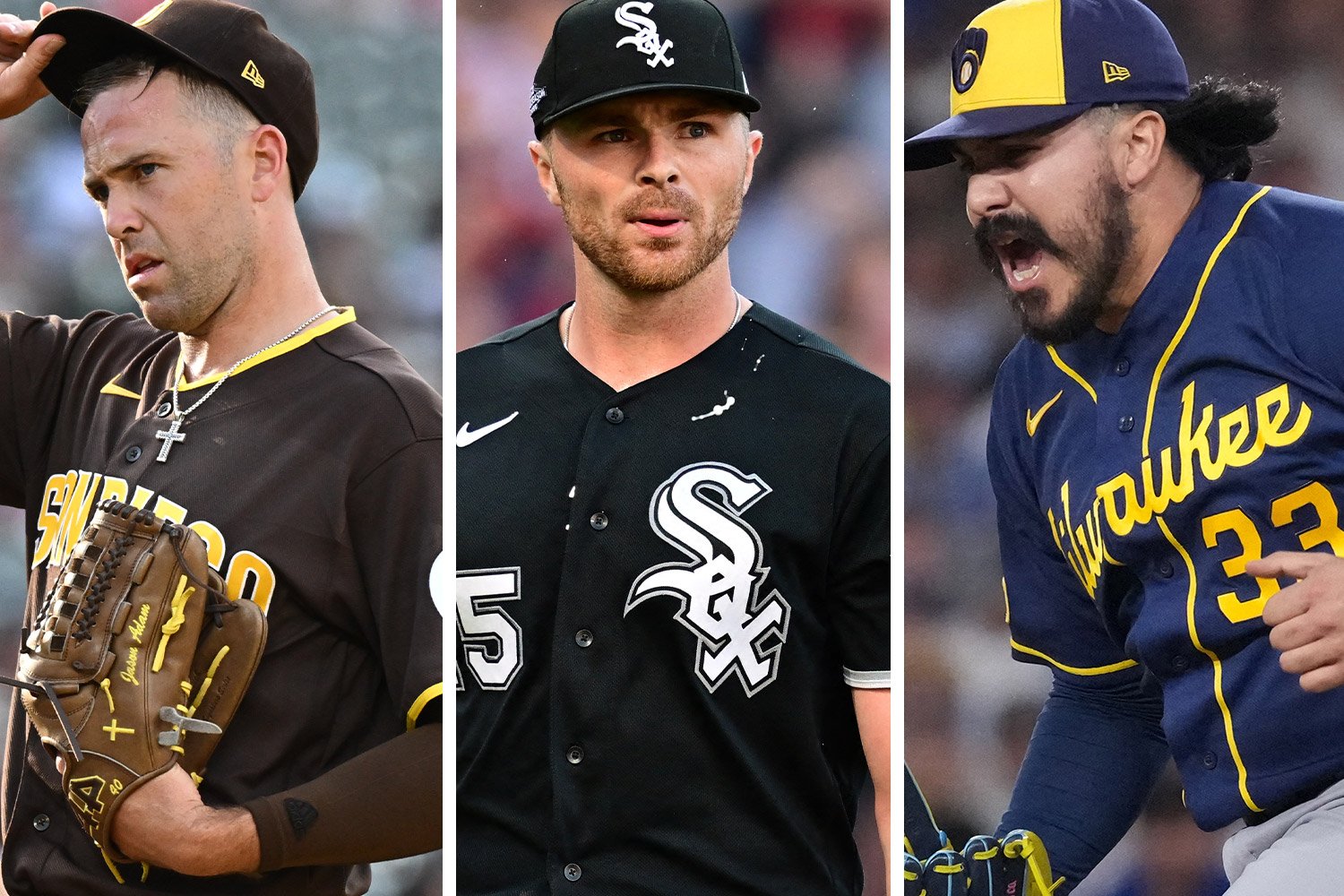 The 2026 season certainly was not the year of the Kansas City Royals. That might be an understatement. After a 69-93 season, it’s back to the drawing board for Kansas City, and with a salary floor likely on the horizon, the Royals are one of many teams that will very likely need to increase their spending this offseason. One way to do that is by improving the bullpen. Kansas City’s relief corps was arguably the worst unit in the league, finishing with a 5.03 ERA, the second-worst mark in baseball. Their 1.53 WHIP and 482 strikeouts were both dead last. With that in mind, let's take a look at three realistic bullpen options the Royals could target this winter. All three are featured on DiamondCentric's 2026-2027 top free agents list, and each could help fix the identity of Kansas City's bullpen. LHP JoJo Romero Kansas City doesn’t really have a proven, reliable left-handed reliever, and Romero could be exactly that. He comes in as DiamondCentric’s 42nd-ranked free agent after another solid season in which he finished with a 3.68 ERA or better for the fourth consecutive year, including a 2.07 mark in 2025. Romero was traded from St. Louis to Milwaukee at this year’s trade deadline, and he’s been a valuable piece of the Brewers’ bullpen down the stretch. He’s helped strengthen a relief corps that has played a major role in Milwaukee’s postseason success. He succeeds primarily by inducing ground balls with his sinker, which features plenty of movement alongside his sweeper and changeup. He consistently produces one of the highest ground-ball rates in the league, and while his fielding-independent pitching (FIP) tends to sit a bit higher than his ERA, he’s still a useful late-inning option. The Royals also have a quality defensive infield, which could help maximize Romero’s effectiveness. He’s not going to be the top reliever on the market, but his track record of consistency and ability to keep the ball on the ground would be a welcome addition to Kansas City’s bullpen. Romero and the Royals could be a match made in heaven. RHP Jason Adam Adam comes in as DiamondCentric’s 44th-ranked free agent, and like Romero, he’s been about as consistent as they come over the last handful of years. He’s finished with a 2.98 ERA or better every season since 2022, making him an intriguing option for a Royals team that desperately needs dependable relief arms. He frequently pitches backward, leaning heavily on his slider and changeup before mixing in his four-seam fastball. He does a good job of limiting hard contact while keeping the ball on the ground, giving him another avenue to get outs even when he isn’t generating many strikeouts. However, there are some legitimate concerns following his 2026 campaign. Adam missed a good chunk of the season with a shoulder strain and didn't return until the end of September. Across 34 1/3 innings, he posted a 2.62 ERA, but his strikeout rate dropped from 26% in 2025 to just 15.5% this year. His 4.85 FIP was also the highest of his career since his rookie season. His whiff and chase rates remained strong, suggesting his stuff can still be effective, but he wasn't putting hitters away at the same rate. Whether those numbers were the result of his shoulder injury or simply the effects of age remains to be seen. Adam will turn 36 next August, which could also help keep his price down. If his medical evaluations check out and the Royals can get him at a reasonable price, he could be a really strong addition to their bullpen. There's some risk involved, but the potential reward makes him worth considering. LHP Sean Newcomb Newcomb is coming off two really strong seasons in a hybrid role and comes in as DiamondCentric’s 49th-ranked free agent. He’s primarily been used as a bullpen arm, but he’s also made 11 starts over the last year and a half, giving him some valuable versatility. This past season with the White Sox, Newcomb finished with a 3.09 ERA and a 3.21 FIP across 90 1/3 innings. He also recorded 84 strikeouts against 31 walks, showing that he can handle a substantial workload while keeping opposing offenses in check. Like Romero and Adam, Newcomb does a really good job of keeping the ball on the ground and limiting hard contact. He doesn't generate whiffs or chases at an outrageously high rate, but his six-pitch mix helps keep hitters off balance. He also increased his average fastball velocity from 93.3 mph in 2025 to 94.9 mph this past season. He throws from a relatively flat arm angle, allowing his arsenal to generate plenty of arm-side run. Between his sinker, slurve, and ability to mix in different pitches, he appears to have found a niche as a swingman who can provide value in multiple roles. And while he won't be the flashiest name on the market this winter, he's someone who could immediately improve Kansas City's pitching staff. His versatility would give the Royals another option when they need length out of the bullpen, while also providing some insurance in the rotation. The Royals have plenty of work to do this offseason, and the bullpen should be near the top of their priority list. Romero offers a reliable left-handed option, Adam has an impressive track record if he can return to form, and Newcomb brings valuable versatility. If Kansas City can land the right combination of arms, its bullpen could look considerably different in 2027.
-
The Kansas City Royals’ farm system is full of guys who, in my humble opinion, deserve more national attention. None more so than pitcher Justin Lamkin. The 6-foot-4, 210-pound left-hander was selected 71st overall by Kansas City in the 2025 MLB Draft out of Texas A&M, and he currently ranks as the Royals’ No. 12 prospect. While a shoulder injury cut his first full professional season short, he showed plenty of reasons to be excited about his future. Lamkin began the 2026 season with High-A Quad Cities, where he got his first taste of professional baseball. Across six starts, Lamkin posted a 1.27 ERA and 0.92 WHIP while racking up an outrageous 34.9% strikeout rate. It didn't take long for the Royals to decide he was ready for a bigger challenge, earning a promotion to Double-A Northwest Arkansas. He made two starts with the Naturals, allowing five earned runs over 11 1/3 innings. The jump to Double-A is widely considered one of the most difficult transitions in the minor leagues, so it's not surprising that his ERA climbed to 3.97. However, his ability to miss bats remained just as impressive. His strikeout rate remained exactly the same at 34.9%. Yes, that came across just two starts, so it's a small sample size. But the fact that he continued to rack up strikeouts against more advanced competition is certainly encouraging. Unfortunately, Lamkin's season ended early due to left shoulder impingement. The good news is that he's healthy again and pitching in the Arizona Fall League, where he's continuing to show what makes him such an intriguing prospect. So, what made Lamkin so successful in 2026, and how can he take another step forward next season? Lamkin's Pitch Arsenal Lamkin has two pitches that give him a really strong foundation: his four-seam fastball and his slider. He's not a flamethrower by any means, sitting in the low 90s with his fastball. But his ability to command the pitch is impressive for a 22-year-old, and his 6-foot-4 frame allows him to get good extension down the mound. That helps his fastball play up, making it more difficult for hitters to square up than the velocity alone might suggest. The overall shape of the pitch isn't anything spectacular, but that's not necessarily a problem. Just as dads everywhere tell their children, he’s a pitcher, not a thrower, and there's a difference between the two. A fastball with elite velocity and movement is great, but it doesn't do a pitcher much good if he can't consistently locate it. Lamkin's ability to put his fastball where he wants it gives him a solid foundation to build upon, especially when paired with a secondary pitch that can keep hitters guessing. That's where his slider comes into play. Lamkin's slider has relatively tight movement, but what makes it effective is how he tunnels it with his fastball. He starts the two pitches in similar locations before they separate, making it difficult for hitters to distinguish between them early in their swings. It's an effective pitch against both left-handed and right-handed hitters, and it's widely considered his best secondary offering. Depending on who you ask, it might even be better than his fastball. He also has a changeup that remains a work in progress, giving him another avenue to attack hitters as he continues to develop. But there's another pitch in his arsenal that really caught my attention: his curveball. He didn't throw a curveball in college, adding it to his repertoire last offseason. Unfortunately, the shoulder injury limited the time he had to refine the pitch during the regular season. However, he's been using it quite a bit in the Arizona Fall League, and the early results are intriguing. Lamkin In The Arizona Fall League Across his first two AFL starts, Lamkin has thrown his curveball just over 31% of the time, according to MLB.com's Sam Dykstra. That's significant usage for a pitch he only recently added to his arsenal, and it's been effective, too. Hitters have swung at the curveball 17 times, coming up empty on seven of those swings. That's a 41.2% whiff rate, giving Lamkin another pitch that can generate swings and misses. And that's where things get really interesting. Hitters already struggled to make contact against Lamkin in 2026, recording just a 66.1% contact rate. His ability to miss bats was one of the biggest reasons for his early success, and adding another legitimate swing-and-miss pitch could make him even more difficult to handle. The key is that his curveball moves differently and comes in at a different speed than his slider. Rather than simply giving hitters another version of the same pitch, it forces them to account for a different look. When you combine that with a well-commanded fastball and an effective slider, there's a lot to like about the foundation he's building. Expectations For Lamkin In 2027 Of course, we need to see Lamkin stay healthy next season. That's the biggest priority after his shoulder injury limited him to just eight regular-season starts. Before worrying about another pitch or a potential promotion, he needs to show he can take the ball consistently and continue developing. Still, the fact that Kansas City was willing to move him to Double-A after just six professional starts says something about how the organization views him. The Royals clearly believe he's capable of handling advanced competition, and his swing-and-miss numbers suggest that confidence wasn't misplaced. This is a prospect who could have generated considerably more national attention if he had stayed healthy throughout the 2026 season. Instead, he's flying a little under the radar, even as he continues to show off an exciting combination of command and swing-and-miss stuff. I think the Royals have something special here. Lamkin still has plenty of development ahead of him, particularly with his changeup and newly added curveball, but the ingredients are there for him to become a very interesting starting pitching prospect. If he can remain healthy this offseason and carry his progress into 2027, we could see him take another significant step forward. And if that curveball continues to develop into a legitimate weapon, don't be surprised if Lamkin takes another step forward next year, potentially even all the way to Kauffman Stadium. Image courtesy of Steven Branscombe-USA TODAY Sports View full article
-
The Royals May Have Found A Gem In Lefty Justin Lamkin
Sam Caulder posted an article in Minor Leagues
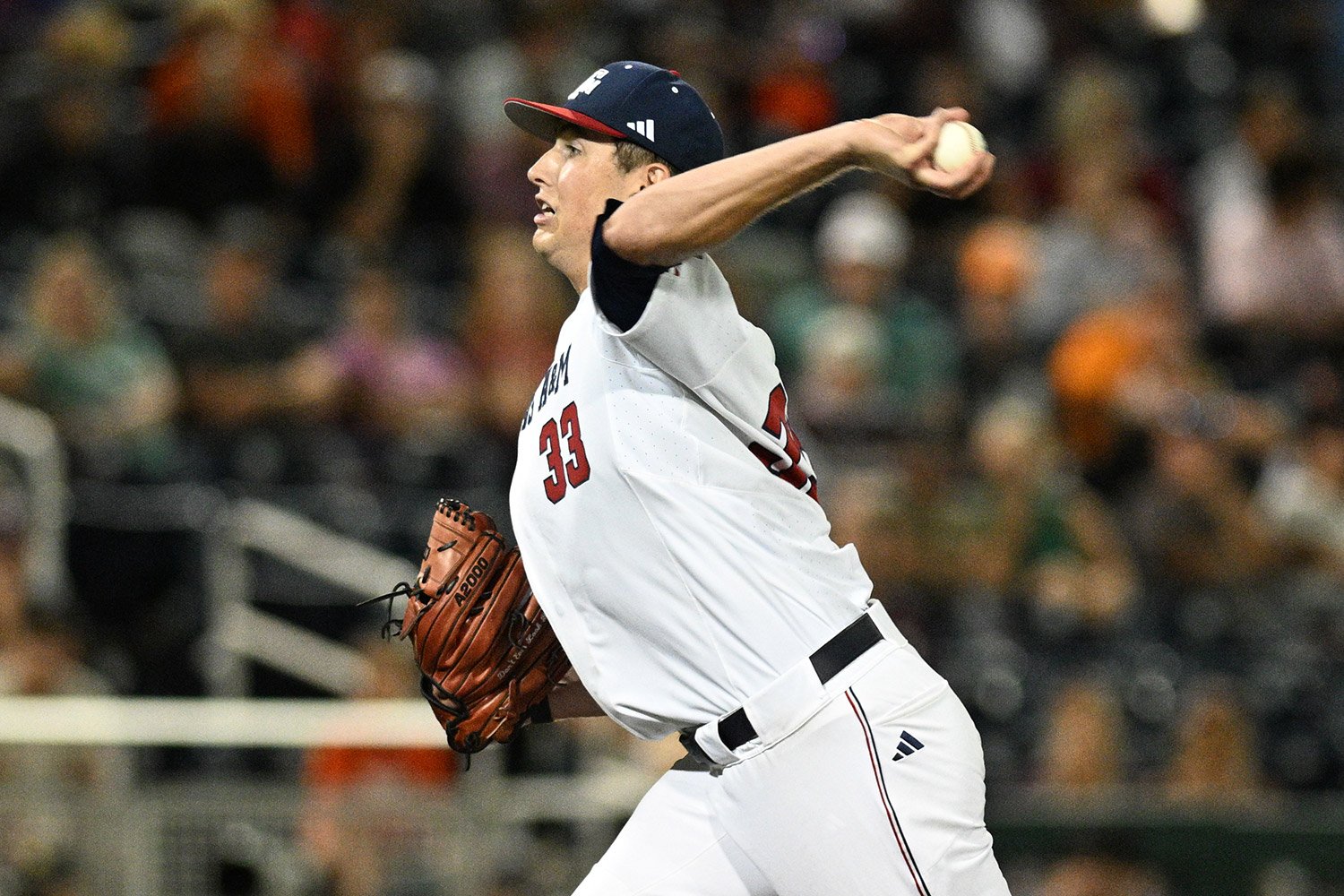 The Kansas City Royals’ farm system is full of guys who, in my humble opinion, deserve more national attention. None more so than pitcher Justin Lamkin. The 6-foot-4, 210-pound left-hander was selected 71st overall by Kansas City in the 2025 MLB Draft out of Texas A&M, and he currently ranks as the Royals’ No. 12 prospect. While a shoulder injury cut his first full professional season short, he showed plenty of reasons to be excited about his future. Lamkin began the 2026 season with High-A Quad Cities, where he got his first taste of professional baseball. Across six starts, Lamkin posted a 1.27 ERA and 0.92 WHIP while racking up an outrageous 34.9% strikeout rate. It didn't take long for the Royals to decide he was ready for a bigger challenge, earning a promotion to Double-A Northwest Arkansas. He made two starts with the Naturals, allowing five earned runs over 11 1/3 innings. The jump to Double-A is widely considered one of the most difficult transitions in the minor leagues, so it's not surprising that his ERA climbed to 3.97. However, his ability to miss bats remained just as impressive. His strikeout rate remained exactly the same at 34.9%. Yes, that came across just two starts, so it's a small sample size. But the fact that he continued to rack up strikeouts against more advanced competition is certainly encouraging. Unfortunately, Lamkin's season ended early due to left shoulder impingement. The good news is that he's healthy again and pitching in the Arizona Fall League, where he's continuing to show what makes him such an intriguing prospect. So, what made Lamkin so successful in 2026, and how can he take another step forward next season? Lamkin's Pitch Arsenal Lamkin has two pitches that give him a really strong foundation: his four-seam fastball and his slider. He's not a flamethrower by any means, sitting in the low 90s with his fastball. But his ability to command the pitch is impressive for a 22-year-old, and his 6-foot-4 frame allows him to get good extension down the mound. That helps his fastball play up, making it more difficult for hitters to square up than the velocity alone might suggest. The overall shape of the pitch isn't anything spectacular, but that's not necessarily a problem. Just as dads everywhere tell their children, he’s a pitcher, not a thrower, and there's a difference between the two. A fastball with elite velocity and movement is great, but it doesn't do a pitcher much good if he can't consistently locate it. Lamkin's ability to put his fastball where he wants it gives him a solid foundation to build upon, especially when paired with a secondary pitch that can keep hitters guessing. That's where his slider comes into play. Lamkin's slider has relatively tight movement, but what makes it effective is how he tunnels it with his fastball. He starts the two pitches in similar locations before they separate, making it difficult for hitters to distinguish between them early in their swings. It's an effective pitch against both left-handed and right-handed hitters, and it's widely considered his best secondary offering. Depending on who you ask, it might even be better than his fastball. He also has a changeup that remains a work in progress, giving him another avenue to attack hitters as he continues to develop. But there's another pitch in his arsenal that really caught my attention: his curveball. He didn't throw a curveball in college, adding it to his repertoire last offseason. Unfortunately, the shoulder injury limited the time he had to refine the pitch during the regular season. However, he's been using it quite a bit in the Arizona Fall League, and the early results are intriguing. Lamkin In The Arizona Fall League Across his first two AFL starts, Lamkin has thrown his curveball just over 31% of the time, according to MLB.com's Sam Dykstra. That's significant usage for a pitch he only recently added to his arsenal, and it's been effective, too. Hitters have swung at the curveball 17 times, coming up empty on seven of those swings. That's a 41.2% whiff rate, giving Lamkin another pitch that can generate swings and misses. And that's where things get really interesting. Hitters already struggled to make contact against Lamkin in 2026, recording just a 66.1% contact rate. His ability to miss bats was one of the biggest reasons for his early success, and adding another legitimate swing-and-miss pitch could make him even more difficult to handle. The key is that his curveball moves differently and comes in at a different speed than his slider. Rather than simply giving hitters another version of the same pitch, it forces them to account for a different look. When you combine that with a well-commanded fastball and an effective slider, there's a lot to like about the foundation he's building. Expectations For Lamkin In 2027 Of course, we need to see Lamkin stay healthy next season. That's the biggest priority after his shoulder injury limited him to just eight regular-season starts. Before worrying about another pitch or a potential promotion, he needs to show he can take the ball consistently and continue developing. Still, the fact that Kansas City was willing to move him to Double-A after just six professional starts says something about how the organization views him. The Royals clearly believe he's capable of handling advanced competition, and his swing-and-miss numbers suggest that confidence wasn't misplaced. This is a prospect who could have generated considerably more national attention if he had stayed healthy throughout the 2026 season. Instead, he's flying a little under the radar, even as he continues to show off an exciting combination of command and swing-and-miss stuff. I think the Royals have something special here. Lamkin still has plenty of development ahead of him, particularly with his changeup and newly added curveball, but the ingredients are there for him to become a very interesting starting pitching prospect. If he can remain healthy this offseason and carry his progress into 2027, we could see him take another significant step forward. And if that curveball continues to develop into a legitimate weapon, don't be surprised if Lamkin takes another step forward next year, potentially even all the way to Kauffman Stadium.
-
Nick Mears – Right-Handed Relief Pitcher Age on 2027 Opening Day: 30 Service Time: 4.022 2024 Salary: $740,000 2025 Salary: $963,000 (First Year of Arbitration) 2026 Salary: $1,900,000 2027 MLB Trade Rumors Projection: $2,200,000 Nick Mears Background Nick Mears is a pretty cool story. He went from being an undrafted junior college pitcher to making his major league debut with the Pittsburgh Pirates less than two years later. He spent five years in Pittsburgh's organization before being claimed off waivers by the Texas Rangers. That stay didn't last long, as Texas designated him for assignment only four days later. The Colorado Rockies then picked him up, and he spent the 2023 season and part of 2024 with them before being traded to Milwaukee at the 2024 trade deadline. After struggling immediately following his arrival in Milwaukee, Mears put together a strong 2025 campaign. He posted a 3.49 ERA across 56 2/3 innings with the Brewers, showing he could be a valuable piece of a major league bullpen. The Royals acquired him and Isaac Collins from Milwaukee in December in exchange for reliever Angel Zerpa. Unfortunately, Kansas City didn't get to see much of what Mears could offer, as he threw just 19 1/3 innings before landing on the injured list with a shoulder impingement. That turned out to be more serious than initially expected. Mears was diagnosed with thoracic outlet syndrome, a condition in which nerves or blood vessels near the neck and upper chest become compressed. He underwent surgery in late August, which will likely leave him unavailable to start the 2027 season. That makes his arbitration case a little more complicated, especially with MLB Trade Rumors projecting him to earn $2.2 million next season. 2026 Stats 21 G, 19 1/3 IP, 5.12 ERA, 1.50 WHIP, 18.1% K%, 13.3% BB%, 4.60 FIP Royals Relief Pitcher Depth 40-man roster: Steven Cruz, Jose Cuas, Connor Thomas, Connor Seabold, Carlos Duran, Beck Way, Nolan Hoffman, Spencer Nivens, Easton McGee Arbitration Eligible: Nick Mears, Alex Lange, Daniel Lynch IV, James McArthur, Lucas Erceg, Anthony Gose 2027 Club Option: Carlos Estévez Triple-A: Tyler Guerrero, Augusto Mendieta, Shane Panzini, Luke Little, Ben Sears, Chazz Martinez, Brandon Johnson, Oscar Rayo Why the Royals Should Offer Him Arbitration The last time we saw Mears stay healthy for a full season, he was pretty darn good. His 3.49 ERA across 56 2/3 innings with Milwaukee in 2025 was impressive, and his underlying numbers suggest that performance wasn't a fluke. Mears posted a 5.9% walk rate in 2025 and finished in the 93rd percentile for chase rate. Those are encouraging numbers for a reliever, as his ability to limit free passes and get hitters to chase pitches outside the strike zone gives him a solid foundation to build on. Even in 2024, when his surface-level numbers suggested he struggled, his underlying metrics were outstanding. There's reason to believe Mears can be a quality major league reliever when he's healthy, and the Royals could certainly use more arms with that kind of potential. His stuff is also interesting. Mears has a steep 55-degree arm angle that helps him generate plenty of vertical movement on his pitches. His four-seam fastball, slider, and curveball all produced at least three more inches of vertical movement than the league average this season. That makes his 2026 velocity drop particularly noteworthy. Both his four-seam fastball and slider were at career-low velocities, suggesting something wasn't right before he was eventually shut down. If Mears can recover from surgery and regain his previous velocity, there's a chance he could return to being an effective bullpen option. His 2026 numbers don't necessarily tell the whole story, and the Royals could be getting a useful reliever if he's able to get back to full strength. Kansas City could also have plenty of bullpen openings to fill this offseason. Mears has already shown he can be successful in the majors, and retaining him would give the Royals another potential option without having to find a replacement on the open market. Why the Royals Should Non-Tender Him Unfortunately, there are some pretty significant reasons the Royals might decide to move on from Mears this offseason, and most of them stem from his health. Thoracic outlet syndrome is a scary diagnosis for a pitcher. Returning to form after surgery isn't guaranteed, and plenty of pitchers who have undergone the procedure have struggled to regain their previous effectiveness. Even if/when Mears eventually returns to the mound, there's no guarantee he'll look like the pitcher we saw in Milwaukee. His velocity was already down this year, and the Royals will have to hope that his recovery doesn't create any additional issues. There's also the fact that he doesn't have an especially lengthy track record of success. His 2025 season was strong, and his underlying numbers have shown promise, but that was really the only full season in which he's established himself as a quality major-league reliever. That's not much to fall back on when you're trying to determine whether a $2.2 million investment makes sense. There are likely to be cheaper options available in free agency who come with fewer health concerns and a more established track record. The timing of his injury makes this decision even more complicated. Mears is also scheduled to become a free agent after the 2027 season. That means Kansas City would be taking on significant risk for a reliever who might not be available for the full year and could leave after the season. With so many other bullpen needs to address, I'm not sure that's a risk the Royals should be willing to take. Prediction: The Royals Non-Tender Mears Honestly, I hope I'm wrong about this one. Mears is a cool story, and he's the kind of player you want to see succeed in the major leagues. Going from an undrafted junior college pitcher to becoming a quality major league reliever is no small feat, and his 2025 season showed what he's capable of when everything is working. I also understand why the Royals might want to keep him around. This bullpen could have plenty of openings heading into 2027, and finding multiple reliable relievers is a tall order. If Mears can return to his previous form, he could be a valuable addition to a group that needs all the help it can get. But the severity of his injury and his limited track record make this a difficult decision. At a projected $2.2 million salary, there's a real possibility Kansas City could find better value elsewhere, particularly if Mears won't be ready for Opening Day. The Royals need to add multiple relievers this offseason, and there should be cheaper options available who can provide middle-inning depth from the start of the season. Rather than spending that money on an injured pitcher with plenty of uncertainty surrounding his recovery, Kansas City could use those resources to address another bullpen need. As I said, I hope I'm wrong. Mears has already overcome plenty to get to this point in his career, and I'd love to see him get another opportunity to prove himself in Kansas City. Unfortunately, I think the risk outweighs the potential reward. The Royals will have other options available this offseason, and I expect them to decide that $2.2 million is too much to pay for that uncertainty and non-tender Mears. Image courtesy of Denny Medley-Imagn Images View full article
-
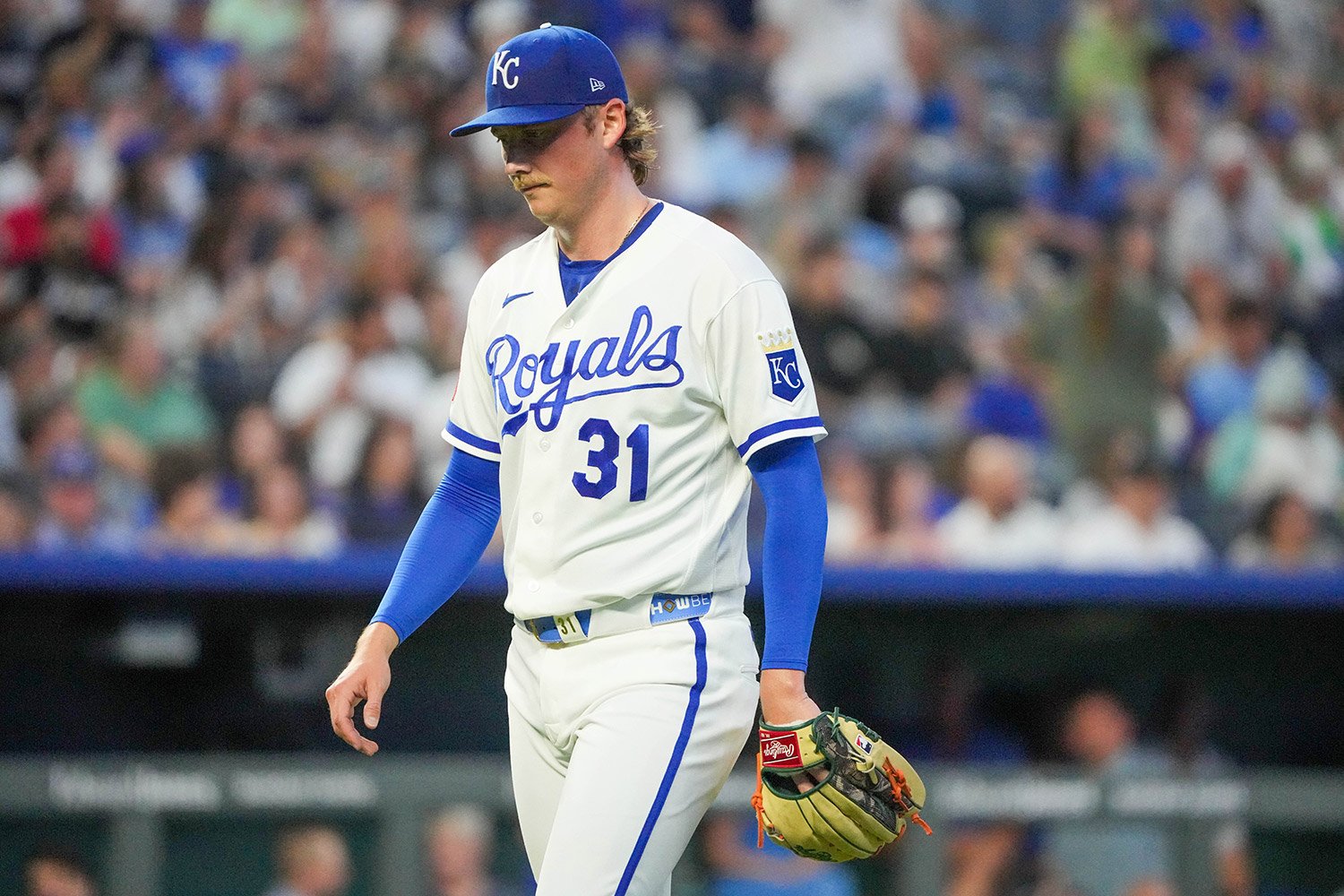 Nick Mears – Right-Handed Relief Pitcher Age on 2027 Opening Day: 30 Service Time: 4.022 2024 Salary: $740,000 2025 Salary: $963,000 (First Year of Arbitration) 2026 Salary: $1,900,000 2027 MLB Trade Rumors Projection: $2,200,000 Nick Mears Background Nick Mears is a pretty cool story. He went from being an undrafted junior college pitcher to making his major league debut with the Pittsburgh Pirates less than two years later. He spent five years in Pittsburgh's organization before being claimed off waivers by the Texas Rangers. That stay didn't last long, as Texas designated him for assignment only four days later. The Colorado Rockies then picked him up, and he spent the 2023 season and part of 2024 with them before being traded to Milwaukee at the 2024 trade deadline. After struggling immediately following his arrival in Milwaukee, Mears put together a strong 2025 campaign. He posted a 3.49 ERA across 56 2/3 innings with the Brewers, showing he could be a valuable piece of a major league bullpen. The Royals acquired him and Isaac Collins from Milwaukee in December in exchange for reliever Angel Zerpa. Unfortunately, Kansas City didn't get to see much of what Mears could offer, as he threw just 19 1/3 innings before landing on the injured list with a shoulder impingement. That turned out to be more serious than initially expected. Mears was diagnosed with thoracic outlet syndrome, a condition in which nerves or blood vessels near the neck and upper chest become compressed. He underwent surgery in late August, which will likely leave him unavailable to start the 2027 season. That makes his arbitration case a little more complicated, especially with MLB Trade Rumors projecting him to earn $2.2 million next season. 2026 Stats 21 G, 19 1/3 IP, 5.12 ERA, 1.50 WHIP, 18.1% K%, 13.3% BB%, 4.60 FIP Royals Relief Pitcher Depth 40-man roster: Steven Cruz, Jose Cuas, Connor Thomas, Connor Seabold, Carlos Duran, Beck Way, Nolan Hoffman, Spencer Nivens, Easton McGee Arbitration Eligible: Nick Mears, Alex Lange, Daniel Lynch IV, James McArthur, Lucas Erceg, Anthony Gose 2027 Club Option: Carlos Estévez Triple-A: Tyler Guerrero, Augusto Mendieta, Shane Panzini, Luke Little, Ben Sears, Chazz Martinez, Brandon Johnson, Oscar Rayo Why the Royals Should Offer Him Arbitration The last time we saw Mears stay healthy for a full season, he was pretty darn good. His 3.49 ERA across 56 2/3 innings with Milwaukee in 2025 was impressive, and his underlying numbers suggest that performance wasn't a fluke. Mears posted a 5.9% walk rate in 2025 and finished in the 93rd percentile for chase rate. Those are encouraging numbers for a reliever, as his ability to limit free passes and get hitters to chase pitches outside the strike zone gives him a solid foundation to build on. Even in 2024, when his surface-level numbers suggested he struggled, his underlying metrics were outstanding. There's reason to believe Mears can be a quality major league reliever when he's healthy, and the Royals could certainly use more arms with that kind of potential. His stuff is also interesting. Mears has a steep 55-degree arm angle that helps him generate plenty of vertical movement on his pitches. His four-seam fastball, slider, and curveball all produced at least three more inches of vertical movement than the league average this season. That makes his 2026 velocity drop particularly noteworthy. Both his four-seam fastball and slider were at career-low velocities, suggesting something wasn't right before he was eventually shut down. If Mears can recover from surgery and regain his previous velocity, there's a chance he could return to being an effective bullpen option. His 2026 numbers don't necessarily tell the whole story, and the Royals could be getting a useful reliever if he's able to get back to full strength. Kansas City could also have plenty of bullpen openings to fill this offseason. Mears has already shown he can be successful in the majors, and retaining him would give the Royals another potential option without having to find a replacement on the open market. Why the Royals Should Non-Tender Him Unfortunately, there are some pretty significant reasons the Royals might decide to move on from Mears this offseason, and most of them stem from his health. Thoracic outlet syndrome is a scary diagnosis for a pitcher. Returning to form after surgery isn't guaranteed, and plenty of pitchers who have undergone the procedure have struggled to regain their previous effectiveness. Even if/when Mears eventually returns to the mound, there's no guarantee he'll look like the pitcher we saw in Milwaukee. His velocity was already down this year, and the Royals will have to hope that his recovery doesn't create any additional issues. There's also the fact that he doesn't have an especially lengthy track record of success. His 2025 season was strong, and his underlying numbers have shown promise, but that was really the only full season in which he's established himself as a quality major-league reliever. That's not much to fall back on when you're trying to determine whether a $2.2 million investment makes sense. There are likely to be cheaper options available in free agency who come with fewer health concerns and a more established track record. The timing of his injury makes this decision even more complicated. Mears is also scheduled to become a free agent after the 2027 season. That means Kansas City would be taking on significant risk for a reliever who might not be available for the full year and could leave after the season. With so many other bullpen needs to address, I'm not sure that's a risk the Royals should be willing to take. Prediction: The Royals Non-Tender Mears Honestly, I hope I'm wrong about this one. Mears is a cool story, and he's the kind of player you want to see succeed in the major leagues. Going from an undrafted junior college pitcher to becoming a quality major league reliever is no small feat, and his 2025 season showed what he's capable of when everything is working. I also understand why the Royals might want to keep him around. This bullpen could have plenty of openings heading into 2027, and finding multiple reliable relievers is a tall order. If Mears can return to his previous form, he could be a valuable addition to a group that needs all the help it can get. But the severity of his injury and his limited track record make this a difficult decision. At a projected $2.2 million salary, there's a real possibility Kansas City could find better value elsewhere, particularly if Mears won't be ready for Opening Day. The Royals need to add multiple relievers this offseason, and there should be cheaper options available who can provide middle-inning depth from the start of the season. Rather than spending that money on an injured pitcher with plenty of uncertainty surrounding his recovery, Kansas City could use those resources to address another bullpen need. As I said, I hope I'm wrong. Mears has already overcome plenty to get to this point in his career, and I'd love to see him get another opportunity to prove himself in Kansas City. Unfortunately, I think the risk outweighs the potential reward. The Royals will have other options available this offseason, and I expect them to decide that $2.2 million is too much to pay for that uncertainty and non-tender Mears.
-
Lucas Erceg - Relief Pitcher Age on 2027 Opening Day: 31 Service Time: 3.125 2024 Salary: $750,000 2025 Salary: $776,750 2026 Salary: $803,500 2027 MLB Trade Rumors Estimate: $2,300,000 Erceg Background Lucas Erceg was drafted 46th overall by the Milwaukee Brewers in the 2016 MLB Draft. After making his major league debut with the Oakland Athletics in 2023, Erceg was traded to Kansas City at the 2024 trade deadline in exchange for a trio of prospects. Erceg immediately became a valuable piece of the Royals bullpen, posting a 2.88 ERA and a 1.17 FIP across 25 innings while striking out 31 batters following the trade. He followed that up with another strong season in 2025, recording a 2.64 ERA across 61 1/3 innings. However, there were some warning signs beneath the surface. Erceg's strikeout rate dropped from 28.5% in 2024 to 19.3% in 2025, and that trend continued into 2026. He finished this past season in the third percentile for both strikeout and walk rates, while his ERA ballooned to 5.59. After posting 1.2 WAR and 1.5 WAR in 2024 and 2025, respectively, Erceg finished 2026 at -0.7 WAR. He was even optioned to Triple-A Omaha because of his poor performance, rather than an injury, although he did deal with a forearm strain in September. That makes this an interesting decision for Kansas City. Erceg has been one of the team's more reliable late-inning arms over the past two seasons, but his 2026 performance raises legitimate questions about whether he can return to that form. This will also be his first year of arbitration eligibility, giving the Royals a decision to make on his future. 2026 Stats: 48 1/3 IP, 13 SV, 5.59 ERA, 1.80 WHIP, 14.9% K, 14.0% BB, 5.40 FIP Royals Relief Pitcher Depth 40-man roster: Steven Cruz, Jose Cuas, Connor Thomas, Connor Seabold, Carlos Duran, Beck Way, Nolan Hoffman, Spencer Nivens, Easton McGee Arbitration Eligible: Nick Mears, Alex Lange, Daniel Lynch IV, James McArthur, Lucas Erceg, Anthony Gose 2027 Club Option: Carlos Estévez Triple-A: Tyler Guerrero, Augusto Mendieta, Shane Panzini, Luke Little, Ben Sears, Chazz Martinez, Brandon Johnson, Oscar Rayo Why the Royals Should Offer Him Arbitration Despite a horrid 2026 campaign, there's still a strong track record for Erceg to fall back on. He posted a 121 ERA+ in 2024 before following it up with a 159 mark in 2025. Those are the kinds of numbers that make it difficult to completely give up on a pitcher after one disappointing season. And while the results were certainly ugly this year, there are still some encouraging signs in his underlying numbers. Erceg comes with a five-pitch mix, which allows him to attack hitters in a variety of ways. He's particularly effective at generating soft contact, and even with his struggles this season, his barrel rate and average exit velocity both ranked in the 91st percentile or higher. His ground-ball rate also ranked in the 88th percentile, while his hard-hit rate remained well above league average. Three of his five pitches graded out as above league average according to Stuff+. Even the two that didn't, his four-seam fastball and changeup, generate strong arm-side run. There's enough here to believe Erceg can still be an effective major league reliever, even if the results didn't show it in 2026. He's also been a reliable late-inning option for the Royals for most of his Kansas City tenure. Even in a season where he struggled enough to be sent to Triple-A, Erceg still led the team with 13 saves. For $2.3 million, there are certainly cheaper bullpen arms available. However, there's also a very reasonable case to be made that Erceg bounces back in 2027. With his track record and the quality of contact he's continued to allow, the Royals could be getting a quality late-inning reliever at a relatively affordable price. Why the Royals Should Non-Tender Him Of course, it's difficult to overlook Erceg's 2026 results. A 5.59 ERA from a late-inning reliever is unplayable, especially for a team that needs to improve its bullpen heading into next season. And it's not as though his underlying numbers suggest he was simply the victim of bad luck. Erceg finished with a 5.40 FIP and a 4.66 expected ERA, both of which indicate that he was far from the pitcher Kansas City saw in 2024 and 2025. He finished the season with just two more strikeouts than walks, which is a major problem for a reliever expected to handle high-leverage situations. A 14.9% strikeout rate and a 14.0% walk rate leave very little margin for error, particularly when runners are already on base. Erceg didn't generate enough whiffs, struggled to get hitters to chase pitches outside the strike zone, and simply wasn't an effective pitcher for much of the season. That's a difficult way to enter your first year of arbitration eligibility, and it could leave a sour taste in the mouths of the people making the Royals' roster decisions. Kansas City also has plenty of other decisions to make this offseason. With multiple arbitration-eligible relievers and several potential additions needed for the bullpen, the Royals may decide that Erceg's salary is better spent elsewhere. If they believe his decline is more than a one-year blip, non-tendering him would give them another opportunity to reshape a bullpen that needs significant improvement. Prediction: The Royals Keep Erceg While 2026 was a year to forget for Erceg, I believe there's enough here to suggest it was more of a fluke than a permanent decline. His stuff was more or less average overall, but his Location+ was actually above league average. That combination realistically shouldn't produce the results he had this season, which makes it worth investigating what went wrong before moving on from him entirely. There's also no shortage of other spots to fill in the Royals bullpen. Kansas City has several arbitration decisions to make this winter, and there are likely to be other non-tender candidates ahead of Erceg. The team won't be able to replace every underperforming reliever in one offseason, so keeping a pitcher with his track record makes some sense. That doesn't mean Erceg should be guaranteed a late-inning role next season. He'll need to show significant improvement this offseason and during spring training to prove that 2026 was an outlier rather than the beginning of a more concerning trend. Still, I don't believe the pitcher we saw in 2024 and 2025 has simply disappeared. Erceg has already demonstrated that he can be a reliable late-inning arm, and his ability to limit hard contact gives him a foundation to build on. For an estimated $2.3 million, I'd be willing to take the chance on him returning to that form in 2027. The Royals have plenty of work to do in their bullpen, but non-tendering Erceg would mean giving up on a pitcher who still has a reasonable path back to being an important piece of the relief corps. View full article
-
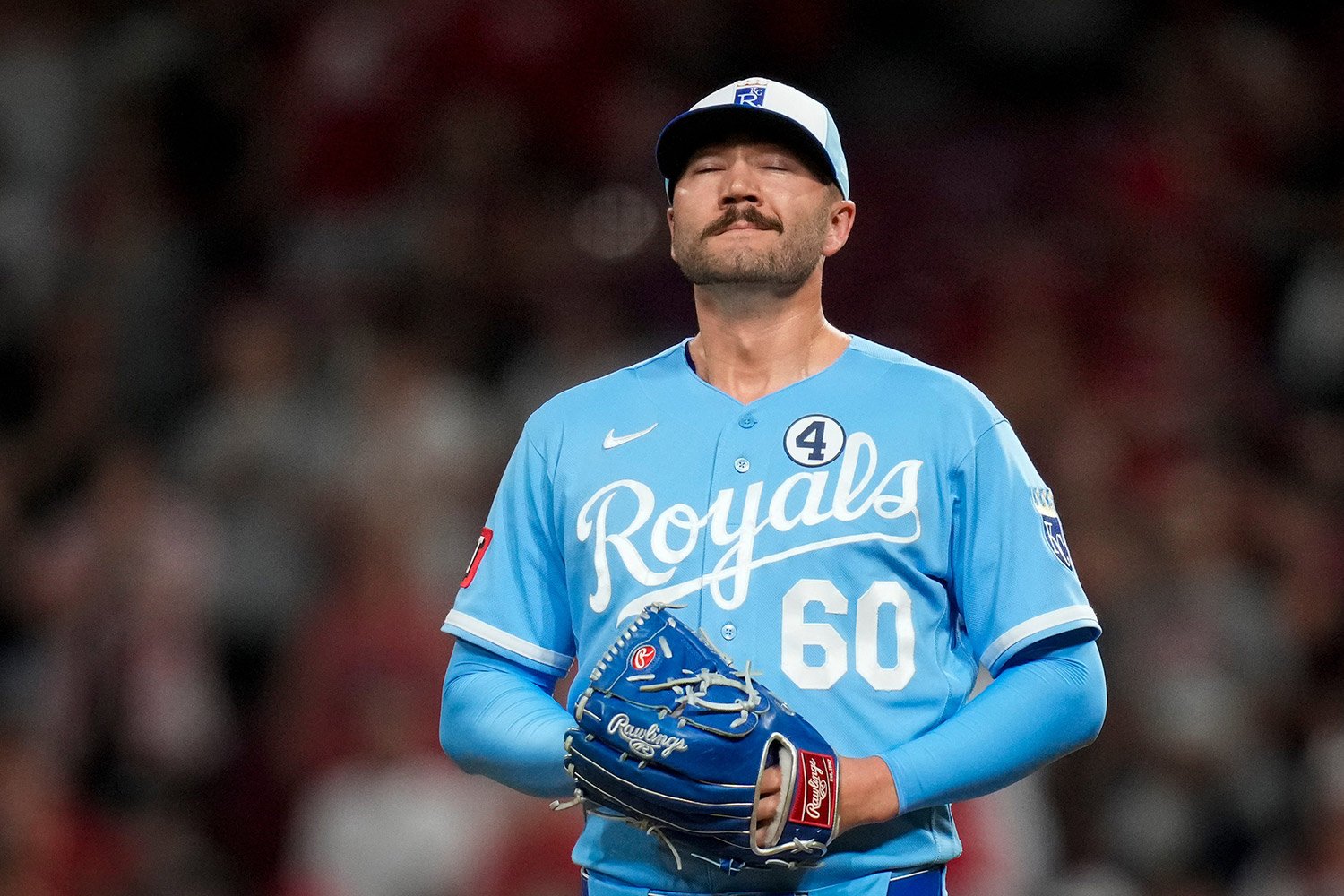 Lucas Erceg - Relief Pitcher Age on 2027 Opening Day: 31 Service Time: 3.125 2024 Salary: $750,000 2025 Salary: $776,750 2026 Salary: $803,500 2027 MLB Trade Rumors Estimate: $2,300,000 Erceg Background Lucas Erceg was drafted 46th overall by the Milwaukee Brewers in the 2016 MLB Draft. After making his major league debut with the Oakland Athletics in 2023, Erceg was traded to Kansas City at the 2024 trade deadline in exchange for a trio of prospects. Erceg immediately became a valuable piece of the Royals bullpen, posting a 2.88 ERA and a 1.17 FIP across 25 innings while striking out 31 batters following the trade. He followed that up with another strong season in 2025, recording a 2.64 ERA across 61 1/3 innings. However, there were some warning signs beneath the surface. Erceg's strikeout rate dropped from 28.5% in 2024 to 19.3% in 2025, and that trend continued into 2026. He finished this past season in the third percentile for both strikeout and walk rates, while his ERA ballooned to 5.59. After posting 1.2 WAR and 1.5 WAR in 2024 and 2025, respectively, Erceg finished 2026 at -0.7 WAR. He was even optioned to Triple-A Omaha because of his poor performance, rather than an injury, although he did deal with a forearm strain in September. That makes this an interesting decision for Kansas City. Erceg has been one of the team's more reliable late-inning arms over the past two seasons, but his 2026 performance raises legitimate questions about whether he can return to that form. This will also be his first year of arbitration eligibility, giving the Royals a decision to make on his future. 2026 Stats: 48 1/3 IP, 13 SV, 5.59 ERA, 1.80 WHIP, 14.9% K, 14.0% BB, 5.40 FIP Royals Relief Pitcher Depth 40-man roster: Steven Cruz, Jose Cuas, Connor Thomas, Connor Seabold, Carlos Duran, Beck Way, Nolan Hoffman, Spencer Nivens, Easton McGee Arbitration Eligible: Nick Mears, Alex Lange, Daniel Lynch IV, James McArthur, Lucas Erceg, Anthony Gose 2027 Club Option: Carlos Estévez Triple-A: Tyler Guerrero, Augusto Mendieta, Shane Panzini, Luke Little, Ben Sears, Chazz Martinez, Brandon Johnson, Oscar Rayo Why the Royals Should Offer Him Arbitration Despite a horrid 2026 campaign, there's still a strong track record for Erceg to fall back on. He posted a 121 ERA+ in 2024 before following it up with a 159 mark in 2025. Those are the kinds of numbers that make it difficult to completely give up on a pitcher after one disappointing season. And while the results were certainly ugly this year, there are still some encouraging signs in his underlying numbers. Erceg comes with a five-pitch mix, which allows him to attack hitters in a variety of ways. He's particularly effective at generating soft contact, and even with his struggles this season, his barrel rate and average exit velocity both ranked in the 91st percentile or higher. His ground-ball rate also ranked in the 88th percentile, while his hard-hit rate remained well above league average. Three of his five pitches graded out as above league average according to Stuff+. Even the two that didn't, his four-seam fastball and changeup, generate strong arm-side run. There's enough here to believe Erceg can still be an effective major league reliever, even if the results didn't show it in 2026. He's also been a reliable late-inning option for the Royals for most of his Kansas City tenure. Even in a season where he struggled enough to be sent to Triple-A, Erceg still led the team with 13 saves. For $2.3 million, there are certainly cheaper bullpen arms available. However, there's also a very reasonable case to be made that Erceg bounces back in 2027. With his track record and the quality of contact he's continued to allow, the Royals could be getting a quality late-inning reliever at a relatively affordable price. Why the Royals Should Non-Tender Him Of course, it's difficult to overlook Erceg's 2026 results. A 5.59 ERA from a late-inning reliever is unplayable, especially for a team that needs to improve its bullpen heading into next season. And it's not as though his underlying numbers suggest he was simply the victim of bad luck. Erceg finished with a 5.40 FIP and a 4.66 expected ERA, both of which indicate that he was far from the pitcher Kansas City saw in 2024 and 2025. He finished the season with just two more strikeouts than walks, which is a major problem for a reliever expected to handle high-leverage situations. A 14.9% strikeout rate and a 14.0% walk rate leave very little margin for error, particularly when runners are already on base. Erceg didn't generate enough whiffs, struggled to get hitters to chase pitches outside the strike zone, and simply wasn't an effective pitcher for much of the season. That's a difficult way to enter your first year of arbitration eligibility, and it could leave a sour taste in the mouths of the people making the Royals' roster decisions. Kansas City also has plenty of other decisions to make this offseason. With multiple arbitration-eligible relievers and several potential additions needed for the bullpen, the Royals may decide that Erceg's salary is better spent elsewhere. If they believe his decline is more than a one-year blip, non-tendering him would give them another opportunity to reshape a bullpen that needs significant improvement. Prediction: The Royals Keep Erceg While 2026 was a year to forget for Erceg, I believe there's enough here to suggest it was more of a fluke than a permanent decline. His stuff was more or less average overall, but his Location+ was actually above league average. That combination realistically shouldn't produce the results he had this season, which makes it worth investigating what went wrong before moving on from him entirely. There's also no shortage of other spots to fill in the Royals bullpen. Kansas City has several arbitration decisions to make this winter, and there are likely to be other non-tender candidates ahead of Erceg. The team won't be able to replace every underperforming reliever in one offseason, so keeping a pitcher with his track record makes some sense. That doesn't mean Erceg should be guaranteed a late-inning role next season. He'll need to show significant improvement this offseason and during spring training to prove that 2026 was an outlier rather than the beginning of a more concerning trend. Still, I don't believe the pitcher we saw in 2024 and 2025 has simply disappeared. Erceg has already demonstrated that he can be a reliable late-inning arm, and his ability to limit hard contact gives him a foundation to build on. For an estimated $2.3 million, I'd be willing to take the chance on him returning to that form in 2027. The Royals have plenty of work to do in their bullpen, but non-tendering Erceg would mean giving up on a pitcher who still has a reasonable path back to being an important piece of the relief corps.
-
Justin Lamkin quietly put together an impressive first professional season before a shoulder injury cut it short. Now healthy and flashing a new curveball, he could be poised for an even bigger 2027. View full video
-
Justin Lamkin quietly put together an impressive first professional season before a shoulder injury cut it short. Now healthy and flashing a new curveball, he could be poised for an even bigger 2027.
-
Kansas City has some tough calls to make before the non-tender deadline. Which players should stay, and who could be on their way out? Discussed in this video are Kyle Isbel, Nate Pearson, Nick Mears, Alex Lange, Daniel Lynch IV, Michael Massey, Anthony Gose, James McArthur, Randy Dobnak, Lucas Erceg, and Alec Marsh. View full video
-
Kansas City has some tough calls to make before the non-tender deadline. Which players should stay, and who could be on their way out? Discussed in this video are Kyle Isbel, Nate Pearson, Nick Mears, Alex Lange, Daniel Lynch IV, Michael Massey, Anthony Gose, James McArthur, Randy Dobnak, Lucas Erceg, and Alec Marsh.
-
Blake Mitchell had the best statistical season of his pro career in 2026, showcasing rare power, patience and athleticism for a catcher. But his alarming contact issues leave a major question about whether all of that talent will translate to the majors. View full video
-
Blake Mitchell had the best statistical season of his pro career in 2026, showcasing rare power, patience and athleticism for a catcher. But his alarming contact issues leave a major question about whether all of that talent will translate to the majors.
-
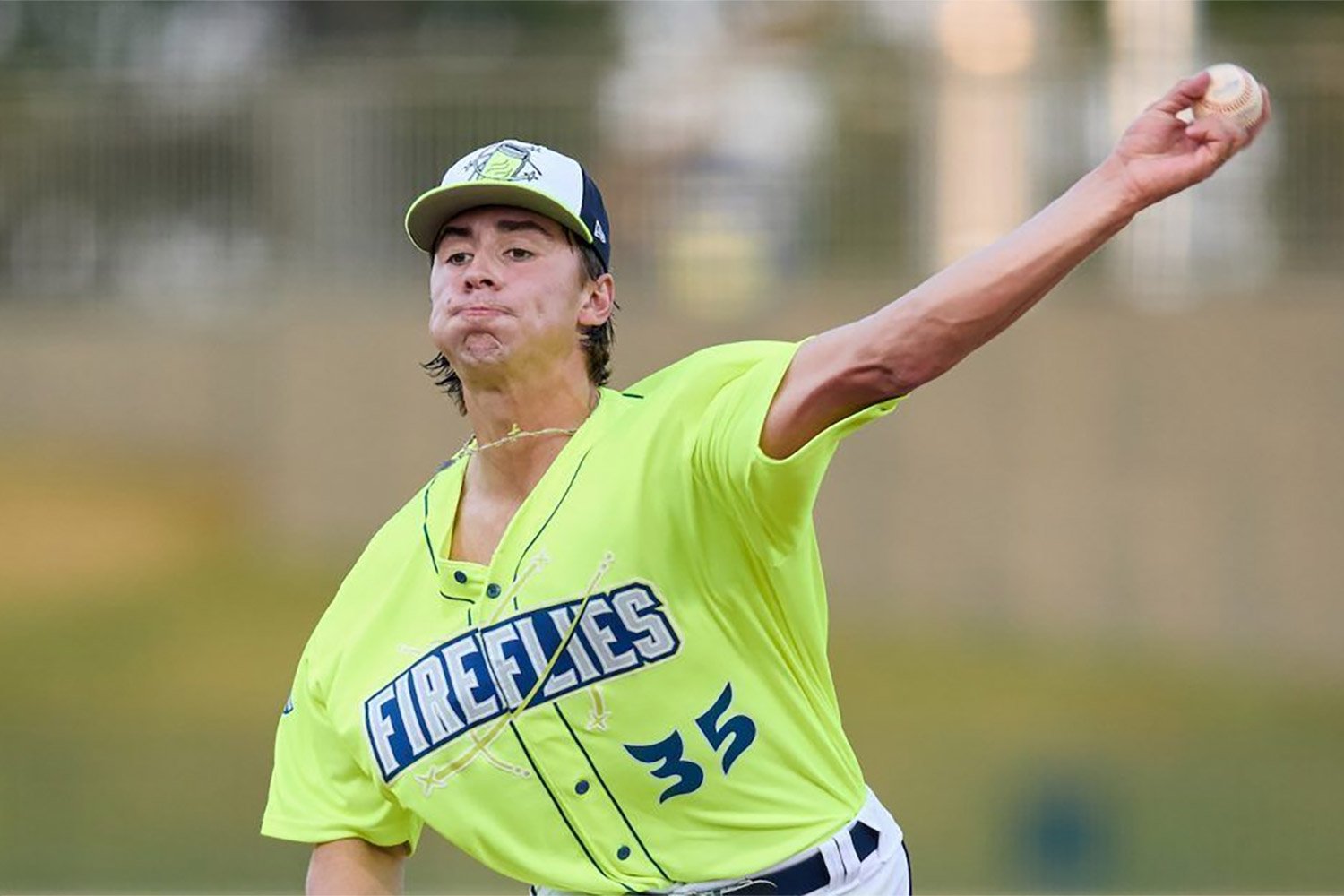 Every so often, a pitching prospect rolls around where you look at him, you look at his numbers, and you can go, “Yeah, that guy’s gonna be an ace someday.” That’s where I’m at with Royals left-handed pitching prospect David Shields. Shields comes in as Kansas City’s No. 2 prospect after the team used its second-round pick in the 2024 MLB Draft on him, and the dude has done nothing but produce since then. He’s quickly established himself as one of the better young pitching prospects in the game, and there’s a pretty strong argument that his ceiling is even higher than his current prospect ranking would suggest. Across 116 2/3 innings this year at High-A Quad Cities, Shields finished with a 4.01 ERA and a 1.08 WHIP. He also struck out 139 batters while walking just 28, giving him a 30% strikeout rate compared to a 6% walk rate. Those are obviously some sharp numbers on their own, but his 3.51 FIP would suggest that Shields was actually better than his ERA. And when you start digging into the numbers a little more, it becomes pretty easy to see why there’s so much excitement surrounding the young lefty. Keep in mind, Shields was just 19 years old this season. That kind of production is not normal for a pitcher his age, especially at the High-A level. Plenty of 19-year-old pitchers are still trying to find their footing in the lower levels of the minor leagues, and Shields has already shown he’s more than capable of holding his own and even dominating at times. He showed that ability last season as well. In 2025, he posted a 2.01 ERA at Low-A, a level that plenty of 18-year-old pitchers never even reach. He’s been ahead of the curve since the Royals drafted him, and that continued again in 2026. This guy can play. It’s not just the production that makes him so intriguing. He’s also got the physical makeup and arsenal of a potential future ace. Shields is a big dude at 6-foot-2, 210 pounds, giving him plenty of room to continue developing physically. His fastball currently sits in the low-90s, which obviously isn’t going to jump off the page when you look at it on its own. But the pitch plays up because of its shape and Shields’ ability to command it. He’s also gotten up into the mid-90s with the fastball before, and it’s entirely possible that he’ll add more velocity as he continues to get bigger and stronger. If he can consistently push that fastball velocity into the mid-90s while maintaining the command he already possesses, that could turn into one of baseball’s better fastballs. From there, Shields has a pair of breaking balls that both have the ability to generate plenty of swing-and-miss. His 14.3% swinging-strike rate is a pretty strong indicator of that. He has the ability to make hitters miss, and that’s obviously a huge part of what makes the ceiling here so high. His changeup could also develop into a really strong fourth pitch as he continues to mature. Even with velocity that, by itself, is fairly uninspiring, his level of control and command within the strike zone allows his entire arsenal to play up. He doesn’t need to throw 97 mph to get outs. He can locate, change speeds, move the ball around the zone, and use his breaking stuff to keep hitters off balance. And what’s crazy is that for as good and as promising as this year was for him, Shields could have been even better. I already mentioned his FIP being half a run lower than his ERA, but it doesn’t stop there. He posted a .312 BABIP this season, which is a pretty high number and typically isn’t something you would expect to be sustainable over a long period of time, especially for a pitcher who does as good a job limiting hard contact as Shields does. He allowed just 98 hits and 10 home runs over those 116 2/3 innings. So, in addition to limiting walks, he does a really good job of locating within the strike zone and preventing hitters from consistently doing damage when they do make contact. Those are two traits that just aren’t common, dare I say rare, for pitchers this young. Now, this isn’t to say Shields is perfect by any means. There are still some things he’ll need to work on as he continues moving through the Royals’ system. For one, he’s given up a lot of line drives as a professional, and that could eventually become a problem as he reaches the higher levels of the minors and, eventually, the majors. He’s also probably going to need to add some velocity if he wants to reach his absolute ceiling. His fastball plays well right now, but hitters at the upper levels are going to be much more capable of handling low-90s velocity if he isn’t locating perfectly. Still, it’s hard not to be incredibly impressed by what Shields has accomplished so far. His combination of command and bat-missing ability is extremely impressive, especially when you consider that he was doing it at 19 years old in High-A. There’s obviously still a long way to go before Shields reaches the major leagues, and plenty can change as he continues to develop. But if the Royals can help him continue to refine his arsenal, add some velocity and maintain the command that has carried him this far, there’s legitimate ace potential here. And for Kansas City, having a young lefty with that kind of ceiling working his way through the system is a pretty exciting development.
-
Every so often, a pitching prospect rolls around where you look at him, you look at his numbers, and you can go, “Yeah, that guy’s gonna be an ace someday.” That’s where I’m at with Royals left-handed pitching prospect David Shields. Shields comes in as Kansas City’s No. 2 prospect after the team used its second-round pick in the 2024 MLB Draft on him, and the dude has done nothing but produce since then. He’s quickly established himself as one of the better young pitching prospects in the game, and there’s a pretty strong argument that his ceiling is even higher than his current prospect ranking would suggest. Across 116 2/3 innings this year at High-A Quad Cities, Shields finished with a 4.01 ERA and a 1.08 WHIP. He also struck out 139 batters while walking just 28, giving him a 30% strikeout rate compared to a 6% walk rate. Those are obviously some sharp numbers on their own, but his 3.51 FIP would suggest that Shields was actually better than his ERA. And when you start digging into the numbers a little more, it becomes pretty easy to see why there’s so much excitement surrounding the young lefty. Keep in mind, Shields was just 19 years old this season. That kind of production is not normal for a pitcher his age, especially at the High-A level. Plenty of 19-year-old pitchers are still trying to find their footing in the lower levels of the minor leagues, and Shields has already shown he’s more than capable of holding his own and even dominating at times. He showed that ability last season as well. In 2025, he posted a 2.01 ERA at Low-A, a level that plenty of 18-year-old pitchers never even reach. He’s been ahead of the curve since the Royals drafted him, and that continued again in 2026. This guy can play. It’s not just the production that makes him so intriguing. He’s also got the physical makeup and arsenal of a potential future ace. Shields is a big dude at 6-foot-2, 210 pounds, giving him plenty of room to continue developing physically. His fastball currently sits in the low-90s, which obviously isn’t going to jump off the page when you look at it on its own. But the pitch plays up because of its shape and Shields’ ability to command it. He’s also gotten up into the mid-90s with the fastball before, and it’s entirely possible that he’ll add more velocity as he continues to get bigger and stronger. If he can consistently push that fastball velocity into the mid-90s while maintaining the command he already possesses, that could turn into one of baseball’s better fastballs. From there, Shields has a pair of breaking balls that both have the ability to generate plenty of swing-and-miss. His 14.3% swinging-strike rate is a pretty strong indicator of that. He has the ability to make hitters miss, and that’s obviously a huge part of what makes the ceiling here so high. His changeup could also develop into a really strong fourth pitch as he continues to mature. Even with velocity that, by itself, is fairly uninspiring, his level of control and command within the strike zone allows his entire arsenal to play up. He doesn’t need to throw 97 mph to get outs. He can locate, change speeds, move the ball around the zone, and use his breaking stuff to keep hitters off balance. And what’s crazy is that for as good and as promising as this year was for him, Shields could have been even better. I already mentioned his FIP being half a run lower than his ERA, but it doesn’t stop there. He posted a .312 BABIP this season, which is a pretty high number and typically isn’t something you would expect to be sustainable over a long period of time, especially for a pitcher who does as good a job limiting hard contact as Shields does. He allowed just 98 hits and 10 home runs over those 116 2/3 innings. So, in addition to limiting walks, he does a really good job of locating within the strike zone and preventing hitters from consistently doing damage when they do make contact. Those are two traits that just aren’t common, dare I say rare, for pitchers this young. Now, this isn’t to say Shields is perfect by any means. There are still some things he’ll need to work on as he continues moving through the Royals’ system. For one, he’s given up a lot of line drives as a professional, and that could eventually become a problem as he reaches the higher levels of the minors and, eventually, the majors. He’s also probably going to need to add some velocity if he wants to reach his absolute ceiling. His fastball plays well right now, but hitters at the upper levels are going to be much more capable of handling low-90s velocity if he isn’t locating perfectly. Still, it’s hard not to be incredibly impressed by what Shields has accomplished so far. His combination of command and bat-missing ability is extremely impressive, especially when you consider that he was doing it at 19 years old in High-A. There’s obviously still a long way to go before Shields reaches the major leagues, and plenty can change as he continues to develop. But if the Royals can help him continue to refine his arsenal, add some velocity and maintain the command that has carried him this far, there’s legitimate ace potential here. And for Kansas City, having a young lefty with that kind of ceiling working his way through the system is a pretty exciting development. View full article
-
David Shields has already shown the command and bat-missing ability of a future ace, and the young lefty could have an incredibly high ceiling as he continues to develop. View full video
-
David Shields has already shown the command and bat-missing ability of a future ace, and the young lefty could have an incredibly high ceiling as he continues to develop.
-
The Royals have officially begun their trade deadline sell-off, sending Lane Thomas and Bailey Falter to the Braves in return for Carter Holton and Lucas Braun. Here's a closer look at the deal, and why Kansas City should be encouraged. View full video
-
The Royals have officially begun their trade deadline sell-off, sending Lane Thomas and Bailey Falter to the Braves in return for Carter Holton and Lucas Braun. Here's a closer look at the deal, and why Kansas City should be encouraged.

