


Darin Watson
-
Posts
18 -
Joined
-
Last visited
-
Days Won
3
Content Type
Profiles
Forums
Blogs
Events
News
2026 Kansas City Royals Top Prospects Ranking
Kansas City Royals Videos
Kansas City Royals Free Agent & Trade Rumors, Notes, & Tidbits
Guides & Resources
The Kansas City Royals Players Project
2026 Kansas City Royals Draft Tracker: Picks & Bonuses
Store
Downloads
Gallery
Everything posted by Darin Watson
-
Image courtesy of Rick Osentoski-USA TODAY Sports Here it is, the final part of our series on the players who represented the Royals in the All-Star Game just once. As we look at the 2010s and 2020s, we’ll see the franchise’s return to glory. But you might be surprised how many players who were part of that are on this list. Part One: 1969 through 1989 Part Two: 1991 through 2009 Aaron Crow (2011) I think it’s pretty unusual for a rookie to make the All-Star team. For a rookie who is also a middle reliever? Very rare. Yet Crow did just that in his first season. The numbers were plenty good: a 2-1 record, eight holds, and a 1.40 ERA through the end of June. But the convoluted process of picking the team, with every team needing a representative, helped too. Left fielder Alex Gordon didn’t win the players’ vote for a reserve spot. None of the Royals’ starting pitchers were deserving. Closer Joakim Soria might have made a good choice on name recognition, but he struggled enough in the first half of the season that Crow was actually named as closer for about a week, although he didn’t have any save opportunities. So Crow was the pick by AL manager Ron Washington. “Leading up to the day, and knowing every team would get one, I thought for sure it would be Alex Gordon. He’s had a great year. He’s hitting the cover off the ball, and he’s playing great in left field. Hopefully, he gets in with the fan vote because he deserves it. But for me, it probably won’t sink in until I get there, but it’s definitely a surreal feeling right now. It’s something I’ve always dreamed of.” --Crow, quoted by Bob Dutton, The Kansas City Star, July 4, 2011 Gordon did not win the fan vote, so Crow was the Royals’ only representative. Unfortunately, he did not get in the game. Even more unfortunately, his career was cut short by Tommy John surgery after the 2014 season. Billy Butler (2012) Apart from Bo Jackson’s MVP effort in 1989, this might be the most famous entry on this list, at least for Royals fans. With the All-Star Game being held at Kauffman Stadium for the first time since 1973, Kansas City was primed to celebrate whichever of their players made the team. While Gordon again would have been a good choice, Butler turned out to be the only Royal on the team. With a .297/.365/.516 line through the end of June, he was a deserving pick. “It’s going to be fun. I’m so happy that it’s going to be at our ballpark. I know that fans are going to be real happy for me. They’ve always been great to me. It’s just an awesome time for me.”--Butler, quoted by Bob Dutton, The Kansas City Star, July 2, 2012 Of course, the real story turned out to be the Home Run Derby the night before the game. Yankees second baseman Robinson Cano, captain of the AL side in the derby, said before the rosters were announced that he would like to have a Royal on his team. Butler was not necessarily a home run hitter, but in 2012 he was in the middle of a career-high 29-homer season. And it’s the Home Run Derby; sure, you want to win, but it’s an entertainment event as part of an entertainment event. Cano did not pick Butler. For 10 or so minutes, as Cano took his turn in the derby, the boos rained down. Possibly the loudest boos in Kauffman Stadium history. They were only interrupted by raucous cheers when Cano’s hits fell short of the fence. Cano got skunked, the only contestant not to hit at least one homer. Butler downplayed any animosity towards Cano, although he was grateful for the fans’ support. As for the game, Butler grounded out against Cole Hamels in the seventh and struck out in the ninth against Joel Hanrahan. It hardly mattered, as the NL had built up an 8-0 lead before Butler’s first at-bat. This would be Butler’s only All-Star appearance, so, in my mind, the fans booing Cano had a point. Lorenzo Cain (2015) The criminally underrated Cain easily could have been an All-Star in 2014, when he was hitting .315/.351/.440 at the end of June, with his usual excellent defense in center field. But he was passed over. In 2015, Royals fans made sure that he’d be on the team. Kansas City partisans caused quite a stir in the weeks leading up to the game, voting incessantly for the boys in blue; at one point, eight Royals were leading the vote at their position. Eventually, four Royals were voted in as starters, with Cain among them. “If I would have made the All-Star team last year, I probably would have been a little overwhelmed. But just going through that postseason experience, it definitely helped me out tremendously. I’m just enjoying this moment right now. I feel like I’m right where I need to be.”--Cain, quoted by Andy McCullough, The Kansas City Star, July 14, 2015 Batting fifth and playing right field instead of his usual spot, Cain popped up in the first against Zack Greinke, who was traded by Kansas City to Milwaukee in exchange for Cain and the next player on this list. But Cain would collect a single against Madison Bumgarner in the fourth (a bit of revenge for the previous year’s World Series) and an RBI double against Clayton Kershaw in the fifth. That’s a pretty good night. Cain went back to Milwaukee as a free agent before the 2018 season, where he made his second All-Star team that year and finally won his elusive Gold Glove in 2019. Alcides Escobar (2015) Escobar was probably the biggest beneficiary of Kansas City fans’ voting spree for the 2015 All-Star Game. The other three Royals who made the lineup (Cain, Salvador Perez, and Alex Gordon, who ended up missing the game with a groin injury) were, you know, stars. Escobar might seem like a poor choice, but really, there were no standout shortstops in the AL that year, in the post-Derek Jeter void. And he was hitting .281/.316/.367 at the end of June, which isn’t terrible except for the on-base percentage. Also, he was playing great defense; Escobar would win his only Gold Glove at the end of the season. So it was a defensible selection by the fans. It was also exciting for the player. “I’m thinking about the All-Star Game all the time; that’s my dream. Right now I got the opportunity, and right now I feel so happy…I can’t explain my emotions right now.”--Escobar, quoted by Blair Kerkoff, The Kansas City Star, July 6, 2015 While AL manager Ned Yost normally penciled Escobar in at the top of the Royals’ lineup, for this game, he had him hit ninth. So I guess Escobar exceeded expectations by getting one hit, a single off Kershaw, in his two at-bats. But those were his only two at-bats in any All-Star Game, although he played into the 2022 season. Eric Hosmer (2016) Although Hosmer had a terrific year in 2015, once he didn’t get in the game through the fan voting, he was left off the team; likely, all the other Royals who made the team (pitchers Wade Davis and Kelvin Herrera joined the ones mentioned above) made it hard to justify a spot for their first baseman. But when he was hitting .305/.367/.490 through June, he earned a starting spot in 2016. Yost told his first baseman the year before that he would make the team, and had already decided he would push for it in 2016. But it wasn’t necessary, as Hosmer beat Miguel Cabrera by about 220,000 votes. “It’s just a tremendous honor to be recognized by the fans, not only in Kansas City, but throughout the world. And just looking at the roster and going over all the players, it’s an honor to share the same locker room as them and be honored as an All-Star.”--Hosmer, quoted by Rustin Dodd, The Kansas City Star, July 6, 2016 Hosmer made his presence felt in San Diego. Facing his old teammate Johnny Cueto, Hosmer homered with one out in the second to tie the game (Perez would hit a two-run shot later in the inning to give the AL the lead for good). In the third, he collected an RBI single against Jose Fernandez. That all earned him the MVP award, joining Bo Jackson as the only Royals to win the award to date. Hosmer was also the first Royal to hit a home run in the game since Bo did it in 1989. And just like Bo, Hosmer would only appear in one All-Star Game in his career. Jason Vargas (2017) Vargas was the subject of some laughs among Royals fans when the team said they had “a major baseball announcement” after the 2013 season. The announcement turned out to be the signing of a pitcher who went 9-8 with a 4.02 ERA for the Angels the previous season. But when Vargas helped the Royals win the 2014 AL pennant, the signing seemed pretty good. Unfortunately, Vargas suffered a torn UCL in 2015, missing half of that season and most of 2016 after Tommy John surgery. So it was a cool story when he began the 2017 season hot, going 6-3 with a 2.39 ERA through May. Vargas then pitched his way to an All-Star Game appearance with six wins in June, dropping his ERA to 2.22 in the process. “I’ve never been invited before, so I am definitely looking forward to heading out to Miami and taking it all in. To be acknowledged and recognized with the best players in the game is a huge honor.”--Vargas, quoted by Alec McChesney, The Kansas City Star, July 3, 2017 With the lowest ERA in the AL and more wins than anyone in baseball except Clayton Kershaw, Vargas was considered a possibility for the starting nod. But Chris Sale ended up getting that assignment. Vargas came into the game in the fourth inning. Nolan Arenado led off with a single but decided to tag up on a fly ball to center field, and Mookie Betts made a strong throw to second for the double play. Marcell Ozuna grounded out, and that was it. Vargas threw only 10 pitches. Vargas did lead the majors in wins that season with 18, but would only pitch two more seasons. This was his only All-Star appearance, but he can always say he has an ERA of 0.00 in the competition. Andrew Benintendi (2022) The Royals made a pretty good deal when they acquired Benintendi from Boston before the 2021 season, basically giving up nothing and getting a Gold Glove winner in 2021 and an All-Star in 2022. Kansas City was pretty bad in both of those seasons but Benintendi was a good choice for the team, as he was hitting .305/.370/.383 through the end of June, along with the strong defense you’d expect from a Gold Glove winner. It was his first time as an All-Star, although he played in the Futures Game in 2016. “It’s a game you want to play in, a game you grew up watching. So to be a part of it will be fun. I’m definitely going to take it all in and just try to enjoy it as much as possible.”--Benintendi, quoted by Lynn Worthy, The Kansas City Star, July 12, 2022 Benintendi entered the game in the fourth, replacing Giancarlo Stanton just after he hit the game-tying two-run home run that would get him the MVP award. Benintendi grounded out and struck out in his two at-bats. Just over a week later, the Royals traded the pending free agent to the Yankees. He signed with the White Sox after the season. His first two seasons on the South Side were kind of rough, but he’s had a couple of decent ones since then. Still, this remains his only All-Star appearance to date. Seth Lugo, Cole Ragans (2024) Kris Bubic, Carlos Estevez, Maikel Garcia (2025) Michael Wacha (2026) I lumped all these players together since, with the exception of Bubic, they are still Royals, for now anyway. Plus, these ought to be fresh enough in our memories. Will any of them work their way off this list? Garcia seems like a decent bet if he can stay healthy, but the rest might be staying on here. View full article
-
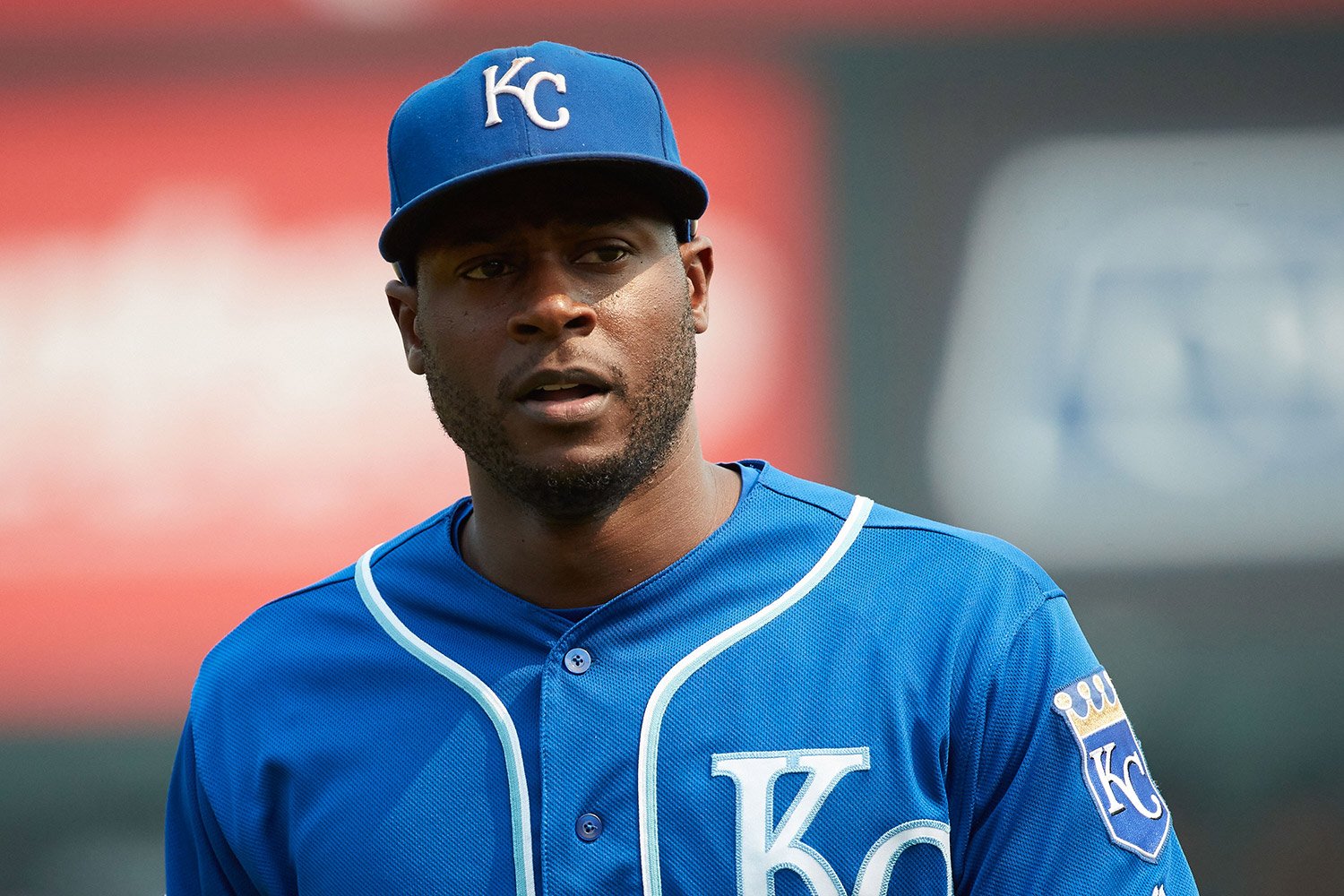 Here it is, the final part of our series on the players who represented the Royals in the All-Star Game just once. As we look at the 2010s and 2020s, we’ll see the franchise’s return to glory. But you might be surprised how many players who were part of that are on this list. Part One: 1969 through 1989 Part Two: 1991 through 2009 Aaron Crow (2011) I think it’s pretty unusual for a rookie to make the All-Star team. For a rookie who is also a middle reliever? Very rare. Yet Crow did just that in his first season. The numbers were plenty good: a 2-1 record, eight holds, and a 1.40 ERA through the end of June. But the convoluted process of picking the team, with every team needing a representative, helped too. Left fielder Alex Gordon didn’t win the players’ vote for a reserve spot. None of the Royals’ starting pitchers were deserving. Closer Joakim Soria might have made a good choice on name recognition, but he struggled enough in the first half of the season that Crow was actually named as closer for about a week, although he didn’t have any save opportunities. So Crow was the pick by AL manager Ron Washington. “Leading up to the day, and knowing every team would get one, I thought for sure it would be Alex Gordon. He’s had a great year. He’s hitting the cover off the ball, and he’s playing great in left field. Hopefully, he gets in with the fan vote because he deserves it. But for me, it probably won’t sink in until I get there, but it’s definitely a surreal feeling right now. It’s something I’ve always dreamed of.” --Crow, quoted by Bob Dutton, The Kansas City Star, July 4, 2011 Gordon did not win the fan vote, so Crow was the Royals’ only representative. Unfortunately, he did not get in the game. Even more unfortunately, his career was cut short by Tommy John surgery after the 2014 season. Billy Butler (2012) Apart from Bo Jackson’s MVP effort in 1989, this might be the most famous entry on this list, at least for Royals fans. With the All-Star Game being held at Kauffman Stadium for the first time since 1973, Kansas City was primed to celebrate whichever of their players made the team. While Gordon again would have been a good choice, Butler turned out to be the only Royal on the team. With a .297/.365/.516 line through the end of June, he was a deserving pick. “It’s going to be fun. I’m so happy that it’s going to be at our ballpark. I know that fans are going to be real happy for me. They’ve always been great to me. It’s just an awesome time for me.”--Butler, quoted by Bob Dutton, The Kansas City Star, July 2, 2012 Of course, the real story turned out to be the Home Run Derby the night before the game. Yankees second baseman Robinson Cano, captain of the AL side in the derby, said before the rosters were announced that he would like to have a Royal on his team. Butler was not necessarily a home run hitter, but in 2012 he was in the middle of a career-high 29-homer season. And it’s the Home Run Derby; sure, you want to win, but it’s an entertainment event as part of an entertainment event. Cano did not pick Butler. For 10 or so minutes, as Cano took his turn in the derby, the boos rained down. Possibly the loudest boos in Kauffman Stadium history. They were only interrupted by raucous cheers when Cano’s hits fell short of the fence. Cano got skunked, the only contestant not to hit at least one homer. Butler downplayed any animosity towards Cano, although he was grateful for the fans’ support. As for the game, Butler grounded out against Cole Hamels in the seventh and struck out in the ninth against Joel Hanrahan. It hardly mattered, as the NL had built up an 8-0 lead before Butler’s first at-bat. This would be Butler’s only All-Star appearance, so, in my mind, the fans booing Cano had a point. Lorenzo Cain (2015) The criminally underrated Cain easily could have been an All-Star in 2014, when he was hitting .315/.351/.440 at the end of June, with his usual excellent defense in center field. But he was passed over. In 2015, Royals fans made sure that he’d be on the team. Kansas City partisans caused quite a stir in the weeks leading up to the game, voting incessantly for the boys in blue; at one point, eight Royals were leading the vote at their position. Eventually, four Royals were voted in as starters, with Cain among them. “If I would have made the All-Star team last year, I probably would have been a little overwhelmed. But just going through that postseason experience, it definitely helped me out tremendously. I’m just enjoying this moment right now. I feel like I’m right where I need to be.”--Cain, quoted by Andy McCullough, The Kansas City Star, July 14, 2015 Batting fifth and playing right field instead of his usual spot, Cain popped up in the first against Zack Greinke, who was traded by Kansas City to Milwaukee in exchange for Cain and the next player on this list. But Cain would collect a single against Madison Bumgarner in the fourth (a bit of revenge for the previous year’s World Series) and an RBI double against Clayton Kershaw in the fifth. That’s a pretty good night. Cain went back to Milwaukee as a free agent before the 2018 season, where he made his second All-Star team that year and finally won his elusive Gold Glove in 2019. Alcides Escobar (2015) Escobar was probably the biggest beneficiary of Kansas City fans’ voting spree for the 2015 All-Star Game. The other three Royals who made the lineup (Cain, Salvador Perez, and Alex Gordon, who ended up missing the game with a groin injury) were, you know, stars. Escobar might seem like a poor choice, but really, there were no standout shortstops in the AL that year, in the post-Derek Jeter void. And he was hitting .281/.316/.367 at the end of June, which isn’t terrible except for the on-base percentage. Also, he was playing great defense; Escobar would win his only Gold Glove at the end of the season. So it was a defensible selection by the fans. It was also exciting for the player. “I’m thinking about the All-Star Game all the time; that’s my dream. Right now I got the opportunity, and right now I feel so happy…I can’t explain my emotions right now.”--Escobar, quoted by Blair Kerkoff, The Kansas City Star, July 6, 2015 While AL manager Ned Yost normally penciled Escobar in at the top of the Royals’ lineup, for this game, he had him hit ninth. So I guess Escobar exceeded expectations by getting one hit, a single off Kershaw, in his two at-bats. But those were his only two at-bats in any All-Star Game, although he played into the 2022 season. Eric Hosmer (2016) Although Hosmer had a terrific year in 2015, once he didn’t get in the game through the fan voting, he was left off the team; likely, all the other Royals who made the team (pitchers Wade Davis and Kelvin Herrera joined the ones mentioned above) made it hard to justify a spot for their first baseman. But when he was hitting .305/.367/.490 through June, he earned a starting spot in 2016. Yost told his first baseman the year before that he would make the team, and had already decided he would push for it in 2016. But it wasn’t necessary, as Hosmer beat Miguel Cabrera by about 220,000 votes. “It’s just a tremendous honor to be recognized by the fans, not only in Kansas City, but throughout the world. And just looking at the roster and going over all the players, it’s an honor to share the same locker room as them and be honored as an All-Star.”--Hosmer, quoted by Rustin Dodd, The Kansas City Star, July 6, 2016 Hosmer made his presence felt in San Diego. Facing his old teammate Johnny Cueto, Hosmer homered with one out in the second to tie the game (Perez would hit a two-run shot later in the inning to give the AL the lead for good). In the third, he collected an RBI single against Jose Fernandez. That all earned him the MVP award, joining Bo Jackson as the only Royals to win the award to date. Hosmer was also the first Royal to hit a home run in the game since Bo did it in 1989. And just like Bo, Hosmer would only appear in one All-Star Game in his career. Jason Vargas (2017) Vargas was the subject of some laughs among Royals fans when the team said they had “a major baseball announcement” after the 2013 season. The announcement turned out to be the signing of a pitcher who went 9-8 with a 4.02 ERA for the Angels the previous season. But when Vargas helped the Royals win the 2014 AL pennant, the signing seemed pretty good. Unfortunately, Vargas suffered a torn UCL in 2015, missing half of that season and most of 2016 after Tommy John surgery. So it was a cool story when he began the 2017 season hot, going 6-3 with a 2.39 ERA through May. Vargas then pitched his way to an All-Star Game appearance with six wins in June, dropping his ERA to 2.22 in the process. “I’ve never been invited before, so I am definitely looking forward to heading out to Miami and taking it all in. To be acknowledged and recognized with the best players in the game is a huge honor.”--Vargas, quoted by Alec McChesney, The Kansas City Star, July 3, 2017 With the lowest ERA in the AL and more wins than anyone in baseball except Clayton Kershaw, Vargas was considered a possibility for the starting nod. But Chris Sale ended up getting that assignment. Vargas came into the game in the fourth inning. Nolan Arenado led off with a single but decided to tag up on a fly ball to center field, and Mookie Betts made a strong throw to second for the double play. Marcell Ozuna grounded out, and that was it. Vargas threw only 10 pitches. Vargas did lead the majors in wins that season with 18, but would only pitch two more seasons. This was his only All-Star appearance, but he can always say he has an ERA of 0.00 in the competition. Andrew Benintendi (2022) The Royals made a pretty good deal when they acquired Benintendi from Boston before the 2021 season, basically giving up nothing and getting a Gold Glove winner in 2021 and an All-Star in 2022. Kansas City was pretty bad in both of those seasons but Benintendi was a good choice for the team, as he was hitting .305/.370/.383 through the end of June, along with the strong defense you’d expect from a Gold Glove winner. It was his first time as an All-Star, although he played in the Futures Game in 2016. “It’s a game you want to play in, a game you grew up watching. So to be a part of it will be fun. I’m definitely going to take it all in and just try to enjoy it as much as possible.”--Benintendi, quoted by Lynn Worthy, The Kansas City Star, July 12, 2022 Benintendi entered the game in the fourth, replacing Giancarlo Stanton just after he hit the game-tying two-run home run that would get him the MVP award. Benintendi grounded out and struck out in his two at-bats. Just over a week later, the Royals traded the pending free agent to the Yankees. He signed with the White Sox after the season. His first two seasons on the South Side were kind of rough, but he’s had a couple of decent ones since then. Still, this remains his only All-Star appearance to date. Seth Lugo, Cole Ragans (2024) Kris Bubic, Carlos Estevez, Maikel Garcia (2025) Michael Wacha (2026) I lumped all these players together since, with the exception of Bubic, they are still Royals, for now anyway. Plus, these ought to be fresh enough in our memories. Will any of them work their way off this list? Garcia seems like a decent bet if he can stay healthy, but the rest might be staying on here.
-
- 2
-

-
- aaron crow
- billy butler
- (and 5 more)
-
Thanks! Dye was incredible as a Royal (and with the A's and another team I don't care to mention. 🙂)
-
Image courtesy of © RVR Photos-Imagn Images Here is the second part of our series on the Royals who made the All-Star team just once in their Kansas City careers. You can catch up on part one here. This part will cover the 1990s and 2000s, which were obviously not some of the greatest times in team history. Still, there are plenty of good players here, and probably a couple of surprises. Danny Tartabull (1991) After the Royals acquired Tartabull in a good trade with Seattle following the 1986 season (sending pitcher Scott Bankhead and outfielder Mike Kingery to the Mariners), the new right fielder had solid seasons in 1987-89. But he was always kind of overshadowed by George Brett and Bo Jackson. Tartabull was a bit miffed he didn’t join Bo Jackson on the 1989 team, and he had a good case. Then he suffered through an injury-plagued 1990 season. But in 1991, he got off to a good start, hitting .292/.329/.466 through May. Then he bashed nine home runs in June, along with a .368/.421/.736 line for the month. And still, as the time grew near to pick the reserves, there was a question of whether he would make the team. But Oakland manager Tony LaRussa did select the outfielder for the team; it probably helped that Tartabull went 6-for12 with two doubles and a home run in a series in Oakland at the end of June. “Overall, I’m grateful, privileged, and honored–all three. I’m grateful because they left off a lot of deserving guys.”--Tartabull, quoted by Dick Kaegel, The Kansas City Star, July 5, 1991 When NL manager Lou Piniella (featured in part one of this series!) chose Atlanta’s Tom Glavine as his starting pitcher, LaRussa decided to use the right-handed Tartabull as his DH. So the Royals’ lone representative was in the starting lineup. It didn’t work out, though. Glavine struck out Tartabull to end the first inning, and the Royal lined out to third to end the third inning. When his turn to bat came around again, it was the sixth inning and time to get some reserves in the game, so Harold Baines pinch-hit for him. Tartabull left the Royals for the New York Yankees as a free agent after the 1991 season, and despite hitting 81 home runs over the next 3 ½ seasons, he never made an All-Star team again. But he did get to be on a couple of episodes of Seinfeld, so there’s that. David Cone (1994) Most of you know that Cone, after a cup of coffee with the Royals in 1986, was traded away in possibly the worst deal in Royals history after the season. After a so-so 1987 season with the New York Mets, he blossomed in 1988, winning 20 games. He made the All-Star team that year and again in 1992 for the Mets before a midseason trade sent him to the Toronto Blue Jays. After helping them to a World Series title, Cone returned to his hometown as a free agent after the 1993 season, as Royals owner Ewing Kauffman opened his checkbook to correct the team’s earlier mistake. Kansas City didn’t win a title while Cone was back in town, but it was hardly his fault. In 1993, Cone went 11-14 despite a 3.33 ERA, thanks to a criminal lack of run support; his 7.2 bWAR total tells you he was outstanding. It was more of the same in 1994, but with better luck, as he finished 16-5 with a 2.93 ERA before the strike ended the season in August. That was good for a Cy Young Award. But first, Cone would make the All-Star team for his only time as a Royal. On the day the All-Star pitchers were announced, Cone pitched the Royals to a win over his former Blue Jays teammates, giving Toronto manager Cito Gaston a tough decision on his starter for the All-Star Game. “I’d welcome the opportunity, no doubt about it. To be on that mound to start a game in a Royals uniform would be tremendous…It’d be a dream come true.”--Cone, quoted by Dick Kaegel, The Kansas City Star, July 4, 1994 But it wasn’t to be. Gaston selected his own pitcher, Jimmy Key, because he would be pitching with full rest, as opposed to Cone on three days’ rest. Cone followed Key on the mound, allowing three runs in the third inning but recovering to pitch a scoreless fourth. Of course, in those pre-interleague play days, many of the NL hitters had seen him when he was a Met, so perhaps they had an advantage. The Royals traded Cone away again before the 1995 season began, mostly as a cost-cutting move. He would be an All-Star twice more, but those were both with the New York Yankees. Kevin Appier (1995) The vastly underrated Appier, the Royals’ first-round pick in the 1987 draft, was 15-8 with a 2.46 ERA in 1992. But he pitched on the Sunday before the All-Star break and was left off the team. In 1993, he led the league in bWAR and captured the ERA title (2.56) while winning 18 games. But again, he pitched that final game before the break. No selection. He was not nearly as effective in 1994, so wasn’t really considered as an option. But in 1995, manager Bob Boone juggled his rotation to allow Appier to pitch the Friday before the All-Star Game. It worked! At 11-3 with a 2.30 ERA, Appier was at last an All-Star. “I wish I could have made them all, but it feels very good to at least make this one. Hopefully, it’s the first of many.”--Appier, quoted by Mike DeArmond, The Kansas City Star, July 3, 1995 Like Cone the year before, Appier was considered for the start by AL manager Buck Showalter, who ultimately chose Randy Johnson. Also like Cone, Appier was the second man on the mound for the AL. Unlike Cone, Appier was outstanding. He retired all six hitters he faced, with five groundouts and a strikeout. Six of the NL’s best hitters couldn’t even get the ball out of the infield, and the last two batters he faced were some guys named Tony Gwynn and Barry Bonds. But it was not the first of many appearances for Appier; rather, it was the only one of his career. Injuries took some of his effectiveness, and while he had some good seasons left, he was not quite as dominant. The Royals dealt him to Oakland at the trade deadline in 1999, although he would briefly pitch for KC in 2003 and 2004 to wrap up his career. Dean Palmer (1998) Palmer is kind of perfect for this sort of article. Acquired from the Texas Rangers just ahead of the trade deadline in 1997, Palmer brought the power-hitting ability the Royals always seem to struggle to find. He hit nine home runs over the final two months of that season, a total that placed him fourth on the team for the year. Seriously. Since two of the players who finished ahead of him (Chili Davis and Jay Bell) were free agents, Kansas City was depending on Palmer to keep that up. He certainly did, hitting 16 home runs with a .288/.334/.523 line through the end of June. That was tied with Jeff King for the team lead, but Palmer got the nod. Although he had bashed 33 home runs in 1993 and 38 in 1996, it was his first selection. And he almost had to miss the game, as he was hit by a pitch on the elbow the day after his selection was announced. “I was pretty worried. The way it looked a couple of days after it happened, I didn’t know if I had a chance to play in the All-Star Game.”--Palmer, quoted by Joe Posnanski, The Kansas City Star, July 6, 1998 But play he did, although his one at-bat, as a pinch–hitter in the eighth inning, resulted in a double play. Palmer had a good second half of the season, though, making a run at Steve Balboni’s single-season franchise record of 36 home runs. Palmer ended up just short at 34. A free agent after the season, he signed with Detroit. Although he hit 38 home runs for the Tigers in 1999, he didn’t make the All-Star team, and 1998 ended up as his only appearance. Jermaine Dye (2000) I don’t know if the Royals had the best young outfield in baseball in 1999 and 2000, but they had to be pretty close. With 25-year-olds Johnny Damon and Dye flanking the 22-year-old Carlos Beltran in 1999, the future looked bright for Kansas City. But Dye was hardly an overnight success. Acquired from the Atlanta Braves just before the 1997 season started, Dye struggled for two years before he unlocked his ability in 1999, with an All-Star worthy .294/.354/.526 line. He wasn’t selected that season, but would not be denied in 2000. In fact, he was voted in as a starter, the Royals’ first since Tartabull was the DH in 1991. “Fans relate more to the way you play on the field and how you give 100 percent than the big-name players. Finally, players on this team are getting noticed. Kansas City is finally being out on the map.”--Dye, quoted by Steve Rock. The Kansas City Star, July 5, 2000 To make the moment a little sweeter for Dye, the game was played in Atlanta. Dye hit a fly ball in the second. He began the fourth with a walk and came around to score on a Derek Jeter single. He finished his evening with a strikeout against Glavine, who apparently had it in for Kansas City right fielders in the Midsummer Classic. And like another player on this list (Cone), Dye would also be dealt away in a horrific trade, going to Colorado at the 2001 trade deadline for Neifi Perez (the Rockies immediately traded Dye to Oakland for three players). Despite some strong years with the A’s and then the Chicago White Sox, Dye would not be an All-Star again until 2006. Mike MacDougal (2003) When the Royals got out to their surprising hot start in 2003, MacDougal was one of the biggest beneficiaries. He had appeared in a total of nine major-league games before 2003, and by the end of April, he had 10 saves. That will get you on the All-Star radar. Although his pace slowed down some, he still had 20 saves by the end of June, including an incredible stretch of five straight games with one (there was an off-day in there, but still…). And that got him on the team. For once, the Royals had more than the one required representative, as Mike Sweeney (who was usually the lone Royal selected in those days) joined him in Chicago. Royals manager Tony Pena notified MacDougal before the Royals’ game against Detroit, and MacDougal celebrated later by nailing down his 24th save of the year to tie for the AL lead. “When I first got down to the bullpen and we were talking about it like, man, now the pressure is really on. And the guys are like, no–no pressure. (Jason) Grimsley’s like, ‘There’s no pressure You do what you need to do. You’ll be fine.’”--MacDougal, quoted by Dick Kaegel, The Kansas City Star, July 7, 2003 This was the first All-Star Game after the infamous tie in 2002 when both sides ran out of pitchers, so maybe AL manager Mike Scioscia was worried about making sure he had enough guys in reserve. Whatever the reason, MacDougal did not get to pitch. So his most notable moment was getting booed by the White Sox fans in pregame introductions. Which was kind of cool, since it meant for once in that era that the Royals were taken seriously by other teams’ fans. MacDougal pitched in the majors into the 2012 season, but never was selected for an All-Star Game again. Still, for a guy who once suffered a fractured skull after being hit in the head by a flying bat, making it once was pretty cool. Ken Harvey (2004) Harvey was an accidental All-Star of sorts, although he certainly earned it in the first half of 2004. After a solid 2003 season, his rookie year, Harvey started 2004 hot, hitting .397 through April. He cooled off in May but another hot streak got his average up to .375 in early June. However, with the Royals suffering through a miserable season, most people assumed that Carlos Beltran would be the team’s representative, especially under voting rules at the time that would allow the players to select eight reserve position players and eight pitchers. But on June 24, the Royals dealt Beltran, headed for free agency after the season, to Houston. Now it was down to Sweeney and Harvey. After the player and fan votes failed to select a Royal (as an odd side note, MLB added Beltran to the AL team, said he couldn’t play in the game, then relented and let him suit up for the NL), AL manager Joe Torre went with Harvey. “There’s no doubt this is by far the biggest day of my baseball career. To be on the field and acknowledged with the greatest players in the game is unbelievable. I’m almost at a loss for words.”--Harvey, quoted by Bob Dutton, The Kansas City Star, July 5, 2004 Harvey even got the honor of being the first pinch-hitter Torre used, in the third inning. Unfortunately, he struck out against Randy Johnson, hardly the only player to do so. Also unfortunately, Harvey would suffer a series of injuries after 2004, and would not play in the majors again after a handful of games in 2005. Mark Redman (2006) Well, here it is. Almost any list of worst All-Star selections will include poor Redman, who overall had a decent career. Acquired from Pittsburgh before the 2006 season, Redman was mostly in Kansas City to eat some innings because the Royals were required to play 162 games. And while his overall numbers in the first half weren’t great, he did win all five of his starts in June with a 3.74 ERA, which for the 2006 Royals was just about 1968 Bob Gibson territory. I’m not going to make the case that Redman was worthy of the pick, but he wasn’t a terrible pitcher. However, it probably would have made more sense for AL manager Ozzie Guillen to select second baseman Mark Grudzielanek or outfielder David DeJesus. Grudzielanek was hitting .279/.316/.375 at the end of June, plus was a reasonably well-known name who had not been charged with an error during the first half of the season. DeJesus missed time in the first half of the season but was hitting .294/.389/.471 through June 30. Or even third baseman Mark Teahen: .252/.298/.409 at the end of June. Maybe Guillen meant to choose one of the other Marks and there was a miscommunication? “I was surprised. They told me during the game. I’m thrilled. I’m just happy the team is playing good baseball. That’s what helped me get the chance to go.”--Redman, quoted by Bob Dutton, The Kansas City Star, July 3, 2006 It’s unfortunate that what could have been a heart-warming story was overshadowed by the pundits and fans mocking the Royals and this selection. Redman’s father had undergone heart surgery on June 5. Redman’s mom had also been diagnosed with breast cancer early in the season. So the selection was a nice moment for Redman, even though he didn’t actually appear in the game. He would be through as a major-leaguer roughly two years later, so this and his 2003 World Series ring were career highlights. Gil Meche (2007) After losing 310 games the previous three seasons, the Royals decided to at least try a little bit to act like a major league franchise. Part of that was signing Meche to a large free-agent contract (five years, $55 million; not a lot by today’s standards but then it was equal to Sweeney’s contract as the largest in franchise history). Some people questioned the move, as Meche was not a star, but it worked right away, as Meche was 5-6 despite a tidy 3.28 ERA through the end of June. He was pitching deep into games and putting together a good season despite the record (and of course, the Royals were still pretty bad). “I think coming in to a new team, with all the hype about everything about me coming here, I’m pretty pleased with what I’ve done this year.”--Meche, quoted by Sam Mellinger, The Kansas City Star, July 2, 2007 But Meche did not appear in the game, and this was his only All-Star selection. He had one more good season, then began breaking down. Meche famously retired before the 2011 season, walking away from the last $12 million on his contract when he easily could have played out the final year and been paid even if he were injured. Zack Greinke (2009) Really! Greinke made six All-Star teams, but only one while he was a Royal. This, of course, was the year when Greinke was probably the best pitcher on the planet, as he went 16-8 (for a 65-win team) with a 2.16 ERA and 10.4 bWAR, a full three wins better than the second-best total of Tim Lincecum. The Cy Young voters were able to overlook the relatively low win total and acknowledge the obvious. Once Greinke started the 2009 season with six wins in six starts and a 0.40 ERA, it was really just a question of whether he would start the All-Star Game, not if he would make it. Either way, with the game in St. Louis, Greinke had one wish. “Hopefully I get an at-bat. If that’s what it is, that’ll be the number one thing.”--Greinke, quoted by Sam Mellinger, The Kansas City Star, July 6, 2009 Unfortunately, he got neither the start nor the plate appearance. AL manager Joe Maddon chose to go with Toronto’s Roy Halladay for the start. Greinke got to pitch one inning, but at least he got two strikeouts and a popup. He didn’t get to hit, as Carl Crawford batted for him in the top of the fourth. Since this was the era when the All-Star Game decided home-field advantage in the World Series, I guess Maddon thought there was no time for whimsy. By the time Greinke made his next All-Star team, the DH was being used, so I don’t think he ever got that at-bat. He did get to start the 2015 game, though. View full article
-
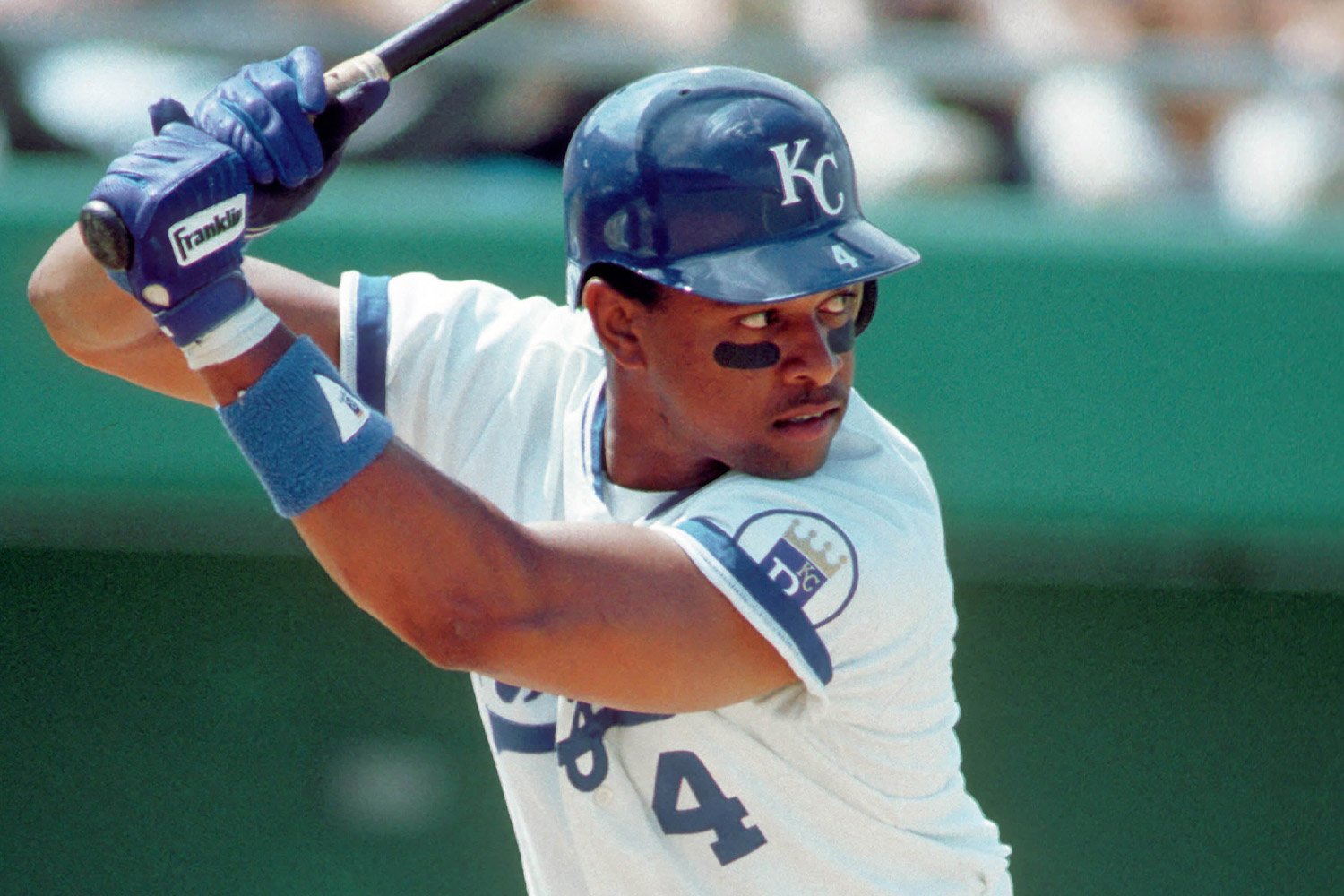 Here is the second part of our series on the Royals who made the All-Star team just once in their Kansas City careers. You can catch up on part one here. This part will cover the 1990s and 2000s, which were obviously not some of the greatest times in team history. Still, there are plenty of good players here, and probably a couple of surprises. Danny Tartabull (1991) After the Royals acquired Tartabull in a good trade with Seattle following the 1986 season (sending pitcher Scott Bankhead and outfielder Mike Kingery to the Mariners), the new right fielder had solid seasons in 1987-89. But he was always kind of overshadowed by George Brett and Bo Jackson. Tartabull was a bit miffed he didn’t join Bo Jackson on the 1989 team, and he had a good case. Then he suffered through an injury-plagued 1990 season. But in 1991, he got off to a good start, hitting .292/.329/.466 through May. Then he bashed nine home runs in June, along with a .368/.421/.736 line for the month. And still, as the time grew near to pick the reserves, there was a question of whether he would make the team. But Oakland manager Tony LaRussa did select the outfielder for the team; it probably helped that Tartabull went 6-for12 with two doubles and a home run in a series in Oakland at the end of June. “Overall, I’m grateful, privileged, and honored–all three. I’m grateful because they left off a lot of deserving guys.”--Tartabull, quoted by Dick Kaegel, The Kansas City Star, July 5, 1991 When NL manager Lou Piniella (featured in part one of this series!) chose Atlanta’s Tom Glavine as his starting pitcher, LaRussa decided to use the right-handed Tartabull as his DH. So the Royals’ lone representative was in the starting lineup. It didn’t work out, though. Glavine struck out Tartabull to end the first inning, and the Royal lined out to third to end the third inning. When his turn to bat came around again, it was the sixth inning and time to get some reserves in the game, so Harold Baines pinch-hit for him. Tartabull left the Royals for the New York Yankees as a free agent after the 1991 season, and despite hitting 81 home runs over the next 3 ½ seasons, he never made an All-Star team again. But he did get to be on a couple of episodes of Seinfeld, so there’s that. David Cone (1994) Most of you know that Cone, after a cup of coffee with the Royals in 1986, was traded away in possibly the worst deal in Royals history after the season. After a so-so 1987 season with the New York Mets, he blossomed in 1988, winning 20 games. He made the All-Star team that year and again in 1992 for the Mets before a midseason trade sent him to the Toronto Blue Jays. After helping them to a World Series title, Cone returned to his hometown as a free agent after the 1993 season, as Royals owner Ewing Kauffman opened his checkbook to correct the team’s earlier mistake. Kansas City didn’t win a title while Cone was back in town, but it was hardly his fault. In 1993, Cone went 11-14 despite a 3.33 ERA, thanks to a criminal lack of run support; his 7.2 bWAR total tells you he was outstanding. It was more of the same in 1994, but with better luck, as he finished 16-5 with a 2.93 ERA before the strike ended the season in August. That was good for a Cy Young Award. But first, Cone would make the All-Star team for his only time as a Royal. On the day the All-Star pitchers were announced, Cone pitched the Royals to a win over his former Blue Jays teammates, giving Toronto manager Cito Gaston a tough decision on his starter for the All-Star Game. “I’d welcome the opportunity, no doubt about it. To be on that mound to start a game in a Royals uniform would be tremendous…It’d be a dream come true.”--Cone, quoted by Dick Kaegel, The Kansas City Star, July 4, 1994 But it wasn’t to be. Gaston selected his own pitcher, Jimmy Key, because he would be pitching with full rest, as opposed to Cone on three days’ rest. Cone followed Key on the mound, allowing three runs in the third inning but recovering to pitch a scoreless fourth. Of course, in those pre-interleague play days, many of the NL hitters had seen him when he was a Met, so perhaps they had an advantage. The Royals traded Cone away again before the 1995 season began, mostly as a cost-cutting move. He would be an All-Star twice more, but those were both with the New York Yankees. Kevin Appier (1995) The vastly underrated Appier, the Royals’ first-round pick in the 1987 draft, was 15-8 with a 2.46 ERA in 1992. But he pitched on the Sunday before the All-Star break and was left off the team. In 1993, he led the league in bWAR and captured the ERA title (2.56) while winning 18 games. But again, he pitched that final game before the break. No selection. He was not nearly as effective in 1994, so wasn’t really considered as an option. But in 1995, manager Bob Boone juggled his rotation to allow Appier to pitch the Friday before the All-Star Game. It worked! At 11-3 with a 2.30 ERA, Appier was at last an All-Star. “I wish I could have made them all, but it feels very good to at least make this one. Hopefully, it’s the first of many.”--Appier, quoted by Mike DeArmond, The Kansas City Star, July 3, 1995 Like Cone the year before, Appier was considered for the start by AL manager Buck Showalter, who ultimately chose Randy Johnson. Also like Cone, Appier was the second man on the mound for the AL. Unlike Cone, Appier was outstanding. He retired all six hitters he faced, with five groundouts and a strikeout. Six of the NL’s best hitters couldn’t even get the ball out of the infield, and the last two batters he faced were some guys named Tony Gwynn and Barry Bonds. But it was not the first of many appearances for Appier; rather, it was the only one of his career. Injuries took some of his effectiveness, and while he had some good seasons left, he was not quite as dominant. The Royals dealt him to Oakland at the trade deadline in 1999, although he would briefly pitch for KC in 2003 and 2004 to wrap up his career. Dean Palmer (1998) Palmer is kind of perfect for this sort of article. Acquired from the Texas Rangers just ahead of the trade deadline in 1997, Palmer brought the power-hitting ability the Royals always seem to struggle to find. He hit nine home runs over the final two months of that season, a total that placed him fourth on the team for the year. Seriously. Since two of the players who finished ahead of him (Chili Davis and Jay Bell) were free agents, Kansas City was depending on Palmer to keep that up. He certainly did, hitting 16 home runs with a .288/.334/.523 line through the end of June. That was tied with Jeff King for the team lead, but Palmer got the nod. Although he had bashed 33 home runs in 1993 and 38 in 1996, it was his first selection. And he almost had to miss the game, as he was hit by a pitch on the elbow the day after his selection was announced. “I was pretty worried. The way it looked a couple of days after it happened, I didn’t know if I had a chance to play in the All-Star Game.”--Palmer, quoted by Joe Posnanski, The Kansas City Star, July 6, 1998 But play he did, although his one at-bat, as a pinch–hitter in the eighth inning, resulted in a double play. Palmer had a good second half of the season, though, making a run at Steve Balboni’s single-season franchise record of 36 home runs. Palmer ended up just short at 34. A free agent after the season, he signed with Detroit. Although he hit 38 home runs for the Tigers in 1999, he didn’t make the All-Star team, and 1998 ended up as his only appearance. Jermaine Dye (2000) I don’t know if the Royals had the best young outfield in baseball in 1999 and 2000, but they had to be pretty close. With 25-year-olds Johnny Damon and Dye flanking the 22-year-old Carlos Beltran in 1999, the future looked bright for Kansas City. But Dye was hardly an overnight success. Acquired from the Atlanta Braves just before the 1997 season started, Dye struggled for two years before he unlocked his ability in 1999, with an All-Star worthy .294/.354/.526 line. He wasn’t selected that season, but would not be denied in 2000. In fact, he was voted in as a starter, the Royals’ first since Tartabull was the DH in 1991. “Fans relate more to the way you play on the field and how you give 100 percent than the big-name players. Finally, players on this team are getting noticed. Kansas City is finally being out on the map.”--Dye, quoted by Steve Rock. The Kansas City Star, July 5, 2000 To make the moment a little sweeter for Dye, the game was played in Atlanta. Dye hit a fly ball in the second. He began the fourth with a walk and came around to score on a Derek Jeter single. He finished his evening with a strikeout against Glavine, who apparently had it in for Kansas City right fielders in the Midsummer Classic. And like another player on this list (Cone), Dye would also be dealt away in a horrific trade, going to Colorado at the 2001 trade deadline for Neifi Perez (the Rockies immediately traded Dye to Oakland for three players). Despite some strong years with the A’s and then the Chicago White Sox, Dye would not be an All-Star again until 2006. Mike MacDougal (2003) When the Royals got out to their surprising hot start in 2003, MacDougal was one of the biggest beneficiaries. He had appeared in a total of nine major-league games before 2003, and by the end of April, he had 10 saves. That will get you on the All-Star radar. Although his pace slowed down some, he still had 20 saves by the end of June, including an incredible stretch of five straight games with one (there was an off-day in there, but still…). And that got him on the team. For once, the Royals had more than the one required representative, as Mike Sweeney (who was usually the lone Royal selected in those days) joined him in Chicago. Royals manager Tony Pena notified MacDougal before the Royals’ game against Detroit, and MacDougal celebrated later by nailing down his 24th save of the year to tie for the AL lead. “When I first got down to the bullpen and we were talking about it like, man, now the pressure is really on. And the guys are like, no–no pressure. (Jason) Grimsley’s like, ‘There’s no pressure You do what you need to do. You’ll be fine.’”--MacDougal, quoted by Dick Kaegel, The Kansas City Star, July 7, 2003 This was the first All-Star Game after the infamous tie in 2002 when both sides ran out of pitchers, so maybe AL manager Mike Scioscia was worried about making sure he had enough guys in reserve. Whatever the reason, MacDougal did not get to pitch. So his most notable moment was getting booed by the White Sox fans in pregame introductions. Which was kind of cool, since it meant for once in that era that the Royals were taken seriously by other teams’ fans. MacDougal pitched in the majors into the 2012 season, but never was selected for an All-Star Game again. Still, for a guy who once suffered a fractured skull after being hit in the head by a flying bat, making it once was pretty cool. Ken Harvey (2004) Harvey was an accidental All-Star of sorts, although he certainly earned it in the first half of 2004. After a solid 2003 season, his rookie year, Harvey started 2004 hot, hitting .397 through April. He cooled off in May but another hot streak got his average up to .375 in early June. However, with the Royals suffering through a miserable season, most people assumed that Carlos Beltran would be the team’s representative, especially under voting rules at the time that would allow the players to select eight reserve position players and eight pitchers. But on June 24, the Royals dealt Beltran, headed for free agency after the season, to Houston. Now it was down to Sweeney and Harvey. After the player and fan votes failed to select a Royal (as an odd side note, MLB added Beltran to the AL team, said he couldn’t play in the game, then relented and let him suit up for the NL), AL manager Joe Torre went with Harvey. “There’s no doubt this is by far the biggest day of my baseball career. To be on the field and acknowledged with the greatest players in the game is unbelievable. I’m almost at a loss for words.”--Harvey, quoted by Bob Dutton, The Kansas City Star, July 5, 2004 Harvey even got the honor of being the first pinch-hitter Torre used, in the third inning. Unfortunately, he struck out against Randy Johnson, hardly the only player to do so. Also unfortunately, Harvey would suffer a series of injuries after 2004, and would not play in the majors again after a handful of games in 2005. Mark Redman (2006) Well, here it is. Almost any list of worst All-Star selections will include poor Redman, who overall had a decent career. Acquired from Pittsburgh before the 2006 season, Redman was mostly in Kansas City to eat some innings because the Royals were required to play 162 games. And while his overall numbers in the first half weren’t great, he did win all five of his starts in June with a 3.74 ERA, which for the 2006 Royals was just about 1968 Bob Gibson territory. I’m not going to make the case that Redman was worthy of the pick, but he wasn’t a terrible pitcher. However, it probably would have made more sense for AL manager Ozzie Guillen to select second baseman Mark Grudzielanek or outfielder David DeJesus. Grudzielanek was hitting .279/.316/.375 at the end of June, plus was a reasonably well-known name who had not been charged with an error during the first half of the season. DeJesus missed time in the first half of the season but was hitting .294/.389/.471 through June 30. Or even third baseman Mark Teahen: .252/.298/.409 at the end of June. Maybe Guillen meant to choose one of the other Marks and there was a miscommunication? “I was surprised. They told me during the game. I’m thrilled. I’m just happy the team is playing good baseball. That’s what helped me get the chance to go.”--Redman, quoted by Bob Dutton, The Kansas City Star, July 3, 2006 It’s unfortunate that what could have been a heart-warming story was overshadowed by the pundits and fans mocking the Royals and this selection. Redman’s father had undergone heart surgery on June 5. Redman’s mom had also been diagnosed with breast cancer early in the season. So the selection was a nice moment for Redman, even though he didn’t actually appear in the game. He would be through as a major-leaguer roughly two years later, so this and his 2003 World Series ring were career highlights. Gil Meche (2007) After losing 310 games the previous three seasons, the Royals decided to at least try a little bit to act like a major league franchise. Part of that was signing Meche to a large free-agent contract (five years, $55 million; not a lot by today’s standards but then it was equal to Sweeney’s contract as the largest in franchise history). Some people questioned the move, as Meche was not a star, but it worked right away, as Meche was 5-6 despite a tidy 3.28 ERA through the end of June. He was pitching deep into games and putting together a good season despite the record (and of course, the Royals were still pretty bad). “I think coming in to a new team, with all the hype about everything about me coming here, I’m pretty pleased with what I’ve done this year.”--Meche, quoted by Sam Mellinger, The Kansas City Star, July 2, 2007 But Meche did not appear in the game, and this was his only All-Star selection. He had one more good season, then began breaking down. Meche famously retired before the 2011 season, walking away from the last $12 million on his contract when he easily could have played out the final year and been paid even if he were injured. Zack Greinke (2009) Really! Greinke made six All-Star teams, but only one while he was a Royal. This, of course, was the year when Greinke was probably the best pitcher on the planet, as he went 16-8 (for a 65-win team) with a 2.16 ERA and 10.4 bWAR, a full three wins better than the second-best total of Tim Lincecum. The Cy Young voters were able to overlook the relatively low win total and acknowledge the obvious. Once Greinke started the 2009 season with six wins in six starts and a 0.40 ERA, it was really just a question of whether he would start the All-Star Game, not if he would make it. Either way, with the game in St. Louis, Greinke had one wish. “Hopefully I get an at-bat. If that’s what it is, that’ll be the number one thing.”--Greinke, quoted by Sam Mellinger, The Kansas City Star, July 6, 2009 Unfortunately, he got neither the start nor the plate appearance. AL manager Joe Maddon chose to go with Toronto’s Roy Halladay for the start. Greinke got to pitch one inning, but at least he got two strikeouts and a popup. He didn’t get to hit, as Carl Crawford batted for him in the top of the fourth. Since this was the era when the All-Star Game decided home-field advantage in the World Series, I guess Maddon thought there was no time for whimsy. By the time Greinke made his next All-Star team, the DH was being used, so I don’t think he ever got that at-bat. He did get to start the 2015 game, though.
- 2 comments
-
- 1
-
-
- danny tartabull
- zack greinke
- (and 8 more)
-
Image courtesy of © RVR Photos-Imagn Images With All-Star voting underway, I thought it would be interesting to look at the Royals’ one-time All-Stars. After all, you already know about George Brett and Salvador Perez. There are some surprising names on this list, as well as some relatively obscure players. To start with, let’s examine the one-timers from the club’s inception in 1969 through the 1980s (that’s a good place to end Part 1, as you’ll see). I borrowed this concept from the Phillies site, The Good Phight. Ellie Rodriguez (1969) The Royals’ first team produced one All-Star, which probably isn’t that surprising; expansion teams are usually made of castoffs, after all. Rodriguez was deemed expendable by the New York Yankees before the 1968 expansion draft, and the Royals used the 13th pick on him. He was the Opening Day catcher but didn’t really claim the starting job until late May. Given regular playing time, he responded with a hot month of June, hitting .281/.361/.422. His season totals on July 16, when the reserves were chosen for the AL team, were just .257/.344/.341 with two home runs and 13 RBI. But AL manager Mayo Smith only selected eight pitchers, and stocked his bench with six outfielders. Also, the Royals’ brass spoke highly of Rodriguez’s defensive ability. “There isn’t any doubt about his defensive ability. He takes command behind the plate and has the knack of making a pitcher bear down all the time.” --Royals general manager Cedric Tallis, quoted by Paul O’Boynick, The Kansas City Times, July 17, 1969 “He is a good analyst behind the plate and is quick on blocking low pitches. Ellie has come a long way since spring training. He’s a bulldog behind the plate.” --Royals manager Joe Gordon, quoted by Paul O’Boynick, The Kansas City Times, July 17, 1969 Sadly, Rodriguez did not get in the game. Starter Bill Freehan of Detroit played the first six innings, and Minnesota’s John Roseboro played the final three. Smith did use a pinch-hitter for Roseboro in the bottom of the ninth, but the game ended with the NL on top, 9-3. Rodriguez, who just passed away in April at age 79, was dealt to Milwaukee after the 1970 season. He would be named to one more All-Star team while with the Brewers during the 1972 campaign. He didn’t get to play in that one, either. Lou Piniella (1972) I suppose lots of people would guess that Sweet Lou was the Royals’ first All-Star, as he won the Rookie of the Year award in 1969. But despite a solid .282/.325/.416 line that year, Piniella had to wait until 1972 to be named to the All-Star team. In the middle of what was probably his best season, Piniella was a deserving choice. When the reserves were named by manager Earl Weaver on July 20 (the game was really late on the calendar that year), Piniella was second in the AL with a .321 batting average, and he had nine home runs and 43 RBI. “Sure, I’m happy, very happy. Elated might be a better way to describe the way I feel. You hear talk about how some players would rather have three days off. I don’t know if I’ll get to play, but I’d rather be at the All-Star Game.” --Piniella, quoted by Sid Bordman, The Kansas City Star, July 21, 1972 Piniella did get to play, grounding out as a pinch-hitter in the 10th inning of the NL’s 4-3 win. Piniella was traded by the Royals to the New York Yankees after the 1973 season. Perhaps surprisingly, 1972 was his only All-Star Game as a player; of course, he would manage the National League in the 1991 game after his Cincinnati Reds won the pennant and World Series the previous year. Richie Scheinblum (1972) Piniella was joined on the All-Star team by his outfield mate, Scheinblum. Actually, Amos Otis also made the team, so the Royals’ entire starting outfield was selected, along with second baseman Cookie Rojas. Also, manager Bob Lemon was named as one of Weaver’s coaches for the game, giving Kansas City five representatives. Scheinblum, who was in his first year with the Royals after playing sparingly for Cleveland and Washington, was having the season of his life. He was leading the league with a .325 average when the reserves were selected (while Piniella was second, Otis was third at .309). “I’m glad all three of us were picked. I thought maybe they’d take two–but not three. This is probably more of a thrill for me than the others. This time last year, I was in the minors. I’m not fast on the bases or in the outfield, but I give 100 percent. I’m just glad people have noticed I’m hitting.”--Scheinblum, quoted by Sid Bordman, The Kansas City Star, July 21, 1972 Despite that scouting report, Scheinblum did get to play in the game, replacing Bobby Murcer in the outfield in the sixth inning. He only got one at-bat, a groundout that came just after Rojas hit a two-run home run to give the AL the lead. Scheinblum finished the year with a .300/.383/.418 line, and the Royals wisely sold high, trading him to Cincinnati after the season for Hal McRae, a deal which helped launch Kansas City’s decade-plus of strong teams. Scheinblum would be done as a major leaguer after the 1974 season, and this was his only appearance in the Midsummer Classic. Larry Gura (1980) Larry Gura went 16-4 with a 2.72 ERA in 1978 and finished seventh in the Cy Young vote. He didn’t make the All-Star team. In 1979, he fell back to a 13-12 mark with a 4.47 ERA. But in 1980, he found himself with a 10-3 record and a 2.09 ERA at the end of June. That got him the nod from AL manager Weaver, one of just eight pitchers selected by the Baltimore manager. A soft-tossing southpaw, Gura was the proverbial “crafty lefty.” The 1980 season was the only time he reached the 100 mark for strikeouts, but he won 126 games in the majors, 111 of them for the Royals. Not bad for a pitcher the team acquired for catcher Fran Healy, whose career ended after one game in the 1978 season. As for being an All-Star, Gura didn’t seem to be overwhelmed by the news. “Maybe when I’m out of baseball, looking back, it’ll mean a lot more. Baseball for us is such an everyday thing, routine. So often we have to go out tomorrow and forget today even happened.” --Gura, quoted by Mike McKenzie, The Kansas City Times, July 8, 1980 Presumably, Gura did not forget his experience at the game, although he did not appear in the NL’s 4-2 win. He did enjoy two more finishes in the top ten of Cy Young voting and was inducted into the Royals Hall of Fame in 1992, but never made another All-Star team. Kevin Seitzer (1987) If Kevin Seitzer felt any pressure about taking over third base from Royals legend George Brett (who moved over to first base full-time during the 1987 season), he certainly didn’t show it. He made the All-Star team as a rookie, thanks to a .306/.389/.418 line through July 11, when he was named to the team…as an injury replacement for Brett, of course. With the news coming just a few days before the game, Seitzer’s plans for the break were thrown into chaos. “This is just a drastic change in plans for me. Everything’s screwed up. I left my good clothes at the cleaners before the road trip, and I’ve got to fly from here (to Oakland).”--Seitzer, quoted by Jack Etkin, The Kansas City Star, July 12, 1987 But Seitzer was more ready mentally. “I’m expecting I’m going to play because they want me to back up (Wade) Boggs. I imagine I’ll get an at-bat. If I don’t, it’s an honor just to be there.”--Seitzer, quoted by Jack Etkin, The Kansas City Star, July 12, 1987 In fact, Seitzer got two at-bats, plus a walk, after he replaced Boggs following the fifth inning. He almost won the game for the AL, too. Facing Lee Smith in the bottom of the 10th of a scoreless tie, he hit a fly ball to deep center field. Alas, it was caught on the warning track for the last out. Leading off the 12th, after the NL scored two runs in the top of the inning, he drew that walk, but never made it off first base. Seitzer ended his rookie year with a .323/.399/.470 line, 15 homers, 83 RBI, and a league-leading 207 hits. A lot of years that would earn him a Rookie of the Year award, but this happened to be the season Mark McGwire bashed 49 home runs, so Seitzer finished second in the voting. He made one more All-Star team in his career, representing Milwaukee in the 1995 contest. This time, he got to pinch-hit for Boggs, a story he should tell his grandkids until they get sick of it. Kurt Stillwell (1988) After years of light-hitting shortstops, the Royals thought they had solved that problem when they traded for Kurt Stillwell, sending pitcher Danny Jackson to Cincinnati before the 1988 season. It was a trade that helped both teams right away, because Jackson won 23 games for the Reds, while Stillwell hit .251/.322/.399 for the Royals. That may not seem great, but compared to what the Royals had been getting from that spot, it was basically Bobby Witt Jr. Anyway, Stillwell did have some good fortune in his selection; both Alan Trammell (the winner of the fan voting) and Ozzie Guillen (Trammell’s replacement), suffered injuries in early July. Stillwell himself was battling a slight groin pull, but the news of his selection helped him feel better. “I thought I could have played the last three days, anyway. (The Royals) were just being cautious. And with the All-Star break, they wanted to take advantage of it. I won’t be able to get the rest they wanted now, but hey, if they wanted me this bad, I’m going to make the most of it. It’s hard for me to believe everything worked out for me the way it did. I’m still in shock. Everything went my way, kind of like I’m the alternate to the alternate.” --Stillwell, quoted by Bob Nightengale, The Kansas City Times, July 11, 1988 Stillwell finally got in the game in the bottom of the ninth, with the AL clinging to a 2-1 lead. He at least did get to catch the first out of the inning, and the AL held on to the lead. That would be it for Stillwell’s All-Star appearances. After two good seasons and two subpar ones in Kansas City, he bounced around as a free agent for a few seasons, but never really came close to his 1988 success again. Bo Jackson (1989) It’s hard to do much better in your All-Star Game debut than Bo Jackson did. In his third full season, he was elected to start the game by the fans; in fact, he was the AL’s leading vote-getter. Of course, he was one of the most famous baseball players in the country, thanks to his football “hobby.” He was having a good season, too, hitting .268/.308/.525 with 18 home runs, 52 RBI, and 20 stolen bases through the end of June. AL manager Tony La Russa, who had seen Jackson’s talent plenty as the manager of the Oakland A’s, mused about batting him leadoff in the All-Star Game. “It doesn’t matter, just being on the field in Anaheim that night, that’s all that matters. It’s all God-given talent, so I don’t give myself credit for doing anything. It means something special, but you can’t let that stuff sink into your head because then you start believing you’re better than you are. I let it go in one ear and out the other.” --Jackson, quoted by Dick Kaegel, The Kansas City Times, July 6, 1989 LaRussa did put Jackson in the leadoff spot, and it paid off. The pregame talk was that the start time would make it hard for hitters to see the ball in the twilight in Anaheim. But the NL scored two runs in the top of the first, and Jackson led off the bottom of the inning with a mammoth blast to center field, roughly 450 feet away from the plate. He was hardly done showing off his talent. In the second inning, he showcased his speed, beating out a relay throw on a double play and allowing the go-ahead run to score. He then stole second and moved up to third when the throw sailed into center field (the home run and stolen base combo put him in an exclusive club with Willie Mays at the time). He also singled in the game and walked away with the MVP trophy. Oh, and Nike premiered the “Bo Knows” TV spot during the game. Not a bad night’s work! Most people watching that night likely thought this was just the first of many All-Star Games featuring Bo, but as we know now, it was not to be. Despite a solid first half in 1990, he was not selected for the team. Then, in January 1991, he suffered a hip injury while playing football for the Los Angeles Raiders. It ended his football career, and his baseball career was never the same; just the fact that he came back to the sport and even played after having that hip replacement was amazing enough. So this was Bo’s one All-Star appearance, but it was certainly a memorable one. View full article
-
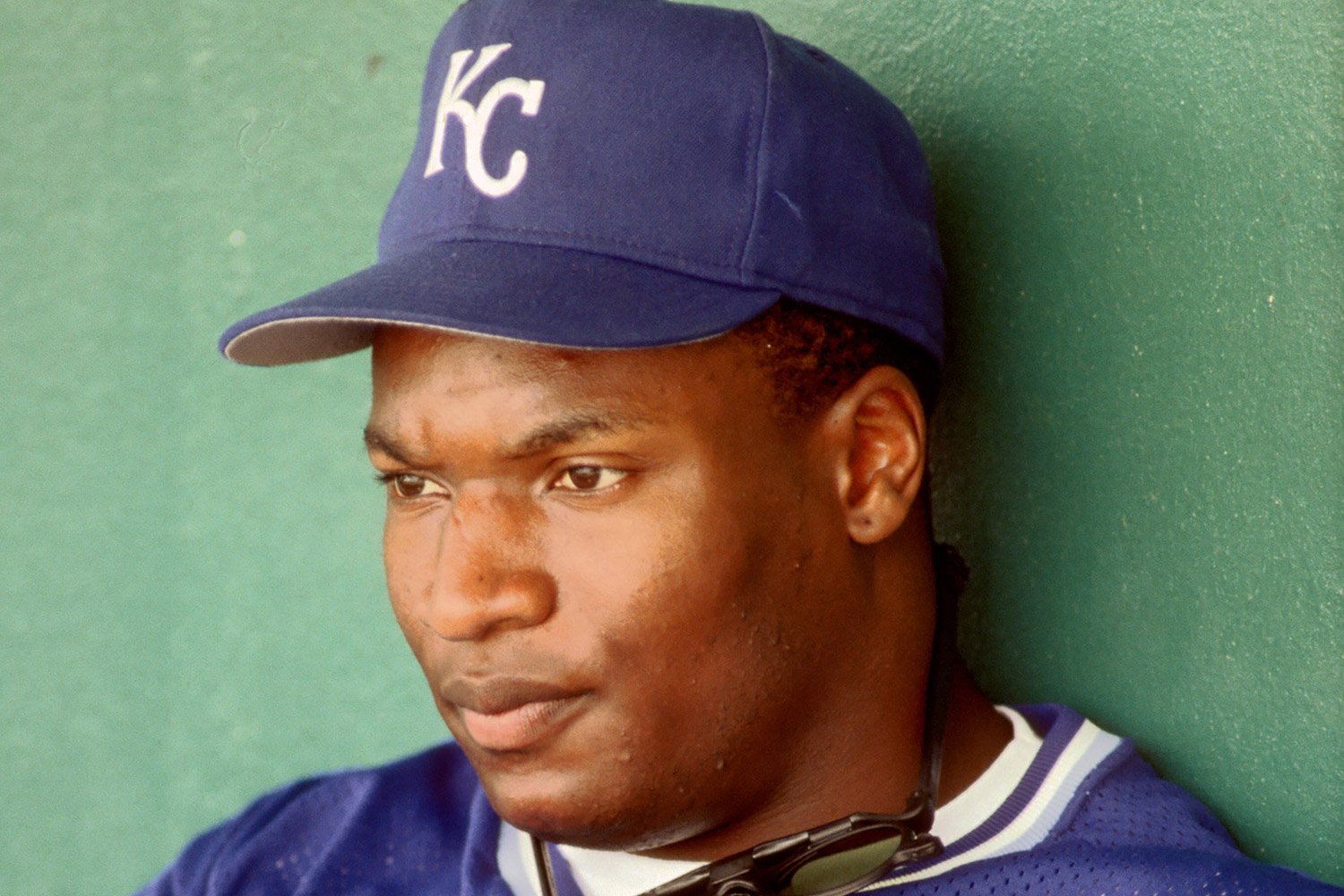 With All-Star voting underway, I thought it would be interesting to look at the Royals’ one-time All-Stars. After all, you already know about George Brett and Salvador Perez. There are some surprising names on this list, as well as some relatively obscure players. To start with, let’s examine the one-timers from the club’s inception in 1969 through the 1980s (that’s a good place to end Part 1, as you’ll see). I borrowed this concept from the Phillies site, The Good Phight. Ellie Rodriguez (1969) The Royals’ first team produced one All-Star, which probably isn’t that surprising; expansion teams are usually made of castoffs, after all. Rodriguez was deemed expendable by the New York Yankees before the 1968 expansion draft, and the Royals used the 13th pick on him. He was the Opening Day catcher but didn’t really claim the starting job until late May. Given regular playing time, he responded with a hot month of June, hitting .281/.361/.422. His season totals on July 16, when the reserves were chosen for the AL team, were just .257/.344/.341 with two home runs and 13 RBI. But AL manager Mayo Smith only selected eight pitchers, and stocked his bench with six outfielders. Also, the Royals’ brass spoke highly of Rodriguez’s defensive ability. “There isn’t any doubt about his defensive ability. He takes command behind the plate and has the knack of making a pitcher bear down all the time.” --Royals general manager Cedric Tallis, quoted by Paul O’Boynick, The Kansas City Times, July 17, 1969 “He is a good analyst behind the plate and is quick on blocking low pitches. Ellie has come a long way since spring training. He’s a bulldog behind the plate.” --Royals manager Joe Gordon, quoted by Paul O’Boynick, The Kansas City Times, July 17, 1969 Sadly, Rodriguez did not get in the game. Starter Bill Freehan of Detroit played the first six innings, and Minnesota’s John Roseboro played the final three. Smith did use a pinch-hitter for Roseboro in the bottom of the ninth, but the game ended with the NL on top, 9-3. Rodriguez, who just passed away in April at age 79, was dealt to Milwaukee after the 1970 season. He would be named to one more All-Star team while with the Brewers during the 1972 campaign. He didn’t get to play in that one, either. Lou Piniella (1972) I suppose lots of people would guess that Sweet Lou was the Royals’ first All-Star, as he won the Rookie of the Year award in 1969. But despite a solid .282/.325/.416 line that year, Piniella had to wait until 1972 to be named to the All-Star team. In the middle of what was probably his best season, Piniella was a deserving choice. When the reserves were named by manager Earl Weaver on July 20 (the game was really late on the calendar that year), Piniella was second in the AL with a .321 batting average, and he had nine home runs and 43 RBI. “Sure, I’m happy, very happy. Elated might be a better way to describe the way I feel. You hear talk about how some players would rather have three days off. I don’t know if I’ll get to play, but I’d rather be at the All-Star Game.” --Piniella, quoted by Sid Bordman, The Kansas City Star, July 21, 1972 Piniella did get to play, grounding out as a pinch-hitter in the 10th inning of the NL’s 4-3 win. Piniella was traded by the Royals to the New York Yankees after the 1973 season. Perhaps surprisingly, 1972 was his only All-Star Game as a player; of course, he would manage the National League in the 1991 game after his Cincinnati Reds won the pennant and World Series the previous year. Richie Scheinblum (1972) Piniella was joined on the All-Star team by his outfield mate, Scheinblum. Actually, Amos Otis also made the team, so the Royals’ entire starting outfield was selected, along with second baseman Cookie Rojas. Also, manager Bob Lemon was named as one of Weaver’s coaches for the game, giving Kansas City five representatives. Scheinblum, who was in his first year with the Royals after playing sparingly for Cleveland and Washington, was having the season of his life. He was leading the league with a .325 average when the reserves were selected (while Piniella was second, Otis was third at .309). “I’m glad all three of us were picked. I thought maybe they’d take two–but not three. This is probably more of a thrill for me than the others. This time last year, I was in the minors. I’m not fast on the bases or in the outfield, but I give 100 percent. I’m just glad people have noticed I’m hitting.”--Scheinblum, quoted by Sid Bordman, The Kansas City Star, July 21, 1972 Despite that scouting report, Scheinblum did get to play in the game, replacing Bobby Murcer in the outfield in the sixth inning. He only got one at-bat, a groundout that came just after Rojas hit a two-run home run to give the AL the lead. Scheinblum finished the year with a .300/.383/.418 line, and the Royals wisely sold high, trading him to Cincinnati after the season for Hal McRae, a deal which helped launch Kansas City’s decade-plus of strong teams. Scheinblum would be done as a major leaguer after the 1974 season, and this was his only appearance in the Midsummer Classic. Larry Gura (1980) Larry Gura went 16-4 with a 2.72 ERA in 1978 and finished seventh in the Cy Young vote. He didn’t make the All-Star team. In 1979, he fell back to a 13-12 mark with a 4.47 ERA. But in 1980, he found himself with a 10-3 record and a 2.09 ERA at the end of June. That got him the nod from AL manager Weaver, one of just eight pitchers selected by the Baltimore manager. A soft-tossing southpaw, Gura was the proverbial “crafty lefty.” The 1980 season was the only time he reached the 100 mark for strikeouts, but he won 126 games in the majors, 111 of them for the Royals. Not bad for a pitcher the team acquired for catcher Fran Healy, whose career ended after one game in the 1978 season. As for being an All-Star, Gura didn’t seem to be overwhelmed by the news. “Maybe when I’m out of baseball, looking back, it’ll mean a lot more. Baseball for us is such an everyday thing, routine. So often we have to go out tomorrow and forget today even happened.” --Gura, quoted by Mike McKenzie, The Kansas City Times, July 8, 1980 Presumably, Gura did not forget his experience at the game, although he did not appear in the NL’s 4-2 win. He did enjoy two more finishes in the top ten of Cy Young voting and was inducted into the Royals Hall of Fame in 1992, but never made another All-Star team. Kevin Seitzer (1987) If Kevin Seitzer felt any pressure about taking over third base from Royals legend George Brett (who moved over to first base full-time during the 1987 season), he certainly didn’t show it. He made the All-Star team as a rookie, thanks to a .306/.389/.418 line through July 11, when he was named to the team…as an injury replacement for Brett, of course. With the news coming just a few days before the game, Seitzer’s plans for the break were thrown into chaos. “This is just a drastic change in plans for me. Everything’s screwed up. I left my good clothes at the cleaners before the road trip, and I’ve got to fly from here (to Oakland).”--Seitzer, quoted by Jack Etkin, The Kansas City Star, July 12, 1987 But Seitzer was more ready mentally. “I’m expecting I’m going to play because they want me to back up (Wade) Boggs. I imagine I’ll get an at-bat. If I don’t, it’s an honor just to be there.”--Seitzer, quoted by Jack Etkin, The Kansas City Star, July 12, 1987 In fact, Seitzer got two at-bats, plus a walk, after he replaced Boggs following the fifth inning. He almost won the game for the AL, too. Facing Lee Smith in the bottom of the 10th of a scoreless tie, he hit a fly ball to deep center field. Alas, it was caught on the warning track for the last out. Leading off the 12th, after the NL scored two runs in the top of the inning, he drew that walk, but never made it off first base. Seitzer ended his rookie year with a .323/.399/.470 line, 15 homers, 83 RBI, and a league-leading 207 hits. A lot of years that would earn him a Rookie of the Year award, but this happened to be the season Mark McGwire bashed 49 home runs, so Seitzer finished second in the voting. He made one more All-Star team in his career, representing Milwaukee in the 1995 contest. This time, he got to pinch-hit for Boggs, a story he should tell his grandkids until they get sick of it. Kurt Stillwell (1988) After years of light-hitting shortstops, the Royals thought they had solved that problem when they traded for Kurt Stillwell, sending pitcher Danny Jackson to Cincinnati before the 1988 season. It was a trade that helped both teams right away, because Jackson won 23 games for the Reds, while Stillwell hit .251/.322/.399 for the Royals. That may not seem great, but compared to what the Royals had been getting from that spot, it was basically Bobby Witt Jr. Anyway, Stillwell did have some good fortune in his selection; both Alan Trammell (the winner of the fan voting) and Ozzie Guillen (Trammell’s replacement), suffered injuries in early July. Stillwell himself was battling a slight groin pull, but the news of his selection helped him feel better. “I thought I could have played the last three days, anyway. (The Royals) were just being cautious. And with the All-Star break, they wanted to take advantage of it. I won’t be able to get the rest they wanted now, but hey, if they wanted me this bad, I’m going to make the most of it. It’s hard for me to believe everything worked out for me the way it did. I’m still in shock. Everything went my way, kind of like I’m the alternate to the alternate.” --Stillwell, quoted by Bob Nightengale, The Kansas City Times, July 11, 1988 Stillwell finally got in the game in the bottom of the ninth, with the AL clinging to a 2-1 lead. He at least did get to catch the first out of the inning, and the AL held on to the lead. That would be it for Stillwell’s All-Star appearances. After two good seasons and two subpar ones in Kansas City, he bounced around as a free agent for a few seasons, but never really came close to his 1988 success again. Bo Jackson (1989) It’s hard to do much better in your All-Star Game debut than Bo Jackson did. In his third full season, he was elected to start the game by the fans; in fact, he was the AL’s leading vote-getter. Of course, he was one of the most famous baseball players in the country, thanks to his football “hobby.” He was having a good season, too, hitting .268/.308/.525 with 18 home runs, 52 RBI, and 20 stolen bases through the end of June. AL manager Tony La Russa, who had seen Jackson’s talent plenty as the manager of the Oakland A’s, mused about batting him leadoff in the All-Star Game. “It doesn’t matter, just being on the field in Anaheim that night, that’s all that matters. It’s all God-given talent, so I don’t give myself credit for doing anything. It means something special, but you can’t let that stuff sink into your head because then you start believing you’re better than you are. I let it go in one ear and out the other.” --Jackson, quoted by Dick Kaegel, The Kansas City Times, July 6, 1989 LaRussa did put Jackson in the leadoff spot, and it paid off. The pregame talk was that the start time would make it hard for hitters to see the ball in the twilight in Anaheim. But the NL scored two runs in the top of the first, and Jackson led off the bottom of the inning with a mammoth blast to center field, roughly 450 feet away from the plate. He was hardly done showing off his talent. In the second inning, he showcased his speed, beating out a relay throw on a double play and allowing the go-ahead run to score. He then stole second and moved up to third when the throw sailed into center field (the home run and stolen base combo put him in an exclusive club with Willie Mays at the time). He also singled in the game and walked away with the MVP trophy. Oh, and Nike premiered the “Bo Knows” TV spot during the game. Not a bad night’s work! Most people watching that night likely thought this was just the first of many All-Star Games featuring Bo, but as we know now, it was not to be. Despite a solid first half in 1990, he was not selected for the team. Then, in January 1991, he suffered a hip injury while playing football for the Los Angeles Raiders. It ended his football career, and his baseball career was never the same; just the fact that he came back to the sport and even played after having that hip replacement was amazing enough. So this was Bo’s one All-Star appearance, but it was certainly a memorable one.
 -
Trivia question: Who has the highest batting average in Royals history (minimum of 1,500 plate appearances)? That’s easy, right? George Brett. Or if you suspect a trick question, you might go with someone who was famous for their hitting, like Mike Sweeney, Billy Butler, or Hal McRae. But it’s not any of those guys. Instead, it’s Jose Offerman, who hit .306 as a Royal to barely best Brett’s .305. Jose Antonio Offerman Dono was born on November 8, 1968, in San Pedro de Macorís, Dominican Republic. The city has a long-standing reputation as a hotbed of baseball talent, with nearly 100 major leaguers hailing from a city of about 217,000 people over the years. Jose Offerman attended Colegio Biblico Cristiano High School, then signed with the Los Angeles Dodgers as an amateur free agent in 1986. The Dodgers kept him out of the minor leagues until 1988, but he quickly made his way through the system. He hit .331/.421/.438 with 57 stolen bases for Great Falls in the Rookie-level Pioneer League in 1988, followed that up with a .296/.387/.375 season split between the A and AA levels in 1989, and .326/.416/.410 for Triple-A Albuquerque in 1990. He made his big league debut on August 19 of that season. The bat was obviously there, and Offerman had displayed tremendous speed, a strong arm, and plenty of range at shortstop. Despite that, his defense was still a concern, as he had committed 50 errors in his 1989 season. The Dodgers also hoped he would develop a little more power, as he had only hit six home runs in the minors through the 1990 season. However, he did hit a home run in his first major-league at-bat, taking Dennis Martinez deep and becoming the first Dodger since 1947 to accomplish the feat. Offerman’s time in Dodger blue was definitely up and down. After part-time duty in 1990 and 1991, he established himself as an everyday player in 1992. His defense was still an issue, as he led the majors in errors in 1992, 1993, and 1995. During the 1994 season, he got into an argument with manager Tommy Lasorda after being given a bunt sign, and was soon sent back to Albuquerque for the rest of the season. Still, in 1993, he had 1.9 bWAR, and in 1995, he had 2.6 bWAR and made an All-Star team for the first time. But near the end of the 1995 season, he suffered a shoulder injury and was benched. The Dodgers had had it with the errors and other misplays that didn’t necessarily show in the box score. When they signed free agent shortstop Greg Gagne, who had been the Royals’ starter for three seasons, Offerman was expendable. On December 17, he was traded to Kansas City for relief pitcher Billy Brewer. The move did not help Offerman’s defense, as he committed five errors in the first eight games. But the Royals were desperate for offense and needed his bat in the lineup. So soon, he was moved to first base. It made sense, as many of his errors came on throws. And, oddly enough, it worked! Offerman committed five errors in 96 games at the cold corner. He also played 38 games at second base, with one error, and one game in center field, where he handled all six chances without incident. He also hit .303/.384/.417, stole 24 bases, led the team in walks by far with 74, and hit a career-high five home runs. With Offerman showing he could handle second base and the desire for more power at first base, the Royals made an offseason trade to acquire shortstop Jay Bell and first baseman Jeff King from the Pittsburgh Pirates. That penciled Offerman in at the keystone for 1997. But he would endure an injury-plagued season, with a groin injury in early April, a bout of chicken pox in mid-July, and a sprained ankle in mid-August, limiting him to 106 games. He hit .297/.359/.394 and, while he wasn’t going to make anyone forget Frank White, committed just nine errors in 101 games at second base. But Offerman rebounded in a big way in 1998. He played 158 games, hit .315/.403/.438, stole 45 bases, and led the majors with 13 triples. He also enjoyed a 27-game hitting streak; when that was snapped, he followed it with a six-game streak. The 27-gamer, at the time, was the second longest in team history, behind Brett, of course (both were passed by Whit Merrifield in 2018-19). Had he picked up a hit in that one game and run it to 34, he would still have the franchise record. On the other hand, if Offerman had collected just three fewer hits as a Royal, he would not be the answer to our trivia question. Offerman was a free agent after the 1998 season, and with those numbers and this being the late-90s Royals, it was no surprise when he signed with the Boston Red Sox. He played 3 1/2 seasons in Boston before being traded to Seattle in 2002. He then played in the independent Atlantic League in 2003 before making it back to the majors with Minnesota in 2004, and wrapped up his time in the bigs with Philadelphia and the New York Mets in 2005. Offerman’s post-MLB career was…eventful. In 2007, he was back in the Atlantic League, playing for the Long Island Ducks, when he was involved in an ugly brawl. After being hit by a pitch, Offerman charged the mound, still holding his bat, which he used on both pitcher and catcher. The pitcher sustained a broken finger, while the catcher suffered a concussion that basically ended his career. Offerman was arrested and charged with two counts of assault, for which he received two years of probation. The catcher sued him and was eventually awarded $940,000. That was the end of Offerman’s time in organized baseball in America. He had some success as a manager in LIDOM, the professional Dominican league, but was involved in another incident in 2010, punching an umpire during an argument. That got him a lifetime suspension in that league, although it was lifted in 2013. More recently, he has managed in the Mexican League. View full article
-
 Trivia question: Who has the highest batting average in Royals history (minimum of 1,500 plate appearances)? That’s easy, right? George Brett. Or if you suspect a trick question, you might go with someone who was famous for their hitting, like Mike Sweeney, Billy Butler, or Hal McRae. But it’s not any of those guys. Instead, it’s Jose Offerman, who hit .306 as a Royal to barely best Brett’s .305. Jose Antonio Offerman Dono was born on November 8, 1968, in San Pedro de Macorís, Dominican Republic. The city has a long-standing reputation as a hotbed of baseball talent, with nearly 100 major leaguers hailing from a city of about 217,000 people over the years. Jose Offerman attended Colegio Biblico Cristiano High School, then signed with the Los Angeles Dodgers as an amateur free agent in 1986. The Dodgers kept him out of the minor leagues until 1988, but he quickly made his way through the system. He hit .331/.421/.438 with 57 stolen bases for Great Falls in the Rookie-level Pioneer League in 1988, followed that up with a .296/.387/.375 season split between the A and AA levels in 1989, and .326/.416/.410 for Triple-A Albuquerque in 1990. He made his big league debut on August 19 of that season. The bat was obviously there, and Offerman had displayed tremendous speed, a strong arm, and plenty of range at shortstop. Despite that, his defense was still a concern, as he had committed 50 errors in his 1989 season. The Dodgers also hoped he would develop a little more power, as he had only hit six home runs in the minors through the 1990 season. However, he did hit a home run in his first major-league at-bat, taking Dennis Martinez deep and becoming the first Dodger since 1947 to accomplish the feat. Offerman’s time in Dodger blue was definitely up and down. After part-time duty in 1990 and 1991, he established himself as an everyday player in 1992. His defense was still an issue, as he led the majors in errors in 1992, 1993, and 1995. During the 1994 season, he got into an argument with manager Tommy Lasorda after being given a bunt sign, and was soon sent back to Albuquerque for the rest of the season. Still, in 1993, he had 1.9 bWAR, and in 1995, he had 2.6 bWAR and made an All-Star team for the first time. But near the end of the 1995 season, he suffered a shoulder injury and was benched. The Dodgers had had it with the errors and other misplays that didn’t necessarily show in the box score. When they signed free agent shortstop Greg Gagne, who had been the Royals’ starter for three seasons, Offerman was expendable. On December 17, he was traded to Kansas City for relief pitcher Billy Brewer. The move did not help Offerman’s defense, as he committed five errors in the first eight games. But the Royals were desperate for offense and needed his bat in the lineup. So soon, he was moved to first base. It made sense, as many of his errors came on throws. And, oddly enough, it worked! Offerman committed five errors in 96 games at the cold corner. He also played 38 games at second base, with one error, and one game in center field, where he handled all six chances without incident. He also hit .303/.384/.417, stole 24 bases, led the team in walks by far with 74, and hit a career-high five home runs. With Offerman showing he could handle second base and the desire for more power at first base, the Royals made an offseason trade to acquire shortstop Jay Bell and first baseman Jeff King from the Pittsburgh Pirates. That penciled Offerman in at the keystone for 1997. But he would endure an injury-plagued season, with a groin injury in early April, a bout of chicken pox in mid-July, and a sprained ankle in mid-August, limiting him to 106 games. He hit .297/.359/.394 and, while he wasn’t going to make anyone forget Frank White, committed just nine errors in 101 games at second base. But Offerman rebounded in a big way in 1998. He played 158 games, hit .315/.403/.438, stole 45 bases, and led the majors with 13 triples. He also enjoyed a 27-game hitting streak; when that was snapped, he followed it with a six-game streak. The 27-gamer, at the time, was the second longest in team history, behind Brett, of course (both were passed by Whit Merrifield in 2018-19). Had he picked up a hit in that one game and run it to 34, he would still have the franchise record. On the other hand, if Offerman had collected just three fewer hits as a Royal, he would not be the answer to our trivia question. Offerman was a free agent after the 1998 season, and with those numbers and this being the late-90s Royals, it was no surprise when he signed with the Boston Red Sox. He played 3 1/2 seasons in Boston before being traded to Seattle in 2002. He then played in the independent Atlantic League in 2003 before making it back to the majors with Minnesota in 2004, and wrapped up his time in the bigs with Philadelphia and the New York Mets in 2005. Offerman’s post-MLB career was…eventful. In 2007, he was back in the Atlantic League, playing for the Long Island Ducks, when he was involved in an ugly brawl. After being hit by a pitch, Offerman charged the mound, still holding his bat, which he used on both pitcher and catcher. The pitcher sustained a broken finger, while the catcher suffered a concussion that basically ended his career. Offerman was arrested and charged with two counts of assault, for which he received two years of probation. The catcher sued him and was eventually awarded $940,000. That was the end of Offerman’s time in organized baseball in America. He had some success as a manager in LIDOM, the professional Dominican league, but was involved in another incident in 2010, punching an umpire during an argument. That got him a lifetime suspension in that league, although it was lifted in 2013. More recently, he has managed in the Mexican League.
 -
You are 23 years old. You are living your childhood dream, playing for the major league team in your home state, roughly an hour from your hometown. You made the Opening Day roster, even, going from Single-A ball to the majors in one offseason. And then, your body betrays you. Not exactly a physical ailment–that is understandable, just a part of sports. No, this is worse. Because it’s a little-known, barely-understood (even by doctors) neurological disorder. It’s been with you your whole life. And now, with the world at your fingertips, it is destroying your dream. The disorder is Tourette Syndrome. The player is Jim Eisenreich. And the story is inspiring. James Michael Eisenreich was born on April 18, 1959, in St. Cloud, Minnesota. Born and raised there, in fact, he attended St. Cloud Tech High School and St. Cloud State University before the Minnesota Twins selected him in the 16th round of the 1980 June amateur draft. Eisenreich signed quickly and played in 67 games for the Elizabethton (Tennessee) Twins in the rookie-level Appalachian League. He did well, hitting .298/.386/.411, and was bumped up to single-A Wisconsin Rapids for a handful of games at the end of the season. In 1981, he returned to Wisconsin Rapids and was sensational, hitting .311/.407/.507 in 585 plate appearances. With the Twins undergoing a youth movement, they extended a non-roster invite to Eisenreich for spring training in 1982. They probably figured they’d get him some experience with the big leaguers. Instead, they got their Opening Day center fielder. Things went well for the first month of the season. The Twins weren’t great, but Eisenreich was hitting around .300 and had smacked a couple of home runs. But then, his lifelong affliction came to the forefront. During a three-game home series against Milwaukee, Eisenreich was removed early from each game, as he was hyperventilating. And then things got worse. The Twins were in Boston. Eisenreich was in center field. And when the tics began, the fans, who by now had read about the rookie’s issues in the newspapers, noticed. The taunts and jeers were too much, and Eisenreich left the game in the fourth inning. The next night, the same thing, except he was removed in the third game. The night after that, he told manager Billy Gardner he didn’t want to play. The team doctors tried different medications. Hypnosis was suggested. He went on the injured list for a few weeks as various remedies were tried. Finally, he found a medication that worked, but it made him tired, and he was not playing as well as he could. When he reduced the dosage, the symptoms returned. Ultimately, he played in 34 games, hitting .303/.378/.424 in 111 plate appearances. Eisenreich reported to spring training in 1983 ready to play, but after a couple of interviews early, he did not want to talk about his condition. “No one seemed able to help me. My attitude became, ‘If you can’t play Major League Baseball, so be it.’ That was tough to admit. Playing in the majors was my lifetime ambition. But I had to face reality, that maybe it wasn’t for me.” --Eisenreich, quoted by Bob Fowler, The Orlando Sentinel, February 22, 1983 But, despite a strong spring training, his struggles returned. After just two regular-season games, he decided to walk away from baseball, with plans to go back to college. The Twins, who had been supportive and understanding throughout, placed him on the disabled list, hoping they could change his mind. They were unsuccessful, at least until the offseason. He returned for spring training in 1984, but things went almost exactly as they did the year before. Good spring training, then the problems returned, and after 12 games, he wanted to walk away again. The Twins, who were now displeased that Eisenreich had changed medications on his own, finally reached a settlement with the player that placed him on the retired list. His career to this point might have been a sad footnote in baseball history. He returned to St. Cloud, getting his baseball fix in softball and semi-pro leagues, where he was, as you might expect, a star. Even better, he figured out the routine that would keep his symptoms at bay. One of his college teammates, Bob Hegman, was by now working in the Royals’ front office and recommended the team take a chance. Shortly after the 1986 season ended, the Royals claimed him for the waiver price of $1. Eisenreich began the 1987 season at double-A Memphis, where he proved he could still hit, posting a video-game-like .382/.469/.705 line in 324 plate appearances. The Royals, trying to hang in the division race with a mediocre offense, called him up in mid-June. He had only appeared in a few games when he got his storybook moment, delivering a pinch-hit double in the ninth for a walkoff win over Minnesota. Because he had suffered an elbow injury in spring training, Eisenreich did not play any outfield in 1987, serving as a DH and pinch-hitter and finishing the year with a .238/.278/.467 line. With the elbow injury and the inability to play outfield, it was tough to find regular playing time, but the important thing was that Eisenreich had proven he could last in the majors. Eisenreich made the Opening Day roster in 1988, but struggled mightily for three months before the Royals optioned him to Triple-A Omaha. He seemed to regain his batting stroke there, hitting .289/.327/.472, and hit .271/.295/.356 when he came back to the majors for 27 games. That might have been the turning point for his career. He enjoyed his finest season to date in 1989, hitting .293/.341/.448 and playing regularly, a total of 134 games. For the next three seasons, he would be a solid bat in the Royals’ lineup and a good glove in the outfield. The Royals let Eisenreich depart as a free agent following the 1992 season, but his career still had quite a bit of time left. He signed with Philadelphia and was their starting right fielder as they made a surprising run to the World Series. Eisenreich hit a three-run home run in Game 2, staking the Phillies to a 5-0 lead in a game they eventually won 6-4, but Toronto would win the Series on Joe Carter’s walkoff home run in Game 6. Eisenreich stayed in Philadelphia through 1996, then signed with the Florida Marlins before the 1997 season. He was now a backup outfielder and first baseman, but his timing was great again as the Marlins reached the World Series. This time, Eisenreich was on the winning side. Although he had only 11 plate appearances in the Series, he posted a .500 batting average, a home run, and 3 RBI. He was on second base when Edgar Renteria’s single scored the winning run and ended the Series in Game 7. Of course, the Marlins followed that title with a fire sale during the 1998 season, and in mid-May, Eisenreich was traded to the Los Angeles Dodgers in the deal that made Mike Piazza a Marlin for about five minutes. A free agent after the season ended, Eisenreich discussed a return to the Royals, but the team, still in financial limbo after Ewing Kauffman’s death and under the control of a temporary ownership group, decided they couldn’t afford him. Like many former Royals, Eisenreich had maintained a home in the Kansas City area, so he stayed in the area. He and his wife had started a foundation for youth with Tourette syndrome in 1996, so that his family became his focus. For his career, Eisenreich finished with 1,160 hits and a .290/ 341/.404 batting line. It was a solid career that could easily have been derailed by his affliction, but he was able to overcome that. View full article
-
Jim Eisenreich Overcame Tourette Syndrome To Post A 15-Year MLB Career
Darin Watson posted an article in History
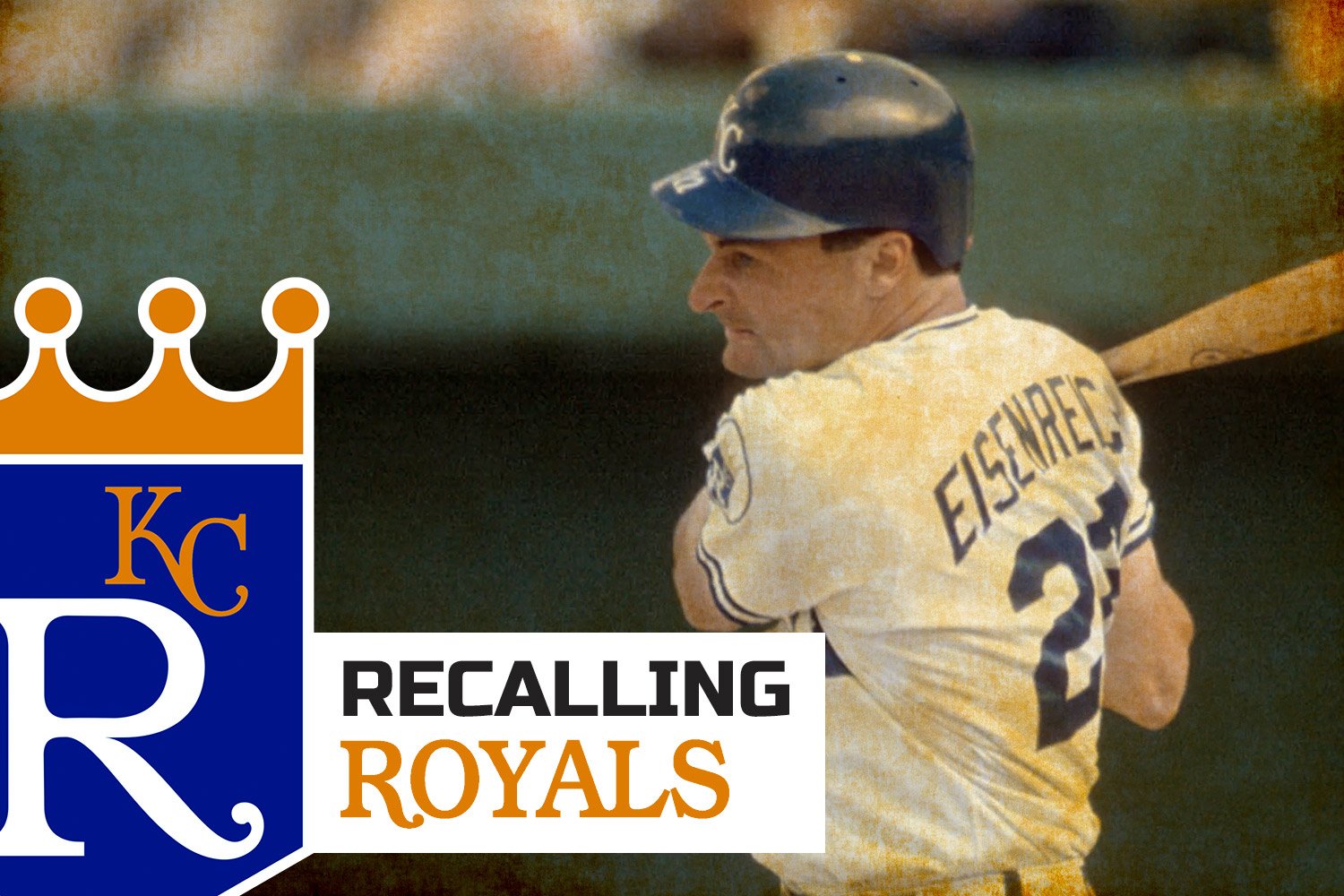 You are 23 years old. You are living your childhood dream, playing for the major league team in your home state, roughly an hour from your hometown. You made the Opening Day roster, even, going from Single-A ball to the majors in one offseason. And then, your body betrays you. Not exactly a physical ailment–that is understandable, just a part of sports. No, this is worse. Because it’s a little-known, barely-understood (even by doctors) neurological disorder. It’s been with you your whole life. And now, with the world at your fingertips, it is destroying your dream. The disorder is Tourette Syndrome. The player is Jim Eisenreich. And the story is inspiring. James Michael Eisenreich was born on April 18, 1959, in St. Cloud, Minnesota. Born and raised there, in fact, he attended St. Cloud Tech High School and St. Cloud State University before the Minnesota Twins selected him in the 16th round of the 1980 June amateur draft. Eisenreich signed quickly and played in 67 games for the Elizabethton (Tennessee) Twins in the rookie-level Appalachian League. He did well, hitting .298/.386/.411, and was bumped up to single-A Wisconsin Rapids for a handful of games at the end of the season. In 1981, he returned to Wisconsin Rapids and was sensational, hitting .311/.407/.507 in 585 plate appearances. With the Twins undergoing a youth movement, they extended a non-roster invite to Eisenreich for spring training in 1982. They probably figured they’d get him some experience with the big leaguers. Instead, they got their Opening Day center fielder. Things went well for the first month of the season. The Twins weren’t great, but Eisenreich was hitting around .300 and had smacked a couple of home runs. But then, his lifelong affliction came to the forefront. During a three-game home series against Milwaukee, Eisenreich was removed early from each game, as he was hyperventilating. And then things got worse. The Twins were in Boston. Eisenreich was in center field. And when the tics began, the fans, who by now had read about the rookie’s issues in the newspapers, noticed. The taunts and jeers were too much, and Eisenreich left the game in the fourth inning. The next night, the same thing, except he was removed in the third game. The night after that, he told manager Billy Gardner he didn’t want to play. The team doctors tried different medications. Hypnosis was suggested. He went on the injured list for a few weeks as various remedies were tried. Finally, he found a medication that worked, but it made him tired, and he was not playing as well as he could. When he reduced the dosage, the symptoms returned. Ultimately, he played in 34 games, hitting .303/.378/.424 in 111 plate appearances. Eisenreich reported to spring training in 1983 ready to play, but after a couple of interviews early, he did not want to talk about his condition. “No one seemed able to help me. My attitude became, ‘If you can’t play Major League Baseball, so be it.’ That was tough to admit. Playing in the majors was my lifetime ambition. But I had to face reality, that maybe it wasn’t for me.” --Eisenreich, quoted by Bob Fowler, The Orlando Sentinel, February 22, 1983 But, despite a strong spring training, his struggles returned. After just two regular-season games, he decided to walk away from baseball, with plans to go back to college. The Twins, who had been supportive and understanding throughout, placed him on the disabled list, hoping they could change his mind. They were unsuccessful, at least until the offseason. He returned for spring training in 1984, but things went almost exactly as they did the year before. Good spring training, then the problems returned, and after 12 games, he wanted to walk away again. The Twins, who were now displeased that Eisenreich had changed medications on his own, finally reached a settlement with the player that placed him on the retired list. His career to this point might have been a sad footnote in baseball history. He returned to St. Cloud, getting his baseball fix in softball and semi-pro leagues, where he was, as you might expect, a star. Even better, he figured out the routine that would keep his symptoms at bay. One of his college teammates, Bob Hegman, was by now working in the Royals’ front office and recommended the team take a chance. Shortly after the 1986 season ended, the Royals claimed him for the waiver price of $1. Eisenreich began the 1987 season at double-A Memphis, where he proved he could still hit, posting a video-game-like .382/.469/.705 line in 324 plate appearances. The Royals, trying to hang in the division race with a mediocre offense, called him up in mid-June. He had only appeared in a few games when he got his storybook moment, delivering a pinch-hit double in the ninth for a walkoff win over Minnesota. Because he had suffered an elbow injury in spring training, Eisenreich did not play any outfield in 1987, serving as a DH and pinch-hitter and finishing the year with a .238/.278/.467 line. With the elbow injury and the inability to play outfield, it was tough to find regular playing time, but the important thing was that Eisenreich had proven he could last in the majors. Eisenreich made the Opening Day roster in 1988, but struggled mightily for three months before the Royals optioned him to Triple-A Omaha. He seemed to regain his batting stroke there, hitting .289/.327/.472, and hit .271/.295/.356 when he came back to the majors for 27 games. That might have been the turning point for his career. He enjoyed his finest season to date in 1989, hitting .293/.341/.448 and playing regularly, a total of 134 games. For the next three seasons, he would be a solid bat in the Royals’ lineup and a good glove in the outfield. The Royals let Eisenreich depart as a free agent following the 1992 season, but his career still had quite a bit of time left. He signed with Philadelphia and was their starting right fielder as they made a surprising run to the World Series. Eisenreich hit a three-run home run in Game 2, staking the Phillies to a 5-0 lead in a game they eventually won 6-4, but Toronto would win the Series on Joe Carter’s walkoff home run in Game 6. Eisenreich stayed in Philadelphia through 1996, then signed with the Florida Marlins before the 1997 season. He was now a backup outfielder and first baseman, but his timing was great again as the Marlins reached the World Series. This time, Eisenreich was on the winning side. Although he had only 11 plate appearances in the Series, he posted a .500 batting average, a home run, and 3 RBI. He was on second base when Edgar Renteria’s single scored the winning run and ended the Series in Game 7. Of course, the Marlins followed that title with a fire sale during the 1998 season, and in mid-May, Eisenreich was traded to the Los Angeles Dodgers in the deal that made Mike Piazza a Marlin for about five minutes. A free agent after the season ended, Eisenreich discussed a return to the Royals, but the team, still in financial limbo after Ewing Kauffman’s death and under the control of a temporary ownership group, decided they couldn’t afford him. Like many former Royals, Eisenreich had maintained a home in the Kansas City area, so he stayed in the area. He and his wife had started a foundation for youth with Tourette syndrome in 1996, so that his family became his focus. For his career, Eisenreich finished with 1,160 hits and a .290/ 341/.404 batting line. It was a solid career that could easily have been derailed by his affliction, but he was able to overcome that.
 -
With his recent retirement from broadcasting, it seems like a good time to look back at the career of Buck Martinez. Martinez will likely be remembered as a Blue Jay by most baseball fans due to his long association with the franchise. He played for Toronto from 1981-1986, then worked as a broadcaster for the team in stints from 1987-2000 and 2010-2025. He even managed the Blue Jays in 2001 and 2002. But Martinez was a Royal for many years. And he’s an original Royal, part of the expansion 1969 squad. Although he never played more than 95 games in a season in Kansas City, he was a part of the team’s growth from an expansion team to a division winner. John Albert Martinez was born on November 7, 1948, in Redding, California. His paternal grandparents emigrated from Spain, while his mother was part of the Karuk Tribe of northern California. Martinez was playing amateur baseball in Sacramento when future Royals manager Joe Gordon, then scouting for the California Angels, noticed him. Gordon recommended the Angels sign him, but Philadelphia beat them to the punch. However, the Houston Astros selected Martinez in the Rule 5 draft in 1968. Two weeks later, they sent him to the Royals (with two minor leaguers) in return for minor league catcher Johnny Jones. Gordon, set to manage the initial Royals team, had his man. It was a small example of the shrewd trades the Kansas City front office, headed by GM Cedric Tallis, made in the team’s early days, as Jones never made it past A-ball. Martinez was finishing his junior year at Sacramento State College and didn’t even join the Royals for spring training, but joined the major league team soon after his school year was over. He made his MLB debut on June 18, 1969, with a flyout as a pinch hitter. Less than two weeks later, on June 28, he made his first start behind the plate. It was a game to remember, as he hit his first major league home run, picked off a runner at second, and tagged out two runners at home, one of them a collision with Minnesota’s Bob Allison. All of this on a hot, humid Saturday afternoon that was brutal enough to send Twins third baseman Rick Renick to the hospital with heat exhaustion. Martinez ended the year with a .229/.258/.327 line in 214 plate appearances. Not too shabby for a rookie who didn’t even have spring training. He had impressed the team with his defense. But Martinez would barely get to play in 1970. He was optioned to Triple-A Omaha during spring training, as Ellie Rodriguez won the starting job and the team wanted Martinez to catch every day. But then Buck was called up… to active military duty. The Army stint lasted until early August. Martinez played in just six games for the Royals that year, then headed to Florida for Instructional League play and then on to Puerto Rico for winter ball, where he played for Frank Robinson on the Santurce club. Martinez reported to spring training in 1971 with his eyes on the starting job, although the Royals had acquired Jerry May from Pittsburgh in the same trade that brought Freddie Patek to Kansas City. Martinez did indeed make the Opening Day roster and even got the nod for the opener, as the Royals were facing a left-hander. But Martinez was soon returned to the minors because the Royals wanted him to play every day. He bounced back and forth between Kansas City and Triple-A Omaha, ending the year with 53 plate appearances for the Royals and a .152/.231/.196 mark. At least he made the American Association all-star team for Omaha. That obviously took some of the shine off his status as a prospect. Martinez spent the entire 1972 season in Omaha. Perhaps fighting off disappointment, he hit just .174/.299/.282 before a foul tip broke a bone in his right hand in mid-July. While Buck’s arm and defense had never been in question, his bat definitely was a concern. When Martinez was optioned to Omaha again at the end of spring training in 1973, he apparently took that decision better. He batted .272/.345/.382, earning a September callup. Although he only played in 14 games, he hit .250/.333/.375, putting him back on the Royals’ radar. In fact, Martinez had played in the minors for the last time. Hitting coach Charley Lau is most famous in Royals history for turning a poor-hitting rookie third baseman into George Brett, but he also helped Martinez turn his career around following that horrid 1972 season. “I had no rhythm, no timing, no feel for hitting the ball. We worked on it over and over – sometimes he’d even throw it to me underhanded, trying to get it right. Day after day, I’d be down in the cage, maybe some days taking 300, 400 swings. And finally, I saw where it was making a difference. I felt like it was just a matter of putting in the time, like if I’d go out and work on it seven, eight hours a day I would have it. And of course the beautiful thing about Charley… I mean, he never quits. If you show him a sincere effort and a willingness to learn, he’ll be out there with you until… it’s done." --Martinez, quoted by Gib Twyman, Kansas City Star, April 3, 1974 After five seasons, the Royals had finally sorted out their catcher situation, with Fran Healy the starter and Martinez now the backup. He played in 43 games, hitting just .215/.317/.290. But when he saw more regular action in September, with the team out of contention, he finished strong with a .261/.333/.413 mark in 51 plate appearances, nearly half his total for the season. The catching arrangement remained the same for 1975, although the rumor mill in spring training said the Royals were hoping for an upgrade on their backup. But Healy was injured in the first series of the season, and Martinez filled in capably, with a .242/.317/.352 line in 30 of the team’s 44 games through the end of May. Healy got injured again in July, allowing Martinez and Bob Stinson to split catching duties for basically the rest of the season. Martinez got the most starts behind the plate among the trio. As the 1976 season began, the status quo was still in place, with Healy the starter and Martinez and Stinson slated for backup duty. But things changed quickly, as the Royals dealt Healy to the New York Yankees in mid-May for pitcher Larry Gura. It turned out to be a great deal for the Royals, as Gura, who had fallen out of favor with Yankees manager Billy Martin and hadn’t even appeared in a game for the New Yorkers all season, would go on to win 111 games with Kansas City. It was also a great deal for Martinez, who now seemed to be the starter. Until, that is, he injured himself sliding into second base a few days later. Somehow, he managed to spike his own leg, requiring six stitches. The hit that resulted in the injury gave him an 11-game hitting streak. He returned to the lineup in early June and quickly re-established himself as the starter as the Royals battled for their first division title. His offensive numbers were still not outstanding (.228/.269/.356 in 295 plate appearances), but he continued to receive praise for his defense. He also performed well in the ALCS, with five hits in 16 plate appearances and four RBI, although the Royals lost the best-of-five series to the Yankees. But once again, change was coming to the Royals’ catcher position. After the season, Kansas City acquired Darrell Porter in a trade with Milwaukee. Porter, a left-handed hitter, offered more power and had been a highly-rated prospect a few years earlier, although his 1976 season had been a disappointment. The two started the season as a platoon, but Porter soon captured the job with a hot hitting start. As a result, Martinez appeared in only 29 games, and not at all in the ALCS. His Royals career came to an end when he was traded to St. Louis with pitcher Mark Littell for pitcher Al Hrabosky during the winter meetings. The Cardinals, the same day, shipped him to Milwaukee for pitcher George Frazier. Martinez was a Brewer for three seasons, then was traded to Toronto early in the 1981 season (a deal, incidentally, that kept Ned Yost on the Milwaukee roster). That began an association with the Blue Jays that lasted more than 40 years. But he should be remembered by Royals fans both as a member of the original team and the franchise’s first AL West title team. View full article
-
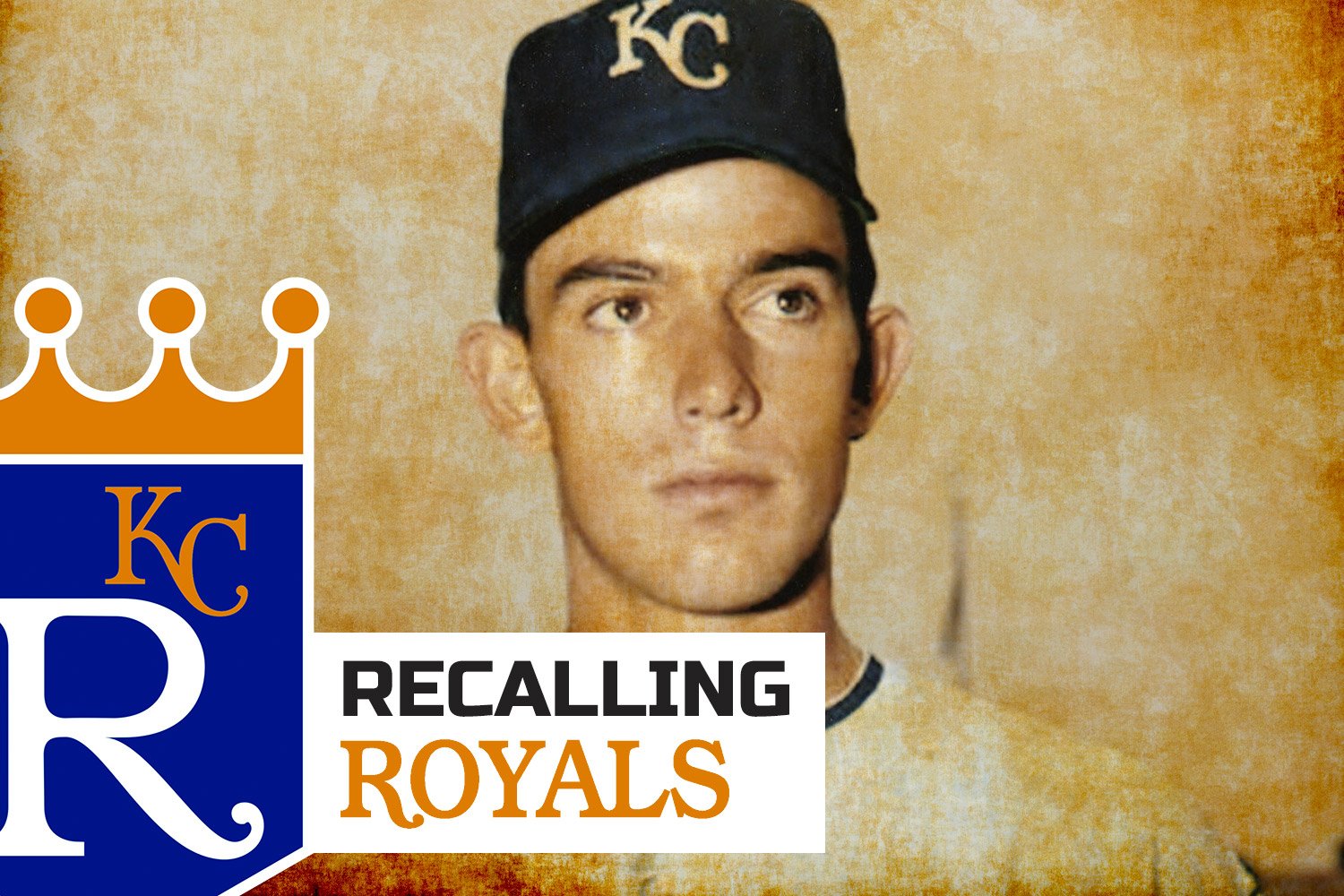 With his recent retirement from broadcasting, it seems like a good time to look back at the career of Buck Martinez. Martinez will likely be remembered as a Blue Jay by most baseball fans due to his long association with the franchise. He played for Toronto from 1981-1986, then worked as a broadcaster for the team in stints from 1987-2000 and 2010-2025. He even managed the Blue Jays in 2001 and 2002. But Martinez was a Royal for many years. And he’s an original Royal, part of the expansion 1969 squad. Although he never played more than 95 games in a season in Kansas City, he was a part of the team’s growth from an expansion team to a division winner. John Albert Martinez was born on November 7, 1948, in Redding, California. His paternal grandparents emigrated from Spain, while his mother was part of the Karuk Tribe of northern California. Martinez was playing amateur baseball in Sacramento when future Royals manager Joe Gordon, then scouting for the California Angels, noticed him. Gordon recommended the Angels sign him, but Philadelphia beat them to the punch. However, the Houston Astros selected Martinez in the Rule 5 draft in 1968. Two weeks later, they sent him to the Royals (with two minor leaguers) in return for minor league catcher Johnny Jones. Gordon, set to manage the initial Royals team, had his man. It was a small example of the shrewd trades the Kansas City front office, headed by GM Cedric Tallis, made in the team’s early days, as Jones never made it past A-ball. Martinez was finishing his junior year at Sacramento State College and didn’t even join the Royals for spring training, but joined the major league team soon after his school year was over. He made his MLB debut on June 18, 1969, with a flyout as a pinch hitter. Less than two weeks later, on June 28, he made his first start behind the plate. It was a game to remember, as he hit his first major league home run, picked off a runner at second, and tagged out two runners at home, one of them a collision with Minnesota’s Bob Allison. All of this on a hot, humid Saturday afternoon that was brutal enough to send Twins third baseman Rick Renick to the hospital with heat exhaustion. Martinez ended the year with a .229/.258/.327 line in 214 plate appearances. Not too shabby for a rookie who didn’t even have spring training. He had impressed the team with his defense. But Martinez would barely get to play in 1970. He was optioned to Triple-A Omaha during spring training, as Ellie Rodriguez won the starting job and the team wanted Martinez to catch every day. But then Buck was called up… to active military duty. The Army stint lasted until early August. Martinez played in just six games for the Royals that year, then headed to Florida for Instructional League play and then on to Puerto Rico for winter ball, where he played for Frank Robinson on the Santurce club. Martinez reported to spring training in 1971 with his eyes on the starting job, although the Royals had acquired Jerry May from Pittsburgh in the same trade that brought Freddie Patek to Kansas City. Martinez did indeed make the Opening Day roster and even got the nod for the opener, as the Royals were facing a left-hander. But Martinez was soon returned to the minors because the Royals wanted him to play every day. He bounced back and forth between Kansas City and Triple-A Omaha, ending the year with 53 plate appearances for the Royals and a .152/.231/.196 mark. At least he made the American Association all-star team for Omaha. That obviously took some of the shine off his status as a prospect. Martinez spent the entire 1972 season in Omaha. Perhaps fighting off disappointment, he hit just .174/.299/.282 before a foul tip broke a bone in his right hand in mid-July. While Buck’s arm and defense had never been in question, his bat definitely was a concern. When Martinez was optioned to Omaha again at the end of spring training in 1973, he apparently took that decision better. He batted .272/.345/.382, earning a September callup. Although he only played in 14 games, he hit .250/.333/.375, putting him back on the Royals’ radar. In fact, Martinez had played in the minors for the last time. Hitting coach Charley Lau is most famous in Royals history for turning a poor-hitting rookie third baseman into George Brett, but he also helped Martinez turn his career around following that horrid 1972 season. “I had no rhythm, no timing, no feel for hitting the ball. We worked on it over and over – sometimes he’d even throw it to me underhanded, trying to get it right. Day after day, I’d be down in the cage, maybe some days taking 300, 400 swings. And finally, I saw where it was making a difference. I felt like it was just a matter of putting in the time, like if I’d go out and work on it seven, eight hours a day I would have it. And of course the beautiful thing about Charley… I mean, he never quits. If you show him a sincere effort and a willingness to learn, he’ll be out there with you until… it’s done." --Martinez, quoted by Gib Twyman, Kansas City Star, April 3, 1974 After five seasons, the Royals had finally sorted out their catcher situation, with Fran Healy the starter and Martinez now the backup. He played in 43 games, hitting just .215/.317/.290. But when he saw more regular action in September, with the team out of contention, he finished strong with a .261/.333/.413 mark in 51 plate appearances, nearly half his total for the season. The catching arrangement remained the same for 1975, although the rumor mill in spring training said the Royals were hoping for an upgrade on their backup. But Healy was injured in the first series of the season, and Martinez filled in capably, with a .242/.317/.352 line in 30 of the team’s 44 games through the end of May. Healy got injured again in July, allowing Martinez and Bob Stinson to split catching duties for basically the rest of the season. Martinez got the most starts behind the plate among the trio. As the 1976 season began, the status quo was still in place, with Healy the starter and Martinez and Stinson slated for backup duty. But things changed quickly, as the Royals dealt Healy to the New York Yankees in mid-May for pitcher Larry Gura. It turned out to be a great deal for the Royals, as Gura, who had fallen out of favor with Yankees manager Billy Martin and hadn’t even appeared in a game for the New Yorkers all season, would go on to win 111 games with Kansas City. It was also a great deal for Martinez, who now seemed to be the starter. Until, that is, he injured himself sliding into second base a few days later. Somehow, he managed to spike his own leg, requiring six stitches. The hit that resulted in the injury gave him an 11-game hitting streak. He returned to the lineup in early June and quickly re-established himself as the starter as the Royals battled for their first division title. His offensive numbers were still not outstanding (.228/.269/.356 in 295 plate appearances), but he continued to receive praise for his defense. He also performed well in the ALCS, with five hits in 16 plate appearances and four RBI, although the Royals lost the best-of-five series to the Yankees. But once again, change was coming to the Royals’ catcher position. After the season, Kansas City acquired Darrell Porter in a trade with Milwaukee. Porter, a left-handed hitter, offered more power and had been a highly-rated prospect a few years earlier, although his 1976 season had been a disappointment. The two started the season as a platoon, but Porter soon captured the job with a hot hitting start. As a result, Martinez appeared in only 29 games, and not at all in the ALCS. His Royals career came to an end when he was traded to St. Louis with pitcher Mark Littell for pitcher Al Hrabosky during the winter meetings. The Cardinals, the same day, shipped him to Milwaukee for pitcher George Frazier. Martinez was a Brewer for three seasons, then was traded to Toronto early in the 1981 season (a deal, incidentally, that kept Ned Yost on the Milwaukee roster). That began an association with the Blue Jays that lasted more than 40 years. But he should be remembered by Royals fans both as a member of the original team and the franchise’s first AL West title team.
 -
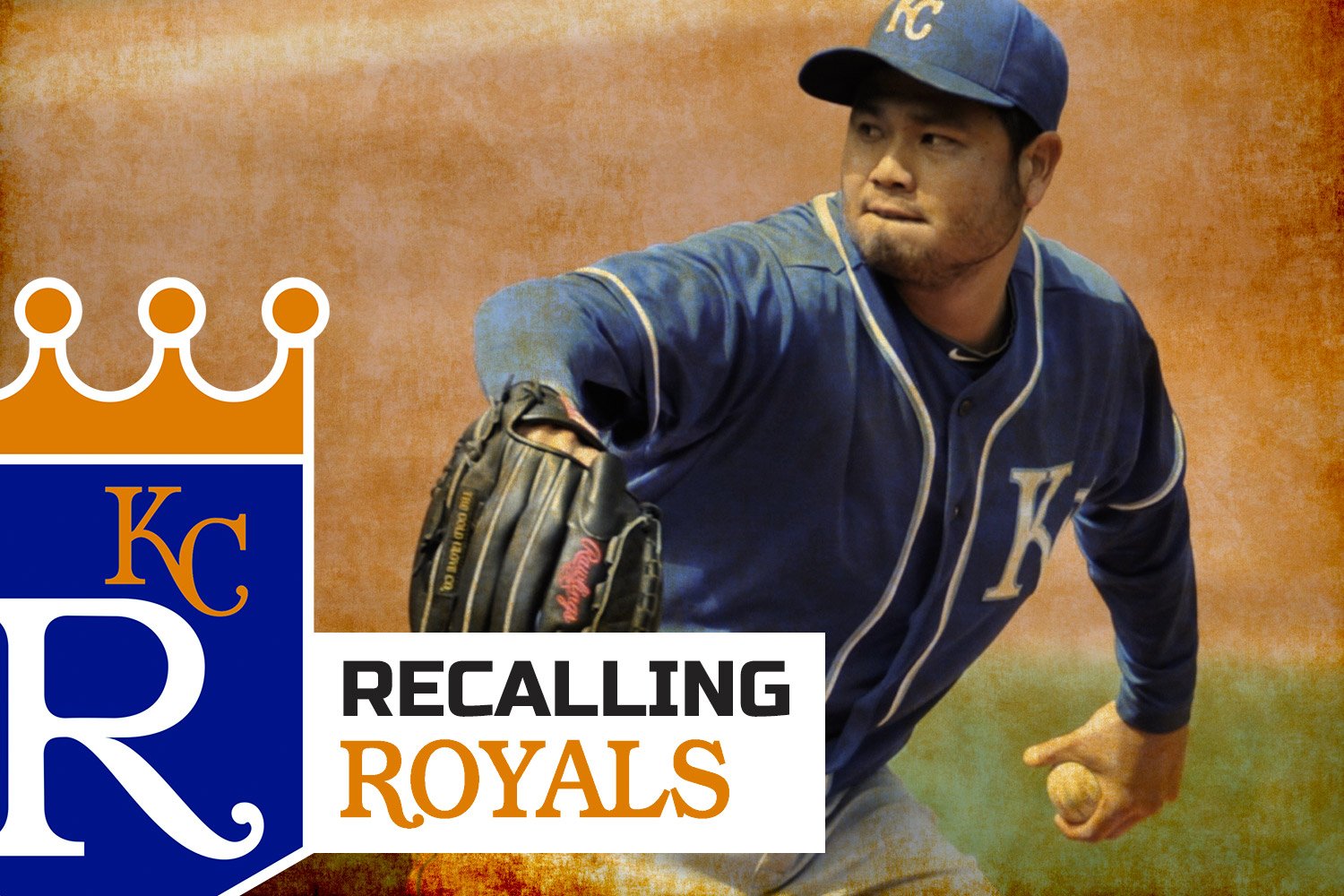 “Come on, Chen!” It was June 4, 2010. An otherwise random Friday night game in an already-lost season, as the Royals entered the game at 22-33 on the year. But the first “Big Slick” charity event to raise money for Kansas City’s Children’s Mercy Hospital was held at Kauffman Stadium. Kansas City’s favorite celebrity sons - Rob Riggle, Paul Rudd, and Jason Sudeikis - were in town for the weekend with some of their show business friends. In a dugout suite, Royals television broadcaster Joel Goldberg attempted to interview some of them. But (a possibly inebriated) Will Ferrell kept hollering at the somewhat obscure pitcher on the mound. “Come on, Chen!” As social media was gaining steam, this moment quickly became a meme, at least among Royals fans. It helped that Bruce Chen was about to embark on the best three-season stretch of his career, with all three of those years in Kansas City as he helped stabilize a rotation that desperately needed dependable arms. Bruce Kastulo Chen was born on June 19, 1977, in Panama City, Panama. You might think “Chen” is an unusual surname for someone born in Panama, but there is an explanation. Many Chinese people fled their home country during a time of civil war in the 1920s, settling in Panama. One of those was Bruce’s grandfather, just a boy when his parents sent him (on his own!) to waiting relatives in Panama. Because he is Panamanian, Chen was not subject to the MLB draft. The Atlanta Braves signed him as an amateur free agent in 1993, just days after he turned 16. He didn’t exactly have a quick climb through the minors, but he did make his major league debut on September 7, 1998. He was able to stick with Atlanta for the second half of the 1999 season, making a few starts but mostly pitching in relief. He pitched in 22 games for the Braves in 2000 before a July trade sent him to Philadelphia. This began the “bouncing around” portion of Chen’s career. A left-handed pitcher is always in demand, and Chen was traded again (to the Mets) in 2001, to the Expos in April 2002, to the Reds in June 2002, and was released by both the Reds and the Astros in 2003, eventually signing with the Red Sox. As a free agent after the season, he signed with Toronto but didn’t pitch in the majors for them, and was sent to Baltimore at the beginning of May 2004. Here, Chen finally found some stability. He only pitched in eight games for the Orioles in 2004, but performed well (2-1, 3.02 ERA) in seven starts. In 2005, with a spot in the rotation for the whole season, he had his best year to date, with a 13-10 record and 3.83 ERA. But he wasn’t as fortunate in 2006, going 0-5 with a 7.71 ERA in his first 10 starts before being demoted to the bullpen. He never did pick up a win that season, finishing 0-7 with a 6.93 ERA. In a case of unfortunate timing, Chen was a free agent after that season. He wound up signing a minor league deal with Texas, but made the Opening Day roster. However, he was soon sent to Triple-A, then sidelined by an elbow injury. The ensuing Tommy John surgery cost him the rest of the season and all of 2008. That led to another minor league deal, this time with the Royals. He finally returned to the majors in late June, and after a few rough outings, seemed to find his groove. Chen finished the year with a 1-6 record and 5.78 ERA, but Kansas City was interested enough to re-sign him, again on a minor league deal, in the offseason. Chen started the year at triple-A Omaha, but was with the Royals before the end of April, as the bullpen had a disastrous beginning to the year. The start where “Come on, Chen!” was born was actually just his second one of the year (by the way, Ferrell’s exhortations helped; Chen outdueled a young Max Scherzer for the win). Roughly a month later, he gave Royals fans a thrill by taking a perfect game into the seventh inning against the Angels. A one-out home run in the eighth ended that, but Chen and the Royals still picked up a win. At the end of the season, Chen led Royals starters in wins (12) and ERA (4.17, tied with Zack Greinke). His final start of the year was another memorable one, as he notched his first career shutout with a 7-0 blanking of Tampa Bay. The 12 wins were the most by a Royals southpaw since Charlie Leibrandt won 13 and Floyd Bannister won 12 in 1988. Chen was granted the Joe Burke Special Achievement award by the Kansas City chapter of the BBWAA. He also received another contract, this one a major league deal, for the 2011 season. And Chen once again delivered. He led the starters in wins (12, again) and ERA (3.77 this time), although a strained back muscle limited him to 25 starts. Still, he received the Bruce Rice Pitcher of the Year award from the KC BBWAA voters. Royals fans perhaps didn’t realize it at the time, but the core of the 2014-15 teams was assembling at the major-league level. But the position players were arriving before the pitchers, so Chen was a valuable stabilizing force in a rotation that no longer had Greinke, as he had been traded to Milwaukee in the offseason. The Royals were happy to once again re-sign Chen, this time on a two-year contract. And Chen continued to be an anchor in a still-unsettled rotation in 2012, leading the majors with 34 starts, including the honors on Opening Day. He also tossed the second-most innings of his career (191 ⅔). He did pick up the most strikeouts of his career, with 140. But home runs were a problem; Chen allowed 33 long balls, up from 18 the year before. That led to his ERA jumping to 5.07. The Royals upgraded their rotation for 2013, bringing in Wade Davis, Ervin Santana, and James Shields. With mid-year acquisition Jeremy Guthrie already in the fold, and some spring training struggles on top of that, Chen found himself squeezed out of the rotation to start the year. To his credit, he quickly found his niche in the bullpen, maintaining a 2.41 ERA into early July. With Luis Mendoza struggling, Chen rejoined the rotation. He went 6-4 with a 3.61 ERA in 15 starts down the stretch as Kansas City, for the first time in a decade, played meaningful games in September. Although the Royals missed out on the postseason, things looked promising for 2014. The Royals again re-signed Chen, this time to a one-year deal for 2014 with a mutual option for 2015. He began the 2014 season in the rotation but, at the end of April, was diagnosed with a bulging disc in his back. He would miss two months with that ailment, then struggled in his return. He did pick up a win over Chicago on July 22, tying him with Mariano Rivera for the most major league wins by a Panamanian pitcher (82). Unfortunately, that would be his last career win. After more struggles in the bullpen, the Royals designated Chen for assignment at the end of August. Chen signed with Cleveland ahead of the 2015 season, but after two poor performances, he announced his retirement. It was a disappointing ending to a career, but still, he had accomplished a lot. He pitched in the World Baseball Classic four times: for Panama in 2006 and 2009 and for China in 2013 and 2017. He played for 17 seasons in the majors, mentoring future Royals stars like Danny Duffy and Yordano Ventura (Chen served as Ventura’s interpreter for much of his time in KC); earning an AL championship ring; and winning the admiration of Royals fans. And of course, becoming a meme, thanks to Will Ferrell.
 -
Image courtesy of © David Richard-Imagn Images “Come on, Chen!” It was June 4, 2010. An otherwise random Friday night game in an already-lost season, as the Royals entered the game at 22-33 on the year. But the first “Big Slick” charity event to raise money for Kansas City’s Children’s Mercy Hospital was held at Kauffman Stadium. Kansas City’s favorite celebrity sons - Rob Riggle, Paul Rudd, and Jason Sudeikis - were in town for the weekend with some of their show business friends. In a dugout suite, Royals television broadcaster Joel Goldberg attempted to interview some of them. But (a possibly inebriated) Will Ferrell kept hollering at the somewhat obscure pitcher on the mound. “Come on, Chen!” As social media was gaining steam, this moment quickly became a meme, at least among Royals fans. It helped that Bruce Chen was about to embark on the best three-season stretch of his career, with all three of those years in Kansas City as he helped stabilize a rotation that desperately needed dependable arms. Bruce Kastulo Chen was born on June 19, 1977, in Panama City, Panama. You might think “Chen” is an unusual surname for someone born in Panama, but there is an explanation. Many Chinese people fled their home country during a time of civil war in the 1920s, settling in Panama. One of those was Bruce’s grandfather, just a boy when his parents sent him (on his own!) to waiting relatives in Panama. Because he is Panamanian, Chen was not subject to the MLB draft. The Atlanta Braves signed him as an amateur free agent in 1993, just days after he turned 16. He didn’t exactly have a quick climb through the minors, but he did make his major league debut on September 7, 1998. He was able to stick with Atlanta for the second half of the 1999 season, making a few starts but mostly pitching in relief. He pitched in 22 games for the Braves in 2000 before a July trade sent him to Philadelphia. This began the “bouncing around” portion of Chen’s career. A left-handed pitcher is always in demand, and Chen was traded again (to the Mets) in 2001, to the Expos in April 2002, to the Reds in June 2002, and was released by both the Reds and the Astros in 2003, eventually signing with the Red Sox. As a free agent after the season, he signed with Toronto but didn’t pitch in the majors for them, and was sent to Baltimore at the beginning of May 2004. Here, Chen finally found some stability. He only pitched in eight games for the Orioles in 2004, but performed well (2-1, 3.02 ERA) in seven starts. In 2005, with a spot in the rotation for the whole season, he had his best year to date, with a 13-10 record and 3.83 ERA. But he wasn’t as fortunate in 2006, going 0-5 with a 7.71 ERA in his first 10 starts before being demoted to the bullpen. He never did pick up a win that season, finishing 0-7 with a 6.93 ERA. In a case of unfortunate timing, Chen was a free agent after that season. He wound up signing a minor league deal with Texas, but made the Opening Day roster. However, he was soon sent to Triple-A, then sidelined by an elbow injury. The ensuing Tommy John surgery cost him the rest of the season and all of 2008. That led to another minor league deal, this time with the Royals. He finally returned to the majors in late June, and after a few rough outings, seemed to find his groove. Chen finished the year with a 1-6 record and 5.78 ERA, but Kansas City was interested enough to re-sign him, again on a minor league deal, in the offseason. Chen started the year at triple-A Omaha, but was with the Royals before the end of April, as the bullpen had a disastrous beginning to the year. The start where “Come on, Chen!” was born was actually just his second one of the year (by the way, Ferrell’s exhortations helped; Chen outdueled a young Max Scherzer for the win). Roughly a month later, he gave Royals fans a thrill by taking a perfect game into the seventh inning against the Angels. A one-out home run in the eighth ended that, but Chen and the Royals still picked up a win. At the end of the season, Chen led Royals starters in wins (12) and ERA (4.17, tied with Zack Greinke). His final start of the year was another memorable one, as he notched his first career shutout with a 7-0 blanking of Tampa Bay. The 12 wins were the most by a Royals southpaw since Charlie Leibrandt won 13 and Floyd Bannister won 12 in 1988. Chen was granted the Joe Burke Special Achievement award by the Kansas City chapter of the BBWAA. He also received another contract, this one a major league deal, for the 2011 season. And Chen once again delivered. He led the starters in wins (12, again) and ERA (3.77 this time), although a strained back muscle limited him to 25 starts. Still, he received the Bruce Rice Pitcher of the Year award from the KC BBWAA voters. Royals fans perhaps didn’t realize it at the time, but the core of the 2014-15 teams was assembling at the major-league level. But the position players were arriving before the pitchers, so Chen was a valuable stabilizing force in a rotation that no longer had Greinke, as he had been traded to Milwaukee in the offseason. The Royals were happy to once again re-sign Chen, this time on a two-year contract. And Chen continued to be an anchor in a still-unsettled rotation in 2012, leading the majors with 34 starts, including the honors on Opening Day. He also tossed the second-most innings of his career (191 ⅔). He did pick up the most strikeouts of his career, with 140. But home runs were a problem; Chen allowed 33 long balls, up from 18 the year before. That led to his ERA jumping to 5.07. The Royals upgraded their rotation for 2013, bringing in Wade Davis, Ervin Santana, and James Shields. With mid-year acquisition Jeremy Guthrie already in the fold, and some spring training struggles on top of that, Chen found himself squeezed out of the rotation to start the year. To his credit, he quickly found his niche in the bullpen, maintaining a 2.41 ERA into early July. With Luis Mendoza struggling, Chen rejoined the rotation. He went 6-4 with a 3.61 ERA in 15 starts down the stretch as Kansas City, for the first time in a decade, played meaningful games in September. Although the Royals missed out on the postseason, things looked promising for 2014. The Royals again re-signed Chen, this time to a one-year deal for 2014 with a mutual option for 2015. He began the 2014 season in the rotation but, at the end of April, was diagnosed with a bulging disc in his back. He would miss two months with that ailment, then struggled in his return. He did pick up a win over Chicago on July 22, tying him with Mariano Rivera for the most major league wins by a Panamanian pitcher (82). Unfortunately, that would be his last career win. After more struggles in the bullpen, the Royals designated Chen for assignment at the end of August. Chen signed with Cleveland ahead of the 2015 season, but after two poor performances, he announced his retirement. It was a disappointing ending to a career, but still, he had accomplished a lot. He pitched in the World Baseball Classic four times: for Panama in 2006 and 2009 and for China in 2013 and 2017. He played for 17 seasons in the majors, mentoring future Royals stars like Danny Duffy and Yordano Ventura (Chen served as Ventura’s interpreter for much of his time in KC); earning an AL championship ring; and winning the admiration of Royals fans. And of course, becoming a meme, thanks to Will Ferrell. View full article
-
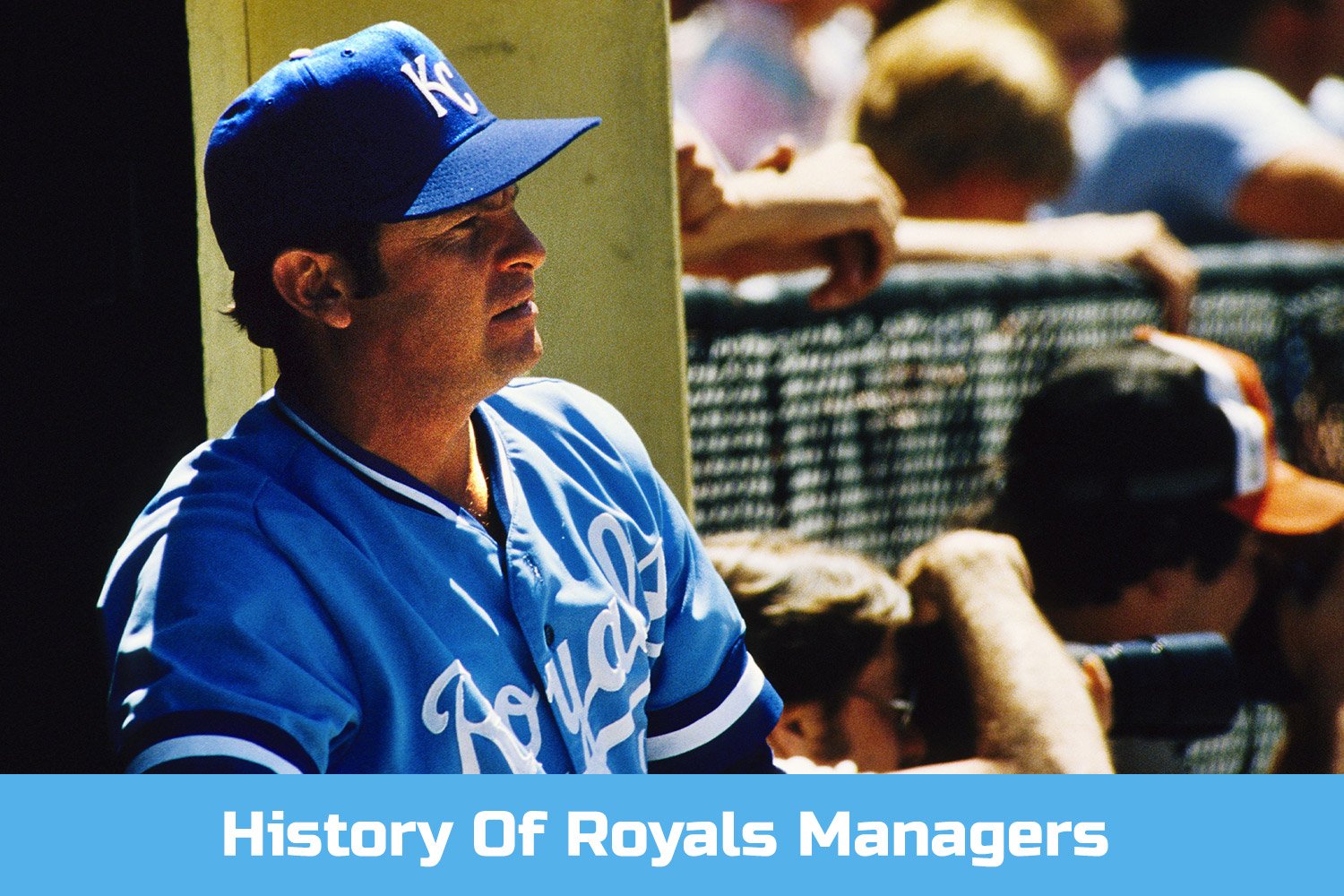 Let’s face it, managing the Kansas City Royals has not always been the easiest job in baseball. There have been a lot of down years when no mere mortal could have led the team to the playoffs, let alone a winning record. But the franchise has also been led by some excellent skippers. Here is a look at them. Joe Gordon (1969) Managerial record: 69-93 The expansion Royals embarked on their maiden voyage with a tremendous former player at the helm. Gordon was a nine-time All-Star during his playing days as a second baseman for the Yankees and Indians, and he won the 1942 AL MVP award. Gordon had managed Cleveland, Detroit, and the Kansas City A’s (briefly) but had not been a skipper since 1961. After one season with the Royals, he decided he’d had enough and stepped aside, although he continued working for the team as a scout for the next two years. Gordon was elected to the Baseball Hall of Fame as a player in 2009. Fun fact: Gordon was apparently quite the violin player; he played with the Portland Symphony Orchestra when he was still a teenager. Charlie Metro (1970) Managerial record: 19-33 Metro was hired by Kansas City as director of player procurement ahead of the expansion draft and took over as manager for the 1970 season. But Metro was a very old-school manager; he yanked reigning Rookie of the Year Lou Piniella from a spring training game for what the skipper felt was a lack of hustle. Metro’s strict ways quickly lost the team, and he was fired after just 52 games. Fun fact: Born in Pennsylvania to Ukrainian immigrants, Metro’s birth name was Charles Moreskonich. His father’s given name was Metro; after years of being called Little Metro, the son legally changed his last name to Metro. Like his father, Charlie worked in the coal mines; unlike his father, baseball gave him a way out. Bob Lemon (1970-1972) Managerial record: 207-218 Lemon was a teammate of Gordon’s in Cleveland and was even briefly managed by Gordon in 1958. A seven-time All-Star as a pitcher, Lemon had been a successful minor-league manager before becoming Kansas City’s pitching coach ahead of the 1970 season. He took over when Metro was fired, and posted a 46-64 record the rest of the way. Kansas City, in just its third season of play, would finish 1971 with an 85-76 record. But after the team fell back to 76-78 in the 1972 season, owner Ewing Kauffman decided he would like a younger manager (Lemon was only 51 at the end of the season). Lemon was elected to the Baseball Hall of Fame as a player in 1976. Fun fact: Lemon was a good enough hitter that he actually reached the majors as an outfielder. But he wasn’t a good enough hitter to stay an everyday player, and was soon moved to the mound. He was still used as a pinch-hitter occasionally and ended his career with 37 home runs. Jack McKeon (1973-1975) Managerial record: 215-205 As Kauffman wished, McKeon was nearly a full decade younger than Lemon when he became manager; he was 42 when the 1973 season began. McKeon had been managing the triple-A Omaha Royals since the team began play in 1969, leading them to league titles in their first two seasons. McKeon’s first year in the majors was mostly a success, with an 88-74 mark and a second-place finish, six games behind Oakland. But KC slipped to 77-85 in 1974, and McKeon alienated many players by trying to fire popular hitting coach Charley Lau. McKeon’s relationship with the team continued to deteriorate (star pitcher Steve Busby threatened to quit the team at one point), and McKeon was fired in late July of 1975. Fun fact: McKeon was hardly done managing; he would skipper Oakland, San Diego, Cincinnati, and two different stints with Florida. He led the Marlins to the 2003 World Series title and served as an interim manager in 2011 at the age of 80. Whitey Herzog (1975-1979) Managerial record: 410-304 With McKeon out, the Royals turned to California’s third-base coach. Herzog had played for the Kansas City A’s and still had a home in Independence, just a few minutes from Royals Stadium. Herzog’s first act was bringing Lau back to the team (he had been working as the team’s roving minor league hitting coach). The Royals went 41-25 the rest of the 1975 season, although they couldn’t catch Oakland. But the next three years were different, as Kansas City captured three straight AL West titles, including the franchise’s lone 100-win season in 1977. However, the Royals also lost three straight AL Championship Series, each time to the Yankees. Never afraid to speak his mind, Herzog followed up a couple of those ALCS losses with public complaints about ownership’s refusal to spend money for free agents (particularly in the bullpen, which had proven to be the razor-thin difference between the Royals and Yankees in a couple of those series). When the Royals dropped to 85-77 in 1979 and missed the playoffs, Herzog was let go. Fun fact: Naturally, Herzog was not unemployed for long. The St. Louis Cardinals hired him partway through the 1980 season. He was then promoted to general manager and then named himself manager for the 1981 season. That made him the first person to hold both jobs in the majors simultaneously since Connie Mack in 1950. Herzog’s managerial success led to his induction into the Baseball Hall of Fame in 2010. Jim Frey (1980-1981) Managerial record: 127-105 Frey spent the 1970s as a coach for Earl Weaver’s very strong Baltimore Orioles teams. The Kansas City job was his first managerial role in the majors. Unlike many new managers, he stepped into an enviable situation, heading a good team and expected to win. He also inherited George Brett, who was about to have a season for the ages, making his run at a .400 batting average. The Royals coasted to the AL West title, then finally vanquished the Yankees in the ALCS. But in a close, hard-fought World Series, they came up short against Philadelphia. Frey drew some heavy criticism both inside and outside the locker room for his pitching decisions in the Series; in particular, he basically ignored 14-game winner Paul Splittorff in favor of Rich Gale, who was pulled in the fifth inning of his Game Three start and in the third inning of Game Six. The Royals then went 20-30 before a players’ strike interrupted the 1981 season. After play resumed in August, the team continued to tread water. Twenty games into the second half, Frey was fired. Fun fact: Frey was a childhood, high school, and American Legion ball teammate of Don Zimmer. After Kansas City, Frey’s next managerial post was with the Chicago Cubs (he was their manager when they won the NL East in 1984, their first postseason appearances since 1945). When Frey became Chicago’s general manager before the 1988 season, he hired Zimmer to manage the team. Dick Howser (1981-1986) Managerial record: 404-365 In a fun twist, the Royals helped make Howser available to become their skipper. Howser’s first managerial job in the bigs was leading the New York Yankees to 103 wins in 1980. But after Kansas City swept the Yankees in the ALCS, New York owner George Steinbrenner demanded that third base coach Mike Ferraro be fired. Howser refused, so Steinbrenner fired him (but kept Ferraro). Months later, Howser was in the KC dugout in place of Frey. Under Howser, the Royals finished the 1981 season with a 20-13 mark, sneaking into the Division Series necessitated by the split-season format. KC was quickly swept out of the playoffs by Oakland. The Royals fell just short of the AL West title in 1982, then suffered through a horrible 1983–a losing record, 20 games back of Chicago in the division, and a drug scandal that saw four players get arrested. But with almost an entirely new rotation, Howser and the Royals somehow won the West in 1984. Again, they were swept out of the playoffs, this time by Detroit. Of course, they followed that up with a World Series win over St. Louis in 1985. But shortly after the 1986 All-Star Game, doctors discovered that Howser had a brain tumor. He missed the rest of the season, then made a brief attempt to return in spring training for the 1987 season. But he was in no condition to continue, so he resigned. On June 17, 1987, Howser passed away at the age of 51. Fun fact: Howser played at Florida State and returned to manage the Seminoles for one season before getting the Yankees job. The stadium at FSU is named in his honor. Mike Ferraro (1986) Managerial record: 36-38 Ferraro had the unenviable task of taking over when Howser’s brain tumor was discovered. The Royals went 36-38, which seems pretty good considering the circumstances. But the Royals fired him and hitting coach Lee May shortly after the season ended, an odd move since the plan was for Howser to return in 1987. Billy Gardner (1987) Managerial record: 62-64 Gardner was initially hired as Ferraro’s replacement as third base coach. Since Gardner had previous managerial experience (he skippered the Minnesota Twins from 1981 to 1985), perhaps he was brought in as insurance in case Howser couldn’t return. That’s precisely what happened. Gardner had also managed in the Royals’ minor leagues in the 1970s, so he was not a stranger to the organization. However, his time as Kansas City's manager was unsuccessful. Unlike many short-term managerial appointments, Gardner did not lose the clubhouse by being a dictator. Rather, team management felt he was too nice. The Royals were expected to compete for a division title, and they were technically doing that, at 3 ½ games out of first when Gardner was fired on August 26. But the team’s 62-64 record was a disappointment, and Gardner was axed. Fun fact: While Gardner was managing the Twins, he lived in two hotel rooms at a Super 8 motel near the Metrodome. He also kept an offseason job doing p.r. for a company near his offseason home in Connecticut. John Wathan (1987-1991) Managerial record: 287-270 “Duke” (so nicknamed for his spot-on John Wayne impression) had barely retired as a player after 10 years with the Royals before he got the managerial post; his last game as a player was Game Seven of the 1985 World Series. After joining the Royals’ coaching staff for the 1986 season, he began 1987 as the manager at Triple-A Omaha. But when Gardner was canned, Wathan was promoted. The Royals went 21-15 the rest of the season but still missed the playoffs. Kansas City followed that with 84- and 92-win seasons. It appeared to be ready to challenge Oakland for the division title in 1990, particularly after an offseason spending spree that brought in reigning NL Cy Young winner Mark Davis and 19-game winner Storm Davis (no relation). But the Royals got off to a miserable start and never recovered, finishing 75-86. When the Royals continued to struggle at the beginning of 1991, Wathan was fired. Fun fact: In 1982, Wathan stole 36 bases, breaking a major-league record Ray Schalk set in 1916. The record still belongs to Wathan. Hal McRae (1991-1994) Managerial record: 286-277 The Royals went back to the “former player” well by hiring McRae, who had been widely regarded as a team leader pretty much since Kansas City acquired him from Cincinnati in 1972. The Royals went 66-58 for the remainder of the 1991 season. But they began the 1992 season with a horrific 1-16 stretch; although they were better than .500 the rest of the way (74-70), the damage was done. Another slow start in 1993 (7-12) led to one of the most famous postgame press conferences in baseball history, as McRae erupted, throwing just about anything in his office that wasn’t nailed down. But the Royals recovered to post a respectable 84-78 record. The team got off to a better start in 1994 but was only around .500 when, in late July, they rattled off a 16-game winning streak. However, the season ended when the players went on strike, and McRae was fired about a month later. Curiously, the rationale was that the team wanted a manager who would work well with young players. No less an authority than George Brett had long credited McRae with teaching the 1970s Royals how to win. Fun fact: McRae was the fifth Black manager in major league history. He also joined a select group by managing his son, Brian, who was drafted by the Royals while Hal was still an active player. Bob Boone (1995-1997) Managerial record: 181-206 For the third manager in a row, the Royals chose someone who had played for the team. Boone ended a stellar career with two seasons in Kansas City (1989-1990). The Royals, who were dumping as much salary as they could following the double whammy of the strike and owner Ewing Kauffman’s passing, put together a decent season in 1995, finishing 70-74. They finished 75-86 in 1996 and were hovering around .500 midway through 1997 when they began a stretch where they lost 16 of 17, including 13 in a row. Boone was fired after the ninth straight loss, with the Royals at 36-46. Fun fact: Boone’s next managerial post was in Cincinnati, where he joined McRae in the “fathers managing their sons” club. Aaron Boone was the Reds’ third baseman when Bob got the job in 2001. The elder Boone’s tenure there lasted into the 2003 season; Aaron was traded away just days after Bob was fired. Tony Muser (1997-2002) Managerial record: 317-431 Muser was the Cubs’ hitting coach when the Royals hired him. The teams he managed in Kansas City were never good. Still, it was at least an interesting period in team history as players like Carlos Beltran, Johnny Damon, Jermaine Dye, and Mike Sweeney arrived in the majors and established themselves. Of course, none of those guys were pitchers, and that proved to be Muser’s downfall. Kansas City’s high-water mark under Muser was a 77-85 record in 2000, when they scored 879 runs (still the franchise record) but allowed 930 (the team record at the time). After a 67-95 mark in 2001, Muser was on the hot seat. An 8-15 start in 2002 brought his tenure to an end. Fun fact: Well, maybe not that fun. When Muser was a coach for the Brewers in 1986, a natural gas explosion at the team’s spring training facility in Arizona resulted in Muser being burned on over half his body. He did not return to the dugout until mid-May. Tony Pena (2002-2005) Managerial record: 198-285 An exuberant native of the Dominican Republic, Pena is probably most remembered by Royals fans for his antics as much as for his team’s records. The 2002 team he took over became the first one in franchise history to lose 100 games. But the following season, with Pena spending all of spring training projecting optimism, the team stormed out to a 16-1 start and stayed in the AL Central race until late September. The “Nostros Creemos” (“We Believe”) Royals were a rare bright spot in the dark ages of Royals history, and Pena was named Manager of the Year in the AL. But, with actual expectations, the 2004 team never got going and finished with 104 losses. At one point that season, in an odd attempt to lighten the mood, Pena hopped in the shower after a game, in full uniform. When the Royals started slowly in 2005, Pena resigned after 33 games. Fun fact: Pena was the third Dominican native in major league history to become a manager, and along with Luis Pujols of Detroit, the first to manage against another Dominican skipper. Buddy Bell (2005-2007) Managerial record: 174-262 Bell had managed the Tigers for two seasons and most of a third, then the Colorado Rockies for two seasons and 22 games, but was part of Cleveland’s coaching staff when the Royals hired him. Bell thus had a front-row seat for Kansas City’s epic 19-game losing streak that started in late July. The 2006 team lost its first two games, then won two, then lost 11 straight. After loss number 10, Bell uttered a quote that summed up Royals baseball from 1995-2012: “I never say it can’t get worse.” And the team proved him correct, losing 100 games for the third straight season. Even worse, Bell missed the final two weeks of the season after doctors diagnosed him with throat cancer. But he recovered and managed the 2007 season before resigning. Fun fact: Like Boone before him, Bell was part of a three-generation major-league family. His father, Gus, played 15 seasons, mostly for the Cincinnati Reds. His sons, David and Mike, played in the bigs as well; Buddy was the bench coach for Cleveland when David reached the majors with the Indians. Trey Hillman (2008-2010) Managerial record: 152-207 In an outside-the-box move, the Royals hired Hillman based on his managerial success in Japan, where he had piloted the Hokkaido Nippon Ham Fighters to titles in 2006 and 2007. They were hardly the only ones interested, as Hillman had been considered by Texas, San Diego, and the Yankees. The Royals won 75 games in 2008, their best mark since 2003, but fell off the next season. A 12-23 start to the 2010 season cost him his job. Fun fact: Hillman did not manage again until he was hired by the Korean KBO league’s SK Wyverns in 2016. That made him the first person to manage in MLB, Nippon Professional Baseball, and the KBO. He then became the first foreign manager to win a KBO title in 2018, making him the only manager ever to hold both the Korean Series and Japan Series titles. Ned Yost (2010-2019) Managerial record: 746-839 Yost, who the Milwaukee Brewers famously fired during a pennant race in 2008, joined KC’s front office before the 2010 season. Soon enough, he was back in the dugout. As the Royals began bringing the core of the 2014-15 teams to the majors, Yost often took the heat for the youngsters’ growing pains. He also came under fire for his handling of relief pitchers. But Yost went from embattled to beloved as the Royals challenged for a playoff spot in 2013, then went on a scintillating run to the World Series in 2014, and capped it off with the title in 2015. After most of the core of those teams left in free agency, Yost stuck around for a couple of lean years in 2018 and 2019 before retiring. He is now an adviser to Royals GM J.J. Picollo. Yost is the longest-tenured manager in team history, as well as the winningest (and losing-est). Fun fact: Yost was good friends with NASCAR legend Dale Earnhardt Sr. and changed his uniform number to 3 after Earnhardt’s death in a crash at the 2001 Daytona 500. Mike Matheny (2020-2022) Managerial record: 165-219 Matheny, like Yost, had a position in the Royals’ front office before taking over in the dugout. Matheny had managed St. Louis for six seasons before being let go halfway through his seventh, with the 2013 NL pennant to his credit. But he couldn’t duplicate that success in Kansas City, with a high-water mark of 74 wins in 2021. The Royals fired general manager Dayton Moore late in the 2022 season, and Matheny was let go after the season ended. Fun fact: When the Cardinals hired Matheny before the 2012 season, he had no professional coaching or managerial experience (of course, he played in the majors for 13 seasons). He then became the first manager in MLB history to reach the playoffs in each of his first four seasons. Matt Quatraro (2023-present) Managerial record: 224-262 Quatraro was Tampa Bay’s bench coach before taking over in Kansas City. His first year was rough, as the Royals tied the franchise record for losses in a season with 106. But with an upgraded rotation, Quatraro guided Kansas City to its first playoff appearance in almost a decade in 2024 and a Wild Card Series win over Baltimore. The 2025 season was something of a letdown, but Quatraro still guided the team through a bunch of injuries to a winning record, the first time since 2014-15 the Royals had two straight winning seasons. Fun fact: Quatraro, perhaps unexpectedly given his quiet, analytical nature, is a fan of the Grateful Dead.
 -
On Opening Day of the 2003 season, the Royals entered the ninth inning clinging to a 3-0 lead over the Chicago White Sox. The previous year, Kansas City had lost 100 games for the first time in franchise history; a win would be a most welcome sight for Royals fans. Chicago had the heart of a dangerous order coming to the plate. But Jose Valentin lined out. Frank Thomas struck out looking on a filthy slider. And Magglio Ordonez grounded out meekly. Although it was not his major league debut, this was how most Royals fans were introduced to Mike MacDougal. Robert Meiklejohn MacDougal was born on March 5, 1977, in Las Vegas, to parents Tom and Dorothy, both of whom were teachers. Tom had pitched a couple of seasons in the minors before beginning his career in education. After attending Mesa (Arizona) High School, the younger MacDougal was chosen by Baltimore in the 22nd round of the 1996 draft. He decided not to sign and instead attended Wake Forest University in North Carolina. The Orioles drafted him again, this time in the 12th round in 1998. With college eligibility left, he again decided not to sign. It was a good bet. After a successful senior season that included a no-hitter against Duke, MacDougal was named a first-team All-American. The Royals used the 25th overall pick in the 1999 draft to select the lanky right-hander. MacDougal breezed through the minors, with 11 starts in Low-A Spokane in 1999, then 25 in High-A Wilmington and two in Double-A Wichita in 2000. After 27 starts for Triple-A Omaha in 2001, MacDougal was called up to the majors near the end of the 2001 season. Although the Royals had only brought him to Kansas City after Omaha’s season ended to work with pitching coach Al Nipper, a series of injuries led the team to activate him. In his first big-league start, he pitched 4 ⅓ innings against the White Sox, allowing six hits and three runs. His next two starts were somewhat better, and it looked like he would be a candidate for the rotation to start 2002. But a freak accident nearly derailed his career. On October 4, the Royals were hosting Cleveland for their final home game of the season. In the fourth inning, Carlos Beltran lost his grip on his bat while swinging. The bat hit MacDougal, who had been leaning on the dugout railing. Although he never lost consciousness, he was taken to a hospital, where he spent the night in intensive care. He had suffered a fractured skull from the bat, with a crack just above his left temple. Even worse, the injury caused numbness in his right hand, a malady that lasted into the following spring. It’s hard to throw a baseball when you can’t feel it. MacDougal struggled through spring training in 2002, ultimately being optioned to Omaha before Opening Day. Midway through the season, he was bumped down to Wichita. His control started to come back as the numbness subsided, and he was able to make it back to the majors as a September call-up, pitching in relief six times. Following a strong showing in winter ball in Puerto Rico, where he was regularly topping 100 mph on the radar gun, MacDougal earned the closer role with a strong spring training in 2003. He hit the ground running as the Royals got off to a surprising 16-3 start, including a 9-0 run to start the season. MacDougal had 10 saves by the end of April, quickly earning the nickname “Mac the Ninth” and eventually made the All-Star team, although he did not appear in the game. He ended the year with 27 saves, a 3-5 record, and a 4.08 ERA. Again, MacDougal’s health betrayed him. During spring training in 2004, he suffered a stomach ailment that cost him several pounds on an already slight frame and a few ticks off his fastball. He opened the season on the disabled list and wasn’t activated until late April. He was wild and ineffective when he returned, and was demoted to Omaha just a few weeks later. Then the elbow soreness started. After some more struggles, he was demoted again, this time to Wichita. Here, he seemed to regain his fastball and his control, and was again a September call-up. Although he did not resume closing duties, he was effective in eight games, salvaging something from a disaster of a season. MacDougal enjoyed a much better 2005 season. He did not begin the year as a closer, but reclaimed it in late May after injuries to Jeremy Affeldt and Ambiorix Burgos. It was another terrible year for the Royals, but MacDougal picked up 21 saves to go with a 5-6 record and 3.33 ERA. His role in 26 wins meant he played a part in nearly half the team’s total of 56. Stop me if you’ve heard this before: MacDougal headed to spring training as the presumptive closer, and then the injury bug got him again. This time, it was a strained right shoulder —a teres muscle injury, rather than the dreaded rotator cuff. But it was enough to cost him half of the 2006 season. In his second outing, he picked up his 50th career save as a Royal. It was also his last. Two weeks later, MacDougal was traded to the White Sox for two minor-league pitchers (Tyler Lumsden and Dan Cortes) as Chicago sought to upgrade their bullpen depth. MacDougal finished his time in Kansas City with a 10-14 record, those 50 saves, and a 3.88 ERA in 163 games. He remained in Chicago for nearly three seasons before the White Sox released him in 2009. He soon caught on with the Washington Nationals and wound up leading the team with 20 saves despite not joining them until early May. A free agent after the season, he signed with Florida but was released during spring training. He then began the bouncing-around phase of his career, going back to Washington’s organization, then to the St. Louis Cardinals, and finally to the Los Angeles Dodgers. When LA released him in May of 2012, his major-league career came to an end, although he would pitch in the minor leagues for two more years and five different franchises. In his post-playing days, MacDougal seems to be participating in a community outreach program run by his father-in-law’s waste management company near Philadelphia. He works with youth, sharing his story of returning to the majors after his skull fracture. He was also inducted into the Wake Forest Sports Hall of Fame in 2015. View full article
-
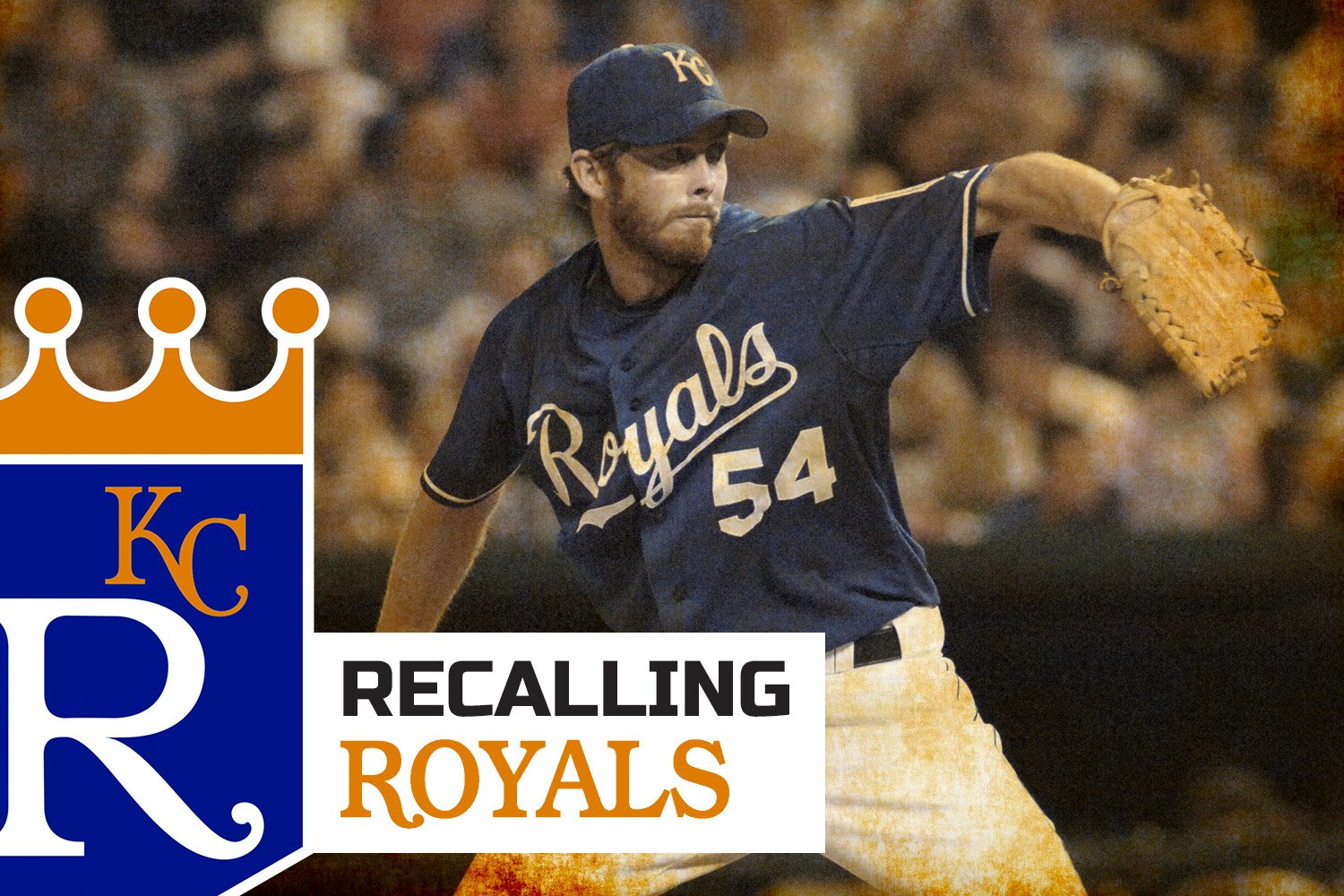 On Opening Day of the 2003 season, the Royals entered the ninth inning clinging to a 3-0 lead over the Chicago White Sox. The previous year, Kansas City had lost 100 games for the first time in franchise history; a win would be a most welcome sight for Royals fans. Chicago had the heart of a dangerous order coming to the plate. But Jose Valentin lined out. Frank Thomas struck out looking on a filthy slider. And Magglio Ordonez grounded out meekly. Although it was not his major league debut, this was how most Royals fans were introduced to Mike MacDougal. Robert Meiklejohn MacDougal was born on March 5, 1977, in Las Vegas, to parents Tom and Dorothy, both of whom were teachers. Tom had pitched a couple of seasons in the minors before beginning his career in education. After attending Mesa (Arizona) High School, the younger MacDougal was chosen by Baltimore in the 22nd round of the 1996 draft. He decided not to sign and instead attended Wake Forest University in North Carolina. The Orioles drafted him again, this time in the 12th round in 1998. With college eligibility left, he again decided not to sign. It was a good bet. After a successful senior season that included a no-hitter against Duke, MacDougal was named a first-team All-American. The Royals used the 25th overall pick in the 1999 draft to select the lanky right-hander. MacDougal breezed through the minors, with 11 starts in Low-A Spokane in 1999, then 25 in High-A Wilmington and two in Double-A Wichita in 2000. After 27 starts for Triple-A Omaha in 2001, MacDougal was called up to the majors near the end of the 2001 season. Although the Royals had only brought him to Kansas City after Omaha’s season ended to work with pitching coach Al Nipper, a series of injuries led the team to activate him. In his first big-league start, he pitched 4 ⅓ innings against the White Sox, allowing six hits and three runs. His next two starts were somewhat better, and it looked like he would be a candidate for the rotation to start 2002. But a freak accident nearly derailed his career. On October 4, the Royals were hosting Cleveland for their final home game of the season. In the fourth inning, Carlos Beltran lost his grip on his bat while swinging. The bat hit MacDougal, who had been leaning on the dugout railing. Although he never lost consciousness, he was taken to a hospital, where he spent the night in intensive care. He had suffered a fractured skull from the bat, with a crack just above his left temple. Even worse, the injury caused numbness in his right hand, a malady that lasted into the following spring. It’s hard to throw a baseball when you can’t feel it. MacDougal struggled through spring training in 2002, ultimately being optioned to Omaha before Opening Day. Midway through the season, he was bumped down to Wichita. His control started to come back as the numbness subsided, and he was able to make it back to the majors as a September call-up, pitching in relief six times. Following a strong showing in winter ball in Puerto Rico, where he was regularly topping 100 mph on the radar gun, MacDougal earned the closer role with a strong spring training in 2003. He hit the ground running as the Royals got off to a surprising 16-3 start, including a 9-0 run to start the season. MacDougal had 10 saves by the end of April, quickly earning the nickname “Mac the Ninth” and eventually made the All-Star team, although he did not appear in the game. He ended the year with 27 saves, a 3-5 record, and a 4.08 ERA. Again, MacDougal’s health betrayed him. During spring training in 2004, he suffered a stomach ailment that cost him several pounds on an already slight frame and a few ticks off his fastball. He opened the season on the disabled list and wasn’t activated until late April. He was wild and ineffective when he returned, and was demoted to Omaha just a few weeks later. Then the elbow soreness started. After some more struggles, he was demoted again, this time to Wichita. Here, he seemed to regain his fastball and his control, and was again a September call-up. Although he did not resume closing duties, he was effective in eight games, salvaging something from a disaster of a season. MacDougal enjoyed a much better 2005 season. He did not begin the year as a closer, but reclaimed it in late May after injuries to Jeremy Affeldt and Ambiorix Burgos. It was another terrible year for the Royals, but MacDougal picked up 21 saves to go with a 5-6 record and 3.33 ERA. His role in 26 wins meant he played a part in nearly half the team’s total of 56. Stop me if you’ve heard this before: MacDougal headed to spring training as the presumptive closer, and then the injury bug got him again. This time, it was a strained right shoulder —a teres muscle injury, rather than the dreaded rotator cuff. But it was enough to cost him half of the 2006 season. In his second outing, he picked up his 50th career save as a Royal. It was also his last. Two weeks later, MacDougal was traded to the White Sox for two minor-league pitchers (Tyler Lumsden and Dan Cortes) as Chicago sought to upgrade their bullpen depth. MacDougal finished his time in Kansas City with a 10-14 record, those 50 saves, and a 3.88 ERA in 163 games. He remained in Chicago for nearly three seasons before the White Sox released him in 2009. He soon caught on with the Washington Nationals and wound up leading the team with 20 saves despite not joining them until early May. A free agent after the season, he signed with Florida but was released during spring training. He then began the bouncing-around phase of his career, going back to Washington’s organization, then to the St. Louis Cardinals, and finally to the Los Angeles Dodgers. When LA released him in May of 2012, his major-league career came to an end, although he would pitch in the minor leagues for two more years and five different franchises. In his post-playing days, MacDougal seems to be participating in a community outreach program run by his father-in-law’s waste management company near Philadelphia. He works with youth, sharing his story of returning to the majors after his skull fracture. He was also inducted into the Wake Forest Sports Hall of Fame in 2015.

