


Kevin O'Brien
-
Posts
858 -
Joined
-
Last visited
-
Days Won
41
Content Type
Profiles
Forums
Blogs
Events
News
2026 Kansas City Royals Top Prospects Ranking
Kansas City Royals Videos
Kansas City Royals Free Agent & Trade Rumors, Notes, & Tidbits
Guides & Resources
The Kansas City Royals Players Project
2026 Kansas City Royals Draft Tracker: Picks & Bonuses
Store
Downloads
Gallery
Everything posted by Kevin O'Brien
-
 On Monday morning, the Royals announced they would activate Michael Massey from the IL. The 28-year-old second baseman/left fielder was on a rehab stint in Omaha after suffering a calf injury in Spring Training. Massey started the season on the 10-Day IL. With the activation of Massey, Kansas City optioned utility player Nick Loftin to Omaha. Massey had a solid spring until he was sidelined with a calf injury. In 24 plate appearances, the former Illinois product slashed .364/.417/.545 with a .962 OPS. He also hit a home run, had 3 RBIs, stole a base, and posted solid Statcast percentiles in Cactus League play, as seen below via TJ Stats. Massey is trying to bounce back after a lackluster 2025 campaign. In 277 plate appearances, he hit .244 with a .581 OPS. He had three home runs, posted a .069 ISO, and only had a 3.2% walk rate. The Royals are hoping that Massey can be more selective at the plate and show more power, much like he did in 2024 when he hit 14 home runs in 356 plate appearances. With Massey coming up, the Royals optioned Loftin, who was hitting .222 with a .697 OPS in 11 plate appearances. The former Baylor product showed excellent plate discipline so far in 2026. He had a .364 OBP and had solid Statcast rankings, especially in terms of whiff rate, walk rate, and chase rate. That said, Loftin struggled to launch the ball, as evidenced by an LA Sweet-Spot% that ranked in the 18th percentile. He also showed questionable defense in the field, especially in left field, where he misplayed a ball badly that resulted in the Brewers scoring. Thus, the Royals may want Loftin to work on his defense and power in Omaha. With his strong plate discipline, it doesn't seem like Loftin will be waiting in Omaha for long, especially if Massey can't show progress at the plate in 2026. View full rumor
 -
 Week in a Nutshell After losing two of three in their Opening Series against Atlanta, the Royals came back to Kansas City for their first homestand of 2026. That included a three-game series against division foe Minnesota, followed by a three-game series against NL Central opponent Milwaukee. The Royals won Opening Day against the Twins, their first home opening win since 2022. They also followed that up with 13 runs in game two in monsoon conditions at Kauffman Stadium. However, they lost a chance at a sweep on Thursday afternoon in a game marred by off-field distractions. The main distraction centered on rookie catcher Carter Jensen oversleeping his alarm, showing up late, and getting scratched shortly before first pitch. The Brewers were expected to be a tougher challenge than the Twins, especially with Milwaukee's record 5-1 heading into the weekend series at Kauffman Stadium. After being rained out on Friday, they had a doubleheader on Saturday, which both teams split. The Royals had their chances in the rubber game on Easter Sunday, but the Brewers held off Kansas City in the late innings and took the series, improving their record to 7-2 and remaining atop the NL Central. A 3-3 homestand isn't bad at this time of the year, especially with a series against a team that will likely be playing in the postseason. However, it was a homestand that felt like a missed opportunity, and the Royals weren't helped by the lackluster play of their stars over the six-game span at Kauffman Stadium this past week. Record this Series: 3-3 Run Differential for the Series: +2 Record for the Year: 4-5 Run Differential for the Year: -5 Standing: Tied for 3rd in the AL Central Game 4: KC 3, MIN 1 The Royals win their first Opening Day home game since 2022. Kris Bubic produced a quality start with only one run and two hits allowed in six innings of work (he also struck out four and walked three). Kyle Isbel and Isaac Collins both hit home runs in the two-run victory. Game 5: KC 13, MIN 9 In a rainy and sloppy contest, Kansas City tagged starter Joe Ryan and the Twins' pitching staff for 13 runs, though only nine were earned. The Royals got off to a 12-1 lead, but the bullpen struggled with control and command due to the weather and allowed eight runs after Noah Cameron was pulled. Jac Caglianone led the Royals with three hits. Game 6: MIN 5, KC 1 Taj Bradley and the Twins bullpen held the Royals lineup to only one run in the series finale. Cole Ragans matched Bradley with eight strikeouts, four hits, one walk, and zero earned runs allowed. However, a questionable throwing decision by Salvador Perez (thrust into catching at the last minute) ended up costing Ragans the loss. Steven Cruz was tagged in mop-up duty by allowing back-to-back-to-back home runs. Game 7: MIL 5, KC 2 (1st Game of Saturday DH) After getting "rained out" on Friday (it didn't storm as hard as expected), the Royals dropped the first leg of their afternoon doubleheader. Luinder Avila made his first MLB start, and he was lackluster, allowing five runs on three hits and three walks in three innings of work. While he struck out four batters, he struggled with command, and the Brewers (specifically, Garrett Mitchell, who had all 5 RBI) made him pay. Game 8: KC 8, MIL 2 (2nd Game of Saturday DH) Kansas City bounced back in the nightcap, with Seth Lugo grinding out five innings and allowing two runs while striking out seven. Jensen had a big day, collecting two RBI and two hits, including a double down the foul line. A six-run sixth inning ended up being the difference for Kansas City in game two of the doubleheader. 27th-man Eli Morgan got the rare three-inning save. Game 9: MIL 8, KC 5 The Brewers won the rubber match, holding off the Royals despite a modest comeback in the 7th that made it a one-run game. Bubic went five innings and struck out eight, but he allowed four runs due to big hits by the Brewers. Matt Strahm and Lucas Erceg struggled in their lone outings of the series, each allowing two runs in their innings of work. News and Notes After struggling in his lone outing in Atlanta, closer Carlos Estevez was put on the 15-Day IL due to a foot contusion from a ball that hit him in the foot during the Braves game. The Royals called up Steven Cruz in his place, and he received a lot of work during the homestand. Michael Wacha was beset by illness this week, which forced him to miss his start against Milwaukee. Avila pitched in his place. Wacha was not added to the IL, and he is expected to make his next start on the road in game one of the upcoming series against the Guardians, as reported by Anne Rogers of MLB.com. Avila replaced Bailey Falter on the active roster as Falter was put on the IL due to an elbow injury. Falter struggled on Wednesday, allowing three runs on three hits and two walks in 0.1 innings of work (though the weather conditions certainly didn't help). Even though he started, manager Matt Quatraro said that the Royals plan to keep Avila up for now as a reliever. It hasn't been determined if Avila will return to Triple-A when Falter is eligible to come off the IL. Morgan came up as the 27th man for the Saturday doubleheader against Milwaukee. Morgan pitched three innings and allowed no runs on one hit and one walk while striking out five. The save was Morgan's first since 2023. He was returned to Triple-A Omaha after Saturday's game, per MLB policy. Highlights After averaging only two runs per game in their first series in Atlanta, the Royals averaged 5.3 runs over the homestand. Their 32 runs scored were tied for the 7th-highest total in baseball over the past week, according to MLB.com. Kansas City also ranked second in OBP over the past week with a .373 mark and tied sixth for walks with 26. Last year, the Royals ranked 22nd in OBP, 29th in BB%, and 26th in runs scored. Thus, this week was a nice step in the right direction for this offense. Isbel, Collins, and Garcia paced the Royals' offense over the past week. They were the only players with OPS marks over 1.000 this week, with Isbel having a 1.563 OPS, Collins having a 1.011 OPS, and Garcia having a 1.053 OPS. Garcia had two hits on Sunday and launched his first home run of the season against Brewers starter Kyle Harrison. It was Garcia's first home run since September 5th of 2025. Another solid performer was Jonathan India, who hit .294 with an .871 OPS in 17 plate appearances. India had five hits and five RBI this week, with four of them coming on a grand slam on Wednesday in the Sonic Slam inning. The Royals would like to see India bounce back after he hit .233 with a .669 OPS. While his numbers overall are still a bit meager (.208 average; .654 OPS), his performance this past week should be a good sign that India is starting to lock in again as a hitter at the bottom of the lineup. In terms of pitching, the Royals staff did pretty well when it came to generating strikeouts. Over the past seven days, Kansas City struck out 64 batters, second-most in baseball, according to MLB.com. Individually, Bubic led all Royals pitchers with 12 strikeouts in 11 IP. Ragans and Lugo were second and third with eight and seven strikeouts, respectively. Noah Cameron had a nice 2026 debut, allowing only one run on four hits and one walk while striking out five in five innings of work in Wednesday's 13-9 win. The St. Joseph, Missouri product didn't generate a whole lot of chase (21.1%) or whiff (20.5%), but he flooded the strike zone (54.2% zone rate) and limited hard contact (.335 xwOBACON), as seen below from his TJ Stats summary. A couple of relievers who stuck out this week were Nick Mears and Daniel Lynch IV, who appeared four and three times, respectively, this week. In four innings of work, Mears didn't allow a run, posted a 0.75 WHIP, and struck out three while walking one. Like Cameron, the former Brewers reliever has limited hard contact while flooding the strike zone, but could do a better job generating chases and whiffs. On a positive note, his TJ Stuff+ has looked good thus far this season, so he may be a slight adjustment away from improving those chase and whiff rates. As for Lynch, he posted a 2.25 ERA and 1.25 WHIP this week in four innings of work. Lynch neutralized things a bit after Avila was pulled and made an incredible play at first base to end the inning (though he was taken out after the game as a precaution). Lynch isn't generating a ton of chase as a reliever, as evidenced by his 22.2% chase rate. However, his whiff rate is solid at 31.3%, and he's limiting hard contact with a .227 xwOBACON. His stuff isn't overwhelming, according to TJ Stuff+, but it's good enough, especially when the command is on. The former Virginia product is the kind of lefty reliever who can excel in both short and long-relief appearances. The Royals will need that, especially with Falter and Estevez both on the IL. Lowlights It was a brutal series for Bobby Witt Jr. and Vinnie Pasquantino, the No. 2 and 3 hitters in the Royals lineup. The Royals' shortstop was the worst of the regular players during the six-game homestand. In 22 plate appearances, Witt only hit .182 with no extra-base hits. While he had four walks, he also struck out six times, the third-most of any Royals hitter over the past week. His .478 OPS and .182 slugging percentage were the lowest marks of any Royals hitter with more than one plate appearance over the past seven days, according to MLB.com. Witt is still hitting the ball hard, as evidenced by his exit velocity and hard-hit Statcast percentiles below. That said, he is chasing a lot, ranking in the 10th percentile in O-Swing%. That approach hasn't helped him barrel the ball either, as evidenced by his 4.3% barrel rate, which ranks in the 30th percentile. Witt is allowed to have a bad stretch every now and then. However, he's the most important hitter on this team, and the Royals are lucky they went 3-3 on a homestand where he performed so poorly. Pasquantino was a little better than Witt during this homestand, but not by much. In 23 at-bats, Vinnie hit .217 with a .582 OPS. He only had one extra-base hit (a double), and he struck out seven times. He walked four times and drove in four RBI, with two coming on Sunday, helping the Royals get within one run of the Brewers in the bottom of the seventh. While Sunday was a step in the right direction (he had two hits), it has been a brutal start for the Royals' first baseman. In 40 plate appearances, he is hitting .206 with a .535 OPS. He's known for being a slow starter, as he has a career .216 average and an 89 wRC+ in March/April, according to Fangraphs splits. Thus, this stretch won't last forever, and he should heat up offensively as the weather gets hotter. Nonetheless, it would be nice for Vinnie to snap out of his typical early-season funk sooner rather than later. In terms of pitching, Erceg and Strahm were nails in the Atlanta series, but had lackluster performances this week. In two games and two innings of work, Strahm posted a 9.00 ERA and 1.50 WHIP. He allowed his first home run of the year, which inflated his metrics. He did have three strikeouts to only one walk, but Strahm's first homestand of 2026 left a bit to be desired, though he wasn't helped by inconsistent work in the Brewers series. Erceg didn't have a great week either, though both of his outings were in non-traditional situations. The 30-year-old reliever probably shouldn't have appeared on Wednesday (it was 12-1 at one point), but the Royals bullpen couldn't mop things up. On Sunday, he struggled to generate chase or whiff against a tough Brewers lineup. As a result, he posted a 10.80 ERA and 2.40 WHIP in 1.2 IP. The stuff has been great for Erceg so far this year, but he is struggling to generate CSW and whiffs, an issue for him a season ago. While the whiffs and chase haven't been there for Erceg, the TJ Stuff+ is good (103), and he's limiting barrels and hard hits at the very least. If he wants to claim the closer's spot for Estevez full-time, he will need to generate more strikes, especially of the swing-and-miss variety. The last pitcher to focus on is Avila, who was absolutely rocked in his first MLB start and MLB appearance in 2026. The stuff was good from Avila in his outing on Saturday afternoon. However, he failed to generate much chase or whiff, and he was hit hard. That is not exactly a good trio to see together, as illustrated in his TJ Stats summary below. Avila will get a chance to face easier opponents, with the Guardians (21st in wRC+) and White Sox (24th in wRC+) looming this week. However, Avila will need to iron things out with his command to avoid another outing like his 2026 debut. Looking Ahead The Royals hit the road for a three-game series against the Guardians in Cleveland and then come back home for a four-game homestand against the White Sox. Kansas City went 15-11 against both opponents last year, so continuing those winning ways in 2026 will be important for the Royals if they want to return to the postseason. Two key position players in this series will be Witt and Pasquantino. Bobby and Vinnie do have some good history in Cleveland, historically. Witt has a career .830 OPS in Progressive Field, while Vinnie has an .860 career OPS. For the Royals to take the series in Cleveland, they will need solid performances from their No. 2 and 3 hitters in the lineup. In terms of pitching, the Royals struggled with walks as a pitching staff this past week. This is an atypical trend, as they ranked 9th in BB/9 a year ago. Kansas City issued 32 walks, fourth-most in the MLB over the past seven days. Their 1.44 WHIP was fifth-highest in baseball over the past week, and their 4.50 team ERA ranked 21st. Getting control again of the strike zone will be crucial for Kansas City's pitching staff, especially against two divisional opponents this week. A good sign for the Royals is that Cleveland and Chicago chase a lot. According to Fangraphs, the White Sox have the sixth-highest O-Swing% (34.6%), and the Guardians have the eighth-highest (34.5%). Conversely, the Twins (30.9%) and Brewers (30.8%) ranked 10th and 9th, respectively, in O-Swing%. On paper, Cleveland and Chicago should be easier opponents for this pitching staff. Thus, this upcoming week could be an opportunity for the Royals not just to cut down on walks but to get their overall command as a pitching staff back on track. As this past week (and series against the Brewers) demonstrated, the Royals will have a tough time winning games when their pitching staff is allowing too many free passes on base.
 -
Image courtesy of William Purnell-Imagn Images Week in a Nutshell The Royals were looking to take advantage in the AL Central this week, with a three-game series in Cleveland and a four-game homestand against the White Sox over the weekend. Unfortunately, the Royals took a slight step back this week with a losing record and split a series at home against a team that hadn't beaten the Royals at Kauffman Stadium since 2023. It's still early in the year, but it seems like the Royals are not getting off to the start that they hoped for back in Spring Training, when some experts were thinking that Kansas City could make a push for an AL Central division title. They have only won one series this year (Opening Week against the Twins), and they have the second-worst run differential in the AL Central, as of Sunday. While there are still 146 games remaining, the Royals need a jolt, especially on offense and in the bullpen, to help ensure they do not fall too far behind in the divsional race. On a non-record note, the Royals debuted their new City Connect uniforms this past weekend, which have received mixed reception from Royals and baseball fans alike. In honor of the unveil, they wore their City Connect uniforms all weekend (and went 2-1 in the new threads). Going forward, Kansas City will wear these new City Connect uniforms for every Friday home game this season. Record this Week: 3-4 Run Differential for the Week: -5 Record for the Year: 7-9 Run Differential for the Year: -11 Standing: Tied for 3rd in the AL Central Game 10: KC 4, CLE 2 Kansas City started off the road trip well with Michael Wacha setting the tone. He allowed only one run in seven innings of work, and he also allowed just three hits. Carter Jensen and Jonathan India both hit home runs in the Royals' two-run victory. Game 11: CLE 2, KC 1 In one of the coldest games of the year (they actually had to move up the first pitch to accommodate), Cleveland beat the Royals in walkoff fashion with Brayan Rocchio hitting the game-winning single. Jensen had the lone hit for the Royals, a solo home run. Game 12: CLE 10, KC 2 The game was close initially, as Cleveland was up 5-2 entering the 8th. However, a five-run 8th inning off Steven Cruz ended up putting the game out of reach (resulting in Tyler Tolbert closing out the game for the Royals' pitching staff). Bobby Witt Jr. had two hits and collected his first extra-base hit of the year (a double). Game 13: CWS 2, KC 0 Kansas City looked flat on Thursday, as the White Sox won their first game at Kauffman after going winless there for two straight seasons (they had a 14-game losing streak). Seth Lugo threw 6.1 innings of quality ball (1 ER allowed), but he wasn't able to outduel White Sox starter Anthony Kay, who earned his first MLB victory since 2021. Game 14: KC 2, CWS 0 The Royals ended a three-game losing streak on the night they revealed their new City Connect uniforms. Kris Bubic had a career-high 11 strikeouts in seven innings of work, and Witt and Michael Massey both had doubles. Jensen also hit his fourth home run of the year, which helped seal the game for the Royals. Game 15: KC 2, CWS 0 Wacha was masterful again, going eight innings and allowing no runs, four hits, and one walk while striking out seven. Maikel Garcia got the offense going early with a leadoff home run, but the Royals wouldn't score again until the 8th inning on a Vinnie Pasquantino sacrifice fly. Lucas Erceg notched his 5th save of the year. Game 15: CWS 6, KC 5 After spotting the White Sox a 2-0 lead, the Royals ended up leading the White Sox 5-4 after four. However, Chicago scored two runs in the 6th and 7th combined, and Kansas City was unable to score (or hit) for the remainder of the game. Sunday's game was played after a three-hour rain delay. News and Notes After rough outings against the Guardians on Wednesday, the Royals optioned pitchers Luinder Avila and Steven Cruz to Omaha and called up Eli Morgan and Mitch Spence. Morgan pitched against the Brewers as the 27th man for their doubleheader on Saturday, April 4th. The Royals were on a 0-for-32 stretch with runners in scoring position, entering Sunday's series finale against Chicago. They snapped that brutal streak with a Jensen infield single that scored a run in the bottom of the third. According to Fangraphs, the Royals are the worst-hitting team in RISP situations with a 37 wRC+. The next-worst is Pittsburgh with a 57 wRC+. In the minors, Ryan Bergert was shut down during his April 9th outing for Omaha due to elbow discomfort. Bergert was put on the IL, and righty Ben Sears was called up from Northwest Arkansas to replace him. No timetable has been shared regarding Bergert's injury. On a positive note, Stephen Kolek has returned from the IL and will be making a rehab stint in Omaha. He was supposed to appear in Sunday's series finale against the Iowa Cubs, but the game was canceled due to rain. Kolek will likely pitch back in Omaha this week as they play the Indianapolis Indians at Werner Park. The former Padres pitcher, who came over with Bergert in the Freddy Fermin trade last season, posted a 1.91 ERA and 2.71 FIP in 33 IP with the Royals last season. Highlights Jensen had the best week of any Royals hitter. In 22 at-bats, he hit .273 with a .986 OPS. That included six hits, with three of them home runs. He also had four RBI and has been on fire since his "oversleeping" controversy last Thursday. After a brutal week against the Twins and Brewers, Witt looked more like his old self this week against the Guardians and White Sox. He hit .308 with a .842 OPS with eight hits, including three doubles. Witt also stole four bases on five attempts, the lone caught stealing being on a controversial no-call that should've been a balk on White Sox reliever Jordan Hicks. He is currently at the top of the league in stolen bases. The Royals franchise shortstop also showed excellent plate discipline this week with five walks drawn and only four strikeouts. While he hasn't hit his first home run yet, he may be on the verge of doing so in this upcoming week of games. On the pitching end, Wacha and Bubic carried the Royals staff over the past week. Bubic's 11 strikeouts led all Royals pitchers over the past seven days, and he only had one outing. After an uneven performance against the Brewers in his late start, the former Stanford pitcher looked like his All-Star self on Friday against the White Sox, as he ended a two-game Royals slide. It wasn't just the strikeouts that were impressive for Bubic. When looking at his TJ Stats pitching summary, he excelled in nearly every category, as illustrated below. Bubic had four pitches with a TJ Stuff+ of 100 or higher, and he also had a 35.6% chase%, a 37% whiff%, and .209 xwOBACON. While the White Sox aren't a great offense, he neutralized a team that has the potential to get hot, especially with the long ball. As for Wacha, he was excellent this week, as he made outings against both the Guardians and White Sox. In 15 IP, he allowed only seven hits, had a 0.60 ERA, 0.73 WHIP, and had 10 strikeouts to only four walks. For the year, Wacha is not just posting a 0.43 ERA and 0.71 WHIP, but also a 16.2% K-BB% and a 3.01 FIP in 21 IP. Furthermore, the veteran arm is also putting up impressive chase and whiff rates this year despite not sporting elite TJ Stuff+ marks on his pitches. That shows how strong Wacha's command has been at the start of 2026. Lastly, Erceg had a solid week with three saves in three opportunities. He didn't allow a run, and no hits or walks either. He struck out two batters this week, which is nice, but it would be encouraging to see him generate more whiffs, especially if he is to hold onto the closer's role, even after Carlos Estevez returns from the IL. Lowlights Pasquantino and Perez's slow starts to 2026 got even worse over the past week. The Royals' No. 3 and 4 hitters, respectively, hit .080 this week with .080 slugging percentages. Pasquantino had a higher OBP than Salvy, with a .172 mark to the Captain's .148 OBP. However, both had paltry OPS numbers this week, with Vinnie having a .252 mark and Salvy sporting a .228 one. They also struck out eight and seven times in the past seven days, respectively. As a result, I questioned the current Royals' lineup and suggested moving Salvy out of the cleanup spot (based on recent and historical data) in my latest post on Royals Keep. Another Royals hitter who had a rough week was Kyle Isbel, who was scorching a week ago. Over the past seven days, Isbel hit only .067 with a .367 OPS in 15 plate appearances. He also had just one hit, a single. He has shown a solid plate approach, with four walks to five strikeouts this week. However, Royals fans who said he needed to be an everyday player ate some crow this week, especially after his 0-for-4, three-strikeout performance on Thursday against Kay and the White Sox. Cruz had the most brutal pitching performance this week, as he allowed five runs on four hits and two walks in 1.1 IP. For the year, the Dominican-born pitcher has been brutal, posting a 14.40 ERA and 13.12 FIP in five innings of work. However, it sounds like he may have been tipping his pitches this year, especially against Cleveland, as a Guardians content creator noticed in Wednesday's game. Hopefully, Cruz can figure this out in Omaha and come back to Kansas City more polished. He may have the best stuff on the Royals' 40-man roster, but his command has been poor so far in 2026. Schreiber had another rough week and is showing that he may not be built for high-leverage opportunities anymore. In three outings and two IP, he posted a 9.00 ERA and 2.50 WHIP. He had two walks to only one strikeout, and he also allowed three hits. In addition to his struggles with throwing strikes, the 32-year-old hasn't been effective this year when it comes to generating chase or whiff either, as illustrated in his TJ Stats summary below. With a 6.00 ERA, 7.82 FIP, and -9.7 K-BB%, manager Matt Quatraro may be better off utilizing someone else in medium to high leverage situations, whether it's Nick Mears, Eli Morgan, or Daniel Lynch IV, who have all looked better than Schreiber this season. Looking Ahead It won't be easy for the Royals this week, as they play three games against the Tigers in Detroit and a weekend series at Yankee Stadium in the Bronx. The Tigers have the same record as the Royals, but they have won three games in a row and have a +10 run differential, which is 21 runs better than the Royals. Detroit has also scored 70 runs this year, which is second-best in the AL Central and 16 runs better than Kansas City. The Tigers looked like their old selves this past weekend as they took care of the Miami Marlins at Comerica Park with the sweep. A positive aspect of this series is that the Royals will miss seeing Tarik Skubal, who pitched in the series finale against Miami. Cole Ragans will start the series against the Tigers. Hopefully, he can get back on track after being pulled in the first inning after getting hit on a comebacker from Jose Ramirez in his last start. The Yankees are reeling a bit as they are 8-7 and tied for first in the AL East with the Tampa Bay Rays and Baltimore Orioles. New York has lost five in a row after an 8-2 start, and their losing streak was amplified this weekend by getting swept by division rival Tampa Bay in the newly remodeled Tropicana Field. Despite the disappointing record, the Yankees have a +21 run differential, which is best in the AL East. The Yankees have a strong rotation, as they rank 1st in ERA and WHIP as of Sunday. The Royals will have a stiff challenge in the Bronx, as they will face Cam Schlittler, Will Warren, and Ryan Weathers, who have ERA marks of 1.62, 3.07, and 2.81, respectively. The Royals need a winning record on this road trip. However, that won't be easy against two teams that not only made the postseason last year, but are looking to win an AL Pennant in 2026. View full article
-
Image courtesy of Denny Medley-Imagn Images Due to inclement weather, the Royals pushed back their Friday series-opening game against the Milwaukee Brewers to Saturday. They will now have a split doubleheader on Saturday against the Brewers, starting at 1:10 p.m.. The Royals are currently 3-3 entering the Brewers series, and the offense has gone through its share of ups and downs through their first six games. Once again, the Royals are making contact and hitting the ball well, ranking 10th in batting average. Furthermore, they have done a better job of getting on base and hitting home runs, two areas of inconsistency a season ago. They rank 15th in OBP and 16th in home runs hit. Last season, they ranked 22nd in OBP and 26th in home runs hit. However, one area of relative weakness is runs scored. They rank 21st in baseball with 23 runs scored. They are tied with some big names such as the Phillies and Dodgers. However, for a Kansas City team with playoff aspirations, it needs to score more runs than the 651 it accumulated a year ago, which ranked 26th in baseball, according to Fangraphs. One key player to the Royals' offense this season is Salvador Perez. The Royals' primary catcher and captain will be entering his age-36 season and is coming off a season in which he hit .236 with a 95 wRC+. While those are slightly below-average marks, he did hit 30 home runs and collected 100 RBI. It was the third season he has collected 100 or more RBI, and his 30 home runs were his most since 2021, when he hit a Royals franchise record 48. It's been a much slower start for Salvy in 2026, though. In six games and 25 plate appearances, the Royals captain is hitting .208 with a 74 wRC+. He has a home run, two runs scored, and an RBI. That said, his OBP is only .240, and his OPS is .615, 114 points lower than what he produced in OPS in 2025. So what's been Salvy's issue? A lot can be credited to his trend in bat speed, and how that's affected his ability to square up the ball early in the season. Thus, let's take a look at Perez's bat tracking data via Statcast, explore some of his other Statcast percentiles, and what they could mean for Salvy's outlook for 2026. Salvy's Bat Speed is Good, But Has Declined The table below lists all the bat tracking data of Royals hitters with 1 or more plate appearances this season. While one can see Perez's data, it also includes all other Royals hitters who have seen an at-bat in 2026. Salvy's row is highlighted for reference purposes. When it comes to average bat speed, Salvy ranks 7th of 13th qualified Royals hitters with a 72 MPH average bat speed. His hard-swing percentage also ranks 7th at 20%. He does this despite having a swing that is the second-longest on the team at 7.9 feet. Only Jac Caglianone has a longer swing at 8.4 feet. Even though he is not Top-5 in bat speed, he is top-3 in squared-up percentage with a 42.4% mark through six games. Only Kyle Isbel (62.5%) and Isaac Collins (43.8%) have higher squared-up rates than Salvy. In terms of blast percentage, Perez lags a little bit at sixth with an 18.2% mark. That said, his blast rate is higher than Maikel Garcia's (12.5%) and Vinnie Pasquantino's (9.4%). While the bat tracking metrics aren't bad by any means, one would expect more from a team's cleanup hitter. That said, how does his bat tracking data compare to a season ago? Well, let's take a look at that below. Last year, Salvy ranked 7th in average bat speed, but his 72.9 MPH bat speed was 0.9 MPH higher than his mark a season ago. His 30.5% hard-swing rate was also 10.5% higher, and his swing length has remained the same at 7.9 feet. That said, how do his squared-up and blast rates fare from a year ago? Honestly, he's actually performing better in those categories than a year ago. Perez's squared-up date in 2025 was 32.5%, and his blast% was 17.5%. For context, his squared-up rate is 9.9% higher this year, and his blast rate is 0.7% higher as well. Thus, while the overall results haven't been good over six games, the bat-tracking data show that despite a slight decrease in bat speed, his ability to connect with the ball hasn't changed much compared to 2025. What Do the Other Statcast Percentiles Look Like? For his other Statcast metrics, I used TJ Stats to illustrate how Perez has performed this year in key offensive categories and how they compare to last season. Here's a look at his 2025 Statcast percentile via TJ Stats. Even though he had a .311 wOBA, his xwOBA was much better at .383. In fact, the latter ranked in the 91st percentile while the former ranked in the 43rd percentile. Thus, there was a tremendous discrepancy between Perez's batted-ball skills and the actual results. Honestly, the skills Salvy showed, especially in terms of batted-ball ones, were still incredibly elite. He ranked in the 88th percentile in PullAir%, 91st percentile in barrel rate, 88th percentile in Max EV, and 77th percentile in 90th EV. When Perez connected with the ball, he often had power behind it and pulled it in the air, which is what one wants to see from a power hitter in the cleanup spot. Here's an example of Perez absolutely launching one last year against the Washington Nationals pitcher Cade Cavalli, to the Royals' Hall of Fame. Now, let's take a look at what Salvy has done through 25 plate appearances this season, via TJ Stats. In some categories, Perez has seen some regression. His Pull Air% is slightly down at 19.1% (1.4% difference), and his 108.5 Max EV is 6.3 MPH lower than his 2025 mark. Furthermore, his 9.5% barrel rate is 4.9% lower than his 2025 barrel rate and ranks only in the 57th percentile. While that's not bad by any means, it's not the elite ranking that Royals fans were used to seeing from Salvy in the past. That said, there are some areas where we have seen some early improvement from Perez. His 12% K% is 7.7% better than a year ago, and his 17% whiff rate is 9.9% better as well. He's doing this despite having a similar swing% this year (57.3% to 57.4% in 2025). Thus, Salvy is doing a better job of making contact at the plate this year, even if it has been at the sacrifice of some power initially. At the very least, that shows that he's seeing the ball better and that he's doing enough to put the ball in play. Furthermore, Perez's expected numbers aren't down either. His .354 xwOBA isn't as impressive as his .383 mark in 2025. However, it still ranks in the 65th percentile, and his xwOBA is 89 points higher than his actual wOBA. Salvy is still hitting the ball hard and showing power potential. His lone home run of the year, in Atlanta against Reynaldo Lopez, illustrates that and can be seen in the clip below. When it comes to the Statcast percentiles, there are some signs of regression, especially in terms of exit velocity and barrels. That said, it's still early in the year, and his improvement in contact skills this year could help him gain more power over the course of the year, especially as the weather heats up and he gets more settled in at the plate. Final Thoughts On Salvy's Start? Overall, I do not think there's much for Royals fans to worry about with Salvy this year. Yes, the average, OPS, and wRC+ are down. However, those are results, and we have had such a small sample size. It's hard to justify those results as an indicator for future success when there are fewer than 30 plate appearances (especially with a proven veteran like Perez). The bat speed is a tad concerning, but I think the slight decline is more due to settling into a new season than a sign of age-fueled decline. The squared-up and blast rates show that Perez is still connecting with the ball decently at the plate, despite the slight regression in the speed of his swing. My guess is that we will see an uptick in Salvy's swing speed soon, especially once he gets into a more set routine and gets more days at DH or 1B. Unfortunately, Perez wasn't able to get that on Thursday due to the Carter Jensen "tardiness" situation. Granted, I think the situation was way overblown by the national media and probably not handled the best by the Royals (did we really need Jensen and Vinnie to be making statements to the media about it?). What should've been a "there was a personal issue, and we've handled it internally" from Matt Quatraro at the postgame presser has spun into a national story, even getting coverage on TMZ (which is wild). Conversely, I understand the Royals' frustration with Jensen because Salvy needs to save his energy for his bat, especially as the club's cleanup hitter. More days behind the plate are only going to affect that ability, and that doesn't help their playoff chances. Thus, it will be interesting to see if, once the fog from this fiasco clears, we see more days from Jensen behind the plate to give Salvy a spell while keeping his bat in the lineup. The metrics and Statcast data are fine for Perez. However, the Royals also need to keep him fresh and healthy, and more time at first base and as a designated hitter is necessary to accomplish that goal. Once he gets those "off days", I guarantee that we will not just see the bat speed, exit velocity, and barrels improve, but the average, OPS, and wRC+ as well. View full article
-
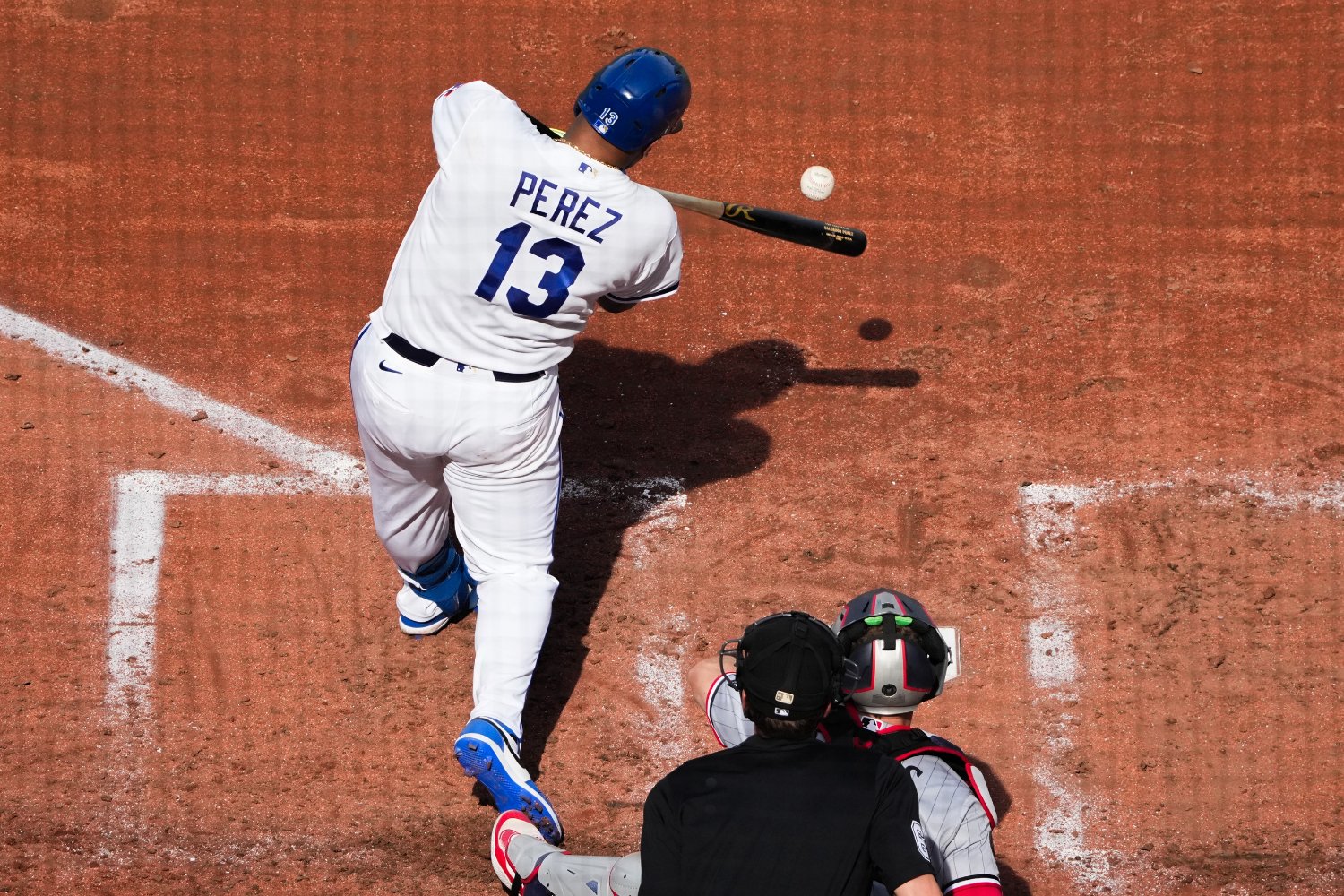 Due to inclement weather, the Royals pushed back their Friday series-opening game against the Milwaukee Brewers to Saturday. They will now have a split doubleheader on Saturday against the Brewers, starting at 1:10 p.m.. The Royals are currently 3-3 entering the Brewers series, and the offense has gone through its share of ups and downs through their first six games. Once again, the Royals are making contact and hitting the ball well, ranking 10th in batting average. Furthermore, they have done a better job of getting on base and hitting home runs, two areas of inconsistency a season ago. They rank 15th in OBP and 16th in home runs hit. Last season, they ranked 22nd in OBP and 26th in home runs hit. However, one area of relative weakness is runs scored. They rank 21st in baseball with 23 runs scored. They are tied with some big names such as the Phillies and Dodgers. However, for a Kansas City team with playoff aspirations, it needs to score more runs than the 651 it accumulated a year ago, which ranked 26th in baseball, according to Fangraphs. One key player to the Royals' offense this season is Salvador Perez. The Royals' primary catcher and captain will be entering his age-36 season and is coming off a season in which he hit .236 with a 95 wRC+. While those are slightly below-average marks, he did hit 30 home runs and collected 100 RBI. It was the third season he has collected 100 or more RBI, and his 30 home runs were his most since 2021, when he hit a Royals franchise record 48. It's been a much slower start for Salvy in 2026, though. In six games and 25 plate appearances, the Royals captain is hitting .208 with a 74 wRC+. He has a home run, two runs scored, and an RBI. That said, his OBP is only .240, and his OPS is .615, 114 points lower than what he produced in OPS in 2025. So what's been Salvy's issue? A lot can be credited to his trend in bat speed, and how that's affected his ability to square up the ball early in the season. Thus, let's take a look at Perez's bat tracking data via Statcast, explore some of his other Statcast percentiles, and what they could mean for Salvy's outlook for 2026. Salvy's Bat Speed is Good, But Has Declined The table below lists all the bat tracking data of Royals hitters with 1 or more plate appearances this season. While one can see Perez's data, it also includes all other Royals hitters who have seen an at-bat in 2026. Salvy's row is highlighted for reference purposes. When it comes to average bat speed, Salvy ranks 7th of 13th qualified Royals hitters with a 72 MPH average bat speed. His hard-swing percentage also ranks 7th at 20%. He does this despite having a swing that is the second-longest on the team at 7.9 feet. Only Jac Caglianone has a longer swing at 8.4 feet. Even though he is not Top-5 in bat speed, he is top-3 in squared-up percentage with a 42.4% mark through six games. Only Kyle Isbel (62.5%) and Isaac Collins (43.8%) have higher squared-up rates than Salvy. In terms of blast percentage, Perez lags a little bit at sixth with an 18.2% mark. That said, his blast rate is higher than Maikel Garcia's (12.5%) and Vinnie Pasquantino's (9.4%). While the bat tracking metrics aren't bad by any means, one would expect more from a team's cleanup hitter. That said, how does his bat tracking data compare to a season ago? Well, let's take a look at that below. Last year, Salvy ranked 7th in average bat speed, but his 72.9 MPH bat speed was 0.9 MPH higher than his mark a season ago. His 30.5% hard-swing rate was also 10.5% higher, and his swing length has remained the same at 7.9 feet. That said, how do his squared-up and blast rates fare from a year ago? Honestly, he's actually performing better in those categories than a year ago. Perez's squared-up date in 2025 was 32.5%, and his blast% was 17.5%. For context, his squared-up rate is 9.9% higher this year, and his blast rate is 0.7% higher as well. Thus, while the overall results haven't been good over six games, the bat-tracking data show that despite a slight decrease in bat speed, his ability to connect with the ball hasn't changed much compared to 2025. What Do the Other Statcast Percentiles Look Like? For his other Statcast metrics, I used TJ Stats to illustrate how Perez has performed this year in key offensive categories and how they compare to last season. Here's a look at his 2025 Statcast percentile via TJ Stats. Even though he had a .311 wOBA, his xwOBA was much better at .383. In fact, the latter ranked in the 91st percentile while the former ranked in the 43rd percentile. Thus, there was a tremendous discrepancy between Perez's batted-ball skills and the actual results. Honestly, the skills Salvy showed, especially in terms of batted-ball ones, were still incredibly elite. He ranked in the 88th percentile in PullAir%, 91st percentile in barrel rate, 88th percentile in Max EV, and 77th percentile in 90th EV. When Perez connected with the ball, he often had power behind it and pulled it in the air, which is what one wants to see from a power hitter in the cleanup spot. Here's an example of Perez absolutely launching one last year against the Washington Nationals pitcher Cade Cavalli, to the Royals' Hall of Fame. Now, let's take a look at what Salvy has done through 25 plate appearances this season, via TJ Stats. In some categories, Perez has seen some regression. His Pull Air% is slightly down at 19.1% (1.4% difference), and his 108.5 Max EV is 6.3 MPH lower than his 2025 mark. Furthermore, his 9.5% barrel rate is 4.9% lower than his 2025 barrel rate and ranks only in the 57th percentile. While that's not bad by any means, it's not the elite ranking that Royals fans were used to seeing from Salvy in the past. That said, there are some areas where we have seen some early improvement from Perez. His 12% K% is 7.7% better than a year ago, and his 17% whiff rate is 9.9% better as well. He's doing this despite having a similar swing% this year (57.3% to 57.4% in 2025). Thus, Salvy is doing a better job of making contact at the plate this year, even if it has been at the sacrifice of some power initially. At the very least, that shows that he's seeing the ball better and that he's doing enough to put the ball in play. Furthermore, Perez's expected numbers aren't down either. His .354 xwOBA isn't as impressive as his .383 mark in 2025. However, it still ranks in the 65th percentile, and his xwOBA is 89 points higher than his actual wOBA. Salvy is still hitting the ball hard and showing power potential. His lone home run of the year, in Atlanta against Reynaldo Lopez, illustrates that and can be seen in the clip below. When it comes to the Statcast percentiles, there are some signs of regression, especially in terms of exit velocity and barrels. That said, it's still early in the year, and his improvement in contact skills this year could help him gain more power over the course of the year, especially as the weather heats up and he gets more settled in at the plate. Final Thoughts On Salvy's Start? Overall, I do not think there's much for Royals fans to worry about with Salvy this year. Yes, the average, OPS, and wRC+ are down. However, those are results, and we have had such a small sample size. It's hard to justify those results as an indicator for future success when there are fewer than 30 plate appearances (especially with a proven veteran like Perez). The bat speed is a tad concerning, but I think the slight decline is more due to settling into a new season than a sign of age-fueled decline. The squared-up and blast rates show that Perez is still connecting with the ball decently at the plate, despite the slight regression in the speed of his swing. My guess is that we will see an uptick in Salvy's swing speed soon, especially once he gets into a more set routine and gets more days at DH or 1B. Unfortunately, Perez wasn't able to get that on Thursday due to the Carter Jensen "tardiness" situation. Granted, I think the situation was way overblown by the national media and probably not handled the best by the Royals (did we really need Jensen and Vinnie to be making statements to the media about it?). What should've been a "there was a personal issue, and we've handled it internally" from Matt Quatraro at the postgame presser has spun into a national story, even getting coverage on TMZ (which is wild). Conversely, I understand the Royals' frustration with Jensen because Salvy needs to save his energy for his bat, especially as the club's cleanup hitter. More days behind the plate are only going to affect that ability, and that doesn't help their playoff chances. Thus, it will be interesting to see if, once the fog from this fiasco clears, we see more days from Jensen behind the plate to give Salvy a spell while keeping his bat in the lineup. The metrics and Statcast data are fine for Perez. However, the Royals also need to keep him fresh and healthy, and more time at first base and as a designated hitter is necessary to accomplish that goal. Once he gets those "off days", I guarantee that we will not just see the bat speed, exit velocity, and barrels improve, but the average, OPS, and wRC+ as well.
 -
The velocity is very good, but I definitely would like to see him work to improve on the movement end, especially with the four-seamer. It profiles more horizontally than vertically, which isn't a great recipe for whiffs and strikeouts, especially as you move up the system. That said, he's still super young, and he's doing this as a 19-year-old, which is very impressive.
-
Image courtesy of Peter Aiken-Imagn Images The Royals lost the series finale on Thursday against the Twins 5-1. It was a frustrating loss, as the Royals had more hard hits (11) than the Twins (6), but were unable to cash in any runs. No Kansas City hitter had more than one hit on Thursday, and they were shut out and held to five hits by Twins starter Taj Bradley. The former Tampa Bay Rays pitcher had only three strikeouts against the Royals, but he held the Kansas City lineup in check and continued his hot start to the 2026 MLB season. After a slog of a game yesterday that went three hours and thirty-six minutes, the Royals appeared flat on the offensive end in the series finale, much to the chagrin of starter Cole Ragans. The Royals' Opening Day starter held the Twins to only one run on four hits while striking out six batters. Unfortunately, that resulted in a losing effort for Ragans, even though it was miles better than what he produced in Atlanta last week on Opening Day. Furthermore, the Royals didn't start the day on a great note. Rookie catcher Carter Jensen was scratched from the lineup about an hour before game time, with no explanation initially. Most Royals fans worried that an injury was at play, especially with the announcement coming so close to first pitch. However, Jensen was seen warming up with pitchers during the game, and he later substituted defensively for Salvador Perez when Tyler Tolbert pinch-ran for Salvy in the 8th inning. Thus, that injury theory was debunked by his late entry into the game. After the postgame press conference, Royals media reported that Jensen was scratched from the lineup due to oversleeping and arriving late to the ballpark. There's no question that expectations are high with Jensen going into 2026. Not only is he the Royals' primary backup catcher, but he is widely seen as a possible Rookie of the Year candidate, not an easy task in a league that includes Detroit's Kevin McGonigle and Cleveland's Chase DeLauter. However, this "oversleeping" incident doesn't help his start to his first full season with the Royals, especially considering how he's performed at the plate thus far. Therefore, let's break down the aftermath of this Jensen incident, look at his performance after two series of games, and what Royals fans can take away with Jensen and his role on this Kansas City ballclub for the remainder of the season. "There are some things that cannot happen, and that's one of them." The media session in the locker room was certainly a lively one for a 5-1 loss in game six of the season. As expected, reporters asked Jensen what happened, and he didn't shy away from the spotlight or tough questions, especially in the wake of a Royals four-run defeat. When watching the interview, it's evident that Jensen wasn't brushing off the incident. He owned up to his mistake, and one can tell from his voice that he was a bit emotional or embarrassed by the incident. Typically, Jensen is a very confident and eloquent speaker with a very laid-back attitude. That certainly wasn't the case in the interview above. He definitely understands the gravity of what happened, why he was scratched, and the distraction it may have caused, leading up to an important game against a divisional rival. Other teammates were asked about the incident, and Vinnie Pasquantino was the most vocal about Jensen's incident. Vinnie showed compassion to Jensen, but he didn't let him off the hook. The Royals' first baseman also reiterated that the situation had an impact on the team leading up to the game, especially on Salvy, who was prepared to DH and had to switch to catching so close to game time. For those who cannot watch the video or hear the audio, here's the transcript of what Vinnie said to the press, courtesy of KC Star columnist Sam McDowell. The Royals are lucky to have a leader who is as vocal and aware as Pasquantino. It would be easy to completely throw Jensen under the bus here and ruin his confidence. That said, it could also be easy to brush this incident off as not a "big deal" either. That's not exactly the standard a clubhouse wants to set, especially one with playoff aspirations. Thankfully, Pasquantino was able to strike a balance between the two camps, helping set the tone for their young player while ensuring he feels supported in the moment. It also appeared, according to reports, that Bobby Witt Jr. was involved, though he wasn't as vocal as Vinnie in the locker room with the media. This wasn't what the Royals wanted to deal with after a four-run loss and an upcoming series against the 5-1 Milwaukee Brewers looming this weekend. That said, it seems like accountability has been taken all around, especially from Jensen. Let's hope that this is the "wake-up call" (both literally and figuratively) that Jensen needed as he continues to adjust to life as a Major League player. Poor Results So Far (Though the Statcast Metrics Are Encouraging) It would be one thing if Jensen had this incident happen, and he was producing numbers similar to his 2025 metrics. Unfortunately, that is not the case so far in 2026. In 18 plate appearances, Jensen is hitting .125 with a .480 OPS. He has a home run, but he is also striking out 44.4% of the time and only walking 5.6% of the time. Furthermore, his wOBA is only .207, and his xwOBA is even worse at .188. For context, the Royals rookie catcher posted a .403 wOBA and .447 xwOBA in 69 plate appearances last season. A microcosm of Jensen's struggles this year can be seen in this plate appearance against Minnesota reliever Kody Funderburk on Opening Day at Kauffman Stadium on March 30th. On a 3-2 count, Funderburk serves him up a fastball right down the middle. It's a pitch Jensen would've mashed a season ago. Unfortunately, Jensen, obviously pressing, watches it for strike three. Striking out isn't something "new" to Jensen. He's always been a patient hitter, and the strikeouts have been relatively high for a prospect of his caliber. In Double-A Northwest Arkansas last year, he had a 22.7% K%. In Triple-A Omaha, he had a 28.3% K%. However, the K rates were tolerable because Jensen also had high walk rates, resulting in good BB/K ratios. In 2025, he had walk rates of 9.7% in Northwest Arkansas and 16.3% in Omaha. This resulted in BB/K ratios of 0.43 with the Naturals and 0.58 with the Storm Chasers. Last year with the Royals, his K% was only 17.4%, and his BB/K ratio was 0.75. While this is fantastic, it was unrealistic to expect Jensen to automatically be a sub-20% K% hitter again. While some improvement is to be expected, fans need to temper their expectations for Jensen in these categories. Perhaps a 25% K% and 0.45 BB/K ratio (it's currently 0.13) would be something to celebrate, especially over a full 162-game season at the MLB level. Another discouraging trend for Jensen through these first six games is that he just isn't launching the ball well. His average launch angle on batted balls this year is 4.7 degrees, lower than his 7.4-degree average launch angle a season ago. He also has a groundball rate of 55.6%, 9.8 percentage points higher than his 2025 rookie sample. That partially explains why his xwOBA is below his actual wOBA so far and has been trending in the wrong direction this season. On the other hand, there's still been a lot to be encouraged about with Jensen, which is why the Royals and fans should remain patient with the 22-year-old. His hard-hit rate of 44.4% is still 7.4 percentage points higher than league-average, and his 11.1% barrel rate is 3.9 percentage points better than league-average. He is still demonstrating good bat speed, averaging 74.9 MPH on his swing, 0.1 MPH better than a year ago. His fast-swing rate of 45.8% is higher than his 43.7% fast-swing rate in 2025. Those are promising signs that the tools and skills are still there to be successful at the plate. An interesting development for Jensen skills-wise, especially in terms of bat tracking data, is that his swing has been a little longer to start this season. Last year, his swing length was 6.9 feet. This year? It's 7.1 feet. It's a minute difference, but it correlates with his declines in squared-up and blast rates this year. After posting 35.8% squared-up rate and 25.3% blast rate on contact last year, those rates are now down to 26.7% and 6.7%, respectively. It's hard to get base hits if one is struggling to square up with the ball. An interesting development is that Jensen seems to be swinging through with two hands more, or at least on swings where he grounds out. That could be adding that little bit of length to his swing, which may be contributing to his early squared-up and blast issues. Below is a compilation of clips of him making contact on fastball pitches thrown in the same part of the strike zone. In the 2025 clip, he blasts a single off the Athletics' Mitch Spence. This year's clip? He ground out to first against Twins pitcher Simeon Woods Richardson on Opening Day. Jensen Swings-25-26.mp4 It's still early, and as stated before, the pressing may be contributing to that extra swing length that's throwing him off when it comes to squaring up with the ball more consistently. That said, his strong barrel and hard-hit rates, as well as encouraging bat speed, should help Royals fans remain optimistic with Jensen and his outlook for 2026 and beyond. What to Take Away From Jensen's Start (Including the Thursday Incident) Looking at his TJ Stats Statcast percentiles summary, there are still many areas where Jensen is succeeding. Thus, Royals fans shouldn't worry that JJ Picollo will be sending him to Triple-A Omaha anytime soon. At the same time, I think this start to the year has been a bit sobering for the local star. Last year, pretty much everything went right for Jensen in his Royals debut. He hit the ball hard, effectively, and productively, and he seemed to get a lot of fanfare as a result. Jensen earned all the accolades he received last year, and the Royals did the right thing by having him on the Opening Day roster and as the primary backup to Salvy. He's not only the best option as backup catcher, but he's also a player who can give quality at-bats at DH as well. That said, he didn't really go through much struggle last year at the Major League level. That just isn't part of the game, unfortunately. Struggles will come at some point for a young player. What separates the good players from the mediocre to bad ones is that the former are able to bounce back and overcome those struggles, while the latter ones aren't. That's the difference between the Witts and Salvys of the Royals world from the MJ Melendez and Adalberto Mondesi types. What's unique about Jensen's situation is that he is not just going through on-field struggles. He also had an off-the-field one. Is it a major off-the-field incident? Absolutely not. But it happened, it got some national attention, and it affected the team. Jensen can't escape that. Right now, Jensen is saying all the right things. He knows he made a mistake. He knows he can't do it again. And he knows he's not a player of a caliber that can do those things and get away with it. That incident and his slow start at the plate are the reality checks that Jensen didn't experience in his short sample size last year. Now that they have happened, it will be interesting to see how the young Park Hill product responds. This weekend's Brewers series at the K will be a great early test. View full article
-
Latest Incident Not the Start to 2026 That Carter Jensen Envisioned
Kevin O'Brien posted an article in Royals
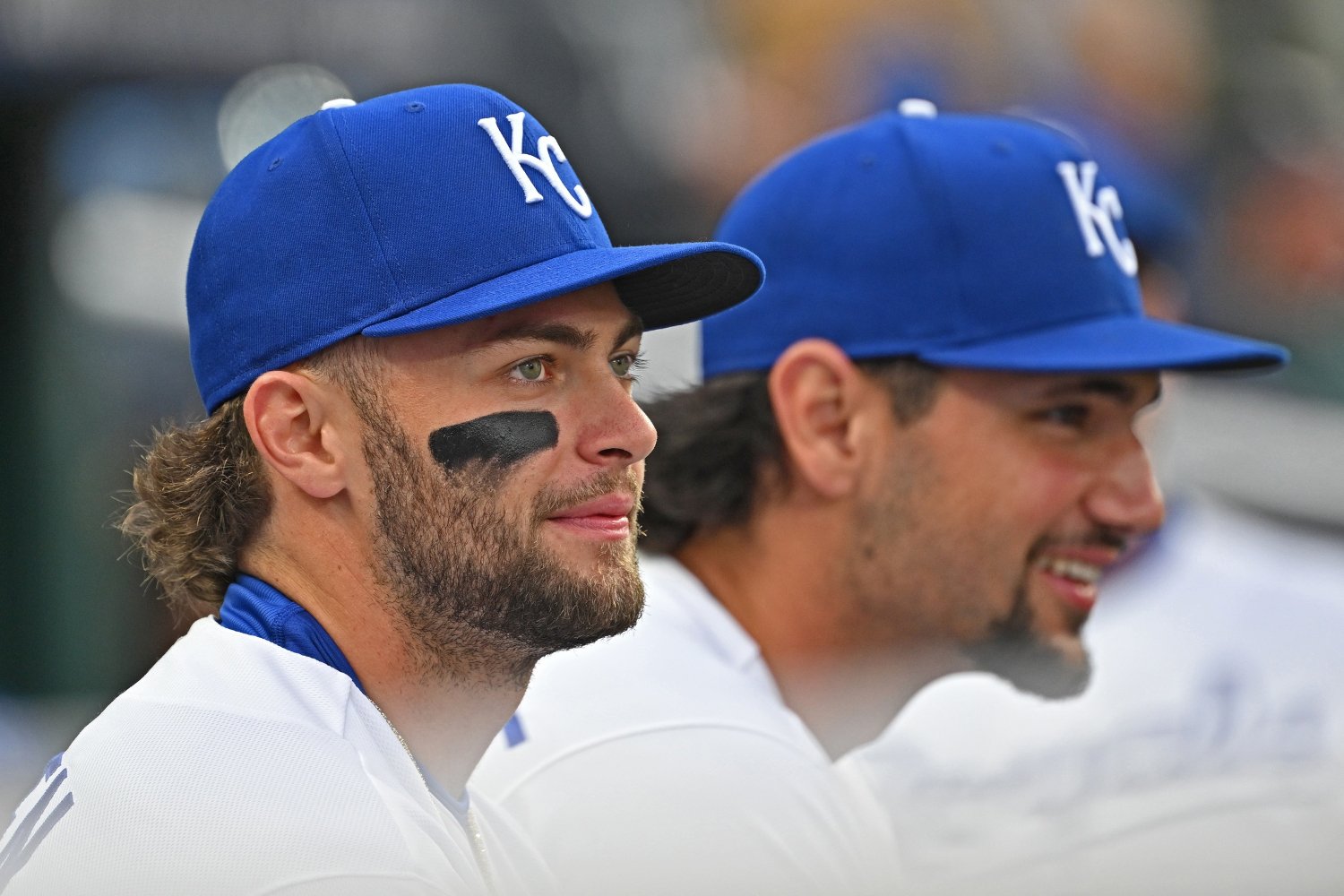 The Royals lost the series finale on Thursday against the Twins 5-1. It was a frustrating loss, as the Royals had more hard hits (11) than the Twins (6), but were unable to cash in any runs. No Kansas City hitter had more than one hit on Thursday, and they were shut out and held to five hits by Twins starter Taj Bradley. The former Tampa Bay Rays pitcher had only three strikeouts against the Royals, but he held the Kansas City lineup in check and continued his hot start to the 2026 MLB season. After a slog of a game yesterday that went three hours and thirty-six minutes, the Royals appeared flat on the offensive end in the series finale, much to the chagrin of starter Cole Ragans. The Royals' Opening Day starter held the Twins to only one run on four hits while striking out six batters. Unfortunately, that resulted in a losing effort for Ragans, even though it was miles better than what he produced in Atlanta last week on Opening Day. Furthermore, the Royals didn't start the day on a great note. Rookie catcher Carter Jensen was scratched from the lineup about an hour before game time, with no explanation initially. Most Royals fans worried that an injury was at play, especially with the announcement coming so close to first pitch. However, Jensen was seen warming up with pitchers during the game, and he later substituted defensively for Salvador Perez when Tyler Tolbert pinch-ran for Salvy in the 8th inning. Thus, that injury theory was debunked by his late entry into the game. After the postgame press conference, Royals media reported that Jensen was scratched from the lineup due to oversleeping and arriving late to the ballpark. There's no question that expectations are high with Jensen going into 2026. Not only is he the Royals' primary backup catcher, but he is widely seen as a possible Rookie of the Year candidate, not an easy task in a league that includes Detroit's Kevin McGonigle and Cleveland's Chase DeLauter. However, this "oversleeping" incident doesn't help his start to his first full season with the Royals, especially considering how he's performed at the plate thus far. Therefore, let's break down the aftermath of this Jensen incident, look at his performance after two series of games, and what Royals fans can take away with Jensen and his role on this Kansas City ballclub for the remainder of the season. "There are some things that cannot happen, and that's one of them." The media session in the locker room was certainly a lively one for a 5-1 loss in game six of the season. As expected, reporters asked Jensen what happened, and he didn't shy away from the spotlight or tough questions, especially in the wake of a Royals four-run defeat. When watching the interview, it's evident that Jensen wasn't brushing off the incident. He owned up to his mistake, and one can tell from his voice that he was a bit emotional or embarrassed by the incident. Typically, Jensen is a very confident and eloquent speaker with a very laid-back attitude. That certainly wasn't the case in the interview above. He definitely understands the gravity of what happened, why he was scratched, and the distraction it may have caused, leading up to an important game against a divisional rival. Other teammates were asked about the incident, and Vinnie Pasquantino was the most vocal about Jensen's incident. Vinnie showed compassion to Jensen, but he didn't let him off the hook. The Royals' first baseman also reiterated that the situation had an impact on the team leading up to the game, especially on Salvy, who was prepared to DH and had to switch to catching so close to game time. For those who cannot watch the video or hear the audio, here's the transcript of what Vinnie said to the press, courtesy of KC Star columnist Sam McDowell. The Royals are lucky to have a leader who is as vocal and aware as Pasquantino. It would be easy to completely throw Jensen under the bus here and ruin his confidence. That said, it could also be easy to brush this incident off as not a "big deal" either. That's not exactly the standard a clubhouse wants to set, especially one with playoff aspirations. Thankfully, Pasquantino was able to strike a balance between the two camps, helping set the tone for their young player while ensuring he feels supported in the moment. It also appeared, according to reports, that Bobby Witt Jr. was involved, though he wasn't as vocal as Vinnie in the locker room with the media. This wasn't what the Royals wanted to deal with after a four-run loss and an upcoming series against the 5-1 Milwaukee Brewers looming this weekend. That said, it seems like accountability has been taken all around, especially from Jensen. Let's hope that this is the "wake-up call" (both literally and figuratively) that Jensen needed as he continues to adjust to life as a Major League player. Poor Results So Far (Though the Statcast Metrics Are Encouraging) It would be one thing if Jensen had this incident happen, and he was producing numbers similar to his 2025 metrics. Unfortunately, that is not the case so far in 2026. In 18 plate appearances, Jensen is hitting .125 with a .480 OPS. He has a home run, but he is also striking out 44.4% of the time and only walking 5.6% of the time. Furthermore, his wOBA is only .207, and his xwOBA is even worse at .188. For context, the Royals rookie catcher posted a .403 wOBA and .447 xwOBA in 69 plate appearances last season. A microcosm of Jensen's struggles this year can be seen in this plate appearance against Minnesota reliever Kody Funderburk on Opening Day at Kauffman Stadium on March 30th. On a 3-2 count, Funderburk serves him up a fastball right down the middle. It's a pitch Jensen would've mashed a season ago. Unfortunately, Jensen, obviously pressing, watches it for strike three. Striking out isn't something "new" to Jensen. He's always been a patient hitter, and the strikeouts have been relatively high for a prospect of his caliber. In Double-A Northwest Arkansas last year, he had a 22.7% K%. In Triple-A Omaha, he had a 28.3% K%. However, the K rates were tolerable because Jensen also had high walk rates, resulting in good BB/K ratios. In 2025, he had walk rates of 9.7% in Northwest Arkansas and 16.3% in Omaha. This resulted in BB/K ratios of 0.43 with the Naturals and 0.58 with the Storm Chasers. Last year with the Royals, his K% was only 17.4%, and his BB/K ratio was 0.75. While this is fantastic, it was unrealistic to expect Jensen to automatically be a sub-20% K% hitter again. While some improvement is to be expected, fans need to temper their expectations for Jensen in these categories. Perhaps a 25% K% and 0.45 BB/K ratio (it's currently 0.13) would be something to celebrate, especially over a full 162-game season at the MLB level. Another discouraging trend for Jensen through these first six games is that he just isn't launching the ball well. His average launch angle on batted balls this year is 4.7 degrees, lower than his 7.4-degree average launch angle a season ago. He also has a groundball rate of 55.6%, 9.8 percentage points higher than his 2025 rookie sample. That partially explains why his xwOBA is below his actual wOBA so far and has been trending in the wrong direction this season. On the other hand, there's still been a lot to be encouraged about with Jensen, which is why the Royals and fans should remain patient with the 22-year-old. His hard-hit rate of 44.4% is still 7.4 percentage points higher than league-average, and his 11.1% barrel rate is 3.9 percentage points better than league-average. He is still demonstrating good bat speed, averaging 74.9 MPH on his swing, 0.1 MPH better than a year ago. His fast-swing rate of 45.8% is higher than his 43.7% fast-swing rate in 2025. Those are promising signs that the tools and skills are still there to be successful at the plate. An interesting development for Jensen skills-wise, especially in terms of bat tracking data, is that his swing has been a little longer to start this season. Last year, his swing length was 6.9 feet. This year? It's 7.1 feet. It's a minute difference, but it correlates with his declines in squared-up and blast rates this year. After posting 35.8% squared-up rate and 25.3% blast rate on contact last year, those rates are now down to 26.7% and 6.7%, respectively. It's hard to get base hits if one is struggling to square up with the ball. An interesting development is that Jensen seems to be swinging through with two hands more, or at least on swings where he grounds out. That could be adding that little bit of length to his swing, which may be contributing to his early squared-up and blast issues. Below is a compilation of clips of him making contact on fastball pitches thrown in the same part of the strike zone. In the 2025 clip, he blasts a single off the Athletics' Mitch Spence. This year's clip? He ground out to first against Twins pitcher Simeon Woods Richardson on Opening Day. Jensen Swings-25-26.mp4 It's still early, and as stated before, the pressing may be contributing to that extra swing length that's throwing him off when it comes to squaring up with the ball more consistently. That said, his strong barrel and hard-hit rates, as well as encouraging bat speed, should help Royals fans remain optimistic with Jensen and his outlook for 2026 and beyond. What to Take Away From Jensen's Start (Including the Thursday Incident) Looking at his TJ Stats Statcast percentiles summary, there are still many areas where Jensen is succeeding. Thus, Royals fans shouldn't worry that JJ Picollo will be sending him to Triple-A Omaha anytime soon. At the same time, I think this start to the year has been a bit sobering for the local star. Last year, pretty much everything went right for Jensen in his Royals debut. He hit the ball hard, effectively, and productively, and he seemed to get a lot of fanfare as a result. Jensen earned all the accolades he received last year, and the Royals did the right thing by having him on the Opening Day roster and as the primary backup to Salvy. He's not only the best option as backup catcher, but he's also a player who can give quality at-bats at DH as well. That said, he didn't really go through much struggle last year at the Major League level. That just isn't part of the game, unfortunately. Struggles will come at some point for a young player. What separates the good players from the mediocre to bad ones is that the former are able to bounce back and overcome those struggles, while the latter ones aren't. That's the difference between the Witts and Salvys of the Royals world from the MJ Melendez and Adalberto Mondesi types. What's unique about Jensen's situation is that he is not just going through on-field struggles. He also had an off-the-field one. Is it a major off-the-field incident? Absolutely not. But it happened, it got some national attention, and it affected the team. Jensen can't escape that. Right now, Jensen is saying all the right things. He knows he made a mistake. He knows he can't do it again. And he knows he's not a player of a caliber that can do those things and get away with it. That incident and his slow start at the plate are the reality checks that Jensen didn't experience in his short sample size last year. Now that they have happened, it will be interesting to see how the young Park Hill product responds. This weekend's Brewers series at the K will be a great early test.
 -
Before Thursday's series finale against the Twins, MLB Insider Francys Romero reported that the Royals were planning on calling up Luinder Avila from Omaha. Avila had an excellent MLB debut in 2025 with the Royals. In 14.1 IP, he posted a 1.29 ERA, 0.93 WHIP, and 17.9% K-BB%. He also sported a 2.10 FIP and 28.6% K% with strong TJ Stuff+ marks, as illustrated in his TJ Stats summary below. In addition to a 102 TJ Stuff+, he also generated a 28.3% chase rate, a 27.2% whiff rate, and .253 xwOBACON. His zone rate left a bit to be desired at 44.7%, but his chase and whiff rates made up for that slightly below-average zone rate. Avila started the season in Omaha despite putting up a 2.25 ERA in four innings of work in Cactus League play. The Venezuelan-born pitcher represented his country and won a championship at the World Baseball Classic, posting a 0.00 ERA and 1.39 WHIP in 4.1 IP. In his lone start in Omaha this season, Avila allowed two runs on four hits and two walks while striking out three in three innings of work. No official word has been shared with the Royals about Avila, and he is still slated to start tonight's outing against Wichita at 6:35 p.m. at Werner Park in Omaha. Update (11:20 PM): Ethan Bosacker replaced Avila in the Omaha rotation on Thursday evening in their 9-7 win over the Buffalo Bison (the Toronto Blue Jays Triple-A affiliate). Anne Rogers of MLB.com reported that Luinder Avila will replace Michael Wacha on Friday, as Wacha's start will be pushed back due to illness. It will be interesting to see what roster move the Royals will make. Alex Lange and Bailey Falter could be candidates to be replaced by Avila after rough outings on Wednesday, but they are out of Minor League options and would need to be DFA'd. The Royals could also add someone to the IL, though Wacha doesn't seem likely to need a stint despite his illness. The Royals will make the move before their 6:40 p.m. game against the Milwaukee Brewers, who come to Kauffman Stadium 5-1 and are atop the NL Central division. View full rumor
-
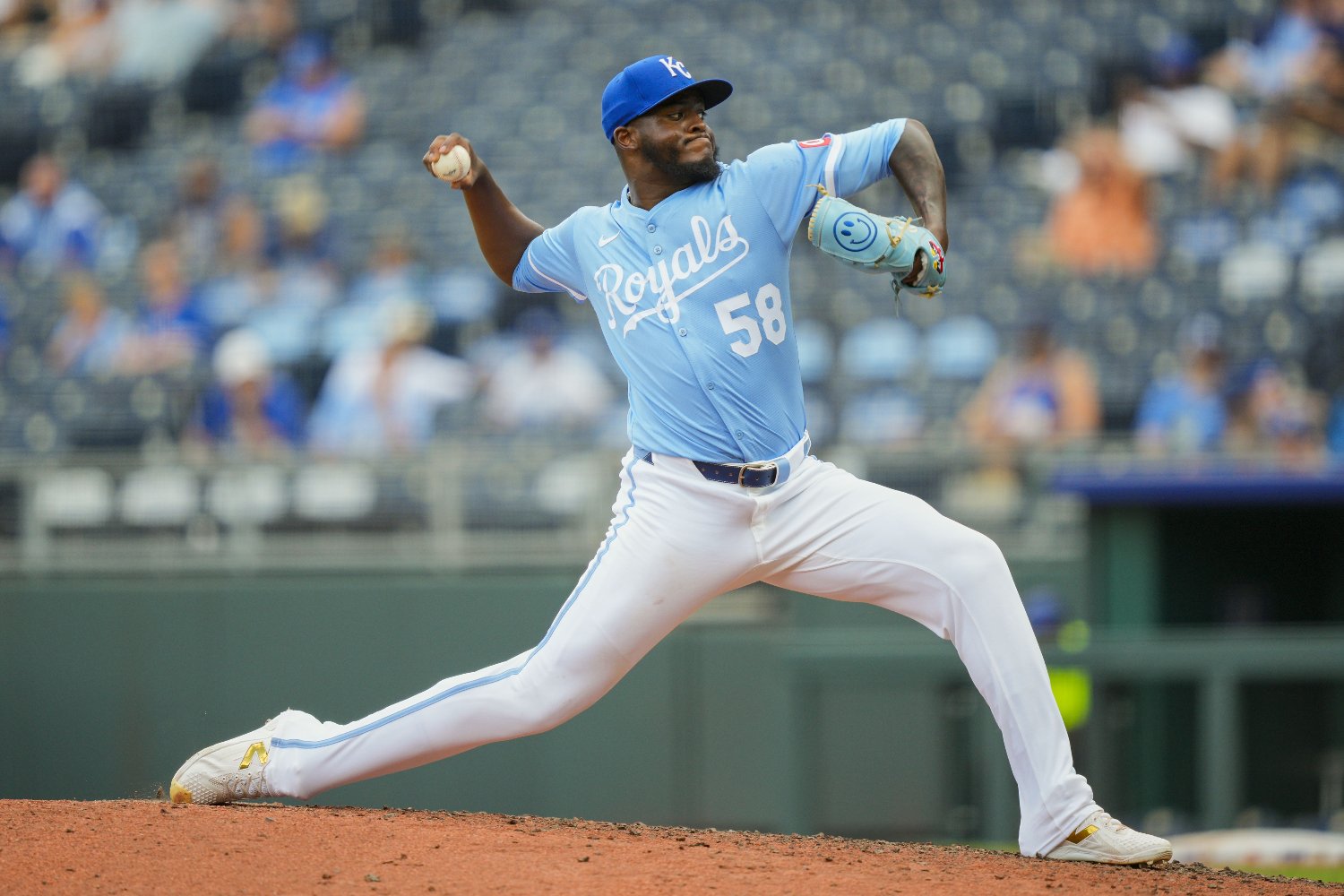 Before Thursday's series finale against the Twins, MLB Insider Francys Romero reported that the Royals were planning on calling up Luinder Avila from Omaha. Avila had an excellent MLB debut in 2025 with the Royals. In 14.1 IP, he posted a 1.29 ERA, 0.93 WHIP, and 17.9% K-BB%. He also sported a 2.10 FIP and 28.6% K% with strong TJ Stuff+ marks, as illustrated in his TJ Stats summary below. In addition to a 102 TJ Stuff+, he also generated a 28.3% chase rate, a 27.2% whiff rate, and .253 xwOBACON. His zone rate left a bit to be desired at 44.7%, but his chase and whiff rates made up for that slightly below-average zone rate. Avila started the season in Omaha despite putting up a 2.25 ERA in four innings of work in Cactus League play. The Venezuelan-born pitcher represented his country and won a championship at the World Baseball Classic, posting a 0.00 ERA and 1.39 WHIP in 4.1 IP. In his lone start in Omaha this season, Avila allowed two runs on four hits and two walks while striking out three in three innings of work. No official word has been shared with the Royals about Avila, and he is still slated to start tonight's outing against Wichita at 6:35 p.m. at Werner Park in Omaha. Update (11:20 PM): Ethan Bosacker replaced Avila in the Omaha rotation on Thursday evening in their 9-7 win over the Buffalo Bison (the Toronto Blue Jays Triple-A affiliate). Anne Rogers of MLB.com reported that Luinder Avila will replace Michael Wacha on Friday, as Wacha's start will be pushed back due to illness. It will be interesting to see what roster move the Royals will make. Alex Lange and Bailey Falter could be candidates to be replaced by Avila after rough outings on Wednesday, but they are out of Minor League options and would need to be DFA'd. The Royals could also add someone to the IL, though Wacha doesn't seem likely to need a stint despite his illness. The Royals will make the move before their 6:40 p.m. game against the Milwaukee Brewers, who come to Kauffman Stadium 5-1 and are atop the NL Central division.
 -
Image courtesy of Lily Smith/The Register / USA TODAY NETWORK Shortly after the High-A Quad Cities River Bandits' roster was posted on the Raising Royals social media account, the Low-A Columbia Fireflies roster was revealed. The position player group is highlighted by Sean Gamble and Josh Hammond, the Royals' first two selections in the 2025 MLB Draft. They are ranked No. 6 and No. 7, respectively, in our Top-20 Prospect Rankings. Gamble is a multi-tool athlete who could stick in center field long term (he played center field in the Spring Breakout). Hammond may be a corner infielder, but he has an interesting contact and power profile. Neither Gamble nor Hammond played professional ball last year, so this will be their first taste. They did get some action in the Instructional League, holding their own, which explains why they're starting the season in Low-A ball. Another ranked position-player prospect in Columbia is Yandel Ricardo, one of the top international signees in 2024. This is a repeat of Low-A for the Cuban shortstop, as he played in 50 games with the Fireflies last year. After hitting .342 with a 151 wRC+ in 33 games in the Complex League, he only hit .212 with a 61 wRC+ in the Carolina League. Despite his initial struggles, he showed some flashes of promise for an 18-year-old playing in full-season affiliated ball. With a full offseason, he could be due for a bounce-back in his second swing of Low-A competition. A couple of sleeper position player prospects to watch are outfielder Roni Cabrera and first baseman JC Vanek. Cabrera was included in the Cole Ragans deal back in 2023 and has developed slowly in the Royals system. He struggled in 26 games with the Fireflies last year, hitting .092 with a 22 wRC+. However, he fared much better in the Complex League, hitting .302 with a 134 wRC+ and six home runs. He's a bit free-swinging, as evidenced by his 0.32 BB/K ratio between the Complex and Carolina League. That said, there's an intriguing power potential there with Cabrera, and he's still relatively young at 20 years old. As for Vanek, he was a 14th-round pick in the 2025 MLB Draft out of Chipola College, a junior college in Florida. He made his name in the MLB Draft League and ended up debuting with Low-A Columbia last year. He hit only .250, but he posted a .388 wOBA, an 18.4% walk rate, and a 0.53 BB/K ratio. The power lagged a little bit in his transition to the Carolina League, as he had no homers and a .050 ISO. He also struck out a lot at 34.7%. That said, he has a patient approach, and I think having a full spring with the Royals player development staff could help him cut down the strikeouts and tap into the power more in 2026. The pitching staff may be the strength of this Fireflies team, especially the rotation. Three of our Top-20 prospects will be featured in the Fireflies rotation, including Kendry Chourio (No. 4), Blake Wolters (No. 17), and Michael Lombardi (No. 18). Chourio is the most high-profile of this bunch, as he struck out 63 batters in 51.1 IP across the DSL, Complex, and Carolina Leagues. He faced more challenges in Columbia, posting a 5.16 ERA and 3.66 FIP with the Fireflies in 22.2 IP. That said, he didn't have issues striking batters out, as evidenced by his 25% K% in Low-A. He also limited free runners on the basepaths, as demonstrated by his 20.8% K-BB%. The 18-year-old righty also impressed in the Spring Breakout, impressing scouts with a fastball that touched 98 MPH. He still has to work on his pitch location and shape a bit, which explains why he is starting in Low-A. He could make a move to High-A by midseason if he fixes those issues. Wolters will pitch in Low-A for the third time. He had a 3.99 ERA in 47.1 IP last year, but his FIP was much higher at 5.43. A big issue was command, as he had a 19.3% BB% last year and zero K-BB%. It would be nice to see Wolters generate more chase and whiffs, especially since the stuff has always been intriguing. The last-ranked pitching prospect in Columbia is Lombardi, a Tulane product who posted a 2.14 ERA and 43.5% K% in 42 IP with the Green Wave. He didn't pitch in professional ball, but he's one of the more talked-about pitching prospects this spring, due to his incredible stuff and ability to pitch in both the bullpen and rotation. The Royals will likely develop him first as a starter, but he could move to the bullpen if the results and his stuff warrant it. He could move through the system like Luinder Avila, who also has that hybrid ability. One sleeper pitching prospect to watch is Justin Lamkin, who just missed out on our Top-20 list. Lamkin was drafted 71st overall in the 2025 MLB Draft and excelled at Texas A&M, posting a 3.42 ERA and a 22.6% K-BB% in 84.1 IP. The 21-year-old lefty started in the Spring Breakout and excelled with six strikeouts in three innings of work. Lamkin doesn't have elite stuff, but he is a workhorse who has impeccable command and can generate whiffs in bunches. His profile is similar to that of Noah Cameron or Kris Bubic, and he could move quickly in the Royals system because of that. The Fireflies' first game will be today at 7 p.m. on the road against the Hickory Crawdads, the Low-A affiliate of the Texas Rangers. View full article
-
Young Arms and 2025 MLB Draft Picks Will Lead Fireflies in 2026
Kevin O'Brien posted an article in Minor Leagues
 Shortly after the High-A Quad Cities River Bandits' roster was posted on the Raising Royals social media account, the Low-A Columbia Fireflies roster was revealed. The position player group is highlighted by Sean Gamble and Josh Hammond, the Royals' first two selections in the 2025 MLB Draft. They are ranked No. 6 and No. 7, respectively, in our Top-20 Prospect Rankings. Gamble is a multi-tool athlete who could stick in center field long term (he played center field in the Spring Breakout). Hammond may be a corner infielder, but he has an interesting contact and power profile. Neither Gamble nor Hammond played professional ball last year, so this will be their first taste. They did get some action in the Instructional League, holding their own, which explains why they're starting the season in Low-A ball. Another ranked position-player prospect in Columbia is Yandel Ricardo, one of the top international signees in 2024. This is a repeat of Low-A for the Cuban shortstop, as he played in 50 games with the Fireflies last year. After hitting .342 with a 151 wRC+ in 33 games in the Complex League, he only hit .212 with a 61 wRC+ in the Carolina League. Despite his initial struggles, he showed some flashes of promise for an 18-year-old playing in full-season affiliated ball. With a full offseason, he could be due for a bounce-back in his second swing of Low-A competition. A couple of sleeper position player prospects to watch are outfielder Roni Cabrera and first baseman JC Vanek. Cabrera was included in the Cole Ragans deal back in 2023 and has developed slowly in the Royals system. He struggled in 26 games with the Fireflies last year, hitting .092 with a 22 wRC+. However, he fared much better in the Complex League, hitting .302 with a 134 wRC+ and six home runs. He's a bit free-swinging, as evidenced by his 0.32 BB/K ratio between the Complex and Carolina League. That said, there's an intriguing power potential there with Cabrera, and he's still relatively young at 20 years old. As for Vanek, he was a 14th-round pick in the 2025 MLB Draft out of Chipola College, a junior college in Florida. He made his name in the MLB Draft League and ended up debuting with Low-A Columbia last year. He hit only .250, but he posted a .388 wOBA, an 18.4% walk rate, and a 0.53 BB/K ratio. The power lagged a little bit in his transition to the Carolina League, as he had no homers and a .050 ISO. He also struck out a lot at 34.7%. That said, he has a patient approach, and I think having a full spring with the Royals player development staff could help him cut down the strikeouts and tap into the power more in 2026. The pitching staff may be the strength of this Fireflies team, especially the rotation. Three of our Top-20 prospects will be featured in the Fireflies rotation, including Kendry Chourio (No. 4), Blake Wolters (No. 17), and Michael Lombardi (No. 18). Chourio is the most high-profile of this bunch, as he struck out 63 batters in 51.1 IP across the DSL, Complex, and Carolina Leagues. He faced more challenges in Columbia, posting a 5.16 ERA and 3.66 FIP with the Fireflies in 22.2 IP. That said, he didn't have issues striking batters out, as evidenced by his 25% K% in Low-A. He also limited free runners on the basepaths, as demonstrated by his 20.8% K-BB%. The 18-year-old righty also impressed in the Spring Breakout, impressing scouts with a fastball that touched 98 MPH. He still has to work on his pitch location and shape a bit, which explains why he is starting in Low-A. He could make a move to High-A by midseason if he fixes those issues. Wolters will pitch in Low-A for the third time. He had a 3.99 ERA in 47.1 IP last year, but his FIP was much higher at 5.43. A big issue was command, as he had a 19.3% BB% last year and zero K-BB%. It would be nice to see Wolters generate more chase and whiffs, especially since the stuff has always been intriguing. The last-ranked pitching prospect in Columbia is Lombardi, a Tulane product who posted a 2.14 ERA and 43.5% K% in 42 IP with the Green Wave. He didn't pitch in professional ball, but he's one of the more talked-about pitching prospects this spring, due to his incredible stuff and ability to pitch in both the bullpen and rotation. The Royals will likely develop him first as a starter, but he could move to the bullpen if the results and his stuff warrant it. He could move through the system like Luinder Avila, who also has that hybrid ability. One sleeper pitching prospect to watch is Justin Lamkin, who just missed out on our Top-20 list. Lamkin was drafted 71st overall in the 2025 MLB Draft and excelled at Texas A&M, posting a 3.42 ERA and a 22.6% K-BB% in 84.1 IP. The 21-year-old lefty started in the Spring Breakout and excelled with six strikeouts in three innings of work. Lamkin doesn't have elite stuff, but he is a workhorse who has impeccable command and can generate whiffs in bunches. His profile is similar to that of Noah Cameron or Kris Bubic, and he could move quickly in the Royals system because of that. The Fireflies' first game will be today at 7 p.m. on the road against the Hickory Crawdads, the Low-A affiliate of the Texas Rangers.
 -
Royals Receive 6th-Largest Bonus Pool for 2026 MLB Draft
Kevin O'Brien posted an article in MLB Draft
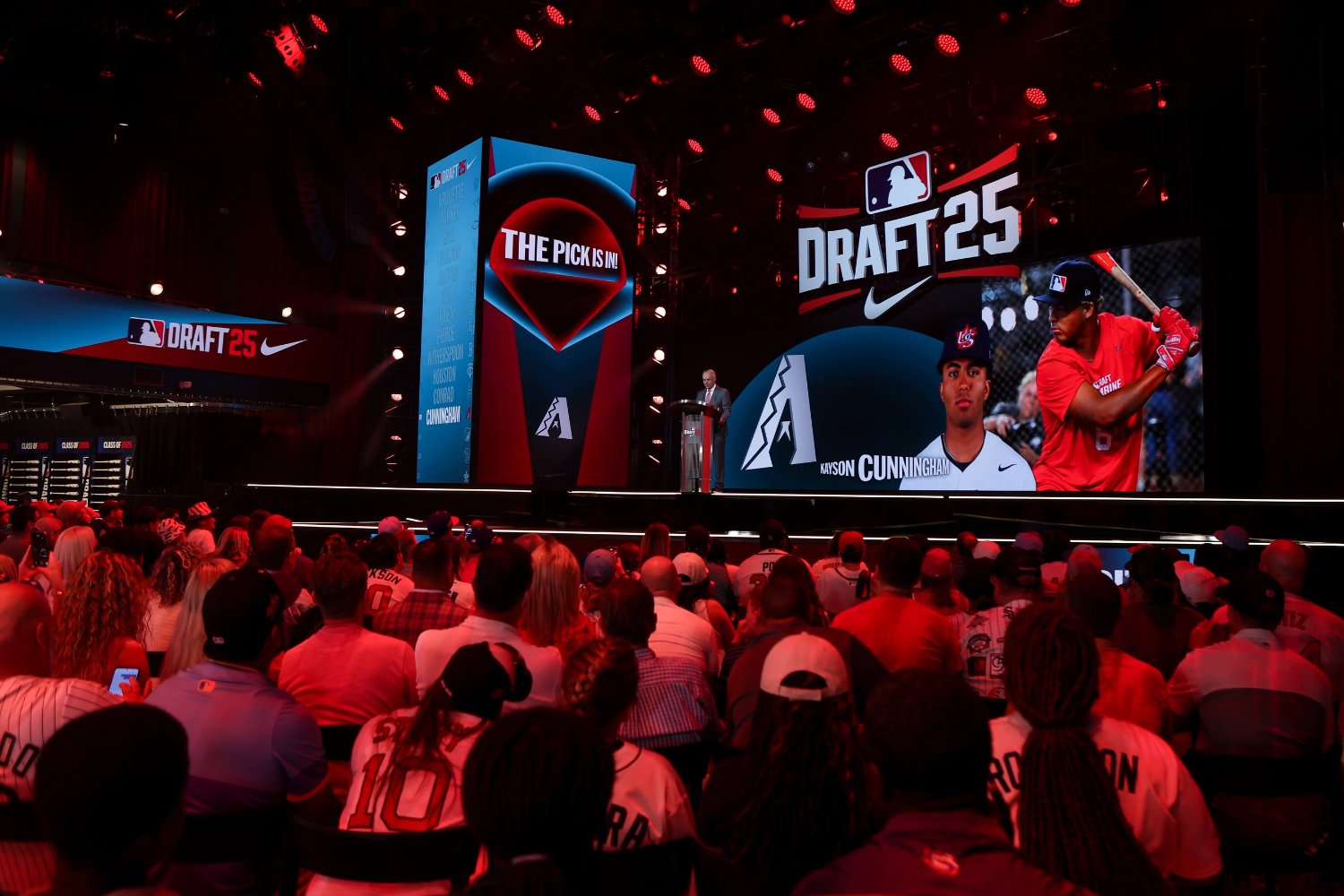 On Wednesday, Major League Baseball informed all 30 MLB clubs of the size of their bonus pools for the upcoming MLB Draft in July. Joe Doyle of Overslot Baseball had a complete breakdown of all 30 teams' bonus pools and the slot value at each pick in an article on Overslot Baseball yesterday. According to Doyle, the Royals will have $15,954, 000 in bonus money for the upcoming draft. That is just ahead of the Atlanta Braves ($15,870,800) and just behind the St. Louis Cardinals ($16,612,300). The Royals will select sixth in the 2026 MLB Draft. The slot value at that pick is $7,746,100. Kansas City has gone over its slot in the past couple of drafts. In 2024, they selected Jac Caglianone out of Florida and gave him a signing bonus of $7,497,500. The slot value for the Royals' pick that season was $7,213,800. Last year, the Royals had a slot bonus value of $3,852,100. They drafted prep utility player Sean Gamble in their slot and signed him to a bonus of $3,997,500. Perfect Game USA, in their latest Mock Draft, is linking Georgia Tech outfielder Drew Burress to the Royals. The Yellow Jackets outfielder hit .332 with 19 home runs last year and is currently hitting .295 with five home runs in 143 plate appearances. The MLB Draft is scheduled for July 11-12th in Philadelphia during the All-Star Break. Stay tuned to Royals Keep for any MLB Draft rumors and updates relating to the Kansas City Royals!
 -
Image courtesy of Brett Davis-Imagn Images On Wednesday, Major League Baseball informed all 30 MLB clubs of the size of their bonus pools for the upcoming MLB Draft in July. Joe Doyle of Overslot Baseball had a complete breakdown of all 30 teams' bonus pools and the slot value at each pick in an article on Overslot Baseball yesterday. According to Doyle, the Royals will have $15,954, 000 in bonus money for the upcoming draft. That is just ahead of the Atlanta Braves ($15,870,800) and just behind the St. Louis Cardinals ($16,612,300). The Royals will select sixth in the 2026 MLB Draft. The slot value at that pick is $7,746,100. Kansas City has gone over its slot in the past couple of drafts. In 2024, they selected Jac Caglianone out of Florida and gave him a signing bonus of $7,497,500. The slot value for the Royals' pick that season was $7,213,800. Last year, the Royals had a slot bonus value of $3,852,100. They drafted prep utility player Sean Gamble in their slot and signed him to a bonus of $3,997,500. Perfect Game USA, in their latest Mock Draft, is linking Georgia Tech outfielder Drew Burress to the Royals. The Yellow Jackets outfielder hit .332 with 19 home runs last year and is currently hitting .295 with five home runs in 143 plate appearances. The MLB Draft is scheduled for July 11-12th in Philadelphia during the All-Star Break. Stay tuned to Royals Keep for any MLB Draft rumors and updates relating to the Kansas City Royals! View full article
-
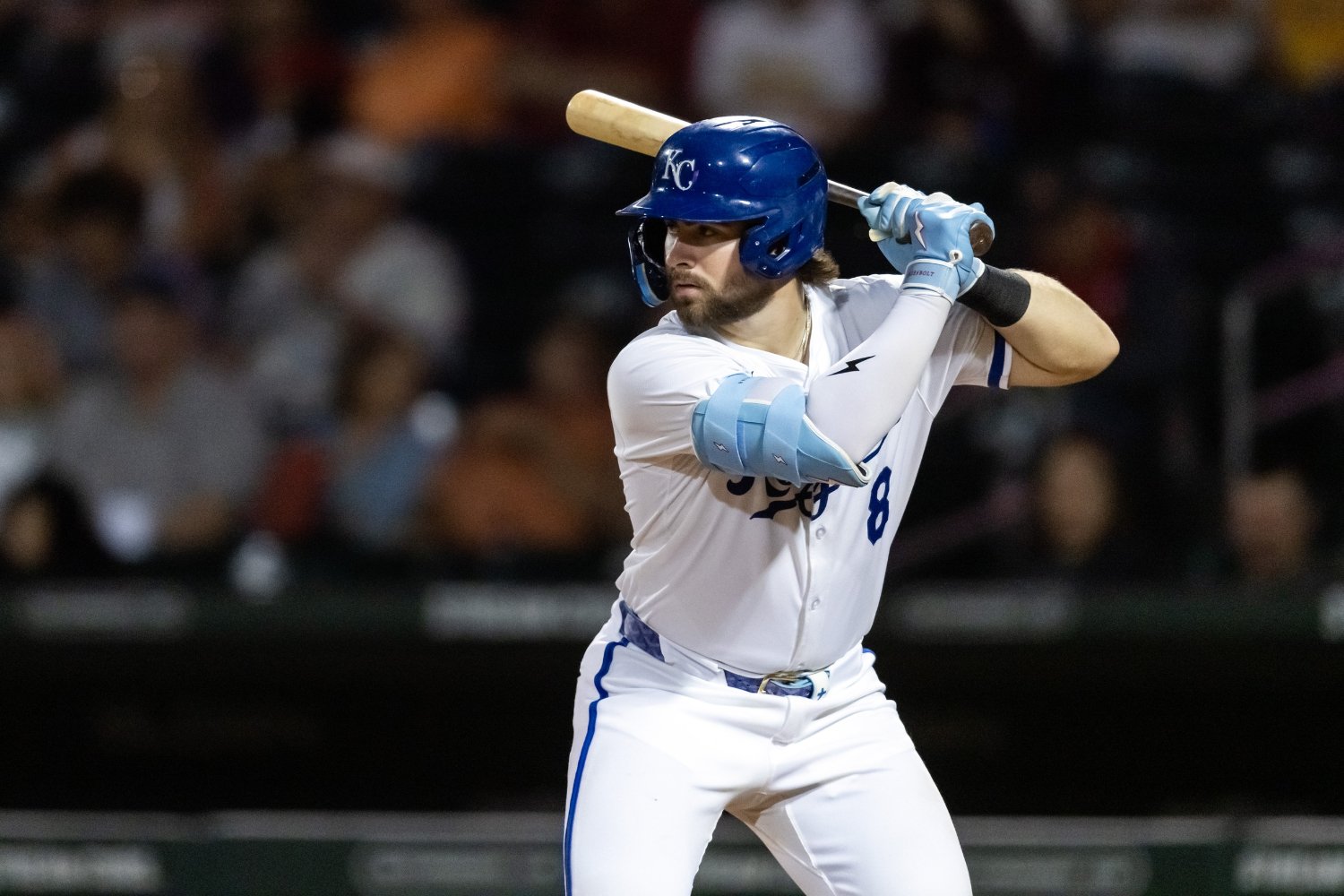 On Wednesday morning, the Royals announced their 2026 Quad Cities River Bandits roster on the Raising Royals social media account. The River Bandits are the High-A affiliate of the Royals. The two most high-profile position player prospects on the River Bandits are catchers Blake Mitchell and Ramon Ramirez. Mitchell, our No. 2 prospect, is repeating High-A after only hitting .207 with a .668 OPS in 217 plate appearances. However, he had a 20.8% BB%, a 0.63 BB/K ratio, and a .372 OBP in Quad Cities a year ago. An issue for him was inconsistent power, likely affected by a broken hamate bone sustained in Spring Training last year. He only had two home runs and a .089 ISO in High-A last year, a decline from the 18 home runs and .201 ISO in 2024 with Columbia. That said, he's demonstrated much better power recently, especially in Spring Training. He hit a homer and posted a .444 ISO in 11 Spring Training plate appearances. The former 1st-round pick also launched a home run in the Spring Breakout against the Texas Rangers. If things progress quickly for Mitchell, he could be a candidate for an early promotion to Double-A Northwest Arkansas. When that happens, Ramirez will be the primary catcher in Quad Cities. Ramirez, the No. 8 Royals prospect at Royals Keep, hit .249 with a 118 wRC+ and 12 home runs in 331 plate appearances with the Low-A Columbia Fireflies. He also demonstrated excellent plate discipline in Columbia as a 20-year-old, with a 10.9% walk rate and 0.53 BB/K ratio. While the defense has been a work in progress, he has the kind of arm strength that can, at times, remind Royals fans of Salvador Perez. Playing behind Mitchell initially will help Ramirez work on that defense and game-calling in the move up in competition. It also wouldn't be surprising to see Ramirez get time at DH or at 1B, especially considering how polished his bat is for his age. Arguably, the best pitcher in the Royals system (No. 3, according to our rankings) will begin in Quad Cities. David Shields was the Carolina League pitcher of the year after posting a 2.38 ERA and 1.02 WHIP in 75.2 IP as an 18-year-old. Shields will headline the River Bandits rotation and could make a move up to Northwest Arkansas by the middle of the season if he progresses as expected. Diego Garcia of the East Village Times, a San Diego Padres prospect account, recognized Shields as a prospect similar in makeup to Scott Kazmir. The last prospect in our rankings playing in Quad Cities is outfielder Asbel Gonzalez, ranked No. 10. Gonzalez didn't show much power, with only 1 home run and an ISO of .059. Furthermore, he only hit .239 with a 50.4% GB%. However, he stole 78 bases with the Fireflies last year as a 19-year-old, which helped him earn the Willie Wilson Baserunner of the Year award, which goes to the top baserunner in the Royals farm system. Frankly, Gonzalez's tools, especially when it comes to speed, are impressive. Thus, it'll be interesting to see how he adjusts to High-A ball, especially after a full season of professional ball in Columbia. He got off to a hot start last year, but faded down the stretch. Hopefully, Gonzalez will be more conditioned and equipped for a full season in 2026. One under-the-radar prospect to watch in Quad Cities is pitcher L.P. Langevin, a fourth-round pick in the 2024 MLB Draft. Langevin was drafted by the Royals after striking out 22 batters in a stint with the West Virginia Black Bears in the MLB Draft League. The former Louisiana-Lafayette product pitched only 21.1 innings last year, but he posted a 32.5% K% in Quad Cities and a 29.8% K% overall between the Complex League and High-A ball. Control is an issue, as he also had a 21.2% BB% and 8.7% K-BB% in the Minors last year as well. Nonetheless, it's easy to be patient with Langevin's control issues when he's posting a 13.7% swinging strike rate and 29.7% CSW, as he did last year. Langevin pitched in the Arizona Fall League, striking out 11 batters and allowing only three hits in 6.2 IP with Surprise. He allowed 12 walks and had a 6.75 ERA in the AFL, so he certainly showed his growing pains, especially in terms of control. That said, when he was locked in, he was tough to hit against, as illustrated below in this October 9th outing. Langevin is a bit of a risky pitching prospect, but he has Major League high-leverage reliever potential, especially if the control comes together this year in Quad Cities. He could be this season's Dennis Colleran, who came from a Mid-Major school, had injury issues, and then had a meteoric rise in the Royals' system in 2025.
 -
Image courtesy of Mark J. Rebilas-Imagn Images On Wednesday morning, the Royals announced their 2026 Quad Cities River Bandits roster on the Raising Royals social media account. The River Bandits are the High-A affiliate of the Royals. The two most high-profile position player prospects on the River Bandits are catchers Blake Mitchell and Ramon Ramirez. Mitchell, our No. 2 prospect, is repeating High-A after only hitting .207 with a .668 OPS in 217 plate appearances. However, he had a 20.8% BB%, a 0.63 BB/K ratio, and a .372 OBP in Quad Cities a year ago. An issue for him was inconsistent power, likely affected by a broken hamate bone sustained in Spring Training last year. He only had two home runs and a .089 ISO in High-A last year, a decline from the 18 home runs and .201 ISO in 2024 with Columbia. That said, he's demonstrated much better power recently, especially in Spring Training. He hit a homer and posted a .444 ISO in 11 Spring Training plate appearances. The former 1st-round pick also launched a home run in the Spring Breakout against the Texas Rangers. If things progress quickly for Mitchell, he could be a candidate for an early promotion to Double-A Northwest Arkansas. When that happens, Ramirez will be the primary catcher in Quad Cities. Ramirez, the No. 8 Royals prospect at Royals Keep, hit .249 with a 118 wRC+ and 12 home runs in 331 plate appearances with the Low-A Columbia Fireflies. He also demonstrated excellent plate discipline in Columbia as a 20-year-old, with a 10.9% walk rate and 0.53 BB/K ratio. While the defense has been a work in progress, he has the kind of arm strength that can, at times, remind Royals fans of Salvador Perez. Playing behind Mitchell initially will help Ramirez work on that defense and game-calling in the move up in competition. It also wouldn't be surprising to see Ramirez get time at DH or at 1B, especially considering how polished his bat is for his age. Arguably, the best pitcher in the Royals system (No. 3, according to our rankings) will begin in Quad Cities. David Shields was the Carolina League pitcher of the year after posting a 2.38 ERA and 1.02 WHIP in 75.2 IP as an 18-year-old. Shields will headline the River Bandits rotation and could make a move up to Northwest Arkansas by the middle of the season if he progresses as expected. Diego Garcia of the East Village Times, a San Diego Padres prospect account, recognized Shields as a prospect similar in makeup to Scott Kazmir. The last prospect in our rankings playing in Quad Cities is outfielder Asbel Gonzalez, ranked No. 10. Gonzalez didn't show much power, with only 1 home run and an ISO of .059. Furthermore, he only hit .239 with a 50.4% GB%. However, he stole 78 bases with the Fireflies last year as a 19-year-old, which helped him earn the Willie Wilson Baserunner of the Year award, which goes to the top baserunner in the Royals farm system. Frankly, Gonzalez's tools, especially when it comes to speed, are impressive. Thus, it'll be interesting to see how he adjusts to High-A ball, especially after a full season of professional ball in Columbia. He got off to a hot start last year, but faded down the stretch. Hopefully, Gonzalez will be more conditioned and equipped for a full season in 2026. One under-the-radar prospect to watch in Quad Cities is pitcher L.P. Langevin, a fourth-round pick in the 2024 MLB Draft. Langevin was drafted by the Royals after striking out 22 batters in a stint with the West Virginia Black Bears in the MLB Draft League. The former Louisiana-Lafayette product pitched only 21.1 innings last year, but he posted a 32.5% K% in Quad Cities and a 29.8% K% overall between the Complex League and High-A ball. Control is an issue, as he also had a 21.2% BB% and 8.7% K-BB% in the Minors last year as well. Nonetheless, it's easy to be patient with Langevin's control issues when he's posting a 13.7% swinging strike rate and 29.7% CSW, as he did last year. Langevin pitched in the Arizona Fall League, striking out 11 batters and allowing only three hits in 6.2 IP with Surprise. He allowed 12 walks and had a 6.75 ERA in the AFL, so he certainly showed his growing pains, especially in terms of control. That said, when he was locked in, he was tough to hit against, as illustrated below in this October 9th outing. Langevin is a bit of a risky pitching prospect, but he has Major League high-leverage reliever potential, especially if the control comes together this year in Quad Cities. He could be this season's Dennis Colleran, who came from a Mid-Major school, had injury issues, and then had a meteoric rise in the Royals' system in 2025. View full article
-
Series in Review: Royals Avoid Sweep in Atlanta
Kevin O'Brien replied to Kevin O'Brien's topic in Kansas City Royals Talk
I think they have a better track record with their vets than they did last year. Plus, Canha and Renfroe were at the end of their careers, and Biggio was more "name" than production. As you said, I think they will begin to turn the corner once they let the nerves of Opening Day settle. I also would like to see Marte get more in the mix. I know he's older, but he was pretty good for the past two years when healthy, and he's a proven bat. -
Four Things Royals Fans Learned at the Home Opener
Kevin O'Brien replied to Kevin O'Brien's topic in Kansas City Royals Talk
Thank so much Rolando! I appreciate the read and the comment and thanks for being active on Royals Keep! Appreciate the conversation! -
Yeah, it's super early. I think the data shows that the process is pretty good, and that a lot of the early struggles won't persist. Bobby won't be a pop-up hitter, and the hard hits will begin to fall and find gaps. But I agree about the pressing thing. It's one thing that has obviously affected this team. If they struggle into May, it's probably due to that, which then falls back onto Zumwalt.
-
I thought Melendez had a decent start to his career. He showed good plate discipline initially and had legitimate power. The exit velocity and hard hit rates have always been well above average. However, as he got more at-bats, he started to chase and swing more, and then he tinkered with his mechanics, and it just went south. I wish him all the best, but it clearly wasn't working out. Glad the Royals cut bait sooner rather than later.
-
Image courtesy of Mark J. Rebilas-Imagn Images One of the big priorities for Kansas City Royals President of Baseball Operations JJ Picollo was to improve the lineup in 2026. While the team hit better after the All-Star Break, their struggles out of the gate ultimately cost them a postseason berth in 2025, despite making the ALDS in 2024. Last year, the Royals ranked 26th in runs scored and home runs, and 22nd in OBP and wRC+, according to Fangraphs. They also had the 12th-highest O-Swing% and the highest pop-up percentage in baseball. Thus, a priority for the Royals this year was to focus on improving pitch recognition and swing decisions so they would chase and pop up less in 2026. In addition to hiring new assistant hitting coaches Connor Dawson and Marcus Thames, the Royals also acquired outfielders Isaac Collins, Lane Thomas, and Starling Marte to help give the Royals veteran at-bats that they were sorely missing last year, especially from the outfield position. Last season, the Royals outfielders had the highest pop-up percentage and the lowest wRC+ among Major League outfielders, according to Fangraphs. Despite the changes, it's been a similar story through four games this season. While it's an extremely small sample, the numbers have been concerning nonetheless. The Royals are tied for 28th in runs scored, 27th in wRC+, and 26th in batting average. Even though they are 2-2, they have a -5 run differential, despite only allowing 14 runs, which is tied for the fewest in the American League Central. How much should Royals fans worry about this offense, especially with how slow they got out of the gate in 2025? I will talk about three metrics from this Kansas City offense so far and what those numbers could say about their outlook in the near future. 27.3% O-Swing% Last year, the Royals had the 12th-highest O-Swing% in baseball at 32%. That put them ahead of teams like the Athletics (31.9%), the Tigers (31.3%), and the White Sox (31.3%). Kansas City wanted to lower this in 2026 in order to not just draw more walks (7.2% BB%, 29th in baseball), but improve their OBP as well (.309, 22nd in baseball). So far, the early results have been good for chasing out of the zone. The Royals, through five games, have a 27.3% O-Swing%, which is the second-lowest O-Swing% in baseball, according to Fangraphs. It is also a 4.7% improvement from a year ago, which is major progress. The Royals' walk rate is also up slightly at 8.0%, which is 0.8% higher than their BB% last season. The OBP is lower at .261, but their low BABIP could be the cause. Their .220 BABIP is the second-lowest in baseball. When it comes to how Royals individually have done, this is how they rank in plate discipline data, as organized by O-Swing%. The Royals have two hitters (Maikel Garcia and Collins) with O-Swing% under 20%, and seven hitters in total with O-Swing% under 30%. In terms of contact rate, they have eight hitters with rates over 80%. The only real hitter that's an established player with a higher-than-wanted chase rate is Bobby Witt Jr. Through five games, he has a 37.1% O-Swing%. Last year, he had a 34.5% O-Swing%, so it seems like Witt is a little overeager to start the season. Despite his high chase rate, he still has an 81.8% contact rate, which shows his strong ability to put the bat on the ball, despite the questionable plate decisions thus far. One hitter who has made positive gains is Vinnie Pasquantino, who has a 20% chase rate. Last year, he had a 32.9% chase rate, so he has seen a 12.9% improvement in O-Swing%. As a result, his contact rate is 87.5%, which is 4.1% higher than last year. That kind of progress is important for Pasquantino, especially with him hitting in the No. 3 hole in the Royals' lineup. 31.6% Hard-Hit Rate In 2025, Kansas City hitters produced a 40.7% hard-hit rate. That ranked 14th in baseball, just behind the Detroit Tigers (40.8%), but ahead of playoff teams like the Cubs (40%) and the Brewers (39.2%). Thus, it was expected that with a decline in chasing, the Royals' offense could see major gains in 2026, especially considering their ability to hit the ball hard last year. Unfortunately, while the chase rate has improved in 2026, the hard-hit rate has trended in the opposite direction. Through five games, the Royals have a 31.6% hard-hit rate, the lowest mark in baseball. The Royals aren't as bad in other Statcast categories. They rank 24th in average exit velocity (87.9 MPH) and barrel rate (6.3%), and 26th in xwOBA (.288). It's not good, but they are not as brutal as Kansas City's hard-hit ranking. It's hard to get optimistic about an offense when they are sitting at the bottom of a very important Statcast category. Individually, this is how Royals hitters have fared this season in those four Statcast categories I discussed above. Jensen leads the Royals in hard-hit rate and average exit velocity with 57.1% and 94.7 MPH marks, respectively. He hasn't launched the ball well, which explains why his xwOBA is only .229. That said, the fact that he's hitting the ball as hard as he is shows that he has the batted-ball skills to succeed at the Major League level this season and beyond. Witt has been a hitter who has a great hard-hit rate (38.5%), but it hasn't translated into results just yet (.270 wOBA). However, his .388 xwOBA leads the team and is 118 points higher than his actual wOBA. Thus, he could be due for a hot streak soon, especially as he gets more comfortable in the box during this homestand against Minnesota and Milwaukee. Two hitters that have struggled in hard-hit rate but should improve are Pasquantino and Jac Caglianone. Pasquantino has an 18.2% hard-hit rate while Caglianone has a 16.7% rate. Those rank 9th and 10th among Royals hitters this season, respectively. The good thing is that Vinnie and Cags have improved greatly in swing decisions so far this year, so their lackluster hard-hit rate may be due to them temporarily trading better plate discipline for power. That makes sense at this time of the year, especially for hitters like Vinnie and Cags who need to get settled in. It would not be surprising to see them see ticks up in their hard-hit rate and barrels soon, especially since they have zero barrels between the two of them through four games. Safe to say that won't stay zero for long. 13% IFFB% (Pop-Up Rate) The Royals had major pop-up issues in 2025, as illustrated by their 11.9% IFFB%, which led the league. Typically, pop-ups occur when a hitter is pressing or trying too hard at the plate with their swing. It seemed like that was the case last year, and the Royals are trying to curb that pressing this year by being more intentional about communicating their team philosophy throughout, as evidenced by Anne Rogers' Opening Day tweet revealing some important Royals locker room signage. The Royals are hoping that a more consistent and focused approach can not just lead to more walks and fewer chases, but also to fewer pop-ups, which are killers because they turn so easily into outs. Kansas City doesn't lead the league in IFFB%, ranking 7th this year, according to Fangraphs. That said, their 13% IFFB% is 1.1% higher than last year, which isn't exactly a positive trend in this crucial category. In terms of Royals leaders in IFFB%, below are the Top-4, with not only their IFFB% this year but also their mark a season ago in parentheses. Nick Loftin, 100% (12.5% in 2025) Witt, 28.6% (10.6% in 2025) Perez, 25% (8.8% in 2025) Jonathan India, 20% (15.4% in 2025) Loftin and India are the usual suspects. They both had double-digit IFFB% and ranked 5th and 7th in IFFB%, respectively, among Royals hitters with 100 or more plate appearances last season. India is the more concerning of the pair, especially since his 15.4% IFFB% last year was a career high, and he produced the worst offensive season of his career (89 wRC+). In addition to a high IFFB% in 2026, India's hard-hit rate is low at 28.6%, and his K% is high at 27.3%, nearly 9 percentage points higher than his K% in 2025. Looking at his Statcast percentiles via TJ Stats, he shows his trademark plate discipline, as illustrated by stellar whiff and O-Swing% numbers. However, his exit velocity, barrel, LA Sweet-Spot%, and hard-hit rate percentiles have been paltry. For India to be a valuable offensive player, he needs to cut down on pop-ups and increase barrels. In order to do that, he needs to be better in terms of increasing that LA Sweet-Spot%. His radial chart on batted balls in play shows that he's getting way too under baseball, much to his and the Royals' detriment. India is only the surface level of this IFFB% problem. Bobby needs to be better, as his IFFB% is 18% higher than his mark in 2025. The same is true with Salvy, whose 25% mark is 16.2% higher than his IFFB% last season. It's not good when two of the Royals' top-four hitters are in the 25+ percentage mark in IFFB%. Regression should positively favor Witt and Salvy as they get more at-bats. They have a proven track record of correcting this issue. As for India, I am not so sure. That said, he has plenty of time to show that these early IFFB% issues are also a flash in the pan and will be corrected soon. View full article
-
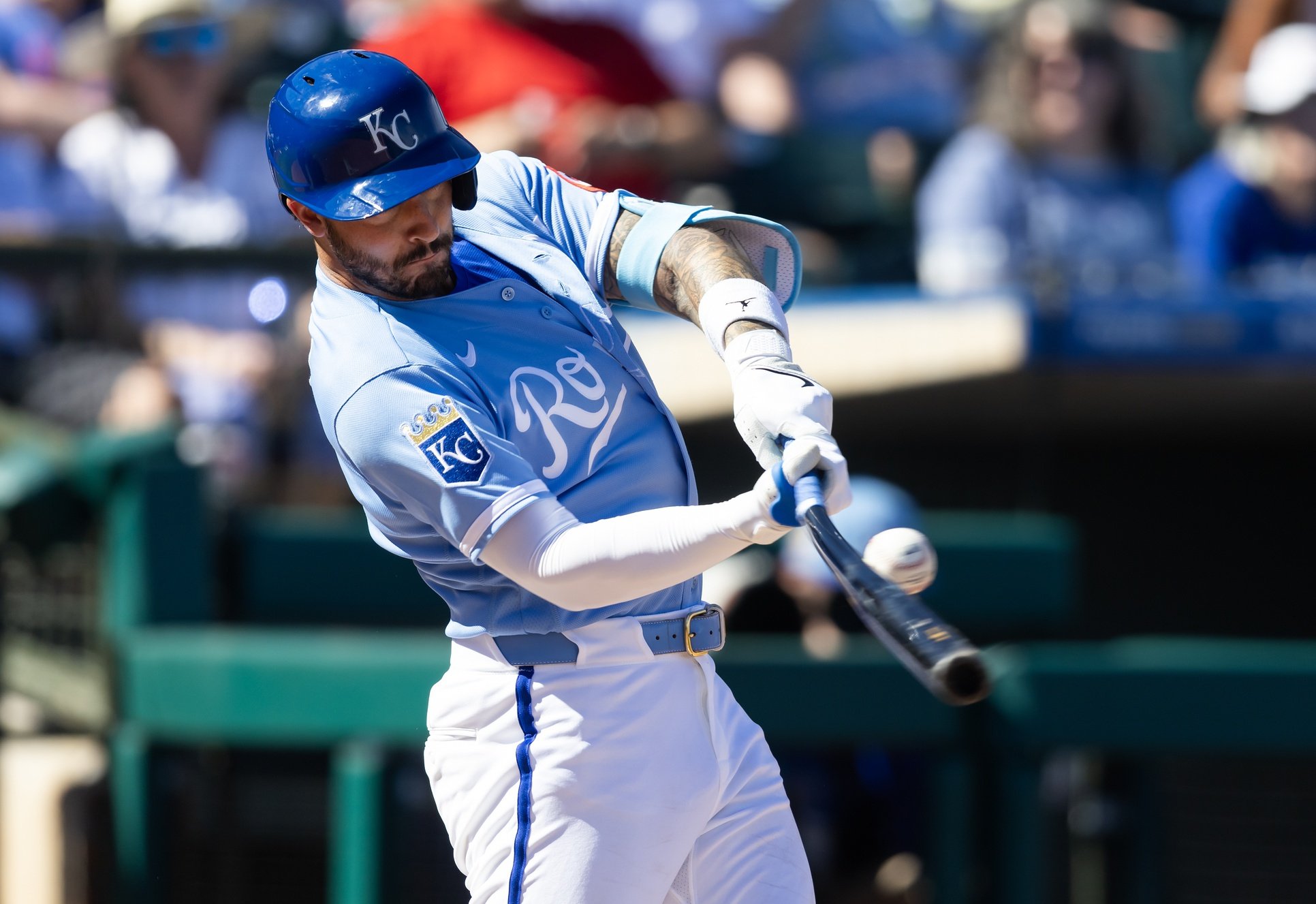 One of the big priorities for Kansas City Royals President of Baseball Operations JJ Picollo was to improve the lineup in 2026. While the team hit better after the All-Star Break, their struggles out of the gate ultimately cost them a postseason berth in 2025, despite making the ALDS in 2024. Last year, the Royals ranked 26th in runs scored and home runs, and 22nd in OBP and wRC+, according to Fangraphs. They also had the 12th-highest O-Swing% and the highest pop-up percentage in baseball. Thus, a priority for the Royals this year was to focus on improving pitch recognition and swing decisions so they would chase and pop up less in 2026. In addition to hiring new assistant hitting coaches Connor Dawson and Marcus Thames, the Royals also acquired outfielders Isaac Collins, Lane Thomas, and Starling Marte to help give the Royals veteran at-bats that they were sorely missing last year, especially from the outfield position. Last season, the Royals outfielders had the highest pop-up percentage and the lowest wRC+ among Major League outfielders, according to Fangraphs. Despite the changes, it's been a similar story through four games this season. While it's an extremely small sample, the numbers have been concerning nonetheless. The Royals are tied for 28th in runs scored, 27th in wRC+, and 26th in batting average. Even though they are 2-2, they have a -5 run differential, despite only allowing 14 runs, which is tied for the fewest in the American League Central. How much should Royals fans worry about this offense, especially with how slow they got out of the gate in 2025? I will talk about three metrics from this Kansas City offense so far and what those numbers could say about their outlook in the near future. 27.3% O-Swing% Last year, the Royals had the 12th-highest O-Swing% in baseball at 32%. That put them ahead of teams like the Athletics (31.9%), the Tigers (31.3%), and the White Sox (31.3%). Kansas City wanted to lower this in 2026 in order to not just draw more walks (7.2% BB%, 29th in baseball), but improve their OBP as well (.309, 22nd in baseball). So far, the early results have been good for chasing out of the zone. The Royals, through five games, have a 27.3% O-Swing%, which is the second-lowest O-Swing% in baseball, according to Fangraphs. It is also a 4.7% improvement from a year ago, which is major progress. The Royals' walk rate is also up slightly at 8.0%, which is 0.8% higher than their BB% last season. The OBP is lower at .261, but their low BABIP could be the cause. Their .220 BABIP is the second-lowest in baseball. When it comes to how Royals individually have done, this is how they rank in plate discipline data, as organized by O-Swing%. The Royals have two hitters (Maikel Garcia and Collins) with O-Swing% under 20%, and seven hitters in total with O-Swing% under 30%. In terms of contact rate, they have eight hitters with rates over 80%. The only real hitter that's an established player with a higher-than-wanted chase rate is Bobby Witt Jr. Through five games, he has a 37.1% O-Swing%. Last year, he had a 34.5% O-Swing%, so it seems like Witt is a little overeager to start the season. Despite his high chase rate, he still has an 81.8% contact rate, which shows his strong ability to put the bat on the ball, despite the questionable plate decisions thus far. One hitter who has made positive gains is Vinnie Pasquantino, who has a 20% chase rate. Last year, he had a 32.9% chase rate, so he has seen a 12.9% improvement in O-Swing%. As a result, his contact rate is 87.5%, which is 4.1% higher than last year. That kind of progress is important for Pasquantino, especially with him hitting in the No. 3 hole in the Royals' lineup. 31.6% Hard-Hit Rate In 2025, Kansas City hitters produced a 40.7% hard-hit rate. That ranked 14th in baseball, just behind the Detroit Tigers (40.8%), but ahead of playoff teams like the Cubs (40%) and the Brewers (39.2%). Thus, it was expected that with a decline in chasing, the Royals' offense could see major gains in 2026, especially considering their ability to hit the ball hard last year. Unfortunately, while the chase rate has improved in 2026, the hard-hit rate has trended in the opposite direction. Through five games, the Royals have a 31.6% hard-hit rate, the lowest mark in baseball. The Royals aren't as bad in other Statcast categories. They rank 24th in average exit velocity (87.9 MPH) and barrel rate (6.3%), and 26th in xwOBA (.288). It's not good, but they are not as brutal as Kansas City's hard-hit ranking. It's hard to get optimistic about an offense when they are sitting at the bottom of a very important Statcast category. Individually, this is how Royals hitters have fared this season in those four Statcast categories I discussed above. Jensen leads the Royals in hard-hit rate and average exit velocity with 57.1% and 94.7 MPH marks, respectively. He hasn't launched the ball well, which explains why his xwOBA is only .229. That said, the fact that he's hitting the ball as hard as he is shows that he has the batted-ball skills to succeed at the Major League level this season and beyond. Witt has been a hitter who has a great hard-hit rate (38.5%), but it hasn't translated into results just yet (.270 wOBA). However, his .388 xwOBA leads the team and is 118 points higher than his actual wOBA. Thus, he could be due for a hot streak soon, especially as he gets more comfortable in the box during this homestand against Minnesota and Milwaukee. Two hitters that have struggled in hard-hit rate but should improve are Pasquantino and Jac Caglianone. Pasquantino has an 18.2% hard-hit rate while Caglianone has a 16.7% rate. Those rank 9th and 10th among Royals hitters this season, respectively. The good thing is that Vinnie and Cags have improved greatly in swing decisions so far this year, so their lackluster hard-hit rate may be due to them temporarily trading better plate discipline for power. That makes sense at this time of the year, especially for hitters like Vinnie and Cags who need to get settled in. It would not be surprising to see them see ticks up in their hard-hit rate and barrels soon, especially since they have zero barrels between the two of them through four games. Safe to say that won't stay zero for long. 13% IFFB% (Pop-Up Rate) The Royals had major pop-up issues in 2025, as illustrated by their 11.9% IFFB%, which led the league. Typically, pop-ups occur when a hitter is pressing or trying too hard at the plate with their swing. It seemed like that was the case last year, and the Royals are trying to curb that pressing this year by being more intentional about communicating their team philosophy throughout, as evidenced by Anne Rogers' Opening Day tweet revealing some important Royals locker room signage. The Royals are hoping that a more consistent and focused approach can not just lead to more walks and fewer chases, but also to fewer pop-ups, which are killers because they turn so easily into outs. Kansas City doesn't lead the league in IFFB%, ranking 7th this year, according to Fangraphs. That said, their 13% IFFB% is 1.1% higher than last year, which isn't exactly a positive trend in this crucial category. In terms of Royals leaders in IFFB%, below are the Top-4, with not only their IFFB% this year but also their mark a season ago in parentheses. Nick Loftin, 100% (12.5% in 2025) Witt, 28.6% (10.6% in 2025) Perez, 25% (8.8% in 2025) Jonathan India, 20% (15.4% in 2025) Loftin and India are the usual suspects. They both had double-digit IFFB% and ranked 5th and 7th in IFFB%, respectively, among Royals hitters with 100 or more plate appearances last season. India is the more concerning of the pair, especially since his 15.4% IFFB% last year was a career high, and he produced the worst offensive season of his career (89 wRC+). In addition to a high IFFB% in 2026, India's hard-hit rate is low at 28.6%, and his K% is high at 27.3%, nearly 9 percentage points higher than his K% in 2025. Looking at his Statcast percentiles via TJ Stats, he shows his trademark plate discipline, as illustrated by stellar whiff and O-Swing% numbers. However, his exit velocity, barrel, LA Sweet-Spot%, and hard-hit rate percentiles have been paltry. For India to be a valuable offensive player, he needs to cut down on pop-ups and increase barrels. In order to do that, he needs to be better in terms of increasing that LA Sweet-Spot%. His radial chart on batted balls in play shows that he's getting way too under baseball, much to his and the Royals' detriment. India is only the surface level of this IFFB% problem. Bobby needs to be better, as his IFFB% is 18% higher than his mark in 2025. The same is true with Salvy, whose 25% mark is 16.2% higher than his IFFB% last season. It's not good when two of the Royals' top-four hitters are in the 25+ percentage mark in IFFB%. Regression should positively favor Witt and Salvy as they get more at-bats. They have a proven track record of correcting this issue. As for India, I am not so sure. That said, he has plenty of time to show that these early IFFB% issues are also a flash in the pan and will be corrected soon.
 -
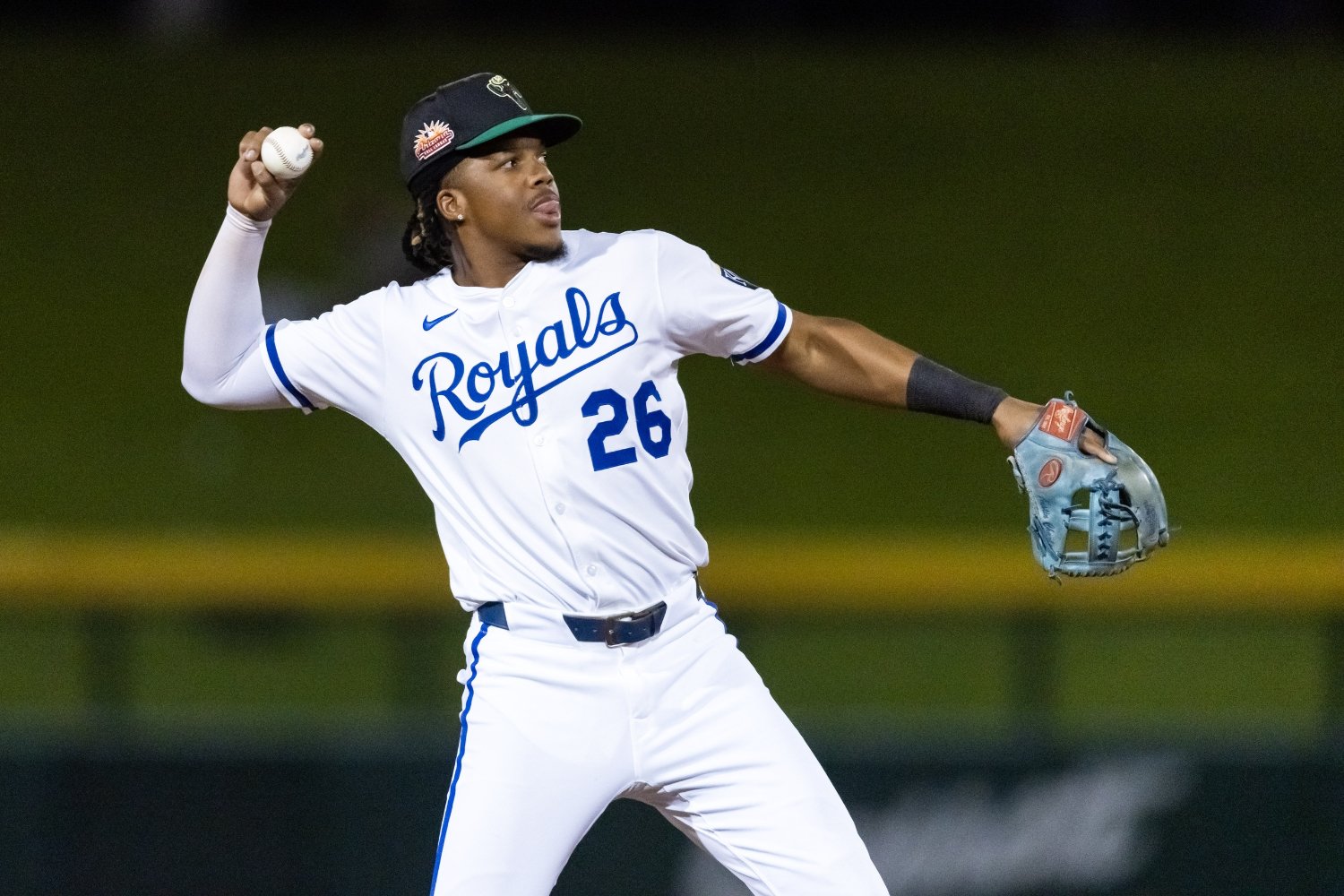 On Tuesday, Raising Royals, the Kansas City Royals Professional Development account, shared the 2026 Opening Day roster for the Northwest Arkansas Naturals, the Royals' Double-A affiliate. The Naturals kick off their season on Thursday on the road in Wichita, the Double-A affiliate of the Minnesota Twins. They are looking to improve on their 66-72 record from a season ago (they finished fourth in the Texas League North Division). Northwest Arkansas will feature a good number of prospects who were on our 2026 Top-20 prospects list at Royals Keep. Here is a list of those prospects and their respective ranking. Drew Beam, RHP (No. 9) Felix Arronde, RHP (No. 12) Daniel Vazquez , SS (No. 14) Carson Roccaforte, OF (No. 16) Frank Mozzicato, LHP (No. 20) Beam and Arronde are the most accomplished pitchers of the group, both coming off solid seasons in High-A Quad Cities in 2025. Beam posted a 3.83 ERA and led the River Bandits in strikeouts with 110 in 131.2 IP. Arronde pitched three fewer innings but posted a 2.82 ERA and struck out 101 batters. The former Tennessee Volunteer pitcher had a better FIP (3.35) than the Cuban-born righty (3.87). Vazquez had a good campaign in the Arizona Fall League, hitting .329 with a .928 OPS in 98 plate appearances for Surprise. He also posted excellent Statcast percentiles, as illustrated in his TJ Stats profile below. Vazquez ranked in the 94th percentile in BB% and 92nd percentile in hard-hit rate. If he can combine those two traits in his stint in Double-A, then he could make a case for a spot in Triple-A Omaha sooner rather than later. Roccaforte will begin the year again in Northwest Arkansas, where he finished last year. In 45 games in 2025, he had a solid Double-A campaign, hitting .290 with an .862 OPS with the Naturals in 212 plate appearances. The former Louisiana-Lafayette product also showed some nice progress this spring in Cactus League play, showcasing excellent hard-hit skills and plate discipline. Even though he looked very good in Double-A in 2025, the Royals opted to have him start the year in Northwest Arkansas to begin 2026, especially with so many veteran outfielders in Triple-A Omaha at the moment. Lastly, Mozzicato enters a crucial year that could make or break him as a prospect in the Royals system. The former first-round pick was poor in Northwest Arkansas, posting a 7.46 ERA in 17 outings and 56.2 IP. He also had a -1.8% K-BB%, highlighted by a a 19.4% BB%. The Connecticut prep lefty made two appearances in Spring Training and posted a 13.50 ERA in two innings of work. He struggled heavily with throwing strikes and generating chase and whiff, and while his four-seamer was promising on a TJ Stuff+ end (102 TJ Stuff+), the rest of his repertoire was mediocre in Arizona. There is hope that Mozzicato could turn into an MLB reliever like Daniel Lynch IV in a year or two. For that to happen, however, he will need to do a better job of throwing strikes in Northwest Arkansas (for starters).
 -
On Tuesday, Raising Royals, the Kansas City Royals Professional Development account, shared the 2026 Opening Day roster for the Northwest Arkansas Naturals, the Royals' Double-A affiliate. The Naturals kick off their season on Thursday on the road in Wichita, the Double-A affiliate of the Minnesota Twins. They are looking to improve on their 66-72 record from a season ago (they finished fourth in the Texas League North Division). Northwest Arkansas will feature a good number of prospects who were on our 2026 Top-20 prospects list at Royals Keep. Here is a list of those prospects and their respective ranking. Drew Beam, RHP (No. 9) Felix Arronde, RHP (No. 12) Daniel Vazquez , SS (No. 14) Carson Roccaforte, OF (No. 16) Frank Mozzicato, LHP (No. 20) Beam and Arronde are the most accomplished pitchers of the group, both coming off solid seasons in High-A Quad Cities in 2025. Beam posted a 3.83 ERA and led the River Bandits in strikeouts with 110 in 131.2 IP. Arronde pitched three fewer innings but posted a 2.82 ERA and struck out 101 batters. The former Tennessee Volunteer pitcher had a better FIP (3.35) than the Cuban-born righty (3.87). Vazquez had a good campaign in the Arizona Fall League, hitting .329 with a .928 OPS in 98 plate appearances for Surprise. He also posted excellent Statcast percentiles, as illustrated in his TJ Stats profile below. Vazquez ranked in the 94th percentile in BB% and 92nd percentile in hard-hit rate. If he can combine those two traits in his stint in Double-A, then he could make a case for a spot in Triple-A Omaha sooner rather than later. Roccaforte will begin the year again in Northwest Arkansas, where he finished last year. In 45 games in 2025, he had a solid Double-A campaign, hitting .290 with an .862 OPS with the Naturals in 212 plate appearances. The former Louisiana-Lafayette product also showed some nice progress this spring in Cactus League play, showcasing excellent hard-hit skills and plate discipline. Even though he looked very good in Double-A in 2025, the Royals opted to have him start the year in Northwest Arkansas to begin 2026, especially with so many veteran outfielders in Triple-A Omaha at the moment. Lastly, Mozzicato enters a crucial year that could make or break him as a prospect in the Royals system. The former first-round pick was poor in Northwest Arkansas, posting a 7.46 ERA in 17 outings and 56.2 IP. He also had a -1.8% K-BB%, highlighted by a a 19.4% BB%. The Connecticut prep lefty made two appearances in Spring Training and posted a 13.50 ERA in two innings of work. He struggled heavily with throwing strikes and generating chase and whiff, and while his four-seamer was promising on a TJ Stuff+ end (102 TJ Stuff+), the rest of his repertoire was mediocre in Arizona. There is hope that Mozzicato could turn into an MLB reliever like Daniel Lynch IV in a year or two. For that to happen, however, he will need to do a better job of throwing strikes in Northwest Arkansas (for starters). View full rumor
-
Series in Review: Royals Avoid Sweep in Atlanta
Kevin O'Brien replied to Kevin O'Brien's topic in Kansas City Royals Talk
Agreed on the 2-1. The Royals could have changed the narrative with a 2-1 record heading back home. It did seem like they built on that good momentum from Sunday's win with their 3-1 win against the Twins in the home opener. They definitely are showing that their pitching staff and bullpen are deep.


