


Royals Video
With All-Star voting underway, I thought it would be interesting to look at the Royals’ one-time All-Stars. After all, you already know about George Brett and Salvador Perez. There are some surprising names on this list, as well as some relatively obscure players. To start with, let’s examine the one-timers from the club’s inception in 1969 through the 1980s (that’s a good place to end Part 1, as you’ll see). I borrowed this concept from the Phillies site, The Good Phight.
Ellie Rodriguez (1969)
The Royals’ first team produced one All-Star, which probably isn’t that surprising; expansion teams are usually made of castoffs, after all. Rodriguez was deemed expendable by the New York Yankees before the 1968 expansion draft, and the Royals used the 13th pick on him. He was the Opening Day catcher but didn’t really claim the starting job until late May. Given regular playing time, he responded with a hot month of June, hitting .281/.361/.422. His season totals on July 16, when the reserves were chosen for the AL team, were just .257/.344/.341 with two home runs and 13 RBI. But AL manager Mayo Smith only selected eight pitchers, and stocked his bench with six outfielders.
Also, the Royals’ brass spoke highly of Rodriguez’s defensive ability.
“There isn’t any doubt about his defensive ability. He takes command behind the plate and has the knack of making a pitcher bear down all the time.” --Royals general manager Cedric Tallis, quoted by Paul O’Boynick, The Kansas City Times, July 17, 1969
“He is a good analyst behind the plate and is quick on blocking low pitches. Ellie has come a long way since spring training. He’s a bulldog behind the plate.” --Royals manager Joe Gordon, quoted by Paul O’Boynick, The Kansas City Times, July 17, 1969
Sadly, Rodriguez did not get in the game. Starter Bill Freehan of Detroit played the first six innings, and Minnesota’s John Roseboro played the final three. Smith did use a pinch-hitter for Roseboro in the bottom of the ninth, but the game ended with the NL on top, 9-3.
Rodriguez, who just passed away in April at age 79, was dealt to Milwaukee after the 1970 season. He would be named to one more All-Star team while with the Brewers during the 1972 campaign. He didn’t get to play in that one, either.
Lou Piniella (1972)
I suppose lots of people would guess that Sweet Lou was the Royals’ first All-Star, as he won the Rookie of the Year award in 1969. But despite a solid .282/.325/.416 line that year, Piniella had to wait until 1972 to be named to the All-Star team.
In the middle of what was probably his best season, Piniella was a deserving choice. When the reserves were named by manager Earl Weaver on July 20 (the game was really late on the calendar that year), Piniella was second in the AL with a .321 batting average, and he had nine home runs and 43 RBI.
“Sure, I’m happy, very happy. Elated might be a better way to describe the way I feel. You hear talk about how some players would rather have three days off. I don’t know if I’ll get to play, but I’d rather be at the All-Star Game.” --Piniella, quoted by Sid Bordman, The Kansas City Star, July 21, 1972
Piniella did get to play, grounding out as a pinch-hitter in the 10th inning of the NL’s 4-3 win. Piniella was traded by the Royals to the New York Yankees after the 1973 season. Perhaps surprisingly, 1972 was his only All-Star Game as a player; of course, he would manage the National League in the 1991 game after his Cincinnati Reds won the pennant and World Series the previous year.
Richie Scheinblum (1972)
Piniella was joined on the All-Star team by his outfield mate, Scheinblum. Actually, Amos Otis also made the team, so the Royals’ entire starting outfield was selected, along with second baseman Cookie Rojas. Also, manager Bob Lemon was named as one of Weaver’s coaches for the game, giving Kansas City five representatives.
Scheinblum, who was in his first year with the Royals after playing sparingly for Cleveland and Washington, was having the season of his life. He was leading the league with a .325 average when the reserves were selected (while Piniella was second, Otis was third at .309).
“I’m glad all three of us were picked. I thought maybe they’d take two–but not three. This is probably more of a thrill for me than the others. This time last year, I was in the minors. I’m not fast on the bases or in the outfield, but I give 100 percent. I’m just glad people have noticed I’m hitting.”--Scheinblum, quoted by Sid Bordman, The Kansas City Star, July 21, 1972
Despite that scouting report, Scheinblum did get to play in the game, replacing Bobby Murcer in the outfield in the sixth inning. He only got one at-bat, a groundout that came just after Rojas hit a two-run home run to give the AL the lead.
Scheinblum finished the year with a .300/.383/.418 line, and the Royals wisely sold high, trading him to Cincinnati after the season for Hal McRae, a deal which helped launch Kansas City’s decade-plus of strong teams. Scheinblum would be done as a major leaguer after the 1974 season, and this was his only appearance in the Midsummer Classic.
Larry Gura (1980)
Larry Gura went 16-4 with a 2.72 ERA in 1978 and finished seventh in the Cy Young vote. He didn’t make the All-Star team. In 1979, he fell back to a 13-12 mark with a 4.47 ERA. But in 1980, he found himself with a 10-3 record and a 2.09 ERA at the end of June. That got him the nod from AL manager Weaver, one of just eight pitchers selected by the Baltimore manager.
A soft-tossing southpaw, Gura was the proverbial “crafty lefty.” The 1980 season was the only time he reached the 100 mark for strikeouts, but he won 126 games in the majors, 111 of them for the Royals. Not bad for a pitcher the team acquired for catcher Fran Healy, whose career ended after one game in the 1978 season. As for being an All-Star, Gura didn’t seem to be overwhelmed by the news.
“Maybe when I’m out of baseball, looking back, it’ll mean a lot more. Baseball for us is such an everyday thing, routine. So often we have to go out tomorrow and forget today even happened.” --Gura, quoted by Mike McKenzie, The Kansas City Times, July 8, 1980
Presumably, Gura did not forget his experience at the game, although he did not appear in the NL’s 4-2 win. He did enjoy two more finishes in the top ten of Cy Young voting and was inducted into the Royals Hall of Fame in 1992, but never made another All-Star team.
Kevin Seitzer (1987)
If Kevin Seitzer felt any pressure about taking over third base from Royals legend George Brett (who moved over to first base full-time during the 1987 season), he certainly didn’t show it. He made the All-Star team as a rookie, thanks to a .306/.389/.418 line through July 11, when he was named to the team…as an injury replacement for Brett, of course. With the news coming just a few days before the game, Seitzer’s plans for the break were thrown into chaos.
“This is just a drastic change in plans for me. Everything’s screwed up. I left my good clothes at the cleaners before the road trip, and I’ve got to fly from here (to Oakland).”--Seitzer, quoted by Jack Etkin, The Kansas City Star, July 12, 1987
But Seitzer was more ready mentally.
“I’m expecting I’m going to play because they want me to back up (Wade) Boggs. I imagine I’ll get an at-bat. If I don’t, it’s an honor just to be there.”--Seitzer, quoted by Jack Etkin, The Kansas City Star, July 12, 1987
In fact, Seitzer got two at-bats, plus a walk, after he replaced Boggs following the fifth inning. He almost won the game for the AL, too. Facing Lee Smith in the bottom of the 10th of a scoreless tie, he hit a fly ball to deep center field. Alas, it was caught on the warning track for the last out. Leading off the 12th, after the NL scored two runs in the top of the inning, he drew that walk, but never made it off first base.
Seitzer ended his rookie year with a .323/.399/.470 line, 15 homers, 83 RBI, and a league-leading 207 hits. A lot of years that would earn him a Rookie of the Year award, but this happened to be the season Mark McGwire bashed 49 home runs, so Seitzer finished second in the voting. He made one more All-Star team in his career, representing Milwaukee in the 1995 contest. This time, he got to pinch-hit for Boggs, a story he should tell his grandkids until they get sick of it.
Kurt Stillwell (1988)
After years of light-hitting shortstops, the Royals thought they had solved that problem when they traded for Kurt Stillwell, sending pitcher Danny Jackson to Cincinnati before the 1988 season. It was a trade that helped both teams right away, because Jackson won 23 games for the Reds, while Stillwell hit .251/.322/.399 for the Royals. That may not seem great, but compared to what the Royals had been getting from that spot, it was basically Bobby Witt Jr. Anyway, Stillwell did have some good fortune in his selection; both Alan Trammell (the winner of the fan voting) and Ozzie Guillen (Trammell’s replacement), suffered injuries in early July. Stillwell himself was battling a slight groin pull, but the news of his selection helped him feel better.
“I thought I could have played the last three days, anyway. (The Royals) were just being cautious. And with the All-Star break, they wanted to take advantage of it. I won’t be able to get the rest they wanted now, but hey, if they wanted me this bad, I’m going to make the most of it. It’s hard for me to believe everything worked out for me the way it did. I’m still in shock. Everything went my way, kind of like I’m the alternate to the alternate.” --Stillwell, quoted by Bob Nightengale, The Kansas City Times, July 11, 1988
Stillwell finally got in the game in the bottom of the ninth, with the AL clinging to a 2-1 lead. He at least did get to catch the first out of the inning, and the AL held on to the lead.
That would be it for Stillwell’s All-Star appearances. After two good seasons and two subpar ones in Kansas City, he bounced around as a free agent for a few seasons, but never really came close to his 1988 success again.
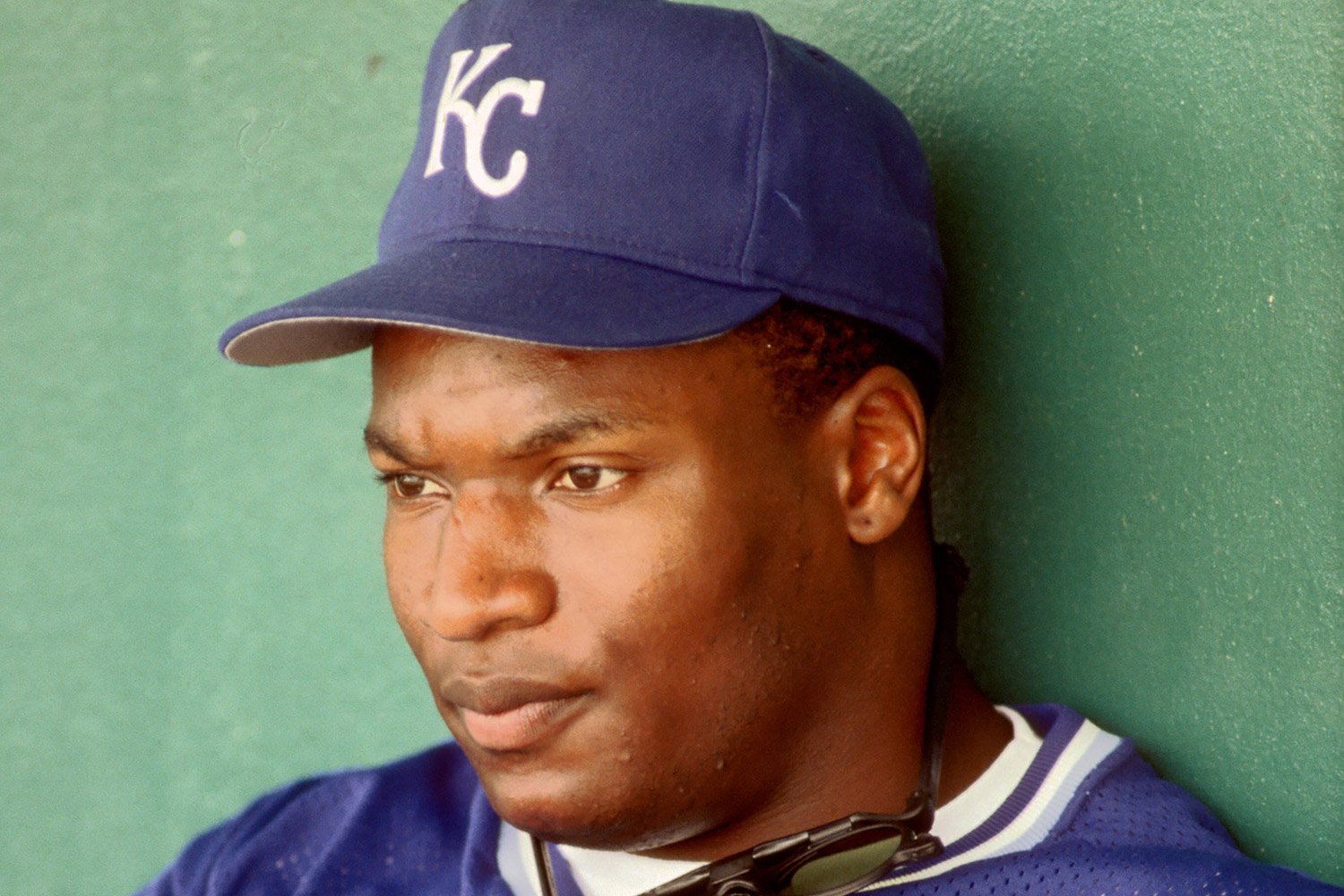
Bo Jackson (1989)
It’s hard to do much better in your All-Star Game debut than Bo Jackson did. In his third full season, he was elected to start the game by the fans; in fact, he was the AL’s leading vote-getter. Of course, he was one of the most famous baseball players in the country, thanks to his football “hobby.” He was having a good season, too, hitting .268/.308/.525 with 18 home runs, 52 RBI, and 20 stolen bases through the end of June. AL manager Tony La Russa, who had seen Jackson’s talent plenty as the manager of the Oakland A’s, mused about batting him leadoff in the All-Star Game.
“It doesn’t matter, just being on the field in Anaheim that night, that’s all that matters. It’s all God-given talent, so I don’t give myself credit for doing anything. It means something special, but you can’t let that stuff sink into your head because then you start believing you’re better than you are. I let it go in one ear and out the other.” --Jackson, quoted by Dick Kaegel, The Kansas City Times, July 6, 1989
LaRussa did put Jackson in the leadoff spot, and it paid off. The pregame talk was that the start time would make it hard for hitters to see the ball in the twilight in Anaheim. But the NL scored two runs in the top of the first, and Jackson led off the bottom of the inning with a mammoth blast to center field, roughly 450 feet away from the plate.
He was hardly done showing off his talent. In the second inning, he showcased his speed, beating out a relay throw on a double play and allowing the go-ahead run to score. He then stole second and moved up to third when the throw sailed into center field (the home run and stolen base combo put him in an exclusive club with Willie Mays at the time). He also singled in the game and walked away with the MVP trophy. Oh, and Nike premiered the “Bo Knows” TV spot during the game. Not a bad night’s work!
Most people watching that night likely thought this was just the first of many All-Star Games featuring Bo, but as we know now, it was not to be. Despite a solid first half in 1990, he was not selected for the team. Then, in January 1991, he suffered a hip injury while playing football for the Los Angeles Raiders. It ended his football career, and his baseball career was never the same; just the fact that he came back to the sport and even played after having that hip replacement was amazing enough. So this was Bo’s one All-Star appearance, but it was certainly a memorable one.






Recommended Comments
There are no comments to display.
Create an account or sign in to comment
You need to be a member in order to leave a comment
Create an account
Sign up for a new account in our community. It's easy!
Register a new accountSign in
Already have an account? Sign in here.
Sign In Now