


Crucial
-
Posts
6 -
Joined
-
Last visited
Crucial's Achievements


-
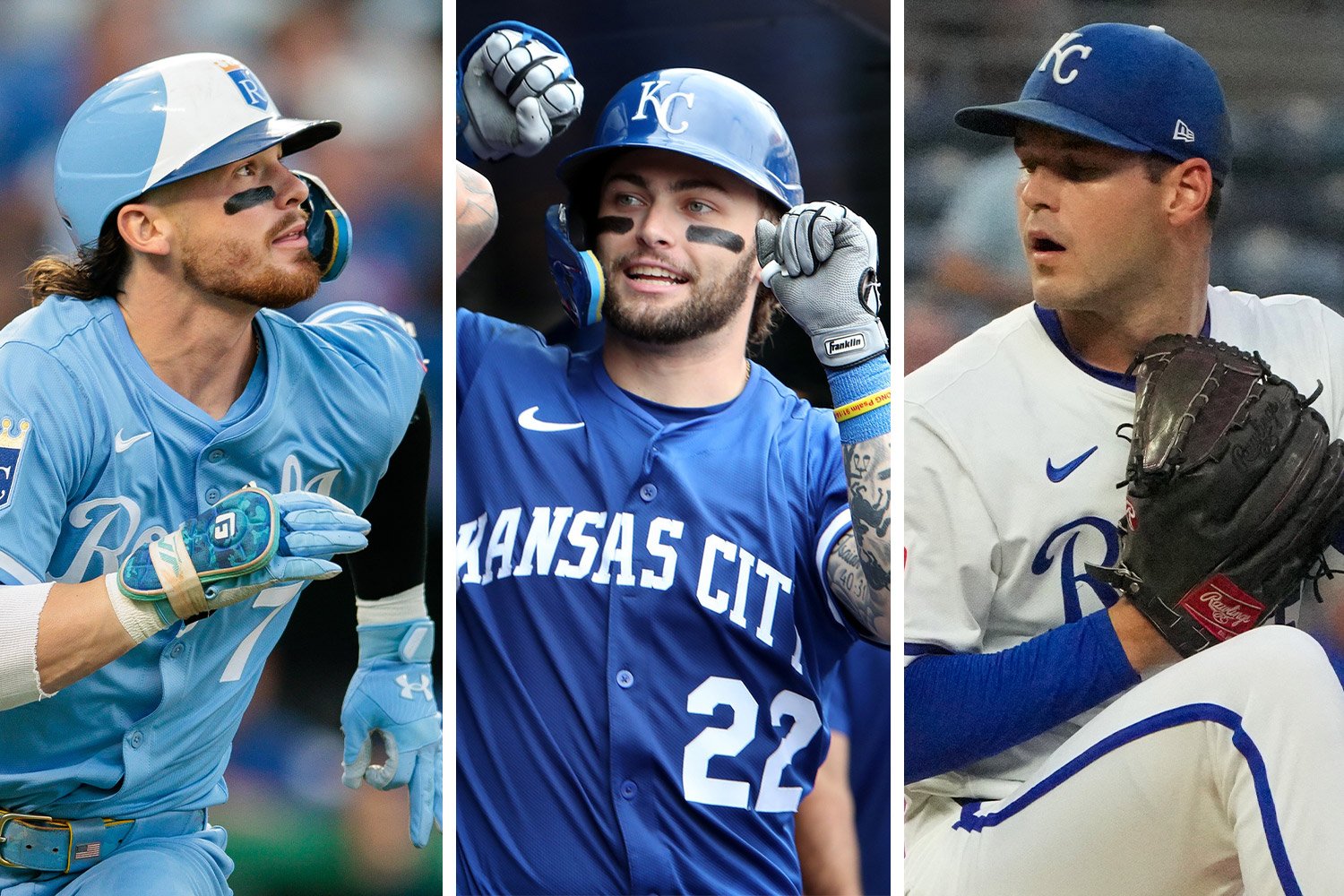
 The home stretch - the best assets available to the Royals coming into 2026. Four of the top five are homegrown, a testament to the Picollo regime after the dreary days of Dayton Moore. The number two asset being acquired via trade was one of the biggest differentiators between Picollo and Moore when Picollo completed the trade in the summer of 2023, his first trade deadline after taking over the role, as Moore had garnered a reputation for hanging on for too long and selling for too little. Let’s take a look at the future of your Kansas City Royals. Part 1: #21-25 Part 2: #16-20 Part 3: #11-15 Part 4: #6-10 5. Carter Jensen, Catcher Age: 22, Team control through 2031 Drafted in the third round of the 2021 MLB draft, Jensen has popped onto the major league stage after making his appearance in September this year. In 69 plate appearances, he had a slash line of .300/.391/.550 and a wRC+ of 159, meaning he was 59 percent better than league average at creating runs when adjusted for ballpark and other factors. He is the future behind home plate until Blake Mitchell comes knocking. Salvador Perez signed a two-year extension this year, but will most certainly be trading some of his own reps at catcher for more reps at first base and designated hitter, leaving the opportunity open for Jensen to build on his 2025. The biggest question will be how he adjusts to major league pitching over the course of a full season, but so far, the future is bright. 4. Jac Caglianone, Right Field Age: 22, Team control through 2031 The sixth overall pick in 2024, Caglianone made his debut at the beginning of June after demolishing minor league pitching in Double A and Triple A this year to the tune of a 1.025 OPS, 170 wRC+, and 20 home runs in only 66 games. That, coupled with the Royals' desperate need for an offensive spark plug, catapulted him to the majors earlier than most expected. In 62 games at the major league level, he struggled to a .532 OPS and 46 wRC+. However, this came with a .172 BABIP (batting average on balls in play), a 12% barrel rate, and a 77.4 mph bat speed (re: elite bat speed). He still has tremendous power and ran into some “bad luck”, but he will absolutely need to adjust to major league pitching to stay in the lineup, as he was already a strikeout risk in the minors chasing pitches 34 percent of the time. His 40 home run power and prospect status will see him get plenty of chances in 2026. 3. Maikel Garcia, Third Base Age: 25, Team control through 2030 with club option in 2031 Garcia is still letting the ink dry on a recent five-year extension for $57.5 million that will keep him at the hot corner for the foreseeable future. He broke out in a huge way this year, going for 5.6 fWAR, an .800 OPS, and close to a 20/20 home run and stolen base campaign while maintaining a 121 wRC+ and providing elite defense at a +13 fielding run value (97th percentile) per Baseball Savant. If we use the approximate dollar value per WAR of $9 million, 87% of Garcia’s new contract was payment for how well 2025 went. He provided 3.4 total fWAR in 2023 and 2024, so even if he averages 1.7 fWAR per year for the rest of the contract, he will be providing significant value to the Royals to the tune of a $19 million surplus. He has great plate discipline and is only 25, so he may add a little more muscle while he’s in his prime to garner some more power. 2. Cole Ragans, Starting Pitcher Age: 28, Team control through 2028 The Royals ace, Ragans, came over from the Rangers in the Aroldis Chapman trade in 2023, when the Royals signed Chapman to a one-year deal to use as a trade chip at the deadline, and what a return they’ve gotten. You and controllable pitching are sought after by nearly every team every year. Ragans has fit that to a tee after breaking out in 2024 and only improving his whiff and strikeout percentage in 2025. He pitched only 61 innings this year after dealing with a rotator cuff strain and had an ERA of 4.67, but all underlying advanced metrics show closer to 2.50, as he had some poor luck and was below average on his left-on-base rate. He has an electric slider, and his fastball velocity has returned to pre-injury levels. He’s projected for another 4.2 fWAR, 3.20 ERA, and over 170 innings, precisely what you want from your top of the rotation guy. Several rumors had his name swirling in the Royals' search for an outfielder this offseason, but J.J. Picollo has stated several times he’s not going anywhere. 1. Bobby Witt Jr., Shortstop Age: 25; Team control through 2030 with opt-outs from 2030-2033 and club options in 2035-2037. What more can be said about the 2019 second overall pick? He’s young at a premier defensive position and provides elite offensive production, speed, and defense. He’s the best Royals player since George Brett and has signed on for the long haul with his 11-year, $288 million contract in 2024. He’s given the Royals 18.5 fWAR over the last two years and is a consistent 30 home run, 30 stolen base threat. His contract escalates quickly over the next few years, going from $13.7 million in 2026 to $19.7 million in 2027 and then over $30 million in 2028 and beyond, but he has been worth every penny so far and will almost certainly continue this production in the future. You can likely count on one hand the number of other players that have the same value. He is the Kansas City Royals. This concludes our top 25 valuable Royals assets entering the 2026 season. Let us know if you agree with our list, who we missed, and who might be next! View full article
 -
 The home stretch - the best assets available to the Royals coming into 2026. Four of the top five are homegrown, a testament to the Picollo regime after the dreary days of Dayton Moore. The number two asset being acquired via trade was one of the biggest differentiators between Picollo and Moore when Picollo completed the trade in the summer of 2023, his first trade deadline after taking over the role, as Moore had garnered a reputation for hanging on for too long and selling for too little. Let’s take a look at the future of your Kansas City Royals. Part 1: #21-25 Part 2: #16-20 Part 3: #11-15 Part 4: #6-10 5. Carter Jensen, Catcher Age: 22, Team control through 2031 Drafted in the third round of the 2021 MLB draft, Jensen has popped onto the major league stage after making his appearance in September this year. In 69 plate appearances, he had a slash line of .300/.391/.550 and a wRC+ of 159, meaning he was 59 percent better than league average at creating runs when adjusted for ballpark and other factors. He is the future behind home plate until Blake Mitchell comes knocking. Salvador Perez signed a two-year extension this year, but will most certainly be trading some of his own reps at catcher for more reps at first base and designated hitter, leaving the opportunity open for Jensen to build on his 2025. The biggest question will be how he adjusts to major league pitching over the course of a full season, but so far, the future is bright. 4. Jac Caglianone, Right Field Age: 22, Team control through 2031 The sixth overall pick in 2024, Caglianone made his debut at the beginning of June after demolishing minor league pitching in Double A and Triple A this year to the tune of a 1.025 OPS, 170 wRC+, and 20 home runs in only 66 games. That, coupled with the Royals' desperate need for an offensive spark plug, catapulted him to the majors earlier than most expected. In 62 games at the major league level, he struggled to a .532 OPS and 46 wRC+. However, this came with a .172 BABIP (batting average on balls in play), a 12% barrel rate, and a 77.4 mph bat speed (re: elite bat speed). He still has tremendous power and ran into some “bad luck”, but he will absolutely need to adjust to major league pitching to stay in the lineup, as he was already a strikeout risk in the minors chasing pitches 34 percent of the time. His 40 home run power and prospect status will see him get plenty of chances in 2026. 3. Maikel Garcia, Third Base Age: 25, Team control through 2030 with club option in 2031 Garcia is still letting the ink dry on a recent five-year extension for $57.5 million that will keep him at the hot corner for the foreseeable future. He broke out in a huge way this year, going for 5.6 fWAR, an .800 OPS, and close to a 20/20 home run and stolen base campaign while maintaining a 121 wRC+ and providing elite defense at a +13 fielding run value (97th percentile) per Baseball Savant. If we use the approximate dollar value per WAR of $9 million, 87% of Garcia’s new contract was payment for how well 2025 went. He provided 3.4 total fWAR in 2023 and 2024, so even if he averages 1.7 fWAR per year for the rest of the contract, he will be providing significant value to the Royals to the tune of a $19 million surplus. He has great plate discipline and is only 25, so he may add a little more muscle while he’s in his prime to garner some more power. 2. Cole Ragans, Starting Pitcher Age: 28, Team control through 2028 The Royals ace, Ragans, came over from the Rangers in the Aroldis Chapman trade in 2023, when the Royals signed Chapman to a one-year deal to use as a trade chip at the deadline, and what a return they’ve gotten. You and controllable pitching are sought after by nearly every team every year. Ragans has fit that to a tee after breaking out in 2024 and only improving his whiff and strikeout percentage in 2025. He pitched only 61 innings this year after dealing with a rotator cuff strain and had an ERA of 4.67, but all underlying advanced metrics show closer to 2.50, as he had some poor luck and was below average on his left-on-base rate. He has an electric slider, and his fastball velocity has returned to pre-injury levels. He’s projected for another 4.2 fWAR, 3.20 ERA, and over 170 innings, precisely what you want from your top of the rotation guy. Several rumors had his name swirling in the Royals' search for an outfielder this offseason, but J.J. Picollo has stated several times he’s not going anywhere. 1. Bobby Witt Jr., Shortstop Age: 25; Team control through 2030 with opt-outs from 2030-2033 and club options in 2035-2037. What more can be said about the 2019 second overall pick? He’s young at a premier defensive position and provides elite offensive production, speed, and defense. He’s the best Royals player since George Brett and has signed on for the long haul with his 11-year, $288 million contract in 2024. He’s given the Royals 18.5 fWAR over the last two years and is a consistent 30 home run, 30 stolen base threat. His contract escalates quickly over the next few years, going from $13.7 million in 2026 to $19.7 million in 2027 and then over $30 million in 2028 and beyond, but he has been worth every penny so far and will almost certainly continue this production in the future. You can likely count on one hand the number of other players that have the same value. He is the Kansas City Royals. This concludes our top 25 valuable Royals assets entering the 2026 season. Let us know if you agree with our list, who we missed, and who might be next!
-
- 1
-

-
- carter jensen
- jac caglianone
- (and 4 more)
-
 The Kansas City Royals currently live in the enviable position of having “excess” starting pitching. As you may have heard, though, “You can never have too much pitching”. The Royals certainly clung to this old adage during the 2018 MLB draft when they selected pitchers with their first five picks and eight of their first ten picks. Those first five picks were: 1st Round (18th overall): Brady Singer, RHP (Florida) He was traded for Jonathan India last offseason. 1st Round (33rd overall): Jackson Kowar, RHP (Florida) He is now with the Mariners and dealing with injuries. 1st Round (34th overall): Daniel Lynch IV, LHP (Virginia) He pitched 131 innings in 2022; now dealing with injuries and became a reliever. 1st Round (40th overall): Kris Bubic, LHP (Stanford) He pitched 130 innings in 2021 and 2022, then went down with Tommy John surgery in 2023. He made a strong return in 2025 only to miss the second half with a rotator cuff strain 2nd Round (#58th overall): Jonathan Bowlan, RHP (Memphis) Bowlan finally has pitched more than three innings in a year reaching 44 1/3 innings pitched as a reliever in 2025. All five have made contributions to the major-league team, but not quite at the level anyone expected or at least hoped. Singer was meant to be the new Number Two in the rotation, but he has not lived up to the hype acting as an innings eating Number Three or Four guy. Kowar, Lynch, and Bubic have all dealt with a myriad of injuries in their time with the club while Bowlan took a little longer to debut. With Singer already traded away in an attempt to fill the hole at second base with Jonathan India, Lynch, and especially Bubic, have managed to generate enough results to garner interest on the trade market this off-season. Bubic has been the hot name given his 2.55 ERA and 1.18 WHIP over 116 innings pitched before going down with the rotator cuff injury. He’s in the last year of arbitration before free agency with an estimated salary of $6.0 million per MLB Trade Rumors. The Royals have a major need for a corner outfielder and JJ Piccolo has mentioned a willingness to trade from their current stock of starting pitching to fill this need akin to the Singer-India trade. The Royals were not terribly far from the playoffs in 2025 finishing six games back from the division-winning Cleveland Guardians and five games back from the second American League Wild Card spot. The big stain on the season was a horrific June when they went 8-18 losing six in a row twice and eight of their last nine that month. They also did not play well against Cleveland and Detroit, the top two teams, going 5-8 and 4-9 against them, respectively. This could suggest to some that they are not in as good of a position as they might think, but owner John Sherman is set to spend a similar amount on payroll this year in an effort to return to the postseason. If I’m JJ Piccolo, I’m looking to move Bubic. The Royals were dead last by Wins Above Average at both left and right field in 2025 with a -2.6 and -3.9, respectively, per Baseball Reference. Drew Waters and John Rave rotated between the two while they tried to get Jac Caglianone’s bat in the lineup via right field to spark the sputtering offense to little effect. Mike Yastrzemski, who had the second most plate appearances in right field, is no longer with the team, so the Royals desperately need to make an addition here in the corner outfield. Projections for Bubic from Steamer and Fangraphs Depth Charts have him pitching 155 innings with 9 Wins, a 3.79 ERA, and rate of 8.6 strikeout/9 innings which is good for about 2.5 Wins Above Replacement. Trade Option 1 - St. Louis Cardinals Royals Get: Lars Nootbaar, Left Field 2025 Stats: .248 AVG/.345 OBP/.409 SLG; 1.7 WAR 2026 Steamer Projection: 444 PA - 52 R, 13 HR, 48 RBI, 6 SB Cardinals Get: Kris Bubic, LHP and Angel Zerpa, LHP Bubic 2026 Steamer Projection: 155 IP - 9 Wins, 3.79 ERA, 1.29 WHIP, 148 SO; 2.5 WAR Zerpa 2026 Steamer Projection: 61 IP - 3 Wins, 3.60 ERA, 1.32 WHIP, 56 SO, 0.4 WAR Nootbaar has two years of control left, entering his second year of arbitration in 2026 with an estimated salary of $5.7M per MLB Trade Rumors. Even though these two teams are intrastate rivals, they may be able to hold their nose for this deal as it is purely need-for-need as the Cardinals are desperate for starting pitching after dealing Sonny Gray and the Royals need their corner outfield upgraded. Nootbaar had a noticeable down year in 2025 and dealt with an intercostal and rib injury that made him miss 18 games. This was likely bothering him before he officially went on the IL at the end of June as he had a batting average of .169 in June, .219 in July, then popped back up to.284 in August. His barrel percentage (how often the batter hits the ideal launch angle and exit velocity), exit velocity, and strikeout rate stayed consistent from 2024, but he hit balls in the air at a much higher rate getting under it 30.2 percent of the time compared to his career 23.9 percent rate and 19 percent rate in 2023 and 2024. Nootbaar still had an above average year for plate discipline and quality of contact overall, two things that the Royals strive for with their hitters. Notably he had a 11-percent walk rate (80th percentile of MLB) and a 50-percent hard-hit rate (87th percentile in MLB). He also strikes out 20% of the time, right around MLB average, and maintains an above average bat speed which leads to higher quality contact. Zerpa has been mostly a reliever with a couple of spot starts for the Royals as needed. He sports a sinker-slider combo to generate a 99th percentile ground ball rate of 63.7%. His fastball velocity sits at 96 MPH from the left side and is still only 26 years old. He won’t hit free agency until 2029. Trade Option 2 - Chicago Cubs Royals Get: Owen Caissie, Left Field, Jefferson Rojas, Second Base Owen Caissie 2025 Stats: .237 AVG/.315 OBP/.405 SLG; 0.5 WAR 2026 Steamer Projection: 269 PA - 31 R, 9 HR, 30 RBI, 3 SB Jefferson Rojas 2025 (High-A, AA): 471 PA - 67 R, 11 HR, 59 RBI, 19 SB .236 AVG/.343 OBP/.387 SLG Cubs Get: LHP Kris Bubic, C Blake Mitchell, RHP Felix Arronde Kris Bubic, LHP 2026 Steamer Projection: 155 IP - 9 Wins, 3.79 ERA, 1.29 WHIP, 148 SO; 2.5 WAR Blake Mitchell, Catcher 2025 (CPX and High-A): 255 PA - 28 R, 3 HR, 19 RBI, 12 SB .218 AVG/.390 OBP/.320 SLG Felix Arronde, RHP 2025 (High-A): 128.2 IP - 5 Wins, 2.80 ERA, 1.08 WHIP, 101 SO Caissie and Rojas are two of the Cubs’ Top 5 prospects and fill two needs for the Royals at left field and second base. Now, Caissie is the only one ready to slide into the lineup on opening day in 2026 as Rojas will likely be major league ready in 2027, but Rojas is only 20 years old and has at least a 50 Future Value scouting grade - good for about 2 Wins Above Replacement much better than the negative WAR that Jonathan India and Michael Massey were able to provide. The Royals signed India to a one-year contract for 2026 to fill the second base gap for at least one more year. Caissie is MLB Pipeline’s top prospect for the Cubs with 30-homer power and producing well against older competition throughout his time in the minors. The 23-year-old had a small part in 2025 in the majors only appearing in 12 games and striking out 40% of the time in 27 plate appearances, but there’s always an adjustment period. The great power comes from a long swing that does elevate his strikeout rate even clocking in close to 30% in the minors. His modest fielding will keep him in a corner outfield spot, right where the Royals need him. Rojas will be turning 21 next year and has spent most of his time at shortstop in the minors. As he adds strength, he will be more likely to shift over to second base, especially with Bobby Witt Jr. ahead of him and the Royals need for at least league average at the position. Scouts love his swing and will need to make some adjustments to breaking balls, as do all prospects. He doesn’t strike out a ton (a hallmark of Royals baseball) and will not be hitting lots of home runs, but all the Royals need him to do is get on base and play good defense. Blake Mitchell is the Royals top prospect aside from the soon-to-graduate Carter Jensen. Drafted 8th overall out of high school in 2023, many Royals fans were shocked to see such a risk taken. A broken hamate sidelined him for a portion of the year, only playing in 60 games, but he showed his likely three-true outcome path in the majors hitting for low average and a high walk and strikeout rate. He has good power and a strong arm but can struggle to throw runners out. With Salvador Perez and Jensen ahead of him, it’s time to trade from a position of strength. He should be knocking on the Cubs’ door in 2027. Arronde had a great year in High-A, improving on his total innings, Wins, and ERA from 2024. His arsenal includes a fastball that sits around 94mph, an average slider, and a great split-changeup. He’s still young and needs to add strength but has shown the durability for being a starter, likely to slot in at a number 3 or 4. If he doesn’t improve a ton on his slider, he’s a great closer candidate in a few years with that changeup. Teams always need starting pitching and there are several trade candidates out there for the Royals to pursue. If they choose not to go the trade route and hang on to their excess starting pitching, it could be a safer option to sign a cheaper free agent akin to Mike Yastrzemski to hold the line one more year before giving a chance to Gavin Cross or Carson Roccaforte. The winter meetings are coming up soon, perhaps there is room for a deal or two. Should the Royals deal Kris Bubic this offseason after his return and All-Star performance? Do either of these packages make sense?
 -
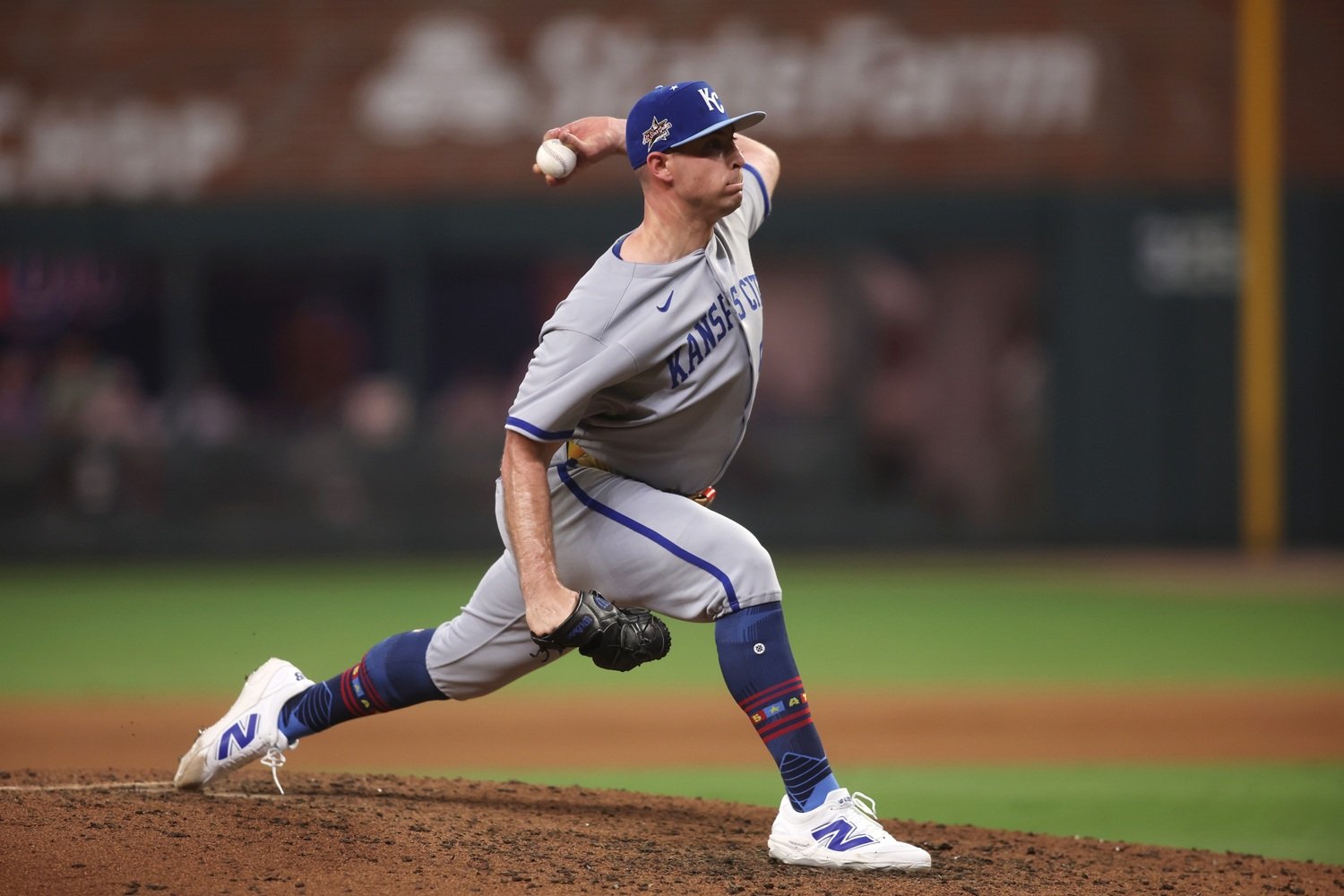
The Kansas City Royals currently live in the enviable position of having “excess” starting pitching. As you may have heard, though, “You can never have too much pitching”. The Royals certainly clung to this old adage during the 2018 MLB draft when they selected pitchers with their first five picks and eight of their first ten picks. Those first five picks were: Brady Singer, Right Handed Pitcher (RHP) - he was traded for Jonathan India in 2024 Jackson Kowar, RHP - now with the Mariners and dealing with injuries Daniel Lynch IV, LHP - he pitched 131 innings in 2022; now dealing with injuries and became a reliever Kris Bubic, LHP - pitched 130 innings in 2021 and 2022, went down with Tommy John Surgery in 2023, made a strong return in 2025 only to miss the second half with a rotator cuff strain Jonathan Bowlan, RHP - finally has pitched more than three innings in a year reaching 44.1 innings pitched as a reliever in 2025. All five have made contributions to the major league team, but not quite at the level anyone expected. Singer was meant to be the new number two in the rotation, but has not lived up to the hype acting as an innings eating number three or four guy. Kowar, Lynch, and Bubic have all dealt with a myriad of injuries in their time with the club while Bowlan took a little longer to debut. With Singer already traded away in an attempt to fill the hole at second base with Jonathan India, Lynch, and especially Bubic, have managed to generate enough results to garner interest on the trade market this off-season. Bubic has been the hot name given his 2.55 ERA and 1.18 WHIP over 116 innings pitched before going down with the rotator cuff injury. He’s in the last year of arbitration before free agency with an estimated salary of $4.5 million per Spotrac. The Royals have a major need for a corner outfielder and J.J. Piccolo has mentioned a willingness to trade from their current stock of starting pitching to fill this need akin to the Singer-India trade. The Royals were not terribly far from the playoffs in 2025 finishing 6 games back from the division-winning Cleveland Guardians and 5 games back from the second American League Wild Card spot. The big stain on the season was a horrific June when they went 8-18 losing 6 in a row twice and 8 of their last 9 that month. They also did not play well against Cleveland and Detroit, the top two teams, going 5-8 and 4-9 against them, respectively. This could suggest to some that they are not in as good of a position as they might think, but owner John Sherman is set to spend a similar amount on payroll this year in an effort to return to the postseason. If I’m JJ Piccolo, I’m looking to move Bubic. The Royals were dead last by Wins Above Average at both left and right field in 2025 with a -2.6 and -3.9, respectively, per Baseball Reference. Drew Waters and John Rave rotated between the two while they tried to get Jac Caglianone’s bat in the lineup via right field to spark the sputtering offense to little effect. Mike Yastremzski, who had the second most plate appearances in right field, is no longer with the team, so the Royals desperately need to make an addition here in the corner outfield. Projections for Bubic from Steamer and Fangraphs Depth Charts have him pitching 155 innings with 9 Wins, a 3.79 ERA, and rate of 8.56 strikeout/9 innings which is good for about 2.5 Wins Above Replacement. Trade Option 1 - St. Louis Cardinals: Royals Get: Lars Nootbaar, Left Field 2026 Steamer Projection: 444 PA - 52 R, 13 HR, 48 RBI, 6 SB .248 AVG/.345 OBP/.409 SLG; 1.7 WAR Cardinals Get: Kris Bubic, LHP and Angel Zerpa, LHP Bubic 2026 Steamer Projection: 155 IP - 9 Wins, 3.79 ERA, 1.29 WHIP, 148 SO; 2.5 WAR Zerpa 2026 Steamer Projection: 61 IP - 3 Wins, 3.60 ERA, 1.32 WHIP, 56 SO, 0.4 WAR Nootbaar has two years of control left, entering his second year of arbitration in 2026 with an estimated salary of $5.2M per Spotrac. Even though these two teams are intrastate rivals, they may be able to hold their nose for this deal as it is purely need-for-need as the Cardinals are desperate for starting pitching and the Royals need their corner outfield upgraded. Nootbaar had a noticeable down year in 2025 and dealt with an intercostal and rib injury that made him miss 18 games. This was likely bothering him before he officially went on the IL at the end of June as he had a batting average of .169 in June, .219 in July, then popped back up to.284 in August. His barrel percentage (how often the batter hits the ideal launch angle and exit velocity), exit velocity, and strikeout rate stayed consistent from 2024 but he hit balls in the air at a much higher rate getting under it 30.2 percent of the time compared to his career 23.9 percent rate and 19 percent rate in 2023 and 2024. Nootbaar still had an above average year for plate discipline and quality of contact overall, two things that the Royals strive for with their hitters. Notably he had a 11 percent walk rate (80th percentile of MLB) and a 50 percent hard-hit rate (87th percentile in MLB). He also strikes out 20 percent of the time, right around MLB average, and maintains an above average bat speed which leads to higher quality contact. Zerpa has been mostly a reliever with a couple of spot starts for the Royals as needed. He sports a sinker-slider combo to generate a 99th percentile ground ball rate of 63.7 percent. His fastball velocity sits at 96 MPH from the left side and is still only 26 years old. He won’t hit free agency until 2029. Trade Option 2 - Chicago Cubs: Royals Get: Owen Caissie, Left Field 2026 Steamer Projection: 269 PA - 31 R, 9 HR, 30 RBI, 3 SB .237 AVG/.315 OBP/.405 SLG; 0.5 WAR Jefferson Rojas, Second Base 2025 (High-A, AA): 471 PA - 67 R, 11 HR, 59 RBI, 19 SB .236 AVG/.343 OBP/.387 SLG Cubs Get: Bubic, LHP 2026 Steamer Projection: 155 IP - 9 Wins, 3.79 ERA, 1.29 WHIP, 148 SO; 2.5 WAR Blake Mitchell, Catcher 2025 (CPX and High-A): 255 PA - 28 R, 3 HR, 19 RBI, 12 SB .218 AVG/.390 OBP/.320 SLG Felix Arronde, RHP 2025 (High-A): 128.2 IP - 5 Wins, 2.80 ERA, 1.08 WHIP, 101 SO Caissie and Rojas are two of the Cubs’ top-5 prospects and fill two needs for the Royals at left field and second base. Now, Caissie is the only one ready to slide into the lineup on opening day in 2026 as Rojas will likely be major league ready in 2027, but Rojas is only 20 years old and has at least a 50 Future Value scouting grade - good for about 2 Wins Above Replacement much better than the negative WAR that Jonathan India and Michael Massey were able to provide. The Royals signed India to a one year contract for 2026 to fill the second base gap for at least one more year. Caissie is MLB Pipeline’s number 1 prospect for the Cubs with 30 homer power and producing well against older competition throughout his time in the minors. The 23-year old had a small part in 2025 in the majors only appearing in 12 games and striking out 40 percent of the time in 27 plate appearances, but there’s always an adjustment period. The great power comes from a long swing that does elevate his strikeout rate even clocking in close to 30 percent in the minors. His modest fielding will keep him in a corner outfield spot, right where the Royals need him. Rojas will be turning 21 next year and has spent most of his time at shortstop in the minors. As he adds strength, he will be more likely to shift over to second base, especially with Bobby Witt Jr. ahead of him and the Royals need for at least league average at the position. Scouts love his swing and will need to make some adjustments to breaking balls, as do all prospects. He doesn’t strike out a ton (a hallmark of Royals baseball) and will not be hitting lots of home runs, but all the Royals need him to do is get on base and play good defense. Blake Mitchell is the Royals top prospect aside from the soon to graduate in 2026, Carter Jensen. Drafted 8th overall out of high school in 2023, many Royals fans were shocked to see such a risk taken. A broken hamate sidelined him for a portion of the year, only playing in 60 games, but he showed his likely three-true outcome path in the majors hitting for low average and a high walk and strikeout rate. He has good power and a strong arm, but can struggle to throw runners out. With Salvador Perez and Jensen ahead of him, it’s time to trade from a position of strength. He should be knocking on the Cubs’ door in 2027. Arronde had a great year in High-A, improving on his total innings, Wins, and ERA from 2024. His arsenal includes a fastball that sits ~94mph, an average slider, and a great split-changeup. He’s still young and needs to add strength but has shown the durability for being a starter, likely to slot in at a number 3 or 4. If he doesn’t improve a ton on his slider, he’s a great closer candidate in a few years with that changeup. Teams always need starting pitching and there are several trade candidates out there for the Royals to pursue. If they choose not to go the trade route and hang on to their excess starting pitching, it could be a safer option to sign a cheaper free agent akin to Mike Yastremzski to hold the line one more year before giving a chance to Gavin Cross or Carson Roccaforte. The winter meetings are coming up soon, perhaps there is room for a deal or two. View full article
-
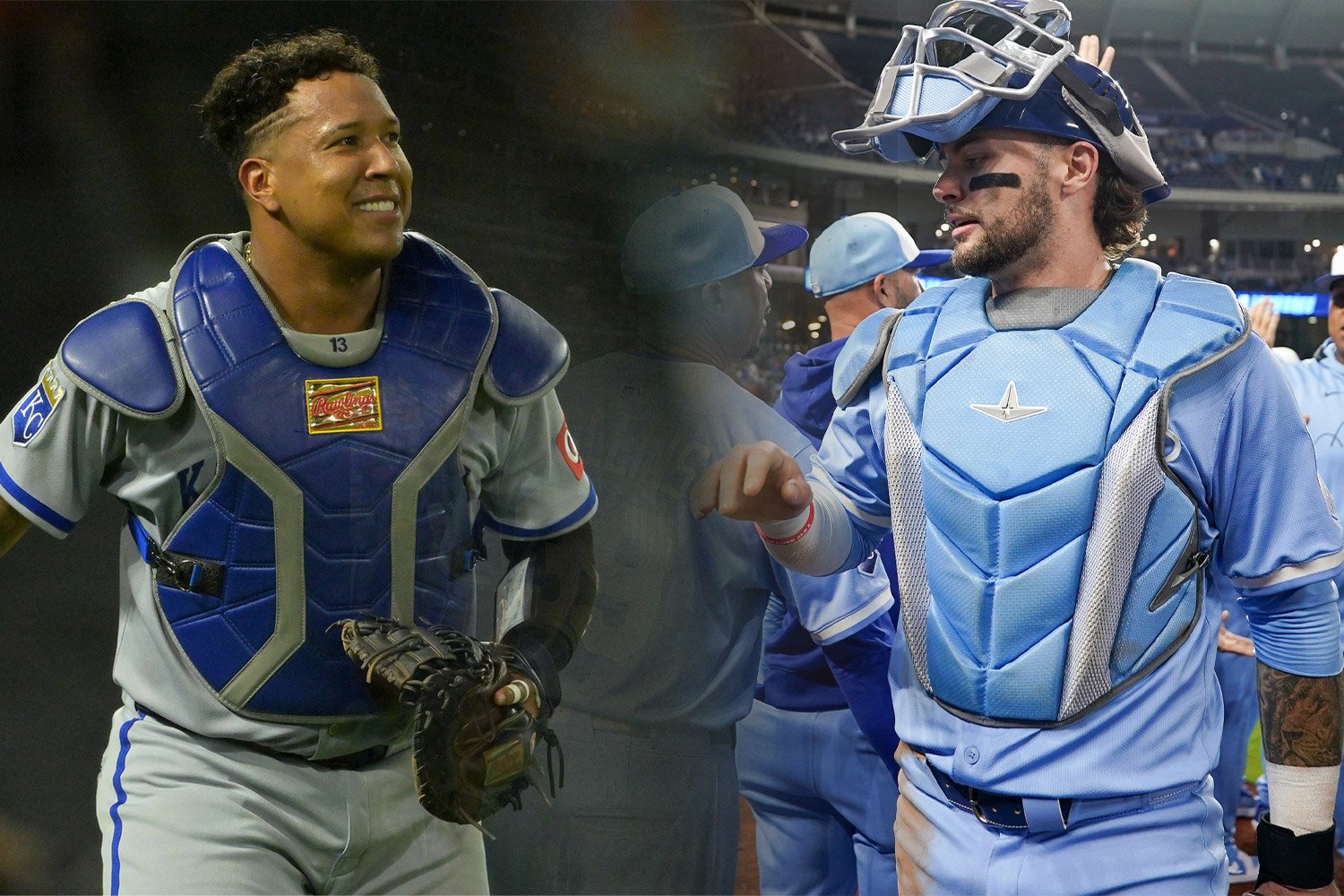 The automatic ball-strike challenge system (ABS) is coming to the major leagues in 2026 after being tested in the minor leagues for the last several years. That late-inning ball that should have been a strikeout to end the game, and the era of irate managers kicking dirt over home plate may be winding down. Davy Andrews of FanGraphs wrote a piece discussing some numbers on challenge rate, success rate, and more at the MLB level. The challenge rate has little player-by-player data available, so until the 2026 season begins in earnest, we are going to take a look at the stats we do have and see if it’s time for Salvador Perez to hand the reins over to the next generation. Perez is coming into his age-36 season and entering 2026 as one of the worst framers in baseball, per Baseball Savant’s framing value ranking, 49th out of 57 catchers in 2025 at -7 runs. His blocking is also at the bottom of the barrel per Savant’s blocking value ranking, second-to-last at -15 runs, with only Agustin Ramirez behind him, who is almost twice as bad. The shortened 2020 season and 2024 were the only years he had a positive framing run value, with his other years since 2018 not exceeding -6 runs. Carter Jensen, the only real competition for playing time behind the plate until 2023 1st-round pick Blake Mitchell, is ready. He doesn’t have the same sample size as Perez (225 pitches vs. 2,636), but he comes in at zero Catcher Runs, already above the league average of -1 run. Jensen’s blocking value (219 opportunities vs. Perez’s 3,365) came in at -1 runs, which ranks 75th out of 99 catchers that saw at least 100 pitches. Perez struggles to frame balls on his arm side of the plate; his biggest gap is shown in the shadow zone’s left and right portions of the zone, going from +3 runs on the left to -4 runs on the right. Jensen comes in right at zero runs for both. With the Royals projected to have three left-handed starters in 2026, it would make sense to use Perez on those days and Jensen with the right-handed starters, given each pitcher's pitch usage and arsenal, if we are maximizing shadow zone value. As a team, the Royals were first in the league in slider run value and third in changeup run value in 2025, but were 13th and 3rd in total usage, respectively. If the team chooses to increase the use of sliders across the board, that would provide another reason to maintain the Salvy-for-lefties and Jensen-for-righties setup. Part of framing’s value also comes from ensuring that strikes stay strikes, as Davy Andrews again mentions in this piece. This is where Perez shows a higher strike percentage, yet still has a lower run value of -2, versus Jensen’s zero runs. Jensen shows his advantage as you get further outside the zone compared to Perez: again, zero runs for Jensen vs -4 runs for Perez. This chart from Baseball Savant’s framing leaderboard shows the disparity of how far inside vs. outside the strike zone you are. Noticeably, Jensen’s called strike percent is only 68 percent on pitches 1-2 inches inside the zone, while Perez sits at 77 percent, both below league average at 79 percent. Jensen has the advantage in every way outside the zone pitches, so that he will steal more strikes than Perez, but we need strikes to be strikes. Armed with this data, I don’t expect the Royals to make a big change purely for framing or defensive reasons. It’s going to come from the fact that Perez is turning 36 and his offensive production is naturally declining. While he has stayed healthier the last two seasons, much of this can likely be attributed to the shift to first base and designated hitter to provide more rest and keep his bat in the lineup, even though he has been most productive as a catcher. wRC+ by position and year 2024 2025 C 124 (90 G) 107 (92 G) 1B 111 (47 G) 88 (28 G) DH 97 (23 G) 73 (38 G) Jensen is forcing his way into the lineup, given his offensive production and league-average defense at a minimum. Steamer is projecting him for 68 games, and the FanGraphs depth charts project him for 91 games. If he splits half of these at DH and half at catcher, it’ll provide ample opportunity to rest both Perez and Vinnie Pasquantino as the three cycle through catcher, first base, and designated hitter. With Perez signing a two-year extension, he’s not going anywhere just yet, but this will give Jensen a chance to learn from the captain before taking over full-time. Once Mitchell is deemed ready to join the majors, this puzzle gets a whole lot more complicated, but we will leave that for another time.
 -
Image courtesy of © Jayne Kamin-Oncea-Imagn Images / © Denny Medley-Imagn Images The automatic ball-strike challenge system (ABS) is coming to the major leagues in 2026 after being tested in the minor leagues for the last several years. That late-inning ball that should have been a strikeout to end the game, and the era of irate managers kicking dirt over home plate may be winding down. Davy Andrews of FanGraphs wrote a piece discussing some numbers on challenge rate, success rate, and more at the MLB level. The challenge rate has little player-by-player data available, so until the 2026 season begins in earnest, we are going to take a look at the stats we do have and see if it’s time for Salvador Perez to hand the reins over to the next generation. Perez is coming into his age-36 season and entering 2026 as one of the worst framers in baseball, per Baseball Savant’s framing value ranking, 49th out of 57 catchers in 2025 at -7 runs. His blocking is also at the bottom of the barrel per Savant’s blocking value ranking, second-to-last at -15 runs, with only Agustin Ramirez behind him, who is almost twice as bad. The shortened 2020 season and 2024 were the only years he had a positive framing run value, with his other years since 2018 not exceeding -6 runs. Carter Jensen, the only real competition for playing time behind the plate until 2023 1st-round pick Blake Mitchell, is ready. He doesn’t have the same sample size as Perez (225 pitches vs. 2,636), but he comes in at zero Catcher Runs, already above the league average of -1 run. Jensen’s blocking value (219 opportunities vs. Perez’s 3,365) came in at -1 runs, which ranks 75th out of 99 catchers that saw at least 100 pitches. Perez struggles to frame balls on his arm side of the plate; his biggest gap is shown in the shadow zone’s left and right portions of the zone, going from +3 runs on the left to -4 runs on the right. Jensen comes in right at zero runs for both. With the Royals projected to have three left-handed starters in 2026, it would make sense to use Perez on those days and Jensen with the right-handed starters, given each pitcher's pitch usage and arsenal, if we are maximizing shadow zone value. As a team, the Royals were first in the league in slider run value and third in changeup run value in 2025, but were 13th and 3rd in total usage, respectively. If the team chooses to increase the use of sliders across the board, that would provide another reason to maintain the Salvy-for-lefties and Jensen-for-righties setup. Part of framing’s value also comes from ensuring that strikes stay strikes, as Davy Andrews again mentions in this piece. This is where Perez shows a higher strike percentage, yet still has a lower run value of -2, versus Jensen’s zero runs. Jensen shows his advantage as you get further outside the zone compared to Perez: again, zero runs for Jensen vs -4 runs for Perez. This chart from Baseball Savant’s framing leaderboard shows the disparity of how far inside vs. outside the strike zone you are. Noticeably, Jensen’s called strike percent is only 68 percent on pitches 1-2 inches inside the zone, while Perez sits at 77 percent, both below league average at 79 percent. Jensen has the advantage in every way outside the zone pitches, so that he will steal more strikes than Perez, but we need strikes to be strikes. Armed with this data, I don’t expect the Royals to make a big change purely for framing or defensive reasons. It’s going to come from the fact that Perez is turning 36 and his offensive production is naturally declining. While he has stayed healthier the last two seasons, much of this can likely be attributed to the shift to first base and designated hitter to provide more rest and keep his bat in the lineup, even though he has been most productive as a catcher. wRC+ by position and year 2024 2025 C 124 (90 G) 107 (92 G) 1B 111 (47 G) 88 (28 G) DH 97 (23 G) 73 (38 G) Jensen is forcing his way into the lineup, given his offensive production and league-average defense at a minimum. Steamer is projecting him for 68 games, and the FanGraphs depth charts project him for 91 games. If he splits half of these at DH and half at catcher, it’ll provide ample opportunity to rest both Perez and Vinnie Pasquantino as the three cycle through catcher, first base, and designated hitter. With Perez signing a two-year extension, he’s not going anywhere just yet, but this will give Jensen a chance to learn from the captain before taking over full-time. Once Mitchell is deemed ready to join the majors, this puzzle gets a whole lot more complicated, but we will leave that for another time. View full article

