


Mick Ismert
-
Posts
6 -
Joined
-
Last visited
-
Days Won
2
2 Followers


Mick Ismert's Achievements


-

Why The Royals Shouldn’t Sign Harrison Bader To Fix Their Outfield Offense
Mick Ismert posted an article in Royals
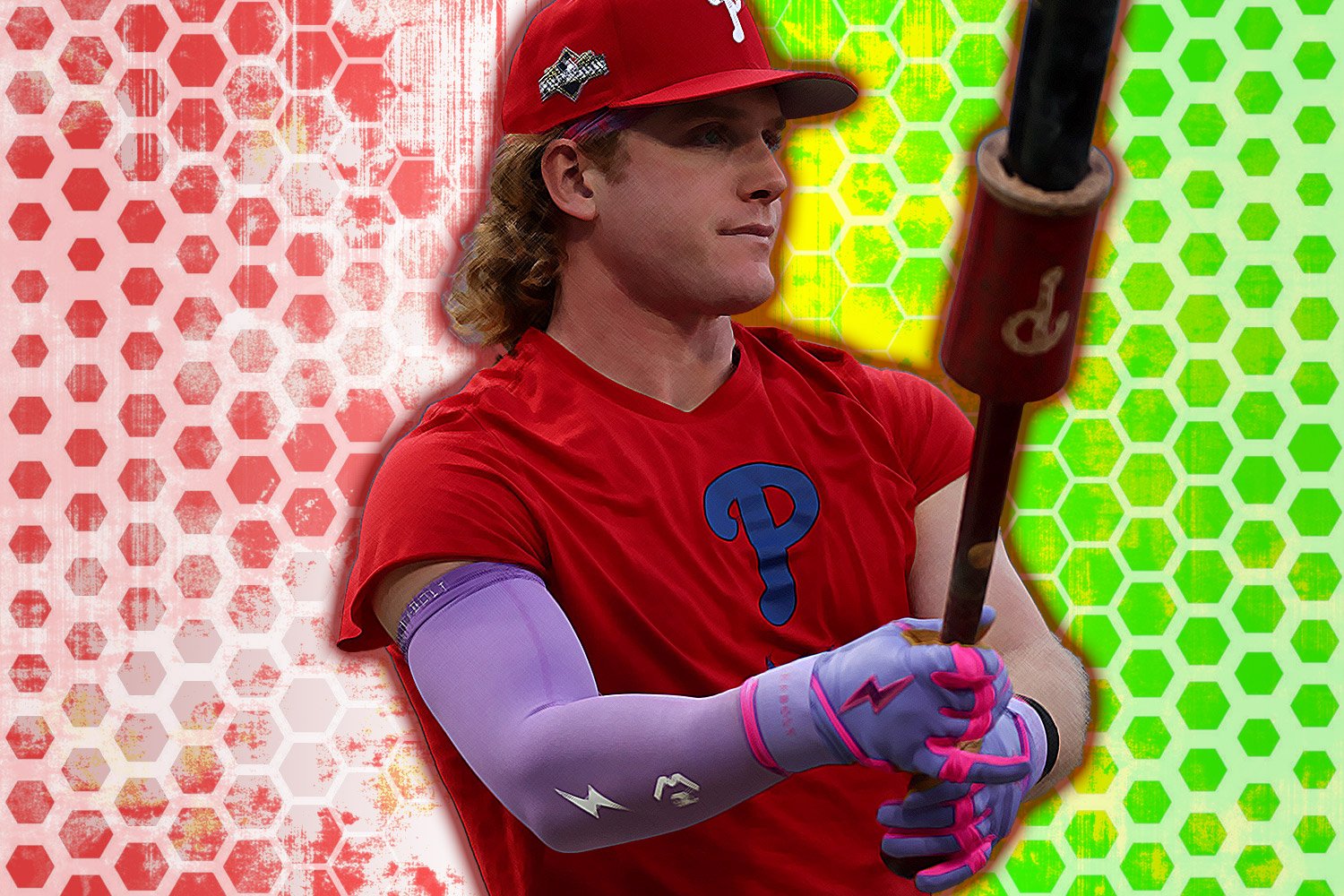 One thing most Royals fans should be accustomed to hearing about is budget restraint. And while John Sherman has shown some willingness to fork over cash to players, 2026 is already looking tight in the budget department. With current salary expectations and the assumption that the team will not increase payroll by more than a few million dollars, it can be projected that this winter the front office will have somewhere between $15 and $20 million to spend on free-agent acquisitions. For an MLB franchise and what players make in today’s game, that’s not a lot of dough. What this means is that, with what remains to spend, the signing must make sense both on the field and in the checkbook. A lot of this year's offseason for Kansas City has circled the team looking for help in the outfield, specifically an everyday left fielder. Harrison Bader is one name that has hit the stove, and while his 2025 campaign was one of his best, the underlying numbers suggest this may not be a gamble the Royals should take. Bader’s 2025 raw numbers look good; he had a .277 BA to go along with a .796 OPS while hitting 17 home runs and 54 RBI. His wRC+ was a respectable 122, and he had a 3.2 bWAR for the campaign. So what’s not to like? While this sort of performance would undoubtedly be an upgrade for the Royals' outfield, can the expectation be that Bader can repeat this in the upcoming season? The underlying metrics say not so fast. The first indicator to look at is Bader’s BABIP, or Batting Average on Balls In Play. This is sort of the catch-all for a player's “luck factor”. With 9 years and over 3,000 PAs under his belt, Bader has more than enough sample size to understand his normal range of production. His career BABIP is .305, which is right around league average, but his 2025 line shot up to .359. This is an immediate red flag for regression. Diving into the batted ball numbers, not much pops out as to what changed last season. His spray chart was consistent with his career averages; he wasn’t pulling the ball or sending it to the opposite field much more than usual. And his ground ball, line drives, and fly balls ratios were all in tune with what he typically hits. His FB% has come down over the last couple of seasons, which can be a positive for a player like Bader, as he has never been a slugger, but unfortunately, it hasn’t led to more line drives; instead, it has led to an increase in his groundball rate. Season GB/FB LD% GB% FB% Pull% Cent% Oppo% Soft% Med% Hard% 2017 1.13 16.40% 44.30% 39.30% 38.70% 37.10% 24.20% 17.70% 48.40% 33.90% 2018 1.19 26.80% 39.80% 33.50% 46.50% 29.60% 23.80% 21.50% 40.80% 37.70% 2019 0.87 17.40% 38.40% 44.20% 42.10% 37.30% 20.60% 16.30% 45.90% 37.80% 2020 0.93 15.20% 40.90% 43.90% 41.80% 32.80% 25.40% 23.90% 40.30% 35.80% 2021 1.04 15.80% 43.00% 41.20% 44.40% 32.40% 23.20% 21.50% 47.90% 30.60% 2022 0.92 16.40% 40.10% 43.50% 39.70% 41.80% 18.50% 24.10% 50.40% 25.40% 2023 0.78 16.70% 36.50% 46.80% 42.60% 34.00% 23.40% 20.40% 50.20% 29.40% 2024 1.19 21.10% 42.80% 36.10% 47.00% 36.40% 16.60% 19.20% 54.30% 26.50% 2025 1.25 17.80% 45.70% 36.50% 45.70% 34.30% 20.00% 21.60% 45.40% 33.00% Career 1.03 18.70% 41.30% 40.10% 44.00% 35.00% 21.10% 20.70% 47.70% 31.60% His exit velocity for 2025 sat at 87.2mph, again near his career 86.5, so no real extra juice when making contact other than a slight increase in bat speed which jumped from 70.8 and 71.2 in 2023 and 2024 (the first two years this stat was tracked via Baseball Savant) to 73.5 this past season. Other than his increase in bat speed, his advanced batting numbers from his past three seasons don’t look all that different. Looking above at his advanced metrics the past three seasons via Baseball Savant, only two things stick out for 2025 improvements: his bat speed and barrel rate. Both jumped up from significantly below to respectfully above league average. For a young player these could be signs of progress, but for a player like Bader who will be turning 32 in this upcoming season, it shows a more likely culprit; an outlier season. His xBA, xSLG, and xwOBA all stayed relatively within his average range, but as mentioned earlier both his raw stats and BABIP took very noticeable jumps. These numbers combined with no strong evidence of an approach change at the plate through his batted ball numbers show 2025 was a good but generally lucky year with no real indications of sustainability. Simply, Bader is a career .247/.313/.401 hitter with a 96 wRC+; the odds would favor him playing closer to these numbers next season versus replicating his 2025 output. This isn’t written as a hit piece on Harrison Bader, he’s a productive player with good defense posting +13 DRS (Defensive Runs Saved) this last season. But the point is if he is worth the price tag if you are paying a premium for a season that could be hard to repeat. For a team like the Royals with very limited cash to spend, the answer should lean no. Last month, ESPN’s Kiley McDaniel wrote their projections for the top 50 free agents contract numbers and Harrison Bader’s price tag is estimated to be in the two-year, $25 million range. A contract that could eat up a sizeable portion of the Royals funds with the risk of not improving the team at a much needed position.
 -
One thing most Royals fans should be accustomed to hearing about is budget restraint. And while John Sherman has shown some willingness to fork over cash to players, 2026 is already looking tight in the budget department. With current salary expectations and the assumption that the team will not increase payroll by more than a few million dollars, it can be projected that this winter the front office will have somewhere between $15 and $20 million to spend on free-agent acquisitions. For an MLB franchise and what players make in today’s game, that’s not a lot of dough. What this means is that, with what remains to spend, the signing must make sense both on the field and in the checkbook. A lot of this year's offseason for Kansas City has circled the team looking for help in the outfield, specifically an everyday left fielder. Harrison Bader is one name that has hit the stove, and while his 2025 campaign was one of his best, the underlying numbers suggest this may not be a gamble the Royals should take. Bader’s 2025 raw numbers look good; he had a .277 BA to go along with a .796 OPS while hitting 17 home runs and 54 RBI. His wRC+ was a respectable 122, and he had a 3.2 bWAR for the campaign. So what’s not to like? While this sort of performance would undoubtedly be an upgrade for the Royals' outfield, can the expectation be that Bader can repeat this in the upcoming season? The underlying metrics say not so fast. The first indicator to look at is Bader’s BABIP, or Batting Average on Balls In Play. This is sort of the catch-all for a player's “luck factor”. With 9 years and over 3,000 PAs under his belt, Bader has more than enough sample size to understand his normal range of production. His career BABIP is .305, which is right around league average, but his 2025 line shot up to .359. This is an immediate red flag for regression. Diving into the batted ball numbers, not much pops out as to what changed last season. His spray chart was consistent with his career averages; he wasn’t pulling the ball or sending it to the opposite field much more than usual. And his ground ball, line drives, and fly balls ratios were all in tune with what he typically hits. His FB% has come down over the last couple of seasons, which can be a positive for a player like Bader, as he has never been a slugger, but unfortunately, it hasn’t led to more line drives; instead, it has led to an increase in his groundball rate. Season GB/FB LD% GB% FB% Pull% Cent% Oppo% Soft% Med% Hard% 2017 1.13 16.40% 44.30% 39.30% 38.70% 37.10% 24.20% 17.70% 48.40% 33.90% 2018 1.19 26.80% 39.80% 33.50% 46.50% 29.60% 23.80% 21.50% 40.80% 37.70% 2019 0.87 17.40% 38.40% 44.20% 42.10% 37.30% 20.60% 16.30% 45.90% 37.80% 2020 0.93 15.20% 40.90% 43.90% 41.80% 32.80% 25.40% 23.90% 40.30% 35.80% 2021 1.04 15.80% 43.00% 41.20% 44.40% 32.40% 23.20% 21.50% 47.90% 30.60% 2022 0.92 16.40% 40.10% 43.50% 39.70% 41.80% 18.50% 24.10% 50.40% 25.40% 2023 0.78 16.70% 36.50% 46.80% 42.60% 34.00% 23.40% 20.40% 50.20% 29.40% 2024 1.19 21.10% 42.80% 36.10% 47.00% 36.40% 16.60% 19.20% 54.30% 26.50% 2025 1.25 17.80% 45.70% 36.50% 45.70% 34.30% 20.00% 21.60% 45.40% 33.00% Career 1.03 18.70% 41.30% 40.10% 44.00% 35.00% 21.10% 20.70% 47.70% 31.60% His exit velocity for 2025 sat at 87.2mph, again near his career 86.5, so no real extra juice when making contact other than a slight increase in bat speed which jumped from 70.8 and 71.2 in 2023 and 2024 (the first two years this stat was tracked via Baseball Savant) to 73.5 this past season. Other than his increase in bat speed, his advanced batting numbers from his past three seasons don’t look all that different. Looking above at his advanced metrics the past three seasons via Baseball Savant, only two things stick out for 2025 improvements: his bat speed and barrel rate. Both jumped up from significantly below to respectfully above league average. For a young player these could be signs of progress, but for a player like Bader who will be turning 32 in this upcoming season, it shows a more likely culprit; an outlier season. His xBA, xSLG, and xwOBA all stayed relatively within his average range, but as mentioned earlier both his raw stats and BABIP took very noticeable jumps. These numbers combined with no strong evidence of an approach change at the plate through his batted ball numbers show 2025 was a good but generally lucky year with no real indications of sustainability. Simply, Bader is a career .247/.313/.401 hitter with a 96 wRC+; the odds would favor him playing closer to these numbers next season versus replicating his 2025 output. This isn’t written as a hit piece on Harrison Bader, he’s a productive player with good defense posting +13 DRS (Defensive Runs Saved) this last season. But the point is if he is worth the price tag if you are paying a premium for a season that could be hard to repeat. For a team like the Royals with very limited cash to spend, the answer should lean no. Last month, ESPN’s Kiley McDaniel wrote their projections for the top 50 free agents contract numbers and Harrison Bader’s price tag is estimated to be in the two-year, $25 million range. A contract that could eat up a sizeable portion of the Royals funds with the risk of not improving the team at a much needed position. View full article
-
 Thanksgiving is here, and in between your second and third plates of turkey, mashed potatoes, and stuffing, it’s good to look back on the year and your life to find what you are thankful for. This can be family, friends, or a new job, perhaps. So here are five things Royals fans can be thankful for before falling into their tryptophan coma. 1. Bobby Witt Jr. Not since the days of George Brett have the Royals had a bona fide superstar to cheer for. Fresh off another 8+ bWAR season, Witt also added some hardware to his collection with his first Platinum Glove Award and second Silver Slugger. Witt finished 2025 in fourth place in MVP voting, following up his 2024 campaign in which he came in second; this marked the first time since the 1984 and 1985 seasons that the Kansas City Royals had back-to-back years with a player cracking the Top 5 with Dan Quisenberry (third place), and George Brett (second place), respectively. Having a perennial MVP-caliber player is more than just something to be thankful for; it’s something to be excited about as fans. 2. The Defense For all of the Royals' offensive woes that might have occurred this past year. One thing they can really be thankful for is elite defense from some of the most crucial positions. The left side of the diamond was anchored by two Gold Glove recipients, with Maikel Garcia having a career year at third base, both at the dish and on the field, and Bobby Witt Jr. getting his second consecutive Gold Glove and his first Platinum Glove. As a team, the Royals ranked eighth in the majors in Defensive Runs Saved. Elite defense can carry a team deep into October, as fans may recall from the 2014 and 2015 postseason runs. 3. Starting Pitching If the Royals have 99 problems, starting pitching isn’t one of them. Noah Cameron deserves a quick mention as the 26-year-old rookie out of St. Joseph, MO, made splashes in his first year with the team, posting a 2.99 ERA in 138 innings. Not making his debut, but certainly his breakout, Kris Bubic showed the big leagues his potential. Before getting shut down for the rest of the season in late July with a rotator cuff strain, Bubic was absolutely dealing, posting a 2.55 ERA with a 9:3 strikeout to walk ratio en route to his first All-Star Game appearance. Barring any trades (the rumor mill is swirling), The Royals will be coming into the 2026 season with a lot of depth on the mound. 4. An Invested Ownership Group Regardless of where a fan may stand with the ever so talked about and controversial New Royals Ballpark conversation, one thing most can agree on is the effort put forth by the ownership group led by John Sherman. Since purchasing the team from David Glass in late 2019, Sherman has made substantial efforts to improve the on field product. The Royals of old were once mocked as a “major league farm team” for their lack of never signing their top talent to long term deals. John Sherman quickly flipped that script when he signed Bobby Witt Jr. to a whopping 11 year, $288 million deal. Whether it is savvy trades bringing in guys such as Cole Ragans, or free agent signings like those of Seth Lugo or Michael Wacha, it’s clear that this ownership group wants to win and put a competitive team on the field year in and year out. 5. Our “Kauffman Era” Apologies for the Taylor Swift pun. Back to the stadium conversation, nothing is concrete yet but one thing seems like a forgone conclusion and that is that the Kansas City Royals' days of playing at Kauffman Stadium are numbered. Luckily there is still time to enjoy it as the move will take several years, making this a great time to really reflect and be thankful for such a beautiful and awesome ballpark this team has called home since 1973. From the world renown fountains in the outfield, to the massive crown that sits atop the scoreboard, it truly is a sight for sore eyes. Kauffman has been the stage for so many cherished moments in Royals history; Bret Saberhagen's complete game shutout in Game 7 of the 1985 World Series, the 2014 Wild Card miracle, Bo Jackson launching a ball 475 feet into the center field lawn for his first career homer, the list goes on and on. Speaking personally, some of my fondest memories as a kid were coming to baseball games and watching the Boys in Blue play at “The K”. Truly one of the best experiences in all of baseball.
 -
Thanksgiving is here, and in between your second and third plates of turkey, mashed potatoes, and stuffing, it’s good to look back on the year and your life to find what you are thankful for. This can be family, friends, or a new job, perhaps. So here are five things Royals fans can be thankful for before falling into their tryptophan coma. 1. Bobby Witt Jr. Not since the days of George Brett have the Royals had a bona fide superstar to cheer for. Fresh off another 8+ bWAR season, Witt also added some hardware to his collection with his first Platinum Glove Award and second Silver Slugger. Witt finished 2025 in fourth place in MVP voting, following up his 2024 campaign in which he came in second; this marked the first time since the 1984 and 1985 seasons that the Kansas City Royals had back-to-back years with a player cracking the Top 5 with Dan Quisenberry (third place), and George Brett (second place), respectively. Having a perennial MVP-caliber player is more than just something to be thankful for; it’s something to be excited about as fans. 2. The Defense For all of the Royals' offensive woes that might have occurred this past year. One thing they can really be thankful for is elite defense from some of the most crucial positions. The left side of the diamond was anchored by two Gold Glove recipients, with Maikel Garcia having a career year at third base, both at the dish and on the field, and Bobby Witt Jr. getting his second consecutive Gold Glove and his first Platinum Glove. As a team, the Royals ranked eighth in the majors in Defensive Runs Saved. Elite defense can carry a team deep into October, as fans may recall from the 2014 and 2015 postseason runs. 3. Starting Pitching If the Royals have 99 problems, starting pitching isn’t one of them. Noah Cameron deserves a quick mention as the 26-year-old rookie out of St. Joseph, MO, made splashes in his first year with the team, posting a 2.99 ERA in 138 innings. Not making his debut, but certainly his breakout, Kris Bubic showed the big leagues his potential. Before getting shut down for the rest of the season in late July with a rotator cuff strain, Bubic was absolutely dealing, posting a 2.55 ERA with a 9:3 strikeout to walk ratio en route to his first All-Star Game appearance. Barring any trades (the rumor mill is swirling), The Royals will be coming into the 2026 season with a lot of depth on the mound. 4. An Invested Ownership Group Regardless of where a fan may stand with the ever so talked about and controversial New Royals Ballpark conversation, one thing most can agree on is the effort put forth by the ownership group led by John Sherman. Since purchasing the team from David Glass in late 2019, Sherman has made substantial efforts to improve the on field product. The Royals of old were once mocked as a “major league farm team” for their lack of never signing their top talent to long term deals. John Sherman quickly flipped that script when he signed Bobby Witt Jr. to a whopping 11 year, $288 million deal. Whether it is savvy trades bringing in guys such as Cole Ragans, or free agent signings like those of Seth Lugo or Michael Wacha, it’s clear that this ownership group wants to win and put a competitive team on the field year in and year out. 5. Our “Kauffman Era” Apologies for the Taylor Swift pun. Back to the stadium conversation, nothing is concrete yet but one thing seems like a forgone conclusion and that is that the Kansas City Royals' days of playing at Kauffman Stadium are numbered. Luckily there is still time to enjoy it as the move will take several years, making this a great time to really reflect and be thankful for such a beautiful and awesome ballpark this team has called home since 1973. From the world renown fountains in the outfield, to the massive crown that sits atop the scoreboard, it truly is a sight for sore eyes. Kauffman has been the stage for so many cherished moments in Royals history; Bret Saberhagen's complete game shutout in Game 7 of the 1985 World Series, the 2014 Wild Card miracle, Bo Jackson launching a ball 475 feet into the center field lawn for his first career homer, the list goes on and on. Speaking personally, some of my fondest memories as a kid were coming to baseball games and watching the Boys in Blue play at “The K”. Truly one of the best experiences in all of baseball. View full article
- 1 reply
-
- 1
-

-
Mick Ismert changed their profile photo
-
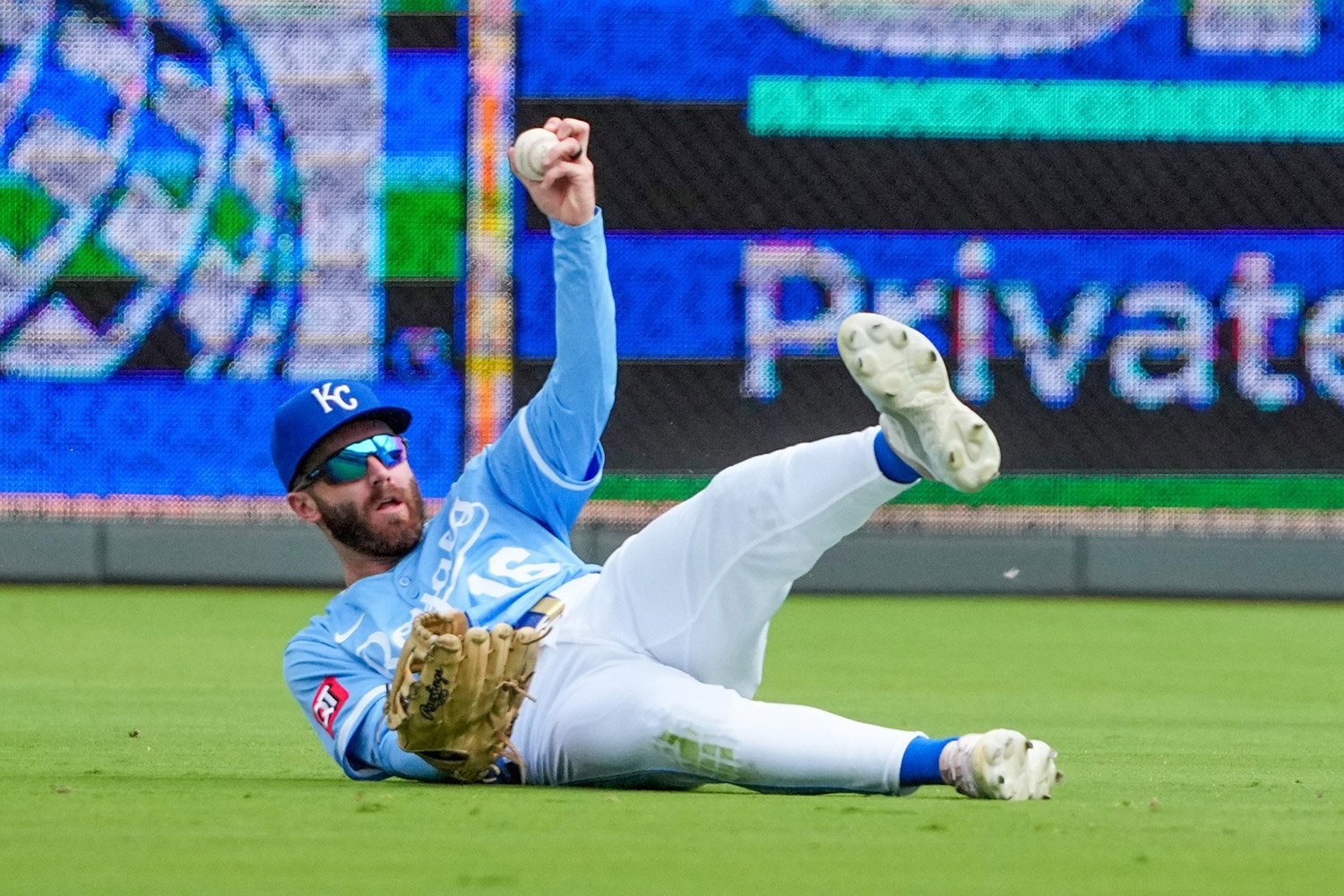 The Royals' 2025 season did not go exactly as planned. After a 2024 season full of excitement, most hoped the team would continue to build on that momentum and come into 2025 fighting for a playoff spot. While they did finish with a winning record (take the W’s where you can, folks), there was a lot left to be desired. One position that went as planned was the corner outfield spots. Coming into the year, the front office made no major moves to address the corners on the grass, and it showed. We started 2025 trotting out MJ Melendez in left field and Hunter Renfroe in right field, and by the time June rolled around, neither player was on the Royals' 26-man roster. Renfroe was DFA’d, and MJ was sent down to Omaha (with a one-week call-up late July). There was some optimism that Kansas City could find solutions internally, with talks about the newly acquired Jonathan India moving to left at least part-time, but that did not solve any problems, as India had his statistically worst season in his major league career and never quite got comfortable in the outfield. By the end of the season, the Royals were dead last in basically any metric available on both the left and right sides of the outfield. If 2026 is to be a competitive one, it’s clear that the outfield must be addressed. Let’s now take a look at where the Royals stand in 2026 for their corner outfielders. Left Field Starter: John Rave (.196/.283/.307, 18 runs, 4 home runs, 14 RBIs, .590 OPS, and 65 wRC+) There really is no answer to who the starter is for left field, so we will just take this rundown in the order of games played in the position. Rave made his major league debut this year for the Royals at 27 years old and played 208 innings in left and 70 total games at both corner spots. The 2019 5th-round draft pick showed flashes during his stint in Kansas City. While initially struggling at the plate in the first half of the season, Rave came out of the All-Star break with some pop, hitting three home runs in the first five games post-break. He cooled relatively quickly, however, and was sent back down to Triple-A at the end of August, but was brought back up the last couple of weeks of September, where he finished the season and collected just three hits in 19 plate appearances. Rave will certainly get some more time at Kauffman, at least next season, but it’s clear he is not the long-term answer at this time. Depth: Nick Loftin (.208/.278/.357, 17 runs, 4 home runs, 20 RBIs, .635 OPS, and 73 wRC+) Loftin got his first cup of coffee in 2023 and has thus far logged 143 games and 427 plate appearances. His career OPS is .617 with a 72 wRC+, and while he offers utility by being able to play first, second, third, and left field, he still isn’t much of a net positive, providing only 0.2 fWAR in his career, including 0.1 this year. Left field seems to be his worst position defensively, posting a -2 DRS this past season, where he logged 208 innings over 38 games. He walks at a below-average clip of 8.7% and strikes out a respectable 14.8%. It was clear this year he was another guinea pig in the left field laboratory from the front office, after logging only nine total innings in his first two seasons with the team. He is probably better suited as depth for the infield at this point. More “Depth”: Dairon Blanco It’s getting grim out here, folks. Blanco did not spend much time with the Royals this year, getting just one hit in eight plate appearances. He’s got speed going for him, which always leaves the possibility for pinch running, but there isn’t much to be said when it comes to his left field prospects. Right Field Starter: Jac Caglianone (.157/.237/.295, 19 runs, 7 home runs, 18 RBIs, .532 OPS, and 46 wRC+) While Caglianone’s highly anticipated first season was a disappointment, there is still plenty of room for optimism when evaluating him long-term. After scorching the minor leagues in a short amount of time, he was called up in June and struggled mightily in his first professional season. No expectations were coming into the year that Caglianone would get the call from Kansas City, but due to such abysmal production from the outfield, the front office decided to make the move after just a few short months of professional baseball from the Florida prospect. It shouldn’t be a surprise for a true rookie to struggle during his first cup of coffee, but I don’t think anyone expected this kind of struggle. He struck out at a 22% clip and only walked 18 times in 232 plate appearances (7.8%). To be quite frank, there wasn’t a lot to look at to find positives. As a power bat, you need to be able to punish the fastball. He collected three extra base hits and hit at just a .167 rate against the four-seamer. And his fielding as a right fielder was nothing spectacular and perhaps just flat out bad, as seen by his -4 DRS (Defensive Runs Saved). What optimism we can hold onto is this isn’t the first time a highly touted rookie has a poor debut, there is still plenty of time and adjustments that can be made for him to come into 2026 with a fresh outlook and put together a solid year, what remains to be seen is if that will happen with a minor league club or in Kansas City. Depth- Kameron Misner (.213/.273/.345, 27 runs, 5 home runs, 22 RBIs, .618 OPS, and 71 wRC+) The Royals started early November with a trade for the Tampa Bay prospect. Misner, who will turn 28 before spring training, is a plus defender with good speed both in the field and on the base paths. It’s unclear whether he was brought in as depth in center field or right field, but he has shown he can be a defensive asset in either position. He should be considered a project, but could provide value in an area where the team needs it most.
-
- 1
-

-
- john rave
- nick loftin
- (and 3 more)
-
Image courtesy of © Denny Medley-Imagn Images The Royals' 2025 season did not go exactly as planned. After a 2024 season full of excitement, most hoped the team would continue to build on that momentum and come into 2025 fighting for a playoff spot. While they did finish with a winning record (take the W’s where you can, folks), there was a lot left to be desired. One position that went as planned was the corner outfield spots. Coming into the year, the front office made no major moves to address the corners on the grass, and it showed. We started 2025 trotting out MJ Melendez in left field and Hunter Renfroe in right field, and by the time June rolled around, neither player was on the Royals' 26-man roster. Renfroe was DFA’d, and MJ was sent down to Omaha (with a one-week call-up late July). There was some optimism that Kansas City could find solutions internally, with talks about the newly acquired Jonathan India moving to left at least part-time, but that did not solve any problems, as India had his statistically worst season in his major league career and never quite got comfortable in the outfield. By the end of the season, the Royals were dead last in basically any metric available on both the left and right sides of the outfield. If 2026 is to be a competitive one, it’s clear that the outfield must be addressed. Let’s now take a look at where the Royals stand in 2026 for their corner outfielders. Left Field Starter: John Rave (.196/.283/.307, 18 runs, 4 home runs, 14 RBIs, .590 OPS, and 65 wRC+) There really is no answer to who the starter is for left field, so we will just take this rundown in the order of games played in the position. Rave made his major league debut this year for the Royals at 27 years old and played 208 innings in left and 70 total games at both corner spots. The 2019 5th-round draft pick showed flashes during his stint in Kansas City. While initially struggling at the plate in the first half of the season, Rave came out of the All-Star break with some pop, hitting three home runs in the first five games post-break. He cooled relatively quickly, however, and was sent back down to Triple-A at the end of August, but was brought back up the last couple of weeks of September, where he finished the season and collected just three hits in 19 plate appearances. Rave will certainly get some more time at Kauffman, at least next season, but it’s clear he is not the long-term answer at this time. Depth: Nick Loftin (.208/.278/.357, 17 runs, 4 home runs, 20 RBIs, .635 OPS, and 73 wRC+) Loftin got his first cup of coffee in 2023 and has thus far logged 143 games and 427 plate appearances. His career OPS is .617 with a 72 wRC+, and while he offers utility by being able to play first, second, third, and left field, he still isn’t much of a net positive, providing only 0.2 fWAR in his career, including 0.1 this year. Left field seems to be his worst position defensively, posting a -2 DRS this past season, where he logged 208 innings over 38 games. He walks at a below-average clip of 8.7% and strikes out a respectable 14.8%. It was clear this year he was another guinea pig in the left field laboratory from the front office, after logging only nine total innings in his first two seasons with the team. He is probably better suited as depth for the infield at this point. More “Depth”: Dairon Blanco It’s getting grim out here, folks. Blanco did not spend much time with the Royals this year, getting just one hit in eight plate appearances. He’s got speed going for him, which always leaves the possibility for pinch running, but there isn’t much to be said when it comes to his left field prospects. Right Field Starter: Jac Caglianone (.157/.237/.295, 19 runs, 7 home runs, 18 RBIs, .532 OPS, and 46 wRC+) While Caglianone’s highly anticipated first season was a disappointment, there is still plenty of room for optimism when evaluating him long-term. After scorching the minor leagues in a short amount of time, he was called up in June and struggled mightily in his first professional season. No expectations were coming into the year that Caglianone would get the call from Kansas City, but due to such abysmal production from the outfield, the front office decided to make the move after just a few short months of professional baseball from the Florida prospect. It shouldn’t be a surprise for a true rookie to struggle during his first cup of coffee, but I don’t think anyone expected this kind of struggle. He struck out at a 22% clip and only walked 18 times in 232 plate appearances (7.8%). To be quite frank, there wasn’t a lot to look at to find positives. As a power bat, you need to be able to punish the fastball. He collected three extra base hits and hit at just a .167 rate against the four-seamer. And his fielding as a right fielder was nothing spectacular and perhaps just flat out bad, as seen by his -4 DRS (Defensive Runs Saved). What optimism we can hold onto is this isn’t the first time a highly touted rookie has a poor debut, there is still plenty of time and adjustments that can be made for him to come into 2026 with a fresh outlook and put together a solid year, what remains to be seen is if that will happen with a minor league club or in Kansas City. Depth- Kameron Misner (.213/.273/.345, 27 runs, 5 home runs, 22 RBIs, .618 OPS, and 71 wRC+) The Royals started early November with a trade for the Tampa Bay prospect. Misner, who will turn 28 before spring training, is a plus defender with good speed both in the field and on the base paths. It’s unclear whether he was brought in as depth in center field or right field, but he has shown he can be a defensive asset in either position. He should be considered a project, but could provide value in an area where the team needs it most. View full article


