


Darin Watson
-
Posts
9 -
Joined
-
Last visited
-
Days Won
1
Content Type
Profiles
Forums
Blogs
Events
News
2026 Kansas City Royals Top Prospects Ranking
Kansas City Royals Videos
Kansas City Royals Free Agent & Trade Rumors, Notes, & Tidbits
Guides & Resources
The Kansas City Royals Players Project
2025 Kansas City Royals Draft Pick Tracker
Store
Downloads
Gallery
Posts posted by Darin Watson
-
-
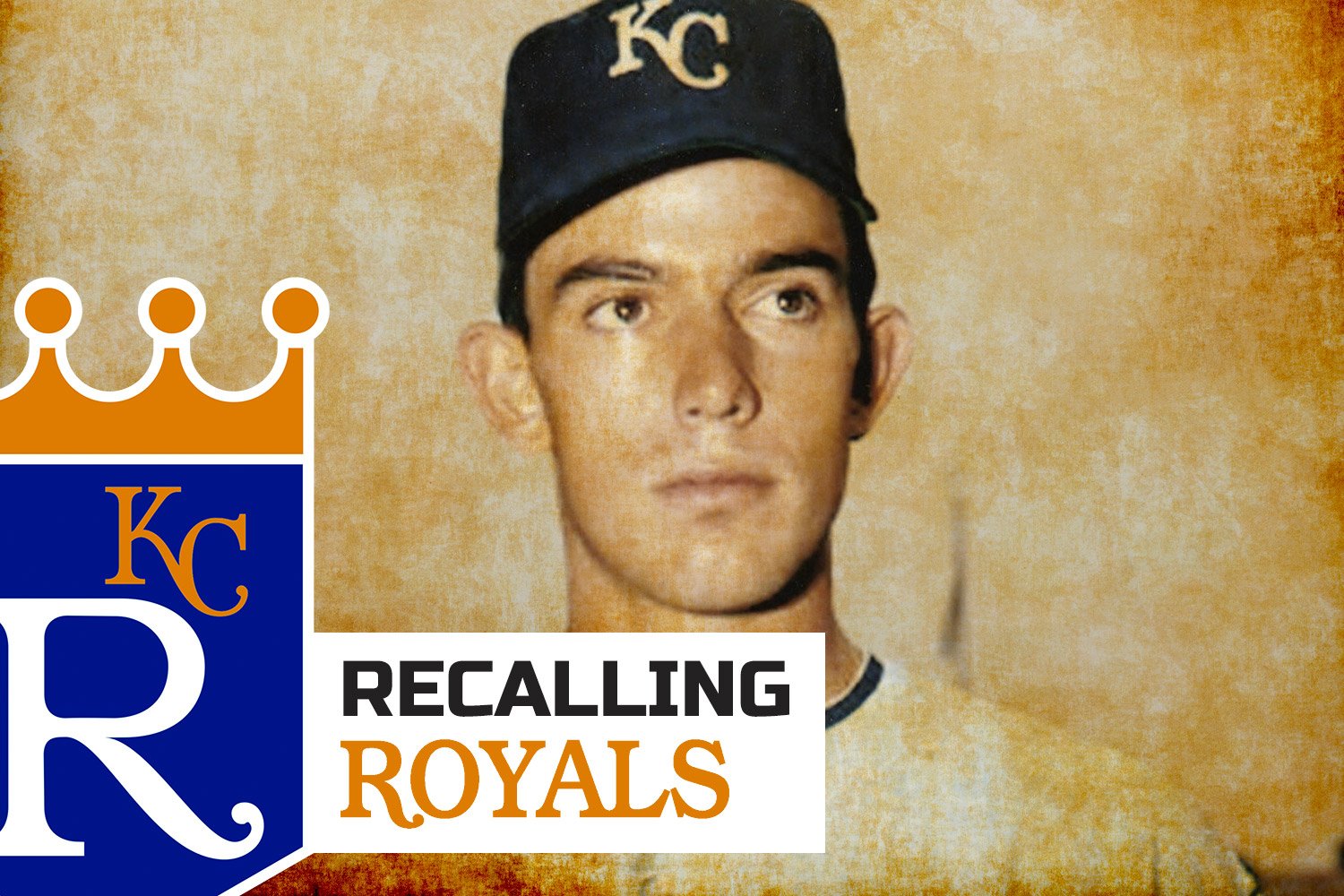
With his recent retirement from broadcasting, it seems like a good time to look back at the career of Buck Martinez.
Martinez will likely be remembered as a Blue Jay by most baseball fans due to his long association with the franchise. He played for Toronto from 1981-1986, then worked as a broadcaster for the team in stints from 1987-2000 and 2010-2025. He even managed the Blue Jays in 2001 and 2002.
But Martinez was a Royal for many years. And he’s an original Royal, part of the expansion 1969 squad. Although he never played more than 95 games in a season in Kansas City, he was a part of the team’s growth from an expansion team to a division winner.
John Albert Martinez was born on November 7, 1948, in Redding, California. His paternal grandparents emigrated from Spain, while his mother was part of the Karuk Tribe of northern California. Martinez was playing amateur baseball in Sacramento when future Royals manager Joe Gordon, then scouting for the California Angels, noticed him. Gordon recommended the Angels sign him, but Philadelphia beat them to the punch. However, the Houston Astros selected Martinez in the Rule 5 draft in 1968. Two weeks later, they sent him to the Royals (with two minor leaguers) in return for minor league catcher Johnny Jones. Gordon, set to manage the initial Royals team, had his man. It was a small example of the shrewd trades the Kansas City front office, headed by GM Cedric Tallis, made in the team’s early days, as Jones never made it past A-ball.
Martinez was finishing his junior year at Sacramento State College and didn’t even join the Royals for spring training, but joined the major league team soon after his school year was over. He made his MLB debut on June 18, 1969, with a flyout as a pinch hitter. Less than two weeks later, on June 28, he made his first start behind the plate. It was a game to remember, as he hit his first major league home run, picked off a runner at second, and tagged out two runners at home, one of them a collision with Minnesota’s Bob Allison. All of this on a hot, humid Saturday afternoon that was brutal enough to send Twins third baseman Rick Renick to the hospital with heat exhaustion.
Martinez ended the year with a .229/.258/.327 line in 214 plate appearances. Not too shabby for a rookie who didn’t even have spring training. He had impressed the team with his defense.
But Martinez would barely get to play in 1970. He was optioned to Triple-A Omaha during spring training, as Ellie Rodriguez won the starting job and the team wanted Martinez to catch every day. But then Buck was called up… to active military duty. The Army stint lasted until early August. Martinez played in just six games for the Royals that year, then headed to Florida for Instructional League play and then on to Puerto Rico for winter ball, where he played for Frank Robinson on the Santurce club.
Martinez reported to spring training in 1971 with his eyes on the starting job, although the Royals had acquired Jerry May from Pittsburgh in the same trade that brought Freddie Patek to Kansas City. Martinez did indeed make the Opening Day roster and even got the nod for the opener, as the Royals were facing a left-hander. But Martinez was soon returned to the minors because the Royals wanted him to play every day. He bounced back and forth between Kansas City and Triple-A Omaha, ending the year with 53 plate appearances for the Royals and a .152/.231/.196 mark. At least he made the American Association all-star team for Omaha.
That obviously took some of the shine off his status as a prospect. Martinez spent the entire 1972 season in Omaha. Perhaps fighting off disappointment, he hit just .174/.299/.282 before a foul tip broke a bone in his right hand in mid-July. While Buck’s arm and defense had never been in question, his bat definitely was a concern.
When Martinez was optioned to Omaha again at the end of spring training in 1973, he apparently took that decision better. He batted .272/.345/.382, earning a September callup. Although he only played in 14 games, he hit .250/.333/.375, putting him back on the Royals’ radar. In fact, Martinez had played in the minors for the last time.
Hitting coach Charley Lau is most famous in Royals history for turning a poor-hitting rookie third baseman into George Brett, but he also helped Martinez turn his career around following that horrid 1972 season.
“I had no rhythm, no timing, no feel for hitting the ball. We worked on it over and over – sometimes he’d even throw it to me underhanded, trying to get it right. Day after day, I’d be down in the cage, maybe some days taking 300, 400 swings. And finally, I saw where it was making a difference. I felt like it was just a matter of putting in the time, like if I’d go out and work on it seven, eight hours a day I would have it. And of course the beautiful thing about Charley… I mean, he never quits. If you show him a sincere effort and a willingness to learn, he’ll be out there with you until… it’s done."
--Martinez, quoted by Gib Twyman, Kansas City Star, April 3, 1974
After five seasons, the Royals had finally sorted out their catcher situation, with Fran Healy the starter and Martinez now the backup. He played in 43 games, hitting just .215/.317/.290. But when he saw more regular action in September, with the team out of contention, he finished strong with a .261/.333/.413 mark in 51 plate appearances, nearly half his total for the season.
The catching arrangement remained the same for 1975, although the rumor mill in spring training said the Royals were hoping for an upgrade on their backup. But Healy was injured in the first series of the season, and Martinez filled in capably, with a .242/.317/.352 line in 30 of the team’s 44 games through the end of May. Healy got injured again in July, allowing Martinez and Bob Stinson to split catching duties for basically the rest of the season. Martinez got the most starts behind the plate among the trio.
As the 1976 season began, the status quo was still in place, with Healy the starter and Martinez and Stinson slated for backup duty. But things changed quickly, as the Royals dealt Healy to the New York Yankees in mid-May for pitcher Larry Gura. It turned out to be a great deal for the Royals, as Gura, who had fallen out of favor with Yankees manager Billy Martin and hadn’t even appeared in a game for the New Yorkers all season, would go on to win 111 games with Kansas City. It was also a great deal for Martinez, who now seemed to be the starter. Until, that is, he injured himself sliding into second base a few days later. Somehow, he managed to spike his own leg, requiring six stitches. The hit that resulted in the injury gave him an 11-game hitting streak.
He returned to the lineup in early June and quickly re-established himself as the starter as the Royals battled for their first division title. His offensive numbers were still not outstanding (.228/.269/.356 in 295 plate appearances), but he continued to receive praise for his defense. He also performed well in the ALCS, with five hits in 16 plate appearances and four RBI, although the Royals lost the best-of-five series to the Yankees.
But once again, change was coming to the Royals’ catcher position. After the season, Kansas City acquired Darrell Porter in a trade with Milwaukee. Porter, a left-handed hitter, offered more power and had been a highly-rated prospect a few years earlier, although his 1976 season had been a disappointment. The two started the season as a platoon, but Porter soon captured the job with a hot hitting start. As a result, Martinez appeared in only 29 games, and not at all in the ALCS. His Royals career came to an end when he was traded to St. Louis with pitcher Mark Littell for pitcher Al Hrabosky during the winter meetings. The Cardinals, the same day, shipped him to Milwaukee for pitcher George Frazier.
Martinez was a Brewer for three seasons, then was traded to Toronto early in the 1981 season (a deal, incidentally, that kept Ned Yost on the Milwaukee roster). That began an association with the Blue Jays that lasted more than 40 years. But he should be remembered by Royals fans both as a member of the original team and the franchise’s first AL West title team.
-
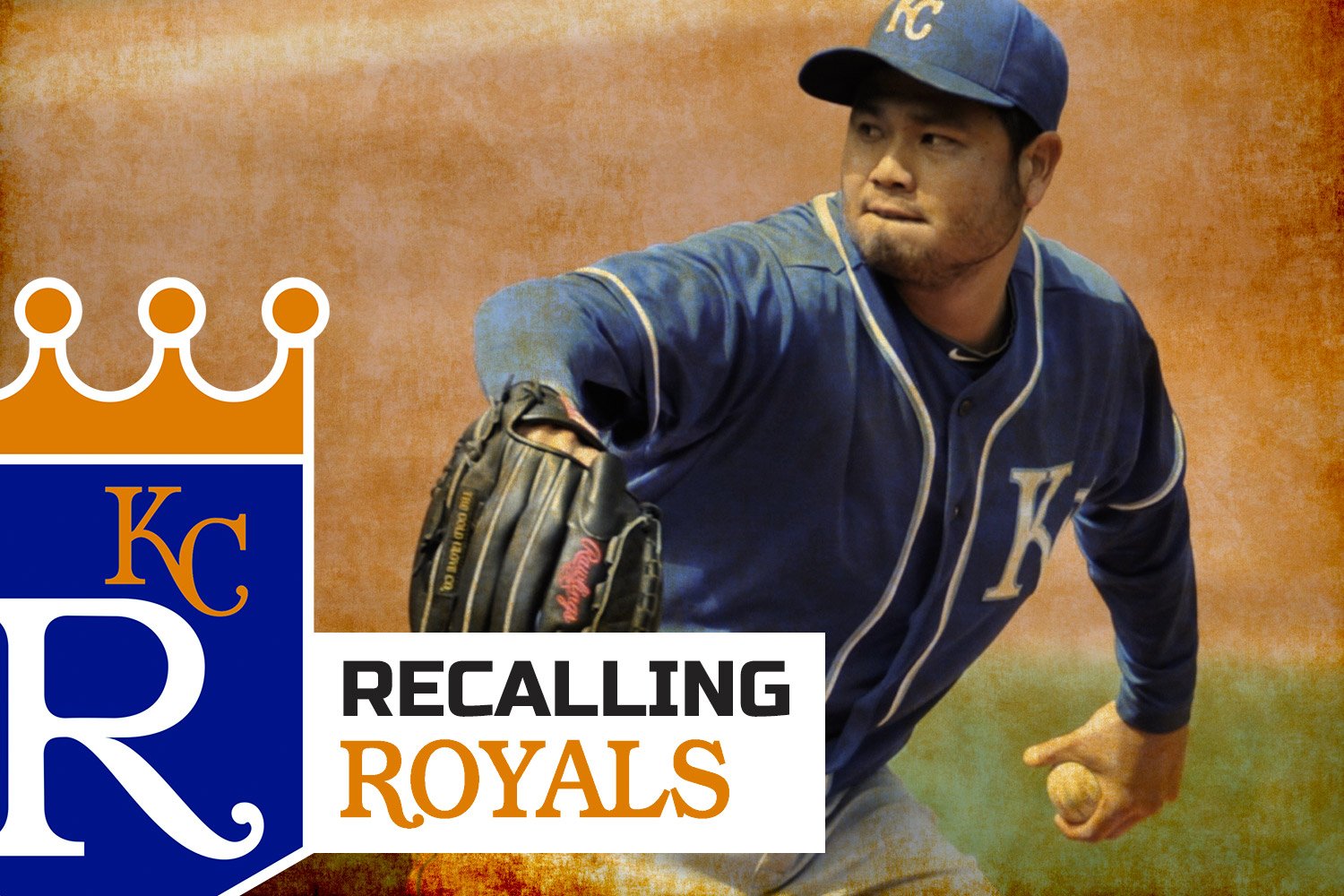 Image courtesy of © David Richard-Imagn Images
“Come on, Chen!”
It was June 4, 2010. An otherwise random Friday night game in an already-lost season, as the Royals entered the game at 22-33 on the year. But the first “Big Slick” charity event to raise money for Kansas City’s Children’s Mercy Hospital was held at Kauffman Stadium. Kansas City’s favorite celebrity sons - Rob Riggle, Paul Rudd, and Jason Sudeikis - were in town for the weekend with some of their show business friends. In a dugout suite, Royals television broadcaster Joel Goldberg attempted to interview some of them. But (a possibly inebriated) Will Ferrell kept hollering at the somewhat obscure pitcher on the mound.
“Come on, Chen!”
As social media was gaining steam, this moment quickly became a meme, at least among Royals fans. It helped that Bruce Chen was about to embark on the best three-season stretch of his career, with all three of those years in Kansas City as he helped stabilize a rotation that desperately needed dependable arms.
Bruce Kastulo Chen was born on June 19, 1977, in Panama City, Panama. You might think “Chen” is an unusual surname for someone born in Panama, but there is an explanation. Many Chinese people fled their home country during a time of civil war in the 1920s, settling in Panama. One of those was Bruce’s grandfather, just a boy when his parents sent him (on his own!) to waiting relatives in Panama.
Because he is Panamanian, Chen was not subject to the MLB draft. The Atlanta Braves signed him as an amateur free agent in 1993, just days after he turned 16. He didn’t exactly have a quick climb through the minors, but he did make his major league debut on September 7, 1998. He was able to stick with Atlanta for the second half of the 1999 season, making a few starts but mostly pitching in relief. He pitched in 22 games for the Braves in 2000 before a July trade sent him to Philadelphia.
This began the “bouncing around” portion of Chen’s career. A left-handed pitcher is always in demand, and Chen was traded again (to the Mets) in 2001, to the Expos in April 2002, to the Reds in June 2002, and was released by both the Reds and the Astros in 2003, eventually signing with the Red Sox. As a free agent after the season, he signed with Toronto but didn’t pitch in the majors for them, and was sent to Baltimore at the beginning of May 2004.
Here, Chen finally found some stability. He only pitched in eight games for the Orioles in 2004, but performed well (2-1, 3.02 ERA) in seven starts. In 2005, with a spot in the rotation for the whole season, he had his best year to date, with a 13-10 record and 3.83 ERA.
But he wasn’t as fortunate in 2006, going 0-5 with a 7.71 ERA in his first 10 starts before being demoted to the bullpen. He never did pick up a win that season, finishing 0-7 with a 6.93 ERA. In a case of unfortunate timing, Chen was a free agent after that season. He wound up signing a minor league deal with Texas, but made the Opening Day roster. However, he was soon sent to Triple-A, then sidelined by an elbow injury. The ensuing Tommy John surgery cost him the rest of the season and all of 2008.
That led to another minor league deal, this time with the Royals. He finally returned to the majors in late June, and after a few rough outings, seemed to find his groove. Chen finished the year with a 1-6 record and 5.78 ERA, but Kansas City was interested enough to re-sign him, again on a minor league deal, in the offseason.
Chen started the year at triple-A Omaha, but was with the Royals before the end of April, as the bullpen had a disastrous beginning to the year. The start where “Come on, Chen!” was born was actually just his second one of the year (by the way, Ferrell’s exhortations helped; Chen outdueled a young Max Scherzer for the win). Roughly a month later, he gave Royals fans a thrill by taking a perfect game into the seventh inning against the Angels. A one-out home run in the eighth ended that, but Chen and the Royals still picked up a win.
At the end of the season, Chen led Royals starters in wins (12) and ERA (4.17, tied with Zack Greinke). His final start of the year was another memorable one, as he notched his first career shutout with a 7-0 blanking of Tampa Bay. The 12 wins were the most by a Royals southpaw since Charlie Leibrandt won 13 and Floyd Bannister won 12 in 1988. Chen was granted the Joe Burke Special Achievement award by the Kansas City chapter of the BBWAA. He also received another contract, this one a major league deal, for the 2011 season.
And Chen once again delivered. He led the starters in wins (12, again) and ERA (3.77 this time), although a strained back muscle limited him to 25 starts. Still, he received the Bruce Rice Pitcher of the Year award from the KC BBWAA voters. Royals fans perhaps didn’t realize it at the time, but the core of the 2014-15 teams was assembling at the major-league level. But the position players were arriving before the pitchers, so Chen was a valuable stabilizing force in a rotation that no longer had Greinke, as he had been traded to Milwaukee in the offseason.
The Royals were happy to once again re-sign Chen, this time on a two-year contract. And Chen continued to be an anchor in a still-unsettled rotation in 2012, leading the majors with 34 starts, including the honors on Opening Day. He also tossed the second-most innings of his career (191 ⅔). He did pick up the most strikeouts of his career, with 140. But home runs were a problem; Chen allowed 33 long balls, up from 18 the year before. That led to his ERA jumping to 5.07.
The Royals upgraded their rotation for 2013, bringing in Wade Davis, Ervin Santana, and James Shields. With mid-year acquisition Jeremy Guthrie already in the fold, and some spring training struggles on top of that, Chen found himself squeezed out of the rotation to start the year. To his credit, he quickly found his niche in the bullpen, maintaining a 2.41 ERA into early July. With Luis Mendoza struggling, Chen rejoined the rotation. He went 6-4 with a 3.61 ERA in 15 starts down the stretch as Kansas City, for the first time in a decade, played meaningful games in September. Although the Royals missed out on the postseason, things looked promising for 2014.
The Royals again re-signed Chen, this time to a one-year deal for 2014 with a mutual option for 2015. He began the 2014 season in the rotation but, at the end of April, was diagnosed with a bulging disc in his back. He would miss two months with that ailment, then struggled in his return. He did pick up a win over Chicago on July 22, tying him with Mariano Rivera for the most major league wins by a Panamanian pitcher (82). Unfortunately, that would be his last career win. After more struggles in the bullpen, the Royals designated Chen for assignment at the end of August.
Chen signed with Cleveland ahead of the 2015 season, but after two poor performances, he announced his retirement. It was a disappointing ending to a career, but still, he had accomplished a lot. He pitched in the World Baseball Classic four times: for Panama in 2006 and 2009 and for China in 2013 and 2017. He played for 17 seasons in the majors, mentoring future Royals stars like Danny Duffy and Yordano Ventura (Chen served as Ventura’s interpreter for much of his time in KC); earning an AL championship ring; and winning the admiration of Royals fans. And of course, becoming a meme, thanks to Will Ferrell.
-
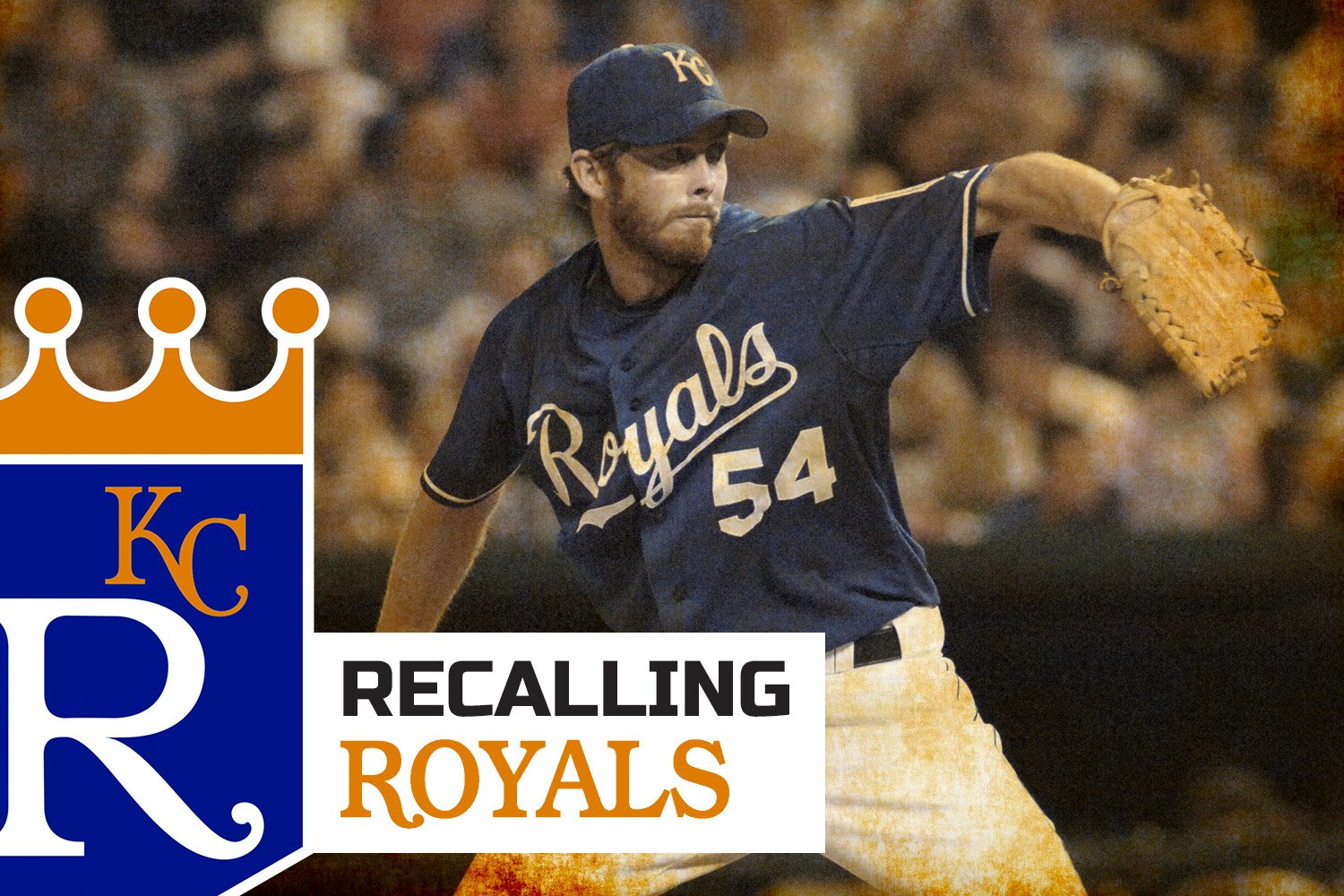
On Opening Day of the 2003 season, the Royals entered the ninth inning clinging to a 3-0 lead over the Chicago White Sox. The previous year, Kansas City had lost 100 games for the first time in franchise history; a win would be a most welcome sight for Royals fans. Chicago had the heart of a dangerous order coming to the plate. But Jose Valentin lined out. Frank Thomas struck out looking on a filthy slider. And Magglio Ordonez grounded out meekly. Although it was not his major league debut, this was how most Royals fans were introduced to Mike MacDougal.
Robert Meiklejohn MacDougal was born on March 5, 1977, in Las Vegas, to parents Tom and Dorothy, both of whom were teachers. Tom had pitched a couple of seasons in the minors before beginning his career in education. After attending Mesa (Arizona) High School, the younger MacDougal was chosen by Baltimore in the 22nd round of the 1996 draft. He decided not to sign and instead attended Wake Forest University in North Carolina. The Orioles drafted him again, this time in the 12th round in 1998. With college eligibility left, he again decided not to sign. It was a good bet. After a successful senior season that included a no-hitter against Duke, MacDougal was named a first-team All-American. The Royals used the 25th overall pick in the 1999 draft to select the lanky right-hander.
MacDougal breezed through the minors, with 11 starts in Low-A Spokane in 1999, then 25 in High-A Wilmington and two in Double-A Wichita in 2000. After 27 starts for Triple-A Omaha in 2001, MacDougal was called up to the majors near the end of the 2001 season. Although the Royals had only brought him to Kansas City after Omaha’s season ended to work with pitching coach Al Nipper, a series of injuries led the team to activate him. In his first big-league start, he pitched 4 ⅓ innings against the White Sox, allowing six hits and three runs. His next two starts were somewhat better, and it looked like he would be a candidate for the rotation to start 2002. But a freak accident nearly derailed his career.
On October 4, the Royals were hosting Cleveland for their final home game of the season. In the fourth inning, Carlos Beltran lost his grip on his bat while swinging. The bat hit MacDougal, who had been leaning on the dugout railing. Although he never lost consciousness, he was taken to a hospital, where he spent the night in intensive care. He had suffered a fractured skull from the bat, with a crack just above his left temple. Even worse, the injury caused numbness in his right hand, a malady that lasted into the following spring.
It’s hard to throw a baseball when you can’t feel it. MacDougal struggled through spring training in 2002, ultimately being optioned to Omaha before Opening Day. Midway through the season, he was bumped down to Wichita. His control started to come back as the numbness subsided, and he was able to make it back to the majors as a September call-up, pitching in relief six times.
Following a strong showing in winter ball in Puerto Rico, where he was regularly topping 100 mph on the radar gun, MacDougal earned the closer role with a strong spring training in 2003. He hit the ground running as the Royals got off to a surprising 16-3 start, including a 9-0 run to start the season. MacDougal had 10 saves by the end of April, quickly earning the nickname “Mac the Ninth” and eventually made the All-Star team, although he did not appear in the game. He ended the year with 27 saves, a 3-5 record, and a 4.08 ERA.
Again, MacDougal’s health betrayed him. During spring training in 2004, he suffered a stomach ailment that cost him several pounds on an already slight frame and a few ticks off his fastball. He opened the season on the disabled list and wasn’t activated until late April. He was wild and ineffective when he returned, and was demoted to Omaha just a few weeks later. Then the elbow soreness started. After some more struggles, he was demoted again, this time to Wichita. Here, he seemed to regain his fastball and his control, and was again a September call-up. Although he did not resume closing duties, he was effective in eight games, salvaging something from a disaster of a season.
MacDougal enjoyed a much better 2005 season. He did not begin the year as a closer, but reclaimed it in late May after injuries to Jeremy Affeldt and Ambiorix Burgos. It was another terrible year for the Royals, but MacDougal picked up 21 saves to go with a 5-6 record and 3.33 ERA. His role in 26 wins meant he played a part in nearly half the team’s total of 56.
Stop me if you’ve heard this before: MacDougal headed to spring training as the presumptive closer, and then the injury bug got him again. This time, it was a strained right shoulder —a teres muscle injury, rather than the dreaded rotator cuff. But it was enough to cost him half of the 2006 season. In his second outing, he picked up his 50th career save as a Royal.
It was also his last. Two weeks later, MacDougal was traded to the White Sox for two minor-league pitchers (Tyler Lumsden and Dan Cortes) as Chicago sought to upgrade their bullpen depth. MacDougal finished his time in Kansas City with a 10-14 record, those 50 saves, and a 3.88 ERA in 163 games.
He remained in Chicago for nearly three seasons before the White Sox released him in 2009. He soon caught on with the Washington Nationals and wound up leading the team with 20 saves despite not joining them until early May. A free agent after the season, he signed with Florida but was released during spring training. He then began the bouncing-around phase of his career, going back to Washington’s organization, then to the St. Louis Cardinals, and finally to the Los Angeles Dodgers. When LA released him in May of 2012, his major-league career came to an end, although he would pitch in the minor leagues for two more years and five different franchises.
In his post-playing days, MacDougal seems to be participating in a community outreach program run by his father-in-law’s waste management company near Philadelphia. He works with youth, sharing his story of returning to the majors after his skull fracture. He was also inducted into the Wake Forest Sports Hall of Fame in 2015.
Jim Eisenreich Overcame Tourette Syndrome To Post A 15-Year MLB Career
in Royals Keep Front Page News
Posted
You are 23 years old. You are living your childhood dream, playing for the major league team in your home state, roughly an hour from your hometown. You made the Opening Day roster, even, going from Single-A ball to the majors in one offseason. And then, your body betrays you. Not exactly a physical ailment–that is understandable, just a part of sports. No, this is worse. Because it’s a little-known, barely-understood (even by doctors) neurological disorder. It’s been with you your whole life. And now, with the world at your fingertips, it is destroying your dream.
The disorder is Tourette Syndrome. The player is Jim Eisenreich. And the story is inspiring.
James Michael Eisenreich was born on April 18, 1959, in St. Cloud, Minnesota. Born and raised there, in fact, he attended St. Cloud Tech High School and St. Cloud State University before the Minnesota Twins selected him in the 16th round of the 1980 June amateur draft.
Eisenreich signed quickly and played in 67 games for the Elizabethton (Tennessee) Twins in the rookie-level Appalachian League. He did well, hitting .298/.386/.411, and was bumped up to single-A Wisconsin Rapids for a handful of games at the end of the season. In 1981, he returned to Wisconsin Rapids and was sensational, hitting .311/.407/.507 in 585 plate appearances. With the Twins undergoing a youth movement, they extended a non-roster invite to Eisenreich for spring training in 1982. They probably figured they’d get him some experience with the big leaguers. Instead, they got their Opening Day center fielder.
Things went well for the first month of the season. The Twins weren’t great, but Eisenreich was hitting around .300 and had smacked a couple of home runs. But then, his lifelong affliction came to the forefront. During a three-game home series against Milwaukee, Eisenreich was removed early from each game, as he was hyperventilating. And then things got worse.
The Twins were in Boston. Eisenreich was in center field. And when the tics began, the fans, who by now had read about the rookie’s issues in the newspapers, noticed. The taunts and jeers were too much, and Eisenreich left the game in the fourth inning. The next night, the same thing, except he was removed in the third game. The night after that, he told manager Billy Gardner he didn’t want to play.
The team doctors tried different medications. Hypnosis was suggested. He went on the injured list for a few weeks as various remedies were tried. Finally, he found a medication that worked, but it made him tired, and he was not playing as well as he could. When he reduced the dosage, the symptoms returned. Ultimately, he played in 34 games, hitting .303/.378/.424 in 111 plate appearances.
Eisenreich reported to spring training in 1983 ready to play, but after a couple of interviews early, he did not want to talk about his condition.
“No one seemed able to help me. My attitude became, ‘If you can’t play Major League Baseball, so be it.’ That was tough to admit. Playing in the majors was my lifetime ambition. But I had to face reality, that maybe it wasn’t for me.”
--Eisenreich, quoted by Bob Fowler, The Orlando Sentinel, February 22, 1983
But, despite a strong spring training, his struggles returned. After just two regular-season games, he decided to walk away from baseball, with plans to go back to college. The Twins, who had been supportive and understanding throughout, placed him on the disabled list, hoping they could change his mind. They were unsuccessful, at least until the offseason. He returned for spring training in 1984, but things went almost exactly as they did the year before. Good spring training, then the problems returned, and after 12 games, he wanted to walk away again. The Twins, who were now displeased that Eisenreich had changed medications on his own, finally reached a settlement with the player that placed him on the retired list.
His career to this point might have been a sad footnote in baseball history. He returned to St. Cloud, getting his baseball fix in softball and semi-pro leagues, where he was, as you might expect, a star. Even better, he figured out the routine that would keep his symptoms at bay. One of his college teammates, Bob Hegman, was by now working in the Royals’ front office and recommended the team take a chance. Shortly after the 1986 season ended, the Royals claimed him for the waiver price of $1.
Eisenreich began the 1987 season at double-A Memphis, where he proved he could still hit, posting a video-game-like .382/.469/.705 line in 324 plate appearances. The Royals, trying to hang in the division race with a mediocre offense, called him up in mid-June. He had only appeared in a few games when he got his storybook moment, delivering a pinch-hit double in the ninth for a walkoff win over Minnesota.
Because he had suffered an elbow injury in spring training, Eisenreich did not play any outfield in 1987, serving as a DH and pinch-hitter and finishing the year with a .238/.278/.467 line. With the elbow injury and the inability to play outfield, it was tough to find regular playing time, but the important thing was that Eisenreich had proven he could last in the majors.
Eisenreich made the Opening Day roster in 1988, but struggled mightily for three months before the Royals optioned him to Triple-A Omaha. He seemed to regain his batting stroke there, hitting .289/.327/.472, and hit .271/.295/.356 when he came back to the majors for 27 games.
That might have been the turning point for his career. He enjoyed his finest season to date in 1989, hitting .293/.341/.448 and playing regularly, a total of 134 games. For the next three seasons, he would be a solid bat in the Royals’ lineup and a good glove in the outfield.
The Royals let Eisenreich depart as a free agent following the 1992 season, but his career still had quite a bit of time left. He signed with Philadelphia and was their starting right fielder as they made a surprising run to the World Series. Eisenreich hit a three-run home run in Game 2, staking the Phillies to a 5-0 lead in a game they eventually won 6-4, but Toronto would win the Series on Joe Carter’s walkoff home run in Game 6.
Eisenreich stayed in Philadelphia through 1996, then signed with the Florida Marlins before the 1997 season. He was now a backup outfielder and first baseman, but his timing was great again as the Marlins reached the World Series. This time, Eisenreich was on the winning side. Although he had only 11 plate appearances in the Series, he posted a .500 batting average, a home run, and 3 RBI. He was on second base when Edgar Renteria’s single scored the winning run and ended the Series in Game 7.
Of course, the Marlins followed that title with a fire sale during the 1998 season, and in mid-May, Eisenreich was traded to the Los Angeles Dodgers in the deal that made Mike Piazza a Marlin for about five minutes. A free agent after the season ended, Eisenreich discussed a return to the Royals, but the team, still in financial limbo after Ewing Kauffman’s death and under the control of a temporary ownership group, decided they couldn’t afford him. Like many former Royals, Eisenreich had maintained a home in the Kansas City area, so he stayed in the area. He and his wife had started a foundation for youth with Tourette syndrome in 1996, so that his family became his focus.
For his career, Eisenreich finished with 1,160 hits and a .290/ 341/.404 batting line. It was a solid career that could easily have been derailed by his affliction, but he was able to overcome that.
View full article