


Brian Shrum
-
Posts
17 -
Joined
-
Last visited
-
Days Won
1
Brian Shrum's Achievements


-
 With the 2026 season in the rearview mirror and the offseason heating up, it's time to take an early crack at what the Kansas City Royals 26-man roster could look like on Opening Day 2027. General Manager J.J. Picollo has already signaled that the front office plans to be aggressive in reshaping the pitching staff and adding right-handed pop in the outfield, a plan he wasted no time executing when recently trading Maikel Garcia to Seattle. At the same time, a looming Collective Bargaining Agreement and a potential December transaction freeze could make this offseason a sprint. While plenty will change between now and Spring Training in Surprise, Arizona, here is a realistic baseline projection of how Kansas City's roster will look on the first day of the season. Catchers (2) Carter Jensen Salvador Perez Carter Jensen was a bright spot for the Royals in 2026, slugging 27 home runs and solidifying himself as both an everyday catcher and legitimate top-of-the-order threat. Veteran Salvador Perez will get the bulk of his at-bats as a designated hitter, but will continue to split time with Jensen at catcher as he enters the final year of his current contract with the ball club. Infielders (6) Vinnie Pasquantino (1B) Michael Massey (2B) Eugenio Suarez (3B) Bobby Witt Jr. (SS) Tyler Tolbert (Utility) Nick Loftin (Utility) Trading Maikel Garcia, who hit .268 with three home runs in just 82 games in 2026, to Seattle brought back much-needed pitching, but created an immediate hole at the hot corner. Even though he was an MVP finalist, Bobby Witt Jr. posted a career low in home runs (18) and RBIs (54). Vinnie Pasquantino hit .249 and mashed 17 home runs but had a sluggish first half. With Jonathan India and Josh Rojas gone via free agency, Michael Massey has a clear runway at second base after hitting 13 home runs and posting a career-high .274 batting average in 2026. Nick Loftin, who was nominated for a Gold Glove at third base, is already on the roster and can handle the hot corner, but I'd expect Picollo to explore adding another veteran option like Eugenio Suarez. Tyler Tolbert provides multi-position insurance and elite speed with 22 stolen bases last season in 78 games. Outfield (5) Potential Free Agent Addition (LF) Kyle Isbel (CF) Jac Caglianone (RF) Isaac Collins (OF) John Rave (OF) Jac Caglianone's sophomore leap (.289 AVG, 23 HR, 75 RBI) locked down right field and the number three spot in the batting order. However, the rest of the outfield remains Kansas City's biggest offensive question mark after the team finished 19th in OPS against left-handed pitching. With Lane Thomas and Starling Marte gone, Picollo has explicitly stated a desire to add a right-handed outfield bat. Top of the market free agents are likely out of Kansas City's price range, making guys like Taylor Ward, Tyrone Taylor or Luis Robert Jr. a realistic target. Landing Ward slots a proven right-handed bat into left field and shifts Isaac Collins and John Rave into utility outfield options. Starting Pitchers (5) Michael Wacha Seth Lugo Noah Cameron Tony Gonsolin Bryce Miller Injuries decimated the Royals' rotation in 2026, forcing the club to use a franchise-record 37 pitchers. Since Cole Ragans, Stephen Kolek, Ryan Bergert and Luinder Avila are all expected to open the 2027 season on the injured list, landing 28-year-old Bryce Miller (4.17 ERA, 119 strikeouts in 21 starts) in the Garcia trade solves Kansas City's starting pitching need without diving into Free Agency to acquire another starting arm. Michael Wacha (3.32 ERA, 158 K) remains the steady anchor, and left-hander Noah Cameron (4.11 ERA, 177 innings) proved he belongs in a big league rotation. Seth Lugo is coming off a rough 5.18 ERA campaign and will look to rebound alongside Tony Gonsolin, whose $2.5 million club option was an easy pickup for the front office. Gonsolin will have to fend off Randy Dobnak, who just signed a one-year, $1.35 million deal after posting a 3.51 ERA over 74 1/3 innings last year. Bullpen (8) Lucas Erceg Daniel Lynch IV Jose A. Ferrer Jose Cuas Steven Cruz Nate Pearson (Potential Free Agent Addition) (Potential Free Agent Addition) No unit cost the Royals more games in 2026 than the bullpen, which posted a 5.07 ERA, which was second-worst in the MLB, and blew 26 saves. Declining Carlos Estevez's $13 million club option was a no-brainer after he essentially missed the entire season. The front office followed that up by designating Nick Mears for assignment ahead of the Rule 5 deadline and sending James McArthur to Seattle. Acquiring hard-throwing left-hander Jose A. Ferrer from the Mariners gives Kansas City a controllable ninth-inning option. Pairing him with free agents like Gregory Soto (3.32 FIP, 16 saves, and 79 strikeouts in 67 innings with Pittsburgh) and Sean Newcomb (3.21 FIP across 90 1/3 innings), alongside returning southpaw Daniel Lynch IV, would give Matt Quatraro a solid left-handed foundation in the bullpen. From the right side, the Royals will lean on internal bounce-backs and power arms. Lucas Erceg (5.40 FIP) is an obvious rebound candidate after getting sent down to Omaha last year, while Nate Pearson and Steven Cruz bring triple-digit velocity. Jose Cuas rounds out the group after quietly posting a 2.89 FIP over 24 appearances in 2026. Do you agree with this 26-man roster projection? Who else could we see on Opening Day 2027? Image courtesy of Thomas Shea-Imagn Images View full article
-
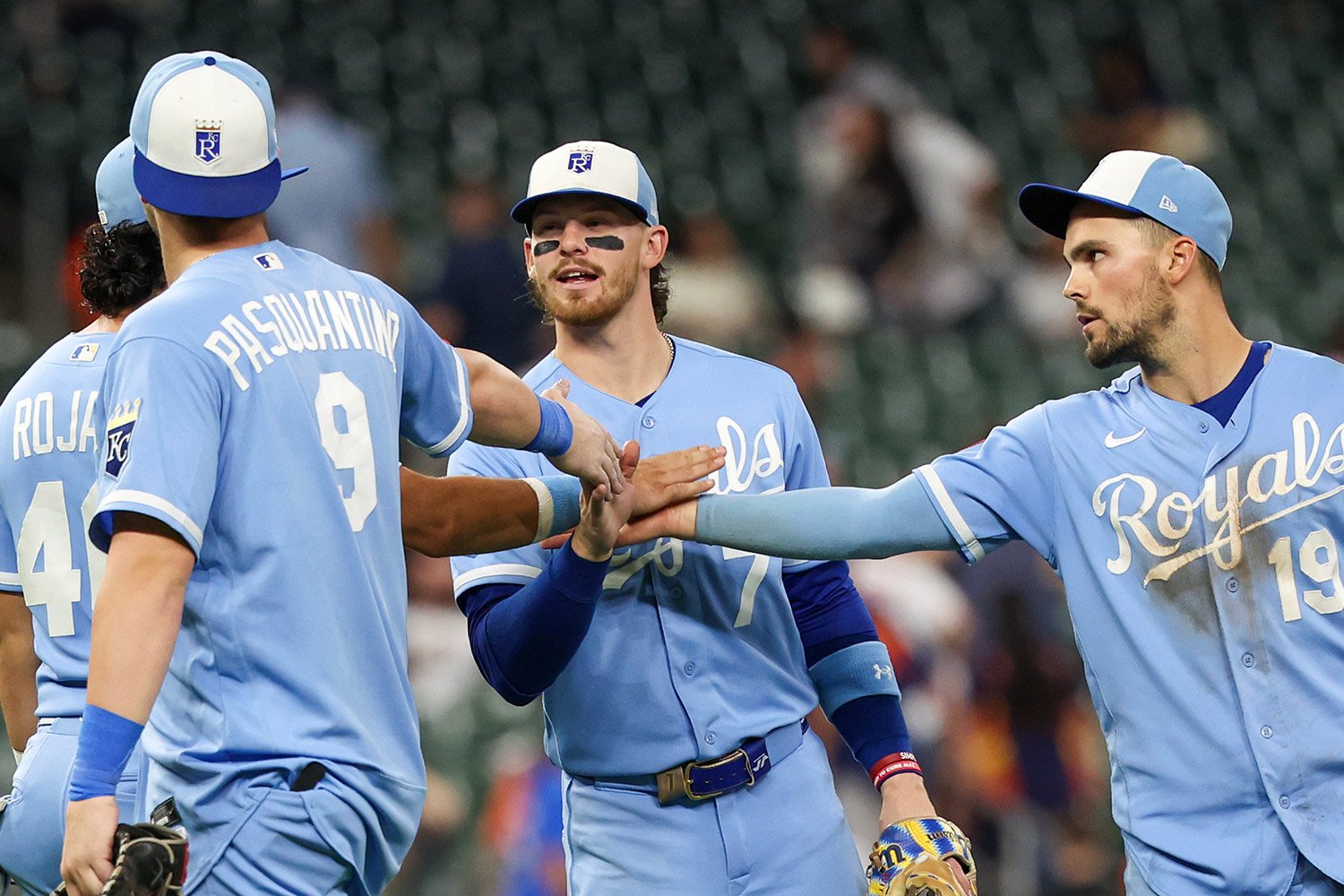 With the 2026 season in the rearview mirror and the offseason heating up, it's time to take an early crack at what the Kansas City Royals 26-man roster could look like on Opening Day 2027. General Manager J.J. Picollo has already signaled that the front office plans to be aggressive in reshaping the pitching staff and adding right-handed pop in the outfield, a plan he wasted no time executing when recently trading Maikel Garcia to Seattle. At the same time, a looming Collective Bargaining Agreement and a potential December transaction freeze could make this offseason a sprint. While plenty will change between now and Spring Training in Surprise, Arizona, here is a realistic baseline projection of how Kansas City's roster will look on the first day of the season. Catchers (2) Carter Jensen Salvador Perez Carter Jensen was a bright spot for the Royals in 2026, slugging 27 home runs and solidifying himself as both an everyday catcher and legitimate top-of-the-order threat. Veteran Salvador Perez will get the bulk of his at-bats as a designated hitter, but will continue to split time with Jensen at catcher as he enters the final year of his current contract with the ball club. Infielders (6) Vinnie Pasquantino (1B) Michael Massey (2B) Eugenio Suarez (3B) Bobby Witt Jr. (SS) Tyler Tolbert (Utility) Nick Loftin (Utility) Trading Maikel Garcia, who hit .268 with three home runs in just 82 games in 2026, to Seattle brought back much-needed pitching, but created an immediate hole at the hot corner. Even though he was an MVP finalist, Bobby Witt Jr. posted a career low in home runs (18) and RBIs (54). Vinnie Pasquantino hit .249 and mashed 17 home runs but had a sluggish first half. With Jonathan India and Josh Rojas gone via free agency, Michael Massey has a clear runway at second base after hitting 13 home runs and posting a career-high .274 batting average in 2026. Nick Loftin, who was nominated for a Gold Glove at third base, is already on the roster and can handle the hot corner, but I'd expect Picollo to explore adding another veteran option like Eugenio Suarez. Tyler Tolbert provides multi-position insurance and elite speed with 22 stolen bases last season in 78 games. Outfield (5) Potential Free Agent Addition (LF) Kyle Isbel (CF) Jac Caglianone (RF) Isaac Collins (OF) John Rave (OF) Jac Caglianone's sophomore leap (.289 AVG, 23 HR, 75 RBI) locked down right field and the number three spot in the batting order. However, the rest of the outfield remains Kansas City's biggest offensive question mark after the team finished 19th in OPS against left-handed pitching. With Lane Thomas and Starling Marte gone, Picollo has explicitly stated a desire to add a right-handed outfield bat. Top of the market free agents are likely out of Kansas City's price range, making guys like Taylor Ward, Tyrone Taylor or Luis Robert Jr. a realistic target. Landing Ward slots a proven right-handed bat into left field and shifts Isaac Collins and John Rave into utility outfield options. Starting Pitchers (5) Michael Wacha Seth Lugo Noah Cameron Tony Gonsolin Bryce Miller Injuries decimated the Royals' rotation in 2026, forcing the club to use a franchise-record 37 pitchers. Since Cole Ragans, Stephen Kolek, Ryan Bergert and Luinder Avila are all expected to open the 2027 season on the injured list, landing 28-year-old Bryce Miller (4.17 ERA, 119 strikeouts in 21 starts) in the Garcia trade solves Kansas City's starting pitching need without diving into Free Agency to acquire another starting arm. Michael Wacha (3.32 ERA, 158 K) remains the steady anchor, and left-hander Noah Cameron (4.11 ERA, 177 innings) proved he belongs in a big league rotation. Seth Lugo is coming off a rough 5.18 ERA campaign and will look to rebound alongside Tony Gonsolin, whose $2.5 million club option was an easy pickup for the front office. Gonsolin will have to fend off Randy Dobnak, who just signed a one-year, $1.35 million deal after posting a 3.51 ERA over 74 1/3 innings last year. Bullpen (8) Lucas Erceg Daniel Lynch IV Jose A. Ferrer Jose Cuas Steven Cruz Nate Pearson (Potential Free Agent Addition) (Potential Free Agent Addition) No unit cost the Royals more games in 2026 than the bullpen, which posted a 5.07 ERA, which was second-worst in the MLB, and blew 26 saves. Declining Carlos Estevez's $13 million club option was a no-brainer after he essentially missed the entire season. The front office followed that up by designating Nick Mears for assignment ahead of the Rule 5 deadline and sending James McArthur to Seattle. Acquiring hard-throwing left-hander Jose A. Ferrer from the Mariners gives Kansas City a controllable ninth-inning option. Pairing him with free agents like Gregory Soto (3.32 FIP, 16 saves, and 79 strikeouts in 67 innings with Pittsburgh) and Sean Newcomb (3.21 FIP across 90 1/3 innings), alongside returning southpaw Daniel Lynch IV, would give Matt Quatraro a solid left-handed foundation in the bullpen. From the right side, the Royals will lean on internal bounce-backs and power arms. Lucas Erceg (5.40 FIP) is an obvious rebound candidate after getting sent down to Omaha last year, while Nate Pearson and Steven Cruz bring triple-digit velocity. Jose Cuas rounds out the group after quietly posting a 2.89 FIP over 24 appearances in 2026. Do you agree with this 26-man roster projection? Who else could we see on Opening Day 2027?
-
While the Kansas City Royals shipped outfielder Lane Thomas and lefty Bailey Falter to the Atlanta Braves at the 2026 trade deadline, the move was largely viewed through the lens of a frustrated club with its mind set on the future after falling out of playoff contention. Left-hander Carter Holton was part of the return; however, Lucas Braun stood out as the headliner of the deal and is a player who could potentially make his way to Kauffman Stadium in 2027. Braun does not fit the mold of a flamethrowing prospect who lights up radar guns. Instead, he has built his reputation on durability, deep pitch mix variety, and a strong ability to pound the zone. As it stands today, Braun is one of the more intriguing arms in the organization. Braun Background & Path To Kansas City A native of Santa Monica, California, Braun began his college career working out of the bullpen for San Diego before transferring to Cal State Northridge, where he finished his collegiate career. Atlanta drafted him in the sixth round of the 2023 MLB Draft, and from there, Braun wasted no time moving up the organizational ladder. He reached Double-A in his first full pro season in 2024 and climbed to Triple-A in 2025. Over those two seasons, he combined for 293 1/3 innings and averaged 5.6 innings per outing. His track record of providing 5+ innings of solid pitching is what caught J.J. Picollo's eye when the Royals targeted pitching depth at the trade deadline. Breaking Down The Numbers Prior to the August 2nd trade, Braun was quietly putting together a strong campaign in Atlanta's system. Splitting time between Double-A and Triple-A, he posted a 3.53 ERA with 82 strikeouts and just 27 walks across 94 1/3 innings. His metrics in Double-A were sharp; over 50 2/3 innings with Columbus, he registered a 3.20 ERA, 2.57 FIP, 25.1% strikeout rate, and a 5.4% walk rate (19.7% K-BB%) while generating a 28.1% whiff rate. His transition to the Royals organization got off to a promising start when he tossed six innings of two-run ball in his debut with Triple-A Omaha on August 7th. However, he hit a late-season bump and finished his eight-start stint with the Storm Chasers with a 5.73 ERA and 5.89 FIP in 37 2/3 innings pitched. Digging below the surface reveals what tripped him up in Omaha. Braun's strikeout rate actually increased from his time in Triple-A Gwinnett from 16.1% to 22.6%, but it was the long ball that caused issues for him. He allowed 10 home runs in his 37 2/3 innings (2.39 HR/9), and his home-run-to-fly-ball rate spiked to 26.3%. Even with his late summer struggles, Braun's broader minor league resume shows a pitcher who consistently limits free passes and throws strikes. Over 452 1/3 innings of minor league ball, Braun owns a 3.62 ERA, 1.16 WHIP and a 65.8% strike rate. Lucas Braun Scouting Report Scouts view Braun as a starter who relies on execution and sequencing rather than one overpowering pitch. Working out of the stretch, he deploys a six-pitch mix to keep hitters off balance by changing eye levels and moving the ball to both sides of the plate. Fastballs (Four Seam and Sinker): His heater sits in the 92- 94 mph range and tops out at 96mph. He pairs a four-seamer featuring natural armside run with a two-seam sinker he leaned into heavily following the 2024 season to induce weak ground balls. Cutter: Introduced in 2025, his 87- 91 mph cutter quickly became his most frequently thrown pitch at Triple-A in 2026. His cutter gives him a firm late-breaking option to tie up left-handed hitters. Secondary Options: His mid-80s slider is his primary swing-and-miss weapon, complemented by an upper-80s changeup and a softer 78- 82 mph curveball that he mixes in. Why He's Tracking Toward A 2027 Debut While Braun may not carry the top-100 prospect hype of Kendry Chourio and David Shields, he offers something Kansas City will value heavily in 2027: immediate plug-and-play innings. Because he was drafted out of college in 2023, Braun is eligible for the Rule 5 Draft this December, making him a strong candidate to be added to the Royals' 40-man roster this offseason. Once on the roster, he will enter spring training with an opportunity to compete for a back-end rotation spot or serve as the first arm called up from Omaha when injuries test the major league roster. If he sharpens his in-zone command over the winter and can avoid giving up home runs, Braun has the analytical and physical tools to become a dependable pitcher who can throw lots of innings for the Royals. Image courtesy of Nathan Ray Seebeck-Imagn Images View full article
-
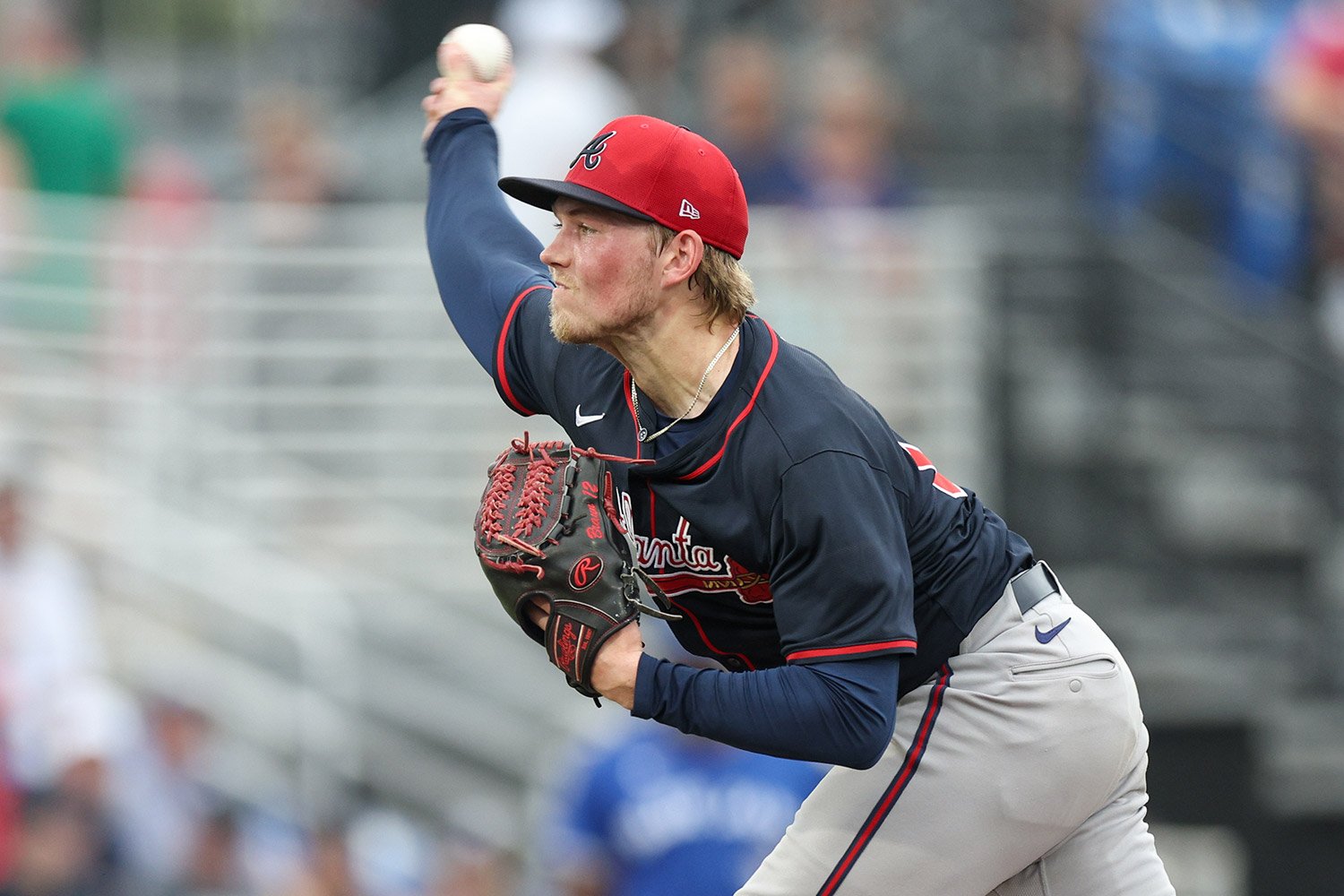 While the Kansas City Royals shipped outfielder Lane Thomas and lefty Bailey Falter to the Atlanta Braves at the 2026 trade deadline, the move was largely viewed through the lens of a frustrated club with its mind set on the future after falling out of playoff contention. Left-hander Carter Holton was part of the return; however, Lucas Braun stood out as the headliner of the deal and is a player who could potentially make his way to Kauffman Stadium in 2027. Braun does not fit the mold of a flamethrowing prospect who lights up radar guns. Instead, he has built his reputation on durability, deep pitch mix variety, and a strong ability to pound the zone. As it stands today, Braun is one of the more intriguing arms in the organization. Braun Background & Path To Kansas City A native of Santa Monica, California, Braun began his college career working out of the bullpen for San Diego before transferring to Cal State Northridge, where he finished his collegiate career. Atlanta drafted him in the sixth round of the 2023 MLB Draft, and from there, Braun wasted no time moving up the organizational ladder. He reached Double-A in his first full pro season in 2024 and climbed to Triple-A in 2025. Over those two seasons, he combined for 293 1/3 innings and averaged 5.6 innings per outing. His track record of providing 5+ innings of solid pitching is what caught J.J. Picollo's eye when the Royals targeted pitching depth at the trade deadline. Breaking Down The Numbers Prior to the August 2nd trade, Braun was quietly putting together a strong campaign in Atlanta's system. Splitting time between Double-A and Triple-A, he posted a 3.53 ERA with 82 strikeouts and just 27 walks across 94 1/3 innings. His metrics in Double-A were sharp; over 50 2/3 innings with Columbus, he registered a 3.20 ERA, 2.57 FIP, 25.1% strikeout rate, and a 5.4% walk rate (19.7% K-BB%) while generating a 28.1% whiff rate. His transition to the Royals organization got off to a promising start when he tossed six innings of two-run ball in his debut with Triple-A Omaha on August 7th. However, he hit a late-season bump and finished his eight-start stint with the Storm Chasers with a 5.73 ERA and 5.89 FIP in 37 2/3 innings pitched. Digging below the surface reveals what tripped him up in Omaha. Braun's strikeout rate actually increased from his time in Triple-A Gwinnett from 16.1% to 22.6%, but it was the long ball that caused issues for him. He allowed 10 home runs in his 37 2/3 innings (2.39 HR/9), and his home-run-to-fly-ball rate spiked to 26.3%. Even with his late summer struggles, Braun's broader minor league resume shows a pitcher who consistently limits free passes and throws strikes. Over 452 1/3 innings of minor league ball, Braun owns a 3.62 ERA, 1.16 WHIP and a 65.8% strike rate. Lucas Braun Scouting Report Scouts view Braun as a starter who relies on execution and sequencing rather than one overpowering pitch. Working out of the stretch, he deploys a six-pitch mix to keep hitters off balance by changing eye levels and moving the ball to both sides of the plate. Fastballs (Four Seam and Sinker): His heater sits in the 92- 94 mph range and tops out at 96mph. He pairs a four-seamer featuring natural armside run with a two-seam sinker he leaned into heavily following the 2024 season to induce weak ground balls. Cutter: Introduced in 2025, his 87- 91 mph cutter quickly became his most frequently thrown pitch at Triple-A in 2026. His cutter gives him a firm late-breaking option to tie up left-handed hitters. Secondary Options: His mid-80s slider is his primary swing-and-miss weapon, complemented by an upper-80s changeup and a softer 78- 82 mph curveball that he mixes in. Why He's Tracking Toward A 2027 Debut While Braun may not carry the top-100 prospect hype of Kendry Chourio and David Shields, he offers something Kansas City will value heavily in 2027: immediate plug-and-play innings. Because he was drafted out of college in 2023, Braun is eligible for the Rule 5 Draft this December, making him a strong candidate to be added to the Royals' 40-man roster this offseason. Once on the roster, he will enter spring training with an opportunity to compete for a back-end rotation spot or serve as the first arm called up from Omaha when injuries test the major league roster. If he sharpens his in-zone command over the winter and can avoid giving up home runs, Braun has the analytical and physical tools to become a dependable pitcher who can throw lots of innings for the Royals.
-
The Royals could use some help in the outfield and help that can add athleticism and power to the lineup. Historically, Royals outfielders have not been power-hitting sluggers who can change the game with a swing of the bat. Like other small-market teams, the Royals will likely need to increase spending to meet a league salary floor. One way to do this is to target free agent Luis Robert Jr., who ranks 51st overall in DiamondCentric's Top Free Agents. After a rough 2026 campaign with the New York Mets and Baltimore Orioles, the 29-year-old finds himself on the open market after Baltimore declined his $20 million club option. Bringing him to Kansas City on a short-term deal is a moderate-risk, high-reward move that could have large impacts on the lineup. Luis Robert Jr.'s 2026 Season At A Glance Games Played: 61 At-Bats: 204 Home Runs: 11 RBI's: 26 Stolen Bases: 2 Slash Line: .221/.300/.407 OPS/OPS+: .707/98 Why the Royals Should Sign Luis Robert Jr. Signing Luis Robert Jr. to a one-year, incentive-laden contract gives the Royals a path to a legitimate five-tool player with All-Star upside who could fill the offensive need for a right-handed outfielder with power. While his batting average of .221 in just 61 games during the 2026 campaign is underwhelming, a closer look at his underlying metrics, swing mechanics, and batted ball profile reveals a hitter whose raw tools remain intact. Last year, Kansas City's offensive stagnation outside of Bobby Witt Jr. was a lack of game-altering impact from the right side of the plate. Robert Jr. can solve some right-handed offensive needs with strong swing metrics that rival some of the better power hitters in baseball. Despite being limited to just 61 games and 230 plate appearances in 2026, he generated a 77.3 mph average bat speed, which climbed to 77.7 during a healthy August stretch. That raw bat speed translated into an average exit velocity of 89.8 mph, proving that his ability to punish baseballs has not deteriorated despite his recent injuries. Also encouraging is how efficiently Robert Jr. optimized his contact point in 2026. Statcast tracking shows he posted a 53.2% ideal attack angle rate while intercepting pitches 0.6 inches out in front of the plate, which is the furthest out in front he has made contact in his career. By catching the ball earlier in the zone and making mechanical adjustments, he elevated his power output, fueling a .186 isolated power (ISO), which was his highest since his 38 home run and 5.0 fWAR season in 2023. In 2026, he launched 11 home runs in just 204 at-bats, maintaining a 30 home run pace over a full 162-game slate. He also posted a 10.4% walk rate, which represents the best plate discipline he's had over his seven-year career. Beyond his power, Robert Jr.'s overall offensive floor quietly stabilized compared to his slumps over the previous two seasons. After posting below-average numbers of an 85 wRC+ and .660 OPS across 856 plate appearances in 2024 and 2025, he rebounded to a 97 wRC+ and .311 wOBA in 2026. Essentially performing as a league-average hitter while battling constant mid-season disruptions and recovering from an injury proves his baseline is trending back in the right direction. Pairing his right-handed pop with Kauffman Stadium's spacious gaps provides middle-of-the-order protection. While Kyle Isbel provides steady glove work in center field, Robert Jr. brings a former Gold Glove pedigree and explosive athleticism that historically has produced elite range, highlighted by his +12 OAA during his last full season. When healthy, placing him in center field would dramatically shrink the outfield grass and provide plenty of opportunities to show off his Gold Glove-caliber defense. Bottom Line Luis Robert Jr.'s value is at an interesting spot right now due to his recent injury history. With projections placing his open-market value at around a one-year $10-$14 million contract, the Royals have an opportunity to absorb zero long-term risk while chasing legitimate All-Star upside. A short-term incentive-based deal gives Luis Robert Jr. a prime stage to rebuild his value before re-entering free agency next winter and gives Kansas City the exact right-handed middle-of-the-order threat that it has been missing. Image courtesy of Brad Penner-Imagn Images View full article
-
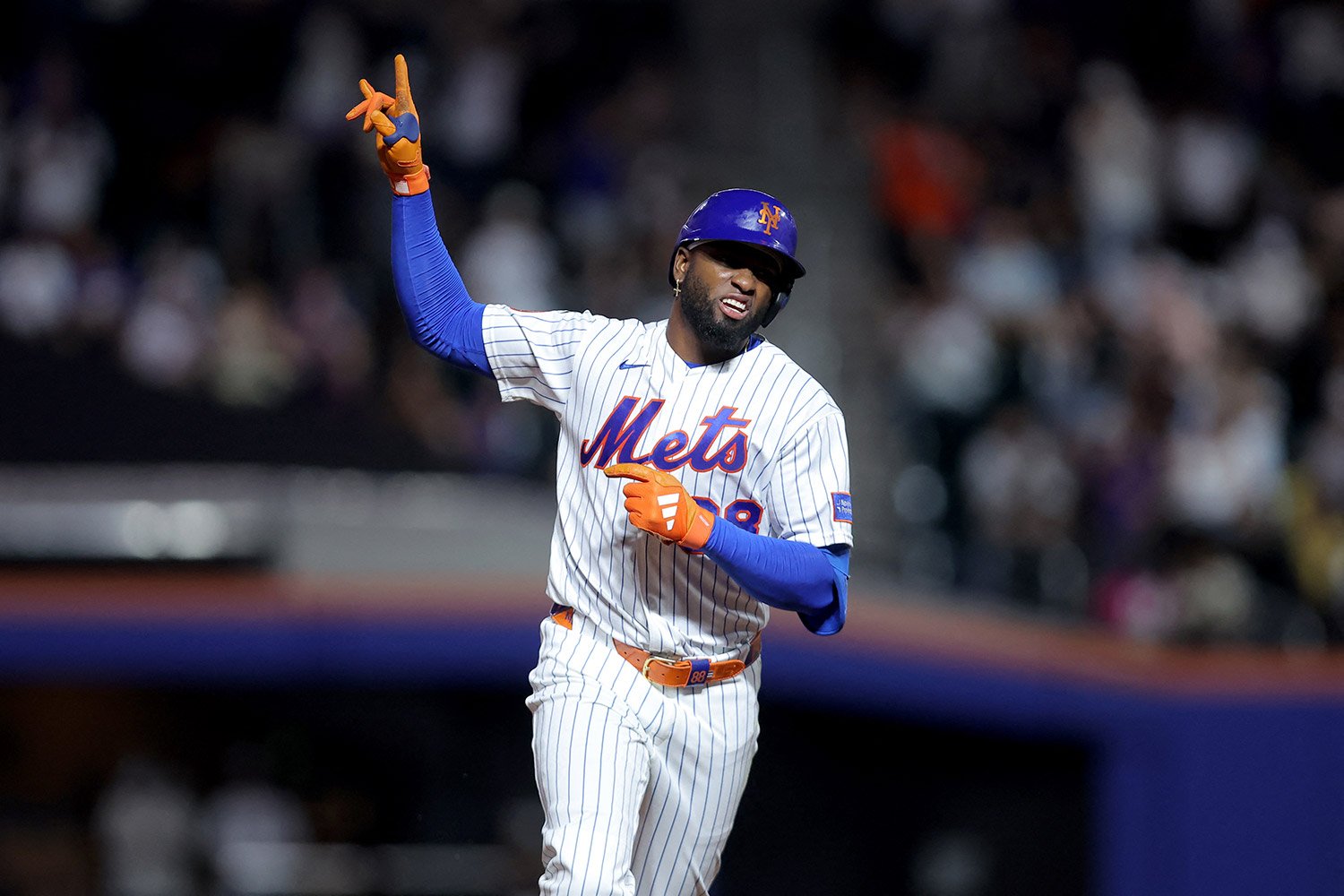 The Royals could use some help in the outfield and help that can add athleticism and power to the lineup. Historically, Royals outfielders have not been power-hitting sluggers who can change the game with a swing of the bat. Like other small-market teams, the Royals will likely need to increase spending to meet a league salary floor. One way to do this is to target free agent Luis Robert Jr., who ranks 51st overall in DiamondCentric's Top Free Agents. After a rough 2026 campaign with the New York Mets and Baltimore Orioles, the 29-year-old finds himself on the open market after Baltimore declined his $20 million club option. Bringing him to Kansas City on a short-term deal is a moderate-risk, high-reward move that could have large impacts on the lineup. Luis Robert Jr.'s 2026 Season At A Glance Games Played: 61 At-Bats: 204 Home Runs: 11 RBI's: 26 Stolen Bases: 2 Slash Line: .221/.300/.407 OPS/OPS+: .707/98 Why the Royals Should Sign Luis Robert Jr. Signing Luis Robert Jr. to a one-year, incentive-laden contract gives the Royals a path to a legitimate five-tool player with All-Star upside who could fill the offensive need for a right-handed outfielder with power. While his batting average of .221 in just 61 games during the 2026 campaign is underwhelming, a closer look at his underlying metrics, swing mechanics, and batted ball profile reveals a hitter whose raw tools remain intact. Last year, Kansas City's offensive stagnation outside of Bobby Witt Jr. was a lack of game-altering impact from the right side of the plate. Robert Jr. can solve some right-handed offensive needs with strong swing metrics that rival some of the better power hitters in baseball. Despite being limited to just 61 games and 230 plate appearances in 2026, he generated a 77.3 mph average bat speed, which climbed to 77.7 during a healthy August stretch. That raw bat speed translated into an average exit velocity of 89.8 mph, proving that his ability to punish baseballs has not deteriorated despite his recent injuries. Also encouraging is how efficiently Robert Jr. optimized his contact point in 2026. Statcast tracking shows he posted a 53.2% ideal attack angle rate while intercepting pitches 0.6 inches out in front of the plate, which is the furthest out in front he has made contact in his career. By catching the ball earlier in the zone and making mechanical adjustments, he elevated his power output, fueling a .186 isolated power (ISO), which was his highest since his 38 home run and 5.0 fWAR season in 2023. In 2026, he launched 11 home runs in just 204 at-bats, maintaining a 30 home run pace over a full 162-game slate. He also posted a 10.4% walk rate, which represents the best plate discipline he's had over his seven-year career. Beyond his power, Robert Jr.'s overall offensive floor quietly stabilized compared to his slumps over the previous two seasons. After posting below-average numbers of an 85 wRC+ and .660 OPS across 856 plate appearances in 2024 and 2025, he rebounded to a 97 wRC+ and .311 wOBA in 2026. Essentially performing as a league-average hitter while battling constant mid-season disruptions and recovering from an injury proves his baseline is trending back in the right direction. Pairing his right-handed pop with Kauffman Stadium's spacious gaps provides middle-of-the-order protection. While Kyle Isbel provides steady glove work in center field, Robert Jr. brings a former Gold Glove pedigree and explosive athleticism that historically has produced elite range, highlighted by his +12 OAA during his last full season. When healthy, placing him in center field would dramatically shrink the outfield grass and provide plenty of opportunities to show off his Gold Glove-caliber defense. Bottom Line Luis Robert Jr.'s value is at an interesting spot right now due to his recent injury history. With projections placing his open-market value at around a one-year $10-$14 million contract, the Royals have an opportunity to absorb zero long-term risk while chasing legitimate All-Star upside. A short-term incentive-based deal gives Luis Robert Jr. a prime stage to rebuild his value before re-entering free agency next winter and gives Kansas City the exact right-handed middle-of-the-order threat that it has been missing.
-
Agree with Brock’s comment and the visual showing usage rates between 2025 and 2026. I would say a better pitch mix overall and utilizing off speed stuff to get hitters out was a big reason for the impressive 2026 season.
-
The Kansas City Royals need bullpen help and a reliable arm for late-inning situations. The front office is back to the drawing board after a rough 69-93 season, in which the bullpen was a major pain point for the team, finishing dead last in FIP (5.06) and total strikeouts (482). With a salary floor already proposed in the latest Collective Bargaining Agreement, the Royals will need to increase their spending this offseason. One way to do that is by targeting free agent Gregory Soto, who ranks 58th overall in DiamondCentric's Top Free Agents Ranking. After a highly productive 2026 campaign with the Pittsburgh Pirates, Soto has proven himself to be a solid reliever. Bringing him to Kansas City to fix the team's late-inning relief problem is exactly what the ball club needs. Gregory Soto's 2026 Numbers At A Glance: 2026 Statistics: Innings Pitched: 67 Record: 6-5 Saves: 16 ERA: 3.63 WHIP: 1.16 FIP: 3.32 Strikeouts: 79 Walks: 27 bWAR: 1.2 Why The Royals Should Sign Gregory Soto In short, Soto provides exactly what the Royals need, which is a dominant, reliable, left-handed arm out of the bullpen. Let's take a deeper look at Soto's metrics this past season. The primary culprit behind the Royals' relief struggles was an inability to put hitters away, as evidenced by their league-worst strikeout numbers. Soto fills that gap. His 27.7% strikeout rate in 2026 was the best he's posted since the 2020 season. Soto has a heavy sinker that averaged 96.4 mph and topped out at 100.1 mph this past season. He operates with a four-pitch mix that is built around his impressive sinker and devastating slider. His slider generated a whiff rate of 40% and a chase rate of 31.5% across all four pitch types. Soto posted a 3.32 FIP in 2026, which was lower than his 3.63 ERA, indicating that he pitched even better than his baseline numbers. Opposing teams had a .190 batting average against Soto, as he consistently baffled them on the mound and prevented them from stringing together hits. When hitters did manage to put the ball in play against him, they struggled to lift it, as shown by Soto's 46.1% ground-ball rate. The Royals have a highly capable defensive infield backed by Maikel Garcia, Bobby Witt Jr., Michael Massey and Vinnie Pasquantino, who are all built to maximize a ground-ball pitcher's effectiveness. Putting a heavy sinker lefty in front of Kansas City's talented defensive infield is a great recipe for quick, efficient outs. Bottom Line While premier closing pitchers and late-inning bullpen arms demand high-dollar contracts, Soto sits in a sweet spot as an impactful yet realistic target. Soto will likely fetch a multi-year contract somewhere in the range of $8-$10 million per season this winter. If the Royals want the opposite of what happened to them last season with the bullpen, making Soto an offer would be a step in the right direction. Image courtesy of Matt Marton-Imagn Images View full article
-
Free-Agent Lefty Gregory Soto Would Solve The Royals' Bullpen Whiff Problem
Brian Shrum posted an article in Royals
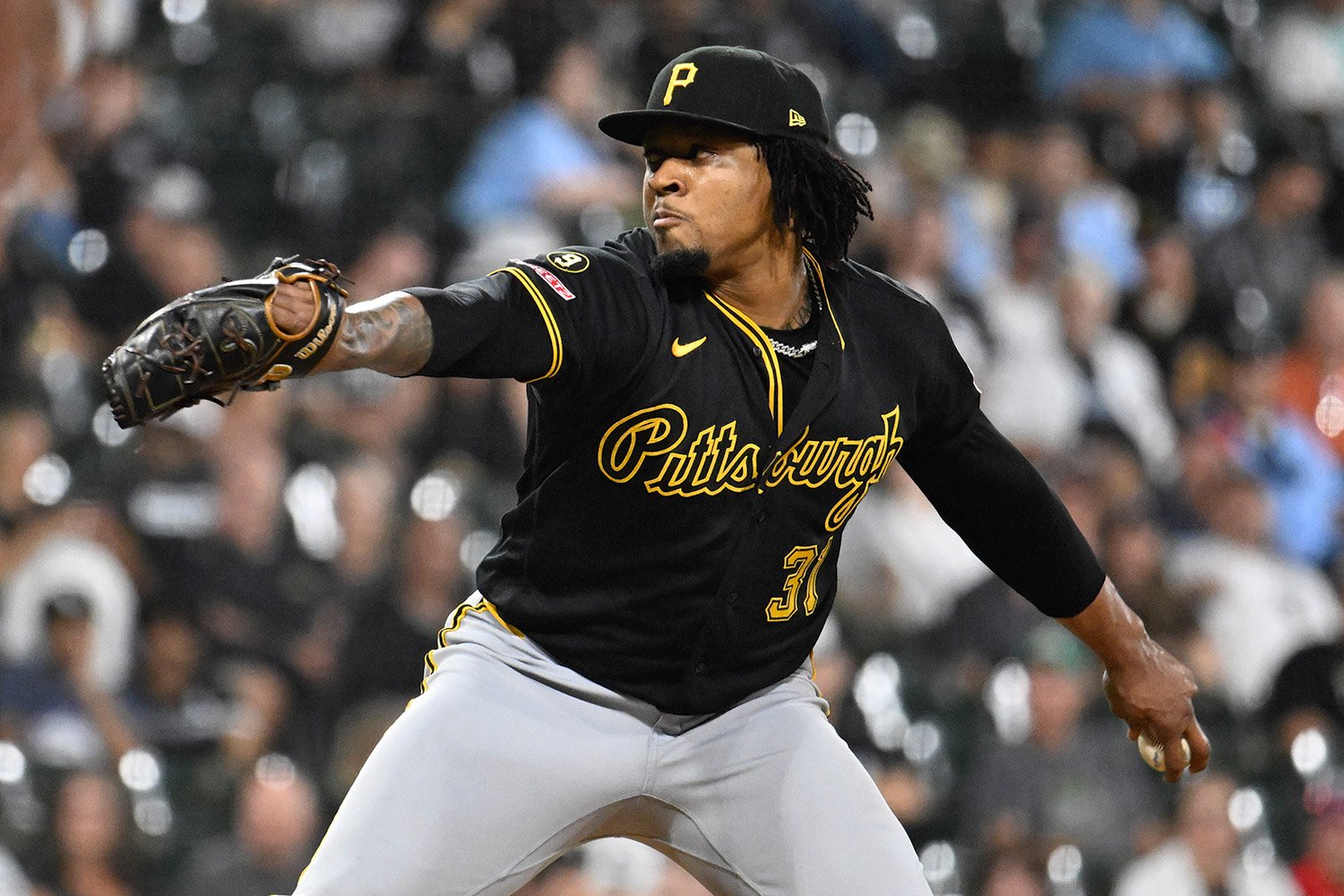 The Kansas City Royals need bullpen help and a reliable arm for late-inning situations. The front office is back to the drawing board after a rough 69-93 season, in which the bullpen was a major pain point for the team, finishing dead last in FIP (5.06) and total strikeouts (482). With a salary floor already proposed in the latest Collective Bargaining Agreement, the Royals will need to increase their spending this offseason. One way to do that is by targeting free agent Gregory Soto, who ranks 58th overall in DiamondCentric's Top Free Agents Ranking. After a highly productive 2026 campaign with the Pittsburgh Pirates, Soto has proven himself to be a solid reliever. Bringing him to Kansas City to fix the team's late-inning relief problem is exactly what the ball club needs. Gregory Soto's 2026 Numbers At A Glance: 2026 Statistics: Innings Pitched: 67 Record: 6-5 Saves: 16 ERA: 3.63 WHIP: 1.16 FIP: 3.32 Strikeouts: 79 Walks: 27 bWAR: 1.2 Why The Royals Should Sign Gregory Soto In short, Soto provides exactly what the Royals need, which is a dominant, reliable, left-handed arm out of the bullpen. Let's take a deeper look at Soto's metrics this past season. The primary culprit behind the Royals' relief struggles was an inability to put hitters away, as evidenced by their league-worst strikeout numbers. Soto fills that gap. His 27.7% strikeout rate in 2026 was the best he's posted since the 2020 season. Soto has a heavy sinker that averaged 96.4 mph and topped out at 100.1 mph this past season. He operates with a four-pitch mix that is built around his impressive sinker and devastating slider. His slider generated a whiff rate of 40% and a chase rate of 31.5% across all four pitch types. Soto posted a 3.32 FIP in 2026, which was lower than his 3.63 ERA, indicating that he pitched even better than his baseline numbers. Opposing teams had a .190 batting average against Soto, as he consistently baffled them on the mound and prevented them from stringing together hits. When hitters did manage to put the ball in play against him, they struggled to lift it, as shown by Soto's 46.1% ground-ball rate. The Royals have a highly capable defensive infield backed by Maikel Garcia, Bobby Witt Jr., Michael Massey and Vinnie Pasquantino, who are all built to maximize a ground-ball pitcher's effectiveness. Putting a heavy sinker lefty in front of Kansas City's talented defensive infield is a great recipe for quick, efficient outs. Bottom Line While premier closing pitchers and late-inning bullpen arms demand high-dollar contracts, Soto sits in a sweet spot as an impactful yet realistic target. Soto will likely fetch a multi-year contract somewhere in the range of $8-$10 million per season this winter. If the Royals want the opposite of what happened to them last season with the bullpen, making Soto an offer would be a step in the right direction.
-
RCT’s 2027 Payroll Blueprint: RT's Offseason
Brian Shrum replied to RCT's topic in Kansas City Royals Talk
Emerson Hancock would be a solid addition to the starting rotation. Would love to get Soto or Abreu through free agency. -
Brian Shrum changed their profile photo
-
Image courtesy of Kiyoshi Mio-Imagn Images Michael Massey, 2B 2023 Salary: $722,850 2024 Salary: $757,000 2025 Salary: $790,250 2026 Salary: $1,570,000 (First Year of Arbitration) Massey Background Michael Massey was drafted 109th overall by the Royals in the 4th round of the 2019 MLB Draft. Massey has a strong line drive swing that helped propel him through the minor leagues quickly, making his MLB debut in July of 2022. After a strong rookie performance in the back half of the 2022 season, Massey played over 100 games in both 2023 and 2024, showing his power-hitting capabilities with 15 home runs in 2023 and 14 in 2024, along with an above-average OPS+ of 108. Unfortunately, his career hit a bump in the road during the 2025 season, as he was plagued by injuries, including a high ankle sprain, a fractured wrist, and chronic lower back tightness. These issues sidelined him for most of the 2025 season, during which he played only 77 games and posted a slash line of .244/.268/.313 (.581 OPS). Based on that slash line, his power numbers were clearly down from prior years, as he hit only 3 home runs and finished with a wRC+ well below average at 57, according to FanGraphs. In his first year of arbitration, Massey settled with the front office on a $1.57 million salary for the 2026 season, and he made the most of it with a good comeback year. This past season, he had his health back and played in 131 games for the Royals. He logged a career-best slash line of .272/.303/.428 (.731 OPS) with a 2.3 fWAR, proving himself to be a solid everyday player. In addition to his success at the plate, he was also a strong defender for the Royals this past season, finishing the year with +11 Outs Above Average (OAA), which ranked second in the American League. Massey is a finalist for the 2026 American League Gold Glove Award. 2026 Stats: 131 G, 452 PA, .272/.303/.428 (.731), 13 HR, 25 2B, 1 3B, 50 RBI, 4.6 BB%, 16.6 K% Royals Depth At Second Base Nick Loftin: 40-man roster Jonathan India: 40-man roster (If the Royals resign him, unrestricted free agent) Josh Rojas: 40-man roster (If the Royals resign him, unrestricted free agent) Tyler Tolbert: 40-man roster Minor Leagues: Javi Vaz, Peyton Wilson Considering the Royals are highly unlikely to re-sign Jonathan India or Josh Rojas, the primary alternative depth at second base would be Nick Loftin, who can play virtually anywhere as a great utility player. Like Massey, Loftin also showed his elite defensive abilities, finishing the year as an American League Gold Glove finalist (3B). Beyond Loftin, the 40-man roster features another utility option in Tyler Tolbert, who is fully capable of manning second base but is primarily used for his speed on the basepaths and in the outfield. I would not consider Tolbert a true threat to Massey's everyday role at second base. Further down the pipeline, Javier Vaz represents homegrown infield depth; however, he does not possess the major league power that Massey has at the plate. Since the other internal options behind Massey are either versatile bench pieces or unproven prospects, Massey's top spot on the depth chart remains undisputed. Why the Royals Should Offer Him Arbitration Tendering Michael Massey a contract this offseason is a must for the Royals front office. In his second year of arbitration and after an impressive comeback season in 2026, Massey is projected to earn between $3.2 and $3.5 million in 2027. For a team looking to get back into the playoffs and valuing high-quality defensive play, tendering Massey a contract in this range would be a great bargain for Gold Glove talent. Massey does offer above-average offensive production for a traditionally weak-hitting position. Among all American League second basemen in 2026 with 450 or more plate appearances, he finished 3rd in batting average (.272) and 4th in slugging percentage (.428). High-level two-way middle infielders are difficult and expensive to acquire on the open market. Letting a player like Massey walk over a modest $3 million contract would be a step backward for the organization. Why the Royals Should Non-Tender Him While Massey's .272 batting average was productive, his overall offensive value was exactly at league average, posting a wRC+ of 100 this past season. He is also a player who does not draw many walks, as he has posted a BB% of around 5% each year since being called up to the majors. Because he rarely draws walks, his on-base percentage tends to be lower than others'. If he were to experience a regression in contact and batting averages in 2027, his offensive value could drop substantially due to a lack of walks. Massey Prediction This decision should be straightforward for J.J. Picollo and the Royals' front office. Expect the Royals to tender Massey a 2027 contract in the $3.2-$3.5 million range. Massey enters the winter with massive leverage and a secure roster spot. A long-term contract extension may be discussed later on, but for now he should be entering 2027 as the Royals' everyday second baseman. View full article
-
Arbitrary Thoughts: Is Michael Massey Worth His Rising 2027 Projections?
Brian Shrum posted an article in Royals
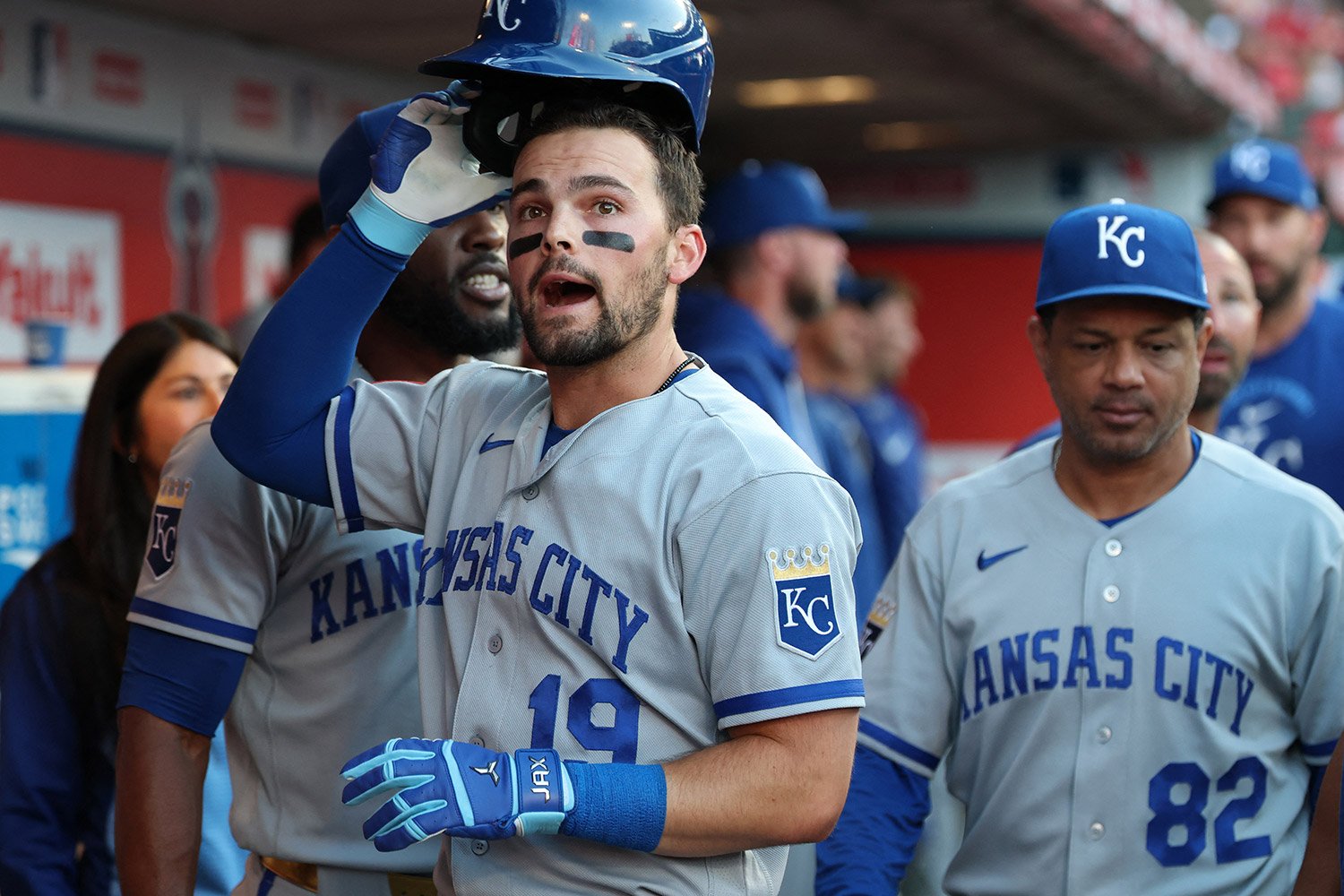 Michael Massey, 2B 2023 Salary: $722,850 2024 Salary: $757,000 2025 Salary: $790,250 2026 Salary: $1,570,000 (First Year of Arbitration) Massey Background Michael Massey was drafted 109th overall by the Royals in the 4th round of the 2019 MLB Draft. Massey has a strong line drive swing that helped propel him through the minor leagues quickly, making his MLB debut in July of 2022. After a strong rookie performance in the back half of the 2022 season, Massey played over 100 games in both 2023 and 2024, showing his power-hitting capabilities with 15 home runs in 2023 and 14 in 2024, along with an above-average OPS+ of 108. Unfortunately, his career hit a bump in the road during the 2025 season, as he was plagued by injuries, including a high ankle sprain, a fractured wrist, and chronic lower back tightness. These issues sidelined him for most of the 2025 season, during which he played only 77 games and posted a slash line of .244/.268/.313 (.581 OPS). Based on that slash line, his power numbers were clearly down from prior years, as he hit only 3 home runs and finished with a wRC+ well below average at 57, according to FanGraphs. In his first year of arbitration, Massey settled with the front office on a $1.57 million salary for the 2026 season, and he made the most of it with a good comeback year. This past season, he had his health back and played in 131 games for the Royals. He logged a career-best slash line of .272/.303/.428 (.731 OPS) with a 2.3 fWAR, proving himself to be a solid everyday player. In addition to his success at the plate, he was also a strong defender for the Royals this past season, finishing the year with +11 Outs Above Average (OAA), which ranked second in the American League. Massey is a finalist for the 2026 American League Gold Glove Award. 2026 Stats: 131 G, 452 PA, .272/.303/.428 (.731), 13 HR, 25 2B, 1 3B, 50 RBI, 4.6 BB%, 16.6 K% Royals Depth At Second Base Nick Loftin: 40-man roster Jonathan India: 40-man roster (If the Royals resign him, unrestricted free agent) Josh Rojas: 40-man roster (If the Royals resign him, unrestricted free agent) Tyler Tolbert: 40-man roster Minor Leagues: Javi Vaz, Peyton Wilson Considering the Royals are highly unlikely to re-sign Jonathan India or Josh Rojas, the primary alternative depth at second base would be Nick Loftin, who can play virtually anywhere as a great utility player. Like Massey, Loftin also showed his elite defensive abilities, finishing the year as an American League Gold Glove finalist (3B). Beyond Loftin, the 40-man roster features another utility option in Tyler Tolbert, who is fully capable of manning second base but is primarily used for his speed on the basepaths and in the outfield. I would not consider Tolbert a true threat to Massey's everyday role at second base. Further down the pipeline, Javier Vaz represents homegrown infield depth; however, he does not possess the major league power that Massey has at the plate. Since the other internal options behind Massey are either versatile bench pieces or unproven prospects, Massey's top spot on the depth chart remains undisputed. Why the Royals Should Offer Him Arbitration Tendering Michael Massey a contract this offseason is a must for the Royals front office. In his second year of arbitration and after an impressive comeback season in 2026, Massey is projected to earn between $3.2 and $3.5 million in 2027. For a team looking to get back into the playoffs and valuing high-quality defensive play, tendering Massey a contract in this range would be a great bargain for Gold Glove talent. Massey does offer above-average offensive production for a traditionally weak-hitting position. Among all American League second basemen in 2026 with 450 or more plate appearances, he finished 3rd in batting average (.272) and 4th in slugging percentage (.428). High-level two-way middle infielders are difficult and expensive to acquire on the open market. Letting a player like Massey walk over a modest $3 million contract would be a step backward for the organization. Why the Royals Should Non-Tender Him While Massey's .272 batting average was productive, his overall offensive value was exactly at league average, posting a wRC+ of 100 this past season. He is also a player who does not draw many walks, as he has posted a BB% of around 5% each year since being called up to the majors. Because he rarely draws walks, his on-base percentage tends to be lower than others'. If he were to experience a regression in contact and batting averages in 2027, his offensive value could drop substantially due to a lack of walks. Massey Prediction This decision should be straightforward for J.J. Picollo and the Royals' front office. Expect the Royals to tender Massey a 2027 contract in the $3.2-$3.5 million range. Massey enters the winter with massive leverage and a secure roster spot. A long-term contract extension may be discussed later on, but for now he should be entering 2027 as the Royals' everyday second baseman.
-
Image courtesy of Peter Aiken-Imagn Images Kyle Isbel, OF 2026 Stats: 100 G, 323 PA, .224/.268/.323 (.591), 6 HR, 9 2B, 1 3B, 24 RBI, 4.6 BB%, 22.9 K% 2023 Salary: $727,500 2024 Salary: $758,250 2025 Salary: $1,750,000 2026 Salary: $2,700,000 Kyle Isbel Background The Royals drafted Kyle Isbel 94th overall in the 2018 MLB draft. Isbel was originally a second baseman but transitioned into an athletic outfielder in the minor leagues, where he advanced through the system and secured a spot on the Opening Day roster in 2021. His major league debut was a memorable one as he posted 3 hits and 2 RBIs, becoming just the fourth player in Royals history to record 3 hits in his MLB debut. However, Isbel shuttled between Omaha and Kansas City for a couple of years before becoming an everyday player at the major league level. Since becoming a regular major league player, Isbel has established himself as a solid defensive center fielder, but has struggled with consistency at the plate. Heading into the 2026 season, it looked like he would be a key piece of the Royals' outfield, coming off his best season, in which he hit .255 and had a career-high 94 hits. However, a grade 3 tear of his left plantar fascia in June cost him roughly two months of the season. The injury impacted his overall production, as he dropped to a career low over 100 games, hitting .224/.268/.323. While his baseline statistics fell, his underlying data showed a gap between actual output and his physical tools. He continued to make decent contact and maintained a 22.9% strikeout rate, which is right at league average. However, his lack of hitting for power and depressed batting average on balls in play of .278 decreased his offensive value. For a player primarily penciled into the lineup for his defensive skills, posting a well-below-league-average wRC+ of 61 showed that his offensive production was not the same as in years prior, and that his primary role is to play solid center field defense. In the 100 games he appeared in this year, Isbel recorded 7 outs above average and also prevented 6 runs with a 91% success rate on 275 defensive attempts. Royals Depth At Center Field John Rave: 40-man roster Isaac Collins: 40-man roster Matthew Lugo: 40-man roster Tyler Tolbert: 40-man roster Minor Leagues: Angeibel Gomez, Luke Pelzer, Dominic Battista The primary internal threat to Isbel's playing time is John Rave, a natural center fielder who took on a larger role during Isbel's time on the IL this season. Utility options like Isaac Collins and Tyler Tolbert are also on the 40-man roster and can play center field. Both are less of a threat, though, as Collins struggled offensively this season, posting a wRC+ of 83, and Tolbert is primarily a bench piece often used as a utility player and pinch runner. Why The Royals Should Offer Isbel Arbitration There is a compelling case for the Royals to tender a contract to Kyle Isbel this offseason. The front office values defensive stability and demands a center fielder who can cover a lot of range in a difficult-to-cover outfield. When fully healthy, the argument could be made that Isbel is a borderline Gold Glove-caliber center fielder, as shown by his +7 Outs Above Average in 2026 (though Defensive Runs Saved liked him far less at -4). High-level defensive talent is difficult to replace on the open market, and letting him walk would be a high-risk move for the organization. With a projected arbitration value of $3.5 million, that is far from a major financial commitment. For a team looking to get back into contention for a division title and the playoffs, paying a premium for a reliable defensive specialist adds low-risk depth. The Royals could argue that Isbel's 2026 offensive struggles were partly due to the plantar fascia injury. At worst, he anchors the bottom of the lineup with elite defense and provides a reliable bench piece at a modest cost. Why the Royals Should Non-Tender Isbel The Royals are entering a critical offseason in which adding dynamic offensive producers is a necessity for the ball club. Isbel's projected $3.5 million arbitration salary may not be justified by the organization considering his offensive struggles this past season. He offers minimal power at the plate, walks infrequently, and is not a threat on the base paths. If the Royals intend to pursue top outfielders and power bats via free agency or trades, they need to maximize every dollar in their payroll. Spending $3.5 million on a defensive specialist who lacks power at the plate may not be the direction they want to go in for a small-market team. If the front office believes they can find cheaper baseline production internally through someone like John Rave or if they want to pursue an outside acquisition, non-tendering Isbel or trading him may be an unfortunate but practical move. Isbel Projection Expect the Royals to tender him a 2027 contract around the projected $3.5 million mark. Historically, the organization has been defensive-minded, and Isbel fits well into that strategy at an affordable price. View full article
-
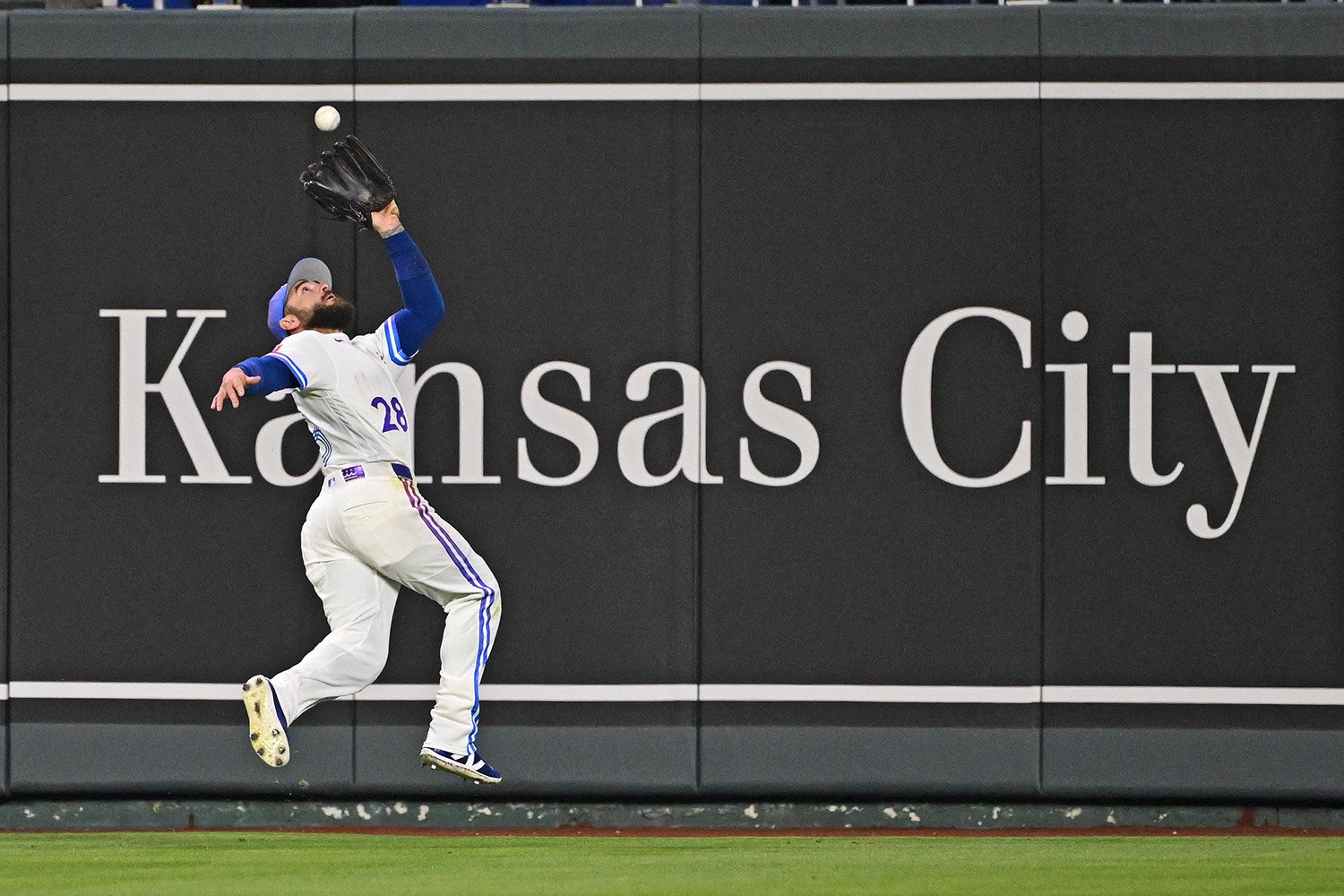 Kyle Isbel, OF 2026 Stats: 100 G, 323 PA, .224/.268/.323 (.591), 6 HR, 9 2B, 1 3B, 24 RBI, 4.6 BB%, 22.9 K% 2023 Salary: $727,500 2024 Salary: $758,250 2025 Salary: $1,750,000 2026 Salary: $2,700,000 Kyle Isbel Background The Royals drafted Kyle Isbel 94th overall in the 2018 MLB draft. Isbel was originally a second baseman but transitioned into an athletic outfielder in the minor leagues, where he advanced through the system and secured a spot on the Opening Day roster in 2021. His major league debut was a memorable one as he posted 3 hits and 2 RBIs, becoming just the fourth player in Royals history to record 3 hits in his MLB debut. However, Isbel shuttled between Omaha and Kansas City for a couple of years before becoming an everyday player at the major league level. Since becoming a regular major league player, Isbel has established himself as a solid defensive center fielder, but has struggled with consistency at the plate. Heading into the 2026 season, it looked like he would be a key piece of the Royals' outfield, coming off his best season, in which he hit .255 and had a career-high 94 hits. However, a grade 3 tear of his left plantar fascia in June cost him roughly two months of the season. The injury impacted his overall production, as he dropped to a career low over 100 games, hitting .224/.268/.323. While his baseline statistics fell, his underlying data showed a gap between actual output and his physical tools. He continued to make decent contact and maintained a 22.9% strikeout rate, which is right at league average. However, his lack of hitting for power and depressed batting average on balls in play of .278 decreased his offensive value. For a player primarily penciled into the lineup for his defensive skills, posting a well-below-league-average wRC+ of 61 showed that his offensive production was not the same as in years prior, and that his primary role is to play solid center field defense. In the 100 games he appeared in this year, Isbel recorded 7 outs above average and also prevented 6 runs with a 91% success rate on 275 defensive attempts. Royals Depth At Center Field John Rave: 40-man roster Isaac Collins: 40-man roster Matthew Lugo: 40-man roster Tyler Tolbert: 40-man roster Minor Leagues: Angeibel Gomez, Luke Pelzer, Dominic Battista The primary internal threat to Isbel's playing time is John Rave, a natural center fielder who took on a larger role during Isbel's time on the IL this season. Utility options like Isaac Collins and Tyler Tolbert are also on the 40-man roster and can play center field. Both are less of a threat, though, as Collins struggled offensively this season, posting a wRC+ of 83, and Tolbert is primarily a bench piece often used as a utility player and pinch runner. Why The Royals Should Offer Isbel Arbitration There is a compelling case for the Royals to tender a contract to Kyle Isbel this offseason. The front office values defensive stability and demands a center fielder who can cover a lot of range in a difficult-to-cover outfield. When fully healthy, the argument could be made that Isbel is a borderline Gold Glove-caliber center fielder, as shown by his +7 Outs Above Average in 2026 (though Defensive Runs Saved liked him far less at -4). High-level defensive talent is difficult to replace on the open market, and letting him walk would be a high-risk move for the organization. With a projected arbitration value of $3.5 million, that is far from a major financial commitment. For a team looking to get back into contention for a division title and the playoffs, paying a premium for a reliable defensive specialist adds low-risk depth. The Royals could argue that Isbel's 2026 offensive struggles were partly due to the plantar fascia injury. At worst, he anchors the bottom of the lineup with elite defense and provides a reliable bench piece at a modest cost. Why the Royals Should Non-Tender Isbel The Royals are entering a critical offseason in which adding dynamic offensive producers is a necessity for the ball club. Isbel's projected $3.5 million arbitration salary may not be justified by the organization considering his offensive struggles this past season. He offers minimal power at the plate, walks infrequently, and is not a threat on the base paths. If the Royals intend to pursue top outfielders and power bats via free agency or trades, they need to maximize every dollar in their payroll. Spending $3.5 million on a defensive specialist who lacks power at the plate may not be the direction they want to go in for a small-market team. If the front office believes they can find cheaper baseline production internally through someone like John Rave or if they want to pursue an outside acquisition, non-tendering Isbel or trading him may be an unfortunate but practical move. Isbel Projection Expect the Royals to tender him a 2027 contract around the projected $3.5 million mark. Historically, the organization has been defensive-minded, and Isbel fits well into that strategy at an affordable price.
-
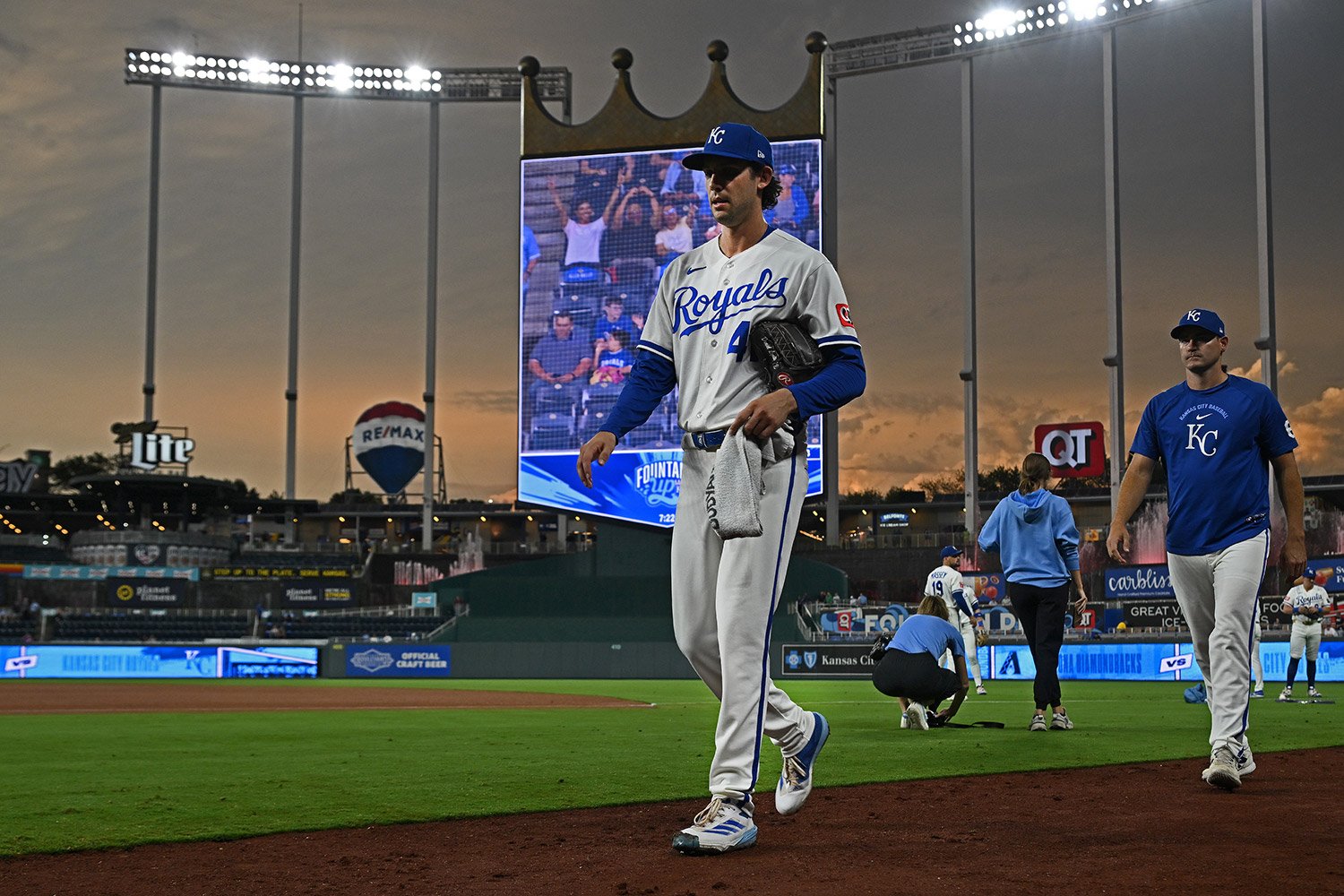 Anyone who watched their fair share of Royals baseball this season can tell you that the bullpen was a major pain point for the ballclub. The Royals bullpen posted a 5.07 ERA, which was the second-worst in the MLB. Collectively, Royals relievers blew 26 saves this season, an incredible number and a big reason why this team ended up winning fewer than 70 games and not competing in a weak division. This is the fourth part of this series; find previous entries here: Outfielders & DH Infielders Starters The Royals' late-inning bullpen disasters started early on in the season and never rallied back to the level of success they had in prior years. It started with Carlos Estevez getting injured in the first game of the year against Atlanta and not pitching again the rest of the season. Estevez's injuries gave Lucas Erceg a chance to take on the closing role, and we all know how that went. From there, it was trial and error in the late innings. For a team that made moves to enhance the bullpen in the offseason, it was disappointing to see the Royals have the second-worst bullpen in the league. Below are my grade reports for Royals relief pitchers who ended the season with 20 or more appearances: Alex Lange: D+ Lange threw 60 innings over 59 games this season, allowing 65 hits and 45 earned runs while walking 33 batters. The season was up and down for Lange, and, like most of the bullpen, it was mostly down. He finished the year with a FIP of 5.87, which is nearly a run and a half higher than this year's league average. His high FIP shows that most of his troubles were his own, which is also backed by his high walk percentage of 12%. Lange's bright spot of the season came in June, when he had 7 saves for the Royals and 11 1/3 innings pitched. However, the following month is where things turned for Lange as he blew 3 saves. Following that month, Lange came in and out of the bullpen and added two holds to his stat line before having a rough September to end the season. Daniel Lynch IV: B Daniel Lynch IV was the best arm out of the bullpen for the Royals this past season when he was in a reliever role. In his sixth season with the Royals, he threw 86 innings with 56 strikeouts, 26 walks, and 39 earned runs. As a reliever, he posted a 3.72 FIP, proving that his 1.96 ERA in 46 relief innings was legitimate. Lynch IV had a 7.3% walk rate and a 15.7% strikeout rate this season. His better-than-league-average walk rate allowed him to keep runners off the base paths and get the necessary outs. He was the team leader in holds among pitchers still on the team roster at the end of the season. His struggles did not come until later in the season when he moved back into a starting role. Lynch IV will head into arbitration this offseason, but I would expect to see him back in a Royals uniform next year. Steven Cruz: C+ After a rough first two months of the season, Steven Cruz became a more reliable arm out of the bullpen as the season went on. In April and May, Cruz allowed 13 runs in 14 innings. However, as spring turned to summer, the numbers got better. Cruz had 8 saves, 5 holds, and only 1 blown save in June, July, August, and September. In those months, he threw 44 2/3 innings, allowing 15 earned runs and striking out 45. Cruz had an impressive 26.4% strikeout rate, showing he can get batters out himself. He ended the season with a 4.55 FIP, indicating there is still some refinement to be done. If he can match his high velocity and keep his command consistent next year, he has the potential to be a solid late-inning reliever. Lucas Erceg: D Lucas Erceg was tough to watch starting in April and continuing through the rest of the season. Erceg was not the reliever we have seen in the past. Unfortunately, Lights Out Lucas was non-existent for the vast majority of this season. Although Lucas did save 13 games this season, most of those came early in the year, before the struggles began and the blown saves started piling up in April and May. Erceg's strikeout numbers declined, and he ended the year with a 14.9% strikeout rate, indicating his struggles to get batters to miss. He did not do himself any favors with a 14.0% walk rate and a 5.40 FIP, putting guys on base and getting himself into trouble. He became a late-inning liability, and the Royals sent him to Triple-A Omaha. After a tough year, Erceg did get a save in the season finale. Royals fans can only hope this offseason is a reset to come back next season being the Lights Out Lucas we know. Matt Strahm: F The trade deal sending Matt Strahm to Kansas City certainly did not work out for the Royals. In 35 2/3 innings pitched, Strahm posted a 7.32 ERA and allowed 12 home runs. Oftentimes, those home runs resulted in the Royals losing their lead late in the game. Strahm was 0-4 in save opportunities as well. His astronomical 6.45 FIP truly shows how catastrophic his tenure with the Royals was. For a guy who was brought in as a left-handed setup reliever, it was a total disaster until the Royals released him on August 8th. John Schreiber: C Before being placed on waivers on August 29th, Schreiber appeared in 55 games for the Royals. In those 55 games, he had 14 holds. However, his FIP of 4.88 hinted at trouble brewing. He was dominant against right-handed pitchers but struggled against lefties, and his overall utility out of the bullpen became weaker as he posted a 17.7% strikeout rate and 10.8% walk rate. With his strikeout-to-walk ratio being 36 strikeouts and 19 walks, plus his struggles against left-handed hitters, the Royals needed to make a move. Ultimately, the Royals parted ways with Schreiber and placed him on waivers, where the Yankees picked up his contract. Nate Pearson: B Nate Pearson came over at the trade deadline and did well for a team that had little chance of making the playoffs. The Royals acquired Pearson from the Astros on July 22nd, and he made his first appearance on July 26th. He appeared in 26 games out of the bullpen, striking out 25 batters. Pearson's first month with the club was outstanding as he threw 12 2/3 innings with 13 strikeouts and only 1 earned run. His highly encouraging 3.87 FIP with the Royals suggested he could be a premium right-handed pitcher for the Royals bullpen. However, mid- to late September was troublesome for Pearson, as he allowed 12 runs on 10 hits in just 5 innings. He will likely be a key piece to the Royals bullpen next year, and hopefully we get the August version of Pearson that we saw this past summer. Jose Cuas: B- Jose Cuas moved up and down between the big leagues and Triple-A this season. Cuas made 24 appearances for the Royals and posted a 2.31 ERA over 23 1/3 innings, with 25 strikeouts. Cuas had an above-average strikeout percentage of 25.5%, but he also walked guys at a high rate, posting a 14.3% walk rate. At times, Cuas has struggled with his command and allowed more runners on base than the team would like, which is why he was primarily used in low-leverage situations. Whether Cuas will return next season is up in the air, as he will be competing for a spot on the 40-man roster. Nick Mears: D+ The Royals acquired Nick Mears from Milwaukee ahead of the 2026 season. He was brought in as a middle-relief option but was sidelined for most of the year with an injury that required surgery. Before his arm gave out, Mears threw 19 1/3 innings and posted a 4.60 FIP. His 18.1% strikeout rate was significantly lower than the club expected when they acquired him. His 13.3% walk rate made it clear that he was pitching through pain and discomfort. Mears recovery timeline likely has him back sometime next summer, where hopefully he can be the middle-relief guy the Royals need. Do you agree with these grades or would you grade some differently? What do the Royals need to do to fix their bullpen struggles this offseason? Let me know in the comments.
-
- 1
-

-
- alex lange
- daniel lynch iv
- (and 7 more)

