


Mike Gillespie
-
Posts
67 -
Joined
-
Last visited
-
Days Won
9
Content Type
Profiles
Forums
Blogs
Events
News
2026 Kansas City Royals Top Prospects Ranking
Kansas City Royals Videos
Kansas City Royals Free Agent & Trade Rumors, Notes, & Tidbits
Guides & Resources
2026 Kansas City Royals Draft Tracker: Picks & Bonuses
Store
Downloads
Gallery
Everything posted by Mike Gillespie
-
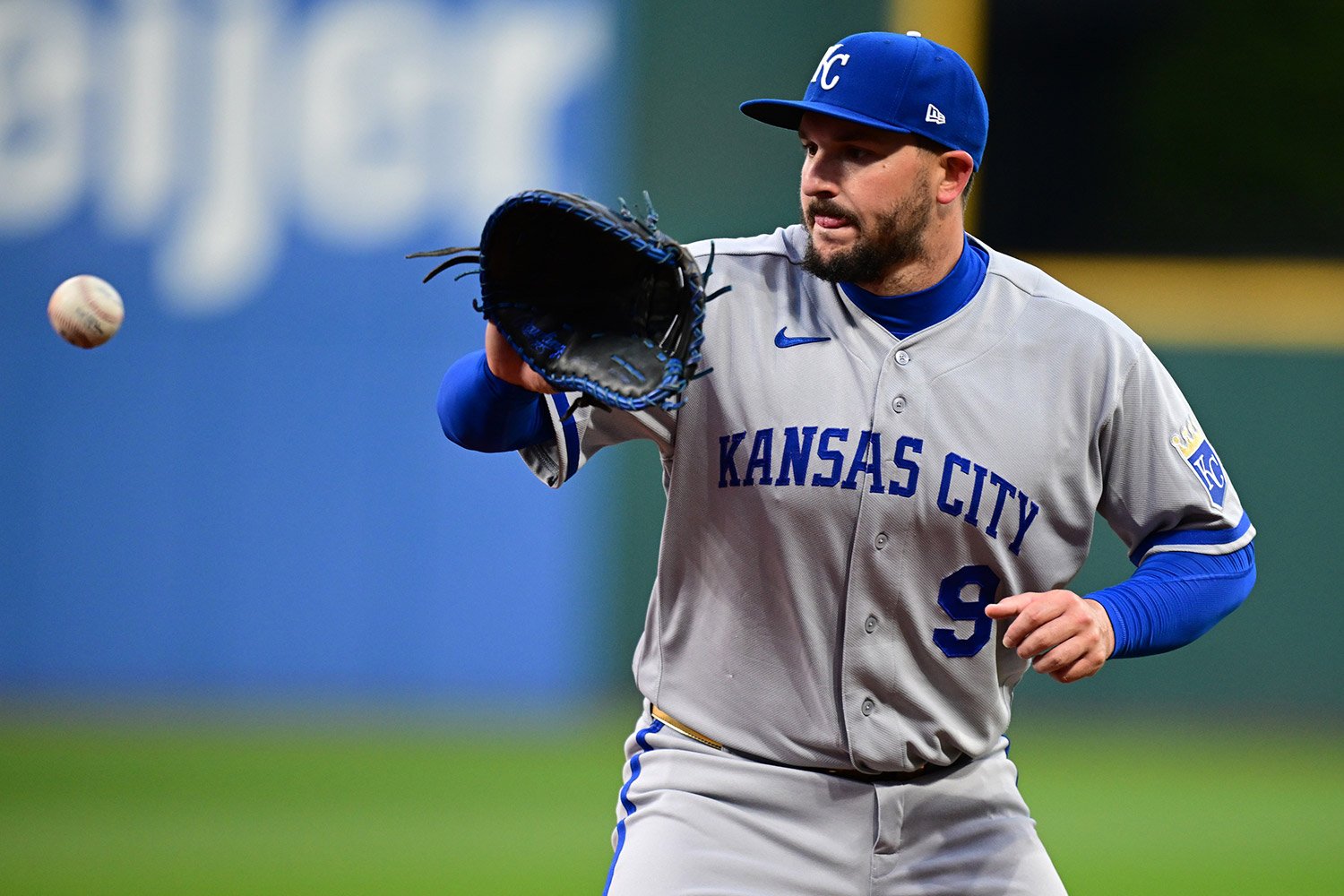 Roughly three weeks remain until the All-Star Break gives most of the Kansas City Royals a few days’ relief from the deepening disappointment of their once-promising 2026 season. A bad bullpen, an improving but still wanting offense, and too many injuries to key players have the Royals stranded in, or at best near, the American League Central cellar. But the All-Star Break also marks that point of the summer when the trade market finally heats up — the August 3 major league trade deadline will loom large when the Break ends and regular play resumes July 17. Barring some astonishing reversal of fortune, the Royals will be deadline sellers. With his club on pace to lose 90 games or more, general manager J.J. Picollo won’t be looking for a playoff race roster edge; instead, he’ll be fielding calls from legitimate contenders searching for game-changing down-the-stretch help. Selling is, of course, easier and almost always cheaper than buying. Because contenders seek valuable, proven big-league players, selling enables weaker teams to reduce payroll, typically in exchange for much cheaper prospects who may be years away from the majors. But selling has its risks. Here are three Picollo must avoid. The 2026 Trade Deadline Isn’t the Time To Start a Royals Rebuild As disappointing as this team is, tearing it down to facilitate another painful rebuild isn’t warranted — the Royals aren’t very good, but their cupboards are far from empty. Bobby Witt Jr. is his usual self, and his season will sour only if his strained MCL turns into something worse. Jac Caglianone (.275, .349 OBP, and a club-leading 12 homers through Sunday) seems to be living up to the huge hype he didn’t live up to last year. Michael Massey (.266 with seven homers and good defense) may end up proving he belongs at the keystone. Maikel Garcia isn’t at the top of his game, but will be fine. Although a foot injury currently sidelines center fielder Kyle Isbel, his bat is better, and his defense remains excellent. And while injuries continue to plague Cole Ragans and Kris Bubic, starters Stephen Kolek (4-1, 2.68 ERA before St. Louis battered him Sunday) and Michael Wacha (3.64 ERA and 10 quality starts in 15 tries) have been good. Daniel Lynch IV is, with his steadiness and 2.53 ERA in 32 appearances through Sunday, the best in a troubled bullpen. The Royals have enough talent to form a good present and future core; they don’t require a complete overhaul. The time isn’t ripe for the kind of hasty, ill-advised, “burn it down” approach that will leave the roster weaker on Aug. 4 than it is now. But what about prospects, you say? The farm system needs help, but the bulk of its best prospects are two seasons or more away from Kauffman Stadium. At the same time, the big league roster isn’t that far from winning — now, and this winter, are the times to fine-tune it, not rip it apart and wait several long years for success. The Royals Should Not Blow Up Their Starting Rotation The potential for a rotation exodus exists. Bubic can test free agency for the first time this winter. Ragans’ recently-extended trip to the Injury List renders his future uncertain, veterans Wacha and Seth Lugo could be attractive at the deal deadline, and some teams are bound to offer up a good prospect or two for Kolek or Noah Cameron… or both. None of that, though, gives KC good cause to move multiple pieces of its rotation. If he’s healthy, trading Bubic makes sense — he’s liable to bolt in free agency and extending him a qualifying offer seems unlikely, so dealing him before August 3 guarantees the club more than the nothing he’ll net them if he opts for free agency. Beyond Bubic, the Royals can afford to stand pat. Ragans’ health poses serious questions, but the club shouldn’t give up on him yet. Wacha and Lugo are signed through 2027, and the club holds one-year options when those deals expire; both could play key roles next season when the Royals should be better. Kolek has been too impressive to dangle as prospect bait, and Cameron hasn’t done anything to imperil his starter’s spot. No, the Royals have a solid rotation, diminished this season only by maddening injuries to important pieces. The organization’s need for prospects isn’t so extreme that Picollo should break up his starters to get unseasoned arms not yet suitable for prime time. The Royals Shouldn’t Put Vinnie Pasquantino On the Trade Block A broken hamate bone has Pasquantino on the IL, but that doesn’t mean he won’t be on the market. His reputation as a slugger and 100-plus-RBI man is well-deserved (he pounded 51 homers and drove in 210 runs across the 2024 and 2025 campaigns), and after a slow start this season, Kansas City’s star first baseman was slashing .298/.365/.426 with a homer and seven RBI this month before going down June 13. That he could be back before the deal deadline arrives means he might be shopped. And even if he isn’t back, remember the Royals dealt Danny Duffy to the Dodgers at the 2021 deadline when he was on the IL. Pasquantino, then, could be an attractive target who won’t break the banks of contending clubs hunting for more punch and production — he hits for power, drives in runs, and is playing on an easily affordable two-year, $11.1 million contract that runs through next season. Some might also argue that Caglianone makes Pasquantino expendable: first base is Caglianone’s “natural” position; he’s been superb there since Pasquantino went on the IL, and Pasquantino is eligible for free agency after the 2028 season. But Caglianone’s emergence as a big league-caliber hitter doesn’t mean his development is complete, and do the Royals really want to compound the difficulty of their continuing and frustrating search for more outfield offense by moving Caglianone to first permanently? And the club is better off offensively with both sluggers in the lineup. Deal Pasquantino? No. This is a team that shouldn’t be shopping for the kind of firepower Pasquantino can generate. Unless he’s faced with a phenomenal offer too great to reject, Picollo should listen politely, then turn down overtures for Pasquantino.
 -
Kendry ChourioDavid ShieldsSean GambleBlake MitchellJosh HammondRamon RamirezDrew BeamAsbel GonzalezBen KudrnaCarson RoccaforteYandel RicardoFelix ArrondeBlake WoltersMichael LombardiSteven ZobacL.P. LangevinDaniel VazquezFrank MozzicatoWarren ColcanoJustin Lamkin
-
Kendry ChourioDavid ShieldsSean GambleBlake MitchellJosh HammondRamon RamirezDrew BeamAsbel GonzalezBen KudrnaCarson RoccaforteYandel RicardoFelix ArrondeBlake WoltersMichael LombardiSteven ZobacL.P. LangevinDaniel VazquezFrank MozzicatoWarren ColcanoJustin Lamkin
-
Image courtesy of © Aaron Doster-Imagn Images Trading Jonathan Bowlan to Philadelphia for Matt Strahm seemed a reasonable thing to do when the Kansas City Royals pulled the trigger on just that deal back in December. Bowlan had been serviceable, but not consistently remarkable, in parts of three seasons for the Royals, while Strahm had become an accomplished big league reliever after KC, with whom he broke into the majors in 2016, dealt him away to the Padres during the 2017 campaign. A little more than six months after the Bowlan deal and almost three months into the Royals’ all-but-lost 2026 season (Monday’s loss to Washington dropped them 15 games below .500), Bowlan has overcome an early April groin strain and is 2-0 with a 3.92 ERA in 20 games for the Phillies, while an ugly 5.40 ERA mars Strahm’s 23-appearance, 3-1 record through Monday. It's a homecoming with little to celebrate. Bowlan is no longer Kansas City’s concern, but Strahm most certainly is — without improvement, the veteran left-hander could drive the club crazy when the midsummer trade deadline nears. Here’s why. Why Did the Royals Go After Matt Strahm? Kansas City’s interest in bringing Strahm home was understandable. The Royals needed some fine-tuning after a disappointing 2025 season that left them just a few wins short of a second consecutive trip to the playoffs. The bullpen wasn’t free of concerns as baseball’s winter began, and Strahm seemed like someone who could provide immediate help. He’d been quite good for the Phillies after joining them as a free agent after the 2022 campaign, posting an excellent 2.71 ERA across three seasons and 188 appearances. His 0.955 WHIP, 4.94 SO/BB ratio, 30.4 K%, 6.16 BB%, and 160 ERA+ were all good, and he won 17 games and saved 11. And he became an All-Star for the first time when he went 6-2 with a 1.87 ERA to help the Phils roll to the 2024 National League East Division title. But this season, his 11th in the majors, hasn’t been what Strahm and the Royals wanted when they gave up Bowlan to get him. Yes, he’s won three times and lost only once, but he’s surrendered 13 runs in 21 1/3 innings. Concerning, too, is his performance this month — through Monday, he’d given up home runs in each of his last four games and in five of his six June appearances. His ERA for the month was 10.13 (six earned runs in 5 1/3 innings), and opponents were hitting .273 against him. He blew a save by giving Jake Burger a leadoff seventh-inning home run in KC’s June 10 loss to Texas, and blew another Saturday night when, after hitting leadoff man Isaac Paredes in the eighth, he yielded a game-tying homer to Jose Altuve. The Royals lost 8-7. Strahm also had a 5.00 ERA in April. He improved to 3.18 in May, but it was a small sample size month — knee inflammation forced him to the Injured List for 15 days and limited him to just six appearances. And as Royals Keep writer Kevin O’Brien pointed out recently, many of his other 2026 peripherals are troubling. Will Matt Strahm Pose Trade Deadline Troubles For the Royals? Quite possibly. Because this is a contract season for him, Strahm was a likely midsummer trade candidate as soon as he arrived in Arizona for spring training. That he’s a veteran reliever increases the chances he could be moved by this season’s later-than-usual Aug. 3 deal deadline. But J.J. Picollo can’t trade without a trade partner, and unless it gets considerably better, Strahm’s body of 2026 work may well make it hard for KC’s general manager to drum up much interest in him — especially enough to net the Royals strong value in return. Combined with his unflattering stats, his age — 34 now, 35 in November — could also get in the way of any meaningful deal. It is unfortunate that Strahm may not size up as a viable trade candidate when the market heats up next month. Making matters worse is that he isn’t giving the club much reason to bring him back next season — without a trade, they may be left with little to show for giving up Jonathan Bowlan. View full article
-
How This Reliever Could Drive Royals Crazy At The Trade Deadline
Mike Gillespie posted an article in Royals
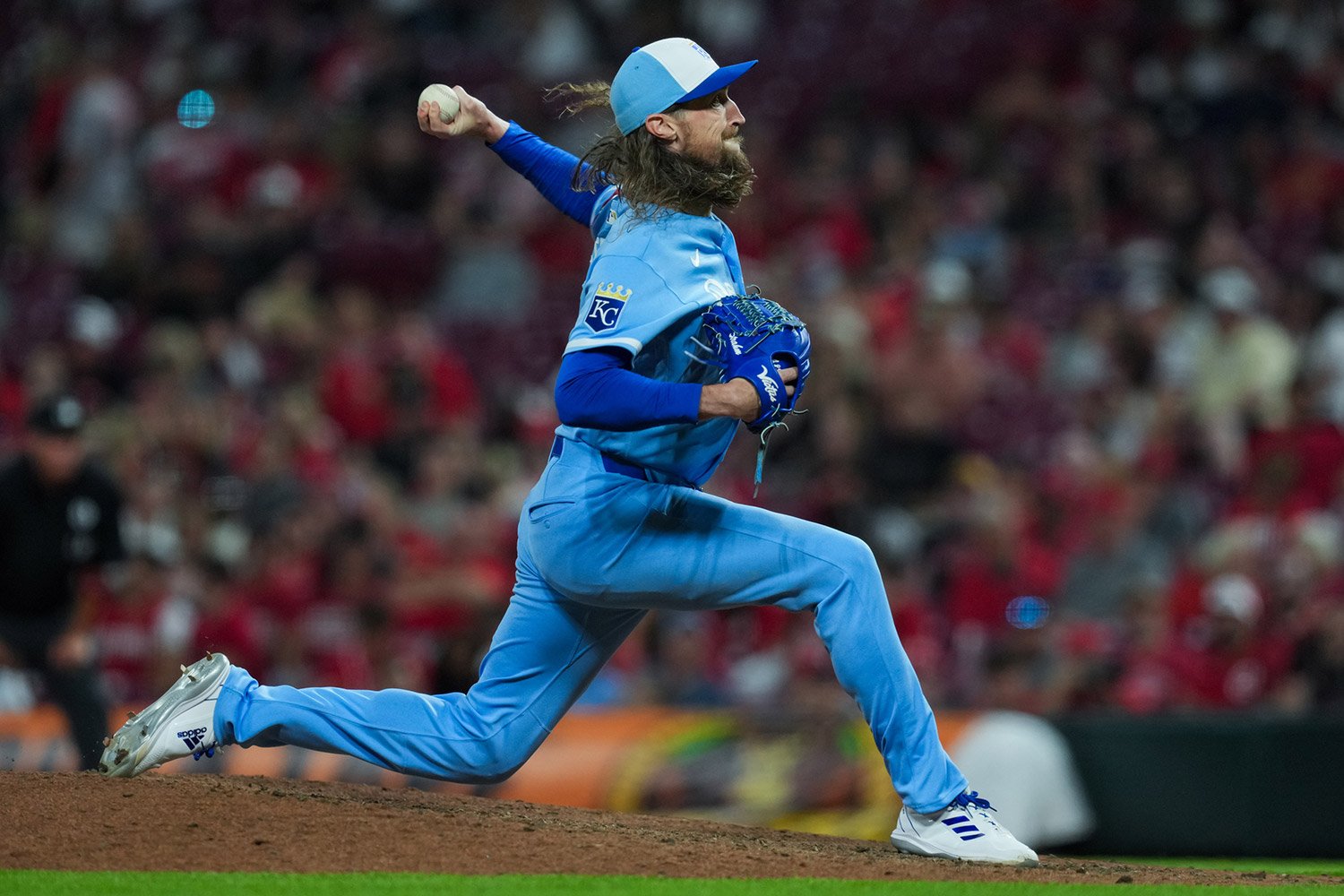 Trading Jonathan Bowlan to Philadelphia for Matt Strahm seemed a reasonable thing to do when the Kansas City Royals pulled the trigger on just that deal back in December. Bowlan had been serviceable, but not consistently remarkable, in parts of three seasons for the Royals, while Strahm had become an accomplished big league reliever after KC, with whom he broke into the majors in 2016, dealt him away to the Padres during the 2017 campaign. A little more than six months after the Bowlan deal and almost three months into the Royals’ all-but-lost 2026 season (Monday’s loss to Washington dropped them 15 games below .500), Bowlan has overcome an early April groin strain and is 2-0 with a 3.92 ERA in 20 games for the Phillies, while an ugly 5.40 ERA mars Strahm’s 23-appearance, 3-1 record through Monday. It's a homecoming with little to celebrate. Bowlan is no longer Kansas City’s concern, but Strahm most certainly is — without improvement, the veteran left-hander could drive the club crazy when the midsummer trade deadline nears. Here’s why. Why Did the Royals Go After Matt Strahm? Kansas City’s interest in bringing Strahm home was understandable. The Royals needed some fine-tuning after a disappointing 2025 season that left them just a few wins short of a second consecutive trip to the playoffs. The bullpen wasn’t free of concerns as baseball’s winter began, and Strahm seemed like someone who could provide immediate help. He’d been quite good for the Phillies after joining them as a free agent after the 2022 campaign, posting an excellent 2.71 ERA across three seasons and 188 appearances. His 0.955 WHIP, 4.94 SO/BB ratio, 30.4 K%, 6.16 BB%, and 160 ERA+ were all good, and he won 17 games and saved 11. And he became an All-Star for the first time when he went 6-2 with a 1.87 ERA to help the Phils roll to the 2024 National League East Division title. But this season, his 11th in the majors, hasn’t been what Strahm and the Royals wanted when they gave up Bowlan to get him. Yes, he’s won three times and lost only once, but he’s surrendered 13 runs in 21 1/3 innings. Concerning, too, is his performance this month — through Monday, he’d given up home runs in each of his last four games and in five of his six June appearances. His ERA for the month was 10.13 (six earned runs in 5 1/3 innings), and opponents were hitting .273 against him. He blew a save by giving Jake Burger a leadoff seventh-inning home run in KC’s June 10 loss to Texas, and blew another Saturday night when, after hitting leadoff man Isaac Paredes in the eighth, he yielded a game-tying homer to Jose Altuve. The Royals lost 8-7. Strahm also had a 5.00 ERA in April. He improved to 3.18 in May, but it was a small sample size month — knee inflammation forced him to the Injured List for 15 days and limited him to just six appearances. And as Royals Keep writer Kevin O’Brien pointed out recently, many of his other 2026 peripherals are troubling. Will Matt Strahm Pose Trade Deadline Troubles For the Royals? Quite possibly. Because this is a contract season for him, Strahm was a likely midsummer trade candidate as soon as he arrived in Arizona for spring training. That he’s a veteran reliever increases the chances he could be moved by this season’s later-than-usual Aug. 3 deal deadline. But J.J. Picollo can’t trade without a trade partner, and unless it gets considerably better, Strahm’s body of 2026 work may well make it hard for KC’s general manager to drum up much interest in him — especially enough to net the Royals strong value in return. Combined with his unflattering stats, his age — 34 now, 35 in November — could also get in the way of any meaningful deal. It is unfortunate that Strahm may not size up as a viable trade candidate when the market heats up next month. Making matters worse is that he isn’t giving the club much reason to bring him back next season — without a trade, they may be left with little to show for giving up Jonathan Bowlan.
 -
Royals Prospect Blake Mitchell Remains An Organization Paradox
Mike Gillespie posted an article in Minor Leagues
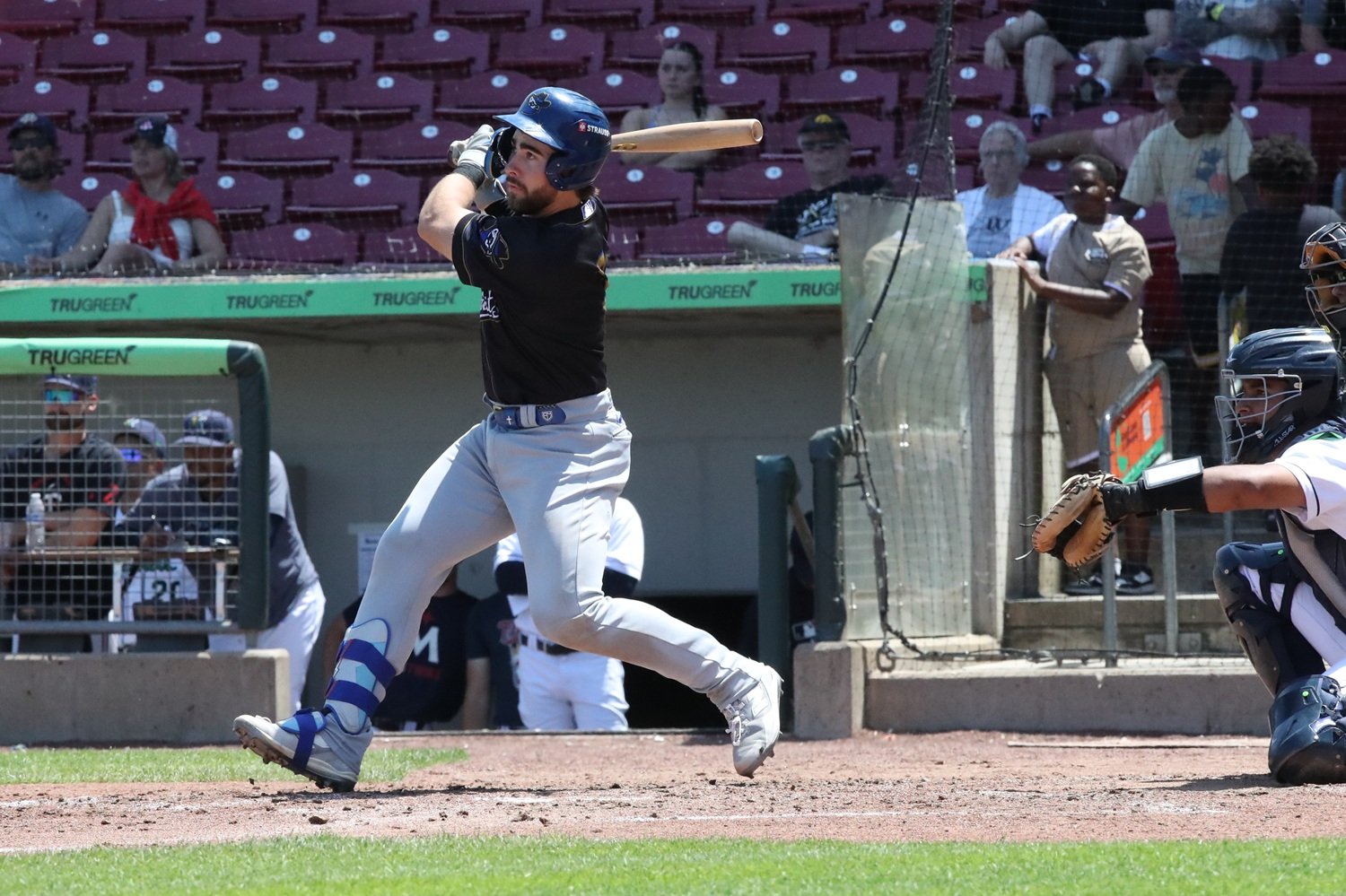 A little over a week has passed since Blake Mitchell almost single-handedly pounded Quad Cities, the Kansas City Royals’ High-A affiliate, past Midwest League rival Cedar Rapids. Mitchell slammed two homers and drove in seven runs as the River Bandits won 11-6 on May 29. Just a night later, though, Mitchell went 0-for-4 and struck out three times. He fanned twice in another hitless, four at-bat night in the Bandits’ next game. In a sense, it’s been that kind of season — and career —for Mitchell, an obviously gifted young catcher the Royals hope someday vindicates the big gamble they took on him in the 2023 amateur draft, when they spent the eighth overall pick to get the fresh-out-of-high-school catcher. The risky move defied the conventional wisdom that prep catchers aren’t good high draft choices. Whether Mitchell has, or will, prove the Royals’ dice roll was worth it remains to be seen. His minor league numbers reflect alluring tendencies to get on base and hit home runs, but also striking statistical inconsistencies. The question for Mitchell and the franchise is thus this: Will he make it? Royals Prospect Blake Mitchell is a Statistical Paradox That Mitchell is talented is indisputable. Even the Royals, with their checkered draft history, don't pick obvious clunkers in the first round. Only later, after they fail for reasons often unrelated to talent, are high picks declared sunk costs. And while Mitchell doesn’t seem destined for such a fate, his hasn’t been a trouble-free progression through the Kansas City farm system. One concern is his conspicuously low batting average. Including an ugly .143 in the post-draft 2023 Arizona Complex League, and the .207 he was hitting through Thursday, he entered Friday batting just .220 for his career. Batting average’s importance has diminished, but .220 for a first-rounder in his third full professional season is a red flag. Mitchell also strikes out too much — 34.8% of the time this season (a number probably explained in no small part by a 63.9 Z-Swing%), and 32.9% last year for his first full High-A campaign, although a broken hamate bone sidelined him for all but 48 games. Mitchell’s subpar Whiff rates (44.2% through Thursday this season, 35.5 last year, and 36% in 2024) and this season's third-percentile Z-Contact mark (67%) aren't good at all. But Mitchell’s overall professional performance is far from negative. Take, for example, his 131 wRC+ through Thursday, which compares favorably with his 111 last season and his 131 split between Columbia and Quad Cities the year before. Elite walk rates drive his excellent OBP marks of .419 this year, .390 in 2025, and .368 in 2024. His OPS numbers, which stood at .872 entering Friday, and were .710 for his injury-shortened 2025 campaign and .793 the year before, leave little room for criticism. And power he has. Mitchell homered for the 10th time this season on Wednesday, putting him well on the path to better the career-high 18 he hit in 2024. He’s also a competent baserunner with 50 steals since turning pro. Not bad for a catcher. The unusually strong-armed Mitchell can also be decent behind the plate. He caught 31% of would-be base stealers in High-A last season. Is There a Realistic Path to the Royals for Blake Mitchell? Not this season, and probably not next unless Salvador Perez foregoes the final year of his newest contract and retires. Mitchell has, after all, not faced Triple-A pitching, and won’t until late this year at the earliest. And even then, he’ll likely require a full season at that level before moving up to the majors. What now seems an inevitable arrival in the big leagues won’t be without some uncertainty, though, especially if it comes with the Royals. He may be too gifted to be a part-time backup, which means the Royals might need to prepare Carter Jensen for another position — or do the same with Mitchell. Or is a trade possible? Plenty of teams would be interested in Mitchell, and he might net a nice return. What Kansas City ultimately does with Mitchell is hard to predict. But they and he have plenty of time — he’s only 21, which leaves a lot of room and time for KC's top 2023 draft pick to refine and blossom.
 -
Image courtesy of Malamut Photography (photo of Blake Mitchell, https://malamut.smugmug.com/) A little over a week has passed since Blake Mitchell almost single-handedly pounded Quad Cities, the Kansas City Royals’ High-A affiliate, past Midwest League rival Cedar Rapids. Mitchell slammed two homers and drove in seven runs as the River Bandits won 11-6 on May 29. Just a night later, though, Mitchell went 0-for-4 and struck out three times. He fanned twice in another hitless, four at-bat night in the Bandits’ next game. In a sense, it’s been that kind of season — and career —for Mitchell, an obviously gifted young catcher the Royals hope someday vindicates the big gamble they took on him in the 2023 amateur draft, when they spent the eighth overall pick to get the fresh-out-of-high-school catcher. The risky move defied the conventional wisdom that prep catchers aren’t good high draft choices. Whether Mitchell has, or will, prove the Royals’ dice roll was worth it remains to be seen. His minor league numbers reflect alluring tendencies to get on base and hit home runs, but also striking statistical inconsistencies. The question for Mitchell and the franchise is thus this: Will he make it? Royals Prospect Blake Mitchell is a Statistical Paradox That Mitchell is talented is indisputable. Even the Royals, with their checkered draft history, don't pick obvious clunkers in the first round. Only later, after they fail for reasons often unrelated to talent, are high picks declared sunk costs. And while Mitchell doesn’t seem destined for such a fate, his hasn’t been a trouble-free progression through the Kansas City farm system. One concern is his conspicuously low batting average. Including an ugly .143 in the post-draft 2023 Arizona Complex League, and the .207 he was hitting through Thursday, he entered Friday batting just .220 for his career. Batting average’s importance has diminished, but .220 for a first-rounder in his third full professional season is a red flag. Mitchell also strikes out too much — 34.8% of the time this season (a number probably explained in no small part by a 63.9 Z-Swing%), and 32.9% last year for his first full High-A campaign, although a broken hamate bone sidelined him for all but 48 games. Mitchell’s subpar Whiff rates (44.2% through Thursday this season, 35.5 last year, and 36% in 2024) and this season's third-percentile Z-Contact mark (67%) aren't good at all. But Mitchell’s overall professional performance is far from negative. Take, for example, his 131 wRC+ through Thursday, which compares favorably with his 111 last season and his 131 split between Columbia and Quad Cities the year before. Elite walk rates drive his excellent OBP marks of .419 this year, .390 in 2025, and .368 in 2024. His OPS numbers, which stood at .872 entering Friday, and were .710 for his injury-shortened 2025 campaign and .793 the year before, leave little room for criticism. And power he has. Mitchell homered for the 10th time this season Wednesday, putting him well on the path to better the career-high 18 he hit in 2024. He’s also a competent baserunner with 50 steals since turning pro. Not bad for a catcher. The unusually strong-armed Mitchell can also be decent behind the plate. He caught 31% of would-be base stealers in High-A last season. Is There a Realistic Path to the Royals for Blake Mitchell? Not this season, and probably not next unless Salvador Perez foregoes the final year of his newest contract and retires. Mitchell has, after all, not faced Triple-A pitching, and won’t until late this year at the earliest. And even then, he’ll likely require a full season at that level before moving up to the majors. What now seems an inevitable arrival in the big leagues won’t be without some uncertainty, though, especially if it comes with the Royals. He may be too gifted to be a part-time backup, which means the Royals might need to prepare Carter Jensen for another position — or do the same with Mitchell. Or is a trade possible? Plenty of teams would be interested in Mitchell and he might net a nice return. What Kansas City ultimately does with Mitchell is hard to predict. But they and he have plenty of time — he’s only 21, which leaves a lot of room and time for KC's top 2023 draft pick to refine and blossom. View full article
-
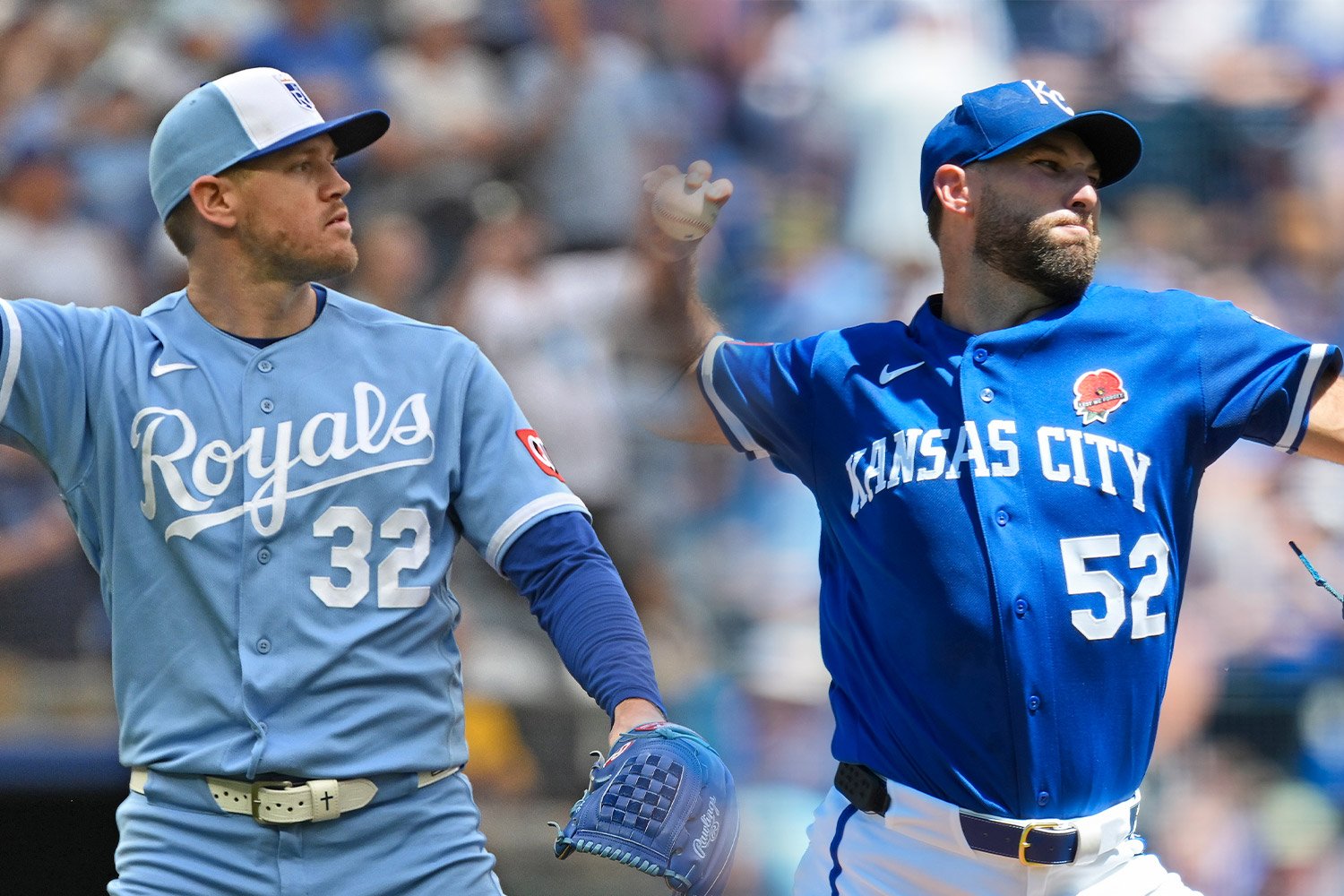 Victims of a distressing three-game weekend road sweep at the hands of the Rangers that left them 10-18 for May — and losers of 16 of their last 20 — the Kansas City Royals limped out of Texas Sunday, headed for Cincinnati and a trio of contests against the Reds. The Royals’ awful month was truly a team effort, with some questionable starting pitching and a poor bullpen compounding the problems posed by a chronically weak offense. But the club managed to reap a few decent individual performances, including some from their otherwise troubled pitching staff. Take a look at Kansas City’s best pitchers of the month. No. 4: Daniel Lynch IV 12 G, 12 IP, 3.00 ERA, 1.42 WHIP, 14 K, 5 BB That Lynch wasn’t at his best Saturday — he was charged with a run on two hits and a walk in just two-thirds of an inning against Texas — doesn’t change the fact that he deserves consideration for a shot at closing. Considering Carlos Estévez’s season-long absence and Lucas Erceg’s recent troubles, it might be time for manager Matt Quatraro to give Lynch a try. The notion is hard to dispute. Lynch, who went 6-2 with a 3.06 ERA while pitching 57 times out of the pen last season, has been even better in 2026. After posting a minuscule 0.79 ERA across March and April, he was 1-0 with a 3.00 ERA and was charged with runs in just three of his 12 May appearances. He’s 1-0 with a 1.93 ERA and is holding opponents to a .174 average for the season. No. 3: John Schreiber 11 G, 10.1 IP, 0.87 ERA, 7 K, 3 BB, 1.06 WHIP Yes, that’s right. Schreiber, he of an unsightly 0-2, 4.63 ERA first month that had many fans calling for his head, bounced back to become one of the Royals’ best hurlers — and one of their top relievers — for May. Schreiber pitched 11 times, was charged with only one run in 10 1/3 innings, and gave the club an infusion of reliability. No. 2: Stephen Kolek 5 G, 31 IP, 3.48 ERA, 19 K, 6 BB, 0.94 WHIP Despite the Friday beating he took from the Rangers — he gave up six runs in five innings and suffered his first loss of the season — Kolek had a good May. He made his season debut with a May 5 quality start win against Cleveland and, after a brief two-day return to Triple-A Omaha, replaced injured Cole Ragans in the big league rotation and won two of three starts, beating St. Louis on the road and shutting out Seattle at home before the Rangers gnawed away at him Friday. He finished May 3-1 with a 3.48 ERA and 0.94 WHIP. Add that performance to the five-game, 33-inning, 1.91 ERA effort he turned in after coming to Kansas City as part of last season’s trade deadline deal that made popular Royal Freddy Fermin a Padre, and it looks like Kolek is in the rotation to stay. No. 1: Michael Wacha 6 G, 38 IP, 3.32 ERA, 32 K, 13 BB, 1.13 WHIP Wacha’s May didn’t end well. The steadiest starter the Royals have had since he joined the team in 2024, Wacha suffered his only loss of the month by giving up six runs and eight hits to the Rangers on Sunday. But the bad outing didn’t prevent him from being the Royals’ pitcher of the month for May. Wacha turned five of his six May appearances into quality starts and now has nine for the year. Although Sunday’s start put a slight blemish on his otherwise superb 38-inning month, he struck out 19 more batters (32) than he walked (13), and solidified his claim to the best of the rotation.
 -
Image courtesy of © Peter Aiken-Imagn Images / © Jay Biggerstaff-Imagn Images Victims of a distressing three-game weekend road sweep at the hands of the Rangers that left them 10-18 for May — and losers of 16 of their last 20 — the Kansas City Royals limped out of Texas Sunday, headed for Cincinnati and a trio of contests against the Reds. The Royals’ awful month was truly a team effort, with some questionable starting pitching and a poor bullpen compounding the problems posed by a chronically weak offense. But the club managed to reap a few decent individual performances, including some from their otherwise troubled pitching staff. Take a look at Kansas City’s best pitchers of the month. No. 4: Daniel Lynch IV 12 G, 12 IP, 3.00 ERA, 1.42 WHIP, 14 K, 5 BB That Lynch wasn’t at his best Saturday — he was charged with a run on two hits and a walk in just two-thirds of an inning against Texas — doesn’t change the fact that he deserves consideration for a shot at closing. Considering Carlos Estévez’s season-long absence and Lucas Erceg’s recent troubles, it might be time for manager Matt Quatraro to give Lynch a try. The notion is hard to dispute. Lynch, who went 6-2 with a 3.06 ERA while pitching 57 times out of the pen last season, has been even better in 2026. After posting a minuscule 0.79 ERA across March and April, he was 1-0 with a 3.00 ERA and was charged with runs in just three of his 12 May appearances. He’s 1-0 with a 1.93 ERA and is holding opponents to a .174 average for the season. No. 3: John Schreiber 11 G, 10.1 IP, 0.87 ERA, 7 K, 3 BB, 1.06 WHIP Yes, that’s right. Schreiber, he of an unsightly 0-2, 4.63 ERA first month that had many fans calling for his head, bounced back to become one of the Royals’ best hurlers — and one of their top relievers — for May. Schreiber pitched 11 times, was charged with only one run in 10 1/3 innings, and gave the club an infusion of reliability. No. 2: Stephen Kolek 5 G, 31 IP, 3.48 ERA, 19 K, 6 BB, 0.94 WHIP Despite the Friday beating he took from the Rangers — he gave up six runs in five innings and suffered his first loss of the season — Kolek had a good May. He made his season debut with a May 5 quality start win against Cleveland and, after a brief two-day return to Triple-A Omaha, replaced injured Cole Ragans in the big league rotation and won two of three starts, beating St. Louis on the road and shutting out Seattle at home before the Rangers gnawed away at him Friday. He finished May 3-1 with a 3.48 ERA and 0.94 WHIP. Add that performance to the five-game, 33-inning, 1.91 ERA effort he turned in after coming to Kansas City as part of last season’s trade deadline deal that made popular Royal Freddy Fermin a Padre, and it looks like Kolek is in the rotation to stay. No. 1: Michael Wacha 6 G, 38 IP, 3.32 ERA, 32 K, 13 BB, 1.13 WHIP Wacha’s May didn’t end well. The steadiest starter the Royals have had since he joined the team in 2024, Wacha suffered his only loss of the month by giving up six runs and eight hits to the Rangers on Sunday. But the bad outing didn’t prevent him from being the Royals’ pitcher of the month for May. Wacha turned five of his six May appearances into quality starts and now has nine for the year. Although Sunday’s start put a slight blemish on his otherwise superb 38-inning month, he struck out 19 more batters (32) than he walked (13), and solidified his claim to the best of the rotation. View full article
-
Latest Signing Brings Big League Veteran Back To The Royals
Mike Gillespie posted an article in Royals
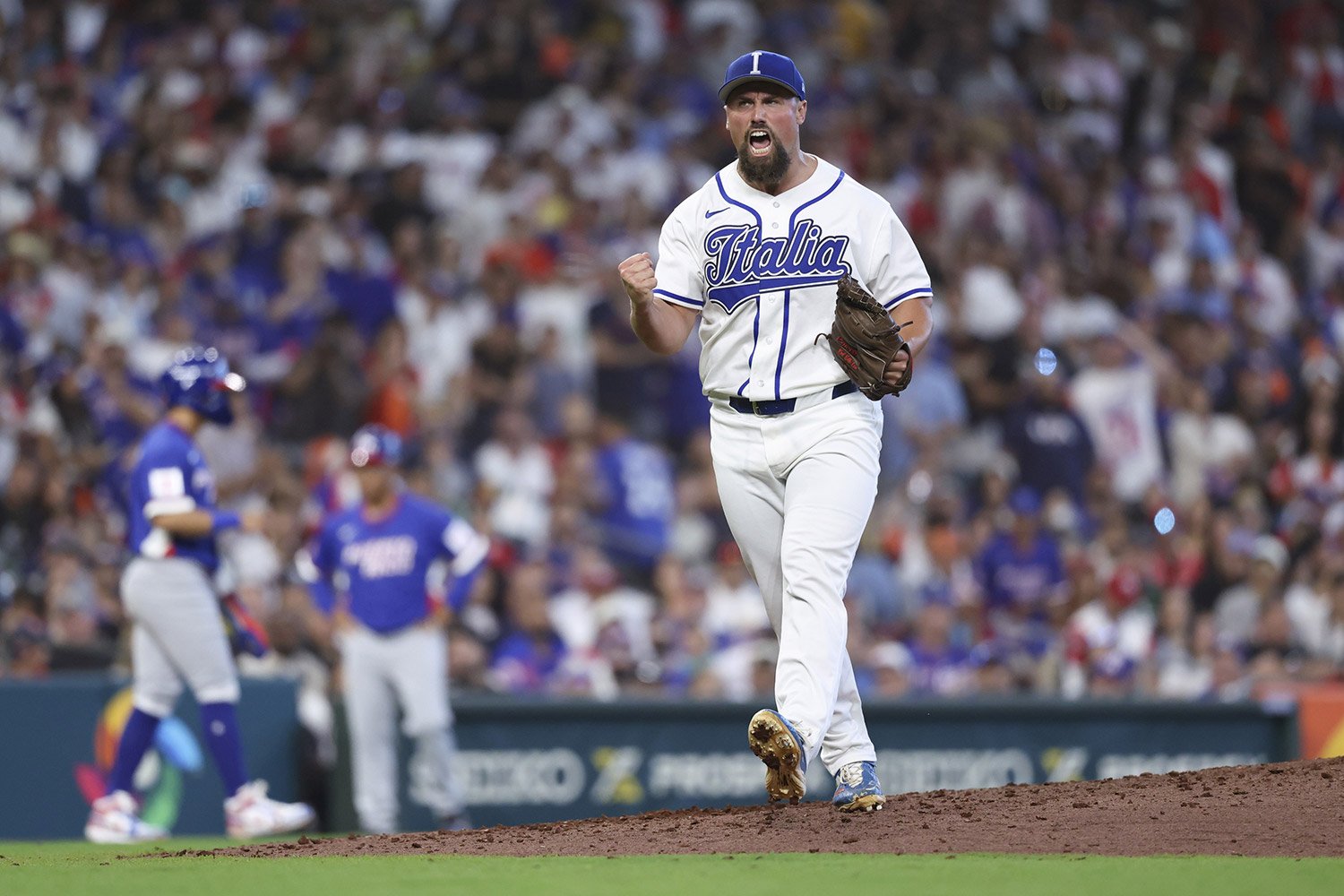 Their eyes weren’t deceiving Kansas City Royals fans who happened to check in on Triple-A Omaha’s Saturday evening contest with Memphis. Mixed in with the carnage of the 13-1 demolition the Storm Chasers suffered at home was the appearance of a familiar face whose brief 2024 stint with the KC organization ended almost as soon as baseball’s winter began. It happened in the top of the fifth inning when Andrew Pérez, Omaha’s second pitcher of the night, had just given Memphis its sixth run. That’s when Dan Altavilla, fresh from his early week release from the Minnesota organization, emerged from the Storm Chasers’ bullpen and promptly struck out Ramon Mendoza to leave what could have been the Redbirds’ seventh run stranded at third base. And for good measure, Altavilla secured his place as one of the evening’s few Chaser bright spots by finishing his night’s work with a scoreless fifth inning. What now lies ahead for this veteran of eight major league seasons? Dan Altavilla Could Soon Find Himself in the Royals’ Bullpen Kansas City’s present unfortunate circumstances may force the club to add Altavilla to its struggling relief corps, an alarmingly inconsistent group beset by injuries, including the key loss of closer Carlos Estévez on Opening Day, the continuing struggles of Lucas Erceg, and a 5.22 ERA that, heading into Sunday, tied it with Houston for the majors’ worst bullpen mark. Bringing up the 33-year-old right-hander, who KC signed to a minor league contract Friday, seems almost inevitable. The bullpen as presently constituted is one of the team’s sorest spots and doesn’t show signs of imminent improvement. While he may not (and probably won’t) be the bullpen panacea the Royals need, he’ll be worth trying if manager Matt Quatraro’s relievers don’t soon right their own ship. Altavilla has had some success, most notably with Seattle, for whom he went 3-2 with a 2.61 ERA across 22 games in 2018, and in Chicago, where last season he pitched 28 times for the White Sox and finished with a career-best 2.48 ERA and a 172 ERA+. Repeating such numbers could give KC’s bullpen a badly needed boost. But Altavilla isn’t free of pitching baggage. Hard to ignore is the 14.73 ERA he posted in five games for the Royals after they signed the then-free agent during the 2023-2024 offseason — he gave up six runs on six hits and three walks in just 3.2 innings. Yes, an oblique strain forced him onto the Injured List for most of the season after the Royals called him up from Omaha in June, but those numbers are still troubling and hard to forget. Then there are ERAs that are simply too high for a reliever, like the 17-game 5.52 he put up with the 2019 Mariners, and the 5.75 mark he posted in 22 appearances split between Seattle and San Diego during the pandemic-shortened 2020 season. And he missed most of 2021, and the entire 2022 big league campaign, rehabbing from Tommy John Surgery. Altavilla quickly opted for free agency after pitching so sparingly for the Royals in 2024. Now, after being released from Minnesota’s Triple-A club, where he gave up 17 runs (16 earned) in 19.2 innings, he brings his four-pitch repertoire, which features a mid-to-high 90s four-seam fastball, back to Kansas City. Whether the Royals signed him as bullpen depth to be called up only in an emergency, or as a serious contender for a seat in their big league bullpen, remains to be seen. But don’t be surprised to see him in Kansas City before long.
 -
Image courtesy of © Troy Taormina-Imagn Images Their eyes weren’t deceiving Kansas City Royals fans who happened to check in on Triple-A Omaha’s Saturday evening contest with Memphis. Mixed in with the carnage of the 13-1 demolition the Storm Chasers suffered at home was the appearance of a familiar face whose brief 2024 stint with the KC organization ended almost as soon as baseball’s winter began. It happened in the top of the fifth inning when Andrew Pérez, Omaha’s second pitcher of the night, had just given Memphis its sixth run. That’s when Dan Altavilla, fresh from his early week release from the Minnesota organization, emerged from the Storm Chasers’ bullpen and promptly struck out Ramon Mendoza to leave what could have been the Redbirds’ seventh run stranded at third base. And for good measure, Altavilla secured his place as one of the evening’s few Chaser bright spots by finishing his night’s work with a scoreless fifth inning. What now lies ahead for this veteran of eight major league seasons? Dan Altavilla Could Soon Find Himself in the Royals’ Bullpen Kansas City’s present unfortunate circumstances may force the club to add Altavilla to its struggling relief corps, an alarmingly inconsistent group beset by injuries, including the key loss of closer Carlos Estévez on Opening Day, the continuing struggles of Lucas Erceg, and a 5.22 ERA that, heading into Sunday, tied it with Houston for the majors’ worst bullpen mark. Bringing up the 33-year-old right-hander, who KC signed to a minor league contract Friday, seems almost inevitable. The bullpen as presently constituted is one of the team’s sorest spots and doesn’t show signs of imminent improvement. While he may not (and probably won’t) be the bullpen panacea the Royals need, he’ll be worth trying if manager Matt Quatraro’s relievers don’t soon right their own ship. Altavilla has had some success, most notably with Seattle, for whom he went 3-2 with a 2.61 ERA across 22 games in 2018, and in Chicago, where last season he pitched 28 times for the White Sox and finished with a career-best 2.48 ERA and a 172 ERA+. Repeating such numbers could give KC’s bullpen a badly needed boost. But Altavilla isn’t free of pitching baggage. Hard to ignore is the 14.73 ERA he posted in five games for the Royals after they signed the then-free agent during the 2023-2024 offseason — he gave up six runs on six hits and three walks in just 3.2 innings. Yes, an oblique strain forced him onto the Injured List for most of the season after the Royals called him up from Omaha in June, but those numbers are still troubling and hard to forget. Then there are ERAs that are simply too high for a reliever, like the 17-game 5.52 he put up with the 2019 Mariners, and the 5.75 mark he posted in 22 appearances split between Seattle and San Diego during the pandemic-shortened 2020 season. And he missed most of 2021, and the entire 2022 big league campaign, rehabbing from Tommy John Surgery. Altavilla quickly opted for free agency after pitching so sparingly for the Royals in 2024. Now, after being released from Minnesota’s Triple-A club, where he gave up 17 runs (16 earned) in 19.2 innings, he brings his four-pitch repertoire, which features a mid-to-high 90s four-seam fastball, back to Kansas City. Whether the Royals signed him as bullpen depth to be called up only in an emergency, or as a serious contender for a seat in their big league bullpen, remains to be seen. But don’t be surprised to see him in Kansas City before long. View full article
-
Time Is Running Out On Royals First-Round Draft Pick Frank Mozzicato
Mike Gillespie posted an article in Royals
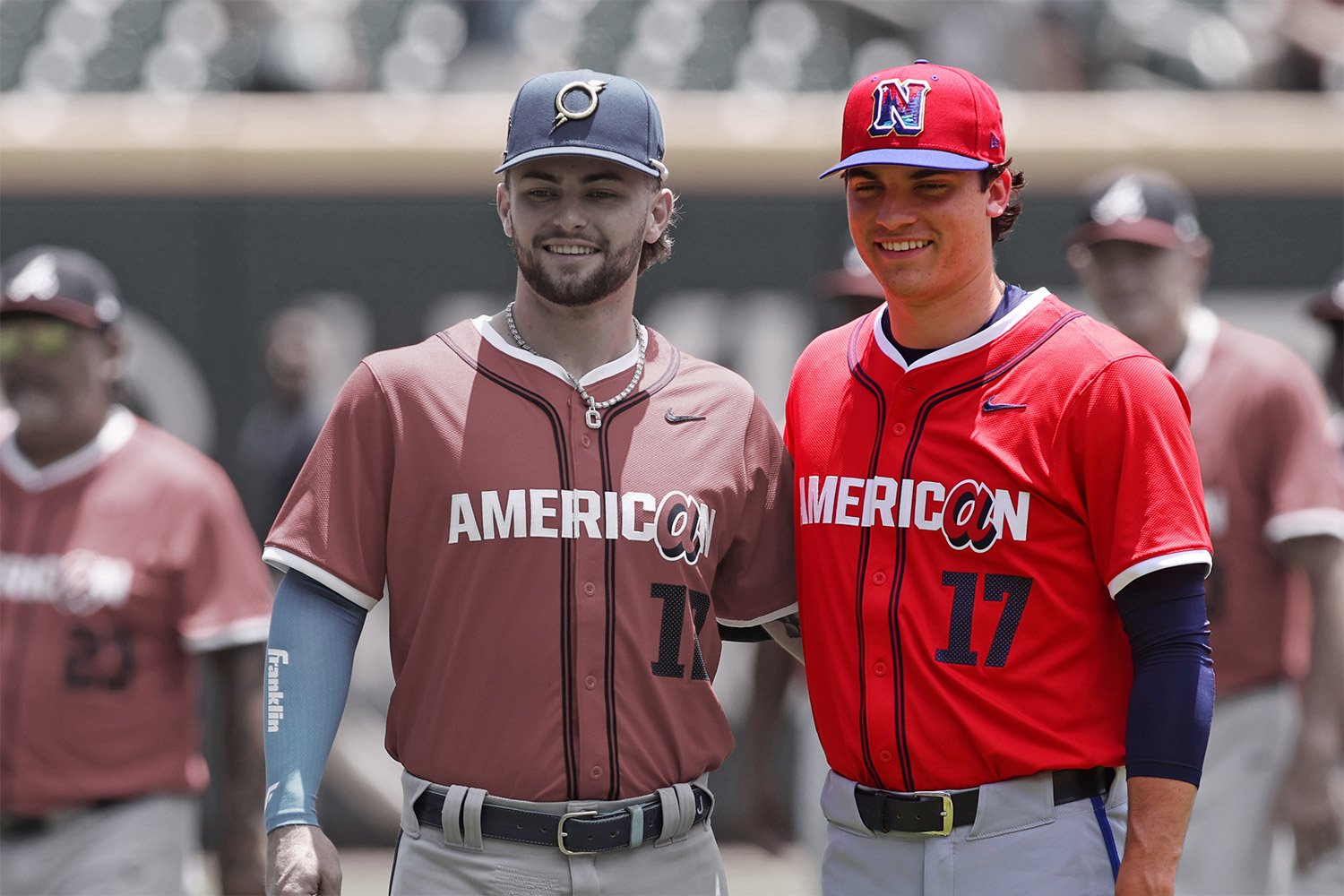 The Kansas City Royals’ starting rotation is in a bit of disarray. Cole Ragans, still billed by many as the cream of the club’s starting pitching crop, threw well in a Triple-A rehab start Saturday but remains sidelined after experiencing elbow pain the next day. Elbow discomfort has also forced Kris Bubic, who missed much of last season with a rotator cuff issue and most of 2023 after Tommy John surgery, out of action since May 15, and he isn’t expected back until June. Consistency has not been Noah Cameron’s closest ally. So it is that a depth issue faced the Royals when they opened a three-game home series against the always-tough Yankees Monday, with a 10-game road trip to Texas, Cincinnati, and Minnesota, all of whom are in the thick of at least Wild Card races, to follow. The solution, though, won’t include Frank Mozzicato, the promising prep phenom pitching prospect whose curveball and potential so captivated the Royals that they grabbed him with their first pick (and seventh overall selection) in the 2021 amateur draft. He’s far from big league-ready … and may never be. Mozzicato’s is a sad tale indeed, and one easily told through the young left-hander's disturbing numbers. Frank Mozzicato Continues to Struggle in the Royals' System That choosing Mozzicato so early in the 2021 draft triggered immediate skepticism understates the situation. After all, the Royals could have picked Kumar Rocker, Gavin Williams, Jordan Wicks, Andrew Painter, Max Muncy, or Matt McClain, all of whom were available then and have made it to the majors. And although he’d thrown four straight high school no-hitters that year, taking an 18-year-old with their first pick seemed a pretty risky move for a club with an increasingly questionable draft history. Unfortunately, Mozzicato, now 22 and ranked as KC's 17th-best prospect by Royals Keep, has done little to vindicate Kansas City’s decision. Take, for example, his 26 appearances (22 starts) at Double-A Northwest Arkansas, the highest level he’s achieved. Including last Sunday’s no-decision start against Amarillo, in which he struck out eight but gave up three runs and four hits and walked three in 4.1 innings, he’s winless in nine starts this year. Worse, though, is that he’s been battered in 2026 for 30 runs (26 earned) in 30.2 innings for a 7.63 ERA, and he’s walked 16.2% of the batters he’s faced (7.04 BB/9). He wasn’t much better for the Naturals last season, which surprised many after he started the season with a 1.24 ERA and 37 strikeouts in 36 1/3 innings across seven starts for High-A Quad Cities. But after his late May promotion to Northwest Arkansas, he went 2-5 with a 7.46 ERA and walked almost a batter per inning. And the rest of Mozzicato’s troubling pro career? At 12-32 in 95 games, he’s lost almost three times as often as he’s won. His 4.60 career ERA isn’t awful, but it’s a stat heavily influenced by his first three seasons (4.30 at Single-A in 2022, 4.65 for a 2023 campaign split between Single and High-A, 3.45 at High-A in 2024) while at the same time it masks the nine-game 7.12 he put up after his 2023 bump-up to High-A, his 5.03 last year, and, of course, the 7.52 across his 26 appearances at Northwest Arkansas. Troubling, too, are his more advanced 2026 metrics — only in whiff % (30.1, 60th percentile) and K% (25, 51st percentile) is Mozzicato above the 50th percentile, and he’s at the 14th percentile in strike % (14), and the 21st percentile in BB% (16.2) and zone % (42.6). The southpaw’s fastball is also a concern. Mozzicato simply hasn’t displayed the velocity he needs. And then there’s his control. If not improved soon, Mozzicato’s tendency to walk far too many batters (career 16.3 BB% and 6.48 BB/9) may well be enough to keep him out of the majors. What Does the Future Hold for Royals Prospect Frank Mozzicato? Mozzicato clearly isn’t headed for the majors anytime soon. His struggles in Double-A will likely strand him there for the rest of this season, and suggest Triple-A may be too much for him. He and the Royals need to find a cure for what ails his pitching. If they don’t, his days in the organization could come to an end sooner rather than later.
 -
Image courtesy of © Brett Davis-Imagn Images The Kansas City Royals’ starting rotation is in a bit of disarray. Cole Ragans, still billed by many as the cream of the club’s starting pitching crop, threw well in a Triple-A rehab start Saturday but remains sidelined after experiencing elbow pain the next day. Elbow discomfort has also forced Kris Bubic, who missed much of last season with a rotator cuff issue and most of 2023 after Tommy John surgery, out of action since May 15, and he isn’t expected back until June. Consistency has not been Noah Cameron’s closest ally. So it is that a depth issue faced the Royals when they opened a three-game home series against the always-tough Yankees Monday, with a 10-game road trip to Texas, Cincinnati, and Minnesota, all of whom are in the thick of at least Wild Card races, to follow. The solution, though, won’t include Frank Mozzicato, the promising prep phenom pitching prospect whose curveball and potential so captivated the Royals that they grabbed him with their first pick (and seventh overall selection) in the 2021 amateur draft. He’s far from big league-ready … and may never be. Mozzicato’s is a sad tale indeed, and one easily told through the young left-hander's disturbing numbers. Frank Mozzicato Continues to Struggle in the Royals' System That choosing Mozzicato so early in the 2021 draft triggered immediate skepticism understates the situation. After all, the Royals could have picked Kumar Rocker, Gavin Williams, Jordan Wicks, Andrew Painter, Max Muncy, or Matt McClain, all of whom were available then and have made it to the majors. And although he’d thrown four straight high school no-hitters that year, taking an 18-year-old with their first pick seemed a pretty risky move for a club with an increasingly questionable draft history. Unfortunately, Mozzicato, now 22 and ranked as KC's 17th-best prospect by Royals Keep, has done little to vindicate Kansas City’s decision. Take, for example, his 26 appearances (22 starts) at Double-A Northwest Arkansas, the highest level he’s achieved. Including last Sunday’s no-decision start against Amarillo, in which he struck out eight but gave up three runs and four hits and walked three in 4.1 innings, he’s winless in nine starts this year. Worse, though, is that he’s been battered in 2026 for 30 runs (26 earned) in 30.2 innings for a 7.63 ERA, and he’s walked 16.2% of the batters he’s faced (7.04 BB/9). He wasn’t much better for the Naturals last season, which surprised many after he started the season with a 1.24 ERA and 37 strikeouts in 36 1/3 innings across seven starts for High-A Quad Cities. But after his late May promotion to Northwest Arkansas, he went 2-5 with a 7.46 ERA and walked almost a batter per inning. And the rest of Mozzicato’s troubling pro career? At 12-32 in 95 games, he’s lost almost three times as often as he’s won. His 4.60 career ERA isn’t awful, but it’s a stat heavily influenced by his first three seasons (4.30 at Single-A in 2022, 4.65 for a 2023 campaign split between Single and High-A, 3.45 at High-A in 2024) while at the same time it masks the nine-game 7.12 he put up after his 2023 bump-up to High-A, his 5.03 last year, and, of course, the 7.52 across his 26 appearances at Northwest Arkansas. Troubling, too, are his more advanced 2026 metrics — only in whiff % (30.1, 60th percentile) and K% (25, 51st percentile) is Mozzicato above the 50th percentile, and he’s at the 14th percentile in strike % (14), and the 21st percentile in BB% (16.2) and zone % (42.6). The southpaw’s fastball is also a concern. Mozzicato simply hasn’t displayed the velocity he needs. And then there’s his control. If not improved soon, Mozzicato’s tendency to walk far too many batters (career 16.3 BB% and 6.48 BB/9) may well be enough to keep him out of the majors. What Does the Future Hold for Royals Prospect Frank Mozzicato? Mozzicato clearly isn’t headed for the majors anytime soon. His struggles in Double-A will likely strand him there for the rest of this season, and suggest Triple-A may be too much for him. He and the Royals need to find a cure for what ails his pitching. If they don’t, his days in the organization could come to an end sooner rather than later. View full article
-
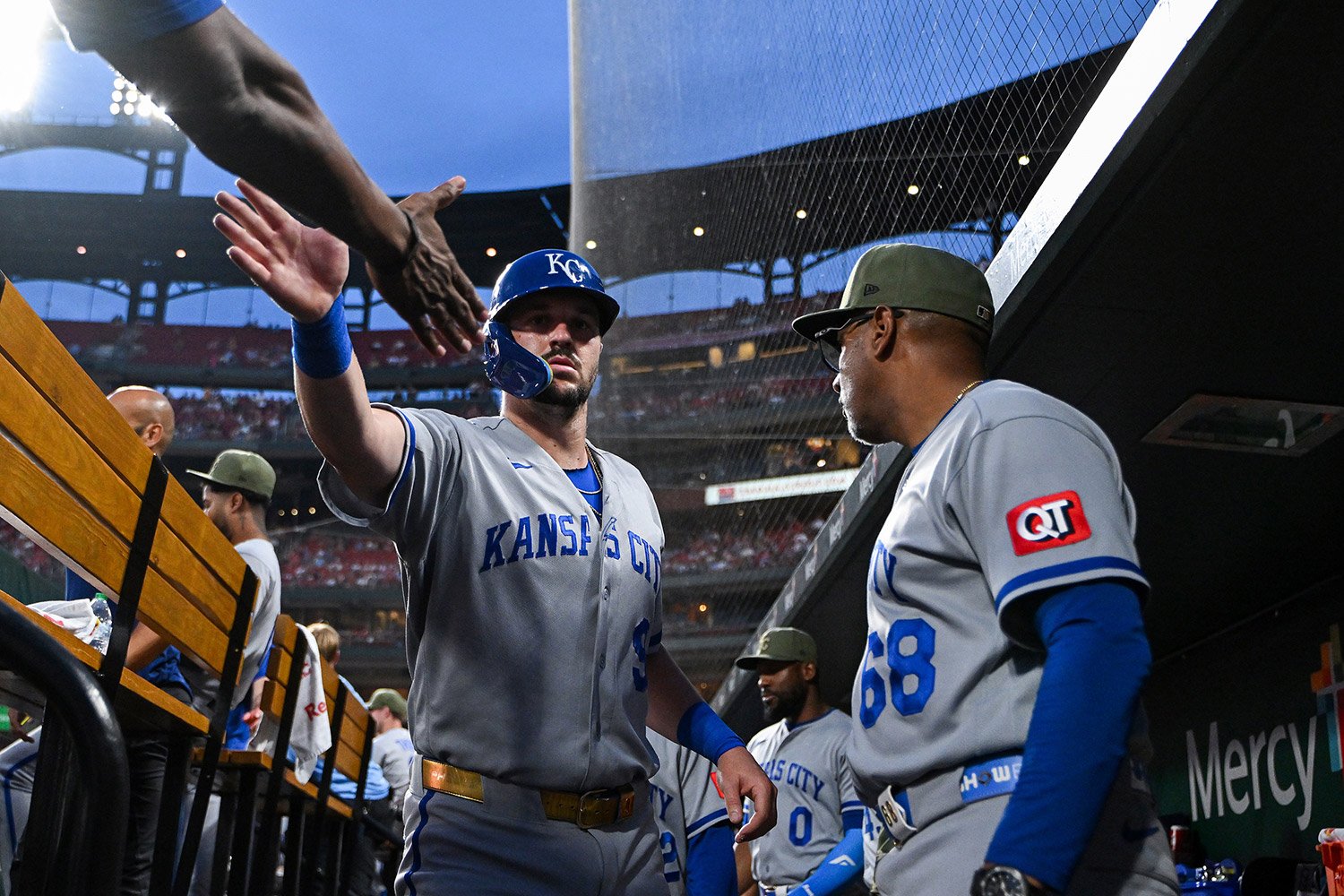 The major league schedule gave the Royals and their fans a much-needed respite from misery Thursday. Sandwiched between a Wednesday loss to Boston that gave the struggling Red Sox a Kauffman Stadium series sweep and Friday night’s Memorial Day weekend series opener with Seattle, Thursday’s built-in off day meant the Royals had no chance to extend their eight-game losing streak and dig themselves deeper into the American League Central cellar they shared with Detroit. Whether the short break leads to anything positive remains to be seen. Clear, however, is that something, or some things, must change before this season becomes an even bigger mess. But while this is a team whose serious flaws include a weak offense, shaky base running, and an unpredictable bullpen, change can’t come recklessly. Here are three moves Kansas City shouldn’t make. The Royals Must Not Send Vinnie Pasquantino Down He has three minor league options left, but demoting Pasquantino, whose two straight 30-homer, 100-RBI seasons prompted the club to present him with a new two-year contract in January, was unthinkable not that long ago. But his miserable start — he was slashing .194/.279/.326 with a 68 wRC+ and -0.4 fWAR when manager Matt Quatraro sat him against Boston Wednesday — has spawned chatter that some time at Triple-A Omaha might help. Perhaps. But proponents of such a big move must remember that Pasquantino is no stranger to slow starts. Through Wednesday, his 22 RBI ranked second on a team starved for runs, and he was tied with Jac Caglianone for the third-most homers (five) on the club. So, despite some disturbing peripherals (his hard-hit and barrel rates, and average exit velocity, are all down), the Royals, who’d scored more runs than only four other teams through Wednesday, shouldn’t risk losing Pasquantino’s production potential. Even platooning him for a while would be better. The Royals Shouldn’t Fire Matt Quatraro (yet) The notion that the Royals’ current distress warrants canning the manager is increasing among fretting fans. And an eight-game losing skid and 20-30 record fuel the fire. But it’s not time. Let’s not forget that in his second campaign at the helm, Quatraro led KC to its remarkable turnaround and playoff berth just a season after the awful club he inherited from Mike Matheny lost a franchise record-tying 106 games. Or that the Royals missed the postseason by only five games last year. Or that the front office failed once again to make the kind of significant offseason roster improvement Quatraro badly needs. No, firing the manager now probably won’t work the kind of dramatic change for which Royals fans yearn. Yes, he makes some questionable moves, his nearly unwavering commitment to platooning can be maddening, and he doesn’t display the kind of fire fans relish. But there’s still time. Wednesday’s loss to the Red Sox came with more than two-thirds of the season left to play. Key injured starter Cole Ragans should return soon. Closer Carlos Estévez will presumably be back this season, hopefully sooner rather than later. Expect Pasquantino to catch fire and Caglianone to show at least some improvement against left-handed pitchers. Simply put, the race isn’t over, and playing in a marginal division won’t hurt the Royals’ chances. And on top of all that, KC isn’t likely to eat the new three-year deal Quatraro received in January. Changes to the hitting staff are more likely … and probably more warranted. The Royals Shouldn’t Rush Anyone to the Majors Potential is scattered throughout Kansas City’s farm system. The franchise boasts such highly-touted prospects as Blake Mitchell, David Shields, Kendry Chourio, and Sean Gamble, but even the best of the bunch are far from being major league-ready. Calling any of them up risks damaging their development. The Royals must also resist the temptation to recall Triple-A players whose major league histories suggest they can’t or won’t help. Outfielder Drew Waters comes immediately to mind — he was slashing .273/.333/.545 with seven homers and 23 RBI in 33 games through Wednesday, but in 208 big league contests over parts of four seasons has an 85 wRC+, is hitting only .234, and has homered just 14 times. Fellow outfielder John Rave’s numbers (.273/.374/.481 with seven homers and 19 RBI at Omaha, but .196/.283/.307 with four homers and 14 RBI in 72 games with KC last year) are similar. With a nice .260/.359/.487 line, seven home runs, and 35 RBI, outfielder Kameron Misner is faring better than Waters and Rave, but his 79-game big league .203 average and .260 OBP suggest he requires more seasoning. He has no big league experience, but Brett Squires looks good — he was slashing .333/.355/.867 with four homers in eight games through Wednesday after his .294 average, .926 OPS, six homers, and 29 RBI in 32 games recently earned him a promotion from Double-A Northwest Arkansas. But it’s simply too early to bump him up to the majors. What Should the Royals Do? For now, try to stay the course, but with a change or two. General manager J.J. Picollo should be probing the market for another bat and a starting pitcher for depth, both of which his club could use well before the trade deadline. Shaking up the hitting staff deserves strong consideration. And Quatraro needs to be more flexible with his lineup.
-
- 1
-

-
- vinnie pasquantino
- cole ragans
- (and 2 more)
-
Image courtesy of © Jeff Curry-Imagn Images The major league schedule gave the Royals and their fans a much-needed respite from misery Thursday. Sandwiched between a Wednesday loss to Boston that gave the struggling Red Sox a Kauffman Stadium series sweep and Friday night’s Memorial Day weekend series opener with Seattle, Thursday’s built-in off day meant the Royals had no chance to extend their eight-game losing streak and dig themselves deeper into the American League Central cellar they shared with Detroit. Whether the short break leads to anything positive remains to be seen. Clear, however, is that something, or some things, must change before this season becomes an even bigger mess. But while this is a team whose serious flaws include a weak offense, shaky base running, and an unpredictable bullpen, change can’t come recklessly. Here are three moves Kansas City shouldn’t make. The Royals Must Not Send Vinnie Pasquantino Down He has three minor league options left, but demoting Pasquantino, whose two straight 30-homer, 100-RBI seasons prompted the club to present him with a new two-year contract in January, was unthinkable not that long ago. But his miserable start — he was slashing .194/.279/.326 with a 68 wRC+ and -0.4 fWAR when manager Matt Quatraro sat him against Boston Wednesday — has spawned chatter that some time at Triple-A Omaha might help. Perhaps. But proponents of such a big move must remember that Pasquantino is no stranger to slow starts. Through Wednesday, his 22 RBI ranked second on a team starved for runs, and he was tied with Jac Caglianone for the third-most homers (five) on the club. So, despite some disturbing peripherals (his hard-hit and barrel rates, and average exit velocity, are all down), the Royals, who’d scored more runs than only four other teams through Wednesday, shouldn’t risk losing Pasquantino’s production potential. Even platooning him for a while would be better. The Royals Shouldn’t Fire Matt Quatraro (yet) The notion that the Royals’ current distress warrants canning the manager is increasing among fretting fans. And an eight-game losing skid and 20-30 record fuel the fire. But it’s not time. Let’s not forget that in his second campaign at the helm, Quatraro led KC to its remarkable turnaround and playoff berth just a season after the awful club he inherited from Mike Matheny lost a franchise record-tying 106 games. Or that the Royals missed the postseason by only five games last year. Or that the front office failed once again to make the kind of significant offseason roster improvement Quatraro badly needs. No, firing the manager now probably won’t work the kind of dramatic change for which Royals fans yearn. Yes, he makes some questionable moves, his nearly unwavering commitment to platooning can be maddening, and he doesn’t display the kind of fire fans relish. But there’s still time. Wednesday’s loss to the Red Sox came with more than two-thirds of the season left to play. Key injured starter Cole Ragans should return soon. Closer Carlos Estévez will presumably be back this season, hopefully sooner rather than later. Expect Pasquantino to catch fire and Caglianone to show at least some improvement against left-handed pitchers. Simply put, the race isn’t over, and playing in a marginal division won’t hurt the Royals’ chances. And on top of all that, KC isn’t likely to eat the new three-year deal Quatraro received in January. Changes to the hitting staff are more likely … and probably more warranted. The Royals Shouldn’t Rush Anyone to the Majors Potential is scattered throughout Kansas City’s farm system. The franchise boasts such highly-touted prospects as Blake Mitchell, David Shields, Kendry Chourio, and Sean Gamble, but even the best of the bunch are far from being major league-ready. Calling any of them up risks damaging their development. The Royals must also resist the temptation to recall Triple-A players whose major league histories suggest they can’t or won’t help. Outfielder Drew Waters comes immediately to mind — he was slashing .273/.333/.545 with seven homers and 23 RBI in 33 games through Wednesday, but in 208 big league contests over parts of four seasons has an 85 wRC+, is hitting only .234, and has homered just 14 times. Fellow outfielder John Rave’s numbers (.273/.374/.481 with seven homers and 19 RBI at Omaha, but .196/.283/.307 with four homers and 14 RBI in 72 games with KC last year) are similar. With a nice .260/.359/.487 line, seven home runs, and 35 RBI, outfielder Kameron Misner is faring better than Waters and Rave, but his 79-game big league .203 average and .260 OBP suggest he requires more seasoning. He has no big league experience, but Brett Squires looks good — he was slashing .333/.355/.867 with four homers in eight games through Wednesday after his .294 average, .926 OPS, six homers, and 29 RBI in 32 games recently earned him a promotion from Double-A Northwest Arkansas. But it’s simply too early to bump him up to the majors. What Should the Royals Do? For now, try to stay the course, but with a change or two. General manager J.J. Picollo should be probing the market for another bat and a starting pitcher for depth, both of which his club could use well before the trade deadline. Shaking up the hitting staff deserves strong consideration. And Quatraro needs to be more flexible with his lineup. View full article
-
Image courtesy of Should the Perez Watch begin in Kansas City? Salvador Perez didn’t play in the Kansas City Royals' game against Detroit on Sunday night. Instead, he watched from Kauffman Stadium's home dugout as their 6-3 loss prevented the Royals from drawing within a game of first place in the American League Central, a position their poor start to the season had rendered almost unthinkable not that long ago. Whether the Royals would have won Sunday’s game but for Perez’s conspicuous absence will never be known. That he’d hit in the critical cleanup spot in all but one of his 39 appearances this year, and through Sunday was tied for the second-most home runs (five) and third-most RBI (17) on the club, suggests his presence might have made a difference. But those counting stats, and where Perez usually bats, don’t tell the whole story. Other important measures of his performance suggest he hits too high in the order, and his impact may, in his 15th big league season, be on the wane. Those metrics (more on them in a moment) paint the grim picture that the years may be about to overcome and pass the nine-time All-Star by, and that KC fans should enjoy him while they can. They also raise this question: Should the “Salvador Perez Watch” begin? Salvador Perez is Slumping Badly With the Royals Although the bulk of the regular campaign lies ahead, some key metrics prove just how bad Perez's season has been. Through Sunday, and after playing 39 of his team’s 41 games, he was hitting only .182 in 52 plate appearances with runners in scoring position; at .192, his season average wasn't much better. His OPS+ was a dreary 55, his wRC+ a shockingly low and unacceptable 47. With a pesky hip issue the apparent culprit, Perez hasn’t caught since May 1 or appeared at first base since the day before that. That manager Matt Quatraro keeps him in the lineup and bats him fourth tends to belie the notion that Perez's hip problem contributes significantly to his hitting woes; nevertheless, entering Tuesday’s series opener against the White Sox in Chicago, he was homerless and slashing .107/.188/.107 since moving exclusively (at least temporarily) to less physically taxing DH duty. On the brighter side, Perez was hitting .236 over his last 14 games, but that’s still almost 30 points below his .263 career average and hardly provides reason to believe a major turnaround is imminent. Defensively, his work behind the plate has been serviceable, but falls short of the high expectations his five Gold Gloves create. Yes, he's an outstanding ABS challenger — through Sunday, his 11.9 Overturns vs. Expected ranked fourth among major league catchers, and his 41.2 caught stealing percentage was well above league average. But Perez's blocking remains average at best, and his subpar framing continues. His play at first base hasn't been stellar, but Quatraro has deployed him there only three times this season. Is Salvador Perez Nearing the End of his Royals Career? This is a question frequently posed over the past few seasons. And while Perez eventually answered it with a resounding “No,” he finished the 2025 season with 30 homers and 100 RBI, and the 2024 campaign with 27 homers, 104 RBI, his ninth All-Star berth, and his fifth Silver Slugger — things might be different now. For one, an obvious heir apparent to Perez has finally emerged. Accustomed to sharing time behind the plate only with backups with no realistic chances of taking his job, Perez must now relinquish more time to Carter Jensen, whose flashy final-month call-up last season yielded a 20-game .300/.391/.550 line and locked in a 2026 big league roster spot. Jensen’s defense has its good and not-so-good components, and as a rookie, he has plenty of time to hone his skills. Offensively, Jensen was leading the club through Sunday in home runs with six and RBI with 18. At least until Royals Keep No. 4 prospect and High-A backstop Blake Mitchell advances far enough to prove otherwise, Jensen is KC’s catcher of the future. Then there’s the matter of Perez's contract. Rather than taking the conservative approach by picking up his club option after last season, the Royals gave him a new two-year deal. With much of the money apparently deferred and no apparent club, player, or mutual option at its expiration, the terms hint at the possible end of the road for Perez, which makes sense because he’ll be 38 with 17 major league seasons behind him when the deal ends. But that hint of things to come isn’t definitive. Things could change. Perez might defy the years once again and merit a shot at playing in 2028. Or his present slump may be the biggest sign yet that retirement is closer than we’d like it to be. Should the “Salvador Perez Watch” begin? We should know soon enough. View full article
-
What His Awful Slump May Mean For Royals Great Salvador Perez
Mike Gillespie posted an article in Royals
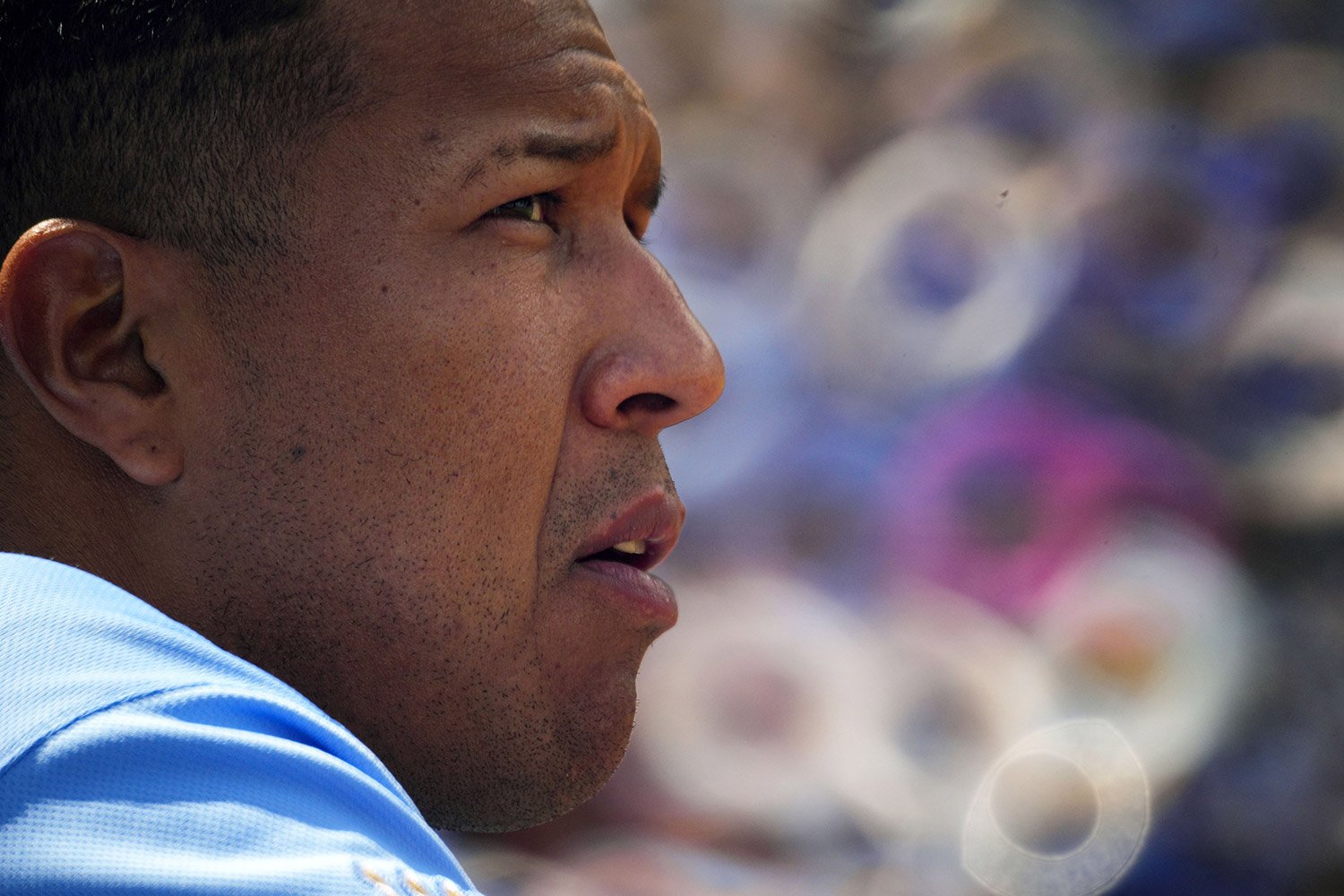 Salvador Perez didn’t play in the Kansas City Royals' game against Detroit on Sunday night. Instead, he watched from Kauffman Stadium's home dugout as their 6-3 loss prevented the Royals from drawing within a game of first place in the American League Central, a position their poor start to the season had rendered almost unthinkable not that long ago. Whether the Royals would have won Sunday’s game but for Perez’s conspicuous absence will never be known. That he’d hit in the critical cleanup spot in all but one of his 39 appearances this year, and through Sunday was tied for the second-most home runs (five) and third-most RBI (17) on the club, suggests his presence might have made a difference. But those counting stats, and where Perez usually bats, don’t tell the whole story. Other important measures of his performance suggest he hits too high in the order, and his impact may, in his 15th big league season, be on the wane. Those metrics (more on them in a moment) paint the grim picture that the years may be about to overcome and pass the nine-time All-Star by, and that KC fans should enjoy him while they can. They also raise this question: Should the “Salvador Perez Watch” begin? Salvador Perez is Slumping Badly With the Royals Although the bulk of the regular campaign lies ahead, some key metrics prove just how bad Perez's season has been. Through Sunday, and after playing 39 of his team’s 41 games, he was hitting only .182 in 52 plate appearances with runners in scoring position; at .192, his season average wasn't much better. His OPS+ was a dreary 55, his wRC+ a shockingly low and unacceptable 47. With a pesky hip issue the apparent culprit, Perez hasn’t caught since May 1 or appeared at first base since the day before that. That manager Matt Quatraro keeps him in the lineup and bats him fourth tends to belie the notion that Perez's hip problem contributes significantly to his hitting woes; nevertheless, entering Tuesday’s series opener against the White Sox in Chicago, he was homerless and slashing .107/.188/.107 since moving exclusively (at least temporarily) to less physically taxing DH duty. On the brighter side, Perez was hitting .236 over his last 14 games, but that’s still almost 30 points below his .263 career average and hardly provides reason to believe a major turnaround is imminent. Defensively, his work behind the plate has been serviceable, but falls short of the high expectations his five Gold Gloves create. Yes, he's an outstanding ABS challenger — through Sunday, his 11.9 Overturns vs. Expected ranked fourth among major league catchers, and his 41.2 caught stealing percentage was well above league average. But Perez's blocking remains average at best, and his subpar framing continues. His play at first base hasn't been stellar, but Quatraro has deployed him there only three times this season. Is Salvador Perez Nearing the End of his Royals Career? This is a question frequently posed over the past few seasons. And while Perez eventually answered it with a resounding “No,” he finished the 2025 season with 30 homers and 100 RBI, and the 2024 campaign with 27 homers, 104 RBI, his ninth All-Star berth, and his fifth Silver Slugger — things might be different now. For one, an obvious heir apparent to Perez has finally emerged. Accustomed to sharing time behind the plate only with backups with no realistic chances of taking his job, Perez must now relinquish more time to Carter Jensen, whose flashy final-month call-up last season yielded a 20-game .300/.391/.550 line and locked in a 2026 big league roster spot. Jensen’s defense has its good and not-so-good components, and as a rookie, he has plenty of time to hone his skills. Offensively, Jensen was leading the club through Sunday in home runs with six and RBI with 18. At least until Royals Keep No. 4 prospect and High-A backstop Blake Mitchell advances far enough to prove otherwise, Jensen is KC’s catcher of the future. Then there’s the matter of Perez's contract. Rather than taking the conservative approach by picking up his club option after last season, the Royals gave him a new two-year deal. With much of the money apparently deferred and no apparent club, player, or mutual option at its expiration, the terms hint at the possible end of the road for Perez, which makes sense because he’ll be 38 with 17 major league seasons behind him when the deal ends. But that hint of things to come isn’t definitive. Things could change. Perez might defy the years once again and merit a shot at playing in 2028. Or his present slump may be the biggest sign yet that retirement is closer than we’d like it to be. Should the “Salvador Perez Watch” begin? We should know soon enough.
 -
Blake MitchellDavid ShieldsKendry ChourioRamon RamirezFelix ArrondeSean GambleDrew BeamYandel RicardoLuinder AvilaJosh HammondSteven ZobacCarson RoccaforteBen KudrnaShane PanziniWarren ColcanoBlake WoltersMichael LombardiRamcell MedinaDaniel VazquezFrank Mozzicato
-
Image courtesy of © Jay Biggerstaff-Imagn Images The Kansas City Royals, whose terrible start to the season triggered early declarations of postseason hopes already dashed, drew within a half-game of the American League Central Division lead by beating front-running Cleveland on Monday and Tuesday. Playing decisive roles were both sides of the resurgent club’s emerging second base platoon — Nick Loftin’s fourth-inning two-run single broke a 2-2 tie and proved the difference in Monday evening’s 6-2 win, and Michael Massey’s two-run homer in the fourth Tuesday night gave KC the lead it never surrendered en route to a 5-3 win. Those were big moments in big games, but did little, if anything, to clarify the long-muddled picture that is second base in Kansas City. Things that were uncertain enough when the season started became even more so when labral surgery ended Jonathan India’s season last month; the question now is whether the job should belong to Massey or Loftin, or whether the platoon manager Matt Quatraro seems to be leaning toward should continue. There may be no easy answer. Should Michael Massey Be the Royals’ Second Baseman? Massey’s major league keystone experience dwarfs Loftin’s. Tuesday's start at second gave Massey 328 appearances at the position, a whopping 270 more than Loftin. But that edge in experience, while important, won’t cinch the job. Massey’s health is, unfortunately, a factor. An assortment of injuries cut deeply into his 2024 and 2025 seasons, sidelined him for much of this year’s Cactus League schedule, and forced him onto the injured list for the first week of the current campaign. The Royals must watch him closely and guard against further long absences. How much time off he’ll require as the season progresses remains to be seen. Massey’s glove leaves little to be desired, but he’s inconsistent at the plate. He hit an okay .259 and posted a 104 wRC+ in 2024, and went on a hot streak of .375/.412/.482 rampage after returning from the IL late last August. But that .259 represents the only time he’s exceeded .244 since debuting with the Royals in 2022, his career OBP through Tuesday was only .281, and he was slashing an ugly .215/.243/.385 in 24 games. He has more power than Loftin, who’s homered only five times in 155 big league games — Massey averaged 14.5 homers in 2023 and 2024, the only two seasons he’s played at least 100 games. Should Nick Loftin Be the Royals’ Second Baseman? Kansas City is a team that needs as much offense as it can get. Proving he can hit major league pitching consistently well is, however, something Loftin hasn’t done — in 1,358 plate appearances covering parts of five seasons, he’s slashing .223/.300/.324 with a subpar .624 OPS and 74 wRC+. Encouraging, though, is the .366 OBP he’s posted and nine runs he’s driven in across 12 games this season. And, he’s walking more (14.6 BB%) and striking out less (7.3 K%). Loftin won’t win any defensive awards at second base, but his career +1 OAA and +2 DRS there suggest he can hold his own without doing damage to the KC cause. Loftin’s real value to the Royals is his versatility — he can serviceably play first, second, and third bases, and during his career has appeared 43 times in left field. Hitting better than Massey, though, could force Quatraro’s hand when it comes to choosing an everyday second-sacker. If that is, Quatraro decides against a platoon… Should Michael Massey and Nick Loftin Share Second Base? That may be the best-case scenario, which appears to be Quatraro’s plan since India’s season ended. And the splits support such an approach. The left-handed hitting Massey, for example, entered Tuesday’s contest batting .154 against lefties and .204 against righties; for his career, he was slashing .242/.283/.389 against right-handers and .234/.270/.345 against left-handers. And remarkably, he's hit only three of his 37 career homers off southpaws. Loftin, a right-handed batter, is hitting .300 against left-handers but 60 points lower against righties this season; for his career, he’s slashing .244/.333/.356 against the former and .212/.284/.309 against the latter. So, for a manager as plugged into splits and handedness as Quatraro, the number of his present second basemen suggests he’ll platoon them. At least, that is, until a better alternative comes along. View full article
-
The Royals' Muddled Second Base Situation Continues To Muddle
Mike Gillespie posted an article in Royals
 The Kansas City Royals, whose terrible start to the season triggered early declarations of postseason hopes already dashed, drew within a half-game of the American League Central Division lead by beating front-running Cleveland on Monday and Tuesday. Playing decisive roles were both sides of the resurgent club’s emerging second base platoon — Nick Loftin’s fourth-inning two-run single broke a 2-2 tie and proved the difference in Monday evening’s 6-2 win, and Michael Massey’s two-run homer in the fourth Tuesday night gave KC the lead it never surrendered en route to a 5-3 win. Those were big moments in big games, but did little, if anything, to clarify the long-muddled picture that is second base in Kansas City. Things that were uncertain enough when the season started became even more so when labral surgery ended Jonathan India’s season last month; the question now is whether the job should belong to Massey or Loftin, or whether the platoon manager Matt Quatraro seems to be leaning toward should continue. There may be no easy answer. Should Michael Massey Be the Royals’ Second Baseman? Massey’s major league keystone experience dwarfs Loftin’s. Tuesday's start at second gave Massey 328 appearances at the position, a whopping 270 more than Loftin. But that edge in experience, while important, won’t cinch the job. Massey’s health is, unfortunately, a factor. An assortment of injuries cut deeply into his 2024 and 2025 seasons, sidelined him for much of this year’s Cactus League schedule, and forced him onto the injured list for the first week of the current campaign. The Royals must watch him closely and guard against further long absences. How much time off he’ll require as the season progresses remains to be seen. Massey’s glove leaves little to be desired, but he’s inconsistent at the plate. He hit an okay .259 and posted a 104 wRC+ in 2024, and went on a hot streak of .375/.412/.482 rampage after returning from the IL late last August. But that .259 represents the only time he’s exceeded .244 since debuting with the Royals in 2022, his career OBP through Tuesday was only .281, and he was slashing an ugly .215/.243/.385 in 24 games. He has more power than Loftin, who’s homered only five times in 155 big league games — Massey averaged 14.5 homers in 2023 and 2024, the only two seasons he’s played at least 100 games. Should Nick Loftin Be the Royals’ Second Baseman? Kansas City is a team that needs as much offense as it can get. Proving he can hit major league pitching consistently well is, however, something Loftin hasn’t done — in 1,358 plate appearances covering parts of five seasons, he’s slashing .223/.300/.324 with a subpar .624 OPS and 74 wRC+. Encouraging, though, is the .366 OBP he’s posted and nine runs he’s driven in across 12 games this season. And, he’s walking more (14.6 BB%) and striking out less (7.3 K%). Loftin won’t win any defensive awards at second base, but his career +1 OAA and +2 DRS there suggest he can hold his own without doing damage to the KC cause. Loftin’s real value to the Royals is his versatility — he can serviceably play first, second, and third bases, and during his career has appeared 43 times in left field. Hitting better than Massey, though, could force Quatraro’s hand when it comes to choosing an everyday second-sacker. If that is, Quatraro decides against a platoon… Should Michael Massey and Nick Loftin Share Second Base? That may be the best-case scenario, which appears to be Quatraro’s plan since India’s season ended. And the splits support such an approach. The left-handed hitting Massey, for example, entered Tuesday’s contest batting .154 against lefties and .204 against righties; for his career, he was slashing .242/.283/.389 against right-handers and .234/.270/.345 against left-handers. And remarkably, he's hit only three of his 37 career homers off southpaws. Loftin, a right-handed batter, is hitting .300 against left-handers but 60 points lower against righties this season; for his career, he’s slashing .244/.333/.356 against the former and .212/.284/.309 against the latter. So, for a manager as plugged into splits and handedness as Quatraro, the number of his present second basemen suggests he’ll platoon them. At least, that is, until a better alternative comes along.
 -
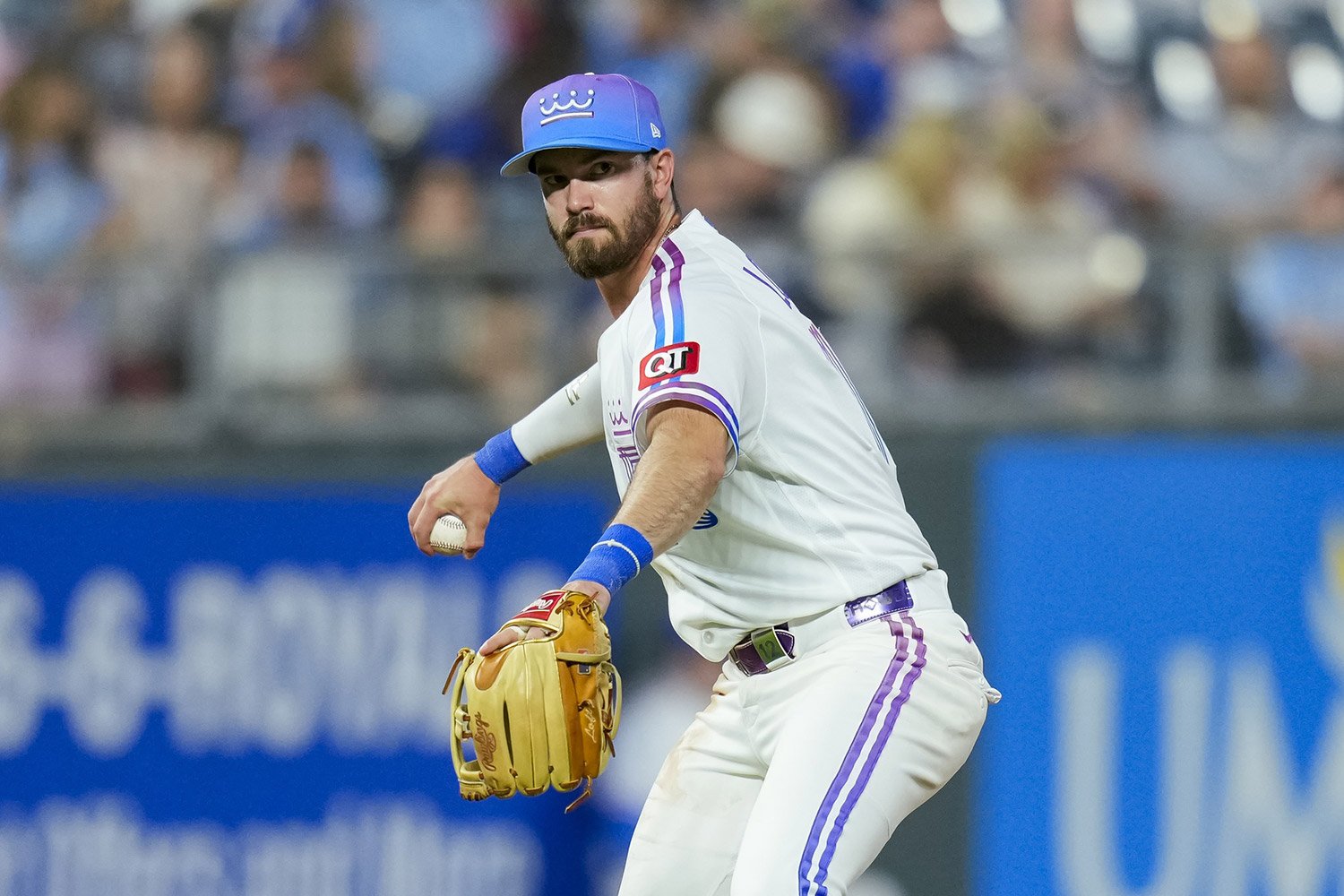
Image courtesy of © Matt Marton-Imagn Images Nicky Lopez, the former Kansas City Royals utility infielder whose surprisingly excellent 2021 season made franchise history before he became a journeyman player two years later, and ex-Kansas City catcher-turned-outfielder MJ Melendez, who never reached the heights his 41-homer 2021 minor league season suggested he would, found themselves unemployed after the 2025 campaign ended. Lopez left the Cubs, his fifth organization since the Royals successfully shopped him at the 2023 trade deadline, for free agency in November, and the Royals made Melendez a free agent when they non-tendered him later that month. Today, though, both familiar former Royals are back in the big leagues, Lopez with the Cubs and Melendez with the Mets. What the future holds for either of them is, however, uncertain. New York is Former Royals Outfielder MJ Melendez’s New Home The Mets became Melendez’s second baseball home when they signed him just as spring training began. He seemed to be vindicating the club’s faith in him by going 4-for-11 with a pair of homers and five RBI in Grapefruit League play, but started the season in Triple-A, where he’d slumped to .216/.286/.431 when the Mets called him up April 15 to replace injured Jared Young. (To his credit, four of Melendez’s 11 Triple-A hits were for extra bases, including two homers). What Melendez brings to the Mets’ table is power potential. Those 41 homers he clubbed in 2021 led the minor leagues, and that he hit 18 as a Royals rookie the following season, then 16 in 2023 and 17 in 2024, proves he can swing a big bat. But it takes more than potential to stay in the majors, and Melendez didn’t deliver it — he hit only .221 and, despite making some stellar defensive plays, posted unflattering marks in the outfield (-17 OAA and -25 DRS) across the same period. He managed 20 Triple-A homers last season, but the .083/.154/.167 line he posted in 23 games with the Royals seemed to seal his fate with the franchise. He’ll have to hit much better to stick with the Mets. He struck out to end his new club’s 3-1 loss to Colorado Sunday, but is a respectable 6-for-22 (.273) with three doubles, a homer, and two RBI in 24 plate appearances since being called up. The Cubs Keep Coming Back to Former Royals Infielder Nicky Lopez The Cubs seem to find Lopez easy to let go but harder to resist — reportedly prized by skipper Craig Counsell, they’ve acquired him four times in a little more than a year, with his last stint with the organization beginning last Thursday when they picked him up from Colorado in a cash-for-player deal. Chicago brought him up the next day. Lopez startled baseball in 2021 when Adalberto Mondesi’s injuries forced him into the everyday lineup —he became the first shortstop in club history to hit .300, and finished the campaign with a career-best .300/.365/.378 line. Since then, Lopez hasn’t hit better than the .241 he posted with the White Sox in 2024; he’s hitless in two at-bats so far this year. But the Cubs don’t need him to wield a .300 bat — what he really brings to Wrigley Field is a good glove and the ability to play shortstop, second, third, and even first base if he has to. He’s also dabbled a bit in left field. How long Lopez and Melendez stay in the majors is anyone’s guess. Either could be back in the minors by the time fans read this. What’s clear, though, is their new teams value them enough to give them new big league chances. View full article
-
Two Former Royals Get New Big League Chances in National League
Mike Gillespie posted an article in Royals
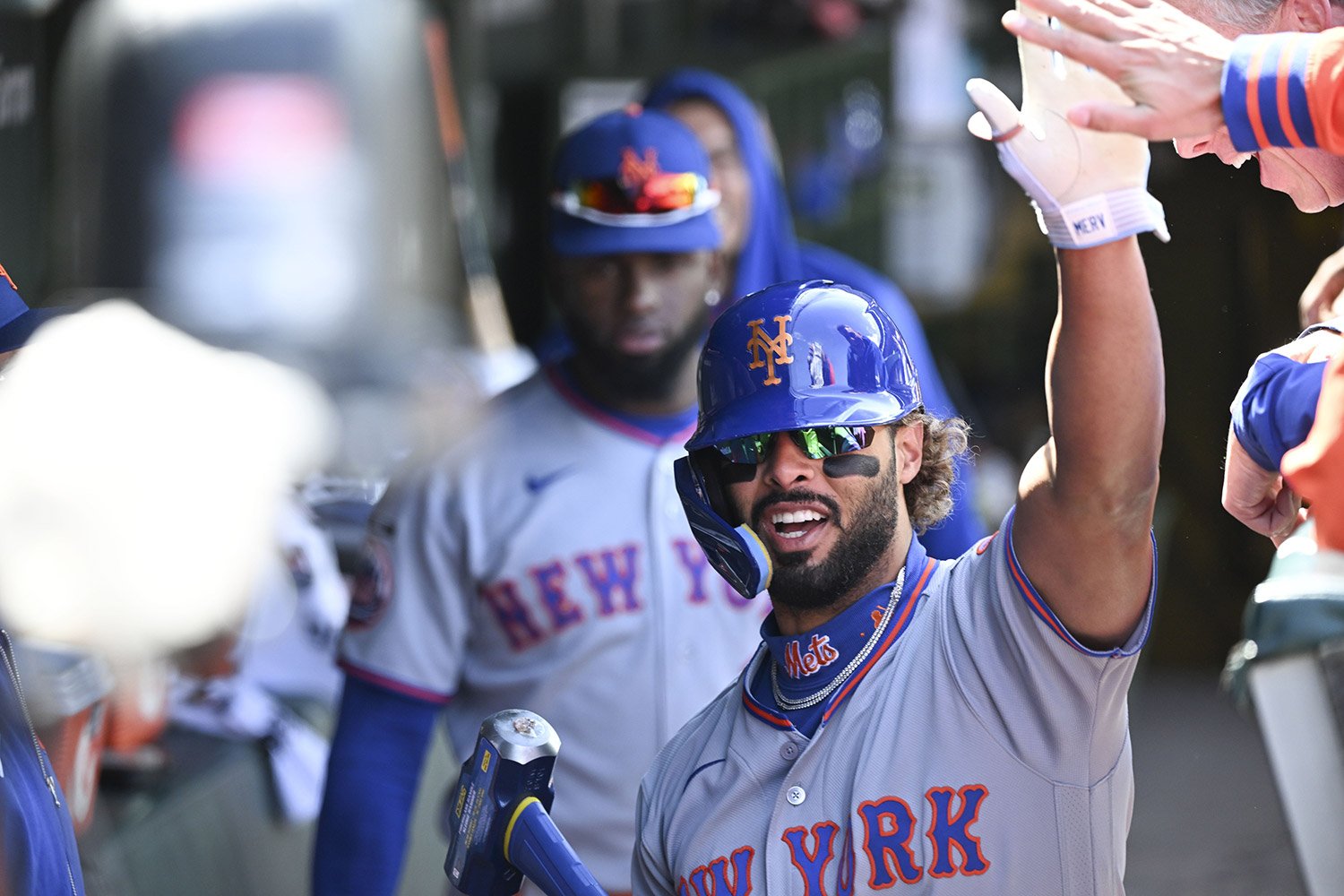 Nicky Lopez, the former Kansas City Royals utility infielder whose surprisingly excellent 2021 season made franchise history before he became a journeyman player two years later, and ex-Kansas City catcher-turned-outfielder MJ Melendez, who never reached the heights his 41-homer 2021 minor league season suggested he would, found themselves unemployed after the 2025 campaign ended. Lopez left the Cubs, his fifth organization since the Royals successfully shopped him at the 2023 trade deadline, for free agency in November, and the Royals made Melendez a free agent when they non-tendered him later that month. Today, though, both familiar former Royals are back in the big leagues, Lopez with the Cubs and Melendez with the Mets. What the future holds for either of them is, however, uncertain. New York is Former Royals Outfielder MJ Melendez’s New Home The Mets became Melendez’s second baseball home when they signed him just as spring training began. He seemed to be vindicating the club’s faith in him by going 4-for-11 with a pair of homers and five RBI in Grapefruit League play, but started the season in Triple-A, where he’d slumped to .216/.286/.431 when the Mets called him up April 15 to replace injured Jared Young. (To his credit, four of Melendez’s 11 Triple-A hits were for extra bases, including two homers). What Melendez brings to the Mets’ table is power potential. Those 41 homers he clubbed in 2021 led the minor leagues, and that he hit 18 as a Royals rookie the following season, then 16 in 2023 and 17 in 2024, proves he can swing a big bat. But it takes more than potential to stay in the majors, and Melendez didn’t deliver it — he hit only .221 and, despite making some stellar defensive plays, posted unflattering marks in the outfield (-17 OAA and -25 DRS) across the same period. He managed 20 Triple-A homers last season, but the .083/.154/.167 line he posted in 23 games with the Royals seemed to seal his fate with the franchise. He’ll have to hit much better to stick with the Mets. He struck out to end his new club’s 3-1 loss to Colorado Sunday, but is a respectable 6-for-22 (.273) with three doubles, a homer, and two RBI in 24 plate appearances since being called up. The Cubs Keep Coming Back to Former Royals Infielder Nicky Lopez The Cubs seem to find Lopez easy to let go but harder to resist — reportedly prized by skipper Craig Counsell, they’ve acquired him four times in a little more than a year, with his last stint with the organization beginning last Thursday when they picked him up from Colorado in a cash-for-player deal. Chicago brought him up the next day. Lopez startled baseball in 2021 when Adalberto Mondesi’s injuries forced him into the everyday lineup —he became the first shortstop in club history to hit .300, and finished the campaign with a career-best .300/.365/.378 line. Since then, Lopez hasn’t hit better than the .241 he posted with the White Sox in 2024; he’s hitless in two at-bats so far this year. But the Cubs don’t need him to wield a .300 bat — what he really brings to Wrigley Field is a good glove and the ability to play shortstop, second, third, and even first base if he has to. He’s also dabbled a bit in left field. How long Lopez and Melendez stay in the majors is anyone’s guess. Either could be back in the minors by the time fans read this. What’s clear, though, is their new teams value them enough to give them new big league chances.
 -
Image courtesy of © Jay Biggerstaff-Imagn Images The injury bug has bitten Kansas City Royals second baseman (and sometimes left fielder) Michael Massey for too much of his short major league career. The back issues he battles delayed the start of his 2024 season, later sidelined him for a month more, and cut his playing time to 100 games. Ankle, wrist, and back issues cost him two months of last year’s campaign. This year, an early spring training calf injury kept him on the injured list for the first 10 days of the season. That Massey’s health has impeded his big league career is fact, so much so that it’s plausible his injury history played at least some part in the Royals’ decision to almost double Jonathan India’s salary for 2026 despite India’s well-chronicled struggles at the plate and in the field last year. Now, however, it’s India who’s injured, and Massey who’s playing. And that means the door may be open for Massey to reclaim the second base job that appeared to be his after a strong 2023 performance (more on that momentarily). India was struggling when a shoulder subluxation forced him to the IL on Monday, and Massey is showing signs of coming back around. Can Royals Infielder Michael Massey Seize the Moment? Massey isn’t the perfect second baseman. Only Frank White, the slick-fielding second sacker who won eight Gold Gloves with Kansas City before retiring after the 1990 season and later taking his rightful place in the club’s Hall of Fame, has approached that status. But Massey doesn’t have to be perfect to be good, and he’s had decent seasons with the Royals since breaking in in 2022. His 3 OAA in 2023 tied for the ninth-highest mark in the majors; only six American League second basemen had more, and he posted the best fielding percentage of all big leaguers at the position. He also homered 15 times. Despite spending so much time on the IL in 2024, he still clubbed 14 homers, had a 104 wRC+, and hit a serviceable .259. And last year, he came back from a long IL stint with barely a month left in the season and in 68 down-the-stretch plate appearances posted an excellent .375/.412/.482 line. But notwithstanding India's .233 average, and -6 OAA and -2 DRS at second last season, the new contract the Royals gave India over the winter seemed more than just a hint that he was their presumptive second baseman when spring training opened. Massey, though, appeared to be having none of that presumption — in eight Cactus League games, he was slashing .364/.417/.545 with a pair of homers and four RBI when he suffered his calf injury. Could Massey have beaten out India had he remained healthy? That India finished the spring hitting .194 suggests so. The tables are now turned. India was still battling his bat (.167/.310/.313) when he headed for the IL Monday, giving Massey the chance to prove he can be a greater offensive force. So far? Massey was hitting only .185 when India went down, but through Wednesday’s loss to Baltimore, he was 4-for-7 over his last two games, and in his last five appearances, he was hitting .294 with a home run, four RBI, and two doubles. The homer, a solo shot to lead off the bottom of the eighth of Tuesday's 6-5 losing streak-breaking, walk-off victory over the Orioles, tied that game and gave the Royals their chance to win it in the ninth. India is eligible to come off the IL next week. Whether that happens remains to be seen — shoulder subluxations can be tricky things. But no matter how long it lasts, can Massey take advantage of India’s absence and convince the Royals he should be their regular second baseman? Time will tell, and the club might prefer platooning at second, but a hot bat could do the trick. View full article
-
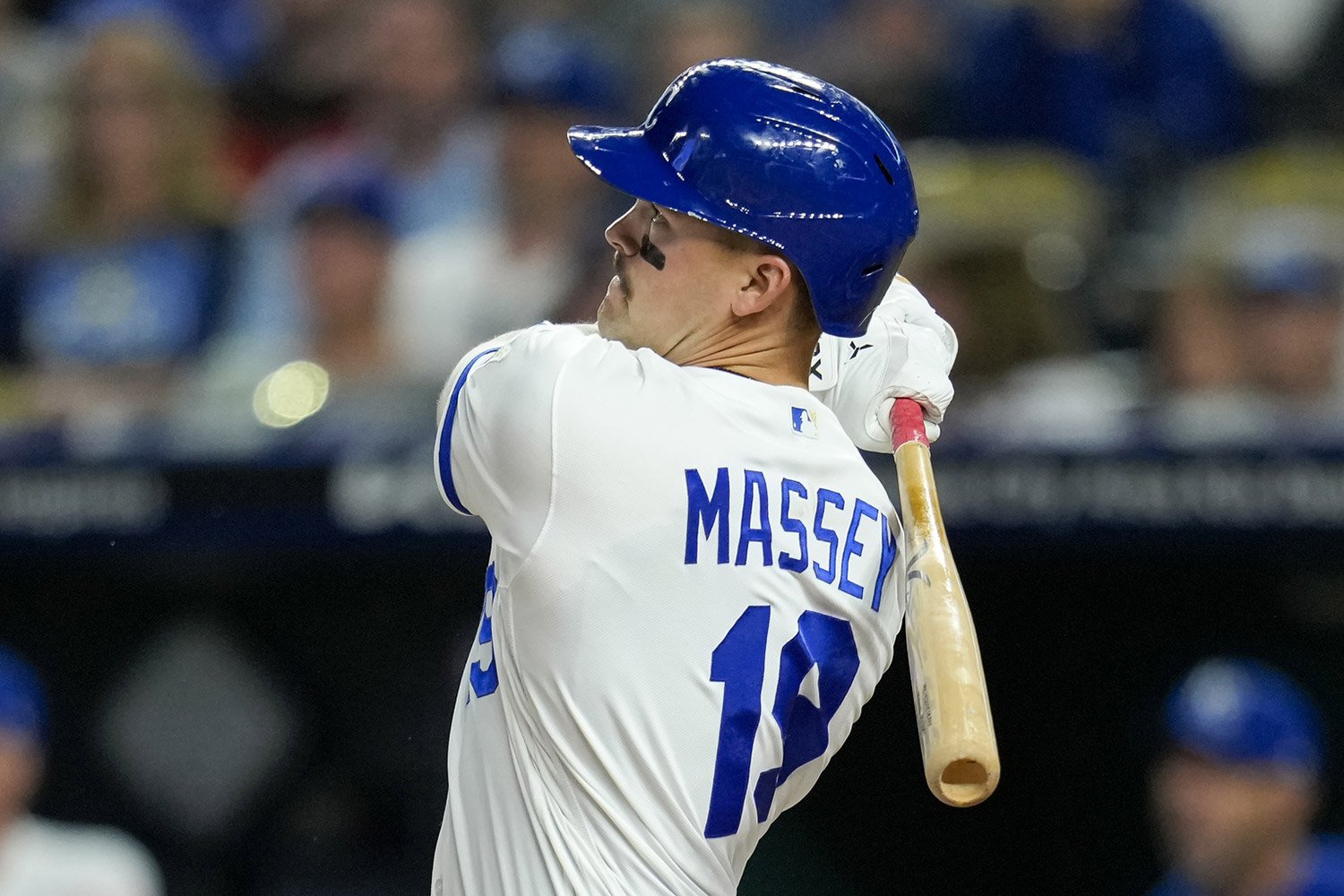 The injury bug has bitten Kansas City Royals second baseman (and sometimes left fielder) Michael Massey for too much of his short major league career. The back issues he battles delayed the start of his 2024 season, later sidelined him for a month more, and cut his playing time to 100 games. Ankle, wrist, and back issues cost him two months of last year’s campaign. This year, an early spring training calf injury kept him on the injured list for the first 10 days of the season. That Massey’s health has impeded his big league career is fact, so much so that it’s plausible his injury history played at least some part in the Royals’ decision to almost double Jonathan India’s salary for 2026 despite India’s well-chronicled struggles at the plate and in the field last year. Now, however, it’s India who’s injured, and Massey who’s playing. And that means the door may be open for Massey to reclaim the second base job that appeared to be his after a strong 2023 performance (more on that momentarily). India was struggling when a shoulder subluxation forced him to the IL on Monday, and Massey is showing signs of coming back around. Can Royals Infielder Michael Massey Seize the Moment? Massey isn’t the perfect second baseman. Only Frank White, the slick-fielding second sacker who won eight Gold Gloves with Kansas City before retiring after the 1990 season and later taking his rightful place in the club’s Hall of Fame, has approached that status. But Massey doesn’t have to be perfect to be good, and he’s had decent seasons with the Royals since breaking in in 2022. His 3 OAA in 2023 tied for the ninth-highest mark in the majors; only six American League second basemen had more, and he posted the best fielding percentage of all big leaguers at the position. He also homered 15 times. Despite spending so much time on the IL in 2024, he still clubbed 14 homers, had a 104 wRC+, and hit a serviceable .259. And last year, he came back from a long IL stint with barely a month left in the season and in 68 down-the-stretch plate appearances posted an excellent .375/.412/.482 line. But notwithstanding India's .233 average, and -6 OAA and -2 DRS at second last season, the new contract the Royals gave India over the winter seemed more than just a hint that he was their presumptive second baseman when spring training opened. Massey, though, appeared to be having none of that presumption — in eight Cactus League games, he was slashing .364/.417/.545 with a pair of homers and four RBI when he suffered his calf injury. Could Massey have beaten out India had he remained healthy? That India finished the spring hitting .194 suggests so. The tables are now turned. India was still battling his bat (.167/.310/.313) when he headed for the IL Monday, giving Massey the chance to prove he can be a greater offensive force. So far? Massey was hitting only .185 when India went down, but through Wednesday’s loss to Baltimore, he was 4-for-7 over his last two games, and in his last five appearances, he was hitting .294 with a home run, four RBI, and two doubles. The homer, a solo shot to lead off the bottom of the eighth of Tuesday's 6-5 losing streak-breaking, walk-off victory over the Orioles, tied that game and gave the Royals their chance to win it in the ninth. India is eligible to come off the IL next week. Whether that happens remains to be seen — shoulder subluxations can be tricky things. But no matter how long it lasts, can Massey take advantage of India’s absence and convince the Royals he should be their regular second baseman? Time will tell, and the club might prefer platooning at second, but a hot bat could do the trick.
 -
The early-season hole they’ve dug for themselves got deeper for the Royals on Sunday. After New York weather delayed the day's first pitch for nearly three hours, the Royals quietly bowed 7-0 to the Yankees in a dispiriting, lackluster effort that completed a winless six-game road trip, extended their losing streak to seven, and left them in sole possession of last place in the American League Central. Even the lowly White Sox have been better than this club, which is now tied with the Mets for the worst record in the majors. This is not the strong contender for postseason play so many expected it to be. Sunday’s loss sank the Royals eight games below .500, a depth they hadn’t reached since 2023 when they lost 106 times. Little has gone right for the 2026 club, and its problems run deeper than the outfield bats, which have become the usual culprits for extended dry spells. What, then, lies ahead? A lot, especially with 140 games left before the regular season ends and the playoffs begin. Even so, and some reasons for hope notwithstanding, KC’s miserable 7-15 start suggests it may be time for even the most optimistic fans to recalibrate their expectations. The Royals Are Not the Team Fans Want Them to Be Kansas City was allegedly an improved team when spring training began. But expectations may have been too high, and prognosticators too kind. After all, the front office failed for the second straight winter to land the big new bat it’s so sorely needed, settling instead for Isaac Collins and Lane Thomas. Collins’ first full big league season performance with Milwaukee last year — he homered nine times, drove in 54 RBI, and posted a .368 OBP and .263 average in 130 games — made him attractive, and Thomas’ 28-homer, 86-RBI 2023 effort with Washington gave Kansas City hope. But Collins and Thomas haven’t given the offense enough … or anything close to it. Together they’re 17-for-91 (.186) with a homer and five RBI. The Royals also didn’t fix second base. Instead of cutting disappointing Jonathan India loose, they re-signed him for $8 million only to see him fail to deliver at the plate; his .167/.310/.313 line through Sunday speaks volumes. Michael Massey also isn’t hitting (.174/.208/.261), and he’s been spending some time in left field as manager Matt Quatraro continues to hunt for someone to stake a strong claim to that position. And what big bats the Royals do have are floundering. Vinnie Pasquantino’s .157/.234/.265 line is terrible, and he didn’t hit his first homer until Thursday. Salvador Perez has three homers, good for second on the club behind Carter Jensen’s five, but going 0-for-4 Sunday dropped his average to .152, and whispered speculation about possible age-related decline has grown louder. Although he boasts a .362 OBP, Bobby Witt Jr. hasn’t been himself — he still hasn’t homered and is batting a certainly serviceable, but un-Witt-like .280. Maikel Garcia’s fast start has cooled (he’s 2 for his last 20), and he finished Sunday hitting .256, which may not bode well for him continuing in the leadoff spot to which Quatraro restored him to begin the season. As a team, and at the close of Sunday’s loss, the Royals were averaging 3.2 runs per game. They ranked last in the majors in runs scored (71), 28th in SLG (.362) and OPS (.356), and 27th in average (.218) and OBP (.310). The Royals’ Rotation Has Struggled Recently That Kansas City’s problems now run deeper than its offense has become painfully apparent. Even starting pitching, by far the club’s greatest strength, is starting to find the going rough. Noah Cameron gifted the Yankees three home runs in one inning Saturday, Detroit tagged Kris Bubic Friday for five charged runs in 4.2 innings Friday, and the Yanks battered Cole Ragans for seven runs in 4.1 frames Sunday. Fortunately, though, the starters’ body of early work has been decent — collectively, Seth Lugo, Michael Wacha, Cameron, Ragans, and Bubic had the majors' 10th best ERA (3.66) and 11th best OAA (.219) when Sunday’s game ended. The Royals’ Bullpen is a Mess The bullpen’s ineptitude rivals that of the offense. KC relievers have blown four saves, their horrific 6.18 ERA is the big leagues’ worst, and they’ve been tagged with an unacceptable seven of Kansas City’s 15 losses. Yes, star Carlos Estevéz’s injury hurts, but the fact that he’s pitched only once means the bullpen must bear much of the blame for the club’s poor start and continuing struggles. Is it Time to Rethink the 2026 Royals? Yes. No big league team is or can be perfect, but Kansas City’s imperfections are glaring. Perhaps general manager J.J. Picollo found the offseason price of a new big bat too high and settled for less than he wanted and his club needed. Perhaps Perez is running out of gas. Maybe some of the club’s talent is overrated, and was from the start. Improvement is needed. And sooner, not later; the club can’t wait for the midsummer trade deadline. But the history of this typically conservative franchise suggests no new, truly impactful major league hitter will arrive this season, and hoping the rotation and bullpen pick up the slack all season is too much to ask. Although it’s still early, this club is in trouble. View full article

