


Mike Gillespie
-
Posts
67 -
Joined
-
Last visited
-
Days Won
9
Content Type
Profiles
Forums
Blogs
Events
News
2026 Kansas City Royals Top Prospects Ranking
Kansas City Royals Videos
Kansas City Royals Free Agent & Trade Rumors, Notes, & Tidbits
Guides & Resources
2026 Kansas City Royals Draft Tracker: Picks & Bonuses
Store
Downloads
Gallery
Everything posted by Mike Gillespie
-
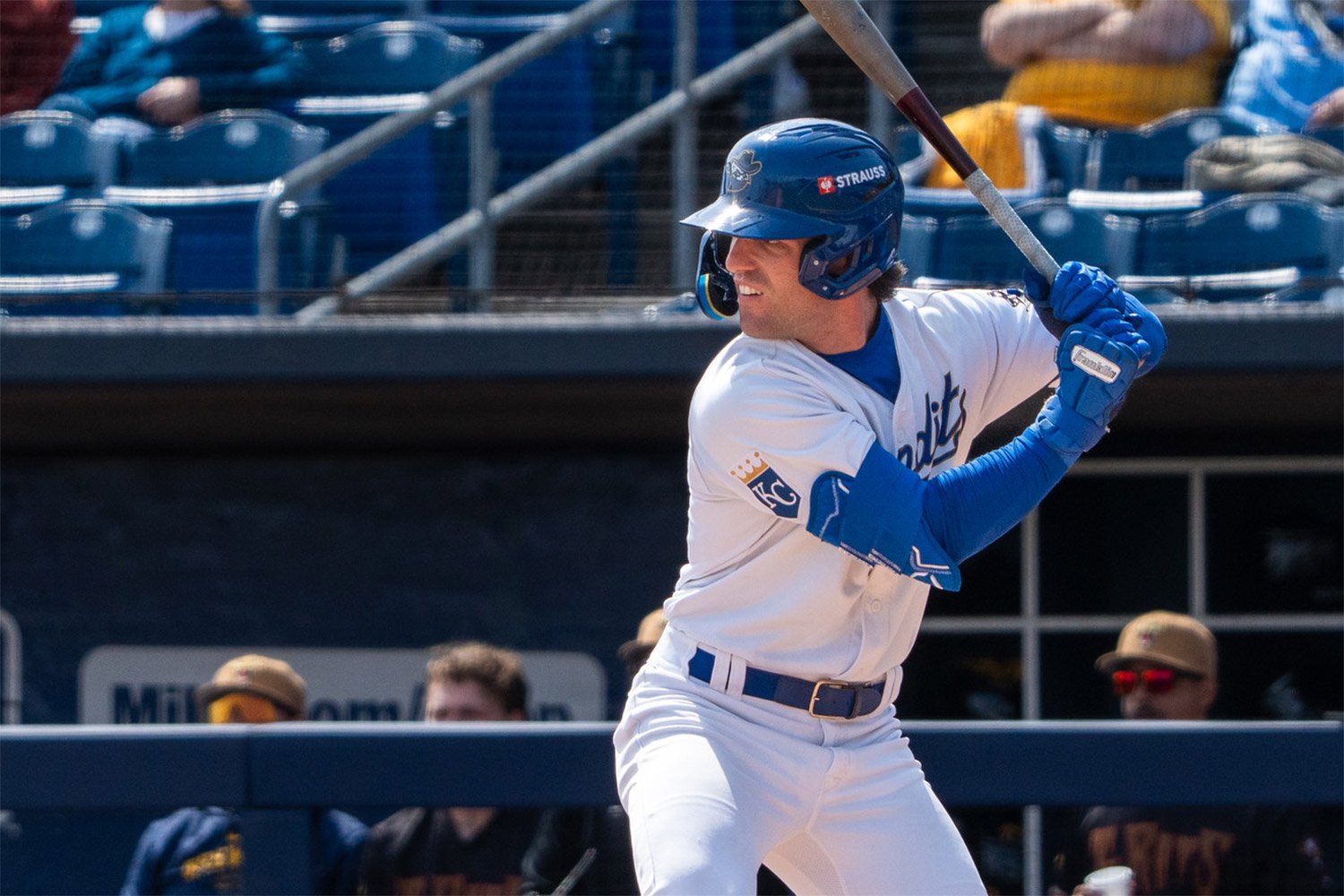 The 2026 season will end, some say mercifully, for the Royals on Sunday when they wrap up a three-game series with Cleveland at Kauffman Stadium. Win or lose, the contest will bring the curtain down on a disappointing campaign marred by an inconsistent offense, an injury-plagued starting rotation, and an embarrassing bullpen, and punctuated by a last-place finish in the American League Central. Sunday’s game could also mark the end, or the beginning of the end, of Kyle Isbel’s sixth season as KC’s everyday center fielder. Time will tell, but that possibility can’t be ignored. It may be time for a change … one of several the Royals must so obviously consider if they want to challenge for playoff berths sooner rather than later. Why The Royals May Be Ready For A New Regular Center Fielder The reasons aren’t difficult to understand. Although Isbel is an extremely competent defender to whom the Royals have justifiably entrusted center field, his bat leaves much to be desired. So much so, in fact, that some might be tempted to think he’s been an outfield placeholder until the club could obtain a better hitter with similar defensive skills. Isbel’s numbers reflect his offensive shortcomings and explain why manager Matt Quatraro almost invariably bats him ninth. The .215/.260/.317 line he carried into Wednesday night’s game against the White Sox speaks loudly for itself; his half-dozen home runs aren’t much, and his career .283 OBP falls far short of where the Royals need their regulars to be. He had a 57 wRC+ and a 0.0 fWAR. He looked good early in the year, entering May with a .292 average, but hasn’t batted better than .217 in any month since and was slashing .118/.135/.118 in September. He hadn’t managed an extra-base hit in almost a month. But his weak offense doesn’t alone explain why the Royals may be closing in on replacing Isbel in center field; after all, baseball history is replete with outfielders whose stellar gloves kept them in the majors despite their ills at the plate. Now, however, the club appears to have a center fielder with a nice glove and a pop-packed bat. Carson Roccaforte could be ready to make the jump from the minors to the majors. Carson Roccaforte Could Change Center Field For The Royals Unlike Isbel, Roccaforte, who Royals Keep considers KC’s ninth-best prospect, wields an impressive bat. He just completed a 35-homer, 96-RBI, .257/.338/.519, .857 OPS, 112 wRC+ season split between Triple-A Omaha and Double-A Northwest Arkansas. He also stole 34 bases in 2024, 43 last season, and 32 this year. Defensively, Roccaforte certainly holds his own. Primarily a center fielder, he’s made only three errors there across 994 chances and almost 3,400 minor league innings. Whether Roccaforte, who has yet to make his big league debut, is ready for the majors — especially in a starting role — remains to be seen. But he deserves a shot when the 2027 season begins. And he just might take that spot away from Isbel. If he does, the Royals might be wise to consider retaining Isbel as an extra outfielder.
 -
The 2026 season will end, some say mercifully, for the Royals on Sunday when they wrap up a three-game series with Cleveland at Kauffman Stadium. Win or lose, the contest will bring the curtain down on a disappointing campaign marred by an inconsistent offense, an injury-plagued starting rotation, and an embarrassing bullpen, and punctuated by a last-place finish in the American League Central. Sunday’s game could also mark the end, or the beginning of the end, of Kyle Isbel’s sixth season as KC’s everyday center fielder. Time will tell, but that possibility can’t be ignored. It may be time for a change … one of several the Royals must so obviously consider if they want to challenge for playoff berths sooner rather than later. Why The Royals May Be Ready For A New Regular Center Fielder The reasons aren’t difficult to understand. Although Isbel is an extremely competent defender to whom the Royals have justifiably entrusted center field, his bat leaves much to be desired. So much so, in fact, that some might be tempted to think he’s been an outfield placeholder until the club could obtain a better hitter with similar defensive skills. Isbel’s numbers reflect his offensive shortcomings and explain why manager Matt Quatraro almost invariably bats him ninth. The .215/.260/.317 line he carried into Wednesday night’s game against the White Sox speaks loudly for itself; his half-dozen home runs aren’t much, and his career .283 OBP falls far short of where the Royals need their regulars to be. He had a 57 wRC+ and a 0.0 fWAR. He looked good early in the year, entering May with a .292 average, but hasn’t batted better than .217 in any month since and was slashing .118/.135/.118 in September. He hadn’t managed an extra-base hit in almost a month. But his weak offense doesn’t alone explain why the Royals may be closing in on replacing Isbel in center field; after all, baseball history is replete with outfielders whose stellar gloves kept them in the majors despite their ills at the plate. Now, however, the club appears to have a center fielder with a nice glove and a pop-packed bat. Carson Roccaforte could be ready to make the jump from the minors to the majors. Carson Roccaforte Could Change Center Field For The Royals Unlike Isbel, Roccaforte, who Royals Keep considers KC’s ninth-best prospect, wields an impressive bat. He just completed a 35-homer, 96-RBI, .257/.338/.519, .857 OPS, 112 wRC+ season split between Triple-A Omaha and Double-A Northwest Arkansas. He also stole 34 bases in 2024, 43 last season, and 32 this year. Defensively, Roccaforte certainly holds his own. Primarily a center fielder, he’s made only three errors there across 994 chances and almost 3,400 minor league innings. Whether Roccaforte, who has yet to make his big league debut, is ready for the majors — especially in a starting role — remains to be seen. But he deserves a shot when the 2027 season begins. And he just might take that spot away from Isbel. If he does, the Royals might be wise to consider retaining Isbel as an extra outfielder. View full article
-
3 Big Royals Names Who Should Not Be In Club's 2027 Plans
Mike Gillespie posted an article in Royals
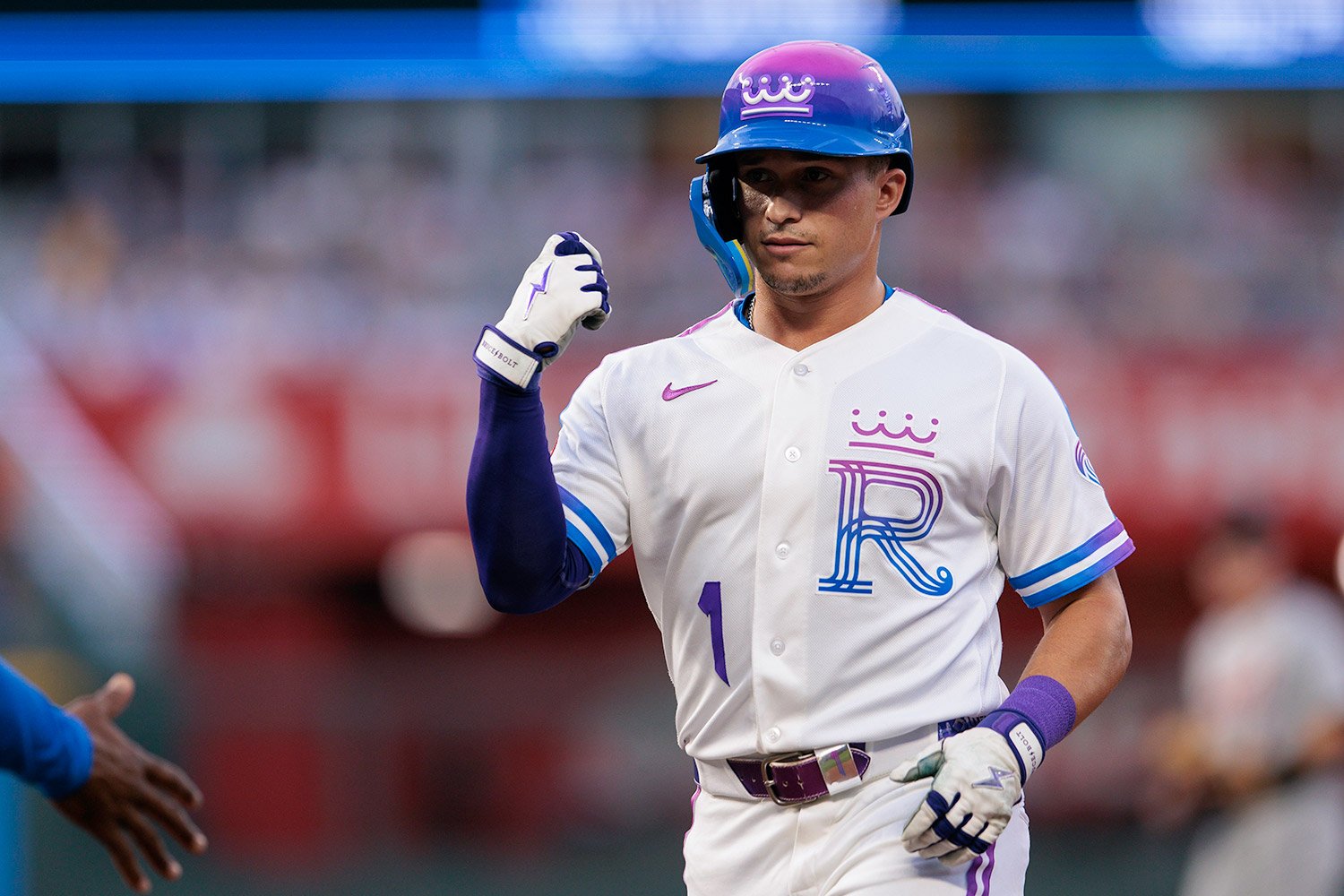 After a surprising trip to the playoffs in 2024, their first taste of postseason play since winning the 2015 World Series, that the Royals will miss October baseball for the second straight year was decided long ago. Now, all they have to fight for is avoiding a last-place finish in the American League Central, but even that could be a losing battle after Tuesday night’s series-opening loss at Houston left the cellar-dwelling Royals four games behind fourth-place Minnesota with 11 games to go. That puts next season front and center for general manager J.J. Picollo — even with an all-but-certain lockout looming large as the December 1 expiration of the major league collective bargaining agreement nears, Picollo and his front office lieutenants have no more pressing and formidable task than to make the roster adjustments necessary to bring winning back to Kauffman Stadium. Accomplishing that mission, especially because a lockout will block all transactions involving 40-man rosters, won’t be easy. Picollo must focus on his shaky bullpen and, aside from right fielder Jac Caglianone, an outfield short on productive hitters. Fixes require opening roster spots; at least a few Royals are on hot seats, and some won’t be back whenever the 2027 campaign begins. Here are three players Kansas City shouldn’t bring back. Isaac Collins Should Not Return To The Royals Picollo’s offseason quest to add pop to KC’s outfield corps produced Collins and Lane Thomas. Thomas is gone, dealt to Atlanta at the midsummer trade deadline, and Collins hasn’t produced enough to warrant a 2027 return. After going 0-for-2 against Houston Tuesday, he’s slashing .220/.326/.335 with six homers and 40 RBI in 135 games, and is hitting .133 this month, hardly the kind of numbers that inspire hopes of a big 2027. Yes, he walks a bit over 12% of the time, but that’s not enough for a club so lacking in big bats. And although he’s under team control through the 2030 season, the Royals need the roster spot he’d occupy if they bring him back. Triple-A outfielders Carson Roccaforte and Gavin Cross are enjoying good seasons — through Tuesday in a campaign split between the Storm Chasers and Double-A Northwest Arkansas, Roccaforte had 35 homers, 94 RBI, 30 steals, and was slashing .259/.341/.527 with an .868 OPS, and Cross had homered 17 times, driven in 52 runs, stolen 25 bases, and was slashing .248/.307/.437 with a .744 OPS in 114 games for Omaha. KC will have to find room for Roccaforte, Cross, or both, on next season’s 26-man roster — it’s time for each to get major league shots. Passing on Collins will free up one much-needed roster spot. The Royals Should (Perhaps Reluctantly) Cut Ties With Craig Kimbrel There’s a good argument to be made, as Royals Keep’s Yirsandy Rodríguez did recently, that Kimbrel, who trails only four relievers on baseball’s all-time saves list, is worthy of being a Royal in 2027. But he’s expendable, and Picollo can use the roster room. Kimbrel came to the Royals late, signing a free agent deal to join the club on August 10. He’s 1-3 with a save since then (through Tuesday), and although his 3.97 ERA is neither stingy nor overly generous, it isn't ideal for the kind of high-leverage reliever the Royals need. He does a nice job limiting hard contact (his 5.5 barrel rate ranks in the 83rd percentile per Baseball Savant), but his control is inconsistent, and he suffers from a sixth-percentile groundball percentage. And 2027 will be Kimbrel’s age-39 season. He’s done the Royals fairly well, but should the club continue to invest in a pitcher for whom retirement seems close? No. The Royals Should Not Pick Up Their Option On Carlos Estévez And that’s too bad. Kansas City picked the veteran right-hander up on a two-year deal with a club option for a third before the 2025 season, and he didn’t disappoint — he led the majors in saves with a career-high 42, and posted a 67-game, 66-inning 2.45 ERA. But Estévez pitched only once this season — after blowing a save and losing his club’s Opening Day game, he landed on the injured list with a foot contusion, suffered a rotator cuff injury before he could return to the majors, and underwent season-ending surgery for that issue earlier this month. Precisely when he’ll pitch again isn’t known. This was the final year of Estévez’s contract; the Royals can pick up the $13 million club option for his services for next season, or buy him out for $2 million. All things considered, it’s probably time to take the latter path. Uncertainty surrounds Estévez, and Kansas City can use the $11 million savings on a younger reliever (Estévez turns 34 in December), or elsewhere. There is, of course, another choice. The Royals could buy Estévez out, then try to sign him for far less than the $13 million required to pick up their 2027 option. It’s better to look for a replacement … but don’t be shocked if Kansas City takes a chance on him.
- 2 comments
-
- 2
-

-
- jac caglianone
- carlos estévez
- (and 2 more)
-
Image courtesy of William Purnell-Imagn Images After a surprising trip to the playoffs in 2024, their first taste of postseason play since winning the 2015 World Series, that the Royals will miss October baseball for the second straight year was decided long ago. Now, all they have to fight for is avoiding a last-place finish in the American League Central, but even that could be a losing battle after Tuesday night’s series-opening loss at Houston left the cellar-dwelling Royals four games behind fourth-place Minnesota with 11 games to go. That puts next season front and center for general manager J.J. Picollo — even with an all-but-certain lockout looming large as the December 1 expiration of the major league collective bargaining agreement nears, Picollo and his front office lieutenants have no more pressing and formidable task than to make the roster adjustments necessary to bring winning back to Kauffman Stadium. Accomplishing that mission, especially because a lockout will block all transactions involving 40-man rosters, won’t be easy. Picollo must focus on his shaky bullpen and, aside from right fielder Jac Caglianone, an outfield short on productive hitters. Fixes require opening roster spots; at least a few Royals are on hot seats, and some won’t be back whenever the 2027 campaign begins. Here are three players Kansas City shouldn’t bring back. Isaac Collins Should Not Return To The Royals Picollo’s offseason quest to add pop to KC’s outfield corps produced Collins and Lane Thomas. Thomas is gone, dealt to Atlanta at the midsummer trade deadline, and Collins hasn’t produced enough to warrant a 2027 return. After going 0-for-2 against Houston Tuesday, he’s slashing .220/.326/.335 with six homers and 40 RBI in 135 games, and is hitting .133 this month, hardly the kind of numbers that inspire hopes of a big 2027. Yes, he walks a bit over 12% of the time, but that’s not enough for a club so lacking in big bats. And although he’s under team control through the 2030 season, the Royals need the roster spot he’d occupy if they bring him back. Triple-A outfielders Carson Roccaforte and Gavin Cross are enjoying good seasons — through Tuesday in a campaign split between the Storm Chasers and Double-A Northwest Arkansas, Roccaforte had 35 homers, 94 RBI, 30 steals, and was slashing .259/.341/.527 with an .868 OPS, and Cross had homered 17 times, driven in 52 runs, stolen 25 bases, and was slashing .248/.307/.437 with a .744 OPS in 114 games for Omaha. KC will have to find room for Roccaforte, Cross, or both, on next season’s 26-man roster — it’s time for each to get major league shots. Passing on Collins will free up one much-needed roster spot. The Royals Should (Perhaps Reluctantly) Cut Ties With Craig Kimbrel There’s a good argument to be made, as Royals Keep’s Yirsandy Rodríguez did recently, that Kimbrel, who trails only four relievers on baseball’s all-time saves list, is worthy of being a Royal in 2027. But he’s expendable, and Picollo can use the roster room. Kimbrel came to the Royals late, signing a free agent deal to join the club on August 10. He’s 1-3 with a save since then (through Tuesday), and although his 3.97 ERA is neither stingy nor overly generous, it isn't ideal for the kind of high-leverage reliever the Royals need. He does a nice job limiting hard contact (his 5.5 barrel rate ranks in the 83rd percentile per Baseball Savant), but his control is inconsistent, and he suffers from a sixth-percentile groundball percentage. And 2027 will be Kimbrel’s age-39 season. He’s done the Royals fairly well, but should the club continue to invest in a pitcher for whom retirement seems close? No. The Royals Should Not Pick Up Their Option On Carlos Estévez And that’s too bad. Kansas City picked the veteran right-hander up on a two-year deal with a club option for a third before the 2025 season, and he didn’t disappoint — he led the majors in saves with a career-high 42, and posted a 67-game, 66-inning 2.45 ERA. But Estévez pitched only once this season — after blowing a save and losing his club’s Opening Day game, he landed on the injured list with a foot contusion, suffered a rotator cuff injury before he could return to the majors, and underwent season-ending surgery for that issue earlier this month. Precisely when he’ll pitch again isn’t known. This was the final year of Estévez’s contract; the Royals can pick up the $13 million club option for his services for next season, or buy him out for $2 million. All things considered, it’s probably time to take the latter path. Uncertainty surrounds Estévez, and Kansas City can use the $11 million savings on a younger reliever (Estévez turns 34 in December), or elsewhere. There is, of course, another choice. The Royals could buy Estévez out, then try to sign him for far less than the $13 million required to pick up their 2027 option. It’s better to look for a replacement … but don’t be shocked if Kansas City takes a chance on him. View full article
-
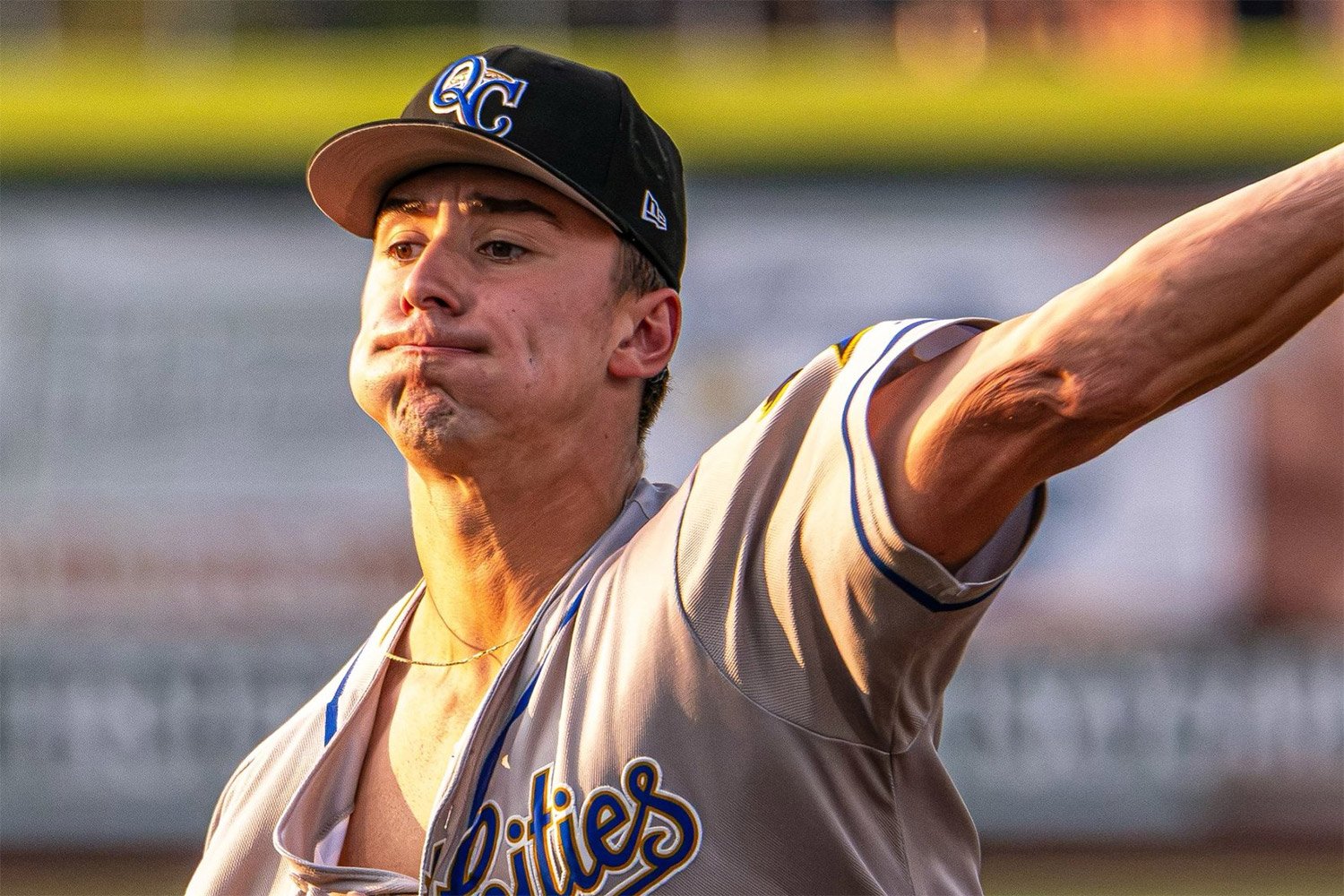 All eyes of the Kansas City Royals’ player development staff had to be on Peoria, Illinois, last Thursday night. It was there that David Shields, one of the club’s hottest prospects, had a chance to pitch High-A Quad Cities into a Midwest League playoff spot, and the loop’s West Division second-half championship to boot. And with Shields, arguably, if not in fact, the league’s best starter, on the mound, the River Bandits grabbing that pair of prizes seemed a cinch. After all, Shields’ 11th win of the season, a victory over Beloit just five days earlier, assured him of finishing the regular season with more wins than any other Midwest League hurler. It looked for a time Thursday that Shields had Peoria’s number. The talented left-hander retired 11 of the first 12 batters he faced — only José Suárez reached base, and that was on an error — and all seemed well with two outs in the fourth inning. But before that frame ended, Shields had suddenly given up a homer, two doubles, a balk and, most importantly, the lead, which the Bandits never got back. Fortunately, though, Quad Cities nailed down its title and playoff berth by beating the Chiefs the next night and will welcome South Bend to Modern Woodmen Park for Tuesday night’s playoff opener; the winner of their best-of-three match-up will move on to the Midwest League Championship Series. Shields will, of course, play a key postseason role — look for him to pitch the opener or second game against South Bend. Regardless of the outcome, though, he can count his 2026 season as a rousing success. David Shields Is A Hot Royals Prospect An understatement? Definitely, and it’s not just because so many established prospect rankings rate him so highly — we at Royals Keep, for example, consider him Kansas City’s second-best prospect. It’s what Shields does on the mound that makes him special. Besides his league-best 11 wins, Shields led qualified regular-season Midwest League starters with 139 strikeouts and a 1.08 WHIP, walked fewer batters (28) than any other qualified starter, and tied Wisconsin’s Ethan Dorchies for the most starts (25). He was one of only four league starters to pitch over 100 innings (116 2/3). There’s more. Per ProspectSavant, Shields’ stingy 6.0 BB% placed him in the 90th percentile and his 34.46 chase % in the 88th. He struck out 29.7% of the batters he faced, and ended the campaign with a 4.96 K/BB ratio and an 88th-percentile 23.7% K-BB%. Shields also fanned 10 opponents in two straight games in June. That Shields has pitched so well this season is no surprise — after working only in the Instructional League in 2024 after the Royals picked him in the second round of that season’s amateur draft, he pitched four times in the Arizona Complex League in 2025 before moving up to Single-A Columbia, where in 18 starts and 71-2/3 innings he posted a stellar 2.01 ERA, 1.02 WHIP, and went 3-1. What Does David Shields’ Future Look Like With The Royals? His numbers make it hard to believe Shields doesn’t turn 20 until this week, but the body of his minor league work to date makes it easy to believe Kauffman Stadium isn’t that far away. Expect him to start the 2027 season at Double-A Northwest Arkansas, where he’ll hopefully add some velocity to his low-to-mid 90’s fastball (he also counts a slider, curve, and changeup among his repertoire); continued success could land him at Triple-A Omaha late in the campaign, which means a 2028 major league debut isn’t out of the question. And who knows? Shields might get one of those coveted roster-expansion call-ups next year.
 -
All eyes of the Kansas City Royals’ player development staff had to be on Peoria, Illinois, last Thursday night. It was there that David Shields, one of the club’s hottest prospects, had a chance to pitch High-A Quad Cities into a Midwest League playoff spot, and the loop’s West Division second-half championship to boot. And with Shields, arguably, if not in fact, the league’s best starter, on the mound, the River Bandits grabbing that pair of prizes seemed a cinch. After all, Shields’ 11th win of the season, a victory over Beloit just five days earlier, assured him of finishing the regular season with more wins than any other Midwest League hurler. It looked for a time Thursday that Shields had Peoria’s number. The talented left-hander retired 11 of the first 12 batters he faced — only José Suárez reached base, and that was on an error — and all seemed well with two outs in the fourth inning. But before that frame ended, Shields had suddenly given up a homer, two doubles, a balk and, most importantly, the lead, which the Bandits never got back. Fortunately, though, Quad Cities nailed down its title and playoff berth by beating the Chiefs the next night and will welcome South Bend to Modern Woodmen Park for Tuesday night’s playoff opener; the winner of their best-of-three match-up will move on to the Midwest League Championship Series. Shields will, of course, play a key postseason role — look for him to pitch the opener or second game against South Bend. Regardless of the outcome, though, he can count his 2026 season as a rousing success. David Shields Is A Hot Royals Prospect An understatement? Definitely, and it’s not just because so many established prospect rankings rate him so highly — we at Royals Keep, for example, consider him Kansas City’s second-best prospect. It’s what Shields does on the mound that makes him special. Besides his league-best 11 wins, Shields led qualified regular-season Midwest League starters with 139 strikeouts and a 1.08 WHIP, walked fewer batters (28) than any other qualified starter, and tied Wisconsin’s Ethan Dorchies for the most starts (25). He was one of only four league starters to pitch over 100 innings (116 2/3). There’s more. Per ProspectSavant, Shields’ stingy 6.0 BB% placed him in the 90th percentile and his 34.46 chase % in the 88th. He struck out 29.7% of the batters he faced, and ended the campaign with a 4.96 K/BB ratio and an 88th-percentile 23.7% K-BB%. Shields also fanned 10 opponents in two straight games in June. That Shields has pitched so well this season is no surprise — after working only in the Instructional League in 2024 after the Royals picked him in the second round of that season’s amateur draft, he pitched four times in the Arizona Complex League in 2025 before moving up to Single-A Columbia, where in 18 starts and 71-2/3 innings he posted a stellar 2.01 ERA, 1.02 WHIP, and went 3-1. What Does David Shields’ Future Look Like With The Royals? His numbers make it hard to believe Shields doesn’t turn 20 until this week, but the body of his minor league work to date makes it easy to believe Kauffman Stadium isn’t that far away. Expect him to start the 2027 season at Double-A Northwest Arkansas, where he’ll hopefully add some velocity to his low-to-mid 90’s fastball (he also counts a slider, curve, and changeup among his repertoire); continued success could land him at Triple-A Omaha late in the campaign, which means a 2028 major league debut isn’t out of the question. And who knows? Shields might get one of those coveted roster-expansion call-ups next year. View full article
-
The Case For Tyler Tolbert Being In The Royals' 2027 Plans
Mike Gillespie posted an article in Royals
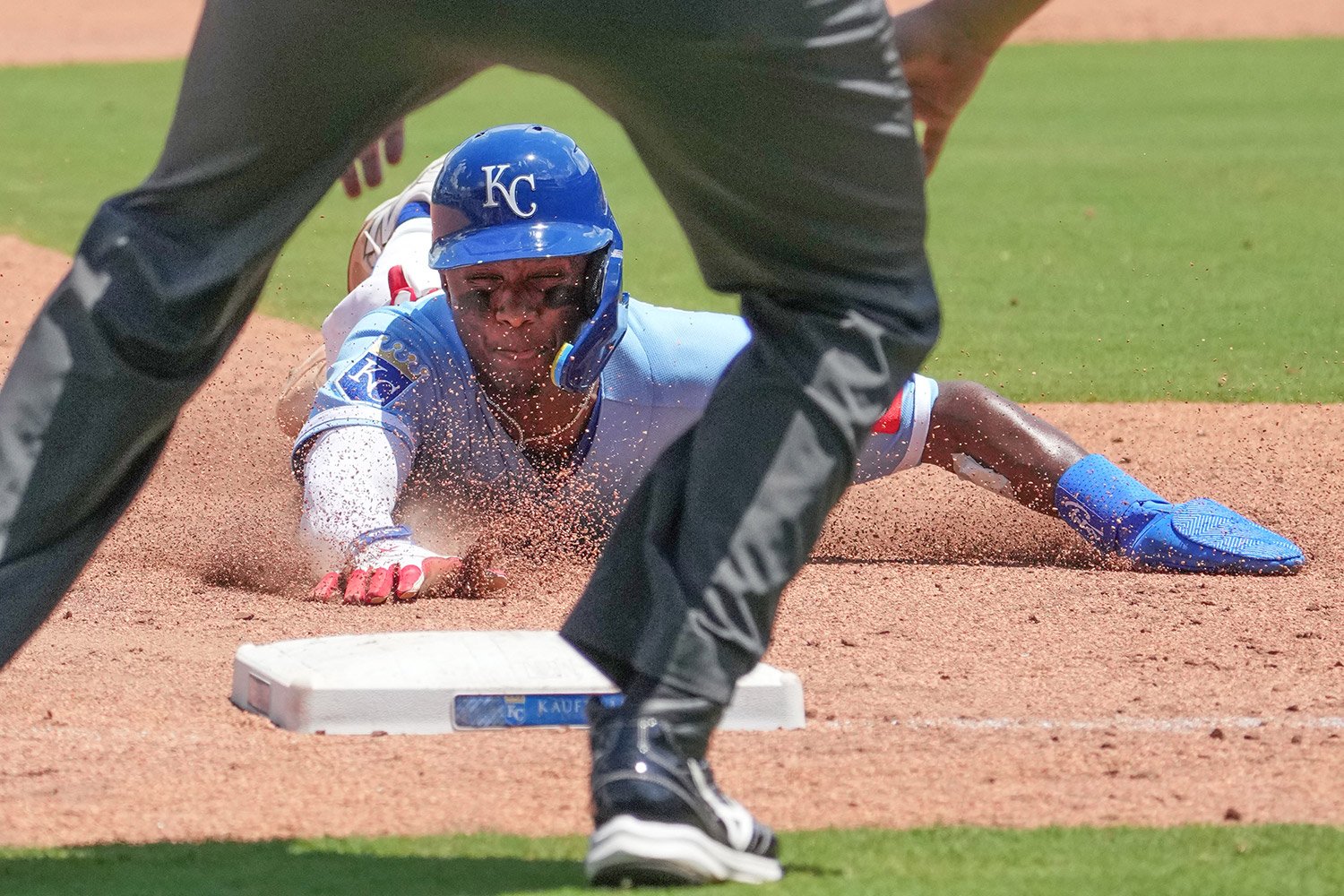 Seven months from now — March 27, 2027, to be precise — the Kansas City Royals will open their 2027 season by hosting the Minnesota Twins at Kauffman Stadium. How different from this season’s underperforming, injury-riddled roster that day’s team will look remains to be seen, but the disappointment that is 2026 means some familiar faces won’t be at The K when the 2027 campaign kicks off. Don’t expect Tyler Tolbert to be among the castoffs. Although winning an everyday job is unlikely, the swift Tolbert should be a shoo-in for a key utility role as the Royals try to rebound and put any lingering bad memories of the 2026 season behind them. To be sure, and despite the naysayers who decry his obvious power deficiency at the plate, Tolbert has earned at least another year. Here’s why. Tyler Tolbert Is Putting Together Another Good Season For The Royals To understand why Tolbert will be back is to understand how well he’s performed since breaking into the majors last season. He debuted late in the Royals’ fourth game, an 11-1 beatdown of Milwaukee, but struck out in his only at-bat. Not until his 14th appearance of the season did he get his first big league hit, and it took him another 10 games to get his second. Fortunately, Tolbert came around and finished his 64-game rookie season with serviceable numbers — in 57 trips to the plate, he slashed .280/.321/.380. But his speed added considerable value. Tolbert stole 21 bases, a total less than only Bobby Witt Jr.’s 38 and Maikel Garcia’s 23, and was caught stealing just twice. He’s even better this season. Through Sunday's action, Tolbert was slashing .286/.356/.775 with a 117 wRC+ in 61 games and 122 plate appearances. Per Baseball Savant, he’s walking more (9.0 BB% this season compared to last year’s 1.8) and striking out less (18 K% in 2026, 19.3 in 2025). And he hasn’t slowed down on the basepaths. The base he swiped Thursday gave him 18 steals for the season — only three times has he been gunned down — so he’s a cinch to finish with more steals than last season. That speed (Baseball Savant places his sprint speed in the 93rd percentile) also serves Tolbert well defensively, especially in the outfield where it’s enabled him to make some spectacular plays and avoid even a single error in 27 appearances. Tolbert also checks another critical box — versatility, an asset near and dear to general manager J.J. Picollo’s heart, and one to which he pays close attention when considering his roster construction options. This year, Tolbert has played every outfield position, spent time at second, third, and shortstop, and even pitched five times. He’s not an overwhelmingly good defender anywhere, but he can hold his own everywhere. Blocking Tolbert’s path to an everyday job, however, is his glaring shortage of power. He’s homered only four times in the majors; the 10 home runs he hit at Double-A Northwest Arkansas in 2023 offer some hope for improvement, but not much. He also doesn’t drive in many runs — only 14 so far in two big league seasons — but that’s excusable considering his primary role as a reserve, and the fact he’s come to the plate with runners in scoring position only 48 times. What Does Tyler Tolbert’s Royals Future Look Like? Good. Although his bat isn’t powerful or his glove stellar, his speed, ability to punch hits, knack for getting on base, and versatility will keep him in the majors. Unless another team so covets what he gives the Royals and makes an offer for him Picollo finds too attractive to reject, Tolbert will be at The K next Opening Day.
-
- 2
-
-
- tyler tolbert
- maikel garcia
- (and 1 more)
-
Image courtesy of Denny Medley-Imagn Images Seven months from now — March 27, 2027, to be precise — the Kansas City Royals will open their 2027 season by hosting the Minnesota Twins at Kauffman Stadium. How different from this season’s underperforming, injury-riddled roster that day’s team will look remains to be seen, but the disappointment that is 2026 means some familiar faces won’t be at The K when the 2027 campaign kicks off. Don’t expect Tyler Tolbert to be among the castoffs. Although winning an everyday job is unlikely, the swift Tolbert should be a shoo-in for a key utility role as the Royals try to rebound and put any lingering bad memories of the 2026 season behind them. To be sure, and despite the naysayers who decry his obvious power deficiency at the plate, Tolbert has earned at least another year. Here’s why. Tyler Tolbert Is Putting Together Another Good Season For The Royals To understand why Tolbert will be back is to understand how well he’s performed since breaking into the majors last season. He debuted late in the Royals’ fourth game, an 11-1 beatdown of Milwaukee, but struck out in his only at-bat. Not until his 14th appearance of the season did he get his first big league hit, and it took him another 10 games to get his second. Fortunately, Tolbert came around and finished his 64-game rookie season with serviceable numbers — in 57 trips to the plate, he slashed .280/.321/.380. But his speed added considerable value. Tolbert stole 21 bases, a total less than only Bobby Witt Jr.’s 38 and Maikel Garcia’s 23, and was caught stealing just twice. He’s even better this season. Through Sunday's action, Tolbert was slashing .286/.356/.775 with a 117 wRC+ in 61 games and 122 plate appearances. Per Baseball Savant, he’s walking more (9.0 BB% this season compared to last year’s 1.8) and striking out less (18 K% in 2026, 19.3 in 2025). And he hasn’t slowed down on the basepaths. The base he swiped Thursday gave him 18 steals for the season — only three times has he been gunned down — so he’s a cinch to finish with more steals than last season. That speed (Baseball Savant places his sprint speed in the 93rd percentile) also serves Tolbert well defensively, especially in the outfield where it’s enabled him to make some spectacular plays and avoid even a single error in 27 appearances. Tolbert also checks another critical box — versatility, an asset near and dear to general manager J.J. Picollo’s heart, and one to which he pays close attention when considering his roster construction options. This year, Tolbert has played every outfield position, spent time at second, third, and shortstop, and even pitched five times. He’s not an overwhelmingly good defender anywhere, but he can hold his own everywhere. Blocking Tolbert’s path to an everyday job, however, is his glaring shortage of power. He’s homered only four times in the majors; the 10 home runs he hit at Double-A Northwest Arkansas in 2023 offer some hope for improvement, but not much. He also doesn’t drive in many runs — only 14 so far in two big league seasons — but that’s excusable considering his primary role as a reserve, and the fact he’s come to the plate with runners in scoring position only 48 times. What Does Tyler Tolbert’s Royals Future Look Like? Good. Although his bat isn’t powerful or his glove stellar, his speed, ability to punch hits, knack for getting on base, and versatility will keep him in the majors. Unless another team so covets what he gives the Royals and makes an offer for him Picollo finds too attractive to reject, Tolbert will be at The K next Opening Day. View full article
-
Three More Questions The Royals Can Answer Down The Stretch
Mike Gillespie posted an article in Royals
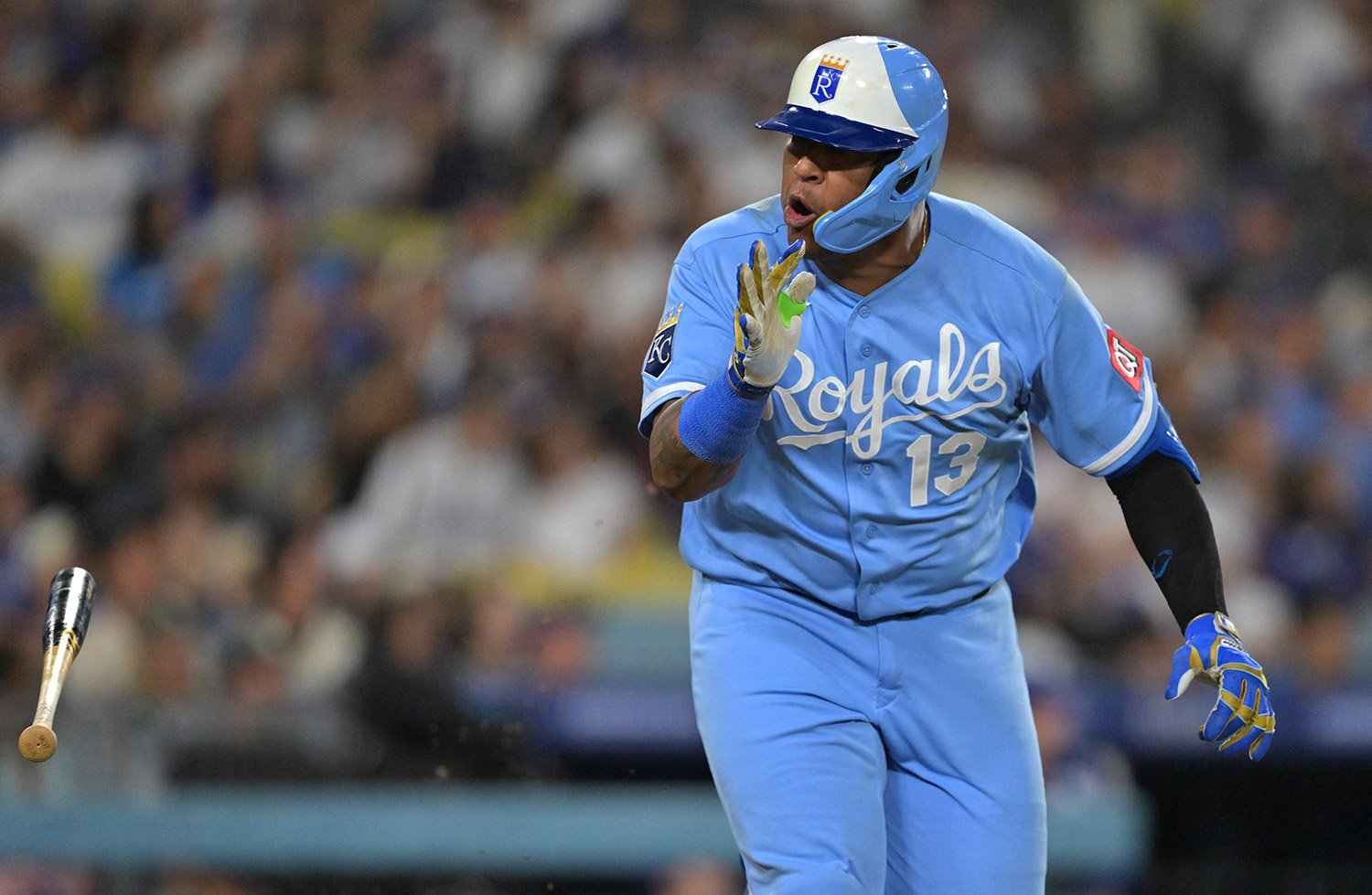 The Kansas City Royals are stuck in the muck of a season lost. Monday’s 6-5 loss to the Dodgers marked their 71st loss of a campaign that began with realistic playoff hopes five months ago. But bad play hit this club even before a striking series of key injuries decimated its once-promising roster — the Royals were last above .500 on April 1, haven’t finished a single month with a winning record, and have occupied last place in the American League Central since June 21. Losing 100 games may seem unlikely, but doing so is far from impossible. So, what’s left to look forward to as this season winds down? Is there anything left to interest Royals fans? Yes. Here are three things to watch down the stretch. Will Salvador Perez Prove He Has Enough Left For One More Royals Season? Perez will conclude the first year of the two-season contract extension he signed last November when KC winds up its disappointing season against Cleveland Sept. 27. Expect him back for his 16th major league season next year. Probably, that is. Perez, the best catcher the Royals have ever had and one of the best the game has ever seen, shows signs of slowing down. Decline can come fast and hit hard; retirement can end careers before contracts do. And some can’t be blamed for suspecting that Perez, a nine-time All-Star, five-time Gold Glover, and five-time Silver Slugger Award winner, might be at retirement’s doorstep. Only for the first two days of this season has his average been at least .250; he’s hit no higher than .216 since. With 49 RBI through Monday, he won’t drive in at least 100 runs for the first time since 2023. His 16 home runs put him in danger of posting his lowest full-season homer total since 2013. He went into the All-Star Break with a .593 OPS and a .209/.249/.343 line. Numbers, in other words, concerning enough to trigger talk of serious decline and even the end of the line. But things change … and so has Perez’s performance at the plate. Since the break, he’s improving nicely. Through Sunday (21 games), he was slashing a much better .247/.322/.507, his five homers and 12 RBI compare favorably with the 11 and 37 he managed in 89 first-half appearances, and his 123 wRC+ was strikingly better than the 59 he’d posted before the Break. Fortunately, he’s in the midst of demonstrating he has another decent year left. Can Daniel Lynch IV Secure A Spot In The Royals’ Rotation? This question wasn’t on many radar screens when the season began — Kansas City’s rotation seemed set and strong with Michael Wacha, Cole Ragans, Seth Lugo, Kris Bubic, and Noah Cameron. Then came the injuries. An elbow issue forced Ragans to the Injured List May 8, where Bubic joined him 10 days later with an elbow problem of his own; neither has thrown a major league pitch since. Now, Ragans is out for the season after undergoing surgery in June, and the Royals shipped Bubic to the Dodgers, where he remains on the IL, at the trade deadline. And while Cameron has been excellent lately, Tommy John surgery ended increasingly promising seasons for rotation substitutes Stephen Kolek and Luinder Avila earlier this month. Enter Lynch, a starter the club began transitioning to relief work in 2024 and whose solid performance this season had moved him to the front of the bullpen class until the Royals decided to move him to the rotation last week. At the time, Lynch was 4-2 with an eye-catching 1.96 ERA and 0.95 WHIP in 46 games and 46 innings out of the pen. How he fared in his first start wasn’t remarkable. Working against the Cubs at Kauffman Stadium Friday night, he gave up four runs (three earned), walked two, and struck out two in 1 2/3 innings. All his trouble came in the second as KC lost 6-4. One start won’t determine Lynch’s fate as a starter. He’ll get several more if the Royals stick to their new plan, so he’ll have opportunities to stretch out and prove the club is making the right call. But history may be against him. Lynch is an unimpressive 11-24 with a 5.26 ERA in 57 career starts (he lost 13 times in 2022, albeit for a bad Kansas City team); as a reliever, though, he’s 12-4 with a 2.47 ERA in 114 appearances. Only time will tell if this experiment works. If it does, look for the Royals to pencil Lynch into the 2027 rotation; if it doesn’t, look for him in the bullpen instead. Will A Closer Emerge From The Royals’ Bullpen? Unlikely. In fact, the prospects of finding a diamond in the rough that is Kansas City’s 2027 relief corps are probably worse than those for the club to escape the AL Central dungeon — through Monday, the Royals' 5.37 bullpen was the second-worst in the majors, their critical ninth-inning ERA, a horrendous 6.96, was the worst, and their 29 blown saves tied them with the A’s for the big leagues’ most. Put bluntly, KC’s current closer candidates are suspect or unproven. Despite sparkling down the 2024 stretch with 11 saves and a 2.88 ERA after KC grabbed him at the trade deadline, Erceg found himself displaced by newcomer Carlos Estévez when last season began and hasn’t regained his form. Yes, he leads the Royals in saves with 12, but he’s blown six save opportunities, his 6.07 ERA is bad, and he appears to have exhausted the club’s patience in save and other high-leverage situations. Estévez’s only 2026 appearance came on Opening Day. He’s been on the IL since April 1, and it’s conceivable he won’t pitch again this year. He’ll be a free agent after the season if the team doesn’t exercise the club option it holds on him for 2027. John Schreiber’s been serviceable and might be worth a try, but because he’s eligible for free agency after the World Series and may not be in KC’s plans, the Royals should take a long look at someone else. Alex Lange has 10 saves but is 1-7 with a 6.17 ERA. Some have called for Lynch to close, but trying him in the rotation removes that option. What about recent acquisition Craig Kimbrel, the once-stellar closer whose 440 career saves rank fifth all-time? No. He’s 38 and turns 39 next May, hasn’t saved a game and has had only one save opportunity since 2024, and across stints with the Mets and Rays this season allowed five of seven inherited runners to score. KC should use him as something other than a closer. The best of the present bunch may be Steven Cruz, who’s posted his first three big league saves, two holds, and a 3.00 ERA in his last nine appearances. But a two-month tryout may not be enough to convince the Royals he’s their closer for 2027.
-
- 1
-
-
- salvador perez
- lucas erceg
- (and 4 more)
-
Image courtesy of Jayne Kamin-Oncea-Imagn Images The Kansas City Royals are stuck in the muck of a season lost. Monday’s 6-5 loss to the Dodgers marked their 71st loss of a campaign that began with realistic playoff hopes five months ago. But bad play hit this club even before a striking series of key injuries decimated its once-promising roster — the Royals were last above .500 on April 1, haven’t finished a single month with a winning record, and have occupied last place in the American League Central since June 21. Losing 100 games may seem unlikely, but doing so is far from impossible. So, what’s left to look forward to as this season winds down? Is there anything left to interest Royals fans? Yes. Here are three things to watch down the stretch. Will Salvador Perez Prove He Has Enough Left For One More Royals Season? Perez will conclude the first year of the two-season contract extension he signed last November when KC winds up its disappointing season against Cleveland Sept. 27. Expect him back for his 16th major league season next year. Probably, that is. Perez, the best catcher the Royals have ever had and one of the best the game has ever seen, shows signs of slowing down. Decline can come fast and hit hard; retirement can end careers before contracts do. And some can’t be blamed for suspecting that Perez, a nine-time All-Star, five-time Gold Glover, and five-time Silver Slugger Award winner, might be at retirement’s doorstep. Only for the first two days of this season has his average been at least .250; he’s hit no higher than .216 since. With 49 RBI through Monday, he won’t drive in at least 100 runs for the first time since 2023. His 16 home runs put him in danger of posting his lowest full-season homer total since 2013. He went into the All-Star Break with a .593 OPS and a .209/.249/.343 line. Numbers, in other words, concerning enough to trigger talk of serious decline and even the end of the line. But things change … and so has Perez’s performance at the plate. Since the break, he’s improving nicely. Through Sunday (21 games), he was slashing a much better .247/.322/.507, his five homers and 12 RBI compare favorably with the 11 and 37 he managed in 89 first-half appearances, and his 123 wRC+ was strikingly better than the 59 he’d posted before the Break. Fortunately, he’s in the midst of demonstrating he has another decent year left. Can Daniel Lynch IV Secure A Spot In The Royals’ Rotation? This question wasn’t on many radar screens when the season began — Kansas City’s rotation seemed set and strong with Michael Wacha, Cole Ragans, Seth Lugo, Kris Bubic, and Noah Cameron. Then came the injuries. An elbow issue forced Ragans to the Injured List May 8, where Bubic joined him 10 days later with an elbow problem of his own; neither has thrown a major league pitch since. Now, Ragans is out for the season after undergoing surgery in June, and the Royals shipped Bubic to the Dodgers, where he remains on the IL, at the trade deadline. And while Cameron has been excellent lately, Tommy John surgery ended increasingly promising seasons for rotation substitutes Stephen Kolek and Luinder Avila earlier this month. Enter Lynch, a starter the club began transitioning to relief work in 2024 and whose solid performance this season had moved him to the front of the bullpen class until the Royals decided to move him to the rotation last week. At the time, Lynch was 4-2 with an eye-catching 1.96 ERA and 0.95 WHIP in 46 games and 46 innings out of the pen. How he fared in his first start wasn’t remarkable. Working against the Cubs at Kauffman Stadium Friday night, he gave up four runs (three earned), walked two, and struck out two in 1 2/3 innings. All his trouble came in the second as KC lost 6-4. One start won’t determine Lynch’s fate as a starter. He’ll get several more if the Royals stick to their new plan, so he’ll have opportunities to stretch out and prove the club is making the right call. But history may be against him. Lynch is an unimpressive 11-24 with a 5.26 ERA in 57 career starts (he lost 13 times in 2022, albeit for a bad Kansas City team); as a reliever, though, he’s 12-4 with a 2.47 ERA in 114 appearances. Only time will tell if this experiment works. If it does, look for the Royals to pencil Lynch into the 2027 rotation; if it doesn’t, look for him in the bullpen instead. Will A Closer Emerge From The Royals’ Bullpen? Unlikely. In fact, the prospects of finding a diamond in the rough that is Kansas City’s 2027 relief corps are probably worse than those for the club to escape the AL Central dungeon — through Monday, the Royals' 5.37 bullpen was the second-worst in the majors, their critical ninth-inning ERA, a horrendous 6.96, was the worst, and their 29 blown saves tied them with the A’s for the big leagues’ most. Put bluntly, KC’s current closer candidates are suspect or unproven. Despite sparkling down the 2024 stretch with 11 saves and a 2.88 ERA after KC grabbed him at the trade deadline, Erceg found himself displaced by newcomer Carlos Estévez when last season began and hasn’t regained his form. Yes, he leads the Royals in saves with 12, but he’s blown six save opportunities, his 6.07 ERA is bad, and he appears to have exhausted the club’s patience in save and other high-leverage situations. Estévez’s only 2026 appearance came on Opening Day. He’s been on the IL since April 1, and it’s conceivable he won’t pitch again this year. He’ll be a free agent after the season if the team doesn’t exercise the club option it holds on him for 2027. John Schreiber’s been serviceable and might be worth a try, but because he’s eligible for free agency after the World Series and may not be in KC’s plans, the Royals should take a long look at someone else. Alex Lange has 10 saves but is 1-7 with a 6.17 ERA. Some have called for Lynch to close, but trying him in the rotation removes that option. What about recent acquisition Craig Kimbrel, the once-stellar closer whose 440 career saves rank fifth all-time? No. He’s 38 and turns 39 next May, hasn’t saved a game and has had only one save opportunity since 2024, and across stints with the Mets and Rays this season allowed five of seven inherited runners to score. KC should use him as something other than a closer. The best of the present bunch may be Steven Cruz, who’s posted his first three big league saves, two holds, and a 3.00 ERA in his last nine appearances. But a two-month tryout may not be enough to convince the Royals he’s their closer for 2027. View full article
-
Why Scott Barlow Isn't Emerging As A Potential Bullpen Solution
Mike Gillespie posted an article in Royals
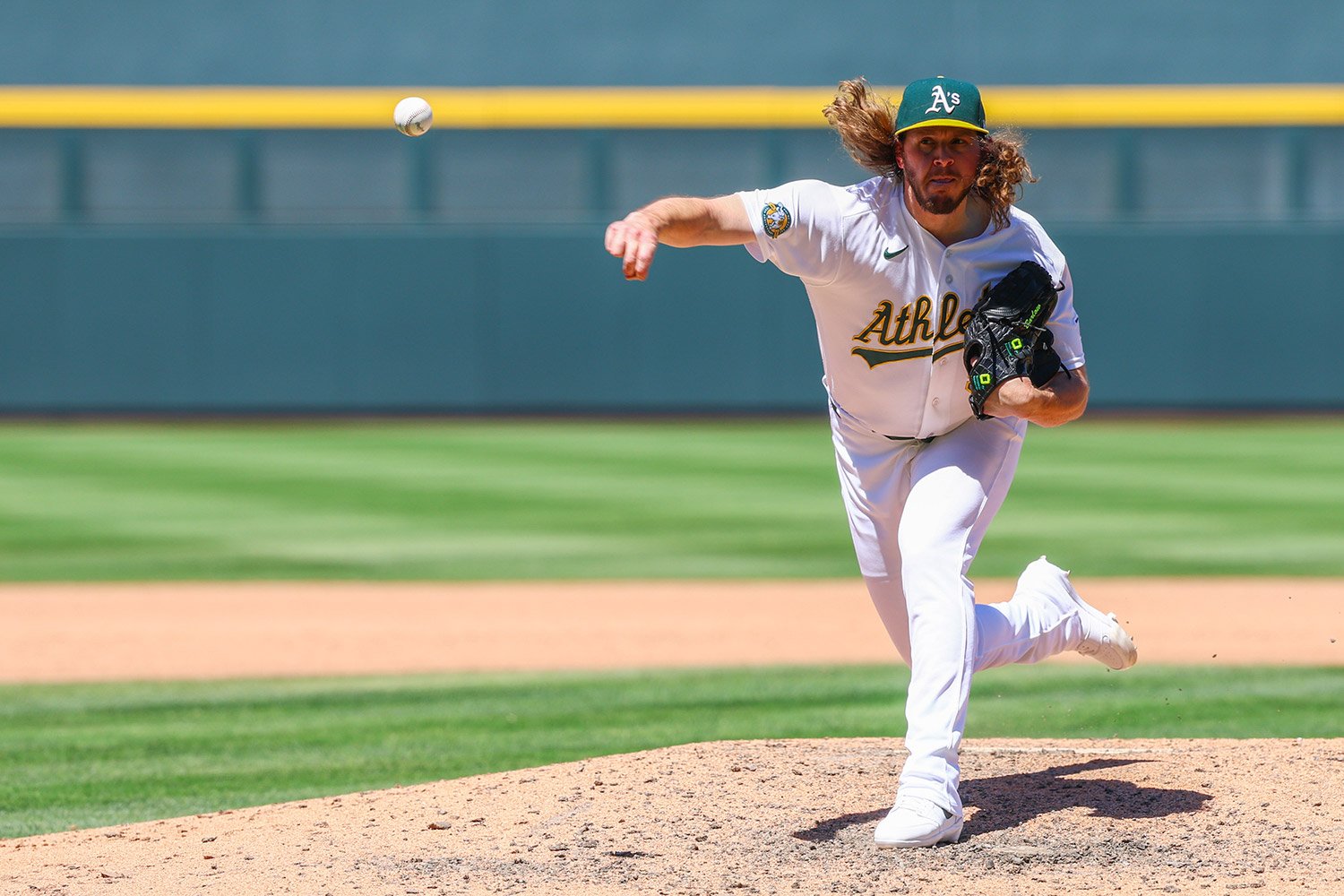 To say the Royals are burdened by one of the worst bullpens in the majors grossly understates the obvious. The club’s troubled relief corps too often fails the eye test, and its numbers tell a dreadful tale — through Tuesday, when closer Alex Lange’s blown save at Detroit became the Royals’ 20th of the season, KC’s 7.19 ninth-inning ERA was the worst in the majors, and the pen’s 5.25 overall ERA was the big leagues' second-worst. No bullpen’s WHIP was as poor as the Royals’ 1.55. Help is desperately needed, and has been since closer Carlos Estévez went on the Injured List before the campaign was even a week old. General manager J.J. Picollo has signed hopeful solutions to minor league deals, and Tuesday brought up Easton McGee, who he recently obtained from Milwaukee. And then there’s Scott Barlow, who for two full seasons excelled as the Royals’ closer, saving 16 games with a 2.24 ERA in 2021 and then 24 with a 2.18 ERA the very next year. Kansas City gave him a minor league contract after the Athletics released him in late June. Unfortunately, Barlow doesn’t seem to be the, or even an, answer. Scott Barlow Has Been Underwhelming Since Returning To The Royals Despite its bad bullpen situation, Kansas City chose not to add nine-season major league veteran Barlow to the big league bullpen as soon as he rejoined the organization. Instead, and after posting an ugly 6.48 ERA in 33.1 innings spread across 36 appearances for the A’s, the club assigned him to Triple-A Omaha. His July 3 debut with the Storm Chasers, a team he’d last pitched for in 2019, didn’t go well. After tossing a scoreless sixth inning against Indianapolis, he allowed the Indians to double their lead by giving up two solo homers before leaving with two outs in the seventh (the Chasers lost 6-0). Barlow rebounded with a scoreless inning against Louisville four days later, but in three games and three innings since then (through Tuesday) has been touched for three runs, five hits (including another homer), walked three, and struck out two. Barlow entered Wednesday’s action with a 7.24 ERA and 2.12 WHIP. Opponents were batting .292 against him, and his K% and BB% were both 17.2 (5 apiece). The sample size is small, but the results are still discouraging. Whether there’s still hope for Barlow, who in 237 games since leaving the Royals via a trade deadline deal with San Diego in 2023 is 11-8 with a 4.45 ERA and five saves in eight tries, remains to be seen. But so far, and considering his disappointing performances in the majors and minors this season, his prospects of making it back to Kauffman Stadium before the campaign ends don’t seem bright. And don’t look for the Royals to bring him back in 2027.
-
- 1
-
-
- scott barlow
- carlos estévez
- (and 1 more)
-
Image courtesy of IMAGN IMAGES via Reuters Connect To say the Royals are burdened by one of the worst bullpens in the majors grossly understates the obvious. The club’s troubled relief corps too often fails the eye test, and its numbers tell a dreadful tale — through Tuesday, when closer Alex Lange’s blown save at Detroit became the Royals’ 20th of the season, KC’s 7.19 ninth-inning ERA was the worst in the majors, and the pen’s 5.25 overall ERA was the big leagues' second-worst. No bullpen’s WHIP was as poor as the Royals’ 1.55. Help is desperately needed, and has been since closer Carlos Estévez went on the Injured List before the campaign was even a week old. General manager J.J. Picollo has signed hopeful solutions to minor league deals, and Tuesday brought up Easton McGee, who he recently obtained from Milwaukee. And then there’s Scott Barlow, who for two full seasons excelled as the Royals’ closer, saving 16 games with a 2.24 ERA in 2021 and then 24 with a 2.18 ERA the very next year. Kansas City gave him a minor league contract after the Athletics released him in late June. Unfortunately, Barlow doesn’t seem to be the, or even an, answer. Scott Barlow Has Been Underwhelming Since Returning To The Royals Despite its bad bullpen situation, Kansas City chose not to add nine-season major league veteran Barlow to the big league bullpen as soon as he rejoined the organization. Instead, and after posting an ugly 6.48 ERA in 33.1 innings spread across 36 appearances for the A’s, the club assigned him to Triple-A Omaha. His July 3 debut with the Storm Chasers, a team he’d last pitched for in 2019, didn’t go well. After tossing a scoreless sixth inning against Indianapolis, he allowed the Indians to double their lead by giving up two solo homers before leaving with two outs in the seventh (the Chasers lost 6-0). Barlow rebounded with a scoreless inning against Louisville four days later, but in three games and three innings since then (through Tuesday) has been touched for three runs, five hits (including another homer), walked three, and struck out two. Barlow entered Wednesday’s action with a 7.24 ERA and 2.12 WHIP. Opponents were batting .292 against him, and his K% and BB% were both 17.2 (5 apiece). The sample size is small, but the results are still discouraging. Whether there’s still hope for Barlow, who in 237 games since leaving the Royals via a trade deadline deal with San Diego in 2023 is 11-8 with a 4.45 ERA and five saves in eight tries, remains to be seen. But so far, and considering his disappointing performances in the majors and minors this season, his prospects of making it back to Kauffman Stadium before the campaign ends don’t seem bright. And don’t look for the Royals to bring him back in 2027. View full article
-
How The Royals Can Prove 2 Big Things At The Trade Deadline
Mike Gillespie posted an article in Royals
 The annual midsummer trade deadline looms large on baseball’s horizon. Contenders searching for game-changing down-the-stretch help, and sure sellers like the Royals, have until August 3 at 6pm Eastern to consummate the big deals they and their fans relish. What Kansas City, buried deep in the American League Central cellar by maddening injuries and a shockingly dismal bullpen, will do is not in question. General manager J.J. Picollo, taking his fourth shot at the deadline since replacing Dayton Moore near the end of the 2022 season, will be selling. His club's poor position takes trying to put together a late contender off the table. A shakeup is warranted. Unknown at this point, though, is who the Royals are willing to trade, and how much change they want to make. The needs run deep — Cole Ragans' recent elbow surgery is all but certain to sideline him for every bit of next season, Kris Bubic has been out since May and is sure to test the free agent market this winter, 2025 sensation Noah Cameron is in a bit of a funk, and promising Stephen Kolek just joined Ragans and Bubic on the IL. Vinnie Pasquantino is having the kind of down year that might tempt KC to move him; it remains to be seen whether the club is finally satisfied with Michael Massey at second base, and the outfield picture remains uncertain. And the bullpen needs a serious overhaul. The impending deal deadline, then, is the hottest sports topic in KC until the Chiefs open their season. But this year’s trade deadline gives the Royals ways to prove a couple of key things. The Royals Must Use The Trade Deadline To Prove A Rebuild Isn’t Imminent Sore roster spots and holes abound, but the talent KC already has renders a wholesale rebuild unnecessary. Carter Jensen is proving he belongs, Salvador Perez’s recent surge at the plate suggests he may have enough left in the tank to support a productive 2027, Pasquantino’s bat has been too potent in the past for the club to trade it away now, and Massey is showing he can do the job at second. And Bobby Witt Jr., Maikel Garcia, and Jac Caglianone aren’t going anywhere. Add starting pitchers Michael Wacha and Seth Lugo, both of whom the Royals apparently intend to keep, to that good mix, and the foundation is there to make a rebuild — and trade deadline fire sale that would fuel it — baseball malpractice. Instead, the Royals must proceed with a different purpose. Because starting pitchers may be difficult, and the closer KC so badly needs is virtually impossible to pry away from contenders, Picollo may have to target middle relievers, especially those capable of moving into a finisher role. The Royals could also use more power, but as is the case with a new rotation piece and a closer, they may have to rely on the offseason trade and free agent markets to get what they really want. But they need to try. Maybe Picollo can swing a surprise or two. Perhaps Bubic can draw some attention so the Royals can get something for him before he tries free agency. Maybe some contender needs pitching so badly that it’s willing to give Picollo a significant bat in return for Lugo, who’s more expendable than Wacha. All of this will play out soon. Whatever Picollo does, though, he can’t afford to tear this team down and set it on the path of multi-season reconstruction. Dismantling this team isn’t necessary, and fans justifiably wouldn’t stand for it. The Royals Need To Prove They’re Serious About Contending In 2027 While a rebuild-triggering deadline fire sale must be avoided, the club still needs to provide conclusive evidence that it’s unwilling to settle for mere respectability in 2027, and is instead committed to contending next season. Here’s how they can do just that. The Royals should put acquiring more utility men on the back burner; with Nick Loftin, Tyler Tolbert, and Josh Rojas if they keep him, the cupboard is far from bare. Massey and Garcia are also capable of playing more than one position if necessary. So is Lane Thomas if he isn’t traded and interest in his possible return is mutual. The Royals crave versatility, but the current inventory should enable them to focus on more critical needs. Then there’s second base. What we’ve written here before bears repeating — the job should be Massey’s now and next season. He’s proving he can stay healthy, and his .274 average and 101 wRC+ (through Thursday) suggest, as he’s proven before, that he can hold his own in the batter's box. Throw in his serviceable defense, and the Royals should be satisfied with what they have at second and put the resources they’d otherwise devote to filling the position to better use. Although finding a proven closer may be too much to ask at the deadline, Picollo should, as previously mentioned, at least try to find a reliable reliever with closing potential. Unfortunately, the Royals can’t rely on Carlos Estévez, who’s pitched only once this season, to return to form even if they exercise the club option they hold on him for 2027, and the rest of the present bullpen is shaky. Picollo also needs to find a solid bat. He won’t be willing to give up enough to get a superstar, and wisely so, but who he’ll probably put on the block should be sufficient to net a decent hitter with at least moderate power and production potential. Finally, picking up a solid starter would help reduce the uncertainty of KC’s rotation. Caution is warranted, though — Picollo should grab one if the price is right, but it may be better to wait and see what the winter market has to offer. The bottom line? Even if the Royals can’t do all of these things, doing even a couple will help soothe the pain of this season, and help prove they’re serious about reaching postseason play in 2027.
 -
Image courtesy of USA TODAY Sports via Reuters Connect The annual midsummer trade deadline looms large on baseball’s horizon. Contenders searching for game-changing down-the-stretch help, and sure sellers like the Royals, have until August 3 at 6pm Eastern to consummate the big deals they and their fans relish. What Kansas City, buried deep in the American League Central cellar by maddening injuries and a shockingly dismal bullpen, will do is not in question. General manager J.J. Picollo, taking his fourth shot at the deadline since replacing Dayton Moore near the end of the 2022 season, will be selling. His club's poor position takes trying to put together a late contender off the table. A shakeup is warranted. Unknown at this point, though, is who the Royals are willing to trade, and how much change they want to make. The needs run deep — Cole Ragans' recent elbow surgery is all but certain to sideline him for every bit of next season, Kris Bubic has been out since May and is sure to test the free agent market this winter, 2025 sensation Noah Cameron is in a bit of a funk, and promising Stephen Kolek just joined Ragans and Bubic on the IL. Vinnie Pasquantino is having the kind of down year that might tempt KC to move him; it remains to be seen whether the club is finally satisfied with Michael Massey at second base, and the outfield picture remains uncertain. And the bullpen needs a serious overhaul. The impending deal deadline, then, is the hottest sports topic in KC until the Chiefs open their season. But this year’s trade deadline gives the Royals ways to prove a couple of key things. The Royals Must Use The Trade Deadline To Prove A Rebuild Isn’t Imminent Sore roster spots and holes abound, but the talent KC already has renders a wholesale rebuild unnecessary. Carter Jensen is proving he belongs, Salvador Perez’s recent surge at the plate suggests he may have enough left in the tank to support a productive 2027, Pasquantino’s bat has been too potent in the past for the club to trade it away now, and Massey is showing he can do the job at second. And Bobby Witt Jr., Maikel Garcia, and Jac Caglianone aren’t going anywhere. Add starting pitchers Michael Wacha and Seth Lugo, both of whom the Royals apparently intend to keep, to that good mix, and the foundation is there to make a rebuild — and trade deadline fire sale that would fuel it — baseball malpractice. Instead, the Royals must proceed with a different purpose. Because starting pitchers may be difficult, and the closer KC so badly needs is virtually impossible to pry away from contenders, Picollo may have to target middle relievers, especially those capable of moving into a finisher role. The Royals could also use more power, but as is the case with a new rotation piece and a closer, they may have to rely on the offseason trade and free agent markets to get what they really want. But they need to try. Maybe Picollo can swing a surprise or two. Perhaps Bubic can draw some attention so the Royals can get something for him before he tries free agency. Maybe some contender needs pitching so badly that it’s willing to give Picollo a significant bat in return for Lugo, who’s more expendable than Wacha. All of this will play out soon. Whatever Picollo does, though, he can’t afford to tear this team down and set it on the path of multi-season reconstruction. Dismantling this team isn’t necessary, and fans justifiably wouldn’t stand for it. The Royals Need To Prove They’re Serious About Contending In 2027 While a rebuild-triggering deadline fire sale must be avoided, the club still needs to provide conclusive evidence that it’s unwilling to settle for mere respectability in 2027, and is instead committed to contending next season. Here’s how they can do just that. The Royals should put acquiring more utility men on the back burner; with Nick Loftin, Tyler Tolbert, and Josh Rojas if they keep him, the cupboard is far from bare. Massey and Garcia are also capable of playing more than one position if necessary. So is Lane Thomas if he isn’t traded and interest in his possible return is mutual. The Royals crave versatility, but the current inventory should enable them to focus on more critical needs. Then there’s second base. What we’ve written here before bears repeating — the job should be Massey’s now and next season. He’s proving he can stay healthy, and his .274 average and 101 wRC+ (through Thursday) suggest, as he’s proven before, that he can hold his own in the batter's box. Throw in his serviceable defense, and the Royals should be satisfied with what they have at second and put the resources they’d otherwise devote to filling the position to better use. Although finding a proven closer may be too much to ask at the deadline, Picollo should, as previously mentioned, at least try to find a reliable reliever with closing potential. Unfortunately, the Royals can’t rely on Carlos Estévez, who’s pitched only once this season, to return to form even if they exercise the club option they hold on him for 2027, and the rest of the present bullpen is shaky. Picollo also needs to find a solid bat. He won’t be willing to give up enough to get a superstar, and wisely so, but who he’ll probably put on the block should be sufficient to net a decent hitter with at least moderate power and production potential. Finally, picking up a solid starter would help reduce the uncertainty of KC’s rotation. Caution is warranted, though — Picollo should grab one if the price is right, but it may be better to wait and see what the winter market has to offer. The bottom line? Even if the Royals can’t do all of these things, doing even a couple will help soothe the pain of this season, and help prove they’re serious about reaching postseason play in 2027. View full article
-
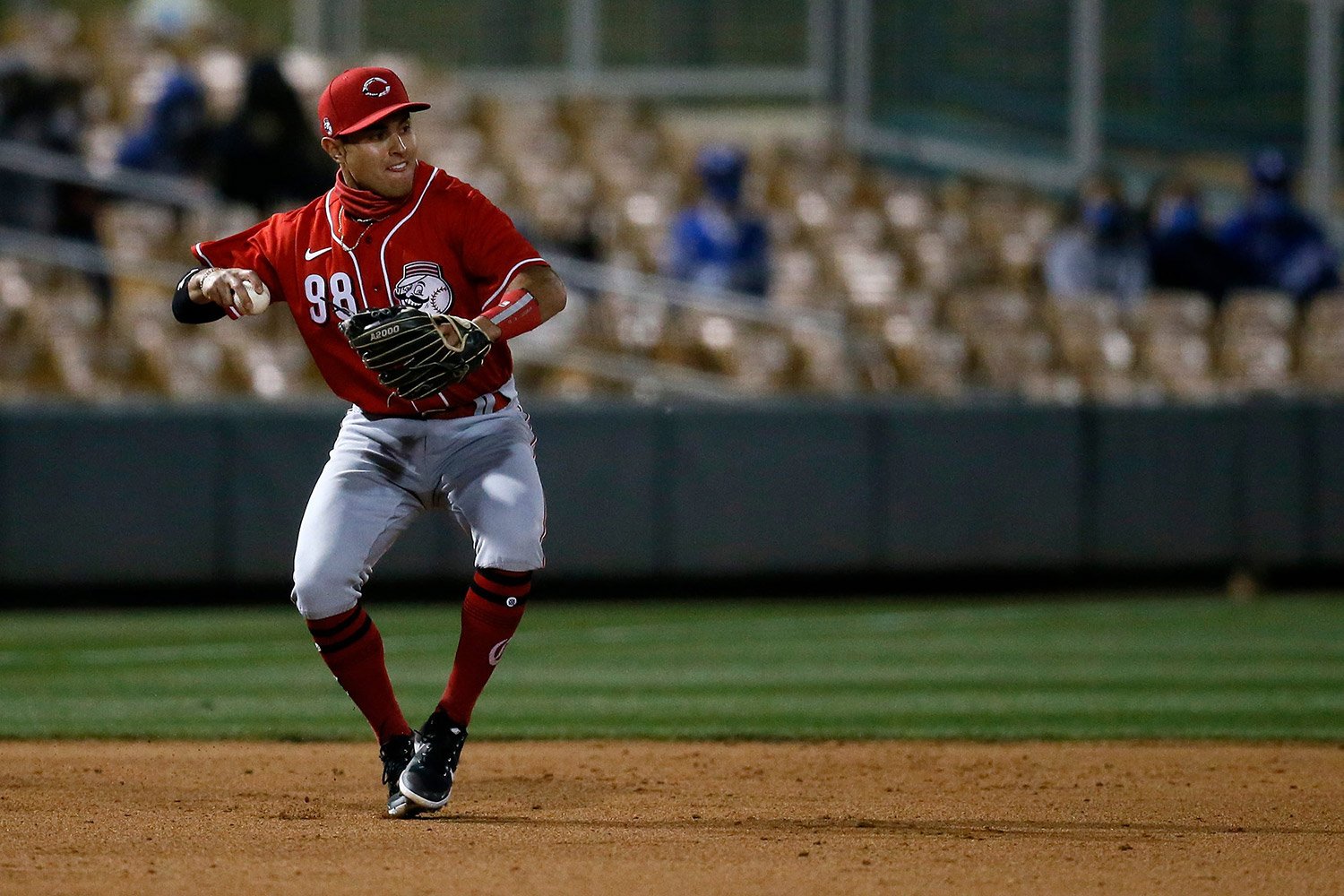 In a move that drew scant attention, the Royals moved Wednesday to shore up their infield depth, an area weakened by injuries to a pair of key players. The club signed free agent Alejo Lopez just two days after his release earlier in the week by Tacoma, the Seattle Mariners’ Triple-A affiliate. The minor league deal, which lands Lopez at Triple-A Omaha, wasn’t what Kansas City fans were looking for as they wait anxiously for the Royals to strengthen themselves on the trade deadline market. But it’s noteworthy given the franchise’s need for another versatile infielder — Wednesday’s move of All-Star shortstop Bobby Witt Jr. to the Injured List, where he joined standout third baseman Maikel Garcia, forced Kansas City to call up Omaha infielder Andrew Velazquez and start him at short for Wednesday’s series-sweep-clinching victory over San Francisco. Fortunately, Lopez, who was hitting .302 with a .379 OBP and .798 OPS when Seattle let him go, comes with some (albeit limited) major league experience — in 74 games and 181 plate appearances across parts of the 2021, 2022, and 2023 seasons, he slashed .265/.309/.639 for Cincinnati. That his small-sample-size major league career 73 wRC+ isn’t stunning, and he lacks significant power (one big league and 34 minor league homers since the Reds took him in the 27th round of 2015’s amateur draft), suggests he may not see Kauffman Stadium anytime soon. But his versatility — defensively, he’s done everything but catch professionally, and has appeared most often at second and third — gives the Royals another option if the injury bug that’s plagued them all season strikes again.
 -
Image courtesy of USA TODAY Network via Reuters Connect In a move that drew scant attention, the Royals moved Wednesday to shore up their infield depth, an area weakened by injuries to a pair of key players. The club signed free agent Alejo Lopez just two days after his release earlier in the week by Tacoma, the Seattle Mariners’ Triple-A affiliate. The minor league deal, which lands Lopez at Triple-A Omaha, wasn’t what Kansas City fans were looking for as they wait anxiously for the Royals to strengthen themselves on the trade deadline market. But it’s noteworthy given the franchise’s need for another versatile infielder — Wednesday’s move of All-Star shortstop Bobby Witt Jr. to the Injured List, where he joined standout third baseman Maikel Garcia, forced Kansas City to call up Omaha infielder Andrew Velazquez and start him at short for Wednesday’s series-sweep-clinching victory over San Francisco. Fortunately, Lopez, who was hitting .302 with a .379 OBP and .798 OPS when Seattle let him go, comes with some (albeit limited) major league experience — in 74 games and 181 plate appearances across parts of the 2021, 2022, and 2023 seasons, he slashed .265/.309/.639 for Cincinnati. That his small-sample-size major league career 73 wRC+ isn’t stunning, and he lacks significant power (one big league and 34 minor league homers since the Reds took him in the 27th round of 2015’s amateur draft), suggests he may not see Kauffman Stadium anytime soon. But his versatility — defensively, he’s done everything but catch professionally, and has appeared most often at second and third — gives the Royals another option if the injury bug that’s plagued them all season strikes again. View full article
-
Kendry ChourioDavid ShieldsJosh HammondBlake MitchellRamon RamirezSean GambleDrew BeamCarson RoccaforteAsbel GonzalezYandel RicardoMichael LombardiJustin LamkinFelix ArrondeBlake WoltersSteven ZobacDaniel VazquezAustin CharlesKamden EdgeBen KudrnaCameron Millar
-
Image courtesy of © Pablo Robles-Imagn Images / © Jamie Sabau-Imagn Images / © Jay Biggerstaff-Imagn Images Ravaged by injuries, beleaguered by a bad bullpen, and plagued by a chronically inconsistent offense, the Kansas City Royals lost their fifth straight game Sunday to drop a season-worst 21 games under .500, then limped out of Baltimore and scattered for the All-Star Break with a firm, perhaps unbreakable, grip on last place in the American League Central. As convenient as it might be, the Royals can't blame injuries alone for their failures and flaws. Tough questions, unfortunately, too numerous to cover in a single read, must be resolved before next season begins. Here are just three the club should ponder over the All-Star Break. Should the Royals Have Tyler Tolbert On The Trade Deadline Market? No. The more he plays, the better he looks, and he’s the kind of role player the club typically covets — he’s versatile, speedy, and capable of swinging a pretty nice bat. Add to that mix the five more full seasons he’s under team control, and Tolbert is a player worth keeping. Tolbert’s numbers tell the tale. Boosted by his recent major league record-tying streak of hitting safely in 12 straight plate appearances, he’s slashing .370/.407/.500 with a 152 wRC+ and .907 OPS in 32 games. He hit .280 in 64 games during his big league debut season last year. His 10 steals are second on the club, only to Bobby Witt Jr.’s 30 this season. He swiped 21 bases in 23 attempts in 2025, and he boasts 95th percentile sprint speed. Tolbert also gives manager Matt Quatraro valuable defensive options. He’s played everywhere on the field except first base and catcher. No Gold Gloves seem to be in his future, but his defense is serviceable. Could Tolbert attract attention as the August 3 trade deadline approaches? Certainly — he’d give contending clubs some game-changing speed in late-inning situations, and down-the-stretch defensive flexibility. But because he’s a role player, not a starter, he won’t net the kind of big, major league-ready return the Royals need if they hope to get back in the playoff hunt next season. Best to keep him. What Should The Royals Do With Luinder Avila? The issues troubling Kansas City’s rotation dictate the answer to this question. Injuries have sidelined Cole Ragans for this season and a significant part of next, and Kris Bubic for who knows how long. Seth Lugo and Michael Wacha have struggled at times, and Noah Cameron, while respectable in his present work, isn’t quite the success story he was in 2025. All that leaves Avila’s June switch from the bullpen to the rotation a move that will likely last. And that’s alright. Despite heading to the pen after giving up five runs in a three-plus-inning start against Milwaukee in KC’s seventh game of the season, and Houston battering him for eight runs in just two-thirds of an inning in his third start after returning to the rotation June 1, he’s holding his own as a starter. In fact, he’s 3-0 with a 3.65 ERA and 22 strikeouts in five starts and 24.2 innings since the Astros clobbered him at The K a month ago. And although his overall nine-start ERA is 5.87, it would be a much more palatable 4.06 without that catastrophic outing against Houston. Avila’s spot in the rotation, then, is pretty secure. That’s also where, notwithstanding some not-so-subtle fan and media sentiment to the contrary, the Royals seem to prefer him to work. Yes, his control and command require improvement (he’s walking 13.7% of batters he faces and almost 5½ every nine innings), but he’s been serviceable during his club’s tough times. Look for Avila to finish this season and begin the next in the rotation, Can Michael Massey Hang On To His Royals Job? Second base has long been a KC concern, but Massey appears to be waging a successful battle to regain the position he seemed to have won in 2023. That’s the season he hit only .229 but cracked 15 homers and drove in 55 runs across a 461-plate appearance, 129-game campaign. He also sparkled defensively, finishing among the top American League second basemen in OAA in the American League and with the top second base fielding percentage in the majors. And despite the troublesome back that trimmed his 2024 season to just 100 games, he still homered 14 times and improved his average to a more than acceptable .259. Still, the Royals weren’t sold on Massey and traded for Cincinnati’s Jonathan India after the season ended. The move seemed somewhat prescient when Massey spent much of the 2025 season on the Injured List. But despite the high price they paid for him — it took sending Brady Singer to the Reds to get him — India wasn’t the keystone solution. He disappointingly slashed .233/.323/.346, hit only nine homers, and his 89 wRC+ left much to be desired. And now, he’s out for the season after suffering a shoulder subluxation in April. Massey, though, is making the best of the situation in which India’s shoulder injury placed him. Remaining relatively injury-free, he’s hitting .260, his seven homers have him on pace to finish near his decent 2023 and 2024 totals, and his nine OAA are tied for the best in the AL and tied for third-best in the majors. Simply put, and barring a disastrous finish to his season, the second base job should be considered Massey’s. Declaring it so frees up the Royals to pursue greater needs at the trade deadline and during the upcoming offseason, and allows them to move on from India, who’s eligible for free agency when the World Series ends. View full article
-
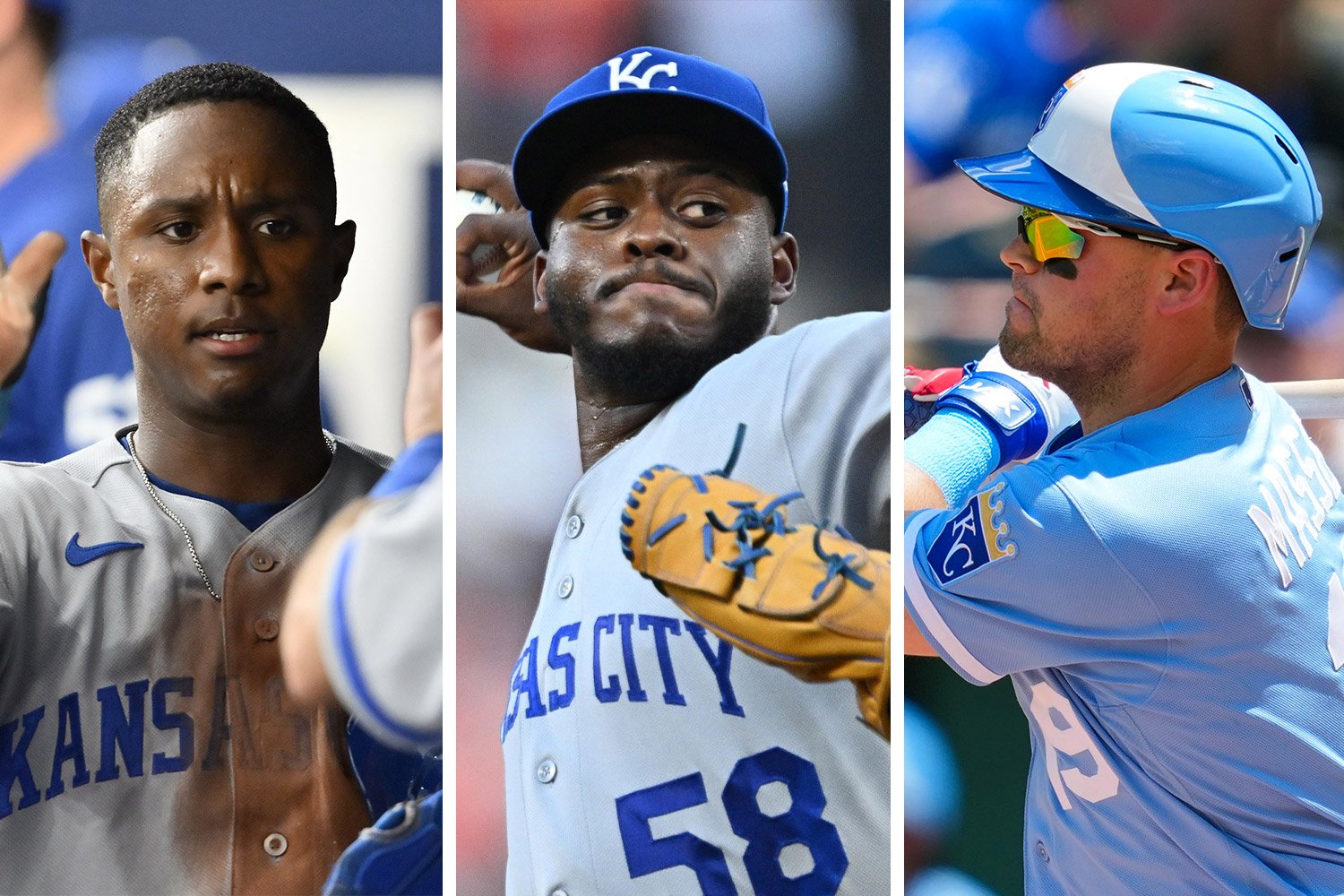 Ravaged by injuries, beleaguered by a bad bullpen, and plagued by a chronically inconsistent offense, the Kansas City Royals lost their fifth straight game Sunday to drop a season-worst 21 games under .500, then limped out of Baltimore and scattered for the All-Star Break with a firm, perhaps unbreakable, grip on last place in the American League Central. As convenient as it might be, the Royals can't blame injuries alone for their failures and flaws. Tough questions, unfortunately, too numerous to cover in a single read, must be resolved before next season begins. Here are just three the club should ponder over the All-Star Break. Should the Royals Have Tyler Tolbert On The Trade Deadline Market? No. The more he plays, the better he looks, and he’s the kind of role player the club typically covets — he’s versatile, speedy, and capable of swinging a pretty nice bat. Add to that mix the five more full seasons he’s under team control, and Tolbert is a player worth keeping. Tolbert’s numbers tell the tale. Boosted by his recent major league record-tying streak of hitting safely in 12 straight plate appearances, he’s slashing .370/.407/.500 with a 152 wRC+ and .907 OPS in 32 games. He hit .280 in 64 games during his big league debut season last year. His 10 steals are second on the club, only to Bobby Witt Jr.’s 30 this season. He swiped 21 bases in 23 attempts in 2025, and he boasts 95th percentile sprint speed. Tolbert also gives manager Matt Quatraro valuable defensive options. He’s played everywhere on the field except first base and catcher. No Gold Gloves seem to be in his future, but his defense is serviceable. Could Tolbert attract attention as the August 3 trade deadline approaches? Certainly — he’d give contending clubs some game-changing speed in late-inning situations, and down-the-stretch defensive flexibility. But because he’s a role player, not a starter, he won’t net the kind of big, major league-ready return the Royals need if they hope to get back in the playoff hunt next season. Best to keep him. What Should The Royals Do With Luinder Avila? The issues troubling Kansas City’s rotation dictate the answer to this question. Injuries have sidelined Cole Ragans for this season and a significant part of next, and Kris Bubic for who knows how long. Seth Lugo and Michael Wacha have struggled at times, and Noah Cameron, while respectable in his present work, isn’t quite the success story he was in 2025. All that leaves Avila’s June switch from the bullpen to the rotation a move that will likely last. And that’s alright. Despite heading to the pen after giving up five runs in a three-plus-inning start against Milwaukee in KC’s seventh game of the season, and Houston battering him for eight runs in just two-thirds of an inning in his third start after returning to the rotation June 1, he’s holding his own as a starter. In fact, he’s 3-0 with a 3.65 ERA and 22 strikeouts in five starts and 24.2 innings since the Astros clobbered him at The K a month ago. And although his overall nine-start ERA is 5.87, it would be a much more palatable 4.06 without that catastrophic outing against Houston. Avila’s spot in the rotation, then, is pretty secure. That’s also where, notwithstanding some not-so-subtle fan and media sentiment to the contrary, the Royals seem to prefer him to work. Yes, his control and command require improvement (he’s walking 13.7% of batters he faces and almost 5½ every nine innings), but he’s been serviceable during his club’s tough times. Look for Avila to finish this season and begin the next in the rotation, Can Michael Massey Hang On To His Royals Job? Second base has long been a KC concern, but Massey appears to be waging a successful battle to regain the position he seemed to have won in 2023. That’s the season he hit only .229 but cracked 15 homers and drove in 55 runs across a 461-plate appearance, 129-game campaign. He also sparkled defensively, finishing among the top American League second basemen in OAA in the American League and with the top second base fielding percentage in the majors. And despite the troublesome back that trimmed his 2024 season to just 100 games, he still homered 14 times and improved his average to a more than acceptable .259. Still, the Royals weren’t sold on Massey and traded for Cincinnati’s Jonathan India after the season ended. The move seemed somewhat prescient when Massey spent much of the 2025 season on the Injured List. But despite the high price they paid for him — it took sending Brady Singer to the Reds to get him — India wasn’t the keystone solution. He disappointingly slashed .233/.323/.346, hit only nine homers, and his 89 wRC+ left much to be desired. And now, he’s out for the season after suffering a shoulder subluxation in April. Massey, though, is making the best of the situation in which India’s shoulder injury placed him. Remaining relatively injury-free, he’s hitting .260, his seven homers have him on pace to finish near his decent 2023 and 2024 totals, and his nine OAA are tied for the best in the AL and tied for third-best in the majors. Simply put, and barring a disastrous finish to his season, the second base job should be considered Massey’s. Declaring it so frees up the Royals to pursue greater needs at the trade deadline and during the upcoming offseason, and allows them to move on from India, who’s eligible for free agency when the World Series ends.
- 1 comment
-
- 1
-
-
- bobby witt jr
- luinder avila
- (and 4 more)
-
Kansas City Royals 2026 MLB Draft Day 1 Thread
Mike Gillespie replied to Kevin O'Brien's topic in Royals Minor League Talk
Royals pick up collegiate RHP Taylor Rabe at No. 30. Interesting selection. Sounds like a top-notch fastball tops his pitch assortment. He's started and relieved. Tommy John Surgery two years ago could be a concern, but this pick seems worth the risk. -
Kansas City Royals 2026 MLB Draft Day 1 Thread
Mike Gillespie replied to Kevin O'Brien's topic in Royals Minor League Talk
So KC spends its first pick on an outfielder. Louisville's Zion Rose may not have projected quite this high (6th overall) but I like his power and speed a lot. And he fits an organizational need. His will be an interesting progression through the system to watch. -
Image courtesy of © Mark J. Rebilas-Imagn Images Gavin Cross looked like a rising star when the Royals made him their first pick in the 2022 amateur draft. A spot in the Kauffman Stadium outfield seemed a lock for the Virginia Tech slugger. But just a shade past the midpoint of his fifth professional season, Cross’s battle to reach the major leagues continues. And at first glance, his cumulative 2026 stats at Triple-A Omaha suggest his big league debut won’t come this year — after going 1-for-4 and driving in a run against Columbus Sunday, Cross was slashing a mediocre .211/.293/.306 with just four homers, 19 RBI, and a .599 OPS in 70 games. Dive a little deeper, though, and you’ll find more to the story. Much like he did during last season’s second half at Double-A Northwest Arkansas (more on that in a moment), Cross has turned an ice-cold bat hot and revived thoughts that he is, indeed, what the Royals thought him to be when they took him with the ninth overall 2022 selection. His transformation at the plate after an agonizingly slow start to this season has been encouraging, and could have the Royals thinking about putting him on their list of candidates for September's roster expansion … or perhaps for an even sooner call-up. Royals Prospect Gavin Cross Came Alive in May Despite giving the Royals a nice show in spring training this year — he homered twice, knocked in seven runs, and hit .270 in 37 at-bats, and blasted a home run in the club's Spring Breakout Game — Cross seemed lost after moving up to Triple-A for the first time to begin the regular campaign. He went 1-for-15 in March and was slashing a miserable, homerless .100/.209/.154 when his .108 April came to a merciful end. Then came a 2-for-4 effort against Toledo on May 16. There was nothing spectacular about getting two singles, but that pair of hits triggered a special seven-game stretch — going 11-for-28 (.392). Cross hit safely in all seven Omaha contests and collected three hits once and two hits twice. The outburst improved his line from .128/.233/.162 to .179/.261/.262. But the good times didn’t end there. He finished with a .265 average for May, a remarkable 157 points better than he’d managed in April, and through Sunday was slashing .275/.359/.420 in 21 June games. Is Gavin Cross’ Turnaround For Real? That’s the big question. After all, the Royals have seen this before — Cross, remember, was hitting only .152 for Northwest Arkansas when the 2025 baseball calendar turned from May to June, but caught fire by hitting .291, belting a dozen home runs, and driving in 44 runs over the season's final four months. He finished the Naturals’ campaign with 17 homers, 64 RBI, and a .241/.291/.413 line dragged down by his awful start to the season. But those numbers confirmed he was capable of repeating the decent stats he’d put up the year before, when he posted a .342 OBP, batted a serviceable .261, homered 15 times, and drove in 59 runs in 109 games. So it is that this season is beginning to bear a striking resemblance to last for Cross. How the 2026 campaign will end for him remains to be seen, but if he keeps getting the job done at the plate, it just might give Cross his first taste of the major leagues. View full article
-
 Gavin Cross looked like a rising star when the Royals made him their first pick in the 2022 amateur draft. A spot in the Kauffman Stadium outfield seemed a lock for the Virginia Tech slugger. But just a shade past the midpoint of his fifth professional season, Cross’s battle to reach the major leagues continues. And at first glance, his cumulative 2026 stats at Triple-A Omaha suggest his big league debut won’t come this year — after going 1-for-4 and driving in a run against Columbus Sunday, Cross was slashing a mediocre .211/.293/.306 with just four homers, 19 RBI, and a .599 OPS in 70 games. Dive a little deeper, though, and you’ll find more to the story. Much like he did during last season’s second half at Double-A Northwest Arkansas (more on that in a moment), Cross has turned an ice-cold bat hot and revived thoughts that he is, indeed, what the Royals thought him to be when they took him with the ninth overall 2022 selection. His transformation at the plate after an agonizingly slow start to this season has been encouraging, and could have the Royals thinking about putting him on their list of candidates for September's roster expansion … or perhaps for an even sooner call-up. Royals Prospect Gavin Cross Came Alive in May Despite giving the Royals a nice show in spring training this year — he homered twice, knocked in seven runs, and hit .270 in 37 at-bats, and blasted a home run in the club's Spring Breakout Game — Cross seemed lost after moving up to Triple-A for the first time to begin the regular campaign. He went 1-for-15 in March and was slashing a miserable, homerless .100/.209/.154 when his .108 April came to a merciful end. Then came a 2-for-4 effort against Toledo on May 16. There was nothing spectacular about getting two singles, but that pair of hits triggered a special seven-game stretch — going 11-for-28 (.392). Cross hit safely in all seven Omaha contests and collected three hits once and two hits twice. The outburst improved his line from .128/.233/.162 to .179/.261/.262. But the good times didn’t end there. He finished with a .265 average for May, a remarkable 157 points better than he’d managed in April, and through Sunday was slashing .275/.359/.420 in 21 June games. Is Gavin Cross’ Turnaround For Real? That’s the big question. After all, the Royals have seen this before — Cross, remember, was hitting only .152 for Northwest Arkansas when the 2025 baseball calendar turned from May to June, but caught fire by hitting .291, belting a dozen home runs, and driving in 44 runs over the season's final four months. He finished the Naturals’ campaign with 17 homers, 64 RBI, and a .241/.291/.413 line dragged down by his awful start to the season. But those numbers confirmed he was capable of repeating the decent stats he’d put up the year before, when he posted a .342 OBP, batted a serviceable .261, homered 15 times, and drove in 59 runs in 109 games. So it is that this season is beginning to bear a striking resemblance to last for Cross. How the 2026 campaign will end for him remains to be seen, but if he keeps getting the job done at the plate, it just might give Cross his first taste of the major leagues.
 -
I understand the point, but the Royals can use Lugo and Wacha as a bridge to hopefully better times. Yes, they could pick up some decent starters in free agency, but I'm not confident they'll pay what's required to get those arms. Maybe they'll surprise me. A big thanks for reading and commenting. We always appreciate the conversations and look forward to having more.
-
Image courtesy of © David Dermer-Imagn Images Roughly three weeks remain until the All-Star Break gives most of the Kansas City Royals a few days’ relief from the deepening disappointment of their once-promising 2026 season. A bad bullpen, an improving but still wanting offense, and too many injuries to key players have the Royals stranded in, or at best near, the American League Central cellar. But the All-Star Break also marks that point of the summer when the trade market finally heats up — the August 3 major league trade deadline will loom large when the Break ends and regular play resumes July 17. Barring some astonishing reversal of fortune, the Royals will be deadline sellers. With his club on pace to lose 90 games or more, general manager J.J. Picollo won’t be looking for a playoff race roster edge; instead, he’ll be fielding calls from legitimate contenders searching for game-changing down-the-stretch help. Selling is, of course, easier and almost always cheaper than buying. Because contenders seek valuable, proven big-league players, selling enables weaker teams to reduce payroll, typically in exchange for much cheaper prospects who may be years away from the majors. But selling has its risks. Here are three Picollo must avoid. The 2026 Trade Deadline Isn’t the Time To Start a Royals Rebuild As disappointing as this team is, tearing it down to facilitate another painful rebuild isn’t warranted — the Royals aren’t very good, but their cupboards are far from empty. Bobby Witt Jr. is his usual self, and his season will sour only if his strained MCL turns into something worse. Jac Caglianone (.275, .349 OBP, and a club-leading 12 homers through Sunday) seems to be living up to the huge hype he didn’t live up to last year. Michael Massey (.266 with seven homers and good defense) may end up proving he belongs at the keystone. Maikel Garcia isn’t at the top of his game, but will be fine. Although a foot injury currently sidelines center fielder Kyle Isbel, his bat is better, and his defense remains excellent. And while injuries continue to plague Cole Ragans and Kris Bubic, starters Stephen Kolek (4-1, 2.68 ERA before St. Louis battered him Sunday) and Michael Wacha (3.64 ERA and 10 quality starts in 15 tries) have been good. Daniel Lynch IV is, with his steadiness and 2.53 ERA in 32 appearances through Sunday, the best in a troubled bullpen. The Royals have enough talent to form a good present and future core; they don’t require a complete overhaul. The time isn’t ripe for the kind of hasty, ill-advised, “burn it down” approach that will leave the roster weaker on Aug. 4 than it is now. But what about prospects, you say? The farm system needs help, but the bulk of its best prospects are two seasons or more away from Kauffman Stadium. At the same time, the big league roster isn’t that far from winning — now, and this winter, are the times to fine-tune it, not rip it apart and wait several long years for success. The Royals Should Not Blow Up Their Starting Rotation The potential for a rotation exodus exists. Bubic can test free agency for the first time this winter. Ragans’ recently-extended trip to the Injury List renders his future uncertain, veterans Wacha and Seth Lugo could be attractive at the deal deadline, and some teams are bound to offer up a good prospect or two for Kolek or Noah Cameron… or both. None of that, though, gives KC good cause to move multiple pieces of its rotation. If he’s healthy, trading Bubic makes sense — he’s liable to bolt in free agency and extending him a qualifying offer seems unlikely, so dealing him before August 3 guarantees the club more than the nothing he’ll net them if he opts for free agency. Beyond Bubic, the Royals can afford to stand pat. Ragans’ health poses serious questions, but the club shouldn’t give up on him yet. Wacha and Lugo are signed through 2027, and the club holds one-year options when those deals expire; both could play key roles next season when the Royals should be better. Kolek has been too impressive to dangle as prospect bait, and Cameron hasn’t done anything to imperil his starter’s spot. No, the Royals have a solid rotation, diminished this season only by maddening injuries to important pieces. The organization’s need for prospects isn’t so extreme that Picollo should break up his starters to get unseasoned arms not yet suitable for prime time. The Royals Shouldn’t Put Vinnie Pasquantino On the Trade Block A broken hamate bone has Pasquantino on the IL, but that doesn’t mean he won’t be on the market. His reputation as a slugger and 100-plus-RBI man is well-deserved (he pounded 51 homers and drove in 210 runs across the 2024 and 2025 campaigns), and after a slow start this season, Kansas City’s star first baseman was slashing .298/.365/.426 with a homer and seven RBI this month before going down June 13. That he could be back before the deal deadline arrives means he might be shopped. And even if he isn’t back, remember the Royals dealt Danny Duffy to the Dodgers at the 2021 deadline when he was on the IL. Pasquantino, then, could be an attractive target who won’t break the banks of contending clubs hunting for more punch and production — he hits for power, drives in runs, and is playing on an easily affordable two-year, $11.1 million contract that runs through next season. Some might also argue that Caglianone makes Pasquantino expendable: first base is Caglianone’s “natural” position; he’s been superb there since Pasquantino went on the IL, and Pasquantino is eligible for free agency after the 2028 season. But Caglianone’s emergence as a big league-caliber hitter doesn’t mean his development is complete, and do the Royals really want to compound the difficulty of their continuing and frustrating search for more outfield offense by moving Caglianone to first permanently? And the club is better off offensively with both sluggers in the lineup. Deal Pasquantino? No. This is a team that shouldn’t be shopping for the kind of firepower Pasquantino can generate. Unless he’s faced with a phenomenal offer too great to reject, Picollo should listen politely, then turn down overtures for Pasquantino. View full article

