


Jamie Cameron
-
Posts
10 -
Joined
-
Last visited
Jamie Cameron's Achievements


-
Image courtesy of © Petre Thomas-Imagn Images I take MLB mock draft rankings from major industry outlets like MLB Pipeline, ESPN, The Athletic (and many others) to form a consensus board, with a working hypothesis that using this approach will eliminate some of the noise and variance in MLB Draft mock rankings. This is the final mock draft board, locked in just before the 2026 MLB Draft on Saturday, July 11. Round 1: Drew Burress, OF, Georgia Tech Burress has been the most consistently productive college hitter since he set foot on campus at Georgia Tech. There's no arguing the track record, but there's a limited catalog of impact bats in the big leagues who stood 5'9. Burress has a ton of moving pieces in his swing that can get a little convoluted and may be problematic against better quality pitching in professional baseball. It's good (not outstanding) bat-to-ball skills with tremendous quality of contact that have resulted in 44 home runs in his first two collegiate seasons. Burress rarely expands the zone and has walked significantly more than he struck out in his first two seasons in Atlanta. Burress has strong supplementary tools. A plus arm and above-average speed and defense give him a chance to stick in centerfield, at least in the infancy of his pro career. After a slow start, Burress finished 2026 with a .358/.473/.657 line with 16 home runs, a 15.8 BB%, a 13.8 K%, and a 143 wRC+. Burress will get a ton of credit in draft models for his performance in his first two collegiate seasons, but there are too many questions for me to select him in the top three. Competitive Balance Round A: Logan Reddemann, RHP, UCLA Reddemann has surged up draft boards after not featuring prominently on pre- or early-season lists. A transfer from San Diego, the 6'2 righty has turned a developmental corner for an outstanding UCLA team and is putting it all together in his draft-eligible junior season. Reddeman has a little bit of a jerky delivery to the plate. Even so, he keeps the baseball well hidden behind his plate until release, creating some deception for hitters and making the ball difficult to track. Reddemann is an excellent strike thrower, which, in concert with an uptick in velocity this year, has left B1G Ten hitters with little chance against his stuff. Reddemann relies on a fastball that sits 94-96 mph but can grab 98 mph. There's a sinker and a cutter too, to round out a trio of fastballs. Reddemann has a slider, which he throws in the low 80s, although it tends to blur with his cutter, and a high-70s curveball to round out a diverse arsenal of pitches. Reddemann managed a 2.68 FIP with a 35.7 K% and a stingy 4.7 BB% in 59.2 innings in 2026. A flexor strain prevented him from pitching down the stretch (including postseason play). If he can prove his health in pre-draft bullpens, he's likely to still be a first-round pick. Round 2: Landon Thome, 2B/3B, Nazareth Academy HS, IL Landon Thome is the son of MLB Hall of Famer Jim Thome, who is currently an assistant coach with his son's Illinois high school team. Thome the younger is committed to Florida State. Landon sets up in the box in a relaxed, open stance. A shoulder-high hand set gives way to a smooth, loose swing. Thome has a chance to have above-average hit and power tools when it's all said and done. Right now, it's a hit over power profile, with strong bat-to-ball metrics, even as he has tapped into more pull-side power in the last 12 months. Thome's eventual defensive home is unclear. He has good defensive actions, but a fringy arm and lack of lateral quickness mean he will likely move off shortstop. Second base seems a likely long-term home. While the secondary tools aren't the loudest, Thome has a great feel to hit with the promise of additional power on the way. That's what I'd always prioritize in a prep hitter. He'll likely go in the first two rounds. Round 3: Evan Dempsey, RHP, FGCU Dempsey is a two-way player who has contributed on the mound and in the box for Florida Gulf Coast in his three years on campus. A true two-way college player, it's likely his ceiling is higher as a pitcher moving forward. In the box, Dempsey put together a .333/.412/.536 line with 10 home runs (28 extra base hits), a 9.4% walk rate, a 13% K%, and stealing 15 bases as 88%. Dempsey's offensive profile is hit over power, but his quality of contact is good, and there's likely more home run power in the tank, despite chasing too much at times. On the mound, he made 15 starts, tossing 88.2 innings in 2026. Dempsey managed a 3.20 FIP with an excellent 34.1 K%, walking just 7% of hitters. It's a good fastball that sits 93-94 mph but can get worked up to 96 mph. He throws two distinct breaking pitches, a curveball and a slider, building on his propensity and feel for spin. Dempsey will be just 20 on draft day and is likely to draw day one interest with evaluators believing his development may accelerate when he's only focusing on pitching. Round 4: Jaxon Willits, SS, Oklahoma Jaxon Willits is the older brother of Eli Willits, selected first overall by the Nationals in 2025. Jaxon is coming off an excellent year as the starting shortstop for an Oklahoma team that was a surprise national champion. Willits, the senior, is a 'more than the sum of his parts' type player. A prospect with high baseball IQ, lacking standout tools, but not having many deficiencies or holes in his game. A switch-hitter, he's more effective from the left side of the plate. Willits combines above-average bat-to-ball skills with excellent swing decisions, making for a hit tool that could be a 55, while the power is more fringe average. There are solid average supplementary tools across the board. Willits runs well, has good infield actions, and a solid average arm. He profiles as a versatile and hit tool-driven utility infielder at the next level. Curious to see the players around the Kansas City Royals' picks in the draft? Click on the button below to view the entire mock draft board! View full article
-
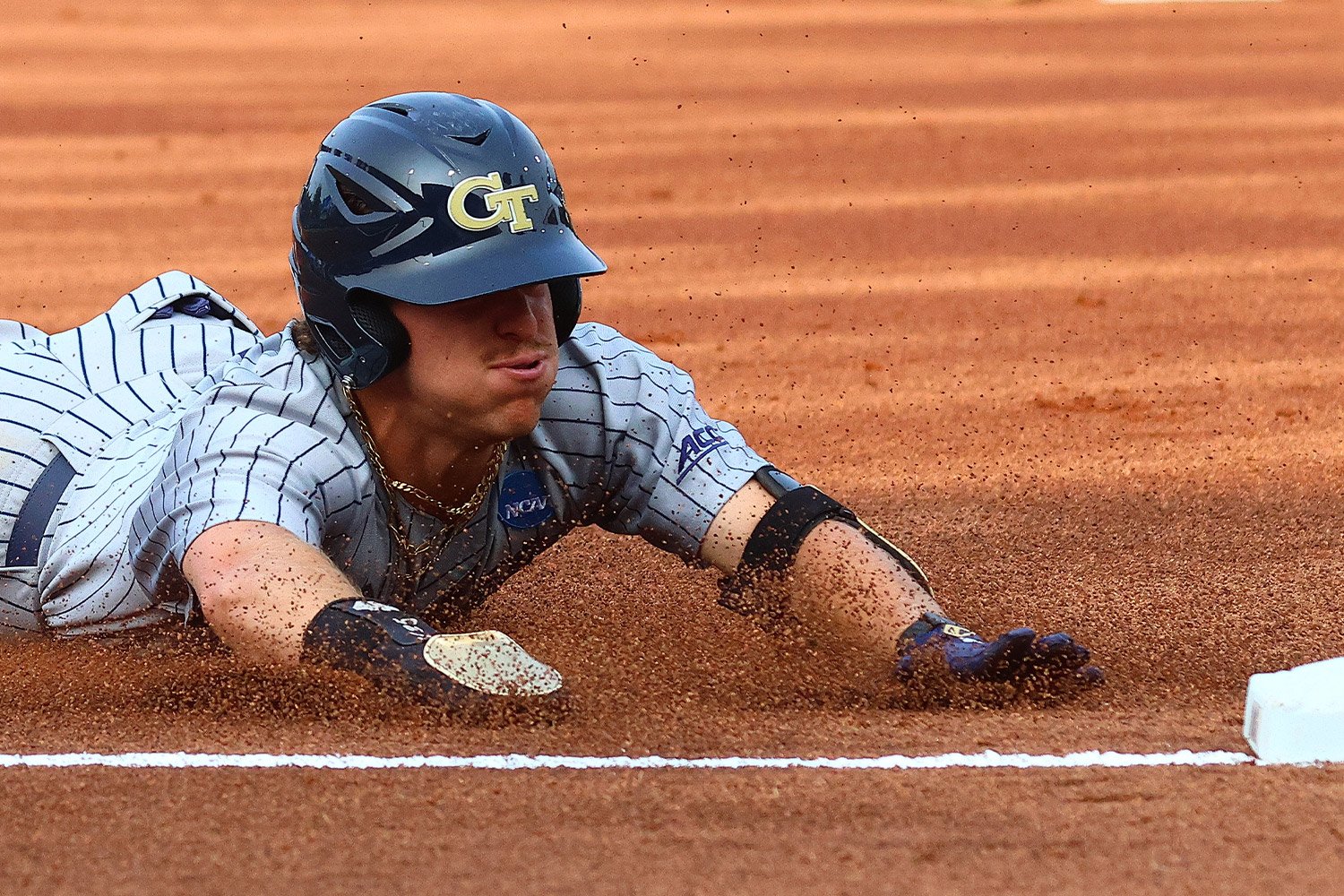 I take MLB mock draft rankings from major industry outlets like MLB Pipeline, ESPN, The Athletic (and many others) to form a consensus board, with a working hypothesis that using this approach will eliminate some of the noise and variance in MLB Draft mock rankings. This is the final mock draft board, locked in just before the 2026 MLB Draft on Saturday, July 11. Round 1: Drew Burress, OF, Georgia Tech Burress has been the most consistently productive college hitter since he set foot on campus at Georgia Tech. There's no arguing the track record, but there's a limited catalog of impact bats in the big leagues who stood 5'9. Burress has a ton of moving pieces in his swing that can get a little convoluted and may be problematic against better quality pitching in professional baseball. It's good (not outstanding) bat-to-ball skills with tremendous quality of contact that have resulted in 44 home runs in his first two collegiate seasons. Burress rarely expands the zone and has walked significantly more than he struck out in his first two seasons in Atlanta. Burress has strong supplementary tools. A plus arm and above-average speed and defense give him a chance to stick in centerfield, at least in the infancy of his pro career. After a slow start, Burress finished 2026 with a .358/.473/.657 line with 16 home runs, a 15.8 BB%, a 13.8 K%, and a 143 wRC+. Burress will get a ton of credit in draft models for his performance in his first two collegiate seasons, but there are too many questions for me to select him in the top three. Competitive Balance Round A: Logan Reddemann, RHP, UCLA Reddemann has surged up draft boards after not featuring prominently on pre- or early-season lists. A transfer from San Diego, the 6'2 righty has turned a developmental corner for an outstanding UCLA team and is putting it all together in his draft-eligible junior season. Reddeman has a little bit of a jerky delivery to the plate. Even so, he keeps the baseball well hidden behind his plate until release, creating some deception for hitters and making the ball difficult to track. Reddemann is an excellent strike thrower, which, in concert with an uptick in velocity this year, has left B1G Ten hitters with little chance against his stuff. Reddemann relies on a fastball that sits 94-96 mph but can grab 98 mph. There's a sinker and a cutter too, to round out a trio of fastballs. Reddemann has a slider, which he throws in the low 80s, although it tends to blur with his cutter, and a high-70s curveball to round out a diverse arsenal of pitches. Reddemann managed a 2.68 FIP with a 35.7 K% and a stingy 4.7 BB% in 59.2 innings in 2026. A flexor strain prevented him from pitching down the stretch (including postseason play). If he can prove his health in pre-draft bullpens, he's likely to still be a first-round pick. Round 2: Landon Thome, 2B/3B, Nazareth Academy HS, IL Landon Thome is the son of MLB Hall of Famer Jim Thome, who is currently an assistant coach with his son's Illinois high school team. Thome the younger is committed to Florida State. Landon sets up in the box in a relaxed, open stance. A shoulder-high hand set gives way to a smooth, loose swing. Thome has a chance to have above-average hit and power tools when it's all said and done. Right now, it's a hit over power profile, with strong bat-to-ball metrics, even as he has tapped into more pull-side power in the last 12 months. Thome's eventual defensive home is unclear. He has good defensive actions, but a fringy arm and lack of lateral quickness mean he will likely move off shortstop. Second base seems a likely long-term home. While the secondary tools aren't the loudest, Thome has a great feel to hit with the promise of additional power on the way. That's what I'd always prioritize in a prep hitter. He'll likely go in the first two rounds. Round 3: Evan Dempsey, RHP, FGCU Dempsey is a two-way player who has contributed on the mound and in the box for Florida Gulf Coast in his three years on campus. A true two-way college player, it's likely his ceiling is higher as a pitcher moving forward. In the box, Dempsey put together a .333/.412/.536 line with 10 home runs (28 extra base hits), a 9.4% walk rate, a 13% K%, and stealing 15 bases as 88%. Dempsey's offensive profile is hit over power, but his quality of contact is good, and there's likely more home run power in the tank, despite chasing too much at times. On the mound, he made 15 starts, tossing 88.2 innings in 2026. Dempsey managed a 3.20 FIP with an excellent 34.1 K%, walking just 7% of hitters. It's a good fastball that sits 93-94 mph but can get worked up to 96 mph. He throws two distinct breaking pitches, a curveball and a slider, building on his propensity and feel for spin. Dempsey will be just 20 on draft day and is likely to draw day one interest with evaluators believing his development may accelerate when he's only focusing on pitching. Round 4: Jaxon Willits, SS, Oklahoma Jaxon Willits is the older brother of Eli Willits, selected first overall by the Nationals in 2025. Jaxon is coming off an excellent year as the starting shortstop for an Oklahoma team that was a surprise national champion. Willits, the senior, is a 'more than the sum of his parts' type player. A prospect with high baseball IQ, lacking standout tools, but not having many deficiencies or holes in his game. A switch-hitter, he's more effective from the left side of the plate. Willits combines above-average bat-to-ball skills with excellent swing decisions, making for a hit tool that could be a 55, while the power is more fringe average. There are solid average supplementary tools across the board. Willits runs well, has good infield actions, and a solid average arm. He profiles as a versatile and hit tool-driven utility infielder at the next level. Curious to see the players around the Kansas City Royals' picks in the draft? Click on the button below to view the entire mock draft board!
 -
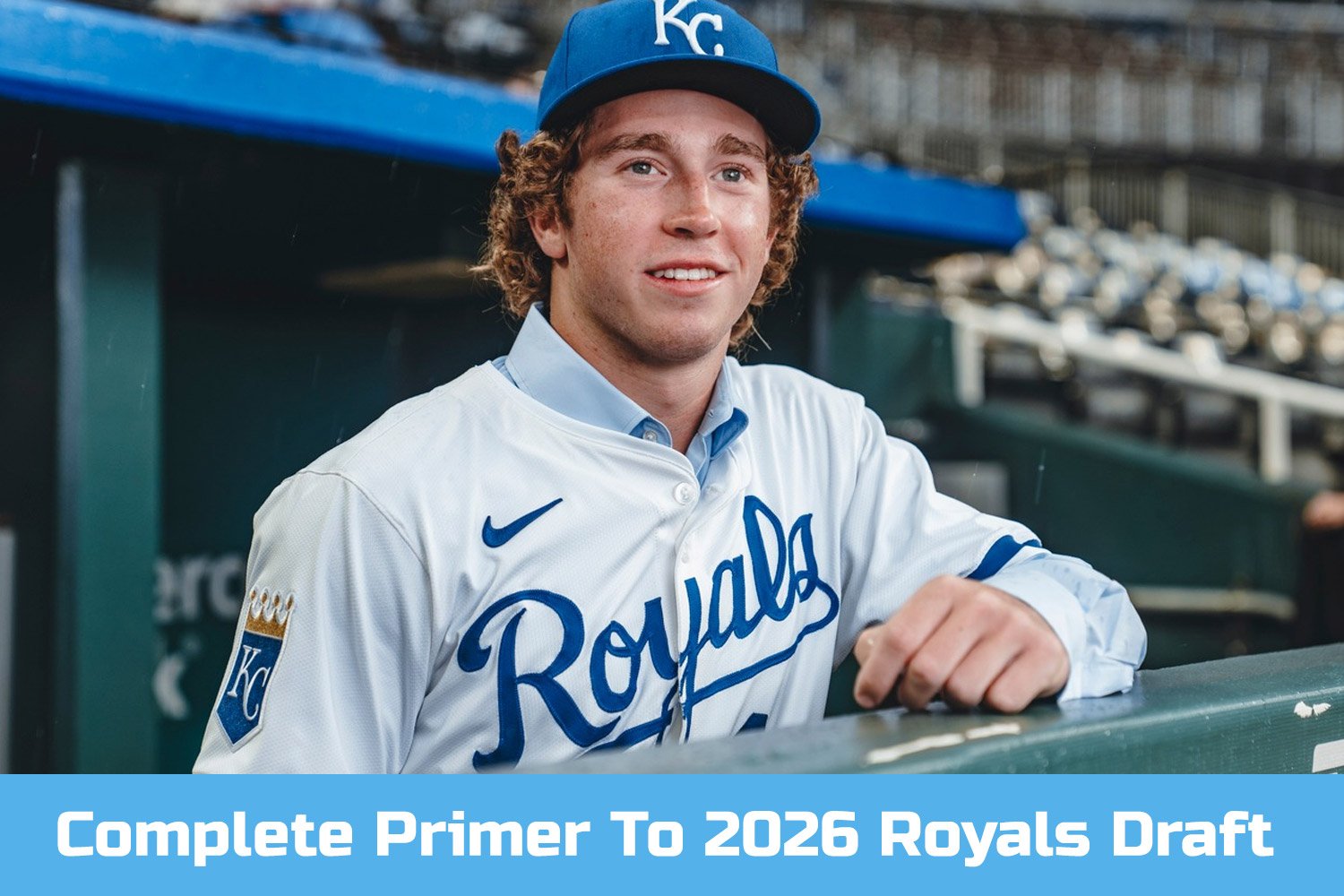 This guide is a comprehensive look at the 2026 MLB Draft with a focus on the Kansas City Royals. You’ll find a list of key dates for the draft cycle, including the release of bonus pools and pick values, the MLB Draft combine, and a breakdown of the draft itself. Additionally, you’ll find an overview of the draft combine and MLB draft weekend, in addition to links to other important draft resources like the consensus board. Royals 2025 MLB Draft Recap Despite being slated to pick later in the first round (23rd overall), the Royals had a healthy bonus pool, thanks to the addition of a PPI pick (28th overall) to supplement their financial flexibility. The Royals leaned into prep upside early in the draft, taking IMG Academy Sean Gamble, before doubling down with Josh Hammond, a shortstop out of North Carolina with some of the most helium on the prep side in 2025. The Royals then drafted Tulane righty Michael Lombardi, a breakout arm with absurd fastball shape, in the third round, before rounding out their selections in the top one hundred picks with Texas A&M lefty Justin Lamkin in the fourth round, and hard-throwing prep right-hander Cameron Millar in the fourth round (97th overall). When Is The 2026 MLB Draft? April 1st 2026 - MLB announced draft bonus pools and pick values June 2026 - MLB Draft Combine (Chase Field, Arizona) July 11th - 12th: 2026 MLB Draft (Philadelphia, PA) July 11th - Rounds 1-4 (time TBA) July 12th - Round 5 through Round 20 (time TBA) 2026 MLB Draft Combine The draft combine is a newer event that started in the 2021 draft cycle. Held over a five-day period around a month before the draft itself, it provides prospects an opportunity to showcase their talents and boost their draft stock, while giving organizations better access to potential picks. In addition to medical examinations and educational programming, players have an opportunity to meet with teams in advance of the draft. Additionally, there are a number of televised workouts, featuring infield and outfield drills, batting practice for hitters, and bullpens for pitchers, all of which are tracked and underpinned by Statcast data. There is an incentive for players to attend and complete medicals, as prospects are guaranteed 75 percent of their draft slot bonus if they participate and complete medicals. How Many Rounds Are There In The MLB Draft? There is yet another design shift ahead of the 2026 draft cycle. It was shortened from a three-day event to a two-day event. Previously, day one included rounds 1 through the supplemental second round, day two included rounds 3 through 10, and day three included rounds 10 through 20. For the 2026 cycle, day one will be adjusted to include rounds one through four (~135 picks). The draft will conclude on day two with rounds five through twenty. MLB Draft Day One Explained The first day of the draft can be chaotic, as additional rounds and picks are in play beyond rounds one and two. The top of the draft (top 6 picks) is now determined by the draft lottery. Every non-playoff team is entered into the lottery, giving them the opportunity to move up in the draft order. Non-lottery-eligible teams are picked in the order they are eliminated from the postseason, with regular-season record ties broken. After the first round, prospect promotion incentive picks take place. If an eligible player wins Rookie of the Year, they earn their organization an extra pick immediately after the completion of the first round. Next come compensation picks, where teams who extend the qualifying offer to a player (who rejects it) earn an additional draft pick. Compensation pick positions depend on the contract size signed by the player rejecting the qualifying offer, as well as the payroll of the organization receiving them (there are additional compensation picks after competitive balance round B and the fourth round). After any compensation picks, comes the competitive balance round A. Teams that have one of the ten smallest markets or ten smallest revenue pools receive an additional pick in round A or round B, on an annually rotating basis. The first day of the draft is capped by the second round, competitive balance round B, and the third and fourth rounds, which typically takes us through approximately 135 picks. MLB Draft Bonus Pool Allocations & Pick Values Prior to the draft, in April, MLB announces each team's bonus pool for the forthcoming draft cycle and the value of every pick in the top 10 rounds. Each pick in the first ten rounds of the draft is assigned a value, with the total of the slots for the picks each organization has in the top ten rounds comprising their total ‘bonus pool’. Organizations can sign a player to a deal greater than a slot or less than a slot, depending on their negotiations with the player, so it’s useful to think of the slots as ‘guidelines’ and little more. Organizations are allowed to spend up to 5% more than their total pool without incurring a penalty, a choice many teams take advantage of. The Twins and the Rockies are the only teams that have never spent any overage on their bonus pool. Any amount up to 5% over the pool is met with a 75% tax on the overage. If a team spends between 5-10% more than their pool, the penalty is 75% tax on the overage and loss of a future first-rounder. Any team that exceeds its bonus pool by more than 10% up to 15% pays 100% tax on the overage and will lose a first and second-round future pick. Any team that exceeds its bonus pool by more than 15% loses two future first-round picks in addition to paying 100% tax on the overage. Rounds 11-20 work differently from the first half of the draft. These picks do not come with an assigned slot value. Teams can spend up to $150,000 per pick without that spending coming out of their bonus pool. If they spend over that amount, any overage will be deducted from their bonus pool. For example, an 11th round pick signing for $250,000 will result in $100,000 being subtracted from that team’s bonus pool. This is where some financial strategy comes into play. Often, teams will look to accrue some ‘savings’ from their bonus pool so they can spend over the maximum of $150,000 for a prospect in the second half of the draft. NOTE: Slot values increased by 2.5% from 2025 to 2026. View Royals Mock Draft Board Royals 2026 MLB Draft Bonus Pool Round Pick Slot Value Round 1 6th $7,746,100 Comp A 30th $3,190,500 Round 2 56th $1,721,100 Round 3 91st $872,900 Round 4 119th $651,500 Round 5 151st $476,900 Round 6 180th $367,600 Round 7 209th $289,900 Round 8 239th $233,400 Round 9 269th $207,900 Round 10 299th $195,600 Total Bonus Pool Allocation $15,954,400 (6th in MLB)
 -
Image courtesy of © Lauren Witte/Clarion Ledger / USA TODAY NETWORK via Imagn Images I take MLB mock draft rankings from major industry outlets like MLB Pipeline, ESPN, The Athletic (and many others) to form a consensus board, with a working hypothesis that using this approach will eliminate some of the noise and variance in MLB Draft mock rankings. The Kansas City Royals’ first picks are: Round 1: 6th Overall Competitive Balance Round A: 30th Overall Round 2: 56th Overall Round 3: 91st Overall Round 1: EJ Booth, OF, Oak Grove HS (MS) Booth is rapidly ascending draft boards. Starting from a pre-cycle ranking close to the back end of the first round, he has a chance to jump into the top three prep prospects and the top five of the cycle overall. Booth is a compact, twitchy, athletic outfielder committed to Vanderbilt. It's a bit of an unconventional swing from the left side that can look better in batting practice than games, but it's underpinned by serious bat speed and an emerging ability to do damage on contact. All told, Booth has a chance to have above-average hit and power tools. Booth is a nightmare on the base paths with 70-grade speed and is one of the fastest runners of the class. As one might imagine, this supports an excellent range in the outfield. While his arm is fringe average, he should have little challenge tracking down almost anything and could settle into any outfield spot defensively. Booth will turn 18 a few days before the draft. Competitive Balance Round A: Aiden Robbins, OF, Texas Robbins is representative of an emerging class of college prospects: smaller school players who transfer their draft-eligible year with a shot to dramatically increase their stock against more robust competition. Robbins put up insane numbers in 2025 at Seton Hall before transferring to UT ahead of the 2026 season. While the bat-to-ball numbers have taken a bit of a dip in 2026, Robbins has a good approach at the plate, taking plenty of walks. Where he excels, is doing damage on contact. Robbins routinely launches baseballs north of 110 mph and has EV90 and barrel% numbers north of the 90th percentile in 2026. There's above-average speed and athleticism to boot. Robbins has the legs to be a threat on the basepaths and the range to play all three outfield positions, at least at the onset of his pro career. He's one of the sharpest risers on the college side in 2026, managing a .333/.426/.696 line with 24 home runs (36 XBH), a 13.7 BB%, a 22.9 K%, and a 138 wRC+. Round 2: Landon Thome, 2B/3B, Nazareth Academy HS (IL) Landon Thome is the son of MLB Hall of Famer Jim Thome, who is currently an assistant coach with his son's Illinois high school team. Thome the younger is committed to Florida State. Landon sets up in the box in a relaxed, open stance. A shoulder-high hand set gives way to a smooth, loose swing. Thome has a chance to have above-average hit and power tools when it's all said and done. Right now, it's a hit over power profile, with strong bat-to-ball metrics, even as he has tapped into more pull-side power in the last 12 months. Thome's eventual defensive home is unclear. He has good defensive actions, but a fringy arm and lack of lateral quickness mean he will likely move off shortstop. Second base seems a likely long-term home. While the secondary tools aren't the loudest, Thome has a great feel to hit with the promise of additional power on the way. That's what I'd always prioritize in a prep hitter. He'll likely go in the first two rounds. Round 3: Ethan Wachsmann, RHP, Grandview HS (CO) Wachsman is a sharp riser on draft boards this spring. A CO prep arm hailing from the same high school program as Kevin Gausman, it's a fascinating blend of size and stuff, with plenty of rawness still present. Wachsman's fastball has touched triple digits already; it'll more routinely sit in the 94-96 mph range in the middle innings. He's added a cutter that sits in the high 80s this season as a bridge to the rest of his arsenal. While the velocity is excellent, there's work to do on both the control and command of his arsenal, which are currently fringe-average. Wachsman will fire off a breaking ball that can be slurvy but exhibits good spin rates. There's a changeup that he sells well with good arm speed and velocity separation from his fastball. It'll be worth monitoring the strike-throwing if a team can pry him away from his Wake Forest commitment, but if he can round out his arsenal with better breaking pitch shapes, he'll be a tough look for hitters. Curious to see the players around the Kansas City Royals' picks in the draft? Click on the button below to view the entire mock draft board! View full article
-
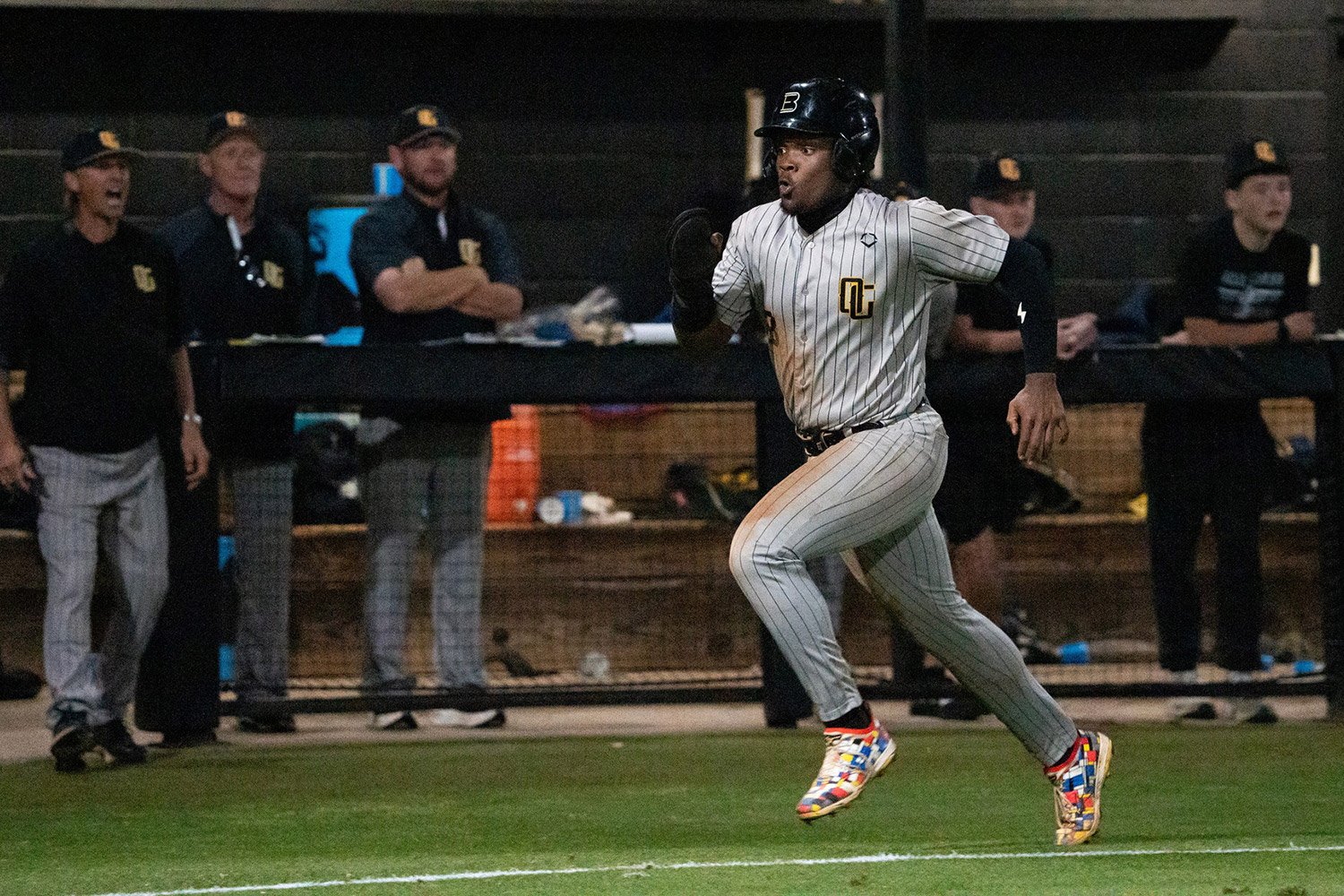 I take MLB mock draft rankings from major industry outlets like MLB Pipeline, ESPN, The Athletic (and many others) to form a consensus board, with a working hypothesis that using this approach will eliminate some of the noise and variance in MLB Draft mock rankings. The Kansas City Royals’ first picks are: Round 1: 6th Overall Competitive Balance Round A: 30th Overall Round 2: 56th Overall Round 3: 91st Overall Round 1: EJ Booth, OF, Oak Grove HS (MS) Booth is rapidly ascending draft boards. Starting from a pre-cycle ranking close to the back end of the first round, he has a chance to jump into the top three prep prospects and the top five of the cycle overall. Booth is a compact, twitchy, athletic outfielder committed to Vanderbilt. It's a bit of an unconventional swing from the left side that can look better in batting practice than games, but it's underpinned by serious bat speed and an emerging ability to do damage on contact. All told, Booth has a chance to have above-average hit and power tools. Booth is a nightmare on the base paths with 70-grade speed and is one of the fastest runners of the class. As one might imagine, this supports an excellent range in the outfield. While his arm is fringe average, he should have little challenge tracking down almost anything and could settle into any outfield spot defensively. Booth will turn 18 a few days before the draft. Competitive Balance Round A: Aiden Robbins, OF, Texas Robbins is representative of an emerging class of college prospects: smaller school players who transfer their draft-eligible year with a shot to dramatically increase their stock against more robust competition. Robbins put up insane numbers in 2025 at Seton Hall before transferring to UT ahead of the 2026 season. While the bat-to-ball numbers have taken a bit of a dip in 2026, Robbins has a good approach at the plate, taking plenty of walks. Where he excels, is doing damage on contact. Robbins routinely launches baseballs north of 110 mph and has EV90 and barrel% numbers north of the 90th percentile in 2026. There's above-average speed and athleticism to boot. Robbins has the legs to be a threat on the basepaths and the range to play all three outfield positions, at least at the onset of his pro career. He's one of the sharpest risers on the college side in 2026, managing a .333/.426/.696 line with 24 home runs (36 XBH), a 13.7 BB%, a 22.9 K%, and a 138 wRC+. Round 2: Landon Thome, 2B/3B, Nazareth Academy HS (IL) Landon Thome is the son of MLB Hall of Famer Jim Thome, who is currently an assistant coach with his son's Illinois high school team. Thome the younger is committed to Florida State. Landon sets up in the box in a relaxed, open stance. A shoulder-high hand set gives way to a smooth, loose swing. Thome has a chance to have above-average hit and power tools when it's all said and done. Right now, it's a hit over power profile, with strong bat-to-ball metrics, even as he has tapped into more pull-side power in the last 12 months. Thome's eventual defensive home is unclear. He has good defensive actions, but a fringy arm and lack of lateral quickness mean he will likely move off shortstop. Second base seems a likely long-term home. While the secondary tools aren't the loudest, Thome has a great feel to hit with the promise of additional power on the way. That's what I'd always prioritize in a prep hitter. He'll likely go in the first two rounds. Round 3: Ethan Wachsmann, RHP, Grandview HS (CO) Wachsman is a sharp riser on draft boards this spring. A CO prep arm hailing from the same high school program as Kevin Gausman, it's a fascinating blend of size and stuff, with plenty of rawness still present. Wachsman's fastball has touched triple digits already; it'll more routinely sit in the 94-96 mph range in the middle innings. He's added a cutter that sits in the high 80s this season as a bridge to the rest of his arsenal. While the velocity is excellent, there's work to do on both the control and command of his arsenal, which are currently fringe-average. Wachsman will fire off a breaking ball that can be slurvy but exhibits good spin rates. There's a changeup that he sells well with good arm speed and velocity separation from his fastball. It'll be worth monitoring the strike-throwing if a team can pry him away from his Wake Forest commitment, but if he can round out his arsenal with better breaking pitch shapes, he'll be a tough look for hitters. Curious to see the players around the Kansas City Royals' picks in the draft? Click on the button below to view the entire mock draft board!
 -
It's time to check back in with another Royals mock. The MLB Draft is just five weeks away. This class is as muddled as any I've covered, though it's plenty deep in talent. You can find our mock consensus draft board here. Let's check in on some player profiles it's currently mocking to the Royals with their first few picks in July. With the #6 Overall Pick, the Royals Select: Drew Burress, OF, Georgia Tech Burress has been one of the most consistently productive college hitters since he set foot on campus at Georgia Tech. There's no arguing the track record, but there's a limited catalog of impact bats in the big leagues who stood 5'9. Burress has a ton of moving parts in his swing that can get a little convoluted and may be problematic against higher-quality pitching in professional baseball. It's good (not outstanding) bat-to-ball skills with tremendous quality of contact that have resulted in 44 home runs in his first two collegiate seasons. Burress rarely expands the zone and has walked significantly more than he struck out in his first two seasons in Atlanta. Burress has strong supplementary tools. A plus arm and above-average speed and defense give him a chance to stick in centerfield, at least in the infancy of his pro career. He'll need to be astoundingly productive in 2026 to allay fear around his size and physicality (and a poor track record with wooden bats, albeit in small samples). However, in 2026, Burress is a sure-fire first-rounder. With the #30 Overall Pick, the Royals Select: Bo Lowrance, 3B, Church Episcopal HS, SC Lowrance has been one of the sharpest risers on the prep side in the 2026 cycle. What stands out most about the Virginia commit is his size; at 6'5, 200 pounds, there's current physicality and projection remaining in the frame. Lowrance hits from the left side of the plate and has a smooth, controlled left-handed stroke, particularly for someone his size. There's a good mix of strong bat-to-ball metrics and extra base impact here, and Lowrance controls both the strike zone and his at-bats effectively. It's a third base profile as a pro. Lowrance has above-average arm strength, certainly enough to handle the corner at the next level. He's a good athlete with solid average wheels and a good glove, enough to support a well-rounded offensive profile. Lowrance is the type of prospect who could develop into a 30 home run bat in the right system. He's trending towards the top 40. With the #56 Overall Pick, the Royals Select: Will Brick, C, Christian Brothers HS, TN Brick is another reclass originally part of the 2027 draft class who is currently committed to Mississippi State. Prep catching (and catching in general) is notoriously difficult to prognosticate, but Brick has well-rounded skills and tools that give me a greater level of optimism than most prospects in this demographic. Hitting from the right side of the plate, Brick has a clean swing and put up some of the best bat speed numbers on the 2025 summer showcase circuit. While he hasn't accessed more than average in-game power yet, Brick's swing and frame have the ingredients to get there. This is supplemented by good bat-to-ball skills and a solid approach, a combination of offensive skills that may eventually get Brick to above-average hit and power tools. Defensively, he's a strong prospect. It's a massive arm, with additional skill (sub 1.9 pop times) in controlling the running game. His receiving game (and defense in general) is as praised as his leadership capabilities and other intangibles. Prep catching is not a demographic that inspires confidence, but Brick is one of the few I'd bet on to make an impact as a pro. With the #91 Overall Pick, the Royals Select: Matt Ponatoski, SS/RHP, Archbishop Moeller HS, OH Matt Ponatoski is a two-sport high school athlete currently committed to the University of Kentucky for both baseball and football, a fact that undoubtedly clouds his draft status. On the diamond, there are plenty of skills and tools that set him up as a T100 prospect in the class. Ponatoski is a left-handed hitter who sets up with a fairly significant barrel tip in his stance. He had an unbelievable summer in 2025, putting up some of the best hitting numbers in the country with the bat, demonstrating particularly good bat-to-ball skills backed up by an excellent approach in which he walked plenty and rarely expanded the zone. While he doesn't have the explosive athleticism to stick at shortstop, Ponatoski has a double-plus arm (as you might expect from an elite quarterback). He's been over 100 mph with throws from the infield, and in the mid-90s as a right-handed arm off the mound with a big curveball to boot. He's a profile who may accelerate when he focuses solely on baseball, but a split focus remains possible given his quarterbacking responsibilities. View full article
-
 It's time to check back in with another Royals mock. The MLB Draft is just five weeks away. This class is as muddled as any I've covered, though it's plenty deep in talent. You can find our mock consensus draft board here. Let's check in on some player profiles it's currently mocking to the Royals with their first few picks in July. With the #6 Overall Pick, the Royals Select: Drew Burress, OF, Georgia Tech Burress has been one of the most consistently productive college hitters since he set foot on campus at Georgia Tech. There's no arguing the track record, but there's a limited catalog of impact bats in the big leagues who stood 5'9. Burress has a ton of moving parts in his swing that can get a little convoluted and may be problematic against higher-quality pitching in professional baseball. It's good (not outstanding) bat-to-ball skills with tremendous quality of contact that have resulted in 44 home runs in his first two collegiate seasons. Burress rarely expands the zone and has walked significantly more than he struck out in his first two seasons in Atlanta. Burress has strong supplementary tools. A plus arm and above-average speed and defense give him a chance to stick in centerfield, at least in the infancy of his pro career. He'll need to be astoundingly productive in 2026 to allay fear around his size and physicality (and a poor track record with wooden bats, albeit in small samples). However, in 2026, Burress is a sure-fire first-rounder. With the #30 Overall Pick, the Royals Select: Bo Lowrance, 3B, Church Episcopal HS, SC Lowrance has been one of the sharpest risers on the prep side in the 2026 cycle. What stands out most about the Virginia commit is his size; at 6'5, 200 pounds, there's current physicality and projection remaining in the frame. Lowrance hits from the left side of the plate and has a smooth, controlled left-handed stroke, particularly for someone his size. There's a good mix of strong bat-to-ball metrics and extra base impact here, and Lowrance controls both the strike zone and his at-bats effectively. It's a third base profile as a pro. Lowrance has above-average arm strength, certainly enough to handle the corner at the next level. He's a good athlete with solid average wheels and a good glove, enough to support a well-rounded offensive profile. Lowrance is the type of prospect who could develop into a 30 home run bat in the right system. He's trending towards the top 40. With the #56 Overall Pick, the Royals Select: Will Brick, C, Christian Brothers HS, TN Brick is another reclass originally part of the 2027 draft class who is currently committed to Mississippi State. Prep catching (and catching in general) is notoriously difficult to prognosticate, but Brick has well-rounded skills and tools that give me a greater level of optimism than most prospects in this demographic. Hitting from the right side of the plate, Brick has a clean swing and put up some of the best bat speed numbers on the 2025 summer showcase circuit. While he hasn't accessed more than average in-game power yet, Brick's swing and frame have the ingredients to get there. This is supplemented by good bat-to-ball skills and a solid approach, a combination of offensive skills that may eventually get Brick to above-average hit and power tools. Defensively, he's a strong prospect. It's a massive arm, with additional skill (sub 1.9 pop times) in controlling the running game. His receiving game (and defense in general) is as praised as his leadership capabilities and other intangibles. Prep catching is not a demographic that inspires confidence, but Brick is one of the few I'd bet on to make an impact as a pro. With the #91 Overall Pick, the Royals Select: Matt Ponatoski, SS/RHP, Archbishop Moeller HS, OH Matt Ponatoski is a two-sport high school athlete currently committed to the University of Kentucky for both baseball and football, a fact that undoubtedly clouds his draft status. On the diamond, there are plenty of skills and tools that set him up as a T100 prospect in the class. Ponatoski is a left-handed hitter who sets up with a fairly significant barrel tip in his stance. He had an unbelievable summer in 2025, putting up some of the best hitting numbers in the country with the bat, demonstrating particularly good bat-to-ball skills backed up by an excellent approach in which he walked plenty and rarely expanded the zone. While he doesn't have the explosive athleticism to stick at shortstop, Ponatoski has a double-plus arm (as you might expect from an elite quarterback). He's been over 100 mph with throws from the infield, and in the mid-90s as a right-handed arm off the mound with a big curveball to boot. He's a profile who may accelerate when he focuses solely on baseball, but a split focus remains possible given his quarterbacking responsibilities.
 -
Welcome to the 2026 MLB Consensus Draft Board. This is the fifth version of the board, which started in 2022 as a top thirty. Since then, it’s expanded to around 150 players on an annual basis, featuring at eight different team sites. So what is the Consensus Board? How is it made? How should it be used? The concept is loosely based on Arif Hasan’s NFL Consensus Board. It’s meant to be a tool for folks getting interested in the MLB Draft. As I was learning about the draft, I struggled to navigate wildly varied rankings and evaluations of players. The Consensus Board takes every major publicly available board and combines them into a consensus ranking, eliminating some of the noise and variance of an extremely challenging evaluation process. We’ve found this process to be useful in ranking players in appropriate ranges through around the first five rounds of the draft. On the board, you’ll find player names, handedness, listed height and weight, age, and a write-up, walking through their strengths and opportunities as a prospect. As we go through the cycle, these will be updated with tweaks, final college stats, etc. Every time a major outlet (Baseball America, ESPN, The Athletic, etc.) releases an updated list, the consensus ranking shifts. As such, the board is a lagging reflection of what the industry thinks of the class and its key players. The final Consensus Board will incorporate at least 10 other boards as inputs. New MLB Mock Draft Board Features There are a few important features to point out to help you navigate the board. There’s a search bar to help you find players of interest. If you click ‘expand’ the board will focus on the writeup you are engaged with, in addition to one immediately above it and one immediately below it. Additionally, you’ll find the logo of your team next to their draft slots to help understand where they are picking. There will be a player slotted there, based on their consensus ranking. Rather than using that ranking as an indicator of who they might actually pick, it’s more useful to use it as a proxy for what caliber of talent is available at that slot. We’ll dig in deeper to team-specific mock drafts later in the cycle. The last important note is that this year the board features ‘push’ updates. It updates automatically every hour. The board is typically updated with new write-ups five days per week, so check back regularly for updates. At #6, The Kansas City Royals Select: Cam Flukey, RHP, Coastal Carolina Flukey is a lean right-handed starter who led Coastal Carolina to a College World Series appearance in 2025, managing a 2.68 FIP in 101.2 innings pitched in the process. Flukey has a bit of a messy delivery, with a long arm stroke and some head whack from a three-quarter slot, but the results are inarguable, as he struck out 28.5% of hitters faced in 2025, while walking just 5.8%. It's a deep, diverse arsenal, too. Flukey's fastball sits at 95 mph with good ride, and he can reach back to grab 98 mph. Flukey has two different breaking pitches, a gyro-type slider and a slider, a high-70s curveball. He's been effective throwing strikes and generating whiffs with both. Finally, there's a mid-80s changeup he throws sparingly. Flukey was sidelined for 8 weeks with a stress fracture after just one start in 2026. He looks when he returns from injury will determine if he's still in the mix for SP1 in the class. View full article
-
 Welcome to the 2026 MLB Consensus Draft Board. This is the fifth version of the board, which started in 2022 as a top thirty. Since then, it’s expanded to around 150 players on an annual basis, featuring at eight different team sites. So what is the Consensus Board? How is it made? How should it be used? The concept is loosely based on Arif Hasan’s NFL Consensus Board. It’s meant to be a tool for folks getting interested in the MLB Draft. As I was learning about the draft, I struggled to navigate wildly varied rankings and evaluations of players. The Consensus Board takes every major publicly available board and combines them into a consensus ranking, eliminating some of the noise and variance of an extremely challenging evaluation process. We’ve found this process to be useful in ranking players in appropriate ranges through around the first five rounds of the draft. On the board, you’ll find player names, handedness, listed height and weight, age, and a write-up, walking through their strengths and opportunities as a prospect. As we go through the cycle, these will be updated with tweaks, final college stats, etc. Every time a major outlet (Baseball America, ESPN, The Athletic, etc.) releases an updated list, the consensus ranking shifts. As such, the board is a lagging reflection of what the industry thinks of the class and its key players. The final Consensus Board will incorporate at least 10 other boards as inputs. New MLB Mock Draft Board Features There are a few important features to point out to help you navigate the board. There’s a search bar to help you find players of interest. If you click ‘expand’ the board will focus on the writeup you are engaged with, in addition to one immediately above it and one immediately below it. Additionally, you’ll find the logo of your team next to their draft slots to help understand where they are picking. There will be a player slotted there, based on their consensus ranking. Rather than using that ranking as an indicator of who they might actually pick, it’s more useful to use it as a proxy for what caliber of talent is available at that slot. We’ll dig in deeper to team-specific mock drafts later in the cycle. The last important note is that this year the board features ‘push’ updates. It updates automatically every hour. The board is typically updated with new write-ups five days per week, so check back regularly for updates. At #6, The Kansas City Royals Select: Cam Flukey, RHP, Coastal Carolina Flukey is a lean right-handed starter who led Coastal Carolina to a College World Series appearance in 2025, managing a 2.68 FIP in 101.2 innings pitched in the process. Flukey has a bit of a messy delivery, with a long arm stroke and some head whack from a three-quarter slot, but the results are inarguable, as he struck out 28.5% of hitters faced in 2025, while walking just 5.8%. It's a deep, diverse arsenal, too. Flukey's fastball sits at 95 mph with good ride, and he can reach back to grab 98 mph. Flukey has two different breaking pitches, a gyro-type slider and a slider, a high-70s curveball. He's been effective throwing strikes and generating whiffs with both. Finally, there's a mid-80s changeup he throws sparingly. Flukey was sidelined for 8 weeks with a stress fracture after just one start in 2026. He looks when he returns from injury will determine if he's still in the mix for SP1 in the class.
