


Royals Video
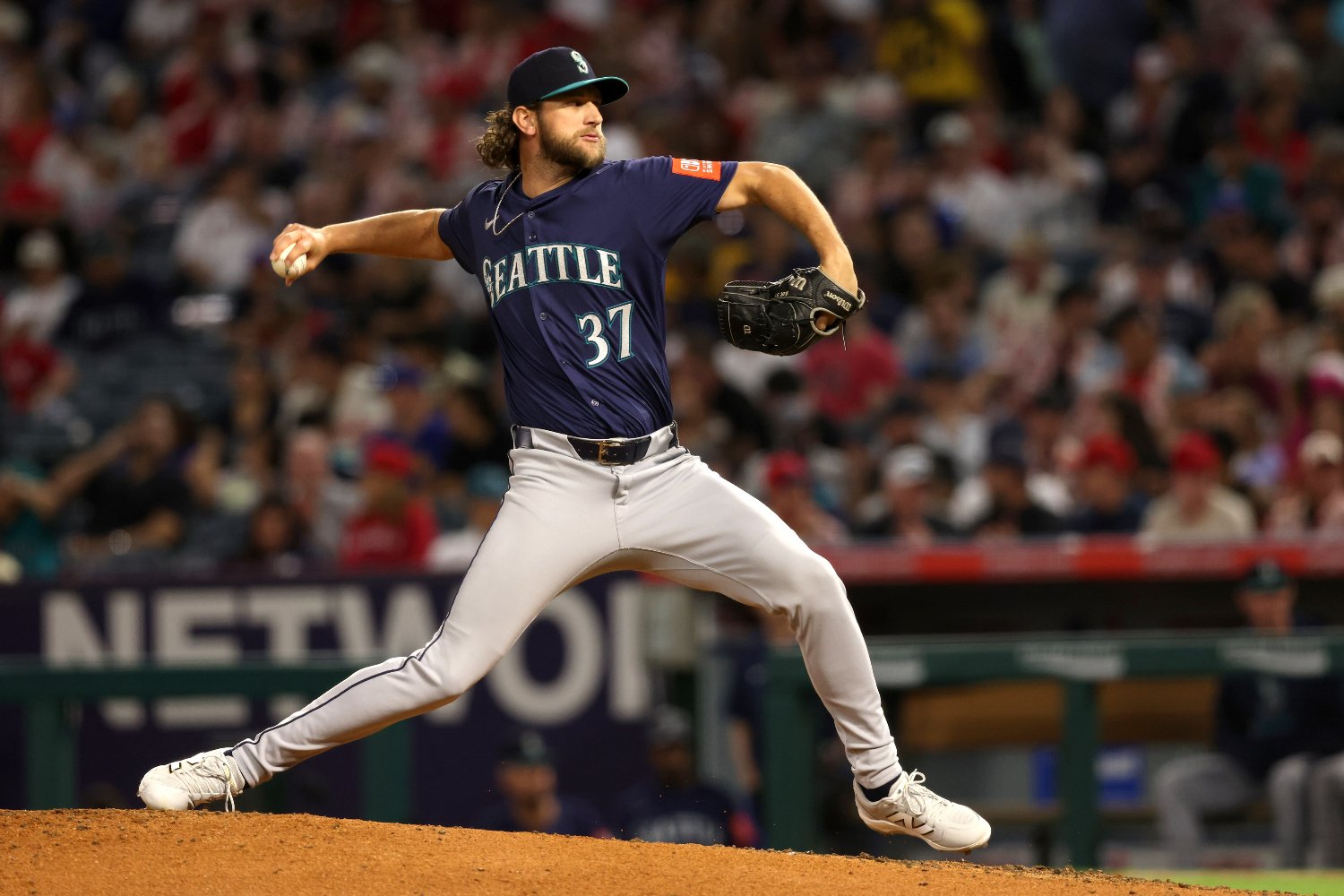
On Tuesday evening, the Seattle Mariners made a minor move: they designated pitcher Jackson Kowar for assignment in order to make room for catcher Jhonny Pereda.
Royals fans should be familiar with Kowar, as he was drafted 33rd overall by the Royals in the 2018 MLB Draft. Yes, that infamous draft in which the Royals selected pitchers with their first five picks. Those pitchers, in addition to Kowar, included Brady Singer (18), Daniel Lynch IV (34), Kris Bubic (40), and Jonathan Bowlan (58). Austin Cox (152) and Jonathan Heasley (392) were also pitchers selected who made it to the Major Leagues, while position players Kyle Isbel (94) and Nate Eaton (632) also came from that draft.
While that draft was chock full of names, Kowar may have possessed the most upside at the time of that bunch. In 2019, Kowar was ranked fourth among the Royals' prospects by MLB Pipeline (he was behind Bobby Witt Jr., Singer, and Lynch). However, he had a sterling scouting report, with many scouts feeling he had middle-of-the-rotation upside, maybe more, if it all clicked.
Here's a look at his scouting report from Pipeline that season.
Quote
Kowar’s fastball-changeup combo is his calling card as a starter, but he also has the chance to have three at least average pitches. His mid-80s plus-plus changeup is his best pitch, thrown with excellent deception and arm speed as well as tumbling and fading action that makes it a swing-and-miss weapon against hitters on both sides of the plate. He can run his fastball up to 97 mph, but he usually sits more in the 93-95 mph range with arm-side life and command that improved across his first full season. Kowar has made similar gains in developing a curveball that could be at least average, throwing it with better spin and shape now than he did in college. He’s a solid strike-thrower who generates a healthy number of whiffs as well as weak groundball contact, albeit with command that requires further refinement.
Kowar has been nothing but durable as both an amateur and pro, working 148 1/3 frames in 2019 and averaging more than 5 2/3 innings per start. He also gets high marks for holding runners to the bag and fielding his position, and he has long been praised for his competitiveness on the mound. With significant Double-A experience under his belt, Kowar could continue to move quickly in 2020. The final product could be that of mid-rotation workhorse starter or perhaps something more if the breaking ball continues to improve.
While there was hope that Kowar would be a crucial part of this rotation, much like Singer and Bubic, or even bullpen, like Lynch and, to an extent, Bowlan, things never came together for Kowar in Kansas City.
In 39 appearances and 74 IP, he posted a 9.12 ERA, 2.10 WHIP, 5.99 FIP, and 1.47 K/BB ratio. As a result, the Royals decided to move on from Kowar, trading him to Atlanta in a deal for pitchers Kyle Wright and Nick Anderson before the 2024 season. After the trade, Kowar was traded to Seattle in a deal for outfielder Jarred Kelenic.
Injury and Tommy John surgery kept Kowar out of action in 2024 and limited him to only 33 IP combined in 2025 in Triple-A and Seattle. That said, the 29-year-old showed some flashes of progress with the Mariners last season, and could be an intriguing pickup by the Royals, who are already familiar with his talent and pitching style.
Let's take a look at what Kowar did with the Mariners in 2025, a pitch that could be key for him in 2026, and why Kansas City should take a flier on their former competitive round draft pick.
Small Sample; Decent Results in Seattle
As stated before, Kowar didn't see much action in either Triple-A Tacoma or Seattle due to his recovery from Tommy John surgery in 2024. That said, he produced respectable numbers at both levels.
In 16 appearances and 18 IP with the Rainiers, he posted a 2.81 ERA, 1.31 WHIP, and 4.28 FIP. His command was a work-in-progress in his return to the mound, as he only had a 21.9% K rate and 1.60 K/BB ratio. However, he only allowed an 86.1 MPH EV, induced a 55.6% groundball rate, and sported a 30.1% CSW in Triple-A.
According to his Statcast profile via TJ Stats, Kowar did an excellent job limiting exit velocity on batted balls (91st percentile) and barrels (75th percentile). That said, he did give up a lot of hard hits (14th percentile), and his control was an issue at times, based on zone rate (4th percentile).

Obviously, this is not a perfect profile, but it was encouraging, especially for a pitcher who missed over a full season of play in the previous year.
Kowar got the call-up to the Mariners later in the season, and his numbers were fine, but not as impressive as his Triple-A metrics. In 15 outings and 17 IP, he posted a 4.24 ERA, 1.24 WHIP, and 2.14 K/BB ratio. That said, he struggled with home runs, giving up a 14.8% HR/FB rate, and his FIP was much higher at 5.84. While he induced groundballs at a high level, that didn't translate so much to the Majors, as illustrated by his 31.3% GB%.
In addition, his Statcast metrics were mediocre with the Mariners (as seen below), which explains why he wasn't a part of the Seattle bullpen mix at any point in the postseason.

Kowar sported plus fastball velocity (95th percentile), but everything else was below average, with the exception of a 64th percentile whiff rate. The CSW was a big surprise: it ranked in the 95th percentile (30.3%) in Tacoma but in the second percentile (24.2%) in Seattle. That was one of many examples of when Kowar thrived in Triple-A but couldn't translate those skills and performance to the MLB level.
This has been a long-term problem for Kowar, especially during his time with the Royals. In 2021, he posted a 3.46 ERA, 3.05 FIP, a 34% K%, and a 3.38 K/BB ratio in 17 outings (16 starts) and 80.2 IP with the Storm Chasers. Those strong numbers helped him earn Triple-A East Pitcher of the Month at one point that season.
Hence, it may be a case where Kowar is simply a good Four-A pitcher who can succeed in Triple-A, but doesn't quite have the "it" factor to do the same in the Majors. Then again, he was recovering from injury and hadn't pitched since 2023. Thus, some growing pains, especially in command, were to be expected and aren't exactly a "death knell" on his outlook as a pitcher in 2026.
Kowar's Pitcher Repertoire (And Why the Slider Could Be Key)
When looking at Kowar's pitch arsenal, he's a limited three-offering pitcher. That's not great for a starter, but it's more than serviceable for a reliever. While his fastball velocity has also rated highly, the pitch has lacked shape and thus has rated slightly below average in most stuff models, including TJ Stuff+, as seen below.

Kowar doesn't get a ton of extension on his pitches, and his four-seamer didn't spot a ton of vertical break either. That explains why it sported a 97 TJ Stuff+, the worst mark of his four offerings last year. The metrics, especially whiff (12.8%) and xwOBACON (.423), also illustrated that his four-seamer was a mediocre offering that was thrown way too much last year (57.7%).
Conversely, Kowar's three other offerings were superb. His slider, changeup, and sinker had TJ Stuff+ marks of 107, 111, and 103, respectively. As a result, his overall TJ Stuff+ was 102, which is more than serviceable for a middle-innings reliever.
Looking at his TJ Stats summary from 2023, his last year in Kansas City, Kowar saw incremental progress with the Mariners, especially with his secondary pitches.

Kowar's four-seamer had a bit more vertical break and spin in Seattle than it did in Kansas City, which was encouraging. However, the slider saw the best improvement with the Mariners.
The slider was three points better in terms of TJ Stuff+ and had a better chase rate (36.5% to 32.9%) and whiff (52.3% to 32.4%). It seemed like Kowar's slider sported more movement. Kowar's primary breaking offering had 1.2 more inches of vertical break, 0.8 more inches of horizontal break, and 322 more RPM in spin.
I created a clip compilation below that showcases his progression in his slider movement from 2022 to 2025. The slider was more of a harder offering with the Royals. With the Mariners, it sported much more movement and, as a result, became a better chase and whiff pitch for Kowar last season.

Even when looking at the heatmap data of Kowar's slider over his past two seasons, it's obvious that the Mariners seemed to help him fully tap into the pitch in ways that he couldn't in Kansas City.
Here's his slider heatmap from last season with Seattle.

Kowar struggled a bit against lefties with the pitch, as he left it up in the middle far too often, based on his heatmap. The .412 xwOBACON also confirms that inconsistency. That said, he also generated a 34.4% CSW and 45.2% whiff rate with the slider against lefties, so it was effective when located properly. As for his sldier against righties, it had a much lower xwOBACON (.274), while still maintaining strong CSW (28.2%) and whiff rate (69.2%).
Now, let's take a look at his slider heatmap data from 2023 with the Royals.

In terms of CSW, Kowar's slider wasn't that much worse against lefties in 2023 (31.2%). However, it generated less whiff (27.3%) and got hit much harder (.522 xwOBACON). The same CSW and whiff rate trend was true for righties, with his whiff being 35.9% lower than his rate in 2025. That said, he still minimized effective contact with the slider against righties, as illustrated by his .273 xwOBACON.
If Kowar can continue to show progress with the slider, he may take another step as a reliever in 2026. The pitch has the potential to be that good in the long term.
Why the Royals Should Bring Back Kowar
While Brian Sweeney was with the Royals in Kowar's last year with Kansas City, Sweeney and company were still figuring out the lay of the land during the 2023 "evaluation" season. Even though Sweeney and Zach Bove tried some things with the Royals' pitching staff (many who returned from 2022), I don't believe they pushed the envelope too much, especially as the losses piled up. Their goal was to determine who was worth keeping and who wasn't (Kowar obviously fell in the latter category at the time).
However, if Kowar were to return to Kansas City, Sweeney, assistant pitching coach Mike McFerran, and bullpen coach Mitch Stetter would likely be more aggressive in their approach with Kowar in 2026. I believe they would not only help him continue the changes he made in Seattle but also look to make some adjustments to his pitch mix and repertoire. It also wouldn't be surprising to see Sweeney and McFerran help Kowar add a pitch, something they have done with many Royals pitchers to various levels of success.
There's upside here for Kowar to be a solid middle-innings reliever who can fill in high-leverage spots from time-to-time, much like Taylor Clarke a season ago. Granted, Kowar is out of Minor League options, which could scare Royals GM JJ Picollo from taking a chance on Kowar, especially with other "out-of-options" pitchers in the bullpen, such as Nick Mears and Bailey Falter.
That said, if the Royals are able put a claim on Kowar and get him to Spring Training in Surprise, they should explore the possibility. If he can respond just as well to Sweeney as he did to Seattle's Pete Woodworth (who's cut from the same cloth as Sweeney in terms of philosophy and approach), then the Royals could finally benefit from the Kowar that they dreamed about when they selected him 33rd overall in the 2018 MLB Draft.






Recommended Comments
There are no comments to display.
Create an account or sign in to comment
You need to be a member in order to leave a comment
Create an account
Sign up for a new account in our community. It's easy!
Register a new accountSign in
Already have an account? Sign in here.
Sign In Now